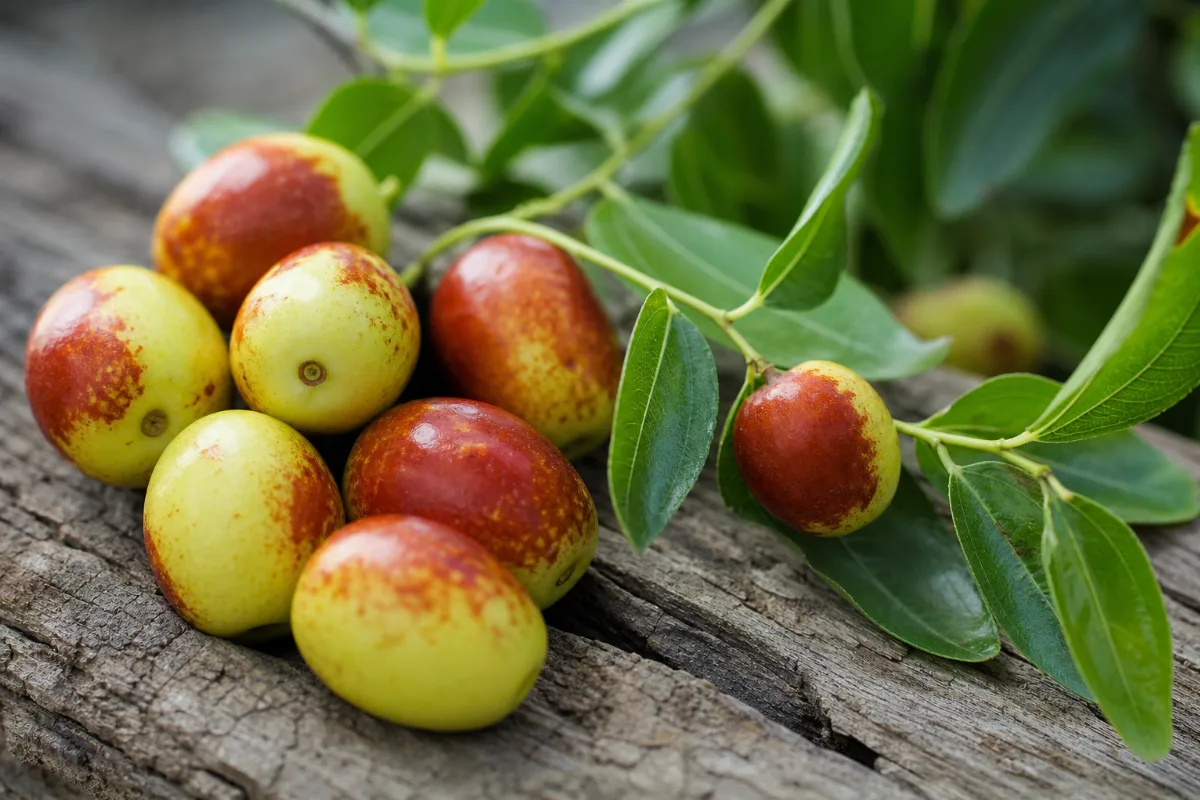
Herbs & Botanicals · Herbs · Chinese red date (fruit) and sour jujube seed, with different evidence for each
Jujube (Ziziphus jujuba): Fruit and Seed
Ziziphus jujuba Mill. (fruit, da zao); Ziziphus jujuba var. spinosa (Bunge) Hu ex H.F.Chow (seed, suan zao ren); family Rhamnaceae · also called Jujube, red date, Chinese date, da zao (fruit); suan zao ren, sour jujube seed (seed)
Jujube is the sweet red fruit of Ziziphus jujuba, eaten fresh or dried and used in Chinese tonics. The seed of a sour variety, suan zao ren, is a separate herb used for sleep, often inside formulas such as Suan Zao Ren Tang. Reviews of small trials suggest the seed may improve self-reported sleep in the short term, and trials of the fruit suggest possible help with blood fats and blood sugar. The evidence is low to very low, trials are mostly small and regional, and many test combinations, so seed and fruit must be kept apart.
General information, not medical advice. Last substantive update · Not medically reviewed. A named clinician has not signed off on this page. How this page is made
About Jujube (Ziziphus jujuba): Fruit and Seed
Jujube is two different products. The fruit (da zao) is a food and tonic studied for blood fats, blood sugar and constipation. The seed of the sour variety (suan zao ren) is a traditional sleep herb. The sleep evidence for the seed is low certainty. The fruit evidence is low. Safety questions centre on sleepiness, low blood sugar with diabetes drugs, and antidepressants and sedatives.
What it is
Jujube fruit comes from Ziziphus jujuba Mill., accepted in GBIF in the buckthorn family Rhamnaceae. Suan zao ren is the seed of Ziziphus jujuba var. spinosa, an accepted variety in GBIF. Many papers call this plant Ziziphus spinosa.
Fruit and seed have different compounds. The seed contains jujubosides and spinosin; the fruit is described as rich in polysaccharides, polyphenols and fibre.
What the sleep research shows
The 2023 review pooled 9 randomized trials of suanzaoren. Versus placebo, self-reported sleep quality improved in the short term; versus benzodiazepines or CBT, insomnia severity was lower at 4 weeks. Long-term effects were mixed. The 2012 review found only 8 of 217 Chinese-herb trials of fair quality and called the evidence insufficient.
A 12-person trial and Chinese formula trials point the same way, but formulas are combinations and were often compared with a drug. One Zizyphus-containing supplement mix did no better than placebo.
What the fruit research shows
Trials of dried fruit powder or extract in Iran and nearby found lower triglycerides, and lower blood sugar and insulin in people with type 2 diabetes, with mixed results for cholesterol and blood pressure. A 2025 review called the evidence limited.
Constipation trials favoured jujube, but one was distorted by dropouts and the other had no placebo.
At a glance
Traditional uses history, not proof
- Fruit (da zao): nourishing food and a tonic for 'blood deficiency' in Chinese medicine
- Seed (suan zao ren): sedative-hypnotic herb for sleep and calm for over 2000 years
- Seeds, leaves and bark: digestive complaints, cough and as a laxative (traditional)
Studied for research
- Sleep quality, seed: low certainty
- Sleep and anxiety, seed formulas: very low (combinations)
- Blood fats and waist, fruit: low
- Blood sugar and insulin, fruit: low
- Blood pressure, fruit: insufficient
- Constipation: very low
- Stress, anxiety and fatigue: insufficient to very low
- PCOS: metabolic markers yes, pregnancy rate no
Main compounds
- Seed: jujubosides A and B, spinosin, jujubogenin
- Fruit: polysaccharides, polyphenols, flavonoids, triterpenoids
- Fibre and amino acids (fruit)
Common forms
- Fresh or dried fruit (food)
- Fruit powder, syrup or extract (as used in trials)
- Seed, alone or in formulas such as Suan Zao Ren Tang
Research links: Yang 2023: suanzaoren for sleep, systematic review (PubMed) · Ahmadi 2025: jujube fruit, lipids and sugar (PubMed) · MSK: Suan Zao Ren Tang · Yeung 2012: Chinese herbs for insomnia (PubMed) · Research Library · Genes & Biomarkers Library
The plant and its history
- Accepted scientific name
- Ziziphus jujuba Mill. (fruit, da zao); Ziziphus jujuba var. spinosa (Bunge) Hu ex H.F.Chow (seed, suan zao ren)
- Naming authority
- GBIF backbone API read 2026-10-25: Z. jujuba Mill. is ACCEPTED (key 3039423, species); var. spinosa (Bunge) Hu ex H.F.Chow is ACCEPTED as a variety (key 4928539). Many papers write the seed plant as 'Ziziphus spinosa'; a GBIF match for that name returned only the family Rhamnaceae (higher-rank match), so it was not confirmed as a separate accepted name.
- Synonyms
- Name: Ziziphus spinosa; Note: Name used in some papers for the seed plant; not confirmed in GBIF.; Name: Zizyphus jujuba; Note: Spelling variant used in older papers.
- Common names
- Jujube, red date, Chinese date (English); Da zao (fruit) (Chinese); Suan zao ren (seed) (Chinese); Sour jujube, wild jujube (seed plant) (English)
- Botanical family
- Rhamnaceae (buckthorn family)
- Classification
- Plantae > Rhamnaceae > Ziziphus > Ziziphus jujuba
- Native range
- Not verified. Sources say jujube fruit has been used in China and elsewhere for centuries; a review says production has spread worldwide, especially in Europe.
- Habitat
- Not verified.
- What the plant looks like
- Roots: Not verified.; Stems: MedicineNet describes a thorny shrub; not verified elsewhere.; Leaves: Used traditionally (leaf), per a 2017 review.; Flowers: Not verified.; Fruit: MedicineNet: olive-sized edible fruit with an apple-like texture and flavour.
- Cultivation
- Not verified.
- Harvest and processing
- Seed is the dried kernel of the sour jujube (var. spinosa); fruit is eaten fresh or dried. Detailed processing not verified.
- Look-alikes and adulterants
- Name: Ziziphus mauritiana (Indian jujube, ber); Note: MedicineNet says Z. jujuba and Z. mauritiana are the most studied species; they are different species and results do not transfer.; Name: Ziziphus spina-christi (sidr); Note: A different species; not evaluated here.
- Sustainability and conservation
- Not assessed in the sources read.
Traditional use and history history, not clinical proof
| Tradition or era | Documented use | Source |
|---|---|---|
| Traditional Chinese medicine (fruit, da zao) | Used for 'blood deficiency' and as a nourishing food; common in tonic formulas. | p33324222 |
| Traditional Chinese medicine (seed, suan zao ren) | Sedative-hypnotic herb used for over 2000 years for sleep and calm. A 2017 review says it is the second most commonly prescribed phytomedicine for insomnia in Taiwan; the 2026 spinosin review says over 2000 years of clinical use. | p28084039 |
| Suan Zao Ren Tang formula | Five-herb insomnia formula from the classic Jin Gui Yao Lue; the most commonly prescribed insomnia formula in Taiwan, per MSK. | s-msk-szrt |
| Ethnopharmacology of seed, leaf and bark | Seeds, leaves and stem bark used for digestive disorders, gastric ulcers, cough, as a laxative and for high blood pressure; also fevers and skin infections in children in China. | p28084039 |
| European regulation | European Pharmacopoeia and EMA monographs for the seed had not been completed as of 2017; not re-checked. | p28084039 |
Traditional use shows how a plant was used. It does not show that a supplement works or is safe today.
What is inside, and how it may work
What the plant contains and how those compounds act in cells and animals. Laboratory and animal mechanisms are not proven effects in people.
Main compounds
| Compound | Family | Where it is concentrated | Activity studied | Level of evidence |
|---|---|---|---|---|
| Jujuboside A PubChem 51346169 | triterpenoid saponin | Seed | Reported in lab and animal work to act on GABA and serotonin pathways, per MSK. 17 19 | Laboratory research |
| Jujuboside B PubChem 24721031 | triterpenoid saponin | Seed | Same reported sleep-related pathways as jujuboside A, per MSK. 17 19 | Laboratory research |
| Spinosin PubChem 155692 | flavone C-glycoside | Seed | Official quality marker of the seed; works on serotonergic and GABAergic signalling and on ERK/CREB/BDNF and Nrf2/HO-1 pathways in preclinical work; oral bioavailability under 1%. 13 17 19 | Animal research |
| Jujubogenin | triterpenoid sapogenin | Seed | Named by MSK as a bioactive component of the formula; CID not looked up. 17 | Laboratory research |
| Polysaccharides, polyphenols, flavonoids and triterpenoids (fruit) | mixed | Fruit | Reviews list these in the fruit with antioxidant, lipid- and sugar-lowering and sedative effects, mostly in lab and animal studies. The seed plant review counts 354 compounds including 164 flavonoids and 74 triterpenoids. 12 32 3 | Animal research |
Mechanisms, receptors and pathways
| Target or pathway | Gene or receptor | What was found | Level |
|---|---|---|---|
| GABA and serotonin signalling (seed) | GABA receptors; serotonin (5-HT) signalling | The seed's saponins and flavonoids were reported to raise GABA-receptor expression and slow 5-HT breakdown in animal studies. 32 17 | Animal research |
| ERK/CREB/BDNF and Nrf2/HO-1 (spinosin) | ERK, CREB, BDNF, Nrf2, HO-1 | Spinosin acted on these pathways in preclinical studies. 13 | Animal research |
| Red blood cell production and iron recycling (fruit) | HIF-induced erythropoietin | Extract affected erythropoiesis and iron recycling in cell and animal models. 3 | Animal research |
| Liver CYP1A2 enzyme | CYP1A2 | Fruit extracts increased CYP1A2 activity in rats. 8 | Animal research |
Absorption, metabolism and elimination
- Absorption
- Spinosin oral bioavailability is under 1% in preclinical models, due to poor solubility and P-glycoprotein efflux.
- Distribution
- Limited blood-brain barrier penetration for spinosin in preclinical work.
- Metabolism
- Fruit extracts increased CYP1A2 activity in rats; not studied in humans.
- Elimination
- Not covered in the sources read.
- Bioavailability
- No human pharmacokinetic data for the seed compounds were found.
Isolated compounds versus whole extracts
Fruit (da zao) and seed (suan zao ren) are different products with different compounds and uses. The seed is the sleep herb and is often used inside formulas; the fruit is a food studied for blood fats and sugar. Individual compounds (spinosin, jujubosides) have mostly been studied in animals and are poorly absorbed, so effects of the whole seed cannot be assumed from them.
Nutritional composition
Jujube fruit is eaten fresh or dried as food. Reviews describe fibre, polysaccharides, polyphenols, amino acids and fatty acids; specific nutrient amounts were not read. Dried jujube adds sugar and calories.
4 low certainty6 very low certainty4 not enough evidence
What is Jujube (Ziziphus jujuba): Fruit and Seed good for?
The main studied uses and how strong the human evidence is for each. Seed results (sleep) and fruit results (blood fats, sugar, gut) are kept separate. Most trials are small and many test combinations.
Benefits, one by one
Each card is a research question, not a promise. Tap a goal to filter. Open a card to see the studies, doses and limits.
Sleep quality and insomnia: sour jujube seed (suan zao ren) in reviews of trials
Low certaintyA 2023 review of 9 small trials found the seed improved self-reported sleep quality in the short term compared with placebo. Longer-term results were mixed. Older and newer reviews of Chinese herbs for insomnia disagree about how strong the evidence is.
3 studiesPlant part: seed of var. spinosa. Doses and preparations differed bet…
Studies, doses and limits
What the trials found
Yang 2023 pooled 9 randomized trials (785 people with insomnia disorder, 120 with sleep disturbance). Versus placebo, subjective sleep quality improved. Versus benzodiazepines or CBT, insomnia severity was lower at 4 weeks. Long-term effects were mixed and major adverse events were not increased. The earlier Yeung 2012 review of 217 Chinese-herb trials found only 8 of reasonable quality and judged the evidence insufficient; the 2025 network meta-analysis of 186 trials ranked suanzaoren 4th of 13 herbal interventions on sleep score and rated overall bias low-to-moderate. The abstracts do not say how many trials used the seed alone and how many used formulas.
Results
Short-term gains in self-reported sleep quality; no clear long-term benefit; the older, stricter review found no proof of benefit over placebo.
Effect sizes as reported
Versus placebo: standardised mean difference -0.58 (95% CI -1.04 to -0.11). Versus benzodiazepines/CBT at 4 weeks: -2.68 points on the insomnia severity scale (95% CI -5.50 to -0.22).
Why this rating
Small trials with variable quality, a mix of seed alone and formulas, and sleep measured mostly by questionnaire. The 2012 review found most trials poor; the 2023 review rated placebo-controlled studies low risk of bias but said larger trials are needed.
Form and dose studied
Plant part: seed of var. spinosa. Doses and preparations differed between trials. Seed (suan zao ren) results do not apply to the fruit (da zao), and fruit results do not apply to the seed.
Who was studied
Adults with insomnia or sleep disturbance, including people with cancer; most trials in China and Asia.
Limits
Many trials are Chinese-language, small and regional. Comparisons with benzodiazepines are not blinded in the same way as placebo comparisons. The newest network meta-analysis ranks treatments indirectly.
Why researchers looked
The seed (from Ziziphus jujuba var. spinosa) is one of the most widely used herbs for sleep in Chinese medicine.
Traditional use
Suan zao ren is a classic sleep and calming herb in traditional Chinese medicine, often used inside formulas such as Suan Zao Ren Tang. In Taiwan it is among the most-used herbal medicines for insomnia.
Proposed mechanism Animal research
In animal and lab work the seed's saponins and flavonoids (jujubosides, spinosin) act on GABA and serotonin signalling. This has not been shown to be how it works in people.
A proposed mechanism does not show that the effect happens in people.
The seed can cause daytime sleepiness. See the Safety tab before driving or combining with sedatives.
Sleep: one small placebo-controlled trial of the seed alone (12 people)
Very low certaintyA tiny cross-over feasibility trial in Australia found better sleep-quality scores on the seed than on placebo, but with only 12 people and a borderline result.
1 studiesSeed (Ziziphus spinosa), 2 g daily as encapsulated granules.
Studies, doses and limits
What the trials found
Shergis 2021: 12 adults with insomnia took encapsulated Ziziphus spinosa seed granules (2 g/day) and placebo, each for 4 weeks, with a 4-week gap. Sleep quality (PSQI) was better on the seed; other scales were not significantly different. Diaries suggested more sleep time, better efficiency and shorter time to fall asleep after the seed. Only minor adverse events. Period effects were present.
Results
Better PSQI score on the seed; most other outcomes no different; feasibility goals met.
Effect sizes as reported
PSQI t = -2.276, df 10, 95% CI -3.3 to -0.04, p = 0.046
Why this rating
12 people, a feasibility design, a borderline p-value and period effects. It shows a trial is possible, not that the seed works.
Form and dose studied
Seed (Ziziphus spinosa), 2 g daily as encapsulated granules.
Who was studied
Adults with insomnia, Melbourne.
Limits
Not powered to prove benefit. One site.
Why researchers looked
To test whether a proper placebo-controlled trial of the seed alone is workable.
Traditional use
Sour jujube seed is used alone and in formulas for sleep.
Proposed mechanism Laboratory research
Not tested in this trial.
A proposed mechanism does not show that the effect happens in people.
Minor adverse events only; sedation not detailed in the abstract.
Sleep and anxiety: Suan Zao Ren Tang and related formulas (combinations, not the seed alone)
Very low certaintyTrials of multi-herb formulas built around suan zao ren report better sleep scores than lorazepam alone or lorazepam combined with the formula. These are combinations, often compared with a drug rather than a placebo.
3 studiesFormulas: SZRT + ZZCT (Hu 2015); Jiawei Suanzaoren Decoction (Song 20…
Studies, doses and limits
What the trials found
Hu 2015 (119 people with insomnia and anxiety, China): Suan Zao Ren Tang plus Zhi Zi Chi Tang for 4 weeks improved insomnia, sleep quality and anxiety scores and was better than lorazepam on the insomnia severity index (P = 0.029), PSQI (P = 0.017) and wake after sleep onset (P = 0.008). Song 2020 (207 people, 12 weeks): Jiawei Suanzaoren Decoction added to lorazepam gave a larger insomnia-severity reduction and fewer side effects than lorazepam alone. MSK also reports small trials in methadone patients, climacteric women and cancer patients (read only as summaries on the MSK page).
Results
Formula improved sleep and anxiety scores and compared well with lorazepam; the add-on trial suggests formula plus lorazepam beats lorazepam alone.
Effect sizes as reported
Hu 2015: P values only in the abstract. Song 2020: abstract text partly corrupted, so no effect numbers are quoted.
Why this rating
Different formulas, compared with a drug rather than a placebo, with unclear blinding. These results cannot be credited to the seed or to jujube fruit. All regional Chinese trials.
Form and dose studied
Formulas: SZRT + ZZCT (Hu 2015); Jiawei Suanzaoren Decoction (Song 2020). Contents differ from the five-herb classic formula.
Who was studied
Adults with insomnia, often with anxiety, in China.
Limits
Add-on to a benzodiazepine does not show the herb works alone. Anxiety measured with a self-rating scale.
Why researchers looked
Suan Zao Ren Tang is a traditional five-herb formula for insomnia (suan zao ren, fu ling, chuan xiong, zhi mu, gan cao). It is the most commonly prescribed insomnia formula in Taiwan, according to MSK.
Traditional use
Described in the classical text Jin Gui Yao Lue.
Proposed mechanism Animal research
Jujubogenin, jujuboside A and B and spinosin affect GABA and serotonin pathways in lab and animal studies, according to MSK; no human mechanism data.
A proposed mechanism does not show that the effect happens in people.
Formulas contain other herbs (e.g. licorice). The sedative warnings on the Safety tab apply.
Sleep: a Zizyphus-containing supplement mix did not beat placebo
Not enough evidenceA 171-person trial of a combination (milk-protein peptide, Zizyphus, hops, magnesium, vitamin B6) found no difference from placebo in sleep quality over 2 weeks.
1 studiesCombination product (LZComplex3).
Studies, doses and limits
What the trials found
Scholey 2017: otherwise healthy adults with mild insomnia took the combination (LZComplex3) or placebo for 2 weeks after a placebo run-in. Sleep quality improved in both groups with no meaningful difference; most secondary outcomes were also the same. Adverse events were similar, and two treatment-related events led to stopping in the active group. The authors note a strong placebo response.
Results
No difference from placebo.
Effect sizes as reported
No significant between-group difference on the PSQI change.
Why this rating
A combination product, so the effect of Zizyphus cannot be separated, and a strong placebo response may hide any effect.
Form and dose studied
Combination product (LZComplex3).
Who was studied
Healthy adults with mild insomnia.
Limits
Combination; industry-involved sponsor; short.
Why researchers looked
Commercial sleep supplement tested in mild acute insomnia.
Traditional use
Zizyphus is a traditional sleep herb.
Proposed mechanism Pharmacological theory
Not tested.
A proposed mechanism does not show that the effect happens in people.
Discontinuations in the active group were treatment-related.
Stress, anxiety and mood: very little direct evidence
Not enough evidenceIn one trial of jujube fruit powder in adults with metabolic syndrome, a stress score fell but anxiety and depression scores did not. For anxiety there is no trial of the fruit or the seed alone in people with an anxiety disorder.
3 studiesFruit powder 30 g/day (Parastouei); formula (Hu).
Studies, doses and limits
What the trials found
Parastouei 2024 (60 adults with metabolic syndrome, 30 g/day dried jujube powder for 8 weeks versus placebo) found no change in depression or anxiety scores (P > 0.05) but a larger fall in a stress score (-5.80 vs -2.86, p = 0.01); the authors flag weaknesses in blinding and herb potency testing. Hu 2015 reported improved Self-Rating Anxiety Scale scores with a seed-based formula. The MSK page mentions a modified formula with paroxetine in generalised anxiety, but that trial was not read.
Results
Stress score better, anxiety and depression not; formula trial anxiety score better.
Effect sizes as reported
Stress -5.80 vs -2.86 (p = 0.01); depression and anxiety p > 0.05
Why this rating
Stress was a secondary outcome in one small trial; anxiety evidence comes from a formula compared with a drug.
Form and dose studied
Fruit powder 30 g/day (Parastouei); formula (Hu).
Who was studied
Metabolic syndrome patients; insomnia patients with anxiety.
Limits
Secondary outcomes, small samples, no seed-alone anxiety trial.
Why researchers looked
Jujube is called 'calming' in traditional medicine.
Traditional use
Seed and fruit both appear in traditional calming formulas.
Proposed mechanism Animal research
Lab and animal work on seed saponins and flavonoids (GABA, serotonin) is the only mechanism data.
A proposed mechanism does not show that the effect happens in people.
See Safety tab.
Fatigue: one small pilot of a three-herb tea containing jujube fruit
Very low certaintyA pilot in Korea found less fatigue after 4 weeks with a tea of astragalus, angelica and jujube fruit than with no tea. It had no placebo and cannot show jujube itself helps.
1 studiesTea of Astragali Radix, Angelicae gigantis Radix and Zizyphi Fructus.
Studies, doses and limits
What the trials found
Baek 2018: 40 adults with prolonged fatigue (35 completed) had the tea twice a day for 4 weeks or no intervention. Fatigue (Chalder scale) was lower in the tea group at 4 weeks; sleep quality improved within the tea group, and depression at 8 weeks.
Results
Lower fatigue versus no treatment at 4 weeks.
Effect sizes as reported
Significant at 4 weeks; numbers not in the abstract.
Why this rating
Pilot, 3-herb combination, no placebo, so expectation effects are likely and jujube cannot be credited.
Form and dose studied
Tea of Astragali Radix, Angelicae gigantis Radix and Zizyphi Fructus.
Who was studied
Adults with prolonged fatigue, Korea.
Limits
No placebo, tiny, combination.
Why researchers looked
Jujube fruit is a common 'tonic' ingredient in formulas for tiredness.
Traditional use
Da zao is added to many Chinese tonic formulas.
Proposed mechanism Pharmacological theory
Not tested.
A proposed mechanism does not show that the effect happens in people.
None reported in the abstract.
Blood fats and waist size (jujube fruit)
Low certaintySmall trials and a 2025 review suggest the fruit may lower triglycerides and modestly improve other blood fats, especially in people who already have high blood fats or metabolic syndrome. Results are uneven.
3 studiesDried fruit powder (30 g/day or 15 g/day) or fruit powder; fruit not …
Studies, doses and limits
What the trials found
Ahmadi 2025 pooled 7 studies (483 people): BMI, triglycerides fell; LDL and total cholesterol fell in some subgroups; HDL, AST and ALT did not change; the authors call the evidence quality limited. Parastouei 2024 (60 adults with metabolic syndrome, 30 g/day powder, 8 weeks): triglycerides, HDL and waist improved versus placebo, but total cholesterol, LDL, fasting glucose and blood pressure did not. Sabzghabaee 2013 (86 obese teens, 5 g three times daily powder, 1 month): total cholesterol and LDL were lower (p = 0.007 and 0.004), BMI and other lipids did not change; 16 dropped out.
Results
Triglycerides most consistent; cholesterol and HDL results mixed across trials.
Effect sizes as reported
Parastouei: waist -3.98 vs -0.51 (p = 0.01), TG -24.96 vs -0.73 (p = 0.03), HDL 2.83 vs 0.40 (p = 0.01). Pooled numbers not read.
Why this rating
Small regional trials with variable products, durations and diseases; the authors of the meta-analysis call the evidence limited; one trial noted blinding and potency-testing weaknesses.
Form and dose studied
Dried fruit powder (30 g/day or 15 g/day) or fruit powder; fruit not seed.
Who was studied
Teens with dyslipidemia; adults with metabolic syndrome or type 2 diabetes; Iran-based.
Limits
Mostly Iranian trials; short durations; product differences.
Why researchers looked
Jujube fruit is a traditional food-medicine and has fibre and plant compounds.
Traditional use
Da zao is eaten as food and used in tonics.
Proposed mechanism Animal research
Reviews describe lipid-lowering effects mainly in lab and animal studies (fibre, polysaccharides, flavonoids).
A proposed mechanism does not show that the effect happens in people.
Dried fruit is sweet and adds sugar and calories.
Blood sugar and insulin (jujube fruit)
Low certaintyIn small trials the fruit lowered fasting insulin and, in people with type 2 diabetes, blood sugar in a meta-analysis. Results in other groups were mixed and trials are small.
4 studiesDried fruit 30 g/day or hydroalcoholic extract 15 g/day.
Studies, doses and limits
What the trials found
Ahmadi 2025: fasting blood sugar fell significantly in people with type 2 diabetes. Farhadnejad 2025 (48 adults with type 2 diabetes and excess weight, 30 g dried jujube daily for 3 months): plasma insulin fell by up to 4.6 mIU/L versus control; antioxidant capacity and other markers did not differ. Parastouei 2024 found no fasting glucose change; Mashhadi 2026 (196 women with PCOS, 15 g/day extract, 12 weeks) found fasting glucose improved versus the other groups.
Results
Insulin and fasting glucose improved in some groups, not in metabolic syndrome patients.
Effect sizes as reported
Insulin up to -4.6 mIU/L (Farhadnejad); other pooled figures not read.
Why this rating
Small trials, several outcomes, mixed results between populations.
Form and dose studied
Dried fruit 30 g/day or hydroalcoholic extract 15 g/day.
Who was studied
Type 2 diabetes with excess weight; PCOS; metabolic syndrome.
Limits
HbA1c was not reported in the abstracts. Control group type unclear in one trial.
Why researchers looked
Fruit fibre and plant compounds may slow sugar absorption (lab idea only).
Traditional use
Used in Persian and Chinese traditional medicine.
Proposed mechanism Animal research
Animal and lab studies suggest effects on glucose handling; not shown in people.
A proposed mechanism does not show that the effect happens in people.
May lower blood sugar further in people on diabetes medicines; see Safety.
Blood pressure (jujube fruit)
Not enough evidenceOne trial in people with type 2 diabetes found lower blood pressure after 3 months of dried jujube; another in metabolic syndrome found no change.
3 studiesDried fruit 30 g/day.
Studies, doses and limits
What the trials found
Farhadnejad 2025: systolic fell by up to 7 and diastolic by up to 5 mmHg versus control. Parastouei 2024: no blood-pressure change. Rodriguez Villanueva 2017 lists hypotensive use in ethnopharmacology.
Results
Mixed: lower in one trial, no change in the other.
Effect sizes as reported
SBP up to -7 mmHg; DBP up to -5 mmHg
Why this rating
Two small trials point in different directions.
Form and dose studied
Dried fruit 30 g/day.
Who was studied
Adults with type 2 diabetes; metabolic syndrome.
Limits
Blood pressure was a secondary outcome.
Why researchers looked
Reports of lower blood pressure in animals.
Traditional use
Traditional use as a 'hypotensive' drug is described in a 2017 review.
Proposed mechanism Animal research
Not established.
A proposed mechanism does not show that the effect happens in people.
Possible extra effect with blood-pressure medicines; see Safety.
Constipation (jujube extract or syrup)
Very low certaintyA 2008 extract trial and a 2025 children's syrup trial both reported benefit, but the first had a very uneven placebo dropout and the second compared with a laxative, not placebo.
3 studiesLiquid extract; syrup (products differ).
Studies, doses and limits
What the trials found
Naftali 2008: 37 adults with slow-transit constipation took liquid Ziziphus jujuba extract or placebo for 12 weeks; 84% of the placebo group dropped out because of severe constipation versus 12% of the extract group. Transit time and symptoms improved with the extract. Keihanian 2025: 90 children aged 2-10 (62 completed) had jujube syrup or polyethylene glycol (PEG); the jujube group had a better response score, less soiling and pain, and more regular stools, with no liver or kidney injury reported.
Results
Both trials favour jujube, but the design problems limit what can be concluded.
Effect sizes as reported
Naftali: transit time 12.2 to 3 particles in the extract group. Keihanian: p < 0.05 for the comparisons.
Why this rating
84% placebo dropout in the first trial makes it unreliable; the second trial compared with a drug without a placebo arm and lost 28 of 90 children.
Form and dose studied
Liquid extract; syrup (products differ).
Who was studied
Adults with chronic constipation; children aged 2-10.
Limits
Single-country trials; not placebo-controlled in children.
Why researchers looked
Jujube is traditionally used as a gentle laxative.
Traditional use
Described as a laxative in traditional medicine (2017 review).
Proposed mechanism Pharmacological theory
Fibre content may contribute (idea only).
A proposed mechanism does not show that the effect happens in people.
Jujube can also cause diarrhoea or constipation in some people (see Safety).
PCOS: metabolic markers improved, pregnancy rate not
Low certaintyIn a 196-woman trial, jujube extract improved cholesterol, triglycerides and fasting glucose compared with other groups but did not raise pregnancy rates versus metformin, myoinositol or placebo.
1 studiesHydroalcoholic extract, 15 g daily.
Studies, doses and limits
What the trials found
Mashhadi 2026: infertile women with PCOS got metformin 500 mg, myoinositol 2000 mg, Ziziphus jujuba hydroalcoholic extract 15 g or placebo for 12 weeks, with letrozole for ovulation. Pregnancy: 10, 7, 5 and 4 respectively (p > 0.05). Cholesterol, triglycerides, HDL and fasting glucose improved with jujuba. One participant reported mild constipation.
Results
No fertility benefit shown; metabolic markers improved.
Effect sizes as reported
Pregnancies 10 / 7 / 5 / 4 of 49 per group; metabolic p < 0.05
Why this rating
One trial; the main outcome was not met.
Form and dose studied
Hydroalcoholic extract, 15 g daily.
Who was studied
Infertile women with PCOS, Iran.
Limits
Single trial; a strong dose of extract.
Why researchers looked
PCOS often comes with insulin resistance; jujube was tested on both metabolic and fertility outcomes.
Traditional use
Not described in the sources read.
Proposed mechanism Pharmacological theory
Not established.
A proposed mechanism does not show that the effect happens in people.
Pregnancy and breastfeeding advice is on the Safety tab.
Chronic hives (add-on syrup)
Very low certaintyOne trial found a jujube syrup added to an antihistamine lowered hive activity scores, but the comparison group also received a jujube syrup.
2 studiesFruit syrup 7.5 mL twice daily plus cetirizine.
Studies, doses and limits
What the trials found
Zare 2023: 64 people with chronic spontaneous urticaria not controlled on cetirizine received 7.5 mL jujube syrup twice daily or a plain jujube syrup control for 4 weeks. The urticaria activity score was lower in the intervention group (p = 0.001 over follow-up, p = 0.046 on day 28) and sleep quality improved in both groups, more in the intervention group.
Results
Lower hive scores versus the control syrup.
Effect sizes as reported
UAS p = 0.001 over follow-up; p = 0.046 at day 28
Why this rating
The control group received a jujube syrup, and the trial was small.
Form and dose studied
Fruit syrup 7.5 mL twice daily plus cetirizine.
Who was studied
Adults with chronic hives.
Limits
Small, one city; unclear what the control syrup contained.
Why researchers looked
Added when antihistamines alone did not control hives.
Traditional use
Used in Persian traditional medicine.
Proposed mechanism Pharmacological theory
Not established.
A proposed mechanism does not show that the effect happens in people.
A latex-jujube cross-reaction is reported; see Safety.
Liver protection during TB treatment (tiny pilot)
Very low certaintyIn 17 people on tuberculosis drugs, none of the jujube-syrup group developed liver toxicity at week 2 versus about a quarter of the placebo group. This pilot cannot prove protection.
1 studiesFruit syrup 10 mL/day.
Studies, doses and limits
What the trials found
Maddahi 2022: 17 people finished (8 jujube, 9 placebo). At week 2, 27.3% of the placebo group developed hepatotoxicity versus none in the jujube group (p = .037). Cough and quality of life also improved.
Results
No liver toxicity in the jujube group in a tiny sample.
Effect sizes as reported
0 vs 27.3% at week 2
Why this rating
Pilot; 17 people; a few events.
Form and dose studied
Fruit syrup 10 mL/day.
Who was studied
People with pulmonary tuberculosis, Iran.
Limits
Tiny sample.
Why researchers looked
Anti-TB drugs often injure the liver; jujube was tested as protection.
Traditional use
Not described in the sources read.
Proposed mechanism Pharmacological theory
Not established.
A proposed mechanism does not show that the effect happens in people.
This is a safety-adjacent finding, not a reason to take jujube with TB drugs without a doctor.
Anaemia and 'blood building' (cell and animal studies only)
Not enough evidenceJujube fruit is a traditional 'blood-nourishing' food in China. A 2020 review found support only in cells and animals, not in human trials.
1 studiesFruit extracts in lab and animal studies.
Studies, doses and limits
What the trials found
Chen 2020 summarises cell and animal work and proposes the fruit as a possible supplement for anaemia prevention; no human anaemia trials are described in the abstract.
Results
No human data.
Effect sizes as reported
None
Why this rating
No human trials found.
Form and dose studied
Fruit extracts in lab and animal studies.
Who was studied
None in humans.
Limits
No human evidence.
Why researchers looked
Traditional blood deficiency use.
Traditional use
Traditionally used for 'blood deficiency'.
Proposed mechanism Animal research
In cell and animal models the extract affected red-cell production and iron recycling.
A proposed mechanism does not show that the effect happens in people.
Anaemia needs a medical diagnosis.
Connections to the rest of health
How Jujube (Ziziphus jujuba): Fruit and Seed connects to the rest of our health knowledge graph. Every link says what kind of connection it is. A safety link (for example to the liver) is a warning, not a benefit. A study that merely mentions a topic never creates a benefit link.
Explore every connection: goals, body systems, organs, symptoms, genes
A. Wellness goals
| Connected to | Kind of connection | Evidence status | Context | Studies |
|---|---|---|---|---|
| Better Sleep | Demonstrated clinical effect | Low certainty | Sleep quality and insomnia: sour jujube seed (suan zao ren) in reviews of trials: A 2023 review of 9 small trials found the seed improved self-reported sleep quality in the short term compared with placebo. Longer-term results were mixed. Older and newer reviews of Chinese herbs for insomnia disagree about how strong the evidence is. Sleep and anxiety: Suan Zao Ren Tang and related formulas (combinations, not the seed alone): Trials of multi-herb formulas built around suan zao ren report better sleep scores than lorazepam alone or lorazepam combined with the formula. These are combinations, often compared with a drug rather than a placebo. | 29 30 10 7 26 17 |
| Sleep Quality | Demonstrated clinical effect | Low certainty | Sleep quality and insomnia: sour jujube seed (suan zao ren) in reviews of trials: A 2023 review of 9 small trials found the seed improved self-reported sleep quality in the short term compared with placebo. Longer-term results were mixed. Older and newer reviews of Chinese herbs for insomnia disagree about how strong the evidence is. | 29 30 10 |
| Better Sleep | Potential benefit | Very low certainty | Sleep: one small placebo-controlled trial of the seed alone (12 people): A tiny cross-over feasibility trial in Australia found better sleep-quality scores on the seed than on placebo, but with only 12 people and a borderline result. | 25 |
| Anxiety Support | Demonstrated clinical effect | Very low certainty | Sleep and anxiety: Suan Zao Ren Tang and related formulas (combinations, not the seed alone): Trials of multi-herb formulas built around suan zao ren report better sleep scores than lorazepam alone or lorazepam combined with the formula. These are combinations, often compared with a drug rather than a placebo. | 7 26 17 |
| Calm Relaxation | Demonstrated clinical effect | Very low certainty | Sleep and anxiety: Suan Zao Ren Tang and related formulas (combinations, not the seed alone): Trials of multi-herb formulas built around suan zao ren report better sleep scores than lorazepam alone or lorazepam combined with the formula. These are combinations, often compared with a drug rather than a placebo. | 7 26 17 |
| Better Sleep | Biological association | Not enough evidence | Sleep: a Zizyphus-containing supplement mix did not beat placebo: A 171-person trial of a combination (milk-protein peptide, Zizyphus, hops, magnesium, vitamin B6) found no difference from placebo in sleep quality over 2 weeks. | 24 |
| Stress Reduction | Potential benefit | Not enough evidence | Stress, anxiety and mood: very little direct evidence: In one trial of jujube fruit powder in adults with metabolic syndrome, a stress score fell but anxiety and depression scores did not. For anxiety there is no trial of the fruit or the seed alone in people with an anxiety disorder. | 21 7 17 |
| Anxiety Support | Potential benefit | Not enough evidence | Stress, anxiety and mood: very little direct evidence: In one trial of jujube fruit powder in adults with metabolic syndrome, a stress score fell but anxiety and depression scores did not. For anxiety there is no trial of the fruit or the seed alone in people with an anxiety disorder. | 21 7 17 |
| Mood Balance | Potential benefit | Not enough evidence | Stress, anxiety and mood: very little direct evidence: In one trial of jujube fruit powder in adults with metabolic syndrome, a stress score fell but anxiety and depression scores did not. For anxiety there is no trial of the fruit or the seed alone in people with an anxiety disorder. | 21 7 17 |
| Reduce Fatigue | Potential benefit | Very low certainty | Fatigue: one small pilot of a three-herb tea containing jujube fruit: A pilot in Korea found less fatigue after 4 weeks with a tea of astragalus, angelica and jujube fruit than with no tea. It had no placebo and cannot show jujube itself helps. | 2 |
| Energy Boost | Potential benefit | Very low certainty | Fatigue: one small pilot of a three-herb tea containing jujube fruit: A pilot in Korea found less fatigue after 4 weeks with a tea of astragalus, angelica and jujube fruit than with no tea. It had no placebo and cannot show jujube itself helps. | 2 |
| Cholesterol Balance | Demonstrated clinical effect | Low certainty | Blood fats and waist size (jujube fruit): Small trials and a 2025 review suggest the fruit may lower triglycerides and modestly improve other blood fats, especially in people who already have high blood fats or metabolic syndrome. Results are uneven. | 1 21 23 |
| Metabolic Health | Demonstrated clinical effect | Low certainty | Blood fats and waist size (jujube fruit): Small trials and a 2025 review suggest the fruit may lower triglycerides and modestly improve other blood fats, especially in people who already have high blood fats or metabolic syndrome. Results are uneven. Blood sugar and insulin (jujube fruit): In small trials the fruit lowered fasting insulin and, in people with type 2 diabetes, blood sugar in a meta-analysis. Results in other groups were mixed and trials are small. | 1 21 23 4 15 |
| Weight Management | Demonstrated clinical effect | Low certainty | Blood fats and waist size (jujube fruit): Small trials and a 2025 review suggest the fruit may lower triglycerides and modestly improve other blood fats, especially in people who already have high blood fats or metabolic syndrome. Results are uneven. | 1 21 23 |
| Heart Health | Demonstrated clinical effect | Low certainty | Blood fats and waist size (jujube fruit): Small trials and a 2025 review suggest the fruit may lower triglycerides and modestly improve other blood fats, especially in people who already have high blood fats or metabolic syndrome. Results are uneven. | 1 21 23 |
| Blood Sugar Balance | Demonstrated clinical effect | Low certainty | Blood sugar and insulin (jujube fruit): In small trials the fruit lowered fasting insulin and, in people with type 2 diabetes, blood sugar in a meta-analysis. Results in other groups were mixed and trials are small. | 1 4 21 15 |
| Blood Pressure Support | Potential benefit | Not enough evidence | Blood pressure (jujube fruit): One trial in people with type 2 diabetes found lower blood pressure after 3 months of dried jujube; another in metabolic syndrome found no change. | 4 21 22 |
| Heart Health | Potential benefit | Not enough evidence | Blood pressure (jujube fruit): One trial in people with type 2 diabetes found lower blood pressure after 3 months of dried jujube; another in metabolic syndrome found no change. | 4 21 22 |
| Digestive Support | Potential benefit | Very low certainty | Constipation (jujube extract or syrup): A 2008 extract trial and a 2025 children's syrup trial both reported benefit, but the first had a very uneven placebo dropout and the second compared with a laxative, not placebo. | 20 9 22 |
| Womens Wellness | Biological association | Low certainty | PCOS: metabolic markers improved, pregnancy rate not: In a 196-woman trial, jujube extract improved cholesterol, triglycerides and fasting glucose compared with other groups but did not raise pregnancy rates versus metformin, myoinositol or placebo. | 15 |
| Fertility Support | Biological association | Low certainty | PCOS: metabolic markers improved, pregnancy rate not: In a 196-woman trial, jujube extract improved cholesterol, triglycerides and fasting glucose compared with other groups but did not raise pregnancy rates versus metformin, myoinositol or placebo. | 15 |
| Metabolic Health | Biological association | Low certainty | PCOS: metabolic markers improved, pregnancy rate not: In a 196-woman trial, jujube extract improved cholesterol, triglycerides and fasting glucose compared with other groups but did not raise pregnancy rates versus metformin, myoinositol or placebo. | 15 |
| Inflammation Balance | Potential benefit | Very low certainty | Chronic hives (add-on syrup): One trial found a jujube syrup added to an antihistamine lowered hive activity scores, but the comparison group also received a jujube syrup. | 31 11 |
| Healthy Skin | Potential benefit | Very low certainty | Chronic hives (add-on syrup): One trial found a jujube syrup added to an antihistamine lowered hive activity scores, but the comparison group also received a jujube syrup. | 31 11 |
| Liver Support | Potential benefit | Very low certainty | Liver protection during TB treatment (tiny pilot): In 17 people on tuberculosis drugs, none of the jujube-syrup group developed liver toxicity at week 2 versus about a quarter of the placebo group. This pilot cannot prove protection. | 14 |
B. Body systems
| Connected to | Kind of connection | Evidence status | Context | Studies |
|---|---|---|---|---|
| Sleep Recovery | Biological association | Low certainty | Studied for: Sleep quality and insomnia: sour jujube seed (suan zao ren) in reviews of trials Studied for: Sleep: one small placebo-controlled trial of the seed alone (12 people) | 29 30 10 25 7 26 17 24 |
| Nervous System | Biological association | Low certainty | Studied for: Sleep quality and insomnia: sour jujube seed (suan zao ren) in reviews of trials Studied for: Sleep and anxiety: Suan Zao Ren Tang and related formulas (combinations, not the seed alone) | 29 30 10 7 26 17 21 2 |
| Stress Mood | Biological association | Very low certainty | Studied for: Sleep and anxiety: Suan Zao Ren Tang and related formulas (combinations, not the seed alone) Studied for: Stress, anxiety and mood: very little direct evidence | 7 26 17 21 |
| Metabolism Weight | Biological association | Low certainty | Studied for: Blood fats and waist size (jujube fruit) Studied for: Blood sugar and insulin (jujube fruit) | 1 21 23 4 15 |
| Cardiovascular System | Biological association | Low certainty | Studied for: Blood fats and waist size (jujube fruit) Studied for: Blood pressure (jujube fruit) | 1 21 23 4 22 3 |
| Endocrine System | Biological association | Low certainty | Studied for: Blood sugar and insulin (jujube fruit) Studied for: PCOS: metabolic markers improved, pregnancy rate not | 1 4 21 15 |
| Digestive System | Biological association | Very low certainty | Studied for: Constipation (jujube extract or syrup) | 20 9 22 |
| Reproductive System | Biological association | Low certainty | Studied for: PCOS: metabolic markers improved, pregnancy rate not | 15 |
| Integumentary System | Biological association | Very low certainty | Studied for: Chronic hives (add-on syrup) | 31 11 |
| Immune System | Biological association | Very low certainty | Studied for: Chronic hives (add-on syrup) | 31 11 |
| Hepatic System | Biological association | Very low certainty | Studied for: Liver protection during TB treatment (tiny pilot) | 14 |
G. Root causes and contributing factors
| Connected to | Kind of connection | Evidence status | Context | Studies |
|---|---|---|---|---|
| Medication side effects | Drug or supplement interaction | Not enough evidence | MSK and MedicineNet warn about combining with antidepressants and sedatives; no trials of the combination safety. MSK and MedicineNet warn of combining with antidepressants and sedatives; no interaction trials. Preparation or compound: Seed and seed formulas with sedatives and antidepressants |
17 16 |
I. Biomarkers
| Connected to | Kind of connection | Evidence status | Context | Studies |
|---|---|---|---|---|
| Blood glucose | Adverse effect or risk | Low certainty | Trials show lower blood sugar; extra care with diabetes medicines. Preparation or compound: Fruit |
1 4 |
| Sleep quality score (PSQI, self-reported) | Biological association | Very low certainty | Measured in trials: lowered. A lab change is not the same as a health benefit. | 25 24 7 |
| Insomnia severity (ISI) | Biological association | Low certainty | Measured in trials: lowered. A lab change is not the same as a health benefit. | 29 7 |
| Stress score (questionnaire) | Biological association | Very low certainty | Measured in trials: lowered. A lab change is not the same as a health benefit. | 21 |
| Fatigue severity (Chalder Fatigue Scale) | Biological association | Very low certainty | Measured in trials: lowered. A lab change is not the same as a health benefit. | 2 |
| Triglycerides | Biological association | Low certainty | Measured in trials: lowered. A lab change is not the same as a health benefit. | 21 1 |
| Total cholesterol and LDL | Biological association | Very low certainty | Measured in trials: mixed. A lab change is not the same as a health benefit. | 23 21 1 |
| HDL cholesterol | Biological association | Very low certainty | Measured in trials: mixed. A lab change is not the same as a health benefit. | 21 1 |
| Fasting blood sugar | Biological association | Low certainty | Measured in trials: mixed. A lab change is not the same as a health benefit. | 1 21 15 |
| Fasting insulin | Biological association | Very low certainty | Measured in trials: lowered. A lab change is not the same as a health benefit. | 4 |
| Systolic and diastolic blood pressure | Biological association | Not enough evidence | Measured in trials: mixed. A lab change is not the same as a health benefit. | 4 21 |
| Waist circumference | Biological association | Very low certainty | Measured in trials: lowered. A lab change is not the same as a health benefit. | 21 |
| Colonic transit time and constipation symptoms | Biological association | Very low certainty | Measured in trials: lowered. A lab change is not the same as a health benefit. | 20 |
J. Genes, receptors and enzymes
| Connected to | Kind of connection | Evidence status | Context | Studies |
|---|---|---|---|---|
| CYP1A2 | Preliminary mechanism | Animal | Rat study: increased activity after fruit extracts. | 8 |
K. Biological pathways
| Connected to | Kind of connection | Evidence status | Context | Studies |
|---|---|---|---|---|
| GABA receptors and serotonin signalling | Preliminary mechanism | Animal | Proposed route for the seed's calming effects in animal studies. | 32 17 |
| ERK/CREB/BDNF and Nrf2/HO-1 | Preliminary mechanism | Animal | Pathways affected by spinosin in preclinical work. | 13 |
L. Active compounds
| Connected to | Kind of connection | Evidence status | Context | Studies |
|---|---|---|---|---|
| Jujuboside A | Biological association | In vitro | Reported in lab and animal work to act on GABA and serotonin pathways, per MSK. Preparation or compound: Seed |
17 19 |
| Jujuboside B | Biological association | In vitro | Same reported sleep-related pathways as jujuboside A, per MSK. Preparation or compound: Seed |
17 19 |
| Spinosin | Biological association | Animal | Official quality marker of the seed; works on serotonergic and GABAergic signalling and on ERK/CREB/BDNF and Nrf2/HO-1 pathways in preclinical work; oral bioavailability under 1%. Preparation or compound: Seed |
13 17 19 |
| Jujubogenin | Biological association | In vitro | Named by MSK as a bioactive component of the formula; CID not looked up. Preparation or compound: Seed |
17 |
| Polysaccharides, polyphenols, flavonoids and triterpenoids (fruit) | Biological association | Animal | Reviews list these in the fruit with antioxidant, lipid- and sugar-lowering and sedative effects, mostly in lab and animal studies. The seed plant review counts 354 compounds including 164 flavonoids and 74 triterpenoids. Preparation or compound: Fruit |
12 32 3 |
Each connection is stored with the ingredient, the connected record, the kind of connection, the evidence status, the supporting studies, the preparation or compound involved, and a review date (last reviewed October 25, 2026).
The evidence
The research centre for Jujube (Ziziphus jujuba): Fruit and Seed. Every record here was checked against PubMed or the publisher's page; we never list a study we have not verified.
Evidence by outcome
Bars show how many studies we found for each outcome, not how well it works. People are added up across trials only (reviews are not added, to avoid double counting).
How we rate evidence
High certainty
Several well-run trials or reviews agree; further research is unlikely to change the picture much.
Moderate certainty
Good trials point the same way, but some doubt remains.
Low certainty
Small, short or inconsistent trials. The finding could change with better research.
Very low certainty
Very little or very weak human data. Treat as a possibility only.
Mixed findings
Trials or reviews disagree with each other.
Not enough evidence
Not enough human research to say either way.
Evidence against
Good research found no benefit, or found harm.
We take the reviewers' own risk-of-bias and GRADE statements where they exist, and otherwise judge from study size, design, consistency, directness and whether a product matches what is sold. Many publications do not make evidence high. Method note: We searched PubMed, read the abstract of every PubMed study cited, read the MSK Suan Zao Ren Tang page and a MedicineNet consumer page, and checked names in GBIF and NCBI Taxonomy and compounds in PubChem. NCCIH has no jujube page; EMA could not be read.
Study library: every study we checked 32
| Study | Design | People | Product, dose, length | Result |
|---|---|---|---|---|
| Ahmadi 2025 Impact of jujube fruit on serum lipid profile, glycemic index, and liver function: a systematic review and meta-analysis Nutr Diabetes · PMID 40399274 · DOI |
Meta-analysis |
483 7 clinical studies, 483 participants (English and Persian papers) |
Jujube fruit (forms and doses varied) fruit Not stated in abstract Not stated in abstract · vs various |
Jujube significantly reduced BMI and triglycerides and fasting blood sugar in people with type 2 diabetes. LDL and total cholesterol fell in some subgroups. HDL, AST and ALT did not change significantly. Results varied by dose, duration and disease type. Significant but pooled numbers not read in abstract Methods, limits and fundingOutcomes: BMI, lipids, blood sugar, AST, ALT Limitations: Authors say overall evidence quality is limited; few, small, mostly regional trials. Funding and conflicts: Authors declare none. Read: abstract |
| Baek 2018 Three-Component Herbal Tea Alleviates Prolonged Fatigue and Improves Sleep Quality: A Randomized Controlled Pilot Study Explore (NY) · PMID 30482676 · DOI |
Controlled trial |
40 40 adults with prolonged fatigue (35 completed), Korea |
Herbal tea of Astragali Radix, Angelicae gigantis Radix and Zizyphi Fructus (a combination - NOT jujube alone) fruit within a combination Not stated in abstract 4 weeks · vs no intervention (not placebo) |
Fatigue was lower in the tea group than in controls at 4 weeks; sleep quality improved within the tea group; depression improved at 8 weeks. Controls did not change. Significant difference at 4 weeks; numbers not in abstract Methods, limits and fundingOutcomes: Chalder Fatigue Scale; sleep; depression; quality of life Limitations: No placebo, so expectation effects are likely; combination of three herbs; pilot. Funding and conflicts: Not stated in abstract record. Read: abstract |
| Chen 2020 A Review of Edible Jujube, the Ziziphus jujuba Fruit: A Heath Food Supplement for Anemia Prevalence Front Pharmacol · PMID 33324222 · DOI |
Narrative review animal |
Jujube fruit extracts and compounds fruit Not stated in abstract Not stated in abstract |
In cell and animal models jujube extract affected red-cell production and iron recycling. Traditionally used in China for 'blood deficiency'. Flavonoids, polysaccharides and triterpenoids are proposed active parts. No human anaemia trials summarised in the abstract. Methods, limits and fundingLimitations: Mostly cell and animal findings. Funding and conflicts: No conflicts declared. Read: abstract | |
| Farhadnejad 2025 Effect of dried Ziziphus Jujube Consumption on Plasma Insulin, Blood Pressure, Oxidative Stress, and Advanced Glycation End Products in Diabetic Patients with Excess Weight: A Randomized Controlled Trial Int J Prev Med · PMID 40964206 · DOI |
Controlled trial |
48 48 adults with type 2 diabetes and excess weight in Iran (24 per group) |
Dried jujube fruit, 30 g/day fruit Not stated in abstract 3 months · vs control group |
After adjustment, systolic BP fell by up to 7 mmHg, diastolic by up to 5 mmHg and plasma insulin by up to 4.6 mIU/L versus control. No difference in antioxidant capacity, MDA or CML. SBP up to -7 mmHg; DBP up to -5 mmHg; insulin up to -4.6 mIU/L Methods, limits and fundingOutcomes: Fasting insulin, blood pressure, oxidative stress markers, AGEs Limitations: Small; control group type (placebo or none) not clear from abstract; food-level amount. Funding and conflicts: Authors declare none. Registration: IRCT20181210041913N1 Read: abstract |
| GBIF Secretariat 2026 GBIF backbone: Ziziphus jujuba Mill. (key 3039423) GBIF species API · Source |
Identity n/a |
unspecified Not stated in abstract Not stated in abstract |
Read 2026-10-25 via species/match: Ziziphus jujuba Mill., rank SPECIES, status ACCEPTED, family Rhamnaceae. Methods, limits and fundingRead: full-text | |
| GBIF Secretariat 2026 GBIF backbone: Ziziphus jujuba var. spinosa (Bunge) Hu ex H.F.Chow (key 4928539) GBIF species API · Source |
Identity n/a |
unspecified Not stated in abstract Not stated in abstract |
Read 2026-10-25 via species/match: rank VARIETY, status ACCEPTED, family Rhamnaceae. Methods, limits and fundingRead: full-text | |
| Hu 2015 Suan zao ren tang in combination with zhi zi chi tang as a treatment protocol for insomniacs with anxiety: a randomized parallel-controlled trial Evid Based Complement Alternat Med · PMID 25793006 · DOI |
Controlled trial |
119 119 people with insomnia and anxiety (60 formula, 59 lorazepam) in China |
Suan Zao Ren Tang plus Zhi Zi Chi Tang (a multi-herb formula, NOT the seed alone) seed within a formula Not stated in abstract 4 weeks · vs lorazepam tablet |
The formula improved all four measures. Versus lorazepam, ISI (P = 0.029), PSQI (P = 0.017) and wake after sleep onset (P = 0.008) were better. One person in the formula group had side effects. P values as listed; mean differences not given in abstract Methods, limits and fundingOutcomes: Polysomnography, ISI, PSQI, Self-Rating Anxiety Scale Limitations: Open comparison with a drug; unclear blinding in the abstract; formula not seed alone; regional single-country trial. Funding and conflicts: Not stated in abstract record. Read: abstract |
| Jing 2015 Effects of Ziziphus jujuba fruit extracts on cytochrome P450 (CYP1A2) activity in rats Chin J Nat Med · PMID 26253491 · DOI |
Animal research animal |
Rats | Jujube fruit water extract (1.0 g/kg) and ethanol extract (3.6 g/kg) fruit Not stated in abstract 10 days pretreatment · vs untreated rats |
Extracts lowered phenacetin levels (AUC down 43.2% water, 15.5% ethanol) and raised acetaminophen formation, meaning higher CYP1A2 activity. Authors advise caution with CYP1A2-metabolised drugs. AUC phenacetin -43.2% / -15.5% Methods, limits and fundingOutcomes: Phenacetin and acetaminophen pharmacokinetics; CYP1A2 activity Limitations: Rats; high extract amounts; human relevance unknown. Funding and conflicts: Not stated in abstract record. Read: abstract |
| Keihanian 2025 Comparison of Ziziphus jujube Mill. Syrup versus polyethylene glycol in children with functional constipation: a randomized clinical trial Sci Rep · PMID 39799261 · DOI |
Controlled trial |
90 90 eligible children aged 2-10 (62 completed), Iran |
Ziziphus jujuba syrup, 1-5 cc/kg/day fruit (syrup; part not stated in abstract) Not stated in abstract 3 months follow-up · vs polyethylene glycol (PEG) |
The jujube group had a better average response score, less soiling and pain, and better stool frequency and adherence than PEG. Only the PEG group reported (self-limiting) side effects. No liver or kidney injury reported. p < 0.05 for those comparisons Methods, limits and fundingOutcomes: Response score, encopresis, pain, stool frequency, safety labs Limitations: Compared with a drug, not placebo; 28 of 90 not analysed; regional single-centre; authors say more safety work is needed. Funding and conflicts: Authors declare none. Read: abstract |
| Li 2025 Chinese herbal medicine for insomnia: A systematic review and network meta-analysis Medicine (Baltimore) · PMID 40826721 · DOI |
Meta-analysis |
186 randomized trials of 13 Chinese herbal interventions for insomnia | 13 herbal interventions including suanzaoren (as one of the ranked interventions) seed (suanzaoren) among others Not stated in abstract Not stated in abstract · vs other herbal interventions and conventional drugs |
Suanzaoren ranked 4th of 13 for PSQI score among the top five treatments (guipi decoction first). Reviewers rated risk of bias low-to-moderate. They concluded some herbal medicines may be effective and safe alternatives. Rank order only in the abstract; no pooled effect numbers read Methods, limits and fundingOutcomes: PSQI sleep score, effective rate, adverse reactions Limitations: Network ranking is indirect evidence; abstract does not give effect sizes or say whether the suanzaoren arm was seed alone. The 'robust evidence' wording is the authors' own and is stronger than the older 2012 review. Funding and conflicts: Authors declare none. Read: abstract |
| Lombardi 2005 Latex-jujube cross-reactivity: case report and immunological study Allergy · PMID 15932393 · DOI |
Case report |
Case report (title only; details not read) | Jujube fruit fruit Not stated in abstract Not stated in abstract |
Title reports cross-reactivity between latex and jujube. No abstract is indexed, so no details were read. Methods, limits and fundingLimitations: Title only. Read: summary-only |
| Lu 2021 Research advances in bioactive components and health benefits of jujube (Ziziphus jujuba Mill.) fruit J Zhejiang Univ Sci B · PMID 34128368 · DOI |
Narrative review animal |
Jujube fruit fruit Not stated in abstract Not stated in abstract |
Lists polysaccharides, polyphenols, amino acids, nucleotides, fatty acids, fibre and alkaloids in the fruit, with reported effects (antioxidant, lipid-lowering, blood-sugar-lowering, sedative) that are mainly lab and animal findings. Methods, limits and fundingLimitations: Narrative review; abstract only. Read: abstract | |
| Lu 2026 Spinosin: A Critical Updated Review on Pharmacology, Pharmacokinetics, Toxicity and Translational Bottlenecks Molecules · PMID 42588418 · DOI |
Narrative review animal |
Spinosin (flavone C-glycoside of the seed) seed Not stated in abstract Not stated in abstract |
Spinosin is the official quality marker of the seed. Oral bioavailability below 1% in preclinical work and limited brain entry (P-glycoprotein efflux). Toxicology studies support a favourable profile but long-term toxicity and human pharmacokinetics are missing. Methods, limits and fundingLimitations: Mostly animal data. Funding and conflicts: No conflicts declared. Read: abstract | |
| Maddahi 2022 The efficacy of Jujube syrup on the prevention of drug-induced hepatotoxicity in pulmonary tuberculosis patients: A pilot randomized double-blind placebo-controlled clinical trial Pharmacol Res Perspect · PMID 34939363 · DOI |
Controlled trial |
17 17 people completing (8 jujube, 9 placebo) on anti-tuberculosis drugs, Iran |
Jujube syrup, 10 cc/day fruit Not stated in abstract 4 weeks · vs placebo syrup |
At week 2, 27.3% of the placebo group developed liver toxicity and none in the jujube group (p = .037). 0 versus 27.3% (liver toxicity at week 2) Methods, limits and fundingOutcomes: Liver enzymes; cough; quality of life Limitations: Pilot; 17 people finished; the finding rests on a handful of events. Funding and conflicts: None stated in abstract. Read: abstract |
| Mashhadi 2026 Effects of Ziziphus jujuba, metformin, and myoinositol on pregnancy rates and metabolic parameters in infertile women with PCOS: a randomized controlled trial J Ovarian Res · PMID 41618368 · DOI |
Controlled trial |
196 196 infertile women with PCOS (49 per group), Iran |
Ziziphus jujuba hydroalcoholic extract, 15 g daily fruit (extract; part not stated in abstract) Not stated in abstract 12 weeks · vs metformin, myoinositol or placebo |
No significant difference in pregnancy (jujuba 10, metformin 7, myoinositol 5, placebo 4). Cholesterol, triglycerides, HDL and fasting glucose improved versus other groups. No serious adverse effects; one person reported mild constipation. Pregnancies: 10 / 7 / 5 / 4 of 49 per group (p > 0.05) Methods, limits and fundingOutcomes: Pregnancy (primary); fasting glucose, lipids, insulin resistance Limitations: Primary outcome not met; registration listed as an ethics number in the abstract. Funding and conflicts: Authors declare none. Read: abstract |
| MedicineNet (consumer drug reference) Wild Jujube: Benefits, Medicinal Uses, Side Effects MedicineNet · Source |
Authoritative guidance |
unspecified Not stated in abstract Not stated in abstract |
Says wild jujube may lower blood sugar (caution with antidiabetic drugs), advises stopping at least 2 weeks before surgery, advises checking with a doctor before combining with antidepressants (serotonin syndrome, 'rare'), lists drowsiness and low blood sugar as common side effects, says no interactions are listed, and advises avoiding medicinal use in pregnancy and breastfeeding (small amounts of fruit as food likely acceptable). Methods, limits and fundingLimitations: Consumer reference, not a regulator; no references are cited for these statements in the text read. Treated as guidance only. Read: full-text | |
| Memorial Sloan Kettering Cancer Center Suan Zao Ren Tang (herb page) MSK About Herbs · Source |
Authoritative guidance |
unspecified Not stated in abstract Not stated in abstract |
Formula page (5 herbs: Suan Zao Ren, Fu Ling, Chuan Xiong, Zhi Mu, Gan Cao). Lists side effects (sleep disruption, dizziness, dry mouth, facial rash, urinary urgency, constipation, diarrhea, fatigue, lethargy, sweating), says contraindications 'none known', and says that because of its sedative effects the formula may interact with SSRIs/SNRIs and MAOIs. Reports small trials with lorazepam, methadone patients and cancer patients. Methods, limits and fundingLimitations: About the FORMULA, not the seed alone. No pregnancy section on the page. Read: full-text | |
| NCBI 2026 NCBI Taxonomy: Ziziphus jujuba (taxid 326968) NCBI Taxonomy esearch · Source |
Identity n/a |
unspecified Not stated in abstract Not stated in abstract |
Read 2026-10-25: esearch for Ziziphus jujuba returns taxid 326968. Methods, limits and fundingRead: summary-only | |
| NCBI PubChem 2026 PubChem compound records: jujuboside A, jujuboside B, spinosin PubChem PUG REST · Source |
Identity n/a |
unspecified Not stated in abstract Not stated in abstract |
Name lookup 2026-10-25: jujuboside A = CID 51346169; jujuboside B = CID 24721031; spinosin = CID 155692 (C28H32O15). Formula checked for spinosin only. Methods, limits and fundingRead: summary-only | |
| Naftali 2008 Ziziphus jujuba extract for the treatment of chronic idiopathic constipation: a controlled clinical trial Digestion · PMID 19142004 · DOI |
Controlled trial |
37 37 patients with chronic constipation and slow transit, Israel |
Liquid Ziziphus jujuba extract unspecified Not stated in abstract 12 weeks · vs placebo |
18 got the extract and 19 placebo. 2 (12%) of the extract group and 16 (84%) of the placebo group dropped out because of severe constipation. Transit time and symptom scores improved more with the extract. The authors concluded the extract is effective and safe. Transit time 12.2 to 3 particles at week 11 (extract group) Methods, limits and fundingOutcomes: Transit time, symptoms, quality of life Limitations: The very uneven dropout (84% on placebo) makes the comparison unreliable. Small. Funding and conflicts: Not stated in abstract record. Read: abstract |
| Parastouei 2024 The effects of jujube (Ziziphus jujube) on metabolic and mental health outcomes in patients with metabolic syndrome: A randomized controlled trial Complement Ther Med · PMID 38648942 · DOI |
Controlled trial |
60 60 adults with metabolic syndrome in Iran (30 per group) |
Dried jujube fruit powder, 30 g/day split in two portions fruit Not stated in abstract 8 weeks · vs placebo powder |
No effect on fasting glucose, total cholesterol, LDL, blood pressure, depression or anxiety. Waist circumference (-3.98 vs -0.51 cm, p=0.01), triglycerides (-24.96 vs -0.73, p=0.03), HDL (2.83 vs 0.40, p=0.01) and a stress score (-5.80 vs -2.86, p=0.01) improved versus placebo. As listed in results Methods, limits and fundingOutcomes: Lipids, fasting glucose, waist, blood pressure; depression, anxiety, stress Limitations: Authors note weaknesses in blinding and in testing herb purity and potency; small; several secondary outcomes. Funding and conflicts: Authors declare none. Read: abstract |
| Rodriguez Villanueva 2017 Experimental and Clinical Pharmacology of Ziziphus jujuba Mills. Phytother Res · PMID 28084039 · DOI |
Narrative review |
Ziziphus jujuba fruit, seed, leaf, bark multiple Not stated in abstract Not stated in abstract |
Says the seed of var. spinosa (Suan Zao Ren) is the second most used herbal medicine for insomnia in Taiwan. States the European Pharmacopoeia Commission was unable to prepare a monograph on Ziziphi spinosae semen as planned and that the EMA had not yet made recommendations (as of 2017). Methods, limits and fundingLimitations: Abstract only, 2017: regulatory position may have changed. Funding and conflicts: Not stated in abstract record. Read: abstract | |
| Sabzghabaee 2013 Effect of Zizyphus jujuba fruits on dyslipidemia in obese adolescents: a triple-masked randomized controlled clinical trial Med Arch · PMID 23848030 |
Controlled trial |
86 86 obese adolescents aged 12-18 with dyslipidemia (70 completed), Iran |
Jujube fruit powder, 5 g three times a day fruit Not stated in abstract 1 month · vs placebo powder |
Total cholesterol and LDL-C were lower in the jujube group (p = 0.007 and p = 0.004). BMI and other lipids did not change significantly. The total-cholesterol figures printed in the abstract look misprinted, so they are not quoted here. p = 0.007 (total cholesterol), p = 0.004 (LDL-C) Methods, limits and fundingOutcomes: Fasting glucose and blood lipids Limitations: One month; 16 of 86 dropped out; abstract numbers inconsistent; both groups got diet and activity advice; teens only. Funding and conflicts: Not stated in abstract record. Read: abstract |
| Scholey 2017 Exploring the Effect of Lactium and Zizyphus Complex on Sleep Quality: A Double-Blind, Randomized Placebo-Controlled Trial Nutrients · PMID 28218661 · DOI |
Controlled trial |
171 171 otherwise healthy adults with mild acute insomnia |
LZComplex3 (a combination: lactium milk protein hydrolysate, Zizyphus, hops, magnesium and vitamin B6) - NOT jujube alone unspecified (Zizyphus part not stated in abstract) Not stated in abstract 2 weeks after a 7-day placebo run-in · vs placebo |
Sleep quality improved in both groups; no significant difference between groups on the main outcome or most secondary outcomes. Similar adverse-event rates; two treatment-related events led to permanent stopping in the active group. Strong placebo response. No significant between-group difference in PSQI change Methods, limits and fundingOutcomes: PSQI sleep quality; daytime functioning, mood, cognition, stress Limitations: Combination product so the effect of Zizyphus cannot be separated; short; strong placebo response. Funding and conflicts: Sponsor was involved in the design; several authors report industry payments (see paper). Read: abstract |
| Shergis 2021 Medicinal seeds Ziziphus spinosa for insomnia: A randomized, placebo-controlled, cross-over, feasibility clinical trial Complement Ther Med · PMID 33385511 · DOI |
Controlled trial |
12 12 adults with insomnia in Melbourne, Australia (cross-over, all completed) |
Ziziphus spinosa seed, encapsulated granules (2 g daily) seed Not stated in abstract 2-week run-in, 4 weeks treatment, 4-week wash-out, 4 weeks other treatment · vs placebo |
PSQI was better on the seed than on placebo; other outcomes were not significantly different. Sleep diaries showed gains in total sleep time, efficiency and onset time after the seed but not after placebo. Minor adverse events only. Period effects were present. PSQI t = -2.276, df 10, p = 0.046 (95% CI -3.3 to -0.04) Methods, limits and fundingOutcomes: PSQI, Insomnia Severity Index, mood, quality of life, sleep diaries Limitations: Feasibility trial of 12 people; borderline significance; period effects; not powered to prove benefit. Funding and conflicts: Not stated in abstract record. Read: abstract |
| Song 2020 Efficacy and Safety of Jiawei Suanzaoren Decoction Combined with Lorazepam for Chronic Insomnia: A Parallel-Group Randomized Controlled Trial Evid Based Complement Alternat Med · PMID 32089719 · DOI |
Controlled trial |
207 207 people with chronic insomnia analysed (China) |
Jiawei Suanzaoren Decoction (a modified multi-herb formula) plus lorazepam seed within a formula Not stated in abstract 12 weeks · vs lorazepam alone |
Both groups improved. The authors report the add-on group had a higher insomnia-severity reduction rate at weeks 4, 8 and 12 and fewer adverse effects than lorazepam alone. Parts of the PubMed abstract text are garbled, so only the conclusion is relied on. Not reliably readable in the abstract Methods, limits and fundingOutcomes: Insomnia Severity Index, anxiety and depression scales, SF-36, treatment-emergent symptoms Limitations: Add-on to a drug, so it does not show the herb works alone; abstract has repeated, corrupted text; not blinded to a placebo. Funding and conflicts: Authors declare none. Read: abstract |
| Sun 2019 Analysis and health risk assessment of aflatoxin B1 residue in Ziziphi Spinosae Semen Zhongguo Zhong Yao Za Zhi · PMID 32237340 · DOI |
Laboratory in-vitro |
72 72 seed samples from different growing areas in China |
Ziziphi Spinosae Semen (seed) seed Not stated in abstract Not stated in abstract |
32 of 72 samples (44.4%) had aflatoxin B1; average 5.42 and maximum 55.09 ug/kg. Common use carried a low risk; high consumption a higher risk. 44.4% contaminated Methods, limits and fundingOutcomes: Aflatoxin B1 contamination and exposure risk Limitations: Chinese-language paper, abstract only; sampled in one study period. Read: abstract |
| Xu 2023 Heavy metal contamination and risk assessment in winter jujube (Ziziphus jujuba Mill. cv. Dongzao) Food Chem Toxicol · PMID 36736610 · DOI |
Laboratory in-vitro |
212 212 fresh winter jujube samples from four main Chinese growing areas |
Fresh winter jujube fruit (cultivar Dongzao) fruit Not stated in abstract Not stated in abstract |
More than 99% of samples were at safe levels and none posed risk to adults on average. Chromium and cadmium could pose a low cancer risk to children at the 90th percentile of concentration. Over 99.06% of samples at safe levels Methods, limits and fundingOutcomes: Eight heavy metals and risk assessment Limitations: One cultivar, fresh fruit from China; not the dried fruit or seed sold as supplements. Read: abstract |
| Yang 2023 The Herbal Medicine Suanzaoren (Ziziphi Spinosae Semen) for Sleep Quality Improvements: A Systematic Review and Meta-analysis Integr Cancer Ther · PMID 37014010 · DOI |
Meta-analysis |
905 9 randomized trials: 785 people with insomnia disorder and 120 with sleep disturbance (cancer and non-cancer) |
Suanzaoren (Ziziphi Spinosae Semen); the abstract does not say how many trials used the seed alone and how many used formulas seed Not stated in abstract Not stated in abstract · vs placebo, benzodiazepines, CBT or usual care |
Versus placebo, sleep quality improved (SMD -0.58). Versus benzodiazepines or CBT, insomnia severity was lower at 4 weeks. Long-term effects were mixed. No increase in major adverse events. Placebo-controlled studies had low risk of bias. SMD -0.58 versus placebo; MD -2.68 points versus benzodiazepines/CBT at 4 weeks (SMD 95% CI -1.04 to -0.11; MD 95% CI -5.50 to -0.22) Methods, limits and fundingOutcomes: Patient-reported sleep quality; insomnia severity; adverse events Limitations: Small trials, variable quality; authors call for a sufficiently powered trial. Trial-level seed-versus-formula detail not read (abstract only). Funding and conflicts: Authors disclose spouse links to microbiome companies and grants from two Chinese-medicine companies outside this work. Registration: PROSPERO CRD42021281943 Read: abstract |
| Yeung 2012 Chinese herbal medicine for insomnia: a systematic review of randomized controlled trials Sleep Med Rev · PMID 22440393 · DOI |
Systematic review |
217 randomized trials of Chinese herbal medicine for insomnia (Chinese and English) | Chinese herbal medicine, single herbs and formulas; Suan Zao Ren was the most-used single herb, Gui Pi Tang the most-used formula seed (for Suan Zao Ren) Not stated in abstract Not stated in abstract · vs placebo or Western medication |
Only 8 of 217 trials scored Jadad 3 or more and 7 of those 8 had high risk of bias in at least one domain. In the better trials herbal medicine was similar to placebo (3 studies) and to Western medication (3 studies). Evidence judged insufficient. Adverse events similar to placebo and fewer than with Western medication. Not pooled as a single number in the abstract Methods, limits and fundingOutcomes: Insomnia efficacy, safety, composition Limitations: Poor methodological quality; few trials in the pooled analyses. Funding and conflicts: Not stated in abstract record. Read: abstract |
| Zare 2023 The Added-on of Ziziphus jujube Syrup in the Treatment of Chronic Spontaneous Urticaria Resistant to Standard-Dose of Secondary-generation H1 Antihistamine: A Double-Blind Randomized Clinical Trial Iran J Med Sci · PMID 38094286 · DOI |
Controlled trial |
64 64 people with chronic hives not controlled by antihistamine, Shiraz, Iran |
Ziziphus jujube fruit syrup, 7.5 mL twice a day, plus cetirizine 10 mg nightly fruit Not stated in abstract 4 weeks · vs plain jujube syrup (control) plus cetirizine |
Hive activity score was lower in the intervention group during follow-up and at day 28. Sleep quality improved in both groups, more in the intervention group. UAS p = 0.001 over follow-up; p = 0.046 at day 28 Methods, limits and fundingOutcomes: Urticaria activity score; quality of life including sleep Limitations: The control also received a jujube syrup, so this does not test jujube against nothing; small. Funding and conflicts: None declared. Registration: IRCT20190304042916N1 Read: abstract |
| Zheng 2026 Ziziphus jujuba var. spinosa: a systematic review of phytochemistry, pharmacology, and sustainable resource utilization of its multiple plant parts J Pharm Pharmacol · PMID 41592108 · DOI |
Systematic review animal |
Sour jujube (var. spinosa) seeds, fruit, leaves, roots multiple Not stated in abstract Not stated in abstract |
Identified 354 compounds including 164 flavonoids and 74 triterpenoids. Seed sedative-hypnotic effects were studied through GABA receptor expression and slowed breakdown of serotonin (5-HT) signalling. Fruit, leaf and root are under-studied. Methods, limits and fundingLimitations: Mostly lab and animal evidence; some authors work for a biotechnology company. Funding and conflicts: Two authors are affiliated with a biotechnology company. Read: abstract |
What we do not know yet
- No placebo-controlled trial of the fruit for sleep or anxiety.
- The seed alone has only one tiny placebo trial; most trials are formulas.
- No driving, interaction or pregnancy safety studies.
- Nothing on anticoagulants or CYP2C19.
- Most body-system trials come from one region with varying products.
- Full texts were not read.
How new research is added
New studies are found by a saved PubMed search and placed in a review queue. A person reads each one before it changes any rating or safety wording.
Lab markers
What changed in blood or saliva tests during trials. A changed number is not the same as feeling or being healthier, and we give no "normal ranges".
Metabolic 4
Triglycerides
Lowered in trials
A type of blood fat; high levels are linked with heart and metabolic disease.
Low certaintyResults and what it means
Why it was measured
Commonly tracked in metabolic syndrome.
Statistical vs. clinical meaning
Statistically significant; clinical size not judged in the abstracts.
Safety implication
None stated.
HDL cholesterol
Mixed results in trials
So-called 'good' cholesterol.
Very low certaintyResults and what it means
Why it was measured
Tracked with lipids.
Statistical vs. clinical meaning
One trial up, pooled analysis no change.
Safety implication
None stated.
Fasting blood sugar
Mixed results in trials
Blood sugar after an overnight fast.
Low certaintyResults and what it means
Why it was measured
Standard diabetes marker.
Statistical vs. clinical meaning
Mixed across populations.
Safety implication
Possible low blood sugar if combined with diabetes drugs (see Safety).
Fasting insulin
Lowered in trials
Insulin level in the blood after fasting.
Very low certaintyResults and what it means
Other 8
Sleep quality score (PSQI, self-reported)
Lowered in trials
A questionnaire about the past month of sleep; lower scores mean better reported sleep.
Very low certaintyResults and what it means
Why it was measured
Standard measure of how people say they sleep.
Statistical vs. clinical meaning
A questionnaire score; the minimum change that matters to a person is not given in the abstracts.
Safety implication
Better reported sleep does not show less sedation or safe driving.
| Study | Result | People | Product |
|---|---|---|---|
| 25 | PSQI better on seed than placebo (t = -2.276, p = 0.046, 95% CI -3.3 to -0.04) | 12 adults with insomnia | Ziziphus spinosa seed 2 g/day vs placebo, cross-over |
| 24 | No significant difference between combination and placebo; both improved | 171 adults with mild insomnia | LZComplex3 (combination) vs placebo |
| 7 | PSQI lower with formula than lorazepam (P = 0.017) | 119 insomniacs with anxiety | SZRT + ZZCT formula vs lorazepam |
Insomnia severity (ISI)
Lowered in trials
A short questionnaire that scores how severe insomnia is.
Low certaintyResults and what it means
Why it was measured
Used to judge clinical insomnia severity.
Statistical vs. clinical meaning
Statistically significant but borderline in the meta-analysis (CI close to zero).
Safety implication
None stated.
Stress score (questionnaire)
Lowered in trials
A self-rated stress scale; lower is better. The abstract does not name the exact scale.
Very low certaintyResults and what it means
Why it was measured
Measures perceived stress.
Statistical vs. clinical meaning
A secondary outcome in one small trial; depression and anxiety were not changed.
Safety implication
None stated.
| Study | Result | People | Product |
|---|---|---|---|
| 21 | Stress score -5.80 vs -2.86 versus placebo (p = 0.01) | 60 adults with metabolic syndrome | Dried jujube fruit powder 30 g/day for 8 weeks |
Fatigue severity (Chalder Fatigue Scale)
Lowered in trials
A questionnaire that scores physical and mental tiredness.
Very low certaintyResults and what it means
Why it was measured
Primary outcome of the tea pilot.
Statistical vs. clinical meaning
No placebo and a three-herb mix.
Safety implication
None stated.
| Study | Result | People | Product |
|---|---|---|---|
| 2 | Fatigue lower in the tea group than controls at 4 weeks; numbers not in the abstract | 40 adults with prolonged fatigue (35 completed) | Astragalus, angelica and jujube fruit tea vs no intervention |
Total cholesterol and LDL
Mixed results in trials
Blood cholesterol markers linked to heart risk.
Very low certaintyResults and what it means
Why it was measured
Often tracked in dyslipidemia.
Statistical vs. clinical meaning
Opposite results in two trials.
Safety implication
None stated.
Systolic and diastolic blood pressure
Mixed results in trials
Pressure in the arteries when the heart beats and rests.
Not enough evidenceResults and what it means
Why it was measured
Tracked for heart risk.
Statistical vs. clinical meaning
Opposite results; small trials.
Safety implication
Possible additive effect with blood pressure drugs (reasoned, not studied).
Waist circumference
Lowered in trials
Waist measurement, a marker of belly fat.
Very low certaintyColonic transit time and constipation symptoms
Lowered in trials
How long markers take to pass through the bowel, and symptom scores.
Very low certaintyResults and what it means
Safety
What studies and official sources say about side effects, medicines and who should check first. Each point shows what kind of evidence it comes from.
Main points to know 7
- Sedation and driving (mainly the seed and seed formulas). The seed (suan zao ren) is used to help sleep, and MSK cites 'sedative effects' for the formula. Side effects of the formula listed by MSK include dizziness, lethargy and fatigue, and MedicineNet lists drowsiness. No driving or alertness study was found. It is sensible to assume it can cause sleepiness and not to drive or use machinery until you know how it affects you, especially with alcohol or other sedatives. This is reasoning from the sedative effect, not a tested driving result. Authoritative guidance 17 16 29
- Diabetes medicines and blood sugar. Trials of the fruit found lower fasting blood sugar in people with type 2 diabetes (meta-analysis) and lower insulin (one trial). MedicineNet warns that jujube may lower blood sugar and to use caution with antidiabetic drugs. No trial tested jujube together with diabetes drugs for low blood sugar. Anyone on insulin or sugar-lowering tablets should check blood sugar more often and tell their doctor. Authoritative guidance 1 4 16
- Blood pressure medicines. One trial of dried fruit in people with type 2 diabetes found systolic pressure fell by up to 7 mmHg. Another trial in metabolic syndrome found no blood pressure change. No sources describe an interaction with blood pressure drugs; an added effect is possible in theory, so people on blood pressure medicines should keep checking their readings. Pharmacological theory 4 21
- Antidepressants and other serotonin-related drugs. MSK says the formula's sedative effects may interact with SSRI/SNRI and MAOI drugs. MedicineNet advises checking with a doctor before combining with antidepressants and mentions serotonin syndrome as rare. No case report or trial of such an interaction was found, so the strength of this warning is theoretical. Authoritative guidance 17 16
- Sedatives, sleeping pills and alcohol. Two Chinese trials gave a seed formula together with lorazepam and report fewer side effects than lorazepam alone, but they do not test safety of the combination in everyday use. Adding any sedating herb to benzodiazepines, sleeping pills, opioids or alcohol could increase drowsiness; ask a doctor or pharmacist. Controlled trial 26 7
- Pregnancy and breastfeeding. No pregnancy or breastfeeding safety study was found. MedicineNet says small amounts of the fruit as food are likely acceptable but advises avoiding medicinal use of jujube products in pregnancy and breastfeeding. The traditional caution for the seed is not documented in a source we could read. One trial in infertile women with PCOS gave extract before ovulation induction and reported no serious adverse effects. Authoritative guidance 16 15
- Quality and contamination. Aflatoxin B1 (a mould toxin) was found in 44.4% of 72 seed samples in China, mostly at low levels but up to 55 ug/kg. Fresh winter jujube fruit samples were mostly safe for adults but chromium and cadmium could pose a low risk to children at the high end. No pesticide-residue study of jujube products was read. Laboratory 27 28
Side effects 7
| Effect | How often | Severity and recovery | Evidence |
|---|---|---|---|
| Sleepiness, dizziness, lethargy Listed for the formula (MSK) and the herb (MedicineNet); no frequencies given. | Not established | mild Not stated | Authoritative guidance 17 16 |
| Constipation or diarrhoea, dry mouth, rash, sweating, urinary urgency MSK lists these for Suan Zao Ren Tang, a five-herb formula, not the seed alone. | Not established | mild Not stated | Authoritative guidance 17 |
| Mild constipation Fruit extract 15 g/day for 12 weeks in women with PCOS. | 1 participant reported it in a 196-woman trial arm of 49 | mild Not stated | Controlled trial 15 |
| Low blood sugar MedicineNet lists it as common; trials show blood sugar can fall. | Not established | Not stated Not stated | Authoritative guidance 16 1 |
| Minor adverse events Seed 2 g/day. | Described as minor in a 12-person trial | mild Not stated | Controlled trial 25 |
| Adverse events no more common than placebo Reviews of seed and Chinese-herb trials; small trials may miss rare harms. | No increase in major adverse events across 9 trials | Not stated Not stated | Meta-analysis 29 30 |
| Allergy in latex-allergic people (latex-jujube cross-reactivity) Case report: only the title was read, as no abstract is indexed. | Not established | Not stated Not stated | Case report 11 |
Liver
No NIH LiverTox entry for jujube or suan zao ren was found or read (a Bookshelf search found three records but their titles could not be read). No human case reports of liver injury from jujube were found. A meta-analysis found no significant change in AST or ALT, a children's trial reported no liver or kidney injury, and a tiny TB-drug pilot saw no liver toxicity in the jujube group. These are reassuring but short and small. 1 9 14
How often. No frequency of liver injury is given in any source read.
Monitoring. No agency monitoring advice found. People with liver disease or on liver-affecting drugs should ask their doctor.
This is a safety connection. It is not evidence that Jujube (Ziziphus jujuba): Fruit and Seed supports liver health.
Medicines and supplements 8
| With | Why it matters | Importance | Evidence | What to do |
|---|---|---|---|---|
| Sedatives: benzodiazepines (e.g. lorazepam), sleeping pills, opioids, alcohol, other sleep herbs sedative | Additive sleepiness is expected from a sleep herb. | Trials gave a seed formula with lorazepam without extra adverse events, but they did not test safety of the combination. | Controlled trial Not enough evidence 26 7 17 | Ask a doctor or pharmacist before combining. |
| SSRI and SNRI antidepressants, MAOIs antidepressant | MSK links this to the formula's sedative effects; MedicineNet mentions serotonin syndrome as rare. | No case report or trial found. | Authoritative guidance Not enough evidence 17 16 | Do not start without telling the prescriber. |
| Diabetes medicines (insulin, sulfonylureas, metformin) antidiabetic | Fruit trials show lower blood sugar and insulin. | Risk of low blood sugar is theoretical; no combination trial. | Authoritative guidance Not enough evidence 16 1 4 | Monitor blood sugar and tell your doctor. |
| Blood pressure medicines antihypertensive | One trial saw lower pressure; another did not. | Additive effect possible in theory only. | Pharmacological theory Not enough evidence 4 21 | Keep checking blood pressure. |
| Drugs cleared by CYP1A2 (for example caffeine, theophylline, some antipsychotics) cytochrome-P450 | Rat study: fruit extracts raised CYP1A2 activity and lowered phenacetin levels (AUC down 43.2% water extract, 15.5% ethanol extract). | No human data; the authors advise caution with CYP1A2 drugs. | Animal research Very low certainty 8 | Ask a pharmacist; no action is needed for ordinary fruit eaten as food. |
| Drugs cleared by CYP2C19 (for example omeprazole, clopidogrel, some antidepressants) cytochrome-P450 | No study of jujube or the seed on CYP2C19 was found in this search. | Not known. | Pharmacological theory Not enough evidence | No data either way; treat as unknown. |
| Anticoagulants and antiplatelet drugs (warfarin, apixaban, aspirin, clopidogrel) anticoagulant | No source read says jujube or the seed affects bleeding or clotting, and none lists an interaction. MedicineNet states there are no listed interactions. | Not studied. | Authoritative guidance Not enough evidence 16 | Not found in the sources; tell the prescriber about any herb you take, especially before surgery. |
| Surgery and anaesthesia perioperative | MedicineNet advises stopping at least 2 weeks before surgery because of possible effects on anaesthesia and blood sugar. | Guidance only; no study. | Authoritative guidance Not enough evidence 16 | Tell the surgical team. |
Who should check first 5
| Situation | Advice | Evidence |
|---|---|---|
| Pregnancy and breastfeeding (medicinal products, especially the seed) | Avoid medicinal products; small food amounts of the fruit are probably acceptable. | Authoritative guidance 16 |
| People on diabetes drugs, antidepressants, or sedatives | Speak to a doctor or pharmacist first. | Authoritative guidance 17 16 |
| Latex allergy | Cross-reaction has been reported in one case; take care with the fruit. | Case report 11 |
| Before surgery | Stop medicinal use at least 2 weeks before, per MedicineNet. | Authoritative guidance 16 |
| Children | A children's syrup trial found no liver or kidney injury in 30 children over 3 months but is a single regional study; use under medical advice. | Controlled trial 9 |
Overdose, product quality and regulators
Summary. No human poisoning reports were found. A review of spinosin says toxicology studies support a favourable profile but long-term toxicity and human pharmacokinetic data are lacking. The fruit is a common food.
Animal. The spinosin review (animal data) found a favourable toxicology profile; specifics not read beyond the abstract.
Human doses studied. Trial amounts are not given here; ask a doctor or pharmacist about amounts.
High dose or long term signals. Longest trial found: 3 months. No long-term data.
Overdose response. MedicineNet says there is no overdose information and it is unlikely to cause serious symptoms; this is consumer guidance only.
Genotoxicity. Not stated in the sources read.
Toxic plant parts. No toxic plant part is named in the sources read. Ziziphus spina-christi and Z. mauritiana are different species and were not evaluated here.
Seed samples in China often contained low aflatoxin B1; fresh fruit was mostly safe for heavy metals. Pesticide residues in supplements were not assessed in the sources read.
Aflatoxin B1 in the seed. 32 of 72 seed samples (44.4%) were contaminated; average 5.42 ug/kg, maximum 55.09 ug/kg. Common intake carried low risk; high consumption higher risk. 27
Heavy metals in fresh winter jujube. Over 99% of 212 samples were at safe levels; chromium and cadmium could pose a low cancer risk to children at the 90th percentile. 28
Pesticide residues. No pesticide study of jujube fruit or seed products was read. Not found.
Species and part mix-ups. Papers use 'jujube', 'wild jujube', 'Ziziphus spinosa' and 'sour jujube' loosely; the seed (var. spinosa) and fruit (Z. jujuba) are different products. 16 32
| Body | Action | Date |
|---|---|---|
| NIH NCCIH (United States) | Not found. NCCIH pages for jujube and suan zao ren returned 404. | |
| Memorial Sloan Kettering Cancer Center (United States) | Has a page on the Suan Zao Ren Tang formula (not the seed or fruit alone). Lists side effects, says contraindications none known, and warns of possible interaction with SSRIs/SNRIs and MAOIs. source |
When to get medical help
- Severe allergic reaction: swelling of the face or throat, trouble breathing, hives all over (especially if you have a latex allergy).
- Signs of very low blood sugar if you take diabetes medicines: shaking, sweating, confusion, fainting.
- Agitation, high fever, stiff muscles, fast heartbeat with an antidepressant (possible serotonin syndrome, per MedicineNet).
- Extreme drowsiness or being unable to wake properly after taking a sleep herb with sedatives or alcohol.
- Yellow skin or eyes, dark urine or severe stomach pain (possible liver problem).
Stop the supplement and contact a clinician or emergency service. In the US, Poison Control is 1-800-222-1222.
General information only, not medical advice. Ask a clinician or pharmacist before use, especially with medicines, in pregnancy or with a health condition. See the Natural Remedy Safety guide.
Frequently asked questions
What is jujube?
Does jujube help you sleep?
The best evidence is for the seed, not the fruit. A 2023 review of 9 small trials found short-term improvements in self-reported sleep quality versus placebo, with mixed long-term results. An older review of Chinese herbs for insomnia found most trials poor and the evidence insufficient. Certainty is low.
Is Suan Zao Ren Tang the same as jujube seed?
Does jujube help with anxiety?
Can jujube lower blood sugar or cholesterol?
Is jujube good for constipation?
Can I drive after taking jujube seed?
Does jujube interact with medicines?
Sources advise caution with diabetes medicines (possible low blood sugar), antidepressants including SSRIs, SNRIs and MAOIs, and sedatives. A rat study found fruit extracts raised CYP1A2 activity; nothing was found for CYP2C19 or for anticoagulants and antiplatelet drugs. Ask a doctor or pharmacist.
Is jujube safe in pregnancy or when breastfeeding?
Can jujube harm the liver?
Are jujube products clean and safe?
Have regulators approved jujube for sleep?
No regulator approval was found. NCCIH has no jujube page, and a 2017 review said European monograph work on the seed was not complete. Check with a pharmacist about status in your country.
Explore by health goal
Better SleepMetabolic HealthAnxiety SupportHeart HealthSleep QualityCalm RelaxationStress ReductionMood BalanceReduce FatigueEnergy BoostCholesterol BalanceWeight ManagementBlood Sugar BalanceBlood Pressure SupportDigestive SupportWomens WellnessFertility SupportInflammation BalanceHealthy SkinLiver Support
Editorial transparency
- Written by
- AlternativeMed editorial team. Research compiled with AI assistance, then checked against PubMed records.
- Medical review
- None. This page has not been reviewed by a physician or pharmacist.
- First published
- 2026-10-25
- Last substantive update
- 2026-10-25
- How we research
- We searched PubMed, read the abstract of every PubMed study cited, read the MSK Suan Zao Ren Tang page and a MedicineNet consumer page, and checked names in GBIF and NCBI Taxonomy and compounds in PubChem. NCCIH has no jujube page; EMA could not be read.
- How we rate evidence
- See "How we rate evidence" in the Evidence tab.
- Independence
- No product is promoted on this page. No affiliate links are shown. Some trials were funded or involve industry and are flagged in each record.
Sources 32
Each source was opened and checked. Where we read only the abstract, it says so. The small numbers in the text point here.
- Ahmadi M, Shirafkan H, Mozaffarpur SA, et al.. Impact of jujube fruit on serum lipid profile, glycemic index, and liver function: a systematic review and meta-analysis. Nutr Diabetes. 2025. PMID 40399274. DOI 10.1038/s41387-025-00378-7. (abstract)
- Baek Y, Kim H, Mun S, et al.. Three-Component Herbal Tea Alleviates Prolonged Fatigue and Improves Sleep Quality: A Randomized Controlled Pilot Study. Explore (NY). 2018. PMID 30482676. DOI 10.1016/j.explore.2018.05.001. (abstract)
- Chen J, Tsim KWK. A Review of Edible Jujube, the Ziziphus jujuba Fruit: A Heath Food Supplement for Anemia Prevalence. Front Pharmacol. 2020. PMID 33324222. DOI 10.3389/fphar.2020.593655. (abstract)
- Farhadnejad H, Hedayati M, Sahranavard S, et al.. Effect of dried Ziziphus Jujube Consumption on Plasma Insulin, Blood Pressure, Oxidative Stress, and Advanced Glycation End Products in Diabetic Patients with Excess Weight: A Randomized Controlled Trial. Int J Prev Med. 2025. PMID 40964206. DOI 10.4103/ijpvm.ijpvm_144_24. (abstract)
- GBIF Secretariat. GBIF backbone: Ziziphus jujuba Mill. (key 3039423). GBIF species API. 2026. (full-text)
- GBIF Secretariat. GBIF backbone: Ziziphus jujuba var. spinosa (Bunge) Hu ex H.F.Chow (key 4928539). GBIF species API. 2026. (full-text)
- Hu LL, Zhang X, Liu WJ, et al.. Suan zao ren tang in combination with zhi zi chi tang as a treatment protocol for insomniacs with anxiety: a randomized parallel-controlled trial. Evid Based Complement Alternat Med. 2015. PMID 25793006. DOI 10.1155/2015/913252. (abstract)
- Jing XY, Peng YR, Wang XM, et al.. Effects of Ziziphus jujuba fruit extracts on cytochrome P450 (CYP1A2) activity in rats. Chin J Nat Med. 2015. PMID 26253491. DOI 10.1016/S1875-5364(15)30054-6. (abstract)
- Keihanian F, Maleknejad S, Saeidinia A, et al.. Comparison of Ziziphus jujube Mill. Syrup versus polyethylene glycol in children with functional constipation: a randomized clinical trial. Sci Rep. 2025. PMID 39799261. DOI 10.1038/s41598-025-85801-w. (abstract)
- Li W, Wang Q, Dang C, et al.. Chinese herbal medicine for insomnia: A systematic review and network meta-analysis. Medicine (Baltimore). 2025. PMID 40826721. DOI 10.1097/MD.0000000000043789. (abstract)
- Lombardi C, Mistrello G, Roncarolo D, et al.. Latex-jujube cross-reactivity: case report and immunological study. Allergy. 2005. PMID 15932393. DOI 10.1111/j.1398-9995.2005.00829.x. (summary-only)
- Lu Y, Bao T, Mo J, et al.. Research advances in bioactive components and health benefits of jujube (Ziziphus jujuba Mill.) fruit. J Zhejiang Univ Sci B. 2021. PMID 34128368. DOI 10.1631/jzus.B2000594. (abstract)
- Lu K, Wang C, Li J. Spinosin: A Critical Updated Review on Pharmacology, Pharmacokinetics, Toxicity and Translational Bottlenecks. Molecules. 2026. PMID 42588418. DOI 10.3390/molecules31152567. (abstract)
- Maddahi SZ, Jokar A, Kamalinejad M, et al.. The efficacy of Jujube syrup on the prevention of drug-induced hepatotoxicity in pulmonary tuberculosis patients: A pilot randomized double-blind placebo-controlled clinical trial. Pharmacol Res Perspect. 2022. PMID 34939363. DOI 10.1002/prp2.902. (abstract)
- Mashhadi F, Ghaebi NK, Rakhshandeh H, et al.. Effects of Ziziphus jujuba, metformin, and myoinositol on pregnancy rates and metabolic parameters in infertile women with PCOS: a randomized controlled trial. J Ovarian Res. 2026. PMID 41618368. DOI 10.1186/s13048-025-01867-0. (abstract)
- MedicineNet (consumer drug reference). Wild Jujube: Benefits, Medicinal Uses, Side Effects. MedicineNet. . (full-text)
- Memorial Sloan Kettering Cancer Center. Suan Zao Ren Tang (herb page). MSK About Herbs. . (full-text)
- NCBI. NCBI Taxonomy: Ziziphus jujuba (taxid 326968). NCBI Taxonomy esearch. 2026. (summary-only)
- NCBI PubChem. PubChem compound records: jujuboside A, jujuboside B, spinosin. PubChem PUG REST. 2026. (summary-only)
- Naftali T, Feingelernt H, Lesin Y, et al.. Ziziphus jujuba extract for the treatment of chronic idiopathic constipation: a controlled clinical trial. Digestion. 2008. PMID 19142004. DOI 10.1159/000190975. (abstract)
- Parastouei K, Nashtar SB, Al-Attar Z, et al.. The effects of jujube (Ziziphus jujube) on metabolic and mental health outcomes in patients with metabolic syndrome: A randomized controlled trial. Complement Ther Med. 2024. PMID 38648942. DOI 10.1016/j.ctim.2024.103041. (abstract)
- Rodriguez Villanueva J, Rodriguez Villanueva L. Experimental and Clinical Pharmacology of Ziziphus jujuba Mills.. Phytother Res. 2017. PMID 28084039. DOI 10.1002/ptr.5759. (abstract)
- Sabzghabaee AM, Khayam I, Kelishadi R, et al.. Effect of Zizyphus jujuba fruits on dyslipidemia in obese adolescents: a triple-masked randomized controlled clinical trial. Med Arch. 2013. PMID 23848030. (abstract)
- Scholey A, Benson S, Gibbs A, et al.. Exploring the Effect of Lactium and Zizyphus Complex on Sleep Quality: A Double-Blind, Randomized Placebo-Controlled Trial. Nutrients. 2017. PMID 28218661. DOI 10.3390/nu9020154. (abstract)
- Shergis JL, Hyde A, Meaklim H, et al.. Medicinal seeds Ziziphus spinosa for insomnia: A randomized, placebo-controlled, cross-over, feasibility clinical trial. Complement Ther Med. 2021. PMID 33385511. DOI 10.1016/j.ctim.2020.102657. (abstract)
- Song MF, Chen LQ, Shao QY, et al.. Efficacy and Safety of Jiawei Suanzaoren Decoction Combined with Lorazepam for Chronic Insomnia: A Parallel-Group Randomized Controlled Trial. Evid Based Complement Alternat Med. 2020. PMID 32089719. DOI 10.1155/2020/3450989. (abstract)
- Sun MF, Dou XW, Zhang L, et al.. Analysis and health risk assessment of aflatoxin B1 residue in Ziziphi Spinosae Semen. Zhongguo Zhong Yao Za Zhi. 2019. PMID 32237340. DOI 10.19540/j.cnki.cjcmm.20190624.202. (abstract)
- Xu M, Chen Q, Kong X, et al.. Heavy metal contamination and risk assessment in winter jujube (Ziziphus jujuba Mill. cv. Dongzao). Food Chem Toxicol. 2023. PMID 36736610. DOI 10.1016/j.fct.2023.113645. (abstract)
- Yang M, Wang H, Zhang YL, et al.. The Herbal Medicine Suanzaoren (Ziziphi Spinosae Semen) for Sleep Quality Improvements: A Systematic Review and Meta-analysis. Integr Cancer Ther. 2023. PMID 37014010. DOI 10.1177/15347354231162080. (abstract)
- Yeung WF, Chung KF, Poon MM, et al.. Chinese herbal medicine for insomnia: a systematic review of randomized controlled trials. Sleep Med Rev. 2012. PMID 22440393. DOI 10.1016/j.smrv.2011.12.005. (abstract)
- Zare H, Nabavizdeh SH, Jaladat AM, et al.. The Added-on of Ziziphus jujube Syrup in the Treatment of Chronic Spontaneous Urticaria Resistant to Standard-Dose of Secondary-generation H1 Antihistamine: A Double-Blind Randomized Clinical Trial. Iran J Med Sci. 2023. PMID 38094286. DOI 10.30476/IJMS.2023.95531.2690. (abstract)
- Zheng X, Fu W, Lin X, et al.. Ziziphus jujuba var. spinosa: a systematic review of phytochemistry, pharmacology, and sustainable resource utilization of its multiple plant parts. J Pharm Pharmacol. 2026. PMID 41592108. DOI 10.1093/jpp/rgaf133. (abstract)