Herbs & Botanicals · Herbs · Red Chinese fruit with small human trials, a few industry-linked juice studies and clear warfarin and allergy cautions
Goji berry
Lycium barbarum L. (and L. chinense Mill.) · also called Goji berry, wolfberry, gou qi zi, Lycii fructus
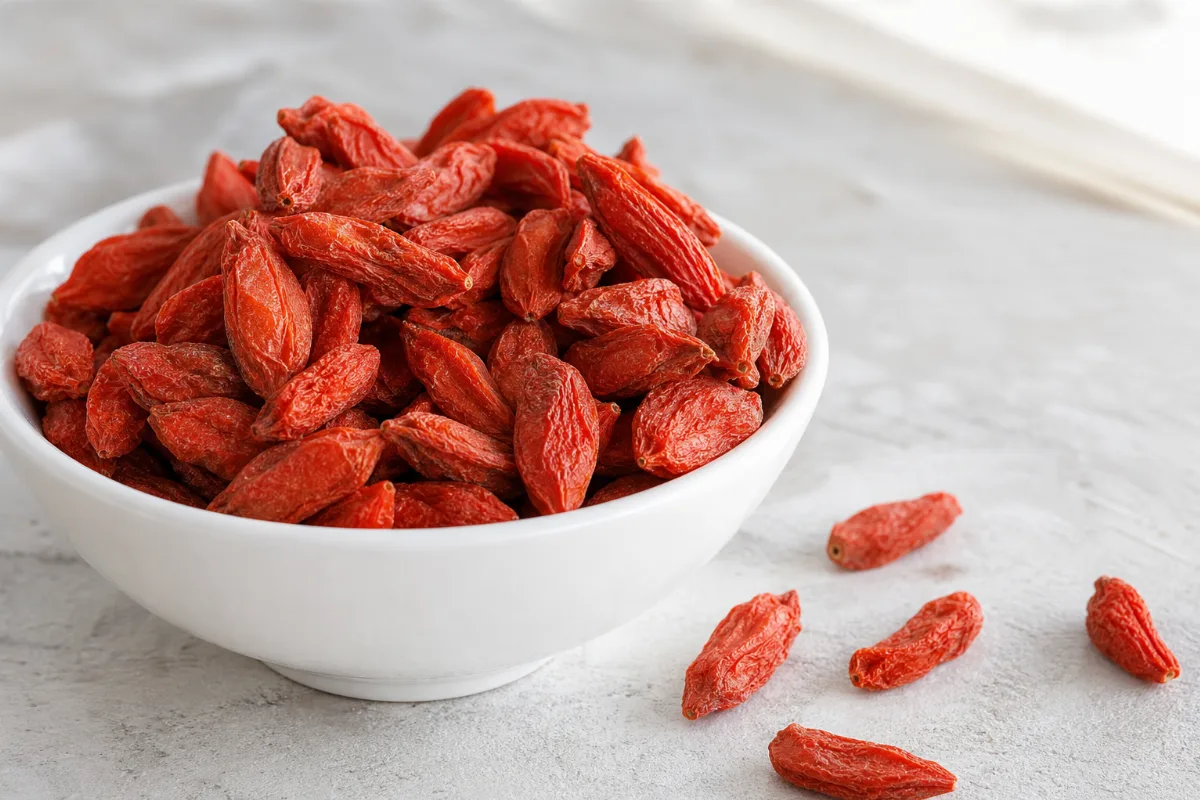
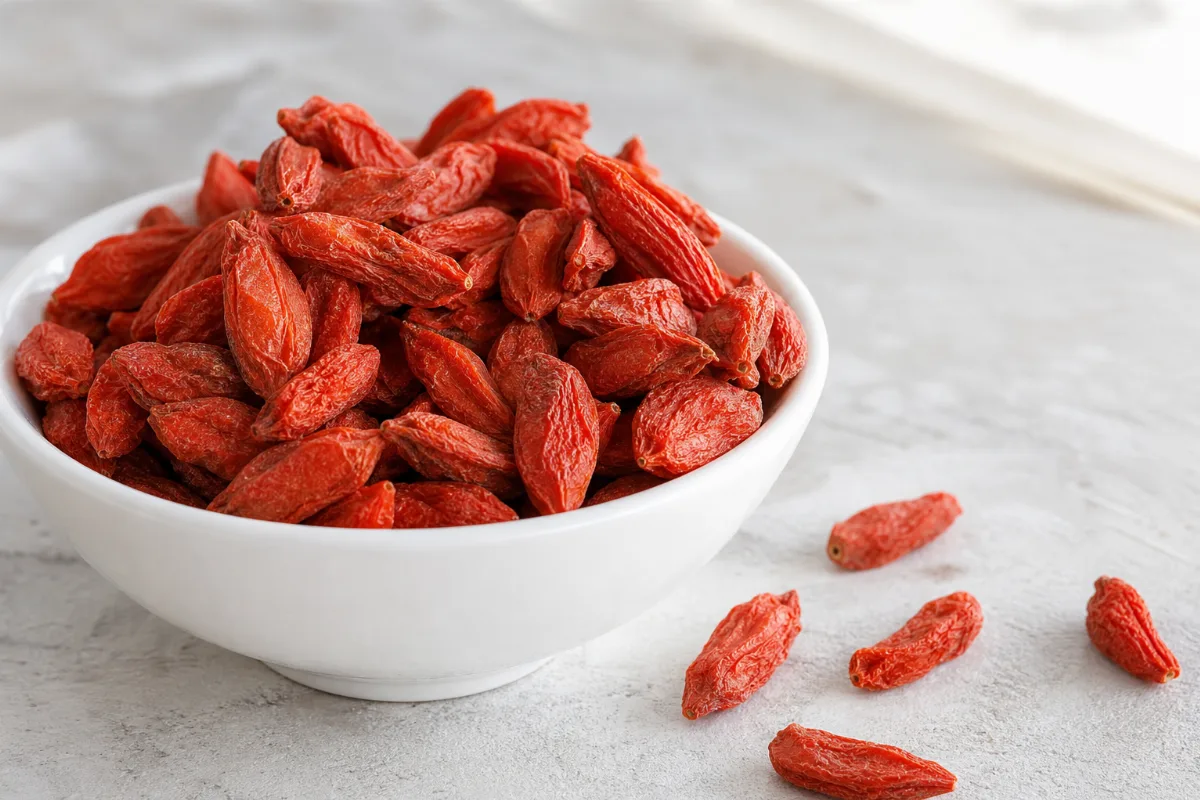
Goji is the ripe red fruit of Lycium barbarum, a nightshade-family shrub used for centuries in China as food and as a tonic for the eyes. It is rich in a polysaccharide fraction (LBP) and in the carotenoid zeaxanthin. Root bark (Lycii cortex) is a different herb.
General information, not medical advice. Last substantive update · Not medically reviewed. A named clinician has not signed off on this page. How this page is made
About Goji berry
Goji is a red fruit from China with small human trials on eye pigment, well-being, blood sugar and blood fats. Evidence is low to very low, some trials come from one juice maker, and there are real cautions for people on warfarin or with plant-food allergies.
What it is
Goji is the ripe fruit of Lycium barbarum, a shrub in the nightshade family (Solanaceae). L. chinense is a close species also used in folk medicine, but Potterat's review says only L. barbarum is the official drug. The fruit (Lycii fructus) and the root bark (Lycii cortex) are used as separate herbs, and this page covers the fruit, with juice and extract labelled.
What the research shows
Three small trials in healthy adults found goji raised blood zeaxanthin and, in two, signs of macular pigment or macular stability. A branded juice improved self-rated well-being in two short trials, and one trial raised some immune lab values. Pooled analyses found slightly lower fasting glucose and slightly better triglycerides and HDL, but no change in blood pressure or body weight. A 2021 review says the role in retinal disease in people is not yet established.
Industry link: the juice trials used one commercial product (GoChi, FreeLife International) and the abstracts do not state who paid. The Lacto-Wolfberry eye trial also used a proprietary product. No trial of vaccine response was found.
At a glance
Traditional uses history, not proof
- Traditional Chinese medicine: the fruit (gou qi zi) is used for vision, longevity and diabetes-type symptoms
- Chinese cooking: dried berries in soups and teas
- Western countries: sold since the 2000s as a juice and superfood
Studied for research
- Eye health, low
- Well-being and fatigue (one branded juice), low
- Blood sugar, low
- Blood fats, low
- Immune markers, very low
- Weight and waist, very low
- Blood pressure, against (no change)
Main compounds
- Lycium barbarum polysaccharides (LBP)
- Zeaxanthin dipalmitate (a carotenoid)
- Betaine and phenolic compounds
Common forms
- Dried or fresh berries
- Juice (a branded juice was used in several trials)
- Tea and wine
- Fruit extract and polysaccharide extract (not the same as the fruit)
Research links: Lycium, Memorial Sloan Kettering · Wolfberry and cardiovascular risk: meta-analysis (2022) · Goji and macular pigment: pilot trial (2021) · Probable warfarin interaction case report (2012) · Goji berry allergy and LTP (2012) · Research Library · Genes & Biomarkers Library
The plant and its history
- Accepted scientific name
- Lycium barbarum L.
- Naming authority
- L.; ACCEPTED in the GBIF backbone (key 2928835). Lycium chinense Mill. is also accepted (key 2928809).
- Synonyms
- Not listed; GBIF synonym list was not retrieved.
- Common names
- Goji berry (English); Wolfberry (English); Gou qi zi (Chinese (pinyin))
- Botanical family
- Solanaceae (the nightshade family, which also includes tomato and potato).
- Classification
- Plantae > Tracheophyta > Solanales > Solanaceae > Lycium > Lycium barbarum
- Native range
- Not verified from a botanical source read; traditional use is in East Asia, especially China.
- Habitat
- Not verified.
- What the plant looks like
- Roots: Not verified.; Stems: Not verified.; Leaves: Not verified.; Flowers: Not verified.; Fruit: The red berry (Fructus lycii) is the part used; root bark is separate.
- Cultivation
- Ningxia is described as a region of the most valued berries (Rajkowska 2023). Otherwise not verified.
- Harvest and processing
- Berries are sold fresh, dried, as juice, wine, powder and extract; drying method affects quality.
- Look-alikes and adulterants
- Name: Lycium chinense; Note: A close species also used in folk medicine; Potterat 2010 says only L. barbarum is officinal.; Name: Goji-type berries sold under other names; Note: Not verified; check the species on the label.
- Sustainability and conservation
- Not verified.
The plant and the parts used
Traditional use and history history, not clinical proof
| Tradition or era | Documented use | Source |
|---|---|---|
| Traditional Chinese medicine | Fruit (Lycii fructus) used for vision, longevity and a remedy for diabetes to balance yin and yang; in the Chinese Pharmacopoeia (Neelam 2021). Root bark (Lycii cortex) is a separate drug. | p33467087 |
| Recent western popularity | Sold since the early 2000s as a health food and anti-aging product, with marketing that ran ahead of clinical evidence (Potterat 2010). | p19844860 |
| EU food law | A web-search summary says goji was used as food before 15 May 1997 (not novel). NOT verified from the catalogue. | s-eu-novel-food |
Traditional use shows how a plant was used. It does not show that a supplement works or is safe today.
What is inside, and how it may work
What the plant contains and how those compounds act in cells and animals. Laboratory and animal mechanisms are not proven effects in people.
Main compounds
| Compound | Family | Where it is concentrated | Activity studied | Level of evidence |
|---|---|---|---|---|
| Lycium barbarum polysaccharides (LBP) | Proteoglycans / polysaccharides | Fruit | The main studied fraction; antioxidant and other effects mostly in lab and animal work. Products are poorly standardised. 22 15 | Laboratory research |
| Zeaxanthin (as zeaxanthin dipalmitate in the fruit) PubChem 5280899 | Carotenoid | Fruit 15 g dried wolfberry estimated to contain almost 3 mg zeaxanthin (Cheng 2005) | Absorbed and raises plasma zeaxanthin; the macula accumulates it. PubChem CID given is for zeaxanthin itself, not the dipalmitate ester (CID not found). 11 | Controlled trial |
| Betaine PubChem 247 | Quaternary ammonium compound | Not verified | Named as a constituent in Lycium reviews but the sources read here do not give details. 22 | Laboratory research |
| Scopoletin PubChem 5280460 | Coumarin | Not verified | Not described in the abstracts read for this file. | Laboratory research |
Mechanisms, receptors and pathways
| Target or pathway | Gene or receptor | What was found | Level |
|---|---|---|---|
| Zeaxanthin delivery to the macula | Not applicable | Whole fruit raises plasma zeaxanthin 2.5-fold in people; macular pigment rose in one pilot. The link between blood level and macula change was unclear in another trial. 11 17 9 | Controlled trial |
| Antioxidant enzymes | SOD, glutathione peroxidase | Juice raised SOD and GSH-Px and lowered MDA in healthy adults. 7 | Controlled trial |
| Drug-metabolising enzymes | CYP2C9, CYP2C19, CYP3A4/5/7, FMO3 | Juice and ethanol extracts blocked these enzymes in test tubes; water extracts blocked less than 30%. Lab only. 18 | Laboratory research |
| Immune and gut microbes | Not applicable | Juice raised lymphocytes, IL-2 and IgG in a human trial; polysaccharide effects on immune cells were seen in lab work. 6 | Controlled trial |
Absorption, metabolism and elimination
- Absorption
- Zeaxanthin from whole wolfberry is bioavailable: plasma level rose 2.5-fold after 28 days of 15 g a day.
- Distribution
- Not covered in the abstracts read.
- Metabolism
- Lab data suggest goji products inhibit phase I enzymes; human relevance unknown.
- Elimination
- Not covered.
- Bioavailability
- Zeaxanthin is absorbed from whole berries (Cheng 2005).
Isolated compounds versus whole extracts
Whole fruit (15 to 28 g a day), a branded milk formulation, a branded juice, a polysaccharide extract and a L. chinense fruit extract have each been studied separately and cannot be swapped. Pooled analyses suggest whole fruit gave clearer blood-fat effects than extract.
Nutritional composition
Goji berries are a fruit eaten dried or fresh; they contain carotenoids such as zeaxanthin. Detailed nutrient values were not read for this file.
6 low certainty3 very low certainty
What was looked at
The 9 benefits and uses checked for Goji berry, each with how strong the evidence is. Tap one to open it.
- Eye health: macular pigment and early macular changesLow certainty
- Well-being, energy, sleep and fatigue (self-rated)Low certainty
- Immune markers and vaccine responseVery low certainty
- Antioxidant and oxidative-stress blood markersLow certainty
- Blood sugarLow certainty
- Blood fats (triglycerides and HDL)Low certainty
- Blood pressure and blood vesselsLow certainty
- Weight, waist and energy useVery low certainty
- Liver enzymes (Lycium chinense fruit extract)Very low certainty
Lab markers tracked in the studies
Plasma zeaxanthinMacular pigment optical density (MPOD)Lymphocytes, interleukin-2 and IgGMalondialdehyde (MDA)Fasting blood glucoseTriglyceridesHDL cholesterolLDL and total cholesterolALT and GGTWaist circumference
What is Goji berry good for?
The main studied uses and how strong the human evidence is. All results are for the form named; fruit, juice, extract and root bark are different products.
Benefits, one by one
Each card is a research question, not a promise. Tap a goal to filter. Open a card to see the studies, doses and limits.
Eye health: macular pigment and early macular changes
Low certaintyThree small trials show that eating goji raises zeaxanthin in the blood, and two suggest signs of better macular pigment. No trial has shown less age-related macular degeneration (AMD) or better vision.
4 studiesWhole dried fruit 15 to 28 g a day in two trials; a proprietary milk-…
Studies, doses and limits
What the trials found
Cheng 2005: 14 healthy adults ate 15 g a day of dried wolfberry for 28 days and plasma zeaxanthin rose 2.5-fold (0.038 to 0.096 micromol/L); 13 controls did not change. Bucheli 2011 (150 healthy people aged 65 to 70, placebo-controlled): a branded milk-based goji formulation (13.7 g a day for 90 days) kept the macula stable while the placebo group showed more hypopigmentation and soft drusen; plasma zeaxanthin rose 26%. Li 2021 (27 healthy adults aged 45 to 65, unmasked, no placebo): 28 g of dried goji five days a week for 90 days raised macular pigment density at two retinal positions (p=0.029, 0.044) while a lutein/zeaxanthin capsule did not. A 2021 review says the role of the fruit in managing retinal disease in people is not yet established.
Results
Higher zeaxanthin in blood; macular pigment up in one small pilot; stable macula versus placebo in one branded-product trial.
Effect sizes as reported
Plasma zeaxanthin +26% (Bucheli) and 2.5-fold (Cheng); macular pigment p=0.029 and 0.044 (Li); no numbers for the macular findings in the Bucheli abstract.
Why this rating
Three small trials in healthy people, one with a branded product, one without placebo. They measure markers of risk, not AMD, and the Bucheli authors say the link between zeaxanthin and macula change is unclear.
Form and dose studied
Whole dried fruit 15 to 28 g a day in two trials; a proprietary milk-based formulation in one. This is trial information, not a recommendation.
Who was studied
Healthy adults aged 45 to 70. No AMD patients were studied in these trials.
Limits
No trial in people with AMD; no vision outcome; the Bucheli product was proprietary and funding was not stated (possible industry link, not verified).
Why researchers looked
Goji fruit is unusually rich in zeaxanthin, a yellow pigment that collects in the macula, the centre of the retina. Low macular pigment is a risk marker for AMD.
Traditional use
Goji (gou qi zi, Lycii fructus) is the ripe fruit of Lycium barbarum, used for centuries in Chinese cooking and traditional medicine, including as a vision aid. The root bark (Lycii cortex, di gu pi) is a separate traditional herb and is not covered here. Chinese texts describe it as good for the eyes.
Proposed mechanism Preliminary mechanism
Zeaxanthin from the fruit is absorbed and may add to the pigment that filters blue light. A review says the benefit in retinal disease rests mainly on animal studies.
A proposed mechanism does not show that the effect happens in people.
No product-related adverse events in the Bucheli trial. See the safety file for allergy and drug interactions.
Well-being, energy, sleep and fatigue (self-rated)
Low certaintyTwo short trials of one branded goji juice found people rated their energy, sleep and calm higher and fatigue lower. The trials were small and the product was commercial, so treat the result as a hint only.
2 studiesGoChi juice 120 mL a day for 14 and 30 days.
Studies, doses and limits
What the trials found
Amagase 2008: 34 healthy adults drank 120 mL a day of GoChi juice (16) or placebo (18) for 14 days. The juice group rated energy, athletic performance, sleep quality, ease of waking, focus, mental acuity, calmness, health, contentment and happiness higher, and fatigue and stress lower, compared with their own day-1 ratings; the placebo group changed on two items. Body weight, blood pressure and other measures did not differ. Amagase 2009 (60 older adults, 30 days): well-being scores for fatigue and sleep improved with the juice, and short-term memory and focus showed a tendency to improve; no adverse reactions were reported.
Results
Better self-rated wellbeing and lower fatigue with the juice; no objective outcome changed.
Effect sizes as reported
Questionnaire ratings; numbers are not given in the abstracts.
Why this rating
Two small trials of the same branded juice from the same research group. Self-rated scores are easily influenced by expectation, and both trials were short.
Form and dose studied
GoChi juice 120 mL a day for 14 and 30 days.
Who was studied
Healthy adults, one group Chinese adults aged 55 to 72.
Limits
Industry-linked risk: commercial juice from FreeLife International; funding and author ties not stated in the abstracts. No trial of dried fruit or tea for fatigue was found. No trial in people with a fatigue disorder.
Why researchers looked
Goji is traditionally taken as a tonic. The juice was tested for general feelings of health.
Traditional use
Goji (gou qi zi, Lycii fructus) is the ripe fruit of Lycium barbarum, used for centuries in Chinese cooking and traditional medicine, including as a vision aid. The root bark (Lycii cortex, di gu pi) is a separate traditional herb and is not covered here.
Proposed mechanism Preliminary mechanism
No clear mechanism; the authors discuss antioxidant and polysaccharide effects but the trials did not test them.
A proposed mechanism does not show that the effect happens in people.
No adverse reactions reported. Juice can interact with warfarin (see safety).
Immune markers and vaccine response
Very low certaintyOne 30-day trial of branded goji juice in older adults raised some immune lab values. A trial of vaccine response was searched for and not found, so nothing is known about whether goji helps people respond to vaccines or catch fewer infections.
2 studiesGoChi juice 120 mL a day for 30 days.
Studies, doses and limits
What the trials found
Amagase 2009 (60 healthy adults aged 55 to 72, GoChi juice 120 mL a day vs placebo for 30 days): lymphocyte count, interleukin-2 and IgG rose versus before and versus placebo; CD4, CD8, natural killer cells, interleukin-4 and IgA did not change. Memorial Sloan Kettering says human immune evidence is lacking. A PubMed search for goji with vaccine response found no human vaccine trial among the results checked.
Results
Some immune lab values higher; no infection, illness or vaccine outcome.
Effect sizes as reported
Direction only; numbers not given in the abstract.
Why this rating
One small trial of a branded juice in healthy people; lab values only. No vaccine-response or infection data in the sources read.
Form and dose studied
GoChi juice 120 mL a day for 30 days.
Who was studied
Healthy older adults in China.
Limits
No infection outcomes; no vaccine trial found; industry-linked juice trial.
Why researchers looked
Lycium polysaccharides influence immune cells in the lab, and goji is traditionally a tonic.
Traditional use
Goji (gou qi zi, Lycii fructus) is the ripe fruit of Lycium barbarum, used for centuries in Chinese cooking and traditional medicine, including as a vision aid. The root bark (Lycii cortex, di gu pi) is a separate traditional herb and is not covered here.
Proposed mechanism Laboratory research
Polysaccharides may act on immune cells and gut bacteria in lab and animal work; a review of lab studies says goji polysaccharide is prebiotic and immune-stimulating.
A proposed mechanism does not show that the effect happens in people.
Immune stimulation could matter for people on immune-suppressing drugs; not studied.
Antioxidant and oxidative-stress blood markers
Low certaintyIn a 30-day juice trial and a pooled analysis, markers of oxidative stress moved in the helpful direction. These are lab markers, not health outcomes.
2 studiesGoChi juice 120 mL a day for 30 days; whole fruit and extracts in poo…
Studies, doses and limits
What the trials found
Amagase 2009 Nutr Res (50 healthy adults, 30 days, GoChi 120 mL a day vs placebo): SOD +8.1%, GSH-Px +9.0% and malondialdehyde -6.0% versus placebo. Toh 2022 meta-analysis of 10 trials: malondialdehyde lower (Hedges g -1.45, 95% CI -2.75 to -0.16).
Results
Oxidative-stress markers improved.
Effect sizes as reported
SOD +8.1%, GSH-Px +9.0%, MDA -6.0% (juice); MDA Hedges g -1.45 (pooled).
Why this rating
Marker changes in small trials; the pooled estimate is wide and mixes forms.
Form and dose studied
GoChi juice 120 mL a day for 30 days; whole fruit and extracts in pooled trials.
Who was studied
Healthy adults and mixed populations.
Limits
Biomarker change is not clinical benefit; juice trial is industry-linked.
Why researchers looked
The fruit contains polysaccharides, carotenoids and polyphenols that act as antioxidants in test tubes.
Traditional use
Goji (gou qi zi, Lycii fructus) is the ripe fruit of Lycium barbarum, used for centuries in Chinese cooking and traditional medicine, including as a vision aid. The root bark (Lycii cortex, di gu pi) is a separate traditional herb and is not covered here.
Proposed mechanism Preliminary mechanism
Antioxidant enzymes (SOD, GSH-Px) rose, which the authors suggest comes from the body's own defences.
A proposed mechanism does not show that the effect happens in people.
None noted in the abstracts.
Blood sugar
Low certaintyPooled trials suggest slightly lower fasting glucose, and one small diabetes trial of an extract found lower blood sugar after a test meal. Evidence is limited, and goji does not replace diabetes treatment.
4 studiesLBP extract 300 mg a day in the diabetes trial; whole fruit and other…
Studies, doses and limits
What the trials found
Guo 2017 meta-analysis (7 RCTs, 548 people): fasting glucose lower by 0.36 mmol/L (95% CI -0.62 to -0.10). Zhou 2022 meta-analysis of LBP (7 articles): fasting glucose changed significantly (p<0.05; size not in the abstract). Cai 2015 (67 adults with type 2 diabetes, LBP 300 mg a day for 3 months): glucose after a test meal significantly lower and insulin index higher; the effect looked stronger in people who were not on diabetes drugs. Memorial Sloan Kettering says human data are limited.
Results
Small drop in fasting glucose in pooled trials; one small diabetes trial positive.
Effect sizes as reported
Fasting glucose -0.36 mmol/L (CI -0.62 to -0.10).
Why this rating
Small, inconsistent trials with mixed forms; the diabetes trial was short and small.
Form and dose studied
LBP extract 300 mg a day in the diabetes trial; whole fruit and other forms in the pooled trials.
Who was studied
Healthy adults and adults with type 2 diabetes.
Limits
Extract is not the same as the fruit; abstracts lack effect sizes for the LBP review.
Why researchers looked
Goji is a traditional remedy for symptoms of frequent thirst and urination. Lab work suggests the polysaccharides act on sugar handling.
Traditional use
Goji (gou qi zi, Lycii fructus) is the ripe fruit of Lycium barbarum, used for centuries in Chinese cooking and traditional medicine, including as a vision aid. The root bark (Lycii cortex, di gu pi) is a separate traditional herb and is not covered here.
Proposed mechanism Preliminary mechanism
Polysaccharides may improve insulin response in lab and animal work.
A proposed mechanism does not show that the effect happens in people.
Possible added effect with diabetes drugs (hypoglycaemia) is a theory from lowered glucose; no case reports were found.
Blood fats (triglycerides and HDL)
Low certaintyA pooled analysis of 10 trials found triglycerides a little lower and HDL a little higher, mostly with the whole fruit. Total cholesterol and LDL did not clearly change.
5 studiesWhole dried fruit 15 g a day in the best-described trial.
Studies, doses and limits
What the trials found
Toh 2022 (10 RCTs): triglycerides -0.14 mmol/L (CI -0.19 to -0.09) and HDL +0.06 mmol/L (CI 0.02 to 0.09), clearer for whole fruit than extract; no change in other lipids or blood pressure. Zeng 2023 (5 RCTs, 259 people): triglycerides and HDL improved, total cholesterol and LDL not significant; the authors urge caution after sensitivity analyses. Guo 2017 (7 RCTs): cholesterol and triglyceride changes not significant. Zhou 2022 (LBP): LDL and HDL changed significantly. Toh 2021 (40 adults, 15 g dried wolfberry a day with diet counselling for 16 weeks): HDL +0.08 mmol/L, predicted heart risk -0.8%.
Results
Small gains in triglycerides and HDL; LDL results disagree across reviews.
Effect sizes as reported
TG -0.14 mmol/L; HDL +0.06 mmol/L (pooled).
Why this rating
Reviews disagree on some lipids and rely on small trials; changes are small and are lab markers.
Form and dose studied
Whole dried fruit 15 g a day in the best-described trial.
Who was studied
Mostly adults without disease.
Limits
No heart-event outcomes; the 2023 abstract prints confusing signs, so only the direction is used.
Why researchers looked
Goji is eaten as part of heart-healthy diets in Asia, and LBP lowers fats in animals.
Traditional use
Goji (gou qi zi, Lycii fructus) is the ripe fruit of Lycium barbarum, used for centuries in Chinese cooking and traditional medicine, including as a vision aid. The root bark (Lycii cortex, di gu pi) is a separate traditional herb and is not covered here.
Proposed mechanism Preliminary mechanism
Not established in people.
A proposed mechanism does not show that the effect happens in people.
None noted.
Blood pressure and blood vessels
Low certaintyBlood pressure did not change in pooled trials. One small trial found a lower predicted heart risk, which is a calculation rather than a measured outcome.
4 studiesWhole fruit 15 g a day in the trial.
Studies, doses and limits
What the trials found
Toh 2022: no change in blood pressure across 10 RCTs. Guo 2017: no benefit for blood pressure. Toh 2021 (40 adults, 16 weeks): HDL higher, predicted risk and vascular age lower than control; no difference in the other vascular measures. Potterat 2010 says the blood-pressure interest relates to root-bark compounds.
Results
No blood pressure change; mixed vascular markers.
Effect sizes as reported
No change in blood pressure.
Why this rating
Consistent null for blood pressure across two meta-analyses (fruit).
Form and dose studied
Whole fruit 15 g a day in the trial.
Who was studied
Adults.
Limits
Root bark results must not be applied to the fruit.
Why researchers looked
Root bark of Lycium is traditionally used for high blood pressure, but that is a different herb from the fruit.
Traditional use
Goji (gou qi zi, Lycii fructus) is the ripe fruit of Lycium barbarum, used for centuries in Chinese cooking and traditional medicine, including as a vision aid. The root bark (Lycii cortex, di gu pi) is a separate traditional herb and is not covered here.
Proposed mechanism Preliminary mechanism
None shown for the fruit.
A proposed mechanism does not show that the effect happens in people.
No hypotension signal in the trials; no case reports found.
Weight, waist and energy use
Very low certaintyPilot trials of one branded juice reported higher energy use after a meal and a smaller waist. Pooled trials of various goji forms found no change in body weight.
2 studiesGoChi 120 mL a day.
Studies, doses and limits
What the trials found
Amagase 2011: two small randomized, placebo-controlled studies of GoChi juice in overweight adults. One 120 mL dose raised post-meal energy use about 10% at 1 hour versus placebo; 120 mL a day for 14 days cut waist circumference by 5.5 cm (n=15) versus 0.9 cm in placebo (n=14). Guo 2017 pooled: no benefit for body weight.
Results
Waist smaller in a tiny juice trial; no weight change in pooled trials.
Effect sizes as reported
Waist -5.5 cm vs -0.9 cm.
Why this rating
Two tiny pilot studies, 14 days, from the juice maker's research group; conflicts with the pooled null on weight.
Form and dose studied
GoChi 120 mL a day.
Who was studied
Overweight healthy adults.
Limits
Industry-linked juice trial; not repeated.
Why researchers looked
Rodent studies suggested goji raises metabolic rate.
Traditional use
Goji (gou qi zi, Lycii fructus) is the ripe fruit of Lycium barbarum, used for centuries in Chinese cooking and traditional medicine, including as a vision aid. The root bark (Lycii cortex, di gu pi) is a separate traditional herb and is not covered here.
Proposed mechanism Preliminary mechanism
Not shown in people.
A proposed mechanism does not show that the effect happens in people.
None noted.
Liver enzymes (Lycium chinense fruit extract)
Very low certaintyOne 12-week trial of a Lycium chinense fruit extract found slightly lower liver enzymes in people with mildly raised ALT. It is a different species and an extract, so it does not show that goji berries protect the liver.
3 studiesL. chinense fruit extract 1,760 mg a day for 12 weeks.
Studies, doses and limits
What the trials found
Oh 2023: 90 adults aged 19 to 70 with raised ALT took 1,760 mg a day of L. chinense fruit extract or placebo for 12 weeks. ALT (P=0.0498) and GGT (P=0.0368) fell versus placebo; no clinically significant safety changes. Memorial Sloan Kettering says liver benefits are preclinical and human evidence is not established. The LBP review calls liver disease a promising area but notes most evidence is animal.
Results
Small drops in ALT and GGT with one extract.
Effect sizes as reported
P=0.0498 for ALT; P=0.0368 for GGT.
Why this rating
One trial with borderline P values, an extract of another species.
Form and dose studied
L. chinense fruit extract 1,760 mg a day for 12 weeks.
Who was studied
Adults with mildly raised ALT.
Limits
Do not apply to L. barbarum berries or to root bark.
Why researchers looked
Animal and lab studies suggest protective effects on the liver.
Traditional use
Goji (gou qi zi, Lycii fructus) is the ripe fruit of Lycium barbarum, used for centuries in Chinese cooking and traditional medicine, including as a vision aid. The root bark (Lycii cortex, di gu pi) is a separate traditional herb and is not covered here.
Proposed mechanism Animal research
Antioxidant and anti-fibrosis effects in animals.
A proposed mechanism does not show that the effect happens in people.
No safety signal in the trial.
Connections to the rest of health
How Goji berry connects to the rest of our health knowledge graph. Every link says what kind of connection it is. A safety link (for example to the liver) is a warning, not a benefit. A study that merely mentions a topic never creates a benefit link.
Explore every connection: goals, body systems, organs, symptoms, genes
A. Wellness goals
| Connected to | Kind of connection | Evidence status | Context | Studies |
|---|---|---|---|---|
| Healthy Aging | Potential benefit | Low certainty | Eye health: macular pigment and early macular changes: Three small trials show that eating goji raises zeaxanthin in the blood, and two suggest signs of better macular pigment. No trial has shown less age-related macular degeneration (AMD) or better vision. Antioxidant and oxidative-stress blood markers: In a 30-day juice trial and a pooled analysis, markers of oxidative stress moved in the helpful direction. These are lab markers, not health outcomes. | 11 9 17 20 7 27 |
| Reduce Fatigue | Potential benefit | Low certainty | Well-being, energy, sleep and fatigue (self-rated): Two short trials of one branded goji juice found people rated their energy, sleep and calm higher and fatigue lower. The trials were small and the product was commercial, so treat the result as a hint only. | 5 6 |
| Better Sleep | Potential benefit | Low certainty | Well-being, energy, sleep and fatigue (self-rated): Two short trials of one branded goji juice found people rated their energy, sleep and calm higher and fatigue lower. The trials were small and the product was commercial, so treat the result as a hint only. | 5 6 |
| Stress Reduction | Potential benefit | Low certainty | Well-being, energy, sleep and fatigue (self-rated): Two short trials of one branded goji juice found people rated their energy, sleep and calm higher and fatigue lower. The trials were small and the product was commercial, so treat the result as a hint only. | 5 6 |
| Immune Support | Potential benefit | Very low certainty | Immune markers and vaccine response: One 30-day trial of branded goji juice in older adults raised some immune lab values. A trial of vaccine response was searched for and not found, so nothing is known about whether goji helps people respond to vaccines or catch fewer infections. | 6 1 |
| Blood Sugar Balance | Potential benefit | Low certainty | Blood sugar: Pooled trials suggest slightly lower fasting glucose, and one small diabetes trial of an extract found lower blood sugar after a test meal. Evidence is limited, and goji does not replace diabetes treatment. | 14 31 10 1 |
| Cholesterol Balance | Potential benefit | Low certainty | Blood fats (triglycerides and HDL): A pooled analysis of 10 trials found triglycerides a little lower and HDL a little higher, mostly with the whole fruit. Total cholesterol and LDL did not clearly change. | 27 29 14 31 26 |
| Heart Health | Potential benefit | Low certainty | Blood fats (triglycerides and HDL): A pooled analysis of 10 trials found triglycerides a little lower and HDL a little higher, mostly with the whole fruit. Total cholesterol and LDL did not clearly change. | 27 29 14 31 26 |
| Blood Pressure Support | Low certainty | Blood pressure and blood vessels: Blood pressure did not change in pooled trials. One small trial found a lower predicted heart risk, which is a calculation rather than a measured outcome. | 27 14 26 22 | |
| Heart Health | Low certainty | Blood pressure and blood vessels: Blood pressure did not change in pooled trials. One small trial found a lower predicted heart risk, which is a calculation rather than a measured outcome. | 27 14 26 22 | |
| Weight Management | Potential benefit | Very low certainty | Weight, waist and energy use: Pilot trials of one branded juice reported higher energy use after a meal and a smaller waist. Pooled trials of various goji forms found no change in body weight. | 8 14 |
| Metabolic Health | Potential benefit | Very low certainty | Weight, waist and energy use: Pilot trials of one branded juice reported higher energy use after a meal and a smaller waist. Pooled trials of various goji forms found no change in body weight. | 8 14 |
| Liver Support | Potential benefit | Very low certainty | Liver enzymes (Lycium chinense fruit extract): One 12-week trial of a Lycium chinense fruit extract found slightly lower liver enzymes in people with mildly raised ALT. It is a different species and an extract, so it does not show that goji berries protect the liver. | 21 15 1 |
B. Body systems
| Connected to | Kind of connection | Evidence status | Context | Studies |
|---|---|---|---|---|
| Cardiovascular system | Drug or supplement interaction | Low certainty | Case reports of raised INR with bleeding. Preparation or compound: Goji juice, tea or wine with warfarin |
24 30 |
| Immune system | Adverse effect or risk | Low certainty | Allergy including anaphylaxis, linked to lipid transfer protein. Preparation or compound: Goji berry |
19 16 |
| Nervous System | Biological association | Low certainty | Studied for: Eye health: macular pigment and early macular changes Studied for: Well-being, energy, sleep and fatigue (self-rated) | 11 9 17 20 5 6 |
| Immune System | Biological association | Very low certainty | Studied for: Immune markers and vaccine response | 6 1 |
| Cardiovascular System | Biological association | Low certainty | Studied for: Antioxidant and oxidative-stress blood markers Studied for: Blood fats (triglycerides and HDL) | 7 27 29 14 31 26 22 |
| Endocrine System | Biological association | Low certainty | Studied for: Blood sugar | 14 31 10 1 |
| Metabolism Weight | Biological association | Very low certainty | Studied for: Weight, waist and energy use | 8 14 |
| Hepatic System | Biological association | Very low certainty | Studied for: Liver enzymes (Lycium chinense fruit extract) | 21 15 1 |
C. Body parts and organs
I. Biomarkers
| Connected to | Kind of connection | Evidence status | Context | Studies |
|---|---|---|---|---|
| Plasma zeaxanthin | Biological association | Low certainty | Measured in trials: raised. A lab change is not the same as a health benefit. | 11 9 |
| Macular pigment optical density (MPOD) | Biological association | Low certainty | Measured in trials: raised. A lab change is not the same as a health benefit. | 17 |
| Lymphocytes, interleukin-2 and IgG | Biological association | Very low certainty | Measured in trials: raised. A lab change is not the same as a health benefit. | 6 |
| Malondialdehyde (MDA) | Biological association | Low certainty | Measured in trials: lowered. A lab change is not the same as a health benefit. | 7 27 |
| Fasting blood glucose | Biological association | Low certainty | Measured in trials: lowered. A lab change is not the same as a health benefit. | 14 |
| Triglycerides | Biological association | Low certainty | Measured in trials: lowered. A lab change is not the same as a health benefit. | 27 29 |
| HDL cholesterol | Biological association | Low certainty | Measured in trials: raised. A lab change is not the same as a health benefit. | 27 26 |
| LDL and total cholesterol | Biological association | Mixed findings | Measured in trials: mixed. A lab change is not the same as a health benefit. | 29 31 |
| ALT and GGT | Biological association | Very low certainty | Measured in trials: lowered. A lab change is not the same as a health benefit. | 21 |
| Waist circumference | Biological association | Very low certainty | Measured in trials: lowered. A lab change is not the same as a health benefit. | 8 |
J. Genes, receptors and enzymes
| Connected to | Kind of connection | Evidence status | Context | Studies |
|---|---|---|---|---|
| CYP2C9 / CYP2C19 / CYP3A4 | Preliminary mechanism | In vitro | Inhibited by goji juice and ethanol extract in test tubes. | 18 |
K. Biological pathways
| Connected to | Kind of connection | Evidence status | Context | Studies |
|---|---|---|---|---|
| Carotenoid delivery to the macula (zeaxanthin) | Preliminary mechanism | Rct | Plasma zeaxanthin rises with goji intake. | 11 |
L. Active compounds
| Connected to | Kind of connection | Evidence status | Context | Studies |
|---|---|---|---|---|
| Lycium barbarum polysaccharides (LBP) | Biological association | In vitro | The main studied fraction; antioxidant and other effects mostly in lab and animal work. Products are poorly standardised. Preparation or compound: Fruit |
22 15 |
| Zeaxanthin (as zeaxanthin dipalmitate in the fruit) | Biological association | Rct | Absorbed and raises plasma zeaxanthin; the macula accumulates it. PubChem CID given is for zeaxanthin itself, not the dipalmitate ester (CID not found). Preparation or compound: Fruit |
11 |
| Betaine | Biological association | In vitro | Named as a constituent in Lycium reviews but the sources read here do not give details. Preparation or compound: Not verified |
22 |
| Scopoletin | Biological association | In vitro | Not described in the abstracts read for this file. Preparation or compound: Not verified |
Each connection is stored with the ingredient, the connected record, the kind of connection, the evidence status, the supporting studies, the preparation or compound involved, and a review date (last reviewed October 25, 2026).
Evidence at a glance: what changed in 10 lab markers
Tap a number to show only those markers. Counts are markers, not people.
The evidence
The research centre for Goji berry. Every record here was checked against PubMed or the publisher's page; we never list a study we have not verified.
Evidence by outcome
Bars show how many studies we found for each outcome, not how well it works. People are added up across trials only (reviews are not added, to avoid double counting).
How we rate evidence
High certainty
Several well-run trials or reviews agree; further research is unlikely to change the picture much.
Moderate certainty
Good trials point the same way, but some doubt remains.
Low certainty
Small, short or inconsistent trials. The finding could change with better research.
Very low certainty
Very little or very weak human data. Treat as a possibility only.
Mixed findings
Trials or reviews disagree with each other.
Not enough evidence
Not enough human research to say either way.
Evidence against
Good research found no benefit, or found harm.
We take the reviewers' own risk-of-bias and GRADE statements where they exist, and otherwise judge from study size, design, consistency, directness and whether a product matches what is sold. Many publications do not make evidence high. Method note: We searched PubMed, read every abstract directly, checked taxonomy through GBIF and read the Memorial Sloan Kettering herb page. NCCIH had no goji page; EFSA, EMA/HMPC, LiverTox and LactMed entries were not found, and the EU Novel Food Catalogue was not opened. This is stated where it matters.
Study library: every study we checked 31
| Study | Design | People | Product, dose, length | Result |
|---|---|---|---|---|
| 2021 Lycium (About Herbs), Memorial Sloan Kettering Cancer Center · Source |
Authoritative guidance |
unspecified |
Page last updated 10 December 2021, read 2026-10-25. Lists warfarin and other anticoagulants and lipid transfer protein food allergy under 'do not take if'; reports a few cases of raised INR and one bleeding case with goji wine; says lycium may affect drugs cleared by CYP3A4, 2C9 and 2C19 (lab extracts blocked 2C9 and 2C19, clinical relevance to be determined); human data on blood sugar are limited; preclinical liver and immune findings; safety and efficacy for chronic disease not established. Pregnancy, breastfeeding, photosensitivity, sulfites and contamination are not mentioned. Methods, limits and fundingRead: full-text | |
| 2026 NCCIH goji page (checked, not found) · Source |
Authoritative guidance |
unspecified |
The address returned HTTP 404 on 2026-10-25. No NCCIH goji page was found. Methods, limits and fundingRead: not-found | |
| 2026 EU Novel Food Catalogue entry for goji berry (search snippet only) · Source |
Authoritative guidance |
unspecified |
A web-search summary says the Commission's catalogue lists Lycium barbarum goji berry as used to a significant degree before 15 May 1997 and so not novel. The catalogue entry itself was NOT opened, so this is NOT verified. The catalogue says it is indicative only. No EFSA opinion and no EMA/HMPC monograph on Lycii fructus were found. Methods, limits and fundingRead: summary-only | |
| 2026 GBIF species match: Lycium barbarum L. (key 2928835) and Lycium chinense Mill. (key 2928809) · Source |
Database record |
unspecified |
Both ACCEPTED, EXACT match, family Solanaceae, order Solanales (GBIF API, 2026-10-25). Methods, limits and fundingRead: full-text | |
| Amagase 2008 A randomized, double-blind, placebo-controlled, clinical study of the general effects of a standardized Lycium barbarum (Goji) Juice, GoChi J Altern Complement Med · PMID 18447631 · DOI |
Controlled trial |
34 Healthy adults (16 juice, 18 placebo) |
GoChi goji juice fruit (juice) 120 mL a day 14 days · vs placebo drink |
Juice group rated energy, sleep, focus, calmness, health and happiness higher and fatigue and stress lower versus their own day-1 scores; placebo changed in only two items. Body weight, blood pressure and other measured values did not differ. Questionnaire ratings (0 to 5); numbers not given in the abstract (NA) Methods, limits and fundingOutcomes: Self-rated well-being, energy, sleep, focus, fatigue, stress; body weight, blood pressure, pulse, visual acuity Limitations: Very small; self-rated scores; 14 days; within-group comparison highlighted; commercial product. Funding and conflicts: Branded commercial juice (GoChi, FreeLife International); the abstract does not state who paid for the trial or whether the authors work for the company. Treat as possibly industry-linked. Read: abstract |
| Amagase 2009 Immunomodulatory effects of a standardized Lycium barbarum fruit juice in Chinese older healthy human subjects J Med Food · PMID 19857084 · DOI |
Controlled trial |
60 Healthy adults aged 55 to 72 in China |
GoChi goji juice fruit (juice) 120 mL a day (stated as equal to at least 150 g fresh fruit) 30 days · vs placebo |
Lymphocyte count, interleukin-2 and IgG rose versus pre-treatment and placebo; CD4, CD8, natural killer cells, IL-4 and IgA did not change. Fatigue and sleep ratings improved. No adverse reactions. Direction only; numbers not given in the abstract (NA) Methods, limits and fundingOutcomes: Immune cells and signals, well-being Limitations: Healthy people; lab immune markers, not infections or vaccine response; 30 days. Funding and conflicts: Branded commercial juice (GoChi, FreeLife International); the abstract does not state who paid for the trial or whether the authors work for the company. Treat as possibly industry-linked. Read: abstract |
| Amagase 2009 Lycium barbarum (goji) juice improves in vivo antioxidant biomarkers in serum of healthy adults Nutr Res · PMID 19185773 · DOI |
Controlled trial |
50 Healthy Chinese adults aged 55 to 72 |
GoChi goji juice fruit (juice) 120 mL a day 30 days · vs placebo |
Versus placebo after 30 days: SOD +8.1%, GSH-Px +9.0%, MDA -6.0%. SOD +8.1%, GSH-Px +9.0%, MDA -6.0% versus placebo (NA) Methods, limits and fundingOutcomes: Superoxide dismutase, glutathione peroxidase, malondialdehyde Limitations: Blood markers only; commercial product. Funding and conflicts: Branded commercial juice (GoChi, FreeLife International); the abstract does not state who paid for the trial or whether the authors work for the company. Treat as possibly industry-linked. Read: abstract |
| Amagase 2011 Lycium barbarum increases caloric expenditure and decreases waist circumference in healthy overweight men and women: pilot study J Am Coll Nutr · PMID 22081616 · DOI |
Controlled trial |
29 Overweight healthy adults (two small studies) |
GoChi goji juice fruit (juice) 30, 60 or 120 mL once; 120 mL a day single dose; 14 days · vs placebo |
One 120 mL dose raised post-meal energy use about 10% at 1 hour versus placebo. Waist fell 5.5 cm (n=15) over 14 days versus 0.9 cm in placebo (n=14). Waist -5.5 cm vs -0.9 cm (NA) Methods, limits and fundingOutcomes: Energy use after a meal; waist circumference Limitations: Pilot, tiny, 14 days; weight change not reported in the abstract. Funding and conflicts: Branded commercial juice (GoChi, FreeLife International); the abstract does not state who paid for the trial or whether the authors work for the company. Treat as possibly industry-linked. Read: abstract |
| Bucheli 2011 Goji berry effects on macular characteristics and plasma antioxidant levels Optom Vis Sci · PMID 21169874 · DOI |
Controlled trial |
150 Healthy adults aged 65 to 70 |
Lacto-Wolfberry, a proprietary milk-based goji formulation fruit 13.7 g a day 90 days · vs placebo |
Placebo group showed macular hypopigmentation and soft drusen build-up; the goji group stayed stable. Plasma zeaxanthin rose 26% and antioxidant capacity 57% with goji only. No product-related adverse events. Change in zeaxanthin did not match change in macula. Zeaxanthin +26%; antioxidant capacity +57%; macular findings not given as numbers in the abstract (NA) Methods, limits and fundingOutcomes: Macular pigmentation, soft drusen count, plasma zeaxanthin, antioxidant capacity Limitations: Healthy, not AMD patients; branded milk formulation; mechanism unclear. Funding and conflicts: Proprietary formulation; funding not stated in the abstract. Possible industry link, not verified. Read: abstract |
| Cai 2015 Practical Application of Antidiabetic Efficacy of Lycium barbarum Polysaccharide in Patients with Type 2 Diabetes Med Chem · PMID 25381995 · DOI |
Controlled trial |
67 Adults with type 2 diabetes (37 LBP, 30 control) |
Lycium barbarum polysaccharide (LBP) extract fruit polysaccharide extract 300 mg a day 3 months · vs control |
Serum glucose was significantly lower and the insulinogenic index and HDL higher with LBP; the effect looked stronger in people not taking diabetes medicines. Direction only in the abstract (NA) Methods, limits and fundingOutcomes: Glucose after a mixed meal test, insulin index, HDL Limitations: Small, short; extract not the whole fruit; abstract has no numbers. Funding and conflicts: Not stated in the abstract. Read: abstract |
| Cheng 2005 Fasting plasma zeaxanthin response to Fructus barbarum L. (wolfberry; Kei Tze) in a food-based human supplementation trial Br J Nutr · PMID 15705234 · DOI |
Controlled trial |
27 Healthy adults: 14 took wolfberry, 13 controls |
Whole dried wolfberries fruit 15 g a day (about 3 mg zeaxanthin) 28 days · vs no wolfberry |
Plasma zeaxanthin rose 2.5-fold (0.038 to 0.096 micromol/L, P<0.01); controls unchanged. 2.5-fold rise in plasma zeaxanthin (NA) Methods, limits and fundingOutcomes: Fasting plasma zeaxanthin Limitations: Single-blinded, small, controls took nothing; measures blood level not eyes. Funding and conflicts: Not stated in the abstract. Read: abstract |
| Ding 2023 Achieving High Efficacy and Low Safety Risk by Balancing Pesticide Deposition on Leaves and Fruits of Chinese Wolfberry (Lycium barbarum L.) ACS Omega · PMID 37125088 · DOI |
Other plant |
Field and lab study of spray retention | Chinese wolfberry plants fruit and leaf |
The authors state pesticide residue is the main technical barrier to exporting Chinese wolfberry. The study is about spray technique, not residue levels in shop products. Not applicable (NA) Methods, limits and fundingOutcomes: Pesticide retention on leaves vs fruit Limitations: Does not test retail products. Funding and conflicts: The authors declare no competing financial interest. Read: abstract |
| Gomez-Bernal 2011 Systemic photosensitivity due to Goji berries Photodermatol Photoimmunol Photomed · PMID 21950628 · DOI |
Case report |
1 53-year-old man |
Goji berries (and cat's claw tea, which was cleared) fruit 5 months of use before the rash |
Itchy rash on sun-exposed skin; the dose of UVB needed to redden skin was lower while taking goji and normal after stopping; goji re-challenge lowered it again, cat's claw did not. The authors call it the first case. Not applicable (NA) Methods, limits and fundingOutcomes: UVB sensitivity Limitations: One case. Funding and conflicts: Not stated in the abstract. Read: abstract |
| Guo 2017 The effects of Lycium barbarum L. on cardiometabolic risk factors: a meta-analysis of randomized controlled trials Food Funct · PMID 28401234 · DOI |
Meta-analysis |
548 7 RCTs |
Lycium barbarum supplementation (forms vary) fruit/unspecified varied varied · vs control |
Fasting glucose lower; cholesterol and triglyceride changes not statistically significant; no benefit for body weight or blood pressure. Fasting glucose -0.36 mmol/L (-0.62 to -0.10 mmol/L) Methods, limits and fundingOutcomes: Glucose, cholesterol, triglycerides, weight, blood pressure Limitations: Inconsistent trials; forms and doses differ. The authors call the evidence 'some evidence'. Funding and conflicts: Not stated in the abstract. Read: abstract |
| Kwok 2019 A Systematic Review of Potential Therapeutic Use of Lycium Barbarum Polysaccharides in Disease Biomed Res Int · PMID 30891458 · DOI |
Systematic review |
20 papers: 2 RCTs, 11 animal, 5 cell, 1 mixed, 1 chemistry | Lycium barbarum polysaccharides (LBP) fruit polysaccharide extract varied varied · vs varied |
Mostly animal and lab work; only 2 RCTs. Authors say LBP is promising but large human trials are needed and quality control of LBP is lacking. Not applicable (NA) Methods, limits and fundingOutcomes: Many diseases Limitations: Selected 20 of 207 papers; narrative review. Funding and conflicts: Not stated in the abstract. Read: abstract |
| Larramendi 2012 Goji berries (Lycium barbarum): risk of allergic reactions in individuals with food allergy J Investig Allergol Clin Immunol · PMID 23101309 |
Case series |
31 Plant-food-allergic people in Spain |
Goji berry skin tests fruit |
Goji skin tests were positive in 24 of 31 people (77%) who were plant-food-allergic; positivity went with peach peel and the panallergen LTP. 45% reported symptoms, but 89% of skin-test-positive people had never eaten goji. The authors say goji is a risk for people with food allergy, especially LTP allergy. 24 of 31 skin-test positive (NA) Methods, limits and fundingOutcomes: Skin prick test and IgE Limitations: Selected allergic people, so does not give rates in the general public. Funding and conflicts: Not stated in the abstract. Read: abstract |
| Li 2021 Goji Berry Intake Increases Macular Pigment Optical Density in Healthy Adults: A Randomized Pilot Trial Nutrients · PMID 34959963 · DOI |
Controlled trial |
27 Healthy adults aged 45 to 65 |
Whole dried goji berries; comparison arm lutein 6 mg + zeaxanthin 4 mg capsule fruit 28 g, five days a week 90 days · vs lutein/zeaxanthin supplement (open-label, no placebo) |
MPOD rose in the goji group at two retinal positions (p=0.029 and 0.044) but not in the supplement group; skin carotenoids also rose with goji. MPOD higher at 0.25 and 1.75 degree eccentricity (p=0.029, p=0.044) (NA) Methods, limits and fundingOutcomes: Macular pigment optical density (MPOD), skin carotenoids Limitations: Pilot, unmasked, 27 people; MPOD is a risk marker, not vision or AMD. Funding and conflicts: The authors declare no conflict of interest. Read: abstract |
| Liu 2016 In vitro activity of Lycium barbarum (Goji) against major human phase I metabolism enzymes J Complement Integr Med · PMID 27352447 · DOI |
Laboratory research in-vitro |
Lab enzyme assays | Goji juice (fresh and commercial), water and 80% ethanol extracts of the fruit fruit |
Juices strongly blocked (over 75%) most major CYP enzymes; water extracts blocked under 30%; ethanol extract blocked CYP2C9 and 2C19 over 90%. The authors say goji products could affect drug safety and effect. Lab data only. Inhibition percentages as listed (NA) Methods, limits and fundingOutcomes: CYP2C9, 2C19, 2D6, 3A4/5/7, 4A11, 19 and FMO3 activity Limitations: No people involved; clinical relevance unknown. Funding and conflicts: Not stated in the abstract. Read: abstract |
| Monzon Ballarin 2011 Anaphylaxis associated with the ingestion of Goji berries (Lycium barbarum) J Investig Allergol Clin Immunol · PMID 22312943 |
Case report |
2 Two patients |
Goji berries fruit |
Two allergic reactions, one anaphylaxis. Positive skin tests and IgE; a 9 kDa band probably LTP; tomato extract blocked it, showing cross-reaction with another nightshade food (goji is in the Solanaceae family). Not applicable (NA) Methods, limits and fundingOutcomes: Allergic reaction Limitations: Two cases. Funding and conflicts: Not stated in the abstract. Read: abstract |
| Neelam 2021 Fructus lycii: A Natural Dietary Supplement for Amelioration of Retinal Diseases Nutrients · PMID 33467087 · DOI |
Narrative review |
Narrative review | Fructus lycii (Lycium barbarum fruit) fruit |
Robust benefits come mainly from animal models; the role in managing retinal disease in people is not yet established. Not applicable (NA) Methods, limits and fundingOutcomes: Retinal disease (AMD, diabetic retinopathy, retinitis pigmentosa) Limitations: Narrative review. Funding and conflicts: The authors declare no conflict of interest. Read: abstract |
| Oh 2023 Lycium chinense Miller fruit extract lowers liver enzyme levels in subjects with mild hepatic dysfunction: a randomized, double-blind, placebo-controlled clinical trial Eur J Nutr · PMID 36629892 · DOI |
Controlled trial |
90 Adults aged 19 to 70 with raised ALT |
Lycium chinense fruit extract capsules (a different species from L. barbarum) fruit extract 1,760 mg a day 12 weeks · vs placebo |
ALT (P=0.0498) and GGT (P=0.0368) fell versus placebo; no clinically significant safety changes. P values only in the abstract (NA) Methods, limits and fundingOutcomes: ALT, GGT, safety Limitations: Borderline significance; one trial; L. chinense extract only. Funding and conflicts: Registered KCT0003985; funding not stated in the abstract. Read: abstract |
| Potterat 2010 Goji (Lycium barbarum and L. chinense): Phytochemistry, pharmacology and safety in the perspective of traditional uses and recent popularity Planta Med · PMID 19844860 · DOI |
Narrative review mixed |
Narrative review | Goji fruit and root bark (reviewed separately) fruit and root bark |
Says only L. barbarum is officinal; fruit (Lycii fructus) and root bark (Lycii cortex) are different drugs. No signs of toxicity but two warfarin cases point to a drug-interaction risk. Clinical evidence and quality control are needed before any recommendation. Not applicable (NA) Methods, limits and fundingOutcomes: Constituents, pharmacology, safety Limitations: 2010 review, older than most trials. Called a review; not a systematic search. Funding and conflicts: Not stated in the abstract. Read: abstract |
| Rajkowska 2023 Microbial Diversity and Bioactive Compounds in Dried Lycium barbarum Fruits (Goji): A Comparative Study Molecules · PMID 37241797 · DOI |
Other plant |
Dried goji sold in Poland compared with Ningxia (China) fruit | Dried goji fruit fruit |
Highest microbial contamination (over 10^6 CFU/g) was in goji sold in Poland; naturally dried Ningxia fruit had the best quality. Origin and drying method changed composition. Not applicable (NA) Methods, limits and fundingOutcomes: Microbes, polyphenols, carotenoids Limitations: Few samples; microbes, not harmful species named in the abstract. Funding and conflicts: No conflict declared. Read: abstract |
| Rivera 2012 Probable interaction between Lycium barbarum (goji) and warfarin Pharmacotherapy · PMID 22392461 · DOI |
Case report |
1 71-year-old woman on warfarin |
Goji juice fruit (juice) 4 days before admission |
Hospitalised with INR above range (prothrombin time over 120 s), nosebleed, bruising and rectal bleeding after 4 days of goji juice; treated with vitamin K; INR 2.6 two days later. Naranjo score 6 (probable). Authors cite two other reports with L. barbarum tea. Naranjo 6 (probable) (NA) Methods, limits and fundingOutcomes: INR and bleeding Limitations: Single case; cause cannot be proven. Funding and conflicts: Not applicable. Read: abstract |
| Tan 2021 Warfarin and food, herbal or dietary supplement interactions: A systematic review Br J Clin Pharmacol · PMID 32478963 · DOI |
Systematic review |
149 articles on 78 foods, herbs or supplements | Includes Chinese wolfberry fruit varied varied · vs varied |
Names Chinese wolfberry among items that increase bleeding risk with warfarin; patients should check with their clinicians when starting any new herb. Wolfberry listed among potentiators (NA) Methods, limits and fundingOutcomes: Warfarin potentiation or inhibition Limitations: Abstract does not detail the wolfberry evidence (case reports). Funding and conflicts: Not stated in the abstract. Read: abstract |
| Toh 2021 Enhancing the cardiovascular protective effects of a healthy dietary pattern with wolfberry (Lycium barbarum): A randomized controlled trial Am J Clin Nutr · PMID 33964853 · DOI |
Controlled trial |
40 Middle-aged and older adults in Singapore |
Whole dried wolfberry cooked with meals, plus healthy-diet counselling fruit 15 g a day 16 weeks · vs diet counselling only |
HDL higher by 0.08 mmol/L, Framingham predicted risk lower by 0.8% and vascular age lower by 1.9 years versus control; no difference in other vascular outcomes. HDL +0.08 mmol/L; predicted CVD risk -0.8% (NA) Methods, limits and fundingOutcomes: Vascular function and structure, lipids, blood pressure Limitations: Only 40 people; no placebo (counselling control); predicted risk is a calculation. Funding and conflicts: Registered NCT03535844; funding not stated in the abstract. Read: abstract |
| Toh 2022 Cardiovascular disease risk reduction with wolfberry consumption: a systematic review and meta-analysis of randomized controlled trials Eur J Nutr · PMID 34839399 · DOI |
Meta-analysis |
10 RCTs chosen from 785 articles | Whole dried wolfberry or wolfberry extract fruit varied varied · vs control groups |
Triglycerides lower and HDL higher; malondialdehyde lower; no change in other lipids or blood pressure. Whole fruit showed clearer effects than extract. Triglycerides -0.14 mmol/L; HDL +0.06 mmol/L (pooled) (TG -0.19 to -0.09; HDL 0.02 to 0.09 mmol/L) Methods, limits and fundingOutcomes: Blood lipids, blood pressure, oxidative stress, inflammation Limitations: Small trials of mixed forms; lab markers, not heart attacks. Abstract does not give the reviewers' GRADE. Funding and conflicts: Not stated in the abstract. Read: abstract |
| Uasuf 2020 Emerging Allergens in Goji Berry Superfruit: The Identification of New IgE Binding Proteins towards Allergic Patients' Sera Biomolecules · PMID 32365614 · DOI |
Laboratory research in-vitro |
Sera from allergic patients | Goji berry protein extract fruit |
Goji allergy is often linked to lipid transfer protein (LTP), especially around the Mediterranean. Vicilin, legumin and an 11S globulin were the most reactive proteins. Not applicable (NA) Methods, limits and fundingOutcomes: IgE-binding proteins Limitations: Lab immunoblot work. Funding and conflicts: The authors declare no conflict of interest. Read: abstract |
| Zeng 2023 L. barbarum supplementation for lipid profiles in adults: A systematic review and meta-analysis of RCTs Medicine (Baltimore) · PMID 37773857 · DOI |
Meta-analysis |
259 5 RCTs, adults |
Lycium barbarum (fruit and other forms) fruit/unspecified varied varied · vs control |
Triglycerides and HDL improved; total cholesterol and LDL changes not significant. Fruit showed a larger effect. The authors urge caution after sensitivity analyses. TG 0.14 mmol/L, HDL -0.07 mmol/L as printed in the abstract (the abstract's sign wording looks reversed, so only the direction 'better TG and HDL' is taken from the authors' conclusion) (TG 0.08 to 0.20; HDL -0.13 to -0.01) Methods, limits and fundingOutcomes: Triglycerides, HDL, total cholesterol, LDL Limitations: Only 5 trials; printed signs look inconsistent. Funding and conflicts: The authors report no conflicts of interest. Read: abstract |
| Zhang 2015 Bleeding due to a probable interaction between warfarin and Gouqizi (Lycium Barbarum L.) Toxicol Rep · PMID 28962463 · DOI |
Case report |
1 65-year-old man on long-term warfarin |
Goji berry wine fruit (wine) |
Raised INR with bleeding after drinking goji wine. The authors say large amounts (more than 6 to 12 g of fruit) can strengthen warfarin and cite three earlier reports. Not given in the abstract (NA) Methods, limits and fundingOutcomes: INR and bleeding Limitations: Single case; wine also contains alcohol, which can affect warfarin. Funding and conflicts: Not applicable. Read: abstract |
| Zhou 2022 The Effect of Lycium Barbarum Polysaccharide on the Glucose and Lipid Metabolism: A Systematic Review and Meta-Analysis J Am Nutr Assoc · PMID 34213407 · DOI |
Meta-analysis |
7 articles | Lycium barbarum polysaccharide (LBP) fruit polysaccharide extract varied varied · vs control |
LBP had significant effects on triglycerides, fasting glucose, LDL and HDL (p<0.05) but not total cholesterol. Numbers are not given in the abstract. Direction and size not given in the abstract (NA) Methods, limits and fundingOutcomes: Glucose, triglycerides, LDL, HDL, total cholesterol Limitations: Abstract gives no effect sizes; small pool of studies; the authors say more evidence is needed. Funding and conflicts: Not stated in the abstract. Read: abstract |
What we do not know yet
- No trial in people with age-related macular degeneration or with vision outcomes.
- No vaccine-response or infection trial found.
- Well-being trials come from one research group and one branded juice.
- No data on pregnancy, breastfeeding or children.
- No frequency data for allergy, photosensitivity or warfarin interaction.
How new research is added
New studies are found by a saved PubMed search and placed in a review queue. A person checks each one before it is added.
Lab markers
What changed in blood or saliva tests during trials. A changed number is not the same as feeling or being healthier, and we give no "normal ranges".
Metabolic 4
Fasting blood glucose
Lowered in trials
Blood sugar after fasting.
Low certaintyResults and what it means
Why it was measured
Used to watch for diabetes.
Statistical vs. clinical meaning
Statistically significant; clinical value uncertain and not a replacement for treatment.
Safety implication
Could add to the effect of glucose-lowering medicines in theory.
| Study | Result | People | Product |
|---|---|---|---|
| 14 | -0.36 mmol/L (CI -0.62 to -0.10) | 548 people in 7 RCTs | Lycium barbarum in varied forms |
Triglycerides
Lowered in trials
A type of blood fat.
Low certaintyHDL cholesterol
Raised in trials
The 'good' cholesterol.
Low certaintyResults and what it means
LDL and total cholesterol
Mixed results in trials
The 'bad' and total cholesterol.
Mixed findingsResults and what it means
Organ function 2
Lymphocytes, interleukin-2 and IgG
Raised in trials
Immune cell counts and signalling proteins in blood.
Very low certaintyResults and what it means
Why it was measured
Used as a snapshot of immune activity.
Statistical vs. clinical meaning
Statistically significant but a higher count is not proof of better protection; one branded-juice trial.
Safety implication
None noted in the abstract.
| Study | Result | People | Product |
|---|---|---|---|
| 6 | Rose versus baseline and placebo; CD4, CD8, NK cells, IL-4, IgA unchanged | 60 healthy older adults | GoChi juice 120 mL a day, 30 days |
ALT and GGT
Lowered in trials
Liver enzymes.
Very low certaintyResults and what it means
Why it was measured
Used to spot liver strain.
Statistical vs. clinical meaning
Borderline; extract of another species.
Safety implication
No safety signal in the trial.
| Study | Result | People | Product |
|---|---|---|---|
| 21 | ALT P=0.0498; GGT P=0.0368 versus placebo | 90 adults with raised ALT | L. chinense fruit extract 1,760 mg a day, 12 weeks |
Other 4
Plasma zeaxanthin
Raised in trials
The level of the yellow carotenoid zeaxanthin in blood.
Low certaintyResults and what it means
Why it was measured
Zeaxanthin builds up in the macula.
Statistical vs. clinical meaning
The blood level clearly rises, but it did not track macular changes in the Bucheli trial.
Safety implication
None noted.
Macular pigment optical density (MPOD)
Raised in trials
A non-invasive reading of how much protective pigment sits in the macula.
Low certaintyResults and what it means
Why it was measured
A risk marker for age-related macular degeneration.
Statistical vs. clinical meaning
Pilot, unmasked; a marker, not vision.
Safety implication
None noted.
| Study | Result | People | Product |
|---|---|---|---|
| 17 | Higher at two retinal positions (p=0.029, 0.044); no change with lutein/zeaxanthin capsule | 27 healthy adults aged 45-65 | 28 g dried goji five days a week, 90 days |
Malondialdehyde (MDA)
Lowered in trials
A by-product of fat damage by oxidation.
Low certaintyResults and what it means
Why it was measured
Used as a marker of oxidative stress.
Statistical vs. clinical meaning
Marker only.
Safety implication
None noted.
Waist circumference
Lowered in trials
Distance around the waist.
Very low certaintySafety
What studies and official sources say about side effects, medicines and who should check first. Each point shows what kind of evidence it comes from.
Main points to know 3
- Warfarin: several case reports of a raised INR and bleeding. Goji juice, tea or wine has been linked to a markedly raised INR and bleeding in people taking warfarin. One 71-year-old woman had a prothrombin time over 120 seconds with nosebleed, bruising and rectal bleeding after 4 days of goji juice. A 65-year-old man bled after drinking goji wine. A 2021 systematic review lists Chinese wolfberry among items that raise bleeding risk with warfarin. Memorial Sloan Kettering lists warfarin under 'do not take if'. Case report 24 30 25 1
- Allergy: goji is a nightshade and a known allergen, especially with lipid transfer protein allergy. Goji berries can cause allergic reactions, including anaphylaxis. People allergic to peach or other plant foods through lipid transfer protein (LTP) are at higher risk. Goji is in the nightshade family (Solanaceae), and one patient's reaction cross-reacted with tomato. Case series 19 16 28 1
- Lab work suggests goji could change how the body clears some drugs. Goji juice and extracts blocked several liver drug-clearing enzymes (CYP2C9, 2C19 and others) in test tubes. Whether this matters in people is not known. Laboratory research 18 1
Side effects 4
| Effect | How often | Severity and recovery | Evidence |
|---|---|---|---|
| Allergic reaction (itching, hives, anaphylaxis) Selected allergic people, so this is not a rate for the general public. | Not known; 24 of 31 plant-food-allergic people had positive skin tests, but 89% of them had never eaten goji | mild to severe (anaphylaxis reported) Not stated in the abstracts | Case series 19 16 |
| Raised INR and bleeding with warfarin The wine case also involved alcohol. | Not known; case reports only | serious (hospitalisation) INR returned toward range after stopping goji and warfarin and giving vitamin K in one case | Case report 24 30 |
| Sun sensitivity of the skin (photosensitivity) Memorial Sloan Kettering does not discuss photosensitivity. | Not known; one case report, called the first by its authors | mild to moderate (itchy rash) Skin sensitivity returned to normal after stopping | Case report 13 |
| No adverse events in the trials that checked Small, short trials; they cannot rule out rare problems. | Trials reported none | not applicable not applicable | Controlled trial 9 6 21 |
Liver
No case report of goji liver injury was found in the sources read, and no LiverTox goji entry was found. In one trial, a Lycium chinense fruit extract slightly lowered liver enzymes with no clinically significant safety changes. Memorial Sloan Kettering says other analyses point to a potential for liver disease and that human evidence is not established. The root bark is a separate herb and is not covered. 21 1
How often. No frequency can be given.
Monitoring. No official monitoring advice was found.
This is a safety connection. It is not evidence that Goji berry supports liver health.
Medicines and supplements 5
| With | Why it matters | Importance | Evidence | What to do |
|---|---|---|---|---|
| Warfarin and other anticoagulants drug | Unknown; an effect on warfarin clearance (CYP2C9) is suggested by lab data but not shown in people. | Potentially serious because warfarin's safe range is narrow; several case reports of INR rise with bleeding. | Case report Low certainty 24 30 25 1 | Do not combine goji juice, tea, wine or large amounts of fruit with warfarin unless your doctor or anticoagulation clinic knows and checks your INR. |
| Drugs cleared by CYP2C9, 2C19 or 3A4 (many common medicines) drug | Goji juice blocked most CYP enzymes in test tubes; ethanol extract blocked CYP2C9 and 2C19 over 90%. Memorial Sloan Kettering also says a lycium extract may induce CYP3A4 through the pregnane X receptor. | Unknown. Lab only; clinical relevance still to be determined. | Laboratory research Very low certainty 18 1 | Ask a pharmacist before using goji products regularly with medicines that have narrow safe ranges. |
| Diabetes medicines drug | Pooled trials show lower fasting glucose, so effects could add together. | Theoretical; no case report of low blood sugar was found. | Pharmacological theory Very low certainty 14 10 | Tell your doctor if you eat goji regularly; monitor sugar as advised. |
| Blood pressure medicines drug | Pooled trials show no change in blood pressure for the fruit; the traditional blood-pressure use belongs to the root bark. | No interaction signal found for the fruit. | Pharmacological theory Very low certainty 27 22 | No specific advice found; mention goji to your doctor. |
| Nightshade/plant-food allergy (tomato, peach) condition | Goji is in the Solanaceae family and shares lipid transfer protein with other plant foods. | Cross-reactive allergy reported. | Case series Low certainty 19 16 1 | Avoid if you have LTP allergy; ask an allergist. |
Who should check first 3
| Situation | Advice | Evidence |
|---|---|---|
| Taking warfarin or other anticoagulants | Avoid unless the prescriber agrees and monitors INR. | Case report 24 30 1 |
| Lipid transfer protein (LTP) food allergy, or a prior allergic reaction to goji | Avoid; see an allergist. | Case series 16 1 |
| Pregnancy and breastfeeding | No safety data from the sources read. Traditional texts are often cited as advising caution, but that was NOT verified here. Ask a doctor or midwife. | Traditional use |
Overdose, product quality and regulators
Summary. Potterat 2010 found no signs of toxicity of the plant in its review but flagged drug interaction. Trials of up to 90 days reported no product-related adverse events.
Animal. Not covered by the abstracts read.
Human doses studied. Whole fruit 13.7 to 28 g a day for 28 to 90 days; juice 120 mL a day for 14 to 30 days; L. chinense extract 1,760 mg a day for 12 weeks.
High dose or long term signals. Zhang 2015 says large amounts (more than 6 to 12 g of fruit) can strengthen warfarin.
Overdose response. Not found.
Genotoxicity. Not covered in the abstracts read.
Toxic plant parts. Not identified in the sources read. The ripe fruit is the traditionally eaten part; root bark is a separate herb.
Quality varies by origin and processing. Pesticide residue is described as the main barrier to exporting Chinese wolfberry. A Polish market comparison found the highest microbial counts in goji sold in Poland. Sulfite preservative content was not found in the sources read.
Pesticide residue. Authors of a spray study say pesticide residue is the main technical barrier to exporting Chinese wolfberry; the study did not measure shop products. 12
Microbial contamination. Dried goji sold in Poland had microbial counts above 10^6 CFU/g, higher than naturally dried Ningxia fruit. 23
Sulfites. Not found in the sources read.
| Body | Action | Date |
|---|---|---|
| Memorial Sloan Kettering Cancer Center (United States) | Herb page: warfarin and LTP allergy under 'do not take if'; says safety and efficacy for chronic disease are not established. source | 2021 |
| NCCIH (US National Center for Complementary and Integrative Health) (United States) | No goji page found. source |
When to get medical help
- Swelling of the lips, tongue or throat, wheeze, or fainting after eating goji (possible anaphylaxis): call emergency services.
- Nosebleeds, black or bloody stools, unusual bruising, or bleeding gums while taking warfarin and goji.
- Itchy rash on sun-exposed skin after starting goji.
Stop the supplement and contact a clinician or emergency service. In the US, Poison Control is 1-800-222-1222.
General information only, not medical advice. Ask a clinician or pharmacist before use, especially with medicines, in pregnancy or with a health condition. See the Natural Remedy Safety guide.
Frequently asked questions
What is goji berry?
Can goji berries improve eyesight or prevent macular degeneration?
Does goji juice reduce tiredness?
Does goji help the immune system or vaccines?
Can goji lower blood sugar?
Is it safe to eat goji with warfarin?
Can goji cause an allergic reaction?
Does goji make skin sensitive to sun?
One case report describes sun sensitivity that came back when goji was eaten again. It is not known how often this happens.
Is goji safe in pregnancy or breastfeeding?
No safety data were found in the sources read. Traditional cautions are often mentioned but could not be verified. Ask a doctor or midwife.
Does goji affect other medicines?
Are goji berries contaminated with pesticides or sulfites?
Explore by health goal
Healthy AgingHeart HealthReduce FatigueBetter SleepStress ReductionImmune SupportBlood Sugar BalanceCholesterol BalanceBlood Pressure SupportWeight ManagementMetabolic HealthLiver Support
Editorial transparency
- Written by
- AlternativeMed editorial team. Research compiled with AI assistance, then checked against the original sources.
- Medical review
- None. This page has not been reviewed by a physician or pharmacist.
- First published
- 2026-10-25
- Last substantive update
- 2026-10-25
- How we research
- We searched PubMed, read every abstract directly, checked taxonomy through GBIF and read the Memorial Sloan Kettering herb page. NCCIH had no goji page; EFSA, EMA/HMPC, LiverTox and LactMed entries were not found, and the EU Novel Food Catalogue was not opened. This is stated where it matters.
- How we rate evidence
- See "How we rate evidence" in the Evidence tab.
- Independence
- No product is promoted on this page. No affiliate links are shown. Several trials used a commercial goji juice; funding was not stated in the abstracts.
Sources 31
Each source was opened and checked. Where we read only the abstract, it says so. The small numbers in the text point here.
- . Lycium (About Herbs), Memorial Sloan Kettering Cancer Center. . 2021. (full-text)
- . NCCIH goji page (checked, not found). . 2026. (not-found)
- . EU Novel Food Catalogue entry for goji berry (search snippet only). . 2026. (summary-only)
- . GBIF species match: Lycium barbarum L. (key 2928835) and Lycium chinense Mill. (key 2928809). . 2026. (full-text)
- Amagase H, Nance DM. A randomized, double-blind, placebo-controlled, clinical study of the general effects of a standardized Lycium barbarum (Goji) Juice, GoChi. J Altern Complement Med. 2008. PMID 18447631. DOI 10.1089/acm.2008.0004. (abstract)
- Amagase H, Sun B, Nance DM. Immunomodulatory effects of a standardized Lycium barbarum fruit juice in Chinese older healthy human subjects. J Med Food. 2009. PMID 19857084. DOI 10.1089/jmf.2008.0300. (abstract)
- Amagase H, Sun B, Borek C. Lycium barbarum (goji) juice improves in vivo antioxidant biomarkers in serum of healthy adults. Nutr Res. 2009. PMID 19185773. DOI 10.1016/j.nutres.2008.11.005. (abstract)
- Amagase H, Nance DM. Lycium barbarum increases caloric expenditure and decreases waist circumference in healthy overweight men and women: pilot study. J Am Coll Nutr. 2011. PMID 22081616. DOI 10.1080/07315724.2011.10719973. (abstract)
- Bucheli P, Vidal K, Shen L, et al.. Goji berry effects on macular characteristics and plasma antioxidant levels. Optom Vis Sci. 2011. PMID 21169874. DOI 10.1097/OPX.0b013e318205a18f. (abstract)
- Cai H, Liu F, Zuo P, et al.. Practical Application of Antidiabetic Efficacy of Lycium barbarum Polysaccharide in Patients with Type 2 Diabetes. Med Chem. 2015. PMID 25381995. DOI 10.2174/1573406410666141110153858. (abstract)
- Cheng CY, Chung WY, Szeto YT, Benzie IF. Fasting plasma zeaxanthin response to Fructus barbarum L. (wolfberry; Kei Tze) in a food-based human supplementation trial. Br J Nutr. 2005. PMID 15705234. DOI 10.1079/bjn20041284. (abstract)
- Ding L, Zhou X, Liang X, et al.. Achieving High Efficacy and Low Safety Risk by Balancing Pesticide Deposition on Leaves and Fruits of Chinese Wolfberry (Lycium barbarum L.). ACS Omega. 2023. PMID 37125088. DOI 10.1021/acsomega.3c00581. (abstract)
- Gomez-Bernal S, Rodriguez-Pazos L, Martinez FJ, et al.. Systemic photosensitivity due to Goji berries. Photodermatol Photoimmunol Photomed. 2011. PMID 21950628. DOI 10.1111/j.1600-0781.2011.00603.x. (abstract)
- Guo XF, Li ZH, Cai H, et al.. The effects of Lycium barbarum L. on cardiometabolic risk factors: a meta-analysis of randomized controlled trials. Food Funct. 2017. PMID 28401234. DOI 10.1039/c7fo00183e. (abstract)
- Kwok SS, Bu Y, Lo AC, et al.. A Systematic Review of Potential Therapeutic Use of Lycium Barbarum Polysaccharides in Disease. Biomed Res Int. 2019. PMID 30891458. DOI 10.1155/2019/4615745. (abstract)
- Larramendi CH, Garcia-Abujeta JL, Vicario S, et al.. Goji berries (Lycium barbarum): risk of allergic reactions in individuals with food allergy. J Investig Allergol Clin Immunol. 2012. PMID 23101309. (abstract)
- Li X, Holt RR, Keen CL, et al.. Goji Berry Intake Increases Macular Pigment Optical Density in Healthy Adults: A Randomized Pilot Trial. Nutrients. 2021. PMID 34959963. DOI 10.3390/nu13124409. (abstract)
- Liu R, Tam TW, Mao J, et al.. In vitro activity of Lycium barbarum (Goji) against major human phase I metabolism enzymes. J Complement Integr Med. 2016. PMID 27352447. DOI 10.1515/jcim-2015-0038. (abstract)
- Monzon Ballarin S, Lopez-Matas MA, Saenz Abad D, et al.. Anaphylaxis associated with the ingestion of Goji berries (Lycium barbarum). J Investig Allergol Clin Immunol. 2011. PMID 22312943. (abstract)
- Neelam K, Dey S, Sim R, et al.. Fructus lycii: A Natural Dietary Supplement for Amelioration of Retinal Diseases. Nutrients. 2021. PMID 33467087. DOI 10.3390/nu13010246. (abstract)
- Oh MR, Jung SJ, Chae SW, et al.. Lycium chinense Miller fruit extract lowers liver enzyme levels in subjects with mild hepatic dysfunction: a randomized, double-blind, placebo-controlled clinical trial. Eur J Nutr. 2023. PMID 36629892. DOI 10.1007/s00394-022-03075-8. (abstract)
- Potterat O. Goji (Lycium barbarum and L. chinense): Phytochemistry, pharmacology and safety in the perspective of traditional uses and recent popularity. Planta Med. 2010. PMID 19844860. DOI 10.1055/s-0029-1186218. (abstract)
- Rajkowska K, Otlewska A, Broncel N, et al.. Microbial Diversity and Bioactive Compounds in Dried Lycium barbarum Fruits (Goji): A Comparative Study. Molecules. 2023. PMID 37241797. DOI 10.3390/molecules28104058. (abstract)
- Rivera CA, Ferro CL, Bursua AJ, Gerber BS. Probable interaction between Lycium barbarum (goji) and warfarin. Pharmacotherapy. 2012. PMID 22392461. DOI 10.1002/j.1875-9114.2012.01018.x. (abstract)
- Tan CSS, Lee SWH. Warfarin and food, herbal or dietary supplement interactions: A systematic review. Br J Clin Pharmacol. 2021. PMID 32478963. DOI 10.1111/bcp.14404. (abstract)
- Toh DWK, Xia X, Sutanto CN, et al.. Enhancing the cardiovascular protective effects of a healthy dietary pattern with wolfberry (Lycium barbarum): A randomized controlled trial. Am J Clin Nutr. 2021. PMID 33964853. DOI 10.1093/ajcn/nqab062. (abstract)
- Toh DWK, Low JHM, Kim JE. Cardiovascular disease risk reduction with wolfberry consumption: a systematic review and meta-analysis of randomized controlled trials. Eur J Nutr. 2022. PMID 34839399. DOI 10.1007/s00394-021-02750-6. (abstract)
- Uasuf CG, De Angelis E, Guagnano R, et al.. Emerging Allergens in Goji Berry Superfruit: The Identification of New IgE Binding Proteins towards Allergic Patients' Sera. Biomolecules. 2020. PMID 32365614. DOI 10.3390/biom10050689. (abstract)
- Zeng X, Zhao W, Wang S, et al.. L. barbarum supplementation for lipid profiles in adults: A systematic review and meta-analysis of RCTs. Medicine (Baltimore). 2023. PMID 37773857. DOI 10.1097/MD.0000000000034952. (abstract)
- Zhang J, Tian L, Xie B. Bleeding due to a probable interaction between warfarin and Gouqizi (Lycium Barbarum L.). Toxicol Rep. 2015. PMID 28962463. DOI 10.1016/j.toxrep.2015.08.011. (abstract)
- Zhou B, Xia H, Yang L, et al.. The Effect of Lycium Barbarum Polysaccharide on the Glucose and Lipid Metabolism: A Systematic Review and Meta-Analysis. J Am Nutr Assoc. 2022. PMID 34213407. DOI 10.1080/07315724.2021.1925996. (abstract)
Where to buy
Check the label first. Whatever you buy, look for these:
- The plant part and the extract type or ratio on the label
- A standardized amount of the active compounds, where relevant
- A third-party testing mark (USP, NSF or ConsumerLab)
- Interactions: ask a pharmacist if you take medicines, are pregnant or have a medical condition
Talk to a pharmacist or doctor before you start any supplement, especially if you take medicines. See the Safety tab for interactions.
Support our free guides: as an Amazon Associate we earn from qualifying purchases. Full disclosure.


