Herbs & Botanicals · Chinese warming digestive herb
Evodia
Tetradium ruticarpum · also called Wu zhu yu, evodia fruit, goshuyu
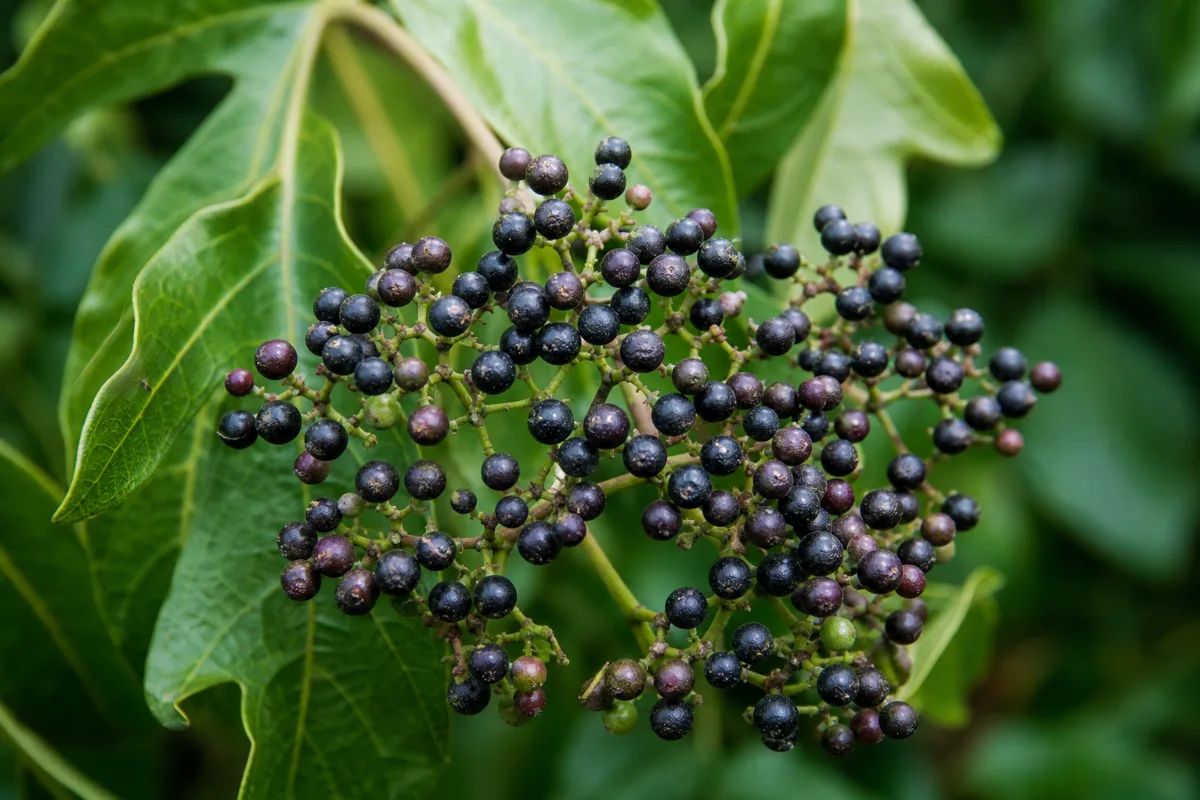
Evodia is the dried unripe fruit of a Chinese tree, used for cold-type stomach pain, vomiting and headache. Human trials are few and test formulas, not evodia alone. The key caution: the fruit can harm the liver, can change how medicines are processed, and may disturb heart rhythm in lab tests.
General information, not medical advice. Last substantive update · Not medically reviewed. A named clinician has not signed off on this page. How this page is made
About Evodia
Evodia (Tetradium ruticarpum, wu zhu yu) is a warming Chinese herb for cold-type pain and digestive complaints. The few human trials tested formulas or skin applications and show only low or very-low certainty. The fruit is described as mildly toxic with obvious liver harm, and lab work shows it can alter drug enzymes and heart rhythm.
Medicines and heart rhythm
Rutaecarpine blocked CYP1A2 and other enzymes in human liver preparations, while in mice it raised CYP1A2 and worsened acetaminophen liver injury. The direction in people is unknown.
Extracts of 12 preparations lengthened the electrical cycle of human stem-cell heart cells. No human heart study was found.
Processing and fruit grade
In rats, licorice-processed fruit was less liver-toxic than crude fruit and water extract was the most toxic. In mice, only the big-flower grade caused liver injury.
What the research shows
One 90-person trial of a formula with evodia matched omeprazole for reflux symptoms. A three-herb formula eased delayed chemotherapy nausea. A trial of fruit on the skin plus nursing improved sleep.
All were small, used mixed treatments and cannot prove evodia works alone.
At a glance
Traditional uses history, not proof
- Cold-type stomach and abdominal pain, vomiting and acid regurgitation.
- Diarrhoea and headache.
- Period pain in Chinese and Japanese formulas.
Studied for research
- Reflux, IBS and chemotherapy nausea: low to very low (formula trials)
- Sleep after heart stent: very low (one trial with nursing)
- Nerve pain and gut models: insufficient (animal only)
Main compounds
- Evodiamine
- Rutaecarpine
- Limonin
Common forms
- Dried fruit
- Licorice-processed fruit
- Decoction or extract
- Skin application
- Multi-herb formulas
Research links: Euodiae Fructus review (PubMed) · Liver toxicity mechanisms (PubMed) · Heart-cell study of 12 Evodia preparations (PubMed) · Rutaecarpine and CYP enzymes (PubMed) · Research Library · Genes & Biomarkers Library
The plant and its history
- Accepted scientific name
- Tetradium ruticarpum
- Naming authority
- (A.Juss.) T.G.Hartley
- Synonyms
- Evodia rutaecarpa (Juss.) Benth.; Euodia rutaecarpa
- Common names
- Evodia (English); Wu zhu yu (Chinese (pinyin)); Evodia fruit (English); Goshuyu (Japanese)
- Botanical family
- Rutaceae
- Classification
- Plantae > Sapindales > Rutaceae > Tetradium > Tetradium ruticarpum
- Native range
- Not checked.
- Habitat
- Not checked.
- What the plant looks like
- Roots: Not checked.; Leaves: Not checked.; Stems: Not checked.; Flowers: Not checked.; Fruit: The part used is the dried, nearly ripe (unripe) fruit.
- Cultivation
- Not checked.
- Harvest and processing
- Traditionally stir-fried with licorice before use; the review says processing lowers toxicity.
- Look-alikes and adulterants
- Name: Big-flower, medium-flower and small-flower fruit grades; Note: Fruit grades differ in alkaloids and limonin, and only the big-flower grade was liver-toxic in mice.
- Sustainability and conservation
- Not checked.
Traditional use and history history, not clinical proof
| Tradition or era | Documented use | Source |
|---|---|---|
| Traditional Chinese medicine | First recorded in Shen Nong Herbal Classic: dispelling cold, easing pain, stopping vomiting, relieving diarrhoea. | p39944619 |
| Japanese Kampo | Goshuyu used in formulas; one study found a liver-injury blood test unreliable for it. | p12087777 |
Traditional use shows how a plant was used. It does not show that a supplement works or is safe today.
What is inside, and how it may work
What the plant contains and how those compounds act in cells and animals. Laboratory and animal mechanisms are not proven effects in people.
Main compounds
| Compound | Family | Where it is concentrated | Activity studied | Level of evidence |
|---|---|---|---|---|
| Evodiamine PubChem 442088 | indoloquinazoline alkaloid | Fruit Not given. | Reactive liver activation by CYP3A4; kidney harm in mice; many animal anti-gut-disease effects. 10 16 18 | In vitro + animal |
| Rutaecarpine PubChem 65752 | indoloquinazoline alkaloid | Fruit Not given. | Blocks several CYP enzymes (lab); raises CYP1A2 in mice; eases mouse nerve pain; heart channel effects. 13 19 6 9 | In vitro + animal |
| Limonin PubChem 179651 | limonoid triterpenoid | Fruit Not given. | Reduced liver toxicity of the big-flower fruit in mice, per the title. 14 | Animal research |
| Dehydroevodiamine and hortiamine | alkaloids | Fruit Not given. | hERG potassium channel blockers that explained heart-cell rhythm changes of 12 preparations. 1 | Laboratory research |
Mechanisms, receptors and pathways
| Target or pathway | Gene or receptor | What was found | Level |
|---|---|---|---|
| Liver enzyme activation | CYP3A4, CYP1A2, CYP2D6 | Evodiamine and rutaecarpine form reactive products and inactivate CYP3A4 in human liver microsomes. 10 12 | Laboratory research |
| CYP inhibition | CYP1A2, 2C9, 2C19, 2E1, 3A4 | Rutaecarpine inhibited all five in human liver microsomes. 13 | Laboratory research |
| CYP induction | Cyp1a2, Cyp2b10, Cyp2e1, Cyp3a11 | Rutaecarpine induced these genes in mice. 19 9 | Animal research |
| Heart channel block | hERG potassium channel | Dehydroevodiamine and hortiamine prolonged the heart-cell action potential. 1 | Laboratory research |
| Pain sensing | TRPV1, TRPM8 | Extract and rutaecarpine eased paclitaxel nerve pain in mice. 6 | Animal research |
Absorption, metabolism and elimination
- Absorption
- Not covered in the sources read.
- Distribution
- Not covered.
- Metabolism
- Alkaloids are oxidised by liver CYP enzymes to reactive products.
- Elimination
- Not covered.
- Bioavailability
- Not established in people.
Isolated compounds versus whole extracts
Most toxicity and enzyme data are for isolated alkaloids or solvent extracts; the whole fruit, licorice-processed fruit and fruit grades differ. Human trials used formulas or skin application.
Nutritional composition
Evodia is not a nutrient.
2 low certainty2 very low certainty6 not enough evidence
What is Evodia good for?
The uses people ask about and how strong the human evidence is. Safety matters more than any benefit here.
Benefits, one by one
Each card is a research question, not a promise. Tap a goal to filter. Open a card to see the studies, doses and limits.
Acid reflux and heartburn
Low certaintyA multi-herb formula that contains evodia worked about as well as the acid-reducing drug omeprazole in one small trial. Evodia alone has not been tested for reflux.
2 studiesFormula tested; evodia alone not tested.
Studies, doses and limits
What the trials found
One randomised double-blind trial of 90 adults tested wu chu yu tang (a formula containing evodia) against omeprazole for 4 weeks.
Results
Both groups improved (p<0.001). Score change was similar at the first follow-up; at the later visit the formula group had a larger change than omeprazole (p=0.004).
Effect sizes as reported
Reflux questionnaire scores; no confidence intervals in the abstract.
Why this rating
One small trial of a formula, 13 dropouts, no placebo-only arm; evodia effect cannot be separated.
Form and dose studied
Formula tested; evodia alone not tested.
Who was studied
Adults with reflux disease, Taiwan.
Limits
Small, single centre, short; authors call for a larger study.
Why researchers looked
Traditional texts use the fruit for acid regurgitation and vomiting.
Traditional use
Used in classical Chinese formulas for nausea after eating, vomiting and diarrhoea.
Proposed mechanism Pharmacological theory
No mechanism was tested in this trial.
A proposed mechanism does not show that the effect happens in people.
The fruit can harm the liver; see the safety tab. Ask a doctor or pharmacist before use.
Irritable bowel syndrome with diarrhoea
Very low certaintyA skin plaster containing prepared evodia plus other herbs beat moxibustion in a small Chinese trial. It cannot show evodia itself works.
2 studiesPlaster on acupoints, not swallowed.
Studies, doses and limits
What the trials found
One randomised trial of 80 adults compared a herbal plaster (containing prepared evodia, monkshood, dried ginger, cinnamon and others) with moxa-box moxibustion; all had acupuncture.
Results
Symptom score and quality of life were better with the plaster (p<0.05); effective rate 92.5% vs 85.0%.
Effect sizes as reported
Effective rate 37/40 vs 34/40.
Why this rating
Small trial, multi-herb plaster, compared with another traditional treatment and not placebo; abstract only in a Chinese-language paper.
Form and dose studied
Plaster on acupoints, not swallowed.
Who was studied
Adults with IBS-D of the spleen-kidney yang deficiency pattern.
Limits
No placebo, no blinding stated, evodia not isolated.
Why researchers looked
Formula use for diarrhoea and irritable bowel is listed in reviews.
Traditional use
Traditionally used for diarrhoea from cold or low yang.
Proposed mechanism Pharmacological theory
No mechanism tested.
A proposed mechanism does not show that the effect happens in people.
Plaster contains other herbs; the skin route may reduce but not remove risks.
Nausea and vomiting from chemotherapy
Low certaintyA formula containing evodia, pinellia and ginger eased delayed nausea in people having chemotherapy for bowel cancer. The effect cannot be credited to evodia.
1 studiesFormula of several herbs.
Studies, doses and limits
What the trials found
A multicentre randomised placebo trial of 120 people (112 analysed) on fluorouracil chemotherapy added Hezhong granules to standard anti-sickness drugs.
Results
Acute nausea: no significant difference. Delayed nausea: roughly 20% better complete response (p=0.035) and response rate (p=0.043). No serious adverse events attributed to the herbs.
Effect sizes as reported
Mean differences about 17-21% in the delayed phase.
Why this rating
One moderate trial with borderline p-values, three-herb formula.
Form and dose studied
Formula of several herbs.
Who was studied
Adults with advanced colorectal cancer.
Limits
Evodia cannot be separated from pinellia and ginger; authors say a phase III trial is needed.
Why researchers looked
The fruit is traditionally used to settle vomiting.
Traditional use
Classical anti-vomiting formulas.
Proposed mechanism Pharmacological theory
No mechanism tested here.
A proposed mechanism does not show that the effect happens in people.
People on chemotherapy have more liver strain; ask the oncology team before any herb.
Cold-type stomach pain, vomiting and diarrhoea (traditional)
Not enough evidenceFor over two thousand years Chinese medicine has used the fruit to warm the middle, ease pain and stop vomiting. We found no trial of the fruit on its own.
1 studiesTraditional prepared fruit.
Studies, doses and limits
What the trials found
Reviews list these uses; no single-herb human trial was found.
Results
No single-herb results.
Effect sizes as reported
None.
Why this rating
Traditional use only; the human trials we found used formulas.
Form and dose studied
Traditional prepared fruit.
Who was studied
Not applicable.
Limits
Source is a narrative review.
Why researchers looked
First recorded in the Shen Nong Herbal Classic; listed in the Chinese pharmacopoeia.
Traditional use
Used for abdominal pain, diarrhoea, chronic gastritis and acid regurgitation, usually processed with licorice and combined with other herbs.
Proposed mechanism Traditional
No human mechanism shown.
A proposed mechanism does not show that the effect happens in people.
The fruit can harm the liver; see the safety tab. Ask a doctor or pharmacist before use.
Headache and migraine (traditional)
Not enough evidenceThe fruit is traditionally used for cold-type headache and sits in formulas used for migraine. We found no trial results for it.
1 studiesFormula use.
Studies, doses and limits
What the trials found
No headache trial was read.
Results
None.
Effect sizes as reported
None.
Why this rating
Traditional claim only.
Form and dose studied
Formula use.
Who was studied
Not applicable.
Limits
No data.
Why researchers looked
Listed in the 2025 review as a headache herb.
Traditional use
In Japan inside the formula goshuyuto (not opened here).
Proposed mechanism Traditional
None shown.
A proposed mechanism does not show that the effect happens in people.
The fruit can harm the liver; see the safety tab. Ask a doctor or pharmacist before use.
Sleep and quality of life after a heart stent
Very low certaintyEvodia fruit applied on the skin plus extra nursing care improved sleep and quality of life in a small trial. It did not change heart function, and the fruit cannot be separated from the nursing care.
1 studiesFruit applied to skin.
Studies, doses and limits
What the trials found
One randomised trial of 82 patients after a heart stent (PCI).
Results
Sleep score difference -5.56 (95% CI -7.91 to -3.21); quality of life +18.45 (95% CI 10.32 to 26.58); heart function similar. Adverse reactions 19.5% vs 9.8% (p=0.322).
Effect sizes as reported
Large score gains, wide intervals.
Why this rating
Single small trial where the fruit is combined with nursing; unblinded effect on subjective scores likely.
Form and dose studied
Fruit applied to skin.
Who was studied
Adults after PCI in one Chinese hospital.
Limits
Cannot isolate the fruit.
Why researchers looked
Acupoint application is a traditional Chinese method.
Traditional use
Fruit paste applied to acupoints.
Proposed mechanism Pharmacological theory
No mechanism tested.
A proposed mechanism does not show that the effect happens in people.
Adverse reactions were numerically higher with the fruit group (not significant).
Painful periods (traditional)
Not enough evidenceThe fruit appears in Chinese and Japanese formulas for period pain. We found no trial results.
1 studiesFormulas.
Studies, doses and limits
What the trials found
No trial read.
Results
None.
Effect sizes as reported
None.
Why this rating
Traditional listing only.
Form and dose studied
Formulas.
Who was studied
Not applicable.
Limits
No data. Pregnancy caution applies (see safety tab).
Why researchers looked
Primary dysmenorrhoea is listed in the 2025 review among formula uses.
Traditional use
Used in warming formulas.
Proposed mechanism Traditional
None shown.
A proposed mechanism does not show that the effect happens in people.
Do not use if pregnant or trying to conceive without medical advice.
Nerve pain (mouse studies)
Not enough evidenceIn mice, an evodia extract and rutaecarpine eased nerve pain caused by the cancer drug paclitaxel. This is lab work, not proof for people.
1 studiesExtract and isolated rutaecarpine.
Studies, doses and limits
What the trials found
No human trial.
Results
Dose-dependent relief of cold and touch pain in mice.
Effect sizes as reported
Not applicable to people.
Why this rating
Animal data only.
Form and dose studied
Extract and isolated rutaecarpine.
Who was studied
Mice.
Limits
Mouse model only.
Why researchers looked
Pain relief is a traditional use.
Traditional use
Cold-type pain.
Proposed mechanism Animal research
TRPV1 and TRPM8 pain-sensing pathways (animal).
A proposed mechanism does not show that the effect happens in people.
See the safety tab on rutaecarpine and drug enzymes.
Gut disease and cancer models (evodiamine, lab and animal)
Not enough evidenceMany lab and animal studies of the isolated compound evodiamine report benefits in gut inflammation, ulcers and cancer cells. No patient has been shown to benefit.
2 studiesIsolated evodiamine, not the fruit.
Studies, doses and limits
What the trials found
A systematic review pooled animal and cell experiments only.
Results
Positive effects in animal and cell models.
Effect sizes as reported
Not applicable to people.
Why this rating
Lab and animal only; the same compound harmed kidneys in mice.
Form and dose studied
Isolated evodiamine, not the fruit.
Who was studied
Animals and cells.
Limits
Evodiamine is also liver- and kidney-toxic in animal studies.
Why researchers looked
Digestive use drives interest in the compound.
Traditional use
Gut protection is a traditional theme.
Proposed mechanism Animal research
Many pathways are named (PI3K-AKT, NF-kB, mTOR and others) in animals and cells.
A proposed mechanism does not show that the effect happens in people.
Safety signals exist for the same compound.
Blood pressure and heart rhythm
Not enough evidenceEvodia is traditionally used for high blood pressure, but we found no trial in people. Lab work warns it may disturb heart rhythm, so it is a caution rather than a benefit.
2 studiesUnknown.
Studies, doses and limits
What the trials found
No human blood-pressure trial found.
Results
None.
Effect sizes as reported
None.
Why this rating
Traditional listing only; opposing heart-rhythm risk in lab studies.
Form and dose studied
Unknown.
Who was studied
Not applicable.
Limits
Sources do not report human blood pressure.
Why researchers looked
Hypertension is listed among clinical uses.
Traditional use
Used alone and in formulas.
Proposed mechanism Laboratory research
Rutaecarpine blocks hERG potassium channels in lab work (see safety tab).
A proposed mechanism does not show that the effect happens in people.
Heart rhythm risk in cells and animals; ask a doctor if you take heart or blood-pressure medicines.
Connections to the rest of health
How Evodia connects to the rest of our health knowledge graph. Every link says what kind of connection it is. A safety link (for example to the liver) is a warning, not a benefit. A study that merely mentions a topic never creates a benefit link.
Explore every connection: goals, body systems, organs, symptoms, genes
A. Wellness goals
| Connected to | Kind of connection | Evidence status | Context | Studies |
|---|---|---|---|---|
| Digestive Support | Low certainty | Acid reflux and heartburn: A multi-herb formula that contains evodia worked about as well as the acid-reducing drug omeprazole in one small trial. Evodia alone has not been tested for reflux. Irritable bowel syndrome with diarrhoea: A skin plaster containing prepared evodia plus other herbs beat moxibustion in a small Chinese trial. It cannot show evodia itself works. | 7 3 17 11 | |
| Digestive Support | Traditional use | Not enough evidence | Cold-type stomach pain, vomiting and diarrhoea (traditional): For over two thousand years Chinese medicine has used the fruit to warm the middle, ease pain and stop vomiting. We found no trial of the fruit on its own. | 3 |
| Pain Relief | Traditional use | Not enough evidence | Headache and migraine (traditional): The fruit is traditionally used for cold-type headache and sits in formulas used for migraine. We found no trial results for it. | 3 |
| Better Sleep | Very low certainty | Sleep and quality of life after a heart stent: Evodia fruit applied on the skin plus extra nursing care improved sleep and quality of life in a small trial. It did not change heart function, and the fruit cannot be separated from the nursing care. | 8 | |
| Womens Wellness | Traditional use | Not enough evidence | Painful periods (traditional): The fruit appears in Chinese and Japanese formulas for period pain. We found no trial results. | 3 |
| Pain Relief | Not enough evidence | Nerve pain (mouse studies): In mice, an evodia extract and rutaecarpine eased nerve pain caused by the cancer drug paclitaxel. This is lab work, not proof for people. | 6 | |
| Gut Health | Not enough evidence | Gut disease and cancer models (evodiamine, lab and animal): Many lab and animal studies of the isolated compound evodiamine report benefits in gut inflammation, ulcers and cancer cells. No patient has been shown to benefit. | 18 16 | |
| Blood Pressure Support | Traditional use | Not enough evidence | Blood pressure and heart rhythm: Evodia is traditionally used for high blood pressure, but we found no trial in people. Lab work warns it may disturb heart rhythm, so it is a caution rather than a benefit. | 3 1 |
B. Body systems
| Connected to | Kind of connection | Evidence status | Context | Studies |
|---|---|---|---|---|
| Digestive System | Biological association | Low certainty | Studied for: Acid reflux and heartburn Studied for: Irritable bowel syndrome with diarrhoea | 7 3 17 11 18 16 |
| Pain Inflammation | Biological association | Not enough evidence | Studied for: Headache and migraine (traditional) Studied for: Nerve pain (mouse studies) | 3 6 |
| Sleep Recovery | Biological association | Very low certainty | Studied for: Sleep and quality of life after a heart stent | 8 |
| Reproductive Health | Biological association | Not enough evidence | Studied for: Painful periods (traditional) | 3 |
| Cardiovascular System | Biological association | Not enough evidence | Studied for: Blood pressure and heart rhythm | 3 1 |
C. Body parts and organs
| Connected to | Kind of connection | Evidence status | Context | Studies |
|---|---|---|---|---|
| Liver | Adverse effect or risk | Moderate certainty | Review calls human liver toxicity obvious; mostly animal data. Preparation or compound: Fruit, evodiamine, rutaecarpine, limonin |
3 12 |
| Heart | Adverse effect or risk | Low certainty | hERG blocking in cells; QT lengthening in guinea pigs. Preparation or compound: Rutaecarpine, dehydroevodiamine |
1 3 |
| Kidneys | Adverse effect or risk | Low certainty | Kidney injury in mice. Preparation or compound: Evodiamine |
16 |
G. Root causes and contributing factors
| Connected to | Kind of connection | Evidence status | Context | Studies |
|---|---|---|---|---|
| Medication Side Effects | Low certainty | CYP1A2 and CYP3A4 effects; lab and animal only. Preparation or compound: Rutaecarpine |
13 10 9 |
J. Genes, receptors and enzymes
| Connected to | Kind of connection | Evidence status | Context | Studies |
|---|---|---|---|---|
| CYP3A4 | Preliminary mechanism | In vitro | Activation and inactivation by evodiamine and rutaecarpine (lab). | 10 |
| CYP1A2 | Preliminary mechanism | In vitro + animal | Inhibited in lab, induced in mice. | 13 19 |
| KCNH2 (hERG) | Preliminary mechanism | In vitro | Channel blocked by dehydroevodiamine (lab). | 1 |
L. Active compounds
| Connected to | Kind of connection | Evidence status | Context | Studies |
|---|---|---|---|---|
| Evodiamine | Biological association | In vitro + animal | Reactive liver activation by CYP3A4; kidney harm in mice; many animal anti-gut-disease effects. Preparation or compound: Fruit |
10 16 18 |
| Rutaecarpine | Biological association | In vitro + animal | Blocks several CYP enzymes (lab); raises CYP1A2 in mice; eases mouse nerve pain; heart channel effects. Preparation or compound: Fruit |
13 19 6 9 |
| Limonin | Biological association | Animal | Reduced liver toxicity of the big-flower fruit in mice, per the title. Preparation or compound: Fruit |
14 |
| Dehydroevodiamine and hortiamine | Biological association | In vitro | hERG potassium channel blockers that explained heart-cell rhythm changes of 12 preparations. Preparation or compound: Fruit |
1 |
Each connection is stored with the ingredient, the connected record, the kind of connection, the evidence status, the supporting studies, the preparation or compound involved, and a review date (last reviewed October 25, 2026).
The evidence
The research centre for Evodia. Every record here was checked against PubMed or the publisher's page; we never list a study we have not verified.
Evidence by outcome
Bars show how many studies we found for each outcome, not how well it works. People are added up across trials only (reviews are not added, to avoid double counting).
How we rate evidence
High certainty
Several well-run trials or reviews agree; further research is unlikely to change the picture much.
Moderate certainty
Good trials point the same way, but some doubt remains.
Low certainty
Small, short or inconsistent trials. The finding could change with better research.
Very low certainty
Very little or very weak human data. Treat as a possibility only.
Mixed findings
Trials or reviews disagree with each other.
Not enough evidence
Not enough human research to say either way.
Evidence against
Good research found no benefit, or found harm.
We take the reviewers' own risk-of-bias and GRADE statements where they exist, and otherwise judge from study size, design, consistency, directness and whether a product matches what is sold. Many publications do not make evidence high. Method note: We read the abstracts of 18 PubMed papers and the 2025 review text, checked the plant name in GBIF and compound IDs in PubChem, and searched the LiverTox Bookshelf (no evodia hit). Regulator pages were not checked.
Study library: every study we checked 19
| Study | Design | People | Product, dose, length | Result |
|---|---|---|---|---|
| Baltov 2023 Assay for evaluation of proarrhythmic effects of herbal products: case study with 12 Evodia preparations Toxicology Reports · PMID 37213814 · DOI |
Laboratory lab (human cells) |
12 12 Evodia preparations in human stem-cell heart cells |
Evodia fruit (Tetradium ruticarpum / Evodia rutaecarpa, Euodiae Fructus) 12 preparations |
Extracts lengthened the heart-cell action potential and caused early after-depolarisations, depending on content of the hERG blockers dehydroevodiamine and hortiamine. Regression suggested a high torsade risk comparable to high-risk drugs. Lab proarrhythmia signal Methods, limits and fundingOutcomes: Heart rhythm risk Limitations: Lab cell study; not patients. Funding and conflicts: Not stated. Read: abstract |
| GBIF 2026 Tetradium ruticarpum (A.Juss.) T.G.Hartley, GBIF backbone match GBIF species API · Source |
Database record plant |
Taxon record | Evodia fruit (Tetradium ruticarpum / Evodia rutaecarpa, Euodiae Fructus) fruit |
Exact match, status ACCEPTED, key 5594365, family Rutaceae, order Sapindales. Evodia rutaecarpa (Juss.) Benth. (key 11259264) is a SYNONYM pointing to it. Identity Methods, limits and fundingOutcomes: Accepted name Limitations: Database record. Funding and conflicts: Not stated. Read: full-text |
| Hao 2025 Euodiae Fructus: a review of botany, application, processing, phytochemistry, quality control, pharmacology, and toxicology Frontiers in Pharmacology · PMID 39944619 · DOI |
Narrative review review of human + lab + animal |
Literature before September 2024 | Evodia fruit (Tetradium ruticarpum / Evodia rutaecarpa, Euodiae Fructus) dried nearly ripe fruit |
Calls the fruit mildly toxic, with specific toxic risks to liver, heart and kidney. Over 300 compounds identified. Traditional uses: dispelling cold, easing pain, stopping vomiting, relieving diarrhoea; formula uses include abdominal pain, diarrhoea, gastritis, irritable bowel syndrome and primary period pain. Toxicity can be reduced by processing. The full text says the fruit has obvious toxic damage to the human liver (citing a 2014 review by Teschke, not opened here) and notes research on heart and kidney toxicity is scarce. Overuse is said to cause nausea, vomiting, abdominal pain, diarrhoea and blurred vision. Mostly lab and animal data; human toxicity cited from older work Methods, limits and fundingOutcomes: Traditional use, chemistry, pharmacology, toxicity Limitations: Narrative review, no systematic method; human case detail not opened (cited work not read). Funding and conflicts: Not stated. Read: full-text |
| Li 2026 Dichloromethane extract is responsible for the Evodiae Fructus induced hepatotoxicity via PI3K-AKT/MAPK/p53/NF-kB signaling pathways Journal of Ethnopharmacology · PMID 42586390 · DOI |
Animal study animal |
Zebrafish and mice | Evodia fruit (Tetradium ruticarpum / Evodia rutaecarpa, Euodiae Fructus) fruit solvent extracts |
A dichloromethane extract was the core liver-toxic fraction; in zebrafish and mice it raised ALT, AST and bile acids, damaged liver tissue and caused liver-cell death. Lab/animal only Methods, limits and fundingOutcomes: Which fraction harms the liver Limitations: Animal study; abstract read. Funding and conflicts: Not stated. Read: abstract |
| Mantani 2002 Herbal medicine and false-positive results on lymphocyte transformation test Yakugaku Zasshi · PMID 12087777 |
Retrospective study human (diagnostic) |
Japanese hospital records 1979-1999 | Evodia fruit (Tetradium ruticarpum / Evodia rutaecarpa, Euodiae Fructus) Evodiae Fructus (Goshuyu) |
The lymphocyte transformation test came out positive for Evodiae Fructus even in patients whose liver injury was judged unrelated to herbal medicine, so a positive test was treated as a false positive. Test unreliable for herb liver injury Methods, limits and fundingOutcomes: Liver-injury blood test reliability Limitations: Old hospital review; says nothing about how often the fruit causes liver injury. Funding and conflicts: Not stated. Read: abstract |
| Park 2026 Tetrahydropalmatine and rutaecarpine alleviate paclitaxel-induced neuropathic pain via TRPV1 and TRPM8 modulation Metabolites · PMID 41590654 · DOI |
Animal study animal |
Mice with paclitaxel nerve pain | Evodia fruit (Tetradium ruticarpum / Evodia rutaecarpa, Euodiae Fructus) fruit extract and rutaecarpine |
Oral Evodia extract and rutaecarpine eased paclitaxel-induced cold and touch pain in a dose-dependent way; effects involved TRPV1 and TRPM8 pathways. Mouse pain relief Methods, limits and fundingOutcomes: Cold and touch pain Limitations: Mouse study only. Funding and conflicts: Not stated. Read: abstract |
| Shih 2019 Effect of wu chu yu tang on gastroesophageal reflux disease: randomized, double-blind, placebo-controlled trial Phytomedicine · PMID 30668332 · DOI |
RCT |
90 90 adults with reflux disease (77 completed) |
Wu chu yu tang (multi-herb formula containing evodia) formula formula 3.0 g three times a day 4 weeks · vs Omeprazole 20 mg |
Formula 3.0 g three times a day vs omeprazole 20 mg once a day, with matching placebos, for 4 weeks. Both groups improved (p<0.001). Score change at the second visit was similar between groups; at the third visit the formula group had a larger score change than omeprazole (p=0.004). Authors say a larger, longer study is needed. Similar to omeprazole at the early visit; larger change later Methods, limits and fundingOutcomes: Reflux symptom scores (RDQ, GERDQ) Limitations: Small trial, 13 dropouts, formula not evodia alone, no placebo-only arm, single centre. Funding and conflicts: Not stated. Read: abstract |
| Sun 2025 Combined effects of Evodiae Fructus point application and psycho-cardiology nursing on post-PCI coronary heart disease patients Frontiers in Medicine · PMID 41488062 · DOI |
RCT |
82 82 patients after heart stent procedure |
Evodia fruit (Tetradium ruticarpum / Evodia rutaecarpa, Euodiae Fructus) fruit applied to skin acupoints · vs Usual care |
Sleep score between-group difference -5.56 (95% CI -7.91 to -3.21); quality of life score +18.45 (95% CI 10.32 to 26.58); heart function similar (LVEF difference -1.85, 95% CI -5.42 to 1.72); adverse reactions 19.5% vs 9.8% (p=0.322). Authors declared no commercial conflicts. Sleep and quality of life improved; heart function not (sleep -7.91 to -3.21) Methods, limits and fundingOutcomes: Sleep (PSQI), quality of life (CQQC), heart function Limitations: Combines fruit with nursing care so the fruit cannot be separated; not blinded as far as the abstract states; single hospital. Funding and conflicts: No commercial or financial relationships declared. Read: abstract |
| Wan 2024 Rutaecarpine aggravates acetaminophen-induced acute liver injury by inducing CYP1A2 Toxics · PMID 39058167 · DOI |
Animal study animal + cell |
Mice and human liver cells (L02) | Rutaecarpine (isolated compound) with acetaminophen isolated compound |
Rutaecarpine pretreatment made acetaminophen liver damage worse in mice and cells; it raised CYP1A2, which produced more of the toxic intermediate NAPQI. Worse acetaminophen injury (mice, cells) Methods, limits and fundingOutcomes: Liver injury with acetaminophen Limitations: Not a human study; isolated alkaloid, not the whole fruit. Funding and conflicts: Not stated. Read: abstract |
| Wen 2014 Metabolic activation of the indoloquinazoline alkaloids evodiamine and rutaecarpine by human liver microsomes: dehydrogenation and inactivation of cytochrome P450 3A4 Drug Metabolism and Disposition · PMID 24696463 |
Laboratory lab |
Human liver microsomes | Evodiamine and rutaecarpine (isolated) isolated compounds |
Both alkaloids form reactive products mainly through CYP3A4 (less CYP1A2, 2D6) and inactivate CYP3A4 (KI 29 uM, kinact 0.029 per min), which may cause toxicity and drug-drug interactions. Lab CYP3A4 inactivation Methods, limits and fundingOutcomes: Bioactivation and CYP3A4 Limitations: Lab only. Funding and conflicts: Not stated. Read: abstract |
| Wu 2024 Herbal medicine for the prevention of chemotherapy-induced nausea and vomiting in patients with advanced colorectal cancer: a prospective randomized controlled trial Journal of Ethnopharmacology · PMID 38341113 |
RCT |
120 120 adults with advanced colorectal cancer on fluorouracil-based chemotherapy (112 analysed) |
Hezhong granules (formula with pinellia, evodia and ginger) formula · vs Placebo |
Added to standard anti-sickness drugs vs placebo. Acute-phase complete response difference 10.7% (p=0.318, 0.324, not significant); delayed phase about 20% better (complete response p=0.035; response rate p=0.043). Quality of life improved; no serious adverse events attributed to the herbs. Delayed nausea improved with formula Methods, limits and fundingOutcomes: Nausea and vomiting response rates Limitations: Multi-herb granules, evodia not tested alone; some p-values borderline; Chinese trial registry number ChiCTR2100041643. Funding and conflicts: Not stated. Registration: ChiCTR2100041643 Read: abstract |
| Yan 2023 Molecular mechanisms of hepatotoxicity induced by compounds occurring in Evodiae Fructus Drug Metabolism Reviews · PMID 36803497 · DOI |
Narrative review lab review |
Literature review | Evodia fruit (Tetradium ruticarpum / Evodia rutaecarpa, Euodiae Fructus) fruit compounds |
Reports increasing reports of liver toxicity linked to the fruit. Seven liver-toxic compounds are activated by liver CYP enzymes into reactive products that bind liver proteins; oxidative stress, mitochondrial damage, ER stress and cell death are proposed. Mechanism review (lab) Methods, limits and fundingOutcomes: Why the fruit harms the liver Limitations: Review of mechanisms; abstract only read; no human incidence rate. Funding and conflicts: Not stated. Read: abstract |
| Zhang 2015 Mechanism-based inhibition of CYPs and RMs-induced hepatoxicity by rutaecarpine Xenobiotica · PMID 26053557 |
Laboratory lab |
Rat liver cells and human liver microsomes | Rutaecarpine (isolated compound) isolated compound |
Rutaecarpine lowered rat liver-cell viability and inhibited CYP1A2, 2C9, 2C19, 2E1 and 3A4 in human liver microsomes. For CYP1A2 the IC50 was 2.2 uM with NADPH and 7.4 uM without, a 3.3 shift suggesting mechanism-based inhibition. Lab enzyme inhibition Methods, limits and fundingOutcomes: Enzyme inhibition and cell damage Limitations: Lab only; abstract read. Funding and conflicts: Not stated. Read: abstract |
| Zhang 2020 CYP3A4 inducer aggravates big flower Evodiae Fructus-induced hepatotoxicity whereas limonin attenuates its hepatotoxicity Journal of Ethnopharmacology · PMID 32810616 · DOI |
Animal study animal |
C57BL/6 mice | Evodia fruit (Tetradium ruticarpum / Evodia rutaecarpa, Euodiae Fructus) fruit by flower size |
Big-flower fruit had more alkaloids and less limonin than small and medium types, and only the big-flower type caused liver toxicity in mice. Per the title, a CYP3A4 inducer made the toxicity worse and limonin reduced it. Fruit grade changed toxicity (mice) Methods, limits and fundingOutcomes: Liver toxicity by fruit grade Limitations: Mouse study; abstract read partly; not shown in people. Funding and conflicts: Not stated. Read: abstract |
| Zhang 2021 Hepatotoxicity comparison of crude and licorice-processed Euodiae Fructus in rats with stomach excess-cold syndrome Frontiers in Pharmacology · PMID 34887758 · DOI |
Animal study animal |
Rats | Evodia fruit (Tetradium ruticarpum / Evodia rutaecarpa, Euodiae Fructus) fruit, crude vs licorice-processed |
All fruit extracts were liver-toxic in a dose-dependent way, in the order water extract, then ethanol extract, then volatile oil. Crude fruit liver toxicity was significantly reduced by licorice processing. Processing lowered liver toxicity in rats Methods, limits and fundingOutcomes: Liver injury Limitations: Rat study; abstract only read; not shown in people. Funding and conflicts: Not stated. Read: abstract |
| Zhang 2026 Nephrotoxicity of evodiamine in mice: mechanistic insights from integrated network toxicology and transcriptomic profiling International Journal of Molecular Sciences · PMID 42123378 · DOI |
Animal study animal |
Mice | Evodiamine (isolated compound) isolated compound |
Evodiamine lowered body weight, raised kidney index, blood urea nitrogen and creatinine, and caused kidney tissue damage in mice. Kidney harm in mice Methods, limits and fundingOutcomes: Kidney injury Limitations: Mouse study of the isolated compound. Funding and conflicts: Not stated. Read: abstract |
| Zhao 2023 Herbal-moxa plaster for diarrhea type irritable bowel syndrome of spleen and kidney yang deficiency: a randomized controlled trial Zhongguo Zhen Jiu · PMID 37313553 |
RCT |
80 80 adults with diarrhoea-type IBS |
Wenyang Fuzheng ointment (prepared monkshood, prepared evodia, dried ginger, cinnamon and others) at acupoints multi-herb plaster 4 weeks · vs Moxa-box moxibustion |
Both groups improved; the plaster group had lower IBS-SSS and higher quality of life than moxa-box moxibustion (p<0.05). Effective rate 92.5% (37/40) vs 85.0% (34/40). Plaster better than moxibustion; no placebo Methods, limits and fundingOutcomes: IBS symptom severity, quality of life, effective rate Limitations: Multi-herb product, comparator is another traditional treatment, both groups also had acupuncture; Chinese-language paper, abstract only. Funding and conflicts: Not stated. Read: abstract |
| Zhou 2024 Progress on the effects and underlying mechanisms of evodiamine in digestive system diseases, and its toxicity: a systematic review and meta-analysis Phytomedicine · PMID 39018943 · DOI |
Systematic review animal + cell |
Animal and cell experiments of evodiamine | Evodiamine (isolated compound) isolated compound |
Systematic review of animal and cell experiments of evodiamine in colorectal cancer, gastric ulcer, liver cancer, liver fibrosis and colitis, among others, with many signalling pathways named. Positive lab and animal findings only Methods, limits and fundingOutcomes: Digestive disease models Limitations: Covers experiments, not patients; abstract read, remaining text cut off in our extract. Funding and conflicts: Not stated. Read: abstract |
| Zhu 2013 Rutaecarpine effects on expression of hepatic phase-1, phase-2 metabolism and transporter genes as a basis of herb-drug interactions Journal of Ethnopharmacology · PMID 23510861 |
Animal study animal |
Mice | Rutaecarpine (isolated compound) isolated compound |
In mice rutaecarpine induced Cyp1a2, 2b10, 2e1, 3a11 and 4a10, raised UGT genes and several liver transporters. Induction in mice (opposite direction to lab inhibition) Methods, limits and fundingOutcomes: Drug-processing genes Limitations: Mouse gene-expression study. Funding and conflicts: Not stated. Read: abstract |
What we do not know yet
- No trial of evodia fruit alone for any use was found.
- No human liver case report was read, and no LiverTox entry was found.
- No pregnancy, breastfeeding or child data.
- EMA/HMPC, WHO and NCCIH pages were not checked.
How new research is added
New studies are found by a saved PubMed search and placed in a review queue. A person reads each one before it changes any evidence rating.
Lab markers
What changed in blood or saliva tests during trials. A changed number is not the same as feeling or being healthier, and we give no "normal ranges".
Safety
What studies and official sources say about side effects, medicines and who should check first. Each point shows what kind of evidence it comes from.
Main points to know 4
- Liver harm is the main concern. A 2025 review calls the fruit mildly toxic and says it has obvious toxic damage to the human liver, citing older work we did not open. Animal studies show liver injury, strongest with unprocessed fruit, water extracts and some fruit grades. We found no case report to read and no LiverTox entry. Review + animal 3 12 15 14 4
- It can change how medicines are handled. Lab studies show the alkaloid rutaecarpine blocks CYP1A2 and other liver enzymes, and evodiamine and rutaecarpine switch off CYP3A4 in human liver preparations. A mouse study found the opposite for CYP1A2 (more of it), and made acetaminophen liver injury worse. No human interaction study exists. In vitro + animal 13 10 19 9
- Possible heart rhythm effect. Extracts of 12 Evodia preparations lengthened the electrical cycle in human stem-cell heart cells, depending on their hERG-blocking compounds. The review also reports QT lengthening in guinea pigs. No human heart data were found. In vitro + animal 1 3
- Pregnancy and processing. No pregnancy, breastfeeding or child safety source was found; it cannot be called safe. Chinese practice uses licorice-processed fruit, and rat work found processing lowers liver toxicity. Gap + animal 3 15
Side effects 4
| Effect | How often | Severity and recovery | Evidence |
|---|---|---|---|
| Liver injury Human detail is cited from older work not opened here. | No rate for people. | severe Not known | Review + animal 3 12 |
| Nausea, vomiting, abdominal pain, diarrhoea, blurred vision with overuse Reported by the review as signs of overuse; source of these reports not opened. | Not established | moderate Not stated | Review 3 |
| Kidney harm Isolated evodiamine raised urea and creatinine in mice. | Mice only. | moderate Not known | Animal research 16 3 |
| Adverse reactions with fruit applied to skin Small trial; adverse reaction types were not given in the abstract. | 19.5% vs 9.8% with usual care (not significant) | mild Not stated | Human trial 8 |
Liver
No LiverTox entry for evodia was found (a Bookshelf search returned nothing). A 2023 review reports increasing reports of liver toxicity linked to the fruit and describes how liver enzymes turn seven of its compounds into reactive products. In rats, water extract was the most toxic and licorice processing lowered toxicity. In mice only one fruit grade (big flower) caused liver injury, and a CYP3A4 inducer worsened it per the title. A Japanese hospital study found the lymphocyte test for liver injury was unreliable for the fruit. 3 12 15 14 5
How often. No rate for people. Individual case reports were not found or read (the review cites a 2014 review by Teschke, NOT opened here).
Monitoring. No agency monitoring advice was found. Report yellow skin or eyes, dark urine, pale stools or ongoing upper-right belly pain to a doctor.
This is a safety connection. It is not evidence that Evodia supports liver health.
Medicines and supplements 5
| With | Why it matters | Importance | Evidence | What to do |
|---|---|---|---|---|
| Medicines cleared by CYP1A2 (for example caffeine, theophylline, clozapine, tizanidine; examples are general drug knowledge, not from the sources) prescription | Rutaecarpine inhibited CYP1A2 in human liver preparations (IC50 2.2 to 7.4 uM); in mice it raised CYP1A2. | Unknown. Opposite directions in lab and mouse studies. | In vitro + animal Very low certainty 13 19 | Tell your doctor or pharmacist if you take such medicines. |
| Medicines cleared by CYP3A4 prescription | Evodiamine and rutaecarpine inactivated CYP3A4 in human liver microsomes; a CYP3A4 inducer worsened fruit liver toxicity in mice. | Unknown; lab and animal only. | In vitro + animal Very low certainty 10 14 | Ask a pharmacist before combining. |
| Acetaminophen (paracetamol) OTC | Rutaecarpine increased CYP1A2 and toxic NAPQI formation, worsening liver injury in mice and liver cells. | Unknown in people. | Animal + cell Very low certainty 9 | Avoid combining without medical advice. |
| Medicines that lengthen the QT interval or treat heart rhythm prescription | Evodia extracts and their compounds block the hERG potassium channel in lab tests. | Unknown; no human data. | Laboratory research Very low certainty 1 3 | Ask a doctor, especially with heart disease. |
| Other herbs that harm the liver herb | Not studied together. | Unknown. | Pharmacological theory Not enough evidence 3 | Avoid stacking liver-active products. |
Who should check first 5
| Situation | Advice | Evidence |
|---|---|---|
| Pregnancy and breastfeeding | No pregnancy or breastfeeding source was found. A traditional caution is often repeated but we did not verify a source, so treat the fruit as not shown safe. LactMed entry not found. | Gap 3 |
| Liver disease or taking liver-strain medicines | Avoid unless a doctor agrees; the fruit has liver toxicity. | Review + animal 3 12 |
| Heart rhythm problems or high-risk QT medicines | Ask a doctor first; lab data show hERG blocking. | Laboratory research 1 |
| Kidney disease | Ask a doctor first; evodiamine harmed mouse kidneys. | Animal research 16 |
| Children | No child safety data found; not shown safe. | Gap 3 |
Overdose, product quality and regulators
Summary. The 2025 review calls the fruit mildly toxic with risks to liver, heart and kidney.
Animal. Liver, kidney and heart-cell toxicity in rats, mice, zebrafish and cells.
Human doses studied. Not given here.
High dose or long term signals. The review says overuse can cause nausea, vomiting, abdominal pain, diarrhoea and blurred vision, and liver or kidney toxicity.
Overdose response. Not covered in the sources read.
Genotoxicity. Not found.
Toxic plant parts. Alkaloids (evodiamine, rutaecarpine) and limonin all feature in liver toxicity work; a dichloromethane extract was the core liver-toxic fraction in animals; fruit grade matters (big-flower type).
No heavy-metal, pesticide or adulterant testing of evodia products was found.
Fruit grade and species vary. Big-flower, medium-flower and small-flower fruit differed in alkaloid and limonin content and in liver toxicity in mice. 12 Evodia preparations differed in hERG-blocking compounds. 14 1
| Body | Action | Date |
|---|
When to get medical help
- Yellow skin or eyes, dark urine, pale stools
- Ongoing upper-right belly pain, severe nausea or vomiting
- Fainting, palpitations or a racing or irregular heartbeat
- Rash or swelling of the face or throat
- Much less urine than usual
Stop the supplement and contact a clinician or emergency service. In the US, Poison Control is 1-800-222-1222.
General information only, not medical advice. Ask a clinician or pharmacist before use, especially with medicines, in pregnancy or with a health condition. See the Natural Remedy Safety guide.
Frequently asked questions
What is evodia?
What is it used for?
Is evodia safe for the liver?
Does processing make it safer?
In rats, licorice-processed fruit was less liver-toxic than crude fruit, and water extract was the most toxic. This has not been tested in people.
Can it interact with medicines?
What about blood pressure and the heart?
Is evodia safe in pregnancy or for children?
No source on pregnancy, breastfeeding or children was found, so it cannot be called safe. Ask a doctor or pharmacist.
Does it work for acid reflux?
One small trial of a formula containing evodia found scores similar to omeprazole over 4 weeks. Evodia alone was not tested, and a larger trial is needed.
Does it help chemotherapy nausea?
A formula with evodia, pinellia and ginger reduced delayed nausea in one trial of 112 people. It did not clearly help in the first 24 hours.
Does applying it on the skin help sleep?
In one trial of 82 patients after a heart stent, fruit applied at acupoints with extra nursing improved sleep and quality of life; the fruit cannot be separated from the nursing.
What do evodiamine and rutaecarpine do?
Why does the fruit grade matter?
In mice only the big-flower fruit grade caused liver injury, and products rarely say which grade they contain. Ask a pharmacist about amounts and forms.
Explore by health goal
Digestive SupportPain ReliefBetter SleepWomens WellnessGut HealthBlood Pressure Support
Editorial transparency
- Written by
- AlternativeMed editorial team. Research compiled with AI assistance, then checked against PubMed records.
- Medical review
- None. This page has not been reviewed by a physician or pharmacist.
- First published
- 2026-10-25
- Last substantive update
- 2026-10-25
- How we research
- We read the abstracts of 18 PubMed papers and the 2025 review text, checked the plant name in GBIF and compound IDs in PubChem, and searched the LiverTox Bookshelf (no evodia hit). Regulator pages were not checked.
- How we rate evidence
- See "How we rate evidence" in the Evidence tab.
- Independence
- No product is promoted on this page. No affiliate links are shown.
Sources 19
Each source was opened and checked. Where we read only the abstract, it says so. The small numbers in the text point here.
- Baltov, et al. Assay for evaluation of proarrhythmic effects of herbal products: case study with 12 Evodia preparations. Toxicology Reports. 2023. PMID 37213814. DOI 10.1016/j.toxrep.2023.04.014. (abstract)
- GBIF. Tetradium ruticarpum (A.Juss.) T.G.Hartley, GBIF backbone match. GBIF species API. 2026. (full-text)
- Hao W, et al. Euodiae Fructus: a review of botany, application, processing, phytochemistry, quality control, pharmacology, and toxicology. Frontiers in Pharmacology. 2025. PMID 39944619. DOI 10.3389/fphar.2025.1509032. (full-text)
- Li, et al. Dichloromethane extract is responsible for the Evodiae Fructus induced hepatotoxicity via PI3K-AKT/MAPK/p53/NF-kB signaling pathways. Journal of Ethnopharmacology. 2026. PMID 42586390. DOI 10.1016/j.jep.2026.122291. (abstract)
- Mantani N, et al. Herbal medicine and false-positive results on lymphocyte transformation test. Yakugaku Zasshi. 2002. PMID 12087777. (abstract)
- Park, et al. Tetrahydropalmatine and rutaecarpine alleviate paclitaxel-induced neuropathic pain via TRPV1 and TRPM8 modulation. Metabolites. 2026. PMID 41590654. DOI 10.3390/metabo16010046. (abstract)
- Shih YS, et al. Effect of wu chu yu tang on gastroesophageal reflux disease: randomized, double-blind, placebo-controlled trial. Phytomedicine. 2019. PMID 30668332. DOI 10.1016/j.phymed.2018.09.185. (abstract)
- Sun L, et al. Combined effects of Evodiae Fructus point application and psycho-cardiology nursing on post-PCI coronary heart disease patients. Frontiers in Medicine. 2025. PMID 41488062. DOI 10.3389/fmed.2025.1722004. (abstract)
- Wan, et al. Rutaecarpine aggravates acetaminophen-induced acute liver injury by inducing CYP1A2. Toxics. 2024. PMID 39058167. DOI 10.3390/toxics12070515. (abstract)
- Wen, et al. Metabolic activation of the indoloquinazoline alkaloids evodiamine and rutaecarpine by human liver microsomes: dehydrogenation and inactivation of cytochrome P450 3A4. Drug Metabolism and Disposition. 2014. PMID 24696463. (abstract)
- Wu, et al. Herbal medicine for the prevention of chemotherapy-induced nausea and vomiting in patients with advanced colorectal cancer: a prospective randomized controlled trial. Journal of Ethnopharmacology. 2024. PMID 38341113. (abstract)
- Yan S, et al. Molecular mechanisms of hepatotoxicity induced by compounds occurring in Evodiae Fructus. Drug Metabolism Reviews. 2023. PMID 36803497. DOI 10.1080/03602532.2023.2180027. (abstract)
- Zhang, et al. Mechanism-based inhibition of CYPs and RMs-induced hepatoxicity by rutaecarpine. Xenobiotica. 2015. PMID 26053557. (abstract)
- Zhang, et al. CYP3A4 inducer aggravates big flower Evodiae Fructus-induced hepatotoxicity whereas limonin attenuates its hepatotoxicity. Journal of Ethnopharmacology. 2020. PMID 32810616. DOI 10.1016/j.jep.2020.113277. (abstract)
- Zhang, et al. Hepatotoxicity comparison of crude and licorice-processed Euodiae Fructus in rats with stomach excess-cold syndrome. Frontiers in Pharmacology. 2021. PMID 34887758. DOI 10.3389/fphar.2021.756276. (abstract)
- Zhang, et al. Nephrotoxicity of evodiamine in mice: mechanistic insights from integrated network toxicology and transcriptomic profiling. International Journal of Molecular Sciences. 2026. PMID 42123378. DOI 10.3390/ijms27093793. (abstract)
- Zhao ZR, et al. Herbal-moxa plaster for diarrhea type irritable bowel syndrome of spleen and kidney yang deficiency: a randomized controlled trial. Zhongguo Zhen Jiu. 2023. PMID 37313553. (abstract)
- Zhou, et al. Progress on the effects and underlying mechanisms of evodiamine in digestive system diseases, and its toxicity: a systematic review and meta-analysis. Phytomedicine. 2024. PMID 39018943. DOI 10.1016/j.phymed.2024.155851. (abstract)
- Zhu, et al. Rutaecarpine effects on expression of hepatic phase-1, phase-2 metabolism and transporter genes as a basis of herb-drug interactions. Journal of Ethnopharmacology. 2013. PMID 23510861. (abstract)