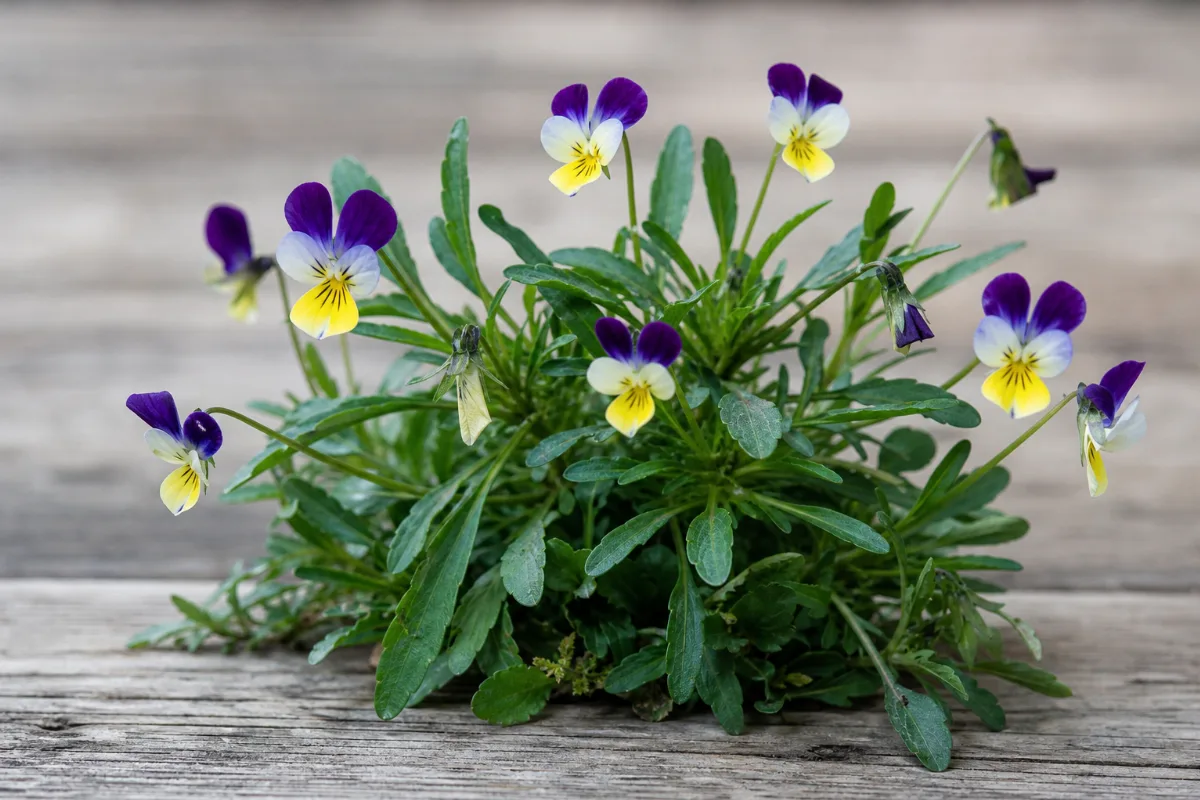
Herbs & Botanicals · Traditional skin herb
Heartsease
Viola tricolor · also called Wild pansy, field pansy, Johnny jump up, heart's-ease
Heartsease, or wild pansy, is a small flowering herb used as a tea or skin wash for greasy, flaky or itchy skin. The EU accepts it as a traditional herbal medicine, but only because it has been used for a long time. We found no good human trials of heartsease alone. Do not use it if you are allergic to aspirin-type medicines (salicylates).
General information, not medical advice. Last substantive update · Not medically reviewed. A named clinician has not signed off on this page. How this page is made
About Heartsease
Heartsease (Viola tricolor), or wild pansy, is a small European flower used as a tea or skin wash. The EU lists it as a traditional herb for mild greasy, flaky skin, based only on long use. No good human trial exists. Avoid with aspirin allergy, G6PD deficiency, pregnancy and breastfeeding.
What it is
Heartsease (Viola tricolor) is a small flowering plant of the violet family, also called wild pansy or field pansy. The dried herb with flower is made into tea, or into an infusion used on the skin or in a bath.
It contains flavonoids such as rutin, anthocyanins, tannins, saponins, phenolic acids and plant peptides called cyclotides.
What the research shows
The EU herbal committee (2010) accepts heartsease as a traditional herb for mild seborrhoeic skin conditions, based only on long-standing use. We found no controlled human trial of heartsease alone.
The only human reports are one woman with eczema who used several herbal products at once, and one small trial of a three-herb mix (elderberry, heartsease, calendula) in people with COPD that improved symptom scores. Neither shows what heartsease did on its own.
Other findings are from cells, mice and rats, such as calmer immune signals, less allergic lung inflammation and lower blood pressure. They do not show a benefit in people.
At a glance
Traditional uses history, not proof
- Mild greasy, flaky skin conditions (EU traditional use)
- Eczema, itching and impetigo, as a wash or tea
- Coughs, bronchitis and asthma, as a tea
Studied for research
- Skin: traditional use only, insufficient evidence
- COPD symptoms: one small trial of a three-herb mix, very low certainty for heartsease
- Immune, antiviral, blood pressure effects: lab and animal only
Main compounds
- Rutin and other flavonoids
- Anthocyanins, tannins and saponins
- Salicylate-type substances (EU caution), cyclotide peptides
Common forms
- Dried herb with flower
- Herbal tea
- Infusion for skin wash or bath
Research links: EU herbal monograph on Viola tricolor (EMA/HMPC) · Review: Viola tricolor ethnopharmacology and pharmacology (2025) · GBIF: Viola tricolor · Research Library · Genes & Biomarkers Library
The plant and its history
- Accepted scientific name
- Viola tricolor L.
- Naming authority
- Accepted in the GBIF backbone (key 5331347), exact match. The EU monograph also covers Viola arvensis and Viola vulgaris.
- Common names
- Heartsease (English); Wild pansy (English); Field pansy (English); Johnny jump up (English); Heart's-ease (English); Love-in-idleness (English); Three-coloured violet (English)
- Botanical family
- Violaceae (violet family)
- Classification
- Plantae > Malpighiales > Violaceae > Viola > Viola tricolor
- Native range
- Review abstract: Mediterranean, Caucasus, Europe, Asia, the Americas and Australia as places where it grows; native range not verified.
- Habitat
- Described as both a medicinal plant and a weed (review abstract); further habitat not verified.
- What the plant looks like
- Roots: Not verified.; Stems: Not verified.; Leaves: Not verified.; Flowers: Three-coloured flowers (name of the species); description not verified.; Fruit: Not verified.
- Cultivation
- Not verified.
- Harvest and processing
- The EU monograph describes comminuted dried herb with flower (Ph. Eur. monograph 1855).
- Look-alikes and adulterants
- Name: Viola arvensis and Viola vulgaris; Note: Covered together with V. tricolor in the EU monograph.; Name: Garden pansy and other violets; Note: Different plants; not equal in research.
- Sustainability and conservation
- Not assessed.
Traditional use and history history, not clinical proof
| Tradition or era | Documented use | Source |
|---|---|---|
| European folk medicine | Tea and skin washes for eczema, itching, impetigo, coughs, bronchitis and asthma (review abstract). | s-review-supty-2025 |
| EU herbal committee, 2010 | Accepted as a traditional herbal medicine for mild seborrhoeic skin conditions based on long-standing use. | s-ema-hmpc-viola-tricolor |
Traditional use shows how a plant was used. It does not show that a supplement works or is safe today.
What is inside, and how it may work
What the plant contains and how those compounds act in cells and animals. Laboratory and animal mechanisms are not proven effects in people.
Main compounds
| Compound | Family | Where it is concentrated | Activity studied | Level of evidence |
|---|---|---|---|---|
| Rutin PubChem 5280805 | flavonoid glycoside | Herb Not given | Named in the review abstract as a key flavonoid. Antioxidant in lab tests; no effect shown in people for heartsease. 12 9 | Laboratory research |
| Salicylic acid (salicylates) PubChem 338 | phenolic acid | Not verified NOT verified | The EU contraindicates use with salicylate hypersensitivity. Salicylate content was not confirmed in a source we read. 2 9 | Authoritative guidance |
| Gallic acid PubChem 370 | phenolic acid | Extract Detected by HPLC; amount not in abstract | Linked to blood-vessel and heart effects in rats and rabbit tissue. 11 9 | Animal research |
| Anthocyanins | pigments | Flower Not given | Named in the review abstract; a class, no single CID. 12 | Laboratory research |
| Saponins, tannins, coumarins, mucilage | various | Herb Not given | Named in the review abstract; classes, no single CID. 12 | Laboratory research |
| Cyclotides (for example kalata S) | cyclic plant peptides | Herb Not given | Reduced human T-cell activity and HIV-1 infection of cells in a dish. 10 1 | Laboratory research |
Mechanisms, receptors and pathways
| Target or pathway | Gene or receptor | What was found | Level |
|---|---|---|---|
| T-cell and macrophage signalling | IFN-gamma, IL-21, IL-6, IL-12, IL-23, TNF-alpha, CXCL10 | Hot-water preparations, solvent extracts and kalata S lowered immune signals in human cells in a dish. 10 | Laboratory research |
| Allergic airway inflammation | IL-4, IFN-gamma | Flower extract lowered IL-4 and airway inflammation in asthmatic mice. 5 | Animal research |
| L-type calcium channels | Voltage-gated calcium channels | Extract relaxed vessels and lowered blood pressure in rats, probably via calcium-channel blocking. 11 | Animal research |
Absorption, metabolism and elimination
- Absorption
- Not studied for heartsease tea or extracts.
- Distribution
- Not studied.
- Metabolism
- Not studied.
- Elimination
- Not studied.
- Bioavailability
- Unknown. A 2026 study of wild pansy anthocyanin absorption exists but was not read.
Isolated compounds versus whole extracts
Hot-water preparations suppressed T cells more strongly than a solvent-extracted cyclotide fraction, and boiling longer helped. That suggests whole-herb teas may differ from isolated fractions, but this is a lab finding only.
Nutritional composition
A medicinal herb and edible flower, not a nutrient source. It contains vitamin C and E per the review abstract; amounts are not given.
1 very low certainty7 not enough evidence
What was looked at
The 8 benefits and uses checked for Heartsease, each with how strong the evidence is. Tap one to open it.
- Mild seborrhoeic skin conditions (traditional use)Not enough evidence
- Eczema and itchy skin (traditional use and one case report)Not enough evidence
- Skin inflammation and wound healing (lab and animal findings only)Not enough evidence
- Chronic lung disease symptoms (a three-herb mix, not heartsease alone)Very low certainty
- Asthma and cough (traditional use, mouse study)Not enough evidence
- Immune-cell effects (lab findings only)Not enough evidence
- Germ-fighting and antiviral activity (lab findings only)Not enough evidence
- Blood pressure and heart effects (animal findings only)Not enough evidence
Lab markers tracked in the studies
EASI score (eczema severity), from one case report with several herbsBreathlessness, Cough and Sputum Scale (BCSS) and FEV1, three-herb mixIL-4 in lung fluid (mouse asthma model)
What is Heartsease good for?
The main proposed uses and how strong the human evidence is for each. 'Insufficient' means there is not enough research to say. For heartsease, no use has good human evidence.
Benefits, one by one
Each card is a research question, not a promise. Tap a goal to filter. Open a card to see the studies, doses and limits.
Mild seborrhoeic skin conditions (traditional use)
Not enough evidenceIn the European Union, heartsease herb is a registered traditional herbal medicine for mild seborrhoeic skin conditions (greasy, flaky, reddened skin). The EU says this rests only on long-standing use, not on trials.
2 studiesHerbal tea or skin infusion in the monograph; amounts are not reprodu…
Studies, doses and limits
What the trials found
The EU herbal committee (2010) lists the traditional indication. We found no controlled human trial of heartsease alone for any skin condition.
Results
No measured result. The monograph gives an indication, not an outcome.
Effect sizes as reported
None.
Why this rating
Traditional use with regulatory acceptance, but no trial. Acceptance means acceptable safety in the way it has been used, not proof that it works.
Form and dose studied
Herbal tea or skin infusion in the monograph; amounts are not reproduced here. Ask a doctor or pharmacist about amounts.
Who was studied
Adults. Not established under 18 (oral) or under 12 (skin).
Limits
No trial, so benefit, who responds and for how long are unknown. Severe or persistent skin problems need a doctor.
Why researchers looked
It is the one use that a regulator has formally accepted as traditional.
Traditional use
Used as a tea and as an infusion for skin wet dressings or bath additives in European folk medicine.
Proposed mechanism Pharmacological theory
Plausibly anti-inflammatory plant chemicals (flavonoids such as rutin, tannins, saponins). Not shown to explain any skin effect in people.
A proposed mechanism does not show that the effect happens in people.
Not for open wounds or large areas of damaged skin; avoid with salicylate (aspirin-type) allergy. See Safety.
Eczema and itchy skin (traditional use and one case report)
Not enough evidenceHeartsease is an old folk remedy for eczema, itching and scaly skin. The only human report is one woman whose eczema cleared while using several herbal products at once, so it says little about heartsease.
2 studiesMixed herbal products; not heartsease alone.
Studies, doses and limits
What the trials found
One 2023 case report of a 27-year-old woman with atopic dermatitis: EASI score 1.6 to 0 after two weeks using drops and creams. One of three products contained heartsease with burdock and immortelle; the others contained different herbs. No control.
Results
EASI 1.6 to 0 at two weeks and still clear at six months in one person; a new patch (EASI 3.2) cleared in two days at nine months.
Effect sizes as reported
One person; no confidence interval possible.
Why this rating
A single uncontrolled case with a mix of herbs cannot show what any one herb did.
Form and dose studied
Mixed herbal products; not heartsease alone.
Who was studied
One adult woman.
Limits
Case report, several herbs at once, spontaneous remission possible. No trial of heartsease alone.
Why researchers looked
Reviews list eczema, itch and impetigo among traditional uses.
Traditional use
Wet dressings, baths and teas for rashes and 'blood cleansing' in European folk medicine.
Proposed mechanism Laboratory research
Lab work suggests anti-inflammatory and immune-calming effects of extracts and plant peptides (cyclotides). Not shown in skin.
A proposed mechanism does not show that the effect happens in people.
Skin reactions to plants are possible; stop if the rash worsens.
Skin inflammation and wound healing (lab and animal findings only)
Not enough evidenceA 2025 review describes calmer inflammation and pain responses in rats with burns, and tannins that may form a protective skin layer, in lab tests. None of this has been shown in people.
2 studiesNot tested in people.
Studies, doses and limits
What the trials found
No human study of wound healing was found. The review's abstract mentions inflammation and antioxidant effects; details were not re-read.
Results
Animal and lab results only.
Effect sizes as reported
None for people.
Why this rating
Lab and animal findings only.
Form and dose studied
Not tested in people.
Who was studied
Not applicable.
Limits
Animal and lab only; the EU says not to use on open wounds.
Why researchers looked
Tannins and flavonoids are plausible skin-soothing chemicals.
Traditional use
Used on rashes, sores and impetigo in folk medicine. Do not use on open wounds (EU advice).
Proposed mechanism Pharmacological theory
Tannin and flavonoid content; protective-layer idea.
A proposed mechanism does not show that the effect happens in people.
Do not apply to open wounds or large areas of damaged skin.
Chronic lung disease symptoms (a three-herb mix, not heartsease alone)
Very low certaintyOne 6-month placebo-controlled trial in 60 people with COPD tested a mix of elderberry, heartsease and calendula. Breathlessness, cough and sputum scores and one lung-function number improved versus placebo. We cannot tell what heartsease contributed.
2 studiesThree-herb product; amounts not reproduced here.
Studies, doses and limits
What the trials found
One randomized, double-blind, placebo-controlled trial of 60 adults with moderate COPD (Russia, 2020) of the product Inflaminat (elderberry berries, heartsease herb, calendula flowers).
Results
BCSS 3.0 to 1.9 (p = 0.002); FEV1 66% to 73% (p = 0.042); no beneficial change on placebo. No side effects identified.
Effect sizes as reported
As reported, no confidence intervals in the abstract.
Why this rating
One small trial of a combination product; one author had previously led the product's company; heartsease alone untested.
Form and dose studied
Three-herb product; amounts not reproduced here.
Who was studied
Adults with moderate COPD.
Limits
Small, single trial, combination product, possible industry link. Not a replacement for COPD medicines.
Why researchers looked
Heartsease is a traditional herb for coughs and bronchitis.
Traditional use
Coughs, bronchitis and asthma in European folk medicine.
Proposed mechanism Preliminary mechanism
Anti-inflammatory plant chemicals, shown in lab work for the mix.
A proposed mechanism does not show that the effect happens in people.
No side effects identified in the trial. Coughs that persist need a doctor.
Asthma and cough (traditional use, mouse study)
Not enough evidenceHeartsease flower extract lowered allergic lung inflammation in asthmatic mice. No human asthma trial was found.
2 studiesNot applicable.
Studies, doses and limits
What the trials found
None in people.
Results
Mouse results only.
Effect sizes as reported
Not applicable.
Why this rating
Animal study only.
Form and dose studied
Not applicable.
Who was studied
Not applicable.
Limits
Mouse study; dose and species effect do not transfer to people.
Why researchers looked
Folk use for asthma and bronchitis.
Traditional use
Teas for chest complaints.
Proposed mechanism Animal research
In mice the extract lowered the allergy messenger IL-4 and reduced eosinophil and airway inflammation.
A proposed mechanism does not show that the effect happens in people.
Do not use herbs instead of asthma medicines.
Immune-cell effects (lab findings only)
Not enough evidenceIn a dish, hot-water preparations and a peptide from heartsease calmed human T cells, and an extract lowered inflammatory signals from macrophages. It is not known whether this happens in people drinking the tea.
1 studiesNot applicable.
Studies, doses and limits
What the trials found
None.
Results
Cell culture only.
Effect sizes as reported
Not applicable.
Why this rating
Cell-culture only.
Form and dose studied
Not applicable.
Who was studied
Not applicable.
Limits
Lab only.
Why researchers looked
Cyclotides are a research interest for inflammatory bowel disease.
Traditional use
Not a traditional use.
Proposed mechanism Laboratory research
Cyclotide peptides such as kalata S reduced T-cell growth and cytokines in cell culture.
A proposed mechanism does not show that the effect happens in people.
Immune suppression in a dish is a reason for caution with immune-suppressing drugs, but no interaction has been shown.
Germ-fighting and antiviral activity (lab findings only)
Not enough evidenceHeartsease fractions reduced HIV-1 infection of cells in a dish, and the review lists antimicrobial extract effects. These do not show it can treat any infection.
2 studiesNot applicable.
Studies, doses and limits
What the trials found
None.
Results
IC50 0.6 to 11.2 ug/mL, selectivity index up to 8.1 in cells.
Effect sizes as reported
As stated.
Why this rating
Test-tube results only.
Form and dose studied
Not applicable.
Who was studied
Not applicable.
Limits
Not shown in animals or people for infection.
Why researchers looked
Plant defence peptides (cyclotides).
Traditional use
Used on impetigo in folk medicine.
Proposed mechanism Laboratory research
Cyclotide fractions inhibited HIV-1 infection of cells.
A proposed mechanism does not show that the effect happens in people.
Do not treat infections with it.
Blood pressure and heart effects (animal findings only)
Not enough evidenceExtract lowered blood pressure and relaxed blood vessels in rats and rabbit tissue, probably by blocking calcium channels. The review also describes diuretic and cholesterol effects in rodents. No human data were found.
2 studiesNot applicable.
Studies, doses and limits
What the trials found
None.
Results
Animal and tissue work only.
Effect sizes as reported
Not applicable.
Why this rating
Animal only.
Form and dose studied
Not applicable.
Who was studied
Not applicable.
Limits
Animal only.
Why researchers looked
Folk use as a 'cleansing', diuretic and heart herb.
Traditional use
Tea as a mild water-passing herb.
Proposed mechanism Animal research
Calcium-channel blocking and gallic acid were proposed in rats.
A proposed mechanism does not show that the effect happens in people.
Could add to blood-pressure drugs or diuretics in theory; untested.
Connections to the rest of health
How Heartsease connects to the rest of our health knowledge graph. Every link says what kind of connection it is. A safety link (for example to the liver) is a warning, not a benefit. A study that merely mentions a topic never creates a benefit link.
Explore every connection: goals, body systems, organs, symptoms, genes
A. Wellness goals
| Connected to | Kind of connection | Evidence status | Context | Studies |
|---|---|---|---|---|
| Healthy Skin | Traditional use | Not enough evidence | Mild seborrhoeic skin conditions (traditional use): In the European Union, heartsease herb is a registered traditional herbal medicine for mild seborrhoeic skin conditions (greasy, flaky, reddened skin). The EU says this rests only on long-standing use, not on trials. Eczema and itchy skin (traditional use and one case report): Heartsease is an old folk remedy for eczema, itching and scaly skin. The only human report is one woman whose eczema cleared while using several herbal products at once, so it says little about heartsease. | 2 12 7 |
| Inflammation Balance | Traditional use | Not enough evidence | Eczema and itchy skin (traditional use and one case report): Heartsease is an old folk remedy for eczema, itching and scaly skin. The only human report is one woman whose eczema cleared while using several herbal products at once, so it says little about heartsease. | 7 12 |
| Healthy Skin | Preliminary mechanism | Not enough evidence | Skin inflammation and wound healing (lab and animal findings only): A 2025 review describes calmer inflammation and pain responses in rats with burns, and tannins that may form a protective skin layer, in lab tests. None of this has been shown in people. | 12 2 |
| Inflammation Balance | Preliminary mechanism | Not enough evidence | Skin inflammation and wound healing (lab and animal findings only): A 2025 review describes calmer inflammation and pain responses in rats with burns, and tannins that may form a protective skin layer, in lab tests. None of this has been shown in people. Asthma and cough (traditional use, mouse study): Heartsease flower extract lowered allergic lung inflammation in asthmatic mice. No human asthma trial was found. | 12 2 5 10 |
| Immune Support | Potential benefit | Very low certainty | Chronic lung disease symptoms (a three-herb mix, not heartsease alone): One 6-month placebo-controlled trial in 60 people with COPD tested a mix of elderberry, heartsease and calendula. Breathlessness, cough and sputum scores and one lung-function number improved versus placebo. We cannot tell what heartsease contributed. | 6 12 |
| Inflammation Balance | Potential benefit | Very low certainty | Chronic lung disease symptoms (a three-herb mix, not heartsease alone): One 6-month placebo-controlled trial in 60 people with COPD tested a mix of elderberry, heartsease and calendula. Breathlessness, cough and sputum scores and one lung-function number improved versus placebo. We cannot tell what heartsease contributed. | 6 12 |
| Immune Support | Preliminary mechanism | Not enough evidence | Asthma and cough (traditional use, mouse study): Heartsease flower extract lowered allergic lung inflammation in asthmatic mice. No human asthma trial was found. Immune-cell effects (lab findings only): In a dish, hot-water preparations and a peptide from heartsease calmed human T cells, and an extract lowered inflammatory signals from macrophages. It is not known whether this happens in people drinking the tea. | 5 12 10 1 |
| Blood Pressure Support | Preliminary mechanism | Not enough evidence | Blood pressure and heart effects (animal findings only): Extract lowered blood pressure and relaxed blood vessels in rats and rabbit tissue, probably by blocking calcium channels. The review also describes diuretic and cholesterol effects in rodents. No human data were found. | 11 12 |
| Heart Health | Preliminary mechanism | Not enough evidence | Blood pressure and heart effects (animal findings only): Extract lowered blood pressure and relaxed blood vessels in rats and rabbit tissue, probably by blocking calcium channels. The review also describes diuretic and cholesterol effects in rodents. No human data were found. | 11 12 |
B. Body systems
| Connected to | Kind of connection | Evidence status | Context | Studies |
|---|---|---|---|---|
| Integumentary system | Traditional use | Not enough evidence | Traditional use for mild seborrhoeic skin conditions (EU). Not for open wounds. Preparation or compound: Heartsease herb, tea and skin infusion |
2 |
| Reproductive system | Contraindication | Not enough evidence | Not recommended in pregnancy or breastfeeding (safety not established). Preparation or compound: Heartsease herb |
2 |
| Immune system | Contraindication | Not enough evidence | Hypersensitivity to the herb or to salicylates is a contraindication. Preparation or compound: Salicylates in the herb |
2 |
| Integumentary System | Biological association | Not enough evidence | Studied for: Mild seborrhoeic skin conditions (traditional use) Studied for: Eczema and itchy skin (traditional use and one case report) | 2 12 7 |
| Immune System | Biological association | Not enough evidence | Studied for: Eczema and itchy skin (traditional use and one case report) Studied for: Immune-cell effects (lab findings only) | 7 12 10 1 |
| Respiratory System | Biological association | Very low certainty | Studied for: Chronic lung disease symptoms (a three-herb mix, not heartsease alone) Studied for: Asthma and cough (traditional use, mouse study) | 6 12 5 |
| Cardiovascular System | Biological association | Not enough evidence | Studied for: Blood pressure and heart effects (animal findings only) | 11 12 |
I. Biomarkers
| Connected to | Kind of connection | Evidence status | Context | Studies |
|---|---|---|---|---|
| EASI score (eczema severity), from one case report with several herbs | Biological association | Not enough evidence | Measured in trials: lowered. A lab change is not the same as a health benefit. | 7 |
| Breathlessness, Cough and Sputum Scale (BCSS) and FEV1, three-herb mix | Biological association | Very low certainty | Measured in trials: lowered. A lab change is not the same as a health benefit. | 6 |
| IL-4 in lung fluid (mouse asthma model) | Biological association | Not enough evidence | Measured in trials: lowered. A lab change is not the same as a health benefit. | 5 |
L. Active compounds
| Connected to | Kind of connection | Evidence status | Context | Studies |
|---|---|---|---|---|
| Rutin | Biological association | In vitro | Named in the review abstract as a key flavonoid. Antioxidant in lab tests; no effect shown in people for heartsease. Preparation or compound: Herb |
12 9 |
| Salicylic acid (salicylates) | Biological association | Authoritative guidance | The EU contraindicates use with salicylate hypersensitivity. Salicylate content was not confirmed in a source we read. Preparation or compound: Not verified |
2 9 |
| Gallic acid | Biological association | Animal | Linked to blood-vessel and heart effects in rats and rabbit tissue. Preparation or compound: Extract |
11 9 |
| Anthocyanins | Biological association | In vitro | Named in the review abstract; a class, no single CID. Preparation or compound: Flower |
12 |
| Saponins, tannins, coumarins, mucilage | Biological association | In vitro | Named in the review abstract; classes, no single CID. Preparation or compound: Herb |
12 |
| Cyclotides (for example kalata S) | Biological association | In vitro | Reduced human T-cell activity and HIV-1 infection of cells in a dish. Preparation or compound: Herb |
10 1 |
Each connection is stored with the ingredient, the connected record, the kind of connection, the evidence status, the supporting studies, the preparation or compound involved, and a review date (last reviewed October 25, 2026).
Evidence at a glance: what changed in 3 lab markers
Tap a number to show only those markers. Counts are markers, not people.
The evidence
The research centre for Heartsease. Every record here was checked against PubMed or the publisher's page; we never list a study we have not verified.
Evidence by outcome
Bars show how many studies we found for each outcome, not how well it works. People are added up across trials only (reviews are not added, to avoid double counting).
How we rate evidence
High certainty
Several well-run trials or reviews agree; further research is unlikely to change the picture much.
Moderate certainty
Good trials point the same way, but some doubt remains.
Low certainty
Small, short or inconsistent trials. The finding could change with better research.
Very low certainty
Very little or very weak human data. Treat as a possibility only.
Mixed findings
Trials or reviews disagree with each other.
Not enough evidence
Not enough human research to say either way.
Evidence against
Good research found no benefit, or found harm.
We take the reviewers' own risk-of-bias and GRADE statements where they exist, and otherwise judge from study size, design, consistency, directness and whether a product matches what is sold. Many publications do not make evidence high. Method note: We started from our existing heartsease summary, then read the full EU monograph, the abstract of every PubMed study cited and the abstract of a 2025 review. We checked the plant name in GBIF and compounds in PubChem. Not verified: FDA, NCCIH, Commission E and WHO were not searched; LiverTox and LactMed pages were not opened; NCBI Taxonomy was not queried. Certainty ratings are the compiler's reading.
Study library: every study we checked 12
| Study | Design | People | Product, dose, length | Result |
|---|---|---|---|---|
| Conzelmann 2022 In vitro Inhibition of HIV-1 by Cyclotide-Enriched Extracts of Viola tricolor Front Pharmacol · PMID 35712712 · DOI |
Laboratory research in-vitro |
HIV-1 infection of cells in a dish | Four cyclotide-containing subfractions of a Viola tricolor extract herb (fractions) Not applicable Not applicable · vs Untreated infected cells |
Subfractions reduced HIV-1 infection with IC50 values of 0.6 to 11.2 ug/mL and selectivity indices up to 8.1. Antiviral activity in cells Methods, limits and fundingOutcomes: HIV-1 infection of cells (IC50) Limitations: Test-tube only. Does not show the herb or tea treats or prevents any infection. Funding and conflicts: No conflict declared Read: abstract |
| European Medicines Agency 2010 Community herbal monograph on Viola tricolor L. and/or subspecies Viola arvensis Murray (Gaud) and Viola vulgaris Koch (Oborny), herba cum flore (EMA/HMPC/131734/2009) EMA/HMPC monograph (final, adopted 25 November 2010) · Source |
Authoritative guidance |
Adults; monograph for traditional herbal medicines | Viola tricolor herb with flower (also V. arvensis, V. vulgaris), as herbal tea or as an infusion for skin aerial parts with flower Not reproduced here Not reproduced here · vs None |
Traditional use for mild seborrhoeic skin conditions, based only on long-standing use. Contraindicated with hypersensitivity to the herb or to salicylates, and (skin use) on open wounds or large areas of damaged skin. Not recommended in pregnancy or breastfeeding (safety not established). Not established under 18 (oral) or under 12 (skin). Hot baths not for fever, infection, heart failure or high blood pressure. Interactions: none reported. Side effects: one case of red blood cell breakdown (haemolysis) in a child with G6PD deficiency after oral use, frequency unknown. No overdose case reported. Reproductive toxicity, genotoxicity and cancer tests not performed. Traditional-use registration only; no efficacy trial Methods, limits and fundingOutcomes: Traditional use indication, contraindications, warnings, pregnancy, side effects Limitations: Based on long-standing use, not trials. Written in 2010 and not updated in the copy read. Funding and conflicts: Public regulator Read: full-text |
| Fernandez-Pintor 2024 Simultaneous Determination of 23 Pyrrolizidine and Tropane Alkaloids in Infusions from Dry Edible Flowers Using Optimized uSPEed Microextraction Prior to Their Analysis by UHPLC-IT-MS/MS Foods · PMID 38890967 · DOI |
Contamination analysis in-vitro |
20 samples of dry edible flower infusions, Spain | Infusions of dry edible flowers, including Viola tricolor flower (infusion) Not applicable Not applicable · vs None |
One Viola tricolor infusion contained 0.2 ug/L scopolamine (a tropane alkaloid); one Acmella oleracea infusion 0.16 ug/L. One citrus infusion had pyrrolizidine alkaloids below the quantification limit. Trace scopolamine in one violet sample Methods, limits and fundingOutcomes: Pyrrolizidine and tropane alkaloids Limitations: One sample of an edible-flower product, not a medicinal heartsease product. Shows contamination by other plants can happen; the amount is tiny. Funding and conflicts: No conflict declared Read: abstract |
| GBIF Secretariat 2026 GBIF Backbone Taxonomy: Viola tricolor L. (usageKey 5331347) GBIF species match API, checked 2026-10-25 · Source |
Authoritative guidance |
Not applicable | Not applicable Not applicable Not applicable Not applicable · vs Not applicable |
Exact match, status ACCEPTED, rank SPECIES, family Violaceae, order Malpighiales. English names include European wild pansy, heartsease, Johnny jump up, field pansy, heart's-ease, love-in-idleness, three-coloured violet. Name verified Methods, limits and fundingOutcomes: Accepted name, family and English names Limitations: NCBI Taxonomy not queried (budget). Funding and conflicts: None Read: full-text |
| Harati 2018 Effects of Viola tricolor Flower Hydroethanolic Extract on Lung Inflammation in a Mouse Model of Chronic Asthma Iran J Allergy Asthma Immunol · PMID 30518183 |
Animal research animal |
Mice with ovalbumin-induced asthma | Viola tricolor flower hydroethanolic extract flower Not reproduced Last 7 days of challenge · vs Untreated asthmatic mice; dexamethasone |
The top extract level lowered IL-4 and reduced eosinophil and peribronchial inflammation; the middle level had the biggest IL-4 and IFN-gamma effects. Less allergic lung inflammation in mice Methods, limits and fundingOutcomes: BAL fluid leukocytes, IL-4, IFN-gamma, lung inflammation Limitations: Mouse study. Not shown in people. Funding and conflicts: Not stated in the abstract Read: abstract |
| Kirichenko 2020 Clinical Effectiveness of a Combination of Black Elder Berries, Violet Herb, and Calendula Flowers in Chronic Obstructive Pulmonary Disease: The Results of a Double-Blinded Placebo-Controlled Study Biology (Basel) · PMID 32331341 · DOI |
Controlled trial |
60 adults with moderate COPD, Russia | Inflaminat: elderberry (Sambucus nigra) berries + violet (Viola tricolor) herb + calendula flowers combination product Not reproduced 6 months · vs Placebo |
BCSS fell from 3.0 +/- 0.6 to 1.9 +/- 0.7 (p = 0.002) and FEV1 rose from 66 +/- 18% to 73 +/- 17% (p = 0.042) in the herb group; no beneficial change in placebo. No side effects identified. Symptom and lung-function improvement with a three-herb mix Methods, limits and fundingOutcomes: Breathlessness, Cough and Sputum Scale (BCSS); FEV1 Limitations: Heartsease was one of three herbs, so its own effect is unknown. Small trial. One author was formerly CEO of the company that made the product (left in 2003; disclosed). Funding and conflicts: One author is a former CEO of the product's company (left 2003); funders had no role Read: abstract |
| Maraschio 2023 Case study of clinical improvement of atopic dermatitis in a patient treated with herbal-based parapharmaceuticals J Complement Integr Med · PMID 37043584 · DOI |
Case report |
One 27-year-old woman with atopic dermatitis, Italy | Three herbal products; one (LUXDERM) combined burdock root, immortelle flowers and heartsease herb with flowers herba cum floribus (in a mixture) Not given here Two weeks to nine months follow-up · vs None |
EASI score went from 1.6 to 0 after two weeks; skin stayed clear at six months; a new patch at nine months (EASI 3.2) cleared in two days. Improvement in one person using several herbs together Methods, limits and fundingOutcomes: Skin lesions, EASI score Limitations: One person, no control, several products at once (two creams/drops with other herbs). Cannot show what heartsease did. Written by clinicians linked to a product line (not stated in abstract). Funding and conflicts: Not stated in the abstract Read: abstract |
| NCBI 2026 NCBI Bookshelf search for heartsease / Viola tricolor / wild pansy (looking for LactMed or LiverTox entries) NCBI Bookshelf search, checked 2026-10-25 · Source |
Authoritative guidance |
Not applicable | Not applicable Not applicable Not applicable Not applicable · vs Not applicable |
Three hits, none a LactMed or LiverTox record for this herb (a plant-names book, a reference list and a dermatology herbal-treatments chapter that was not read). No LactMed or LiverTox entry found Methods, limits and fundingOutcomes: Whether a LactMed or LiverTox record exists Limitations: A search result is not proof that no entry exists; the herb pages on the LiverTox and LactMed sites were not opened. Funding and conflicts: None Read: summary-only |
| NCBI PubChem 2026 PubChem compound records: rutin (CID 5280805), salicylic acid (CID 338), gallic acid (CID 370) PubChem PUG REST, checked 2026-10-25 · Source |
Authoritative guidance |
Not applicable | Not applicable Not applicable Not applicable Not applicable · vs Not applicable |
Rutin C27H30O16 (CID 5280805); salicylic acid C7H6O3 (CID 338); gallic acid C7H6O5 (CID 370). Identity checked only. IDs verified Methods, limits and fundingOutcomes: CID and molecular formula Limitations: Identity check only. Funding and conflicts: None Read: full-text |
| Retzl 2023 Exploring Immune Modulatory Effects of Cyclotide-Enriched Viola tricolor Preparations Planta Med · PMID 37748505 · DOI |
Laboratory research in-vitro |
Primary human T cells and macrophages in a dish | Hot-water decoctions, a DCM/methanol cyclotide-enriched extract, and the isolated cyclotide kalata S herb (extract) Not applicable Not applicable · vs Untreated cells |
Hot-water decoctions suppressed T-cell proliferation and interferon-gamma and interleukin-21 more strongly than the solvent extract, and longer boiling increased the effect. The solvent extract lowered IL-6, IL-12, IL-23, TNF-alpha and CXCL10 from macrophages. Immune-cell suppression in a dish Methods, limits and fundingOutcomes: T-cell growth and signalling proteins; macrophage cytokines Limitations: Cell culture only; the authors link it to inflammatory bowel disease as a future idea. Not tested in people. Funding and conflicts: No conflict declared Read: abstract |
| Saqib 2020 Ex vivo and in vivo studies of Viola tricolor Linn. as potential cardio protective and hypotensive agent: Inhibition of voltage-gated Ca(++) ion channels FASEB J · PMID 32475023 · DOI |
Animal research animal |
Rabbit heart and aorta tissue; anaesthetised rats | Viola tricolor crude extract and fractions herb (extract) Not reproduced Acute; heart-injury model · vs Controls |
Extract slowed heart rate, relaxed blood vessels and lowered blood pressure in rats, probably through calcium channel blocking. Gallic acid was detected by HPLC and linked to some effects. Partial benefit in a heart-attack model. Blood pressure lowering and heart relaxation in animals Methods, limits and fundingOutcomes: Heart rate, vessel relaxation, blood pressure, heart tissue Limitations: Animal and tissue work only. A blood-pressure lowering effect could matter for people taking blood pressure drugs, but this has not been tested. Funding and conflicts: Not stated in the abstract Read: abstract |
| Supty 2025 Viola tricolor L.: A systematic review on ethnopharmacology, phytochemistry and pharmacology of an important traditional medicinal plant Journal of Pharmacognosy and Phytochemistry 14(4) · Source · DOI |
Systematic review animal |
Not applicable (mostly lab and animal studies) | Viola tricolor extracts and isolated compounds aerial parts and flowers Varies Varies · vs Varies |
Abstract lists traditional use for bronchitis, asthma, skin disorders, eczema, itching, impetigo, epilepsy and rheumatism, and key compounds including rutin, anthocyanins, coumarins, tannins, saponins, phenolic acids, cyclotides and mucilage. Lists antimicrobial, anti-inflammatory, antioxidant and diuretic properties. Only the abstract was read for this profile; our earlier summary says the full text calls for well-designed clinical trials. Mostly lab and animal findings Methods, limits and fundingOutcomes: Traditional uses, chemistry, lab and animal pharmacology Limitations: Only the abstract was re-opened. Journal is a low-profile pharmacognosy journal; not a Cochrane-type review. Funding and conflicts: Not stated Read: abstract |
What we do not know yet
- No FDA, NCCIH, Commission E or WHO check was done.
- No human safety study; no frequency data.
- No controlled human trial of heartsease alone for seborrhoeic skin, eczema, acne or itching.
- No head-to-head comparison with standard skin treatments.
- Salicylate content of heartsease tea was not verified.
How new research is added
New studies are found by a saved PubMed search and reviewed before the page is updated.
Lab markers
What changed in blood or saliva tests during trials. A changed number is not the same as feeling or being healthier, and we give no "normal ranges".
Other 3
EASI score (eczema severity), from one case report with several herbs
Lowered in trials
A clinician's score of how widespread and severe eczema is.
Not enough evidenceResults and what it means
Why it was measured
Tracks eczema severity.
Statistical vs. clinical meaning
One person, no control group, several herbs at once. A clinician score, not a lab marker. Starting score was already low.
Safety implication
Not reported in the abstract.
| Study | Result | People | Product |
|---|---|---|---|
| 7 | EASI 1.6 to 0 at two weeks; 3.2 to 0 for a new patch at nine months. | One 27-year-old woman, Italy | Three herbal products, one containing heartsease herb with burdock and immortelle |
Breathlessness, Cough and Sputum Scale (BCSS) and FEV1, three-herb mix
Lowered in trials
BCSS is a self-rated symptom score; FEV1 is the amount of air a person can blow out in one second, as a percent of expected.
Very low certaintyResults and what it means
Why it was measured
Tracks COPD symptoms and airflow.
Statistical vs. clinical meaning
Combination product, small trial; the lung-function change is modest and the p-value is borderline.
Safety implication
No side effects identified.
| Study | Result | People | Product |
|---|---|---|---|
| 6 | BCSS 3.0 +/- 0.6 to 1.9 +/- 0.7 (p = 0.002); FEV1 66 +/- 18% to 73 +/- 17% (p = 0.042). No beneficial change in placebo. | 60 adults with moderate COPD | Elderberry + violet (V. tricolor) herb + calendula, 6 months |
IL-4 in lung fluid (mouse asthma model)
Lowered in trials
A signalling protein driving allergic inflammation.
Not enough evidenceResults and what it means
Why it was measured
Marker of allergic airway inflammation in mice.
Statistical vs. clinical meaning
Animal marker only.
Safety implication
Not reported.
| Study | Result | People | Product |
|---|---|---|---|
| 5 | Flower extract lowered IL-4 in lung fluid; the middle level also raised IFN-gamma. | Asthmatic BALB/c mice | Viola tricolor flower hydroethanolic extract |
Safety
What studies and official sources say about side effects, medicines and who should check first. Each point shows what kind of evidence it comes from.
Main points to know 5
- Allergy to salicylates (aspirin) or to the herb. The EU monograph lists hypersensitivity to the herb or to salicylates as a reason not to use it. If you are allergic to aspirin or sensitive to salicylate-type substances, avoid it unless a doctor agrees. We did not verify how much salicylate the herb contains. Authoritative guidance 2
- G6PD deficiency. The EU monograph reports one case of red blood cell breakdown (haemolysis) in a child with G6PD deficiency after oral use. How often it happens is unknown. People with G6PD deficiency should avoid it unless a doctor agrees. Case report 2
- Pregnancy and breastfeeding. The EU says safety has not been established and use is not recommended. No LactMed record was found. Avoid. Authoritative guidance 2 8
- Skin use. Do not put it on open wounds or large areas of damaged skin. Hot baths with it are not advised during fever or infection, heart failure or high blood pressure. Not established for children under 12 on the skin or under 18 by mouth. Authoritative guidance 2
- Missing safety tests. The EU notes that tests for reproductive toxicity, genotoxicity and cancer risk have not been done. Long-term safety is unknown. Authoritative guidance 2
Side effects 4
| Effect | How often | Severity and recovery | Evidence |
|---|---|---|---|
| Haemolysis (red blood cell breakdown) in G6PD deficiency Reported in a child after oral use, per the EU monograph. | One case reported; frequency unknown | potentially serious Not reported | Case report 2 |
| Allergic or skin reaction Hypersensitivity is listed as a contraindication. No patch-test or contact-dermatitis report was found in the sources read. | Not established | unknown Not reported | Authoritative guidance 2 |
| Side effects in the one combination trial Three-herb product; 60 people for 6 months. Small trial. | None identified in the COPD trial | none reported Not applicable | Controlled trial 6 |
| Diuretic or laxative effects A diuretic effect is described in rodents in the review abstract. No human report was found, and no source we read reports a laxative effect. | Not established | unknown Not applicable | Animal research 12 |
Liver
No case of liver injury from heartsease was found in the sources read. No LiverTox record was found in a Bookshelf search. Not finding reports is not proof of safety. 8
How often. No data.
Monitoring. No agency advice found. People with liver disease should ask a doctor first.
This is a safety connection. It is not evidence that Heartsease supports liver health.
Medicines and supplements 4
| With | Why it matters | Importance | Evidence | What to do |
|---|---|---|---|---|
| Aspirin and other salicylate or NSAID medicines drug | The EU lists salicylate hypersensitivity as a contraindication, which suggests salicylate-related plant chemicals. Whether they add to aspirin's effects is unknown. | Unknown | Authoritative guidance Not enough evidence 2 | If you have aspirin allergy or asthma triggered by aspirin, do not use. If you take aspirin, ask a pharmacist. |
| Blood thinners (warfarin, other anticoagulants) drug | The review abstract lists coumarins and flavonoids (rutin) in the plant. Coumarins as a chemical class do not automatically thin blood; no anticoagulant effect of heartsease was found. Theory only. | Unknown; no report found | Pharmacological theory Not enough evidence 2 12 | If you take a blood thinner, tell your prescriber before using it regularly. The EU monograph reports no interactions, but that is not a test. |
| Blood pressure medicines and diuretics (water pills) drug | Rat studies show lowered blood pressure and a diuretic effect. | Unknown in people | Animal research Not enough evidence 11 12 | Ask your doctor if you take medicines for blood pressure or fluid. |
| Immune-suppressing medicines drug | Extracts and a peptide reduced human T-cell activity in a dish. | Unknown | Laboratory research Not enough evidence 10 | Ask your doctor if you take immune-suppressing drugs. |
Who should check first 6
| Situation | Advice | Evidence |
|---|---|---|
| Allergy to the herb or to salicylates (aspirin) | Do not use. | Authoritative guidance 2 |
| G6PD deficiency | Avoid unless a doctor agrees (one haemolysis case). | Case report 2 |
| Pregnancy and breastfeeding | Not recommended (EU). | Authoritative guidance 2 |
| Open wounds or large areas of damaged skin (skin forms) | Do not apply. | Authoritative guidance 2 |
| Hot baths with fever or infection, heart failure, high blood pressure | Not advised. | Authoritative guidance 2 |
| Children (under 12 skin, under 18 by mouth) | Not established. | Authoritative guidance 2 |
Overdose, product quality and regulators
Summary. No human toxicity study was found. The EU says no overdose case has been reported and that reproductive, genotoxicity and cancer tests have not been done.
Animal. No animal toxicity study was read.
Human doses studied. Not reproduced.
High dose or long term signals. None found; long-term safety unknown.
Overdose response. No overdose case reported (EU).
Genotoxicity. Not tested (per EU).
Toxic plant parts. No toxic plant part is described in the sources read. Do not confuse with other plants; see contamination.
One lab study found a trace of scopolamine in one violet (Viola tricolor) flower infusion.
Trace scopolamine in an edible-flower infusion. Among 20 edible-flower infusions, a Viola tricolor sample had 0.2 ug/L scopolamine (a nightshade-type alkaloid). This is a tiny amount in one food-grade sample, probably from other plants mixed in. Not a medicinal product. 3
Species mix-ups. The EU monograph also covers Viola arvensis and Viola vulgaris. Garden pansies and other violets are different plants; results for one cannot be applied to another. 2
| Body | Action | Date |
|---|---|---|
| EMA / HMPC (European Union) | Community herbal monograph (final, 2010): traditional use for mild seborrhoeic skin conditions, as tea or skin infusion, based only on long-standing use. source | 2010-11-25 |
When to get medical help
- Hives, swelling of the face or throat, or trouble breathing after using it (allergy)
- Dark urine, yellow skin or eyes, sudden pale skin or marked tiredness, especially with G6PD deficiency
- A rash that spreads or blisters after skin use
- Wheezing or an asthma attack in someone sensitive to aspirin
Stop the supplement and contact a clinician or emergency service. In the US, Poison Control is 1-800-222-1222.
General information only, not medical advice. Ask a clinician or pharmacist before use, especially with medicines, in pregnancy or with a health condition. See the Natural Remedy Safety guide.
Frequently asked questions
What is heartsease used for?
Does heartsease work for eczema?
There is not enough research to say. The only human report is one woman who used several herbal products together.
Is heartsease the same as wild pansy?
Can I use heartsease if I am allergic to aspirin?
No. The EU lists hypersensitivity to salicylates as a reason not to use it.
Is it safe if I have G6PD deficiency?
One case of red blood cell breakdown in a child with G6PD deficiency was reported. Avoid it unless a doctor agrees.
Is heartsease safe in pregnancy or breastfeeding?
Safety has not been established, and the EU does not recommend it.
Can I put it on open wounds?
No. The EU says not to use the skin forms on open wounds or large areas of damaged skin.
Does heartsease interact with medicines?
Does heartsease help asthma or COPD?
Is heartsease a diuretic or laxative?
A diuretic effect is described in rodents. We found no human report of a diuretic or laxative effect.
Can children use it?
The EU says use is not established under 18 by mouth or under 12 on the skin.
Explore by health goal
Inflammation BalanceImmune SupportHealthy SkinBlood Pressure SupportHeart Health
Editorial transparency
- Written by
- AlternativeMed editorial team. Research compiled with AI assistance, then checked against PubMed records.
- Medical review
- None. This page has not been reviewed by a physician or pharmacist.
- First published
- 2026-10-25
- Last substantive update
- 2026-10-25
- How we research
- We started from our existing heartsease summary, then read the full EU monograph, the abstract of every PubMed study cited and the abstract of a 2025 review. We checked the plant name in GBIF and compounds in PubChem. Not verified: FDA, NCCIH, Commission E and WHO were not searched; LiverTox and LactMed pages were not opened; NCBI Taxonomy was not queried. Certainty ratings are the compiler's reading.
- How we rate evidence
- See "How we rate evidence" in the Evidence tab.
- Independence
- No product is promoted on this page. No affiliate links are shown.
Sources 12
Each source was opened and checked. Where we read only the abstract, it says so. The small numbers in the text point here.
- Conzelmann C, Muratspahic E, Tomasevic N, et al.. In vitro Inhibition of HIV-1 by Cyclotide-Enriched Extracts of Viola tricolor. Front Pharmacol. 2022. PMID 35712712. DOI 10.3389/fphar.2022.888961. (abstract)
- European Medicines Agency, Committee on Herbal Medicinal Products (HMPC). Community herbal monograph on Viola tricolor L. and/or subspecies Viola arvensis Murray (Gaud) and Viola vulgaris Koch (Oborny), herba cum flore (EMA/HMPC/131734/2009). EMA/HMPC monograph (final, adopted 25 November 2010). 2010. (full-text)
- Fernandez-Pintor B, Morante-Zarcero S, Sierra I. Simultaneous Determination of 23 Pyrrolizidine and Tropane Alkaloids in Infusions from Dry Edible Flowers Using Optimized uSPEed Microextraction Prior to Their Analysis by UHPLC-IT-MS/MS. Foods. 2024. PMID 38890967. DOI 10.3390/foods13111740. (abstract)
- GBIF Secretariat. GBIF Backbone Taxonomy: Viola tricolor L. (usageKey 5331347). GBIF species match API, checked 2026-10-25. 2026. (full-text)
- Harati E, Bahrami M, Razavi A, et al.. Effects of Viola tricolor Flower Hydroethanolic Extract on Lung Inflammation in a Mouse Model of Chronic Asthma. Iran J Allergy Asthma Immunol. 2018. PMID 30518183. (abstract)
- Kirichenko TV, Sobenin IA, Markina YV, et al.. Clinical Effectiveness of a Combination of Black Elder Berries, Violet Herb, and Calendula Flowers in Chronic Obstructive Pulmonary Disease: The Results of a Double-Blinded Placebo-Controlled Study. Biology (Basel). 2020. PMID 32331341. DOI 10.3390/biology9040083. (abstract)
- Maraschio A, Wulhfard K, Monsellato L. Case study of clinical improvement of atopic dermatitis in a patient treated with herbal-based parapharmaceuticals. J Complement Integr Med. 2023. PMID 37043584. DOI 10.1515/jcim-2023-0005. (abstract)
- NCBI. NCBI Bookshelf search for heartsease / Viola tricolor / wild pansy (looking for LactMed or LiverTox entries). NCBI Bookshelf search, checked 2026-10-25. 2026. (summary-only)
- NCBI PubChem. PubChem compound records: rutin (CID 5280805), salicylic acid (CID 338), gallic acid (CID 370). PubChem PUG REST, checked 2026-10-25. 2026. (full-text)
- Retzl B, Zimmermann-Klemd AM, Winker M, et al.. Exploring Immune Modulatory Effects of Cyclotide-Enriched Viola tricolor Preparations. Planta Med. 2023. PMID 37748505. DOI 10.1055/a-2173-8627. (abstract)
- Saqib F, Mujahid K, Aslam MA, et al.. Ex vivo and in vivo studies of Viola tricolor Linn. as potential cardio protective and hypotensive agent: Inhibition of voltage-gated Ca(++) ion channels. FASEB J. 2020. PMID 32475023. DOI 10.1096/fj.202000658R. (abstract)
- Supty IZ, Choudhury T, Parvin M. Viola tricolor L.: A systematic review on ethnopharmacology, phytochemistry and pharmacology of an important traditional medicinal plant. Journal of Pharmacognosy and Phytochemistry 14(4). 2025. DOI 10.22271/phyto.2025.v14.i4g.15510. (abstract)