Herbs & Botanicals · Traditional Chinese tonic rhizome
Huang Jing (Solomon's Seal)
Polygonatum sibiricum, P. kingianum, P. cyrtonema · also called Polygonatum, Solomon's seal, Siberian Solomon's seal
Huang jing is the steamed underground stem of several Chinese Solomon's seal plants, long used as a tonic. Almost all the research is in animals and lab tests, with a few small human trials on sleep, immunity and blood sugar. Some of those trials used mixes or a different species, so they say little about huang jing itself. Raw rhizome irritates the mouth and eyes, and the berries of Solomon's seal plants are poisonous.
General information, not medical advice. Last substantive update · Not medically reviewed. A named clinician has not signed off on this page. How this page is made
About Huang Jing (Solomon's Seal)
Huang jing is a Chinese tonic rhizome, usually steamed before use. The research is mostly in animals and test tubes, with a few small human trials that are mostly of mixes or of a different species. The key cautions are raw rhizome and berries, name mix-ups, and diabetes medicines.
What it is
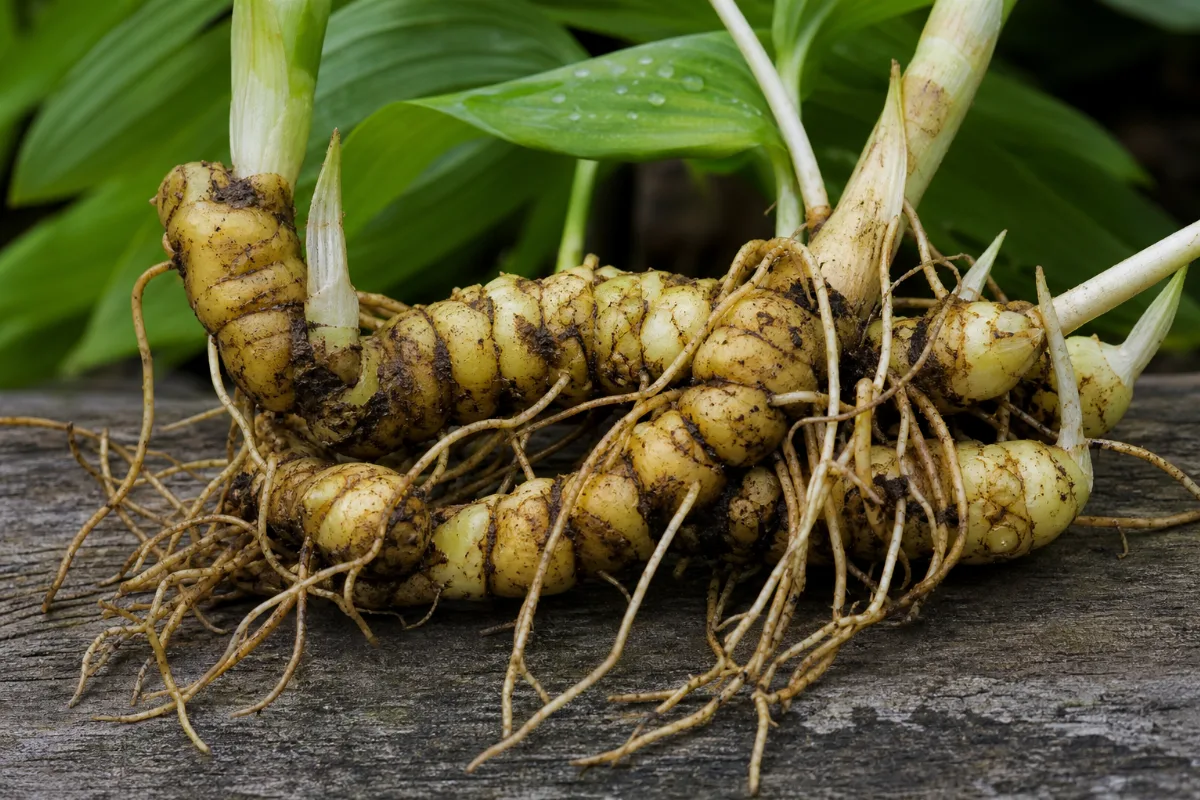
Huang jing is the rhizome (underground stem) of Polygonatum sibiricum, P. kingianum and P. cyrtonema, plants of the asparagus family also called Solomon's seal. In Chinese medicine it is a tonic for fatigue, weakness, cough and poor appetite, and it is traditionally steamed and dried before use.
Yu zhu is a different species, P. odoratum, also called angular Solomon's seal. Garden and European Solomon's seal plants are other species again. He shou wu is not a Solomon's seal at all; it is Polygonum multiflorum, a different genus. Each study below says which plant and which preparation it used.
How it may work
The main studied compounds are polysaccharides, steroidal saponins and flavonoids. In animal and cell models, the polysaccharides calm inflammation in brain immune cells, support antioxidant pathways and change gut microbes. A rat study found better glucose and lipid measures with P. kingianum polysaccharides.
Steaming changes the chemistry. In one lab study, three steamings with black beans cut polysaccharides by 43.33% and raised saponins and flavonoids. None of this is shown to work the same way in people.
What the research shows
Human evidence is thin. One 80-person trial of a P. sibiricum rhizome extract found better insomnia scores and more total sleep time than placebo over four weeks (low certainty). The other trials were of an eight-herb paste, a three-herb granule, or P. odoratum, so they cannot be credited to huang jing.
For memory, fatigue, blood sugar on its own, liver, bone and immunity in general, the evidence is lab and animal work only. Abstracts often give no numbers, and the reviews are narrative with no certainty grading.
At a glance
Traditional uses history, not proof
- Tonic for fatigue, weakness, cough, poor appetite and joint aches in Chinese medicine
- Rhizome steamed and dried before use, sometimes with rice wine or black beans
Studied for research
- Sleep in mild insomnia (one extract trial, 80 people), low
- Muscle and blood sugar in older adults with diabetes (eight-herb mix), low
- Immune ageing in older adults (a different species, yu zhu), low
- Childhood immune thrombocytopenia (three-herb granule), low
- Memory, fatigue, blood sugar on its own (animal and lab only), insufficient
Main compounds
- Polysaccharides (the main studied group)
- Steroidal saponins such as diosgenin-type compounds (diosgenin CID 99474)
- Flavonoids such as baicalein (CID 5281605)
- Calcium oxalate needle crystals in raw rhizome (CID 165350)
Common forms
- Steamed and dried rhizome slices
- Raw rhizome (irritant; traditionally processed first)
- Hot-water extract (studied in one sleep trial)
- Multi-herb mixes and granules
Research links: Ha 2019: P. sibiricum for mild insomnia, trial (PubMed) · Liu 2022: Polygonatum and diabetes, review (PubMed) · Gu 2025: irritant components of raw rhizome (PubMed) · Zhang 2026: high-dose toxicity in mice (PubMed) · Research Library · Genes & Biomarkers Library
The plant and its history
- Accepted scientific name
- Polygonatum sibiricum Redouté (GBIF ACCEPTED, exact match, confidence 98). Huang jing also covers P. kingianum Collett & Hemsl. and P. cyrtonema Hua (both ACCEPTED in GBIF).
- Naming authority
- Redouté
- Common names
- Huang jing (Chinese (pinyin)); Polygonatum (Latin genus); Solomon's seal (Chinese medicine rhizome) (English); Siberian Solomon's seal (English); Polygonati Rhizoma / Rhizoma Polygonati (Latin drug name); Yu zhu (P. odoratum; angular Solomon's seal) (Chinese / English; separate species)
- Botanical family
- Asparagaceae (asparagus family)
- Classification
- Plantae > Tracheophyta > Liliopsida > Asparagales > Asparagaceae > Polygonatum > Polygonatum sibiricum
- Native range
- Not covered in the sources read beyond use in Chinese medicine.
- Habitat
- Not covered in the sources read.
- What the plant looks like
- Roots: The medicinal part is the rhizome (underground stem); raw rhizome holds sharp calcium oxalate needle crystals 100-200 micrometres long.; Stems: Not described in sources read.; Leaves: Not described in sources read.; Flowers: Not described in sources read.; Fruit: Fruits (berries) of Solomon's seal plants are poisonous per NC State Extension (genus level).; Seeds: Not described in sources read.
- Cultivation
- Not covered in the sources read.
- Harvest and processing
- Traditionally steamed and dried, sometimes with rice wine or black beans; three steaming cycles with black beans gave the best sensory score (94/100) in one lab study.
- Look-alikes and adulterants
- Name: Polygonatum odoratum (Mill.) Druce (yu zhu; angular Solomon's seal); Note: GBIF ACCEPTED. A separate Chinese medicinal species and also called angular Solomon's seal. The 2026 older-adult trial used this species, not huang jing.; Name: Polygonatum multiflorum (L.) All. (European / garden Solomon's seal); Note: GBIF ACCEPTED. A different plant from the Chinese huang jing species. NC State lists Solomon's seal fruits as poisonous at genus level. One 2025 abstract also names it as a raw-rhizome source of Polygonati Rhizoma, a naming difference we did not resolve.; Name: Polygonum multiflorum Thunb. (he shou wu, fo-ti); Note: Different genus; GBIF treats the name as a synonym. Known elsewhere for liver-injury reports (not checked here). Do not confuse with Polygonatum.; Name: Polygonatum officinale (name used in a 2025 abstract); Note: Named alongside P. kingianum in a 2025 irritant-component paper; not checked in GBIF here.
- Sustainability and conservation
- Not covered in the sources read.
Traditional use and history history, not clinical proof
| Tradition or era | Documented use | Source |
|---|---|---|
| Traditional Chinese medicine | Tonic for fatigue, weakness, cough, indigestion, poor appetite, backache and joint pain; described as invigorating the spleen and moistening the lungs (use over about 2,000 years per our existing summary; not re-checked). | p29757991 |
| Medicine-food homology | Used as a medicine-and-food plant; one 2026 trial paper lists P. sibiricum among eight medicine-food homology ingredients. | p41763617 |
| Traditional processing | Steaming (with rice wine or black beans) and drying before use; reviews describe this as traditional practice to improve efficacy and, per our summary, to reduce irritation. | p42859025 |
| Yu zhu (P. odoratum) in elder care | Used in geriatric care for lung-moistening and nourishing effects. | p42775700 |
Traditional use shows how a plant was used. It does not show that a supplement works or is safe today.
What is inside, and how it may work
What the plant contains and how those compounds act in cells and animals. Laboratory and animal mechanisms are not proven effects in people.
Main compounds
| Compound | Family | Where it is concentrated | Activity studied | Level of evidence |
|---|---|---|---|---|
| Polysaccharides (rhizome polysaccharides, PSP) | Polysaccharides (fructan-type; group) | Rhizome | The main studied bioactive group; antioxidant, immune, blood-sugar, gut-microbe findings in lab and animals. Steaming lowers polysaccharide content (-43.33% after three cycles in P. kingianum). 1 2 13 | Lab |
| Steroidal saponins (e.g. diosgenin-type; sibiricoside A and methylprotodioscin detected in mice) PubChem 99474 | Steroidal saponins (group) | Rhizome Extract used in the mouse toxicity study held 9.152 mg/ml saponins | Diosgenin was among about 10 blood-accessible constituents in mice; saponins rose 21.29% after three steamings. 12 13 | Lab |
| Flavonoids (baicalein among them) PubChem 5281605 | Flavonoids | Rhizome Extract held 1.138 mg/ml flavonoids | Detected in mouse blood after dosing; 44.76% increase after three steamings. 12 13 | Lab |
| Beta-sitosterol PubChem 222284 | Plant sterol | Rhizome | Detected in mouse blood after dosing. 12 | Lab |
| Glyceryl-1-monolinoleate PubChem 6436630 | Fatty acid glyceride | Rhizome | Named as the primary active component in the insomnia trial's rationale. 4 | Human (as the trial's stated rationale) |
| Calcium oxalate monohydrate (needle crystals) PubChem 165350 | Mineral crystal | Raw rhizome Highest in P. kingianum of three raw sources (HPLC) | Main irritant in raw rhizome in rabbit and mouse tests. 3 | Lab |
| Daidzein and daidzin (from black beans, not the herb) PubChem 5281708 | Isoflavones | Steamed rhizome (from beans) | Appear in rhizome steamed with black beans. 13 | Lab |
| Cardiac glycosides (listed as a component group) | Cardiac glycosides | Not stated | Named among components in the 2018 review abstract; no amount or activity is given there. 1 | Lab |
Mechanisms, receptors and pathways
| Target or pathway | Gene or receptor | What was found | Level |
|---|---|---|---|
| Microglial activation and inflammatory signalling | TLR4/NF-kB, NLRP3 | Polysaccharides appear to damp over-active microglia and these inflammatory pathways in models. 8 | Animal research |
| Antioxidant and lipid peroxidation / ferroptosis | NRF2-related pathways | Restore redox balance and reduce lipid peroxidation and ferroptosis in models. 8 | Animal research |
| Gut microbes, short-chain fatty acids, gut barrier | Not specified in the abstract | P. kingianum polysaccharides raised short-chain-fatty-acid-producing bacteria, reduced gut permeability and inflammation in high-fat-fed rats. 2 | Animal research |
| Gut microbes and T-cell ageing in older adults | TEMRA T-cell subsets; Akkermansia, Prevotella 9, Klebsiella | A P. odoratum preparation lowered TEMRA cells and shifted gut microbes over 90 days. 10 | Human data |
| Default-mode network blood flow | Medial prefrontal cortex perfusion | Group-by-visit difference with a P. sibiricum extract in mild insomnia. 4 | Human data |
| Irritation by crystals, a ribosome-inactivating protein and a lectin | Not applicable | Needle crystals caused eye irritation and dose-dependent abdominal inflammation in animals; two proteins may add to inflammation. 3 | Animal research |
| Predicted toxicity pathways | PI3K-AKT, HIF-1, MAPK, NF-kB (computer modelling) | Modelling linked liver, kidney and spleen lesions to these pathways; not confirmed. 12 | In silico |
Absorption, metabolism and elimination
- Absorption
- In mice, about 10 of 15 extract constituents were found in blood after oral dosing (diosgenin, baicalein, beta-sitosterol among them).
- Distribution
- Not found.
- Metabolism
- Not found for humans.
- Elimination
- Not found.
- Bioavailability
- No human blood-level study was found; the 2026 glial review says pharmacokinetic analyses are needed.
Isolated compounds versus whole extracts
Most lab work uses isolated polysaccharide fractions or ethanol extracts; the human trials used a rhizome extract (one trial), a P. odoratum preparation, or multi-herb products. Steaming changes the chemistry: polysaccharides fall while saponins, flavonoids and reducing sugars rise, and black beans add soy isoflavones. So raw rhizome, steamed slices, tea, extract and isolated polysaccharides cannot be treated as the same.
Nutritional composition
Polygonatum rhizome is a medicine-and-food plant in China, but our sources do not give vitamin or mineral content for it. It is not presented here as a nutrient source.
4 low certainty5 not enough evidence
What is Huang Jing (Solomon's Seal) good for?
The studied uses and how strong the human evidence is for each. Several results come from mixes of herbs or from a different species, as noted.
Benefits, one by one
Each card is a research question, not a promise. Tap a goal to filter. Open a card to see the studies, doses and limits.
Sleep in mild insomnia (P. sibiricum rhizome extract, one trial)
Low certaintyOne four-week trial in 80 adults with mild insomnia found better sleep scores and more total sleep time with a P. sibiricum rhizome extract than with placebo. It is a single small trial, so this is a promising lead, not a proven benefit.
1 studiesP. sibiricum rhizome extract tablet (hot-water extract per our summar…
Studies, doses and limits
What the trials found
Ha 2019 (Korea): 80 adults with mild insomnia took a P. sibiricum rhizome extract or placebo for four weeks. The extract group improved more on the Athens Insomnia Scale and had a significant increase in total sleep time. Blood flow in the medial prefrontal cortex also differed between groups over the visits. Our existing summary of the full text adds that sleep efficiency and time awake after falling asleep did not differ significantly (summary-only).
Results
Greater improvement in insomnia score and longer total sleep time than placebo; blood-flow differences in one brain region.
Effect sizes as reported
Numbers are not in the abstract. The extract was tested at 500 mg/day for 4 weeks.
Why this rating
One small, single-site, four-week, placebo-controlled trial in mild insomnia. No second trial, no numbers in the abstract, and three authors work for a food company (Nongshim). No reviewer GRADE exists.
Form and dose studied
P. sibiricum rhizome extract tablet (hot-water extract per our summary; summary-only). Not tested as raw rhizome, tea, powder or steamed slices.
Who was studied
Adults with mild insomnia in Korea. Not tested in people with severe insomnia, older adults, or people taking sleep medicines.
Limits
Four weeks only; effects on falling asleep faster were not measured (the trial reported insomnia score and total sleep time); possible industry link.
Why researchers looked
Animal studies suggested the rhizome's main fat-like component helps sleep, so the researchers tested it in people.
Traditional use
In Chinese medicine the rhizome is a tonic. It is not traditionally described as a sleep remedy in the sources we read.
Proposed mechanism Preliminary mechanism
The authors name glyceryl-1-monolinoleate as the main active component and measured brain blood flow in the default-mode network, a set of regions linked to insomnia. How the extract might act is not shown.
A proposed mechanism does not show that the effect happens in people.
The abstract does not report side effects. See the Safety tab for what is and is not known.
Memory and brain protection (lab and animal models only)
Not enough evidenceReviews describe polysaccharides and other compounds from Polygonatum protecting brain cells in models of Alzheimer's, Parkinson's, stroke, depression and poor sleep. No human memory or dementia trial of Polygonatum was found.
2 studiesIsolated polysaccharides, saponins and flavonoids in models; not a wh…
Studies, doses and limits
What the trials found
No human trial of memory or cognition was found. The 2026 glial review covers models of Alzheimer's disease, Parkinson's disease, cerebral ischaemia, depression and sleep disturbance and says high-quality clinical studies are needed. The 2018 polysaccharide review mentions that the polysaccharides may help prevent Alzheimer's disease, based on lab and animal work.
Results
Benefits in cells and animals only; none shown in people.
Effect sizes as reported
No effect sizes in humans.
Why this rating
Lab and animal findings only; the reviewers themselves call for standardized extracts and clinical studies.
Form and dose studied
Isolated polysaccharides, saponins and flavonoids in models; not a whole herb or tea.
Who was studied
Cell cultures, rodents and fish models. No people.
Limits
Models of disease do not predict results in people; isolated compounds are not the same as the rhizome you could buy.
Why researchers looked
Researchers study the rhizome's polysaccharides and saponins for effects on inflammation and oxidative damage in the brain.
Traditional use
Tonic use for weakness and ageing in Chinese medicine; no traditional claim about memory was verified.
Proposed mechanism Animal research
In models, polysaccharides appear to calm over-active microglia (the brain's immune cells), reduce TLR4/NF-kB and NLRP3 inflammatory signalling, support the NRF2 antioxidant pathway and reduce lipid peroxidation and ferroptosis.
A proposed mechanism does not show that the effect happens in people.
No safety data for memory use in people.
Fatigue, ageing and antioxidant effects (lab and animal only)
Not enough evidencePolygonatum polysaccharides show anti-fatigue, anti-ageing and antioxidant effects in animal and cell studies. No human trial of fatigue or ageing was found.
1 studiesIsolated P. sibiricum polysaccharides in the review.
Studies, doses and limits
What the trials found
The 2018 review describes no human trial of these effects. We did not find a human fatigue trial of Polygonatum.
Results
Animal and cell findings only.
Effect sizes as reported
No human effect sizes.
Why this rating
Only lab and animal data in the sources read. Tradition is not evidence of benefit.
Form and dose studied
Isolated P. sibiricum polysaccharides in the review.
Who was studied
Animals and cell cultures.
Limits
No human data; review is from 2018 and describes mechanisms rather than outcomes.
Why researchers looked
The rhizome is a traditional tonic for weakness and tiredness, so researchers tested its polysaccharides in tired or ageing animals.
Traditional use
Used in Chinese medicine for fatigue and weakness; described as invigorating the spleen and moistening the lungs (summary-only, from our existing summary of two reviews).
Proposed mechanism Animal research
The 2018 review lists antioxidant, anti-ageing and anti-fatigue activities from lab and animal work; the abstract does not give the mechanisms.
A proposed mechanism does not show that the effect happens in people.
None specific.
Traditional tonic use (fatigue, cough, appetite, joints)
Not enough evidenceIn Chinese medicine the steamed rhizome has been used for over 2,000 years as a tonic for fatigue, weakness, cough, poor appetite and aches. This is tradition, and long use is not proof it works.
2 studiesSteamed and dried rhizome slices; decoction.
Studies, doses and limits
What the trials found
No clinical trial of these traditional uses was found. The newer reviews describe the plant as medicine-food homology and say processing is traditional.
Results
Not measured.
Effect sizes as reported
None.
Why this rating
Traditional use only; the 'over 2,000 years' figure comes from our existing summary and was not re-checked (summary-only).
Form and dose studied
Steamed and dried rhizome slices; decoction.
Who was studied
n/a
Limits
Tradition is not evidence; no trials of these uses.
Why researchers looked
It is a medicine-and-food plant in Chinese tradition.
Traditional use
The rhizome is traditionally processed by repeated steaming and drying, sometimes with rice wine or black beans, before use.
Proposed mechanism Pharmacological theory
Not applicable; tradition only.
A proposed mechanism does not show that the effect happens in people.
Raw rhizome irritates the mouth and eyes (see Safety).
Blood sugar and lipids (animal and cell studies; no trial of Polygonatum alone)
Not enough evidenceAnimal and cell studies report that Polygonatum polysaccharides and other compounds lower blood sugar and improve blood fats. Human data are limited to small trials of multi-herb products, so there is no proof that Polygonatum alone helps blood sugar in people.
2 studiesIsolated polysaccharide fractions in rats; reviews of processed vs ra…
Studies, doses and limits
What the trials found
The 2022 review covers three species (P. sibiricum, P. kingianum, P. cyrtonema) and says the mechanism research on them in diabetes had not been reviewed before; our existing summary says human data are limited to small multi-herb patent medicine trials, usually given with standard diabetes drugs (summary-only). The one recent trial we read is a mix (see the Shenqi paste item).
Results
Improved glucose and lipid measures in rats (numbers not in the abstract).
Effect sizes as reported
No human effect sizes for Polygonatum alone.
Why this rating
Animal and cell data; no reviewer grades the human evidence as adequate.
Form and dose studied
Isolated polysaccharide fractions in rats; reviews of processed vs raw products.
Who was studied
Rats, mice, cells.
Limits
Isolated fractions in rodents are not the same as a tea or powder; animal blood-sugar effects do not predict a safe or useful effect in people.
Why researchers looked
Its polysaccharides, saponins and flavonoids have been tested in animal models of diabetes and high-fat diets.
Traditional use
Traditional use for thirst-type and wasting conditions was not verified in the sources read.
Proposed mechanism Animal research
In rats fed a high-fat diet, P. kingianum polysaccharides shifted gut microbes toward short-chain-fatty-acid producers, reduced gut leakiness and inflammation, and improved glucose and lipid measures. Processing (steaming) changes the polysaccharides and, in lab work, their activity.
A proposed mechanism does not show that the effect happens in people.
Because animal studies show blood-sugar lowering, people on diabetes medicines should ask a pharmacist before using it (theory; see Safety).
Muscle strength and blood sugar in older adults with diabetes (eight-herb Shenqi paste that includes P. sibiricum)
Low certaintyIn 90 older adults with diabetes-related muscle loss, an eight-ingredient paste that includes P. sibiricum improved grip strength, muscle mass and chair-stand time, and lowered fasting glucose and CRP more than placebo. HbA1c did not differ. Because it is a mix, the results cannot be credited to Polygonatum.
1 studiesEight-ingredient paste (Astragalus, Codonopsis, P. sibiricum, Dioscor…
Studies, doses and limits
What the trials found
Hua 2026: 90 randomized adults aged 60 or older with diabetic sarcopenia, 12 weeks, double-blind, placebo paste. The paste group improved more in handgrip strength, skeletal muscle mass index and five-time chair-stand test (interaction p < 0.001 for each). Fasting glucose fell (p = 0.018) and CRP fell (p < 0.001). Fasting insulin, HbA1c and insulin resistance index did not differ (p > 0.05). Liver and kidney function were checked for safety, but the abstract gives no safety results.
Results
Muscle outcomes p < 0.001; fasting glucose p = 0.018; CRP p < 0.001; HbA1c, fasting insulin, insulin resistance: no significant difference.
Effect sizes as reported
Effect sizes and confidence intervals are not in the abstract.
Why this rating
One randomized, placebo-controlled trial of a mix with eight ingredients; only 74 of 90 people were in the secondary analysis; no GRADE; funding not stated.
Form and dose studied
Eight-ingredient paste (Astragalus, Codonopsis, P. sibiricum, Dioscorea, Poria, Eucommia, barley, Ophiopogon); amount of Polygonatum unknown.
Who was studied
Adults 60+ with diabetic sarcopenia and spleen-kidney deficiency syndrome, China.
Limits
Combination product; short trial; the key long-term marker HbA1c did not change.
Why researchers looked
Chinese medicine mixes are used for age-related muscle loss with diabetes; this was the first randomized test of this paste.
Traditional use
Mix of medicine-and-food ingredients used in clinical practice for sarcopenia (per the paper).
Proposed mechanism Preliminary mechanism
Not shown; the paper reports lower inflammatory markers within the paste group.
A proposed mechanism does not show that the effect happens in people.
The abstract does not report adverse events.
Immune ageing and respiratory infections in older adults (P. odoratum / yu zhu, one trial)
Low certaintyIn a 90-day trial in 140 older adults, a P. odoratum (yu zhu) preparation lowered the share of older-type T cells and changed gut microbes. The authors linked those changes to better immunity and fewer respiratory infections. This is a different species from the three huang jing plants.
2 studiesP. odoratum preparation (form and amount not stated in the abstract).…
Studies, doses and limits
What the trials found
Xia 2026: 140 independently living adults aged 60+, randomized and double-blind, 90 days. After the herb, the percentages of TEMRA and CD28-CD57+ TEMRA cells fell; Prevotella 9 and Akkermansia rose; Klebsiella fell. Correlation analysis linked these changes to improved immunity and fewer respiratory infections. The abstract gives no numbers and no direct group comparison of infections.
Results
Lower TEMRA T-cell percentages and gut microbe shifts after 90 days.
Effect sizes as reported
No numbers in the abstract.
Why this rating
One randomized trial, registered (UMIN000052572), but the key claim about infections rests on correlation analysis; different species; company-affiliated authors; no GRADE.
Form and dose studied
P. odoratum preparation (form and amount not stated in the abstract). Not P. sibiricum, P. kingianum or P. cyrtonema.
Who was studied
Community-dwelling adults 60+ in China.
Limits
Different species; blood-cell markers are not health outcomes; abstract lacks numbers.
Why researchers looked
P. odoratum is used in Chinese medicine for its lung-moistening, nourishing effects in older people.
Traditional use
Used in geriatric care for lung-moistening and nourishing effects (per the paper).
Proposed mechanism Preliminary mechanism
The paper reports links between gut microbes (Akkermansia, Klebsiella) and T-cell subsets; the herb shifted both.
A proposed mechanism does not show that the effect happens in people.
The abstract does not report adverse events.
Childhood chronic immune thrombocytopenia (three-herb Huaiqihuang Granule that includes P. sibiricum)
Low certaintyIn 216 children with chronic immune thrombocytopenia, a three-herb granule that includes P. sibiricum gave a higher effectiveness rate than placebo (71.74% vs 45.65% at 24 weeks) and lower bleeding grades, with adverse events comparable between groups. The effect cannot be credited to Polygonatum alone.
1 studiesHuaiqihuang Granule (Trametes robiniophila, Lycium chinense fruit, P.…
Studies, doses and limits
What the trials found
Han 2026: 216 children at 13 hospitals; 24 weeks double-blind, then 24 weeks open-label, followed for 96 weeks. The granule beat placebo for bleeding grade and platelet response; effectiveness 71.74% vs 45.65% (p = 0.0013). Adverse events were comparable; the severe events listed were thrombocytopenia 6.9%, respiratory infection 5.1% and bleeding episodes 2.8%.
Results
Effectiveness 71.74% vs 45.65% at 24 weeks (p = 0.0013).
Effect sizes as reported
No confidence intervals in the abstract.
Why this rating
A multicentre, double-blind, placebo-controlled trial, but of a three-herb product with an author-defined composite outcome; Polygonatum's own role is unknown.
Form and dose studied
Huaiqihuang Granule (Trametes robiniophila, Lycium chinense fruit, P. sibiricum).
Who was studied
Children with chronic primary ITP, China.
Limits
Combination product; one trial; not applicable to adults or to Polygonatum on its own.
Why researchers looked
The granule is used in China for immune-related conditions; this trial tested it in children with chronic ITP.
Traditional use
A modern Chinese patent medicine rather than a traditional single-herb use.
Proposed mechanism Preliminary mechanism
Not shown.
A proposed mechanism does not show that the effect happens in people.
Adverse events were comparable between groups in the abstract; children should only be treated under a doctor.
Immune, liver, bone and other effects (lab and animal only)
Not enough evidenceReviews of Polygonatum polysaccharides describe immune-boosting, anti-inflammatory, liver-protective, bone-related, anticancer and cholesterol-lowering effects in cells and animals. The reviews describe no human trials of these effects.
2 studiesIsolated polysaccharides, saponins and extracts.
Studies, doses and limits
What the trials found
The 2018 Molecules review and the 2026 P. odoratum review list these activities from extracts and isolated compounds in lab and animal work; neither abstract describes human trials of them. Our existing summary notes the 2018 review describes no human trials.
Results
Lab and animal findings only.
Effect sizes as reported
None in humans.
Why this rating
Lab and animal findings only.
Form and dose studied
Isolated polysaccharides, saponins and extracts.
Who was studied
Cells and animals.
Limits
Reviews are narrative with no certainty grading in the abstracts.
Why researchers looked
Polysaccharides are the main studied component; reviews gather the lab results.
Traditional use
Traditional tonic use; no verified traditional claim for these specific outcomes.
Proposed mechanism Animal research
Reported in cells and rodents; mechanisms vary by study.
A proposed mechanism does not show that the effect happens in people.
A high-dose mouse study found liver, kidney and spleen lesions (see Safety), so lab protection and lab harm are both reported.
Connections to the rest of health
How Huang Jing (Solomon's Seal) connects to the rest of our health knowledge graph. Every link says what kind of connection it is. A safety link (for example to the liver) is a warning, not a benefit. A study that merely mentions a topic never creates a benefit link.
Explore every connection: goals, body systems, organs, symptoms, genes
A. Wellness goals
| Connected to | Kind of connection | Evidence status | Context | Studies |
|---|---|---|---|---|
| Better Sleep | Potential benefit | Low certainty | Sleep in mild insomnia (P. sibiricum rhizome extract, one trial): One four-week trial in 80 adults with mild insomnia found better sleep scores and more total sleep time with a P. sibiricum rhizome extract than with placebo. It is a single small trial, so this is a promising lead, not a proven benefit. | 4 |
| Sleep Quality | Potential benefit | Low certainty | Sleep in mild insomnia (P. sibiricum rhizome extract, one trial): One four-week trial in 80 adults with mild insomnia found better sleep scores and more total sleep time with a P. sibiricum rhizome extract than with placebo. It is a single small trial, so this is a promising lead, not a proven benefit. | 4 |
| Memory Support | Preliminary mechanism | Not enough evidence | Memory and brain protection (lab and animal models only): Reviews describe polysaccharides and other compounds from Polygonatum protecting brain cells in models of Alzheimer's, Parkinson's, stroke, depression and poor sleep. No human memory or dementia trial of Polygonatum was found. | 8 1 |
| Brain Health | Preliminary mechanism | Not enough evidence | Memory and brain protection (lab and animal models only): Reviews describe polysaccharides and other compounds from Polygonatum protecting brain cells in models of Alzheimer's, Parkinson's, stroke, depression and poor sleep. No human memory or dementia trial of Polygonatum was found. | 8 1 |
| Reduce Fatigue | Preliminary mechanism | Not enough evidence | Fatigue, ageing and antioxidant effects (lab and animal only): Polygonatum polysaccharides show anti-fatigue, anti-ageing and antioxidant effects in animal and cell studies. No human trial of fatigue or ageing was found. | 1 |
| Healthy Aging | Preliminary mechanism | Not enough evidence | Fatigue, ageing and antioxidant effects (lab and animal only): Polygonatum polysaccharides show anti-fatigue, anti-ageing and antioxidant effects in animal and cell studies. No human trial of fatigue or ageing was found. | 1 |
| Reduce Fatigue | Traditional use | Not enough evidence | Traditional tonic use (fatigue, cough, appetite, joints): In Chinese medicine the steamed rhizome has been used for over 2,000 years as a tonic for fatigue, weakness, cough, poor appetite and aches. This is tradition, and long use is not proof it works. | 11 13 |
| Digestive Support | Traditional use | Not enough evidence | Traditional tonic use (fatigue, cough, appetite, joints): In Chinese medicine the steamed rhizome has been used for over 2,000 years as a tonic for fatigue, weakness, cough, poor appetite and aches. This is tradition, and long use is not proof it works. | 11 13 |
| Blood Sugar Balance | Preliminary mechanism | Not enough evidence | Blood sugar and lipids (animal and cell studies; no trial of Polygonatum alone): Animal and cell studies report that Polygonatum polysaccharides and other compounds lower blood sugar and improve blood fats. Human data are limited to small trials of multi-herb products, so there is no proof that Polygonatum alone helps blood sugar in people. | 7 2 |
| Metabolic Health | Preliminary mechanism | Not enough evidence | Blood sugar and lipids (animal and cell studies; no trial of Polygonatum alone): Animal and cell studies report that Polygonatum polysaccharides and other compounds lower blood sugar and improve blood fats. Human data are limited to small trials of multi-herb products, so there is no proof that Polygonatum alone helps blood sugar in people. | 7 2 |
| Muscle Recovery | Potential benefit | Low certainty | Muscle strength and blood sugar in older adults with diabetes (eight-herb Shenqi paste that includes P. sibiricum): In 90 older adults with diabetes-related muscle loss, an eight-ingredient paste that includes P. sibiricum improved grip strength, muscle mass and chair-stand time, and lowered fasting glucose and CRP more than placebo. HbA1c did not differ. Because it is a mix, the results cannot be credited to Polygonatum. | 6 |
| Blood Sugar Balance | Potential benefit | Low certainty | Muscle strength and blood sugar in older adults with diabetes (eight-herb Shenqi paste that includes P. sibiricum): In 90 older adults with diabetes-related muscle loss, an eight-ingredient paste that includes P. sibiricum improved grip strength, muscle mass and chair-stand time, and lowered fasting glucose and CRP more than placebo. HbA1c did not differ. Because it is a mix, the results cannot be credited to Polygonatum. | 6 |
| Immune Support | Potential benefit | Low certainty | Immune ageing and respiratory infections in older adults (P. odoratum / yu zhu, one trial): In a 90-day trial in 140 older adults, a P. odoratum (yu zhu) preparation lowered the share of older-type T cells and changed gut microbes. The authors linked those changes to better immunity and fewer respiratory infections. This is a different species from the three huang jing plants. Childhood chronic immune thrombocytopenia (three-herb Huaiqihuang Granule that includes P. sibiricum): In 216 children with chronic immune thrombocytopenia, a three-herb granule that includes P. sibiricum gave a higher effectiveness rate than placebo (71.74% vs 45.65% at 24 weeks) and lower bleeding grades, with adverse events comparable between groups. The effect cannot be credited to Polygonatum alone. | 10 9 5 |
| Healthy Aging | Potential benefit | Low certainty | Immune ageing and respiratory infections in older adults (P. odoratum / yu zhu, one trial): In a 90-day trial in 140 older adults, a P. odoratum (yu zhu) preparation lowered the share of older-type T cells and changed gut microbes. The authors linked those changes to better immunity and fewer respiratory infections. This is a different species from the three huang jing plants. | 10 9 |
| Gut Health | Potential benefit | Low certainty | Immune ageing and respiratory infections in older adults (P. odoratum / yu zhu, one trial): In a 90-day trial in 140 older adults, a P. odoratum (yu zhu) preparation lowered the share of older-type T cells and changed gut microbes. The authors linked those changes to better immunity and fewer respiratory infections. This is a different species from the three huang jing plants. | 10 9 |
| Immune Support | Preliminary mechanism | Not enough evidence | Immune, liver, bone and other effects (lab and animal only): Reviews of Polygonatum polysaccharides describe immune-boosting, anti-inflammatory, liver-protective, bone-related, anticancer and cholesterol-lowering effects in cells and animals. The reviews describe no human trials of these effects. | 1 9 |
| Liver Support | Preliminary mechanism | Not enough evidence | Immune, liver, bone and other effects (lab and animal only): Reviews of Polygonatum polysaccharides describe immune-boosting, anti-inflammatory, liver-protective, bone-related, anticancer and cholesterol-lowering effects in cells and animals. The reviews describe no human trials of these effects. | 1 9 |
| Joint Support | Preliminary mechanism | Not enough evidence | Immune, liver, bone and other effects (lab and animal only): Reviews of Polygonatum polysaccharides describe immune-boosting, anti-inflammatory, liver-protective, bone-related, anticancer and cholesterol-lowering effects in cells and animals. The reviews describe no human trials of these effects. | 1 9 |
B. Body systems
| Connected to | Kind of connection | Evidence status | Context | Studies |
|---|---|---|---|---|
| Sleep Recovery | Biological association | Low certainty | Studied for: Sleep in mild insomnia (P. sibiricum rhizome extract, one trial) | 4 |
| Nervous System | Biological association | Not enough evidence | Studied for: Memory and brain protection (lab and animal models only) | 8 1 |
| Metabolism Weight | Biological association | Not enough evidence | Studied for: Fatigue, ageing and antioxidant effects (lab and animal only) Studied for: Traditional tonic use (fatigue, cough, appetite, joints) | 1 11 13 7 2 |
| Endocrine System | Biological association | Not enough evidence | Studied for: Blood sugar and lipids (animal and cell studies; no trial of Polygonatum alone) Studied for: Muscle strength and blood sugar in older adults with diabetes (eight-herb Shenqi paste that includes P. sibiricum) | 7 2 6 |
| Musculoskeletal System | Biological association | Low certainty | Studied for: Muscle strength and blood sugar in older adults with diabetes (eight-herb Shenqi paste that includes P. sibiricum) Studied for: Immune, liver, bone and other effects (lab and animal only) | 6 1 9 |
| Immune System | Biological association | Low certainty | Studied for: Immune ageing and respiratory infections in older adults (P. odoratum / yu zhu, one trial) Studied for: Childhood chronic immune thrombocytopenia (three-herb Huaiqihuang Granule that includes P. sibiricum) | 10 9 5 1 |
| Digestive System | Biological association | Low certainty | Studied for: Immune ageing and respiratory infections in older adults (P. odoratum / yu zhu, one trial) | 10 9 |
| Hepatic System | Biological association | Not enough evidence | Studied for: Immune, liver, bone and other effects (lab and animal only) | 1 9 |
E. Health conditions
| Connected to | Kind of connection | Evidence status | Context | Studies |
|---|---|---|---|---|
| Mild insomnia | Potential benefit | Low certainty | One 80-person four-week placebo-controlled trial. Preparation or compound: P. sibiricum rhizome extract |
4 |
| Immune thrombocytopenia (children) | Potential benefit | Low certainty | One multicentre trial of 216 children; Polygonatum alone not tested. Preparation or compound: Three-herb Huaiqihuang Granule |
5 |
I. Biomarkers
| Connected to | Kind of connection | Evidence status | Context | Studies |
|---|---|---|---|---|
| Athens Insomnia Scale (AIS) total score | Biological association | Low certainty | Measured in trials: lowered. A lab change is not the same as a health benefit. | 4 |
| Total sleep time (actigraphy) | Biological association | Low certainty | Measured in trials: raised. A lab change is not the same as a health benefit. | 4 |
| Brain blood flow (perfusion) in the medial prefrontal cortex | Biological association | Not enough evidence | Measured in trials: mixed. A lab change is not the same as a health benefit. | 4 |
| Fasting blood glucose | Biological association | Low certainty | Measured in trials: lowered. A lab change is not the same as a health benefit. | 6 |
| HbA1c (average blood sugar over about 3 months) | Biological association | Low certainty | Measured in trials: no-change. A lab change is not the same as a health benefit. | 6 |
| C-reactive protein (CRP) | Biological association | Low certainty | Measured in trials: lowered. A lab change is not the same as a health benefit. | 6 |
| TEMRA T-cell percentage | Biological association | Low certainty | Measured in trials: lowered. A lab change is not the same as a health benefit. | 10 |
| Gut microbe balance (Akkermansia, Prevotella 9, Klebsiella) | Biological association | Low certainty | Measured in trials: mixed. A lab change is not the same as a health benefit. | 10 |
| Bleeding grade and platelet response (ITP in children) | Biological association | Low certainty | Measured in trials: mixed. A lab change is not the same as a health benefit. | 5 |
K. Biological pathways
| Connected to | Kind of connection | Evidence status | Context | Studies |
|---|---|---|---|---|
| TLR4/NF-kB and NLRP3 signalling | Preliminary mechanism | Animal | Damped by polysaccharides in brain models. | 8 |
| NRF2 antioxidant pathway | Preliminary mechanism | Animal | Supported by polysaccharides in brain models. | 8 |
| PI3K-AKT, MAPK, HIF-1, NF-kB (predicted toxicity) | Preliminary mechanism | In silico | Computer-predicted links to organ lesions in mice. | 12 |
| Akkermansia, Prevotella 9, Klebsiella | Preliminary mechanism | Human | Shifted in older adults taking P. odoratum. | 10 |
L. Active compounds
| Connected to | Kind of connection | Evidence status | Context | Studies |
|---|---|---|---|---|
| Polysaccharides (rhizome polysaccharides, PSP) | Biological association | Lab | The main studied bioactive group; antioxidant, immune, blood-sugar, gut-microbe findings in lab and animals. Steaming lowers polysaccharide content (-43.33% after three cycles in P. kingianum). Preparation or compound: Rhizome |
1 2 13 |
| Steroidal saponins (e.g. diosgenin-type; sibiricoside A and methylprotodioscin detected in mice) | Biological association | Lab | Diosgenin was among about 10 blood-accessible constituents in mice; saponins rose 21.29% after three steamings. Preparation or compound: Rhizome |
12 13 |
| Flavonoids (baicalein among them) | Biological association | Lab | Detected in mouse blood after dosing; 44.76% increase after three steamings. Preparation or compound: Rhizome |
12 13 |
| Beta-sitosterol | Biological association | Lab | Detected in mouse blood after dosing. Preparation or compound: Rhizome |
12 |
| Glyceryl-1-monolinoleate | Biological association | Human (as the trial's stated rationale) | Named as the primary active component in the insomnia trial's rationale. Preparation or compound: Rhizome |
4 |
| Calcium oxalate monohydrate (needle crystals) | Biological association | Lab | Main irritant in raw rhizome in rabbit and mouse tests. Preparation or compound: Raw rhizome |
3 |
| Daidzein and daidzin (from black beans, not the herb) | Biological association | Lab | Appear in rhizome steamed with black beans. Preparation or compound: Steamed rhizome (from beans) |
13 |
| Cardiac glycosides (listed as a component group) | Biological association | Lab | Named among components in the 2018 review abstract; no amount or activity is given there. Preparation or compound: Not stated |
1 |
Each connection is stored with the ingredient, the connected record, the kind of connection, the evidence status, the supporting studies, the preparation or compound involved, and a review date (last reviewed October 25, 2026).
Evidence at a glance: what changed in 9 lab markers
Tap a number to show only those markers. Counts are markers, not people.
The evidence
The research centre for Huang Jing (Solomon's Seal). Every record here was checked against PubMed or the publisher's page; we never list a study we have not verified.
Evidence by outcome
Bars show how many studies we found for each outcome, not how well it works. People are added up across trials only (reviews are not added, to avoid double counting).
How we rate evidence
High certainty
Several well-run trials or reviews agree; further research is unlikely to change the picture much.
Moderate certainty
Good trials point the same way, but some doubt remains.
Low certainty
Small, short or inconsistent trials. The finding could change with better research.
Very low certainty
Very little or very weak human data. Treat as a possibility only.
Mixed findings
Trials or reviews disagree with each other.
Not enough evidence
Not enough human research to say either way.
Evidence against
Good research found no benefit, or found harm.
We take the reviewers' own risk-of-bias and GRADE statements where they exist, and otherwise judge from study size, design, consistency, directness and whether a product matches what is sold. Many publications do not make evidence high. Method note: We started from our existing huang jing summary, re-checked its PubMed items, searched PubMed for trials, reviews and toxicity papers, and read the abstract of every PubMed study cited. We checked plant names in GBIF and NCBI Taxonomy and compound IDs in PubChem. NCCIH, EMA, LiverTox and LactMed were checked quickly and nothing was found.
Study library: every study we checked 16
| Study | Design | People | Product, dose, length | Result |
|---|---|---|---|---|
| Cui 2018 A Review: The Bioactivities and Pharmacological Applications of Polygonatum sibiricum polysaccharides. Molecules · PMID 29757991 · DOI |
Narrative review animal/in-vitro (reviewed) |
Review of lab and animal studies of P. sibiricum polysaccharides | Polygonatum sibiricum polysaccharides (and other components) rhizome n/a n/a · vs n/a |
Lists components of P. sibiricum including polysaccharides, steroids, anthraquinone, alkaloids, cardiac glycosides, lignin and vitamins. Summarizes many activities, mostly from lab and animal work. The abstract describes no human trial. n/a (narrative review). Methods, limits and fundingOutcomes: Antioxidant, anti-ageing, anti-fatigue, immune, anti-inflammatory, lipid, bone, liver, diabetes, anticancer and Alzheimer's-related findings. Limitations: Narrative review, no certainty grading in the abstract; 2018, so it predates the newer trials. Funding and conflicts: No conflict of interest declared. Read: abstract |
| Gu 2020 Polysaccharides from Polygonatum kingianum improve glucose and lipid metabolism in rats fed a high fat diet. Biomedicine & Pharmacotherapy · PMID 32028238 · DOI |
Animal research rat |
Rats fed a high-fat diet | P. kingianum polysaccharides (total and high-molecular-weight fraction) rhizome Not stated in the abstract 14 weeks · vs High-fat diet control |
The polysaccharides improved diabetic symptoms and lipid metabolism, shifted gut microbes toward short-chain-fatty-acid producers, and reduced intestinal permeability and gut inflammation. No numbers in the abstract. Improvements in glucose and lipid measures in rats (numbers not in the abstract). Methods, limits and fundingOutcomes: Blood lipids, diabetic symptoms, gut microbes, short-chain fatty acids, gut barrier proteins. Limitations: Rats only; isolated polysaccharide fractions, not a whole herb or tea; cannot be applied to people. Funding and conflicts: No competing interest declared. Read: abstract |
| Gu 2025 [Studies on common irritant components in three different base sources of Polygonati Rhizoma]. Zhongguo Zhong Yao Za Zhi (China Journal of Chinese Materia Medica) · PMID 40686103 · DOI |
Animal and lab rabbit/mouse/lab |
Rabbit eye and mouse abdominal tests; chemical analysis of raw rhizome | Raw rhizome of P. kingianum, P. officinale and P. multiflorum (the names used in the abstract), their extracts and purified needle crystals raw rhizome n/a n/a · vs Blank control |
All three raw products irritated rabbit eyes; P. kingianum most. Solvent extracts had no obvious irritant effect, but the needle crystals did, and injected crystals caused inflammation in mouse abdominal tissue in a dose-dependent way. The crystals were 100-200 micrometres long with sharp ends and were calcium oxalate monohydrate. P. kingianum had the highest calcium oxalate. All three also contained a ribosome-inactivating protein and a mannose/sialic-acid-binding lectin that may relate to inflammation. Calcium oxalate needle crystals are the main irritant in raw rhizome (authors' conclusion). Methods, limits and fundingOutcomes: Rabbit eye irritation score; inflammatory mediators in mouse abdominal fluid; crystal shape and identity; calcium oxalate content by HPLC; proteins by mass spectrometry. Limitations: Animal tests with eye and abdominal exposure, not eating. Abstract is the English summary of a Chinese-language paper. Species names in the abstract (including P. multiflorum as a Polygonati Rhizoma source) are as written by the authors and are not resolved here. Funding and conflicts: Not stated in the abstract. Read: abstract |
| Ha 2019 Efficacy of Polygonatum sibiricum on Mild Insomnia: A Randomized Placebo-Controlled Trial. Nutrients · PMID 31349690 · DOI |
Randomized trial |
80 80 adults with mild insomnia (40 extract, 40 placebo), Korea |
Polygonatum sibiricum rhizome extract (glyceryl-1-monolinoleate named as the main active component). A hot-water extract made into tablets, per our existing summary of the full text; this detail is summary-only. rhizome 500 mg/day 4 weeks · vs Placebo |
The extract group improved more on the AIS total score and had a significant increase in total sleep time compared with placebo. Group-by-visit differences were seen in blood flow in the medial prefrontal cortex. The abstract gives no scores, p values or side-effect counts. Better AIS score and longer total sleep time than placebo (numbers not in the abstract). Methods, limits and fundingOutcomes: Primary: Athens Insomnia Scale (AIS) total score. Secondary: actigraphy sleep data; brain blood flow (perfusion) in default-mode-network regions. Limitations: One small, single-site, 4-week trial in mild insomnia only; no numbers in the abstract; effects in moderate or severe insomnia and over longer periods unknown. Our existing summary says sleep efficiency and time awake after falling asleep did not differ significantly (summary-only, from the full text). Funding and conflicts: Authors declare no conflict of interest. Three authors are affiliated with Nongshim Corporation, a food company, so the trial is industry-linked. Read: abstract |
| Han 2026 The efficacy and safety of Huaiqihuang Granule in the treatment of childhood chronic primary immune thrombocytopenia: a multi-centre, randomized, double-blind, placebo-controlled clinical study. Journal of Ethnopharmacology · PMID 41421405 · DOI |
Randomized trial |
216 216 children with chronic primary immune thrombocytopenia (ITP), 13 hospitals in China |
Huaiqihuang Granule: three-herb product (Trametes robiniophila, Lycium chinense fruit, Polygonatum sibiricum) mixed Not stated in the abstract 24 weeks double-blind, then 24 weeks open-label; follow-up 96 weeks · vs Placebo |
Granules beat placebo for lower bleeding grade and platelet response. The total effectiveness rate at 24 weeks was 71.74% with granules and 45.65% with placebo (p = 0.0013). Adverse events and serious adverse events were comparable between groups; severe events listed were thrombocytopenia (6.9%), respiratory infection (5.1%) and bleeding episodes (2.8%). 71.74% vs 45.65% effectiveness at 24 weeks (p = 0.0013). Methods, limits and fundingOutcomes: Bleeding grade, platelet response, total clinical effectiveness rate, adverse events. Limitations: A three-herb product, so Polygonatum's own contribution is unknown. The abstract does not say which group the severe events fell in. Effectiveness is a composite defined by the authors. Funding and conflicts: Authors declare no competing interests; funding not stated in the abstract. Read: abstract |
| Hua 2026 Efficacy and safety of medicine-food homology Shenqi paste in older adults with diabetic sarcopenia: A randomized, double-blind, placebo-controlled trial. Journal of Ethnopharmacology · PMID 41763617 · DOI |
Randomized trial |
90 90 randomized adults aged 60+ with diabetic sarcopenia and spleen-kidney deficiency syndrome (74 in the secondary analysis), China |
Shenqi paste: eight-ingredient mix (Astragalus, Codonopsis, Polygonatum sibiricum, Dioscorea, Poria, Eucommia, barley, Ophiopogon) mixed; part of Polygonatum not stated Not stated in the abstract 12 weeks · vs Placebo paste |
Handgrip strength, muscle mass index and chair-stand time improved more with the paste (all interaction p < 0.001). Fasting blood glucose fell more (p = 0.018) and CRP fell more (p < 0.001). Fasting insulin, HbA1c and insulin resistance index did not differ between groups (p > 0.05). Better muscle measures and lower fasting glucose and CRP with the eight-herb paste; no difference in HbA1c. Methods, limits and fundingOutcomes: Primary: skeletal muscle mass index, handgrip strength, five-time chair stand test. Secondary: scales and blood tests including fasting glucose, HbA1c, fasting insulin, CRP; liver and kidney function for safety. Limitations: An eight-ingredient mix, so nothing here can be credited to Polygonatum alone. The abstract does not report adverse events. 74 of 90 people were in the secondary analysis. Funding and conflicts: Not stated in the abstract. Read: abstract |
| Liu 2022 Advances in Mechanism Research on Polygonatum in Prevention and Treatment of Diabetes. Frontiers in Pharmacology · PMID 35211009 · DOI |
Narrative review animal/in-vitro (reviewed) |
Review of research on P. sibiricum, P. kingianum and P. cyrtonema in diabetes | Rhizome polysaccharides, saponins, flavonoids, phenolics rhizome n/a n/a · vs n/a |
Summarizes research progress on three Polygonatum species in diabetes, the proposed mechanisms, and the effect of different processed products. Our existing summary of the full text says human data are limited to small trials of multi-herb patent medicines and that research on Polygonatum alone in people is lacking (summary-only). n/a (narrative review). Methods, limits and fundingOutcomes: Diabetes and complications; mechanisms; effect of processed products. Limitations: Narrative review; the abstract does not grade certainty. Mostly animal and cell work. Funding and conflicts: No competing interests declared. Read: abstract |
| Liu 2026 Targeting glial modulation: molecular mechanisms of Polygonatum in neurological disorders. Frontiers in Pharmacology · PMID 42889496 · DOI |
Narrative review animal/in-vitro (reviewed) |
Review of Polygonatum research in models of brain disorders | Polygonatum polysaccharides, steroidal saponins, flavonoids not stated in the abstract n/a n/a · vs n/a |
Polysaccharides appear to damp microglial over-activation, TLR4/NF-kB and NLRP3 signalling and lipid peroxidation in models. The authors say standardized sources, extracts, pharmacokinetics and high-quality clinical studies are still needed. n/a (narrative review). Methods, limits and fundingOutcomes: Microglial and oxidative-stress pathways in models of Alzheimer's, Parkinson's, stroke, depression and sleep disturbance. Limitations: Review of models, not people; the abstract describes no clinical trials of memory or brain disease. Funding and conflicts: No commercial or financial relationships declared. Read: abstract |
| Sun 2026 Polygonatum odoratum (Mill.) Druce: A Review of Traditional Uses, Phytochemistry, Mass Spectrometric Fragmentation, Pharmacology, Toxicology, and Q-Marker Prediction. Drug Design, Development and Therapy · PMID 42774396 · DOI |
Narrative review animal/in-vitro (reviewed) |
Review of P. odoratum (angular Solomon's seal; yu zhu) | P. odoratum extracts and compounds not stated in the abstract n/a n/a · vs n/a |
Lists antidiabetic, immune, antioxidant, anti-inflammatory, antitumor, antiviral, antibacterial, organ-protective and anti-obesity effects from extracts and isolated compounds. The abstract names a toxicology section but gives no toxicity findings. n/a (narrative review). Methods, limits and fundingOutcomes: Chemistry (174 small molecules including steroidal saponins, flavonoids, alkaloids; 18 polysaccharides), pharmacology, toxicology. Limitations: Narrative review; abstract gives no toxicology numbers and does not grade certainty. Funding and conflicts: No competing interests declared. Read: abstract |
| Xia 2026 Associations Between Gut Microbiota and Immune Profiles in Community-Dwelling Older Adults and the Regulatory Role of Polygonatum odoratum. Aging Cell · PMID 42775700 · DOI |
Randomized trial |
140 140 independently living adults aged 60 and over, China |
Polygonatum odoratum (yu zhu) preparation, called YZG in the paper; product and form not given in the abstract not stated in the abstract Not stated in the abstract 90 days · vs Placebo |
After 90 days the percentage of TEMRA cells and CD28-CD57+ TEMRA cells (older-type T cells) fell in the P. odoratum group. Prevotella 9 and Akkermansia rose and Klebsiella fell. The authors linked these gut changes to better immunity and fewer respiratory infections by correlation analysis. Lower percentages of TEMRA T-cell subsets and shifts in gut microbes; numbers not in the abstract. Methods, limits and fundingOutcomes: T-cell subsets by flow cytometry; gut microbes by 16S sequencing; correlation with respiratory infections. Limitations: This is P. odoratum (yu zhu), a different species from the three huang jing plants. The abstract does not report a direct group comparison of infections; the link to fewer infections comes from correlation analysis. Blood-cell markers are not the same as being healthier. Funding and conflicts: Authors declare no conflicts of interest. Some authors are affiliated with Jiuzhitang Co. Ltd, a company, so the trial may be industry-linked; funding not stated in the abstract. Registration: UMIN000052572 Read: abstract |
| Xiao 2026 Processing-driven structure-activity relationships of Polygonatum rhizome polysaccharides: From traditional processing to microbial fermentation. Food Research International · PMID 42859025 · DOI |
Narrative review animal/in-vitro (reviewed) |
Review of how steaming, wine-processing and fermentation change rhizome polysaccharides | Polygonatum rhizome polysaccharides rhizome n/a n/a · vs n/a |
Compares how traditional processing (steaming, wine-processing) and microbial fermentation change polysaccharide structure and correlates this with stronger lab activities. Processing is described as traditional practice to enhance efficacy. n/a (narrative review). Methods, limits and fundingOutcomes: Molecular weight, sugar makeup and structure after processing; links to antioxidant, immune, blood-sugar, heart, anti-ageing and cognition findings. Limitations: Review; the abstract does not say how much of the evidence is from people (our reading: the listed activities are lab and animal). Does not address safety of raw vs processed rhizome. Funding and conflicts: No competing interests declared. Read: abstract |
| Zhang 2026 Excessive Use of Polygonatum sibiricum Causes No Acute Lethality but Induces Multiple Toxic Effects in Mice. Journal of Applied Toxicology · PMID 41344662 · DOI |
Animal research mouse/in-silico |
Mice given an ethanol extract of P. sibiricum by mouth (acute, subacute and genetic toxicity tests); computer toxicity modelling | Microwave-assisted ethanol extract of P. sibiricum (flavonoids 1.138 mg/ml, saponins 9.152 mg/ml) not stated in the abstract High-dose and repeated dosing; doses not in the abstract Acute and subacute · vs Control |
No acute lethality. High-dose exposure caused obvious behaviour changes and chromosomal damage. Subacute dosing produced time-dependent blood-chemistry changes and structural lesions in liver, kidney and spleen. About 10 of 15 constituents were found in blood, including diosgenin, baicalein and beta-sitosterol. The authors conclude it is non-lethal but potentially has genetic and multi-organ toxicity. Non-lethal, but liver, kidney and spleen lesions and chromosome damage at high or repeated doses in mice. Methods, limits and fundingOutcomes: Behaviour, blood tests, organ pathology, chromosome damage, blood-accessible constituents, network toxicology. Limitations: Mouse study of a lab-made ethanol extract at doses not given in the abstract ('excessive use'); not a direct guide to usual use in people. Predicted pathways come from computer modelling. Funding and conflicts: Not stated in the abstract. Read: abstract |
| Zhu 2025 Non-targeted metabolomics-mediated elucidation of metabolite changes in Polygonatum kingianum during traditional steaming with black beans. Frontiers in Nutrition · PMID 40290657 · DOI |
Lab analysis plant/lab |
P. kingianum rhizome through repeated steaming cycles | P. kingianum rhizome steamed with black beans rhizome n/a Several steaming cycles; best after three · vs Raw P. kingianum |
After three steaming cycles, saponins rose by 21.29%, total sugars by 35.02%, organic acids by 49.13% and flavonoids by 44.76%; reducing sugars rose 160.94-fold and polysaccharides fell by 43.33%. Daidzein, daidzin and several soy-type saponins appeared, coming from the black beans. Sensory quality scored 94/100 after three cycles. Our existing summary says tasters rated raw rhizome as strongly tongue-numbing and that this faded with steaming; that detail is from the full text and is summary-only. Chemistry changes with steaming; polysaccharides fall 43.33% after three cycles. Methods, limits and fundingOutcomes: Polysaccharides, sugars, saponins, flavonoids; colour; sensory score; metabolomics. Limitations: Chemical analysis and a taste panel, not a safety or human-health study. The authors' wording that the work validates efficacy is not supported by anything measured in people. Funding and conflicts: No commercial or financial relationships declared. Read: abstract |
| n/a 2026 NC State Extension Plant Toolbox: Polygonatum (Solomon's seal) plant entry NC State Extension (read 2026-10-25) · Source |
Database or regulator record n/a |
n/a | n/a n/a n/a n/a · vs n/a |
Lists the genus as 'Poisonous to Humans', severity low, symptoms vomiting and diarrhea, toxic principle anthraquinone, poison part fruits, contact dermatitis: no. n/a Methods, limits and fundingOutcomes: Identity or regulatory status Limitations: A garden-plant entry at genus level (Polygonatum spp.), not specific to the Chinese medicinal species or to the rhizome; it does not say which species were assessed. Funding and conflicts: n/a Read: full-text |
| n/a 2026 GBIF Backbone Taxonomy species match: P. sibiricum, P. kingianum, P. cyrtonema, P. odoratum, P. multiflorum; Polygonum multiflorum GBIF API (checked 2026-10-25) · Source |
Database or regulator record n/a |
n/a | n/a n/a n/a n/a · vs n/a |
All five Polygonatum names returned ACCEPTED, family Asparagaceae: sibiricum Redoute (key 7441849), kingianum Collett & Hemsl. (2770124), cyrtonema Hua (2770089), odoratum (Mill.) Druce (2770228), multiflorum (L.) All. (2770022). Polygonum multiflorum Thunb. (he shou wu) returned as a SYNONYM of another accepted name, a different genus. n/a Methods, limits and fundingOutcomes: Identity or regulatory status Limitations: Taxonomy only; no information on medicinal identity or safety. Funding and conflicts: n/a Read: full-text |
| n/a 2026 Regulator and reference searches for Polygonatum / huang jing / Solomon's seal NCCIH, EMA/HMPC, LiverTox, LactMed (checked 2026-10-25) · Source |
Database or regulator record n/a |
n/a | n/a n/a n/a n/a · vs n/a |
NCCIH: guessed pages /health/solomons-seal and /health/polygonatum returned 404. EMA: guessed herbal-monograph address returned 404; no HMPC monograph found. LiverTox and LactMed: NCBI Bookshelf searches for polygonatum, solomon seal and huang jing returned 0 results. FDA, WHO monographs and Commission E were not checked. n/a Methods, limits and fundingOutcomes: Identity or regulatory status Limitations: Absence of a page found by guessed addresses and database searches is not proof that no document exists. Funding and conflicts: n/a Read: not-found |
What we do not know yet
- No replication of the sleep trial, and no human trial of memory, fatigue or mood.
- No human trial of any single huang jing species for blood sugar or immunity; the human diabetes, ITP and older-adult trials were of mixes or another species.
- No pregnancy, breastfeeding, interaction, blood pressure or digestive side-effect data.
- No human study of raw versus processed rhizome safety.
- NCCIH, EMA/HMPC, LiverTox and LactMed records not found; FDA, WHO and Commission E not checked.
How new research is added
New studies are found by a saved PubMed search and placed in a review queue. A person reads each one before it changes any rating or safety wording.
Lab markers
What changed in blood or saliva tests during trials. A changed number is not the same as feeling or being healthier, and we give no "normal ranges".
Metabolic 2
Fasting blood glucose
Lowered in trials
Blood sugar after not eating overnight.
Low certaintyResults and what it means
Why it was measured
A basic measure for diabetes.
Statistical vs. clinical meaning
A short-term lab marker in a mix; not shown to lower complications.
Safety implication
Possible additive effect with diabetes medicines is a theory; see Safety.
| Study | Result | People | Product |
|---|---|---|---|
| 6 | Fasting glucose fell more in the paste group than placebo (interaction p = 0.018); size not in the abstract. | 90 older adults with diabetic sarcopenia | Eight-ingredient paste including P. sibiricum, 12 weeks |
HbA1c (average blood sugar over about 3 months)
No clear change in trials
A blood test that reflects average blood sugar over the past months.
Low certaintyResults and what it means
Why it was measured
The standard long-term diabetes marker.
Statistical vs. clinical meaning
A null result for the long-term marker, which tempers the fasting-glucose result.
Safety implication
None.
| Study | Result | People | Product |
|---|---|---|---|
| 6 | No significant difference between groups in HbA1c (p > 0.05). | 90 older adults with diabetic sarcopenia | Eight-ingredient paste including P. sibiricum, 12 weeks |
Inflammatory 1
C-reactive protein (CRP)
Lowered in trials
A blood marker of general inflammation.
Low certaintyResults and what it means
Why it was measured
Used to check inflammation.
Statistical vs. clinical meaning
A marker change in a mix, not a health outcome.
Safety implication
None.
| Study | Result | People | Product |
|---|---|---|---|
| 6 | CRP fell more in the paste group than placebo (interaction p < 0.001); size not in the abstract. | 90 older adults with diabetic sarcopenia | Eight-ingredient paste including P. sibiricum, 12 weeks |
Other 6
Athens Insomnia Scale (AIS) total score
Lowered in trials
A short questionnaire where people rate their own sleep problems. Higher scores mean more insomnia, so a better result is a lower score.
Low certaintyResults and what it means
Why it was measured
It is a standard self-rated measure of insomnia severity.
Statistical vs. clinical meaning
Self-rated and open to expectation effects, though the trial was double-blind and placebo-controlled. Size of change unknown from the abstract.
Safety implication
None reported in the abstract.
| Study | Result | People | Product |
|---|---|---|---|
| 4 | Greater improvement in AIS total score than placebo; numbers not in the abstract. | 80 adults with mild insomnia | P. sibiricum rhizome extract 500 mg/day for 4 weeks |
Total sleep time (actigraphy)
Raised in trials
Minutes of sleep estimated by a wrist-worn movement sensor.
Low certaintyResults and what it means
Why it was measured
It is an objective check on the self-rated score.
Statistical vs. clinical meaning
Wrist sensors estimate sleep from movement; they are not sleep-lab recordings.
Safety implication
None reported.
| Study | Result | People | Product |
|---|---|---|---|
| 4 | Significant increase in total sleep time compared with placebo; numbers not in the abstract. Our summary of the full text says sleep efficiency and time awake after falling asleep did not differ significantly (summary-only). | 80 adults with mild insomnia | P. sibiricum rhizome extract 4 weeks |
Brain blood flow (perfusion) in the medial prefrontal cortex
Mixed results in trials
A brain scan measure of blood flow in one part of the default-mode network.
Not enough evidenceResults and what it means
Why it was measured
Researchers used it to look for a brain-level change linked to insomnia.
Statistical vs. clinical meaning
A change in blood flow does not show better sleep or health; direction is not given in the abstract.
Safety implication
None.
| Study | Result | People | Product |
|---|---|---|---|
| 4 | Significant group-by-visit interaction in medial prefrontal cortex perfusion; direction and size not stated in the abstract. | 80 adults with mild insomnia | P. sibiricum rhizome extract 4 weeks |
TEMRA T-cell percentage
Lowered in trials
A type of older, worn-out T cell that rises with age.
Low certaintyResults and what it means
Why it was measured
Used to gauge immune ageing.
Statistical vs. clinical meaning
A blood-cell marker; not shown to prevent illness by itself.
Safety implication
None reported in the abstract.
| Study | Result | People | Product |
|---|---|---|---|
| 10 | TEMRA and CD28-CD57+ TEMRA cell percentages fell after 90 days; numbers not in the abstract. | 140 adults aged 60+ | P. odoratum preparation, 90 days |
Gut microbe balance (Akkermansia, Prevotella 9, Klebsiella)
Mixed results in trials
The share of particular bacteria in stool samples.
Low certaintyResults and what it means
Why it was measured
Researchers linked gut microbes to immune ageing.
Statistical vs. clinical meaning
Whether these shifts benefit health is not shown; the pattern is associative.
Safety implication
None.
| Study | Result | People | Product |
|---|---|---|---|
| 10 | Prevotella 9 and Akkermansia rose; Klebsiella fell after 90 days. | 140 adults aged 60+ | P. odoratum preparation, 90 days |
Bleeding grade and platelet response (ITP in children)
Mixed results in trials
How much bleeding children had and whether platelet counts responded.
Low certaintyResults and what it means
Why it was measured
These are the main clinical aims in immune thrombocytopenia.
Statistical vs. clinical meaning
Clinically meaningful outcomes, but in a three-herb product.
Safety implication
Adverse events comparable between groups per the abstract.
| Study | Result | People | Product |
|---|---|---|---|
| 5 | Granule group had lower bleeding grade and better platelet response; effectiveness 71.74% vs 45.65% (p = 0.0013). | 216 children with chronic ITP | Three-herb Huaiqihuang Granule including P. sibiricum, 24 weeks |
Safety
What studies and official sources say about side effects, medicines and who should check first. Each point shows what kind of evidence it comes from.
Main points to know 7
- Raw rhizome irritates; traditional steaming is meant to reduce this. In lab tests, raw rhizome of Polygonatum irritated rabbit eyes, and the main irritant was needle-shaped calcium oxalate crystals (100-200 micrometres long with sharp ends); P. kingianum had the most. Solvent extracts were not obviously irritant. The raw rhizome also contained a ribosome-inactivating protein and a lectin that may add to inflammation. A 2025 paper reports that raw P. kingianum was rated strongly tongue-numbing by tasters and that this faded with steaming (summary-only, from the full text). So the traditional practice is to steam and dry the rhizome before use. These are animal and lab findings; no human study of raw versus processed rhizome safety was found. Animal research 3 13
- The berries of Solomon's seal plants are poisonous. NC State Extension lists the genus Polygonatum (Solomon's seal) as poisonous to humans, low severity, with vomiting and diarrhea, the fruits as the poison part and anthraquinone as the toxic principle. This is a garden-plant entry for the whole genus. It does not say which species were assessed, so it cannot be used to say that one species' berries are safer than another's. It covers fruits, not the rhizome used as huang jing. Do not eat the berries of any Solomon's seal plant. Authoritative guidance 14
- Very little human safety data. The human trials are short (4 weeks for the P. sibiricum extract, 12 weeks for an eight-herb paste, 90 days for P. odoratum, 24 weeks plus follow-up to 96 weeks for a three-herb granule in children). The abstracts give no adverse-event counts, except that the children's trial said adverse events were comparable between granule and placebo. Safety over years, in pregnancy, or with medicines has not been studied for Polygonatum. Controlled trial 4 6 10 5
- High doses in mice harmed organs and chromosomes. A 2026 mouse study of a lab-made P. sibiricum ethanol extract found no acute lethality, but high-dose exposure caused behaviour changes and chromosomal damage, and repeated dosing caused liver, kidney and spleen lesions. Doses were not given in the abstract and 'excessive use' was the authors' wording. It is not proof of harm at ordinary use, and it is also not proof of safety. Animal research 12
- Diabetes medicines: a theory-level caution. Animal and cell studies report blood-sugar lowering, and one eight-herb paste lowered fasting glucose in older adults with diabetes. No study tested Polygonatum together with diabetes drugs. People who use insulin or other diabetes medicines should ask a pharmacist or doctor first and watch for low-sugar symptoms. Pharmacological theory 7 6
- Pregnancy, breastfeeding and children: no data for the herb alone. No pregnancy or breastfeeding safety data were found for Polygonatum, and LactMed returned no record. The only child data are from a three-herb granule given to children with a blood disorder under medical care. Avoid it as a medicine in pregnancy and breastfeeding unless a clinician advises otherwise. Gap 16 5
- Name mix-ups: three huang jing species, yu zhu, European Solomon's seal and he shou wu. Huang jing is made from P. sibiricum, P. kingianum and P. cyrtonema. Yu zhu is P. odoratum, a separate species also called angular Solomon's seal; the 2026 trial of it is not a trial of huang jing. Polygonatum multiflorum is another Solomon's seal species; GBIF lists it as accepted in Polygonatum. He shou wu is Polygonum multiflorum, a different genus (GBIF treats that name as a synonym), known elsewhere for liver-injury reports. Those reports have not been checked for this page and should not be applied to Polygonatum without confirmation. Always check the Latin name and the plant part on the label. Taxonomy 15 9
Side effects 5
| Effect | How often | Severity and recovery | Evidence |
|---|---|---|---|
| Mouth and tongue numbing or irritation from raw rhizome Tasting data are summary-only. Calcium oxalate needle crystals are the main irritant in rabbit tests. | Not established | Not rated; irritant in animal eye tests Not stated | Animal research 3 13 |
| Vomiting and diarrhea from the fruits (berries) of Solomon's seal plants Genus-level garden-plant entry; fruits only. | Not established | Low severity per NC State Extension Not stated | Authoritative guidance 14 |
| Stomach or gut upset from the processed rhizome No source we read gives a rate of digestive side effects from the processed rhizome or extracts. | Not established | Unknown Unknown | Gap 16 |
| Allergic reactions Our existing summary says the 2025 steaming paper states unprocessed Polygonatum can cause allergic reactions (summary-only; not in the abstract). | Not established | Unknown Unknown | Authoritative guidance 13 |
| Adverse events in a 216-child trial of a three-herb granule: comparable to placebo Children had chronic ITP, so these events may reflect the illness; three-herb product. | Not established | Severe events listed: thrombocytopenia 6.9%, respiratory infection 5.1%, bleeding episodes 2.8% (group not stated) Not stated | Controlled trial 5 |
Liver
No LiverTox record for Polygonatum was found (Bookshelf search returned 0). We found no human case report of liver injury from huang jing in our PubMed searches (not exhaustive). In mice, repeated high-dose P. sibiricum ethanol extract caused liver lesions and blood-chemistry changes, so a liver signal exists in animals. In the eight-herb paste trial, liver and kidney function were checked for safety, but the abstract gives no result. Do not confuse with he shou wu (Polygonum multiflorum), a different plant known for liver reports. 12 6 16
How often. No frequency of liver injury in people is available.
Monitoring. No monitoring advice was found. Stop and seek care for yellow eyes or skin, dark urine, or severe tiredness with belly pain.
- .
This is a safety connection. It is not evidence that Huang Jing (Solomon's Seal) supports liver health.
Medicines and supplements 6
| With | Why it matters | Importance | Evidence | What to do |
|---|---|---|---|---|
| Diabetes medicines and insulin prescription | Blood-sugar-lowering effects in animals and fasting glucose lowering in one eight-herb paste trial could add to the effect of diabetes drugs. | Unknown; no interaction study or case report was found. | Pharmacological theory Not enough evidence 7 2 6 | Tell your doctor or pharmacist before using it; do not change medicines on your own; know the signs of low blood sugar. |
| Blood pressure medicines prescription | No blood pressure effect in people was found in the sources read. The processing review lists cardioprotective activity among lab findings. | Unknown; not measured. | Pharmacological theory Not enough evidence 11 | No interaction is known, but nothing has been tested. Ask a pharmacist if you take blood pressure medicines. |
| Heart medicines such as digoxin prescription | The 2018 review lists cardiac glycosides among the components of P. sibiricum. Amounts, activity and any effect in people are not given in the abstract. | Unknown; theory only. | Pharmacological theory Not enough evidence 1 | Ask a pharmacist before combining with digoxin or other heart-rhythm drugs. |
| Sleep medicines and sedatives prescription | One trial found longer sleep time with a P. sibiricum extract; additive drowsiness is a theory. | Unknown; no interaction study. | Pharmacological theory Not enough evidence 4 | Mention it to your prescriber if you take sleep medicines. |
| Immune-suppressing medicines prescription | Immune effects were seen in older adults with P. odoratum and in lab studies; an effect on immune suppression is a theory. | Unknown; no interaction study. | Pharmacological theory Not enough evidence 10 1 | Ask the prescriber if you take immunosuppressants. |
| Other herbs in mixed products (Astragalus, Codonopsis, Lycium and others) herb | Human data come from mixes, so combined effects cannot be separated. | Unknown. | Controlled trial Low certainty 6 5 | Read the full ingredient list of any product. |
Who should check first 5
| Situation | Advice | Evidence |
|---|---|---|
| Pregnancy, trying to conceive, or breastfeeding | No safety data for the herb; avoid as a medicine unless a clinician advises it. | Gap 16 |
| Children | Only a three-herb granule has been studied, in children with ITP under specialist care. Do not give Polygonatum to children on your own. | Controlled trial 5 |
| Using diabetes medicines or insulin | Ask a pharmacist or doctor first; theory-level concern about low blood sugar. | Pharmacological theory 7 |
| Handling or eating raw rhizome; berries of any Solomon's seal plant | Do not eat raw rhizome or any berries. Rinse eyes and skin if raw rhizome juice contacts them. | Animal research 3 14 |
| Known allergy to the plant | Avoid; allergic reactions are stated in a 2025 paper (summary-only). | Authoritative guidance 13 |
Overdose, product quality and regulators
Summary. No formal human toxicity assessment of huang jing was found. Animal and lab tests show raw rhizome irritation and, with a high-dose or repeated ethanol extract, organ lesions and chromosome damage in mice.
Animal. Mice: no acute lethality of a P. sibiricum ethanol extract; high-dose behaviour changes and chromosomal damage; subacute lesions in liver, kidney and spleen (Zhang 2026). Rabbit eyes: raw rhizome irritant, worst for P. kingianum (Gu 2025).
Human doses studied. Trials lasted 4 weeks to 90 days (24 weeks plus follow-up for the three-herb granule). Doses are in the study records, not given here as advice.
High dose or long term signals. Mouse signals only (see above). No long-term human data.
Overdose response. Not found.
Genotoxicity. Chromosomal damage at high-dose exposure in mice (abstract; doses not stated).
Toxic plant parts. Raw rhizome: irritant (calcium oxalate needle crystals; protein and lectin). Fruits (berries) of Solomon's seal plants: poisonous, low severity, vomiting and diarrhea (NC State, genus level). The processed rhizome is the part used in medicine.
Identity is the main quality issue: several Polygonatum species are used under overlapping names, and the Chinese and European plants differ. No Polygonatum-specific heavy-metal, pesticide or adulteration testing was found in our searches.
Species and name overlap. Huang jing is P. sibiricum, P. kingianum or P. cyrtonema; P. odoratum is yu zhu. One 2025 paper's abstract names P. kingianum, P. officinale and P. multiflorum as raw-rhizome sources of Polygonati Rhizoma, which does not match the species list in the diabetes review. We have not resolved this naming difference. 3 7 15
Processing changes the chemistry. Steaming with black beans raised saponins, flavonoids and reducing sugars and lowered polysaccharides by 43.33% in P. kingianum; daidzein and daidzin appeared from the beans. Processed products can differ a lot from raw ones and from each other. 13
Soy-derived compounds from black bean steaming. Because black beans are used, steamed products may carry soy isoflavones; people with soy allergy should check the process. 13
| Body | Action | Date |
|---|
When to get medical help
- Swelling of the face, lips, tongue or throat, trouble breathing, or a spreading rash after taking it
- Severe or repeated vomiting or diarrhea, especially after eating berries of a Solomon's seal plant
- Painful, red or watery eyes after contact with raw rhizome (rinse well and get care)
- Shaking, sweating, confusion or fainting if you also take diabetes medicines (possible low blood sugar)
- Yellow eyes or skin, or dark urine
Stop the supplement and contact a clinician or emergency service. In the US, Poison Control is 1-800-222-1222.
General information only, not medical advice. Ask a clinician or pharmacist before use, especially with medicines, in pregnancy or with a health condition. See the Natural Remedy Safety guide.
Frequently asked questions
What is huang jing?
Is it the same as Solomon's seal sold in gardens or Europe?
Is the raw rhizome safe to eat?
Are the berries poisonous?
NC State Extension lists the fruits of Solomon's seal plants as poisonous, low severity, with vomiting and diarrhea. It is a genus-level garden entry, so it does not say which species. Do not eat the berries of any of them.
Does it help with sleep?
One four-week trial in 80 adults with mild insomnia found better insomnia scores and more total sleep time with a P. sibiricum rhizome extract than placebo. It is one small trial by authors with food-company ties, so certainty is low.
Can it lower blood sugar or help diabetes?
Does it help memory, fatigue or energy?
Does it boost immunity?
Can it harm the liver or kidneys?
Can I take it with diabetes or blood pressure medicines?
Is it safe in pregnancy, breastfeeding or for children?
Do health agencies approve or warn about it?
We found no NCCIH page, no EMA/HMPC monograph, and no LiverTox or LactMed record on 2026-10-25. FDA, WHO and Commission E were not checked. Not found is not the same as nothing exists.
Explore by health goal
Immune SupportReduce FatigueHealthy AgingBlood Sugar BalanceBetter SleepSleep QualityMemory SupportBrain HealthDigestive SupportMetabolic HealthMuscle RecoveryGut HealthLiver SupportJoint Support
Editorial transparency
- Written by
- AlternativeMed editorial team. Research compiled with AI assistance, then checked against PubMed records.
- Medical review
- None. This page has not been reviewed by a physician or pharmacist.
- First published
- 2026-10-25
- Last substantive update
- 2026-10-25
- How we research
- We started from our existing huang jing summary, re-checked its PubMed items, searched PubMed for trials, reviews and toxicity papers, and read the abstract of every PubMed study cited. We checked plant names in GBIF and NCBI Taxonomy and compound IDs in PubChem. NCCIH, EMA, LiverTox and LactMed were checked quickly and nothing was found.
- How we rate evidence
- See "How we rate evidence" in the Evidence tab.
- Independence
- No product is promoted on this page. No affiliate links are shown. Industry-linked trials are flagged where the abstract shows it.
Sources 16
Each source was opened and checked. Where we read only the abstract, it says so. The small numbers in the text point here.
- Cui X, Wang S, Cao H, et al.. A Review: The Bioactivities and Pharmacological Applications of Polygonatum sibiricum polysaccharides.. Molecules. 2018. PMID 29757991. DOI 10.3390/molecules23051170. (abstract)
- Gu W, Wang Y, Zeng L, et al.. Polysaccharides from Polygonatum kingianum improve glucose and lipid metabolism in rats fed a high fat diet.. Biomedicine & Pharmacotherapy. 2020. PMID 32028238. DOI 10.1016/j.biopha.2020.109910. (abstract)
- Gu YX, Yu HL, Shen M, et al.. [Studies on common irritant components in three different base sources of Polygonati Rhizoma].. Zhongguo Zhong Yao Za Zhi (China Journal of Chinese Materia Medica). 2025. PMID 40686103. DOI 10.19540/j.cnki.cjcmm.20250313.301. (abstract)
- Ha E, Hong H, Kim TD, et al.. Efficacy of Polygonatum sibiricum on Mild Insomnia: A Randomized Placebo-Controlled Trial.. Nutrients. 2019. PMID 31349690. DOI 10.3390/nu11081719. (abstract)
- Han J, Fu Q, Liang C, et al.. The efficacy and safety of Huaiqihuang Granule in the treatment of childhood chronic primary immune thrombocytopenia: a multi-centre, randomized, double-blind, placebo-controlled clinical study.. Journal of Ethnopharmacology. 2026. PMID 41421405. DOI 10.1016/j.jep.2025.121050. (abstract)
- Hua L, Wang Y, Yuan X, et al.. Efficacy and safety of medicine-food homology Shenqi paste in older adults with diabetic sarcopenia: A randomized, double-blind, placebo-controlled trial.. Journal of Ethnopharmacology. 2026. PMID 41763617. DOI 10.1016/j.jep.2026.121444. (abstract)
- Liu S, Jia QJ, Peng YQ, et al.. Advances in Mechanism Research on Polygonatum in Prevention and Treatment of Diabetes.. Frontiers in Pharmacology. 2022. PMID 35211009. DOI 10.3389/fphar.2022.758501. (abstract)
- Liu Z, Luo Y, Zheng C, et al.. Targeting glial modulation: molecular mechanisms of Polygonatum in neurological disorders.. Frontiers in Pharmacology. 2026. PMID 42889496. DOI 10.3389/fphar.2026.1969384. (abstract)
- Sun W, Wang J, Wang R, et al.. Polygonatum odoratum (Mill.) Druce: A Review of Traditional Uses, Phytochemistry, Mass Spectrometric Fragmentation, Pharmacology, Toxicology, and Q-Marker Prediction.. Drug Design, Development and Therapy. 2026. PMID 42774396. DOI 10.2147/DDDT.S631981. (abstract)
- Xia T, Wu H, Cui T, et al.. Associations Between Gut Microbiota and Immune Profiles in Community-Dwelling Older Adults and the Regulatory Role of Polygonatum odoratum.. Aging Cell. 2026. PMID 42775700. DOI 10.1111/acel.70724. (abstract)
- Xiao M, Yu Z, Nie J, et al.. Processing-driven structure-activity relationships of Polygonatum rhizome polysaccharides: From traditional processing to microbial fermentation.. Food Research International. 2026. PMID 42859025. DOI 10.1016/j.foodres.2026.120556. (abstract)
- Zhang J, Zhang F, Wang S, et al.. Excessive Use of Polygonatum sibiricum Causes No Acute Lethality but Induces Multiple Toxic Effects in Mice.. Journal of Applied Toxicology. 2026. PMID 41344662. DOI 10.1002/jat.70013. (abstract)
- Zhu H, Pei Z, Zhang L, et al.. Non-targeted metabolomics-mediated elucidation of metabolite changes in Polygonatum kingianum during traditional steaming with black beans.. Frontiers in Nutrition. 2025. PMID 40290657. DOI 10.3389/fnut.2025.1581459. (abstract)
- n/a. NC State Extension Plant Toolbox: Polygonatum (Solomon's seal) plant entry. NC State Extension (read 2026-10-25). 2026. (full-text)
- n/a. GBIF Backbone Taxonomy species match: P. sibiricum, P. kingianum, P. cyrtonema, P. odoratum, P. multiflorum; Polygonum multiflorum. GBIF API (checked 2026-10-25). 2026. (full-text)
- n/a. Regulator and reference searches for Polygonatum / huang jing / Solomon's seal. NCCIH, EMA/HMPC, LiverTox, LactMed (checked 2026-10-25). 2026. (not-found)