Mushrooms · Culinary and medicinal fungus
Bamboo mushroom
Phallus indusiatus (also called Dictyophora indusiata) · also called Bamboo fungus, bamboo pith fungus, veiled lady, basket stinkhorn, bridal veil fungus, queen of the mushrooms, zhusun
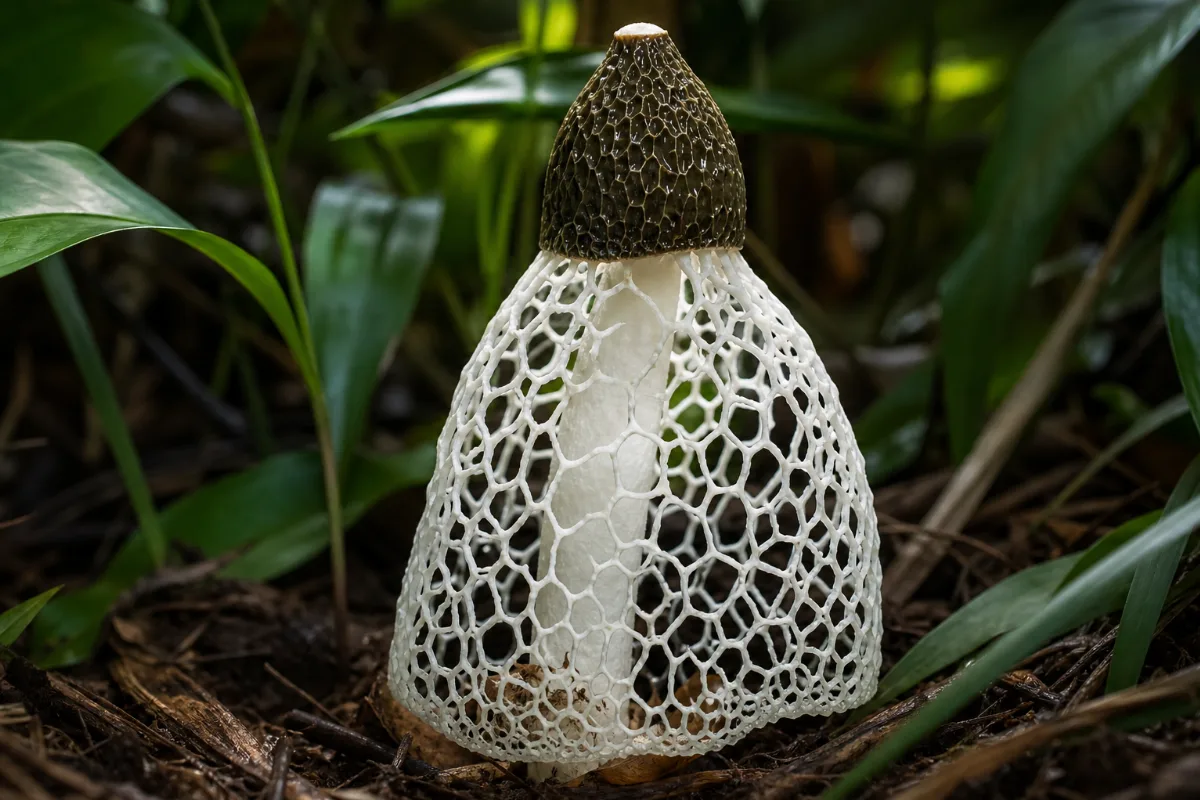
Bamboo mushroom, or veiled lady, is a tropical stinkhorn fungus with a lacy white skirt. In East Asia it is sold dried as a soup ingredient prized for its silky texture. Lab and mouse studies suggest its sugar chains may affect gut bacteria and inflammation, but we found no human trial. Never eat wild stinkhorn eggs unless an expert has identified them, because a poisonous Amanita egg can look similar.
General information, not medical advice. Last substantive update · Not medically reviewed. A named clinician has not signed off on this page. How this page is made
About Bamboo mushroom
Bamboo mushroom (veiled lady, Phallus indusiatus) is a lacy-skirted stinkhorn fungus. In East Asia the dried stalk and skirt are a prized soup ingredient. Research is lab and mouse work only; no trial in people was found. Safety points are look-alike eggs in the wild, sulphur dioxide preservative in some dried product, and heavy-metal risk in one survey.
What it is
Phallus indusiatus is a stinkhorn, a fungus whose ripe head is covered in smelly spore slime that attracts flies. It starts as a pale egg, then pushes up a white stalk with a lacy skirt. GBIF lists Phallus indusiatus as the accepted name and Dictyophora indusiata as a synonym, though most research papers still use the older name.
The name may cover several species. A Cornell editor says at least three stinkhorns are cultivated in China and it is unclear whether bamboo fungus is truly P. indusiatus, and a 2019 DNA study found hidden species among veil-bearing stinkhorns.
Traditional and current uses
Cornell says it has been collected for centuries in East Asia as a choice food, and has been cultivated since 1979, so it is now easy to find in Asian shops as a dried product. It is sold with the smelly cap and tough base removed, soaked, and added to soups, hot pots and stir-fries. It is valued more for its silky texture than for strong flavour.
We found no traditional medicine text in the sources we read. A 2019 review says its medicinal values are only beginning to be studied.
What the research shows
A PubMed search on 2026-10-25 found no clinical trial, case report or human study of this mushroom. The research is chemistry and animal work, mostly on a hot-water polysaccharide extract. In antibiotic-treated mice it helped gut bacteria recover. In high-fat-fed mice it reduced weight gain. In a dish, small compounds lowered inflammatory signals. Reviews say more, but we read only their abstracts.
None of this shows a benefit in people. A purified extract in a mouse is very different from soup made with a few dried stalks.
Food, extract and powder are not the same
The research tools were purified polysaccharides and isolated compounds. The food is the dried stalk and skirt. We found no research on powders, capsules or mycelium grown on grain for this mushroom, so nothing from one form should be assumed for another.
At a glance
Traditional uses history, not proof
- Collected for centuries in East Asia as a choice food kept for special occasions (Cornell blog).
- First successfully cultivated in Southwest China in 1979, which made it widely available (Cornell blog).
- Used in rich soups, hot pots and stir-fries for its silky, slightly crunchy texture and mild sweetness (Cornell blog).
- We found no traditional medicine text in the sources we read, so no medicinal use is claimed.
Studied for research
- Gut bacteria and gut lining, mouse work only, insufficient
- Immune activity, lab and animal work in reviews, insufficient
- Weight gain and blood sugar in high-fat-fed mice, insufficient
- Inflammation signals in cells in a dish, insufficient
- Nerve and cancer cells, review summaries of lab work, insufficient
- No human trial of any kind was found
Main compounds
- Beta-glucan sugar chains (polysaccharides), described as the main active part
- Terpenoids and alkaloids
- Phenolics, lectins and ergosterols (named in a review)
Common forms
- Dried stalk and skirt, soaked and cooked (the usual food)
- Fresh stinkhorn eggs (wild; see the look-alike warning)
- Hot-water polysaccharide extracts (research tools in mouse studies)
- Powders or capsules: we found no research on them
Research links: Cornell Mushroom Blog: the basket stinkhorn · Hong Kong food safety notice, 2025 · Hong Kong food safety notice, 2017 · Review, 2019 (abstract) · Gut study in mice (abstract) · Metals survey in mushrooms (abstract) · Research Library · Genes & Biomarkers Library
What it is and its history
- Accepted scientific name
- Phallus indusiatus
- Naming authority
- Vent. (GBIF)
- Synonyms
- Dictyophora indusiata (Vent.) Desv. (listed as a synonym in GBIF and by MushroomExpert; most research papers still use this name)
- Common names
- Bamboo mushroom / bamboo fungus / bamboo pith fungus (English); Veiled lady (English); Basket stinkhorn (English); Bridal veil fungus (English); Queen of the mushrooms (English); zhusun (Chinese characters 竹荪) (Chinese)
- Family or group
- Phallaceae (stinkhorns), a fungus family, not a plant
- Classification
- Fungi > Basidiomycota > Agaricomycetes > Phallales > Phallaceae > Phallus > Phallus indusiatus
- Native range
- MushroomExpert describes it as pan-tropical, originally described from Suriname, and reported nearly worldwide in the tropics. Cornell says it grows in tropical regions including Central and South America and Africa.
- Habitat
- MushroomExpert: a saprobe (feeds on dead organic matter), growing alone or in groups, in woods and disturbed ground such as ditches, paths and roadsides.
- What it looks like
- Fruiting body: MushroomExpert: starts as a whitish, brownish or pinkish egg; the mature fungus has a hollow white stem up to about 20 cm, a bell-shaped head covered with dark brown, strong-smelling spore slime, a white net-like skirt hanging to the ground, and a volva (cup) at the base. Cornell: the dried food is sold without the smelly cap or the tough base.
- Cultivation
- Cornell: first successfully cultivated in Southwest China in 1979, and now widely available in East Asia. An editor's note says at least three Phallus species are cultivated in China.
- Harvest and processing
- Cornell: sold dried, with the cap and base removed, and soaked before cooking; too fragile to sell fresh.
- Look-alikes and adulterants
- Name: Amanita eggs (poisonous); Note: The Cornell blog warns that stinkhorn eggs can be confused with poisonous Amanita eggs. We read no source that explains how to tell them apart and this page does not attempt it.; Name: Other stinkhorns, some said to be poisonous; Note: The Cornell blog says some stinkhorn species are said to be poisonous.; Name: Other veil-bearing Phallus species; Note: MushroomExpert lists many similar species that differ in volva colour, spines, cap shape and odour, and says the list is not exhaustive. A 2019 DNA study found three new species within the Brazilian veil-bearing group.
- Sustainability and conservation
- Not checked.
Traditional use and history history, not clinical proof
| Tradition or era | Documented use | Source |
|---|---|---|
| East Asia, centuries of use as food | Cornell says it has been collected for centuries in East Asia as a choice edible kept for special occasions, and is prized mostly for its silky, slightly crunchy texture and mild sweetness. It was first cultivated successfully in Southwest China in 1979, and prices fell from around US$770 per kg in 1982 to US$10 to 20 in 2000 (Hong Kong prices, as the blog reports them). | s-cornell-basket-stinkhorn |
| West: avoided as a food | Cornell says stinkhorns are generally avoided in the West. Field guides it quotes say the odourless egg stage is eaten in parts of China and Europe. | s-cornell-basket-stinkhorn |
| Traditional medicine | We found no traditional-medicine text in the sources we read, so no traditional medical use is claimed here. Habtemariam 2019 says its medicinal values are only beginning to be acknowledged through lab studies. | p31842442 |
Traditional use shows how it was used. It does not show that it works or is safe today.
What is inside, and how it may work
What it contains and how those compounds act in cells and animals. Laboratory and animal mechanisms are not proven effects in people.
Main compounds
| Compound | Family | Where it is concentrated | Activity studied | Level of evidence |
|---|---|---|---|---|
| Beta-glucan polysaccharides (beta-1,3-glucan with beta-1,6 branches) | polysaccharide | Fruiting body | Described as the main active part; linked in reviews to immune, antioxidant and gut effects in lab and animal work. 6 9 | Laboratory research |
| Terpenoids and alkaloids | small molecules | Fruiting body | Review abstracts list them as smaller bioactive compounds. In one study of 18 compounds from an ethanol extract (4 new), some lowered inflammatory signals in mouse brain immune cells in a dish. 6 12 | Laboratory research |
| Phenolics, lectins and ergosterols | mixed | Fruiting body | Listed in the 2025 review abstract; no activity detail read. 9 | Review |
Mechanisms, receptors and pathways
| Target or pathway | Gene or receptor | What was found | Level |
|---|---|---|---|
| Gut bacteria and gut-barrier proteins | Claudin-1, occludin, ZO-1 | In antibiotic-treated mice a polysaccharide restored bacteria diversity and raised barrier proteins while lowering endotoxin and inflammatory signals. 7 | Animal research |
| Inflammation and fat metabolism in obesity model | Not specified in the abstract | A polysaccharide lowered weight gain, fat and inflammatory signals in high-fat-fed mice and lowered the Firmicutes to Bacteroidetes ratio. 8 | Animal research |
| Inflammatory signalling in microglial cells | TNF-alpha, IL-6, IL-1beta, iNOS, I-kappa-B-alpha | Small compounds lowered these in LPS-triggered mouse BV-2 cells in a dish. 12 | Laboratory research |
| Immune signalling | TLR4 and NF-kappa-B | Review abstract says the polysaccharide activates immune responses through these pathways. 9 | Review of lab work |
Absorption, metabolism and elimination
- Absorption
- Not found.
- Distribution
- Not found.
- Metabolism
- Not found.
- Elimination
- Not found.
- Bioavailability
- Not established.
Isolated compounds versus whole extracts
The lab and mouse results come from purified polysaccharides or isolated compounds. The dried mushroom eaten in soup is a different thing, and no study tests its health effects. Mycelium grown on grain has not been tested either; results from one form should not be assumed for another.
Nutritional composition
Cornell describes the dried mushroom as a texture and umami ingredient for soups, hot pots and stir-fries. We read no nutrition table, and no nutrition claim is made.
5 not enough evidence
What was looked at
The 5 benefits and uses checked for Bamboo mushroom, each with how strong the evidence is. Tap one to open it.
- Gut bacteria and gut liningNot enough evidence
- Immune activity (lab and animal work)Not enough evidence
- Weight gain, blood sugar and fat (mouse)Not enough evidence
- Inflammation signals (cells in a dish)Not enough evidence
- Nerve protection and cancer cells (reviews of lab work)Not enough evidence
Lab markers tracked in the studies
Gut bacteria diversity and make-up (mouse)Gut-barrier proteins (claudin-1, occludin, ZO-1) (mouse)Body weight and fat build-up (mouse)Inflammatory signals TNF-alpha, IL-6, nitric oxide, IL-1beta (cells)
What is Bamboo mushroom good for?
The uses people ask about and how strong the human evidence is for each. For this mushroom there is no human evidence at all, only lab and animal work. Read this together with the Safety tab.
Benefits, one by one
Each card is a research question, not a promise. Tap a goal to filter. Open a card to see the studies, doses and limits.
Gut bacteria and gut lining
Not enough evidenceIn mice given strong antibiotics, a hot-water sugar-chain (polysaccharide) extract of the mushroom helped the gut bacteria recover and strengthened proteins that seal the gut lining. We found no human study, so we cannot say it does the same for people.
3 studiesThe mouse work used a purified hot-water polysaccharide extract, not …
Studies, doses and limits
What the trials found
No human trial was found in a PubMed search on 2026-10-25. All evidence is from mice and the reviews that summarise lab work.
Results
Mouse study: bacteria diversity restored; barrier proteins (claudin-1, occludin, ZO-1) up; endotoxin, TNF-alpha, IL-6, IL-1beta down. No figures in the abstract.
Effect sizes as reported
Better gut-bacteria and gut-barrier measures in mice only
Why this rating
Animal and lab evidence only; no human study found.
Form and dose studied
The mouse work used a purified hot-water polysaccharide extract, not the dried mushroom eaten in soup. This page does not give amounts.
Who was studied
Mice (BALB/c-type) after antibiotics
Limits
The extract is not the same as the food. Antibiotic-treated mice are an artificial model. Results in mice often do not carry over to people.
Why researchers looked
The fruiting body is rich in sugar chains, and sugar chains that gut bacteria can use are of interest for gut research.
Traditional use
Collected for centuries in East Asia as a prized food for special occasions and sold dried as bamboo fungus (Cornell blog).
Proposed mechanism Animal research
In the mouse study, the polysaccharide raised lactic-acid and butyrate-producing bacteria and gut-barrier proteins and lowered endotoxin and inflammatory signals (Nutrients 2018). A 2025 review also describes it as a prebiotic.
A proposed mechanism does not show that the effect happens in people.
Eat only cooked, rinsed commercial dried or cultivated product. Sulphite sensitivity, heavy metals in some products and look-alikes in the wild are real issues; see the Safety tab. No human safety trial was found.
Immune activity (lab and animal work)
Not enough evidenceReviews say sugar chains from the mushroom wake up immune cells in laboratory and animal studies. No trial in people has tested whether this means fewer infections or better health.
2 studiesResearch tools were purified extracts. This page does not give amount…
Studies, doses and limits
What the trials found
No human trial was found in a PubMed search on 2026-10-25.
Results
No human results. Reviews describe lab and animal findings only; we read the abstracts, not the full reviews.
Effect sizes as reported
Immune-cell activation reported in the lab; no human effect shown
Why this rating
Lab and animal findings summarised in narrative reviews; no human data.
Form and dose studied
Research tools were purified extracts. This page does not give amounts.
Who was studied
Cells and animals
Limits
Immune activation in a dish is not the same as better protection. We read review abstracts only.
Why researchers looked
Mushroom sugar chains called beta-glucans are widely studied for immune effects, and this mushroom's main active part is of that type.
Traditional use
Collected for centuries in East Asia as a prized food for special occasions and sold dried as bamboo fungus (Cornell blog).
Proposed mechanism Laboratory research
Reviews describe the main active sugar chain as a beta-(1 to 3)-glucan with beta-(1 to 6) branches, and say the polysaccharide switches on immune signalling through the TLR4 and NF-kappa-B pathways (Habtemariam 2019; Kumar and Xu 2025). These are findings from cells and animals.
A proposed mechanism does not show that the effect happens in people.
Immune-stimulating extracts could matter for people on immune-suppressing medicines; no study of this mushroom tests that. Ask a doctor first.
Weight gain, blood sugar and fat (mouse)
Not enough evidenceIn mice fed a high-fat diet, a polysaccharide from the mushroom reduced weight gain, fat build-up and some blood sugar and liver markers. There is no human study.
2 studiesLow and high doses of an isolated polysaccharide were tested in mice.…
Studies, doses and limits
What the trials found
No human trial was found.
Results
Mouse study: body weight, fat build-up, fat-cell size, glucose, liver-related markers, inflammatory signals and endotoxin all lower with the high dose; no figures in the abstract.
Effect sizes as reported
Less weight gain in high-fat-fed mice only
Why this rating
One mouse study with a purified extract; no human data.
Form and dose studied
Low and high doses of an isolated polysaccharide were tested in mice. This page does not give amounts.
Who was studied
BALB/c mice on a high-fat diet
Limits
Mouse studies do not show weight loss in people. A purified extract is not the dried mushroom used in soup.
Why researchers looked
Researchers tested whether the sugar chains could change gut bacteria and inflammation linked to obesity.
Traditional use
No traditional use for weight is described in the sources we read.
Proposed mechanism Animal research
The extract reversed gut-bacteria changes and lowered inflammatory signals in the mice (Front Endocrinol 2020).
A proposed mechanism does not show that the effect happens in people.
Eat only cooked, rinsed commercial dried or cultivated product. Sulphite sensitivity, heavy metals in some products and look-alikes in the wild are real issues; see the Safety tab. No human safety trial was found.
Inflammation signals (cells in a dish)
Not enough evidenceSmall compounds from the mushroom lowered inflammatory signals in mouse brain immune cells grown in a dish. This is early chemistry work, not a health claim.
2 studiesAlcohol-extract compounds in a dish; the amounts are lab concentratio…
Studies, doses and limits
What the trials found
No human trial was found.
Results
Cell study: compound 3 blocked TNF-alpha with an IC50 of 11.9 micromolar; compound 16 blocked IL-6 (IC50 13.53 micromolar); compound 17 blocked nitric oxide (IC50 10.86 micromolar) and IL-1beta (IC50 23.9 micromolar).
Effect sizes as reported
Anti-inflammatory signals in cells in a dish
Why this rating
Cells in a dish; no animal or human follow-up read.
Form and dose studied
Alcohol-extract compounds in a dish; the amounts are lab concentrations and do not translate to food.
Who was studied
Mouse brain immune cells (BV-2) in a dish
Limits
A dish result does not show a benefit in people. Compound amounts reached by eating the mushroom are unknown.
Why researchers looked
A group of researchers isolated small compounds from an ethanol extract to see if any calmed inflammation in cells.
Traditional use
No traditional use for inflammation is described in the sources we read.
Proposed mechanism Laboratory research
Isolated compounds lowered TNF-alpha, IL-6, nitric oxide and IL-1beta in LPS-triggered BV-2 microglial cells (Molecules 2023).
A proposed mechanism does not show that the effect happens in people.
Eat only cooked, rinsed commercial dried or cultivated product. Sulphite sensitivity, heavy metals in some products and look-alikes in the wild are real issues; see the Safety tab. No human safety trial was found.
Nerve protection and cancer cells (reviews of lab work)
Not enough evidenceReviews list nerve-protective and anti-tumour effects from lab and animal studies. We read only the review summaries, and no human trial was found.
2 studiesExtracts and isolated compounds, not the whole food. This page does n…
Studies, doses and limits
What the trials found
No human trial was found.
Results
No human results; review abstracts only.
Effect sizes as reported
Possible effects described in lab and animal work only
Why this rating
We read two review abstracts only; the underlying studies were not opened.
Form and dose studied
Extracts and isolated compounds, not the whole food. This page does not give amounts.
Who was studied
Cells and animals
Limits
Not a treatment for cancer or any nerve disease. Review language such as 'beneficial' rests on lab work.
Why researchers looked
Reviewers of the mushroom's chemistry highlight possible uses in nerve-degenerative disease and cancer research.
Traditional use
No traditional use for these is described in the sources we read.
Proposed mechanism Laboratory research
Review abstracts say the polysaccharide lowers oxidative damage, improves mitochondrial function, regulates cell death and supports nerve growth (Kumar and Xu 2025; Habtemariam 2019).
A proposed mechanism does not show that the effect happens in people.
Eat only cooked, rinsed commercial dried or cultivated product. Sulphite sensitivity, heavy metals in some products and look-alikes in the wild are real issues; see the Safety tab. No human safety trial was found.
Connections to the rest of health
How Bamboo mushroom connects to the rest of our health knowledge graph. Every link says what kind of connection it is. A safety link (for example to the liver) is a warning, not a benefit. A study that merely mentions a topic never creates a benefit link.
Explore every connection: goals, body systems, organs, symptoms, genes
A. Wellness goals
| Connected to | Kind of connection | Evidence status | Context | Studies |
|---|---|---|---|---|
| Gut Health | Preliminary mechanism | Not enough evidence | Gut bacteria and gut lining: In mice given strong antibiotics, a hot-water sugar-chain (polysaccharide) extract of the mushroom helped the gut bacteria recover and strengthened proteins that seal the gut lining. We found no human study, so we cannot say it does the same for people. | 7 9 6 |
| Immune Support | Preliminary mechanism | Not enough evidence | Immune activity (lab and animal work): Reviews say sugar chains from the mushroom wake up immune cells in laboratory and animal studies. No trial in people has tested whether this means fewer infections or better health. | 6 9 |
| Healthy Weight | Preliminary mechanism | Not enough evidence | Weight gain, blood sugar and fat (mouse): In mice fed a high-fat diet, a polysaccharide from the mushroom reduced weight gain, fat build-up and some blood sugar and liver markers. There is no human study. | 8 9 |
| Inflammation Balance | Preliminary mechanism | Not enough evidence | Inflammation signals (cells in a dish): Small compounds from the mushroom lowered inflammatory signals in mouse brain immune cells grown in a dish. This is early chemistry work, not a health claim. | 12 9 |
| Brain Health | Preliminary mechanism | Not enough evidence | Nerve protection and cancer cells (reviews of lab work): Reviews list nerve-protective and anti-tumour effects from lab and animal studies. We read only the review summaries, and no human trial was found. | 9 6 |
B. Body systems
| Connected to | Kind of connection | Evidence status | Context | Studies |
|---|---|---|---|---|
| Digestive system | Preliminary mechanism | Not enough evidence | Gut bacteria and barrier changes in antibiotic-treated mice; no human data. Preparation or compound: Hot-water polysaccharide, mice only |
7 |
| Digestive System | Biological association | Not enough evidence | Studied for: Gut bacteria and gut lining | 7 9 6 |
| Immune System | Biological association | Not enough evidence | Studied for: Immune activity (lab and animal work) Studied for: Inflammation signals (cells in a dish) | 6 9 12 |
| Metabolic System | Biological association | Not enough evidence | Studied for: Weight gain, blood sugar and fat (mouse) | 8 9 |
| Nervous System | Biological association | Not enough evidence | Studied for: Nerve protection and cancer cells (reviews of lab work) | 9 6 |
I. Biomarkers
| Connected to | Kind of connection | Evidence status | Context | Studies |
|---|---|---|---|---|
| Gut bacteria diversity and make-up (mouse) | Biological association | Not enough evidence | Measured in trials: normalised after antibiotics. A lab change is not the same as a health benefit. | 7 |
| Gut-barrier proteins (claudin-1, occludin, ZO-1) (mouse) | Biological association | Not enough evidence | Measured in trials: raised. A lab change is not the same as a health benefit. | 7 |
| Body weight and fat build-up (mouse) | Biological association | Not enough evidence | Measured in trials: lowered. A lab change is not the same as a health benefit. | 8 |
| Inflammatory signals TNF-alpha, IL-6, nitric oxide, IL-1beta (cells) | Biological association | Not enough evidence | Measured in trials: lowered. A lab change is not the same as a health benefit. | 12 |
K. Biological pathways
| Connected to | Kind of connection | Evidence status | Context | Studies |
|---|---|---|---|---|
| TLR4 and NF-kappa-B signalling | Preliminary mechanism | Review of lab work | Reported in a review abstract as activated by the polysaccharide. | 9 |
| Gut tight-junction proteins (claudin-1, occludin, ZO-1) | Preliminary mechanism | Animal | Raised in antibiotic-treated mice by the polysaccharide. | 7 |
L. Active compounds
| Connected to | Kind of connection | Evidence status | Context | Studies |
|---|---|---|---|---|
| Beta-glucan polysaccharides (beta-1,3-glucan with beta-1,6 branches) | Biological association | In vitro | Described as the main active part; linked in reviews to immune, antioxidant and gut effects in lab and animal work. Preparation or compound: Fruiting body |
6 9 |
| Terpenoids and alkaloids | Biological association | In vitro | Review abstracts list them as smaller bioactive compounds. In one study of 18 compounds from an ethanol extract (4 new), some lowered inflammatory signals in mouse brain immune cells in a dish. Preparation or compound: Fruiting body |
6 12 |
| Phenolics, lectins and ergosterols | Biological association | Review | Listed in the 2025 review abstract; no activity detail read. Preparation or compound: Fruiting body |
9 |
Each connection is stored with the ingredient, the connected record, the kind of connection, the evidence status, the supporting studies, the preparation or compound involved, and a review date (last reviewed October 25, 2026).
Evidence at a glance: what changed in 3 lab markers
Tap a number to show only those markers. Counts are markers, not people.
The evidence
The research centre for Bamboo mushroom. Every record here was checked against PubMed or the publisher's page; we never list a study we have not verified.
Evidence by outcome
Bars show how many studies we found for each outcome, not how well it works. People are added up across trials only (reviews are not added, to avoid double counting).
How we rate evidence
High certainty
Several well-run trials or reviews agree; further research is unlikely to change the picture much.
Moderate certainty
Good trials point the same way, but some doubt remains.
Low certainty
Small, short or inconsistent trials. The finding could change with better research.
Very low certainty
Very little or very weak human data. Treat as a possibility only.
Mixed findings
Trials or reviews disagree with each other.
Not enough evidence
Not enough human research to say either way.
Evidence against
Good research found no benefit, or found harm.
We take the reviewers' own risk-of-bias and GRADE statements where they exist, and otherwise judge from study size, design, consistency, directness and whether a product matches what is sold. Many publications do not make evidence high. Method note: We read PubMed records and abstracts for 7 papers (two narrative reviews, two mouse studies, one cell study, one DNA-based species study and one metals survey). We also read the Cornell Mushroom Blog post and the MushroomExpert species page in full, two Hong Kong food-safety notices, and checked the species name in GBIF. A PubMed search found no human study. EMA, FDA, NCCIH, LiverTox and LactMed were not read. Only abstracts were read for papers, so numbers come from abstracts. Certainty ratings are the compiler's own reading.
Study library: every study we checked 12
| Study | Design | People | Product, dose, length | Result |
|---|---|---|---|---|
| Anca Cherecheș (guest post) 2015 An unlikely delicacy: the basket stinkhorn (Cornell Mushroom Blog, 18 February 2015) Cornell Mushroom Blog · Source |
Expert commentary fungus |
Blog post by a Cornell graduate student, with an editor's note | Phallus indusiatus (bamboo fungus) dried stalk and skirt Not shown here |
Calls Phallus indusiatus the basket stinkhorn or veiled lady in the West and bamboo fungus or bamboo pith fungus (zhusun) in East Asia. Quotes field-guide authors that stinkhorns are generally edible only in the egg stage and warns that anyone eating the eggs must be sure they are stinkhorn eggs and not a poisonous look-alike such as Amanita eggs; adds that some stinkhorn species are said to be poisonous. Says it has been collected for centuries in East Asia and first cultivated successfully in Southwest China in 1979, and is usually sold dried without the smelly cap or the tough base. An editor's note says at least three stinkhorns are cultivated in China and it is unclear whether bamboo fungus is truly P. indusiatus. Source states the egg-stage Amanita look-alike warning Methods, limits and fundingOutcomes: Edibility, look-alike warning, how the dried food is sold and cooked Limitations: Blog post, not peer reviewed; quotes other books second-hand; no toxicity data on this species. Funding and conflicts: Independent university blog; no funding stated Read: full text |
| Cabral 2019 Behind the veil - exploring the diversity in Phallus indusiatus s.l. (Phallomycetidae, Basidiomycota). MycoKeys · PMID 31616207 · DOI |
Taxonomy study fungus |
Phallus indusiatus-like specimens from Brazilian Amazonia, with DNA analysis | n/a Not shown here |
Says P. indusiatus has been described as a species found all around the tropics, but this may reflect too few features to tell species apart. Shows from shape and DNA data that three new species sit within the Brazilian group of veil-bearing stinkhorns. Several look-alike species hide under one name Methods, limits and fundingOutcomes: Number of species hidden inside Phallus indusiatus sensu lato Limitations: About Brazilian specimens; does not say which species is sold dried in China. Funding and conflicts: Not stated in the abstract Read: abstract |
| Centre for Food Safety 2017 Dried bamboo fungus sample detected with preservative exceeding legal limit and in breach of food labelling regulation (Centre for Food Safety, Hong Kong, 14 November 2017) Hong Kong Government press release · Source |
Regulator notice n/a |
One retail pack of dried bamboo fungus from China | Dried bamboo fungus dried product Not shown here |
Reports 3,600 ppm sulphur dioxide against a legal limit of 500 ppm, undeclared, with no nutrition label. Says sulphur dioxide is of low toxicity and mostly removed by washing and cooking, and that adverse health effects would not be expected under usual consumption, but people allergic to it may have shortness of breath, headache and nausea; anyone unwell should seek medical treatment. One sample over the legal limit Methods, limits and fundingOutcomes: Sulphur dioxide level and labelling Limitations: One sample; does not say how common this is. Funding and conflicts: Government food-safety authority Read: full text |
| Centre for Food Safety 2025 Prepackaged bamboo fungi sample detected with excessive preservative breaches food labelling regulation (Centre for Food Safety, Hong Kong, 29 July 2025) Hong Kong Government press release · Source |
Regulator notice n/a |
One online-bought pack of dried bamboo fungi from China | Dried bamboo fungi dried product Not shown here |
Reports 9,600 ppm sulphur dioxide against a legal limit of 500 ppm, with the additive not declared on the label; the batch was recalled. Says the preservative is water soluble and most can be removed by washing and cooking, but people allergic to it may get breathing difficulty, headache and nausea. One sample over the legal limit Methods, limits and fundingOutcomes: Sulphur dioxide level and labelling Limitations: One sample; does not say how common this is. Funding and conflicts: Government food-safety authority Read: full text |
| GBIF Secretariat 2026 GBIF Backbone Taxonomy: Phallus indusiatus Vent. (usage key 2524108) GBIF species match API, checked 2026-10-25 · Source |
Taxonomy record n/a |
Name match for Phallus indusiatus and Dictyophora indusiata | n/a Not shown here |
Phallus indusiatus Vent. is the accepted name (Fungi, Basidiomycota, Agaricomycetes, Phallales, Phallaceae, Phallus). Dictyophora indusiata (Vent.) Desv. (key 5239505) is listed as a synonym of it. Index Fungorum was not checked. Names confirmed in GBIF Methods, limits and fundingOutcomes: Accepted name, synonym and family Limitations: One database; Index Fungorum not checked. Funding and conflicts: Public database Read: full text |
| Habtemariam 2019 The Chemistry, Pharmacology and Therapeutic Potential of the Edible Mushroom Dictyophora indusiata (Vent ex. Pers.) Fischer (Synn. Phallus indusiatus). Biomedicines · PMID 31842442 · DOI |
Narrative review review |
Review of laboratory and animal studies of extracts and compounds from the fruiting body | Dictyophora indusiata extracts and isolated compounds fruiting body (as reviewed) Not shown here |
Names the mushroom bridal veil fungus, veiled lady and queen of the mushrooms. Says the main active parts are polysaccharides, mainly a beta-(1 to 3)-D-glucan with beta-(1 to 6) side branches, plus smaller terpenoid and alkaloid compounds. Outlines antioxidant and anti-inflammatory mechanisms and possible uses in cancer, immunotherapy, nerve-degenerative and chronic inflammatory diseases, and says further research areas and limitations of the data are highlighted. Review concludes the mushroom has possible medical value that needs more study Methods, limits and fundingOutcomes: Chemistry, pharmacology and possible uses Limitations: Narrative review, not systematic; abstract read only, so no numbers from inside the review are used here. Funding and conflicts: Not stated in the abstract Read: abstract |
| Kanwal 2018 A Polysaccharide Isolated from Dictyophora indusiata Promotes Recovery from Antibiotic-Driven Intestinal Dysbiosis and Improves Gut Epithelial Barrier Function in a Mouse Model. Nutrients · PMID 30065236 · DOI |
Animal study mouse |
Mice given two weeks of clindamycin and metronidazole by mouth | Hot-water polysaccharide (DIP) from Dictyophora indusiata fruiting body Not shown here · vs Antibiotics without the polysaccharide |
Antibiotics reduced gut bacterial diversity and richness. The polysaccharide reversed the shift, raised lactic-acid-producing (Lactobacillaceae) and butyrate-producing (Ruminococcaceae) bacteria, lowered endotoxin (LPS) and the inflammatory signals TNF-alpha, IL-6 and IL-1beta, and raised the gut-barrier proteins claudin-1, occludin and ZO-1. Better gut-barrier and bacteria measures in mice Methods, limits and fundingOutcomes: Gut bacteria, tight-junction proteins, endotoxin and inflammatory signals Limitations: Mouse study only; no human data; the abstract gives no figures. Funding and conflicts: Not stated in the abstract Read: abstract |
| Kanwal 2020 Anti-Obesity Effect of Dictyophora indusiata Mushroom Polysaccharide (DIP) in High Fat Diet-Induced Obesity via Regulating Inflammatory Cascades and Intestinal Microbiome. Frontiers in Endocrinology · PMID 33329380 · DOI |
Animal study mouse |
BALB/c mice on a chow diet, a high-fat diet, or a high-fat diet with low or high doses of the polysaccharide | Dictyophora indusiata polysaccharide (DIP) fruiting body Low and high dose, amounts not shown here · vs High-fat diet without the polysaccharide |
The low dose partly, and the high dose clearly, reversed signs of obesity caused by the high-fat diet. Body weight, fat build-up, fat-cell size, liver-related markers, glucose, inflammatory signals and endotoxin fell, and the Firmicutes-to-Bacteroidetes ratio went down. Less weight gain and fat in high-fat-fed mice Methods, limits and fundingOutcomes: Body weight gain, fat build-up, fat-cell size, liver and glucose markers, inflammatory signals, endotoxin, gut bacteria Limitations: Mouse study only; the abstract gives no figures; mice on a high-fat diet are not a model for everyday eating of the dried mushroom. Funding and conflicts: Not stated in the abstract; record lists non-US government research support Read: abstract |
| Kumar 2025 New Insights into Chemical Profiles and Health-Promoting Effects of Edible Mushroom Dictyophora indusiate (Vent ex. Pers.) Fischer: A Review. Journal of Fungi · PMID 39852494 · DOI |
Narrative review review |
Review of chemistry and pharmacology of the fruiting body | Dictyophora indusiata polysaccharides (DIP) and other compounds fruiting body (as reviewed) Not shown here |
Lists polysaccharides, terpenoids, phenolics, lectins and ergosterols. Says molecules from the mushroom show anti-diabetic, antioxidant, anti-tumour, liver-protective and antibacterial effects, that the polysaccharide (DIP) enhances immune function, lowers oxidative stress and acts as a prebiotic, and that it shows nerve-protective effects. Says it may help with metabolic disorders, cancer, heart disease, diabetes and nerve-degenerative conditions. The abstract does not describe any human trial. Review concludes the mushroom has wide possible therapeutic potential; the abstract gives no human data Methods, limits and fundingOutcomes: Chemistry, health effects and possible uses Limitations: Narrative review; abstract read only; wording such as 'beneficial' is the authors' and rests on lab and animal work. Funding and conflicts: Funding noted on the record: BNU-HKBU United International College Read: abstract |
| Michael Kuo 2026 Phallus indusiatus (MushroomExpert.Com, Michael Kuo) MushroomExpert.Com · Source |
Expert commentary fungus |
Mycologist's species page | Phallus indusiatus fruiting body Not shown here |
Describes a pan-tropical stinkhorn with a long net-like skirt, a young stage like a whitish, brownish or pinkish egg, a smelly dark spore slime on the head, and a whitish to pinkish volva at the base. Says many very similar Phallus species exist, with differences in volva colour, spines, cap shape and odour, and the list is not exhaustive. Says Dictyophora indusiata is a synonym. The author says he has not studied collections himself. Many similar species within the group Methods, limits and fundingOutcomes: Description, range and look-alike Phallus species Limitations: Description based on photos and cited sources, by the author's own note; says nothing about eating or toxicity in the part read. Funding and conflicts: Independent expert website Read: full text |
| Qin 2024 Analysis of heavy metal characteristics and health risks of edible mushrooms in the mid-western region of China. Scientific Reports · PMID 39506043 · DOI |
Survey fungus |
9 Nine edible mushroom types from mid-western China, measured for As, Cd, Cr, Hg and Pb |
Edible mushrooms including Dictyophora indusiata Not shown here |
Cadmium was highest, then arsenic, chromium, lead and mercury. Some samples were above Chinese maximum limits for Cd (22.95% of samples), As (8.20%), Pb (1.64%) and Hg (3.28%); chromium was not. Dictyophora indusiata, Agaricus blazei and Morchella esculenta were named as the main sources of risk. Cadmium and arsenic drove the combined risk score. The authors call for stricter supervision. D. indusiata was one of three mushrooms with higher metal risk scores Methods, limits and fundingOutcomes: Metal concentrations and long-term health-risk scores (THQ, HI) Limitations: The abstract gives no separate figures for D. indusiata, how many samples, or whether they were dried products; risk scores assume long-term daily eating. Funding and conflicts: Record lists the Natural Science Foundation of Shaanxi Province, China Read: abstract |
| Zhang 2023 Chemical Constituents of the Mushroom Dictyophora indusiata and Their Anti-Inflammatory Activities. Molecules · PMID 36985732 · DOI |
Laboratory study cell |
Eighteen compounds isolated from an ethanol extract; seven tested on mouse BV-2 microglial (brain immune) cells in a dish | Small compounds from an ethanol extract of Dictyophora indusiata fruiting body Lab concentrations only · vs Untreated cells |
Eighteen compounds were identified, four new. Compound 3 blocked TNF-alpha with an IC50 of 11.9 micromolar; compound 16 blocked IL-6 with an IC50 of 13.53 micromolar; compound 17 blocked nitric oxide (IC50 10.86 micromolar) and IL-1beta (IC50 23.9 micromolar). A computer docking test was also run. Anti-inflammatory signals in cells in a dish Methods, limits and fundingOutcomes: Inflammatory signals (TNF-alpha, IL-6, nitric oxide, IL-1beta) after an inflammatory trigger (LPS) Limitations: Cells in a dish only; an effect in a dish does not show an effect in people. Funding and conflicts: Record lists the Basic Scientific Research Project of the International Bamboo and Rattan Center (public) Read: abstract |
What we do not know yet
- No clinical trial, case report or safety study in people was found.
- The mouse gut and weight work uses a purified extract, not the dried food.
- How common excess sulphur dioxide or heavy metals are in bamboo fungus on sale is unknown.
- Which Phallus species is sold as bamboo fungus is not always clear.
- Pregnancy, breastfeeding, children and medicine interactions are untested.
How new research is added
New studies are found by a saved PubMed search and placed in a review queue. A person reads each one before it changes any evidence rating or safety wording. New publications never change ratings automatically.
Lab markers
What changed in blood or saliva tests during trials. A changed number is not the same as feeling or being healthier, and we give no "normal ranges".
Other 4
Gut bacteria diversity and make-up (mouse)
Normalised after antibiotics in trials
The range and balance of bacteria in the gut, read from DNA in the stool or gut contents.
Not enough evidenceResults and what it means
Why it was measured
Used in gut studies as a sign of gut health, although a healthy mix is hard to define.
Statistical vs. clinical meaning
Mouse finding; the abstract gives no figures.
Safety implication
Not a human outcome.
| Study | Result | People | Product |
|---|---|---|---|
| 7 | The polysaccharide reversed the antibiotic-driven drop in diversity and raised Lactobacillaceae and Ruminococcaceae in mice. | Mice given clindamycin and metronidazole for two weeks | Dictyophora indusiata hot-water polysaccharide |
Gut-barrier proteins (claudin-1, occludin, ZO-1) (mouse)
Raised in trials
Proteins that seal the gaps between the cells lining the gut.
Not enough evidenceResults and what it means
Why it was measured
A leaky gut lining is linked in studies to inflammation, so these are often measured.
Statistical vs. clinical meaning
Mouse finding; the abstract gives no figures.
Safety implication
Not a human outcome.
| Study | Result | People | Product |
|---|---|---|---|
| 7 | Claudin-1, occludin and ZO-1 expression rose, and endotoxin (LPS) and the signals TNF-alpha, IL-6 and IL-1beta fell, in treated mice. | Mice after antibiotics | Dictyophora indusiata hot-water polysaccharide |
Body weight and fat build-up (mouse)
Lowered in trials
Weight gain and fat tissue size measured in mice on a high-fat diet.
Not enough evidenceResults and what it means
Why it was measured
The main measures of an obesity model.
Statistical vs. clinical meaning
Mouse finding; the abstract gives no figures.
Safety implication
Not a human outcome.
| Study | Result | People | Product |
|---|---|---|---|
| 8 | High-dose polysaccharide significantly reversed high-fat-diet increases in body weight, fat accumulation and fat-cell size; the low dose did so partly. | BALB/c mice | Dictyophora indusiata polysaccharide |
Inflammatory signals TNF-alpha, IL-6, nitric oxide, IL-1beta (cells)
Lowered in trials
Chemical messengers that rise when immune cells are triggered.
Not enough evidenceResults and what it means
Why it was measured
Standard markers in anti-inflammatory lab screens.
Statistical vs. clinical meaning
Dish finding only.
Safety implication
Not a human outcome.
| Study | Result | People | Product |
|---|---|---|---|
| 12 | Compounds 3, 16 and 17 lowered TNF-alpha, IL-6, and nitric oxide with IL-1beta (IC50 values 10.86 to 23.9 micromolar). | Mouse BV-2 microglial cells in a dish | Compounds isolated from an ethanol extract of Dictyophora indusiata |
Safety
What studies and official sources say about side effects, medicines and who should check first. Each point shows what kind of evidence it comes from.
Main points to know 4
- Do not eat wild stinkhorn 'eggs' unless an expert has identified them. The Cornell mycology blog says stinkhorns are generally eaten only in the egg stage, and warns that anyone who tries must be sure they are stinkhorn eggs and not a poisonous look-alike such as Amanita eggs. It adds that some stinkhorn species are said to be poisonous. Young stinkhorns and young Amanita mushrooms can both look like a pale egg, so this page cannot teach you to tell them apart. Do not pick and eat wild fungi from a description, a photo or an app. Expert commentary 1 10
- Dried bamboo fungus has been found with too much sulphur dioxide preservative. The Hong Kong food safety authority reported dried bamboo fungus above the legal limit of 500 ppm: 3,600 ppm in a 2017 sample and 9,600 ppm in a 2025 sample, with the additive not declared on the label. It says the preservative is water soluble and most of it washes or cooks out. People who are sensitive to it may get breathing difficulty, headache and nausea. These were single samples, so we cannot say how common this is. Regulator notice 4 3
- No human safety study exists. A PubMed search on 2026-10-25 found no trial, case report or safety study in people for this mushroom. The food has long been eaten in East Asia, but that is not the same as a safety study, and nothing is known about concentrated extracts or powders. Insufficient 9 6
- Metals in mushrooms: a Chinese survey flagged this one. In a survey of nine edible mushroom types in mid-western China, Dictyophora indusiata, Agaricus blazei and Morchella esculenta were named as the main sources of heavy-metal risk, driven mostly by cadmium and arsenic. The abstract does not give separate figures, sample numbers or whether samples were dried, so treat it as a flag, not a measurement. Survey 11
Side effects 3
| Effect | How often | Severity and recovery | Evidence |
|---|---|---|---|
| Breathing difficulty, headache or nausea in people sensitive to sulphur dioxide (sulphites) in dried product This is a reaction to the preservative, not a reported allergy to the mushroom. The 2017 notice says adverse effects would not be expected under usual consumption from that sample, but that the public should seek medical treatment if unwell. | Not stated; the regulator notices describe single samples | moderate Not described | Regulator notice 4 3 |
| Allergy to the mushroom itself Absence of reports is not proof of safety; any mushroom can trigger an allergy in some people. | No report found in the sources read | unknown Not described | Insufficient 9 |
| Sticky spore slime that clings to the mouth (reported for another stinkhorn's eggs) Described by a field-guide author about octopus stinkhorn eggs, a different species, as quoted by the blog. | One anecdote | mild Reported as lasting several hours | Anecdote 1 |
Liver
No case of liver injury linked to bamboo mushroom was found in the abstracts and pages we read. Mouse studies reported lower liver markers with extracts, which is not a safety finding in people. The LiverTox entry was not searched. 8 9
How often. No cases found; this does not prove there are none.
Monitoring. No agency monitoring advice was found.
This is a safety connection. It is not evidence that Bamboo mushroom supports liver health.
Medicines and supplements 3
| With | Why it matters | Importance | Evidence | What to do |
|---|---|---|---|---|
| People sensitive to sulphites, including some with asthma food-additive | Sulphur dioxide preservative used on some dried product | Hong Kong's food safety authority says people allergic to the preservative may have breathing difficulty, headache and nausea. | Regulator notice Moderate certainty 4 3 | Check the label for sulphites and rinse and cook dried bamboo fungus well; ask a doctor if you react to sulphites. |
| Medicines that suppress the immune system prescription | Theory only: reviews say the mushroom's sugar chains activate immune signalling in lab work | No study of this mushroom with such medicines was found; this is a precaution drawn from lab findings, not a reported interaction. | Theoretical Not enough evidence 6 9 | If you take immune-suppressing medicine, ask your prescriber or pharmacist before using extracts or concentrated products. |
| Blood thinners and diabetes medicines prescription | No human interaction study was found for either. | Insufficient Not enough evidence 8 9 | Ask a pharmacist if you take either type of medicine and want to use anything beyond ordinary food amounts. |
Who should check first 7
| Situation | Advice | Evidence |
|---|---|---|
| Sulphite sensitivity or asthma triggered by dried foods | Look for a sulphite or sulphur dioxide declaration, rinse well and cook. Seek medical help if breathing is affected. | Regulator notice 4 3 |
| Picking wild stinkhorns or 'eggs' to eat | Do not eat wild fungi unless a local expert has identified them in person. A poisonous Amanita egg can be mistaken for a stinkhorn egg, according to the Cornell blog. | Expert commentary 1 |
| Pregnancy | No safety data were found for extracts or concentrated products. Dried bamboo fungus eaten as a cooked food has no pregnancy study either. Ask a clinician. | Insufficient 9 |
| Breastfeeding | No data were found. The LactMed entry was not searched. Ask a clinician. | Insufficient 9 |
| Children | No safety data were found. Choking and allergy are general food concerns; ask a clinician before giving extracts. | Insufficient 9 |
| Immune-suppressing treatment or autoimmune disease | Ask the care team before using extracts. This is a precaution from lab findings, not a reported harm. | Theoretical 6 9 |
| Past reaction to any mushroom | Ask a doctor before trying a new mushroom product. | Insufficient 9 |
Overdose, product quality and regulators
Summary. No poisoning from the cultivated, dried and cooked food was found in the sources read. Toxicity studies of the mushroom were not found in the abstracts we read.
Animal. Not found in the abstracts read.
Human doses studied. No human trial exists. This page does not give amounts.
High dose or long term signals. Unknown. No long-term study in people was found.
Overdose response. No description found. Seek medical help for the urgent signs below.
Genotoxicity. Not found.
Toxic or hazardous parts. Fungus. It is eaten dried without the smelly spore-slime cap and the tough base (Cornell blog). The blog also says some stinkhorn species are said to be poisonous. Which species a package holds is not always clear.
Three quality issues are on record: preservative, heavy metals and mixed-up species.
Sulphur dioxide preservative. Hong Kong's authority found 3,600 ppm in a 2017 sample and 9,600 ppm in a 2025 sample against a 500 ppm limit, with the additive undeclared on the label. Most is removed by washing and cooking. 4 3
Heavy metals. A Chinese survey of nine edible mushrooms named D. indusiata as one of three main sources of risk, mainly from cadmium and arsenic. No separate figures were in the abstract. 11
Which species is in the pack. A Cornell editor says at least three stinkhorns are cultivated in China and it is unclear whether bamboo fungus is truly Phallus indusiatus. A 2019 study found that veil-bearing stinkhorns include many hidden species. 1 2
| Body | Action | Date |
|---|---|---|
| Centre for Food Safety, Hong Kong (Hong Kong) | Announced that a prepackaged dried bamboo fungi sample from China contained 9,600 ppm sulphur dioxide against a 500 ppm legal limit, with the additive undeclared; the batch was recalled. source | 2025-07-29 |
| Centre for Food Safety, Hong Kong (Hong Kong) | Announced that a retail dried bamboo fungus sample contained 3,600 ppm sulphur dioxide against a 500 ppm limit, undeclared, with no nutrition label. source | 2017-11-14 |
When to get medical help
- After eating any wild mushroom: repeated vomiting, severe diarrhoea, belly pain, confusion or unusual sleepiness. Get urgent medical help and call your poison centre or emergency number; keep any leftover mushroom or photo for the clinicians.
- Wheezing, chest tightness, swelling of the lips or face, or trouble breathing after eating dried bamboo fungus: seek emergency care.
- Yellow skin or eyes or dark urine after using any mushroom product: stop it and get medical help.
If someone may be poisoned or in a crisis, contact a clinician or emergency service straight away. In the US, Poison Control is 1-800-222-1222.
General information only, not medical advice. Ask a clinician or pharmacist before use, especially with medicines, in pregnancy or with a health condition. See the Natural Remedy Safety guide.
Frequently asked questions
What is bamboo mushroom?
Is bamboo mushroom the same as a stinkhorn?
Does bamboo mushroom have proven health benefits?
Can wild stinkhorn eggs be mistaken for poisonous mushrooms?
Yes. The Cornell blog warns that stinkhorn eggs can be confused with poisonous Amanita eggs, and that some stinkhorn species are said to be poisonous. Do not eat wild fungi from a photo, a description or an app. Only a local expert who has seen the mushroom in person can identify it.
What should I do if I ate a wild mushroom by mistake?
Call your poison centre or emergency number and get medical help even if you feel fine, because some poisonings show up late. Keep any leftover mushroom or a photo for the clinicians.
What is the sulphur dioxide in dried bamboo fungus?
Does bamboo mushroom contain heavy metals?
A survey of nine edible mushrooms in mid-western China named this one among three main sources of heavy-metal risk, mostly cadmium and arsenic. The abstract gives no separate figures, so we cannot say how much a typical pack holds.
Is Phallus indusiatus the same as Dictyophora indusiata?
Does it help gut health?
Only in mice so far. A polysaccharide helped gut bacteria and gut-barrier proteins recover after antibiotics. No human has been tested.
Does it help with weight loss?
No human evidence. A polysaccharide reduced weight gain in mice fed a high-fat diet, which does not show weight loss in people.
Is it safe in pregnancy, breastfeeding or for children?
No safety data were found. Ask a clinician, especially before using any extract or concentrated product.
Explore by health goal
Gut HealthImmune SupportHealthy WeightInflammation BalanceBrain Health
Editorial transparency
- Written by
- AlternativeMed editorial team. Research compiled with AI assistance, then checked against PubMed records.
- Medical review
- None. This page has not been reviewed by a physician or pharmacist.
- First published
- 2026-10-25
- Last substantive update
- 2026-10-25
- How we research
- We read PubMed records and abstracts for 7 papers (two narrative reviews, two mouse studies, one cell study, one DNA-based species study and one metals survey). We also read the Cornell Mushroom Blog post and the MushroomExpert species page in full, two Hong Kong food-safety notices, and checked the species name in GBIF. A PubMed search found no human study. EMA, FDA, NCCIH, LiverTox and LactMed were not read. Only abstracts were read for papers, so numbers come from abstracts. Certainty ratings are the compiler's own reading.
- How we rate evidence
- See "How we rate evidence" in the Evidence tab.
- Independence
- No product is promoted on this page. No affiliate links are shown. This page is information, not a recommendation to use bamboo mushroom.
Sources 12
Each source was opened and checked. Where we read only the abstract, it says so. The small numbers in the text point here.
- Anca Cherecheș (guest post), Cornell Mycology. An unlikely delicacy: the basket stinkhorn (Cornell Mushroom Blog, 18 February 2015). Cornell Mushroom Blog. 2015. (full text)
- Cabral TS, Silva BD, Martin MP, et al. Behind the veil - exploring the diversity in Phallus indusiatus s.l. (Phallomycetidae, Basidiomycota).. MycoKeys. 2019. PMID 31616207. DOI 10.3897/mycokeys.58.35324. (abstract)
- Centre for Food Safety, Hong Kong. Dried bamboo fungus sample detected with preservative exceeding legal limit and in breach of food labelling regulation (Centre for Food Safety, Hong Kong, 14 November 2017). Hong Kong Government press release. 2017. (full text)
- Centre for Food Safety, Hong Kong. Prepackaged bamboo fungi sample detected with excessive preservative breaches food labelling regulation (Centre for Food Safety, Hong Kong, 29 July 2025). Hong Kong Government press release. 2025. (full text)
- GBIF Secretariat. GBIF Backbone Taxonomy: Phallus indusiatus Vent. (usage key 2524108). GBIF species match API, checked 2026-10-25. 2026. (full text)
- Habtemariam S. The Chemistry, Pharmacology and Therapeutic Potential of the Edible Mushroom Dictyophora indusiata (Vent ex. Pers.) Fischer (Synn. Phallus indusiatus).. Biomedicines. 2019. PMID 31842442. DOI 10.3390/biomedicines7040098. (abstract)
- Kanwal S, Joseph TP, Owusu L, et al. A Polysaccharide Isolated from Dictyophora indusiata Promotes Recovery from Antibiotic-Driven Intestinal Dysbiosis and Improves Gut Epithelial Barrier Function in a Mouse Model.. Nutrients. 2018. PMID 30065236. DOI 10.3390/nu10081003. (abstract)
- Kanwal S, Aliya S, Xin Y. Anti-Obesity Effect of Dictyophora indusiata Mushroom Polysaccharide (DIP) in High Fat Diet-Induced Obesity via Regulating Inflammatory Cascades and Intestinal Microbiome.. Frontiers in Endocrinology. 2020. PMID 33329380. DOI 10.3389/fendo.2020.558874. (abstract)
- Kumar Y, Xu B. New Insights into Chemical Profiles and Health-Promoting Effects of Edible Mushroom Dictyophora indusiate (Vent ex. Pers.) Fischer: A Review.. Journal of Fungi. 2025. PMID 39852494. DOI 10.3390/jof11010075. (abstract)
- Michael Kuo. Phallus indusiatus (MushroomExpert.Com, Michael Kuo). MushroomExpert.Com. 2026. (full text)
- Qin G, Liu J, Zou K, et al. Analysis of heavy metal characteristics and health risks of edible mushrooms in the mid-western region of China.. Scientific Reports. 2024. PMID 39506043. DOI 10.1038/s41598-024-78091-1. (abstract)
- Zhang Y, Xun H, Gao Q, et al. Chemical Constituents of the Mushroom Dictyophora indusiata and Their Anti-Inflammatory Activities.. Molecules. 2023. PMID 36985732. DOI 10.3390/molecules28062760. (abstract)
Where to buy
Check the label first. Whatever you buy, look for these:
- Fruiting body versus mycelium on grain: the label should say which
- The extract type and the beta-glucan amount, if stated
- A third-party testing mark
- Interactions: ask a pharmacist if you take medicines or blood thinners
Talk to a pharmacist or doctor before you start any supplement, especially if you take medicines. See the Safety tab for interactions.
Support our free guides: as an Amazon Associate we earn from qualifying purchases. Full disclosure.


