Mushrooms · Culinary and medicinal mushroom
Cauliflower mushroom
Sparassis crispa, Sparassis latifolia (name used for Asian material) · also called Hanabiratake (Japan)
The cauliflower mushroom is a pale, frilly, edible mushroom eaten in China, Japan and Korea, and sold as a powder or extract for immune and skin claims. Almost all the research is in animals and cells, plus three small human reports linked to one Japanese company. No study shows it prevents or treats any disease. Never eat a wild mushroom unless an expert has identified it.
General information, not medical advice. Last substantive update · Not medically reviewed. A named clinician has not signed off on this page. How this page is made
About Cauliflower mushroom
The cauliflower mushroom (hanabiratake) is an edible fungus eaten in East Asia and sold as a supplement. The research is mostly in mice, rats and cells, plus three small human reports, so nothing is proven. Wild fruiting bodies can hold arsenic, no safety study exists, and wild picking needs expert identification.
What it is
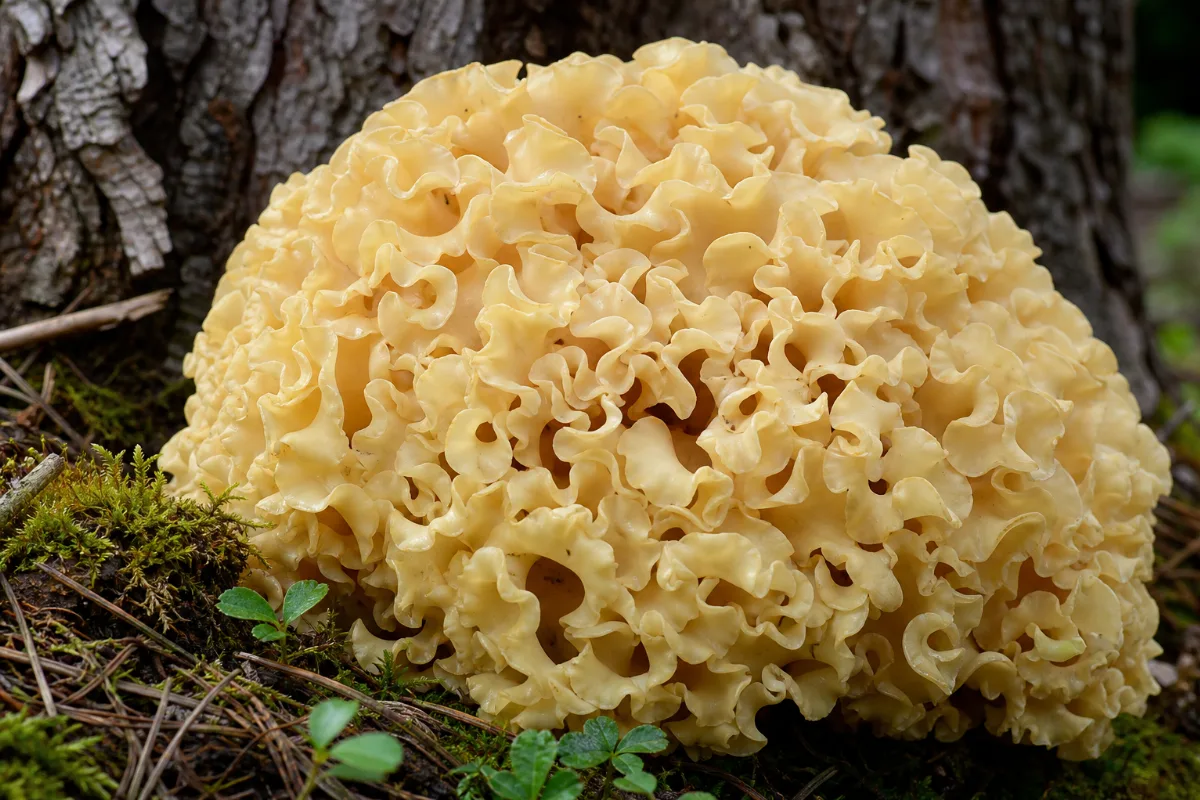
The cauliflower mushroom is a pale, frilly, rounded fungus that grows at the base of conifers and some oaks. It is an edible mushroom and is known in Japan as hanabiratake.
Material called Sparassis crispa from Asia is now often named Sparassis latifolia, and GBIF lists both as accepted species. Many papers still use one name for both, so research results may not match across species.
Traditional and current uses
It has been eaten in China, Japan and Korea for centuries, usually young and fresh, and sometimes dried. A review also says it is used in Chinese medicine, but we could not check that against a primary source.
Cultivation became popular in Japan about the early 2000s, and powders and extracts are now sold for immune and skin claims. Much of the human research on it comes from authors at one Japanese company that sells it.
What the research shows
Almost all of the research is in mice, rats and cells, and most of it is on one purified beta-glucan. The human work is three small reports: a before-and-after immune marker in healthy men, a 4-week placebo-controlled skin-barrier trial, and 14 cancer patients with no control group.
A 2018 meta-analysis pooled 33 experiments and reports effects on insulin, wounds, cancer and inflammation, but its abstract does not say how many involved people, and the diabetes results were very inconsistent. We do not use it as evidence for use in people.
The mushroom is very high in fibre. One analysis quotes 61 g of dietary fibre per 100 g of dried mushroom, of which beta-glucan was about 43 g. Eaten fresh, the mushroom is about 90% water.
Fruiting body, mycelium, extracts and pure beta-glucan are different
Products include cooked or dried fruiting body, powder, hot-water extract, purified beta-glucan and mycelium on grain. The human reports used powder. The lab beta-glucan was a purified material, and a mycelium beta-glucan had a different structure and a weaker effect in mice in one report.
The US National Cancer Institute says supplement contents can vary a lot from lot to lot, and that grain-grown mycelium products (it says this for Ganoderma) can contain a lot of grain starch-type glucan. We found no analysis of Sparassis products.
Legal and regulatory status
The US National Cancer Institute says the FDA has not approved medicinal mushrooms as a treatment for cancer or any other medical condition, and that supplements need no FDA approval before sale unless disease claims are made. Its page is general and does not name this mushroom.
We did not read statements from the EU, Japan, Korea or China, so none are given here.
At a glance
Traditional uses history, not proof
- Eaten in China, Japan and Korea for centuries, usually young and fresh and sometimes dried (IMA Fungus review).
- Described by a review as used in Chinese medicine; we could not check this against a primary source.
- Cultivation became popular in Japan about the early 2000s as a food with possible health uses (Kimura review).
Studied for research
- Immune-cell activity (one uncontrolled human report), very low
- Skin barrier (one small trial), very low
- Alongside cancer care (animal work, one uncontrolled report), insufficient
- Wound healing (rats and cells), insufficient
- Blood sugar (animal work), insufficient
- Allergy and inflammation (mice), insufficient
Main compounds
- Beta-glucans, up to about 43.6% of dry weight, the best-studied part
- Hanabiratakelides (phthalides) and sparassol, lab findings
- Organic arsenic compounds, found in wild specimens
Common forms
- Fresh or dried fruiting body as food
- Fruiting body powder
- Hot-water extract
- Purified beta-glucan (research use)
- Mycelium on grain (a different material)
Research links: NCI: Medicinal mushrooms (PDQ) · Kimura 2013 review (PubMed) · IMA Fungus review 2022 (PubMed) · Skin trial 2013 (PubMed) · Arsenic in S. crispa 2026 (PubMed) · GBIF: Sparassis crispa · Research Library · Genes & Biomarkers Library
What it is and its history
- Accepted scientific name
- Sparassis crispa
- Naming authority
- (Wulfen) Fr. (GBIF)
- Synonyms
- Sparassis ramosa (Schaeff.) J.Schrot. (a synonym of S. crispa in GBIF); Sparassis latifolia Y.C.Dai & Zheng Wang (accepted in GBIF as its own species; the name used for Asian material)
- Common names
- Cauliflower mushroom (English); Hanabiratake (Japanese)
- Family or group
- Sparassidaceae (a fungus family), not a plant
- Classification
- Fungi > Basidiomycota > Agaricomycetes > Polyporales > Sparassidaceae > Sparassis > Sparassis crispa
- Native range
- The IMA Fungus review says the broad species is found in the USA, Australia, France, Germany, Russia, China, Japan, Tibet, Nepal, Belarus, Turkey and India. It says Asian material differs from European and North American material.
- Habitat
- The IMA Fungus review calls it a weak parasite and decay fungus (a biotroph, parasite and saprotroph) on the stumps and roots of conifers and some hardwoods, especially oaks, causing brown rot. Fruiting bodies appear July to October at or near the base of trees.
- What it looks like
- Fruiting body: A large, rounded, branched fruiting body with flat, wavy, leaf-like parts (flabellae) growing from a branched central base, as described by the IMA Fungus review. Its cauliflower shape gives the common name.
- Cultivation
- The IMA Fungus review says it can be cultivated on coniferous sawdust. The 2026 Crit Rev Food Sci Nutr review says cultivation is limited. Kimura says cultivation became popular in Japan about ten years before 2013.
- Harvest and processing
- The IMA review says it is usually eaten young and fresh and sometimes dried. Drying and grinding methods are compared in a 2026 Foods review (abstract only).
- Look-alikes and adulterants
- Name: Other Sparassis species; Note: GBIF lists many other accepted species in the genus, including S. spathulata, S. radicata, S. brevipes, S. americana, S. laminosa, S. subalpina and S. cystidiosa. We found no source that says which are edible, so do not assume they are.; Name: S. crispa versus S. latifolia; Note: The IMA Fungus review says the main Asian material was named S. latifolia on shape and DNA (ITS), and that the two differ from each other. Many papers still use S. crispa for both.
- Sustainability and conservation
- Not checked.
Traditional use and history history, not clinical proof
| Tradition or era | Documented use | Source |
|---|---|---|
| China, Japan and Korea, cooking | The IMA Fungus review says the mushroom has been used in traditional cooking in China, Japan and Korea for centuries, and is considered edible worldwide, usually eaten young and fresh. | p35513833 |
| Japan, cultivation as a food | A Japanese review says the mushroom's cultivation became popular in Japan about 10 years before 2013, helped by its taste and interest in its health effects. | p23586068 |
| China, medicine | The IMA Fungus review says the mushroom is traditionally used in Chinese medicine, without naming a source we could check. We did not find a primary source and mark this NOT verified. | p35513833 |
Traditional use shows how it was used. It does not show that it works or is safe today.
What is inside, and how it may work
What it contains and how those compounds act in cells and animals. Laboratory and animal mechanisms are not proven effects in people.
Main compounds
| Compound | Family | Where it is concentrated | Activity studied | Level of evidence |
|---|---|---|---|---|
| Beta-glucan (SCG, a 6-branched 1,3-beta-glucan) | polysaccharide | Fruiting body Dietary fibre 61.2 g and beta-glucan 43.5 g per 100 g dry sample in one Japanese analysis quoted by Kimura; two 2026 reviews say up to 43.6% of dry weight. | Wakes up immune cells in the lab (dendritic cells, through TLR4) and is linked to tumour, wound and allergy changes in mice and rats. 3 1 6 | Laboratory research |
| Hanabiratakelides A to C (phthalides) | phthalide | Fruiting body Not verified. | Reported in Kimura's review as antioxidant, anti-inflammatory and linked to lower early bowel-cancer marks in rats. Lab and animal findings only. 3 | Animal research |
| Sparassol | phenolic ester | Fruiting body Not verified. | The IMA Fungus review links sparassol to antimicrobial activity. Lab finding only. 7 | Laboratory research |
| Arsenic compounds (arsenocholine and relatives) | organoarsenic | Fruiting body Total arsenic 0.45 to 7.2 mg per kg dry mass in four wild specimens. | A natural part of this mushroom's make-up in the specimens tested. Toxicity of several of the compounds is not known. 8 | Lab analysis |
Mechanisms, receptors and pathways
| Target or pathway | Gene or receptor | What was found | Level |
|---|---|---|---|
| Immune cell signalling (TLR4, MAPK and NF-kB) | TLR4 and downstream MAPK / NF-kB | The purified beta-glucan activated dendritic cells in the lab through these routes (Kimura's description of earlier work). Not shown in people. 3 | Laboratory research |
| Th1 / Th2 balance | Th1 and Th2 cells | The authors of a Japanese paper suggest oral intake shifts the balance toward Th1 immunity, from mouse results and a human NK cell marker. 2 | Animal research |
| Collagen and wound repair | type I collagen; macrophage and fibroblast movement | In diabetic rats, wounds closed faster; in cultured human skin cells, purified beta-glucan raised type I collagen. 5 | Animal research |
Absorption, metabolism and elimination
- Absorption
- Not found in the sources read.
- Distribution
- Not found in the sources read.
- Metabolism
- Not found in the sources read.
- Elimination
- Not found in the sources read.
- Bioavailability
- Not established.
Isolated compounds versus whole extracts
The immune research mostly uses a purified beta-glucan (SCG) or a hot-water extract, while the human reports used mushroom powder. These are different materials, so a result for one does not carry over to another. Kimura notes that a beta-glucan made from liquid-cultured mycelium had a different structure and a much weaker effect on tumours in mice than the fruiting-body beta-glucan (data not shown in that paper).
Nutritional composition
As a food the cooked fruiting body is mostly fibre. One Japanese analysis quoted by Kimura (per 100 g dry sample) lists protein 13.4 g, fat 2.0 g, ash 1.8 g, carbohydrate 21.5 g and dietary fibre 61.2 g. The fresh mushroom is about 90% water, so fresh servings hold far less. Kimura also quotes vitamin D2 at 0.17 mg per 100 g dry. These are secondary-source figures for dried mushroom; no USDA entry was checked. The food role is separate from any supplement claim.
2 very low certainty4 not enough evidence
What is Cauliflower mushroom good for?
The uses people ask about and how strong the human evidence is for each. None is proven. Read this together with the Safety tab.
Benefits, one by one
Each card is a research question, not a promise. Tap a goal to filter. Open a card to see the studies, doses and limits.
Immune system markers
Very low certaintyIn lab and animal work, a beta-glucan from this mushroom wakes up immune cells. In people there is only a short report that natural killer cells killed target cells more strongly after taking the powder. No study shows fewer infections or better health.
3 studiesMushroom powder by mouth in the human report. Purified beta-glucan an…
Studies, doses and limits
What the trials found
One Japanese report (English abstract) says natural killer cell activity was higher after oral S. crispa in people, with no rise in the number of NK cells. A review describes this as a study in healthy men taking the powder for 8 weeks and compared with before they started. No comparison group is named and the number of men is not given.
Results
NK cell cytotoxicity enhanced after oral S. crispa (the abstract gives no figures)
Effect sizes as reported
Not given in the sources read
Why this rating
A before-and-after lab marker in a small, uncontrolled human report, plus mouse and cell work. The authors work for a company that sells the mushroom. No health outcome (such as fewer infections) was measured.
Form and dose studied
Mushroom powder by mouth in the human report. Purified beta-glucan and hot-water extracts are different products used in the lab work.
Who was studied
Healthy men (as described by a review)
Limits
NK cell activity is a surrogate marker. The human report has no control group. The lab beta-glucan is a purified preparation, not the whole mushroom.
Why researchers looked
The fruiting body is reported to hold a very large amount of beta-glucan, a sugar chain that immune cells can sense. Most of the research asks whether that makes the immune system more active.
Traditional use
Eaten as a food in China, Japan and Korea for centuries (IMA Fungus review). We found no source that describes a traditional medicine use.
Proposed mechanism Laboratory research
A purified beta-glucan (called SCG) from cultured fruiting bodies switched on dendritic cells through the TLR4 signalling route, and the authors of the 2004 Japanese paper suggest oral intake shifts the balance toward Th1 immune responses. These are lab and mouse findings.
A proposed mechanism does not show that the effect happens in people.
Because the mushroom is said to stimulate immune cells, people with an immune-suppressing medicine, an autoimmune disease or a transplant should ask a doctor or pharmacist first. No human interaction study was found. See the Safety tab.
Skin barrier (water loss through the skin)
Very low certaintyOne small placebo-controlled trial found less water loss through cheek skin after 4 weeks of taking the powder. That is a skin-barrier measure in healthy adults, not a treatment result for any skin disease.
2 studiesOral S. crispa powder; the exact product is not described in the abst…
Studies, doses and limits
What the trials found
A randomized, double-blind, placebo-controlled study found cheek transepidermal water loss (TEWL) significantly lower with S. crispa than placebo at 4 weeks. The abstract does not give group size or numbers.
Results
Cheek TEWL significantly lower than placebo at 4 weeks (no figures in the abstract)
Effect sizes as reported
Not given in the abstract
Why this rating
One short trial, abstract-only details, a surrogate skin measure, and the first author works for the company that sells the mushroom.
Form and dose studied
Oral S. crispa powder; the exact product is not described in the abstract.
Who was studied
Healthy adults (as described by a review)
Limits
Does not show that the mushroom helps dry skin, eczema or ageing skin. Needs repeating by independent teams.
Why researchers looked
In rats with reduced collagen production, the mushroom increased skin turnover and skin collagen, so the researchers tested a skin-barrier measure in people.
Traditional use
No traditional skin use was found in the sources read.
Proposed mechanism Animal research
In rats, oral S. crispa raised turnover of the outer skin layer and the collagen content of the skin. In cultured human skin cells, purified beta-glucan raised type I collagen.
A proposed mechanism does not show that the effect happens in people.
The authors say it was safe in this short trial. That is not a long-term safety study. See the Safety tab.
Alongside cancer care
Not enough evidenceMice with tumours did better on this mushroom, and cell studies show effects on cancer cells. In people there is only a small uncontrolled report. It is not a cancer treatment.
4 studiesPowder in the human report; purified beta-glucan and fractions in the…
Studies, doses and limits
What the trials found
A review describes 14 people with different cancers who took S. crispa powder after one course of lymphocyte transfer immunotherapy; after follow-up (mean 15 months) 9 improved in performance status. There was no control group, so no effect can be separated from other care. A 2018 meta-analysis reports pooled anti-cancer effects, but its abstract does not say how many of the experiments were in people, and it names no human cancer trial.
Results
9 of 14 patients improved in performance status in an uncontrolled report; meta-analysis tumour activity I2 42% (abstract)
Effect sizes as reported
Not interpretable
Why this rating
Animal and cell findings only, plus one uncontrolled report of 14 people. No trial measured survival or tumour response in people.
Form and dose studied
Powder in the human report; purified beta-glucan and fractions in the mouse and cell work.
Who was studied
People with several cancer types after immunotherapy (14 cases, as described by a review)
Limits
No control group, no survival data, and the source is a review by an employee of the company that sells the mushroom.
Why researchers looked
Other beta-glucans from fungi are used in cancer care in Japan, so this one was tested in mice that carry tumours.
Traditional use
None found in the sources read.
Proposed mechanism Animal research
In mice, oral S. crispa was linked to smaller sarcoma 180 tumours and longer survival, thought to work through immune activation. Cell and mouse work with other fractions suggests effects on blood-vessel growth in tumours.
A proposed mechanism does not show that the effect happens in people.
Do not use it in place of cancer treatment. Tell the cancer care team about any mushroom product. The US National Cancer Institute says the FDA has not approved medicinal mushrooms as a treatment for cancer. See the Safety tab.
Wound healing (diabetic wounds)
Not enough evidenceDiabetic rats given the mushroom closed skin wounds faster, and its beta-glucan raised collagen made by human skin cells in a dish. We found no human wound-healing trial.
3 studiesOral mushroom in rats (amount per kg body weight); purified beta-gluc…
Studies, doses and limits
What the trials found
None found. The meta-analysis lists a large pooled effect on wound rates, but its abstract does not say these were human studies.
Results
Wound closure significantly faster in treated diabetic rats; meta-analysis wound rates SMD 3.55 (2.56 to 4.54, I2 40%), study types not separated in the abstract
Effect sizes as reported
Large in rats; not known in people
Why this rating
Animal and cell studies only. The pooled figure cannot be read as a human result.
Form and dose studied
Oral mushroom in rats (amount per kg body weight); purified beta-glucan in cells.
Who was studied
Diabetic rats; human skin cells in culture
Limits
Not tested in people. Rat wounds are not a model of every kind of human wound.
Why researchers looked
Wounds heal slowly in diabetes, and beta-glucan is known to affect the cells that repair skin.
Traditional use
None found.
Proposed mechanism Animal research
More macrophage and fibroblast cells moved into the wound, and more collagen and new skin formed in the rats. Purified beta-glucan raised type I collagen in cultured human skin cells.
A proposed mechanism does not show that the effect happens in people.
Do not use it in place of wound care. See a doctor for a wound that is slow to heal, especially with diabetes. See the Safety tab.
Blood sugar and diabetes
Not enough evidenceThe research is in diabetic animals and lab work. We found no trial in people with diabetes. It is not a diabetes treatment.
2 studiesVarious extracts in animal studies.
Studies, doses and limits
What the trials found
None found. The 2018 meta-analysis reports a lowering of serum insulin in its diabetes group, but the diabetes results were very inconsistent (I2 91.9%) and the abstract does not say they came from people.
Results
Serum insulin SMD 1.92 (1.10 to 2.75) in the meta-analysis; diabetes subgroup I2 91.9%
Effect sizes as reported
Not interpretable for people
Why this rating
No human trial found; the pooled numbers are inconsistent and their source experiments are not described.
Form and dose studied
Various extracts in animal studies.
Who was studied
Diabetic rodents (reported by reviews)
Limits
Nothing here shows a safe or useful effect on blood sugar in people.
Why researchers looked
Reviews list anti-diabetic effects in diabetic rodents, linked to a rise in the hormone adiponectin and to fat breakdown.
Traditional use
None found.
Proposed mechanism Animal research
A review (IMA Fungus) says the mushroom is reported to raise adiponectin and to regulate glucose and fatty acid breakdown. These are described from animal work.
A proposed mechanism does not show that the effect happens in people.
Never replace diabetes medicine with a mushroom product. If you take diabetes medicines, ask a pharmacist before adding a supplement. See the Safety tab.
Allergy and inflammation
Not enough evidenceIn mice with dermatitis, the mushroom lowered a blood allergy marker (IgE) and scratching. Cell and mouse work also points to anti-inflammatory effects. We found no human trial for allergy or inflammation.
3 studiesOral mushroom in mice.
Studies, doses and limits
What the trials found
None found.
Results
Lower blood IgE and scratching in mice with induced dermatitis (abstract; no figures); meta-analysis anti-inflammatory heterogeneity I2 50%
Effect sizes as reported
Not applicable to people
Why this rating
Mouse and cell findings only. The authors work for the company that sells the mushroom.
Form and dose studied
Oral mushroom in mice.
Who was studied
Mice with induced dermatitis
Limits
Mouse dermatitis is not the same as human eczema or hay fever.
Why researchers looked
Beta-glucan may shift the immune system away from allergy-type responses in animal models.
Traditional use
None found.
Proposed mechanism Animal research
The Japanese authors suggest oral S. crispa activates Th1 cells and holds back Th2 cells. This comes from mouse work.
A proposed mechanism does not show that the effect happens in people.
A mushroom that was calming allergy in mice can still cause an allergic reaction in a person. No allergy data in people were found. See the Safety tab.
Connections to the rest of health
How Cauliflower mushroom connects to the rest of our health knowledge graph. Every link says what kind of connection it is. A safety link (for example to the liver) is a warning, not a benefit. A study that merely mentions a topic never creates a benefit link.
Explore every connection: goals, body systems, organs, symptoms, genes
A. Wellness goals
| Connected to | Kind of connection | Evidence status | Context | Studies |
|---|---|---|---|---|
| Immune Support | Preliminary mechanism | Very low certainty | Immune system markers: In lab and animal work, a beta-glucan from this mushroom wakes up immune cells. In people there is only a short report that natural killer cells killed target cells more strongly after taking the powder. No study shows fewer infections or better health. | 2 3 7 |
| Healthy Skin | Very low certainty | Skin barrier (water loss through the skin): One small placebo-controlled trial found less water loss through cheek skin after 4 weeks of taking the powder. That is a skin-barrier measure in healthy adults, not a treatment result for any skin disease. | 4 3 | |
| Blood Sugar Balance | Not enough evidence | Blood sugar and diabetes: The research is in diabetic animals and lab work. We found no trial in people with diabetes. It is not a diabetes treatment. | 9 7 | |
| Inflammation Balance | Not enough evidence | Allergy and inflammation: In mice with dermatitis, the mushroom lowered a blood allergy marker (IgE) and scratching. Cell and mouse work also points to anti-inflammatory effects. We found no human trial for allergy or inflammation. | 2 3 9 |
B. Body systems
| Connected to | Kind of connection | Evidence status | Context | Studies |
|---|---|---|---|---|
| Immune system | Drug or supplement interaction | Not enough evidence | Immune-stimulating in lab and mouse work; precaution with immune-suppressing medicines (theoretical, not tested in people). Preparation or compound: Mushroom powder and beta-glucan |
2 3 |
| Immune System | Biological association | Very low certainty | Studied for: Immune system markers Studied for: Alongside cancer care | 2 3 7 9 10 |
| Integumentary System | Biological association | Very low certainty | Studied for: Skin barrier (water loss through the skin) Studied for: Wound healing (diabetic wounds) | 4 3 5 9 |
| Endocrine System | Biological association | Not enough evidence | Studied for: Blood sugar and diabetes | 9 7 |
I. Biomarkers
| Connected to | Kind of connection | Evidence status | Context | Studies |
|---|---|---|---|---|
| Natural killer (NK) cell cytotoxicity | Biological association | Very low certainty | Measured in trials: raised. A lab change is not the same as a health benefit. | 2 3 |
| Transepidermal water loss (TEWL), cheek | Biological association | Very low certainty | Measured in trials: lowered. A lab change is not the same as a health benefit. | 4 |
J. Genes, receptors and enzymes
| Connected to | Kind of connection | Evidence status | Context | Studies |
|---|---|---|---|---|
| Toll-like receptor 4 (TLR4) | Preliminary mechanism | In vitro | Signalling route used by the purified beta-glucan in the lab. | 3 |
L. Active compounds
| Connected to | Kind of connection | Evidence status | Context | Studies |
|---|---|---|---|---|
| Beta-glucan (SCG, a 6-branched 1,3-beta-glucan) | Biological association | In vitro | Wakes up immune cells in the lab (dendritic cells, through TLR4) and is linked to tumour, wound and allergy changes in mice and rats. Preparation or compound: Fruiting body |
3 1 6 |
| Hanabiratakelides A to C (phthalides) | Biological association | Animal | Reported in Kimura's review as antioxidant, anti-inflammatory and linked to lower early bowel-cancer marks in rats. Lab and animal findings only. Preparation or compound: Fruiting body |
3 |
| Sparassol | Biological association | In vitro | The IMA Fungus review links sparassol to antimicrobial activity. Lab finding only. Preparation or compound: Fruiting body |
7 |
| Arsenic compounds (arsenocholine and relatives) | Biological association | Lab analysis | A natural part of this mushroom's make-up in the specimens tested. Toxicity of several of the compounds is not known. Preparation or compound: Fruiting body |
8 |
Each connection is stored with the ingredient, the connected record, the kind of connection, the evidence status, the supporting studies, the preparation or compound involved, and a review date (last reviewed October 25, 2026).
Evidence at a glance: what changed in 2 lab markers
Tap a number to show only those markers. Counts are markers, not people.
The evidence
The research centre for Cauliflower mushroom. Every record here was checked against PubMed or the publisher's page; we never list a study we have not verified.
Evidence by outcome
Bars show how many studies we found for each outcome, not how well it works. People are added up across trials only (reviews are not added, to avoid double counting).
How we rate evidence
High certainty
Several well-run trials or reviews agree; further research is unlikely to change the picture much.
Moderate certainty
Good trials point the same way, but some doubt remains.
Low certainty
Small, short or inconsistent trials. The finding could change with better research.
Very low certainty
Very little or very weak human data. Treat as a possibility only.
Mixed findings
Trials or reviews disagree with each other.
Not enough evidence
Not enough human research to say either way.
Evidence against
Good research found no benefit, or found harm.
We take the reviewers' own risk-of-bias and GRADE statements where they exist, and otherwise judge from study size, design, consistency, directness and whether a product matches what is sold. Many publications do not make evidence high. Method note: We read PubMed records and abstracts for 9 papers (one meta-analysis, one randomized trial, one animal and human report, one rat study, one lab analysis and four narrative reviews). The Kimura 2013 review, the IMA Fungus 2022 review and the arsenic paper were read in full text on Europe PMC, the National Cancer Institute page in full, and names were checked in GBIF. EMA, LiverTox, LactMed and Asian regulators were not read. Numbers come from abstracts and the full texts named. Certainty ratings are the compiler's own reading.
Study library: every study we checked 11
| Study | Design | People | Product, dose, length | Result |
|---|---|---|---|---|
| Chen 2026 A Comprehensive Review of Bioactive Constituents, Health-Promoting Effects, Processing Technologies, and Industrial Applications of Sparassis crispa Sensu Lato. Foods · PMID 42354121 · DOI |
Narrative review fungus (review) |
Review of constituents, reported health effects and processing | n/a n/a n/a n/a · vs n/a |
Abstract read. Says beta-glucans make up up to 43.6% of dry weight, described as the highest reported among edible fungi, and lists immune, antitumour, antioxidant, anti-inflammatory and neuroprotective effects in the research. Says optimal cultivation and standardized processing remain unsolved. Methods, limits and fundingOutcomes: Constituents, reported effects, drying, extraction and product quality Limitations: Abstract only. A review that describes reported effects from mostly lab and animal work; it does not rate human evidence. Funding and conflicts: No conflicts of interest declared; funding not stated in the abstract Read: abstract |
| Hasegawa 2004 [Sparassis crispa as biological response modifier]. Gan To Kagaku Ryoho (Japanese; English abstract) · PMID 15553707 |
Animal and human report mixed (mouse and human) |
Mice with sarcoma 180 tumours, mice with induced dermatitis, and people (details not in the abstract) | Sparassis crispa, taken by mouth not stated in the abstract Not shown here Not stated · vs Not stated |
Oral S. crispa gave smaller tumours and longer survival in sarcoma-bearing mice, lower IgE and less scratching in mice with dermatitis, and stronger NK cell cytotoxicity in people without a rise in NK cell numbers. The authors suggest a shift toward Th1 immunity. Stronger NK cell cytotoxicity in people; tumour and allergy changes in mice Methods, limits and fundingOutcomes: Tumour size and survival in mice; IgE and scratching in mice; natural killer (NK) cell cytotoxicity in people Limitations: The abstract gives no number of people, no comparison group and no health outcome. NK cytotoxicity is a lab marker. Most of the work is in mice. Written by staff of Unitika Ltd, a company that sells S. crispa products. Funding and conflicts: Industry-linked: authors from the R&D Center of Unitika Ltd Read: abstract |
| Kimura 2013 Natural products and biological activity of the pharmacologically active cauliflower mushroom Sparassis crispa. BioMed Research International · PMID 23586068 · DOI |
Narrative review mixed (review) |
Review of lab, animal and a few small human reports | n/a n/a n/a n/a · vs n/a |
Full text read (Europe PMC). Human reports described: healthy men given S. crispa powder for 8 weeks had stronger NK cell cytotoxicity compared with before taking it (no comparison group named); a placebo-controlled 28-day skin study with lower cheek TEWL; and 14 cancer patients who took powder after one course of lymphocyte transfer immunotherapy, of whom 9 improved in performance status at follow-up (mean 15 months), with no control group. It lists the composition per 100 g dry sample (protein 13.4 g, fat 2.0 g, ash 1.8 g, carbohydrate 21.5 g, dietary fibre 61.2 g, of which beta-glucan 43.5 g). It states that no adverse events from eating S. crispa had been reported in Japan. Methods, limits and fundingOutcomes: Beta-glucan structure, immune mechanisms, skin, wound, tumour and allergy findings, human reports, composition Limitations: Single-author review by an employee of Unitika Ltd, which sells S. crispa products. Most findings are from mice, rats and cells. The human reports are small, partly uncontrolled and cited from other papers. The statement about no reported adverse events is not backed by a safety study. Funding and conflicts: Industry-linked: author at the R&D Center of Unitika Ltd Read: full text |
| Kimura 2013 Sparassis crispa (Hanabiratake) ameliorates skin conditions in rats and humans. Bioscience, Biotechnology, and Biochemistry · PMID 24018675 · DOI |
Controlled trial human (plus rat) |
Rats with reduced collagen synthesis, and a randomized, double-blind, placebo-controlled study in people (group size not given in the abstract) | Sparassis crispa, taken by mouth not stated in the abstract Not shown here 4 weeks · vs Placebo |
In rats, oral S. crispa increased turnover of the outer skin layer and soluble collagen in the skin. In people, cheek TEWL was significantly lower with S. crispa than with placebo after 4 weeks. Lower cheek TEWL than placebo at 4 weeks Methods, limits and fundingOutcomes: Skin turnover and collagen in rats; transepidermal water loss (TEWL, a skin-barrier measure) on the cheek in people Limitations: Abstract only: group size, form and numbers are not in the abstract. TEWL is a skin-barrier measure, not a skin disease outcome. The first author works at the company Unitika Ltd, which sells S. crispa products (affiliation listed on the record). The authors' wording that it is "effective and safe" goes beyond one short trial. Funding and conflicts: Industry-linked: first author affiliated with Unitika Ltd (R&D centre); funding not stated in the abstract Read: abstract |
| Kwon 2009 Effects of medicinal mushroom (Sparassis crispa) on wound healing in streptozotocin-induced diabetic rats. American Journal of Surgery · PMID 18585672 · DOI |
Animal study rat and human cells |
Rats with streptozotocin-induced diabetes and full-thickness back wounds; cultured human skin fibroblasts | Sparassis crispa, by mouth (rats); purified beta-glucan (cells) not stated in the abstract Not shown here (given per kg body weight in rats) 4 weeks · vs No S. crispa |
Wound closure was significantly faster with oral S. crispa for 4 weeks than in untreated diabetic rats, with more macrophage and fibroblast migration, collagen regeneration and epithelialization. Purified beta-glucan raised type I collagen made by cultured human skin fibroblasts. Methods, limits and fundingOutcomes: Wound closure, cell migration, collagen and epithelialization in rats; type I collagen in cell culture Limitations: Rats and cells only. Not a human trial. The authors suggest the use "may be extended to the clinical setting", which has not been tested here. Funding and conflicts: Funding not stated in the abstract Read: abstract |
| Qiu 2026 Cauliflower mushroom (Sparassis): a promising functional food with nutritional and medicinal properties. Critical Reviews in Food Science and Nutrition · PMID 40583786 · DOI |
Narrative review fungus (review) |
Review of the genus Sparassis | n/a n/a n/a n/a · vs n/a |
Abstract read. Says the mushroom is rich in protein, carbohydrate, unsaturated fats, vitamins and minerals, with beta-glucan up to 43.6% of dry weight, and lists antioxidant, anti-inflammatory, immune and anti-tumour activities in the research. Says cultivation is limited. Methods, limits and fundingOutcomes: Taxonomy, cultivation, nutrition, medicinal properties Limitations: Abstract only. Describes reported mechanisms; does not rate human evidence. Funding and conflicts: Funding not stated in the abstract Read: abstract |
| Sharma 2022 Medicinal, nutritional, and nutraceutical potential of Sparassis crispa s. lat.: a review. IMA Fungus · PMID 35513833 · DOI |
Narrative review fungus (review) |
Review of distribution, taxonomy, chemistry, medicinal properties and cultivation | n/a n/a n/a n/a · vs n/a |
Full text read. Says the fungus is edible worldwide, usually eaten young and fresh, sometimes dried, and used in cooking in China, Japan and Korea for centuries. Says material called S. crispa from Asia differs from European and North American material and that the main Asian species was named S. latifolia. Describes branched, leaf-like fruiting bodies, a weak-parasite and decay lifestyle on conifer stumps and some hardwoods, and cultivation on coniferous sawdust. Lists reported effects (anti-tumour, immune, anti-diabetic, wound-healing, anticoagulant and others) and notes that most studies are on immune and anti-cancer activity. Methods, limits and fundingOutcomes: Taxonomy and naming, biology, edibility, chemistry, reported pharmacological effects Limitations: A review that gathers lab, animal and a few human reports; it does not itself test anything and does not review safety trials. Funding and conflicts: No competing interests declared; funding not stated in the abstract Read: full text |
| Steiner 2026 A unique arsenic profile with unusual arsenic compounds discovered in the edible mushroom Sparassis crispa. Analytical and Bioanalytical Chemistry · PMID 41272157 · DOI |
Lab analysis fungus (lab analysis) |
4 Four wild fruiting bodies from Austria and Czechia |
n/a n/a n/a n/a · vs n/a |
Total arsenic was 0.69, 0.45 and 1.8 mg per kg dry mass in three Austrian fruiting bodies and 7.2 mg per kg dry mass in one Czech fruiting body from an arsenic-rich site. At least nine to ten different arsenic compounds were found, mostly organic forms related to arsenocholine, and no detectable arsenate or other inorganic arsenic was found in the extracts. One unusual compound was identified as a major form and one novel compound was found in all samples. Methods, limits and fundingOutcomes: Total arsenic and arsenic compounds in aqueous extracts Limitations: Four specimens; the authors did not assess health risk and say no toxicity data exist for some of the compounds found. Wild specimens only; cultivated mushrooms or supplements were not tested. Funding and conflicts: No competing interests declared; funding not stated in the abstract Read: full text |
| Thi Nhu Ngoc 2018 Effects of Sparassis crispa in Medical Therapeutics: A Systematic Review and Meta-Analysis of Randomized Controlled Trials. International Journal of Molecular Sciences · PMID 29772715 · DOI |
Systematic review mixed (human, animal and lab experiments not separated in the abstract) |
33 33 randomized controlled experiments out of 623 articles assessed; the abstract does not say how many were in people |
Sparassis crispa extracts (types differ) not stated in the abstract Not shown here Varied · vs Control groups |
Pooled standard mean differences: serum insulin SMD 1.92 (95% CI 1.10 to 2.75, I2 0%); wound rates SMD 3.55 (2.56 to 4.54, I2 40%); nutrient intake SMD 0.32 (-0.15 to 0.78). The diabetes subgroup was very inconsistent (I2 91.9%). The authors also report anti-cancer, anti-inflammatory, antifungal and antioxidant effects, with I2 between 10% and 50%. Pooled effects favouring S. crispa in several lab measures (SMD 1.92 (1.10 to 2.75) for serum insulin) Methods, limits and fundingOutcomes: Pooled effects for diabetes, cancer, wound, inflammation, antifungal and antioxidant measures Limitations: The abstract does not say how many of the 33 experiments involved people, and it does not name any human trial. We treat the pooled figures as laboratory and animal-style findings, not as evidence for use in people. Very high inconsistency in the diabetes group. The authors call S. crispa extracts "the best candidates for future medicines", which goes further than the data. Funding and conflicts: Authors declare no competing interests; funding not stated in the abstract Read: abstract |
| n/a 2024 National Cancer Institute (NCI): Medicinal Mushrooms (PDQ), Health Professional Version (summary updated 6 Nov 2024) n/a · Source |
Authoritative guidance n/a |
n/a | n/a n/a n/a n/a · vs n/a |
Says the FDA has not approved the use of medicinal mushrooms as a treatment for cancer or any other medical condition; dietary supplements do not need FDA approval before sale unless disease claims are made; and ingredients may vary a lot from lot to lot with no guarantee that label amounts are present. About Ganoderma products it says mycelium grown on grain can contain large amounts of grain-derived alpha-glucan, unlike fruiting body extracts, which are entirely beta-glucan. The word Sparassis does not appear on the page. Methods, limits and fundingOutcomes: General statements on medicinal mushrooms and supplements; it does not discuss Sparassis Limitations: General guidance for medicinal mushrooms, mainly turkey tail and reishi. The grain point is made for Ganoderma; no Sparassis product analysis was found. Funding and conflicts: Independent public or hospital information source Read: full text |
| n/a 2026 GBIF Backbone Taxonomy species match: Sparassis crispa and Sparassis latifolia (API checked 2026-10-25) n/a · Source |
Database record n/a |
n/a | n/a n/a n/a n/a · vs n/a |
Sparassis crispa (Wulfen) Fr. is ACCEPTED (key 2550247; Fungi, Basidiomycota, Agaricomycetes, Polyporales, Sparassidaceae). Sparassis latifolia Y.C.Dai & Zheng Wang is ACCEPTED (key 2550245). Sparassis ramosa (Schaeff.) J.Schrot. is listed as a SYNONYM of S. crispa. A search lists other accepted species in the genus, including S. spathulata, S. radicata, S. brevipes, S. americana, S. laminosa, S. subalpina, S. cystidiosa, S. minoensis and S. kazachstanica. Methods, limits and fundingOutcomes: Accepted names and relatives Limitations: A database record; names change as research updates. It does not say which species are edible or safe. Funding and conflicts: Independent public information source Read: full text |
What we do not know yet
- No trial shows fewer infections or any health outcome; the immune result is a lab marker.
- The human reports are small, partly uncontrolled and linked to one company; no independent team has repeated them.
- No safety study, interaction study or data for pregnancy, breastfeeding, children or allergy.
- Only arsenic in four wild specimens has been measured; cadmium, lead, pesticides and supplements are untested.
- Results on S. crispa and S. latifolia may not apply to each other.
How new research is added
New studies are found by a saved PubMed search and placed in a review queue. A person reads each one before it changes any evidence rating or safety wording. New publications never change ratings automatically.
Lab markers
What changed in blood or saliva tests during trials. A changed number is not the same as feeling or being healthier, and we give no "normal ranges".
Other 2
Natural killer (NK) cell cytotoxicity
Raised in trials
A lab test of how strongly a type of white blood cell kills target cells in a dish.
Very low certaintyResults and what it means
Why it was measured
Used as a stand-in for immune activity.
Statistical vs. clinical meaning
A change in a lab marker. It does not show better protection against illness.
Safety implication
None reported in the abstract.
| Study | Result | People | Product |
|---|---|---|---|
| 2 | Human NK cell cytotoxicity was enhanced after oral S. crispa without an increase in NK cell numbers (abstract; no figures). | People (details not in the abstract) | Sparassis crispa by mouth |
Transepidermal water loss (TEWL), cheek
Lowered in trials
How much water passes through the skin surface. Lower values mean a stronger skin barrier.
Very low certaintyResults and what it means
Why it was measured
A standard way to measure skin-barrier condition without a skin biopsy.
Statistical vs. clinical meaning
Statistically significant per the abstract, but a single short trial and a surrogate measure.
Safety implication
The authors describe no problems.
| Study | Result | People | Product |
|---|---|---|---|
| 4 | Cheek TEWL was significantly lower than with placebo at 4 weeks of oral intake (abstract; no figures). | Adults in a randomized, double-blind, placebo-controlled study | Sparassis crispa by mouth versus placebo, 4 weeks |
Safety
What studies and official sources say about side effects, medicines and who should check first. Each point shows what kind of evidence it comes from.
Main points to know 5
- Safety in people has barely been studied. We found no safety trial, no case report of harm and no interaction study for this mushroom. One review by an employee of the company that sells it says no adverse events from eating it have been reported in Japan, but it cites no safety study. Not finding reports is not proof of safety, especially for concentrated extracts. Review statement 3
- Wild mushrooms must never be eaten on a guess. The mushroom grows wild at the base of conifers and some oaks. Wild fungi cannot be identified safely from a description. The genus has several other species, and we found no source that tells which are safe. If someone has eaten a wild mushroom they could not identify, call a poison centre (in the US, Poison Help: 1-800-222-1222). General guidance 11 7
- Wild fruiting bodies can carry arsenic. A 2026 lab study of four wild fruiting bodies found 0.45 to 7.2 mg of total arsenic per kg dry weight, with the highest in a sample from an arsenic-rich area. The arsenic was mostly organic forms, and no inorganic arsenic was detected in the extracts. The authors did not judge the health risk, and say no toxicity data exist for some of the compounds found. Lab analysis 8
- Immune and clotting effects are possible in theory. Reviews describe the mushroom as immune-stimulating and list anti-clotting and blood-sugar effects from lab and animal work. No study tested this in people on medicines. People on immune-suppressing medicine, blood thinners or diabetes medicine, and anyone planning surgery, should ask a doctor or pharmacist first. Theoretical 7 3
- No data for pregnancy, breastfeeding or children. We found no source on use in pregnancy, breastfeeding or children. Eating it as a cooked food is not the same as taking concentrated extracts. Ask a doctor before using a supplement in these groups. No data
Side effects 2
| Effect | How often | Severity and recovery | Evidence |
|---|---|---|---|
| No adverse effects reported in the sources read A review by a company employee says none have been reported in Japan; the skin trial's authors call it safe in 4 weeks. Neither is a safety study. | Not known | not applicable not applicable | Review statement 3 4 |
| Allergic reaction Any food, including a mushroom, can trigger allergy. Stop and get help for swelling, wheeze or trouble breathing. | No Sparassis-specific report found | unknown unknown | No data |
Liver
We found no report of liver injury with this mushroom. That is not proof that it is liver-safe: no liver safety study exists, and the NIH LiverTox page was not read.
How often. Not known.
Monitoring. No monitoring advice was found. If you have liver disease, ask a doctor before using any mushroom supplement.
This is a safety connection. It is not evidence that Cauliflower mushroom supports liver health.
Medicines and supplements 4
| With | Why it matters | Importance | Evidence | What to do |
|---|---|---|---|---|
| Immune-suppressing medicines and conditions (for example after a transplant, or in autoimmune disease) prescription | Beta-glucan from the mushroom activates immune cells in the lab and in mice. | No interaction study was found. This is a precaution based on the lab findings, not on a reported problem. | Theoretical Not enough evidence 2 3 | Ask your prescriber or pharmacist before using a concentrated product. |
| Blood thinners and anti-clotting medicines, and before surgery prescription | A review (IMA Fungus) lists anti-coagulant properties among the reported effects of the mushroom; the source details were not opened. | No study in people was found. The review statement is the only basis. | Theoretical Not enough evidence 7 | Ask your prescriber or pharmacist before using a concentrated product, and tell the surgical team about any mushroom product. |
| Diabetes medicines prescription | Reviews describe blood-sugar and insulin effects in diabetic animals. | No study in people was found. A theoretical risk of low blood sugar cannot be ruled out. | Theoretical Not enough evidence 9 7 | Do not replace diabetes medicine with the mushroom. Ask a pharmacist before adding a supplement. |
| Cancer treatment (chemotherapy, radiotherapy, immunotherapy) prescription | Not studied for this mushroom. | No interaction data. The only human cancer report is a small uncontrolled one after immunotherapy. | No data Not enough evidence 3 10 | Tell the cancer care team about any mushroom product before use. |
Who should check first 5
| Situation | Advice | Evidence |
|---|---|---|
| Wild picking without expert identification | Do not eat wild mushrooms you cannot identify with certainty. Use cultivated stock from a trusted grower instead. | General guidance 11 |
| Immune-suppressing medicines, a transplant or autoimmune disease | Ask your care team before using concentrated extracts or powders. No study has tested this. | Theoretical 3 |
| Blood thinners or planned surgery | Ask a doctor or pharmacist first. A review lists anti-clotting properties from lab and animal work. | Theoretical 7 |
| Pregnancy, breastfeeding and children | No data. Ask a doctor before using any supplement form. Cooked food use is a separate question and has not been studied here. | No data |
| Mushroom allergy | Avoid it if you have had a reaction to mushrooms. | General guidance |
Overdose, product quality and regulators
Summary. No poisoning from this mushroom is described in the sources we read. We did not review animal toxicity studies.
Animal. Not reviewed.
Human doses studied. The human reports ran for 4 to 8 weeks or longer follow-up. This page does not give amounts.
High dose or long term signals. Long-term safety in people is not known.
Overdose response. No overdose description was found. Seek medical help for any serious symptoms.
Genotoxicity. Not read.
Toxic or hazardous parts. Fungus: the fruiting body is the food. No toxic part is named in the sources read. Wild specimens can hold arsenic.
Mushroom supplements are not held to the same quality rules as medicines. The only contamination test we found is for arsenic in four wild fruiting bodies. We found no test of cadmium, lead, pesticides or mould toxins, and no analysis of supplements.
Arsenic in wild fruiting bodies. Total arsenic was 0.69, 0.45 and 1.8 mg per kg dry mass in three Austrian specimens and 7.2 mg per kg in one Czech specimen from an arsenic-rich site. Mostly organic arsenic compounds; no inorganic arsenic detected in the extracts. No health-risk judgement was made by the authors. 8
Which species is in the product. Asian material called S. crispa is now often named S. latifolia, and GBIF lists both as accepted species. A label that says only 'cauliflower mushroom' may not show which species is inside. 11 7
Fruiting body versus mycelium on grain. NCI says, for Ganoderma products, that mycelium grown on grain can contain large amounts of grain-derived alpha-glucan, whereas fruiting body extracts are entirely beta-glucan. We found no analysis of Sparassis products. The human reports used powder, and mycelium products are a different material. 10
Label amounts. NCI says supplement ingredients may vary a lot from lot to lot and there is no guarantee that label amounts are present. 10
| Body | Action | Date |
|---|---|---|
| US National Cancer Institute (PDQ) (United States) | General statement for medicinal mushrooms: the FDA has not approved them as a treatment for cancer or any other medical condition; supplements do not need FDA approval before sale unless disease claims are made; ingredients vary from lot to lot with no guarantee that label amounts are present. The page does not mention Sparassis. source | 2024-11-06 |
When to get medical help
- Swelling of the face or throat, wheeze, hives or trouble breathing after eating a mushroom or a mushroom product: call emergency services.
- Vomiting, severe stomach pain or diarrhoea after eating a wild mushroom you could not identify: call a poison centre or emergency services right away (in the US, Poison Help 1-800-222-1222) and keep a piece of the mushroom.
- Unusual bleeding, black stools or large bruises, especially if you take blood thinners: get medical help now.
- Shaky, sweaty or confused with low blood sugar if you take diabetes medicines: treat as directed by your doctor and get help.
If someone may be poisoned or in a crisis, contact a clinician or emergency service straight away. In the US, Poison Control is 1-800-222-1222.
General information only, not medical advice. Ask a clinician or pharmacist before use, especially with medicines, in pregnancy or with a health condition. See the Natural Remedy Safety guide.
Frequently asked questions
What is the cauliflower mushroom?
It is a pale, frilly, rounded edible mushroom that grows at the base of conifers and some oaks. It has been eaten in China, Japan and Korea for centuries and is called hanabiratake in Japan. Some products are sold for immune or skin claims, and the research behind those claims is mostly in animals and cells.
What is the difference between Sparassis crispa and Sparassis latifolia?
Is it safe to eat?
As a cooked food from a trusted source it has been eaten for a long time, and a review says no adverse events have been reported in Japan. But no safety study exists, and that review is by an employee of the company that sells it. Concentrated extracts have not been studied for safety.
Can I pick it in the wild?
Does it boost the immune system?
Does it help the skin?
One small placebo-controlled trial found less water loss through cheek skin after 4 weeks in healthy adults. The first author works for the company that sells it and the study has not been repeated. It does not show it helps eczema or dry skin.
Can it treat or help cancer?
It is not a cancer treatment. Tumour-bearing mice and cancer cells responded, but the only human report is 14 patients with no control group. The US National Cancer Institute says the FDA has not approved medicinal mushrooms as a treatment for cancer. Tell your cancer team about any mushroom product.
Is it good for diabetes or wounds?
What is beta-glucan, and why does it matter here?
Does it interact with medicines?
Is it safe in pregnancy, breastfeeding or for children?
No data. Ask a doctor before using any supplement form in these groups.
Could the mushroom contain arsenic?
A 2026 lab study of four wild fruiting bodies found 0.45 to 7.2 mg of total arsenic per kg dry weight, mostly organic forms with no inorganic arsenic detected, and the authors did not judge the health risk. Cultivated mushrooms and supplements were not tested.
Explore by health goal
Immune SupportHealthy SkinBlood Sugar BalanceInflammation Balance
Editorial transparency
- Written by
- AlternativeMed editorial team. Research compiled with AI assistance, then checked against PubMed records.
- Medical review
- None. This page has not been reviewed by a physician or pharmacist.
- First published
- 2026-10-25
- Last substantive update
- 2026-10-25
- How we research
- We read PubMed records and abstracts for 9 papers (one meta-analysis, one randomized trial, one animal and human report, one rat study, one lab analysis and four narrative reviews). The Kimura 2013 review, the IMA Fungus 2022 review and the arsenic paper were read in full text on Europe PMC, the National Cancer Institute page in full, and names were checked in GBIF. EMA, LiverTox, LactMed and Asian regulators were not read. Numbers come from abstracts and the full texts named. Certainty ratings are the compiler's own reading.
- How we rate evidence
- See "How we rate evidence" in the Evidence tab.
- Independence
- No product is promoted on this page. No affiliate links are shown. This page is information, not a recommendation to use the cauliflower mushroom.
Sources 11
Each source was opened and checked. Where we read only the abstract, it says so. The small numbers in the text point here.
- Chen X, Guo Y, Dong X, et al. A Comprehensive Review of Bioactive Constituents, Health-Promoting Effects, Processing Technologies, and Industrial Applications of Sparassis crispa Sensu Lato.. Foods. 2026. PMID 42354121. DOI 10.3390/foods15122152. (abstract)
- Hasegawa A, Yamada M, Dombo M, et al. [Sparassis crispa as biological response modifier].. Gan To Kagaku Ryoho (Japanese; English abstract). 2004. PMID 15553707. (abstract)
- Kimura T. Natural products and biological activity of the pharmacologically active cauliflower mushroom Sparassis crispa.. BioMed Research International. 2013. PMID 23586068. DOI 10.1155/2013/982317. (full text)
- Kimura T, Hashimoto M, Yamada M, et al. Sparassis crispa (Hanabiratake) ameliorates skin conditions in rats and humans.. Bioscience, Biotechnology, and Biochemistry. 2013. PMID 24018675. DOI 10.1271/bbb.130185. (abstract)
- Kwon AH, Qiu Z, Hashimoto M, et al. Effects of medicinal mushroom (Sparassis crispa) on wound healing in streptozotocin-induced diabetic rats.. American Journal of Surgery. 2009. PMID 18585672. DOI 10.1016/j.amjsurg.2007.11.021. (abstract)
- Qiu Z, Zhang X, Ren S, et al. Cauliflower mushroom (Sparassis): a promising functional food with nutritional and medicinal properties.. Critical Reviews in Food Science and Nutrition. 2026. PMID 40583786. DOI 10.1080/10408398.2025.2524473. (abstract)
- Sharma N, Tapwal A, Verma R, et al. Medicinal, nutritional, and nutraceutical potential of Sparassis crispa s. lat.: a review.. IMA Fungus. 2022. PMID 35513833. DOI 10.1186/s43008-022-00095-1. (full text)
- Steiner L, Raab A, Lajin B, et al. A unique arsenic profile with unusual arsenic compounds discovered in the edible mushroom Sparassis crispa.. Analytical and Bioanalytical Chemistry. 2026. PMID 41272157. DOI 10.1007/s00216-025-06201-7. (full text)
- Thi Nhu Ngoc L, Oh YK, Lee YJ, et al. Effects of Sparassis crispa in Medical Therapeutics: A Systematic Review and Meta-Analysis of Randomized Controlled Trials.. International Journal of Molecular Sciences. 2018. PMID 29772715. DOI 10.3390/ijms19051487. (abstract)
- n/a. National Cancer Institute (NCI): Medicinal Mushrooms (PDQ), Health Professional Version (summary updated 6 Nov 2024). n/a. 2024. (full text)
- n/a. GBIF Backbone Taxonomy species match: Sparassis crispa and Sparassis latifolia (API checked 2026-10-25). n/a. 2026. (full text)