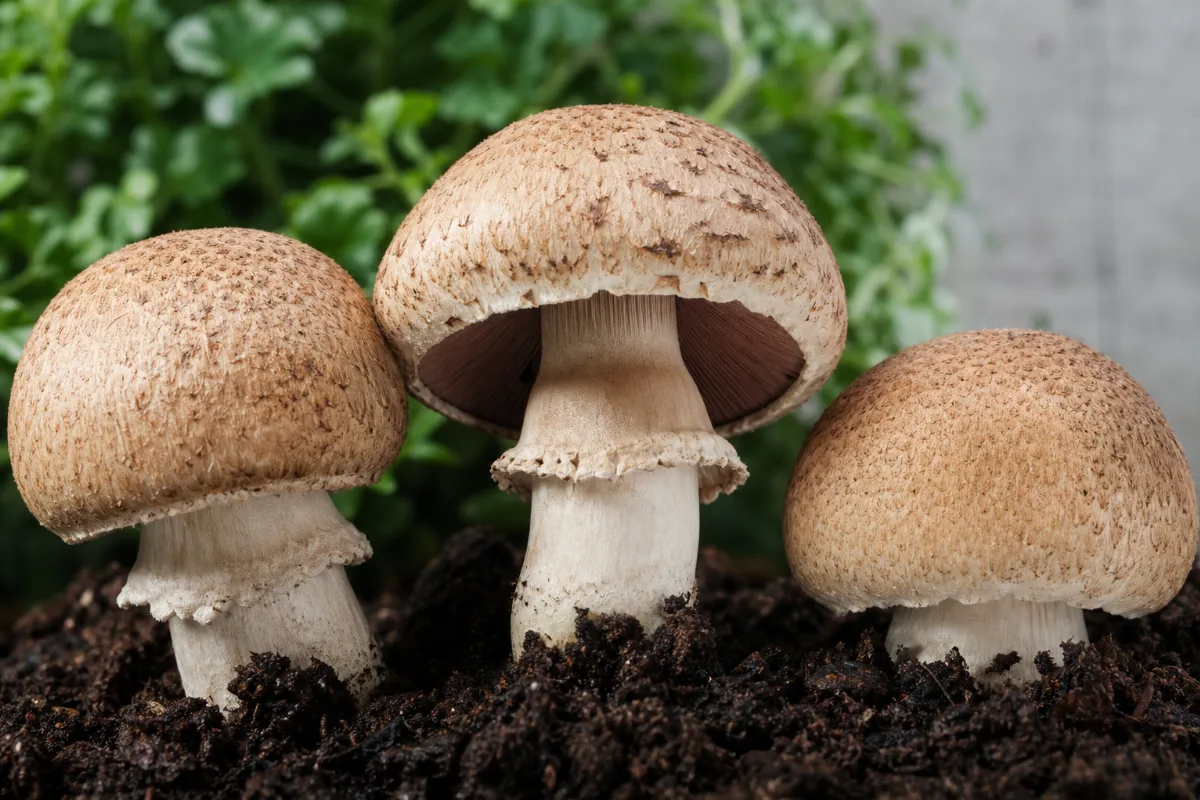
Mushrooms · Medicinal mushroom
Almond mushroom
Agaricus subrufescens (also sold as Agaricus blazei) · also called Agaricus blazei, ABM, Himematsutake (Japan), Cogumelo do Sol (Brazil)
Almond mushroom is a cultivated mushroom sold as extracts, powders and capsules, often under the name Agaricus blazei or ABM. Small trials looked at immune markers, side effects during cancer treatment, insulin resistance and bowel disease, with mixed results and no proof of benefit for cancer. Liver injury, including deaths, has been reported in people with cancer who took it. Tell your cancer team and a pharmacist before using any product.
General information, not medical advice. Last substantive update · Not medically reviewed. A named clinician has not signed off on this page. How this page is made
About Almond mushroom
Almond mushroom (Agaricus subrufescens, sold as Agaricus blazei or ABM) is a cultivated mushroom used in Brazil and Japan. Human research is small and mixed. Some immune markers moved in cancer settings, but no trial shows longer survival or tumour shrinkage. Severe liver injury has been reported in people with cancer, and reviews raise the agaritine concern. Pregnancy and children have not been studied.
What it is
It is a cultivated mushroom of the genus Agaricus, the same genus as the common button mushroom. GBIF lists Agaricus subrufescens Peck as the accepted name, with Agaricus brasiliensis as a synonym, but also lists Agaricus blazei Murrill as a separate accepted name. Papers and labels use all of these names, so they may not describe the same fungus.
It is native to Brazil, where it is called Cogumelo do Sol, and is widely cultivated in Japan, where it is called Himematsutake.
Traditional and current uses
A review says it was traditionally used for atherosclerosis, hepatitis, high blood fats, diabetes, skin inflammation and cancer. It became popular with Japanese cancer patients as a complementary product. Traditional use is not proof that it works or is safe.
What the research shows
Early claims came from mice and cells. One mouse study found tumour regression with an injected or acid-treated polysaccharide fraction. A rat colon test found no protection, and a 24-week rat test found no overall tumour-promoting effect with a small signal in the highest-strength group. A review of 14 lab and animal studies found effects on immune responses.
In people, a 2004 controlled trial in 100 women having chemotherapy for gynaecological cancer found higher natural killer cell activity and milder reported side effects with a branded extract. A randomised trial in 40 people with myeloma changed some immune markers but found no significant difference in response or survival. A 2025 lung cancer pilot (a multivitamin combination, 66 people) found mixed immune changes.
Single trials report lower insulin resistance in type 2 diabetes (60 people, 12 weeks), better symptom scores in ulcerative colitis (50 people, 3 weeks) and fewer birch allergy symptoms (60 donors). A Crohn's trial and a trial in older women found no clear difference. None of these has been repeated in the sources we read.
Products differ, and so do names
Results from one product cannot be applied to another. Trials tested a branded extract, a mushroom extract that is 82% Agaricus, a multivitamin combination, a dry extract and a granulated powder. NCI says supplement contents may vary from lot to lot with no guarantee that label amounts are present.
Legal and regulatory status
NCI says the FDA has not approved medicinal mushrooms as a treatment for cancer or any other condition. We did not read LiverTox, EMA, LactMed or WHO statements on this mushroom, so none is stated here. Rules differ by country and change.
At a glance
Traditional uses history, not proof
- Native to Brazil, where it is called Cogumelo do Sol, and widely cultivated in Japan, where it is called Himematsutake (Firenzuoli review).
- Traditionally used for atherosclerosis, hepatitis, high blood fats, diabetes, skin inflammation and cancer (Firenzuoli review).
- One of the most popular complementary medicines among Japanese cancer patients, according to a 2006 liver injury report (Mukai).
Studied for research
- Immune-system markers in cancer settings, very low
- Quality of life and chemotherapy side effects, very low
- Anti-tumour claims from mouse and rat work, insufficient (lab and animal only)
- Insulin resistance in type 2 diabetes (one trial), low
- Ulcerative colitis symptoms (one 3-week trial), low
- Crohn's disease symptoms, very low (no clear difference from placebo)
- Birch pollen allergy (one trial), low
Main compounds
- Polysaccharides, including beta-glucans, thought to drive immune effects in lab work
- Agaritine, described by reviews as carcinogenic and toxic in animals
- Ergosterol, sterols, proteins, B, C and D vitamins and phenolic compounds
Common forms
- Dried powder or granules
- Water or other extracts, including branded extracts
- Capsules, sometimes blended with other mushrooms or supplements
- Tea made from the dried mushroom
Research links: Mukai 2006: liver damage case reports in cancer patients (abstract) · Hisamochi 2013: liver injury resembling autoimmune hepatitis (abstract) · Strobbe 2025: grade 3 liver injury case (abstract) · Firenzuoli 2008: review of the literature and toxicology (abstract) · Tangen 2015: randomised myeloma trial (abstract) · NCI: Medicinal mushrooms (PDQ) · Research Library · Genes & Biomarkers Library
What it is and its history
- Accepted scientific name
- Agaricus subrufescens Peck (GBIF); products are also sold as Agaricus blazei Murrill and Agaricus brasiliensis
- Naming authority
- Peck (GBIF key 5243460)
- Synonyms
- Agaricus brasiliensis Wasser, Didukh, de Amazonas & Stamets (synonym of A. subrufescens in GBIF); Agaricus fiardii Pegler; Agaricus rufotegulis Nauta; Fungus subrufescens Kuntze; Psalliota subrufescens (Kuntze) Kauffman
- Common names
- Agaricus blazei (scientific (trade and research name)); Cogumelo do Sol (Brazil (Firenzuoli review)); Himematsutake (Japan (Firenzuoli review)); ABM (abbreviation used in papers); Almond mushroom (English, not checked in a paper)
- Family or group
- Agaricaceae (a fungus family that includes the common button mushroom), not a plant
- Classification
- Fungi > Basidiomycota > Agaricomycetes > Agaricales > Agaricaceae > Agaricus > Agaricus subrufescens
- Native range
- Firenzuoli says it is native to Brazil and widely cultivated in Japan.
- Habitat
- Not checked in the sources read.
- What it looks like
- Fruiting body: Not checked in the sources read.
- Cultivation
- Cultivated commercially (Firenzuoli says widely cultivated in Japan). Details were not checked.
- Harvest and processing
- Not checked in the sources read.
- Look-alikes and adulterants
- Name: Other Agaricus species; Note: The genus is large and the naming of this species is unsettled (GBIF lists two accepted names). Never forage and eat wild mushrooms without expert identification. Dangerous look-alikes were not reviewed here.
- Sustainability and conservation
- Not checked.
Traditional use and history history, not clinical proof
| Tradition or era | Documented use | Source |
|---|---|---|
| Brazil and Japan | Firenzuoli (2008) says the mushroom is native to Brazil, known as 'Cogumelo do Sol' there and 'Himematsutake' in Japan, widely cultivated in Japan for medicinal use, and traditionally used for atherosclerosis, hepatitis, high blood fats, diabetes, skin inflammation and cancer. We read only the abstract and did not verify the traditional claims independently. | p18317543 |
| Complementary medicine among Japanese cancer patients | Mukai and colleagues (2006) describe Agaricus blazei extract as one of the most popular complementary and alternative medicines among Japanese cancer patients. Their case reports, and the later ones on the Safety tab, are the reason liver safety matters. | p17105737 |
| Tumour research | A 2004 paper describes the extract as 'reported to possess antimutagenic and antitumor effects' and tested it in women having chemotherapy. A 2002 mouse study of an acid-treated polyglucose fraction reported tumour regression. Later rat tests and trials did not confirm a protective or survival benefit. | p15304151 |
Traditional use shows how it was used. It does not show that it works or is safe today.
What is inside, and how it may work
What it contains and how those compounds act in cells and animals. Laboratory and animal mechanisms are not proven effects in people.
Main compounds
| Compound | Family | Where it is concentrated | Activity studied | Level of evidence |
|---|---|---|---|---|
| Polysaccharides including (1,6)-beta-D-polyglucose | polysaccharide | Fruiting body | Thought to drive the immune and antitumour effects seen in lab and animal work (Firenzuoli). A purified (1,6)-beta-D-polyglucose fraction of about 10 kDa caused tumour regression in mice (Oshiman 2002). 3 14 | Animal research |
| Agaritine | hydrazine-containing phenylhydrazine derivative (per reviews) | Not stated | Described by reviews as a carcinogen and toxic substance in animals; also found in Agaricus bisporus. Not checked in PubChem. 15 3 | Narrative review |
| Ergosterol, sterols, proteins, vitamins and phenolics | mixed | Fruiting body | Listed as components in a 2022 critical review, which says many mechanisms remain unclear. 7 | Narrative review |
Mechanisms, receptors and pathways
| Target or pathway | Gene or receptor | What was found | Level |
|---|---|---|---|
| Innate and adaptive immune responses, complement system, cytokines | Not specified | An integrative review of 14 studies from 2000 to 2009, all lab or animal, reports effects on these responses. Mechanisms were 'not yet entirely clear'. 9 | Animal research |
| Adiponectin and insulin sensitivity | ADIPOQ (adiponectin) | In the diabetes trial, adiponectin rose in the extract group and fell in the placebo group; the authors propose this as the mechanism. Not tested directly. 6 | Human data |
| Autoimmune-like liver injury | Not specified | Authors of two cases suggest the immune-stimulating action of the mushroom caused hepatitis resembling autoimmune hepatitis. This is a hypothesis from case reports. 5 | Case report |
Absorption, metabolism and elimination
- Absorption
- Not found in the sources read.
- Distribution
- Not found in the sources read.
- Metabolism
- Not found in the sources read.
- Elimination
- Not found in the sources read.
- Bioavailability
- In mice, a purified polyglucose fraction did not shrink tumours by mouth unless acid-treated (Oshiman 2002); nothing is known for supplements in people.
Isolated compounds versus whole extracts
Trials tested a branded extract (Kyowa), AndoSan (82% Agaricus), a multivitamin combination, a dry extract and a granulated powder. The mouse work used a purified fraction. Results from one product do not carry over to another.
Nutritional composition
Agaricus subrufescens is an edible mushroom grown for food and supplements, but this page makes no nutrition or health claim from its food composition.
3 low certainty3 very low certainty1 not enough evidence
What was looked at
The 7 benefits and uses checked for Almond mushroom, each with how strong the evidence is. Tap one to open it.
- Immune system markersVery low certainty
- Quality of life and side effects during cancer treatmentVery low certainty
- Anti-tumour claims from lab and animal workNot enough evidence
- Insulin resistance in type 2 diabetesLow certainty
- Ulcerative colitis symptomsLow certainty
- Crohn's disease symptomsVery low certainty
- Birch pollen allergy and asthma symptomsLow certainty
Lab markers tracked in the studies
Natural killer (NK) cell activityHOMA-IR (insulin resistance) and adiponectinBlood IL-6, interferon-gamma and TNF-alphaUlcerative colitis symptom scoreFaecal calprotectinSpecific IgE to birch pollen (Bet v 1)
What is Almond mushroom good for?
The uses people ask about and how strong the human evidence is for each. None is proven. Read this together with the Safety tab.
Benefits, one by one
Each card is a research question, not a promise. Tap a goal to filter. Open a card to see the studies, doses and limits.
Immune system markers
Very low certaintySmall trials in people with cancer or having surgery report changes in some immune markers, such as natural killer cell activity. A trial in older women found no change in inflammation markers. None of the trials measured fewer infections.
5 studiesTrials used a branded extract (Kyowa), AndoSan (82% Agaricus), a mult…
Studies, doses and limits
What the trials found
In 100 women having chemotherapy for gynaecological cancer, NK-cell activity was higher in the 39 who took the branded extract than in the 61 who did not. In 40 people having high-dose chemotherapy for myeloma, an extract changed some immune cells, cytokines and gene activity, but not treatment response or survival. In 66 people after lung cancer surgery, a multivitamin product with Agaricus showed a non-significant NK-activity gain but better T-cell and B-cell preservation. In 57 older women, 60 days of dry extract changed no inflammation markers.
Results
Ahn 2004: NK activity higher (P < 0.002). Tangen 2015: no significant difference in response, survival or time to new treatment. Kim 2025: NKA recovery 17.8% vs 9.9%, p = 0.104. Lima 2012: no change in IL-6, IFN-gamma or TNF-alpha.
Effect sizes as reported
Small, mixed immune-marker changes; no clinical outcomes
Why this rating
Four small trials with different products, different groups and different markers; two had a branded product or a combination; one found nothing. None measured infections.
Form and dose studied
Trials used a branded extract (Kyowa), AndoSan (82% Agaricus), a multivitamin combination, and a dry extract. Results apply only to the product tested.
Who was studied
Women with gynaecological cancer; people with myeloma; people after lung cancer surgery; older women
Limits
Immune lab markers are not the same as better health. Trials were small and short.
Why researchers looked
The mushroom is best known for immune claims, so most human studies look at blood tests of immune cells.
Traditional use
Used in Brazil ('Cogumelo do Sol') and widely cultivated and used in Japan ('Himematsutake') (Firenzuoli review).
Proposed mechanism Animal research
Polysaccharides (long sugar chains, including beta-glucans) are thought to act on immune cells. A review of 14 lab and animal studies described effects on innate and adaptive immune responses, the complement system and cytokines. This is lab and animal work, not proof of a health effect.
A proposed mechanism does not show that the effect happens in people.
Liver injury, including deaths, has been reported in people with cancer who took Agaricus blazei products. See the Safety tab. Immune stimulation might matter for people on immune-suppressing medicines; no study tested this.
Quality of life and side effects during cancer treatment
Very low certaintyOne 2004 trial reported milder chemotherapy side effects, such as appetite loss and weakness, in women who took a branded extract. No trial shows a longer life or a shrunk tumour. Liver harm in people with cancer is the main concern.
5 studiesA branded extract in the one positive trial; other trials used differ…
Studies, doses and limits
What the trials found
In the gynaecological cancer trial, appetite, hair loss, emotional stability and general weakness were reported as improved with the extract. In the myeloma trial there were no significant differences in treatment response, overall survival or time to new treatment. The 2025 lung cancer pilot found no differences in quality of life or performance status.
Results
Ahn 2004: side effects reported as improved (no figures in the abstract). Tangen 2015 and Kim 2025: no differences in clinical outcomes.
Effect sizes as reported
One small controlled trial of milder side effects; two trials found no clinical difference
Why this rating
One non-blinded controlled trial with no figures, and two later trials with no difference. Cancer survival was not shown to improve.
Form and dose studied
A branded extract in the one positive trial; other trials used different products.
Who was studied
People having chemotherapy or surgery for cancer
Limits
The positive trial was not clearly randomised or blinded.
Why researchers looked
Many people with cancer in Japan took this mushroom as a complementary therapy (Mukai 2006).
Traditional use
Used as a complementary product by cancer patients in Japan (Mukai case reports).
Proposed mechanism Unknown
No mechanism for quality-of-life effects is established.
A proposed mechanism does not show that the effect happens in people.
Liver injury, including deaths, has been reported in people with cancer who took Agaricus blazei products. See the Safety tab. Anyone having cancer treatment should tell their cancer team before using it; one person's chemotherapy was cancelled because of liver test results.
Anti-tumour claims from lab and animal work
Not enough evidenceEarly claims that the mushroom shrinks tumours come from mice and cell studies. A purified fraction shrank tumours in mice when injected or acid-treated, and a rat colon test found no protection. These findings do not show a benefit for people.
4 studiesPurified fractions in mice; whole mushroom in rats. Neither is a supp…
Studies, doses and limits
What the trials found
Human trials have not shown tumour shrinkage or survival benefit (see above). In rats, a mushroom diet did not alter early colon changes after a carcinogen.
Results
Oshiman 2002: tumour regression in mice, p < 0.05, n = 7 per group. Ziliotto 2008: no change in aberrant crypt foci or proliferation.
Effect sizes as reported
Animal-only findings, mixed
Why this rating
Animal and lab work only; the one animal chemoprevention test we read was null; no human trial shows tumour benefit.
Form and dose studied
Purified fractions in mice; whole mushroom in rats. Neither is a supplement.
Who was studied
Mice and rats
Limits
Mouse results often fail in people. The fractions tested are not the same as products on the market.
Why researchers looked
Strong claims about tumours made the mushroom popular with cancer patients.
Traditional use
Traditionally used for cancer among many other conditions (Firenzuoli).
Proposed mechanism Animal research
A purified (1,6)-beta-D-polyglucose fraction caused tumour regression in mice when injected, and when given by mouth only after acid treatment and on one schedule.
A proposed mechanism does not show that the effect happens in people.
Do not use this mushroom in place of cancer treatment. See the Safety tab for liver injury and the agaritine concern.
Insulin resistance in type 2 diabetes
Low certaintyOne 12-week trial in 60 people with type 2 diabetes reported lower insulin resistance with the extract than with placebo. It has not been repeated in the sources we read.
1 studiesAn Agaricus blazei Murill extract taken on top of diabetes medicines.
Studies, doses and limits
What the trials found
In a randomised, double-blind trial in Chinese adults with type 2 diabetes who were already taking metformin and gliclazide, the extract group (n = 29) had a lower HOMA-IR than the placebo group (n = 31) after 12 weeks.
Results
HOMA-IR 3.6 (SD 2.5) vs 6.6 (SD 7.4), p = 0.04; adiponectin +20.0% vs -12.0%, p < 0.001.
Effect sizes as reported
Lower insulin-resistance index; large standard deviations
Why this rating
One randomised double-blind trial, small, 12 weeks, lab index, not repeated, wide scatter in the results.
Form and dose studied
An Agaricus blazei Murill extract taken on top of diabetes medicines.
Who was studied
Chinese adults with type 2 diabetes on metformin and gliclazide
Limits
HOMA-IR is a calculated lab value, not a measure of complications. Blood sugar results are not in the abstract.
Why researchers looked
Traditional use for diabetes and lab work on blood sugar led to this trial (Firenzuoli).
Traditional use
Listed among traditional uses, including diabetes (Firenzuoli).
Proposed mechanism Human data
The authors suggest a rise in adiponectin, a hormone from fat tissue that affects insulin sensitivity, might explain the result. This is a proposal, not shown.
A proposed mechanism does not show that the effect happens in people.
People with diabetes should not change their medicines. Ask a doctor before adding any supplement. The abstract does not report side effects.
Ulcerative colitis symptoms
Low certaintyOne 3-week trial in 50 people with ulcerative colitis reported better symptom and fatigue scores with a branded extract than with placebo. It was short, single-blind, and gut inflammation markers did not change.
1 studiesAndoSan, a branded extract of Agaricus blazei Murill, taken alongside…
Studies, doses and limits
What the trials found
In 50 people with symptomatic ulcerative colitis, the AndoSan group (n = 24) improved from baseline while the placebo group (n = 26) did not, and the mixed-model comparison favoured AndoSan for symptoms, fatigue and some quality-of-life areas. Faecal calprotectin and general blood tests were unchanged.
Results
Symptom score 5.88 at day 0 to 4.50 at day 21 (p = 0.001) in the AndoSan group; no improvement in placebo. Faecal calprotectin unchanged.
Effect sizes as reported
Better self-reported symptoms over 21 days; no change in a gut inflammation test
Why this rating
One short, single-blind, per-protocol trial; self-reported scores; the objective marker did not move; same authors as the Crohn's disease trial.
Form and dose studied
AndoSan, a branded extract of Agaricus blazei Murill, taken alongside usual medicines.
Who was studied
People with mild to moderate ulcerative colitis
Limits
Not repeated in the sources we read; 3 weeks only.
Why researchers looked
Researchers in Norway tested a branded extract because earlier work reported lower inflammatory cytokines.
Traditional use
No traditional use for this condition is described in the sources we read.
Proposed mechanism Human data
Earlier work reported reduced pro-inflammatory cytokines after the extract, per the trial abstract. Not tested here.
A proposed mechanism does not show that the effect happens in people.
Liver injury, including deaths, has been reported in people with cancer who took Agaricus blazei products. See the Safety tab. The trial reported no harms, but 50 people over 3 weeks cannot show rare reactions. People with bowel disease should tell their gastroenterologist.
Crohn's disease symptoms
Very low certaintyA matching 3-week trial in 50 people with Crohn's disease found symptoms improved with the extract, but not more than with placebo.
1 studiesAndoSan, a branded extract of Agaricus blazei Murill, taken alongside…
Studies, doses and limits
What the trials found
In 50 people with symptomatic Crohn's disease, symptoms improved from baseline in the AndoSan group (n = 25) but the difference from placebo was not significant (p = 0.106). Fatigue, quality of life and faecal calprotectin were similar to placebo.
Results
Symptom score 5.52 at day 0 to 4.08 at day 21 in the AndoSan group; between-group p = 0.106.
Effect sizes as reported
No clear difference from placebo
Why this rating
A null between-group result in one small, short, single-blind trial; the authors still describe possible benefit.
Form and dose studied
AndoSan, a branded extract of Agaricus blazei Murill, taken alongside usual medicines.
Who was studied
People with mild to moderate Crohn's disease
Limits
The result does not show benefit over placebo.
Why researchers looked
Same research group and design as the ulcerative colitis trial.
Traditional use
No traditional use for this condition is described in the sources we read.
Proposed mechanism Unknown
No mechanism was tested in this trial.
A proposed mechanism does not show that the effect happens in people.
Liver injury, including deaths, has been reported in people with cancer who took Agaricus blazei products. See the Safety tab. No harms were reported in this trial.
Birch pollen allergy and asthma symptoms
Low certaintyA 7-week trial in 60 blood donors with birch pollen allergy reported fewer symptoms and lower specific IgE with a branded extract before the pollen season. It is a single small trial.
2 studiesAndoSan, a branded extract of Agaricus blazei Murill, taken before th…
Studies, doses and limits
What the trials found
Sixty donors with self-reported, IgE-positive birch pollen allergy or asthma took the extract or placebo before the season. During the season, reported allergy and asthma symptoms and medication use were significantly lower with the extract, and specific IgE to Bet v 1 and birch pollen extract were lower. Basophil sensitivity stayed stable with the extract but rose with placebo.
Results
Symptoms, medication use and specific IgE significantly lower than placebo (no figures in the abstract).
Effect sizes as reported
Fewer reported symptoms and lower specific IgE than placebo
Why this rating
One randomised, double-blind trial; self-reported symptoms; no figures in the abstract; one product, one season.
Form and dose studied
AndoSan, a branded extract of Agaricus blazei Murill, taken before the pollen season.
Who was studied
Blood donors with birch pollen allergy
Limits
Not repeated in the sources we read. Allergic reactions to the mushroom itself have also been reported (see Safety tab).
Why researchers looked
A mouse allergy model suggested the extract lowers IgE, so the researchers tested it in allergic donors.
Traditional use
No traditional use for allergy is described in the sources we read.
Proposed mechanism Animal research
In the mouse allergy model, the extract reduced IgE and shifted the Th1/Th2 balance, per the trial abstract. This is animal work.
A proposed mechanism does not show that the effect happens in people.
One safety study found a food allergy reaction in one person, so mushroom allergy is possible.
Connections to the rest of health
How Almond mushroom connects to the rest of our health knowledge graph. Every link says what kind of connection it is. A safety link (for example to the liver) is a warning, not a benefit. A study that merely mentions a topic never creates a benefit link.
Explore every connection: goals, body systems, organs, symptoms, genes
A. Wellness goals
| Connected to | Kind of connection | Evidence status | Context | Studies |
|---|---|---|---|---|
| Immune Support | Very low certainty | Immune system markers: Small trials in people with cancer or having surgery report changes in some immune markers, such as natural killer cell activity. A trial in older women found no change in inflammation markers. None of the trials measured fewer infections. Quality of life and side effects during cancer treatment: One 2004 trial reported milder chemotherapy side effects, such as appetite loss and weakness, in women who took a branded extract. No trial shows a longer life or a shrunk tumour. Liver harm in people with cancer is the main concern. | 1 17 8 10 9 12 16 11 13 | |
| Cellular Protection | Not enough evidence | Anti-tumour claims from lab and animal work: Early claims that the mushroom shrinks tumours come from mice and cell studies. A purified fraction shrank tumours in mice when injected or acid-treated, and a rat colon test found no protection. These findings do not show a benefit for people. | 14 20 3 17 | |
| Blood Sugar Balance | Low certainty | Insulin resistance in type 2 diabetes: One 12-week trial in 60 people with type 2 diabetes reported lower insulin resistance with the extract than with placebo. It has not been repeated in the sources we read. | 6 | |
| Metabolic Health | Low certainty | Insulin resistance in type 2 diabetes: One 12-week trial in 60 people with type 2 diabetes reported lower insulin resistance with the extract than with placebo. It has not been repeated in the sources we read. | 6 | |
| Digestive Support | Low certainty | Ulcerative colitis symptoms: One 3-week trial in 50 people with ulcerative colitis reported better symptom and fatigue scores with a branded extract than with placebo. It was short, single-blind, and gut inflammation markers did not change. | 18 | |
| Inflammation Balance | Low certainty | Ulcerative colitis symptoms: One 3-week trial in 50 people with ulcerative colitis reported better symptom and fatigue scores with a branded extract than with placebo. It was short, single-blind, and gut inflammation markers did not change. | 18 | |
| Digestive Support | Very low certainty | Crohn's disease symptoms: A matching 3-week trial in 50 people with Crohn's disease found symptoms improved with the extract, but not more than with placebo. | 19 | |
| Inflammation Balance | Very low certainty | Crohn's disease symptoms: A matching 3-week trial in 50 people with Crohn's disease found symptoms improved with the extract, but not more than with placebo. | 19 | |
| Breathing Support | Low certainty | Birch pollen allergy and asthma symptoms: A 7-week trial in 60 blood donors with birch pollen allergy reported fewer symptoms and lower specific IgE with a branded extract before the pollen season. It is a single small trial. | 11 13 |
B. Body systems
| Connected to | Kind of connection | Evidence status | Context | Studies |
|---|---|---|---|---|
| Immune system | Biological association | Very low certainty | Some immune markers changed in small trials; no infection outcomes. Studied for: Immune system markers Preparation or compound: Branded extracts and powders |
1 17 8 10 9 12 16 14 20 3 11 13 |
| Endocrine System | Biological association | Low certainty | Studied for: Insulin resistance in type 2 diabetes | 6 |
| Digestive System | Biological association | Low certainty | Studied for: Ulcerative colitis symptoms Studied for: Crohn's disease symptoms | 18 19 |
| Respiratory System | Biological association | Low certainty | Studied for: Birch pollen allergy and asthma symptoms | 11 13 |
C. Body parts and organs
| Connected to | Kind of connection | Evidence status | Context | Studies |
|---|---|---|---|---|
| Liver | Adverse effect or risk | Low certainty | Case reports of severe liver injury, including two deaths, mostly in people with advanced cancer; frequency unknown. Case reports of severe liver injury, including two deaths; frequency unknown. Preparation or compound: Agaricus blazei extracts and powders, some blended with other supplements |
12 5 16 |
E. Health conditions
| Connected to | Kind of connection | Evidence status | Context | Studies |
|---|---|---|---|---|
| Cancer treatment | Drug or supplement interaction | Low certainty | Liver injury delayed chemotherapy in one case; patients often did not tell their physicians. Liver injury delayed chemotherapy in one case. Preparation or compound: Agaricus blazei supplements |
16 5 |
| Pregnancy and breastfeeding | Contraindication | Not enough evidence | No safety data found. Preparation or compound: All Agaricus blazei products |
3 |
| Type 2 diabetes | Potential benefit | Low certainty | One 12-week trial of 60 people showed lower insulin resistance. Preparation or compound: Agaricus blazei Murill extract |
6 |
| Ulcerative colitis | Potential benefit | Low certainty | One 3-week trial; stool inflammation marker did not change. Preparation or compound: AndoSan extract |
18 |
I. Biomarkers
| Connected to | Kind of connection | Evidence status | Context | Studies |
|---|---|---|---|---|
| Natural killer (NK) cell activity | Biological association | Very low certainty | Measured in trials: raised. A lab change is not the same as a health benefit. | 1 8 |
| HOMA-IR (insulin resistance) and adiponectin | Biological association | Low certainty | Measured in trials: lowered (HOMA-IR) and raised (adiponectin). A lab change is not the same as a health benefit. | 6 |
| Blood IL-6, interferon-gamma and TNF-alpha | Biological association | Low certainty | Measured in trials: no change. A lab change is not the same as a health benefit. | 10 |
| Ulcerative colitis symptom score | Biological association | Low certainty | Measured in trials: lowered. A lab change is not the same as a health benefit. | 18 |
| Faecal calprotectin | Biological association | Low certainty | Measured in trials: no change. A lab change is not the same as a health benefit. | 18 19 |
| Specific IgE to birch pollen (Bet v 1) | Biological association | Low certainty | Measured in trials: lowered. A lab change is not the same as a health benefit. | 11 |
K. Biological pathways
| Connected to | Kind of connection | Evidence status | Context | Studies |
|---|---|---|---|---|
| Adiponectin | Preliminary mechanism | Human | Rose in the extract group in one diabetes trial; mechanism proposed by the authors, not shown. | 6 |
L. Active compounds
| Connected to | Kind of connection | Evidence status | Context | Studies |
|---|---|---|---|---|
| Agaritine | Very low certainty | Called a known carcinogen in animals by two reviews; no measured product amounts or human harm read. Preparation or compound: Agaricus blazei extracts |
15 3 | |
| Polysaccharides including (1,6)-beta-D-polyglucose | Biological association | Animal | Thought to drive the immune and antitumour effects seen in lab and animal work (Firenzuoli). A purified (1,6)-beta-D-polyglucose fraction of about 10 kDa caused tumour regression in mice (Oshiman 2002). Preparation or compound: Fruiting body |
3 14 |
| Agaritine | Biological association | Narrative review | Described by reviews as a carcinogen and toxic substance in animals; also found in Agaricus bisporus. Not checked in PubChem. | 15 3 |
| Ergosterol, sterols, proteins, vitamins and phenolics | Biological association | Narrative review | Listed as components in a 2022 critical review, which says many mechanisms remain unclear. Preparation or compound: Fruiting body |
7 |
Each connection is stored with the ingredient, the connected record, the kind of connection, the evidence status, the supporting studies, the preparation or compound involved, and a review date (last reviewed October 25, 2026).
Evidence at a glance: what changed in 3 lab markers
Tap a number to show only those markers. Counts are markers, not people.
The evidence
The research centre for Almond mushroom. Every record here was checked against PubMed or the publisher's page; we never list a study we have not verified.
Evidence by outcome
Bars show how many studies we found for each outcome, not how well it works. People are added up across trials only (reviews are not added, to avoid double counting).
How we rate evidence
High certainty
Several well-run trials or reviews agree; further research is unlikely to change the picture much.
Moderate certainty
Good trials point the same way, but some doubt remains.
Low certainty
Small, short or inconsistent trials. The finding could change with better research.
Very low certainty
Very little or very weak human data. Treat as a possibility only.
Mixed findings
Trials or reviews disagree with each other.
Not enough evidence
Not enough human research to say either way.
Evidence against
Good research found no benefit, or found harm.
We take the reviewers' own risk-of-bias and GRADE statements where they exist, and otherwise judge from study size, design, consistency, directness and whether a product matches what is sold. Many publications do not make evidence high. Method note: We read PubMed records and abstracts for 19 papers (seven randomised trials, one controlled trial, one safety study, three liver injury case reports, two rat studies, one mouse study and four reviews), the National Cancer Institute page in full, and checked species names in GBIF. LiverTox was blocked, and EMA, LactMed and WHO were not read. Only abstracts were read for papers, so numbers come from abstracts. Certainty ratings are the compiler's own reading.
Study library: every study we checked 21
| Study | Design | People | Product, dose, length | Result |
|---|---|---|---|---|
| Ahn 2004 Natural killer cell activity and quality of life were improved by consumption of a mushroom extract, Agaricus blazei Murill Kyowa, in gynecological cancer patients undergoing chemotherapy. International Journal of Gynecological Cancer · PMID 15304151 · DOI |
Controlled clinical trial |
100 100 women with cervical, ovarian or endometrial cancer having carboplatin-based chemotherapy; 39 took the extract, 61 did not |
Agaricus blazei Murill Kyowa (ABMK) mushroom extract Not shown here At least three chemotherapy cycles (3 weeks apart) · vs Chemotherapy alone (called a 'nontreated placebo group' in the abstract) |
NK-cell activity was higher with the extract (n = 39, P < 0.002). Lymphokine-activated killer and monocyte activities and counts of specific immune cell types did not differ. Appetite, hair loss, emotional stability and general weakness were reported as better with the extract. Higher NK-cell activity; milder reported chemotherapy side effects (P < 0.002 for NK-cell activity (no confidence interval in the abstract)) Methods, limits and fundingOutcomes: Natural killer (NK) cell activity, other immune cell activity and counts, chemotherapy side effects, quality of life Limitations: Not clearly randomised or blinded in the abstract; groups unequal in size; NK activity is a lab marker; survival not measured. A branded product was tested. Funding and conflicts: Funding not stated in the abstract; the product is a named branded extract (Kyowa). Read: abstract |
| Doi 2010 Rat medium-term multi-organ carcinogenesis bioassay of Agaricus blazei Murrill fruit-body extract. Food and Chemical Toxicology · PMID 19879310 · DOI |
Animal study rat |
Male F344 rats given five carcinogens to start tumours (DMBDD method) | Agaricus blazei Murrill fruit-body extract (three strengths, by GABA level) fruiting body Not shown here 24 weeks by gavage · vs Distilled water |
No effect on survival, weight or organ weights. The number of small (under 2 mm) large-bowel nodules rose in the highest-strength group. There were no significant differences in hyperplastic or neoplastic lesions in the colon or other organs, or in pre-tumour liver lesions. The authors conclude the extract did not modify tumour development in this test. No tumour-promoting effect overall; one small signal in the highest group Methods, limits and fundingOutcomes: Tumour and pre-tumour changes in colon and other organs Limitations: Rats; medium-term test; one extract; does not settle long-term risk in people. Funding and conflicts: Funding not stated in the abstract. Read: abstract |
| Firenzuoli 2008 The Medicinal Mushroom Agaricus blazei Murrill: Review of Literature and Pharmaco-Toxicological Problems. Evidence-Based Complementary and Alternative Medicine · PMID 18317543 · DOI |
Narrative review n/a |
Review of the literature on Agaricus blazei Murrill | Agaricus blazei Murrill ('Cogumelo do Sol' in Brazil, 'Himematsutake' in Japan) Not shown here |
Says the mushroom is native to Brazil and widely cultivated in Japan, and was traditionally used for atherosclerosis, hepatitis, high blood fats, diabetes, dermatitis and cancer. In lab and animal work it showed immune-modulating and antimutagenic properties. Polysaccharides are thought responsible. The authors call the clinical studies positive but at an early stage, and say there are 'perplexing concerns' about its agaritine content, a substance known to be carcinogenic and toxic in animals. Early evidence; agaritine concern Methods, limits and fundingOutcomes: Traditional use, laboratory findings, clinical studies and toxicology Limitations: A 2008 narrative review; it predates several human trials and the liver injury case reports listed on this page. Funding and conflicts: Not stated in the abstract. Read: abstract |
| GBIF Secretariat 2026 GBIF Backbone Taxonomy API: Agaricus subrufescens Peck (key 5243460) and Agaricus blazei Murrill (key 5457214), checked 2026-10-25 n/a · Source |
Taxonomy record fungus |
n/a | n/a |
Names are not settled in this database: A. blazei and A. subrufescens are both listed as accepted, and A. brasiliensis is a synonym of A. subrufescens. Methods, limits and fundingOutcomes: GBIF lists Agaricus subrufescens Peck as ACCEPTED (family Agaricaceae, order Agaricales) with synonyms including Agaricus brasiliensis Wasser, Didukh, de Amazonas & Stamets, Agaricus fiardii Pegler, Agaricus rufotegulis Nauta, Fungus subrufescens Kuntze and Psalliota subrufescens (Kuntze) Kauffman. GBIF also lists Agaricus blazei Murrill (1945) as a separate ACCEPTED name. Limitations: Index Fungorum was not read. Research and products use all of these names, so a study may not be the same fungus as another. Funding and conflicts: Open database Read: full text |
| Hisamochi 2013 Drug-induced liver injury associated with Agaricus blazei Murill which is very similar to autoimmune hepatitis. Clinical Journal of Gastroenterology · PMID 26181451 · DOI |
Case report human (case report) |
2 A 60-year-old woman with stage III thymoma and a 75-year-old man with stage IV lung cancer |
Agaricus blazei Murill extract, taken with Ganoderma lucidum extract (woman) or fucoidan (man) Not shown here |
Both were judged drug-induced liver injury on a standard causality scale (RUCAM). The liver biopsies looked very similar to autoimmune hepatitis. Serum IgG rose between starting the supplements and the onset of injury. Neither had told their physicians about the supplements. The authors suggest the immune-stimulating action of Agaricus blazei caused the injury. Hepatitis-like liver injury in two people with cancer Methods, limits and fundingOutcomes: Liver injury Limitations: Two cases only; each also took another supplement, so the cause cannot be assigned to Agaricus alone. Funding and conflicts: Not stated in the abstract. Read: abstract |
| Hsu 2007 The mushroom Agaricus Blazei Murill in combination with metformin and gliclazide improves insulin resistance in type 2 diabetes: a randomized, double-blinded, and placebo-controlled clinical trial. Journal of Alternative and Complementary Medicine · PMID 17309383 · DOI |
Randomised controlled trial |
72 72 Chinese adults with type 2 diabetes already taking metformin and gliclazide; 60 analysed (29 extract, 31 placebo) |
Agaricus blazei Murill extract, added to metformin and gliclazide Not shown here 12 weeks · vs Placebo (cellulose) |
HOMA-IR was lower with the extract: 3.6 (SD 2.5) versus 6.6 (SD 7.4), p = 0.04. Plasma adiponectin rose 20.0% (SD 40.7) with the extract and fell 12.0% (SD 20.0) with placebo (p < 0.001). Lower HOMA-IR and higher adiponectin than placebo (p = 0.04 (HOMA-IR); p < 0.001 (adiponectin); no confidence intervals in the abstract) Methods, limits and fundingOutcomes: HOMA-IR (insulin resistance, the main outcome); plasma adiponectin Limitations: One trial, 12 weeks, 60 people analysed. Standard deviations are large. It measured a lab index, not diabetes complications. People stayed on their diabetes medicines. Funding and conflicts: Abstract lists 'Research Support, Non-U.S. Gov't'. Read: abstract |
| Huang 2022 Critical review on chemical compositions and health-promoting effects of mushroom Agaricus blazei Murill. Current Research in Food Science · PMID 36387602 · DOI |
Narrative review n/a |
Review of composition and health-effect studies of Agaricus blazei Murrill | Agaricus blazei Murrill Not shown here |
Lists polysaccharides, lipids including ergosterol, sterols, proteins, vitamins B, C and D, and phenolic compounds. Says polysaccharides had immune-regulating, anti-inflammatory, liver-protecting and antitumour functions in vivo and in vitro, and that extracts were thought to help diabetes and bacterial infection. The authors say some principles behind these effects are unclear and that clinical trials are limited. Composition summary; effects largely lab and animal Methods, limits and fundingOutcomes: Chemical composition and proposed mechanisms Limitations: A narrative review; mostly lab and animal findings. Funding and conflicts: Not stated in the abstract. Read: abstract |
| Kim 2025 Immunomodulatory Effects of Multivitamin Complexes Containing Agaricus blazei in Patients Undergoing Curative Resection for Non-Small-Cell Lung Cancer: A Randomized, Double-Blind, Placebo-Controlled Multicenter Pilot Trial. Biomedicines · PMID 41595590 · DOI |
Randomised controlled trial |
66 66 adults with stage I to III non-small-cell lung cancer after curative surgery |
Multivitamin and mineral complex that contains Agaricus blazei (combination product) Not shown here 28 days after surgery · vs Placebo |
NK activity fell after surgery in both groups and recovered by day 30. The gain in NKA was not statistically significant (17.8% vs 9.9%, p = 0.104). T cells (p = 0.026) and B cells (p = 0.001) were better preserved and monocytes fell more (p = 0.031) in the supplement group. No differences in cytokines, BMI, performance status or patient-reported outcomes. Mixed immune-marker shifts; main marker not significant (p = 0.104 for NKA recovery) Methods, limits and fundingOutcomes: Natural killer cell activity (NKA), immune cell subsets, cytokines, clinical measures, quality of life Limitations: A pilot trial. It tested a multivitamin and mineral combination, so any effect cannot be pinned on Agaricus alone. Lab markers only. Funding and conflicts: Funding not stated in the abstract. Read: abstract |
| Lima 2011 Does the Agaricus blazei Murill mushroom have properties that affect the immune system? An integrative review. Journal of Medicinal Food · PMID 21128829 · DOI |
Narrative review n/a |
14 studies published 2000 to 2009 | Agaricus blazei Murrill (various preparations) Not shown here |
All 14 studies were rated as evidence level 7 (animal or lab work). They describe actions on innate and adaptive immune responses, the complement system and cytokines. The authors say randomised trials in people were still needed. Lab and animal evidence only at the time of review Methods, limits and fundingOutcomes: Evidence on effects on the immune system Limitations: Search ended in 2009, before most of the human trials listed on this page. 'Integrative review', not a systematic review. Funding and conflicts: Not stated in the abstract. Read: abstract |
| Lima 2012 Agaricus blazei Murrill and inflammatory mediators in elderly women: a randomized clinical trial. Scandinavian Journal of Immunology · PMID 22010847 · DOI |
Randomised controlled trial |
57 57 community-living elderly women (28 on the extract, 29 on placebo), selected for gene variants |
Agaricus blazei Murrill dry extract Not shown here 60 days · vs Placebo |
No change from baseline in any measure in either group. The extract had no modulating effect on IL-6, IFN-gamma or TNF-alpha. No effect on the cytokines measured Methods, limits and fundingOutcomes: Blood IL-6, interferon-gamma and TNF-alpha; BMI, waist, body composition, blood pressure Limitations: Small; limited to women with chosen gene variants; short; healthy-ish older women, not people with disease. Funding and conflicts: Funding not stated in the abstract. Read: abstract |
| Mahmood 2019 Agaricus blazei-Based Mushroom Extract Supplementation to Birch Allergic Blood Donors: A Randomized Clinical Trial. Nutrients · PMID 31581605 · DOI |
Randomised controlled trial |
60 60 blood donors with self-reported birch pollen allergy or asthma and positive IgE |
AndoSan, a mushroom extract based on Agaricus blazei Murill Not shown here 7 weeks before the pollen season · vs Placebo |
During the pollen season, reported general allergy and asthma symptoms and medication use were significantly lower with the extract than with placebo. Specific IgE against Bet v 1 and birch pollen extract were lower. Basophil sensitivity stayed the same in the extract group but rose in the placebo group. Fewer reported symptoms and lower specific IgE than placebo Methods, limits and fundingOutcomes: Allergy and asthma symptoms, medication use, specific IgE, basophil activation Limitations: One small trial in blood donors; symptoms were self-reported by questionnaire; no figures in the abstract; one product, one season. Funding and conflicts: Funding and competing interests not stated in the abstract; shares an author (Hetland) with the AndoSan colitis trials. Read: abstract |
| Mukai 2006 An alternative medicine, Agaricus blazei, may have induced severe hepatic dysfunction in cancer patients. Japanese Journal of Clinical Oncology · PMID 17105737 · DOI |
Case report human (case report) |
3 Three people with advanced cancer in Japan who developed severe liver damage; two died of fulminant hepatitis |
Agaricus blazei (Himematsutake) extract Not shown here Started several days before admission in two patients |
All three patients were taking Agaricus blazei extract. In one, liver function recovered gradually after stopping, then worsened again when she restarted. The other two were admitted with severe liver damage after starting the extract several days earlier. The authors say other causes cannot be fully ruled out but suggest a strong causal link. Severe liver damage, two deaths, in three people with advanced cancer Methods, limits and fundingOutcomes: Liver damage Limitations: Case reports cannot show how often this happens. Other factors (advanced cancer, other treatments) could have contributed. Funding and conflicts: Not stated in the abstract. Read: abstract |
| Ohno 2011 Phase I Clinical Study of the Dietary Supplement, Agaricus blazei Murill, in Cancer Patients in Remission. Evidence-Based Complementary and Alternative Medicine · PMID 21584278 · DOI |
Phase I safety trial |
78 78 cancer survivors in remission, in three dose groups of 30, 24 and 24 people |
Agaricus blazei Murill granulated powder (Kyowa Wellness Co., Ltd., Tokyo) Not shown here 6 months |
Adverse events occurred in 9 of 78 people (12%), mostly digestive such as nausea and diarrhoea. One person developed a liver-dysfunction-related food allergy. None of the events increased with the amount taken. The authors concluded the product did not cause problems in most patients, excluding possible allergic reaction. 12% had adverse events, mostly digestive; one allergic liver reaction Methods, limits and fundingOutcomes: Adverse events graded by NCI-CTCAE v3.0 Limitations: No control group; people in remission, not under treatment; one branded product; 6 months. Funding and conflicts: Product from a named company (Kyowa Wellness); funding not stated in the abstract. Read: abstract |
| Oshiman 2002 Orally administered beta-1,6-D-polyglucose extracted from Agaricus blazei results in tumor regression in tumor-bearing mice. Planta Medica · PMID 12142994 · DOI |
Animal study mouse |
7 Tumour-bearing mice (n = 7 per group) |
Fractions of Agaricus blazei, including an acid-treated (1,6)-beta-D-polyglucose fraction of about 10 kDa Not shown here Varied schedules · vs Saline control |
Injection into the tumour caused marked regression. Oral use of the first fraction did not. After acid treatment, giving it by mouth starting 4 days before tumour cells were injected gave significant regression. Tumour regression in mice with injected or acid-treated fraction (p < 0.05 versus controls (no confidence intervals)) Methods, limits and fundingOutcomes: Tumour regression Limitations: Mice only. A purified fraction, not a supplement. Cannot be taken to mean anything for people. Funding and conflicts: Funding not stated in the abstract. Read: abstract |
| Sorimachi 2011 Alternative medicine safety: Agaricus blazei and propolis. Combinatorial Chemistry & High Throughput Screening · PMID 21599627 · DOI |
Narrative review n/a |
Opinion review of the safety of alternative medicines | Agaricus blazei extracts Not shown here |
States that Agaricus blazei extracts, used as alternative medicines for cancer, contain the known carcinogen agaritine (also found in Agaricus bisporus), and that agaritine should be removed or its content reduced if the extract is taken chronically. Raises agaritine as a safety concern Methods, limits and fundingOutcomes: Safety of long-term use Limitations: An opinion paper; it does not give measured amounts or show harm in people. Funding and conflicts: Not stated in the abstract. Read: abstract |
| Strobbe 2025 Grade 3 cytolysis in a patient with metastatic colorectal cancer consuming a mushroom powder-based alternative therapy. Journal of Oncology Pharmacy Practice · PMID 39223928 · DOI |
Case report human (case report) |
1 A 43-year-old woman with metastatic colorectal cancer and liver metastases, admitted for chemotherapy |
Mushroom powder capsules that contained Agaricus blazei Murrill and Hericium erinaceus powder Not shown here From November 2023 until admission (exact length not given in the abstract) |
Before chemotherapy she showed grade 3 liver-cell injury (cytolysis) and cholestasis, with normal results at baseline. Chemotherapy was cancelled. She then reported taking the capsules. After she stopped them, liver tests improved. The authors judged the injury linked to the Agaricus despite her liver metastases. Liver test abnormalities that improved after stopping Methods, limits and fundingOutcomes: Liver tests Limitations: One case. The capsules also contained Hericium erinaceus, and she had liver metastases. Funding and conflicts: Not stated in the abstract. Read: abstract |
| Tangen 2015 Immunomodulatory effects of the Agaricus blazei Murrill-based mushroom extract AndoSan in patients with multiple myeloma undergoing high dose chemotherapy and autologous stem cell transplantation: a randomized, double blinded clinical study. BioMed Research International · PMID 25664323 · DOI |
Randomised controlled trial |
40 40 people with multiple myeloma having high-dose chemotherapy with stem cell support (33 evaluable for all endpoints) |
AndoSan, a mushroom extract that contains 82% Agaricus blazei Murrill Not shown here About seven weeks · vs Placebo |
More regulatory T cells and plasmacytoid dendritic cells in the harvested stem-cell product; higher blood IL-1ra, IL-5 and IL-7 at the end of treatment; more activity of immunoglobulin, KIR and HLA genes. No statistically significant differences in treatment response, overall survival or time to new treatment. Immune-marker changes; no clinical benefit shown Methods, limits and fundingOutcomes: Immune cells and cytokines, gene activity, treatment response, overall survival, time to new treatment Limitations: Small trial; only 33 of 40 evaluable for all endpoints; immune changes are lab markers; one product containing other ingredients (82% Agaricus). Funding and conflicts: Abstract lists 'Research Support, Non-U.S. Gov't'; product-maker involvement not stated in the abstract. Registration: NCT00970021 Read: abstract |
| Therkelsen 2016 Effect of a Medicinal Agaricus blazei Murill-Based Mushroom Extract, AndoSan, on Symptoms, Fatigue and Quality of Life in Patients with Ulcerative Colitis in a Randomized Single-Blinded Placebo Controlled Study. PLoS ONE · PMID 26933886 · DOI |
Randomised controlled trial |
50 50 people with symptomatic mild to moderate ulcerative colitis (24 on AndoSan, 26 placebo), per-protocol analysis |
AndoSan, a mushroom extract based on Agaricus blazei Murill Not shown here 21 days · vs Placebo (single-blind) |
Symptom scores improved from baseline in the AndoSan group, from 5.88 at day 0 to 4.71 at day 14 (p = 0.002) and 4.50 at day 21 (p = 0.001); total fatigue also improved. The placebo group did not improve, and the mixed-model comparison favoured AndoSan. Faecal calprotectin and general blood tests did not change. No harms were reported. Better symptom and fatigue scores than placebo over 21 days (Baseline-to-day 21 mean 4.50 (95% CI 3.70 to 5.30)) Methods, limits and fundingOutcomes: Symptom score, fatigue, health-related quality of life, faecal calprotectin, blood tests Limitations: 3 weeks only; single-blind; per-protocol analysis; self-reported scores; calprotectin (a gut inflammation marker) did not change; taken alongside usual medicines. Funding and conflicts: Abstract lists 'Research Support, Non-U.S. Gov't'; competing interests not stated in the abstract. The same authors ran the Crohn's disease trial. Registration: NCT01496053 Read: abstract |
| Therkelsen 2016 Effect of the Medicinal Agaricus blazei Murill-Based Mushroom Extract, AndoSan, on Symptoms, Fatigue and Quality of Life in Patients with Crohn's Disease in a Randomized Single-Blinded Placebo Controlled Study. PLoS ONE · PMID 27415795 · DOI |
Randomised controlled trial |
50 50 people with symptomatic Crohn's disease (25 AndoSan, 25 placebo), per-protocol analysis |
AndoSan, a mushroom extract based on Agaricus blazei Murill Not shown here 21 days · vs Placebo (single-blind) |
Symptoms improved from baseline in the AndoSan group (day 0 to day 21: 5.52 to 4.08, p < 0.001) but there was no significant difference between the groups (p = 0.106). Fatigue and quality-of-life results were similar to placebo. Faecal calprotectin and blood tests did not change. No harms were reported. No clear difference from placebo (Between-group p = 0.106) Methods, limits and fundingOutcomes: Symptom score, fatigue, health-related quality of life, faecal calprotectin, blood tests Limitations: 3 weeks only; single-blind; self-reported scores; per-protocol analysis; same programme as the ulcerative colitis trial. Funding and conflicts: Funding and competing interests not stated in the abstract. Registration: NCT01496053 Read: abstract |
| Ziliotto 2008 Lack of chemoprevention of dietary Agaricus blazei against rat colonic aberrant crypt foci. Human & Experimental Toxicology · PMID 18784204 · DOI |
Animal study rat |
Male Wistar rats given a colon carcinogen (DMH) | Agaricus blazei mushroom in the diet (5%) mushroom Not shown here 4 weeks · vs Carcinogen-treated rats without the mushroom |
The mushroom diet did not change the number of aberrant crypt foci or the proliferation index. The authors say the results did not confirm a chemopreventive activity. No protective effect found Methods, limits and fundingOutcomes: Aberrant crypt foci (early colon changes) and cell proliferation Limitations: Rats; early marker only; short. Funding and conflicts: Abstract lists 'Research Support, Non-U.S. Gov't'. Read: abstract |
| n/a 2024 National Cancer Institute (NCI): Medicinal Mushrooms (PDQ), Health Professional Version (summary updated 6 Nov 2024) n/a · Source |
Authoritative guidance n/a |
n/a | n/a |
General statement about medicinal mushroom supplements; no Agaricus-specific statement found in the page text. Methods, limits and fundingOutcomes: Says the FDA has not approved the use of medicinal mushrooms as a treatment for cancer or any other medical condition, and that supplements do not guarantee that ingredients claimed on product labels are present or present in the stated amounts. The page text we searched does not discuss Agaricus subrufescens or Agaricus blazei. Limitations: General page about medicinal mushrooms; it was searched for the word Agaricus and gave no entry, so it is used here only for the general regulatory and quality statement. Funding and conflicts: Independent public information source Read: full text |
What we do not know yet
- No trial shows fewer infections, tumour shrinkage or longer survival with almond mushroom.
- Liver injury frequency is unknown, and most reports involve people with cancer who also took other substances.
- Agaritine amounts in marketed products were not read, and no human harm from it was found.
- No safety data in pregnancy, breastfeeding or children; no study over 6 months.
- LiverTox, EMA, LactMed and WHO statements were not read; names (A. blazei, A. subrufescens, A. brasiliensis) are not settled.
How new research is added
New studies are found by a saved PubMed search and placed in a review queue. A person reads each one before it changes any evidence rating or safety wording. New publications never change ratings automatically.
Lab markers
What changed in blood or saliva tests during trials. A changed number is not the same as feeling or being healthier, and we give no "normal ranges".
Other 6
Natural killer (NK) cell activity
Raised in trials
A lab test of how strongly NK cells, a type of white blood cell, react in a test tube.
Very low certaintyResults and what it means
Why it was measured
Used as a stand-in for immune function in cancer settings.
Statistical vs. clinical meaning
Raised in one trial and not significantly in the second.
Safety implication
A higher marker does not show better protection or fewer infections.
| Study | Result | People | Product |
|---|---|---|---|
| 1 | NK-cell activity was higher with the extract (n = 39, P < 0.002) than without (n = 61). | Women with gynaecological cancer having chemotherapy | Branded Agaricus blazei extract (Kyowa) with chemotherapy |
| 8 | Recovery after surgery was 17.8% with the supplement and 9.9% with placebo, not statistically significant (p = 0.104). | People after lung cancer surgery | Multivitamin and mineral complex with Agaricus blazei |
HOMA-IR (insulin resistance) and adiponectin
Lowered (HOMA-IR) and raised (adiponectin) in trials
HOMA-IR is a calculation from fasting glucose and insulin; a lower value means less insulin resistance. Adiponectin is a hormone from fat tissue.
Low certaintyResults and what it means
Why it was measured
The main outcome of the one diabetes trial.
Statistical vs. clinical meaning
Statistically significant in one trial with wide scatter.
Safety implication
Taken with diabetes medicines; the abstract does not report side effects.
| Study | Result | People | Product |
|---|---|---|---|
| 6 | HOMA-IR 3.6 (SD 2.5) vs 6.6 (SD 7.4), p = 0.04; adiponectin +20.0% vs -12.0%, p < 0.001. | 60 adults with type 2 diabetes on metformin and gliclazide | Agaricus blazei Murill extract vs placebo, 12 weeks |
Blood IL-6, interferon-gamma and TNF-alpha
No change in trials
Signalling proteins (cytokines) linked to inflammation.
Low certaintyResults and what it means
Why it was measured
Tested because lab work suggested the mushroom changes cytokines.
Statistical vs. clinical meaning
A null result in a small, short trial.
Safety implication
None reported in the abstract.
| Study | Result | People | Product |
|---|---|---|---|
| 10 | No change from baseline in either group; the extract had no modulating effect. | 57 older women | Agaricus blazei Murrill dry extract vs placebo, 60 days |
Ulcerative colitis symptom score
Lowered in trials
A self-reported score of bowel symptoms; lower is better.
Low certaintyResults and what it means
Why it was measured
The main outcome of the colitis trial.
Statistical vs. clinical meaning
Statistically significant in one short trial.
Safety implication
No harms reported.
| Study | Result | People | Product |
|---|---|---|---|
| 18 | Score fell from 5.88 at day 0 to 4.71 at day 14 (p = 0.002) and 4.50 at day 21 (p = 0.001) in the AndoSan group; no improvement in placebo. | 50 people with ulcerative colitis | AndoSan vs placebo, 21 days |
Faecal calprotectin
No change in trials
A stool test that signals inflammation in the gut.
Low certaintyResults and what it means
Why it was measured
An objective check on the symptom scores in both gut trials.
Statistical vs. clinical meaning
The objective gut marker did not move in either trial.
Safety implication
None reported.
Specific IgE to birch pollen (Bet v 1)
Lowered in trials
Allergy antibodies in the blood that react to birch pollen.
Low certaintyResults and what it means
Why it was measured
Shows allergic sensitisation.
Statistical vs. clinical meaning
Significant in one small trial.
Safety implication
Allergy to the mushroom itself has been reported in other work.
| Study | Result | People | Product |
|---|---|---|---|
| 11 | Specific IgE to Bet v 1 and birch pollen extract were significantly lower with the extract than placebo during the season (no figures in the abstract). | 60 blood donors with birch pollen allergy | AndoSan vs placebo, 7 weeks before the season |
Safety
What studies and official sources say about side effects, medicines and who should check first. Each point shows what kind of evidence it comes from.
Main points to know 5
- Liver injury, including deaths, has been reported in people with cancer. Case reports from Japan describe three people with advanced cancer who developed severe liver damage while taking Agaricus blazei extract; two died of fulminant hepatitis. In one, liver function recovered after stopping and worsened again when she restarted. Two more reports describe hepatitis-like liver injury in people who took Agaricus with another supplement (Ganoderma lucidum or fucoidan), and a 2025 report describes grade 3 liver-cell injury in a woman with colorectal cancer that improved after she stopped a capsule with Agaricus and Hericium. How often this happens is not known. Other factors cannot be ruled out in each case. Case report 12 5 16
- Tell your cancer team about it. In the 2025 case, a woman's chemotherapy was cancelled until the cause of her abnormal liver tests was found, and two of the earlier reports say the patients had not told their physicians about the supplements. If you have cancer or take cancer medicines, tell your oncologist and pharmacist before using any mushroom product. Case report 16 5
- A substance called agaritine raises a concern. Two reviews say Agaricus blazei contains agaritine, a substance known to be carcinogenic and toxic in animals, and that its content needs full evaluation or reduction if extracts are taken regularly. The reviews we read do not give measured amounts in products, and we found no human study showing harm from it. Narrative review 3 15
- Allergy and stomach upset can happen. In a safety study of 78 cancer survivors taking one branded powder for 6 months, 9 people (12%) had adverse events, mostly nausea and diarrhoea, and one developed a liver-dysfunction-related food allergy reaction. Safety trial 13
- No data for pregnancy, breastfeeding or children. None of the sources we read tested this mushroom in pregnancy, breastfeeding or children. Absence of data is not proof of safety. No data
Side effects 4
| Effect | How often | Severity and recovery | Evidence |
|---|---|---|---|
| Liver injury (hepatitis, raised liver tests) Case reports cannot prove cause; some patients also took other supplements and had advanced cancer. | Not known; reported in 6 people in the case reports read | severe Recovered in some; two deaths in one report | Case report 12 5 16 |
| Nausea and diarrhoea Not dose-related in that study. | Digestive events were most of the adverse events in 9 of 78 people (12%) | mild Not described as lasting | Safety trial 13 |
| Allergic or food-allergy reaction The authors excluded possible allergic reaction from their safety conclusion. | One person in 78 | moderate Not stated | Safety trial 13 |
| No harms reported in short trials Too small and short to rule out rare reactions. | Gut trials (50 + 50 people, 3 weeks) reported no harms | n/a n/a | Randomised trial 18 19 |
Liver
Three sets of case reports link Agaricus blazei products to liver injury. Mukai and colleagues report three people with advanced cancer, two of whom died of fulminant hepatitis; one patient's liver function recovered after stopping and worsened again on restarting, which points more strongly to the product. Hisamochi and colleagues report two people with cancer whose liver biopsies looked like autoimmune hepatitis; each also took another supplement (Ganoderma lucidum extract or fucoidan). A 2025 French report describes grade 3 liver-cell injury and cholestasis in a woman with colorectal cancer and liver metastases who took capsules of Agaricus blazei and Hericium erinaceus; her liver tests improved after stopping. In contrast, the 6-month safety study of 78 cancer survivors reported one liver-related allergic event, and the short gut and allergy trials reported no harms. We could not read the LiverTox entry (the page blocked automated access). 12 5 16 13
How often. No rate in users could be found. The cases come from published reports only, so the real frequency is unknown.
Monitoring. No agency monitoring advice was read. People with liver disease, liver metastases, heavy alcohol use or medicines that stress the liver, and anyone having cancer treatment, should ask a doctor before using any Agaricus blazei product. Stop and get medical help for yellow skin or eyes, dark urine, pale stools, itching or severe stomach pain.
- p17105737.
- p26181451.
- p39223928.
This is a safety connection. It is not evidence that Almond mushroom supports liver health.
Medicines and supplements 5
| With | Why it matters | Importance | Evidence | What to do |
|---|---|---|---|---|
| Chemotherapy and cancer treatment prescription | Not studied. Liver injury from the supplement can interrupt chemotherapy, as in the 2025 case. | In the 2025 case, chemotherapy was cancelled because of the liver injury. No study tested direct drug-level interactions with Agaricus blazei. | Case report Low certainty 16 12 | Tell your cancer team and pharmacist before using it. |
| Diabetes medicines (metformin, gliclazide and others) prescription | The one diabetes trial gave the extract on top of metformin and gliclazide and lowered insulin resistance; additive blood-sugar effects are possible in theory. | The trial abstract does not report side effects such as low blood sugar. | Trial context Very low certainty 6 | Do not change diabetes medicines. Ask your doctor or pharmacist before adding it. |
| Immune-suppressing medicines and autoimmune conditions prescription | Case authors suggest the mushroom's immune-stimulating action may have caused hepatitis resembling autoimmune hepatitis. | This is a hypothesis from case reports. It has not been tested. | Theoretical Very low certainty 5 | Ask a specialist before using it if you take immune-suppressing medicines or have an autoimmune condition. |
| Other liver-stressing medicines, alcohol and supplements prescription | Not tested. Several liver injury cases involved other supplements or cancer drugs. | Cannot tell whether these combinations raise the risk. | Case report Very low certainty 5 12 | Mention every supplement and medicine you take to your doctor or pharmacist. |
| Blood thinners prescription | No study or source we read mentions a blood-thinner interaction. | Not studied. | Not studied Not enough evidence | Ask your pharmacist. |
Who should check first 6
| Situation | Advice | Evidence |
|---|---|---|
| Liver disease, liver metastases or heavy alcohol use | Ask a doctor before using any Agaricus blazei product; liver injury has been reported. | Case report 12 16 |
| Having cancer treatment | Tell your cancer team first. Do not use the mushroom instead of treatment. | Case report 16 12 17 |
| Pregnancy and breastfeeding | No safety data were found; ask a clinician rather than assume it is safe. | No data |
| Children | Safety in children has not been studied. | No data |
| History of mushroom or food allergy | One person in a safety study had a food-allergy-type reaction. Take care and ask a doctor. | Safety trial 13 |
| Autoimmune conditions or immune-suppressing treatment | Ask a specialist; the immune-stimulating action is a suspected cause of hepatitis resembling autoimmune hepatitis in two cases. | Case report 5 |
Overdose, product quality and regulators
Summary. Apart from the liver injury case reports and the agaritine concern, the sources we read do not describe poisoning from Agaricus blazei supplements. A rat study of the fruit-body extract did not show an overall tumour-promoting effect, with one small signal in the highest-strength group.
Animal. In a 24-week rat multi-organ test, the extract did not change survival, weight or tumour counts overall; the number of very small large-bowel nodules rose in the highest-strength group (Doi 2010). In another rat test, a mushroom diet did not protect against early colon changes (Ziliotto 2008).
Human doses studied. Trials ran from 3 weeks to 6 months. This page does not give amounts, and none are advised.
High dose or long term signals. A review says agaritine should be reduced if extracts are taken chronically (Sorimachi 2011). No human study of long-term use beyond 6 months was found.
Overdose response. No overdose description was found in the sources read. Get medical help for the urgent signs below.
Genotoxicity. Not reviewed beyond the abstracts above. Firenzuoli describes antimutagenic effects in lab work, and also describes agaritine as carcinogenic in animals.
Toxic or hazardous parts. Fungus; the fruiting body is the part usually grown and sold. No comparison of parts was read. Wild mushrooms are not covered here: never eat a wild mushroom you cannot identify with an expert.
Mushroom supplements are not held to the same rules as approved medicines. NCI says supplement ingredients may vary from lot to lot with no guarantee that label amounts are present. We did not read any test of heavy metals, pesticides or agaritine amounts in Agaricus blazei products.
Species and name on the label. GBIF lists both Agaricus blazei Murrill and Agaricus subrufescens Peck as accepted names and lists Agaricus brasiliensis as a synonym of A. subrufescens. A label may use any of these names, and trials may not have tested the same fungus. 4
Agaritine. Reviews say Agaricus blazei contains agaritine, which is also present in the common button mushroom Agaricus bisporus, and recommend removing or reducing it in extracts taken regularly. No measured product amounts were read. 15 3
Blends. Two liver cases involved capsules or extracts that also contained Ganoderma lucidum, fucoidan or Hericium erinaceus, so the cause cannot be pinned on one ingredient. 5 16
| Body | Action | Date |
|---|---|---|
| US National Cancer Institute (PDQ) (United States) | States that the FDA has not approved the use of medicinal mushrooms as a treatment for cancer or any other medical condition, and that supplement ingredients on labels may not be present in the stated amounts. The page text does not mention Agaricus subrufescens or Agaricus blazei. source | 2024-11-06 |
When to get medical help
- Yellow skin or eyes, dark urine, pale stools, severe belly pain or heavy itching after using an Agaricus blazei product: stop it and get medical help now.
- Swelling of the face or throat, trouble breathing, or a spreading rash after using it: this can be a severe allergy, so get emergency help.
If someone may be poisoned or in a crisis, contact a clinician or emergency service straight away. In the US, Poison Control is 1-800-222-1222.
General information only, not medical advice. Ask a clinician or pharmacist before use, especially with medicines, in pregnancy or with a health condition. See the Natural Remedy Safety guide.
Frequently asked questions
What is almond mushroom?
Is Agaricus blazei the same as Agaricus subrufescens?
Often, but not always. GBIF lists A. subrufescens as accepted, with A. brasiliensis as a synonym, and lists A. blazei as a separate accepted name. Research papers mostly use A. blazei.
Is it safe?
Can almond mushroom harm the liver?
Does it fight cancer?
Does it boost the immune system?
Does it help diabetes?
One 12-week trial in 60 people already on metformin and gliclazide found lower insulin resistance than placebo. It has not been repeated in the sources we read. Do not change diabetes medicines without your doctor.
What is agaritine and should I worry?
Does it interact with medicines?
Is it safe in pregnancy or breastfeeding?
Unknown. None of the sources we read tested it. Ask a clinician rather than assume it is safe.
Is it safe for children?
Safety in children has not been studied in the sources we read.
Has the FDA approved it?
No. NCI says the FDA has not approved medicinal mushrooms as a treatment for cancer or any other medical condition, and supplement contents may not match the label.
Explore by health goal
Immune SupportDigestive SupportInflammation BalanceCellular ProtectionBlood Sugar BalanceMetabolic HealthBreathing Support
Editorial transparency
- Written by
- AlternativeMed editorial team. Research compiled with AI assistance, then checked against PubMed records.
- Medical review
- None. This page has not been reviewed by a physician or pharmacist.
- First published
- 2026-10-25
- Last substantive update
- 2026-10-25
- How we research
- We read PubMed records and abstracts for 19 papers (seven randomised trials, one controlled trial, one safety study, three liver injury case reports, two rat studies, one mouse study and four reviews), the National Cancer Institute page in full, and checked species names in GBIF. LiverTox was blocked, and EMA, LactMed and WHO were not read. Only abstracts were read for papers, so numbers come from abstracts. Certainty ratings are the compiler's own reading.
- How we rate evidence
- See "How we rate evidence" in the Evidence tab.
- Independence
- No product is promoted on this page. No affiliate links are shown. This page is information, not a recommendation to use almond mushroom.
Sources 21
Each source was opened and checked. Where we read only the abstract, it says so. The small numbers in the text point here.
- Ahn WS, Kim DJ, Chae GT, et al. Natural killer cell activity and quality of life were improved by consumption of a mushroom extract, Agaricus blazei Murill Kyowa, in gynecological cancer patients undergoing chemotherapy.. International Journal of Gynecological Cancer. 2004. PMID 15304151. DOI 10.1111/j.1048-891X.2004.14403.x. (abstract)
- Doi Y, Furukawa F, Suguro M, et al. Rat medium-term multi-organ carcinogenesis bioassay of Agaricus blazei Murrill fruit-body extract.. Food and Chemical Toxicology. 2010. PMID 19879310. DOI 10.1016/j.fct.2009.10.029. (abstract)
- Firenzuoli F, Gori L, Lombardo G. The Medicinal Mushroom Agaricus blazei Murrill: Review of Literature and Pharmaco-Toxicological Problems.. Evidence-Based Complementary and Alternative Medicine. 2008. PMID 18317543. DOI 10.1093/ecam/nem007. (abstract)
- GBIF Secretariat. GBIF Backbone Taxonomy API: Agaricus subrufescens Peck (key 5243460) and Agaricus blazei Murrill (key 5457214), checked 2026-10-25. n/a. 2026. (full text)
- Hisamochi A, Kage M, Arinaga T, et al. Drug-induced liver injury associated with Agaricus blazei Murill which is very similar to autoimmune hepatitis.. Clinical Journal of Gastroenterology. 2013. PMID 26181451. DOI 10.1007/s12328-013-0359-0. (abstract)
- Hsu CH, Liao YL, Lin SC, et al. The mushroom Agaricus Blazei Murill in combination with metformin and gliclazide improves insulin resistance in type 2 diabetes: a randomized, double-blinded, and placebo-controlled clinical trial.. Journal of Alternative and Complementary Medicine. 2007. PMID 17309383. DOI 10.1089/acm.2006.6054. (abstract)
- Huang K, El-Seedi HR, Xu B. Critical review on chemical compositions and health-promoting effects of mushroom Agaricus blazei Murill.. Current Research in Food Science. 2022. PMID 36387602. DOI 10.1016/j.crfs.2022.10.029. (abstract)
- Kim J, Ji W, Kim HR, et al. Immunomodulatory Effects of Multivitamin Complexes Containing Agaricus blazei in Patients Undergoing Curative Resection for Non-Small-Cell Lung Cancer: A Randomized, Double-Blind, Placebo-Controlled Multicenter Pilot Trial.. Biomedicines. 2025. PMID 41595590. DOI 10.3390/biomedicines14010053. (abstract)
- Lima CU, Cordova CO, Nobrega OT, et al. Does the Agaricus blazei Murill mushroom have properties that affect the immune system? An integrative review.. Journal of Medicinal Food. 2011. PMID 21128829. DOI 10.1089/jmf.2010.0017. (abstract)
- Lima CU, Souza VC, Morita MC, et al. Agaricus blazei Murrill and inflammatory mediators in elderly women: a randomized clinical trial.. Scandinavian Journal of Immunology. 2012. PMID 22010847. DOI 10.1111/j.1365-3083.2011.02656.x. (abstract)
- Mahmood F, Hetland G, Nentwich I, et al. Agaricus blazei-Based Mushroom Extract Supplementation to Birch Allergic Blood Donors: A Randomized Clinical Trial.. Nutrients. 2019. PMID 31581605. DOI 10.3390/nu11102339. (abstract)
- Mukai H, Watanabe T, Ando M, et al. An alternative medicine, Agaricus blazei, may have induced severe hepatic dysfunction in cancer patients.. Japanese Journal of Clinical Oncology. 2006. PMID 17105737. DOI 10.1093/jjco/hyl108. (abstract)
- Ohno S, Sumiyoshi Y, Hashine K, et al. Phase I Clinical Study of the Dietary Supplement, Agaricus blazei Murill, in Cancer Patients in Remission.. Evidence-Based Complementary and Alternative Medicine. 2011. PMID 21584278. DOI 10.1155/2011/192381. (abstract)
- Oshiman K, Fujimiya Y, Ebina T, et al. Orally administered beta-1,6-D-polyglucose extracted from Agaricus blazei results in tumor regression in tumor-bearing mice.. Planta Medica. 2002. PMID 12142994. DOI 10.1055/s-2002-32904. (abstract)
- Sorimachi K, Nakamoto T. Alternative medicine safety: Agaricus blazei and propolis.. Combinatorial Chemistry & High Throughput Screening. 2011. PMID 21599627. DOI 10.2174/138620711796367238. (abstract)
- Strobbe G, Jeanjacquot M, Potey C, et al. Grade 3 cytolysis in a patient with metastatic colorectal cancer consuming a mushroom powder-based alternative therapy.. Journal of Oncology Pharmacy Practice. 2025. PMID 39223928. DOI 10.1177/10781552241280617. (abstract)
- Tangen JM, Tierens A, Caers J, et al. Immunomodulatory effects of the Agaricus blazei Murrill-based mushroom extract AndoSan in patients with multiple myeloma undergoing high dose chemotherapy and autologous stem cell transplantation: a randomized, double blinded clinical study.. BioMed Research International. 2015. PMID 25664323. DOI 10.1155/2015/718539. (abstract)
- Therkelsen SP, Hetland G, Lyberg T, et al. Effect of a Medicinal Agaricus blazei Murill-Based Mushroom Extract, AndoSan, on Symptoms, Fatigue and Quality of Life in Patients with Ulcerative Colitis in a Randomized Single-Blinded Placebo Controlled Study.. PLoS ONE. 2016. PMID 26933886. DOI 10.1371/journal.pone.0150191. (abstract)
- Therkelsen SP, Hetland G, Lyberg T, et al. Effect of the Medicinal Agaricus blazei Murill-Based Mushroom Extract, AndoSan, on Symptoms, Fatigue and Quality of Life in Patients with Crohn's Disease in a Randomized Single-Blinded Placebo Controlled Study.. PLoS ONE. 2016. PMID 27415795. DOI 10.1371/journal.pone.0159288. (abstract)
- Ziliotto L, Barbisan LF, Rodrigues MA. Lack of chemoprevention of dietary Agaricus blazei against rat colonic aberrant crypt foci.. Human & Experimental Toxicology. 2008. PMID 18784204. DOI 10.1177/0960327108091862. (abstract)
- n/a. National Cancer Institute (NCI): Medicinal Mushrooms (PDQ), Health Professional Version (summary updated 6 Nov 2024). n/a. 2024. (full text)
Where to buy
Check the label first. Whatever you buy, look for these:
- Fruiting body versus mycelium on grain: the label should say which
- The extract type and the beta-glucan amount, if stated
- A third-party testing mark
- Interactions: ask a pharmacist if you take medicines or blood thinners
Talk to a pharmacist or doctor before you start any supplement, especially if you take medicines. See the Safety tab for interactions.
Support our free guides: as an Amazon Associate we earn from qualifying purchases. Full disclosure.


