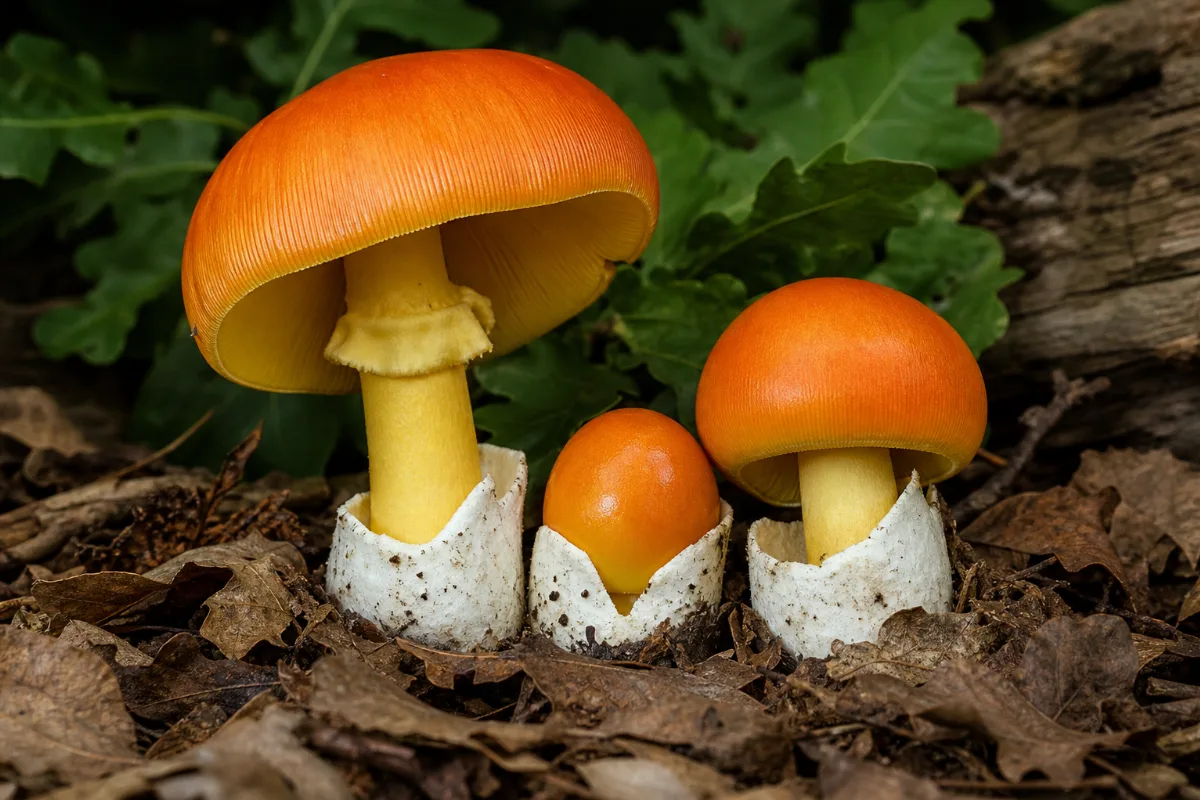
Mushrooms · Wild culinary mushroom
Caesar's Mushroom
Amanita caesarea · also called Caesar's mushroom (the name used in the papers we read); ovolo, oronja and Kaisersvamp appear in our earlier food notes and were not checked
Caesar's mushroom is a prized wild food mushroom of southern Europe and nearby regions. It belongs to the genus Amanita, which also holds the deadly death cap and the poisonous fly agaric. We found no human trial of it for any health use; the health claims come from lab and mouse work. The main danger is mistaking another Amanita for it, which can kill. Never eat a wild mushroom unless an experienced local expert has identified it in person.
General information, not medical advice. Last substantive update · Not medically reviewed. A named clinician has not signed off on this page. How this page is made
About Caesar's Mushroom
Caesar's mushroom (Amanita caesarea) is a prized wild food, but it belongs to a genus with deadly members. There is no human trial showing a health benefit; claims rest on lab and mouse work. Cadmium and mercury in wild samples are a second concern.
Safety first: the deadly relatives
Caesar's mushroom is in the genus Amanita. So are the death cap (Amanita phalloides) and the fly agaric (Amanita muscaria). Mushrooms with amatoxins, led by the death cap, cause more than 90 percent of deaths from mushroom poisoning in a 2025 review.
Death cap toxins are extremely stable. Cooking does not remove them, and in one test only 5 percent remained after 6 hours of cooking, though the authors say a changed structure does not necessarily mean less toxic. Symptoms may not appear for 6 hours, or even 24 to 36 hours. Some patients seem to improve before the liver fails. In 877 reported cases, 84 percent survived, and 59 percent with supportive care only. In 45 proven Czech cases, 4.4 percent died.
Fly agaric poisoning is different. It affects the nervous system. In one case series, 26 of 32 patients were confused and 20 of 32 were agitated. Our fly agaric page has more.
A 2025 review says some poisonous mushrooms cannot be told from edible ones by looks. This page therefore does not describe what Caesar's mushroom looks like, and no photo, app or web page is a safe way to identify a wild mushroom. If you are not completely sure, with an experienced local expert's in-person identification, do not eat it.
What it is
GBIF accepts Amanita caesarea as a species in the family Amanitaceae. A 2026 paper says it lives in partnership with tree roots, especially oak and chestnut, mainly in southern Europe, the Balkans, Anatolia and western Asia.
Edible Amanita eaten in northern Thailand turned out to be related species, not Amanita caesarea, so those results do not apply here.
What the research shows
We found no human trial of Caesar's mushroom for any health use. A PubMed search turned up lab studies of extracts, and two mouse models of Alzheimer's-type changes with a water extract or a purified polysaccharide. These are early, small-scale findings.
Lab extracts showed antioxidant activity and slowed some microbes. A 2026 six-mushroom paper named other species, not this one, as active against its cancer cell lines. The authors of those papers call for more work before any medical use.
Cadmium and mercury
In four Caesar's mushroom samples from southern Spain, cadmium was 1.10 to 4.03 mg per kg dry weight and mercury 1.37 to 3.09. The authors found a mercury concern for all species they tested if about 300 g of fresh mushrooms were eaten every day during the season, and a cadmium concern in two of the four Caesar's samples. That is far more than most people eat.
Another study found cadmium above legal limits in some dried Caesar's samples. Cooking lowered arsenic by 26 to 72 percent but lowered cadmium and mercury much less. A Turkish study also gave Caesar's mushroom a high risk index for cadmium, cobalt and lead. Levels depend on where the mushroom grew.
What is not known
No source we read covers Caesar's mushroom with medicines or alcohol, in pregnancy, breastfeeding or children, or allergy. Not knowing is not the same as safe. Ask a doctor or pharmacist if you take regular medicines or are pregnant. No supplement of Caesar's mushroom was found, and none is recommended here.
At a glance
Traditional uses history, not proof
- Eaten as a prized wild mushroom; a Turkish paper calls it famous since ancient times and widely eaten in Turkey (Dogan 2013).
- A 2025 hospital paper lists it among the edible forest species commonly picked in Romania, mostly in September and October (Oprita 2025). No medicinal tradition was found in the sources we read. Tradition is not evidence.
Studied for research
- Eating it as a food (composition only, no health result), insufficient
- Antioxidant readings in the lab, insufficient
- Nerve-cell protection in cells and Alzheimer's-type mice, insufficient
- Effects on cancer cells in a dish, insufficient
- Activity against microbes in the lab, insufficient
Main compounds
- Phenolic compounds such as catechin, ferulic acid and gallic acid, the compounds behind lab antioxidant readings
- Polysaccharides, studied in mice
- Fatty acids, with oleic acid the largest part in one analysis
- Cadmium and mercury taken up from the soil (not a benefit)
Common forms
- Fresh, cooked (wild-collected)
- Dried (drying leaves metals in a smaller weight)
- Lab extracts (research only; no supplement was found)
Research links: Death cap and other amatoxin mushroom poisonings (review abstract, 2018) · Mushroom poisoning: an updated review (abstract, 2025) · Amanitins: the most poisonous molecules of the fungal world (review, 2023) · Metals in Spanish wild mushrooms including Caesar's mushroom (open paper, 2022) · Toxic trace elements in dried mushrooms and cooking (abstract, 2020) · Caesar's mushroom polysaccharide in Alzheimer's-type mice (abstract, 2021) · Research Library · Genes & Biomarkers Library
What it is and its history
- Accepted scientific name
- Amanita caesarea (Scop.) Pers.
- Naming authority
- (Scop.) Pers. (GBIF)
- Synonyms
- Volvoamanita caesarea (Scop.) E.Horak, a GBIF synonym; Amanita aurantiaca Pers., a GBIF synonym
- Common names
- Caesar's mushroom (English); Ovolo (not verified); Oronja (not verified); Kaisersvamp (not verified)
- Family or group
- Amanitaceae (a fungus family), not a plant
- Classification
- Fungi > Basidiomycota > Agaricomycetes > Agaricales > Amanitaceae > Amanita > Amanita caesarea
- Native range
- A 2026 paper says it is mainly found in temperate and Mediterranean regions, especially southern Europe, the Balkans, Anatolia and parts of western Asia.
- Habitat
- The same paper says it lives in partnership with tree roots (ectomycorrhiza), especially oak, chestnut and other Fagaceae and Pinaceae, in warm dry Mediterranean climates and pine-oak forests.
- What it looks like
- Fruiting body: Deliberately not described. Looks must never be used to decide whether a wild mushroom is safe.
- Cultivation
- Not checked. Lab papers exist on growing it in culture and with tree seedlings, but were not read.
- Harvest and processing
- Not checked in the sources read. Eaten fresh and cooked or sold dried (summary-only).
- Look-alikes and adulterants
- Name: Amanita phalloides (death cap); Note: Same genus. Amatoxin-containing; responsible for most mushroom-poisoning deaths in the sources read. Named here as a danger only; no description is given.; Name: Amanita muscaria (fly agaric); Note: Same genus. Causes a nervous-system poisoning (ibotenic acid, muscimol). See the fly agaric page. No description is given.
- Sustainability and conservation
- Not checked.
Traditional use and history history, not clinical proof
| Tradition or era | Documented use | Source |
|---|---|---|
| Southern Europe and Turkey | A Turkish paper calls it a famous mushroom since ancient times, widely eaten in Turkey. A 2026 paper calls it widely consumed in various countries with high gastronomic value. No medicinal tradition was found in the sources read. | p23527891 |
| Romania | A 2025 hospital paper lists it among the edible forest species commonly picked there, mostly in September and October. | p40863529 |
Traditional use shows how it was used. It does not show that it works or is safe today.
What is inside, and how it may work
What it contains and how those compounds act in cells and animals. Laboratory and animal mechanisms are not proven effects in people.
Main compounds
| Compound | Family | Where it is concentrated | Activity studied | Level of evidence |
|---|---|---|---|---|
| Phenolic compounds (catechin, ferulic acid, p-coumaric acid, cinnamic acid, gallic acid) | phenolic | Fruiting body Catechin 32.5 mg/g, ferulic acid 7 mg/g, p-coumaric 6 mg/g, cinnamic 6.2 mg/g in one extract (2013); gallic acid highest in an optimised 2026 extract, no figure in the abstract. | Antioxidant readings in the lab. 5 15 | Laboratory research |
| Polysaccharides (ACPS and ACPS2) | polysaccharide | Fruiting body ACPS2 average molar mass 16.6 kDa with a main chain and branches. | Nerve-cell protection in cells and mice. 6 10 | Animal research |
| Fatty acids (oleic acid dominant) | lipid | Fruiting body 37 fatty acids found; oleic acid 58 percent. | Composition only. 5 | Composition analysis |
| Cadmium, mercury, lead and arsenic taken up from soil | contaminant | Fruiting body Cadmium 1.10 to 4.03 and mercury 1.37 to 3.09 mg per kg dry weight in four Spanish samples. | Not a benefit: a contaminant. 1 | Food analysis |
Mechanisms, receptors and pathways
| Target or pathway | Gene or receptor | What was found | Level |
|---|---|---|---|
| Nrf2 antioxidant pathway | NFE2L2 (Nrf2) | Polysaccharide and extract treatments raised nuclear Nrf2 and antioxidant enzymes in damaged mouse nerve cells and in mice. 10 6 | Animal research |
| Cholinergic system (acetylcholine) | Acetylcholinesterase / choline acetyltransferase | Treated mice showed higher acetylcholine and choline acetyltransferase and lower acetylcholinesterase; an optimised extract also had anticholinesterase activity in the lab. 9 15 | Animal research |
| RNA polymerase II (in death-cap-type mushrooms, not shown for Caesar's mushroom) | Not applicable | Amatoxins stop the enzyme RNA polymerase II, which is how they damage liver and kidney cells. 19 | Human observational |
| Ibotenic acid and muscimol (in fly agaric, not shown for Caesar's mushroom) | Not read in the abstract | Ibotenic acid and muscimol are the active components of the fly agaric poisoning, which affects the central nervous system. 12 | Review |
Absorption, metabolism and elimination
- Absorption
- Not found in the sources read.
- Distribution
- Not found.
- Metabolism
- Not found.
- Elimination
- Not found.
- Bioavailability
- Not established. For a group of cooked, dried mushrooms the bioaccessibility of arsenic was 63 to 81 percent and of metals under 40 percent.
Isolated compounds versus whole extracts
The nerve-protection work used a water extract or purified polysaccharide given to mice; the antioxidant and cell-growth work used solvent extracts. None of it tested the mushroom as eaten. Death-cap toxins and fly agaric toxins come from other species.
Nutritional composition
No complete open nutrient table (protein, fibre, vitamins, minerals other than metals) was found for Caesar's mushroom. A 2013 paper found 37 fatty acids with oleic acid dominant. Do not rely on it for nutrition numbers.
5 not enough evidence
What was looked at
The 5 benefits and uses checked for Caesar's Mushroom, each with how strong the evidence is. Tap one to open it.
- Eating it as a food (taste and nutrition)Not enough evidence
- Antioxidant readings in the labNot enough evidence
- Nerve-cell protection in cells and mice (Alzheimer's-type models)Not enough evidence
- Effects on cancer cells in a dishNot enough evidence
- Activity against microbes in the labNot enough evidence
What is Caesar's Mushroom good for?
The uses people ask about and how strong the human evidence is for each. None is proven. Read this together with the Safety tab.
Benefits, one by one
Each card is a research question, not a promise. Tap a goal to filter. Open a card to see the studies, doses and limits.
Eating it as a food (taste and nutrition)
Not enough evidenceCaesar's mushroom is eaten for its taste and is valued as a food in southern Europe and nearby regions. We found no study that measured a health result from eating it. Lab work lists fatty acids and other natural compounds in it. Eating wild mushrooms safely depends first on being sure which mushroom it is.
3 studiesFresh, cooked or dried fruiting bodies, wild-collected. This page giv…
Studies, doses and limits
Results
A Turkish analysis found 37 fatty acids, with oleic acid the largest part (58 percent). No complete open nutrient table (protein, fibre, vitamins) was found for this species.
Effect sizes as reported
Composition only
Why this rating
Composition data show what is in the mushroom, not what eating it does for anyone's health.
Form and dose studied
Fresh, cooked or dried fruiting bodies, wild-collected. This page gives no amounts.
Who was studied
Not studied in people
Limits
Amounts of nutrients and metals depend on the place and season. The Thai edible Amanita studied in one paper were other, related species.
Why researchers looked
It is a prized edible wild mushroom, so researchers have measured what it contains.
Traditional use
A Turkish paper says it has been a famous mushroom since ancient times and is widely eaten in Turkey. A 2026 paper calls it widely consumed with high gastronomic value (reported by the authors).
Proposed mechanism Composition analysis
No health mechanism was tested in people. Composition studies only measure what is in the mushroom.
A proposed mechanism does not show that the effect happens in people.
Never rely on this page to decide whether a wild mushroom is safe. See the Safety tab: Caesar's mushroom belongs to a genus that includes deadly species.
Antioxidant readings in the lab
Not enough evidenceExtracts of Caesar's mushroom show antioxidant activity in test-tube tests and contain natural compounds such as catechin and ferulic acid. That is a lab reading. It does not show a benefit to people who eat the mushroom.
3 studiesSolvent extracts (methanol, acetone, chloroform, ethanol) made in a l…
Studies, doses and limits
Results
A 2013 paper: 40.91 percent DPPH radical scavenging at 0.5 mg/mL; catechin 32.5 mg/g, ferulic acid 7 mg/g, p-coumaric acid 6 mg/g, cinnamic acid 6.2 mg/g. A 2026 extraction paper found stronger readings with a computer-optimised extract and more gallic acid. A 2026 six-species paper reported the highest flavonoids and phenols for Caesar's mushroom, but the phenol figure looks implausibly high.
Effect sizes as reported
Antioxidant activity in test-tube tests
Why this rating
Only chemical and cell tests; extract strength and solvents differ between papers, so numbers cannot be compared.
Form and dose studied
Solvent extracts (methanol, acetone, chloroform, ethanol) made in a lab. Not a food or supplement.
Who was studied
No people or animals
Limits
Different papers use different solvents and units. An antioxidant reading is not a health effect.
Why researchers looked
Many mushrooms contain phenolic compounds, and labs routinely test extracts for antioxidant activity.
Traditional use
Not described in the sources read.
Proposed mechanism Laboratory research
Phenolic compounds scavenge free radicals in chemical tests. Food-grade extracts in the lab are far more concentrated than a meal.
A proposed mechanism does not show that the effect happens in people.
Nothing here says the mushroom is safe to eat; the Safety tab covers metals and look-alike dangers.
Nerve-cell protection in cells and mice (Alzheimer's-type models)
Not enough evidenceWater extracts and a purified sugar-chain (polysaccharide) from Caesar's mushroom protected nerve cells in a dish and improved memory and movement tests in mice made to have Alzheimer's-type changes. This is cell and mouse work only. No study has tested it in people.
3 studiesA water extract and purified polysaccharide fractions given by mouth …
Studies, doses and limits
Results
Three papers (2017, 2019, 2021), each in cells and in mice for 28 to 42 days. The abstracts give no numbers for the cell results; they report better water-maze, movement and open-field results and less amyloid-beta deposit in treated mice.
Effect sizes as reported
Better results in mouse models
Why this rating
Cell and mouse work by related research groups; none in people. Mouse models of Alzheimer's often do not predict human results.
Form and dose studied
A water extract and purified polysaccharide fractions given by mouth to mice. This page gives no amounts. These are not products on sale.
Who was studied
Mice and mouse nerve cells
Limits
The studied material is a purified fraction, not the whole mushroom eaten as food.
Why researchers looked
Researchers in China looked for natural products that protect nerve cells from oxidative stress.
Traditional use
Not described in the sources read.
Proposed mechanism Animal research
The authors link the effect to the Nrf2 antioxidant pathway, less endoplasmic reticulum stress and better acetylcholine-system markers in mice.
A proposed mechanism does not show that the effect happens in people.
No safety testing in people. Do not read this as a reason to eat a wild mushroom.
Effects on cancer cells in a dish
Not enough evidenceIn the lab, extracts of Caesar's mushroom slowed the growth of some cells. A 2026 six-mushroom paper named other species, not Caesar's mushroom, as active against the cancer cell lines it tested. None of this was tested in people.
2 studiesMethanol and ethanol lab extracts. Not a food portion.
Studies, doses and limits
Results
One 2026 paper reported antiproliferative (cell-growth) effects of an optimised extract, with no figures in the abstract. Another 2026 paper tested a methanol extract and brine-shrimp toxicity (LD50 range 27.6 to 118.6 microgram/mL across six species) and said further work is needed before any medical use.
Effect sizes as reported
Cell-growth readings only
Why this rating
Cell-line and brine-shrimp tests with strong lab extracts.
Form and dose studied
Methanol and ethanol lab extracts. Not a food portion.
Who was studied
Cell lines
Limits
A reading in a dish does not show a treatment effect; extracts that kill shrimp or cells can also be toxic.
Why researchers looked
Labs screen wild mushroom extracts for effects on cancer cells.
Traditional use
Not described in the sources read.
Proposed mechanism Laboratory research
Not worked out. The papers report cell-growth readings, not a proven mechanism.
A proposed mechanism does not show that the effect happens in people.
Do not use mushrooms as a cancer treatment. Talk to your cancer team before using any mushroom product.
Activity against microbes in the lab
Not enough evidenceSolvent extracts of Caesar's mushroom slowed the growth of some bacteria and a yeast in a dish. This does not show it treats any infection.
1 studiesChloroform, acetone and methanol extracts. Not safe or usable as food…
Studies, doses and limits
Results
A 2013 Turkish paper tested chloroform, acetone and methanol extracts against four Gram-positive bacteria, five Gram-negative bacteria and one yeast. The lowest minimum inhibitory concentration was 4.8 microgram/mL for the acetone extract against Candida albicans.
Effect sizes as reported
Growth slowed in the dish
Why this rating
Single lab paper on solvent extracts; no animal or human data.
Form and dose studied
Chloroform, acetone and methanol extracts. Not safe or usable as food or medicine.
Who was studied
Bacteria and yeast in culture
Limits
Lab inhibition is far from a treatment; the solvents used are not edible.
Why researchers looked
Mushroom extracts are often screened against microbes.
Traditional use
Not described in the sources read.
Proposed mechanism Laboratory research
Not studied.
A proposed mechanism does not show that the effect happens in people.
Do not treat an infection with a mushroom. See a doctor.
Connections to the rest of health
How Caesar's Mushroom connects to the rest of our health knowledge graph. Every link says what kind of connection it is. A safety link (for example to the liver) is a warning, not a benefit. A study that merely mentions a topic never creates a benefit link.
Explore every connection: goals, body systems, organs, symptoms, genes
B. Body systems
| Connected to | Kind of connection | Evidence status | Context | Studies |
|---|---|---|---|---|
| Nervous system | Adverse effect or risk | Documented | Confusion, agitation and coma in case series. Preparation or compound: Fly agaric and panther cap (ibotenic acid, muscimol) |
18 |
| Digestive System | Biological association | Not enough evidence | Studied for: Eating it as a food (taste and nutrition) Studied for: Antioxidant readings in the lab | 5 15 7 11 |
| Nervous System | Biological association | Not enough evidence | Studied for: Nerve-cell protection in cells and mice (Alzheimer's-type models) | 9 10 6 |
| Immune System | Biological association | Not enough evidence | Studied for: Effects on cancer cells in a dish Studied for: Activity against microbes in the lab | 15 11 5 |
C. Body parts and organs
J. Genes, receptors and enzymes
K. Biological pathways
| Connected to | Kind of connection | Evidence status | Context | Studies |
|---|---|---|---|---|
| Nrf2 / Keap1 antioxidant signalling | Preliminary mechanism | Animal | Raised in cell and mouse studies of polysaccharides. | 10 |
| Endoplasmic reticulum stress and NF-kB | Preliminary mechanism | Animal | Lowered in APP/PS1 mice given a purified polysaccharide. | 6 |
L. Active compounds
| Connected to | Kind of connection | Evidence status | Context | Studies |
|---|---|---|---|---|
| Phenolic compounds (catechin, ferulic acid, p-coumaric acid, cinnamic acid, gallic acid) | Biological association | In vitro | Antioxidant readings in the lab. Preparation or compound: Fruiting body |
5 15 |
| Polysaccharides (ACPS and ACPS2) | Biological association | Animal | Nerve-cell protection in cells and mice. Preparation or compound: Fruiting body |
6 10 |
| Fatty acids (oleic acid dominant) | Biological association | Composition analysis | Composition only. Preparation or compound: Fruiting body |
5 |
| Cadmium, mercury, lead and arsenic taken up from soil | Biological association | Food analysis | Not a benefit: a contaminant. Preparation or compound: Fruiting body |
1 |
Each connection is stored with the ingredient, the connected record, the kind of connection, the evidence status, the supporting studies, the preparation or compound involved, and a review date (last reviewed October 25, 2026).
Evidence at a glance: what the research found for 5 outcomes
Each outcome below is one thing researchers measured. Certainty is how far the evidence can be trusted, not how well it works. The full studies are on the next tab.
The evidence
The research centre for Caesar's Mushroom. Every record here was checked against PubMed or the publisher's page; we never list a study we have not verified.
Evidence by outcome
Bars show how many studies we found for each outcome, not how well it works. People are added up across trials only (reviews are not added, to avoid double counting).
How we rate evidence
High certainty
Several well-run trials or reviews agree; further research is unlikely to change the picture much.
Moderate certainty
Good trials point the same way, but some doubt remains.
Low certainty
Small, short or inconsistent trials. The finding could change with better research.
Very low certainty
Very little or very weak human data. Treat as a possibility only.
Mixed findings
Trials or reviews disagree with each other.
Not enough evidence
Not enough human research to say either way.
Evidence against
Good research found no benefit, or found harm.
We take the reviewers' own risk-of-bias and GRADE statements where they exist, and otherwise judge from study size, design, consistency, directness and whether a product matches what is sold. Many publications do not make evidence high. Method note: We read PubMed records and abstracts for 21 papers (papers on Caesar's mushroom itself, three mouse or cell studies, a Thai survey of related species, mushroom-poisoning and death-cap reviews and outcome studies, two fly agaric papers, and hospital and food-label studies), read two open papers in part, and checked species names in GBIF. We searched PubMed for human trials and found none. Regulator pages for metal limits and poison centres outside the USA were not read. Mostly abstracts were read, so numbers come from abstracts. Certainty ratings are the compiler's own reading.
Study library: every study we checked 25
| Study | Design | People | Product, dose, length | Result |
|---|---|---|---|---|
| Barea-Sepúlveda 2022 Exposure to Essential and Toxic Elements via Consumption of Agaricaceae, Amanitaceae, Boletaceae, and Russulaceae Mushrooms from Southern Spain and Northern Morocco. Journal of Fungi (Basel) · PMID 35628800 · DOI |
Laboratory analysis food-analysis |
16 16 wild mushroom samples of five species; four were Amanita caesarea from southern Spain (2017 and 2018) |
Wild fruiting bodies, dried, ICP-MS metal analysis fruiting body |
In the four Caesar's mushroom samples (Table 3, mg per kg dry weight) cadmium was 1.10 to 4.03 and mercury was 1.37 to 3.09; lead 0.115 to 0.591; total arsenic 0.113 to 0.529; zinc 67.6 to 117. The authors found a mercury-related concern for all species studied if about 300 g of fresh mushrooms were eaten every day during the season. In the full text, cadmium intake exceeded their tolerable daily figure in three of the four Caesar's samples and the cadmium risk index was above 1 in two of them. Metal levels varied several-fold between four samples Methods, limits and fundingOutcomes: Eight elements (Cr, As, Cd, Hg, Pb, Cu, Zn, Se); estimated daily intake and health risk index for a 300 g fresh portion each day Limitations: Four Caesar's mushroom samples from one region, three technical repeats each. The 300 g every day assumption is far above most people's eating. Cadmium varied nearly fourfold and mercury more than twofold between samples, so these numbers are not typical values. Funding and conflicts: Not stated in the abstract. Read: abstract and main text (open access, Table 3) |
| Chiocchetti 2020 Toxic trace elements in dried mushrooms: Effects of cooking and gastrointestinal digestion on food safety. Food Chemistry · PMID 31610326 · DOI |
Laboratory analysis food-analysis |
Dried wild mushrooms of several species, including Amanita caesarea | Dried mushrooms, cooked and digested in the lab fruiting body |
Cadmium in some samples of Amanita caesarea (and Tricholoma georgii) was above the legislated limits. Cooking cut arsenic by 26 to 72 percent but lowered mercury, cadmium and lead much less. Arsenic was more bioaccessible (63 to 81 percent) than the metals (under 40 percent). Cooking did little to cadmium and mercury Methods, limits and fundingOutcomes: Mercury, cadmium, lead and arsenic before and after cooking and simulated digestion Limitations: Abstract only; the abstract does not name the country of the limits or how many Caesar's samples were over them. The bioaccessibility figures cover the group of mushrooms, not Caesar's mushroom alone. Funding and conflicts: Not stated in the abstract. Read: abstract |
| Cutler 2021 What's for dinner this time?: DNA authentication of "wild mushrooms" in food products sold in the USA. PeerJ · PMID 34414024 · DOI |
Laboratory analysis food-analysis |
16 16 food products in the USA labelled with "wild mushrooms", tested by DNA metabarcoding |
Food products containing wild mushrooms fruiting body |
28 mushroom species were found. "Wild mushroom" ingredients were often wholly or partly cultivated species such as button, oyster and shiitake. Where truly wild mushrooms were found they did not always match the label, and a few widely distributed products contained species whose edibility is dubious or potentially toxic. Labels like "wild mushrooms" can hide what is inside Methods, limits and fundingOutcomes: Which species were really in the products Limitations: Only 16 US products; it says nothing about Caesar's mushroom products specifically. Funding and conflicts: Not stated in the abstract. Read: abstract |
| Diaz 2018 Amatoxin-Containing Mushroom Poisonings: Species, Toxidromes, Treatments, and Outcomes. Wilderness & Environmental Medicine · PMID 29325729 · DOI |
Narrative review review |
Review of amatoxin-containing mushrooms (Amanita, Lepiota and Galerina) | Amatoxin-containing mushrooms fruiting body |
Most mushroom poisonings are caused by unknown mushrooms, and most fatal poisonings by amatoxin mushrooms. Amanita phalloides is responsible for most fatalities, followed by A. virosa and A. verna. Apart from liver transplantation, treatments are supportive and have not been tested in randomised trials. Patients with late-appearing gut symptoms, with or without a false recovery, should be referred to liver-transplant centres. About half of those whose liver injury progresses to liver failure will need a transplant. Amatoxin poisoning can look like recovery before the liver fails Methods, limits and fundingOutcomes: Species, toxidromes, treatments and outcomes Limitations: Narrative review; no trials exist for the treatments it compares. Funding and conflicts: Not stated in the abstract. Read: abstract |
| Doğan 2013 Biological activity and fatty acid composition of Caesar's mushroom. Pharmaceutical Biology · PMID 23527891 · DOI |
Laboratory analysis in-vitro |
Chloroform, acetone and methanol extracts of Amanita caesarea tested against bacteria and one yeast; fatty acids and phenolics measured | Solvent extracts of Amanita caesarea fruiting body |
The extract scavenged 40.91 percent of DPPH radicals at 0.5 mg/mL. Phenolics found were catechin (32.5 mg/g), ferulic acid (7 mg/g), p-coumaric acid (6 mg/g) and cinnamic acid (6.2 mg/g). The acetone extract had the lowest minimum inhibitory concentration (4.8 microgram/mL) against Candida albicans. Of 37 fatty acids, oleic acid was dominant (58 percent). The abstract calls the species famous since ancient times and widely eaten in Turkey. Antioxidant and antimicrobial activity in the lab Methods, limits and fundingOutcomes: Antioxidant tests, antimicrobial minimum inhibitory concentrations, phenolics, fatty acids Limitations: Test-tube work on solvent extracts that are much stronger than a food portion. The authors' remark that it can be recommended as a major source of natural food is theirs and is not shown by these tests. Funding and conflicts: Not stated in the abstract. Read: abstract |
| Hu 2021 Structural characterization of polysaccharide purified from Amanita caesarea and its pharmacological basis for application in Alzheimer's disease: endoplasmic reticulum stress. Food & Function · PMID 34657936 · DOI |
Animal research animal |
APP/PS1 mice (an Alzheimer's-type model) given a purified Caesar's mushroom polysaccharide by mouth for 6 weeks | Purified polysaccharide (ACPS2) from Amanita caesarea fruiting body Not reproduced here 6 weeks · vs Untreated model mice |
Treated mice did better in the Morris water maze and open-field tests, had less amyloid-beta deposition and tau hyperphosphorylation, and lower blood TNF-alpha and IL-1beta. The authors link this to Nrf2 signalling and less endoplasmic reticulum stress. Better results in a mouse model Methods, limits and fundingOutcomes: Memory and anxiety tests, amyloid-beta, tau, inflammation, oxidative stress Limitations: Mouse study of one purified polysaccharide, not the whole mushroom. Mouse models of Alzheimer's often fail to predict human results. Funding and conflicts: Not stated in the abstract. Read: abstract |
| Kumla 2023 Survey of Edible Amanita in Northern Thailand and Their Nutritional Value, Total Phenolic Content, Antioxidant and alpha-Glucosidase Inhibitory Activities. Journal of Fungi (Basel) · PMID 36983511 · DOI |
Taxonomy study fungus |
19 19 edible Amanita specimens from northern Thailand, placed by DNA in A. hemibapha, A. pseudoprinceps, A. rubromarginata, A. subhemibapha and Amanita section Caesareae |
Wild fruiting bodies and extracts of related Amanita species (not Amanita caesarea itself) fruiting body |
The edible Amanita eaten in northern Thailand belonged to related species in the same group (section Caesareae), not Amanita caesarea. A. pseudoprinceps had the highest phenol, antioxidant and alpha-glucosidase values. Shows that Caesar's-type mushrooms in Asia are other species Methods, limits and fundingOutcomes: Species identity by DNA; protein, phenols, antioxidant and alpha-glucosidase tests Limitations: Other species. Values do not apply to Amanita caesarea. Funding and conflicts: Not stated in the abstract. Read: abstract |
| La Rosa 2024 Epidemiology and clinical aspect of mushroom poisonings in South Sardinia: A 10-year retrospective analysis (2011-2021). Food Science & Nutrition · PMID 38268883 · DOI |
Cohort study |
164 164 mushroom poisoning cases recorded by Mycological Inspectorates in South Sardinia, 2011 to 2021 |
Mixed wild mushrooms fruiting body |
Species were identified in 98.78 percent of cases: 81 by toxic species, 60 by edible species and 45 by not-edible species. Omphalotus olearius and Agaricus xanthodermus were the main toxic ones. The authors say most poisonings are preventable and quick, correct recognition improves outcomes. The species table (full text) has one Amanita caesarea entry listed as edible with fever, cramps, sweating and tremor; the paper does not say whether the mushroom was correctly identified. Most poisonings are preventable; one unexplained Caesar's entry Methods, limits and fundingOutcomes: Season, species involved, symptoms Limitations: Regional data from one public service. The single Caesar's mushroom entry is unexplained, so it should not be read as proof that the mushroom causes these symptoms. Funding and conflicts: Not stated in the abstract. Read: abstract and species table (open access) |
| Li 2017 Anti-Oxidative Stress Activity Is Essential for Amanita caesarea Mediated Neuroprotection on Glutamate-Induced Apoptotic HT22 Cells and an Alzheimer's Disease Mouse Model. International Journal of Molecular Sciences · PMID 28749416 · DOI |
Animal research animal |
HT22 nerve cells exposed to glutamate, and mice with a d-galactose plus aluminium chloride Alzheimer's-type model, given a water extract for 28 days | Aqueous extract of Amanita caesarea fruiting body Three dose levels tested; amounts not reproduced here 28 days · vs Untreated model mice |
The extract improved cell survival and mitochondrial function in damaged nerve cells. In mice, 28 days of treatment improved movement, rotarod endurance and water-maze results, lowered amyloid-beta deposits, and shifted acetylcholine-related markers and antioxidant enzymes. Better results in cells and in mice Methods, limits and fundingOutcomes: Cell survival, apoptosis markers, movement and memory tests, amyloid-beta, acetylcholine system, oxidative stress Limitations: Cell and mouse work. The authors suggest the mushroom 'may serve as potential food' for preventing or treating neurodegeneration; no human data support that. Funding and conflicts: Not stated in the abstract. Read: abstract |
| Li 2019 Protective roles of Amanita caesarea polysaccharides against Alzheimer's disease via Nrf2 pathway. International Journal of Biological Macromolecules · PMID 30290256 · DOI |
Animal research animal |
HT22 mouse nerve cells exposed to glutamate, and mice with a chemically induced Alzheimer's-type model (d-galactose plus aluminium trichloride) | Polysaccharides (ACPS) from a water extract of Amanita caesarea fruiting body Not reproduced here 42 days · vs Untreated model mice and cells |
In cells, a 3-hour pre-treatment reversed the drop in cell survival and lowered oxidative stress. In the mouse model, 42 days of treatment improved abnormal behaviour, reduced amyloid-beta deposits and improved cholinergic markers. Better results in cells and in mice Methods, limits and fundingOutcomes: Cell survival, oxidative stress, behaviour, amyloid-beta, cholinergic markers Limitations: Cell and mouse work only; one purified fraction; the abstract gives no numbers. The authors call it a 'promising candidate', which is a research hope, not a result in people. Funding and conflicts: Not stated in the abstract. Read: abstract |
| Malacara-Marquez 2026 Bioactive metabolites from edible fungi: evaluation of antioxidant potential and cytotoxicity on human cell lines. Preparative Biochemistry & Biotechnology · PMID 41823546 · DOI |
Laboratory analysis in-vitro |
Methanol extracts of six wild edible mushrooms (Amanita caesarea, A. vaginata, A. rubescens, Clitocybe gibba, Laccaria laccata, Ramaria apiculata) | Methanol extracts of fruiting bodies fruiting body |
A. caesarea had the highest flavonoid (17.4 mg GAE/g) and total phenol values reported (205.0 mg GAE/g). Brine-shrimp LD50 values across the six species ranged from 27.6 to 118.6 microgram/mL. The abstract names other species (C. gibba, A. vaginata, L. laccata) as active against cancer cell lines, not A. caesarea. The authors say further work is needed before any medical use. Lab values only; Caesar's mushroom not named as active against the cancer cell lines Methods, limits and fundingOutcomes: Phenols, flavonoids, antioxidant tests, brine-shrimp toxicity, cancer cell lines Limitations: Abstract only. The phenol figure of 205.0 mg GAE/g looks implausibly high next to other papers, so it should be treated with caution. The brine-shrimp range covers all six species. Funding and conflicts: Not stated in the abstract. Read: abstract |
| Michelot 2003 Amanita muscaria: chemistry, biology, toxicology, and ethnomycology. Mycological Research · PMID 12747324 |
Narrative review review |
Review of the fly agaric | Amanita muscaria (fly agaric) fruiting body |
The poisoning syndrome of A. muscaria and A. pantherina is marked by central nervous system dysfunction. Ibotenic acid and muscimol are the active components. Fly agaric poisoning affects the nervous system Methods, limits and fundingOutcomes: Chemistry, toxicology, history Limitations: Review from 2003; abstract read only. Funding and conflicts: Not stated in the abstract. Read: abstract |
| Pelclová 2026 Trends in Amanita phalloides intoxications in the Czech Republic: how many antidotes are needed? Central European Journal of Public Health · PMID 41973061 · DOI |
Cohort study |
45 45 proven amatoxin poisonings in the Czech Republic, 2019 to 2024 |
Amanita phalloides (death cap) fruiting body |
Lethality was 4.4 percent (2 of 45 people). Symptoms began about 10.4 hours after the meal on average. Five patients admitted early and treated without antidotes did not develop liver damage. The authors say deaths from unintended amatoxin poisoning can be averted by early care and mycological advice. 4.4 percent lethality among 45 proven cases Methods, limits and fundingOutcomes: Lethality, time to symptoms, treatment Limitations: One country; patients seen at a toxicology centre; small numbers. Funding and conflicts: Not stated in the abstract. Read: abstract |
| Sarikurkcu 2020 Metal concentration and health risk assessment of wild mushrooms collected from the Black Sea region of Turkey. Environmental Science and Pollution Research · PMID 32363460 · DOI |
Laboratory analysis food-analysis |
Wild mushrooms of many species from hazelnut gardens near Arsin, Trabzon, Turkey | Wild fruiting bodies fruiting body |
Amanita caesarea was one of nine species with high risk index values, especially for cadmium, cobalt and lead. Other species (such as Hydnum repandum and Macrolepiota procera) had intakes below the reference dose. High risk index for Cd, Co and Pb in Caesar's mushroom samples Methods, limits and fundingOutcomes: Eight metals, daily intake and health risk index Limitations: Abstract gives ranges across all species, not for Caesar's mushroom alone. Risk indexes depend on the portion size the authors assumed. Funding and conflicts: Not stated in the abstract. Read: abstract |
| Sevindik 2026 Artificial Intelligence-Assisted Optimization of Amanita caesarea Extracts for Bioactive Compounds and Functional Food Applications. Foods · PMID 42279683 · DOI |
Laboratory analysis in-vitro |
Laboratory extracts of Amanita caesarea fruiting bodies from the Belgrad Forest, Istanbul (full text also read for the introduction) | Amanita caesarea fruiting body, laboratory extracts fruiting body |
Extraction settings changed what the extracts contained and how active they were in the lab. The extract made with the neural-network method had stronger antioxidant, antiproliferative and anticholinesterase readings and more phenolic compounds, especially gallic acid. The introduction describes the mushroom as edible, widely eaten, and notes the presence of toxic species within the same genus. Lab readings only; no human or animal result Methods, limits and fundingOutcomes: Antioxidant readings, antiproliferative (cell-growth) and anticholinesterase activity, phenolic compounds by LC-MS/MS Limitations: Test-tube and cell work on extracts. The abstract gives no numbers for the cell results. Authors are from a group that promotes the mushroom as a source of bioactive compounds; the conclusion that it is 'promising' is theirs, not a health finding. Funding and conflicts: Not stated in the abstract. Read: abstract and introduction (full text) |
| Tan 2022 Amanitin intoxication: effects of therapies on clinical outcomes - a review of 40 years of reported cases. Clinical Toxicology · PMID 36129244 · DOI |
Systematic review review |
877 877 unique cases from 131 publications of poisoning with amanitin-containing Amanita mushrooms |
Amanitin-containing Amanita mushrooms (mainly Amanita phalloides) fruiting body |
Overall survival was 84 percent. With supportive care only it was 59 percent. Survival was 90 percent with silibinin and 89 percent with benzylpenicillin. The authors found no statistically significant differences between treatments in proven poisonings and say the data are limited. 84 percent survived across reported cases Methods, limits and fundingOutcomes: Survival by treatment received Limitations: Case reports and case series, so published cases may not represent all poisonings. Treatment groups differ in how ill people were. Funding and conflicts: Not stated in the abstract. Read: abstract |
| Tuğcan 2025 Mushroom poisoning: An updated review. Turkish Journal of Emergency Medicine · PMID 39882097 · DOI |
Narrative review review |
Review of poisonous mushroom syndromes and treatments | Poisonous mushrooms fruiting body |
Some poisonous species cannot be told from some edible species by their appearance, which makes accidental poisoning a public health problem. Mushrooms containing amatoxins cause more than 90 percent of deaths from mushroom poisoning, and Amanita phalloides is responsible for many fatal cases. Looks alone are not a safe test Methods, limits and fundingOutcomes: Syndromes, toxins and treatments Limitations: Narrative review; abstract read only. Funding and conflicts: Not stated in the abstract. Read: abstract |
| Vendramin 2014 Amanita muscaria and Amanita pantherina poisoning: two syndromes. Toxicon · PMID 25173077 · DOI |
Case series |
49 32 patients poisoned with Amanita muscaria and 17 with Amanita pantherina |
Amanita muscaria (fly agaric) and A. pantherina fruiting body |
A. muscaria contains more ibotenic acid and less muscimol than A. pantherina. A. muscaria patients were more often confused (26 of 32) and agitated (20 of 32); A. pantherina patients were more often comatose (5 of 17 versus 2 of 32). Confusion and agitation common after fly agaric poisoning Methods, limits and fundingOutcomes: Symptoms of poisoned patients Limitations: Small case series; fly agaric poisoning is a nervous-system syndrome, different from death-cap liver poisoning. Funding and conflicts: Not stated in the abstract. Read: abstract |
| Vetter 2023 Amanitins: The Most Poisonous Molecules of the Fungal World. Molecules · PMID 37570902 · DOI |
Narrative review review |
Review of amanitin-producing mushrooms, chemistry and treatment (main text read, open access) | Amatoxins (amanitins) from death-cap-type mushrooms fruiting body |
Amanitins are extremely stable to heat, acid and human digestive enzymes, and are absorbed almost without hindrance. Accidental eating causes no noticeable symptoms for a few hours, or even 24 to 36 hours, while the toxins already damage the target organs. The toxins resist cooking: in one test only 5 percent remained after 6 hours of cooking, and the author notes a changed structure does not necessarily mean lower toxicity. The mortality rate of poisonings is decreasing but still high. Cooking does not make death-cap toxins safe Methods, limits and fundingOutcomes: Chemistry, stability, symptom delay, treatment Limitations: Review. It concerns death-cap-type species, not Caesar's mushroom. Funding and conflicts: Not stated in the abstract. Read: abstract and main text (open access) |
| Wennig 2020 Mushroom Poisoning. Deutsches Arzteblatt International · PMID 33559585 · DOI |
Narrative review review |
Review of mushroom poisoning syndromes, with German hospital data for 2000 to 2018 | Poisonous and wrongly eaten wild mushrooms fruiting body |
Poisonous mushrooms are eaten by mushroom hunters out of ignorance, after misidentification as edible mushrooms, or as a drug. Poisoning with a short delay (under 6 hours) is usually harmless; poisoning with a delay of 6 to 24 hours or more can be life-threatening (the death cap type, among others). German hospital data for 2000 to 2018 counted 4412 hospitalisations and 22 deaths, 90 percent of the deaths due to the death cap (amatoxins). Raw, spoiled or undercooked mushrooms can also cause gut illness. Delayed symptoms signal the dangerous poisonings Methods, limits and fundingOutcomes: Syndromes, latency, hospitalisations and deaths Limitations: Narrative review of one country's hospital data; the abstract does not name Caesar's mushroom. Funding and conflicts: Not stated in the abstract. Read: abstract |
| n/a 2023 StatPearls: Amatoxin Mushroom Toxicity (Horowitz BZ, Moss MJ), PubMed 28613706 n/a · Source |
Clinical reference n/a |
n/a | n/a |
Says amatoxin-containing mushrooms are a rare but significant cause of acute fulminant liver failure and that not all Amanita species contain amatoxin. It states 95 percent of deaths from mushroom ingestion worldwide are from amatoxin-containing mushrooms, and lists Amanita phalloides (death cap), A. virosa, A. verna, A. ocreata and A. bisporigera, plus some Lepiota and Galerina species. Methods, limits and fundingOutcomes: Says amatoxin-containing mushrooms are a rare but significant cause of acute fulminant liver failure and that not all Amanita species contain amatoxin. It states 95 percent of deaths from mushroom ingestion worldwide are from amatoxin-containing mushrooms, and lists Amanita phalloides (death cap), A. virosa, A. verna, A. ocreata and A. bisporigera, plus some Lepiota and Galerina species. Limitations: Clinical reference summary read as an abstract on PubMed. Funding and conflicts: Independent source; no product promoted. Read: abstract |
| n/a 2026 Poison Control (National Capital Poison Center, USA): home page n/a · Source |
Authoritative guidance n/a |
n/a | n/a |
Says to get Poison Control help online or call a poison center at 1-800-222-1222, that both are free, expert and confidential, and to call 911 if the person collapses, has a seizure, has trouble breathing or cannot be awakened. Page read 2026-10-25. Methods, limits and fundingOutcomes: Says to get Poison Control help online or call a poison center at 1-800-222-1222, that both are free, expert and confidential, and to call 911 if the person collapses, has a seizure, has trouble breathing or cannot be awakened. Page read 2026-10-25. Limitations: Secondary or database source. Funding and conflicts: Independent source; no product promoted. Read: page text |
| n/a 2026 GBIF Backbone Taxonomy: Amanita caesarea (Scop.) Pers., key 5240269 n/a · Source |
Taxonomy database n/a |
n/a | n/a |
Accepted species in family Amanitaceae, order Agaricales, class Agaricomycetes, phylum Basidiomycota. Listed synonyms include Volvoamanita caesarea and Amanita aurantiaca. Checked 2026-10-25 by API match; Index Fungorum was not checked. Methods, limits and fundingOutcomes: Accepted species in family Amanitaceae, order Agaricales, class Agaricomycetes, phylum Basidiomycota. Listed synonyms include Volvoamanita caesarea and Amanita aurantiaca. Checked 2026-10-25 by API match; Index Fungorum was not checked. Limitations: Secondary or database source. Funding and conflicts: Independent source; no product promoted. Read: API record |
| n/a 2026 GBIF Backbone Taxonomy: Amanita phalloides (Vaill. ex Fr.) Link, key 5240325 n/a · Source |
Taxonomy database n/a |
n/a | n/a |
Accepted species in family Amanitaceae. Same genus as Caesar's mushroom. Checked 2026-10-25. Methods, limits and fundingOutcomes: Accepted species in family Amanitaceae. Same genus as Caesar's mushroom. Checked 2026-10-25. Limitations: Secondary or database source. Funding and conflicts: Independent source; no product promoted. Read: API record |
| n/a 2026 GBIF Backbone Taxonomy: Amanita muscaria (L.) Lam., key 8168319 n/a · Source |
Taxonomy database n/a |
n/a | n/a |
Accepted species in family Amanitaceae. Same genus as Caesar's mushroom. Checked 2026-10-25. Methods, limits and fundingOutcomes: Accepted species in family Amanitaceae. Same genus as Caesar's mushroom. Checked 2026-10-25. Limitations: Secondary or database source. Funding and conflicts: Independent source; no product promoted. Read: API record |
What we do not know yet
- No human trial of Caesar's mushroom for any health outcome was found.
- No published case of poisoning caused by Caesar's mushroom itself was found, but there is no systematic safety study either.
- Only one open metal study of the species (four samples from one region).
- No source on medicine interactions, alcohol, pregnancy, breastfeeding, children or allergy.
- Regulator limits for metals in mushrooms and poison-centre numbers outside the USA were not read.
How new research is added
New studies are found by a saved PubMed search and placed in a review queue. A person reads each one before it changes any evidence rating or safety wording. New publications never change ratings automatically.
Lab markers
What changed in blood or saliva tests during trials. A changed number is not the same as feeling or being healthier, and we give no "normal ranges".
Safety
What studies and official sources say about side effects, medicines and who should check first. Each point shows what kind of evidence it comes from.
Main points to know 5
- Deadly mushrooms live in the same genus: never eat a wild mushroom on the strength of a page, a photo or an app. Amanita caesarea is in the genus Amanita. Other members of that genus include the death cap (Amanita phalloides) and the fly agaric (Amanita muscaria). Mushrooms with amatoxins, led by the death cap, cause most deaths from mushroom poisoning (more than 90 percent in a 2025 review; 95 percent in a clinical reference). Some poisonous mushrooms cannot be told from edible ones by looks, according to that review. This page deliberately does not describe what Caesar's mushroom looks like. If you are not completely sure, with an experienced local expert's in-person identification, do not eat it. Review 17 4 21
- Death cap poisoning is delayed, can seem to improve, and cooking does not remove the toxin. Amatoxins are extremely stable to heat and to digestive enzymes. Symptoms may not appear for 6 hours, or even 24 to 36 hours, while the toxins damage the liver and kidneys. In Czech proven cases the average delay was about 10 hours. Some patients seem to improve before the liver fails. About half of those whose liver injury becomes liver failure need a transplant. In 877 reported cases the survival rate was 84 percent, and 59 percent with supportive care only. Czech lethality was 4.4 percent among 45 proven cases. Seek emergency help at once, even if you feel well. Review 19 4 16 13 20
- Fly agaric (Amanita muscaria) is a different danger: confusion, agitation and sometimes coma. Fly agaric and its relative the panther cap cause a nervous-system poisoning from ibotenic acid and muscimol. In a case series, 26 of 32 fly agaric patients were confused and 20 of 32 were agitated. It is not the same as death cap poisoning. See our separate fly agaric page. This page does not teach how to recognise either mushroom. Case series 18 12
- Wild Caesar's mushrooms can carry cadmium and mercury. In four samples from southern Spain, cadmium was 1.10 to 4.03 mg per kg dry weight and mercury 1.37 to 3.09. The authors' mercury risk index was above 1 for all species they tested if 300 g of fresh mushrooms were eaten daily during the season, and the cadmium index was above 1 in two of the four Caesar's samples. Another study found cadmium above legal limits in some dried Caesar's mushroom samples, and cooking lowered cadmium and mercury very little. Levels depend on the place. Food analysis 1 2 14
- Nothing is known about medicines, pregnancy, breastfeeding, children or allergy. No source we read describes Caesar's mushroom with any medicine, in pregnancy, breastfeeding or childhood, or an allergy to it. Not knowing is not the same as safe. Ask a doctor or pharmacist if you take regular medicines or are pregnant. None found 15
Side effects 4
| Effect | How often | Severity and recovery | Evidence |
|---|---|---|---|
| Late liver and kidney failure after eating a wrongly identified death-cap-type mushroom This describes the mistake of eating a look-alike, not Caesar's mushroom. | Lethality 4.4 percent among 45 proven Czech cases; 16 percent of 877 reported cases did not survive. These are people who became ill, not a rate among all eaters. No case caused by Caesar's mushroom itself was found. | life-threatening Survivors often recover; some need a liver transplant | Systematic review 16 13 |
| Confusion, agitation, drowsiness or coma after eating fly agaric or panther cap Again a look-alike genus risk, not caused by Caesar's mushroom. | 26 of 32 confused and 20 of 32 agitated among fly agaric patients | moderate to serious Usually recovered in reports | Case series 18 |
| Fever, cramps, sweating and tremor (one unexplained entry) The paper does not say whether the mushroom was correctly identified, mixed with another, or what caused the symptoms. | One Caesar's mushroom entry in a 164-case Sardinian table | not stated Not stated | Case series 8 |
| Gut illness from raw, spoiled or undercooked mushrooms in general Short-delay gut symptoms are usually harmless in the review; delayed ones are the warning sign. | Not given for Caesar's mushroom | mild to moderate Usually short-lived | Review 20 |
Liver
Liver injury is the main killer in poisonings by death-cap-type mushrooms (amatoxins), and symptoms can come late. Our sources describe this for those species. None of the Caesar's mushroom papers we read reports liver injury from Caesar's mushroom itself. 16 4 19
How often. Rates are among people who became ill, not among everyone who eats mushrooms.
- p36129244.
- p29325729.
This is a safety connection. It is not evidence that Caesar's Mushroom supports liver health.
Medicines and supplements 3
| With | Why it matters | Importance | Evidence | What to do |
|---|---|---|---|---|
| Medicines (any) prescription | Unknown. No report of Caesar's mushroom with any medicine was found. | None found Not enough evidence 15 | No source supports or rules out a medicine interaction. Ask a pharmacist if you take regular medicines. | |
| Alcohol alcohol | Unknown. No source about Caesar's mushroom and alcohol was found. | None found Not enough evidence 5 | If you feel ill after any wild mushroom meal, do not assume it is the drink: get medical advice. | |
| Other wild mushrooms in the same meal food | A mixed meal can hide a species with delayed toxicity behind one with quick symptoms. | A Sardinian paper says eating different species with early and delayed toxicity in one meal can add confusion about the cause. | Case series Low certainty 8 | Early symptoms do not rule out a delayed poison. Tell the clinician every mushroom eaten. |
Who should check first 3
| Situation | Advice | Evidence |
|---|---|---|
| Any wild mushroom not identified in person by an experienced local expert | Do not eat it. Photos, apps and web pages are not safe tools; some poisonous species cannot be told from edible ones by looks. | Review 17 20 |
| Pregnancy, breastfeeding and young children | No safety data for Caesar's mushroom. Ask a doctor first, and note that poisoning is more dangerous in small bodies. | None found 15 |
| Heavy, repeated eating of wild mushrooms through a season | Cadmium and mercury risk assessments assumed 300 g of fresh mushrooms every day. Frequent large portions raise the concern. | Food analysis 1 |
Overdose, product quality and regulators
Summary. The poisoning risk is mainly from mistaking another Amanita for it. Eaten correctly identified, Caesar's mushroom is traditionally a food mushroom, and the papers we read describe it as edible. Metals are a separate concern.
Animal. Lab extracts killed brine shrimp in a six-species screen (LD50 27.6 to 118.6 microgram/mL across species), which is a crude toxicity test, not a food-safety result.
Human doses studied. No trial. This page gives no amounts and none are advised.
High dose or long term signals. No long-term human study. Metals build up in the body over years, and the risk assessments assume heavy daily eating.
Overdose response. See the urgent signs below.
Genotoxicity. Not found.
Toxic or hazardous parts. Fungus, fruiting body. Related Amanita species contain amatoxins (death cap type) or ibotenic acid and muscimol (fly agaric type). We did not read whether Caesar's mushroom contains either, and this page gives no identification help.
The one open metal study of Caesar's mushroom (southern Spain, four samples) found cadmium and mercury at levels that worried the authors under daily heavy eating. Cooking removes arsenic better than cadmium or mercury. Labels such as 'wild mushrooms' can also hide what is really inside a food product.
Cadmium and mercury in Spanish samples. Cadmium 1.10 to 4.03 and mercury 1.37 to 3.09 mg per kg dry weight in four samples; very different between samples. 1
Dried mushrooms and cooking. Cadmium in some Caesar's mushroom samples exceeded legal limits; cooking cut arsenic by 26 to 72 percent but lowered mercury, cadmium and lead much less. 2
Turkish Black Sea samples. High risk index values for cadmium, cobalt and lead in Caesar's mushroom samples from hazelnut gardens. 14
Product labels. DNA tests of 16 US foods labelled 'wild mushrooms' found cultivated species, labels that did not match, and a few dubious or potentially toxic species. 3
| Body | Action | Date |
|---|---|---|
| Poison Control (National Capital Poison Center) (United States) | Says to get help online or call a poison center at 1-800-222-1222, free, expert and confidential, and to call 911 if the person collapses, has a seizure, has trouble breathing or cannot be awakened. source | 2026-10-25 |
When to get medical help
- After eating any wild mushroom: vomiting or diarrhoea that starts 6 hours or later after the meal, or severe or repeated vomiting at any time. Do not wait for it to pass.
- Feeling better after stomach symptoms, then getting worse a day or two later (a false recovery can come before liver failure).
- Yellow skin or eyes, dark urine, pale stools, belly pain, easy bruising or bleeding.
- Confusion, agitation, hallucinations, unusual drowsiness, fits or fainting after a mushroom meal.
- Call your local emergency number or poison centre straight away (in the USA, Poison Control 1-800-222-1222; call 911 if the person collapses, has a seizure, has trouble breathing or cannot be woken). Tell them every mushroom that was eaten and when.
If someone may be poisoned or in a crisis, contact a clinician or emergency service straight away. In the US, Poison Control is 1-800-222-1222.
General information only, not medical advice. Ask a clinician or pharmacist before use, especially with medicines, in pregnancy or with a health condition. See the Natural Remedy Safety guide.
Frequently asked questions
What is Caesar's mushroom?
Is Caesar's mushroom safe to eat?
Is it related to the death cap?
Is it related to the fly agaric?
Can I identify it from a photo or an app?
Does cooking remove the toxins of the poisonous relatives?
No. Death cap toxins are extremely stable to heat and to digestive enzymes. In one test, 5 percent remained after 6 hours of cooking, and a changed structure does not necessarily mean less toxic.
Does it have any proven health benefit?
Does it contain a lot of cadmium or mercury?
What are the warning signs after a wild mushroom meal?
Is it safe with medicines, in pregnancy or for children?
Unknown. No source we read covers any of these. Not knowing is not the same as safe. Ask a doctor or pharmacist.
Is there a Caesar's mushroom supplement?
We found no consumer supplement or trial of one. Labels such as 'wild mushrooms' on foods can hide what is inside, according to a DNA study of US products.
Are the edible Amanita of Thailand the same mushroom?
No. A DNA-based survey found the edible Amanita eaten in northern Thailand were related species in the same group, not Amanita caesarea.
Explore by health goal
Editorial transparency
- Written by
- AlternativeMed editorial team. Research compiled with AI assistance, then checked against PubMed records.
- Medical review
- None. This page has not been reviewed by a physician or pharmacist.
- First published
- 2026-10-25
- Last substantive update
- 2026-10-25
- How we research
- We read PubMed records and abstracts for 21 papers (papers on Caesar's mushroom itself, three mouse or cell studies, a Thai survey of related species, mushroom-poisoning and death-cap reviews and outcome studies, two fly agaric papers, and hospital and food-label studies), read two open papers in part, and checked species names in GBIF. We searched PubMed for human trials and found none. Regulator pages for metal limits and poison centres outside the USA were not read. Mostly abstracts were read, so numbers come from abstracts. Certainty ratings are the compiler's own reading.
- How we rate evidence
- See "How we rate evidence" in the Evidence tab.
- Independence
- No product is promoted on this page. No affiliate links are shown. This page is information, not a recommendation to eat any wild mushroom.
Sources 25
Each source was opened and checked. Where we read only the abstract, it says so. The small numbers in the text point here.
- Barea-Sepúlveda M, Espada-Bellido E, Ferreiro-González M, et al. Exposure to Essential and Toxic Elements via Consumption of Agaricaceae, Amanitaceae, Boletaceae, and Russulaceae Mushrooms from Southern Spain and Northern Morocco.. Journal of Fungi (Basel). 2022. PMID 35628800. DOI 10.3390/jof8050545. (abstract and main text (open access, Table 3))
- Chiocchetti GM, Latorre T, Clemente MJ, et al. Toxic trace elements in dried mushrooms: Effects of cooking and gastrointestinal digestion on food safety.. Food Chemistry. 2020. PMID 31610326. DOI 10.1016/j.foodchem.2019.125478. (abstract)
- Cutler WD, Bradshaw AJ, Dentinger BTM. What's for dinner this time?: DNA authentication of "wild mushrooms" in food products sold in the USA.. PeerJ. 2021. PMID 34414024. DOI 10.7717/peerj.11747. (abstract)
- Diaz JH. Amatoxin-Containing Mushroom Poisonings: Species, Toxidromes, Treatments, and Outcomes.. Wilderness & Environmental Medicine. 2018. PMID 29325729. DOI 10.1016/j.wem.2017.10.002. (abstract)
- Doğan HH, Akbaş G. Biological activity and fatty acid composition of Caesar's mushroom.. Pharmaceutical Biology. 2013. PMID 23527891. DOI 10.3109/13880209.2013.768272. (abstract)
- Hu W, Li Z, Wang W, et al. Structural characterization of polysaccharide purified from Amanita caesarea and its pharmacological basis for application in Alzheimer's disease: endoplasmic reticulum stress.. Food & Function. 2021. PMID 34657936. DOI 10.1039/d1fo01963e. (abstract)
- Kumla J, Suwannarach N, Liu YS, et al. Survey of Edible Amanita in Northern Thailand and Their Nutritional Value, Total Phenolic Content, Antioxidant and alpha-Glucosidase Inhibitory Activities.. Journal of Fungi (Basel). 2023. PMID 36983511. DOI 10.3390/jof9030343. (abstract)
- La Rosa L, Corrias S, Pintor I, et al. Epidemiology and clinical aspect of mushroom poisonings in South Sardinia: A 10-year retrospective analysis (2011-2021).. Food Science & Nutrition. 2024. PMID 38268883. DOI 10.1002/fsn3.3793. (abstract and species table (open access))
- Li Z, Chen X, Lu W, et al. Anti-Oxidative Stress Activity Is Essential for Amanita caesarea Mediated Neuroprotection on Glutamate-Induced Apoptotic HT22 Cells and an Alzheimer's Disease Mouse Model.. International Journal of Molecular Sciences. 2017. PMID 28749416. DOI 10.3390/ijms18081623. (abstract)
- Li Z, Chen X, Zhang Y, et al. Protective roles of Amanita caesarea polysaccharides against Alzheimer's disease via Nrf2 pathway.. International Journal of Biological Macromolecules. 2019. PMID 30290256. DOI 10.1016/j.ijbiomac.2018.09.216. (abstract)
- Malacara-Marquez C, Marcial-Quino J, Martínez-Ortiz Y, et al. Bioactive metabolites from edible fungi: evaluation of antioxidant potential and cytotoxicity on human cell lines.. Preparative Biochemistry & Biotechnology. 2026. PMID 41823546. DOI 10.1080/10826068.2026.2640061. (abstract)
- Michelot D, Melendez-Howell LM. Amanita muscaria: chemistry, biology, toxicology, and ethnomycology.. Mycological Research. 2003. PMID 12747324. (abstract)
- Pelclová D, Navrátil T, Kieslichová E, et al. Trends in Amanita phalloides intoxications in the Czech Republic: how many antidotes are needed?. Central European Journal of Public Health. 2026. PMID 41973061. DOI 10.21101/cejph.a8787. (abstract)
- Sarikurkcu C, Akata I, Guven G. Metal concentration and health risk assessment of wild mushrooms collected from the Black Sea region of Turkey.. Environmental Science and Pollution Research. 2020. PMID 32363460. DOI 10.1007/s11356-020-09025-3. (abstract)
- Sevindik M, Karaltı İ, Korkmaz AF, et al. Artificial Intelligence-Assisted Optimization of Amanita caesarea Extracts for Bioactive Compounds and Functional Food Applications.. Foods. 2026. PMID 42279683. DOI 10.3390/foods15111896. (abstract and introduction (full text))
- Tan JL, Stam J, van den Berg AP, et al. Amanitin intoxication: effects of therapies on clinical outcomes - a review of 40 years of reported cases.. Clinical Toxicology. 2022. PMID 36129244. DOI 10.1080/15563650.2022.2098139. (abstract)
- Tuğcan MO, Akpınar AA. Mushroom poisoning: An updated review.. Turkish Journal of Emergency Medicine. 2025. PMID 39882097. DOI 10.4103/tjem.tjem_129_24. (abstract)
- Vendramin A, Brvar M. Amanita muscaria and Amanita pantherina poisoning: two syndromes.. Toxicon. 2014. PMID 25173077. DOI 10.1016/j.toxicon.2014.08.067. (abstract)
- Vetter J. Amanitins: The Most Poisonous Molecules of the Fungal World.. Molecules. 2023. PMID 37570902. DOI 10.3390/molecules28155932. (abstract and main text (open access))
- Wennig R, Eyer F, Schaper A, et al. Mushroom Poisoning.. Deutsches Arzteblatt International. 2020. PMID 33559585. DOI 10.3238/arztebl.2020.0701. (abstract)
- n/a. StatPearls: Amatoxin Mushroom Toxicity (Horowitz BZ, Moss MJ), PubMed 28613706. n/a. 2023. (abstract)
- n/a. Poison Control (National Capital Poison Center, USA): home page. n/a. 2026. (page text)
- n/a. GBIF Backbone Taxonomy: Amanita caesarea (Scop.) Pers., key 5240269. n/a. 2026. (API record)
- n/a. GBIF Backbone Taxonomy: Amanita phalloides (Vaill. ex Fr.) Link, key 5240325. n/a. 2026. (API record)
- n/a. GBIF Backbone Taxonomy: Amanita muscaria (L.) Lam., key 8168319. n/a. 2026. (API record)


