Mushrooms · Wild fungus
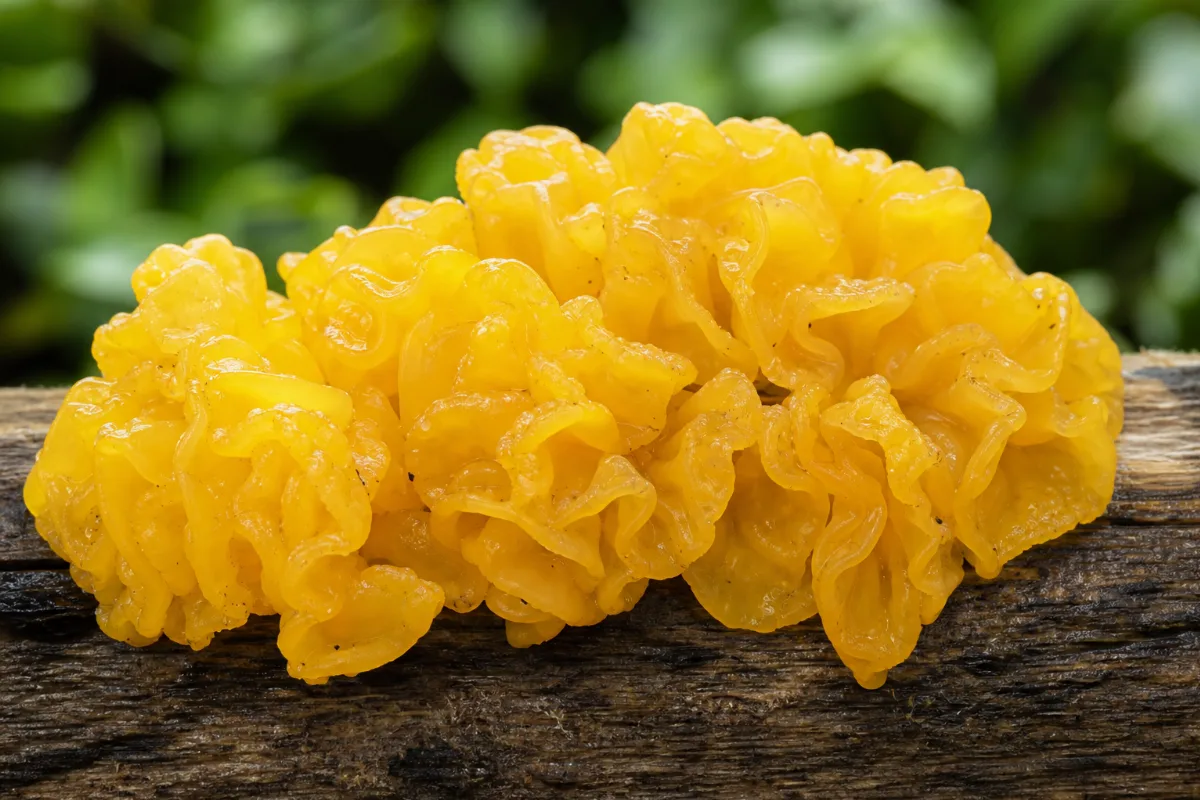
Yellow Brain Fungus
Tremella mesenterica · also called Witches' butter, golden jelly fungus, yellow brain mushroom (names used in the sources cited)
Yellow brain fungus, or witches' butter, is a bright yellow, jelly-like fungus that grows on dead wood. A state field guide lists it as edible. Research is very thin: one small trial in which mycelium tablets did not clear a stomach infection, and otherwise rat and cell work. The most important caution is identification: never eat a wild fungus unless an expert has confirmed it.
General information, not medical advice. Last substantive update · Not medically reviewed. A named clinician has not signed off on this page. How this page is made
About Yellow Brain Fungus
Yellow brain fungus (Tremella mesenterica) is a yellow jelly fungus that grows on dead wood and is listed as edible by a state field guide. Human research is almost absent: one trial found mycelium tablets did not clear Helicobacter pylori. Blood sugar, immune, skin and cancer-cell findings come from rats and cells. We found no human safety data.
What it is
Tremella mesenterica is a jelly fungus in the family Tremellaceae. GBIF lists it as an accepted species. It forms small, yellow, irregularly lobed, brain-like masses on dead hardwood, especially oak. The guide says it lives on dead wood by feeding on another crust-like fungus. The jelly bodies are temporary.
It is not snow fungus (Tremella fuciformis), which has its own page at /mushrooms/tremella and its own research.
Traditional and current uses
Papers describe it as a food and folk tonic in Asian countries, including as a tonic for the lungs and a tonic food to improve body condition. We did not read any classical text. Traditional use is not proof that it works or is safe.
What the research shows
The only human trial we found tested liquid-culture mycelium tablets for 10 days in 52 patients with Helicobacter pylori. Only one patient taking the tablets cleared the infection on a breath test, compared with 70% on standard triple therapy. Symptoms eased, but the infection stayed.
In rats given diabetes-causing chemicals, fruiting bodies, culture biomass and a polysaccharide lowered some blood glucose measures, and immune markers changed in different directions. In cells, a polysaccharide extract raised skin-moisture markers, an ethanol extract stopped lung cancer cells from growing, and a preparation lowered stimulated progesterone in mouse tumor cells. None of this is evidence of an effect in people.
The wild fungus, mycelium tablets and extracts are different
The human trial used mycelium grown in liquid culture. The rat studies used fruiting bodies, culture biomass or a purified polysaccharide. The skin study used an enzyme-made extract of dried fruiting bodies. A result for one cannot be applied to another or to eating the wild fungus.
Legal and regulatory status
We did not read statements about yellow brain fungus from the US FDA, EFSA, EMA, UK Food Standards Agency, WHO, LiverTox or LactMed, so none is stated here. The only official-style source we read is a state conservation field guide that lists it as edible. Rules differ by country and change.
At a glance
Traditional uses history, not proof
- Described in a 2008 paper as a common food and folk medicine used in several Asian countries as a tonic for the lungs (Chen 2008).
- Described as a tonic food used to improve body condition in Chinese society (Chen 2006).
- Wild-food use: a Missouri guide lists it as edible, with little flavour, for soups and stews.
Studied for research
- Helicobacter pylori infection (one trial, mycelium tablets), against
- Blood sugar (rats only), insufficient
- Immune markers (rats and cells), insufficient
- Skin moisture markers (cells only), insufficient
- Lung cancer cells (dish only), insufficient
- Hormone production (mouse cells only), insufficient
Main compounds
- Glucuronoxylomannan, a polysaccharide (the main compound studied)
- Enzyme-extracted polysaccharide with mannose, xylose and glucuronic acid
Common forms
- Fresh wild fruiting body (food)
- Liquid-culture mycelium tablets (used in one trial)
- Laboratory polysaccharide extracts
Research links: H. pylori trial (Lachter 2012, abstract) · Skin cell study (Song 2026, abstract) · Blood sugar in rats (Lo 2006, abstract) · Missouri Department of Conservation field guide · Research Library · Genes & Biomarkers Library
What it is and its history
- Accepted scientific name
- Tremella mesenterica
- Naming authority
- (Schaeff.) Pers. (GBIF)
- Common names
- Yellow brain fungus (English); Witches' butter (English (Missouri Department of Conservation)); Golden jelly fungus (English (Song 2026)); Yellow brain mushroom (English (Vinogradov 2004))
- Family or group
- Tremellaceae (a family of jelly fungi), not a plant
- Classification
- Fungi > Basidiomycota > Tremellomycetes > Tremellales > Tremellaceae > Tremella > Tremella mesenterica
- Native range
- Missouri guide: found statewide there. A wider range was not checked.
- Habitat
- Grows in masses on dead deciduous wood, especially oaks, and is sometimes found in winter warm spells (Missouri Department of Conservation).
- What it looks like
- Fruiting body: Small, yellow, irregularly lobed, brain-like gelatinous masses, sulphur-yellow to pale yellow, about 1 to 3 inches wide and 1.25 to 1.6 inches tall (Missouri guide). Spore print yellowish.
- Cultivation
- Liquid (submerged) culture of the fungus has been used in research (Vinogradov 2004; rat studies).
- Harvest and processing
- Not described in the sources read.
- Look-alikes and adulterants
- Name: Other yellowish jelly fungi; Note: The Missouri guide says none are known to be poisonous, but this page does not teach identification.; Name: Pale jelly roll (Exidia alba); Note: Named in the guide as similar in size and shape but white.; Name: Snow fungus (Tremella fuciformis); Note: A different species with its own page at /mushrooms/tremella. Research on snow fungus does not apply to yellow brain.
- Sustainability and conservation
- Not checked.
Traditional use and history history, not clinical proof
| Tradition or era | Documented use | Source |
|---|---|---|
| Asian folk use | Chen and colleagues write that Tremella mesenterica is a common food and folk medicine used in several Asian countries as a tonic for the lungs. | p18460809 |
| Chinese tonic food | Chen and colleagues describe it as a yellow jelly mushroom traditionally used as a tonic food to improve body condition in Chinese society. | p16507311 |
Traditional use shows how it was used. It does not show that it works or is safe today.
What is inside, and how it may work
What it contains and how those compounds act in cells and animals. Laboratory and animal mechanisms are not proven effects in people.
Main compounds
| Compound | Family | Where it is concentrated | Activity studied | Level of evidence |
|---|---|---|---|---|
| Glucuronoxylomannan (GXM) | polysaccharide | Fruiting body and liquid-culture biomass | A mannose-backbone sugar chain with xylose and glucuronic acid side chains. NMR work on a cultured strain found a defined repeating unit with acetyl groups. The 2004 abstract says many medicinal properties depend on it; no data are shown in the abstract. 11 10 | Laboratory research |
| Polysaccharide extract (enzyme-assisted) | polysaccharide | Dried fruiting body extract Molecular weight about 143 kDa; mannose 59.8, xylose 24.0, glucuronic acid 11.0, glucose 5.2 (ratio) in one study | Raised skin-moisture markers in cultured cells. 10 | Laboratory research |
Mechanisms, receptors and pathways
| Target or pathway | Gene or receptor | What was found | Level |
|---|---|---|---|
| Skin moisture and barrier genes | AQP3, HAS2, HAS3, FLG | The extract raised aquaporin-3, hyaluronic acid synthase and filaggrin markers in cultured cells. 10 | Laboratory research |
| Steroid hormone production (PKA signal) | PKA, StAR, P450scc, 3beta-HSD | A preparation blocked the PKA signal and steroid-making enzyme activity in mouse tumor cells. 1 | Laboratory research |
| Cell death pathway in cancer cells | caspase-3 | An ethanol extract activated a mitochondrial cell-death pathway in human lung cancer cells in a dish. 2 | Laboratory research |
Absorption, metabolism and elimination
- Absorption
- Not found.
- Distribution
- Not found.
- Metabolism
- Not found.
- Elimination
- Not found.
- Bioavailability
- Not established.
Isolated compounds versus whole extracts
The human trial used liquid-culture mycelium tablets; the rat studies used fruiting bodies, culture biomass and a purified polysaccharide; the skin work used an enzyme-made extract of fruiting bodies. These are different materials, so a result for one cannot be applied to another or to eating the wild fungus.
Nutritional composition
No measured nutrient values were found, so no nutrition claim is made.
5 not enough evidence1 evidence against
What was looked at
The 6 benefits and uses checked for Yellow Brain Fungus, each with how strong the evidence is. Tap one to open it.
- Helicobacter pylori stomach infectionEvidence against
- Blood sugar (rat studies only)Not enough evidence
- Immune function (rat and cell studies)Not enough evidence
- Skin moisture markers (cell studies)Not enough evidence
- Cancer cells in a dishNot enough evidence
- Hormone production in mouse cellsNot enough evidence
Lab markers tracked in the studies
Helicobacter pylori breath test (infection cleared or not)Blood glucose after a meal or sugar drink (rats)Aquaporin-3 gene activity (water channel in skin)Filaggrin gene activity (skin barrier)Cytokines and immune cells (rats)
What is Yellow Brain Fungus good for?
The uses people ask about and how strong the evidence is for each. None is proven in people. Read this together with the Safety tab.
Benefits, one by one
Each card is a research question, not a promise. Tap a goal to filter. Open a card to see the studies, doses and limits.
Helicobacter pylori stomach infection
Evidence againstOne 10-day trial in 52 patients tested tablets made from yellow brain fungus grown in liquid culture. Only one patient taking the tablets, with or without omeprazole, had a breath test showing the infection cleared, compared with 70% on standard triple therapy. Patients in the mushroom groups said their symptoms eased as much, but the infection did not go away. This is evidence against using the fungus to clear the infection.
1 studiesMycelium grown in liquid culture, in tablets. This says nothing about…
Studies, doses and limits
What the trials found
Lachter 2012: 52 patients got 10 days of mushroom mycelium tablets, tablets plus omeprazole, or standard triple therapy. A breath test 3 weeks later showed clearance in 70% (14 patients) on triple therapy and in only 1 patient taking the mushroom. The mushroom groups had fewer adverse events and similar symptom relief.
Results
Mycelium tablets did not clear Helicobacter pylori. Symptom relief was reported but did not match the breath test.
Effect sizes as reported
70% cleared on triple therapy versus one patient in the mushroom groups (p < 0.000 as printed)
Why this rating
One trial of liquid-culture mycelium tablets for 10 days found the treatment did not work on the objective test. The authors say a longer course might do better, but they did not test that.
Form and dose studied
Mycelium grown in liquid culture, in tablets. This says nothing about the fruiting body eaten as food. No amounts are given here.
Who was studied
Adults with a confirmed Helicobacter pylori infection
Limits
Small, 10 days, one product, tablets supplied free to patients. The abstract does not describe how people were assigned to groups. A stomach infection needs a doctor; skipping proven treatment can let it continue.
Why researchers looked
Lab studies had described mushrooms of the genus Tremella as slowing the growth of Helicobacter pylori (as stated in the trial abstract).
Traditional use
No traditional use for stomach infection was found in the sources we read.
Proposed mechanism Unknown
The trial did not test how it might work. The trial abstract refers to earlier lab work on growth inhibition, which we did not read.
A proposed mechanism does not show that the effect happens in people.
Fewer adverse events than triple therapy were reported. Time spent on a treatment that does not clear the infection is a risk in itself.
Blood sugar (rat studies only)
Not enough evidenceIn rats made diabetic with chemicals, feeding them yellow brain fruiting bodies, culture biomass or its polysaccharide lowered some blood glucose measures. No human study of blood sugar was found for this species. Rat results often do not carry over to people.
2 studiesFruiting bodies, liquid-culture biomass and a purified polysaccharide…
Studies, doses and limits
Results
Lower glucose after a sugar drink and lower after-meal glucose in diabetes-model rats (Lo 2006; Hsu 2014). The abstracts give no figures.
Effect sizes as reported
Not given in the abstracts
Why this rating
Animal work only, in chemically induced diabetes models, with no human trial.
Form and dose studied
Fruiting bodies, liquid-culture biomass and a purified polysaccharide were each tested in rats. Nothing here applies to eating the wild fungus.
Who was studied
Rats
Limits
Rats, two weeks, chemical diabetes models, doses by body weight not meaningful for people.
Why researchers looked
Researchers in Taiwan were looking for food-based ways to affect blood sugar after mushroom polysaccharides were reported to do so in animals.
Traditional use
Not described in the sources we read.
Proposed mechanism Animal research
Not established. The rat papers report glucose measures and immune changes; they do not show how.
A proposed mechanism does not show that the effect happens in people.
If you take diabetes medicines, do not use a fungus supplement in place of them. Ask a doctor or pharmacist.
Immune function (rat and cell studies)
Not enough evidenceIn rats, feeding yellow brain preparations changed immune cell counts and cytokines. The direction depended on whether the rat was healthy or diabetic, so it is not a simple immune boost. Lab tests on fungus polysaccharides also showed immune-modulating effects in cells. No human study was found.
3 studiesFruiting bodies, liquid-culture cells and polysaccharide fractions we…
Studies, doses and limits
Results
Mixed, direction-dependent immune changes in rats (Lo 2012); both lowering and raising of cytokines were reported. In vitro, polysaccharides acted on macrophages and cytokines (Jeong 2013).
Effect sizes as reported
Not given in the abstracts
Why this rating
Rat and cell work only; changes in immune markers do not show benefit or harm.
Form and dose studied
Fruiting bodies, liquid-culture cells and polysaccharide fractions were tested; they are different materials.
Who was studied
Rats and cultured cells
Limits
No human data; findings go in opposite directions depending on the animal.
Why researchers looked
Reviews and papers on the species list immune effects as a reported property.
Traditional use
Not described in the sources we read.
Proposed mechanism Animal research
Changes in cytokines (interferon-gamma, TNF-alpha, interleukins) and immune cell counts were measured in rats; in cells the polysaccharide raised macrophage enzyme activity. How these relate to health is not known.
A proposed mechanism does not show that the effect happens in people.
Because it can change immune markers in animals, anyone taking immune-suppressing medicine should ask a doctor or pharmacist before using any extract.
Skin moisture markers (cell studies)
Not enough evidenceIn a 2026 lab study, a polysaccharide extract from dried yellow brain fruiting bodies raised several skin-moisture gene and protein markers in cultured skin cells. Nobody has tested it on animals or people, and it was an enzyme-made extract rather than the whole fungus.
1 studiesEnzyme-assisted extract of dehydrated fruiting bodies from a Korean f…
Studies, doses and limits
Results
Aquaporin-3 up 55% and 57% at two concentrations, filaggrin up 22%, hyaluronic acid synthase-3 protein up 475% in cultured cells (Song 2026).
Effect sizes as reported
Percentages above, from cell tests
Why this rating
One cell study with no animal or human follow-up.
Form and dose studied
Enzyme-assisted extract of dehydrated fruiting bodies from a Korean farm; wild or cultivated not stated.
Who was studied
Cultured cells
Limits
Cells in a dish; an earlier summary reported cosmetics-company-linked authors (not re-checked); results from one lab.
Why researchers looked
The authors were looking for a moisturizing ingredient for cosmetics and compared it with snow fungus polysaccharide and hyaluronic acid.
Traditional use
Not described in the sources we read.
Proposed mechanism Laboratory research
In the cells it raised aquaporin-3, hyaluronic acid synthase-2 and -3 and filaggrin, which are linked to water handling and the skin barrier.
A proposed mechanism does not show that the effect happens in people.
No skin safety test was read.
Cancer cells in a dish
Not enough evidenceAn ethanol extract of yellow brain stopped the growth of human lung cancer cells in a dish and triggered cell-death markers. The fungus's polysaccharides did not. No animal or human test is known. This is a lab finding, not a treatment.
1 studiesEthanol extract only; not the same as the food.
Studies, doses and limits
Results
Almost complete growth inhibition by the ethanol extract (Chen 2008).
Effect sizes as reported
Annexin V positive cells 32.8%
Why this rating
One cell-line study.
Form and dose studied
Ethanol extract only; not the same as the food.
Who was studied
A549 cells
Limits
A single cell line; extracts that kill cells in a dish often fail in animals and people.
Why researchers looked
The abstract notes it is a food and folk tonic for the lungs in several Asian countries.
Traditional use
Described as a folk tonic for the lungs in the abstract of Chen 2008.
Proposed mechanism Laboratory research
Loss of mitochondrial membrane potential, reactive oxygen species and caspase-3 activation in the A549 cell line.
A proposed mechanism does not show that the effect happens in people.
An extract that kills cells in a dish is a reason for caution, not a reason to use it.
Hormone production in mouse cells
Not enough evidenceTwo lab studies found a yellow brain preparation lowered stimulated progesterone production in mouse tumor cells. An earlier rat study mentioned in one abstract found it lowered testosterone in normal rats. This is a possible signal for hormone effects that has not been tested in people.
2 studiesPreparation not described in the abstracts.
Studies, doses and limits
Results
Lower hCG-stimulated progesterone in cells (Lo 2005; Chen 2006).
Effect sizes as reported
Not given in the abstracts
Why this rating
Mouse tumor cells only.
Form and dose studied
Preparation not described in the abstracts.
Who was studied
Mouse cell line
Limits
Cell line; no human data.
Why researchers looked
The fungus is a traditional tonic food; researchers wondered whether it affects sex-hormone production.
Traditional use
Described as a tonic food in Chinese society (Chen 2006 abstract).
Proposed mechanism Laboratory research
The preparation blocked the PKA signal and the activity of steroid-making enzymes in mouse tumor cells.
A proposed mechanism does not show that the effect happens in people.
Not known whether eating the fungus affects hormones. People with hormone-sensitive conditions can ask their doctor.
Connections to the rest of health
How Yellow Brain Fungus connects to the rest of our health knowledge graph. Every link says what kind of connection it is. A safety link (for example to the liver) is a warning, not a benefit. A study that merely mentions a topic never creates a benefit link.
Explore every connection: goals, body systems, organs, symptoms, genes
A. Wellness goals
| Connected to | Kind of connection | Evidence status | Context | Studies |
|---|---|---|---|---|
| Gut Digestive Health | Evidence against | Helicobacter pylori stomach infection: One 10-day trial in 52 patients tested tablets made from yellow brain fungus grown in liquid culture. Only one patient taking the tablets, with or without omeprazole, had a breath test showing the infection cleared, compared with 70% on standard triple therapy. Patients in the mushroom groups said their symptoms eased as much, but the infection did not go away. This is evidence against using the fungus to clear the infection. | 5 | |
| Healthy Weight Metabolism | Not enough evidence | Blood sugar (rat studies only): In rats made diabetic with chemicals, feeding them yellow brain fruiting bodies, culture biomass or its polysaccharide lowered some blood glucose measures. No human study of blood sugar was found for this species. Rat results often do not carry over to people. | 7 3 | |
| Immune Wellness | Not enough evidence | Immune function (rat and cell studies): In rats, feeding yellow brain preparations changed immune cell counts and cytokines. The direction depended on whether the rat was healthy or diabetic, so it is not a simple immune boost. Lab tests on fungus polysaccharides also showed immune-modulating effects in cells. No human study was found. | 8 3 4 | |
| Skin Hair | Not enough evidence | Skin moisture markers (cell studies): In a 2026 lab study, a polysaccharide extract from dried yellow brain fruiting bodies raised several skin-moisture gene and protein markers in cultured skin cells. Nobody has tested it on animals or people, and it was an enzyme-made extract rather than the whole fungus. | 10 |
B. Body systems
| Connected to | Kind of connection | Evidence status | Context | Studies |
|---|---|---|---|---|
| Digestive System | Biological association | Evidence against | Studied for: Helicobacter pylori stomach infection | 5 |
| Endocrine System | Biological association | Not enough evidence | Studied for: Blood sugar (rat studies only) Studied for: Hormone production in mouse cells | 7 3 6 1 |
| Immune System | Biological association | Not enough evidence | Studied for: Immune function (rat and cell studies) | 8 3 4 |
| Skin Hair Beauty | Biological association | Not enough evidence | Studied for: Skin moisture markers (cell studies) | 10 |
| Respiratory System | Biological association | Not enough evidence | Studied for: Cancer cells in a dish | 2 |
I. Biomarkers
| Connected to | Kind of connection | Evidence status | Context | Studies |
|---|---|---|---|---|
| Helicobacter pylori breath test (infection cleared or not) | Biological association | Evidence against | Measured in trials: not-improved. A lab change is not the same as a health benefit. | 5 |
| Blood glucose after a meal or sugar drink (rats) | Biological association | Not enough evidence | Measured in trials: lowered. A lab change is not the same as a health benefit. | 7 3 |
| Aquaporin-3 gene activity (water channel in skin) | Biological association | Not enough evidence | Measured in trials: raised. A lab change is not the same as a health benefit. | 10 |
| Filaggrin gene activity (skin barrier) | Biological association | Not enough evidence | Measured in trials: raised. A lab change is not the same as a health benefit. | 10 |
| Cytokines and immune cells (rats) | Biological association | Not enough evidence | Measured in trials: mixed. A lab change is not the same as a health benefit. | 8 3 |
J. Genes, receptors and enzymes
| Connected to | Kind of connection | Evidence status | Context | Studies |
|---|---|---|---|---|
| AQP3 | Preliminary mechanism | In vitro | Aquaporin-3 raised in cultured skin cells by a fruiting-body polysaccharide extract. | 10 |
L. Active compounds
| Connected to | Kind of connection | Evidence status | Context | Studies |
|---|---|---|---|---|
| Glucuronoxylomannan (GXM) | Biological association | In vitro | A mannose-backbone sugar chain with xylose and glucuronic acid side chains. NMR work on a cultured strain found a defined repeating unit with acetyl groups. The 2004 abstract says many medicinal properties depend on it; no data are shown in the abstract. Preparation or compound: Fruiting body and liquid-culture biomass |
11 10 |
| Polysaccharide extract (enzyme-assisted) | Biological association | In vitro | Raised skin-moisture markers in cultured cells. Preparation or compound: Dried fruiting body extract |
10 |
Each connection is stored with the ingredient, the connected record, the kind of connection, the evidence status, the supporting studies, the preparation or compound involved, and a review date (last reviewed October 25, 2026).
Evidence at a glance: what changed in 4 lab markers
Tap a number to show only those markers. Counts are markers, not people.
The evidence
The research centre for Yellow Brain Fungus. Every record here was checked against PubMed or the publisher's page; we never list a study we have not verified.
Evidence by outcome
Bars show how many studies we found for each outcome, not how well it works. People are added up across trials only (reviews are not added, to avoid double counting).
How we rate evidence
High certainty
Several well-run trials or reviews agree; further research is unlikely to change the picture much.
Moderate certainty
Good trials point the same way, but some doubt remains.
Low certainty
Small, short or inconsistent trials. The finding could change with better research.
Very low certainty
Very little or very weak human data. Treat as a possibility only.
Mixed findings
Trials or reviews disagree with each other.
Not enough evidence
Not enough human research to say either way.
Evidence against
Good research found no benefit, or found harm.
We take the reviewers' own risk-of-bias and GRADE statements where they exist, and otherwise judge from study size, design, consistency, directness and whether a product matches what is sold. Many publications do not make evidence high. Method note: We read PubMed records and abstracts for 10 papers (one controlled trial, three rat studies, five lab or cell studies, one chemistry paper), checked the species name in GBIF and read a Missouri Department of Conservation field guide page. Only abstracts were read, so numbers come from abstracts. Certainty ratings are the compiler's own reading. EMA, FDA, EFSA, LiverTox, LactMed and WHO were not read.
Study library: every study we checked 12
| Study | Design | People | Product, dose, length | Result |
|---|---|---|---|---|
| Chen 2006 The regulatory mechanism of Tremella mesenterica on steroidogenesis in MA-10 mouse Leydig tumor cells. Life Sciences · PMID 16507311 · DOI |
Lab in-vitro |
Mouse Leydig tumor cells (MA-10) | Tremella mesenterica preparation (not specified further in the abstract) Not shown here Lab assays · vs Untreated cells |
The preparation lowered hCG-stimulated progesterone production by blocking the PKA signal pathway and steroid-making enzyme activity, while raising StAR protein expression. The abstract notes it did this without toxic effect on the cells. Lower hormone production in mouse tumor cells (p < 0.05 for the effects named) Methods, limits and fundingOutcomes: Progesterone production and steroid-making enzymes Limitations: Mouse tumor cells in a dish. Not evidence of any effect on hormones in people. Funding and conflicts: Not stated in the abstract Read: abstract |
| Chen 2008 Induction of apoptosis in human lung carcinoma A549 epithelial cells with an ethanol extract of Tremella mesenterica. Bioscience, Biotechnology, and Biochemistry · PMID 18460809 · DOI |
Lab in-vitro |
Human lung carcinoma cells (A549 cell line) | Ethanol extract, extracellular polysaccharides and intracellular polysaccharides of T. mesenterica Not shown here Lab assays · vs Untreated cells |
The ethanol extract, but not the polysaccharides, almost completely stopped growth of the A549 cells and raised markers of programmed cell death (annexin V positive cells 32.8%, loss of mitochondrial membrane potential, reactive oxygen species, caspase-3). Cancer-cell growth stopped in a dish (Not applicable) Methods, limits and fundingOutcomes: Cell growth and markers of cell death Limitations: Cancer cells in a dish only. This does not show any effect on cancer in people. Funding and conflicts: Not stated in the abstract Read: abstract |
| Hsu 2014 The Fruiting Bodies, Submerged Culture Biomass, and Acidic Polysaccharide Glucuronoxylomannan of Yellow Brain Mushroom Tremella mesenterica Modulate the Immunity of Peripheral Blood Leukocytes and Splenocytes in Rats with Impaired Glucose Tolerance. Journal of Traditional and Complementary Medicine · PMID 24872934 · DOI |
Animal research animal |
Male Wistar rats given streptozotocin plus nicotinamide to cause impaired glucose tolerance, versus control rats | Tremella mesenterica fruiting bodies, submerged culture mycelium, or its glucuronoxylomannan polysaccharide, by stomach tube (1 g per kg per day) fruiting body / culture mycelium / polysaccharide Not shown here 2 weeks · vs Vehicle only |
All three preparations lowered after-meal blood glucose and the glucose tolerance test response in these rats. They also changed some immune measures; the authors read this as raised T-cell immunity because several cytokines were restored. Lower blood glucose and altered immune measures in rats (Not given in the abstract) Methods, limits and fundingOutcomes: Blood glucose after meals and in a glucose tolerance test; immune cell counts and cytokine production in blood and spleen cells Limitations: Two-week study in rats given a diabetes-model chemical. Dose per body weight is far from anything tested in people. It is not evidence for people. Funding and conflicts: Not stated in the abstract Read: abstract |
| Jeong 2013 Antioxidant and immunomodulating activities of exo-and endopolysaccharide fractions from submerged mycelia cultures of culinary-medicinal mushrooms. International Journal of Medicinal Mushrooms · PMID 23662613 · DOI |
Lab in-vitro |
Seven mushroom species grown in liquid culture (Tremella mesenterica among them) | Polysaccharide fractions from submerged mycelium cultures, tested on cells and in chemical assays culture mycelium, polysaccharide fractions Not shown here Lab assays · vs Control cells and reference assays |
Across the seven species, the polysaccharide fractions had antioxidant activity and general immune-modulating effects in vitro. For Tremella mesenterica, the exopolysaccharides raised macrophage enzyme activity to a similar extent as lipopolysaccharide and lowered production of IL-5, interferon-gamma, IL-2 and IL-4. Lab immune-modulating and antioxidant activity (Not given in the abstract) Methods, limits and fundingOutcomes: Phenolic and flavonoid content, antioxidant assays, cytokine production and macrophage enzyme activity Limitations: Cell and chemical tests only. Seven species were tested together; the abstract gives few details for T. mesenterica alone. Funding and conflicts: Not stated in the abstract Read: abstract |
| Lachter 2012 Yellow brain culinary-medicinal mushroom, Tremella mesenterica Ritz.:Fr. (higher Basidiomycetes), is subjectively but not objectively effective for eradication of Helicobacter pylori: a prospective controlled trial. International Journal of Medicinal Mushrooms · PMID 22339708 · DOI |
Controlled trial |
52 52 consenting patients diagnosed with Helicobacter pylori infection |
Tremella mesenterica submerged-culture mycelium tablets, alone or with omeprazole, versus standard triple therapy mycelium grown in liquid culture (tablets), not fruiting body Not shown here 10 days · vs Standard triple therapy (omeprazole, clarithromycin, amoxicillin) |
Standard triple therapy cleared the infection in 70% (14 patients). Among patients taking the mushroom tablets, with or without omeprazole, only one had a breath test showing clearance (p < 0.000 as printed). The mushroom groups had fewer adverse events and similar symptom relief. Mushroom mycelium tablets did not clear the infection; symptoms improved (p < 0.000 as printed in the abstract; no confidence interval) Methods, limits and fundingOutcomes: Helicobacter pylori eradication by breath test 3 weeks after treatment; adverse events; symptom relief Limitations: Ten-day course only. Mycelium tablets, so it says nothing about the fruiting body eaten as food. Tablets were supplied free of charge to patients; the abstract does not say by whom. Symptom relief was subjective. Funding and conflicts: Not stated in the abstract Read: abstract |
| Lo 2005 Effects of Tremella mesenterica on steroidogenesis in MA-10 mouse Leydig tumor cells. Archives of Andrology · PMID 16036636 · DOI |
Lab in-vitro |
Mouse Leydig tumor cells (MA-10) | Tremella mesenterica preparation at 0.01 to 10 mg per ml (not specified further) Not shown here Hours · vs Untreated cells |
On its own the preparation did not change progesterone production. With hCG added, it lowered progesterone (clearest at 10 mg/ml and at 1 to 3 hours). Cell survival was not affected and progesterone recovered within 4 hours of removal. The abstract also notes an earlier study in which it reduced plasma testosterone in normal rats and had no positive effect in diabetic rats. Lower hormone production in mouse tumor cells (p < 0.05 for effects named) Methods, limits and fundingOutcomes: Progesterone production and cell survival Limitations: Cell study. The earlier rat finding is mentioned but was not read. Funding and conflicts: Not stated in the abstract Read: abstract |
| Lo 2006 Effects of ingested fruiting bodies, submerged culture biomass, and acidic polysaccharide glucuronoxylomannan of Tremella mesenterica Retz.:Fr. on glycemic responses in normal and diabetic rats. Life Sciences · PMID 16289235 · DOI |
Animal research animal |
Male Wistar rats: normal, streptozotocin-injected, and streptozotocin plus nicotinamide-injected (diabetes models) | Tremella mesenterica fruiting bodies, submerged culture biomass, or purified glucuronoxylomannan, by mouth fruiting body / culture biomass / purified polysaccharide Not shown here |
In one diabetes model, fruiting bodies reduced the rise in blood glucose after a sugar drink. In the second model, fruiting bodies, culture biomass and the polysaccharide all reduced food and water intake, after-meal glucose and the glucose response; fruiting bodies and the polysaccharide also lowered fructosamine. Lower blood glucose measures in diabetic rats (Not given in the abstract) Methods, limits and fundingOutcomes: Blood glucose after a sugar drink (oral glucose tolerance test), 2-hour after-meal glucose, fructosamine, food and water intake Limitations: Rats given chemicals that damage the pancreas, not people. The abstract gives no figures. It cannot tell us what happens in people. Funding and conflicts: Not stated in the abstract (several authors from Taiwan; no industry statement read) Read: abstract |
| Lo 2012 Effects of yellow brain culinary-medicinal mushroom, Tremella mesenterica Ritz.:Fr. (higher Basidiomycetes), on immune function in normal and type 1 diabetic rats. International Journal of Medicinal Mushrooms · PMID 23510213 · DOI |
Animal research animal |
Male Wistar rats, normal or made diabetic with streptozotocin | Tremella mesenterica fruiting bodies or submerged-culture yeast-like cells, by mouth (1 g per kg per day) fruiting body / culture cells Not shown here 2 weeks · vs Placebo |
In normal rats both preparations lowered some T-suppressor cell numbers and interferon-gamma production; the cultured cells also lowered TNF-alpha and IL-6. In diabetic rats, fruiting bodies reversed some diabetes-related drops in immune measures, while the cultured cells lowered pro-inflammatory cytokines. The authors conclude that effects differ between normal and diabetic animals. Mixed immune changes in rats, direction depending on health state (p < 0.05 for the changes named; no figures in the abstract) Methods, limits and fundingOutcomes: Immune cell numbers and cytokine production in blood and spleen cells Limitations: Rats, two weeks, high dose per body weight. Immune measures in cells do not show a health benefit or harm in people. Funding and conflicts: Not stated in the abstract Read: abstract |
| Missouri Department of Conservation 2026 Witches' Butter (Tremella mesenterica) - Missouri Department of Conservation field guide n/a · Source |
Field guide page fungus |
n/a | n/a fruiting body |
The guide lists the fungus as edible. It describes small, yellow, irregularly lobed, brain-like, gelatinous masses on dead deciduous wood, especially oaks, year-round. It says other yellowish jellies exist and none are known to be poisonous, names the white pale jelly roll (Exidia alba) as similar in size and shape, says the fungus has little flavour but can be added to soups and stews, and says to be sure of the identification and eat only a small amount the first time. It also says the fungus lives on dead wood by feeding on an unrelated crust-like fungus. Methods, limits and fundingOutcomes: Description, look-alikes, habitat, edibility and cooking note Limitations: A state conservation agency field guide, not a safety study. It does not test or measure anything and gives no information about medicines, pregnancy or allergy. Funding and conflicts: Public agency Read: web page read on 2026-10-25 |
| Song 2026 Structural Elucidation and Moisturizing Potential of a Polysaccharide Derived from Tremella mesenterica. Molecules · PMID 41599327 · DOI |
Lab in-vitro |
Cultured skin cells | Enzyme-assisted water extract of dehydrated T. mesenterica fruiting bodies (Korea farm; wild or cultivated not stated) fruiting body Not shown here Lab assays · vs Snow fungus (Tremella fuciformis) polysaccharide and hyaluronic acid |
The extract had a molecular weight of about 143 kDa, with mannose 59.8, xylose 24.0, glucuronic acid 11.0 and glucose 5.2 (ratio). In cells it raised aquaporin-3 gene activity by 55% and 57% at two concentrations, hyaluronic acid synthase-2 by 22%, filaggrin by 22%, and hyaluronic acid synthase-3 protein by 475% at the higher concentration. The authors say animal and human studies are still needed. Higher skin-moisture gene and protein markers in cultured cells (Not applicable (lab percentages from the abstract)) Methods, limits and fundingOutcomes: Extract chemistry and gene or protein activity linked to skin moisture Limitations: Cells in a dish only. No animal or human test. The extract was made by an enzyme process, not by cooking the fungus. An earlier summary of this fungus reported that most authors work for a cosmetics company; we did not re-check that here. Funding and conflicts: Not stated in the abstract. An earlier summary reported cosmetics-company-linked authors (Kolmar Korea Co.); not re-checked Read: abstract |
| Vinogradov 2004 The structure of the glucuronoxylomannan produced by culinary-medicinal yellow brain mushroom (Tremella mesenterica Ritz.:Fr., Heterobasidiomycetes) grown as one cell biomass in submerged culture. Carbohydrate Research · PMID 15178391 · DOI |
Lab fungus |
Strain CBS 101939 grown in liquid culture | Glucuronoxylomannan polysaccharide analysed by NMR and chemical methods culture biomass Not shown here Lab analysis |
The polysaccharide has a defined repeating unit, O-acetylated at several points, which differs from older models with randomly branched xylan chains. The abstract lists many reported medicinal properties but gives no data for them. Chemistry only (Not applicable) Methods, limits and fundingOutcomes: Structure of the polysaccharide Limitations: Chemistry paper. The health properties are listed as background without data. The abstract describes a newly developed liquid-culture strain. Funding and conflicts: Not stated in the abstract Read: abstract |
| n/a 2026 GBIF Backbone Taxonomy: Tremella mesenterica (Schaeff.) Pers. (usage key 11945016) n/a · Source |
Taxonomy record fungus |
n/a | n/a |
GBIF lists Tremella mesenterica (Schaeff.) Pers. as an ACCEPTED species (exact match) in kingdom Fungi, phylum Basidiomycota, class Tremellomycetes, order Tremellales, family Tremellaceae. Methods, limits and fundingOutcomes: Accepted species name, authority and place in the fungal tree Limitations: Index Fungorum was not opened. A taxonomy record says nothing about health effects. Funding and conflicts: Public database Read: API response read on 2026-10-25 |
What we do not know yet
- No human trial of the wild fruiting body, or of any extract for blood sugar, skin, immune function or cancer, was found.
- The one human trial used mycelium tablets for 10 days and cannot speak for the wild fungus.
- No data on side effects, allergy, interactions, pregnancy, breastfeeding, children or long-term use.
- No heavy-metal, pesticide or product-label test was read.
- No regulator or liver-safety database statement was read.
How new research is added
New studies are found by a saved PubMed search and placed in a review queue. A person reads each one before it changes any evidence rating or safety wording. New publications never change ratings automatically.
Lab markers
What changed in blood or saliva tests during trials. A changed number is not the same as feeling or being healthier, and we give no "normal ranges".
Other 5
Helicobacter pylori breath test (infection cleared or not)
Not-improved in trials
A breath test that shows whether the stomach bacterium Helicobacter pylori is still present. A negative test 3 weeks or more after treatment means the infection was cleared.
Evidence againstResults and what it means
Why it was measured
It was the main outcome of the trial.
Statistical vs. clinical meaning
Large difference favouring standard treatment.
Safety implication
Staying infected can lead to ulcers; standard treatment should not be replaced.
| Study | Result | People | Product |
|---|---|---|---|
| 5 | Cleared in 70% (14 patients) on triple therapy and in only one patient taking the mushroom tablets, with or without omeprazole. | 52 patients with Helicobacter pylori infection | Tremella mesenterica mycelium tablets for 10 days versus triple therapy |
Blood glucose after a meal or sugar drink (rats)
Lowered in trials
Blood sugar measured two hours after eating or after a sugar drink in an oral glucose tolerance test.
Not enough evidenceResults and what it means
Why it was measured
Standard way to check how well an animal handles sugar.
Statistical vs. clinical meaning
Direction of change only; no figures in the abstracts.
Safety implication
Not tested in people.
| Study | Result | People | Product |
|---|---|---|---|
| 7 | Fruiting bodies, culture biomass and polysaccharide each reduced after-meal glucose and the glucose response in one diabetes model; fruiting bodies reduced the glucose response in another (no figures in the abstract). | Wistar rats with chemically induced diabetes | Oral fruiting bodies, biomass or polysaccharide |
| 3 | Fruiting bodies, mycelium and polysaccharide each lowered after-meal glucose and the glucose tolerance test response after 2 weeks (no figures in the abstract). | Rats with impaired glucose tolerance | 1 g per kg per day by stomach tube |
Aquaporin-3 gene activity (water channel in skin)
Raised in trials
A protein channel that moves water and glycerol in skin cells. More activity is linked to better skin hydration in lab work.
Not enough evidenceResults and what it means
Why it was measured
Used by the authors as a marker of moisturizing potential.
Statistical vs. clinical meaning
Lab percentage only.
Safety implication
Not tested in people.
| Study | Result | People | Product |
|---|---|---|---|
| 10 | Up 55% and 57% at two extract concentrations in cultured cells. | Cultured skin cells | T. mesenterica polysaccharide extract |
Filaggrin gene activity (skin barrier)
Raised in trials
A protein that helps form the skin barrier.
Not enough evidenceResults and what it means
Cytokines and immune cells (rats)
Mixed results in trials
Messenger molecules (such as TNF-alpha, interferon-gamma and interleukins) and immune cell counts measured in blood or spleen cells.
Not enough evidenceResults and what it means
Why it was measured
Used to see whether the preparation changes immune activity.
Statistical vs. clinical meaning
Direction depended on the rats' health.
Safety implication
Unknown for people.
| Study | Result | People | Product |
|---|---|---|---|
| 8 | Lowered in some measures in normal rats; in diabetic rats fruiting bodies reversed some drops and cultured cells lowered pro-inflammatory cytokines (no figures in the abstract). | Normal and diabetic rats | Fruiting bodies or cultured cells, 2 weeks |
Safety
What studies and official sources say about side effects, medicines and who should check first. Each point shows what kind of evidence it comes from.
Main points to know 3
- Wild identification is the main danger. Yellow brain fungus grows wild, and a photo or a text description is not a safe way to identify any wild fungus. A Missouri Department of Conservation guide lists it as edible and says other yellowish jellies exist that are not known to be poisonous, but it also tells readers to be sure of the identification and to eat only a small amount the first time. This page does not teach identification. If you are not certain, do not eat it. Authoritative guidance 9
- We found no human safety data. We found no study of how yellow brain fungus affects people who eat it, take it with medicines, are pregnant or breastfeeding, or have allergies. Not finding data is not proof of safety. Unknown
- Do not rely on it for a stomach infection. In one trial, tablets made from yellow brain mycelium did not clear a Helicobacter pylori infection in the breath test, while standard triple therapy did in 70%. Staying infected can lead to ulcers, so see a doctor rather than treat it with a fungus. Controlled trial 5
Side effects 2
| Effect | How often | Severity and recovery | Evidence |
|---|---|---|---|
| Fewer adverse events than standard triple therapy in the 10-day trial of mycelium tablets Small trial, 10 days; mycelium tablets, not the wild fruiting body. | Not given in the abstract | not described in the abstract Not described | Controlled trial 5 |
| No poisoning reports for yellow brain fungus were found in the sources read The Missouri guide lists the fungus as edible. Absence of reports is not proof of safety. | Not applicable | unknown unknown | Unknown 9 |
Liver
No report of liver injury linked to yellow brain fungus was found in the sources read. A liver-safety database (LiverTox) was not searched.
How often. No rate is known.
Monitoring. No monitoring advice was read.
This is a safety connection. It is not evidence that Yellow Brain Fungus supports liver health.
Medicines and supplements 5
| With | Why it matters | Importance | Evidence | What to do |
|---|---|---|---|---|
| Diabetes medicines prescription | Rat studies show lower blood glucose measures with the fungus; no human study. | No interaction study was found. | Animal research Not enough evidence 7 3 | If you take diabetes medicines, ask your doctor or pharmacist before using any yellow brain product. |
| Immune-suppressing medicines prescription | Rat studies show changes in immune markers; effects went in different directions. | No interaction study was found. | Animal research Not enough evidence 8 3 | Ask a doctor or pharmacist before using any yellow brain extract if you take immune-suppressing medicines. |
| Hormone medicines or hormone-sensitive conditions prescription | A preparation lowered stimulated progesterone production in mouse tumor cells. | A lab signal only; no human data. | Laboratory research Not enough evidence 6 1 | Ask your doctor before using any yellow brain extract if you have a hormone-sensitive condition. |
| Blood thinners and other medicines prescription | No data found. | No source read describes an interaction or says there is none. | Unknown Not enough evidence | Tell your pharmacist about any supplement or wild food you use. |
| Herbs and other supplements, food and alcohol herb-supplement | No data found. | No source read. | Unknown Not enough evidence | None specific. |
Who should check first 7
| Situation | Advice | Evidence |
|---|---|---|
| Not 100 percent sure of the identification of a wild yellow jelly fungus | Do not eat it. A text or app is not enough. | Authoritative guidance 9 |
| Jelly fungi that are slimy, sour-smelling, discoloured or old | Do not eat them. Reports of fatal bacterial-toxin poisoning from long-soaked or spoiled jelly fungi concern snow fungus and black fungus (see the tremella page); we did not find a report about yellow brain fungus, but the same caution is sensible. | Unknown |
| Helicobacter pylori infection or stomach ulcer symptoms | See a doctor. The one trial found yellow brain mycelium tablets did not clear the infection. | Controlled trial 5 |
| Pregnancy | No safety data were found. Ask a doctor or midwife before eating it or using extracts. | Unknown |
| Breastfeeding | No data found. Ask a doctor. | Unknown |
| Children | No data found; do not feed wild fungi to children unless an expert has identified them. Ask a doctor about supplements. | Unknown |
| Mushroom or mould allergy | No allergy report for yellow brain was found. If you react to mushrooms, take care and ask a doctor. | Unknown |
Overdose, product quality and regulators
Summary. No toxic effect of the fruiting body was found in the sources read, and a state guide lists it as edible. No toxicity study in animals or people was found.
Animal. The rat studies used 1 g per kg of body weight a day for 2 weeks and did not report harm in their abstracts. They were not safety studies.
Human doses studied. The only human trial lasted 10 days with mycelium tablets. This page gives no amounts and none are advised.
High dose or long term signals. Long-term safety is unknown.
Overdose response. If you feel ill after eating any wild fungus, seek medical help and keep a sample.
Genotoxicity. Not read.
Toxic or hazardous parts. Fungus; the fruiting body is the eaten part.
We found no test of heavy metals, pesticides, microbes or product labels for this fungus. Wild fungi can carry what grows around them; no measurement for this species was read.
Product identity. Many mushroom products named Tremella are snow fungus (Tremella fuciformis), a different species with its own research. We did not find a product test for yellow brain.
Fruiting body versus mycelium. The human trial used mycelium tablets grown in liquid culture, while the 2026 skin extract used dried fruiting bodies. These are different materials. 5 10
| Body | Action | Date |
|---|---|---|
| Missouri Department of Conservation (state agency, United States) (United States) | Field guide lists witches' butter as edible and advises being sure of the identification and trying only a small amount first. source | 2026 |
When to get medical help
- After eating any wild fungus: vomiting, severe diarrhoea, severe belly pain, confusion, convulsions, yellowing of the skin or eyes, very little urine, or collapse. Get emergency medical help now, say what was eaten and keep a sample or photo.
- If you are unsure what was eaten, call your local poison control centre or emergency number (in the United States, Poison Help is 1-800-222-1222).
If someone may be poisoned or in a crisis, contact a clinician or emergency service straight away. In the US, Poison Control is 1-800-222-1222.
General information only, not medical advice. Ask a clinician or pharmacist before use, especially with medicines, in pregnancy or with a health condition. See the Natural Remedy Safety guide.
Frequently asked questions
What is yellow brain fungus?
Is yellow brain fungus the same as snow fungus?
No. Snow fungus is Tremella fuciformis, a white, frilly fungus used in Asian soups and skin care. Yellow brain is Tremella mesenterica. Most online health claims for Tremella come from snow fungus research and should not be applied to yellow brain.
Is yellow brain fungus safe to eat?
A Missouri Department of Conservation guide lists it as edible and says other yellowish jellies are not known to be poisonous. We found no safety studies in people. The guide advises being sure of the identification and trying only a small amount the first time.
How do I know I have found the right fungus?
This page does not teach identification, and wild fungi should never be identified from a photo or an app alone. If you are not completely sure, do not eat it. An experienced local forager or mycological society can help.
Can yellow brain fungus clear a Helicobacter pylori infection?
In one 10-day trial of 52 patients, mycelium tablets did not clear the infection on breath testing (one patient), while standard triple therapy cleared it in 70%. Patients on the tablets reported symptom relief and fewer side effects, but the infection stayed. See a doctor for a stomach infection.
Does yellow brain fungus lower blood sugar?
Does it boost the immune system?
Is yellow brain good for the skin?
In one 2026 cell study, a polysaccharide extract of dried fruiting bodies raised several skin-moisture markers. It has not been tested on animals or people. Do not assume eating the fungus changes your skin.
Does it fight cancer?
No. An ethanol extract stopped the growth of human lung cancer cells in a dish, but that is a lab finding and many such extracts fail in animals and people. No cancer study in people was found.
Can spoiled jelly fungi be dangerous?
Reports of fatal bacterial-toxin poisoning from jelly fungi concern long-soaked or spoiled snow fungus and black fungus (see the tremella page). We found no report about yellow brain fungus, but old, slimy or sour jelly fungi should be thrown away.
Is it safe in pregnancy, while breastfeeding or for children?
We found no data. Ask a doctor or midwife before using any extract. Do not give wild fungi to children unless an expert has identified them.
Explore by health goal
Gut Digestive HealthHealthy Weight MetabolismImmune WellnessSkin Hair
Editorial transparency
- Written by
- AlternativeMed editorial team. Research compiled with AI assistance, then checked against PubMed records.
- Medical review
- None. This page has not been reviewed by a physician or pharmacist.
- First published
- 2026-10-25
- Last substantive update
- 2026-10-25
- How we research
- We read PubMed records and abstracts for 10 papers (one controlled trial, three rat studies, five lab or cell studies, one chemistry paper), checked the species name in GBIF and read a Missouri Department of Conservation field guide page. Only abstracts were read, so numbers come from abstracts. Certainty ratings are the compiler's own reading. EMA, FDA, EFSA, LiverTox, LactMed and WHO were not read.
- How we rate evidence
- See "How we rate evidence" in the Evidence tab.
- Independence
- No product is promoted on this page. No affiliate links are shown. This page is information, not a recommendation to eat or use yellow brain fungus.
Sources 12
Each source was opened and checked. Where we read only the abstract, it says so. The small numbers in the text point here.
- Chen, Lo, Yang, Chien, et al. The regulatory mechanism of Tremella mesenterica on steroidogenesis in MA-10 mouse Leydig tumor cells.. Life Sciences. 2006. PMID 16507311. DOI 10.1016/j.lfs.2006.02.003. (abstract)
- Chen, Lai, Hsu, Lin, et al. Induction of apoptosis in human lung carcinoma A549 epithelial cells with an ethanol extract of Tremella mesenterica.. Bioscience, Biotechnology, and Biochemistry. 2008. PMID 18460809. DOI 10.1271/bbb.70773. (abstract)
- Hsu, Lee, Lin, Wasser, et al. The Fruiting Bodies, Submerged Culture Biomass, and Acidic Polysaccharide Glucuronoxylomannan of Yellow Brain Mushroom Tremella mesenterica Modulate the Immunity of Peripheral Blood Leukocytes and Splenocytes in Rats with Impaired Glucose Tolerance.. Journal of Traditional and Complementary Medicine. 2014. PMID 24872934. DOI 10.4103/2225-4110.124347. (abstract)
- Jeong, Koyyalamudi, Hughes, Khoo, et al. Antioxidant and immunomodulating activities of exo-and endopolysaccharide fractions from submerged mycelia cultures of culinary-medicinal mushrooms.. International Journal of Medicinal Mushrooms. 2013. PMID 23662613. DOI 10.1615/intjmedmushr.v15.i3.30. (abstract)
- Lachter, Yampolsky, Gafni-Schieber, Wasser, et al. Yellow brain culinary-medicinal mushroom, Tremella mesenterica Ritz.:Fr. (higher Basidiomycetes), is subjectively but not objectively effective for eradication of Helicobacter pylori: a prospective controlled trial.. International Journal of Medicinal Mushrooms. 2012. PMID 22339708. DOI 10.1615/intjmedmushr.v14.i1.60. (abstract)
- Lo, Chen, Chien, Tseng, et al. Effects of Tremella mesenterica on steroidogenesis in MA-10 mouse Leydig tumor cells.. Archives of Andrology. 2005. PMID 16036636. DOI 10.1080/014850190923404. (abstract)
- Lo, Tsai, Wasser, Yang, et al. Effects of ingested fruiting bodies, submerged culture biomass, and acidic polysaccharide glucuronoxylomannan of Tremella mesenterica Retz.:Fr. on glycemic responses in normal and diabetic rats.. Life Sciences. 2006. PMID 16289235. DOI 10.1016/j.lfs.2005.08.033. (abstract)
- Lo, Hsu, Lin, Wasser, et al. Effects of yellow brain culinary-medicinal mushroom, Tremella mesenterica Ritz.:Fr. (higher Basidiomycetes), on immune function in normal and type 1 diabetic rats.. International Journal of Medicinal Mushrooms. 2012. PMID 23510213. DOI 10.1615/intjmedmushr.v14.i5.20. (abstract)
- Missouri Department of Conservation. Witches' Butter (Tremella mesenterica) - Missouri Department of Conservation field guide. n/a. 2026. (web page read on 2026-10-25)
- Song, Park, Lee, Choi, et al. Structural Elucidation and Moisturizing Potential of a Polysaccharide Derived from Tremella mesenterica.. Molecules. 2026. PMID 41599327. DOI 10.3390/molecules31020278. (abstract)
- Vinogradov, Petersen, Duus, Wasser. The structure of the glucuronoxylomannan produced by culinary-medicinal yellow brain mushroom (Tremella mesenterica Ritz.:Fr., Heterobasidiomycetes) grown as one cell biomass in submerged culture.. Carbohydrate Research. 2004. PMID 15178391. DOI 10.1016/j.carres.2004.04.001. (abstract)
- n/a. GBIF Backbone Taxonomy: Tremella mesenterica (Schaeff.) Pers. (usage key 11945016). n/a. 2026. (API response read on 2026-10-25)


