Oils & Fats · Fat
Cocoa Butter
Theobroma cacao (fat from the seeds) · also called Cacao butter, theobroma oil
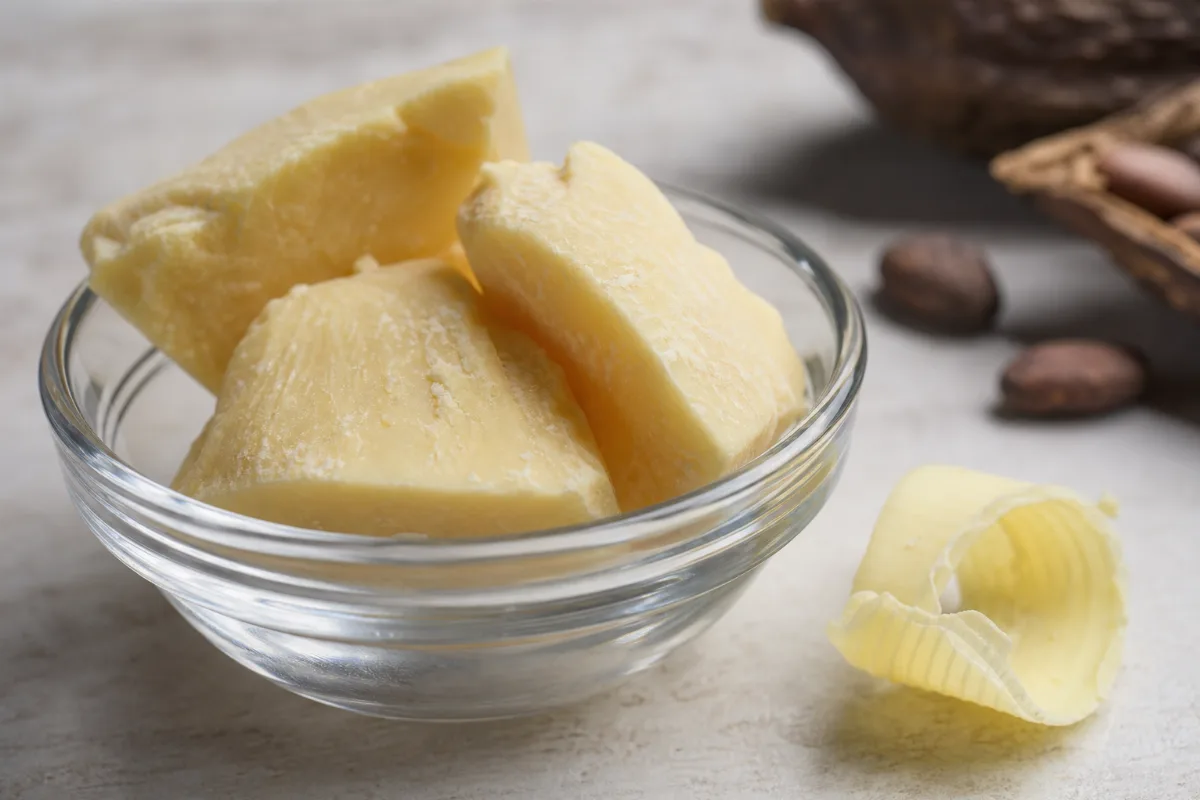
Cocoa butter is the pale, hard fat pressed from cacao beans. It is the fat that makes chocolate solid and is the main fat in white chocolate. It is almost all fat, and about 60% of that is saturated. Its main saturated fat, stearic acid, did not raise LDL cholesterol in small studies, but no study shows cocoa butter prevents or treats any disease. The main cautions are the saturated fat and allergens in chocolate products.
General information, not medical advice. Last substantive update · Not medically reviewed. A named clinician has not signed off on this page. How this page is made
About Cocoa Butter
Cocoa butter is the pale, hard fat of the cacao bean. It is a food fat, not a remedy: it has no protein, fibre or caffeine, and it is not where the flavanols of dark chocolate live. The health findings are small and mostly about stearic acid or saturated fat in general.
What it is
Cocoa butter is the fat pressed from the seeds (beans) of the cacao tree, Theobroma cacao. USDA lists it as 'oil, cocoa butter'. It gives chocolate its firmness and melt, and it is the main fat in white chocolate.
USDA data, per 100 g: 884 kcal, 100 g fat (59.7 g saturated, 32.9 g monounsaturated, 3.0 g polyunsaturated), no cholesterol, no protein, carbohydrate, fibre or caffeine, 1.8 mg vitamin E, 24.7 micrograms vitamin K and 201 mg phytosterols. One tablespoon (13.6 g) has about 120 kcal and 8.1 g of saturated fat.
Fat, not chocolate
The flavanols and caffeine people talk about in dark chocolate belong to the cocoa solids, not the butter. USDA lists 0 mg of caffeine in cocoa butter, and no source read showed a health effect of its small amounts of vitamins or phytosterols.
White chocolate is cocoa butter plus milk and sugar. US rules require at least 20% cacao fat, at least 14% milk solids and no more than 55% sweetener. That makes it a milk and sugar product too.
What the research shows
Most of cocoa butter's saturated fat is stearic acid, which has been studied for years. In an 11-person trial of liquid-formula diets, LDL cholesterol fell 21% on a high-stearic-acid diet compared with a high-palmitic-acid diet. A regression of data from 18 articles found stearic acid had no effect on total or LDL cholesterol. These used purified fatty acids, not cocoa butter, in small, short, older studies.
Two crossover studies fed young men whole-food diets high in cocoa butter, olive oil, soybean oil or dairy butter for 26 days each. Olive oil and soybean oil diets had lower cholesterol than the cocoa butter diet, and dairy butter raised it.
In 10 men eating about 100 g of chocolate a day, added calcium doubled fecal fat and lowered cocoa butter absorption by 13%. The authors work for a chocolate company.
For heart disease, the best evidence is about saturated fat in general. A Cochrane review of 15 trials found reducing saturated fat cut combined cardiovascular events by 17%, and the American Heart Association concluded that swapping saturated fat for unsaturated fat, especially polyunsaturated, lowers heart disease. Cocoa butter itself was not tested in these.
At a glance
Traditional uses history, not proof
- The fat that gives chocolate its snap and melt
- Long use as food is not proof that it treats any condition
Studied for research
- Nutrient content, high certainty (a USDA reference table)
- LDL cholesterol and stearic acid, low certainty (small trials of purified fatty acids)
- Cholesterol on cocoa butter diets, low certainty (small trials in young men)
- Fat absorption, low certainty (one small trial of chocolate with calcium, industry-linked)
- Heart disease risk when saturated fat is swapped, moderate certainty for saturated fat in general, indirect for cocoa butter
- Skin, weight loss and 'detox' claims, no evidence found
Main compounds
- Stearic acid
- Palmitic and oleic acids
- Phytosterols
- Vitamin E
- Vitamin K (small amount)
Common forms
- Food-grade cocoa butter (USDA item read)
- As the fat in chocolate and white chocolate (the studies read were of chocolate with calcium and of whole-food diets)
- Cocoa solids, cocoa powder and skin-care cocoa butter are different products and are not covered
Research links: 1988 trial: stearic acid and LDL cholesterol (11 people) · 1993 trial: whole-food diets high in cocoa butter · 2020 Cochrane review: reducing saturated fat · Research Library · Genes & Biomarkers Library
What it is and its history
- Accepted scientific name
- Theobroma cacao L.
- Naming authority
- L. (GBIF accepted; the tree whose seeds, called cacao beans, are pressed for cocoa butter)
- Common names
- Cocoa butter (English); Cacao butter (English); Theobroma oil (English); Manteca de cacao (Spanish)
- Family or group
- Malvaceae, as given by GBIF. Cocoa butter itself is a processed food fat, not a plant.
- Classification
- Plantae > Tracheophyta > Magnoliopsida > Malvales > Malvaceae > Theobroma > Theobroma cacao
- Native range
- Not verified from a source read.
- Habitat
- Not verified from a source read.
- What it looks like
- Roots: Not verified.; Stems: Not verified.; Leaves: Not verified.; Flowers: Not verified.; Fruit: Cocoa butter is the fat pressed from the seeds (beans). USDA household portions: 1 teaspoon (4.5 g), 1 tablespoon (13.6 g), 1 cup (218 g).
- Cultivation
- Not verified from a source read.
- Harvest and processing
- Cocoa butter is the pale fat of the cacao seed. How it is pressed and refined, and the difference between refined and unrefined butter, were not read from a source.
- Look-alikes and adulterants
- Name: Cocoa powder and cocoa solids; Note: The non-fat part of the bean, which holds the flavanols and caffeine that cocoa butter does not.; Name: Chocolate and white chocolate; Note: Products made with cocoa butter plus other ingredients; white chocolate has milk and sugar.; Name: Cosmetic cocoa butter; Note: A skin-care product, not made as a food.
- Sustainability and conservation
- Not assessed.
Photographs
What is inside, and how it may work
What it contains and how those compounds act in cells and animals. Laboratory and animal mechanisms are not proven effects in people.
Main compounds
| Compound | Family | Where it is concentrated | Activity studied | Level of evidence |
|---|---|---|---|---|
| Stearic acid | saturated fatty acid | Seed fat Not read; USDA gives only the total saturated fat of 59.7 g per 100 g. | In small studies it did not raise LDL cholesterol the way palmitic acid did; the cocoa butter share was not measured in the abstracts read. 1 7 | Human data |
| Saturated fat (total) | fat | Seed fat USDA: 59.7 g per 100 g; 8.1 g in a tablespoon (13.6 g) | Mostly saturated; the general evidence on saturated fat is on the Benefits tab. 12 2 | Nutrient database |
| Monounsaturated and polyunsaturated fat | fat | Seed fat USDA per 100 g: 32.9 g monounsaturated, 3.0 g polyunsaturated | Not studied separately for cocoa butter in the sources read. 12 | Nutrient database |
| Phytosterols | plant sterols | Seed fat USDA: 201 mg per 100 g; about 27 mg in a tablespoon | No source read showed a health effect of these amounts when cocoa butter is eaten. 12 | Nutrient database |
| Vitamin E (alpha-tocopherol) and vitamin K | vitamins | Seed fat USDA per 100 g: 1.8 mg vitamin E, 24.7 micrograms vitamin K | Small amounts per tablespoon; not a meaningful source on this evidence. 12 | Nutrient database |
Mechanisms, receptors and pathways
| Target or pathway | Gene or receptor | What was found | Level |
|---|---|---|---|
| Stearic acid and blood cholesterol | Not specified in the sources read | In the 1988 trial, oleic acid in plasma rose during the stearic acid diet, which the authors read as stearic acid being rapidly converted to oleic acid. This is their interpretation of lab measures. 1 | Human data |
| Calcium binding of fat in the gut | Not specified in the sources read | Adding calcium to chocolate raised palmitic and stearic acid excretion in stool, which the authors tie to lower absorption of cocoa butter. This is their reading of stool results. 6 | Human data |
Absorption, metabolism and elimination
- Absorption
- Earlier human studies put cocoa butter digestibility at 89 to 94%, as stated in the abstract of the 2001 trial. In the 1988 trial each fatty acid was almost completely absorbed.
- Distribution
- Not found.
- Metabolism
- Stearic acid appeared to be rapidly converted to oleic acid (the 1988 authors' reading).
- Elimination
- Calcium in the same diet raised fat lost in stool in a 10-man study.
Isolated compounds versus whole extracts
The stearic acid findings are for purified fatty acids in diets. The cocoa butter diet findings are whole-food diets of young men. The fat absorption finding is for chocolate with added calcium. None of these is a trial of cocoa butter as a spoonful added to a usual diet. Cocoa solids (where the flavanols are) and skin-care cocoa butter are separate products and are not covered by food results here.
Nutritional composition
Nutrition from USDA FoodData Central (SR Legacy, April 2018 release), item 'Oil, cocoa butter' (FDC 171421), values read 2026-10-26 from a saved copy of the data file held in the project. Per 100 g: 884 kcal; 100 g fat of which 59.7 g saturated, 32.9 g monounsaturated and 3.0 g polyunsaturated; 0 mg cholesterol; 0 g protein, carbohydrate, sugars and fibre; 0 mg caffeine; 1.8 mg vitamin E; 24.7 micrograms vitamin K; 201 mg phytosterols; no sodium, potassium, calcium or iron. One typical USDA portion of 1 tablespoon (13.6 g, the 100 g values multiplied by 0.136): about 120 kcal, 13.6 g fat, 8.1 g saturated fat (41% of the US Daily Value of 20 g), 4.5 g monounsaturated, 0.41 g polyunsaturated, about 0.24 mg vitamin E, about 3.4 micrograms vitamin K and about 27 mg phytosterols. A teaspoon (4.5 g) has about 2.7 g of saturated fat. Cocoa butter is a fat, so it has none of the protein, fibre, caffeine or flavanols of dark chocolate or cocoa powder. The same USDA item lists a vitamin D value that is not plausible for cocoa butter; it is not repeated here and cocoa butter is not described as a vitamin D source. Values vary with the bean and how the butter is made. This is a nutrition fact, not advice on how much to eat.
1 high certainty1 moderate certainty3 low certainty
What was looked at
The 5 benefits and uses checked for Cocoa Butter, each with how strong the evidence is. Tap one to open it.
- Fat content and nutrients (nutrient facts)High certainty
- LDL cholesterol and stearic acid (the main saturated fat in cocoa butter)Low certainty
- Cholesterol on whole-food diets high in cocoa butterLow certainty
- How much of the fat the body absorbs (in chocolate with added calcium)Low certainty
- Heart disease risk when saturated fat is replaced (saturated fat in general)Moderate certainty
Lab markers tracked in the studies
LDL cholesterolFat lost in stool (fecal fat)
What is Cocoa Butter good for?
The studied uses and how strong the human evidence is for each. Most results are for stearic acid or saturated fat in general, or for chocolate, not for cocoa butter on its own.
Benefits, one by one
Each card is a research question, not a promise. Tap a goal to filter. Open a card to see the studies, doses and limits.
Fat content and nutrients (nutrient facts)
High certaintyCocoa butter is pure fat. By USDA data, one tablespoon (13.6 g) has about 120 kcal and 8.1 g of saturated fat, which is 41% of the US Daily Value. It has no protein, carbohydrate, fibre or caffeine, and only small amounts of vitamin E and vitamin K.
1 studiesFood-grade cocoa butter as listed by USDA. Cosmetic cocoa butter and …
Studies, doses and limits
What the trials found
No trial was read testing cocoa butter as a source of any nutrient. The USDA values are measured amounts in the food.
Results
Cocoa butter is an energy-dense, mostly saturated fat. It is not a source of cocoa solids (the part of the bean that holds the flavanols and caffeine).
Effect sizes as reported
USDA per 100 g: 884 kcal, 100 g fat, 59.7 g saturated, 32.9 g monounsaturated, 3.0 g polyunsaturated, 0 mg cholesterol, 1.8 mg vitamin E, 24.7 micrograms vitamin K, 201 mg phytosterols, 0 mg caffeine. Per tablespoon (13.6 g): about 120 kcal and 8.1 g saturated fat.
Why this rating
High for the nutrient amounts (a reference table). Values vary with the bean and how the butter is made. A vitamin D value on the USDA item looks implausible for cocoa butter and is not used.
Form and dose studied
Food-grade cocoa butter as listed by USDA. Cosmetic cocoa butter and chocolate are different products.
Who was studied
General adult diet.
Limits
A nutrient table, not a trial. One USDA item; brands and processing differ.
Why researchers looked
People ask whether this saturated fat is different from other saturated fats and whether it carries the goodness of dark chocolate.
Traditional use
Cocoa butter is the fat that makes chocolate solid and melt in the mouth. Long use in food is not proof that it treats any condition.
Proposed mechanism Nutrient database
These are nutrient amounts in the food, taken from the USDA table.
A proposed mechanism does not show that the effect happens in people.
Saturated fat load and allergy points are on the Safety tab.
LDL cholesterol and stearic acid (the main saturated fat in cocoa butter)
Low certaintyIn an 11-person trial, LDL cholesterol was 21% lower on a stearic-acid diet than on a palmitic-acid diet. A pooled regression of 18 articles found stearic acid neutral for blood cholesterol. These studies used purified fatty acids, not cocoa butter itself, so they are indirect.
2 studiesPurified fatty acids in liquid-formula diets, and diets in older stud…
Studies, doses and limits
What the trials found
In 11 people eating three liquid-formula diets for 3 weeks each, total cholesterol fell 14% and LDL 21% on the high-stearic-acid diet compared with the high-palmitic-acid diet; the high-oleic-acid diet gave 10% and 15%. Triglycerides and HDL did not differ. A regression of data from 18 articles found stearic acid had no effect on total or lipoprotein cholesterol, unlike the other long-chain saturated fats.
Results
Stearic acid was easier on LDL than palmitic acid, and neutral in the pooled equations. That is about the fatty acid, not about cocoa butter as a food.
Effect sizes as reported
LDL -21% (stearic) and -15% (oleic) versus palmitic acid, 11 people. Regression: no effect of stearic acid on total, LDL or HDL cholesterol.
Why this rating
Low: one very small, short, old trial and a regression across older studies, both of fatty acids rather than cocoa butter as eaten.
Form and dose studied
Purified fatty acids in liquid-formula diets, and diets in older studies. Not cocoa butter alone.
Who was studied
Small groups of adults (11 in the trial).
Limits
Tiny, short, 1988 and 1995 studies. The comparison was against palmitic acid, not against no fat or against unsaturated oils.
Why researchers looked
Most of the saturated fat in cocoa butter is stearic acid, which has long been studied as a saturated fat that may behave differently from the others.
Proposed mechanism Human lab measure
The trial authors saw that stearic acid is rapidly converted to oleic acid in the body, which they offered as a reason it behaves like oleic acid. This is their reading of lab measurements, not a proven mechanism for the food.
A proposed mechanism does not show that the effect happens in people.
Cocoa butter also contains palmitic and oleic acids; see the Safety tab for the saturated fat total.
Cholesterol on whole-food diets high in cocoa butter
Low certaintyIn two small crossover studies of young men, diets high in cocoa butter raised cholesterol less than a dairy butter diet but did not lower it as much as olive oil or soybean oil diets did.
1 studiesWhole-food diets in which cocoa butter provided most of the added fat…
Studies, doses and limits
What the trials found
Two double-blind crossover studies, 18 men and 15 different men, each eating every diet for 26 days with a month's break. Diets had 37% of calories from fat, 81% of that from the test fat. In study 1, the dairy butter diet raised cholesterol and the soybean oil diet lowered it compared with the others, and the olive oil and soybean oil diets had lower cholesterol than the cocoa butter diet. LDL generally followed total cholesterol; HDL and VLDL cholesterol did not change. The abstract is cut off, so the study 2 results (including milk chocolate) were not read.
Results
Cocoa butter was less cholesterol-raising than dairy butter but did not match olive or soybean oil.
Effect sizes as reported
Not given in the abstract text read.
Why this rating
Low: small studies in young men with normal cholesterol, a truncated abstract, 26 days per diet, and a 1993 publication.
Form and dose studied
Whole-food diets in which cocoa butter provided most of the added fat. Not a trial of a spoonful added to a usual diet.
Who was studied
Young men with normal cholesterol.
Limits
Small, short, men only, and not repeated in recent trials we found.
Why researchers looked
A direct test was needed of what happens to blood cholesterol when much of the fat in a normal diet is cocoa butter rather than other fats.
Proposed mechanism Not established
Not established. The authors set out to see whether whole-food diets high in stearic acid behave as the purified fatty acid studies suggest.
A proposed mechanism does not show that the effect happens in people.
See the Safety tab.
How much of the fat the body absorbs (in chocolate with added calcium)
Low certaintyIn 10 men eating about 100 g of chocolate a day, adding calcium to the chocolate doubled the fat lost in stool and reduced absorption of cocoa butter by 13%. The study is from a chocolate company and tells us about calcium in chocolate, not about plain cocoa butter.
1 studiesChocolate with added calcium carbonate, as part of a controlled diet.
Studies, doses and limits
What the trials found
A double-blind crossover study in 10 men, 2 periods of 2 weeks, with strict control of food. Calcium raised fecal fat from 4.4 to 8.4 g a day, cut cocoa butter absorption by 13.0%, cut the absorbable energy of the chocolate by about 9%, and lowered LDL cholesterol by 15%. The authors note that earlier human studies put cocoa butter digestibility at 89 to 94%.
Results
Most cocoa butter is absorbed by people. Calcium in the same meal reduced that in this small study.
Effect sizes as reported
Fecal fat 4.4 to 8.4 g a day (P<0.0001); cocoa butter absorption -13.0%; LDL -15% (P<0.02).
Why this rating
Low: ten men, 2 weeks per period, chocolate not pure cocoa butter, authors from the company Nestle (industry-linked).
Form and dose studied
Chocolate with added calcium carbonate, as part of a controlled diet.
Who was studied
Ten healthy men.
Limits
Small, short, industry-linked, and about chocolate with added calcium.
Why researchers looked
Earlier animal studies suggested cocoa butter is poorly digested; the authors tested whether calcium in the diet changes how much of it people absorb.
Proposed mechanism Human lab measure
The authors tie the effect to more palmitic and stearic acids leaving in stool when calcium is present. This is their reading of the stool results.
A proposed mechanism does not show that the effect happens in people.
None specific.
Heart disease risk when saturated fat is replaced (saturated fat in general)
Moderate certaintyCocoa butter was not tested for heart disease. The general evidence is that cutting saturated fat for at least two years lowered combined cardiovascular events by 17% in a Cochrane review, and the American Heart Association concluded that swapping saturated fat for unsaturated fat lowers heart disease. This is about the swap, not about cocoa butter.
2 studiesMany diets and advice in the trials; not cocoa butter.
Studies, doses and limits
What the trials found
A Cochrane review of 15 randomised trials (56,675 people, at least 2 years) found reducing saturated fat cut combined cardiovascular events by 17% (moderate-quality evidence), with little or no effect on all-cause death (RR 0.96) or cardiovascular death (RR 0.95). Replacing with polyunsaturated fat or carbohydrate appeared useful. The AHA advisory concluded that trials replacing saturated fat with polyunsaturated vegetable oil cut cardiovascular disease by about 30%, and that replacing it with refined carbohydrates and sugars did not.
Results
Lowering saturated fat probably lowers the risk of combined cardiovascular events somewhat, mainly when the fat is replaced by unsaturated fat. Neither source tested cocoa butter, and stearic acid was not separated out.
Effect sizes as reported
Cochrane: combined cardiovascular events RR 0.83 (95% CI 0.70 to 0.98); all-cause death RR 0.96 (0.90 to 1.03). AHA: about 30% in trials swapping to polyunsaturated vegetable oil.
Why this rating
Moderate for the general swap (Cochrane rates it moderate-quality). Indirect for cocoa butter: it was not tested, and its main saturated fat, stearic acid, may act differently from other saturated fats.
Form and dose studied
Many diets and advice in the trials; not cocoa butter.
Who was studied
Adults with and without heart disease.
Limits
Large differences between trials (I2 67%). The Cochrane review was funded by the WHO.
Why researchers looked
Cocoa butter is about 60% saturated fat, so the large body of research on saturated fat applies to how it fits into a diet.
Proposed mechanism Authoritative guidance
The American Heart Association links the benefit to lower LDL cholesterol when unsaturated fat replaces saturated fat.
A proposed mechanism does not show that the effect happens in people.
See the Safety tab for the saturated fat in a tablespoon.
Connections to the rest of health
How Cocoa Butter connects to the rest of our health knowledge graph. Every link says what kind of connection it is. A safety link (for example to the liver) is a warning, not a benefit. A study that merely mentions a topic never creates a benefit link.
Explore every connection: goals, body systems, organs, symptoms, genes
A. Wellness goals
| Connected to | Kind of connection | Evidence status | Context | Studies |
|---|---|---|---|---|
| Preventive Wellness | High certainty | Fat content and nutrients (nutrient facts): Cocoa butter is pure fat. By USDA data, one tablespoon (13.6 g) has about 120 kcal and 8.1 g of saturated fat, which is 41% of the US Daily Value. It has no protein, carbohydrate, fibre or caffeine, and only small amounts of vitamin E and vitamin K. | 12 | |
| Cholesterol Balance | Low certainty | LDL cholesterol and stearic acid (the main saturated fat in cocoa butter): In an 11-person trial, LDL cholesterol was 21% lower on a stearic-acid diet than on a palmitic-acid diet. A pooled regression of 18 articles found stearic acid neutral for blood cholesterol. These studies used purified fatty acids, not cocoa butter itself, so they are indirect. Cholesterol on whole-food diets high in cocoa butter: In two small crossover studies of young men, diets high in cocoa butter raised cholesterol less than a dairy butter diet but did not lower it as much as olive oil or soybean oil diets did. | 1 7 3 | |
| Heart Health | Low certainty | LDL cholesterol and stearic acid (the main saturated fat in cocoa butter): In an 11-person trial, LDL cholesterol was 21% lower on a stearic-acid diet than on a palmitic-acid diet. A pooled regression of 18 articles found stearic acid neutral for blood cholesterol. These studies used purified fatty acids, not cocoa butter itself, so they are indirect. | 1 7 | |
| Healthy Weight | Low certainty | How much of the fat the body absorbs (in chocolate with added calcium): In 10 men eating about 100 g of chocolate a day, adding calcium to the chocolate doubled the fat lost in stool and reduced absorption of cocoa butter by 13%. The study is from a chocolate company and tells us about calcium in chocolate, not about plain cocoa butter. | 6 | |
| Heart Health | Moderate certainty | Heart disease risk when saturated fat is replaced (saturated fat in general): Cocoa butter was not tested for heart disease. The general evidence is that cutting saturated fat for at least two years lowered combined cardiovascular events by 17% in a Cochrane review, and the American Heart Association concluded that swapping saturated fat for unsaturated fat lowers heart disease. This is about the swap, not about cocoa butter. | 2 4 |
B. Body systems
| Connected to | Kind of connection | Evidence status | Context | Studies |
|---|---|---|---|---|
| Digestive System | Biological association | High certainty | Studied for: Fat content and nutrients (nutrient facts) Studied for: How much of the fat the body absorbs (in chocolate with added calcium) | 12 6 |
| Cardiovascular System | Biological association | Low certainty | Studied for: LDL cholesterol and stearic acid (the main saturated fat in cocoa butter) Studied for: Cholesterol on whole-food diets high in cocoa butter | 1 7 3 2 4 |
E. Health conditions
| Connected to | Kind of connection | Evidence status | Context | Studies |
|---|---|---|---|---|
| Food allergy | Adverse effect or risk | Documented risk | True cocoa allergy is rare; most reactions to chocolate come from milk, peanuts or tree nuts in the product. Preparation or compound: Cocoa butter as food, and chocolate products |
5 9 |
| High cholesterol | Preliminary | Small trials give mixed LDL results; the swap from saturated to unsaturated fat has the stronger evidence. Small trials give mixed LDL results for stearic acid and cocoa butter diets; not a treatment. Preparation or compound: Stearic acid and cocoa butter diets |
1 3 2 7 |
I. Biomarkers
| Connected to | Kind of connection | Evidence status | Context | Studies |
|---|---|---|---|---|
| LDL cholesterol | Biological association | Low certainty | Measured in trials: mixed. A lab change is not the same as a health benefit. | 1 7 3 |
| Fat lost in stool (fecal fat) | Biological association | Low certainty | Measured in trials: raised. A lab change is not the same as a health benefit. | 6 |
K. Biological pathways
| Connected to | Kind of connection | Evidence status | Context | Studies |
|---|---|---|---|---|
| Stearic acid | Preliminary mechanism | Human | The main saturated fat in cocoa butter; small studies found it neutral or lower for LDL than palmitic acid. | 1 7 |
| LDL cholesterol | Preliminary mechanism | Human | Mixed small-trial results for cocoa butter diets; stronger evidence for swapping saturated for unsaturated fat in general. | 3 2 |
L. Active compounds
| Connected to | Kind of connection | Evidence status | Context | Studies |
|---|---|---|---|---|
| Stearic acid | Biological association | Human | In small studies it did not raise LDL cholesterol the way palmitic acid did; the cocoa butter share was not measured in the abstracts read. Preparation or compound: Seed fat |
1 7 |
| Saturated fat (total) | Biological association | Nutrient database | Mostly saturated; the general evidence on saturated fat is on the Benefits tab. Preparation or compound: Seed fat |
12 2 |
| Monounsaturated and polyunsaturated fat | Biological association | Nutrient database | Not studied separately for cocoa butter in the sources read. Preparation or compound: Seed fat |
12 |
| Phytosterols | Biological association | Nutrient database | No source read showed a health effect of these amounts when cocoa butter is eaten. Preparation or compound: Seed fat |
12 |
| Vitamin E (alpha-tocopherol) and vitamin K | Biological association | Nutrient database | Small amounts per tablespoon; not a meaningful source on this evidence. Preparation or compound: Seed fat |
12 |
Each connection is stored with the ingredient, the connected record, the kind of connection, the evidence status, the supporting studies, the preparation or compound involved, and a review date (last reviewed October 26, 2026).
The evidence
The research centre for Cocoa Butter. Every record here was checked against PubMed or the publisher's page; we never list a study we have not verified.
Evidence by outcome
Bars show how many studies we found for each outcome, not how well it works. People are added up across trials only (reviews are not added, to avoid double counting).
How we rate evidence
High certainty
Several well-run trials or reviews agree; further research is unlikely to change the picture much.
Moderate certainty
Good trials point the same way, but some doubt remains.
Low certainty
Small, short or inconsistent trials. The finding could change with better research.
Very low certainty
Very little or very weak human data. Treat as a possibility only.
Mixed findings
Trials or reviews disagree with each other.
Not enough evidence
Not enough human research to say either way.
Evidence against
Good research found no benefit, or found harm.
We take the reviewers' own risk-of-bias and GRADE statements where they exist, and otherwise judge from study size, design, consistency, directness and whether a product matches what is sold. Many publications do not make evidence high. Method note: We started from our existing cocoa butter summary, re-checked nutrition against a saved copy of USDA FoodData Central data, read the health agency pages (WHO, NHS, FDA, US regulation text) and re-read PubMed abstracts for trials, reviews and a case report. Only abstracts were read for studies. Items we could not verify are flagged in the research gaps. An earlier version of this page gave the Cochrane result as 21%; the abstract says 17%, which is used here.
Study library: every study we checked 13
| Study | Design | People | Product, dose, length | Result |
|---|---|---|---|---|
| Bonanome 1988 Effect of dietary stearic acid on plasma cholesterol and lipoprotein levels. N Engl J Med · PMID 3362176 · DOI |
Randomised crossover trial |
11 11 people, each on three liquid-formula diets for 3 weeks |
Diets high in stearic acid (the main saturated fat in cocoa butter), palmitic acid or oleic acid; purified fatty acids in formula diets, not cocoa butter itself Purified fatty acids 3 weeks per diet · vs High-palmitic-acid diet |
Compared with the palmitic acid diet, total cholesterol fell by 14% and LDL cholesterol by 21% on the stearic acid diet, and total cholesterol by 10% and LDL by 15% on the oleic acid diet. Triglycerides and HDL did not differ significantly. Each fatty acid was almost completely absorbed. LDL -21% (stearic) and -15% (oleic) versus palmitic Methods, limits and fundingOutcomes: Total cholesterol, LDL and HDL cholesterol, triglycerides, fatty acid absorption Limitations: Only 11 people, short diets, formula diets with purified fatty acids rather than cocoa butter as a food. The control was a palmitic acid diet, so it shows stearic acid is gentler than palmitic acid, not that it lowers cholesterol versus no fat. Funding and conflicts: Funding not stated in the abstract. Read: abstract |
| Hooper 2020 Reduction in saturated fat intake for cardiovascular disease. Cochrane Database Syst Rev · PMID 32827219 · DOI |
Systematic review meta analysis |
56675 15 randomised trials (16 comparisons), adults, at least 24 months, 56,675 people |
Reducing saturated fat in the diet (many ways), not cocoa butter specifically Dietary fat At least 2 years · vs Higher saturated fat intake or usual diet |
Reducing saturated fat lowered combined cardiovascular events by 17% (12 trials, moderate-quality evidence). There was little or no effect on all-cause death (RR 0.96) or cardiovascular death (RR 0.95). Replacing the energy with polyunsaturated fat or carbohydrate appeared useful; data on monounsaturated fat and protein were very limited. There were small reductions in weight, total and LDL cholesterol and no evidence of harm from reducing saturated fat. Combined cardiovascular events RR 0.83; all-cause death RR 0.96; cardiovascular death RR 0.95 (RR 0.83 (0.70 to 0.98); RR 0.96 (0.90 to 1.03); RR 0.95 (0.80 to 1.12)) Methods, limits and fundingOutcomes: Combined cardiovascular events, deaths, cholesterol Limitations: Trials used many different diets and advice. None tested cocoa butter. Results varied between trials (I2 67%). Funding and conflicts: Funded by a grant from the World Health Organization; one author is on a WHO nutrition guidance group. Read: abstract |
| Kris-Etherton 1993 The role of fatty acid saturation on plasma lipids, lipoproteins, and apolipoproteins: I. Effects of whole food diets high in cocoa butter, olive oil, soybean oil, dairy butter, and milk chocolate on the plasma lipids of young men. Metabolism · PMID 8446039 · DOI |
Randomised crossover trial |
33 Two crossover studies in young men: 18 men in study 1 and 15 different men in study 2, 26 days per diet |
Whole-food diets high in cocoa butter, olive oil, soybean oil, dairy butter or milk chocolate (37% of calories from fat, 81% of that from the test fat) Fat from cacao seeds (cocoa butter), compared with other fats 26 days per diet, 1 month wash-out · vs Olive oil, soybean oil, dairy butter, milk chocolate, cocoa butter plus butter |
In study 1 the dairy butter diet raised cholesterol and the soybean oil diet lowered it compared with the others. The olive oil and soybean oil diets lowered cholesterol compared with the cocoa butter diet. LDL cholesterol in general followed total cholesterol. HDL cholesterol and VLDL cholesterol were not changed by the diets. The abstract is truncated, so the study 2 results were not read. Olive oil and soybean oil diets had lower cholesterol than the cocoa butter diet (numbers not in the abstract text read) Methods, limits and fundingOutcomes: Plasma total cholesterol, LDL, VLDL and HDL cholesterol, apolipoproteins Limitations: Small studies in young men with normal cholesterol. The abstract is cut off, so only part of the results was read. Whole-food diets, not cocoa butter alone. Funding and conflicts: Listed as non-US government research support; no industry funding named in the abstract. Read: abstract |
| Sacks 2017 Dietary Fats and Cardiovascular Disease: A Presidential Advisory From the American Heart Association. Circulation · PMID 28620111 · DOI |
Expert advisory review |
Review of trials and cohort studies of dietary saturated fat | Replacing saturated fat with unsaturated fat Dietary fat |
The advisory concluded that trials replacing saturated fat with polyunsaturated vegetable oil reduced cardiovascular disease by about 30%, similar to statins, and that replacing saturated fat with mostly refined carbohydrates and sugars did not lower rates. It concluded strongly that lowering saturated fat and replacing it with unsaturated fats, especially polyunsaturated fats, will lower cardiovascular disease. About 30% fewer cardiovascular events in trials of swapping saturated fat for polyunsaturated vegetable oil Methods, limits and fundingOutcomes: Cardiovascular disease Limitations: An expert advisory based on trials and cohorts, not a new trial. It did not test cocoa butter. Funding and conflicts: American Heart Association; members' disclosures are collected by the association. Read: abstract |
| Sarti 2026 IgE-mediated cocoa allergy: a pediatric case report and review of the literature. Front Pediatr · PMID 42051954 · DOI |
Case report and review |
1 A 2-year-old girl with tree nut anaphylaxis, plus a literature review |
Cocoa products (dark chocolate bar in a hospital food challenge) Cocoa products |
The authors state that suspected cocoa reactions are mostly caused by milk, peanuts or tree nuts in chocolate products, and that true IgE-mediated cocoa allergy is rare with only a few confirmed cases published. In their case, skin tests, blood tests and a supervised dark chocolate challenge confirmed cocoa allergy, with cough, wheezing, itching, redness around the mouth and hives consistent with anaphylaxis. They advise excluding hidden allergens and possible contamination during manufacturing. One confirmed case Methods, limits and fundingOutcomes: Allergic reaction to cocoa Limitations: A single case plus review. It tested a dark chocolate bar, not refined cocoa butter on its own, and does not say whether refined cocoa butter would cause a reaction. Funding and conflicts: Two authors report personal fees from Sanofi, Thermo Fisher Scientific and Nutricia, outside this work. No commercial links declared for the study itself. Read: abstract |
| Shahkhalili 2001 Calcium supplementation of chocolate: effect on cocoa butter digestibility and blood lipids in humans. Am J Clin Nutr · PMID 11157320 · DOI |
Randomised crossover trial |
10 10 men, free-living but with strict control of food intake |
Diets with 98 to 101 g of chocolate a day, with or without a calcium supplement (0.9 g a day) Chocolate (cocoa butter inside chocolate) 2 weeks per period, 2 periods · vs Same chocolate diet without added calcium |
Adding calcium to the chocolate doubled fecal fat (from 4.4 to 8.4 g a day), reduced absorption of cocoa butter by 13.0% and cut the absorbable energy of the chocolate by about 9%. LDL cholesterol was 15% lower; HDL was unchanged. The authors note that cocoa butter digestibility in people was earlier reported as 89 to 94%. Fecal fat 4.4 to 8.4 g a day; LDL -15% (P<0.0001 for fecal fat; P<0.02 for LDL) Methods, limits and fundingOutcomes: Fecal fat, cocoa butter absorption, LDL and HDL cholesterol Limitations: Ten men, 2 weeks per period, chocolate rather than pure cocoa butter, and the result is about added calcium, not cocoa butter alone. Funding and conflicts: The authors are listed at Nestec Ltd, Nestle Research Center (a chocolate-making company). Treat as industry-linked. Read: abstract |
| Yu 1995 Plasma cholesterol-predictive equations demonstrate that stearic acid is neutral and monounsaturated fatty acids are hypocholesterolemic. Am J Clin Nutr · PMID 7733039 · DOI |
Regression analysis |
Data from 18 articles on men and women | Stearic acid compared with other saturated fats, in diets Purified fatty acids and foods in diets · vs Other long-chain saturated fats |
Unlike the other long-chain saturated fats, stearic acid had no effect on total cholesterol or lipoprotein cholesterol in men and women. Monounsaturated fats lowered cholesterol independently. No effect of stearic acid on total, LDL or HDL cholesterol in the equations Methods, limits and fundingOutcomes: Predicted changes in total, LDL and HDL cholesterol Limitations: A regression across earlier studies, not a new trial. Not cocoa butter itself. Studies from 1995 or earlier. Funding and conflicts: Listed as non-US government research support; no industry funding named in the abstract. Read: abstract |
| s-cfr-163-124 US Code of Federal Regulations, 21 CFR 163.124: White chocolate (Cornell LII copy of the eCFR) · Source |
Regulation n/a |
Methods, limits and fundingRead: full-text | ||
| s-fda-allergens US FDA: Food Allergies · Source |
Health agency n/a |
Methods, limits and fundingRead: full-text | ||
| s-gbif-theobroma-cacao GBIF species match: Theobroma cacao L. · Source |
Taxonomy database n/a |
Methods, limits and fundingRead: full-text | ||
| s-nhs-satfat NHS: How to eat less saturated fat · Source |
Health agency n/a |
Methods, limits and fundingRead: full-text | ||
| s-usda-fdc-171421 USDA FoodData Central: Oil, cocoa butter (FDC 171421, SR Legacy, April 2018) · Source |
Reference database n/a |
Methods, limits and fundingRead: full-text | ||
| s-who-fats World Health Organization: WHO updates guidelines on fats and carbohydrates (17 July 2023) · Source |
Health agency n/a |
Methods, limits and fundingRead: full-text |
What we do not know yet
- No recent trial of cocoa butter on its own was found for cholesterol, blood pressure, blood sugar or weight; the studies read are from 1988 to 2001.
- The stearic acid findings are for purified fatty acids, not cocoa butter as a food, and the 1993 abstract is cut off.
- Whether refined cocoa butter itself can cause an allergic reaction was not found.
- Heavy metals in cocoa products, shelf life, rancidity, smoke point and the difference between refined and unrefined cocoa butter were not researched.
- No source on pregnancy, breastfeeding, kidney disease or diabetes that names cocoa butter was found.
How new research is added
New studies are found by a saved PubMed search and placed in a review queue before the page changes.
Lab markers
What changed in blood or saliva tests during trials. A changed number is not the same as feeling or being healthier, and we give no "normal ranges".
Metabolic 1
LDL cholesterol
Mixed results in trials
The 'bad' cholesterol carried in the blood. Higher levels are linked to more heart disease.
Low certaintyResults and what it means
Why it was measured
It is the usual blood marker used in diet trials for heart risk.
Statistical vs. clinical meaning
Small, short studies, mostly of the fatty acid in cocoa butter rather than the food. They suggest cocoa butter's main saturated fat is milder on LDL than other saturated fats, but cocoa butter diets did not do better than olive or soybean oil diets.
Safety implication
None specific. Cocoa butter is still a high-saturated-fat food.
| Study | Result | People | Product |
|---|---|---|---|
| 1 | LDL 21% lower on a high-stearic-acid diet than on a high-palmitic-acid diet (15% lower on a high-oleic-acid diet) | 11 people | Liquid-formula diets of purified fatty acids, 3 weeks each |
| 7 | Stearic acid had no effect on total or LDL cholesterol in predictive equations, unlike the other long-chain saturated fats | Data from 18 articles, men and women | Stearic acid in diets |
| 3 | Olive oil and soybean oil diets lowered cholesterol compared with the cocoa butter diet; dairy butter raised it | 18 young men with normal cholesterol | Whole-food diets high in cocoa butter or other fats, 26 days each |
Other 1
Fat lost in stool (fecal fat)
Raised in trials
The amount of fat that passes through the gut without being absorbed.
Low certaintyResults and what it means
Why it was measured
It shows how much of the fat in a food the body does not absorb.
Statistical vs. clinical meaning
A small, short study from a chocolate company, in chocolate with added calcium, so it is not a finding about plain cocoa butter.
Safety implication
None specific.
| Study | Result | People | Product |
|---|---|---|---|
| 6 | Fecal fat rose from 4.4 to 8.4 g a day when chocolate was supplemented with calcium; absorption of cocoa butter fell by 13.0% | 10 men | 98 to 101 g of chocolate a day with or without added calcium, 2 weeks each |
Safety
What studies and official sources say about side effects, medicines and who should check first. Each point shows what kind of evidence it comes from.
Main points to know 3
- It is a very concentrated saturated fat. By USDA data, one tablespoon (13.6 g) of cocoa butter has about 120 kcal and 8.1 g of saturated fat, 41% of the US Daily Value. The WHO advises no more than 10% of energy from saturated fat for people aged 2 and older, and the NHS lists chocolate among foods that contain saturated fat. People with high LDL cholesterol or heart disease should ask their clinician or dietitian how food fats fit their care. Authoritative guidance 12 13 11
- Allergy: the fat is rarely the problem, the other ingredients often are. A 2026 case report and review says true IgE-mediated cocoa allergy is rare, with only a few confirmed cases, and that most suspected cocoa reactions come from milk, peanuts or tree nuts in chocolate products. One confirmed case was anaphylaxis to dark chocolate in a child who also had tree nut allergy. USDA lists 0 g of protein in cocoa butter, but no source was read on whether refined cocoa butter itself can cause a reaction. White chocolate must contain milk solids. For trouble breathing or swelling of the face or throat, call 911 or your local emergency number. Case report and authoritative guidance 5 9 8 12
- Cosmetic cocoa butter is not a food. Skin-care cocoa butter is not made or checked as a food. Use food-grade products for eating and read the label. This is common-sense label advice; no source on cosmetic products was read for this page. Label advice not sourced
Side effects 3
| Effect | How often | Severity and recovery | Evidence |
|---|---|---|---|
| High saturated fat intake when cocoa butter or chocolate is eaten often Not specific to cocoa butter, whose main saturated fat (stearic acid) did not raise LDL in small studies. | Not applicable. A tablespoon has 8.1 g of saturated fat; UK guidelines say no more than 30 g a day for men and 20 g for women in total. | depends on the whole diet Not described. | Authoritative guidance 12 11 13 |
| Allergic reaction to cocoa (rare) or to milk, peanuts or tree nuts in chocolate products The case tested dark chocolate, not refined cocoa butter. | True cocoa allergy: only a few confirmed cases published | can be severe (anaphylaxis) Resolved in the reported case with antihistamines, corticosteroids and inhaled salbutamol under hospital care. | Case report 5 9 |
| Loose stools or oily stool with a lot of fat Listed only to say that no source describing this for cocoa butter was found. | Not found in the sources read | Not described Not described | Not found |
Liver
No liver injury from eating cocoa butter was found in the sources read. A liver-safety source (such as LiverTox) was not searched for cocoa butter.
How often. No frequency was found.
Monitoring. No agency monitoring advice was found.
This is a safety connection. It is not evidence that Cocoa Butter supports liver health.
Medicines and supplements 3
| With | Why it matters | Importance | Evidence | What to do |
|---|---|---|---|---|
| Prescription and over-the-counter medicines in general prescription | Not established. Absence of a report is not proof of safety. | None found Not enough evidence | Ask your pharmacist if you take medicines and eat a lot of chocolate or cocoa products. | |
| Warfarin (a blood thinner affected by vitamin K) prescription | Vitamin K in the diet can change how warfarin works. USDA lists 24.7 micrograms of vitamin K per 100 g of cocoa butter, about 3.4 micrograms in a tablespoon. | The amount per tablespoon is small, but no source was read that assessed cocoa butter with warfarin. | Nutrient database Not enough evidence 12 | Tell your anticoagulant clinic about big changes in your diet. This is a question to ask a pharmacist, not a finding. |
| Calcium supplements or calcium-rich meals supplement | In one small study, calcium added to chocolate increased fat lost in stool and reduced cocoa butter absorption by 13%. | A research finding in 10 men, not a safety concern. The authors work for a chocolate company. | Small trial Low certainty 6 | No action needed from this study. |
Who should check first 3
| Situation | Advice | Evidence |
|---|---|---|
| Known allergy to cocoa, or to milk, peanuts or tree nuts in a chocolate or white chocolate product | Read ingredient labels and ask an allergist about your own case. For trouble breathing or swelling of the face, lips or throat, call 911 or your local emergency number. | Case report and authoritative guidance 5 9 |
| High LDL cholesterol, heart disease, or advice to limit saturated fat | Ask your clinician or dietitian how much saturated fat suits you. A tablespoon has 41% of the US Daily Value. | Authoritative guidance 12 13 11 |
| Pregnancy, breastfeeding and young children | No source read names a problem with cocoa butter as a food. WHO's limit of 10% of energy from saturated fat applies from age 2. Ask your midwife, doctor or dietitian about your own diet. Chocolate and cocoa solids contain caffeine, which cocoa butter itself does not (USDA lists 0 mg). | Authoritative guidance 13 12 |
Overdose, product quality and regulators
Summary. No toxicity from cocoa butter as ordinary food was found in the sources read. The points are saturated fat, allergy from other ingredients and label checking.
Animal. Not reviewed.
High dose or long term signals. Not found for cocoa butter itself. General evidence on saturated fat is covered on the Benefits tab.
Overdose response. Not found.
Genotoxicity. Not researched.
Heavy metals (for example cadmium) in cocoa products, mould and shelf life of cocoa butter were not researched for this page, so no statement is made.
| Body | Action | Date |
|---|---|---|
| US FDA (United States) | Food Allergies: milk, tree nuts, peanuts and soybeans are among the nine major food allergens named in law. Cocoa is not on the list. source | 2026-03-11 |
| US Code of Federal Regulations (21 CFR 163.124) (United States) | White chocolate must contain at least 20% cacao fat, at least 3.5% milkfat, at least 14% total milk solids and no more than 55% sweetener. source | |
| World Health Organization (International) | Adults should limit total fat to 30% of energy or less; everyone aged 2 and older should have no more than 10% of energy from saturated fat and 1% from trans fat. source | 2023-07-17 |
| NHS (UK) (United Kingdom) | Average man no more than 30 g of saturated fat a day, average woman no more than 20 g; chocolate and chocolate spreads listed among foods with saturated fat. source | 2023-06-19 |
| American Heart Association (United States) | Presidential advisory: lowering saturated fat and replacing it with unsaturated fats, especially polyunsaturated fats, will lower cardiovascular disease. source | 2017-06-15 |
When to get medical help
- Trouble breathing, wheezing, swelling of the lips, face, tongue or throat, widespread hives, repeated vomiting, dizziness or collapse after eating chocolate or a cocoa product (possible anaphylaxis): use epinephrine if prescribed, then call 911 or your local emergency number
Stop using the product and contact a clinician or emergency service. In the US, Poison Control is 1-800-222-1222.
General information only, not medical advice. Ask a clinician or pharmacist before use, especially with medicines, in pregnancy or with a health condition. See the Natural Remedy Safety guide.
Frequently asked questions
What is cocoa butter?
Is cocoa butter bad for cholesterol?
How much saturated fat is in cocoa butter?
By USDA data, 59.7 g per 100 g, or about 8.1 g in a tablespoon, which is 41% of the US Daily Value.
Is stearic acid really different from other saturated fats?
Does cocoa butter contain caffeine or antioxidants?
USDA lists 0 mg of caffeine. The flavanols studied in cocoa belong to the cocoa solids. No source read showed a health effect of the butter's small amounts of vitamin E or phytosterols.
Does cutting saturated fat help the heart?
Is white chocolate healthy because it has cocoa butter?
Can I eat cocoa butter if I have a nut or milk allergy?
Can you be allergic to cocoa itself?
Yes, but it is rare. A 2026 report says only a few cases are confirmed, one of them a child who had anaphylaxis to dark chocolate in a hospital challenge. It did not test refined cocoa butter alone.
Does cocoa butter interact with medicines?
No source read describes one, which is not proof of safety. It has a small amount of vitamin K (about 3.4 micrograms in a tablespoon), so ask a pharmacist if you take warfarin.
Is cocoa butter good for the skin or weight loss?
No trial of cocoa butter for skin, weight loss or 'detox' was found in the sources read, so no benefit is claimed.
Is cosmetic cocoa butter safe to eat?
Not necessarily. Skin-care products are not made as foods. Use food-grade cocoa butter for eating and read the label.
Explore by health goal
Cholesterol BalanceHeart HealthPreventive WellnessHealthy Weight
Editorial transparency
- Written by
- AlternativeMed editorial team. Research compiled with AI assistance, then checked against the sources listed.
- Medical review
- None. This page has not been reviewed by a physician or pharmacist.
- First published
- 2026-10-26
- Last substantive update
- 2026-10-26
- How we research
- We started from our existing cocoa butter summary, re-checked nutrition against a saved copy of USDA FoodData Central data, read the health agency pages (WHO, NHS, FDA, US regulation text) and re-read PubMed abstracts for trials, reviews and a case report. Only abstracts were read for studies. Items we could not verify are flagged in the research gaps. An earlier version of this page gave the Cochrane result as 21%; the abstract says 17%, which is used here.
- How we rate evidence
- See "How we rate evidence" in the Evidence tab.
- Independence
- No product is promoted on this page. No affiliate links are shown. The fat absorption study was by authors at Nestle Research Center, a chocolate maker, and is flagged where used.
Sources 13
Each source was opened and checked. Where we read only the abstract, it says so. The small numbers in the text point here.
- Bonanome A, Grundy SM. Effect of dietary stearic acid on plasma cholesterol and lipoprotein levels.. N Engl J Med. 1988. PMID 3362176. DOI 10.1056/NEJM198805123181905. (abstract)
- Hooper L, Martin N, Jimoh OF, et al.. Reduction in saturated fat intake for cardiovascular disease.. Cochrane Database Syst Rev. 2020. PMID 32827219. DOI 10.1002/14651858.CD011737.pub3. (abstract)
- Kris-Etherton PM, Derr J, Mitchell DC, et al.. The role of fatty acid saturation on plasma lipids, lipoproteins, and apolipoproteins: I. Effects of whole food diets high in cocoa butter, olive oil, soybean oil, dairy butter, and milk chocolate on the plasma lipids of young men.. Metabolism. 1993. PMID 8446039. DOI 10.1016/0026-0495(93)90182-n. (abstract)
- Sacks FM, Lichtenstein AH, Wu JHY, et al.. Dietary Fats and Cardiovascular Disease: A Presidential Advisory From the American Heart Association.. Circulation. 2017. PMID 28620111. DOI 10.1161/CIR.0000000000000510. (abstract)
- Sarti L, Morelli S, Giovannini M, et al.. IgE-mediated cocoa allergy: a pediatric case report and review of the literature.. Front Pediatr. 2026. PMID 42051954. DOI 10.3389/fped.2026.1763504. (abstract)
- Shahkhalili Y, Murset C, Meirim I, et al.. Calcium supplementation of chocolate: effect on cocoa butter digestibility and blood lipids in humans.. Am J Clin Nutr. 2001. PMID 11157320. DOI 10.1093/ajcn/73.2.246. (abstract)
- Yu S, Derr J, Etherton TD, Kris-Etherton PM. Plasma cholesterol-predictive equations demonstrate that stearic acid is neutral and monounsaturated fatty acids are hypocholesterolemic.. Am J Clin Nutr. 1995. PMID 7733039. DOI 10.1093/ajcn/61.4.1129. (abstract)
- . US Code of Federal Regulations, 21 CFR 163.124: White chocolate (Cornell LII copy of the eCFR). . . (full-text)
- . US FDA: Food Allergies. . . (full-text)
- . GBIF species match: Theobroma cacao L.. . . (full-text)
- . NHS: How to eat less saturated fat. . . (full-text)
- . USDA FoodData Central: Oil, cocoa butter (FDC 171421, SR Legacy, April 2018). . . (full-text)
- . World Health Organization: WHO updates guidelines on fats and carbohydrates (17 July 2023). . . (full-text)
Where to buy
Check the label first. Whatever you buy, look for these:
- Cold-pressed or refined, to match how you cook
- A harvest or best-by date and a dark glass or tin container
- The oil's origin and any testing statement
- Smoke point for the way you cook
Talk to a pharmacist or doctor before you start any supplement, especially if you take medicines. See the Safety tab for interactions.
Support our free guides: as an Amazon Associate we earn from qualifying purchases. Full disclosure.


