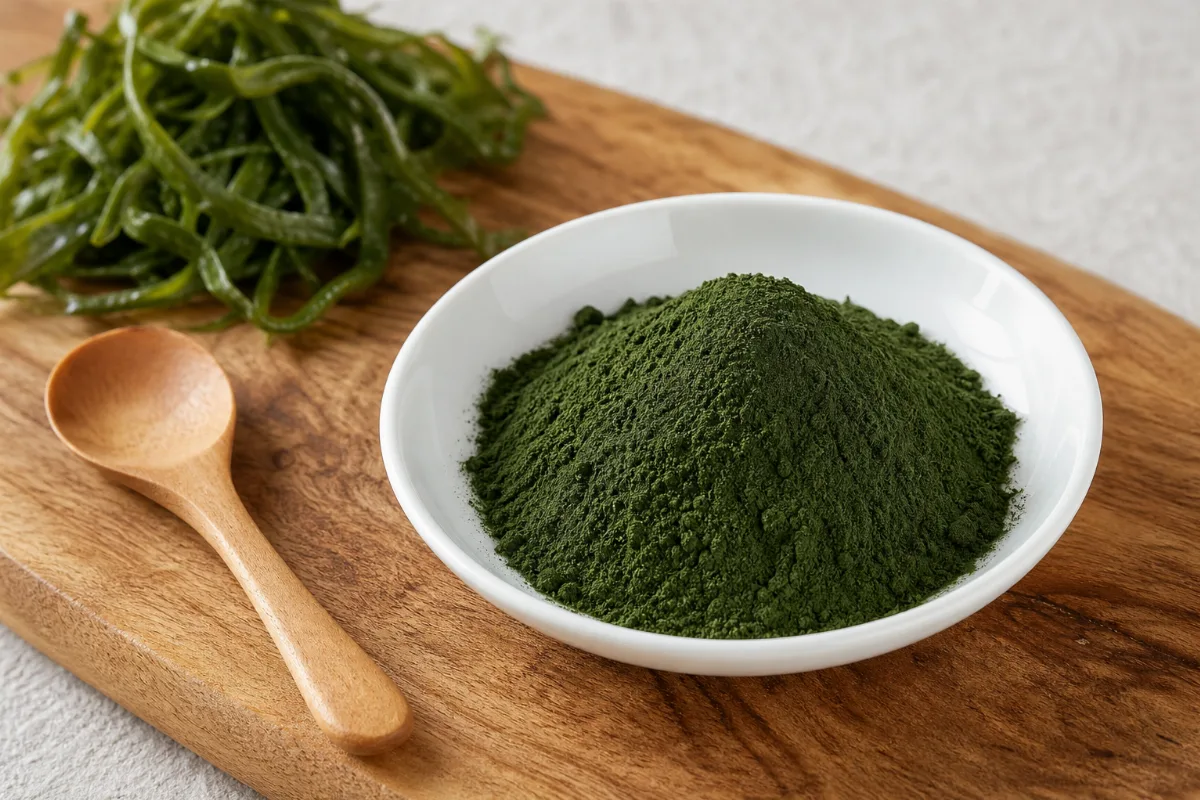
Seaweed & Algae · Microalga
Euglena
Euglena gracilis · also called Euglena gracilis, paramylon-rich microalga
Euglena is a tiny freshwater alga sold as a green powder or capsule. It is rich in paramylon, a fibre-like glucan. In small 8-week trials, healthy adults on Euglena powder had higher immune blood markers and fewer cold-like symptoms than on placebo. Most other findings are from mice or the lab. Long-term safety in people, pregnancy and medicine interactions have not been studied.
General information, not medical advice. Last substantive update · Not medically reviewed. A named clinician has not signed off on this page. How this page is made
About Euglena
Euglena gracilis is a single-celled freshwater alga. It is sold as a dried powder or capsule, and it is rich in paramylon, a fibre-like glucan. It is not an everyday food, and it is not a seaweed. The human evidence is a few short trials in healthy adults, and most other findings are from mice or the lab.
What it is
Euglena gracilis is a single-celled alga that lives in fresh water. EFSA describes the dried product it reviewed as biomass made by fermentation, with more than 50% beta-glucan. GBIF lists the species as accepted, in the family Euglenaceae, and places it outside the plant kingdom.
Paramylon is the main interest. It is an insoluble beta-1,3-glucan that the cells store. Isolated paramylon, at least 95% beta-glucan, has been reviewed by EFSA separately from the whole dried alga.
Nutrition
No USDA FoodData Central entry for Euglena was found, so this page gives no calories, protein or mineral values per portion. The only composition fact read is EFSA's: more than 50% of the dried whole alga is beta-glucan. Trial authors describe Euglena as containing vitamins, minerals, amino acids and unsaturated fatty acids, but give no amounts.
There is no standard food portion. Euglena is sold mainly as a powder or capsule, so read the product label.
What the research shows
The human studies are small and short. In the 2026 Japanese trial, 181 adults were analysed. A dendritic cell marker was higher with Euglena (7.7 against 7.0 on a log scale, difference 0.7, 95% CI 0.2 to 1.1). Cold-like symptoms were lower as an exploratory result. The Korean trial found higher natural killer cell activity but its abstract gives no numbers. A 2025 Japanese trial found fewer days with cold-like symptoms.
These show immune markers moving in healthy adults. They do not show that Euglena prevents infection. Funding was not stated in the abstracts read, and several trials tested one maker's product.
Belly fat did not change overall in a 36-person, 12-week trial. Men on their own had less belly fat on subgroup analysis, which can be chance. One trial reported better stress response and sleep ratings, with no numbers in its abstract.
Studies on colitis, obesity, stroke damage, lung tumours and gut bacteria were done in mice or in the lab. They cannot be used to say what Euglena does in people.
Whole powder, extracts and the isolated glucan
The human trials used dried whole Euglena as capsules or powder. The colitis and gut bacteria work used the isolated glucan, and the lung study used a water extract. EFSA treats the dried alga and paramylon as two different products. Do not assume a result for one holds for another.
At a glance
Traditional uses history, not proof
- No traditional use was read in the sources
- It is a recent food and supplement ingredient, not a long-used food
Studied for research
- Immune blood markers, low certainty (two short trials)
- Cold-like symptoms, low certainty (self-reported)
- Mood, stress response and sleep, very low certainty (one trial)
- Belly fat and blood sugar, mixed (one small trial)
- Colitis, obesity, stroke damage and lung tumours, insufficient (mouse and lab only)
Main compounds
- Paramylon (beta-1,3-glucan), over 50% of the dried alga
- Vitamins, minerals, amino acids and fatty acids (amounts not read)
Common forms
- Dried whole-cell powder or capsules (used in the human trials)
- Isolated paramylon (at least 95% beta-glucan; reviewed separately by EFSA)
- Water extracts (used in mouse studies)
Research links: 2026 trial: Euglena and immune cells (Japan, 200 adults) · 2020 EFSA opinion: dried whole-cell Euglena gracilis · 2023 trial: Euglena and natural killer cells (Korea) · Research Library · Genes & Biomarkers Library
What it is and its history
- Accepted scientific name
- Euglena gracilis G.A.Klebs
- Naming authority
- G.A.Klebs (GBIF accepted)
- Common names
- Euglena (English); Euglena gracilis (Latin)
- Family or group
- Euglenaceae, as given by GBIF. It is a single-celled microalga, not a seaweed and not a plant in the strict sense.
- Classification
- Protozoa (as placed by GBIF) > Euglenozoa > Euglenoidea > Euglenida > Euglenaceae > Euglena > Euglena gracilis
- Native range
- EFSA says it occurs widely in nature and is commonly found in freshwater habitats.
- Habitat
- Freshwater (per EFSA and a 2023 trial abstract).
- Cultivation
- The product tested by EFSA is dried biomass produced by fermentation. Other growing methods were not read.
- Harvest and processing
- Dried whole cells (more than 50% beta-glucan per EFSA) and isolated paramylon (at least 95% beta-glucan). Other processing was not read.
- Look-alikes and adulterants
- Name: Spirulina and chlorella; Note: Other microalgae sold as powders or tablets; different organisms with their own pages.; Name: Seaweeds such as kombu and nori; Note: Large multi-celled marine algae, not the same as a single-celled freshwater microalga.
- Sustainability and conservation
- Not assessed.
Photographs
What is inside, and how it may work
What it contains and how those compounds act in cells and animals. Laboratory and animal mechanisms are not proven effects in people.
Main compounds
| Compound | Family | Where it is concentrated | Activity studied | Level of evidence |
|---|---|---|---|---|
| Paramylon (beta-1,3-glucan) | polysaccharide | Whole cell (storage granules) More than 50% of the dried whole alga per EFSA; at least 95% of isolated paramylon | An insoluble beta-1,3-glucan linked to immune effects in people; in the trials its immune marker effects were reported but the abstracts give little detail. 3 2 11 10 | Human data |
| Vitamins, minerals, amino acids, unsaturated fatty acids | nutrients | Whole cell Not given as numbers in any source read | Described in trial abstracts as abundant nutrients in Euglena; amounts were not read. 8 6 | Lab |
Mechanisms, receptors and pathways
| Target or pathway | Gene or receptor | What was found | Level |
|---|---|---|---|
| Immune cell activity | Natural killer cells; CD86 on plasmacytoid dendritic cells | Higher NK cell activity (700 mg a day, 8 weeks) and higher CD86 on dendritic cells (1,000 mg a day, 8 weeks) than placebo in healthy adults. How paramylon does this was not tested in these trials. 11 10 | Human data |
| Gut barrier, gut bacteria and immune balance | ZO-1, TNF-alpha, IL-6, Th17/Treg cells | In colitis mice, the glucan raised ZO-1, lowered TNF-alpha and IL-6, balanced Th17 and Treg cells and changed gut bacteria. 4 | Animal research |
| Fat breakdown | Adipose triglyceride lipase and hormone-sensitive lipase | In obese mice, Euglena increased fat breakdown in fat tissue and reduced liver fat. 7 | Animal research |
| Short-chain fatty acids from gut bacteria | Not specified | A Euglena water extract raised acetate, propionate and butyrate in mouse stool, and low levels of these slowed lung cancer cell growth in the lab. In a lab fermentation of stool, the polysaccharide raised acetic acid. 13 5 | Animal research |
| Brain protection after induced stroke | Hippocampal insulin signalling | In mice, Euglena was associated with smaller infarcts, better gut barrier and less inflammation. 14 | Animal research |
Absorption, metabolism and elimination
- Absorption
- Not found. A trial abstract calls paramylon an insoluble beta-1,3-glucan.
- Distribution
- Not found.
- Metabolism
- Not found.
- Elimination
- Not found.
- Bioavailability
- Not established in people.
Isolated compounds versus whole extracts
The human trials used dried whole Euglena powder or capsules, or a paramylon-rich powder. The colitis, obesity and gut bacteria lab work used the isolated glucan or extracts, and the lung study used a water extract. EFSA has reviewed the dried whole cell and isolated paramylon as two different novel foods. Results for one should not be assumed for the other.
Nutritional composition
No USDA FoodData Central entry for Euglena was found in the existing nutrient summary, so no calories, protein, vitamin or mineral values per portion are given on this page. The sources read give only one composition fact: EFSA says dried whole-cell Euglena gracilis is more than 50% beta-glucan (paramylon), and isolated paramylon is at least 95% beta-glucan. Trial abstracts describe Euglena as containing vitamins, minerals, amino acids and unsaturated fatty acids, but give no amounts. Euglena is sold mainly as a powder or capsule; there is no standard food portion.
1 mixed findings2 low certainty1 very low certainty4 not enough evidence
What was looked at
The 8 benefits and uses checked for Euglena, each with how strong the evidence is. Tap one to open it.
- Immune blood markers (natural killer cells, dendritic cells)Low certainty
- Common cold-like symptomsLow certainty
- Mood, stress response and sleepVery low certainty
- Body fat and blood sugarMixed findings
- Gut health and ulcerative colitis (mouse and lab only)Not enough evidence
- Obesity and gut bacteria (mouse and lab only)Not enough evidence
- Stroke damage and lung tumours (mouse studies only)Not enough evidence
- Influenza and antiviral effects (review of lab and animal work)Not enough evidence
Lab markers tracked in the studies
Natural killer (NK) cell activityCD86 on plasmacytoid dendritic cellsDays with cold-like symptomsVisceral fat areaHbA1cAdiponectin
What is Euglena good for?
The main studied uses and how strong the human evidence is for each. Most results are for Euglena powder in healthy adults, or for mice and the lab.
Benefits, one by one
Each card is a research question, not a promise. Tap a goal to filter. Open a card to see the studies, doses and limits.
Immune blood markers (natural killer cells, dendritic cells)
Low certaintyIn two 8-week trials in healthy adults, Euglena powder raised an immune marker compared with placebo: natural killer cell activity in Korean adults (700 mg a day) and a dendritic cell marker (CD86) in Japanese adults (1,000 mg a day). These are blood markers, not proof of better protection against illness.
2 studiesDried Euglena gracilis powder or capsules (700 and 1,000 mg a day in …
Studies, doses and limits
What the trials found
Korea (2023): healthy adults with high stress ratings took 700 mg a day for 8 weeks; the authors report higher natural killer cell activity than placebo, but the abstract gives no numbers or group sizes. Japan (2026): 181 healthy adults analysed; the log-transformed CD86 level on plasmacytoid dendritic cells was higher with 1,000 mg a day (7.7 vs 7.0, difference 0.7, 95% CI 0.2 to 1.1, P = 0.004).
Results
Both trials found a higher immune marker with Euglena. Neither shows that this lowers infections in a way that matters.
Effect sizes as reported
CD86 difference 0.7 (log scale) in the Japanese trial; no numbers in the Korean abstract.
Why this rating
Two short trials of marker changes in healthy adults, from different products and countries, one without numbers in its abstract. Funding was not stated in either abstract. Low certainty that the markers matter for health.
Form and dose studied
Dried Euglena gracilis powder or capsules (700 and 1,000 mg a day in these trials). These are supplement-type products, not an everyday food.
Who was studied
Healthy adults in Korea and Japan.
Limits
Marker changes only. Short (8 weeks). Different products. Not tested in children, older adults specifically, or people who are unwell.
Why researchers looked
Euglena makes paramylon, a beta-1,3-glucan, a type of fibre-like sugar chain that has been studied for effects on immune cells.
Traditional use
No traditional use was read. Euglena is a freshwater microalga sold in recent years as a powder or capsule.
Proposed mechanism Hypothesis
Paramylon is thought to act on immune cells, possibly through the gut. The abstracts of these trials do not test how.
A proposed mechanism does not show that the effect happens in people.
No adverse events were reported in either trial. See the Safety tab.
Common cold-like symptoms
Low certaintyTwo 8-week trials in healthy Japanese adults found fewer days with cold-like symptoms with Euglena than with placebo. One of the two counted this as an exploratory result. Symptoms were self-reported.
2 studiesDried Euglena gracilis capsules or powder; 1,000 mg a day in the 2026…
Studies, doses and limits
What the trials found
2025 trial: Euglena capsules once daily for 8 weeks gave significantly fewer cumulative days with cold-like symptoms than placebo, and fewer severe symptoms (nasal congestion, sore throat, fatigue, muscle ache) in weeks 5 to 8. The abstract gives no numbers or group size. 2026 trial (200 randomised, 1,000 mg a day): the incidence of cold-like symptoms was lower with Euglena as an exploratory outcome.
Results
Both trials point the same way. The 2026 symptom result was exploratory, and the 2025 abstract has no numbers.
Effect sizes as reported
Not given in the abstracts.
Why this rating
Two short, self-reported symptom results from healthy adults in one country, one exploratory and one without numbers in its abstract. Low certainty.
Form and dose studied
Dried Euglena gracilis capsules or powder; 1,000 mg a day in the 2026 trial, dose not stated in the 2025 abstract.
Who was studied
Healthy Japanese adults.
Limits
Self-reported symptoms, 8 weeks, one country. Cold-like symptoms were not confirmed as infections.
Why researchers looked
If Euglena changes immune markers, researchers asked whether that shows up as fewer colds.
Proposed mechanism Hypothesis
Not shown. The authors propose an immune effect from paramylon.
A proposed mechanism does not show that the effect happens in people.
The authors judged the test food safe under the study conditions; no adverse events were reported in the 2026 trial.
Mood, stress response and sleep
Very low certaintyOne 12-week trial in adults reported that Euglena improved how the body's stress-response nerves behaved during a mental workload task, and improved mood and sleep ratings. Only one trial, so this is very uncertain.
1 studiesEuglena gracilis; form and amount not stated in the abstract.
Studies, doses and limits
What the trials found
Men and women aged 20 to 64 took Euglena or placebo; measures were taken before and at 4, 8 and 12 weeks. The authors report improved autonomic nervous system measures under workload, better psychological scores and better sleep. The abstract gives no numbers, dose or group size.
Results
A favourable result reported by the authors, with nothing in the abstract to judge its size.
Effect sizes as reported
Not given in the abstract.
Why this rating
A single trial, self-rated mood and sleep, no numbers in the abstract, and no second trial found.
Form and dose studied
Euglena gracilis; form and amount not stated in the abstract.
Who was studied
Adults aged 20 to 64.
Limits
One trial. Self-rated outcomes. Cannot be repeated or checked from the abstract alone.
Why researchers looked
Researchers asked whether Euglena's nutrients might help the body cope with stress.
Proposed mechanism Hypothesis
Not shown. The authors suggest a balance effect on the autonomic nervous system.
A proposed mechanism does not show that the effect happens in people.
See the Safety tab.
Body fat and blood sugar
Mixed findingsIn 36 moderately overweight Japanese adults, a paramylon-rich Euglena powder did not change visceral (belly) fat overall in 12 weeks. Men on their own did show a drop. Adiponectin was higher and HbA1c lower than with placebo.
1 studiesEOD-1 Euglena gracilis powder in capsules, 2.6 g paramylon a day, for…
Studies, doses and limits
What the trials found
36 adults with a BMI of 25 to under 30 took capsules of EOD-1 Euglena powder (2.6 g paramylon a day) or cellulose placebo for 12 weeks. Visceral fat area did not differ significantly between groups; in a subgroup of men it fell. Serum adiponectin was significantly higher and HbA1c significantly lower with Euglena in all participants. The abstract gives no numbers.
Results
The main fat result was null; the male-only drop is a subgroup finding.
Effect sizes as reported
Not given in the abstract.
Why this rating
One small trial. The main outcome showed no overall difference; the positive results are a subgroup (fat) and secondary markers (adiponectin, HbA1c). Funding was not stated in the abstract.
Form and dose studied
EOD-1 Euglena gracilis powder in capsules, 2.6 g paramylon a day, for 12 weeks. A supplement product.
Who was studied
Moderately overweight Japanese adults.
Limits
Very small. Subgroup finding. One strain and one product. No numbers in the abstract.
Why researchers looked
Beta-glucans have been studied for effects on fat and sugar handling.
Proposed mechanism Hypothesis
Not shown in this trial. The authors suggest paramylon may help.
A proposed mechanism does not show that the effect happens in people.
See the Safety tab.
Gut health and ulcerative colitis (mouse and lab only)
Not enough evidenceIn mice with induced colitis, Euglena and its beta-glucan eased signs of disease and changed gut bacteria. Fermenting stool from patients in the lab also changed bacteria. No person with colitis was treated.
1 studiesEuglena gracilis and its isolated beta-glucan (EGP), in mice and in t…
Studies, doses and limits
Results
Favourable in mice and in lab fermentation.
Why this rating
Mouse and laboratory studies only. No human trial found. Not evidence that Euglena helps ulcerative colitis.
Form and dose studied
Euglena gracilis and its isolated beta-glucan (EGP), in mice and in the lab.
Who was studied
Mice; patient stool samples in a dish.
Limits
Animal and lab only.
Why researchers looked
Paramylon is a fibre-like glucan that gut bacteria can ferment.
Proposed mechanism Animal and lab
In mice the glucan lowered TNF-alpha and IL-6, raised the gut barrier protein ZO-1 and balanced Th17 and Treg immune cells. Animal and lab findings only.
A proposed mechanism does not show that the effect happens in people.
Do not use Euglena as a replacement for colitis treatment; ask your doctor.
Obesity and gut bacteria (mouse and lab only)
Not enough evidenceMice on a high-fat diet that were given Euglena had less body fat and better glucose tolerance. A lab fermentation of stool from obese people also showed changes in gut bacteria. No trial in people tested these effects beyond the small one above.
2 studiesWhole Euglena by gavage in mice; isolated Euglena polysaccharide in t…
Studies, doses and limits
Results
In 14 obese mice (7 per group) Euglena at 100 mg per kg a day for 9 weeks reduced white fat, fat cell size and liver fat and improved glucose tolerance. In the lab, the polysaccharide changed bacteria and raised acetic acid in stool samples from obese and non-obese people.
Why this rating
Animal and lab studies only; small groups.
Form and dose studied
Whole Euglena by gavage in mice; isolated Euglena polysaccharide in the lab.
Who was studied
Mice; stool samples.
Limits
Small mouse groups and lab models.
Why researchers looked
Researchers wanted to see how Euglena affects fat storage and gut bacteria.
Proposed mechanism Animal and lab
In mice, more fat breakdown in fat tissue and liver. In the lab, more acetic acid made by gut bacteria. Animal and lab findings only.
A proposed mechanism does not show that the effect happens in people.
None specific.
Stroke damage and lung tumours (mouse studies only)
Not enough evidenceIn mice, Euglena given before an induced stroke reduced brain damage, and a Euglena water extract reduced lung tumours caused by a tobacco-smoke chemical. These are animal studies. They do not show any effect in people.
2 studiesWhole Euglena (stroke study) and a Euglena water extract (lung study)…
Studies, doses and limits
Results
Stroke: smaller brain damage and milder deficits in mice fed a high-fat, high-fructose diet. Lung: fewer tumours in mice given the water extract before or after the carcinogen; low levels of short-chain fatty acids slowed lung cancer cell growth in the lab.
Why this rating
Mouse and cell studies only. No human trial found.
Form and dose studied
Whole Euglena (stroke study) and a Euglena water extract (lung study), in mice.
Who was studied
Mice and cultured cells.
Limits
Animal studies. The stroke study gave Euglena before the stroke; the lung study used a water extract, not the whole food.
Why researchers looked
Researchers asked whether gut bacteria changes caused by Euglena could protect other organs.
Proposed mechanism Animal and lab
Linked in the mouse work to gut barrier, inflammation and short-chain fatty acids made by gut bacteria. Animal and lab findings only.
A proposed mechanism does not show that the effect happens in people.
Euglena is not a treatment for stroke or cancer.
Influenza and antiviral effects (review of lab and animal work)
Not enough evidenceA 2023 review by one author summarises reports that Euglena extracts may stimulate immunity and slow influenza virus in cells. It does not show that Euglena treats or prevents flu in people.
1 studiesEuglena extracts and paramylon.
Studies, doses and limits
Results
A narrative summary, not a test.
Why this rating
A narrative review by one author, mainly of lab and animal work. No human flu trial was found.
Form and dose studied
Euglena extracts and paramylon.
Limits
Narrative review; selection of studies not described in the abstract.
Why researchers looked
Immune activity suggested a possible antiviral effect.
Proposed mechanism Review of lab and animal
Described in the review as immune stimulation through the gut and slower virus copying in infected cells.
A proposed mechanism does not show that the effect happens in people.
Do not use Euglena instead of flu vaccines or antiviral medicine; ask a doctor.
Connections to the rest of health
How Euglena connects to the rest of our health knowledge graph. Every link says what kind of connection it is. A safety link (for example to the liver) is a warning, not a benefit. A study that merely mentions a topic never creates a benefit link.
Explore every connection: goals, body systems, organs, symptoms, genes
A. Wellness goals
| Connected to | Kind of connection | Evidence status | Context | Studies |
|---|---|---|---|---|
| Immune Support | Low certainty | Immune blood markers (natural killer cells, dendritic cells): In two 8-week trials in healthy adults, Euglena powder raised an immune marker compared with placebo: natural killer cell activity in Korean adults (700 mg a day) and a dendritic cell marker (CD86) in Japanese adults (1,000 mg a day). These are blood markers, not proof of better protection against illness. Common cold-like symptoms: Two 8-week trials in healthy Japanese adults found fewer days with cold-like symptoms with Euglena than with placebo. One of the two counted this as an exploratory result. Symptoms were self-reported. | 11 10 9 | |
| Stress Reduction | Very low certainty | Mood, stress response and sleep: One 12-week trial in adults reported that Euglena improved how the body's stress-response nerves behaved during a mental workload task, and improved mood and sleep ratings. Only one trial, so this is very uncertain. | 8 | |
| Better Sleep | Very low certainty | Mood, stress response and sleep: One 12-week trial in adults reported that Euglena improved how the body's stress-response nerves behaved during a mental workload task, and improved mood and sleep ratings. Only one trial, so this is very uncertain. | 8 | |
| Weight Management | Mixed findings | Body fat and blood sugar: In 36 moderately overweight Japanese adults, a paramylon-rich Euglena powder did not change visceral (belly) fat overall in 12 weeks. Men on their own did show a drop. Adiponectin was higher and HbA1c lower than with placebo. | 1 | |
| Blood Sugar Balance | Mixed findings | Body fat and blood sugar: In 36 moderately overweight Japanese adults, a paramylon-rich Euglena powder did not change visceral (belly) fat overall in 12 weeks. Men on their own did show a drop. Adiponectin was higher and HbA1c lower than with placebo. | 1 | |
| Gut Health | Not enough evidence | Gut health and ulcerative colitis (mouse and lab only): In mice with induced colitis, Euglena and its beta-glucan eased signs of disease and changed gut bacteria. Fermenting stool from patients in the lab also changed bacteria. No person with colitis was treated. Obesity and gut bacteria (mouse and lab only): Mice on a high-fat diet that were given Euglena had less body fat and better glucose tolerance. A lab fermentation of stool from obese people also showed changes in gut bacteria. No trial in people tested these effects beyond the small one above. | 4 7 5 | |
| Weight Management | Not enough evidence | Obesity and gut bacteria (mouse and lab only): Mice on a high-fat diet that were given Euglena had less body fat and better glucose tolerance. A lab fermentation of stool from obese people also showed changes in gut bacteria. No trial in people tested these effects beyond the small one above. | 7 5 | |
| Brain Health | Not enough evidence | Stroke damage and lung tumours (mouse studies only): In mice, Euglena given before an induced stroke reduced brain damage, and a Euglena water extract reduced lung tumours caused by a tobacco-smoke chemical. These are animal studies. They do not show any effect in people. | 14 13 | |
| Preventive Wellness | Not enough evidence | Stroke damage and lung tumours (mouse studies only): In mice, Euglena given before an induced stroke reduced brain damage, and a Euglena water extract reduced lung tumours caused by a tobacco-smoke chemical. These are animal studies. They do not show any effect in people. | 14 13 | |
| Immune Support | Not enough evidence | Influenza and antiviral effects (review of lab and animal work): A 2023 review by one author summarises reports that Euglena extracts may stimulate immunity and slow influenza virus in cells. It does not show that Euglena treats or prevents flu in people. | 6 |
B. Body systems
| Connected to | Kind of connection | Evidence status | Context | Studies |
|---|---|---|---|---|
| Immune System | Biological association | Low certainty | Studied for: Immune blood markers (natural killer cells, dendritic cells) Studied for: Common cold-like symptoms | 11 10 9 6 |
| Respiratory System | Biological association | Low certainty | Studied for: Common cold-like symptoms Studied for: Stroke damage and lung tumours (mouse studies only) | 9 10 14 13 |
| Nervous System | Biological association | Very low certainty | Studied for: Mood, stress response and sleep Studied for: Stroke damage and lung tumours (mouse studies only) | 8 14 13 |
| Metabolism Weight | Biological association | Mixed findings | Studied for: Body fat and blood sugar Studied for: Obesity and gut bacteria (mouse and lab only) | 1 7 5 |
| Blood Sugar Support | Biological association | Mixed findings | Studied for: Body fat and blood sugar | 1 |
| Digestive System | Biological association | Not enough evidence | Studied for: Gut health and ulcerative colitis (mouse and lab only) Studied for: Obesity and gut bacteria (mouse and lab only) | 4 7 5 |
C. Body parts and organs
| Connected to | Kind of connection | Evidence status | Context | Studies |
|---|---|---|---|---|
| Immune system | Preliminary | Natural killer cell activity and a dendritic cell marker were higher in healthy adults. Preparation or compound: Euglena gracilis powder |
11 10 |
E. Health conditions
| Connected to | Kind of connection | Evidence status | Context | Studies |
|---|---|---|---|---|
| Common cold | Preliminary | Two 8-week trials in healthy Japanese adults found fewer cold-like symptoms; self-reported. Preparation or compound: Euglena gracilis powder or capsules |
9 10 | |
| Obesity | Not enough evidence | One 36-person trial: no overall change in belly fat, a drop in men only. Preparation or compound: Paramylon-rich Euglena powder |
1 | |
| Ulcerative colitis | Lab or animal only | Mouse and lab studies only. Preparation or compound: Euglena beta-glucan |
4 |
I. Biomarkers
| Connected to | Kind of connection | Evidence status | Context | Studies |
|---|---|---|---|---|
| Natural killer (NK) cell activity | Biological association | Low certainty | Measured in trials: raised. A lab change is not the same as a health benefit. | 11 |
| CD86 on plasmacytoid dendritic cells | Biological association | Low certainty | Measured in trials: raised. A lab change is not the same as a health benefit. | 10 |
| Days with cold-like symptoms | Biological association | Low certainty | Measured in trials: lowered. A lab change is not the same as a health benefit. | 9 10 |
| Visceral fat area | Biological association | Mixed findings | Measured in trials: mixed. A lab change is not the same as a health benefit. | 1 |
| HbA1c | Biological association | Low certainty | Measured in trials: lowered. A lab change is not the same as a health benefit. | 1 |
| Adiponectin | Biological association | Low certainty | Measured in trials: raised. A lab change is not the same as a health benefit. | 1 |
K. Biological pathways
| Connected to | Kind of connection | Evidence status | Context | Studies |
|---|---|---|---|---|
| Paramylon (beta-1,3-glucan) | Preliminary mechanism | Human | The main component of dried Euglena, studied for immune effects. | 3 10 |
| Gut barrier and short-chain fatty acids | Preliminary mechanism | Animal | Linked to Euglena effects in mouse and lab studies. | 4 13 |
L. Active compounds
| Connected to | Kind of connection | Evidence status | Context | Studies |
|---|---|---|---|---|
| Beta-glucan (paramylon) | Documented | Dried whole-cell Euglena is more than 50% beta-glucan per EFSA. Preparation or compound: Dried whole-cell Euglena |
3 | |
| Paramylon (beta-1,3-glucan) | Biological association | Human | An insoluble beta-1,3-glucan linked to immune effects in people; in the trials its immune marker effects were reported but the abstracts give little detail. Preparation or compound: Whole cell (storage granules) |
3 2 11 10 |
| Vitamins, minerals, amino acids, unsaturated fatty acids | Biological association | Lab | Described in trial abstracts as abundant nutrients in Euglena; amounts were not read. Preparation or compound: Whole cell |
8 6 |
Each connection is stored with the ingredient, the connected record, the kind of connection, the evidence status, the supporting studies, the preparation or compound involved, and a review date (last reviewed October 26, 2026).
The evidence
The research centre for Euglena. Every record here was checked against PubMed or the publisher's page; we never list a study we have not verified.
Evidence by outcome
Bars show how many studies we found for each outcome, not how well it works. People are added up across trials only (reviews are not added, to avoid double counting).
How we rate evidence
High certainty
Several well-run trials or reviews agree; further research is unlikely to change the picture much.
Moderate certainty
Good trials point the same way, but some doubt remains.
Low certainty
Small, short or inconsistent trials. The finding could change with better research.
Very low certainty
Very little or very weak human data. Treat as a possibility only.
Mixed findings
Trials or reviews disagree with each other.
Not enough evidence
Not enough human research to say either way.
Evidence against
Good research found no benefit, or found harm.
We take the reviewers' own risk-of-bias and GRADE statements where they exist, and otherwise judge from study size, design, consistency, directness and whether a product matches what is sold. Many publications do not make evidence high. Method note: We started from our existing Euglena summary, matched the species name in GBIF, and re-read the PubMed abstracts for the trials, animal and lab studies, a review and two EFSA opinions. Only abstracts were read. Items we could not verify are flagged in the research gaps.
Study library: every study we checked 15
| Study | Design | People | Product, dose, length | Result |
|---|---|---|---|---|
| Aoe 2023 Effects of paramylon-rich Euglena gracilisEOD-1 powder on visceral fat obesity in moderately obese Japanese adults: A randomized, double-blind, placebo-controlled, parallel-group trial. Food Sci Nutr · PMID 36789056 · DOI |
Randomized controlled trial |
36 36 Japanese adults with a BMI of 25 to under 30 (moderately overweight) |
Paramylon-rich Euglena gracilis EOD-1 powder in capsules Whole algal cells (powder) 2.6 g paramylon a day 12 weeks · vs Cellulose capsules |
There was no significant difference in visceral fat area between the groups overall. In men only (a subgroup analysis), visceral fat area fell significantly compared with placebo. Adiponectin was significantly higher and HbA1c significantly lower in the whole Euglena group than in the placebo group. Direction only; numbers not given in the abstract (Not given in the abstract) Methods, limits and fundingOutcomes: Visceral fat area, serum adiponectin, HbA1c Limitations: Small trial. The fat result is from a subgroup (men), so it can be chance. The product is one named strain (EOD-1) and the authors link it to paramylon. 12 weeks. Funding and conflicts: Funding is not stated in the abstract. Read: abstract |
| EFSA Panel on Nutrition 2023 Safety of paramylon as a novel food pursuant to Regulation (EU) 2015/2283. EFSA J · PMID 37251502 · DOI |
Regulatory opinion mixed |
Safety dossier for paramylon (at least 95% beta-glucan) isolated from Euglena gracilis (EFSA NDA Panel) | Isolated paramylon Isolated beta-1,3-glucan Rats: up to 5,000 mg per kg body weight a day Subchronic rat studies |
The submitted toxicity studies raised no safety concerns, with no adverse effects up to the highest dose tested, 5,000 mg per kg body weight a day. The Panel had no safety concerns and concluded paramylon is safe under the proposed uses and use levels. Rat no-adverse-effect level at least 5,000 mg per kg body weight a day (Not applicable) Methods, limits and fundingOutcomes: Safety at the uses the applicant proposed Limitations: Applies to purified paramylon, not to the whole dried alga. Rat studies and composition data. Funding and conflicts: An independent scientific opinion of the EFSA panel, written on an industry applicant's dossier. Read: abstract |
| EFSA Panel on Nutrition 2020 Safety of dried whole cell Euglena gracilis as a novel food pursuant to Regulation (EU) 2015/2283. EFSA J · PMID 37649492 · DOI |
Regulatory opinion mixed |
Safety dossier for dried whole-cell Euglena gracilis as a novel food (EFSA NDA Panel) | Dried biomass of Euglena gracilis made by fermentation (more than 50% beta-glucan) Whole dried cells Rats: up to 3,300 mg per kg body weight a day 90-day rat study |
The Panel found that the submitted toxicity studies raised no safety concerns. No adverse effects were seen up to the highest dose tested in a 90-day rat study (3,300 mg per kg body weight, called the no-observed-adverse-effect level). Margins of exposure at high intake ranged from 33 for infants to 192 for adults and were judged sufficient. The Panel concluded the dried alga is safe at the proposed uses and use levels, and noted the organism has qualified presumption of safety status (2019) for production purposes only. Rat no-adverse-effect level 3,300 mg per kg body weight (Not applicable) Methods, limits and fundingOutcomes: Safety at the uses the applicant proposed Limitations: A safety opinion on the applicant's proposed uses, based on rat studies and composition data. It is not a human long-term study and not proof of benefit. Whether the product was then authorised for sale in the EU was not read. Funding and conflicts: An independent scientific opinion of the EFSA panel, written on an industry applicant's dossier. Read: abstract |
| Guo 2025 β-1,3-glucans from Euglena Gracilis protects against ulcerative colitis via modulating the gut barrier, T-cell immunity and gut microbiota. Int J Biol Macromol · PMID 39984099 · DOI |
Animal and laboratory mouse |
Mice with colitis induced by dextran sulfate sodium (DSS); stool samples from ulcerative colitis patients fermented in the lab | Euglena gracilis and its beta-1,3-glucan (EGP) Whole algal cells and the isolated beta-glucan · vs Untreated colitis mice |
In colitis mice, both Euglena and the isolated glucan improved body weight and colon length and lowered the disease activity index, TNF-alpha and IL-6. They raised the gut barrier protein ZO-1, balanced Th17 and Treg cells and changed gut bacteria. In a lab fermentation of stool from ulcerative colitis patients, the glucan changed bacterial families. No people were treated. Not applicable (animal and lab) (Not applicable) Methods, limits and fundingOutcomes: Weight, colon length, disease activity, TNF-alpha, IL-6, gut barrier protein ZO-1, Th17/Treg balance, gut bacteria Limitations: Mice and a lab fermentation. Cannot show anything about treating ulcerative colitis in people. Funding and conflicts: Funding is not stated in the abstract. Read: abstract |
| Guo 2025 Euglena gracilis polysaccharide modulated gut dysbiosis of obese individuals via acetic acid in an in vitro fermentation model. Food Res Int · PMID 39658176 · DOI |
Laboratory analysis in-vitro |
Stool samples from non-obese and obese people fermented in the lab | Euglena gracilis polysaccharide (EGP) Isolated polysaccharide Lab fermentation · vs Fermentation without EGP |
EGP changed the make-up and chemistry of gut bacteria in the lab, and acetic acid rose in both groups. Stool bacteria from obese people shifted toward groups such as Bacteroides. No one ate EGP. Not applicable (lab) (Not applicable) Methods, limits and fundingOutcomes: Gut bacteria composition and metabolism Limitations: A lab fermentation. It does not show what happens in a person who eats Euglena. Funding and conflicts: Funding is not stated in the abstract. Read: abstract |
| Isegawa 2023 Activation of Immune and Antiviral Effects by Euglena Extracts: A Review. Foods · PMID 38137241 · DOI |
Narrative review mixed |
Published studies on Euglena and influenza | Euglena extracts and components Whole cells, extracts, paramylon |
The review summarises reports that Euglena stimulates immunity through the gut and slows virus replication in infected cells. It is a narrative review by one author. Not applicable (Not applicable) Methods, limits and fundingOutcomes: Immune stimulation and antiviral activity against influenza virus Limitations: A narrative review by one author. The abstract does not say how studies were chosen or how many were people. Funding and conflicts: Grants listed: Japan Society for the Promotion of Science (KAKENHI); JST-OPERA Program, Japan. Read: abstract |
| Ji 2024 Euglena Attenuates High-Fat-Diet-Induced Obesity and Especially Glucose Intolerance. Nutrients · PMID 39519613 · DOI |
Animal study mouse |
14 Obese male C57BL/6J mice on a high-fat diet, 7 per group |
Euglena (by gavage) Whole algal cells 100 mg per kg body weight a day (mice) 9 weeks · vs Saline gavage |
Euglena reduced white fat (mainly under the skin), reduced fat cell size, increased fat breakdown and improved liver fat and glucose tolerance in obese mice. The authors say it reduced body weight. Not applicable (animal) (Not applicable) Methods, limits and fundingOutcomes: White fat, fat cell size, fat breakdown, liver fat, glucose tolerance Limitations: Seven mice per group. Mice on a high-fat diet; dose scaled for mice, not people. Funding and conflicts: Grants listed: National Key Research and Development Program of China; Beijing Nova Program. Read: abstract |
| Nakashima 2020 Effects of Euglena gracilis Intake on Mood and Autonomic Activity under Mental Workload, and Subjective Sleep Quality: A Randomized, Double-Blind, Placebo-Controlled Trial. Nutrients · PMID 33113956 · DOI |
Randomized controlled trial |
Men and women aged 20 to 64; number not stated in the abstract | Euglena gracilis Whole algal cells 12 weeks, with checks at 4, 8 and 12 weeks · vs Placebo |
The authors report that Euglena intake regulated the autonomic nervous system under workload and improved psychological scores and sleep conditions. The abstract gives no numbers. Not given in the abstract (Not given in the abstract) Methods, limits and fundingOutcomes: Autonomic nervous system indices under a mental workload task, psychological states, subjective sleep quality Limitations: Mood and sleep were self-rated. No numbers, dose or participant count in the abstract. One trial. Funding and conflicts: Funding is not stated in the abstract. Read: abstract |
| Nakashima 2025 Euglena gracilis Suppresses Cold Symptoms in Healthy Individuals: A Double-Blind, Randomized, Placebo-Controlled Trial. Food Sci Nutr · PMID 40979570 · DOI |
Randomized controlled trial |
Healthy Japanese men and women; number not stated in the abstract | Euglena gracilis in capsules, once daily in the morning Whole algal cells 8 weeks · vs Placebo (double-blind, randomised per the title) |
There were significantly fewer cumulative days with cold-like symptoms over 8 weeks with Euglena than with placebo. In weeks 5 to 8, severe symptoms such as nasal congestion, sore throat, fatigue and muscle ache were also significantly fewer. The authors judged the test food safe under the study conditions. Not given in the abstract (Not given in the abstract) Methods, limits and fundingOutcomes: Cumulative days with cold-like symptoms; severe cold-like symptoms (nasal congestion, sore throat, fatigue, muscle ache) Limitations: Self-reported symptoms. No numbers, dose or participant count in the abstract. 8 weeks in healthy adults in one country. Funding and conflicts: Funding is not stated in the abstract. Read: abstract |
| Nakashima 2026 Incorporating Euglena gracilis into the habitual diet modulates immune function and reduces common cold-like symptoms: a randomized controlled trial. Nutr J · PMID 42260549 · DOI |
Randomized controlled trial |
200 200 healthy Japanese adults randomised; 181 in the main analysis (91 Euglena, 90 placebo) |
Dried Euglena gracilis (supplement-type product) Whole algal cells (powder) 1,000 mg a day 8 weeks · vs Placebo |
Log-transformed CD86 on plasmacytoid dendritic cells was higher with Euglena (7.7) than placebo (7.0) at week 8. Monocyte percentage was higher and the incidence of cold-like symptoms was lower in the Euglena group; these two were exploratory outcomes. No adverse events were reported and no clinically meaningful blood or urine changes. Group difference in log CD86 0.7 (0.2 to 1.1 (P = 0.004)) Methods, limits and fundingOutcomes: CD86 on plasmacytoid dendritic cells (primary); monocyte percentage and common cold-like symptoms (exploratory) Limitations: A blood marker was the main outcome, not illness. The symptom result was exploratory. 8 weeks, healthy Japanese adults only. The mean spread differed a lot between groups (2.1 vs 0.4). Funding and conflicts: Funding is not stated in the abstract. The abstract does not say which maker supplied the product. Registration: UMIN000056125 Read: abstract |
| Park 2023 Euglena gracilis (Euglena) powder supplementation enhanced immune function through natural killer cell activity in apparently healthy participants: A randomized, double-blind, placebo-controlled trial. Nutr Res · PMID 37769481 · DOI |
Randomized controlled trial |
Healthy Korean adults aged 20 to 70 with high stress ratings and at least 2 cold-like illnesses in the previous year; number not stated in the abstract | Euglena gracilis powder Whole algal cells (powder) 700 mg a day 8 weeks · vs Placebo |
The authors report that Euglena improved immune function through natural killer cell activity. Safety checks showed no significant changes in vital signs or clinical chemistry and no adverse events linked to Euglena. The abstract gives no numbers for the effect. Not given in the abstract (Not given in the abstract) Methods, limits and fundingOutcomes: Natural killer cell activity, cytokines, blood lipids, safety Limitations: No numbers or participant count in the abstract, so size of the effect is unknown. A blood marker, not illness. 8 weeks. Funding and conflicts: Funding is not stated in the abstract. The paper has a "non-U.S. Gov't research support" label in PubMed. Read: abstract |
| Simon 2016 Genotoxicity and subchronic toxicity evaluation of dried Euglena gracilis ATCC PTA-123017. Regul Toxicol Pharmacol · PMID 27311684 · DOI |
Animal study rat |
Rats; bacteria and mouse cells in genetic-damage tests | Dried Euglena gracilis ATCC PTA-123017 and paramylon Dried whole cells; isolated paramylon Rat diet up to 50,000 ppm Subchronic (90-day type) rat study · vs Control diet |
The dried alga was not genotoxic in a bacterial reverse-mutation test or a mammalian micronucleus test. In rats fed the alga (12,500 to 50,000 ppm in the diet) or paramylon (50,000 ppm), no effects attributable to treatment were seen. The no-effect level was 50,000 ppm in the diet for both. Rat no-effect level 50,000 ppm in the diet (Not applicable) Methods, limits and fundingOutcomes: Genotoxicity and subchronic toxicity Limitations: Rat and lab tests on one named strain. Not a human study. Funding and conflicts: Funding is not stated in the abstract. Read: abstract |
| Upreti 2023 Euglena gracilis Extract Protects From Tobacco Smoke Carcinogen-Induced Lung Cancer by Altering Gut Microbiota Metabolome. Integr Cancer Ther · PMID 37646331 · DOI |
Animal and laboratory mouse |
Mice given a tobacco-smoke carcinogen (NNK); lung cancer cells in the lab | Euglena gracilis water extract Water extract of the algae Given 2 weeks before or 10 weeks after the carcinogen · vs Untreated mice |
The water extract prevented lung tumours caused by the carcinogen in mice, whether given before or after it. Gut bacteria products, including acetate, propionate and butyrate, rose. Low levels of these fatty acids slowed lung cancer cell growth in the lab. Not applicable (animal and lab) (Not applicable) Methods, limits and fundingOutcomes: Lung tumours, gut bacteria products (short-chain fatty acids), lung cancer cell growth Limitations: Mice and cell culture only. A water extract, not the whole food. Funding and conflicts: Grant listed: NIGMS (US National Institutes of Health). Read: abstract |
| Xu 2025 Neuroprotective Effect of β-1,3-Glucans-Rich Euglena gracilis Against Ischemic Stroke in Middle-Aged Mice Fed With a High-Fat-High-Fructose Diet. Mol Nutr Food Res · PMID 40384141 · DOI |
Animal study mouse |
Middle-aged mice fed a high-fat, high-fructose diet, then given an induced stroke (middle cerebral artery occlusion) | Beta-1,3-glucan-rich Euglena gracilis Whole algal cells 8 weeks before stroke · vs Same diet without Euglena |
Euglena supplementation before the stroke reduced infarct volume, eased neurological deficits and improved gut barrier and inflammation measures in mice. Not applicable (animal) (Not applicable) Methods, limits and fundingOutcomes: Brain infarct volume, neurological deficits, gut barrier, inflammation, gut bacteria Limitations: Mice, with the supplement given before the stroke. Says nothing about stroke in people. Funding and conflicts: Grants listed: Shenzhen Science and Technology Program; Guangdong Province Zhujiang Talent Program; National Key R&D Program of China. Read: abstract |
| s-gbif-euglena-gracilis GBIF Backbone: Euglena gracilis G.A.Klebs (usageKey 7465722) · Source |
Reference database n/a |
Methods, limits and fundingRead: full-text |
What we do not know yet
- No long-term human safety data (over 12 weeks) were found.
- The trial abstracts for the Korean immune study, the 2025 cold study and the mood and sleep study give no effect sizes or group numbers.
- No source read covered allergy, pregnancy, breastfeeding, children, medicine interactions, or contamination of Euglena products.
- No nutrient amounts per portion were found; there is no USDA entry.
- Findings on colitis, obesity, stroke, lung tumours and gut bacteria are from mice and the lab, and no matching human trial was found.
- History and traditional use, FDA GRAS notices, and Japanese food status were not read.
How new research is added
New studies are found by a saved PubMed search and placed in a review queue before the page changes.
Lab markers
What changed in blood or saliva tests during trials. A changed number is not the same as feeling or being healthier, and we give no "normal ranges".
Metabolic 1
HbA1c
Lowered in trials
A blood test that reflects average blood sugar over about the last 2 to 3 months.
Low certaintyResults and what it means
Why it was measured
A standard marker of blood sugar control.
Statistical vs. clinical meaning
A secondary result in one small trial.
Safety implication
If you take blood sugar medicine, ask your prescriber before adding any supplement.
| Study | Result | People | Product |
|---|---|---|---|
| 1 | Significantly lower than placebo (numbers not given in the abstract) | 36 overweight Japanese adults | EOD-1 Euglena powder, 12 weeks |
Other 5
Natural killer (NK) cell activity
Raised in trials
How active a type of immune cell is that attacks virus-infected and abnormal cells.
Low certaintyResults and what it means
Why it was measured
A common lab marker of immune function.
Statistical vs. clinical meaning
A higher marker is not the same as better protection against illness.
Safety implication
None specific.
| Study | Result | People | Product |
|---|---|---|---|
| 11 | Higher NK cell activity than placebo (numbers not given in the abstract) | Healthy Korean adults with high stress ratings | Euglena powder, 700 mg a day, 8 weeks |
CD86 on plasmacytoid dendritic cells
Raised in trials
A signal on the surface of a type of immune cell that shows the cell is switched on.
Low certaintyResults and what it means
Why it was measured
It was the main outcome chosen by the Japanese trial.
Statistical vs. clinical meaning
Shows an immune cell signal moved; does not show fewer infections.
Safety implication
None specific.
| Study | Result | People | Product |
|---|---|---|---|
| 10 | Log-transformed CD86 median fluorescence 7.7 with Euglena vs 7.0 with placebo; difference 0.7 (95% CI 0.2 to 1.1, P = 0.004) | 181 healthy Japanese adults analysed | Euglena gracilis 1,000 mg a day, 8 weeks |
Days with cold-like symptoms
Lowered in trials
The number of days a person reports cold-type symptoms such as a blocked nose or sore throat.
Low certaintyResults and what it means
Why it was measured
A simple way to see whether an immune change shows up in daily life.
Statistical vs. clinical meaning
Self-reported, short trials in healthy adults.
Safety implication
None specific.
| Study | Result | People | Product |
|---|---|---|---|
| 9 | Significantly fewer cumulative days with cold-like symptoms over 8 weeks than placebo (numbers not given in the abstract) | Healthy Japanese adults | Euglena gracilis capsules, once daily, 8 weeks |
| 10 | Lower incidence of cold-like symptoms (exploratory outcome) | 181 healthy Japanese adults analysed | Euglena gracilis 1,000 mg a day, 8 weeks |
Visceral fat area
Mixed results in trials
The amount of fat packed around the organs in the belly, measured by scan.
Mixed findingsResults and what it means
Why it was measured
Belly fat is linked to metabolic disease risk.
Statistical vs. clinical meaning
Main result null; subgroup result may be chance.
Safety implication
None specific.
| Study | Result | People | Product |
|---|---|---|---|
| 1 | No significant difference overall; significantly lower in men (subgroup) | 36 overweight Japanese adults | EOD-1 Euglena powder (2.6 g paramylon a day), 12 weeks |
Adiponectin
Raised in trials
A hormone released by fat tissue that helps the body handle sugar and fat.
Low certaintyResults and what it means
Why it was measured
Higher levels are generally seen as favourable for metabolic health.
Statistical vs. clinical meaning
A secondary marker in one small trial.
Safety implication
None specific.
| Study | Result | People | Product |
|---|---|---|---|
| 1 | Significantly higher than placebo (numbers not given in the abstract) | 36 overweight Japanese adults | EOD-1 Euglena powder, 12 weeks |
Safety
What studies and official sources say about side effects, medicines and who should check first. Each point shows what kind of evidence it comes from.
Main points to know 3
- No harm was reported in short human trials, but long-term human safety is unknown. In the 2023 Korean trial (8 weeks) and the 2026 Japanese trial (8 weeks, 200 people randomised) no adverse events were reported. The 2025 cold trial judged the test food safe under its conditions. All the trials were 12 weeks or shorter, in healthy adults, so nothing is known about years of use. Randomized trials short 11 10 9
- European food safety reviewers found dried Euglena and paramylon safe at the uses proposed. EFSA's 2020 opinion judged dried whole-cell Euglena gracilis safe at the proposed uses and use levels, from a 90-day rat study with no adverse effect up to 3,300 mg per kg body weight and margins of exposure from 33 (infants) to 192 (adults). EFSA's 2023 opinion reached the same view for isolated paramylon. These are opinions on an applicant's proposed uses, based on rat studies, not long-term human data. Regulatory opinion 3 2 12
- Allergy, pregnancy, breastfeeding and medicine interactions have not been studied. None of the sources read tested Euglena in pregnancy, breastfeeding, young children, allergic people or people on medicines. Ask a doctor or pharmacist before using it if any of these applies. Gap
Side effects 2
| Effect | How often | Severity and recovery | Evidence |
|---|---|---|---|
| No adverse events reported in two 8-week human trials Short trials in healthy adults; they cannot rule out rare or long-term effects. | None reported in the Korean and Japanese trials (the 2026 trial also found no clinically meaningful blood or urine changes) | not applicable Not applicable | Randomized trials short 11 10 |
| Digestive effects (gas, bloating, loose stools) Not stated as a finding. Euglena powder is a beta-glucan fibre-type product, but no source read says what it does to digestion. | Not reported in the abstracts read | Not described Not described | Gap |
Liver
No liver injury from Euglena was reported in the sources read, and the trial abstracts report no clinically meaningful blood changes (2026 trial) or significant changes in clinical chemistry (2023 trial). A liver-safety source such as LiverTox was not searched. 11 10
How often. No frequency found.
Monitoring. No agency monitoring advice found.
This is a safety connection. It is not evidence that Euglena supports liver health.
Medicines and supplements 3
| With | Why it matters | Importance | Evidence | What to do |
|---|---|---|---|---|
| Medicines that lower or change the immune system (for example after a transplant or for autoimmune disease) prescription | Euglena raised immune markers in healthy adults. Whether this matters for people taking immune-changing medicines was not studied. | Unknown. No source read tests this. | Theoretical Not enough evidence 11 10 | Ask your specialist or pharmacist before taking Euglena if you take immune-suppressing medicine. |
| Diabetes medicines prescription | One small trial found lower HbA1c with a paramylon-rich Euglena powder. Whether this adds to the effect of blood sugar medicines was not studied. | Unknown. No source read tests this. | Theoretical Not enough evidence 1 | Ask your prescriber or pharmacist before adding Euglena if you take blood sugar medicine. |
| Blood thinners, other prescription medicines and herbs prescription | No interaction was reported in the sources read. | No interaction found; not the same as proof of none. | Not studied Not enough evidence | Tell your pharmacist about any supplement you take. |
Who should check first 3
| Situation | Advice | Evidence |
|---|---|---|
| Pregnancy or breastfeeding | No study of Euglena in pregnancy or breastfeeding was found. Ask your midwife or doctor before using a Euglena supplement. | Gap |
| Taking immune-suppressing or diabetes medicine | Ask your prescriber or pharmacist first. | Theoretical 1 |
| Children | No trial in children was found. EFSA's opinion mentions an applicant's proposal for use from 12 months of age, which is not a recommendation. Ask a paediatrician. | Regulatory opinion 3 |
Overdose, product quality and regulators
Summary. In rats, no adverse effects were seen up to 3,300 mg per kg body weight a day for the dried whole alga in EFSA's review (90 days) and up to 5,000 mg per kg a day for isolated paramylon. A second rat study using one named strain (ATCC PTA-123017) found no effects at up to 50,000 ppm in the diet and no genetic damage in two standard tests.
Animal. Rat studies reviewed by EFSA and a rat study by a toxicology group, all with no adverse effects at the highest doses tested.
Human doses studied. Healthy adults took 700 to 1,000 mg a day of powder for 8 weeks, and one trial used 2.6 g of paramylon a day for 12 weeks, with no safety problems reported. This is not a dose recommendation.
High dose or long term signals. No long-term human data found.
Contamination of Euglena products (heavy metals, toxins from other algae, microbes) was not researched. EFSA's opinion describes the dried alga as made by fermentation. Pond-collected or wild algae were not covered.
Product made by fermentation. EFSA describes the novel food as dried biomass produced by fermentation, with more than 50% beta-glucan, and notes the organism is not expected to survive manufacturing. 3
| Body | Action | Date |
|---|---|---|
| EFSA (European Food Safety Authority), NDA Panel (European Union) | Safety of dried whole cell Euglena gracilis as a novel food: safe at the proposed uses and use levels. source | 2020-05 |
| EFSA (European Food Safety Authority), NDA Panel (European Union) | Safety of paramylon as a novel food: no safety concerns; safe under the proposed uses and use levels. source | 2023-05 |
| EFSA, qualified presumption of safety (QPS) (European Union) | Euglena gracilis has QPS status, qualified "for production purposes only" (2019). source | 2019 |
When to get medical help
- Hives, swelling of the lips, face, tongue or throat, trouble breathing, wheezing, or collapse after taking a Euglena product (possible allergic reaction): use epinephrine if you have it, then call 911 or your local emergency number
- New yellow skin or eyes, dark urine or severe stomach pain after starting a supplement: stop it and seek medical advice
Stop using the product and contact a clinician or emergency service. In the US, Poison Control is 1-800-222-1222.
General information only, not medical advice. Ask a clinician or pharmacist before use, especially with medicines, in pregnancy or with a health condition. See the Natural Remedy Safety guide.
Frequently asked questions
What is Euglena?
What is paramylon?
Does Euglena boost the immune system?
Does Euglena help with colds?
Does Euglena help with weight or blood sugar?
In 36 overweight adults, belly fat did not change overall in 12 weeks. It fell in men on subgroup analysis. HbA1c was lower and adiponectin higher than with placebo. One small trial, so the result is mixed.
Does Euglena help with stress, mood or sleep?
One 12-week trial reported better stress-response, mood and sleep ratings. Its abstract gives no numbers and no second trial was found, so certainty is very low.
Can Euglena treat colitis, cancer or stroke?
Is Euglena safe?
Is Euglena safe in pregnancy or breastfeeding?
Unknown. No source read tested it in pregnancy or breastfeeding. Ask your midwife or doctor.
Does Euglena interact with medicines?
Who should be careful with Euglena?
People who are pregnant or breastfeeding, children, and people on immune-suppressing or diabetes medicine have no safety data from the sources read. Ask a doctor or pharmacist first.
Does Euglena have nutrition facts?
No USDA entry was found. EFSA says the dried whole alga is more than 50% beta-glucan. Trial authors say it contains vitamins, minerals, amino acids and fatty acids but give no amounts. Read the label of the product.
Explore by health goal
Immune SupportWeight ManagementGut HealthStress ReductionBetter SleepBlood Sugar BalanceBrain HealthPreventive Wellness
Editorial transparency
- Written by
- AlternativeMed editorial team. Research compiled with AI assistance, then checked against the sources listed.
- Medical review
- None. This page has not been reviewed by a physician or pharmacist.
- First published
- 2026-10-26
- Last substantive update
- 2026-10-26
- How we research
- We started from our existing Euglena summary, matched the species name in GBIF, and re-read the PubMed abstracts for the trials, animal and lab studies, a review and two EFSA opinions. Only abstracts were read. Items we could not verify are flagged in the research gaps.
- How we rate evidence
- See "How we rate evidence" in the Evidence tab.
- Independence
- No product is promoted on this page. No affiliate links are shown. Funding was not stated in the abstracts of the human trials; several tested one maker's product.
Sources 15
Each source was opened and checked. Where we read only the abstract, it says so. The small numbers in the text point here.
- Aoe S, Kawano T, Naito J, Nishida N, et al.. Effects of paramylon-rich Euglena gracilisEOD-1 powder on visceral fat obesity in moderately obese Japanese adults: A randomized, double-blind, placebo-controlled, parallel-group trial.. Food Sci Nutr. 2023. PMID 36789056. DOI 10.1002/fsn3.3130. (abstract)
- EFSA Panel on Nutrition, Novel Foods and Food Allergens (NDA Panel), Turck D, Bohn T, Castenmiller J, et al.. Safety of paramylon as a novel food pursuant to Regulation (EU) 2015/2283.. EFSA J. 2023. PMID 37251502. DOI 10.2903/j.efsa.2023.7995. (abstract)
- EFSA Panel on Nutrition, Novel Foods and Food Allergens (NDA), Turck D, Castenmiller J, De Henauw S, et al.. Safety of dried whole cell Euglena gracilis as a novel food pursuant to Regulation (EU) 2015/2283.. EFSA J. 2020. PMID 37649492. DOI 10.2903/j.efsa.2020.6100. (abstract)
- Guo B, Zhang W, Zou J, Sun L, et al.. β-1,3-glucans from Euglena Gracilis protects against ulcerative colitis via modulating the gut barrier, T-cell immunity and gut microbiota.. Int J Biol Macromol. 2025. PMID 39984099. DOI 10.1016/j.ijbiomac.2025.141288. (abstract)
- Guo B, Zhang W, Zhang J, Zou J, et al.. Euglena gracilis polysaccharide modulated gut dysbiosis of obese individuals via acetic acid in an in vitro fermentation model.. Food Res Int. 2025. PMID 39658176. DOI 10.1016/j.foodres.2024.115385. (abstract)
- Isegawa Y. Activation of Immune and Antiviral Effects by Euglena Extracts: A Review.. Foods. 2023. PMID 38137241. DOI 10.3390/foods12244438. (abstract)
- Ji T, Fang B, Jin Y, Zheng C, et al.. Euglena Attenuates High-Fat-Diet-Induced Obesity and Especially Glucose Intolerance.. Nutrients. 2024. PMID 39519613. DOI 10.3390/nu16213780. (abstract)
- Nakashima A, Yasuda K, Murata A, Suzuki K, et al.. Effects of Euglena gracilis Intake on Mood and Autonomic Activity under Mental Workload, and Subjective Sleep Quality: A Randomized, Double-Blind, Placebo-Controlled Trial.. Nutrients. 2020. PMID 33113956. DOI 10.3390/nu12113243. (abstract)
- Nakashima A, Suzuki K, Nagata M, Takara T. Euglena gracilis Suppresses Cold Symptoms in Healthy Individuals: A Double-Blind, Randomized, Placebo-Controlled Trial.. Food Sci Nutr. 2025. PMID 40979570. DOI 10.1002/fsn3.70935. (abstract)
- Nakashima A, Okamoto W, Marukawa-Hashimoto Y, Takara T. Incorporating Euglena gracilis into the habitual diet modulates immune function and reduces common cold-like symptoms: a randomized controlled trial.. Nutr J. 2026. PMID 42260549. DOI 10.1186/s12937-026-01350-6. (abstract)
- Park SY, Kim KJ, Jo SM, Jeon JY, et al.. Euglena gracilis (Euglena) powder supplementation enhanced immune function through natural killer cell activity in apparently healthy participants: A randomized, double-blind, placebo-controlled trial.. Nutr Res. 2023. PMID 37769481. DOI 10.1016/j.nutres.2023.09.004. (abstract)
- Simon RR, Vo TD, Levine R. Genotoxicity and subchronic toxicity evaluation of dried Euglena gracilis ATCC PTA-123017.. Regul Toxicol Pharmacol. 2016. PMID 27311684. DOI 10.1016/j.yrtph.2016.06.007. (abstract)
- Upreti D, Ishiguro S, Phillips M, Nakashima A, et al.. Euglena gracilis Extract Protects From Tobacco Smoke Carcinogen-Induced Lung Cancer by Altering Gut Microbiota Metabolome.. Integr Cancer Ther. 2023. PMID 37646331. DOI 10.1177/15347354231195323. (abstract)
- Xu H, Wang YC, Li X, Wu X, et al.. Neuroprotective Effect of β-1,3-Glucans-Rich Euglena gracilis Against Ischemic Stroke in Middle-Aged Mice Fed With a High-Fat-High-Fructose Diet.. Mol Nutr Food Res. 2025. PMID 40384141. DOI 10.1002/mnfr.70084. (abstract)
- . GBIF Backbone: Euglena gracilis G.A.Klebs (usageKey 7465722). . . (full-text)
Where to buy
Check the label first. Whatever you buy, look for these:
- The iodine amount: seaweed can be very high in iodine, which matters for thyroid conditions
- Heavy metal testing information from the maker
- Origin and harvest area
- Organic or tested labeling
Talk to a pharmacist or doctor before you start any supplement, especially if you take medicines. See the Safety tab for interactions.
Support our free guides: as an Amazon Associate we earn from qualifying purchases. Full disclosure.


