Seaweed & Algae · Seaweed
Phycocyanin (Blue Spirulina)
Phycocyanin (pigment-protein of Arthrospira platensis) · also called Blue spirulina, spirulina extract, C-phycocyanin, ficocianina
Phycocyanin is the blue pigment of spirulina, a blue-green alga. It is filtered out with water and used to color drinks, candy, frostings and lattes, and it is also sold as powders and capsules. In people, we found one small 2-week trial of a phycocyanin-rich extract, and most other results come from cells, animals or whole spirulina. The main cautions are allergy and toxin contamination in blue-green algae supplements.
General information, not medical advice. Last substantive update · Not medically reviewed. A named clinician has not signed off on this page. How this page is made
About Phycocyanin (Blue Spirulina)
Phycocyanin is the blue pigment of spirulina. Most people meet it as a food color in drinks, candy and lattes. Health claims for the pigment rest on cells, animals and trials of whole spirulina. The practical worries are allergy and toxins in blue-green algae supplements.
What it is
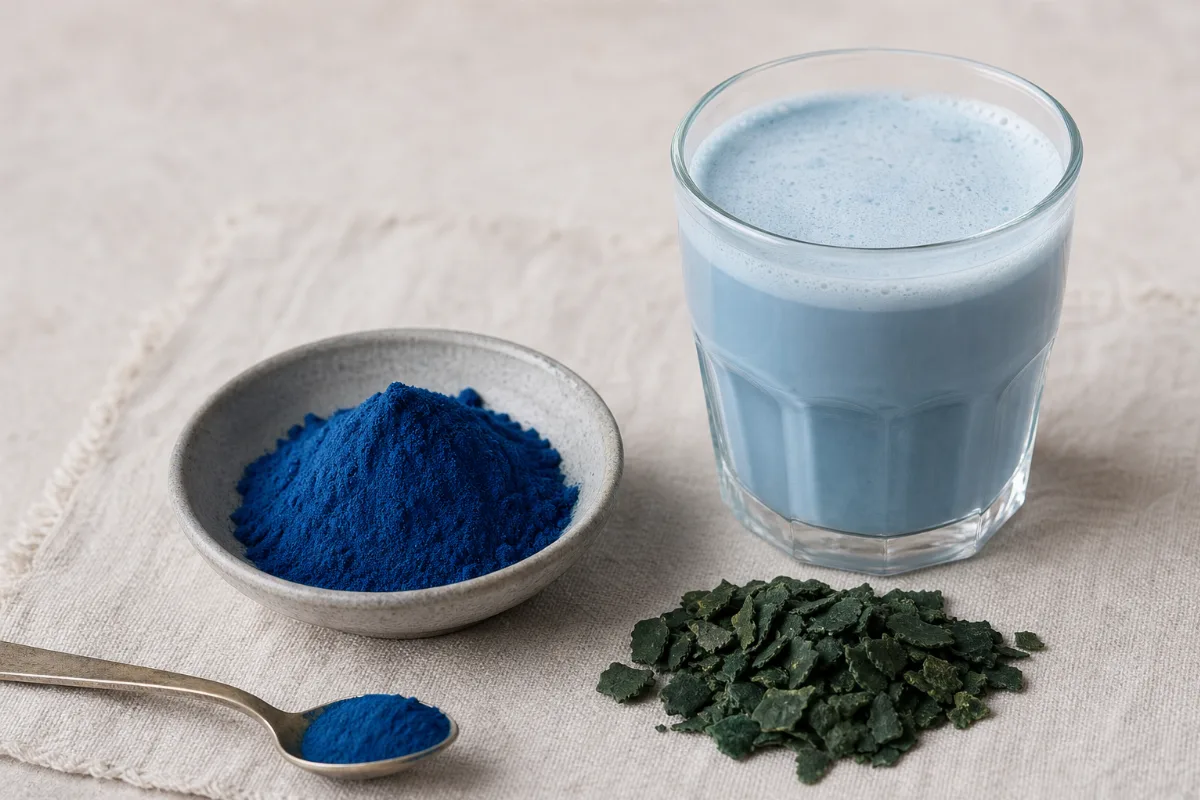
Phycocyanin is a blue pigment-protein that spirulina (Arthrospira platensis, a blue-green alga) makes to catch light. Makers filter it out of dried spirulina with water to make 'spirulina extract', also sold as 'blue spirulina'.
It is used to color confectionery, frostings, frozen desserts, beverage mixes, yogurts, drinks and sauces. It is also sold as blue powders and as capsules. It is a pigment, not a seaweed and not a plant, so there is no standard nutrient table for it.
What the research shows
For the pigment itself the evidence is thin. In cells, purified C-phycocyanin and allophycocyanin lowered oxidative stress and nitric oxide, and in quails phycocyanin in feed raised antioxidant genes and lowered inflammation genes. A review of animal and cell work reports lower blood sugar in animals and found no human studies.
In people we found one small trial: 24 men and women took a phycocyanin-rich extract (about 1 g phycocyanin a day) for 2 weeks. Clotting tests did not change, AST was lower and chronic pain was lower. The authors are linked to the extract's maker and the abstract gives no numbers, so we rate it very low certainty.
Trials of whole spirulina and mixed algae show other results: lower IL-1 beta and IL-6 in 80 adults with MS, better metabolic measures in a review of 13 studies, and modest exercise gains in a review of 22 trials. They did not test the pigment alone.
As a food color
In the US, spirulina extract is a listed color additive that needs no batch certification. The rule lists many foods it may color, at levels consistent with good manufacturing practice, and sets no number. It requires lead and arsenic at 2 mg/kg or less, mercury at 1 mg/kg or less and a negative test for microcystin toxin. An amendment published in February 2026 was delayed indefinitely in March 2026, so check the current rule.
The amount in a drink or sweet is small. The one extract trial used about 1 g of phycocyanin a day, so its results do not apply to a colored candy.
Why the blue fades
A review of laboratory work says phycocyanin works best at pH 5.5 to 6.0 and stays stable up to 45 degrees C. Higher heat or acid breaks it down faster, and light also damages it. Sugars, citric acid or salt appear to help, and wrapping it in tiny capsules can protect it. This is why a blue drink can turn green or gray.
At a glance
Traditional uses history, not proof
- Spirulina has long been eaten as a food
- Using only the blue pigment as a health product, or as a food color, is modern; no traditional use of the pigment alone was found in the sources read
Studied for research
- Antioxidant and anti-inflammatory effects, lab and animal only
- Blood sugar, insufficient evidence (animal and cell studies; no human studies)
- Chronic pain, very low certainty (one trial of 24 people)
- Liver enzymes, very low certainty (same trial)
- Metabolic health, MS inflammation and exercise: trials of whole spirulina or mixed algae, not the pigment
Main compounds
- C-phycocyanin
- Allophycocyanin
- Phycocyanobilin (the blue chromophore)
Common forms
- Spirulina extract used as a food color
- Blue powder for lattes and smoothies (may be extract or whole spirulina)
- Capsules or tablets
- Purified C-phycocyanin used in lab studies
Research links: 2016 trial: safety of a phycocyanin-rich spirulina extract · 2026 EFSA opinion on a C-phycocyanin food additive (different microalga) · US rule: spirulina extract color additive (21 CFR 73.530) · Research Library · Genes & Biomarkers Library
What it is and its history
- Accepted scientific name
- Phycocyanin (C-phycocyanin), the blue pigment-protein of Arthrospira platensis (spirulina)
- Naming authority
- A pigment-protein (phycobiliprotein) made by blue-green algae. The source organism Arthrospira platensis Gomont is an accepted GBIF species (key 3218108); the name Limnospira platensis is also accepted there (key 11212070).
- Common names
- Phycocyanin (English); C-phycocyanin (English); Blue spirulina (English); Spirulina extract (English); Ficocianina (Spanish)
- Family or group
- Phycocyanin is a pigment-protein, not a plant and not a seaweed. Spirulina is a blue-green alga (a cyanobacterium) of the family Microcoleaceae.
- Classification
- Bacteria (cyanobacteria) - this describes the source organism, not the pigment > Cyanobacteria > Cyanobacteriia > Cyanobacteriales > Microcoleaceae > Arthrospira > Arthrospira platensis
- Native range
- Not verified from a source read.
- Habitat
- Not verified from a source read.
- Cultivation
- Not verified from a source read.
- Harvest and processing
- The US rule describes the color as the filtered water extract of dried Arthrospira platensis biomass. A 2026 lab paper made purified C-phycocyanin and allophycocyanin by ultrasound extraction followed by membrane chromatography.
- Look-alikes and adulterants
- Name: Whole spirulina powder; Note: Whole spirulina holds protein, fats, minerals and other pigments as well as phycocyanin. Most human trials used whole spirulina.; Name: Blue galdieria extract; Note: A C-phycocyanin extract from a different microalga (Galdieria sulphuraria) assessed by EFSA in 2026.; Name: AFA (Aphanizomenon flos-aquae); Note: A different blue-green alga sold as a supplement, with its own microcystin findings.
Photographs
What is inside, and how it may work
What it contains and how those compounds act in cells and animals. Laboratory and animal mechanisms are not proven effects in people.
Main compounds
| Compound | Family | Where it is concentrated | Activity studied | Level of evidence |
|---|---|---|---|---|
| C-phycocyanin | phycobiliprotein | Spirulina biomass (the blue main pigment) Not found per food portion. In EFSA's galdieria extract C-phycocyanin was over 25 percent. | In cells and animals it is antioxidant and anti-inflammatory. In people only one small extract trial was found. 5 9 2 | Lab |
| Allophycocyanin | phycobiliprotein | Spirulina biomass Not found. | Showed stronger iron-reducing (FRAP) antioxidant power than C-phycocyanin in a 2026 cell-dish study. 5 | Lab |
| Phycocyanobilin (the blue chromophore) | open-chain tetrapyrrole | Attached to the phycocyanin protein Not found. | Proposed by a review to act like a bilirubin-type molecule through heme oxygenase 1. EFSA says the chromophore was handled like bile pigments in the galdieria extract data. 9 2 | Lab |
Mechanisms, receptors and pathways
| Target or pathway | Gene or receptor | What was found | Level |
|---|---|---|---|
| Oxidative stress and nitric oxide in cells | Not applicable | Purified C-phycocyanin and allophycocyanin lowered reactive oxygen species and protected nerve-type cells from oxidative stress; all preparations lowered LPS-driven nitric oxide in microglia-type cells. 5 | Lab |
| Antioxidant and inflammation genes in quails | CAT, GPX, IL-8, IL-1 beta | Antioxidant genes CAT and GPX rose and the inflammation genes IL-8 and IL-1 beta fell as phycocyanin in feed rose. 6 | Animal research |
| Beta-cell and liver sugar pathways | Nrf2, PI3K/Akt, JNK, p38 | In cells phycocyanin acted on these pathways; in diabetic animals fasting glucose fell and insulin rose. 12 | Animal research |
Absorption, metabolism and elimination
- Absorption
- In a gut-wall cell model (Caco-2), purified C-phycocyanin and allophycocyanin crossed at a low-to-moderate, time-dependent rate and entered nerve-type cells. EFSA says the galdieria extract's components, including the chromophore, were metabolised like normal dietary parts and bile pigments. No human blood-level data for spirulina phycocyanin were found.
- Distribution
- Not found in people.
- Metabolism
- EFSA: handled like normal dietary constituents and bile pigments (galdieria extract data).
- Elimination
- Not found.
- Bioavailability
- Not measured in people in the sources read.
Isolated compounds versus whole extracts
The blue in a latte or candy is a small amount of extract. The one extract trial used a branded aqueous extract; the other human results use whole spirulina or mixed algae. Results from one do not carry to another. The pigment also fades with heat, light and acid.
Nutritional composition
This is a pigment and extract, not a whole food, so it has no standard nutrient table. USDA FoodData Central has no entry for phycocyanin or spirulina extract in the data our earlier check read; we did not re-check it, so no USDA values and no per-portion numbers are given. As a color the legal limit is 'good manufacturing practice', so a drink or sweet holds little. EFSA gives C-phycocyanin as over 25 percent of a galdieria extract; no figure was found for blue spirulina powders. Whole spirulina is a protein-rich food and has its own nutrition. Use your product's label.
2 low certainty3 very low certainty2 not enough evidence
What was looked at
The 7 benefits and uses checked for Phycocyanin (Blue Spirulina), each with how strong the evidence is. Tap one to open it.
- Antioxidant and anti-inflammatory effects (lab and animal)Not enough evidence
- Blood sugar and diabetes pathways (animal and cell)Not enough evidence
- Chronic pain (one small trial of a phycocyanin-rich extract)Very low certainty
- Liver enzymes (AST and ALT)Very low certainty
- Weight, blood pressure, blood sugar and blood fats (whole spirulina)Very low certainty
- Inflammation markers in multiple sclerosis (whole spirulina)Low certainty
- Exercise performance and muscle recovery (mixed algae supplements)Low certainty
Lab markers tracked in the studies
Chronic pain at rest and when activeNitric oxide made by inflamed cells (cell dishes)Liver enzymes (AST and ALT)IL-1 beta and IL-6 (inflammation markers)Time to exhaustion and creatine kinase
What is Phycocyanin (Blue Spirulina) good for?
The main studied uses and how strong the evidence is. Almost all of it is from cells, animals or whole spirulina, not from the blue pigment in people.
Benefits, one by one
Each card is a research question, not a promise. Tap a goal to filter. Open a card to see the studies, doses and limits.
Antioxidant and anti-inflammatory effects (lab and animal)
Not enough evidencePhycocyanin is the most-studied part of blue spirulina. In cell dishes and in animals it calms inflammation signals and lowers oxidative stress. We found no human trial that measured these effects for the pigment itself.
3 studiesCell work used up to 35 micrograms per mL. The quail feed held 1 to 3…
Studies, doses and limits
Results
Positive in cells and animals. Not tested in people for these outcomes.
Effect sizes as reported
Not given as numbers in the abstracts read.
Why this rating
Cell, bird and review evidence only. It does not show an effect in people. A cell model that crosses a gut-wall layer at a low-to-moderate rate does not tell us how much blood level a person gets.
Form and dose studied
Cell work used up to 35 micrograms per mL. The quail feed held 1 to 3 g of extract per kg (study figures, not advice).
Who was studied
Cultured nerve-type and microglia-type cells; 320 male quails.
Limits
No human data. The cell study's authors hold patent applications on their purification method. The quail study was a bird farm study.
Why researchers looked
Phycocyanin is a bright blue pigment-protein that spirulina makes in large amounts. Lab tests showed it mops up reactive molecules, so researchers tested it in cells and animals.
Traditional use
Spirulina has long been eaten as a food. Using the purified blue pigment as a health product is modern, and no traditional use for the pigment alone was found in the sources read.
Proposed mechanism Preliminary mechanism
In cells, purified C-phycocyanin and allophycocyanin lowered reactive oxygen species and, in microglia-type cells, nitric oxide made after an inflammatory trigger (LPS). A review suggests the pigment's chromophore phycocyanobilin may act like a bilirubin-type molecule by switching on heme oxygenase 1. In quails, antioxidant genes rose and the inflammation genes IL-8 and IL-1 beta fell.
A proposed mechanism does not show that the effect happens in people.
See the Safety tab for allergy and toxin contamination.
Blood sugar and diabetes pathways (animal and cell)
Not enough evidenceA review of animal and cell studies reports that phycocyanin lowered blood sugar in animals. It found no human studies. Nothing here shows the pigment treats or prevents diabetes in people.
1 studiesNot applicable (animal studies).
Studies, doses and limits
What the trials found
The systematic review searched to April 2023 and found only animal and cell studies.
Results
In animals: higher fasting insulin and lower fasting glucose, glycosylated serum protein and glycosylated hemoglobin.
Effect sizes as reported
Not given as numbers in the abstract.
Why this rating
Animal and cell studies only; the abstract does not rate their quality.
Who was studied
Diabetic animals and cultured cells.
Limits
No human trial. A review of animal studies cannot show an effect in people.
Why researchers looked
Phycocyanin is thought to protect insulin-making cells and to act on liver sugar handling, so it has been tested in diabetic animals.
Traditional use
No traditional use for this was found.
Proposed mechanism Preliminary mechanism
In cells, phycocyanin protected beta-cells from damage by methylglyoxal and by islet amyloid polypeptide and acted on pathways including Nrf2, PI3K/Akt, JNK and p38, and on liver glucose handling.
A proposed mechanism does not show that the effect happens in people.
Anyone who takes diabetes medicine should ask a clinician before using any supplement.
Chronic pain (one small trial of a phycocyanin-rich extract)
Very low certaintyOne small, 2-week trial of an extract rich in phycocyanin reported less chronic pain than placebo. It was mainly a safety study, it was run by people linked to the maker, and it has not been repeated.
1 studies2.3 g a day of an aqueous spirulina extract with about 1 g phycocyani…
Studies, doses and limits
What the trials found
24 men and women took 2.3 g a day of an aqueous spirulina extract (about 1 g of phycocyanin) or placebo for 2 weeks.
Results
Chronic pain at rest and when active was lower with the extract (P < .05). No numbers are given in the abstract.
Effect sizes as reported
Not given in the abstract.
Why this rating
One trial of 24 people over 2 weeks, pain was not the main aim, the abstract gives no numbers, and the authors work for the company that makes the extract. No independent repeat was found.
Form and dose studied
2.3 g a day of an aqueous spirulina extract with about 1 g phycocyanin, 2 weeks (study figures, not advice).
Who was studied
24 men and women; health status not stated in the abstract.
Limits
Tiny, short, industry-linked, abstract only. It tested a branded extract, not blue latte powder or a food color.
Why researchers looked
The same makers had earlier reported pain relief with a lower amount of the extract, so they checked pain again in a safety study.
Traditional use
No traditional use for this was found.
Proposed mechanism Preliminary mechanism
Not established. The authors do not give a mechanism in the abstract.
A proposed mechanism does not show that the effect happens in people.
Clotting tests and platelet markers did not change in this trial. See the Safety tab.
Liver enzymes (AST and ALT)
Very low certaintyIn one small 2-week trial, AST (a liver enzyme) fell more with a phycocyanin-rich extract than with placebo. It was a side finding in a safety study by people linked to the maker.
2 studiesOne branded aqueous extract (study figure, not advice).
Studies, doses and limits
What the trials found
24 men and women, 2.3 g a day of an aqueous spirulina extract (about 1 g phycocyanin) or placebo, 2 weeks.
Results
AST was lower than placebo at 2 weeks (P < .02). ALT was lower within the extract group but the change was P < .08, above the usual .05 mark.
Effect sizes as reported
No values in the abstract.
Why this rating
One tiny, short, industry-linked trial; liver enzymes were not the main aim; no repeat.
Form and dose studied
One branded aqueous extract (study figure, not advice).
Who was studied
24 men and women.
Limits
Small, short, industry-linked. Lower enzymes in healthy-looking people do not show a health benefit.
Why researchers looked
AST and ALT were checked as safety measures for the extract.
Traditional use
No traditional use for this was found.
Proposed mechanism Preliminary mechanism
Not established. In quails fed phycocyanin, blood ALT was lower and liver structure looked better, but that is animal work.
A proposed mechanism does not show that the effect happens in people.
Contaminated blue-green algae products can harm the liver; see the Safety tab.
Weight, blood pressure, blood sugar and blood fats (whole spirulina)
Very low certaintyA review of 13 human studies of whole spirulina reported better weight, blood pressure, sugar and blood fat measures. The studies were of the whole alga, not the blue pigment, so the result cannot be credited to phycocyanin.
1 studiesWhole spirulina, 20 mg to 6 g a day in the studies (study figures, no…
Studies, doses and limits
What the trials found
Systematic review: 13 human studies out of 527 articles, 20 mg to 6 g of spirulina a day for 17 to 360 days.
Results
The authors conclude spirulina improved metabolic syndrome measures. The abstract gives no pooled numbers and no quality rating.
Effect sizes as reported
Not given in the abstract.
Why this rating
The abstract shows no risk-of-bias check or pooled numbers, the studies varied widely in amount and length, and they tested whole spirulina. Phycocyanin alone was not tested.
Form and dose studied
Whole spirulina, 20 mg to 6 g a day in the studies (study figures, not advice).
Who was studied
Adults in 13 studies; details not in the abstract.
Limits
Not about the pigment. Credit to phycocyanin goes beyond the data.
Why researchers looked
Spirulina is eaten as a food and supplement, and phycocyanin is one of its main parts.
Traditional use
Spirulina has long been used as food in some regions; the sources read do not give details, so none are stated here.
Proposed mechanism Preliminary mechanism
The review names phycocyanin, a tripeptide (Ile-Gln-Pro), gamma-linolenic acid and a glycolipid as possible reasons. This is the authors' suggestion, not shown by the trials.
A proposed mechanism does not show that the effect happens in people.
Spirulina supplements can be contaminated with toxins; see the Safety tab.
Inflammation markers in multiple sclerosis (whole spirulina)
Low certaintyIn one 12-week trial of 80 adults with relapsing MS, 1 g a day of whole spirulina lowered two inflammation markers more than placebo. It is not a treatment claim and it did not test the pigment.
1 studies1 g a day of spirulina, 12 weeks (study figure, not advice).
Studies, doses and limits
What the trials found
80 adults with relapsing-remitting MS, 1 g a day of spirulina or placebo for 12 weeks; 16 (20%) dropped out. Triple-blind, registered trial.
Results
IL-1 beta and IL-6 were lower than with placebo (both p < 0.001). Health perception, physical function, energy and sexual function scores improved; emotional wellbeing, cognitive function and overall quality of life did not change. Weight was 2.85 kg lower than placebo.
Effect sizes as reported
IL-1 beta -1.07 +/- 0.14; IL-6 -2.66 +/- 0.26 (mixed-model estimates).
Why this rating
One randomised, registered trial, but small, short and with 20% dropout and baseline carried forward for missing values. It was of whole spirulina.
Form and dose studied
1 g a day of spirulina, 12 weeks (study figure, not advice).
Who was studied
80 adults with relapsing-remitting MS (EDSS 0 to 6).
Limits
Single trial. An erratum was published in 2026. Whole spirulina, not purified phycocyanin. Not evidence that spirulina treats MS.
Why researchers looked
Spirulina contains phycocyanin and other compounds that are antioxidant and anti-inflammatory in the lab, and MS involves inflammation.
Traditional use
No traditional use for this was found.
Proposed mechanism Preliminary mechanism
Not shown. The authors point to spirulina's antioxidant and anti-inflammatory compounds, including phycocyanin.
A proposed mechanism does not show that the effect happens in people.
People with MS or other autoimmune disease should ask their specialist before using algae supplements; no study of this question was found.
Exercise performance and muscle recovery (mixed algae supplements)
Low certaintyA 2026 review of 22 trials found algae supplements modestly improved time to exhaustion and lowered a muscle-damage marker. The products were spirulina, chlorella, brown-algal polysaccharides or astaxanthin, not phycocyanin alone.
1 studiesVaried by trial.
Studies, doses and limits
What the trials found
Meta-analysis of 22 randomised trials, 822 healthy or athletic adults, registered in PROSPERO.
Results
Time to exhaustion improved (SMD 1.06, 95% CI 0.16 to 1.96). Creatine kinase fell (SMD -0.78, 95% CI -1.28 to -0.28). VO2max was only suggestive (SMD 0.88, 95% CI 0.00 to 1.75). Time-trial performance did not change. Effects were larger for Chlorella.
Effect sizes as reported
TTE SMD 1.06; CK SMD -0.78; VO2max SMD 0.88 (CI touches 0).
Why this rating
Several different algae products pooled, wide confidence intervals and varied methods. Phycocyanin was not tested alone.
Form and dose studied
Varied by trial.
Who was studied
Healthy and athletic adults.
Limits
Mixed products; not a test of the blue pigment or of a food color.
Why researchers looked
Algae contain antioxidants and other compounds that might help muscles recover.
Proposed mechanism Preliminary mechanism
Not shown. The authors suggest antioxidants and bioactive compounds.
A proposed mechanism does not show that the effect happens in people.
See the Safety tab.
Connections to the rest of health
How Phycocyanin (Blue Spirulina) connects to the rest of our health knowledge graph. Every link says what kind of connection it is. A safety link (for example to the liver) is a warning, not a benefit. A study that merely mentions a topic never creates a benefit link.
Explore every connection: goals, body systems, organs, symptoms, genes
A. Wellness goals
| Connected to | Kind of connection | Evidence status | Context | Studies |
|---|---|---|---|---|
| Inflammation Balance | Not enough evidence | Antioxidant and anti-inflammatory effects (lab and animal): Phycocyanin is the most-studied part of blue spirulina. In cell dishes and in animals it calms inflammation signals and lowers oxidative stress. We found no human trial that measured these effects for the pigment itself. | 5 6 9 | |
| Blood Sugar Balance | Not enough evidence | Blood sugar and diabetes pathways (animal and cell): A review of animal and cell studies reports that phycocyanin lowered blood sugar in animals. It found no human studies. Nothing here shows the pigment treats or prevents diabetes in people. | 12 | |
| Pain Relief | Very low certainty | Chronic pain (one small trial of a phycocyanin-rich extract): One small, 2-week trial of an extract rich in phycocyanin reported less chronic pain than placebo. It was mainly a safety study, it was run by people linked to the maker, and it has not been repeated. | 7 | |
| Liver Support | Very low certainty | Liver enzymes (AST and ALT): In one small 2-week trial, AST (a liver enzyme) fell more with a phycocyanin-rich extract than with placebo. It was a side finding in a safety study by people linked to the maker. | 7 6 | |
| Metabolic Health | Very low certainty | Weight, blood pressure, blood sugar and blood fats (whole spirulina): A review of 13 human studies of whole spirulina reported better weight, blood pressure, sugar and blood fat measures. The studies were of the whole alga, not the blue pigment, so the result cannot be credited to phycocyanin. | 3 | |
| Healthy Weight | Very low certainty | Weight, blood pressure, blood sugar and blood fats (whole spirulina): A review of 13 human studies of whole spirulina reported better weight, blood pressure, sugar and blood fat measures. The studies were of the whole alga, not the blue pigment, so the result cannot be credited to phycocyanin. | 3 | |
| Inflammation Balance | Low certainty | Inflammation markers in multiple sclerosis (whole spirulina): In one 12-week trial of 80 adults with relapsing MS, 1 g a day of whole spirulina lowered two inflammation markers more than placebo. It is not a treatment claim and it did not test the pigment. | 8 | |
| Physical Stamina | Low certainty | Exercise performance and muscle recovery (mixed algae supplements): A 2026 review of 22 trials found algae supplements modestly improved time to exhaustion and lowered a muscle-damage marker. The products were spirulina, chlorella, brown-algal polysaccharides or astaxanthin, not phycocyanin alone. | 11 | |
| Recovery Optimization | Low certainty | Exercise performance and muscle recovery (mixed algae supplements): A 2026 review of 22 trials found algae supplements modestly improved time to exhaustion and lowered a muscle-damage marker. The products were spirulina, chlorella, brown-algal polysaccharides or astaxanthin, not phycocyanin alone. | 11 |
B. Body systems
| Connected to | Kind of connection | Evidence status | Context | Studies |
|---|---|---|---|---|
| Immune system | Lab or animal only | Lower inflammation signals in cells and quails; no human trial of the pigment. Preparation or compound: Purified phycocyanin |
5 6 | |
| Immune System | Biological association | Not enough evidence | Studied for: Antioxidant and anti-inflammatory effects (lab and animal) Studied for: Inflammation markers in multiple sclerosis (whole spirulina) | 5 6 9 8 |
| Metabolism Weight | Biological association | Not enough evidence | Studied for: Blood sugar and diabetes pathways (animal and cell) Studied for: Weight, blood pressure, blood sugar and blood fats (whole spirulina) | 12 3 |
| Nervous System | Biological association | Very low certainty | Studied for: Chronic pain (one small trial of a phycocyanin-rich extract) Studied for: Inflammation markers in multiple sclerosis (whole spirulina) | 7 8 |
| Hepatic System | Biological association | Very low certainty | Studied for: Liver enzymes (AST and ALT) | 7 6 |
| Cardiovascular System | Biological association | Very low certainty | Studied for: Weight, blood pressure, blood sugar and blood fats (whole spirulina) | 3 |
| Musculoskeletal System | Biological association | Low certainty | Studied for: Exercise performance and muscle recovery (mixed algae supplements) | 11 |
E. Health conditions
| Connected to | Kind of connection | Evidence status | Context | Studies |
|---|---|---|---|---|
| Food allergy | Adverse effect or risk | Documented risk | Phycocyanin was a sensitizing protein in a related alga; MSK lists anaphylaxis for blue-green algae supplements. Preparation or compound: Phycocyanin and blue-green algae supplements |
4 15 |
G. Root causes and contributing factors
| Connected to | Kind of connection | Evidence status | Context | Studies |
|---|---|---|---|---|
| Environmental toxins | Adverse effect or risk | Documented risk | Microcystin was found in AFA supplements; the color rule requires a negative test. Microcystin was found in AFA blue-green algae supplements; the US color rule requires a negative test. Preparation or compound: Blue-green algae supplements |
10 13 |
I. Biomarkers
| Connected to | Kind of connection | Evidence status | Context | Studies |
|---|---|---|---|---|
| Chronic pain at rest and when active | Biological association | Very low certainty | Measured in trials: lowered. A lab change is not the same as a health benefit. | 7 |
| Nitric oxide made by inflamed cells (cell dishes) | Biological association | Not enough evidence | Measured in trials: lowered. A lab change is not the same as a health benefit. | 5 |
| Liver enzymes (AST and ALT) | Biological association | Very low certainty | Measured in trials: lowered. A lab change is not the same as a health benefit. | 7 |
| IL-1 beta and IL-6 (inflammation markers) | Biological association | Low certainty | Measured in trials: lowered. A lab change is not the same as a health benefit. | 8 |
| Time to exhaustion and creatine kinase | Biological association | Low certainty | Measured in trials: improved. A lab change is not the same as a health benefit. | 11 |
L. Active compounds
| Connected to | Kind of connection | Evidence status | Context | Studies |
|---|---|---|---|---|
| C-phycocyanin | Biological association | Lab | In cells and animals it is antioxidant and anti-inflammatory. In people only one small extract trial was found. Preparation or compound: Spirulina biomass (the blue main pigment) |
5 9 2 |
| Allophycocyanin | Biological association | Lab | Showed stronger iron-reducing (FRAP) antioxidant power than C-phycocyanin in a 2026 cell-dish study. Preparation or compound: Spirulina biomass |
5 |
| Phycocyanobilin (the blue chromophore) | Biological association | Lab | Proposed by a review to act like a bilirubin-type molecule through heme oxygenase 1. EFSA says the chromophore was handled like bile pigments in the galdieria extract data. Preparation or compound: Attached to the phycocyanin protein |
9 2 |
Each connection is stored with the ingredient, the connected record, the kind of connection, the evidence status, the supporting studies, the preparation or compound involved, and a review date (last reviewed October 26, 2026).
Evidence at a glance: what changed in 4 lab markers
Tap a number to show only those markers. Counts are markers, not people.
The evidence
The research centre for Phycocyanin (Blue Spirulina). Every record here was checked against PubMed or the publisher's page; we never list a study we have not verified.
Evidence by outcome
Bars show how many studies we found for each outcome, not how well it works. People are added up across trials only (reviews are not added, to avoid double counting).
How we rate evidence
High certainty
Several well-run trials or reviews agree; further research is unlikely to change the picture much.
Moderate certainty
Good trials point the same way, but some doubt remains.
Low certainty
Small, short or inconsistent trials. The finding could change with better research.
Very low certainty
Very little or very weak human data. Treat as a possibility only.
Mixed findings
Trials or reviews disagree with each other.
Not enough evidence
Not enough human research to say either way.
Evidence against
Good research found no benefit, or found harm.
We take the reviewers' own risk-of-bias and GRADE statements where they exist, and otherwise judge from study size, design, consistency, directness and whether a product matches what is sold. Many publications do not make evidence high. Method note: We started from our earlier phycocyanin summary, re-opened each PubMed study (record and abstract), read the US color rule and the Memorial Sloan Kettering page, and checked the source organism in GBIF. Only abstracts were read for the studies. Items we could not verify are listed in the research gaps.
Study library: every study we checked 15
| Study | Design | People | Product, dose, length | Result |
|---|---|---|---|---|
| Adjali 2022 Physicochemical degradation of phycocyanin and means to improve its stability: A short review. J Pharm Anal · PMID 35811624 · DOI |
Narrative review n/a |
Review of laboratory work on phycocyanin stability | Phycocyanin from Arthrospira platensis Pigment-protein |
The best pH range is 5.5 to 6.0 and the pigment is stable up to 45 C. Higher temperature or acid shortens its half-life. It is sensitive to light. Sugars, citric acid or salt appear to help, and encapsulation can protect it. Not applicable (Not given in the abstract) Methods, limits and fundingOutcomes: Stability with pH, temperature and light Limitations: Laboratory and food-science review; says nothing about health. Funding and conflicts: No conflicts stated in the abstract. Read: abstract |
| EFSA Panel on Food Additives and Flavourings (FAF) 2026 Safety evaluation of blue galdieria extract as a food additive. EFSA J · PMID 42016292 · DOI |
Regulatory opinion regulatory |
Scientific opinion on an EU food additive application | Blue galdieria extract: enzyme-treated C-phycocyanin extract from the microalga Galdieria sulphuraria (a different source from spirulina) Lysed microalgae biomass extract 90-day animal study |
The extract (over 25% C-phycocyanin) and its pigment part were handled like normal dietary parts and bile pigments. It was not genotoxic and a 90-day study found no treatment-related harm at the top dose. Allergy risk was expected to be low. EFSA set an acceptable daily intake of 7 mg per kg body weight as C-phycocyanin. It judged the proposed uses at typical levels of no safety concern, but could not conclude for use "at quantum satis". Estimated intake in toddlers and children reached or passed the daily limit at the proposed top use levels. ADI 7 mg C-phycocyanin per kg body weight per day; NOAEL 4000 mg extract per kg (1332 mg C-phycocyanin per kg) (Not given in the abstract) Methods, limits and fundingOutcomes: Safety, genotoxicity, 90-day toxicity, allergenicity, intake Limitations: This is about an extract from a different microalga. EFSA used spirulina data for parts of its reasoning because the C-phycocyanins are similar, and noted uncertainty from spirulina developmental toxicity studies. It is not an EU approval of spirulina extract. Funding and conflicts: Regulatory opinion; no sponsor result presented. Read: abstract |
| Firdaus 2025 Impact of Spirulina Supplementation on Obesity, Hypertension, Hyperglycemia, and Hyperlipidemia: A Systematic Review. Scientifica (Cairo) · PMID 40182955 · DOI |
Systematic review human-review |
13 13 human studies chosen from 527 articles (searched to 2023) |
Whole spirulina supplements Whole spirulina 20 mg to 6 g per day across the studies 17 to 360 days |
The review says spirulina improved metabolic syndrome measures and attributes this to phycocyanin and three other components (a tripeptide, gamma-linolenic acid and a glycolipid). Amounts in the studies ran from 20 mg to 6 g over 17 to 360 days. Not summarised as numbers in the abstract (Not given in the abstract) Methods, limits and fundingOutcomes: Obesity, BMI, blood pressure, blood sugar, blood fats Limitations: The abstract gives no risk-of-bias or certainty rating and no pooled numbers. Naming phycocyanin as a cause goes beyond what trials of whole spirulina can show. Authors call for more work on form and amount. Funding and conflicts: The abstract states the authors declare no conflicts of interest. Read: abstract |
| Geh 2015 Identification of Microcystis aeruginosa Peptides Responsible for Allergic Sensitization and Characterization of Functional Interactions between Cyanobacterial Toxins and Immunogenic Peptides. Environ Health Perspect · PMID 25902363 · DOI |
Laboratory immunology human-serum-and-cell |
Blood serum from patients with chronic rhinitis, tested against extracts of the blue-green alga Microcystis aeruginosa | Extracts of Microcystis aeruginosa (not spirulina) Whole cell extracts |
Mass spectrometry found that phycocyanin and the core-membrane linker peptide were the responsible allergens in this alga, and extracts with these proteins made rat basophil leukemia cells release beta-hexosaminidase. Not given as numbers in the abstract (Not given in the abstract) Methods, limits and fundingOutcomes: IgE reactivity, identification of sensitizing proteins by mass spectrometry, mediator release in rat cells Limitations: A different blue-green alga (Microcystis), patient blood samples and rat cells, not spirulina extract in people. It shows that phycocyanin can be an allergen, not how often. Funding and conflicts: No competing financial interests declared. Read: abstract |
| Girgenti 2026 Neuroprotective effects of C-phycocyanin and allophycocyanin from Spirulina purified using a newly developed method: in vitro barrier permeability, antioxidant and anti-inflammatory activities. J Biol Eng · PMID 42310693 · DOI |
Laboratory research cell |
Cultured nerve-type (SH-SY5Y) and microglia-type (BV2) cells, and a Caco-2 gut-wall cell model | Purified C-phycocyanin, purified allophycocyanin and a crude spirulina extract Pigment-proteins from fresh Arthrospira platensis Cell viability shown up to 35 micrograms per mL |
Both purified pigments lowered reactive oxygen species and protected nerve-type cells from oxidative stress. All preparations lowered LPS-driven nitric oxide in microglia-type cells. Both pigments crossed the Caco-2 gut-wall model at a low-to-moderate rate and entered nerve-type cells. Not given as numbers in the abstract (Not given in the abstract) Methods, limits and fundingOutcomes: Antioxidant power, reactive oxygen species, nitric oxide after LPS, permeability across Caco-2 monolayers, cell uptake Limitations: Cells in dishes only; no animal or human data. Permeability in a Caco-2 model does not show how much is absorbed in people. Funding and conflicts: Declares patent applications on the purification method held by some authors. Read: abstract |
| Hendam 2026 Dietary Spirulina platensis phycocyanin enhances growth performance, antioxidant status, and immune-related gene expression in Japanese quails (Coturnix japonica). Sci Rep · PMID 42002574 · DOI |
Animal trial animal |
320 320 male Japanese quails, 4 groups of 80 |
Phycocyanin extracted from Spirulina platensis added to feed Pigment-protein extract 0, 1, 2 or 3 g per kg of feed (animal study figures) Not given in the abstract |
Quails fed 3 g phycocyanin per kg of feed grew better and used feed better. Blood ALT, creatinine, cholesterol and urea were lower and total protein, triglycerides and globulins higher in a dose-related way. Antioxidant genes (CAT, GPX) went up and the inflammation genes IL-8 and IL-1 beta went down. Differences reported as P < 0.001; numbers not in the abstract (Not given in the abstract) Methods, limits and fundingOutcomes: Growth, feed use, blood chemistry, blood counts, antioxidant and inflammation gene expression, organ structure Limitations: Bird farm study. Quail results cannot be carried to people. Funding and conflicts: No competing interests declared. Read: abstract |
| Jensen 2016 Clinical Safety of a High Dose of Phycocyanin-Enriched Aqueous Extract from Arthrospira (Spirulina) platensis: Results from a Randomized, Double-Blind, Placebo-Controlled Study with a Focus on Anticoagulant Activity and Platelet Activation. J Med Food · PMID 27362442 · DOI |
Randomised controlled trial |
24 24 men and women (health status not stated in the abstract) |
Aqueous cyanophyta extract (ACE) with a high phycocyanin content, from Arthrospira platensis, versus placebo Aqueous extract of spirulina; about 1 g phycocyanin in the daily amount 2.3 g/day of extract (about 1 g phycocyanin), as the study figure, not advice 2 weeks |
No change in P-selectin, aPTT, thrombin clotting time or fibrinogen activity. AST was lower after 2 weeks with the extract (P < .001 within group; P < .02 versus placebo). ALT was also lower within the extract group (P < .08, not below the usual .05 mark). Chronic pain at rest and when active was lower (P < .05). AST significantly lower than placebo at 2 weeks (P < .02); pain lower (P < .05). Actual values are not in the abstract. (Not given in the abstract) Methods, limits and fundingOutcomes: Platelet activation (P-selectin), clotting tests (aPTT, thrombin clotting time, fibrinogen), AST and ALT, chronic pain Limitations: Only 24 people and 2 weeks. The abstract gives no numbers for AST or pain. The authors are linked to the company that makes the extract. Pain was not the main aim of this safety study. Funding and conflicts: Authors are affiliated with NIS Labs and Cerule LLC (Klamath Falls, Oregon), the makers of the extract. Treat as industry-linked. Read: abstract |
| Karimi 2025 Effects of spirulina (Arthrospira) platensis supplementation on inflammation, physical and mental quality of life, and anthropometric measures in patients with relapsing-remitting multiple sclerosis (RRMS): a triple-blinded, randomized, placebo-controlled trial. Nutr J · PMID 40877830 · DOI |
Randomised controlled trial |
80 80 adults with relapsing-remitting multiple sclerosis (EDSS 0 to 6); 16 (20%) withdrew |
Whole spirulina (Arthrospira platensis) versus placebo; the pigment was not tested alone Whole spirulina; the form is not stated in the abstract 1 g/day (study figure, not advice) 12 weeks |
IL-1 beta (estimate -1.07, SE 0.14, p < 0.001) and IL-6 (estimate -2.66, SE 0.26, p < 0.001) were lower than with placebo. Some quality-of-life items improved (health perception, physical function, energy, sexual function). No change in emotional wellbeing, cognitive function or overall quality of life. Weight was 2.85 kg lower than placebo (p = 0.015). IL-1 beta -1.07 +/- 0.14; IL-6 -2.66 +/- 0.26 (mixed-model estimates, p < 0.001) (Not given in the abstract) Methods, limits and fundingOutcomes: Serum IL-1 beta and IL-6 (main outcomes), quality of life, body measures Limitations: One trial, 12 weeks, 20% dropped out and missing values were filled in by carrying the baseline forward. An erratum was published in 2026. Whole spirulina, so the result cannot be credited to phycocyanin. Funding and conflicts: No competing interests declared. Registration: IRCT2024124060794N1 (registered Feb 2024) Read: abstract |
| Liu 2022 Phycocyanin: Anti-inflammatory effect and mechanism. Biomed Pharmacother · PMID 36076518 · DOI |
Narrative review review |
Review of work on lung, liver, heart and brain-blood-vessel inflammation (mostly lab and animal) | Phycocyanin Pigment-protein from algae |
The review says phycocyanin has strong antioxidant and anti-inflammatory activity in the work it covers and suggests the pigment phycocyanobilin may act like a bilirubin-type molecule by switching on heme oxygenase 1. The abstract does not describe human trials. Not applicable (Not given in the abstract) Methods, limits and fundingOutcomes: Anti-inflammatory activity and pathways Limitations: A narrative review; the abstract gives no study counts or quality ratings and no human results. Funding and conflicts: The authors declare no conflict of interest. Read: abstract |
| Marsan 2018 Evaluation of microcystin contamination in blue-green algal dietary supplements using a protein phosphatase inhibition-based test kit. Heliyon · PMID 29862339 · DOI |
Laboratory analysis n/a |
51 51 distinct US blue-green algae (Aphanizomenon flos-aquae, AFA) supplement products |
AFA blue-green algae supplements from Upper Klamath Lake (not spirulina) Dried algae supplements |
26 of 51 products had microcystin at or above 0.25 micrograms per gram, 10 were between 0.5 and 1.0, and 4 were above the 1 microgram per gram Oregon limit (1.1 to 2.8). Most were at or below 1.0. 26 of 51 products >= 0.25 ug/g; 4 above 1 ug/g (Not given in the abstract) Methods, limits and fundingOutcomes: Microcystin toxin content Limitations: AFA from one lake, not spirulina or phycocyanin extract. Serving sizes varied so intake could not be worked out. It shows contamination can occur in blue-green algae supplements. Funding and conflicts: Authors include US FDA scientists; no competing interests stated in the abstract. Read: abstract |
| Wei 2026 The Effects of Seaweed and Microalgae Supplementation on Exercise Performance and Recovery: A Systematic Review and Meta-Analysis. Nutrients · PMID 42075102 · DOI |
Meta-analysis human-review |
822 22 randomised trials in healthy and athletic adults |
Spirulina, Chlorella, brown-algal polysaccharides or astaxanthin (phycocyanin not tested alone) Whole algae and algae extracts Varied Varied |
Time to exhaustion improved (SMD 1.06, 95% CI 0.16 to 1.96) and creatine kinase fell (SMD -0.78, 95% CI -1.28 to -0.28). VO2max showed only a suggestive gain (SMD 0.88, 95% CI 0.00 to 1.75). Time-trial performance did not change. Authors found larger effects with Chlorella. TTE SMD 1.06 (0.16 to 1.96); CK SMD -0.78 (-1.28 to -0.28) (Not given in the abstract) Methods, limits and fundingOutcomes: VO2max, time to exhaustion, maximal power, time-trial performance, creatine kinase Limitations: Mixed algae products; wide confidence intervals; effects depend on species, amount and training type, per the authors. Not a test of phycocyanin. Funding and conflicts: No conflict of interest declared. Registration: PROSPERO CRD420251166723 Read: abstract |
| Ziyaei 2023 Phycocyanin as a nature-inspired antidiabetic agent: A systematic review. Phytomedicine · PMID 37544212 · DOI |
Systematic review animal-and-cell |
Animal and cell studies only (found by searching to April 2023); no human studies | Phycocyanin (from spirulina) Purified pigment |
In animals, phycocyanin was linked to higher fasting insulin and lower fasting glucose, glycosylated serum protein and glycosylated hemoglobin. In cells it protected beta-cells from damage by methylglyoxal and islet amyloid polypeptide and acted on pathways including Nrf2, PI3K/Akt, JNK and p38. Not summarised as numbers in the abstract (Not given in the abstract) Methods, limits and fundingOutcomes: Fasting insulin, fasting glucose, glycosylated serum protein, glycosylated hemoglobin; beta-cell and liver pathways Limitations: Animal and cell studies only. Says no human studies were found. The abstract does not rate the quality of the studies. Funding and conflicts: No competing interests declared. Registration: PROSPERO CRD42022307522 Read: abstract |
| s-cfr-73-530 US Code of Federal Regulations, 21 CFR 73.530 Spirulina extract (Cornell Legal Information Institute copy) · Source |
Regulation n/a |
Methods, limits and fundingRead: full-text | ||
| s-gbif-arthrospira GBIF species match: Arthrospira platensis Gomont (key 3218108) · Source |
Database n/a |
Methods, limits and fundingRead: full-text | ||
| s-msk-bga Memorial Sloan Kettering Cancer Center: Blue-green Algae (About Herbs). Page last updated 5 June 2023 · Source |
Authoritative guidance |
Methods, limits and fundingRead: full-text |
What we do not know yet
- No randomised trial of purified phycocyanin for inflammation, blood sugar or other uses in people.
- The one extract trial had 24 people, ran 2 weeks and is industry-linked.
- No test results for blue spirulina latte powders or phycocyanin capsules were found.
- No safety study in pregnancy, breastfeeding or children for the pigment, and no drug interaction studies.
- No human data on how much phycocyanin is absorbed.
- LiverTox, NIH ODS and LactMed were not searched, and the EU status of spirulina extract was not read.
How new research is added
New studies are found by a saved PubMed search and placed in a review queue before the page changes.
Lab markers
What changed in blood or saliva tests during trials. A changed number is not the same as feeling or being healthier, and we give no "normal ranges".
Other 5
Chronic pain at rest and when active
Lowered in trials
How strong a person says their long-lasting pain is, using a rating scale.
Very low certaintyResults and what it means
Why it was measured
Pain is the symptom people care about, and it was reported in a safety trial.
Statistical vs. clinical meaning
A single small industry-linked trial. Pain scales are self-rated.
Safety implication
None specific.
| Study | Result | People | Product |
|---|---|---|---|
| 7 | Pain at rest and when active lower with the extract than placebo (P < .05); numbers not in the abstract | 24 men and women | Aqueous spirulina extract, 2.3 g a day (about 1 g phycocyanin), 2 weeks |
Nitric oxide made by inflamed cells (cell dishes)
Lowered in trials
A molecule that cells release when they are inflamed. Lower levels in a dish suggest a calming effect, but this is a lab test, not a measure in people.
Not enough evidenceResults and what it means
Why it was measured
It is a common lab marker of inflammation.
Statistical vs. clinical meaning
Lab marker only.
Safety implication
None.
| Study | Result | People | Product |
|---|---|---|---|
| 5 | All preparations (purified C-phycocyanin, allophycocyanin and crude extract) significantly lowered LPS-driven nitric oxide in microglia-type cells | BV2 microglia-type cells | Purified pigments or crude extract, up to 35 micrograms per mL |
Liver enzymes (AST and ALT)
Lowered in trials
Enzymes in the blood that rise when liver cells are stressed or damaged.
Very low certaintyResults and what it means
Why it was measured
Routine safety and liver-health markers.
Statistical vs. clinical meaning
Tiny, short, industry-linked.
Safety implication
No liver injury was reported in the abstract.
| Study | Result | People | Product |
|---|---|---|---|
| 7 | AST lower than placebo at 2 weeks (P < .02); ALT lower within the extract group (P < .08) | 24 men and women | Aqueous spirulina extract, 2.3 g a day (about 1 g phycocyanin), 2 weeks |
IL-1 beta and IL-6 (inflammation markers)
Lowered in trials
Blood proteins that signal inflammation in the body.
Low certaintyResults and what it means
Why it was measured
They were the main outcomes of the MS trial.
Statistical vs. clinical meaning
Whole spirulina, one trial.
Safety implication
None specific.
| Study | Result | People | Product |
|---|---|---|---|
| 8 | IL-1 beta -1.07 +/- 0.14 and IL-6 -2.66 +/- 0.26 versus placebo (p < 0.001) | 80 adults with relapsing-remitting MS | Whole spirulina 1 g a day, 12 weeks |
Time to exhaustion and creatine kinase
Improved in trials
How long someone can keep exercising, and a blood enzyme that rises after muscle damage.
Low certaintyResults and what it means
Why it was measured
Main outcomes of the exercise meta-analysis.
Statistical vs. clinical meaning
Modest and mixed; not phycocyanin alone.
Safety implication
None specific.
| Study | Result | People | Product |
|---|---|---|---|
| 11 | TTE SMD 1.06 (0.16 to 1.96); CK SMD -0.78 (-1.28 to -0.28) | 822 healthy or athletic adults in 22 trials | Spirulina, chlorella, brown-algal polysaccharides or astaxanthin |
Safety
What studies and official sources say about side effects, medicines and who should check first. Each point shows what kind of evidence it comes from.
Main points to know 4
- Allergy is possible; severe reactions are reported for blue-green algae supplements. In blood from allergic patients, phycocyanin and a linker peptide were the main sensitizing proteins in a related blue-green alga (Microcystis), found in a lab study. Memorial Sloan Kettering lists anaphylaxis among reported reactions to blue-green algae supplements. We found no count of how often it happens. Trouble breathing or swelling of the lips, face or throat after blue spirulina or spirulina products needs an emergency call (911 or your local number). Laboratory and authoritative guidance 4 15
- Toxin contamination is a risk for supplements, and the US food color rule tests for it. The US color rule for spirulina extract requires a negative microcystin toxin test and caps lead and arsenic at 2 mg/kg each and mercury at 1 mg/kg. Supplements are not tested that way. A US survey of 51 AFA blue-green algae supplements (a different alga from spirulina) found 26 with microcystin at or above 0.25 micrograms per gram and 4 above the 1 microgram per gram Oregon limit. Memorial Sloan Kettering says cyanotoxin contamination of AFA and possibly spirulina may cause liver, kidney and nerve harm. Regulation and laboratory analysis 13 10 15
- A food color is a small amount; trials of supplements are not the same thing. The US rule allows the color at levels consistent with good manufacturing practice, with no set number. The only human trial of a phycocyanin-rich extract used about 1 g of phycocyanin a day for 2 weeks in 24 people, far more than a drink or sweet would hold. Neither result applies to the other. Regulation and clinical trial 13 7
- Pregnancy, breastfeeding and young children: no direct safety data. We found no study of phycocyanin or blue spirulina in pregnancy or breastfeeding. EFSA's 2026 opinion on a similar extract from another microalga set an acceptable daily intake of 7 mg per kg body weight (as C-phycocyanin) and said estimated intake in toddlers and children reached or passed it at the proposed top use levels. It also noted uncertainty from developmental toxicity studies of spirulina. Ask a doctor, midwife or pharmacist. Regulatory opinion 2
Side effects 4
| Effect | How often | Severity and recovery | Evidence |
|---|---|---|---|
| Allergic reactions, including anaphylaxis (blue-green algae supplements) MSK lists anaphylaxis for blue-green algae supplements. The lab study shows phycocyanin can be a sensitizing allergen. No count of cases was found. | Not found | Can be severe Not described | Authoritative guidance 15 4 |
| No change in clotting tests or platelet markers over 2 weeks in one trial P-selectin, aPTT, thrombin clotting time and fibrinogen did not change. Only 2 weeks, 24 people and an industry-linked trial; this is not proof that long-term use is safe. | 24 people took a phycocyanin-rich extract (about 1 g phycocyanin a day) or placebo | not applicable Not applicable | Clinical trial 7 |
| Muscle breakdown (rhabdomyolysis) after a month of spirulina supplements: one case report Whole spirulina supplement, not purified phycocyanin; cause not proved. | One case in MSK's list | serious Symptoms resolved after stopping, per MSK | Case report 15 |
| Seizures with high calcium in a newborn whose mother took spirulina supplements for a long time: one case report Whole spirulina supplement, not purified phycocyanin; cause not proved. | One case in MSK's list | serious Not described | Case report 15 |
Liver
One small trial reported lower AST after 2 weeks of a phycocyanin-rich extract, and no liver injury from the pigment was reported in the abstracts read. The liver risk we found is from toxin-contaminated blue-green algae products: MSK says cyanotoxins may cause hepatotoxicity. LiverTox was not searched for phycocyanin. 7 15 10
How often. No frequency found.
Monitoring. No agency monitoring advice found.
This is a safety connection. It is not evidence that Phycocyanin (Blue Spirulina) supports liver health.
Medicines and supplements 4
| With | Why it matters | Importance | Evidence | What to do |
|---|---|---|---|---|
| Medicines broken down by the liver enzymes CYP1A2 and CYP2E1 prescription | Memorial Sloan Kettering says spirulina inhibits CYP1A2 and CYP2E1, which could let some medicines build up. | MSK states the clinical relevance is not known. This is about whole spirulina, not purified phycocyanin or a food color. | Authoritative guidance Very low certainty 15 | If you take a medicine that is cleared by these enzymes, ask a pharmacist before using spirulina supplements. |
| Blood thinners and antiplatelet medicines prescription | No interaction was described. A 2-week trial of a phycocyanin-rich extract found no change in clotting tests or a platelet-activation marker. | This is a marker study in 24 people, not an interaction study. No bleeding data. | Clinical trial Very low certainty 7 | Ask a clinician or pharmacist if you take blood thinners. |
| Diabetes medicines prescription | Animal studies reported lower blood sugar with phycocyanin, so an added effect is possible in theory. | Theoretical only. No human interaction study was found. | Theoretical Very low certainty 12 | Ask a clinician or pharmacist before combining. |
| Medicines that calm the immune system, and autoimmune disease prescription | No source we read addresses this for phycocyanin. | Unknown. | Not found Not enough evidence | Ask your specialist before using algae supplements. |
Who should check first 4
| Situation | Advice | Evidence |
|---|---|---|
| Known allergy to spirulina or other blue-green algae, or allergy that is hard to control | Phycocyanin can be an allergen. Ask an allergist before trying blue spirulina products. No study tells us whether people with algae allergy react to the food color. | Laboratory and authoritative guidance 4 15 |
| Pregnancy and breastfeeding | No safety study of phycocyanin was found. Ask your doctor or midwife about supplements and powders. | Not found 2 |
| Children | No trial in children was found. For a similar extract EFSA estimated that toddlers' and children's intake from proposed top use levels could reach or pass its daily limit. | Regulatory opinion 2 |
| Phenylketonuria (PKU) and autoimmune disease | No source we read says anything about phycocyanin for these. Ask your specialist. | Not found |
Overdose, product quality and regulators
Summary. No safety limit has been set for spirulina extract as a color; the US rule uses good manufacturing practice. For a similar C-phycocyanin extract from another microalga, EFSA found no treatment-related harm in a 90-day study and set a daily limit.
Animal. EFSA (blue galdieria extract, 90-day oral study): no treatment-related adverse effects up to the highest dose tested; NOAEL 4000 mg extract per kg body weight a day, equal to 1332 mg C-phycocyanin per kg. Not genotoxic.
Human doses studied. One trial used a spirulina extract with about 1 g phycocyanin a day for 2 weeks (study figure, not advice).
High dose or long term signals. EFSA applied a safety factor of 200 partly because of uncertainty in developmental toxicity studies on spirulina. No long-term human data were found.
Overdose response. Not found.
Genotoxicity. EFSA found the galdieria extract was not genotoxic; this was not checked for spirulina extract.
The US color rule tests for microcystin, lead, arsenic and mercury. Supplements and powders sold as 'blue spirulina' may not carry the same test results; check the maker's report.
Microcystin in blue-green algae supplements. Of 51 AFA supplements tested, 26 had microcystin at or above 0.25 micrograms per gram and 4 were above 1 microgram per gram. AFA is a different alga from spirulina, but the same kind of contamination is the reason the color rule requires a negative test. 10
Metals and toxin limits for the color. Lead and arsenic not more than 2 mg/kg each, mercury not more than 1 mg/kg, and negative for microcystin. 13
| Body | Action | Date |
|---|---|---|
| US Food and Drug Administration (21 CFR 73.530) (United States) | Lists spirulina extract as a color additive exempt from batch certification for many foods and drinks at levels consistent with good manufacturing practice. Requires lead and arsenic at most 2 mg/kg each, mercury at most 1 mg/kg, and negative microcystin. An amendment published 6 Feb 2026 (91 FR 5295) was delayed indefinitely on 24 Mar 2026. source | 2026-03-24 |
| EFSA (Panel on Food Additives and Flavourings) (European Union) | 2026 opinion on blue galdieria extract (C-phycocyanin from a different microalga): ADI 7 mg per kg body weight per day as C-phycocyanin; no safety concern at proposed uses and typical use levels; could not conclude at 'quantum satis'. This is not an opinion on spirulina extract. source | 2026-03-16 |
| Memorial Sloan Kettering Cancer Center (About Herbs: Blue-green algae) (United States) | Lists anaphylaxis, case reports and possible cyanotoxin contamination for blue-green algae and spirulina supplements. source | 2023-06-05 |
When to get medical help
- Trouble breathing, swelling of the lips, face or throat, or widespread hives after blue spirulina or any spirulina product: call 911 or your local emergency number
- Vomiting, yellow skin or eyes, dark urine or belly pain after a blue-green algae supplement: stop it and see a clinician (possible toxin contamination)
- Severe muscle pain or dark urine after starting spirulina supplements: stop and see a clinician
Stop using the product and contact a clinician or emergency service. In the US, Poison Control is 1-800-222-1222.
General information only, not medical advice. Ask a clinician or pharmacist before use, especially with medicines, in pregnancy or with a health condition. See the Natural Remedy Safety guide.
Frequently asked questions
What is phycocyanin?
The blue pigment-protein of spirulina, a blue-green alga. It is filtered out with water and used to color foods, and it is also sold as powders and capsules.
Is blue spirulina safe in drinks and candy?
Does phycocyanin have health benefits?
Is a blue latte the same as taking spirulina?
Can phycocyanin lower blood sugar?
In animals, yes in the studies reviewed. No human study was found, so we cannot say it does in people. Ask a clinician if you take diabetes medicine.
Does it help with pain or the liver?
One 2-week trial of 24 people reported less chronic pain and lower AST with a phycocyanin-rich extract. It was small, industry-linked and not repeated.
Can it cause an allergic reaction?
What toxin tests apply?
Why does my blue drink turn green or gray?
Heat, light and acid break the pigment down. Phycocyanin is steadiest near pH 5.5 to 6.0 and up to about 45 degrees C.
Is it safe in pregnancy or for children?
No safety study of the pigment in pregnancy, breastfeeding or children was found. For a similar extract, EFSA said children's intake could reach its daily limit at top proposed use levels. Ask your doctor or midwife.
Does it interact with medicines?
Explore by health goal
Inflammation BalanceBlood Sugar BalancePain ReliefLiver SupportMetabolic HealthHealthy WeightPhysical StaminaRecovery Optimization
Editorial transparency
- Written by
- AlternativeMed editorial team. Research compiled with AI assistance, then checked against the sources listed.
- Medical review
- None. This page has not been reviewed by a physician or pharmacist.
- First published
- 2026-10-26
- Last substantive update
- 2026-10-26
- How we research
- We started from our earlier phycocyanin summary, re-opened each PubMed study (record and abstract), read the US color rule and the Memorial Sloan Kettering page, and checked the source organism in GBIF. Only abstracts were read for the studies. Items we could not verify are listed in the research gaps.
- How we rate evidence
- See "How we rate evidence" in the Evidence tab.
- Independence
- No product is promoted on this page. No affiliate links are shown. The one extract trial is by authors linked to the maker; this is stated where it is used.
Sources 15
Each source was opened and checked. Where we read only the abstract, it says so. The small numbers in the text point here.
- Adjali A, Clarot I, Chen Z, Marchioni E, Boudier A. Physicochemical degradation of phycocyanin and means to improve its stability: A short review.. J Pharm Anal. 2022. PMID 35811624. DOI 10.1016/j.jpha.2021.12.005. (abstract)
- EFSA Panel on Food Additives and Flavourings (FAF), Castle L, Andreassen M, Aquilina G, Bastos ML, Boon P. Safety evaluation of blue galdieria extract as a food additive.. EFSA J. 2026. PMID 42016292. DOI 10.2903/j.efsa.2026.9960. (abstract)
- Firdaus M, Priambodo AF. Impact of Spirulina Supplementation on Obesity, Hypertension, Hyperglycemia, and Hyperlipidemia: A Systematic Review.. Scientifica (Cairo). 2025. PMID 40182955. DOI 10.1155/sci5/6637793. (abstract)
- Geh EN, Ghosh D, McKell M, de la Cruz AA, Stelma G, Bernstein JA. Identification of Microcystis aeruginosa Peptides Responsible for Allergic Sensitization and Characterization of Functional Interactions between Cyanobacterial Toxins and Immunogenic Peptides.. Environ Health Perspect. 2015. PMID 25902363. DOI 10.1289/ehp.1409065. (abstract)
- Girgenti A, Picone P, Palumbo L, Lauceri R, Nuzzo D. Neuroprotective effects of C-phycocyanin and allophycocyanin from Spirulina purified using a newly developed method: in vitro barrier permeability, antioxidant and anti-inflammatory activities.. J Biol Eng. 2026. PMID 42310693. DOI 10.1186/s13036-026-00720-2. (abstract)
- Hendam BM, Morsy MHE, Aljarari RM, Alowaidi SA, Eissa MEH, Eissa EH. Dietary Spirulina platensis phycocyanin enhances growth performance, antioxidant status, and immune-related gene expression in Japanese quails (Coturnix japonica).. Sci Rep. 2026. PMID 42002574. DOI 10.1038/s41598-026-45365-9. (abstract)
- Jensen GS, Drapeau C, Lenninger M, Benson KF. Clinical Safety of a High Dose of Phycocyanin-Enriched Aqueous Extract from Arthrospira (Spirulina) platensis: Results from a Randomized, Double-Blind, Placebo-Controlled Study with a Focus on Anticoagulant Activity and Platelet Activation.. J Med Food. 2016. PMID 27362442. DOI 10.1089/jmf.2015.0143. (abstract)
- Karimi S, Shaygannejad V, Mohammadalipour A, Feizi A, Hooshmand S, Kafeshani M. Effects of spirulina (Arthrospira) platensis supplementation on inflammation, physical and mental quality of life, and anthropometric measures in patients with relapsing-remitting multiple sclerosis (RRMS): a triple-blinded, randomized, placebo-controlled trial.. Nutr J. 2025. PMID 40877830. DOI 10.1186/s12937-025-01200-x. (abstract)
- Liu R, Qin S, Li W. Phycocyanin: Anti-inflammatory effect and mechanism.. Biomed Pharmacother. 2022. PMID 36076518. DOI 10.1016/j.biopha.2022.113362. (abstract)
- Marsan DW, Conrad SM, Stutts WL, Parker CH, Deeds JR. Evaluation of microcystin contamination in blue-green algal dietary supplements using a protein phosphatase inhibition-based test kit.. Heliyon. 2018. PMID 29862339. DOI 10.1016/j.heliyon.2018.e00573. (abstract)
- Wei Y, Liu S, You T, Liu X, Zhong W, Wu Y. The Effects of Seaweed and Microalgae Supplementation on Exercise Performance and Recovery: A Systematic Review and Meta-Analysis.. Nutrients. 2026. PMID 42075102. DOI 10.3390/nu18081289. (abstract)
- Ziyaei K, Abdi F, Mokhtari M, Daneshmehr MA, Ataie Z. Phycocyanin as a nature-inspired antidiabetic agent: A systematic review.. Phytomedicine. 2023. PMID 37544212. DOI 10.1016/j.phymed.2023.154964. (abstract)
- . US Code of Federal Regulations, 21 CFR 73.530 Spirulina extract (Cornell Legal Information Institute copy). . . (full-text)
- . GBIF species match: Arthrospira platensis Gomont (key 3218108). . . (full-text)
- . Memorial Sloan Kettering Cancer Center: Blue-green Algae (About Herbs). Page last updated 5 June 2023. . . (full-text)
Where to buy
Check the label first. Whatever you buy, look for these:
- The iodine amount: seaweed can be very high in iodine, which matters for thyroid conditions
- Heavy metal testing information from the maker
- Origin and harvest area
- Organic or tested labeling
Talk to a pharmacist or doctor before you start any supplement, especially if you take medicines. See the Safety tab for interactions.
Support our free guides: as an Amazon Associate we earn from qualifying purchases. Full disclosure.


