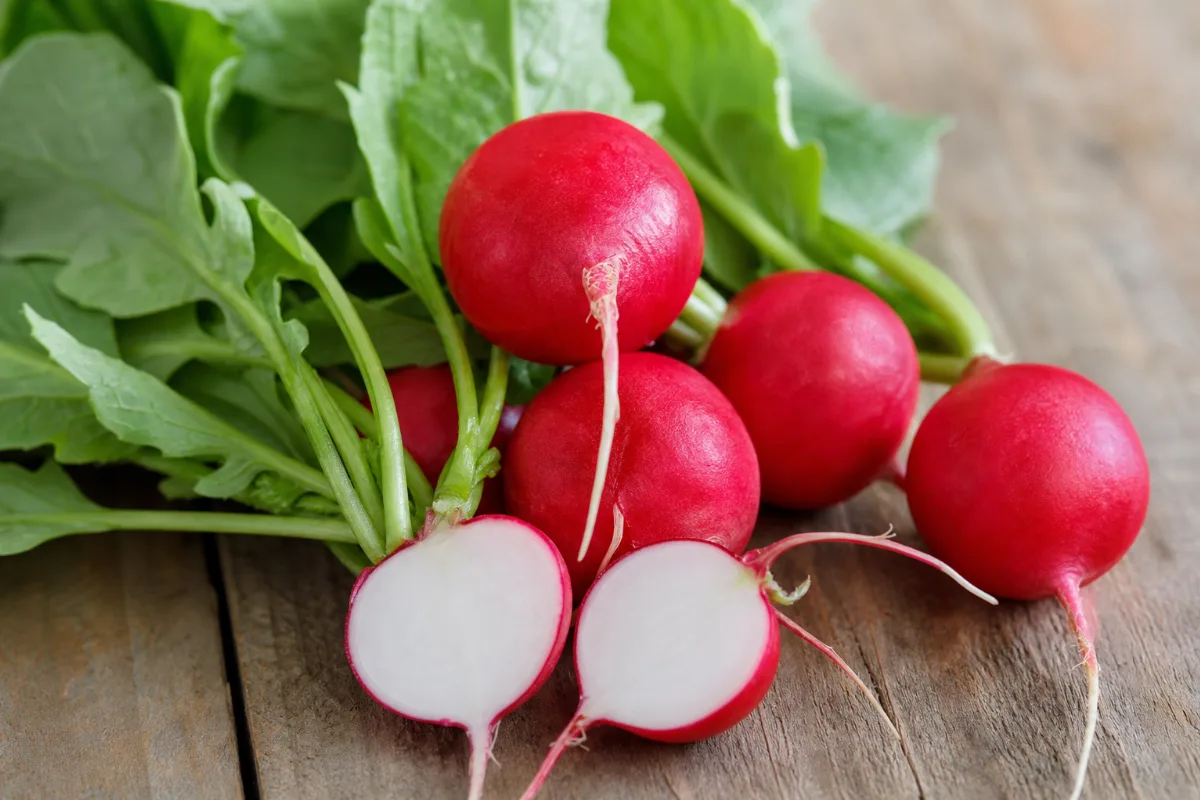
Vegetables · Vegetable
Radishes
Raphanus sativus · also called Garden radish, Japanese radish (daikon), black radish, rabano (Spanish)
Radishes are a crisp, peppery root vegetable in the cabbage family, eaten raw or cooked. They are low in calories and have some vitamin C. Eating more cabbage-family vegetables is linked to lower risk of some cancers in observational studies, but radishes are not singled out and no trial of eating radishes was found. The main cautions are raw radish sprouts (food poisoning), rare allergy, and a question about the thyroid that most evidence does not support.
General information, not medical advice. Last substantive update · Not medically reviewed. A named clinician has not signed off on this page. How this page is made
About Radishes
Radishes are a crunchy, low-calorie root with some vitamin C. They are a healthy food, not a proven remedy: most health claims come from studies of cabbage-family vegetables in general, from a giant daikon type, or from extracts and the seed.
What it is
Radish (Raphanus sativus) is a root vegetable in the cabbage family (Brassicaceae). People eat the root raw, cooked or in kimchi. Daikon and black radish are varieties of the same species.
USDA data for raw radishes: 16 kcal per 100 g. One cup of slices (116 g) has about 19 kcal, 0.8 g protein, 1.9 g fibre, 17 mg vitamin C (about 19 percent of the FDA Daily Value), 270 mg potassium, 29 mg calcium, 29 micrograms folate and 1.5 micrograms vitamin K. The peppery bite comes from glucosinolates, which turn into sharp-tasting compounds when the root is cut or chewed. Cooked radish values were not read.
What the research shows
The firmest fact is about a nutrient: radishes contain vitamin C. That is not a trial of radishes.
Observational studies link more cabbage-family vegetables to lower risk of some cancers and of early death. The reviewers rate most links as weak and call for randomised trials. Radishes are not singled out.
The only human trials of radish tested Sakurajima, a giant daikon. The first reported better vessel function. The second, in 21 people with metabolic syndrome, found none and higher blood pressure with a powder. Everything else is lab, animal, extract or seed research, or a review of mechanisms.
Food versus powders, extracts and seed
The cell studies used concentrated extracts, the 2026 trial used powder of giant daikon types, and the seed review covers a herbal drug. Results for these do not carry over to eating radishes, and results for the food do not prove a medicine-like effect.
Amounts
This page gives no amounts to eat. Ask a doctor, pharmacist or dietitian what is right for you, especially if you have a thyroid condition or kidney problems.
At a glance
Traditional uses history, not proof
- Eaten as a crunchy root vegetable, raw in salads or cooked, and in kimchi
- Radish seed is a traditional Chinese herbal medicine for bloating and digestion
- Long use as food is not proof that it treats any condition
Studied for research
- Vitamin C from the root, high certainty for the nutrient, no radish trial
- Cancer risk (cabbage-family vegetables as a group), low certainty, observational
- Blood vessels and blood pressure (Sakurajima daikon), very low certainty, mixed
- Blood sugar, digestion, liver and immune effects, insufficient evidence (lab and animal work, extracts or seed)
Main compounds
- Vitamin C
- Glucosinolates (glucoraphasatin)
- Isothiocyanates (raphasatin, benzyl isothiocyanate)
- Trigonelline (in Sakurajima daikon)
- Potassium
- Fibre
Common forms
- Raw root as food
- Cooked radish and kimchi
- Sprouts (young seedlings, a different food-safety risk)
- Sakurajima daikon powder, black radish extracts and radish seed (not the same as the root)
Research links: FDA: Selecting and serving produce safely · 2022 umbrella review: cruciferous vegetables and health outcomes · 2024 systematic review: Brassica vegetables and thyroid function · Research Library · Genes & Biomarkers Library
What it is and its history
- Accepted scientific name
- Raphanus sativus
- Naming authority
- L. (GBIF accepted)
- Common names
- Radish (English); Japanese radish (daikon) (English); Black radish (variety niger) (English); Rabano (Spanish)
- Family or group
- Brassicaceae (the cabbage or mustard family), as given by GBIF. Sources read call radishes cruciferous vegetables.
- Classification
- Plantae > Tracheophyta > Magnoliopsida > Brassicales > Brassicaceae > Raphanus > Raphanus sativus
- Native range
- Not verified from a source read.
- Habitat
- Not verified from a source read.
- What it looks like
- Roots: The root is the food. USDA gives a household portion of 1 cup of slices (116 g); a medium radish is listed as 4.5 g and a large one 9 g.; Stems: Not verified.; Leaves: Not verified.; Flowers: Not verified.; Fruit: Not verified.
- Cultivation
- Not verified from a source read.
- Harvest and processing
- Eaten raw, cooked or in kimchi (Chae 2022 describes kimchi made from small-type Altari radishes); sprouts, seeds, powders and extracts are separate products. Glucosinolate content varies with cultivar, season, storage and processing (Verkerk 2009; Chae 2022).
- Look-alikes and adulterants
- Name: Daikon, Sakurajima daikon and black radish; Note: Cultivars or varieties of Raphanus sativus with their own names. Sakurajima has about 60 times more trigonelline than other radishes (Sasaki 2020). Results for them do not carry over to the small red radish.; Name: Radish sprouts and radish seed; Note: Young seedlings and dried seed are different products with different safety and uses; the FDA warns about raw sprouts and the seed is a traditional Chinese herbal drug.
- Sustainability and conservation
- Not assessed.
Photographs
Traditional use and history history, not clinical proof
| Tradition or era | Documented use | Source |
|---|---|---|
| Traditional Chinese medicine (radish seed) | The dried seeds (Raphani Semen, Lai Fu-zi) have been used to treat food dyspeptic retention, distending pain in the stomach and abdomen, constipation, diarrhoea and dysentery, panting, and cough with phlegm (Gao 2022 review). | PubMed 35580770 (abstract read) |
Traditional use shows how it was used. It does not show that it works or is safe today.
What is inside, and how it may work
What it contains and how those compounds act in cells and animals. Laboratory and animal mechanisms are not proven effects in people.
Main compounds
| Compound | Family | Where it is concentrated | Activity studied | Level of evidence |
|---|---|---|---|---|
| Vitamin C (L-ascorbic acid) PubChem 54670067 | vitamin | Root USDA: 14.8 mg per 100 g raw | Needed for collagen formation, wound healing and iron absorption (MedlinePlus). Antioxidant nutrient. 21 22 | Human data |
| Glucoraphasatin | glucosinolate | Root Content varies with cultivar and season (Chae 2022) | Glucosinolate that breaks down to raphasatin; linked to pungency. Did not fully explain pungency differences between seasons. 4 | Plant chemistry |
| Raphasatin (4-methylthio-3-butenyl isothiocyanate) PubChem 5368086 | isothiocyanate | Root (formed when cut or chewed) Not given in the abstract | Breakdown product of glucoraphasatin related to the sharp taste (Chae 2022). 4 | Plant chemistry |
| Benzyl isothiocyanate PubChem 2346 | isothiocyanate | Root extract 15.35 micrograms per gram in one radish extract (Cuellar-Nunez 2022) | Most abundant isothiocyanate in the radish extract tested; active against colon cancer cell lines in a dish. 5 | Lab |
| Trigonelline PubChem 5570 | alkaloid | Root (Sakurajima daikon) About 60 times more in Sakurajima radish than in other radishes and squashes (Sasaki 2020) | Induced nitric oxide production from vessel-lining cells (Sasaki 2020). 13 14 | Human (small trials) |
Mechanisms, receptors and pathways
| Target or pathway | Gene or receptor | What was found | Level |
|---|---|---|---|
| Glucosinolate to isothiocyanate conversion | Plant myrosinase and gut bacteria | When the root is cut or chewed, glucosinolates are converted to isothiocyanates, which relate to the sharp taste and have been studied for anti-cancer, anti-inflammatory and antioxidant actions in the lab. Relevance to people is described as unproven. 17 7 4 | Lab and animal |
| Nitric oxide production | Not specified in the abstracts | Trigonelline from Sakurajima radish induced nitric oxide from vessel-lining cells; in the 2026 trial urinary nitric oxide metabolites rose but so did an oxidative stress marker and blood pressure. 13 14 | Human (small trials) |
| Macrophage activation | TLR2, TLR4, MAPK, NF-kB, Akt, STAT3 (named by the authors) | A hot water black radish extract activated mouse macrophages through these pathways. 9 | Lab (mouse cells) |
| Fat metabolism and oxidative stress in the liver | FGF21, Nrf2 (named by the review) | A mini-review proposes black radish glucosinolates act on these factors in fatty liver disease. This is the authors' account of mechanisms. 2 | Hypothesis |
Absorption, metabolism and elimination
- Absorption
- Not found for radish. Verkerk 2009 says supply-chain factors (breeding, cultivation, storage, processing) affect intake and bioavailability of glucosinolates; Higdon 2007 says cooking affects intake of their derivatives and that individual genetic variation affects metabolism.
- Distribution
- Not found.
- Metabolism
- Glucosinolates can be converted to isothiocyanates by plant myrosinase or intestinal bacteria (Gao 2022).
- Elimination
- Not found.
- Bioavailability
- Not established for radish nutrients in the sources read. In the 2020 trial blood trigonelline rose after eating Sakurajima radish.
Isolated compounds versus whole extracts
Colon-cell and mouse-cell results used concentrated extracts, the Sakurajima trial 2026 used powder from giant daikon types, and the seed review covers a herbal drug. None of these tells us about eating a few small radishes. Results for cabbage-family vegetables pool many different vegetables.
Nutritional composition
Nutrition from USDA FoodData Central (Radishes, raw, FDC 169276, SR Legacy, April 2018 release), read 2026-10-26 from the project's saved extract of that release; the USDA website itself was rate-limited when checked. Per 100 g: 16 kcal, 0.68 g protein, 0.1 g fat, 3.4 g carbohydrate, 1.6 g fibre, 1.86 g total sugars, about 95 g water, 233 mg potassium, 39 mg sodium, 25 mg calcium, 10 mg magnesium, 0.34 mg iron, 14.8 mg vitamin C, 25 micrograms folate (DFE), 1.3 micrograms vitamin K, 0.05 mg copper. One cup of raw slices (116 g): about 19 kcal, 0.8 g protein, 1.9 g fibre, 2.2 g sugars, 270 mg potassium, 29 mg calcium, 17 mg vitamin C (about 19 percent of the FDA Daily Value), 29 micrograms folate (about 7 percent) and 1.5 micrograms vitamin K. Percent Daily Values use the FDA 2016 values. Figures vary with variety, ripeness and storage. Cooked radish values were not read.
1 high certainty1 low certainty1 very low certainty5 not enough evidence
What was looked at
The 8 benefits and uses checked for Radishes, each with how strong the evidence is. Tap one to open it.
- Vitamin C from radishesHigh certainty
- Cancer risk and early death (cruciferous vegetables as a group)Low certainty
- Blood vessel function and blood pressure (Sakurajima daikon radish)Very low certainty
- Blood sugar and diabetesNot enough evidence
- Digestion (radish seed in traditional Chinese medicine)Not enough evidence
- Liver health (black radish)Not enough evidence
- Colon cancer cells in the lab (radish extract)Not enough evidence
- Immune cells in the lab (black radish extract)Not enough evidence
Lab markers tracked in the studies
Flow-mediated dilation (blood vessel widening)Systolic blood pressureRisk of some cancers and of death from any causeThyroid function (TSH, T3, T4, iodine uptake)Oxidative stress marker (urinary 8-OHdG)
What is Radishes good for?
The main studied uses and how strong the human evidence is for each. Many results are for cabbage-family vegetables as a group, for a giant daikon type, or for extracts and the seed, not for eating radishes.
Benefits, one by one
Each card is a research question, not a promise. Tap a goal to filter. Open a card to see the studies, doses and limits.
Vitamin C from radishes
High certaintyVitamin C is needed to make collagen and to heal wounds. All fruits and vegetables have some. Raw radishes have 14.8 mg per 100 g, about 17 mg in one cup of slices (116 g), by USDA data. This is a nutrient fact, not a trial of radishes.
2 studiesRaw root as food. Values vary with variety, ripeness and storage.
Studies, doses and limits
What the trials found
MedlinePlus says all fruits and vegetables contain some vitamin C, that a severe shortage causes scurvy, and that raw produce is the best source because cooking or long storage can reduce vitamin C. USDA lists 14.8 mg of vitamin C per 100 g of raw radishes.
Results
Radishes supply some vitamin C. No trial of eating radishes for vitamin C status or any health outcome was found.
Effect sizes as reported
USDA: 14.8 mg vitamin C per 100 g raw radishes; about 17.2 mg per cup of slices (116 g), about 19 percent of the FDA Daily Value of 90 mg.
Why this rating
High for the nutrient role and for radishes containing vitamin C (health-agency statement and USDA data). There is no radish-specific trial, and a varied diet normally supplies vitamin C.
Form and dose studied
Raw root as food. Values vary with variety, ripeness and storage.
Who was studied
Anyone eating a varied diet; MedlinePlus says scurvy mainly affects older, malnourished adults.
Limits
Nutrient fact, not a trial of radishes. Radishes are not named on the MedlinePlus page. Cooking effects on radish vitamin C were not read.
Why researchers looked
Radishes are a common raw vegetable, so people ask what nutrients they supply.
Traditional use
Radishes are eaten as a crunchy, peppery root vegetable, raw or cooked. Long use as food is not proof that they treat any condition.
Proposed mechanism Authoritative guidance
Vitamin C is used to form collagen, to heal wounds and to help the body absorb iron (MedlinePlus). It is also an antioxidant nutrient.
A proposed mechanism does not show that the effect happens in people.
No safety concern from the vitamin C in food was read.
Cancer risk and early death (cruciferous vegetables as a group)
Low certaintyRadishes belong to the cabbage family. In observational studies, people who eat more cabbage-family vegetables tend to have lower risk of some cancers and of dying from any cause. Radishes are not singled out, and these studies cannot show that the vegetables are the reason.
3 studiesCruciferous vegetables eaten as food (broccoli, cabbage and others). …
Studies, doses and limits
What the trials found
A 2022 umbrella review pooled 41 meta-analyses of 303 observational studies (13.4 million participants) of cruciferous vegetables. It found suggestive evidence of lower risk for gastric cancer, lung cancer, endometrial cancer and death from any cause, and weak evidence for 16 other associations. The authors say substantial uncertainty remains. A 2007 review says higher intake has been linked to lower lung and colorectal cancer risk in some studies, while links for breast and prostate cancer are limited and inconsistent.
Results
Lower risk was seen for several outcomes in observational studies of cabbage-family vegetables. Radish was not analysed on its own in the abstracts read.
Effect sizes as reported
Umbrella review: 24 of 41 meta-analyses had significant results, all showing lower risk; suggestive evidence for gastric cancer, lung cancer, endometrial cancer and all-cause mortality. Individual risk figures are not in the abstract.
Why this rating
Low: observational data only, many links graded weak by the reviewers, and the vegetables are pooled. The umbrella review calls for randomised trials. Not specific to radishes.
Form and dose studied
Cruciferous vegetables eaten as food (broccoli, cabbage and others). Cooking changes the breakdown products (Higdon 2007).
Who was studied
Adults in observational studies.
Limits
People who eat more vegetables differ in other ways. Radishes are only one of many vegetables in the group. Isothiocyanates have shown harmful effects in some animal experiments (Higdon 2007).
Why researchers looked
Cabbage-family vegetables contain glucosinolates, which break down into compounds studied for cancer prevention.
Traditional use
Radishes are eaten as a crunchy, peppery root vegetable, raw or cooked. Long use as food is not proof that they treat any condition.
Proposed mechanism Preliminary mechanism
Glucosinolates break down into isothiocyanates and indoles, which have been studied in lab and animal work for effects on cancer processes. Their relevance to people is described as unproven (Verkerk 2009; Higdon 2007).
A proposed mechanism does not show that the effect happens in people.
See the Safety tab for thyroid and allergy cautions.
Blood vessel function and blood pressure (Sakurajima daikon radish)
Very low certaintySakurajima is a giant Japanese daikon type with far more of a compound called trigonelline than other radishes. A small first trial reported better blood vessel function. A later small trial found no improvement and higher blood pressure. Results are mixed, and this is not the small red radish.
2 studies2020: fresh Sakurajima radish as food, 170 g a day for ten days. 2026…
Studies, doses and limits
What the trials found
A 2020 first-in-human trial reported that eating 170 g a day of Sakurajima radish for ten days raised blood trigonelline and significantly improved flow-mediated dilation (a measure of vessel function). A 2026 multicentre, open-label, three-period crossover trial in 21 people with metabolic syndrome used 14 days of Sakurajima radish powder, Aokubi radish powder and a usual diet. Sakurajima did not improve flow-mediated dilation (p = 0.58 versus usual diet), and systolic blood pressure was higher (+9.67 mm Hg versus usual diet, p = 0.03).
Results
One small first trial found better vessel function; a second small trial in people with metabolic syndrome found no benefit and higher systolic pressure. The authors of the 2026 trial say a carryover effect limits how the vessel result can be read.
Effect sizes as reported
2026 trial (n = 21): flow-mediated dilation not improved (p = 0.58 versus usual diet, p = 0.59 versus Aokubi radish); systolic blood pressure +9.67 mm Hg versus usual diet (p = 0.03) and +8.86 mm Hg versus Aokubi radish (p = 0.04). 2020 trial: improvement reported as significant; the number of participants and the size of effect are not in the abstract.
Why this rating
Very low: two small trials that disagree, one open-label with a carryover problem, 10 to 14 days long, in one giant daikon variety. Not shown for ordinary radishes.
Form and dose studied
2020: fresh Sakurajima radish as food, 170 g a day for ten days. 2026: Sakurajima radish powder for 14 days (powder, not the fresh vegetable).
Who was studied
2026: adults with metabolic syndrome. 2020: population not stated in the abstract.
Limits
Single daikon variety. Powder in 2026. Open-label (no blinding). Small. One 2020 author is affiliated with ROHTO Pharmaceutical (industry link); the abstract says funders had no role.
Why researchers looked
Trigonelline from Sakurajima radish raised nitric oxide production in vessel cells, which led researchers to test it in people.
Traditional use
Sakurajima is a large daikon grown in Kagoshima, Japan. Long use as food is not proof that it treats any condition.
Proposed mechanism Human mechanistic
Trigonelline from Sakurajima radish induced nitric oxide production from vessel-lining cells (Sasaki 2020). In the 2026 trial urinary nitric oxide metabolites rose, but so did an oxidative stress marker.
A proposed mechanism does not show that the effect happens in people.
Higher systolic blood pressure and a higher oxidative stress marker were seen in the 2026 trial. People with high blood pressure can ask a clinician before using concentrated radish powders.
Blood sugar and diabetes
Not enough evidenceA 2017 review found lab and animal studies linking radish to blood sugar effects. It says this needs confirmation in animal studies and clinical trials. No human trial of eating radishes was found.
1 studiesRadish (Raphanus sativus), preparations varied (extracts and juice in…
Studies, doses and limits
What the trials found
The review searched Web of Science, PubMed and EMBASE for articles from 1987 to 2017 on radish and diabetes. Its abstract describes in vitro and in vivo studies and says the summary needs confirmation in further in vivo research and clinical trials.
Results
The abstract reports antidiabetic effects in the lab and animal work reviewed. It does not report a human trial of eating radishes.
Effect sizes as reported
No numbers in the abstract.
Why this rating
Insufficient for people: the review summarises lab and animal work and itself asks for clinical trials.
Form and dose studied
Radish (Raphanus sativus), preparations varied (extracts and juice in lab and animal studies).
Limits
A narrative summary, not a trial. The abstract does not say which preparations or doses were used.
Why researchers looked
Radish has been studied in cells and animals for effects on glucose.
Traditional use
Radishes are eaten as a crunchy, peppery root vegetable, raw or cooked. Long use as food is not proof that it treats any condition.
Proposed mechanism Hypothesis
The review suggests radish may boost antioxidant defences, affect hormone-controlled glucose balance, promote glucose uptake and reduce glucose absorption in the gut. These are proposed mechanisms from in vitro and in vivo studies.
A proposed mechanism does not show that the effect happens in people.
People with diabetes who take glucose-lowering medicine should not change treatment because of radish; ask a clinician.
Digestion (radish seed in traditional Chinese medicine)
Not enough evidenceDried radish seed is a traditional Chinese herbal medicine for bloating, food sitting heavily in the stomach, constipation, diarrhoea and cough with phlegm. The review is about the seed, not the root vegetable, and covers lab and animal work.
1 studiesDried radish seed (a herbal drug), not the root vegetable.
Studies, doses and limits
What the trials found
The 2022 review summarises traditional uses, chemistry and pharmacology of the dried seeds. Its abstract does not report a human trial.
Results
Traditional uses are listed; pharmacology reported is laboratory and animal work. The authors say the material bases and mechanisms of the traditional effects need further study.
Effect sizes as reported
No numbers in the abstract.
Why this rating
Insufficient: a review of tradition and lab data on the seed, with no human trial reported in the abstract.
Form and dose studied
Dried radish seed (a herbal drug), not the root vegetable.
Limits
Seed, not the root. Tradition and lab work are not clinical evidence. No human trial of the root for digestion or the gallbladder was found.
Why researchers looked
Traditional use of the seed (Lai Fu-zi) for digestion led to laboratory study.
Traditional use
Radish seed (Raphani Semen) is a traditional Chinese herbal medicine. Tradition is not proof that it works.
Proposed mechanism Preliminary mechanism
The review says glucosinolates in the seed can be changed into isothiocyanates by a plant enzyme or by gut bacteria, which show a variety of activities in lab studies.
A proposed mechanism does not show that the effect happens in people.
Seed products are not covered by food safety information on this page; ask a clinician or pharmacist.
Liver health (black radish)
Not enough evidenceA 2025 mini-review describes how black radish compounds might help the liver in fatty liver disease. It describes mechanisms, not a human trial.
1 studiesBlack radish, mostly extracts and compounds in the underlying researc…
Studies, doses and limits
What the trials found
The mini-review aims to assess biological detoxification mechanisms and effects of black radish in metabolic dysfunction-associated steatotic liver disease (MASLD). The abstract reports no trial in people.
Results
Mechanisms are described; no clinical result is reported in the abstract.
Effect sizes as reported
No numbers in the abstract.
Why this rating
Insufficient: a mini-review of mechanisms without a human trial reported.
Form and dose studied
Black radish, mostly extracts and compounds in the underlying research.
Limits
A short narrative review, not a trial. Mechanism claims are the authors' account. The abstract does not state the evidence level of each study cited.
Why researchers looked
Black radish is rich in glucosinolates and has been discussed for liver detoxification.
Traditional use
Black radish (a variety of radish) is eaten as a vegetable and used in folk remedies for the liver. Tradition is not proof.
Proposed mechanism Hypothesis
The authors say glucosinolates may reduce reactive oxygen species and factors in fat metabolism such as FGF21 and Nrf2, and that glutathione precursors and flavonoids may help liver enzymes and fat accumulation. This is the reviewers' account of mechanisms.
A proposed mechanism does not show that the effect happens in people.
Fatty liver disease needs medical care; the review notes diet and exercise are the recommended treatment.
Colon cancer cells in the lab (radish extract)
Not enough evidenceIn a dish, a radish isothiocyanate extract reduced the activity of human colon cancer cells and raised reactive oxygen species. The authors say further experiments are needed. This is a lab result about an extract.
1 studiesIsothiocyanate-rich extract of radish (concentrated), not the vegetab…
Studies, doses and limits
What the trials found
No human study. The study used human colon cancer cell lines (HCT116 and HT-29) and non-cancerous colon cells as a control.
Results
Both cauliflower and radish isothiocyanate extracts inhibited the metabolic activity of both cancer cell lines and increased lactate dehydrogenase release and reactive oxygen species at their half-inhibitory concentrations.
Effect sizes as reported
Radish extract contained 15.35 micrograms of benzyl isothiocyanate per gram; cauliflower extract IC50 on HCT116 was 0.56 mg/mL.
Why this rating
Insufficient: cell-line work only; the authors say additional experiments are needed.
Form and dose studied
Isothiocyanate-rich extract of radish (concentrated), not the vegetable as eaten.
Limits
Cells in a dish; concentrated extract; no animals or people. Results do not show any effect from eating radishes.
Why researchers looked
Radish isothiocyanates were tested on cancer cell lines.
Proposed mechanism Laboratory research
Benzyl isothiocyanate was the most abundant isothiocyanate in the radish extract; in silico (computer) modelling showed it bound several colon cancer markers (NF-kB, beta-catenin, NRF2-NFE2).
A proposed mechanism does not show that the effect happens in people.
None for the food. Do not use extracts instead of cancer care.
Immune cells in the lab (black radish extract)
Not enough evidenceA hot-water black radish extract activated mouse immune cells (macrophages) in a dish. This is a lab result in mouse cells and does not show an effect in people.
1 studiesBlack radish (Raphanus sativus var. niger) hot water extract.
Studies, doses and limits
What the trials found
No human study. Mouse macrophage cell line (RAW 264.7) and mouse peritoneal macrophages.
Results
The extract increased cell proliferation, phagocytic activity, nitric oxide, cytokines (IL-1 beta, IL-6, TNF-alpha), iNOS and COX-2. The authors call it a potential immunomodulatory factor or functional food.
Effect sizes as reported
No human numbers.
Why this rating
Insufficient: mouse cells only.
Form and dose studied
Black radish (Raphanus sativus var. niger) hot water extract.
Limits
Mouse cells; hot water extract; the pro-inflammatory markers rose, so it is not a result of calming inflammation. Some authors are affiliated with a company (Yuyu Healthcare Inc.).
Why researchers looked
Researchers asked whether black radish could act as an immune-boosting functional food.
Proposed mechanism Laboratory research
The extract switched on macrophages through TLR2 and TLR4 signalling and several downstream pathways (MAPK, NF-kB, Akt, STAT3), according to the authors.
A proposed mechanism does not show that the effect happens in people.
None for the food.
Connections to the rest of health
How Radishes connects to the rest of our health knowledge graph. Every link says what kind of connection it is. A safety link (for example to the liver) is a warning, not a benefit. A study that merely mentions a topic never creates a benefit link.
Explore every connection: goals, body systems, organs, symptoms, genes
B. Body systems
| Connected to | Kind of connection | Evidence status | Context | Studies |
|---|---|---|---|---|
| Nutrition | Biological association | High certainty | Studied for: Vitamin C from radishes | 21 22 |
| Blood And Immune | Biological association | High certainty | Studied for: Vitamin C from radishes | 21 22 |
| Cellular | Biological association | Low certainty | Studied for: Cancer risk and early death (cruciferous vegetables as a group) Studied for: Colon cancer cells in the lab (radish extract) | 11 8 17 5 |
| Digestive System | Biological association | Low certainty | Studied for: Cancer risk and early death (cruciferous vegetables as a group) Studied for: Digestion (radish seed in traditional Chinese medicine) | 11 8 17 7 |
| Cardiovascular System | Biological association | Very low certainty | Studied for: Blood vessel function and blood pressure (Sakurajima daikon radish) | 13 14 |
| Metabolic System | Biological association | Not enough evidence | Studied for: Blood sugar and diabetes | 3 |
| Blood Sugar Support | Biological association | Not enough evidence | Studied for: Blood sugar and diabetes | 3 |
| Hepatic System | Biological association | Not enough evidence | Studied for: Liver health (black radish) | 2 |
| Immune System | Biological association | Not enough evidence | Studied for: Immune cells in the lab (black radish extract) | 9 |
C. Body parts and organs
| Connected to | Kind of connection | Evidence status | Context | Studies |
|---|---|---|---|---|
| Thyroid | Mixed evidence | A 2024 systematic review found most evidence does not support harm with adequate iodine; one study linked high intake to thyroid cancer only with low iodine. Raw cabbage-family vegetables contain goitrogens; most evidence does not support harm with adequate iodine. Preparation or compound: Goitrogens in raw cabbage-family vegetables |
6 15 |
E. Health conditions
| Connected to | Kind of connection | Evidence status | Context | Studies |
|---|---|---|---|---|
| Pollen food allergy syndrome | Adverse effect or risk | Case report | Reported after eating raw Japanese radish; allergy to radish looks rare. Preparation or compound: Raw radish |
16 10 1 |
I. Biomarkers
| Connected to | Kind of connection | Evidence status | Context | Studies |
|---|---|---|---|---|
| Flow-mediated dilation (blood vessel widening) | Biological association | Very low certainty | Measured in trials: mixed. A lab change is not the same as a health benefit. | 13 14 |
| Systolic blood pressure | Biological association | Very low certainty | Measured in trials: raised. A lab change is not the same as a health benefit. | 14 |
| Risk of some cancers and of death from any cause | Biological association | Low certainty | Measured in trials: lowered. A lab change is not the same as a health benefit. | 11 8 |
| Thyroid function (TSH, T3, T4, iodine uptake) | Biological association | Low certainty | Measured in trials: no-change. A lab change is not the same as a health benefit. | 6 15 |
| Oxidative stress marker (urinary 8-OHdG) | Biological association | Very low certainty | Measured in trials: raised. A lab change is not the same as a health benefit. | 14 |
K. Biological pathways
| Connected to | Kind of connection | Evidence status | Context | Studies |
|---|---|---|---|---|
| Vitamin C | Preliminary mechanism | Human | Radishes supply some vitamin C; a severe shortage causes scurvy. | 21 22 |
| Glucosinolates and isothiocyanates | Preliminary mechanism | Lab and observational | The compounds behind the peppery bite; studied for cancer prevention in lab, animal and observational work. | 17 8 11 |
| Thyroid | Preliminary mechanism | Systematic review | Goitrogens in raw cabbage-family vegetables; most evidence does not support harm with adequate iodine. | 6 15 |
L. Active compounds
| Connected to | Kind of connection | Evidence status | Context | Studies |
|---|---|---|---|---|
| Vitamin C (L-ascorbic acid) | Biological association | Human | Needed for collagen formation, wound healing and iron absorption (MedlinePlus). Antioxidant nutrient. Preparation or compound: Root |
21 22 |
| Glucoraphasatin | Biological association | Plant chemistry | Glucosinolate that breaks down to raphasatin; linked to pungency. Did not fully explain pungency differences between seasons. Preparation or compound: Root |
4 |
| Raphasatin (4-methylthio-3-butenyl isothiocyanate) | Biological association | Plant chemistry | Breakdown product of glucoraphasatin related to the sharp taste (Chae 2022). Preparation or compound: Root (formed when cut or chewed) |
4 |
| Benzyl isothiocyanate | Biological association | Lab | Most abundant isothiocyanate in the radish extract tested; active against colon cancer cell lines in a dish. Preparation or compound: Root extract |
5 |
| Trigonelline | Biological association | Human (small trials) | Induced nitric oxide production from vessel-lining cells (Sasaki 2020). Preparation or compound: Root (Sakurajima daikon) |
13 14 |
Each connection is stored with the ingredient, the connected record, the kind of connection, the evidence status, the supporting studies, the preparation or compound involved, and a review date (last reviewed October 26, 2026).
Evidence at a glance: what changed in 5 lab markers
Tap a number to show only those markers. Counts are markers, not people.
The evidence
The research centre for Radishes. Every record here was checked against PubMed or the publisher's page; we never list a study we have not verified.
Evidence by outcome
Bars show how many studies we found for each outcome, not how well it works. People are added up across trials only (reviews are not added, to avoid double counting).
How we rate evidence
High certainty
Several well-run trials or reviews agree; further research is unlikely to change the picture much.
Moderate certainty
Good trials point the same way, but some doubt remains.
Low certainty
Small, short or inconsistent trials. The finding could change with better research.
Very low certainty
Very little or very weak human data. Treat as a possibility only.
Mixed findings
Trials or reviews disagree with each other.
Not enough evidence
Not enough human research to say either way.
Evidence against
Good research found no benefit, or found harm.
We take the reviewers' own risk-of-bias and GRADE statements where they exist, and otherwise judge from study size, design, consistency, directness and whether a product matches what is sold. Many publications do not make evidence high. Method note: We started from our existing radish summary, re-checked nutrition against the USDA FoodData Central radish entry, read the health agency pages (FDA, MedlinePlus) and searched PubMed for reviews, trials and case reports. Only abstracts were read for studies. Items we could not verify are flagged in the research gaps.
Study library: every study we checked 22
| Study | Design | People | Product, dose, length | Result |
|---|---|---|---|---|
| Abe 2021 A case of hand urticaria, lip angioedema, and oropharyngeal pruritus induced by Japanese radish through IgE-mediated immediate allergic reaction. Allergy Asthma Clin Immunol · PMID 33789748 · DOI |
Case report |
1 48-year-old woman, Japan |
Japanese radish (Raphanus sativus L), grated (contact) and raw in a salad Root Single episodes |
She developed hand hives after grating Japanese radish and lip swelling and oral itching after eating raw radish salad. A skin prick test with grated radish extract was positive. Immunoblotting showed IgE reactivity to a single 18 kDa band, suggesting a heat-labile radish-specific protein. Not applicable (Not applicable) Methods, limits and fundingOutcomes: Hives, lip swelling, oral itching; skin prick test; IgE immunoblot Limitations: Single case; the heat-labile protein finding is the authors' suggestion. Funding and conflicts: No conflicts declared. Read: abstract |
| Armas-Tellez 2025 Mini-Review: The Detoxification Effects of Black Radish in Metabolically Dysfunctional-Associated Fatty Liver Disease. Int J Vitam Nutr Res · PMID 41504161 · DOI |
Narrative review mechanisms (lab, animal) |
Mini-review about black radish and metabolic dysfunction-associated steatotic liver disease | Black radish (a cruciferous vegetable) and its glucosinolates Root |
The authors describe glucosinolates acting against reactive oxygen species and lipid-metabolism factors (FGF21, Nrf2), plus glutathione precursors and flavonoids that may help liver enzymes and fat accumulation. They aim to assess mechanisms and effects of black radish in MASLD and related chronic diseases. Not applicable (Not applicable) Methods, limits and fundingOutcomes: Detoxification mechanisms in MASLD Limitations: Mini-review; the abstract reports no trial and does not rate the evidence it cites. Funding and conflicts: Not stated in the abstract. Read: abstract |
| Banihani 2017 Radish (Raphanus sativus) and Diabetes. Nutrients · PMID 28906451 · DOI |
Narrative review lab and animal |
Review of in vitro and in vivo studies of radish and diabetes | Radish (Raphanus sativus), preparations varied |
Radish has been identified as having antidiabetic effects in the studies reviewed, possibly via antioxidant defence, hormone-induced glucose balance, glucose uptake and energy metabolism, and reduced glucose absorption in the gut. The author says the summary requires further confirmation in in vivo research and clinical trials. Not applicable (Not applicable) Methods, limits and fundingOutcomes: Antidiabetic effects Limitations: Review of lab and animal work; no human trial reported; preparations and doses not stated in the abstract. Funding and conflicts: The author declares no conflict of interest. Read: abstract |
| Chae 2022 Seasonal Effects of Glucosinolate and Sugar Content Determine the Pungency of Small-Type (Altari) Radishes (Raphanus sativus L.). Plants (Basel) · PMID 35161293 · DOI |
Plant chemistry plant |
Three small-type (Altari) radish cultivars grown in spring and autumn | Radish root |
Neither the concentration of glucoraphasatin nor of its hydrolysis product raphasatin could fully explain the seasonal change in pungency. The change may be explained by the ratio of raphasatin content to total sweetness of sugars. Not applicable (Not applicable) Methods, limits and fundingOutcomes: Glucoraphasatin, raphasatin, sugars, pungency Limitations: Plant chemistry in kimchi radishes; not a health study. Funding and conflicts: The authors declare no conflict of interest. Read: abstract |
| Cuellar-Nunez 2022 Isothiocyanate-Rich Extracts from Cauliflower (Brassica oleracea Var. Botrytis) and Radish (Raphanus sativus) Inhibited Metabolic Activity and Induced ROS in Selected Human HCT116 and HT-29 Colorectal Cancer Cells. Int J Environ Res Public Health · PMID 36429638 · DOI |
Laboratory research lab (human cell lines) |
Human colorectal cancer cell lines HCT116 and HT-29; non-cancerous colon cells CCD-33Co as control | Isothiocyanate-rich radish extract (RIE) and cauliflower extract (CIE); allyl and benzyl isothiocyanate Radish (Raphanus sativus) extract IC50 concentrations Cell assays · vs Non-cancerous cells; pure AITC and BITC |
Both extracts inhibited the metabolic activity of the cancer cell lines, the cauliflower extract more than the radish extract on HCT116 (IC50 0.56 mg/mL). Radish extract was richest in benzyl isothiocyanate (15.35 micrograms per gram). At half-inhibitory concentrations LDH and reactive oxygen species rose in both cell lines. The authors say additional experiments are needed to validate the effects. IC50 0.56 mg/mL for the cauliflower extract on HCT116; BITC 15.35 micrograms per gram in the radish extract (Not given) Methods, limits and fundingOutcomes: Metabolic activity, reactive oxygen species, LDH release, in silico binding Limitations: Cell lines only; concentrated extracts; no animals or people. Funding and conflicts: The authors declare no conflict of interest. Read: abstract |
| Galanty 2024 Do Brassica Vegetables Affect Thyroid Function?-A Comprehensive Systematic Review. Int J Mol Sci · PMID 38612798 · DOI |
Systematic review human, animal and lab |
123 articles of in vitro, animal and human studies of Brassica plants and extracts and thyroid function | Brassica vegetables and extracts Brassica plants (radish not singled out in the abstract) Varied Varied · vs Varied |
The vast majority of results cast doubt on previous assumptions that brassica plants have antithyroid effects in humans. Including brassica vegetables in the daily diet, particularly with adequate iodine intake, poses no adverse effects on thyroid function. Not given in the abstract (Not given in the abstract) Methods, limits and fundingOutcomes: Thyroid mass and histology, TSH, T3, T4, iodine uptake, thyroid cancer cells Limitations: Mixed lab, animal and human evidence pooled; radish not singled out; the abstract gives no GRADE rating. Funding and conflicts: The authors declare no conflicts of interest. Read: abstract |
| Gao 2022 Traditional uses, phytochemistry, transformation of ingredients and pharmacology of the dried seeds of Raphanus sativus L. (Raphani Semen), A comprehensive review. J Ethnopharmacol · PMID 35580770 · DOI |
Narrative review lab and animal |
Review of traditional use, chemistry and pharmacology of dried radish seed | Dried radish seed (Raphani Semen) Seed |
Traditional uses include food dyspeptic retention, distending pain in the stomach and abdomen, constipation, diarrhoea and dysentery, panting and cough with phlegm. Glucosinolates in the seed can be converted to isothiocyanates by plant myrosinase or intestinal bacteria. The authors list many reported pharmacological activities and say the material bases and mechanisms of the traditional effects need further study. Not applicable (Not applicable) Methods, limits and fundingOutcomes: Traditional uses; chemical constituents; pharmacology Limitations: About the seed, not the root. Mostly traditional use and lab and animal pharmacology; no human trial reported in the abstract. Funding and conflicts: Not stated in the abstract. Read: abstract |
| Higdon 2007 Cruciferous vegetables and human cancer risk: epidemiologic evidence and mechanistic basis. Pharmacol Res · PMID 17317210 · DOI |
Narrative review human, animal and lab |
Epidemiological and mechanistic literature on cruciferous vegetables | Cruciferous vegetables, isothiocyanates and indoles Cruciferous vegetables |
High intake of cruciferous vegetables has been associated with lower lung and colorectal cancer risk in some epidemiological studies. Evidence for breast and prostate cancer is limited and inconsistent. Deleterious effects, including tumour promotion over prolonged exposure, were reported in some experiments. Cooking affects the intake of glucosinolate products. Supplements of indole-3-carbinol or DIM are a different product. Not applicable (Not applicable) Methods, limits and fundingOutcomes: Cancer risk; mechanisms Limitations: Narrative review from a Linus Pauling Institute group; not systematic. Radish is not singled out in the abstract. Funding and conflicts: Not stated in the abstract. Read: abstract |
| Jeon 2022 Immunomodulatory Effects of an Aqueous Extract of Black Radish on Mouse Macrophages via the TLR2/4-Mediated Signaling Pathway. Pharmaceuticals (Basel) · PMID 36355548 · DOI |
Laboratory research lab (mouse cells) |
Mouse macrophage cell line RAW 264.7 and mouse peritoneal macrophages | Black radish (Raphanus sativus var. niger) hot water extract (BRHE) Black radish extract Not given in the abstract Cell assays · vs Untreated cells; TLR2 and TLR4 antagonists |
BRHE increased proliferation, phagocytic activity, nitric oxide, cytokine production and reactive oxygen species, and up-regulated IL-1 beta, IL-6, TNF-alpha, iNOS and COX-2. The effects were reduced by TLR2 and TLR4 antagonists. The authors say BRHE may serve as a potential immunomodulatory factor or functional food. Not given (Not given) Methods, limits and fundingOutcomes: Cell proliferation, phagocytosis, nitric oxide, cytokines, signalling Limitations: Mouse cells only; hot water extract; authors' conclusion is a possibility. Funding and conflicts: The authors declare no conflict of interest. Some authors are affiliated with a company (Yuyu Healthcare Inc.). Read: abstract |
| Lee 2015 A Case of Anaphylaxis Induced by Contact with Young Radish (Raphanus sativus L). Allergy Asthma Immunol Res · PMID 25553270 · DOI |
Case report |
1 46-year-old woman, Korea |
Young radish (Raphanus sativus L), contact while chopping Young plant Two episodes three days apart · vs Five adult skin-test controls |
She developed dizziness, generalised rash and stomach upset, with low blood pressure, after chopping fresh young radish; three days earlier she had hives after chopping it. She improved with epinephrine, an antihistamine and saline. A skin prick test with young radish extract was positive and was negative in five adult controls. The authors suggest IgE-mediated hypersensitivity. Not applicable (Not applicable) Methods, limits and fundingOutcomes: Anaphylaxis; skin prick test Limitations: Single case; contact exposure; young radish, not necessarily the root. Funding and conflicts: There are no financial conflicts. Read: abstract |
| Li 2022 Cruciferous vegetable consumption and multiple health outcomes: an umbrella review of 41 systematic reviews and meta-analyses of 303 observational studies. Food Funct · PMID 35352732 · DOI |
Umbrella review |
Adults in 41 meta-analyses of 303 observational studies (13,394,722 participants) | Cruciferous vegetables as food Cruciferous vegetables (radish not analysed alone) Varied by study Observational follow-up · vs Lower intake |
24 of 41 meta-analyses were significant at P < 0.05, all showing decreased risk. Suggestive evidence for gastric cancer, lung cancer, endometrial cancer and all-cause mortality. Sixteen other associations had weak evidence. The authors say other associations could be genuine but substantial uncertainty remains and trials are needed. Not given in the abstract (Not given in the abstract) Methods, limits and fundingOutcomes: 24 health outcomes: cancers, cardiovascular disease, mortality, metabolic disease Limitations: Observational data cannot show cause. Moderate methodological quality (AMSTAR). Radish is not analysed separately. PROSPERO CRD42021262011. Funding and conflicts: Not stated in the abstract. Read: abstract |
| Michino 1999 Massive outbreak of Escherichia coli O157:H7 infection in schoolchildren in Sakai City, Japan, associated with consumption of white radish sprouts. Am J Epidemiol · PMID 10522649 · DOI |
Outbreak investigation |
Schoolchildren in 47 elementary schools in Sakai City, Osaka, Japan, July 1996 | White radish sprouts (raw) Sprouts (seedlings) Single outbreak, July 1996 |
A food consumption study linked school lunches to infection. White radish sprouts from a single farm were the only uncooked food common to the most highly implicated meals in two school districts. Isolates from patients had identical pulsed-field gel electrophoresis patterns. The authors concluded the cause was white radish sprouts shipped from one farm on July 7-9. Number of cases not given in the abstract (Not applicable) Methods, limits and fundingOutcomes: E. coli O157:H7 infection Limitations: Outbreak investigation of sprouts, not the radish root. Dated 1996. Funding and conflicts: Not stated. Read: abstract |
| Sasaki 2020 Characteristic Analysis of Trigonelline Contained in Raphanus sativus Cv. Sakurajima Daikon and Results from the First Trial Examining Its Vasodilator Properties in Humans. Nutrients · PMID 32585930 · DOI |
Uncontrolled human study |
Humans in a first-in-human trial (number not in the abstract) | Sakurajima radish (a giant daikon cultivar), fresh as food Root 170 g a day 10 days |
Sakurajima radish contained about 60 times more trigonelline than other radishes and squashes. Ingesting 170 g a day for ten days increased blood trigonelline and significantly improved flow-mediated dilation. The authors suggest it may be a functional food for vessel function. Not in the abstract (Not in the abstract) Methods, limits and fundingOutcomes: Blood trigonelline; flow-mediated dilation Limitations: Abstract gives no participant number, no comparison group and no effect size. One cultivar of daikon. Authors' conclusion is a suggestion. Funding and conflicts: Funders had no role per the abstract. One author is affiliated with ROHTO Pharmaceutical Co., Ltd. (industry affiliation). Read: abstract |
| Tokushige 2026 Efficacy and Safety of Sakurajima Radish in Patients with Metabolic Syndrome: A Phase IIb Randomized, Three-Period Crossover Trial. Nutrients · PMID 42280444 · DOI |
Rct crossover |
21 21 adults with metabolic syndrome (multicentre, Japan) |
Sakurajima radish powder (trigonelline-rich); Aokubi radish powder as comparison Root powder Not given in the abstract Three 14-day periods separated by 14-day washouts · vs Usual diet and Aokubi radish powder |
Sakurajima radish did not improve flow-mediated dilation versus usual diet (p = 0.58) or Aokubi radish (p = 0.59), though a significant negative carryover effect probably confounded this. Urinary nitric oxide metabolites rose (p = 0.03), but the oxidative stress marker 8-OHdG/creatinine also rose (p = 0.02) and systolic blood pressure was higher versus usual diet (+9.67 mm Hg, p = 0.03) and versus Aokubi radish (+8.86 mm Hg, p = 0.04). SBP +9.67 mm Hg vs usual diet; +8.86 mm Hg vs Aokubi radish (p values only; no confidence intervals in the abstract) Methods, limits and fundingOutcomes: Primary: flow-mediated dilation. Secondary: blood pressure, urinary nitric oxide metabolites, 8-OHdG Limitations: Open-label, small (21), short; carryover effect; powder from giant daikon varieties, not the small red radish. Funding and conflicts: The authors declare no conflicts; funders had no involvement. Read: abstract |
| Truong 2010 Role of dietary iodine and cruciferous vegetables in thyroid cancer: a countrywide case-control study in New Caledonia. Cancer Causes Control · PMID 20361352 · DOI |
Case control |
647 293 women with thyroid cancer and 354 population controls in New Caledonia |
Cruciferous vegetables (food frequency questionnaire) Vegetables High versus low consumption Usual diet · vs Lower consumption |
Little support for an association with fish and seafood. High consumption of cruciferous vegetables was associated with thyroid cancer among women with low iodine intake (OR 1.86; 95% CI 1.01-3.43 for iodine under 96 micrograms a day). The authors suggest mild iodine deficiency in Melanesian women may contribute. OR 1.86 (95% CI 1.01-3.43) Methods, limits and fundingOutcomes: Thyroid cancer; iodine intake Limitations: Observational; a food frequency questionnaire; one population; whole vegetable group, not radish; the interval just excludes 1. Funding and conflicts: Not stated in the abstract. Read: abstract |
| Uesugi 2023 Pollen Food Allergy Syndrome Caused by Japanese Radish: A Case Report. Indian J Dermatol · PMID 37151264 · DOI |
Case report |
1 31-year-old man, Japan |
Raw Japanese radish (Raphanus sativus L) Root Repeated consumption |
He presented with stomatitis and pharyngeal pain and had frequently eaten raw Japanese radish. A skin-prick test confirmed pollen food allergy syndrome. The authors say few reports of radish PFAS exist and that it can look like herpetic gingivostomatitis. Not applicable (Not applicable) Methods, limits and fundingOutcomes: Oral and throat sores; skin prick test Limitations: Single case. Funding and conflicts: No conflicts of interest. Read: abstract |
| Verkerk 2009 Glucosinolates in Brassica vegetables: the influence of the food supply chain on intake, bioavailability and human health. Mol Nutr Food Res · PMID 19035553 · DOI |
Narrative review human, animal and lab |
Review of glucosinolates in Brassica vegetables, including radish and turnip roots | Glucosinolates and their breakdown products Roots, stems, leaves and seeds |
Radish and turnip are named as root vegetables with glucosinolates. Epidemiological studies identified an inverse association between these vegetables and colon and rectal cancer. Animal studies showed changes in enzyme activities and DNA damage. The relevance of mechanism studies to protection in the human gut is described as unproven. Glucosinolate content varies greatly between and within plants and with breeding, storage and processing. Not applicable (Not applicable) Methods, limits and fundingOutcomes: Glucosinolate content; cancer risk; effect of the supply chain Limitations: Review, not a trial. Content varies; radish is only one of the vegetables covered. Funding and conflicts: Not stated in the abstract. Read: abstract |
| s-fda-produce FDA: Selecting and Serving Produce Safely · Source |
Health agency n/a |
Methods, limits and fundingRead: full-text | ||
| s-gbif-raphanus-sativus GBIF Backbone: Raphanus sativus L. (usageKey 7678610) · Source |
Reference database n/a |
Methods, limits and fundingRead: full-text | ||
| s-medlineplus-potassium MedlinePlus: Potassium in diet · Source |
Health agency n/a |
Methods, limits and fundingRead: full-text | ||
| s-medlineplus-vitc MedlinePlus: Vitamin C · Source |
Health agency n/a |
Methods, limits and fundingRead: full-text | ||
| s-usda-fdc-169276 USDA FoodData Central: Radishes, raw (SR Legacy, FDC 169276) · Source |
Nutrient database n/a |
Methods, limits and fundingRead: full-text |
What we do not know yet
- No trial of eating ordinary radishes was found for any health outcome.
- Cabbage-family studies pool many vegetables, and a radish-only result was not in the abstracts read.
- The only human radish trials used a giant daikon type, one as a powder, and they disagree.
- Everything on blood sugar, digestion, the liver and immune effects is lab or animal work, extracts or seed.
- Radish in pregnancy and breastfeeding, choking risk in young children, oxalate, pesticide residues, heavy metals and cooking effects were not researched.
How new research is added
New studies are found by a saved PubMed search and placed in a review queue before the page changes.
Lab markers
What changed in blood or saliva tests during trials. A changed number is not the same as feeling or being healthier, and we give no "normal ranges".
Other 5
Flow-mediated dilation (blood vessel widening)
Mixed results in trials
How well the artery in the arm widens after a short pause in blood flow, a test of the health of the vessel lining.
Very low certaintyResults and what it means
Why it was measured
Poor vessel widening is an early sign of vessel stiffness, so it is used as a stand-in for heart and vessel health.
Statistical vs. clinical meaning
Two small trials disagree. Not a test of ordinary radishes.
Safety implication
None for this measure.
| Study | Result | People | Product |
|---|---|---|---|
| 13 | Eating Sakurajima radish raised blood trigonelline and significantly improved flow-mediated dilation (size not in the abstract) | Adults in a first-in-human trial (number not in the abstract) | Sakurajima radish, 170 g a day, 10 days |
| 14 | No improvement versus usual diet (p = 0.58) or Aokubi radish (p = 0.59); a negative carryover effect may have masked a benefit | 21 adults with metabolic syndrome | Sakurajima radish powder, 14 days, crossover, open-label |
Systolic blood pressure
Raised in trials
The upper number in a blood pressure reading, the pressure when the heart beats.
Very low certaintyResults and what it means
Why it was measured
High blood pressure raises the risk of heart attack and stroke.
Statistical vs. clinical meaning
One small open-label trial found higher pressure with a concentrated radish powder. It is evidence against a blood pressure benefit from this powder, but it is too small to be firm.
Safety implication
The authors suggest that nitric-oxide boosting foods may cause unexpected blood pressure effects in people with metabolic syndrome. This is their interpretation.
| Study | Result | People | Product |
|---|---|---|---|
| 14 | Systolic pressure +9.67 mm Hg versus usual diet (p = 0.03) and +8.86 mm Hg versus Aokubi radish (p = 0.04) | 21 adults with metabolic syndrome | Sakurajima radish powder, 14 days, crossover, open-label |
Risk of some cancers and of death from any cause
Lowered in trials
How often people in a study develop certain cancers or die of any cause.
Low certaintyResults and what it means
Why it was measured
These are the outcomes that matter most to health, so population studies count them.
Statistical vs. clinical meaning
An association in observational studies, not proof that the vegetables prevent disease.
Safety implication
None specific.
| Study | Result | People | Product |
|---|---|---|---|
| 11 | Suggestive evidence of lower risk for gastric, lung and endometrial cancer and for all-cause mortality with higher cruciferous vegetable intake; 16 other associations weak | 41 meta-analyses of 303 observational studies, 13.4 million participants | Cruciferous vegetables as food (radish not analysed on its own) |
Thyroid function (TSH, T3, T4, iodine uptake)
No clear change in trials
Blood levels of thyroid-stimulating hormone (TSH) and the thyroid hormones T3 and T4, and how well the thyroid takes up iodine.
Low certaintyResults and what it means
Why it was measured
Raw cabbage-family vegetables contain goitrogens, which in lab studies can affect how the thyroid takes up iodine.
Statistical vs. clinical meaning
A systematic review of mixed lab, animal and human work, not specific to radishes.
Safety implication
One case-control study (293 cases, 354 controls) found high cruciferous vegetable intake linked to thyroid cancer only in women with low iodine intake (OR 1.86, 95% CI 1.01-3.43 for iodine under 96 micrograms a day). It is observational and about the whole vegetable group.
| Study | Result | People | Product |
|---|---|---|---|
| 6 | The vast majority of results cast doubt on antithyroid effects of Brassica plants in humans; eating them as part of the daily diet, particularly with adequate iodine, poses no adverse effects on thyroid function | 123 articles of in vitro, animal and human studies (Brassica vegetables and extracts, radish not singled out) | Brassica vegetables and extracts |
Oxidative stress marker (urinary 8-OHdG)
Raised in trials
A urine marker of oxidative damage to DNA, corrected for urine concentration (creatinine).
Very low certaintyResults and what it means
Why it was measured
Radish compounds have been studied for antioxidant effects, so researchers checked whether oxidative stress fell.
Statistical vs. clinical meaning
One small open-label trial of a powder from a giant daikon type; the authors called this paradoxical.
Safety implication
Authors suggest NO-boosting functional foods may cause unintended responses in people with metabolic syndrome. This is their interpretation.
| Study | Result | People | Product |
|---|---|---|---|
| 14 | 8-OHdG/creatinine rose (p = 0.02) with Sakurajima radish powder, while urinary nitric oxide metabolites also rose (p = 0.03) | 21 adults with metabolic syndrome | Sakurajima radish powder, 14 days, crossover, open-label |
Safety
What studies and official sources say about side effects, medicines and who should check first. Each point shows what kind of evidence it comes from.
Main points to know 5
- Radish sprouts eaten raw can carry dangerous germs. The FDA says sprouts are grown from seeds in warm, humid conditions that suit bacteria such as Salmonella, Listeria and E. coli, even when grown at home. It says people more vulnerable to foodborne illness (children, older adults, pregnant women, people with weakened immunity) should avoid raw or lightly cooked sprouts of any kind, including radish sprouts. In 1996, a large E. coli O157:H7 outbreak in schoolchildren in Sakai City, Japan, was traced to white radish sprouts from one farm. Radish sprouts are young seedlings, not the radish root. Authoritative guidance 18 12
- Allergy to radish is rare but has been reported. Case reports describe a woman who had anaphylaxis (low blood pressure, rash, dizziness) after chopping young radish, a woman with hand hives, lip swelling and itchy mouth from grated and raw Japanese radish, and a man with mouth and throat sores from raw Japanese radish diagnosed as pollen food allergy syndrome. These show it can happen, not how often. For trouble breathing or swelling of the face or throat, call emergency services. Case report 16 10 1
- Thyroid: cabbage-family vegetables are probably fine, but ask if you have a thyroid condition. Raw cabbage-family vegetables contain goitrogens, which in lab studies can affect how the thyroid takes up iodine. A 2024 systematic review of 123 studies found most results cast doubt on harm to the thyroid in people, particularly with adequate iodine. One case-control study in New Caledonia linked high cruciferous vegetable intake to thyroid cancer only in women with low iodine intake (OR 1.86). These are about the vegetable group, not radishes alone. People with a thyroid condition or on thyroid medicine can ask their clinician. Systematic review 6 15
- Concentrated radish powders and extracts are different from the vegetable. In a small open-label 2026 trial, 14 days of Sakurajima radish powder was linked to higher systolic blood pressure (+9.67 mm Hg versus usual diet) and a higher oxidative stress marker in people with metabolic syndrome. Radish seed and black radish extracts have not been assessed for safety in the sources read. Controlled trial 14
- Washing and keeping radishes safe. The FDA says to wash all produce under running water (no soap or produce wash), that washing reduces but does not remove bacteria, and to keep cut produce at 40 F (4 C) or below. Authoritative guidance 18
Side effects 3
| Effect | How often | Severity and recovery | Evidence |
|---|---|---|---|
| Allergic reactions: anaphylaxis from contact with young radish; hand hives, lip swelling and oral itching from Japanese radish; pollen food allergy syndrome with mouth sores Three single-patient reports. Skin prick tests with radish extract were positive in each report that tested; five adult controls were negative in one. They do not say how common radish allergy is. | Not established | anaphylaxis in one case; others local The anaphylaxis case improved with epinephrine, an antihistamine and fluids | Case report 16 10 1 |
| Severe E. coli O157:H7 infection from raw radish sprouts Sprouts, not the root. White radish sprouts from a single farm were the only uncooked food common to the implicated meals. | A large outbreak among schoolchildren in Sakai City, Japan, 1996 (case number not in the abstract) | serious (children hospitalised) Not stated in the abstract | Outbreak investigation 12 |
| Higher systolic blood pressure and oxidative stress marker with Sakurajima radish powder Open-label, small, powder from a giant daikon type; not the vegetable as eaten. | Group result in 21 people with metabolic syndrome | not stated Not stated in the abstract | Controlled trial 14 |
Liver
No liver injury from eating radishes was found. A liver-safety source (such as LiverTox) was not searched for this food page.
How often. No frequency was found.
Monitoring. No agency monitoring advice was found.
This is a safety connection. It is not evidence that Radishes supports liver health.
Medicines and supplements 3
| With | Why it matters | Importance | Evidence | What to do |
|---|---|---|---|---|
| Warfarin (blood thinner) prescription | Vitamin K affects how warfarin works. USDA lists only 1.3 micrograms of vitamin K per 100 g of raw radishes, about 1 percent of the Daily Value. | No source read names radishes as a problem with warfarin. The low vitamin K figure suggests a small effect, but that is our reading of one number, not a tested finding. | Nutrient database Not enough evidence 22 | Ask your warfarin clinic about your usual diet. Do not change a prescribed medicine on your own. |
| Thyroid medicines (such as levothyroxine) prescription | Raw cabbage-family vegetables contain goitrogens that in lab studies can affect iodine uptake. | No source read describes a radish and thyroid-medicine interaction. The 2024 systematic review found most evidence does not support harm to thyroid function in people. | Systematic review Not enough evidence 6 | If you take thyroid medicine, ask your clinician or pharmacist. |
| Medicines that raise blood potassium (ACE inhibitors, ARBs, potassium-sparing diuretics) prescription | These medicines can raise blood potassium (MedlinePlus). Raw radishes have 233 mg of potassium per 100 g (USDA). | MedlinePlus does not name radishes. The link is our reading of two separate facts, and no source ranked radishes as high or low in potassium. | Authoritative guidance Low certainty 20 22 | If you take one of these medicines or have kidney disease, ask a clinician or pharmacist about potassium in your diet. |
Who should check first 5
| Situation | Advice | Evidence |
|---|---|---|
| Known allergy to radish | Avoid it and ask an allergist. Reactions have been reported from touching and chopping it as well as eating it raw. Call emergency services for trouble breathing or swelling of the face or throat. | Case report 16 10 1 |
| Pregnancy, young children, older age or weakened immunity: raw or lightly cooked radish sprouts | The FDA says these groups should avoid raw or lightly cooked sprouts of any kind, including radish sprouts. | Authoritative guidance 18 |
| Thyroid condition or thyroid medicine | Evidence suggests cabbage-family vegetables are not harmful with adequate iodine, but ask your clinician, especially if iodine intake is low. | Systematic review 6 15 |
| Kidney disease, or taking ACE inhibitors, ARBs or potassium-sparing diuretics | Radishes contain some potassium (233 mg per 100 g). Ask a clinician about potassium in your diet. | Authoritative guidance 20 22 |
| Metabolic syndrome or high blood pressure, and considering concentrated radish powders or extracts | A small trial of Sakurajima radish powder found higher systolic pressure. Ask a clinician before using concentrated products. | Controlled trial 14 |
Overdose, product quality and regulators
Summary. No toxicity from radishes as ordinary food was found in the sources read. The cautions are for raw sprouts, allergy, and concentrated products.
Animal. Not reviewed.
Human doses studied. A 2020 study fed Sakurajima radish 170 g a day for ten days; the 2026 trial used 14 days of radish powder and reported higher systolic pressure in people with metabolic syndrome.
Overdose response. Not found.
Genotoxicity. Not researched.
Sprouts are the main food-safety concern. Pesticide residues, heavy metals and soil contaminants in radish roots were not researched.
Radish sprouts. The FDA says sprouts grown from seeds in warm, humid conditions can grow Salmonella, Listeria and E. coli to high levels, and that vulnerable groups should avoid raw or lightly cooked radish sprouts. A 1996 Japanese school outbreak was linked to white radish sprouts. 18 12
Washing and storing. Wash all produce under running water, even if you will peel it, without soap or produce wash; washing lowers but does not remove bacteria; refrigerate cut produce at 40 F (4 C) or below; cut away damaged areas and discard rotten produce. 18
| Body | Action | Date |
|---|---|---|
| FDA (US Food and Drug Administration) (United States) | Produce safety page: wash produce under running water, no soap or produce wash; refrigerate perishable produce at 40 F or below; vulnerable groups should avoid raw or lightly cooked sprouts including radish sprouts source | 2024-03-05 |
| MedlinePlus (US National Library of Medicine) (United States) | Vitamin C page: all fruits and vegetables contain some vitamin C; severe shortage causes scurvy; raw produce is the best source source | 2025-01-21 |
When to get medical help
- Trouble breathing, swelling of the lips, face or throat, dizziness or widespread hives after touching or eating radish
- Vomiting, diarrhoea, stomach pain or fever after eating raw sprouts (the FDA lists these as signs of foodborne illness)
- Any of these symptoms in a child, older adult, pregnant woman or person with weakened immunity after raw sprouts: the FDA says to contact a healthcare provider immediately
Stop using the product and contact a clinician or emergency service. In the US, Poison Control is 1-800-222-1222.
General information only, not medical advice. Ask a clinician or pharmacist before use, especially with medicines, in pregnancy or with a health condition. See the Natural Remedy Safety guide.
Frequently asked questions
What are radishes good for?
Are radishes bad for the thyroid?
Probably not. A 2024 systematic review of 123 studies found most results cast doubt on harm to the thyroid in people, especially with adequate iodine. One study in New Caledonia linked high cruciferous intake to thyroid cancer only in women with low iodine. Ask a clinician if you have a thyroid condition.
Why are radishes spicy?
How much vitamin C is in radishes?
Do radishes help digestion or the gallbladder?
Not shown. Radish seed is a traditional Chinese medicine for bloating, but the review covers the seed, mostly in lab and animal work. No human trial of the root for digestion or the gallbladder was found.
Are radishes good for blood sugar or diabetes?
Not shown. A 2017 review found links in lab and animal studies and says clinical trials are needed. If you take diabetes medicine, do not change it because of radishes.
Can I be allergic to radishes?
Are radish sprouts safe to eat raw?
The FDA says sprouts, including radish sprouts, can carry Salmonella, Listeria and E. coli, and that children, older adults, pregnant women and people with weakened immunity should avoid raw or lightly cooked sprouts. A 1996 outbreak in Japanese schoolchildren was linked to white radish sprouts.
Are radishes safe in pregnancy?
No official statement about radish roots was found. The FDA says pregnant women are especially vulnerable to foodborne illness and should avoid raw or lightly cooked sprouts, including radish sprouts. Wash roots under running water. Ask your doctor.
Do radishes interact with warfarin or other medicines?
Is black radish good for the liver?
Does Sakurajima daikon lower blood pressure?
Explore by health goal
Editorial transparency
- Written by
- AlternativeMed editorial team. Research compiled with AI assistance, then checked against the sources listed.
- Medical review
- None. This page has not been reviewed by a physician or pharmacist.
- First published
- 2026-10-26
- Last substantive update
- 2026-10-26
- How we research
- We started from our existing radish summary, re-checked nutrition against the USDA FoodData Central radish entry, read the health agency pages (FDA, MedlinePlus) and searched PubMed for reviews, trials and case reports. Only abstracts were read for studies. Items we could not verify are flagged in the research gaps.
- How we rate evidence
- See "How we rate evidence" in the Evidence tab.
- Independence
- No product is promoted on this page. No affiliate links are shown.
Sources 22
Each source was opened and checked. Where we read only the abstract, it says so. The small numbers in the text point here.
- Abe S, et al.. A case of hand urticaria, lip angioedema, and oropharyngeal pruritus induced by Japanese radish through IgE-mediated immediate allergic reaction.. Allergy Asthma Clin Immunol. 2021. PMID 33789748. DOI 10.1186/s13223-021-00538-1. (abstract)
- Armas-Tellez S, et al.. Mini-Review: The Detoxification Effects of Black Radish in Metabolically Dysfunctional-Associated Fatty Liver Disease.. Int J Vitam Nutr Res. 2025. PMID 41504161. DOI 10.31083/IJVNR42608. (abstract)
- Banihani SA. Radish (Raphanus sativus) and Diabetes.. Nutrients. 2017. PMID 28906451. DOI 10.3390/nu9091014. (abstract)
- Chae SH, et al.. Seasonal Effects of Glucosinolate and Sugar Content Determine the Pungency of Small-Type (Altari) Radishes (Raphanus sativus L.).. Plants (Basel). 2022. PMID 35161293. DOI 10.3390/plants11030312. (abstract)
- Cuellar-Nunez ML, et al.. Isothiocyanate-Rich Extracts from Cauliflower (Brassica oleracea Var. Botrytis) and Radish (Raphanus sativus) Inhibited Metabolic Activity and Induced ROS in Selected Human HCT116 and HT-29 Colorectal Cancer Cells.. Int J Environ Res Public Health. 2022. PMID 36429638. DOI 10.3390/ijerph192214919. (abstract)
- Galanty A, et al.. Do Brassica Vegetables Affect Thyroid Function?-A Comprehensive Systematic Review.. Int J Mol Sci. 2024. PMID 38612798. DOI 10.3390/ijms25073988. (abstract)
- Gao L, et al.. Traditional uses, phytochemistry, transformation of ingredients and pharmacology of the dried seeds of Raphanus sativus L. (Raphani Semen), A comprehensive review.. J Ethnopharmacol. 2022. PMID 35580770. DOI 10.1016/j.jep.2022.115387. (abstract)
- Higdon JV, et al.. Cruciferous vegetables and human cancer risk: epidemiologic evidence and mechanistic basis.. Pharmacol Res. 2007. PMID 17317210. DOI 10.1016/j.phrs.2007.01.009. (abstract)
- Jeon H, et al.. Immunomodulatory Effects of an Aqueous Extract of Black Radish on Mouse Macrophages via the TLR2/4-Mediated Signaling Pathway.. Pharmaceuticals (Basel). 2022. PMID 36355548. DOI 10.3390/ph15111376. (abstract)
- Lee YH, et al.. A Case of Anaphylaxis Induced by Contact with Young Radish (Raphanus sativus L).. Allergy Asthma Immunol Res. 2015. PMID 25553270. DOI 10.4168/aair.2015.7.1.95. (abstract)
- Li YZ, et al.. Cruciferous vegetable consumption and multiple health outcomes: an umbrella review of 41 systematic reviews and meta-analyses of 303 observational studies.. Food Funct. 2022. PMID 35352732. DOI 10.1039/d1fo03094a. (abstract)
- Michino H, et al.. Massive outbreak of Escherichia coli O157:H7 infection in schoolchildren in Sakai City, Japan, associated with consumption of white radish sprouts.. Am J Epidemiol. 1999. PMID 10522649. DOI 10.1093/oxfordjournals.aje.a010082. (abstract)
- Sasaki M, et al.. Characteristic Analysis of Trigonelline Contained in Raphanus sativus Cv. Sakurajima Daikon and Results from the First Trial Examining Its Vasodilator Properties in Humans.. Nutrients. 2020. PMID 32585930. DOI 10.3390/nu12061872. (abstract)
- Tokushige A, et al.. Efficacy and Safety of Sakurajima Radish in Patients with Metabolic Syndrome: A Phase IIb Randomized, Three-Period Crossover Trial.. Nutrients. 2026. PMID 42280444. DOI 10.3390/nu18111801. (abstract)
- Truong T, et al.. Role of dietary iodine and cruciferous vegetables in thyroid cancer: a countrywide case-control study in New Caledonia.. Cancer Causes Control. 2010. PMID 20361352. DOI 10.1007/s10552-010-9545-2. (abstract)
- Uesugi A, et al.. Pollen Food Allergy Syndrome Caused by Japanese Radish: A Case Report.. Indian J Dermatol. 2023. PMID 37151264. DOI 10.4103/ijd.ijd_405_22. (abstract)
- Verkerk R, et al.. Glucosinolates in Brassica vegetables: the influence of the food supply chain on intake, bioavailability and human health.. Mol Nutr Food Res. 2009. PMID 19035553. DOI 10.1002/mnfr.200800065. (abstract)
- . FDA: Selecting and Serving Produce Safely. . . (full-text)
- . GBIF Backbone: Raphanus sativus L. (usageKey 7678610). . . (full-text)
- . MedlinePlus: Potassium in diet. . . (full-text)
- . MedlinePlus: Vitamin C. . . (full-text)
- . USDA FoodData Central: Radishes, raw (SR Legacy, FDC 169276). . . (full-text)


