Healthy Aging
Care for Your Teeth & Mouth as You Age
Keeping your own teeth, comfortable gums and a moist mouth into later life is realistic for many people, and it supports eating well, speaking and feeling confident. This page covers the mouth-specific changes that come with age, such as gum disease, root decay, dry mouth and dentures; overall nutrition, medicines and checkups have their own pages.
General information, not medical advice. Last updated November 1, 2026. Written by the AlternativeMed editorial team. Not medically reviewed.
Start here
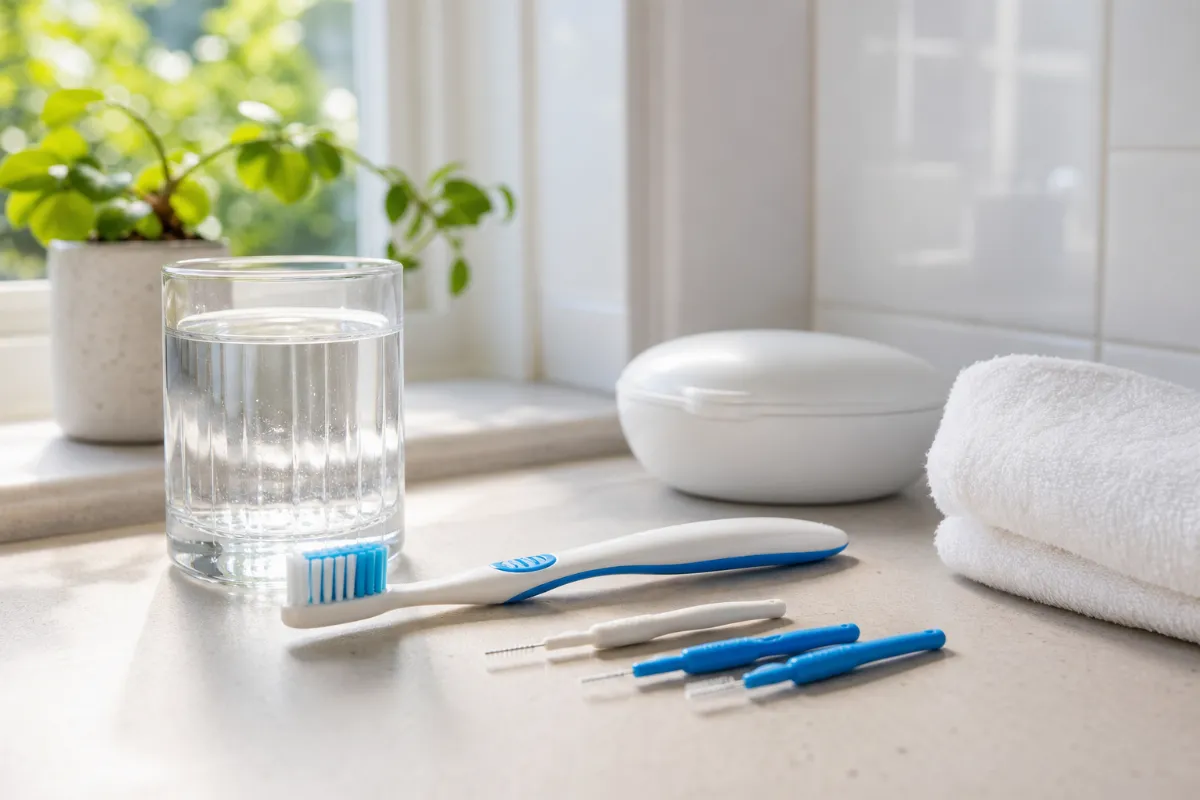
- Brush your teeth twice a day with fluoride toothpaste and clean between your teeth every day with floss or small interdental brushes.
- See a dentist regularly, even if you wear dentures or have no teeth of your own, and tell them about your medicines and any health conditions such as diabetes.
- If your mouth is often dry, or you notice bleeding gums, a sore that does not heal or dentures that no longer fit, book a dental or medical visit rather than waiting.
Be careful with
- Do not stop or change a prescribed medicine because you think it dries your mouth. Talk to your prescriber or pharmacist, who can review it with you.
- Mouth ulcers, lumps, or red or white patches that last more than two to three weeks need to be checked by a dentist or doctor. They are often harmless, but early checks matter.
- Natural rinses, oil pulling and similar home measures are not a replacement for brushing, cleaning between teeth and dental care.
Get help when
- An ulcer that has not healed after about three weeks (NHS) or any sore, lump, or white or red patch in the mouth, lips or throat that lasts more than two weeks (NIDCR).
- Very sore or swollen gums, loose teeth, or a lump in the mouth or on the lip: the NHS advises an urgent dental appointment.
- A dry mouth that makes eating or talking difficult, that lasts after a few weeks of self-care, or that comes with dry eyes, frequent urination, taste changes or sore white patches.
- Dentures that click, slip, hurt or no longer fit, or a very red, sore or bleeding mouth under dentures.
- Trouble chewing, swallowing or speaking, a lump in the neck, or unexplained weight loss together with mouth problems.
- Toothache, sharp pain when eating or drinking, or a swelling in the face or gums. If you cannot reach a dentist out of hours in the UK, the NHS says to call 111.
About Care for Your Teeth & Mouth as You Age
What this goal means
This goal is about keeping teeth, gums, the tongue and the lining of the mouth healthy, comfortable and working as the years go by. That includes natural teeth, dentures and dental implants, and a mouth that stays moist enough to chew, swallow, taste and speak.
Most oral diseases are preventable. The World Health Organization estimates that oral diseases affect about 3.7 billion people worldwide, and that complete tooth loss rises from a global average of nearly 7% in adults aged 20 and over to about 23% in people aged 60 and over.
1What it can feel like
Common experiences include gums that bleed when brushing, teeth that feel loose or sensitive, a sticky or dry mouth, difficulty chewing, a metallic or changed taste, dentures that rub or move, and bad breath that does not go away. Hands that are stiff or weak can make brushing and cleaning between the teeth harder.
Early gum disease and early decay often cause no pain, which is one reason regular dental checks are advised even when nothing seems wrong.
2,3,4What can make it harder
NIDCR describes tobacco as the most significant risk factor for gum disease; older age, diabetes and genetics also matter. Tooth decay is mainly driven by plaque and by how often sugary foods and drinks are taken, and the NHS adds that smoking and regular heavy drinking raise risk.
Dry mouth is an important driver of decay and infection in later life. NIDCR says hundreds of medicines can reduce saliva, including some used for high blood pressure, depression and bladder control, and that conditions such as Sjogren's disease and diabetes, and some cancer treatments, can too. NIDCR also states that dry mouth is not a normal part of aging.
Dentures can become loose as gums and jawbone shrink or change shape with age, according to the NHS.
5,6,3,4Conditions that can be behind it
Gum disease, tooth decay (including decay on exposed tooth roots), dry mouth, a fungal infection such as oral thrush or denture-related sore mouth, and oral cancer are the main mouth conditions that become more common with age. Diabetes affects the mouth in several ways: NIDCR says people with diabetes are more likely to get gum disease, dry mouth and thrush, and that gum disease can make blood sugar harder to manage.
NIDCR notes that oral cancer rates increase with age, rising more rapidly after age 50 and peaking between ages 60 and 70, which is why mouth checks are part of regular dental visits.
7,8,9Realistic expectations
Early gum disease caused by plaque can often be reversed with daily brushing and cleaning between the teeth, according to NIDCR. Plaque that has hardened into tartar can only be removed by a dental professional, and more advanced gum disease needs professional treatment.
Good home care lowers risk but does not remove it, particularly with dry mouth, diabetes or a history of gum disease. The aim is steady, simple daily habits plus regular professional care, not perfect teeth.
5Who this applies to
Adults who want to keep their teeth and mouth comfortable as they age, including people with natural teeth, partial or full dentures, and implants, and carers helping someone else. Children and pregnancy have different dental advice and are not covered here. Overall diet and appetite, hearing and vision, medicines review and preventive checkups are covered in the linked goals.
10Related conditions and symptoms
Teeth grinding at night (sleep bruxism) → Prediabetes, type 2 diabetes and metabolic syndrome → Frailty → Mild cognitive impairment and dementia → Unintentional weight loss →
A manageable starting plan
An educational starting point, not a personal prescription. Adjust it to your own situation and any advice from your clinician.
Your first actions
- Brush twice a day with fluoride toothpaste and clean between your teeth every day.
- Book a dental check-up if you have not had one in the last year or two, and bring your medicine list.
- If you wear dentures, clean them daily and take them out at night.
- If your mouth is dry, sip water, use sugar-free options and ask a pharmacist, dentist or doctor to look for a cause.
Optional additions
- Try a powered toothbrush or a handle grip if brushing is tiring.
- Ask your dentist about a high-fluoride toothpaste or a professional root-decay treatment if you have exposed roots.
- Choose sugar-free gum or sweets between meals if they help your mouth feel moist.
- If you smoke or vape, ask for quit support.
What to track
- Whether gums bleed, and whether bleeding eases after a couple of weeks of daily cleaning.
- Any mouth sore, patch or lump and how long it has been there (note the date).
- Dry mouth through the day and at night, and any new medicine that started around the same time.
- Denture comfort and fit, and any weight change.
When to reassess
Give daily care two to four weeks to see if gum bleeding settles. If a sore or patch lasts three weeks, if dryness persists after a few weeks of self-care, or if dentures hurt, get it checked.
When to seek professional support
- Ask your dentist or hygienist to show you the cleaning tools that suit your hands and mouth.
- If you care for someone with dementia or limited movement, ask a dental professional for a mouth-care routine for them.
- Ask about local low-cost dental options if cost is a barrier.
What helps
Ordered by how well the research supports each step. Evidence strength is shown on every card; precautions sit next to the advice.
Start here
Brush twice a day with fluoride toothpaste
High certaintyAddresses: Lowers the risk of decay and gum disease
Why it may help: Plaque build-up causes both tooth decay and gum disease. The NHS, NIDCR and WHO all advise brushing twice a day with fluoride toothpaste. The NHS advises spitting rather than rinsing afterwards so the fluoride stays on the teeth, and avoiding mouthwash straight after brushing.
How to apply it: Brush morning and evening, covering every tooth surface and the gum line, and brush your tongue and gums if you wear dentures over remaining teeth. If hands are stiff, a brush with a larger or built-up handle, or a powered brush, may be easier to hold.
Who it may suit: Almost everyone, including people with dentures who still have some natural teeth.
Precautions: If you have a very sore mouth, bleeding that does not settle, or cannot manage brushing because of dementia, weakness or pain, ask a dentist or hygienist for a plan; carers can be shown how to help.
2,6,5,1Clean between your teeth every day
Low certaintyAddresses: May reduce gum inflammation and plaque between teeth
Why it may help: A toothbrush does not reach the spaces between teeth. A Cochrane review of 35 trials (3,929 adults) found low-certainty evidence that flossing in addition to brushing may reduce gingivitis, and low-certainty evidence that interdental brushes may reduce plaque more than brushing alone. Most trials were short and many people had little gum inflammation at the start.
How to apply it: Use floss, small interdental brushes, picks or a water flosser, whichever you can use comfortably and consistently. NIDCR lists these tools as options and suggests asking a dental professional which suits you. Gentle cleaning is enough; bleeding that settles within a week or two of daily cleaning is common as gums become healthier, but ask your dentist if it persists.
Who it may suit: Adults with natural teeth. Interdental brushes may suit wider gaps, such as when gums have receded.
Precautions: If arthritis or tremor makes small tools hard to use, ask a dentist or hygienist about holders, picks or a water flosser. Do not push tools hard into the gum.
11,5,2Regular dental check-ups, with a mouth check
Moderate certaintyAddresses: Catches decay, gum disease and mouth cancer early
Why it may help: Gum disease and early decay can be painless. A dentist or hygienist can remove hardened tartar, check gums and tooth roots, and examine the face, neck, lips, mouth and back of the throat. NIDCR says an oral cancer exam is painless, takes a few minutes and can be part of a regular check-up. The NHS says to see a dentist if you have not had a check-up for 2 years, even if nothing seems wrong.
How to apply it: Book a check-up at the interval your dentist advises. Bring a list of your medicines and tell them about conditions such as diabetes. Wearers of full dentures should still go, as the mouth, gums and denture fit need checking.
Who it may suit: Everyone, including people with no natural teeth.
Precautions: Cost and access are real barriers for many older adults. Ask about local low-cost or community dental options and whether home or carer visits are available.
5,9,6,2Additional options
Limit how often you have sugary foods and drinks
High certaintyAddresses: Fewer cavities, including on exposed tooth roots
Why it may help: The NHS names frequent sugary foods and drinks as a main cause of decay, and WHO advises limiting free sugars and favouring water, fruit and vegetables. Repeated sipping or snacking gives plaque bacteria many chances to make acid.
How to apply it: Keep sweet foods and drinks to mealtimes where possible, choose water between meals, and ask for sugar-free versions of medicines when available (the NHS advises sugar-free medicines).
Who it may suit: Anyone with natural teeth, especially with dry mouth, where saliva protection is reduced.
Precautions: If you have a poor appetite or are losing weight unintentionally, do not cut calories to protect teeth; speak to a clinician about nutrition first.
6,1Stay Well Nourished as You Age → Appetite and weight loss in older adults →
Do not use tobacco, and keep alcohol low
High certaintyAddresses: Lowers the risk of gum disease, decay and mouth cancer
Why it may help: NIDCR describes tobacco as the most significant risk factor for gum disease, saying it can also delay healing and make treatment less successful. NIDCR lists any form of tobacco, including e-cigarettes, chewing tobacco and snuff, as raising oral cancer risk, and heavy drinking raises it too, more so combined with tobacco.
How to apply it: If you want to quit, ask your doctor, pharmacist or dentist about support; many people need several attempts and quit-support services are free in many countries.
Who it may suit: Anyone who smokes, vapes or uses chewing tobacco.
Precautions: Do not stop or alter a prescribed medicine when quitting without speaking to your prescriber.
5,9,6Look after dentures daily and take them out at night
Moderate certaintyAddresses: Fewer gum infections, sore mouth and decay on remaining teeth
Why it may help: The NHS advises brushing and rinsing dentures every day, taking them out every night unless your dentist advises otherwise, and notes that wearing them overnight raises the risk of gum infections, tooth decay and choking.
How to apply it: Clean dentures over a sink of water or a soft towel with soft soap or washing-up liquid (not toothpaste, which can damage them), rinse after meals, and store them overnight in water or a denture-cleaning solution. Also brush gums, tongue and remaining teeth morning and evening.
Who it may suit: Everyone with partial or full dentures.
Precautions: See a dentist if dentures click, slip, hurt or no longer fit: gums and jawbone change over time, and ill-fitting dentures can cause a sore mouth, infections and difficulty eating.
4Still being studied
A powered toothbrush instead of a manual one
Moderate certaintyAddresses: Somewhat less plaque and gum inflammation
Why it may help: A Cochrane review of 56 trials found moderate-quality evidence that powered toothbrushes reduce plaque and gingivitis more than manual brushes in the short and long term (about 21% less plaque on one index at over three months). The authors note that the clinical importance of the difference is unclear.
How to apply it: A powered brush may be easier to hold and use if you have limited hand strength. A well-used manual brush is still effective.
Who it may suit: Adults who find manual brushing tiring or difficult, or who want to try an option.
Precautions: Use a soft head and light pressure; check with a dentist if gums recede or bleed.
12Treating gum disease if you have diabetes
Moderate certaintyAddresses: A small improvement in blood sugar control (HbA1c)
Why it may help: A Cochrane review of 35 trials (3,249 people, mostly with type 2 diabetes) found moderate-certainty evidence that professional treatment of gum disease lowered HbA1c by an average of 0.43% (3 to 4 months). It was designed to measure blood sugar rather than tooth outcomes.
How to apply it: Ask your dentist about a gum check and professional cleaning if you have diabetes. Treatment complements, and does not replace, diabetes care.
Who it may suit: Adults who have both diabetes and gum disease.
Precautions: Tell your dentist about your diabetes and medicines. Never change diabetes medicines because of dental treatment without your diabetes team.
13,7Prediabetes, type 2 diabetes and metabolic syndrome → Support Healthy Blood Sugar →
Professional treatments for root decay
Low certaintyAddresses: Stopping or slowing decay on exposed tooth roots
Why it may help: A systematic review of 13 clinical studies in middle-aged and older adults reported that the agents with valuable results for preventing or arresting root decay were 38% silver diamine fluoride (a dentist-applied treatment), arginine-containing toothpaste and high-fluoride toothpastes. The review was limited in size and used different outcome measures.
How to apply it: Ask your dentist whether you are at high risk for root decay (for example with receding gums or dry mouth) and what they recommend. Any prescription-strength toothpaste or professional treatment should be decided by a dentist.
Who it may suit: Older adults with exposed roots, dry mouth, or repeated new cavities.
Precautions: Dentist-applied treatments can stain decayed areas dark; discuss this with the dentist beforehand.
14Food & nutrition
Eating for healthier teeth and gums
The clearest food advice in the agency guidance we read is about sugar: limit how often you have sugary foods and drinks, and favour water, fruit and vegetables over free sugars. Sipping sweet drinks across the day is harder on teeth than having them once with a meal.
We did not find reliable human-trial evidence that a specific food or vitamin prevents gum disease or decay in older adults, and this page does not recommend one.
6,1When chewing is difficult
Missing teeth, loose dentures or a sore mouth can make firmer foods hard to eat. The NHS suggests practising with softer foods while getting used to new dentures. If chewing difficulty is changing what you eat, or you are losing weight without trying, speak to a dentist and a doctor or dietitian; there are often fixes, such as a denture adjustment or softer, nutrient-dense options.
In a pooled analysis of cohort studies, losing teeth was linked with a higher risk of dementia and cognitive decline, and authors suggest nutrition may be one possible route. These are observational findings and do not prove cause.
Softer, moist foods when the mouth is sore or dry
Low certaintyAddresses: Easier chewing and swallowing
Why it may help: NIDCR notes dry mouth can make chewing and swallowing difficult. Sipping water with meals and choosing moist dishes are practical measures drawn from NIDCR and NHS self-help advice.
How to apply it: Sip water or a sugar-free drink with meals; limit spicy, salty, acidic and sugary foods while the mouth is sore.
Who it may suit: People with dry mouth or a sore mouth.
Precautions: Difficulty swallowing that is new or getting worse needs a medical check.
3,15Drinks and hydration
Water is the safest everyday drink for teeth. NIDCR and the NHS both suggest regular sips of water for dry mouth, and the NHS notes that dehydration is one cause of dry mouth. The NHS also says to try ice cubes or cold unsweetened drinks.
Sugar-free chewing gum or sweets
Low certaintyAddresses: May stimulate saliva
Why it may help: NIDCR suggests sugarless gum or sugarless hard candy to stimulate saliva, and notes some contain xylitol. A Cochrane review found chewing gum is associated with increased saliva production in most people who still have some saliva-making capacity.
How to apply it: Use sugar-free products only. Some sugar alcohols can cause loose stools or bloating in larger amounts.
Who it may suit: People with mild to moderate dry mouth and enough saliva-gland function to respond.
Precautions: Gum can loosen dentures or damage dental work for some people; stop if it causes jaw pain.
3,17,18Remedies & supplements
Traditional use, laboratory findings and human trials are kept apart. "Natural" does not mean safe.
Xylitol (sugar-free gum, lozenges, toothpaste)
Low certaintyStudied form and route: Xylitol-containing gum, lozenges or toothpaste
Intended outcome: Possible small reduction in new cavities
Human evidence: A Cochrane review of 10 trials (5,903 participants) found low-quality evidence that a fluoride toothpaste containing 10% xylitol reduced cavities by about 13% in children versus fluoride-only toothpaste over 2.5 to 3 years. For adults the review found only one study of lozenges, and the result was compatible with both benefit and harm. NIDCR says xylitol in sugarless gum or candy may help prevent cavities.
Limits: Evidence in older adults specifically is limited; the best trial data are in children. Seven of 10 trials had a high risk of bias.
Interactions and precautions: Adverse effects reported in trials included mouth sores, cramps, bloating, constipation, flatulence and loose stools. Check labels, since many sweets contain sugar.
18,3Oil pulling with coconut oil
Very low certaintyStudied form and route: Swishing oil in the mouth for a few minutes, then spitting it out
Intended outcome: Possible modest reduction in plaque
Human evidence: A systematic review of four randomized trials (182 participants, 7 to 14 days) found lower plaque scores and salivary bacterial counts, but data were insufficient for firm conclusions and risk of bias was high. The authors suggest it could be an add-on to normal care, not a replacement.
Traditional use: Oil pulling is a traditional practice in some systems of medicine.
Limits: Short trials, small numbers, no long-term outcomes such as fewer cavities or less tooth loss.
Interactions and precautions: Do not swallow the oil. Do not use it in place of brushing, cleaning between teeth or dental visits. Stop if it irritates the mouth or causes nausea.
19Saliva substitutes and stimulants (sprays, gels, lozenges, gum)
Low certaintyStudied form and route: Over-the-counter moisturizing products or stimulating gum
Intended outcome: Temporary relief of dry mouth symptoms
Human evidence: A Cochrane review of 36 randomized trials (1,597 participants) compared saliva stimulants and substitutes. Only one trial was at low risk of bias and 17 were at high risk. One saliva-substitute spray showed benefit over an electrolyte spray, and combination oral-care systems looked promising but did not have enough evidence to recommend. The NHS advises that a pharmacist can recommend gels, sprays, tablets or lozenges, noting not all suit everyone.
Limits: Relief is typically short-lived, and no product was clearly better than others. They address symptoms, not the cause.
Interactions and precautions: Ask a pharmacist or dentist about suitability, especially with dentures or other conditions. If dry mouth lasts after a few weeks of self-care, see a GP or dentist.
17,15Herbal rinses and teas for gums (for example sage, myrrh, mangosteen)
Not enough evidenceStudied form and route: Mouth rinses or teas made from herbs
Intended outcome: Claimed relief of gum redness or plaque
Human evidence: We did not review human trials of these herbs for this page, and we did not find a source among those we read that supports using them for older adults' gum disease. They should be treated as unproven.
Traditional use: Several of these herbs have traditional use for mouth and gum care.
Limits: Strength and purity of products vary, and rinses are not a substitute for professional gum treatment.
Interactions and precautions: Do not swallow rinses. Herbs can interact with medicines and some are unsuitable in pregnancy; check with a pharmacist. Stop if the mouth becomes sore.
Therapies & care
Established professional care for the mouth is provided by dentists, dental hygienists and doctors. This page does not recommend medicines or doses, and you should not stop a prescribed medicine on your own. If a medicine may be drying your mouth, ask your prescriber or pharmacist to review it.
Professional cleaning and gum treatment
Moderate certaintyDental care NIDCR says gum disease treatment aims to control the infection and may include a deep cleaning of affected teeth (scaling and root planing), an oral rinse or medication, and surgery for advanced cases, alongside good daily home care. Hardened tartar can only be removed by a dental professional.
Who it may suit: People with bleeding, swollen or receding gums, deep pockets or loose teeth.
Precautions: Tell the dentist about diabetes, blood-thinning medicines and heart conditions.
5,13Dry mouth assessment
Moderate certaintyMedical and dental review NIDCR says a dentist or doctor reviews your history and medicines, may order blood tests or a saliva test, and treatment depends on the cause: changing or adjusting medicines, a saliva substitute, or products that keep the mouth moist, plus good home care and regular check-ups.
Who it may suit: People with persistent dry mouth, dry eyes, taste changes or frequent mouth infections.
Precautions: Never stop a prescribed medicine without advice; changes should be made by your prescriber.
3,15Denture review and treatment of denture-related sore mouth
Low certaintyDental care A dentist can adjust or replace dentures that no longer fit and treat denture-related sore mouth (denture stomatitis). A systematic review of 35 studies, mostly at high risk of bias, supported antifungal treatment and disinfecting agents for treatment; no trial tested preventive approaches.
Who it may suit: Denture wearers with a red, sore or bleeding mouth under the denture, or ill-fitting dentures.
Precautions: Treatment is prescribed or advised by a dentist; do not self-treat persistent white patches or soreness.
20,4Professional oral care in care homes
Low certaintySupported care For residents of nursing homes, a Cochrane review of six trials judged the evidence unclear on whether professional oral care prevents pneumonia, although low-certainty evidence suggested it may reduce pneumonia-related death at 24 months (risk ratio 0.43). Poor oral hygiene is linked to pneumonia from breathing in mouth bacteria.
Who it may suit: Residents of care homes and people who rely on carers for brushing.
Precautions: Ask care staff about the mouth-care plan, and make sure dentures are removed and cleaned.
21What to avoid
Habits, products and claims that can get in the way. Never stop a prescribed medicine without talking to the professional who prescribed it.
Risks that apply to most people
Skipping dental visits because nothing hurts
Moderate certaintyWhy: Gum disease and early decay are often painless, and mouth cancer can look like an ordinary ulcer. The NHS says early-stage mouth cancer can resemble a simple ulcer, and early checks make treatment easier.
Who it applies to: Everyone, including people with dentures or no teeth.
Try instead: Book regular check-ups at the interval your dentist suggests.
22,2,9Wearing dentures overnight without advice
Moderate certaintyWhy: The NHS says wearing dentures overnight raises the risk of gum infections, tooth decay and choking.
Who it applies to: People with removable dentures.
Try instead: Take them out at night and clean them, unless your dentist has told you otherwise.
4Using toothpaste to clean dentures
Low certaintyWhy: The NHS advises that toothpaste could damage dentures; soft soap or washing-up liquid is suggested instead.
Who it applies to: Denture wearers.
Try instead: Brush dentures with soft soap or washing-up liquid, over a sink of water or a soft towel in case they drop.
4Personal triggers to check
Frequent sipping of sugary drinks, sweets or sticky snacks
High certaintyWhy: The NHS links decay to eating and drinking sugary foods and drinks frequently. Dry mouth makes this worse by removing saliva's protection, according to NIDCR.
Who it applies to: Anyone with natural teeth, especially with dry mouth or exposed roots.
Try instead: Keep sugar to mealtimes and use water or sugar-free options between meals.
6,3Tobacco and heavy drinking
High certaintyWhy: Tobacco is described by NIDCR as the most significant risk factor for gum disease and raises oral cancer risk; alcohol also dries the mouth, per NIDCR dry mouth advice.
Who it applies to: Anyone who smokes, vapes, chews tobacco or drinks heavily.
Try instead: Ask for quit support; reduce alcohol.
5,9,3Caffeine, spicy, salty, acidic or sugary food when the mouth is dry
Low certaintyWhy: NIDCR advises limiting caffeinated drinks and notes spicy or salty foods may burn a dry mouth; the NHS advises avoiding acidic, spicy, salty or sugary foods and limiting alcohol, caffeine and fizzy drinks.
Who it applies to: People with dry mouth.
Try instead: Sip water or sugar-free drinks and choose milder foods until the mouth is more comfortable.
3,15Products that need caution
Mouthwash straight after brushing
Low certaintyWhy: The NHS advises avoiding mouthwash straight after brushing, because it can wash away the fluoride left on the teeth.
Who it applies to: People who use mouthwash.
Try instead: Use mouthwash at a different time of day. With dry mouth, the NHS suggests an alcohol-free mouthwash.
2,15Sugary medicines and lozenges taken regularly
Low certaintyWhy: The NHS advises sugar-free medicines as part of preventing decay.
Who it applies to: Anyone taking liquid medicines or lozenges for long periods.
Try instead: Ask your pharmacist for a sugar-free version where one exists. Never stop a prescribed medicine on your own.
6Unsupported claims
"Oil pulling or herbal rinses replace brushing and dental care"
Very low certaintyWhy: A systematic review of four small, short trials of coconut-oil pulling found lower plaque scores and salivary bacteria counts but judged the evidence insufficient for firm conclusions, with a high risk of bias. None of these studies show it replaces brushing, cleaning between teeth or dental care.
Who it applies to: People looking for natural options.
Try instead: Keep fluoride toothpaste, interdental cleaning and dental visits as the base; treat any rinse as optional extra.
19"Dry mouth is just part of getting older"
High certaintyWhy: NIDCR states that dry mouth is not a normal part of aging. It is often caused by medicines, certain conditions or cancer treatment, and can be assessed and managed.
Who it applies to: Older adults with persistent dry mouth.
Try instead: Ask a dentist, doctor or pharmacist to look for a cause.
3,15Common mistakes
Putting up with dentures that no longer fit
Moderate certaintyWhy: The NHS says not cleaning dentures properly or not getting them adjusted can cause a sore mouth, infections and difficulty eating and speaking.
Who it applies to: Denture wearers.
Try instead: See a dentist if dentures click, slip, hurt or are damaged; do not try to repair them yourself.
4Treating a long-lasting mouth ulcer or patch as "just an ulcer"
Moderate certaintyWhy: NHS and NIDCR both list ulcers, lumps and red or white patches that do not go away as reasons to be checked: about three weeks (NHS) or more than two weeks (NIDCR).
Who it applies to: Everyone, particularly people who smoke or drink heavily.
Try instead: Book a dentist or GP visit rather than waiting longer.
22,9Stopping a prescribed medicine because of dry mouth
Moderate certaintyWhy: The NHS specifically advises not to stop a prescribed medicine without medical advice, even if you suspect it is the cause.
Who it applies to: Anyone on regular medicines.
Try instead: Ask your prescriber or pharmacist to review it.
15Evidence & safety
What the research shows
Agency guidance agrees on the basics: fluoride toothpaste twice a day, cleaning between the teeth, limiting sugary foods and drinks, avoiding tobacco, regular dental check-ups, and looking after dentures. The trial evidence behind individual tools is more modest: powered brushes show moderate-quality benefits on plaque and gingivitis, interdental cleaning shows low-certainty benefit on gum inflammation, and treating gum disease in people with diabetes modestly improves HbA1c. Natural options such as oil pulling and herbal rinses have little reliable evidence. Observational studies link poor gum health and tooth loss with cognitive decline and dementia, but they do not show cause and effect.
Limits of the evidence
- Many dental trials are short, small, and at unclear or high risk of bias.
- Most trial data on xylitol come from children rather than older adults.
- Studies linking gum disease or tooth loss to dementia are observational and partly affected by reverse causality, where early cognitive change makes mouth care harder.
- We did not review controlled trials of herbal rinses for this page.
- Prevalence figures come from different countries and years and are not directly comparable.
Precautions and interactions
- Check supplements and herbal rinses with a pharmacist if you take regular medicines.
- Never stop a prescribed medicine because of dry mouth or other mouth symptoms; ask your prescriber.
- Persistent mouth sores, lumps or patches need to be checked.
- People with diabetes, heart conditions or on blood thinners should tell the dentist before treatment.
Life-stage considerations
- Older adults: dry mouth, root decay and denture problems are more common; carers may need to help with brushing and denture care.
- Pregnancy and breastfeeding: this page is aimed at older adults; ask a dentist or clinician about herbal rinses or any new product.
- Children: dental advice differs; the xylitol trial data quoted here are mainly from children and should not be applied directly to adults.
Warning signs
- An ulcer not healed after about three weeks, or a lump or white or red patch in the mouth or throat lasting more than two weeks.
- Very sore or swollen gums, loose teeth, or a lump on the lip or in the mouth.
- Trouble swallowing, a hoarse voice that lasts, a lump in the neck, or unexplained weight loss.
- Dry mouth with dry eyes, frequent urination or sore white patches.
Claim checks
Dry mouth is normal in old age.
against
3Oil pulling can replace brushing and flossing.
against
19Xylitol gum or lozenges reliably prevent cavities in adults.
insufficient
18Treating gum disease helps blood sugar control in people with diabetes.
moderate
13Losing teeth or having gum disease causes dementia.
low
23,16Powered toothbrushes clean better than manual ones.
moderate
12Questions people ask
How often should I brush and clean between my teeth?
The NHS advises brushing at least twice a day with fluoride toothpaste and cleaning between your teeth every day with floss or interdental brushes. NIDCR gives the same advice and lists picks and water flossers as alternatives.
Should I rinse my mouth after brushing?
The NHS advises spitting out toothpaste but not rinsing, so the fluoride stays on your teeth, and avoiding mouthwash straight after brushing.
Do I still need a dentist if I wear full dentures?
Yes. A dentist checks the gums and lining of the mouth, including for early signs of mouth cancer, and checks that dentures fit. The NHS notes gums and jawbone change over time and dentures may need adjusting.
Is a dry mouth just part of getting older?
No. NIDCR says dry mouth is not a normal part of aging. Medicines, diabetes, Sjogren's disease, some cancer treatments and dehydration are among the causes, so it is worth asking a dentist, doctor or pharmacist to look.
What can I do at home for a dry mouth?
The NHS and NIDCR suggest sipping water regularly, using sugar-free gum or sweets, avoiding tobacco, limiting alcohol and caffeine, using a humidifier at night (NIDCR), and brushing twice a day because dry mouth raises decay risk. Do not stop a prescribed medicine without advice.
Does gum disease affect my general health?
NIDCR notes that people with diabetes are more likely to get gum disease and that gum disease can make blood sugar harder to manage; it also lists an association with heart disease. WHO says diabetes and gum disease affect each other in both directions. Cohort studies have also linked poor gum health with cognitive decline, but this is an association, not proven cause.
Are electric toothbrushes better?
A Cochrane review found moderate-quality evidence that powered brushes reduce plaque and gingivitis more than manual brushes, but the authors say it is unclear how much this matters clinically. The best brush is the one you will use well, twice a day.
Is oil pulling worth trying?
The limited evidence from four small trials suggests a modest effect on plaque, with high risk of bias. If you try it, treat it as an extra, never a replacement for brushing, cleaning between teeth and dental care.
When is a mouth ulcer a worry?
The NHS says to see a GP or dentist for an ulcer that has not healed within about three weeks, a red or white patch, or a lump; NIDCR uses two weeks for sores, lumps and patches. These are often harmless, but early checks matter.
How do I help someone who cannot brush their own teeth?
Ask their dentist or hygienist to show you a routine suited to their needs. For care home residents, a Cochrane review found the effect of professional oral care on pneumonia unclear, but it is part of general good care, including cleaning and removing dentures.
References
- World Health Organization. Oral health fact sheet (17 March 2025). Read 2026-11-01. source
- NHS. Gum disease (last reviewed 20 April 2026). Read 2026-11-01. source
- NIDCR. Dry Mouth (last reviewed October 2024). Read 2026-11-01. source
- NHS. Dentures (false teeth) (last reviewed 19 March 2025). Read 2026-11-01. source
- NIDCR. Periodontal (Gum) Disease (last reviewed August 2026). Read 2026-11-01. source
- NHS. Tooth decay (last reviewed 13 August 2025). Read 2026-11-01. source
- NIDCR. Diabetes & Oral Health (last reviewed October 2024). Read 2026-11-01. source
- NIDCR. Senior Oral Health Data & Statistics (last reviewed November 2022). Read 2026-11-01. source
- NIDCR. Oral Cancer (last reviewed November 2024). Read 2026-11-01. source
- MedlinePlus. Dental Health. Read 2026-11-01. source
- Worthington HV, et al. Home use of interdental cleaning devices, in addition to toothbrushing, for preventing and controlling periodontal diseases and dental caries. Cochrane Database Syst Rev. 2019. PMID 30968949. source
- Yaacob M, et al. Powered versus manual toothbrushing for oral health. Cochrane Database Syst Rev. 2014. PMID 24934383. source
- Simpson TC, et al. Treatment of periodontitis for glycaemic control in people with diabetes mellitus. Cochrane Database Syst Rev. 2022. PMID 35420698. source
- Castelo R, et al. Is there a preferable management for root caries in middle-aged and older adults? A systematic review. Br Dent J. 2021. PMID 34045674. source
- NHS. Dry mouth (last reviewed 29 November 2023). Read 2026-11-01. source
- Li L, et al. Tooth loss and the risk of cognitive decline and dementia: A meta-analysis of cohort studies. Front Neurol. 2023. PMID 37139053. source
- Furness S, et al. Interventions for the management of dry mouth: topical therapies. Cochrane Database Syst Rev. 2011. PMID 22161442. source
- Riley P, et al. Xylitol-containing products for preventing dental caries in children and adults. Cochrane Database Syst Rev. 2015. PMID 25809586. source
- Woolley J, et al. The effect of oil pulling with coconut oil to improve dental hygiene and oral health: A systematic review. Heliyon. 2020. PMID 32923724. source
- Hilgert JB, et al. Interventions for the Management of Denture Stomatitis: A Systematic Review and Meta-Analysis. J Am Geriatr Soc. 2016. PMID 27889906. source
- Cao Y, et al. Oral care measures for preventing nursing home-acquired pneumonia. Cochrane Database Syst Rev. 2022. PMID 36383760. source
- NHS. Symptoms of mouth cancer (last reviewed 19 June 2023). Read 2026-11-01. source
- Asher S, et al. Periodontal health, cognitive decline, and dementia: A systematic review and meta-analysis of longitudinal studies. J Am Geriatr Soc. 2022. PMID 36073186. source
Related on AlternativeMed
Related goals
Stay Well Nourished as You Age → Maintain Your Everyday Independence → Make Your Home Safer & Easier to Use → Manage Appetite Changes With Age → Recognize & Address Unintended Weight Loss → Maintain Your Hearing Health → Maintain Your Vision Health → Keep Up With Preventive Care → Review Medicines & Supplements Safely → Understand Longevity Research & Claims → Get Support to Stop Smoking or Vaping → Support Healthy Blood Sugar →
Ingredients, foods and supplements
Sage → Myrrh → Mangosteen → Hibiscus →
Research, safety and claim-check resources
Healthy aging: warning signs and when to get help → Healthy aging research and evidence → Supplements for healthy aging → Healthy Aging overview →