Herbs & Botanicals · Herbs · Aromatic tree resin used as a mouth rinse, wound tincture and incense, with only low-certainty evidence for any use
Myrrh
Commiphora myrrha (T.Nees) Engl. (also called Commiphora molmol); oleo-gum resin · also called Myrrh, gum myrrh, mirra (Spanish), myrrhe (French and German), Mirazid (Egyptian drug brand)
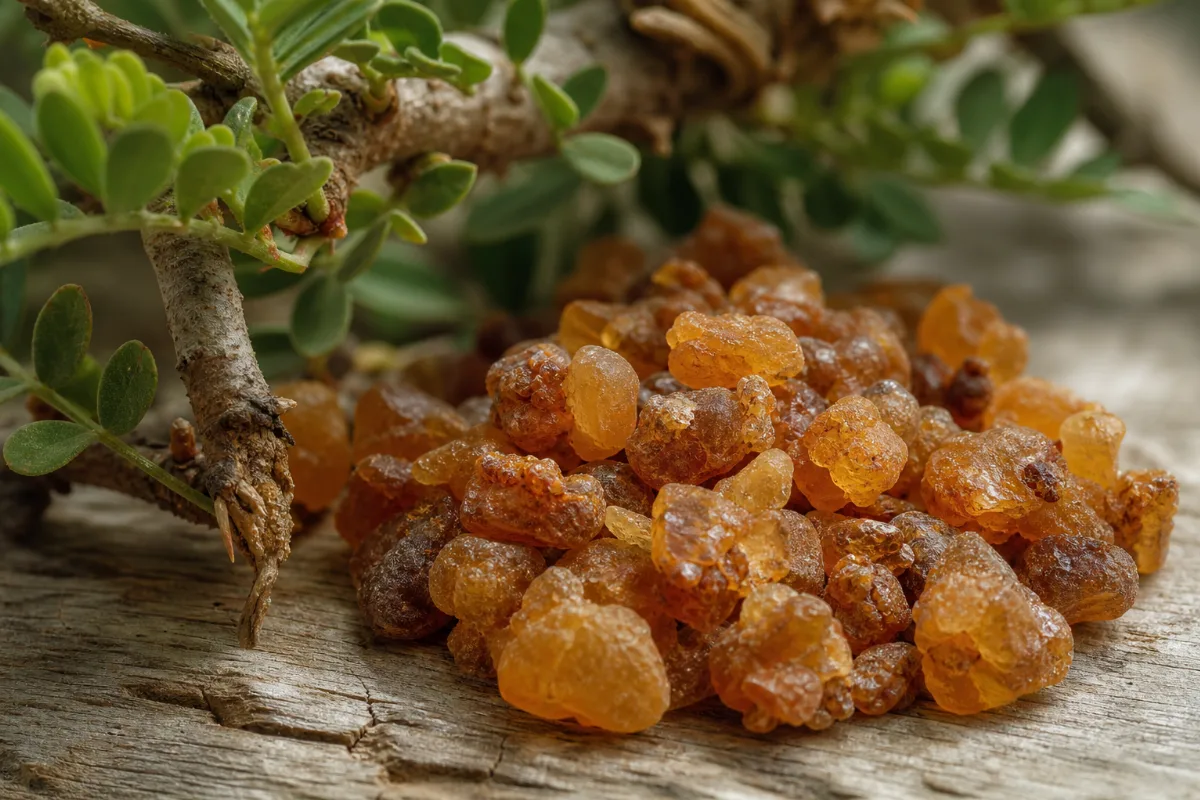
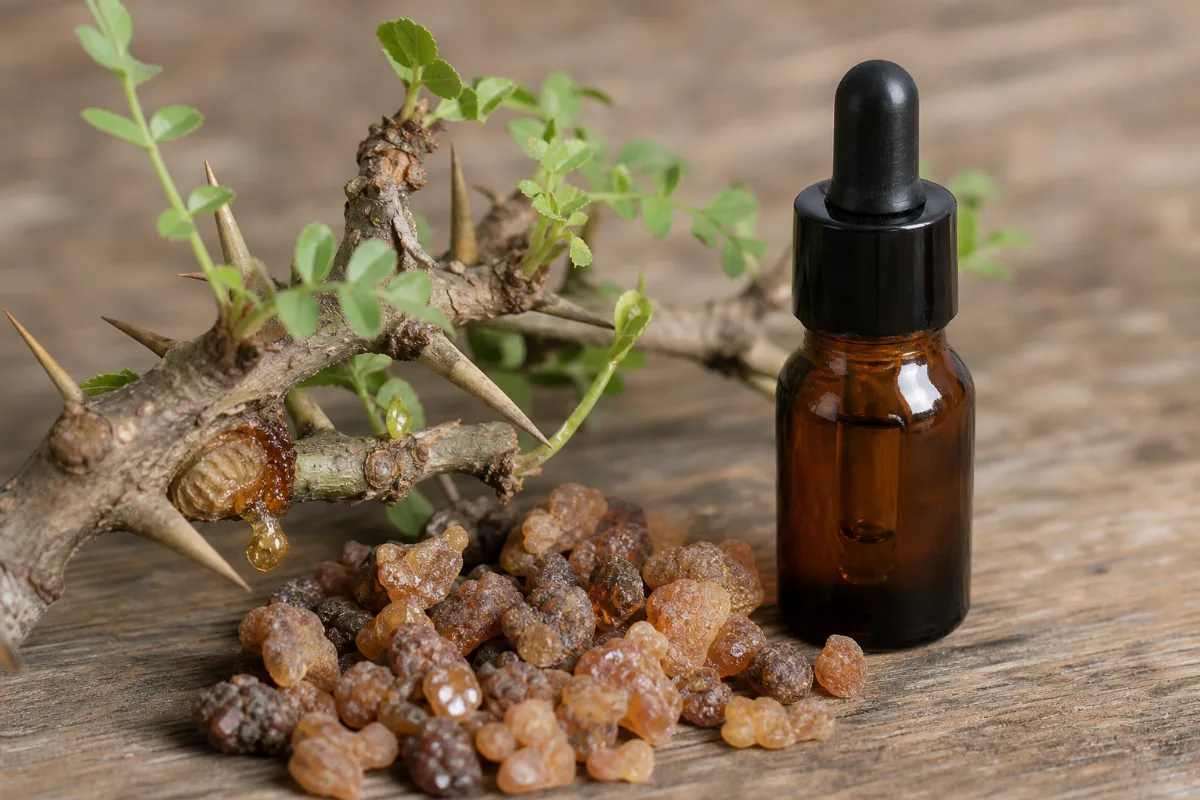
Myrrh is the dried reddish-brown resin that oozes from the stem of a thorny tree of north-east Africa and Arabia. It has been used for thousands of years in medicine, perfume and incense. This profile is about myrrh as a health product: the alcohol tincture used as a mouth rinse or wound dab, mouth gels, capsules and the Egyptian extract Mirazid. It is not guggul (a different Commiphora tree) and not frankincense.
General information, not medical advice. Last substantive update · Not medically reviewed. A named clinician has not signed off on this page. How this page is made
About Myrrh
Myrrh is a tree resin with a long history in mouth care, wound care and incense. Modern trials of mouth rinses, gels and a childbirth-wound bath are small and give low-certainty support. The best-known drug-style use, Mirazid against bilharzia, did poorly in the largest trial. The EU lists myrrh tincture as a traditional herbal medicine only. Safety cautions are real: avoid in pregnancy and breastfeeding, allergic skin reactions occur, and interactions with warfarin, cyclosporine and other drugs are possible.
What it is
Myrrh is the oleo-gum resin of Commiphora myrrha (also called Commiphora molmol), a thorny tree of the frankincense family (Burseraceae). It is a mixture of volatile oil, resin and gum. The accepted name is Commiphora myrrha in GBIF; C. molmol is listed as a synonym.
It is a different plant from guggul (Commiphora wightii, also called mukul) and from frankincense (Boswellia). Studies of those do not tell us about myrrh, and this profile does not use them.
Traditional and current uses
The EU assessment report says myrrh was used by the ancient Greeks and Romans, especially for wounds and mouth infections, and that it stayed in European pharmacopoeias for centuries. In 2011 the EU herbal committee listed myrrh tincture as a traditional herbal medicine for minor mouth ulcers and gum inflammation and for minor wounds and small boils. "Traditional" means long use, not proof it works. The 2018 review kept the monograph unchanged.
In Egypt, myrrh was developed into the drug-style extract Mirazid for bilharzia and liver fluke. In traditional Persian medicine it is used for wounds and described as a womb stimulant.
What is in it and how it works
The volatile oil is rich in furanosesquiterpenes such as furanoeudesma-1,3-diene and curzerene. In mice these compounds eased pain, and the effect was blocked by naloxone, which points to opioid receptors; high doses were needed. Fractions also killed bacteria and yeast and numbed tissue in lab tests.
All of this comes from lab and animal work. How myrrh is absorbed and cleared in people has not been studied.
What the research shows
In the mouth, a 2026 systematic review of eight trials found a small fall in plaque and no clear effect on gum inflammation or healing. Single trials found less swelling after tooth extraction, pain reduction in mouth ulcers and better childbirth wound healing. All are small and from Saudi Arabia or Iran.
For parasites, the largest trial (1,131 people) found Mirazid cured about 9% of bilharzia cases against 62 to 80% for praziquantel. Small uncontrolled Egyptian studies reported 90% or higher cure rates, which could not be repeated by independent groups. For pain, one pilot with 184 volunteers hinted at relief but has serious design doubts. A trial in women after miscarriage showed myrrh helped pass retained tissue.
At a glance
Traditional uses history, not proof
- Ancient Greece and Rome: the EU assessment report says myrrh was used for wounds and mouth infections.
- European pharmacy tradition: the tincture is used as a rinse or dab for sore gums and mouth ulcers, and on small wounds and boils. The EU recognises these as traditional uses.
- Egypt: used for bilharzia (schistosomiasis); a drug-style extract called Mirazid was developed for it.
- Traditional Persian medicine: wound healing, and texts describing myrrh as stimulating the womb (cited by the authors of a 2020 trial).
Studied for research
- Mouth rinses and gels for gum plaque, ulcers and healing after dental surgery, low
- Wound healing after childbirth, low
- Pain, very low
- Liver fluke and bilharzia (Mirazid), mixed and against
Main compounds
- Furanosesquiterpenes (furanoeudesma-1,3-diene, curzerene, furanodiene), the volatile oil compounds linked to pain relief and germ-killing in lab tests
- Resin acids (commiphoric acids) and sterols
- A water-soluble gum (about 40% of the resin)
Common forms
- Tincture (alcohol extract), the EU traditional preparation
- Mouthwashes and gels
- Capsules and standardised extracts (Mirazid, MyrLiq)
- Essential oil and incense
Research links: EU herbal monograph on myrrh (European Medicines Agency) · EU assessment report on myrrh (European Medicines Agency) · EU 2018 review addendum on myrrh (European Medicines Agency) · Research Library · Genes & Biomarkers Library
The plant and its history
- Accepted scientific name
- Commiphora myrrha (T.Nees) Engl.
- Naming authority
- (T.Nees) Engl.; published in Engl. (1883), in DC., Monogr. Phan. 4: 10 (GBIF).
- Synonyms
- Commiphora molmol (Engl.) Engl. ex Tschirch (a synonym of C. myrrha in GBIF); Commiphora molmol (Engl.) Engl.; Balsamodendrum myrrha T.Nees; Commiphora myrrha var. molmol Engl.; and other older names listed in GBIF
- Common names
- Myrrh (English); Mirra (Spanish / Italian); Myrrhe (French / German); Mo yao (Chinese (pinyin; per general usage, not checked))
- Botanical family
- Burseraceae (the frankincense and myrrh family, also called the torchwood family).
- Classification
- Plantae > Tracheophyta > Magnoliopsida > Sapindales > Burseraceae > Commiphora > Commiphora myrrha
- Native range
- Not verified from a source read. Myrrh is commonly said to come from north-east Africa and the Arabian Peninsula; this was not checked against GBIF distribution data or a botanical flora.
- Habitat
- Not verified from a primary botanical source.
- What the plant looks like
- Roots: Not relevant to the resin; a boiled root extract appears in one warfarin case report (not verified further).; Stems: Myrrh is the oleo-gum resin that oozes from the stem. Plant description not verified from a botanical source.; Leaves: Not part of the medicinal use; not verified.; Flowers: Not verified.; Fruit: Not verified.
- Cultivation
- Not verified from a primary source read.
- Harvest and processing
- The EU report describes the herbal substance as the gum-resin (oleo-gum resin: volatile oil, resin and gum). Harvest and processing details were not read.
- Look-alikes and adulterants
- Name: Guggul / gum guggul (Commiphora wightii, also called C. mukul); Note: A different Commiphora species from India. Its steroid guggulsterones are the best-known compounds. Guggul has its own research and is not myrrh.; Name: Other Commiphora resins sold as myrrh or similar; Note: The EU report notes reviews that include products from other species than those accepted as myrrh. Species used in trade were not itemised in sources read.; Name: Frankincense (Boswellia species); Note: A different genus (also Burseraceae). Often sold or traditionally used together with myrrh; one trial (episiotomy) tested them separately and found myrrh better.
- Sustainability and conservation
- Not verified. No IUCN assessment was retrieved.
The plant and the parts used
Traditional use and history history, not clinical proof
| Tradition or era | Documented use | Source |
|---|---|---|
| Ancient Greece and Rome | The EU assessment report says myrrh was used as a medicine as far back as the ancient Greeks and Romans, notably for wounds and mouth infections. Described from handbooks cited by the EMA (e.g. Madaus 1938). | s-ema-ar-myrrh |
| European pharmacopoeias and herbal handbooks | Myrrh and its tincture were included in many pharmacopoeias over the centuries and are still in the European Pharmacopoeia. The Commission E (1987), ESCOP (2003) and other handbooks are cited by the EMA. The tincture is used as a mouth rinse or dab for gum and mouth inflammation and on minor wounds and small boils. | s-ema-ar-myrrh |
| European medicine, gut use | Historically myrrh tincture was also used for indigestion and intestinal infections, but this use has declined; it still appears in multi-ingredient bitter products in some EU countries (EU report). The EU did not include oral use in the monograph. | s-ema-ar-myrrh |
| Egypt | Myrrh is used in Egypt for bilharzia (schistosomiasis), and a commercial extract (Mirazid) was developed for it. The EU report calls the evidence controversial. | s-ema-ar-myrrh |
| Traditional Persian medicine | Manuscripts are cited by the 2020 trial authors as saying myrrh may act as a uterine stimulant and cause abortion, and as a wound-healing herb used by Iranian midwives for episiotomies. The authors note there had been no evidence to verify the uterine claim before their trial. | p32397980 |
| Chinese, Ayurvedic and Arab traditions | A 2024 review says myrrh is an important material in traditional Chinese, Ayurvedic and Arabic medicine for trauma, arthritis and high blood fats. Taken from the review abstract only. | p39598434 |
| Ancient Egyptian embalming, religious and perfume use | Widely repeated in general sources but not verified from any source read for this file. NOT verified. | NOT verified (Wikipedia-level knowledge only) |
Traditional use shows how a plant was used. It does not show that a supplement works or is safe today.
What is inside, and how it may work
What the plant contains and how those compounds act in cells and animals. Laboratory and animal mechanisms are not proven effects in people.
Main compounds
| Compound | Family | Where it is concentrated | Activity studied | Level of evidence |
|---|---|---|---|---|
| Furanoeudesma-1,3-diene PubChem 13874240 | furanosesquiterpene (volatile oil) | Oleo-gum resin (volatile oil) Described by the EU report as the main component of the volatile oil; a standardised extract (MyrLiq) contained 18.84 g/kg. | In mice, relieved pain with effects reversed by naloxone and displaced an opioid ligand in brain tissue. Also antibacterial and antifungal in lab tests (EU report, citing Dolara). 11 24 16 | Animal research |
| Curzerene | furanosesquiterpene | Oleo-gum resin (volatile oil) 12.31 g/kg in the MyrLiq extract. | Eased pain in mice after injection into the brain ventricle (EU report). A PubChem ID was not confirmed. 11 16 | Animal research |
| Furanodiene PubChem 9601230 | furanosesquiterpene | Oleo-gum resin Total furanodienes 40.86 g/kg in the MyrLiq extract. | Ineffective as a painkiller in the same mouse test (EU report). 11 24 16 | Animal research |
| Lindestrene PubChem 12311270 | furanosesquiterpene | Oleo-gum resin 6.23 g/kg in the MyrLiq extract. | Marker compound of the MyrLiq extract; its own activity was not read. 24 16 | Other |
| Furanodiene-6-one and methoxyfuranoguaia-9-ene-8-one | furanosesquiterpenes | Oleo-gum resin (hexane fraction) | A mixture killed Staphylococcus, Pseudomonas, E. coli and Candida in the lab (MIC 0.18-2.8 micrograms/ml) and numbed rabbit eyes by blocking sodium currents (EU report). 11 | Laboratory research |
| Commiphoric acids, heerabomyrrhols and other resin terpenes; sterols (campesterol, cholesterol, beta-sitosterol) | resin triterpenes and sterols | Resin | Listed as resin components in the EU report. Activity not described in sources read. 11 | Other |
| Water-soluble gum (proteoglycans) | gum | Gum fraction (about 40% w/w) About 40% w/w (EU report, citing Wiendl 1995). | Not described. 11 | Other |
| Mansumbinone, 3,4-seco-mansumbinoic acid, beta-elemene, T-cadinol | triterpenes and sesquiterpenes | Oleo-resin | Antibacterial against Staphylococcus aureus strains in the lab (MIC 4-256 micrograms/ml); chloroform extract boosted ciprofloxacin and tetracycline in vitro (EU report citing Rahman 2008). 11 | Laboratory research |
Mechanisms, receptors and pathways
| Target or pathway | Gene or receptor | What was found | Level |
|---|---|---|---|
| Opioid-receptor-linked pain relief | Opioid receptors (not further specified in sources read) | In mice, oral furanoeudesma-1,3-diene reduced writhing and the effect was fully reversed by naloxone; it also displaced an opioid ligand from brain membranes. High doses were needed. 11 | Animal research |
| Local numbing | Sodium channels | A myrrh fraction blocked sodium inward currents and had about half the local anaesthetic effect of procaine in rabbit eyes. 11 | Animal research |
| Germ-killing | Not known | Myrrh terpenes killed bacteria and yeast in the lab; the mechanism is not known (EU assessor). The 2026 review found strong germ-killing in six lab studies, especially the oil. 11 7 | Laboratory research |
| Inflammation signals in gum cells | IL-6, IL-8, PGE2 | At very low strengths, myrrh oil lowered IL-1 beta-triggered IL-6, IL-8 and PGE2 in gum fibroblasts but not NF-kB; at higher strengths it killed the cells. 11 | Laboratory research |
| Drug-metabolising enzymes | CYP2C8, CYP2C9, CYP2C19, CYP3A4 | Boiled and sonicated myrrh extracts raised mRNA of these enzymes up to 4-fold (3A4 over 2-fold) in human liver-cancer cells; protein confirmed. 6 | Laboratory research |
| Blood glucose | Not known | Aqueous myrrh extract and fractions lowered fasting glucose in rats and obese diabetic mice (summarised in the EU report). 11 | Animal research |
| Clotting | Not known | Powdered myrrh gave 86% protection against induced clotting in mice (EU report summary). 11 | Animal research |
| Womb muscle | Not known | No lab mechanism for the womb effect was found. A trial in women (retained tissue after miscarriage) showed a clinical effect, and its authors call for work on the compounds. 27 | Human data |
Absorption, metabolism and elimination
- Absorption
- No human absorption study of myrrh was found. Oral use produced effects in animals at high doses.
- Distribution
- No human or animal tissue-distribution data were found in the sources read.
- Metabolism
- Not studied in people. In liver-cancer cells myrrh extracts raise CYP2C8, 2C9, 2C19 and 3A4 gene levels.
- Elimination
- Not known.
- Bioavailability
- Unknown. The EU report says no pharmacokinetic data were available (2011). Rat cyclosporine exposure fell about 45% with myrrh, suggesting an effect on gut or liver handling of drugs.
Isolated compounds versus whole extracts
Several furanosesquiterpenes carry the pain-relief and germ-killing effects in lab tests, and a standardised extract (MyrLiq) is built around them. The whole resin also holds gum, resin acids and sterols, and the commercial Mirazid extract is made differently again. Results from one preparation (tincture, gel, capsule, Mirazid) do not carry over to the others, and most myrrh research uses ill-defined resin extracts.
Nutritional composition
A nutrient table does not apply to myrrh. It is a resin used in small amounts as a flavouring, perfume and medicine, not a food source of vitamins or minerals.
1 mixed findings5 low certainty1 very low certainty1 not enough evidence1 evidence against
What was looked at
The 9 benefits and uses checked for Myrrh, each with how strong the evidence is. Tap one to open it.
- Plaque and gum inflammation (gingivitis, gum disease)Low certainty
- Healing after tooth extraction or dental implantsLow certainty
- Minor mouth ulcers (canker sores)Low certainty
- Liver fluke infection (fascioliasis) with MirazidMixed findings
- Schistosomiasis (bilharzia) with MirazidEvidence against
- Pain relief (headache, joint, muscle, back pain, period cramps)Very low certainty
- Wound healing after childbirth (episiotomy)Low certainty
- Retained tissue after miscarriage (a clinic finding, not a home remedy)Low certainty
- Blood sugar (animal studies only)Not enough evidence
Lab markers tracked in the studies
Dental plaque scoreMouth ulcer painStool tests free of parasite eggs (cure rate)Total IgE and cytokines (IL-1 beta, IL-4, IL-5)Wound healing score (REEDA)Size of retained tissue on ultrasound
What is Myrrh good for?
The main proposed uses and how strong the human evidence is for each. "Low" means small or inconsistent studies, "very low" means one small or unclear study, "mixed" means studies disagree, "against" means the best trial found it did not work well, and "insufficient" means no human study.
Benefits, one by one
Each card is a research question, not a promise. Tap a goal to filter. Open a card to see the studies, doses and limits.
Plaque and gum inflammation (gingivitis, gum disease)
Low certaintyMouth rinses and gels made with myrrh have been tested in small trials. A 2026 review of eight trials found a small drop in plaque but no clear effect on gum inflammation or healing. Lab tests show it kills mouth germs, but that has not turned into a clear benefit in people.
4 studiesMouth rinses and gels of myrrh extract or tincture; strengths and pro…
Studies, doses and limits
What the trials found
A 2026 systematic review (Alnakhli) pooled eight randomised trials, plus six lab studies and one animal study. In the trials the plaque drop was small but statistically significant; effects on gum inflammation and healing were not significant. Side effects were minimal. The review gives its own GRADE rating, but the abstract does not show it. The animal study (Al-Mobeeriek) found healing with brief low-strength use but harm with long or heavy use.
Results
Small drop in plaque; no clear change in gum inflammation or healing.
Effect sizes as reported
Plaque: small, significant reduction (size not given in the abstract). Gum inflammation and healing: not significant.
Why this rating
The best source is a systematic review, but the trials are small, mostly from one region (Saudi Arabia), use different myrrh products and strengths, and the review itself says better standardised trials are needed. The lab strength is not matched by the clinical result.
Form and dose studied
Mouth rinses and gels of myrrh extract or tincture; strengths and products vary between trials.
Who was studied
Adults with plaque, gingivitis or gum disease, or having dental work.
Limits
Small trials, different products, no long follow-up. Lab and animal findings are not proof of benefit. The EU report says a gargle is no substitute for careful tooth-brushing.
Why researchers looked
Myrrh tincture is an old European remedy for sore gums and mouth. Lab work shows it kills germs that cause gum disease, so researchers tested rinses and gels.
Traditional use
The EU herbal committee (HMPC) lists myrrh tincture as a traditional herbal medicine for minor mouth inflammation (stomatitis and gingivitis), based on long use, with a rinse or gargle of diluted tincture. The EU report says no clinical studies of efficacy for these traditional uses were available when it was written in 2011.
Proposed mechanism Laboratory research
In lab tests, myrrh oil and its furanosesquiterpenes killed bacteria and yeast linked to the mouth and skin, and a fraction showed local numbing action in rabbit eyes. At very low strengths the oil also lowered inflammatory signals in gum cells, but at higher strengths it killed those cells.
A proposed mechanism does not show that the effect happens in people.
Safety is covered in the safety section: myrrh can cause allergic skin reactions, and it is not recommended in pregnancy or breastfeeding. Animal work (p23674915) found harm with long or excessive mouth use, and the tincture contains alcohol that can sting.
Healing after tooth extraction or dental implants
Low certaintyIn two small trials, a myrrh mouthwash helped the socket heal faster than a saline rinse after a tooth was pulled, and it did about as well as chlorhexidine after an implant. These are early results from small trials.
3 studiesMyrrh mouthwash used twice a day for about 1 week in the extraction t…
Studies, doses and limits
What the trials found
Eid 2021 (Riyadh, 40 adults, randomised, double-blind): myrrh mouthwash twice a day for 7 days gave less swelling, less tenderness and a smaller socket than saline (significant). Ibraheem 2022 (Jazan, 35 implant patients): myrrh versus chlorhexidine mouthwash; swelling, pain, bleeding and redness did not differ significantly; the authors say myrrh helped healing in the acute phase.
Results
Better than saline after extraction; about the same as chlorhexidine after implant surgery.
Effect sizes as reported
Extraction trial: significant differences in swelling, tenderness and socket size (values not in the abstract). Implant trial: no significant difference between myrrh and chlorhexidine.
Why this rating
Two small randomised trials (40 and 35 people) from Saudi Arabia, one with a weak comparator (saline), one without a no-rinse group. Both short, and both have missing numbers in the abstracts.
Form and dose studied
Myrrh mouthwash used twice a day for about 1 week in the extraction trial (strength not given in the abstract).
Who was studied
Healthy adults having a tooth extracted or an implant placed.
Limits
Small, single-centre, short, little detail in abstracts. A chlorhexidine tie does not show myrrh adds anything.
Why researchers looked
Myrrh has been used on wounds since ancient times, and the mouth is a common test site because rinses are easy to use.
Traditional use
Traditional use in the mouth and on minor wounds is described in the EU report. The trials here are modern tests of that idea.
Proposed mechanism Preliminary mechanism
Possible germ-killing and anti-inflammatory effects of the oil and its terpenes seen in lab and animal tests. Not shown to be the reason for the trial results.
A proposed mechanism does not show that the effect happens in people.
Safety is covered in the safety section: myrrh can cause allergic skin reactions, and it is not recommended in pregnancy or breastfeeding.
Minor mouth ulcers (canker sores)
Low certaintyOne trial of 90 people tested a 0.5% myrrh gel four times a day for 5 days. Most people using it had almost no pain by day 6, and no side effects were reported. Aloe gel did better for ulcer size. The trial is small and short.
3 studiesMyrrh gel 0.5% (w/w) four times a day for 5 days (made for the study,…
Studies, doses and limits
What the trials found
Mansour 2014 (Jeddah): 90 people with fresh minor ulcers, randomised and double-blind to myrrh gel 0.5%, aloe gel 0.5% or plain gel, applied 4 times a day for 5 days. 76.7% of the myrrh group had almost no pain at day 6. Aloe was better for ulcer size, redness and oozing. No side effects with any gel.
Results
Pain relief with myrrh gel; healing of ulcer size better with aloe.
Effect sizes as reported
76.7% almost pain-free at day 6 with myrrh gel; control-group figures not in the abstract.
Why this rating
One randomised, double-blind trial with a plain-gel comparison, but only 5 days, one centre, 30 people per group, and a custom-made gel. The EU addendum review also calls it small.
Form and dose studied
Myrrh gel 0.5% (w/w) four times a day for 5 days (made for the study, not a market product).
Who was studied
Adults with fresh minor recurrent mouth ulcers.
Limits
Short, single centre, a specially formulated gel. No repeat trial found.
Why researchers looked
Sore mouth ulcers are one of the traditional uses for myrrh tincture.
Traditional use
The EU monograph lists minor mouth ulcers and inflammation as a traditional use of myrrh tincture. That is a statement about long use, not proof it works.
Proposed mechanism Preliminary mechanism
Possible local numbing and anti-inflammatory action of the oil constituents seen in rabbit and rodent tests.
A proposed mechanism does not show that the effect happens in people.
Safety is covered in the safety section: myrrh can cause allergic skin reactions, and it is not recommended in pregnancy or breastfeeding.
Liver fluke infection (fascioliasis) with Mirazid
Mixed findingsIn Egypt a myrrh product called Mirazid was tested against liver fluke. Small studies without a control group reported high cure rates, but an independent study and a sheep trial found little effect. This is not a proven treatment, and fluke infection needs a doctor.
6 studiesMirazid capsules (a commercial myrrh oleo-gum-resin extract) taken be…
Studies, doses and limits
What the trials found
Soliman 2004: 21 children with fascioliasis got Mirazid 10 mg/kg a day for 6 days (no control group). Parasite cure was 90.9% at 4 weeks and the rest were cured after a second course. Massoud 2010: 15 fascioliasis patients, cure figures given as 93.3% and 6.6% at different times and then as 100%, so the abstract contradicts itself. Osman 2010 (independent study): 16 people with Fasciola given the maximum dose had a low cure rate. Botros 2009: in infected sheep Mirazid cut fluke numbers by only 6%, not significant, while triclabendazole cleared them. The EU report calls the Mirazid results controversial.
Results
Mixed: high cure in small uncontrolled studies, low or no effect in an independent human study and in sheep.
Effect sizes as reported
Cure 90.9% at 4 weeks (Soliman, n = 21); low cure (Osman, n = 16; numbers not in abstract); sheep: 6% fewer flukes, not significant.
Why this rating
No randomised controlled trial in fascioliasis was found. The positive reports are small, uncontrolled and from one network of Egyptian researchers; the independent human study and the sheep study point the other way. Batch-to-batch quality may differ (sheep authors say some batches have little value).
Form and dose studied
Mirazid capsules (a commercial myrrh oleo-gum-resin extract) taken before breakfast for 6 days in the positive studies. Specific to that product.
Who was studied
Egyptian children and adults with proven fluke infection.
Limits
Not a food or wellness use; fluke infection should be treated by a doctor with a proven drug. Some of these reports are linked to the product developers (not stated in the abstracts, so not confirmed).
Why researchers looked
Egyptian researchers developed an oral myrrh extract (Mirazid) as an inexpensive drug for worm infections.
Traditional use
The EU report notes myrrh is used in Egypt for bilharzia (schistosomiasis); there is no European tradition of this use.
Proposed mechanism Laboratory research
In lab tests Mirazid damaged liver fluke tissue. In sheep it did not clear the infection. How it would work in people is not shown.
A proposed mechanism does not show that the effect happens in people.
Safety: minimal side effects were reported in these small studies, but the studies were too small to show rarer problems. See the safety section.
Schistosomiasis (bilharzia) with Mirazid
Evidence againstThe largest trial, with 1,131 people, found Mirazid cured about 9% of schistosomiasis cases compared with 62 to 80% for the standard drug praziquantel. Earlier small studies were more positive. Myrrh should not be used instead of proper treatment.
5 studiesMirazid 300 mg a day for 3 days in the large trial. Specific to that …
Studies, doses and limits
What the trials found
Botros 2005 (randomised, 1,131 people with S. mansoni): Mirazid 300 mg a day for 3 days cured 9.1% of school children and 8.9% of household members, versus 62.5% and 79.7% with praziquantel 40 mg/kg once. Osman 2010: 27 people with S. mansoni had a low cure rate. Soliman 2004: 8 children, 100% cure at 4 weeks with no control group. The EU assessment also cites an open study (Barakat 2005, 45 patients on Mirazid and 38 on praziquantel) with cure of 15.6% against 73.7%; that paper was not read directly.
Results
Against: the large randomised trial and an independent study found Mirazid far less effective than the standard drug.
Effect sizes as reported
Cure 9.1% and 8.9% with Mirazid vs 62.5% and 79.7% with praziquantel (Botros 2005).
Why this rating
The only large randomised comparison found poor results. Positive reports are tiny and uncontrolled. Treatment of this infection should follow health authorities, not myrrh.
Form and dose studied
Mirazid 300 mg a day for 3 days in the large trial. Specific to that product.
Who was studied
Egyptian school children and household members infected with Schistosoma mansoni.
Limits
Funding not stated in abstracts. Dose and batches differed between studies.
Why researchers looked
Mirazid was marketed in Egypt for bilharzia, a common parasite there.
Traditional use
Used in Egypt; the EU report says its antischistosomal effect is controversial.
Proposed mechanism Laboratory research
Lab results on the parasite are mixed; the EU report says some animal studies were promising and others could not confirm it.
A proposed mechanism does not show that the effect happens in people.
Delaying proven treatment for a parasite infection could be harmful.
Pain relief (headache, joint, muscle, back pain, period cramps)
Very low certaintyOne pilot study of a special myrrh extract (MyrLiq) in 184 volunteers reported pain relief, but the groups were tiny and the EU review questions the blinding. A second study used myrrh in a mixture, so its effect cannot be told apart. Treat this as a hint only.
4 studiesMyrLiq (a standardised extract with about 8 or 16 mg of furanodienes …
Studies, doses and limits
What the trials found
Germano 2017 (pilot, 184 volunteers, placebo group): MyrLiq 200 or 400 mg a day for 20 days; relief of several pain types in men at 400 mg and low back and fever pain in women at 200 mg; no numbers in the abstract. The EU addendum notes the groups were as small as 3 people for some pain types and that blinding was questionable. Latini 2023: 62 people with slipped-disc nerve pain took a mixture (alpha-lipoic acid, palmitoylethanolamide and myrrh) with or without oxygen-ozone, on top of medicine; they did better than medicine alone, but the study was open-label and myrrh cannot be separated.
Results
Hints of pain relief in a pilot study; cannot separate myrrh from other ingredients in the second.
Effect sizes as reported
No usable effect sizes in the abstracts.
Why this rating
A pilot with tiny subgroups, subjective pain scoring and doubts about blinding, plus an open-label study of a mixture. Industry link not stated in the abstract for the MyrLiq study.
Form and dose studied
MyrLiq (a standardised extract with about 8 or 16 mg of furanodienes per capsule) once a day for 20 days. Specific to that product.
Who was studied
Adult volunteers with mixed pain; adults with disc-related nerve pain.
Limits
Pilot design, subgroup analysis, self-reported pain, mixture product. The animal opioid-like effect is a lab finding; the EU report notes no signals of abuse were found in the literature.
Why researchers looked
Myrrh has an old reputation for easing pain. In mice, a myrrh compound (furanoeudesma-1,3-diene) gave pain relief that naloxone, an opioid blocker, reversed.
Traditional use
The EU report and addendum note myrrh has been used for pain in the mouth and on wounds. There is no EU tradition for headaches, joint or back pain.
Proposed mechanism Animal research
In mice, furanoeudesma-1,3-diene and curzerene eased pain after high doses, and the effect was blocked by naloxone and the compound bound opioid receptors in brain tissue. Not shown in people.
A proposed mechanism does not show that the effect happens in people.
No side effects were reported in the MyrLiq study, but it was small. See the safety section for interactions with other medicines.
Wound healing after childbirth (episiotomy)
Low certaintyIn Shiraz, Iran, 90 first-time mothers soaked in a myrrh sitz bath twice a day for a week. Their episiotomy wounds healed better than those treated with a Betadine bath or a frankincense bath. It is a single trial with an antiseptic comparison, not a placebo.
2 studiesSitz bath of myrrh extract 10 minutes twice a day for 1 week (extract…
Studies, doses and limits
What the trials found
Faraji 2021: 90 women after normal vaginal birth, randomised to a 10-minute sitz bath of myrrh extract, frankincense extract or Betadine, twice a day for 1 week. Healing on the REEDA scale was better with myrrh than with frankincense or Betadine on day 2 (p = 0.003, p < 0.001) and day 7 (p = 0.043, p = 0.015). Frankincense and Betadine did not differ.
Results
Better wound-healing scores with myrrh than with the comparison baths.
Effect sizes as reported
p-values only; REEDA scores are not in the abstract.
Why this rating
One randomised trial (90 women), one hospital, no placebo, an antiseptic comparator, 1 week, healing scored by clinic staff. No second trial found.
Form and dose studied
Sitz bath of myrrh extract 10 minutes twice a day for 1 week (extract strength not given in the abstract).
Who was studied
First-time mothers with an episiotomy after vaginal birth.
Limits
Single centre, no blinding detail in the abstract, no long follow-up.
Why researchers looked
Persian traditional manuscripts mention myrrh for wound healing, and Iranian midwives still use it.
Traditional use
The EU monograph lists myrrh tincture for minor wounds and small boils (a traditional use). Sitz baths are an Iranian practice.
Proposed mechanism Preliminary mechanism
The germ-killing and anti-inflammatory activity of myrrh may help wounds, but this has not been shown to be the reason in these women.
A proposed mechanism does not show that the effect happens in people.
Safety in breastfeeding is not established (EU). Allergy to myrrh is a risk on open wounds. See the safety section.
Retained tissue after miscarriage (a clinic finding, not a home remedy)
Low certaintyIn one Iranian trial, 80 women with tissue left in the womb after a miscarriage took myrrh capsules for 2 weeks and more of them passed the tissue completely than on placebo (about 83% versus 54%). This also suggests myrrh can act on the womb, which is why it should be avoided in pregnancy. It is not a treatment to try alone.
2 studiesCapsules of myrrh oleo-gum resin, 500 mg three times a day for 2 week…
Studies, doses and limits
What the trials found
Vafaei 2020 (Shiraz, randomised, double-blind, placebo-controlled): 80 women with ultrasound-confirmed retained tissue got myrrh oleo-gum-resin capsules 500 mg three times a day for 2 weeks or placebo. The tissue shrank more with myrrh (P < 0.001). Complete expulsion: 82.9% with myrrh vs 54.3% with placebo (P = 0.01). No serious drug-related side effects.
Results
More women passed the tissue with myrrh than with placebo.
Effect sizes as reported
82.9% vs 54.3% complete expulsion, P = 0.01.
Why this rating
One placebo-controlled trial with 80 women, retrospectively registered, one centre, short. No repeat trial found.
Form and dose studied
Capsules of myrrh oleo-gum resin, 500 mg three times a day for 2 weeks.
Who was studied
Women after miscarriage with retained products of conception, confirmed by ultrasound.
Limits
Needs medical supervision and ultrasound follow-up. Not a wellness use. It shows an effect on the womb, so myrrh should not be taken during a pregnancy that continues.
Why researchers looked
Old Persian texts describe myrrh as stimulating the womb and possibly causing abortion. The trial tested that claim in women who had already miscarried.
Traditional use
Traditional Persian manuscripts, as described by the trial authors. The EU monograph does not describe this use.
Proposed mechanism Pharmacological theory
Possible womb-stimulating action in traditional texts. The authors say the active compounds and their effect on the womb still need study.
A proposed mechanism does not show that the effect happens in people.
Do not use myrrh in pregnancy (EU monograph advises against). Heavy bleeding, fever or pain after a miscarriage needs urgent medical care.
Blood sugar (animal studies only)
Not enough evidenceMyrrh lowered blood sugar in rats and mice in older studies summarised by the EU report. No human trial was found, so myrrh cannot be said to help blood sugar in people.
1 studiesNot applicable.
Studies, doses and limits
What the trials found
No human trials found in the searches. The EU report summarises: a 5% boiled aqueous extract given to normal and diabetic rats for one week lowered fasting glucose and improved glucose tolerance (Al-Awadi 1987), and fractions from C. myrrha lowered glucose in diabetic mice (Ubillas 1999), one fraction by 50% compared with 41% for metformin.
Results
Animal findings only.
Effect sizes as reported
Rat and mouse numbers only, as summarised by the EU report; the original papers were not read.
Why this rating
No human study found. Animal results often do not carry over.
Limits
Original rodent papers not read; second-hand from the EU report.
Why researchers looked
Traditional Arab use of myrrh for diabetes led to lab tests in rodents.
Traditional use
Not an EU traditional use.
Proposed mechanism Animal research
Not known. A fraction and two pure furanosesquiterpenes from myrrh lowered blood glucose in obese diabetic mice.
A proposed mechanism does not show that the effect happens in people.
In theory it could add to the effect of diabetes medicines. No human data exist either way.
Connections to the rest of health
How Myrrh connects to the rest of our health knowledge graph. Every link says what kind of connection it is. A safety link (for example to the liver) is a warning, not a benefit. A study that merely mentions a topic never creates a benefit link.
Explore every connection: goals, body systems, organs, symptoms, genes
A. Wellness goals
| Connected to | Kind of connection | Evidence status | Context | Studies |
|---|---|---|---|---|
| Digestive Support | Potential benefit | Low certainty | Plaque and gum inflammation (gingivitis, gum disease): Mouth rinses and gels made with myrrh have been tested in small trials. A 2026 review of eight trials found a small drop in plaque but no clear effect on gum inflammation or healing. Lab tests show it kills mouth germs, but that has not turned into a clear benefit in people. Healing after tooth extraction or dental implants: In two small trials, a myrrh mouthwash helped the socket heal faster than a saline rinse after a tooth was pulled, and it did about as well as chlorhexidine after an implant. These are early results from small trials. | 7 4 10 11 13 17 20 12 |
| Healthy Skin | Potential benefit | Low certainty | Healing after tooth extraction or dental implants: In two small trials, a myrrh mouthwash helped the socket heal faster than a saline rinse after a tooth was pulled, and it did about as well as chlorhexidine after an implant. These are early results from small trials. Wound healing after childbirth (episiotomy): In Shiraz, Iran, 90 first-time mothers soaked in a myrrh sitz bath twice a day for a week. Their episiotomy wounds healed better than those treated with a Betadine bath or a frankincense bath. It is a single trial with an antiseptic comparison, not a placebo. | 13 17 4 14 10 |
| Digestive Support | Demonstrated clinical effect | Mixed findings | Liver fluke infection (fascioliasis) with Mirazid: In Egypt a myrrh product called Mirazid was tested against liver fluke. Small studies without a control group reported high cure rates, but an independent study and a sheep trial found little effect. This is not a proven treatment, and fluke infection needs a doctor. | 26 25 21 9 28 11 |
| Liver Support | Demonstrated clinical effect | Mixed findings | Liver fluke infection (fascioliasis) with Mirazid: In Egypt a myrrh product called Mirazid was tested against liver fluke. Small studies without a control group reported high cure rates, but an independent study and a sheep trial found little effect. This is not a proven treatment, and fluke infection needs a doctor. | 26 25 21 9 28 11 |
| Immune Support | Demonstrated clinical effect | Evidence against | Schistosomiasis (bilharzia) with Mirazid: The largest trial, with 1,131 people, found Mirazid cured about 9% of schistosomiasis cases compared with 62 to 80% for the standard drug praziquantel. Earlier small studies were more positive. Myrrh should not be used instead of proper treatment. | 8 25 26 21 11 |
| Inflammation Balance | Potential benefit | Very low certainty | Pain relief (headache, joint, muscle, back pain, period cramps): One pilot study of a special myrrh extract (MyrLiq) in 184 volunteers reported pain relief, but the groups were tiny and the EU review questions the blinding. A second study used myrrh in a mixture, so its effect cannot be told apart. Treat this as a hint only. | 16 18 12 11 |
| Joint Support | Potential benefit | Very low certainty | Pain relief (headache, joint, muscle, back pain, period cramps): One pilot study of a special myrrh extract (MyrLiq) in 184 volunteers reported pain relief, but the groups were tiny and the EU review questions the blinding. A second study used myrrh in a mixture, so its effect cannot be told apart. Treat this as a hint only. | 16 18 12 11 |
| Muscle Recovery | Potential benefit | Very low certainty | Pain relief (headache, joint, muscle, back pain, period cramps): One pilot study of a special myrrh extract (MyrLiq) in 184 volunteers reported pain relief, but the groups were tiny and the EU review questions the blinding. A second study used myrrh in a mixture, so its effect cannot be told apart. Treat this as a hint only. | 16 18 12 11 |
| Womens Wellness | Potential benefit | Low certainty | Wound healing after childbirth (episiotomy): In Shiraz, Iran, 90 first-time mothers soaked in a myrrh sitz bath twice a day for a week. Their episiotomy wounds healed better than those treated with a Betadine bath or a frankincense bath. It is a single trial with an antiseptic comparison, not a placebo. Retained tissue after miscarriage (a clinic finding, not a home remedy): In one Iranian trial, 80 women with tissue left in the womb after a miscarriage took myrrh capsules for 2 weeks and more of them passed the tissue completely than on placebo (about 83% versus 54%). This also suggests myrrh can act on the womb, which is why it should be avoided in pregnancy. It is not a treatment to try alone. | 14 10 27 |
| Blood Sugar Balance | Preliminary mechanism | Not enough evidence | Blood sugar (animal studies only): Myrrh lowered blood sugar in rats and mice in older studies summarised by the EU report. No human trial was found, so myrrh cannot be said to help blood sugar in people. | 11 |
B. Body systems
| Connected to | Kind of connection | Evidence status | Context | Studies |
|---|---|---|---|---|
| Skin | Adverse effect or risk | Low certainty | Allergic contact dermatitis in case reports; a weak sensitising effect in a mouse test. A safety relationship, not a benefit. Allergic contact dermatitis in case reports; weak sensitiser in a mouse test. A safety relationship, not a benefit. Preparation or compound: Myrrh solution, powder, plasters and liniments on the skin |
5 19 11 |
| Reproductive system | Contraindication | Low certainty | EU: pregnancy and breastfeeding not recommended. A placebo-controlled trial showed more complete passing of retained tissue after miscarriage with myrrh. EU: pregnancy and breastfeeding not recommended. A placebo-controlled trial showed more complete passing of retained tissue after miscarriage. Preparation or compound: Myrrh oleo-gum resin capsules; tincture |
10 27 |
| Cardiovascular system | Drug or supplement interaction | Very low certainty | One warfarin case report and a mouse anti-clot finding. No human heart-rate or blood-pressure data were found. One warfarin case report and a mouse anti-clot finding. No human heart-rate data. Preparation or compound: Myrrh powder, boiled root extract |
1 11 |
| Endocrine system | Drug or supplement interaction | Very low certainty | Lowered blood glucose in rats and diabetic mice. No human data; theoretical interaction with diabetes drugs. Preparation or compound: Myrrh aqueous extract and fractions |
11 |
| Digestive System | Biological association | Low certainty | Studied for: Plaque and gum inflammation (gingivitis, gum disease) Studied for: Healing after tooth extraction or dental implants | 7 4 10 11 13 17 20 12 26 25 21 9 28 8 |
| Immune System | Biological association | Mixed findings | Studied for: Liver fluke infection (fascioliasis) with Mirazid Studied for: Schistosomiasis (bilharzia) with Mirazid | 26 25 21 9 28 11 8 |
| Musculoskeletal System | Biological association | Very low certainty | Studied for: Pain relief (headache, joint, muscle, back pain, period cramps) | 16 18 12 11 |
| Nervous System | Biological association | Very low certainty | Studied for: Pain relief (headache, joint, muscle, back pain, period cramps) | 16 18 12 11 |
| Integumentary System | Biological association | Low certainty | Studied for: Wound healing after childbirth (episiotomy) | 14 10 |
| Reproductive System | Biological association | Low certainty | Studied for: Wound healing after childbirth (episiotomy) Studied for: Retained tissue after miscarriage (a clinic finding, not a home remedy) | 14 10 27 |
| Endocrine System | Biological association | Not enough evidence | Studied for: Blood sugar (animal studies only) | 11 |
I. Biomarkers
| Connected to | Kind of connection | Evidence status | Context | Studies |
|---|---|---|---|---|
| Dental plaque score | Biological association | Low certainty | Measured in trials: lowered. A lab change is not the same as a health benefit. | 7 |
| Mouth ulcer pain | Biological association | Low certainty | Measured in trials: lowered. A lab change is not the same as a health benefit. | 20 |
| Stool tests free of parasite eggs (cure rate) | Biological association | Mixed findings | Measured in trials: mixed. A lab change is not the same as a health benefit. | 26 8 25 |
| Total IgE and cytokines (IL-1 beta, IL-4, IL-5) | Biological association | Very low certainty | Measured in trials: mixed. A lab change is not the same as a health benefit. | 26 |
| Wound healing score (REEDA) | Biological association | Low certainty | Measured in trials: lowered. A lab change is not the same as a health benefit. | 14 |
| Size of retained tissue on ultrasound | Biological association | Low certainty | Measured in trials: lowered. A lab change is not the same as a health benefit. | 27 |
J. Genes, receptors and enzymes
| Connected to | Kind of connection | Evidence status | Context | Studies |
|---|---|---|---|---|
| CYP2C9, CYP2C19, CYP2C8, CYP3A4 (liver drug enzymes) | Preliminary mechanism | In vitro | Expression raised by myrrh extracts in liver-cancer cells. Clinical meaning not known. | 6 |
K. Biological pathways
| Connected to | Kind of connection | Evidence status | Context | Studies |
|---|---|---|---|---|
| Opioid receptor signalling | Preliminary mechanism | Animal | Myrrh sesquiterpene pain relief was reversed by naloxone in mice. | 11 |
| Gum-cell inflammation (IL-6, IL-8, PGE2) | Preliminary mechanism | In vitro | Lowered at very low strengths of myrrh oil in the lab. | 11 |
L. Active compounds
| Connected to | Kind of connection | Evidence status | Context | Studies |
|---|---|---|---|---|
| Furanoeudesma-1,3-diene | Biological association | Animal | In mice, relieved pain with effects reversed by naloxone and displaced an opioid ligand in brain tissue. Also antibacterial and antifungal in lab tests (EU report, citing Dolara). Preparation or compound: Oleo-gum resin (volatile oil) |
11 24 16 |
| Curzerene | Biological association | Animal | Eased pain in mice after injection into the brain ventricle (EU report). A PubChem ID was not confirmed. Preparation or compound: Oleo-gum resin (volatile oil) |
11 16 |
| Furanodiene | Biological association | Animal | Ineffective as a painkiller in the same mouse test (EU report). Preparation or compound: Oleo-gum resin |
11 24 16 |
| Lindestrene | Biological association | Other | Marker compound of the MyrLiq extract; its own activity was not read. Preparation or compound: Oleo-gum resin |
24 16 |
| Furanodiene-6-one and methoxyfuranoguaia-9-ene-8-one | Biological association | In vitro | A mixture killed Staphylococcus, Pseudomonas, E. coli and Candida in the lab (MIC 0.18-2.8 micrograms/ml) and numbed rabbit eyes by blocking sodium currents (EU report). Preparation or compound: Oleo-gum resin (hexane fraction) |
11 |
| Commiphoric acids, heerabomyrrhols and other resin terpenes; sterols (campesterol, cholesterol, beta-sitosterol) | Biological association | Other | Listed as resin components in the EU report. Activity not described in sources read. Preparation or compound: Resin |
11 |
| Water-soluble gum (proteoglycans) | Biological association | Other | Not described. Preparation or compound: Gum fraction (about 40% w/w) |
11 |
| Mansumbinone, 3,4-seco-mansumbinoic acid, beta-elemene, T-cadinol | Biological association | In vitro | Antibacterial against Staphylococcus aureus strains in the lab (MIC 4-256 micrograms/ml); chloroform extract boosted ciprofloxacin and tetracycline in vitro (EU report citing Rahman 2008). Preparation or compound: Oleo-resin |
11 |
Each connection is stored with the ingredient, the connected record, the kind of connection, the evidence status, the supporting studies, the preparation or compound involved, and a review date (last reviewed October 25, 2026).
Evidence at a glance: what changed in 6 lab markers
Tap a number to show only those markers. Counts are markers, not people.
The evidence
The research centre for Myrrh. Every record here was checked against PubMed or the publisher's page; we never list a study we have not verified.
Evidence by outcome
Bars show how many studies we found for each outcome, not how well it works. People are added up across trials only (reviews are not added, to avoid double counting).
How we rate evidence
High certainty
Several well-run trials or reviews agree; further research is unlikely to change the picture much.
Moderate certainty
Good trials point the same way, but some doubt remains.
Low certainty
Small, short or inconsistent trials. The finding could change with better research.
Very low certainty
Very little or very weak human data. Treat as a possibility only.
Mixed findings
Trials or reviews disagree with each other.
Not enough evidence
Not enough human research to say either way.
Evidence against
Good research found no benefit, or found harm.
We take the reviewers' own risk-of-bias and GRADE statements where they exist, and otherwise judge from study size, design, consistency, directness and whether a product matches what is sold. Many publications do not make evidence high. Method note: We searched PubMed, read the abstracts of every cited study, and read the EU herbal monograph, assessment report and 2018 review addendum on myrrh. Plant names were checked in GBIF and NCBI Taxonomy. We searched for NCCIH, LiverTox and LactMed entries and found none.
Study library: every study we checked 29
| Study | Design | People | Product, dose, length | Result |
|---|---|---|---|---|
| Al Faraj 2005 Antagonism of the anticoagulant effect of warfarin caused by the use of Commiphora molmol as a herbal medication: a case report. Ann Trop Med Parasitol · PMID 15814041 · DOI |
Case report |
1 One patient taking warfarin (details not in the abstract; PubMed has no abstract for this record) |
Commiphora molmol (the EMA report describes a boiled aqueous extract of roots taken for bronchitis) root (per EMA report) not available not available |
Title: myrrh use was linked with a weaker blood-thinning effect of warfarin. The EMA assessment says the effect of warfarin was reduced after the patient took a boiled aqueous extract of roots of C. molmol for bronchitis. One reported case Methods, limits and fundingOutcomes: Warfarin anticoagulant effect Limitations: One case; abstract and full text not read. The EMA assessor says a boiled root extract is of limited relevance to the resin tincture. Cannot show cause or how often. Read: summary-only |
| Al-Jenoobi 2015 Orally co-administrated oleo-gum resin of Commiphora myrrha decreases the bioavailability of cyclosporine A in rats. Pharmazie · PMID 26380525 |
Animal research animal |
Rats | Aqueous suspension of C. myrrha oleo-gum resin oleo-gum resin 380 mg/kg by mouth for 8 days, then cyclosporine A 60 mg/kg 8 days · vs Cyclosporine A alone |
Blood exposure (AUC) to cyclosporine A fell by about 45% and the peak by about 48% in myrrh-treated rats. AUC down about 45%, Cmax down about 48% Methods, limits and fundingOutcomes: Cyclosporine A blood levels Limitations: Rat study at a high dose. Not shown in people, but the authors suggest avoiding the combination. Read: abstract |
| Al-Jenoobi 2015 Investigating the Potential Effect of Commiphora myrrha on the Pharmacokinetics of Theophylline, a Narrow Therapeutic Index Drug. Drug Res (Stuttg) · PMID 24992495 · DOI |
Animal research animal |
Rabbits | Aqueous saline suspension of Commiphora myrrha resin 176 mg/kg by mouth with theophylline 16 mg/kg Single co-administration · vs Theophylline alone |
Cmax, AUC, half-life and other measures of theophylline changed significantly when given with myrrh, which the authors read as altered metabolism and elimination. Significant differences; direction and size not in the abstract Methods, limits and fundingOutcomes: Theophylline blood levels over 36 hours Limitations: Rabbit study. Not shown in people. Read: abstract |
| Al-Mobeeriek 2011 Effects of myrrh on intra-oral mucosal wounds compared with tetracycline- and chlorhexidine-based mouthwashes. Clin Cosmet Investig Dent · PMID 23674915 · DOI |
Animal research animal |
Animal model with a cut in the cheek lining (animal species and numbers not given in the abstract) | Myrrh suspension used as a mouth rinse resin (suspension) Low concentration vs excess (details not in abstract) Short use (under 2 weeks) vs long use · vs Chlorhexidine and tetracycline mouthwashes |
Myrrh promoted healing when used briefly (under 2 weeks) at low concentration, but could be harmful in excess or over a long time. Qualitative Methods, limits and fundingOutcomes: Clinical and microscopic wound healing Limitations: Animal study, not people. Abstract gives no numbers. Read: abstract |
| Al-Suwaidan 1998 Allergic contact dermatitis from myrrh, a topical herbal medicine used to promote healing. Contact Dermatitis · PMID 9771992 · DOI |
Case report |
Patient(s) who used myrrh on wounds (PubMed record has no abstract) | Myrrh solution and powder applied to wounds resin not available not available |
Title: allergic contact dermatitis from myrrh used for wound healing. The EMA report describes strong allergy to myrrh solution and powder after wound use. Case report Methods, limits and fundingOutcomes: Skin reaction Limitations: Case report. Abstract not available; full text not read, so only the title and the EMA summary are used. Read: summary-only |
| Alehaideb 2021 Commiphora myrrha (Nees) Engl. resin extracts induce phase-I cytochrome P450 2C8, 2C9, 2C19, and 3A4 isoenzyme expressions in human hepatocellular carcinoma (HepG2) cells. Saudi Pharm J · PMID 34135662 · DOI |
Laboratory research in-vitro |
Human liver cancer cell line (HepG2) | Boiled and sonicated aqueous extracts of C. myrrha resin resin (aqueous extract) 1-30 micrograms/ml Cell culture · vs Untreated cells |
CYP2C8, 2C9 and 2C19 mRNA rose up to 4-fold; CYP3A4 passed 2-fold at 30 micrograms/ml. Protein levels confirmed this. Extracts were toxic to cells above 150 micrograms/ml. Up to 4.0-fold increase in mRNA Methods, limits and fundingOutcomes: Gene and protein levels of CYP2C8, 2C9, 2C19, 3A4 Limitations: Cell-line work only. Enzyme activity and real-life drug effects not tested. Funding and conflicts: No competing interests declared Read: abstract |
| Alnakhli 2026 Myrrh in the Management of Periodontal Disease and Gingival Healing: A Systematic Review and Meta-Analysis. J Int Soc Prev Community Dent · PMID 42004991 · DOI |
Meta-analysis |
15 studies searched 2010-2025: 6 lab (in vitro), 1 animal, 8 randomised trials in gum disease or gum healing | Myrrh (various forms; essential oil strongest in lab tests) unspecified varied across trials (not given in abstract) varied · vs Varied comparators (not itemised in abstract) |
Meta-analysis of the trials: a small but statistically significant drop in plaque. No significant effect on gum inflammation or healing. Lab studies showed strong germ-killing effects. The one animal study showed faster early healing but also dose-dependent harm with prolonged use. Side effects reported were minimal. Plaque: small significant reduction (size not given in the abstract). Gum inflammation and healing: not significant. Methods, limits and fundingOutcomes: Plaque and gingival indices, healing signs (swelling, redness), germ-killing effect Limitations: The abstract gives no pooled numbers or the GRADE rating. Authors call for better standardised trials. Mostly small trials from Saudi Arabia (from the author affiliations). Funding and conflicts: No conflict of interest declared in the abstract Read: abstract |
| Botros 2005 Efficacy of mirazid in comparison with praziquantel in Egyptian Schistosoma mansoni-infected school children and households. Am J Trop Med Hyg · PMID 15741544 |
Controlled trial |
1131 1,131 people (459 school children and 672 household members) in Egypt screened for S. mansoni; positive people were randomised |
Mirazid oleo-gum resin (extract) 300 mg a day for 3 days Checked 4-6 weeks later · vs Praziquantel 40 mg/kg once |
Mirazid cured 9.1% of school children and 8.9% of household members, against 62.5% and 79.7% with praziquantel. The authors do not recommend Mirazid for controlling schistosomiasis. Cure 9.1% / 8.9% (Mirazid) vs 62.5% / 79.7% (praziquantel) Methods, limits and fundingOutcomes: Cure by stool egg counts (Kato-Katz) Limitations: This is for S. mansoni schistosomiasis only. Dose and formulation differ from the small positive studies. Funding not stated in the abstract. Funding and conflicts: Not stated in the abstract Read: abstract |
| Botros 2009 Mirazid shows insignificant activity against ovine fascioliasis. Ann Trop Med Parasitol · PMID 19825282 · DOI |
Animal research animal |
Egyptian sheep infected with liver fluke (150 larvae each), treated at 3 months | Mirazid oleo-gum resin (extract) 10 mg/kg a day 6 days; sheep examined 4 weeks later · vs Triclabendazole (10 mg/kg once) and no treatment |
Triclabendazole cleared the flukes. Mirazid cut fluke numbers by only 6% (not significant) and looked like no treatment for eggs, liver enzymes and liver damage. The authors say at least some batches of Mirazid have little, if any, value. Fluke count 6% lower than untreated (not significant) Methods, limits and fundingOutcomes: Flukes, egg counts, liver enzymes, liver tissue Limitations: Sheep, not people. Group sizes not in the abstract. Funding and conflicts: Not stated in the abstract Read: abstract |
| EMA Committee on Herbal Medicinal Products (HMPC) 2011 Community herbal monograph on Commiphora molmol Engler, gummi-resina (myrrh) EMA/HMPC/96911/2010 · Source |
Authoritative guidance |
Adolescents, adults and elderly; traditional use only | Myrrh tincture (1:5, ethanol 90% V/V) resin 0.5-5 ml in 150 ml of water 3 times a day as a rinse or gargle, or applied undiluted to the area 2-3 times a day (mouth); dabbed 2-3 times a day (skin) Ask a doctor if no better after 1 week |
Traditional herbal medicine for minor mouth ulcers and inflammation (stomatitis, gingivitis) and for minor wounds and small boils, based only on long use. Contraindication: hypersensitivity. Not recommended under 12. Pregnancy and breastfeeding: safety not established, use not recommended. No fertility data. Interactions: none reported. Side effects: allergic skin reactions (frequency unknown); the alcohol may sting. Methods, limits and fundingOutcomes: Indications, contraindications, warnings, interactions, pregnancy, side effects Limitations: Traditional-use document: it does not prove the herb works. Written in 2011; genotoxicity, reproductive toxicity and carcinogenicity tests had not been done. Read: full-text |
| EMA Committee on Herbal Medicinal Products (HMPC) 2011 Assessment report on Commiphora molmol Engler, gummi-resina (myrrh) EMA/HMPC/96910/2010 · Source |
Authoritative guidance |
Literature review: lab, animal and human reports | Myrrh gum-resin and tincture; Mirazid oleo-gum resin varied varied |
Documents constituents, lab and animal effects (germ-killing, local anaesthetic, anti-inflammatory, opioid-linked pain relief at high doses, lower blood sugar in rats and mice, anti-clotting in mice), toxicity data, allergic contact dermatitis reports, one warfarin case report, and controversial Mirazid trials. Says no clinical studies of efficacy for the traditional uses were available. Methods, limits and fundingOutcomes: Constituents, pharmacology, toxicology, clinical studies and safety Limitations: Reviews the literature to 2011; assessor notes toxicity data are incomplete and the warfarin report used a boiled root extract and is of limited relevance to the resin tincture. Read: full-text |
| EMA Committee on Herbal Medicinal Products (HMPC) 2018 Addendum to the assessment report on Commiphora molmol Engler, gummi-resina (periodic review 2011-2018) EMA/HMPC/364552/2018 · Source |
Authoritative guidance |
Periodic review of new data | Myrrh resin varied varied |
Nine references judged relevant; none justified revising the monograph. Notes rat and rabbit studies where myrrh lowered cyclosporine and changed theophylline levels (clinical relevance not confirmed), and comments on the MyrLiq pain study and the aphthous gel study. HMPC agreed not to revise the monograph. The Ph. Eur. now prefers the name Commiphora myrrha, with C. molmol as a synonym. Methods, limits and fundingOutcomes: Whether new data change the monograph Limitations: A review of what was found, with a literature search dated to April-May 2018. Read: full-text |
| Eid 2021 Efficacy of Commiphora myrrh mouthwash on early wound healing after tooth extraction: A randomized controlled trial. Saudi Dent J · PMID 33473242 · DOI |
Controlled trial |
40 40 healthy adults having a tooth pulled under local anaesthetic, Riyadh |
Commiphora molmol (myrrh) extract mouthwash (concentration not given in the abstract) resin (extract) Twice a day 7 days, starting the day after extraction · vs Normal saline mouthwash |
The myrrh group had less swelling, less tenderness and a smaller socket than the saline group (statistically significant). Statistically significant differences in swelling, tenderness and socket size; values not given in the abstract Methods, limits and fundingOutcomes: Swelling (oedema), tenderness, socket size Limitations: Only 40 people, one centre, 7 days. Saline is a weak comparator, so it does not show myrrh beats a standard antiseptic rinse. Numbers not in the abstract. Funding and conflicts: No conflict declared (abstract) Read: abstract |
| Faraji 2021 Episiotomy wound healing by Commiphora myrrha (Nees) Engl. and Boswellia carteri Birdw. in primiparous women: A randomized controlled trial. J Ethnopharmacol · PMID 32971163 · DOI |
Controlled trial |
90 90 first-time mothers after vaginal birth with an episiotomy, Shiraz, Iran |
Myrrh extract sitz bath (also a frankincense arm) resin (extract) 10-minute sitz bath twice a day 1 week · vs Povidone-iodine (Betadine) sitz bath |
Healing improved more with myrrh than with frankincense or Betadine on day 2 (p = 0.003 and p < 0.001) and day 7 (p = 0.043 and p = 0.015). Frankincense and Betadine did not differ. p-values as listed; REEDA scores are not in the abstract Methods, limits and fundingOutcomes: Wound healing on the REEDA scale on postpartum days 2 and 7 Limitations: No placebo group (the control was an antiseptic). 90 women, one hospital. Wound healing was scored by the clinic team; blinding details are not in the abstract. Funding and conflicts: No conflict declared in the abstract (not checked in full text) Read: abstract |
| GBIF Secretariat 2026 GBIF Backbone Taxonomy: Commiphora myrrha (T.Nees) Engl. (key 3994082) GBIF species API (api.gbif.org), checked 2026-10-25 · Source |
Database |
Plant names | Name check |
Accepted species in Burseraceae (order Sapindales). C. molmol (Engl.) Engl. ex Tschirch is listed as a synonym (key 3994212, accepted usage 3994082). Methods, limits and fundingOutcomes: Accepted name, family, synonyms Limitations: Name database, not a botanical source. Read: full-text |
| Germano 2017 A Pilot Study on Bioactive Constituents and Analgesic Effects of MyrLiq, a Commiphora myrrha Extract with a High Furanodiene Content. Biomed Res Int · PMID 28626756 · DOI |
Controlled trial |
184 184 volunteers (95 women, 89 men) with mixed pain: headache, fever pain, joint pain, muscle aches, low back pain, period cramps |
MyrLiq, a standardised C. myrrha extract (curzerene, furanoeudesma-1,3-diene, lindestrene; total furanodienes about 40.9 g/kg) resin (extract) 1 capsule a day: 200 mg or 400 mg (8 or 16 mg furanodienes) 20 days · vs Placebo capsules |
Men: relief for almost all pain types at 400 mg. Women: relief of low back and fever pain at 200 mg. The authors conclude it has analgesic properties. No numbers in the abstract Methods, limits and fundingOutcomes: Pain relief scored against previous experience with prescribed painkillers Limitations: Called a pilot by its authors. Subgroups were tiny (the EMA addendum notes as few as 3 women in some pain groups) and the EMA questions whether blinding held, since placebo users were told to stop and use painkillers if they had symptoms. Pain score was subjective and based on recalled painkiller experience. Product-specific extract. Funding and conflicts: Authors from a pharmacy and Univ. of Turin; funding and any link to the MyrLiq maker are not stated in the abstract Read: abstract |
| Ibraheem 2022 Evaluating Soft Tissue Healing after Implant Placement Using Two Different Mouthwashes (Myrrh and Chlorhexidine Gluconate): A Randomized Control Trial. Medicina (Kaunas) · PMID 36295512 · DOI |
Controlled trial |
35 35 patients having a dental implant, Jazan, Saudi Arabia (18 myrrh, 17 chlorhexidine) |
Myrrh mouthwash (strength not given in the abstract) resin (extract) not given in the abstract 1 week after surgery · vs Chlorhexidine gluconate mouthwash |
No statistically significant difference in swelling, pain, bleeding or redness between myrrh and chlorhexidine. The authors say myrrh helped healing in the acute phase. No significant difference between groups on the main outcomes Methods, limits and fundingOutcomes: Soft tissue healing, swelling, pain, bleeding, redness, tissue samples under the microscope, satisfaction Limitations: Small (35), no no-rinse group so it cannot show myrrh helps beyond chlorhexidine. The authors state the small sample as a limitation. Funding and conflicts: No conflict declared (abstract) Read: abstract |
| Latini 2023 Alpha-Lipoic Acid, Palmitoylethanolamide, Myrrh, and Oxygen-Ozone Therapy Improve Pharmacological Therapy in Acute Painful Lumbosacral Radiculopathy due to Herniated Disc. Pain Physician · PMID 37535783 |
Open label trial |
62 62 adults with sudden nerve-root back pain from a slipped disc, Rome |
A supplement combination (alpha-lipoic acid, palmitoylethanolamide and myrrh) with or without oxygen-ozone therapy, on top of medicines unspecified not given in the abstract 4 weeks · vs Medicines alone |
All add-on groups did better than medicines alone on pain and disability. Opioid use was needed by fewer people in the add-on groups. Between-group differences P = 0.017 to < 0.001 (add-on vs medicines alone); myrrh cannot be separated from the other ingredients Methods, limits and fundingOutcomes: Pain score, disability index, quality of life, opioid use Limitations: Open-label, not randomised placebo-controlled, small groups of 15-16, 4 weeks, a mixture, so nothing here shows myrrh itself worked. Read: abstract |
| Lee 1993 Myrrh is the putative allergen in bonesetter's herbs dermatitis. Contact Dermatitis · PMID 8112076 · DOI |
Case report |
Patients with dermatitis from a Chinese bonesetter's liniment (PubMed record has no abstract) | Chinese orthopaedic liniment (tieh ta yao gin) containing myrrh and mastic resin not available not available |
Title: myrrh is the likely allergen. The EMA report says the allergy to this liniment was shown to be due to its myrrh and mastic content. Case report Methods, limits and fundingOutcomes: Allergic skin reaction Limitations: Abstract not available; full text not read. Mixed product, not myrrh alone. Read: summary-only |
| Mansour 2014 Clinical efficacy of new aloe vera- and myrrh-based oral mucoadhesive gels in the management of minor recurrent aphthous stomatitis: a randomized, double-blind, vehicle-controlled study. J Oral Pathol Med · PMID 24164309 · DOI |
Controlled trial |
90 90 people with fresh minor mouth ulcers (under 48 hours old), Jeddah, Saudi Arabia (30 per gel) |
Myrrh gel 0.5% w/w (also an aloe gel arm) resin (extract) Applied 4 times a day 5 days · vs Plain gel (vehicle) |
76.7% of the myrrh group had almost no pain at day 6. Aloe was better for ulcer size, redness and oozing; myrrh gave more pain reduction. No side effects in any of the three groups. 76.7% almost pain-free at day 6 (myrrh gel); comparison numbers for the vehicle group are not in the abstract Methods, limits and fundingOutcomes: Ulcer size, pain, redness, exudation at days 4 and 6; side effects Limitations: Short (5 days), one centre, 30 per group, gel is a made-for-the-study formula (not a market product). The EMA addendum also calls it small. Funding and conflicts: No conflict declared in the abstract Read: abstract |
| Massoud 2010 Mirazid in treatment of three zoonotic trematodes in Beni-Sweif and Dakhalia Governorates. J Egypt Soc Parasitol · PMID 20503592 |
Open label trial |
60 60 people in Egypt with schistosomiasis (40), fascioliasis (15) or heterophyiasis (5) |
Mirazid (myrrh oleo-resin) oleo-gum resin 10 mg/kg a day an hour before breakfast 6 days; checked at 2 and 3 months · vs No control group |
Symptoms improved with negligible or no side effects. The abstract gives cure rates at 2 and 3 months of 80.7% and 11.8% (schistosomiasis), 93.3% and 6.6% (fascioliasis) and 100% (heterophyiasis), and then states overall cure of 92.5%, 100% and 100%. The two sets of figures do not match. Cure figures in the abstract are internally inconsistent Methods, limits and fundingOutcomes: Stool tests; symptoms; side effects Limitations: Uncontrolled, small, and the abstract contradicts itself on cure rates, so the numbers are not reliable. Funding and conflicts: Not stated in the abstract Read: abstract |
| Mitsumoto 2021 A 90-day subchronic toxicity study of Myrrh in F344 rats. Regul Toxicol Pharmacol · PMID 34742868 · DOI |
Animal research animal |
Male and female F344 rats | Myrrh (flavouring/food additive grade) in the diet resin 5,000, 15,000 and 50,000 ppm in feed 90 days · vs Untreated control diet |
No deaths or clinical signs. At 50,000 ppm, weight gain was lower and male kidney weight rose with protein droplets in kidney tubule cells. The no-observed-adverse-effect level was 15,000 ppm (0.85 g/kg/day in males, 0.95 g/kg/day in females). NOAEL 15,000 ppm (0.85 / 0.95 g/kg/day) Methods, limits and fundingOutcomes: Deaths, body weight, blood tests, organ weights, tissue exam Limitations: Rat study; the kidney finding in males was not due to the usual rat-specific protein. Read: abstract |
| NCBI 2026 NCBI Taxonomy: Commiphora myrrha (taxid 318982) NCBI Taxonomy (efetch), checked 2026-10-25 · Source |
Database |
Plant names | Name check |
NCBI lists Commiphora myrrha as a species, taxid 318982. Methods, limits and fundingOutcomes: Species record Limitations: Name database only. Read: full-text |
| NCBI PubChem 2026 PubChem records for myrrh furanosesquiterpenes PubChem PUG REST name search, checked 2026-10-25 · Source |
Database |
Chemistry records | Name check |
Furanoeudesma-1,3-diene CID 13874240 (C15H18O); furanodiene CID 9601230 (C15H20O); lindestrene CID 12311270 (C15H18O). A CID for curzerene was not confirmed (name search returned an unrelated record), so none is given. Methods, limits and fundingOutcomes: Compound IDs and formulas Limitations: Name-matched records; not checked against a primary structure paper. Read: full-text |
| Osman 2010 Ineffectiveness of myrrh-derivative Mirazid against schistosomiasis and fascioliasis in humans. East Mediterr Health J · PMID 21218718 |
Open label trial |
43 27 people with Schistosoma mansoni and 16 with Fasciola infection in an area of low transmission, Egypt |
Mirazid (myrrh-derived drug), maximum recommended dose oleo-gum resin (extract) Maximum recommended dose (not itemised in the abstract) Stool eggs counted at 1 and 2 months · vs Own before-and-after egg counts |
Low cure rate and a negligible fall in egg counts for both infections. Low cure; negligible egg-count reduction (numbers not in the abstract) Methods, limits and fundingOutcomes: Kato-Katz stool egg counts Limitations: 43 patients, no control group, low-transmission area. The authors warn against using an ineffective drug in control programmes. Read: abstract |
| Soliman 2004 Evaluation of myrrh (Mirazid) therapy in fascioliasis and intestinal schistosomiasis in children: immunological and parasitological study. J Egypt Soc Parasitol · PMID 15587320 |
Open label trial |
29 21 children with fascioliasis and 8 with schistosomiasis (mean ages about 10-11), plus 10 healthy controls, Egypt |
Mirazid, an oleo-gum resin from Commiphora molmol oleo-gum resin 10 mg/kg a day an hour before breakfast 3 days (schistosomiasis) or 6 days (fascioliasis); follow-up to 12 weeks · vs No placebo; healthy children as lab controls |
Cure at 4 weeks: 90.9% in fascioliasis and 100% in schistosomiasis. Those still positive were cured after a second dose. IgE, IL-1 beta and IL-5 fell after treatment; IL-4 rose. Cure 90.9% (fascioliasis), 100% (schistosomiasis, n = 8) at 4 weeks; IgE fell (p = 0.001 and 0.036) Methods, limits and fundingOutcomes: Stool eggs, blood counts, total IgE and cytokines (IL-1 beta, IL-4, IL-5) Limitations: Very small, uncontrolled, one group, no placebo. A later large randomised trial found the opposite for schistosomiasis. Funding and conflicts: Not stated in the abstract Read: abstract |
| Vafaei 2020 Efficacy and safety of myrrh in patients with incomplete abortion: a randomized, double-blind, placebo-controlled clinical study. BMC Complement Med Ther · PMID 32397980 · DOI |
Controlled trial |
80 80 women with ultrasound-confirmed retained products of conception after a miscarriage, Shiraz, Iran |
Myrrh oleo-gum-resin capsules 500 mg oleo-gum resin 500 mg three times a day 2 weeks · vs Placebo capsules |
The retained tissue shrank more with myrrh (P < 0.001). Complete expulsion was 82.9% with myrrh and 54.3% with placebo (P = 0.01). No serious drug-related side effects in either group. 82.9% vs 54.3% complete expulsion, P = 0.01 Methods, limits and fundingOutcomes: Size of retained tissue on ultrasound; complete expulsion; side effects Limitations: 80 women, one centre, retrospectively registered (IRCT20140317017034N7). Short follow-up. Safety in pregnancy that continues was not tested. The authors say traditional Persian texts describe myrrh as a uterine stimulant and call for more work on that. Funding and conflicts: No competing interests declared Registration: IRCT20140317017034N7 (retrospective) Read: abstract |
| Yakoot 2010 A short review of the anthelmintic role of Mirazid. Arq Gastroenterol · PMID 21225152 · DOI |
Narrative review |
Review of over 32 studies of Mirazid in people and farm animals | Mirazid oleo-gum resin (extract) varied varied · vs varied |
Says most of the 32 studies reported cure rates above 90%, and that only two groups found lower rates because they used lower doses or checked sooner. Majority above 90% (author summary) Methods, limits and fundingOutcomes: Cure rates reported in the studies Limitations: A short narrative review with no stated method, by one author; it disagrees with the large randomised trial and with the independent studies above. The author affiliation (and any link to the maker) was not checked. Funding and conflicts: Not checked Read: abstract |
| Yang 2024 The Genus Commiphora: An Overview of Its Traditional Uses, Phytochemistry, Pharmacology, and Quality Control. Pharmaceuticals (Basel) · PMID 39598434 · DOI |
Narrative review in-vitro |
Review of the genus Commiphora (many species) | Genus overview; guggulsterone from C. mukul (wightii) is the main steroid discussed resin |
More than 300 compounds identified in the genus. Myrrh is a key material in Chinese, Ayurvedic and Arabic medicine for trauma, arthritis and high blood fats. Says quality control and plant identification research is insufficient, which limits reproducibility. Methods, limits and fundingOutcomes: Traditional uses, chemistry, pharmacology, quality control Limitations: Narrative review covering many species; much of it is about guggul (C. mukul), a different plant. Not used for myrrh-specific claims. Funding and conflicts: No competing interests declared Read: abstract |
What we do not know yet
- What the evidence supports: nothing about myrrh is above low certainty. Mouth rinses and gels, childbirth wound healing and healing after dental surgery are low certainty from small trials; pain is very low; Mirazid for bilharzia is against; blood sugar has only animal data.
- What is uncertain: most trials come from Saudi Arabia, Iran or Egypt, use different products, and are short. Positive Mirazid reports are small and uncontrolled while the big trial was negative. The full text of the 2026 review, its GRADE rating and its pooled numbers were not read.
- No trial has tested myrrh tincture (the EU traditional form). No human data on heart rate, blood sugar, bleeding or gut side effects were found. Interaction data come from one case report, animal studies and cell work. Pregnancy and breastfeeding data other than the miscarriage trial are missing, and the EU says fertility, genotoxicity and reproductive toxicity tests were not done.
How new research is added
New studies are found by a saved PubMed search and are placed in a review queue. A person reads each one before it changes any evidence rating or safety wording. New publications never change ratings automatically.
Lab markers
What changed in blood or saliva tests during trials. A changed number is not the same as feeling or being healthier, and we give no "normal ranges".
Other 6
Dental plaque score
Lowered in trials
A dentist's score for how much sticky film (plaque) is on the teeth.
Low certaintyResults and what it means
Why it was measured
Used to see whether a rinse lowers plaque, which feeds gum disease.
Statistical vs. clinical meaning
Statistically significant but small; the abstract does not say whether it matters to patients.
Safety implication
None identified from this measure.
| Study | Result | People | Product |
|---|---|---|---|
| 7 | Small, statistically significant reduction in plaque in the pooled randomised trials; the size is not given in the abstract. | Adults in 8 trials of myrrh in gum disease or gum healing | Myrrh mouthwashes and gels, various |
Mouth ulcer pain
Lowered in trials
How much an ulcer hurts, scored by the patient.
Low certaintyResults and what it means
Why it was measured
Pain is the main complaint with a canker sore.
Statistical vs. clinical meaning
Self-reported pain in one short trial. The comparison figure for plain gel is not in the abstract.
Safety implication
None identified from this measure.
| Study | Result | People | Product |
|---|---|---|---|
| 20 | 76.7% of myrrh-treated people had almost no pain at day 6. | 90 people with fresh minor ulcers | Myrrh gel 0.5%, four times a day for 5 days |
Stool tests free of parasite eggs (cure rate)
Mixed results in trials
Share of treated people whose stool no longer shows parasite eggs after treatment.
Mixed findingsResults and what it means
Why it was measured
The standard test of whether a worm drug worked.
Statistical vs. clinical meaning
Large randomised trial is negative; small uncontrolled studies are positive.
Safety implication
Missed cure means ongoing infection and delayed proper care.
| Study | Result | People | Product |
|---|---|---|---|
| 26 | Cure at 4 weeks: 90.9% in fascioliasis (n = 21) and 100% in schistosomiasis (n = 8). | 29 children in Egypt | Mirazid 10 mg/kg a day, 3 to 6 days |
| 8 | Cure 9.1% (school children) and 8.9% (household members) with Mirazid vs 62.5% and 79.7% with praziquantel. | 1,131 people with S. mansoni in Egypt | Mirazid 300 mg a day for 3 days |
| 25 | Low cure rate and negligible fall in egg counts at 1 and 2 months (numbers not in abstract). | 27 with S. mansoni and 16 with Fasciola | Mirazid, maximum recommended dose |
Total IgE and cytokines (IL-1 beta, IL-4, IL-5)
Mixed results in trials
Blood immune signals that are high in worm infections.
Very low certaintyResults and what it means
Why it was measured
Used to see the body's immune response to the parasites.
Statistical vs. clinical meaning
Changes in immune signals after a drug do not show a clinical benefit, and there was no control group.
Safety implication
None identified.
| Study | Result | People | Product |
|---|---|---|---|
| 26 | Total IgE fell after treatment (p = 0.001 in fascioliasis, p = 0.036 in schistosomiasis); IL-1 beta and IL-5 fell; IL-4 rose. | 29 children with worm infections | Mirazid 10 mg/kg a day |
Wound healing score (REEDA)
Lowered in trials
A clinician's score of redness, swelling, bruising, discharge and edge closeness in a wound.
Low certaintyResults and what it means
Why it was measured
Used to track how a childbirth wound heals.
Statistical vs. clinical meaning
Statistically significant in one trial; actual scores not in the abstract.
Safety implication
None identified.
| Study | Result | People | Product |
|---|---|---|---|
| 14 | Healing scores were better with myrrh than with frankincense or Betadine on day 2 and day 7 (p-values only in the abstract). | 90 first-time mothers with an episiotomy | Myrrh sitz bath twice a day for 1 week |
Size of retained tissue on ultrasound
Lowered in trials
The width of tissue left in the womb after a miscarriage.
Low certaintyResults and what it means
Why it was measured
Used to judge whether the tissue has passed.
Statistical vs. clinical meaning
One trial, 80 women.
Safety implication
Shows myrrh may act on the womb; avoid in pregnancy.
| Study | Result | People | Product |
|---|---|---|---|
| 27 | Mean diameter fell more with myrrh than with placebo (P < 0.001); complete expulsion 82.9% vs 54.3%. | 80 women with retained products of conception | Myrrh capsules 500 mg three times a day for 2 weeks |
Safety
What studies and official sources say about side effects, medicines and who should check first. Each point shows what kind of evidence it comes from.
Main points to know 4
- Pregnancy and breastfeeding: avoid. The EU herbal committee says safety in pregnancy and breastfeeding has not been established and use is not recommended. A placebo-controlled trial in women who had already miscarried found 500 mg of myrrh three times a day for 2 weeks helped retained tissue pass (82.9% vs 54.3%). Traditional Persian texts also describe myrrh as a womb stimulant. Taken together, this is a reason to avoid medicinal myrrh in any pregnancy that is continuing. Culinary and perfume amounts were not studied separately. Authoritative guidance 10 27
- Allergic skin reactions are the best-documented problem. Case reports describe allergic contact dermatitis from myrrh used on wounds, in plasters and in a bone-setter's liniment, and the EU monograph lists allergic skin reactions with frequency unknown. A mouse skin test showed a weak sensitising potential. Avoid myrrh if you have reacted to it, and stop if a rash appears. Case report 5 19 10 11
- Possible interactions with blood thinners and other medicines. One case report links myrrh to a weaker effect of warfarin (a boiled root extract; the EU assessor says it is of limited relevance to the resin tincture). Animal studies found myrrh lowered cyclosporine levels in rats by about 45% and changed theophylline levels in rabbits. Lab work shows myrrh extract switching on liver enzymes (CYP2C9 and others) that clear many drugs. None of this is confirmed in people, but people on warfarin, cyclosporine, theophylline or other narrow-margin drugs should ask a pharmacist or doctor first. Case report 1 2 3 6 11 12
- The tincture is traditional use only, for adults, for short periods. The EU monograph covers myrrh tincture (alcohol-based) as a traditional medicine for minor mouth ulcers and gum inflammation and for minor wounds and small boils. It is not recommended under 12, and a doctor should be seen if there is no improvement after 1 week. Do not let the tincture reach the eyes. Authoritative guidance 10
Side effects 6
| Effect | How often | Severity and recovery | Evidence |
|---|---|---|---|
| Allergic contact dermatitis (rash, itch, blisters) from skin use Reported with myrrh solution and powder on wounds, with plasters, and with a liniment containing myrrh and mastic. EU monograph: frequency not known. | Not established | moderate Not stated in the abstracts; contact allergy usually settles after stopping the product (general knowledge, not from these sources). | Case report 5 19 10 |
| Stinging or irritation from the alcohol in the tincture The EU report notes a large wound may be very painful with a 90% alcohol tincture. | Not established | mild Transient, per the EU monograph. | Authoritative guidance 10 |
| Side effects of mouth gels and rinses in trials No side effects were reported in the 90-person gel trial, and the 2026 review says adverse effects were minimal. The trials were small and short, so rarer problems would not show. | Not established | mild Not applicable | Controlled trial 20 7 |
| Side effects of oral myrrh in trials (capsules; Mirazid) No serious drug-related side effects in the 80-woman miscarriage trial. Mirazid reports say minimal or no side effects; the MyrLiq study reported none. Stomach and gut effects were not reported in detail in the abstracts. Studies were small. | Not established | mild Not applicable | Controlled trial 27 21 16 |
| Harm to mouth tissue from long or excessive rinsing (animal) An animal study found healing with brief low-strength use but harm with excess or long use; the 2026 review also mentions dose-dependent harm with prolonged use in the animal study. Not shown in people. | Not established | unknown Not stated | Animal research 4 7 |
| Gut, heart-rate or blood-sugar effects in people No human reports of heart-rate change or low blood sugar from myrrh were found in the sources read. Animal studies show glucose lowering (rats, mice) and, in mice, an anti-clotting effect. GI effects have not been systematically reported. | Not established | unknown Not applicable | Authoritative guidance 11 |
Liver
No published human case of liver injury from myrrh was found in the sources read. Rats given Mirazid 500 mg/kg a day for 6 weeks had no liver toxicity (as summarised by the EU report), and in people with liver fluke infection, raised liver enzymes returned toward normal after Mirazid (this reflects the infection clearing, not a liver benefit of myrrh). A search for a LiverTox entry on myrrh found nothing specific. In the 90-day rat study, blood-test changes were judged to have no toxicological significance. 11 22 27
How often. No frequency of liver injury in people was found. Not finding reports is not proof that none exist; the human trials were small (up to 184 people).
Monitoring. No agency monitoring advice was found. People with liver disease should ask a doctor before taking medicinal amounts, and stop and seek care for yellow skin or eyes, dark urine or severe upper-right stomach pain.
This is a safety connection. It is not evidence that Myrrh supports liver health.
Medicines and supplements 7
| With | Why it matters | Importance | Evidence | What to do |
|---|---|---|---|---|
| Warfarin (blood thinner) prescription | Not known. One case report describes a weaker warfarin effect after a boiled root extract. Enzyme induction is a possible reason. | A single case; cause not shown. The EU assessor says the root extract has limited relevance to the resin tincture. The EU monograph says no interactions have been reported. | Case report Very low certainty 1 11 | If you take warfarin, ask your prescriber before taking medicinal myrrh. If you do, tell the clinic so your INR can be checked. |
| Blood thinners and anti-platelet drugs (general) prescription | In mice, powdered myrrh gave 86% protection against clot formation, similar to aspirin (as summarised in the EU report). | Animal finding only; bleeding in people has not been reported in the sources read. | Animal research Very low certainty 11 | Tell your doctor before planned surgery or if you take blood thinners. |
| Cyclosporine (anti-rejection drug) prescription | Rats given myrrh for 8 days had about 45% lower cyclosporine exposure; P-gp and CYP3A4 are suggested but were not tested. | Animal study at a high dose; the EU addendum says the clinical relevance has not been confirmed. Cyclosporine has a narrow safe range. | Animal research Very low certainty 2 12 | Transplant patients should not add myrrh without their transplant team. |
| Theophylline (asthma drug) prescription | In rabbits, myrrh changed theophylline peak level, exposure and half-life. | Animal study; clinical relevance not confirmed (EU addendum). | Animal research Very low certainty 3 12 | Ask a pharmacist if you use theophylline. |
| Drugs cleared by liver enzymes CYP2C8, 2C9, 2C19 and 3A4 prescription | In human liver-cancer cells, myrrh extracts raised the gene and protein levels of these enzymes up to 4-fold at low concentrations. | Cell-line result only; enzyme activity and effects in people were not tested. | Laboratory research Very low certainty 6 | Medicinal amounts could in theory lower levels of such drugs. Check with a pharmacist. |
| Diabetes medicines prescription | Myrrh lowered blood glucose in rats and diabetic mice. | No human data on blood sugar. Theory only. | Pharmacological theory Very low certainty 11 | If you use insulin or tablets for diabetes, tell your care team before using medicinal myrrh and watch your readings. |
| Opioid pain relievers and sedatives prescription | In mice, a myrrh compound relieved pain through opioid receptors at high doses (reversed by naloxone). | Animal finding. No interaction has been reported in people; the EU report found no signal of abuse. | Pharmacological theory Very low certainty 11 | No specific advice from agencies; mention it to your prescriber if you take opioids. |
Who should check first 6
| Situation | Advice | Evidence |
|---|---|---|
| Allergy to myrrh (or a past skin reaction to it) | Do not use. The EU monograph lists hypersensitivity as the contraindication. | Authoritative guidance 10 |
| Pregnancy | Avoid. The EU says use is not recommended because safety is not established, and a trial showed myrrh helped pass retained tissue after miscarriage, pointing to an effect on the womb. | Authoritative guidance 10 27 |
| Breastfeeding | Not recommended by the EU for lack of data. A search of the NIH LactMed database found no myrrh record (see regulatory). | Authoritative guidance 10 |
| Children under 12 | Not recommended for the tincture (lack of data). Mirazid was tested in children in Egypt, but that is a drug-type use and not an endorsement. | Authoritative guidance 10 26 |
| Large or deep wounds, facial boils, fever or a worsening skin infection | See a doctor. The EU says a doctor should treat facial boils and be consulted if fever or spreading infection appears. | Authoritative guidance 10 |
| Taking warfarin, cyclosporine, theophylline or other narrow-range drugs; planned surgery | Ask a pharmacist or doctor first (see interactions). Stopping before surgery is a common precaution; no agency advice on myrrh was found. | Pharmacological theory 1 2 11 |
Overdose, product quality and regulators
Summary. Resin has low acute toxicity in mice, while a 90-day rat study found a no-effect level of about 0.85 to 0.95 g/kg a day. Higher doses reduced weight gain and changed male rat kidneys. Goat kids died at 1 g/kg a day and above. Genotoxicity and reproductive testing are incomplete.
Animal. Mice: no toxicity or deaths at up to 3 g/kg of resin by mouth. Rats: myrrh oil acute LD50 1.65 g/kg. Mice given 100 mg/kg a day in drinking water for 3 months showed no toxicity (EU report). Goat kids given 1 or 5 g/kg a day died within 5 to 16 days; 0.25 g/kg a day was apparently not toxic. A 2021 90-day rat study at 5,000, 15,000 and 50,000 ppm in feed found lower weight gain and kidney protein droplets in males at 50,000 ppm; NOAEL was 15,000 ppm (0.85 g/kg/day males, 0.95 g/kg/day females).
Human doses studied. Capsules of 500 mg three times a day for 2 weeks (miscarriage trial); 200 or 400 mg a day of a standardised extract for 20 days; Mirazid 300 mg a day for 3 days or 10 mg/kg a day for 3 to 6 days; 0.5% gel four times a day for 5 days; a mouthwash twice a day for 7 days; EU tincture 0.5 to 5 ml in 150 ml water three times a day as a rinse. These are what was studied, not recommendations.
High dose or long term signals. The longest animal study was 90 days. The longest human trial found was 20 days. An animal mouth-wound study found harm with excess or long use. Myrrh essential oil killed human gum cells in a dish at strengths of 0.0025% and above; lower strengths lowered gum cell inflammatory signals.
Overdose response. The EU monograph says no case of overdose has been reported. No poison-centre data were found.
Genotoxicity. Limited. A mouse micronucleus test was negative at 125-500 mg/kg a day for 7 days, and Mirazid at 500 mg/kg a day for 6 weeks in rats caused a non-significant rise in chromosome changes (EU report). The EU monograph says adequate genotoxicity, reproductive and carcinogenicity tests have not been done.
Toxic plant parts. No toxic plant part is documented. The oleo-gum resin is the medicinal part. The essential oil is the more potent and more irritating form; the EU report counts it as safe for cosmetics and small food amounts, but strong oil should not be swallowed in medicinal amounts without advice. A boiled root extract is a different preparation.
Quality is a weak point: myrrh is a natural resin, so content varies, and several Commiphora resins are sold as "myrrh". We found no survey of metals or pesticides in myrrh products. For Mirazid, one author team found a sheep trial result suggesting that some batches have little value.
Species mix-ups. The EU report says its reference list includes reviews of products from other Commiphora species than those accepted as myrrh. The Ph. Eur. standard names Commiphora myrrha (C. molmol as a synonym). Guggul (C. wightii, also called C. mukul) is a different resin with different chemistry and its own studies; they should not be mixed with myrrh. 11 12 29
Batch quality of Mirazid. A sheep trial found Mirazid cut fluke numbers by only 6% (not significant), and the authors say at least some batches have little value. This is one animal study, and Mirazid is one brand. 9
Standardisation. A 2024 review of the Commiphora genus says research on quality control and identification of the original plants is insufficient and limits reproducibility. 29
| Body | Action | Date |
|---|---|---|
| European Medicines Agency, Committee on Herbal Medicinal Products (HMPC) (European Union) | Community herbal monograph on Commiphora molmol Engler, gummi-resina (EMA/HMPC/96911/2010): traditional use only. Myrrh tincture (1:5, ethanol 90%) for minor mouth ulcers and inflammation (stomatitis and gingivitis) and for minor wounds and small boils. Contraindicated with hypersensitivity; not recommended under 12; pregnancy and breastfeeding not recommended; no fertility data; no interactions reported; allergic skin reactions possible. source | 2011-07-12 |
| European Medicines Agency, HMPC (European Union) | Assessment report (EMA/HMPC/96910/2010) and 2018 periodic review addendum (EMA/HMPC/364552/2018): no well-established use; 30-year traditional use accepted; the HMPC decided not to revise the monograph. source | 2018-07-24 |
When to get medical help
- A spreading rash, swelling of the face or lips, or trouble breathing after using myrrh. Stop and get urgent care.
- Heavy vaginal bleeding, fever or severe pain in pregnancy or after a miscarriage.
- Unusual bleeding or bruising, or a sudden change in your INR if you take warfarin.
- A wound that gets hotter, redder or more painful, or a fever, while using myrrh on it.
- Yellow skin or eyes, dark urine or severe upper-right stomach pain.
Stop the supplement and contact a clinician or emergency service. In the US, Poison Control is 1-800-222-1222.
General information only, not medical advice. Ask a clinician or pharmacist before use, especially with medicines, in pregnancy or with a health condition. See the Natural Remedy Safety guide.
Frequently asked questions
What is myrrh?
Does myrrh help gum disease or mouth ulcers?
Possibly a little, with low certainty. A 2026 review of eight trials found a small fall in plaque but no clear effect on gum inflammation. One trial of a 0.5% gel found most users almost pain-free by day 6 in minor mouth ulcers. Trials are small and short. The EU lists myrrh tincture only as a traditional medicine for minor mouth ulcers and gum inflammation.
Does myrrh help after a tooth extraction?
Does myrrh heal wounds?
What is Mirazid and does it work for parasites?
Mirazid is an Egyptian myrrh extract sold for bilharzia (schistosomiasis) and liver fluke. The largest randomised trial (1,131 people) found it cured about 9% against 62 to 80% with praziquantel, and an independent study and a sheep trial also found little effect. Small uncontrolled studies reported much higher cure rates. It should not replace proven treatment.
Is myrrh a painkiller?
Is myrrh safe in pregnancy or while breastfeeding?
Can myrrh cause an allergic reaction?
Does myrrh interact with medicines?
Possibly. One case report links myrrh to a weaker effect of warfarin (the EU assessor says it used a boiled root extract and is of limited relevance to the tincture). Rats given myrrh had about 45% lower cyclosporine exposure, and rabbit and cell studies suggest effects on theophylline and liver drug enzymes. None is confirmed in people, so ask a pharmacist, especially with warfarin, cyclosporine or theophylline.
Does myrrh affect blood sugar or the heart?
Myrrh lowered blood sugar in rats and mice, and powdered myrrh reduced clotting in mice. No human data on blood sugar, heart rate or bleeding were found. People with diabetes or on blood thinners should check with their doctor first.
Is myrrh bad for the liver?
Is myrrh the same as guggul or frankincense?
No. Guggul comes from a different tree (Commiphora wightii, or mukul) with different compounds, and frankincense comes from Boswellia trees. They are often sold or discussed together, but their research is separate. In the one trial that tested them side by side, myrrh did better than frankincense for childbirth wounds.
Explore by health goal
Digestive SupportHealthy SkinWomens WellnessLiver SupportImmune SupportInflammation BalanceJoint SupportMuscle RecoveryBlood Sugar Balance
Editorial transparency
- Written by
- AlternativeMed editorial team. Research compiled with AI assistance, then checked against PubMed records.
- Medical review
- None. This page has not been reviewed by a physician or pharmacist.
- First published
- 2026-10-25
- Last substantive update
- 2026-10-25
- How we research
- We searched PubMed, read the abstracts of every cited study, and read the EU herbal monograph, assessment report and 2018 review addendum on myrrh. Plant names were checked in GBIF and NCBI Taxonomy. We searched for NCCIH, LiverTox and LactMed entries and found none.
- How we rate evidence
- See "How we rate evidence" in the Evidence tab.
- Independence
- No product is promoted on this page. No affiliate links are shown. If one is added later it will be labelled and kept apart from the evidence.
Sources 29
Each source was opened and checked. Where we read only the abstract, it says so. The small numbers in the text point here.
- Al Faraj S. Antagonism of the anticoagulant effect of warfarin caused by the use of Commiphora molmol as a herbal medication: a case report.. Ann Trop Med Parasitol. 2005. PMID 15814041. DOI 10.1179/136485905X17434. (summary-only)
- Al-Jenoobi FI, Alam MA, Al-Mohizea AM, et al.. Orally co-administrated oleo-gum resin of Commiphora myrrha decreases the bioavailability of cyclosporine A in rats.. Pharmazie. 2015. PMID 26380525. (abstract)
- Al-Jenoobi FI, Ahad A, Raish M, et al.. Investigating the Potential Effect of Commiphora myrrha on the Pharmacokinetics of Theophylline, a Narrow Therapeutic Index Drug.. Drug Res (Stuttg). 2015. PMID 24992495. DOI 10.1055/s-0034-1382032. (abstract)
- Al-Mobeeriek A. Effects of myrrh on intra-oral mucosal wounds compared with tetracycline- and chlorhexidine-based mouthwashes.. Clin Cosmet Investig Dent. 2011. PMID 23674915. DOI 10.2147/CCIDEN.S24064. (abstract)
- Al-Suwaidan SN, Gad el Rab MO, Al-Fakhiry S, et al.. Allergic contact dermatitis from myrrh, a topical herbal medicine used to promote healing.. Contact Dermatitis. 1998. PMID 9771992. DOI 10.1111/j.1600-0536.1998.tb05867.x. (summary-only)
- Alehaideb Z, Alatar G, Nehdi A, et al.. Commiphora myrrha (Nees) Engl. resin extracts induce phase-I cytochrome P450 2C8, 2C9, 2C19, and 3A4 isoenzyme expressions in human hepatocellular carcinoma (HepG2) cells.. Saudi Pharm J. 2021. PMID 34135662. DOI 10.1016/j.jsps.2021.03.002. (abstract)
- Alnakhli RA, Alqalaleef SS, Alesawi JM, et al.. Myrrh in the Management of Periodontal Disease and Gingival Healing: A Systematic Review and Meta-Analysis.. J Int Soc Prev Community Dent. 2026. PMID 42004991. DOI 10.4103/jispcd.jispcd_160_25. (abstract)
- Botros S, Sayed H, El-Dusoki H, et al.. Efficacy of mirazid in comparison with praziquantel in Egyptian Schistosoma mansoni-infected school children and households.. Am J Trop Med Hyg. 2005. PMID 15741544. (abstract)
- Botros SS, El-Lakkany NM, Badawy AA, et al.. Mirazid shows insignificant activity against ovine fascioliasis.. Ann Trop Med Parasitol. 2009. PMID 19825282. DOI 10.1179/000349809X12459740922453. (abstract)
- EMA Committee on Herbal Medicinal Products (HMPC). Community herbal monograph on Commiphora molmol Engler, gummi-resina (myrrh). EMA/HMPC/96911/2010. 2011. (full-text)
- EMA Committee on Herbal Medicinal Products (HMPC). Assessment report on Commiphora molmol Engler, gummi-resina (myrrh). EMA/HMPC/96910/2010. 2011. (full-text)
- EMA Committee on Herbal Medicinal Products (HMPC). Addendum to the assessment report on Commiphora molmol Engler, gummi-resina (periodic review 2011-2018). EMA/HMPC/364552/2018. 2018. (full-text)
- Eid RAA. Efficacy of Commiphora myrrh mouthwash on early wound healing after tooth extraction: A randomized controlled trial.. Saudi Dent J. 2021. PMID 33473242. DOI 10.1016/j.sdentj.2019.11.011. (abstract)
- Faraji A, Aghdaki M, Hessami K, et al.. Episiotomy wound healing by Commiphora myrrha (Nees) Engl. and Boswellia carteri Birdw. in primiparous women: A randomized controlled trial.. J Ethnopharmacol. 2021. PMID 32971163. DOI 10.1016/j.jep.2020.113396. (abstract)
- GBIF Secretariat. GBIF Backbone Taxonomy: Commiphora myrrha (T.Nees) Engl. (key 3994082). GBIF species API (api.gbif.org), checked 2026-10-25. 2026. (full-text)
- Germano A, Occhipinti A, Barbero F, et al.. A Pilot Study on Bioactive Constituents and Analgesic Effects of MyrLiq, a Commiphora myrrha Extract with a High Furanodiene Content.. Biomed Res Int. 2017. PMID 28626756. DOI 10.1155/2017/3804356. (abstract)
- Ibraheem WI, Hakami AA, Shafei AA, et al.. Evaluating Soft Tissue Healing after Implant Placement Using Two Different Mouthwashes (Myrrh and Chlorhexidine Gluconate): A Randomized Control Trial.. Medicina (Kaunas). 2022. PMID 36295512. DOI 10.3390/medicina58101351. (abstract)
- Latini E, Bonasia G, Petroselli L, et al.. Alpha-Lipoic Acid, Palmitoylethanolamide, Myrrh, and Oxygen-Ozone Therapy Improve Pharmacological Therapy in Acute Painful Lumbosacral Radiculopathy due to Herniated Disc.. Pain Physician. 2023. PMID 37535783. (abstract)
- Lee TY, Lam TH. Myrrh is the putative allergen in bonesetter's herbs dermatitis.. Contact Dermatitis. 1993. PMID 8112076. DOI 10.1111/j.1600-0536.1993.tb03571.x. (summary-only)
- Mansour G, Ouda S, Shaker A, et al.. Clinical efficacy of new aloe vera- and myrrh-based oral mucoadhesive gels in the management of minor recurrent aphthous stomatitis: a randomized, double-blind, vehicle-controlled study.. J Oral Pathol Med. 2014. PMID 24164309. DOI 10.1111/jop.12130. (abstract)
- Massoud AM, El-Sherbini ET, Mos N, et al.. Mirazid in treatment of three zoonotic trematodes in Beni-Sweif and Dakhalia Governorates.. J Egypt Soc Parasitol. 2010. PMID 20503592. (abstract)
- Mitsumoto T, Ishii Y, Namiki M, et al.. A 90-day subchronic toxicity study of Myrrh in F344 rats.. Regul Toxicol Pharmacol. 2021. PMID 34742868. DOI 10.1016/j.yrtph.2021.105076. (abstract)
- NCBI. NCBI Taxonomy: Commiphora myrrha (taxid 318982). NCBI Taxonomy (efetch), checked 2026-10-25. 2026. (full-text)
- NCBI PubChem. PubChem records for myrrh furanosesquiterpenes. PubChem PUG REST name search, checked 2026-10-25. 2026. (full-text)
- Osman MM, El-Taweel HA, Shehab AY, et al.. Ineffectiveness of myrrh-derivative Mirazid against schistosomiasis and fascioliasis in humans.. East Mediterr Health J. 2010. PMID 21218718. (abstract)
- Soliman OE, El-Arman M, Abdul-Samie ER, et al.. Evaluation of myrrh (Mirazid) therapy in fascioliasis and intestinal schistosomiasis in children: immunological and parasitological study.. J Egypt Soc Parasitol. 2004. PMID 15587320. (abstract)
- Vafaei H, Ajdari S, Hessami K, et al.. Efficacy and safety of myrrh in patients with incomplete abortion: a randomized, double-blind, placebo-controlled clinical study.. BMC Complement Med Ther. 2020. PMID 32397980. DOI 10.1186/s12906-020-02946-z. (abstract)
- Yakoot M. A short review of the anthelmintic role of Mirazid.. Arq Gastroenterol. 2010. PMID 21225152. DOI 10.1590/s0004-28032010000400014. (abstract)
- Yang Y, Sun X, Peng C, et al.. The Genus Commiphora: An Overview of Its Traditional Uses, Phytochemistry, Pharmacology, and Quality Control.. Pharmaceuticals (Basel). 2024. PMID 39598434. DOI 10.3390/ph17111524. (abstract)
Where to buy
Check the label first. Whatever you buy, look for these:
- The plant part and the extract type or ratio on the label
- A standardized amount of the active compounds, where relevant
- A third-party testing mark (USP, NSF or ConsumerLab)
- Interactions: ask a pharmacist if you take medicines, are pregnant or have a medical condition
Talk to a pharmacist or doctor before you start any supplement, especially if you take medicines. See the Safety tab for interactions.
Support our free guides: as an Amazon Associate we earn from qualifying purchases. Full disclosure.


