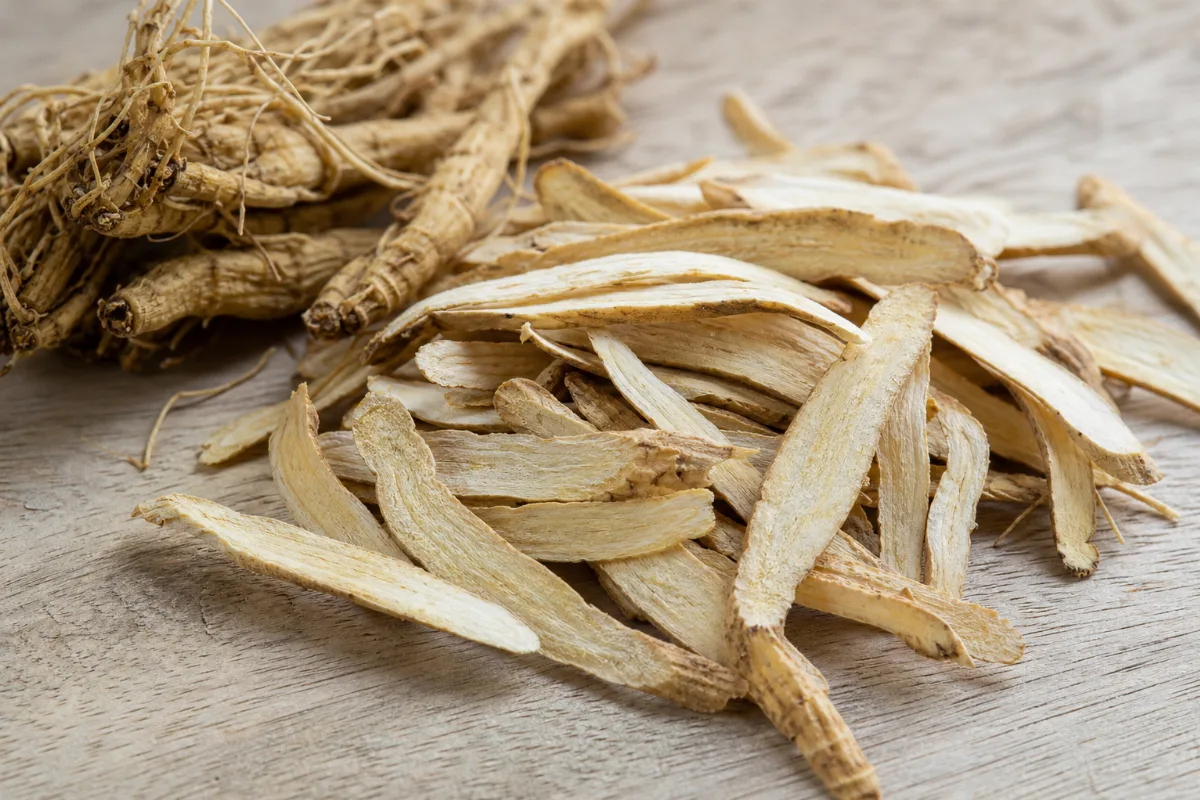
Adaptogens · Herbs & Botanicals · Mild Chinese qi tonic root
Pseudostellaria (Tai Zi Shen)
Pseudostellaria heterophylla · also called Tai zi shen, taizishen, 太子参, prince ginseng, child ginseng, hai er shen, Radix Pseudostellariae
Pseudostellaria is the dried root of a small Chinese plant, called tai zi shen or prince ginseng. In traditional Chinese medicine it is a mild tonic for tiredness, weak digestion and recovery after illness, and is often given to children. It is not true ginseng. Research is thin: mostly mouse and lab studies, plus one small trial of a seven-herb mix. Its safety in pregnancy, in children and with medicines has not been studied.
General information, not medical advice. Last substantive update · Not medically reviewed. A named clinician has not signed off on this page. How this page is made
About Pseudostellaria (Tai Zi Shen)
Pseudostellaria (tai zi shen, prince ginseng) is the dried root of a small plant of the pink family, used in traditional Chinese medicine as a mild tonic for tiredness, weak digestion and recovery after illness. It is often given to children. Research is thin. We found no trial of the root alone and no study in children. The only human trial tested a seven-herb mix.
What it is
Pseudostellaria heterophylla is a small plant of the pink family (Caryophyllaceae). Its dried tuberous root is called tai zi shen or Radix Pseudostellariae.
The root contains cyclic peptides (heterophyllins and pseudostellarins), polysaccharides, oligosaccharides and other compounds. A 2025 mass-spectrometry study detected 371 compounds in a water extract.
Traditional and current uses
In traditional Chinese medicine it is described as slightly bitter and neutral, linked to the spleen and lung, and used to nourish qi, strengthen digestion, make body fluids and moisten the lung. Reviews disagree on how long it has been used (about 100 years versus thousands). Neither claim was verified.
It is commonly described as a gentler substitute for ginseng, often chosen for children and for recovery. These are traditional uses, not proven effects.
What makes it distinctive
It is not true ginseng (Panax) and not dang shen (Codonopsis); it is a separate plant from the pink family. The name 'prince' or 'child' ginseng comes from being seen as mild.
None of the sources we read call it an adaptogen. That label is used in some markets for tonic roots, but it describes tradition, not a tested effect.
What the research shows
The best human evidence is one randomised trial of 40 adults with HIV. A seven-herb mix that included this root was added to HIV drugs, and immune blood markers and quality-of-life scores were better. The effect of this root alone cannot be separated, and the abstract leaves out blinding, amounts and funding.
Everything else is mouse, rat or cell work: blood sugar, gut bacteria, stamina, lung scarring, colon tumours, and memory. These are leads, not results for people.
At a glance
Traditional uses history, not proof
- Traditional Chinese medicine: nourishing qi, strengthening the spleen, making body fluids, moistening the lung
- Mild tonic for tiredness and weakness after illness
- Traditional children's tonic and for poor appetite (no studies in children)
- Dried root in soups and decoctions, usually with other herbs
Studied for research
- Immune markers in a seven-herb mix with HIV drugs, very low certainty
- Tiredness and recovery, children's tonic, memory, insufficient
- Blood sugar, gut bacteria, stamina, lung scarring, cancer: mouse or lab only, insufficient
Main compounds
- Cyclic peptides (heterophyllins, pseudostellarins)
- Polysaccharides and oligosaccharides
- Oligopeptides
- Saponins (class named, not verified here)
Common forms
- Dried sliced root
- Decoction with other herbs
- Extracts and fractions in research
Research links: PubMed: Seven-herb mix with HIV treatment, randomised trial (2026) · PubMed: Mini-review of chemistry and pharmacology (2019) · PubMed: Cyclic peptides review (2025) · GBIF: Pseudostellaria heterophylla · Research Library · Genes & Biomarkers Library
The plant and its history
- Accepted scientific name
- Pseudostellaria heterophylla (Miq.) Pax
- Naming authority
- (Miq.) Pax, accepted species in GBIF (usage key 3815617, exact match, confidence 99)
- Synonyms
- Krascheninnikovia heterophylla Miq.
- Common names
- Tai zi shen (taizishen) (Chinese (pinyin)); Prince ginseng (English); Child ginseng (English); Hai er shen (Chinese (pinyin)); Radix Pseudostellariae (Latin (drug name))
- Botanical family
- Caryophyllaceae (pink family, order Caryophyllales)
- Classification
- Plantae > Caryophyllales > Caryophyllaceae > Pseudostellaria > Pseudostellaria heterophylla
- Native range
- Not verified in a source read. Cited chemistry papers place the herb in China.
- Habitat
- Not verified in a source read.
- What the plant looks like
- Roots: The dried tuberous root is the medicinal part (p40572486).; Stems: Not verified in a source read.; Leaves: Not verified in a source read.; Flowers: Not verified in a source read.; Fruit: Not verified in a source read.
- Cultivation
- A 2025 paper says wild supplies are depleted and cultivated material is inconsistent; Fujian is regarded as the traditional best-quality region (p41060419).
- Harvest and processing
- Not verified in a source read.
- Look-alikes and adulterants
- Name: True ginsengs (Panax species); Note: A different plant, unrelated. Sometimes confused through names like prince or child ginseng.; Name: Dang shen (Codonopsis pilosula); Note: Another Chinese tonic root, from the bellflower family; a different plant.; Name: Roots from other regions; Note: Differ chemically from Fujian roots (p41060419); authentication methods exist (p32529767).
- Sustainability and conservation
- Not verified. The 2025 paper says wild resources are depleted.
The plant and the parts used
Traditional use and history history, not clinical proof
| Tradition or era | Documented use | Source |
|---|---|---|
| Traditional Chinese medicine | Slightly bitter, neutral in nature, linked to the spleen and lung. Used for nourishing qi, strengthening the spleen, producing body fluids and moistening the lung. | p40572486 |
| Clinical use in China | One review says it has been used in clinics for 100 years; another says it has been used in TCM for thousands of years. These do not agree and neither was verified from a historical text. | p31139247 |
| Children's tonic | Commonly described as a milder ginseng substitute for children and poor appetite. Taken from our earlier summary of the 2019 review; not confirmed in the abstract. | p31139247 |
| Modern integrative care | Taizishen is among herbs often prescribed in small Chinese studies around stem-cell transplantation. | p27641605 |
Traditional use shows how a plant was used. It does not show that a supplement works or is safe today.
What is inside, and how it may work
What the plant contains and how those compounds act in cells and animals. Laboratory and animal mechanisms are not proven effects in people.
Main compounds
| Compound | Family | Where it is concentrated | Activity studied | Level of evidence |
|---|---|---|---|---|
| Heterophyllin B PubChem 102022989 | cyclic peptide | Root | Reduced lung fibrosis and diarrhoea in mice. 4 11 | Animal research |
| Heterophyllin A PubChem 163041584 | cyclic peptide | Root | Named among nine cyclic peptides detected in a root extract. 4 11 | Laboratory research |
| Pseudostellarin A PubChem 10391309 | cyclic peptide | Root | Higher in Fujian roots; used as a regional marker candidate. 5 11 | Laboratory research |
| Polysaccharides (PHP) | polysaccharide | Root | Immune, blood-sugar, antioxidant and anti-tumour effects in lab and animal work; structure linked to activity. 8 2 13 | Animal research |
| Oligopeptides (57 identified) | oligopeptide | Root | 21 cyclic and 36 linear; blood-sugar lowering in mice. 3 | Animal research |
| Oligosaccharides | oligosaccharide | Root | Described as rich in the root but rarely evaluated. 10 | Laboratory research |
| Ferulic acid, dihydroferulic acid, azelaic acid | phenolic and organic acids | Root Higher in Fujian roots than other regions | Quality markers only. 5 | Laboratory research |
| Saponins | triterpenoid saponins (class named in our summary) | Root | Reported antioxidant and anti-tumour activity in reviews; not verified in the abstracts read here. 10 | Laboratory research |
Mechanisms, receptors and pathways
| Target or pathway | Gene or receptor | What was found | Level |
|---|---|---|---|
| Immune cells and cytokines | CD4, CD8, Th17, IFN-gamma, TNF-alpha | In 40 adults with HIV, a seven-herb mix including this root plus HIV drugs was linked to higher CD4+ and Th17 and lower CD8+, IFN-gamma and TNF-alpha than drugs alone. 16 | Human data |
| Tumour immune environment | JNK, CCL5, M2-like macrophages, CD8 T cells | A water extract lowered CCL5, reduced M2-like macrophage recruitment and raised IFN-gamma CD8 T cells in mouse colon tumours. 9 | Animal research |
| Liver enzyme CYP2E1 and mitochondria | CYP2E1 | Polysaccharides lowered CYP2E1 expression and protected cell mitochondria under high glucose, and improved limb blood flow in diabetic mice. 13 | Animal research |
| Gut-lung axis and ferroptosis | IDO1 | Heterophyllin B restored gut barrier by blocking IDO1-linked ferroptosis in colon cells and eased lung fibrosis in mice. 4 | Animal research |
| Gut bacteria | Akkermansia, Roseburia, Staphylococcus | Root material shifted gut bacterial makeup in mice. 15 | Animal research |
| Antioxidant enzymes | CAT, SOD, GSH-Px | Polysaccharides raised antioxidant enzymes and lowered a muscle damage marker after exhaustive swimming in rats. 2 | Animal research |
| Insulin and blood sugar | Insulin | An oligopeptide fraction raised serum insulin and lowered fasting glucose in diabetic mice. 3 | Animal research |
Absorption, metabolism and elimination
- Absorption
- Not found for people or animals in the sources read.
- Distribution
- Not found.
- Metabolism
- Not found. A lab study showed the root's polysaccharides lower CYP2E1 expression in cell and mouse models (p41005057), which is not a human metabolism study.
- Elimination
- Not found.
- Bioavailability
- Not found.
Isolated compounds versus whole extracts
Most research is on isolated polysaccharides, oligopeptides or single cyclic peptides, often at mouse doses. The whole root, the seven-herb mix and the isolated compounds are different products, and results do not carry across.
Nutritional composition
Used as a food-like root in soups in Chinese cooking (traditional description; no nutrition analysis read).
1 very low certainty8 not enough evidence
What was looked at
The 9 benefits and uses checked for Pseudostellaria (Tai Zi Shen), each with how strong the evidence is. Tap one to open it.
- Tiredness and recovery after illness (traditional use)Not enough evidence
- Immune function and recovery of blood countsVery low certainty
- Use as a children's tonic and for appetite (traditional use)Not enough evidence
- Memory and thinking (lab idea only)Not enough evidence
- Blood sugar and diabetes (mouse studies)Not enough evidence
- Gut bacteria and gut health (one mouse study)Not enough evidence
- Exercise stamina and antioxidant effects (rat study)Not enough evidence
- Lung scarring (lab study of one peptide)Not enough evidence
- Cancer (lab and mouse findings only)Not enough evidence
Lab markers tracked in the studies
CD4+ T-cell count (and CD8+)HaemoglobinSerum albuminFasting blood glucose (mice)
What is Pseudostellaria (Tai Zi Shen) good for?
The main proposed uses and how strong the human evidence is for each. 'Very-low' means one tiny trial, of a mixture; 'insufficient' means traditional use, animal or cell work only, or no human study.
Benefits, one by one
Each card is a research question, not a promise. Tap a goal to filter. Open a card to see the studies, doses and limits.
Tiredness and recovery after illness (traditional use)
Not enough evidenceThis is what the root is traditionally used for. We found no trial of the root alone for tiredness or recovery. The only human data are small studies of herb mixes.
3 studiesTraditionally taken as a dried root in soups and decoctions, usually …
Studies, doses and limits
What the trials found
A 2016 review of Chinese herbal medicine around stem cell transplantation found 9 clinical studies, mostly small and retrospective, in which taizishen was one of the 9 most often prescribed herbs. That shows it is used in recovery care, not that it works. No human trial of this root taken alone was found for any use.
Results
Use is documented. Benefit for tiredness or recovery is not shown.
Why this rating
Traditional use only. The review that lists it does not test it and the studies were small and mostly retrospective.
Form and dose studied
Traditionally taken as a dried root in soups and decoctions, usually with other herbs. No tested form or amount is available.
Who was studied
Not tested in people for this use.
Limits
Traditional use is not evidence of effect. Mixtures cannot show what one herb does.
Why researchers looked
Chinese medicine treats it as a gentle qi tonic for tiredness and weakness after illness, often called a milder alternative to ginseng.
Traditional use
Radix Pseudostellariae (tai zi shen) is a traditional Chinese qi tonic, described as nourishing qi, strengthening the spleen, helping body fluids and moistening the lung. Authors of one review say it has been used in clinics in China for about 100 years; another says thousands of years. We could not check either claim.
Proposed mechanism Preliminary mechanism
Lab work suggests polysaccharides and cyclic peptides may act on immune cells. Nothing explains a tiredness effect in people.
A proposed mechanism does not show that the effect happens in people.
Safety in recovering or frail people has not been studied. Ask a doctor first, especially during cancer treatment or after a transplant.
Immune function and recovery of blood counts
Very low certaintyOne small trial of a seven-herb mix that includes this root, added to HIV drugs, reported better immune blood markers. The effect of this root cannot be separated from the other six herbs. Lab work on its polysaccharides is not proof for people.
3 studiesA seven-herb decoction (dose not stated in the abstract); the root al…
Studies, doses and limits
What the trials found
Zhang 2026 randomly assigned 40 adults living with HIV in China to standard HIV drugs alone or with a seven-herb decoction (astragalus, Chinese yam, dangshen, poria, white atractylodes, radix pseudostellariae, rehmannia). The add-on group had higher CD4+ counts, lower CD8+ counts, higher Th17 cells, lower inflammatory messengers (IFN-gamma, TNF-alpha), higher haemoglobin and albumin, and higher quality-of-life scores. Adverse reactions were similar. Laboratory reviews describe immune-modulating effects of the polysaccharides but give no human data.
Results
Reported gains on several blood markers, from a mixture. Illness outcomes such as infections or survival were not reported in the abstract.
Effect sizes as reported
CD4+ 37.58 vs 30.25 cells/uL, CD8+ 22.41 vs 28.62, haemoglobin 126.87 vs 116.32 g/L, albumin 38.82 vs 32.45 g/L, MOS-HIV 80.36 vs 72.58 (all as reported; abstract gives no confidence intervals)
Why this rating
One tiny trial of a seven-herb mixture with unclear blinding, no stated placebo or funding, and unusual-looking CD4 units in the abstract. Everything else is lab or animal work.
Form and dose studied
A seven-herb decoction (dose not stated in the abstract); the root alone is untested in people.
Who was studied
Adults living with HIV on antiretroviral therapy, in China.
Limits
Cannot attribute any effect to this root. Not a replacement for HIV treatment or any prescribed medicine.
Why researchers looked
Its polysaccharides and cyclic peptides show immune-modulating effects in lab and animal work, so it is tested as an immune tonic.
Traditional use
Radix Pseudostellariae (tai zi shen) is a traditional Chinese qi tonic, described as nourishing qi, strengthening the spleen, helping body fluids and moistening the lung. Authors of one review say it has been used in clinics in China for about 100 years; another says thousands of years. We could not check either claim.
Proposed mechanism Animal research
Lab and animal work links the root's polysaccharides to immune-modulating effects (review of laboratory studies). In mice injured with cyclophosphamide, root material raised red blood cell content and immune-factor expression and lowered platelet counts. This has not been shown to work the same way in people.
A proposed mechanism does not show that the effect happens in people.
Adverse reactions were reported as similar between groups (types and numbers not given in the abstract). Immune-modulating herbs can matter if you take immunosuppressant drugs; ask your doctor.
Use as a children's tonic and for appetite (traditional use)
Not enough evidenceChinese medicine often gives this root to children as a mild tonic, which is how it got the name child ginseng or prince ginseng. We found no trial in children and no child safety data.
2 studiesTraditionally a dried root in soups or decoctions. Nothing tested.
Studies, doses and limits
What the trials found
No clinical trial in children was found. The description of children's use comes from our earlier summary of the 2019 review's text; the abstract itself does not mention children. No human trial of this root taken alone was found for any use.
Results
Not tested.
Why this rating
Traditional use only. No study of any kind in children was found.
Form and dose studied
Traditionally a dried root in soups or decoctions. Nothing tested.
Who was studied
Children (traditional use only); no studies.
Limits
No child safety, growth or dosing data. Do not assume a gentle traditional herb is safe for a child.
Why researchers looked
Its mild, neutral character in Chinese medicine is why it is often chosen over stronger tonics for children and for poor appetite.
Traditional use
Radix Pseudostellariae (tai zi shen) is a traditional Chinese qi tonic, described as nourishing qi, strengthening the spleen, helping body fluids and moistening the lung. Authors of one review say it has been used in clinics in China for about 100 years; another says thousands of years. We could not check either claim.
Proposed mechanism Pharmacological theory
No mechanism has been tested for this use.
A proposed mechanism does not show that the effect happens in people.
Ask a paediatrician before giving any herb to a child. Child safety has not been studied.
Memory and thinking (lab idea only)
Not enough evidenceA 2025 review of the root's cyclic peptides says laboratory work points to possible cognitive benefits. We found no study in people.
1 studiesNot applicable.
Studies, doses and limits
What the trials found
No human study of the root or its peptides for memory or thinking was found. Details of the animal work were not available in the abstract.
Why this rating
A one-line mention in a review abstract; the underlying studies were not read.
Limits
Lab only. Not a reason to take the root for memory.
Why researchers looked
Cyclic peptides from the root are being studied for effects on the brain in cells and animals.
Traditional use
Radix Pseudostellariae (tai zi shen) is a traditional Chinese qi tonic, described as nourishing qi, strengthening the spleen, helping body fluids and moistening the lung. Authors of one review say it has been used in clinics in China for about 100 years; another says thousands of years. We could not check either claim.
Proposed mechanism Preliminary mechanism
The review reports cognitive benefits of the cyclic peptides in laboratory work. The abstract does not say which models or results.
A proposed mechanism does not show that the effect happens in people.
None known; safety for this use is unstudied.
Blood sugar and diabetes (mouse studies)
Not enough evidenceMouse studies of peptides and polysaccharides from the root report lower blood sugar. No human trial exists, so we do not know if it does anything for blood sugar in people.
3 studiesPurified fractions given by mouth to mice; not the whole root.
Studies, doses and limits
What the trials found
No human trial of the root or its extracts for blood sugar was found. Chen 2025 (streptozotocin-diabetic mice) reported lower fasting glucose, better glucose tolerance, higher insulin and better blood fats with an oligopeptide fraction (57 oligopeptides identified). Wang 2025 (diabetic limb ischaemia mice and cells) reported better blood flow and vessel growth with polysaccharides. A 2025 review of polysaccharides lists blood-sugar-lowering among their lab effects.
Results
Mouse results only.
Effect sizes as reported
No numbers in the abstracts
Why this rating
Animal and cell work with purified fractions; no human study.
Form and dose studied
Purified fractions given by mouth to mice; not the whole root.
Who was studied
Mice and cells.
Limits
Purified fractions, not the whole root; mouse doses not transferable to people.
Why researchers looked
Peptides and polysaccharides from the root lowered blood sugar in diabetic mice, so it is studied as a possible diabetes helper.
Traditional use
Radix Pseudostellariae (tai zi shen) is a traditional Chinese qi tonic, described as nourishing qi, strengthening the spleen, helping body fluids and moistening the lung. Authors of one review say it has been used in clinics in China for about 100 years; another says thousands of years. We could not check either claim.
Proposed mechanism Animal research
In mice, an oligopeptide fraction raised serum insulin and lowered fasting glucose; polysaccharides lowered levels of the liver enzyme CYP2E1 and improved limb blood flow in a diabetic mouse model. Unproven in people.
A proposed mechanism does not show that the effect happens in people.
If it does lower blood sugar it could add to diabetes medicines (theory only). People on diabetes drugs should ask a doctor or pharmacist first.
Gut bacteria and gut health (one mouse study)
Not enough evidenceIn mice, the root changed the mix of gut bacteria. This is a single animal study.
1 studiesRoot material (form and amount not stated in the abstract).
Studies, doses and limits
What the trials found
No human gut study was found. Zhang 2024 fed P. heterophylla to healthy mice and mice injured with cyclophosphamide and reported more potentially useful bacteria, fewer pathogens and changes in gut chemicals.
Results
Changes in bacteria in mice; no health outcome shown for people.
Effect sizes as reported
No numbers in the abstract
Why this rating
One mouse study.
Form and dose studied
Root material (form and amount not stated in the abstract).
Who was studied
Mice.
Limits
Mouse study. A change in gut bacteria is not a proven health benefit.
Why researchers looked
It is used in Chinese medicine to strengthen the spleen (digestion), so the gut is a natural place to look.
Traditional use
Radix Pseudostellariae (tai zi shen) is a traditional Chinese qi tonic, described as nourishing qi, strengthening the spleen, helping body fluids and moistening the lung. Authors of one review say it has been used in clinics in China for about 100 years; another says thousands of years. We could not check either claim.
Proposed mechanism Animal research
In mice, root material raised bacteria such as Akkermansia and Roseburia and lowered Staphylococcus, and raised levels of oligosaccharides and vitamins in the gut.
A proposed mechanism does not show that the effect happens in people.
No safety data.
Exercise stamina and antioxidant effects (rat study)
Not enough evidenceRats given root polysaccharides swam longer and had higher antioxidant enzymes. No human study.
1 studiesPolysaccharide extract at 100, 200 or 400 mg per kg in rats.
Studies, doses and limits
What the trials found
No human study. In a 2013 rat study (40 rats, 28 days, three doses of polysaccharides), supplemented rats swam longer to exhaustion, had lower blood lactate, higher haemoglobin and higher antioxidant enzymes (CAT, SOD, GSH-Px).
Results
Rat benefit; unknown in people.
Effect sizes as reported
No numbers in the abstract
Why this rating
Single rat study with a polysaccharide extract.
Form and dose studied
Polysaccharide extract at 100, 200 or 400 mg per kg in rats.
Who was studied
Rats.
Why researchers looked
Polysaccharides from the root were tested for protection from exercise stress.
Traditional use
Radix Pseudostellariae (tai zi shen) is a traditional Chinese qi tonic, described as nourishing qi, strengthening the spleen, helping body fluids and moistening the lung. Authors of one review say it has been used in clinics in China for about 100 years; another says thousands of years. We could not check either claim.
Proposed mechanism Animal research
In rats, polysaccharides lowered blood lactate and a muscle damage marker (MDA) and raised antioxidant enzymes after exhaustive swimming.
A proposed mechanism does not show that the effect happens in people.
No safety data in people.
Lung scarring (lab study of one peptide)
Not enough evidenceIn mice, one cyclic peptide from the root, heterophyllin B, reduced lung scarring and eased the gut side effects of a lung-scarring drug. Mouse work only.
1 studiesIsolated peptide (40 mg per kg in mice) and a root extract.
Studies, doses and limits
What the trials found
No human study. Chen 2025 used isolated heterophyllin B in mice and cells; a root extract with similar peptides also helped the mice.
Results
Mouse and cell results only.
Effect sizes as reported
No numbers in the abstract
Why this rating
Mouse study with an isolated compound.
Form and dose studied
Isolated peptide (40 mg per kg in mice) and a root extract.
Who was studied
Mice and cells.
Limits
Not whole root; not people.
Why researchers looked
The root is used in Chinese medicine to moisten the lung, and its peptides are being tested in lung disease models.
Traditional use
Radix Pseudostellariae (tai zi shen) is a traditional Chinese qi tonic, described as nourishing qi, strengthening the spleen, helping body fluids and moistening the lung. Authors of one review say it has been used in clinics in China for about 100 years; another says thousands of years. We could not check either claim.
Proposed mechanism Animal research
In mice with bleomycin-induced lung fibrosis, heterophyllin B reduced scarring and diarrhoea and worked together with the drug nintedanib. The authors link this to the gut-lung axis and a cell-death process called ferroptosis.
A proposed mechanism does not show that the effect happens in people.
Nothing known in people. Do not use instead of prescribed lung treatment.
Cancer (lab and mouse findings only)
Not enough evidenceWater extract of the root slowed colon tumour growth in mice. This is not evidence that it treats cancer in people.
3 studiesWater extract in mice (amount not stated).
Studies, doses and limits
What the trials found
No clinical cancer trial of the root was found. Gui 2025 reported that a water extract slowed MC38 colon tumours in mice without obvious toxicity. Laboratory reviews of polysaccharides and cyclic peptides describe anticancer activity in cells and animals.
Results
Mouse tumours grew slower.
Effect sizes as reported
No numbers in the abstract
Why this rating
Mouse and cell work only.
Form and dose studied
Water extract in mice (amount not stated).
Who was studied
Mice and cells.
Limits
Not evidence for people. Do not use instead of cancer treatment.
Why researchers looked
The root is used in China alongside treatment for digestive cancers, so researchers test it in cancer models.
Traditional use
Radix Pseudostellariae (tai zi shen) is a traditional Chinese qi tonic, described as nourishing qi, strengthening the spleen, helping body fluids and moistening the lung. Authors of one review say it has been used in clinics in China for about 100 years; another says thousands of years. We could not check either claim.
Proposed mechanism Animal research
In mouse colon cancer, the extract lowered a signal (CCL5) that draws immune cells that help tumours, and increased cancer-fighting T cells. The review of cyclic peptides and polysaccharides also report anticancer activity in the lab.
A proposed mechanism does not show that the effect happens in people.
If you are having cancer treatment, ask your cancer team before adding any herb.
Connections to the rest of health
How Pseudostellaria (Tai Zi Shen) connects to the rest of our health knowledge graph. Every link says what kind of connection it is. A safety link (for example to the liver) is a warning, not a benefit. A study that merely mentions a topic never creates a benefit link.
Explore every connection: goals, body systems, organs, symptoms, genes
A. Wellness goals
| Connected to | Kind of connection | Evidence status | Context | Studies |
|---|---|---|---|---|
| Energy Boost | Traditional use | Not enough evidence | Tiredness and recovery after illness (traditional use): This is what the root is traditionally used for. We found no trial of the root alone for tiredness or recovery. The only human data are small studies of herb mixes. Use as a children's tonic and for appetite (traditional use): Chinese medicine often gives this root to children as a mild tonic, which is how it got the name child ginseng or prince ginseng. We found no trial in children and no child safety data. | 6 10 14 |
| Reduce Fatigue | Traditional use | Not enough evidence | Tiredness and recovery after illness (traditional use): This is what the root is traditionally used for. We found no trial of the root alone for tiredness or recovery. The only human data are small studies of herb mixes. | 6 10 14 |
| Immune Support | Potential benefit | Very low certainty | Immune function and recovery of blood counts: One small trial of a seven-herb mix that includes this root, added to HIV drugs, reported better immune blood markers. The effect of this root cannot be separated from the other six herbs. Lab work on its polysaccharides is not proof for people. | 16 8 15 |
| Digestive Support | Traditional use | Not enough evidence | Use as a children's tonic and for appetite (traditional use): Chinese medicine often gives this root to children as a mild tonic, which is how it got the name child ginseng or prince ginseng. We found no trial in children and no child safety data. | 10 14 |
| Memory Support | Preliminary mechanism | Not enough evidence | Memory and thinking (lab idea only): A 2025 review of the root's cyclic peptides says laboratory work points to possible cognitive benefits. We found no study in people. | 14 |
| Cognitive Performance | Preliminary mechanism | Not enough evidence | Memory and thinking (lab idea only): A 2025 review of the root's cyclic peptides says laboratory work points to possible cognitive benefits. We found no study in people. | 14 |
| Blood Sugar Balance | Preliminary mechanism | Not enough evidence | Blood sugar and diabetes (mouse studies): Mouse studies of peptides and polysaccharides from the root report lower blood sugar. No human trial exists, so we do not know if it does anything for blood sugar in people. | 3 13 8 |
| Gut Health | Preliminary mechanism | Not enough evidence | Gut bacteria and gut health (one mouse study): In mice, the root changed the mix of gut bacteria. This is a single animal study. | 15 |
| Digestive Support | Preliminary mechanism | Not enough evidence | Gut bacteria and gut health (one mouse study): In mice, the root changed the mix of gut bacteria. This is a single animal study. | 15 |
| Physical Stamina | Preliminary mechanism | Not enough evidence | Exercise stamina and antioxidant effects (rat study): Rats given root polysaccharides swam longer and had higher antioxidant enzymes. No human study. | 2 |
| Endurance Support | Preliminary mechanism | Not enough evidence | Exercise stamina and antioxidant effects (rat study): Rats given root polysaccharides swam longer and had higher antioxidant enzymes. No human study. | 2 |
| Lung Support | Preliminary mechanism | Not enough evidence | Lung scarring (lab study of one peptide): In mice, one cyclic peptide from the root, heterophyllin B, reduced lung scarring and eased the gut side effects of a lung-scarring drug. Mouse work only. | 4 |
| Inflammation Balance | Preliminary mechanism | Not enough evidence | Cancer (lab and mouse findings only): Water extract of the root slowed colon tumour growth in mice. This is not evidence that it treats cancer in people. | 9 8 14 |
B. Body systems
| Connected to | Kind of connection | Evidence status | Context | Studies |
|---|---|---|---|---|
| Immune System | Biological association | Not enough evidence | Studied for: Tiredness and recovery after illness (traditional use) Studied for: Immune function and recovery of blood counts | 6 10 14 16 8 15 9 |
| Digestive System | Biological association | Not enough evidence | Studied for: Use as a children's tonic and for appetite (traditional use) Studied for: Gut bacteria and gut health (one mouse study) | 10 14 15 |
| Nervous System | Biological association | Not enough evidence | Studied for: Memory and thinking (lab idea only) | 14 |
| Endocrine System | Biological association | Not enough evidence | Studied for: Blood sugar and diabetes (mouse studies) | 3 13 8 |
| Musculoskeletal System | Biological association | Not enough evidence | Studied for: Exercise stamina and antioxidant effects (rat study) | 2 |
| Respiratory System | Biological association | Not enough evidence | Studied for: Lung scarring (lab study of one peptide) | 4 |
D. Symptoms
I. Biomarkers
| Connected to | Kind of connection | Evidence status | Context | Studies |
|---|---|---|---|---|
| CD4+ T-cell count (and CD8+) | Biological association | Very low certainty | Measured in trials: raised. A lab change is not the same as a health benefit. | 16 |
| Haemoglobin | Biological association | Very low certainty | Measured in trials: raised. A lab change is not the same as a health benefit. | 16 |
| Serum albumin | Biological association | Very low certainty | Measured in trials: raised. A lab change is not the same as a health benefit. | 16 |
| Fasting blood glucose (mice) | Biological association | Not enough evidence | Measured in trials: lowered. A lab change is not the same as a health benefit. | 3 |
J. Genes, receptors and enzymes
| Connected to | Kind of connection | Evidence status | Context | Studies |
|---|---|---|---|---|
| CYP2E1 | Preliminary mechanism | Animal | Downregulated by root polysaccharides in a diabetic ischaemia mouse model and in cells. | 13 |
| IDO1 | Preliminary mechanism | In vitro | Silencing and heterophyllin B action in colon cells linked to ferroptosis protection. | 4 |
K. Biological pathways
| Connected to | Kind of connection | Evidence status | Context | Studies |
|---|---|---|---|---|
| JNK / CCL5 | Preliminary mechanism | Animal | Water extract inhibited JNK signalling and CCL5 in colon cancer cells. | 9 |
L. Active compounds
| Connected to | Kind of connection | Evidence status | Context | Studies |
|---|---|---|---|---|
| Heterophyllin B | Biological association | Animal | Reduced lung fibrosis and diarrhoea in mice. Preparation or compound: Root |
4 11 |
| Heterophyllin A | Biological association | In vitro | Named among nine cyclic peptides detected in a root extract. Preparation or compound: Root |
4 11 |
| Pseudostellarin A | Biological association | In vitro | Higher in Fujian roots; used as a regional marker candidate. Preparation or compound: Root |
5 11 |
| Polysaccharides (PHP) | Biological association | Animal | Immune, blood-sugar, antioxidant and anti-tumour effects in lab and animal work; structure linked to activity. Preparation or compound: Root |
8 2 13 |
| Oligopeptides (57 identified) | Biological association | Animal | 21 cyclic and 36 linear; blood-sugar lowering in mice. Preparation or compound: Root |
3 |
| Oligosaccharides | Biological association | In vitro | Described as rich in the root but rarely evaluated. Preparation or compound: Root |
10 |
| Ferulic acid, dihydroferulic acid, azelaic acid | Biological association | In vitro | Quality markers only. Preparation or compound: Root |
5 |
| Saponins | Biological association | In vitro | Reported antioxidant and anti-tumour activity in reviews; not verified in the abstracts read here. Preparation or compound: Root |
10 |
Each connection is stored with the ingredient, the connected record, the kind of connection, the evidence status, the supporting studies, the preparation or compound involved, and a review date (last reviewed October 25, 2026).
Evidence at a glance: what changed in 4 lab markers
Tap a number to show only those markers. Counts are markers, not people.
The evidence
The research centre for Pseudostellaria (Tai Zi Shen). Every record here was checked against PubMed or the publisher's page; we never list a study we have not verified.
Evidence by outcome
Bars show how many studies we found for each outcome, not how well it works. People are added up across trials only (reviews are not added, to avoid double counting).
How we rate evidence
High certainty
Several well-run trials or reviews agree; further research is unlikely to change the picture much.
Moderate certainty
Good trials point the same way, but some doubt remains.
Low certainty
Small, short or inconsistent trials. The finding could change with better research.
Very low certainty
Very little or very weak human data. Treat as a possibility only.
Mixed findings
Trials or reviews disagree with each other.
Not enough evidence
Not enough human research to say either way.
Evidence against
Good research found no benefit, or found harm.
We take the reviewers' own risk-of-bias and GRADE statements where they exist, and otherwise judge from study size, design, consistency, directness and whether a product matches what is sold. Many publications do not make evidence high. Method note: We searched PubMed, read the abstract of each cited paper, and checked plant names and chemical records against GBIF and PubChem. Full texts were not read for most studies. We did not find monographs from the EU herbal committee, NCCIH, LiverTox or LactMed for this plant, but some of those sites could not be searched automatically.
Study library: every study we checked 16
| Study | Design | People | Product, dose, length | Result |
|---|---|---|---|---|
| AlternativeMed research log 2026 Searches for a regulator or database entry on Pseudostellaria heterophylla (2026-10-25) Internal search record |
Other n/a |
n/a | n/a |
A guessed NCCIH address returned not found; the EMA search page refused an automated request; PubMed searches for pregnancy, breastfeeding, drug interaction or toxicity found no human paper on the root. This shows only that we did not find an entry, not that none exists. n/a Methods, limits and fundingOutcomes: Whether an EU herbal monograph, NCCIH page, LiverTox or LactMed entry exists Limitations: Not an exhaustive search. LiverTox and LactMed indexes were not opened. Read: summary-only |
| Chen 2013 Protective effects of Radix Pseudostellariae polysaccharides against exercise-induced oxidative stress in male rats. Experimental and Therapeutic Medicine · PMID 23596474 · DOI |
Other animal |
40 40 male Wistar rats |
Polysaccharides of the root, by mouth root 100, 200 or 400 mg per kg of rat body weight 28 days · vs Saline |
Supplemented rats swam longer, had lower blood lactate and higher haemoglobin and antioxidant enzymes (CAT, SOD, GSH-Px), and lower muscle MDA. No numbers in abstract Methods, limits and fundingOutcomes: Swimming time to exhaustion, blood lactate, haemoglobin, antioxidant enzymes, muscle MDA Limitations: Rat study with a polysaccharide extract; does not show an effect in people. Funding and conflicts: Not stated in abstract Read: abstract |
| Chen 2025 Identification of oligopeptide components derived from Pseudostellaria heterophylla and its hypoglycemic effects in streptozotocin-induce type 2 diabetes mice. Fitoterapia · PMID 41075951 · DOI |
Other animal |
Mice with streptozotocin-induced type 2 diabetes | Oligopeptide-enriched fraction of the root, by mouth root · vs Untreated diabetic mice (implied) |
57 oligopeptides identified (21 cyclic, 36 linear). The fraction reduced fasting blood glucose, improved glucose tolerance, raised serum insulin, improved lipid profile and lowered inflammatory markers in diabetic mice. No numbers in abstract Methods, limits and fundingOutcomes: Fasting glucose, glucose tolerance, insulin, blood lipids, liver, inflammation markers Limitations: Mouse study with a purified fraction; says nothing about the whole root or about people. Funding and conflicts: Not stated in abstract Read: abstract |
| Chen 2025 Synergistic effects of heterophyllin B with nintedanib against experimental pulmonary fibrosis in mice. Phytomedicine · PMID 40513322 · DOI |
Other animal |
Mice with bleomycin-induced lung fibrosis, and colon cells | Heterophyllin B (an isolated cyclic peptide from the root), with and without the drug nintedanib root 40 mg per kg per day in mice About 14 days · vs Untreated fibrotic mice |
Heterophyllin B reduced lung fibrosis and diarrhoea in mice and added to nintedanib's effect while easing its gut side effects. A root extract containing similar cyclic peptides also helped. Nine cyclic peptides were identified in the extract. No numbers in abstract Methods, limits and fundingOutcomes: Lung fibrosis, diarrhoea, gut bacteria, gut barrier Limitations: Mouse and cell work with an isolated compound; not the whole root and not people. Funding and conflicts: Not stated in abstract Read: abstract |
| Ding 2025 From comprehensive profiling to targeted authentication: an FBMN-guided metabolomics strategy for authentication of Pseudostellaria heterophylla Dao-di and non-Dao-di herbs. Analytical and Bioanalytical Chemistry · PMID 41060419 · DOI |
Other n/a |
Root samples from Fujian, Anhui, Guizhou and Jiangsu | Mass-spectrometry profiling root |
Roots from Fujian (the traditional high-quality region) differed chemically from other commercial regions. Six marker compounds (pseudostellarins A and F, heterophyllin J, ferulic acid, dihydro ferulic acid, azelaic acid) were higher in Fujian roots. The authors note wild resources are depleted and cultivated material is inconsistent. Not given in abstract Methods, limits and fundingOutcomes: Chemical differences by region Limitations: Laboratory method paper; no health outcome. Funding and conflicts: No competing interests declared Read: abstract |
| Fleischer 2016 Post-hematopoietic stem cell transplantation in patients with hematologic disorders: Chinese herbal medicine for an unmet need. Journal of Integrative Medicine · PMID 27641605 · DOI |
Systematic review |
9 clinical studies of Chinese herbal medicine around stem cell transplantation | Chinese herbal medicine regimens; taizishen was one of the 9 herbs most often prescribed root Varied Varied · vs Varied |
Of 9 papers, 6 were from one research group and all but one were retrospective or observational. Taizishen (P. heterophylla) appeared among the 9 most commonly prescribed herbs. Not given in abstract Methods, limits and fundingOutcomes: Engraftment, graft-versus-host disease, survival (objectives varied widely) Limitations: Small, mostly retrospective studies; says nothing about the effect of this herb alone. Funding and conflicts: Not stated in abstract Read: abstract |
| GBIF Secretariat 2026 GBIF Backbone Taxonomy match: Pseudostellaria heterophylla (Miq.) Pax GBIF API · Source |
Other n/a |
Taxonomic record | n/a |
Accepted species, usage key 3815617, family Caryophyllaceae, order Caryophyllales. Synonyms include Krascheninnikovia heterophylla Miq. Exact match, confidence 99. n/a Methods, limits and fundingOutcomes: Accepted name, family, synonyms Limitations: Taxonomy only; NCBI Taxonomy was not queried. Read: full-text |
| Gao 2025 Polysaccharides of Pseudostellaria heterophylla (Miq.) Pax ex Pax et Hoffm: Extraction, purification, structural characteristics, pharmacological activities, and structure-activity relationships: A review. International Journal of Biological Macromolecules · PMID 41046896 · DOI |
Other in-vitro |
Review of laboratory and animal work on P. heterophylla polysaccharides (PHP) | Polysaccharide fractions of the root root |
The review links PHP structure (molecular weight, sugar makeup, chemical changes such as selenization) to immune-modulating, blood-sugar-lowering, antioxidant and anti-tumour effects. None given in abstract Methods, limits and fundingOutcomes: Immune, blood-sugar, antioxidant and anti-tumour activity linked to PHP structure Limitations: Narrative review of lab and animal work; no human evidence is described in the abstract. Authors are from a pharmacy and drug-engineering group. Funding and conflicts: No competing interests declared Read: abstract |
| Gui 2025 Pseudostellaria heterophylla (Miq.) Pax, a traditional folk medicine, ameliorates colorectal cancer by remodeling the tumor immune microenvironment. Journal of Ethnopharmacology · PMID 39828144 · DOI |
Other animal |
MC38 colon-cancer mice and cancer cells | Water extract of the root (AEPH) root · vs Untreated tumour mice |
The water extract slowed tumour growth in mice without obvious toxicity, and shifted the tumour's immune cells (fewer M2-like macrophages, more IFN-gamma CD8 T cells). 371 compounds were detected in the extract. No numbers in abstract Methods, limits and fundingOutcomes: Tumour growth, immune cells in tumour, JNK pathway, CCL5 Limitations: Mouse study; not evidence that it treats cancer in people. Funding and conflicts: No competing interests declared Read: abstract |
| Hu 2019 Chemistry, pharmacology and analysis of Pseudostellaria heterophylla: a mini-review. Chinese Medicine · PMID 31139247 · DOI |
Other in-vitro |
Mini-review of chemistry, pharmacology and analysis methods | Whole herb and compounds root |
States the herb has been used in clinics in China for 100 years, that many analyses exist but few are accepted as quality-control methods, and that some rich chemicals such as oligosaccharides have rarely been evaluated. None Methods, limits and fundingOutcomes: Chemistry, pharmacology, quality-control methods Limitations: Short narrative review. Our earlier internal summary also drew on its full text; only the abstract was re-read for this file. Funding and conflicts: No competing interests declared Read: abstract |
| NCBI PubChem 2026 PubChem records: Heterophyllin A, Heterophyllin B, Pseudostellarin A PubChem · Source |
Other n/a |
Chemical records | n/a |
Heterophyllin B CID 102022989 (C40H58N8O8); Heterophyllin A CID 163041584 (C37H57N7O8); Pseudostellarin A CID 10391309 (C25H35N5O6). n/a Methods, limits and fundingOutcomes: Compound identifiers Limitations: Identifiers by name search only. Read: full-text |
| Pan 2020 Rapid authentication of Pseudostellaria heterophylla (Taizishen) from different regions by near-infrared spectroscopy combined with chemometric methods. Journal of Food Science · PMID 32529767 · DOI |
Other n/a |
Laboratory samples of the root from different regions | Near-infrared spectroscopy plus statistics root |
The method distinguished roots from different regions. The authors say drug effects differ by region and that the method may also help tell the herb from look-alike powders. Not given in abstract Methods, limits and fundingOutcomes: Whether region of origin can be told apart Limitations: Laboratory method; abstract gives no accuracy figure. Funding and conflicts: Not stated in abstract Read: abstract |
| Wang 2025 Pseudostellaria heterophylla polysaccharides attenuate diabetic lower limb ischemia via CYP2E1-mediated mitochondrial homeostasis and PANoptosis regulation. Phytomedicine · PMID 41005057 · DOI |
Other animal |
Mouse model of diabetic lower-limb ischaemia and human umbilical vein cells in high glucose | Polysaccharides of the root (PHP) root |
PHP improved blood flow and vessel density in ischaemic mouse limbs and reversed high-glucose damage in cells. It lowered expression of the liver enzyme CYP2E1 in the models. No numbers in abstract Methods, limits and fundingOutcomes: Blood flow, vessel density, cell death pathways, CYP2E1 expression Limitations: Mouse and cell study only. Funding and conflicts: Not stated in abstract Read: abstract |
| Yang 2025 Chemical Properties, Preparation, and Pharmaceutical Effects of Cyclic Peptides from Pseudostellaria heterophylla. Molecules · PMID 40572486 · DOI |
Other in-vitro |
Review of cyclic peptides from the root (lab and animal work) | Cyclic peptides (such as heterophyllins and pseudostellarins) root |
Describes the traditional use (nourishing qi, invigorating the spleen, making body fluids, moistening the lung) and reports that the cyclic peptides show anticancer, antioxidant, immunomodulatory and cognitive effects in laboratory work. None given in abstract Methods, limits and fundingOutcomes: Anticancer, antioxidant, immune and cognitive effects of the peptides Limitations: Narrative review. Abstract names no human trial. Traditional-use description comes from the authors. Funding and conflicts: No conflicts declared Read: abstract |
| Zhang 2024 Pseudostellaria heterophylla improves intestinal microecology through modulating gut microbiota and metabolites in mice. Journal of the Science of Food and Agriculture · PMID 38459926 · DOI |
Other animal |
Mice (healthy, and mice injured with the drug cyclophosphamide) | P. heterophylla root material fed to mice root · vs Control mice |
Under cyclophosphamide injury, red blood cell content, antioxidant capacity and immune-factor expression rose and platelet counts fell versus control. Gut bacterial makeup changed in healthy mice. No numbers in abstract Methods, limits and fundingOutcomes: Red blood cells, antioxidant capacity, immune factors, platelets, gut bacteria, metabolome Limitations: Mouse study; no human data. Funding and conflicts: Not stated in abstract Read: abstract |
| Zhang 2026 Clinical effects of adjunctive spleen- and kidney-invigorating Chinese herbal therapy combined with highly active antiretroviral treatment on immune recovery and nutritional status in people living with HIV. Malawi Medical Journal · PMID 42597322 · DOI |
Controlled trial |
40 40 adults living with HIV, in China (Shaoxing) |
Seven-herb decoction (astragalus, Chinese yam, dangshen, poria, white atractylodes, radix pseudostellariae, rehmannia) plus standard HIV drugs (HAART); a combination, not the root alone root (radix pseudostellariae is one of seven herbs) Reported at 6 to 12 months · vs Standard HAART alone |
Add-on group had higher CD4+ counts, lower CD8+ counts, higher Th17, lower IFN-gamma and TNF-alpha, higher haemoglobin and albumin and higher MOS-HIV scores. Adverse reaction rates were similar in both groups. CD4+ 37.58 vs 30.25 cells/uL (P<0.0001); CD8+ 22.41 vs 28.62 (P<0.0001); Th17 2.26 vs 1.89 (P<0.0001); haemoglobin 126.87 vs 116.32 g/L (P=0.009); albumin 38.82 vs 32.45 g/L (P<0.0001); MOS-HIV 80.36 vs 72.58 (P=0.0026) Methods, limits and fundingOutcomes: CD4+ and CD8+ T cells, Th17 cells, IFN-gamma, TNF-alpha, haemoglobin, serum albumin, adverse reactions, MOS-HIV quality-of-life score Limitations: Tiny trial of a seven-herb mix, so the effect of this root cannot be separated. The abstract does not describe blinding, placebo, dose or funding. The CD4 values quoted (about 30-38 cells/uL) look unusual for the units given, so the numbers should be read with caution. Only the abstract was read. Funding and conflicts: Not stated in abstract Read: abstract |
What we do not know yet
- What the evidence supports: one small trial of a seven-herb mix; mouse and lab findings for blood sugar, gut, stamina, lung and tumours.
- No trial of the root alone for any use.
- No study in children, although children are the traditional target group.
- No safety, liver, pregnancy, breastfeeding or drug interaction data.
- Quality: no agreed marker compounds, regional differences, and no retail contamination testing found.
How new research is added
New studies are found by a saved PubMed search and are placed in a review queue. A person reads each one before it changes any evidence rating or safety wording. New publications never change ratings automatically.
Lab markers
What changed in blood or saliva tests during trials. A changed number is not the same as feeling or being healthier, and we give no "normal ranges".
Metabolic 1
Fasting blood glucose (mice)
Lowered in trials
Blood sugar measured after not eating.
Not enough evidenceResults and what it means
Why it was measured
Used in mice to test whether a root fraction affects diabetes.
Statistical vs. clinical meaning
Mouse result only; no human blood sugar data exist.
Safety implication
Could add to diabetes medicines if it works in people (theory).
| Study | Result | People | Product |
|---|---|---|---|
| 3 | Reduced fasting glucose in diabetic mice; no values given in the abstract | Streptozotocin-induced diabetic mice | Oligopeptide-enriched fraction of the root by mouth |
Organ function 1
Haemoglobin
Raised in trials
The protein in red blood cells that carries oxygen. Low levels mean anaemia.
Very low certaintyResults and what it means
Why it was measured
A nutrition and anaemia marker in the HIV trial.
Statistical vs. clinical meaning
Statistically significant in a small trial of a mixture. Cause cannot be pinned on one herb.
Safety implication
None identified.
| Study | Result | People | Product |
|---|---|---|---|
| 16 | 126.87 vs 116.32 g/L (P=0.009), as reported | 40 adults with HIV | Seven-herb decoction including radix pseudostellariae plus HAART vs HAART alone |
Other 2
CD4+ T-cell count (and CD8+)
Raised in trials
CD4+ and CD8+ are types of white blood cell that help run the immune response. In HIV care CD4+ is the number doctors follow.
Very low certaintyResults and what it means
Why it was measured
The HIV trial used it to see if a herb mix added to HIV drugs changed immune recovery.
Statistical vs. clinical meaning
Statistically significant in the abstract but from 40 people and a mixture. The units look unusual, so treat the numbers with caution. A blood count is not the same as being healthier.
Safety implication
Does not replace HIV treatment. Tell the HIV team about any herb you use.
| Study | Result | People | Product |
|---|---|---|---|
| 16 | CD4+ 37.58 vs 30.25 cells/uL on mix vs drugs alone; CD8+ 22.41 vs 28.62 (both P<0.0001) at 6 to 12 months, as reported | 40 adults with HIV | Seven-herb decoction including radix pseudostellariae plus HAART vs HAART alone |
Serum albumin
Raised in trials
A blood protein often used as a rough marker of nutrition.
Very low certaintyResults and what it means
Why it was measured
Used in the HIV trial as a nutritional status marker.
Statistical vs. clinical meaning
A lab marker from a mixture trial; not proof of better nutrition or health.
Safety implication
None identified.
| Study | Result | People | Product |
|---|---|---|---|
| 16 | 38.82 vs 32.45 g/L (P<0.0001), as reported | 40 adults with HIV | Seven-herb decoction including radix pseudostellariae plus HAART vs HAART alone |
Safety
What studies and official sources say about side effects, medicines and who should check first. Each point shows what kind of evidence it comes from.
Main points to know 3
- No safety study of the root alone in people was found. We found no human safety study, no regulator monograph and no case reports of harm for Pseudostellaria heterophylla root. A lack of reports is not proof of safety, because so little research exists. Authoritative guidance 1 10
- The one human trial used a seven-herb mix. In 40 adults with HIV, adverse reactions were reported as similar with and without a seven-herb decoction that included this root. Types and numbers were not given in the abstract, and the root's own contribution cannot be separated. Controlled trial 16
- A mouse study saw no obvious toxicity. A water extract of the root slowed colon tumours in mice without obvious toxicity. This is animal evidence and says little about long-term use in people. Animal research 9
Side effects 1
| Effect | How often | Severity and recovery | Evidence |
|---|---|---|---|
| Adverse reactions (types not named) Mixture of seven herbs, not the root alone. | Reported as similar between the herb-mix and drug-only groups in a 40-person trial; no counts in the abstract | Not stated Not stated | Controlled trial 16 |
Liver
No human case of liver injury from this root was found. We did not open the LiverTox index, so we cannot say it has no entry. Two mouse studies in our files report no obvious toxicity (colon-cancer extract study) or lower liver fat (diabetic mouse fraction study), which is not a safety test in people. One lab study found the root's polysaccharides lowered the liver enzyme CYP2E1 in a diabetic model; its meaning for drug processing in people is unknown. 9 3 13
How often. No frequency of liver injury is available.
Monitoring. No agency monitoring advice found. Stop and see a doctor if you develop yellow skin or eyes, dark urine or unusual tiredness.
This is a safety connection. It is not evidence that Pseudostellaria (Tai Zi Shen) supports liver health.
Medicines and supplements 4
| With | Why it matters | Importance | Evidence | What to do |
|---|---|---|---|---|
| Diabetes medicines and insulin prescription | Purified fractions lowered blood sugar in diabetic mice. If the whole root did the same in people it could add to diabetes drugs. | Possible extra blood sugar lowering. No human interaction study was found. | Pharmacological theory Very low certainty 3 13 | If you use diabetes medicine, ask a doctor or pharmacist before adding this root, and check blood sugar as advised. |
| Immunosuppressant drugs (for transplants or autoimmune disease) prescription | Lab and animal work describe immune-modulating effects of the root's polysaccharides. It is not known whether this matters for people taking drugs that lower immunity. | Unknown. Theoretical only. | Pharmacological theory Not enough evidence 8 15 | Tell your transplant or specialist team before using it. Do not add it on your own. |
| Cancer treatment (chemotherapy and others) prescription | Mouse studies show effects on immune cells and tumours, and the root is traditionally combined with cancer care in China. No interaction study exists. | Unknown. | Pharmacological theory Not enough evidence 9 6 | Ask your cancer team before using any herb during treatment. |
| HIV antiretroviral drugs prescription | The one trial gave a seven-herb mix alongside HAART and reported similar adverse reactions. No drug-level (pharmacokinetic) study was done. | Not assessed. | Controlled trial Very low certainty 16 | Tell the HIV team about any herb you use. |
Who should check first 6
| Situation | Advice | Evidence |
|---|---|---|
| Pregnancy | No human safety data were found. Avoid unless a clinician who knows the herb agrees. | Authoritative guidance 1 |
| Breastfeeding | No lactation data were found (LactMed index not opened). Avoid unless a clinician agrees. | Authoritative guidance 1 |
| Children | Traditional Chinese practice gives it to children, but we found no trial, safety or growth study in children. Ask a paediatrician first; long traditional use is not a safety test. | Traditional use 10 1 |
| Diabetes treated with medicine | Ask a doctor or pharmacist first; blood sugar effects are possible in theory. | Pharmacological theory 3 |
| Organ transplant, autoimmune disease or immunosuppressant treatment | Ask your specialist first because immune effects are possible in theory. | Pharmacological theory 8 |
| Planned surgery | No surgery-specific data exist. Tell the surgical team you take it. | Authoritative guidance 1 |
Overdose, product quality and regulators
Summary. No toxic part of the root was identified in the sources read, and no human overdose or poisoning case was found.
Animal. A water extract of the root slowed colon tumours in mice without obvious toxicity. No formal toxicity study (acute, long-term or reproductive) was found.
Human doses studied. Amounts in the one human trial were not stated in the abstract.
Overdose response. No human overdose case was found.
Genotoxicity. Not found.
Toxic plant parts. No toxic part identified. The dried tuberous root is the medicinal part (cited review); we found nothing on leaves or stems used as medicine.
The documented problems are quality and origin, not a known poisonous look-alike. Roots from different regions differ chemically, and few quality-control methods are agreed.
No agreed quality marker. A 2019 review says many analyses exist but few are accepted as quality-control methods. 10
Origin differences. Chemistry differs between Fujian roots (the traditional high-quality region) and roots from Anhui, Guizhou and Jiangsu. The authors note wild supplies are depleted and cultivated material is inconsistent. 5 12
Look-alike powders. A 2020 method paper suggests its technique may help tell the root from powders of similar appearance. It does not name an adulterant. 12
Not true ginseng, not codonopsis. The plant belongs to the pink family (Caryophyllaceae). It is a different plant from Panax ginsengs and from dang shen (Codonopsis), though all are sold as tonic roots. Labels that mix the names can confuse buyers. 7
Cadmium (summary-only). Our earlier summary reports that the 2019 review cites a study finding cadmium slightly enriched in the herb. We did not read that study, and no heavy-metal testing of retail products was found. 10
| Body | Action | Date |
|---|
When to get medical help
- Itching, hives, swelling of the face or throat, or trouble breathing after taking it (allergy; stop and get urgent help).
- Shaking, sweating, confusion or faintness in someone on diabetes medicine (possible low blood sugar).
- Yellow skin or eyes, dark urine or severe stomach pain.
- Any new symptom in a child after a herbal tonic: stop and call a doctor.
Stop the supplement and contact a clinician or emergency service. In the US, Poison Control is 1-800-222-1222.
General information only, not medical advice. Ask a clinician or pharmacist before use, especially with medicines, in pregnancy or with a health condition. See the Natural Remedy Safety guide.
Frequently asked questions
What is tai zi shen (prince ginseng) used for?
Is Pseudostellaria the same as ginseng?
How is it different from codonopsis (dang shen)?
Both are Chinese tonic roots sometimes compared to ginseng, but they are different plants and have different research. See the Codonopsis page for that herb.
Is it an adaptogen?
None of the sources we read call it one. The label is used for tonic herbs in some markets and reflects tradition, not a tested effect.
Does it boost the immune system?
Does it help tiredness or recovery after illness?
Is it safe for children?
Is it safe in pregnancy or while breastfeeding?
No data were found, so avoid it unless a clinician who knows the herb agrees.
Can I take it with diabetes medicine?
Can it be used with immunosuppressants or during cancer treatment?
Can the cancer lab results be trusted for people?
No. A water extract slowed colon tumours in mice, but that does not show it treats cancer in people, and it should never replace cancer treatment.
Explore by health goal
Energy BoostDigestive SupportReduce FatigueImmune SupportMemory SupportCognitive PerformanceBlood Sugar BalanceGut HealthPhysical StaminaEndurance SupportLung SupportInflammation Balance
Editorial transparency
- Written by
- AlternativeMed editorial team. Research compiled with AI assistance, then checked against PubMed records.
- Medical review
- None. This page has not been reviewed by a physician or pharmacist.
- First published
- 2026-10-25
- Last substantive update
- 2026-10-25
- How we research
- We searched PubMed, read the abstract of each cited paper, and checked plant names and chemical records against GBIF and PubChem. Full texts were not read for most studies. We did not find monographs from the EU herbal committee, NCCIH, LiverTox or LactMed for this plant, but some of those sites could not be searched automatically.
- How we rate evidence
- See "How we rate evidence" in the Evidence tab.
- Independence
- No product is promoted on this page. No affiliate links are shown. If one is added later it will be labelled and kept apart from the evidence.
Sources 16
Each source was opened and checked. Where we read only the abstract, it says so. The small numbers in the text point here.
- AlternativeMed research log. Searches for a regulator or database entry on Pseudostellaria heterophylla (2026-10-25). Internal search record. 2026. (summary-only)
- Chen Z, Li S, Wang X et al.. Protective effects of Radix Pseudostellariae polysaccharides against exercise-induced oxidative stress in male rats.. Experimental and Therapeutic Medicine. 2013. PMID 23596474. DOI 10.3892/etm.2013.942. (abstract)
- Chen Y, Qu X, Xiang X et al.. Identification of oligopeptide components derived from Pseudostellaria heterophylla and its hypoglycemic effects in streptozotocin-induce type 2 diabetes mice.. Fitoterapia. 2025. PMID 41075951. DOI 10.1016/j.fitote.2025.106919. (abstract)
- Chen C, Han Z, Luo J et al.. Synergistic effects of heterophyllin B with nintedanib against experimental pulmonary fibrosis in mice.. Phytomedicine. 2025. PMID 40513322. DOI 10.1016/j.phymed.2025.156922. (abstract)
- Ding Y, He H, Wang Y et al.. From comprehensive profiling to targeted authentication: an FBMN-guided metabolomics strategy for authentication of Pseudostellaria heterophylla Dao-di and non-Dao-di herbs.. Analytical and Bioanalytical Chemistry. 2025. PMID 41060419. DOI 10.1007/s00216-025-06140-3. (abstract)
- Fleischer T, Chang TT, Yen HR. Post-hematopoietic stem cell transplantation in patients with hematologic disorders: Chinese herbal medicine for an unmet need.. Journal of Integrative Medicine. 2016. PMID 27641605. DOI 10.1016/S2095-4964(16)60270-4. (abstract)
- GBIF Secretariat. GBIF Backbone Taxonomy match: Pseudostellaria heterophylla (Miq.) Pax. GBIF API. 2026. (full-text)
- Gao S, Ye K, Zhang Z et al.. Polysaccharides of Pseudostellaria heterophylla (Miq.) Pax ex Pax et Hoffm: Extraction, purification, structural characteristics, pharmacological activities, and structure-activity relationships: A review.. International Journal of Biological Macromolecules. 2025. PMID 41046896. DOI 10.1016/j.ijbiomac.2025.148082. (abstract)
- Gui Y, Wu H, Fan H. Pseudostellaria heterophylla (Miq.) Pax, a traditional folk medicine, ameliorates colorectal cancer by remodeling the tumor immune microenvironment.. Journal of Ethnopharmacology. 2025. PMID 39828144. DOI 10.1016/j.jep.2025.119362. (abstract)
- Hu DJ, Shakerian F, Zhao J et al.. Chemistry, pharmacology and analysis of Pseudostellaria heterophylla: a mini-review.. Chinese Medicine. 2019. PMID 31139247. DOI 10.1186/s13020-019-0243-z. (abstract)
- NCBI PubChem. PubChem records: Heterophyllin A, Heterophyllin B, Pseudostellarin A. PubChem. 2026. (full-text)
- Pan W, Wu M, Zheng Z et al.. Rapid authentication of Pseudostellaria heterophylla (Taizishen) from different regions by near-infrared spectroscopy combined with chemometric methods.. Journal of Food Science. 2020. PMID 32529767. DOI 10.1111/1750-3841.15171. (abstract)
- Wang Y, Tao Y, Zhang S et al.. Pseudostellaria heterophylla polysaccharides attenuate diabetic lower limb ischemia via CYP2E1-mediated mitochondrial homeostasis and PANoptosis regulation.. Phytomedicine. 2025. PMID 41005057. DOI 10.1016/j.phymed.2025.157252. (abstract)
- Yang Y, Wen L, Jiang ZZ et al.. Chemical Properties, Preparation, and Pharmaceutical Effects of Cyclic Peptides from Pseudostellaria heterophylla.. Molecules. 2025. PMID 40572486. DOI 10.3390/molecules30122521. (abstract)
- Zhang S, Kang T, Malacrino A et al.. Pseudostellaria heterophylla improves intestinal microecology through modulating gut microbiota and metabolites in mice.. Journal of the Science of Food and Agriculture. 2024. PMID 38459926. DOI 10.1002/jsfa.13453. (abstract)
- Zhang L, Ren Y, Zhang Z et al.. Clinical effects of adjunctive spleen- and kidney-invigorating Chinese herbal therapy combined with highly active antiretroviral treatment on immune recovery and nutritional status in people living with HIV.. Malawi Medical Journal. 2026. PMID 42597322. DOI 10.4314/mmj.v38i2.4. (abstract)
Where to buy
Check the label first. Whatever you buy, look for these:
- The plant part and extract type
- A third-party testing mark (USP, NSF or ConsumerLab)
- Other ingredients and fillers
- Interactions: ask a pharmacist if you take medicines, are pregnant or have a thyroid condition
Talk to a pharmacist or doctor before you start any supplement, especially if you take medicines. See the Safety tab for interactions.
Support our free guides: as an Amazon Associate we earn from qualifying purchases. Full disclosure.


