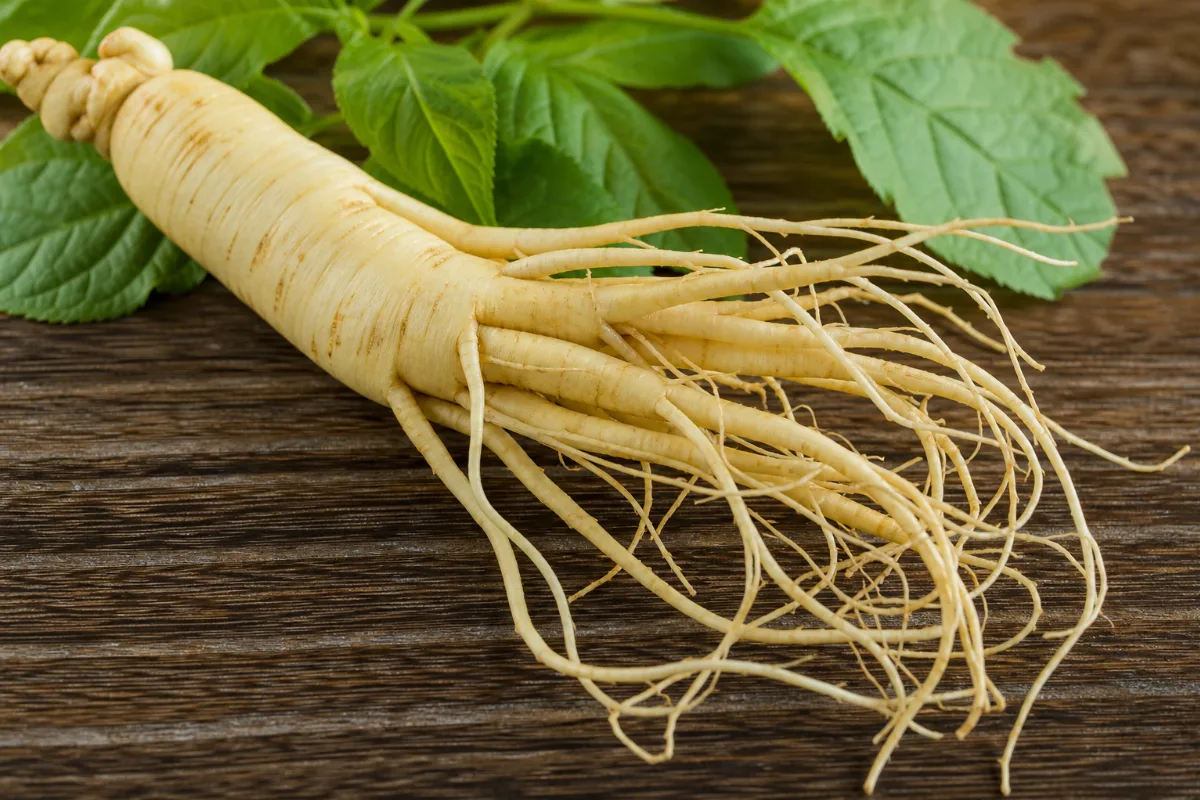
Adaptogens · Herbs & Botanicals · North American ginseng root with low-certainty evidence for colds, fatigue and blood sugar
American Ginseng
Panax quinquefolius L. · also called North American ginseng, Wisconsin ginseng, five-leaved ginseng, occidental ginseng, xi yang shen (Chinese), ginseng americano (Spanish), amerikanischer Ginseng (German); the COLD-fX type extract is CVT-E002
American ginseng (Panax quinquefolius) is a perennial root herb native to eastern North America. It is sold as ground root, capsules and extracts, most famously the COLD-fX extract taken for colds. It is a different species from Asian ginseng (Panax ginseng) and Siberian ginseng. Nothing about it is rated above low certainty. Cold-prevention trials lean slightly positive but the largest missed its main goal. A large US trial and a 2024 guideline support use for fatigue during cancer treatment. Small trials suggest lower blood sugar and better working memory scores. Safety points: it weakened warfarin in a trial, may add to diabetes medicines, has no pregnancy data, and products vary or are mixed with other species.
General information, not medical advice. Last substantive update · Not medically reviewed. A named clinician has not signed off on this page. How this page is made
About American Ginseng
American ginseng (Panax quinquefolius) is a North American root herb, a different species from Asian ginseng (Panax ginseng) and Siberian ginseng. Its best-known use is a branded root extract (COLD-fX) taken to try to prevent colds: results are mixed and the largest trial missed its main goal. It has also been tested for cancer-related fatigue (a large US trial and a 2024 guideline support use during cancer treatment), for blood sugar and for working memory. Nothing is rated above low certainty. The main safety points are a trial showing it weakened warfarin, possible added effects with diabetes medicines, no data in pregnancy, and products that vary or are mixed with other species.
What it is
American ginseng (Panax quinquefolius L.) is a perennial herb of the Araliaceae family. GBIF lists it as native to eastern North America, from Ontario and Quebec down through many US states, and as introduced in China and Myanmar. The root is the part used, as ground root, extracts and capsules. Trials name Wisconsin-grown and Ontario-grown root.
It is a separate species from Asian ginseng (Panax ginseng). Siberian ginseng (Eleutherococcus) is not a Panax at all. Many ginseng reviews mix species, so each result on this page names the species and product where it matters.
What is in it and how it works
The best-known compounds are ginsenosides (saponins). Rb1 is the main one, and pseudoginsenoside F11 and Rd are more typical of American than Asian ginseng, which has more Rf, Rb2 and Rc. Some extracts are rich in sugar chains called polysaccharides instead: the COLD-fX type extract is one. Rats given the polysaccharide extract and a ginsenoside extract showed different immune effects.
After a large dose of root powder, Rb1 appeared in human blood and gut bacteria turned it into compound K. Most mechanism work is in cells and animals and does not show how it acts in people. The mix of compounds varies from batch to batch, which matters because blood-sugar effects varied between batches.
Traditional and current uses
We could not confirm details of historical use by Indigenous peoples or in Chinese medicine from the sources read, so those are not described here. A 2011 review says a standardised ginseng extract became the best-selling cold and flu remedy in Canada. Today it is also taken for energy and tiredness, blood sugar and thinking.
Health authorities: the ASCO and Society for Integrative Oncology guideline says it may be recommended for fatigue in adults during cancer treatment. We did not confirm an EU monograph or Health Canada wording for American ginseng.
What the research shows
Colds: five trials of North American ginseng (747 people) found 25% fewer total colds in one trial and 6.2 days shorter illness in two, but the reviewers said the evidence was insufficient to conclude fewer or milder colds. The biggest trial (783 people) missed its main goal. In people with early leukemia it did not cut illness days. Cancer fatigue: a US trial of 364 survivors found more improvement at 8 weeks, but missed its 4-week main time point; a small trial in head and neck survivors was null.
Blood sugar and blood pressure: small trials from one research network show lower blood sugar after a glucose drink, and a small fall in HbA1c in type 2 diabetes. Blood pressure was unchanged in people with hypertension but lower in two trials in people with diabetes and hypertension. Thinking: several small trials of one branded extract showed better working memory test scores. Pooled reviews often mix Asian and American ginseng and do not apply to American ginseng alone.
At a glance
Traditional uses history, not proof
- Sold in Canada as a cold and flu remedy: a 2011 review says a standardised extract became the best-selling cold and flu remedy there
- Taken for tiredness, blood sugar and thinking (current use)
- Historical use by Indigenous peoples and in Chinese medicine could not be confirmed from the sources read
Studied for research
- Colds and respiratory infections, low certainty; the biggest trial missed its main goal
- Cancer-related fatigue, low certainty; a guideline says it may be recommended during treatment
- Working memory in healthy adults, low certainty; mostly one branded extract
- Blood sugar after a glucose drink and in type 2 diabetes, low certainty
- Blood pressure, mixed; cholesterol, mood, immune markers and muscle damage, very low
- Cancer prevention or treatment: no human evidence
Main compounds
- Ginsenosides, mainly Rb1; pseudoginsenoside F11 and Rd are more typical of American than Asian ginseng
- Polysaccharides (sugar chains) in the COLD-fX type extract
- Compound K, made by gut bacteria from Rb1
- Panaxynol (polyacetylene), reported in a paper title only
Common forms
- Ground root powder and capsules
- Branded extracts studied in trials: CVT-E002 / COLD-fX (polysaccharide-rich), Cereboost and HT1001 (ginsenoside-rich)
- Alcohol and water extracts, which behaved differently in lab studies
- Asian ginseng and Siberian ginseng are different plants
Research links: NIH NCCIH: Asian ginseng (covers Asian ginseng only) · ASCO and Society for Integrative Oncology fatigue guideline (2024) · GBIF: Panax quinquefolius · Research Library · Genes & Biomarkers Library
The plant and its history
- Accepted scientific name
- Panax quinquefolius L.
- Naming authority
- L. (Linnaeus), as shown in the GBIF backbone name. Place and year of the original description were not checked.
- Synonyms
- Aralia quinquefolia (L.) Decne. & Planch.; Aureliana canadensis Lafit.; Ginseng quinquefolium (L.) Alph.Wood; Panax americanus (Raf.) Raf.; Panax cuneatus Raf.; Panax obovatus Raf.; Panax quinquefolius var. americanus Raf.; Panax quinquefolius var. obovatus Raf.
- Common names
- American ginseng (English); North American ginseng (English (used in trial titles)); Five-leaved ginseng (English); Occidental ginseng (English); Wisconsin ginseng (English (used for the Wisconsin-grown root in the N07C2 trial title)); Sang (English (US trade term, listed in GBIF)); Redberry (English (listed in GBIF)); ginseng americano (Spanish); ginseng d'Amérique (French); amerikanischer Ginseng (German); xi yang shen (Chinese (pinyin; language field blank in GBIF)); Zhooniyaa Ojiibik (Ojibwe (code oji in GBIF))
- Botanical family
- Araliaceae (order Apiales). The genus Panax is the "true ginseng" group: Asian ginseng (P. ginseng), Sanchi or notoginseng (P. notoginseng) and Japanese ginseng (P. japonicus) are separate species named in the sources read. Siberian ginseng (Eleutherococcus senticosus) is in a different genus.
- Classification
- Plantae > Tracheophyta > Magnoliopsida > Apiales > Araliaceae > Panax > Panax quinquefolius
- Native range
- GBIF, drawing on ITIS, Catalogue of Life, the World Checklist of Vascular Plants and VASCAN, lists it as native to eastern North America: Canada (Ontario, Quebec) and many US states from Maine and Minnesota down to Alabama and Louisiana, including Wisconsin. It is listed as introduced in China and Myanmar.
- Habitat
- NOT verified from a source read. GBIF habit entry (VASCAN) says "herb". Habitat descriptions were not read.
- What the plant looks like
- Roots: Not described in the sources read. The root is the part used in the trials.; Stems: Not described in the sources read.; Leaves: Not described in the sources read. The species epithet "quinquefolius" and the English name "five-leaved ginseng" point to leaves made of five leaflets (GBIF names list), but this was not checked against a botanical description.; Flowers: Not described in the sources read.; Fruit: Not described in the sources read; "redberry" is listed as an English name in GBIF.
- Cultivation
- Trial titles name Wisconsin-grown and Ontario-grown root, so farm-grown root is used in research. The farming methods were not read.
- Harvest and processing
- Processing changes the product. In two studies the type of extract changed the result: an alcohol extract acted like estrogen in breast cancer cells while a water extract did not, and only a water extract reduced muscle damage in rats. Drying, age at harvest and steaming were not covered in the sources read.
- Look-alikes and adulterants
- Name: Asian ginseng (Panax ginseng); Note: The main look-alike and the species most often confused with it. A 2026 study found the two very hard to tell apart under the microscope; chemical fingerprints differ (Rb1, pseudoginsenoside F11 and Rd more typical of American; Rf, Rb2 and Rc more typical of Asian).; Name: Sanchi or notoginseng (Panax notoginseng); Note: Another Panax species, named in reviews as a common market substitute.; Name: Japanese ginseng (Panax japonicus); Note: Another Panax species, included in a 2026 authentication study.; Name: Siberian ginseng (Eleutherococcus senticosus); Note: A different genus sold as "ginseng"; a 25-product survey measured its marker compounds (eleutherosides) separately from Panax ginsenosides.; Name: Codonopsis pilosula and Platycodon grandiflorus; Note: Root plants named as common adulterants of Panax roots; they lack ginsenosides.
- Sustainability and conservation
- GBIF shows no IUCN Red List assessment ("not evaluated"). Trade controls under CITES were not verified.
Traditional use and history history, not clinical proof
| Tradition or era | Documented use | Source |
|---|---|---|
| Use by Indigenous peoples of North America and early trade with China | NOT verified. It is widely stated that American ginseng root was used by Indigenous peoples and was exported to China from the early 1700s, but no source read for this profile confirms the details, and Wikipedia-level summaries were not accepted as evidence. | unverified |
| Traditional Chinese medicine (xi yang shen) | NOT verified. "Xi yang shen" is listed in GBIF as a Chinese name. How traditional Chinese practice uses it, and how it differs from Asian ginseng, was not confirmed from a source read. The 2017 review by Mancuso says Asian and American ginseng have been used in traditional Chinese medicine for a very long time, but does not separate the two. | p28698154 |
| Canada, from the early 2000s | A 2011 review states that a standardised ginseng extract had become the best-selling cold and flu remedy in Canada. Trials of the extract (CVT-E002, sold as COLD-fX) were published from 2004. | p19592479 |
| Regulatory status | NOT verified. No EU herbal monograph for American ginseng was confirmed. The Health Canada monograph (dated 2024-11-29 in a search snippet) was not read. | unverified |
Traditional use shows how a plant was used. It does not show that a supplement works or is safe today.
What is inside, and how it may work
What the plant contains and how those compounds act in cells and animals. Laboratory and animal mechanisms are not proven effects in people.
Main compounds
| Compound | Family | Where it is concentrated | Activity studied | Level of evidence |
|---|---|---|---|---|
| Ginsenoside Rb1 PubChem 9898279 | protopanaxadiol-type ginsenoside (saponin) | Root The main ginsenoside of American ginseng per Gray 2004; 10.65% total ginsenosides in the Cereboost extract; one low-quality batch had 1.66% total. | Best-known marker compound. Found in human blood after a 10 g dose of root powder (peak 19.9 ng/mL at 4 hours) and turned into compound K by gut bacteria. Did not bind estrogen receptors in a test-tube assay. 20 54 12 | Human data |
| Ginsenoside Rd PubChem 11679800 | protopanaxadiol-type ginsenoside | Root Not quantified in the sources read. | More typical of American than Asian ginseng in 38 commercial samples; detected in human plasma after American ginseng. 12 54 | Human data |
| Ginsenoside Rg1 PubChem 441923 | protopanaxatriol-type ginsenoside | Root Described as the major ginsenoside of Asian, not American, ginseng (Gray 2004); present at lower levels in American ginseng. | Did not bind estrogen receptors in the test-tube assay. 20 46 | Laboratory research |
| Ginsenoside Re PubChem 441921 | protopanaxatriol-type ginsenoside | Root Not quantified in the sources read. | One of seven ginsenosides measured in the blood sugar trials; tested in the CYP test-tube work. 47 10 | Laboratory research |
| Ginsenosides Rc and Rb2 PubChem 12855889 | protopanaxadiol-type ginsenosides | Root Not quantified in the sources read. (Rb2 PubChem CID 6917976.) | More typical of Asian than American ginseng in 38 commercial samples. 12 | Laboratory research |
| Ginsenoside Rf PubChem 441922 | protopanaxatriol-type ginsenoside | Root Not quantified in the sources read. | More typical of Asian ginseng in the 38-sample comparison. 12 | Laboratory research |
| Pseudoginsenoside F11 PubChem 21633072 | ocotillol-type ginsenoside | Root Not quantified in the sources read. | More typical of American than Asian ginseng in the 38-sample comparison, so it works as a chemical marker for telling them apart. 12 56 | Laboratory research |
| Ginsenoside Rg3 (20(S)-Rg3) PubChem 9918693 | protopanaxadiol-type ginsenoside | Mainly formed by heat processing (steaming); wild American samples had less than cultivated ones in one comparison Not quantified in the sources read. | In a rat embryo culture the isolated compound slowed the embryonic heart rate. Added to American ginseng in one combination trial in the form of Rg3-enriched Korean red ginseng. 12 40 26 | Laboratory research |
| Compound K (ginsenoside K) PubChem 9852086 | protopanaxadiol metabolite made by gut bacteria | Not in the plant; made in the gut from Rb1 Appeared in human plasma from 7 to 12 hours after a 10 g dose of American ginseng root (7.32 ng/mL at 12 hours). | Shows that gut bacteria change the plant compounds before they reach the blood. 54 | Human data |
| Poly-furanosyl-pyranosyl-saccharides (polysaccharides) | polysaccharides (sugar chains) | Root (concentrated in CVT-E002) The COLD-fX type extract is polysaccharide-rich; the paediatric trial product was standardised to 80% of these saccharides. | In rats, the polysaccharide-rich extract changed immune cytokines differently from a ginsenoside extract. 7 50 | Animal research |
| Panaxynol (falcarinol) PubChem 5281149 | polyacetylene | Root (per a paper title) Not quantified in the sources read. | Described by a 2024 paper title as a compound from American ginseng. Only the title is verified. 17 | Laboratory research |
Mechanisms, receptors and pathways
| Target or pathway | Gene or receptor | What was found | Level |
|---|---|---|---|
| Conversion of ginsenosides by gut bacteria | Intestinal microbiota | After 10 g of American ginseng root powder, Rb1 fell from a 4-hour peak while compound K rose from 7 to 12 hours, supporting a role of gut bacteria in changing Rb1 to compound K. 54 | Human data |
| Immune signalling | IL-2, interferon-gamma, T cells, gut IgA | In rats, CVT-E002 lowered spleen IL-2 and interferon-gamma output and activated T cells; a ginsenoside extract raised gut IgA-positive cells instead. In 10 men, ginseng lowered CD8+ T cells and raised ex vivo IL-2 production. 7 8 | Animal research |
| Estrogen receptor binding | Estrogen receptor alpha and beta | An alcohol extract bound both estrogen receptors and activated estrogen-responsive genes in breast cancer cells; a water extract did not. Receptor binding in root extracts was linked to zearalenone, a mould toxin, not to Rb1 or Rg1. 27 20 | Laboratory research |
| Liver enzymes that handle drugs | CYP1A1, CYP1A2, CYP1B1; CYP3A4, CYP2C9 | In test tubes a North American ginseng extract inhibited CYP1 enzymes, and was 45 times stronger against CYP1A2 than an Asian ginseng extract. In rats neither species raised CYP2B1, CYP3A23 or CYP1A2 expression. In another rat study ginsenosides raised CYP3A4 and CYP2C9 activity while lowering warfarin levels (ginseng species not stated). 10 57 16 | Laboratory research |
| Blood sugar handling | Ginsenoside mix (PPD:PPT ratio) | The ratio of two ginsenoside groups predicted some of the blood sugar effect across eight ginseng types, but explained little of it; a batch with low total ginsenosides did nothing. 47 46 | Human data |
| Acetylcholine system | Choline acetyltransferase (ChAT) | In mice challenged with amyloid-beta and in nerve stem cells, Cereboost raised ChAT gene expression and acetylcholine. In people, a 2-week trial reported better scores on an acetylcholine-sensitive attention task. 44 5 | Animal research |
| Gut microbiome and short-chain fatty acids | Gut bacteria (Akkermansia, Lactobacillus) | In a lab gut simulator, Cereboost raised acetate, propionate and butyrate and increased Akkermansia and Lactobacillus. 5 | Laboratory research |
| Frontal brain activity | Prefrontal cortex | A faster frontal brain signal (shorter SSVEP latency) during working-memory retrieval after a single dose, without a change in test scores. 55 | Human data |
| Muscle inflammation | Neutrophils, creatine kinase | In rats, a water extract reduced neutrophil infiltration and muscle damage after downhill running; in 12 men, creatine kinase and a lipid-peroxidation marker were lower after a hard run. 18 31 | Animal research |
| Oxidative balance | Glutathione, malondialdehyde, 8-OHdG | In 25 postmenopausal women, markers of oxidative damage rose and total antioxidant content fell on ginseng root powder. 15 | Human data |
Absorption, metabolism and elimination
- Absorption
- Ginsenosides are absorbed slowly and poorly. After a 10 g dose of American ginseng root powder in 6 healthy adults, Rb1 appeared in plasma with a peak of 19.90 ng/mL at 4 hours; Rd and Rg2 were also detected.
- Distribution
- Not described in human studies found.
- Metabolism
- Gut bacteria convert Rb1 to compound K, which appeared in plasma between 7 and 12 hours (7.32 ng/mL at 12 hours; its peak was not reached by the last sample). A review says most saponins have poor bioavailability and unknown metabolism.
- Elimination
- Not studied; sampling stopped at 12 hours.
- Bioavailability
- Only the plasma curves from six people are available: Rb1 area under the curve 155.0 ng.h/mL and compound K 26.4 ng.h/mL over 0 to 12 hours after 10 g of root powder. No absolute bioavailability figure was found.
Isolated compounds versus whole extracts
American ginseng is not one substance. The polysaccharide-rich extract used in cold trials (CVT-E002) differs from ginsenoside-rich extracts (Cereboost, HT1001, 10% ginsenoside extracts) and from plain ground root. In rats the polysaccharide extract and a ginsenoside extract changed immune responses in different ways. Blood sugar effects varied between root batches, and extraction with alcohol or water changed estrogen-like and muscle effects. Results from one preparation should not be applied to another, or to Asian ginseng.
Nutritional composition
No nutrient data were looked up for American ginseng root. It is used as a supplement, not as a food, so nutrient content is not the reason people take it.
2 mixed findings5 low certainty8 very low certainty2 not enough evidence
What was looked at
The 17 benefits and uses checked for American Ginseng, each with how strong the evidence is. Tap one to open it.
- Colds and respiratory infections in healthy adults (prevention)Low certainty
- Respiratory illness and flu in older adults (prevention)Very low certainty
- Respiratory illness in people with chronic lymphocytic leukemiaMixed findings
- Colds in childrenNot enough evidence
- Cancer-related fatigueLow certainty
- Working memory and attention in healthy adultsLow certainty
- Mood, calmness and mental tirednessVery low certainty
- Working memory in schizophreniaVery low certainty
- Simulated driving performanceVery low certainty
- Blood sugar after a sugary drink in people without diabetesLow certainty
- Blood sugar control in type 2 diabetesLow certainty
- Blood pressureMixed findings
- Cholesterol and blood fatsVery low certainty
- Immune cell markers around exerciseVery low certainty
- Muscle damage after hard exerciseVery low certainty
- Antioxidant protection (oxidative stress)Very low certainty
- Preventing or treating cancerNot enough evidence
Lab markers tracked in the studies
Number of colds per personDays of cold symptomsLaboratory-confirmed influenza or RSVFour-fold antibody rises against common virusesFatigue improvement score (MFSI-SF general subscale change)Working memory test performanceFrontal brain signal speed (SSVEP latency)Simulated lap timeBlood sugar after a glucose drink (area under the curve)Fasting blood glucoseHbA1cSystolic blood pressure (top number, mmHg)Arterial stiffness (augmentation index)LDL cholesterolCreatine kinase (muscle damage marker)Oxidative damage markers (malondialdehyde, 8-OHdG)CD8+ T cells and interleukin-2 production
What is American Ginseng good for?
The main proposed uses and how strong the human evidence is for each. "Low" means small or mixed studies; "very low" means one tiny study or lab markers only. Nothing is rated above low. Combination products and Asian ginseng studies are labelled.
Benefits, one by one
Each card is a research question, not a promise. Tap a goal to filter. Open a card to see the studies, doses and limits.
Colds and respiratory infections in healthy adults (prevention)
Low certaintyAmerican ginseng root extract taken for several months through the cold season may mean slightly fewer colds and shorter colds in healthy adults. The trials mostly used one branded extract, results were not the same in every trial, and the biggest trial missed its main goal.
5 studiesCVT-E002 (sold as COLD-fX) is a proprietary, polysaccharide-rich extr…
Studies, doses and limits
What the trials found
In a 4-month trial of 323 adults prone to colds (Predy 2005), those taking the extract had fewer colds, fewer people with 2 or more colds and fewer days of symptoms than placebo. A 6-month trial of 783 vaccinated adults (McElhaney 2011) found no difference in its planned main outcome (laboratory-confirmed respiratory infections: 5.5% placebo, 5.2% at the lower dose, 4.6% at the higher dose), though colds meeting a symptom-based definition were fewer and milder in the treated groups. A systematic review of 5 trials (747 people, all of North American ginseng; Seida 2011) found a 25% reduction in total colds in one trial, a non-significant trend to fewer people catching a cold, and 6.2 fewer days of illness in two trials, and the authors concluded the evidence was insufficient to say ginseng reduces how often or how severely people get colds. A 2020 pooled analysis that mixed Asian and American ginseng found lower infection incidence (RR 0.69) but flagged high or unclear bias.
Results
Predy 2005: 0.68 vs 0.93 colds per person; 10.0% vs 22.8% had 2 or more colds; 10.8 vs 16.5 symptom days. McElhaney 2011: main outcome no difference (P = 0.89). Seida 2011: duration 6.2 days shorter in 2 trials.
Effect sizes as reported
Predy 2005: colds per person difference 0.25 (95% CI 0.04 to 0.45); 2 or more colds 12.8 percentage points fewer (95% CI 4.3 to 21.3). Seida 2011: at least one cold RR 0.70 (95% CI 0.48 to 1.02, not significant); duration 6.2 days shorter (95% CI 3.4 to 9.0). Antonelli 2020 (both species): RR 0.69 (95% CI 0.52 to 0.90).
Why this rating
Several randomised trials lean the same way on colds and duration, but the largest trial missed its main goal, the best results come from secondary or unplanned analyses, nearly all trials used one proprietary extract, and the reviewers themselves called the evidence insufficient for fewer or milder colds.
Form and dose studied
CVT-E002 (sold as COLD-fX) is a proprietary, polysaccharide-rich extract of American ginseng root. Results from it cannot be assumed for plain powder or other extracts. Trials used 2 capsules a day for 4 months, or 400 to 800 mg a day for 6 months.
Who was studied
Healthy adults aged 18 to 65 (some with frequent colds), and vaccinated community adults.
Limits
One extract in most trials; industry links are likely (proprietary product, not stated in the abstracts); symptom-based definitions of a cold; the Seida review searched only to December 2007.
Why researchers looked
Colds are very common. A Canadian extract of American ginseng root (CVT-E002, sold as COLD-fX) became a top-selling cold remedy in Canada, so it has been tested in several trials.
Traditional use
The Seida review states that standardised ginseng extract became the best-selling cold and flu remedy in Canada. No traditional use for this purpose was verified from a source read for this profile.
Proposed mechanism Animal research
In rats, the polysaccharide-rich extract changed immune cytokines (IL-2, interferon-gamma) and T cells in a different way from a ginsenoside extract. This is animal data and does not show how the extract acts in people.
A proposed mechanism does not show that the effect happens in people.
No serious problems were reported in these trials. Ask a pharmacist before combining with warfarin or diabetes medicines (see safety).
Respiratory illness and flu in older adults (prevention)
Very low certaintyTwo small trials in older adults suggested American ginseng extract (COLD-fX) may cut flu and respiratory illness. The numbers of cases were small and one benefit appeared only in a late window of the season, so this is weak evidence.
2 studiesCVT-E002 (sold as COLD-fX) is a proprietary, polysaccharide-rich extr…
Studies, doses and limits
What the trials found
McElhaney 2004 pooled two small trials in nursing-home residents (average age 81 and 83.5; about 90% vaccinated). Laboratory-confirmed influenza occurred in 7 of 101 on placebo and 1 of 97 on the extract, and influenza plus RSV in 9 of 101 vs 1 of 97. In McElhaney 2006, 43 community-living adults aged 65 or older took the extract for 4 months. Illness was similar in the first 2 months, but in the last 2 months 32% on the extract and 62% on placebo reported illness, and symptoms lasted 5.6 vs 12.6 days. No flu was circulating that season.
Results
Influenza 7/101 vs 1/97 (OR 7.73, P = .033); influenza plus RSV 9/101 vs 1/97 (OR 10.50, P = .009). 2006 trial: 32% vs 62% illness in months 3-4.
Effect sizes as reported
Authors report 89% lower relative risk (2004) and 48% lower risk, 55% shorter duration (2006, last 2 months).
Why this rating
Both trials are small, the 2004 result rests on 10 cases in total, the 2006 benefit appears only in a late window, and the product is proprietary with no independent repeat found.
Form and dose studied
CVT-E002 (sold as COLD-fX) is a proprietary, polysaccharide-rich extract of American ginseng root. Results from it cannot be assumed for plain powder or other extracts. Trials used 200 mg twice a day for 8 to 16 weeks.
Who was studied
Older adults in long-term care or living at home, aged 65 and over.
Limits
Tiny case numbers; pooled seasons; flu vaccination was common so results may not apply to unvaccinated people.
Why researchers looked
Older adults in care homes are at high risk of flu and RSV, so a safe prevention aid would matter.
Traditional use
No traditional use for this purpose was verified from a source read for this profile.
Proposed mechanism Animal research
Not shown in people. In rats the extract changed immune signals (animal data).
A proposed mechanism does not show that the effect happens in people.
Well tolerated in these trials; not enough people to rule out rare problems.
Respiratory illness in people with chronic lymphocytic leukemia
Mixed findingsA large trial in people with early chronic lymphocytic leukemia found no reduction in days of respiratory illness. It did find less moderate-to-severe sore throat and more antibody rises on the extract.
1 studiesCVT-E002 (sold as COLD-fX) is a proprietary, polysaccharide-rich extr…
Studies, doses and limits
What the trials found
High 2012 randomised 293 people with early-stage, untreated CLL to CVT-E002 or placebo over a winter. The two main goals were not met: illness days 8.5 vs 6.8 and severe illness days 2.9 vs 2.6 (ginseng vs placebo). At least one illness occurred in 51% vs 56%. Sore throat was less often moderate to severe on the extract (P = .004), and four-fold antibody rises against 9 common viruses were more frequent (16% vs 7%).
Results
Illness days 8.5 vs 6.8; severe illness days 2.9 vs 2.6; any illness 51% vs 56%; antibody rises 16% vs 7%.
Effect sizes as reported
Any illness difference -5 points (95% CI -16 to 7); more intense illness 32% vs 39% (95% CI -18 to 4).
Why this rating
One well-run, NIH-funded randomised trial: the two planned main goals were null, but some secondary results leaned in favour.
Form and dose studied
CVT-E002 (sold as COLD-fX) is a proprietary, polysaccharide-rich extract of American ginseng root. Results from it cannot be assumed for plain powder or other extracts.
Who was studied
Adults with early, untreated CLL.
Limits
One trial; secondary findings are exploratory; antibody changes not linked to illness.
Why researchers looked
People with this blood cancer get respiratory infections often, so an immune-supporting herb was tested.
Traditional use
No traditional use for this purpose was verified from a source read for this profile.
Proposed mechanism Pharmacological theory
Not shown. The authors suggest the extract may boost antibody responses; antibody rises were not tied to specific illnesses.
A proposed mechanism does not show that the effect happens in people.
Well tolerated; fewer grade 3 or worse side effects on the extract (P = .02).
Colds in children
Not enough evidenceOne small safety trial found no serious problems in children aged 3 to 12 who took American ginseng extract during a cold. It was not designed to show whether it helps.
1 studiesAmerican ginseng root extract standardised to 80% poly-furanosyl-pyra…
Studies, doses and limits
What the trials found
Vohra 2008 pre-recruited 75 children and randomised the 46 who developed a respiratory infection to a standard dose, a low dose or placebo (15, 16 and 15 children). There were no serious adverse events and no differences in the number, severity or link to treatment of side effects. The trial was not powered to test benefit.
Results
No serious adverse events; no group differences in side effects.
Effect sizes as reported
Safety and tolerability trial only.
Why this rating
No efficacy trial in children was found; the safety trial had 46 children.
Form and dose studied
American ginseng root extract standardised to 80% poly-furanosyl-pyranosyl-saccharides, weight-based doses.
Who was studied
Children aged 3 to 12.
Limits
Very small; short; not an efficacy trial.
Why researchers looked
Colds are the most common childhood illness, so a safe remedy would be welcome.
Traditional use
No traditional use for this purpose was verified from a source read for this profile.
Proposed mechanism Pharmacological theory
Not studied.
A proposed mechanism does not show that the effect happens in people.
Use in children should be decided with a paediatrician or pharmacist; the trial does not show long-term safety.
Cancer-related fatigue
Low certaintyIn a large US trial, fatigued cancer survivors who took American ginseng for 8 weeks reported more improvement in fatigue than those on placebo, especially people still having cancer treatment. A cancer-care guideline says it may be recommended during treatment. A small trial in head and neck cancer survivors found no benefit.
6 studiesWisconsin-grown American ginseng root, 2000 mg a day in the large tri…
Studies, doses and limits
What the trials found
The Alliance/Mayo trial N07C2 (Barton 2013) randomised 364 fatigued cancer survivors at 40 sites to American ginseng or placebo for 8 weeks. At 4 weeks, the planned main time point, the improvement in the general fatigue score was 14.4 vs 8.2 points (P = .07, not significant). At 8 weeks it was 20 vs 10.3 points (P = .003). Benefit was larger in people receiving active cancer treatment than in those who had finished, and side effects did not differ. An earlier pilot (Barton 2010, 290 people, 750 to 2000 mg a day) showed only non-significant trends toward benefit at the higher doses. A 2020 trial in 32 head and neck cancer survivors (Guglielmo 2020) found no benefit at 8 weeks. The 2024 ASCO and Society for Integrative Oncology guideline (113 trials reviewed) says American ginseng may be recommended in adults undergoing cancer treatment, and rated the evidence for fatigue treatments overall as low to moderate certainty.
Results
N07C2: 8 weeks, 20 vs 10.3 points (P = .003); 4 weeks 14.4 vs 8.2 (P = .07). Pilot: SF-36 vitality +10.5 to +14.6 on higher doses vs +7.3 to +7.8 on placebo (not significant). Head and neck survivors: BFI 4.6 vs 3.4 (not significant).
Effect sizes as reported
Change scores with standard deviations as reported; no confidence intervals in the abstracts.
Why this rating
One large, well-run phase III trial supports benefit at 8 weeks but missed its planned 4-week main goal, and a small trial in survivors was null. The guideline rates overall fatigue evidence low to moderate.
Form and dose studied
Wisconsin-grown American ginseng root, 2000 mg a day in the large trial; 1000 mg a day in the small null trial.
Who was studied
Fatigued adults with cancer, many during treatment; head and neck survivors in the null trial.
Limits
Self-reported fatigue; subgroup finding (during treatment) is exploratory; reviews of this topic reuse the same trials; ginseng is not a cancer treatment.
Why researchers looked
Fatigue is one of the most common and distressing effects of cancer and its treatment, and few treatments help.
Traditional use
No traditional use for this purpose was verified from a source read for this profile.
Proposed mechanism Pharmacological theory
Not established. Ideas include effects on stress hormones and inflammation, but none was shown in these trials.
A proposed mechanism does not show that the effect happens in people.
No differences in side effects in N07C2. People on cancer treatment should check with their oncology team first because of possible interactions (see safety).
Working memory and attention in healthy adults
Low certaintyIn several small, short trials, a branded American ginseng extract (Cereboost) improved working memory test scores in healthy people within hours, and some effects built up over 2 weeks. Gains are on lab tests, not proven everyday benefits, and the trials were connected to the extract makers.
6 studiesCereboost, American ginseng root extract with 10.65% ginsenosides; si…
Studies, doses and limits
What the trials found
Scholey 2010 (32 young adults, single doses of 100, 200 or 400 mg) found better working memory (Corsi block) at all doses and times, with no change in blood glucose. Ossoukhova 2015 (52 adults aged 40 to 60, 200 mg) found better working memory at 3 hours. Bell 2022 (61 young adults) found better working memory and attention within hours, amplified after 2 weeks of daily use, and better scores on an acetylcholine-sensitive attention task after 2 weeks. White 2020 found a faster frontal brain signal in middle-aged adults but no difference in test performance. A 2025 study of 58 professional race car drivers found no significant cognitive change after correction for multiple tests. A 2026 review by authors involved in these trials concluded effects at 100 to 400 mg are most notable for attention and working memory.
Results
Working memory improved at tested times; no numbers in abstracts. Race drivers: no significant cognitive effect.
Effect sizes as reported
Not reported as numbers in the abstracts (drivers study: Cohen d -1.274 for simulated lap time, a different outcome).
Why this rating
Several placebo-controlled crossover trials agree on working memory, but they are small, short, in healthy people, use one branded extract, were run by overlapping research groups with industry employees as authors, and a trial in drivers was null for cognition.
Form and dose studied
Cereboost, American ginseng root extract with 10.65% ginsenosides; single doses of 100 to 400 mg, or 200 mg a day.
Who was studied
Healthy adults aged 18 to 60.
Limits
Lab tests rather than daily function; many outcomes tested so some positives may be chance; no independent replication found; no long-term data.
Why researchers looked
American ginseng has a different ginsenoside mix from Asian ginseng, so researchers tested whether it affects thinking on its own.
Traditional use
No traditional use for this purpose was verified from a source read for this profile.
Proposed mechanism Preliminary mechanism
Ideas in the literature include frontal-brain activation, acetylcholine effects and gut bacteria changes. In the lab gut simulator the extract raised short-chain fatty acids; in people a brain-recording study found a faster frontal brain signal without better test scores.
A proposed mechanism does not show that the effect happens in people.
No safety problems were reported in these short trials; blood glucose did not change.
Mood, calmness and mental tiredness
Very low certaintySome trials of the Cereboost extract found small mood benefits (more calmness at one dose, less mental fatigue and more self-assurance after 2 weeks), but others found none. Evidence is thin.
4 studiesCereboost extract, 100 to 200 mg.
Studies, doses and limits
What the trials found
Scholey 2010 found more calmness after the 100 mg dose only. Bell 2022 found less mental fatigue and more self-assurance after 2 weeks. Ossoukhova 2015 and the 2025 race-driver study found no mood effects.
Results
Mixed: calmness (100 mg only), mental fatigue and self-assurance improved in some trials; no mood change in two others.
Effect sizes as reported
Not given as numbers in the abstracts.
Why this rating
Scattered findings in a few small healthy-volunteer trials, with mood as a secondary outcome and several null results.
Form and dose studied
Cereboost extract, 100 to 200 mg.
Who was studied
Healthy adults.
Limits
Secondary outcomes; multiple testing; same research group and extract.
Why researchers looked
Researchers recorded mood alongside thinking tests in the same trials.
Traditional use
No traditional use for this purpose was verified from a source read for this profile.
Proposed mechanism Pharmacological theory
Not established.
A proposed mechanism does not show that the effect happens in people.
No problems reported.
Working memory in schizophrenia
Very low certaintyOne small trial in people with stable schizophrenia found that a North American ginseng extract (HT1001) improved visual working memory and eased movement-type side effects of antipsychotic drugs over 4 weeks. It needs repeating.
1 studiesHT1001, a proprietary North American ginseng extract.
Studies, doses and limits
What the trials found
Chen 2012 randomised 64 stable adults with schizophrenia to HT1001 or placebo for 4 weeks. Visual working memory improved in the HT1001 group but not in the placebo group, and extrapyramidal symptoms (stiffness and movement side effects of medicines) fell only in the HT1001 group. The abstract does not report a verbal working memory improvement.
Results
Visual working memory improved within the ginseng group; extrapyramidal symptoms fell in the ginseng group.
Effect sizes as reported
No between-group numbers in the abstract.
Why this rating
A single 64-person, 4-week trial, reported as changes within each group, with no replication found.
Form and dose studied
HT1001, a proprietary North American ginseng extract.
Who was studied
Stable adults with schizophrenia taking medicines.
Limits
One trial; add-on to antipsychotics; interaction data are missing.
Why researchers looked
People with schizophrenia often have working memory problems that limit daily functioning, and current drugs do little for them.
Traditional use
No traditional use for this purpose was verified from a source read for this profile.
Proposed mechanism Pharmacological theory
Not established.
A proposed mechanism does not show that the effect happens in people.
Anyone taking antipsychotics should only add a herb under a doctor's guidance.
Simulated driving performance
Very low certaintyIn 58 professional race car drivers, a 2025 study found faster simulated lap times after sustained use of Cereboost, but it had no placebo group, so the result is very uncertain.
1 studiesCereboost, 200 mg a day.
Studies, doses and limits
What the trials found
Ferguson 2025 followed 58 licensed drivers through four phases (baseline, acute, chronic, acute-on-chronic). Simulated lap time was about 3 seconds faster in the acute-on-chronic phase (adjusted P = 0.000003, Cohen d = -1.274); mood and cognitive tests showed no significant effect after correction. The abstract describes a within-person design with no placebo group.
Results
About 3 seconds faster simulated lap time in one phase.
Effect sizes as reported
Adjusted P = 0.000003; Cohen d -1.274.
Why this rating
No placebo group is described, the setting is a simulator, and two authors worked for the extract maker's parent group.
Form and dose studied
Cereboost, 200 mg a day.
Who was studied
Professional race car drivers.
Limits
No control group in the abstract; simulator only; expectations may play a role (97% reported feeling sharper).
Why researchers looked
Driving at speed needs fast decisions, so a cognitive supplement was tested in racing drivers.
Traditional use
No traditional use for this purpose was verified from a source read for this profile.
Proposed mechanism Pharmacological theory
Not established.
A proposed mechanism does not show that the effect happens in people.
No problems reported.
Blood sugar after a sugary drink in people without diabetes
Low certaintyIn small one-day trials, American ginseng root taken about 40 minutes before a glucose drink lowered the blood sugar rise in healthy people. But one batch of root did nothing, and two of five batches in another test did not work as expected, so the effect depends on the product.
5 studiesGround American ginseng root, 1 to 9 g, taken 40 minutes before a glu…
Studies, doses and limits
What the trials found
Vuksan 2000 (10 adults) found area under the blood sugar curve fell 26.6%, 29.3% and 38.5% after 3, 6 and 9 g of ground root. Vuksan 2001 (12 adults) found 1, 2 and 3 g lowered the curve by 14.4%, 10.6% and 9.1% only when taken 40 minutes beforehand. Dascalu 2007 (12 adults, 9 g of five Ontario-grown batches) found a mean 27.7% fall in glucose area and 23.8% fall in insulin area, but 2 of the 5 batches did not lower glucose as expected. Sievenpiper 2003 (12 adults, 6 g of one batch with low ginsenosides) found no effect. Sievenpiper 2004 compared eight ginseng types in 12 adults: American ginseng showed only a non-significant trend to lower blood sugar at 90 minutes, whereas Asian ginseng raised peak blood sugar.
Results
Glucose area under the curve down 9% to 38.5% in effective trials; no effect with a low-ginsenoside batch.
Effect sizes as reported
Vuksan 2000: -26.6%, -29.3%, -38.5%. Vuksan 2001: -14.4%, -10.6%, -9.1%. Dascalu 2007: -27.7% (mean of 5 batches; peak -1.0 mmol/L).
Why this rating
Several small crossover trials from one research group agree, but they are in healthy people, tested single doses with large amounts of root (up to 9 g), and some batches failed. No independent group repeated them in this search.
Form and dose studied
Ground American ginseng root, 1 to 9 g, taken 40 minutes before a glucose drink.
Who was studied
Healthy adults without diabetes.
Limits
Single-day tests; 10 to 12 people each; batch-dependent; one research group; not shown to help people with diabetes by this design.
Why researchers looked
American ginseng became the best-studied ginseng for post-meal blood sugar after a Canadian group tested it repeatedly in healthy volunteers.
Traditional use
No traditional use for this purpose was verified from a source read for this profile.
Proposed mechanism Preliminary mechanism
Ideas include slower sugar absorption and more insulin release. In one 12-person trial the root also lowered insulin after a glucose drink. The effect was linked to the ginsenoside mix in the root, which varied by batch.
A proposed mechanism does not show that the effect happens in people.
People taking diabetes drugs or insulin should speak to their doctor or pharmacist because blood sugar could fall further.
Blood sugar control in type 2 diabetes
Low certaintyIn one small 8-week trial of 24 people with type 2 diabetes, American ginseng extract added to usual treatment lowered HbA1c by 0.29 points and fasting glucose by 0.71 mmol/L. A larger 74-person trial tested only safety. Pooled results for ginseng of all kinds show a small drop in fasting glucose.
5 studiesAmerican ginseng extract, 3 g a day (1 g with each meal) in the main …
Studies, doses and limits
What the trials found
Vuksan 2019 (24 people completed a crossover; 1 g with each meal for 8 weeks added to usual treatment) found HbA1c 0.29 points lower and fasting glucose 0.71 mmol/L lower than placebo, plus lower systolic blood pressure and LDL cholesterol; safety tests were unaffected. Mucalo 2014 (74 people, 12 weeks) was a safety trial and found no differences in kidney, liver, clotting tests or side effects. A combined Korean red ginseng plus American ginseng trial (Jovanovski 2021, 80 people) lowered HbA1c by 0.35 points but cannot be credited to American ginseng alone. A pooled analysis of 16 trials of ginseng of any Panax species (Shishtar 2014) found fasting glucose 0.31 mmol/L lower, with no overall change in HbA1c, and noted that most trials were short and in people already well controlled.
Results
HbA1c -0.29 points; fasting glucose -0.71 mmol/L in the American ginseng crossover trial.
Effect sizes as reported
Vuksan 2019: HbA1c -0.29% (p = 0.041), fasting glucose -0.71 mmol/L (p = 0.008). Shishtar 2014 (genus-wide): fasting glucose MD -0.31 mmol/L (95% CI -0.59 to -0.03).
Why this rating
One small randomised crossover trial supports a modest drop, plus a pooled analysis that mixes species. Trials are short, in people with good control, and from one research network.
Form and dose studied
American ginseng extract, 3 g a day (1 g with each meal) in the main trial.
Who was studied
Adults with type 2 diabetes on usual treatment, mean HbA1c about 7%.
Limits
Only 24 people; a 0.29 point HbA1c change is small; several authors of this network declare patents and ownership in a glycemic-testing company in related papers; mixed-species meta-analysis.
Why researchers looked
People with type 2 diabetes often look for add-ons to medicine, and American ginseng reduced blood sugar after meals in healthy volunteers.
Traditional use
No traditional use for this purpose was verified from a source read for this profile.
Proposed mechanism Preliminary mechanism
Not established in people.
A proposed mechanism does not show that the effect happens in people.
Could add to the effect of diabetes medicines. See the safety tab on low blood sugar and speak to a doctor or pharmacist first.
Blood pressure
Mixed findingsThe evidence is mixed. Two trials in people with high blood pressure found American ginseng had no effect on blood pressure (a single dose, and 12 weeks). But in people who had both diabetes and high blood pressure, two other 12-week trials found lower systolic pressure. Pooled results for ginseng of all kinds show no overall change.
7 studiesAmerican ginseng root or extract, 3 g a day for 12 weeks in most tria…
Studies, doses and limits
What the trials found
Stavro 2005 (16 people with hypertension, 13 on blood pressure drugs; six batches, 3 g) found no overall effect on blood pressure over 160 minutes. Stavro 2006 (52 randomised, 37 analysed, 3 g a day for 12 weeks) found a neutral effect on 24-hour blood pressure and on a kidney marker. Mucalo 2013 (64 people with diabetes and hypertension, 12 weeks) found systolic pressure 11.7% lower and arterial stiffness (augmentation index) 5.3% lower than placebo. Vuksan 2019 (24 people with diabetes) found systolic pressure 5.6 mmHg lower. The combination trial of two species (Jovanovski 2021) lowered 24-hour systolic pressure by about 4 mmHg. A pooled analysis of 17 trials of ginseng of any species (Komishon 2016) found no significant effect and concluded ginseng should not be avoided out of fear of raising blood pressure.
Results
Neutral in people with hypertension; lower systolic pressure in two trials of people with diabetes plus hypertension.
Effect sizes as reported
Mucalo 2013: SBP -11.7% (P<0.001); AI -5.3% (P=0.041). Vuksan 2019: SBP -5.6 +/- 2.7 mmHg. Komishon 2016: no significant change (subgroup in diabetes/metabolic syndrome/obesity -2.76 mmHg, 95% CI -6.40 to 0.87).
Why this rating
Four trials in different groups point different ways; the pooled analysis of many ginseng species is neutral.
Form and dose studied
American ginseng root or extract, 3 g a day for 12 weeks in most trials.
Who was studied
Adults with hypertension, and adults with diabetes with or without hypertension.
Limits
Small trials; different populations; the pooled analysis mixes species; the benefit seen in diabetes trials comes from the same research network.
Why researchers looked
Early reports raised the worry that ginseng might raise blood pressure, so researchers tested American ginseng in people with hypertension.
Traditional use
No traditional use for this purpose was verified from a source read for this profile.
Proposed mechanism Preliminary mechanism
Not established. In the 2020 combination trial, pulse wave velocity and blood vessel function did not change significantly.
A proposed mechanism does not show that the effect happens in people.
No rise in blood pressure was seen in the hypertension trials. People on blood pressure drugs should tell their prescriber because effects could add up.
Cholesterol and blood fats
Very low certaintyCholesterol changes were secondary results in small diabetes trials. American ginseng alone lowered LDL by about 12% in one 24-person trial. A two-species combination lowered total cholesterol and triglycerides in another. This is weak evidence.
2 studiesAmerican ginseng extract 3 g a day; or Korean red plus American ginse…
Studies, doses and limits
What the trials found
Vuksan 2019 reported LDL cholesterol 12.3% lower and LDL to HDL ratio 13.9% lower on American ginseng than placebo in 24 people with type 2 diabetes. In Jovanovski 2021 the Korean red plus American ginseng combination lowered total cholesterol by 0.50 mmol/L, non-HDL cholesterol by 0.54 mmol/L and triglycerides by 0.40 mmol/L, with LDL lower but not significant (p = 0.06).
Results
LDL -12.3% (American ginseng alone, 24 people); combination: total cholesterol -0.50 mmol/L, triglycerides -0.40 mmol/L.
Effect sizes as reported
Vuksan 2019: LDL-C -12.3 +/- 3.9%. Jovanovski 2021 (combination): total cholesterol -0.50 +/- 0.2 mmol/L (p = 0.01).
Why this rating
Secondary outcomes in two small trials from one network; one trial uses a two-species combination.
Form and dose studied
American ginseng extract 3 g a day; or Korean red plus American ginseng 2.25 g a day.
Who was studied
Adults with type 2 diabetes.
Limits
Secondary outcomes; no heart-attack or stroke outcomes.
Why researchers looked
Blood fats are measured routinely in diabetes trials, so ginseng was checked for effects on them.
Traditional use
No traditional use for this purpose was verified from a source read for this profile.
Proposed mechanism Preliminary mechanism
Not established.
A proposed mechanism does not show that the effect happens in people.
No problems reported.
Immune cell markers around exercise
Very low certaintyIn 10 healthy men, 5 weeks of a North American ginseng extract changed only a few immune lab values (fewer CD8 T cells, more interleukin-2 made in the lab). Most immune measures and the stress hormones did not change.
2 studiesStandardised ginsenoside-containing North American ginseng extract, 1…
Studies, doses and limits
What the trials found
Biondo 2008 (10 healthy sedentary men, 1125 mg a day for 35 days in a crossover) found lower circulating CD8+ T cells and higher interleukin-2 made by stimulated T cells in the lab. Neutrophils, monocytes, other lymphocytes, white cell count, lymphocyte growth, neutrophil burst, lactate, insulin, cortisol and growth hormone did not change. The rat study (Biondo 2008b) found that CVT-E002 lowered spleen cytokine output while a ginsenoside extract raised gut IgA cells.
Results
CD8+ T cells lower; ex vivo IL-2 higher; most other measures unchanged.
Effect sizes as reported
Not given as numbers in the abstract.
Why this rating
One tiny crossover trial of lab markers; not infections or symptoms.
Form and dose studied
Standardised ginsenoside-containing North American ginseng extract, 1125 mg a day.
Who was studied
Healthy sedentary men.
Limits
Ten men; lab values only; rat data are not human evidence.
Why researchers looked
Hard exercise can briefly weaken immune defences, so a ginseng that supports immunity was tested around moderate exercise.
Traditional use
No traditional use for this purpose was verified from a source read for this profile.
Proposed mechanism Animal research
Rat data suggest the polysaccharide-rich extract and a ginsenoside extract act on immune signals in different ways.
A proposed mechanism does not show that the effect happens in people.
No problems reported.
Muscle damage after hard exercise
Very low certaintyIn 12 active young men, 4 weeks of American ginseng lowered blood markers of muscle damage and fat-oxidation damage after a hard downhill run. It is a lab-marker result in a very small trial and is not proven to reduce soreness.
2 studiesAmerican ginseng extract, 1.6 g a day for 28 days.
Studies, doses and limits
What the trials found
Lin 2021 (12 active men, 1.6 g a day for 28 days then a downhill run, crossover) found the rise in creatine kinase after running was absent at 48 and 72 hours on ginseng, and the oxidative stress marker 8-iso-PGF2 alpha was lower right after, 2 hours and 24 hours after the run. Interleukin-4 differed between ginseng and placebo. The abstract does not report a difference in the pain rating. Estaki 2015 found a protective effect in rats.
Results
Creatine kinase rise eliminated at 48 and 72 hours; lower 8-iso-PGF2 alpha.
Effect sizes as reported
8-iso-PGF2 alpha p = 0.01 (0 and 2 h), p = 0.028 (24 h).
Why this rating
One 12-person trial of blood markers plus rat data.
Form and dose studied
American ginseng extract, 1.6 g a day for 28 days.
Who was studied
Physically active young men.
Limits
Marker changes are not performance or comfort outcomes; very small.
Why researchers looked
Hard downhill running causes muscle damage and inflammation, so ginseng's anti-inflammatory reputation was tested.
Traditional use
No traditional use for this purpose was verified from a source read for this profile.
Proposed mechanism Animal research
In rats, an American ginseng water extract reduced muscle damage and neutrophil infiltration after downhill running; an alcohol extract lowered creatine kinase only. This is animal data.
A proposed mechanism does not show that the effect happens in people.
No problems reported.
Antioxidant protection (oxidative stress)
Very low certaintyA small trial in postmenopausal women found the opposite of an antioxidant benefit: after 4 months of American ginseng root powder, blood and urine markers of oxidative damage were higher. The meaning for health is unclear, but there is no human evidence that American ginseng acts as an antioxidant.
1 studiesAmerican ginseng whole-root powder, 1 g a day.
Studies, doses and limits
What the trials found
Dickman 2009 randomised 25 postmenopausal women (12 ginseng, 13 placebo) to 1 g a day of whole-root powder for 4 months. Heart rate, blood pressure, glucose and lactate were unchanged, but resting oxidised glutathione, malondialdehyde and urine 8-hydroxydeoxyguanosine were higher, the glutathione ratio and total antioxidant content were lower, and red-cell antioxidant enzymes were higher. The authors concluded this dose caused oxidative stress.
Results
Higher oxidative damage markers on ginseng; no clinical outcome.
Effect sizes as reported
Not given as numbers in the abstract.
Why this rating
One small trial of lab markers; direction was against an antioxidant benefit.
Form and dose studied
American ginseng whole-root powder, 1 g a day.
Who was studied
Postmenopausal women 55 to 75.
Limits
25 women; markers only; not repeated.
Why researchers looked
Ginsenosides are called antioxidants in many lab studies, so researchers checked in people.
Traditional use
No traditional use for this purpose was verified from a source read for this profile.
Proposed mechanism Preliminary mechanism
Cell and animal papers describe antioxidant effects; the one human trial found pro-oxidant markers.
A proposed mechanism does not show that the effect happens in people.
Not clear whether the changes matter for health.
Preventing or treating cancer
Not enough evidenceThere is no evidence from human trials that American ginseng prevents or treats cancer. Cell experiments show mixed effects, including an estrogen-like growth effect of an alcohol extract at low concentrations. Its only studied cancer use is easing fatigue.
2 studiesNot applicable.
Studies, doses and limits
What the trials found
No randomised trial of American ginseng for cancer prevention or tumour outcomes was found in PubMed. The 2024 cancer-fatigue guideline recommends it only for fatigue during treatment. King 2006 tested extracts on breast cancer cells in dishes only.
Results
No human outcome data.
Why this rating
No human trial; cell data point both ways.
Who was studied
People with cancer.
Limits
Test-tube findings cannot be applied to people.
Why researchers looked
Lab studies of ginsenosides on cancer cells attract interest, and people with cancer often ask about ginseng.
Traditional use
No traditional use for this purpose was verified from a source read for this profile.
Proposed mechanism Laboratory research
In breast cancer cells, an alcohol extract of American ginseng promoted growth of estrogen-receptor-positive cells at low concentrations and slowed growth at high concentrations; a water extract did not promote growth.
A proposed mechanism does not show that the effect happens in people.
Ask the cancer care team before taking it, particularly with hormone-sensitive tumours.
Connections to the rest of health
How American Ginseng connects to the rest of our health knowledge graph. Every link says what kind of connection it is. A safety link (for example to the liver) is a warning, not a benefit. A study that merely mentions a topic never creates a benefit link.
Explore every connection: goals, body systems, organs, symptoms, genes
A. Wellness goals
| Connected to | Kind of connection | Evidence status | Context | Studies |
|---|---|---|---|---|
| Immune Support | Potential benefit | Low certainty | Colds and respiratory infections in healthy adults (prevention): American ginseng root extract taken for several months through the cold season may mean slightly fewer colds and shorter colds in healthy adults. The trials mostly used one branded extract, results were not the same in every trial, and the biggest trial missed its main goal. Respiratory illness and flu in older adults (prevention): Two small trials in older adults suggested American ginseng extract (COLD-fX) may cut flu and respiratory illness. The numbers of cases were small and one benefit appeared only in a late window of the season, so this is weak evidence. | 39 34 43 1 7 32 33 23 50 |
| Reduce Fatigue | Demonstrated clinical effect | Low certainty | Cancer-related fatigue: In a large US trial, fatigued cancer survivors who took American ginseng for 8 weeks reported more improvement in fatigue than those on placebo, especially people still having cancer treatment. A cancer-care guideline says it may be recommended during treatment. A small trial in head and neck cancer survivors found no benefit. | 4 3 21 9 41 2 |
| Energy Boost | Demonstrated clinical effect | Low certainty | Cancer-related fatigue: In a large US trial, fatigued cancer survivors who took American ginseng for 8 weeks reported more improvement in fatigue than those on placebo, especially people still having cancer treatment. A cancer-care guideline says it may be recommended during treatment. A small trial in head and neck cancer survivors found no benefit. | 4 3 21 9 41 2 |
| Memory Support | Potential benefit | Low certainty | Working memory and attention in healthy adults: In several small, short trials, a branded American ginseng extract (Cereboost) improved working memory test scores in healthy people within hours, and some effects built up over 2 weeks. Gains are on lab tests, not proven everyday benefits, and the trials were connected to the extract makers. Working memory in schizophrenia: One small trial in people with stable schizophrenia found that a North American ginseng extract (HT1001) improved visual working memory and eased movement-type side effects of antipsychotic drugs over 4 weeks. It needs repeating. | 42 38 5 55 19 6 11 |
| Cognitive Performance | Potential benefit | Low certainty | Working memory and attention in healthy adults: In several small, short trials, a branded American ginseng extract (Cereboost) improved working memory test scores in healthy people within hours, and some effects built up over 2 weeks. Gains are on lab tests, not proven everyday benefits, and the trials were connected to the extract makers. | 42 38 5 55 19 6 |
| Better Focus | Potential benefit | Low certainty | Working memory and attention in healthy adults: In several small, short trials, a branded American ginseng extract (Cereboost) improved working memory test scores in healthy people within hours, and some effects built up over 2 weeks. Gains are on lab tests, not proven everyday benefits, and the trials were connected to the extract makers. | 42 38 5 55 19 6 |
| Mental Clarity | Potential benefit | Very low certainty | Mood, calmness and mental tiredness: Some trials of the Cereboost extract found small mood benefits (more calmness at one dose, less mental fatigue and more self-assurance after 2 weeks), but others found none. Evidence is thin. | 42 5 38 19 |
| Calm Relaxation | Potential benefit | Very low certainty | Mood, calmness and mental tiredness: Some trials of the Cereboost extract found small mood benefits (more calmness at one dose, less mental fatigue and more self-assurance after 2 weeks), but others found none. Evidence is thin. | 42 5 38 19 |
| Brain Health | Potential benefit | Very low certainty | Working memory in schizophrenia: One small trial in people with stable schizophrenia found that a North American ginseng extract (HT1001) improved visual working memory and eased movement-type side effects of antipsychotic drugs over 4 weeks. It needs repeating. | 11 |
| Peak Performance | Potential benefit | Very low certainty | Simulated driving performance: In 58 professional race car drivers, a 2025 study found faster simulated lap times after sustained use of Cereboost, but it had no placebo group, so the result is very uncertain. | 19 |
| Blood Sugar Balance | Demonstrated clinical effect | Low certainty | Blood sugar after a sugary drink in people without diabetes: In small one-day trials, American ginseng root taken about 40 minutes before a glucose drink lowered the blood sugar rise in healthy people. But one batch of root did nothing, and two of five batches in another test did not work as expected, so the effect depends on the product. | 51 52 14 46 47 |
| Metabolic Health | Demonstrated clinical effect | Low certainty | Blood sugar after a sugary drink in people without diabetes: In small one-day trials, American ginseng root taken about 40 minutes before a glucose drink lowered the blood sugar rise in healthy people. But one batch of root did nothing, and two of five batches in another test did not work as expected, so the effect depends on the product. | 51 52 14 46 47 |
| Blood Sugar Balance | Potential benefit | Low certainty | Blood sugar control in type 2 diabetes: In one small 8-week trial of 24 people with type 2 diabetes, American ginseng extract added to usual treatment lowered HbA1c by 0.29 points and fasting glucose by 0.71 mmol/L. A larger 74-person trial tested only safety. Pooled results for ginseng of all kinds show a small drop in fasting glucose. | 53 37 35 45 26 |
| Metabolic Health | Potential benefit | Low certainty | Blood sugar control in type 2 diabetes: In one small 8-week trial of 24 people with type 2 diabetes, American ginseng extract added to usual treatment lowered HbA1c by 0.29 points and fasting glucose by 0.71 mmol/L. A larger 74-person trial tested only safety. Pooled results for ginseng of all kinds show a small drop in fasting glucose. | 53 37 35 45 26 |
| Blood Pressure Support | Potential benefit | Mixed findings | Blood pressure: The evidence is mixed. Two trials in people with high blood pressure found American ginseng had no effect on blood pressure (a single dose, and 12 weeks). But in people who had both diabetes and high blood pressure, two other 12-week trials found lower systolic pressure. Pooled results for ginseng of all kinds show no overall change. | 48 49 36 53 26 25 28 |
| Heart Health | Potential benefit | Mixed findings | Blood pressure: The evidence is mixed. Two trials in people with high blood pressure found American ginseng had no effect on blood pressure (a single dose, and 12 weeks). But in people who had both diabetes and high blood pressure, two other 12-week trials found lower systolic pressure. Pooled results for ginseng of all kinds show no overall change. Cholesterol and blood fats: Cholesterol changes were secondary results in small diabetes trials. American ginseng alone lowered LDL by about 12% in one 24-person trial. A two-species combination lowered total cholesterol and triglycerides in another. This is weak evidence. | 48 49 36 53 26 25 28 |
| Cholesterol Balance | Potential benefit | Very low certainty | Cholesterol and blood fats: Cholesterol changes were secondary results in small diabetes trials. American ginseng alone lowered LDL by about 12% in one 24-person trial. A two-species combination lowered total cholesterol and triglycerides in another. This is weak evidence. | 53 26 |
| Immune Support | Biological association | Very low certainty | Immune cell markers around exercise: In 10 healthy men, 5 weeks of a North American ginseng extract changed only a few immune lab values (fewer CD8 T cells, more interleukin-2 made in the lab). Most immune measures and the stress hormones did not change. | 8 7 |
| Muscle Recovery | Biological association | Very low certainty | Muscle damage after hard exercise: In 12 active young men, 4 weeks of American ginseng lowered blood markers of muscle damage and fat-oxidation damage after a hard downhill run. It is a lab-marker result in a very small trial and is not proven to reduce soreness. | 31 18 |
| Physical Stamina | Biological association | Very low certainty | Muscle damage after hard exercise: In 12 active young men, 4 weeks of American ginseng lowered blood markers of muscle damage and fat-oxidation damage after a hard downhill run. It is a lab-marker result in a very small trial and is not proven to reduce soreness. | 31 18 |
| Healthy Aging | Biological association | Very low certainty | Antioxidant protection (oxidative stress): A small trial in postmenopausal women found the opposite of an antioxidant benefit: after 4 months of American ginseng root powder, blood and urine markers of oxidative damage were higher. The meaning for health is unclear, but there is no human evidence that American ginseng acts as an antioxidant. | 15 |
| Immune Support | Preliminary mechanism | Not enough evidence | Preventing or treating cancer: There is no evidence from human trials that American ginseng prevents or treats cancer. Cell experiments show mixed effects, including an estrogen-like growth effect of an alcohol extract at low concentrations. Its only studied cancer use is easing fatigue. | 27 9 |
B. Body systems
| Connected to | Kind of connection | Evidence status | Context | Studies |
|---|---|---|---|---|
| Cardiovascular system | Drug or supplement interaction | Mixed findings | Possible added effect with blood pressure medicines; neutral in hypertension trials. Weakened warfarin in healthy volunteers (INR lower); blood pressure effect mixed. Preparation or compound: American ginseng root and extract |
49 36 58 |
| Blood clotting (INR) | Drug or supplement interaction | Low certainty | Lowered warfarin effect in healthy volunteers. Preparation or compound: American ginseng root |
58 |
| Liver | Biological association | Not enough evidence | Liver tests unchanged in two diabetes trials; no cases found. Preparation or compound: American ginseng extract |
37 53 |
| Reproductive system and pregnancy | Contraindication | Not enough evidence | Lab data in rat embryos; no human data. No human data; rat embryo heart rate slowed in a lab study. Preparation or compound: Ginsenoside Rg3 (isolated) |
40 |
| Hormone-sensitive tissue | Biological association | Not enough evidence | Estrogen-like activity in cell experiments. Preparation or compound: Alcohol extract of American ginseng root |
27 20 |
| Immune system | Biological association | Not enough evidence | Changes in immune markers; theory for autoimmune conditions. Studied for: Colds and respiratory infections in healthy adults (prevention) Preparation or compound: Polysaccharide-rich extract (CVT-E002) |
8 7 39 34 43 1 32 33 23 50 27 9 |
| Immune system | Potential benefit | Low certainty | Fewer or shorter colds in some trials; the largest trial missed its main goal. Preparation or compound: CVT-E002 (COLD-fX) root extract |
39 34 43 |
| Hepatic system | Biological association | Not enough evidence | Liver tests unchanged in two diabetes trials; no liver injury case found. Safety relationship, not a benefit. Preparation or compound: American ginseng extract |
37 53 |
| Nervous system | Potential benefit | Low certainty | Better working memory test scores in small, short trials. Preparation or compound: Cereboost root extract |
42 38 5 |
| Respiratory System | Biological association | Low certainty | Studied for: Colds and respiratory infections in healthy adults (prevention) Studied for: Respiratory illness and flu in older adults (prevention) | 39 34 43 1 7 32 33 23 50 |
| Nervous System | Biological association | Low certainty | Studied for: Cancer-related fatigue Studied for: Working memory and attention in healthy adults | 4 3 21 9 41 2 42 38 5 55 19 6 11 |
| Stress Mood | Biological association | Very low certainty | Studied for: Mood, calmness and mental tiredness | 42 5 38 19 |
| Metabolism Weight | Biological association | Low certainty | Studied for: Blood sugar after a sugary drink in people without diabetes Studied for: Blood sugar control in type 2 diabetes | 51 52 14 46 47 53 37 35 45 26 15 |
| Endocrine System | Biological association | Low certainty | Studied for: Blood sugar after a sugary drink in people without diabetes Studied for: Blood sugar control in type 2 diabetes | 51 52 14 46 47 53 37 35 45 26 |
| Cardiovascular System | Biological association | Mixed findings | Studied for: Blood pressure Studied for: Cholesterol and blood fats | 48 49 36 53 26 25 28 |
| Musculoskeletal System | Biological association | Very low certainty | Studied for: Muscle damage after hard exercise | 31 18 |
F. Functional actions
| Connected to | Kind of connection | Evidence status | Context | Studies |
|---|---|---|---|---|
| Blood sugar regulation | Drug or supplement interaction | Low certainty | Could add to diabetes medicines. Preparation or compound: American ginseng root and extract |
51 53 |
| Blood sugar regulation | Potential benefit | Low certainty | Lower post-meal glucose in healthy people; modest HbA1c fall in one diabetes trial. Could add to diabetes drugs. Preparation or compound: American ginseng root and extract |
51 53 |
I. Biomarkers
| Connected to | Kind of connection | Evidence status | Context | Studies |
|---|---|---|---|---|
| Number of colds per person | Biological association | Low certainty | Measured in trials: lowered. A lab change is not the same as a health benefit. | 39 43 |
| Days of cold symptoms | Biological association | Low certainty | Measured in trials: lowered. A lab change is not the same as a health benefit. | 39 43 33 |
| Laboratory-confirmed influenza or RSV | Biological association | Very low certainty | Measured in trials: mixed. A lab change is not the same as a health benefit. | 32 34 |
| Four-fold antibody rises against common viruses | Biological association | Very low certainty | Measured in trials: raised. A lab change is not the same as a health benefit. | 23 |
| Fatigue improvement score (MFSI-SF general subscale change) | Biological association | Low certainty | Measured in trials: raised. A lab change is not the same as a health benefit. | 4 21 |
| Working memory test performance | Biological association | Low certainty | Measured in trials: raised. A lab change is not the same as a health benefit. | 42 38 19 |
| Frontal brain signal speed (SSVEP latency) | Biological association | Very low certainty | Measured in trials: lowered. A lab change is not the same as a health benefit. | 55 |
| Simulated lap time | Biological association | Very low certainty | Measured in trials: lowered. A lab change is not the same as a health benefit. | 19 |
| Blood sugar after a glucose drink (area under the curve) | Biological association | Low certainty | Measured in trials: lowered. A lab change is not the same as a health benefit. | 51 52 14 46 |
| Fasting blood glucose | Biological association | Low certainty | Measured in trials: lowered. A lab change is not the same as a health benefit. | 53 45 |
| HbA1c | Biological association | Low certainty | Measured in trials: lowered. A lab change is not the same as a health benefit. | 53 26 45 |
| Systolic blood pressure (top number, mmHg) | Biological association | Mixed findings | Measured in trials: mixed. A lab change is not the same as a health benefit. | 48 49 36 53 28 |
| Arterial stiffness (augmentation index) | Biological association | Very low certainty | Measured in trials: lowered. A lab change is not the same as a health benefit. | 36 25 |
| LDL cholesterol | Biological association | Very low certainty | Measured in trials: lowered. A lab change is not the same as a health benefit. | 53 26 |
| Creatine kinase (muscle damage marker) | Biological association | Very low certainty | Measured in trials: lowered. A lab change is not the same as a health benefit. | 31 18 |
| Oxidative damage markers (malondialdehyde, 8-OHdG) | Biological association | Very low certainty | Measured in trials: raised. A lab change is not the same as a health benefit. | 15 31 |
| CD8+ T cells and interleukin-2 production | Biological association | Very low certainty | Measured in trials: mixed. A lab change is not the same as a health benefit. | 8 |
J. Genes, receptors and enzymes
| Connected to | Kind of connection | Evidence status | Context | Studies |
|---|---|---|---|---|
| CYP1A2 | Preliminary mechanism | In vitro | Strongly inhibited in test tubes by a North American ginseng extract; not raised in rat liver. | 10 57 |
| CYP3A4 and CYP2C9 | Preliminary mechanism | Animal | Activity raised and warfarin levels lowered in rats given ginsenosides (ginseng species not stated). | 16 |
| ESR1 and ESR2 (estrogen receptors alpha and beta) | Preliminary mechanism | In vitro | Alcohol extract bound both receptors in test tubes and in cells; zearalenone in extracts also bound them. | 27 20 |
| CHAT (choline acetyltransferase) | Preliminary mechanism | Animal | Raised by Cereboost in nerve stem cells and mouse brain. | 44 |
K. Biological pathways
| Connected to | Kind of connection | Evidence status | Context | Studies |
|---|---|---|---|---|
| Cytokine signalling (IL-2, interferon-gamma) | Preliminary mechanism | Animal | Changed by CVT-E002 in rats and in T cells from men on a North American ginseng extract. | 7 8 |
| Gut microbiome short-chain fatty acid production | Preliminary mechanism | In vitro | Raised in a lab gut simulator with Cereboost. | 5 |
| Glutathione and oxidative balance | Preliminary mechanism | Human | Oxidative damage markers rose in a small human trial. | 15 |
L. Active compounds
| Connected to | Kind of connection | Evidence status | Context | Studies |
|---|---|---|---|---|
| Ginsenoside Rb1 | Biological association | Human | Best-known marker compound. Found in human blood after a 10 g dose of root powder (peak 19.9 ng/mL at 4 hours) and turned into compound K by gut bacteria. Did not bind estrogen receptors in a test-tube assay. Preparation or compound: Root |
20 54 12 |
| Ginsenoside Rd | Biological association | Human | More typical of American than Asian ginseng in 38 commercial samples; detected in human plasma after American ginseng. Preparation or compound: Root |
12 54 |
| Ginsenoside Rg1 | Biological association | In vitro | Did not bind estrogen receptors in the test-tube assay. Preparation or compound: Root |
20 46 |
| Ginsenoside Re | Biological association | In vitro | One of seven ginsenosides measured in the blood sugar trials; tested in the CYP test-tube work. Preparation or compound: Root |
47 10 |
| Ginsenosides Rc and Rb2 | Biological association | In vitro | More typical of Asian than American ginseng in 38 commercial samples. Preparation or compound: Root |
12 |
| Ginsenoside Rf | Biological association | In vitro | More typical of Asian ginseng in the 38-sample comparison. Preparation or compound: Root |
12 |
| Pseudoginsenoside F11 | Biological association | In vitro | More typical of American than Asian ginseng in the 38-sample comparison, so it works as a chemical marker for telling them apart. Preparation or compound: Root |
12 56 |
| Ginsenoside Rg3 (20(S)-Rg3) | Biological association | In vitro | In a rat embryo culture the isolated compound slowed the embryonic heart rate. Added to American ginseng in one combination trial in the form of Rg3-enriched Korean red ginseng. Preparation or compound: Mainly formed by heat processing (steaming); wild American samples had less than cultivated ones in one comparison |
12 40 26 |
| Compound K (ginsenoside K) | Biological association | Human | Shows that gut bacteria change the plant compounds before they reach the blood. Preparation or compound: Not in the plant; made in the gut from Rb1 |
54 |
| Poly-furanosyl-pyranosyl-saccharides (polysaccharides) | Biological association | Animal | In rats, the polysaccharide-rich extract changed immune cytokines differently from a ginsenoside extract. Preparation or compound: Root (concentrated in CVT-E002) |
7 50 |
| Panaxynol (falcarinol) | Biological association | In vitro | Described by a 2024 paper title as a compound from American ginseng. Only the title is verified. Preparation or compound: Root (per a paper title) |
17 |
Each connection is stored with the ingredient, the connected record, the kind of connection, the evidence status, the supporting studies, the preparation or compound involved, and a review date (last reviewed October 25, 2026).
The evidence
The research centre for American Ginseng. Every record here was checked against PubMed or the publisher's page; we never list a study we have not verified.
Evidence by outcome
Bars show how many studies we found for each outcome, not how well it works. People are added up across trials only (reviews are not added, to avoid double counting).
How we rate evidence
High certainty
Several well-run trials or reviews agree; further research is unlikely to change the picture much.
Moderate certainty
Good trials point the same way, but some doubt remains.
Low certainty
Small, short or inconsistent trials. The finding could change with better research.
Very low certainty
Very little or very weak human data. Treat as a possibility only.
Mixed findings
Trials or reviews disagree with each other.
Not enough evidence
Not enough human research to say either way.
Evidence against
Good research found no benefit, or found harm.
We take the reviewers' own risk-of-bias and GRADE statements where they exist, and otherwise judge from study size, design, consistency, directness and whether a product matches what is sold. Many publications do not make evidence high. Method note: We searched PubMed for American ginseng, Panax quinquefolius, COLD-fX, CVT-E002 and Cereboost across colds, cancer fatigue, blood sugar, blood pressure, thinking, interactions and quality, read the abstracts, checked plant names in GBIF and NCBI and compounds in PubChem, and read the NIH NCCIH page on Asian ginseng. Only abstracts were read for nearly all studies. Not verified: the NIH LiverTox and LactMed entries could not be opened, the Health Canada monograph could not be read, EMA, FDA, WHO and Commission E statements were not confirmed, and history of traditional use could not be confirmed. Certainty ratings are the compiler's own reading, not formal grades. No study is cited that we could not verify in PubMed.
Study library: every study we checked 62
| Study | Design | People | Product, dose, length | Result |
|---|---|---|---|---|
| Antonelli 2020 Ginseng integrative supplementation for seasonal acute upper respiratory infections: A systematic review and meta-analysis. Complement Ther Med · PMID 32951718 · DOI |
Meta-analysis |
Adults in 9 articles (10 trials) of Asian or American ginseng for seasonal upper respiratory infections | Panax ginseng or Panax quinquefolius preparations pooled together root Various Various · vs placebo or standard care |
Pooled incidence was lower and, in healthy people only, duration was shorter. The authors say bias risk was high or unclear in most trials and publication bias could not be excluded. Incidence RR 0.69; duration MD -3.11 days (healthy people only). (Incidence 95% CI 0.52 to 0.90; duration 95% CI -5.81 to -0.40 days) Methods, limits and fundingOutcomes: Incidence and duration of seasonal acute upper respiratory infections Limitations: Mixes two species, so it cannot be read as American ginseng alone. High-to-unclear risk of bias. Funding and conflicts: Not funded; authors report no conflicts. Read: abstract |
| Arring 2018 Ginseng as a Treatment for Fatigue: A Systematic Review. J Altern Complement Med · PMID 29624410 · DOI |
Systematic review |
People with fatigue in 10 studies of Asian or American ginseng | Panax ginseng and Panax quinquefolius, not separated in the abstract root Various Various · vs Various |
Ten studies were included. The reviewers described a low risk of adverse events and modest evidence for effect, and called ginseng a promising treatment for fatigue while asking for stronger research. Narrative summary. Methods, limits and fundingOutcomes: Self-reported fatigue Limitations: Mixes two species and many conditions. Only the abstract was read. Funding and conflicts: Funding and conflicts of interest were not stated in the abstract and the full text was not read. Read: abstract |
| Barton 2010 Pilot study of Panax quinquefolius (American ginseng) to improve cancer-related fatigue: a randomized, double-blind, dose-finding evaluation: NCCTG trial N03CA. Support Care Cancer · PMID 19415341 · DOI |
Controlled trial |
290 Adults with cancer-related fatigue |
American ginseng (Panax quinquefolius) root root 750, 1000 or 2000 mg a day (twice-daily dosing) 8 weeks · vs placebo |
No result reached statistical significance, but trends favoured the 1000 and 2000 mg doses. SF-36 vitality rose 10.5 to 14.6 points on those doses vs 7.3 to 7.8 on placebo and 750 mg. More than twice as many on ginseng felt a benefit. No difference in side effects. Nonsignificant trends only. Methods, limits and fundingOutcomes: Brief Fatigue Inventory; SF-36 vitality; Global Impression of Benefit Limitations: A pilot dose-finding trial, not designed to prove benefit. Only the abstract was read. Funding and conflicts: Funded by the US National Cancer Institute (extramural support listed). Conflicts not stated in the abstract. Read: abstract |
| Barton 2013 Wisconsin Ginseng (Panax quinquefolius) to improve cancer-related fatigue: a randomized, double-blind trial, N07C2. J Natl Cancer Inst · PMID 23853057 · DOI |
Controlled trial |
364 Fatigued cancer survivors at 40 institutions; many were still on cancer treatment |
Wisconsin-grown American ginseng root root 2000 mg a day 8 weeks · vs placebo |
At 4 weeks the improvement was 14.4 (SD 27.1) on ginseng vs 8.2 (SD 24.8) on placebo, not significant (P = .07). At 8 weeks it was 20 (SD 27) vs 10.3 (SD 26.1), significant (P = .003). Benefit was greater in people having active cancer treatment than in those who had finished. Side effects did not differ. 8 weeks: 20 vs 10.3 points (P = .003); 4 weeks: P = .07. Methods, limits and fundingOutcomes: General subscale of the Multidimensional Fatigue Symptom Inventory-Short Form (MFSI-SF), main goal at 4 weeks Limitations: The pre-planned 4-week main goal was not met; the 8-week result was a later time point. Self-reported fatigue; the subgroup finding (during treatment) was exploratory. Only the abstract was read. Funding and conflicts: Funded by the US National Cancer Institute (extramural support listed); Mayo Clinic and Alliance cooperative group. Authors conflicts not stated in the abstract. Read: abstract |
| Bell 2022 A randomized, placebo-controlled trial investigating the acute and chronic benefits of American Ginseng (Cereboost®) on mood and cognition in healthy young adults, including in vitro investigation of gut microbiota changes as a possible mechanism of action. Eur J Nutr · PMID 34396468 · DOI |
Controlled trial |
61 Healthy young adults |
Cereboost American ginseng root extract root Dose not given in the abstract Single dose, then 2 weeks daily, then a further acute dose · vs placebo |
Working memory and attention improved in the hours after a dose, more so after two weeks of daily use. Chronic use improved an attention task, mental fatigue and self-assurance. A separate lab gut-model study showed more short-chain fatty acids. Significant improvements; no numbers in the abstract. Methods, limits and fundingOutcomes: Working memory, attention, mood; also a laboratory gut-model study Limitations: Healthy young adults only. The gut-microbiome link is from a lab simulator, not people. Funding and conflicts: Three authors are employees of Naturex SA, who took part in design and write-up but not in data collection or analysis (stated in the paper). Pre-registered, NCT03579095. Registration: NCT03579095 Read: abstract |
| Bell 2026 Effects of American ginseng (Panax quinquefolius) extract on human neurocognitive function: a review. Nutr Neurosci · PMID 41017752 · DOI |
Narrative review |
Double-blind randomised trials of American ginseng extracts on cognition, mood or fatigue | American ginseng extracts root 2000 mg (cancer fatigue) and 100 to 400 mg (cognition) Various · vs Various |
The reviewers say trials point to better attention and working memory in healthy adults and in people with schizophrenia at 100 to 400 mg, and limited fatigue benefit in cancer at 2000 mg. They also describe possible links to frontal brain activity, gut bacteria and acetylcholine. Narrative; no pooled numbers. Methods, limits and fundingOutcomes: Cognition, mood, fatigue Limitations: A narrative review by authors who also ran several of the Cereboost trials. Only the abstract was read. Funding and conflicts: Not stated in the abstract. Read: abstract |
| Biondo 2008 Effect of CVT-E002 (COLD-fX) versus a ginsenoside extract on systemic and gut-associated immune function. Int Immunopharmacol · PMID 18550018 · DOI |
Animal research animal |
Young male rats | CVT-E002 compared with a ginsenoside extract of North American ginseng root 450 or 900 mg per kg (CVT-E002); 450 mg per kg (ginsenoside extract) 7 days · vs control diet |
CVT-E002 lowered spleen IL-2 and interferon-gamma output after stimulation and lowered activated T cells; the ginsenoside extract instead raised IgA-positive gut cells. The authors concluded the polysaccharide-rich extract affects immunity in a different way from a ginsenoside extract. Animal data Methods, limits and fundingOutcomes: Immune cell proportions and cytokines in spleen, lymph nodes and gut Limitations: Rats, 7 days. Funding and conflicts: Not stated in the abstract. Read: abstract |
| Biondo 2008 A randomized controlled crossover trial of the effect of ginseng consumption on the immune response to moderate exercise in healthy sedentary men. Appl Physiol Nutr Metab · PMID 18923572 · DOI |
Controlled trial |
10 Ten healthy sedentary men |
Standardised ginsenoside-containing North American ginseng extract root 1125 mg a day 35 days, then a 3-month washout and crossover · vs placebo |
Ginseng lowered circulating CD8+ T cells and raised ex vivo interleukin-2 production by stimulated T cells. It did not change white cell counts, neutrophils, monocytes, other lymphocytes, lymphocyte growth or neutrophil burst. Lactate, insulin, cortisol and growth hormone responses to exercise were unchanged. Limited effects on a few immune measures Methods, limits and fundingOutcomes: Immune cell counts and function before, during and after moderate exercise; hormones Limitations: Only 10 men; lab immune markers are not infections or symptoms. Only the abstract was read. Funding and conflicts: Not stated in the abstract. Read: abstract |
| Bower 2024 Management of Fatigue in Adult Survivors of Cancer: ASCO-Society for Integrative Oncology Guideline Update. J Clin Oncol · PMID 38754041 · DOI |
Guideline |
Adults with cancer-related fatigue (113 randomised trials reviewed, 2013 to 2023) | American ginseng among many interventions root Not given in the abstract Not given in the abstract · vs Various |
The guideline says American ginseng showed benefit during cancer treatment and that it may be recommended in adults undergoing treatment. Certainty of evidence for fatigue interventions overall was low to moderate. Other supplements did not help. Recommendation level: may be recommended during treatment. Methods, limits and fundingOutcomes: Cancer-related fatigue Limitations: Only the abstract was read. The abstract does not give the ginseng-specific certainty rating or the studies behind it. Funding and conflicts: Guideline by ASCO and the Society for Integrative Oncology; author disclosures are in the full article (not read). Read: abstract |
| Chang 2002 In vitro effect of standardized ginseng extracts and individual ginsenosides on the catalytic activity of human CYP1A1, CYP1A2, and CYP1B1. Drug Metab Dispos · PMID 11901090 · DOI |
Laboratory research in-vitro |
Human recombinant enzymes and human liver microsomes | Standardised North American ginseng extract (NAGE) compared with Asian ginseng extract G115 and individual ginsenosides root Test-tube concentrations |
Both extracts reduced CYP1 enzyme activity in the test tube. The North American extract was 45 times more potent than the Asian extract at inhibiting CYP1A2. The main ginsenosides tested did not explain it. In-vitro inhibition Methods, limits and fundingOutcomes: Activity of CYP1A1, CYP1A2 and CYP1B1 enzymes Limitations: Test-tube only; no information on whether this happens at normal doses in people. Only the abstract was read. Funding and conflicts: Not stated in the abstract. Read: abstract |
| Chen 2012 HT1001, a proprietary North American ginseng extract, improves working memory in schizophrenia: a double-blind, placebo-controlled study. Phytother Res · PMID 22213250 · DOI |
Controlled trial |
64 Stable adults with schizophrenia (DSM-IV) |
HT1001, a proprietary North American ginseng extract with known ginsenoside levels root Dose not given in the abstract 4 weeks · vs placebo |
Visual working memory improved in the HT1001 group but not in the placebo group. Movement-type medication side effects (extrapyramidal symptoms) fell on HT1001 only. The abstract does not report an improvement in verbal working memory. Within-group improvement; no between-group numbers in the abstract. Methods, limits and fundingOutcomes: Verbal and visual working memory; symptoms; medication side effects Limitations: 64 people, 4 weeks. The abstract describes changes within each group rather than a direct comparison. Add-on to antipsychotics. Funding and conflicts: Funding and conflicts of interest were not stated in the abstract and the full text was not read. Read: abstract |
| Chen 2015 Chemical differentiation and quality evaluation of commercial Asian and American ginsengs based on a UHPLC-QTOF/MS/MS metabolomics approach. Phytochem Anal · PMID 25448530 · DOI |
Analytical study n/a |
38 17 Asian and 21 American ginseng commercial samples |
Commercial Panax ginseng and Panax quinquefolius root |
Ginsenoside Rb1, pseudoginsenoside F11 and ginsenoside Rd were more likely in American ginseng; ginsenosides Rf, Rb2 and Rc were more likely in Asian ginseng. This gives chemical markers to tell the two apart. Method study Methods, limits and fundingOutcomes: UHPLC-QTOF chemical fingerprints Limitations: 38 samples only. Funding and conflicts: Not stated in the abstract. Read: abstract |
| Choi 2017 A systematic review of the pharmacokinetic and pharmacodynamic interactions of herbal medicine with warfarin. PLoS One · PMID 28797065 · DOI |
Systematic review |
9 randomised trials of herbs with warfarin (various herbs) | Herbs including American ginseng, Korean red ginseng, ginger, garlic and others various Various Various · vs Various |
American ginseng altered the pharmacodynamic parameters of warfarin; the other ginseng trial found no significant effect. Study quality and reporting were low, and the authors said firm conclusions were not possible. No major adverse events were reported in any trial. Qualitative Methods, limits and fundingOutcomes: Pharmacokinetic and pharmacodynamic effects on warfarin Limitations: Low-quality trials, mostly small healthy-volunteer studies. Funding and conflicts: Authors report no competing interests. Read: abstract |
| Dascalu 2007 Five batches representative of Ontario-grown American ginseng root produce comparable reductions of postprandial glycemia in healthy individuals. Can J Physiol Pharmacol · PMID 18066131 · DOI |
Controlled trial |
12 Twelve healthy adults (mean age 26.5) |
Five batches of Ontario-grown American ginseng root root 9 g taken 40 minutes before a 75 g glucose test Single doses on 6 visits · vs water (control) |
Averaged over the five batches, peak blood sugar fell by 1.0 mmol/L, glucose area under the curve fell 27.7% and insulin area fell 23.8%. But two of the five batches (40%) did not lower blood sugar as expected, whatever their saponin content. Glucose AUC -27.7% (173 vs 240 mmol.min/L); peak -1.0 mmol/L; insulin AUC -23.8% Methods, limits and fundingOutcomes: Blood sugar and insulin after a 75 g glucose test Limitations: Only 12 healthy people, a water control rather than a matching placebo, and a very large 9 g dose. Only the abstract was read. Funding and conflicts: Not stated in the abstract. Read: abstract |
| Dickman 2009 American ginseng supplementation induces an oxidative stress in postmenopausal women. J Am Coll Nutr · PMID 19828907 · DOI |
Controlled trial |
25 Postmenopausal women aged 55 to 75 (12 on ginseng, 13 on placebo) |
American ginseng whole-root powder root Two 500 mg capsules a day (1 g a day) 4 months · vs placebo |
Ginseng did not change heart rate, blood pressure, glucose or lactate. But markers of oxidative stress were worse: higher resting oxidised glutathione, lower glutathione ratio, lower total antioxidant content, and higher malondialdehyde and urine 8-hydroxydeoxyguanosine. Red-cell antioxidant enzymes rose. The authors concluded the dose caused oxidative stress. Higher oxidative damage markers on ginseng; no hard clinical outcome Methods, limits and fundingOutcomes: Blood and urine markers of oxidative stress before and after a 30-minute walk Limitations: Small (25 women) and lab markers only; the meaning of the changes for health is uncertain. Only the abstract was read. Funding and conflicts: Not stated in the abstract. Read: abstract |
| Dong 2017 Global deregulation of ginseng products may be a safety hazard to warfarin takers: solid evidence of ginseng-warfarin interaction. Sci Rep · PMID 28725042 · DOI |
Animal research animal |
Rats | Ginsenosides extracted from ginseng (species not stated in the abstract) root Not given in the abstract Warfarin 1 week, then 3 weeks of warfarin with ginsenosides · vs warfarin alone |
Ginsenosides weakened warfarin's effect in a dose- and time-dependent way. Warfarin blood levels fell and 7-hydroxywarfarin rose. Activities of CYP3A4 and CYP2C9, which break warfarin down, rose. Animal data Methods, limits and fundingOutcomes: INR, thrombosis, warfarin levels, clotting factors, liver enzyme activity Limitations: Rats; species of ginseng not given in the abstract. Cannot be read as proof for people. Funding and conflicts: The authors declared no competing interests. Read: abstract |
| Edens 2024 Exploring the use of panaxynol from American ginseng to combat intestinal inflammation and colon cancer. Am J Physiol Gastrointest Liver Physiol · PMID 38915278 · DOI |
Commentary n/a |
n/a | Panaxynol root |
PubMed record has no abstract; only the title is verified (it describes panaxynol as a compound from American ginseng). n/a Methods, limits and fundingOutcomes: n/a Limitations: Title only. Nothing beyond the title is used. Read: title-only |
| Estaki 2015 North American ginseng protects against muscle damage and reduces neutrophil infiltration after an acute bout of downhill running in rats. Appl Physiol Nutr Metab · PMID 25531801 · DOI |
Animal research animal |
Male Wistar rats before a single downhill run | North American ginseng alcohol or water extract root 300 mg per kg a day 14 days · vs water placebo |
Both extracts lowered creatine kinase. Only the water extract also reduced signs of muscle damage and neutrophil infiltration. Animal data Methods, limits and fundingOutcomes: Plasma creatine kinase, muscle damage and neutrophils in soleus muscle Limitations: Rats, not people. Funding and conflicts: Not stated in the abstract. Read: abstract |
| Ferguson 2025 The influence of cereboost on mood, cognitive function, and simulated driving in professional race car drivers. Front Sports Act Living · PMID 41048625 · DOI |
Non randomised |
58 Licensed professional race car drivers |
Cereboost American ginseng extract root 200 mg a day Four phases: baseline, acute, chronic and acute-on-chronic · vs Within-person comparison across phases (no separate placebo group described) |
No significant effect on mood or cognitive tests after correcting for multiple tests. Simulated lap time improved by about 3 seconds in the acute-on-chronic phase (adjusted P = 0.000003, Cohen d = -1.274). 97% said they felt mentally sharper. Lap time about 3 seconds faster; mood and cognition null. (Adjusted P = 0.000003) Methods, limits and fundingOutcomes: Mood questionnaires, spatial memory, split attention, simulated lap time Limitations: The abstract describes a within-subject design with no placebo group, so practice and expectation effects cannot be excluded. Simulator, not a track. Funding and conflicts: Two authors were employed by Givaudan (the extract maker group). Stated in the paper. Read: abstract |
| Gray 2004 Mycotoxins in root extracts of American and Asian ginseng bind estrogen receptors alpha and beta. Exp Biol Med (Maywood) · PMID 15169976 · DOI |
Laboratory research in-vitro |
Cell-free receptor binding assays | American and Asian ginseng root extracts root Test-tube extracts |
Root extracts contained substances that bound both estrogen receptors, more strongly alpha, and more in methanol than hot-water extracts. The binding was linked to zearalenone, an estrogen-like mould toxin from Fusarium fungi. The main ginsenosides Rb1 and Rg1 did not bind. In-vitro binding Methods, limits and fundingOutcomes: Binding to estrogen receptors alpha and beta Limitations: Test-tube only. Suggests contamination, not the plant's own compounds, explained the estrogen-like signal. Funding and conflicts: Not stated in the abstract. Read: abstract |
| Guglielmo 2020 A randomized, double-blind, placebo controlled, phase II study to evaluate the efficacy of ginseng in reducing fatigue in patients treated for head and neck cancer. J Cancer Res Clin Oncol · PMID 32617701 · DOI |
Controlled trial |
32 Head and neck cancer survivors, at least 1 year after treatment, with fatigue score above 4 |
American ginseng unspecified 1000 mg a day 8 weeks · vs placebo |
Average fatigue score at 8 weeks was 4.6 on ginseng and 3.4 on placebo (not significant). The activity-interference item leaned towards placebo (P = 0.06). The authors concluded the evidence is insufficient to recommend American ginseng after treatment for head and neck cancer. No significant difference. Methods, limits and fundingOutcomes: Brief Fatigue Inventory Limitations: Only 32 people; a lower dose (1000 mg) than the 2000 mg trial; survivors, not people in active treatment. Funding and conflicts: Two authors reported personal fees and grants from drug companies "outside the submitted work". Read: abstract |
| Harkey 2001 Variability in commercial ginseng products: an analysis of 25 preparations. Am J Clin Nutr · PMID 11382666 · DOI |
Analytical study n/a |
25 commercial ginseng products bought in a US health food store (Panax and Eleutherococcus) | Ginseng products measured for 7 ginsenosides and 2 eleutherosides root · vs Label claims |
All products were the right genus (Panax or Eleutherococcus). Marker amounts differed greatly from labels and between products: ginsenosides varied 15-fold between capsules and 36-fold between liquids. Up to 36-fold variation Methods, limits and fundingOutcomes: Marker compound amounts versus label Limitations: Products from 2001, a single store, not specific to American ginseng; no systematic search for adulterants. Funding and conflicts: Not stated in the abstract. Read: abstract |
| High 2012 A randomized, controlled trial of Panax quinquefolius extract (CVT-E002) to reduce respiratory infection in patients with chronic lymphocytic leukemia. J Support Oncol · PMID 22266154 · DOI |
Controlled trial |
293 Adults with early-stage, untreated chronic lymphocytic leukemia |
CVT-E002, American ginseng root extract root Dose not given in the abstract About 3 months of winter season (January to March 2009) · vs placebo |
The two main goals were not met: illness days 8.5 vs 6.8 and severe illness days 2.9 vs 2.6 (ginseng vs placebo). At least one illness: 51% vs 56%. Less moderate-to-severe sore throat on ginseng. Four-fold antibody rises against 9 common viruses: 16% vs 7%. Any illness difference -5 percentage points; more intense illness 32% vs 39%. (Any illness 95% CI -16% to 7%; more intense illness 95% CI -18% to 4%) Methods, limits and fundingOutcomes: Days with acute respiratory illness; severe illness days; antibody rises Limitations: Both planned main outcomes were null; sore throat and antibody findings were secondary. Antibody changes were not tied to specific illnesses. Funding and conflicts: Funded by the US National Institutes of Health (extramural support listed in the PubMed record). Conflicts not stated in the abstract. Read: abstract |
| Ichim 2020 A Review of Authenticity and Authentication of Commercial Ginseng Herbal Medicines and Food Supplements. Front Pharmacol · PMID 33505315 · DOI |
Systematic review n/a |
507 507 ginseng-containing commercial products from 12 countries |
Panax ginseng, Panax quinquefolius and Panax notoginseng products various · vs Label claims |
76% were authentic and 24% adulterated. Most adulteration was other Panax species substituted for the labelled one; substituting leaves, stems or flowers for the root was also reported. By region: North America 23%, Europe 35%, Asia 21%; in the USA 12%. 24% of products adulterated Methods, limits and fundingOutcomes: Authenticity of botanical and chemical identity Limitations: Combines results of many studies with different methods; not American ginseng alone. Funding and conflicts: The authors declared no conflicts. Read: abstract |
| Jovanovski 2020 Vascular effects of combined enriched Korean Red ginseng (Panax Ginseng) and American ginseng (Panax Quinquefolius) administration in individuals with hypertension and type 2 diabetes: A randomized controlled trial. Complement Ther Med · PMID 32147072 · DOI |
Controlled trial |
80 Adults with type 2 diabetes and hypertension |
A combination of Rg3-enriched Korean red ginseng (Panax ginseng) plus American ginseng root 2.25 g three times a day (as the abstract states; the companion report gives 2.25 g a day, so no dose is relied on) 12 weeks · vs control |
Central systolic blood pressure fell by 4.69 mmHg versus control. Pulse wave velocity and the reactive hyperemia index (blood vessel function tests) did not change significantly. Central systolic BP -4.69 +/- 2.24 mmHg (p=0.04); PWV -0.40 +/- 0.28% (p=0.17) Methods, limits and fundingOutcomes: Central blood pressure, pulse wave velocity, endothelial function Limitations: Same trial population as the cardiometabolic paper, and a two-species combination. Funding and conflicts: A senior author holds patents and was part-owner of a glycemic-testing company (stated in the paper). Read: abstract |
| Jovanovski 2021 Effect of coadministration of enriched Korean Red Ginseng (Panax ginseng) and American ginseng (Panax quinquefolius L) on cardiometabolic outcomes in type-2 diabetes: A randomized controlled trial. J Ginseng Res · PMID 34803424 · DOI |
Controlled trial |
80 Adults with type 2 diabetes (HbA1c 6.5 to 8%) and hypertension |
A combination of ginsenoside Rg3-enriched Korean red ginseng (Panax ginseng) plus American ginseng root 2.25 g a day combined 12 weeks · vs wheat bran |
Combined ginseng lowered 24-hour systolic blood pressure by about 4 mmHg, HbA1c by 0.35 percentage points, and total cholesterol, non-HDL cholesterol and triglycerides. LDL fell but not significantly (p=0.06). No adverse safety outcomes. 24-h systolic BP -3.98 +/- 2.0 mmHg (p=0.04); HbA1c -0.35 +/- 0.1% (p=0.02); total cholesterol -0.50 mmol/L; triglycerides -0.40 mmol/L Methods, limits and fundingOutcomes: 24-hour systolic blood pressure (main goal), HbA1c, lipids, safety Limitations: It is a combination of two species, so effects cannot be given to American ginseng alone. 80 people, 12 weeks. Funding and conflicts: A senior author holds patents and was part-owner of a glycemic-testing company (stated in the paper). Registered NCT01578837. Registration: NCT01578837 Read: abstract |
| King 2006 Extraction-dependent effects of American ginseng (Panax quinquefolium) on human breast cancer cell proliferation and estrogen receptor activation. Integr Cancer Ther · PMID 16880429 · DOI |
Laboratory research in-vitro |
Human breast cancer cell lines (MCF-7 and MDA-MB-231) | American ginseng root extracted with methanol or with water root Test-tube concentrations (5 to 100 micrograms/mL low range) 6 days · vs untreated cells |
The alcohol extract, but not the water extract, increased growth of estrogen-receptor-positive cells at low concentrations, and this was blocked by estrogen blockers; it also bound the estrogen receptors and switched on estrogen-responsive genes. At higher concentrations both extracts slowed growth of the cells. In-vitro estrogen-like effect with alcohol extract Methods, limits and fundingOutcomes: Cell growth, estrogen receptor binding, estrogen-responsive gene activity Limitations: Cell culture only. Extraction method changed the result. Funding and conflicts: Not stated in the abstract. Read: abstract |
| Komishon 2016 The effect of ginseng (genus Panax) on blood pressure: a systematic review and meta-analysis of randomized controlled clinical trials. J Hum Hypertens · PMID 27074879 · DOI |
Meta-analysis |
1381 Adults in 17 randomised trials of at least 4 weeks of ginseng (genus Panax) |
Ginseng (genus Panax); species not separated in the abstract root Various At least 4 weeks · vs placebo or control |
No significant effect on blood pressure was found. In people with diabetes, metabolic syndrome or obesity, systolic pressure was about 2.8 mmHg lower, but this was not statistically significant. The authors concluded ginseng seems to have a neutral effect and should not be discouraged for fear of raising blood pressure. No significant change; subgroup systolic MD -2.76 mmHg (95% CI -6.40 to 0.87 (P=0.14)) Methods, limits and fundingOutcomes: Systolic, diastolic and mean arterial pressure Limitations: Mixes species and preparations; heterogeneity noted by the authors. Funding and conflicts: Conflict statement not read. Read: abstract |
| Külkamp 2026 Microscopy Combined with LC-UV Analysis as a Tool for Authentication of Ginseng Species Used in Traditional Medicine and Detection of Their Adulterants. J Diet Suppl · PMID 42262747 · DOI |
Analytical study n/a |
Four Panax species and two common adulterants | Panax ginseng, P. quinquefolius, P. japonicus, P. notoginseng, plus Codonopsis pilosula and Platycodon grandiflorus root |
Panax roots share secretory ducts and starch grains and contain ginsenosides, while the two adulterants lack ginsenosides. Asian and American ginseng looked very alike under the microscope and remained hard to tell apart that way. Method study Methods, limits and fundingOutcomes: Microscopy and HPLC fingerprints Limitations: Lab method study, not a market survey. Funding and conflicts: Not stated in the abstract. Read: abstract |
| Li 2023 Ginseng and health outcomes: an umbrella review. Front Pharmacol · PMID 37465522 · DOI |
Umbrella review |
19 meta-analyses of ginseng (mostly not species-specific) | Ginseng root |
Reports benefit for fatigue, physical function, sexual function, menopausal symptoms, metabolic indicators, inflammatory markers, unstable angina and respiratory diseases, but graded the underlying reviews as low or critically low quality (14 of 19 critically low). Adverse events were stomach and gut symptoms and possible bleeding; none serious. Umbrella review Methods, limits and fundingOutcomes: Many health outcomes Limitations: Mixes ginseng types; critically low methodological quality for most of the reviews. Funding and conflicts: The authors declared no conflicts. Read: abstract |
| Lin 2021 American Ginseng Attenuates Eccentric Exercise-Induced Muscle Damage via the Modulation of Lipid Peroxidation and Inflammatory Adaptation in Males. Nutrients · PMID 35010953 · DOI |
Controlled trial |
12 Twelve physically active young men |
American ginseng extract root 1.6 g a day 28 days before a downhill running test · vs placebo (crossover) |
Rises in creatine kinase after downhill running were absent at 48 and 72 hours on ginseng. A marker of fat oxidation damage (8-iso-prostaglandin F2 alpha) was lower after running, and interleukin-4 differed between ginseng and placebo. CK rise eliminated at 48 and 72 h; 8-iso-PGF2a lower (p=0.01 at 0 and 2 h, p=0.028 at 24 h) Methods, limits and fundingOutcomes: Muscle damage and inflammation markers after downhill running; pain rating Limitations: Twelve young men, lab markers rather than performance or soreness benefit; the abstract does not report a pain-rating difference. Only the abstract was read. Funding and conflicts: The authors declared no conflict of interest. Read: abstract |
| McElhaney 2004 A placebo-controlled trial of a proprietary extract of North American ginseng (CVT-E002) to prevent acute respiratory illness in institutionalized older adults. J Am Geriatr Soc · PMID 14687309 · DOI |
Controlled trial |
198 Residents of nursing homes and assisted living, average age 81 and 83.5 years; about 90% had flu shots |
CVT-E002 (sold as COLD-fX), a proprietary, polysaccharide-rich extract of American ginseng root root 200 mg twice a day 8 weeks (2000 season) and 12 weeks (2000-2001 season) · vs placebo |
Two small trials were pooled. Laboratory-confirmed influenza: 7 of 101 on placebo vs 1 of 97 on CVT-E002. Influenza plus RSV: 9 of 101 vs 1 of 97. Influenza: odds ratio 7.73 (P=.033). Influenza plus RSV: odds ratio 10.50 (P=.009); 89% relative risk reduction reported by the authors. Methods, limits and fundingOutcomes: Acute respiratory illness; laboratory-confirmed influenza and RSV Limitations: Two seasons pooled; very few cases (10 cases of influenza or RSV in total across both groups); only about 90% vaccinated so results may not carry to unvaccinated people. Funding and conflicts of interest were not stated in the abstract and the full text was not read. Funding and conflicts: Not stated in the abstract. The extract is a proprietary commercial product. Read: abstract |
| McElhaney 2006 Efficacy of COLD-fX in the prevention of respiratory symptoms in community-dwelling adults: a randomized, double-blinded, placebo controlled trial. J Altern Complement Med · PMID 16566675 · DOI |
Controlled trial |
43 Community-living adults aged 65 and over |
COLD-fX (CVT-E002), American ginseng root extract root 2 capsules a day, 200 mg each 4 months (flu vaccine given after month 1) · vs placebo |
No difference in the first 2 months. In the last 2 months fewer people on COLD-fX reported illness (32% vs 62%) and symptoms were shorter (5.6 vs 12.6 days). Authors report 48% lower relative risk and 55% shorter duration in the last 2 months. Methods, limits and fundingOutcomes: Incidence and duration of acute respiratory illness reported by participants Limitations: Only 43 people. The benefit appeared only in an unplanned-looking late window (the last 2 months). No influenza was circulating in the community that season. Funding and conflicts of interest were not stated in the abstract and the full text was not read. Funding and conflicts: Not stated in the abstract. The extract is a proprietary commercial product. Read: abstract |
| McElhaney 2011 Efficacy and Safety of CVT-E002, a Proprietary Extract of Panax quinquefolius in the Prevention of Respiratory Infections in Influenza-Vaccinated Community-Dwelling Adults: A Multicenter, Randomized, Double-Blind, and Placebo-Controlled Trial. Influenza Res Treat · PMID 23074661 · DOI |
Controlled trial |
783 Community-living adults who had received an influenza vaccine |
CVT-E002, American ginseng root extract root 400 mg or 800 mg a day 6 months · vs placebo |
The main outcome did not differ: 5.5% (placebo), 5.2% (400 mg), 4.6% (800 mg). Jackson-confirmed infections were lower in the treated groups, and severity and duration were reduced. Primary outcome P = 0.89 (no difference). Jackson-confirmed infections P < 0.04. Methods, limits and fundingOutcomes: Primary: laboratory-confirmed clinical respiratory infections. Secondary: Jackson-confirmed infections, severity and duration Limitations: The planned main outcome was null; the positive findings come from a secondary analysis in study completers. Numbers behind the secondary results are not in the abstract. Funding and conflicts of interest were not stated in the abstract and the full text was not read. Funding and conflicts: Not stated in the abstract. The extract is a proprietary commercial product. Read: abstract |
| Mucalo 2012 Effect of American ginseng (Panax quinquefolius L.) on glycemic control in type 2 diabetes. Coll Antropol · PMID 23390846 |
Narrative review |
Narrative review of American ginseng in type 2 diabetes | American ginseng root Not given Not given · vs Not given |
The review says American ginseng is the best-studied herb for post-meal blood sugar and that ginsenoside levels vary widely between products, so over-the-counter products may vary just as much in effect. Narrative Methods, limits and fundingOutcomes: Glycemic control, efficacy and safety Limitations: No new data; the abstract gives no numbers. Funding and conflicts: Not stated in the abstract. Read: abstract |
| Mucalo 2013 Effect of American ginseng (Panax quinquefolius L.) on arterial stiffness in subjects with type-2 diabetes and concomitant hypertension. J Ethnopharmacol · PMID 23973636 · DOI |
Controlled trial |
64 Adults with well-controlled hypertension and type 2 diabetes (mean age 63) |
American ginseng extract root 3 g a day, added to usual treatment 12 weeks · vs placebo |
Compared with placebo, American ginseng lowered radial augmentation index by 5.3% and systolic blood pressure by 11.7%. Diastolic pressure did not change. Augmentation index -5.3% (P=0.041); systolic BP -11.7% (P<0.001) Methods, limits and fundingOutcomes: Augmentation index (arterial stiffness) and blood pressure Limitations: 64 people, 12 weeks, in a group with both diabetes and hypertension. The authors say it needs more study before use as an add-on. Only the abstract was read. Funding and conflicts: Not stated in the abstract. Read: abstract |
| Mucalo 2014 American Ginseng Extract (Panax quinquefolius L.) Is Safe in Long-Term Use in Type 2 Diabetic Patients. Evid Based Complement Alternat Med · PMID 24891873 · DOI |
Controlled trial |
74 Adults with well-controlled type 2 diabetes (mean age 63, BMI 32); 74 completed |
American ginseng extract with 10% ginsenosides root 500 mg with each meal (3 g a day) 12 weeks · vs placebo |
No change in kidney, liver or clotting tests versus placebo, and no difference in the number or severity of adverse events. No difference in safety measures Methods, limits and fundingOutcomes: Safety: kidney (urates, creatinine), liver (AST, ALT) and clotting (PV, INR) tests, adverse events Limitations: A safety trial in people with diabetes who were in good control, 12 weeks. The abstract does not say whether anyone took warfarin. Only the abstract was read. Funding and conflicts: Not stated in the abstract. Read: abstract |
| Ossoukhova 2015 Improved working memory performance following administration of a single dose of American ginseng (Panax quinquefolius L.) to healthy middle-age adults. Hum Psychopharmacol · PMID 25778987 · DOI |
Controlled trial |
52 Healthy adults aged 40 to 60 (mean 51.6) |
Cereboost American ginseng root extract root 200 mg, single dose Single dose, tested at 1, 3 and 6 hours · vs placebo (crossover) |
At 3 hours the Working Memory factor was better than placebo, driven by spatial working memory. Mood and blood glucose did not change. Significant working-memory factor at 3 hours; no numbers in the abstract. Methods, limits and fundingOutcomes: Cognitive Drug Research battery; mood; blood glucose Limitations: One dose, one day, and gains were seen at one of three time points. Healthy people, so not a treatment trial. Funding and conflicts: Not stated in the abstract; branded extract. Read: abstract |
| Predy 2005 Efficacy of an extract of North American ginseng containing poly-furanosyl-pyranosyl-saccharides for preventing upper respiratory tract infections: a randomized controlled trial. CMAJ · PMID 16247099 · DOI |
Controlled trial |
323 Healthy adults aged 18-65 in Edmonton with at least 2 colds in the previous year |
Poly-furanosyl-pyranosyl-saccharide-rich American ginseng root extract (the COLD-fX type) root 2 capsules a day (capsule strength not given in the abstract) 4 months · vs placebo |
Among the 279 people analysed (130 ginseng, 149 placebo), mean colds per person were 0.68 vs 0.93. 10.0% vs 22.8% had 2 or more colds. Total symptom days 10.8 vs 16.5. Difference in colds per person 0.25; people with 2 or more colds 12.8 percentage points fewer. (Colds per person 95% CI 0.04 to 0.45; 2 or more colds difference 95% CI 4.3 to 21.3) Methods, limits and fundingOutcomes: Number of Jackson-verified colds; symptom score; days of symptoms Limitations: 44 people who did not start treatment were left out of the analysis (23 ginseng, 21 placebo), so it was not a full intention-to-treat analysis. Only people prone to colds were enrolled. Funding and conflicts of interest were not stated in the abstract and the full text was not read. Funding and conflicts: Not stated in the abstract. The extract is a proprietary commercial product. Read: abstract |
| Ritchie 2026 The Effect of Some Complementary Medicine Active Components on Rat Embryonic Heart Rate In Vitro. Birth Defects Res · PMID 41634959 · DOI |
Laboratory research in-vitro |
Rat embryos grown in the lab (day 13 of pregnancy) | Ginsenoside Rg3 (a compound found in ginseng, mostly after steaming), alongside allicin, EGCG and berberine isolated compound Lab concentrations Embryo culture |
All four compounds slowed the embryonic heart rate. The authors calculated the margin of safety for ginsenoside Rg3 as acceptable. In-vitro; no human pregnancy data Methods, limits and fundingOutcomes: Embryonic heart rate Limitations: Isolated compound, not an American ginseng product; Rg3 is a minor component of unsteamed American ginseng root (not verified in these sources). Funding and conflicts: Not stated in the abstract. Read: abstract |
| Sadeghian 2021 Ginseng and Cancer-Related Fatigue: A Systematic Review of Clinical Trials. Nutr Cancer · PMID 32691627 · DOI |
Systematic review |
Cancer patients in 7 trials and 1 retrospective study (3 on American ginseng, 3 on Asian, 2 on Korean) | American, Asian and Korean ginseng reviewed separately root American ginseng 2000 mg a day Up to 8 weeks · vs placebo or none |
Reviewers reported that American ginseng with more than 5% ginsenosides at 2000 mg a day for up to 8 weeks reduced fatigue. Study quality varied greatly. They said there are not enough high-quality studies to make ginseng a standard treatment. Narrative summary; no pooled number in the abstract. Methods, limits and fundingOutcomes: Cancer-related fatigue Limitations: Includes the N07C2 trial, so it is not independent evidence. Quality varied. Funding and conflicts: Funding and conflicts of interest were not stated in the abstract and the full text was not read. Read: abstract |
| Scholey 2010 Effects of American ginseng (Panax quinquefolius) on neurocognitive function: an acute, randomised, double-blind, placebo-controlled, crossover study. Psychopharmacology (Berl) · PMID 20676609 · DOI |
Controlled trial |
32 Healthy young adults |
Cereboost, American ginseng root extract standardised to 10.65% ginsenosides root 100, 200 or 400 mg, single doses Single dose, tested 1, 3 and 6 hours later · vs placebo (crossover) |
Working memory (Corsi block) was better after every dose at every time point. Choice reaction accuracy and calmness improved with 100 mg only. Other working-memory tasks varied by dose. Blood glucose did not change. Significant working-memory improvement; no numbers in the abstract. Methods, limits and fundingOutcomes: Working memory, reaction time, mood, blood glucose Limitations: 32 young adults, one-day effects only, many tests so some positive results may be by chance. Called a preliminary study by its authors. Funding and conflicts: Not stated in the abstract; the extract is a branded product (Cereboost). Read: abstract |
| Seida 2011 North American (Panax quinquefolius) and Asian Ginseng (Panax ginseng) Preparations for Prevention of the Common Cold in Healthy Adults: A Systematic Review. Evid Based Complement Alternat Med · PMID 19592479 · DOI |
Systematic review |
747 Healthy adults in 5 trials, all of North American ginseng |
North American ginseng root preparations (Asian ginseng was eligible but no trial of it was found) root Various 8 to 16 weeks · vs placebo or no treatment |
Total colds were 25% lower in one trial. Risk of at least one cold or infection was RR 0.70 but not statistically significant. Duration was 6.2 days shorter in two trials. Total colds -25% (one trial); at least one cold RR 0.70; duration -6.2 days (two trials). (Total colds 95% CI 5 to 45%; at least one cold RR 95% CI 0.48 to 1.02; duration 95% CI 3.4 to 9.0 days) Methods, limits and fundingOutcomes: Number, severity and duration of colds and acute respiratory infections Limitations: Study quality varied widely. Searches ended in December 2007. Several of the trials used the same proprietary extract. The authors concluded evidence was insufficient for fewer or milder colds. Funding and conflicts: Funding and conflicts of interest were not stated in the abstract and the full text was not read. Read: abstract |
| Shin 2016 Cereboost™, an American ginseng extract, improves cognitive function via up-regulation of choline acetyltransferase expression and neuroprotection. Regul Toxicol Pharmacol · PMID 27112419 · DOI |
Animal research animal |
Mice given amyloid-beta peptide in the brain; nerve stem cells in culture | Cereboost American ginseng root extract (high in ginsenoside Rb1) root Not given in the abstract Not given in the abstract · vs untreated model animals |
Cereboost protected the cultured nerve cells, raised the gene for choline acetyltransferase (the enzyme that makes acetylcholine), and restored memory performance and acetylcholine levels in the mice. Animal and cell data Methods, limits and fundingOutcomes: Learning and memory, choline acetyltransferase gene expression, acetylcholine Limitations: Mouse model of Alzheimer disease; does not show an effect in people. Funding and conflicts: Not stated in the abstract. Read: abstract |
| Shishtar 2014 The effect of ginseng (the genus panax) on glycemic control: a systematic review and meta-analysis of randomized controlled clinical trials. PLoS One · PMID 25265315 · DOI |
Meta-analysis |
People with and without diabetes in 16 trials of at least 30 days of ginseng (genus Panax) | Ginseng (genus Panax); species not separated in the abstract root Various At least 30 days; 67% of trials shorter than 12 weeks · vs placebo or control |
Fasting blood glucose was modestly lower on ginseng (about 0.31 mmol/L). Fasting insulin, HbA1c and insulin resistance did not change overall. HbA1c fell in parallel-group trials only. Fasting glucose MD -0.31 mmol/L (95% CI -0.59 to -0.03) Methods, limits and fundingOutcomes: Fasting glucose, insulin, HbA1c, insulin resistance Limitations: Mixes species; most trials were short and in people already in good control. The authors call for larger and longer trials with standardised preparations. Funding and conflicts: A senior author holds patents and had a stake in a glycemic-testing company, per the paper's own statement (abstract-level reading). Read: abstract |
| Sievenpiper 2003 Variable effects of American ginseng: a batch of American ginseng (Panax quinquefolius L.) with a depressed ginsenoside profile does not affect postprandial glycemia. Eur J Clin Nutr · PMID 12571655 · DOI |
Controlled trial |
12 Twelve adults with normal glucose tolerance |
One batch of American ginseng root with low ginsenoside levels (1.66% total ginsenosides) root 6 g, 40 minutes before a 75 g glucose test Single dose · vs placebo (single-blind) |
This batch had no significant effect on blood sugar, insulin or insulin sensitivity indices. The authors suggested the low ginsenoside content and altered ginsenoside ratios might explain the difference from earlier batches. No significant effect Methods, limits and fundingOutcomes: Blood sugar and insulin after a 75 g glucose test Limitations: Single-blind, 12 people; it is a null result that shows batch-to-batch variation. Only the abstract was read. Funding and conflicts: Not stated in the abstract. Read: abstract |
| Sievenpiper 2004 Decreasing, null and increasing effects of eight popular types of ginseng on acute postprandial glycemic indices in healthy humans: the role of ginsenosides. J Am Coll Nutr · PMID 15190050 · DOI |
Controlled trial |
12 Twelve healthy adults |
Eight types of ginseng, including American, American-wild, Asian, Asian-red, Vietnamese-wild, Siberian, Japanese and Sanchi root 3 g, 40 minutes before a 75 g glucose test Ten single-dose test days · vs two placebos (crossover) |
Effects differed by type. American ginseng tended to lower blood sugar at 90 minutes (P<0.06, not significant). Asian ginseng raised peak blood sugar, wild American ginseng raised blood sugar at 120 minutes, and Siberian ginseng raised blood sugar at several times. The ratio of two ginsenoside groups predicted some of the effects, but explained little. American ginseng: trend only (P<0.06) in this trial. Methods, limits and fundingOutcomes: Blood sugar and insulin after a 75 g glucose test Limitations: Twelve people. Only the abstract was read. Shows that "ginseng" is not one thing. Funding and conflicts: Not stated in the abstract. Read: abstract |
| Stavro 2005 North American ginseng exerts a neutral effect on blood pressure in individuals with hypertension. Hypertension · PMID 15998708 · DOI |
Controlled trial |
16 Sixteen adults with hypertension (mean age 61; 13 on blood pressure medicine) |
Six batches of North American ginseng root powder root 3 g single doses (6 batches, 2 placebo days) Eight test mornings, blood pressure checked for 160 minutes · vs placebo |
None of the batches differed from placebo in the overall blood pressure change over 160 minutes. At a few single time points the average of the ginseng batches was slightly higher or lower, so the authors called the effect neutral. Neutral on average Methods, limits and fundingOutcomes: Ambulatory blood pressure after a single dose Limitations: Sixteen people and single doses, so it says nothing about long-term use. Only the abstract was read. Funding and conflicts: Not stated in the abstract. Read: abstract |
| Stavro 2006 Long-term intake of North American ginseng has no effect on 24-hour blood pressure and renal function. Hypertension · PMID 16520410 · DOI |
Controlled trial |
52 Adults with hypertension; 52 randomised, 37 analysed |
North American ginseng root 3 g a day 12 weeks, with an 8-week washout and crossover · vs placebo |
Ginseng had a neutral effect on all 24-hour blood pressure measures and on cystatin C compared with placebo; the intention-to-treat analysis agreed. Neutral Methods, limits and fundingOutcomes: 24-hour ambulatory blood pressure; kidney marker cystatin C Limitations: Many dropouts (40 completed, 37 analysed). Only the abstract was read. Funding and conflicts: Not stated in the abstract. Read: abstract |
| Vohra 2008 Safety and tolerability of North American ginseng extract in the treatment of pediatric upper respiratory tract infection: a phase II randomized, controlled trial of 2 dosing schedules. Pediatrics · PMID 18676527 · DOI |
Controlled trial |
46 Children aged 3 to 12 with an upper respiratory infection (75 recruited; 46 became ill and were randomised) |
American ginseng root extract standardised to 80% poly-furanosyl-pyranosyl-saccharides root Two weight-based dose levels (standard and low) During one winter (November 2005 to March 2006) · vs placebo |
No serious adverse events. The number, severity and link to treatment of adverse events did not differ between the three groups. Not an efficacy trial. Methods, limits and fundingOutcomes: Safety and tolerability; Canadian Acute Respiratory Infection Flu Scale Limitations: Phase II safety trial with 15, 16 and 15 children in the arms. It was not designed to show whether the extract works. Funding and conflicts of interest were not stated in the abstract and the full text was not read. Funding and conflicts: Not stated in the abstract. Read: abstract |
| Vuksan 2000 American ginseng improves glycemia in individuals with normal glucose tolerance: effect of dose and time escalation. J Am Coll Nutr · PMID 11194526 · DOI |
Controlled trial |
10 Ten adults without diabetes (mean age 41) |
American ginseng ground root root 0, 3, 6 or 9 g, given 40, 80 or 120 minutes before a 25 g glucose drink Single doses on 12 separate days · vs placebo (crossover) |
All three doses lowered the rise in blood sugar at 30, 45 and 60 minutes. Area under the curve fell 26.6% (3 g), 29.3% (6 g) and 38.5% (9 g). Timing (40, 80 or 120 min before) made no extra difference. AUC -26.6%, -29.3%, -38.5% (P<0.05) Methods, limits and fundingOutcomes: Blood sugar after a 25 g glucose drink Limitations: Ten people, single-day tests, capillary blood glucose; people without diabetes. Only the abstract was read. Funding and conflicts: Not stated in the abstract. Read: abstract |
| Vuksan 2001 American ginseng (Panax quinquefolius L.) attenuates postprandial glycemia in a time-dependent but not dose-dependent manner in healthy individuals. Am J Clin Nutr · PMID 11273850 · DOI |
Controlled trial |
12 Twelve healthy adults (mean age 42) |
American ginseng root root 1, 2 or 3 g, given 40, 20, 10 or 0 minutes before a 25 g glucose drink 16 single-dose test days · vs placebo (crossover) |
Blood sugar was lower over the last 45 minutes after 1, 2 or 3 g than after placebo, with no difference between doses. Area under the curve fell 14.4%, 10.6% and 9.1%. The effect only appeared when taken 40 minutes beforehand, not 20, 10 or 0. AUC -14.4%, -10.6%, -9.1% (P<0.05) Methods, limits and fundingOutcomes: Blood sugar after a 25 g glucose drink Limitations: Twelve healthy people, one day per test, no long-term data. Only the abstract was read. Funding and conflicts: Not stated in the abstract. Read: abstract |
| Vuksan 2019 Efficacy and safety of American ginseng (Panax quinquefolius L.) extract on glycemic control and cardiovascular risk factors in individuals with type 2 diabetes: a double-blind, randomized, cross-over clinical trial. Eur J Nutr · PMID 29478187 · DOI |
Controlled trial |
24 Adults with type 2 diabetes controlled by usual treatment (mean age 64, mean HbA1c 7.1%) |
American ginseng extract root 1 g with each meal (3 g a day), added to usual treatment 8 weeks, with a 4-week or longer washout and crossover · vs placebo |
Compared with placebo, American ginseng lowered HbA1c by 0.29 percentage points and fasting blood glucose by 0.71 mmol/L, lowered systolic blood pressure by 5.6 mmHg, and LDL cholesterol by 12.3%. Safety measures were unaffected. HbA1c -0.29% (p=0.041); fasting glucose -0.71 mmol/L (p=0.008); systolic BP -5.6 +/- 2.7 mmHg; LDL-C -12.3 +/- 3.9% Methods, limits and fundingOutcomes: HbA1c (main goal); fasting glucose; blood pressure; lipids; safety (liver, kidney) Limitations: Only 24 people completed it, two 8-week periods, and lipid and blood-pressure results were secondary. The authors say larger trials with standardised preparations are needed. Only the abstract was read. Funding and conflicts: Funding and conflict statement not read. Registered NCT02923453. Several authors of this group declare patents and ownership in a glycemic-testing company in their other papers (see the 2021 trial). Registration: NCT02923453 Read: abstract |
| Wang 2011 Ultra-performance liquid chromatography and time-of-flight mass spectrometry analysis of ginsenoside metabolites in human plasma. Am J Chin Med · PMID 22083988 · DOI |
Pharmacokinetic study |
6 Six healthy adults |
American ginseng root powder root 10 g single dose Blood samples over 12 hours |
Ginsenosides Rb1, Rd, Rg2 and compound K were found in plasma. Rb1 peaked at 19.90 +/- 5.43 ng/mL at 4 hours; compound K appeared from 7 to 12 hours (7.32 +/- 1.35 ng/mL at 12 hours, peak not reached). Area under the curve 0-12 h: Rb1 155.0 +/- 19.5, compound K 26.4 +/- 6.4 ng.h/mL. Rb1 peak 19.90 ng/mL at 4 h; compound K from 7 h Methods, limits and fundingOutcomes: Plasma ginsenosides and gut-bacteria metabolites Limitations: Six people, one big dose, 12-hour sampling. Funding and conflicts: Not stated in the abstract. Read: abstract |
| White 2020 Effects of Panax quinquefolius (American ginseng) on the steady state visually evoked potential during cognitive performance. Hum Psychopharmacol · PMID 32896022 · DOI |
Controlled trial |
Healthy adults aged 40 to 60 | American ginseng (Panax quinquefolius) root 200 mg, single dose Single dose, tested 6 hours later · vs placebo (crossover) |
Brain-signal latency in the front of the brain was shorter on ginseng during working-memory retrieval. There were no treatment effects on the behavioural scores of either task. Brain-signal change only; no change in test performance. Methods, limits and fundingOutcomes: Steady-state visually evoked potentials (brain recording) during working memory and attention tasks Limitations: A brain-recording study with no performance benefit. Sample size not stated in the abstract. Funding and conflicts: The authors declared no conflict of interest. Read: abstract |
| Yang 2022 A review for discovering bioactive minor saponins and biotransformative metabolites in Panax quinquefolius L. Front Pharmacol · PMID 35979234 · DOI |
Narrative review n/a |
Review of minor saponins in P. quinquefolius | Ginsenosides: protopanaxadiol-, protopanaxatriol-, oleanane- and ocotillol-type root |
Classifies the ginsenosides by their skeleton and notes poor bioavailability and little known metabolism for most saponins. Narrative Methods, limits and fundingOutcomes: Structures and metabolism of minor ginsenosides Limitations: Mostly chemistry and preclinical pharmacology. Funding and conflicts: The authors declared no conflicts. Read: abstract |
| Yu 2005 Lack of evidence for induction of CYP2B1, CYP3A23, and CYP1A2 gene expression by Panax ginseng and Panax quinquefolius extracts in adult rats and primary cultures of rat hepatocytes. Drug Metab Dispos · PMID 15466162 · DOI |
Animal research animal |
Adult male rats and rat liver cells | Panax ginseng and Panax quinquefolius extracts (10% ginsenosides for American ginseng) root 100 or 400 mg per kg a day for American ginseng 21 days · vs vehicle |
Neither extract raised these liver enzyme genes or their activity, while positive-control drugs did. No induction in rats Methods, limits and fundingOutcomes: Liver gene expression and activity of CYP2B1, CYP3A23 and CYP1A2 (liver drug-handling enzymes) Limitations: Rats and rat cells; human liver enzymes can behave differently. Funding and conflicts: Not stated in the abstract. Read: abstract |
| Yuan 2004 Brief communication: American ginseng reduces warfarin's effect in healthy patients: a randomized, controlled Trial. Ann Intern Med · PMID 15238367 · DOI |
Controlled trial |
20 Twenty healthy volunteers (young, in a research unit) |
American ginseng (product details not given in the abstract) root Dose not given in the abstract 4-week study: warfarin for 3 days in week 1 and again in week 4; ginseng or placebo started in week 2 · vs placebo |
After 2 weeks of ginseng, peak INR was lower than with placebo, and the INR area under the curve, peak warfarin level and warfarin area under the curve were also lower. Peak INR and peak warfarin level moved together. Peak INR difference -0.19 (P = 0.0012) (95% CI -0.36 to -0.07) Methods, limits and fundingOutcomes: INR (blood clotting test) and blood warfarin levels Limitations: Young healthy volunteers given short warfarin courses, not patients taking steady warfarin doses (the authors say so). Only the abstract was read. Funding and conflicts: Funded by US public health research grants (listed in the PubMed record). Read: abstract |
| Zhai 2026 Rapid identification of adulteration in American ginseng powder using near-infrared spectroscopy combined with machine learning. Spectrochim Acta A Mol Biomol Spectrosc · PMID 41481954 · DOI |
Analytical study n/a |
1680 Laboratory-prepared American ginseng powder mixed with 6 adulterants at 20 to 80% |
American ginseng powder with Angelica dahurica, Astragalus membranaceus, Panax notoginseng and wheat flour powder |
The authors say American ginseng powder is frequently adulterated with low-cost substitutes. The best model identified the adulterated samples with 95.6% accuracy in the lab. Method study (accuracy 0.956) Methods, limits and fundingOutcomes: Near-infrared spectroscopy with machine learning Limitations: Samples were mixed in the laboratory, not bought from shops; the "frequently adulterated" statement is the authors' background claim. Funding and conflicts: The authors declared no competing interests. Read: abstract |
| s-gbif-panax-quinquefolius GBIF Backbone Taxonomy: Panax quinquefolius L. (usageKey 5372246) · Source |
Reference database n/a |
Methods, limits and fundingRead: full-text | ||
| s-ncbi-taxon-44588 NCBI Taxonomy: Panax quinquefolius (taxid 44588) · Source |
Reference database n/a |
Methods, limits and fundingRead: full-text | ||
| s-nccih-asian-ginseng NCCIH: Asian Ginseng (page updated February 2025) · Source |
Authoritative guidance n/a |
Methods, limits and fundingRead: full-text |
What we do not know yet
- What the evidence supports: possible small effects on colds, cancer-related fatigue, post-meal blood sugar and working memory, all low certainty. Nothing about American ginseng is rated above low.
- What is uncertain: nearly all cold and thinking trials used one branded extract each (COLD-fX; Cereboost) with industry links, and blood sugar results varied between root batches, so one product's result does not carry to another.
- Not tested: no American-ginseng-only trial for anxiety, depression, sleep, stress hormones, menopause or sexual function; no long trials beyond 6 months; no pregnancy or breastfeeding data; warfarin never tested in patients.
- Missing sources: the NIH LiverTox and LactMed entries, the Health Canada monograph and any EU or FDA statements on American ginseng could not be read.
- Pooled reviews of ginseng often mix Asian and American ginseng and cannot be applied to American ginseng alone.
- Human drug-enzyme (CYP) effects have not been measured; only test-tube and rat data exist.
How new research is added
New studies are found by a saved PubMed search and are placed in a review queue. A person reads each one before it changes any evidence rating or safety wording. New publications never change ratings automatically.
Lab markers
What changed in blood or saliva tests during trials. A changed number is not the same as feeling or being healthier, and we give no "normal ranges".
Metabolic 3
Fasting blood glucose
Lowered in trials
Blood sugar after not eating overnight.
Low certaintyResults and what it means
Why it was measured
Basic diabetes control measure.
Statistical vs. clinical meaning
Small drop in one American ginseng trial; pooled analysis mixes species.
Safety implication
A 0.3 to 0.7 mmol/L change is modest.
HbA1c
Lowered in trials
A blood test that reflects average blood sugar over about 3 months.
Low certaintyResults and what it means
Why it was measured
Main outcome of diabetes trials.
Statistical vs. clinical meaning
Small changes; trials short; only one trial of American ginseng alone.
Safety implication
A 0.29 point drop is small compared with diabetes drugs; not shown to prevent complications.
| Study | Result | People | Product |
|---|---|---|---|
| 53 | -0.29 percentage points vs placebo (p = 0.041) | 24 adults with type 2 diabetes | American ginseng extract 3 g a day, 8 weeks |
| 26 | -0.35 +/- 0.1% vs control (p = 0.02); combination of two species | 80 adults with type 2 diabetes and hypertension | Korean red + American ginseng 2.25 g a day, 12 weeks |
| 45 | No significant overall change in the genus-wide pooled analysis | 9 comparisons, mixed ginseng | Ginseng of any Panax species |
LDL cholesterol
Lowered in trials
The cholesterol carried in low-density lipoprotein, a risk marker for heart disease.
Very low certaintyResults and what it means
Why it was measured
Secondary outcome in diabetes trials.
Statistical vs. clinical meaning
Secondary outcome in tiny trials.
Safety implication
Not shown to prevent heart disease.
Other 14
Number of colds per person
Lowered in trials
How many colds a person gets over the study period, counted by symptoms (Jackson criteria).
Low certaintyResults and what it means
Why it was measured
Main outcome of the cold-prevention trials.
Statistical vs. clinical meaning
A modest difference in a symptom-based count; the review called the evidence insufficient for fewer colds.
Safety implication
None expected from the measurement itself.
| Study | Result | People | Product |
|---|---|---|---|
| 39 | 0.68 vs 0.93 colds per person; 10.0% vs 22.8% with 2 or more colds | Healthy adults with 2 or more colds in the prior year | American ginseng extract vs placebo, 4 months |
| 43 | Total colds 25% lower in one trial; at least one cold RR 0.70 (95% CI 0.48 to 1.02) | Healthy adults, 5 trials | North American ginseng root preparations |
Days of cold symptoms
Lowered in trials
Total days a person reports cold or respiratory symptoms.
Low certaintyResults and what it means
Why it was measured
Shows whether illness is shorter, not just rarer.
Statistical vs. clinical meaning
Consistent in direction but self-reported and from few trials; the 2006 result was in a late window.
Safety implication
None.
| Study | Result | People | Product |
|---|---|---|---|
| 39 | 10.8 vs 16.5 symptom days | Healthy adults | American ginseng extract vs placebo, 4 months |
| 43 | 6.2 days shorter in two trials (95% CI 3.4 to 9.0) | Healthy adults | North American ginseng root preparations |
| 33 | 5.6 vs 12.6 days in the last 2 months | Community-living adults 65+ | COLD-fX vs placebo |
Laboratory-confirmed influenza or RSV
Mixed results in trials
Respiratory illness confirmed by a lab test (culture or antibody rise) rather than by symptoms alone.
Very low certaintyResults and what it means
Why it was measured
A stricter outcome than symptom counts.
Statistical vs. clinical meaning
One small trial with few cases favoured the extract; one large trial showed no difference.
Safety implication
None.
Four-fold antibody rises against common viruses
Raised in trials
A blood test showing the body made more antibodies against viruses over the study.
Very low certaintyResults and what it means
Why it was measured
A possible sign the extract boosts immune responses.
Statistical vs. clinical meaning
One secondary result in one trial; not tied to specific illnesses.
Safety implication
No benefit shown for infection days.
| Study | Result | People | Product |
|---|---|---|---|
| 23 | 16% on the extract vs 7% on placebo (P = .04) | Adults with early CLL | CVT-E002 vs placebo |
Fatigue improvement score (MFSI-SF general subscale change)
Raised in trials
A questionnaire score; a larger change means more improvement in fatigue.
Low certaintyResults and what it means
Why it was measured
Main outcome of the large cancer fatigue trial.
Statistical vs. clinical meaning
Self-reported scores; the planned 4-week result was not significant.
Safety implication
None beyond usual precautions.
Working memory test performance
Raised in trials
Scores on computer tests of how well people hold and use information for a few seconds.
Low certaintyResults and what it means
Why it was measured
Main outcome of the Cereboost trials.
Statistical vs. clinical meaning
Positive in three placebo-controlled trials, null in a fourth; lab tests only.
Safety implication
None.
Frontal brain signal speed (SSVEP latency)
Lowered in trials
How quickly a brain-wave response recorded from the scalp appears while a person does a task.
Very low certaintyResults and what it means
Why it was measured
Looks for a brain correlate of the working memory effect.
Statistical vs. clinical meaning
One small study; a faster signal is not shown to mean better thinking.
Safety implication
None.
| Study | Result | People | Product |
|---|---|---|---|
| 55 | Shorter frontal latency during working-memory retrieval; no change in test performance | Healthy adults 40-60 | American ginseng 200 mg |
Simulated lap time
Lowered in trials
Time to complete a lap in a racing simulator.
Very low certaintyResults and what it means
Blood sugar after a glucose drink (area under the curve)
Lowered in trials
The total rise in blood sugar over the 1 to 2 hours after drinking a measured amount of glucose.
Low certaintyResults and what it means
Why it was measured
Main outcome of the short healthy-volunteer trials.
Statistical vs. clinical meaning
Statistically significant in several small trials but batch-dependent.
Safety implication
A rise in blood sugar after a drink is not a disease outcome.
| Study | Result | People | Product |
|---|---|---|---|
| 51 | Area under curve -26.6%, -29.3% and -38.5% at 3, 6 and 9 g | 10 adults without diabetes | Ground American ginseng root vs placebo |
| 52 | Area under curve -14.4%, -10.6%, -9.1% at 1, 2, 3 g; only when taken 40 min before | 12 healthy adults | Ground American ginseng root |
| 14 | -27.7% mean of 5 batches; 2 of 5 batches did not lower glucose as expected | 12 healthy adults | 9 g of Ontario-grown root |
| 46 | No significant effect from one low-ginsenoside batch | 12 adults | 6 g root |
Systolic blood pressure (top number, mmHg)
Mixed results in trials
Pressure in the arteries when the heart beats.
Mixed findingsResults and what it means
Why it was measured
Main outcome of blood pressure trials.
Statistical vs. clinical meaning
Different trials give different answers depending on the population.
Safety implication
Office or 24-hour blood pressure is a risk marker, not a heart outcome.
| Study | Result | People | Product |
|---|---|---|---|
| 48 | No overall change over 160 minutes after a single dose | 16 adults with hypertension | North American ginseng 3 g |
| 49 | No change in 24-hour pressure after 12 weeks | 37 adults with hypertension analysed | North American ginseng 3 g a day |
| 36 | -11.7% vs placebo (P<0.001) | 64 adults with diabetes and hypertension | American ginseng extract 3 g a day, 12 weeks |
| 53 | -5.6 +/- 2.7 mmHg vs placebo (p<0.001) | 24 adults with type 2 diabetes | American ginseng extract 3 g a day, 8 weeks |
| 28 | No significant effect, 17 trials | 1381 adults | Ginseng of any Panax species |
Arterial stiffness (augmentation index)
Lowered in trials
A measure from pulse waves of how stiff the arteries are.
Very low certaintyResults and what it means
Why it was measured
Checks whether blood vessel stiffness changes with ginseng.
Statistical vs. clinical meaning
One positive trial; the combination trial found no change in other stiffness tests.
Safety implication
Not a clinical outcome.
| Study | Result | People | Product |
|---|---|---|---|
| 36 | Radial augmentation index -5.3% vs placebo (P=0.041) | 64 adults with diabetes and hypertension | American ginseng extract 3 g a day |
| 25 | Pulse wave velocity -0.40 +/- 0.28% (p = 0.17, not significant); reactive hyperemia index unchanged | 80 adults with diabetes and hypertension | Korean red + American ginseng combination |
Creatine kinase (muscle damage marker)
Lowered in trials
An enzyme that leaks from damaged muscle into the blood.
Very low certaintyResults and what it means
Why it was measured
Marker of muscle damage after hard exercise.
Statistical vs. clinical meaning
One human trial of 12 men.
Safety implication
Lower marker does not prove better recovery.
Oxidative damage markers (malondialdehyde, 8-OHdG)
Raised in trials
Blood and urine chemicals that rise when cells are damaged by oxidation.
Very low certaintyResults and what it means
Why it was measured
Check whether ginseng acts as an antioxidant.
Statistical vs. clinical meaning
The two small trials point in opposite directions.
Safety implication
Unclear meaning.
CD8+ T cells and interleukin-2 production
Mixed results in trials
White cell counts and a cell signal measured in blood samples.
Very low certaintyResults and what it means
Why it was measured
Immune lab markers.
Statistical vs. clinical meaning
One tiny trial.
Safety implication
Immune lab changes are not infection outcomes.
| Study | Result | People | Product |
|---|---|---|---|
| 8 | CD8+ T cells lower; ex vivo IL-2 higher; other immune measures unchanged | 10 healthy men | North American ginseng extract 1125 mg a day, 35 days |
Safety
What studies and official sources say about side effects, medicines and who should check first. Each point shows what kind of evidence it comes from.
Main points to know 6
- If you take warfarin, tell the doctor who manages it before using American ginseng. In a randomised trial of 20 healthy volunteers, two weeks of American ginseng lowered the effect of warfarin: the peak INR (the clotting test) was lower than with placebo and blood warfarin levels were lower. A systematic review of herb and warfarin trials also found American ginseng changed warfarin's effect. Warfarin works in a narrow range, so a weaker effect could raise clot risk. Do not start, stop or change ginseng without telling the clinic that checks your INR. Controlled trial 58 13
- If you take diabetes medicines or insulin, ask your doctor or pharmacist first. American ginseng lowered blood sugar after a glucose drink in healthy volunteers and lowered HbA1c and fasting glucose in a small trial of people with type 2 diabetes. It may add to the effect of diabetes medicines. The diabetes trials did not report low blood sugar problems, but they were small. Check blood sugar as your doctor advises. Controlled trial 51 53 37
- If you take blood pressure medicine, tell your prescriber. Trials in people with high blood pressure found no change in blood pressure, but two trials in people with diabetes and high blood pressure found lower systolic pressure. The effects might add to blood pressure medicines in some people. Controlled trial 49 36 28
- Pregnancy, breastfeeding and children: not enough safety data. No human study of American ginseng in pregnancy or breastfeeding was found. A lab study of a ginseng compound (Rg3) in rat embryos slowed the embryonic heart rate. One small safety trial in 46 children aged 3 to 12 reported no serious problems. Do not use in pregnancy or breastfeeding unless a clinician agrees, and ask a paediatrician before giving to a child. Laboratory research 40 50
- "Ginseng" is not one plant. American, Asian and Siberian ginseng are different. American ginseng (Panax quinquefolius) has a different mix of ginsenosides from Asian ginseng (Panax ginseng), and Siberian ginseng (Eleutherococcus) is a different genus. In one trial, Asian ginseng raised blood sugar while American ginseng tended to lower it. Safety and drug-interaction statements about one do not automatically apply to another. Products can be mislabelled or mixed with other species. Controlled trial 47 12 24
- If you have a hormone-sensitive cancer or are on cancer treatment, ask your cancer team. An alcohol extract of American ginseng acted like estrogen in breast cancer cells in a dish, but a water extract did not. This is lab data only. A cancer-care guideline says American ginseng may be recommended for fatigue during treatment. Interactions with chemotherapy have not been studied in people in the papers read here. Laboratory research 27 9
Side effects 5
| Effect | How often | Severity and recovery | Evidence |
|---|---|---|---|
| No more side effects than placebo in American ginseng trials In the 364-person cancer fatigue trial, side effects by self-report and clinician grading did not differ from placebo. In the 74-person diabetes safety trial, the number and severity of adverse events did not differ. In 46 children and in 293 people with leukemia, no excess was reported. The longest American ginseng trial was 6 months, so long-term safety is not shown. | Not established | none reported Not applicable | Controlled trial 4 37 50 23 |
| Stomach and gut symptoms; possible bleeding (ginseng in general) An umbrella review of 19 meta-analyses of ginseng (mostly not species-specific, rated low or critically low quality) listed stomach and gut symptoms and potential bleeding as adverse events and found no serious adverse events. It does not separate American ginseng. | Not established | mild to unclear Not stated | Systematic review 30 |
| Trouble sleeping or nervousness NCCIH lists insomnia as the most common side effect of Asian ginseng. None of the American ginseng trial abstracts read here reported insomnia or nervousness as a finding, and the abstracts do not say whether it was looked for. Not established either way for American ginseng. | Not established | unknown for American ginseng Not stated | Authoritative guidance 62 |
| Higher markers of oxidative damage in blood and urine In 25 postmenopausal women, 4 months of 1 g a day of whole-root powder raised malondialdehyde and urine 8-hydroxydeoxyguanosine and lowered total antioxidant content. The authors interpret this as oxidative stress. One small trial; clinical meaning unknown. | Not established | unclear Not stated | Controlled trial 15 |
| Low blood sugar (possible) American ginseng lowers blood sugar in some trials, so low blood sugar is possible in people on glucose-lowering drugs. The trials read here did not report it, but they were small and are not designed to detect it. | Not established | unknown Not stated | Pharmacological theory 53 |
Liver
No case of liver injury attributed to American ginseng was found in the PubMed search done for this profile (the search was not exhaustive). The NIH LiverTox entry for ginseng could not be opened and was not read. NCCIH lists liver damage as a less common effect reported for Asian ginseng. In two trials in people with type 2 diabetes (74 people for 12 weeks, 24 people for 8 weeks) liver tests did not change. 37 53 62
How often. No frequency of liver injury could be found. Absence of reports is not proof of safety, and products vary in content.
Monitoring. No monitoring advice from an agency was read. Stop and seek care for yellow skin or eyes, dark urine, pale stools, severe tiredness or upper-right belly pain.
This is a safety connection. It is not evidence that American Ginseng supports liver health.
Medicines and supplements 8
| With | Why it matters | Importance | Evidence | What to do |
|---|---|---|---|---|
| Warfarin prescription | American ginseng lowered both the clotting effect (INR) and blood warfarin levels in healthy volunteers. In rats, ginsenosides also lowered warfarin levels and raised activity of warfarin-clearing liver enzymes (species of ginseng not stated). | Randomised trial in 20 healthy volunteers: peak INR lower than placebo (difference -0.19, 95% CI -0.36 to -0.07). Not tested in patients on steady warfarin doses, and a review rated the warfarin-herb trials as low quality. | Controlled trial Low certainty 58 13 16 | Tell the clinic that manages your warfarin before starting or stopping American ginseng, and ask whether to check INR more often. |
| Diabetes medicines and insulin prescription | American ginseng lowered blood sugar after glucose and HbA1c in small trials. | The effect could add to medicines. No trial in the abstracts read reported dangerous low blood sugar. | Controlled trial Low certainty 51 53 | Ask a doctor or pharmacist first; follow the blood sugar checks advised for your medicines. |
| Blood pressure medicines prescription | Systolic pressure was lower in two trials of people with diabetes and high blood pressure, and unchanged in two trials of people with high blood pressure. | Unclear; the pooled ginseng analysis found no significant effect. | Controlled trial Mixed findings 49 36 28 | Tell your prescriber and keep checking blood pressure as advised. |
| Drugs cleared by the liver enzyme CYP1A2 (ask a pharmacist for your medicines) prescription | In test-tube work an extract of North American ginseng reduced CYP1A2 activity 45 times more strongly than an Asian ginseng extract. In rats, neither species raised CYP2B1, CYP3A23 or CYP1A2 gene expression. No study of American ginseng with a drug was found in this search apart from warfarin. | Unknown in people. The test-tube concentrations may not be reached after normal use. | Laboratory research Not enough evidence 10 57 | A pharmacist can check whether any of your medicines are cleared mainly by CYP1A2. |
| Blood thinners other than warfarin, aspirin and similar medicines prescription | An umbrella review of ginseng lists possible bleeding as an adverse event; the mechanism for American ginseng is not established. | No American ginseng study with these drugs was found. | Systematic review Not enough evidence 30 | Tell your prescriber before combining. |
| Chemotherapy and other cancer treatments prescription | No human interaction study was found. The ASCO guideline says American ginseng may be recommended for fatigue in adults undergoing cancer treatment. | Unknown. Lab data on estrogen-like effects apply to alcohol extracts and cells. | Authoritative guidance Not enough evidence 9 27 | Ask the oncology team before using it during treatment. |
| Hormone therapies and anti-estrogen drugs prescription | An alcohol extract of American ginseng bound estrogen receptors and promoted growth of estrogen-receptor-positive breast cancer cells at low concentrations in a dish; zearalenone, an estrogen-like mould toxin, was found in root extracts and could explain the binding. | Lab only; no human evidence either way. | Laboratory research Not enough evidence 27 20 | Ask your clinician if you have a hormone-sensitive condition or take hormone drugs. |
| Immune-suppressing medicines and autoimmune conditions prescription | The extract changed immune markers in rats and in a small human trial (CD8+ T cells, interleukin-2). NCCIH says Asian ginseng may worsen autoimmune disorders. | Theory; no American ginseng study in these groups. | Pharmacological theory Not enough evidence 8 62 | Ask your specialist before using it. |
Who should check first 7
| Situation | Advice | Evidence |
|---|---|---|
| Pregnancy | Do not use unless a clinician says so. No human safety data; a lab study of a ginseng compound slowed rat embryo heart rate. | Laboratory research 40 |
| Breastfeeding | No data on American ginseng in breast milk were read (LactMed could not be opened). Avoid unless a clinician agrees. | Pharmacological theory |
| Taking warfarin without INR monitoring | Do not combine without telling the clinic that manages warfarin. | Controlled trial 58 |
| Allergy to ginseng or related products | Do not use if you have had a reaction to ginseng. NCCIH lists severe allergic reactions as an uncommon effect of Asian ginseng. | Authoritative guidance 62 |
| Hormone-sensitive cancers or conditions | Ask your clinician. Lab data show an estrogen-like action of an alcohol extract. | Laboratory research 27 |
| Children | Only one 46-child safety trial exists; ask a paediatrician. | Controlled trial 50 |
| Planned surgery | No American ginseng surgery study was found. Because of possible effects on blood sugar and clotting, tell the surgical team you use it. | Pharmacological theory 58 53 |
Overdose, product quality and regulators
Summary. No studies found in this search show serious toxicity of American ginseng root at the amounts studied in trials. The longest trial found was 6 months. Rare effects could be missed.
Animal. In rats given an extract of American ginseng (10% ginsenosides) at 100 or 400 mg per kg a day for 21 days, body weight gain and liver weight did not change.
Human doses studied. Trials in this profile ran up to 6 months (a branded extract in older adults), 2000 mg a day for 8 weeks (cancer fatigue), 3 g a day for 12 weeks (diabetes and blood pressure), and single doses of up to 9 g in blood sugar tests.
High dose or long term signals. One 4-month trial of 1 g a day of root powder in postmenopausal women raised oxidative damage markers. No long-term (multi-year) human data on American ginseng were found.
Overdose response. No case report of American ginseng overdose was found in the search.
Genotoxicity. Genotoxicity and cancer-causing studies were not found or read.
Toxic plant parts. The root is the part studied in the trials. Leaves, stems and berries are used in some other products; no toxicity source was read for them, so no statement is made.
Two kinds of quality problem are documented for ginseng products: wide differences in ginsenoside content and mix, and substitution with other Panax species or cheaper plants. An estrogen-like mould toxin (zearalenone) has been found in ginseng root extracts.
Mould toxin in root extracts. Gray 2004 found that American and Asian ginseng root extracts bound estrogen receptors, and analysis pointed to zearalenone (a Fusarium mould toxin), not to the main ginsenosides Rb1 and Rg1. Prevalence in products was not measured. 20
Species substitution and adulteration. A review of 507 ginseng products from 12 countries found 24% adulterated, most often by swapping in another Panax species; swapping root for leaves, stems or flowers was also reported. In the USA 12% were adulterated (small number of products). A 2026 paper says American ginseng powder is frequently adulterated with cheap substitutes and shows a lab method that detects powders spiked with Angelica dahurica, Astragalus, Panax notoginseng or wheat flour at 95.6% accuracy. Under the microscope Asian and American ginseng stay hard to tell apart. 24 59 29
Content varies between products and batches. In 25 US ginseng products, ginsenoside amounts differed greatly from labels, up to 15-fold between capsules and 36-fold between liquids; the products had the right genus. In trials, blood-sugar effects of American ginseng depended on the batch: one low-ginsenoside batch had no effect and 2 of 5 Ontario batches did not work as expected. 22 46 14
Chemical markers that distinguish American from Asian ginseng. Rb1, pseudoginsenoside F11 and Rd were more typical of American ginseng; Rf, Rb2 and Rc of Asian ginseng in 38 commercial samples. 12
| Body | Action | Date |
|---|---|---|
| NCCIH (US National Institutes of Health) (United States) | Fact sheet on Asian ginseng (Panax ginseng) only: side effects (insomnia most common), possible effects on clotting and blood sugar, advice against use in pregnancy and breastfeeding for some experts. source | 2025-02 |
| ASCO and Society for Integrative Oncology (United States) | 2024 guideline update: "Psychoeducation and American ginseng may be recommended in adults undergoing cancer treatment" for cancer-related fatigue. source | 2024-07-10 |
When to get medical help
- Swelling of the face, lips or throat, trouble breathing or a widespread rash (allergic reaction): get emergency care.
- Signs of bleeding or clotting problems if you take warfarin: unusual bruising, black stools, blood in urine, or a new swollen painful leg, chest pain or sudden shortness of breath.
- Shaking, sweating, confusion, fast heartbeat or fainting if you take diabetes medicine (possible low blood sugar).
- Yellow skin or eyes, dark urine or severe upper belly pain.
- Vaginal bleeding after menopause or breast changes while taking any ginseng product: see a clinician (reported in older ginseng literature; not shown for American ginseng).
Stop the supplement and contact a clinician or emergency service. In the US, Poison Control is 1-800-222-1222.
General information only, not medical advice. Ask a clinician or pharmacist before use, especially with medicines, in pregnancy or with a health condition. See the Natural Remedy Safety guide.
Frequently asked questions
Can American ginseng prevent colds?
Maybe slightly, but the evidence is weak. Several trials of one branded extract (COLD-fX) found fewer colds or shorter illness in healthy adults and older adults. But the largest trial (783 people) missed its main goal, a trial in people with early leukemia found no drop in illness days, and a review of five trials said the evidence was insufficient to conclude fewer or milder colds. Results for COLD-fX do not automatically apply to plain root or other products.
Does American ginseng help with fatigue from cancer?
There is some support. In a US trial of 364 fatigued cancer survivors, those on American ginseng reported more improvement at 8 weeks than those on placebo, especially people still having cancer treatment. It missed its planned 4-week main time point, and a small trial in head and neck cancer survivors found no benefit. A 2024 guideline says it may be recommended for adults during treatment. Ask the cancer team first.
Does American ginseng improve memory and focus?
Possibly a little, on lab tests. In several small trials of a branded extract (Cereboost), healthy adults did better on working memory tasks within hours. The trials were short, in healthy people, and linked to the makers. A trial in race car drivers found no significant cognitive effect, and nothing shows it helps everyday memory or protects against dementia.
Does American ginseng lower blood sugar?
In small trials it lowered the blood sugar rise after a glucose drink in healthy people, but the effect depended on the batch of root. In one 24-person trial of people with type 2 diabetes, HbA1c was 0.29 points lower and fasting glucose 0.71 mmol/L lower than on placebo. That is a modest change from one small trial, so do not use it in place of diabetes treatment.
Does American ginseng raise or lower blood pressure?
Not in people with high blood pressure: two trials (a single dose and 12 weeks) found no effect, and a pooled analysis of ginseng of all kinds found no significant change. In two trials of people with both diabetes and high blood pressure, systolic pressure was lower. If you take blood pressure medicine, tell your prescriber.
Is it safe to take American ginseng with warfarin?
Not without telling your anticoagulant clinic. In a randomised trial of 20 healthy volunteers, American ginseng lowered the peak INR (the clotting test) and blood warfarin levels compared with placebo, so it could make warfarin less effective. It has not been tested in patients on steady warfarin doses, so the real-life size of the effect is unknown.
Can I take American ginseng with diabetes medicine?
What are the side effects? Does it cause insomnia or liver problems?
In the American ginseng trials read, side effects were not more common than on placebo, including in a 364-person cancer trial and a 74-person diabetes safety trial that also found no change in liver tests. Insomnia is the most common side effect listed for Asian ginseng by NIH; whether it occurs with American ginseng was not reported in the abstracts. No case of liver injury from American ginseng was found, but the NIH LiverTox entry could not be read. The longest trial was 6 months.
Is American ginseng safe in pregnancy or while breastfeeding?
Not enough is known, so it is best avoided unless a clinician agrees. No human study was found. A lab study of a ginseng compound (Rg3) slowed the heart rate of rat embryos. One small trial in 46 children aged 3 to 12 found no serious problems, but ask a paediatrician before giving it to a child.
What is the difference between American, Asian and Siberian ginseng?
They are different plants. American ginseng is Panax quinquefolius; Asian ginseng is Panax ginseng; Siberian ginseng is Eleutherococcus, a different genus. Their chemistry differs (Rb1, pseudoginsenoside F11 and Rd are more typical of American; Rf, Rb2 and Rc of Asian). In one trial Asian ginseng raised blood sugar while American ginseng tended to lower it. Many reviews mix species, so check which one a result is about.
Does American ginseng act like estrogen? Is it safe with cancer?
The evidence is lab-only. An alcohol extract acted like estrogen in breast cancer cells in a dish at low concentrations, but a water extract did not. An estrogen-like mould toxin (zearalenone) found in ginseng extracts could explain the binding. No human study shows a hormone effect or a cancer risk. Ask your cancer team or clinician if you have a hormone-sensitive condition or take hormone drugs.
How can I tell if a ginseng product is real American ginseng?
You cannot tell by looking: Asian and American ginseng look very alike under the microscope. A review of 507 products found 24% adulterated, mostly with other Panax species, and in 25 US products the ginsenoside content varied up to 36-fold from the label. Look for products that name Panax quinquefolius and the plant part, and ask a pharmacist about quality seals and about amounts.
Explore by health goal
Immune SupportMemory SupportBlood Sugar BalanceMetabolic HealthHeart HealthReduce FatigueEnergy BoostCognitive PerformanceBetter FocusMental ClarityCalm RelaxationBrain HealthPeak PerformanceBlood Pressure SupportCholesterol BalanceMuscle RecoveryPhysical StaminaHealthy Aging
Editorial transparency
- Written by
- AlternativeMed editorial team. Research compiled with AI assistance, then checked against PubMed records.
- Medical review
- None. This page has not been reviewed by a physician or pharmacist.
- First published
- 2026-10-25
- Last substantive update
- 2026-10-25
- How we research
- We searched PubMed for American ginseng, Panax quinquefolius, COLD-fX, CVT-E002 and Cereboost across colds, cancer fatigue, blood sugar, blood pressure, thinking, interactions and quality, read the abstracts, checked plant names in GBIF and NCBI and compounds in PubChem, and read the NIH NCCIH page on Asian ginseng. Only abstracts were read for nearly all studies. Not verified: the NIH LiverTox and LactMed entries could not be opened, the Health Canada monograph could not be read, EMA, FDA, WHO and Commission E statements were not confirmed, and history of traditional use could not be confirmed. Certainty ratings are the compiler's own reading, not formal grades. No study is cited that we could not verify in PubMed.
- How we rate evidence
- See "How we rate evidence" in the Evidence tab.
- Independence
- No product is promoted on this page. No affiliate links are shown. If one is added later it will be labelled and kept apart from the evidence.
Sources 62
Each source was opened and checked. Where we read only the abstract, it says so. The small numbers in the text point here.
- Antonelli M, Donelli D, Firenzuoli F. Ginseng integrative supplementation for seasonal acute upper respiratory infections: A systematic review and meta-analysis.. Complement Ther Med. 2020. PMID 32951718. DOI 10.1016/j.ctim.2020.102457. (abstract)
- Arring NM, Millstine D, Marks LA, et al.. Ginseng as a Treatment for Fatigue: A Systematic Review.. J Altern Complement Med. 2018. PMID 29624410. DOI 10.1089/acm.2017.0361. (abstract)
- Barton DL, Soori GS, Bauer BA, et al.. Pilot study of Panax quinquefolius (American ginseng) to improve cancer-related fatigue: a randomized, double-blind, dose-finding evaluation: NCCTG trial N03CA.. Support Care Cancer. 2010. PMID 19415341. DOI 10.1007/s00520-009-0642-2. (abstract)
- Barton DL, Liu H, Dakhil SR, et al.. Wisconsin Ginseng (Panax quinquefolius) to improve cancer-related fatigue: a randomized, double-blind trial, N07C2.. J Natl Cancer Inst. 2013. PMID 23853057. DOI 10.1093/jnci/djt181. (abstract)
- Bell L, Whyte A, Duysburgh C, et al.. A randomized, placebo-controlled trial investigating the acute and chronic benefits of American Ginseng (Cereboost®) on mood and cognition in healthy young adults, including in vitro investigation of gut microbiota changes as a possible mechanism of action.. Eur J Nutr. 2022. PMID 34396468. DOI 10.1007/s00394-021-02654-5. (abstract)
- Bell L, Fança-Berthon P, Cozannet RL, et al.. Effects of American ginseng (Panax quinquefolius) extract on human neurocognitive function: a review.. Nutr Neurosci. 2026. PMID 41017752. DOI 10.1080/1028415X.2025.2555921. (abstract)
- Biondo PD, Goruk S, Ruth MR, et al.. Effect of CVT-E002 (COLD-fX) versus a ginsenoside extract on systemic and gut-associated immune function.. Int Immunopharmacol. 2008. PMID 18550018. DOI 10.1016/j.intimp.2008.04.003. (abstract)
- Biondo PD, Robbins SJ, Walsh JD, et al.. A randomized controlled crossover trial of the effect of ginseng consumption on the immune response to moderate exercise in healthy sedentary men.. Appl Physiol Nutr Metab. 2008. PMID 18923572. DOI 10.1139/H08-080. (abstract)
- Bower JE, Lacchetti C, Alici Y, et al.. Management of Fatigue in Adult Survivors of Cancer: ASCO-Society for Integrative Oncology Guideline Update.. J Clin Oncol. 2024. PMID 38754041. DOI 10.1200/JCO.24.00541. (abstract)
- Chang TK, Chen J, Benetton SA. In vitro effect of standardized ginseng extracts and individual ginsenosides on the catalytic activity of human CYP1A1, CYP1A2, and CYP1B1.. Drug Metab Dispos. 2002. PMID 11901090. DOI 10.1124/dmd.30.4.378. (abstract)
- Chen EY, Hui CL. HT1001, a proprietary North American ginseng extract, improves working memory in schizophrenia: a double-blind, placebo-controlled study.. Phytother Res. 2012. PMID 22213250. DOI 10.1002/ptr.3700. (abstract)
- Chen Y, Zhao Z, Chen H, et al.. Chemical differentiation and quality evaluation of commercial Asian and American ginsengs based on a UHPLC-QTOF/MS/MS metabolomics approach.. Phytochem Anal. 2015. PMID 25448530. DOI 10.1002/pca.2546. (abstract)
- Choi S, Oh DS, Jerng UM. A systematic review of the pharmacokinetic and pharmacodynamic interactions of herbal medicine with warfarin.. PLoS One. 2017. PMID 28797065. DOI 10.1371/journal.pone.0182794. (abstract)
- Dascalu A, Sievenpiper JL, Jenkins AL, et al.. Five batches representative of Ontario-grown American ginseng root produce comparable reductions of postprandial glycemia in healthy individuals.. Can J Physiol Pharmacol. 2007. PMID 18066131. DOI 10.1139/Y07-030. (abstract)
- Dickman JR, Koenig RT, Ji LL. American ginseng supplementation induces an oxidative stress in postmenopausal women.. J Am Coll Nutr. 2009. PMID 19828907. DOI 10.1080/07315724.2009.10719773. (abstract)
- Dong H, Ma J, Li T, et al.. Global deregulation of ginseng products may be a safety hazard to warfarin takers: solid evidence of ginseng-warfarin interaction.. Sci Rep. 2017. PMID 28725042. DOI 10.1038/s41598-017-05825-9. (abstract)
- Edens R, Gutierrez A, Engevik MA. Exploring the use of panaxynol from American ginseng to combat intestinal inflammation and colon cancer.. Am J Physiol Gastrointest Liver Physiol. 2024. PMID 38915278. DOI 10.1152/ajpgi.00135.2024. (title-only)
- Estaki M, Noble EG. North American ginseng protects against muscle damage and reduces neutrophil infiltration after an acute bout of downhill running in rats.. Appl Physiol Nutr Metab. 2015. PMID 25531801. DOI 10.1139/apnm-2014-0331. (abstract)
- Ferguson DP, Franca-Berthon P, Williams C, et al.. The influence of cereboost on mood, cognitive function, and simulated driving in professional race car drivers.. Front Sports Act Living. 2025. PMID 41048625. DOI 10.3389/fspor.2025.1658468. (abstract)
- Gray SL, Lackey BR, Tate PL, et al.. Mycotoxins in root extracts of American and Asian ginseng bind estrogen receptors alpha and beta.. Exp Biol Med (Maywood). 2004. PMID 15169976. DOI 10.1177/153537020422900615. (abstract)
- Guglielmo M, Di Pede P, Alfieri S, et al.. A randomized, double-blind, placebo controlled, phase II study to evaluate the efficacy of ginseng in reducing fatigue in patients treated for head and neck cancer.. J Cancer Res Clin Oncol. 2020. PMID 32617701. DOI 10.1007/s00432-020-03300-z. (abstract)
- Harkey MR, Henderson GL, Gershwin ME, et al.. Variability in commercial ginseng products: an analysis of 25 preparations.. Am J Clin Nutr. 2001. PMID 11382666. DOI 10.1093/ajcn/73.6.1101. (abstract)
- High KP, Case D, Hurd D, et al.. A randomized, controlled trial of Panax quinquefolius extract (CVT-E002) to reduce respiratory infection in patients with chronic lymphocytic leukemia.. J Support Oncol. 2012. PMID 22266154. DOI 10.1016/j.suponc.2011.10.005. (abstract)
- Ichim MC, de Boer HJ. A Review of Authenticity and Authentication of Commercial Ginseng Herbal Medicines and Food Supplements.. Front Pharmacol. 2020. PMID 33505315. DOI 10.3389/fphar.2020.612071. (abstract)
- Jovanovski E, Lea-Duvnjak-Smircic, Komishon A, et al.. Vascular effects of combined enriched Korean Red ginseng (Panax Ginseng) and American ginseng (Panax Quinquefolius) administration in individuals with hypertension and type 2 diabetes: A randomized controlled trial.. Complement Ther Med. 2020. PMID 32147072. DOI 10.1016/j.ctim.2020.102338. (abstract)
- Jovanovski E, Smircic-Duvnjak L, Komishon A, et al.. Effect of coadministration of enriched Korean Red Ginseng (Panax ginseng) and American ginseng (Panax quinquefolius L) on cardiometabolic outcomes in type-2 diabetes: A randomized controlled trial.. J Ginseng Res. 2021. PMID 34803424. DOI 10.1016/j.jgr.2019.11.005. (abstract)
- King ML, Adler SR, Murphy LL. Extraction-dependent effects of American ginseng (Panax quinquefolium) on human breast cancer cell proliferation and estrogen receptor activation.. Integr Cancer Ther. 2006. PMID 16880429. DOI 10.1177/1534735406291341. (abstract)
- Komishon AM, Shishtar E, Ha V, et al.. The effect of ginseng (genus Panax) on blood pressure: a systematic review and meta-analysis of randomized controlled clinical trials.. J Hum Hypertens. 2016. PMID 27074879. DOI 10.1038/jhh.2016.18. (abstract)
- Külkamp J, Osman AG, Katragunta K, et al.. Microscopy Combined with LC-UV Analysis as a Tool for Authentication of Ginseng Species Used in Traditional Medicine and Detection of Their Adulterants.. J Diet Suppl. 2026. PMID 42262747. DOI 10.1080/19390211.2026.2680314. (abstract)
- Li Z, Wang Y, Xu Q, et al.. Ginseng and health outcomes: an umbrella review.. Front Pharmacol. 2023. PMID 37465522. DOI 10.3389/fphar.2023.1069268. (abstract)
- Lin CH, Lin YA, Chen SL, et al.. American Ginseng Attenuates Eccentric Exercise-Induced Muscle Damage via the Modulation of Lipid Peroxidation and Inflammatory Adaptation in Males.. Nutrients. 2021. PMID 35010953. DOI 10.3390/nu14010078. (abstract)
- McElhaney JE, Gravenstein S, Cole SK, et al.. A placebo-controlled trial of a proprietary extract of North American ginseng (CVT-E002) to prevent acute respiratory illness in institutionalized older adults.. J Am Geriatr Soc. 2004. PMID 14687309. DOI 10.1111/j.1532-5415.2004.52004.x. (abstract)
- McElhaney JE, Goel V, Toane B, et al.. Efficacy of COLD-fX in the prevention of respiratory symptoms in community-dwelling adults: a randomized, double-blinded, placebo controlled trial.. J Altern Complement Med. 2006. PMID 16566675. DOI 10.1089/acm.2006.12.153. (abstract)
- McElhaney JE, Simor AE, McNeil S, et al.. Efficacy and Safety of CVT-E002, a Proprietary Extract of Panax quinquefolius in the Prevention of Respiratory Infections in Influenza-Vaccinated Community-Dwelling Adults: A Multicenter, Randomized, Double-Blind, and Placebo-Controlled Trial.. Influenza Res Treat. 2011. PMID 23074661. DOI 10.1155/2011/759051. (abstract)
- Mucalo I, Rahelić D, Jovanovski E, et al.. Effect of American ginseng (Panax quinquefolius L.) on glycemic control in type 2 diabetes.. Coll Antropol. 2012. PMID 23390846. (abstract)
- Mucalo I, Jovanovski E, Rahelić D, et al.. Effect of American ginseng (Panax quinquefolius L.) on arterial stiffness in subjects with type-2 diabetes and concomitant hypertension.. J Ethnopharmacol. 2013. PMID 23973636. DOI 10.1016/j.jep.2013.08.015. (abstract)
- Mucalo I, Jovanovski E, Vuksan V, et al.. American Ginseng Extract (Panax quinquefolius L.) Is Safe in Long-Term Use in Type 2 Diabetic Patients.. Evid Based Complement Alternat Med. 2014. PMID 24891873. DOI 10.1155/2014/969168. (abstract)
- Ossoukhova A, Owen L, Savage K, et al.. Improved working memory performance following administration of a single dose of American ginseng (Panax quinquefolius L.) to healthy middle-age adults.. Hum Psychopharmacol. 2015. PMID 25778987. DOI 10.1002/hup.2463. (abstract)
- Predy GN, Goel V, Lovlin R, et al.. Efficacy of an extract of North American ginseng containing poly-furanosyl-pyranosyl-saccharides for preventing upper respiratory tract infections: a randomized controlled trial.. CMAJ. 2005. PMID 16247099. DOI 10.1503/cmaj.1041470. (abstract)
- Ritchie HE, Xia A, Polson JW. The Effect of Some Complementary Medicine Active Components on Rat Embryonic Heart Rate In Vitro.. Birth Defects Res. 2026. PMID 41634959. DOI 10.1002/bdr2.70016. (abstract)
- Sadeghian M, Rahmani S, Zendehdel M, et al.. Ginseng and Cancer-Related Fatigue: A Systematic Review of Clinical Trials.. Nutr Cancer. 2021. PMID 32691627. DOI 10.1080/01635581.2020.1795691. (abstract)
- Scholey A, Ossoukhova A, Owen L, et al.. Effects of American ginseng (Panax quinquefolius) on neurocognitive function: an acute, randomised, double-blind, placebo-controlled, crossover study.. Psychopharmacology (Berl). 2010. PMID 20676609. DOI 10.1007/s00213-010-1964-y. (abstract)
- Seida JK, Durec T, Kuhle S. North American (Panax quinquefolius) and Asian Ginseng (Panax ginseng) Preparations for Prevention of the Common Cold in Healthy Adults: A Systematic Review.. Evid Based Complement Alternat Med. 2011. PMID 19592479. DOI 10.1093/ecam/nep068. (abstract)
- Shin K, Guo H, Cha Y, et al.. Cereboost™, an American ginseng extract, improves cognitive function via up-regulation of choline acetyltransferase expression and neuroprotection.. Regul Toxicol Pharmacol. 2016. PMID 27112419. DOI 10.1016/j.yrtph.2016.04.006. (abstract)
- Shishtar E, Sievenpiper JL, Djedovic V, et al.. The effect of ginseng (the genus panax) on glycemic control: a systematic review and meta-analysis of randomized controlled clinical trials.. PLoS One. 2014. PMID 25265315. DOI 10.1371/journal.pone.0107391. (abstract)
- Sievenpiper JL, Arnason JT, Leiter LA, et al.. Variable effects of American ginseng: a batch of American ginseng (Panax quinquefolius L.) with a depressed ginsenoside profile does not affect postprandial glycemia.. Eur J Clin Nutr. 2003. PMID 12571655. DOI 10.1038/sj.ejcn.1601550. (abstract)
- Sievenpiper JL, Arnason JT, Leiter LA, et al.. Decreasing, null and increasing effects of eight popular types of ginseng on acute postprandial glycemic indices in healthy humans: the role of ginsenosides.. J Am Coll Nutr. 2004. PMID 15190050. DOI 10.1080/07315724.2004.10719368. (abstract)
- Stavro PM, Woo M, Heim TF, et al.. North American ginseng exerts a neutral effect on blood pressure in individuals with hypertension.. Hypertension. 2005. PMID 15998708. DOI 10.1161/01.HYP.0000173424.77483.1e. (abstract)
- Stavro PM, Woo M, Leiter LA, et al.. Long-term intake of North American ginseng has no effect on 24-hour blood pressure and renal function.. Hypertension. 2006. PMID 16520410. DOI 10.1161/01.HYP.0000205150.43169.2c. (abstract)
- Vohra S, Johnston BC, Laycock KL, et al.. Safety and tolerability of North American ginseng extract in the treatment of pediatric upper respiratory tract infection: a phase II randomized, controlled trial of 2 dosing schedules.. Pediatrics. 2008. PMID 18676527. DOI 10.1542/peds.2007-2186. (abstract)
- Vuksan V, Stavro MP, Sievenpiper JL, et al.. American ginseng improves glycemia in individuals with normal glucose tolerance: effect of dose and time escalation.. J Am Coll Nutr. 2000. PMID 11194526. DOI 10.1080/07315724.2000.10718073. (abstract)
- Vuksan V, Sievenpiper JL, Wong J, et al.. American ginseng (Panax quinquefolius L.) attenuates postprandial glycemia in a time-dependent but not dose-dependent manner in healthy individuals.. Am J Clin Nutr. 2001. PMID 11273850. DOI 10.1093/ajcn/73.4.753. (abstract)
- Vuksan V, Xu ZZ, Jovanovski E, et al.. Efficacy and safety of American ginseng (Panax quinquefolius L.) extract on glycemic control and cardiovascular risk factors in individuals with type 2 diabetes: a double-blind, randomized, cross-over clinical trial.. Eur J Nutr. 2019. PMID 29478187. DOI 10.1007/s00394-018-1642-0. (abstract)
- Wang CZ, Kim KE, Du GJ, et al.. Ultra-performance liquid chromatography and time-of-flight mass spectrometry analysis of ginsenoside metabolites in human plasma.. Am J Chin Med. 2011. PMID 22083988. DOI 10.1142/S0192415X11009470. (abstract)
- White DJ, Camfield DA, Ossoukhova A, et al.. Effects of Panax quinquefolius (American ginseng) on the steady state visually evoked potential during cognitive performance.. Hum Psychopharmacol. 2020. PMID 32896022. DOI 10.1002/hup.2756. (abstract)
- Yang Z, Deng J, Liu M, et al.. A review for discovering bioactive minor saponins and biotransformative metabolites in Panax quinquefolius L.. Front Pharmacol. 2022. PMID 35979234. DOI 10.3389/fphar.2022.972813. (abstract)
- Yu CT, Chen J, Teng XW, et al.. Lack of evidence for induction of CYP2B1, CYP3A23, and CYP1A2 gene expression by Panax ginseng and Panax quinquefolius extracts in adult rats and primary cultures of rat hepatocytes.. Drug Metab Dispos. 2005. PMID 15466162. DOI 10.1124/dmd.104.001917. (abstract)
- Yuan CS, Wei G, Dey L, et al.. Brief communication: American ginseng reduces warfarin's effect in healthy patients: a randomized, controlled Trial.. Ann Intern Med. 2004. PMID 15238367. DOI 10.7326/0003-4819-141-1-200407060-00011. (abstract)
- Zhai D, Zhou J, Ma J, et al.. Rapid identification of adulteration in American ginseng powder using near-infrared spectroscopy combined with machine learning.. Spectrochim Acta A Mol Biomol Spectrosc. 2026. PMID 41481954. DOI 10.1016/j.saa.2025.127409. (abstract)
- . GBIF Backbone Taxonomy: Panax quinquefolius L. (usageKey 5372246). . . (full-text)
- . NCBI Taxonomy: Panax quinquefolius (taxid 44588). . . (full-text)
- . NCCIH: Asian Ginseng (page updated February 2025). . . (full-text)
Where to buy
Check the label first. Whatever you buy, look for these:
- The plant part and extract type
- A third-party testing mark (USP, NSF or ConsumerLab)
- Other ingredients and fillers
- Interactions: ask a pharmacist if you take medicines, are pregnant or have a thyroid condition
Talk to a pharmacist or doctor before you start any supplement, especially if you take medicines. See the Safety tab for interactions.
Support our free guides: as an Amazon Associate we earn from qualifying purchases. Full disclosure.


