Herbal Teas & Extracts · Herbal tea
Catnip Tea
Nepeta cataria · also called Catmint tea, catnip herb tea. Not the same as catnip sold for cats, or catnip oil and capsules.
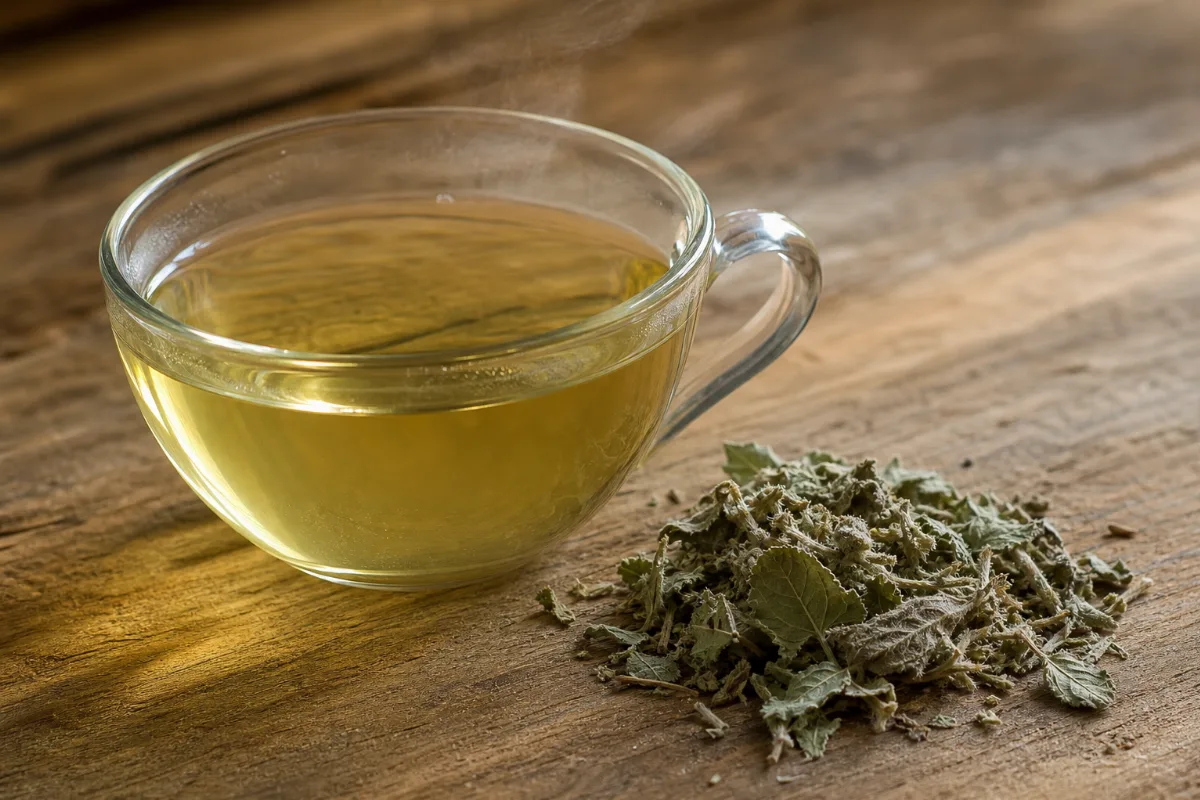
Catnip tea is a minty herbal drink made by steeping the dried leaf and flowering tops of Nepeta cataria, the plant cats love. People drink it to unwind and for an upset stomach. We found no human trial of the tea: what exists is mostly lab, animal and cat studies. The main cautions are to avoid it in pregnancy and for babies, and to ask a doctor or pharmacist first if you take sedatives or lithium.
General information, not medical advice. Last substantive update · Not medically reviewed. A named clinician has not signed off on this page. How this page is made
About Catnip Tea
Catnip tea is an herbal infusion of the dried leaf and flowering tops of Nepeta cataria, a mint-family plant best known for its effect on cats. It is traditionally used to calm nerves and settle the stomach, but we found no human trial of the tea. What research exists is mostly lab, animal and cat studies, so nothing is rated above very low certainty. The main cautions are pregnancy, babies and children, drowsiness with sedatives, and a lithium question.
What it is
Catnip tea is a tisane made from the dried leaf and flowering tops of Nepeta cataria, a member of the mint family. It is not a true tea: black, green and oolong teas come from a different plant, Camellia sinensis.
Catnip contains nepetalactone, essential-oil parts such as 1,8-cineole and alpha-pinene, and phenolic acids such as rosmarinic and caffeic acid. The sources we read list no caffeine, but no one measured it in the tea, so caffeine-free is an expectation, not a tested result. Check the label of any blend.
Tea, oil or capsule?
A cup of tea is a water extract of the dried plant. Essential oil, alcohol extracts, capsules and tinctures hold different mixes of compounds, often in much higher amounts. Most lab and animal work used oils or solvent extracts, so it cannot be assumed to describe a cup of tea.
Catnip is also sold for cats. Choose a product that names Nepeta cataria and is meant for people. RxList says smoking catnip is possibly unsafe.
What the research shows
We found no human trial of catnip tea. Animal studies disagree: mice fed catnip moved more and slept less after one sedative, while catnip oil and an acid from it made mice sleep longer after another, and chicks slept more at low and moderate doses of an alcohol extract. In a dish, the oil relaxed animal gut and windpipe tissue. In animals, a purified oil protected the liver from acetaminophen damage. All of this is lab or animal work.
The best-studied effect is in cats. In a 2017 study of 100 domestic cats, about one in three did not respond to catnip. Nepetalactone is the active part. In cats it was cleared mostly in urine, with no marked effects at the amounts tested in a 1969 study. Cats are not people, and this says nothing about tea in humans.
Two reviews of the Nepeta genus describe antimicrobial, antioxidant and other activity in preclinical work and say clinical studies are needed.
Quality of the tea
We found no survey of pesticides, heavy metals or plant toxins in catnip tea, and no data on how strong a cup is. Reliable nutrition data are not available either, according to WebMD.
Choose a tea that names the plant and the part used, is sold for people, and lists every ingredient in a blend.
Regulators and status
We found no regulator monograph for catnip tea. The European Medicines Agency list was not fully checked, and the FDA, NCCIH, LiverTox and LactMed were not opened for catnip, so we cannot say that none of them cover it. The safety statements on this page come from RxList and WebMD, which are commercial references, not regulators.
At a glance
Traditional uses history, not proof
- WebMD says catnip tea was traditionally used for restlessness, nervousness, coughs, asthma, gas and diarrhoea, and for babies' colic and sleep.
- A 2021 review of the Nepeta genus says its species are used for colds, coughs, asthma, stomach complaints and fever across India, Pakistan, Nepal, China, Turkey and Iran.
- These are traditions. They do not show that the tea works.
Studied for research
- Calm, sleep, anxiety and mood: insufficient evidence for the tea (no human trial)
- Stomach cramps and gas: very low (oil on animal tissue only)
- Antioxidant and sugar enzymes: very low (test tube)
- Liver protection: very low (animal, purified oil)
- Insect repellent: very low (oil, lab; not a tea benefit)
Main compounds
- Nepetalactone (the main active part behind the cat response)
- Essential oil parts: 1,8-cineole, alpha-humulene, alpha-pinene and geranyl acetate (in one oil sample)
- Phenolic acids such as rosmarinic acid, caffeic acid and coumaric acid, as WebMD lists them
Common forms
- Tea bags or loose dried leaf and flowering tops steeped in hot water
- Blends with other calming herbs (check the label)
- Capsules, tinctures and essential oil (different products)
- Catnip sold for cats (not made for people)
Research links: Catnip, reference monograph (RxList) · Catnip tea, consumer reference (WebMD) · Toddler case report after eating catnip (1997, abstract) · Catnip in mice (1995, abstract) · The genus Nepeta: traditional uses and pharmacology (2021, abstract) · Research Library · Genes & Biomarkers Library
What it is and its history
- Accepted scientific name
- Nepeta cataria L.
- Naming authority
- L. (Linnaeus), as listed in GBIF.
- Synonyms
- Nepeta citriodora Becker; Glechoma cataria (L.) Kuntze; Cataria vulgaris Gaterau; Nepeta cataria var. citriodora Dumoulin
- Common names
- Catnip (English); Catmint (English); Catwort (English); Echte Katzenminze (German)
- Family or group
- Lamiaceae (the mint family).
- Classification
- Plantae > Tracheophyta > Magnoliopsida > Lamiales > Lamiaceae > Nepeta > Nepeta cataria
- Native range
- Not verified from a source we read.
- Habitat
- Not described in the sources we read.
- What it looks like
- Roots: Not described in the sources read.; Stems: Not described in the sources read.; Leaves: WebMD (consumer source) says dried catnip leaves are used; the sources read give no leaf description.; Flowers: RxList says the flowering tops are used to make medicine.; Fruit: Not described in the sources read.
- Cultivation
- Not covered in the sources read.
- Harvest and processing
- Not covered. Sources differ on the part used: RxList says the flowering tops; WebMD says dried leaves. We say leaf and flowering tops, as sources state.
- Look-alikes and adulterants
- Name: Other Nepeta species and garden catmint; Note: Many Nepeta species are sold as catmint, with different oil mixes. Only Nepeta cataria is meant by catnip tea here.; Name: Catnip sold for cats; Note: Dried catnip is sold in cat toys; a tea for people should name Nepeta cataria and be sold for human use.
- Sustainability and conservation
- Not verified.
Photographs
Traditional use and history history, not clinical proof
| Tradition or era | Documented use | Source |
|---|---|---|
| Traditional folk medicine (as described by WebMD) | WebMD says catnip tea was traditionally used for restlessness, nervousness, coughs, asthma, gas and diarrhoea, and for infants' colic and sleep. This describes tradition; it does not show it works. | s-webmd-catnip-tea |
| Nepeta species in Asia and the Middle East | A 2021 review says Nepeta species are used for colds, coughs, asthma, stomach disorders, fever, eye complaints and other ailments in India, Pakistan, Nepal, China, Turkey and Iran. | p33307050 |
Traditional use shows how it was used. It does not show that it works or is safe today.
What is inside, and how it may work
What it contains and how those compounds act in cells and animals. Laboratory and animal mechanisms are not proven effects in people.
Main compounds
| Compound | Family | Where it is concentrated | Activity studied | Level of evidence |
|---|---|---|---|---|
| Nepetalactone PubChem 92770 | iridoid monoterpene lactone | Oil of the plant Highest in catnip among the plants tested in a 2017 cat study; amounts in tea not measured. | The active part behind the cat response. Activates the insect irritant receptor TRPA1 but not the human one in a lab test. 1 6 14 | Animal research |
| 1,8-Cineole (eucalyptol) PubChem 2758 | monoterpene | Essential oil 21.00% of one essential oil sample (2009 study). | One of four main oil parts; the oil relaxed animal tissue in a dish. 3 | Laboratory research |
| Alpha-pinene PubChem 6654 | monoterpene | Essential oil 10.43% of one essential oil sample. | A main part of the oil in that sample. 3 | Laboratory research |
| Geranyl acetate PubChem 1549026 | terpene ester | Essential oil 8.21% of one essential oil sample. | A main part of the oil in that sample. 3 | Laboratory research |
| Rosmarinic acid PubChem 5281792 | phenolic acid | Leaf (as WebMD lists it) Amount in catnip tea not found. | Listed by WebMD as an antioxidant in catnip; no catnip-specific result was read. 15 | Laboratory research |
| Caffeic acid PubChem 689043 | phenolic acid | Leaf (as WebMD lists it) Amount in catnip tea not found. | Listed by WebMD among catnip's phenolic acids. 15 | Laboratory research |
Mechanisms, receptors and pathways
| Target or pathway | Gene or receptor | What was found | Level |
|---|---|---|---|
| Cat olfactory response to nepetalactone | Not identified in the abstracts read | CATS: nearly all of 100 domestic cats reacted to at least one cat-attracting plant, and one in three did not respond to catnip. Six cats differed in how they reacted, and the authors suggest cat personality and olfactory-receptor genes play a role. 1 2 | Other |
| Insect TRPA1 irritant receptor | TRPA1 | LAB (insects, cells): catnip extract and nepetalactone activate insect TRPA1; insects lacking it are not repelled. Human TRPA1 was not activated. 6 | Laboratory research |
| Gut and airway muscle relaxation | Calcium channels and PDE enzymes (as the authors suggest) | LAB (animal tissue): catnip essential oil relaxed rabbit gut and guinea-pig windpipe tissue. 3 | Laboratory research |
| Central nervous system behaviour | Not identified | ANIMAL: catnip fed to mice looked amphetamine-like (more movement, shorter sleep after a sedative); catnip oil and nepetalic acid lengthened sleep after a different sedative; an alcohol extract made chicks sleep at low and moderate doses. 5 4 11 | Animal research |
Absorption, metabolism and elimination
- Absorption
- No human data. In cats, 86 to 94 percent of fed nepetalactone was recovered in urine (1969).
- Distribution
- Not studied in people.
- Metabolism
- In cats, the main metabolite was alpha-nepetalinic acid, with a little dihydronepetalactone (1969).
- Elimination
- Mostly in urine in cats; 1 to 2 percent in faeces.
- Bioavailability
- Not studied in people.
Isolated compounds versus whole extracts
Tea is a water extract of the dried plant. Most lab work used essential oil or solvent extracts that hold a different mix of compounds, so results do not carry over to a cup of tea.
Nutritional composition
WebMD says reliable nutrition information is not available for catnip because so little is sold for human use, and assumes catnip tea alone has little protein, fat or carbohydrate. This is an assumption, not a measurement.
5 very low certainty1 not enough evidence
What was looked at
The 6 benefits and uses checked for Catnip Tea, each with how strong the evidence is. Tap one to open it.
What is Catnip Tea good for?
The uses people ask about and how strong the human evidence is for each. For catnip tea, there is no human trial for any of them.
Benefits, one by one
Each card is a research question, not a promise. Tap a goal to filter. Open a card to see the studies, doses and limits.
Calm, sleep and trouble sleeping
Not enough evidenceNo trial of catnip tea for calm or sleep was found. Catnip is traditionally called calming, but the animal work points both ways, and databases rate the human evidence as insufficient.
6 studiesTea made from the leaf or flowering tops, as the sources describe. Th…
Studies, doses and limits
Results
Mice fed catnip moved more and slept less after a sedative (1995). Catnip oil and nepetalic acid made mice sleep longer after a different sedative (1978). Chicks slept more at low to moderate doses of an alcohol extract and less at high doses (1979).
Effect sizes as reported
No effect sizes; no human trial.
Why this rating
No human trial of the tea. Animal results point in different directions, and different forms (food, oil, alcohol extract) were tested.
Form and dose studied
Tea made from the leaf or flowering tops, as the sources describe. The animal studies used plant in food, oil and alcohol extract, not tea.
Limits
Animal work cannot show what a cup of tea does in a person. No dose or strength of the tea has been measured.
Why researchers looked
Catnip tea has long been drunk in the evening to settle nerves and help sleep, so people ask whether it works.
Traditional use
Traditional use for restlessness, nervousness and nervous disorders is described by WebMD. The Nepeta genus review lists many folk uses across Asia and the Middle East.
Proposed mechanism Preliminary mechanism
Nepetalactone and related compounds are the best-known active parts. In mice, catnip fed in the diet looked stimulant-like, while catnip oil and an acid from it lengthened drug-induced sleep. Chicks fell asleep at low and moderate doses of an alcohol extract and less at very high doses. These are lab and animal findings only.
A proposed mechanism does not show that the effect happens in people.
Drowsiness is the commonly listed effect, and the sedative-medicine interaction is a caution (see the Safety tab). The mouse stimulant-like finding is a reminder that the effect in people is not known.
Anxiety and low mood
Very low certaintyNo trial of catnip tea for anxiety or low mood was found. One short study of inhaled catnip oil vapour in older adults reported a brief lowering of anxiety ratings.
3 studiesEssential oil vapour (not tea).
Studies, doses and limits
What the trials found
A 2025 study (abstract only) had older adults breathe in vapours of essential oils from 25 plants. Catnip oil and Transcaucasian catnip oil were among those with an anxiety-lowering effect lasting over 20 minutes on rating scales. The effect on mood was weaker, and none lasted past 30 minutes.
Results
Anxiety rating lowered for more than 20 minutes after inhaling catnip oil vapour (abstract; no numbers).
Effect sizes as reported
No effect sizes in the abstract.
Why this rating
Inhaled oil, not a drink; the abstract gives no sample size, no control group and no numbers. No tea trial.
Form and dose studied
Essential oil vapour (not tea).
Who was studied
Older adults, average age over 70.
Limits
A single short exposure; no placebo group is described; cannot be applied to tea.
Why researchers looked
Calming herbs are often asked about for nerves and worry, and WebMD says catnip reduced anxiety in animal studies.
Traditional use
Traditional use for nervousness and restlessness (WebMD).
Proposed mechanism Preliminary mechanism
No mechanism has been shown in people. Reviews of the Nepeta genus describe antidepressant and anticonvulsant activity in preclinical work and say clinical studies are needed.
A proposed mechanism does not show that the effect happens in people.
No safety problem was reported in the abstract.
Gas, stomach cramps and colic
Very low certaintyCatnip tea is traditionally used for gas, cramps and diarrhoea, but there is no human trial. A lab study found the oil relaxes animal gut tissue.
4 studiesEssential oil; the tea is a water infusion of the dried plant.
Studies, doses and limits
Results
Essential oil relaxed isolated rabbit gut and guinea-pig windpipe (2009). Heart tissue was slowed only at about 25 to 80 times higher amounts.
Why this rating
Isolated animal tissue and an essential oil that a tea does not contain in the same amounts.
Form and dose studied
Essential oil; the tea is a water infusion of the dried plant.
Limits
A dish study cannot predict what happens in a person. The oil's main parts (1,8-cineole, alpha-humulene, alpha-pinene, geranyl acetate) are not the same as what ends up in a cup of tea.
Why researchers looked
Traditional use for gas, diarrhoea and stomach cramps.
Traditional use
WebMD lists use for gas and diarrhoea; the Nepeta review lists stomach disorders. The tea has also been used for babies' colic, but WebMD advises against it for colicky babies.
Proposed mechanism Preliminary mechanism
Catnip essential oil relaxed rabbit gut tissue and guinea-pig windpipe tissue in a dish, apparently through calcium-channel and PDE blocking. The oil, not the tea, was tested.
A proposed mechanism does not show that the effect happens in people.
WebMD says tea may cause stomach upset and vomiting in some people; it advises infants avoid catnip.
Antioxidant and blood sugar enzyme activity
Very low certaintyIn test tubes, catnip extracts mopped up free radicals and slowed sugar-digesting enzymes. No person has been tested.
2 studiesSolvent extracts.
Studies, doses and limits
Results
70% ethanol, petroleum ether and chloroform extracts were the most potent in a test-tube study (2012).
Effect sizes as reported
No effect sizes in the abstract.
Why this rating
Test-tube only; solvent extracts, not water tea.
Form and dose studied
Solvent extracts.
Limits
No living-body data; test-tube results often fail in people.
Why researchers looked
Catnip contains phenolic acids and flavonoids, and plant extracts are often screened for antioxidant action.
Traditional use
Not a traditional use as such.
Proposed mechanism Laboratory research
Test-tube screens of solvent extracts reduced oxidative markers and slowed enzymes that digest sugar. WebMD names rosmarinic, caffeic and coumaric acid.
A proposed mechanism does not show that the effect happens in people.
None.
Liver protection (animal)
Very low certaintyA purified catnip oil protected animals from liver damage caused by acetaminophen. This is animal work with a purified oil and says nothing yet about people or tea.
1 studiesEssential oil extracted with supercritical fluid.
Studies, doses and limits
Results
Less acetaminophen-induced liver damage in animals given the oil (2019).
Effect sizes as reported
No effect sizes in the abstract.
Why this rating
Animal study of a purified oil; nothing in people.
Form and dose studied
Essential oil extracted with supercritical fluid.
Limits
Animal species and numbers are not in the abstract; not a tea.
Why researchers looked
Studied in animals because the plant is used in folk food and medicine.
Traditional use
Folk food and medicine use (as stated in the paper).
Proposed mechanism Animal study
In animals the oil raised the activity of enzymes that clear acetaminophen and lowered CYP2E1 activity.
A proposed mechanism does not show that the effect happens in people.
Do not take this as a reason to combine catnip with acetaminophen; no one has tested that in people.
Insect repellent (oil, not tea)
Very low certaintyCatnip oil and its active part nepetalactone repel mosquitoes and other insects, because they trigger an irritant receptor in insects. It is not something a cup of tea does for you.
2 studiesOil or isolated nepetalactone.
Studies, doses and limits
What the trials found
RxList: early research suggests catnip oil or chemicals on the skin may repel yellow-fever mosquitoes, but other repellents might work better.
Results
Insects lacking TRPA1 were no longer repelled (2021).
Why this rating
Lab and insect work; skin or air use of oil, not tea.
Form and dose studied
Oil or isolated nepetalactone.
Limits
This is not a human health benefit of tea.
Why researchers looked
Catnip oil is studied as a natural insect repellent.
Proposed mechanism Laboratory research
Catnip extract and nepetalactone activate the insect TRPA1 receptor; the human version of the receptor was not activated.
A proposed mechanism does not show that the effect happens in people.
Not applicable to tea.
Connections to the rest of health
How Catnip Tea connects to the rest of our health knowledge graph. Every link says what kind of connection it is. A safety link (for example to the liver) is a warning, not a benefit. A study that merely mentions a topic never creates a benefit link.
Explore every connection: goals, body systems, organs, symptoms, genes
A. Wellness goals
| Connected to | Kind of connection | Evidence status | Context | Studies |
|---|---|---|---|---|
| Calm Relaxation | Not enough evidence | Calm, sleep and trouble sleeping: No trial of catnip tea for calm or sleep was found. Catnip is traditionally called calming, but the animal work points both ways, and databases rate the human evidence as insufficient. | 5 4 11 8 15 10 | |
| Better Sleep | Not enough evidence | Calm, sleep and trouble sleeping: No trial of catnip tea for calm or sleep was found. Catnip is traditionally called calming, but the animal work points both ways, and databases rate the human evidence as insufficient. | 5 4 11 8 15 10 | |
| Stress Reduction | Very low certainty | Anxiety and low mood: No trial of catnip tea for anxiety or low mood was found. One short study of inhaled catnip oil vapour in older adults reported a brief lowering of anxiety ratings. | 16 12 15 | |
| Anxiety Support | Very low certainty | Anxiety and low mood: No trial of catnip tea for anxiety or low mood was found. One short study of inhaled catnip oil vapour in older adults reported a brief lowering of anxiety ratings. | 16 12 15 | |
| Mood Balance | Very low certainty | Anxiety and low mood: No trial of catnip tea for anxiety or low mood was found. One short study of inhaled catnip oil vapour in older adults reported a brief lowering of anxiety ratings. | 16 12 15 | |
| Digestive Support | Very low certainty | Gas, stomach cramps and colic: Catnip tea is traditionally used for gas, cramps and diarrhoea, but there is no human trial. A lab study found the oil relaxes animal gut tissue. | 3 10 8 15 | |
| Cellular Protection | Very low certainty | Antioxidant and blood sugar enzyme activity: In test tubes, catnip extracts mopped up free radicals and slowed sugar-digesting enzymes. No person has been tested. | 7 15 | |
| Blood Sugar Balance | Very low certainty | Antioxidant and blood sugar enzyme activity: In test tubes, catnip extracts mopped up free radicals and slowed sugar-digesting enzymes. No person has been tested. | 7 15 | |
| Liver Support | Very low certainty | Liver protection (animal): A purified catnip oil protected animals from liver damage caused by acetaminophen. This is animal work with a purified oil and says nothing yet about people or tea. | 13 |
B. Body systems
| Connected to | Kind of connection | Evidence status | Context | Studies |
|---|---|---|---|---|
| Reproductive health (pregnancy) | Very low certainty | Databases advise avoiding catnip in pregnancy because it may stimulate the uterus; no trial or case series was read. Databases advise avoiding catnip in pregnancy because it may stimulate the uterus; no trial was read. Preparation or compound: Catnip by mouth (tea) |
8 15 | |
| Sleep Recovery | Biological association | Not enough evidence | Studied for: Calm, sleep and trouble sleeping | 5 4 11 8 15 10 |
| Nervous System | Biological association | Not enough evidence | Studied for: Calm, sleep and trouble sleeping | 5 4 11 8 15 10 |
| Stress Mood | Biological association | Very low certainty | Studied for: Anxiety and low mood | 16 12 15 |
| Digestive System | Biological association | Very low certainty | Studied for: Gas, stomach cramps and colic | 3 10 8 15 |
| Metabolism Weight | Biological association | Very low certainty | Studied for: Antioxidant and blood sugar enzyme activity | 7 15 |
| Hepatic System | Biological association | Very low certainty | Studied for: Liver protection (animal) | 13 |
| Whole Body Balance | Biological association | Very low certainty | Studied for: Insect repellent (oil, not tea) | 6 8 |
J. Genes, receptors and enzymes
| Connected to | Kind of connection | Evidence status | Context | Studies |
|---|---|---|---|---|
| TRPA1 (insect irritant receptor) | Preliminary mechanism | In vitro | Activated by catnip extract and nepetalactone in insects; not activated for human TRPA1. | 6 |
| CYP2E1 | Preliminary mechanism | Animal | Activity lowered in animals given catnip oil and acetaminophen. | 13 |
L. Active compounds
| Connected to | Kind of connection | Evidence status | Context | Studies |
|---|---|---|---|---|
| Nepetalactone | Biological association | Animal | The active part behind the cat response. Activates the insect irritant receptor TRPA1 but not the human one in a lab test. Preparation or compound: Oil of the plant |
1 6 14 |
| 1,8-Cineole (eucalyptol) | Biological association | In vitro | One of four main oil parts; the oil relaxed animal tissue in a dish. Preparation or compound: Essential oil |
3 |
| Alpha-pinene | Biological association | In vitro | A main part of the oil in that sample. Preparation or compound: Essential oil |
3 |
| Geranyl acetate | Biological association | In vitro | A main part of the oil in that sample. Preparation or compound: Essential oil |
3 |
| Rosmarinic acid | Biological association | In vitro | Listed by WebMD as an antioxidant in catnip; no catnip-specific result was read. Preparation or compound: Leaf (as WebMD lists it) |
15 |
| Caffeic acid | Biological association | In vitro | Listed by WebMD among catnip's phenolic acids. Preparation or compound: Leaf (as WebMD lists it) |
15 |
Each connection is stored with the ingredient, the connected record, the kind of connection, the evidence status, the supporting studies, the preparation or compound involved, and a review date (last reviewed October 25, 2026).
Evidence at a glance: what the research found for 6 outcomes
Each outcome below is one thing researchers measured. Certainty is how far the evidence can be trusted, not how well it works. The full studies are on the next tab.
The evidence
The research centre for Catnip Tea. Every record here was checked against PubMed or the publisher's page; we never list a study we have not verified.
Evidence by outcome
Bars show how many studies we found for each outcome, not how well it works. People are added up across trials only (reviews are not added, to avoid double counting).
How we rate evidence
High certainty
Several well-run trials or reviews agree; further research is unlikely to change the picture much.
Moderate certainty
Good trials point the same way, but some doubt remains.
Low certainty
Small, short or inconsistent trials. The finding could change with better research.
Very low certainty
Very little or very weak human data. Treat as a possibility only.
Mixed findings
Trials or reviews disagree with each other.
Not enough evidence
Not enough human research to say either way.
Evidence against
Good research found no benefit, or found harm.
We take the reviewers' own risk-of-bias and GRADE statements where they exist, and otherwise judge from study size, design, consistency, directness and whether a product matches what is sold. Many publications do not make evidence high. Method note: We searched PubMed for Nepeta cataria and catnip with human, clinical, tea, toxicity and sedative terms and found no human trial of the tea. We read the abstracts of the 14 research records cited, read the RxList and WebMD pages in full, and checked the plant name in GBIF and compound IDs in PubChem. The EMA, FDA, NCCIH, LiverTox and LactMed were not opened for catnip and are marked not verified. Certainty ratings are the compiler's own reading.
Study library: every study we checked 18
| Study | Design | People | Product, dose, length | Result |
|---|---|---|---|---|
| Bol 2017 Responsiveness of cats (Felidae) to silver vine, Tatarian honeysuckle, valerian and catnip. BMC Vet Res · PMID 28302120 · DOI |
Other other |
100 100 domestic cats and 9 tigers |
Dried catnip, silver vine, Tatarian honeysuckle and valerian root offered to cats dried plant material Several offerings per cat · vs Control material |
Nearly all domestic cats reacted to at least one plant. One in three cats did not respond to catnip. Almost 80% reacted to silver vine and about 50% to Tatarian honeysuckle and valerian root. Catnip had the highest nepetalactone. About one third of cats do not react to catnip. Methods, limits and fundingOutcomes: Cat reaction to each plant Limitations: Cats, not people. Included to explain the plant's best-known effect. Read: abstract |
| Bol 2022 Behavioral differences among domestic cats in the response to cat-attracting plants and their volatile compounds reveal a potential distinct mechanism of action for actinidine. BMC Biol · PMID 36008824 · DOI |
Other other |
6 6 domestic cats |
Five plants and 13 single compounds, including nepetalactone plants and pure compounds Over 100 hours (plants) and 17 hours (compounds) |
Cats differed from each other in how long and how they reacted. Nepetalactone is known as the compound behind the catnip response; the authors suggest cat personality and genes for smell receptors may play a role. Individual differences between cats. Methods, limits and fundingOutcomes: Duration and type of cat behaviour Limitations: Six cats only; animal behaviour, not human health. Read: abstract |
| Gilani 2009 Chemical composition and mechanisms underlying the spasmolytic and bronchodilatory properties of the essential oil of Nepeta cataria L. J Ethnopharmacol · PMID 19041706 · DOI |
Laboratory research animal |
Isolated rabbit gut, guinea-pig windpipe and heart tissue | Nepeta cataria essential oil (main parts: 1,8-cineole 21.00%, alpha-humulene 14.44%, alpha-pinene 10.43%, geranyl acetate 8.21%) Tissue-bath experiments · vs Papaverine and verapamil |
The oil relaxed rabbit gut and guinea-pig windpipe tissue, apparently by blocking calcium channels and PDE enzymes. It slowed guinea-pig heart tissue only at about 25 to 80 times higher amounts. The authors link this to the traditional use for colic, diarrhoea, cough and asthma. Tissue effect only. Methods, limits and fundingOutcomes: Muscle contraction in isolated tissue Limitations: Essential oil on animal tissue in a dish. Not a tea and not tested in people. Read: abstract |
| Harney 1978 Behavioral and toxicological studies of cyclopentanoid monoterpenes from Nepeta cataria. Lloydia · PMID 672466 |
Animal research animal |
Mice and rats | Catnip oil, a nepetalactone-enriched fraction and nepetalic acid oil/isolated compounds Single doses; daily injections in rats |
Mouse LD50 values: catnip oil 1300 mg/kg, nepetalactone-enriched fraction 1550 mg/kg, nepetalic acid 1050 mg/kg. Catnip oil (500 mg/kg) and nepetalic acid (62.5 mg/kg) significantly lengthened hexobarbital sleeping time in mice. Rats given injections of the oil, nepetalic acid or the nepetalactone fraction did worse on an avoidance task, and tolerance developed with daily injections of the oil. Oil and isolated compounds lengthened drug-induced sleep in mice (a sedative-like signal), the opposite direction from the 1995 food study. Methods, limits and fundingOutcomes: Lethal dose in mice, sleeping time after hexobarbital, avoidance performance in rats Limitations: Oil and fractions, much of it by injection; not tea; animal. Read: abstract |
| Massoco 1995 Behavioral effects of acute and long-term administration of catnip (Nepeta cataria) in mice. Vet Hum Toxicol · PMID 8588288 |
Animal research animal |
Mice (number not given in the abstract) | Catnip plant material fed as 10% of the diet 2 hours a day for 1 or 7 days · vs Normal diet (implied) |
Acute and long-term feeding increased rearing and movement. Acute exposure increased stereotyped behaviour and seizure susceptibility and shortened sleeping time after pentobarbital. Long-term exposure raised seizure susceptibility to picrotoxin and strychnine. The authors suggested an amphetamine-like effect. Stimulant-like, not calming, in this mouse study. Methods, limits and fundingOutcomes: Open-field movement, stereotyped behaviour, seizure susceptibility, sleeping time after sodium pentobarbital Limitations: Mouse study of plant fed in food, not a tea; no numbers or sample size in the abstract. Read: abstract |
| Melo 2021 The irritant receptor TRPA1 mediates the mosquito repellent effect of catnip. Curr Biol · PMID 33667373 · DOI |
Laboratory research in-vitro |
Fruit flies and Aedes aegypti mosquitoes; cells in a dish | Catnip extract and nepetalactone extract / isolated compound · vs Gene-mutant insects |
Catnip extract and nepetalactone activated the insect TRPA1 receptor, and insects without it were no longer repelled. Catnip did not activate the human TRPA1 receptor. Explains insect repellency; says nothing about calm or sleep in people. Methods, limits and fundingOutcomes: Insect aversion and activation of the TRPA1 irritant receptor Limitations: Insect and cell lab work; not a tea. Read: abstract |
| Naguib 2012 Phytochemical screening of Nepeta cataria extracts and their in vitro inhibitory effects on free radicals and carbohydrate-metabolising enzymes. Nat Prod Res · PMID 22103287 · DOI |
Laboratory research in-vitro |
Test-tube assays | Successive solvent extracts and 70% ethanol extract of Nepeta cataria |
Different extracts reduced oxidative-stress markers and the activity of sugar-digesting enzymes in the test tube. The 70% ethanol, petroleum ether and chloroform extracts were the most potent. Test-tube activity only. Methods, limits and fundingOutcomes: Free-radical and sugar-digesting enzyme (alpha-amylase, beta-galactosidase, alpha-glucosidase) activity Limitations: Solvent extracts, not water tea; no living-body data. Read: abstract |
| Natural Medicines / RxList 2026 Catnip (Natural Medicines monograph as published by RxList) RxList supplements monograph · Source |
Reference database |
Catnip (flowering tops; tea and other forms) flowering tops |
Read in full 2026-10-25. Uses (all 'insufficient evidence to rate'): insomnia, anxiety, migraine, colds, flu, fever, stomach upset, mosquito repellent and others. Side effects: possibly safe for most adults by mouth in small amounts; cupful amounts of tea have been used without serious side effects; possibly unsafe smoked or in high amounts (many cups of tea), causing headache, vomiting and feeling ill. Children: possibly unsafe (one report of stomach pain, irritability and sluggishness after catnip leaves and tea). Pregnancy: likely unsafe, some evidence it can stimulate the uterus, which might cause a miscarriage. Breastfeeding: not enough information, avoid. Avoid with pelvic inflammatory disease and heavy periods. Surgery: may slow the central nervous system; stop at least two weeks before. Interactions rated moderate: lithium (possible water-pill effect) and sedative medicines. States that there is not enough scientific information to set doses. Methods, limits and fundingOutcomes: Safety statements and use ratings Limitations: Reference database summary; the underlying papers were not opened. Not a regulator. Funding and conflicts: Commercial reference publisher; not a regulator. Read: full-text | |
| Osterhoudt 1997 Catnip and the alteration of human consciousness. Vet Hum Toxicol · PMID 9397511 |
Case report |
1 One toddler |
Catnip (Nepeta cataria), a large quantity eaten Single event |
A toddler showed central nervous system depression (a drop in alertness, called obtundation) after eating a large quantity of catnip, with no other cause found. The authors also review the debate about whether catnip is psychoactive in people. One reported case; cannot show cause for certain. Methods, limits and fundingOutcomes: Consciousness after eating catnip Limitations: A single case; the form and amount are not given in the abstract. Read: abstract |
| Sharma 2021 The genus Nepeta: Traditional uses, phytochemicals and pharmacological properties. J Ethnopharmacol · PMID 33307050 · DOI |
Review other |
Review of the whole Nepeta genus | Nepeta species (many) various |
Nepeta species are used traditionally for colds, coughs, asthma, stomach disorders, fever and many other complaints, mainly in Himalayan India, Pakistan, Nepal, China, Turkey and Iran. The review lists phenolic acids (rosmarinic, gallic, caffeic acid) and flavonoids among the compounds. Traditional use is not proof of benefit. Methods, limits and fundingOutcomes: Traditional uses, compounds, pharmacology and toxicology across the genus Limitations: Covers the whole genus, not catnip alone; narrative review (abstract read). Read: abstract |
| Sherry 1979 The effect of an ethanol extract of catnip (Nepeta cataria) on the behavior of the young chick. Experientia · PMID 421844 · DOI |
Animal research animal |
Young chicks | Ethanol (alcohol) extract of catnip |
Low and moderate doses (25 to 1800 mg/kg) made more chicks sleep; high doses (above 2 g/kg) made fewer chicks sleep. Biphasic (two-way) effect in chicks. Methods, limits and fundingOutcomes: Number of chicks sleeping Limitations: Chick study of an alcohol extract, not tea; the abstract gives no numbers beyond the dose ranges. Read: abstract |
| Suntar 2018 Pharmacological and chemical features of Nepeta L. genus: Its importance as a therapeutic agent. Phytother Res · PMID 29044858 · DOI |
Review other |
Review of the genus Nepeta | Nepeta species (many) various |
Nepeta species show antimicrobial, insect-repellent, cytotoxic, antioxidant, anticonvulsant, analgesic, anti-inflammatory and antidepressant activity in preclinical work. The authors conclude that clinical studies are needed to confirm the preclinical findings. Preclinical only, by the authors' own conclusion. Methods, limits and fundingOutcomes: Biological activities reported for the genus Limitations: Genus-wide narrative review (abstract read). Read: abstract |
| Tan 2019 Hepatoprotective effect of essential oils of Nepeta cataria L. on acetaminophen-induced liver dysfunction. Biosci Rep · PMID 31337687 · DOI |
Animal research animal |
Animals given acetaminophen (paracetamol) (species and number not in the abstract) | Essential oil extracted by supercritical fluid · vs Acetaminophen without oil |
The oil significantly reduced acetaminophen-induced liver damage and raised the activity of enzymes that clear the drug, while lowering CYP2E1 activity. Protective effect in animals. Methods, limits and fundingOutcomes: Liver damage markers and liver enzymes Limitations: Animal work with a purified oil; not a tea; no human data. Read: abstract |
| Waller 1969 Feline attractant, cis,trans-nepetalactone: metabolism in the domestic cat. Science · PMID 5770619 · DOI |
Animal research animal |
Domestic cats | Nepetalactone (the active part of catnip), force-fed isolated compound Single feeding |
86 to 94 percent of the labelled compound was recovered in urine. No marked physiological or tissue effects were seen when 20 to 80 mg was given by mouth. Cats cleared nepetalactone mostly in urine without harm at the amounts tested. Methods, limits and fundingOutcomes: Where the compound goes in the body; physiological and tissue effects Limitations: Cats, 1969, isolated compound; says nothing directly about people or tea. Read: abstract |
| WebMD editorial 2025 Catnip Tea: Health Benefits, Nutrients per Serving, Preparation Information, and More (WebMD) WebMD · Source |
Reference database |
Catnip tea (dried plant, hot water) aerial parts (not stated clearly) |
Read in full 2026-10-25. Says there is not much research on the plant; reliable nutrition information is not readily available; the tea is traditionally used for restlessness, nervousness, coughs, asthma, gas and diarrhoea. Anxiety benefit is described as seen in animal studies, with not enough research in humans. Risks listed: drowsiness (more with sleeping medicines, hops, kava, valerian, St. John's wort; avoid before driving), upset stomach and vomiting (adults and children), allergy in people allergic to other mint-family plants, larger amounts may cause vomiting in children, some documented adverse effects in pregnancy, advice that infants and pregnant people avoid catnip, and a list of sedative medicine classes it may interact with (anticonvulsants, barbiturates, benzodiazepines, tricyclic antidepressants, some cough-and-cold medicines with diphenhydramine or doxylamine, insomnia drugs). Lists rosmarinic, caffeic and coumaric acid and nepetalactone, thymol and pinene as compounds. It does not state a caffeine content. Methods, limits and fundingOutcomes: Safety statements and traditional uses Limitations: Consumer reference article; its cited papers were not opened. Not a regulator. Funding and conflicts: Commercial reference publisher; not a regulator. Read: full-text | |
| Yarosh 2025 Influence of plant essential oils on older adults with anxiety and depression. Adv Gerontol · PMID 41172320 |
Other |
Older adults (average age over 70); number not given in the abstract | Inhaled vapours of essential oils of 25 plants, including catnip and Transcaucasian catnip, at 1 mg/m3 oil vapour Single inhalation sessions · vs Not described in the abstract |
An anxiety-lowering effect lasting more than 20 minutes was reported for several oils, including catnip and Transcaucasian catnip. Siberian fir and one peppermint variety lasted over 30 minutes. The antidepressant effect was weaker; no oil gave a stable effect past 30 minutes. Short effect of oil vapour on rating scales. Methods, limits and fundingOutcomes: Anxiety and depression ratings after inhaling oil vapours Limitations: Inhaled oil, not a drink; the abstract gives no sample size, control group or numbers; only the abstract was read. Read: abstract |
| s-gbif-nepeta-cataria GBIF Backbone: Nepeta cataria L. (usageKey 5341499) · Source |
Reference database n/a |
Methods, limits and fundingRead: full-text | ||
| s-ncbi-taxonomy-39347 NCBI Taxonomy: Nepeta cataria (taxid 39347) · Source |
Reference database n/a |
Methods, limits and fundingRead: id-only |
What we do not know yet
- What the evidence supports: not much. No human trial of catnip tea; reference databases rate uses 'insufficient evidence'.
- Animal studies disagree on whether catnip is stimulant-like or sedative-like, and none tested tea.
- The nepetalactone content of a cup of tea has not been measured.
- Pregnancy and lithium warnings are database statements; no trial or case series was read.
- No regulator monograph was found; the EMA list was not fully checked.
- No survey of pesticides or heavy metals in catnip tea.
How new research is added
New studies are found by a saved PubMed search and placed in a review queue. A person reads each one before it changes any evidence rating or safety wording.
Lab markers
What changed in blood or saliva tests during trials. A changed number is not the same as feeling or being healthier, and we give no "normal ranges".
Safety
What studies and official sources say about side effects, medicines and who should check first. Each point shows what kind of evidence it comes from.
Main points to know 4
- No safety trials of catnip tea exist. Statements rest on reference databases, one case report and animal work.. We found no human trial of catnip tea, and no regulator monograph. RxList rates a cup or so of tea as possibly safe for most adults, and many cups, smoking, pregnancy and use in children as unsafe or possibly unsafe. WebMD lists drowsiness, stomach upset, vomiting and allergy. These are database statements, not trials. Authoritative guidance 8 15
- Pregnancy: avoid. RxList rates catnip by mouth 'likely unsafe' in pregnancy because there is some evidence it can stimulate the uterus, which might cause a miscarriage. WebMD says some adverse effects in pregnancy have been documented and advises pregnant people to avoid it. Neither gives a trial; the evidence is thin but the advice is to avoid it. Authoritative guidance 8 15
- Drowsiness and sedatives. Both databases warn that catnip may cause sleepiness and may add to sedative medicines. A mouse study found the opposite direction (shorter sleep after a sedative), so the effect in people is not known. Authoritative guidance 8 15 5
- Babies and children. RxList rates catnip by mouth 'possibly unsafe' for children, citing one report of stomach pain, irritability and sluggishness. A published case report describes a toddler with a drop in alertness after eating a large quantity of catnip. WebMD advises against it for colicky babies. Case report 8 15 9
Side effects 4
| Effect | How often | Severity and recovery | Evidence |
|---|---|---|---|
| Drowsiness WebMD lists drowsiness and says to avoid drinking the tea before driving or using machinery. No frequency is given. | Not established | mild Not studied | Authoritative guidance 15 8 |
| Upset stomach and vomiting RxList lists headache, vomiting and feeling ill with high amounts (many cups of tea) or smoking. WebMD says some people do not tolerate it and larger amounts may cause vomiting in children. | Not established | mild to moderate Not studied | Authoritative guidance 15 8 |
| Allergic reaction WebMD says people allergic to other mint-family plants may react to catnip. | Not established | varies Not studied | Authoritative guidance 15 |
| Lowered alertness in a child after a large quantity One case report of a toddler with central nervous system depression after a large quantity of catnip, with no other cause found. | Not established | serious (one case) The toddler's course is not described in the abstract | Case report 9 |
Liver
We found no published case of liver injury from catnip tea. In rats, a purified catnip oil protected the liver from acetaminophen damage, which says nothing about people. NIH LiverTox was not searched for a catnip entry. 13
How often. No cases found, so no rate can be given. This does not prove safety.
Monitoring. No guideline on liver tests for catnip tea drinkers was found.
This is a safety connection. It is not evidence that Catnip Tea supports liver health.
Medicines and supplements 4
| With | Why it matters | Importance | Evidence | What to do |
|---|---|---|---|---|
| Sedative medicines: benzodiazepines (for example clonazepam, lorazepam), barbiturates, sleep medicines such as zolpidem, some anticonvulsants, tricyclic antidepressants, and cough-and-cold products with diphenhydramine or doxylamine prescription | Catnip may cause sleepiness; the databases warn it could add to other sedatives. | RxList rates the sedative-medicine interaction 'moderate'. WebMD lists the same medicine classes. No human interaction study was found. | Authoritative guidance Very low certainty 8 15 | Ask a doctor or pharmacist before combining. Avoid alcohol and other sedating herbs with it unless advised. |
| Sedating herbs: hops, kava, valerian, St. John's wort herb | Possible extra drowsiness, as WebMD states. | WebMD says excessive drowsiness may occur. No study was found. | Authoritative guidance Very low certainty 15 | Ask a pharmacist before combining herbal sedatives. |
| Lithium prescription | RxList says catnip might act like a water pill (diuretic) and so reduce how well the body clears lithium, which could raise lithium levels. | RxList rates this 'moderate'. No human study was seen; it is theory from the database. | Authoritative guidance Very low certainty 8 | Talk to the prescriber before drinking catnip tea if you take lithium. |
| Anaesthesia and other drugs used around surgery prescription | RxList: catnip seems to slow the central nervous system, as anaesthetics do; there is concern about too much slowing. | Database statement; no study seen. | Authoritative guidance Very low certainty 8 | RxList advises stopping catnip at least two weeks before planned surgery. Tell the surgical team. |
Who should check first 7
| Situation | Advice | Evidence |
|---|---|---|
| Pregnancy | Avoid. RxList rates catnip by mouth 'likely unsafe' because it may stimulate the uterus and might cause a miscarriage; WebMD advises avoiding it. | Authoritative guidance 8 15 |
| Breastfeeding | RxList says there is not enough reliable information and advises avoiding it. | Authoritative guidance 8 |
| Babies and young children | Avoid. WebMD advises against catnip tea for colicky babies; RxList rates oral use in children possibly unsafe; one toddler case report exists. | Case report 15 8 9 |
| Heavy periods or pelvic inflammatory disease | RxList says catnip can bring on menstruation, so it might worsen heavy periods and should be avoided with pelvic inflammatory disease. No trial was seen. | Authoritative guidance 8 |
| Allergy to mint-family plants | Avoid. WebMD says people allergic to other mint-family plants may react. | Authoritative guidance 15 |
| Planned surgery | RxList advises stopping at least two weeks before surgery. | Authoritative guidance 8 |
| Taking lithium or sedative medicines | See interactions; ask a prescriber. | Authoritative guidance 8 15 |
Overdose, product quality and regulators
Summary. No toxic-dose data for catnip tea in people were found. In mice, the lethal dose of catnip oil was 1300 mg/kg (a figure for oil, given in 1978). In cats, nepetalactone given by mouth in a 1969 study caused no marked effects.
Animal. Catnip oil, a nepetalactone fraction and nepetalic acid had mouse LD50 values of 1300, 1550 and 1050 mg/kg; the oil and nepetalic acid lengthened drug-induced sleep (1978). A 1969 study force-fed nepetalactone to cats and saw no marked physiological or tissue effects at 20 to 80 mg.
Human doses studied. No amount is recommended on this page. Ask a doctor or pharmacist.
High dose or long term signals. RxList lists headache, vomiting and feeling ill with many cups of tea, and says smoking is possibly unsafe. One toddler had lowered alertness after a large quantity of catnip.
Overdose response. No overdose protocol for catnip was found. If someone is very drowsy, hard to wake or vomiting after a lot of catnip, get medical help.
Genotoxicity. Not found in the sources read.
We found no survey of pesticides, heavy metals or plant toxins in catnip tea. Dried catnip is also sold for cats; products made for cats are not made for people to drink.
No testing data found for catnip tea. Searches for contaminants in catnip tea found nothing. Herbal teas in general can carry pesticide or metal residues, but we have no catnip-specific figures. 15
| Body | Action | Date |
|---|---|---|
| RxList (Natural Medicines monograph) (United States (commercial reference)) | Rates oral catnip 'possibly safe' in small amounts; 'likely unsafe' in pregnancy; 'possibly unsafe' in children, in high amounts and smoked. Uses rated 'insufficient evidence'. source | 2026-10-25 (page read on this date) |
| WebMD (United States (consumer reference)) | Advises infants and pregnant people to avoid catnip tea; lists drowsiness, upset stomach, allergy and sedative-medicine cautions. source | 2025 (page read 2026-10-25) |
When to get medical help
- Swelling of the face, lips or throat, trouble breathing, wheezing or a widespread rash.
- A child, or anyone, who is very sleepy, hard to wake, floppy or confused after catnip.
- Repeated vomiting, or severe stomach pain.
- In pregnancy: vaginal bleeding, cramping or leaking fluid after drinking it.
- Heavy bleeding with a period.
Stop using the product and contact a clinician or emergency service. In the US, Poison Control is 1-800-222-1222.
General information only, not medical advice. Ask a clinician or pharmacist before use, especially with medicines, in pregnancy or with a health condition. See the Natural Remedy Safety guide.
Frequently asked questions
What is catnip tea?
Does catnip tea help you sleep or calm down?
Does catnip tea work for anxiety?
Does catnip tea contain caffeine?
Is catnip tea safe in pregnancy?
Is catnip tea safe for babies, children and breastfeeding?
What are the side effects of catnip tea?
Can I take catnip tea with sleeping pills, sedatives or lithium?
Can I drive after drinking catnip tea?
WebMD says to avoid it before driving or using machinery because of possible drowsiness. How strongly a cup affects people has not been measured.
Why do cats love catnip, and does it do the same to people?
Is catnip tea a mosquito repellent?
Should I stop catnip tea before surgery?
RxList advises stopping catnip at least two weeks before planned surgery, because it may slow the nervous system like anaesthetics do. Tell your surgical team about any herbal teas.
Explore by health goal
Calm RelaxationBetter SleepStress ReductionAnxiety SupportMood BalanceDigestive SupportCellular ProtectionBlood Sugar BalanceLiver Support
Editorial transparency
- Written by
- AlternativeMed editorial team. Research compiled with AI assistance, then checked against PubMed records.
- Medical review
- None. This page has not been reviewed by a physician or pharmacist.
- First published
- 2026-10-25
- Last substantive update
- 2026-10-25
- How we research
- We searched PubMed for Nepeta cataria and catnip with human, clinical, tea, toxicity and sedative terms and found no human trial of the tea. We read the abstracts of the 14 research records cited, read the RxList and WebMD pages in full, and checked the plant name in GBIF and compound IDs in PubChem. The EMA, FDA, NCCIH, LiverTox and LactMed were not opened for catnip and are marked not verified. Certainty ratings are the compiler's own reading.
- How we rate evidence
- See "How we rate evidence" in the Evidence tab.
- Independence
- No product is promoted on this page. No affiliate links are shown. This page is information, not a recommendation to drink or take anything.
Sources 18
Each source was opened and checked. Where we read only the abstract, it says so. The small numbers in the text point here.
- Bol S, Caspers J, Buckingham L, et al.. Responsiveness of cats (Felidae) to silver vine, Tatarian honeysuckle, valerian and catnip.. BMC Vet Res. 2017. PMID 28302120. DOI 10.1186/s12917-017-0987-6. (abstract)
- Bol S, Scaffidi A, Bunnik EM, Flematti GR. Behavioral differences among domestic cats in the response to cat-attracting plants and their volatile compounds reveal a potential distinct mechanism of action for actinidine.. BMC Biol. 2022. PMID 36008824. DOI 10.1186/s12915-022-01369-1. (abstract)
- Gilani AH, Shah AJ, Zubair A, et al.. Chemical composition and mechanisms underlying the spasmolytic and bronchodilatory properties of the essential oil of Nepeta cataria L.. J Ethnopharmacol. 2009. PMID 19041706. DOI 10.1016/j.jep.2008.11.004. (abstract)
- Harney JW, Barofsky IM, Leary JD. Behavioral and toxicological studies of cyclopentanoid monoterpenes from Nepeta cataria.. Lloydia. 1978. PMID 672466. (abstract)
- Massoco CO, Silva MR, Gorniak SL, Spinosa MS, Bernardi MM. Behavioral effects of acute and long-term administration of catnip (Nepeta cataria) in mice.. Vet Hum Toxicol. 1995. PMID 8588288. (abstract)
- Melo N, Capek M, Arenas OM, et al.. The irritant receptor TRPA1 mediates the mosquito repellent effect of catnip.. Curr Biol. 2021. PMID 33667373. DOI 10.1016/j.cub.2021.02.010. (abstract)
- Naguib AM, Ebrahim ME, Aly HF, et al.. Phytochemical screening of Nepeta cataria extracts and their in vitro inhibitory effects on free radicals and carbohydrate-metabolising enzymes.. Nat Prod Res. 2012. PMID 22103287. DOI 10.1080/14786419.2011.635342. (abstract)
- Natural Medicines / RxList. Catnip (Natural Medicines monograph as published by RxList). RxList supplements monograph. 2026. (full-text)
- Osterhoudt KC, Lee SK, Callahan JM, Henretig FM. Catnip and the alteration of human consciousness.. Vet Hum Toxicol. 1997. PMID 9397511. (abstract)
- Sharma A, Cooper R, Bhardwaj G, Cannoo DS. The genus Nepeta: Traditional uses, phytochemicals and pharmacological properties.. J Ethnopharmacol. 2021. PMID 33307050. DOI 10.1016/j.jep.2020.113679. (abstract)
- Sherry CJ, Hunter PS. The effect of an ethanol extract of catnip (Nepeta cataria) on the behavior of the young chick.. Experientia. 1979. PMID 421844. DOI 10.1007/BF01920637. (abstract)
- Suntar I, Nabavi SM, Barreca D, Fischer N, Efferth T. Pharmacological and chemical features of Nepeta L. genus: Its importance as a therapeutic agent.. Phytother Res. 2018. PMID 29044858. DOI 10.1002/ptr.5946. (abstract)
- Tan J, Li J, Ma J, Qiao F. Hepatoprotective effect of essential oils of Nepeta cataria L. on acetaminophen-induced liver dysfunction.. Biosci Rep. 2019. PMID 31337687. DOI 10.1042/BSR20190697. (abstract)
- Waller GR, Price GH, Mitchell ED. Feline attractant, cis,trans-nepetalactone: metabolism in the domestic cat.. Science. 1969. PMID 5770619. DOI 10.1126/science.164.3885.1281. (abstract)
- WebMD editorial. Catnip Tea: Health Benefits, Nutrients per Serving, Preparation Information, and More (WebMD). WebMD. 2025. (full-text)
- Yarosh AM, Batura IA, Tonkovtseva VV, et al.. Influence of plant essential oils on older adults with anxiety and depression.. Adv Gerontol. 2025. PMID 41172320. (abstract)
- . GBIF Backbone: Nepeta cataria L. (usageKey 5341499). . . (full-text)
- . NCBI Taxonomy: Nepeta cataria (taxid 39347). . . (id-only)
Where to buy
Check the label first. Whatever you buy, look for these:
- The herb is the first or only ingredient
- Organic or lab-tested if that matters to you
- Loose leaf or tea bags, and how long they have been stored
- If you take medicines or are pregnant, ask a pharmacist about the herb first
Talk to a pharmacist or doctor before you start any supplement, especially if you take medicines. See the Safety tab for interactions.
Support our free guides: as an Amazon Associate we earn from qualifying purchases. Full disclosure.


