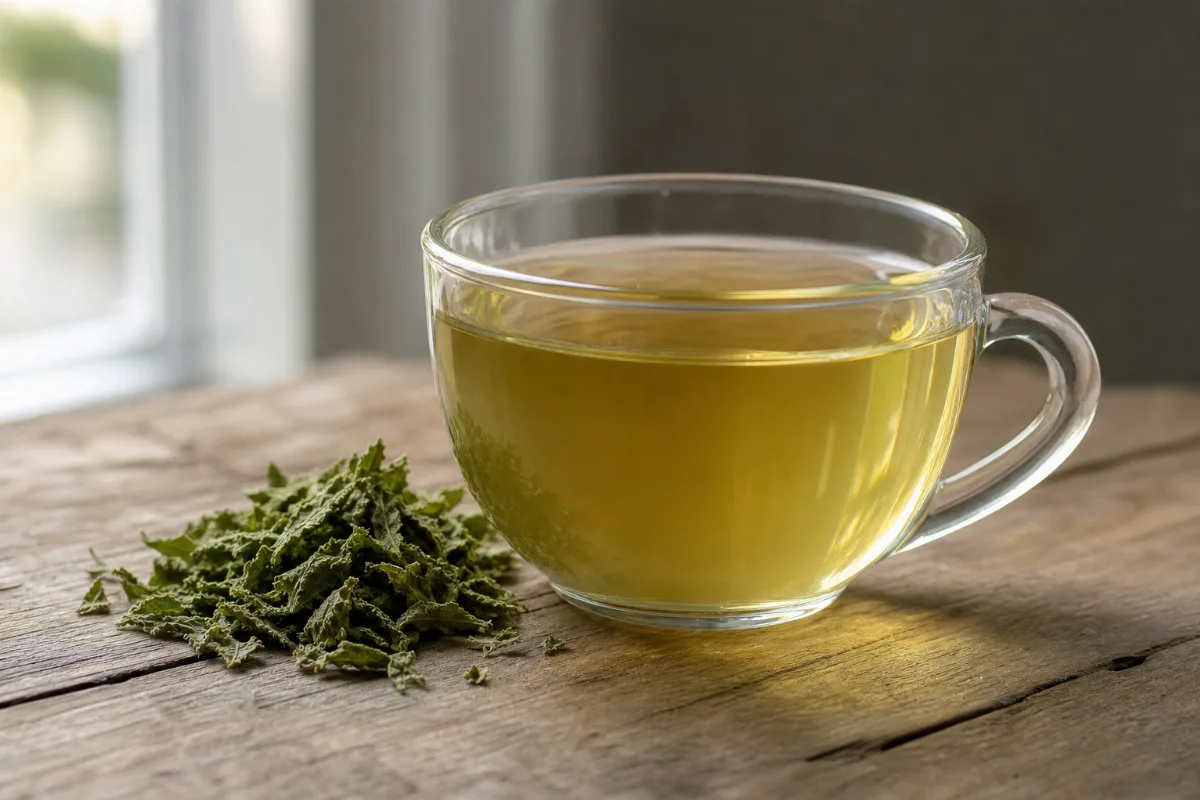
Herbal Teas & Extracts · Herbal tea
Spearmint Tea
Mentha spicata · also called Spearmint tea, garden mint tea, spearmint infusion. Not the same as spearmint oil or extract capsules.
Spearmint tea is a drink made by steeping dried spearmint leaves in hot water. It is best known for two small trials in women with PCOS or excess hair growth, where it lowered a male hormone in blood tests. It has not been shown to improve hair growth on objective measures. The main caution is that it changes hormone levels, and nobody has studied it in pregnancy.
General information, not medical advice. Last substantive update · Not medically reviewed. A named clinician has not signed off on this page. How this page is made
About Spearmint Tea
Spearmint tea is the drink made from the dried leaf of Mentha spicata. Its research is small. Two short trials in women with PCOS or excess hair growth found hormone changes in blood tests, but not a clear hair benefit. The thinking research is on an extract. The tea is a common food herb, but because it changed hormone levels, ask a doctor before drinking it regularly if you are pregnant, trying to conceive or taking hormone medicine.
What it is
Spearmint is Mentha spicata, a mint in the Lamiaceae family that GBIF accepts as a species. It is a different plant from peppermint, and it is not the tea plant (Camellia sinensis) that gives black and green tea.
The oil is rich in carvone, the mint flavour. The leaf also holds rosmarinic acid, an antioxidant plant compound. The amounts in a cup of tea were not found.
Caffeine: no source we read gives a caffeine figure for spearmint tea, so we do not state one. Blends can add true tea, so read the label.
Tea, extract or oil?
A cup of tea is a water infusion of the leaf. A branded extract in capsules and spearmint essential oil are concentrated products.
The hormone and osteoarthritis studies used tea. The memory, attention and sleep studies used a proprietary extract made by a company whose staff were among the authors. Their safety data are also from the maker.
Results for the extract cannot be read as results for tea, in either direction. For oil, see the spearmint oil page.
What the research shows
Hormones: a 5-day study of 21 women and a 30-day randomised trial of 42 women both found lower free testosterone and higher LH and FSH. A 2026 review calls the studies small and short.
Hair: the clinician-rated hair score did not differ from placebo (p = 0.12); the self-rated score improved. A longer trial was proposed by the author and none was found.
Knee osteoarthritis: one 16-week trial compared two spearmint teas, with no placebo group.
Thinking: two maker-linked extract trials, not tea.
Quality and contamination
No contamination or adulteration survey of spearmint tea was found. Teas may be blended or mislabelled.
Look for the Latin name Mentha spicata on the pack. Pennyroyal is a different mint that has its own serious toxicity.
Pregnancy, breastfeeding and children
No pregnancy, breastfeeding or children safety study of spearmint tea was found. A 2024 review of hirsutism treatments notes that anti-androgen medicines can affect a male fetus; whether spearmint tea does is unknown.
LactMed has no spearmint entry; its peppermint entry says menthol and cineole pass into breast milk in small amounts. Talk with a midwife or doctor.
At a glance
Traditional uses history, not proof
- Doctors in one Turkish town thought spearmint tea reduced libido, which led to the first hormone trial in women (2007).
- Other traditional uses were not checked in a source we read, so none are stated.
Studied for research
- Hormone levels in women with PCOS or hirsutism, low
- Unwanted hair growth, insufficient
- Knee osteoarthritis pain, insufficient
- Memory and attention, very low (extract capsules, not tea)
- Sleep and mood, very low (extract capsules, not tea)
Main compounds
- Carvone (mint flavour, mainly in the oil)
- Rosmarinic acid
Common forms
- Dried leaf, loose or in tea bags, steeped in hot water
- Blends with other herbs or true tea
- Spearmint essential oil and extract capsules (different products)
Research links: Spearmint tea and hirsutism: 2007 study (abstract) · Spearmint tea in PCOS: 2010 randomised trial (abstract) · Androgen-modulating natural products: 2026 review (abstract) · High-rosmarinic-acid spearmint tea in knee osteoarthritis (abstract) · Spearmint and reflux in healthy volunteers (abstract) · Spearmint extract safety trial (abstract) · Research Library · Genes & Biomarkers Library
What it is and its history
- Accepted scientific name
- Mentha spicata
- Naming authority
- L.
- Synonyms
- Mentha crispata Schrad.; Mentha spicata Huds.; Mentha viridis (name used in the literature for spearmint)
- Common names
- Spearmint (English); Garden mint (English); Yerbabuena (Spanish); Menta romana (Spanish)
- Family or group
- Lamiaceae (the mint family)
- Classification
- Plantae > Lamiales > Lamiaceae > Mentha > Mentha spicata
- Native range
- Not checked.
- Habitat
- Not checked.
- What it looks like
- Roots: Not checked.; Stems: Not checked.; Leaves: The leaf is the part used for tea.; Flowers: Not checked.; Fruit: Not checked.
- Cultivation
- Not checked.
- Harvest and processing
- Not checked.
- Look-alikes and adulterants
- Name: Peppermint (Mentha x piperita); Note: A different mint; its oil is rich in menthol while spearmint oil is rich in carvone. Peppermint findings on reflux, IBS and headache do not apply to spearmint.; Name: Pennyroyal (Mentha pulegium); Note: A different mint with its own serious toxicity. Check the Latin name on the pack (Mentha spicata).
- Sustainability and conservation
- Not checked.
Photographs
Traditional use and history history, not clinical proof
| Tradition or era | Documented use | Source |
|---|---|---|
| Isparta, Turkey (local clinical observation) | Doctors in one town thought tea steeped from spearmint or peppermint reduced libido, which led to the first trial in women with hirsutism. | p17310494 |
| Wider traditional use | Not checked in a source we read. Ancient or regional use claims are NOT verified here. | not verified |
Traditional use shows how it was used. It does not show that it works or is safe today.
What is inside, and how it may work
What it contains and how those compounds act in cells and animals. Laboratory and animal mechanisms are not proven effects in people.
Main compounds
| Compound | Family | Where it is concentrated | Activity studied | Level of evidence |
|---|---|---|---|---|
| Carvone PubChem 7439 | monoterpene ketone | Leaf (essential oil) Described as the mint flavour in spearmint oil (Kroona 2018). How much reaches a cup of tea was not found. | A mild skin sensitiser (patch-test data). The (-)-carvone form is PubChem CID 439570. 13 17 | Human patch test |
| Rosmarinic acid PubChem 5281792 | phenolic acid | Leaf (water extract and tea) The branded extract in the rat study held 15.4% rosmarinic acid. Content of a cup of tea was not found. | An antioxidant plant compound; used as the marker for the extract trials and for a high-rosmarinic-acid tea. 15 6 17 | Lab |
Mechanisms, receptors and pathways
| Target or pathway | Gene or receptor | What was found | Level |
|---|---|---|---|
| Steroid hormone synthesis | steroid-making enzymes (rat) | In rats, spearmint extract lowered steroid-making enzymes and testosterone and caused oxidative stress in the hypothalamus. 14 | Animal research |
| Pituitary feedback | LH, FSH | Women drinking the tea had lower testosterone with higher LH and FSH, consistent with the body reacting to lower androgen. The mechanism in people is not established. 3 11 | Human data |
| Lower oesophageal sphincter | n/a | No effect on sphincter pressure or reflux in healthy volunteers. 5 | Human data |
Absorption, metabolism and elimination
- Absorption
- No data for spearmint tea in people were found.
- Distribution
- No data.
- Metabolism
- No data.
- Elimination
- No data.
- Bioavailability
- Unknown.
Isolated compounds versus whole extracts
A cup of spearmint tea is a water infusion of the leaf. It holds some rosmarinic acid and other leaf compounds and a little of the oil. The oil, rich in carvone, is a separate concentrated product, and the branded extract capsules are another. The hormone trials used tea; the memory and attention trials used a maker-linked extract. Results for one cannot be read as results for another.
Nutritional composition
Spearmint tea is not a meaningful source of nutrients in the sources read.
1 low certainty2 very low certainty2 not enough evidence
What was looked at
The 5 benefits and uses checked for Spearmint Tea, each with how strong the evidence is. Tap one to open it.
- Sex-hormone levels in women with PCOS or excess hair growthLow certainty
- Unwanted hair growth (hirsutism) itselfNot enough evidence
- Knee osteoarthritis pain and stiffnessNot enough evidence
- Memory and attention (branded extract, not tea)Very low certainty
- Sleep and mood (branded extract, not tea)Very low certainty
Lab markers tracked in the studies
Free testosteroneTotal testosteroneLH and FSH (pituitary hormones)Ferriman-Gallwey hirsutism scoreSelf-rated hirsutism (modified DLQI)WOMAC pain score (knee osteoarthritis)Working memory quality (extract)Sustained attention (extract)
What is Spearmint Tea good for?
The uses people ask about and how strong the human evidence is for each. For the thinking uses the research is on an extract, not on the tea, and each row says which.
Benefits, one by one
Each card is a research question, not a promise. Tap a goal to filter. Open a card to see the studies, doses and limits.
Sex-hormone levels in women with PCOS or excess hair growth
Low certaintyTwo small trials found that drinking spearmint tea lowered free testosterone and raised LH and FSH in women with excess hair growth, some with PCOS. These are lab results. The tea has not been shown to make women healthier or to change their hair on objective measures.
4 studiesSpearmint tea of a type not described in the abstracts; no amounts ar…
Studies, doses and limits
What the trials found
A 5-day before-and-after study of 21 women (12 with PCOS, 9 with idiopathic hirsutism) and a 30-day randomised trial of 42 women with PCOS-related hirsutism against a placebo herbal tea. A 2026 critical review and a 2024 narrative review describe these studies as small and short.
Results
5-day study: free testosterone fell, LH, FSH and estradiol rose, total testosterone and DHEAS did not fall significantly. 30-day trial: free and total testosterone fell and LH and FSH rose versus placebo tea (p < 0.05). The abstracts give no effect sizes.
Effect sizes as reported
Not given in the abstracts.
Why this rating
Two small studies point the same way for lab values, one randomised with 41 completers and one with no control group. Short duration, no effect sizes, no replication found, and a blood test is not a clinical benefit.
Form and dose studied
Spearmint tea of a type not described in the abstracts; no amounts are given here by design.
Who was studied
Women with hirsutism or PCOS. Nothing in men, in women without these conditions, or in children.
Limits
Short (5 and 30 days), small, abstracts only. Tea preparation and leaf type were not standardised in what we read.
Why researchers looked
Doctors in one Turkish town thought spearmint and peppermint tea reduced libido. Rat studies had shown anti-androgen effects. That led to the first trial in women with hirsutism.
Traditional use
A local clinical observation in Isparta, Turkey, described in the 2007 abstract. Wider traditional use was not checked here.
Proposed mechanism Animal and human lab marker
In rats, spearmint extract lowered steroid-making enzymes and testosterone. In the women, rising LH and FSH are consistent with the body reacting to lower androgen. The mechanism in people is not established.
A proposed mechanism does not show that the effect happens in people.
Hormone changes are a reason to ask a doctor before regular use if you have a hormone condition or take hormone medicine. See Safety.
Unwanted hair growth (hirsutism) itself
Not enough evidenceIn the 30-day trial, women said their hirsutism felt better on a quality-of-life questionnaire, but the objective hair score checked by clinicians did not differ between tea and placebo. The author thinks the trial was too short to see hair change.
2 studiesSpearmint herbal tea against a placebo herbal tea.
Studies, doses and limits
What the trials found
One randomised trial of 42 women (41 completed) over 30 days. A 2026 review says objective improvement in hirsutism has not been demonstrated.
Results
Self-rated hirsutism (modified Dermatology Life Quality Index) fell significantly versus placebo (p < 0.05). The Ferriman-Gallwey score did not differ between groups (p = 0.12).
Effect sizes as reported
Not given in the abstract.
Why this rating
One small trial; the objective measure showed no clear difference; the self-rated measure is open to expectation effects; no longer trial has been done.
Form and dose studied
Spearmint herbal tea against a placebo herbal tea.
Who was studied
Women with PCOS-related hirsutism.
Limits
30 days only. No long-term follow-up.
Why researchers looked
Hormone changes only matter to patients if hair growth or quality of life improves.
Traditional use
Not described in the sources read.
Proposed mechanism Author opinion
Hair follicles respond to androgens slowly, so the author argues 30 days was too short.
A proposed mechanism does not show that the effect happens in people.
No safety results were reported in the abstract.
Knee osteoarthritis pain and stiffness
Not enough evidenceOne 16-week trial compared two spearmint teas in adults with knee osteoarthritis. Pain fell only with the high-rosmarinic-acid tea, but the two teas did not differ significantly on bodily pain, and there was no placebo group.
1 studiesTwo spearmint teas, one from a high-rosmarinic-acid variety. Amounts …
Studies, doses and limits
What the trials found
Randomised double-blind trial: 62 adults randomised, 46 analysed (mean age 60.7). One group drank tea from a high-rosmarinic-acid spearmint variety and one a commercially available spearmint tea, twice daily for 16 weeks (NCT01380015).
Results
WOMAC pain fell from week 0 to 16 in the high-rosmarinic-acid group only. Stiffness and physical disability fell in both groups. SF-36 bodily pain improved within the high-rosmarinic-acid group, but the groups did not differ significantly. Walking and stair tests were not clearly different.
Effect sizes as reported
Not given in the abstract.
Why this rating
One small trial, 16 of 62 people dropped from the analysis, no placebo group, and no significant difference between groups on bodily pain.
Form and dose studied
Two spearmint teas, one from a high-rosmarinic-acid variety. Amounts not stated here by design.
Who was studied
Adults with medically diagnosed knee osteoarthritis.
Limits
No placebo; both groups improved on stiffness and function, which may be expectation or time; one trial.
Why researchers looked
Rosmarinic acid is an antioxidant plant compound, and the researchers wanted to see whether a tea rich in it could ease joint symptoms.
Traditional use
Not described in the sources read.
Proposed mechanism Not established
Not shown in the abstract; rosmarinic acid is described as an antioxidant in lab work only.
A proposed mechanism does not show that the effect happens in people.
No safety findings were given in the abstract.
Memory and attention (branded extract, not tea)
Very low certaintyTwo maker-linked trials of a spearmint extract in capsules found better working memory in older adults with memory complaints and better sustained attention in healthy young adults. This is a concentrated extract, not tea, so the results should not be applied to tea.
3 studiesProprietary spearmint extract capsules for 90 days. Tea was not teste…
Studies, doses and limits
What the trials found
Randomised, double-blind, placebo-controlled trials of 90 days: 90 adults aged about 59 with age-associated memory impairment, and 142 healthy recreationally active adults. The extract was a proprietary product in capsules.
Results
Older adults: working memory quality up 15% (p = 0.0469) and spatial working memory accuracy up 9% (p = 0.0456) with the higher amount versus placebo. Younger adults: sustained attention better versus placebo at day 30 and day 90 (p = .001, p = .007). Mood and sleep did not differ in the younger group.
Effect sizes as reported
Percentage changes and group means given in the abstracts; no standard effect sizes.
Why this rating
Two trials by or with the maker, a handful of outcomes among many tested, modest p-values in the older group, an extract not tea, and no independent repeat found.
Form and dose studied
Proprietary spearmint extract capsules for 90 days. Tea was not tested for thinking.
Who was studied
Older adults with memory complaints; healthy active adults.
Limits
Industry-linked. Not tea. Several outcomes tested.
Why researchers looked
A rosmarinic-acid-rich spearmint extract was developed and tested as a supplement for thinking.
Traditional use
Not described in the sources read.
Proposed mechanism Not established
Not established in the abstracts.
A proposed mechanism does not show that the effect happens in people.
The maker-linked 90-day safety analysis reported no serious adverse events; see Safety.
Sleep and mood (branded extract, not tea)
Very low certaintyIn the older-adult trial of the extract, people on the higher amount said it was easier to fall asleep. In the young adult trial, sleep, mood and quality of life did not differ from placebo. Mixed, and not about tea.
2 studiesProprietary extract capsules; tea not tested.
Studies, doses and limits
What the trials found
The same two 90-day extract trials as above.
Results
Older adults on the higher amount reported easier falling asleep versus placebo (p = 0.0046), with overall effects on vigor, total mood disturbance and alertness. Younger adults: no significant differences in mood, sleep or quality of life.
Effect sizes as reported
Not given in the abstracts.
Why this rating
Secondary outcomes, mixed results, maker-linked, extract not tea.
Form and dose studied
Proprietary extract capsules; tea not tested.
Who was studied
Adults with memory complaints; healthy active adults.
Limits
Secondary outcomes among many.
Why researchers looked
Sleep and mood were extra outcomes in the thinking trials.
Traditional use
Not described in the sources read.
Proposed mechanism Not established
Not established.
A proposed mechanism does not show that the effect happens in people.
See Safety.
Connections to the rest of health
How Spearmint Tea connects to the rest of our health knowledge graph. Every link says what kind of connection it is. A safety link (for example to the liver) is a warning, not a benefit. A study that merely mentions a topic never creates a benefit link.
Explore every connection: goals, body systems, organs, symptoms, genes
A. Wellness goals
| Connected to | Kind of connection | Evidence status | Context | Studies |
|---|---|---|---|---|
| Hormone Balance | Low certainty | Sex-hormone levels in women with PCOS or excess hair growth: Two small trials found that drinking spearmint tea lowered free testosterone and raised LH and FSH in women with excess hair growth, some with PCOS. These are lab results. The tea has not been shown to make women healthier or to change their hair on objective measures. | 3 11 20 10 | |
| Womens Wellness | Low certainty | Sex-hormone levels in women with PCOS or excess hair growth: Two small trials found that drinking spearmint tea lowered free testosterone and raised LH and FSH in women with excess hair growth, some with PCOS. These are lab results. The tea has not been shown to make women healthier or to change their hair on objective measures. Unwanted hair growth (hirsutism) itself: In the 30-day trial, women said their hirsutism felt better on a quality-of-life questionnaire, but the objective hair score checked by clinicians did not differ between tea and placebo. The author thinks the trial was too short to see hair change. | 3 11 20 10 | |
| Hair Support | Not enough evidence | Unwanted hair growth (hirsutism) itself: In the 30-day trial, women said their hirsutism felt better on a quality-of-life questionnaire, but the objective hair score checked by clinicians did not differ between tea and placebo. The author thinks the trial was too short to see hair change. | 11 20 | |
| Joint Support | Not enough evidence | Knee osteoarthritis pain and stiffness: One 16-week trial compared two spearmint teas in adults with knee osteoarthritis. Pain fell only with the high-rosmarinic-acid tea, but the two teas did not differ significantly on bodily pain, and there was no placebo group. | 6 | |
| Pain Relief | Not enough evidence | Knee osteoarthritis pain and stiffness: One 16-week trial compared two spearmint teas in adults with knee osteoarthritis. Pain fell only with the high-rosmarinic-acid tea, but the two teas did not differ significantly on bodily pain, and there was no placebo group. | 6 | |
| Memory Support | Very low certainty | Memory and attention (branded extract, not tea): Two maker-linked trials of a spearmint extract in capsules found better working memory in older adults with memory complaints and better sustained attention in healthy young adults. This is a concentrated extract, not tea, so the results should not be applied to tea. | 12 8 16 | |
| Better Focus | Very low certainty | Memory and attention (branded extract, not tea): Two maker-linked trials of a spearmint extract in capsules found better working memory in older adults with memory complaints and better sustained attention in healthy young adults. This is a concentrated extract, not tea, so the results should not be applied to tea. | 12 8 16 | |
| Better Sleep | Very low certainty | Sleep and mood (branded extract, not tea): In the older-adult trial of the extract, people on the higher amount said it was easier to fall asleep. In the young adult trial, sleep, mood and quality of life did not differ from placebo. Mixed, and not about tea. | 12 8 | |
| Mood Balance | Very low certainty | Sleep and mood (branded extract, not tea): In the older-adult trial of the extract, people on the higher amount said it was easier to fall asleep. In the young adult trial, sleep, mood and quality of life did not differ from placebo. Mixed, and not about tea. | 12 8 |
B. Body systems
| Connected to | Kind of connection | Evidence status | Context | Studies |
|---|---|---|---|---|
| Endocrine System | Biological association | Low certainty | Studied for: Sex-hormone levels in women with PCOS or excess hair growth Studied for: Unwanted hair growth (hirsutism) itself | 3 11 20 10 |
| Reproductive System | Biological association | Low certainty | Studied for: Sex-hormone levels in women with PCOS or excess hair growth | 3 11 20 10 |
| Skin Hair Beauty | Biological association | Not enough evidence | Studied for: Unwanted hair growth (hirsutism) itself | 11 20 |
| Bones Joints Muscles | Biological association | Not enough evidence | Studied for: Knee osteoarthritis pain and stiffness | 6 |
| Pain Inflammation | Biological association | Not enough evidence | Studied for: Knee osteoarthritis pain and stiffness | 6 |
| Nervous System | Biological association | Very low certainty | Studied for: Memory and attention (branded extract, not tea) | 12 8 16 |
| Brain Focus | Biological association | Very low certainty | Studied for: Memory and attention (branded extract, not tea) | 12 8 16 |
| Sleep Recovery | Biological association | Very low certainty | Studied for: Sleep and mood (branded extract, not tea) | 12 8 |
| Stress Mood | Biological association | Very low certainty | Studied for: Sleep and mood (branded extract, not tea) | 12 8 |
C. Body parts and organs
E. Health conditions
| Connected to | Kind of connection | Evidence status | Context | Studies |
|---|---|---|---|---|
| Polycystic ovary syndrome | Low certainty | Lower free testosterone and higher LH and FSH in small trials; objective hair score not improved. Preparation or compound: Spearmint tea |
3 11 | |
| Hirsutism | Not enough evidence | Self-rated improvement but not the clinician score in one 30-day trial. Preparation or compound: Spearmint tea |
11 | |
| Pregnancy and breastfeeding | Contraindication | Not enough evidence | No safety data; hormone changes in trials. Ask a midwife or doctor. Preparation or compound: Spearmint tea |
3 11 18 |
| Knee osteoarthritis | Not enough evidence | One 16-week trial without placebo. Preparation or compound: High-rosmarinic-acid spearmint tea |
6 | |
| Contact allergy | Adverse effect or risk | Low certainty | Patch-test and case reports; not specific to tea. Preparation or compound: Carvone in spearmint oil and flavourings |
13 21 4 |
I. Biomarkers
| Connected to | Kind of connection | Evidence status | Context | Studies |
|---|---|---|---|---|
| Free testosterone | Biological association | Low certainty | Measured in trials: lowered (spearmint tea). A lab change is not the same as a health benefit. | 3 11 |
| Total testosterone | Biological association | Low certainty | Measured in trials: mixed (fell in the 30-day trial only). A lab change is not the same as a health benefit. | 3 11 |
| LH and FSH (pituitary hormones) | Biological association | Low certainty | Measured in trials: raised (spearmint tea). A lab change is not the same as a health benefit. | 3 11 |
| Ferriman-Gallwey hirsutism score | Biological association | Not enough evidence | Measured in trials: no significant difference. A lab change is not the same as a health benefit. | 11 |
| Self-rated hirsutism (modified DLQI) | Biological association | Very low certainty | Measured in trials: improved (self-reported). A lab change is not the same as a health benefit. | 11 |
| WOMAC pain score (knee osteoarthritis) | Biological association | Not enough evidence | Measured in trials: lowered in the high-rosmarinic-acid tea group only. A lab change is not the same as a health benefit. | 6 |
| Working memory quality (extract) | Biological association | Very low certainty | Measured in trials: improved with the higher amount (extract, not tea). A lab change is not the same as a health benefit. | 12 |
| Sustained attention (extract) | Biological association | Very low certainty | Measured in trials: improved (extract, not tea). A lab change is not the same as a health benefit. | 8 |
L. Active compounds
| Connected to | Kind of connection | Evidence status | Context | Studies |
|---|---|---|---|---|
| Carvone | Biological association | Human patch test | A mild skin sensitiser (patch-test data). The (-)-carvone form is PubChem CID 439570. Preparation or compound: Leaf (essential oil) |
13 17 |
| Rosmarinic acid | Biological association | Lab | An antioxidant plant compound; used as the marker for the extract trials and for a high-rosmarinic-acid tea. Preparation or compound: Leaf (water extract and tea) |
15 6 17 |
Each connection is stored with the ingredient, the connected record, the kind of connection, the evidence status, the supporting studies, the preparation or compound involved, and a review date (last reviewed October 25, 2026).
Evidence at a glance: what the research found for 5 outcomes
Each outcome below is one thing researchers measured. Certainty is how far the evidence can be trusted, not how well it works. The full studies are on the next tab.
The evidence
The research centre for Spearmint Tea. Every record here was checked against PubMed or the publisher's page; we never list a study we have not verified.
Evidence by outcome
Bars show how many studies we found for each outcome, not how well it works. People are added up across trials only (reviews are not added, to avoid double counting).
How we rate evidence
High certainty
Several well-run trials or reviews agree; further research is unlikely to change the picture much.
Moderate certainty
Good trials point the same way, but some doubt remains.
Low certainty
Small, short or inconsistent trials. The finding could change with better research.
Very low certainty
Very little or very weak human data. Treat as a possibility only.
Mixed findings
Trials or reviews disagree with each other.
Not enough evidence
Not enough human research to say either way.
Evidence against
Good research found no benefit, or found harm.
We take the reviewers' own risk-of-bias and GRADE statements where they exist, and otherwise judge from study size, design, consistency, directness and whether a product matches what is sold. Many publications do not make evidence high. Method note: We searched PubMed and read the abstracts of the studies listed, read the PubMed record of the LactMed peppermint entry, and checked the plant name in GBIF and two compounds in PubChem. Regulator pages for spearmint were not read in full.
Study library: every study we checked 22
| Study | Design | People | Product, dose, length | Result |
|---|---|---|---|---|
| Akdogan 2004 Effects of peppermint teas on plasma testosterone, follicle-stimulating hormone, and luteinizing hormone levels and testicular tissue in rats Urology · PMID 15302514 · DOI |
Animal research rat |
48 48 male Wistar rats, four groups of 12 |
Mentha spicata tea at two strengths and Mentha piperita tea, as drinking water · vs Plain water |
Total testosterone fell and FSH and LH rose in all tea groups. Testis tissue scores differed from control; spearmint effects ranged from maturation arrest to diffuse germ-cell aplasia, depending on strength. The authors warn of toxic effects when herbs are not used in the recommended way. Methods, limits and fundingOutcomes: Total testosterone, LH, FSH, testis tissue score Limitations: Rats; very strong tea given as the only drink; not shown to apply to people. Read: abstract |
| Akdogan 2004 Effect of Mentha piperita (Labiatae) and Mentha spicata (Labiatae) on iron absorption in rats Toxicology and Industrial Health · PMID 15941008 · DOI |
Animal research rat |
48 48 male Wistar rats, four groups of 12 |
Mentha spicata tea at two strengths and Mentha piperita tea, as drinking water 30 days · vs Plain water |
Peppermint tea lowered serum iron and ferritin. Spearmint tea caused no significant change in serum iron, ferritin or binding capacity. Even so, the authors conclude both teas inhibited iron absorption, the spearmint effect depending on the amount, and that this matters for children and anaemic people. Methods, limits and fundingOutcomes: Serum iron, ferritin, unsaturated iron-binding capacity Limitations: Rats; the abstract numbers and the authors conclusion do not line up for spearmint; not shown in people. Read: abstract |
| Akdogan 2007 Effect of spearmint (Mentha spicata Labiatae) teas on androgen levels in women with hirsutism Phytotherapy Research · PMID 17310494 · DOI |
Uncontrolled before and after study |
21 21 women with hirsutism (12 with PCOS, 9 with idiopathic hirsutism), Isparta, Turkey |
Spearmint tea (Mentha spicata) 5 days, in the follicular phase |
After 5 days of tea twice a day, free testosterone fell significantly and LH, FSH and estradiol rose. Total testosterone and DHEAS did not fall significantly. The authors say spearmint may be an alternative for mild hirsutism and that more studies are needed. Methods, limits and fundingOutcomes: Free and total testosterone, DHEAS, LH, FSH, estradiol Limitations: No control group, 5 days only, 21 women, hormone tests rather than hair outcomes, abstract only read. Read: abstract |
| Bonamonte 2001 Allergic contact dermatitis from Mentha spicata (spearmint) Contact Dermatitis · PMID 11722493 · DOI |
Case report |
1 One patient |
Mentha spicata |
PubMed holds the title only, no abstract. The title reports allergic contact dermatitis from spearmint. Methods, limits and fundingOutcomes: Allergic skin reaction Limitations: Title only; case report; not about tea. Read: title-only |
| Bulat 1999 Lack of effect of spearmint on lower oesophageal sphincter function and acid reflux in healthy volunteers Alimentary Pharmacology and Therapeutics · PMID 10383511 · DOI |
Rct (crossover) |
Healthy volunteers, McMaster, Canada | Spearmint, as a flavouring or a higher amount (form not stated as tea) single sessions, 30 minutes · vs Placebo |
Spearmint did not change sphincter pressure or the number of reflux episodes. A higher amount gave slightly more symptoms than placebo (p = 0.03); the flavouring amount did not. Symptoms occurred without more reflux, which the authors put down to direct irritation of the lining. Methods, limits and fundingOutcomes: Lower oesophageal sphincter pressure, acid reflux episodes, symptoms Limitations: Healthy volunteers only, single short sessions, not tea, not tested in people with reflux disease. Read: abstract |
| Connelly 2014 High-rosmarinic acid spearmint tea in the management of knee osteoarthritis symptoms Journal of Medicinal Food · PMID 25058311 · DOI |
Controlled trial |
62 Adults with medically diagnosed knee osteoarthritis (mean age 60.7, BMI 32.9); 62 randomised, 46 analysed |
Tea from a high-rosmarinic-acid spearmint variety 16 weeks, twice daily · vs Commercially available spearmint tea (no placebo) |
Pain fell from week 0 to 16 in the high-rosmarinic-acid group but not the commercial-tea group. Stiffness and physical disability scores fell in both groups. SF-36 bodily pain improved within the high-rosmarinic-acid group only, but the groups did not differ significantly. Walk test improved non-significantly in that group; the stair test did not change. Methods, limits and fundingOutcomes: WOMAC pain, stiffness and physical function; SF-36 quality of life; 6-minute walk; stair climb Limitations: Only 46 of 62 analysed, no placebo, the two groups were not significantly different on bodily pain, abstract only read. Registration: NCT01380015 Read: abstract |
| European Medicines Agency 2026 EMA herbal medicines: no spearmint monograph found EMA website search · Source |
Authoritative guidance n/a |
n/a | Mentha spicata |
A web search on 2026-10-25 did not find an HMPC monograph on spearmint (Mentha spicata). This does not prove none exists, and the register was not searched in full. Methods, limits and fundingOutcomes: Presence of an EU herbal monograph Limitations: An absence check, not a register search. Read: search |
| Falcone 2019 The attention-enhancing effects of spearmint extract supplementation in healthy men and women: a randomized, double-blind, placebo-controlled, parallel trial Nutrition Research · PMID 30802720 · DOI |
Controlled trial |
142 142 healthy, recreationally active men and women |
Proprietary spearmint extract (PSE), capsules 90 days · vs Placebo |
The extract improved sustained attention versus placebo at day 30 (33.3 vs 31.2; p = .001) and day 90 (34.0 vs 32.7; p = .007), and complex attention at day 7. Two individual tests improved. There were no significant differences in mood, sleep or quality of life. Methods, limits and fundingOutcomes: Cognition (CNS Vital Signs battery), sleep, mood, quality of life Limitations: An extract, not tea; several authors have addresses at the maker; the abstract does not name the funder. Funding and conflicts: Several authors list the extract maker (Kemin) as their address; funding is not stated in the abstract. Read: abstract |
| GBIF Secretariat 2026 GBIF Backbone Taxonomy: Mentha spicata L. (usage key 2927175) GBIF species API · Source |
Database record n/a |
n/a | Mentha spicata L. |
Accepted species Mentha spicata L., family Lamiaceae, order Lamiales, genus Mentha. Checked through the GBIF API on 2026-10-25. Methods, limits and fundingOutcomes: Accepted name and family Limitations: A taxonomy database record. Read: api |
| Ghanbarian 2024 A Narrative Review of Herbal Remedies for Managing Hirsutism International Journal of Preventive Medicine · PMID 38715699 · DOI |
Narrative review |
Ten trials of herbs for hirsutism, 2000 to 2023 | Several herbs including spearmint various |
Ten trials were found. The reviewers say fennel, licorice, spearmint, saw palmetto, green tea and others have potential, and that larger, well-designed studies are needed. The abstract also lists side effects of hirsutism medicines, including effeminisation of a male fetus. Methods, limits and fundingOutcomes: Herbal remedies for hirsutism Limitations: Narrative review; abstract only read; does not grade the trials. Funding and conflicts: No conflicts declared (abstract) Read: abstract |
| Grant 2010 Spearmint herbal tea has significant anti-androgen effects in polycystic ovarian syndrome. A randomized controlled trial Phytotherapy Research · PMID 19585478 · DOI |
Controlled trial |
42 42 volunteers with PCOS-related hirsutism, two centres; 41 completed |
Spearmint herbal tea 30 days (hormones checked at 0, 15 and 30 days) · vs Placebo herbal tea |
Free and total testosterone fell and LH and FSH rose in the spearmint group (p < 0.05). Self-rated hirsutism scores fell (p < 0.05), but the objective Ferriman-Gallwey score did not differ between groups (p = 0.12). The author says the trial was probably too short and proposes a longer one. Methods, limits and fundingOutcomes: Free and total testosterone, LH, FSH, self-rated hirsutism (modified DLQI), Ferriman-Gallwey score Limitations: Small, 30 days, no figures for effect size in the abstract, objective hair outcome not improved, abstract only read. Read: abstract |
| Herrlinger 2018 Spearmint Extract Improves Working Memory in Men and Women with Age-Associated Memory Impairment Journal of Alternative and Complementary Medicine · PMID 29314866 · DOI |
Controlled trial |
90 90 adults (67% women, mean age 59.4) with age-associated memory impairment |
Spearmint (Mentha spicata) extract high in polyphenols including rosmarinic acid, in capsules 90 days · vs Placebo |
Working memory quality improved by 15% (p = 0.0469) and spatial working memory accuracy by 9% (p = 0.0456) with the higher extract amount versus placebo. Those people also reported an easier time falling asleep (p = 0.0046). Overall treatment effects were found for vigor, total mood disturbance and alertness, with trends for improvement. Methods, limits and fundingOutcomes: Cognition (CDR System), sleep (LSEQ), mood (POMS) Limitations: Small groups of 30, several outcomes tested, an extract capsule rather than tea. Funding and conflicts: The authors received research funding from, or are employees of, Kemin Foods, the manufacturer of the product studied. Read: abstract |
| Kroona 2018 Carvone Contact Allergy in Southern Sweden: A 21-year Retrospective Study Acta Dermato-Venereologica · PMID 30085320 · DOI |
Retrospective record review |
4221 4,221 patch-tested patients in Malmo, Sweden, 1996 to 2016 |
Carvone, the mint flavour in spearmint oil, as a patch test |
147 of 4,221 referred patients had a positive patch test to carvone. 73% of them had oral signs and 57% had oral lichen. Carvone is described as a mild skin sensitiser. Methods, limits and fundingOutcomes: Patch-test reactions to carvone Limitations: Patients were referred for skin problems, so rates in the general public are unknown. Not about tea. Read: abstract |
| Kumar 2008 Spearmint induced hypothalamic oxidative stress and testicular anti-androgenicity in male rats - altered levels of gene expression, enzymes and hormones Food and Chemical Toxicology · PMID 18804513 · DOI |
Animal research rat and lab |
Male rats and lab enzyme assays | Spearmint aqueous extract · vs Control |
Treated rats had signs of oxidative stress in the hypothalamus, lower activity and expression of steroid-making enzymes, lower sperm density and degeneration of the ductus deferens. The authors suggest this lowers LH and FSH and so testosterone. Methods, limits and fundingOutcomes: Hypothalamic oxidative stress, steroid-making enzymes, sperm density Limitations: Rat and lab work with an extract; not shown in people. Read: abstract |
| Lasrado 2015 The safety of a dry spearmint extract in vitro and in vivo Regulatory Toxicology and Pharmacology · PMID 25527048 · DOI |
Animal and lab toxicity study rat and lab |
Sprague-Dawley rats (90 days) and lab tests | Proprietary dry spearmint extract with 15.4% rosmarinic acid 90 days · vs Vehicle |
No treatment-related adverse effects were seen. Pituitary, thyroid and salivary gland weights rose in some groups with no tissue changes and were judged non-adverse. The extract was not mutagenic in the Ames test and caused no chromosome damage in human blood cells in the lab. Methods, limits and fundingOutcomes: Clinical signs, blood, pathology, gland weights, mutagenicity Limitations: Rats and lab tests of a branded extract, not tea; maker-linked author address. Funding and conflicts: Author address at the maker (Kemin). Read: abstract |
| Lasrado 2017 Safety and tolerability of a dried aqueous spearmint extract Regulatory Toxicology and Pharmacology · PMID 28286189 · DOI |
Rct (safety analysis) |
90 Healthy adults with age-associated memory impairment, from the 90-day trial |
Dried aqueous spearmint extract standardised to rosmarinic acid, capsules 90 days · vs Placebo |
The extract had no effect on plasma FSH, LH or TSH or on other safety measures, there were no severe adverse events, and the adverse events reported could not be attributed to the extract. The authors say it was safe and well tolerated. Methods, limits and fundingOutcomes: Vital signs, blood chemistry and blood counts, FSH, LH, TSH, adverse events Limitations: A safety analysis of one maker-linked 90-day trial; extract not tea; the effect on testosterone was not reported in the abstract. Funding and conflicts: Authors include an address at the maker (Kemin). Read: abstract |
| NCBI PubChem 2026 PubChem compound records for carvone and rosmarinic acid PubChem REST API · Source |
Database record n/a |
n/a | Carvone, rosmarinic acid |
Checked through the PubChem API on 2026-10-25: carvone (racemic form) CID 7439, (-)-carvone CID 439570, rosmarinic acid CID 5281792 (formula C18H16O8). Methods, limits and fundingOutcomes: Compound identifiers Limitations: Identity check only. Read: api |
| National Institute of Child Health and Human Development 2026 Peppermint. Drugs and Lactation Database (LactMed) LactMed · PMID 30000911 |
Authoritative guidance n/a |
Breastfeeding mothers (peppermint entry, not spearmint) | Peppermint (Mentha x piperita) |
The entry is for peppermint, not spearmint. It says peppermint is generally recognised as safe as a food by the US FDA, large amounts can cause heartburn, nausea and vomiting, and menthol and 1,8-cineole pass into breast milk in small quantities. Mint is used in Turkey to raise milk supply but peppermint is also used to lower it, shown in lab and animal work only. No spearmint entry was found. Methods, limits and fundingOutcomes: Safety in breastfeeding Limitations: About a different mint. Used only to show no spearmint entry was found. Read: abstract |
| Nozhat 2014 Evaluation of possible toxic effects of spearmint (Mentha spicata) on the reproductive system, fertility and number of offspring in adult male rats Avicenna Journal of Phytomedicine · PMID 25386406 |
Animal research rat |
Adult male Wistar rats, control plus three extract groups | Spearmint extract, by mouth 45 days · vs Control |
Sperm count, motility and testosterone moved in the wrong direction but none of the changes were statistically significant. No severe tissue changes were seen and offspring number and growth did not differ. The authors say high levels may harm male fertility. Methods, limits and fundingOutcomes: Sperm count and motility, testosterone, tissue, fertility, offspring Limitations: Rats; extract not tea; lower doses than the tea study. Read: abstract |
| Sharma 2026 Analysis of androgen modulation by natural products Pharmacological Research · PMID 42575271 · DOI |
Structured critical review |
Human and mechanistic studies of androgen-modulating botanicals | Several botanicals; Mentha spicata tea is one various |
The review says Mentha spicata tea has small, short human studies showing lower free or total testosterone in women with PCOS or hirsutism, but objective improvement in hirsutism has not been shown. It says evidence grades depend on the preparation and population and do not apply to uncharacterised products, and that safety (liver, heart, contamination, drug interactions) needs watching. Methods, limits and fundingOutcomes: Strength and relevance of the evidence for each botanical Limitations: A review; only the abstract was read. Not a new trial. Funding and conflicts: No competing interests declared (abstract) Read: abstract |
| Skrebova 1998 Allergic contact cheilitis from spearmint oil Contact Dermatitis · PMID 9686980 · DOI |
Case report |
1 One patient |
Spearmint oil |
PubMed holds the title only, no abstract. The title reports allergic contact inflammation of the lips from spearmint oil. Methods, limits and fundingOutcomes: Allergic reaction of the lips Limitations: Title only; case report; oil, not tea. Read: title-only |
| Ulbricht 2010 An evidence-based systematic review of spearmint by the natural standard research collaboration Journal of Dietary Supplements · PMID 22435615 · DOI |
Systematic review |
Spearmint (Mentha spicata, Mentha viridis) | Spearmint unspecified |
PubMed lists only a one-sentence summary. The full text, a commercial database review, was not read, so none of its content is used. Methods, limits and fundingOutcomes: Evidence, safety, interactions Limitations: Full text not read. Read: summary-only |
What we do not know yet
- What the evidence supports: small trials showing hormone blood-test changes in women with PCOS or hirsutism, and one tea trial in knee osteoarthritis.
- No tea trial longer than 30 days for hirsutism, and no objective hair benefit shown.
- No trial of the tea for memory, attention, sleep or mood; those trials are of a maker-linked extract.
- No safety study of the tea in pregnancy, breastfeeding, children or on fertility in people.
- No drug-interaction study and no contamination survey was found.
- No source gave a caffeine measurement for spearmint tea.
How new research is added
New studies are found by a saved PubMed search and are placed in a review queue. A person reads each one before it changes any evidence rating or safety wording. New publications never change ratings automatically.
Lab markers
What changed in blood or saliva tests during trials. A changed number is not the same as feeling or being healthier, and we give no "normal ranges".
Hormonal 1
Free testosterone
Lowered (spearmint tea) in trials
The part of testosterone in the blood that is not bound to carrier proteins and is available to act.
Low certaintyResults and what it means
Why it was measured
It is the androgen measure most linked to unwanted hair growth in women.
Statistical vs. clinical meaning
A blood test result, not a patient outcome. Two small trials agree.
Safety implication
A drop in androgen may matter in pregnancy, fertility or when taking hormone medicine; see Safety.
Other 7
Total testosterone
Mixed (fell in the 30-day trial only) in trials
All testosterone in the blood, bound and free.
Low certaintyResults and what it means
Why it was measured
A standard blood test for androgen excess.
Statistical vs. clinical meaning
Needs a longer period to show, if it is real.
Safety implication
As for free testosterone.
LH and FSH (pituitary hormones)
Raised (spearmint tea) in trials
Luteinizing hormone and follicle-stimulating hormone, which the pituitary releases to drive the ovaries or testes.
Low certaintyResults and what it means
Why it was measured
They rise when the body senses lower sex-hormone levels, so they help show a real hormone effect.
Statistical vs. clinical meaning
Supports the idea that the tea changes hormone signalling. Whether this is good or bad for health is not known.
Safety implication
Reason for caution in pregnancy and fertility planning; not studied.
Ferriman-Gallwey hirsutism score
No significant difference in trials
A clinician-rated score of body hair growth in women.
Not enough evidenceResults and what it means
Why it was measured
It is the objective hair outcome in hirsutism trials.
Statistical vs. clinical meaning
The main objective hair result was not positive in the one trial that measured it.
Safety implication
None noted in the abstract.
| Study | Result | People | Product |
|---|---|---|---|
| 11 | No significant difference between groups (p = 0.12) | 42 women with PCOS-related hirsutism | Spearmint tea versus placebo herbal tea, 30 days |
Self-rated hirsutism (modified DLQI)
Improved (self-reported) in trials
A questionnaire in which women rate how much hirsutism affects their life.
Very low certaintyResults and what it means
Why it was measured
It captures what the patient notices and feels.
Statistical vs. clinical meaning
Self-rated and not matched by the clinician score, so open to expectation effects.
Safety implication
None noted in the abstract.
| Study | Result | People | Product |
|---|---|---|---|
| 11 | Scores fell significantly versus placebo (p < 0.05) | 42 women with PCOS-related hirsutism | Spearmint tea versus placebo herbal tea, 30 days |
WOMAC pain score (knee osteoarthritis)
Lowered in the high-rosmarinic-acid tea group only in trials
A questionnaire score of knee pain used in osteoarthritis trials.
Not enough evidenceResults and what it means
Why it was measured
It is the standard patient-rated pain measure for knee osteoarthritis.
Statistical vs. clinical meaning
A within-group change without a placebo group.
Safety implication
None noted in the abstract.
| Study | Result | People | Product |
|---|---|---|---|
| 6 | Fell from week 0 to 16 in the high-rosmarinic-acid group, not in the commercial-tea group; groups not shown to differ on SF-36 bodily pain | 46 adults with knee osteoarthritis (analysed) | High-rosmarinic-acid spearmint tea versus commercial spearmint tea, 16 weeks |
Working memory quality (extract)
Improved with the higher amount (extract, not tea) in trials
A computer-test score of how well people hold and use information for a short time.
Very low certaintyResults and what it means
Why it was measured
Memory complaints are the problem the extract was meant for.
Statistical vs. clinical meaning
Maker-linked, borderline p-values, extract not tea.
Safety implication
None attributed to the extract in the safety analysis.
| Study | Result | People | Product |
|---|---|---|---|
| 12 | Quality of working memory up 15% (p = 0.0469); spatial working memory accuracy up 9% (p = 0.0456) versus placebo | 90 adults with age-associated memory impairment | Proprietary spearmint extract capsules, 90 days |
Sustained attention (extract)
Improved (extract, not tea) in trials
A computer-test score of how well people keep attention on a task.
Very low certaintyResults and what it means
Why it was measured
A measure of focus in healthy adults.
Statistical vs. clinical meaning
Small score differences, maker-linked, extract not tea.
Safety implication
None noted in the abstract.
| Study | Result | People | Product |
|---|---|---|---|
| 8 | Better than placebo at day 30 (33.3 vs 31.2; p = .001) and day 90 (34.0 vs 32.7; p = .007) | 142 healthy active adults | Proprietary spearmint extract capsules, 90 days |
Safety
What studies and official sources say about side effects, medicines and who should check first. Each point shows what kind of evidence it comes from.
Main points to know 6
- Hormone effects: the tea changed sex-hormone levels in women. In two small trials, spearmint tea lowered free testosterone and raised LH and FSH in women with excess hair growth. In rats, strong spearmint tea lowered testosterone and harmed testis tissue. Nobody has studied what this means for pregnancy, fertility or people taking hormone medicines, so ask a doctor before drinking it regularly if any of these apply. Mixed 3 11 1 14
- Pregnancy and breastfeeding: no safety data for the tea. No pregnancy or breastfeeding safety study of spearmint tea was found, and no regulator statement. The only LactMed entry found is for peppermint, not spearmint. A 2024 review of hirsutism treatments notes that anti-androgen medicines can affect a male fetus; whether spearmint tea does is unknown. Ask a midwife or doctor. Insufficient 18 10
- Heartburn: no effect on the valve in healthy people, but more symptoms at a high amount. A crossover study in healthy volunteers found spearmint did not change lower oesophageal sphincter pressure or reflux episodes. A higher amount caused slightly more symptoms than placebo, which the authors put down to direct irritation. It was not tested in people who already have reflux disease or as tea. Controlled trial 5
- Allergy to the mint flavour carvone. Carvone, the mint flavour in spearmint oil, is a mild skin sensitiser. In a Swedish clinic 147 of 4,221 patch-tested patients reacted to it, and most of those had mouth signs. Case reports describe lip and skin allergy to spearmint. These involve oil, flavourings and products, not tea in particular. Case report 13 21 4
- Tea, extract and oil are different products. A cup of tea is a water infusion of the leaf. Branded extract capsules and spearmint essential oil are concentrated. The memory and attention trials and the 90-day safety data are for a maker-linked extract and cannot be read as tea results. See the spearmint oil page for oil. Mixed 16 15
- Caffeine: spearmint is not the tea plant. Spearmint is a mint, not Camellia sinensis, the plant that gives black and green tea. No source we read gives a caffeine figure for spearmint tea, so we state none. Blends may add true tea, so read the label. Insufficient 9
Side effects 5
| Effect | How often | Severity and recovery | Evidence |
|---|---|---|---|
| Lower free testosterone and higher LH and FSH in women Seen in women with hirsutism. Effects in other people, over longer times, or after stopping have not been studied. | Seen as the main result in both tea trials | not graded Not studied | Controlled trial 3 11 |
| Allergic contact reaction (lips, mouth, skin) to carvone or spearmint products A Swedish clinic found 147 of 4,221 referred patients reacted to carvone; 73% of them had oral signs. The rate in the general public is unknown. | Not established | moderate Not stated in the abstracts read | Case report 21 4 13 |
| Heartburn or stomach discomfort at a high amount One person reacted to placebo, one to the low amount and six to the high amount. No increase in reflux was measured. The form was not stated as tea. | Mean symptom score 0 to 0.35 at the higher amount | mild Not stated | Controlled trial 5 |
| Testis damage in rats at high tea strength Rats drank spearmint tea as their only drink. A lower-dose extract study found changes that were not statistically significant and normal offspring. | Not established | not applicable (animal) Not studied | Animal research 1 14 |
| Few side effects in a 90-day extract trial Reported side effects could not be attributed to the extract. This is a maker-linked extract, not tea. | No difference from placebo | none attributed n/a | Controlled trial 16 |
Liver
No source read reports liver injury from spearmint tea. Blood chemistry in a 90-day extract trial and a 90-day rat study showed no liver harm, but both are maker-linked and about an extract. LiverTox was not opened. 16 15
How often. No rate could be found. Not finding reports is not proof of safety.
Monitoring. No agency monitoring advice was read for spearmint tea.
This is a safety connection. It is not evidence that Spearmint Tea supports liver health.
Medicines and supplements 4
| With | Why it matters | Importance | Evidence | What to do |
|---|---|---|---|---|
| Medicines that act on sex hormones (for example anti-androgen medicines, hormonal contraceptives, hormone therapy) prescription | Theory: the tea lowered free testosterone and raised LH and FSH, so it could add to medicines acting on the same hormones. | No interaction with these medicines has been documented. | Pharmacological theory Very low certainty 3 11 | If you take hormone medicines, ask your doctor or pharmacist before drinking it regularly. |
| Fertility planning or treatment (men and women) other | Rat studies show lower testosterone and testis damage at high tea strength. Human fertility effects have not been studied. | Unknown for people. | Animal research Very low certainty 1 14 19 | Ask a doctor before regular use while trying to conceive. |
| Iron supplements or low iron (anaemia) supplement | In rats, spearmint tea did not significantly change serum iron or ferritin in the abstract numbers, though the authors concluded both mint teas inhibited iron absorption. Not studied in people. | Unknown for people. | Animal research Very low certainty 2 | If you are anaemic, ask a doctor or pharmacist whether mint tea with meals matters for you. |
| Other prescription medicines prescription | No drug-interaction study of spearmint tea was found. | Unknown. | Insufficient Not enough evidence 22 | Ask your doctor or pharmacist if you take regular medicine. A commercial systematic review covers interactions, but only a one-line summary was read. |
Who should check first 7
| Situation | Advice | Evidence |
|---|---|---|
| Allergy to spearmint, carvone or mint-flavoured products | Do not use. Skin and mouth allergy are documented. | Case report 13 21 |
| Pregnancy | No safety data for the tea were found, and it changed hormone levels in trials. Ask a midwife or doctor before regular use. | Insufficient 3 11 |
| Breastfeeding | No spearmint entry in LactMed was found. Ask a clinician. | Authoritative guidance 18 |
| Children and infants | No safety study of spearmint tea in children was found. Ask a doctor. | Insufficient 22 |
| Hormone-related conditions, hormone medicines, or men and women trying to conceive | Ask a doctor before regular use. | Animal research 1 3 |
| Frequent heartburn or reflux disease | Spearmint did not weaken the valve in healthy volunteers, but a higher amount gave more symptoms. Not tested in people with reflux disease. | Controlled trial 5 |
| Mouth lichen planus or a history of contact allergy | Carvone is a frequent sensitiser in these patients. Avoid spearmint-flavoured products if you react. | Case report 13 |
Overdose, product quality and regulators
Summary. No toxicity from food amounts of spearmint tea was found in the sources read. The toxic signals are rat findings on hormones and testis tissue at high tea strength.
Animal. Rats given 20 or 40 g/L spearmint tea as drinking water had lower testosterone, higher LH and FSH and testis tissue changes (Akdogan 2004). A spearmint extract lowered steroid-making enzymes (Kumar 2008). A 45-day extract study found no significant change in sperm, testosterone or offspring (Nozhat 2014). A branded dry extract showed no adverse effects in a 90-day rat study and was not mutagenic in lab tests (Lasrado 2015).
Human doses studied. Tea twice a day for 5 to 30 days in women with hirsutism, and for 16 weeks in knee osteoarthritis; extract capsules for 90 days. No amounts are recommended here.
High dose or long term signals. A higher single amount gave slightly more symptoms in volunteers. Long-term safety of daily tea is unknown beyond 16 weeks.
Overdose response. No overdose reports were found in the sources read.
Genotoxicity. A branded extract was not mutagenic in lab tests; no data on tea were read.
Toxic or hazardous parts. The leaf is used for tea. Pennyroyal is a different mint with its own toxicity and is not spearmint.
No contamination or adulteration survey of spearmint tea was found.
Different mints in one product. Spearmint (Mentha spicata) and peppermint (Mentha x piperita) are different species; spearmint oil is rich in carvone. Teas may be blended or mislabelled; no survey was found. Herbal teas in general have been found to hold weed toxins in some product surveys, but none of those surveys covered spearmint in what we read. 9 13
| Body | Action | Date |
|---|---|---|
| LactMed (US NIH) (United States) | No spearmint entry was found. The peppermint entry was read: peppermint is generally recognised as safe as a food, large amounts can cause heartburn, nausea and vomiting, and menthol and cineole pass into milk in small amounts. source | 2026-10-15 |
When to get medical help
- Swelling of the lips, face or tongue, hives or trouble breathing after a spearmint product or mint flavouring: get emergency help.
- Painful or lasting mouth sores, white patches or lip inflammation after mint products: see a doctor or dentist.
- Chest pain that is new, severe or lasting, even if you think it is heartburn: get urgent care.
- Pregnancy, heavy bleeding or missed periods while drinking spearmint tea regularly: stop it and speak to your doctor.
Stop using the product and contact a clinician or emergency service. In the US, Poison Control is 1-800-222-1222.
General information only, not medical advice. Ask a clinician or pharmacist before use, especially with medicines, in pregnancy or with a health condition. See the Natural Remedy Safety guide.
Frequently asked questions
What is spearmint tea?
Spearmint tea is a drink made by steeping dried leaves of Mentha spicata in hot water. It is a different plant from peppermint and from black or green tea. Blends may mix other herbs or true tea.
Does spearmint tea lower testosterone?
Does spearmint tea help PCOS or hirsutism?
Does spearmint tea have caffeine?
Spearmint is not the tea plant that gives black and green tea. No source we read gives a caffeine figure for spearmint tea, so we do not state one. Blends can add true tea, so read the label.
Is spearmint tea safe in pregnancy or while breastfeeding?
Does spearmint tea affect fertility?
Does spearmint tea help memory or focus?
Does spearmint tea help knee osteoarthritis?
One 16-week trial compared two spearmint teas. Pain fell only with the high-rosmarinic-acid tea, but the groups did not differ significantly on bodily pain and there was no placebo group.
Can spearmint tea cause heartburn?
Probably not in healthy people. A volunteer study found no change in the valve or reflux, but a higher amount gave slightly more symptoms. People with reflux disease were not tested.
Does spearmint tea interact with medicines?
Can you be allergic to spearmint?
Explore by health goal
Womens WellnessHormone BalanceHair SupportJoint SupportPain ReliefMemory SupportBetter FocusBetter SleepMood Balance
Editorial transparency
- Written by
- AlternativeMed editorial team. Research compiled with AI assistance, then checked against PubMed records.
- Medical review
- None. This page has not been reviewed by a physician or pharmacist.
- First published
- 2026-10-25
- Last substantive update
- 2026-10-25
- How we research
- We searched PubMed and read the abstracts of the studies listed, read the PubMed record of the LactMed peppermint entry, and checked the plant name in GBIF and two compounds in PubChem. Regulator pages for spearmint were not read in full.
- How we rate evidence
- See "How we rate evidence" in the Evidence tab.
- Independence
- No product is promoted on this page. No affiliate links are shown. This page is information, not a recommendation to drink or take anything.
Sources 22
Each source was opened and checked. Where we read only the abstract, it says so. The small numbers in the text point here.
- Akdogan M, Ozguner M, Kocak A, Oncu M, Cicek E. Effects of peppermint teas on plasma testosterone, follicle-stimulating hormone, and luteinizing hormone levels and testicular tissue in rats. Urology. 2004. PMID 15302514. DOI 10.1016/j.urology.2004.03.046. (abstract)
- Akdogan M, Gultekin F, Yontem M. Effect of Mentha piperita (Labiatae) and Mentha spicata (Labiatae) on iron absorption in rats. Toxicology and Industrial Health. 2004. PMID 15941008. DOI 10.1191/0748233704th206oa. (abstract)
- Akdogan M, Tamer MN, Cure E, Cure MC, Koroglu BK, Delibas N. Effect of spearmint (Mentha spicata Labiatae) teas on androgen levels in women with hirsutism. Phytotherapy Research. 2007. PMID 17310494. DOI 10.1002/ptr.2074. (abstract)
- Bonamonte D, Mundo L, Daddabbo M, Foti C. Allergic contact dermatitis from Mentha spicata (spearmint). Contact Dermatitis. 2001. PMID 11722493. DOI 10.1034/j.1600-0536.2001.450511.x. (title-only)
- Bulat R, Fachnie E, Chauhan U, Chen Y, Tougas G. Lack of effect of spearmint on lower oesophageal sphincter function and acid reflux in healthy volunteers. Alimentary Pharmacology and Therapeutics. 1999. PMID 10383511. DOI 10.1046/j.1365-2036.1999.00528.x. (abstract)
- Connelly AE, Tucker AJ, Tulk H, Catapang M, Chapman L, Sheikh N, Yurchenko S, Fletcher R, Kott LS, Duncan AM, Wright AJ. High-rosmarinic acid spearmint tea in the management of knee osteoarthritis symptoms. Journal of Medicinal Food. 2014. PMID 25058311. DOI 10.1089/jmf.2013.0189. (abstract)
- European Medicines Agency. EMA herbal medicines: no spearmint monograph found. EMA website search. 2026. (search)
- Falcone PH, Nieman KM, Tribby AC, Vogel RM, Joy JM, Moon JR, Slayton CA, Henigman MM, Lasrado JA, Lewis BJ, Fonseca BA, Herrlinger KA. The attention-enhancing effects of spearmint extract supplementation in healthy men and women: a randomized, double-blind, placebo-controlled, parallel trial. Nutrition Research. 2019. PMID 30802720. DOI 10.1016/j.nutres.2018.11.012. (abstract)
- GBIF Secretariat. GBIF Backbone Taxonomy: Mentha spicata L. (usage key 2927175). GBIF species API. 2026. (api)
- Ghanbarian R, Ranjbai M, Babaeian M, Mazaheri M. A Narrative Review of Herbal Remedies for Managing Hirsutism. International Journal of Preventive Medicine. 2024. PMID 38715699. DOI 10.4103/ijpvm.ijpvm_62_23. (abstract)
- Grant P. Spearmint herbal tea has significant anti-androgen effects in polycystic ovarian syndrome. A randomized controlled trial. Phytotherapy Research. 2010. PMID 19585478. DOI 10.1002/ptr.2900. (abstract)
- Herrlinger KA, Nieman KM, Sanoshy KD, Fonseca BA, Lasrado JA, Schild AL, Maki KC, Wesnes KA, Ceddia MA. Spearmint Extract Improves Working Memory in Men and Women with Age-Associated Memory Impairment. Journal of Alternative and Complementary Medicine. 2018. PMID 29314866. DOI 10.1089/acm.2016.0379. (abstract)
- Kroona L, Isaksson M, Ahlgren C, Dahlin J, Bruze M, Warfvinge G. Carvone Contact Allergy in Southern Sweden: A 21-year Retrospective Study. Acta Dermato-Venereologica. 2018. PMID 30085320. DOI 10.2340/00015555-3009. (abstract)
- Kumar V, Kural MR, Pereira BM, Roy P. Spearmint induced hypothalamic oxidative stress and testicular anti-androgenicity in male rats - altered levels of gene expression, enzymes and hormones. Food and Chemical Toxicology. 2008. PMID 18804513. DOI 10.1016/j.fct.2008.08.027. (abstract)
- Lasrado JA, Trinker D, Ceddia MA, Herrlinger KA. The safety of a dry spearmint extract in vitro and in vivo. Regulatory Toxicology and Pharmacology. 2015. PMID 25527048. DOI 10.1016/j.yrtph.2014.12.007. (abstract)
- Lasrado JA, Nieman KM, Fonseca BA, Sanoshy KD, Schild AL, Herrlinger KA. Safety and tolerability of a dried aqueous spearmint extract. Regulatory Toxicology and Pharmacology. 2017. PMID 28286189. DOI 10.1016/j.yrtph.2017.03.005. (abstract)
- NCBI PubChem. PubChem compound records for carvone and rosmarinic acid. PubChem REST API. 2026. (api)
- National Institute of Child Health and Human Development. Peppermint. Drugs and Lactation Database (LactMed). LactMed. 2026. PMID 30000911. (abstract)
- Nozhat F, Alaee S, Behzadi K, Azadi Chegini N. Evaluation of possible toxic effects of spearmint (Mentha spicata) on the reproductive system, fertility and number of offspring in adult male rats. Avicenna Journal of Phytomedicine. 2014. PMID 25386406. (abstract)
- Sharma K, Yakubu J, Pandey AV. Analysis of androgen modulation by natural products. Pharmacological Research. 2026. PMID 42575271. DOI 10.1016/j.phrs.2026.108377. (abstract)
- Skrebova N, Brocks K, Karlsmark T. Allergic contact cheilitis from spearmint oil. Contact Dermatitis. 1998. PMID 9686980. DOI 10.1111/j.1600-0536.1998.tb05813.x. (title-only)
- Ulbricht C, Costa D, Grimes Serrano JM, Guilford J, Isaac R, Seamon E, Varghese M. An evidence-based systematic review of spearmint by the natural standard research collaboration. Journal of Dietary Supplements. 2010. PMID 22435615. DOI 10.3109/19390211.2010.486702. (summary-only)
Where to buy
Check the label first. Whatever you buy, look for these:
- The herb is the first or only ingredient
- Organic or lab-tested if that matters to you
- Loose leaf or tea bags, and how long they have been stored
- If you take medicines or are pregnant, ask a pharmacist about the herb first
Talk to a pharmacist or doctor before you start any supplement, especially if you take medicines. See the Safety tab for interactions.
Support our free guides: as an Amazon Associate we earn from qualifying purchases. Full disclosure.


