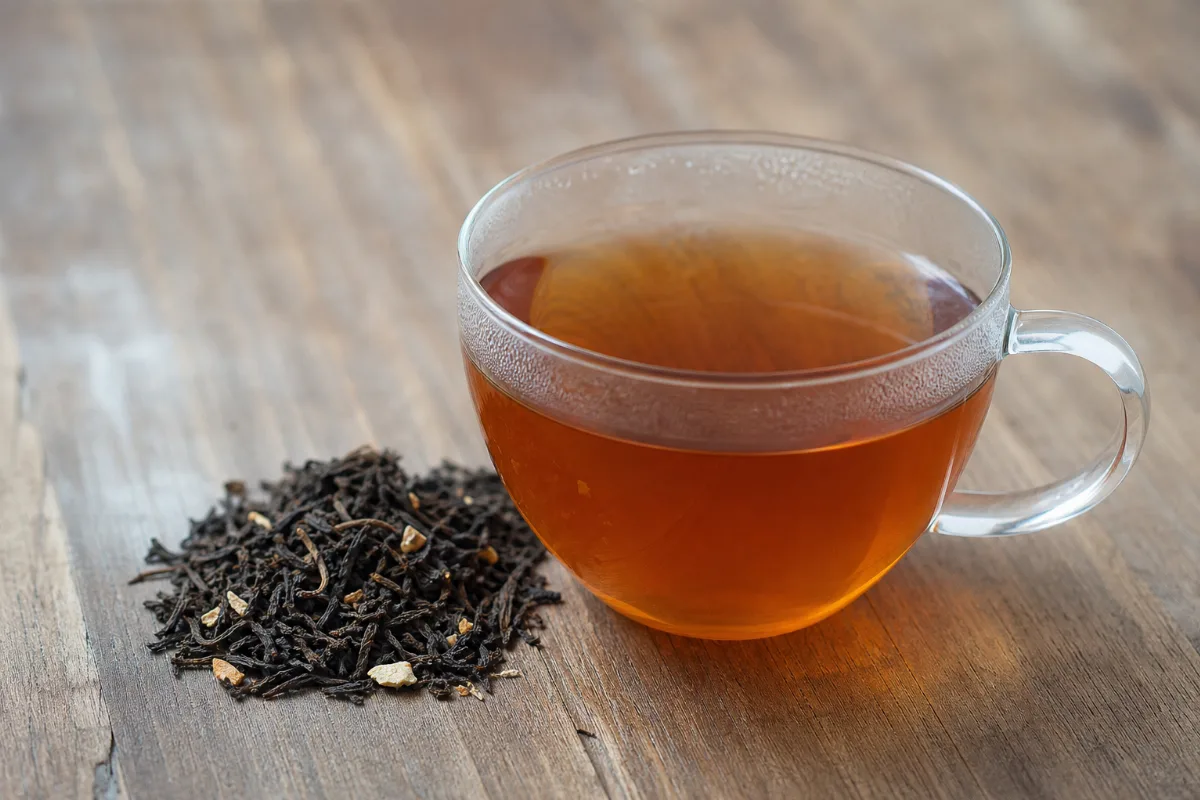
Herbal Teas & Extracts · Tea blend
Earl Grey Tea
Camellia sinensis (black tea) with Citrus bergamia (bergamot) oil · also called Earl Grey, bergamot black tea. Not the same as a tea extract, supplement or bergamot essential oil.
Earl Grey is black tea flavoured with oil from the peel of the bergamot orange. People drink it for taste and alertness. No trial of Earl Grey itself was found, so health claims rest on studies of black tea in general, which show small and mixed effects. The main cautions are its caffeine, lower iron absorption, and one old report of cramps after very heavy drinking.
General information, not medical advice. Last substantive update · Not medically reviewed. A named clinician has not signed off on this page. How this page is made
About Earl Grey Tea
Earl Grey is black tea flavoured with bergamot oil. No trial of the drink itself was found. Black tea research shows small and mixed effects on cholesterol and blood pressure and no clear effect on blood sugar in trials. The drink has caffeine, can lower iron absorption, and very hot tea is a risk for the oesophagus. A 2002 letter describes cramps and twitching in one man after heavy Earl Grey drinking. Extracts, capsules and bergamot oil are separate products.
What it is
Earl Grey is a blend, not a plant. The base is black tea from Camellia sinensis, a species GBIF accepts, fully oxidised before drying. The flavouring is oil pressed from the peel of the bergamot orange, Citrus bergamia (the name used in the research papers; databases treat it differently).
The flavouring is mainly linalyl acetate and linalool. In 90 Earl Grey teas from 10 EU countries, loose leaf held more than tea bags, and flavour fell during storage. In the lab, about two thirds of the linalool passed into a hot infusion, but only about 2% of the linalyl acetate. Bergamot oil also contains furocoumarins; a laboratory method has measured them in Earl Grey tea, but its abstract gives no amounts.
Tea, oil, extract or supplement?
A cup of Earl Grey is a weak water extract of the leaf. Bergamot essential oil is a concentrated product that is not meant to be swallowed and can burn skin in sunlight. Tea extracts and capsules are also concentrated. Results from one do not carry over to another. The liver warnings that exist for tea extracts come from green tea: EFSA noted rare liver injury after green tea infusions and raised liver enzymes with high-dose catechin supplements. No safety study of Earl Grey or black tea extract was found, so this page makes no claim about it.
What the research shows
Earl Grey itself: a PubMed search found no trial of drinking it. The papers found are about its flavour chemistry and one old safety case.
Black tea in general: reviews disagree on cholesterol, show small blood pressure falls in some analyses and none in a review of short trials. In large groups followed over time, the highest tea intake was linked with lower all-cause and heart-disease death, which does not prove tea is the cause. Trials in type 2 diabetes found no clear effect on blood sugar. For focus and mood, a review of 50 trials found its clearest effects for theanine plus caffeine, not tea.
Bergamot oil smelled as aromatherapy: small, mostly open-label trials report lower anxiety scores. A 2017 review judged them small and not high quality, and one pilot was written by staff of an essential-oil company. None tested tea.
Quality, fluoride and metals
Flavouring content varies by product, packaging and storage. Tea plants take up fluoride: a study of 121 black teas found the most in tea-bag infusions and about twice as much in African teas as in Central or East Asian teas, with hazard scores below the threshold in a second study. A study of 8 brands found metals lower in the infusion than in the dry leaf and within limits, with arsenic worth monitoring.
At a glance
Traditional uses history, not proof
- Earl Grey is a widely sold flavoured black tea.
- No traditional-use or history source for Earl Grey was read, so none is claimed here.
Studied for research
- Earl Grey itself, insufficient (no trials found)
- Cholesterol (black tea), mixed
- Blood pressure (black tea), low
- Heart disease and death rates in tea drinkers (an association), low
- Risk of type 2 diabetes (an association), low
- Blood sugar in type 2 diabetes (tea), low (no clear effect)
- Focus and mood (tea), insufficient
- Mood and anxiety from smelling bergamot oil (not tea), low
Main compounds
- Caffeine
- Theaflavins and other black tea oxidation products
- Linalyl acetate and linalool (flavouring)
- Limonene
- Bergapten and bergamottin (furocoumarins from the bergamot oil)
Common forms
- Brewed loose-leaf or tea-bag Earl Grey (the form this page covers)
- Bottled, sweetened or decaffeinated versions (different products; not covered)
- Bergamot essential oil and concentrated tea extracts (different products; see their own pages)
Research links: FDA: How much caffeine is too much · NHS: Foods to avoid in pregnancy · NHS: Iron deficiency anaemia · EFSA: Caffeine risk assessment explained · Case report index: Earl Grey tea intoxication (Lancet, 2002) · Study: flavouring content of Earl Grey teas (abstract) · Research Library · Genes & Biomarkers Library
What it is and its history
- Accepted scientific name
- Camellia sinensis (tea base) with Citrus bergamia (bergamot flavouring)
- Naming authority
- (L.) Kuntze
- Synonyms
- Camellia sinensis (L.) Kuntze (GBIF accepted)
- Common names
- Earl Grey (English); Earl Grey tea (English); Bergamot black tea (English); Té Earl Grey (Spanish)
- Family or group
- Theaceae (the tea family)
- Classification
- Plantae > Ericales > Theaceae > Camellia > Camellia sinensis
- Native range
- Not checked in the sources read.
- Habitat
- Not checked.
- What it looks like
- Stems: Not checked.; Leaves: The leaf is the part used. For black tea it is fully oxidised before drying (the fermented tea of the reviews read; no botanical source was opened).; Flowers: Not checked.; Fruit: Not checked.
- Cultivation
- Not checked.
- Harvest and processing
- A review of oxidised tea polyphenols groups black tea with oolong and dark tea as fermented teas, unlike unfermented green tea. EFSA describes green tea as made without fermentation, which prevents oxidation of the polyphenols. The sources read give no step-by-step process for black tea and none is given here.
- Look-alikes and adulterants
- Name: Other teas from the same plant; Note: Green, oolong, white and pu-erh tea are the same species processed differently; their research and safety findings do not transfer automatically.; Name: Herbal teas; Note: Peppermint, chamomile and similar drinks are made from other plants and usually have no caffeine; a lab study found no caffeine in the herbal teas it tested.; Name: Tea extracts and supplements; Note: Concentrated products are not the same as a cup of tea.
- Sustainability and conservation
- Not checked.
Photographs
Traditional use and history history, not clinical proof
| Tradition or era | Documented use | Source |
|---|---|---|
| Not covered | No history source for Earl Grey was read, so no origin story is claimed here. | none |
Traditional use shows how it was used. It does not show that it works or is safe today.
What is inside, and how it may work
What it contains and how those compounds act in cells and animals. Laboratory and animal mechanisms are not proven effects in people.
Main compounds
| Compound | Family | Where it is concentrated | Activity studied | Level of evidence |
|---|---|---|---|---|
| Caffeine PubChem 2519 | methylxanthine (stimulant) | Leaf A lab study found 14 to 61 mg per serving in white, green and black teas; the FDA lists 71 mg in 12 fl oz of black tea. | Stimulates the central nervous system (EFSA); can raise heart rate and disturb sleep in sensitive people. 48 4 43 41 | Human data |
| Theaflavins PubChem 135403798 | polyphenol pigments formed when tea is oxidised | Leaf A Mauritian black tea used in one trial contained theaflavins at 90 mg per litre. | Often named as a possible active in black tea; no human study in the sources read isolates their effect. 49 2 | Not established |
| Linalyl acetate PubChem 8294 | monoterpene ester | Flavouring (bergamot peel oil) added to the tea leaf In 90 EU Earl Grey teas the median content differed between loose leaf and tea bags; only about 2% of it passed into a hot infusion in the lab, with part turning into linalool. | The main flavouring compound with linalool; an aroma compound. 50 28 29 | Laboratory |
| Linalool PubChem 6549 | monoterpene alcohol | Flavouring (bergamot peel oil) added to the tea leaf About 66% passed into a hot infusion in the lab. Estimated exposure from the drink was about 26 times higher than linalyl acetate. | Aroma compound; the scent compound shown to be calming in the jasmine tea smell studies; oxidised linalool is a skin allergen on skin. 51 34 32 28 29 36 | Human patch tests, laboratory |
| Limonene PubChem 22311 | monoterpene | Flavouring (bergamot peel oil) added to the tea leaf Named by one aroma study as a fundamental odorant of citrus blend black teas. | Aroma compound. 52 34 32 36 | Human patch tests, laboratory |
| Bergapten (5-methoxypsoralen, 5-MOP) PubChem 2355 | furocoumarin | Flavouring (bergamot peel oil) added to the tea leaf Measured in Earl Grey tea by a laboratory method; the abstract gives no figure. | Furocoumarin in bergamot oil; light-sensitising on skin. No report of harm from drinking the tea was found. 53 17 38 5 | Human case reports, animal, laboratory |
| Bergamottin PubChem 5471349 | furanocoumarin | Flavouring (bergamot peel oil) added to the tea leaf Not measured in any tea paper read. | Grapefruit-type compound in bergamot oil; raised atorvastatin levels in rats. 54 39 8 | Animal, model |
Mechanisms, receptors and pathways
| Target or pathway | Gene or receptor | What was found | Level |
|---|---|---|---|
| Central nervous system stimulation by caffeine | n/a | EFSA says caffeine stimulates the central nervous system and in moderate doses increases alertness and reduces sleepiness. 41 | Human data |
| Iron absorption (polyphenol binding) | n/a | In human volunteers, polyphenol drinks reduced iron absorption in a dose-dependent way related to their total polyphenol content; black tea was more inhibitory than cocoa and several herb teas at the same polyphenol amount. 14 | Human data |
| Light-activated skin reaction (bergamot oil on skin) | Not specified in the abstracts | Bergapten in the oil makes skin react to ultraviolet light. This was shown for oil on skin, not for the tea. 17 | Human case reports |
| Gut CYP3A4 inactivation (grapefruit-type) | CYP3A4 | Furanocoumarins such as bergamottin inactivate gut CYP3A4 in grapefruit; in rats bergamottin raised atorvastatin levels. Not shown for Earl Grey in people. 39 8 | Animal / model |
Absorption, metabolism and elimination
- Absorption
- EFSA says caffeine taken by mouth is absorbed rapidly and completely.
- Distribution
- Not covered.
- Metabolism
- EFSA says the time to remove half of a caffeine dose varies widely with age, body weight, pregnancy, medicines and liver function.
- Elimination
- The EFSA factsheet gives a range of about two to eight hours for adults.
- Bioavailability
- Not covered for theaflavins or other tea polyphenols in the sources read.
Isolated compounds versus whole extracts
A cup of Earl Grey is a water extract of black tea leaf carrying some of the bergamot flavouring: most of the linalool but little of the linalyl acetate moves into the drink. Bergamot essential oil, concentrated tea extracts and caffeine pills are different products. Scent trials with the oil and liver warnings about green tea extracts do not describe a cup of Earl Grey.
Nutritional composition
Earl Grey is not a source of essential nutrients worth relying on. It adds fluid and caffeine, and tea polyphenols can lower iron absorption from a meal.
1 mixed findings5 low certainty2 not enough evidence
What was looked at
The 8 benefits and uses checked for Earl Grey Tea, each with how strong the evidence is. Tap one to open it.
- Cholesterol (LDL)Mixed findings
- Blood pressureLow certainty
- Heart disease and death rates in tea drinkersLow certainty
- Earl Grey tea itself (bergamot-flavoured black tea)Not enough evidence
- Risk of developing type 2 diabetesLow certainty
- Blood sugar in people with type 2 diabetesLow certainty
- Thinking, mood and focusNot enough evidence
- Mood and anxiety from smelling bergamot oil (not from drinking tea)Low certainty
Lab markers tracked in the studies
LDL cholesterolTotal cholesterolSystolic blood pressureDiastolic blood pressureFasting blood glucoseFasting insulin
What is Earl Grey Tea good for?
The uses people ask about and how strong the human evidence is for each. No trial used Earl Grey tea itself, so these results come from black tea in general and from bergamot oil smelled as aromatherapy.
Benefits, one by one
Each card is a research question, not a promise. Tap a goal to filter. Open a card to see the studies, doses and limits.
Cholesterol (LDL)
Mixed findingsPooled trials of black tea drinks found a small average fall in LDL cholesterol, but a review in people with high cholesterol and a review of short green or black tea trials found no clear effect. No trial used Earl Grey tea; the results are for black tea in general, and the bergamot flavouring was not tested.
4 studiesBrewed black tea as a drink. Amounts and tea types differed between t…
Studies, doses and limits
What the trials found
A 2015 meta-analysis of 10 trials (411 people) found LDL lower by 4.64 mg/dL. A Cochrane review of 4 black tea trials found a fall of 0.43 mmol/L over about six months, with few trials and a risk of bias. A 2019 review of 6 trials in people with high cholesterol, and a 2020 review of 14 green or black tea trials, found no significant effect.
Results
Zhao 2015: LDL -4.64 mg/dL (95% CI -8.99 to -0.30); total cholesterol -2.04 and HDL -1.15 not significant. Cochrane 2013 (black tea): LDL MD -0.43 mmol/L (-0.56 to -0.31). Araya-Quintanilla 2019: no significant change in total, LDL, HDL or triglycerides in high-cholesterol adults. Igho-Osagie 2020: no significant change in any blood fat.
Effect sizes as reported
Small average fall in some reviews; none in others. The reviews do not agree.
Why this rating
Four reviews point in different directions. Trials are small and short, the largest fall comes from a handful of trials with a risk of bias, and two reviews found nothing. No heart attack or stroke outcome has been measured.
Form and dose studied
Brewed black tea as a drink. Amounts and tea types differed between trials, and this page gives no amounts. No capsule or extract trials were read.
Who was studied
Healthy adults, adults at higher heart risk, and adults with high cholesterol, mostly in short trials.
Limits
Small trials; tea type and amount differed; one review mixes green and black tea; a lab number is not a heart outcome. No trial used Earl Grey tea; the results are for black tea in general, and the bergamot flavouring was not tested.
Why researchers looked
High LDL cholesterol is a risk factor for heart disease, and black tea contains polyphenols (theaflavins and thearubigins) that are often suggested to help.
Traditional use
Not described in the sources read.
Proposed mechanism Not established
No mechanism was established in the sources read. Black tea contains theaflavins, thearubigins, catechins and caffeine, but the reviews read do not show which of them, if any, explains these results.
A proposed mechanism does not show that the effect happens in people.
Earl Grey is black tea, so it contains caffeine. See the Safety tab for caffeine, iron, pregnancy, very hot drinks and the bergamot flavouring.
Blood pressure
Low certaintySome pooled trials found small average falls in blood pressure with black or green tea, but a review of short trials found none, and black tea looked weaker than green. No trial used Earl Grey tea; the results are for black tea in general, and the bergamot flavouring was not tested.
4 studiesBrewed tea as a drink. Amounts differed and are not given here.
Studies, doses and limits
What the trials found
The Cochrane review of black tea trials found systolic pressure 1.85 mmHg lower over about six months. A 2020 review of 5 trials (408 people with raised or high blood pressure) of green or black tea found falls of 4.81 mmHg systolic and 1.98 mmHg diastolic, with green tea stronger than black. A 2020 review of 14 trials found no significant effect. A 2026 review of 20 observational studies links tea drinking with modestly lower odds of high blood pressure, with a stronger link in black tea drinkers that the authors call hypothesis-generating.
Results
Cochrane 2013 (black tea): SBP MD -1.85 mmHg (-3.21 to -0.48); DBP -1.27 (-3.06 to 0.53, not significant). Mahdavi-Roshan 2020 (green or black): SBP WMD -4.81 (-8.40 to -1.58); DBP -1.98 (-3.77 to -0.20). Igho-Osagie 2020: no significant change. Jiang 2026: cross-sectional OR 0.92 (0.87 to 0.97); cohort OR 0.87 (0.84 to 0.92).
Effect sizes as reported
A few mmHg at most in trials that found an effect; no effect in the review of short trials.
Why this rating
Few trials with different results, green and black tea pooled in most of them, and the observational data cannot show cause. The reviewers disagree.
Form and dose studied
Brewed tea as a drink. Amounts differed and are not given here.
Who was studied
Adults with raised or high blood pressure, and healthy adults.
Limits
Five to fourteen small trials per review; short follow-up; observational findings may reflect other habits. No trial used Earl Grey tea; the results are for black tea in general, and the bergamot flavouring was not tested.
Why researchers looked
High blood pressure is a major risk factor for heart disease and stroke, and tea is an everyday drink that people ask about.
Traditional use
Not described in the sources read.
Proposed mechanism Not established
No mechanism was established in the sources read. Black tea contains theaflavins, thearubigins, catechins and caffeine, but the reviews read do not show which of them, if any, explains these results.
A proposed mechanism does not show that the effect happens in people.
Earl Grey is black tea, so it contains caffeine. See the Safety tab for caffeine, iron, pregnancy, very hot drinks and the bergamot flavouring.
Heart disease and death rates in tea drinkers
Low certaintyIn large groups followed over time, people who drank the most tea had about 10% lower death from any cause and about 14% lower death from heart disease. This is a link, not proof that tea is the cause. No trial used Earl Grey tea; the results are for black tea in general, and the bergamot flavouring was not tested.
3 studiesTea as usually drunk. This page gives no amounts to aim for.
Studies, doses and limits
What the trials found
A 2024 meta-analysis pooled 38 cohort data sets (1,956,549 people). The highest tea intake was linked to 0.90 times the all-cause death risk and 0.86 times the heart-disease death risk, with no clear link to cancer death. The biggest gains were around 1.5 to 2 cups a day. A 2026 narrative review says causal inference is uncertain. The Cochrane review found no trial of black tea that reported heart events.
Results
Kim 2024: all-cause ES 0.90 (0.86 to 0.95); CVD death 0.86 (0.79 to 0.94); cancer death 0.90 (0.78 to 1.03, not significant). Liu 2026: evidence does not support picking a tea type for a disease or a standard therapeutic amount. Cochrane 2013: no heart events reported by any trial.
Effect sizes as reported
10% lower all-cause and 14% lower heart-disease death in the highest versus lowest intake groups.
Why this rating
Observational data only. The tea types were not separated, so it is not a black-tea-only result, and people who drink more tea may differ in other ways.
Form and dose studied
Tea as usually drunk. This page gives no amounts to aim for.
Who was studied
Adults in cohort studies worldwide.
Limits
Confounding and reverse cause are possible; tea types and preparation differ; no trial has tested black tea for heart attack, stroke or death. No trial used Earl Grey tea; the results are for black tea in general, and the bergamot flavouring was not tested.
Why researchers looked
Tea is drunk daily by many people, so even small effects could matter, and population studies can look at heart attacks and death that short trials cannot.
Traditional use
Not described in the sources read.
Proposed mechanism Pharmacological theory
The reviewers describe plausible antioxidant, anti-inflammatory, blood-vessel and gut-bacteria effects, but say a causal effect has not been shown and Mendelian randomisation studies have not consistently supported one.
A proposed mechanism does not show that the effect happens in people.
Earl Grey is black tea, so it contains caffeine. See the Safety tab for caffeine, iron, pregnancy, very hot drinks and the bergamot flavouring.
Earl Grey tea itself (bergamot-flavoured black tea)
Not enough evidenceNo trial of drinking Earl Grey tea for any health outcome was found. The papers found about Earl Grey are about its flavour chemistry and one old safety case, not benefits.
4 studiesBlack tea flavoured with bergamot oil; products differ, and flavour c…
Studies, doses and limits
What the trials found
A PubMed search for "Earl Grey" on 2026-10-25 returned about 22 records. None was a trial of drinking the tea. The relevant ones were two chemistry studies of flavoured tea (Orth 2013 and 2014, abstracts read), a 2009 laboratory method that measured light-sensitising compounds in Earl Grey tea, and a 2002 Lancet letter on heavy Earl Grey drinking (index record only).
Results
No health benefit has been tested for Earl Grey as a drink.
Why this rating
There are no human trials of the drink.
Form and dose studied
Black tea flavoured with bergamot oil; products differ, and flavour content varies with packaging and storage.
Limits
Flavouring content varies between products and falls during storage, so no trial could assume a fixed bergamot content.
Why researchers looked
Earl Grey is one of the most common flavoured black teas, so people ask whether the bergamot adds anything.
Traditional use
Not described in the sources read.
Proposed mechanism Not established
Not established. The flavouring is mainly linalyl acetate and linalool. Only about 2% of linalyl acetate and about two thirds of linalool pass from the leaf into a hot infusion in the lab.
A proposed mechanism does not show that the effect happens in people.
See the Safety tab for the 2002 case of cramps and twitching after very heavy Earl Grey drinking.
Risk of developing type 2 diabetes
Low certaintyAcross 19 large follow-up studies there was no clear overall link between tea drinking and type 2 diabetes. A lower risk showed up only in people drinking four or more cups a day. This is an association and tea types were not separated. No trial used Earl Grey tea; the results are for black tea in general, and the bergamot flavouring was not tested.
1 studiesTea as usually drunk, types not separated. No amounts are recommended…
Studies, doses and limits
What the trials found
A 2023 paper reported a cohort of 5,199 adults in China (relative risk 1.02, no link) and a meta-analysis of 19 cohort studies (1,076,311 people): pooled relative risk 0.96 (0.91 to 1.00), and 0.83 (0.76 to 0.90) for four or more cups a day.
Results
Li 2023: own cohort RR 1.02 (0.82 to 1.28); pooled RR 0.96 (0.91 to 1.00); 4 or more cups a day RR 0.83 (0.76 to 0.90).
Effect sizes as reported
No overall effect; 17% lower risk at the highest intake in a pooled association.
Why this rating
Observational only, tea types not separated, self-reported intake, and the overall result sits on the line of no effect.
Form and dose studied
Tea as usually drunk, types not separated. No amounts are recommended here.
Who was studied
Adults in cohort studies.
Limits
Confounding by other habits is likely; heavy tea drinkers may differ from others; no trial of risk. No trial used Earl Grey tea; the results are for black tea in general, and the bergamot flavouring was not tested.
Why researchers looked
Tea polyphenols such as theaflavins are suggested to affect how the body handles sugar.
Traditional use
Not described in the sources read.
Proposed mechanism Pharmacological theory
The authors suggest polyphenols such as theaflavins may have a blood-sugar-lowering effect, but their own cohort did not show an effect and no mechanism was established.
A proposed mechanism does not show that the effect happens in people.
Earl Grey is black tea, so it contains caffeine. See the Safety tab.
Blood sugar in people with type 2 diabetes
Low certaintyTen trials of tea or tea extract in people with type 2 diabetes found no clear change in fasting blood sugar. There were small changes in fasting insulin and waist size. No trial used Earl Grey tea; the results are for black tea in general, and the bergamot flavouring was not tested.
1 studiesTea or tea extract, pooled; this is not a black-tea-drink-only result.
Studies, doses and limits
What the trials found
A 2016 meta-analysis of 10 randomised trials (608 people) of tea or tea extract in type 2 diabetes. It does not separate black tea from other tea or from extracts.
Results
Fasting glucose -0.05 mmol/L (-0.51 to 0.40), not significant; LDL, HDL, triglycerides, blood pressure and insulin resistance not significant; tea reduced the fall in fasting insulin (1.30 U/L) and waist circumference fell 2.70 cm only in trials longer than 8 weeks.
Effect sizes as reported
No clear effect on blood sugar.
Why this rating
Small trials, tea and extract pooled, and not black-tea-specific.
Form and dose studied
Tea or tea extract, pooled; this is not a black-tea-drink-only result.
Who was studied
Adults with type 2 diabetes.
Limits
Small trials; the review pooled several kinds of tea and extract. No trial used Earl Grey tea; the results are for black tea in general, and the bergamot flavouring was not tested.
Why researchers looked
People with type 2 diabetes look for everyday drinks that might help control blood sugar.
Traditional use
Not described in the sources read.
Proposed mechanism Not established
No mechanism was established in the sources read.
A proposed mechanism does not show that the effect happens in people.
Earl Grey is black tea, so it contains caffeine. See the Safety tab.
Thinking, mood and focus
Not enough evidenceA review of 50 trials found small gains in attention and mood mainly for the compound L-theanine taken together with caffeine, not for tea drinks. Whether a cup of black tea helps focus is not shown. No trial used Earl Grey tea; the results are for black tea in general, and the bergamot flavouring was not tested.
1 studiesIsolated L-theanine and caffeine, not black tea. No amounts are recom…
Studies, doses and limits
What the trials found
A 2025 meta-analysis of 50 randomised trials in healthy people tested tea, L-theanine, and L-theanine plus caffeine. Most trials used the isolated compounds, not tea drinks.
Results
Theanine plus caffeine versus placebo in the first two hours: for example attention switching accuracy SMD 0.33 (0.13 to 0.54). Theanine alone: choice reaction time SMD -0.35 at hour 1. The reviewers say the intervals often leave the size and direction uncertain and ask for more research using actual tea drinks.
Effect sizes as reported
Small to moderate for theanine with caffeine; unknown for black tea.
Why this rating
The evidence is for isolated compounds, mostly short single-dose tests; very little tested black tea itself.
Form and dose studied
Isolated L-theanine and caffeine, not black tea. No amounts are recommended here.
Who was studied
Healthy adults.
Limits
Short tests, healthy people only, little tea-drink data. No trial used Earl Grey tea; the results are for black tea in general, and the bergamot flavouring was not tested.
Why researchers looked
Black tea contains caffeine and a smaller amount of L-theanine, and people drink it to feel alert and calm.
Traditional use
Not described in the sources read.
Proposed mechanism Human data
The reviewers point to theanine and caffeine acting together; no mechanism is proven.
A proposed mechanism does not show that the effect happens in people.
Earl Grey is black tea, so it contains caffeine. See the Safety tab.
Mood and anxiety from smelling bergamot oil (not from drinking tea)
Low certaintySmall trials report lower anxiety or better mood scores after smelling bergamot oil. This is aromatherapy with the oil, not tea. No trial tested whether Earl Grey tea has this effect.
4 studiesInhaled bergamot essential oil (aroma stones, inhaler, aroma exposure…
Studies, doses and limits
What the trials found
A 2017 systematic review judged aromatherapy studies with bergamot oil small and not high quality. A 2026 trial in 57 students (open-label) found lower state anxiety at 180 minutes with oil on aroma stones. A 2025 feasibility trial in 100 adults (no placebo, standard-care comparison) found improved depression and anxiety sub-scores. A 2017 pilot in a clinic waiting room (57 people) reported 17% higher positive feelings and was written by staff of an essential-oil company.
Results
Lower anxiety or better mood scores in small, mostly open-label trials of inhaled oil.
Effect sizes as reported
Cohen's d above 0.8 for state anxiety in one 57-student trial; not given in the other abstracts.
Why this rating
Small, open-label or unplaceboed trials, short follow-up, one industry-linked, and none tested tea.
Form and dose studied
Inhaled bergamot essential oil (aroma stones, inhaler, aroma exposure). Not a drink.
Who was studied
Students, adults in a treatment centre, clinic waiting-room visitors.
Limits
Smell is hard to blind; self-rated scores; oil on the skin is a separate sun-sensitivity risk (see the Safety tab).
Why researchers looked
Bergamot oil is the flavouring in Earl Grey and is widely used in aromatherapy for stress.
Traditional use
Not described in the sources read.
Proposed mechanism Not established
Not established in the trials read.
A proposed mechanism does not show that the effect happens in people.
Do not swallow essential oils. Bergamot oil on skin can cause sun-triggered burns.
Connections to the rest of health
How Earl Grey Tea connects to the rest of our health knowledge graph. Every link says what kind of connection it is. A safety link (for example to the liver) is a warning, not a benefit. A study that merely mentions a topic never creates a benefit link.
Explore every connection: goals, body systems, organs, symptoms, genes
A. Wellness goals
| Connected to | Kind of connection | Evidence status | Context | Studies |
|---|---|---|---|---|
| Cholesterol Balance | Mixed findings | Cholesterol (LDL): Pooled trials of black tea drinks found a small average fall in LDL cholesterol, but a review in people with high cholesterol and a review of short green or black tea trials found no clear effect. No trial used Earl Grey tea; the results are for black tea in general, and the bergamot flavouring was not tested. | 40 12 1 15 | |
| Heart Health | Mixed findings | Cholesterol (LDL): Pooled trials of black tea drinks found a small average fall in LDL cholesterol, but a review in people with high cholesterol and a review of short green or black tea trials found no clear effect. No trial used Earl Grey tea; the results are for black tea in general, and the bergamot flavouring was not tested. Blood pressure: Some pooled trials found small average falls in blood pressure with black or green tea, but a review of short trials found none, and black tea looked weaker than green. No trial used Earl Grey tea; the results are for black tea in general, and the bergamot flavouring was not tested. | 40 12 1 15 22 16 | |
| Blood Pressure Support | Low certainty | Blood pressure: Some pooled trials found small average falls in blood pressure with black or green tea, but a review of short trials found none, and black tea looked weaker than green. No trial used Earl Grey tea; the results are for black tea in general, and the bergamot flavouring was not tested. | 12 22 15 16 | |
| Heart Health | Biological association | Low certainty | Heart disease and death rates in tea drinkers: In large groups followed over time, people who drank the most tea had about 10% lower death from any cause and about 14% lower death from heart disease. This is a link, not proof that tea is the cause. No trial used Earl Grey tea; the results are for black tea in general, and the bergamot flavouring was not tested. | 18 21 12 |
| Healthy Aging | Biological association | Low certainty | Heart disease and death rates in tea drinkers: In large groups followed over time, people who drank the most tea had about 10% lower death from any cause and about 14% lower death from heart disease. This is a link, not proof that tea is the cause. No trial used Earl Grey tea; the results are for black tea in general, and the bergamot flavouring was not tested. | 18 21 12 |
| General Wellness | Not enough evidence | Earl Grey tea itself (bergamot-flavoured black tea): No trial of drinking Earl Grey tea for any health outcome was found. The papers found about Earl Grey are about its flavour chemistry and one old safety case, not benefits. | 28 29 5 7 | |
| Blood Sugar Balance | Biological association | Low certainty | Risk of developing type 2 diabetes: Across 19 large follow-up studies there was no clear overall link between tea drinking and type 2 diabetes. A lower risk showed up only in people drinking four or more cups a day. This is an association and tea types were not separated. No trial used Earl Grey tea; the results are for black tea in general, and the bergamot flavouring was not tested. | 20 |
| Blood Sugar Balance | Low certainty | Blood sugar in people with type 2 diabetes: Ten trials of tea or tea extract in people with type 2 diabetes found no clear change in fasting blood sugar. There were small changes in fasting insulin and waist size. No trial used Earl Grey tea; the results are for black tea in general, and the bergamot flavouring was not tested. | 19 | |
| Better Focus | Not enough evidence | Thinking, mood and focus: A review of 50 trials found small gains in attention and mood mainly for the compound L-theanine taken together with caffeine, not for tea drinks. Whether a cup of black tea helps focus is not shown. No trial used Earl Grey tea; the results are for black tea in general, and the bergamot flavouring was not tested. | 30 | |
| Mental Clarity | Not enough evidence | Thinking, mood and focus: A review of 50 trials found small gains in attention and mood mainly for the compound L-theanine taken together with caffeine, not for tea drinks. Whether a cup of black tea helps focus is not shown. No trial used Earl Grey tea; the results are for black tea in general, and the bergamot flavouring was not tested. | 30 | |
| Calm Relaxation | Low certainty | Mood and anxiety from smelling bergamot oil (not from drinking tea): Small trials report lower anxiety or better mood scores after smelling bergamot oil. This is aromatherapy with the oil, not tea. No trial tested whether Earl Grey tea has this effect. | 23 35 31 11 | |
| Stress Reduction | Low certainty | Mood and anxiety from smelling bergamot oil (not from drinking tea): Small trials report lower anxiety or better mood scores after smelling bergamot oil. This is aromatherapy with the oil, not tea. No trial tested whether Earl Grey tea has this effect. | 23 35 31 11 |
B. Body systems
| Connected to | Kind of connection | Evidence status | Context | Studies |
|---|---|---|---|---|
| Sleep Recovery | Adverse effect or risk | Low certainty | Caffeine may disturb sleep in some adults, especially close to bedtime (EFSA). Preparation or compound: Caffeine in black tea |
41 43 |
| Cardiovascular System | Biological association | Mixed findings | Studied for: Cholesterol (LDL) Studied for: Blood pressure | 40 12 1 15 22 16 |
| Heart Circulation | Biological association | Low certainty | Studied for: Heart disease and death rates in tea drinkers | 18 21 12 |
| General | Biological association | Not enough evidence | Studied for: Earl Grey tea itself (bergamot-flavoured black tea) | 28 29 5 7 |
| Blood Sugar Support | Biological association | Low certainty | Studied for: Risk of developing type 2 diabetes Studied for: Blood sugar in people with type 2 diabetes | 20 19 |
| Brain Focus | Biological association | Not enough evidence | Studied for: Thinking, mood and focus | 30 |
| Stress Mood | Biological association | Low certainty | Studied for: Mood and anxiety from smelling bergamot oil (not from drinking tea) | 23 35 31 11 |
C. Body parts and organs
E. Health conditions
| Connected to | Kind of connection | Evidence status | Context | Studies |
|---|---|---|---|---|
| Iron deficiency | Drug or supplement interaction | Moderate certainty | Black tea lowered iron absorption from a test meal; the NHS advises people with iron deficiency anaemia to have less tea; healthy French adults showed no link with iron stores. Preparation or compound: Black tea polyphenols |
14 44 26 |
| Kidney stones | Adverse effect or risk | Mixed findings | Studies disagree on tea and calcium-oxalate stones. Preparation or compound: Black tea (oxalate) |
33 9 37 |
| Pregnancy | Contraindication | Low certainty | Tea counts toward the daily caffeine limit in pregnancy (NHS; EFSA). Preparation or compound: Caffeine in black tea |
45 41 |
I. Biomarkers
| Connected to | Kind of connection | Evidence status | Context | Studies |
|---|---|---|---|---|
| LDL cholesterol | Biological association | Mixed findings | Measured in trials: lowered in some reviews. A lab change is not the same as a health benefit. | 40 12 1 15 |
| Total cholesterol | Biological association | Low certainty | Measured in trials: unchanged. A lab change is not the same as a health benefit. | 40 1 |
| Systolic blood pressure | Biological association | Low certainty | Measured in trials: lowered slightly in some reviews. A lab change is not the same as a health benefit. | 12 22 15 |
| Diastolic blood pressure | Biological association | Low certainty | Measured in trials: unchanged or lowered slightly. A lab change is not the same as a health benefit. | 12 22 |
| Fasting blood glucose | Biological association | Low certainty | Measured in trials: unchanged in diabetes trials; lowered in one small trial. A lab change is not the same as a health benefit. | 19 |
| Fasting insulin | Biological association | Low certainty | Measured in trials: small change. A lab change is not the same as a health benefit. | 19 |
L. Active compounds
| Connected to | Kind of connection | Evidence status | Context | Studies |
|---|---|---|---|---|
| Bergapten (bergamot furocoumarin) | Adverse effect or risk | Not enough evidence | Light-sensitising on skin; no report found from drinking the tea. Preparation or compound: Bergamot oil flavouring |
17 5 |
| Caffeine | Biological association | Human | Stimulates the central nervous system (EFSA); can raise heart rate and disturb sleep in sensitive people. Preparation or compound: Leaf |
48 4 43 41 |
| Theaflavins | Biological association | Not established | Often named as a possible active in black tea; no human study in the sources read isolates their effect. Preparation or compound: Leaf |
49 2 |
| Linalyl acetate | Biological association | Laboratory | The main flavouring compound with linalool; an aroma compound. Preparation or compound: Flavouring (bergamot peel oil) added to the tea leaf |
50 28 29 |
| Linalool | Biological association | Human patch tests, laboratory | Aroma compound; the scent compound shown to be calming in the jasmine tea smell studies; oxidised linalool is a skin allergen on skin. Preparation or compound: Flavouring (bergamot peel oil) added to the tea leaf |
51 34 32 28 29 36 |
| Limonene | Biological association | Human patch tests, laboratory | Aroma compound. Preparation or compound: Flavouring (bergamot peel oil) added to the tea leaf |
52 34 32 36 |
| Bergapten (5-methoxypsoralen, 5-MOP) | Biological association | Human case reports, animal, laboratory | Furocoumarin in bergamot oil; light-sensitising on skin. No report of harm from drinking the tea was found. Preparation or compound: Flavouring (bergamot peel oil) added to the tea leaf |
53 17 38 5 |
| Bergamottin | Biological association | Animal, model | Grapefruit-type compound in bergamot oil; raised atorvastatin levels in rats. Preparation or compound: Flavouring (bergamot peel oil) added to the tea leaf |
54 39 8 |
Each connection is stored with the ingredient, the connected record, the kind of connection, the evidence status, the supporting studies, the preparation or compound involved, and a review date (last reviewed October 25, 2026).
Evidence at a glance: what the research found for 8 outcomes
Each outcome below is one thing researchers measured. Certainty is how far the evidence can be trusted, not how well it works. The full studies are on the next tab.
The evidence
The research centre for Earl Grey Tea. Every record here was checked against PubMed or the publisher's page; we never list a study we have not verified.
Evidence by outcome
Bars show how many studies we found for each outcome, not how well it works. People are added up across trials only (reviews are not added, to avoid double counting).
How we rate evidence
High certainty
Several well-run trials or reviews agree; further research is unlikely to change the picture much.
Moderate certainty
Good trials point the same way, but some doubt remains.
Low certainty
Small, short or inconsistent trials. The finding could change with better research.
Very low certainty
Very little or very weak human data. Treat as a possibility only.
Mixed findings
Trials or reviews disagree with each other.
Not enough evidence
Not enough human research to say either way.
Evidence against
Good research found no benefit, or found harm.
We take the reviewers' own risk-of-bias and GRADE statements where they exist, and otherwise judge from study size, design, consistency, directness and whether a product matches what is sold. Many publications do not make evidence high. Method note: We searched PubMed and read the abstracts of about 30 sources, read the FDA and NHS pages, the EFSA caffeine factsheet and the IARC press release, and checked the plant name in GBIF and compounds in PubChem. Two 2002 records (a Lancet letter and a Harvard Health Letter item) have no abstract and were read as index records only. Only abstracts were read for papers. Certainty ratings are the compiler's own reading. No funding statement was read for most papers, so industry links are not ruled out. No study is cited that we could not verify.
Study library: every study we checked 54
| Study | Design | People | Product, dose, length | Result |
|---|---|---|---|---|
| Araya-Quintanilla 2019 Effectiveness of black tea versus placebo in subjects with hypercholesterolemia: A PRISMA systematic review and meta-analysis. Diabetes & metabolic syndrome · PMID 31235165 · DOI |
Meta-analysis |
6 randomised trials (7 met the criteria) of black tea versus placebo in adults with high cholesterol | Black tea leaf (drink) Differed Short term · vs Placebo |
No significant difference between black tea and placebo for total cholesterol (mean difference 1.67 mg/dL, CI -5.47 to 8.80), triglycerides, LDL (CI -11.02 to 4.60) or HDL. The authors conclude that in the short term there was no difference in blood fats. No significant effect in people with high cholesterol (Total cholesterol MD 1.67 (-5.47, 8.80) mg/dL; LDL CI -11.02 to 4.60; HDL MD 0.38 (-1.12, 1.87)) Methods, limits and fundingOutcomes: Total, LDL, HDL cholesterol and triglycerides Limitations: Few trials, short follow-up, number of people not given in the abstract. Funding and conflicts: Not stated in the abstract Read: abstract |
| Bahorun 2012 The effect of black tea on risk factors of cardiovascular disease in a normal population. Preventive medicine · PMID 22198621 · DOI |
Controlled trial |
Healthy adults in Mauritius; 71% in the tea group and 29% in the control group (numbers of people not given in the abstract) | Mauritian black tea, plain infusion without additives leaf (drink) Daily tea drinks (amounts not repeated here) 12 weeks plus a 3-week wash-out · vs Hot water |
The tea group had a large fall in fasting glucose (18.4%, P<0.001) and triglycerides (35.8%, P<0.01), a fall in the LDL/HDL ratio (16.6%, P<0.05), a non-significant rise in HDL, and a large rise in a blood antioxidant measure (FRAP, 418%). The tea was rich in theaflavins and other polyphenols. Large changes in one small trial (Percent changes only; no confidence intervals in the abstract) Methods, limits and fundingOutcomes: Fasting glucose, blood fats and antioxidant status Limitations: One trial, unequal group sizes, a hot-water control rather than a matching placebo tea, number of people and blinding not given in the abstract, and the size of the changes is unusually large compared with the pooled reviews, so it needs repeating. Funding and conflicts: Not stated in the abstract Read: abstract |
| Berteina-Raboin 2025 Flavonoids and Furanocoumarins Involved in Drug Interactions. Molecules · PMID 40333661 · DOI |
Narrative review review |
Review of fruit juices and drug interactions | Citrus and other juices Not reported here |
Grapefruit's flavonoids and furanocoumarins cause well-documented interactions with the cytochrome P450 system; the review discusses other juices too. Methods, limits and fundingOutcomes: Interactions via CYP450, P-glycoprotein, OATP Limitations: Not about bergamot oil. Funding and conflicts: No conflicts declared. Read: abstract |
| Chin 2008 Caffeine content of brewed teas. Journal of analytical toxicology · PMID 19007524 · DOI |
Food analysis n/a |
20 assorted commercial tea products brewed under different conditions | Brewed teas (white, green, black, decaffeinated, herbal) leaf (drink) Lab measurement |
Caffeine in white, green and black teas ranged from 14 to 61 mg per 6 or 8 oz serving, with no clear trend by variety. Decaffeinated teas contained under 12 mg, and no caffeine was detected in the herbal teas. Steep time changed the caffeine level. Most brewed teas had less caffeine per serving than brewed coffee. Wide range between products (n/a) Methods, limits and fundingOutcomes: Caffeine in a serving Limitations: Only 20 products, one lab. Funding and conflicts: Not stated in the abstract Read: abstract |
| Dugo 2009 Determination of oxygen heterocyclic components in citrus products by HPLC with UV detection. Journal of Agricultural and Food Chemistry · PMID 19722564 · DOI |
Food analysis not applicable (food analysis) |
Citrus essential oils and products made with them, including Earl Grey tea, liquors and juices | Chemical method for coumarins, psoralens and polymethoxylated flavones citrus oils and products |
The authors built and validated a measuring method and used it on citrus oils and products made with them, naming Earl Grey tea among them. The abstract gives no amounts found in Earl Grey tea. Methods, limits and fundingOutcomes: A validated laboratory method to measure oxygen heterocyclic compounds (the group that includes the light-sensitising psoralens) Limitations: Abstract gives no figures for tea, so it cannot say how much bergapten-type compound a cup holds. Funding and conflicts: Not stated in the abstract Read: abstract |
| EFSA Panel on Food Additives and Nutrient Sources added to Food (ANS) 2018 Scientific opinion on the safety of green tea catechins. EFSA journal. European Food Safety Authority · PMID 32625874 · DOI |
Authoritative guidance |
EU opinion on green tea catechins (green tea is not fermented; this is a different tea from black tea) | Green tea infusions and green tea catechin supplements leaf (drink) and extract |
EFSA considered green tea infusions prepared in the traditional way generally safe at usual European intakes, but noted rare liver injury after infusions, most probably an individual reaction. It found that high-dose catechin food supplements raised liver enzymes in trials. This opinion is about green tea, not black tea. Rare liver injury; supplements raise liver enzymes at high doses (n/a) Methods, limits and fundingOutcomes: Liver safety of green tea catechins Limitations: Abstract only; about green tea. Used here only to explain why extracts are a different product from a drink. Funding and conflicts: EFSA is a regulator; no industry funding Read: abstract |
| Finsterer 2002 Earl Grey tea intoxication. Lancet · PMID 11988248 · DOI |
Case report (letter, no abstract) |
1 One adult man (as indexed) |
Earl Grey tea tea with bergamot oil Not reported here |
The record has no abstract. Its index terms list muscle cramp, fasciculation and vision disorders (etiology) with furocoumarins and tea under adverse effects. Methods, limits and fundingOutcomes: Muscle cramps, fasciculations, vision disorders (index terms) Limitations: Only the PubMed record was read, not the letter text. The amount of tea, timing and outcome are unknown to us, and one case cannot show that the tea caused the symptoms. Funding and conflicts: Not stated. Read: metadata |
| Fuhr 2023 Physiologically Based Pharmacokinetic Modeling of Bergamottin and 6,7-Dihydroxybergamottin to Describe CYP3A4 Mediated Grapefruit-Drug Interactions. Clin Pharmacol Ther · PMID 37307228 · DOI |
Pharmacokinetic modelling from 43 clinical studies model |
Computer models using published grapefruit-juice studies | Bergamottin and 6,7-dihydroxybergamottin as grapefruit ingredients Not reported here |
Grapefruit is a moderate to strong CYP3A4 inactivator, mainly by furanocoumarins acting on intestinal CYP3A4; models of bergamottin and the dihydroxy form described interactions with 10 victim drugs. Methods, limits and fundingOutcomes: CYP3A4 inactivation and drug levels Limitations: About grapefruit, not bergamot oil. Funding and conflicts: Not stated. Read: abstract |
| Haghighatdoost 2021 The Associations Between Tea and Coffee Drinking and Risk of Calcium-Oxalate Renal Stones. Plant foods for human nutrition (Dordrecht, Netherlands) · PMID 34735676 · DOI |
Case control |
430 215 newly diagnosed calcium-oxalate stone patients and 215 matched controls |
Tea (type not specified in the abstract) leaf (drink) Usual glasses per day from a questionnaire Past-year intake · vs Controls |
After adjustment, people drinking 4 or more glasses of tea a day had higher odds of calcium-oxalate stones than people drinking fewer than 2 (OR 2.73, 95% CI 1.50-4.99). Coffee was not linked once adjusted. The authors say coffee results are cautious because few people drank coffee. Higher odds of stones with 4+ glasses a day; association only (OR 2.73 (1.50, 4.99)) Methods, limits and fundingOutcomes: Calcium-oxalate kidney stones Limitations: Case-control design with food questionnaire recall; one population; tea type and strength not described; cause not shown. Funding and conflicts: Not stated in the abstract Read: abstract |
| Hamitoğlu 2026 Assessment of the Potential Health Risks Associated with the Toxic and Essential Elements Content in Tea Samples Marketed in Türkiye. Turkish journal of pharmaceutical sciences · PMID 41960756 · DOI |
Food analysis n/a |
Dry leaves and infusions of 8 commercial black tea brands in Turkey | Black tea leaf and infusion leaf and infusion Lab measurement |
Aluminium was the main toxic element in the dry leaf, followed by lead; arsenic and cadmium were lower. Metal levels in the infusions were significantly lower than in the dry leaf, so only part moves into the cup. All hazard scores for the infusions were below 1, but the cancer risk estimate for arsenic was in the moderate range, so the authors say arsenic needs continued monitoring. Tea contributed only a small share of daily mineral needs. The authors note the small sample. Infusions within safety limits except arsenic worth monitoring (Hazard quotients and hazard index below 1; arsenic ILCR 1e-6 to 1e-4) Methods, limits and fundingOutcomes: Arsenic, aluminium, cadmium, lead and essential minerals; health risk scores Limitations: Eight brands from one country; model-based risk estimates. Funding and conflicts: Not stated in the abstract Read: abstract |
| Han 2017 Bergamot (Citrus bergamia) Essential Oil Inhalation Improves Positive Feelings in the Waiting Room of a Mental Health Treatment Center: A Pilot Study. Phytother Res · PMID 28337799 · DOI |
Pilot study with control periods |
57 Adults (50 women, age 23-70) in a mental-health treatment centre waiting room in Utah |
Bergamot essential oil, inhaled essential oil (peel) Not reported here 15 minutes · vs Control periods without the oil |
15 minutes of bergamot oil improved positive feelings compared with the control group (17% higher). More people took part in the oil periods than control periods. 17% higher positive feelings Methods, limits and fundingOutcomes: Positive and Negative Affect Scale Limitations: Pilot; short effect; not reliably blinded. The first author and the last author are listed at dōTERRA International, an essential-oil company. Funding and conflicts: Industry-linked: author affiliations include dōTERRA International, LLC (an essential-oil company). Read: abstract |
| Hartley 2013 Green and black tea for the primary prevention of cardiovascular disease. Cochrane Database of Systematic Reviews · PMID 23780706 · DOI |
Systematic review |
821 11 randomised trials of at least 3 months in healthy adults or adults at higher heart risk (4 of black tea, 7 of green tea) |
Green tea, black tea or tea extracts (analysed separately); amounts and forms differed leaf (drink) and extracts Differed between trials At least 3 months; blood-pressure and LDL results over about 6 months · vs No intervention, placebo or minimal intervention |
No trial reported heart or blood-vessel events. For black tea, LDL cholesterol fell by 0.43 mmol/L (95% CI -0.56 to -0.31) and systolic blood pressure by 1.85 mmHg (-3.21 to -0.48) over six months; diastolic pressure change was not significant (-1.27 mmHg, CI -3.06 to 0.53). Only a small number of trials fed each result and the trials were at risk of bias. The authors say the evidence is limited and results should be treated with caution. Small falls in LDL and systolic pressure for black tea (Black tea LDL MD -0.43 mmol/L (-0.56, -0.31); SBP MD -1.85 mmHg (-3.21, -0.48); DBP MD -1.27 (-3.06, 0.53)) Methods, limits and fundingOutcomes: Heart events, blood pressure, cholesterol Limitations: Few trials per analysis, risk of bias, forms and amounts of tea differed; no heart-event data. Funding and conflicts: Non-US government support listed in the PubMed record; no industry funding stated in the abstract Read: abstract |
| Hu 2018 The safety of green tea and green tea extract consumption in adults - Results of a systematic review. Regulatory toxicology and pharmacology : RTP · PMID 29580974 · DOI |
Systematic review |
Toxicology studies and 159 human intervention studies of green tea and green tea extract | Green tea and green tea extract leaf (drink) and extract Differed Differed · vs Differed |
Liver effects came from a limited range of concentrated, catechin-rich preparations taken in large single doses, not from brewed tea or extracts used in drinks or food. This review is about green tea, not black tea. Liver effects tied to concentrated preparations (n/a) Methods, limits and fundingOutcomes: Safety of green tea preparations Limitations: About green tea; the authors derived intake levels that are not repeated here. Funding and conflicts: Not stated in the abstract Read: abstract |
| Hurrell 1999 Inhibition of non-haem iron absorption in man by polyphenolic-containing beverages. The British journal of nutrition · PMID 10999016 |
Controlled trial |
Adult volunteers eating a standard bread meal with radio-labelled iron | Black tea and other polyphenol drinks (herb teas, coffee, cocoa) leaf (drink) Servings with different polyphenol contents Single meals · vs Water control meal |
Black tea reduced iron absorption from the bread meal by 79 to 94%. All the polyphenol drinks were potent inhibitors, and adding milk to tea or coffee had little or no effect on this. Large drop in iron absorption from one meal (Not given in the abstract) Methods, limits and fundingOutcomes: Absorption of non-haem (plant-type) iron Limitations: Single test meals in a 1999 lab-style trial; says nothing about long-term iron status. Funding and conflicts: Not stated in the abstract Read: abstract |
| Igho-Osagie 2020 Short-Term Tea Consumption Is Not Associated with a Reduction in Blood Lipids or Pressure: A Systematic Review and Meta-Analysis of Randomized Controlled Trials. The Journal of nutrition · PMID 33188386 · DOI |
Meta-analysis |
798 14 randomised trials of green and/or black tea for at least 4 weeks (4 to 24 weeks, average 7.4) in healthy adults and at-risk adults |
Green tea or black tea (drink) leaf (drink) Differed 4 to 24 weeks · vs Placebo or control |
No significant effect of tea on systolic or diastolic blood pressure or on any blood fat in healthy or at-risk adults. The reviewers rated the strength of evidence low to moderate and said many studies were too small to detect changes. No significant effect (Not significant for all outcomes (see paper)) Methods, limits and fundingOutcomes: Blood pressure and blood fats (total, LDL, HDL, triglycerides) Limitations: Green and black tea were pooled in this paper, so it is not a black-tea-only result. Trials were short and underpowered. The review was registered (PROSPERO CRD42020134513). Funding and conflicts: Non-US government support listed in the PubMed record; no industry funding stated in the abstract Read: abstract |
| Jiang 2026 The association between tea consumption and hypertension: a systematic review and meta-analysis. Frontiers in nutrition · PMID 42694065 · DOI |
Systematic review |
319565 20 observational studies in adults: 16 cross-sectional studies and 4 cohort studies |
Tea (any type; black tea was a subgroup) leaf (drink) Habitual intake Observational · vs People drinking less or no tea |
In the 16 cross-sectional studies tea drinking was weakly linked to lower hypertension (OR 0.92, 95% CI 0.87-0.97). The link was stronger for black tea drinkers (the authors call this subgroup finding hypothesis-generating). The 4 cohort studies gave OR 0.87 (0.84-0.92). The authors say a clinical protective effect cannot be confirmed because of the observational design and marked variation between studies. Modestly lower odds of hypertension in drinkers; not proof of cause (Cross-sectional OR 0.92 (0.87, 0.97), I2 62.8%; cohort OR 0.87 (0.84, 0.92)) Methods, limits and fundingOutcomes: Hypertension (high blood pressure) prevalence or risk Limitations: Observational; the effect measures are not identical so pooled values are only relative associations; large differences between studies; cause cannot be shown. Funding and conflicts: Not stated in the abstract Read: abstract |
| Kaddu 2001 Accidental bullous phototoxic reactions to bergamot aromatherapy oil. J Am Acad Dermatol · PMID 11511848 · DOI |
Case report (two patients) |
2 Two patients with blistering skin reactions |
Bergamot aromatherapy oil (one by evaporated oil in a sauna) essential oil (peel) Not reported here Reactions within 48 to 72 hours |
Localized and disseminated bullous phototoxic reactions 48 to 72 hours after bergamot aromatherapy oil and ultraviolet exposure. One patient had only been exposed to evaporated oil in a sauna and then UVA in a tanning salon. Methods, limits and fundingOutcomes: Skin reactions Limitations: Two cases only; shows harm can happen, not how often. Funding and conflicts: Not stated in the abstract. Read: abstract |
| Kim 2024 Tea consumption and risk of all-cause, cardiovascular disease, and cancer mortality: a meta-analysis of thirty-eight prospective cohort data sets. Epidemiology and health · PMID 38938012 · DOI |
Meta-analysis |
1956549 38 prospective cohort data sets (27 papers) of adults |
Tea (types not separated) leaf (drink) Highest versus lowest intake Cohort follow-up · vs Lowest intake categories |
Highest versus lowest tea intake: all-cause death 0.90 (95% CI 0.86-0.95); heart and blood-vessel death 0.86 (0.79-0.94); cancer death 0.90 (0.78-1.03, not significant). The greatest risk reductions were around 1.5 to 2 cups a day, with no further gain beyond that for all-cause death. 10% lower all-cause and 14% lower heart-disease death with the highest intake; association only (All-cause ES 0.90 (0.86, 0.95); CVD ES 0.86 (0.79, 0.94); cancer ES 0.90 (0.78, 1.03)) Methods, limits and fundingOutcomes: Death from any cause, from heart and blood-vessel disease, and from cancer Limitations: Observational, so cause is not shown. Tea types and preparation were not separated, so this is not a black-tea-only result. The authors call for better prospective studies. Funding and conflicts: Not stated in the abstract Read: abstract |
| Li 2016 Effects of tea or tea extract on metabolic profiles in patients with type 2 diabetes mellitus: a meta-analysis of ten randomized controlled trials. Diabetes/metabolism research and reviews · PMID 25689396 · DOI |
Meta-analysis |
608 10 randomised trials of tea or tea extract in adults with type 2 diabetes |
Tea or tea extract (pooled) leaf (drink) and extract Differed Differed (waist result only in interventions longer than 8 weeks) · vs Control |
Fasting blood glucose did not change (-0.05 mmol/L, 95% CI -0.51 to 0.40), nor did insulin resistance, LDL, HDL, triglycerides or blood pressure. Tea reduced the fall in fasting insulin (1.30 U/L, 0.36 to 2.24), and waist circumference fell by 2.70 cm only in trials longer than 8 weeks. No clear effect on blood sugar; small changes in fasting insulin and waist (Fasting glucose -0.05 mmol/L (-0.51, 0.40); fasting insulin 1.30 U/L (0.36, 2.24); waist -2.70 cm (-4.72, -0.69)) Methods, limits and fundingOutcomes: Blood sugar, insulin, cholesterol, blood pressure, weight measures Limitations: Tea and extract are pooled, and the abstract does not say how much was black tea. Small trials. Funding and conflicts: Non-US government support listed in the PubMed record; no industry funding stated in the abstract Read: abstract |
| Li 2023 Daily higher tea consumption is associated with a reduced risk of type 2 diabetes: A cohort study and updated systematic review and meta-analysis. Nutrition research (New York, N.Y.) · PMID 37647847 · DOI |
Meta-analysis |
1076311 A cohort of 5,199 adults in China (1997 to 2009) plus a meta-analysis of 19 cohort studies |
Tea (any variety; types not separated) leaf (drink) Self-reported tea drinking Cohort follow-up · vs Non-tea drinkers |
In the authors' own cohort tea drinkers had a relative risk of type 2 diabetes of 1.02 (95% CI 0.82-1.28). In the meta-analysis of 19 cohorts there was no significant overall link (pooled RR 0.96, 0.91-1.00), but people who drank 4 or more cups a day had a 17% lower risk (RR 0.83, 0.76-0.90). No overall link; lower risk only at the highest intake, an association (Pooled RR 0.96 (0.91, 1.00); 4+ cups RR 0.83 (0.76, 0.90)) Methods, limits and fundingOutcomes: New type 2 diabetes Limitations: Observational, tea types not separated, self-reported intake; high-intake people may differ in other habits. Funding and conflicts: Non-US government support listed in the PubMed record; no industry funding stated in the abstract Read: abstract |
| Liu 2026 Tea consumption and cardiovascular risk and outcomes: mechanistic insights, epidemiological evidence, and clinical implications. Frontiers in cardiovascular medicine · PMID 42755895 · DOI |
Review |
Narrative review of mechanisms, observational studies and trials | Tea (all types) leaf (drink) Differed |
The reviewers say observational studies generally link habitual tea drinking with lower risk of hardening-of-the-arteries heart disease and death, but cause is uncertain: secondary-prevention data are limited, trials mainly measure surrogate markers, and Mendelian randomisation studies have not consistently supported a causal effect. They say current evidence does not support choosing a tea type for a disease or a standard therapeutic amount. Association only; cause not shown (n/a) Methods, limits and fundingOutcomes: Heart and blood-vessel risk and outcomes Limitations: Narrative review, not a systematic pooling; tea types are not separated in the abstract. Funding and conflicts: Not stated in the abstract Read: abstract |
| Mahdavi-Roshan 2020 The effects of regular consumption of green or black tea beverage on blood pressure in those with elevated blood pressure or hypertension: A systematic review and meta-analysis. Complementary therapies in medicine · PMID 32507441 · DOI |
Meta-analysis |
408 5 randomised trials (9 measurements) of regular green or black tea drinks in adults with raised blood pressure or high blood pressure |
Green or black tea (drink) leaf (drink) Differed Longer trials (3 months or more) showed larger falls · vs Control |
Regular tea lowered systolic pressure by 4.81 mmHg (95% CI -8.40 to -1.58) and diastolic by 1.98 mmHg (-3.77 to -0.20). Without the most varied trials the falls were about 3.53 and 0.99 mmHg. The effect of green tea was more pronounced than that of black tea. No trial reported side effects. Small average falls; green tea stronger than black (SBP WMD -4.81 (-8.40, -1.58); DBP WMD -1.98 (-3.77, -0.20)) Methods, limits and fundingOutcomes: Systolic and diastolic blood pressure Limitations: Only five trials; high variation between them; green and black tea pooled; two of five trials were not low risk of bias. Funding and conflicts: Not stated in the abstract Read: abstract |
| Mannucci 2017 Clinical Pharmacology of Citrus bergamia: A Systematic Review. Phytother Res · PMID 27747942 · DOI |
Systematic review |
Ten clinical studies of bergamot not combined with other substances: six on the oil for stress, three on juice polyphenols for blood fats, one on the oil in chronic psoriasis | Bergamot essential oil (aromatherapy) and, separately, a juice polyphenol fraction essential oil (peel) Not reported here varied · vs varied |
Aromatherapy with the oil 'could be safe and useful' for stress symptoms. One study suggests a supportive role in ultraviolet B therapy for psoriasis. Juice polyphenols reduced blood fats in moderate hyperlipidemia (not the oil). Studies were small and not high quality. No pooled numbers in the abstract Methods, limits and fundingOutcomes: Stress symptoms; blood lipids; psoriasis Limitations: The authors say effectiveness and safety cannot be definitively drawn because of publication bias and low quality; further large trials are needed. Funding and conflicts: Not stated in the abstract. Read: abstract |
| Małyszek 2025 Fluoride Content in Infusions of Selected Teas Available on the Polish Market-An In Vitro Study. Foods (Basel, Switzerland) · PMID 40724273 · DOI |
Food analysis n/a |
121 black tea samples on the Polish market (66 loose-leaf, 42 tea bags, 13 pyramid bags) | Black tea infusions leaf (drink) Lab measurement |
Fluoride varied by tea form and origin. Tea-bag infusions had the highest fluoride and loose leaf the lowest. Teas from Africa had about twice as much fluoride as those from Central or East Asia. The authors say black tea, especially bags and African teas, may add a lot to daily fluoride intake and could exceed recommended levels for people drinking many cups or living in fluoridated areas. Fluoride varies widely between teas (n/a) Methods, limits and fundingOutcomes: Fluoride, pH, calcium and phosphorus in infusions Limitations: One country's market; lab study of infusions; no health outcomes. Funding and conflicts: Not stated in the abstract Read: abstract |
| Małyszek 2025 Assessment of Fluoride Intake Risk via Infusions of Commercial Leaf Teas Available in Poland Using the Target Hazard Quotient Index Approach. Foods (Basel, Switzerland) · PMID 40941060 · DOI |
Food analysis n/a |
98 leaf teas on the Polish market (55 black, 27 green, 9 oolong, 7 white) | Leaf tea infusions leaf (drink) Lab measurement |
Black teas had the lowest pH and the highest acidity, fluoride and phosphorus, especially teas from Africa and Central Asia. All fluoride hazard scores were well below the threshold (below 1), but the highest were in older adults of low body weight, particularly women drinking green tea. The authors say fluoride from leaf tea does not appear to pose a direct health risk, but older low-weight women may be more susceptible and should moderate high-fluoride teas. Hazard score below the threshold; higher in small older women (THQ < 1 for all) Methods, limits and fundingOutcomes: Fluoride and a hazard score (target hazard quotient) Limitations: One country's market; hazard scores are model estimates, not measured harm. Funding and conflicts: Not stated in the abstract Read: abstract |
| Mennen 2007 Consumption of black, green and herbal tea and iron status in French adults. European journal of clinical nutrition · PMID 17299492 · DOI |
Cross sectional |
2593 954 men and 1,639 women in France (SU.VI.MAX), healthy adults |
Black, green and herbal tea leaf (drink) Usual tea drinking by questionnaire Cross-sectional · vs Non-drinkers / lower drinkers |
Serum ferritin was not related to black, green or herbal tea drinking in men or women, and the risk of iron depletion was not related to tea drinking, strength, infusion time or time of day. The authors conclude apparently healthy adults are not at risk of iron depletion from tea. No link in healthy adults (Not given in the abstract) Methods, limits and fundingOutcomes: Blood ferritin (iron stores) and iron depletion Limitations: Cross-sectional; healthy French adults only; says nothing about people who already have low iron. Funding and conflicts: Not stated in the abstract Read: abstract |
| Not listed in the record 2002 Earl Grey, in excess. Harvard Health Letter · PMID 12138038 |
News item (no abstract) |
1 One adult man (as indexed) |
Earl Grey tea tea with bergamot oil Not reported here |
The PubMed record has no abstract. It is indexed as a news item and case report with the subject terms adult, male, plant oils and tea. It appears to report on the same case as the Lancet letter, but only the index record was read. Methods, limits and fundingOutcomes: Not stated in the record Limitations: Only the index record was read, not the article. Funding and conflicts: Not stated Read: metadata |
| Orth 2013 Assessment of dietary exposure to flavouring substances via consumption of flavoured teas. Part 1: occurrence and contents of monoterpenes in Earl Grey teas marketed in the European Union. Food Additives & Contaminants Part A · PMID 23886306 · DOI |
Food analysis not applicable (food analysis) |
90 Earl Grey tea samples bought in 10 European Union countries | Earl Grey tea (leaf and tea bags), chemical analysis only tea leaf with bergamot flavouring · vs Loose leaf versus tea bags |
Narrow ranges of linalyl acetate and linalool across samples. Country, brand type and the purity of the mirror-image forms made no significant difference. Only loose-leaf teas had higher median contents of linalyl acetate and linalool (66% and 39% higher than tea bags). Flavouring was lost significantly during storage. Flavour content differs by packaging and falls on storage Methods, limits and fundingOutcomes: Content of linalyl acetate, linalool, limonene, beta-pinene and gamma-terpinene Limitations: A chemical analysis, not a health study. Abstract gives no amounts per cup. Funding and conflicts: Not stated in the abstract Read: abstract |
| Orth 2014 Assessment of dietary exposure to flavouring substances via consumption of flavoured teas. Part II: transfer rates of linalool and linalyl esters into Earl Grey tea infusions. Food Additives & Contaminants Part A · PMID 24237351 · DOI |
Food analysis not applicable (food analysis) |
Earl Grey tea leaf and hot-water infusions (laboratory) | Earl Grey tea infusion, spiking experiments tea leaf with bergamot flavouring Length of infusion varied in the lab |
About 66% of linalool moved into the drink, but only 1.9% of linalyl acetate, which partly broke down into linalool and other products. Transfer rose with infusion length. Using UK survey data, the authors estimated that linalool exposure through the drink was about 26 times higher than linalyl acetate exposure. The drink carries mostly linalool, not the linalyl acetate found in the leaf Methods, limits and fundingOutcomes: Transfer of linalool and linalyl acetate from leaf into the drink; dietary exposure estimates Limitations: A laboratory and exposure-estimate study, not a health study. Funding and conflicts: Not stated in the abstract Read: abstract |
| Payne 2025 Effects of Tea (Camellia sinensis) or its Bioactive Compounds l-Theanine or l-Theanine plus Caffeine on Cognition, Sleep, and Mood in Healthy Participants: A Systematic Review and Meta-Analysis of Randomized Controlled Trials. Nutrition reviews · PMID 40314930 · DOI |
Meta-analysis |
50 randomised trials in healthy people (15 eligible for at least one meta-analysis) of tea, L-theanine, or L-theanine plus caffeine | Tea (Camellia sinensis), L-theanine, or L-theanine plus caffeine leaf (drink) and isolated compounds Differed Mostly single doses · vs Placebo |
The clearest small-to-moderate differences were for theanine plus caffeine against placebo in the first two hours (for example attention switching accuracy SMD 0.33, 95% CI 0.13-0.54). Theanine alone improved choice reaction time at hour 1 (SMD -0.35). The reviewers say the intervals often leave the size and direction uncertain, and that more research using tea drinks is needed. Small effects for theanine with caffeine; tea drinks themselves not shown (e.g. attention switching SMD 0.33 (0.13, 0.54); choice reaction time with theanine SMD -0.35 (-0.61, -0.10)) Methods, limits and fundingOutcomes: Thinking, mood and sleep Limitations: Most trials tested isolated compounds, not tea; mostly short, single-dose tests in healthy people. Funding and conflicts: Not stated in the abstract Read: abstract |
| Reven 2025 Using an aromatherapy intervention with Citrus bergamia (bergamot) essential oil in adults in treatment for substance use disorder: A randomized controlled trial. Int J Nurs Sci · PMID 40786851 · DOI |
Randomized controlled trial (feasibility and effect) |
100 Adults in outpatient treatment for substance use disorder (45 bergamot, 55 standard-care control) |
Bergamot essential oil, inhaled with a personal aroma inhaler essential oil (peel) Not reported here 7 days · vs Standard care (no placebo) |
Ease increased (p = 0.022) and DASS-21 depression (p = 0.007) and anxiety (p = 0.013) sub-scores improved in the bergamot group. Satisfaction was high. p-values only in the abstract Methods, limits and fundingOutcomes: Comfort, ease, stress (DASS-21) Limitations: No placebo; the authors describe it as feasibility work to inform a larger study with a placebo; reasons for non-participation or limited participation are listed in the abstract. Funding and conflicts: The authors declared no conflict of interest. Registration: NCT05660434 Read: abstract |
| Schubert 2023 Patch testing hydroperoxides of limonene and linalool in consecutive patients-Results of the IVDK 2018-2020. Contact Dermatitis · PMID 37177844 · DOI |
Consecutive patch test series |
5511 Patients in the German IVDK network, 2018-2020 |
Limonene and linalool hydroperoxides (patch tests) Not reported here |
Positive reactions: limonene hydroperoxides 3.1%, linalool hydroperoxides 8.8%; most weak, doubtful or irritant. The authors say the preparations are irritant and can give false positives. Methods, limits and fundingOutcomes: Positive patch-test reactions Limitations: Clinic population; irritancy may inflate positives. Funding and conflicts: Not stated. Read: abstract |
| Siener 2021 Effect of Black Tea Consumption on Urinary Risk Factors for Kidney Stone Formation. Nutrients · PMID 34959987 · DOI |
Controlled trial |
10 10 healthy men on a standard diet |
Black tea leaf (drink) Fixed daily volume during the black tea days Ten days in all: five days of fruit tea as the control, then five days of black tea · vs Fruit tea (no oxalate) in the first phase of the same men |
Black tea did not significantly change 24-hour urinary oxalate. Urinary citrate, which helps protect against calcium stones, increased significantly, and the stone-risk saturation measures stayed the same. The authors conclude no raised risk of kidney stones could be shown in normal subjects and say people who absorb too much oxalate need more study. No rise in urine oxalate in healthy men (Not given in the abstract) Methods, limits and fundingOutcomes: 24-hour urine oxalate, citrate and stone-risk measures Limitations: Ten healthy men only, short, no stone formers; not a trial of stones themselves. Funding and conflicts: Not stated in the abstract Read: abstract |
| Sukakul 2022 Contact allergy to oxidized linalool and oxidized limonene: Patch testing in consecutive patients with dermatitis. Contact Dermatitis · PMID 34561893 · DOI |
Retrospective patch test series |
5773 Patients with dermatitis at a Swedish clinic, 2013-2020 |
Oxidized linalool and oxidized limonene (patch tests) Not reported here |
Contact allergy to oxidized linalool 7.0% and oxidized limonene 5.1%, with significantly rising trends. Methods, limits and fundingOutcomes: Contact allergy prevalence Limitations: Clinic patients, not the public; tests of single oxidized compounds. Funding and conflicts: Not stated. Read: abstract |
| Wakui 2026 Evaluation of the Anxiety-Reducing Effects of Aroma Stones with Bergamot Essential Oil before Examinations: A Randomized Controlled Trial. J Integr Complement Med · PMID 42755326 · DOI |
Randomized, parallel group, open label trial |
57 Undergraduates at Hoshi University, Tokyo |
Bergamot essential oil on aroma stones essential oil (peel) Not reported here 3 days before regular examinations · vs Stones with water |
Bergamot group had significantly lower state-anxiety scores at 180 min on all 3 days (all p < 0.0167, Cohen's d > 0.8); relaxation scores improved; no significant between-group difference in DASS-21; no intervention-related adverse events reported. Cohen's d > 0.8 Methods, limits and fundingOutcomes: State Anxiety Inventory at 180 min (primary); relaxation, sleepiness, DASS-21, happiness (secondary) Limitations: Single centre, 57 students, open-label (no blinding). The authors ask for cautious interpretation. Funding and conflicts: Not stated in the abstract. Read: abstract |
| Wang 2020 Discrimination and Identification of Aroma Profiles and Characterized Odorants in Citrus Blend Black Tea with Different Citrus Species. Molecules · PMID 32937894 · DOI |
Food analysis not applicable (food analysis) |
12 12 citrus blend black tea samples (citrus, bergamot and lemon types) |
Citrus blend black teas flavoured with citrus, bergamot (Citrus bergamia) or lemon black tea with citrus flavouring · vs Three citrus types compared |
348 volatile compounds were identified. The authors name heptanal, limonene, linalool and trans-beta-ionone as fundamental odorants of these teas, and say each citrus type had its own characteristic odorants. Methods, limits and fundingOutcomes: Aroma compounds Limitations: Aroma chemistry only, 12 samples, no health outcome. Funding and conflicts: Not stated in the abstract Read: abstract |
| Wu 2024 Habitual tea consumption is associated with a lower prevalence of kidney stone disease in postmenopausal women. PeerJ · PMID 39677960 · DOI |
Cross sectional |
11484 11,484 postmenopausal women in the Taiwan Biobank |
Tea (type not specified in the abstract) leaf (drink) Habitual tea drinking versus none, by questionnaire Cross-sectional · vs Non-tea drinkers |
Habitual tea drinkers had lower prevalence of kidney stones (7% vs 5%); adjusted odds ratio 0.78 (95% CI 0.63-0.96). Women drinking two cups or more a day had OR 0.71 (0.56-0.90). Lower stone prevalence in drinkers; association only (OR 0.78 (0.63, 0.96); two cups or more OR 0.71 (0.56, 0.90)) Methods, limits and fundingOutcomes: Kidney stone disease Limitations: Cross-sectional questionnaire study in postmenopausal women in Taiwan; cause not shown; tea type not specified. Funding and conflicts: Non-US government support listed in the PubMed record; no industry funding stated in the abstract Read: abstract |
| Young 1990 Phototumorigenesis studies of 5-methoxypsoralen in bergamot oil: evaluation and modification of risk of human use in an albino mouse skin model. J Photochem Photobiol B · PMID 2128326 · DOI |
Animal study (hairless mice) animal |
Female hairless albino mice (Skh 1) | 5-MOP in model perfumes with bergamot oil (0, 5, 15, 50 ppm) essential oil (peel) Not reported here Repeated exposure to solar-simulated radiation · vs Vehicle; sunscreens |
Highly significant 5-MOP dose effect; phototumorigenic potential even at 5 ppm. Sunscreens reduced tumour risk and gave total protection at the lower 5-MOP levels. 5-MOP in bergamot oil acted like pure 5-MOP. Tumours that eventually develop are as likely to be malignant. Methods, limits and fundingOutcomes: Time to tumour onset; tumour histology Limitations: Mouse study from 1990; funding not stated; not a human result. Funding and conflicts: Not stated in the abstract. Read: abstract |
| Zhang 2022 Pharmacokinetics and pharmacodynamic interaction of bergamottin with atorvastatin in rats. Xenobiotica · PMID 35699169 · DOI |
Animal study (rats) animal |
Hyperlipidaemia-induced Wistar rats | Pure bergamottin 2.5 mg/kg with atorvastatin Not reported here · vs Atorvastatin alone |
Bergamottin raised atorvastatin Cmax from 48 to 89 ng/mL and AUC from 176 to 552 h*ug/L and lengthened its half-life; lipids fell further. The authors say it could increase efficacy or accumulation and adverse effects. Methods, limits and fundingOutcomes: Atorvastatin blood levels and lipids Limitations: Rats; pure compound, not bergamot oil. Funding and conflicts: Not stated. Read: abstract |
| Zhao 2015 Black tea consumption and serum cholesterol concentration: Systematic review and meta-analysis of randomized controlled trials. Clinical nutrition (Edinburgh, Scotland) · PMID 24972454 · DOI |
Meta-analysis |
411 10 randomised trials of black tea drinking; adults, with and without higher heart risk |
Black tea drink leaf (drink) Differed between trials Differed · vs Placebo or control drink (per review) |
LDL cholesterol fell by 4.64 mg/dL (95% CI -8.99 to -0.30; P = 0.036). Total cholesterol (-2.04 mg/dL) and HDL (-1.15 mg/dL) did not change clearly. The LDL fall was larger in people at higher heart risk. Small fall in LDL; none in total or HDL (LDL -4.64 (-8.99, -0.30) mg/dL; total -2.04 (-6.43, 2.35); HDL -1.15 (-3.04, 0.75)) Methods, limits and fundingOutcomes: Total, LDL and HDL cholesterol Limitations: Small total sample; the abstract gives no certainty grade; the LDL interval almost reaches zero. Funding and conflicts: Non-US government support listed in the PubMed record; no industry funding stated in the abstract Read: abstract |
| n/a 2015 EFSA: Caffeine, EFSA explains risk assessment (factsheet, 2015) n/a · Source |
Authoritative guidance n/a |
n/a | n/a |
Said above. Methods, limits and fundingOutcomes: Says single doses of caffeine up to 200 mg from all sources do not raise safety concerns for healthy adults; single doses of 100 mg may affect sleep in some adults, particularly close to bedtime; intakes up to 400 mg a day do not raise concerns for healthy adults other than pregnant women; up to 200 mg a day does not raise concerns for the foetus. Notes tea was the main caffeine source in the UK and Ireland. Limitations: A factsheet summarising a scientific opinion; the full opinion was not opened. Text of the PDF read on 2026-10-25. Read: full-text |
| n/a 2016 IARC (WHO): Press release no. 244, IARC Monographs evaluate drinking coffee, mate, and very hot beverages (15 June 2016) n/a · Source |
Authoritative guidance n/a |
n/a | n/a |
Said above. Methods, limits and fundingOutcomes: Classed drinking very hot beverages (above about 65 C) as probably carcinogenic to humans (Group 2A) for cancer of the oesophagus, based on limited human evidence from places where tea or mate is traditionally drunk very hot. Says the temperature, not the drink, appears responsible. Limitations: A press release; the full journal summary was not opened. Text read on 2026-10-25. Read: full-text |
| n/a 2024 FDA: Spilling the Beans: How Much Caffeine Is Too Much? (content current as of 28 Aug 2024) n/a · Source |
Authoritative guidance n/a |
n/a | n/a |
Said above. Methods, limits and fundingOutcomes: Lists black tea at 71 mg caffeine and green tea at 37 mg in a 12 fl oz drink. Says about 400 mg a day is not generally linked with negative effects in most adults, with wide differences in sensitivity and some medicines raising sensitivity. Lists signs of too much caffeine. Advises people who are pregnant, trying to become pregnant or breastfeeding to ask their health care provider whether to limit caffeine. Quotes the Dietary Guidelines that caffeinated drinks should be avoided for children younger than 2. Says decaffeinated tea still has some caffeine. Limitations: A consumer update, not a trial. Page text read on 2026-10-25. Read: full-text |
| n/a 2024 NHS (UK): Iron deficiency anaemia (page last reviewed 26 January 2024) n/a · Source |
Authoritative guidance n/a |
n/a | n/a |
Said above. Methods, limits and fundingOutcomes: Under "things you can do", tells people with iron deficiency anaemia to eat and drink less tea, coffee, and dairy foods and high-phytic-acid foods, because large amounts of these make it harder to absorb iron from food and tablets. Limitations: A public-health page, not a trial. Page text read on 2026-10-25. Read: full-text |
| n/a 2026 NHS (UK): Foods to avoid in pregnancy (page last reviewed 15 June 2026) n/a · Source |
Authoritative guidance n/a |
n/a | n/a |
Said above. Methods, limits and fundingOutcomes: Says not to have more than 200 mg of caffeine a day in pregnancy, lists about 75 mg in a cup of tea (black or green), and says too much caffeine has been linked to a higher chance of miscarriage and stillbirth. Limitations: A public-health page, not a trial. Page text read on 2026-10-25. Read: full-text |
| n/a 2026 GBIF Backbone Taxonomy: Camellia sinensis (L.) Kuntze (usage key 3189635) n/a · Source |
Database record n/a |
n/a | n/a |
Accepted species, family Theaceae, order Ericales. Methods, limits and fundingOutcomes: Accepted species Camellia sinensis (L.) Kuntze, family Theaceae, order Ericales. Limitations: Taxonomic database record via the GBIF API, checked 2026-10-25. Read: full-text |
| n/a 2026 GBIF Backbone Taxonomy: Citrus bergamia match (GBIF match API, read 2026-10-25) n/a · Source |
Registry or database n/a |
n/a | n/a Not reported here |
Match returned 'Citrus × bergamia (Risso) Risso & Poit.' (key 6433772), status SYNONYM of Citrus × limon (L.) Osbeck (key 7647136), family Rutaceae, order Sapindales. Methods, limits and fundingOutcomes: Name status and family Read: full-text |
| n/a 2026 PubChem: Caffeine (CID 2519) n/a · Source |
Database record n/a |
n/a | n/a |
Identity record only. Methods, limits and fundingOutcomes: Caffeine, formula C8H10N4O2. Limitations: Database record, checked 2026-10-25. Read: full-text |
| n/a 2026 PubChem: Theaflavin (CID 135403798) n/a · Source |
Database record n/a |
n/a | n/a |
Identity record only. Methods, limits and fundingOutcomes: Theaflavin, formula C29H24O12. Limitations: Database record, checked 2026-10-25. Read: full-text |
| n/a 2026 PubChem: Linalyl acetate, CID 8294 (PUG REST, read 2026-10-25) n/a · Source |
Chemical registry n/a |
n/a | n/a Not reported here |
Linalyl acetate, C12H20O2, molecular weight 196.29. Methods, limits and fundingOutcomes: Identity Read: full-text |
| n/a 2026 PubChem: Linalool, CID 6549 (PUG REST, read 2026-10-25) n/a · Source |
Chemical registry n/a |
n/a | n/a Not reported here |
Linalool, C10H18O, molecular weight 154.25. Methods, limits and fundingOutcomes: Identity Read: full-text |
| n/a 2026 PubChem: Limonene, CID 22311 (PUG REST, read 2026-10-25) n/a · Source |
Chemical registry n/a |
n/a | n/a Not reported here |
Limonene, C10H16, molecular weight 136.23. Methods, limits and fundingOutcomes: Identity Read: full-text |
| n/a 2026 PubChem: Bergapten, CID 2355 (PUG REST, read 2026-10-25) n/a · Source |
Chemical registry n/a |
n/a | n/a Not reported here |
Bergapten, C12H8O4, molecular weight 216.19, IUPAC 4-methoxyfuro[3,2-g]chromen-7-one. Methods, limits and fundingOutcomes: Identity Read: full-text |
| n/a 2026 PubChem: Bergamottin, CID 5471349 (PUG REST name lookup, read 2026-10-25) n/a · Source |
Chemical registry n/a |
n/a | n/a Not reported here |
Bergamottin, C21H22O4, molecular weight 338.4, geranyloxy furocoumarin. Methods, limits and fundingOutcomes: Identity Read: full-text |
What we do not know yet
- What the evidence supports: nothing about Earl Grey itself. For black tea, small and mixed effects on cholesterol and blood pressure and no clear effect on blood sugar in trials.
- No trial of Earl Grey tea as a drink for any outcome.
- The 2002 Lancet letter and the Harvard Health Letter item were read as index records only (no abstract), so the amount of tea and the outcome of the case are unknown.
- No measurement of bergapten or bergamottin per cup was read, and no human study of Earl Grey with any medicine was found.
- Funding statements were not stated in most abstracts, so industry links are not ruled out (one bergamot scent pilot was written by staff of an essential-oil company); EMA, NCCIH, LiverTox and Health Canada pages were not opened.
How new research is added
New studies are found by a saved PubMed search and are placed in a review queue. A person reads each one before it changes any evidence rating or safety wording. New publications never change ratings automatically.
Lab markers
What changed in blood or saliva tests during trials. A changed number is not the same as feeling or being healthier, and we give no "normal ranges".
Metabolic 4
LDL cholesterol
Lowered in some reviews in trials
The cholesterol carried in the blood that is linked with higher heart disease risk.
Mixed findingsResults and what it means
Why it was measured
To see whether black tea changes blood fats.
Statistical vs. clinical meaning
Small and inconsistent; a lab number, not a heart outcome. Results are for black tea, not Earl Grey.
Safety implication
None from the numbers; see the Safety tab for caffeine and iron.
| Study | Result | People | Product |
|---|---|---|---|
| 40 | LDL -4.64 mg/dL (95% CI -8.99 to -0.30) | Adults in 10 trials | Black tea drink |
| 12 | LDL MD -0.43 mmol/L (-0.56 to -0.31) for black tea | Adults in 4 black tea trials | Black tea drink |
| 1 | No significant difference from placebo | Adults with high cholesterol in 6 trials | Black tea |
| 15 | No significant effect on LDL | Healthy and at-risk adults in 14 trials | Green and/or black tea |
Total cholesterol
Unchanged in trials
All the cholesterol carried in the blood, including LDL and HDL.
Low certaintyResults and what it means
Why it was measured
A broad measure of blood fats.
Statistical vs. clinical meaning
No clear effect on total or HDL cholesterol. Results are for black tea, not Earl Grey.
Safety implication
None.
Fasting blood glucose
Unchanged in diabetes trials; lowered in one small trial in trials
Blood sugar measured after not eating overnight.
Low certaintyResults and what it means
Why it was measured
To see whether black tea changes blood sugar.
Statistical vs. clinical meaning
The pooled review found no effect; the single trial is far larger and unconfirmed. Results are for tea in general, not Earl Grey.
Safety implication
None from the numbers.
| Study | Result | People | Product |
|---|---|---|---|
| 19 | -0.05 mmol/L (95% CI -0.51 to 0.40), not significant | 608 adults with type 2 diabetes in 10 trials | Tea or tea extract |
Fasting insulin
Small change in trials
Insulin measured in the blood after not eating overnight.
Low certaintyResults and what it means
Why it was measured
A marker of how hard the body works to control sugar.
Statistical vs. clinical meaning
A small change in a lab marker only. Results are for tea in general, not Earl Grey.
Safety implication
None.
| Study | Result | People | Product |
|---|---|---|---|
| 19 | Tea reduced the fall in fasting insulin (1.30 U/L, 95% CI 0.36 to 2.24); insulin resistance (HOMA-IR) not significant | 608 adults with type 2 diabetes | Tea or tea extract |
Other 2
Systolic blood pressure
Lowered slightly in some reviews in trials
The top number in a blood pressure reading, the pressure when the heart beats.
Low certaintyResults and what it means
Why it was measured
To see whether regular tea drinking changes blood pressure.
Statistical vs. clinical meaning
Small and inconsistent. Results are for black tea, not Earl Grey.
Safety implication
Caffeine can raise blood pressure briefly in some people.
| Study | Result | People | Product |
|---|---|---|---|
| 12 | SBP MD -1.85 mmHg (-3.21 to -0.48) for black tea | Adults in black tea trials | Black tea drink |
| 22 | SBP -4.81 mmHg (-8.40 to -1.58); green tea stronger than black | 408 adults with raised or high blood pressure in 5 trials | Green or black tea drink |
| 15 | No significant effect | 798 adults in 14 trials | Green and/or black tea |
Diastolic blood pressure
Unchanged or lowered slightly in trials
The bottom number in a blood pressure reading, the pressure between heartbeats.
Low certaintyResults and what it means
Why it was measured
The second part of a blood pressure reading.
Statistical vs. clinical meaning
Even smaller than systolic changes. Results are for black tea, not Earl Grey.
Safety implication
None from the numbers.
Safety
What studies and official sources say about side effects, medicines and who should check first. Each point shows what kind of evidence it comes from.
Main points to know 9
- Caffeine. Earl Grey is black tea, so it contains caffeine. A lab study of 20 products found 14 to 61 mg per serving in white, green and black teas, and the FDA lists black tea at 71 mg in a 12 fl oz drink. The FDA says about 400 mg a day from all sources is not generally linked with negative effects in most adults, but people differ a lot in how sensitive they are and some medicines raise sensitivity. EFSA says a single 100 mg dose of caffeine may affect sleep in some adults, particularly close to bedtime. Decaffeinated tea still has a little caffeine. Authoritative guidance 43 41 4
- The bergamot flavouring: one old report of cramps after very heavy drinking; other worries are theory. A 2002 letter in The Lancet titled 'Earl Grey tea intoxication' is indexed as a case report of an adult man with muscle cramps, twitching (fasciculations) and vision problems, with furocoumarins and tea as subject terms. A Harvard Health Letter item from 2002, 'Earl Grey, in excess', is indexed with the same kind of case. Neither record has an abstract, so we could not read the amount of tea, the timing or the outcome, and one case cannot prove the tea was the cause. Bergamot oil itself contains furocoumarins (bergapten and bergamottin), which cause sun-triggered skin burns when the oil is on skin, and which are grapefruit-type compounds. No report was found of a skin reaction or a medicine interaction from drinking Earl Grey. A laboratory method paper measured these compounds in Earl Grey tea but its abstract gives no amounts. For these reasons, the cautions below are about heavy intake and about people on medicines affected by grapefruit. Case report 7 27 5 17
- A cup of Earl Grey is not the same as a tea extract or supplement. This page is about Earl Grey as a drink. Concentrated tea extracts, powders and capsules are a different product. The liver warnings that exist for tea extracts come from green tea catechin supplements: EFSA found rare liver injury after green tea infusions and raised liver enzymes with high-dose catechin supplements, and a review of 159 human studies tied liver effects to concentrated, catechin-rich preparations rather than brewed tea. No safety study of black tea extract capsules was found in the sources read, so nothing here covers them. Do not carry results from one form to the other. Authoritative guidance 6 13
- Tea can block iron absorption. In a trial using a bread meal, black tea (not Earl Grey specifically) cut absorption of non-haem iron by 79 to 94%, and milk made little difference. The NHS tells people with iron deficiency anaemia to eat and drink less tea. A French study of healthy adults found no link between tea drinking and iron stores, so the concern is mainly for people with low iron, pregnant people and those at risk of anaemia. Controlled trial 14 44 26
- Pregnancy: caffeine limit. Tea counts toward the daily caffeine limit. The NHS says not to have more than 200 mg of caffeine a day in pregnancy and counts about 75 mg in a cup of tea. EFSA says up to 200 mg a day from all sources does not raise safety concerns for the foetus. The NHS links too much caffeine with a higher chance of miscarriage and stillbirth. Authoritative guidance 45 41
- Very hot tea. The International Agency for Research on Cancer (IARC) classed drinking very hot beverages (above about 65 C) as probably carcinogenic to the oesophagus. It said the temperature, not the drink, appears responsible. The evidence came from places where tea or mate is traditionally drunk very hot. Authoritative guidance 42
- Kidney stones: studies disagree. Black tea contains oxalate. In a small trial of 10 healthy men it did not raise urinary oxalate. A case-control study linked 4 or more glasses of tea a day with more calcium-oxalate stones (OR 2.73), while a Taiwan study in postmenopausal women found fewer stones in tea drinkers. If you have had kidney stones, ask your doctor about tea. Mixed 33 9 37
- Fluoride and metals depend on the tea. Tea plants take up fluoride. A study of 121 black teas found the most fluoride in tea-bag infusions, and about twice as much in teas from Africa as from Central or East Asia. A second study found all hazard scores below the safety threshold, but highest in older, low-weight women. A study of 8 brands found metals lower in the cup than in the dry leaf and within limits, with arsenic worth monitoring. Food analysis 24 25 10
- Babies and young children. The FDA quotes the Dietary Guidelines that caffeinated drinks should be avoided for children younger than 2. No source read gives tea advice for older children, so ask a paediatrician. Authoritative guidance 43
Side effects 6
| Effect | How often | Severity and recovery | Evidence |
|---|---|---|---|
| Caffeine effects: fast or pounding heartbeat, jitters, anxiety, poor sleep, upset stomach, headache Listed by the FDA as signs of too much caffeine from any source. The FDA also says withdrawal from regular caffeine is not dangerous but can be unpleasant. | Depends on how much caffeine you have from all sources and how sensitive you are; no rate was found for black tea. | mild to moderate Usually settles when caffeine is cut back | Authoritative guidance 43 |
| Muscle cramps, twitching and vision problems after very heavy Earl Grey drinking (single case) Index records only (no abstract). One case cannot show cause. No rate is known. | Not established | Not stated Not stated | Case report 7 27 |
| Sleep disturbance A single 100 mg caffeine dose may affect sleep duration and pattern in some adults. | Some adults, especially if caffeine is taken close to bedtime (EFSA). | mild Reversible | Authoritative guidance 41 |
| Lower iron absorption from a meal The NHS advises people with iron deficiency anaemia to eat and drink less tea. | Large effect on one test meal (79 to 94%); no link with iron stores in healthy French adults. | matters most if iron is already low Reversible | Controlled trial 14 26 44 |
| Kidney stone risk (unclear) A trial showed no rise in urine oxalate; a case-control study linked 4 or more glasses a day with more stones. | Studies disagree; no rate found. | not established Not described | Mixed 33 9 37 |
| Fluoride intake The authors say people drinking many cups, or living where water is fluoridated, could exceed recommended levels, and that older low-weight women may be more susceptible. | Varies with tea form and origin; hazard scores were below the threshold in one study. | not established for ordinary use Not described | Food analysis 24 25 |
Liver
No report of liver injury from Earl Grey or black tea as a drink was found in the sources read. Liver injury is documented for green tea catechin extracts and rarely after green tea infusions (EFSA); that is a different tea and a different product. No source read describes liver injury from Earl Grey or black tea extract. 6 13
How often. No rate for black tea was found. The green tea findings are not applied to black tea.
Monitoring. No monitoring advice for black tea was read. If you use any concentrated tea product and notice yellow skin or eyes, dark urine or severe tiredness, stop it and get medical help.
This is a safety connection. It is not evidence that Earl Grey Tea supports liver health.
Medicines and supplements 6
| With | Why it matters | Importance | Evidence | What to do |
|---|---|---|---|---|
| Iron tablets and iron-rich meals supplement | Tea polyphenols bind iron from food and lower absorption; black tea reduced absorption from a bread meal by 79 to 94%. | Matters if you are treating or at risk of iron deficiency. | Controlled trial Moderate certainty 14 44 | The NHS tells people with iron deficiency anaemia to eat and drink less tea. Ask your pharmacist or doctor about timing of tea and iron. |
| Medicines and stimulants that also affect the heart, nerves or sleep general caffeine | Black tea contains caffeine. The FDA says some medications can make people more sensitive to caffeine. | Not specific to black tea; no drug-by-drug list for black tea was read. | Authoritative guidance Low certainty 43 | If you take medicines, ask your pharmacist whether caffeine matters for you. |
| Warfarin and other medicines for blood clots prescription | No source read describes an interaction between black tea as a drink and warfarin. A case report exists for large amounts of green tea, which is a different tea and was not re-read here. | Not established for black tea. | Insufficient Not enough evidence | Tell your prescriber about any big change in your tea habits so blood tests can be timed. |
| Concentrated tea extracts and supplements supplement | A cup of tea and a concentrated extract are different products. Green tea extracts have documented liver effects at high doses (EFSA); nothing equivalent was found for black tea extract. | Not established for black tea extract. | Authoritative guidance Not enough evidence 6 13 | Ask a pharmacist or doctor before taking any concentrated tea product. |
| Medicines affected by grapefruit (some statins, certain blood pressure and other medicines) prescription | Bergamot oil contains bergamottin, a grapefruit-type compound that blocks the gut enzyme CYP3A4. In rats, pure bergamottin raised atorvastatin levels. A human modelling paper describes bergamottin as an active grapefruit ingredient. | No human study of Earl Grey tea or bergamot flavouring and any medicine was found. How much bergamottin reaches a cup is not known from the sources read. | Animal research Not enough evidence 39 8 3 | If your medicines carry a grapefruit warning, ask your pharmacist whether regular, heavy Earl Grey drinking matters for you. |
| Medicines or treatments that make skin sensitive to light prescription | Theory only: bergamot oil on skin is phototoxic through bergapten. Nothing read shows this from drinking the tea. | Not established for the tea. | Theoretical Not enough evidence 17 5 | Ask your pharmacist if you take light-sensitising medicines and drink a lot of Earl Grey. |
Who should check first 7
| Situation | Advice | Evidence |
|---|---|---|
| Pregnancy | Black tea is not banned, but its caffeine counts toward the daily limit (NHS 200 mg a day in pregnancy; about 75 mg in a cup of tea). EFSA says up to 200 mg a day from all sources does not raise concerns for the foetus. Ask your midwife or doctor. | Authoritative guidance 45 41 |
| Breastfeeding | The FDA suggests people who are breastfeeding ask their health care provider whether to limit caffeine. No breastfeeding-specific tea source was read beyond that. | Authoritative guidance 43 |
| Iron deficiency anaemia or low iron | The NHS advises eating and drinking less tea. Ask your doctor about iron and tea. | Authoritative guidance 44 14 |
| Past kidney stones | Results on tea and stones disagree. Ask your doctor or kidney specialist. | Mixed 33 9 37 |
| Trouble sleeping, anxiety, fast heartbeat or other caffeine sensitivity | Black tea contains caffeine. The FDA lists signs of too much caffeine and says sensitivity varies. Talk to a doctor if tea brings these on. | Authoritative guidance 43 41 |
| Children under 2 | The FDA quotes the Dietary Guidelines that drinks with caffeine should be avoided for children younger than 2. | Authoritative guidance 43 |
| Medicines with a grapefruit warning, or past sun-triggered skin reactions to bergamot | Ask a pharmacist or doctor before drinking Earl Grey regularly. No tea-specific rule was read; this follows from bergamot oil containing grapefruit-type and light-sensitising compounds. | Theoretical 39 17 |
Overdose, product quality and regulators
Summary. No poisoning from ordinary black tea drinking was described in the sources read. The risks that were found are about caffeine, iron absorption and very hot drinks.
Animal. Not read.
Human doses studied. Not covered. This page gives no amounts.
High dose or long term signals. Heavy drinking raises the questions about caffeine, fluoride and kidney stones listed above; none of the studies read shows harm in ordinary use.
Overdose response. Not described in the sources read. The FDA notes that pure and highly concentrated caffeine products are a separate danger and have caused serious harm, including death; they are not tea.
Genotoxicity. Not read.
Toxic or hazardous parts. The leaf is the part used. No source read describes a toxic part of the tea plant.
Quality findings come from food analyses of fluoride and metals, not from tests of adverse effects. Flavoured tea content also varies by product and storage.
Flavouring content varies. In 90 Earl Grey teas from 10 EU countries, loose-leaf teas had higher median linalyl acetate and linalool than tea bags, and the flavouring fell significantly during storage. So two Earl Grey products, or one product over time, can taste and contain different amounts. 28 29
Fluoride. A study of 121 Polish black teas found fluoride highest in tea-bag infusions and lowest in loose leaf, and about twice as high in African teas as in Central or East Asian teas. A second study of 98 leaf teas found all fluoride hazard scores below the threshold, with the highest in older low-weight women. 24 25
Aluminium, lead, arsenic and cadmium. A Turkish study of 8 black tea brands found aluminium the main toxic element in the dry leaf, then lead, with lower arsenic and cadmium. Infusions had significantly lower levels than leaf, hazard scores were below 1, and the authors say arsenic needs continued monitoring. Eight brands is a small sample. 10
Pesticides and flavoured teas. No pesticide figures or data on flavoured teas were read.
| Body | Action | Date |
|---|---|---|
| US FDA (United States) | Consumer update on caffeine: black tea 71 mg per 12 fl oz; about 400 mg a day not generally linked with negative effects in most adults; lists signs of too much caffeine; avoid caffeinated drinks for children under 2 (quoting the Dietary Guidelines). source | 2024-08-28 |
| NHS (United Kingdom) | Pregnancy: no more than 200 mg of caffeine a day; about 75 mg in a cup of tea. source | 2026-06-15 |
| NHS (United Kingdom) | People with iron deficiency anaemia should eat and drink less tea, coffee and dairy foods, which make it harder to absorb iron. source | 2024-01-26 |
| EFSA (European Union) | Caffeine factsheet: up to 400 mg a day from all sources does not raise safety concerns for healthy adults except pregnant women; up to 200 mg a day does not raise concerns for the foetus; a single 100 mg dose may affect sleep in some adults. source | 2015-05 |
| IARC (WHO) (International) | Very hot beverages probably carcinogenic to humans (Group 2A) for the oesophagus; temperature, not the drink, appears responsible. source | 2016-06-15 |
| EFSA (European Union) | Opinion on green tea catechins (not black tea): traditional infusions generally considered safe at European intakes; rare liver injury after infusions; high-dose catechin supplements raised liver enzymes. source | 2018-04 |
When to get medical help
- Strong muscle cramps, twitching or vision changes after very large amounts of Earl Grey or any tea.
- A racing or irregular heartbeat, chest pain, fainting or severe anxiety after tea or any caffeine.
- Yellow skin or eyes, dark urine, pale stools or severe itching if you use any concentrated tea product.
- Severe tiredness, breathlessness or pale skin if you have anaemia.
- Pain in the side or back, blood in the urine or fever if you have a history of kidney stones.
Stop using the product and contact a clinician or emergency service. In the US, Poison Control is 1-800-222-1222.
General information only, not medical advice. Ask a clinician or pharmacist before use, especially with medicines, in pregnancy or with a health condition. See the Natural Remedy Safety guide.
Frequently asked questions
What is Earl Grey tea?
Does Earl Grey have caffeine?
Is Earl Grey healthier than plain black tea?
Can too much Earl Grey cause muscle cramps?
One 2002 Lancet letter is indexed as a case of muscle cramps, twitching and vision problems in an adult man after Earl Grey tea. A Harvard Health Letter item the same year is titled 'Earl Grey, in excess'. Neither has an abstract, so we could not read the amount or outcome, and one case cannot prove cause. If you get cramps or twitching, cut back and ask a doctor.
Does the bergamot in Earl Grey make skin sensitive to sunlight?
Does Earl Grey interact with medicines?
No study of Earl Grey and a medicine was found. In theory, bergamottin in bergamot oil is a grapefruit-type compound, and in rats it raised atorvastatin levels. Tea can also block iron absorption, and caffeine matters with some medicines. Ask your pharmacist if your medicines carry a grapefruit warning.
Is Earl Grey safe in pregnancy?
It counts toward the daily caffeine limit. The NHS says not to have more than 200 mg of caffeine a day in pregnancy and counts about 75 mg in a cup of tea. EFSA says up to 200 mg a day from all sources does not raise concerns for the foetus. No pregnancy study of the bergamot flavouring was found. Ask your midwife or doctor.
Does Earl Grey affect iron?
Does Earl Grey lower cholesterol or blood pressure?
Does the smell of bergamot calm you?
Is Earl Grey the same as a tea extract or bergamot supplement?
Is very hot tea a problem, and what about fluoride or metals?
IARC classed very hot beverages (above 65 C) as probably carcinogenic to the oesophagus and said the temperature, not the drink, appears responsible. Fluoride was highest in tea-bag infusions in a Polish study, with hazard scores below the threshold. A Turkish study found metals within limits, with arsenic worth monitoring.
Explore by health goal
Heart HealthBlood Sugar BalanceCholesterol BalanceBlood Pressure SupportHealthy AgingGeneral WellnessBetter FocusMental ClarityCalm RelaxationStress Reduction
Editorial transparency
- Written by
- AlternativeMed editorial team. Research compiled with AI assistance, then checked against PubMed records.
- Medical review
- None. This page has not been reviewed by a physician or pharmacist.
- First published
- 2026-10-25
- Last substantive update
- 2026-10-25
- How we research
- We searched PubMed and read the abstracts of about 30 sources, read the FDA and NHS pages, the EFSA caffeine factsheet and the IARC press release, and checked the plant name in GBIF and compounds in PubChem. Two 2002 records (a Lancet letter and a Harvard Health Letter item) have no abstract and were read as index records only. Only abstracts were read for papers. Certainty ratings are the compiler's own reading. No funding statement was read for most papers, so industry links are not ruled out. No study is cited that we could not verify.
- How we rate evidence
- See "How we rate evidence" in the Evidence tab.
- Independence
- No product is promoted on this page. No affiliate links are shown. This page is information, not a recommendation to drink or take anything.
Sources 54
Each source was opened and checked. Where we read only the abstract, it says so. The small numbers in the text point here.
- Araya-Quintanilla F, Gutiérrez-Espinoza H, Moyano-Gálvez V, et al. Effectiveness of black tea versus placebo in subjects with hypercholesterolemia: A PRISMA systematic review and meta-analysis.. Diabetes & metabolic syndrome. 2019. PMID 31235165. DOI 10.1016/j.dsx.2019.05.019. (abstract)
- Bahorun T, Luximon-Ramma A, Neergheen-Bhujun VS, et al. The effect of black tea on risk factors of cardiovascular disease in a normal population.. Preventive medicine. 2012. PMID 22198621. DOI 10.1016/j.ypmed.2011.12.009. (abstract)
- Berteina-Raboin S. Flavonoids and Furanocoumarins Involved in Drug Interactions.. Molecules. 2025. PMID 40333661. DOI 10.3390/molecules30081676. (abstract)
- Chin JM, Merves ML, Goldberger BA, et al. Caffeine content of brewed teas.. Journal of analytical toxicology. 2008. PMID 19007524. DOI 10.1093/jat/32.8.702. (abstract)
- Dugo P, Piperno A, Romeo G, Cambria A et al. Determination of oxygen heterocyclic components in citrus products by HPLC with UV detection.. Journal of Agricultural and Food Chemistry. 2009. PMID 19722564. DOI 10.1021/jf901209r. (abstract)
- EFSA Panel on Food Additives and Nutrient Sources added to Food (ANS). Scientific opinion on the safety of green tea catechins.. EFSA journal. European Food Safety Authority. 2018. PMID 32625874. DOI 10.2903/j.efsa.2018.5239. (abstract)
- Finsterer J. Earl Grey tea intoxication.. Lancet. 2002. PMID 11988248. DOI 10.1016/S0140-6736(02)08436-2. (metadata)
- Fuhr LM, Marok FZ, Fuhr U, et al. Physiologically Based Pharmacokinetic Modeling of Bergamottin and 6,7-Dihydroxybergamottin to Describe CYP3A4 Mediated Grapefruit-Drug Interactions.. Clin Pharmacol Ther. 2023. PMID 37307228. DOI 10.1002/cpt.2968. (abstract)
- Haghighatdoost F, Sadeghian R, Abbasi B. The Associations Between Tea and Coffee Drinking and Risk of Calcium-Oxalate Renal Stones.. Plant foods for human nutrition (Dordrecht, Netherlands). 2021. PMID 34735676. DOI 10.1007/s11130-021-00933-4. (abstract)
- Hamitoğlu M, Şahin M, Esen G, et al. Assessment of the Potential Health Risks Associated with the Toxic and Essential Elements Content in Tea Samples Marketed in Türkiye.. Turkish journal of pharmaceutical sciences. 2026. PMID 41960756. DOI 10.4274/tjps.galenos.2026.86132. (abstract)
- Han X, Gibson J, Eggett DL, Parker TL. Bergamot (Citrus bergamia) Essential Oil Inhalation Improves Positive Feelings in the Waiting Room of a Mental Health Treatment Center: A Pilot Study.. Phytother Res. 2017. PMID 28337799. DOI 10.1002/ptr.5806. (abstract)
- Hartley L, Flowers N, Holmes J, et al. Green and black tea for the primary prevention of cardiovascular disease.. Cochrane Database of Systematic Reviews. 2013. PMID 23780706. DOI 10.1002/14651858.CD009934.pub2. (abstract)
- Hu J, Webster D, Cao J, et al. The safety of green tea and green tea extract consumption in adults - Results of a systematic review.. Regulatory toxicology and pharmacology : RTP. 2018. PMID 29580974. DOI 10.1016/j.yrtph.2018.03.019. (abstract)
- Hurrell RF, Reddy M, Cook JD. Inhibition of non-haem iron absorption in man by polyphenolic-containing beverages.. The British journal of nutrition. 1999. PMID 10999016. (abstract)
- Igho-Osagie E, Cara K, Wang D, et al. Short-Term Tea Consumption Is Not Associated with a Reduction in Blood Lipids or Pressure: A Systematic Review and Meta-Analysis of Randomized Controlled Trials.. The Journal of nutrition. 2020. PMID 33188386. DOI 10.1093/jn/nxaa295. (abstract)
- Jiang R, Chen J, Lin H, et al. The association between tea consumption and hypertension: a systematic review and meta-analysis.. Frontiers in nutrition. 2026. PMID 42694065. DOI 10.3389/fnut.2026.1883708. (abstract)
- Kaddu S, Kerl H, Wolf P. Accidental bullous phototoxic reactions to bergamot aromatherapy oil.. J Am Acad Dermatol. 2001. PMID 11511848. DOI 10.1067/mjd.2001.116226. (abstract)
- Kim Y, Je Y. Tea consumption and risk of all-cause, cardiovascular disease, and cancer mortality: a meta-analysis of thirty-eight prospective cohort data sets.. Epidemiology and health. 2024. PMID 38938012. DOI 10.4178/epih.e2024056. (abstract)
- Li Y, Wang C, Huai Q, et al. Effects of tea or tea extract on metabolic profiles in patients with type 2 diabetes mellitus: a meta-analysis of ten randomized controlled trials.. Diabetes/metabolism research and reviews. 2016. PMID 25689396. DOI 10.1002/dmrr.2641. (abstract)
- Li X, Zeng J, Chen B, et al. Daily higher tea consumption is associated with a reduced risk of type 2 diabetes: A cohort study and updated systematic review and meta-analysis.. Nutrition research (New York, N.Y.). 2023. PMID 37647847. DOI 10.1016/j.nutres.2023.08.002. (abstract)
- Liu R, Li J, Liang Y. Tea consumption and cardiovascular risk and outcomes: mechanistic insights, epidemiological evidence, and clinical implications.. Frontiers in cardiovascular medicine. 2026. PMID 42755895. DOI 10.3389/fcvm.2026.1913976. (abstract)
- Mahdavi-Roshan M, Salari A, Ghorbani Z, et al. The effects of regular consumption of green or black tea beverage on blood pressure in those with elevated blood pressure or hypertension: A systematic review and meta-analysis.. Complementary therapies in medicine. 2020. PMID 32507441. DOI 10.1016/j.ctim.2020.102430. (abstract)
- Mannucci C, Navarra M, Calapai F, et al. Clinical Pharmacology of Citrus bergamia: A Systematic Review.. Phytother Res. 2017. PMID 27747942. DOI 10.1002/ptr.5734. (abstract)
- Małyszek A, Zawiślak I, Kulus M, et al. Fluoride Content in Infusions of Selected Teas Available on the Polish Market-An In Vitro Study.. Foods (Basel, Switzerland). 2025. PMID 40724273. DOI 10.3390/foods14142452. (abstract)
- Małyszek A, Zawiślak I, Kulus M, et al. Assessment of Fluoride Intake Risk via Infusions of Commercial Leaf Teas Available in Poland Using the Target Hazard Quotient Index Approach.. Foods (Basel, Switzerland). 2025. PMID 40941060. DOI 10.3390/foods14172944. (abstract)
- Mennen L, Hirvonen T, Arnault N, et al. Consumption of black, green and herbal tea and iron status in French adults.. European journal of clinical nutrition. 2007. PMID 17299492. DOI 10.1038/sj.ejcn.1602634. (abstract)
- Not listed in the record. Earl Grey, in excess.. Harvard Health Letter. 2002. PMID 12138038. (metadata)
- Orth AM, Yu, Engel et al. Assessment of dietary exposure to flavouring substances via consumption of flavoured teas. Part 1: occurrence and contents of monoterpenes in Earl Grey teas marketed in the European Union.. Food Additives & Contaminants Part A. 2013. PMID 23886306. DOI 10.1080/19440049.2013.817687. (abstract)
- Orth AM, Poplacean, Fastowski, Engel et al. Assessment of dietary exposure to flavouring substances via consumption of flavoured teas. Part II: transfer rates of linalool and linalyl esters into Earl Grey tea infusions.. Food Additives & Contaminants Part A. 2014. PMID 24237351. DOI 10.1080/19440049.2013.866717. (abstract)
- Payne ER, Aceves-Martins M, Dubost J, et al. Effects of Tea (Camellia sinensis) or its Bioactive Compounds l-Theanine or l-Theanine plus Caffeine on Cognition, Sleep, and Mood in Healthy Participants: A Systematic Review and Meta-Analysis of Randomized Controlled Trials.. Nutrition reviews. 2025. PMID 40314930. DOI 10.1093/nutrit/nuaf054. (abstract)
- Reven ME, Carpenter R, Smith MJ, et al. Using an aromatherapy intervention with Citrus bergamia (bergamot) essential oil in adults in treatment for substance use disorder: A randomized controlled trial.. Int J Nurs Sci. 2025. PMID 40786851. DOI 10.1016/j.ijnss.2025.04.011. (abstract)
- Schubert S, Geier J, Brans R, et al. Patch testing hydroperoxides of limonene and linalool in consecutive patients-Results of the IVDK 2018-2020.. Contact Dermatitis. 2023. PMID 37177844. DOI 10.1111/cod.14332. (abstract)
- Siener R, Hesse A. Effect of Black Tea Consumption on Urinary Risk Factors for Kidney Stone Formation.. Nutrients. 2021. PMID 34959987. DOI 10.3390/nu13124434. (abstract)
- Sukakul T, Bruze M, Mowitz M, et al. Contact allergy to oxidized linalool and oxidized limonene: Patch testing in consecutive patients with dermatitis.. Contact Dermatitis. 2022. PMID 34561893. DOI 10.1111/cod.13980. (abstract)
- Wakui N, Kagi H, Hirota Y, et al. Evaluation of the Anxiety-Reducing Effects of Aroma Stones with Bergamot Essential Oil before Examinations: A Randomized Controlled Trial.. J Integr Complement Med. 2026. PMID 42755326. DOI 10.1177/27683605261488658. (abstract)
- Wang J, Zhu, Shi et al. Discrimination and Identification of Aroma Profiles and Characterized Odorants in Citrus Blend Black Tea with Different Citrus Species.. Molecules. 2020. PMID 32937894. DOI 10.3390/molecules25184208. (abstract)
- Wu KH, Lee JI, Lee YC, et al. Habitual tea consumption is associated with a lower prevalence of kidney stone disease in postmenopausal women.. PeerJ. 2024. PMID 39677960. DOI 10.7717/peerj.18639. (abstract)
- Young AR, Walker SL, Kinley JS, et al. Phototumorigenesis studies of 5-methoxypsoralen in bergamot oil: evaluation and modification of risk of human use in an albino mouse skin model.. J Photochem Photobiol B. 1990. PMID 2128326. DOI 10.1016/1011-1344(90)85159-t. (abstract)
- Zhang X, Guo J, Li J, et al. Pharmacokinetics and pharmacodynamic interaction of bergamottin with atorvastatin in rats.. Xenobiotica. 2022. PMID 35699169. DOI 10.1080/00498254.2022.2090301. (abstract)
- Zhao Y, Asimi S, Wu K, et al. Black tea consumption and serum cholesterol concentration: Systematic review and meta-analysis of randomized controlled trials.. Clinical nutrition (Edinburgh, Scotland). 2015. PMID 24972454. DOI 10.1016/j.clnu.2014.06.003. (abstract)
- n/a. EFSA: Caffeine, EFSA explains risk assessment (factsheet, 2015). n/a. 2015. (full-text)
- n/a. IARC (WHO): Press release no. 244, IARC Monographs evaluate drinking coffee, mate, and very hot beverages (15 June 2016). n/a. 2016. (full-text)
- n/a. FDA: Spilling the Beans: How Much Caffeine Is Too Much? (content current as of 28 Aug 2024). n/a. 2024. (full-text)
- n/a. NHS (UK): Iron deficiency anaemia (page last reviewed 26 January 2024). n/a. 2024. (full-text)
- n/a. NHS (UK): Foods to avoid in pregnancy (page last reviewed 15 June 2026). n/a. 2026. (full-text)
- n/a. GBIF Backbone Taxonomy: Camellia sinensis (L.) Kuntze (usage key 3189635). n/a. 2026. (full-text)
- n/a. GBIF Backbone Taxonomy: Citrus bergamia match (GBIF match API, read 2026-10-25). n/a. 2026. (full-text)
- n/a. PubChem: Caffeine (CID 2519). n/a. 2026. (full-text)
- n/a. PubChem: Theaflavin (CID 135403798). n/a. 2026. (full-text)
- n/a. PubChem: Linalyl acetate, CID 8294 (PUG REST, read 2026-10-25). n/a. 2026. (full-text)
- n/a. PubChem: Linalool, CID 6549 (PUG REST, read 2026-10-25). n/a. 2026. (full-text)
- n/a. PubChem: Limonene, CID 22311 (PUG REST, read 2026-10-25). n/a. 2026. (full-text)
- n/a. PubChem: Bergapten, CID 2355 (PUG REST, read 2026-10-25). n/a. 2026. (full-text)
- n/a. PubChem: Bergamottin, CID 5471349 (PUG REST name lookup, read 2026-10-25). n/a. 2026. (full-text)
Where to buy
Check the label first. Whatever you buy, look for these:
- The herb is the first or only ingredient
- Organic or lab-tested if that matters to you
- Loose leaf or tea bags, and how long they have been stored
- If you take medicines or are pregnant, ask a pharmacist about the herb first
Talk to a pharmacist or doctor before you start any supplement, especially if you take medicines. See the Safety tab for interactions.
Support our free guides: as an Amazon Associate we earn from qualifying purchases. Full disclosure.


