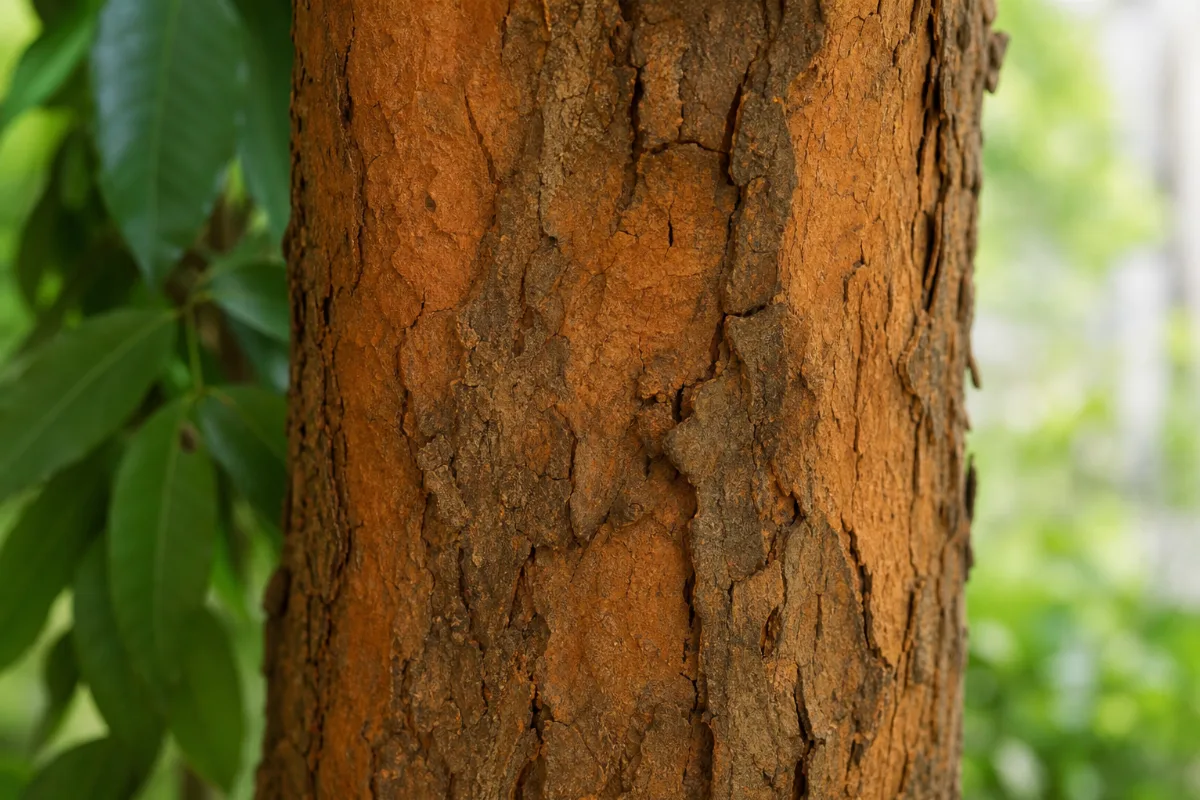
Herbs & Botanicals · Ayurvedic women's bark remedy
Ashoka
Saraca asoca · also called Ashoka, Asoka, Ashok, Ashokarishta (the liquid made with it)
Ashoka is a sacred Indian tree whose bark is a classic Ayurvedic remedy for heavy periods and women's complaints. The human evidence is very thin: one uncontrolled study of a syrup that also held other ingredients, plus animal and lab work. Avoid it in pregnancy, and beware of fake bark from a different tree. The wild tree is under serious pressure.
General information, not medical advice. Last substantive update · Not medically reviewed. A named clinician has not signed off on this page. How this page is made
About Ashoka
Ashoka (Saraca asoca) is a tree of India whose stem bark is used in Ayurveda for heavy periods and women's complaints, often as the fermented liquid Ashokarishta. Human research is tiny: one uncontrolled study of a branded syrup and one registered trial with no results. Most claims come from animals and the lab. Avoid it in pregnancy. Choose a tested brand, because fake bark, alcohol and metals are real concerns.
What it is
Ashoka (Saraca asoca) is a tree in the legume family, a sacred tree in Indian tradition. The part used in medicine is the stem bark, and in some traditions the flowers. The bark holds catechins, epicatechin and tannins; the flowers hold flavonoids such as quercetin, kaempferol and luteolin.
Do not confuse it with 'false ashoka' (Polyalthia longifolia), a different tree. Ashokarishta is a fermented liquid made with the bark and other ingredients. It is not the same as the bark.
What the research shows
For heavy periods, the best human result is one open-label study of 228 women who took a branded Ashoka-based syrup for 90 days. The authors report 54% less estimated blood loss and haemoglobin rising from 10.64 to 11.38 g/dL. There was no control group, blood loss was self-reported, the syrup had other ingredients, and two authors work for the maker. A randomised trial of Ashokarishta plus a coral preparation and iron against tranexamic acid is registered, but no results were found.
A small trial of a three-product formula reported lower menopause symptom scores. The rest is rat, mouse and test-tube work: bark and Asokarishta lowered estrogen-driven womb-lining growth in young rats, a flower extract acted estrogen-like in rats, a flower extract eased stress behaviour in mice, and one extract dissolved lab clots. None of it has been tested in women.
The tree is under pressure
Papers describe wild Ashoka as vulnerable, and one calls it endangered. A 2025 genetic study says wild populations have fallen sharply because the wood is harvested for the herbal market, with critically low numbers in parts of the Western Ghats. GBIF's link to the IUCN Red List shows Near Threatened, but the IUCN site could not be read, so the formal status is unconfirmed.
Scarcity drives substitution. In a survey of raw bark from 25 shops, more than 80% of samples were not genuine, and the usual adulterant is the bark of false ashoka. Prefer cultivated, traceable bark and never strip wild trees.
At a glance
Traditional uses history, not proof
- Heavy periods, vaginal discharge, blood in urine and other female complaints (2005 paper)
- Uterine tonic, as bark and as the fermented liquid Ashokarishta
- Flower juice as a women's tonic (2017 paper)
Studied for research
- Heavy periods, very low certainty (one uncontrolled syrup study; trial under way)
- Period pain, very low certainty (same study)
- Menopause symptoms, very low certainty (three-product formula)
- Hormone effects, mood, antioxidant, cancer-cell and clot claims, lab and animal only
Main compounds
- Catechin (CID 9064)
- Epicatechin (CID 72276)
- Tannins (class)
- Gallic acid (CID 370)
- Quercetin (CID 5280343)
- Kaempferol (CID 5280863)
- Beta-sitosterol (CID 222284)
Common forms
- Dried stem bark
- Bark powder or capsules
- Extracts
- Ashokarishta (fermented liquid with alcohol)
- Branded syrup (one open-label study)
Research links: Heavy periods syrup study (2026) · Ashokarishta trial protocol (2025) · Review of the tree (2023) · Market adulteration survey (2016) · Wild population genetics (2025) · Research Library · Genes & Biomarkers Library
The plant and its history
- Accepted scientific name
- Saraca asoca (Roxb.) W.J.de Wilde
- Naming authority
- (Roxb.) W.J.de Wilde
- Synonyms
- Jonesia asoca Roxb.; Saraca asoca (Roxb.) Willd.; Saraca indica Bedd.; Saraca confusa (Hassk.) Backer
- Common names
- Ashoka (English / Hindi); Asoka (English); Ashok (Hindi); Ashoka tree, sorrowless tree (English)
- Botanical family
- Fabaceae (legume family)
- Classification
- Plantae > Tracheophyta > Magnoliopsida > Fabales > Fabaceae > Saraca > Saraca asoca
- Native range
- India and the Western Ghats are named in the papers; the full native range was not verified.
- Habitat
- Wild populations in the Western Ghats, a biodiversity hotspot (Scientific Reports 2025). Further habitat details were not verified.
- What the plant looks like
- Roots: Not described in sources read; Stems: Bark is the part used; bark of Polyalthia longifolia looks somewhat similar (2005 paper); Leaves: Not described in sources read; Flowers: Flowers are used traditionally as a tonic juice (2017 paper); Fruit: Not described in sources read
- Cultivation
- Not covered by the sources we read. The 2023 review calls for conservation strategies; no cultivation guidance was read.
- Harvest and processing
- The bark comes from the tree stem. Papers describe 'destructive extraction' (2005) and 'unregulated extraction of its wood' (2025).
- Look-alikes and adulterants
- Name: Polyalthia longifolia (false ashoka); Family: Annonaceae; Note: The commonly used bark adulterant; GBIF accepted name Polyalthia longifolia (Sonn.) Thwaites. Not a medicinal equivalent.; Name: Kingiodendron pinnatum; Family: not verified; Note: A widely used substitute bark in Asokarishta; tested as an alternative in rats (2018).
- Sustainability and conservation
- The wild tree has declined severely, mainly from unregulated extraction of its wood for the herbal market (Scientific Reports, 2025). Papers call it vulnerable (2016, 2023 title, 2025), 'endangered' (2018) or 'critically low' in local populations in the Western Ghats. GBIF's IUCN link currently shows Near Threatened. The IUCN site returned a block, so the formal status was not confirmed. What readers can do: avoid wild-harvested bark, prefer cultivated and traceable supply, and do not buy products that cannot name the tree.
Traditional use and history history, not clinical proof
| Tradition or era | Documented use | Source |
|---|---|---|
| Hindu and Buddhist tradition | Considered a sacred tree (abstract of 2005 paper); revered as sacred in Indian tradition (2023 review). | p22557174 |
| Ayurveda | The stem bark is the principal ingredient of several Ayurvedic preparations prescribed in leucorrhoea, haematuria, menorrhagia and other female genitourinary complaints. | p22557174 |
| Ayurveda: Ashokarishta | A fermented preparation using the bark, used as a uterine tonic. The trial protocol says Ashokarishta has been used in Ayurvedic practice for a long time but had not been tested in a clinical trial. | p40163851 |
| Ancient texts to today | The 2023 review traces taxonomy and use from ancient Ayurvedic textbooks to the present and calls for conservation and for safety and toxicology reports on traditional formulas. | p37390875 |
| Regulators | No EMA/HMPC monograph found (EMA search blocked, marked unverified). | s-regulators-not-found |
| Wikipedia-style legends (for example links to the Buddha's birth) | NOT verified: not read in any source we opened. Left out of reader text. |
Traditional use shows how a plant was used. It does not show that a supplement works or is safe today.
What is inside, and how it may work
What the plant contains and how those compounds act in cells and animals. Laboratory and animal mechanisms are not proven effects in people.
Main compounds
| Compound | Family | Where it is concentrated | Activity studied | Level of evidence |
|---|---|---|---|---|
| Catechin ((+)-catechin) PubChem 9064 | Flavan-3-ol | Bark and leaf (regenerated bark highest) | Found in S. asoca extracts by MS/MS; linked in that paper to antimicrobial activity in the lab. 16 25 | Laboratory research |
| Epicatechin ((+)-epicatechin in one paper) PubChem 72276 | Flavan-3-ol | Bark and leaf; also in marketed Ashokarishta | Seven-fold difference between two Ashokarishta brands; (-)-epicatechin also found in an ethanol extract by HPLC. 16 3 25 | Laboratory research |
| Epigallocatechin | Flavan-3-ol | Bark water extract | Higher in bark water extract; low antimicrobial activity. 16 | Laboratory research |
| Tannins (class, mostly condensed tannins and related polyphenols) | Tannin | Bark | The 2025 gene study says the bark is used for women's complaints primarily due to its tannin content. Amounts were not measured in the abstract. 1 | Laboratory research |
| Gallic acid PubChem 370 | Phenolic acid | Bark (ethanol extract) | Found by HPLC in the ethanol extract used in the PCOS rat study. 3 25 | Laboratory research |
| Quercetin PubChem 5280343 | Flavonol | Flower 1.543 mg/g in the standardised flower extract | Found in flower extracts by LC-MS and HPLC; the flower authors credit antioxidant flavonoids for the mouse result. 15 18 25 | Animal research |
| Kaempferol PubChem 5280863 | Flavonol | Flower; bark ethanol extract 0.924 mg/g in the flower extract | Found in the flower extract and the ethanol extract. 18 3 25 | Animal research |
| Luteolin PubChem 5280445 | Flavone | Flower 2.349 mg/g in the flower extract | Found in the flower extract. 18 25 | Animal research |
| Myricetin PubChem 5281672 | Flavonol | Flower | Found in the flower extract. 15 25 | Animal research |
| Rutin PubChem 5280805 | Flavonol glycoside | Bark (ethanol extract) | Found in the ethanol extract used in the PCOS rat study. 3 25 | Laboratory research |
| Beta-sitosterol PubChem 222284 | Plant sterol | Flower 4.481 mg/g in the flower extract | Found in the flower extract. 18 25 | Animal research |
| Rhamnazin | Flavonol | Flower | Named in the mouse paper; no CID verified. 15 | Animal research |
Mechanisms, receptors and pathways
| Target or pathway | Gene or receptor | What was found | Level |
|---|---|---|---|
| Estrogen-driven womb-lining growth | Estrogen signalling (not identified further) | Asokarishta and a bark extract lowered estradiol-induced thickening and serum estrogen in immature rats; a flower extract acted estrogen-like in ovariectomised rats. 14 13 18 | Animal research |
| Inflammation | COX-2 | Bark extract lowered LPS-induced COX-2 in rat uterus and reduced paw swelling in mice. 13 | Animal research |
| Stress hormone and antioxidant defence | Glutathione peroxidase, SOD (named in the paper) | Flower extract lowered corticosterone and raised antioxidant enzymes in mouse hippocampus. 15 | Animal research |
| Clot dissolving | Not identified | An extract dissolved 49.70% of a lab clot against 79.32% for streptokinase. 4 | Laboratory research |
| Hormone and metabolic pathway in PCOS model | Not identified | Ethanol extract changed testosterone, LH, FSH, estradiol, progesterone and insulin in letrozole-treated rats. 3 | Animal research |
Absorption, metabolism and elimination
- Absorption
- No human absorption data found.
- Distribution
- Not found.
- Metabolism
- Not found.
- Elimination
- Not found.
- Bioavailability
- Not found.
Isolated compounds versus whole extracts
Results cannot be moved between forms. Bark extracts, flower extracts and Asokarishta (a fermented, multi-ingredient liquid) were each tested separately, and content varies between brands (the epicatechin level differed seven-fold between two brands). The human study used a branded syrup, not bark alone.
Nutritional composition
Ashoka bark is a medicinal tree bark, not a food. Its polyphenols (catechins, tannins) can lower iron absorption, which matters for women who are anaemic after heavy periods; this is a food-compound finding, not measured for Ashoka. Fermented liquids also contain alcohol.
3 very low certainty6 not enough evidence
What is Ashoka good for?
The studied uses and how strong the human evidence is. 'Very low' means one small or uncontrolled study. 'Insufficient' means no human trial, or animal and lab work only. Safety comes first: see the Safety tab.
Benefits, one by one
Each card is a research question, not a promise. Tap a goal to filter. Open a card to see the studies, doses and limits.
Heavy periods (heavy menstrual bleeding)
Very low certaintyAshoka bark is best known in Ayurveda as a remedy for heavy periods. The only human result we found is one uncontrolled study of a branded syrup with Ashoka in it: bleeding fell, but with no comparison group we cannot say the syrup caused it. A proper trial is under way.
3 studiesBranded syrup in the one study; classical Ashokarishta in the planned…
Studies, doses and limits
What the trials found
One open-label study (Drugs in Context, 2026) gave Menohelp Syrup, a branded Ayurvedic syrup described as Ashoka-based with 'ingredients like' Saraca asoca, to 228 non-pregnant women with heavy periods; 217 finished 90 days. There was no control group. A randomised trial that will compare Ashokarishta, a coral-based preparation and iron against tranexamic acid plus iron is registered, with 79 women enrolled by December 2024 and no results yet.
Results
In the open-label study the authors report a 54% fall in estimated blood loss and a 58% fall in chart score by day 90. Average blood loss fell from 123.6 mL to 56.9 mL and haemoglobin rose from 10.64 to 11.38 g/dL (plain-language summary). Endometrial thickness stayed stable. No clinically significant adverse events were reported. No result exists for Ashoka bark alone.
Effect sizes as reported
Menstrual blood loss: 123.6 mL to 56.9 mL (54% fall by the authors' estimate); chart score down 58%; haemoglobin 10.64 to 11.38 g/dL. No confidence intervals in the abstract and no comparison group.
Why this rating
One uncontrolled study of a multi-ingredient syrup, 90 days, self-reported blood loss charts, with two authors employed by the maker. The only randomised trial found has no results yet.
Form and dose studied
Branded syrup in the one study; classical Ashokarishta in the planned trial. Ask a doctor or pharmacist about amounts.
Who was studied
Non-pregnant women aged 18 to 45 with heavy periods, India.
Limits
No placebo or control group, open label, blood loss self-reported on charts, short follow-up, product contains other ingredients, industry-linked authors. Heavy periods can have causes such as fibroids, thyroid problems or clotting disorders that need a medical check.
Why researchers looked
Heavy periods can cause iron-deficiency anaemia, tiredness and poor quality of life. Ayurveda describes the problem as Asrigdara or Raktapradara and uses Ashoka bark and the fermented liquid Ashokarishta for it.
Traditional use
A 2005 paper says the stem bark is the main part used in Ayurvedic preparations for leucorrhoea (vaginal discharge), blood in the urine, heavy periods and other female complaints. A 2023 review describes long use and a sacred status in India.
Proposed mechanism Animal research
Not established in people. In young female rats a bark extract and Asokarishta lowered the thickening of the womb lining that estradiol caused, and the bark extract lowered COX-2, an inflammation enzyme. Whether this happens in women is unknown.
A proposed mechanism does not show that the effect happens in people.
Heavy bleeding needs a doctor's assessment first. The study excluded women with large fibroids, cancer or major disease, and did not include pregnant women.
Ashokarishta compared with tranexamic acid (trial under way)
Not enough evidenceA randomised trial in India is comparing a package of Ashokarishta, a coral-based Ayurvedic preparation and iron against standard tranexamic acid and iron. No results have been published that we could find.
1 studiesClassical Ashokarishta liquid in the protocol. Ask a doctor or pharma…
Studies, doses and limits
What the trials found
Protocol only (JMIR Research Protocols, 2025): open-label randomised trial, planned 140 women, treatment group 20 mL Ashokarishta twice a day plus 250 mg Trinakantamani pishti plus iron and folic acid for 3 months; control group tranexamic acid plus iron and folic acid. Registered as CTRI/2023/05/052929.
Results
No results. Data analysis was due by February 2026.
Effect sizes as reported
None.
Why this rating
A protocol is not evidence of effect. Even when the results arrive, the package contains three products, so the effect of Ashoka alone could not be isolated.
Form and dose studied
Classical Ashokarishta liquid in the protocol. Ask a doctor or pharmacist about amounts.
Who was studied
Women with heavy periods, India.
Limits
Open label; combination treatment; no results yet.
Why researchers looked
Tranexamic acid is a standard non-hormonal treatment for heavy periods. The trial authors say no clinical trial of Ashokarishta had been carried out before.
Traditional use
Ashokarishta is a classical fermented liquid made from Ashoka bark with other ingredients.
Proposed mechanism Traditional use
Not tested in this protocol.
A proposed mechanism does not show that the effect happens in people.
Ashokarishta is fermented and contains alcohol (see the Safety tab).
Period pain (painful periods)
Very low certaintyIn the same open-label syrup study, many women reported less period pain. This is a secondary result from an uncontrolled study of a multi-ingredient syrup, so it is weak.
2 studiesBranded syrup. Ask a doctor or pharmacist about amounts.
Studies, doses and limits
What the trials found
The Menohelp Syrup study reports that 68.06% of participants had complete resolution of dysmenorrhoea at day 90, and lower cramping and backache, with no control group.
Results
68.06% reported complete resolution of period pain by the end of 90 days. There was no placebo comparison, and periods can change over time without treatment.
Effect sizes as reported
68.06% with complete resolution (single arm).
Why this rating
Secondary outcome of one uncontrolled study of a multi-ingredient product.
Form and dose studied
Branded syrup. Ask a doctor or pharmacist about amounts.
Who was studied
Non-pregnant women with heavy periods.
Limits
No control, self-reported, multi-ingredient, industry-linked authors.
Why researchers looked
Painful periods often go along with heavy periods, and Ashoka is traditionally used for women's complaints in general.
Traditional use
Listed among traditional uses for female complaints by the 2023 review and the 2005 paper.
Proposed mechanism Animal research
Not studied in people. An anti-inflammatory effect (paw swelling, COX-2) was seen in mice and rats with a bark extract.
A proposed mechanism does not show that the effect happens in people.
Severe or new pain needs medical review.
Traditional 'uterine tonic' use (leucorrhoea and women's complaints)
Not enough evidenceIn Ayurveda Ashoka bark is called a uterine tonic and used for vaginal discharge and other women's complaints. This is traditional use. No good human trial of the bark alone exists.
3 studiesBark, powder, decoction and Ashokarishta in tradition. Ask a doctor o…
Studies, doses and limits
What the trials found
No controlled human study of Ashoka bark alone was found. The 2023 review calls for more clinical, safety and toxicology work.
Results
No human result for bark alone.
Effect sizes as reported
None.
Why this rating
Traditional use only; no controlled trials of the bark itself.
Form and dose studied
Bark, powder, decoction and Ashokarishta in tradition. Ask a doctor or pharmacist about amounts.
Who was studied
Women, traditionally.
Limits
Tradition is not proof. A product sold as Ashoka may not contain it: over 80% of 25 raw-drug market samples were spurious.
Why researchers looked
It is one of the best-known women's herbs in Indian medicine and is a prime ingredient of Asokarishta.
Traditional use
A 2023 review follows its use through old Ayurvedic texts and says it is revered as sacred. The 2005 paper lists leucorrhoea, haematuria and menorrhagia.
Proposed mechanism Traditional use
Not established. Lab work finds catechins and other polyphenols in the bark; their link to any effect in women is not shown.
A proposed mechanism does not show that the effect happens in people.
Abnormal discharge or bleeding needs a medical check, because infection and other causes need treatment.
Menopause symptoms (a three-product formula)
Very low certaintyA small open trial in India tested Ashokarishta together with ashwagandha root powder and a coral preparation in menopausal women. Symptom scores fell. We cannot say what Ashoka contributed.
1 studiesCombination of three products. Ask a doctor or pharmacist about amoun…
Studies, doses and limits
What the trials found
Ayu 2012: 52 women registered and 51 finished. The treatment was three products together (Ashokarishta, Ashwagandha churna and Praval pishti). Outcomes were the Menopause Rating Scale and the MENQOL questionnaire.
Results
The authors report a highly significant fall (P < 0.01) in both scores. No averages are given in the abstract, and no placebo is described.
Effect sizes as reported
P < 0.01 for both scales; no numbers in the abstract.
Why this rating
Small trial, three products at once, no placebo described, no numbers in the abstract, 2012.
Form and dose studied
Combination of three products. Ask a doctor or pharmacist about amounts.
Who was studied
Women with mild to moderate menopausal symptoms.
Limits
Cannot separate Ashoka from the other two products. The ashwagandha alone has its own studies.
Why researchers looked
Ayurvedic practice uses Ashokarishta in women's hormone-linked complaints.
Traditional use
Ashokarishta is used as a women's tonic in classical Ayurveda.
Proposed mechanism Traditional use
Not tested.
A proposed mechanism does not show that the effect happens in people.
Ashokarishta contains alcohol. Postmenopausal bleeding needs a doctor.
Hormone effects (estrogen, PCOS-type changes)
Not enough evidenceAnimal studies point in different directions. A bark extract and Asokarishta lowered estrogen-driven womb-lining thickening in young rats, a flower extract acted estrogen-like in rats with their ovaries removed, and an ethanol extract changed several hormones in a rat model of PCOS. None was done in women. Do not read this as a hormone treatment.
4 studiesRat doses are not human doses. Ask a doctor or pharmacist about amoun…
Studies, doses and limits
What the trials found
None found. No human trial measured a hormone level after Ashoka alone. The open-label heavy periods study did not report hormone levels in its abstract.
Results
Rats given estradiol: Asokarishta lowered serum estrogen (156.5 to 102.6 pg/mL) and lining thickness (75.2 to 42.5 micrometres). A methanol bark extract lowered estrogen to 82.9 pg/mL against 111.2 pg/mL. In rats with ovaries removed, a flower extract at the high dose had estrogen-like effects. In letrozole-treated rats, an ethanol extract lowered testosterone, LH and insulin and raised FSH, estradiol and progesterone.
Effect sizes as reported
Rat values as listed above; no human effect sizes.
Why this rating
Animal and lab only, different plant parts and extracts, results that go in different directions, none in women.
Form and dose studied
Rat doses are not human doses. Ask a doctor or pharmacist about amounts.
Who was studied
Immature, ovariectomised and drug-induced PCOS-model female rats.
Limits
Different parts (bark, flower, unspecified), different models, small groups. Hormone-model rats do not predict human hormone effects.
Why researchers looked
Ashoka is a women's herb, so researchers have asked whether it acts on estrogen.
Traditional use
Used as a uterine tonic; Ayurveda does not describe it in hormone terms.
Proposed mechanism Animal research
Unclear and inconsistent. The bark/Asokarishta results look anti-estrogen-like and anti-inflammatory; the flower result looks estrogen-like. The flower extract contained quercetin, kaempferol, luteolin and beta-sitosterol, plant compounds that some studies call phytoestrogens.
A proposed mechanism does not show that the effect happens in people.
Avoid in hormone-sensitive conditions unless a doctor agrees, because the human effect is unknown. Cancer-cell results are lab-only and are not a treatment claim.
Mood and stress (flower extract in mice)
Not enough evidenceA flower extract made mice less 'depressed' in swim and tail tests and lowered a stress hormone. This is a mouse study of the flower, not the bark, and no human study exists.
1 studiesMouse doses only.
Studies, doses and limits
What the trials found
None found.
Results
Doses of 50, 100 and 250 mg/kg for 7 days cut immobility time (P<0.05). The 250 mg/kg dose lowered plasma corticosterone, comparable to imipramine.
Effect sizes as reported
Not given beyond P<0.05 in the abstract.
Why this rating
One mouse study, flower extract, 7 days.
Form and dose studied
Mouse doses only.
Who was studied
Mice under restraint stress.
Limits
Mouse behavioural tests are a rough guide to human mood.
Why researchers looked
Researchers tested the antioxidant flavonoids of the flower for brain effects.
Traditional use
Ashoka flowers are used in India as a women's tonic (juice); mood use is not a documented tradition in our sources.
Proposed mechanism Animal research
The authors suggest lower corticosterone (the mouse stress hormone) and higher antioxidant enzymes in the hippocampus. Not shown in people.
A proposed mechanism does not show that the effect happens in people.
Do not replace antidepressants or mental health care with it.
Antioxidant, anti-inflammatory and cell-lab claims
Not enough evidenceIn test tubes and animals, bark and flower extracts showed antioxidant and anti-inflammatory activity and some activity against breast cancer cells. These are lab results; no human trial tested any of them.
3 studiesLab extracts. No human dose.
Studies, doses and limits
What the trials found
None found.
Results
Bark extract: antioxidant and anti-breast-cancer-cell activity in the lab, with toxicology tests the authors call safer (no numbers in the abstract). Bark extract also lowered paw swelling in mice. The epicatechin level differed seven-fold between two marketed Ashokarishta brands, and neither showed antimicrobial activity.
Effect sizes as reported
None in humans.
Why this rating
Cells and animals only.
Form and dose studied
Lab extracts. No human dose.
Who was studied
Cells, mice and rats.
Limits
Lab results rarely carry over to people. Content varies a lot between products.
Why researchers looked
The bark is rich in polyphenols and catechins that show antioxidant effects in the lab.
Traditional use
Anti-inflammatory and anti-bacterial uses are listed in the raw-drug literature.
Proposed mechanism Laboratory research
Antioxidant polyphenols (catechin, epicatechin and others) and lowered COX-2 in rat uterus.
A proposed mechanism does not show that the effect happens in people.
Not a cancer treatment. Do not use in place of medical care.
Effect on clots (test-tube clot dissolving)
Not enough evidenceAshoka is used to reduce bleeding, yet in one test-tube study an extract of Saraca indica dissolved about half of a lab clot. The two ideas pull in opposite directions and neither is shown in people, so no one should assume it either stops bleeding or thins blood.
1 studiesLab extract only.
Studies, doses and limits
What the trials found
None found.
Results
The Saraca indica extract dissolved 49.70% of a clot (plus or minus 1.69) against 79.32% for streptokinase. Brine shrimp toxicity LC50 was 478.40 micrograms per mL.
Effect sizes as reported
49.70% clot lysis versus 79.32% for the reference drug, in a test tube.
Why this rating
One lab study; plant part and solvent not stated in the abstract.
Form and dose studied
Lab extract only.
Who was studied
None (in vitro).
Limits
Test-tube clot, not blood in a living body. Says nothing about bleeding risk or benefit.
Why researchers looked
Researchers screen traditional plants for clot-dissolving activity.
Traditional use
Traditionally used to reduce bleeding, not to dissolve clots.
Proposed mechanism Laboratory research
Unknown. Tannin-type plant compounds can affect proteins in many ways; this was not studied here.
A proposed mechanism does not show that the effect happens in people.
If you take warfarin, other blood thinners or antiplatelet medicine, or are about to have surgery, tell your doctor or pharmacist before using Ashoka products.
Connections to the rest of health
How Ashoka connects to the rest of our health knowledge graph. Every link says what kind of connection it is. A safety link (for example to the liver) is a warning, not a benefit. A study that merely mentions a topic never creates a benefit link.
Explore every connection: goals, body systems, organs, symptoms, genes
A. Wellness goals
| Connected to | Kind of connection | Evidence status | Context | Studies |
|---|---|---|---|---|
| Womens Wellness | Traditional use | Very low certainty | Heavy periods (heavy menstrual bleeding): Ashoka bark is best known in Ayurveda as a remedy for heavy periods. The only human result we found is one uncontrolled study of a branded syrup with Ashoka in it: bleeding fell, but with no comparison group we cannot say the syrup caused it. A proper trial is under way. Ashokarishta compared with tranexamic acid (trial under way): A randomised trial in India is comparing a package of Ashokarishta, a coral-based Ayurvedic preparation and iron against standard tranexamic acid and iron. No results have been published that we could find. | 5 12 20 13 9 19 |
| Menopause Support | Traditional use | Very low certainty | Menopause symptoms (a three-product formula): A small open trial in India tested Ashokarishta together with ashwagandha root powder and a coral preparation in menopausal women. Symptom scores fell. We cannot say what Ashoka contributed. | 11 |
| Hormone Balance | Preliminary mechanism | Not enough evidence | Hormone effects (estrogen, PCOS-type changes): Animal studies point in different directions. A bark extract and Asokarishta lowered estrogen-driven womb-lining thickening in young rats, a flower extract acted estrogen-like in rats with their ovaries removed, and an ethanol extract changed several hormones in a rat model of PCOS. None was done in women. Do not read this as a hormone treatment. | 14 13 18 3 |
| Womens Wellness | Preliminary mechanism | Not enough evidence | Hormone effects (estrogen, PCOS-type changes): Animal studies point in different directions. A bark extract and Asokarishta lowered estrogen-driven womb-lining thickening in young rats, a flower extract acted estrogen-like in rats with their ovaries removed, and an ethanol extract changed several hormones in a rat model of PCOS. None was done in women. Do not read this as a hormone treatment. | 14 13 18 3 |
| Mood Balance | Preliminary mechanism | Not enough evidence | Mood and stress (flower extract in mice): A flower extract made mice less 'depressed' in swim and tail tests and lowered a stress hormone. This is a mouse study of the flower, not the bark, and no human study exists. | 15 |
| Stress Reduction | Preliminary mechanism | Not enough evidence | Mood and stress (flower extract in mice): A flower extract made mice less 'depressed' in swim and tail tests and lowered a stress hormone. This is a mouse study of the flower, not the bark, and no human study exists. | 15 |
| Inflammation Balance | Preliminary mechanism | Not enough evidence | Antioxidant, anti-inflammatory and cell-lab claims: In test tubes and animals, bark and flower extracts showed antioxidant and anti-inflammatory activity and some activity against breast cancer cells. These are lab results; no human trial tested any of them. | 21 16 13 |
| Heart Health | Preliminary mechanism | Not enough evidence | Effect on clots (test-tube clot dissolving): Ashoka is used to reduce bleeding, yet in one test-tube study an extract of Saraca indica dissolved about half of a lab clot. The two ideas pull in opposite directions and neither is shown in people, so no one should assume it either stops bleeding or thins blood. | 4 |
B. Body systems
| Connected to | Kind of connection | Evidence status | Context | Studies |
|---|---|---|---|---|
| Reproductive System | Biological association | Very low certainty | Studied for: Heavy periods (heavy menstrual bleeding) Studied for: Ashokarishta compared with tranexamic acid (trial under way) | 5 12 20 13 9 19 11 14 18 3 |
| Endocrine System | Biological association | Very low certainty | Studied for: Menopause symptoms (a three-product formula) Studied for: Hormone effects (estrogen, PCOS-type changes) | 11 14 13 18 3 |
| Nervous System | Biological association | Not enough evidence | Studied for: Mood and stress (flower extract in mice) | 15 |
| Immune System | Biological association | Not enough evidence | Studied for: Antioxidant, anti-inflammatory and cell-lab claims | 21 16 13 |
| Cardiovascular System | Biological association | Not enough evidence | Studied for: Effect on clots (test-tube clot dissolving) | 4 |
E. Health conditions
| Connected to | Kind of connection | Evidence status | Context | Studies |
|---|---|---|---|---|
| Heavy menstrual bleeding | Traditional use | Very low certainty | One uncontrolled study of a branded syrup; a randomised trial protocol; no result for bark alone. One uncontrolled syrup study; trial protocol; no result for bark alone. Preparation or compound: Bark and Ashokarishta; one branded syrup |
5 12 |
| Pregnancy | Contraindication | Not enough evidence | No safety data; womb-directed use; alcohol in liquids. No safety data; avoid. Preparation or compound: All forms |
5 8 |
G. Root causes and contributing factors
| Connected to | Kind of connection | Evidence status | Context | Studies |
|---|---|---|---|---|
| Product adulteration or mislabeling | Adverse effect or risk | Market survey | More than 80% of 25 raw-drug samples were spurious. Over 80% of 25 raw bark samples were not genuine. Preparation or compound: Raw bark |
19 9 |
I. Biomarkers
| Connected to | Kind of connection | Evidence status | Context | Studies |
|---|---|---|---|---|
| Menstrual blood loss (Pictorial Blood Assessment Chart and estimated millilitres) | Biological association | Very low certainty | Measured in trials: lowered. A lab change is not the same as a health benefit. | 5 12 |
| Haemoglobin | Biological association | Very low certainty | Measured in trials: raised. A lab change is not the same as a health benefit. | 5 |
| Endometrial thickness (womb lining on ultrasound) | Biological association | Very low certainty | Measured in trials: no-change. A lab change is not the same as a health benefit. | 5 |
| Menopause symptom scores (MRS and MENQOL) | Biological association | Very low certainty | Measured in trials: lowered. A lab change is not the same as a health benefit. | 11 |
| Serum estrogen (estradiol), in rats | Biological association | Not enough evidence | Measured in trials: mixed. A lab change is not the same as a health benefit. | 14 13 3 18 |
| Corticosterone (the mouse stress hormone) | Biological association | Not enough evidence | Measured in trials: lowered. A lab change is not the same as a health benefit. | 15 |
| Clot lysis (percent of a lab clot dissolved) | Biological association | Not enough evidence | Measured in trials: raised. A lab change is not the same as a health benefit. | 4 |
J. Genes, receptors and enzymes
| Connected to | Kind of connection | Evidence status | Context | Studies |
|---|---|---|---|---|
| PTGS2 (COX-2) | Preliminary mechanism | Animal | Lower in rat uterus after a bark extract. | 13 |
K. Biological pathways
L. Active compounds
| Connected to | Kind of connection | Evidence status | Context | Studies |
|---|---|---|---|---|
| Catechin ((+)-catechin) | Biological association | In vitro | Found in S. asoca extracts by MS/MS; linked in that paper to antimicrobial activity in the lab. Preparation or compound: Bark and leaf (regenerated bark highest) |
16 25 |
| Epicatechin ((+)-epicatechin in one paper) | Biological association | In vitro | Seven-fold difference between two Ashokarishta brands; (-)-epicatechin also found in an ethanol extract by HPLC. Preparation or compound: Bark and leaf; also in marketed Ashokarishta |
16 3 25 |
| Epigallocatechin | Biological association | In vitro | Higher in bark water extract; low antimicrobial activity. Preparation or compound: Bark water extract |
16 |
| Tannins (class, mostly condensed tannins and related polyphenols) | Biological association | In vitro | The 2025 gene study says the bark is used for women's complaints primarily due to its tannin content. Amounts were not measured in the abstract. Preparation or compound: Bark |
1 |
| Gallic acid | Biological association | In vitro | Found by HPLC in the ethanol extract used in the PCOS rat study. Preparation or compound: Bark (ethanol extract) |
3 25 |
| Quercetin | Biological association | Animal | Found in flower extracts by LC-MS and HPLC; the flower authors credit antioxidant flavonoids for the mouse result. Preparation or compound: Flower |
15 18 25 |
| Kaempferol | Biological association | Animal | Found in the flower extract and the ethanol extract. Preparation or compound: Flower; bark ethanol extract |
18 3 25 |
| Luteolin | Biological association | Animal | Found in the flower extract. Preparation or compound: Flower |
18 25 |
| Myricetin | Biological association | Animal | Found in the flower extract. Preparation or compound: Flower |
15 25 |
| Rutin | Biological association | In vitro | Found in the ethanol extract used in the PCOS rat study. Preparation or compound: Bark (ethanol extract) |
3 25 |
| Beta-sitosterol | Biological association | Animal | Found in the flower extract. Preparation or compound: Flower |
18 25 |
| Rhamnazin | Biological association | Animal | Named in the mouse paper; no CID verified. Preparation or compound: Flower |
15 |
Each connection is stored with the ingredient, the connected record, the kind of connection, the evidence status, the supporting studies, the preparation or compound involved, and a review date (last reviewed October 25, 2026).
Evidence at a glance: what changed in 7 lab markers
Tap a number to show only those markers. Counts are markers, not people.
The evidence
The research centre for Ashoka. Every record here was checked against PubMed or the publisher's page; we never list a study we have not verified.
Evidence by outcome
Bars show how many studies we found for each outcome, not how well it works. People are added up across trials only (reviews are not added, to avoid double counting).
How we rate evidence
High certainty
Several well-run trials or reviews agree; further research is unlikely to change the picture much.
Moderate certainty
Good trials point the same way, but some doubt remains.
Low certainty
Small, short or inconsistent trials. The finding could change with better research.
Very low certainty
Very little or very weak human data. Treat as a possibility only.
Mixed findings
Trials or reviews disagree with each other.
Not enough evidence
Not enough human research to say either way.
Evidence against
Good research found no benefit, or found harm.
We take the reviewers' own risk-of-bias and GRADE statements where they exist, and otherwise judge from study size, design, consistency, directness and whether a product matches what is sold. Many publications do not make evidence high. Method note: We searched PubMed, read the abstracts of every study cited, and checked names against GBIF, NCBI Taxonomy and PubChem. Pages that could not be found or opened are marked as not found. Where only a summary was available, we say so.
Study library: every study we checked 26
| Study | Design | People | Product, dose, length | Result |
|---|---|---|---|---|
| Arathi 2025 Transcriptome sequencing on different ages of Saraca asoca bark: Insights from tannin biosynthetic pathways and EST-SSR marker design. Fitoterapia · PMID 40023231 · DOI |
Lab genetics in-vitro |
Gene sequencing of young, middle-aged and old bark | S. asoca bark of three ages bark |
The authors state that the bark is used for women's complaints 'primarily due to its tannin content' and that the flavonoid pathway was most active in middle-aged bark. They call the tree a vulnerable species. Not applicable Methods, limits and fundingOutcomes: Genes in the tannin pathway Limitations: Gene study; it does not measure tannin amounts or any effect on people. Funding and conflicts: No competing interest declared Read: abstract |
| Bhalla 2022 Are Ayurvedic medications store house of heavy metals? Toxicol Res (Camb) · PMID 35237422 · DOI |
Product analysis product-sample |
42 42 over-the-counter Ayurvedic preparations bought from licensed shops in Chandigarh in 2017 |
Mixed Ayurvedic products (Ashokarishta not named in the abstract) |
Heavy metals were found in all 42. Levels above the FAO/WHO limit were found for zinc in 35, mercury in 29, arsenic in 6 and lead in 2 products. Cadmium was not found in any. Metal contamination was common in the products tested Methods, limits and fundingOutcomes: Eight metals by ICP-MS compared with FAO/WHO limits Limitations: General Ayurvedic products, not Ashoka specifically. Many classical products add metals on purpose, so this does not describe a bark-only product or a plant-only syrup. Funding and conflicts: Not stated in the abstract Read: abstract |
| Bu 2023 Phytochemical-Based Study of Ethanolic Extract of Saraca asoca in Letrozole-Induced Polycystic Ovarian Syndrome in Female Adult Rats. ACS Omega · PMID 38024692 · DOI |
Animal research animal |
30 30 adult female rats; 25 given letrozole to induce a PCOS-like state |
Ethanol extract of S. asoca (plant part not stated in the abstract) not stated 200, 400 and 600 mg/kg body weight by mouth 5 weeks · vs Untreated PCOS rats; metformin |
The authors report fewer cystic follicles and lower testosterone, LH and insulin, with higher FSH, estradiol and progesterone, in a dose-dependent way. HPLC found kaempferol, rutin, (-)-epicatechin, salicylic acid and gallic acid. Hormone changes in a rat model Methods, limits and fundingOutcomes: Body weight, cystic follicles, testosterone, LH, insulin, estradiol, progesterone Limitations: Animal only, five rats per group, drug-induced model. Does not show an effect in women. Funding and conflicts: No competing interest declared Read: abstract |
| Dash 2016 Effects of Five Bangladeshi Plant Extracts on In vitro Thrombolysis and Cytotoxicity. Pharmacognosy Res · PMID 27365985 · DOI |
Laboratory research in-vitro |
Lab clot-dissolving test (in vitro thrombolytic model) and a brine shrimp toxicity test | Organic extracts of five plants, including Saraca indica (part not stated in the abstract) not stated · vs Streptokinase (positive control), water (negative) |
The Saraca indica extract dissolved 49.70% of clot (plus or minus 1.69) against 79.32% for streptokinase. Its brine shrimp LC50 was 478.40 micrograms per mL, the least toxic of the five. Clot lysis in a test tube Methods, limits and fundingOutcomes: Percent clot lysis; brine shrimp lethality Limitations: Test-tube and shrimp test only. Plant part and extract solvent not stated in the abstract. Does not show a blood-thinning effect in people. Funding and conflicts: Not stated in the abstract Read: abstract |
| Dhiman 2026 Efficacy and safety of an Ayurvedic Menohelp syrup in the management of heavy menstrual bleeding (menorrhagia): an open-label clinical study. Drugs Context · PMID 42741735 · DOI |
Open label single arm trial |
228 228 non-pregnant women aged 18-45 with heavy menstrual bleeding (217 finished); India |
Menohelp Syrup, a branded Ayurvedic syrup described as 'Ashoka (Saraca asoca)-based', containing 'ingredients like' Saraca asoca; full ingredient list not given in the abstract not stated 15 mL twice daily after meals 90 days · vs None (single arm) |
Authors report a 54% fall in estimated blood loss and a 58% fall in chart score from baseline to day 90. The plain-language summary gives average blood loss falling from 123.6 mL to 56.9 mL and haemoglobin rising from 10.64 to 11.38 g/dL. Endometrial thickness stayed stable. 68.06% reported complete relief of period pain. No clinically significant adverse events were reported. Large before-and-after change, but with no comparison group it cannot be credited to the syrup Methods, limits and fundingOutcomes: Menstrual blood loss by Pictorial Blood Assessment Chart; bleeding days, pain, haemoglobin, endometrial thickness, quality of life Limitations: Single arm, open label, no placebo. Blood loss was self-reported on charts. Only 90 days. Multi-ingredient product, so the result is not for Ashoka bark alone. Two authors are from Mankind Pharma; the paper states no relevant conflicts. Funding and conflicts: Two authors are employed by Mankind Pharma (affiliation in the paper); conflict statement says none relevant Read: abstract |
| Fernando 2020 Screening for performance enhancing substances and quantification of ethanol in different Arishta manufactured in Sri Lanka. Ceylon Med J · PMID 34825559 · DOI |
Product analysis product-sample |
12 12 samples of three arishta types from four makers in Sri Lanka |
Ashwagandharishta, Balarishta and Dashamoolarishta (not Ashokarishta) |
No banned stimulants or anabolic steroids were found. Ethanol was between 5.80% and 8.35% by volume (plus or minus 0.5) in all samples. About 6 to 8% alcohol in the three arishta types tested Methods, limits and fundingOutcomes: Banned stimulants and steroids; ethanol percent Limitations: Ashokarishta was not tested. Sri Lankan products. It shows that arishtas as a class can hold a beer-like level of alcohol. Funding and conflicts: Not stated in the abstract Read: abstract |
| Hegde 2018 Molecular identification of Saraca asoca from its substituents and adulterants. 3 Biotech · PMID 29527448 · DOI |
Lab analysis plant-material |
46 41 S. asoca samples and 5 each of 5 common substitute or adulterant plants |
Bark and plant material of S. asoca and five substitutes plant material |
The method separated genuine S. asoca from its common substitutes and adulterants. The authors call the plant endangered because of demand and falling numbers. A working DNA test exists Methods, limits and fundingOutcomes: DNA fingerprinting (ISSR) and rbcL barcodes to separate real from substitute Limitations: Lab method paper. Does not say which substitutes were found in products. Funding and conflicts: Indian Council of Medical Research grant; no conflicts declared Read: abstract |
| Maithani 2019 Ethanol content in traditionally fermented ayurvedic formulations: Compromised Good Manufacturing Practice regulations - compromised health. Am J Drug Alcohol Abuse · PMID 30427752 · DOI |
Product analysis product-sample |
20 20 over-the-counter fermented Ayurvedic formulations (asava and arishta) from 3 manufacturers |
Marketed asavas and arishtas |
Ethanol content differed significantly between formulations. The authors say asava and arishta make ethanol as they ferment, that it could lead to misuse, and that poor manufacturing compliance is a safety hazard. The abstract does not name which products were tested or give percentages. Alcohol content varies by product Methods, limits and fundingOutcomes: Ethanol content by gas chromatography Limitations: Abstract does not list products; Ashokarishta is not named. Funding and conflicts: Not stated in the abstract Read: abstract |
| Mathew 2005 Differentiation of saraca asoca crude drug from its adulterant. Anc Sci Life · PMID 22557174 |
Lab analysis plant-material |
Bark samples of S. asoca and Polyalthia longifolia | Stem bark of S. asoca and its commonest adulterant, Polyalthia longifolia bark |
The abstract says the stem bark is the main part used in Ayurvedic preparations for leucorrhoea, haematuria, menorrhagia and other female complaints, that supply is falling, and that the commonly used adulterant is the bark of Polyalthia longifolia. The abstract does not give the test results. Not applicable Methods, limits and fundingOutcomes: Methods to tell the genuine bark from the adulterant Limitations: Only the introduction was in the abstract; the differentiation results were not read. Funding and conflicts: Not stated Read: abstract |
| Milman 2020 A Review of Nutrients and Compounds, Which Promote or Inhibit Intestinal Iron Absorption: Making a Platform for Dietary Measures That Can Reduce Iron Uptake in Patients with Genetic Haemochromatosis. J Nutr Metab · PMID 33005455 · DOI |
Narrative review |
Review of foods and iron absorption | Dietary polyphenols and tannins (general, not Ashoka) |
The review lists polyphenols and tannins, with phytates, soya protein, milk, eggs and calcium, among the most important blockers of intestinal iron uptake, and alcohol among promoters. General food finding Methods, limits and fundingOutcomes: Which food compounds promote or block iron absorption Limitations: Review of foods. No study of Ashoka and iron. It is the basis for a theoretical caution only. Funding and conflicts: No conflicts declared Read: abstract |
| Modi 2012 Clinical evaluation of Ashokarishta, Ashwagandha Churna and Praval Pishti in the management of menopausal syndrome. Ayu · PMID 23723668 · DOI |
Open label trial |
52 52 women registered, 51 finished, menopausal syndrome, mild to moderate symptoms; India |
Ashokarishta plus Ashwagandha churna (root powder) plus Praval pishti (coral preparation) bark (as Ashokarishta) plus ashwagandha root Not given in the abstract Not given in the abstract · vs None described |
The abstract reports a 'highly significant' fall (P < 0.01) in Menopause Rating Scale and MENQOL scores. No averages are given. Scores fell, but the formula is three products and there is no placebo Methods, limits and fundingOutcomes: Menopause Rating Scale, MENQOL questionnaire Limitations: Combination of three products. Described as a randomized open trial but the abstract shows no placebo or separate comparison group. No numbers in the abstract. Funding and conflicts: Not stated in the abstract Read: abstract |
| Rajput 2025 Ayurveda Management of Menorrhagia (Raktapradara): Protocol for a Randomized Controlled Trial. JMIR Res Protoc · PMID 40163851 · DOI |
Trial protocol |
140 Planned: women with heavy menstrual bleeding in India; 79 enrolled as of December 2024 |
Ashokarishta (fermented Ayurvedic liquid) plus Trinakantamani pishti plus an iron and folic acid tablet bark (as Ashokarishta) 20 mL Ashokarishta twice a day 3 months · vs Tranexamic acid 500 mg three times a day for 7 days from the first day of the period for 3 cycles, plus iron and folic acid |
No results. The paper describes the plan only; data analysis was due by February 2026. No results to report Methods, limits and fundingOutcomes: Planned: Pictorial Blood Loss Assessment Chart, bleeding duration, quality of life Limitations: Protocol only. Open label. Combination treatment, not Ashokarishta alone. Funding and conflicts: Public research council (Central Council for Research in Ayurvedic Sciences authors) Registration: CTRI/2023/05/052929 Read: abstract |
| Shahid 2015 Effect of Saraca asoca (Asoka) on estradiol-induced keratinizing metaplasia in rat uterus. J Basic Clin Physiol Pharmacol · PMID 25915082 · DOI |
Animal research animal |
Immature female rats given estradiol; mice for paw swelling | Methanol extract of S. asoca bark bark 200 mg/kg body weight by mouth 5 alternate days · vs Estradiol alone |
With the extract the stratified layers fell from seven or eight to two to four, and serum estrogen was 82.9 pg/mL against 111.2 pg/mL with estradiol alone. The extract also reduced paw swelling in mice and lowered COX-2 in rat uterus. Anti-estrogen-like and anti-inflammatory effects in rats Methods, limits and fundingOutcomes: Uterine lining layers, serum estrogen, COX-2, paw swelling Limitations: Animal only. Immature rats, estradiol-driven model. Funding and conflicts: Not stated in the abstract Read: abstract |
| Shahid 2018 Kingiodendron pinnatum, a pharmacologically effective alternative for Saraca asoca in an Ayurvedic preparation, Asokarishta. J Tradit Complement Med · PMID 29322015 · DOI |
Animal research animal |
Immature female rats given estradiol; mice for inflammation tests | Asokarishta made with Saraca asoca bark, and one made with the substitute Kingiodendron pinnatum bark bark 400 microlitres per kg body weight by mouth alternate days over about 16 days · vs Estradiol alone |
Estradiol raised serum estrogen to 156.5 pg/mL and endometrial thickness to 75.2 micrometres. With Asokarishta the thickness fell to 42.5 micrometres and estrogen to 102.6 pg/mL; the substitute-bark version gave 47.1 micrometres and 97.3 pg/mL. No toxic signs were seen in the animals. Animal result only Methods, limits and fundingOutcomes: Endometrial thickness, serum estrogen, inflammation, antioxidant status Limitations: Rats and mice, not people. Estradiol-driven model. The test of a substitute bark also shows substitution is common. Funding and conflicts: Not stated in the abstract Read: abstract |
| Shashikumara 2022 Characterization of antidepressant activity of Saraca asoca flower (Roxb.) Wilde in mice subjected to acute restraint stress. Am J Transl Res · PMID 35958453 |
Animal research animal |
Mice under restraint stress | Fresh ethanol extract of S. asoca flower flower 50, 100 and 250 mg/kg by mouth 7 days · vs Untreated stressed mice; imipramine |
Immobility time fell (P<0.05) and plasma corticosterone fell with 250 mg/kg, comparable to imipramine. Antioxidant enzyme activity in the hippocampus rose. Mouse behaviour and stress-hormone change Methods, limits and fundingOutcomes: Forced swim and tail suspension immobility, corticosterone, antioxidant enzymes Limitations: Mice, flower extract, 7 days. No human data. Funding and conflicts: No conflicts declared Read: abstract |
| Shirolkar 2013 Quantitative analysis of catechins in Saraca asoca and correlation with antimicrobial activity. J Pharm Anal · PMID 29403849 · DOI |
Laboratory research in-vitro |
Lab analysis of cold and hot water extracts of four plant parts and two marketed Ashokarishta products | S. asoca bark, leaf and other organs; two marketed Ashokarishta brands bark, leaf, other |
(+)-Catechin and (+)-epicatechin were found in regenerated bark and leaf extracts. (-)-Epigallocatechin was higher in bark water extract. The epicatechin level in one Ashokarishta brand (Baidyanath) was seven times that of another (Dabur), and neither product showed antimicrobial activity. Content differs a lot between products Methods, limits and fundingOutcomes: Catechin content by mass spectrometry; antimicrobial activity Limitations: Lab analysis only. Shows content varies between brands; says nothing about benefit in people. Funding and conflicts: Not stated in the abstract Read: abstract |
| Sumangala 2025 Genetic diversity and population structure of the vulnerable medicinal tree Saraca asoca in the Western Ghats India. Sci Rep · PMID 41173934 · DOI |
Field genetics in-vitro |
Twelve wild populations in the Western Ghats | Saraca asoca trees (leaf DNA) leaf for DNA |
The authors report a severe decline of wild populations, mainly from unregulated extraction of the wood for the herbal market, and critically low population sizes in the Western Ghats. Genetic variation was mostly within populations (91.38%) with six genetic clusters. Not applicable Methods, limits and fundingOutcomes: Genetic diversity; conservation planning Limitations: Genetic study of trees; not about health effects. Funding and conflicts: No competing interests declared Read: abstract |
| Swar 2017 Activity based evaluation of a traditional Ayurvedic medicinal plant: Saraca asoca (Roxb.) de Wilde flowers as estrogenic agents using ovariectomized rat model. J Ethnopharmacol · PMID 27884717 · DOI |
Animal research animal |
Female rats with ovaries removed | Standardised ethanol extract of S. asoca flowers flower 100, 200 and 400 mg/kg body weight by mouth 2 weeks · vs Untreated ovariectomised rats; estradiol valerate as reference |
The extract held quercetin, kaempferol, beta-sitosterol and luteolin (1.543, 0.924, 4.481 and 2.349 mg/g). It was safe at 2000 mg/kg in rats. The high dose was more effective than no treatment, and the authors conclude it has estrogen-like action. Estrogen-like effect in rats (the opposite direction from the bark studies) Methods, limits and fundingOutcomes: Estrogen-like markers, uterine weight and tissue, safety at 2000 mg/kg Limitations: Animal only. Flower, not bark. No numbers for the hormone results in the abstract. Funding and conflicts: Not stated in the abstract Read: abstract |
| Urumarudappa 2016 DNA barcoding and NMR spectroscopy-based assessment of species adulteration in the raw herbal trade of Saraca asoca (Roxb.) Willd, an important medicinal plant. Int J Legal Med · PMID 27627901 · DOI |
Market survey market-sample |
25 Raw herbal material from 25 shops, mostly in peninsular India |
Market samples sold as S. asoca bark bark |
More than 80% of the samples were spurious, from at least 7 different plant families. The authors say adulteration reduces efficacy and is a health risk, and note the IUCN 'vulnerable' classification. Over 80% of 25 market samples were not genuine Methods, limits and fundingOutcomes: Species identity by DNA barcoding checked by NMR Limitations: Market sampling of raw drug, not of finished capsules or syrups. Abstract text ends part-way in our copy. An erratum was published in 2021. Funding and conflicts: Not stated in the abstract Read: abstract |
| Urumarudappa 2023 A comprehensive review on Saraca asoca (Fabaceae) - Historical perspective, traditional uses, biological activities, and conservation. J Ethnopharmacol · PMID 37390875 · DOI |
Narrative review |
Literature review of traditional texts, ethnobotany, chemistry and pharmacology | Saraca asoca bark and other parts bark, flower, other |
The authors say the tree has long been used in Indian medicine for women's complaints. They call for more work on chemistry, pharmacology and clinical effects, and for safety, pharmacology and toxicology reports on traditional formulas. They also stress conservation. Not applicable Methods, limits and fundingOutcomes: Traditional uses, chemistry, pharmacology, conservation Limitations: Narrative review; abstract only read. It does not rate evidence. Funding and conflicts: No competing interests declared Read: abstract |
| Yadav 2015 Saraca indica bark extract shows in vitro antioxidant, antibreast cancer activity and does not exhibit toxicological effects. Oxid Med Cell Longev · PMID 25861411 · DOI |
Laboratory research in-vitro |
Lab tests on cells; toxicology tests (species and numbers not given in the abstract) | Saraca indica bark extract (SIE) bark Not given in the abstract Not given in the abstract |
The authors say the extract showed antioxidant and anti-breast-cancer-cell activity in the lab and that toxicology studies suggest it is safer to use. The abstract has no numbers. Not quantified in the abstract Methods, limits and fundingOutcomes: Antioxidant activity, breast cancer cell effects, toxicology Limitations: Lab and animal work. Abstract has no numbers. 'Safer' is the authors' wording, not a safety guarantee. Cell results do not show benefit in women. Funding and conflicts: Not stated in the abstract Read: abstract |
| s-gbif-iucn-category 2026 GBIF record of the IUCN Red List category for Saraca asoca (iucnTaxonID 34623) · Source |
Database record |
GBIF's link to the IUCN Red List shows the category NEAR_THREATENED (code NT) for Saraca asoca. Journal papers (2016, 2018, 2025) describe the tree as vulnerable or endangered. Not applicable Methods, limits and fundingOutcomes: Record read Limitations: The IUCN Red List site itself returned a block (HTTP 403) and was not read, so the current category, the year of assessment and the population trend are not confirmed. The sources disagree and are reported as they are. Funding and conflicts: Public body Read: full-text | ||
| s-gbif-saraca-asoca 2026 GBIF species match and record: Saraca asoca (Roxb.) W.J.de Wilde (usageKey 7458904) · Source |
Database record |
Exact match, status ACCEPTED, confidence 97. Plantae, Tracheophyta, Magnoliopsida, Fabales, Fabaceae, genus Saraca. Synonyms listed include Jonesia asoca Roxb., Saraca asoca (Roxb.) Willd. and Saraca indica Bedd. Separately, GBIF lists Saraca indica L. (key 5359538) as its own accepted name. Not applicable Methods, limits and fundingOutcomes: Record read Limitations: Name and family only. Funding and conflicts: Public body Read: full-text | ||
| s-ncbi-taxonomy-saraca-asoca 2026 NCBI Taxonomy: Saraca asoca (taxid 1073321) · Source |
Database record |
Search of the NCBI taxonomy database returned taxid 1073321, name Saraca asoca, rank species. Not applicable Methods, limits and fundingOutcomes: Record read Limitations: Name and rank only. Funding and conflicts: Public body Read: full-text | ||
| s-pubchem-cids 2026 PubChem compound records for catechin, epicatechin, gallic acid, quercetin, kaempferol, luteolin, rutin, myricetin and beta-sitosterol · Source |
Database record |
CIDs confirmed by name lookup: catechin 9064; epicatechin 72276; gallic acid 370; quercetin 5280343; kaempferol 5280863; luteolin 5280445; rutin 5280805; myricetin 5281672; beta-sitosterol 222284. Not applicable Methods, limits and fundingOutcomes: Record read Limitations: Identity of the molecules only. Whether each is in the bark comes from the papers cited next to it. Funding and conflicts: Public body Read: full-text | ||
| s-regulators-not-found 2026 Regulator checks for Ashoka: EMA/HMPC, NCCIH, LiverTox, LactMed (2026-10-25) · Source |
Authoritative guidance |
EMA's site search returned an access error (HTTP 401), so no HMPC monograph could be confirmed; none is known to us. NCCIH's Herbs at a Glance page opened and a text search found no Ashoka entry. LiverTox and LactMed pages sat behind a browser check and could not be read by script. Not applicable Methods, limits and fundingOutcomes: Record read Limitations: Absence of a page is not evidence of safety. Marked verified: false. A person should check these four sites by hand. Funding and conflicts: Public body Read: not-found |
What we do not know yet
- No controlled human trial of Ashoka bark alone for any use.
- The only heavy-periods result is uncontrolled, for a multi-ingredient syrup, with industry-linked authors; the randomised trial has no results.
- No pregnancy, breastfeeding, children, liver or interaction data.
- Tannin content, alcohol content and metal content of Ashokarishta specifically were not found.
- EMA, NCCIH, LiverTox, LactMed, FDA and WHO status could not be confirmed.
- The formal IUCN Red List category could not be read; GBIF and journals disagree.
How new research is added
New studies are found by a saved PubMed search and placed in a review queue. A person reads each one before it changes any rating or safety wording.
Lab markers
What changed in blood or saliva tests during trials. A changed number is not the same as feeling or being healthier, and we give no "normal ranges".
Hormonal 2
Serum estrogen (estradiol), in rats
Mixed results in trials
The level of the main female sex hormone in the blood.
Not enough evidenceResults and what it means
Why it was measured
Used to ask whether Ashoka lowers or mimics estrogen.
Statistical vs. clinical meaning
Animal numbers only, in different models and in different directions. No human hormone measurement was found.
Safety implication
Because the human hormone effect is unknown, hormone-sensitive conditions and hormone medicines call for medical advice.
| Study | Result | People | Product |
|---|---|---|---|
| 14 | Estradiol-raised estrogen of 156.5 pg/mL fell to 102.6 pg/mL with Asokarishta (97.3 with the substitute-bark version). | Immature female rats | Asokarishta, 400 microlitres/kg |
| 13 | 82.9 pg/mL with bark extract against 111.2 pg/mL with estradiol alone. | Immature female rats | Methanol bark extract 200 mg/kg |
| 3 | The authors report raised estradiol, progesterone and FSH, and lower testosterone and LH, in PCOS-model rats. | Letrozole-treated adult female rats | Ethanol extract, 200 to 600 mg/kg |
Corticosterone (the mouse stress hormone)
Lowered in trials
The main stress hormone in mice, like cortisol in people.
Not enough evidenceResults and what it means
Why it was measured
A marker of stress response in the mouse study.
Statistical vs. clinical meaning
Mouse result only.
Safety implication
None established.
| Study | Result | People | Product |
|---|---|---|---|
| 15 | Plasma corticosterone fell with the 250 mg/kg flower extract, comparable to imipramine. | Mice under restraint stress | Flower ethanol extract |
Organ function 1
Haemoglobin
Raised in trials
The oxygen-carrying protein in red blood cells. Low levels mean anaemia.
Very low certaintyResults and what it means
Why it was measured
Heavy periods can cause iron-deficiency anaemia.
Statistical vs. clinical meaning
A modest rise in an uncontrolled study. Iron treatment or less bleeding alone could explain it; the abstract does not say whether iron was given.
Safety implication
Anaemia needs its own medical work-up; tannins in herbs can reduce iron absorption (see the Safety tab).
| Study | Result | People | Product |
|---|---|---|---|
| 5 | Average rose from 10.64 to 11.38 g/dL over 90 days (plain-language summary); the abstract calls it modest. | Women with heavy periods | Menohelp Syrup |
Other 4
Menstrual blood loss (Pictorial Blood Assessment Chart and estimated millilitres)
Lowered in trials
A chart where women mark how soaked each pad or tampon is, turned into a score and an estimate of millilitres lost per cycle.
Very low certaintyResults and what it means
Why it was measured
It is the usual way to measure period bleeding in trials without lab collection.
Statistical vs. clinical meaning
Self-reported chart, no control group. A big drop in an uncontrolled group can partly reflect regression to the mean (very heavy months tend to be followed by lighter ones).
Safety implication
A lower score does not show the cause was treated. Fibroids, polyps, thyroid disease, clotting problems and cancer need to be checked.
| Study | Result | People | Product |
|---|---|---|---|
| 5 | Estimated blood loss 54% lower and chart score 58% lower at day 90. Average 123.6 mL down to 56.9 mL (plain-language summary). | 228 women, 217 completers | Menohelp Syrup, Ashoka-based branded syrup, 15 mL twice daily |
Endometrial thickness (womb lining on ultrasound)
No clear change in trials
How thick the lining of the womb looks on an ultrasound scan.
Very low certaintyResults and what it means
Why it was measured
Used here as a safety check, because the product acts on a hormone-sensitive tissue.
Statistical vs. clinical meaning
A safety observation over 90 days only, with no control group. It says nothing about longer use.
Safety implication
Long-term effect on the womb lining is unknown.
| Study | Result | People | Product |
|---|---|---|---|
| 5 | Remained stable throughout the 90 days. | Women with heavy periods | Menohelp Syrup |
Menopause symptom scores (MRS and MENQOL)
Lowered in trials
Questionnaires where women rate hot flushes, mood, sleep, sexual and other symptoms and their effect on daily life.
Very low certaintyResults and what it means
Why it was measured
These are the usual self-rated measures of menopause symptoms.
Statistical vs. clinical meaning
Statistical significance in an open study of a three-product formula. Placebo effects are large in menopause trials.
Safety implication
None established.
| Study | Result | People | Product |
|---|---|---|---|
| 11 | Highly significant (P < 0.01) reduction in MRS and MENQOL; no numbers in the abstract. | 52 women registered, 51 completed | Ashokarishta plus Ashwagandha churna plus Praval pishti |
Clot lysis (percent of a lab clot dissolved)
Raised in trials
The share of a clot made in a test tube that an extract dissolves.
Not enough evidenceResults and what it means
Why it was measured
A first screen for clot-dissolving plants.
Statistical vs. clinical meaning
Test-tube result with no meaning for bleeding risk yet.
Safety implication
Reason for caution with blood thinners, as theory only.
| Study | Result | People | Product |
|---|---|---|---|
| 4 | 49.70% plus or minus 1.69 for the Saraca indica extract; 79.32% plus or minus 1.629 for streptokinase. | Test tube | Saraca indica extract (part not stated) |
Safety
What studies and official sources say about side effects, medicines and who should check first. Each point shows what kind of evidence it comes from.
Main points to know 6
- Heavy bleeding needs a medical check first. Heavy periods can be caused by fibroids, polyps, thyroid problems, clotting disorders or cancer, and can lead to anaemia. Ashoka is a traditional remedy with no controlled trial of the bark alone. It should not delay a check. The one human study excluded women with large fibroids, cancer and major disease. General medical knowledge 5
- Pregnancy and breastfeeding: avoid. No safety data in pregnancy or breastfeeding were found. Ashoka is used on the womb in tradition, and the Ashokarishta liquid contains alcohol. The one human study included only non-pregnant women. A 1970 study of uterine activity of Saraca indica exists but its abstract is not available, so we cannot say what it found. Pharmacological theory 5 8
- The label may not match the bark. In a survey of raw Ashoka bark from 25 shops, more than 80% of samples were spurious, from at least 7 plant families. The usual adulterant is Polyalthia longifolia (false ashoka), a different tree. Substitution is driven by the scarcity of the wild tree. Market survey 19 9 7
- Fermented Ashoka liquids contain alcohol and may contain metals. Arishtas make their own alcohol as they ferment. Three arishta types tested in Sri Lanka held 5.80 to 8.35% alcohol by volume; Ashokarishta itself was not measured. A Chandigarh survey of 42 Ayurvedic products found heavy metals in all of them and levels above WHO/FAO limits for zinc, mercury, arsenic or lead in many. Those were mixed products, not Ashokarishta specifically. Product analysis 6 8 2
- Tannins can upset the stomach and block iron. Ashoka bark is described as tannin-rich. Tannins are known to be astringent and can irritate the gut in some people, and the review of food compounds lists tannins among the main blockers of iron absorption. That matters for women with heavy periods who take iron. Neither effect has been measured for Ashoka itself. Pharmacological theory 1 10
- Unknown effect on hormones and clotting. Animal studies disagree on whether Ashoka acts like or against estrogen, and a test-tube study found a clot-dissolving effect. None of this is shown in people. Treat these as reasons to ask a doctor before using it with hormone medicines, blood thinners or hormone-sensitive conditions. Animal research 14 18 4
Side effects 3
| Effect | How often | Severity and recovery | Evidence |
|---|---|---|---|
| No clinically significant adverse events in the one open-label study 228 women, 90 days, a branded syrup, no control group and industry-linked authors. A small uncontrolled study cannot rule out uncommon effects. | Not established | Not applicable Not applicable | Open label trial 5 |
| No toxic signs in animals at the doses tested No toxic symptom was seen with Asokarishta in rats and mice; a flower extract was safe at 2000 mg/kg in rats. Animal safety does not prove human safety. | Not established | Not applicable Not applicable | Animal research 14 18 |
| Stomach upset, constipation or nausea from tannins (theoretical) A property of tannin-rich plants in general. No Ashoka study measured it, and we found no Ashoka case report. | Not established | Unknown Unknown | Pharmacological theory 1 |
Liver
No liver injury case report or LiverTox entry for Ashoka was found. A PubMed search for Saraca with liver, hepatotoxicity or toxicity terms returned animal and lab papers, with no human liver case. The LiverTox page could not be read by script (browser check), so this is not a statement that it is safe for the liver. Contaminated Ayurvedic products (metals) have their own liver and organ risks. 26 2
How often. No frequency of liver injury is available.
Monitoring. No monitoring advice was found. Stop and seek care for yellow skin or eyes, dark urine, pale stools or severe tiredness.
This is a safety connection. It is not evidence that Ashoka supports liver health.
Medicines and supplements 5
| With | Why it matters | Importance | Evidence | What to do |
|---|---|---|---|---|
| Warfarin, other blood thinners and antiplatelet medicines prescription | Not studied in people. Ashoka is used traditionally to reduce bleeding, while a test-tube extract dissolved clots; the two give no clear direction. | Unknown. No case report or study was found. | Laboratory research Not enough evidence 4 | Ask a pharmacist or doctor first. Mention it before surgery. |
| Iron and folic acid tablets supplement | Tannins and polyphenols bind iron in the gut and can lower its absorption (food-compound review). Not tested for Ashoka. | Possible, not measured. Matters for women treated for anaemia after heavy periods. | Pharmacological theory Not enough evidence 10 | Ask a pharmacist whether to space the two apart. Do not stop iron prescribed for anaemia. |
| Hormonal medicines: the pill, hormone replacement, tamoxifen or aromatase inhibitors prescription | Animal studies show both estrogen-like (flower) and anti-estrogen-like (bark, Asokarishta) effects. The human effect is unknown. | Unknown. No interaction study. | Animal research Not enough evidence 14 13 18 | Avoid combining unless your doctor agrees. |
| Tranexamic acid and other medicines for heavy periods prescription | Unknown. A trial protocol compares Ashokarishta with tranexamic acid rather than combining them. | Unknown. | Trial protocol Not enough evidence 12 | Tell the prescriber about every herbal product. |
| Alcohol-sensitive medicines (for example metronidazole, disulfiram) and sedatives prescription | Fermented liquids such as Ashokarishta contain alcohol (5.80 to 8.35% in three other arishta types). | Possible, from the alcohol and not from the plant. Not tested with Ashokarishta. | Pharmacological theory Not enough evidence 6 8 | Ask a pharmacist before using an alcohol-containing herbal liquid with these medicines. People avoiding alcohol, or with liver disease, should choose non-fermented forms or avoid it. |
Who should check first 5
| Situation | Advice | Evidence |
|---|---|---|
| Pregnancy, trying to conceive, or breastfeeding | Avoid. No safety data, womb-directed use in tradition, and alcohol in the liquid. | Pharmacological theory 5 8 |
| Children | No data found. Avoid unless a doctor advises. | No data |
| Hormone-sensitive conditions (breast, womb or ovarian cancer, fibroids, endometriosis) | Avoid unless your specialist agrees; the hormone effect in people is unknown. | Animal research 14 18 |
| Bleeding disorders, blood-thinner use, or planned surgery | Ask first; effect on clotting in people is unknown. | Laboratory research 4 |
| Alcohol avoidance, alcohol-use disorder, liver disease (for fermented liquids) | Fermented liquids contain alcohol; avoid or use only on medical advice. | Product analysis 6 8 |
Overdose, product quality and regulators
Summary. No human toxicity data were found for Ashoka bark alone. Animal tests reported no toxic signs at the doses used.
Animal. Asokarishta caused no toxic symptoms in mice and rats (2018 study). A flower extract was safe at 2000 mg/kg in rats under OECD guidelines (2017). A bark extract was described as safer in toxicology tests, with no numbers in the abstract (2015).
Human doses studied. One study used 15 mL of a branded syrup twice a day for 90 days. Ask a doctor or pharmacist about amounts.
High dose or long term signals. None found, and no long-term safety study exists.
Overdose response. No overdose report found.
Genotoxicity. Not found.
Toxic plant parts. No toxic part of Saraca asoca is named in the sources we read. The risks that matter are mislabelled material and contaminated formulas.
Three separate problems: the bark may be the wrong tree, the liquid contains alcohol, and some Ayurvedic products contain metals.
Adulteration with false ashoka and other plants. Over 80% of 25 shop samples of raw bark were spurious, from at least 7 plant families. Polyalthia longifolia is the commonly used adulterant. Kingiodendron pinnatum bark is a recognised substitute in Asokarishta and was tested in rats. DNA tests (barcodes, ISSR fingerprints) can tell the real bark from the substitutes. 19 9 7 14
Alcohol from fermentation. Alcohol content varied significantly among 20 fermented formulations from three makers, and Sri Lankan arishtas held 5.80 to 8.35% by volume. Ashokarishta was not named in either abstract. 8 6
Heavy metals. All 42 Ayurvedic products tested held detectable metals. Above-limit levels were found for zinc (35), mercury (29), arsenic (6) and lead (2). Not specific to Ashoka. 2
Variable content between brands. The epicatechin level in one Ashokarishta brand was seven times that of another. 16
| Body | Action | Date |
|---|
When to get medical help
- Bleeding that soaks a pad or tampon every hour for several hours, or large clots, or dizziness and fainting.
- Any vaginal bleeding in pregnancy or after menopause.
- Yellow skin or eyes, dark urine or severe stomach pain.
- Signs of metal poisoning from a contaminated product: severe stomach pain, numb or tingling limbs, unusual tiredness.
- Bruising or bleeding that will not stop while taking a blood thinner.
Stop the supplement and contact a clinician or emergency service. In the US, Poison Control is 1-800-222-1222.
General information only, not medical advice. Ask a clinician or pharmacist before use, especially with medicines, in pregnancy or with a health condition. See the Natural Remedy Safety guide.
Frequently asked questions
What is Ashoka used for?
Does Ashoka stop heavy periods?
Is Ashoka the same as Ashokarishta?
Is Ashoka safe in pregnancy or breastfeeding?
What is false ashoka and why does it matter?
Is the Ashoka tree endangered?
It is under pressure. Papers describe wild populations as declining sharply because the bark and wood are harvested for the herbal market, and call the tree vulnerable (one calls it endangered). GBIF's link to the IUCN list shows Near Threatened, and the IUCN site itself could not be read, so the formal status is unconfirmed. Choose cultivated, traceable material and do not harvest wild trees.
Does it affect hormones or estrogen?
Can it interfere with blood thinners?
Unknown. No interaction study exists. A test-tube study found a clot-dissolving effect while the herb is used traditionally to reduce bleeding, so the direction is unclear. Ask a pharmacist, and tell the surgeon before an operation.
Do the tannins affect iron or the stomach?
Do Ashokarishta products contain alcohol or heavy metals?
Fermented arishtas make their own alcohol: three types tested in Sri Lanka held 5.80 to 8.35% by volume (Ashokarishta was not tested). A survey of 42 Ayurvedic products found metals in all and above-limit mercury, arsenic or lead in many. Those were other products, but the risk shows why a tested brand matters.
Are there liver or side-effect reports?
Has a regulator approved it?
We found no European (EMA) monograph and no NCCIH page for Ashoka. These checks were limited by blocked access and are marked unverified. A person should confirm them. Ask a doctor or pharmacist about amounts.
Explore by health goal
Womens WellnessMenopause SupportHormone BalanceMood BalanceStress ReductionInflammation BalanceHeart Health
Editorial transparency
- Written by
- AlternativeMed editorial team. Research compiled with AI assistance, then checked against PubMed records.
- Medical review
- None. This page has not been reviewed by a physician or pharmacist.
- First published
- 2026-10-25
- Last substantive update
- 2026-10-25
- How we research
- We searched PubMed, read the abstracts of every study cited, and checked names against GBIF, NCBI Taxonomy and PubChem. Pages that could not be found or opened are marked as not found. Where only a summary was available, we say so.
- How we rate evidence
- See "How we rate evidence" in the Evidence tab.
- Independence
- No product is promoted on this page. No affiliate links are shown.
Sources 26
Each source was opened and checked. Where we read only the abstract, it says so. The small numbers in the text point here.
- Arathi S, Samji A, Eashwarlal K, et al.. Transcriptome sequencing on different ages of Saraca asoca bark: Insights from tannin biosynthetic pathways and EST-SSR marker design.. Fitoterapia. 2025. PMID 40023231. DOI 10.1016/j.fitote.2025.106459. (abstract)
- Bhalla A, Pannu AK. Are Ayurvedic medications store house of heavy metals?. Toxicol Res (Camb). 2022. PMID 35237422. DOI 10.1093/toxres/tfab124. (abstract)
- Bu N, Jamil A, Hussain L, et al.. Phytochemical-Based Study of Ethanolic Extract of Saraca asoca in Letrozole-Induced Polycystic Ovarian Syndrome in Female Adult Rats.. ACS Omega. 2023. PMID 38024692. DOI 10.1021/acsomega.3c05274. (abstract)
- Dash R, Emran TB, Paul A, et al.. Effects of Five Bangladeshi Plant Extracts on In vitro Thrombolysis and Cytotoxicity.. Pharmacognosy Res. 2016. PMID 27365985. DOI 10.4103/0974-8490.181403. (abstract)
- Dhiman K, Prajapati PK, Gopal D, et al.. Efficacy and safety of an Ayurvedic Menohelp syrup in the management of heavy menstrual bleeding (menorrhagia): an open-label clinical study.. Drugs Context. 2026. PMID 42741735. DOI 10.7573/dic.2026-3-1. (abstract)
- Fernando NF, Pigera SP, Rashani NR, et al.. Screening for performance enhancing substances and quantification of ethanol in different Arishta manufactured in Sri Lanka.. Ceylon Med J. 2020. PMID 34825559. DOI 10.4038/cmj.v65i4.9282. (abstract)
- Hegde S, Saini A, Hegde HV, et al.. Molecular identification of Saraca asoca from its substituents and adulterants.. 3 Biotech. 2018. PMID 29527448. DOI 10.1007/s13205-018-1175-5. (abstract)
- Maithani M, Grover H, Raturi R, et al.. Ethanol content in traditionally fermented ayurvedic formulations: Compromised Good Manufacturing Practice regulations - compromised health.. Am J Drug Alcohol Abuse. 2019. PMID 30427752. DOI 10.1080/00952990.2018.1529181. (abstract)
- Mathew S, Mathew G, Joy PP, et al.. Differentiation of saraca asoca crude drug from its adulterant.. Anc Sci Life. 2005. PMID 22557174. (abstract)
- Milman NT. A Review of Nutrients and Compounds, Which Promote or Inhibit Intestinal Iron Absorption: Making a Platform for Dietary Measures That Can Reduce Iron Uptake in Patients with Genetic Haemochromatosis.. J Nutr Metab. 2020. PMID 33005455. DOI 10.1155/2020/7373498. (abstract)
- Modi MB, Donga SB, Dei L. Clinical evaluation of Ashokarishta, Ashwagandha Churna and Praval Pishti in the management of menopausal syndrome.. Ayu. 2012. PMID 23723668. DOI 10.4103/0974-8520.110529. (abstract)
- Rajput S, Mata S, Saxena U, et al.. Ayurveda Management of Menorrhagia (Raktapradara): Protocol for a Randomized Controlled Trial.. JMIR Res Protoc. 2025. PMID 40163851. DOI 10.2196/60801. (abstract)
- Shahid AP, Salini S, Sasidharan N, et al.. Effect of Saraca asoca (Asoka) on estradiol-induced keratinizing metaplasia in rat uterus.. J Basic Clin Physiol Pharmacol. 2015. PMID 25915082. DOI 10.1515/jbcpp-2014-0124. (abstract)
- Shahid AP, Sasidharan N, Salini S, et al.. Kingiodendron pinnatum, a pharmacologically effective alternative for Saraca asoca in an Ayurvedic preparation, Asokarishta.. J Tradit Complement Med. 2018. PMID 29322015. DOI 10.1016/j.jtcme.2017.06.005. (abstract)
- Shashikumara S, Purushotham K, Darshan CL, et al.. Characterization of antidepressant activity of Saraca asoca flower (Roxb.) Wilde in mice subjected to acute restraint stress.. Am J Transl Res. 2022. PMID 35958453. (abstract)
- Shirolkar A, Gahlaut A, Chhillar AK, et al.. Quantitative analysis of catechins in Saraca asoca and correlation with antimicrobial activity.. J Pharm Anal. 2013. PMID 29403849. DOI 10.1016/j.jpha.2013.01.007. (abstract)
- Sumangala RC, Rosario S, Ravikanth G, et al.. Genetic diversity and population structure of the vulnerable medicinal tree Saraca asoca in the Western Ghats India.. Sci Rep. 2025. PMID 41173934. DOI 10.1038/s41598-025-16652-8. (abstract)
- Swar G, Shailajan S, Menon S. Activity based evaluation of a traditional Ayurvedic medicinal plant: Saraca asoca (Roxb.) de Wilde flowers as estrogenic agents using ovariectomized rat model.. J Ethnopharmacol. 2017. PMID 27884717. DOI 10.1016/j.jep.2016.11.038. (abstract)
- Urumarudappa SK, Gogna N, Newmaster SG, et al.. DNA barcoding and NMR spectroscopy-based assessment of species adulteration in the raw herbal trade of Saraca asoca (Roxb.) Willd, an important medicinal plant.. Int J Legal Med. 2016. PMID 27627901. DOI 10.1007/s00414-016-1436-y. (abstract)
- Urumarudappa SKJ, Rosario S, G R, et al.. A comprehensive review on Saraca asoca (Fabaceae) - Historical perspective, traditional uses, biological activities, and conservation.. J Ethnopharmacol. 2023. PMID 37390875. DOI 10.1016/j.jep.2023.116861. (abstract)
- Yadav NK, Saini KS, Hossain Z, et al.. Saraca indica bark extract shows in vitro antioxidant, antibreast cancer activity and does not exhibit toxicological effects.. Oxid Med Cell Longev. 2015. PMID 25861411. DOI 10.1155/2015/205360. (abstract)
- . GBIF record of the IUCN Red List category for Saraca asoca (iucnTaxonID 34623). . 2026. (full-text)
- . GBIF species match and record: Saraca asoca (Roxb.) W.J.de Wilde (usageKey 7458904). . 2026. (full-text)
- . NCBI Taxonomy: Saraca asoca (taxid 1073321). . 2026. (full-text)
- . PubChem compound records for catechin, epicatechin, gallic acid, quercetin, kaempferol, luteolin, rutin, myricetin and beta-sitosterol. . 2026. (full-text)
- . Regulator checks for Ashoka: EMA/HMPC, NCCIH, LiverTox, LactMed (2026-10-25). . 2026. (not-found)