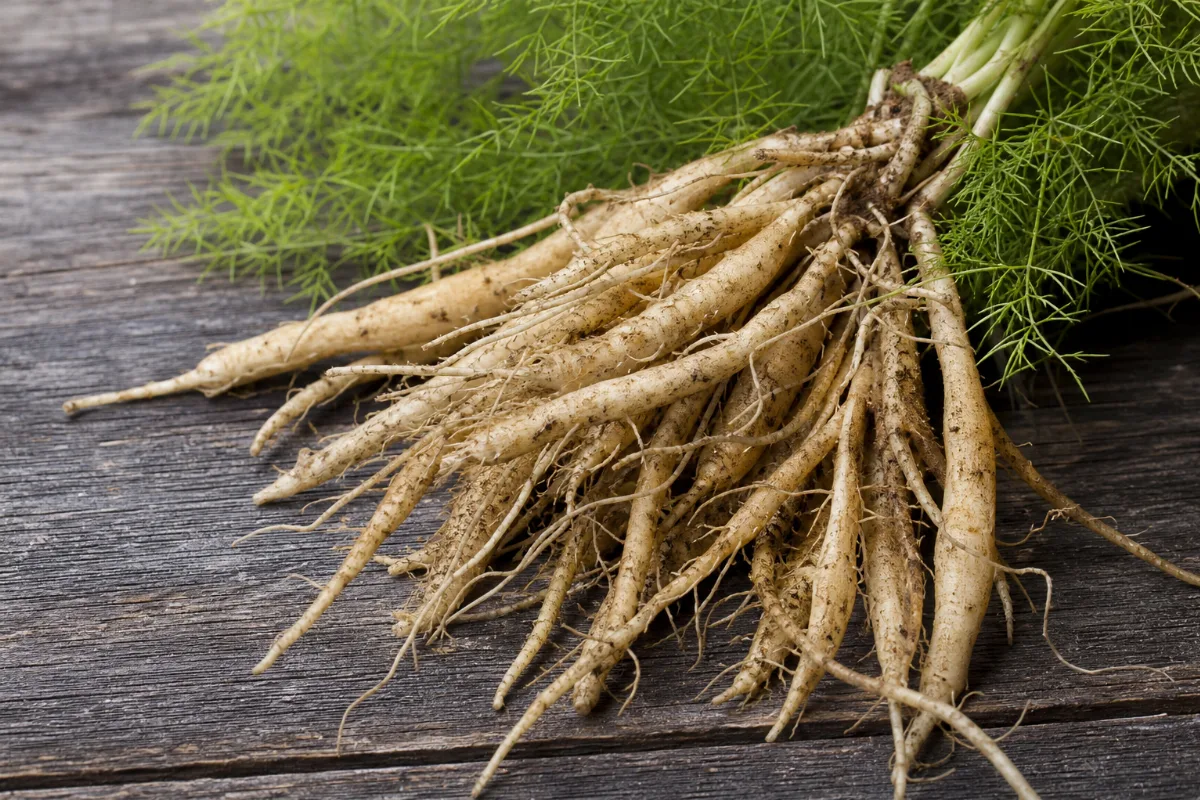
Herbs & Botanicals · Herbs · Ayurvedic women's-health root with small trials and oestrogen-like effects
Shatavari
Asparagus racemosus Willd. · also called Shatavari, shatavar, satavar, wild asparagus
Shatavari is the root of a climbing plant in the asparagus family (Asparagus racemosus), used in Ayurveda as a women's tonic and a milk-boosting herb. It is a different plant from the asparagus you eat as a vegetable. Studies are mostly small trials of branded root extracts in women, and the plant has oestrogen-like effects in the lab.
General information, not medical advice. Last substantive update · Not medically reviewed. A named clinician has not signed off on this page. How this page is made
About Shatavari
Shatavari (Asparagus racemosus) is a climbing plant of the asparagus family whose root is a core women's tonic in Ayurveda. Modern studies are mostly small trials in India of branded root extracts, with low-certainty benefits for menopause symptoms, early breast milk and sexual function, and mixed results for PCOS and bone. The root has oestrogen-like effects in the lab and raised estradiol in some trials, so hormone-sensitive conditions, pregnancy, breastfeeding and medicines call for a doctor's advice first. Garden asparagus is a different species.
What it is
Shatavari is the common name for Asparagus racemosus Willd., a climbing plant in the asparagus family (Asparagaceae). GBIF and NCBI Taxonomy both list it as an accepted species. The root is the part used. Its main compounds are steroidal saponins called shatavarins (shatavarin IV is the best known), plus flavonoids and other root compounds.
It is a different plant from the asparagus you eat (Asparagus officinalis) and from Asparagus adscendens, which GBIF lists as a separate species. Studies of one do not tell us about the others.
Traditional and current uses
In India shatavari has a long history as a milk-boosting herb, and LactMed says it is in the official Ayurvedic pharmacopoeia for that use. It is also called a women's tonic. A 2025 review lists many other uses, from hyperacidity to hypertension, mostly from traditional or lab sources.
Today people take it for menopause symptoms, breast milk, PCOS, sexual wellness and muscle support. Only menopause, lactation, sexual function, PCOS and muscle have human trials, all small.
How good is the evidence
The evidence is low certainty at best. Trials are 72 hours to 24 weeks, mostly 8 to 12 weeks, in 18 to 214 people, with branded extracts. Several were paid for by the extract owner or share authors. One 2025 perimenopause trial of a branded extract was retracted in 2026 and is not counted. Some of the best-looking menopause results come from combinations with ashwagandha or fenugreek, and cannot be credited to shatavari alone.
Estradiol rose in some trials. That may sound helpful, but nobody knows what it means for health, and it is a reason for caution in anyone with a hormone-sensitive condition.
Not the same as other asparagus plants or other products
Results from one branded extract (for example a 5% shatavarin extract, or SheVari4) do not apply to other products. Products differ in strength, plant part and standardisation, and substitution of look-alike roots is a known problem in Ayurvedic trade.
Ask the maker for the species (Asparagus racemosus), the part (root) and any independent testing.
At a glance
Traditional uses history, not proof
- India (Ayurveda): used as a milk-boosting herb (galactagogue); LactMed says it is in the official Ayurvedic pharmacopoeia for that use
- Ayurveda: a women's reproductive tonic (rasayana), the reason trial authors give for testing it in menopause, PCOS and sexual health
- A 2025 review lists many other traditional uses, such as hyperacidity, dysentery and hypertension, without human trial support
Studied for research
- Breast milk in the first days after birth, low (two small 72-hour trials)
- Menopause and perimenopause symptoms, low
- Sexual function in women, low
- PCOS, mixed
- Muscle function in older women, low; bone markers, mixed
- Hormone levels (estradiol, FSH), mixed
Main compounds
- Shatavarin IV, a steroidal saponin described as the main active compound and a phytoestrogen
- Sarsasapogenin, the aglycone of shatavarin IV
- Flavonoids such as rutin, isoflavones, racemosol and other root compounds
Common forms
- Dried root powder
- Standardised root extract capsules or tablets (branded extracts were used in trials)
- Food bars and other products made with the root
- Traditional decoctions in milk and medicated ghee (no trial evidence found)
Research links: Wild Asparagus (shatavari) entry, NIH LactMed · Oral galactagogues Cochrane review (2020) · Shatavari lactation trial (2025) · Shatavari perimenopause trial (2025) · Shatavari in PCOS trial (2026) · Research Library · Genes & Biomarkers Library
The plant and its history
- Accepted scientific name
- Asparagus racemosus Willd.
- Naming authority
- Willd. (Willdenow); accepted species in the GBIF backbone (usageKey 2768632), checked 2026-10-25
- Synonyms
- GBIF lists 30 or more synonyms, for example Asparagus penduliflorus Zipp., Asparagus zeylanicus (Baker) Hook.f., Asparagus tetragonus Bresler, Asparagus fasciculatus R.Br., Protasparagus jacquemontii (Baker) Kamble and several Asparagopsis names (the first 30 were read).
- Common names
- Shatavari (Hindi / Sanskrit (Ayurveda)); Shatavar, Satavar, Satavari (Indian-language spellings); Wild asparagus (English (LactMed title)); Espárrago silvestre (not verified) (Spanish)
- Botanical family
- Asparagaceae (the asparagus family, which includes the culinary vegetable asparagus).
- Classification
- Plantae > Tracheophyta > Liliopsida (monocots; NCBI) > Asparagales > Asparagaceae > Asparagus > Asparagus racemosus
- Native range
- A review calls it widespread across the Indian subcontinent and elsewhere; exact native range not verified here.
- Habitat
- Not verified from a botanical source read.
- What the plant looks like
- Roots: The (tuberous) roots are the medicinal part; the review describes shatavarins as abundant in the roots/rhizome.; Stems: Reviews call it a perennial climber; further detail not verified.; Leaves: Not verified. A leaf extract has been tested in lab papers for blood sugar enzymes, but that is a different material.; Flowers: Not verified.; Fruit: Not verified.
- Cultivation
- Not verified in detail.
- Harvest and processing
- Trials used dry root extracts, a food bar with oats, and an aqueous extract made as per an Ayurvedic pharmacopoeia method. Fresh weight equivalents given in one trial: 1000 mg dry equals 26,500 mg fresh.
- Look-alikes and adulterants
- Name: Asparagus officinalis (garden asparagus); Note: A different species used as a vegetable; LactMed says shatavari is a different plant from it. GBIF lists it as a separate accepted species.; Name: Asparagus adscendens Roxb.; Note: A separate accepted species in GBIF. Whether it is used in trade as a substitute for shatavari was not verified.; Name: Other roots used as substitutes in Ayurvedic trade; Note: A DNA study says Ayurvedic herbs are often misidentified or adulterated; the specific substitutes for shatavari were not named in the abstract.
- Sustainability and conservation
- Not verified.
Traditional use and history history, not clinical proof
| Tradition or era | Documented use | Source |
|---|---|---|
| Ayurveda (India) | LactMed says shatavari has a long history as a galactagogue (milk booster) in India and is included in the official Ayurvedic pharmacopoeia for that use. Trial papers add use as a women's reproductive tonic (rasayana). | s-lactmed-wild-asparagus |
| Modern popular use | A 2025 review calls it the 'Queen of Herbs' and lists uses from dysentery to hypertension and women's reproductive health; these are claims of that review, mostly from lab or traditional sources. | p40334116 |
| Modern clinical trials | Controlled trials in India since 2020 test branded root extracts for lactation, menopause, PCOS, sexual function and muscle. | p41055223 |
| Regulation | No EMA/HMPC monograph or NCCIH page was found (not verified to be absent). | s-lactmed-wild-asparagus |
Traditional use shows how a plant was used. It does not show that a supplement works or is safe today.
What is inside, and how it may work
What the plant contains and how those compounds act in cells and animals. Laboratory and animal mechanisms are not proven effects in people.
Main compounds
| Compound | Family | Where it is concentrated | Activity studied | Level of evidence |
|---|---|---|---|---|
| Shatavarin IV PubChem 441896 | steroidal saponin (glycoside of sarsasapogenin) | Root A branded extract is described with over 7.4% shatavarin IV; ARova5X is standardised to 5% shatavarins | Described in reviews as the main bioactive saponin and a phytoestrogen; effects shown in lab and animal work 5 8 21 | Laboratory research |
| Sarsasapogenin PubChem 92095 | steroidal sapogenin (aglycone) | Root (as shatavarin sugar-bound forms) not stated | The aglycone of shatavarin IV per the review; not tested alone in human trials 5 | Laboratory research |
| Rutin PubChem 5280805 | flavonoid glycoside | Alcoholic root extract (as reported) not stated | Bound well to oestrogen receptor alpha in a computer model 30 | Laboratory research |
| Racemosol PubChem 624971 | phenanthrene-type compound | Root (per LactMed) not stated | Listed by LactMed as a constituent; activity not described 24 | Other |
| Other shatavarins (I to VI), isoflavones, flavonoids, polysaccharides, mucilage, folic acid, asparagamine | mixed | Root (rhizome) not stated | Listed by reviews and LactMed as constituents; amounts not given in the abstracts 5 24 | Other |
Mechanisms, receptors and pathways
| Target or pathway | Gene or receptor | What was found | Level |
|---|---|---|---|
| Oestrogen receptor alpha binding / antiproliferation | ESR1 (ERα) | Aqueous methanol and methanol extracts slowed T47D breast cancer cells (an oestrogen-sensitive line) compared with bazedoxifene, and the compound rutin showed strong binding to ERα in a computer model. 30 | Laboratory research |
| Hormone axes (as proposed by trial authors) | ER-alpha/ER-beta, HPG and HPA axes, TrkB-BDNF | The SheVari4 trial paper states that shatavarin IV acts as a phytoestrogen on ER-alpha/ER-beta, the TrkB-BDNF axis and the HPG and HPA axes. This is the authors' statement of the idea, not a result of that trial. The same trial measured estradiol, FSH and cortisol changes (human). 8 | Human data |
| Muscle contraction signalling | Myosin regulatory light chain phosphorylation; Akt | Muscle biopsy markers of contractile function rose in older women after 6 weeks of shatavari (myosin light chain phosphorylation p = 0.03; Akt Ser473 p = 0.03), small trial. 25 | Human data |
| CYP3A4 drug-metabolising enzyme | CYP3A4 | Aqueous root extract did not inhibit CYP3A4 in rat liver microsomes at the concentrations tested. 7 | Laboratory research |
| Lactation (unknown mechanism) | Not established | None of the lactation papers read tested how shatavari might act; a rise in the milk hormone prolactin is mentioned in LactMed for one earlier study. 24 | Other |
Absorption, metabolism and elimination
- Absorption
- No human absorption study of shatavari or shatavarin IV was found.
- Distribution
- Not established in the sources read.
- Metabolism
- Not established. A rat-liver lab test found no CYP3A4 inhibition by an aqueous extract.
- Elimination
- Not established in the sources read.
- Bioavailability
- Not established in people; saponins are large sugar-bound molecules but no source read measured their absorption.
Isolated compounds versus whole extracts
The human trials all used whole-root extracts (dry powders, aqueous or alcohol extracts) with different standardisation. Shatavarin IV is an isolated saponin studied in lab work, and a branded extract is described as rich in it, but no human trial of the isolated compound was found. Results from one extract do not carry over to others.
Nutritional composition
Shatavari is used as a medicinal root, not as a significant source of vitamins or minerals. LactMed lists folic acid among its constituents, but no amounts were read. A food bar with oats and shatavari was used in one lactation trial. No nutrient data are given.
3 mixed findings4 low certainty1 very low certainty5 not enough evidence
What is Shatavari good for?
The main proposed uses and how strong the human evidence is for each. 'Low' means a few small or short studies, 'mixed' means studies disagree, 'very low' means a side finding or tiny study, and 'insufficient' means there is not enough to judge. Nothing about shatavari is rated above low. These results come from specific branded root extracts and cannot be moved to other shatavari products, to garden asparagus or to other Ayurvedic herbs.
Benefits, one by one
Each card is a research question, not a promise. Tap a goal to filter. Open a card to see the studies, doses and limits.
Breast milk supply in the first days after birth
Low certaintyTwo small placebo-controlled trials in new mothers found earlier breast fullness and more expressed milk after 72 hours of shatavari. Overall, the evidence for any herbal milk booster is weak, and the large Cochrane review rated it low to very low.
4 studiesTrials used a root extract capsule (300 mg twice a day for 72 hours) …
Studies, doses and limits
What the trials found
A 2025 trial in India (113 women analysed) gave shatavari root extract 300 mg twice a day or placebo for the first 72 hours after birth: breast fullness came sooner (p = 0.002) and expressed milk volume was higher (p < 0.001), with no adverse events reported. A 2022 trial (78 women, two centres) used a food bar of shatavari and oats: about 64.7 mL vs 49.7 mL of milk expressed (p = 0.008) and fullness about 8 hours sooner (30.5 vs 38.1 hours, p = 0.024). The 2020 Cochrane review of galactagogues (41 trials, 3005 mothers) lists shatavari among many natural products but rates overall evidence low to very low and could not combine the natural-product trials. LactMed calls the clinical results mixed.
Results
Short-term (first three days) gains in milk expressed and earlier fullness in two small trials. No trial read looked at whether mothers breastfed for longer, or at infant growth.
Effect sizes as reported
Bar trial: 64.74 vs 49.69 mL (p = 0.008); fullness 30.49 vs 38.09 hours (p = 0.024). Capsule trial: p = 0.002 for time to fullness and p < 0.001 for milk volume; the abstract gives no volumes. Cochrane: natural galactagogue milk-volume trials too different to pool (I2 = 99%).
Why this rating
Two small trials point the same way, but both are short (72 hours), both used specific products (one is a food bar with oats), and the Cochrane review rates the whole field low to very low certainty. LactMed calls results mixed.
Form and dose studied
Trials used a root extract capsule (300 mg twice a day for 72 hours) and a food bar of shatavari and oats. These are trial designs, not advice. Ask a doctor, midwife or pharmacist about amounts.
Who was studied
Mothers 37 weeks or more, delivered by vaginal or caesarean birth, intending to breastfeed, in India.
Limits
Only three days of use and follow-up. One trial tested a named bar with oats. Authors of the capsule trial overlap with other shatavari trials. No long-term milk, infant growth or breastfeeding-duration data.
Why researchers looked
Shatavari is the best-known traditional milk-boosting (galactagogue) herb in India.
Traditional use
LactMed notes a long history of use as a galactagogue in India and inclusion in the official Ayurvedic pharmacopoeia for that use.
Proposed mechanism Preliminary mechanism
Not established in people. Shatavari roots contain steroidal saponins that are described in reviews as acting on hormone pathways, but no trial in the sources read measured how it might raise milk output.
A proposed mechanism does not show that the effect happens in people.
No adverse events were reported in either trial and LactMed says small clinical studies found none in mothers or nursing infants, but safety in breastfeeding has not been rigorously studied. Talk to a doctor, midwife or lactation consultant first. Fix feeding technique and health causes of low supply before relying on a herb. Shatavari can act like a weak oestrogen and raised oestrogen levels in some trials, so people with hormone-sensitive conditions, pregnant or breastfeeding women and anyone taking medicines should ask a doctor or pharmacist first. See the Safety tab.
Menopause and perimenopause symptoms (hot flashes, night sweats, mood, sleep)
Low certaintySeveral small to mid-sized placebo-controlled trials of branded shatavari root extracts report fewer menopause symptoms. Most were short (8 to 12 weeks), several come from overlapping authors or from the company that owns the extract, one similar trial was retracted, and no independent systematic review was found.
9 studiesBranded root extracts at about 100 to 300 mg a day for 8 to 12 weeks …
Studies, doses and limits
What the trials found
SheVari4 (a branded extract) 100 mg a day for 8 weeks in 60 women: MENQOL quality-of-life score fell 42.8% more than placebo (2026, funded by the extract owner). Shatavari root extract 300 mg a day for 8 weeks in 80 perimenopausal women (73 analysed): Menopause Rating Scale and stress scores better than placebo (p < 0.0001) and hot flashes better (p = 0.002) (2025). ARova5X 250 mg a day for 90 days in 214 postmenopausal women: sexual function, oxidative stress and menopause symptoms better than placebo (2026). A 135-woman trial of shatavari alone or with ashwagandha found the combination beat placebo on the main Menopause Rating Scale; the abstract does not show shatavari alone beating placebo on the main score. A 70-woman trial of an Ayurvedic shatavari formulation reported better hot flashes, night sweats, sleep and libido with no numbers in the abstract. A two-herb product (shatavari plus fenugreek) in 150 women lowered the MRS more than placebo (-8.26 and -10.40 vs -4.09). A 2025 perimenopause trial of another extract (CL22205, 50 women) was retracted in 2026 and is not counted. A second 2026 perimenopause trial exists but PubMed holds no abstract for it, so it was not read.
Results
Most trials favour shatavari on symptom scales. Combination products (with ashwagandha or fenugreek) cannot be credited to shatavari alone.
Effect sizes as reported
SheVari4: MENQOL 42.8% lower than placebo. Perimenopause trial: hot flashes p = 0.002; MRS domains p < 0.0001. Fenavari (shatavari plus fenugreek) MRS change -8.26 (300 mg) and -10.40 (500 mg) vs -4.09 placebo (p < 0.0001). Most abstracts give percentages or p values without confidence intervals.
Why this rating
Several placebo-controlled trials agree in direction, but they are small to mid-sized, short, use different branded extracts, share authors or funders, give few numbers in their abstracts, and one trial of this type was retracted. No Cochrane-type review exists.
Form and dose studied
Branded root extracts at about 100 to 300 mg a day for 8 to 12 weeks in these trials (trial designs, not advice). Ask a doctor or pharmacist about amounts.
Who was studied
Women aged about 40 to 65, pre-, peri- and post-menopausal, in India.
Limits
Industry-linked extracts, overlapping authors, short duration, abstracts without full statistics, combination products, no independent systematic review, and one retraction. Women with breast or other hormone-sensitive cancers were not studied in any trial read.
Why researchers looked
Shatavari is traditionally used as a women's tonic and its roots contain steroidal saponins that some reviews describe as weakly oestrogen-like (phytoestrogens).
Traditional use
Used in Ayurveda for women's reproductive health; trial authors cite this as the reason for testing it in menopause.
Proposed mechanism Preliminary mechanism
Proposed to work like a weak oestrogen. A lab study found extracts slowed growth of an oestrogen-sensitive breast cell line and a computer model showed plant compounds binding the oestrogen receptor. Several trials also found higher blood estradiol. None of this proves how or whether it helps symptoms.
A proposed mechanism does not show that the effect happens in people.
Trials reported mostly mild effects (loose stools, nausea, dizziness, headache) and normal liver and kidney tests. Because shatavari can raise estradiol in some women and acts like a weak oestrogen in the lab, women with hormone-sensitive conditions should ask their doctor first. Shatavari can act like a weak oestrogen and raised oestrogen levels in some trials, so people with hormone-sensitive conditions, pregnant or breastfeeding women and anyone taking medicines should ask a doctor or pharmacist first. See the Safety tab.
Reproductive hormone levels (estradiol, FSH, cortisol)
Mixed findingsSome trials found higher estradiol and lower FSH after shatavari extracts, but a PCOS trial found no hormone differences and a combination trial said hormone levels stayed normal. What these changes mean for health is not known.
6 studiesBranded root extracts, 100 to 300 mg a day, 8 to 12 weeks (trial desi…
Studies, doses and limits
What the trials found
SheVari4 for 8 weeks (60 women): estradiol +36.44% vs -2.08% placebo, FSH -38.18% vs +12.97%, cortisol -26.87% vs +17.16%. Perimenopause trial (73 women analysed): estradiol (p = 0.003), FSH (p = 0.028) and T3 (p = 0.021) rose. Shatavari plus fenugreek (150 women): estradiol rose and FSH fell versus placebo. Against this, the 12-week PCOS trial (66 women completed) found no significant difference in hormones, BMI or lab values, and the 135-woman menopause trial reported hormone levels stayed in the normal range. Note that the perimenopause trial found FSH rose while the SheVari4 and fenugreek trials found FSH fell.
Results
Mixed and not consistent between trials, with some rises in estradiol.
Effect sizes as reported
SheVari4: estradiol +36.44% (placebo -2.08%). Perimenopause trial: estradiol p = 0.003. No absolute values with units appear in the abstracts.
Why this rating
Trials disagree on direction (FSH) and on whether hormone levels changed at all; abstracts give percentages, not absolute values; several are sponsor-linked.
Form and dose studied
Branded root extracts, 100 to 300 mg a day, 8 to 12 weeks (trial designs, not advice).
Who was studied
Women with menopausal symptoms or PCOS in India.
Limits
No absolute hormone values in the abstracts; changes within the normal range; clinical meaning unknown; no data on hormone-sensitive cancers.
Why researchers looked
Measured in menopause and PCOS trials to see whether the extract acts like a weak oestrogen.
Proposed mechanism Preliminary mechanism
Steroidal saponins in the root are described as phytoestrogens in the trial papers. This is a proposed explanation, not proven in people.
A proposed mechanism does not show that the effect happens in people.
Higher estradiol in some women is a reason for caution in anyone with a hormone-sensitive condition. No source read says whether shatavari is safe or unsafe in that situation, so ask a doctor first. Shatavari can act like a weak oestrogen and raised oestrogen levels in some trials, so people with hormone-sensitive conditions, pregnant or breastfeeding women and anyone taking medicines should ask a doctor or pharmacist first. See the Safety tab.
Polycystic ovary syndrome (PCOS)
Mixed findingsTwo small 12-week trials of shatavari root extracts in women with PCOS disagree: one found lower stress scores, fewer follicles and a thicker womb lining but no change in ovarian volume or hormones; the other reported lower ovarian volume and cyst size.
2 studiesRoot extracts, about 100 mg a day or an unstated dose, 12 weeks (tria…
Studies, doses and limits
What the trials found
A 70-woman trial (66 completed) of shatavari root extract for 12 weeks found no difference in ovarian volume (p = 0.254), BMI or hormones, but lower stress scores (-6.64, p < 0.0001), lower follicle count (p < 0.0001) and thicker womb lining (p = 0.028). A 60-woman trial of the branded extract CL22209 100 mg a day for 84 days reported ovarian volume 20.98% lower, cyst size 40.97% lower and follicle number 20.56% lower than placebo (P < 0.0001). The two trials conflict on ovarian volume.
Results
Mixed; the main ovarian measure improved in one trial and not the other.
Effect sizes as reported
Trial 1: PSS -6.64 (p < 0.0001), ovarian volume p = 0.254. Trial 2: ovarian volume -20.98%, follicles -20.56% (P < 0.0001).
Why this rating
Two small trials with conflicting primary results; different extracts; no confidence intervals in the abstracts.
Form and dose studied
Root extracts, about 100 mg a day or an unstated dose, 12 weeks (trial designs, not advice).
Who was studied
Women aged 20 to 40 with PCOS in India.
Limits
Small, short, conflicting; a similarly named extract's other trial was retracted; no live-birth, cycle or fertility outcomes proven.
Why researchers looked
Used traditionally for women's cycle problems; PCOS is a common hormone condition.
Proposed mechanism Pharmacological theory
Not established. Trial authors suggest phytoestrogen and insulin-sensitising effects, which are untested.
A proposed mechanism does not show that the effect happens in people.
No serious adverse events in the first trial (mild to moderate events 11.4% vs 8.5%); the second reported good tolerability. Shatavari can act like a weak oestrogen and raised oestrogen levels in some trials, so people with hormone-sensitive conditions, pregnant or breastfeeding women and anyone taking medicines should ask a doctor or pharmacist first. See the Safety tab.
Sexual function and desire in women
Low certaintyThree trials in women (including postmenopausal and low-desire women) reported better sexual function scores than placebo; they are short, small to mid-sized and product- or author-linked.
3 studiesRoot extracts 250 to 300 mg a day for 8 to 12 weeks (trial designs, n…
Studies, doses and limits
What the trials found
In 70 healthy women with low desire, shatavari root extract 300 mg a day for 8 weeks raised the total Female Sexual Function Index by 3.3 points more than placebo (95% CI 1.6 to 5.0). In 214 postmenopausal women ARova5X 250 mg a day for 90 days improved desire, arousal and satisfaction (all p at or below 0.004). In a 135-woman three-arm trial, shatavari alone improved total FSFI (P = 0.025) and satisfaction; shatavari with ashwagandha improved total FSFI more (P = 0.005).
Results
Consistent small gains on questionnaires.
Effect sizes as reported
FSFI difference 3.3 points (95% CI 1.6 to 5.0; P = 0.001) in the low-desire trial; others give p values only.
Why this rating
Three placebo-controlled trials agree, but all are short, use questionnaires, and the abstracts give limited statistics.
Form and dose studied
Root extracts 250 to 300 mg a day for 8 to 12 weeks (trial designs, not advice).
Who was studied
Healthy women with low desire (18 to 45) and postmenopausal women, in India.
Limits
Self-reported questionnaires; healthy women rather than diagnosed disorders; one trial used a branded extract; a combination arm confuses attribution.
Why researchers looked
Shatavari is traditionally used as a reproductive tonic.
Proposed mechanism Preliminary mechanism
Not established; the trial papers suggest hormone effects.
A proposed mechanism does not show that the effect happens in people.
Side effects reported were mild and resolved without treatment. Shatavari can act like a weak oestrogen and raised oestrogen levels in some trials, so people with hormone-sensitive conditions, pregnant or breastfeeding women and anyone taking medicines should ask a doctor or pharmacist first. See the Safety tab.
Fertility (women and men)
Not enough evidenceA 2025 narrative review says shatavari has potential for fertility but that more clinical trials are needed. No fertility trial (pregnancy or live-birth outcome) was found.
2 studiesNot applicable.
Studies, doses and limits
What the trials found
The 2025 review (Oyovwi and colleagues) says more clinical trials are needed to confirm effects and safety, especially in male fertility, and that pregnant and breastfeeding women should consult a health professional first because of possible interactions and contraindications. No fertility-outcome trial was found by our PubMed search.
Results
No trial evidence of better pregnancy rates.
Effect sizes as reported
Not applicable.
Why this rating
A narrative review, no trial with conception or live-birth outcomes.
Form and dose studied
Not applicable.
Who was studied
Not applicable.
Limits
The abstract gives no trial counts. The review is not systematic.
Why researchers looked
Traditional use for reproductive health; most work is in animals and cells.
Traditional use
Reviews describe use as a female reproductive tonic in Ayurveda.
Proposed mechanism Animal research
Reviews describe lab and animal findings on follicle development and hormones; none show benefit in couples trying to conceive.
A proposed mechanism does not show that the effect happens in people.
A rat study found harm to offspring when a root extract was given through pregnancy (see Safety). Do not use shatavari when trying to conceive or while pregnant without a doctor's advice.
Muscle strength and training in older women and young men
Low certaintyThree small trials found shatavari improved some measures of muscle function while training or over 6 weeks, but not leg strength in older women.
3 studiesShatavari supplement 1000 mg a day (older women) or 500 mg a day (men…
Studies, doses and limits
What the trials found
Postmenopausal women aged about 68 (n = 20) took shatavari 1000 mg a day for 6 weeks: handgrip +0.7 kg vs -0.4 kg with placebo (p = 0.04); leg strength and bone turnover markers did not change. In 22 older and 17 young women doing 8 weeks of leg training, shatavari increased training load in older women (leg press repetitions p = 0.049; maximum weight p = 0.03) but not strength after training. In 18 young men doing bench press for 8 weeks, 500 mg a day gave 14.3% vs 7.8% gain in 1RM (p = 0.048).
Results
Small gains in handgrip, training load or bench press; no gain in leg strength.
Effect sizes as reported
Handgrip +0.7 kg vs -0.4 kg (p = 0.04); bench press 1RM +14.3% vs +7.8% (p = 0.048).
Why this rating
Three small trials (18 to 39 people) with barely significant results, short, with mixed outcomes between measures.
Form and dose studied
Shatavari supplement 1000 mg a day (older women) or 500 mg a day (men) for 6 to 8 weeks; trial designs, not advice.
Who was studied
Postmenopausal and younger women; recreationally trained men.
Limits
Tiny samples, many outcomes, short duration; no sports-performance or fall-prevention outcomes.
Why researchers looked
Researchers thought the weak oestrogen-like effect might help muscle after menopause.
Proposed mechanism Preliminary mechanism
Muscle biopsy markers in one trial (myosin light chain phosphorylation, Akt) changed; the authors propose a role for oestrogen-like effects. This is a lab marker and not proof.
A proposed mechanism does not show that the effect happens in people.
No safety problems were highlighted in these abstracts. Shatavari can act like a weak oestrogen and raised oestrogen levels in some trials, so people with hormone-sensitive conditions, pregnant or breastfeeding women and anyone taking medicines should ask a doctor or pharmacist first. See the Safety tab.
Bone turnover and bone health after menopause
Mixed findingsResults disagree: a 6-week trial of shatavari alone found no change in bone turnover markers, while a 24-week trial of shatavari and/or ashwagandha extracts reported lower bone-breakdown markers. No bone density benefit has been shown.
2 studiesShatavari 250 or 500 mg aqueous extract a day for 24 weeks, or 1000 m…
Studies, doses and limits
What the trials found
The 6-week trial (n = 20) found no change in P1NP or CTX bone turnover markers. A 24-week trial of aqueous shatavari and/or ashwagandha extracts (postmenopausal women aged 40 to 55, six arms) reported lower bone resorption markers (CTX, bone alkaline phosphatase, RANKL) and higher osteoprotegerin, with all P < 0.0001; the abstract does not give the number of women or bone density change.
Results
Mixed between trials; bone-density benefit not shown.
Effect sizes as reported
Not given in the abstract of the longer trial.
Why this rating
One short null trial and one longer positive trial whose arms mixed two herbs; blood markers rather than fractures or bone density.
Form and dose studied
Shatavari 250 or 500 mg aqueous extract a day for 24 weeks, or 1000 mg a day for 6 weeks (trial designs, not advice).
Who was studied
Postmenopausal women.
Limits
Markers only; no fractures or bone density; combination arms.
Why researchers looked
Oestrogen loss after menopause speeds bone loss, so oestrogen-like herbs are tested.
Proposed mechanism Pharmacological theory
Proposed oestrogen-like action. Not shown to protect bone in people.
A proposed mechanism does not show that the effect happens in people.
Shatavari can act like a weak oestrogen and raised oestrogen levels in some trials, so people with hormone-sensitive conditions, pregnant or breastfeeding women and anyone taking medicines should ask a doctor or pharmacist first. See the Safety tab.
Oxidative stress markers and weight (secondary findings)
Very low certaintyTwo trials of shatavari-containing extracts reported lower oxidative stress or inflammation markers; one reported fewer women classed as obese. These were side findings in menopause trials.
2 studiesBranded or aqueous extracts 250 to 500 mg a day for 12 to 24 weeks (t…
Studies, doses and limits
What the trials found
ARova5X (250 mg a day for 90 days, 214 postmenopausal women) was reported to lower oxidative stress markers and to cut obesity prevalence from 42.99% to 29.91% in the extract group (the placebo group's figure is not in the abstract). In the 24-week aqueous extract trial, hs-CRP and malondialdehyde fell and glutathione and nitric oxide rose.
Results
Reported as secondary results in menopause trials.
Effect sizes as reported
Obesity prevalence 42.99% to 29.91% (extract group); P < 0.0001 for marker changes.
Why this rating
Secondary outcomes, abstracts only, no comparison numbers for the placebo group in one case.
Form and dose studied
Branded or aqueous extracts 250 to 500 mg a day for 12 to 24 weeks (trial designs, not advice).
Who was studied
Postmenopausal women.
Limits
Secondary outcomes; mixed products; weight not a primary aim.
Why researchers looked
Measured as secondary outcomes in postmenopausal women.
Proposed mechanism Laboratory research
Antioxidant effects of saponins and flavonoids are described in lab work; not shown to matter in people.
A proposed mechanism does not show that the effect happens in people.
Shatavari can act like a weak oestrogen and raised oestrogen levels in some trials, so people with hormone-sensitive conditions, pregnant or breastfeeding women and anyone taking medicines should ask a doctor or pharmacist first. See the Safety tab.
Stomach, ulcers and digestion
Not enough evidenceTraditional texts and lab studies suggest uses for acidity and ulcers, but no human trial of shatavari alone for stomach or gut problems was found.
1 studiesNot applicable.
Studies, doses and limits
What the trials found
Our PubMed search for shatavari with ulcer, gastric, dyspepsia or immune terms found animal, fish and lab papers but no human trial of shatavari alone. A 2025 review of the chemistry and uses lists these traditional uses without trial evidence.
Results
No human data.
Effect sizes as reported
Not applicable.
Why this rating
No human trial found.
Form and dose studied
Not applicable.
Who was studied
Not applicable.
Limits
Search used one PubMed query; absence of results is not proof of absence.
Why researchers looked
Traditional use for hyperacidity and gut complaints is listed in reviews.
Traditional use
A 2025 review lists hyperacidity and dysentery among traditional uses.
Proposed mechanism Animal research
Animal and lab findings only.
A proposed mechanism does not show that the effect happens in people.
See the Safety tab. Persistent stomach pain, black stools or vomiting blood need medical care.
Immune function
Not enough evidenceShatavari is called an immune tonic in reviews, but the support is lab, animal and fish work. No human immune trial was found.
1 studiesNot applicable.
Studies, doses and limits
What the trials found
None found for shatavari alone. The 2025 review describes immune and adaptogen claims from preclinical work.
Results
No human data.
Effect sizes as reported
Not applicable.
Why this rating
Only non-human evidence found.
Form and dose studied
Not applicable.
Who was studied
Not applicable.
Limits
Review abstract only.
Why researchers looked
Adaptogen and immune-boosting claims in Ayurveda and in reviews.
Traditional use
Listed as a rasayana (rejuvenating tonic) in Ayurveda.
Proposed mechanism Animal research
Lab and animal work only; not shown in people.
A proposed mechanism does not show that the effect happens in people.
People with autoimmune conditions or taking immune-suppressing drugs should ask a doctor first because the effect on the immune system is unproven.
Blood sugar and blood pressure
Not enough evidenceAnimal and lab papers suggest blood-sugar-lowering compounds in the leaf and root; no human trial was found. Because of this, interactions with diabetes or blood pressure medicines are unstudied.
2 studiesNot applicable.
Studies, doses and limits
What the trials found
The PCOS trial measured HbA1c, insulin and lipids and reported no significant difference in laboratory parameters. No trial in people with diabetes or high blood pressure was found.
Results
No human benefit shown.
Effect sizes as reported
Not applicable.
Why this rating
No trial in diabetes or hypertension.
Form and dose studied
Not applicable.
Who was studied
Not applicable.
Limits
Preclinical only.
Why researchers looked
Reviews list diabetes and hypertension among traditional uses.
Traditional use
A 2025 review lists hypertension and diabetic retinopathy among conditions treated with the plant.
Proposed mechanism Animal research
Lab enzyme-inhibition and rodent findings only.
A proposed mechanism does not show that the effect happens in people.
If you take medicine for diabetes or blood pressure, ask your doctor before adding shatavari; a possible additive effect is theoretical.
Memory, brain and nerve health
Not enough evidenceReviews describe lab and animal findings on memory and Alzheimer's disease; no human trial was found.
1 studiesNot applicable.
Studies, doses and limits
What the trials found
None found for shatavari alone. Mood and stress scores improved in some menopause and PCOS trials as secondary outcomes in the women's-health trials; these are not brain or memory trials.
Results
No human data on memory.
Effect sizes as reported
Not applicable.
Why this rating
No human memory trial found.
Form and dose studied
Not applicable.
Who was studied
Not applicable.
Limits
Review abstract only.
Why researchers looked
Called a brain tonic in some traditions and reviews.
Proposed mechanism Animal research
Lab and animal findings on antioxidant and nerve-signalling effects.
A proposed mechanism does not show that the effect happens in people.
Shatavari can act like a weak oestrogen and raised oestrogen levels in some trials, so people with hormone-sensitive conditions, pregnant or breastfeeding women and anyone taking medicines should ask a doctor or pharmacist first. See the Safety tab.
Connections to the rest of health
How Shatavari connects to the rest of our health knowledge graph. Every link says what kind of connection it is. A safety link (for example to the liver) is a warning, not a benefit. A study that merely mentions a topic never creates a benefit link.
Explore every connection: goals, body systems, organs, symptoms, genes
A. Wellness goals
| Connected to | Kind of connection | Evidence status | Context | Studies |
|---|---|---|---|---|
| Menopause support | Potential benefit | Low certainty | Symptom scores better than placebo in several small trials; one related trial retracted. Menopause and perimenopause symptoms (hot flashes, night sweats, mood, sleep): Several small to mid-sized placebo-controlled trials of branded shatavari root extracts report fewer menopause symptoms. Most were short (8 to 12 weeks), several come from overlapping authors or from the company that owns the extract, one similar trial was retracted, and no independent systematic review was found. Preparation or compound: Branded root extracts |
8 18 21 14 1 13 16 31 30 25 27 |
| Womens Wellness | Potential benefit | Low certainty | Breast milk supply in the first days after birth: Two small placebo-controlled trials in new mothers found earlier breast fullness and more expressed milk after 72 hours of shatavari. Overall, the evidence for any herbal milk booster is weak, and the large Cochrane review rated it low to very low. Menopause and perimenopause symptoms (hot flashes, night sweats, mood, sleep): Several small to mid-sized placebo-controlled trials of branded shatavari root extracts report fewer menopause symptoms. Most were short (8 to 12 weeks), several come from overlapping authors or from the company that owns the extract, one similar trial was retracted, and no independent systematic review was found. | 3 6 9 24 8 18 21 1 13 16 31 14 30 20 17 29 2 |
| Hormone Balance | Biological association | Mixed findings | Reproductive hormone levels (estradiol, FSH, cortisol): Some trials found higher estradiol and lower FSH after shatavari extracts, but a PCOS trial found no hormone differences and a combination trial said hormone levels stayed normal. What these changes mean for health is not known. | 8 18 16 20 1 30 |
| Womens Wellness | Biological association | Mixed findings | Reproductive hormone levels (estradiol, FSH, cortisol): Some trials found higher estradiol and lower FSH after shatavari extracts, but a PCOS trial found no hormone differences and a combination trial said hormone levels stayed normal. What these changes mean for health is not known. | 8 18 16 20 1 30 |
| Hormone Balance | Potential benefit | Mixed findings | Polycystic ovary syndrome (PCOS): Two small 12-week trials of shatavari root extracts in women with PCOS disagree: one found lower stress scores, fewer follicles and a thicker womb lining but no change in ovarian volume or hormones; the other reported lower ovarian volume and cyst size. | 20 17 |
| Libido Support | Potential benefit | Low certainty | Sexual function and desire in women: Three trials in women (including postmenopausal and low-desire women) reported better sexual function scores than placebo; they are short, small to mid-sized and product- or author-linked. | 29 21 2 |
| Fertility Support | Traditional use | Not enough evidence | Fertility (women and men): A 2025 narrative review says shatavari has potential for fertility but that more clinical trials are needed. No fertility trial (pregnancy or live-birth outcome) was found. | 26 11 |
| Muscle Recovery | Potential benefit | Low certainty | Muscle strength and training in older women and young men: Three small trials found shatavari improved some measures of muscle function while training or over 6 weeks, but not leg strength in older women. | 25 12 4 |
| Physical Stamina | Potential benefit | Low certainty | Muscle strength and training in older women and young men: Three small trials found shatavari improved some measures of muscle function while training or over 6 weeks, but not leg strength in older women. | 25 12 4 |
| Healthy Aging | Potential benefit | Low certainty | Muscle strength and training in older women and young men: Three small trials found shatavari improved some measures of muscle function while training or over 6 weeks, but not leg strength in older women. Bone turnover and bone health after menopause: Results disagree: a 6-week trial of shatavari alone found no change in bone turnover markers, while a 24-week trial of shatavari and/or ashwagandha extracts reported lower bone-breakdown markers. No bone density benefit has been shown. | 25 12 4 27 |
| Weight Management | Potential benefit | Very low certainty | Oxidative stress markers and weight (secondary findings): Two trials of shatavari-containing extracts reported lower oxidative stress or inflammation markers; one reported fewer women classed as obese. These were side findings in menopause trials. | 21 27 |
| Inflammation Balance | Potential benefit | Very low certainty | Oxidative stress markers and weight (secondary findings): Two trials of shatavari-containing extracts reported lower oxidative stress or inflammation markers; one reported fewer women classed as obese. These were side findings in menopause trials. | 21 27 |
| Digestive Support | Traditional use | Not enough evidence | Stomach, ulcers and digestion: Traditional texts and lab studies suggest uses for acidity and ulcers, but no human trial of shatavari alone for stomach or gut problems was found. | 5 |
| Gut Health | Traditional use | Not enough evidence | Stomach, ulcers and digestion: Traditional texts and lab studies suggest uses for acidity and ulcers, but no human trial of shatavari alone for stomach or gut problems was found. | 5 |
| Immune Support | Traditional use | Not enough evidence | Immune function: Shatavari is called an immune tonic in reviews, but the support is lab, animal and fish work. No human immune trial was found. | 5 |
| Blood Sugar Balance | Traditional use | Not enough evidence | Blood sugar and blood pressure: Animal and lab papers suggest blood-sugar-lowering compounds in the leaf and root; no human trial was found. Because of this, interactions with diabetes or blood pressure medicines are unstudied. | 20 5 |
| Blood Pressure Support | Traditional use | Not enough evidence | Blood sugar and blood pressure: Animal and lab papers suggest blood-sugar-lowering compounds in the leaf and root; no human trial was found. Because of this, interactions with diabetes or blood pressure medicines are unstudied. | 20 5 |
| Memory Support | Preliminary mechanism | Not enough evidence | Memory, brain and nerve health: Reviews describe lab and animal findings on memory and Alzheimer's disease; no human trial was found. | 5 |
| Brain Health | Preliminary mechanism | Not enough evidence | Memory, brain and nerve health: Reviews describe lab and animal findings on memory and Alzheimer's disease; no human trial was found. | 5 |
B. Body systems
| Connected to | Kind of connection | Evidence status | Context | Studies |
|---|---|---|---|---|
| Reproductive System | Biological association | Low certainty | Studied for: Breast milk supply in the first days after birth Studied for: Menopause and perimenopause symptoms (hot flashes, night sweats, mood, sleep) | 3 6 9 24 8 18 21 1 13 16 31 14 30 20 17 29 2 26 11 |
| Endocrine System | Biological association | Low certainty | Studied for: Menopause and perimenopause symptoms (hot flashes, night sweats, mood, sleep) Studied for: Reproductive hormone levels (estradiol, FSH, cortisol) | 8 18 21 1 13 16 31 14 30 20 17 27 5 |
| Musculoskeletal System | Biological association | Low certainty | Studied for: Muscle strength and training in older women and young men Studied for: Bone turnover and bone health after menopause | 25 12 4 27 |
| Digestive System | Biological association | Not enough evidence | Studied for: Stomach, ulcers and digestion | 5 |
| Immune System | Biological association | Not enough evidence | Studied for: Immune function | 5 |
| Cardiovascular System | Biological association | Not enough evidence | Studied for: Blood sugar and blood pressure | 20 5 |
| Nervous System | Biological association | Not enough evidence | Studied for: Memory, brain and nerve health | 5 |
C. Body parts and organs
| Connected to | Kind of connection | Evidence status | Context | Studies |
|---|---|---|---|---|
| Reproductive organs | Potential benefit | Low certainty | Trials in menopause, PCOS and lactation; mixed and mostly short. Preparation or compound: Root extracts |
18 20 3 |
| Kidneys | Biological association | Very low certainty | Protective in an induced stone model in rats; safety in kidney disease unknown. Preparation or compound: Ethanol root extract in rats |
15 |
| Liver | Biological association | Very low certainty | No injury reports found; liver tests normal in short trials. Preparation or compound: Root extracts in trials |
18 8 |
E. Health conditions
I. Biomarkers
| Connected to | Kind of connection | Evidence status | Context | Studies |
|---|---|---|---|---|
| Estradiol (oestrogen) | Biological association | Mixed findings | Raised in three trials; not changed in a PCOS trial; caution in hormone-sensitive conditions. Preparation or compound: Root extracts (SheVari4 and others) |
8 18 20 |
| Menopause Rating Scale (MRS) | Biological association | Low certainty | Measured in trials: lowered. A lab change is not the same as a health benefit. | 18 16 1 |
| Blood estradiol (an oestrogen) | Biological association | Mixed findings | Measured in trials: raised. A lab change is not the same as a health benefit. | 8 18 20 |
| Expressed breast milk volume at 72 hours | Biological association | Low certainty | Measured in trials: raised. A lab change is not the same as a health benefit. | 6 3 |
| Female Sexual Function Index (FSFI) | Biological association | Low certainty | Measured in trials: raised. A lab change is not the same as a health benefit. | 29 2 |
| Ovarian volume and follicle count (ultrasound) | Biological association | Mixed findings | Measured in trials: mixed. A lab change is not the same as a health benefit. | 20 17 |
| Handgrip strength | Biological association | Low certainty | Measured in trials: raised. A lab change is not the same as a health benefit. | 25 |
| Bench press one-repetition maximum | Biological association | Low certainty | Measured in trials: raised. A lab change is not the same as a health benefit. | 4 |
| Bone turnover markers (CTX, P1NP, bone alkaline phosphatase) | Biological association | Mixed findings | Measured in trials: mixed. A lab change is not the same as a health benefit. | 25 27 |
| Oxidative stress and inflammation markers (MDA, hs-CRP) | Biological association | Very low certainty | Measured in trials: lowered. A lab change is not the same as a health benefit. | 27 |
J. Genes, receptors and enzymes
| Connected to | Kind of connection | Evidence status | Context | Studies |
|---|---|---|---|---|
| ESR1 (oestrogen receptor alpha) | Preliminary mechanism | In vitro | In the lab, extract compounds bound it and extracts slowed an oestrogen-sensitive cell line; basis for the hormone-sensitive caution. | 30 |
| CYP3A4 | Preliminary mechanism | In vitro | No inhibition by aqueous extract in rat liver microsomes. | 7 |
| Myosin regulatory light chain / AKT1 | Preliminary mechanism | Human | Muscle biopsy markers rose after 6 weeks in older women. | 25 |
K. Biological pathways
L. Active compounds
| Connected to | Kind of connection | Evidence status | Context | Studies |
|---|---|---|---|---|
| Shatavarin IV | Biological association | In vitro | Described in reviews as the main bioactive saponin and a phytoestrogen; effects shown in lab and animal work Preparation or compound: Root |
5 8 21 |
| Sarsasapogenin | Biological association | In vitro | The aglycone of shatavarin IV per the review; not tested alone in human trials Preparation or compound: Root (as shatavarin sugar-bound forms) |
5 |
| Rutin | Biological association | In vitro | Bound well to oestrogen receptor alpha in a computer model Preparation or compound: Alcoholic root extract (as reported) |
30 |
| Racemosol | Biological association | Other | Listed by LactMed as a constituent; activity not described Preparation or compound: Root (per LactMed) |
24 |
| Other shatavarins (I to VI), isoflavones, flavonoids, polysaccharides, mucilage, folic acid, asparagamine | Biological association | Other | Listed by reviews and LactMed as constituents; amounts not given in the abstracts Preparation or compound: Root (rhizome) |
5 24 |
Each connection is stored with the ingredient, the connected record, the kind of connection, the evidence status, the supporting studies, the preparation or compound involved, and a review date (last reviewed October 25, 2026).
The evidence
The research centre for Shatavari. Every record here was checked against PubMed or the publisher's page; we never list a study we have not verified.
Evidence by outcome
Bars show how many studies we found for each outcome, not how well it works. People are added up across trials only (reviews are not added, to avoid double counting).
How we rate evidence
High certainty
Several well-run trials or reviews agree; further research is unlikely to change the picture much.
Moderate certainty
Good trials point the same way, but some doubt remains.
Low certainty
Small, short or inconsistent trials. The finding could change with better research.
Very low certainty
Very little or very weak human data. Treat as a possibility only.
Mixed findings
Trials or reviews disagree with each other.
Not enough evidence
Not enough human research to say either way.
Evidence against
Good research found no benefit, or found harm.
We take the reviewers' own risk-of-bias and GRADE statements where they exist, and otherwise judge from study size, design, consistency, directness and whether a product matches what is sold. Many publications do not make evidence high. Method note: We searched PubMed, read abstracts directly (Europe PMC for two records with no PubMed abstract), read the LactMed record, and checked plant names in GBIF and NCBI Taxonomy and compounds in PubChem. Only abstracts were read; full texts were not. Not found: no EMA/HMPC document, NCCIH page or LiverTox entry for shatavari was found (the EMA search page could not be read by a script). German Commission E, WHO, Health Canada and TGA were not checked. One 2026 perimenopause trial has no abstract and was not read. Certainty ratings are the compiler's own reading, not formal grades. No study is cited that we could not verify.
Study library: every study we checked 31
| Study | Design | People | Product, dose, length | Result |
|---|---|---|---|---|
| Ademola 2025 Efficacy and safety of Shatavari root extract (Asparagus racemosus) for menopausal symptoms: a randomized, double-blind, three-arm, placebo-controlled study. Front Reprod Health · PMID 41394012 · DOI |
Controlled trial |
135 Women aged 45 to 65 with menopausal symptoms, multicentre, three arms of 45 |
Shatavari root extract (SHT) alone, or SHT with ashwagandha root extract (ARE-SHT); extract brands not named in the abstract root not stated in the abstract 8 weeks · vs placebo |
The combination (shatavari plus ashwagandha) beat both shatavari alone and placebo on MRS (p < 0.0001 at week 8). The abstract does not report shatavari alone beating placebo on the main score. Hormone levels stayed in the normal range. Four people had mild effects: loose stools and dizziness (combination), nausea (shatavari alone), headache (placebo). Combination better than placebo on MRS; shatavari alone not shown to beat placebo on the main score in the abstract Methods, limits and fundingOutcomes: Menopause Rating Scale (MRS) at weeks 4 and 8; stress, quality of life, mood, hot flashes; hormones and liver, kidney, thyroid tests at week 8 Limitations: The standout result is for a two-herb combination, so it cannot be credited to shatavari alone; short; hormone data not shown in the abstract. Abstract read from the Europe PMC record because PubMed holds no abstract for it. Funding and conflicts: Authors declare no commercial or financial relationships; four authors also wrote other shatavari trials. Registration: ClinicalTrials.gov NCT06716554 Read: abstract |
| Ademola 2026 Effects of Shatavari (Asparagus racemosus) Root Extract on Sexual Wellness in Women: Findings from a Prospective, Randomized, Double-Blind, Three-Arm, Parallel-Group, Placebo-Controlled Study. Int J Womens Health · PMID 41710148 · DOI |
Controlled trial |
135 Women in India, three arms (about 45 each) |
Shatavari root extract (SHT) alone, or with ashwagandha root extract (SHT-ARE) root not stated in the abstract 8 weeks · vs placebo |
The combination improved total FSFI (P = 0.005) and arousal, lubrication and orgasm. Shatavari alone improved total FSFI (P = 0.025) and satisfaction (P < 0.0001), and lowered sexual distress. All side effects were mild and resolved without treatment. Total FSFI higher than placebo with both Methods, limits and fundingOutcomes: Female Sexual Function Index (primary), distress, mood, happiness, sleep; liver, thyroid, kidney markers Limitations: The abstract gives no effect sizes; the combination arm did better than shatavari alone on several scores; short. Funding and conflicts: Authors report no conflicts; shares authors with several other shatavari trials. Read: abstract |
| Ajgaonkar 2025 Shatavari (Asparagus racemosus Willd) root extract for postpartum lactation: A randomised, double-blind, placebo-controlled study. J Obstet Gynaecol · PMID 41055223 · DOI |
Controlled trial |
113 Postpartum women, 37 weeks or more, aged 20 to 40, vaginal or caesarean delivery, intending to breastfeed; 120 enrolled, 113 analysed |
Shatavari root extract (SHT), capsules; extract brand not named in the abstract root 300 mg twice a day 72 hours after birth · vs placebo capsules |
Breast fullness came sooner (p = 0.002) and expressed milk volume was higher (p < 0.001) with shatavari. More mothers were satisfied with lactation (52.63% vs 25.00%, p = 0.008). No adverse events were reported. Shorter time to fullness and more milk at 72 hours Methods, limits and fundingOutcomes: Time to breast fullness; milk volume expressed at 72 hours; mother and investigator satisfaction; adverse events Limitations: Only 72 hours of use and follow-up; actual milk volumes and group differences are not given in the abstract; one extract; single trial; one author is listed with Clinsearch Healthcare Solutions, and several authors also wrote other shatavari trials. Funding and conflicts: Funding not stated in the abstract. Several authors also wrote other shatavari trials with the same research group. Read: abstract |
| Anders 2020 The Effects of Asparagus Racemosus Supplementation Plus 8 Weeks of Resistance Training on Muscular Strength and Endurance. J Funct Morphol Kinesiol · PMID 33467220 · DOI |
Controlled trial |
18 Recreationally trained young men (10 supplement, 8 placebo) |
Asparagus racemosus supplement (product not described in the abstract) unspecified 500 mg a day 8 weeks of bench press training · vs placebo |
1RM rose 14.3% vs 7.8% (p = 0.048); repetitions to failure rose 17.5 vs 15.2 (p = 0.044). Small gains in bench press versus placebo Methods, limits and fundingOutcomes: Bench press 1RM and repetitions to failure Limitations: Only 18 men; barely significant results; 8 weeks; product details missing. Funding and conflicts: No conflict of interest declared. Read: abstract |
| Banerjee 2025 An Updated Insight on the Chemistry, Ethnobotany, and Health Benefits of Asparagus racemosus (Shatavari): With a Special Emphasis on Shatavarin IV. J Am Nutr Assoc · PMID 40334116 · DOI |
Narrative review mixed |
Review of the chemistry, traditional use and health claims for shatavari, with emphasis on shatavarin IV | Shatavari (Asparagus racemosus), with focus on shatavarin IV root not applicable not applicable · vs not applicable |
Lists the main compounds (steroidal saponins shatavarin I to VI, isoflavones, flavonoids and others) and the uses shown in lab and traditional sources. Describes a proprietary shatavarin IV-rich extract. It is largely a summary of traditional claims and lab work. Descriptive Methods, limits and fundingOutcomes: Plant chemistry, traditional uses, reported effects Limitations: Narrative review; not a test of benefit in people; one author is affiliated with CHERESO, which is linked to a branded extract mentioned in the abstract. Funding and conflicts: Not stated in the abstract. Read: abstract |
| Birla 2022 Postpartum Use of Shavari Bar® Improves Breast Milk Output: A Double-Blind, Prospective, Randomized, Controlled Clinical Study. Cureus · PMID 35974870 · DOI |
Controlled trial |
78 Postpartum women, 37 weeks or more, two centres in India; 61 caesarean, 17 vaginal |
Shavari Bar, a food bar containing shatavari and oats (a named product) unspecified bars to a total of four, or until 72 hours about 72 hours · vs identical placebo bar |
Mean expressed milk 64.74 mL with shatavari bar vs 49.69 mL with placebo (p = 0.008). Time to fullness 30.49 vs 38.09 hours (p = 0.024). No adverse events in either group. About 15 mL more milk at one expression; about 8 hours sooner fullness Methods, limits and fundingOutcomes: Expressed milk volume at 72 hours; time to first breast fullness; satisfaction Limitations: A food bar with oats, not shatavari alone; small; 72 hours only; one pumping session measure; the authors say they devised the formulation and the first author is listed with a company, Act Lifesciences. Funding and conflicts: Conflict statement says no competing interests. The first author is listed with Act Lifesciences and the authors say they devised the bar they tested. Read: abstract |
| Borse 2015 Effects of Ayurvedic Rasayana botanicals on CYP3A4 isoenzyme system. J Integr Med · PMID 26006029 · DOI |
Laboratory research in-vitro |
Rat liver microsomes (lab test) | Aqueous shatavari root extract made to the Ayurvedic Pharmacopoeia of India root up to above 1000 microgram/mL lab incubation · vs ketoconazole (known inhibitor) |
No inhibition (IC50 above 1000 microgram/mL) while ketoconazole inhibited strongly (IC50 0.036 microgram/mL). No CYP3A4 inhibition in a rat-liver lab test Methods, limits and fundingOutcomes: Inhibition of CYP3A4 (a drug-processing liver enzyme) Limitations: Rat liver enzyme in a test tube; says in vivo work is needed; not a human interaction study. Funding and conflicts: Not stated in the abstract. Read: abstract |
| Chattopadhyay 2026 SheVari4(®), a proprietary root extract from Asparagus racemosus, ameliorates menopausal health: insights from a randomized, double-blind, placebo controlled clinical trial. Food Nutr Res · PMID 42571384 · DOI |
Controlled trial |
60 Women aged about 50 (pre-, peri- and post-menopausal); 30 per group |
SheVari4, a proprietary shatavari root extract (named commercial product) root 100 mg once a day 8 weeks · vs placebo |
MENQOL fell 42.8% more than placebo. Estradiol rose 36.44% (placebo -2.08%), FSH fell 38.18% (placebo +12.97%), cortisol fell 26.87% (placebo rose 17.16%). Blood chemistry and liver tests were reported as safe. Large percentage changes versus placebo Methods, limits and fundingOutcomes: MENQOL; estradiol, FSH, progesterone, cortisol, AMH, SHBG, free testosterone; safety blood tests Limitations: Small; the company that owns the extract paid for the study; percentage changes without full statistics in the abstract; the clinical meaning of hormone shifts is unknown. Funding and conflicts: Funded by Cepham Inc., the owner of SheVari4. Authors say they are not Cepham employees or patent holders. Read: abstract |
| Foong 2020 Oral galactagogues (natural therapies or drugs) for increasing breast milk production in mothers of non-hospitalised term infants. Cochrane Database Syst Rev · PMID 32421208 · DOI |
Systematic review |
3005 Mothers breastfeeding healthy term infants; 41 randomised trials (3005 mothers), 27 of natural galactagogues including shatavari |
Oral galactagogues (drugs and natural products), shatavari one of many natural ones unspecified varied by trial varied by trial · vs placebo, no treatment or another galactagogue |
The authors rated overall certainty low to very low. For natural galactagogues the milk-volume trials were too different to pool (I2 = 99%). Subgroup results suggested benefit or little difference. Adverse effects were poorly reported; the ones listed were minor. Shatavari is named as one of the natural products tested but its separate results are not given in the abstract. Cannot say whether any galactagogue changes how long mothers keep breastfeeding; very uncertain about size of effects Methods, limits and fundingOutcomes: Proportion still breastfeeding, infant weight, milk volume, adverse effects Limitations: High risk of bias (mostly no blinding), large differences between trials, imprecise measurement. The abstract does not give shatavari-specific numbers. Funding and conflicts: Review authors declare no conflicts relevant to shatavari; one co-author wrote a book on milk supply and one has a family member at a drug company. Read: abstract |
| GBIF Secretariat 2026 GBIF Backbone Taxonomy: Asparagus racemosus Willd. GBIF species API · Source |
Database record plant |
Asparagus racemosus Willd. root not applicable not applicable · vs not applicable |
The GBIF species match returned an exact match (confidence 100): Asparagus racemosus Willd., usageKey 2768632, rank species, status ACCEPTED, family Asparagaceae, order Asparagales. The same lookup returned separate accepted species Asparagus adscendens Roxb. (2768799) and Asparagus officinalis L. (2768885). Methods, limits and fundingLimitations: Checked by API on 2026-10-25; synonyms were not listed. Funding and conflicts: Public database. Read: full-text | |
| Goel 2006 Teratogenicity of Asparagus racemosus Willd. root, a herbal medicine. Indian J Exp Biol · PMID 16872047 |
Animal research animal |
Pregnant Charles Foster rats | Methanolic extract of shatavari root root 100 mg/kg/day 60 days · vs control |
More fetal resorption, some malformations (swollen legs), growth retardation and a small placenta; pups from mothers dosed through pregnancy were smaller and slower to develop. The authors advise caution in pregnancy. Harm to offspring in rats Methods, limits and fundingOutcomes: Fetal resorption, malformations, pup growth and development Limitations: Rat study, one extract (methanol), not tested in pregnant women; the rat dose and species limit how far this applies to people. Funding and conflicts: Not stated in the abstract. Read: abstract |
| Greed 2024 Shatavari supplementation during eight weeks of resistance training increases training load, enhances skeletal muscle contractility and alters the skeletal muscle proteome in older women. Front Nutr · PMID 39834460 · DOI |
Controlled trial |
39 17 young women (about 23) and 22 older women (about 63) doing leg training |
Shatavari supplement (the paper gives the dose as equal to 26.5 g fresh root a day) root 1000 mg a day 8 weeks · vs placebo |
In older women training load rose (leg press repetitions p = 0.049; maximum weight p = 0.03). Muscle strength after training did not differ. Muscle relaxation time was shorter (p = 0.021). More training load completed; no strength difference Methods, limits and fundingOutcomes: Leg strength, training load, neuromuscular function, muscle proteins Limitations: Small; 8 weeks; strength itself did not differ; many proteomic findings. Funding and conflicts: No conflict of interest declared. Read: abstract |
| Gudise 2024 Efficacy and Safety of Shatavari Root Extract for the Management of Menopausal Symptoms: A Double-Blind, Multicenter, Randomized Controlled Trial. Cureus · PMID 38725785 · DOI |
Controlled trial |
70 Women with menopausal symptoms, multicentre trial in India (35 per group) |
Ayurvedic shatavari formulation described as a shatavari root extract (product details not given in the abstract) root not stated in the abstract not stated in the abstract · vs placebo (microcrystalline cellulose) |
The authors report significant improvement over placebo on all of these outcomes and on Utian quality of life, with no significant adverse events. The abstract gives no numbers. Better than placebo (no numbers in abstract) Methods, limits and fundingOutcomes: Hot flashes, night sweats, insomnia, anxiety, nervousness, vaginal dryness, loss of libido, Utian quality of life Limitations: Small; no numbers, dose, duration or product in the abstract; one single-trial result. Funding and conflicts: Authors declare no competing interests. Read: abstract |
| J Am Nutr Assoc 2026 Statement of Retraction: A Standardized Asparagus Racemosus Root Extract Improves Hormonal Balance and Menstrual Health and Reduces Vasomotor Symptoms in Perimenopausal Women: A Randomized, Double-Blind, Placebo-Controlled Study. J Am Nutr Assoc · PMID 42820926 · DOI |
Retraction notice not applicable |
Not applicable (retraction notice for PMID 40434025) | Not applicable unspecified not applicable not applicable · vs not applicable |
The notice retracts the 2025 paper (PMID 40434025). The notice text in PubMed has no authors listed and gives no reason. Paper withdrawn Methods, limits and fundingOutcomes: Retraction of the 2025 perimenopause trial of the extract CL22205 Limitations: No reason given in the record read. Funding and conflicts: Not applicable. Read: abstract |
| Jagannath 2012 Study of antiurolithiatic activity of Asparagus racemosus on albino rats. Indian J Pharmacol · PMID 23112416 · DOI |
Animal research animal |
36 Male Wistar rats with chemically induced kidney stones |
Ethanolic extract of shatavari root root 200 to 1600 mg/kg 10 days · vs untreated stone-induced rats |
At 800 and 1600 mg/kg blood calcium, phosphorus, urea and creatinine were lower and the kidneys looked less damaged than in untreated rats. Protective in rats Methods, limits and fundingOutcomes: Serum calcium, phosphorus, urea, creatinine; kidney tissue Limitations: Rat study at high doses; says nothing about kidney effects in people; the aim was stone protection, not diuretic or kidney safety. Funding and conflicts: Conflict of interest: none declared. Read: abstract |
| Kashinath 2026 Dose-Dependent Efficacy of a Combined Standardized Extract of Fenugreek and Shatavari on Menopausal Symptoms: A Randomized, Double-Blind, Parallel, Placebo-Controlled Study. Womens Health Rep (New Rochelle) · PMID 42539366 · DOI |
Controlled trial |
150 Women aged 40 to 60 with menopausal symptoms; 150 randomised, 138 completed |
Fenavari, a combined standardised extract of shatavari and fenugreek (named product); NOT shatavari alone root (shatavari) + seed (fenugreek) 300 mg or 500 mg once a day 84 days · vs placebo |
MRS total fell more with 300 mg (-8.26) and 500 mg (-10.40) than with placebo (-4.09), p < 0.0001. Hot flashes, night sweats, sleep, anxiety and mood improved. Estradiol rose and FSH fell versus placebo. Well tolerated. Larger MRS fall than placebo Methods, limits and fundingOutcomes: Menopause Rating Scale, sleep, mood, anxiety, estradiol, progesterone, FSH, safety labs Limitations: A two-herb product; cannot be credited to shatavari alone; one author works for the company that makes the product. Funding and conflicts: One author is an employee of OmniActive Health Technologies, the product's maker. Read: abstract |
| Kondamudi 2025 CL22209, a standardized Asparagus racemosus root extract, demonstrates improved ovarian morphology, menstrual regularity, and metabolic parameters in women with polycystic ovary syndrome in a randomized, controlled trial. Food Nutr Res · PMID 41497317 · DOI |
Controlled trial |
60 Women aged 20 to 35 with PCOS (Rotterdam criteria) |
CL22209, a standardised shatavari root extract (named product) root 100 mg a day 84 days · vs placebo |
Ovarian volume fell 20.98%, cyst size 40.97% and follicle number 20.56% versus placebo (P < 0.0001). Insulin sensitivity and hormone results were described as exploratory. Well tolerated. Lower ovarian volume than placebo Methods, limits and fundingOutcomes: Ovarian volume (primary), cyst size, follicle count, cycle regularity, hormones, insulin sensitivity Limitations: Small; its result on ovarian volume differs from the other PCOS trial (no difference); percentages without confidence intervals in the abstract; a trial of a similarly named extract (CL22205) was retracted in 2026; whether the two share a maker was not checked. Funding and conflicts: Authors report no conflicts; the extract is a named commercial product. Registration: CTRI/2023/11/059457 Read: abstract |
| Mahajan 2025 Efficacy and Safety of Shatavari (Asparagus racemosus) Root Extract for Perimenopause: Randomized, Double-Blind, Placebo-Controlled Study. Int J Womens Health · PMID 41209045 · DOI |
Controlled trial |
80 Women with perimenopausal symptoms in India; 80 randomised, 73 completed |
Shatavari root extract (SHT), capsule; brand not named in the abstract root 300 mg once a day 8 weeks · vs placebo |
Menopause Rating Scale (psychological, urogenital and somato-vegetative parts) and stress scores improved more with shatavari (p < 0.0001). Hot flashes improved more (p = 0.002). Estradiol (p = 0.003), FSH (p = 0.028) and T3 (p = 0.021) levels rose. No harm to liver or kidney tests was seen. Better symptom scores; estradiol, FSH and T3 higher than placebo Methods, limits and fundingOutcomes: Menopause Rating Scale, MENQOL, mood scale, Perceived Stress Scale; hormones and safety blood tests Limitations: Small; short; hormones rose, and what that means for health is not known; shares authors with several other shatavari trials. Funding and conflicts: Authors report no conflicts. Read: abstract |
| Maru 2025 Acute and Subacute Oral Toxicity Study of a Herbal Formulation Containing Asparagus racemosus, Tinospora cordifolia, and Trigonella foenum-graceum in Mice. J Toxicol · PMID 39974656 · DOI |
Animal research animal |
Mice | A three-herb extract blend (shatavari root, Tinospora cordifolia stem, fenugreek seed), NOT shatavari alone root + stem + seed single dose up to 2000 mg/kg; repeated up to 1000 mg/kg a day single dose; 28 days · vs control |
No deaths and no signs of toxicity at 2000 mg/kg once or 1000 mg/kg a day for 28 days; no genetic damage in the micronucleus test. No toxicity found in mice for the blend Methods, limits and fundingOutcomes: Death, behaviour, blood and organ tests, micronucleus (genetic damage) test Limitations: A mixture of three herbs, in mice; cannot be applied to shatavari alone or to people. Funding and conflicts: No conflicts declared. Read: abstract |
| Mhatre 2026 Efficacy and safety of Shatavari root extract in women with Polycystic Ovarian Syndrome: a randomized, double-blind, placebo-controlled trial. Front Endocrinol (Lausanne) · PMID 41816216 · DOI |
Controlled trial |
70 Women aged 20 to 40 with polycystic ovary syndrome; 70 randomised, 66 completed |
Shatavari root extract (SHT); brand not named in the abstract root not stated in the abstract 12 weeks · vs placebo |
Ovarian volume did not differ (p = 0.254). Stress score fell more (-6.64, p < 0.0001); follicle count was lower (p < 0.0001); womb lining thicker (p = 0.028). No difference in BMI, hormones or lab values. No serious adverse events; mild to moderate events 11.4% vs 8.5%. Mixed: some ultrasound and stress results favoured shatavari; hormones and BMI did not differ Methods, limits and fundingOutcomes: Ovarian and womb-lining measures; BMI; stress score; HbA1c, lipids, insulin, hormones, liver, kidney, thyroid tests Limitations: Small; 12 weeks; the primary outcome (ovarian and womb-lining) was mixed; shares authors with several other shatavari trials. Funding and conflicts: Authors report no commercial relationships. Registration: CTRI/2024/10/074660 Read: abstract |
| Mishra 2026 Evaluation of the effects of Asparagus racemosus extract (ARova5X) supplementation on postmenopausal discomfort. Avicenna J Phytomed · PMID 42769795 · DOI |
Controlled trial |
214 Postmenopausal women at one hospital in Hyderabad, India (107 per group) |
ARova5X, a hydroalcoholic shatavari root extract standardised to 5% shatavarins (named product) root 250 mg a day 90 days · vs placebo |
Better desire (p < 0.001), arousal (p < 0.001), foreplay (p = 0.002) and satisfaction (p = 0.004). Vaginal lubrication improved in 84.11% vs 13.08%. Obesity prevalence fell from 42.99% to 29.91% in the extract group. Hot flashes, fatigue and irritability eased. Better sexual function scores and oxidative stress markers than placebo Methods, limits and fundingOutcomes: Female sexual function questionnaire (SQ-F), Female Intervention Efficacy Index, oxidative stress markers, weight measures Limitations: Most results are questionnaire scores without full statistics in the abstract; the placebo group's change in obesity rate is not given in the abstract; one product; 90 days. Funding and conflicts: Authors say they are not affiliated with the company. Read: abstract |
| NCBI 2026 NCBI Taxonomy: Asparagus racemosus (taxid 272846) NCBI Taxonomy · Source |
Database record plant |
Asparagus racemosus root not applicable not applicable · vs not applicable |
NCBI Taxonomy lists Asparagus racemosus as a species (taxid 272846), in family Asparagaceae, subfamily Asparagoideae, order Asparagales. Methods, limits and fundingLimitations: Checked by API on 2026-10-25. Funding and conflicts: Public database. Read: full-text | |
| NCBI PubChem 2026 PubChem compound records for shatavari constituents PubChem · Source |
Database record compound |
Shatavarin IV, sarsasapogenin, diosgenin, quercetin, rutin, racemosol root not applicable not applicable · vs not applicable |
PubChem compound IDs checked by API on 2026-10-25: shatavarin IV 441896 (C45H74O17), sarsasapogenin 92095 (C27H44O3), diosgenin 99474 (C27H42O3), quercetin 5280343, rutin 5280805, racemosol 624971 (C21H24O4). Methods, limits and fundingLimitations: Identifiers only; presence in the plant is taken from the review abstracts and LactMed, not from PubChem. Funding and conflicts: Public database. Read: full-text | |
| National Library of Medicine 2006 Wild Asparagus. Drugs and Lactation Database (LactMed) Drugs and Lactation Database (LactMed), NLM · Source |
Authoritative guidance |
Breastfeeding mothers and nursing infants | Shatavari root (called wild asparagus, Asparagus racemosus) root not applicable not applicable · vs not applicable |
LactMed says shatavari has a long history as a galactagogue in India and is in the official Ayurvedic pharmacopoeia for that use, that results of many clinical studies are mixed, that one small, well-done study found higher prolactin and infant weight than placebo, and that another controlled study found more milk and shorter time to breast fullness at 72 hours. It says safety has not been rigorously studied, but small clinical studies found no adverse effects in mothers or nursing infants. It says galactagogues should never replace checking and fixing the causes of low milk supply. Methods, limits and fundingLimitations: Read as the Europe PMC abstract record of the LactMed entry (the book page itself returned HTTP 200 but was not read line by line). The entry lists its sources by number; the studies behind it were not individually checked here. Funding and conflicts: Public (US National Library of Medicine). No commercial funding. Read: summary-only |
| O'Leary 2021 Shatavari Supplementation in Postmenopausal Women Improves Handgrip Strength and Increases Vastus lateralis Myosin Regulatory Light Chain Phosphorylation but Does Not Alter Markers of Bone Turnover. Nutrients · PMID 34959836 · DOI |
Controlled trial |
20 Postmenopausal women, average age 68.5 (10 per group) |
Shatavari supplement (the paper gives the dose as equal to 26.5 g fresh root a day) root 1000 mg a day 6 weeks · vs placebo |
Handgrip improved (+0.7 kg vs -0.4 kg, p = 0.04); leg strength did not. A muscle protein marker (myosin light chain phosphorylation) rose. Bone turnover markers (P1NP, CTX) did not change. Handgrip +1.1 kg more than placebo; no leg or bone change Methods, limits and fundingOutcomes: Handgrip and leg strength; muscle biopsy markers; bone turnover blood markers Limitations: Only 20 women; 6 weeks; many outcomes tested; biopsy findings are lab markers. Funding and conflicts: No conflict of interest declared. Read: abstract |
| Oyovwi 2025 Shatavari (Asparagus racemosus): A Promising Ally for Fertility. Curr Nutr Rep · PMID 40974515 · DOI |
Narrative review mixed |
Review of shatavari and reproductive health (women and men); no new data | Shatavari (Asparagus racemosus); the review covers lab, animal and human work root not applicable not applicable · vs not applicable |
Says shatavari has potential for fertility and breast milk, that results for male fertility are preliminary, and that more clinical trials are needed to confirm effects and safety. Says pregnant and breastfeeding women should talk to a health professional first because of possible interactions and contraindications. Preliminary Methods, limits and fundingOutcomes: Fertility, hormones, breast milk Limitations: A narrative review, not a systematic one; the abstract gives no trial counts or numbers. Funding and conflicts: Authors declare no competing interests. Read: abstract |
| Pingali 2025 Ashwagandha and Shatavari Extracts Dose-Dependently Reduce Menopause Symptoms, Vascular Dysfunction, and Bone Resorption in Postmenopausal Women: A Randomized, Double-Blind, Placebo-Controlled Study. J Menopausal Med · PMID 40347163 · DOI |
Controlled trial |
Postmenopausal women aged 40 to 55, six arms | Standardised aqueous extracts of shatavari (Ar), ashwagandha (Ws) or both; shatavari alone arms at two doses root Ar 250 mg or 500 mg; Ws 250 or 500 mg; combination Ar 250 mg + Ws 250 mg 24 weeks · vs placebo |
All active groups had lower MENQOL and reflection index than placebo in a dose-dependent way (P < 0.0001). Bone resorption markers fell and osteoprotegerin rose. Inflammation (hs-CRP) and oxidative stress (MDA) fell; glutathione and nitric oxide rose. Dose-dependent improvements versus placebo (P < 0.0001 throughout) Methods, limits and fundingOutcomes: MENQOL, bone turnover markers, reflection index (blood vessel stiffness), inflammation and oxidative stress markers Limitations: The number of women is not given in the abstract; the abstract gives no effect sizes and no number of women; extract maker not named; arms mix two herbs. Funding and conflicts: Authors report no conflict of interest. Read: abstract |
| Rai 2012 DNA barcoding of authentic and substitute samples of herb of the family Asparagaceae and Asclepiadaceae based on the ITS2 region. J Ayurveda Integr Med · PMID 23125510 · DOI |
Lab method plant |
Dry root samples of authentic and substitute herbs | Dry root samples of Asparagus racemosus and substitutes for Ayurvedic use (Asparagaceae and Asclepiadaceae) root not applicable not applicable · vs not applicable |
A DNA marker (ITS2) could tell A. racemosus and Hemidesmus indicus from their substitute samples, but it did not separate the two asparagus-family species tested; the authors say new markers are needed. They state that Ayurvedic herbs are often misidentified or adulterated with similar plants. Proof of concept only Methods, limits and fundingOutcomes: Whether DNA barcodes can tell the real herb from substitutes Limitations: A small lab method study; says nothing about how common adulteration of shatavari products is. Funding and conflicts: Conflict of interest: none declared. Read: abstract |
| Satla 2026 Safety and efficacy of Shatavari in women with low libido: a randomized, double-blind, placebo-controlled trial. J Med Life · PMID 42751626 · DOI |
Controlled trial |
70 Healthy women aged 18 to 45 with low sexual desire (lifestyle-related), India |
Shatavari root extract; brand not named in the abstract root 300 mg a day 8 weeks · vs placebo |
Total FSFI rose +67.96% vs +7.58%, a difference of 3.3 points (95% CI 1.6 to 5.0; P = 0.001). Anxiety and depression scores, sleep disturbance and fatigue also improved. No serious adverse events. 3.3 points higher FSFI than placebo (1.6 to 5.0) Methods, limits and fundingOutcomes: Female Sexual Function Index (primary); other sexual, mood, sleep and fatigue scales; hormones Limitations: Small; 8 weeks; women were healthy, not diagnosed with a sexual disorder. Funding and conflicts: Authors declare no conflict; one author works at a research company (Biofact Research). Read: abstract |
| Sharma 2020 Asparagus racemosus (Shatavari) targeting estrogen receptor α: - An in-vitro and in-silico mechanistic study. Nat Prod Res · PMID 30580607 · DOI |
Laboratory research in-vitro |
T47D human breast cancer cells and computer docking | Aqueous methanol and methanol shatavari extracts; docking of known plant compounds (rutin was top) root not stated in the abstract lab test · vs bazedoxifene |
The extracts slowed growth of T47D cells (an oestrogen-sensitive line) compared with the drug bazedoxifene, and the compound rutin bound well to oestrogen receptor alpha in a computer model. The authors say this suggests a use against breast cancer. Antiproliferative in a cell line; computer binding Methods, limits and fundingOutcomes: Cell growth; computer binding to the oestrogen receptor alpha Limitations: Cell and computer work only; shows that plant compounds can interact with the oestrogen receptor, not what shatavari does in a woman with a hormone-sensitive cancer. Funding and conflicts: Not stated in the abstract. Read: abstract |
| Yadav 2025 A Standardized Asparagus Racemosus Root Extract Improves Hormonal Balance and Menstrual Health and Reduces Vasomotor Symptoms in Perimenopausal Women: A Randomized, Double-Blind, Placebo-Controlled Study. J Am Nutr Assoc · PMID 40434025 · DOI |
Controlled trial |
50 Perimenopausal women aged 40 to 50, 50 randomised |
CL22205, a standardised shatavari root extract (named product) root 200 mg a day 120 days · vs placebo |
RETRACTED. The paper reported fewer menopause symptoms and changes in FSH, LH and AMH. A statement of retraction was published in 2026. The reason is not given in the retraction notice we read. The results are not used as evidence. Not used (retracted) Methods, limits and fundingOutcomes: Menopause Rating Scale, hot flash score, hormones Limitations: Retracted article; reason not stated in the notice we read. Funding and conflicts: Not stated in the abstract. Read: abstract |
What we do not know yet
- No human drug interaction studies; all interactions are from theory or a single lab test.
- No study of safety in hormone-sensitive cancers or conditions.
- What is missing: no trial in women with hormone-sensitive cancers, no long-term safety, no drug interaction studies, and no trial of breastfeeding duration or baby growth.
- What is uncertain: most abstracts omit confidence intervals, doses and funding, several trials use branded extracts from the same research groups, and one similar trial was retracted for an unstated reason.
How new research is added
New studies are found by a saved PubMed search and are placed in a review queue. A person reads each one before it changes any evidence rating or safety wording. New publications never change ratings automatically.
Lab markers
What changed in blood or saliva tests during trials. A changed number is not the same as feeling or being healthier, and we give no "normal ranges".
Hormonal 1
Blood estradiol (an oestrogen)
Raised in trials
The main oestrogen hormone in the blood before menopause; it falls after menopause.
Mixed findingsResults and what it means
Why it was measured
To see if shatavari acts like an oestrogen in the body.
Statistical vs. clinical meaning
Hormone changes are not the same as benefit, and no absolute values are given in the abstracts.
Safety implication
A rise in oestrogen is a reason for caution in hormone-sensitive cancers and conditions.
| Study | Result | People | Product |
|---|---|---|---|
| 8 | Estradiol +36.44% vs -2.08% with placebo; FSH -38.18% vs +12.97% | Pre-, peri- and post-menopausal women, n = 60 | SheVari4 100 mg a day, 8 weeks |
| 18 | Estradiol rose (p = 0.003) and FSH rose (p = 0.028) | Perimenopausal women, 73 analysed | Shatavari root extract 300 mg, 8 weeks |
| 20 | No significant difference in hormone levels | Women with PCOS, 66 completed | Shatavari root extract, 12 weeks |
Other 8
Menopause Rating Scale (MRS)
Lowered in trials
A questionnaire scoring hot flashes, mood, sleep, urinary and vaginal symptoms. Lower scores mean milder symptoms.
Low certaintyResults and what it means
Why it was measured
The standard outcome in menopause symptom trials.
Statistical vs. clinical meaning
A drop in a questionnaire score; the abstracts do not say whether the drop is large enough to matter to a woman.
Safety implication
No harm to liver or kidney tests was reported in the trials that checked.
| Study | Result | People | Product |
|---|---|---|---|
| 18 | MRS domains improved more with shatavari than placebo (p < 0.0001); hot flashes p = 0.002 | Perimenopausal women, 73 analysed | Shatavari root extract, 8 weeks |
| 16 | MRS total change -8.26 (300 mg) and -10.40 (500 mg) vs -4.09 placebo (p < 0.0001) | Women 40 to 60, 138 completed | Shatavari plus fenugreek extract, 84 days |
| 1 | Combination of shatavari and ashwagandha beat placebo (p < 0.0001 at week 8); shatavari alone not shown to beat placebo on this score in the abstract | Women 45 to 65, n = 135 | Shatavari alone or with ashwagandha, 8 weeks |
Expressed breast milk volume at 72 hours
Raised in trials
Milk collected with a breast pump at about three days after birth.
Low certaintyResults and what it means
Why it was measured
Direct measure of early milk output in lactation trials.
Statistical vs. clinical meaning
One pump session at 72 hours is a short-term measure; it is not the same as lasting milk supply or baby growth.
Safety implication
No adverse events reported in either trial.
| Study | Result | People | Product |
|---|---|---|---|
| 6 | 64.74 mL vs 49.69 mL (p = 0.008); fullness at 30.49 vs 38.09 hours (p = 0.024) | 78 postpartum women | Shatavari and oats bar, to 72 hours |
| 3 | Milk volume higher (p < 0.001); time to fullness shorter (p = 0.002); volumes not given in abstract | 113 postpartum women analysed | Shatavari root extract 300 mg twice a day, 72 hours |
Female Sexual Function Index (FSFI)
Raised in trials
A questionnaire scoring desire, arousal, lubrication, orgasm, satisfaction and pain. Higher scores mean better function.
Low certaintyResults and what it means
Why it was measured
The standard sexual function outcome in trials.
Statistical vs. clinical meaning
A questionnaire change of a few points; clinical importance depends on the starting score.
Safety implication
Side effects were mild.
Ovarian volume and follicle count (ultrasound)
Mixed results in trials
Size of the ovaries and number of small follicles seen on ultrasound, used in PCOS.
Mixed findingsResults and what it means
Why it was measured
A key feature used to describe PCOS.
Statistical vs. clinical meaning
Ultrasound appearance is not the same as better periods or fertility.
Safety implication
No serious adverse events.
Handgrip strength
Raised in trials
How hard a person can squeeze a dynamometer; a simple strength test linked to healthy ageing.
Low certaintyResults and what it means
Why it was measured
A simple marker of muscle function in older people.
Statistical vs. clinical meaning
Under 1 kg change in 20 women; may not be noticeable day to day.
Safety implication
None noted.
| Study | Result | People | Product |
|---|---|---|---|
| 25 | +0.7 kg with shatavari vs -0.4 kg with placebo (p = 0.04); leg strength unchanged | 20 postmenopausal women, about 68 years | Shatavari 1000 mg a day, 6 weeks |
Bench press one-repetition maximum
Raised in trials
The heaviest weight a person can lift once.
Low certaintyResults and what it means
Why it was measured
A standard strength test.
Statistical vs. clinical meaning
Small trial, barely significant.
Safety implication
None noted.
| Study | Result | People | Product |
|---|---|---|---|
| 4 | 1RM +14.3% vs +7.8% (p = 0.048); repetitions to failure 17.5 vs 15.2 (p = 0.044) | 18 recreationally trained men | A. racemosus 500 mg a day with training, 8 weeks |
Bone turnover markers (CTX, P1NP, bone alkaline phosphatase)
Mixed results in trials
Blood tests that show how fast bone is being broken down and rebuilt.
Mixed findingsResults and what it means
Why it was measured
Early signs of bone loss after menopause.
Statistical vs. clinical meaning
Markers are not fractures or bone density.
Safety implication
None noted.
Oxidative stress and inflammation markers (MDA, hs-CRP)
Lowered in trials
Blood markers of oxidative damage (malondialdehyde) and low-grade inflammation (high-sensitivity C-reactive protein).
Very low certaintyResults and what it means
Why it was measured
Secondary outcomes linked to oestrogen loss.
Statistical vs. clinical meaning
Blood markers, not disease outcomes; arms mix two herbs.
Safety implication
None noted.
| Study | Result | People | Product |
|---|---|---|---|
| 27 | hs-CRP and MDA lower; glutathione and nitric oxide higher (P < 0.0001) | Postmenopausal women | Aqueous shatavari and/or ashwagandha extracts, 24 weeks |
Safety
What studies and official sources say about side effects, medicines and who should check first. Each point shows what kind of evidence it comes from.
Main points to know 7
- Shatavari may act like a weak oestrogen; people with hormone-sensitive conditions should ask a doctor first. In three trials of root extracts, blood estradiol rose compared with placebo (SheVari4 +36.44% vs -2.08%; one perimenopause trial p = 0.003; a shatavari-fenugreek product also raised estradiol). Reviews and trial papers describe shatavari saponins as phytoestrogens, and a lab study found extracts slowed growth of an oestrogen-sensitive breast cancer cell line while a computer model showed binding to the oestrogen receptor alpha. But a PCOS trial found no hormone difference and a menopause trial said hormone levels stayed normal. No source read tells women with breast, womb or ovarian cancers or other oestrogen-sensitive conditions whether shatavari is safe or unsafe, and no trial studied them. The cell result does not show the effect in a patient. Until that is known, ask your doctor before using it. Controlled trial 30 8 18 16 20 1
- Pregnancy: avoid unless a doctor advises; a rat study found harm to offspring. A methanol root extract given to pregnant rats at 100 mg/kg a day for 60 days caused more fetal resorption, some malformations, smaller pups and slower development, and the authors advised caution in pregnancy. This is animal evidence only and the extract (methanol) is not a typical supplement. A 2025 review says pregnant and breastfeeding women should consult a health professional first. No human pregnancy safety study was found, and no source says shatavari is safe in pregnancy. Animal research 11 26
- Breastfeeding: tested for only 72 hours in two small trials; safety not rigorously studied. LactMed says shatavari has a long history as a milk-boosting herb, results of clinical studies are mixed, safety has not been rigorously studied, and small studies found no adverse effects in mothers or nursing infants. Two trials gave it for the first 72 hours after birth and reported no adverse events. The Cochrane galactagogue review rates the evidence low to very low and says adverse effect reporting was limited. No data on months of use or on effects in the baby from long-term maternal use were found. Talk to a doctor, midwife or lactation consultant first, and treat latch, feeding frequency and health causes of low supply before using a herb. Authoritative guidance 24 9 3 6
- Drug interactions have not been studied in people. No human drug interaction study of shatavari was found. A lab test with rat liver found no inhibition of CYP3A4, an enzyme that processes many medicines (above 1000 microgram/mL), which is mildly reassuring but not a human study. Theoretical concerns, which no source tested, include hormone medicines (oestrogen, tamoxifen, aromatase inhibitors), medicines for diabetes and blood pressure, diuretics and thyroid medicine (T3 rose in one trial). Ask a doctor or pharmacist. Pharmacological theory 7 18
- Liver and kidney: no injury reports found; trials that checked tests reported normal results. No case of liver injury linked to shatavari was found in PubMed and no LiverTox entry was found. Trial abstracts that checked liver and kidney tests (perimenopause, menopause and PCOS trials) reported no harm. Two of these used 8 weeks and one 12 weeks, so they say nothing about years of use. A rat study found a protective effect of a root extract in an induced kidney-stone model; this does not show it is safe for people with kidney disease. No source read says shatavari is a diuretic. Controlled trial 18 1 20 15
- Allergy: no reports found, but allergy to shatavari or other asparagus-family plants is possible. No allergy case report or study for shatavari was found. Shatavari (Asparagus racemosus) is a different plant from culinary asparagus (Asparagus officinalis), but both belong to the same genus. Whether people allergic to one react to the other was not found in any source read. Stop and seek help for hives, swelling or breathing trouble. Pharmacological theory 24 10
- Evidence quality: a similar extract trial was retracted and several trials are industry-linked. A 2025 perimenopause trial of a branded extract was retracted in 2026, reason not given in the notice read. Other trials were funded by the extract owner or share authors. This does not mean shatavari is unsafe, but safety statements that rest on those trials ('no adverse events') should be read as small and short-term. Authoritative guidance 31 14 8
Side effects 6
| Effect | How often | Severity and recovery | Evidence |
|---|---|---|---|
| Stomach upset: loose stools or nausea In the 135-woman trial four people had mild effects: loose stools and dizziness (shatavari plus ashwagandha), nausea (shatavari alone), headache (placebo). | Not established | mild Reported as mild | Controlled trial 1 |
| Dizziness One person in the combination arm. | Not established | mild Not stated | Controlled trial 1 |
| Higher estradiol and changes in FSH and T3 (not a symptom, a lab change) Not labelled an adverse effect by the authors. Meaning for health is unknown; relevant for hormone-sensitive conditions. | Not established | unclear Not stated | Controlled trial 8 18 16 |
| Mild to moderate events in a PCOS trial No serious adverse events. | 11.4% with shatavari vs 8.5% with placebo | mild to moderate Manageable with standard therapy; judged unrelated to the extract by the authors | Controlled trial 20 |
| Skin reactions (urticaria) in infants, and maple-syrup-smelling urine in mothers, across natural galactagogues in general The Cochrane abstract lists these for natural galactagogues as a group, not for shatavari specifically; the maple-syrup smell is typical of fenugreek. Reported with very low certainty. | Not established | minor Not stated | Systematic review 9 |
| No adverse events reported in two 72-hour lactation trials Short follow-up; small groups. | Not established | none reported Not applicable | Controlled trial 3 6 |
Liver
No case report or series of liver injury from shatavari was found in PubMed, and no NIH LiverTox page for shatavari was found. Trial abstracts that tested liver function (8 to 12 weeks) reported no harm: the perimenopause trial said there were no adverse effects on liver or kidney function and the SheVari4 trial reported normal liver function tests. This is limited, short-term information, not proof of safety for years of use. 18 8 1
How often. No frequency can be given; no cases were found, and trials are small and short.
Monitoring. No official monitoring advice was found. Anyone with liver disease, or taking medicines that affect the liver, should ask a doctor or pharmacist first.
This is a safety connection. It is not evidence that Shatavari supports liver health.
Medicines and supplements 8
| With | Why it matters | Importance | Evidence | What to do |
|---|---|---|---|---|
| Hormone therapy and oestrogen-sensitive cancer medicines (oestrogen, tamoxifen, aromatase inhibitors) drug | Shatavari may act like a weak oestrogen in the lab and raised estradiol in some trials. | Unknown. Could add to, or oppose, hormone treatment. No study of the combination. | Pharmacological theory Not enough evidence 30 8 18 | Ask your doctor before combining. |
| Medicines for diabetes drug | Lab and animal papers suggest blood-sugar-lowering compounds; no human data. | Theoretical risk of low blood sugar. The PCOS trial found no difference in blood sugar tests. | Pharmacological theory Not enough evidence 20 5 | Tell your doctor; check blood sugar as advised. |
| Medicines for high blood pressure and diuretics drug | Reviews list hypertension among traditional uses; no human blood pressure or diuretic data were found. | Unknown; a theoretical additive effect. | Pharmacological theory Not enough evidence 5 | Ask a doctor or pharmacist before combining. |
| Thyroid medicines drug | T3 levels rose in one trial; reason unknown. | Unknown; one trial finding only. | Controlled trial Very low certainty 18 | People on thyroid medicine should tell their doctor. |
| Drugs broken down by CYP3A4 (a liver enzyme) drug | An aqueous root extract did not inhibit rat liver CYP3A4 in the lab. | Mildly reassuring but not a human study; the authors asked for in vivo work. | Laboratory research Very low certainty 7 | No specific advice; ask a pharmacist about your own medicines. |
| Ashwagandha and fenugreek (used together in trials) herb | Combined products were tested for menopause and sexual function. | Combinations were tolerated in trial settings (mild stomach effects, dizziness); each herb has its own cautions. | Controlled trial Low certainty 1 2 16 27 | Check the other herb's cautions as well. |
| Other milk-boosting drugs or herbs (galactagogues) other | No data on combinations. | Not studied. | Systematic review Not enough evidence 9 | Tell your lactation consultant or doctor what you take. |
| Alcohol, caffeine, food other | No information in the sources read. | Not studied. | Pharmacological theory Not enough evidence | None specific. |
Who should check first 8
| Situation | Advice | Evidence |
|---|---|---|
| Pregnancy | Avoid unless a doctor advises. A rat study found harm to offspring and no human safety data exist. | Animal research 11 26 |
| Breast, womb, ovarian or other hormone-sensitive cancer, or a history of one; endometriosis or fibroids | Ask the treating doctor before use. No source gives a formal contraindication and no trial studied these groups; the caution comes from oestrogen-like lab findings and raised estradiol in trials. | Pharmacological theory 30 8 18 |
| Breastfeeding beyond a short course | Ask a doctor, midwife or lactation consultant. Safety has not been rigorously studied. | Authoritative guidance 24 9 |
| Known allergy to shatavari or other asparagus-family plants | Avoid. Cross-reaction is not documented but is possible. | Pharmacological theory 10 |
| Taking diabetes, blood pressure, thyroid or hormone medicines | Ask a doctor or pharmacist; no interaction studies exist. | Pharmacological theory 18 20 |
| Kidney disease | No safety data in people with kidney disease were found; ask a doctor. | Pharmacological theory 15 |
| Children and teenagers | No safety data were found for children; do not give without medical advice. | Pharmacological theory |
| Planned surgery | No source addresses this; tell the surgical team about any supplement. | Pharmacological theory |
Overdose, product quality and regulators
Summary. No dangerous toxicity has been shown in people, but the safety record is short and thin. Animal data show harm to offspring in pregnant rats with one extract.
Animal. A methanol root extract at 100 mg/kg a day for 60 days caused fetal resorption, malformations and smaller pups in rats. A three-herb blend (shatavari, Tinospora, fenugreek) caused no deaths at 2000 mg/kg once and no toxicity or genetic damage at up to 1000 mg/kg a day for 28 days in mice; that blend cannot be treated as shatavari alone.
Human doses studied. Trials used about 100 to 1000 mg a day of root extract or supplement for 72 hours up to 24 weeks. This describes the trials, not advice.
High dose or long term signals. None found; no trial longer than 24 weeks and no long-term safety data.
Overdose response. No overdose reports found.
Genotoxicity. No genetic damage in the micronucleus test of the three-herb blend in mice; shatavari alone not tested in the abstracts read.
Toxic plant parts. No toxic plant part was identified in the sources read. The root is the part used in the trials. Plant parts other than the root, and berries, are not covered by any source read.
No shatavari-specific contamination (heavy metals, pesticides, mycotoxins) result was found. Mix-ups with other plants are a recognised problem for Ayurvedic roots.
Substitution and misidentification. A DNA study said Ayurvedic herbs are often misidentified or adulterated with similar plants. A DNA marker (ITS2) could tell A. racemosus from its substitute samples in the small test, but it did not separate the two asparagus-family species tested, so more markers are needed. 28
Extracts differ in strength. Trials used differently standardised extracts (for example one standardised to 5% shatavarins; a review describes another with shatavarin IV above 7.4%). Results from one brand cannot be assumed for another. 21 5
Contaminants not found. A PubMed search found a mycotoxin testing method that included satavari among other herbs, but its abstract reports no shatavari contamination results; it is not used as evidence.
| Body | Action | Date |
|---|---|---|
| NIH Drugs and Lactation Database (LactMed) (United States) | Entry 'Wild Asparagus' (shatavari): long history as a galactagogue in India, listed in the official Ayurvedic pharmacopoeia for that use; clinical results mixed; safety not rigorously studied; no adverse effects in small studies; supplements are not pre-approved by the FDA. source | 2006 |
When to get medical help
- Swelling of the face, lips or throat, hives, or trouble breathing after taking shatavari: call emergency services now (general allergy advice, no shatavari case report found).
- Yellow skin or eyes, dark urine or severe tiredness with belly pain after starting any supplement: see a doctor the same day (general advice; no shatavari liver case found).
- Vaginal bleeding after menopause, a new breast lump or breast changes while using it: see a doctor promptly, especially if you have had a hormone-sensitive cancer.
- Pregnant and taking it, or planning to become pregnant: stop and ask your doctor or midwife.
- Breastfeeding mother or baby develops a rash, vomiting or unusual fussiness after the mother starts it: stop and ask a doctor.
Stop the supplement and contact a clinician or emergency service. In the US, Poison Control is 1-800-222-1222.
General information only, not medical advice. Ask a clinician or pharmacist before use, especially with medicines, in pregnancy or with a health condition. See the Natural Remedy Safety guide.
Frequently asked questions
What is shatavari?
Does shatavari increase breast milk?
Possibly a little, in the first days. Two small trials found earlier breast fullness and more expressed milk at 72 hours. The large Cochrane review rates the evidence for milk-boosting products low to very low, and LactMed calls results mixed. Check latch and feeding with a lactation consultant first.
Does shatavari help menopause symptoms?
Is shatavari like oestrogen?
Is shatavari safe with breast cancer or other hormone-sensitive conditions?
Is shatavari safe in pregnancy?
Is it safe while breastfeeding?
Can shatavari hurt the liver or kidneys?
No cases of liver injury were found, and trials that tested liver and kidney blood work (8 to 12 weeks) reported no harm. That is short, small-scale evidence. If you have liver or kidney disease, ask your doctor. A rat study showed protection against kidney stones but says nothing about safety in kidney disease.
Does shatavari interact with medicines?
Can people allergic to asparagus take it?
No allergy data were found. Shatavari is a different species from vegetable asparagus but they are in the same genus, so cross-reaction is possible and not studied. Stop if you get hives, swelling or breathing trouble.
Does shatavari help PCOS or fertility?
Is shatavari approved by regulators?
It is sold as a dietary supplement in the US, which does not need pre-market approval. No EU (EMA) herbal monograph, NCCIH page or LiverTox entry was found. Ask a doctor or pharmacist about amounts.
Explore by health goal
Womens WellnessMenopause SupportHormone BalanceHealthy AgingLibido SupportFertility SupportMuscle RecoveryPhysical StaminaWeight ManagementInflammation BalanceDigestive SupportGut HealthImmune SupportBlood Sugar BalanceBlood Pressure SupportMemory SupportBrain Health
Editorial transparency
- Written by
- AlternativeMed editorial team. Research compiled with AI assistance, then checked against the sources listed.
- Medical review
- None. This page has not been reviewed by a physician or pharmacist.
- First published
- 2026-10-25
- Last substantive update
- 2026-10-25
- How we research
- We searched PubMed, read abstracts directly (Europe PMC for two records with no PubMed abstract), read the LactMed record, and checked plant names in GBIF and NCBI Taxonomy and compounds in PubChem. Only abstracts were read; full texts were not. Not found: no EMA/HMPC document, NCCIH page or LiverTox entry for shatavari was found (the EMA search page could not be read by a script). German Commission E, WHO, Health Canada and TGA were not checked. One 2026 perimenopause trial has no abstract and was not read. Certainty ratings are the compiler's own reading, not formal grades. No study is cited that we could not verify.
- How we rate evidence
- See "How we rate evidence" in the Evidence tab.
- Independence
- No product is promoted on this page. No affiliate links are shown. Some trials tested named commercial extracts and some were paid for by the extract owner; this is noted where it applies.
Sources 31
Each source was opened and checked. Where we read only the abstract, it says so. The small numbers in the text point here.
- Ademola J, Ajgaonkar A, Debnath T, et al.. Efficacy and safety of Shatavari root extract (Asparagus racemosus) for menopausal symptoms: a randomized, double-blind, three-arm, placebo-controlled study.. Front Reprod Health. 2025. PMID 41394012. DOI 10.3389/frph.2025.1654503. (abstract)
- Ademola J, Mahajan S, Srivathsan M, et al.. Effects of Shatavari (Asparagus racemosus) Root Extract on Sexual Wellness in Women: Findings from a Prospective, Randomized, Double-Blind, Three-Arm, Parallel-Group, Placebo-Controlled Study.. Int J Womens Health. 2026. PMID 41710148. DOI 10.2147/IJWH.S561213. (abstract)
- Ajgaonkar A, Debnath T, Bhatnagar S, et al.. Shatavari (Asparagus racemosus Willd) root extract for postpartum lactation: A randomised, double-blind, placebo-controlled study.. J Obstet Gynaecol. 2025. PMID 41055223. DOI 10.1080/01443615.2025.2564168. (abstract)
- Anders JPV, Keller JL, Smith CM, et al.. The Effects of Asparagus Racemosus Supplementation Plus 8 Weeks of Resistance Training on Muscular Strength and Endurance.. J Funct Morphol Kinesiol. 2020. PMID 33467220. DOI 10.3390/jfmk5010004. (abstract)
- Banerjee P, Das A, Kumar P, et al.. An Updated Insight on the Chemistry, Ethnobotany, and Health Benefits of Asparagus racemosus (Shatavari): With a Special Emphasis on Shatavarin IV.. J Am Nutr Assoc. 2025. PMID 40334116. DOI 10.1080/27697061.2025.2496945. (abstract)
- Birla A, Satia M, Shah R, et al.. Postpartum Use of Shavari Bar® Improves Breast Milk Output: A Double-Blind, Prospective, Randomized, Controlled Clinical Study.. Cureus. 2022. PMID 35974870. DOI 10.7759/cureus.26831. (abstract)
- Borse SP, Kamble BB. Effects of Ayurvedic Rasayana botanicals on CYP3A4 isoenzyme system.. J Integr Med. 2015. PMID 26006029. DOI 10.1016/S2095-4964(15)60173-X. (abstract)
- Chattopadhyay R, Karmakar S, Chakraborty TR, et al.. SheVari4(®), a proprietary root extract from Asparagus racemosus, ameliorates menopausal health: insights from a randomized, double-blind, placebo controlled clinical trial.. Food Nutr Res. 2026. PMID 42571384. DOI 10.29219/fnr.v70.14275. (abstract)
- Foong SC, Tan ML, Foong WC, et al.. Oral galactagogues (natural therapies or drugs) for increasing breast milk production in mothers of non-hospitalised term infants.. Cochrane Database Syst Rev. 2020. PMID 32421208. DOI 10.1002/14651858.CD011505.pub2. (abstract)
- GBIF Secretariat. GBIF Backbone Taxonomy: Asparagus racemosus Willd.. GBIF species API. 2026. (full-text)
- Goel RK, Prabha T, Kumar MM, et al.. Teratogenicity of Asparagus racemosus Willd. root, a herbal medicine.. Indian J Exp Biol. 2006. PMID 16872047. (abstract)
- Greed E, Pritchard J, Struszczak L, et al.. Shatavari supplementation during eight weeks of resistance training increases training load, enhances skeletal muscle contractility and alters the skeletal muscle proteome in older women.. Front Nutr. 2024. PMID 39834460. DOI 10.3389/fnut.2024.1498674. (abstract)
- Gudise VS, Dasari MP, Kuricheti SSK. Efficacy and Safety of Shatavari Root Extract for the Management of Menopausal Symptoms: A Double-Blind, Multicenter, Randomized Controlled Trial.. Cureus. 2024. PMID 38725785. DOI 10.7759/cureus.57879. (abstract)
- . Statement of Retraction: A Standardized Asparagus Racemosus Root Extract Improves Hormonal Balance and Menstrual Health and Reduces Vasomotor Symptoms in Perimenopausal Women: A Randomized, Double-Blind, Placebo-Controlled Study.. J Am Nutr Assoc. 2026. PMID 42820926. DOI 10.1080/27697061.2026.2739179. (abstract)
- Jagannath N, Chikkannasetty SS, Govindadas D, et al.. Study of antiurolithiatic activity of Asparagus racemosus on albino rats.. Indian J Pharmacol. 2012. PMID 23112416. DOI 10.4103/0253-7613.100378. (abstract)
- Kashinath RN, Bhat VV, Morde A, et al.. Dose-Dependent Efficacy of a Combined Standardized Extract of Fenugreek and Shatavari on Menopausal Symptoms: A Randomized, Double-Blind, Parallel, Placebo-Controlled Study.. Womens Health Rep (New Rochelle). 2026. PMID 42539366. DOI 10.1177/26884844261465161. (abstract)
- Kondamudi S, Sadu S, Deva S, et al.. CL22209, a standardized Asparagus racemosus root extract, demonstrates improved ovarian morphology, menstrual regularity, and metabolic parameters in women with polycystic ovary syndrome in a randomized, controlled trial.. Food Nutr Res. 2025. PMID 41497317. DOI 10.29219/fnr.v69.13244. (abstract)
- Mahajan S, Avad P, Langade J. Efficacy and Safety of Shatavari (Asparagus racemosus) Root Extract for Perimenopause: Randomized, Double-Blind, Placebo-Controlled Study.. Int J Womens Health. 2025. PMID 41209045. DOI 10.2147/IJWH.S544267. (abstract)
- Maru S, Belemkar S. Acute and Subacute Oral Toxicity Study of a Herbal Formulation Containing Asparagus racemosus, Tinospora cordifolia, and Trigonella foenum-graceum in Mice.. J Toxicol. 2025. PMID 39974656. DOI 10.1155/jt/8221552. (abstract)
- Mhatre Y, Jadhav P, Malik A, et al.. Efficacy and safety of Shatavari root extract in women with Polycystic Ovarian Syndrome: a randomized, double-blind, placebo-controlled trial.. Front Endocrinol (Lausanne). 2026. PMID 41816216. DOI 10.3389/fendo.2026.1769773. (abstract)
- Mishra KG, Patnaik N, Mohapatra A, et al.. Evaluation of the effects of Asparagus racemosus extract (ARova5X) supplementation on postmenopausal discomfort.. Avicenna J Phytomed. 2026. PMID 42769795. DOI 10.22038/ajp.2025.26850. (abstract)
- NCBI. NCBI Taxonomy: Asparagus racemosus (taxid 272846). NCBI Taxonomy. 2026. (full-text)
- NCBI PubChem. PubChem compound records for shatavari constituents. PubChem. 2026. (full-text)
- National Library of Medicine. Wild Asparagus. Drugs and Lactation Database (LactMed). Drugs and Lactation Database (LactMed), NLM. 2006. (summary-only)
- O'Leary MF, Jackman SR, Sabou VR, et al.. Shatavari Supplementation in Postmenopausal Women Improves Handgrip Strength and Increases Vastus lateralis Myosin Regulatory Light Chain Phosphorylation but Does Not Alter Markers of Bone Turnover.. Nutrients. 2021. PMID 34959836. DOI 10.3390/nu13124282. (abstract)
- Oyovwi MO, Chijiokwu EA, Ben-Azu B, et al.. Shatavari (Asparagus racemosus): A Promising Ally for Fertility.. Curr Nutr Rep. 2025. PMID 40974515. DOI 10.1007/s13668-025-00694-5. (abstract)
- Pingali U, Nutalapati C, Wang Y. Ashwagandha and Shatavari Extracts Dose-Dependently Reduce Menopause Symptoms, Vascular Dysfunction, and Bone Resorption in Postmenopausal Women: A Randomized, Double-Blind, Placebo-Controlled Study.. J Menopausal Med. 2025. PMID 40347163. DOI 10.6118/jmm.24025. (abstract)
- Rai PS, Bellampalli R, Dobriyal RM, et al.. DNA barcoding of authentic and substitute samples of herb of the family Asparagaceae and Asclepiadaceae based on the ITS2 region.. J Ayurveda Integr Med. 2012. PMID 23125510. DOI 10.4103/0975-9476.100177. (abstract)
- Satla M, Mudhigonda M, Surampalli G. Safety and efficacy of Shatavari in women with low libido: a randomized, double-blind, placebo-controlled trial.. J Med Life. 2026. PMID 42751626. DOI 10.25122/jml-2026-0041. (abstract)
- Sharma R, Jaitak V. Asparagus racemosus (Shatavari) targeting estrogen receptor α: - An in-vitro and in-silico mechanistic study.. Nat Prod Res. 2020. PMID 30580607. DOI 10.1080/14786419.2018.1517123. (abstract)
- Yadav P, Yadav S, Vedururu SS, et al.. A Standardized Asparagus Racemosus Root Extract Improves Hormonal Balance and Menstrual Health and Reduces Vasomotor Symptoms in Perimenopausal Women: A Randomized, Double-Blind, Placebo-Controlled Study.. J Am Nutr Assoc. 2025. PMID 40434025. DOI 10.1080/27697061.2025.2510474. (abstract)