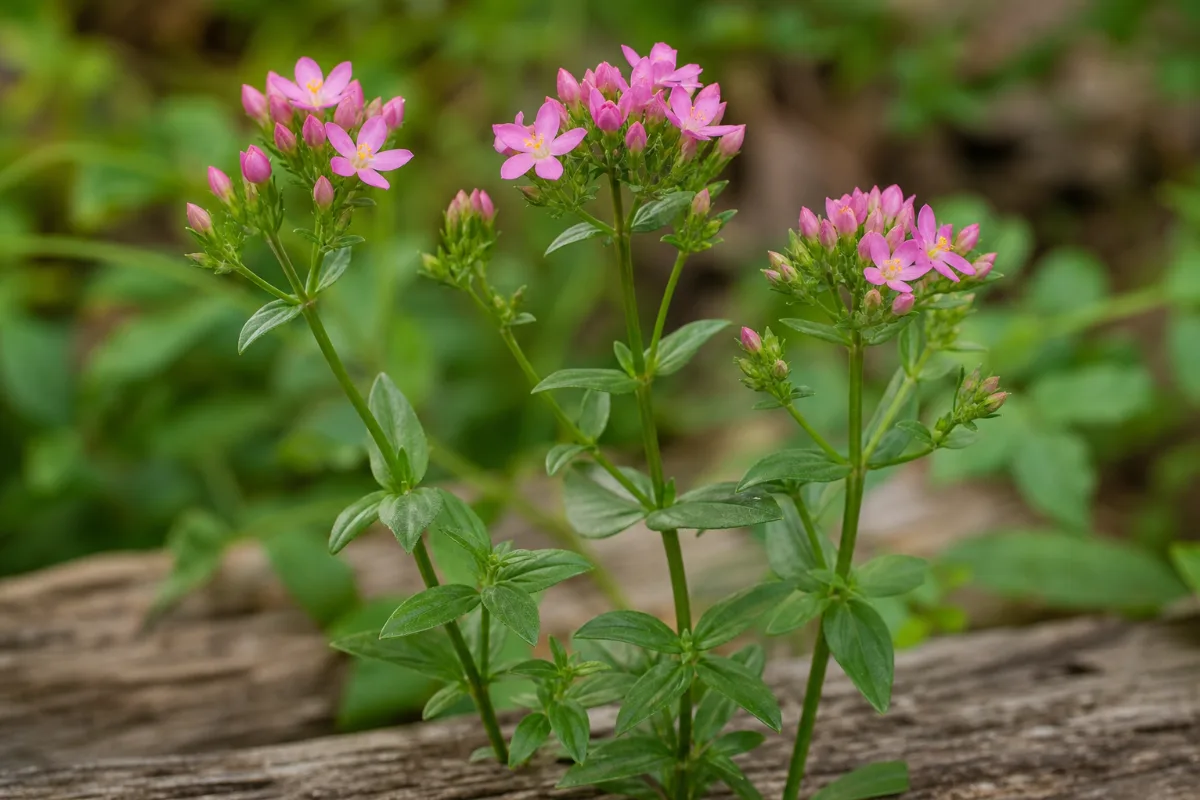
Herbs & Botanicals · Bitter digestive herb
Centaury
Centaurium erythraea · also called Common centaury, European centaury, small centaury, Centaurii herba, centaura menor (Spanish)
Centaury is a small bitter herb whose dried flowering tops are used as a tea or extract. In the EU it is a traditional medicine for mild indigestion and temporary loss of appetite, based on long use and not on trials. We found no human studies; the rest is lab and animal research. Do not use it if you have a stomach or duodenal ulcer, and avoid it in pregnancy and breastfeeding.
General information, not medical advice. Last substantive update · Not medically reviewed. A named clinician has not signed off on this page. How this page is made
About Centaury
Centaury is a bitter European herb with a short list of EU traditional uses (mild digestive upset and loss of appetite) and no human trials. Lab and animal work on blood sugar, liver and pain is interesting but unproven in people. The key cautions are ulcers, pregnancy and breastfeeding, and name mix-ups.
What it is
Centaury is the common name for Centaurium erythraea, a plant in the gentian family. The dried flowering tops (Centaurii herba) are used. Like gentian, it is a bitter herb, and its bitter taste comes from compounds such as swertiamarin, gentiopicroside and sweroside.
It is used as a tea, powder, liquid extract, tincture or soft extract, and also in mixed bitter products.
Not Centaurea, not blessed thistle
Names are easy to mix up. Centaurea (knapweeds) and blessed thistle (Centaurea benedicta) belong to the daisy family. American centaury (Sabatia angularis) is a different plant in the gentian family. Everything on this page is about Centaurium erythraea. Check the Latin name on the label.
What it is used for
The EU herbal committee accepted centaury in 2015 as a traditional medicine for mild stomach and gut upset and temporary loss of appetite, based only on long use. It advises seeing a doctor if symptoms last more than 2 weeks.
Folk uses also include diabetes, fever, urinary complaints and pain, but these are not EU-listed.
What the research shows
We found no human trial of centaury. Rat studies suggest effects on blood sugar, liver enzymes and aspirin stomach damage. A cell and rat study tested an ointment, and a lab study of a nine-herb mixture found stomach muscle relaxation. Animal and test-tube results often do not carry over to people.
At a glance
Traditional uses history, not proof
- EU traditional herbal medicine: mild stomach and gut upset (dyspepsia)
- EU traditional use: temporary loss of appetite
- Folk use for diabetes, fever, urinary complaints and pain (not EU-listed)
Studied for research
- Indigestion and appetite: traditional use only, no human trial
- Blood sugar: rat research only
- Liver protection: rat and mouse research only
- Stomach lining: one rat experiment (the EU lists ulcer as a reason not to use it)
- Pain and skin inflammation: rats and cells only
Main compounds
- Bitter secoiridoids such as swertiamarin, gentiopicroside and sweroside
- Xanthones
- Phenolics and flavonoids such as hyperoside and quercetin
Common forms
- Herbal tea from the cut dried herb
- Powder
- Liquid extract and tincture (contain alcohol)
- Soft (water) extract
- Combination bitter products with other herbs (not what the EU monograph rests on)
Research links: EMA/HMPC: EU herbal monograph on Centaurium erythraea herba (2015) · EMA public summary: Centaurii herba · PubMed: Centaurium erythraea review (J Ethnopharmacol, 2021) · PubMed: kidney injury case report with a three-plant mixture (2024) · Research Library · Genes & Biomarkers Library
The plant and its history
- Accepted scientific name
- Centaurium erythraea Rafn
- Naming authority
- Rafn; GBIF backbone shows this as the accepted name (usageKey 5414457, exact match, confidence 98). The EU monograph covers C. erythraea s.l., including C. majus and C. suffruticosum.
- Synonyms
- Erythraea centaurium Persoon; Centaurium umbellatum Gilibert; Centaurium minus Garsault
- Common names
- Centaury (English); Common centaury (English); European centaury (English); Small centaury (English); Centaura menor (Spanish); Petite centauree (French); Tausendguldenkraut (German)
- Botanical family
- Gentianaceae (the gentian family), order Gentianales.
- Classification
- Plantae > Tracheophyta > Magnoliopsida > Gentianales > Gentianaceae > Centaurium > Centaurium erythraea
- Native range
- Not verified in a source read. Folk use is reported in Europe and North Africa (Morocco, Algeria, Italy, Spain, Portugal, Balkans), per a 2021 review.
- Habitat
- Not verified in a source read.
- What the plant looks like
- Roots: Roots are used in some folk medicine (2021 review) but are not the EU-listed part.; Stems: Not verified in a source read.; Leaves: Leaves are the main site where bitter secoiridoids are made (2018 plant study).; Flowers: The EU-listed material is the dried flowering aerial parts (herba).; Fruit: Not the medicinal part.
- Cultivation
- Not verified in a source read.
- Harvest and processing
- The EU monograph covers cut dried herb, powder, liquid extract (25% ethanol), tincture (70% ethanol) and soft (water) extract. The material should comply with the Ph. Eur. monograph.
- Look-alikes and adulterants
- Name: Centaurea species and blessed thistle (Centaurea benedicta); Note: Different plants in the daisy family (Asteraceae; GBIF). Not interchangeable with centaury.; Name: American centaury (Sabatia angularis); Note: A different gentian-family plant (GBIF); not the EU herb.; Name: Gentian (Gentiana lutea); Note: A related bitter herb in the same family with its own EU monograph; not the same plant.
- Sustainability and conservation
- Not verified. No IUCN assessment was retrieved.
Traditional use and history history, not clinical proof
| Tradition or era | Documented use | Source |
|---|---|---|
| European and North African folk medicine | Used for diabetes, fever, stomach ailments, dyspepsia, loss of appetite, urinary infections and hemorrhoids, and as a diuretic (2021 review). | p33940085 |
| EU regulation (2015) | Accepted as a traditional herbal medicine for mild dyspeptic/gastrointestinal disorders and temporary loss of appetite. | s-ema-centaury-monograph |
| Algerian and Moroccan traditional medicine | Used for pain (Algeria) and for diabetes as an aqueous concoction (Morocco), per the study introductions. | p37948163 |
Traditional use shows how a plant was used. It does not show that a supplement works or is safe today.
What is inside, and how it may work
What the plant contains and how those compounds act in cells and animals. Laboratory and animal mechanisms are not proven effects in people.
Main compounds
| Compound | Family | Where it is concentrated | Activity studied | Level of evidence |
|---|---|---|---|---|
| Swertiamarin PubChem 442435 | secoiridoid glycoside (bitter) | Aerial parts | Described as the main compound characterising an ethanol extract of flowering aerial parts; docking suggests it may bind COX-2 (computer only). 1 20 | Laboratory research |
| Gentiopicroside PubChem 88708 | secoiridoid glycoside (bitter) | Leaf | Identified in a leaf decoction by LC-MS/MS; docking suggests fit with HMG-CoA reductase (computer only). 4 19 | Laboratory research |
| Sweroside | secoiridoid glycoside (bitter) | Leaf | Identified in a leaf decoction; CID not checked. 4 | Laboratory research |
| Xanthones (e.g. dihydroxy-dimethoxyxanthone) | xanthone | Leaf | Identified in the decoction; docking suggested better AChE fit than gentiopicroside (computer only). 4 | Laboratory research |
| Phenolics and flavonoids (hyperoside, chlorogenic acid, protocatechuic acid, quercetin) | polyphenols | Aerial parts | Principal constituents found by LC-MS/MS in an aerial-part extract used in ointments. 6 | Laboratory research |
Mechanisms, receptors and pathways
| Target or pathway | Gene or receptor | What was found | Level |
|---|---|---|---|
| Stomach muscle (M2 muscarinic receptor) | M2 receptor | A nine-herb mixture containing centaury relaxed stomach strips via M2; centaury itself did not block M2. 9 | Animal research |
| Beta-cell oxidative stress and survival | Akt, ERK, p38, Pdx-1, MafA, Nrf-2, NFkB | In diabetic rats and rat cells, the extract reduced oxidative damage and modulated survival signals. 21 | Animal research |
| Cholesterol enzyme and acetylcholinesterase | HMGR, AChE | Decoction inhibited both enzymes in the test tube. 4 | Laboratory research |
| Inflammation (COX-2, IL-1 beta) | COX-2, IL-1B | Docking suggested swertiamarin binds COX-2; an ointment lowered IL-1 beta in skin cells. 1 6 | Laboratory research |
Absorption, metabolism and elimination
- Absorption
- No human data. EMA does not require pharmacokinetic data for this traditional-use monograph.
- Distribution
- Not established.
- Metabolism
- Not established.
- Elimination
- Not established.
- Bioavailability
- Unknown. The 2021 review calls for pharmacokinetic studies.
Isolated compounds versus whole extracts
Lab work uses whole extracts (water, ethanol, methanol) and also points to single compounds such as swertiamarin. No study compared the whole herb with isolated compounds in people. A tea, a tincture and an ointment extract differ in what they contain.
Nutritional composition
Centaury is a bitter herbal tea or extract, not a food source of nutrients.
8 not enough evidence
What was looked at
The 8 benefits and uses checked for Centaury, each with how strong the evidence is. Tap one to open it.
- Mild indigestion and temporary loss of appetite (EU traditional use)Not enough evidence
- Stomach muscle relaxation (lab only, nine-herb mixture)Not enough evidence
- Protection against aspirin stomach damage (rats only)Not enough evidence
- Blood sugar and diabetes (lab and rat research only)Not enough evidence
- Liver protection (rats and mice only)Not enough evidence
- Antioxidant activity (test tube)Not enough evidence
- Pain (rats only)Not enough evidence
- Skin inflammation as an ointment (cells and rats only)Not enough evidence
Lab markers tracked in the studies
Blood glucose (animal)Liver enzymes SGPT/ALT and SGOT/AST (animal)
What is Centaury good for?
The main proposed uses and how strong the human evidence is for each. 'Insufficient' means there are no human studies, only traditional use or lab and animal results. Ratings are this profile's own reading, not formal grades.
Benefits, one by one
Each card is a research question, not a promise. Tap a goal to filter. Open a card to see the studies, doses and limits.
Mild indigestion and temporary loss of appetite (EU traditional use)
Not enough evidenceIn the EU, centaury herb (the dried flowering tops) is a traditional herbal medicine for mild stomach and gut upset and for a temporary loss of appetite. This rests on long use only. No human trial was found.
4 studiesEU-listed forms: herbal tea, powder, liquid extract, tincture, soft e…
Studies, doses and limits
What the trials found
We found no randomised trial or other human study of centaury for indigestion or appetite. A 2021 review of the plant lists these as folk uses and calls for further in vivo work.
Results
No human results. The regulator relies on traditional use.
Effect sizes as reported
None (no human data).
Why this rating
No human trials. 'Traditional use' is a regulatory category, not proof the herb works.
Form and dose studied
EU-listed forms: herbal tea, powder, liquid extract, tincture, soft extract. Amounts are not advice here; ask a doctor or pharmacist.
Who was studied
Adults and the elderly. Not recommended under 18, in pregnancy or breastfeeding.
Limits
Nothing shows the herb eases indigestion or restores appetite beyond what long use suggests. Ongoing loss of appetite or stomach pain can signal a condition that needs a doctor.
Why researchers looked
Centaury is one of the classic bitter herbs. Bitter herbs have long been taken before or after meals to ease a heavy stomach and bring back appetite.
Traditional use
The EU herbal committee (HMPC) accepted this use in 2015 'exclusively based upon long-standing use'. It lists the herb as tea, powder, liquid extract, tincture or soft extract. It advises seeing a doctor if symptoms last longer than 2 weeks.
Proposed mechanism Pharmacological theory
Bitter compounds of the secoiridoid type (such as gentiopicroside and sweroside, found in a centaury leaf decoction) are the usual explanation offered for bitter herbs. How this would work in people for centaury has not been shown.
A proposed mechanism does not show that the effect happens in people.
Peptic (stomach or duodenal) ulcer is a listed contraindication in the EU monograph. See Safety.
Stomach muscle relaxation (lab only, nine-herb mixture)
Not enough evidenceA lab study on guinea pig stomach tissue found a nine-herb bitter mixture that contains centaury relaxed the stomach muscle. Centaury itself was not one of the herbs that blocked the receptor involved.
1 studiesNine-herb extract in organ baths (lab).
Studies, doses and limits
What the trials found
None. Animal tissue and cell lines only.
Results
Dose-dependent relaxation of isolated stomach strips by the mixture (whole-mixture IC50 at M2: 219 ug/mL).
Effect sizes as reported
Mixture IC50 219 ug/mL (M2 activity); 294 ug/mL (M2 binding).
Why this rating
Lab and animal tissue; a mixture; centaury was not an active part on this receptor; industry-funded.
Form and dose studied
Nine-herb extract in organ baths (lab).
Who was studied
Guinea pig tissue and hamster cell lines.
Limits
Says nothing direct about centaury on its own or about people.
Why researchers looked
Poor relaxation of the upper stomach after eating is one cause of 'functional dyspepsia' (fullness and discomfort without a clear disease). Bitter mixtures are sold for it.
Traditional use
Mixtures of bitter herbs are a long-standing European tradition. This one is made by a company that also funded the study.
Proposed mechanism Laboratory research
The mixture blocked the M2 muscarinic receptor in cells and relaxed isolated guinea pig stomach muscle. Of the nine herbs, juniper, masterwort and sage blocked M2; centaury did not.
A proposed mechanism does not show that the effect happens in people.
None specific.
Protection against aspirin stomach damage (rats only)
Not enough evidenceIn rats given aspirin, a centaury extract cut stomach damage a lot. This is an animal result. The EU monograph, by contrast, lists peptic ulcer as a reason not to use centaury.
2 studies50% water-ethanol extract (rat study).
Studies, doses and limits
What the trials found
No human study of ulcers, acid or stomach lining was found.
Results
Ulcer index 77% lower with the 50% aqueous-ethanol extract than aspirin alone, in 7 rats per group, after 4 hours.
Effect sizes as reported
Ulcer index reduced by 77% versus aspirin alone (rats).
Why this rating
One small, short rat experiment. The only regulator view (EU) is a caution for ulcers.
Form and dose studied
50% water-ethanol extract (rat study).
Who was studied
Rats given aspirin.
Limits
Tiny, short, one lab. A rat result does not tell people with an ulcer that centaury is safe; the EU advice is to avoid it.
Why researchers looked
Researchers tested whether a traditional stomach herb protects the stomach lining.
Traditional use
Not an EU-listed use.
Proposed mechanism Animal research
The authors point to antioxidant action: lipid peroxidation and myeloperoxidase were lower and glutathione higher in the centaury group.
A proposed mechanism does not show that the effect happens in people.
Do not read this as a reason to take centaury for ulcers. See Safety.
Blood sugar and diabetes (lab and rat research only)
Not enough evidenceCentaury is a folk remedy for diabetes in several countries. In rats with chemically induced diabetes, an extract improved insulin levels and blood sugar control. No human trial was found.
3 studiesCentaury extract (rats). Amounts are not advice; ask a doctor or phar…
Studies, doses and limits
What the trials found
No human study of blood sugar was found. A 2025 review of the gentian family describes only lab and animal results and calls for proper clinical trials; its abstract does not name centaury.
Results
Better insulin level and glycemic control in streptozotocin-diabetic rats.
Effect sizes as reported
Numbers not given in the abstract.
Why this rating
Rats and cells only; chemical diabetes model.
Form and dose studied
Centaury extract (rats). Amounts are not advice; ask a doctor or pharmacist.
Who was studied
Diabetic rats; rat beta-cells.
Limits
Animal results often do not carry over to people. Do not replace diabetes medicine with a herb.
Why researchers looked
Folk use for diabetes in Serbia, Algeria and Morocco led labs to test extracts.
Traditional use
Not an EU-listed use.
Proposed mechanism Animal research
In rat islet cells the extract reduced oxidative damage and switched on survival signals in insulin-making beta-cells.
A proposed mechanism does not show that the effect happens in people.
Possible extra blood sugar lowering with diabetes medicines is a theoretical concern only. See Safety.
Liver protection (rats and mice only)
Not enough evidenceIn rats given liver-damaging acetaminophen, a centaury leaf extract lowered liver enzymes. In mice on a high-fat diet, an extract reduced liver fat. Neither has been tested in people.
2 studiesMethanol leaf extract (rats); extract (mice).
Studies, doses and limits
What the trials found
None.
Results
Lower SGOT, SGPT and LDH with a methanol leaf extract in acetaminophen-injured rats. In diet-diabetic mice, the centaury extract reduced liver fat most among three plant extracts (p<0.05).
Effect sizes as reported
Not given in abstracts beyond p<0.05.
Why this rating
Two animal studies from different labs.
Form and dose studied
Methanol leaf extract (rats); extract (mice).
Who was studied
Rats and mice.
Limits
Methanol extract is not a tea. No human liver data.
Why researchers looked
Centaury is also used in folk medicine as a 'liver' herb.
Traditional use
Not an EU-listed use.
Proposed mechanism Animal research
Not established; the authors suggest antioxidant effects.
A proposed mechanism does not show that the effect happens in people.
Liver safety in people is not established; see Safety.
Antioxidant activity (test tube)
Not enough evidenceA leaf decoction of centaury shows antioxidant activity in the test tube and blocks two enzymes. This shows chemistry, not benefit in people.
1 studiesLeaf decoction (lab).
Studies, doses and limits
What the trials found
None.
Results
Antioxidant activity in three assays; 56% AChE inhibition at 500 ug/mL; 48% HMGR inhibition at 10 ug/mL.
Effect sizes as reported
See results.
Why this rating
Test tube and computer docking only.
Form and dose studied
Leaf decoction (lab).
Who was studied
None (lab).
Limits
Test-tube activity often does not occur in the body.
Why researchers looked
Many plant teas are screened for antioxidant power.
Traditional use
Not an EU-listed use.
Proposed mechanism Laboratory research
Gentiopicroside, sweroside and xanthones were identified; the decoction inhibited acetylcholinesterase and HMG-CoA reductase in the test tube.
A proposed mechanism does not show that the effect happens in people.
None specific.
Pain (rats only)
Not enough evidenceAn ethanol extract of centaury flowering tops reduced pain responses in rats, and a computer model suggested its main compound swertiamarin may bind COX-2. Not tested in people.
1 studiesEthanolic extract (rats).
Studies, doses and limits
What the trials found
None.
Results
Fewer writhes and longer hot-plate reaction time in rats.
Effect sizes as reported
Not given in the abstract.
Why this rating
One rat study plus modelling.
Form and dose studied
Ethanolic extract (rats).
Who was studied
Rats.
Limits
Pain tests in rats do not show pain relief in people.
Why researchers looked
Used as a pain remedy in Algerian folk medicine.
Traditional use
Not an EU-listed use.
Proposed mechanism Pharmacological theory
Computer docking suggested swertiamarin could bind cyclooxygenase-2; this has not been shown in the body.
A proposed mechanism does not show that the effect happens in people.
None specific.
Skin inflammation as an ointment (cells and rats only)
Not enough evidenceAn ointment made with centaury aerial-part extract lowered an inflammation marker in human skin cells and reduced paw swelling in rats about as well as a steroid ointment. It was not tested on people.
1 studiesOintment (research formulation).
Studies, doses and limits
What the trials found
None.
Results
IL-1 beta 45.7% lower in inflamed skin cells; rat paw swelling comparable to methylprednisolone ointment.
Effect sizes as reported
45.7% lower IL-1 beta (cells).
Why this rating
Cells and rats; one study with a pharma-company author.
Form and dose studied
Ointment (research formulation).
Who was studied
HaCaT skin cells; rats.
Limits
Topical research formulation; not a tea or tablet.
Why researchers looked
European folk medicine used centaury on wounds and skin inflammation.
Traditional use
Not an EU-listed use.
Proposed mechanism Laboratory research
Antioxidant and anti-inflammatory activity of its phenolic compounds in the lab.
A proposed mechanism does not show that the effect happens in people.
Skin tolerance in people was not tested.
Connections to the rest of health
How Centaury connects to the rest of our health knowledge graph. Every link says what kind of connection it is. A safety link (for example to the liver) is a warning, not a benefit. A study that merely mentions a topic never creates a benefit link.
Explore every connection: goals, body systems, organs, symptoms, genes
A. Wellness goals
| Connected to | Kind of connection | Evidence status | Context | Studies |
|---|---|---|---|---|
| Digestive Support | Traditional use | Not enough evidence | Traditional use only; no human trial. Mild indigestion and temporary loss of appetite (EU traditional use): In the EU, centaury herb (the dried flowering tops) is a traditional herbal medicine for mild stomach and gut upset and for a temporary loss of appetite. This rests on long use only. No human trial was found. Preparation or compound: Dried herb preparations |
14 15 3 4 |
| Gut Health | Traditional use | Not enough evidence | Mild indigestion and temporary loss of appetite (EU traditional use): In the EU, centaury herb (the dried flowering tops) is a traditional herbal medicine for mild stomach and gut upset and for a temporary loss of appetite. This rests on long use only. No human trial was found. | 14 15 3 4 |
| Digestive Support | Preliminary mechanism | Not enough evidence | Stomach muscle relaxation (lab only, nine-herb mixture): A lab study on guinea pig stomach tissue found a nine-herb bitter mixture that contains centaury relaxed the stomach muscle. Centaury itself was not one of the herbs that blocked the receptor involved. Protection against aspirin stomach damage (rats only): In rats given aspirin, a centaury extract cut stomach damage a lot. This is an animal result. The EU monograph, by contrast, lists peptic ulcer as a reason not to use centaury. | 9 12 14 |
| Gut Health | Preliminary mechanism | Not enough evidence | Protection against aspirin stomach damage (rats only): In rats given aspirin, a centaury extract cut stomach damage a lot. This is an animal result. The EU monograph, by contrast, lists peptic ulcer as a reason not to use centaury. | 12 14 |
| Blood Sugar Balance | Preliminary mechanism | Not enough evidence | Blood sugar and diabetes (lab and rat research only): Centaury is a folk remedy for diabetes in several countries. In rats with chemically induced diabetes, an extract improved insulin levels and blood sugar control. No human trial was found. | 21 2 3 |
| Metabolic Health | Preliminary mechanism | Not enough evidence | Blood sugar and diabetes (lab and rat research only): Centaury is a folk remedy for diabetes in several countries. In rats with chemically induced diabetes, an extract improved insulin levels and blood sugar control. No human trial was found. | 21 2 3 |
| Liver Support | Preliminary mechanism | Not enough evidence | Liver protection (rats and mice only): In rats given liver-damaging acetaminophen, a centaury leaf extract lowered liver enzymes. In mice on a high-fat diet, an extract reduced liver fat. Neither has been tested in people. | 8 5 |
| Healthy Aging | Preliminary mechanism | Not enough evidence | Antioxidant activity (test tube): A leaf decoction of centaury shows antioxidant activity in the test tube and blocks two enzymes. This shows chemistry, not benefit in people. | 4 |
| Inflammation Balance | Preliminary mechanism | Not enough evidence | Pain (rats only): An ethanol extract of centaury flowering tops reduced pain responses in rats, and a computer model suggested its main compound swertiamarin may bind COX-2. Not tested in people. Skin inflammation as an ointment (cells and rats only): An ointment made with centaury aerial-part extract lowered an inflammation marker in human skin cells and reduced paw swelling in rats about as well as a steroid ointment. It was not tested on people. | 1 6 |
| Healthy Skin | Preliminary mechanism | Not enough evidence | Skin inflammation as an ointment (cells and rats only): An ointment made with centaury aerial-part extract lowered an inflammation marker in human skin cells and reduced paw swelling in rats about as well as a steroid ointment. It was not tested on people. | 6 |
B. Body systems
| Connected to | Kind of connection | Evidence status | Context | Studies |
|---|---|---|---|---|
| Digestive System | Biological association | Not enough evidence | Studied for: Mild indigestion and temporary loss of appetite (EU traditional use) Studied for: Stomach muscle relaxation (lab only, nine-herb mixture) | 14 15 3 4 9 12 |
| Endocrine System | Biological association | Not enough evidence | Studied for: Blood sugar and diabetes (lab and rat research only) | 21 2 3 |
| Hepatic System | Biological association | Not enough evidence | Studied for: Liver protection (rats and mice only) | 8 5 |
| Metabolism Weight | Biological association | Not enough evidence | Studied for: Antioxidant activity (test tube) | 4 |
| Nervous System | Biological association | Not enough evidence | Studied for: Pain (rats only) | 1 |
| Integumentary System | Biological association | Not enough evidence | Studied for: Skin inflammation as an ointment (cells and rats only) | 6 |
C. Body parts and organs
| Connected to | Kind of connection | Evidence status | Context | Studies |
|---|---|---|---|---|
| Stomach | Traditional use | Not enough evidence | EU traditional use for mild indigestion and loss of appetite; peptic ulcer is a contraindication. Preparation or compound: Dried herb tea, powder, liquid extract, tincture, soft extract |
14 15 |
| Kidneys | Adverse effect or risk | Not enough evidence | One case of interstitial nephritis; cause not isolated. Preparation or compound: Mixture of wormwood, horehound, centaury |
10 |
D. Symptoms
| Connected to | Kind of connection | Evidence status | Context | Studies |
|---|---|---|---|---|
| Mild indigestion | Traditional use | Not enough evidence | EU traditional use only; no human trial. Preparation or compound: Dried herb tea, powder, extract or tincture |
14 |
| Temporary loss of appetite | Traditional use | Not enough evidence | EU traditional use only; no human trial. Preparation or compound: Dried herb preparations |
14 |
I. Biomarkers
| Connected to | Kind of connection | Evidence status | Context | Studies |
|---|---|---|---|---|
| Blood glucose (animal) | Biological association | Not enough evidence | Measured in trials: lowered. A lab change is not the same as a health benefit. | 21 11 |
| Liver enzymes SGPT/ALT and SGOT/AST (animal) | Biological association | Not enough evidence | Measured in trials: lowered. A lab change is not the same as a health benefit. | 8 |
J. Genes, receptors and enzymes
| Connected to | Kind of connection | Evidence status | Context | Studies |
|---|---|---|---|---|
| Secoiridoid biosynthesis genes (GES, G8O, 8HGO, IS, 7DLGT, SLS, CPR) | Preliminary mechanism | In vitro | Plant genes that make the bitter secoiridoids; relevant to the plant, not to human health. | 7 |
| COX-2 (PTGS2) | Preliminary mechanism | In vitro | Computer docking only for swertiamarin. | 1 |
L. Active compounds
| Connected to | Kind of connection | Evidence status | Context | Studies |
|---|---|---|---|---|
| Swertiamarin | Biological association | In vitro | Described as the main compound characterising an ethanol extract of flowering aerial parts; docking suggests it may bind COX-2 (computer only). Preparation or compound: Aerial parts |
1 20 |
| Gentiopicroside | Biological association | In vitro | Identified in a leaf decoction by LC-MS/MS; docking suggests fit with HMG-CoA reductase (computer only). Preparation or compound: Leaf |
4 19 |
| Sweroside | Biological association | In vitro | Identified in a leaf decoction; CID not checked. Preparation or compound: Leaf |
4 |
| Xanthones (e.g. dihydroxy-dimethoxyxanthone) | Biological association | In vitro | Identified in the decoction; docking suggested better AChE fit than gentiopicroside (computer only). Preparation or compound: Leaf |
4 |
| Phenolics and flavonoids (hyperoside, chlorogenic acid, protocatechuic acid, quercetin) | Biological association | In vitro | Principal constituents found by LC-MS/MS in an aerial-part extract used in ointments. Preparation or compound: Aerial parts |
6 |
Each connection is stored with the ingredient, the connected record, the kind of connection, the evidence status, the supporting studies, the preparation or compound involved, and a review date (last reviewed October 25, 2026).
Evidence at a glance: what changed in 2 lab markers
Tap a number to show only those markers. Counts are markers, not people.
The evidence
The research centre for Centaury. Every record here was checked against PubMed or the publisher's page; we never list a study we have not verified.
Evidence by outcome
Bars show how many studies we found for each outcome, not how well it works. People are added up across trials only (reviews are not added, to avoid double counting).
How we rate evidence
High certainty
Several well-run trials or reviews agree; further research is unlikely to change the picture much.
Moderate certainty
Good trials point the same way, but some doubt remains.
Low certainty
Small, short or inconsistent trials. The finding could change with better research.
Very low certainty
Very little or very weak human data. Treat as a possibility only.
Mixed findings
Trials or reviews disagree with each other.
Not enough evidence
Not enough human research to say either way.
Evidence against
Good research found no benefit, or found harm.
We take the reviewers' own risk-of-bias and GRADE statements where they exist, and otherwise judge from study size, design, consistency, directness and whether a product matches what is sold. Many publications do not make evidence high. Method note: We started from our existing centaury summary, read the EU herbal monograph in full and looked up gaps in PubMed and plant and chemical databases. Each study design, subjects, product and result is recorded as reported, mostly from abstracts. The EMA public summary and 2026 addendum are from our earlier summary and were not re-opened. NCCIH, LiverTox and LactMed pages were not found. Certainty ratings are the compiler's reading. No study is cited that we could not verify.
Study library: every study we checked 21
| Study | Design | People | Product, dose, length | Result |
|---|---|---|---|---|
| Chabane 2024 Analgesic effect of Centaurium erythraea and molecular docking investigation of the major component swertiamarin. Natural Product Research · PMID 37948163 · DOI |
Animal research animal |
Wistar rats in pain tests, plus computer docking | Ethanolic extract of flowering aerial parts, characterised by swertiamarin aerial parts Not given here Short tests · vs Untreated rats |
The extract reduced writhing and increased hot-plate reaction time. Docking suggested swertiamarin binds the COX-2 protein. Not given in the abstract Methods, limits and fundingOutcomes: Writhing and hot-plate pain tests Limitations: Rats and computer modelling only. Funding and conflicts: Not stated in the abstract. Read: abstract |
| Dinić 2025 Therapeutic Potential of Gentianaceae Family Plants in the Treatment of Diabetes and Its Complications. Biomedicines · PMID 41301913 · DOI |
Narrative review mixed |
Family-level review of lab and animal diabetes research | Gentianaceae (gentian family) extracts and isolated compounds various Not given here n/a · vs n/a |
Numerous in vitro and in vivo studies show potential to lower blood glucose, reduce oxidative stress and protect liver and kidney. The authors say well-designed clinical trials are needed. The abstract does not name centaury. Not applicable Methods, limits and fundingOutcomes: Blood glucose, oxidative stress, beta-cell protection Limitations: Family-level review; lab and animal work; no human trials. Funding and conflicts: No conflicts declared. Read: abstract |
| El Menyiy 2021 Phytochemical properties, biological activities and medicinal use of Centaurium erythraea Rafn. Journal of Ethnopharmacology · PMID 33940085 · DOI |
Narrative review mixed |
Literature review (taxonomy, folk use, chemistry, lab and animal pharmacology, toxicity) | Centaurium erythraea (aerial parts, roots, oils and extracts) aerial parts and roots Not given here n/a · vs n/a |
Folk uses include diabetes, fever, stomach ailments, dyspepsia, loss of appetite, urinary infections and hemorrhoids. Lab and animal work reports antioxidant, antidiabetic, anti-inflammatory, gastroprotective and hepatoprotective activity. The authors say in vivo assays, toxicology and pharmacokinetic studies are still needed to validate safety and efficacy. Not applicable (narrative review) Methods, limits and fundingOutcomes: Summary of reported folk uses and lab/animal activities Limitations: Narrative review, not systematic; mixes lab, animal and folk-use reports; no human trial summarised. Funding and conflicts: No conflicts reported in the abstract. Read: abstract |
| Guedes 2019 Bioactivities of Centaurium erythraea (Gentianaceae) Decoctions: Antioxidant Activity, Enzyme Inhibition and Docking Studies. Molecules · PMID 31652501 · DOI |
Laboratory research in-vitro |
Lab chemistry and enzyme tests, plus computer docking | Decoction of Centaurium erythraea leaves leaf Not given here n/a · vs n/a |
Gentiopicroside, sweroside (secoiridoid glycosides) and xanthones were identified. The decoction showed antioxidant activity and inhibited two enzymes in the test tube (56% and 48% at the concentrations tested). AChE 56% at 500 ug/mL; HMGR 48% at 10 ug/mL Methods, limits and fundingOutcomes: Compounds present; antioxidant activity; AChE and HMG-CoA reductase inhibition Limitations: Test-tube and computer work only. Funding and conflicts: No conflicts declared. Read: abstract |
| Hamza 2015 Effect of Centaurium erythraea Rafn, Artemisia herba-alba Asso and Trigonella foenum-graecum L. on liver fat accumulation in C57BL/6J mice with high-fat diet-induced type 2 diabetes. Journal of Ethnopharmacology · PMID 26023031 · DOI |
Animal research animal |
Mice with high-fat-diet type 2 diabetes | Centaurium erythraea extract (compared with two other plant extracts) not stated in abstract Not given here 20 weeks (prevention) or 18 weeks (after diabetes) · vs Untreated diabetic mice |
All three extracts improved liver fat; the centaury extract was most marked (p<0.05). p<0.05 for centaury Methods, limits and fundingOutcomes: Liver fat (Oil Red O staining) Limitations: Mice; staining result only; no human data. Funding and conflicts: Not stated in the abstract. Read: abstract |
| Karetka 2025 In Vitro and in Vivo Efficacy of Different Ointment Formulations Containing Centaurium erythraea Rafn. Aerial Extract. Pharmaceuticals · PMID 41304926 · DOI |
Animal research animal |
Human skin cells in a dish and rats with induced paw swelling | Ointments containing Centaurium erythraea aerial-part extract aerial parts Not given here Short experiments · vs Inflamed control; methylprednisolone ointment |
The best ointment lowered IL-1 beta by 45.7% in skin cells and reduced rat paw swelling comparably to a steroid ointment. 45.7% lower IL-1 beta (cells) Methods, limits and fundingOutcomes: Antioxidant tests, IL-1 beta in skin cells, paw swelling Limitations: Cells and rats; a topical ointment, not a tea or tablet; one author works for a pharmaceutical company. Funding and conflicts: One author employed by MEDITOP Pharmaceutical Ltd; others declare none. Read: abstract |
| Matekalo 2018 Organ-specific and genotype-dependent constitutive biosynthesis of secoiridoid glucosides in Centaurium erythraea Rafn, and its elicitation with methyl jasmonate. Phytochemistry · PMID 30077897 · DOI |
Laboratory research in-vitro |
Plant biochemistry and gene expression | Centaurium erythraea plants leaf (main site) Not given here n/a · vs n/a |
Leaves are the main site where secoiridoid glucosides are made, and content differs between plant genotypes. Not applicable Methods, limits and fundingOutcomes: Secoiridoid glucoside content and related genes Limitations: Plant biology study, not a human study. Funding and conflicts: Not stated in the abstract. Read: abstract |
| Mroueh 2004 Hepatoprotective activity of Centaurium erythraea on acetaminophen-induced hepatotoxicity in rats. Phytotherapy Research · PMID 15174008 · DOI |
Animal research animal |
Rats with acetaminophen liver injury | Methanol extract of the leaves leaf Not given here 1 to 6 days · vs Untreated injured rats |
Extract lowered the liver enzymes and tissue damage looked less severe. Numbers not given in the abstract Methods, limits and fundingOutcomes: Liver enzymes (SGOT, SGPT, LDH) and liver tissue Limitations: Rats; methanol extract not used in traditional tea; no human data. Funding and conflicts: Not stated in the abstract. Read: abstract |
| Piqué-Borràs 2025 Herbal Amara extract induces gastric fundus relaxation via inhibition of the M2 muscarinic receptor. Neurogastroenterology and Motility · PMID 39344827 · DOI |
Animal research animal |
Guinea pig stomach muscle strips and cell lines | Nine-herb bitter mixture (Amara) including Centaurium erythraea mixed extract (parts not stated in abstract) Not given here Organ bath and cell assays · vs Untreated tissue / M3 blocker |
The mixture relaxed stomach muscle strips and inhibited the M2 receptor. Of the nine herbs, only juniper, masterwort and sage blocked M2; centaury was not among them. IC50 for the whole mixture at M2: 219 ug/mL Methods, limits and fundingOutcomes: Relaxation of carbachol-induced stomach muscle contraction; M2 and M3 receptor activity Limitations: Lab and animal tissue; a nine-herb mixture, so it says little about centaury alone; not tested in people. Funding and conflicts: Authors are employees of Weleda AG, which funded the study (industry-linked). Read: abstract |
| Selles 2024 Acute Kidney Injury Following the Ingestion of a Medicinal Plants' Mixture: A Case Report. Case Reports in Nephrology · PMID 39735399 · DOI |
Case report |
1 A 17-year-old with severe acute renal failure, esophagitis with erosive gastritis and inflammatory anemia |
Chronic intake of a mixture of three plants: Artemisia absinthium, Marrubium vulgare and Centaurium erythraea not stated Not given here chronic (length not stated in abstract) · vs None |
After other causes were ruled out, the authors attributed the illness to the three-plant mixture. Biopsy showed interstitial nephritis without antibody deposits. Single case Methods, limits and fundingOutcomes: Kidney function, kidney biopsy Limitations: One case; three plants taken together, so centaury cannot be singled out; the causal link is the authors' judgement; the abstract does not give the outcome. Funding and conflicts: No conflicts declared. Read: abstract |
| Tahraoui 2010 Acute and sub-chronic toxicity of a lyophilised aqueous extract of Centaurium erythraea in rodents. Journal of Ethnopharmacology · PMID 20800671 · DOI |
Animal research animal |
Mice (acute) and Wistar rats (90 days) | Freeze-dried water extract of the whole plant whole plant Not given here Single dose (mice); 90 days daily (rats) · vs Untreated animals |
No deaths or toxic signs after oral dosing in mice. In rats over 90 days, blood tests were unchanged apart from a small fall in mean corpuscular volume and lower glucose and triglycerides at the higher doses. Liver and kidney tissue looked normal. The authors call the extract relatively non-toxic. Not applicable Methods, limits and fundingOutcomes: Deaths, behavior, blood tests, liver and kidney tissue Limitations: Rodents only; water extract of the whole plant; says nothing about long-term human use or mixtures. Funding and conflicts: Not stated in the abstract. Read: abstract |
| Tuluce 2011 Gastroprotective effect of small centaury (Centaurium erythraea L) on aspirin-induced gastric damage in rats. Toxicology and Industrial Health · PMID 21415093 · DOI |
Animal research animal |
21 Sprague-Dawley rats given aspirin to cause acute stomach ulcers |
50% aqueous-ethanol small centaury extract not stated in abstract Not given here 4 hours · vs Aspirin-only group |
Ulcer index was reduced by 77% in the aspirin-plus-centaury group compared with aspirin alone, with better antioxidant measures. 77% lower ulcer index Methods, limits and fundingOutcomes: Ulcer index, oxidant and antioxidant levels Limitations: Rats; short test (4 hours); 7 rats per group; says nothing about people with ulcers. Funding and conflicts: Not stated in the abstract. Read: abstract |
| s-ema-centaury-addendum-2026 EMA/HMPC addendum to assessment report on Centaurium erythraea Rafn. s.l., herba (EMA/HMPC/8050/2026) · Source |
Regulatory report n/a |
Methods, limits and fundingRead: summary-only | ||
| s-ema-centaury-monograph EMA/HMPC European Union herbal monograph on Centaurium erythraea Rafn. s.l., herba (EMA/HMPC/277493/2015) · Source |
Regulatory monograph n/a |
Methods, limits and fundingRead: full-text | ||
| s-ema-centaury-summary EMA public summary: Centaurii herba - herbal medicinal product · Source |
Regulatory summary n/a |
Methods, limits and fundingRead: summary-only | ||
| s-gbif-centaurea GBIF species match: Centaurea L. and Centaurea benedicta (L.) L. · Source |
Database record n/a |
Methods, limits and fundingRead: full-text | ||
| s-gbif-centaurium-erythraea GBIF species match: Centaurium erythraea Rafn · Source |
Database record n/a |
Methods, limits and fundingRead: full-text | ||
| s-gbif-sabatia GBIF species match: Sabatia angularis (L.) Pursh · Source |
Database record n/a |
Methods, limits and fundingRead: full-text | ||
| s-pubchem-gentiopicroside PubChem: Gentiopicroside · Source |
Database record n/a |
Methods, limits and fundingRead: full-text | ||
| s-pubchem-swertiamarin PubChem: Swertiamarin · Source |
Database record n/a |
Methods, limits and fundingRead: full-text | ||
| Đorđević 2019 Centaurium erythraea extract improves survival and functionality of pancreatic beta-cells in diabetes through multiple routes of action. Journal of Ethnopharmacology · PMID 31252092 · DOI |
Animal research animal |
Streptozotocin-treated diabetic rats and rat insulinoma cells | Centaurium erythraea extract (CEE) not stated in abstract Not given here 4 weeks after diabetes onset (plus 2 weeks before in one group) · vs Untreated diabetic rats / cells |
The extract improved insulin level and glycemic control in diabetic rats and protected beta-cells against oxidative stress. Numbers not given in the abstract Methods, limits and fundingOutcomes: Insulin level, glycemic control, islet structure, oxidative-stress markers Limitations: Rats and cells only; chemical diabetes model; no human data. Funding and conflicts: No conflicts stated in the abstract. Read: abstract |
What we do not know yet
- What the evidence supports: EU traditional use for mild digestive upset and loss of appetite, with no human trial.
- No human study of centaury for blood sugar, liver, pain or skin.
- Interactions with medicines, including diabetes drugs and acid reducers, are unstudied.
- Pregnancy, breastfeeding, children and long-term safety are unstudied.
- No NCCIH, LiverTox or LactMed entry was found.
How new research is added
New studies are found by a saved PubMed search and placed in a review queue. A person reads each one before it changes any evidence rating or safety wording. New publications never change ratings automatically.
Lab markers
What changed in blood or saliva tests during trials. A changed number is not the same as feeling or being healthier, and we give no "normal ranges".
Metabolic 1
Blood glucose (animal)
Lowered in trials
Sugar in the blood.
Not enough evidenceResults and what it means
Why it was measured
Measured in diabetic rats and in a 90-day rodent toxicity study.
Statistical vs. clinical meaning
Animal data. No human glucose result exists.
Safety implication
If you take diabetes medicine, ask a pharmacist before adding centaury.
| Study | Result | People | Product |
|---|---|---|---|
| 21 | Better insulin level and glycemic control than untreated diabetic rats (numbers not in abstract). | Streptozotocin-diabetic rats | Centaurium erythraea extract by mouth |
| 11 | Lower serum glucose and triglycerides at the higher doses after 90 days. | Healthy Wistar rats | Freeze-dried water extract of whole plant |
Organ function 1
Liver enzymes SGPT/ALT and SGOT/AST (animal)
Lowered in trials
Enzymes that rise in the blood when liver cells are damaged.
Not enough evidenceResults and what it means
Safety
What studies and official sources say about side effects, medicines and who should check first. Each point shows what kind of evidence it comes from.
Main points to know 5
- Do not use it if you have a stomach or duodenal ulcer. The EU herbal committee lists peptic ulcer (stomach or duodenal ulcer) as a contraindication. The monograph does not give its reasoning, so treat the caution as firm. A rat experiment found a protective effect against aspirin stomach damage, but that does not override the human advice. If you have heartburn, reflux or ulcer symptoms, ask a doctor first. Authoritative guidance 14 12
- Avoid in pregnancy, breastfeeding and under 18. The EU monograph says safety in pregnancy and breastfeeding has not been established and use is not recommended. No fertility data exist. Use under 18 is not recommended for lack of data. Authoritative guidance 14
- Name mix-ups: centaury is not Centaurea, not blessed thistle, not American centaury. Centaury (Centaurium erythraea) is in the gentian family. Centaurea, which includes knapweeds and the plant called blessed thistle (Centaurea benedicta), is in the daisy family. American centaury (Sabatia angularis) is yet another plant. Safety facts here apply to Centaurium erythraea only. Check the Latin name on the label. Authoritative guidance 16 18 17
- No known side effects at normal use, but the evidence is thin. The EU monograph lists undesirable effects as 'none known' and interactions as 'none reported'. That reflects little study, not proven safety. Reproductive toxicity, genotoxicity and carcinogenicity tests have not been done. Authoritative guidance 14
- One case of kidney injury after a three-herb mixture. A 2024 case report describes a 17-year-old with severe acute kidney failure (interstitial nephritis on biopsy) after long use of a mixture of wormwood, horehound and centaury. The authors blamed the mixture. One case cannot show centaury caused it. Case report 10
Side effects 4
| Effect | How often | Severity and recovery | Evidence |
|---|---|---|---|
| None known at normal use EMA/HMPC (2015): undesirable effects none known. Based on traditional use, not on safety trials. | Not established | not applicable Not applicable | Authoritative guidance 14 |
| Stomach disturbance and nausea in overdose The monograph's overdose section says stomach disturbances and nausea have been reported. No frequency is given. | Not established | mild to moderate Not stated | Authoritative guidance 14 |
| Possible allergy to the plant Hypersensitivity to the herb is a listed contraindication. | Not established | unknown Not stated | Authoritative guidance 14 |
| Kidney injury (interstitial nephritis), one case with a three-plant mixture Plants taken together: Artemisia absinthium, Marrubium vulgare, Centaurium erythraea. Cause not isolated. | Not established | severe Outcome not given in the abstract | Case report 10 |
Liver
No human liver injury from centaury was found, and no LiverTox entry was found. In rats, a 90-day water-extract study found normal liver and kidney tissue, and two animal studies suggest liver protection. Animal results do not prove liver safety in people. Anyone with liver disease should ask a doctor first. 11 8 5
How often. No frequency of human liver injury is available.
Monitoring. No agency monitoring advice was found.
This is a safety connection. It is not evidence that Centaury supports liver health.
Medicines and supplements 4
| With | Why it matters | Importance | Evidence | What to do |
|---|---|---|---|---|
| Diabetes medicines (insulin, metformin, sulfonylureas and others) prescription | Rat studies report lower blood sugar with centaury extracts, so an added effect on blood sugar is theoretically possible. No human interaction report exists. | Unknown. The EU monograph lists 'none reported'. | Pharmacological theory Not enough evidence 21 11 14 | If you use diabetes medicine, tell your pharmacist or doctor and check your sugar as advised. |
| Acid-reducing medicines and ulcer treatments prescription | Not studied. The EU lists peptic ulcer as a contraindication for centaury. | Unknown. | Authoritative guidance Not enough evidence 14 | If you take medicines for ulcers or reflux, do not add centaury without asking your doctor. |
| Other bitter herbs and mixtures (wormwood, horehound, gentian) herb | Overlapping bitter herbs in mixtures. The only safety signal is the single kidney case with a three-herb mixture. | Unknown. | Case report Not enough evidence 10 | Be cautious with long-term herb mixtures; tell your doctor what you take. |
| Prescription medicines in general prescription | No mechanism or case is known. | The EU monograph says 'none reported'. That reflects little study. | Authoritative guidance Not enough evidence 14 | Tell your pharmacist you use centaury. |
Who should check first 5
| Situation | Advice | Evidence |
|---|---|---|
| Peptic (stomach or duodenal) ulcer | Do not use. | Authoritative guidance 14 |
| Allergy to centaury (hypersensitivity) | Do not use. | Authoritative guidance 14 |
| Pregnancy and breastfeeding | Use is not recommended: safety is not established. | Authoritative guidance 14 |
| Children and teenagers under 18 | Not recommended: not enough data. | Authoritative guidance 14 |
| Kidney disease, diabetes treated with medicine | Ask a doctor first (precaution; the kidney case report and rat sugar findings are the reasons, not an official rule). | Case report 10 21 |
Overdose, product quality and regulators
Summary. In rodents, a freeze-dried water extract of the whole plant was not toxic by mouth. There is no human toxicity study.
Animal. Mice: no deaths or toxic signs after single oral doses up to the highest tested (15 g/kg); injected doses were toxic at higher levels (LD50 12.13 g/kg by injection). Rats: 90 days of daily oral dosing gave normal liver and kidney tissue and blood tests, with a small drop in mean corpuscular volume and lower glucose and triglycerides at higher doses.
Human doses studied. None; no human trial.
High dose or long term signals. Stomach disturbance and nausea in overdose (EMA). One kidney case with a three-herb mixture.
Overdose response. Stomach upset and nausea have been reported (EMA).
Genotoxicity. Not tested, per the EU monograph.
Toxic plant parts. No toxic part of centaury was identified in the sources read.
The main quality risk is wrong-plant mix-ups from similar common names.
Mix-up with other 'centaury' or Centaurea plants. Centaurea (daisy family) and blessed thistle (Centaurea benedicta) are not related to Centaurium erythraea (gentian family). American centaury (Sabatia angularis) is a different gentian-family plant. 16 18 17
Pesticides, heavy metals, microbes. No contamination testing of centaury products was found in the sources read. 14
| Body | Action | Date |
|---|---|---|
| European Medicines Agency, HMPC (herbal monograph) (European Union) | Final EU herbal monograph on Centaurium erythraea Rafn. s.l., herba: traditional use for mild dyspeptic/gastrointestinal disorders and temporary loss of appetite. source | 2015-11-24 |
When to get medical help
- Black or bloody stools, vomiting blood, or sudden severe stomach pain.
- Little or no urine, swelling, or sudden tiredness with nausea (possible kidney trouble), especially after using herb mixtures.
- Signs of allergy: rash, swelling of lips or face, trouble breathing.
- Symptoms that last more than 2 weeks, or poor appetite with weight loss.
- Very low blood sugar signs (shaking, sweating, confusion) if you use diabetes medicine.
Stop the supplement and contact a clinician or emergency service. In the US, Poison Control is 1-800-222-1222.
General information only, not medical advice. Ask a clinician or pharmacist before use, especially with medicines, in pregnancy or with a health condition. See the Natural Remedy Safety guide.
Frequently asked questions
What is centaury used for?
Does centaury work for digestion?
Is centaury safe if I have a stomach ulcer?
Can I take centaury when pregnant or breastfeeding?
It is not recommended. The EU says safety in pregnancy and breastfeeding has not been established, and there are no fertility data.
Is it safe for children?
Use under 18 is not recommended because there is not enough data.
Does centaury interact with diabetes medicine?
Does centaury help with diabetes?
Is centaury the same as Centaurea or blessed thistle?
Is American centaury the same plant?
No. American centaury is Sabatia angularis, another plant in the gentian family.
Can centaury hurt the liver or kidneys?
What are its side effects?
The EU lists none known. Stomach upset and nausea have been reported in overdose.
How much should I take?
Ask a doctor or pharmacist about amounts, and see a doctor if symptoms last more than 2 weeks.
Explore by health goal
Digestive SupportGut HealthInflammation BalanceBlood Sugar BalanceMetabolic HealthLiver SupportHealthy AgingHealthy Skin
Editorial transparency
- Written by
- AlternativeMed editorial team. Research compiled with AI assistance, then checked against PubMed records and the EU monograph.
- Medical review
- None. This page has not been reviewed by a physician or pharmacist.
- First published
- 2026-10-25
- Last substantive update
- 2026-10-25
- How we research
- We started from our existing centaury summary, read the EU herbal monograph in full and looked up gaps in PubMed and plant and chemical databases. Each study design, subjects, product and result is recorded as reported, mostly from abstracts. The EMA public summary and 2026 addendum are from our earlier summary and were not re-opened. NCCIH, LiverTox and LactMed pages were not found. Certainty ratings are the compiler's reading. No study is cited that we could not verify.
- How we rate evidence
- See "How we rate evidence" in the Evidence tab.
- Independence
- No product is promoted on this page. No affiliate links are shown. If one is added later it will be labelled and kept apart from the evidence.
Sources 21
Each source was opened and checked. Where we read only the abstract, it says so. The small numbers in the text point here.
- Chabane S, Boudjelal A, Bouaziz-Terrachet S, et al.. Analgesic effect of Centaurium erythraea and molecular docking investigation of the major component swertiamarin.. Natural Product Research. 2024. PMID 37948163. DOI 10.1080/14786419.2023.2278160. (abstract)
- Dinić S, Vidaković M, Arambašić Jovanović J, et al.. Therapeutic Potential of Gentianaceae Family Plants in the Treatment of Diabetes and Its Complications.. Biomedicines. 2025. PMID 41301913. DOI 10.3390/biomedicines13112822. (abstract)
- El Menyiy N, Guaouguaou FE, El Baaboua A, et al.. Phytochemical properties, biological activities and medicinal use of Centaurium erythraea Rafn.. Journal of Ethnopharmacology. 2021. PMID 33940085. DOI 10.1016/j.jep.2021.114171. (abstract)
- Guedes L, Reis PBPS, Machuqueiro M, et al.. Bioactivities of Centaurium erythraea (Gentianaceae) Decoctions: Antioxidant Activity, Enzyme Inhibition and Docking Studies.. Molecules. 2019. PMID 31652501. DOI 10.3390/molecules24203795. (abstract)
- Hamza N, Berke B, Cheze C, et al.. Effect of Centaurium erythraea Rafn, Artemisia herba-alba Asso and Trigonella foenum-graecum L. on liver fat accumulation in C57BL/6J mice with high-fat diet-induced type 2 diabetes.. Journal of Ethnopharmacology. 2015. PMID 26023031. DOI 10.1016/j.jep.2015.05.027. (abstract)
- Karetka AJ, Papp B, Lekli I, et al.. In Vitro and in Vivo Efficacy of Different Ointment Formulations Containing Centaurium erythraea Rafn. Aerial Extract.. Pharmaceuticals. 2025. PMID 41304926. DOI 10.3390/ph18111681. (abstract)
- Matekalo D, Skorić M, Nikolić T, et al.. Organ-specific and genotype-dependent constitutive biosynthesis of secoiridoid glucosides in Centaurium erythraea Rafn, and its elicitation with methyl jasmonate.. Phytochemistry. 2018. PMID 30077897. DOI 10.1016/j.phytochem.2018.07.015. (abstract)
- Mroueh M, Saab Y, Rizkallah R. Hepatoprotective activity of Centaurium erythraea on acetaminophen-induced hepatotoxicity in rats.. Phytotherapy Research. 2004. PMID 15174008. DOI 10.1002/ptr.1498. (abstract)
- Piqué-Borràs MR, Röhrl J, Künstle G. Herbal Amara extract induces gastric fundus relaxation via inhibition of the M2 muscarinic receptor.. Neurogastroenterology and Motility. 2025. PMID 39344827. DOI 10.1111/nmo.14924. (abstract)
- Selles A, Afir Y, Rahou Y, et al.. Acute Kidney Injury Following the Ingestion of a Medicinal Plants' Mixture: A Case Report.. Case Reports in Nephrology. 2024. PMID 39735399. DOI 10.1155/crin/8207758. (abstract)
- Tahraoui A, Israili ZH, Lyoussi B. Acute and sub-chronic toxicity of a lyophilised aqueous extract of Centaurium erythraea in rodents.. Journal of Ethnopharmacology. 2010. PMID 20800671. DOI 10.1016/j.jep.2010.07.038. (abstract)
- Tuluce Y, Ozkol H, Koyuncu I, et al.. Gastroprotective effect of small centaury (Centaurium erythraea L) on aspirin-induced gastric damage in rats.. Toxicology and Industrial Health. 2011. PMID 21415093. DOI 10.1177/0748233710397421. (abstract)
- . EMA/HMPC addendum to assessment report on Centaurium erythraea Rafn. s.l., herba (EMA/HMPC/8050/2026). . . (summary-only)
- . EMA/HMPC European Union herbal monograph on Centaurium erythraea Rafn. s.l., herba (EMA/HMPC/277493/2015). . . (full-text)
- . EMA public summary: Centaurii herba - herbal medicinal product. . . (summary-only)
- . GBIF species match: Centaurea L. and Centaurea benedicta (L.) L.. . . (full-text)
- . GBIF species match: Centaurium erythraea Rafn. . . (full-text)
- . GBIF species match: Sabatia angularis (L.) Pursh. . . (full-text)
- . PubChem: Gentiopicroside. . . (full-text)
- . PubChem: Swertiamarin. . . (full-text)
- Đorđević M, Grdović N, Mihailović M, et al.. Centaurium erythraea extract improves survival and functionality of pancreatic beta-cells in diabetes through multiple routes of action.. Journal of Ethnopharmacology. 2019. PMID 31252092. DOI 10.1016/j.jep.2019.112043. (abstract)