Herbs & Botanicals · Herbs · Traditional cleansing herb with no human trials
Cleavers
Galium aparine L. (aerial parts; iridoid-rich). Other bedstraws (Galium) are different plants. · also called Clivers, catchweed bedstraw
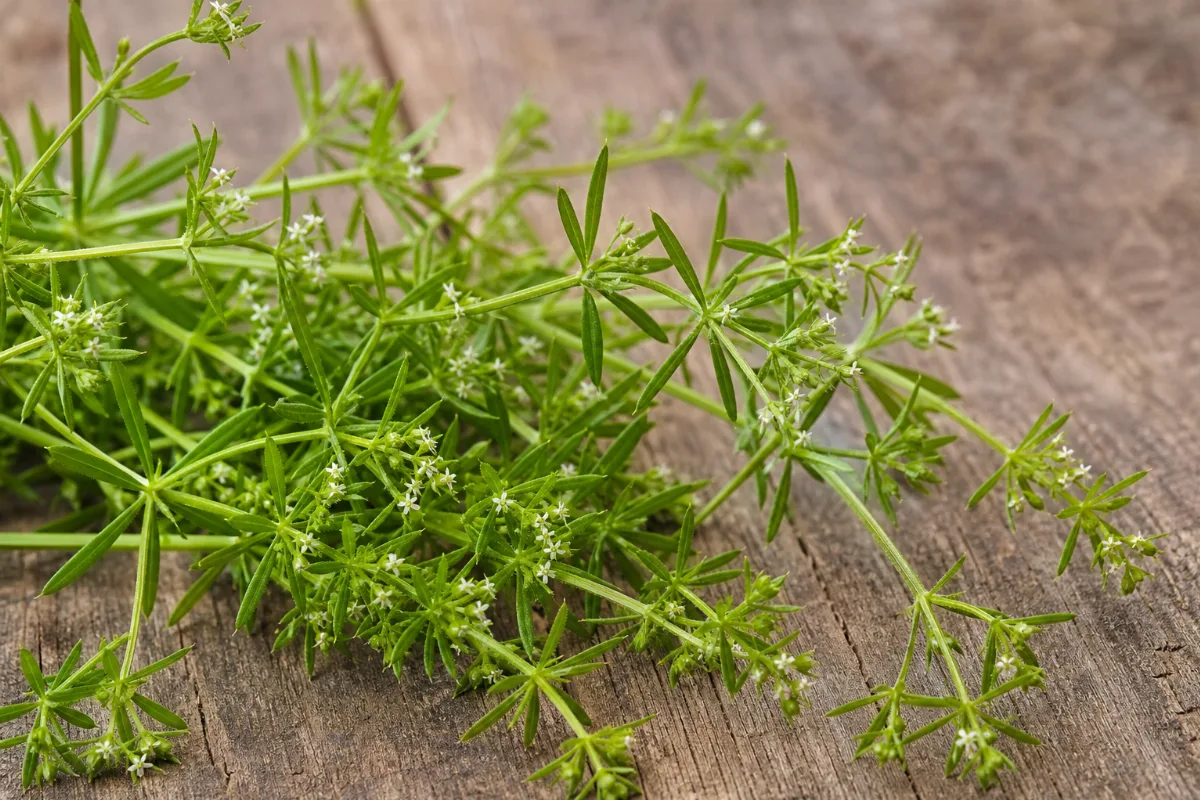
Cleavers is a clinging annual plant of the coffee family (Rubiaceae). The above-ground herb is taken as a tea or juice in folk medicine for fluid retention, urinary complaints, swollen glands and skin problems. Almost all research is on cells and animals, and we found no human trial. Its safety has not been tested in people.
General information, not medical advice. Last substantive update · Not medically reviewed. A named clinician has not signed off on this page. How this page is made
About Cleavers
Cleavers (Galium aparine) is a clinging wild plant used in folk medicine as a cleansing herb for fluid retention, urinary complaints, swollen glands and skin problems. Every health use is rated insufficient: the evidence is lab work on cells and a few animal studies, and no human trial was found. The main caution is that safety has not been established. One liver injury case involved a six-herb tea that included it, a reference page advises people on lithium to use it only under a doctor, and it is not recommended in pregnancy or breastfeeding. We found no EMA, NCCIH or LiverTox entry. For amounts, ask a doctor or pharmacist.
What it is
Cleavers is Galium aparine, a fast-growing annual of the coffee (Rubiaceae) family that clings to other plants with tiny hooked hairs. It grows in hedgerows and on waste ground and is also a field weed. The above-ground herb is the part used. Do not confuse it with other bedstraws such as yellow bedstraw (Galium verum), hedge bedstraw (Galium mollugo) or sweet woodruff (Galium odoratum), which are different species.
Traditional and current uses
A reference page says cleavers is mainly used for urinary problems and fluid retention, and also for swollen lymph nodes, skin conditions, tonsillitis and hepatitis. Lab papers add folk use on the skin and for jaundice. These are statements from secondary sources, not checked against old texts. 'Traditional' means long use, not proof.
What the research shows
We found no human trial. In a drug-weakened animal model, an extract raised some immune markers, and extracts stimulated immune cells in dishes. A rat study found less liver damage after acetaminophen. Lab work found activity against some bacteria, antioxidant activity, and slowed growth of cancer cell lines. There is no study of cleavers as a diuretic or for swollen glands, the uses it is best known for. None of this has been shown to help a person.
At a glance
Traditional uses history, not proof
- Modern herbal practice: mainly for urinary problems and fluid retention, also swollen lymph nodes, skin conditions, tonsillitis, hepatitis and snake bites, per a reference page (secondary statement).
- Folk medicine in Europe, Asia and the Americas: on the skin for skin diseases, per a 2020 lab paper (secondary statement).
- Traditional use for jaundice, per a 2022 rat study's introduction (secondary statement).
Studied for research
- Immune function, insufficient (animals and cells)
- Skin and wounds, insufficient (cells and enzymes; traditional)
- Liver protection, insufficient (one rat study)
- Germs, antioxidant activity and cancer cells, insufficient (lab only)
- Fluid retention, swollen glands and blood pressure, insufficient (traditional; no study)
Main compounds
- Iridoids (asperulosidic acid, monotropein, 10-desacetylasperulosidic acid)
- Caffeoylquinic (chlorogenic-type) acids
- Flavonoids such as rutin
- Plant sterols such as beta-sitosterol
Common forms
- Tea or infusion (used in lab immune tests)
- Fresh juice and tincture in traditional use (not studied)
- Ethanol, methanol and other extracts in lab studies
- Capsules and extracts sold as supplements (not tested in trials)
Research links: PubMed search: Galium aparine · GBIF: Galium aparine L. · Immune-suppressed animal study (Nutrients, 2024) · Research Library · Genes & Biomarkers Library
The plant and its history
- Accepted scientific name
- Galium aparine L.
- Naming authority
- L. (Linnaeus)
- Common names
- Cleavers (English); Clivers (English); Catchweed bedstraw (English)
- Botanical family
- Rubiaceae (coffee or madder family)
- Classification
- Plantae > Tracheophyta > Magnoliopsida > Gentianales > Rubiaceae > Galium > Galium aparine
- Native range
- Not covered in the sources we read; described as widespread, common in hedgerows and waste ground (UK paper).
- Habitat
- Common in hedgerows and on waste ground (UK paper); also a weed of wheat fields in several studies.
- What the plant looks like
- Roots: Basal roots and stem base are highly extensible (UK mechanics paper).; Stems: Lower stem round with a solid core; upper stem four-angled (UK mechanics paper).; Leaves: Covered on both surfaces by hooked trichomes (tiny hooked hairs) used to cling to other plants.; Flowers: Not covered in the sources we read.; Fruit: Not covered in the sources we read.
- Cultivation
- Not covered in the sources we read; described as a fast-growing annual that scrambles over other plants.
- Harvest and processing
- Studies used the aerial parts (herb) as an infusion, ethanol, methanol and hydroalcoholic extracts, and petroleum-ether fractions.
- Look-alikes and adulterants
- Name: Yellow bedstraw (Galium verum); Note: Accepted species (GBIF key 314606086); its main compound in one Estonian study was asperuloside, not asperulosidic acid.; Name: Hedge bedstraw (Galium mollugo); Note: Accepted species (GBIF key 176241433); main compound in the same study was chlorogenic acid.; Name: Sweet woodruff (Galium odoratum); Note: Accepted species (GBIF key 196381224). Not studied here.
- Sustainability and conservation
- Not covered; a common weed.
Traditional use and history history, not clinical proof
| Tradition or era | Documented use | Source |
|---|---|---|
| European, Asian and American folk medicine | Used on the skin for skin diseases, per a 2020 paper's introduction. | p32824103 |
| Modern herbal practice | Primarily for urinary problems and fluid retention; also enlarged lymph nodes, skin conditions, tonsillitis, hepatitis and snake bites. | s-ebsco-cleavers |
| Traditional use for jaundice | Used to treat jaundice, per the introduction of a rat liver study. | p36029804 |
| British Herbal Pharmacopoeia | Aerial parts have a monograph, per a 2020 paper. The monograph was not read. | p32824103 |
| 1883 medical journal note | Titled 'Galium Aparine as a Remedy for Chronic Ulcers' (British Medical Journal). Only the title was verified. | p20750642 |
| 1948 French paper | Titled as a study of the blood-pressure-lowering action of extracts of three plants including Galium aparine. Only the title was verified. | p18860990 |
| British Columbia ranchers (ethnoveterinary) | Listed among plants used for mastitis in ruminants. | p17324258 |
Traditional use shows how a plant was used. It does not show that a supplement works or is safe today.
What is inside, and how it may work
What the plant contains and how those compounds act in cells and animals. Laboratory and animal mechanisms are not proven effects in people.
Main compounds
| Compound | Family | Where it is concentrated | Activity studied | Level of evidence |
|---|---|---|---|---|
| Asperulosidic acid | iridoids | herb Most abundant compound in the Estonian G. aparine herb extract; iridoids up to 40.8 mg AE/g across the Galium species tested | Main iridoid in cleavers herb. Biological activity of the compound itself was not tested in these papers. 11 8 | Laboratory research |
| Monotropein PubChem 73466 | iridoids | herb | Listed as a major constituent of ethanolic extracts that stimulated immune cells in the lab. 8 29 | Laboratory research |
| 10-Desacetylasperulosidic acid | iridoids | herb | Listed as a major constituent of the ethanolic extracts. 8 | Laboratory research |
| Asperuloside PubChem 84298 | iridoids | herb | The main iridoid of yellow bedstraw (Galium verum) in the Estonian study; not reported as the main one in cleavers there. 11 29 | Laboratory research |
| Caffeoylquinic acids (chlorogenic acid type) | phenolic acids | herb | Several isomers (3-O-, 5-O-, dicaffeoylquinic) found in the ethanolic extracts. 8 | Laboratory research |
| Rutin PubChem 5280805 | flavonoids | herb | Found in the ethanolic extracts, with a quercetin glycoside first isolated from Galium in that study. 8 29 | Laboratory research |
| Beta-sitosterol PubChem 222284 | plant sterols | herb (petroleum-ether fraction) Described as rich in content in that fraction | Moderately slowed leukemia cell growth in a dish. 20 29 | Laboratory research |
Mechanisms, receptors and pathways
| Target or pathway | Gene or receptor | What was found | Level |
|---|---|---|---|
| Immune cells (spleen cells, NK cells, cytokines) | IL-6, TNF-alpha, IFN-gamma; 2434 genes differed | In drug-suppressed animals the extract raised spleen weight, immune-cell growth, NK activity and these cytokines. 12 | Animal research |
| Lymphocyte activation | Not applicable | Infusion and ethanol extracts stimulated human immune cells in the blast transformation test. 9 8 | Laboratory research |
| Cell cycle in breast cancer cells | Not applicable | Methanol extract caused a G1 block and apoptosis or necrosis, without killing normal breast cells. 1 | Laboratory research |
| Elastase and collagenase | Not applicable | Extract blocked elastase about 58% and collagenase about 7% in the lab. 21 | Laboratory research |
| Chymotrypsin | Not applicable | A dichloromethane extract blocked chymotrypsin more than goldenrod extracts did. 17 | Laboratory research |
| Bacterial quorum sensing and biofilm | Not applicable | Ethanol extract blocked 46.16% of quorum sensing and 60.38% of S. mutans biofilm. 5 | Laboratory research |
| Liver damage after acetaminophen | Not applicable | Pretreatment lowered ALT, AST and bilirubin and liver necrosis in rats. Mechanism not stated in the abstract. 18 | Animal research |
Absorption, metabolism and elimination
- Absorption
- No data in people or animals found.
- Distribution
- No data.
- Metabolism
- No data.
- Elimination
- No data.
- Bioavailability
- Not studied. The breast cancer paper's authors say the bioavailability and metabolism of the extract in the body still need to be studied.
Isolated compounds versus whole extracts
Most lab findings come from extracts made with different solvents (methanol, ethanol, petroleum ether, water) or from purified compounds, and results differed by solvent: for example the 96% ethanol extract was the most active in immune cell tests, and a petroleum-ether fraction held the compounds that slowed leukemia cells. A tea may contain none of those fractions in the same amounts. No study compared the whole herb with isolated parts in animals or people.
Nutritional composition
Not covered in the sources we read. We make no claim about cleavers as a food.
8 not enough evidence
What was looked at
The 8 benefits and uses checked for Cleavers, each with how strong the evidence is. Tap one to open it.
- Immune function (animal and lab work only)Not enough evidence
- Cancer cells in a dishNot enough evidence
- Germs: bacteria and biofilm (lab work only)Not enough evidence
- Antioxidant activity (test tube)Not enough evidence
- Skin problems and wounds (traditional use; lab work only)Not enough evidence
- Liver protection (one rat study)Not enough evidence
- Fluid retention, urinary complaints and swollen glands (traditional use only)Not enough evidence
- Blood pressure (a 1948 French paper, title only)Not enough evidence
Lab markers tracked in the studies
Spleen weight (animal)Natural killer (NK) cell activity (animal)Immune signals IL-6, TNF-alpha, IFN-gamma (animal cells)Immune cell activation in a lab test (lymphocyte blast transformation)Antioxidant capacity in chemical testsALT (liver enzyme, rats)AST (liver enzyme, rats)Bilirubin (rats)Elastase activity in a lab test
What is Cleavers good for?
The main proposed uses and how strong the human evidence is for each. "Insufficient" means there is not enough to judge, because only lab or animal work exists, or only tradition. Nothing about cleavers is rated higher. No human trial was found for any use. Results apply only to the named extract and species.
Benefits, one by one
Each card is a research question, not a promise. Tap a goal to filter. Open a card to see the studies, doses and limits.
Immune function (animal and lab work only)
Not enough evidenceCleavers extract raised some immune markers in animals whose immune systems had been weakened by a drug, and it stimulated immune cells in lab tests. No person has been tested.
3 studiesAqueous extract (infusion) and ethanol extracts of the herb in lab te…
Studies, doses and limits
What the trials found
No human trial of cleavers for this use was found in PubMed (searched Galium aparine and cleavers on 2026-10-25). In animals given cyclophosphamide (a drug that weakens the immune system), a cleavers extract at 5, 50 and 500 ug raised spleen weight in a dose-dependent way and raised natural killer cell activity in the two higher doses. In two Ukrainian lab studies, an infusion and ethanol extracts of the herb stimulated human immune cells in the lymphocyte blast transformation test; the 96% ethanol extract was the most active.
Results
All results point the same way (immune stimulation), but they come from one animal paper and two lab papers. Boosting immune markers is not the same as protecting anyone from illness.
Effect sizes as reported
Dose-dependent increases; numbers not given in the abstracts.
Why this rating
One animal study (species not stated in the abstract) and two cell-based lab studies; no human trial.
Form and dose studied
Aqueous extract (infusion) and ethanol extracts of the herb in lab tests; an extract of unstated type in animals. Amounts for people are not covered here; ask a doctor or pharmacist.
Who was studied
Immune-suppressed animals and human blood cells in a dish.
Limits
The animal abstract does not state the species, the plant part or the way the extract was given. Immune-cell stimulation in a dish does not show a benefit in a person.
Why researchers looked
Cleavers is listed in traditional remedies as an immune-influencing herb, so researchers in Korea, Ukraine and Poland tested extracts on immune cells and immune-suppressed animals.
Traditional use
Used in folk remedies said to influence the body's defence response (stated in a 2020 paper's introduction). This is tradition, not proof.
Proposed mechanism Preliminary mechanism
In the animal study, the extract raised spleen weight, immune-cell growth, natural killer cell activity and some immune signals (IL-6, TNF-alpha, IFN-gamma), and changed the activity of 2434 genes. In the lab, extracts and fractions stimulated blood immune cells. These are early signals only.
A proposed mechanism does not show that the effect happens in people.
Anyone with an autoimmune disease or on immune-suppressing medicine should ask a doctor before using an herb said to stimulate immunity.
Cancer cells in a dish
Not enough evidenceCleavers extracts slowed the growth of some cancer cell lines in a dish. This is not a cancer treatment and has not been tested in people or animals.
3 studiesMethanol and other solvent extracts and purified compounds. These are…
Studies, doses and limits
What the trials found
No human trial of cleavers for this use was found in PubMed (searched Galium aparine and cleavers on 2026-10-25). Cells only. A methanol extract was toxic to MCF-7 and MDA-MB-231 breast cancer cells and not to normal MCF-10A breast cells. A petroleum-ether fraction and three compounds from it slowed K562 leukemia cells. A 2026 study found extract reduced the viability of HNO210 laryngeal cancer cells at higher concentrations.
Results
Three small lab studies show cell kill in a dish. Most plant extracts kill some cancer cells at high enough concentrations, so this is a first screening step.
Effect sizes as reported
Dose-dependent; numbers not given in the abstracts.
Why this rating
Cell-line work only.
Form and dose studied
Methanol and other solvent extracts and purified compounds. These are not tea or any product you can buy. Amounts for people are not covered here; ask a doctor or pharmacist.
Who was studied
Cell lines.
Limits
No animal or human data. The leukemia study used isolated compounds, and one (dibutyl phthalate) is an industrial chemical whose presence in the plant is not explained in the abstract.
Why researchers looked
Folk medicine has used Galium species for cancer-like complaints, so researchers screened cleavers extracts on cell lines.
Traditional use
Galium species are described in the breast-cancer cell paper as traditionally used for anti-cancer purposes in folk medicine. This is tradition, not proof.
Proposed mechanism Laboratory research
A methanol extract caused a pause in the cell cycle (G1 block) in breast cancer cells and killed them by two routes (apoptosis in one line, necrosis in another). Compounds from a petroleum-ether part (beta-sitosterol, daucosterol and dibutyl phthalate) slowed leukemia cells.
A proposed mechanism does not show that the effect happens in people.
Do not use cleavers instead of cancer treatment.
Germs: bacteria and biofilm (lab work only)
Not enough evidenceCleavers extracts slowed some bacteria in the lab, most clearly Staphylococcus aureus. That does not show it treats an infection.
3 studiesMethanol, ethanol and hydroalcoholic extracts in lab dishes. Amounts …
Studies, doses and limits
What the trials found
No human trial of cleavers for this use was found in PubMed (searched Galium aparine and cleavers on 2026-10-25). In 2026 lab tests, extracts had limited antimicrobial effect overall but notable effect against Staphylococcus aureus and Enterococcus (MIC as low as 30 ug/mL). The ethanol extract blocked 60.38% of Streptococcus mutans biofilm. A 2016 lab study found a methanol leaf extract slowed all 92 MRSA isolates tested. A 2024 study found S. aureus was more sensitive than E. coli and S. epidermidis.
Results
Moderate activity against some Gram-positive bacteria in dishes, limited against others.
Effect sizes as reported
MIC as low as 30 ug/mL; 60.38% biofilm inhibition (S. mutans); 46.16% quorum-sensing inhibition.
Why this rating
Lab studies only; no animals or people.
Form and dose studied
Methanol, ethanol and hydroalcoholic extracts in lab dishes. Amounts for people are not covered here; ask a doctor or pharmacist.
Who was studied
Bacteria in the lab.
Limits
A dish result does not show that an extract reaches or kills germs in the body. Funding is not stated in the 2016 abstract.
Why researchers looked
Cleavers has been put on wounds and skin infections in folk medicine, so researchers tested extracts against bacteria.
Traditional use
Used on the skin for infections and wounds in Europe, Asia and the Americas, per a 2020 paper's introduction (a secondary statement).
Proposed mechanism Laboratory research
Extracts slowed Staphylococcus aureus (including methicillin-resistant strains) and Enterococcus, reduced biofilm of a mouth bacterium (Streptococcus mutans) and blocked bacterial communication (quorum sensing) in dishes.
A proposed mechanism does not show that the effect happens in people.
Do not use cleavers instead of medical care for a wound infection.
Antioxidant activity (test tube)
Not enough evidenceCleavers extracts mopped up free radicals in chemical tests. This is a lab property, not a health benefit shown in people.
5 studiesMethanol, ethanol and water extracts in the lab. Amounts for people a…
Studies, doses and limits
What the trials found
No human trial of cleavers for this use was found in PubMed (searched Galium aparine and cleavers on 2026-10-25). Chemical tests only. Extracts scavenged DPPH, superoxide, ABTS, hydroxyl and hydrogen peroxide radicals (water fraction strongest in one study). In 2026 an ABTS test showed 88.10% inhibition, comparable to ascorbic acid. A 2025 study found the same genus-level antioxidant and chymotrypsin-blocking activity.
Results
Consistently positive in tubes, which is common for plant extracts. It says nothing about the effect after eating or drinking it.
Effect sizes as reported
ABTS 88.10% inhibition (2026 study); other numbers not in abstracts.
Why this rating
Test-tube assays only.
Form and dose studied
Methanol, ethanol and water extracts in the lab. Amounts for people are not covered here; ask a doctor or pharmacist.
Who was studied
No living subjects.
Limits
Antioxidant tube tests do not predict benefits in the body.
Why researchers looked
The plant is rich in phenols, flavonoids and iridoids, which often show antioxidant activity in lab tests.
Proposed mechanism Laboratory research
Phenols, flavonoids (such as rutin) and caffeoylquinic acids can neutralise free radicals in chemical tests. Estonian samples of Galium aparine herb were high in iridoids, mainly asperulosidic acid.
A proposed mechanism does not show that the effect happens in people.
None identified.
Skin problems and wounds (traditional use; lab work only)
Not enough evidenceCleavers has long been put on skin and wounds. The only studies are cells in a dish and chemical tests. No cream, poultice or tea has been tested in people.
5 studiesHydroalcoholic extract and an unspecified extract in the lab. Not a c…
Studies, doses and limits
What the trials found
No clinical trial of cleavers on any skin condition or wound was found in PubMed. A 2024 lab study found improved cell migration and wound closure in a scratch assay and no toxicity to the cells. A 2009 lab screen of 21 plants found cleavers blocked elastase by about 58% (white tea 89%) and collagenase by about 7%.
Results
Early lab signals that fit the tradition, with nothing in animals or people.
Effect sizes as reported
Elastase about 58% and collagenase about 7% inhibition (lab).
Why this rating
Cell and enzyme work only; the 1883 note could not be read.
Form and dose studied
Hydroalcoholic extract and an unspecified extract in the lab. Not a cream you can buy. Amounts for people are not covered here; ask a doctor or pharmacist.
Who was studied
Human skin cells and enzymes in vitro.
Limits
No skin trial. We found no patch-test data for cleavers, so we cannot say how often it irritates or causes allergy.
Why researchers looked
Cleavers is a classic folk remedy for skin diseases and wounds, so researchers tested an extract on skin cells and enzymes.
Traditional use
Used on the skin in Europe, Asia and the Americas for skin diseases (2020 paper's introduction); a 1883 medical journal note describes it as a remedy for chronic ulcers (title only was read). Tradition, not proof.
Proposed mechanism Laboratory research
In dishes, a hydroalcoholic extract was not toxic to human skin fibroblasts and vein cells and sped up scratch closure. Cleavers extract blocked elastase (an enzyme that breaks down skin elastin) by about 58% and collagenase by about 7% in a lab test.
A proposed mechanism does not show that the effect happens in people.
The leaves and stems are covered in tiny hooked hairs, which can feel scratchy on skin (hooked hairs described in a plant-structure paper; no clinical report of irritation was found). Try a small patch first on skin, and do not use on open wounds without advice.
Liver protection (one rat study)
Not enough evidenceCleavers extract protected rats' livers from a chemical poison (acetaminophen) in one study. It has not been tested in people, and one human case report links a multi-herb tea containing it to liver injury (see Safety).
1 studiesAn extract given by mouth to rats at 250 to 500 mg/kg. Amounts for pe…
Studies, doses and limits
What the trials found
No human trial of cleavers for this use was found in PubMed (searched Galium aparine and cleavers on 2026-10-25). In Wistar rats given 250 or 500 mg/kg for five days before a toxic dose of acetaminophen, the extract reduced liver necrosis and lowered ALT, AST and bilirubin. It had little effect on the brain-related (hepatic encephalopathy) part of the model, and short-term memory was unchanged.
Results
A protective effect in one rat model.
Effect sizes as reported
Significant reductions in ALT, AST and bilirubin (numbers not in abstract).
Why this rating
One rat study; pretreatment before a single toxic dose.
Form and dose studied
An extract given by mouth to rats at 250 to 500 mg/kg. Amounts for people are not covered here; ask a doctor or pharmacist.
Who was studied
Male or female status not stated; Wistar rats.
Limits
Protecting rats from a single chemical dose does not show it can treat liver disease in people.
Why researchers looked
Cleavers is traditionally used for jaundice, so researchers tested it against acetaminophen liver damage in rats.
Traditional use
Traditionally used to treat jaundice (stated in the rat paper's introduction).
Proposed mechanism Animal research
The extract lowered liver cell death and the liver blood markers ALT, AST and bilirubin in poisoned rats. The authors did not explain how.
A proposed mechanism does not show that the effect happens in people.
Cleavers is not a treatment for liver disease. Do not take it to offset acetaminophen or alcohol harm.
Fluid retention, urinary complaints and swollen glands (traditional use only)
Not enough evidenceCleavers is best known as a traditional 'cleansing' herb for fluid retention, urinary problems and swollen lymph glands. We found no study of cleavers for any of these.
2 studiesTraditionally taken as a tea or juice. Amounts for people are not cov…
Studies, doses and limits
What the trials found
No human or animal study of cleavers as a diuretic or for swollen glands was found in PubMed (searched Galium aparine with diuretic, urinary, kidney, bladder and lymph terms on 2026-10-25). The reference page itself says animal and test-tube studies are essentially lacking.
Results
No results exist.
Why this rating
Tradition only; no study of any kind for this use.
Form and dose studied
Traditionally taken as a tea or juice. Amounts for people are not covered here; ask a doctor or pharmacist.
Limits
The only scientific statements are secondary descriptions. A review of a different species (Galium verum) cannot be used for cleavers.
Why researchers looked
These are the most common modern herbal uses of cleavers.
Traditional use
A reference page describes cleavers as primarily used for urinary problems and fluid retention, and also for enlarged lymph nodes, tonsillitis, hepatitis and snake bites. Its urine-stimulating effect is the basis for the urinary use, and the page presents that as a claim, not a verified effect. The related yellow bedstraw (Galium verum) is described in a review as traditionally diuretic.
Proposed mechanism Pharmacological theory
No mechanism has been tested for cleavers on urine flow or lymph.
A proposed mechanism does not show that the effect happens in people.
A diuretic effect, if real, could matter for people on lithium or water pills, or with kidney disease or dehydration (see Safety).
Blood pressure (a 1948 French paper, title only)
Not enough evidenceA 1948 French paper reported a blood-pressure-lowering action of cleavers with two other plants. We could verify only its title; no numbers or details are available.
1 studiesUnknown. Amounts for people are not covered here; ask a doctor or pha…
Studies, doses and limits
What the trials found
No human trial found. A 1948 paper in a Toulouse medical journal is titled as a study of the 'hypotensive action' of extracts of Buxus balearica, Hedera helix and Galium aparine. There is no abstract in PubMed, so we do not know the species used, the dose or the result.
Results
Not available.
Why this rating
One title-only 1948 paper that we could not read.
Form and dose studied
Unknown. Amounts for people are not covered here; ask a doctor or pharmacist.
Who was studied
Unknown.
Limits
Nothing about this use can be stated beyond the title.
Why researchers looked
The only record is the old paper's title.
Proposed mechanism Pharmacological theory
Unknown.
A proposed mechanism does not show that the effect happens in people.
If cleavers does lower blood pressure it could add to blood-pressure medicines; this is theory only.
Connections to the rest of health
How Cleavers connects to the rest of our health knowledge graph. Every link says what kind of connection it is. A safety link (for example to the liver) is a warning, not a benefit. A study that merely mentions a topic never creates a benefit link.
Explore every connection: goals, body systems, organs, symptoms, genes
A. Wellness goals
| Connected to | Kind of connection | Evidence status | Context | Studies |
|---|---|---|---|---|
| Immune Support | Preliminary mechanism | Not enough evidence | Immune function (animal and lab work only): Cleavers extract raised some immune markers in animals whose immune systems had been weakened by a drug, and it stimulated immune cells in lab tests. No person has been tested. Germs: bacteria and biofilm (lab work only): Cleavers extracts slowed some bacteria in the lab, most clearly Staphylococcus aureus. That does not show it treats an infection. | 12 9 8 5 19 3 |
| Inflammation Balance | Preliminary mechanism | Not enough evidence | Antioxidant activity (test tube): Cleavers extracts mopped up free radicals in chemical tests. This is a lab property, not a health benefit shown in people. | 4 5 11 17 3 |
| Healthy Skin | Traditional use | Not enough evidence | Skin problems and wounds (traditional use; lab work only): Cleavers has long been put on skin and wounds. The only studies are cells in a dish and chemical tests. No cream, poultice or tea has been tested in people. | 3 21 9 16 2 |
| Inflammation Balance | Traditional use | Not enough evidence | Skin problems and wounds (traditional use; lab work only): Cleavers has long been put on skin and wounds. The only studies are cells in a dish and chemical tests. No cream, poultice or tea has been tested in people. | 3 21 9 16 2 |
| Liver Support | Preliminary mechanism | Not enough evidence | Liver protection (one rat study): Cleavers extract protected rats' livers from a chemical poison (acetaminophen) in one study. It has not been tested in people, and one human case report links a multi-herb tea containing it to liver injury (see Safety). | 18 |
| Immune Support | Traditional use | Not enough evidence | Fluid retention, urinary complaints and swollen glands (traditional use only): Cleavers is best known as a traditional 'cleansing' herb for fluid retention, urinary problems and swollen lymph glands. We found no study of cleavers for any of these. | 22 15 |
| Blood Pressure Support | Traditional use | Not enough evidence | Blood pressure (a 1948 French paper, title only): A 1948 French paper reported a blood-pressure-lowering action of cleavers with two other plants. We could verify only its title; no numbers or details are available. | 6 |
| Heart Health | Traditional use | Not enough evidence | Blood pressure (a 1948 French paper, title only): A 1948 French paper reported a blood-pressure-lowering action of cleavers with two other plants. We could verify only its title; no numbers or details are available. | 6 |
B. Body systems
| Connected to | Kind of connection | Evidence status | Context | Studies |
|---|---|---|---|---|
| Liver | Adverse effect or risk | Very low certainty | One case report of acute liver injury; the cause is unknown. Preparation or compound: Six-herb detox tea that included cleavers herb |
14 |
| Urinary system | Traditional use | Not enough evidence | Traditional use for fluid retention and urinary complaints; no study. Preparation or compound: Cleavers herb (tea or juice) |
22 |
| Immune system | Preliminary mechanism | Not enough evidence | Immune markers rose in drug-suppressed animals and immune cells were stimulated in the lab; no human data. Preparation or compound: Cleavers extracts (animals and cells) |
12 9 |
| Immune System | Biological association | Not enough evidence | Studied for: Immune function (animal and lab work only) Studied for: Cancer cells in a dish | 12 9 8 1 20 10 5 19 3 4 11 17 22 15 |
| Integumentary System | Biological association | Not enough evidence | Studied for: Skin problems and wounds (traditional use; lab work only) | 3 21 9 16 2 |
| Hepatic System | Biological association | Not enough evidence | Studied for: Liver protection (one rat study) | 18 |
| Urinary System | Biological association | Not enough evidence | Studied for: Fluid retention, urinary complaints and swollen glands (traditional use only) | 22 15 |
| Cardiovascular System | Biological association | Not enough evidence | Studied for: Blood pressure (a 1948 French paper, title only) | 6 |
I. Biomarkers
| Connected to | Kind of connection | Evidence status | Context | Studies |
|---|---|---|---|---|
| Spleen weight (animal) | Biological association | Not enough evidence | Measured in trials: raised. A lab change is not the same as a health benefit. | 12 |
| Natural killer (NK) cell activity (animal) | Biological association | Not enough evidence | Measured in trials: raised. A lab change is not the same as a health benefit. | 12 |
| Immune signals IL-6, TNF-alpha, IFN-gamma (animal cells) | Biological association | Not enough evidence | Measured in trials: raised. A lab change is not the same as a health benefit. | 12 |
| Immune cell activation in a lab test (lymphocyte blast transformation) | Biological association | Not enough evidence | Measured in trials: raised. A lab change is not the same as a health benefit. | 9 8 |
| Antioxidant capacity in chemical tests | Biological association | Not enough evidence | Measured in trials: raised. A lab change is not the same as a health benefit. | 5 4 |
| ALT (liver enzyme, rats) | Biological association | Not enough evidence | Measured in trials: lowered. A lab change is not the same as a health benefit. | 18 |
| AST (liver enzyme, rats) | Biological association | Not enough evidence | Measured in trials: lowered. A lab change is not the same as a health benefit. | 18 |
| Bilirubin (rats) | Biological association | Not enough evidence | Measured in trials: lowered. A lab change is not the same as a health benefit. | 18 |
| Elastase activity in a lab test | Biological association | Not enough evidence | Measured in trials: lowered. A lab change is not the same as a health benefit. | 21 |
J. Genes, receptors and enzymes
| Connected to | Kind of connection | Evidence status | Context | Studies |
|---|---|---|---|---|
| Elastase and collagenase | Preliminary mechanism | In vitro | Blocked in a lab test. | 21 |
K. Biological pathways
| Connected to | Kind of connection | Evidence status | Context | Studies |
|---|---|---|---|---|
| IL-6, TNF-alpha and IFN-gamma | Preliminary mechanism | Animal | Higher in stimulated spleen cells from animals given the extract. | 12 |
| Entpd1, Pgf, Thdb, Syt7, Sqor, Rsc1a1 (names as in the abstract) | Preliminary mechanism | Animal | Genes with notable expression differences in the animal immune study; their meaning for people is unknown. | 12 |
L. Active compounds
| Connected to | Kind of connection | Evidence status | Context | Studies |
|---|---|---|---|---|
| Asperulosidic acid | Biological association | In vitro | Main iridoid in cleavers herb. Biological activity of the compound itself was not tested in these papers. Preparation or compound: herb |
11 8 |
| Monotropein | Biological association | In vitro | Listed as a major constituent of ethanolic extracts that stimulated immune cells in the lab. Preparation or compound: herb |
8 29 |
| 10-Desacetylasperulosidic acid | Biological association | In vitro | Listed as a major constituent of the ethanolic extracts. Preparation or compound: herb |
8 |
| Asperuloside | Biological association | In vitro | The main iridoid of yellow bedstraw (Galium verum) in the Estonian study; not reported as the main one in cleavers there. Preparation or compound: herb |
11 29 |
| Caffeoylquinic acids (chlorogenic acid type) | Biological association | In vitro | Several isomers (3-O-, 5-O-, dicaffeoylquinic) found in the ethanolic extracts. Preparation or compound: herb |
8 |
| Rutin | Biological association | In vitro | Found in the ethanolic extracts, with a quercetin glycoside first isolated from Galium in that study. Preparation or compound: herb |
8 29 |
| Beta-sitosterol | Biological association | In vitro | Moderately slowed leukemia cell growth in a dish. Preparation or compound: herb (petroleum-ether fraction) |
20 29 |
Each connection is stored with the ingredient, the connected record, the kind of connection, the evidence status, the supporting studies, the preparation or compound involved, and a review date (last reviewed October 25, 2026).
Evidence at a glance: what changed in 9 lab markers
Tap a number to show only those markers. Counts are markers, not people.
The evidence
The research centre for Cleavers. Every record here was checked against PubMed or the publisher's page; we never list a study we have not verified.
Evidence by outcome
Bars show how many studies we found for each outcome, not how well it works. People are added up across trials only (reviews are not added, to avoid double counting).
How we rate evidence
High certainty
Several well-run trials or reviews agree; further research is unlikely to change the picture much.
Moderate certainty
Good trials point the same way, but some doubt remains.
Low certainty
Small, short or inconsistent trials. The finding could change with better research.
Very low certainty
Very little or very weak human data. Treat as a possibility only.
Mixed findings
Trials or reviews disagree with each other.
Not enough evidence
Not enough human research to say either way.
Evidence against
Good research found no benefit, or found harm.
We take the reviewers' own risk-of-bias and GRADE statements where they exist, and otherwise judge from study size, design, consistency, directness and whether a product matches what is sold. Many publications do not make evidence high. Method note: We searched PubMed for Galium aparine and cleavers, checked plant names in GBIF and NCBI Taxonomy and compounds in PubChem, and read abstracts only. Certainty ratings are the compiler's own reading, not formal grades. No study is cited that we could not verify.
Study library: every study we checked 30
| Study | Design | People | Product, dose, length | Result |
|---|---|---|---|---|
| Atmaca 2016 Effects of Galium aparine extract on the cell viability, cell cycle and cell death in breast cancer cell lines. J Ethnopharmacol · PMID 27085941 · DOI |
Laboratory research in-vitro |
MCF-7 and MDA-MB-231 human breast cancer cell lines; MCF-10A normal breast cells | Methanol extract of Galium aparine Up to 72 hours · vs Untreated cells |
Extract was toxic to both cancer cell lines in a dose- and time-dependent way and caused a G1 block at 72 h. It was not toxic to the normal breast cells. Apoptosis in MDA-MB-231 cells, necrosis in MCF-7 cells. Not given as numbers in abstract Methods, limits and fundingOutcomes: Cell viability, cell cycle, cell death Limitations: Cells only. The authors say bioavailability and metabolism in the body still need study. Funding and conflicts: No competing interests declared (per record) Read: abstract |
| Bauer 2011 Always on the bright side: the climbing mechanism of Galium aparine. Proc Biol Sci · PMID 21147808 · DOI |
Other other |
Plant structure study | Galium aparine leaves leaf |
Leaves are covered by hooked trichomes (tiny hooked hairs) on both surfaces that let the plant cling to other plants. Methods, limits and fundingOutcomes: Leaf hook structure and friction Limitations: A plant-mechanics paper. It does not test skin effects. Funding and conflicts: Not stated in abstract Read: abstract |
| Beirami 2024 Bringing back Galium aparine L. from forgotten corners of traditional wound treatment procedures: an antimicrobial, antioxidant, and in-vitro wound healing assay along with HPTLC fingerprinting study. BMC Complement Med Ther · PMID 39044256 · DOI |
Laboratory research in-vitro |
Human umbilical vein endothelial cells and normal human skin fibroblasts; bacteria | Hydroalcoholic extract of Galium aparine (whole plant extract) whole plant Several concentrations (not given in abstract) · vs Ascorbic acid (antioxidant test); untreated cells |
No toxicity to the two cell types; cell viability rose with dose; scratch assay showed better cell migration and wound closure. Staphylococcus aureus was more sensitive than E. coli and S. epidermidis. Antioxidant activity was comparable to ascorbic acid. Numbers not in abstract Methods, limits and fundingOutcomes: Cell viability, scratch (wound closure) assay, antibacterial, antioxidant (DPPH), HPTLC fingerprint Limitations: Cells in a dish only. The authors call for animal studies next. Funding and conflicts: No competing interests declared (per record) Read: abstract |
| Bokhari 2013 Evaluation of diverse antioxidant activities of Galium aparine. Spectrochim Acta A Mol Biomol Spectrosc · PMID 23211618 · DOI |
Laboratory research in-vitro |
Lab chemical antioxidant tests | Methanol extract of Galium aparine and its hexane, ethyl acetate, butanol and water fractions · vs Fractions compared with each other |
All fractions scavenged free radicals; the water fraction was strongest. See results Methods, limits and fundingOutcomes: Free-radical scavenging (DPPH, superoxide, ABTS, hydroxyl, hydrogen peroxide) Limitations: Test-tube antioxidant tests are not evidence of a health effect. Funding and conflicts: No competing interests declared (per record) Read: abstract |
| Canlı 2026 Evaluation of Bioactivity and Biochemical Composition of Galium aparine L. Microorganisms · PMID 42075201 · DOI |
Laboratory research in-vitro |
Bacteria and lab chemical tests | Galium aparine extracts made with different solvents MIC as low as 30 ug/mL · vs Positive control Halamid for biofilm; ascorbic acid for antioxidant test |
Overall antimicrobial activity was limited. Notable effect against Staphylococcus aureus and Enterococcus (MIC as low as 30 ug/mL). Ethanol extract blocked 60.38% of Streptococcus mutans biofilm and 46.16% of quorum sensing. ABTS antioxidant test: 88.10% inhibition. See results Methods, limits and fundingOutcomes: Antimicrobial, antibiofilm, anti-quorum-sensing, antioxidant (ABTS) Limitations: Lab tests only. Funding and conflicts: No competing interests declared (per record) Read: abstract |
| DELAS 1948 [On the hypotensive action of extracts of Buxus balearica willd., Hedera delix L. and Galium aparine L]. Toulouse Med · PMID 18860990 |
Other animal |
Not available (no abstract) | Extracts of Buxus balearica, Hedera helix and Galium aparine (1948, French) Not available Not available · vs Not available |
Only the title and citation could be verified. The title mentions a blood-pressure-lowering action; no abstract or numbers are available. Methods, limits and fundingOutcomes: Blood pressure (per title) Limitations: Old paper, not read; species of animal and details unknown. Read: summary-only |
| Goodman 2005 Mechanical adaptations of cleavers (Galium aparine). Ann Bot · PMID 15574483 · DOI |
Other other |
Cleavers plants grown in pots and collected in Lincoln, UK | Galium aparine whole plants (stem and roots) stem and root |
Cleavers is described as a fast-growing herbaceous annual that scrambles over other plants, common in hedgerows and waste ground. The lower stem is round and the upper stem four-angled. Methods, limits and fundingOutcomes: Stem and root strength and structure Limitations: A plant-structure paper; no health outcome. Funding and conflicts: Not stated in abstract Read: abstract |
| Ilina 2019 Phytochemical Profiles and In Vitro Immunomodulatory Activity of Ethanolic Extracts from Galium aparine L. Plants (Basel) · PMID 31775336 · DOI |
Laboratory research in-vitro |
Lab test of immune cell activation (lymphocyte blast transformation) | Ethanolic extracts (20%, 60% and 96% ethanol) of Galium aparine herb herb (aerial parts) · vs Control cells |
Main compounds were iridoids (monotropein, 10-desacetylasperulosidic acid, asperulosidic acid), caffeoylquinic acids and flavonoids (rutin and others). All extracts stimulated immune cells in the lab test; the 96% ethanol extract was the most active. Not given as numbers in abstract Methods, limits and fundingOutcomes: Chemical makeup (UHPLC-DAD-MS/MS) and immune cell activation Limitations: Cells in a dish; mechanism not worked out. Funding and conflicts: No competing interests declared (per record) Read: abstract |
| Ilina 2020 Immunomodulatory Activity and Phytochemical Profile of Infusions from Cleavers Herb. Molecules · PMID 32824103 · DOI |
Laboratory research in-vitro |
Human lymphocytes in a lab test (lymphocyte blast transformation) and chemical antioxidant tests | Raw infusion of cleavers herb and fractions of it aerial parts (herb) · vs Control cells |
Both the raw infusion and its fractions showed significant immune-stimulating and free-radical scavenging activity. Significant (numbers not in abstract) Methods, limits and fundingOutcomes: Immune cell activation; scavenging of DPPH, nitric oxide and hydrogen peroxide Limitations: Lab test only. The authors say it only partly supports the traditional skin and wound use. Funding and conflicts: No competing interests declared (per record) Read: abstract |
| Kubilay 2026 Anticancer Effects of Galium aparine L Extract: Dose-Dependent Cytotoxicity in HNO210 Human Laryngeal Carcinoma Cells. J Craniofac Surg · PMID 41493013 · DOI |
Laboratory research in-vitro |
HNO210 human laryngeal cancer cell line | Galium aparine L. extract (type not stated in abstract) 10 to 500 uL/mL (as written in abstract) · vs Untreated cells |
Cell viability fell at higher concentrations and cells looked damaged under the microscope. Dose-dependent; numbers not in abstract Methods, limits and fundingOutcomes: Cell viability (MTT) Limitations: Cells only; no normal-cell comparison reported in the abstract. Funding and conflicts: No competing interests declared (per record) Read: abstract |
| Laanet 2023 Phytochemical Screening and Antioxidant Activity of Selected Estonian Galium Species. Molecules · PMID 36985838 · DOI |
Laboratory research in-vitro |
Plant samples from Estonia (Galium verum, G. aparine, G. mollugo) | Extracts of Galium aparine herb (and two other species) herb · vs Other Galium species |
Galium species held polyphenols, flavonoids and iridoids (iridoids up to 40.8 mg AE/g). The most abundant compound in G. aparine herb was asperulosidic acid. All species had strong antioxidant capacity; G. verum blossoms were highest. Iridoids up to 40.8 mg AE/g (across species) Methods, limits and fundingOutcomes: Chemical makeup and antioxidant capacity (ORAC) Limitations: Chemistry and lab antioxidant test; the highest values were not from G. aparine. Funding and conflicts: No competing interests declared (per record) Read: abstract |
| Lee 2024 Immuno-Enhancing Effects of Galium aparine L. in Cyclophosphamide-Induced Immunosuppressed Animal Models. Nutrients · PMID 38474724 · DOI |
Animal research animal |
Animals given cyclophosphamide to suppress the immune system (species and sex not stated in the abstract) | Galium aparine extract (GAE) 5, 50 and 500 ug GAE (route not stated in abstract) · vs Cyclophosphamide-only group and normal group |
Cyclophosphamide lowered spleen weight; extract groups showed a dose-dependent rise in spleen weight and in splenocyte growth (LPS and ConA assays). NK cell activity rose in the 50 and 500 ug groups. IL-6, TNF-alpha and IFN-gamma rose in ConA-stimulated splenocytes. 2434 genes differed in the extract groups. Dose-dependent increases; numbers not in abstract Methods, limits and fundingOutcomes: Spleen weight, splenocyte growth, natural killer cell activity, cytokines, gene expression Limitations: Species, plant part and extraction method are not in the abstract. Immune markers in an immune-suppressed animal model, not a clinical outcome. Funding and conflicts: No competing interests declared (per record) Read: abstract |
| Lu 2017 Effects of mutual intercropping on the cadmium accumulation in accumulator plants Stellaria media, Malachium aquaticum, and Galium aparine. Environ Monit Assess · PMID 29124423 · DOI |
Other other |
Pot experiment: cadmium-contaminated soil | Whole plants of Galium aparine grown with Stellaria media and Malachium aquaticum whole plant Cd-contaminated soil · vs Single-species pots |
The authors describe Galium aparine as a cadmium-accumulator plant. Growing it with the other two species did not raise cadmium in its roots and shoots. See results Methods, limits and fundingOutcomes: Cadmium in roots and shoots; biomass Limitations: A soil-cleaning study, not a food safety study. Funding and conflicts: Not stated in abstract Read: abstract |
| Niazi 2022 Drug-Induced Liver Injury from Herbal Liver Detoxification Tea. Case Rep Gastroenterol · PMID 36636365 · DOI |
Case report |
1 One 36-year-old woman with acute liver injury (cholestatic pattern) after a herbal liver detox tea |
Over-the-counter herbal detox tea containing burdock root, stinging nettle leaf, cleavers herb, dandelion root, lemon peel and lemon myrtle leaf mixed (cleavers herb is one ingredient) |
The authors call it the first reported hepatotoxic effect from any of the tea's ingredients. They do not say which ingredient caused it. One case Methods, limits and fundingOutcomes: Liver injury Limitations: Six ingredients; cleavers cannot be singled out. One case does not show how often this happens. Funding and conflicts: No competing interests declared (per record) Read: abstract |
| Petkova 2025 A Review of Phytochemical and Pharmacological Studies on Galium verum L., Rubiaceae. Molecules · PMID 40333892 · DOI |
Systematic review other |
Narrative review of Galium verum (yellow bedstraw), a different species | Galium verum herb |
Says G. verum has been recognised in traditional medicine as diuretic, anti-inflammatory, antimicrobial and analgesic, and that more work is needed to ensure safety for medicinal use. Methods, limits and fundingOutcomes: Traditional uses and pharmacology of G. verum Limitations: A different species; used here only to show how the genus is described, not as evidence for cleavers. Funding and conflicts: No competing interests declared (per record) Read: abstract |
| Quinlan 1883 Galium Aparine as a Remedy for Chronic Ulcers. Br Med J · PMID 20750642 · DOI |
Traditional use |
Not available (no abstract) | Galium aparine as a remedy for chronic ulcers (1883) Not available Not available · vs Not available |
Only the title and citation could be verified. The abstract is not in PubMed. Methods, limits and fundingOutcomes: Not available Limitations: Historical note. We did not read the text. Read: summary-only |
| Rył 2025 Phytochemical Analysis and Chymotrypsin Inhibitory Potential of Galium sp. and Solidago sp. via Effect-Directed HPTLC Bioassay. Molecules · PMID 40649264 · DOI |
Laboratory research in-vitro |
Lab enzyme and antioxidant tests | Methanol, methanol-water and dichloromethane extracts of Galium aparine (with G. verum and two goldenrods) · vs Solidago extracts |
Both genera showed antioxidant and chymotrypsin-blocking activity; goldenrod was stronger in most extracts, but the dichloromethane extract of Galium aparine blocked chymotrypsin more strongly than goldenrod. See results Methods, limits and fundingOutcomes: Antioxidant activity and chymotrypsin inhibition Limitations: Lab tests only. Funding and conflicts: No competing interests declared (per record) Read: abstract |
| Sahin 2022 Galium aparine L. protects against acetaminophen-induced hepatotoxicity in rats. Chem Biol Interact · PMID 36029804 · DOI |
Animal research animal |
Wistar rats given a toxic dose of acetaminophen (paracetamol) | Galium aparine extract (plant part not stated in abstract) 250 and 500 mg/kg by mouth Five days before acetaminophen · vs Rats given acetaminophen without the extract |
Pretreated rats had less liver necrosis and lower ALT, AST and bilirubin. An anxiety-lowering effect was seen in some behaviour measures. Short-term memory was unchanged. The authors say the effect on hepatic encephalopathy was limited. Significant reductions (numbers not in abstract) Methods, limits and fundingOutcomes: Liver enzymes (ALT, AST), bilirubin, liver tissue damage, behaviour tests Limitations: Pretreatment before one chemical injury in rats. Not a test of a tea or supplement in people. Funding and conflicts: No competing interests declared (per record) Read: abstract |
| Sharifi-Rad 2016 Anti-methicillin-resistant Staphylococcus aureus (MRSA) activity of Rubiaceae, Fabaceae and Poaceae plants: A search for new sources of useful alternative antibacterials against MRSA infections. Cell Mol Biol (Noisy-le-grand) · PMID 27585260 |
Laboratory research in-vitro |
92 methicillin-resistant Staphylococcus aureus (MRSA) isolates from 177 S. aureus isolates | Methanol leaf extract of Galium aparine (and five other plants) leaf Up to 300 mg/L · vs Positive control antibiotic |
All MRSA isolates were sensitive to all extracts. Galium aparine was one of three plants with the highest activity versus the antibiotic comparator. Dose-dependent inhibition Methods, limits and fundingOutcomes: Inhibition zones and minimum inhibitory concentration Limitations: Lab test of leaf extract; not an infection treatment. Funding and conflicts: Not stated in abstract Read: abstract |
| Shi 2016 Separation and purification and in vitro anti-proliferative activity of leukemia cell K562 of Galium aparine L. petroleum ether phase. Saudi Pharm J · PMID 27275108 · DOI |
Laboratory research in-vitro |
K562 human leukemia cell line | Petroleum-ether part of a 60% ethanol extract of Galium aparine, and three compounds from it (beta-sitosterol, daucosterol, dibutyl phthalate) Time-course · vs Untreated cells |
The three compounds slowed K562 cell growth with dose and time effects; dibutyl phthalate was strongest. Not given as numbers in abstract Methods, limits and fundingOutcomes: Cell growth (MTT assay) Limitations: A purified fraction of an extract, in cells. Dibutyl phthalate is an industrial chemical, so its presence may or may not be natural to the plant; the abstract does not say. Funding and conflicts: No competing interests declared (per record) Read: abstract |
| Thring 2009 Anti-collagenase, anti-elastase and anti-oxidant activities of extracts from 21 plants. BMC Complement Altern Med · PMID 19653897 · DOI |
Laboratory research in-vitro |
Lab enzyme tests | Cleavers extract (one of 23 plant extracts from 21 species) 6.25 ug aliquot used for antioxidant tests · vs White tea and other plants |
Cleavers blocked elastase by about 58% and collagenase by about 7%. White tea was highest on both. Elastase about 58%; collagenase about 7% Methods, limits and fundingOutcomes: Anti-elastase and anti-collagenase activity, antioxidant tests Limitations: Enzyme tests only; no skin or ageing outcome. Funding and conflicts: Not stated in abstract Read: abstract |
| s-ebsco-cleavers 2026 Cleavers's therapeutic uses (EBSCO Research Starters) · Source |
Authoritative guidance |
Page read 2026-10-25. Says cleavers is mainly used for urinary problems and fluid retention, also swollen lymph nodes, skin conditions, tonsillitis, hepatitis and snake bites; says it has not had sufficient safety testing and safety is not established for young children, pregnant or nursing women, and people with severe liver or kidney disease; advises people on lithium to use it only under a doctor because of possible dehydration; says animal and test-tube studies are essentially lacking. Methods, limits and fundingLimitations: Web page or database read on 2026-10-25; not peer-reviewed research. Read: summary-only | ||
| s-gbif-galium-aparine 2026 GBIF Backbone Taxonomy: Galium aparine L. · Source |
Database |
GBIF API checked 2026-10-25: accepted name Galium aparine L., family Rubiaceae, key 2913548. Methods, limits and fundingLimitations: Web page or database read on 2026-10-25; not peer-reviewed research. Read: summary-only | ||
| s-gbif-galium-mollugo 2026 GBIF: Galium mollugo L. · Source |
Database |
GBIF API search 2026-10-25: Galium mollugo accepted, key 176241433. Methods, limits and fundingLimitations: Web page or database read on 2026-10-25; not peer-reviewed research. Read: summary-only | ||
| s-gbif-galium-odoratum 2026 GBIF: Galium odoratum (L.) Scop. · Source |
Database |
GBIF API search 2026-10-25: Galium odoratum accepted, key 196381224. Methods, limits and fundingLimitations: Web page or database read on 2026-10-25; not peer-reviewed research. Read: summary-only | ||
| s-gbif-galium-verum 2026 GBIF: Galium verum L. · Source |
Database |
GBIF API search 2026-10-25: Galium verum accepted, key 314606086. Methods, limits and fundingLimitations: Web page or database read on 2026-10-25; not peer-reviewed research. Read: summary-only | ||
| s-naturalmedicines-clivers 2026 Clivers monograph (Natural Medicines consumer summary, as shown on vital.ly) · Source |
Authoritative guidance |
Page read 2026-10-25. Says clivers is possibly safe by mouth when used appropriately; not enough reliable information about use on skin, in pregnancy or breastfeeding (avoid), or about drug interactions; rated insufficient evidence to rate; does not mention diabetes. Methods, limits and fundingLimitations: Web page or database read on 2026-10-25; not peer-reviewed research. Read: summary-only | ||
| s-ncbi-taxonomy-galium-aparine 2026 NCBI Taxonomy: Galium aparine · Source |
Database |
NCBI Taxonomy search 2026-10-25 returned id 29788 for Galium aparine. Methods, limits and fundingLimitations: Web page or database read on 2026-10-25; not peer-reviewed research. Read: summary-only | ||
| s-pubchem-compounds 2026 PubChem compound records · Source |
Database |
PubChem API checked 2026-10-25: asperuloside CID 84298, monotropein CID 73466, rutin CID 5280805, beta-sitosterol CID 222284. Methods, limits and fundingLimitations: Web page or database read on 2026-10-25; not peer-reviewed research. Read: summary-only | ||
| s-search-regulatory-not-found 2026 Search for EMA/HMPC, NCCIH and LiverTox entries for Galium aparine · Source |
Search note |
Web search on 2026-10-25 returned no EMA/HMPC monograph, no NCCIH page and no LiverTox entry for Galium aparine. This is a limited search, not proof that none exists. The EMA, NCCIH and LiverTox sites were not browsed directly. Methods, limits and fundingLimitations: Web page or database read on 2026-10-25; not peer-reviewed research. Read: summary-only |
What we do not know yet
- What the evidence supports: nothing is above insufficient; no human trial was found.
- What is uncertain: the traditional urinary, lymph and skin uses have no study; any diuretic effect is untested.
- No data on pregnancy, breastfeeding, children, long-term use, interactions or overdose.
- Skin irritation is not documented in either direction; the hooked-hair concern is from plant structure only.
- Not verified: EMA, NCCIH and LiverTox were not found; FDA, LactMed, Commission E and WHO were not read. The 1883 and 1948 papers were read by title only. Only abstracts were read.
How new research is added
New studies are found by a saved PubMed search and are placed in a review queue. A person reads each one before it changes any evidence rating or safety wording.
Lab markers
What changed in blood or saliva tests during trials. A changed number is not the same as feeling or being healthier, and we give no "normal ranges".
Organ function 3
ALT (liver enzyme, rats)
Lowered in trials
A blood enzyme released when liver cells are damaged.
Not enough evidenceResults and what it means
Why it was measured
Main liver-damage marker in the rat study.
Statistical vs. clinical meaning
Animal marker after a chemical injury.
Safety implication
ALT in rats does not predict ALT in people.
| Study | Result | People | Product |
|---|---|---|---|
| 18 | Lower ALT in rats pretreated with the extract before acetaminophen; numbers not in the abstract. | Wistar rats | 250 and 500 mg/kg extract for 5 days |
AST (liver enzyme, rats)
Lowered in trials
A blood enzyme released when liver or muscle cells are damaged.
Not enough evidenceResults and what it means
Bilirubin (rats)
Lowered in trials
A yellow pigment that rises when the liver is not clearing it.
Not enough evidenceOther 6
Spleen weight (animal)
Raised in trials
The weight of the spleen, an immune organ. Cyclophosphamide shrinks it.
Not enough evidenceResults and what it means
Why it was measured
Used as a rough sign of immune-system recovery in the animal study.
Statistical vs. clinical meaning
Animal organ weight, not a clinical outcome.
Safety implication
A bigger spleen in an animal does not mean a safer or better immune system.
| Study | Result | People | Product |
|---|---|---|---|
| 12 | Cyclophosphamide lowered spleen weight; groups given the extract at 5, 50 and 500 ug showed a dose-dependent increase in spleen weight. | Animals given cyclophosphamide (species not stated in abstract) | Galium aparine extract (GAE) |
Natural killer (NK) cell activity (animal)
Raised in trials
How well a kind of immune cell kills target cells in a lab test.
Not enough evidenceResults and what it means
Why it was measured
One marker of immune strength.
Statistical vs. clinical meaning
Marker in an animal model.
Safety implication
Raising immune activity is not always safe for people with autoimmune disease.
| Study | Result | People | Product |
|---|---|---|---|
| 12 | NK cell activity was significantly higher in the 50 and 500 ug groups than in the cyclophosphamide-only group. | Animals given cyclophosphamide | Galium aparine extract (GAE) |
Immune signals IL-6, TNF-alpha, IFN-gamma (animal cells)
Raised in trials
Small proteins immune cells release to coordinate defence and inflammation.
Not enough evidenceResults and what it means
Why it was measured
Used to judge whether immune cells respond.
Statistical vs. clinical meaning
Higher IL-6 and TNF-alpha can mean more inflammation, so the direction is not automatically good.
Safety implication
Raised inflammatory signals are a possible concern in inflammatory disease.
| Study | Result | People | Product |
|---|---|---|---|
| 12 | IL-6, TNF-alpha and IFN-gamma were significantly higher in ConA-stimulated splenocytes treated with the extract. | Spleen cells from treated animals | Galium aparine extract (GAE) |
Immune cell activation in a lab test (lymphocyte blast transformation)
Raised in trials
A lab test of how strongly blood immune cells are triggered to divide.
Not enough evidenceResults and what it means
Why it was measured
The lab test used to screen cleavers extracts for immune effects.
Statistical vs. clinical meaning
Lab test; no person was given cleavers.
Safety implication
Stimulating cells in a dish does not show a safe or useful effect in a person.
Antioxidant capacity in chemical tests
Raised in trials
How well an extract neutralises free radicals in a tube.
Not enough evidenceResults and what it means
Why it was measured
Used to screen plant extracts.
Statistical vs. clinical meaning
Not a clinical outcome and not a body marker.
Safety implication
None.
Elastase activity in a lab test
Lowered in trials
An enzyme that breaks down elastin, a stretchy skin protein.
Not enough evidenceResults and what it means
Why it was measured
A lab screen for anti-ageing skin ingredients.
Statistical vs. clinical meaning
Enzyme test only, no skin outcome.
Safety implication
None.
| Study | Result | People | Product |
|---|---|---|---|
| 21 | Cleavers extract blocked elastase by about 58% and collagenase by about 7% (white tea about 89% and 87%). | Lab enzymes | Cleavers extract |
Safety
What studies and official sources say about side effects, medicines and who should check first. Each point shows what kind of evidence it comes from.
Main points to know 4
- No safety trial in people; safety is not established. We found no clinical safety study of cleavers. A reference page says it has not had enough safety testing and that safety is not established for young children, pregnant or nursing women, or people with severe liver or kidney disease. A product database summary rates oral use as possibly safe when used appropriately but says evidence is insufficient to rate effectiveness. Authoritative guidance 22 27
- One liver injury case involved a tea that contained cleavers. A woman developed cholestatic liver injury after a herbal liver-detox tea with six ingredients, one of which was cleavers herb. The authors could not say which ingredient caused it. This does not show cleavers is harmful, and it does not show it is safe. Case report 14
- Possible diuretic effect: take care with lithium, water pills and dehydration. Cleavers is traditionally taken to pass more urine, though no study has tested that. One reference page advises people taking lithium to use it only under a doctor's supervision because of possible dehydration. Authoritative guidance 22
- Fresh plant can feel scratchy; skin reactions are not documented. The leaves carry tiny hooked hairs. We found no patch-test study, case report or clinical record of skin irritation or contact allergy from cleavers, so how often it happens is unknown. A scratchy or itchy rash after handling the fresh plant is plausible from its structure, but that is our inference, not a documented finding. Pharmacological theory 2 27
Side effects 3
| Effect | How often | Severity and recovery | Evidence |
|---|---|---|---|
| Acute liver injury (cholestatic pattern) after a six-herb detox tea that included cleavers Burdock root, stinging nettle leaf, cleavers herb, dandelion root, lemon peel and lemon myrtle leaf were all in the tea. Cleavers cannot be singled out. | Not established | Clinically significant; one patient Not stated in the abstract | Case report 14 |
| Skin irritation or contact dermatitis from handling fresh plant (theoretical; hooked leaf hairs) No documented case or patch test for Galium aparine was found. The structure paper describes the hooked hairs only. | Not established | Unknown Unknown | Pharmacological theory 2 |
| Dehydration or fluid loss if it acts as a diuretic (theoretical) No study shows cleavers increases urine; the warning comes from a reference page about lithium. | Not established | Unknown Unknown | Pharmacological theory 22 |
Liver
We found no LiverTox entry for cleavers. One case report describes cholestatic liver injury after a six-ingredient herbal detox tea that contained cleavers herb; the ingredient responsible is unknown. In rats, a cleavers extract lowered liver damage markers after acetaminophen, which is a different question from whether it can harm a human liver. 14 18
How often. Not known; one multi-herb case only.
Monitoring. No monitoring advice exists. Yellow skin or eyes, dark urine, pale stools or severe itching mean stop and see a doctor.
- . 14
This is a safety connection. It is not evidence that Cleavers supports liver health.
Medicines and supplements 5
| With | Why it matters | Importance | Evidence | What to do |
|---|---|---|---|---|
| Lithium drug | If cleavers makes you pass more urine, dehydration could change how the body handles lithium. The page that gives this warning does not cite a study. | Unknown; a precaution from a reference page. | Authoritative guidance Not enough evidence 22 | Do not use cleavers with lithium unless your doctor supervises. |
| Water pills (diuretics), blood-pressure medicines and other medicines that lower fluid or blood pressure drug | Traditional diuretic reputation, and one 1948 French paper title mentioning a blood-pressure-lowering action. Neither has been tested with medicines. | Unknown. No interaction study exists. | Pharmacological theory Not enough evidence 22 6 | Tell your doctor or pharmacist if you use cleavers with these medicines. |
| Diabetes medicines (insulin, tablets) drug | Unknown. | Pharmacological theory Not enough evidence 22 27 | Do not change diabetes medicine because of cleavers. Mention it to your prescriber if you use it often. | |
| Immune-suppressing medicines (for transplant, autoimmune disease or cancer treatment) drug | Cleavers extracts stimulated immune cells in the lab and raised immune markers in drug-suppressed animals. In theory this could work against immune-suppressing treatment. | Unknown; no human data. | Pharmacological theory Not enough evidence 12 9 8 | Ask your specialist before using it. |
| Other medicines in general drug | A product database summary states it is not known whether cleavers interacts with medicines. No interaction study was found. | Unknown. | Authoritative guidance Not enough evidence 27 | Ask a pharmacist, especially for medicines with a narrow safety margin. |
Who should check first 5
| Situation | Advice | Evidence |
|---|---|---|
| Pregnancy and breastfeeding | Avoid. A product database summary says there is not enough reliable information and advises avoiding use; a reference page says safety is not established. | Authoritative guidance 27 22 |
| Young children | Safety is not established. Avoid medicinal use. | Authoritative guidance 22 |
| Severe kidney or liver disease | Safety is not established; ask your doctor before using it. | Authoritative guidance 22 14 |
| Taking lithium | Use only under a doctor's supervision. | Authoritative guidance 22 |
| Known allergy to cleavers or related plants of the coffee family (Rubiaceae), or a rash after handling it | Do not use on skin or by mouth. Allergy to cleavers has not been documented in what we found. | Pharmacological theory 27 |
Overdose, product quality and regulators
Summary. We found no report of poisoning from cleavers in people or animals, and no formal toxicity study. Lack of reports is not proof of safety.
Animal. Rats given 250 or 500 mg/kg of an extract for five days before acetaminophen showed protection in the liver; the abstract describes no harm from the extract itself, but it was not a safety study.
Human doses studied. No human dosing study.
Overdose response. No data.
Genotoxicity. No data found.
Toxic plant parts. No toxic part is documented in the sources we read. The plant's iridoids, anthraquinones and other compounds are listed in lab papers but not assessed for harm.
Mostly a wild-harvest issue: metals from soil, spraying, and mix-ups with other bedstraws.
Heavy metals. A pot study describes Galium aparine as a cadmium-accumulator plant, meaning it can take cadmium up from contaminated soil. The study was about cleaning soil, not food safety. 13
Other Galium species. Yellow bedstraw (Galium verum), hedge bedstraw (Galium mollugo) and sweet woodruff (Galium odoratum) are different accepted species. An Estonian chemical study found different main compounds in G. aparine, G. verum and G. mollugo, so they are not interchangeable. 11 26 24 25
Multi-herb products. The one liver case involved a blended tea. Blends make it hard to tell which ingredient is the cause. 14
| Body | Action | Date |
|---|---|---|
| Natural Medicines (product database summary) (United States) | Oral use: possibly safe when used appropriately. Skin use, pregnancy and breastfeeding: not enough reliable information (avoid in pregnancy and breastfeeding). Effectiveness: insufficient evidence to rate. source | 2026-10-25 |
When to get medical help
- Swelling of the face or lips, trouble breathing or a spreading rash after contact or use: stop and get urgent help.
- Yellow skin or eyes, dark urine, pale stools or severe itching: stop and see a doctor.
- Passing very little urine, severe thirst, dizziness or fainting: stop and see a doctor.
- Taking lithium and feeling shaky, confused or very thirsty: get medical help.
Stop the supplement and contact a clinician or emergency service. In the US, Poison Control is 1-800-222-1222.
General information only, not medical advice. Ask a clinician or pharmacist before use, especially with medicines, in pregnancy or with a health condition. See the Natural Remedy Safety guide.
Frequently asked questions
What is cleavers used for?
Is cleavers good for the lymphatic system?
It is traditionally used for swollen lymph nodes, but we found no study of cleavers for the lymph system in people or animals. We make no claim that it works.
Is cleavers a diuretic?
It is traditionally taken to pass more urine, but we found no study showing it does. A page that describes this use presents it as a claim, not a verified effect. If it does act as a diuretic, dehydration could matter for some people.
Does cleavers help skin conditions or wounds?
Does cleavers boost the immune system?
Can cleavers irritate the skin?
Is cleavers safe for the liver or kidneys?
Its safety has not been established for people with severe liver or kidney disease. One woman developed liver injury after a six-herb detox tea that included cleavers; which ingredient caused it is unknown. A rat study found less liver damage after acetaminophen, which is a different question.
Is cleavers safe in pregnancy or while breastfeeding?
Does cleavers affect blood sugar or diabetes medicine?
Does cleavers interact with medicines?
No interaction study was found. A reference page advises people taking lithium to use it only under a doctor because of possible dehydration. In theory, a diuretic effect could add to water pills or blood-pressure medicines, and immune-stimulating effects could oppose immune-suppressing treatment.
Has any health agency approved cleavers?
Explore by health goal
Immune SupportInflammation BalanceHealthy SkinLiver SupportBlood Pressure SupportHeart Health
Editorial transparency
- Written by
- AlternativeMed editorial team. Research compiled with AI assistance, then checked against PubMed records.
- Medical review
- None. This page has not been reviewed by a physician or pharmacist.
- First published
- 2026-10-25
- Last substantive update
- 2026-10-25
- How we research
- We searched PubMed for Galium aparine and cleavers, checked plant names in GBIF and NCBI Taxonomy and compounds in PubChem, and read abstracts only. Certainty ratings are the compiler's own reading, not formal grades. No study is cited that we could not verify.
- How we rate evidence
- See "How we rate evidence" in the Evidence tab.
- Independence
- No product is promoted on this page. No affiliate links are shown. If one is added later it will be labelled and kept apart from the evidence.
Sources 30
Each source was opened and checked. Where we read only the abstract, it says so. The small numbers in the text point here.
- Atmaca H, Bozkurt E, Cittan M et al.. Effects of Galium aparine extract on the cell viability, cell cycle and cell death in breast cancer cell lines.. J Ethnopharmacol. 2016. PMID 27085941. DOI 10.1016/j.jep.2016.04.007. (abstract)
- Bauer G, Klein MC, Gorb SN et al.. Always on the bright side: the climbing mechanism of Galium aparine.. Proc Biol Sci. 2011. PMID 21147808. DOI 10.1098/rspb.2010.2038. (abstract)
- Beirami AD, Akhtari N, Noroozi R et al.. Bringing back Galium aparine L. from forgotten corners of traditional wound treatment procedures: an antimicrobial, antioxidant, and in-vitro wound healing assay along with HPTLC fingerprinting study.. BMC Complement Med Ther. 2024. PMID 39044256. DOI 10.1186/s12906-024-04355-y. (abstract)
- Bokhari J, Khan MR, Shabbir M et al.. Evaluation of diverse antioxidant activities of Galium aparine.. Spectrochim Acta A Mol Biomol Spectrosc. 2013. PMID 23211618. DOI 10.1016/j.saa.2012.09.056. (abstract)
- Canlı K, Turu D, Benek A et al.. Evaluation of Bioactivity and Biochemical Composition of Galium aparine L.. Microorganisms. 2026. PMID 42075201. DOI 10.3390/microorganisms14040804. (abstract)
- DELAS R, DULUCQ-MATHOU T. [On the hypotensive action of extracts of Buxus balearica willd., Hedera delix L. and Galium aparine L].. Toulouse Med. 1948. PMID 18860990. (summary-only)
- Goodman AM. Mechanical adaptations of cleavers (Galium aparine).. Ann Bot. 2005. PMID 15574483. DOI 10.1093/aob/mci038. (abstract)
- Ilina T, Kashpur N, Granica S et al.. Phytochemical Profiles and In Vitro Immunomodulatory Activity of Ethanolic Extracts from Galium aparine L.. Plants (Basel). 2019. PMID 31775336. DOI 10.3390/plants8120541. (abstract)
- Ilina T, Skowrońska W, Kashpur N et al.. Immunomodulatory Activity and Phytochemical Profile of Infusions from Cleavers Herb.. Molecules. 2020. PMID 32824103. DOI 10.3390/molecules25163721. (abstract)
- Kubilay U, Bayar Muluk N, Alaskarov E et al.. Anticancer Effects of Galium aparine L Extract: Dose-Dependent Cytotoxicity in HNO210 Human Laryngeal Carcinoma Cells.. J Craniofac Surg. 2026. PMID 41493013. DOI 10.1097/SCS.0000000000012337. (abstract)
- Laanet PR, Saar-Reismaa P, Jõul P et al.. Phytochemical Screening and Antioxidant Activity of Selected Estonian Galium Species.. Molecules. 2023. PMID 36985838. DOI 10.3390/molecules28062867. (abstract)
- Lee SY, Park SY, Park HJ. Immuno-Enhancing Effects of Galium aparine L. in Cyclophosphamide-Induced Immunosuppressed Animal Models.. Nutrients. 2024. PMID 38474724. DOI 10.3390/nu16050597. (abstract)
- Lu Q, Li J, Chen F et al.. Effects of mutual intercropping on the cadmium accumulation in accumulator plants Stellaria media, Malachium aquaticum, and Galium aparine.. Environ Monit Assess. 2017. PMID 29124423. DOI 10.1007/s10661-017-6322-7. (abstract)
- Niazi B, Ahmed K, Ahmed M et al.. Drug-Induced Liver Injury from Herbal Liver Detoxification Tea.. Case Rep Gastroenterol. 2022. PMID 36636365. DOI 10.1159/000526311. (abstract)
- Petkova MK, Grozeva NH, Tzanova MT et al.. A Review of Phytochemical and Pharmacological Studies on Galium verum L., Rubiaceae.. Molecules. 2025. PMID 40333892. DOI 10.3390/molecules30081856. (abstract)
- Quinlan FJ. Galium Aparine as a Remedy for Chronic Ulcers.. Br Med J. 1883. PMID 20750642. DOI 10.1136/bmj.1.1172.1173. (summary-only)
- Rył B, Jasicka-Misiak I. Phytochemical Analysis and Chymotrypsin Inhibitory Potential of Galium sp. and Solidago sp. via Effect-Directed HPTLC Bioassay.. Molecules. 2025. PMID 40649264. DOI 10.3390/molecules30132746. (abstract)
- Sahin B, Karabulut S, Filiz AK et al.. Galium aparine L. protects against acetaminophen-induced hepatotoxicity in rats.. Chem Biol Interact. 2022. PMID 36029804. DOI 10.1016/j.cbi.2022.110119. (abstract)
- Sharifi-Rad M, Iriti M, Sharifi-Rad M et al.. Anti-methicillin-resistant Staphylococcus aureus (MRSA) activity of Rubiaceae, Fabaceae and Poaceae plants: A search for new sources of useful alternative antibacterials against MRSA infections.. Cell Mol Biol (Noisy-le-grand). 2016. PMID 27585260. (abstract)
- Shi G, Liu J, Zhao W et al.. Separation and purification and in vitro anti-proliferative activity of leukemia cell K562 of Galium aparine L. petroleum ether phase.. Saudi Pharm J. 2016. PMID 27275108. DOI 10.1016/j.jsps.2016.04.005. (abstract)
- Thring TS, Hili P, Naughton DP. Anti-collagenase, anti-elastase and anti-oxidant activities of extracts from 21 plants.. BMC Complement Altern Med. 2009. PMID 19653897. DOI 10.1186/1472-6882-9-27. (abstract)
- . Cleavers's therapeutic uses (EBSCO Research Starters). . 2026. (summary-only)
- . GBIF Backbone Taxonomy: Galium aparine L.. . 2026. (summary-only)
- . GBIF: Galium mollugo L.. . 2026. (summary-only)
- . GBIF: Galium odoratum (L.) Scop.. . 2026. (summary-only)
- . GBIF: Galium verum L.. . 2026. (summary-only)
- . Clivers monograph (Natural Medicines consumer summary, as shown on vital.ly). . 2026. (summary-only)
- . NCBI Taxonomy: Galium aparine. . 2026. (summary-only)
- . PubChem compound records. . 2026. (summary-only)
- . Search for EMA/HMPC, NCCIH and LiverTox entries for Galium aparine. . 2026. (summary-only)
Where to buy
Check the label first. Whatever you buy, look for these:
- The plant part and the extract type or ratio on the label
- A standardized amount of the active compounds, where relevant
- A third-party testing mark (USP, NSF or ConsumerLab)
- Interactions: ask a pharmacist if you take medicines, are pregnant or have a medical condition
Talk to a pharmacist or doctor before you start any supplement, especially if you take medicines. See the Safety tab for interactions.
Support our free guides: as an Amazon Associate we earn from qualifying purchases. Full disclosure.


