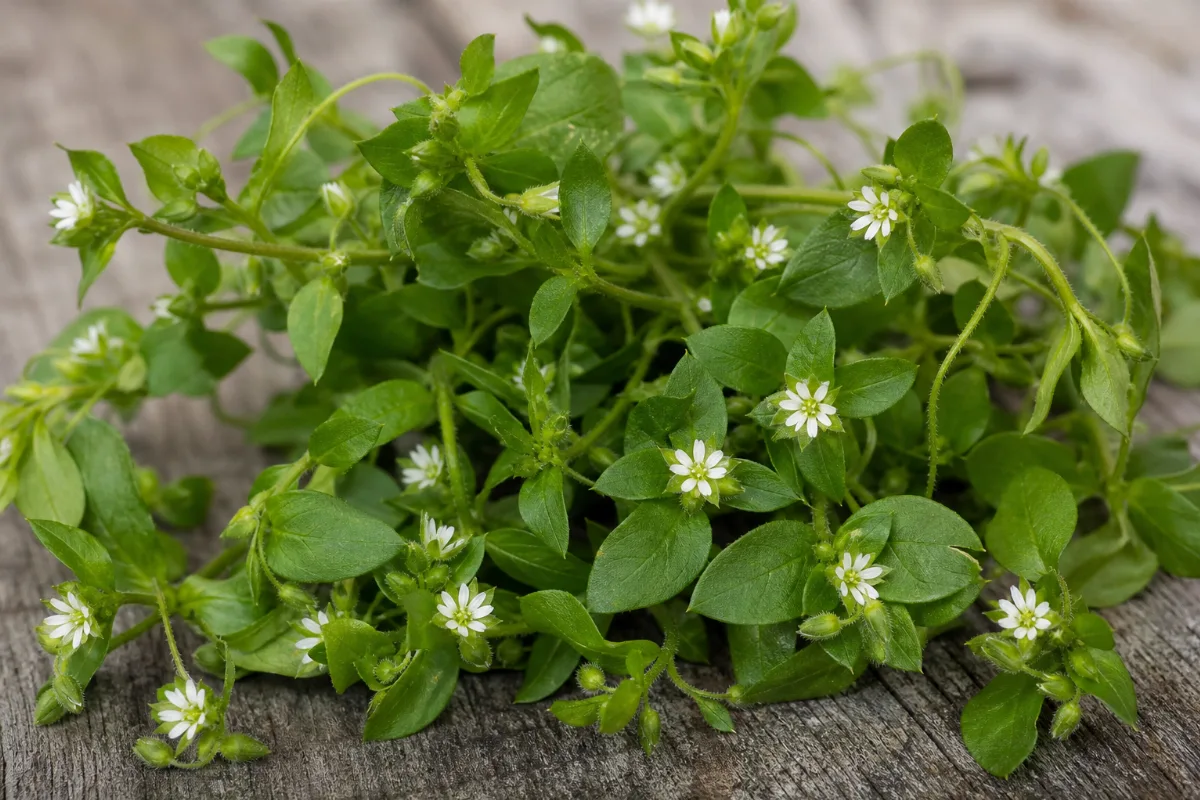
Herbs & Botanicals · Herbs · Traditional wild green and skin herb, with no human trials
Chickweed
Stellaria media (L.) Vill. Scarlet pimpernel (called red chickweed) is a different plant. · also called Common chickweed, stitchwort
Chickweed is a small, widespread wild plant of the pink (Caryophyllaceae) family. The above-ground herb is eaten as a green, drunk as a tea and used on the skin in folk medicine. Nearly all research is in animals or cells, and we found no human trial. Contact allergy is the best-documented harm.
General information, not medical advice. Last substantive update · Not medically reviewed. A named clinician has not signed off on this page. How this page is made
About Chickweed
Chickweed (Stellaria media) is a common wild green used in folk medicine on itchy skin, for sore joints and for weight, cholesterol and blood sugar. Every health use is rated insufficient: the evidence is mouse, rat and cell work, and no human trial was found. Animal results on weight and cholesterol disagree. The best-documented harm is contact allergy. Safety: it can hold nitrate, oxalate and metals from soil, it is confused with toxic plants such as scarlet pimpernel, and there are no data for pregnancy or breastfeeding. We found no EMA, NCCIH or LiverTox entry. For amounts, ask a doctor or pharmacist.
What it is
Chickweed is Stellaria media, a small weedy plant of the pink family, found in gardens and fields worldwide. The above-ground herb is the part used. Do not mix it up with scarlet pimpernel (called red chickweed), mouse-ear chickweed or water chickweed, which are different plants.
Traditional and current uses
Chickweed has been used in folk medicine on irritated skin, for joint complaints and for weight, cholesterol and diabetes, and in Chinese medicine for dermatitis. These are statements from the introductions of research papers, not checked against old texts. 'Traditional' means long use, not proof.
What the research shows
We found no human trial. In mice, high doses of chickweed juice and extract held back weight and fat gain, but a rat study of chickweed tea found no change in cholesterol, and diabetic rats had better heart function with no change in blood sugar. Cell and test-tube work suggests anti-inflammatory, antiviral and antioxidant activity. A lab study also found it can be made into skin products. None of this has been shown to help a person.
At a glance
Traditional uses history, not proof
- Chinese medicine: used for over 200 years, mainly for dermatitis and other skin diseases and as an antiviral, per a 2012 lab paper (secondary statement).
- Folk medicine: for high cholesterol, diabetes and other metabolic disease, and for weight loss, per animal-study introductions.
- Korea: eaten as a famine-relief food (secondary statement).
Studied for research
- Weight and appetite, insufficient (mice and cells)
- Cholesterol, insufficient (one rat study, no effect)
- Blood sugar and diabetic heart, insufficient (one rat study)
- Skin conditions and joint pain, insufficient (traditional only; no trial)
- Stomach, liver, brain, viruses, cancer cells and antioxidants, insufficient (lab or animal)
Main compounds
- Flavonoids (apigenin, rutin, kaempferol compounds)
- Beta-sitosterol, a plant sterol
- Steroid saponins
- Stellarmedin A, a protein studied in cells
Common forms
- Fresh or cooked herb as a food
- Tea (hot-water extract)
- Freeze-dried juice and solvent extracts in animal studies
- Cream or poultice in traditional use (not studied)
Research links: PubMed search: Stellaria media · GBIF: Stellaria media (L.) Vill. · Review of chickweed chemistry and pharmacology (Heliyon, 2020) · Research Library · Genes & Biomarkers Library
The plant and its history
- Accepted scientific name
- Stellaria media (L.) Vill.
- Naming authority
- L. (Linnaeus), Villars
- Common names
- Chickweed (English); Common chickweed (English); Stitchwort (older English use) (English)
- Botanical family
- Caryophyllaceae (pink or carnation family)
- Classification
- Plantae > Tracheophyta > Magnoliopsida > Caryophyllales > Caryophyllaceae > Stellaria > Stellaria media
- Native range
- Not covered in the sources we read; the papers describe it as widespread over the world.
- Habitat
- Described as a widely spread weed of fields, gardens and roadsides in the papers we read.
- What the plant looks like
- Roots: Not covered in the sources we read.; Stems: Not covered in the sources we read.; Leaves: Not covered in the sources we read.; Flowers: Not covered in the sources we read.; Fruit: Not covered in the sources we read.
- Cultivation
- Not covered in the sources we read.
- Harvest and processing
- Studies used the above-ground herb, a freeze-dried juice, methanol, hexane and water extracts, and hot-water tea.
- Look-alikes and adulterants
- Name: Scarlet pimpernel (Lysimachia arvensis, red chickweed); Note: Accepted species in the primrose family (GBIF key 8184903); suspected cause of cattle kidney damage in Australia. Not chickweed.; Name: Petty spurge (Euphorbia peplus) and other small spurges; Note: Accepted species (GBIF key 3066386). The skin-irritant sap warning is not verified by a source we read.; Name: Mouse-ear chickweed (Cerastium) and water chickweed (Myosoton aquaticum); Note: Related plants of the same family; their safety was not assessed here.
- Sustainability and conservation
- Not covered; a common weed.
Traditional use and history history, not clinical proof
| Tradition or era | Documented use | Source |
|---|---|---|
| Chinese medicine | Used for over 200 years, mainly for dermatitis and other skin diseases, and as an antiviral (per the authors of a 2012 lab paper). | p22810196 |
| Folk medicine (general) | Used for high cholesterol, diabetes and metabolic disease, and for weight loss (per rat and mouse papers). | p32047525; p35493309 |
| Korea | Eaten as a famine-relief food. | p31695957 |
| EMA/HMPC and other official histories | No monograph found. | s-search-regulatory-not-found |
Traditional use shows how a plant was used. It does not show that a supplement works or is safe today.
What is inside, and how it may work
What the plant contains and how those compounds act in cells and animals. Laboratory and animal mechanisms are not proven effects in people.
Main compounds
| Compound | Family | Where it is concentrated | Activity studied | Level of evidence |
|---|---|---|---|---|
| Apigenin and apigenin glycosides PubChem 5280443 | flavonoids | herb | Found in chickweed tea; the rat authors suggest it may help the diabetic heart. 11 9 32 | Animal research |
| Rutin PubChem 5280805 | flavonoids | herb | Found in chickweed tea; reported by others to ease diabetic cardiomyopathy. 11 32 | Animal research |
| Kaempferol derivatives PubChem 5280863 | flavonoids | plant | Listed among the phenolics identified. 9 32 | Laboratory research |
| Beta-sitosterol PubChem 222284 | plant sterol | whole plant | Detected by thin-layer chromatography; authors suggest it competes with dietary fat absorption. 6 32 | Animal research |
| Steroid saponins | saponins | aerial parts 1.19 ug/g in one freeze-dried juice | Credited with appetite-lowering effects by the authors; not proven. 20 23 | Animal research |
| Stellarmedin A (a 35.1 kDa glycoprotein) | protein | plant | Blocked HSV-2 growth and slowed two cancer cell lines in a dish. 26 | Laboratory research |
| Essential oil terpenes (borneol, menthol, linalool, 1,8-cineole, caryophyllene) | terpenes | fresh leaves | Known contact allergens, found by thin-layer chromatography. 15 | Human (case report) |
| Nitrate and oxalic acid | anti-nutrients | leaves Chickweed's own values not in abstract | Present in wild greens in general. 14 | Plant analysis |
Mechanisms, receptors and pathways
| Target or pathway | Gene or receptor | What was found | Level |
|---|---|---|---|
| Pancreatic amylase and lipase | Not applicable | Freeze-dried juice blocked both enzymes in the test tube. 23 | In vitro and animal (mice) |
| COX-2 | PTGS2 (COX-2) | Hexane fraction blocked COX-2 (IC50 1.51 ug/mL). 5 | Laboratory research |
| STAT3 signalling in the heart | STAT3 | Tea prevented a diabetes-linked rise in cardiac STAT3 phosphorylation in rats. 11 | Animal research |
| GLP-1 secretion | GLP-1 | Extract stimulated GLP-1 release from gut cells. 7 | Laboratory research |
| Cancer-linked genes (computer prediction) | TP53, CDKN2A, PTEN, KRAS, HRAS | Network analysis named these as hub genes; a prediction, not shown in living tissue. 9 | In silico |
Absorption, metabolism and elimination
- Absorption
- No data in people or animals found.
- Distribution
- No data.
- Metabolism
- No data.
- Elimination
- No data.
- Bioavailability
- Not studied. A liposome study doubled how fast the extract crossed human skin membranes in the lab.
Isolated compounds versus whole extracts
Most lab findings come from fractions (methanol, hexane, a polysaccharide fraction, a purified protein, a resin-processed juice). Teas gave different results from juice in animals (no cholesterol effect for tea). Results from one preparation cannot be assumed for another or for eating the fresh green.
Nutritional composition
Chickweed is eaten as a wild green. A study of five edible species reported low calories (16 to 43 kcal per 100 g), fibre, potassium and iron across the group; chickweed's own carotenoids were 4.2 mg/100 g in a Spanish survey. It can also hold nitrate, oxalate and metals depending on where it grows.
12 not enough evidence
What was looked at
The 12 benefits and uses checked for Chickweed, each with how strong the evidence is. Tap one to open it.
- Body weight and obesity (lab and animal work only)Not enough evidence
- Appetite hormone (GLP-1) in cellsNot enough evidence
- Cholesterol and blood fats (one rat study, no effect)Not enough evidence
- Blood sugar and diabetic heart damage (one rat study)Not enough evidence
- Brain cell protection after low oxygen (lab and rat work)Not enough evidence
- Skin conditions such as eczema and dermatitis (traditional use; no clinical trial)Not enough evidence
- Inflammation, pain and joint complaints (test-tube work only)Not enough evidence
- Stomach lining protection (one rat study)Not enough evidence
- Liver protection (one rat study of an isolated fraction)Not enough evidence
- Viruses (herpes simplex 2 and hepatitis B) in cellsNot enough evidence
- Cancer cells in a dishNot enough evidence
- Antioxidant and uric acid-enzyme activity (test tube)Not enough evidence
Lab markers tracked in the studies
Body weight and fat-pad weightBlood fats (total cholesterol, LDL, HDL, triglycerides)Fasting blood glucose and glucose toleranceMalondialdehyde (MDA, a fat-damage marker)Liver enzymes ALT and ASTCOX-2 enzyme activityHepatitis B antigens and DNA in cellsStomach pH and ulcer index
What is Chickweed good for?
The main proposed uses and how strong the human evidence is for each. "Insufficient" means there is not enough to judge, because only lab or animal work exists. Nothing about chickweed is rated higher. No human trial was found for any use. Results apply only to the named product and species.
Benefits, one by one
Each card is a research question, not a promise. Tap a goal to filter. Open a card to see the studies, doses and limits.
Body weight and obesity (lab and animal work only)
Not enough evidenceChickweed has a reputation as a weight-loss herb. The only support is from mice and test tubes. No person has been tested.
3 studiesFreeze-dried juice (mice) and methanol extract (mice). These are not …
Studies, doses and limits
What the trials found
No human trial of chickweed for this use was found in PubMed (searched Stellaria media and chickweed on 2026-10-25). In mice on a high-fat diet, freeze-dried chickweed juice at 900 mg/kg held back weight gain, belly fat and liver weight. In a second mouse study, a methanol extract of the whole plant prevented weight gain in progesterone-induced obesity.
Results
Mouse results are consistent in direction but come from two small lab groups. They cannot tell us what happens in people.
Effect sizes as reported
Mice: weight gain and fat-pad weight lower at 900 mg/kg juice; numbers not in abstracts.
Why this rating
Animal and test-tube work only, doses far from human use, no human trial.
Form and dose studied
Freeze-dried juice (mice) and methanol extract (mice). These are not tea or salad greens. Amounts for people are not covered here; ask a doctor or pharmacist.
Who was studied
Mice only.
Limits
Doses given to mice (400 to 900 mg/kg) were large. Quantitative results were not in the abstracts we read.
Why researchers looked
Chickweed is folk-sold for weight loss, so researchers in India tested its juice and extracts in obese mice.
Traditional use
Folk use for weight loss is widespread. This is tradition, not proof.
Proposed mechanism Preliminary mechanism
In the test tube, chickweed juice blocked the digestive enzymes amylase and lipase. A plant sterol (beta-sitosterol) and saponins may reduce fat absorption. These are the authors' ideas, not shown in people.
A proposed mechanism does not show that the effect happens in people.
Do not use chickweed as a substitute for medical care of obesity or diabetes.
Appetite hormone (GLP-1) in cells
Not enough evidenceA cell study found chickweed extract made gut cells release GLP-1, a fullness hormone. That is a first clue only.
1 studiesAqueous-ethanol extract in cells.
Studies, doses and limits
What the trials found
No human trial of chickweed for this use was found in PubMed (searched Stellaria media and chickweed on 2026-10-25). Only a dish of cells was tested.
Results
Chickweed extract raised GLP-1 release from cells. Nothing was measured in animals or people.
Effect sizes as reported
Not given in the abstract.
Why this rating
One cell-line experiment.
Form and dose studied
Aqueous-ethanol extract in cells.
Who was studied
Cells only.
Limits
The abstract gives no numbers. Release of GLP-1 from cells does not show eating less or losing weight.
Why researchers looked
GLP-1 helps control appetite and blood sugar. Researchers screened Korean famine-relief plants to see which release it.
Traditional use
In Korea chickweed was a famine-relief food. That is a food use, not a medicine use.
Proposed mechanism Laboratory research
Aqueous-ethanol extracts of six plants, including chickweed, made a human gut-hormone cell line release GLP-1. The plant that did best was purslane, not chickweed.
A proposed mechanism does not show that the effect happens in people.
None known from this study.
Cholesterol and blood fats (one rat study, no effect)
Not enough evidenceThe one rat study of chickweed tea on cholesterol found no benefit. A common folk belief is not supported.
2 studiesHot-water tea extract (rats).
Studies, doses and limits
What the trials found
No human trial of chickweed for this use was found in PubMed (searched Stellaria media and chickweed on 2026-10-25). In rats fed a cholesterol-rich diet, chickweed tea at 100 mg/kg did not change cholesterol, triglycerides or body weight gain.
Results
Null result: the authors say their results do not support using chickweed for high cholesterol. Liver, kidney and heart tests were also unchanged, which is a mildly reassuring sign for that dose in rats.
Effect sizes as reported
No significant change in lipids.
Why this rating
One small animal study with a null result. (The mouse obesity study in the weight section showed lower cholesterol at a high dose of freeze-dried juice, which points the other way, so animal findings are mixed.)
Form and dose studied
Hot-water tea extract (rats).
Who was studied
Male rats.
Limits
One dose only; abstract text partly garbled in the database record.
Why researchers looked
Chickweed has been used in folk medicine for high cholesterol.
Traditional use
Used in folk medicine for high cholesterol; the rat study's authors say there was no firm experimental proof.
Proposed mechanism Animal research
No effect on blood fats was seen, so no mechanism is claimed.
A proposed mechanism does not show that the effect happens in people.
Rat safety checks at this dose showed no change in liver, kidney or heart tests; this is not proof of safety in people.
Blood sugar and diabetic heart damage (one rat study)
Not enough evidenceIn diabetic rats, chickweed tea did not lower blood sugar, but heart function held up better. That is a small animal finding.
1 studiesHot-water tea extract (rats).
Studies, doses and limits
What the trials found
No human trial of chickweed for this use was found in PubMed (searched Stellaria media and chickweed on 2026-10-25). In diabetic rats, 100 mg/kg of chickweed tea for 20 weeks did not significantly change fasting glucose or glucose tolerance. Isolated hearts pumped better than in untreated diabetic rats.
Results
Blood sugar: no effect. Heart output and work: better than untreated diabetic rats.
Effect sizes as reported
Fasting glucose and glucose tolerance not significantly changed; heart output and work less reduced.
Why this rating
One rat study; effect on heart only in isolated hearts; no glucose benefit.
Form and dose studied
Hot-water tea extract (rats).
Who was studied
Rats with diet- and drug-induced diabetes.
Limits
Isolated heart tests. Human relevance unknown.
Why researchers looked
Chickweed tea is used in folk medicine for metabolic disease including diabetes, so researchers tested it in diabetic rats.
Traditional use
Folk use for diabetes and other metabolic disease.
Proposed mechanism Animal research
The tea contained rutin and apigenin compounds, which have been reported to ease diabetic heart disease, and it blocked a rise in cardiac STAT3 signalling in the rats.
A proposed mechanism does not show that the effect happens in people.
Anyone on diabetes medicine should not change it because of this study.
Brain cell protection after low oxygen (lab and rat work)
Not enough evidenceChickweed extract protected rat brain slices from low-oxygen injury in a dish. This is a long way from helping a person's brain or memory.
1 studiesPlant extract (details not in abstract).
Studies, doses and limits
What the trials found
No human trial of chickweed for this use was found in PubMed (searched Stellaria media and chickweed on 2026-10-25). In rat hippocampal and cortical slices injured by low oxygen and glucose, the extract at 40 ug/mL kept more cells alive and lowered a cell-damage marker. In rats given 200 mg/kg, a fat-damage marker was lower in liver tissue.
Results
Protection in brain slices in a dish. The rat marker was measured in the liver, not the brain.
Effect sizes as reported
Significant (P<0.001) cell-damage reduction; numbers not in abstract.
Why this rating
Lab slices and one rat measure.
Form and dose studied
Plant extract (details not in abstract).
Who was studied
Rat tissue.
Limits
Slice experiments do not show effects on memory, stroke or mood in people.
Why researchers looked
Oxidative stress harms brain cells after stroke-like injury, and chickweed has antioxidants.
Proposed mechanism Laboratory research
The extract lowered markers of oxidative stress and lipid peroxidation in injured slices.
A proposed mechanism does not show that the effect happens in people.
None known from this study.
Skin conditions such as eczema and dermatitis (traditional use; no clinical trial)
Not enough evidenceChickweed is a classic folk remedy for itchy skin, and it is used in Chinese medicine for dermatitis. No cream or poultice has been tested in people with eczema.
6 studiesLab liposomes and a mixed-plant nanofiber membrane. Not a cream you c…
Studies, doses and limits
What the trials found
No randomized or other clinical trial of chickweed cream, poultice or tea for eczema, dermatitis or any skin condition was found in PubMed. Lab formulation studies exist: a liposome study doubled skin-membrane crossing of the extract, and a wound-dressing study used chickweed among nine plants. Neither treated a person. Importantly, patch testing shows chickweed can itself cause contact allergy (see Safety).
Results
No clinical results exist. Formulation studies show the extract can be made into skin products, not that the products work.
Effect sizes as reported
Liposomes: 2-fold more permeation than free extract (Franz cells).
Why this rating
Traditional claim only; the only recent work is product engineering.
Form and dose studied
Lab liposomes and a mixed-plant nanofiber membrane. Not a cream you can buy. Amounts are not covered here; ask a doctor or pharmacist.
Limits
No human skin trial. Patch tests found allergy in a few percent of tested people.
Why researchers looked
Chickweed leaves and creams are traditionally put on itchy, inflamed skin.
Traditional use
A Chinese paper notes the plant has been used there for over 200 years, mainly for dermatitis and other skin diseases. This is tradition, not a trial.
Proposed mechanism Preliminary mechanism
Lab work finds antioxidants (flavonoids such as apigenin) and COX-2 blocking (see inflammation). None of this was tested on skin disease.
A proposed mechanism does not show that the effect happens in people.
Fresh chickweed on skin caused eczema-type reactions in a patch test case and in two Serbian clinic studies 4 of 235 people (about 1.7%, our arithmetic) and 2.28% of 263 people reacted to a chickweed extract on patch testing. Try a small patch first and stop if it itches or reddens.
Inflammation, pain and joint complaints (test-tube work only)
Not enough evidenceChickweed is a folk remedy for sore joints. We found no study in people with arthritis. In the test tube, an extract blocked a key inflammation enzyme.
2 studiesHexane fraction in the lab. Not tea or topical use.
Studies, doses and limits
What the trials found
A PubMed search of Stellaria media with arthritis or rheumatoid found nothing. No human trial exists.
Results
Test-tube COX-2 blocking only.
Effect sizes as reported
IC50 1.51 ug/mL (hexane fraction, test tube).
Why this rating
Enzyme assay and computer model only.
Form and dose studied
Hexane fraction in the lab. Not tea or topical use.
Limits
A test-tube enzyme result is not a joint benefit.
Why researchers looked
Chickweed has been used for rheumatic and inflammatory complaints; researchers screened it for anti-inflammatory activity.
Traditional use
Traditional use for inflammation and pain is described in reviews; poultices on joints are a folk use. Not tested in trials.
Proposed mechanism Laboratory research
A hexane fraction blocked COX-2 in the test tube (IC50 1.51 ug/mL), and chrysin from the fraction fit COX-2 on a computer model. A review lists anti-inflammatory and pain-relieving claims from lab and animal work.
A proposed mechanism does not show that the effect happens in people.
Do not stop arthritis treatment for chickweed.
Stomach lining protection (one rat study)
Not enough evidenceA methanol extract protected rats from stomach ulcers caused by an anti-inflammatory drug. It has not been tested in people.
1 studiesMethanol extract (rats).
Studies, doses and limits
What the trials found
No human trial found. In rats with piroxicam-induced ulcers, 150 to 450 mg/kg of methanol extract for 14 days lowered acid and ulcers in a dose-dependent way; omeprazole was the comparison drug.
Results
Ulcer index and acid fell with dose; exact numbers not in abstract.
Effect sizes as reported
Dose-dependent in rats.
Why this rating
One rat study of a drug-induced ulcer.
Form and dose studied
Methanol extract (rats).
Who was studied
Wistar rats.
Limits
No people studied; methanol extract not a food.
Why researchers looked
Chickweed has traditionally been used for inflammatory and digestive complaints.
Traditional use
Used for stomach and gut complaints in folk medicine.
Proposed mechanism Animal research
The extract raised stomach pH, lowered acid and ulcers and reduced oxidative stress markers in rats.
A proposed mechanism does not show that the effect happens in people.
If you take NSAID painkillers and have stomach pain or black stools, see a doctor; chickweed is not a protection.
Liver protection (one rat study of an isolated fraction)
Not enough evidenceA part of chickweed lowered liver damage markers in rats poisoned with a solvent. Not tested in people.
1 studiesWater-soluble polysaccharide fraction (rats).
Studies, doses and limits
What the trials found
No human trial. In rats with CCl4 liver injury, a polysaccharide fraction at 100 mg/kg lowered ALT, AST, alkaline phosphatase and bilirubin.
Results
Liver enzymes lower than untreated injured rats.
Effect sizes as reported
Numbers not in the abstract.
Why this rating
One rat study of a purified fraction.
Form and dose studied
Water-soluble polysaccharide fraction (rats).
Who was studied
Rats with chemical liver injury.
Limits
Not whole herb or tea.
Why researchers looked
Researchers tested a water-soluble polysaccharide fraction for liver protection.
Proposed mechanism Animal research
The fraction lowered inflammatory infiltration, cell death and fatty change in rat liver tissue.
A proposed mechanism does not show that the effect happens in people.
Chickweed is not a treatment for liver disease.
Viruses (herpes simplex 2 and hepatitis B) in cells
Not enough evidenceParts of chickweed slowed viruses growing in cells. This is early lab work and does not mean chickweed treats infections.
2 studiesPurified protein and processed juice fraction.
Studies, doses and limits
What the trials found
No human trial. Cells only: Stellarmedin A had an IC50 of 13.18 ug/mL against HSV-2; fraction SM-3 at 30 ug/mL lowered HBsAg by 27.92% and HBeAg by 25.35%.
Results
Reductions in virus markers in cells.
Effect sizes as reported
See results.
Why this rating
Two cell-culture studies of processed fractions.
Form and dose studied
Purified protein and processed juice fraction.
Who was studied
Cells.
Limits
Not the herb or tea; no animals or people.
Why researchers looked
Chinese medicine uses chickweed as an antiviral, so researchers tested fractions on virus-infected cells.
Traditional use
Used as an antiviral agent in Chinese medicine per the hepatitis B paper's introduction.
Proposed mechanism Laboratory research
A purified protein (Stellarmedin A) acts early in HSV-2 infection; a juice fraction lowered hepatitis B markers and DNA.
A proposed mechanism does not show that the effect happens in people.
Do not use chickweed instead of treatment for herpes or hepatitis B.
Cancer cells in a dish
Not enough evidenceChickweed extracts slowed some cancer cell lines in a dish. This is not a cancer treatment.
2 studiesWater extract and one purified protein.
Studies, doses and limits
What the trials found
No animal tumour or human data in our search. The same lab results appear for many plants.
Results
Cell-line results only.
Effect sizes as reported
HepG2 viability 33.9% at 100 ug/mL.
Why this rating
Cell lines only.
Form and dose studied
Water extract and one purified protein.
Who was studied
Cells.
Limits
A dish result rarely predicts a treatment.
Why researchers looked
Screening of extracts against cancer cell lines is routine early research.
Proposed mechanism Laboratory research
A purified protein slowed leukaemia and colon cancer cells; a water extract left 33.9% of liver cancer cells alive at 100 ug/mL.
A proposed mechanism does not show that the effect happens in people.
Do not use chickweed to treat cancer.
Antioxidant and uric acid-enzyme activity (test tube)
Not enough evidenceChickweed is rich in antioxidant plant compounds. The test-tube results do not show a health benefit.
3 studiesWater, ethanol and other extracts.
Studies, doses and limits
What the trials found
No human trial of antioxidant or gout benefit. Antioxidant assays are chemical tests.
Results
Strong antioxidant activity in tubes, xanthine oxidase blocked.
Effect sizes as reported
See above.
Why this rating
Test-tube chemistry.
Form and dose studied
Water, ethanol and other extracts.
Limits
Antioxidant capacity in a tube is not proof of effect in the body.
Why researchers looked
Wild greens are screened for antioxidants and for blocking xanthine oxidase, an enzyme in uric acid production.
Traditional use
Eaten as a wild green in many countries; the nutrition papers describe it as a low-calorie leaf.
Proposed mechanism Laboratory research
Twelve phenolic compounds, mostly flavonoids (apigenin, kaempferol), were found; the water extract was the best radical scavenger; chickweed extract strongly blocked xanthine oxidase.
A proposed mechanism does not show that the effect happens in people.
None known.
Connections to the rest of health
How Chickweed connects to the rest of our health knowledge graph. Every link says what kind of connection it is. A safety link (for example to the liver) is a warning, not a benefit. A study that merely mentions a topic never creates a benefit link.
Explore every connection: goals, body systems, organs, symptoms, genes
A. Wellness goals
| Connected to | Kind of connection | Evidence status | Context | Studies |
|---|---|---|---|---|
| Weight Management | Preliminary mechanism | Not enough evidence | Body weight and obesity (lab and animal work only): Chickweed has a reputation as a weight-loss herb. The only support is from mice and test tubes. No person has been tested. Appetite hormone (GLP-1) in cells: A cell study found chickweed extract made gut cells release GLP-1, a fullness hormone. That is a first clue only. | 23 6 20 7 |
| Metabolic Health | Preliminary mechanism | Not enough evidence | Body weight and obesity (lab and animal work only): Chickweed has a reputation as a weight-loss herb. The only support is from mice and test tubes. No person has been tested. | 23 6 20 |
| Blood Sugar Balance | Preliminary mechanism | Not enough evidence | Appetite hormone (GLP-1) in cells: A cell study found chickweed extract made gut cells release GLP-1, a fullness hormone. That is a first clue only. Blood sugar and diabetic heart damage (one rat study): In diabetic rats, chickweed tea did not lower blood sugar, but heart function held up better. That is a small animal finding. | 7 11 |
| Cholesterol Balance | Preliminary mechanism | Not enough evidence | Cholesterol and blood fats (one rat study, no effect): The one rat study of chickweed tea on cholesterol found no benefit. A common folk belief is not supported. | 10 23 |
| Heart Health | Preliminary mechanism | Not enough evidence | Cholesterol and blood fats (one rat study, no effect): The one rat study of chickweed tea on cholesterol found no benefit. A common folk belief is not supported. Blood sugar and diabetic heart damage (one rat study): In diabetic rats, chickweed tea did not lower blood sugar, but heart function held up better. That is a small animal finding. | 10 23 11 |
| Brain Health | Preliminary mechanism | Not enough evidence | Brain cell protection after low oxygen (lab and rat work): Chickweed extract protected rat brain slices from low-oxygen injury in a dish. This is a long way from helping a person's brain or memory. | 2 |
| Healthy Skin | Traditional use | Not enough evidence | Skin conditions such as eczema and dermatitis (traditional use; no clinical trial): Chickweed is a classic folk remedy for itchy skin, and it is used in Chinese medicine for dermatitis. No cream or poultice has been tested in people with eczema. | 17 8 27 15 16 22 |
| Inflammation Balance | Traditional use | Not enough evidence | Skin conditions such as eczema and dermatitis (traditional use; no clinical trial): Chickweed is a classic folk remedy for itchy skin, and it is used in Chinese medicine for dermatitis. No cream or poultice has been tested in people with eczema. Inflammation, pain and joint complaints (test-tube work only): Chickweed is a folk remedy for sore joints. We found no study in people with arthritis. In the test tube, an extract blocked a key inflammation enzyme. | 17 8 27 15 16 22 5 20 |
| Joint Support | Traditional use | Not enough evidence | Inflammation, pain and joint complaints (test-tube work only): Chickweed is a folk remedy for sore joints. We found no study in people with arthritis. In the test tube, an extract blocked a key inflammation enzyme. | 5 20 |
| Digestive Support | Traditional use | Not enough evidence | Stomach lining protection (one rat study): A methanol extract protected rats from stomach ulcers caused by an anti-inflammatory drug. It has not been tested in people. | 3 |
| Gut Health | Traditional use | Not enough evidence | Stomach lining protection (one rat study): A methanol extract protected rats from stomach ulcers caused by an anti-inflammatory drug. It has not been tested in people. | 3 |
| Liver Support | Preliminary mechanism | Not enough evidence | Liver protection (one rat study of an isolated fraction): A part of chickweed lowered liver damage markers in rats poisoned with a solvent. Not tested in people. | 13 |
| Immune Support | Preliminary mechanism | Not enough evidence | Viruses (herpes simplex 2 and hepatitis B) in cells: Parts of chickweed slowed viruses growing in cells. This is early lab work and does not mean chickweed treats infections. | 26 17 |
| Healthy Aging | Biological association | Not enough evidence | Antioxidant and uric acid-enzyme activity (test tube): Chickweed is rich in antioxidant plant compounds. The test-tube results do not show a health benefit. | 9 21 12 |
B. Body systems
| Connected to | Kind of connection | Evidence status | Context | Studies |
|---|---|---|---|---|
| Skin | Adverse effect or risk | Very low certainty | Contact allergy on patch tests and one case report. Preparation or compound: Fresh leaves and ether extract of chickweed |
15 16 22 |
| Skin | Traditional use | Not enough evidence | Traditional use for dermatitis; no clinical trial. Traditional use for dermatitis; no clinical trial; contact allergy documented. Preparation or compound: Chickweed leaves topically |
17 16 |
| Metabolism and weight | Preliminary mechanism | Not enough evidence | Mouse weight and fat results; no human data. Preparation or compound: Chickweed juice and extracts (mice) |
23 6 |
| Metabolism Weight | Biological association | Not enough evidence | Studied for: Body weight and obesity (lab and animal work only) Studied for: Appetite hormone (GLP-1) in cells | 23 6 20 7 |
| Digestive System | Biological association | Not enough evidence | Studied for: Appetite hormone (GLP-1) in cells Studied for: Stomach lining protection (one rat study) | 7 3 |
| Cardiovascular System | Biological association | Not enough evidence | Studied for: Cholesterol and blood fats (one rat study, no effect) Studied for: Blood sugar and diabetic heart damage (one rat study) | 10 23 11 |
| Endocrine System | Biological association | Not enough evidence | Studied for: Blood sugar and diabetic heart damage (one rat study) | 11 |
| Nervous System | Biological association | Not enough evidence | Studied for: Brain cell protection after low oxygen (lab and rat work) | 2 |
| Integumentary System | Biological association | Not enough evidence | Studied for: Skin conditions such as eczema and dermatitis (traditional use; no clinical trial) Studied for: Antioxidant and uric acid-enzyme activity (test tube) | 17 8 27 15 16 22 9 21 12 |
| Musculoskeletal System | Biological association | Not enough evidence | Studied for: Inflammation, pain and joint complaints (test-tube work only) | 5 20 |
| Hepatic System | Biological association | Not enough evidence | Studied for: Liver protection (one rat study of an isolated fraction) | 13 |
| Immune System | Biological association | Not enough evidence | Studied for: Viruses (herpes simplex 2 and hepatitis B) in cells Studied for: Cancer cells in a dish | 26 17 9 |
I. Biomarkers
| Connected to | Kind of connection | Evidence status | Context | Studies |
|---|---|---|---|---|
| Body weight and fat-pad weight | Biological association | Not enough evidence | Measured in trials: lowered. A lab change is not the same as a health benefit. | 23 6 10 |
| Blood fats (total cholesterol, LDL, HDL, triglycerides) | Biological association | Not enough evidence | Measured in trials: mixed. A lab change is not the same as a health benefit. | 23 10 |
| Fasting blood glucose and glucose tolerance | Biological association | Not enough evidence | Measured in trials: no-change. A lab change is not the same as a health benefit. | 11 |
| Malondialdehyde (MDA, a fat-damage marker) | Biological association | Not enough evidence | Measured in trials: lowered. A lab change is not the same as a health benefit. | 2 |
| Liver enzymes ALT and AST | Biological association | Not enough evidence | Measured in trials: lowered. A lab change is not the same as a health benefit. | 13 |
| COX-2 enzyme activity | Biological association | Not enough evidence | Measured in trials: lowered. A lab change is not the same as a health benefit. | 5 |
| Hepatitis B antigens and DNA in cells | Biological association | Not enough evidence | Measured in trials: lowered. A lab change is not the same as a health benefit. | 17 |
| Stomach pH and ulcer index | Biological association | Not enough evidence | Measured in trials: mixed. A lab change is not the same as a health benefit. | 3 |
J. Genes, receptors and enzymes
| Connected to | Kind of connection | Evidence status | Context | Studies |
|---|---|---|---|---|
| COX-2 | Preliminary mechanism | In vitro | Blocked by a hexane fraction in a test tube. | 5 |
K. Biological pathways
| Connected to | Kind of connection | Evidence status | Context | Studies |
|---|---|---|---|---|
| STAT3 signalling | Preliminary mechanism | Animal | Reduced in diabetic rat hearts given tea. | 11 |
L. Active compounds
| Connected to | Kind of connection | Evidence status | Context | Studies |
|---|---|---|---|---|
| Apigenin and apigenin glycosides | Biological association | Animal | Found in chickweed tea; the rat authors suggest it may help the diabetic heart. Preparation or compound: herb |
11 9 32 |
| Rutin | Biological association | Animal | Found in chickweed tea; reported by others to ease diabetic cardiomyopathy. Preparation or compound: herb |
11 32 |
| Kaempferol derivatives | Biological association | In vitro | Listed among the phenolics identified. Preparation or compound: plant |
9 32 |
| Beta-sitosterol | Biological association | Animal | Detected by thin-layer chromatography; authors suggest it competes with dietary fat absorption. Preparation or compound: whole plant |
6 32 |
| Steroid saponins | Biological association | Animal | Credited with appetite-lowering effects by the authors; not proven. Preparation or compound: aerial parts |
20 23 |
| Stellarmedin A (a 35.1 kDa glycoprotein) | Biological association | In vitro | Blocked HSV-2 growth and slowed two cancer cell lines in a dish. Preparation or compound: plant |
26 |
| Essential oil terpenes (borneol, menthol, linalool, 1,8-cineole, caryophyllene) | Biological association | Human (case report) | Known contact allergens, found by thin-layer chromatography. Preparation or compound: fresh leaves |
15 |
| Nitrate and oxalic acid | Biological association | Plant analysis | Present in wild greens in general. Preparation or compound: leaves |
14 |
Each connection is stored with the ingredient, the connected record, the kind of connection, the evidence status, the supporting studies, the preparation or compound involved, and a review date (last reviewed October 25, 2026).
The evidence
The research centre for Chickweed. Every record here was checked against PubMed or the publisher's page; we never list a study we have not verified.
Evidence by outcome
Bars show how many studies we found for each outcome, not how well it works. People are added up across trials only (reviews are not added, to avoid double counting).
How we rate evidence
High certainty
Several well-run trials or reviews agree; further research is unlikely to change the picture much.
Moderate certainty
Good trials point the same way, but some doubt remains.
Low certainty
Small, short or inconsistent trials. The finding could change with better research.
Very low certainty
Very little or very weak human data. Treat as a possibility only.
Mixed findings
Trials or reviews disagree with each other.
Not enough evidence
Not enough human research to say either way.
Evidence against
Good research found no benefit, or found harm.
We take the reviewers' own risk-of-bias and GRADE statements where they exist, and otherwise judge from study size, design, consistency, directness and whether a product matches what is sold. Many publications do not make evidence high. Method note: We searched PubMed for Stellaria media and chickweed, checked plant names in GBIF and NCBI Taxonomy and compounds in PubChem, and read abstracts only. Certainty ratings are the compiler's own reading, not formal grades. No study is cited that we could not verify.
Study library: every study we checked 33
| Study | Design | People | Product, dose, length | Result |
|---|---|---|---|---|
| Abbasi 2013 Health risk assessment and multivariate apportionment of trace metals in wild leafy vegetables from Lesser Himalayas, Pakistan. Ecotoxicol Environ Saf · PMID 23490195 · DOI |
Other plant analysis |
Wild leafy vegetables and soils from the Lesser Himalayas, Pakistan | Fresh wild vegetables including Stellaria media leaves |
Stellaria media showed elevated iron and cadmium. For some metals, intake through these vegetables was above recommended values, and chromium and lead were linked to cancer risk in the authors' calculation for the vegetables as a group. Methods, limits and fundingOutcomes: Trace metals and health-risk indexes Limitations: Local polluted-soil sites in Pakistan; results do not apply to all chickweed. The risk calculation covers all vegetables studied. Read: abstract |
| Ahmad 2022 Lipid peroxidation reduction and hippocampal and cortical neurons protection against ischemic damage in animal model using Stellaria media. Saudi J Biol Sci · PMID 35280571 · DOI |
Animal research animal |
Rat hippocampal and cortical brain slices (low oxygen and glucose) plus treated rats | Stellaria media extract herb 40 ug/mL on brain slices; 200 mg/kg in rats Slices: 2 h oxygen-glucose deprivation, 1 h reperfusion · vs Untreated injured slices or rats |
The extract improved cell survival and lowered markers of cell damage and oxidative stress in injured brain slices. In rats given 200 mg/kg, a fat-damage marker (malondialdehyde) was lower in liver tissue than in the ischemic animals. Methods, limits and fundingOutcomes: Cell survival, LDH leak, oxidative stress, lipid peroxidation (MDA) Limitations: Lab slices and rats. The rat marker was measured in liver, not brain. Not a human result. Funding and conflicts: Authors declare no competing interests Read: abstract |
| Aleem 2023 Phytochemical analysis and gastroprotective effect of Stellaria media (L.) Vill. methanolic extract on piroxicam-induced gastric ulcer in Wistar rats. Pak J Pharm Sci · PMID 37869918 |
Animal research animal |
Wistar rats with piroxicam-induced stomach ulcers | Methanol extract of Stellaria media herb 150, 300 and 450 mg/kg by mouth (rats); omeprazole 20 mg/kg as comparison 14 days · vs Ulcer-induced rats without extract; omeprazole group |
The extract raised stomach pH and lowered acid volume, acidity and ulcers in a dose-dependent way, and improved blood counts and oxidative stress markers. Methods, limits and fundingOutcomes: Stomach acid and pH, ulcer index, blood counts, oxidative stress markers, stomach tissue Limitations: Rat study of a drug-induced ulcer. Not tested in people. Read: abstract |
| Bashir 2024 Investigation of heavy metals uptake in root-shoot of native plant species adjoining wastewater channels. Environ Monit Assess · PMID 38735978 · DOI |
Other plant analysis |
Plants beside municipal wastewater channels, Abbottabad, Pakistan | Stellaria media among six plants roots and shoots |
Stellaria media roots held 37.40 mg/kg nickel, and the species had bioconcentration and translocation factors above 1, meaning it can accumulate metals from wastewater-affected soil. Ni 37.40 mg/kg in roots Methods, limits and fundingOutcomes: Heavy-metal uptake Limitations: Wastewater-channel sites only. Read: abstract |
| Chak 2025 In Vitro COX Inhibitory Activity, LC-MS Analysis and Molecular Docking Study of Silene vulgaris and Stellaria media. Cell Biochem Biophys · PMID 39313643 · DOI |
Laboratory research in-vitro |
Test-tube enzyme assay with computer docking | Hexane fraction of Stellaria media (HFSM) plant (part not stated in abstract) · vs Silene vulgaris fraction tested alongside |
The hexane fraction blocked the COX-2 enzyme in the test tube (IC50 1.51 ug/mL). Computer docking suggested compounds such as chrysin bind COX-2. IC50 1.51 ug/mL Methods, limits and fundingOutcomes: COX-2 enzyme inhibition Limitations: Test tube and computer model only. A hexane fraction is not a tea or food. Funding and conflicts: Authors declare no competing interests Read: abstract |
| Chidrawar 2011 Antiobesity effect of Stellaria media against drug induced obesity in Swiss albino mice. Ayu · PMID 22661858 · DOI |
Animal research animal |
Female Swiss albino mice with progesterone-induced obesity | Methanol and alcohol extracts of whole Stellaria media plant whole plant · vs Untreated obese mice |
The methanol extract prevented weight and fat-tissue gain in obese mice and reversed obesity-linked changes; the alcohol extract worked less well. The authors credit saponins, flavonoids and beta-sitosterol. Methods, limits and fundingOutcomes: Food intake, body weight, thermogenesis, blood fats, fat-pad structure Limitations: Mouse model of drug-induced obesity. Numbers, doses and duration were not in the abstract. The beta-sitosterol was only confirmed by thin-layer chromatography. Read: abstract |
| Cho 2019 Effect of six Korean plants on glucagon like peptide-1 release. Food Sci Biotechnol · PMID 31695957 · DOI |
Laboratory research in-vitro |
Human gut hormone-producing cell line (NCI-H716) | Aqueous-ethanol extract of Stellaria media (one of six Korean plants tested) plant (part not stated in abstract) · vs Other plant extracts; control cells |
Each of the six plant extracts, including Stellaria media, stimulated GLP-1 release from the cells. Portulaca oleracea was strongest. Methods, limits and fundingOutcomes: GLP-1 release Limitations: Cells in a dish. GLP-1 release in cells does not show appetite or weight effects in people. Funding and conflicts: Authors declare no conflict of interest Read: abstract |
| Ciriolo 2025 Microfluidic Design of Ultradeformable Liposomes for Advanced Skin Delivery of Stellaria media Phytocomplex. Pharmaceutics · PMID 41304728 · DOI |
Laboratory research in-vitro |
Lab-made fat-bubble (liposome) formulation tested on human skin membranes | Stellaria media extract inside ultradeformable liposomes plant extract (part not stated in abstract) · vs Free extract |
The liposomes were about 89 nm wide, held 72% of the extract and doubled the speed at which the extract crossed human skin membranes compared with the free extract. This is a manufacturing study; it did not test any skin condition. 2-fold permeation vs free extract Methods, limits and fundingOutcomes: Particle size, stability, skin permeation (Franz cells) Limitations: No patients and no skin disease tested. Formulation work only. Funding and conflicts: Authors declare no conflicts of interest Read: abstract |
| Cusumano 2024 Small Steps to the Big Picture for Health-Promoting Applications Through the Use of Chickweed (Stellaria media): In Vitro, In Silico, and Pharmacological Network Approaches. Food Sci Nutr · PMID 39620022 · DOI |
Laboratory research in-vitro |
Lab tests of four extracts, computer network analysis | Ethyl acetate, ethanol, ethanol/water and water extracts of Stellaria media plant (part not stated in abstract) Up to 100 ug/mL on cells · vs Other extracts compared |
Twelve phenolic compounds were found, mostly flavonoids such as apigenin and kaempferol derivatives. The water extract was the best free-radical scavenger. The water extract left 33.9% of liver cancer (HepG2) cells alive at 100 ug/mL. The computer part suggested cancer-linked genes such as TP53 and KRAS. HepG2 viability 33.9% at 100 ug/mL (water extract) Methods, limits and fundingOutcomes: Antioxidant tests, enzyme inhibition, HepG2 cell viability, phenolic profile Limitations: Test tube and computer predictions only. Funding and conflicts: Authors declare no conflicts of interest Read: abstract |
| Demján 2020 Effect of Stellaria media Tea on Lipid Profile in Rats. Evid Based Complement Alternat Med · PMID 32047525 · DOI |
Animal research animal |
Male Wistar rats on a cholesterol-rich diet | Stellaria media tea (hot-water extract of the herb) herb (aerial parts) 100 mg/kg body weight by mouth (rats) · vs Cholesterol-rich diet without chickweed; normal-chow group |
Chickweed did not change the blood fat profile or body weight gain. Liver and kidney tests and heart structure and function were unchanged. The authors conclude their results do not support its use for high cholesterol. No significant change in lipids Methods, limits and fundingOutcomes: Blood fats, body weight, liver and kidney tests, heart structure and function Limitations: Rat study with one dose. The abstract text we read is partly garbled by the database, so exact methods are not clear. Funding and conflicts: Authors declare no conflicts of interest Read: abstract |
| Demján 2022 Stellaria media tea protects against diabetes-induced cardiac dysfunction in rats without affecting glucose tolerance. J Tradit Complement Med · PMID 35493309 · DOI |
Animal research animal |
Rats with diabetes (fructose diet plus one streptozotocin injection) | Stellaria media tea (hot-water extract of the herb) herb (aerial parts) 100 mg/kg body weight by gavage (rats) 20 weeks · vs Diabetic rats without the tea; normal-chow rats |
The tea did not significantly change fasting blood sugar or glucose tolerance. It reduced the diabetes-linked fall in heart output and heart work in isolated hearts, and prevented a rise in cardiac STAT3 phosphorylation. The tea contained rutin and apigenin compounds. Heart effects but no blood-sugar effect Methods, limits and fundingOutcomes: Fasting glucose, glucose tolerance, heart output and work in isolated hearts, cardiac STAT3 Limitations: Rat study. Isolated-heart tests. The amounts are not human amounts. Funding and conflicts: Authors declare no conflicts of interest Read: abstract |
| Fukalova Fukalova 2021 Five undervalued edible species inherent to autumn-winter season: nutritional composition, bioactive constituents and volatiles profile. PeerJ · PMID 34900422 · DOI |
Other plant analysis |
Five edible species of the Valencian coast, Spain | Fresh tender leaves of Stellaria media and four other plants leaves |
The five wild species contained fibre (1.22-5.4 g/100 g), potassium (157.7-1,250.6 mg/100 g), iron (0.6-2.0 mg/100 g), low calories (16.1-43.02 kcal) and high antioxidants. The abstract does not give separate numbers for chickweed. Methods, limits and fundingOutcomes: Fibre, minerals, antioxidants, volatile compounds Limitations: Range across five species; chickweed alone is not broken out in the abstract. Read: abstract |
| Gorina 2013 Evaluation of hepatoprotective activity of water-soluble polysaccharide fraction of Stellaria media L. Bull Exp Biol Med · PMID 23658890 · DOI |
Animal research animal |
Rats with carbon tetrachloride (CCl4) liver injury | Water-soluble polysaccharide fraction of Stellaria media aerial (above-ground) part 100 mg/kg (rats) · vs Untreated CCl4 rats |
The fraction lowered ALT, AST, alkaline phosphatase, bilirubin and thymol test values and reduced liver inflammation and cell death in rats with chemical liver injury. Methods, limits and fundingOutcomes: ALT, AST, alkaline phosphatase, bilirubin, liver tissue Limitations: Rat study of an isolated fraction, not the whole herb or tea. Not tested in people. Read: abstract |
| Guil 1997 Nutritional and toxic factors in selected wild edible plants. Plant Foods Hum Nutr · PMID 9527345 · DOI |
Other plant analysis |
Sixteen wild edible plants from south-east Spain | Raw wild plants including Stellaria media leaves and shoots |
Nitrate in the 16 species ranged from 47 mg/100 g to 597 mg/100 g of fresh plant, and oxalic acid from none to 1,100 mg/100 g. Chickweed carotenoids were 4.2 mg/100 g (lowest of the group). The abstract does not give chickweed's own nitrate or oxalate value. Nitrate 47-597 mg/100 g across 16 species Methods, limits and fundingOutcomes: Vitamin C, carotenes, oxalic acid, nitrate, erucic acid Limitations: Chickweed's own nitrate and oxalate numbers are not in the abstract, so only the range across species is stated. Read: abstract |
| Jovanović 2003 Erythema multiforme due to contact with weeds: a recurrence after patch testing. Contact Dermatitis · PMID 12641574 · DOI |
Case report |
1 One 52-year-old woman with erythema multiforme after contact with weeds |
Fresh common chickweed leaves and other weeds (patch test) fresh leaves Patch test |
Fresh chickweed leaves gave eczema-type reactions on patch testing, with worsening in light, in a woman with repeated erythema multiforme after gardening. The chickweed essential oil contained terpenes known to cause contact allergy. Methods, limits and fundingOutcomes: Skin reaction Limitations: One case. Fresh leaves from a gardening exposure. Read: abstract |
| Jovanović 2004 Sesquiterpene lactone mix patch testing supplemented with dandelion extract in patients with allergic contact dermatitis, atopic dermatitis and non-allergic chronic inflammatory skin diseases. Contact Dermatitis · PMID 15479198 · DOI |
Cohort study |
235 235 adults: allergic contact dermatitis, atopic dermatitis, other skin disease, healthy volunteers |
Diethyl-ether extract of common chickweed (0.1% and 3% in petrolatum) patch tests extract 0.1% and 3% patch test · vs Dandelion extract and sesquiterpene lactone mix |
Of 14 people (5.9%) with an allergic reaction to at least one plant test, 4 (28.6% of them) reacted to chickweed extract. One irritant reaction occurred to chickweed at 3%. Sesquiterpene lactones were found in dandelion but not in chickweed. 4 allergic reactions to chickweed extract in 235 people tested Methods, limits and fundingOutcomes: Allergic and irritant skin reactions Limitations: Patch testing in a skin clinic in Serbia, not a trial of the herb as a medicine. The authors tested chickweed because of one earlier case. Funding and conflicts: Research support, non-US government (per record) Read: abstract |
| Ma 2012 Anti-hepatitis B virus activity of chickweed [Stellaria media (L.) Vill.] extracts in HepG2.2.15 cells. Molecules · PMID 22810196 · DOI |
Laboratory research in-vitro |
Human liver cell line carrying hepatitis B virus (HepG2.2.15) | Fresh chickweed juice fraction SM-3 (resin and ultrafiltration processed) plant juice 30 ug/mL 6 or 9 days · vs Untreated cells |
At 30 ug/mL, SM-3 lowered HBsAg by 27.92% and HBeAg by 25.35% after 6 days and reduced HBV DNA in a dose-dependent way. The fraction contained flavonoid C-glycosides, polysaccharides and protein. The paper notes chickweed has been used in Chinese medicine for skin diseases such as dermatitis. HBsAg -27.92%, HBeAg -25.35% (6 days) Methods, limits and fundingOutcomes: HBsAg, HBeAg, HBV DNA Limitations: Cells in a dish. A processed fraction under early drug development, not a tea. Read: abstract |
| Mithril 2012 Safety evaluation of some wild plants in the New Nordic Diet. Food Chem Toxicol · PMID 23009884 · DOI |
Other plant analysis |
Four wild plants (stinging nettle, sorrel, chickweed, lambsquarters) used in the New Nordic Diet | Chickweed (Stellaria media) compared with known foods leaves Dietary amounts |
For most compounds the hazards in these plants were judged minor. The only precaution named was for common lambsquarters (oxalic acid). The authors say better analyses are needed before eating significant amounts of wild plants daily is called generally safe. Methods, limits and fundingOutcomes: Safety of bioactive components by comparison with common foods Limitations: A desk-based safety method, not a toxicity test or human trial. Chickweed is not singled out in the abstract. Read: abstract |
| Naz 2022 Assessment of phytoremediation potential of native plant species naturally growing in a heavy metal-polluted industrial soils. Braz J Biol · PMID 36169410 · DOI |
Other plant analysis |
Plants growing on cadmium-polluted industrial soil, Peshawar, Pakistan | Stellaria media among 20 plants roots and shoots |
Stellaria media was listed among the plants efficient at taking up cadmium from polluted soil. Methods, limits and fundingOutcomes: Cadmium uptake Limitations: Industrial soil study; says nothing about clean sites. Read: abstract |
| Oladeji 2020 Stellaria media (L.) Vill.- A plant with immense therapeutic potentials: phytochemistry and pharmacology. Heliyon · PMID 32548330 · DOI |
Review review |
Narrative review of laboratory and traditional literature | Stellaria media (various extracts) whole plant |
The review lists flavonoids, a sugar called stellariose, anthraquinone derivatives, fatty acids, steroid saponins and phenolic compounds, and reports lab and animal findings for anti-obesity, antifungal, antibacterial, antioxidant, anti-proliferative, anti-inflammatory, analgesic, antidiabetic and anxiolytic activity. It says the plant is not well appraised and that toxicology work is still needed. Methods, limits and fundingOutcomes: Chemistry and reported pharmacology Limitations: Narrative review, no systematic search. It reports no human trial in its abstract. Read: abstract |
| Pieroni 2002 In vitro antioxidant activity of non-cultivated vegetables of ethnic Albanians in southern Italy. Phytother Res · PMID 12203269 · DOI |
Laboratory research in-vitro |
Test-tube antioxidant and enzyme tests of 27 wild vegetable extracts | Extracts of Stellaria media among 27 non-cultivated vegetables leaves (part not stated in abstract) · vs Reference extracts and quercetin |
Stellaria media extract strongly inhibited xanthine oxidase, an enzyme linked to uric acid, more than a reference extract. The authors suggest weedy vegetables may be sources of antioxidants and of agents against high uric acid and gout. Methods, limits and fundingOutcomes: Free-radical scavenging, lipid peroxidation, xanthine oxidase inhibition Limitations: Test tube only; suggestions for gout are the authors' speculation. Read: abstract |
| Poljacki 2005 [Is Vojvodina a risk area for contact weed allergies?]. Med Pregl · PMID 16526208 · DOI |
Cohort study |
263 263 people in Vojvodina: atopic dermatitis, allergic contact dermatitis, other skin disease, healthy adults |
Ether extract of common chickweed (0.1% and 3% in petrolatum) patch tests extract 0.1% and 3% patch test · vs Dandelion extract |
Overall allergy to chickweed extract was 2.28% and to dandelion 1.14%. Testing caused no irritation or sensitisation. The authors call the area a risk zone for contact allergy to these weeds. 2.28% allergic to chickweed extract Methods, limits and fundingOutcomes: Contact allergy Limitations: Serbian-language article read as an abstract. Local clinic population. Read: abstract |
| Rani 2012 Quality assessment and anti-obesity activity of Stellaria media (Linn.) Vill. BMC Complement Altern Med · PMID 22943464 · DOI |
Animal research animal |
Swiss albino mice on a high-fat diet; plus test-tube enzyme assays | Lyophilized (freeze-dried) juice of Stellaria media aerial parts (juice) 400 and 900 mg/kg body weight by mouth (mice) 6 weeks · vs High-fat diet without the juice |
The juice blocked the digestive enzymes amylase and lipase in the test tube. In mice on a high-fat diet, the 900 mg/kg dose held back weight gain, abdominal fat and liver weight and lowered total cholesterol, triglycerides and LDL. Effect seen at the higher dose only (900 mg/kg); numbers not reported in the abstract Methods, limits and fundingOutcomes: Body weight, fat pad weight, blood fats; pancreatic amylase and lipase activity Limitations: Mouse study; the dose is not a human dose. Numerical effects were not in the abstract we read. Read: abstract |
| Roche 2012 Suspected poisoning of cattle by scarlet pimpernel (Lysimachia arvensis L.). Aust Vet J · PMID 22731947 · DOI |
Case series animal |
4 Four cattle in western Victoria, Australia |
Scarlet pimpernel (Lysimachia arvensis, also called red chickweed): a DIFFERENT plant from common chickweed whole plant |
Four cattle died with kidney damage suspected to come from eating scarlet pimpernel. Scarlet pimpernel (red chickweed) is a different plant from common chickweed (Stellaria media). Methods, limits and fundingOutcomes: Deaths and kidney findings Limitations: Suspected, not proven, poisoning in cattle. Shown here only because the plants are confused by name and look. Read: abstract |
| Shah 2014 Antileishmanial, toxicity, and phytochemical evaluation of medicinal plants collected from Pakistan. Biomed Res Int · PMID 24995292 · DOI |
Laboratory research in-vitro |
Brine shrimp toxicity test and Leishmania parasites | Methanol extract and fractions of Stellaria media (with three other plants) plant · vs Glucantime (drug) |
All the plant extracts and fractions were in the safe range (LC50 above 100) in the brine shrimp test. The most active antileishmanial extract was a different plant (Jurinea dolomiaea). LC50 > 100 (brine shrimp) Methods, limits and fundingOutcomes: Brine shrimp toxicity; antileishmanial activity Limitations: Brine shrimp is a crude screening test, not proof of safety for people. Read: abstract |
| Shan 2013 Purification and characterization of a novel anti-HSV-2 protein with antiproliferative and peroxidase activities from Stellaria media. Acta Biochim Biophys Sin (Shanghai) · PMID 23761431 · DOI |
Laboratory research in-vitro |
Virus-infected cells and cancer cell lines | Stellarmedin A, a purified protein from Stellaria media plant (part not stated in abstract) |
The purified protein blocked herpes simplex virus 2 growth in cells (IC50 13.18 ug/mL) and slowed growth of leukaemia (HL-60) and colon cancer (LoVo) cells in a dish. IC50 13.18 ug/mL (HSV-2); 9.09 uM (HL-60); 12.32 uM (LoVo) Methods, limits and fundingOutcomes: HSV-2 replication; HL-60 and LoVo cell growth Limitations: One purified protein, in cells only. Not the herb itself. Read: abstract |
| Sivri 2025 Production and Characterization of Plant Extract-Based Cell-Friendly and High Mechanical Strength Nanofiber Wound Dressings by Electrospinning Technique. Biopolymers · PMID 40304199 · DOI |
Laboratory research in-vitro |
Lab-made nanofiber wound dressing tested on stem cells | Nanofiber membranes containing nine plant ingredients including chickweed plant extract (mixed) 72 hours of cell culture |
One composite membrane (S12) kept 98% of stem cells alive at 72 hours and had tensile strength of 25.89 MPa. Chickweed was one of many plants in the mix, so its own part cannot be separated. 98% cell viability (mixed-plant membrane) Methods, limits and fundingOutcomes: Fibre structure, strength, stem-cell survival Limitations: Material-science study of a mixed-plant product. No wound or person was treated. Read: abstract |
| s-gbif-euphorbia-peplus 2026 GBIF backbone: Euphorbia peplus L. (petty spurge) · Source |
Authoritative guidance not-applicable |
GBIF API match on 2026-10-25: accepted species, key 3066386. Used only to confirm the name exists; no toxicity source was read. Methods, limits and fundingRead: summary-only | ||
| s-gbif-lysimachia-arvensis 2026 GBIF backbone: Lysimachia arvensis (L.) U.Manns & Anderb. (scarlet pimpernel) · Source |
Authoritative guidance not-applicable |
GBIF API match on 2026-10-25: accepted name Lysimachia arvensis (L.) U.Manns & Anderb., key 8184903, family Primulaceae. Anagallis arvensis is a synonym. Methods, limits and fundingRead: summary-only | ||
| s-gbif-stellaria-media 2026 GBIF backbone: Stellaria media (L.) Vill. · Source |
Authoritative guidance not-applicable |
GBIF API match on 2026-10-25: accepted name Stellaria media (L.) Vill., key 5384604, family Caryophyllaceae, order Caryophyllales. Methods, limits and fundingRead: summary-only | ||
| s-ncbi-taxonomy-stellaria-media 2026 NCBI Taxonomy: Stellaria media · Source |
Authoritative guidance not-applicable |
NCBI Taxonomy search 2026-10-25 returned taxonomy id 13274 for Stellaria media. Methods, limits and fundingRead: summary-only | ||
| s-pubchem-compounds 2026 PubChem compound lookups (apigenin, rutin, kaempferol, beta-sitosterol) · Source |
Authoritative guidance not-applicable |
PubChem name lookups 2026-10-25 gave CIDs: apigenin 5280443, rutin 5280805, kaempferol 5280863, beta-sitosterol 222284. Methods, limits and fundingRead: summary-only | ||
| s-search-regulatory-not-found 2026 Search for EMA, NCCIH and LiverTox entries on chickweed · Source |
Authoritative guidance not-applicable |
On 2026-10-25 a web search and a LiverTox bookshelf search found no EMA herbal monograph, NCCIH page or LiverTox entry for Stellaria media. The NCCIH address for a chickweed page returned 404. The EMA website could not be searched directly (access refused). This is absence of what we could find, not proof that none exists. Methods, limits and fundingRead: summary-only |
What we do not know yet
- What the evidence supports: nothing is above insufficient; no human trial was found.
- What is uncertain: animal weight and cholesterol results disagree; skin and joint uses have no trials.
- No data on pregnancy, breastfeeding, children, long-term use, interactions or overdose.
- Chickweed's own nitrate, oxalate and saponin amounts were not in the abstracts read.
- Not verified: EMA, NCCIH and LiverTox were not found; FDA, LactMed, Commission E and WHO were not read. The spurge look-alike warning is not verified. Only abstracts were read.
How new research is added
New studies are found by a saved PubMed search and are placed in a review queue. A person reads each one before it changes any evidence rating or safety wording.
Lab markers
What changed in blood or saliva tests during trials. A changed number is not the same as feeling or being healthier, and we give no "normal ranges".
Metabolic 2
Body weight and fat-pad weight
Lowered in trials
How heavy the animal is and how heavy its fat tissue is.
Not enough evidenceResults and what it means
Why it was measured
The main outcome in the obesity studies.
Statistical vs. clinical meaning
Animal results are mixed across models and not a clinical outcome.
Safety implication
Preventing weight gain in mice says nothing about safe weight loss in people.
| Study | Result | People | Product |
|---|---|---|---|
| 23 | Mice on a high-fat diet: 900 mg/kg freeze-dried juice suppressed the rise in body weight and abdominal (retroperitoneal) fat; numbers not in the abstract. | Mice | Freeze-dried juice, 6 weeks |
| 6 | Methanol extract prevented the increase in body weight and fat-tissue weight in progesterone-induced obesity. | Female mice | Methanol extract of whole plant |
| 10 | Rats on cholesterol diet: no significant change in body-weight gain with tea. | Rats | Hot-water tea, 100 mg/kg |
Fasting blood glucose and glucose tolerance
No clear change in trials
Blood sugar after fasting and after a sugar load.
Not enough evidenceResults and what it means
Why it was measured
Used in folk medicine for diabetes.
Statistical vs. clinical meaning
One rat study, null for glucose.
Safety implication
Do not rely on chickweed to control blood sugar.
| Study | Result | People | Product |
|---|---|---|---|
| 11 | No significant change in fasting hyperglycemia or glucose intolerance with chickweed tea. | Diabetic rats, 20 weeks | Hot-water tea 100 mg/kg |
Other 6
Blood fats (total cholesterol, LDL, HDL, triglycerides)
Mixed results in trials
Fats carried in the blood.
Not enough evidenceResults and what it means
Why it was measured
Chickweed is used for high cholesterol in folk medicine.
Statistical vs. clinical meaning
Two animal studies disagree, probably because of different preparations and doses.
Safety implication
Lipid lowering in animals does not show fewer heart events.
Malondialdehyde (MDA, a fat-damage marker)
Lowered in trials
A chemical that rises when fats in tissue are damaged by oxidation.
Not enough evidenceResults and what it means
Why it was measured
Used to judge oxidative stress in the brain-protection study.
Statistical vs. clinical meaning
A lab marker, not a clinical outcome.
Safety implication
None known.
| Study | Result | People | Product |
|---|---|---|---|
| 2 | MDA was significantly lower (P<0.01) in liver tissue of treated rats than in ischemic rats; brain slices showed less oxidative stress with the extract. | Rats; rat brain slices | Extract 200 mg/kg (rats), 40 ug/mL (slices) |
Liver enzymes ALT and AST
Lowered in trials
Enzymes that leak into the blood when liver cells are damaged.
Not enough evidenceResults and what it means
Why it was measured
Used to judge liver protection in the rat study.
Statistical vs. clinical meaning
Lowered in injured rats. Not a human outcome.
Safety implication
Does not show the herb is safe for human livers.
| Study | Result | People | Product |
|---|---|---|---|
| 13 | ALT, AST, alkaline phosphatase, bilirubin and thymol test lowered in rats with CCl4 liver injury after a polysaccharide fraction at 100 mg/kg; numbers not in abstract. | Rats with chemical liver injury | Water-soluble polysaccharide fraction |
COX-2 enzyme activity
Lowered in trials
An enzyme that makes inflammation chemicals; common anti-inflammatory drugs block it.
Not enough evidenceHepatitis B antigens and DNA in cells
Lowered in trials
Virus proteins and DNA released by infected liver cells in culture.
Not enough evidenceResults and what it means
Why it was measured
Used to see whether the fraction slows the virus.
Statistical vs. clinical meaning
Cell culture only.
Safety implication
None known.
| Study | Result | People | Product |
|---|---|---|---|
| 17 | 30 ug/mL SM-3 lowered HBsAg by 27.92% and HBeAg by 25.35% after 6 days; HBV DNA fell dose-dependently. | HepG2.2.15 cells | Chickweed juice fraction SM-3 |
Stomach pH and ulcer index
Mixed results in trials
Acidity of stomach contents and a score for stomach lining damage.
Not enough evidenceResults and what it means
Why it was measured
Outcomes of the rat ulcer study.
Statistical vs. clinical meaning
Animal study only.
Safety implication
None known.
| Study | Result | People | Product |
|---|---|---|---|
| 3 | Raised gastric pH, lowered acid volume, acidity and ulcer index in a dose-dependent way. | Rats with piroxicam ulcers | Methanol extract 150-450 mg/kg, 14 days |
Safety
What studies and official sources say about side effects, medicines and who should check first. Each point shows what kind of evidence it comes from.
Main points to know 3
- Eaten as a wild green, chickweed is judged low-hazard on paper, but this is not a clinical safety finding. A desk review of four wild greens (nettle, sorrel, chickweed, lambsquarters) found most compounds in chickweed within the range of common foods and called the hazards minor. The authors still say better analyses are needed before eating significant amounts of wild plants daily is called generally safe. No human safety trial of chickweed was found. Authoritative guidance 18
- Contact allergy is the best-documented harm. Patch tests with chickweed extract caused allergic reactions in 4 of 235 people in one Serbian skin clinic study and in 2.28% of 263 people in another. A case report describes eczema-type reactions to fresh leaves and erythema multiforme (a rash with target-shaped spots) after gardening contact. Stop and wash if skin itches or reddens. Case series 16 22 15
- Wild plants can carry metals, nitrate and look-alikes. Chickweed is a metal accumulator on polluted soil, can contain nitrate and oxalate like other wild greens, and is confused with toxic plants. Pick only from clean ground you know, and be certain of the plant. Laboratory research 1 19 4 14 24
Side effects 3
| Effect | How often | Severity and recovery | Evidence |
|---|---|---|---|
| Allergic contact dermatitis (itchy, red, eczema-like rash) on skin contact Test used ether extracts in petrolatum, not cream or tea. | 4 of 235 (Serbian patch-test clinic, 2004); 2.28% of 263 (2005). Clinic patients, not the general public. | Mild to moderate skin reaction Not described | Case series 16 22 |
| Erythema multiforme (target-like rash) after contact with weeds including chickweed Weeds including dandelion and clover were also positive, so chickweed alone is not proven the cause. | Not established | Moderate; one patient Resolved before testing, returned after patch testing | Case report 15 |
| Stomach or other effects of eating or drinking chickweed No clinical report of side effects from eating or drinking chickweed was found; absence of reports is not proof of safety. | Not established | Unknown Not described | Authoritative guidance 18 |
Liver
We found no case report of liver injury linked to chickweed and no LiverTox entry. In rats, a chickweed polysaccharide fraction lowered liver enzymes after chemical injury, and chickweed tea at 100 mg/kg did not change liver tests, but that is not evidence for people. 13 10 33
How often. Not known; no human liver data.
Monitoring. No monitoring advice exists. Dark urine, yellow skin or eyes, or severe itching mean stop and see a doctor.
This is a safety connection. It is not evidence that Chickweed supports liver health.
Medicines and supplements 3
| With | Why it matters | Importance | Evidence | What to do |
|---|---|---|---|---|
| Diabetes medicines (insulin, tablets) drug | Chickweed is folk-used for diabetes, but rat tea did not change blood sugar and a cell study showed GLP-1 release. Any interaction is theory. | Unknown. No human interaction data. | Pharmacological theory Not enough evidence 11 7 | Do not stop or change diabetes medicine for chickweed. Tell your prescriber if you eat or take it often. |
| Other medicines in general drug | No interaction study of chickweed with any medicine was found, human or animal. | Unknown. | Pharmacological theory Not enough evidence 33 | Ask a pharmacist, especially if you take medicines with narrow safety margins. |
| Daisy-family and other plant allergies; lotions on irritated skin other | Sesquiterpene lactones, the main daisy-family allergens, were found in dandelion but not in chickweed in one study; chickweed still caused reactions on its own, via other compounds such as terpenes in its oil. | Allergy to chickweed is separate from, and can occur with, other weed allergies. | Case report Very low certainty 15 16 | If you react to dandelion or other weeds, patch-test a tiny area first. |
Who should check first 3
| Situation | Advice | Evidence |
|---|---|---|
| Known allergy to chickweed, or a rash after handling weeds | Do not use on skin or eat. | Case series 15 16 |
| Pregnancy, breastfeeding and young children | No safety data exist, so avoid medicinal amounts. Ordinary food use is not studied either. LactMed: not found. | Authoritative guidance 33 |
| Unsure which plant it is | Do not eat or use a plant you cannot identify with certainty (see look-alikes). | Authoritative guidance 24 |
Overdose, product quality and regulators
Summary. No human or animal poisoning from true chickweed was found. Chickweed contains nitrate, oxalate and saponins like many wild greens; the amounts for chickweed itself were not in the abstracts we read.
Animal. Rats given chickweed tea at 100 mg/kg showed no change in liver, kidney or heart tests. A brine shrimp test found extracts in the safe range (LC50 over 100); this is a crude screen.
Human doses studied. No human dosing study. Human exposure is only patch tests and food use.
Overdose response. No data.
Genotoxicity. No data found.
Toxic plant parts. Nitrate and oxalate: wild edible plants in Spain held nitrate from 47 to 597 mg/100 g and oxalic acid from none to 1,100 mg/100 g across 16 species; chickweed's own values were not in the abstract. Saponins: a review lists steroid saponins in chickweed; one juice measured saponin at 1.19 ug/g, a low level. No poisoning case from chickweed nitrate was found.
Wild harvest is the main issue: metals from polluted soil, look-alike plants, and unknown sprays.
Heavy metals. In wild vegetables from the Lesser Himalayas, chickweed showed elevated iron and cadmium. On cadmium-polluted industrial soil and beside wastewater channels it was listed among plants that accumulate metals (nickel in roots 37.40 mg/kg). 1 19 4
Look-alike: scarlet pimpernel. Scarlet pimpernel (Lysimachia arvensis, red chickweed; family Primulaceae) is a different plant; it is suspected of killing cattle through kidney damage. 24 29
Look-alike: spurges. Small spurges such as petty spurge (Euphorbia peplus) grow in the same weedy places and are often named in foragers' lookalike warnings. NOT verified: we read no source on this, only confirmed the species name in GBIF. 28
Pesticides, herbicides, microbes. No residue or microbe testing of chickweed products was found. Weeds near roads, lawns or fields may be sprayed; wild greens can carry soil germs. 33
| Body | Action | Date |
|---|
When to get medical help
- Swelling of the face or lips, trouble breathing or a spreading rash after contact or eating: get emergency care.
- Target-shaped rash or blisters after contact: stop and see a doctor.
- Vomiting, little urine, or severe stomach pain after eating wild plants you could not identify: seek urgent care.
- Yellow skin or eyes or dark urine: stop and see a doctor.
Stop the supplement and contact a clinician or emergency service. In the US, Poison Control is 1-800-222-1222.
General information only, not medical advice. Ask a clinician or pharmacist before use, especially with medicines, in pregnancy or with a health condition. See the Natural Remedy Safety guide.
Frequently asked questions
What is chickweed used for?
Does chickweed work for eczema or itchy skin?
Does chickweed help you lose weight?
Does chickweed lower cholesterol or blood sugar?
Is chickweed good for arthritis or joint pain?
Is chickweed a diuretic?
Some folk sources call it a diuretic, but we found no study of it making people or animals pass more urine. We make no claim about that.
Is chickweed safe to eat?
Which plants look like chickweed and are toxic?
Is chickweed safe in pregnancy or while breastfeeding?
No safety data exist for pregnancy, breastfeeding or young children, so medicinal use is best avoided. We did not find a LactMed entry.
Can chickweed cause an allergic reaction?
Does chickweed interact with medicines?
Has any health agency approved chickweed?
We found no EMA herbal monograph, NCCIH page or LiverTox entry for it. That is from a limited search, not proof none exists.
Explore by health goal
Weight ManagementBlood Sugar BalanceHeart HealthInflammation BalanceMetabolic HealthCholesterol BalanceBrain HealthHealthy SkinJoint SupportDigestive SupportGut HealthLiver SupportImmune SupportHealthy Aging
Editorial transparency
- Written by
- AlternativeMed editorial team. Research compiled with AI assistance, then checked against PubMed records.
- Medical review
- None. This page has not been reviewed by a physician or pharmacist.
- First published
- 2026-10-25
- Last substantive update
- 2026-10-25
- How we research
- We searched PubMed for Stellaria media and chickweed, checked plant names in GBIF and NCBI Taxonomy and compounds in PubChem, and read abstracts only. Certainty ratings are the compiler's own reading, not formal grades. No study is cited that we could not verify.
- How we rate evidence
- See "How we rate evidence" in the Evidence tab.
- Independence
- No product is promoted on this page. No affiliate links are shown. If one is added later it will be labelled and kept apart from the evidence.
Sources 33
Each source was opened and checked. Where we read only the abstract, it says so. The small numbers in the text point here.
- Abbasi AM, Iqbal J, Khan MA et al.. Health risk assessment and multivariate apportionment of trace metals in wild leafy vegetables from Lesser Himalayas, Pakistan.. Ecotoxicol Environ Saf. 2013. PMID 23490195. DOI 10.1016/j.ecoenv.2013.02.011. (abstract)
- Ahmad W, Ahmad M, Umar Khayam Sahibzada M et al.. Lipid peroxidation reduction and hippocampal and cortical neurons protection against ischemic damage in animal model using Stellaria media.. Saudi J Biol Sci. 2022. PMID 35280571. DOI 10.1016/j.sjbs.2021.10.033. (abstract)
- Aleem A, Aslam B, Alim MB et al.. Phytochemical analysis and gastroprotective effect of Stellaria media (L.) Vill. methanolic extract on piroxicam-induced gastric ulcer in Wistar rats.. Pak J Pharm Sci. 2023. PMID 37869918. (abstract)
- Bashir SK, Irshad M, Bacha AUR et al.. Investigation of heavy metals uptake in root-shoot of native plant species adjoining wastewater channels.. Environ Monit Assess. 2024. PMID 38735978. DOI 10.1007/s10661-024-12714-y. (abstract)
- Chak P, Bisht A, Choudhary D et al.. In Vitro COX Inhibitory Activity, LC-MS Analysis and Molecular Docking Study of Silene vulgaris and Stellaria media.. Cell Biochem Biophys. 2025. PMID 39313643. DOI 10.1007/s12013-024-01533-0. (abstract)
- Chidrawar VR, Patel KN, Sheth NR et al.. Antiobesity effect of Stellaria media against drug induced obesity in Swiss albino mice.. Ayu. 2011. PMID 22661858. DOI 10.4103/0974-8520.96137. (abstract)
- Cho H, Kim K, Jang DJ et al.. Effect of six Korean plants on glucagon like peptide-1 release.. Food Sci Biotechnol. 2019. PMID 31695957. DOI 10.1007/s10068-019-00603-x. (abstract)
- Ciriolo L, d'Avanzo N, Mancuso A et al.. Microfluidic Design of Ultradeformable Liposomes for Advanced Skin Delivery of Stellaria media Phytocomplex.. Pharmaceutics. 2025. PMID 41304728. DOI 10.3390/pharmaceutics17111390. (abstract)
- Cusumano G, Flores GA, Cetiz MV et al.. Small Steps to the Big Picture for Health-Promoting Applications Through the Use of Chickweed (Stellaria media): In Vitro, In Silico, and Pharmacological Network Approaches.. Food Sci Nutr. 2024. PMID 39620022. DOI 10.1002/fsn3.4505. (abstract)
- Demján V, Kiss T, Siska A et al.. Effect of Stellaria media Tea on Lipid Profile in Rats.. Evid Based Complement Alternat Med. 2020. PMID 32047525. DOI 10.1155/2020/5109328. (abstract)
- Demján V, Sója A, Kiss T et al.. Stellaria media tea protects against diabetes-induced cardiac dysfunction in rats without affecting glucose tolerance.. J Tradit Complement Med. 2022. PMID 35493309. DOI 10.1016/j.jtcme.2021.08.003. (abstract)
- Fukalova Fukalova T, García Martínez MD, Raigón MD. Five undervalued edible species inherent to autumn-winter season: nutritional composition, bioactive constituents and volatiles profile.. PeerJ. 2021. PMID 34900422. DOI 10.7717/peerj.12488. (abstract)
- Gorina YV, Saprykina EV, Gereng EA et al.. Evaluation of hepatoprotective activity of water-soluble polysaccharide fraction of Stellaria media L.. Bull Exp Biol Med. 2013. PMID 23658890. DOI 10.1007/s10517-013-2021-8. (abstract)
- Guil JL, Rodríguez-García I, Torija E. Nutritional and toxic factors in selected wild edible plants.. Plant Foods Hum Nutr. 1997. PMID 9527345. DOI 10.1023/a:1007988815888. (abstract)
- Jovanović M, Mimica-Dukić N, Poljacki M et al.. Erythema multiforme due to contact with weeds: a recurrence after patch testing.. Contact Dermatitis. 2003. PMID 12641574. DOI 10.1034/j.1600-0536.2003.480104.x. (abstract)
- Jovanović M, Poljacki M, Mimica-Dukić N et al.. Sesquiterpene lactone mix patch testing supplemented with dandelion extract in patients with allergic contact dermatitis, atopic dermatitis and non-allergic chronic inflammatory skin diseases.. Contact Dermatitis. 2004. PMID 15479198. DOI 10.1111/j.0105-1873.2004.00413.x. (abstract)
- Ma L, Song J, Shi Y et al.. Anti-hepatitis B virus activity of chickweed [Stellaria media (L.) Vill.] extracts in HepG2.2.15 cells.. Molecules. 2012. PMID 22810196. DOI 10.3390/molecules17078633. (abstract)
- Mithril C, Dragsted LO. Safety evaluation of some wild plants in the New Nordic Diet.. Food Chem Toxicol. 2012. PMID 23009884. DOI 10.1016/j.fct.2012.09.016. (abstract)
- Naz R, Khan MS, Hafeez A et al.. Assessment of phytoremediation potential of native plant species naturally growing in a heavy metal-polluted industrial soils.. Braz J Biol. 2022. PMID 36169410. DOI 10.1590/1519-6984.264473. (abstract)
- Oladeji OS, Oyebamiji AK. Stellaria media (L.) Vill.- A plant with immense therapeutic potentials: phytochemistry and pharmacology.. Heliyon. 2020. PMID 32548330. DOI 10.1016/j.heliyon.2020.e04150. (abstract)
- Pieroni A, Janiak V, Dürr CM et al.. In vitro antioxidant activity of non-cultivated vegetables of ethnic Albanians in southern Italy.. Phytother Res. 2002. PMID 12203269. DOI 10.1002/ptr.1243. (abstract)
- Poljacki M, Jovanović M, Boza P et al.. [Is Vojvodina a risk area for contact weed allergies?].. Med Pregl. 2005. PMID 16526208. DOI 10.2298/mpns0504123p. (abstract)
- Rani N, Vasudeva N, Sharma SK. Quality assessment and anti-obesity activity of Stellaria media (Linn.) Vill.. BMC Complement Altern Med. 2012. PMID 22943464. DOI 10.1186/1472-6882-12-145. (abstract)
- Roche MJ, McCowan CI, Kelly JC. Suspected poisoning of cattle by scarlet pimpernel (Lysimachia arvensis L.).. Aust Vet J. 2012. PMID 22731947. DOI 10.1111/j.1751-0813.2012.00930.x. (abstract)
- Shah NA, Khan MR, Nadhman A. Antileishmanial, toxicity, and phytochemical evaluation of medicinal plants collected from Pakistan.. Biomed Res Int. 2014. PMID 24995292. DOI 10.1155/2014/384204. (abstract)
- Shan Y, Zheng Y, Guan F et al.. Purification and characterization of a novel anti-HSV-2 protein with antiproliferative and peroxidase activities from Stellaria media.. Acta Biochim Biophys Sin (Shanghai). 2013. PMID 23761431. DOI 10.1093/abbs/gmt060. (abstract)
- Sivri C, Sakarya G. Production and Characterization of Plant Extract-Based Cell-Friendly and High Mechanical Strength Nanofiber Wound Dressings by Electrospinning Technique.. Biopolymers. 2025. PMID 40304199. DOI 10.1002/bip.70021. (abstract)
- . GBIF backbone: Euphorbia peplus L. (petty spurge). . 2026. (summary-only)
- . GBIF backbone: Lysimachia arvensis (L.) U.Manns & Anderb. (scarlet pimpernel). . 2026. (summary-only)
- . GBIF backbone: Stellaria media (L.) Vill.. . 2026. (summary-only)
- . NCBI Taxonomy: Stellaria media. . 2026. (summary-only)
- . PubChem compound lookups (apigenin, rutin, kaempferol, beta-sitosterol). . 2026. (summary-only)
- . Search for EMA, NCCIH and LiverTox entries on chickweed. . 2026. (summary-only)
Where to buy
Check the label first. Whatever you buy, look for these:
- The plant part and the extract type or ratio on the label
- A standardized amount of the active compounds, where relevant
- A third-party testing mark (USP, NSF or ConsumerLab)
- Interactions: ask a pharmacist if you take medicines, are pregnant or have a medical condition
Talk to a pharmacist or doctor before you start any supplement, especially if you take medicines. See the Safety tab for interactions.
Support our free guides: as an Amazon Associate we earn from qualifying purchases. Full disclosure.


