Herbs & Botanicals · Calming Chinese food-herb
Lily bulb
Lilium brownii var. viridulum, L. lancifolium, L. pumilum · also called Bai he, baihe, Lanzhou lily, edible lily bulb
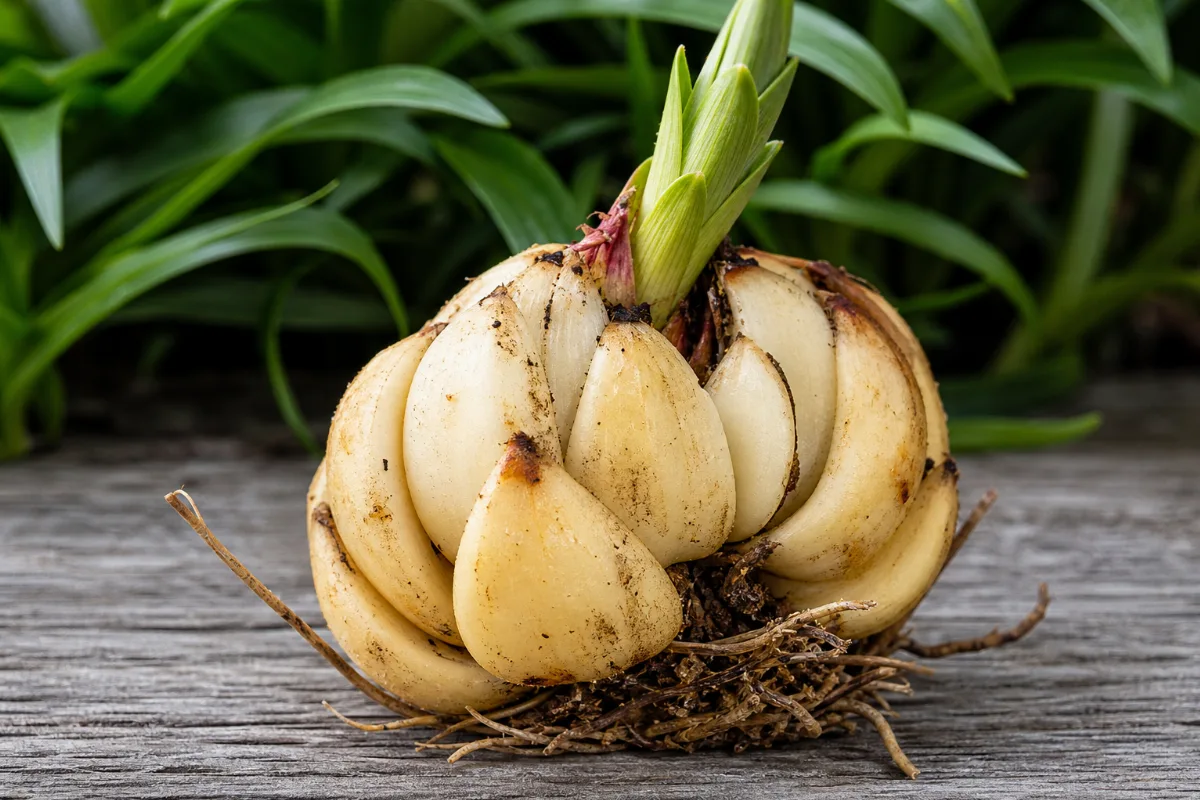
Lily bulb (bai he) is the starchy bulb of certain lilies, eaten in China as a food and used in Chinese medicine to calm the mind, help sleep and moisten the lungs. Human studies are of a lily bulb and rehmannia formula, not the bulb alone, and are of limited quality. Important household warning: true lilies and daylilies can cause fatal kidney failure in cats.
General information, not medical advice. Last substantive update · Not medically reviewed. A named clinician has not signed off on this page. How this page is made
About Lily bulb
Lily bulb (bai he) is the bulb of the Chinese food lilies Lilium brownii var. viridulum, L. lancifolium and L. pumilum. It is eaten as a vegetable and used in Chinese medicine to calm the mind, help sleep and moisten the lungs. Human research is mostly on a formula that also contains rehmannia, so results cannot be credited to the bulb alone, and no dose or form is recommended here. The key caution for households: true lilies and daylilies can cause fatal kidney failure in cats. Ask a doctor or pharmacist about amounts.
What it is
Lily bulb is the scaly, starchy bulb of certain lilies, sold fresh or dried. The Chinese Pharmacopoeia lists three species as the official source. Do not eat florist or garden lily bulbs.
It belongs to the lily family (Liliaceae) and is also called bai he, baihe or Lanzhou lily.
What makes it distinctive
It is both a food and a traditional medicine. A 2025 review describes it as cold-natured and sweet in Chinese medicine, rich in polysaccharides and steroidal saponins, with 123 compounds isolated from the genus so far.
Its best-known use is the classic Baihe Dihuang Decoction, which pairs it with rehmannia.
Historical and current uses
Chinese texts describe it as food and medicine from the Han dynasty, used to calm the spirit, ease sleep and moisten the lungs. It is also eaten in Japan and Korea.
Today it appears in soups, congee, flour, wine and drinks, and in herbal formulas for sleep and mood.
What the research shows
No trial of lily bulb alone for sleep, mood or anxiety was found. For the formula, a 2022 meta-analysis of 83 papers (24 on insomnia, 17 on depression, 14 on menopausal syndrome) concluded a better effect and fewer adverse reactions when it was added to usual treatment. A 2026 review reaches a similar view for depression but says it needs rigorous trials. Neither abstract gives numbers or a bias rating.
One placebo-controlled trial of a Lilium lancifolium extract found less joint pain after 12 weeks; the authors were employed by its maker. Everything else is lab or animal work.
At a glance
Traditional uses history, not proof
- Eaten steamed, in soups and in congee, or ground into flour
- Calming the mind and easing restless sleep in Chinese medicine
- Moistening the lungs for dry cough
- Part of the classic Baihe Dihuang Decoction with rehmannia
Studied for research
- Insomnia (the formula): very low certainty
- Low mood and depression (the formula as an add-on): low certainty
- Menopausal symptoms (the formula): very low certainty
- Joint pain (one extract trial): low certainty
- Anxiety, blood sugar, immune and antioxidant effects: lab and animal only
Main compounds
- Steroidal saponins
- Polysaccharides
- Regaloside A and other phenylpropanoid glycosides
Common forms
- Fresh or steamed bulb (food)
- Dried sliced bulb (often preserved with sulfur smoke)
- Flour, wine and drinks
- Decoction with rehmannia (Baihe Dihuang Decoction)
Research links: Baihe Dihuang Decoction meta-analysis (2022) · Baihe Dihuang Decoction in depression (2026 review) · Lilium systematic review (2025) · Lily toxicity in the cat (2010) · ASPCA Easter lily record · Research Library · Genes & Biomarkers Library
The plant and its history
- Accepted scientific name
- Lilium brownii var. viridulum Baker, Lilium lancifolium Thunb., Lilium pumilum Redouté
- Naming authority
- Baker; Thunb.; Redouté
- Synonyms
- Bulbus Lilii; Lilii Bulbus
- Common names
- Lily bulb (English); Bai he (Chinese (pinyin)); Baihe (Chinese (pinyin)); Lanzhou lily (English); Edible lily bulb (English)
- Botanical family
- Liliaceae (lily family). Do not confuse with peace lily, lily of the valley or daylily, which are different plants.
- Classification
- Plantae > Tracheophyta > Liliopsida > Liliales > Liliaceae > Lilium > Lilium brownii; L. lancifolium; L. pumilum
- Native range
- The 2025 review says Lilium species are native to the Northern Hemisphere, with Asia as the centre of traditional use. Range of each species was not verified.
- Habitat
- Not verified.
- What the plant looks like
- Roots: Not verified.; Stems: Not verified.; Leaves: Not verified.; Flowers: Not verified.; Fruit: Not verified.
- Cultivation
- Not verified.
- Harvest and processing
- The scaly bulb is eaten fresh or dried; dried slices are often preserved with sulfur smoke (2026 chemistry study).
- Look-alikes and adulterants
- Name: Ornamental true lilies (Easter lily, other Lilium hybrids); Note: Same genus but not sold for eating. Highly dangerous to cats.; Name: Daylilies (Hemerocallis); Note: Not true lilies, but also cause kidney failure in cats (Fitzgerald 2010).; Name: Lily of the valley (Convallaria); Note: Contains heart-active glycosides, a different poison (Fitzgerald 2010).; Name: Peace lily (Spathiphyllum); Note: A houseplant in another family, irritant to pets; mentioned in our earlier summary only, not re-verified.
- Sustainability and conservation
- Not assessed.
Traditional use and history history, not clinical proof
| Tradition or era | Documented use | Source |
|---|---|---|
| Chinese medicine, from the Han dynasty | Documented as both food and medicine to nourish yin, moisten the lungs, clear heart heat and calm the spirit; first listed in the Shen Nong Ben Cao Jing (about 25 to 220 AD) per the review. | p41368573 |
| Chinese Pharmacopoeia, 2025 edition | Official source: bulbs of L. lancifolium, L. brownii var. viridulum and L. pumilum, for palpitations, insomnia and coughing blood. | p41368573 |
| Classic formula Baihe Dihuang Decoction | Lily bulb with rehmannia, used in China for low mood, restlessness and poor sleep; now studied for depression, menopausal syndrome and insomnia. | p39539631 |
| Japan and Korea (food) | Eaten in cooking and drinks; Japanese petals garnish sushi and tea ceremonies. | p41368573 |
Traditional use shows how a plant was used. It does not show that a supplement works or is safe today.
What is inside, and how it may work
What the plant contains and how those compounds act in cells and animals. Laboratory and animal mechanisms are not proven effects in people.
Main compounds
| Compound | Family | Where it is concentrated | Activity studied | Level of evidence |
|---|---|---|---|---|
| Steroidal saponins | saponins | bulb Not given | Immune-modulating, anti-inflammatory and cell-toxic activity in the lab; part of the 123 compounds isolated from the genus. 13 9 | In vitro / animal |
| Polysaccharides | carbohydrates | bulb Not given | Antioxidant, blood-sugar and immune effects in the lab and animals. 13 9 | In vitro / animal |
| Regaloside A and related phenylpropanoid glycosides | phenylpropanoid glycoside | bulb Not given | One of six anti-inflammatory components identified in the extract used in the joint-pain trial. 5 13 | Human (single trial) and in vitro |
| Colchicine (NOT confirmed in lily bulb) PubChem 6167 | alkaloid | unknown Not verified | A 2025 review quotes an old encyclopedia listing colchicine among bulb constituents and mentions a colchicine-like risk. The claim could not be verified; PubChem identity only. 13 8 | Unverified |
Mechanisms, receptors and pathways
| Target or pathway | Gene or receptor | What was found | Level |
|---|---|---|---|
| Mood chemicals, brain inflammation, stress-hormone (HPA) signals, gut bacteria | not specific | Proposed routes for the formula's antidepressant effects, from lab and animal studies. 15 12 | Animal / lab |
| Inflammation switch NF-kB | IKK alpha/beta | An ethanol extract of the bulb lowered nitric oxide in stimulated immune cells by blocking IKK-driven NF-kB activation. 13 | In vitro |
| Kidney tubule cells in cats | unknown toxin | The kidney tubule lining appears to be the target; the toxic part is water-soluble. 3 | Animal (cats) |
Absorption, metabolism and elimination
- Absorption
- No human data found.
- Distribution
- No data found.
- Metabolism
- No data found.
- Elimination
- No data found.
- Bioavailability
- Not established.
Isolated compounds versus whole extracts
The studies behind the lab claims often use extracts or single compounds, and many come from other Lilium species. The one human joint-pain trial used a branded extract tablet, and the mood and sleep trials used a lily bulb and rehmannia decoction. None used the cooked bulb as a food.
Nutritional composition
The bulb is described as rich in polysaccharides, saponins, fibre, starch, pectin, amino acids and minerals such as calcium and iron (2025 review); no amounts were read.
2 low certainty2 very low certainty4 not enough evidence
What was looked at
The 8 benefits and uses checked for Lily bulb, each with how strong the evidence is. Tap one to open it.
- Sleep and insomnia (as part of Baihe Dihuang Decoction)Very low certainty
- Low mood and depression (the formula as an add-on)Low certainty
- Anxiety and calming (lab findings only)Not enough evidence
- Menopausal symptoms (the formula)Very low certainty
- Joint pain (one extract trial)Low certainty
- Moistening the lungs and cough (traditional use)Not enough evidence
- As a foodNot enough evidence
- Antioxidant, blood sugar, immune and other lab findingsNot enough evidence
Lab markers tracked in the studies
Hamilton Depression Rating Scale (HAM-D)Joint pain score (visual analogue scale)K-WOMAC (Korean knee and hip arthritis score)Blood biomarkers measured in the trial
What is Lily bulb good for?
What lily bulb has been studied for and how strong the human evidence is. Almost all human data are for a mixed formula, not the bulb alone.
Benefits, one by one
Each card is a research question, not a promise. Tap a goal to filter. Open a card to see the studies, doses and limits.
Sleep and insomnia (as part of Baihe Dihuang Decoction)
Very low certaintyLily bulb is a classic Chinese sleep and calming herb, and insomnia is one of the uses listed for it in the Chinese Pharmacopoeia. The human trials are of a mixed formula (lily bulb plus rehmannia), not the bulb alone, and their quality is limited.
2 studiesNothing here compares products or gives amounts. Ask a doctor or phar…
Studies, doses and limits
What the trials found
One 2022 meta-analysis of 83 papers on the formula found 24 about insomnia. Its abstract says the formula combined with usual treatment gave a better effect and fewer adverse reactions. The abstract gives no trial numbers, effect sizes or bias rating. No trial of lily bulb on its own for sleep was found.
Results
Direction reported as better with the formula added to usual treatment; no numbers available from the abstract.
Effect sizes as reported
Not available (abstract has no numbers).
Why this rating
Formula, not the bulb alone; add-on design; mostly Chinese trials of unknown quality; no risk-of-bias statement seen; abstract only.
Form and dose studied
Nothing here compares products or gives amounts. Ask a doctor or pharmacist about amounts.
Who was studied
Adults with insomnia in Chinese clinical studies of the formula.
Limits
Cannot say what the lily bulb contributes versus rehmannia or usual treatment. Trials not opened.
Why researchers looked
Traditional use for restless sleep, palpitations and a troubled, anxious mind.
Traditional use
In Chinese medicine the bulb is sweet and cold-natured and is used to calm the mind (per a 2025 review). The classic Baihe Dihuang Decoction pairs it with rehmannia.
Proposed mechanism Animal research
Sedative effects of lily extracts are reported in animals and cells. Recent animal work on the formula points to gut bacteria and stress-hormone pathways. None of this is shown in people.
A proposed mechanism does not show that the effect happens in people.
No safety problem was reported in the abstract. Insomnia that lasts needs a doctor's check.
Low mood and depression (the formula as an add-on)
Low certaintyThe formula Baihe Dihuang Decoction (lily bulb with rehmannia) has been tested in China as an add-on to antidepressants. A 2026 review says it may improve response and lower depression scale scores, but its effect on its own and its long-term safety are not proven.
3 studiesNothing here compares products or gives amounts. Ask a doctor or phar…
Studies, doses and limits
What the trials found
The meta-analysis (2022) lists 17 papers on depression and concludes the formula plus usual treatment was better. The 2026 review of randomised trials says that, added to antidepressants, it can improve the overall response rate and lower Hamilton Depression Rating Scale scores, and may ease side effects. Neither abstract gives numbers.
Results
Better response and lower depression-scale scores when added to antidepressants, as summarised by the reviewers. Lily bulb alone was not tested.
Effect sizes as reported
Not available (no numbers in the abstracts).
Why this rating
Several trials in reviews, but add-on to drugs, formula not bulb alone, mostly Chinese-language trials of unknown quality, no GRADE seen, and the 2026 review itself asks for rigorous trials.
Form and dose studied
Nothing here compares products or gives amounts. Ask a doctor or pharmacist about amounts.
Who was studied
Adults with major depressive disorder on antidepressants.
Limits
Original trials not opened. Blinding and bias not assessed in the abstracts. Monotherapy efficacy and long-term safety unvalidated.
Why researchers looked
The lily bulb and rehmannia pair is a classic traditional answer to a low, anxious, restless mood.
Traditional use
A 2024 review describes the pair as a classic antidepressant combination in Chinese medicine.
Proposed mechanism Animal research
Lab and animal studies of the formula and its compounds suggest effects on mood chemicals, brain inflammation, stress-hormone signals, brain cell protection and gut bacteria. These are proposals from animals and cells.
A proposed mechanism does not show that the effect happens in people.
Do not replace a prescribed antidepressant with a herb. Tell the prescriber about any herbal product.
Anxiety and calming (lab findings only)
Not enough evidenceLily bulb is traditionally used to calm a restless, anxious mind. We found no human trial of lily bulb alone for anxiety. Support comes from tradition, and from animal and cell studies.
2 studiesNothing here compares products or gives amounts. Ask a doctor or phar…
Studies, doses and limits
Why this rating
No human trial found; traditional and animal evidence only.
Form and dose studied
Nothing here compares products or gives amounts. Ask a doctor or pharmacist about amounts.
Limits
Animal findings often do not carry over to people.
Why researchers looked
Traditional use to calm the spirit.
Traditional use
Used for anxiety and disturbed sleep in Chinese tradition (per the 2025 review).
Proposed mechanism Animal research
The 2025 review says sedative and anxiety-related findings come from animal or cell work. A few 2024 to 2026 animal studies of the formula report effects on gut bacteria and brain cells; we only saw their titles.
A proposed mechanism does not show that the effect happens in people.
Persistent anxiety needs a doctor's assessment.
Menopausal symptoms (the formula)
Very low certaintyThe 2022 meta-analysis found 14 papers on the lily bulb and rehmannia formula for menopausal symptoms and concluded it helped when combined with usual treatment. Details are not in the abstract, and lily bulb alone was not tested.
1 studiesNothing here compares products or gives amounts. Ask a doctor or phar…
Studies, doses and limits
What the trials found
14 papers on menopausal syndrome were counted in the 2022 meta-analysis.
Results
Better effect and fewer adverse reactions with the formula plus usual treatment, per the authors; no numbers.
Effect sizes as reported
Not available.
Why this rating
Abstract only; no numbers or bias rating; formula plus usual care.
Form and dose studied
Nothing here compares products or gives amounts. Ask a doctor or pharmacist about amounts.
Who was studied
Women with menopausal syndrome in Chinese studies.
Limits
Original trials not read.
Why researchers looked
Traditional use of the pair for restlessness, poor sleep and low mood with ageing.
Traditional use
Part of the classic formula's range of uses.
Proposed mechanism Pharmacological theory
Not established. Nothing specific to menopause was read.
A proposed mechanism does not show that the effect happens in people.
Talk to a doctor before combining herbs with hormone treatment.
Joint pain (one extract trial)
Low certaintyOne 12-week placebo-controlled trial of a tiger-lily (Lilium lancifolium) extract tablet found less joint pain and better quality of life than placebo. It is one trial, the p-values were close to 0.05, and the makers' own staff wrote it.
2 studiesNothing here compares products or gives amounts. Ask a doctor or phar…
Studies, doses and limits
What the trials found
One randomised, double-blind, placebo-controlled trial of a branded Lilium lancifolium extract taken as tablets twice daily for 12 weeks.
Results
Pain scale and K-WOMAC total scores were lower than placebo (p = 0.043 for both); K-WOMAC pain (p = 0.023) and function (p = 0.047) and quality of life (p = 0.024) also improved. Blood biomarkers did not differ.
Effect sizes as reported
P-values only in the abstract.
Why this rating
One trial; borderline p-values; group size not in the abstract; employees of the product's maker among authors; abstract only.
Form and dose studied
Nothing here compares products or gives amounts. Ask a doctor or pharmacist about amounts.
Who was studied
Adults with joint pain.
Limits
Single trial of one branded extract, not food-style bulb. Needs independent repeat.
Why researchers looked
Anti-inflammatory compounds such as regaloside A were found in the extract.
Traditional use
Lily bulb is also used traditionally to ease pain and swelling (older Chinese texts, per the 2025 review).
Proposed mechanism Laboratory research
Anti-inflammatory activity of lily extracts is seen in cell and animal studies (for example blocking an inflammation switch called NF-kB in cells). Not proven as the reason for relief in people.
A proposed mechanism does not show that the effect happens in people.
Safety results were not in the abstract. Joint pain that lingers should be checked by a doctor.
Moistening the lungs and cough (traditional use)
Not enough evidenceIn Chinese tradition lily bulb moistens the lungs and is used for dry cough and blood-tinged sputum. We found no human trial testing this.
1 studiesNothing here compares products or gives amounts. Ask a doctor or phar…
Studies, doses and limits
Why this rating
Traditional use only.
Form and dose studied
Nothing here compares products or gives amounts. Ask a doctor or pharmacist about amounts.
Limits
No trial.
Why researchers looked
A core traditional use.
Traditional use
Pharmacopoeia and classical uses: cough, blood-tinged sputum, palpitations and insomnia.
Proposed mechanism Animal research
Not established; a mouse study with a cigarette-smoke model is mentioned in the 2025 review's reference list only.
A proposed mechanism does not show that the effect happens in people.
Coughing blood always needs medical attention.
As a food
Not enough evidenceThe bulb is a starchy, slightly sweet vegetable eaten steamed, in soups and congee, or ground into flour. It is a source of fibre and some minerals, according to a 2025 review, and has a long food history in China, Japan and Korea.
1 studiesNothing here compares products or gives amounts. Ask a doctor or phar…
Studies, doses and limits
What the trials found
No trial of the bulb as a food was found.
Why this rating
Nutrient content is described qualitatively; no health outcome trial.
Form and dose studied
Nothing here compares products or gives amounts. Ask a doctor or pharmacist about amounts.
Limits
No amounts of nutrients were read.
Why researchers looked
Food-and-medicine tradition.
Traditional use
Documented as both food and medicine since the Han dynasty (per the 2025 review).
Proposed mechanism Traditional use
Not applicable.
A proposed mechanism does not show that the effect happens in people.
Buy bulbs sold as food. Garden or florist lily bulbs are not food.
Antioxidant, blood sugar, immune and other lab findings
Not enough evidenceCell and animal studies report antioxidant, blood-sugar-lowering, immune-modulating, anti-inflammatory, liver-protecting and anti-tumour effects for lily extracts and compounds. These are laboratory results; reviews say clinical trials are needed.
2 studiesNothing here compares products or gives amounts. Ask a doctor or phar…
Studies, doses and limits
Why this rating
Cell and animal data only; some from other Lilium species.
Form and dose studied
Nothing here compares products or gives amounts. Ask a doctor or pharmacist about amounts.
Limits
Often high lab concentrations, other species, isolated compounds.
Why researchers looked
Steroidal saponins, polysaccharides and phenolic compounds show activity in the lab.
Traditional use
The 2025 review notes traditional use for depression and diabetes.
Proposed mechanism Animal research
Examples: reduced inflammatory signals in cells; antioxidant enzymes raised in diabetic mice. Reviews list these as lab and animal findings.
A proposed mechanism does not show that the effect happens in people.
Do not use lily products in place of diabetes or immune treatment.
Connections to the rest of health
How Lily bulb connects to the rest of our health knowledge graph. Every link says what kind of connection it is. A safety link (for example to the liver) is a warning, not a benefit. A study that merely mentions a topic never creates a benefit link.
Explore every connection: goals, body systems, organs, symptoms, genes
A. Wellness goals
| Connected to | Kind of connection | Evidence status | Context | Studies |
|---|---|---|---|---|
| Better Sleep | Traditional use | Very low certainty | Sleep and insomnia (as part of Baihe Dihuang Decoction): Lily bulb is a classic Chinese sleep and calming herb, and insomnia is one of the uses listed for it in the Chinese Pharmacopoeia. The human trials are of a mixed formula (lily bulb plus rehmannia), not the bulb alone, and their quality is limited. | 7 13 |
| Sleep Quality | Traditional use | Very low certainty | Sleep and insomnia (as part of Baihe Dihuang Decoction): Lily bulb is a classic Chinese sleep and calming herb, and insomnia is one of the uses listed for it in the Chinese Pharmacopoeia. The human trials are of a mixed formula (lily bulb plus rehmannia), not the bulb alone, and their quality is limited. | 7 13 |
| Mood Balance | Traditional use | Low certainty | Low mood and depression (the formula as an add-on): The formula Baihe Dihuang Decoction (lily bulb with rehmannia) has been tested in China as an add-on to antidepressants. A 2026 review says it may improve response and lower depression scale scores, but its effect on its own and its long-term safety are not proven. | 7 15 12 |
| Anxiety Support | Traditional use | Not enough evidence | Anxiety and calming (lab findings only): Lily bulb is traditionally used to calm a restless, anxious mind. We found no human trial of lily bulb alone for anxiety. Support comes from tradition, and from animal and cell studies. | 13 12 |
| Calm Relaxation | Traditional use | Not enough evidence | Anxiety and calming (lab findings only): Lily bulb is traditionally used to calm a restless, anxious mind. We found no human trial of lily bulb alone for anxiety. Support comes from tradition, and from animal and cell studies. | 13 12 |
| Stress Reduction | Traditional use | Not enough evidence | Anxiety and calming (lab findings only): Lily bulb is traditionally used to calm a restless, anxious mind. We found no human trial of lily bulb alone for anxiety. Support comes from tradition, and from animal and cell studies. | 13 12 |
| Menopause Support | Traditional use | Very low certainty | Menopausal symptoms (the formula): The 2022 meta-analysis found 14 papers on the lily bulb and rehmannia formula for menopausal symptoms and concluded it helped when combined with usual treatment. Details are not in the abstract, and lily bulb alone was not tested. | 7 |
| Joint Support | Potential benefit | Low certainty | Joint pain (one extract trial): One 12-week placebo-controlled trial of a tiger-lily (Lilium lancifolium) extract tablet found less joint pain and better quality of life than placebo. It is one trial, the p-values were close to 0.05, and the makers' own staff wrote it. | 5 13 |
| Blood Sugar Balance | Preliminary mechanism | Not enough evidence | Antioxidant, blood sugar, immune and other lab findings: Cell and animal studies report antioxidant, blood-sugar-lowering, immune-modulating, anti-inflammatory, liver-protecting and anti-tumour effects for lily extracts and compounds. These are laboratory results; reviews say clinical trials are needed. | 13 9 |
| Immune Support | Preliminary mechanism | Not enough evidence | Antioxidant, blood sugar, immune and other lab findings: Cell and animal studies report antioxidant, blood-sugar-lowering, immune-modulating, anti-inflammatory, liver-protecting and anti-tumour effects for lily extracts and compounds. These are laboratory results; reviews say clinical trials are needed. | 13 9 |
| Inflammation Balance | Preliminary mechanism | Not enough evidence | Antioxidant, blood sugar, immune and other lab findings: Cell and animal studies report antioxidant, blood-sugar-lowering, immune-modulating, anti-inflammatory, liver-protecting and anti-tumour effects for lily extracts and compounds. These are laboratory results; reviews say clinical trials are needed. | 13 9 |
B. Body systems
| Connected to | Kind of connection | Evidence status | Context | Studies |
|---|---|---|---|---|
| Sleep Recovery | Biological association | Very low certainty | Studied for: Sleep and insomnia (as part of Baihe Dihuang Decoction) | 7 13 |
| Nervous System | Biological association | Very low certainty | Studied for: Sleep and insomnia (as part of Baihe Dihuang Decoction) Studied for: Low mood and depression (the formula as an add-on) | 7 13 15 12 |
| Stress Mood | Biological association | Low certainty | Studied for: Low mood and depression (the formula as an add-on) Studied for: Anxiety and calming (lab findings only) | 7 15 12 13 |
| Reproductive System | Biological association | Very low certainty | Studied for: Menopausal symptoms (the formula) | 7 |
| Endocrine System | Biological association | Very low certainty | Studied for: Menopausal symptoms (the formula) | 7 |
| Musculoskeletal System | Biological association | Low certainty | Studied for: Joint pain (one extract trial) | 5 13 |
| Respiratory System | Biological association | Not enough evidence | Studied for: Moistening the lungs and cough (traditional use) | 13 |
| Digestive System | Biological association | Not enough evidence | Studied for: As a food | 13 |
| Metabolism Weight | Biological association | Not enough evidence | Studied for: Antioxidant, blood sugar, immune and other lab findings | 13 9 |
| Immune System | Biological association | Not enough evidence | Studied for: Antioxidant, blood sugar, immune and other lab findings | 13 9 |
E. Health conditions
| Connected to | Kind of connection | Evidence status | Context | Studies |
|---|---|---|---|---|
| Insomnia | Traditional use | Not enough evidence | Formula meta-analysis only; the bulb alone not tested. Preparation or compound: Baihe Dihuang Decoction |
7 |
| Pet poisoning (cats) | Case series | True lilies and daylilies cause kidney failure in cats. Preparation or compound: Whole lily plant |
3 6 |
I. Biomarkers
| Connected to | Kind of connection | Evidence status | Context | Studies |
|---|---|---|---|---|
| Hamilton Depression Rating Scale (HAM-D) | Biological association | Low certainty | Measured in trials: lowered. A lab change is not the same as a health benefit. | 15 |
| Joint pain score (visual analogue scale) | Biological association | Low certainty | Measured in trials: lowered. A lab change is not the same as a health benefit. | 5 |
| K-WOMAC (Korean knee and hip arthritis score) | Biological association | Low certainty | Measured in trials: lowered. A lab change is not the same as a health benefit. | 5 |
| Blood biomarkers measured in the trial | Biological association | Low certainty | Measured in trials: no-change. A lab change is not the same as a health benefit. | 5 |
L. Active compounds
| Connected to | Kind of connection | Evidence status | Context | Studies |
|---|---|---|---|---|
| Steroidal saponins | Biological association | In vitro / animal | Immune-modulating, anti-inflammatory and cell-toxic activity in the lab; part of the 123 compounds isolated from the genus. Preparation or compound: bulb |
13 9 |
| Polysaccharides | Biological association | In vitro / animal | Antioxidant, blood-sugar and immune effects in the lab and animals. Preparation or compound: bulb |
13 9 |
| Regaloside A and related phenylpropanoid glycosides | Biological association | Human (single trial) and in vitro | One of six anti-inflammatory components identified in the extract used in the joint-pain trial. Preparation or compound: bulb |
5 13 |
| Colchicine (NOT confirmed in lily bulb) | Biological association | Unverified | A 2025 review quotes an old encyclopedia listing colchicine among bulb constituents and mentions a colchicine-like risk. The claim could not be verified; PubChem identity only. Preparation or compound: unknown |
13 8 |
Each connection is stored with the ingredient, the connected record, the kind of connection, the evidence status, the supporting studies, the preparation or compound involved, and a review date (last reviewed October 25, 2026).
Evidence at a glance: what changed in 4 lab markers
Tap a number to show only those markers. Counts are markers, not people.
The evidence
The research centre for Lily bulb. Every record here was checked against PubMed or the publisher's page; we never list a study we have not verified.
Evidence by outcome
Bars show how many studies we found for each outcome, not how well it works. People are added up across trials only (reviews are not added, to avoid double counting).
How we rate evidence
High certainty
Several well-run trials or reviews agree; further research is unlikely to change the picture much.
Moderate certainty
Good trials point the same way, but some doubt remains.
Low certainty
Small, short or inconsistent trials. The finding could change with better research.
Very low certainty
Very little or very weak human data. Treat as a possibility only.
Mixed findings
Trials or reviews disagree with each other.
Not enough evidence
Not enough human research to say either way.
Evidence against
Good research found no benefit, or found harm.
We take the reviewers' own risk-of-bias and GRADE statements where they exist, and otherwise judge from study size, design, consistency, directness and whether a product matches what is sold. Many publications do not make evidence high. Method note: We searched PubMed and checked GBIF, PubChem and ASPCA for lily bulb. Most sources were abstracts only. No study is cited that we could not verify.
Study library: every study we checked 15
| Study | Design | People | Product, dose, length | Result |
|---|---|---|---|---|
| ASPCA 2026 ASPCA Animal Poison Control: Easter Lily (Lilium longiflorum) plant record aspca.org · Source |
Authoritative guidance animal (cats) |
Pet owners | Easter lily plant not extracted not extracted |
Lists Easter lily as toxic to cats: vomiting, loss of appetite, lethargy, kidney failure, and death is possible. Toxic principle unknown. Marked non-toxic to dogs and horses; says cats are the only species known to be affected. Not applicable Methods, limits and fundingOutcomes: Toxicity to pets Limitations: Online record, read 2026-10-25. Not the medicinal species. Funding and conflicts: None Read: page read |
| ASPCA 2026 ASPCA Animal Poison Control: Tiger Lily (Lilium tigrinum) plant record aspca.org · Source |
Authoritative guidance animal (cats) |
Pet owners | Tiger lily plant not extracted not extracted |
Lists tiger lily as toxic to cats with the same signs (vomiting, inappetence, lethargy, kidney failure; death possible). Marked non-toxic to dogs and horses. Not applicable Methods, limits and fundingOutcomes: Toxicity to pets Limitations: Online record, read 2026-10-25. Whether L. tigrinum is the same species as medicinal L. lancifolium was not checked here. Funding and conflicts: None Read: page read |
| Fitzgerald 2010 Lily toxicity in the cat Top Companion Anim Med · PMID 21147474 · DOI |
Narrative review animal (cats) |
Review of lily poisoning in cats | Lilium and Hemerocallis (daylily) plants whole plant: petals, stamen, leaves, pollen not extracted not extracted |
Both true lilies (Lilium) and daylilies (Hemerocallis) damage cat kidneys. As little as 2 leaves or part of one flower has caused deaths. The whole plant, including pollen, is toxic; the toxin is in the water-soluble fraction and is unknown. Early fluids give an excellent prognosis; once urine stops, dialysis is the only option. Lily of the valley is a different, heart-poisoning plant. Not applicable Methods, limits and fundingOutcomes: Toxicity, signs and treatment Limitations: Review; abstract only; cats not people. Funding and conflicts: None stated Read: abstract |
| GBIF 2026 GBIF species match: Lilium brownii, L. lancifolium, L. pumilum, and L. brownii var. viridulum GBIF API · Source |
Database record not applicable |
Not applicable | taxonomy not extracted not extracted |
All four names returned ACCEPTED with exact match, family Liliaceae: L. brownii F.E.Br. ex Miellez (key 2753253), L. lancifolium Thunb. (2753380), L. pumilum Redouté (7675947), L. brownii var. viridulum Baker (variety, 2753259). Checked 2026-10-25. Not applicable Methods, limits and fundingOutcomes: Accepted names and family Limitations: Database records. NCBI taxonomy not checked. Funding and conflicts: None Read: API response |
| Jeon 2024 The Effects of Lilium lancifolium Thunb. on the Alleviation of Joint Pain: A Randomized, Double-Blind, Placebo-Controlled Clinical Trial Life (Basel) · PMID 39337919 · DOI |
Controlled trial |
Adults with joint pain (the 2025 review describes adults with pain for over 3 months) | Lilium lancifolium extract tablets (HY-LL) versus placebo tablets, twice a day bulb ethanol extract (per the 2025 review) not extracted 12 weeks · vs placebo tablets |
After 12 weeks, pain VAS and K-WOMAC total scores fell more in the extract group than in placebo (p = 0.043 for both). K-WOMAC pain (p = 0.023) and function (p = 0.047) sub-scores and overall quality of life (p = 0.024) also improved versus placebo. No significant differences in blood biomarkers. Statistically significant, borderline; clinical size not given in the abstract Methods, limits and fundingOutcomes: Pain VAS, K-WOMAC total and sub-scores, quality of life, blood biomarkers Limitations: Abstract only. Group sizes not in the abstract. Single trial, one branded extract, one company. P-values close to 0.05. Funding and conflicts: Industry-linked: nine authors were employed by hy Co., Ltd., the maker of the extract Read: abstract |
| Langston 2002 Acute renal failure caused by lily ingestion in six cats J Am Vet Med Assoc · PMID 12680447 · DOI |
Case series animal (cats) |
6 6 cats that ate Easter lily or tiger lily plants |
Whole lily plants (Easter lily, tiger lily) plant (parts not specified) not extracted not extracted |
All 6 had acute kidney failure; 2 had dialysis. Three cats survived with chronic kidney failure; two died despite dialysis; one was euthanased. The 3 cats with little or no urine all died. Various Liliaceae lilies can damage cat kidneys; the toxic principle is unknown. Not applicable Methods, limits and fundingOutcomes: Kidney failure and survival Limitations: Small series of cats, not people. Easter and tiger lily, not tested bulb for eating. Funding and conflicts: None stated Read: abstract |
| Peng 2022 Evaluation of the Clinical Efficacy of the Classic Prescription "Baihe Dihuang Decoction" Based on Meta-Analysis Evid Based Complement Alternat Med · PMID 36133789 · DOI |
Meta-analysis human (pooled trials) |
People treated with Baihe Dihuang Decoction in Chinese and English databases (83 papers: 17 depression, 14 menopausal syndrome, 24 insomnia, 28 other) | Baihe Dihuang Decoction (lily bulb plus rehmannia formula), combined with usual treatment bulb (lily) plus rehmannia root, as a decoction not extracted not extracted |
Authors conclude that, for depression, menopausal syndrome and insomnia, the formula combined with usual treatment gave a better effect and fewer adverse reactions. The abstract gives no trial numbers, effect sizes or bias assessment. Direction reported as better; size not given in the abstract Methods, limits and fundingOutcomes: Clinical effect and adverse reactions of the formula versus usual care Limitations: Abstract only. No numbers, no risk-of-bias or GRADE statement. Trials were mainly Chinese-language and of unknown quality. A formula, not lily bulb alone. Funding and conflicts: No conflicts declared Read: abstract |
| PubChem 2026 PubChem compound record: Colchicine PubChem API · Source |
Database record not applicable |
Not applicable | colchicine not extracted not extracted |
Colchicine, CID 6167, formula C22H25NO6. Used here only to identify the compound named in a review's cautionary sentence; this does not show that lily bulb contains it. Not applicable Methods, limits and fundingOutcomes: Compound identity Limitations: Identity record only. Funding and conflicts: None Read: API response |
| Rahman 2026 Pharmacological Significance and Phytochemical Diversity of the Genus Lilium: A Special Emphasis on the Himalayan Lilium polyphyllum Plants (Basel) · PMID 42514581 · DOI |
Narrative review lab |
Review of the genus Lilium (focus on a Himalayan species) | Lilium extracts and compounds (genus-wide) bulbs and other parts, several species not extracted not extracted |
Lists flavonoids, phenolics, steroidal saponins, polysaccharides, alkaloids and terpenoids; reports immune-modulating, anti-inflammatory and anti-tumour activity in the lab; says clinical investigations are limited. Not applicable Methods, limits and fundingOutcomes: Compounds and reported pharmacology Limitations: Abstract only. Focus on a different species (L. polyphyllum). Lab data. Funding and conflicts: No conflicts declared Read: abstract |
| Slater 2011 Exposure circumstances and outcomes of 48 households with 57 cats exposed to toxic lily species J Am Anim Hosp Assoc · PMID 22058344 · DOI |
Survey animal (cats) |
57 48 households, 57 cats exposed to Lilium or Hemerocallis (daylily) plants |
Lilium and Hemerocallis plants (indoor exposures) plant (parts not specified) not extracted not extracted |
Only 27% of owners knew lilies were toxic before the exposure. 93% of cats got prompt veterinary care; 87% had no signs or brief signs that resolved; 5% had kidney insufficiency at final follow-up and 5% were euthanased for kidney failure. Not applicable Methods, limits and fundingOutcomes: Owner knowledge, signs, outcomes Limitations: Self-selected poison-centre callers, one month of reports; not a risk estimate. Funding and conflicts: Authors from ASPCA Animal Poison Control Center Read: abstract |
| To 2023 Case report: Resolution of oligo-anuric acute kidney injury with furosemide administration in a cat following lily toxicity Front Vet Sci · PMID 37476822 · DOI |
Case report animal (cat) |
1 A 12-week-old kitten that was exposed to Lilium lilies |
Lilium species lilies plant (parts not specified) not extracted not extracted |
Vomiting and lethargy after exposure; severe kidney failure with very little urine. Recovered after intensive hospital treatment including furosemide. The report notes this kind of kidney injury usually has a poor outlook. Not applicable Methods, limits and fundingOutcomes: Kidney injury and recovery Limitations: One cat. Shows a recovery is possible, not that it is likely. Funding and conflicts: No conflicts declared Read: abstract |
| Wang 2024 Rehmannia glutinosa DC.-Lilium lancifolium Thunb. in the treatment of depression: a comprehensive review and perspectives Front Pharmacol · PMID 39539631 · DOI |
Narrative review human (summary) and lab |
Review of the lily bulb and rehmannia pair, classical texts and lab studies | Rehmannia glutinosa root with Lilium lancifolium bulb bulb plus root not extracted not extracted |
Reviews classical use and doses, and the lab pharmacology of both herbs and their compounds in depression models. States that current clinical studies indicate the formula is effective, without numbers in the abstract. Not applicable Methods, limits and fundingOutcomes: Traditional use, compounds and proposed antidepressant mechanisms Limitations: Abstract only. Narrative review; mostly lab mechanisms. Not a trial synthesis. Funding and conflicts: No conflicts declared Read: abstract |
| Wang 2025 Traditional uses, nutritional properties, phytochemical metabolites, pharmacological properties, and potential applications of Lilium spp.: a systematic review Front Pharmacol · PMID 41368573 · DOI |
Systematic review lab, animal and some human |
Review of Lilium species in the Chinese Pharmacopoeia (2025): L. lancifolium, L. brownii var. viridulum, L. pumilum | Lily bulb as food, extracts and isolated compounds bulb not extracted not extracted |
Bulb is eaten steamed, as flour, wine and drinks; rich in polysaccharides, saponins, fibre and minerals. Pharmacology is in cells and animals; clinical validation is limited. Section on toxicity: no significant acute toxicity to humans within the Pharmacopoeia dose and course; toxic to the kidneys of cats; possible colchicine-like risk with long excessive use (a passing statement); systematic toxicology data are lacking. Cites one 12-week placebo-controlled joint-pain trial. Not applicable Methods, limits and fundingOutcomes: Traditional use, food forms, nutrition, 123 isolated compounds, pharmacology, toxicity Limitations: Abstract and keyword-searched sections of the full text read (not every section). Review of other papers; the colchicine statement cites an old encyclopedia, not a primary source. Funding and conflicts: No conflicts read Read: full-text (partial) |
| Xu 2026 Sulfur Fumigation-Induced Chemical Transformations in Lily Bulbs (Lilium brownii var. viridulum): Structural Characterization, Marker Identification, and Toxicity Implications Foods · PMID 41976522 · DOI |
Lab analysis lab and computer model |
12 lily bulb samples with different fumigation times, and 18 commercial batches | Sulfur-fumigated versus non-fumigated dried lily bulb bulb not extracted not extracted |
34 compounds identified; 9 markers separate fumigated from non-fumigated bulbs, checked on 18 commercial batches. Mild fumigation did not produce excess bound sulfur dioxide, but longer fumigation raised sulfur-containing derivatives and lowered antioxidant activity. Computer docking predicted the changes might raise toxicity toward liver-injury targets. Not applicable Methods, limits and fundingOutcomes: Sulfur-containing compounds, antioxidant activity, predicted toxicity Limitations: Chemistry and computer prediction only; no animal or human toxicity test. Abstract only. Funding and conflicts: No conflicts declared Read: abstract |
| Yang 2026 Research Progress on the Application and Mechanisms of Baihe Dihuang Decoction in Major Depressive Disorder Drug Des Devel Ther · PMID 41884478 · DOI |
Systematic review human (pooled trials) and lab |
Adults with major depressive disorder in trials of the formula (English and Chinese databases to June 2025) | Baihe Dihuang Decoction (lily bulb and rehmannia) added to conventional antidepressants bulb plus root, decoction not extracted not extracted |
As an add-on to antidepressants the formula can improve overall response rate, lower Hamilton Depression Rating Scale scores and may reduce adverse reactions. Efficacy on its own and long-term safety need high-quality trials. Direction only; no numbers in the abstract Methods, limits and fundingOutcomes: Response rate, Hamilton Depression Rating Scale scores, adverse reactions Limitations: Abstract only. Literature review without a stated bias assessment in the abstract. Add-on design: cannot show what the lily bulb itself contributes. Funding and conflicts: No conflicts declared Read: abstract |
What we do not know yet
- No human trial of lily bulb alone for sleep, mood or anxiety was found.
- The formula trials were not opened; the review abstracts give no numbers or bias ratings.
- No primary toxicology, pregnancy, breastfeeding, allergy or interaction data were found.
- Colchicine content and the traditional 'cold stomach' caution could not be verified.
- EMA, NCCIH, LiverTox and LactMed were not searched.
How new research is added
New studies are found by a saved PubMed search and are placed in a review queue. A person reads each one before it changes any evidence rating or safety wording.
Lab markers
What changed in blood or saliva tests during trials. A changed number is not the same as feeling or being healthier, and we give no "normal ranges".
Other 4
Hamilton Depression Rating Scale (HAM-D)
Lowered in trials
A doctor-rated score of how severe depression symptoms are. Lower is better.
Low certaintyResults and what it means
Why it was measured
The main depression outcome in the add-on trials reviewed.
Statistical vs. clinical meaning
A symptom score, not a lab marker. Size of change not available from the abstract, so clinical importance is unknown.
Safety implication
None reported in the abstract.
| Study | Result | People | Product |
|---|---|---|---|
| 15 | Scores were lower with the formula added to antidepressants, per the reviewers (no values in the abstract) | Adults with major depressive disorder | Baihe Dihuang Decoction plus antidepressants |
Joint pain score (visual analogue scale)
Lowered in trials
A self-rated pain score on a line from no pain to worst pain.
Low certaintyResults and what it means
Why it was measured
Main outcome of the extract trial.
Statistical vs. clinical meaning
Statistically significant but borderline; clinical size not given.
Safety implication
None reported in the abstract.
| Study | Result | People | Product |
|---|---|---|---|
| 5 | Pain VAS fell more than placebo after 12 weeks (p = 0.043); values not in abstract | Adults with joint pain | Lilium lancifolium extract tablets versus placebo, 12 weeks |
K-WOMAC (Korean knee and hip arthritis score)
Lowered in trials
A questionnaire on pain, stiffness and daily function.
Low certaintyResults and what it means
Why it was measured
Secondary outcome of the extract trial.
Statistical vs. clinical meaning
Several scores near the 0.05 line from one trial.
Safety implication
None reported in the abstract.
| Study | Result | People | Product |
|---|---|---|---|
| 5 | Total score (p = 0.043), pain sub-score (p = 0.023) and function sub-score (p = 0.047) improved versus placebo | Adults with joint pain | Lilium lancifolium extract versus placebo |
Blood biomarkers measured in the trial
No clear change in trials
Blood tests taken to look for changes in inflammation or other body chemistry.
Low certaintyResults and what it means
Why it was measured
To see whether pain relief matched a blood change.
Statistical vs. clinical meaning
Pain scores changed but blood markers did not, so the biological reason is unclear.
Safety implication
No blood-test warning in the abstract.
| Study | Result | People | Product |
|---|---|---|---|
| 5 | No significant differences in blood biomarkers between groups | Adults with joint pain | Lilium lancifolium extract versus placebo |
Safety
What studies and official sources say about side effects, medicines and who should check first. Each point shows what kind of evidence it comes from.
Main points to know 4
- Pet safety: true lilies and daylilies can kill cats. Lilies of the genus Lilium (Easter, tiger and other true lilies) and daylilies (Hemerocallis) cause sudden kidney failure in cats. Two leaves or part of one flower has been enough to cause deaths. The whole plant is toxic, including petals, leaves and pollen. The medicinal lily bulb belongs to the same genus. Keep all lily plants, bulbs, peelings and cooking water away from cats, and call a vet at once if a cat has touched or eaten any. Case series 3 6 10 1 2
- For people, the cooked bulb has a long food history, but safety data are thin. A 2025 review found no significant acute toxicity in people within the Chinese Pharmacopoeia dose and course, and says systematic toxicology data are lacking. Absence of reports is not proof of safety, and this was not checked against a primary toxicology source. Systematic review 13
- Eat only bulbs sold as food, not ornamental lilies. The medicinal and food bulbs come from specific species (Lilium brownii var. viridulum, L. lancifolium and L. pumilum in the Pharmacopoeia). Florist and garden lily bulbs are bred for looks, and no source we read tested them as food. Do not eat them. Authoritative guidance 13 4
- Pregnancy, breastfeeding and drug interactions have not been studied. No source we read covers lily bulb in pregnancy, breastfeeding or with medicines. Ask a doctor or pharmacist before using it medicinally. Authoritative guidance 13
Side effects 4
| Effect | How often | Severity and recovery | Evidence |
|---|---|---|---|
| Kidney failure in cats (vomiting, drooling, tiredness, then little or no urine) Pets only. Human kidney effects were not reported in the sources read. | In one survey of 57 exposed cats, 5% had kidney insufficiency and 5% were euthanased for kidney failure; most had prompt care. | Severe to fatal for cats Early fluids give an excellent outlook; once urine stops, dialysis is the only option and the outlook is poor | Case series 6 10 3 11 |
| Vomiting and stomach bleeding in dogs The 2025 review reports this; ASPCA lists Easter lily and tiger lily as non-toxic to dogs. These sources disagree, so treat dogs as uncertain and keep them away too. | Not established | Not graded Not stated | Systematic review 13 1 |
| Side effects in people eating the bulb or taking the formula The formula reviews say fewer adverse reactions with the formula added to usual care; no individual side effects or frequencies appear in the abstracts. | Not established | Not described Not described | Systematic review 7 15 |
| Allergy to lily bulb or pollen Not found in the sources read. Anyone with a lily-family allergy should be careful. | Not established | Unknown Unknown | Authoritative guidance |
Liver
No LiverTox record for lily bulb was located (LiverTox was not searched in depth). Lab and animal studies describe liver-protecting effects. A 2026 chemistry paper on sulfur-fumigated bulbs used computer docking to predict that sulfur-containing changes might increase toxicity toward liver-injury targets. That is a prediction, not an experiment, and no human liver case was found. 14 13
How often. Unknown.
Monitoring. No agency advice was found.
This is a safety connection. It is not evidence that Lily bulb supports liver health.
Medicines and supplements 3
| With | Why it matters | Importance | Evidence | What to do |
|---|---|---|---|---|
| Antidepressants (the formula is studied as an add-on) prescription | The formula trials were add-on designs. No interaction study was found; the formula also contains rehmannia. | Unknown. | Trial context Not enough evidence 15 | Do not stop or change an antidepressant on your own. Tell the prescriber about any lily bulb formula. |
| Sedatives, sleep medicines or alcohol prescription | Theoretical: sedative effects of lily extracts are reported in animals, so extra drowsiness is conceivable. | Unknown; no human study. | Theoretical Not enough evidence 13 | Ask a pharmacist before combining. |
| Other medicines in general prescription | No interaction study of lily bulb with any medicine was found. | Unknown. | No data Not enough evidence | Ask a doctor or pharmacist if you take regular medicines. |
Who should check first 5
| Situation | Advice | Evidence |
|---|---|---|
| Households with cats | Do not keep true lilies, daylilies, or lily bulbs, peelings and cooking water within a cat's reach. The cooking-water point is an inference from the finding that the water-soluble part of the plant is the toxic part; it was not tested. | Case series 3 10 6 |
| Pregnancy | No safety data found. Avoid medicinal amounts and ask your doctor about food use. | Authoritative guidance 13 |
| Breastfeeding | No safety data found; LactMed was not checked. Ask a clinician. | Authoritative guidance |
| Children | No safety data for medicinal use. Food use in normal cooking has a long history but was not studied. | Traditional use 13 |
| Cold-natured constitution or weak digestion (traditional caution) | Chinese tradition classes lily bulb as cold-natured (2025 review). Traditional texts commonly advise caution for people with a 'cold' stomach or loose stools, but we did not find that caution stated in a source we read, so treat it as NOT verified. | Traditional use 13 |
Overdose, product quality and regulators
Summary. For people: no significant acute toxicity within Pharmacopoeia use, per one review, with limited toxicology data. For cats: true lilies and daylilies are a recognised cause of fatal kidney failure.
Animal. Rats and mice given large gavage doses of lily showed no kidney toxicity or deaths per the 2025 review; cats are extremely sensitive. The toxic substance in cats is unknown and is in the water-soluble part of the plant.
Human doses studied. Not given here. No safe upper amount has been established.
High dose or long term signals. The 2025 review mentions a possible 'colchicine-like' risk from long excessive use. That is a passing statement that rests on an old Chinese encyclopedia listing colchicine among the bulb's constituents. We could not confirm it from a primary source, so whether the bulb contains colchicine is NOT verified either way.
Overdose response. For a person who has eaten a large amount or feels unwell: call poison control or a doctor. For a cat: call a vet or the ASPCA Animal Poison Control Center at once.
Genotoxicity. Not found.
Toxic plant parts. For cats the whole plant is toxic: petals, stamen, leaves, pollen. Which parts matter for the bulb is not stated.
Dried lily bulbs are often preserved with sulfur smoke. A 2026 study of Lilium brownii var. viridulum found mild fumigation did not produce excess bound sulfur dioxide, but longer fumigation increased sulfur-containing compounds and lowered antioxidant activity. Studies of pesticides, mycotoxins and metals in Lilii Bulbus exist but were not read.
Sulfur fumigation of dried bulbs. Nine chemical markers can tell fumigated from non-fumigated bulbs in 18 commercial batches; heavy fumigation raised sulfur derivatives. Toxicity was predicted by computer only. 14
Look-alike plants. Daylilies are not true lilies but also cause kidney failure in cats; lily of the valley is a different plant with heart-active poison. Neither should be confused with the edible bulb. 3
| Body | Action | Date |
|---|---|---|
| ASPCA Animal Poison Control (United States) | Easter lily and tiger lily listed as toxic to cats (kidney failure; death possible). source | 2026-10-25 |
When to get medical help
- Cat: drooling, vomiting, loss of appetite, unusual tiredness or less urine after any contact with a lily plant, bulb, pollen or vase water: go to a vet now, even if it seems mild. Early treatment matters most. The ASPCA line is (888) 426-4435 (fee may apply).
- Person: swelling of lips or throat, trouble breathing or a widespread rash after eating lily bulb: call emergency services.
- Person: severe vomiting, fits, confusion or passing very little urine after eating an unknown lily: call poison control or emergency services.
- Dog: persistent vomiting or black stools after eating a lily: call a vet.
Stop the supplement and contact a clinician or emergency service. In the US, Poison Control is 1-800-222-1222.
General information only, not medical advice. Ask a clinician or pharmacist before use, especially with medicines, in pregnancy or with a health condition. See the Natural Remedy Safety guide.
Frequently asked questions
What is lily bulb?
Is lily bulb safe for cats?
Is it safe for dogs?
Can I eat lilies from the garden or a florist?
Does lily bulb help you sleep?
Does it help depression or anxiety?
What is Baihe Dihuang Decoction?
Is lily bulb safe in pregnancy or breastfeeding?
No data were found. Avoid medicinal amounts and ask your doctor about food use.
Can it interact with medicines?
What does 'cold-natured' mean?
In Chinese medicine foods are described by their effect on the body. Lily bulb is classed as cold-natured, and tradition advises some caution for people with cold or weak digestion. We could not confirm that caution in a source we read.
Is dried lily bulb treated with chemicals?
Dried bulbs are often smoked with sulfur to keep them. A 2026 study found mild treatment left no excess bound sulfur dioxide but heavy treatment raised sulfur compounds; a computer model predicted possible liver effects, which is not an experiment.
Explore by health goal
Better SleepSleep QualityMood BalanceAnxiety SupportCalm RelaxationStress ReductionMenopause SupportJoint SupportBlood Sugar BalanceImmune SupportInflammation Balance
Editorial transparency
- Written by
- AlternativeMed editorial team. Research compiled with AI assistance, then checked against PubMed records.
- Medical review
- None. This page has not been reviewed by a physician or pharmacist.
- First published
- 2026-10-25
- Last substantive update
- 2026-10-25
- How we research
- We searched PubMed and checked GBIF, PubChem and ASPCA for lily bulb. Most sources were abstracts only. No study is cited that we could not verify.
- How we rate evidence
- See "How we rate evidence" in the Evidence tab.
- Independence
- No product is promoted on this page. No affiliate links are shown. If one is added later it will be labelled and kept apart from the evidence.
Sources 15
Each source was opened and checked. Where we read only the abstract, it says so. The small numbers in the text point here.
- ASPCA. ASPCA Animal Poison Control: Easter Lily (Lilium longiflorum) plant record. aspca.org. 2026. (page read)
- ASPCA. ASPCA Animal Poison Control: Tiger Lily (Lilium tigrinum) plant record. aspca.org. 2026. (page read)
- Fitzgerald KT. Lily toxicity in the cat. Top Companion Anim Med. 2010. PMID 21147474. DOI 10.1053/j.tcam.2010.09.006. (abstract)
- GBIF. GBIF species match: Lilium brownii, L. lancifolium, L. pumilum, and L. brownii var. viridulum. GBIF API. 2026. (API response)
- Jeon S, Lee H, Lee JH, et al.. The Effects of Lilium lancifolium Thunb. on the Alleviation of Joint Pain: A Randomized, Double-Blind, Placebo-Controlled Clinical Trial. Life (Basel). 2024. PMID 39337919. DOI 10.3390/life14091136. (abstract)
- Langston CE. Acute renal failure caused by lily ingestion in six cats. J Am Vet Med Assoc. 2002. PMID 12680447. DOI 10.2460/javma.2002.220.49. (abstract)
- Peng L, Zhang XF, Guo DY, et al.. Evaluation of the Clinical Efficacy of the Classic Prescription "Baihe Dihuang Decoction" Based on Meta-Analysis. Evid Based Complement Alternat Med. 2022. PMID 36133789. DOI 10.1155/2022/8559176. (abstract)
- PubChem. PubChem compound record: Colchicine. PubChem API. 2026. (API response)
- Rahman SU, Ali H, Sayad U, et al.. Pharmacological Significance and Phytochemical Diversity of the Genus Lilium: A Special Emphasis on the Himalayan Lilium polyphyllum. Plants (Basel). 2026. PMID 42514581. DOI 10.3390/plants15142214. (abstract)
- Slater MR, Gwaltney-Brant S. Exposure circumstances and outcomes of 48 households with 57 cats exposed to toxic lily species. J Am Anim Hosp Assoc. 2011. PMID 22058344. DOI 10.5326/JAAHA-MS-5629. (abstract)
- To A, Davila C, Stroope S, et al.. Case report: Resolution of oligo-anuric acute kidney injury with furosemide administration in a cat following lily toxicity. Front Vet Sci. 2023. PMID 37476822. DOI 10.3389/fvets.2023.1195743. (abstract)
- Wang Z, Wang X, Mou X, et al.. Rehmannia glutinosa DC.-Lilium lancifolium Thunb. in the treatment of depression: a comprehensive review and perspectives. Front Pharmacol. 2024. PMID 39539631. DOI 10.3389/fphar.2024.1471307. (abstract)
- Wang Y, Chen H, Feng P, et al.. Traditional uses, nutritional properties, phytochemical metabolites, pharmacological properties, and potential applications of Lilium spp.: a systematic review. Front Pharmacol. 2025. PMID 41368573. DOI 10.3389/fphar.2025.1713957. (full-text (partial))
- Xu R, Xuan D, Li P, et al.. Sulfur Fumigation-Induced Chemical Transformations in Lily Bulbs (Lilium brownii var. viridulum): Structural Characterization, Marker Identification, and Toxicity Implications. Foods. 2026. PMID 41976522. DOI 10.3390/foods15071228. (abstract)
- Yang L, Wang Y, Wan H, et al.. Research Progress on the Application and Mechanisms of Baihe Dihuang Decoction in Major Depressive Disorder. Drug Des Devel Ther. 2026. PMID 41884478. DOI 10.2147/DDDT.S579207. (abstract)
Where to buy
Check the label first. Whatever you buy, look for these:
- The plant part and the extract type or ratio on the label
- A standardized amount of the active compounds, where relevant
- A third-party testing mark (USP, NSF or ConsumerLab)
- Interactions: ask a pharmacist if you take medicines, are pregnant or have a medical condition
Talk to a pharmacist or doctor before you start any supplement, especially if you take medicines. See the Safety tab for interactions.
Support our free guides: as an Amazon Associate we earn from qualifying purchases. Full disclosure.


