Herbs & Botanicals · Traditional chest herb
Lungwort
Pulmonaria officinalis · also called Common lungwort, Lungenkraut
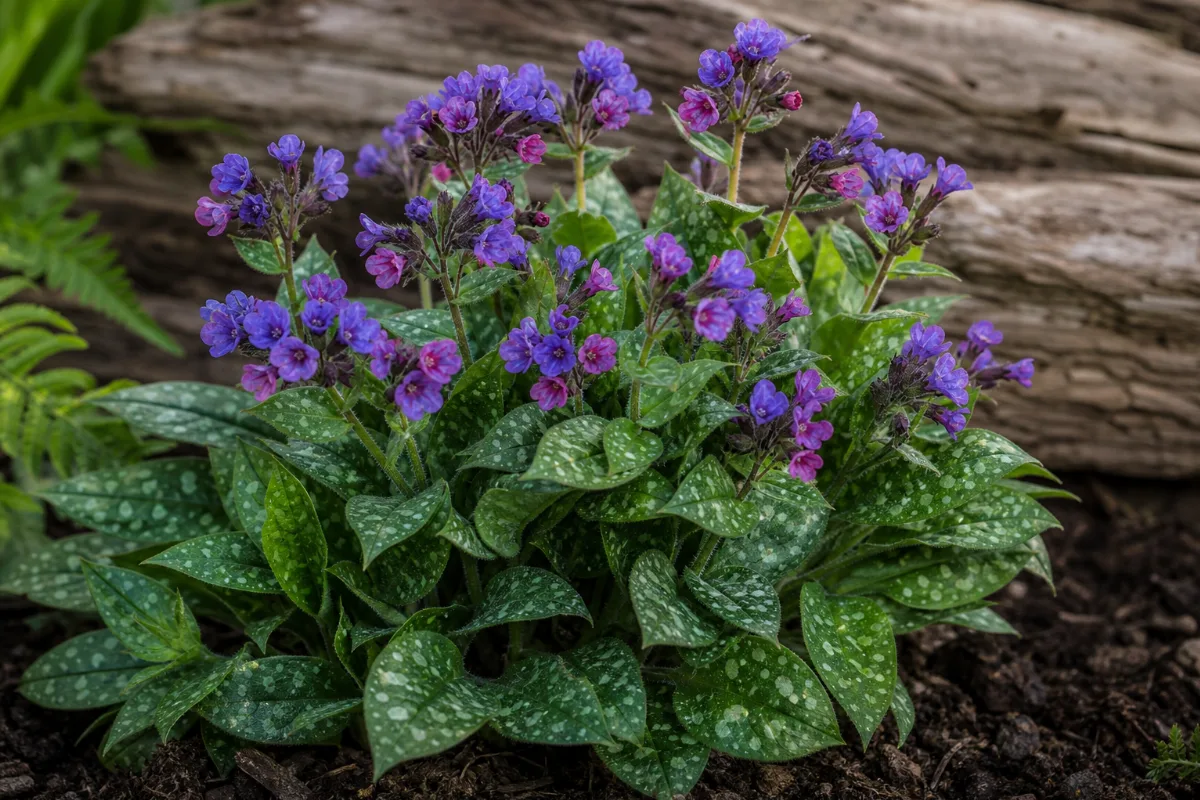
Lungwort is a spotted-leaf woodland plant of the borage family, used for centuries in European teas for coughs and chest complaints. No human study has tested it, and a German expert committee judged its benefit unproven. Lungwort tea contains pyrrolizidine alkaloids, a plant substance that can harm the liver, so it is not advised in pregnancy, breastfeeding or for children. It is not the same as the lichen that is also called lungwort.
General information, not medical advice. Last substantive update · Not medically reviewed. A named clinician has not signed off on this page. How this page is made
About Lungwort
Lungwort is a traditional cough herb with no human trials. Lab studies are early. It contains liver-toxic pyrrolizidine alkaloids, so it is avoided in pregnancy, breastfeeding, childhood and liver disease.
Safety first
Pyrrolizidine alkaloids (PAs): a 2022 analysis found PAs in all 8 samples of lungwort tea tested (mainly intermedine and lycopsamine types). In the close relative Pulmonaria obscura, the roots and rhizomes held most of the PAs and leaves and flowers only traces. How much is in any one product is unknown, and we found no lungwort liver-injury report. The EU committee says liver toxicity from toxic PAs is established.
Pregnancy, breastfeeding and under 18: avoid. A German reference strongly advises against it because risk data are missing.
Liver disease, heavy alcohol use, or other PA herbs such as comfrey and borage: avoid combining. This is a precaution based on the PA content, not on a lungwort study.
Blood thinners: an old animal study found an anticoagulant fraction in an injected extract, and a review lists lungwort as having anticoagulant activity. It is unknown whether tea does this. Tell your prescriber.
A cough lasting more than two to three weeks, or with blood, fever or breathlessness, needs a doctor. Ask a doctor or pharmacist about amounts and your medicines.
What it is
Lungwort is Pulmonaria officinalis, a perennial of the borage family native to Europe. Its leaves have pale spots. The herb sold is the dried leaf, flower and stem, picked at flowering. Reference books list mucilage (a slippery plant gel), tannins, flavonoids, allantoin and silicic acids.
Do not confuse it with the lichen Lobaria pulmonaria, also called lungwort, tree lungwort or lung lichen. A lichen is a fungus living with algae, not a flowering plant, and it is not related to the herb. This page covers only Pulmonaria officinalis. Check the Latin name on a label.
What the research shows
People: no clinical trial, case series or even a case report of lungwort for any use was found. Germany's Commission E gave it a negative monograph in 1987 (benefit not shown, no risk expected at the time), according to two reference sites. The EU herbal committee has not covered it.
Lab: phenolic-rich extracts blocked COX-2, protected blood plasma from oxidative damage, and lowered IL-6 in donor immune cells. They only weakly limited bacteria from cystic fibrosis samples. A cell study found DNA damage at higher levels.
Everything above is in dishes. None of it shows that lungwort helps a cough.
History
From the 15th century the lung-like spotted leaves led healers to use it for lung disease, an idea called the doctrine of signatures. The genus name Pulmonaria and the German name Lungenkraut keep that link. Today it appears mainly as a minor part of German cough and bronchial tea blends.
At a glance
Traditional uses history, not proof
- Cough and bronchitis tea
- Sore throat and hoarseness
- Gut, kidney and urinary complaints (older references)
- Wound care on the skin (older references)
Studied for research
- Cough and chest use: insufficient (no human trial)
- Inflammation signals in cells: insufficient (lab only)
- Lung bacteria in cystic fibrosis samples: insufficient (lab only)
- Antioxidant activity: insufficient (lab only)
- Blood sugar screen: insufficient (lab only)
Main compounds
- Mucilage polysaccharides
- Rosmarinic and other phenolic acids
- Allantoin, tannins and flavonoids
- Silicic acids
- Pyrrolizidine alkaloids (intermedine, lycopsamine)
Common forms
- Dried herb as tea
- Part of cough and bronchial tea blends
- Tincture or extract
- Cosmetic extract
Research links: Chen 2022: pyrrolizidine alkaloids in herbal teas, incl. lungwort (PubMed) · Haberer 2002: pyrrolizidine alkaloids in Pulmonaria obscura (PubMed) · Krzyzanowska-Kowalczyk 2021: COX-2 and oxidative stress, lab (PubMed) · Sadowska 2019: cystic fibrosis bacteria, lab (PubMed) · Research Library · Genes & Biomarkers Library
The plant and its history
- Accepted scientific name
- Pulmonaria officinalis
- Naming authority
- L.
- Common names
- Lungwort (en); Common lungwort (en); Lungenkraut (de)
- Botanical family
- Boraginaceae (borage family)
- Classification
- Plantae > Tracheophyta > Magnoliopsida > Boraginales > Boraginaceae > Pulmonaria > Pulmonaria officinalis
- Native range
- Europe, from central Sweden to central Italy, and central and southern Russia (per a German reference).
- Habitat
- Moderately moist soils in herb-rich beech and mixed woods and damp river woods; in the Alps also high mountain conifer woods (per the same reference).
- What the plant looks like
- Roots: Underground rootstock; flowering shoots and leaf rosettes grow at the same time.; Stems: Flowering stems with 4-7 stem leaves.; Leaves: Rough to the touch (short bristle-like bumps); upper side has cloudy white spots.; Flowers: Flowers start pink and turn blue (a colour change during flowering); a ring of hairs inside the flower tube; flowers March-April.; Fruit: Not found in the sources read.
- Cultivation
- Not found in the sources read.
- Harvest and processing
- The dried leaf, flower and stem harvested at flowering (Pulmonariae herba). The traded herb comes mainly from the northern Balkans (per the German reference).
- Look-alikes and adulterants
- Name: Lobaria pulmonaria (lung lichen, "tree lungwort"); Note: A lichen, kingdom Fungi in GBIF (family Lobariaceae), not a flowering plant and not related to the herb. It was also called "lungwort" because of its lung-like look. Its safety and uses were not assessed here.; Name: Pulmonaria obscura; Note: Close relative, often grouped with P. officinalis; much of the chemistry and PA data in the literature are for it.; Name: Other Pulmonaria species; Note: Several garden species share the spotted leaves; the herb trade should name P. officinalis.
- Sustainability and conservation
- Not found.
Traditional use and history history, not clinical proof
| Tradition or era | Documented use | Source |
|---|---|---|
| European herbalism, from the 15th century | Used for lung complaints because the spotted leaves resembled lung tissue (doctrine of signatures); the genus name Pulmonaria comes from the Latin for lung. | s-azl |
| Modern European folk medicine | Cough and bronchitis, asthma, laryngitis, tuberculosis (as listed in a 2026 paper); gut, kidney and urinary complaints; external wound care. | s-altmeyers |
| German regulation, 1987 | Commission E gave a negative monograph (proof of benefit missing, no risk expected). | s-azl |
Traditional use shows how a plant was used. It does not show that a supplement works or is safe today.
What is inside, and how it may work
What the plant contains and how those compounds act in cells and animals. Laboratory and animal mechanisms are not proven effects in people.
Main compounds
| Compound | Family | Where it is concentrated | Activity studied | Level of evidence |
|---|---|---|---|---|
| Mucilage polysaccharides | polysaccharide | dried herb | Listed by a German reference as a main group; no activity data found. 3 | Traditional reference |
| Silicic acids PubChem 14942 | mineral (silicon compounds) | dried herb | Listed as the herb's mineral content; PubChem CID is for silicic acid in general. 3 20 | Traditional reference |
| Allantoin PubChem 204 | plant-derived substance | herb (listed); 2-3.5% dry weight reported for the related P. obscura and P. mollis | Skin-soothing substance in cosmetic use; no test on lungwort. 3 7 20 | Traditional reference |
| Rosmarinic acid PubChem 5281792 | phenolic acid | aerial parts | Computer docking suggested it can bind COX-2; strong antioxidant in the lab. 12 20 | Laboratory research |
| Lithospermic acid PubChem 6441498 | phenolic acid | aerial parts | Named with shimobashiric acid C as possible contributors to the anti-inflammatory effect in donor immune cells. 12 4 20 | Laboratory research |
| Salvianolic, monardic, shimobashiric and yunnaneic acids | phenolic acids (danshensu-caffeic acid conjugates) | aerial parts | Over 80% of the phenolic-rich fractions; antioxidant and COX-2 binding in the lab. 12 18 | Laboratory research |
| Tannins and flavonoids | polyphenols | dried herb | Listed by a German reference; no content figures found. 3 | Traditional reference |
| Phytol | diterpene alcohol | 70% ethanol extract | Most abundant compound by GC-MS in one ethanol extract; no activity tested. 11 | Laboratory research |
| Intermedine and lycopsamine (and N-oxides) PubChem 114843 | pyrrolizidine alkaloids (1,2-unsaturated) | leaf-type tea material (commercial); mostly roots and rhizomes in P. obscura tea: reported total PAs about 1770 ug/kg dry matter (mean of 8 samples); lycopsamine CID 107938 | Liver-toxic class of plant alkaloids; the main safety concern. 6 10 20 | Observational |
Mechanisms, receptors and pathways
| Target or pathway | Gene or receptor | What was found | Level |
|---|---|---|---|
| COX-2 enzyme (inflammation) | PTGS2 (COX-2) | Extract blocked COX-2; docking suggested ten compounds (including rosmarinic acid) can bind it. 12 | Laboratory research |
| Peroxynitrite oxidative stress in blood plasma | None (chemical) | Extracts partly prevented peroxynitrite damage to plasma proteins and lipids and improved plasma antioxidant capacity. 12 | Laboratory research |
| Inflammation messengers in human immune cells | TNF, IL1B, IL6, CXCL8 | Ethanol extract lowered several cytokines in donor monocytes/macrophages and neutrophils; the infusion was weaker. 4 | Laboratory research |
| Bacterial sortase A and alpha-toxin | S. aureus srtA, hla | Lower sortase A activity and alpha-toxin, but inconsistent effects on biofilm. 16 | Laboratory research |
| GLUT4 sugar-transporter translocation | SLC2A4 (GLUT4) | Lungwort extract activated GLUT4 movement in a large cell screen. 15 | Laboratory research |
| DNA integrity in lung fibroblasts | None (comet assay) | DNA damage at higher extract levels; protection against H2O2 damage at the lowest. 11 | Laboratory research |
| Blood clotting (fibrinogen step) | Fibrinogen conversion | A glycopeptide fraction cut clotting activity in animals when injected. 5 | Animal research |
Absorption, metabolism and elimination
- Absorption
- No human or animal data on absorption of any lungwort compound were found.
- Distribution
- Not found.
- Metabolism
- Not found for lungwort.
- Elimination
- Not found.
- Bioavailability
- Not found.
Isolated compounds versus whole extracts
Lab work used phenolic-rich fractions and ethanol or methanol extracts, which are not the same as a tea. The only tea-like data are the PA analysis and a water infusion that was weaker than the ethanol extract in immune cells. No isolated-compound study of lungwort alone was found, other than computer docking.
Nutritional composition
Lungwort is a medicinal herb, not a source of any nutrient. It has silicon-containing compounds listed by a reference, but no amount is known and no mineral benefit has been shown.
8 not enough evidence
What was looked at
The 8 benefits and uses checked for Lungwort, each with how strong the evidence is. Tap one to open it.
- Cough and chest complaints (traditional use)Not enough evidence
- Calming inflammation signals (cell and lab studies)Not enough evidence
- Effects on lung bacteria (cystic fibrosis samples, lab only)Not enough evidence
- Antioxidant activity in the labNot enough evidence
- Blood sugar (early lab screen)Not enough evidence
- Skin and wounds (traditional and cosmetic use)Not enough evidence
- Stomach, kidney and urinary complaints (traditional use)Not enough evidence
- Brain and skin-pigment enzyme tests (lab only)Not enough evidence
Lab markers tracked in the studies
COX-2 enzyme activityInterleukin-6 (IL-6) releaseStaphylococcus aureus toxin and stickingGLUT4 sugar transporter movementBlood glucose
What is Lungwort good for?
What lungwort is used for, and how strong the evidence is. Every use is traditional or laboratory-only.
Benefits, one by one
Each card is a research question, not a promise. Tap a goal to filter. Open a card to see the studies, doses and limits.
Cough and chest complaints (traditional use)
Not enough evidenceLungwort leaf tea was used for centuries for coughs and chest troubles. No human trial has tested it, and a German expert committee found its benefit unproven.
2 studiesTraditionally the dried leaf, flower and stem as a tea. Ask a doctor …
Studies, doses and limits
What the trials found
No human trial of lungwort was found. Germany's Commission E (1987) gave a negative monograph because efficacy was not shown, while expecting no risk at the time (second-hand reading; the original text was not read).
Results
None to report.
Effect sizes as reported
Not applicable
Why this rating
Insufficient: only traditional use and a regulator's "not proven" verdict. No clinical data.
Form and dose studied
Traditionally the dried leaf, flower and stem as a tea. Ask a doctor or pharmacist about amounts.
Who was studied
Adults with cough (traditional use only).
Limits
Our sources are two secondary reference sites, one machine-translated. The safety picture has changed since 1987 (see the safety file: PAs).
Why researchers looked
The spotted leaves were thought to look like lungs, so from the 15th century the plant was used for lung illness (the old "doctrine of signatures"). Its mucilage (a slippery plant gel) could in theory soothe an irritated throat, but that has not been tested.
Traditional use
Listed in older European herb books for cough, bronchitis, sore throat, asthma and laryngitis. Today it is sold mostly as a minor part of cough and bronchial tea blends in Germany.
Proposed mechanism Traditional use
The mucilage polysaccharides and phenolic acids are the usual explanation (soothing coating, mild anti-inflammatory action). Neither has been shown to work in people.
A proposed mechanism does not show that the effect happens in people.
A cough that lasts more than a few weeks, or comes with blood, fever or breathlessness, needs a doctor. Lungwort contains pyrrolizidine alkaloids (see Safety); do not use it in pregnancy or breastfeeding.
Calming inflammation signals (cell and lab studies)
Not enough evidenceIn test tubes and in human immune cells in a dish, lungwort extracts lowered some inflammation signals and blocked the COX-2 enzyme. This does not show it calms inflammation in a person.
2 studiesPhenolic-rich extracts and a 60-70% ethanol extract/tincture were use…
Studies, doses and limits
What the trials found
No human trial. Human blood plasma, platelets, blood cells and donor immune cells were used in a dish only.
Results
A 2021 study found P. officinalis extract blocked COX-2 more strongly than P. obscura (IC50 13.28 and 7.24 ug/mL with two substrates). A 2026 study found the ethanol extract lowered IL-6 in donor immune cells to 50.9 +/- 3.7% (as reported); the water infusion, the form closest to tea, was weaker than the ethanol extract.
Effect sizes as reported
COX-2 IC50 13.28 and 7.24 ug/mL; IL-6 to 50.9 +/- 3.7% (ethanol extract)
Why this rating
Insufficient: lab-only (in vitro and computer models); no animal or human outcome.
Form and dose studied
Phenolic-rich extracts and a 60-70% ethanol extract/tincture were used in the lab; not the same as tea.
Who was studied
Cells and enzymes; immune cells from healthy donors.
Limits
Extract levels used in a dish cannot be translated into tea or capsule use. The authors of both papers call the findings preliminary.
Why researchers looked
Cough and bronchitis involve airway inflammation, so researchers tested whether lungwort extracts affect inflammation markers.
Traditional use
Matches the traditional chest use, but nobody has shown the link in people.
Proposed mechanism Laboratory research
Phenolic acids (rosmarinic, lithospermic, salvianolic, yunnaneic acids and others) may bind the COX-2 enzyme (computer docking) and lower cytokines such as IL-6 in cells.
A proposed mechanism does not show that the effect happens in people.
Lab effects are not a reason to use the herb. See the safety file for liver and DNA-damage signals.
Effects on lung bacteria (cystic fibrosis samples, lab only)
Not enough evidenceIn a lab study an extract only weakly slowed Staphylococcus aureus from cystic fibrosis patients. It lowered some bacterial toxin and sticking, but sometimes helped bacteria form a protective film. It is not a treatment for any lung infection.
1 studiesPhenolic-rich fraction of a lungwort extract.
Studies, doses and limits
What the trials found
No human or animal data.
Results
Weak growth limits (MIC 1-2 mg/mL, called limited efficacy). At lower levels the extract often reduced sticking and alpha-toxin, but in some cases favored biofilm and did not limit sticking to lung cells. No cell toxicity up to 4 mg/mL. The authors suggest at most a preventive role and call for in vivo studies first.
Effect sizes as reported
MIC 1-2 mg/mL; mixed
Why this rating
Insufficient: one laboratory study with mixed results.
Form and dose studied
Phenolic-rich fraction of a lungwort extract.
Who was studied
Bacteria and lung cell lines.
Limits
Test tube only. Mixed or unhelpful results in some conditions.
Why researchers looked
Some lungwort supplements are marketed for chest health, and people with cystic fibrosis sometimes use them, so researchers asked whether an extract helps or harms bacteria growing in CF lungs.
Traditional use
Traditional lung use.
Proposed mechanism Laboratory research
The authors link the effect to lower sortase A activity (a bacterial enzyme that helps it stick), but the effect was inconsistent.
A proposed mechanism does not show that the effect happens in people.
Not a substitute for cystic fibrosis care. Anyone with cystic fibrosis should talk to their care team before using any herbal supplement.
Antioxidant activity in the lab
Not enough evidenceLungwort extracts rich in phenolic acids acted as antioxidants in test tubes and cells. No human study shows an antioxidant benefit from drinking it.
3 studiesMethanol, ethanol and water extracts in the lab.
Studies, doses and limits
What the trials found
No human data.
Results
Extracts partly protected human blood plasma from peroxynitrite damage (2021) and showed antioxidant activity in all assays tried (2025, 70% ethanol extract). In the 2025 cell study, higher extract levels damaged DNA, while the lowest levels reduced hydrogen-peroxide DNA damage.
Effect sizes as reported
No single effect size; assay results only
Why this rating
Insufficient: antioxidant chemistry in dishes does not predict a benefit in people.
Form and dose studied
Methanol, ethanol and water extracts in the lab.
Who was studied
Cells and chemical tests.
Limits
One fibroblast cell line; extracts, not tea.
Why researchers looked
Phenolic acids such as rosmarinic acid are strong antioxidants in chemistry tests, so lungwort is routinely screened.
Traditional use
Not a traditional use.
Proposed mechanism Laboratory research
Phenolic acids (rosmarinic acid, yunnaneic acid B and relatives) neutralise reactive molecules such as peroxynitrite in plasma and in chemical assays.
A proposed mechanism does not show that the effect happens in people.
The same 2025 study found DNA damage at higher extract levels. Relevance to tea use is unknown.
Blood sugar (early lab screen)
Not enough evidenceLungwort was one of four plants highlighted in a 2024 lab screen for helping cells move sugar transporters. It has not been tested in people.
1 studiesPlant extract; the part used is not stated in the abstract.
Studies, doses and limits
What the trials found
No human or mammal data.
Results
About 9% of the 772 extracts were hits. Lungwort was named with catechu, spearmint and soapwort as showing potential. No lungwort numbers are in the abstract.
Effect sizes as reported
No lungwort numbers in abstract
Why this rating
Insufficient: an early screening result only.
Form and dose studied
Plant extract; the part used is not stated in the abstract.
Who was studied
Cells and hen's eggs.
Limits
Screening study; no dose, no mammal or human data.
Why researchers looked
Researchers screened 772 plant extracts for activity on GLUT4, the transporter insulin uses to move sugar into cells.
Traditional use
Not a traditional use of lungwort.
Proposed mechanism Laboratory research
Movement of the GLUT4 sugar transporter to the cell surface (cell assay), then a hen's egg blood-glucose test.
A proposed mechanism does not show that the effect happens in people.
Not a reason to use lungwort for diabetes. Do not change diabetes medicines.
Skin and wounds (traditional and cosmetic use)
Not enough evidenceA medical reference lists external wound use, and lungwort extract is a cosmetic ingredient described as astringent and skin-conditioning. We found no wound-healing study.
2 studiesCosmetic extract (INCI name Pulmonaria officinalis extract) and tradi…
Studies, doses and limits
What the trials found
No human study on wounds or skin.
Results
None to report.
Effect sizes as reported
Not applicable
Why this rating
Insufficient: reference listings only.
Form and dose studied
Cosmetic extract (INCI name Pulmonaria officinalis extract) and traditional external use.
Who was studied
Not applicable
Limits
Cosmetic review mentions lungwort only in passing; allantoin figures are for other Pulmonaria species.
Why researchers looked
Mucilage, allantoin and tannins are plant substances sometimes used on skin.
Traditional use
Listed for external wound treatment in a medical encyclopedia.
Proposed mechanism Traditional use
Allantoin (reported at about 2-3.5% in the related P. obscura and P. mollis), tannins and mucilage are the proposed reasons. No test on lungwort was found.
A proposed mechanism does not show that the effect happens in people.
Do not put herbs on open wounds without advice.
Stomach, kidney and urinary complaints (traditional use)
Not enough evidenceA medical reference lists gut, kidney and urinary-tract use in "empirical" medicine. We found no research on these uses.
1 studiesNot applicable
Studies, doses and limits
What the trials found
No human or animal study.
Results
None to report.
Effect sizes as reported
Not applicable
Why this rating
Insufficient: a listing in one reference.
Form and dose studied
Not applicable
Who was studied
Not applicable
Limits
One secondary, machine-translated source.
Why researchers looked
Tannins and mucilage are traditionally thought to calm gut and urinary lining.
Traditional use
Listed alongside the cough use in older herb references.
Proposed mechanism Traditional use
No mechanism has been tested.
A proposed mechanism does not show that the effect happens in people.
Persistent stomach or urinary symptoms need a doctor.
Brain and skin-pigment enzyme tests (lab only)
Not enough evidenceIn a test tube, lungwort extracts blocked acetylcholinesterase and tyrosinase, enzymes linked to memory medicines and skin pigment. This is a chemistry result, not a health benefit.
1 studiesWater and 70% ethanol extracts.
Studies, doses and limits
What the trials found
No human or animal data.
Results
Water and ethanol extracts blocked acetylcholinesterase by 72.24-94.24% at the highest level (3 mg/mL), with a similar tyrosinase result; the abstract mixes lungwort with another plant.
Effect sizes as reported
AChE 72.24-94.24% at 3 mg/mL (both plants)
Why this rating
Insufficient: test-tube enzyme assays.
Form and dose studied
Water and 70% ethanol extracts.
Who was studied
Not applicable
Limits
Tested a very high level; no cell or animal follow-up.
Why researchers looked
Enzyme-blocking tests are a common first screen for plants.
Traditional use
Not a traditional use.
Proposed mechanism Laboratory research
Phenolic compounds block the enzymes in a test tube.
A proposed mechanism does not show that the effect happens in people.
None specific.
Connections to the rest of health
How Lungwort connects to the rest of our health knowledge graph. Every link says what kind of connection it is. A safety link (for example to the liver) is a warning, not a benefit. A study that merely mentions a topic never creates a benefit link.
Explore every connection: goals, body systems, organs, symptoms, genes
A. Wellness goals
| Connected to | Kind of connection | Evidence status | Context | Studies |
|---|---|---|---|---|
| Lung Support | Traditional use | Not enough evidence | Cough and chest complaints (traditional use): Lungwort leaf tea was used for centuries for coughs and chest troubles. No human trial has tested it, and a German expert committee found its benefit unproven. | 3 2 |
| Breathing Support | Traditional use | Not enough evidence | Cough and chest complaints (traditional use): Lungwort leaf tea was used for centuries for coughs and chest troubles. No human trial has tested it, and a German expert committee found its benefit unproven. | 3 2 |
| Lung Support | Preliminary mechanism | Not enough evidence | Calming inflammation signals (cell and lab studies): In test tubes and in human immune cells in a dish, lungwort extracts lowered some inflammation signals and blocked the COX-2 enzyme. This does not show it calms inflammation in a person. Effects on lung bacteria (cystic fibrosis samples, lab only): In a lab study an extract only weakly slowed Staphylococcus aureus from cystic fibrosis patients. It lowered some bacterial toxin and sticking, but sometimes helped bacteria form a protective film. It is not a treatment for any lung infection. | 12 4 16 |
| Inflammation Balance | Preliminary mechanism | Not enough evidence | Calming inflammation signals (cell and lab studies): In test tubes and in human immune cells in a dish, lungwort extracts lowered some inflammation signals and blocked the COX-2 enzyme. This does not show it calms inflammation in a person. | 12 4 |
| Immune Support | Preliminary mechanism | Not enough evidence | Effects on lung bacteria (cystic fibrosis samples, lab only): In a lab study an extract only weakly slowed Staphylococcus aureus from cystic fibrosis patients. It lowered some bacterial toxin and sticking, but sometimes helped bacteria form a protective film. It is not a treatment for any lung infection. | 16 |
| Cellular Protection | Preliminary mechanism | Not enough evidence | Antioxidant activity in the lab: Lungwort extracts rich in phenolic acids acted as antioxidants in test tubes and cells. No human study shows an antioxidant benefit from drinking it. | 12 11 14 |
| Healthy Aging | Preliminary mechanism | Not enough evidence | Antioxidant activity in the lab: Lungwort extracts rich in phenolic acids acted as antioxidants in test tubes and cells. No human study shows an antioxidant benefit from drinking it. | 12 11 14 |
| Blood Sugar Balance | Preliminary mechanism | Not enough evidence | Blood sugar (early lab screen): Lungwort was one of four plants highlighted in a 2024 lab screen for helping cells move sugar transporters. It has not been tested in people. | 15 |
| Metabolic Health | Preliminary mechanism | Not enough evidence | Blood sugar (early lab screen): Lungwort was one of four plants highlighted in a 2024 lab screen for helping cells move sugar transporters. It has not been tested in people. | 15 |
| Healthy Skin | Traditional use | Not enough evidence | Skin and wounds (traditional and cosmetic use): A medical reference lists external wound use, and lungwort extract is a cosmetic ingredient described as astringent and skin-conditioning. We found no wound-healing study. | 2 7 |
| Digestive Support | Traditional use | Not enough evidence | Stomach, kidney and urinary complaints (traditional use): A medical reference lists gut, kidney and urinary-tract use in "empirical" medicine. We found no research on these uses. | 2 |
| Brain Health | Preliminary mechanism | Not enough evidence | Brain and skin-pigment enzyme tests (lab only): In a test tube, lungwort extracts blocked acetylcholinesterase and tyrosinase, enzymes linked to memory medicines and skin pigment. This is a chemistry result, not a health benefit. | 14 |
B. Body systems
| Connected to | Kind of connection | Evidence status | Context | Studies |
|---|---|---|---|---|
| Liver | Adverse effect or risk | Theoretical | PAs found in lungwort tea; the EU committee calls toxic PAs liver-toxic. No lungwort case found. Preparation or compound: Lycopsamine and intermedine PAs |
6 10 8 |
| Respiratory system | Traditional use | Not enough evidence | Traditional cough herb with no human trials. Preparation or compound: Dried aerial parts |
3 2 |
| Respiratory Health | Biological association | Not enough evidence | Studied for: Cough and chest complaints (traditional use) | 3 2 |
| Respiratory System | Biological association | Not enough evidence | Studied for: Cough and chest complaints (traditional use) Studied for: Calming inflammation signals (cell and lab studies) | 3 2 12 4 16 |
| Immune System | Biological association | Not enough evidence | Studied for: Calming inflammation signals (cell and lab studies) Studied for: Effects on lung bacteria (cystic fibrosis samples, lab only) | 12 4 16 |
| Whole Body Balance | Biological association | Not enough evidence | Studied for: Antioxidant activity in the lab | 12 11 14 |
| Blood Sugar Support | Biological association | Not enough evidence | Studied for: Blood sugar (early lab screen) | 15 |
| Endocrine System | Biological association | Not enough evidence | Studied for: Blood sugar (early lab screen) | 15 |
| Skin Hair Beauty | Biological association | Not enough evidence | Studied for: Skin and wounds (traditional and cosmetic use) | 2 7 |
| Integumentary System | Biological association | Not enough evidence | Studied for: Skin and wounds (traditional and cosmetic use) | 2 7 |
| Digestive System | Biological association | Not enough evidence | Studied for: Stomach, kidney and urinary complaints (traditional use) | 2 |
| Urinary System | Biological association | Not enough evidence | Studied for: Stomach, kidney and urinary complaints (traditional use) | 2 |
| Nervous System | Biological association | Not enough evidence | Studied for: Brain and skin-pigment enzyme tests (lab only) | 14 |
I. Biomarkers
| Connected to | Kind of connection | Evidence status | Context | Studies |
|---|---|---|---|---|
| COX-2 enzyme activity | Biological association | Not enough evidence | Measured in trials: decreased. A lab change is not the same as a health benefit. | 12 |
| Interleukin-6 (IL-6) release | Biological association | Not enough evidence | Measured in trials: decreased. A lab change is not the same as a health benefit. | 4 |
| Staphylococcus aureus toxin and sticking | Biological association | Not enough evidence | Measured in trials: mixed. A lab change is not the same as a health benefit. | 16 |
| GLUT4 sugar transporter movement | Biological association | Not enough evidence | Measured in trials: increased. A lab change is not the same as a health benefit. | 15 |
| Blood glucose | Biological association | Not enough evidence | Measured in trials: unclear. A lab change is not the same as a health benefit. | 15 |
J. Genes, receptors and enzymes
| Connected to | Kind of connection | Evidence status | Context | Studies |
|---|---|---|---|---|
| COX-2 (PTGS2) | Preliminary mechanism | In vitro | Lab enzyme block by lungwort phenolic fractions. | 12 |
K. Biological pathways
L. Active compounds
| Connected to | Kind of connection | Evidence status | Context | Studies |
|---|---|---|---|---|
| Mucilage polysaccharides | Biological association | Traditional reference | Listed by a German reference as a main group; no activity data found. Preparation or compound: dried herb |
3 |
| Silicic acids | Biological association | Traditional reference | Listed as the herb's mineral content; PubChem CID is for silicic acid in general. Preparation or compound: dried herb |
3 20 |
| Allantoin | Biological association | Traditional reference | Skin-soothing substance in cosmetic use; no test on lungwort. Preparation or compound: herb (listed); 2-3.5% dry weight reported for the related P. obscura and P. mollis |
3 7 20 |
| Rosmarinic acid | Biological association | In vitro | Computer docking suggested it can bind COX-2; strong antioxidant in the lab. Preparation or compound: aerial parts |
12 20 |
| Lithospermic acid | Biological association | In vitro | Named with shimobashiric acid C as possible contributors to the anti-inflammatory effect in donor immune cells. Preparation or compound: aerial parts |
12 4 20 |
| Salvianolic, monardic, shimobashiric and yunnaneic acids | Biological association | In vitro | Over 80% of the phenolic-rich fractions; antioxidant and COX-2 binding in the lab. Preparation or compound: aerial parts |
12 18 |
| Tannins and flavonoids | Biological association | Traditional reference | Listed by a German reference; no content figures found. Preparation or compound: dried herb |
3 |
| Phytol | Biological association | In vitro | Most abundant compound by GC-MS in one ethanol extract; no activity tested. Preparation or compound: 70% ethanol extract |
11 |
| Intermedine and lycopsamine (and N-oxides) | Biological association | Observational | Liver-toxic class of plant alkaloids; the main safety concern. Preparation or compound: leaf-type tea material (commercial); mostly roots and rhizomes in P. obscura |
6 10 20 |
Each connection is stored with the ingredient, the connected record, the kind of connection, the evidence status, the supporting studies, the preparation or compound involved, and a review date (last reviewed October 25, 2026).
Evidence at a glance: what changed in 1 lab markers
Tap a number to show only those markers. Counts are markers, not people.
The evidence
The research centre for Lungwort. Every record here was checked against PubMed or the publisher's page; we never list a study we have not verified.
Evidence by outcome
Bars show how many studies we found for each outcome, not how well it works. People are added up across trials only (reviews are not added, to avoid double counting).
How we rate evidence
High certainty
Several well-run trials or reviews agree; further research is unlikely to change the picture much.
Moderate certainty
Good trials point the same way, but some doubt remains.
Low certainty
Small, short or inconsistent trials. The finding could change with better research.
Very low certainty
Very little or very weak human data. Treat as a possibility only.
Mixed findings
Trials or reviews disagree with each other.
Not enough evidence
Not enough human research to say either way.
Evidence against
Good research found no benefit, or found harm.
We take the reviewers' own risk-of-bias and GRADE statements where they exist, and otherwise judge from study size, design, consistency, directness and whether a product matches what is sold. Many publications do not make evidence high. Method note: We read our existing herb summary, searched PubMed and Europe PMC, read the abstract of each PubMed record cited, and checked names in GBIF and NCBI Taxonomy and compounds in PubChem. Regulator pages that could not be opened are marked not found or not verified.
Study library: every study we checked 20
| Study | Design | People | Product, dose, length | Result |
|---|---|---|---|---|
| Akram 2017 Anti-coagulant activity of plants: mini review Journal of Thrombosis and Thrombolysis · PMID 28866770 · DOI |
Narrative review review |
Review listing plants with anticoagulant activity, Pulmonaria officinalis among them not given here |
The review says many plants, including Pulmonaria officinalis, have anticoagulant activity and should be used with care in people on anticoagulant therapy. The abstract gives no detail for lungwort. Methods, limits and fundingOutcomes: Whether herbs affect anticoagulant therapy Limitations: A short narrative review; the abstract gives no data or doses for lungwort. Funding and conflicts: Not stated in abstract Read: abstract | |
| Altmeyers Encyclopedia (medical reference) 2025 Pulmonariae herba Altmeyers Encyclopedia (medical reference) · Source |
Consumer reference reference |
not given here |
Defines the herb as the dried aerial parts; quality listed in the German Pharmacopoeia. HMPC and ESCOP: not processed. Commission E: negative monograph (efficacy not shown, no risks expected). Empirical uses listed: airway disease and cough, gut, kidney and urinary tract; wound treatment externally; cosmetic extract listed by its INCI name. Methods, limits and fundingLimitations: Secondary reference, machine-translated; original Commission E text not read. Read: full-text (machine-translated, read 2026-10-25) | |
| Arzneipflanzenlexikon (German herb reference) 2026 Lungenkraut (Pulmonaria officinalis) Arzneipflanzenlexikon (German herb reference) · Source |
Consumer reference reference |
not given here |
Says lungwort is native to Europe from central Sweden to central Italy; the traded herb is the dried leaf, flower and stem harvested in flower, from the northern Balkans. Lists mucilage polysaccharides, tannins, flavonoids and allantoin, with silicic acids as minerals. Names a 15th-century signature-doctrine use for lung complaints. Says HMPC and ESCOP have not covered it; Commission E (1987) gave a negative monograph with no expected risks. States no known side effects or interactions. Strongly advises against use in pregnancy, breastfeeding and under 18 because risk data are missing. Methods, limits and fundingLimitations: Secondary reference; no citations checked. Its "no known side effects" statement pre-dates and does not account for the PA tea data (Chen 2022). Read: full-text (German, read 2026-10-25) | |
| Authors not captured (see the DOI) 2026 Herbal preparations traditionally used in upper respiratory tract infections: UHPLC-DAD-ESI-MS/MSn phytochemical profiling and anti-inflammatory activity in human immune cell models BMC Complementary Medicine and Therapies · Source · DOI |
Laboratory research in-vitro |
Immune cells from healthy donors in a dish (monocytes/macrophages and neutrophils) | Pulmonaria officinalis aerial-part infusion and ethanolic extract/tincture (one of ten herbs) aerial parts not given here |
The ethanol extract lowered IL-6 to 50.9 +/- 3.7% (as reported) and, with other herbs, lowered several inflammation signals; the water infusion was weaker than the ethanol extract. Phenolic acids such as lithospermic acid A and shimobashiric acid C were suggested as contributors. IL-6 to 50.9 +/- 3.7% (ethanol extract) Methods, limits and fundingOutcomes: Cytokines (TNF-alpha, IL-1 beta, IL-6, IL-8), reactive oxygen species, adhesion proteins Limitations: Cells in a dish; the authors call it preliminary. Preparation matters: the tea-type infusion was weaker. Funding and conflicts: Competing-interest statement present in the article; its content was not read Read: full-text |
| Byshevskii ASh 1990 [Nature, properties and the mechanism of the effect on blood coagulation of the preparation obtained from Pulmonaria officinalis] Gematologiia i Transfuziologiia · PMID 2079198 |
Animal experiment animal |
Animals | Non-dialyzable fraction of an ammonia extract of Pulmonaria officinalis (a glycopeptide) not stated in abstract not given here |
The fraction contained an anticoagulant glycopeptide. Given by injection into a vein it cut total clotting activity 4-5-fold for up to 6 hours in animals. Clotting activity down 4-5-fold Methods, limits and fundingOutcomes: Blood clotting Limitations: Animal study with an injected, purified fraction; not a tea or capsule. Old, Russian-language. Funding and conflicts: Not stated in abstract Read: abstract |
| Chen 2022 Risk Assessment of (Herbal) Teas Containing Pyrrolizidine Alkaloids (PAs) Based on Margin of Exposure Approach and Relative Potency (REP) Factors Foods · PMID 36230022 · DOI |
Laboratory analysis of commercial teas product-analysis |
8 Commercial teas from China and EU countries (147 samples, 21 types). The lungwort tea had 8 samples. |
Commercial lungwort (Pulmonaria officinalis) tea, comminuted leaves, steeped 10 minutes in boiling water leaf (comminuted tea material) not given here |
All 8 lungwort tea samples contained PAs. Reported total 1769.7 ug/kg dry matter (range 996.5-2753.2); main PAs intermedine N-oxide, lycopsamine N-oxide and intermedine. After a relative-potency correction the total was 37.8 ug/kg. Without correction, lungwort was one of the top three PA teas with a low margin of exposure; with correction it was far higher. The abstract names tephroseris, borage and lemon balm as the teas of concern after correction, not lungwort. Total PA 1769.7 ug/kg dry matter (range 996.5-2753.2); corrected 37.8 Methods, limits and fundingOutcomes: 68 individual 1,2-unsaturated PAs by LC-MS/MS; margin-of-exposure risk estimate for one cup of tea a day. Limitations: Eight samples of one tea type, bought in one country in 2020 (per the study table); the exposure model assumes one cup a day and lacks diet-survey data (authors). Not a measure of harm in people. Funding and conflicts: Not stated in what we read Read: abstract+full-text |
| Chrzanowska 2024 Metabolites Obtained from Boraginaceae Plants as Potential Cosmetic Ingredients - A Review Chrzanowska E, et al. (Molecules) · Source |
Review reference |
not given here |
Lists Pulmonaria officinalis extract as a skin-conditioning, astringent cosmetic ingredient; says P. officinalis seed contains gamma-linolenic acid and that P. obscura and P. mollis are sources of allantoin (about 2-3.5% dry weight). Methods, limits and fundingLimitations: Cosmetic review; lungwort is a minor mention. Allantoin figure is for other Pulmonaria species. Read: full-text (searched for lungwort only) | |
| European Medicines Agency (HMPC) 2014 Public statement on herbal medicinal products containing toxic, unsaturated pyrrolizidine alkaloids (PAs) - first version (2014) European Medicines Agency (HMPC) · Source |
Regulator document reference |
not given here |
Per our earlier summary of this document: the committee says liver toxicity from toxic PAs is established and that children, pregnant and breastfeeding women are at particular risk. It does not name lungwort. Methods, limits and fundingLimitations: NOT re-opened in this build; the later (2021) statement and its numeric limits were not read. Read: summary-only | |
| GBIF 2026 GBIF species match: Pulmonaria officinalis, Lobaria pulmonaria, Pulmonaria obscura GBIF · Source |
Database record reference |
not given here |
P. officinalis L. = accepted species key 5341204, Boraginaceae, Boraginales, Plantae. Lobaria pulmonaria (L.) Hoffm. = accepted species key 5260693, Lobariaceae, Peltigerales, kingdom Fungi (a lichen). P. obscura Dumort. = accepted species key 5439925. GBIF also lists English names for the lichen including "lungwort", "lung lichen" and "tree lungwort". Methods, limits and fundingRead: api-record (2026-10-25) | |
| Haberer 2002 Pyrrolizidine alkaloids in Pulmonaria obscura Planta Medica · PMID 12058336 · DOI |
Plant chemistry analysis plant |
Wild plants from two localities | Pulmonaria obscura (a close relative of lungwort), GC-MS leaves, roots and rhizomes, flowers not given here |
Roots and rhizomes held lycopsamine-type PAs (intermedine, lycopsamine and their derivatives), 0.026 to 0.158 mg/g dry weight. Leaves and flower clusters held only trace amounts (below 0.4 ng/mg dry weight). Roots/rhizomes 0.026-0.158 mg/g; leaves and flowers trace Methods, limits and fundingOutcomes: PA content by plant part Limitations: Different species (P. obscura), not P. officinalis. Wild plants, not products. Funding and conflicts: Not stated in abstract Read: abstract |
| Ignjatijevic 2025 Assessment of Antioxidant Activity and Dose-Dependent Effect on Genotoxicity/Antigenotoxicity of Pulmonaria officinalis Ethanolic Extract Pharmaceutics · PMID 41012471 · DOI |
Laboratory research in-vitro |
Normal human fetal lung fibroblast cells (MRC-5) | 70% ethanol extract of Pulmonaria officinalis not stated in abstract not given here |
The extract was rich in polyphenols (phytol was the most abundant compound by GC-MS) and showed antioxidant activity in all tests. Cell viability fell (to 33.7%) only at the highest level tested. Higher levels damaged DNA; the lowest levels reduced hydrogen-peroxide DNA damage (the authors call this a hormetic pattern). Viability 33.7% at the highest level Methods, limits and fundingOutcomes: Antioxidant assays; cell viability; comet assay for DNA damage Limitations: One cell line. Extract levels cannot be linked to tea drinking. Funding and conflicts: Not stated in abstract Read: abstract |
| Krzyzanowska-Kowalczyk 2021 Pulmonaria obscura and Pulmonaria officinalis Extracts as Mitigators of Peroxynitrite-Induced Oxidative Stress and Cyclooxygenase-2 Inhibitors - In Vitro and In Silico Studies Molecules · PMID 33530389 · DOI |
In vitro and in silico in-vitro |
Human blood plasma, platelets and blood cells in a dish; COX-2 enzyme assay | Phenolic-rich fractions of Pulmonaria officinalis and P. obscura aerial parts not given here |
Phenolic acids made up over 80% of the fractions (rosmarinic, lithospermic, salvianolic, monardic, shimobashiric and yunnaneic acids). The extracts partly protected blood plasma from peroxynitrite damage and were safe to platelets and blood cells in this model. P. officinalis blocked COX-2 more strongly (IC50 13.28 and 7.24 ug/mL with two substrates). Computer docking suggested ten compounds could bind the enzyme. COX-2 IC50 13.28 and 7.24 ug/mL Methods, limits and fundingOutcomes: Oxidative damage markers in plasma; COX-2 enzyme inhibition; computer docking Limitations: Lab and computer study only. Results may not hold in the body. Funding and conflicts: Not stated in abstract Read: abstract |
| Luthy 1984 [Pyrrolizidine alkaloids in medicinal plants of Boraginaceae: Borago officinalis L. and Pulmonaria officinalis L.] Pharmaceutica Acta Helvetiae · PMID 6483923 |
Plant chemistry analysis plant |
Borago officinalis and Pulmonaria officinalis not given here |
NOT VERIFIED: PubMed has no abstract for this 1984 German-language paper and we could not read it. We cite only that it exists and is about PAs in P. officinalis. We state no numbers from it. Methods, limits and fundingLimitations: Title only. Read: title-only | |
| Neagu 2018 Antioxidant activity, acetylcholinesterase and tyrosinase inhibitory potential of Pulmonaria officinalis and Centarium umbellatum extracts Saudi Journal of Biological Sciences · PMID 29686522 · DOI |
Laboratory research in-vitro |
Water and ethanol extracts of Pulmonaria officinalis (and Centaurium umbellatum) not stated in abstract not given here |
Extracts blocked acetylcholinesterase (72.24-94.24% at the highest level, 3 mg/mL) and tyrosinase, and showed antioxidant activity in test-tube assays. The authors call them possible natural antioxidant sources. AChE inhibition 72.24-94.24% at 3 mg/mL (both plants) Methods, limits and fundingOutcomes: Antioxidant assays; enzyme inhibition Limitations: Test tube only; the range covers more than one extract and the abstract mixes both plants. Funding and conflicts: Not stated in abstract Read: abstract | |
| Neuhauser 2024 Insulin-Mimetic Activity of Herbal Extracts Identified with Large-Scale Total Internal Reflection Fluorescence Microscopy Nutrients · PMID 39064624 · DOI |
In vitro screen plus egg model in-vitro |
772 plant extracts screened in cells; some tested in a hen's egg model | Pulmonaria officinalis extract (one of four highlighted) not stated in abstract not given here |
About 9% of the 772 extracts activated GLUT4 movement. Lungwort was one of four plants (with catechu, spearmint and soapwort) the authors say showed potential as antidiabetic nutraceuticals. No numbers for lungwort are in the abstract. No lungwort numbers in abstract Methods, limits and fundingOutcomes: GLUT4 sugar-transporter movement in cells; blood glucose in the hen's egg test Limitations: Early screen only; no animal-mammal or human data. Funding and conflicts: Not stated in abstract Read: abstract |
| Sadowska 2019 The Pros and Cons of Cystic Fibrosis (CF) Patient Use of Herbal Supplements Containing Pulmonaria officinalis L. Extract: the Evidence from In Vitro Study Molecules · PMID 30909529 · DOI |
Laboratory research in-vitro |
Staphylococcus aureus strains from cystic fibrosis patients, and lung cell lines | Pulmonaria officinalis phenolic-rich extract fraction not stated in abstract not given here |
The extract only weakly limited bacterial growth (MIC 1-2 mg/mL, called limited efficacy by the authors). At lower levels it often reduced bacterial sticking and alpha-toxin, but sometimes helped biofilm form and did not stop sticking to lung cells. No cell toxicity up to 4 mg/mL. The authors say it may be useful as prevention, not as treatment, and that animal or human studies are needed. MIC 1-2 mg/mL; mixed effects Methods, limits and fundingOutcomes: Bacterial growth, sticking, biofilm, toxin; cell toxicity Limitations: Test-tube study. Mixed results. Not tested in people. Funding and conflicts: Not stated in abstract Read: abstract |
| Several 2026 Regulator and database search for lungwort (HMPC, NCCIH, LiverTox, LactMed, FDA) Several · Source |
Not found record reference |
not given here |
No EMA/HMPC herbal monograph was found (two secondary references say none exists). No NCCIH, LiverTox or LactMed lungwort record was found. A PubMed search for lungwort or Pulmonaria with liver injury, pregnancy or trial words returned no lungwort case report or trial; the one human hit was a fixed homeopathic combination for sinusitis, not read or used. Methods, limits and fundingLimitations: Absence of a record is not proof of safety. EMA, NCCIH, LiverTox and LactMed pages were not individually opened. Read: not found | |
| p30200600 Novel Phenolic Constituents of Pulmonaria officinalis L. LC-MS/MS Comparison of Spring and Autumn Metabolite Profiles · Source |
Plant chemistry analysis plant |
Methods, limits and fundingRead: abstract | ||
| s-ncbi-tax NCBI Taxonomy search: Pulmonaria officinalis (taxid 136616), Lobaria pulmonaria (taxid 86794) · Source |
Database record reference |
Methods, limits and fundingRead: api-record (2026-10-25) | ||
| s-pubchem PubChem name lookups: rosmarinic acid, lithospermic acid, allantoin, silicic acid, intermedine, lycopsamine · Source |
Database record reference |
Methods, limits and fundingRead: api-record (2026-10-25) |
What we do not know yet
- No human trial, case series or case report of lungwort for any use.
- PA content of products other than 8 tea samples is unknown.
- No pregnancy, breastfeeding or interaction data.
- Lab studies used extracts stronger than tea.
How new research is added
New studies are found by a saved PubMed search and placed in a review queue. A person reads each one before it changes any rating or safety wording.
Lab markers
What changed in blood or saliva tests during trials. A changed number is not the same as feeling or being healthier, and we give no "normal ranges".
Metabolic 1
Blood glucose
Unclear in trials
The amount of sugar in the blood.
Not enough evidenceResults and what it means
Why it was measured
Main outcome in diabetes.
Statistical vs. clinical meaning
A hen's egg model was used in the 2024 study; no lungwort result is in the abstract and no human glucose data exist.
Safety implication
None known.
Inflammatory 1
Interleukin-6 (IL-6) release
Decreased in trials
IL-6 is a messenger protein immune cells release during inflammation.
Not enough evidenceResults and what it means
Why it was measured
Shows whether an extract quiets stimulated immune cells.
Statistical vs. clinical meaning
Cell-dish result; the authors call it preliminary.
Safety implication
None known.
| Study | Result | People | Product |
|---|---|---|---|
| 4 | Ethanol extract of P. officinalis aerial parts lowered IL-6 to 50.9 +/- 3.7% (as reported) | Donor immune cells (monocytes/macrophages) in a dish | Ethanol extract/tincture of P. officinalis; the infusion was weaker |
Other 3
COX-2 enzyme activity
Decreased in trials
COX-2 is an enzyme that helps make inflammation signals (prostaglandins). Drugs such as celecoxib block it.
Not enough evidenceResults and what it means
Why it was measured
Used in a lab screen to see whether an extract may calm inflammation.
Statistical vs. clinical meaning
A test-tube result on an isolated enzyme. It says nothing about effects in the body.
Safety implication
None known from this assay.
| Study | Result | People | Product |
|---|---|---|---|
| 12 | P. officinalis phenolic-rich fraction blocked COX-2: IC50 13.28 ug/mL (synthetic substrate) and 7.24 ug/mL (arachidonic acid) | Purified enzyme assay | Phenolic-rich fraction of P. officinalis aerial parts |
Staphylococcus aureus toxin and sticking
Mixed results in trials
How strongly bacteria stick to lung cells and make alpha-toxin, a harmful protein.
Not enough evidenceResults and what it means
Why it was measured
Tests whether an extract blunts bacterial harm without killing the bacteria.
Statistical vs. clinical meaning
Mixed lab result.
Safety implication
Some tests showed more biofilm, so it could in theory help bacteria; do not self-treat a lung infection.
| Study | Result | People | Product |
|---|---|---|---|
| 16 | Usually less alpha-toxin and less sticking; in some cases more biofilm and no limit on sticking to lung cells | CF-associated S. aureus strains and A549 lung cells | Phenolic-rich fraction of P. officinalis extract |
GLUT4 sugar transporter movement
Increased in trials
GLUT4 is the transporter that moves blood sugar into muscle and fat cells when insulin acts.
Not enough evidenceResults and what it means
Why it was measured
A cell-level screen for insulin-like activity.
Statistical vs. clinical meaning
Cell screen result only.
Safety implication
If it truly lowered blood sugar it could add to diabetes drugs, but this was not shown.
| Study | Result | People | Product |
|---|---|---|---|
| 15 | Lungwort extract was named among four plants with GLUT4-activating potential; no numbers in the abstract | Cell assay | Pulmonaria officinalis extract |
Safety
What studies and official sources say about side effects, medicines and who should check first. Each point shows what kind of evidence it comes from.
Main points to know 5
- It contains pyrrolizidine alkaloids (PAs), which can harm the liver. A 2022 lab analysis of 8 commercial lungwort tea samples found PAs in all of them (reported total 1769.7 ug/kg dry matter, range 996.5-2753.2), mainly intermedine and lycopsamine types. A study of the close relative P. obscura found lycopsamine-type PAs mostly in the roots and rhizomes (0.026-0.158 mg/g) and only trace amounts in leaves and flowers. The amount in any one product is unknown, and no lungwort liver-injury case was found. The EU committee says liver toxicity from toxic PAs is established, so treat lungwort as a PA herb. Observational 6 10 8
- Avoid in pregnancy, breastfeeding, and in children and teenagers. A German herb reference strongly advises against use in pregnancy, breastfeeding and under 18 because risk data are missing, and cough herbs with better evidence exist. The EU committee names children, pregnant and breastfeeding women as the people most at risk from PAs. Consumer reference 3 8
- Liver disease, and other plant products with PAs. People with liver disease, heavy alcohol use, or who take other PA plants (comfrey, borage, coltsfoot, butterbur and other borage-family herbs) should not add lungwort. PA harm is cumulative in theory, but no study tested this for lungwort. Theoretical 8 6
- "No known side effects" is an old statement. A German reference lists no known side effects or interactions, and Commission E (1987) expected no risk. That does not account for the PA data and rests on a lack of reports, not on safety studies. Consumer reference 3 2
- Do not self-treat a lasting cough. A cough lasting more than two to three weeks, or with blood, fever, wheeze or breathlessness, needs a doctor. Lungwort has no human evidence for treating any chest illness. Expert opinion 3 17
Side effects 3
| Effect | How often | Severity and recovery | Evidence |
|---|---|---|---|
| No side effects reported in people No clinical trial or case series exists, so side effects have not been looked for. "None known" is not the same as "none". | Not established | unknown unknown | Absence of evidence 3 17 |
| DNA damage in human lung fibroblast cells at higher extract levels (cell study) A 70% ethanol extract was genotoxic at higher levels in one cell line, and protective at the lowest levels. Relevance to tea is unknown. | Not established | unknown unknown | Laboratory research 11 |
| Possible liver injury from PAs (theoretical for this herb) Seen with other PA plants; no lungwort case found. | Not established | potentially serious unknown | Theoretical 6 10 8 |
Liver
No liver injury linked to lungwort was found in a PubMed search or in the references read, and no LiverTox record was found. But lungwort tea contains 1,2-unsaturated PAs (intermedine and lycopsamine types, in the N-oxide form mostly), the group the EU committee calls liver-toxic. A risk model in the 2022 study put lungwort tea in a low margin-of-exposure group before correcting for the lower potency of its PAs and in a much safer group after correcting. The authors named tephroseris, borage and lemon balm as the teas of concern after correction. Overall the liver risk of occasional use is unquantified; regular or long use is the concern. 6 10 8 17
How often. Unknown. No case reports found.
Monitoring. No source we read gives monitoring advice for lungwort. Tell a doctor about yellow skin or eyes, dark urine, belly swelling or pain, or unusual tiredness.
This is a safety connection. It is not evidence that Lungwort supports liver health.
Medicines and supplements 4
| With | Why it matters | Importance | Evidence | What to do |
|---|---|---|---|---|
| Other herbs and supplements with PAs (comfrey, borage, coltsfoot, butterbur) herb | Each adds liver-toxic PAs; combined exposure is higher. | Theoretical; not studied for lungwort. | Theoretical Very low certainty 8 6 | Do not combine PA herbs. |
| Alcohol and medicines that can strain the liver (for example high-dose paracetamol, some antifungals) drug | Extra liver load on top of PAs. | Theoretical; no study. | Theoretical Very low certainty 8 | Ask a pharmacist before combining; avoid with known liver disease. |
| Blood thinners (warfarin, heparin, DOACs) and antiplatelet drugs drug | A 1990 animal study found an anticoagulant glycopeptide in a lungwort extract (injected). A 2017 review lists lungwort among plants with anticoagulant activity and advises care with anticoagulant therapy. | Unknown for tea or capsules; the animal work used a purified fraction given into a vein. | Animal research Very low certainty 5 1 | Tell the prescriber if you take blood thinners, and before surgery. |
| Diabetes medicines drug | A cell screen suggested sugar-transporter activity. | Not shown in animals or people. | Laboratory research Very low certainty 15 | No known interaction; ask your doctor or pharmacist. |
Who should check first 6
| Situation | Advice | Evidence |
|---|---|---|
| Pregnancy | Avoid. | Consumer reference 3 8 |
| Breastfeeding | Avoid. No LactMed record was found. | Consumer reference 3 8 17 |
| Children and teenagers under 18 | Avoid. | Consumer reference 3 8 |
| Liver disease, or taking other PA herbs | Avoid. | Theoretical 8 |
| Cystic fibrosis or other chronic lung disease | Talk to your care team first; lab data on CF bacteria were mixed. | Laboratory research 16 |
| Before surgery, or on blood thinners | Tell your doctor. | Animal research 5 1 |
Overdose, product quality and regulators
Summary. No formal toxicity study of lungwort in animals or people was found. The concern is the PA content, which differs by plant part.
Animal. No oral toxicity study found. The 1990 animal study used an injected, purified anticoagulant fraction.
Human doses studied. No human dose study exists.
High dose or long term signals. The EU committee statement (read earlier, second-hand) flags liver toxicity from toxic PAs. A cell study found DNA damage at higher extract levels.
Overdose response. Not described in any source read.
Genotoxicity. One cell study (MRC-5 fibroblasts, comet assay): genotoxic at higher levels of a 70% ethanol extract, protective against H2O2 damage at the lowest.
Toxic plant parts. In the related P. obscura, roots and rhizomes held far more PAs (0.026-0.158 mg/g) than leaves and flowers (traces, below 0.4 ng/mg). Commercial lungwort tea (leaf-type material) still contained PAs in all 8 samples.
PAs are natural to the plant, not a contaminant. No adulteration data for lungwort were found. A separate confusion risk is the lichen also called lungwort.
PA levels vary. Eight tea samples ranged about 2.8-fold in total PA (996.5-2753.2 ug/kg). A 1984 Swiss paper on PAs in Pulmonaria officinalis exists but its content could not be read. 6 13
Same name, different organism. "Lungwort" is also an English name for the lichen Lobaria pulmonaria, a fungus-alga partnership, not a flowering plant. Its safety was not assessed here. Check the Latin name on a product label. 9
| Body | Action | Date |
|---|
When to get medical help
- Yellow skin or eyes, dark urine, pale stools, swollen belly, or belly pain on the right side.
- Vomiting blood or black stools.
- Coughing up blood, trouble breathing, chest pain, or high fever.
- Unusual bleeding or bruising if you take blood thinners.
Stop the supplement and contact a clinician or emergency service. In the US, Poison Control is 1-800-222-1222.
General information only, not medical advice. Ask a clinician or pharmacist before use, especially with medicines, in pregnancy or with a health condition. See the Natural Remedy Safety guide.
Frequently asked questions
What is lungwort?
Is lungwort the same as the lichen called lungwort?
No. The lichen Lobaria pulmonaria is a fungus-and-alga partnership, not a flowering plant. It is also called lungwort or lung lichen because of its lung-like look. This page is about the herb. Check the Latin name on a product.
Does lungwort work for cough or bronchitis?
Does lungwort contain pyrrolizidine alkaloids?
Is lungwort liver-toxic?
Is lungwort safe in pregnancy or breastfeeding?
Is it safe for children?
Why do reference books say "no known side effects"?
Does it interact with medicines?
What is in lungwort?
Can it help blood sugar?
There is no human evidence. One 2024 lab screen of 772 extracts named it among four plants worth studying. Do not change diabetes medicines.
When should I see a doctor about a cough?
See a doctor if a cough lasts more than two to three weeks, or comes with blood, fever, wheeze or breathlessness. Ask a doctor or pharmacist what suits you, especially in pregnancy, with liver problems or for children.
Explore by health goal
Lung SupportBreathing SupportInflammation BalanceImmune SupportCellular ProtectionHealthy AgingBlood Sugar BalanceMetabolic HealthHealthy SkinDigestive SupportBrain Health
Editorial transparency
- Written by
- AlternativeMed editorial team. Research compiled with AI assistance, then checked against PubMed records.
- Medical review
- None. This page has not been reviewed by a physician or pharmacist.
- First published
- 2026-10-25
- Last substantive update
- 2026-10-25
- How we research
- We read our existing herb summary, searched PubMed and Europe PMC, read the abstract of each PubMed record cited, and checked names in GBIF and NCBI Taxonomy and compounds in PubChem. Regulator pages that could not be opened are marked not found or not verified.
- How we rate evidence
- See "How we rate evidence" in the Evidence tab.
- Independence
- No product is promoted on this page. No affiliate links are shown.
Sources 20
Each source was opened and checked. Where we read only the abstract, it says so. The small numbers in the text point here.
- Akram M, Rashid A. Anti-coagulant activity of plants: mini review. Journal of Thrombosis and Thrombolysis. 2017. PMID 28866770. DOI 10.1007/s11239-017-1546-5. (abstract)
- Altmeyers Encyclopedia (medical reference). Pulmonariae herba. Altmeyers Encyclopedia (medical reference). 2025. (full-text (machine-translated, read 2026-10-25))
- Arzneipflanzenlexikon (German herb reference). Lungenkraut (Pulmonaria officinalis). Arzneipflanzenlexikon (German herb reference). 2026. (full-text (German, read 2026-10-25))
- Authors not captured (see the DOI). Herbal preparations traditionally used in upper respiratory tract infections: UHPLC-DAD-ESI-MS/MSn phytochemical profiling and anti-inflammatory activity in human immune cell models. BMC Complementary Medicine and Therapies. 2026. DOI 10.1186/s12906-026-05374-7. (full-text)
- Byshevskii ASh, Gerbert IIa. [Nature, properties and the mechanism of the effect on blood coagulation of the preparation obtained from Pulmonaria officinalis]. Gematologiia i Transfuziologiia. 1990. PMID 2079198. (abstract)
- Chen L, et al.. Risk Assessment of (Herbal) Teas Containing Pyrrolizidine Alkaloids (PAs) Based on Margin of Exposure Approach and Relative Potency (REP) Factors. Foods. 2022. PMID 36230022. DOI 10.3390/foods11192946. (abstract+full-text)
- Chrzanowska E, et al. (Molecules). Metabolites Obtained from Boraginaceae Plants as Potential Cosmetic Ingredients - A Review. Chrzanowska E, et al. (Molecules). 2024. (full-text (searched for lungwort only))
- European Medicines Agency (HMPC). Public statement on herbal medicinal products containing toxic, unsaturated pyrrolizidine alkaloids (PAs) - first version (2014). European Medicines Agency (HMPC). 2014. (summary-only)
- GBIF. GBIF species match: Pulmonaria officinalis, Lobaria pulmonaria, Pulmonaria obscura. GBIF. 2026. (api-record (2026-10-25))
- Haberer W, Witte L, Hartmann T, Dobler S. Pyrrolizidine alkaloids in Pulmonaria obscura. Planta Medica. 2002. PMID 12058336. DOI 10.1055/s-2002-32088. (abstract)
- Ignjatijevic A, Andjic T, Ljesevic M, et al.. Assessment of Antioxidant Activity and Dose-Dependent Effect on Genotoxicity/Antigenotoxicity of Pulmonaria officinalis Ethanolic Extract. Pharmaceutics. 2025. PMID 41012471. DOI 10.3390/pharmaceutics17091134. (abstract)
- Krzyzanowska-Kowalczyk J, Kowalczyk M, Ponczek MB, et al.. Pulmonaria obscura and Pulmonaria officinalis Extracts as Mitigators of Peroxynitrite-Induced Oxidative Stress and Cyclooxygenase-2 Inhibitors - In Vitro and In Silico Studies. Molecules. 2021. PMID 33530389. DOI 10.3390/molecules26030631. (abstract)
- Luthy J, Brauchli J, Zweifel U, Schmid P, Schlatter C. [Pyrrolizidine alkaloids in medicinal plants of Boraginaceae: Borago officinalis L. and Pulmonaria officinalis L.]. Pharmaceutica Acta Helvetiae. 1984. PMID 6483923. (title-only)
- Neagu E, Radu GL, Albu C, Paun G. Antioxidant activity, acetylcholinesterase and tyrosinase inhibitory potential of Pulmonaria officinalis and Centarium umbellatum extracts. Saudi Journal of Biological Sciences. 2018. PMID 29686522. DOI 10.1016/j.sjbs.2016.02.016. (abstract)
- Neuhauser C, Schwarzinger B, Schwarzinger C, et al.. Insulin-Mimetic Activity of Herbal Extracts Identified with Large-Scale Total Internal Reflection Fluorescence Microscopy. Nutrients. 2024. PMID 39064624. DOI 10.3390/nu16142182. (abstract)
- Sadowska B, Wojcik U, Krzyzanowska-Kowalczyk J, et al.. The Pros and Cons of Cystic Fibrosis (CF) Patient Use of Herbal Supplements Containing Pulmonaria officinalis L. Extract: the Evidence from In Vitro Study. Molecules. 2019. PMID 30909529. DOI 10.3390/molecules24061151. (abstract)
- Several. Regulator and database search for lungwort (HMPC, NCCIH, LiverTox, LactMed, FDA). Several. 2026. (not found)
- . Novel Phenolic Constituents of Pulmonaria officinalis L. LC-MS/MS Comparison of Spring and Autumn Metabolite Profiles. . . (abstract)
- . NCBI Taxonomy search: Pulmonaria officinalis (taxid 136616), Lobaria pulmonaria (taxid 86794). . . (api-record (2026-10-25))
- . PubChem name lookups: rosmarinic acid, lithospermic acid, allantoin, silicic acid, intermedine, lycopsamine. . . (api-record (2026-10-25))