Herbs & Botanicals · Cactus pad and fruit food-herb
Prickly pear (nopal)
Opuntia ficus-indica · also called Nopal, nopales (cooked pads), cactus pear, Indian fig, tuna (the fruit)
Prickly pear is a cactus whose flat pads (nopal) are eaten as a vegetable and whose fruit is eaten fresh. Small studies suggest the pads may lower blood sugar after a meal, but the evidence is weak and long-term benefit is not shown. The biggest cautions are low blood sugar if you take diabetes medicines, stomach upset, spines in the skin, and botulism from unsafe home-canned pads.
General information, not medical advice. Last substantive update · Not medically reviewed. A named clinician has not signed off on this page. How this page is made
About Prickly pear (nopal)
Prickly pear is a food and a traditional medicine in Mexico. Modern research is thin: a few small trials of pads, fruit and branded extracts, with the clearest signal being lower blood sugar after a meal. Safety is clearer than benefit: low blood sugar with diabetes drugs, stomach upset, spines and glochids, and botulism from unsafe home canning.
What it is
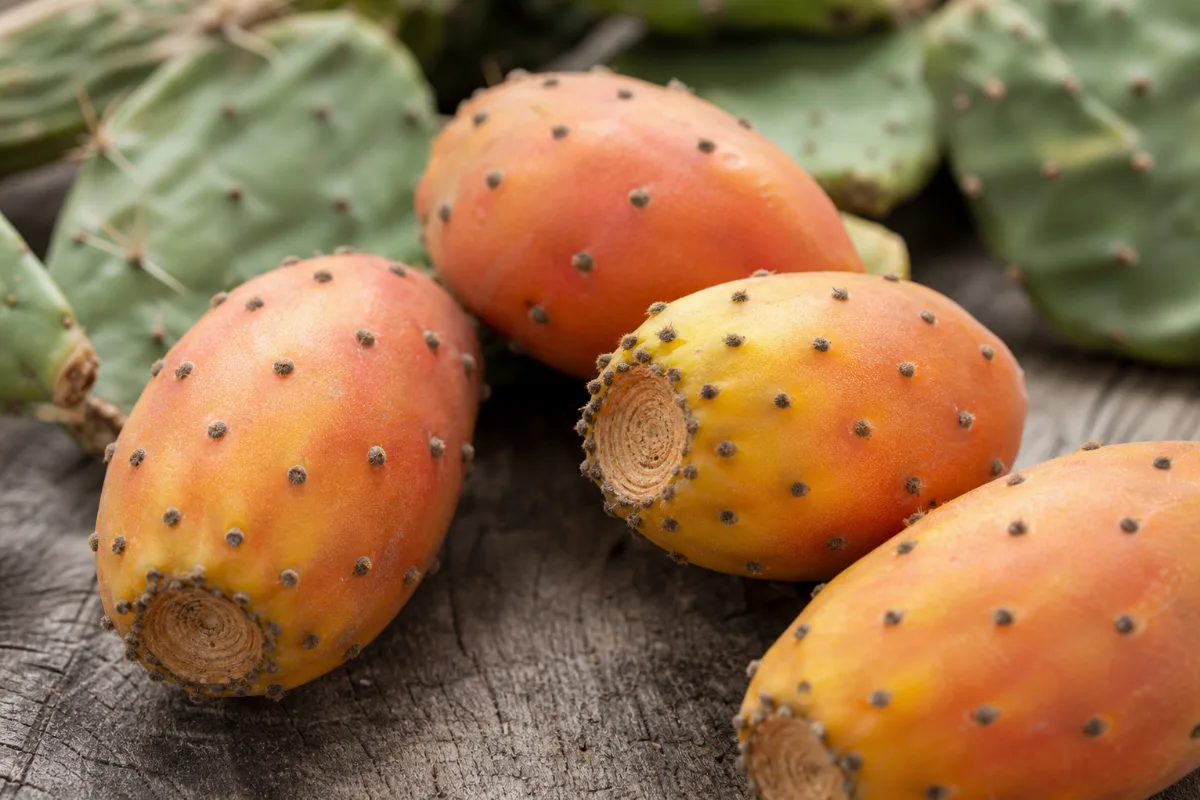
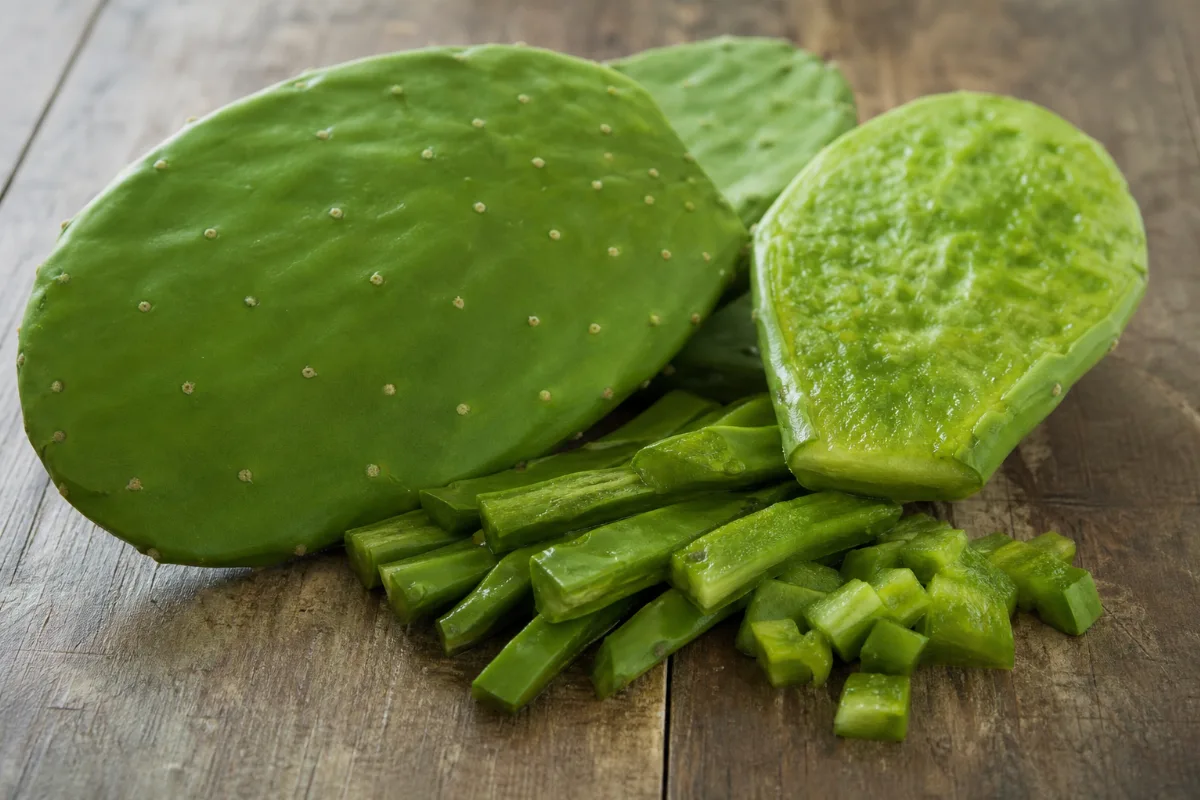
Prickly pear (Opuntia ficus-indica) is a cactus in the Cactaceae family. GBIF lists the name as accepted, and NCBI Taxonomy has it as ID 371859. The flat green pads are called nopales when eaten; the fruit is called tuna.
Pad, fruit, seed oil and branded extracts are different materials. We say which one each study used. No flower study was found.
How it may work
Pads are rich in fiber and a sticky mucilage. The fruit has vitamin C and red-yellow betalain pigments. In one small study, nopal lowered after-meal glucose, insulin and the gut hormone GIP, but how it works was not tested.
In the lab, extract and flavonols such as quercetin changed liver enzymes that break down medicines. That has not been tested in people.
Many products share one name
Results do not carry over. Cooked pads were used in the meal study; fruit pulp in the antioxidant study; fiber powder in the bowel study; branded products in the weight, cholesterol and pre-diabetes trials; and a pad-plus-olive-leaf combination in one stomach trial. A review mixed nopal with cocoa, avocado and beans.
Who ran the research
The branded product trials (Litramine, NeOpuntia, OpunDia) do not state funding in their abstracts, so an industry link is possible and not ruled out. The 2004 hangover trial lists US public research support. We read abstracts only, so conflict statements in full texts may be missed.
At a glance
Traditional uses history, not proof
- Pads eaten as a traditional Mexican vegetable (nopales) and fruit eaten fresh
- Traditional Mexican use for diabetes (stated in a 2014 study introduction)
- Use on wounds and burns is often claimed but NOT verified in our sources
Studied for research
- Blood sugar after a meal (cooked pads), low
- Longer-term blood sugar, insufficient
- Cholesterol and blood fats, mixed
- Weight and body fat, mixed
- Hangover (Opuntia extract), low
- Blood pressure, IBS symptoms, stomach discomfort, oxidative stress markers, very low
- Burns and liver: animal only, insufficient
Main compounds
- Betanin (CID 6540685), a fruit betalain pigment
- Indicaxanthin (CID 6096870), a fruit betalain pigment
- Isorhamnetin (CID 5281654) and quercetin (CID 5280343), flavonols
- Mucilage, polysaccharides and fiber from the pad
Common forms
- Pad (cladode): cooked vegetable, dried powder, fiber
- Fruit: eaten fresh, juice
- Branded pad products and a fiber complex (used in weight, lipid and pre-diabetes trials)
- Two-plant extract with olive leaf (one trial)
- Oil (rat burn study)
Research links: López-Romero 2014: nopal and after-meal blood sugar (PubMed) · Onakpoya 2015: cactus pear, weight and heart risk, meta-analysis (PubMed) · Wiese 2004: Opuntia and hangover (PubMed) · Sobieraj 2010: low blood sugar case report (PubMed) · CDC MMWR 2025: botulism from home-canned nopales (PubMed) · Research Library · Genes & Biomarkers Library
The plant and its history
- Accepted scientific name
- Opuntia ficus-indica (L.) Mill.
- Naming authority
- (L.) Mill.
- Common names
- Prickly pear (English); Nopal (the pads); nopales (cooked pads) (Spanish); Cactus pear (English); Indian fig (English); Tuna (the fruit) (Spanish)
- Botanical family
- Cactaceae (cactus family)
- Classification
- Plantae > Tracheophyta > Magnoliopsida > Caryophyllales > Cactaceae > Opuntia > Opuntia ficus-indica
- Native range
- Reviews say most wild Opuntia species grow in Mexico and that O. ficus-indica is cultivated around the world (Besné-Eseverri 2023). Its exact native range is not stated in our sources.
- Habitat
- Opuntia grows in arid, temperate and tropical climates (Besné-Eseverri 2023).
- What the plant looks like
- Roots: Not described in sources read.; Stems: The flat green pads (cladodes) are stems; they carry small dots (areoles) from which spines and fine glochids grow.; Leaves: Not described in sources read.; Flowers: Not described in sources read.; Fruit: The fruit (tuna, cactus pear) holds vitamin C and betalain pigments (Tesoriere 2004).; Seeds: Seed oil is used in some products (Besné-Eseverri 2023).
- Cultivation
- Not covered in the sources read.
- Harvest and processing
- Pads are eaten steamed or cooked (López-Romero 2014), dried to powder, or extracted for fiber; processing for specific products is not described in our sources.
- Look-alikes and adulterants
- Name: Other Opuntia species (for example O. dillenii, O. streptacantha, O. robusta); Note: Reviews pool several species; results do not automatically carry over to O. ficus-indica.; Name: Spineless cultivars of O. ficus-indica (e.g. 'inermis'); Note: Same species; they have fewer spines, but fine glochids can still be present.
- Sustainability and conservation
- Not covered in the sources read.
The plant and the parts used
Traditional use and history history, not clinical proof
| Tradition or era | Documented use | Source |
|---|---|---|
| Traditional Mexican medicine | Nopal is described as a plant used in traditional Mexican medicine to treat diabetes (statement in the 2014 nopal study introduction). | p25132122 |
| Food | Cooked pads (nopales) are a traditional Mexican vegetable (CDC outbreak report). | p40608564 |
| Wounds and burns | A traditional wound or burn use is widely claimed but NOT verified: no source we read documents it. Only a rat study of prickly pear oil was read. | p27020833 |
| Regulators | No EMA/HMPC monograph, NCCIH page or LiverTox entry was found. | s-regulators-not-found-prickly-pear |
Traditional use shows how a plant was used. It does not show that a supplement works or is safe today.
What is inside, and how it may work
What the plant contains and how those compounds act in cells and animals. Laboratory and animal mechanisms are not proven effects in people.
Main compounds
| Compound | Family | Where it is concentrated | Activity studied | Level of evidence |
|---|---|---|---|---|
| Betanin PubChem 6540685 | Betalain (red-violet pigment) | Fruit (red and purple types) | Betalain pigments of the fruit are noted for radical-scavenging in the lab; the 2004 human trial attributes effects partly to fruit components other than vitamins. Which betalain did what in people is not shown. 22 17 | Lab |
| Indicaxanthin PubChem 6096870 | Betalain (yellow-orange pigment) | Fruit | A characteristic Opuntia fruit betalain; no human data on the isolated compound were read. 17 22 | Lab |
| Isorhamnetin PubChem 5281654 | Flavonol | Extract (part not stated) | With kaempferol and quercetin, studied for effects on drug-metabolizing enzymes in rats and human liver cells. 12 17 | Laboratory research |
| Quercetin PubChem 5280343 | Flavonol | Extract (part not stated) | Flavonol constituent tested with the extract on liver enzymes; no human data for the plant. 12 17 | Laboratory research |
| Mucilage and polysaccharides, and fiber | Polysaccharides (soluble and insoluble fiber) | Pad (cladode) | Pad fiber contains soluble and insoluble fibers (nopal fiber trial). Opuntia polysaccharide improved blood sugar and blood fats in diabetic animals (animal meta-analysis). No single compound was shown to cause the human effects. 20 5 | Mixed |
Mechanisms, receptors and pathways
| Target or pathway | Gene or receptor | What was found | Level |
|---|---|---|---|
| After-meal glucose, insulin and incretins (GIP, GLP-1) | Not specified in sources read | Nopal added to a meal lowered glucose and insulin responses and reduced GIP peaks in 14 people with type 2 diabetes; how this happens was not tested. 14 | Human data |
| Inflammation (C-reactive protein) | Not specified | In the hangover trial, C-reactive protein was 40% higher after placebo than after the extract; the authors suggest inhibited inflammatory mediators. 24 | Human data |
| Oxidative stress | Not specified | Fruit pulp lowered blood markers of lipid oxidation and shifted the glutathione ratio in 18 healthy volunteers. 22 | Human data |
| Gut fat binding (fiber complex) | Not applicable | The weight-loss fiber complex trial states it works by binding dietary fat in the gut; this was shown in earlier work we did not read. 11 | Lab |
| Pancreatic beta cells, oxidative stress, apoptosis | Not specified | In diabetic animals, Opuntia polysaccharide appears to act through immune regulation, repair of damaged pancreatic beta cells and less oxidative stress and cell death. 5 | Animal research |
| Liver fat and oxidative stress | Not specified | Animal and cell reviews describe less triglyceride build-up, oxidative stress and inflammation in the liver. 4 | Animal research |
| Drug-metabolizing enzymes | CYP2B6, CYP3A4, CYP1A2, UGTs | Extract induced CYP2B6 and CYP3A4 genes in liver cells; hydrolyzed extract or flavonols inhibited CYP1A2 and CYP3A4 in liver microsomes. 12 | Lab |
Absorption, metabolism and elimination
- Absorption
- Not found in the sources read.
- Distribution
- Not found.
- Metabolism
- Flavonols are studied for effects on liver enzymes (lab). No human metabolism data for betalains or flavonols were read.
- Elimination
- Not found.
- Bioavailability
- Not given in the abstracts.
Isolated compounds versus whole extracts
Several different products share the name. Cooked whole pads (meal study), fruit pulp and juice (antioxidant and 4-day diabetes studies), a fiber powder (IBS), branded pad products and a fiber complex (weight, lipids, pre-diabetes), a two-plant extract with olive leaf, and seed or other oils (rat burns). Results from one do not carry over to another.
Nutritional composition
Nopal pads are a vegetable and the fruit is eaten fresh. In the meal study the pads had a glycemic index of 32.5. Fruit contains vitamin C and betalains. Nutrient amounts were not given in the sources read.
2 mixed findings2 low certainty4 very low certainty3 not enough evidence
What was looked at
The 11 benefits and uses checked for Prickly pear (nopal), each with how strong the evidence is. Tap one to open it.
- Blood sugar after a meal (cooked nopal pads as food)Low certainty
- Blood sugar over days to months (juice and a branded extract)Not enough evidence
- Cholesterol and blood fatsMixed findings
- Body weight and body fatMixed findings
- Alcohol hangover (Opuntia extract)Low certainty
- Blood pressureVery low certainty
- Irritable bowel syndrome (nopal fiber)Very low certainty
- Stomach discomfort and reflux symptoms (prickly pear plus olive leaf)Very low certainty
- Oxidative stress markers (fruit)Very low certainty
- Burns and wound healing (oil, rats only)Not enough evidence
- Liver health and diabetes (animal and lab work only)Not enough evidence
Lab markers tracked in the studies
After-meal blood glucoseInsulin response after a mealHbA1c (average blood sugar over about 3 months)Total cholesterolHDL cholesterolBody weight, BMI and body fatC-reactive protein (inflammation marker)Blood pressure (systolic and diastolic)Oxidative stress markers (8-epi-PGF2-alpha, malondialdehyde)IBS symptom severity score (IBS-SSS)Stomach symptom scores (GIQLI, GSAS)
What is Prickly pear (nopal) good for?
The studied uses and how strong the human evidence is for each. Most results come from very small studies, and several use branded products that cannot be compared with whole pads or fruit.
Benefits, one by one
Each card is a research question, not a promise. Tap a goal to filter. Open a card to see the studies, doses and limits.
Blood sugar after a meal (cooked nopal pads as food)
Low certaintyIn one small study, 14 adults with type 2 diabetes who ate steamed nopal pads with a breakfast had a lower rise in blood sugar and insulin than with the same breakfast alone. It was one-off meals only, and the effect on long-term control is not known.
2 studiesCooked pads eaten as food in this study. Results do not apply to caps…
Studies, doses and limits
What the trials found
López-Romero 2014: 7 healthy adults gave nopal a glycemic index of 32.5 (low). In 14 adults with type 2 diabetes, adding steamed nopal to a high-carbohydrate breakfast lowered the glucose area under the curve (287 vs 443) and insulin response (5,952 vs 7,313). With a high-soy-protein breakfast it reduced GIP peaks and raised antioxidant activity at 2 hours. Yeh 2003, a review that ended in 2002, listed nopal among supplements with positive preliminary results but called the evidence insufficient for any herb.
Results
Lower after-meal glucose and insulin in one small meal study.
Effect sizes as reported
Glucose area under the curve 287 vs 443 (high-carbohydrate breakfast, 14 people).
Why this rating
One small controlled meal study (14 people with diabetes) and an old review that called the evidence insufficient. No reviewers' GRADE available. Short-term, one-off meals only.
Form and dose studied
Cooked pads eaten as food in this study. Results do not apply to capsules, juice or fruit. Ask a doctor or pharmacist about amounts.
Who was studied
Adults with type 2 diabetes in Mexico (and 7 healthy adults for the glycemic index).
Limits
14 patients, single meals, design details not given in the abstract; no HbA1c or long-term outcome.
Why researchers looked
Nopal is a traditional Mexican food used for diabetes, but the authors say there was little scientific evidence on after-meal glucose.
Traditional use
Traditional Mexican medicine uses nopal for diabetes (stated in the study's introduction).
Proposed mechanism Preliminary mechanism
The pads contain fiber and a sticky mucilage that may slow sugar uptake. The sources read did not test how it works in people.
A proposed mechanism does not show that the effect happens in people.
Can add to the blood-sugar lowering of diabetes medicines. See the Safety tab.
Blood sugar over days to months (juice and a branded extract)
Not enough evidenceShort trials of prickly pear juice (4 days) and a branded pad extract (16 weeks, pre-diabetes) did not show better long-term control. The extract lowered blood sugar in a one-off sugar test, but HbA1c and insulin did not change over 16 weeks.
2 studiesA branded extract and a fruit juice; neither applies to whole pads. A…
Studies, doses and limits
What the trials found
Godard 2010: 29 obese adults with pre-diabetes; a one-off dose before a glucose drink gave lower glucose at 60, 90 and 120 minutes; after 16 weeks of daily use there were no group differences in glucose tolerance, insulin, HbA1c, body composition or safety blood tests. Abedelmalek 2022: 20 adults with type 2 diabetes drank Opuntia juice or placebo for 4 days; HbA1c and blood fats did not change, and the abstract contradicts itself on glucose.
Results
No long-term benefit shown; one-off lowering in a sugar test.
Effect sizes as reported
Glucose about 17 mg/dL lower at 60 minutes in the acute test; HbA1c unchanged.
Why this rating
Two small trials (29 and 20 people), 4 days to 16 weeks, a proprietary product, and an abstract that contradicts itself. No long-term benefit was found in either.
Form and dose studied
A branded extract and a fruit juice; neither applies to whole pads. Ask a doctor or pharmacist about amounts.
Who was studied
Obese adults with pre-diabetes; adults with type 2 diabetes.
Limits
Tiny samples, a branded product with a possible industry link (funding not in the abstract), short durations.
Why researchers looked
Follow-up to the after-meal findings: does it help control over time?
Proposed mechanism Preliminary mechanism
Not tested in these studies.
A proposed mechanism does not show that the effect happens in people.
No safety signal in 16 weeks of blood tests in the extract trial; the study was small.
Cholesterol and blood fats
Mixed findingsA review of 5 trials found lower total cholesterol with prickly pear, but a larger review that mixed nopal with cocoa, avocado and beans found no significant change in cholesterol or triglycerides. One 6-week trial of a patented pad powder raised HDL in a subgroup of women.
4 studiesA patented dehydrated pad product in the trial; reviews pooled severa…
Studies, doses and limits
What the trials found
Onakpoya 2015 (5 trials): total cholesterol was significantly lowered. Escutia-Gutiérrez 2023 (15 studies, nopal pooled with cocoa, avocado and beans): total cholesterol -5.04 and triglycerides -10.11 were not significant. Linarès 2007: 68 women with metabolic syndrome took NeOpuntia (dehydrated pad) for 6 weeks; in 42 women over 45, HDL rose and triglycerides tended to fall; 39% vs 8% no longer met the metabolic syndrome definition. Animal work (Chen 2023) found improved blood fats in diabetic animals only.
Results
Mixed: lower total cholesterol in one small review, not significant in another; a subgroup result in one trial.
Effect sizes as reported
Total cholesterol lowered (size not in abstract); pooled foods -5.04 (not significant).
Why this rating
Two reviews disagree, the trials are few and varied, and the one single-product trial is a patented product with results mainly in a subgroup. No reviewers' GRADE available.
Form and dose studied
A patented dehydrated pad product in the trial; reviews pooled several products. Ask a doctor or pharmacist about amounts.
Who was studied
Adults with raised cholesterol, obesity or metabolic syndrome.
Limits
Very high variation between trials; subgroup analysis; patented product (funding not in the abstract); the 2023 review pools four foods.
Why researchers looked
Pad fiber is thought to bind fats in the gut, but the sources read did not prove this.
Traditional use
Not covered in the sources read.
Proposed mechanism Pharmacological theory
Fiber binding of fat is a proposed route; not tested in the sources read.
A proposed mechanism does not show that the effect happens in people.
No safety signal reported beyond mild stomach effects.
Body weight and body fat
Mixed findingsPrickly pear did not significantly change body weight in a review of 5 trials, although BMI and body fat percentage were lower. A 12-week trial of a branded fiber complex found about 2.4 kg more weight loss than placebo with diet advice.
3 studiesLitramine is a standardized fiber complex; do not assume whole pads o…
Studies, doses and limits
What the trials found
Onakpoya 2015: body weight difference -0.83 kg (95% CI -2.49 to 0.83; not significant; I2 93%); BMI and body fat percentage significantly lower. Escutia-Gutiérrez 2023: BMI fell with pooled foods but weight and waist did not. Grube 2013: 125 overweight adults on a calorie-deficit diet took Litramine (a fiber complex derived from Opuntia ficus-indica) or placebo for 12 weeks; weight loss 3.8 vs 1.4 kg (p<0.001) and no adverse reactions.
Results
No clear weight change in reviews; a branded product beat placebo in one trial.
Effect sizes as reported
Weight -0.83 kg (not significant) in the review; 3.8 vs 1.4 kg lost in the Litramine trial.
Why this rating
The reviews found no weight effect, and the positive trial is of a branded product with possible industry links. Heterogeneity was very high (I2 92 to 93%).
Form and dose studied
Litramine is a standardized fiber complex; do not assume whole pads or fruit do the same. Ask a doctor or pharmacist about amounts.
Who was studied
Overweight and obese adults.
Limits
Few trials, inconsistent reporting, one positive branded trial with unstated funding.
Why researchers looked
Prickly pear fiber is marketed for weight loss, so reviewers checked the trials.
Traditional use
Not covered in the sources read.
Proposed mechanism Preliminary mechanism
The fiber complex was designed to bind dietary fat in the gut (as stated in the 2013 trial introduction).
A proposed mechanism does not show that the effect happens in people.
Stomach upset and flu-like symptoms were reported in the reviewed trials.
Alcohol hangover (Opuntia extract)
Low certaintyIn one trial of 64 young adults, an Opuntia extract taken before drinking reduced nausea, dry mouth and loss of appetite the next day and halved the chance of a severe hangover. The overall symptom score did not reach statistical significance, and a 2005 review found no hangover remedy with compelling evidence.
2 studiesAn Opuntia ficus-indica extract; amount given as '1600 IU' in the abs…
Studies, doses and limits
What the trials found
Wiese 2004: double-blind crossover; 64 volunteers, 55 finished both arms; extract or placebo 5 hours before drinking. Nausea, dry mouth and anorexia were lower (each p<.05). The overall symptom index fell 2.7 points (95% CI -0.2 to 5.5; p=.07). Severe hangover odds ratio 0.38 (95% CI 0.16 to 0.88). C-reactive protein was 40% higher after placebo. Pittler 2005 reviewed 8 hangover trials including this one and found no compelling evidence for any remedy.
Results
A moderate effect on three symptoms and on severe hangover in one trial; total score not significant.
Effect sizes as reported
Odds ratio for severe hangover 0.38 (0.16 to 0.88); total score p=.07.
Why this rating
One small crossover trial of young healthy volunteers, plant part and product not described in the abstract, total score not significant. A systematic review found no compelling evidence for any hangover remedy. No reviewers' GRADE for this herb.
Form and dose studied
An Opuntia ficus-indica extract; amount given as '1600 IU' in the abstract and the product is not described. Ask a doctor or pharmacist about amounts.
Who was studied
Healthy young adults.
Limits
Single trial, 2004; extract not defined; no replication found in the sources read.
Why researchers looked
Hangover may be linked to inflammation; the extract was thought to reduce inflammatory signals.
Traditional use
Not covered in the sources read.
Proposed mechanism Preliminary mechanism
The authors suggest the extract inhibits inflammatory mediators; supported by lower C-reactive protein with the extract in this study.
A proposed mechanism does not show that the effect happens in people.
No adverse effects are described in the abstract. Moderation or not drinking remains the best hangover prevention (Pittler 2005).
Blood pressure
Very low certaintyA review of 5 trials found small but statistically significant drops in systolic and diastolic blood pressure with prickly pear products. The trials varied a lot and reported poorly.
1 studiesProducts varied. Ask a doctor or pharmacist about amounts.
Studies, doses and limits
What the trials found
Onakpoya 2015 (5 randomized trials): systolic and diastolic blood pressure were significantly reduced. The abstract does not give the size or the individual products.
Results
Lower blood pressure in a small pooled review.
Effect sizes as reported
Size not given in the abstract.
Why this rating
Only 5 trials with inconsistent quality; no size, product or duration in the abstract; no reviewers' GRADE.
Form and dose studied
Products varied. Ask a doctor or pharmacist about amounts.
Who was studied
Adults in the pooled trials.
Limits
Few trials, mixed products, size of effect unknown to us.
Why researchers looked
Reviewers looked at heart risk factors beside weight.
Traditional use
Not covered in the sources read.
Proposed mechanism Preliminary mechanism
Not tested in the sources read.
A proposed mechanism does not show that the effect happens in people.
Could add to blood pressure medicines; not studied.
Irritable bowel syndrome (nopal fiber)
Very low certaintyA one-week trial of 60 adults with irritable bowel syndrome found more people reported adequate relief with 20 or 30 g a day of nopal fiber than with placebo. The larger amount caused looser stools. It was a small, short trial.
1 studiesExtracted nopal fiber powder. Ask a doctor or pharmacist about amount…
Studies, doses and limits
What the trials found
Remes-Troche 2021: 4-arm, double-blind trial in 60 adults with Rome IV IBS; nopal fiber at 10, 20 or 30 g a day vs 30 g dextrose for one week. Adequate relief in 87% (20 g), 80% (30 g) and 33% (placebo). More than 50% fall in IBS-SSS in 67% (20 g) vs 20% (placebo). 30 g a day caused more loose stools.
Results
Short-term symptom relief in one small trial.
Effect sizes as reported
Adequate relief 87% and 80% vs 33%.
Why this rating
One small trial (about 15 per group), one week, authors call for a larger and longer trial.
Form and dose studied
Extracted nopal fiber powder. Ask a doctor or pharmacist about amounts.
Who was studied
Adults with IBS of all subtypes.
Limits
About 15 per group; one week; unknown long-term effect.
Why researchers looked
Guidelines give mixed advice on fiber in IBS, and nopal has both soluble and insoluble fiber.
Traditional use
Not covered in the sources read.
Proposed mechanism Preliminary mechanism
Not clear; breath hydrogen and stool fatty acids did not differ from placebo.
A proposed mechanism does not show that the effect happens in people.
Loose stools at the higher amount.
Stomach discomfort and reflux symptoms (prickly pear plus olive leaf)
Very low certaintyA trial of 100 adults found a two-plant extract (prickly pear pad plus olive leaf) improved stomach and reflux symptom scores over 8 weeks. Because it was a combination, we cannot say how much was due to prickly pear.
1 studiesA standardized extract of Opuntia pad plus olive leaf. Ask a doctor o…
Studies, doses and limits
What the trials found
Malfa 2021: double-blind, placebo-controlled; 60 adults on the extract and 40 on placebo for 8 weeks; GIQLI and GSAS scores improved with the extract (p<.001) and the authors report a clinically meaningful effect size.
Results
Better symptom scores in one combination-product trial.
Effect sizes as reported
Questionnaire scores improved, p<.001 (numbers not in the abstract).
Why this rating
Combination product, one trial, self-reported symptoms, unequal groups; effect of prickly pear alone is unknown.
Form and dose studied
A standardized extract of Opuntia pad plus olive leaf. Ask a doctor or pharmacist about amounts.
Who was studied
Healthy adults with stomach discomfort or reflux symptoms.
Limits
Two plants in one product; funding not stated in the abstract.
Why researchers looked
Prickly pear and olive leaf were combined as a natural option for stomach discomfort.
Traditional use
Not covered in the sources read.
Proposed mechanism Preliminary mechanism
Not tested in the study.
A proposed mechanism does not show that the effect happens in people.
Described as well tolerated.
Oxidative stress markers (fruit)
Very low certaintyIn 18 healthy volunteers, two weeks of eating cactus pear fruit pulp lowered blood markers of oxidative damage, while vitamin C alone did not. These are lab markers, not health outcomes.
1 studiesFresh fruit pulp, a food amount. Ask a doctor or pharmacist about amo…
Studies, doses and limits
What the trials found
Tesoriere 2004: crossover; 18 healthy volunteers ate 250 g fresh fruit pulp twice daily or took 75 mg vitamin C twice daily for 2 weeks each. After the fruit, 8-epi-PGF2-alpha fell about 30%, malondialdehyde about 75%, and LDL hydroperoxides by almost half. Vitamin C did not change these markers.
Results
Lower oxidative stress markers in healthy people.
Effect sizes as reported
8-epi-PGF2-alpha about -30%; malondialdehyde about -75%.
Why this rating
18 healthy people, 2 weeks, blood markers only, no placebo group. It does not show any disease benefit.
Form and dose studied
Fresh fruit pulp, a food amount. Ask a doctor or pharmacist about amounts.
Who was studied
Healthy adults.
Limits
Small, short, surrogate markers only; fruit is separate from pads.
Why researchers looked
The fruit contains vitamin C and betalain pigments that are antioxidants in the lab.
Traditional use
Not covered in the sources read.
Proposed mechanism Preliminary mechanism
Betalain pigments and other fruit components may act as antioxidants; the authors say components other than vitamins may play a role.
A proposed mechanism does not show that the effect happens in people.
Fruit is a food; sugar content matters for people with diabetes.
Burns and wound healing (oil, rats only)
Not enough evidencePrickly pear oil helped laser burns heal faster in rats. No human trial was found, and the traditional wound and burn use is not verified in the sources we read.
2 studiesOil (plant part not stated in the abstract). Do not put cactus pads w…
Studies, doses and limits
What the trials found
Bardaa 2016: 30 rats with laser-induced burns were treated daily for 7 days; prickly pear oil gave no remaining wound area (0 cm2) vs 1.49 cm2 in controls, with more collagen. Cutis 2026 notes preclinical studies suggest anti-inflammatory extracts but gives no human wound data.
Results
Faster healing in rats; nothing in people.
Effect sizes as reported
Wound area 0 vs 1.49 cm2 on day 7 (rats).
Why this rating
Animal study only; no human trials found; we could not verify the traditional use.
Form and dose studied
Oil (plant part not stated in the abstract). Do not put cactus pads with spines on skin. Ask a doctor or pharmacist about amounts.
Who was studied
Rats.
Limits
Animal only.
Why researchers looked
Prickly pear is widely said to be used on wounds and burns.
Traditional use
Not verified: we did not read a source documenting traditional wound or burn use.
Proposed mechanism Preliminary mechanism
Higher collagen in treated wounds in rats.
A proposed mechanism does not show that the effect happens in people.
The spines and glochids can themselves injure skin and cause dermatitis.
Liver health and diabetes (animal and lab work only)
Not enough evidenceReviews of animal and cell studies report better liver fat, oxidative stress and blood sugar with Opuntia products. None of this is proven in people.
2 studiesExtracts, juice, vinegar, polysaccharide (animals).
Studies, doses and limits
What the trials found
Besné-Eseverri 2023 (review): positive liver effects of extracts, vinegar, juices and seed oil of Opuntia in animals; most studies did not identify the active compounds. Chen 2023 (meta-analysis of 16 animal studies): Opuntia polysaccharide improved glucose and blood fats in diabetic animals.
Results
Animal and lab findings only.
Why this rating
Animal work only. We do not rate it as evidence for people.
Form and dose studied
Extracts, juice, vinegar, polysaccharide (animals).
Who was studied
Animals and cells.
Limits
No human data.
Why researchers looked
Animal studies are a first step before human trials.
Traditional use
Not covered in the sources read.
Proposed mechanism Preliminary mechanism
Animal reviews point to lower oxidative stress, inflammation and fat build-up in the liver, and protection of pancreatic cells.
A proposed mechanism does not show that the effect happens in people.
No human liver benefit shown; no human liver injury report found either (see Safety).
Connections to the rest of health
How Prickly pear (nopal) connects to the rest of our health knowledge graph. Every link says what kind of connection it is. A safety link (for example to the liver) is a warning, not a benefit. A study that merely mentions a topic never creates a benefit link.
Explore every connection: goals, body systems, organs, symptoms, genes
A. Wellness goals
| Connected to | Kind of connection | Evidence status | Context | Studies |
|---|---|---|---|---|
| Blood Sugar Balance | Potential benefit | Low certainty | Blood sugar after a meal (cooked nopal pads as food): In one small study, 14 adults with type 2 diabetes who ate steamed nopal pads with a breakfast had a lower rise in blood sugar and insulin than with the same breakfast alone. It was one-off meals only, and the effect on long-term control is not known. | 14 25 |
| Blood Sugar Balance | Not enough evidence | Blood sugar over days to months (juice and a branded extract): Short trials of prickly pear juice (4 days) and a branded pad extract (16 weeks, pre-diabetes) did not show better long-term control. The extract lowered blood sugar in a one-off sugar test, but HbA1c and insulin did not change over 16 weeks. | 10 1 | |
| Metabolic Health | Not enough evidence | Blood sugar over days to months (juice and a branded extract): Short trials of prickly pear juice (4 days) and a branded pad extract (16 weeks, pre-diabetes) did not show better long-term control. The extract lowered blood sugar in a one-off sugar test, but HbA1c and insulin did not change over 16 weeks. | 10 1 | |
| Cholesterol Balance | Mixed findings | Cholesterol and blood fats: A review of 5 trials found lower total cholesterol with prickly pear, but a larger review that mixed nopal with cocoa, avocado and beans found no significant change in cholesterol or triglycerides. One 6-week trial of a patented pad powder raised HDL in a subgroup of women. | 18 8 13 5 | |
| Heart Health | Mixed findings | Cholesterol and blood fats: A review of 5 trials found lower total cholesterol with prickly pear, but a larger review that mixed nopal with cocoa, avocado and beans found no significant change in cholesterol or triglycerides. One 6-week trial of a patented pad powder raised HDL in a subgroup of women. Blood pressure: A review of 5 trials found small but statistically significant drops in systolic and diastolic blood pressure with prickly pear products. The trials varied a lot and reported poorly. | 18 8 13 5 | |
| Weight Management | Mixed findings | Body weight and body fat: Prickly pear did not significantly change body weight in a review of 5 trials, although BMI and body fat percentage were lower. A 12-week trial of a branded fiber complex found about 2.4 kg more weight loss than placebo with diet advice. | 18 8 11 | |
| Recovery Optimization | Potential benefit | Low certainty | Alcohol hangover (Opuntia extract): In one trial of 64 young adults, an Opuntia extract taken before drinking reduced nausea, dry mouth and loss of appetite the next day and halved the chance of a severe hangover. The overall symptom score did not reach statistical significance, and a 2005 review found no hangover remedy with compelling evidence. | 24 19 |
| Blood Pressure Support | Very low certainty | Blood pressure: A review of 5 trials found small but statistically significant drops in systolic and diastolic blood pressure with prickly pear products. The trials varied a lot and reported poorly. | 18 | |
| Digestive Support | Potential benefit | Very low certainty | Irritable bowel syndrome (nopal fiber): A one-week trial of 60 adults with irritable bowel syndrome found more people reported adequate relief with 20 or 30 g a day of nopal fiber than with placebo. The larger amount caused looser stools. It was a small, short trial. Stomach discomfort and reflux symptoms (prickly pear plus olive leaf): A trial of 100 adults found a two-plant extract (prickly pear pad plus olive leaf) improved stomach and reflux symptom scores over 8 weeks. Because it was a combination, we cannot say how much was due to prickly pear. | 20 15 |
| Gut Health | Potential benefit | Very low certainty | Irritable bowel syndrome (nopal fiber): A one-week trial of 60 adults with irritable bowel syndrome found more people reported adequate relief with 20 or 30 g a day of nopal fiber than with placebo. The larger amount caused looser stools. It was a small, short trial. | 20 |
| Cellular Protection | Very low certainty | Oxidative stress markers (fruit): In 18 healthy volunteers, two weeks of eating cactus pear fruit pulp lowered blood markers of oxidative damage, while vitamin C alone did not. These are lab markers, not health outcomes. | 22 | |
| Healthy Skin | Not enough evidence | Burns and wound healing (oil, rats only): Prickly pear oil helped laser burns heal faster in rats. No human trial was found, and the traditional wound and burn use is not verified in the sources we read. | 3 7 | |
| Liver Support | Not enough evidence | Liver health and diabetes (animal and lab work only): Reviews of animal and cell studies report better liver fat, oxidative stress and blood sugar with Opuntia products. None of this is proven in people. | 4 5 |
B. Body systems
| Connected to | Kind of connection | Evidence status | Context | Studies |
|---|---|---|---|---|
| Endocrine System | Biological association | Low certainty | Studied for: Blood sugar after a meal (cooked nopal pads as food) Studied for: Blood sugar over days to months (juice and a branded extract) | 14 25 10 1 18 8 11 |
| Cardiovascular System | Biological association | Mixed findings | Studied for: Cholesterol and blood fats Studied for: Blood pressure | 18 8 13 5 22 |
| Digestive System | Biological association | Low certainty | Studied for: Alcohol hangover (Opuntia extract) Studied for: Irritable bowel syndrome (nopal fiber) | 24 19 20 15 |
| Integumentary System | Biological association | Not enough evidence | Studied for: Burns and wound healing (oil, rats only) | 3 7 |
| Hepatic System | Biological association | Not enough evidence | Studied for: Liver health and diabetes (animal and lab work only) | 4 5 |
E. Health conditions
| Connected to | Kind of connection | Evidence status | Context | Studies |
|---|---|---|---|---|
| Foodborne botulism | Case series | 2024 California outbreak. Preparation or compound: Home-canned nopales |
23 | |
| Contact dermatitis | Adverse effect or risk | Authoritative guidance | Local and allergic skin reactions. Preparation or compound: Spines and glochids |
7 |
| Type 2 diabetes | Potential benefit | Low certainty | After-meal glucose lower in a small study; interaction caution with diabetes drugs. Preparation or compound: Cooked nopal pads (meal study) |
14 21 |
| Alcohol hangover | Potential benefit | Low certainty | One crossover trial; a review found no compelling evidence for any remedy. Preparation or compound: Opuntia ficus-indica extract |
24 19 |
I. Biomarkers
| Connected to | Kind of connection | Evidence status | Context | Studies |
|---|---|---|---|---|
| After-meal blood glucose | Biological association | Low certainty | Measured in trials: lowered. A lab change is not the same as a health benefit. | 14 10 |
| Insulin response after a meal | Biological association | Low certainty | Measured in trials: lowered. A lab change is not the same as a health benefit. | 14 10 |
| HbA1c (average blood sugar over about 3 months) | Biological association | Not enough evidence | Measured in trials: no-change. A lab change is not the same as a health benefit. | 10 1 |
| Total cholesterol | Biological association | Mixed findings | Measured in trials: mixed. A lab change is not the same as a health benefit. | 18 8 |
| HDL cholesterol | Biological association | Very low certainty | Measured in trials: raised. A lab change is not the same as a health benefit. | 13 |
| Body weight, BMI and body fat | Biological association | Mixed findings | Measured in trials: mixed. A lab change is not the same as a health benefit. | 18 11 |
| C-reactive protein (inflammation marker) | Biological association | Low certainty | Measured in trials: lowered. A lab change is not the same as a health benefit. | 24 |
| Blood pressure (systolic and diastolic) | Biological association | Very low certainty | Measured in trials: lowered. A lab change is not the same as a health benefit. | 18 |
| Oxidative stress markers (8-epi-PGF2-alpha, malondialdehyde) | Biological association | Very low certainty | Measured in trials: lowered. A lab change is not the same as a health benefit. | 22 |
| IBS symptom severity score (IBS-SSS) | Biological association | Very low certainty | Measured in trials: lowered. A lab change is not the same as a health benefit. | 20 |
| Stomach symptom scores (GIQLI, GSAS) | Biological association | Very low certainty | Measured in trials: improved. A lab change is not the same as a health benefit. | 15 |
J. Genes, receptors and enzymes
| Connected to | Kind of connection | Evidence status | Context | Studies |
|---|---|---|---|---|
| CYP3A4 / CYP2B6 / CYP1A2 | Preliminary mechanism | Lab | Induction or inhibition by extract and flavonols in liver cells and microsomes; no human data. | 12 |
K. Biological pathways
| Connected to | Kind of connection | Evidence status | Context | Studies |
|---|---|---|---|---|
| GIP and GLP-1 (incretins) | Preliminary mechanism | Human | GIP peaks lowered after a high-soy-protein breakfast with nopal in 14 patients. | 14 |
| C-reactive protein | Preliminary mechanism | Human | Lower after extract in the hangover trial. | 24 |
| Oxidative stress | Preliminary mechanism | Human | Lower lipid-oxidation markers after fruit pulp. | 22 |
L. Active compounds
| Connected to | Kind of connection | Evidence status | Context | Studies |
|---|---|---|---|---|
| Betanin | Biological association | Lab | Betalain pigments of the fruit are noted for radical-scavenging in the lab; the 2004 human trial attributes effects partly to fruit components other than vitamins. Which betalain did what in people is not shown. Preparation or compound: Fruit (red and purple types) |
22 17 |
| Indicaxanthin | Biological association | Lab | A characteristic Opuntia fruit betalain; no human data on the isolated compound were read. Preparation or compound: Fruit |
17 22 |
| Isorhamnetin | Biological association | In vitro | With kaempferol and quercetin, studied for effects on drug-metabolizing enzymes in rats and human liver cells. Preparation or compound: Extract (part not stated) |
12 17 |
| Quercetin | Biological association | In vitro | Flavonol constituent tested with the extract on liver enzymes; no human data for the plant. Preparation or compound: Extract (part not stated) |
12 17 |
| Mucilage and polysaccharides, and fiber | Biological association | Mixed findings | Pad fiber contains soluble and insoluble fibers (nopal fiber trial). Opuntia polysaccharide improved blood sugar and blood fats in diabetic animals (animal meta-analysis). No single compound was shown to cause the human effects. Preparation or compound: Pad (cladode) |
20 5 |
Each connection is stored with the ingredient, the connected record, the kind of connection, the evidence status, the supporting studies, the preparation or compound involved, and a review date (last reviewed October 25, 2026).
Evidence at a glance: what changed in 10 lab markers
Tap a number to show only those markers. Counts are markers, not people.
The evidence
The research centre for Prickly pear (nopal). Every record here was checked against PubMed or the publisher's page; we never list a study we have not verified.
Evidence by outcome
Bars show how many studies we found for each outcome, not how well it works. People are added up across trials only (reviews are not added, to avoid double counting).
How we rate evidence
High certainty
Several well-run trials or reviews agree; further research is unlikely to change the picture much.
Moderate certainty
Good trials point the same way, but some doubt remains.
Low certainty
Small, short or inconsistent trials. The finding could change with better research.
Very low certainty
Very little or very weak human data. Treat as a possibility only.
Mixed findings
Trials or reviews disagree with each other.
Not enough evidence
Not enough human research to say either way.
Evidence against
Good research found no benefit, or found harm.
We take the reviewers' own risk-of-bias and GRADE statements where they exist, and otherwise judge from study size, design, consistency, directness and whether a product matches what is sold. Many publications do not make evidence high. Method note: We started from our existing prickly pear summary, re-checked its PubMed items, searched PubMed for hangover, lipid, weight, interaction and safety papers, and read the abstract of every PubMed study cited. We checked the plant name in GBIF and NCBI Taxonomy and compound IDs in PubChem. NCCIH, MSK, EMA, LiverTox and LactMed were checked and nothing was found; Drugs.com content is from a search summary and is not verified.
Study library: every study we checked 25
| Study | Design | People | Product, dose, length | Result |
|---|---|---|---|---|
| Abedelmalek 2022 Does Opuntia ficus-indica Juice Supplementation Improve Biochemical and Cardiovascular Response to a 6-Minute Walk Test in Type 2 Diabetic Patients? Medicina (Kaunas) · PMID 36363518 · DOI |
Controlled trial |
20 Adults with type 2 diabetes |
Opuntia ficus-indica juice fruit juice (as described; part not detailed in the abstract) 70 mL per day 4 days per test condition (crossover) · vs Placebo drink |
HbA1c, total cholesterol, triglycerides and LDL did not change. Glucose, muscle-damage markers and some liver markers differed after juice (p<0.05). The abstract is internally inconsistent: one passage says glucose was not changed between conditions, another that it was reduced. HbA1c and lipids unchanged; glucose result unclear Methods, limits and fundingOutcomes: Walking-test performance, HbA1c, blood fats, glucose, muscle-damage and liver markers Limitations: 20 patients, 4 days, abstract contradicts itself on some outcomes; the study was about a walking test, not blood sugar control. Funding and conflicts: Not stated in the abstract read. Read: abstract |
| AlternativeMed research check 2026 Regulator and reference pages checked for prickly pear (not found) NCCIH, MSK, EMA/HMPC, LiverTox, LactMed |
Not found document |
n/a | n/a |
On 2026-10-25 the NCCIH prickly pear page and the MSK prickly pear herb page returned 404, two EMA herbal-medicine addresses for Opuntia ficus-indica returned 404, and a search of NCBI Books found no LiverTox or LactMed entry. Nothing was found, which is not proof that nothing exists. Not applicable Methods, limits and fundingOutcomes: Regulatory status Limitations: Checks used guessed web addresses and one database search; a document under another name could exist. Funding and conflicts: Not applicable Read: not-found |
| Bardaa 2016 The effect of natural extracts on laser burn wound healing. Journal of Surgical Research · PMID 27020833 · DOI |
Animal study animal |
30 30 rats with laser-induced partial-thickness burns |
Prickly pear oil (also pumpkin and linseed oils tested) 0.52 microlitre per square mm, daily 7 days · vs Saline, a reference cream, other oils |
By day 7 the prickly pear oil group had no remaining wound area (0 cm2) vs 1.49 cm2 in controls. Collagen was higher in the prickly pear oil group. Wound area 0 vs 1.49 cm2 (rats) Methods, limits and fundingOutcomes: Healing time, collagen, histology Limitations: Rats only; 30 animals in 5 groups; not tested in people. Funding and conflicts: Not stated in the abstract read. Read: abstract |
| Besné-Eseverri 2023 Beneficial Effects of Opuntia spp. on Liver Health. Antioxidants · PMID 37371904 · DOI |
Narrative review animal review |
Mostly animal and cell studies of several Opuntia species | Extracts, vinegar, juices or seed oil of Opuntia species various |
The review reports positive effects on liver changes caused by poor diets or chemicals in animal models. It says human studies are needed. Not applicable Methods, limits and fundingOutcomes: Liver fat, oxidative stress, inflammation Limitations: Narrative review; mostly animal work; most studies did not identify the active compounds. Funding and conflicts: Not stated in the abstract read. Read: abstract |
| Chen 2023 Protective effects and mechanisms of opuntia polysaccharide in animal models of diabetes mellitus: A systematic review and meta-analysis. Journal of Ethnopharmacology · PMID 37054824 · DOI |
Meta-analysis animal review |
Animal models of diabetes (16 studies) | Opuntia polysaccharide extract (polysaccharide) varied varied · vs Untreated or model control animals |
Opuntia polysaccharide improved blood glucose, body weight, food and water intake and blood fats in diabetic animals. Not given in the abstract Methods, limits and fundingOutcomes: Blood glucose, body weight, food and water intake, blood fats Limitations: Animal data only; it does not show what happens in people. Funding and conflicts: Not stated in the abstract read. Read: abstract |
| Drugs.com 2026 Drugs.com / Natural Medicines consumer pages for prickly pear (search-result summary only) Drugs.com · Source |
Authoritative guidance document |
Consumer reference | Prickly pear |
From a web-search summary only (the page itself was blocked): case reports of low blood sugar with diabetes medicines; another reference lists no well-documented interactions; advises avoiding use in pregnancy and breastfeeding because safety data are lacking. The full pages were not read. Not applicable Methods, limits and fundingOutcomes: Interactions, pregnancy Limitations: NOT verified: summary only; sources disagree on interactions. Funding and conflicts: Commercial reference publisher. Read: summary-only |
| Elston 2026 Dermatologic Implications of Prickly Pear Cacti (Opuntia). Cutis · PMID 41941578 · DOI |
Narrative review human review |
Review of skin problems from prickly pear | Prickly pear cacti (Opuntia) spines and plant extracts |
Spines that lodge in the skin are linked with local and body-wide inflammatory conditions and with allergic contact dermatitis. Preclinical studies suggest extracts have anti-inflammatory properties. Not applicable Methods, limits and fundingOutcomes: Skin reactions Limitations: Only the abstract was read; no counts or frequencies are given in it. Funding and conflicts: Not stated in the abstract read. Read: abstract |
| Escutia-Gutiérrez 2023 Mexican Ancestral Foods (Theobroma cacao, Opuntia ficus indica, Persea americana and Phaseolus vulgaris) Supplementation on Anthropometric, Lipid and Glycemic Control Variables in Obese Patients: A Systematic Review and Meta-Analysis. Foods · PMID 36981103 · DOI |
Meta-analysis human review |
1670 Obese patients in 15 studies (cocoa, nopal, avocado or common bean pooled) |
Cocoa, nopal, avocado or common bean (pooled) mixed foods; nopal is one of four varied varied · vs Control groups |
Pooling all four foods, BMI fell (mean difference -0.80, 95% CI -1.31 to -0.30; I2 92%). Body weight, waist, total cholesterol, triglycerides, fasting glucose and insulin did not change significantly. BMI -0.80 (pooled foods); other outcomes not significant (-1.31 to -0.30 (BMI)) Methods, limits and fundingOutcomes: Body mass index, body weight, waist, total cholesterol, triglycerides, fasting glucose, insulin Limitations: Nopal results are not separated from cocoa, avocado and bean; heterogeneity 92%. Funding and conflicts: Not stated in the abstract read. Read: abstract |
| GBIF Secretariat 2026 GBIF species match: Opuntia ficus-indica (L.) Mill. GBIF API · Source |
Database record plant |
Plant name record | n/a |
Match returned ACCEPTED, exact match, confidence 99, family Cactaceae, order Caryophyllales, usage key 5384064. Not applicable Methods, limits and fundingOutcomes: Accepted name and family Limitations: A name database, not evidence about health. Funding and conflicts: Not applicable Read: api |
| Godard 2010 Acute blood glucose lowering effects and long-term safety of OpunDia supplementation in pre-diabetic males and females. Journal of Ethnopharmacology · PMID 20621660 · DOI |
Controlled trial |
29 Obese adults aged 20 to 50 with pre-diabetes |
OpunDia, a proprietary Opuntia ficus-indica product Acute: 400 mg before a 75 g glucose drink. Long term: 200 mg daily 16 weeks · vs Placebo |
In the acute test, glucose was lower at 60, 90 and 120 minutes. After 16 weeks there were no group differences in glucose tolerance, insulin, HbA1c, body composition or safety blood tests. Glucose about 17 mg/dL lower at 60 minutes in the acute test; no 16-week change Methods, limits and fundingOutcomes: Glucose tolerance test; HbA1c, insulin, blood chemistry, body composition Limitations: 15 vs 14 people; a branded product; the acute test used the person's own earlier test as comparison as described; no long-term benefit. Funding and conflicts: Proprietary product; funding not stated in the abstract, so an industry link cannot be ruled out. Read: abstract |
| Grube 2013 A natural fiber complex reduces body weight in the overweight and obese: a double-blind, randomized, placebo-controlled study. Obesity (Silver Spring) · PMID 23505169 · DOI |
Controlled trial |
125 Overweight and obese adults on a diet and activity plan (123 finished) |
Litramine IQP G-002AS, a proprietary fiber complex derived from Opuntia ficus-indica 3 g per day 12 weeks · vs Placebo |
Mean weight loss 3.8 kg with the fiber complex vs 1.4 kg with placebo (p<0.001). More people lost at least 5% of body weight (p=0.027). BMI, body fat and waist fell more. No adverse reactions were reported. 3.8 vs 1.4 kg lost Methods, limits and fundingOutcomes: Body weight change, BMI, body fat, waist, safety Limitations: A branded, standardized product; results do not apply to whole pads or fruit. Everyone also followed a 500 kcal-deficit diet. Funding is not stated in the abstract, so an industry link cannot be ruled out. Funding and conflicts: Not stated in the abstract; proprietary product, so treat as possibly industry-linked. Read: abstract |
| Jeong 2018 Inhibitory and Inductive Effects of Opuntia ficus indica Extract and Its Flavonoid Constituents on Cytochrome P450s and UDP-Glucuronosyltransferases. International Journal of Molecular Sciences · PMID 30380747 · DOI |
Laboratory research lab |
Rats, human liver microsomes and a human liver cell line | Opuntia ficus-indica extract and flavonols (kaempferol, quercetin, isorhamnetin) Extract part not clear in the abstract (fruit is named as a food source) |
The extract induced rat liver CYP2B1, CYP3A1 and UGT2B1 and the human CYP2B6 and CYP3A4 genes in liver cells. The unhydrolyzed extract did not inhibit CYPs or UGTs, but hydrolyzed extract or flavonols inhibited CYP1A2 and CYP3A. The authors say drug interactions may occur. Not applicable (lab) Methods, limits and fundingOutcomes: Drug-metabolizing enzymes (CYP, UGT) Limitations: Rat and cell work only; no human interaction study. Funding and conflicts: Not stated in the abstract read. Read: abstract |
| Linarès 2007 The effect of NeOpuntia on blood lipid parameters--risk factors for the metabolic syndrome (syndrome X). Advances in Therapy · PMID 18029338 · DOI |
Controlled trial |
68 Women aged 20 to 55 with metabolic syndrome and BMI 25 to 40 (59 finished) |
NeOpuntia, a patented dehydrated Opuntia ficus-indica leaf (pad) product cladode (dehydrated pad) 1.6 g with each meal 6 weeks · vs Placebo capsules |
In 42 women over 45, HDL rose with NeOpuntia and fell with placebo, triglycerides tended to fall, and LDL fell in those on no other lipid treatment. At the end 39% of the NeOpuntia group vs 8% of placebo no longer met the metabolic syndrome definition. Overall results were similar but weaker. HDL up in over-45 subgroup; metabolic syndrome resolved in 39% vs 8% Methods, limits and fundingOutcomes: LDL, HDL, triglycerides, metabolic syndrome criteria Limitations: Main results come from a subgroup analysis; small; branded patented product. Funding and conflicts: Patented product; funding not stated in the abstract, so an industry link cannot be ruled out. Read: abstract |
| López-Romero 2014 The effect of nopal (Opuntia ficus indica) on postprandial blood glucose, incretins, and antioxidant activity in Mexican patients with type 2 diabetes after consumption of two different composition breakfasts. Journal of the Academy of Nutrition and Dietetics · PMID 25132122 · DOI |
Controlled trial |
21 Study 1: 7 healthy adults. Study 2: 14 adults with type 2 diabetes (Mexico). |
Cooked (steamed) nopal; dehydrated nopal in study 1 cladode (pad) Study 1: dehydrated nopal giving 50 g carbohydrate. Study 2: 300 g steamed nopal added to a breakfast Single meals · vs Same breakfasts without nopal (high-carbohydrate or high-soy-protein) |
Glycemic index of nopal was 32.5. With the high-carbohydrate breakfast plus nopal, glucose area under the curve was 287 vs 443 without nopal, and insulin area was lower (5,952 vs 7,313). With the high-soy-protein breakfast, nopal reduced GIP peaks at 30 and 45 minutes and raised antioxidant activity after 2 hours. Glucose AUC 287 vs 443; insulin incremental AUC 5,952 vs 7,313 (high-carbohydrate breakfast) Methods, limits and fundingOutcomes: Glycemic index of nopal; after-meal glucose, insulin, GIP, GLP-1; antioxidant activity Limitations: Single meals only; 14 patients with diabetes; design details (order, blinding) not given in the abstract; no long-term outcome. Funding and conflicts: Not stated in the abstract read. Read: abstract |
| Malfa 2021 A standardized extract of Opuntia ficus-indica (L.) Mill and Olea europaea L. improves gastrointestinal discomfort: A double-blinded randomized-controlled study. Phytotherapy Research · PMID 33724592 · DOI |
Controlled trial |
100 Healthy adults with gastrointestinal discomfort or reflux symptoms |
Standardized extract combining Opuntia ficus-indica and olive (Olea europaea) leaf cladode and olive leaf (combination) 400 mg per day 8 weeks · vs Placebo (60 on extract, 40 on placebo) |
Scores improved with the extract (p<.001) and the authors report a clinically meaningful effect size. Well tolerated. Questionnaire scores improved, p<.001 Methods, limits and fundingOutcomes: GIQLI and GSAS questionnaire scores Limitations: A two-plant combination, so any effect cannot be assigned to prickly pear; unequal groups; self-reported symptoms. Funding and conflicts: Not stated in the abstract. Read: abstract |
| NCBI 2026 NCBI Taxonomy: Opuntia ficus-indica NCBI Taxonomy · Source |
Database record plant |
Plant name record | n/a |
A search for Opuntia ficus-indica returned one record, taxonomy ID 371859. Not applicable Methods, limits and fundingOutcomes: Taxonomy ID Limitations: Only the ID was read, not the full record. Funding and conflicts: Not applicable Read: api |
| NCBI PubChem 2026 PubChem compound IDs for betanin, indicaxanthin, isorhamnetin and quercetin PubChem PUG REST · Source |
Database record compound |
Chemical records | n/a |
Name lookups returned CIDs: betanin 6540685, indicaxanthin 6096870, isorhamnetin 5281654, quercetin 5280343. Not applicable Methods, limits and fundingOutcomes: Compound IDs Limitations: Identity check only; says nothing about content in the plant. Funding and conflicts: Not applicable Read: api |
| Onakpoya 2015 The effect of cactus pear (Opuntia ficus-indica) on body weight and cardiovascular risk factors: a systematic review and meta-analysis of randomized clinical trials. Nutrition · PMID 25837206 · DOI |
Meta-analysis human review |
Adults in 5 randomized trials (seven eligible, five included) | Opuntia ficus-indica (various products) cladode and other products (varied) varied varied · vs Control groups |
Body weight difference was not significant (mean difference -0.83 kg, 95% CI -2.49 to 0.83; I2 93%). BMI, percentage body fat, systolic and diastolic blood pressure and total cholesterol were significantly reduced. Adverse events included gastric intolerance and flu symptoms. Weight -0.83 kg (not significant); BMI, body fat %, blood pressure, total cholesterol lowered (-2.49 to 0.83 (body weight)) Methods, limits and fundingOutcomes: Body weight, BMI, body fat, blood pressure, total cholesterol Limitations: Only five trials, varied design, inconsistent reporting quality, very high heterogeneity (I2 93% for weight). Funding and conflicts: Not stated in the abstract read. Read: abstract |
| Pittler 2005 Interventions for preventing or treating alcohol hangover: systematic review of randomised controlled trials. BMJ · PMID 16373736 · DOI |
Systematic review human review |
Eight randomized trials of eight different hangover interventions | Prickly pear (Opuntia ficus-indica) among eight agents |
Significant group differences were reported only for tolfenamic acid, borage (gamma linolenic acid) and a yeast preparation. The review found no compelling evidence that any conventional or complementary intervention prevents or treats hangover; moderation or abstinence works best. Not applicable Methods, limits and fundingOutcomes: Hangover symptom scores Limitations: Searches ended before 2005; one trial per agent. Funding and conflicts: Not stated in the abstract read. Read: abstract |
| Remes-Troche 2021 Nopal fiber (Opuntia ficus-indica) improves symptoms in irritable bowel syndrome in the short term: a randomized controlled trial. Neurogastroenterology and Motility · PMID 32935904 · DOI |
Controlled trial |
60 Adults meeting Rome IV criteria for irritable bowel syndrome |
Extracted nopal fiber powder cladode (fiber) 10, 20 or 30 g per day vs 30 g dextrose placebo 1 week · vs Dextrose placebo |
Adequate relief in 87% (20 g) and 80% (30 g) vs 33% placebo. More than 50% fall in IBS-SSS in 67% (20 g) vs 20% placebo. The 30 g dose caused more loose stools. No differences in breath hydrogen or stool fatty acids. Adequate relief 87% and 80% vs 33% Methods, limits and fundingOutcomes: Adequate symptom relief, IBS-SSS, stool frequency and form, breath hydrogen, stool short-chain fatty acids Limitations: 60 patients in four groups (about 15 each), only one week; the authors call for a larger, longer trial. Funding and conflicts: Not stated in the abstract read. Read: abstract |
| Sobieraj 2010 Probable hypoglycemic adverse drug reaction associated with prickly pear cactus, glipizide, and metformin in a patient with type 2 diabetes mellitus. Annals of Pharmacotherapy · PMID 20516361 · DOI |
Case report |
1 58-year-old man with type 2 diabetes on metformin and extended-release glipizide |
Crude prickly pear pads, eaten daily cladode (pad) Daily, amount not given 2 months |
After 2 months of daily crude pads he had 4 low blood sugar events (49 to 68 mg/dL). Glipizide was stopped and the events ended. The causality score was 'probable'. The authors found one earlier case report of low blood sugar in a patient taking prickly pear with diabetes medicine. 4 low-sugar events, 49-68 mg/dL Methods, limits and fundingOutcomes: Hypoglycemic events Limitations: Single case; the effect of stopping glipizide cannot be separated from stopping pads; mechanism suggested, not proven. Funding and conflicts: Case report; no funding concern stated in the abstract. Read: abstract |
| Tesoriere 2004 Supplementation with cactus pear (Opuntia ficus-indica) fruit decreases oxidative stress in healthy humans: a comparative study with vitamin C. The American Journal of Clinical Nutrition · PMID 15277160 · DOI |
Controlled trial |
18 18 healthy volunteers |
Fresh cactus pear fruit pulp fruit 250 g twice daily (fruit) vs 75 mg vitamin C twice daily 2 weeks per treatment, 6-week washout (crossover) · vs Vitamin C |
After fruit, 8-epi-PGF2-alpha fell about 30% and malondialdehyde about 75%, glutathione ratio rose and LDL hydroperoxides fell by almost half. Vitamin C alone did not change these oxidative-stress markers. 8-epi-PGF2-alpha -30%; malondialdehyde -75% Methods, limits and fundingOutcomes: 8-epi-PGF2-alpha, malondialdehyde, glutathione ratio, LDL hydroperoxides, antioxidant status Limitations: 18 healthy people, 2 weeks, blood markers of oxidative stress rather than health outcomes; no placebo group (vitamin C was the comparator). Funding and conflicts: Not stated in the abstract read. Read: abstract |
| Vohra 2025 Foodborne Botulism Outbreak After Consumption of Home-Canned Cactus (Nopales) - Fresno County, California, June 2024. MMWR. Morbidity and Mortality Weekly Report · PMID 40608564 · DOI |
Case series |
31 31 guests at two family gatherings, California |
Home-preserved prickly pear pads (nopales) in a salad cladode (home-canned) |
Eight guests had symptoms and got antitoxin; five had botulinum toxin type A in serum. Hospital stays 2 to 42 days; six went to intensive care, two needed a ventilator; all survived. Laboratory testing confirmed the nopales salad as the source. First outbreak linked to home canning of nopales. 8 of 31 ill; 6 intensive care; 0 deaths Methods, limits and fundingOutcomes: Botulism cases Limitations: Outbreak report, not a trial; the risk is from unsafe home canning, not from the plant. Funding and conflicts: Public health agencies (CDC and California). Read: abstract |
| Wiese 2004 Effect of Opuntia ficus indica on symptoms of the alcohol hangover. Archives of Internal Medicine · PMID 15226168 · DOI |
Controlled trial |
64 Healthy young adult volunteers; 55 completed both arms |
Opuntia ficus-indica extract 1600 IU, as written in the abstract, 5 hours before drinking One drinking session per arm, 2 weeks apart (crossover) · vs Identical placebo |
Nausea, dry mouth and anorexia were lower with the extract (each p<.05). The overall symptom score fell by 2.7 points (95% CI -0.2 to 5.5; p=.07, not significant). Risk of a severe hangover was halved (odds ratio 0.38; 95% CI 0.16 to 0.88). C-reactive protein was 40% higher after placebo. Odds ratio for severe hangover 0.38 (0.16 to 0.88); total symptom score p=.07 (0.16 to 0.88 (odds ratio, severe hangover)) Methods, limits and fundingOutcomes: Nine hangover symptoms, overall well-being, C-reactive protein Limitations: One small crossover study of young healthy volunteers; the extract is not described in the abstract; the total score did not reach significance; 9 of 64 did not finish. Funding and conflicts: Listed as US government and public health service research support; individual author conflicts not in the abstract. Read: abstract |
| Yeh 2003 Systematic review of herbs and dietary supplements for glycemic control in diabetes. Diabetes Care · PMID 12663610 · DOI |
Systematic review human review |
Patients with diabetes or impaired glucose tolerance; 108 trials of 36 herbs and 9 vitamin or mineral supplements (4,565 patients) | Many herbs and supplements; nopal named among those with positive preliminary results various |
Evidence was insufficient to draw firm conclusions for any single herb. Nopal was listed among supplements with positive preliminary results. Very few adverse effects were reported. Not applicable (no pooled analysis) Methods, limits and fundingOutcomes: Glucose control Limitations: Searches ended May 2002, so newer trials are not covered. Trials were small and varied; no pooled analysis was possible. Funding and conflicts: Not stated in the abstract read. Read: abstract |
What we do not know yet
- No long-term trial of whole nopal pads in people with diabetes.
- No independent repeat of the hangover trial; the extract was not described in the abstract.
- Weight and cholesterol results rely on branded products with unstated funding.
- No human trial for wounds or burns; traditional use not verified.
- No pregnancy, breastfeeding or children data.
- No trial of prickly pear with diabetes medicines; only one case report.
- No NCCIH, EMA/HMPC, LiverTox or LactMed document found; FDA, Commission E and WHO not checked.
How new research is added
New studies are found by a saved PubMed search and placed in a review queue. A person reads each one before it changes any rating or safety wording.
Lab markers
What changed in blood or saliva tests during trials. A changed number is not the same as feeling or being healthier, and we give no "normal ranges".
Metabolic 5
Insulin response after a meal
Lowered in trials
Insulin released after eating.
Low certaintyResults and what it means
Why it was measured
Shows how hard the body works to handle a meal.
Statistical vs. clinical meaning
Single-meal change only.
Safety implication
None identified.
HbA1c (average blood sugar over about 3 months)
No clear change in trials
A blood test that reflects average blood sugar over the past 2 to 3 months.
Not enough evidenceResults and what it means
Why it was measured
The standard measure of long-term diabetes control.
Statistical vs. clinical meaning
No benefit shown in either small study; the tests were too short or small to be conclusive.
Safety implication
None identified.
Total cholesterol
Mixed results in trials
Total of the cholesterol carried in the blood.
Mixed findingsResults and what it means
Why it was measured
A common heart-risk marker.
Statistical vs. clinical meaning
A blood marker, not heart attacks or strokes.
Safety implication
None identified.
HDL cholesterol
Raised in trials
The cholesterol carried by HDL particles, often called the 'good' cholesterol.
Very low certaintyResults and what it means
Why it was measured
Low HDL is part of the metabolic syndrome definition.
Statistical vs. clinical meaning
Subgroup result in one small trial of a patented product.
Safety implication
None identified.
| Study | Result | People | Product |
|---|---|---|---|
| 13 | HDL rose with NeOpuntia and fell with placebo in the 42 women over 45 | 68 women with metabolic syndrome (59 finished) | NeOpuntia dehydrated pad product, 6 weeks |
Body weight, BMI and body fat
Mixed results in trials
Weight, body mass index and percentage body fat.
Mixed findingsResults and what it means
Why it was measured
Common obesity measures.
Statistical vs. clinical meaning
Weight loss in one branded-product trial; no weight effect in the pooled review.
Safety implication
Stomach upset reported in reviewed trials.
| Study | Result | People | Product |
|---|---|---|---|
| 18 | Weight -0.83 kg (95% CI -2.49 to 0.83), not significant; BMI and body fat percentage significantly reduced | 5 randomized trials | Opuntia ficus-indica products (varied) |
| 11 | 3.8 vs 1.4 kg lost; BMI, body fat and waist fell more than placebo | 125 overweight and obese adults | Litramine fiber complex, 12 weeks, with diet advice |
Inflammatory 1
C-reactive protein (inflammation marker)
Lowered in trials
A blood protein that rises with inflammation.
Low certaintyResults and what it means
Why it was measured
Linked to hangover severity in the trial.
Statistical vs. clinical meaning
One trial; a marker, not a clinical outcome.
Safety implication
None identified.
| Study | Result | People | Product |
|---|---|---|---|
| 24 | C-reactive protein was 40% higher after placebo than after the extract; higher CRP went with worse hangover | 55 healthy young adults who finished both arms | Opuntia ficus-indica extract before drinking, crossover |
Other 5
After-meal blood glucose
Lowered in trials
Blood sugar measured after eating, often as the area under the curve over 2 to 3 hours.
Low certaintyResults and what it means
Why it was measured
Shows how sharply food raises blood sugar.
Statistical vs. clinical meaning
A lab marker after single meals; not proof of better long-term control.
Safety implication
Can add to diabetes medicines (see Safety tab).
| Study | Result | People | Product |
|---|---|---|---|
| 14 | Glucose area under the curve 287 vs 443 with the high-carbohydrate breakfast | 14 adults with type 2 diabetes | 300 g steamed nopal added to the breakfast, single meal |
| 10 | Glucose lower at 60, 90 and 120 minutes in the acute glucose test (e.g. 188.8 vs 205.9 mg/dL at 60 minutes); no group difference after 16 weeks | 29 obese adults with pre-diabetes | OpunDia product, acute dose then 16 weeks |
Blood pressure (systolic and diastolic)
Lowered in trials
The pressure in the arteries when the heart beats and rests.
Very low certaintyResults and what it means
Why it was measured
High blood pressure raises heart and stroke risk.
Statistical vs. clinical meaning
Pooled small trials; sizes unknown to us.
Safety implication
Watch for low blood pressure if on blood pressure medicine.
| Study | Result | People | Product |
|---|---|---|---|
| 18 | Both systolic and diastolic significantly reduced (sizes not in the abstract) | 5 randomized trials | Opuntia ficus-indica products (varied) |
Oxidative stress markers (8-epi-PGF2-alpha, malondialdehyde)
Lowered in trials
Blood markers of damage to fats by reactive oxygen.
Very low certaintyResults and what it means
Why it was measured
Used as a stand-in for 'wear and tear' from oxidation.
Statistical vs. clinical meaning
Surrogate markers in healthy people; not disease outcomes.
Safety implication
None identified.
| Study | Result | People | Product |
|---|---|---|---|
| 22 | 8-epi-PGF2-alpha about -30% and malondialdehyde about -75% vs baseline; LDL hydroperoxides nearly halved | 18 healthy volunteers | 250 g fresh fruit pulp twice daily, 2 weeks |
IBS symptom severity score (IBS-SSS)
Lowered in trials
A questionnaire score of irritable bowel symptom severity.
Very low certaintyResults and what it means
Why it was measured
The main symptom measure in IBS trials.
Statistical vs. clinical meaning
One small one-week trial.
Safety implication
Looser stools at the 30 g a day level.
| Study | Result | People | Product |
|---|---|---|---|
| 20 | >50% reduction in 67% of the 20 g group vs 20% of placebo | 60 adults with IBS | Nopal fiber powder, one week |
Stomach symptom scores (GIQLI, GSAS)
Improved in trials
Questionnaires on stomach and reflux symptoms and quality of life.
Very low certaintyResults and what it means
Why it was measured
Self-reported symptom burden.
Statistical vs. clinical meaning
Combination product, self-reported scores.
Safety implication
Described as well tolerated.
| Study | Result | People | Product |
|---|---|---|---|
| 15 | Scores improved with the extract vs placebo (p<.001) | 100 adults with stomach discomfort | Opuntia pad plus olive leaf extract, 8 weeks |
Safety
What studies and official sources say about side effects, medicines and who should check first. Each point shows what kind of evidence it comes from.
Main points to know 5
- Low blood sugar if you take diabetes medicines. Prickly pear pads can lower blood sugar. One case report describes a man on metformin and glipizide who had four low blood sugar events (49 to 68 mg/dL) after eating crude pads daily for two months; his events stopped when glipizide was stopped. This is a single case, but it fits the lowering seen in small trials. Tell your doctor or pharmacist before combining, and check your blood sugar. Case report 21 14 10
- Stomach upset and loose stools. Stomach intolerance and flu-like symptoms were reported in the trials reviewed in 2015. In a one-week fiber trial, 30 g a day caused more loose stools. Bloating was not reported in the abstracts we read. Controlled trial 18 20
- Spines and glochids hurt skin. Embedded spines are linked with local and body-wide inflammation and with allergic contact dermatitis. Pads and fruit sold in shops may still carry fine hairs (glochids): use gloves or buy ones prepared for sale. Narrative review 7
- Botulism from home-canned nopales. A 2024 California outbreak followed a salad of home-canned nopales: 8 of 31 guests were ill, 6 needed intensive care and all survived. The risk is from unsafe home canning, not from the plant. Follow tested canning guidance and do not eat swollen or off-smelling jars. Case series 23
- Pregnancy and breastfeeding: not enough data. We found no human study and no official monograph for pregnancy or breastfeeding. A consumer drug reference (summary only, not verified) advises avoiding supplement use because safety data are lacking. Food amounts of fruit or pads are a different question that no source we read answered. Authoritative guidance 6 2
Side effects 5
| Effect | How often | Severity and recovery | Evidence |
|---|---|---|---|
| Gastric intolerance (stomach upset) and flu-like symptoms Reported as adverse events across the five trials in the review; no rates are in the abstract. | Not established | mild to moderate Not stated | Meta-analysis 18 |
| Loose stools with high fiber amounts One-week trial of 60 adults. The abstract does not mention diarrhea, bloating or gas as separate outcomes. | More loose stools at 30 g per day of nopal fiber than with placebo (p=0.027) | mild Not stated | Controlled trial 20 |
| Low blood sugar when combined with diabetes medicines One case with a 'probable' causality score; the authors also cite one earlier case and a patient survey naming prickly pear with diabetes drugs as a common herb-drug combination. | Not established | moderate Events stopped after glipizide was stopped | Case report 21 |
| Skin irritation and allergic contact dermatitis from spines and glochids Abstract only; no frequency given. | Not established | mild to moderate Not stated | Narrative review 7 |
| Few or no adverse reactions in short trials of branded products A 12-week fiber complex trial reported no adverse reactions; a 16-week pre-diabetes trial found no change in safety blood tests; an 8-week combination-extract trial called it well tolerated. All were small and short. | Not established | none reported Not applicable | Controlled trial 11 10 15 |
Liver
No LiverTox entry for prickly pear was found, and we found no human case report of liver injury. A 16-week trial of the branded extract OpunDia (29 people) found no change in a comprehensive metabolic panel. A 4-day juice study listed some liver markers as changed after juice, but the abstract does not say in which direction. Reviews of animal and cell work describe liver-protective effects, which are not evidence for people. 10 1 4 2
How often. No frequency of liver injury is available.
Monitoring. No monitoring advice was found. If you notice yellow eyes or skin, dark urine, pale stools or strong upper-right belly pain, stop and seek care.
- .
- .
- .
This is a safety connection. It is not evidence that Prickly pear (nopal) supports liver health.
Medicines and supplements 4
| With | Why it matters | Importance | Evidence | What to do |
|---|---|---|---|---|
| Diabetes medicines (metformin, sulfonylureas such as glipizide, insulin) prescription | Added blood-sugar lowering: pads lowered after-meal glucose in small trials, and the case authors suggest the three agents added together. | Could cause low blood sugar. One probable case report; a consumer reference lists no well-documented interactions, so sources disagree. | Case report Very low certainty 21 14 6 | Tell your prescriber or pharmacist. Check blood sugar more often if you start or stop prickly pear. |
| Other blood-sugar-lowering herbs and supplements (for example fenugreek, bitter melon, gymnema, cinnamon) herb-supplement | Possible additive effect. | No study of these combinations was found. | Pharmacological theory Not enough evidence 14 10 | Be cautious about stacking blood-sugar products; ask a pharmacist. |
| Medicines broken down by liver enzymes (CYP3A4 and CYP2B6 substrates, UGT-metabolized drugs) prescription | In rats and human liver cells, Opuntia ficus-indica extract induced CYP2B1, CYP3A1 and UGT2B1 (rat) and CYP2B6 and CYP3A4 (human liver cells). Hydrolyzed extract or flavonols inhibited CYP1A2 and CYP3A. | Unknown in people; no human interaction study was found. | Laboratory research Not enough evidence 12 | Not a reason to avoid food amounts; ask a pharmacist if you take narrow-margin medicines. |
| Prickly pear fiber and medicines taken by mouth at the same time prescription | Not studied. No source read tested whether nopal fiber changes absorption of medicines. | Unknown. | Gap Not enough evidence 2 | Ask a pharmacist about timing if you take time-critical medicines. |
Who should check first 4
| Situation | Advice | Evidence |
|---|---|---|
| Taking diabetes medicines, or a history of low blood sugar | Discuss with your prescriber first; monitor blood sugar. | Case report 21 |
| Pregnancy and breastfeeding (supplement amounts) | No safety data found; a consumer reference says avoid (not verified). Ask your clinician. | Authoritative guidance 6 2 |
| Home-canned or jarred nopales that were not canned to tested guidance | Do not eat; botulism risk. | Case series 23 |
| Skin contact with spines or glochids | Wear gloves; do not apply raw pads to skin. Seek care for a spreading rash. | Narrative review 7 |
Overdose, product quality and regulators
Summary. No human toxicity study was found. The documented harms are digestive upset, skin injury from spines, and low blood sugar with diabetes drugs.
Animal. No animal toxicity study was read; the animal papers we read were about benefits (diabetes, liver, burns).
Human doses studied. Trials ran 4 days to 16 weeks. The longest was 16 weeks with blood tests showing no change (Godard 2010).
High dose or long term signals. Loose stools with 30 g a day of fiber for one week. No long-term safety data beyond 16 weeks.
Overdose response. Not found.
Genotoxicity. Not found in the sources read.
Toxic plant parts. Spines and glochids (tiny barbed hairs) on pads and fruit skin injure skin. Our sources do not name any internally toxic plant part.
No study of contamination or adulteration of prickly pear products (heavy metals, pesticides, mislabelling) was found. Food handling is a real hazard.
Home canning. A 2024 botulism outbreak was traced to home-canned nopales; laboratory testing confirmed the salad as the source of botulinum toxin type A. 23
Branded products. Trials used branded products (Litramine, NeOpuntia, OpunDia) that differ from each other and from whole pads, fruit and juice. Results do not carry over between them. 11 13 10
Other Opuntia species. Reviews cover several Opuntia species (such as O. dillenii and O. streptacantha). We rely on O. ficus-indica studies and label others. 4
| Body | Action | Date |
|---|
When to get medical help
- Shakiness, sweating, confusion or fainting with low blood sugar (especially on diabetes medicines): treat low blood sugar and call your doctor.
- Double vision, drooping eyelids, trouble speaking or swallowing, or muscle weakness after eating canned or jarred food: go to emergency care now (possible botulism).
- Spreading skin redness, swelling or pain after spine contact, or a spine that will not come out.
- Yellow eyes or skin, dark urine, pale stools or strong upper-right belly pain.
- Swelling of lips or face, wheeze or trouble breathing after eating it (possible allergy; not documented in our sources).
Stop the supplement and contact a clinician or emergency service. In the US, Poison Control is 1-800-222-1222.
General information only, not medical advice. Ask a clinician or pharmacist before use, especially with medicines, in pregnancy or with a health condition. See the Natural Remedy Safety guide.
Frequently asked questions
What is prickly pear (nopal)?
It is a cactus, Opuntia ficus-indica. The flat green pads are eaten as a vegetable called nopal or nopales, and the fruit (tuna) is eaten fresh. Both are also made into juices, powders and extracts for supplements. Pads and fruit are different materials, and the studies on this page say which one was used.
Does prickly pear lower blood sugar?
Possibly after a meal. In one small study of 14 adults with type 2 diabetes, steamed nopal pads added to breakfast lowered the blood sugar and insulin rise. A branded extract lowered blood sugar in a one-off sugar test, but over 16 weeks HbA1c did not change. Evidence is low and does not replace diabetes care.
Is it safe with diabetes medicines?
Be careful. One case report describes a man on metformin and glipizide who had four low blood sugar events after eating crude pads daily for two months; they stopped when glipizide was stopped. A consumer reference we could not fully read lists no well-documented interactions, so sources disagree. Tell your prescriber or pharmacist and check your blood sugar.
Can prickly pear help with weight loss?
Does it lower cholesterol?
Does prickly pear cure a hangover?
Not proven. In a 2004 trial of 64 young adults, an Opuntia extract taken before drinking reduced nausea, dry mouth and appetite loss and halved the odds of a severe hangover, but the total symptom score was not significant. A 2005 review found no compelling evidence for any hangover remedy. Drinking less is what works.
Can it help with burns or wounds?
What stomach side effects can it cause?
What are glochids and how do I avoid them?
Glochids are tiny barbed hairs beside the larger spines on pads and fruit. They can lodge in skin and cause irritation or allergic contact dermatitis. Wear thick gloves when handling whole cactus, or buy pads and fruit already cleaned.
Is it safe in pregnancy or breastfeeding?
Can canned nopales be dangerous?
Yes if home-canned incorrectly. A 2024 California outbreak followed a salad of home-canned nopales: 8 of 31 guests were ill with botulism, 6 needed intensive care, and all survived. Use tested canning guidance, and do not eat from bulging or off-smelling jars.
Do EMA, NCCIH or LiverTox cover prickly pear?
We looked and did not find a prickly pear page at NCCIH, a monograph at the European Medicines Agency, or entries in LiverTox or LactMed. That is not proof none exists. We did not check the FDA, Commission E or WHO.
Explore by health goal
Blood Sugar BalanceHeart HealthDigestive SupportMetabolic HealthCholesterol BalanceWeight ManagementRecovery OptimizationBlood Pressure SupportGut HealthCellular ProtectionHealthy SkinLiver Support
Editorial transparency
- Written by
- AlternativeMed editorial team. Research compiled with AI assistance, then checked against PubMed records.
- Medical review
- None. This page has not been reviewed by a physician or pharmacist.
- First published
- 2026-10-25
- Last substantive update
- 2026-10-25
- How we research
- We started from our existing prickly pear summary, re-checked its PubMed items, searched PubMed for hangover, lipid, weight, interaction and safety papers, and read the abstract of every PubMed study cited. We checked the plant name in GBIF and NCBI Taxonomy and compound IDs in PubChem. NCCIH, MSK, EMA, LiverTox and LactMed were checked and nothing was found; Drugs.com content is from a search summary and is not verified.
- How we rate evidence
- See "How we rate evidence" in the Evidence tab.
- Independence
- No product is promoted on this page. No affiliate links are shown. Branded products in the trials are flagged where funding was not stated.
Sources 25
Each source was opened and checked. Where we read only the abstract, it says so. The small numbers in the text point here.
- Abedelmalek S, Aloui K, Boussetta N, et al.. Does Opuntia ficus-indica Juice Supplementation Improve Biochemical and Cardiovascular Response to a 6-Minute Walk Test in Type 2 Diabetic Patients?. Medicina (Kaunas). 2022. PMID 36363518. DOI 10.3390/medicina58111561. (abstract)
- AlternativeMed research check. Regulator and reference pages checked for prickly pear (not found). NCCIH, MSK, EMA/HMPC, LiverTox, LactMed. 2026. (not-found)
- Bardaa S, Chabchoub N, Jridi M, et al.. The effect of natural extracts on laser burn wound healing.. Journal of Surgical Research. 2016. PMID 27020833. DOI 10.1016/j.jss.2015.11.052. (abstract)
- Besné-Eseverri I, Trepiana J, Gómez-Zorita S, et al.. Beneficial Effects of Opuntia spp. on Liver Health.. Antioxidants. 2023. PMID 37371904. DOI 10.3390/antiox12061174. (abstract)
- Chen R, Ma K, Li S, et al.. Protective effects and mechanisms of opuntia polysaccharide in animal models of diabetes mellitus: A systematic review and meta-analysis.. Journal of Ethnopharmacology. 2023. PMID 37054824. DOI 10.1016/j.jep.2023.116490. (abstract)
- Drugs.com. Drugs.com / Natural Medicines consumer pages for prickly pear (search-result summary only). Drugs.com. 2026. (summary-only)
- Elston NC, Elston DM. Dermatologic Implications of Prickly Pear Cacti (Opuntia).. Cutis. 2026. PMID 41941578. DOI 10.12788/cutis.1334. (abstract)
- Escutia-Gutiérrez R, Sandoval-Rodríguez A, Galicia-Moreno M, et al.. Mexican Ancestral Foods (Theobroma cacao, Opuntia ficus indica, Persea americana and Phaseolus vulgaris) Supplementation on Anthropometric, Lipid and Glycemic Control Variables in Obese Patients: A Systematic Review and Meta-Analysis.. Foods. 2023. PMID 36981103. DOI 10.3390/foods12061177. (abstract)
- GBIF Secretariat. GBIF species match: Opuntia ficus-indica (L.) Mill.. GBIF API. 2026. (api)
- Godard MP, Ewing BA, Pischel I, et al.. Acute blood glucose lowering effects and long-term safety of OpunDia supplementation in pre-diabetic males and females.. Journal of Ethnopharmacology. 2010. PMID 20621660. DOI 10.1016/j.jep.2010.05.047. (abstract)
- Grube B, Chong PW, Lau KZ, et al.. A natural fiber complex reduces body weight in the overweight and obese: a double-blind, randomized, placebo-controlled study.. Obesity (Silver Spring). 2013. PMID 23505169. DOI 10.1002/oby.20244. (abstract)
- Jeong H, Kim S, Kim MY, et al.. Inhibitory and Inductive Effects of Opuntia ficus indica Extract and Its Flavonoid Constituents on Cytochrome P450s and UDP-Glucuronosyltransferases.. International Journal of Molecular Sciences. 2018. PMID 30380747. DOI 10.3390/ijms19113400. (abstract)
- Linarès E, Thimonier C, Degre M. The effect of NeOpuntia on blood lipid parameters--risk factors for the metabolic syndrome (syndrome X).. Advances in Therapy. 2007. PMID 18029338. DOI 10.1007/BF02877717. (abstract)
- López-Romero P, Pichardo-Ontiveros E, Avila-Nava A, et al.. The effect of nopal (Opuntia ficus indica) on postprandial blood glucose, incretins, and antioxidant activity in Mexican patients with type 2 diabetes after consumption of two different composition breakfasts.. Journal of the Academy of Nutrition and Dietetics. 2014. PMID 25132122. DOI 10.1016/j.jand.2014.06.352. (abstract)
- Malfa GA, Di Giacomo C, Cardia L, et al.. A standardized extract of Opuntia ficus-indica (L.) Mill and Olea europaea L. improves gastrointestinal discomfort: A double-blinded randomized-controlled study.. Phytotherapy Research. 2021. PMID 33724592. DOI 10.1002/ptr.7074. (abstract)
- NCBI. NCBI Taxonomy: Opuntia ficus-indica. NCBI Taxonomy. 2026. (api)
- NCBI PubChem. PubChem compound IDs for betanin, indicaxanthin, isorhamnetin and quercetin. PubChem PUG REST. 2026. (api)
- Onakpoya IJ, O'Sullivan J, Heneghan CJ. The effect of cactus pear (Opuntia ficus-indica) on body weight and cardiovascular risk factors: a systematic review and meta-analysis of randomized clinical trials.. Nutrition. 2015. PMID 25837206. DOI 10.1016/j.nut.2014.11.015. (abstract)
- Pittler MH, Verster JC, Ernst E. Interventions for preventing or treating alcohol hangover: systematic review of randomised controlled trials.. BMJ. 2005. PMID 16373736. DOI 10.1136/bmj.331.7531.1515. (abstract)
- Remes-Troche JM, Taboada-Liceaga H, Gill S, et al.. Nopal fiber (Opuntia ficus-indica) improves symptoms in irritable bowel syndrome in the short term: a randomized controlled trial.. Neurogastroenterology and Motility. 2021. PMID 32935904. DOI 10.1111/nmo.13986. (abstract)
- Sobieraj DM, Freyer CW. Probable hypoglycemic adverse drug reaction associated with prickly pear cactus, glipizide, and metformin in a patient with type 2 diabetes mellitus.. Annals of Pharmacotherapy. 2010. PMID 20516361. DOI 10.1345/aph.1P148. (abstract)
- Tesoriere L, Butera D, Pintaudi AM, et al.. Supplementation with cactus pear (Opuntia ficus-indica) fruit decreases oxidative stress in healthy humans: a comparative study with vitamin C.. The American Journal of Clinical Nutrition. 2004. PMID 15277160. DOI 10.1093/ajcn/80.2.391. (abstract)
- Vohra R, Barash JR, Karmarkar EN, et al.. Foodborne Botulism Outbreak After Consumption of Home-Canned Cactus (Nopales) - Fresno County, California, June 2024.. MMWR. Morbidity and Mortality Weekly Report. 2025. PMID 40608564. DOI 10.15585/mmwr.mm7424a1. (abstract)
- Wiese J, McPherson S, Odden MC, et al.. Effect of Opuntia ficus indica on symptoms of the alcohol hangover.. Archives of Internal Medicine. 2004. PMID 15226168. DOI 10.1001/archinte.164.12.1334. (abstract)
- Yeh GY, Eisenberg DM, Kaptchuk TJ, et al.. Systematic review of herbs and dietary supplements for glycemic control in diabetes.. Diabetes Care. 2003. PMID 12663610. DOI 10.2337/diacare.26.4.1277. (abstract)
Where to buy
Check the label first. Whatever you buy, look for these:
- The plant part and the extract type or ratio on the label
- A standardized amount of the active compounds, where relevant
- A third-party testing mark (USP, NSF or ConsumerLab)
- Interactions: ask a pharmacist if you take medicines, are pregnant or have a medical condition
Talk to a pharmacist or doctor before you start any supplement, especially if you take medicines. See the Safety tab for interactions.
Support our free guides: as an Amazon Associate we earn from qualifying purchases. Full disclosure.


