Herbs & Botanicals · Ayurvedic blood sugar root
Salacia
Salacia reticulata · also called Kothala himbutu, Salacia oblonga, Salacia chinensis
Salacia is a climbing plant whose root and stem are used in Ayurvedic and Sri Lankan medicine for diabetes. Small trials found lower blood sugar after meals and slightly lower HbA1c, but the evidence is low-certainty and many trials used related species. The main caution is low blood sugar if you also take diabetes medicine.
General information, not medical advice. Last substantive update · Not medically reviewed. A named clinician has not signed off on this page. How this page is made
About Salacia
Salacia (Salacia reticulata, S. oblonga, S. chinensis) is a South Asian climber used in Ayurveda for diabetes. Short trials show lower sugar spikes after meals. Longer trials are few. Watch for low blood sugar with diabetes drugs, gas and loose stools, and avoid it in pregnancy.
What it is
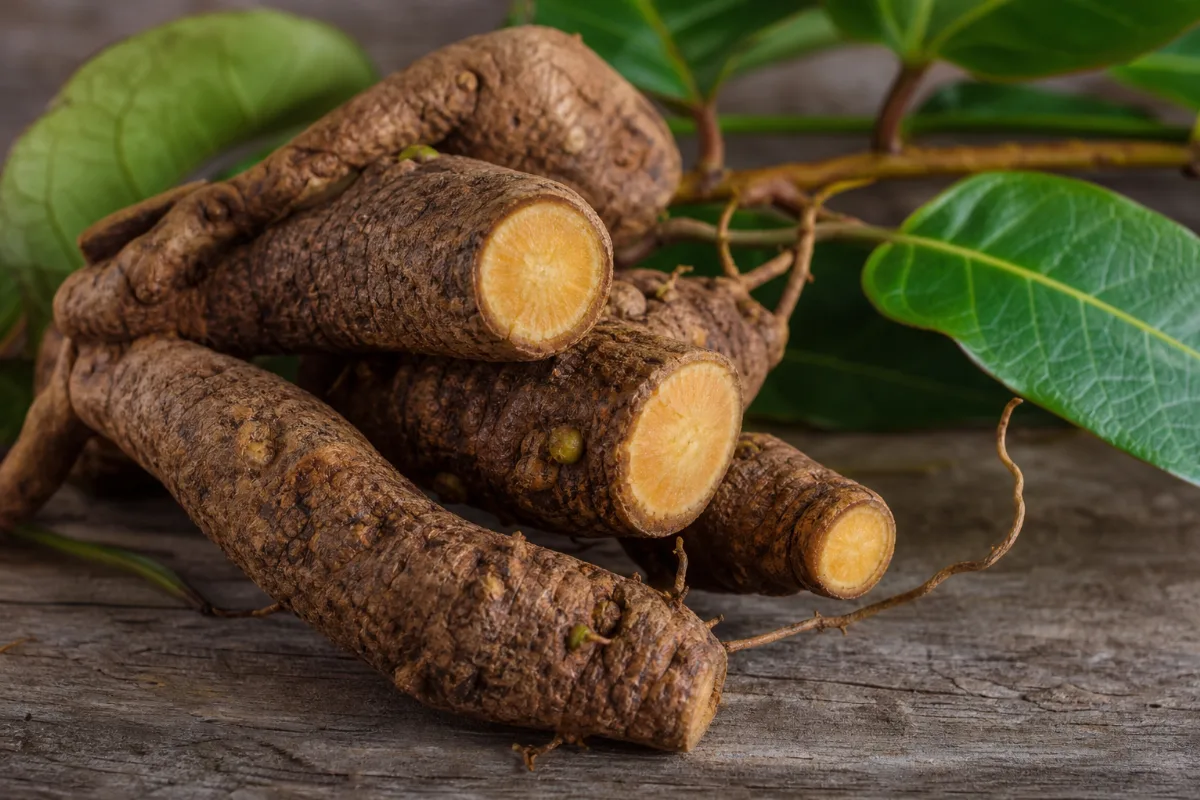
Salacia is a woody climbing plant. The root and stem are the parts used. Three accepted species are sold under the name: Salacia reticulata (Sri Lanka, called Kothala himbutu), S. oblonga and S. chinensis.
Its sulfur-sugar compounds (salacinol, kotalanol, neokotalanol) block the gut enzymes that digest starch and sugar. Mangiferin is another compound named in reviews.
How it is used in tradition
Ayurvedic and Sri Lankan healers use Salacia root for diabetes and obesity, mainly at the early stage of diabetes. Modern supplements are sold in Japan and the United States for blood sugar and weight.
What research shows
Five crossover trials of single meals or sugar drinks found a smaller rise in glucose and insulin with S. oblonga or S. chinensis. In type 2 diabetes, a tea trial and a biscuit trial found lower HbA1c than placebo, by about 0.25% in the larger trial. Prediabetes trials found lower fasting glucose.
Weight, blood fat and kidney findings are small and very-low certainty. No Cochrane-style review exists. Many abstracts do not state funding.
At a glance
Traditional uses history, not proof
- Diabetes, especially early diabetes, in Ayurvedic and Sri Lankan medicine.
- Obesity, in Ayurvedic medicine.
Studied for research
- After-meal blood sugar and insulin (low).
- HbA1c in type 2 diabetes (low).
- Prediabetes (low).
- Body fat (very-low).
- Blood fats and kidney inflammation (very-low).
Main compounds
- Mangiferin (a plant xanthone).
- Salacinol, kotalanol and neokotalanol (sulfur-sugar compounds that block gut enzymes in the lab).
Common forms
- Root or stem extract (most trials).
- Tea and biscuit forms in Sri Lankan trials.
- Capsules (species and plant part often not stated).
Research links: 2015 review (PubMed) · 2015 review of Salacia and related species (PubMed) · Tea trial in type 2 diabetes (PubMed) · Pregnancy study in rats (PubMed) · Research Library · Genes & Biomarkers Library
The plant and its history
- Accepted scientific name
- Salacia reticulata Wight
- Naming authority
- Wight
- Common names
- Salacia (English); Kothala himbutu (Sinhala); Ponkoranti (Tamil/Ayurvedic (existing summary))
- Botanical family
- Celastraceae (bittersweet family). Older papers use Hippocrateaceae.
- Classification
- Plantae > Celastraceae > Salacia > Salacia reticulata
- Native range
- South Asia (Sri Lanka and India) for S. reticulata; related species range wider. Not verified from a source read beyond the trial and review text.
- Habitat
- Not verified from a source read.
- What the plant looks like
- Roots: The root and stem bark are the parts used most (Morikawa 2021, Stohs 2015).; Stems: A woody climber, per a 2015 review.; Leaves: Leaf extract has been tested but key compounds are scarce in leaves (existing summary).; Flowers: Not verified from a source read.; Fruit: Not verified from a source read.
- Cultivation
- Not verified from a source read.
- Harvest and processing
- Not verified from a source read.
- Look-alikes and adulterants
- Name: Salacia oblonga; Note: A separate accepted species, used in many US trials (Williams 2007, Collene 2005).; Name: Salacia chinensis; Note: A separate accepted species, used in Japanese, Indian and US trials.; Name: Other plants sold as 'Kothala himbutu' or 'ponkoranti'; Note: Local names can cover more than one species; NOT verified.
- Sustainability and conservation
- Not found in the sources read.
Traditional use and history history, not clinical proof
| Tradition or era | Documented use | Source |
|---|---|---|
| Ayurvedic medicine | Root used for diabetes and obesity since antiquity; at the early stage of diabetes. | p18433791 |
| Sri Lankan and Indian traditional medicine | Kothala himbutu used by traditional physicians for diabetes. | p37885536 |
| Modern supplements (Japan, United States) | Sold as a food supplement for prevention of obesity and diabetes. | p33900535 |
Traditional use shows how a plant was used. It does not show that a supplement works or is safe today.
What is inside, and how it may work
What the plant contains and how those compounds act in cells and animals. Laboratory and animal mechanisms are not proven effects in people.
Main compounds
| Compound | Family | Where it is concentrated | Activity studied | Level of evidence |
|---|---|---|---|---|
| Mangiferin PubChem 5281647 | xanthone C-glucoside | Root and stem Not given in the abstracts. | Antioxidant and sugar/fat-related effects in lab and animal work. 8 13 | In vitro and animal |
| Salacinol PubChem 6451151 | thiosugar sulfonium | Root and stem Not given in the abstracts. | Blocks alpha-glucosidase in lab tests. 10 13 | In vitro and animal |
| Kotalanol PubChem 42632210 | thiosugar sulfonium | Root and stem Not given in the abstracts. | Potent alpha-glucosidase inhibitor in lab tests (named in reviews); neokotalanol is the form discussed in the 2021 review. 8 10 13 | In vitro and animal |
| Kotalagenin 16-acetate | triterpene | Root Not given. | Named in a 2008 review as contributing to activity. 8 | In vitro and animal |
Mechanisms, receptors and pathways
| Target or pathway | Gene or receptor | What was found | Level |
|---|---|---|---|
| Alpha-glucosidase (intestinal) | Maltase-glucoamylase, sucrase-isomaltase (enzymes) | Salacia compounds block the enzymes that digest starch and sugar, slowing glucose absorption. 9 10 8 | Lab and animal |
| Other targets listed in reviews | PPAR-alpha, aldose reductase, pancreatic lipase, angiotensin II type 1 receptor | Reviews list these as additional targets; evidence is lab and rodent only. 8 19 | Lab and animal |
| Gut fermentation of undigested sugar | Not applicable | Breath hydrogen rose 60% after the extract meals, consistent with sugar reaching the colon. 2 | Human data |
| Gut hormones | PYY, ghrelin, GLP-1, amylin | After a breakfast, S. chinensis changed PYY, ghrelin and amylin responses; GLP-1 area did not differ. 4 | Human data |
Absorption, metabolism and elimination
- Absorption
- Not found in the abstracts read. The main sugar-blocking compounds are thought to act in the gut.
- Distribution
- Not found.
- Metabolism
- Not found.
- Elimination
- Not found.
- Bioavailability
- Not found.
Isolated compounds versus whole extracts
Salacinol, neokotalanol and mangiferin have been studied alone in the lab; trials use whole root or stem extracts. A review says it is hard to set standards for extracts because of the number of active compounds, and compound content varies by origin.
Nutritional composition
Salacia is a medicinal plant, not a food or nutrient.
3 low certainty4 very low certainty1 not enough evidence
What was looked at
The 8 benefits and uses checked for Salacia, each with how strong the evidence is. Tap one to open it.
- Blood sugar after a mealLow certainty
- HbA1c and long-term control in type 2 diabetesLow certainty
- Prediabetes: fasting and after-meal glucoseLow certainty
- Blocking sugar-digesting gut enzymes (how it may work)Not enough evidence
- Weight and body fatVery low certainty
- Cholesterol and triglyceridesVery low certainty
- Kidney disease: inflammation markers and kidney functionVery low certainty
- Appetite and gut hormonesVery low certainty
Lab markers tracked in the studies
After-meal blood glucose (area under the curve)After-meal insulinHbA1cFasting blood glucoseTotal body fat mass (DXA scan)LDL cholesterol and triglyceridesCRP and IL-6 (inflammation markers)PYY and ghrelin (gut hormones)
What is Salacia good for?
Salacia has some small-trial support for blood sugar, rated low. Other uses are rated very low or insufficient.
Benefits, one by one
Each card is a research question, not a promise. Tap a goal to filter. Open a card to see the studies, doses and limits.
Blood sugar after a meal
Low certaintyIn several short trials, Salacia extract taken with a high-sugar meal or drink lowered the rise in blood sugar and insulin afterwards. This was seen in healthy adults and in adults with type 2 diabetes. Most trials used related species (S. oblonga or S. chinensis), not S. reticulata.
7 studiesNot given here and not advised. Trial products and amounts differ and…
Studies, doses and limits
What the trials found
Five placebo or control crossover trials of single meals or sugar drinks were read (abstracts): S. oblonga in 66 people with type 2 diabetes and in 43 healthy adults, S. chinensis in 35 and 48 healthy or overweight adults, and a two-part S. chinensis paper. One 2015 review (Medagama) calls the animal and human results consistent for fasting and sugar-loaded glucose.
Results
S. oblonga extract in 66 adults with type 2 diabetes cut the after-meal glucose area by 14% and 22% with two extract amounts, and the insulin area by 14% and 19%. In 43 healthy adults the glucose area fell 27% over 0-120 minutes (P=0.035) but the 0-180 minute change (-24%, P=0.137) was not significant; insulin area fell about 35%. S. chinensis lowered insulin area in 35 healthy adults and glucose, insulin and amylin areas in 48 overweight adults, and the authors of a two-study paper report dose-dependent drops in glucose and insulin.
Effect sizes as reported
Glucose area under the curve -14% and -22% (S. oblonga, type 2 diabetes, 66 people; P value not in abstract but described as significant).
Why this rating
The direction is consistent across trials, but they are small, short (one meal), mostly in healthy people, use different species and extracts, and funding is not stated in the abstracts. This is why it is rated low rather than moderate.
Form and dose studied
Not given here and not advised. Trial products and amounts differ and are listed only in each study record.
Who was studied
Healthy adults, overweight adults and adults with type 2 diabetes. Not studied in children, pregnancy or kidney or liver disease in these trials.
Limits
One meal only; effects after weeks of use are covered separately. Different Salacia species and extracts were tested, so results do not transfer to every product. No numbers in some abstracts.
Why researchers looked
Salacia roots and stems are used in Ayurvedic and Sri Lankan medicine for diabetes. Their sulfur-sugar compounds block gut enzymes that break starch and sugar down, much as the diabetes drug acarbose does, so researchers tested the effect on after-meal glucose.
Traditional use
Root and stem of Salacia reticulata (Kothala himbutu) are used in Sri Lanka and India as a traditional remedy for diabetes (Ayurvedic medicine uses it at the early stage of diabetes, per Morikawa 2021).
Proposed mechanism Lab and animal
Lab work shows salacinol, kotalanol and related compounds block alpha-glucosidase (gut enzymes that digest starch and sugar). Mangiferin and other compounds may act on other targets.
A proposed mechanism does not show that the effect happens in people.
Salacia can lower blood sugar. Anyone on diabetes medicine should talk to a doctor or pharmacist before using it, and should not change treatment on their own. Gas and loose stools were noted in one trial (see safety).
HbA1c and long-term control in type 2 diabetes
Low certaintyHbA1c is the three-month blood sugar average. Two trials in people with type 2 diabetes found a lower HbA1c with Salacia than with placebo, one with a tea and one with a biscuit. The drop in the larger trial was small.
4 studiesNot given here and not advised. Trial products and amounts differ and…
Studies, doses and limits
What the trials found
Kothala himbutu tea in 51 adults with type 2 diabetes (crossover, 3 months each way) and a Salacia reticulata extract biscuit in 136 randomised adults (crossover). A 2015 review also describes reductions of HbA1c over 6 weeks to 3 months.
Results
Tea: HbA1c 6.29 after tea versus 6.65 after placebo (P=0.008); the tea group's HbA1c fell while placebo's rose (P<0.001). Biscuit: unadjusted fall of 0.35% (95% CI 0.10 to 0.60) versus 0.10% with placebo, a net 0.25% difference reported by the authors. In the tea trial, glibenclamide dose fell 1.89 mg with tea and rose 2.25 mg with placebo, but this was not significant (P=0.07).
Effect sizes as reported
HbA1c about -0.25% versus placebo (biscuit); tea 6.29 vs 6.65 (P=0.008).
Why this rating
Two small to moderate trials from Sri Lankan groups, one of which includes the author of the main review. The tea is a preparation 'containing' S. reticulata, so other herbs may be in it. People also had lifestyle advice. A 0.25% fall is modest.
Form and dose studied
Not given here and not advised. Trial products and amounts differ and are listed only in each study record.
Who was studied
Adults with established type 2 diabetes with stable control; people with severe kidney, liver or heart disease were excluded from the biscuit trial.
Limits
Few trials, one region, small effects, limited follow-up of 3 months per period. No trial against standard diabetes drugs.
Why researchers looked
Doctors judge diabetes control mostly by HbA1c, so trials of weeks to months look at it.
Traditional use
Traditional healers in Sri Lanka use Kothala himbutu as a regular drink or preparation for diabetes.
Proposed mechanism Lab and animal
Blocking gut sugar digestion lowers sugar spikes; over time that could lower HbA1c. Not proven as the mechanism in these trials.
A proposed mechanism does not show that the effect happens in people.
Salacia can lower blood sugar. Anyone on diabetes medicine should talk to a doctor or pharmacist before using it, and should not change treatment on their own. Salacia is not a replacement for prescribed diabetes treatment.
Prediabetes: fasting and after-meal glucose
Low certaintyIn adults with prediabetes, two placebo-controlled trials found lower fasting blood sugar with Salacia extract. The newer 12-week trial of 100 people also found lower HbA1c and triglycerides. The older 6-week trial was very small.
3 studiesNot given here and not advised. Trial products and amounts differ and…
Studies, doses and limits
What the trials found
A 2013 trial in 29 people with prediabetes and mild to moderate high blood fats (6 weeks), a 2026 trial in 100 people with prediabetes (12 weeks) and the 12-week arm of a 2021 S. chinensis paper.
Results
2013: root-bark extract lowered fasting glucose and LDL at weeks 3 and 6; leaf extract lowered fasting glucose at week 6 only; no adverse events. 2026: standardised extract lowered fasting glucose, glucose at 90 and 120 minutes of the glucose test, HbA1c and triglycerides compared with placebo, and raised 1,5-anhydroglucitol; no clinically meaningful safety concerns. The abstracts give few or no numbers.
Effect sizes as reported
Significant between-group differences reported (P<.05); no effect sizes in the abstracts.
Why this rating
Only two prediabetes trials were read, one tiny (29 people split across extract types) and one new, unreplicated and without numbers in the abstract. Funding not stated.
Form and dose studied
Not given here and not advised. Trial products and amounts differ and are listed only in each study record.
Who was studied
Adults with prediabetes. Not studied in people with normal glucose over the long term.
Limits
Small, short, no replication; extract type and plant part differ between trials.
Why researchers looked
Prediabetes is the stage where lifestyle changes work best, so there is interest in food-style products that blunt sugar spikes.
Traditional use
Described in Ayurvedic tradition as a remedy at the early stage of diabetes (Morikawa 2021 review).
Proposed mechanism Lab and animal
Same sugar-digestion block as above; also lab effects on fat and sugar uptake. Not shown to explain the human results.
A proposed mechanism does not show that the effect happens in people.
Salacia can lower blood sugar. Anyone on diabetes medicine should talk to a doctor or pharmacist before using it, and should not change treatment on their own.
Blocking sugar-digesting gut enzymes (how it may work)
Not enough evidenceIn the lab, compounds from Salacia roots (salacinol, kotalanol and neokotalanol) block alpha-glucosidase, the gut enzymes that split starch and sugar. This is the same way the drug acarbose works. It explains why the plant might lower after-meal sugar, but it is lab and animal evidence.
4 studiesNot given here and not advised. Trial products and amounts differ and…
Studies, doses and limits
What the trials found
No human trial measured enzyme blocking directly; human trials measured glucose and insulin. A 2015 human trial found higher breath hydrogen with the extract, which fits sugar reaching the colon.
Results
Reviews by Morikawa (2021), Li (2008) and Medagama (2015) describe enzyme-blocking and rodent glucose lowering. A 2005 trial of 43 healthy adults found breath hydrogen 60% higher after the extract meals (P<0.001).
Effect sizes as reported
Breath hydrogen +60% with S. oblonga extract (P<0.001).
Why this rating
For benefit in people this is theory, supported by lab and animal work and one indirect human signal. The reviews are by groups that developed Salacia products.
Form and dose studied
Not given here and not advised. Trial products and amounts differ and are listed only in each study record.
Who was studied
Lab systems, rodents, one human breath test.
Limits
Lab concentrations and animal amounts do not map onto supplements.
Why researchers looked
To understand which compounds make Salacia work and why extracts differ.
Traditional use
Not part of the traditional account; it is the modern laboratory explanation.
Proposed mechanism Lab and animal
Thiosugar sulfonium compounds inhibit intestinal alpha-glucosidase in vitro. Reviews also list aldose reductase, pancreatic lipase, PPAR-alpha and angiotensin II receptor effects.
A proposed mechanism does not show that the effect happens in people.
The same action explains gas and loose stools (see safety).
Weight and body fat
Very low certaintyOne 4-week open-label study of a capsule with Salacia and vitamin D reported more weight loss than lifestyle advice alone, but vitamin D was in the capsule. A 2026 placebo-controlled trial found a small fall in fat mass but no clear change in body fat percentage.
4 studiesNot given here and not advised. Trial products and amounts differ and…
Studies, doses and limits
What the trials found
Two trials: 40 adults in a 4-week open-label combination study, and 133 adults analysed in a 12-week placebo-controlled trial.
Results
Open-label: weight -5.3 kg versus -1.8 kg with lifestyle advice only (P=0.03) with a Salacia plus vitamin D3 capsule. 2026 trial: fat mass difference -482 g (95% CI -907 to -58; P=.0158) but body fat percentage -0.30% (95% CI -0.73 to 0.12, not significant).
Effect sizes as reported
Fat mass -482 g versus placebo over 12 weeks; the other main outcome was not significant.
Why this rating
One trial is a combination product with no placebo; the other had mixed main outcomes and was registered late. Under half a kilogram of fat is a small change.
Form and dose studied
Not given here and not advised. Trial products and amounts differ and are listed only in each study record.
Who was studied
Overweight and obese adults without diabetes.
Limits
Short, small, mixed.
Why researchers looked
Slowing sugar digestion has been proposed to help appetite and weight.
Traditional use
Used in Ayurveda for diabetes and obesity (Li 2008 review).
Proposed mechanism Lab and animal
Lab and animal studies suggest effects on fat cells and lipase. A 2015 review noted no human weight-loss trial existed at that time.
A proposed mechanism does not show that the effect happens in people.
Salacia is not a weight-loss treatment. Gas and loose stools can make some people avoid it.
Cholesterol and triglycerides
Very low certaintySmall trials reported lower LDL cholesterol or triglycerides with Salacia, in prediabetes and in kidney disease. These were secondary findings in small studies.
4 studiesNot given here and not advised. Trial products and amounts differ and…
Studies, doses and limits
What the trials found
Three trials report blood fats as outcomes: 29 people with prediabetes (6 weeks), 60 people with kidney disease (6 months) and 100 people with prediabetes (12 weeks).
Results
Root-bark extract lowered LDL cholesterol at weeks 3 and 6 (no numbers in abstract). In kidney disease, triglycerides fell 23.66% (non-diabetic) and 17.45% (diabetic); cholesterol fell only in diabetic patients. In the 2026 prediabetes trial triglycerides were lower than with placebo.
Effect sizes as reported
Triglycerides -23.66% and -17.45% at six months in kidney disease (S. oblonga).
Why this rating
Secondary outcomes in small trials; the kidney study has only about 15 people per group and unclear blinding.
Form and dose studied
Not given here and not advised. Trial products and amounts differ and are listed only in each study record.
Who was studied
Prediabetes with mild to moderate high blood fats; chronic kidney disease.
Limits
Small, short, no cardiovascular events measured.
Why researchers looked
Salacia is promoted for diabetes-related blood fat problems.
Traditional use
Not a classic traditional use.
Proposed mechanism Lab and animal
Lab work suggests PPAR-alpha and lipase effects. Not shown in people.
A proposed mechanism does not show that the effect happens in people.
Do not stop cholesterol medicine.
Kidney disease: inflammation markers and kidney function
Very low certaintyOne small trial in 60 people with chronic kidney disease found lower CRP (an inflammation marker) and stable kidney function with S. oblonga over six months. It is a single, small result and kidney safety needs more evidence.
1 studiesNot given here and not advised. Trial products and amounts differ and…
Studies, doses and limits
What the trials found
One trial, 60 people, 6 months.
Results
CRP fell significantly compared with placebo in both non-diabetic (P=0.002) and diabetic (P=0.03) kidney disease; IL-6 fell in the diabetic group (P=0.0003). Creatinine clearance stayed stable compared with placebo (P=0.05 and 0.04).
Effect sizes as reported
CRP lower than placebo (P=0.002 and 0.03).
Why this rating
Single small trial; the abstract does not describe blinding or the product. Herbs with sugar-lowering effects in kidney disease need medical supervision.
Form and dose studied
Not given here and not advised. Trial products and amounts differ and are listed only in each study record.
Who was studied
People with chronic kidney disease, with or without diabetes.
Limits
Unclear methods; no replication.
Why researchers looked
Diabetes and kidney disease often go together, and inflammation drives both.
Traditional use
Not a traditional use.
Proposed mechanism Preliminary mechanism
Unknown. The authors suggest anti-inflammatory and blood fat effects.
A proposed mechanism does not show that the effect happens in people.
People with kidney disease should talk to a kidney doctor before using any herb.
Appetite and gut hormones
Very low certaintyIn 48 overweight adults, S. chinensis changed after-meal gut hormone levels (higher PYY and ghrelin peaks) but did not change appetite overall. Hunger was lower in women only at one amount.
1 studiesNot given here and not advised. Trial products and amounts differ and…
Studies, doses and limits
What the trials found
One crossover trial, 48 people, single breakfast per visit.
Results
No effect on after-meal appetite overall. Hunger was lower with 300 mg in women (P<0.05) but not men. Peptide YY and ghrelin peak areas were greater than with placebo (P<0.05); GLP-1 area did not differ.
Effect sizes as reported
PYY and ghrelin areas higher than placebo (P<0.05); GLP-1 not different.
Why this rating
Single trial of single meals with subgroup findings.
Form and dose studied
Not given here and not advised. Trial products and amounts differ and are listed only in each study record.
Who was studied
Overweight or obese adults without diabetes.
Limits
One meal per visit; no weight outcome.
Why researchers looked
Alpha-glucosidase blockers can change gut hormones such as GLP-1 and PYY, which affect fullness.
Traditional use
Not a traditional use.
Proposed mechanism Preliminary mechanism
Sugar reaching the lower gut may trigger fullness hormones. Unproven for Salacia beyond this one trial.
A proposed mechanism does not show that the effect happens in people.
None specific.
Connections to the rest of health
How Salacia connects to the rest of our health knowledge graph. Every link says what kind of connection it is. A safety link (for example to the liver) is a warning, not a benefit. A study that merely mentions a topic never creates a benefit link.
Explore every connection: goals, body systems, organs, symptoms, genes
A. Wellness goals
| Connected to | Kind of connection | Evidence status | Context | Studies |
|---|---|---|---|---|
| Blood Sugar Balance | Potential benefit | Low certainty | Blood sugar after a meal: In several short trials, Salacia extract taken with a high-sugar meal or drink lowered the rise in blood sugar and insulin afterwards. This was seen in healthy adults and in adults with type 2 diabetes. Most trials used related species (S. oblonga or S. chinensis), not S. reticulata. HbA1c and long-term control in type 2 diabetes: HbA1c is the three-month blood sugar average. Two trials in people with type 2 diabetes found a lower HbA1c with Salacia than with placebo, one with a tea and one with a biscuit. The drop in the larger trial was small. | 20 2 6 7 4 9 19 5 18 16 1 |
| Metabolic Health | Potential benefit | Low certainty | Blood sugar after a meal: In several short trials, Salacia extract taken with a high-sugar meal or drink lowered the rise in blood sugar and insulin afterwards. This was seen in healthy adults and in adults with type 2 diabetes. Most trials used related species (S. oblonga or S. chinensis), not S. reticulata. Prediabetes: fasting and after-meal glucose: In adults with prediabetes, two placebo-controlled trials found lower fasting blood sugar with Salacia extract. The newer 12-week trial of 100 people also found lower HbA1c and triglycerides. The older 6-week trial was very small. | 20 2 6 7 4 9 19 16 1 11 12 17 |
| Blood Sugar Balance | Preliminary mechanism | Not enough evidence | Blocking sugar-digesting gut enzymes (how it may work): In the lab, compounds from Salacia roots (salacinol, kotalanol and neokotalanol) block alpha-glucosidase, the gut enzymes that split starch and sugar. This is the same way the drug acarbose works. It explains why the plant might lower after-meal sugar, but it is lab and animal evidence. | 10 8 9 2 |
| Weight Management | Potential benefit | Very low certainty | Weight and body fat: One 4-week open-label study of a capsule with Salacia and vitamin D reported more weight loss than lifestyle advice alone, but vitamin D was in the capsule. A 2026 placebo-controlled trial found a small fall in fat mass but no clear change in body fat percentage. | 11 12 19 9 |
| Heart Health | Potential benefit | Very low certainty | Cholesterol and triglycerides: Small trials reported lower LDL cholesterol or triglycerides with Salacia, in prediabetes and in kidney disease. These were secondary findings in small studies. | 16 17 1 19 |
| Kidney Health | Potential benefit | Very low certainty | Kidney disease: inflammation markers and kidney function: One small trial in 60 people with chronic kidney disease found lower CRP (an inflammation marker) and stable kidney function with S. oblonga over six months. It is a single, small result and kidney safety needs more evidence. | 17 |
| Weight Management | Preliminary mechanism | Very low certainty | Appetite and gut hormones: In 48 overweight adults, S. chinensis changed after-meal gut hormone levels (higher PYY and ghrelin peaks) but did not change appetite overall. Hunger was lower in women only at one amount. | 4 |
B. Body systems
| Connected to | Kind of connection | Evidence status | Context | Studies |
|---|---|---|---|---|
| Endocrine System | Biological association | Low certainty | Studied for: Blood sugar after a meal Studied for: HbA1c and long-term control in type 2 diabetes | 20 2 6 7 4 9 19 5 18 16 1 10 8 |
| Metabolism Weight | Biological association | Low certainty | Studied for: Blood sugar after a meal Studied for: Prediabetes: fasting and after-meal glucose | 20 2 6 7 4 9 19 16 1 11 12 17 |
| Digestive System | Biological association | Not enough evidence | Studied for: Blocking sugar-digesting gut enzymes (how it may work) Studied for: Appetite and gut hormones | 10 8 9 2 4 |
| Cardiovascular System | Biological association | Very low certainty | Studied for: Cholesterol and triglycerides | 16 17 1 19 |
| Urinary System | Biological association | Very low certainty | Studied for: Kidney disease: inflammation markers and kidney function | 17 |
| Immune System | Biological association | Very low certainty | Studied for: Kidney disease: inflammation markers and kidney function | 17 |
C. Body parts and organs
| Connected to | Kind of connection | Evidence status | Context | Studies |
|---|---|---|---|---|
| Intestines | Adverse effect or risk | Rct | More colon fermentation (breath hydrogen) and mild flatulence. Preparation or compound: S. oblonga extract |
2 |
| Kidney | Not enough evidence | One small trial reported stable kidney function; safety in kidney disease is not established. Preparation or compound: S. oblonga |
17 |
D. Symptoms
E. Health conditions
| Connected to | Kind of connection | Evidence status | Context | Studies |
|---|---|---|---|---|
| Low blood sugar | Theoretical | Possible when combined with diabetes medicine; not measured in trials read. Preparation or compound: Salacia extracts |
15 5 | |
| Pregnancy | Contraindication | Animal | Rat pregnancy loss at a large amount; no human data. Preparation or compound: S. reticulata root extract |
14 |
| Prediabetes | Potential benefit | Low certainty | Two small to moderate trials. Preparation or compound: Root-bark/standardised extracts |
16 1 |
I. Biomarkers
| Connected to | Kind of connection | Evidence status | Context | Studies |
|---|---|---|---|---|
| After-meal blood glucose (area under the curve) | Biological association | Low certainty | Measured in trials: lowered. A lab change is not the same as a health benefit. | 20 2 4 7 |
| After-meal insulin | Biological association | Low certainty | Measured in trials: lowered. A lab change is not the same as a health benefit. | 2 20 6 |
| HbA1c | Biological association | Low certainty | Measured in trials: lowered. A lab change is not the same as a health benefit. | 5 18 1 |
| Fasting blood glucose | Biological association | Low certainty | Measured in trials: lowered. A lab change is not the same as a health benefit. | 16 1 |
| Total body fat mass (DXA scan) | Biological association | Very low certainty | Measured in trials: lowered (small). A lab change is not the same as a health benefit. | 12 |
| LDL cholesterol and triglycerides | Biological association | Very low certainty | Measured in trials: lowered. A lab change is not the same as a health benefit. | 17 16 |
| CRP and IL-6 (inflammation markers) | Biological association | Very low certainty | Measured in trials: lowered. A lab change is not the same as a health benefit. | 17 |
| PYY and ghrelin (gut hormones) | Biological association | Very low certainty | Measured in trials: raised after the meal. A lab change is not the same as a health benefit. | 4 |
J. Genes, receptors and enzymes
| Connected to | Kind of connection | Evidence status | Context | Studies |
|---|---|---|---|---|
| Preliminary mechanism | Named in a 2008 review as a target in rodent work. | 8 |
K. Biological pathways
L. Active compounds
| Connected to | Kind of connection | Evidence status | Context | Studies |
|---|---|---|---|---|
| Mangiferin | Biological association | In vitro and animal | Antioxidant and sugar/fat-related effects in lab and animal work. Preparation or compound: Root and stem |
8 13 |
| Salacinol | Biological association | In vitro and animal | Blocks alpha-glucosidase in lab tests. Preparation or compound: Root and stem |
10 13 |
| Kotalanol | Biological association | In vitro and animal | Potent alpha-glucosidase inhibitor in lab tests (named in reviews); neokotalanol is the form discussed in the 2021 review. Preparation or compound: Root and stem |
8 10 13 |
| Kotalagenin 16-acetate | Biological association | In vitro and animal | Named in a 2008 review as contributing to activity. Preparation or compound: Root |
8 |
Each connection is stored with the ingredient, the connected record, the kind of connection, the evidence status, the supporting studies, the preparation or compound involved, and a review date (last reviewed October 25, 2026).
The evidence
The research centre for Salacia. Every record here was checked against PubMed or the publisher's page; we never list a study we have not verified.
Evidence by outcome
Bars show how many studies we found for each outcome, not how well it works. People are added up across trials only (reviews are not added, to avoid double counting).
How we rate evidence
High certainty
Several well-run trials or reviews agree; further research is unlikely to change the picture much.
Moderate certainty
Good trials point the same way, but some doubt remains.
Low certainty
Small, short or inconsistent trials. The finding could change with better research.
Very low certainty
Very little or very weak human data. Treat as a possibility only.
Mixed findings
Trials or reviews disagree with each other.
Not enough evidence
Not enough human research to say either way.
Evidence against
Good research found no benefit, or found harm.
We take the reviewers' own risk-of-bias and GRADE statements where they exist, and otherwise judge from study size, design, consistency, directness and whether a product matches what is sold. Many publications do not make evidence high. Method note: We searched PubMed, GBIF and PubChem and read abstracts. Not verified: EMA/HMPC, NCCIH, LiverTox (page blocked), LactMed and trial funding. Ratings are the compiler's own reading, not formal grades.
Study library: every study we checked 20
| Study | Design | People | Product, dose, length | Result |
|---|---|---|---|---|
| Baek 2026 Attenuation of Fasting and Postprandial Glucose Exposure by Standardized Salacia reticulata Extract in Adults with Prediabetes: A Randomized, Double-Blind, Placebo-Controlled Trial. Journal of Medicinal Food · PMID 42663504 · DOI |
Randomised double blind placebo controlled trial |
100 100 adults with prediabetes (fasting 100-139 mg/dL and after-meal 140-199 mg/dL) |
Standardised Salacia reticulata extract not stated in the abstract (standardised extract) 500 mg a day (as in the trial; not advice) 12 weeks · vs Placebo |
Compared with placebo the extract lowered fasting glucose and glucose at 90 and 120 minutes of the glucose test, and lowered HbA1c and triglycerides. 1,5-anhydroglucitol rose; total GLP-1 differed between groups. No clinically meaningful safety concerns were observed. Significant between-group differences (P<.05); no numbers in the abstract. Methods, limits and fundingOutcomes: Fasting and OGTT glucose, HbA1c, triglycerides, 1,5-anhydroglucitol, GLP-1, safety Limitations: One 12-week trial; abstract gives no effect sizes. Standardised extract; funding not stated in the abstract. Very recent, not yet repeated. Funding and conflicts: Funding and conflicts not stated in the abstract. Industry links are common in this field and cannot be ruled out. Read: abstract |
| Collene 2005 Effects of a nutritional supplement containing Salacia oblonga extract and insulinogenic amino acids on postprandial glycemia, insulinemia, and breath hydrogen responses in healthy adults. Nutrition · PMID 15975493 · DOI |
Randomised double masked crossover trial |
43 43 healthy adults |
Salacia oblonga extract alone, or with the amino acids phenylalanine and leucine, in a liquid meal not stated in the abstract (extract) 1000 mg extract (as in the trial; not advice) Single meal, glucose and insulin to 180 min, breath hydrogen to 480 min · vs Same meal without extract |
Extract alone: glucose area -27% (0-120 min, P=0.035) and -24% (0-180 min, P=0.137, not significant); insulin area -35% and -36% (P<0.001). Breath hydrogen was 60% higher with the extract, linked to mild flatulence. Adding amino acids gave no extra glucose effect. Glucose AUC 0-120 min -27% with extract alone. Methods, limits and fundingOutcomes: After-meal glucose, insulin and breath hydrogen Limitations: Healthy people, one meal, one extract product, S. oblonga. Two arms also contained amino acids, so they are a combination product. Funding and conflicts: Funding and conflicts not stated in the abstract. Industry links are common in this field and cannot be ruled out. Read: abstract |
| GBIF Secretariat 2026 GBIF species match for Salacia reticulata, S. oblonga and S. chinensis GBIF API (read 2026-10-25) · Source |
Database record record |
Plant names | Not applicable Not applicable Not applicable Not applicable · vs None |
All three names returned ACCEPTED, EXACT matches: Salacia reticulata Wight (key 5579938), Salacia oblonga Wall. ex Wight & Arn. (key 8192619), Salacia chinensis L. (key 5414293); family Celastraceae. Not applicable Methods, limits and fundingOutcomes: Accepted names, family Limitations: A name database, not a safety source. It says nothing about which species is in a bottle. Funding and conflicts: Not applicable Read: record |
| Hao 2017 Appetite and Gut Hormones Response to a Putative α-Glucosidase Inhibitor, Salacia Chinensis, in Overweight/Obese Adults: A Double Blind Randomized Controlled Trial. Nutrients · PMID 28805670 · DOI |
Randomised double blind placebo controlled three way crossover trial |
48 48 overweight or obese adults without diabetes |
Salacia chinensis with a fixed breakfast not stated in the abstract (extract) 300 or 500 mg (as in the trial; not advice) Single breakfast per visit · vs Placebo |
No effect on after-meal appetite overall. Hunger was lower in women (300 mg) but not men. Glucose, insulin and amylin areas were lower than placebo; peptide YY and ghrelin peaks were higher. GLP-1 area did not differ. Glucose, insulin, amylin AUC lower than placebo (P<0.05). Methods, limits and fundingOutcomes: Appetite, glucose, insulin, amylin, gut hormones Limitations: Single meals only. The sex-specific hunger result is a subgroup finding. Funding and conflicts: Funding and conflicts not stated in the abstract. Industry links are common in this field and cannot be ruled out. Read: abstract |
| Jayawardena 2005 A double blind randomised placebo controlled cross over study of a herbal preparation containing Salacia reticulata in the treatment of type 2 diabetes. Journal of Ethnopharmacology · PMID 15707755 · DOI |
Randomised double blind placebo controlled crossover trial |
51 51 adults with type 2 diabetes for over 6 months and stable control |
Kothala Himbutu tea (herbal tea containing S. reticulata) not stated in the abstract Standard tea preparation (as in the trial; not advice) 3 months tea, 3 months placebo, in either order · vs Placebo tea |
HbA1c at the end of tea treatment was 6.29 versus 6.65 after placebo (P=0.008). Change was a fall with tea compared with a rise with placebo (P<0.001). Glibenclamide dose fell by 1.89 mg with tea and rose by 2.25 mg with placebo (P=0.07, not significant). HbA1c 6.29 +/- 1.02 vs 6.65 +/- 1.04 (P=0.008). Methods, limits and fundingOutcomes: HbA1c; liver and kidney tests; adverse events Limitations: Small, one centre. The product is a herbal preparation 'containing' S. reticulata, so other herbs may be present. Everyone had diet, exercise and lifestyle advice. People were on diabetes medicines, so the drug-dose change is a signal, not proof. Funding and conflicts: Funding and conflicts not stated in the abstract. Industry links are common in this field and cannot be ruled out. Read: abstract |
| Jeykodi 2016 Salacia Extract Improves Postprandial Glucose and Insulin Response: A Randomized Double-Blind, Placebo Controlled, Crossover Study in Healthy Volunteers. Journal of Diabetes Research · PMID 27803937 · DOI |
Randomised double blind crossover trial |
35 35 healthy volunteers |
Salacia chinensis extract capsules taken with a sucrose drink not stated in the abstract (extract) 200, 300 and 500 mg (as in the trial; not advice) Single sucrose challenge, blood samples to 180 min · vs Placebo |
The insulin area under the curve was significantly lower after the extract. The abstract does not give a significant glucose result in numbers. No significant adverse events were observed. Insulin AUC lower than placebo; no numbers in the abstract. Methods, limits and fundingOutcomes: Plasma glucose and insulin after sucrose Limitations: Healthy people, a single challenge, S. chinensis. The abstract reports no numbers. Funding not stated; industry links possible, NOT verified. Funding and conflicts: Funding and conflicts not stated in the abstract. Industry links are common in this field and cannot be ruled out. Read: abstract |
| Kobayashi 2021 Dose-Dependent Suppression of Postprandial Hyperglycemia and Improvement of Blood Glucose Parameters by Salacia chinensis Extract: Two Randomized, Double-Blind, Placebo-Controlled Studies. Journal of Medicinal Food · PMID 33370165 · DOI |
Two randomised double blind placebo controlled studies (one crossover, one 12 week parallel) |
Adults with borderline or mild raised blood sugar (details not in the abstract) | Salacia chinensis extract not stated in the abstract (extract) 150, 300, 600 mg single dose; 600 mg a day for 12 weeks (as in the trial; not advice) Single dose; 12 weeks · vs Placebo |
Study 1: dose-dependent drops in after-meal glucose and insulin, strongest at 600 mg. Study 2: several blood glucose measures improved, including HbA1c and glucose tolerance after a glucose challenge. A later correction notice exists for this paper (PMID 33739888); its content was not read. Qualitative; no numbers in the abstract. Methods, limits and fundingOutcomes: After-meal glucose and insulin; HbA1c and glucose tolerance after 12 weeks Limitations: Numbers are not in the abstract. Authors include researchers who developed Salacia food ingredients (see review by Morikawa); conflict statement not read. S. chinensis. A correction notice exists and was not read. Funding and conflicts: Not stated in the abstract; industry links likely, NOT verified. Read: abstract |
| Li 2008 Salacia root, a unique Ayurvedic medicine, meets multiple targets in diabetes and obesity. Life Sciences · PMID 18433791 · DOI |
Narrative review lab and animal |
Lab, rodent and human findings on Salacia roots | Salacia root extracts root Not stated Not stated · vs None |
Says Salacia roots act on several targets: alpha-glucosidase, aldose reductase, pancreatic lipase, PPAR-alpha and angiotensin II receptor. Mangiferin, salacinol, kotalanol and kotalagenin 16-acetate are named as partly responsible. Notes toxicology in rodents suggested minimal adverse effects and that a clinical trial is crucial to confirm safety; mechanistic studies are needed to understand interactions with other treatments. Not applicable (review). Methods, limits and fundingOutcomes: Molecular targets, safety Limitations: Mechanisms are lab and rodent findings. The review itself says human safety was not yet confirmed. Funding and conflicts: Not stated in the abstract. Read: abstract |
| Medagama 2015 Salacia reticulata (Kothala himbutu) revisited; a missed opportunity to treat diabetes and obesity? Nutrition Journal · PMID 25889885 · DOI |
Narrative review human and lab |
Lab, animal and human studies of S. reticulata | Salacia reticulata extracts and preparations root and stem (mostly) Not stated in the abstract. Trials of 6 weeks to 3 months · vs None |
Lab work shows the plant blocks gut sugar-digesting enzymes (alpha-glucosidase). Animal and human studies are described as consistent in lowering glucose when fasting and after a sugar or maltose load. The author reports clinically significant HbA1c and insulin reductions after 6 weeks to 3 months, and weight loss in one trial that also gave vitamin D. Qualitative; no pooled numbers in the abstract. Methods, limits and fundingOutcomes: Glucose, HbA1c, insulin, weight Limitations: Narrative review by one author, not a systematic review. Concludes that a larger evidence base from well-planned studies is needed to confirm benefit and safety. Funding and conflicts: Not stated in the abstract. Read: abstract |
| Morikawa 2021 A review of antidiabetic active thiosugar sulfoniums, salacinol and neokotalanol, from plants of the genus Salacia. Journal of Natural Medicines · PMID 33900535 · DOI |
Narrative review (authors' own research programme) lab and animal |
Salacia roots and stems: chemistry and pharmacology | Isolated salacinol, neokotalanol and related compounds; Salacia extracts root and stem Not applicable Not applicable · vs None |
Describes isolation of salacinol and neokotalanol from the roots and stems of S. reticulata, S. oblonga and S. chinensis and their antidiabetic effects. Notes the plants have been used in Ayurvedic medicine at the early stage of diabetes and widely sold as supplements in Japan and the United States. Not applicable (review). Methods, limits and fundingOutcomes: Active compounds, antidiabetic effects, development as food ingredients Limitations: The authors review their own work, which led to commercial food ingredients. Not an independent review. Funding and conflicts: Review of the authors' own studies; commercial development is described. Specific funding not stated in the abstract. Read: abstract |
| Ofner 2013 Complementary treatment of obesity and overweight with salacia reticulata and vitamin d. International Journal for Vitamin and Nutrition Research · PMID 25008011 · DOI |
Randomised open label trial |
40 40 healthy adults with BMI 25-45 |
Capsule containing Salacia reticulata plus vitamin D3 (a combination product) with meals, plus lifestyle advice not stated in the abstract (root) 200 mg Salacia with 64 IU vitamin D3, three times a day (as in the trial; not advice) 4 weeks · vs Lifestyle advice only |
Lifestyle-only group lost 1.8 kg; the capsule group lost 5.3 kg (P=0.03). Body fat fell 1.4% versus 4.5% (P=0.01). Weight -5.3 kg vs -1.8 kg. Methods, limits and fundingOutcomes: Weight and body fat Limitations: Open label (no placebo), 4 weeks. Vitamin D was in the capsule, so Salacia's own effect cannot be separated. Funding and conflicts: Funding and conflicts not stated in the abstract. Industry links are common in this field and cannot be ruled out. Read: abstract |
| Park 2026 A 12-Week Randomized, Double-Blind, Placebo-Controlled Trial of Salacia reticulata Extract for Fat-Mass Reduction in Adults with Overweight/Obesity. Journal of Medicinal Food · PMID 42187323 · DOI |
Randomised double blind placebo controlled trial |
133 Adults with overweight or obesity (66 extract, 67 placebo in the main analysis) |
Standardised Salacia reticulata extract capsules twice daily not stated in the abstract (standardised extract) Capsules twice daily (as in the trial; not advice) 12 weeks · vs Matching placebo |
Total fat mass fell more with the extract: difference -482 g (95% CI -907 to -58; P=.0158). Body fat percentage difference -0.3% (95% CI -0.73 to 0.12) was not significant. The authors call it mixed and preliminary and note the trial was registered after it began. Fat mass -482.30 g vs placebo; body fat % -0.30% (not significant). (Fat mass -907.05 to -57.54 g; fat % -0.73 to 0.12) Methods, limits and fundingOutcomes: Total body fat mass and body fat percentage by DXA Limitations: Two main outcomes gave one significant and one non-significant result. Retrospective registration. A saving of under half a kilogram is small. Funding and conflicts: Funding and conflicts not stated in the abstract. Industry links are common in this field and cannot be ruled out. Read: abstract |
| PubChem (NCBI) 2026 PubChem records for mangiferin, salacinol and kotalanol PubChem PUG REST (read 2026-10-25) · Source |
Database record record |
Chemical compounds | Not applicable Not applicable Not applicable Not applicable · vs None |
Mangiferin CID 5281647 (C19H18O11); salacinol CID 6451151 (C9H18O9S2); kotalanol CID 42632210 (C12H24O12S2). Not applicable Methods, limits and fundingOutcomes: Compound identity Limitations: Identity check only; says nothing about activity. Funding and conflicts: Not applicable Read: record |
| Ratnasooriya 2003 Adverse pregnancy outcome in rats following exposure to a Salacia reticulata (Celastraceae) root extract. Brazilian Journal of Medical and Biological Research · PMID 12845381 · DOI |
Animal study (rats) animal |
Pregnant Wistar rats | Salacia reticulata root extract by mouth root 10 g/kg (animal dose, not advice) Early (days 1-7) or mid (days 7-14) pregnancy · vs Untreated pregnant rats |
Post-implantation loss rose from about 5% to 49% (early) and 42% (mid pregnancy). Pups were lighter and fewer survived. The extract was not teratogenic (no malformations). The authors conclude it can be hazardous to pregnancy and should not be used in pregnancy complicated by diabetes. Post-implantation loss 49.3% and 41.7% vs 4.7% in controls. Methods, limits and fundingOutcomes: Post-implantation loss, pup weight and survival Limitations: A very large rat dose of a crude extract. Cannot be turned into a human risk number, but it is the only pregnancy data and points to caution. Funding and conflicts: Not stated in the abstract. Read: abstract |
| RxList 2026 Salacia (consumer drug reference) RxList supplements monograph (page read 2026-10-25) · Source |
Consumer reference record |
General readers | Salacia not specified Not applicable Not applicable · vs None |
Lists gas, belching, abdominal pain, nausea and diarrhea as possible side effects; says there is not enough reliable information on pregnancy and breastfeeding and advises avoiding use; rates the combination with diabetes drugs a moderate interaction because blood sugar might go too low, so doses of diabetes medicine might need changing; advises stopping at least 2 weeks before planned surgery. Not applicable Methods, limits and fundingOutcomes: Side effects, pregnancy, interactions, surgery Limitations: A consumer reference, not a regulator or a trial. Its text is general and cites mostly small trials and animal work. Funding and conflicts: Commercial publisher; no conflict statement. Read: page |
| Shivaprasad 2013 Salacia reticulata improves serum lipid profiles and glycemic control in patients with prediabetes and mild to moderate hyperlipidemia: a double-blind, placebo-controlled, randomized trial. Journal of Medicinal Food · PMID 23767865 · DOI |
Randomised double blind placebo controlled trial |
29 29 adults with prediabetes and mild to moderate high blood fats |
Salacia reticulata root-bark extract or leaf extract, with lifestyle changes root bark; leaf 500 mg a day (as in the trial; not advice) 6 weeks · vs Placebo |
Root-bark extract lowered LDL and fasting blood sugar at weeks 3 and 6; leaf extract lowered fasting blood sugar at week 6 only. No adverse events and safety labs stayed in range. The abstract gives no numbers. Significant drops in LDL and fasting glucose with root-bark extract; no numbers in the abstract. Methods, limits and fundingOutcomes: LDL cholesterol, fasting blood sugar, safety labs Limitations: Very small and short; groups were split by extract type, so each is tiny. No numbers in the abstract. Industry links possible, NOT verified. Funding and conflicts: Funding and conflicts not stated in the abstract. Industry links are common in this field and cannot be ruled out. Read: abstract |
| Singh 2015 Effects of Salacia oblonga on cardiovascular risk factors in chronic kidney disease patients: a prospective study. Saudi Journal of Kidney Diseases and Transplantation · PMID 25579717 · DOI |
Randomised study (described as prospective) |
60 60 people with chronic kidney disease, with and without diabetes |
Salacia oblonga not stated in the abstract Not stated in the abstract 6 months · vs Placebo |
Triglycerides fell 23.66% (non-diabetic CKD, P=0.008) and 17.45% (diabetic CKD, P=0.01). CRP fell in both groups; IL-6 and cholesterol fell only in diabetic CKD. Creatinine clearance was stable with Salacia versus placebo. Triglycerides -23.66% and -17.45% at six months. Methods, limits and fundingOutcomes: Kidney tests, blood fats, IL-6, CRP Limitations: Only 60 people split into four groups of about 15. Blinding and product details not clear in the abstract. Needs repeating before anyone treats it as kidney protection. Funding and conflicts: Funding and conflicts not stated in the abstract. Industry links are common in this field and cannot be ruled out. Read: abstract |
| Siribaddana 2023 The Effect of Salacia Reticulata Extract Biscuits on Blood Sugar Control of Type 2 Diabetes Mellitus Patients: A Two-Period, Two-Sequence, Crossover, Randomized, Triple-Blind, Placebo-Controlled, Clinical Trial. Cureus · PMID 37885536 · DOI |
Randomised triple blind placebo controlled crossover trial |
136 136 randomised adults with type 2 diabetes (baseline HbA1c about 8.5%) |
Salacia reticulata extract biscuit eaten as a snack not stated in the abstract (extract) Not stated in the abstract Two periods with washout · vs Identical placebo biscuit |
Unadjusted HbA1c fell 0.35% after the Salacia biscuit versus 0.10% after placebo; the authors report a net reduction of 0.25% compared with placebo, and no serious kidney or liver adverse effects. Patients with severe kidney, liver or heart disease were excluded. HbA1c -0.25% vs placebo (authors); unadjusted -0.35% (95% CI 0.10 to 0.60) vs -0.10%. (0.10 to 0.60 (unadjusted drop with Salacia)) Methods, limits and fundingOutcomes: HbA1c; kidney and liver safety Limitations: Modest drop; many people were lost between periods. People with major organ disease were excluded, so safety there is unknown. One author also wrote the 2015 review. Funding and conflicts: Funding and conflicts not stated in the abstract. Industry links are common in this field and cannot be ruled out. Read: abstract |
| Stohs 2015 Anti-diabetic and Anti-hyperlipidemic Effects and Safety of Salacia reticulata and Related Species. Phytotherapy Research · PMID 26031882 · DOI |
Narrative review human and lab |
S. reticulata, S. oblonga and S. chinensis: lab, animal and human work | Salacia extracts (roots, stems, leaves) root, stem, leaf Not stated in the abstract. Not stated · vs None |
Reports that in human studies Salacia extracts decreased plasma glucose and insulin, lowered HbA1c and modulated blood fats with no adverse effects reported. Says rat and mouse safety studies show the extracts are very safe. States that no clinical study has looked at weight loss in people, and that it is hard to set standards for extracts because there are many active compounds. Qualitative. Methods, limits and fundingOutcomes: Glucose, insulin, HbA1c, lipids, safety Limitations: Narrative review; the 'no adverse effects' statement reflects what small trials reported, not a systematic safety search. Reviews of this kind can lean positive. Funding and conflicts: Not stated in the abstract. Read: abstract |
| Williams 2007 Extract of Salacia oblonga lowers acute glycemia in patients with type 2 diabetes. American Journal of Clinical Nutrition · PMID 17616771 · DOI |
Randomised double blind crossover trial |
66 66 adults with type 2 diabetes |
Salacia oblonga extract added to a liquid high-carbohydrate meal not stated in the abstract (extract) 240 mg and 480 mg extract (as in the trial; not advice) Single meal, glucose and insulin followed up to 180 minutes · vs Same meal without extract |
Both amounts lowered the after-meal glucose area under the curve (14% and 22%) and the adjusted peak glucose (19% and 27%). Insulin area fell 14% and 19%, and the adjusted insulin peak fell 9% and 12%. Glucose AUC -14% (240 mg) and -22% (480 mg) versus control meal. Methods, limits and fundingOutcomes: After-meal glucose and insulin Limitations: One meal, not weeks of use. S. oblonga, not S. reticulata. HbA1c not measured. Long-term effects unknown. Funding and conflicts: Funding and conflicts not stated in the abstract. Industry links are common in this field and cannot be ruled out. Read: abstract |
What we do not know yet
- No Cochrane-style systematic review.
- No head-to-head trial against acarbose or metformin.
- No long-term outcome or safety data beyond about 6 months.
- Most trials used S. oblonga or S. chinensis, not S. reticulata.
- Funding is rarely stated in abstracts.
How new research is added
New studies are found by a saved PubMed search and placed in a review queue. A person reads each one before it is added.
Lab markers
What changed in blood or saliva tests during trials. A changed number is not the same as feeling or being healthier, and we give no "normal ranges".
Metabolic 2
HbA1c
Lowered in trials
Average blood sugar over about three months.
Low certaintyResults and what it means
Why it was measured
The standard measure of long-term diabetes control.
Statistical vs. clinical meaning
Small effects in three trials of 12 weeks or less per period.
Safety implication
Check with a doctor if combining with diabetes medicine.
Fasting blood glucose
Lowered in trials
Blood sugar after not eating overnight.
Low certaintyResults and what it means
Why it was measured
Used to spot prediabetes and monitor control.
Statistical vs. clinical meaning
Two small prediabetes trials, no numbers in the abstracts.
Safety implication
Fasting low sugar can happen with diabetes drugs.
Other 6
After-meal blood glucose (area under the curve)
Lowered in trials
How much blood sugar rises and for how long after a meal or sugar drink.
Low certaintyResults and what it means
Why it was measured
The main outcome in the single-meal trials.
Statistical vs. clinical meaning
Consistent lowering of the post-meal rise across species and extracts; healthy-volunteer trials are least relevant to disease.
Safety implication
People on diabetes drugs could go too low if combined.
| Study | Result | People | Product |
|---|---|---|---|
| 20 | -14% and -22% versus control meal | 66 adults with type 2 diabetes | |
| 2 | -27% (P=0.035) and -24% (P=0.137, not significant) | 43 healthy adults | |
| 4 | Lower than placebo (P<0.05); no numbers in the abstract | 48 overweight or obese adults | |
| 7 | Dose-dependent suppression; strongest with the highest amount | Adults, details not in the abstract |
After-meal insulin
Lowered in trials
The insulin the body releases to handle the meal.
Low certaintyResults and what it means
Why it was measured
Lower insulin for the same glucose can mean less strain on the pancreas, but this has not been shown to matter clinically.
Statistical vs. clinical meaning
Consistent direction; clinical meaning unclear.
Safety implication
None specific.
Total body fat mass (DXA scan)
Lowered (small) in trials
Fat mass measured by a body scan.
Very low certaintyResults and what it means
Why it was measured
Main outcome of the 12-week trial.
Statistical vs. clinical meaning
A statistically significant but small fat-mass difference; the second main outcome did not reach significance.
Safety implication
None specific.
LDL cholesterol and triglycerides
Lowered in trials
Blood fats linked to heart disease risk.
Very low certaintyResults and what it means
Why it was measured
Secondary outcomes in several trials.
Statistical vs. clinical meaning
Small trials, secondary outcomes.
Safety implication
Do not change heart medicine.
CRP and IL-6 (inflammation markers)
Lowered in trials
Blood markers of inflammation.
Very low certaintyResults and what it means
Why it was measured
Used to judge inflammation in kidney disease.
Statistical vs. clinical meaning
One small trial.
Safety implication
Kidney disease needs specialist advice.
PYY and ghrelin (gut hormones)
Raised after the meal in trials
Hormones that affect fullness and hunger.
Very low certaintyResults and what it means
Safety
What studies and official sources say about side effects, medicines and who should check first. Each point shows what kind of evidence it comes from.
Main points to know 5
- Low blood sugar if combined with diabetes medicine. Salacia is used to lower blood sugar. A consumer drug reference rates the combination with diabetes drugs a moderate interaction because blood sugar might drop too low, and says the medicine dose may need changing. In a 2005 tea trial in people already on diabetes medicines, the glibenclamide dose fell in the tea group and rose in the placebo group, but this was not statistically significant. None of the trial abstracts read measured how often low blood sugar happened. Do not add Salacia to diabetes treatment without telling the doctor or pharmacist who manages it. Authoritative guidance 15 5
- Gas and loose stools are likely, as with acarbose. Salacia blocks the same kind of gut enzymes as the drug acarbose. Sugar that is not digested reaches the colon and ferments. In a trial of 43 healthy adults, breath hydrogen was 60% higher after the extract meals, linked to mild flatulence. A consumer reference lists gas, belching, abdominal pain, nausea and diarrhea. Several other trials reported no significant adverse events, so this is common-sense and incomplete, not a measured rate. Controlled trial 2 15 6
- Avoid in pregnancy and breastfeeding. No human pregnancy data were found. In rats, a very large amount of S. reticulata root extract in early or mid pregnancy sharply raised post-implantation loss and lowered pup weight and survival, without malformations; the authors say it should not be used in diabetic pregnancy. A consumer reference also advises avoiding it. Breastfeeding data: none found. Animal research 14 15
- Long-term safety is not established. The longest human treatment periods read were about 3 months (6 months in one kidney-disease study). A 2008 review said a clinical trial is crucial to confirm safety. Trial reports mention few adverse events, but trials were small and mostly excluded people with serious kidney, liver or heart disease. Systematic review 8 18 17
- Three Salacia species are sold under one name. Salacia reticulata, S. oblonga and S. chinensis are three accepted species. Trials and supplements use them interchangeably, and many labels do not name the species or plant part. Results for one species cannot be assumed for another. Authoritative guidance 3 19
Side effects 4
| Effect | How often | Severity and recovery | Evidence |
|---|---|---|---|
| Gas (flatulence), belching Listed by a consumer reference. Mechanism fits undigested sugar fermenting in the colon. | Breath hydrogen up 60% in one trial of 43 healthy adults, linked to mild flatulence. No rate given. | mild Presumed reversible when stopped; not stated. | Controlled trial 2 15 |
| Abdominal pain, nausea, diarrhea From a consumer reference. The 2016 and 2026 trial abstracts report no significant or clinically meaningful adverse events, so the real rate is unknown. | Not established | mild to moderate Not stated | Other 15 |
| Low blood sugar when combined with diabetes medicine Plausible from the sugar-lowering effect; none of the abstracts read measured hypoglycaemia. | Not established | can be serious Reversible with sugar; needs prompt care | Theoretical 15 5 |
| No significant adverse events reported in several trials Small trials usually cannot find uncommon harms. | Reported in trials of 29 to 136 people over 6 weeks to 12 weeks. | not applicable Not applicable | Controlled trial 6 16 1 18 |
Liver
No human case of liver injury from Salacia was found in the sources read. One tea trial checked liver and kidney tests at 3 and 6 months, and the biscuit trial reported no serious liver or kidney adverse effects; both excluded or did not report on people with serious organ disease. The NCBI LiverTox page could not be opened (browser check), so whether LiverTox has an entry is NOT verified. A review says animal safety studies are reassuring. 5 18 19
How often. Unknown. Absence of reports is not proof of safety.
Monitoring. No agency monitoring advice found. Stop and seek care for yellow skin or eyes, dark urine or severe stomach pain.
This is a safety connection. It is not evidence that Salacia supports liver health.
Medicines and supplements 4
| With | Why it matters | Importance | Evidence | What to do |
|---|---|---|---|---|
| Diabetes medicines (insulin, sulfonylureas such as glibenclamide, metformin and others) prescription | Additive blood-sugar lowering. | A consumer reference rates it moderate. In one tea trial the glibenclamide dose fell by 1.89 mg with tea and rose 2.25 mg with placebo (P=0.07, not significant). Frequency of low blood sugar is unknown. | Controlled trial Low certainty 15 5 | Tell the doctor or pharmacist who manages your diabetes before starting. Do not stop or change diabetes medicine yourself. |
| Acarbose and miglitol (other alpha-glucosidase blockers) prescription | Same enzyme-blocking mechanism could add up and increase gas and diarrhea. | No study of the combination was found. | Theoretical Not enough evidence 9 10 | Ask a pharmacist before using both. |
| Other blood-sugar-lowering herbs (gymnema, bitter melon, berberine, cinnamon and similar) supplement | Additive sugar-lowering effects. | No study of combinations was found. | Theoretical Not enough evidence 15 | Do not stack several without medical advice. |
| Medicines taken by mouth that need steady absorption prescription | Faster gut transit and loose stools could change absorption of some medicines. | No study found. This is a general caution, not a documented interaction. | Theoretical Not enough evidence 15 | Ask a pharmacist if you take a medicine where timing matters. |
Who should check first 6
| Situation | Advice | Evidence |
|---|---|---|
| Pregnancy and breastfeeding | Avoid. Rat data showed pregnancy loss at a large amount and no human data exist. | Animal research 14 15 |
| Taking diabetes medicine, especially insulin or sulfonylureas | Use only with the knowledge of the doctor or pharmacist managing diabetes. | Authoritative guidance 15 |
| Planned surgery | A consumer reference says stop at least 2 weeks before scheduled surgery because blood sugar control could be affected. No agency statement found. | Authoritative guidance 15 |
| Chronic kidney or liver disease | Safety is unclear. Trials excluded severe disease, apart from one small kidney-disease study. Ask a specialist first. | Insufficient 18 17 |
| Digestive disease with diarrhea or bloating | Gas and loose stools are likely to worsen these. | Theoretical 2 15 |
| Children | No safety data found. Avoid. | Insufficient |
Overdose, product quality and regulators
Summary. Animal studies are described by reviews as showing very low toxicity for Salacia extracts, but the one reproductive study found harm to pregnancy at a very large rat amount. No poisonous plant part was identified in the sources read.
Animal. A 2015 review says rat and mouse safety studies show extracts are very safe. A 2003 rat study found a large amount of root extract in early or mid pregnancy raised pregnancy loss; no malformations.
Human doses studied. Trials ran from single meals to 12 weeks (6 months in one kidney study) with few adverse events reported.
High dose or long term signals. Unknown for people. Long-term safety is not established.
Overdose response. No overdose case found. Expect stomach upset; with diabetes medicines low blood sugar is the main concern.
Genotoxicity. Not found in sources read.
Toxic plant parts. Roots and stems are used. No toxic part identified in the sources read; leaf extract is used less and its active compounds are scarce.
No product testing of Salacia supplements was found.
Species and plant-part labelling. Species, plant part and extraction are often not stated, and a 2015 review says it is hard to set standards because there are many active compounds. 19
Name confusion between Salacia species. S. reticulata, S. oblonga and S. chinensis are separate accepted species with the same family (Celastraceae). Older papers place the genus in Hippocrateaceae. Trials of one species cannot be read across. 3 19
Heavy metals, pesticides, adulteration. Not studied in the sources read. No evidence either way.
| Body | Action | Date |
|---|---|---|
| RxList (consumer reference) (United States) | Advises avoiding in pregnancy and breastfeeding, rates diabetes-drug combination as moderate, and advises stopping 2 weeks before surgery. Not a regulator. source | 2026 |
When to get medical help
- Shaking, sweating, confusion, fast heartbeat or fainting (possible low blood sugar). Eat or drink sugar and get medical help.
- Severe or ongoing diarrhea, vomiting or belly pain.
- Yellow skin or eyes, dark urine.
- Pregnancy, or possible pregnancy, while using Salacia.
- Swelling, rash or breathing trouble (allergy).
Stop the supplement and contact a clinician or emergency service. In the US, Poison Control is 1-800-222-1222.
General information only, not medical advice. Ask a clinician or pharmacist before use, especially with medicines, in pregnancy or with a health condition. See the Natural Remedy Safety guide.
Frequently asked questions
What is Salacia?
What is Salacia used for?
Does Salacia lower blood sugar?
How does Salacia work?
Is the evidence strong?
Which Salacia species were tested?
Can Salacia cause low blood sugar with diabetes medicine?
It might. A consumer drug reference rates the combination as a moderate interaction. In a tea trial people on diabetes medicines needed a lower glibenclamide dose, but this was not statistically significant. None of the trial abstracts measured how often low blood sugar happened. Speak to the doctor or pharmacist who manages your diabetes before using it.
What are the side effects?
Is Salacia safe in pregnancy or when breastfeeding?
Is Salacia safe for the kidneys and liver?
Can Salacia help with weight loss?
Is Salacia a replacement for diabetes treatment?
How is Salacia different from gymnema, bitter melon or berberine?
All four are studied for blood sugar, but they act differently. Salacia blocks gut sugar digestion in the lab. See our pages on gymnema, bitter melon and berberine. None is a proven replacement for medicine.
Explore by health goal
Blood Sugar BalanceMetabolic HealthWeight ManagementHeart HealthKidney Health
Editorial transparency
- Written by
- AlternativeMed editorial team. Research compiled with AI assistance, then checked against the sources cited.
- Medical review
- None. This page has not been reviewed by a physician or pharmacist.
- First published
- 2026-10-25
- Last substantive update
- 2026-10-25
- How we research
- We searched PubMed, GBIF and PubChem and read abstracts. Not verified: EMA/HMPC, NCCIH, LiverTox (page blocked), LactMed and trial funding. Ratings are the compiler's own reading, not formal grades.
- How we rate evidence
- See "How we rate evidence" in the Evidence tab.
- Independence
- No product is promoted on this page. No affiliate links are shown. This is an information page, not advice to use Salacia.
Sources 20
Each source was opened and checked. Where we read only the abstract, it says so. The small numbers in the text point here.
- Baek HI, Gwon Y, Park SJ, et al.. Attenuation of Fasting and Postprandial Glucose Exposure by Standardized Salacia reticulata Extract in Adults with Prediabetes: A Randomized, Double-Blind, Placebo-Controlled Trial.. Journal of Medicinal Food. 2026. PMID 42663504. DOI 10.1177/1096620X261479626. (abstract)
- Collene AL, Hertzler SR, Williams JA, et al.. Effects of a nutritional supplement containing Salacia oblonga extract and insulinogenic amino acids on postprandial glycemia, insulinemia, and breath hydrogen responses in healthy adults.. Nutrition. 2005. PMID 15975493. DOI 10.1016/j.nut.2004.11.018. (abstract)
- GBIF Secretariat. GBIF species match for Salacia reticulata, S. oblonga and S. chinensis. GBIF API (read 2026-10-25). 2026. (record)
- Hao L, Schlussel Y, Fieselmann K, et al.. Appetite and Gut Hormones Response to a Putative α-Glucosidase Inhibitor, Salacia Chinensis, in Overweight/Obese Adults: A Double Blind Randomized Controlled Trial.. Nutrients. 2017. PMID 28805670. DOI 10.3390/nu9080869. (abstract)
- Jayawardena MH, de Alwis NM, Hettigoda V, et al.. A double blind randomised placebo controlled cross over study of a herbal preparation containing Salacia reticulata in the treatment of type 2 diabetes.. Journal of Ethnopharmacology. 2005. PMID 15707755. DOI 10.1016/j.jep.2004.10.026. (abstract)
- Jeykodi S, Deshpande J, Juturu V. Salacia Extract Improves Postprandial Glucose and Insulin Response: A Randomized Double-Blind, Placebo Controlled, Crossover Study in Healthy Volunteers.. Journal of Diabetes Research. 2016. PMID 27803937. DOI 10.1155/2016/7971831. (abstract)
- Kobayashi M, Akaki J, Ninomiya K, et al.. Dose-Dependent Suppression of Postprandial Hyperglycemia and Improvement of Blood Glucose Parameters by Salacia chinensis Extract: Two Randomized, Double-Blind, Placebo-Controlled Studies.. Journal of Medicinal Food. 2021. PMID 33370165. DOI 10.1089/jmf.2020.4751. (abstract)
- Li Y, Huang TH, Yamahara J. Salacia root, a unique Ayurvedic medicine, meets multiple targets in diabetes and obesity.. Life Sciences. 2008. PMID 18433791. DOI 10.1016/j.lfs.2008.03.005. (abstract)
- Medagama AB. Salacia reticulata (Kothala himbutu) revisited; a missed opportunity to treat diabetes and obesity?. Nutrition Journal. 2015. PMID 25889885. DOI 10.1186/s12937-015-0013-4. (abstract)
- Morikawa T, Ninomiya K, Tanabe G, et al.. A review of antidiabetic active thiosugar sulfoniums, salacinol and neokotalanol, from plants of the genus Salacia.. Journal of Natural Medicines. 2021. PMID 33900535. DOI 10.1007/s11418-021-01522-0. (abstract)
- Ofner M, Tomaschitz A, Wonisch M, et al.. Complementary treatment of obesity and overweight with salacia reticulata and vitamin d.. International Journal for Vitamin and Nutrition Research. 2013. PMID 25008011. DOI 10.1024/0300-9831/a000162. (abstract)
- Park SH, Lee JE, Bae SG, et al.. A 12-Week Randomized, Double-Blind, Placebo-Controlled Trial of Salacia reticulata Extract for Fat-Mass Reduction in Adults with Overweight/Obesity.. Journal of Medicinal Food. 2026. PMID 42187323. DOI 10.1177/1096620X261453229. (abstract)
- PubChem (NCBI). PubChem records for mangiferin, salacinol and kotalanol. PubChem PUG REST (read 2026-10-25). 2026. (record)
- Ratnasooriya WD, Jayakody JR, Premakumara GA. Adverse pregnancy outcome in rats following exposure to a Salacia reticulata (Celastraceae) root extract.. Brazilian Journal of Medical and Biological Research. 2003. PMID 12845381. DOI 10.1590/s0100-879x2003000700015. (abstract)
- RxList. Salacia (consumer drug reference). RxList supplements monograph (page read 2026-10-25). 2026. (page)
- Shivaprasad HN, Bhanumathy M, Sushma G, et al.. Salacia reticulata improves serum lipid profiles and glycemic control in patients with prediabetes and mild to moderate hyperlipidemia: a double-blind, placebo-controlled, randomized trial.. Journal of Medicinal Food. 2013. PMID 23767865. DOI 10.1089/jmf.2013.2751. (abstract)
- Singh RG, Rathore SS, Wani IA, et al.. Effects of Salacia oblonga on cardiovascular risk factors in chronic kidney disease patients: a prospective study.. Saudi Journal of Kidney Diseases and Transplantation. 2015. PMID 25579717. DOI 10.4103/1319-2442.148736. (abstract)
- Siribaddana S, Medagama A, Wickramasinghe N, et al.. The Effect of Salacia Reticulata Extract Biscuits on Blood Sugar Control of Type 2 Diabetes Mellitus Patients: A Two-Period, Two-Sequence, Crossover, Randomized, Triple-Blind, Placebo-Controlled, Clinical Trial.. Cureus. 2023. PMID 37885536. DOI 10.7759/cureus.45921. (abstract)
- Stohs SJ, Ray S. Anti-diabetic and Anti-hyperlipidemic Effects and Safety of Salacia reticulata and Related Species.. Phytotherapy Research. 2015. PMID 26031882. DOI 10.1002/ptr.5382. (abstract)
- Williams JA, Choe YS, Noss MJ, et al.. Extract of Salacia oblonga lowers acute glycemia in patients with type 2 diabetes.. American Journal of Clinical Nutrition. 2007. PMID 17616771. DOI 10.1093/ajcn/86.1.124. (abstract)