Herbs & Botanicals · Herbs · A North American calming herb with small trials and a liver-safety question
Skullcap (American Skullcap)
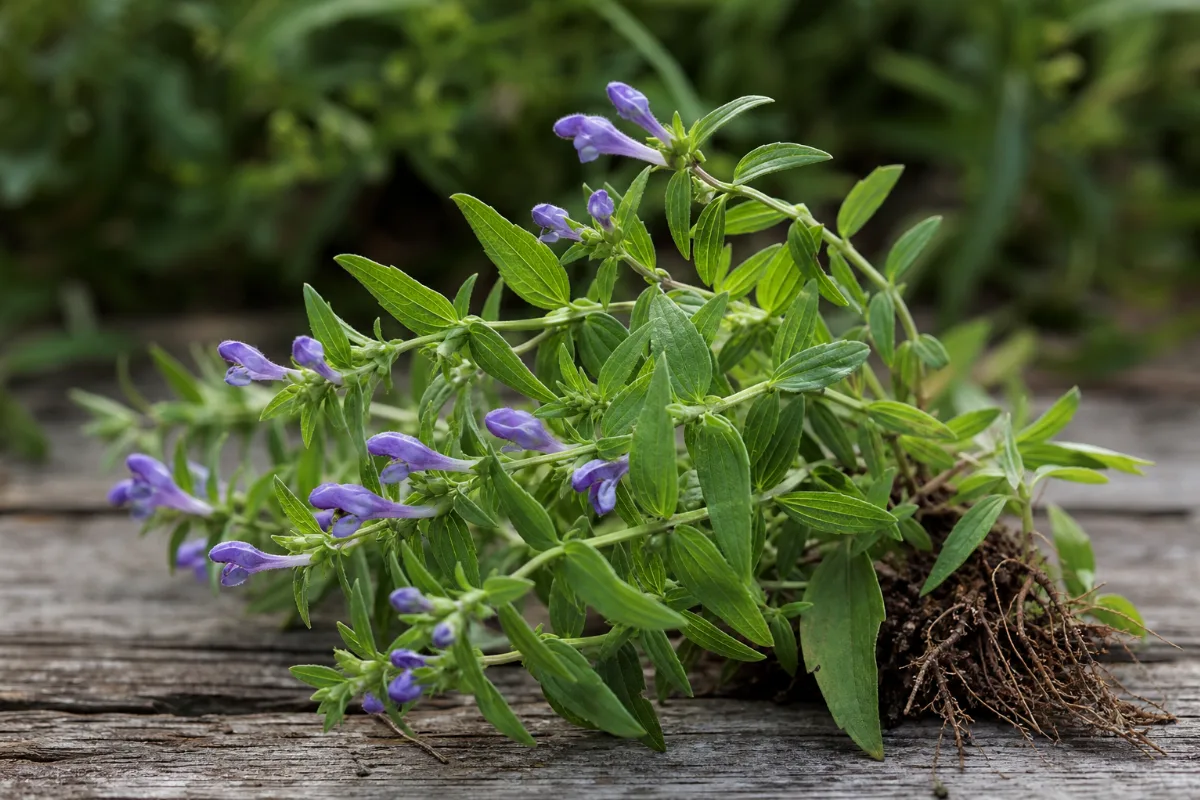
Scutellaria lateriflora L. (family Lamiaceae) · also called American skullcap, blue skullcap, mad-dog skullcap. Not the same as Chinese skullcap (Scutellaria baicalensis).
American skullcap is a North American mint-family plant. The dried leaves and stems are used in teas, tinctures and capsules for stress, anxiety and sleep. A few small human trials exist, mostly in healthy people. It has also been linked to liver-injury reports, and its raw material has been found or suspected to be mixed with germander, a liver-toxic look-alike.
General information, not medical advice. Last substantive update · Not medically reviewed. A named clinician has not signed off on this page. How this page is made
About Skullcap (American Skullcap)
American skullcap (Scutellaria lateriflora) is a calming herb with a long traditional use and only small modern trials. The best human evidence is a 66-person insomnia trial rated low. Safety is the bigger story: liver-injury reports and germander contamination mean product identity matters.
What it is
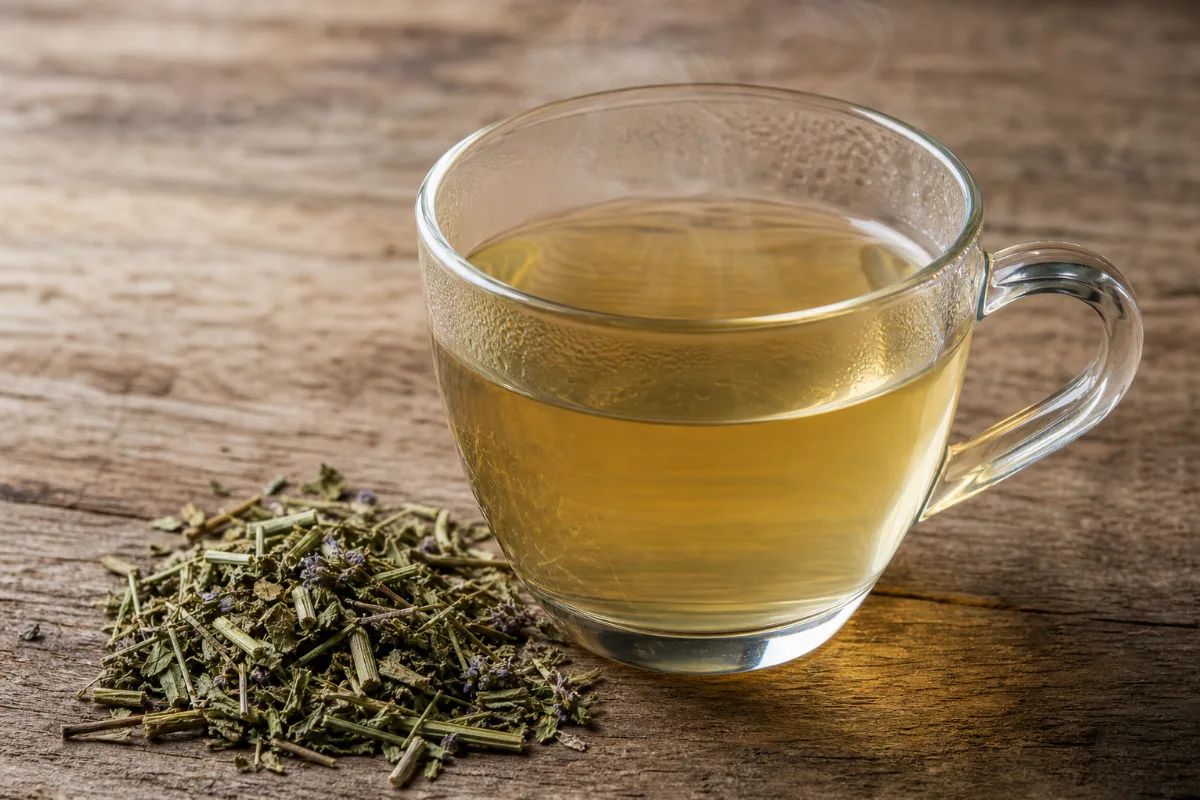
American skullcap is Scutellaria lateriflora, a North American plant in the mint family (Lamiaceae). The aerial parts, leaves and stems, are dried for tea, tincture and capsules.
It is a different species from Chinese skullcap (Scutellaria baicalensis), whose root is used in Chinese medicine. The two share some compounds, such as baicalin, but they are not the same herb.
What it has been used for
Traditional use was as a nerve tonic, sedative and anticonvulsant. Modern trials looked at mood and anxiety in healthy people, and at insomnia.
Where no human trial exists we say so: there is no human trial of skullcap tea, and none in people with an anxiety disorder.
How it might work
Baicalin and baicalein bind a calming receptor (GABA-A) in the lab, and extracts bound the serotonin 5-HT7 receptor in test tubes. This is not proof of how it works in people.
At a glance
Traditional uses history, not proof
- Native American and European herbal medicine: a nerve tonic, sedative and anticonvulsant (stated in a 2009 paper).
- Western herbal practice: tinctures for anxiety (stated in a 2008 paper).
Studied for research
- Anxiety in healthy people, very low
- General mood, very low
- Sleep in mild to moderate insomnia, low
- Gum inflammation (combined with rock rose), very low
- Seizures and cortisol: animal or cell work only
Main compounds
- Baicalin, the main flavone (CID 64982)
- Baicalein (CID 5281605)
- Scutellarin (CID 185617)
Common forms
- Dried leaf and stem (tea)
- Tincture
- Capsules and extracts
Research links: NIH LiverTox: Skullcap (PubMed record) · 2014 trial: American skullcap and mood in healthy volunteers · 2025 trial: skullcap extract for insomnia · Research Library · Genes & Biomarkers Library
The plant and its history
- Accepted scientific name
- Scutellaria lateriflora L.
- Naming authority
- L. (Linnaeus). Accepted species in the GBIF backbone (key 5341325, exact match, confidence 99), read 2026-10-25.
- Synonyms
- Cassida lateriflora (L.) Moench; Scutellaria lateriflora var. lateriflora; Scutellaria lateriflora var. axillaris Jenn.; Scutellaria lateriflora var. albiflora Farw.; Scutellaria lateriflora var. grohii B.Boivin; Scutellaria polybotrya Bernh.
- Common names
- American skullcap (English); Blue skullcap (English); Mad-dog skullcap (English)
- Botanical family
- Lamiaceae (the mint family)
- Classification
- Plantae > Tracheophyta > Magnoliopsida > Lamiales > Lamiaceae > Scutellaria > Scutellaria lateriflora
- Native range
- Not verified from a source we opened. Described as a North American plant in several papers (Native American use); no range map was read.
- Habitat
- Not verified.
- What the plant looks like
- Roots: Not verified.; Stems: Not verified. Germander has strap-shaped hairs on the stem (T. canadense) per a 2003 paper.; Leaves: Not verified.; Flowers: Not verified.; Fruit: Not verified.
- Cultivation
- Not verified.
- Harvest and processing
- Not found. The part used is the dried aerial part (leaves and stems), per LiverTox's abstract and the 2009 anticonvulsant paper.
- Look-alikes and adulterants
- Name: Germander (Teucrium canadense L. and Teucrium chamaedrys L.); Note: Both are accepted species in GBIF (keys 2926899 and 6411747). Papers say they look like skullcap and have been mixed into skullcap raw material. Germander holds liver-toxic diterpenes (teucrin A). It can be told apart by teucrioside (T. chamaedrys, absent from skullcap) and verbascoside (T. canadense) (p12852558, p19402188).; Name: Chinese skullcap (Scutellaria baicalensis Georgi); Note: Same genus, accepted species (GBIF key 7309014). Root is the part used, with much more baicalin. Not interchangeable with American skullcap; most Scutellaria liver case reports about 'Chinese skullcap' concern this plant.
- Sustainability and conservation
- Not verified.
The plant and the parts used
Traditional use and history history, not clinical proof
| Tradition or era | Documented use | Source |
|---|---|---|
| Native American and European herbal medicine | A 2009 paper says American skullcap was traditionally used by Native Americans and Europeans as a nerve tonic, sedative and anticonvulsant. | p18786819 |
| Modern herbal practice | A 2008 paper says S. lateriflora tinctures are used by western herbal practitioners to treat anxiety, while S. baicalensis tinctures are used for inflammatory disease. | p18445366 |
| US regulators and NIH | LiverTox describes skullcap as a Native American plant whose dried leaves and stems are used as an herbal medicine and in teas for anxiety, stress and insomnia. No EMA/HMPC monograph was found (not verified). | p31644066 |
Traditional use shows how a plant was used. It does not show that a supplement works or is safe today.
What is inside, and how it may work
What the plant contains and how those compounds act in cells and animals. Laboratory and animal mechanisms are not proven effects in people.
Main compounds
| Compound | Family | Where it is concentrated | Activity studied | Level of evidence |
|---|---|---|---|---|
| Baicalin PubChem 64982 | Flavone glucuronide | Aerial parts (also the main compound of Chinese skullcap root) 40 mg/g in a 50% ethanol extract (rat study); 0 to 12.66 mg/mL across 7 commercial tinctures | Known to bind the benzodiazepine site of the GABA-A receptor (stated in the abstract). 1 10 9 | Laboratory research |
| Baicalein PubChem 5281605 | Flavone | Aerial parts 0 to 0.63 mg/mL across 7 tinctures | Binds the benzodiazepine site of GABA-A (stated in the abstract); aglycone of baicalin. 1 10 | Laboratory research |
| Scutellarin PubChem 185617 | Flavone glucuronide | Extracts Not found | Most active pure compound in 5-HT7 receptor binding (IC50 63.4 micromolar). | Laboratory research |
| Wogonin PubChem 5281703 | Flavone | Aerial parts 0 to 0.16 mg/mL across 7 tinctures | Used as a marker compound; activity not described in the abstracts read. 10 | Laboratory research |
| Oroxylin A PubChem 5320315 | Flavone | Extract Not found | With its glucuronide, the only extract compounds that crossed gut-wall models in one lab study. 3 | Laboratory research |
| Verbascoside (acteoside) PubChem 5281800 | Phenylethanoid glycoside | Germander more than skullcap Not found | Marker used to tell Teucrium canadense from skullcap; twelve skullcap compounds in one paper included two phenylethanoid glycosides. 9 23 | Pharmacological theory |
| Teucrin A (germander contaminant, not in skullcap) PubChem 159529 | Furan-containing neo-clerodane diterpene | Germander (Teucrium chamaedrys) Not found | Germander liver toxin, activated by CYP3A. 5 11 | Laboratory research |
Mechanisms, receptors and pathways
| Target or pathway | Gene or receptor | What was found | Level |
|---|---|---|---|
| GABA-A receptor (benzodiazepine site) | GABA-A receptor | Baicalin and baicalein, which occur in the extract, are known to bind this site; rats given ethanol extracts showed less anxiety-like behaviour. The link between the two was not tested in the paper. 1 | Animal research |
| Serotonin 5-HT7 receptor | HTR7 | Laboratory research | |
| Seizure circuits | Not identified | Anticonvulsant activity in rat pilocarpine and pentylenetetrazol seizure models. 23 | Animal research |
| Cortisol production in adrenal cells | Not identified | Reduced cortisol release by H295R cells. 3 | Laboratory research |
| Germander liver injury (contaminant) | CYP3A4; microsomal epoxide hydrolase (EPHX1) | Teucrin A is activated by CYP3A to a reactive product that alkylates epoxide hydrolase, and autoantibodies against it were found in germander tea drinkers. 5 | Laboratory research |
Absorption, metabolism and elimination
- Absorption
- No human pharmacokinetic study of American skullcap was found. In simulated digestion and gut-wall models only oroxylin A and oroxylin A glucuronide crossed (p38338331).
- Distribution
- Not found.
- Metabolism
- Not found for skullcap. Digestion models broke down most of the main polyphenols.
- Elimination
- Not found.
- Bioavailability
- Not measured in people. The lab authors suggest gastro-resistant dosage forms may protect the compounds.
Isolated compounds versus whole extracts
Human trials used whole extracts or powders, not isolated compounds. The mechanism ideas are about isolated flavones (baicalin, baicalein, scutellarin), which differ widely in amount between products, so the active content of a product is unpredictable.
Nutritional composition
Skullcap is a medicinal herb, not a food or a source of nutrients, and no nutrient data were sought.
1 low certainty3 very low certainty2 not enough evidence
What was looked at
The 6 benefits and uses checked for Skullcap (American Skullcap), each with how strong the evidence is. Tap one to open it.
- Anxiety and nervousnessVery low certainty
- General moodVery low certainty
- Sleep problems (insomnia)Low certainty
- Stress hormone (cortisol)Not enough evidence
- Gum inflammation (gingivitis) - skullcap plus rock rose gumVery low certainty
- Seizures (animal studies only)Not enough evidence
Lab markers tracked in the studies
Anxiety score (Beck Anxiety Inventory)Total mood disturbance (Profile of Mood States)Sleep quality (Pittsburgh Sleep Quality Index)CortisolGum bleeding (Quantitative Gingival Bleeding Index)
What is Skullcap (American Skullcap) good for?
The main proposed uses and how strong the human evidence is for each. 'Low' means one small trial with a positive result; 'very low' means a very small or mixed result; 'insufficient' means only animal or cell data.
Benefits, one by one
Each card is a research question, not a promise. Tap a goal to filter. Open a card to see the studies, doses and limits.
Anxiety and nervousness
Very low certaintyAmerican skullcap is a traditional herb for nerves. Two small trials in healthy volunteers exist; one found no difference in anxiety scores and the other (abstract only) reports anxiety-reducing effects. No trial in people with an anxiety disorder was found.
4 studiesBrock: 350 mg three times a day (extract or powder not stated). Wolfs…
Studies, doses and limits
What the trials found
Brock 2014 (43 healthy adults, crossover, 350 mg three times a day for 2 weeks): no significant difference from placebo on the Beck Anxiety Inventory (p = 0.191), but most people were not anxious to begin with, and there was a carryover effect. Wolfson and Hoffmann 2003 (healthy volunteers, double-blind, placebo-controlled): the abstract says 'noteworthy anxiolytic effects' but gives no sample size, dose or numbers, and the first author works for a herb company. A 2013 narrative review (Sarris) listed skullcap among herbs with some clinical support for anxiety but warned that trials were small and not replicated. No Cochrane review or meta-analysis of skullcap exists in what we found. No human trial in people with diagnosed anxiety was found.
Results
Mixed to null for anxiety scores in healthy volunteers; the positive 2003 report cannot be checked from its abstract.
Effect sizes as reported
Brock: anxiety score p = 0.191 (no significant difference vs placebo). Wolfson: no numbers available.
Why this rating
Two small trials in healthy people, one null on the anxiety scale and one whose numbers cannot be checked. No trial in people with an anxiety disorder, and no pooled analysis.
Form and dose studied
Brock: 350 mg three times a day (extract or powder not stated). Wolfson: not stated.
Who was studied
Healthy adults only.
Limits
Do not read the animal and lab results as proof of an effect in people. Small trials, healthy volunteers, carryover in the crossover.
Why researchers looked
Traditionally used as a calming 'nervine'; now sold for stress and anxiety.
Traditional use
North American and European herbal medicine used the aerial parts as a relaxing nerve tonic (stated in animal and lab papers we read).
Proposed mechanism Animal research
In rats, ethanol extracts increased time in open, exposed areas, a sign of less anxiety. Baicalin and baicalein, found in the plant, are known to bind the benzodiazepine site of the GABA-A receptor. In test-tube binding tests extracts also bound the serotonin 5-HT7 receptor.
A proposed mechanism does not show that the effect happens in people.
Liver injury has been reported with products sold as skullcap, and germander (Teucrium) has been found mixed into skullcap; see the safety section. Possible drowsiness (not measured in the trials we read).
General mood
Very low certaintyIn one two-week crossover trial in 43 healthy adults, total mood disturbance fell from the starting level with skullcap but not with placebo. This is a within-group change, not a clean head-to-head win.
1 studies350 mg three times a day for 2 weeks (form not stated).
Studies, doses and limits
What the trials found
Brock 2014: total mood disturbance on the Profile of Mood States fell with skullcap (p < 0.001) and not with placebo (p = 0.072). The authors say energy and thinking were not reduced. The groups differed at the start and the study had a carryover effect, so the result is weaker than it sounds. It has not been repeated by other groups in what we found.
Results
A positive but weak signal in one small trial.
Effect sizes as reported
Fall in total mood disturbance with skullcap: p < 0.001 (within-group). Skullcap vs placebo directly: not stated in the abstract.
Why this rating
One small crossover trial with baseline differences and carryover; no repeat.
Form and dose studied
350 mg three times a day for 2 weeks (form not stated).
Who was studied
Healthy adults.
Limits
Did not test people with low mood or depression. The authors call for more research in notably anxious people with depression.
Why researchers looked
Researchers wanted to see if skullcap lifts mood without causing sleepiness or dulling thinking.
Traditional use
Used traditionally as a relaxing nervine.
Proposed mechanism Laboratory research
Not shown. Possible GABA-A and serotonin 5-HT7 receptor actions are lab findings only.
A proposed mechanism does not show that the effect happens in people.
Liver injury has been reported with products sold as skullcap, and germander (Teucrium) has been found mixed into skullcap; see the safety section. Possible drowsiness (not measured in the trials we read).
Sleep problems (insomnia)
Low certaintyOne 2025 crossover trial of 66 adults with mild to moderate insomnia reports better sleep scores on a skullcap extract supplement than placebo. The abstract gives no numbers, and the research group has also published lab studies on the same extract.
2 studies400 mg a day of a specific extract food supplement.
Studies, doses and limits
What the trials found
Di Minno 2025 (66 adults, 18 to 70, mild to moderate primary insomnia): 400 mg a day of a chemically characterised S. lateriflora extract food supplement or placebo for 56 days each, with a 28-day washout. The Pittsburgh Sleep Quality Index (primary) and secondary sleep measures improved with the extract, and no participant reported side effects. The abstract gives no scores. It is a single-centre study by a group that has also published lab studies on this extract. No other sleep trial of skullcap was found.
Results
Positive in one small trial; size unknown.
Why this rating
One randomised, double-blind crossover trial with a significant primary outcome, but a single centre, small, no numbers checked, and the authors' group also studies the extract in the lab. Rated low rather than moderate for these reasons.
Form and dose studied
400 mg a day of a specific extract food supplement.
Who was studied
Adults 18 to 70 with mild to moderate primary insomnia.
Limits
Sleep measures are mostly self-reported scales. Not repeated elsewhere. A 56-day crossover may leave carryover; washout was 28 days.
Why researchers looked
Skullcap is sold as a sleep aid and a calming herb.
Traditional use
Traditionally a sedative nervine (stated in a rodent paper).
Proposed mechanism Preliminary mechanism
Unknown in people. GABA-A binding by baicalin-type flavonoids is a possible route (lab and animal level).
A proposed mechanism does not show that the effect happens in people.
Liver injury has been reported with products sold as skullcap, and germander (Teucrium) has been found mixed into skullcap; see the safety section. Possible drowsiness (not measured in the trials we read).
Stress hormone (cortisol)
Not enough evidenceIn cell experiments, a skullcap extract lowered cortisol release by adrenal cells. No human study measured cortisol.
1 studiesNot applicable.
Studies, doses and limits
What the trials found
No human trial measured cortisol with skullcap. The only data are the cell and digestion experiments.
Results
Cell result only.
Effect sizes as reported
Reduced cortisol release in cells; no human numbers.
Why this rating
Test-tube work only.
Limits
The authors state that animal studies and clinical trials are needed.
Why researchers looked
Researchers asked whether skullcap could act on the stress hormone cortisol.
Proposed mechanism Laboratory research
In H295R adrenal cells, the extract reduced cortisol release; most of its main polyphenols were broken down by simulated digestion, and only oroxylin A and its glucuronide crossed gut-wall models.
A proposed mechanism does not show that the effect happens in people.
Not applicable.
Gum inflammation (gingivitis) - skullcap plus rock rose gum
Very low certaintyOne 3-month trial of 60 adults found less gum bleeding and inflammation with a chewing gum containing skullcap and Cistus x incanus than with placebo gum. It is a two-herb combination.
1 studiesTwo chewing gums a day (product details not stated in the abstract).
Studies, doses and limits
What the trials found
Di Minno 2024 (60 adults with gingivitis, double-blind, placebo-controlled, registered on ISRCTN): two chewing gums a day for 3 months. At 3 months the gum bleeding index, gingival index, Oral Health 15 score, pain and clinical global scores all fell in the treated group but not in the placebo group (for example gum bleeding index beta 0.6 +/- 0.1, p < 0.001). Because two herbs were combined, the effect cannot be credited to skullcap. It has not been repeated.
Results
Positive in one small combination-product trial.
Effect sizes as reported
See above (values as reported).
Why this rating
One small trial of a two-herb combination from the same group as the sleep trial; not repeated.
Form and dose studied
Two chewing gums a day (product details not stated in the abstract).
Who was studied
Adults 18 to 70 with gingivitis.
Limits
Cannot isolate skullcap's part. Gum is not a stand-alone gum disease treatment.
Why researchers looked
Lab work suggested skullcap and rock rose extracts may act against mouth bacteria and inflammation.
Proposed mechanism Preliminary mechanism
Not shown in the trial. Lab papers by the same group (not read in full) looked at antimicrobial action.
A proposed mechanism does not show that the effect happens in people.
Liver injury has been reported with products sold as skullcap, and germander (Teucrium) has been found mixed into skullcap; see the safety section. Possible drowsiness (not measured in the trials we read).
Seizures (animal studies only)
Not enough evidenceSkullcap was traditionally used against convulsions. In rats it showed anticonvulsant activity. No human trial exists, and it should not be used in place of seizure medicine.
1 studiesNot applicable.
Studies, doses and limits
What the trials found
Zhang 2009: American skullcap showed anticonvulsant activity in rat models of acute seizures induced by pilocarpine and pentylenetetrazol. No human trial was found.
Results
Animal result only.
Effect sizes as reported
No numbers in the abstract.
Why this rating
Rodent data only.
Limits
Do not substitute for seizure medicine. Sedating herbs can interact with seizure medicines (theory).
Why researchers looked
Traditional use as an anticonvulsant and nerve tonic.
Traditional use
Native Americans and Europeans used American skullcap as a nerve tonic, sedative and anticonvulsant (stated in the 2009 paper).
Proposed mechanism Animal research
Possibly through the same GABA-A route (flavonoids); not shown.
A proposed mechanism does not show that the effect happens in people.
Liver injury has been reported with products sold as skullcap, and germander (Teucrium) has been found mixed into skullcap; see the safety section. Possible drowsiness (not measured in the trials we read).
Connections to the rest of health
How Skullcap (American Skullcap) connects to the rest of our health knowledge graph. Every link says what kind of connection it is. A safety link (for example to the liver) is a warning, not a benefit. A study that merely mentions a topic never creates a benefit link.
Explore every connection: goals, body systems, organs, symptoms, genes
A. Wellness goals
| Connected to | Kind of connection | Evidence status | Context | Studies |
|---|---|---|---|---|
| Anxiety Support | Potential benefit | Very low certainty | Anxiety and nervousness: American skullcap is a traditional herb for nerves. Two small trials in healthy volunteers exist; one found no difference in anxiety scores and the other (abstract only) reports anxiety-reducing effects. No trial in people with an anxiety disorder was found. | 2 22 18 1 |
| Calm Relaxation | Potential benefit | Very low certainty | Anxiety and nervousness: American skullcap is a traditional herb for nerves. Two small trials in healthy volunteers exist; one found no difference in anxiety scores and the other (abstract only) reports anxiety-reducing effects. No trial in people with an anxiety disorder was found. | 2 22 18 1 |
| Mood Balance | Potential benefit | Very low certainty | General mood: In one two-week crossover trial in 43 healthy adults, total mood disturbance fell from the starting level with skullcap but not with placebo. This is a within-group change, not a clean head-to-head win. | 2 |
| Better Sleep | Potential benefit | Low certainty | Sleep problems (insomnia): One 2025 crossover trial of 66 adults with mild to moderate insomnia reports better sleep scores on a skullcap extract supplement than placebo. The abstract gives no numbers, and the research group has also published lab studies on the same extract. | 7 3 |
| Sleep Quality | Potential benefit | Low certainty | Sleep problems (insomnia): One 2025 crossover trial of 66 adults with mild to moderate insomnia reports better sleep scores on a skullcap extract supplement than placebo. The abstract gives no numbers, and the research group has also published lab studies on the same extract. | 7 3 |
| Stress Reduction | Preliminary mechanism | Not enough evidence | Stress hormone (cortisol): In cell experiments, a skullcap extract lowered cortisol release by adrenal cells. No human study measured cortisol. | 3 |
| Inflammation Balance | Potential benefit | Very low certainty | Gum inflammation (gingivitis) - skullcap plus rock rose gum: One 3-month trial of 60 adults found less gum bleeding and inflammation with a chewing gum containing skullcap and Cistus x incanus than with placebo gum. It is a two-herb combination. | 6 |
| Calm Relaxation | Preliminary mechanism | Not enough evidence | Seizures (animal studies only): Skullcap was traditionally used against convulsions. In rats it showed anticonvulsant activity. No human trial exists, and it should not be used in place of seizure medicine. | 23 |
B. Body systems
| Connected to | Kind of connection | Evidence status | Context | Studies |
|---|---|---|---|---|
| Nervous system | Drug or supplement interaction | Not enough evidence | Possible added sedation with calming medicines; theory only. Preparation or compound: Baicalin and baicalein (GABA-A binding in the lab) |
1 |
| Nervous System | Biological association | Very low certainty | Studied for: Anxiety and nervousness Studied for: General mood | 2 22 18 1 7 3 23 |
| Stress Mood | Biological association | Very low certainty | Studied for: Anxiety and nervousness Studied for: General mood | 2 22 18 1 3 |
| Sleep Recovery | Biological association | Low certainty | Studied for: Sleep problems (insomnia) | 7 3 |
| Endocrine System | Biological association | Not enough evidence | Studied for: Stress hormone (cortisol) | 3 |
| Digestive System | Biological association | Very low certainty | Studied for: Gum inflammation (gingivitis) - skullcap plus rock rose gum | 6 |
C. Body parts and organs
| Connected to | Kind of connection | Evidence status | Context | Studies |
|---|---|---|---|---|
| Liver | Adverse effect or risk | Very low certainty | Case reports and a LiverTox statement link skullcap products to liver injury; germander contamination is a suspected contributor. Safety relationship, not a benefit. Case reports and a LiverTox statement link skullcap products to liver injury; germander contamination is a suspected contributor. Preparation or compound: Products sold as skullcap (species and contaminants often unclear) |
15 21 17 |
| Reproductive organs and pregnancy | Contraindication | Not enough evidence | No pregnancy or breastfeeding safety data found; avoidance advised as a cautious judgement. Preparation or compound: Any skullcap product |
|
| Nervous system | Potential benefit | Low certainty | One small insomnia trial and small healthy-volunteer mood trials; animal and lab mechanisms only. Preparation or compound: S. lateriflora extract |
7 2 |
I. Biomarkers
| Connected to | Kind of connection | Evidence status | Context | Studies |
|---|---|---|---|---|
| Anxiety score (Beck Anxiety Inventory) | Biological association | Very low certainty | Measured in trials: no-change. A lab change is not the same as a health benefit. | 2 |
| Total mood disturbance (Profile of Mood States) | Biological association | Very low certainty | Measured in trials: lowered. A lab change is not the same as a health benefit. | 2 |
| Sleep quality (Pittsburgh Sleep Quality Index) | Biological association | Low certainty | Measured in trials: lowered. A lab change is not the same as a health benefit. | 7 |
| Cortisol | Biological association | Not enough evidence | Measured in trials: lowered. A lab change is not the same as a health benefit. | 3 |
| Gum bleeding (Quantitative Gingival Bleeding Index) | Biological association | Very low certainty | Measured in trials: lowered. A lab change is not the same as a health benefit. | 6 |
J. Genes, receptors and enzymes
| Connected to | Kind of connection | Evidence status | Context | Studies |
|---|---|---|---|---|
| GABA-A receptor | Preliminary mechanism | In vitro | Benzodiazepine-site binding by baicalin and baicalein. | 1 |
| HTR7 (5-HT7 receptor) | Preliminary mechanism | In vitro | Extract and scutellarin bound it in a test tube. | |
| CYP3A4 / EPHX1 (germander toxicity) | Preliminary mechanism | In vitro | Relevant to the contaminant teucrin A, not to skullcap itself. | 5 |
L. Active compounds
| Connected to | Kind of connection | Evidence status | Context | Studies |
|---|---|---|---|---|
| Baicalin | Biological association | In vitro | Known to bind the benzodiazepine site of the GABA-A receptor (stated in the abstract). Preparation or compound: Aerial parts (also the main compound of Chinese skullcap root) |
1 10 9 |
| Baicalein | Biological association | In vitro | Binds the benzodiazepine site of GABA-A (stated in the abstract); aglycone of baicalin. Preparation or compound: Aerial parts |
1 10 |
| Scutellarin | Biological association | In vitro | Most active pure compound in 5-HT7 receptor binding (IC50 63.4 micromolar). Preparation or compound: Extracts |
|
| Wogonin | Biological association | In vitro | Used as a marker compound; activity not described in the abstracts read. Preparation or compound: Aerial parts |
10 |
| Oroxylin A | Biological association | In vitro | With its glucuronide, the only extract compounds that crossed gut-wall models in one lab study. Preparation or compound: Extract |
3 |
| Verbascoside (acteoside) | Biological association | Pharmacological theory | Marker used to tell Teucrium canadense from skullcap; twelve skullcap compounds in one paper included two phenylethanoid glycosides. Preparation or compound: Germander more than skullcap |
9 23 |
| Teucrin A (germander contaminant, not in skullcap) | Biological association | In vitro | Germander liver toxin, activated by CYP3A. Preparation or compound: Germander (Teucrium chamaedrys) |
5 11 |
Each connection is stored with the ingredient, the connected record, the kind of connection, the evidence status, the supporting studies, the preparation or compound involved, and a review date (last reviewed October 25, 2026).
The evidence
The research centre for Skullcap (American Skullcap). Every record here was checked against PubMed or the publisher's page; we never list a study we have not verified.
Evidence by outcome
Bars show how many studies we found for each outcome, not how well it works. People are added up across trials only (reviews are not added, to avoid double counting).
How we rate evidence
High certainty
Several well-run trials or reviews agree; further research is unlikely to change the picture much.
Moderate certainty
Good trials point the same way, but some doubt remains.
Low certainty
Small, short or inconsistent trials. The finding could change with better research.
Very low certainty
Very little or very weak human data. Treat as a possibility only.
Mixed findings
Trials or reviews disagree with each other.
Not enough evidence
Not enough human research to say either way.
Evidence against
Good research found no benefit, or found harm.
We take the reviewers' own risk-of-bias and GRADE statements where they exist, and otherwise judge from study size, design, consistency, directness and whether a product matches what is sold. Many publications do not make evidence high. Method note: We searched PubMed, read the abstracts of every study cited, and checked plant names in GBIF and NCBI Taxonomy and compounds in PubChem. Not verified: the full LiverTox chapter could not be opened (only its abstract was read), and no EMA, NCCIH, LactMed, FDA or Commission E entry was found (web search only). Several studies had abstracts with no numbers. Certainty ratings are the compiler's own reading, not formal grades. No study is cited that we could not verify.
Study library: every study we checked 24
| Study | Design | People | Product, dose, length | Result |
|---|---|---|---|---|
| Awad 2003 Phytochemical and biological analysis of skullcap (Scutellaria lateriflora L.): a medicinal plant with anxiolytic properties. Phytomedicine · PMID 14692724 · DOI |
Animal research animal |
Rats | Scutellaria lateriflora ethanol extracts given by mouth (50% and 95% ethanol) · vs Control |
Rats given the extracts entered the centre of the open field more and spent more time on the open arms of the maze, signs read as less anxious behaviour. Baicalin was measured at 40 mg/g in the 50% ethanol extract and baicalein in the 95% extract. Baicalin and baicalein are known to bind the benzodiazepine site of the GABA-A receptor. Significant increases in the behaviours listed; no numbers in the abstract. Methods, limits and fundingOutcomes: Open-field and elevated plus-maze behaviour; chemistry Limitations: Rats, not people. The GABA link is inferred from the known action of two compounds, not shown for this extract in this paper. Funding and conflicts: Not stated in the abstract. Read: abstract |
| Brock 2014 American Skullcap (Scutellaria lateriflora): a randomised, double-blind placebo-controlled crossover study of its effects on mood in healthy volunteers. Phytother Res · PMID 23878109 · DOI |
Controlled trial |
43 Healthy adults, mostly not anxious (81% had Beck Anxiety Inventory scores of 15 or less) |
Scutellaria lateriflora (extract or powder form not stated in the abstract) 350 mg three times a day 2 weeks on skullcap and 2 weeks on placebo (crossover) · vs Placebo |
No significant difference between skullcap and placebo on the anxiety score (p = 0.191). A group effect (p = 0.049) hinted at carryover. Total mood disturbance fell from pre-test with skullcap (p < 0.001) but not with placebo (p = 0.072). The authors say energy and thinking were not reduced. Anxiety score: no significant difference. Mood: within-group fall only; no between-group effect size in the abstract. Methods, limits and fundingOutcomes: Anxiety (Beck Anxiety Inventory), mood (Profile of Mood States) Limitations: Carryover between periods; low anxiety in most people; groups differed at the start (p = 0.022). The mood result compares change from the start in each arm, not skullcap against placebo directly. Funding and conflicts: Not stated in the abstract. Read: abstract |
| Buccato 2024 In Vitro Assessment of Cortisol Release Inhibition, Bioaccessibility and Bioavailability of a Chemically Characterized Scutellaria lateriflora L. Hydroethanolic Extract. Molecules · PMID 38338331 · DOI |
Laboratory research in-vitro |
H295R adrenal cells; simulated digestion; Caco-2 gut-wall cells | Scutellaria lateriflora hydroethanolic extract Increasing non-toxic concentrations Lab experiment · vs Untreated cells |
The extract reduced cortisol release by the adrenal cells (the abstract gives the size only as a figure running to 91%, which we could not read in full). Simulated digestion significantly reduced the main polyphenols. Only oroxylin A glucuronide and oroxylin A crossed the gut-wall models. Reduced cortisol release in cells; size not clearly stated in the abstract. Methods, limits and fundingOutcomes: Cortisol release by cells; survival of compounds in simulated digestion; passage across a gut-wall model Limitations: Cells and digestion models, not people. The authors themselves say in-vivo studies and clinical trials are still needed. Funding and conflicts: The abstract says the authors have no conflicts; same research group as the sleep trial. Read: abstract |
| Chen 2010 Mass spectroscopic fingerprinting method for differentiation between Scutellaria lateriflora and the germander (Teucrium canadense and T. chamaedrys) species. J AOAC Int · PMID 20922946 |
Laboratory analysis in-vitro |
21 21 skullcap and germander samples |
Scutellaria lateriflora vs Teucrium canadense and T. chamaedrys aerial parts |
Says skullcap has occasionally been adulterated or contaminated with Teucrium canadense or T. chamaedrys, which contain liver-toxic diterpenes, because the two genera look alike. A 90-second-per-sample mass spectrometry fingerprint separated the plants. The abstract says the method differentiates skullcap from germander; no accuracy figures given. Methods, limits and fundingOutcomes: Authentication Limitations: Method paper by US government (USDA) scientists. Funding and conflicts: Public (USDA). Read: abstract |
| De Berardinis 2000 Human microsomal epoxide hydrolase is the target of germander-induced autoantibodies on the surface of human hepatocytes. Mol Pharmacol · PMID 10953047 · DOI |
Laboratory research in-vitro |
Serum from germander-tea drinkers; lab cells and engineered yeast | Germander (Teucrium) teucrin A - NOT skullcap Lab |
Germander caused an epidemic of liver-cell injury in France; in about half the patients re-exposure caused early recurrence, suggesting an immune-allergic type. Teucrin A was found responsible via activation by the CYP3A enzyme. Patients who drank germander tea for a long time had autoantibodies against a liver-cell enzyme (epoxide hydrolase). Mechanism study. Methods, limits and fundingOutcomes: Mechanism of germander liver injury Limitations: Germander, not skullcap; lab mechanism. Funding and conflicts: Not stated. Read: abstract |
| Di Minno 2024 Efficacy and Tolerability of a Scutellaria lateriflora L. and Cistus x incanus L.-Based Chewing Gum on the Symptoms of Gingivitis: A Monocentric, Randomized, Double-Blind, Placebo-Controlled Clinical Trial. Nutrients · PMID 38542772 · DOI |
Controlled trial |
60 Adults aged 18 to 70 with gingivitis |
Chewing gum containing Scutellaria lateriflora plus Cistus x incanus extracts (a combination) Two chewing gums a day 3 months · vs Placebo gum |
At 3 months all five scores fell in the treated group but not in the placebo group (for example QGBI beta 0.6 +/- 0.1, p < 0.001; MGI beta 0.87 +/- 0.21, p < 0.001). Registered on ISRCTN. Improved on all five measures vs placebo (values as reported). Methods, limits and fundingOutcomes: Gum bleeding index (QGBI), gingival index (MGI), Oral Health 15 items, pain scale, clinical global impression Limitations: A two-herb combination: the result cannot be credited to skullcap alone. Single centre; 60 people; no plaque or dental-visit outcomes in the abstract. Funding and conflicts: Same Naples research group as the sleep trial. One author employed by CEINGE-Biotecnologie Avanzate; the abstract reports no commercial or financial relationships. Read: abstract |
| Di Minno 2025 Efficacy and Tolerability of a Chemically Characterized Scutellaria lateriflora L. Extract-Based Food Supplement for Sleep Management: A Single-Center, Controlled, Randomized, Crossover, Double-Blind Clinical Trial. Nutrients · PMID 40362800 · DOI |
Controlled trial |
66 Adults aged 18 to 70 with mild to moderate primary insomnia |
Scutellaria lateriflora L. extract food supplement (chemically characterised; exact plant part not stated in the abstract) 400 mg a day 56 days on each treatment with a 28-day washout (crossover) · vs Placebo |
The abstract reports a significant improvement in primary and secondary sleep outcomes with the extract and no adverse effects reported by any participant. It gives no scores or effect sizes. Significant improvement reported; size not stated in the abstract. Methods, limits and fundingOutcomes: Pittsburgh Sleep Quality Index (primary); sleep-onset latency, sleep efficiency, total sleep time, visual analogue scale (secondary) Limitations: Single centre, 66 people; numbers not in the abstract; sleep measures are self-reported scales plus sleep-wake parameters whose source is not described in the abstract. Authors are linked to a group that also published lab work on this extract (see funding note). Funding and conflicts: Authors from University of Naples Federico II and others. One author was employed by CEINGE-Biotecnologie Avanzate. The abstract says the authors report no commercial or financial relationships. Same research group as a related lab paper on the same extract. Funding not stated in the abstract. Read: abstract |
| GBIF 2026 GBIF Backbone Taxonomy: Scutellaria lateriflora L. (usage key 5341325) GBIF species API (read 2026-10-25) · Source |
Authoritative guidance |
Not applicable | Not applicable |
Scutellaria lateriflora L. is an ACCEPTED species (key 5341325, exact match, confidence 99), family Lamiaceae, order Lamiales. S. baicalensis Georgi is key 7309014; Teucrium canadense L. is 2926899 and Teucrium chamaedrys L. is 6411747, all accepted species. Not applicable Methods, limits and fundingOutcomes: Accepted name, family, synonyms Limitations: Names only. Funding and conflicts: Public Read: full-text |
| Gafner 2003 Analysis of Scutellaria lateriflora and its adulterants Teucrium canadense and Teucrium chamaedrys by LC-UV/MS, TLC, and digital photomicroscopy. J AOAC Int · PMID 12852558 |
Laboratory analysis in-vitro |
Raw plant materials | Scutellaria lateriflora, Teucrium canadense, Teucrium chamaedrys aerial parts |
Skullcap is rich in flavonoids (baicalin, lateriflorin, dihydrobaicalin, baicalein). Teucrioside is the main compound in T. chamaedrys and is absent from skullcap; verbascoside marks T. canadense. Leaf and stem hairs also differ under the microscope. Qualitative. Methods, limits and fundingOutcomes: Methods to tell the plants apart Limitations: Methods paper; no market survey in the abstract. Funding and conflicts: Gafner works at Tom's of Maine (a company); other funding not stated. Read: abstract |
| Gao 2008 Validation of a HPLC method for flavonoid biomarkers in skullcap (Scutellaria) and its use to illustrate wide variability in the quality of commercial tinctures. J Pharm Pharm Sci · PMID 18445366 · DOI |
Laboratory analysis in-vitro |
11 Eleven commercial tinctures (7 S. lateriflora aerial parts, 4 S. baicalensis root) |
Scutellaria lateriflora tinctures aerial parts |
In S. lateriflora tinctures baicalin ranged from 0 to 12.66 mg/mL, baicalein from 0 to 0.63 mg/mL and wogonin from 0 to 0.16 mg/mL. The authors conclude there is wide variability in quality between products. Baicalin 0 to 12.66 mg/mL across 7 tinctures Methods, limits and fundingOutcomes: Baicalin, baicalein and wogonin content Limitations: Seven tinctures only; it measures three markers, not safety or identity of the plant. Funding and conflicts: Not stated. Read: abstract |
| Gori 2011 Two contemporary cases of hepatitis associated with Teucrium chamaedrys L. decoction use: case reports and review of literature. Basic Clin Pharmacol Toxicol · PMID 21848806 · DOI |
Case report |
2 Two people with hepatitis after germander decoction |
Germander (Teucrium chamaedrys) decoction - NOT skullcap aerial parts |
The abstract says T. chamaedrys has become popular as a slimming decoction despite well-known liver toxicity, and names teucrin A and teuchamaedryn A as the major toxic diterpenoids. Case details are not in the abstract. Two cases. Methods, limits and fundingOutcomes: Liver injury Limitations: Case details not available in the abstract. Funding and conflicts: Not stated. Read: abstract |
| Larrey 1992 Hepatitis after germander (Teucrium chamaedrys) administration: another instance of herbal medicine hepatotoxicity. Ann Intern Med · PMID 1605427 · DOI |
Case series |
7 Seven patients in the French pharmacovigilance network with hepatitis after germander (used for weight loss) |
Germander (Teucrium chamaedrys) - NOT skullcap Hepatitis 3 to 18 weeks after starting |
Jaundice with marked rise in aminotransferases. Liver biopsy in three showed liver-cell death. Jaundice cleared within 8 weeks of stopping and recovery took 1.5 to 6 months. In three people re-taking germander brought hepatitis back promptly. 7 cases; 3 positive rechallenges. Methods, limits and fundingOutcomes: Liver injury Limitations: Germander, the suspected skullcap adulterant, not skullcap itself. Retrospective case series. Funding and conflicts: Not stated. Read: abstract |
| Lin 2009 Comparison of the phenolic component profiles of skullcap (Scutellaria lateriflora) and germander (Teucrium canadense and T. chamaedrys), a potentially hepatotoxic adulterant. Phytochem Anal · PMID 19402188 · DOI |
Laboratory analysis in-vitro |
Raw plant materials | Scutellaria lateriflora, Teucrium canadense, Teucrium chamaedrys aerial parts |
Skullcap holds mainly flavonoids; the two germanders hold phenylethanoids (verbascoside, teucrioside). Using these markers, 5% germander mixed into skullcap could be measured by UV or MS, and 1% with selected-ion MS. Detection limit 5% (UV/MS) and 1% (selected-ion MS). Methods, limits and fundingOutcomes: Detection of germander in skullcap Limitations: Method paper; shows it can be detected, not how often it occurs. Funding and conflicts: Public (USDA). Read: abstract |
| Linnebur 2010 Hepatotoxicity associated with chinese skullcap contained in Move Free Advanced dietary supplement: two case reports and review of the literature. Pharmacotherapy · PMID 20586134 · DOI |
Case report |
2 Two patients with liver injury |
Move Free Advanced (glucosamine, chondroitin, hyaluronic acid, plus Uniflex: Chinese skullcap Scutellaria baicalensis and black catechu) - a DIFFERENT skullcap species, in a combination root (Chinese skullcap) per the product |
Liver injury resolved after stopping the supplement in both patients. Naranjo score 6 ('probable') for both. The authors judge Chinese skullcap the most likely cause. Two cases. Methods, limits and fundingOutcomes: Liver injury Limitations: Chinese skullcap, not American skullcap. A multi-ingredient product. Funding and conflicts: Not stated. Read: abstract |
| LiverTox 2020 Skullcap (LiverTox chapter) LiverTox: Clinical and Research Information on Drug-Induced Liver Injury (NCBI Bookshelf NBK548757) · PMID 31644066 |
Authoritative guidance |
Not applicable | Skullcap leaves and stems |
The PubMed abstract says skullcap is a Native American plant whose dried leaves and stems are used as an herbal medicine and in teas for anxiety, stress and insomnia, and that it has been linked to several instances of clinically apparent liver injury, usually in combination with other botanicals. Not applicable Methods, limits and fundingOutcomes: Liver injury Limitations: Only the short PubMed abstract was read. The full chapter (likelihood score, case details) could not be opened because NCBI Bookshelf showed a browser check. Funding and conflicts: Public (NIDDK/NLM) Read: abstract |
| Mantani 2021 HLA Gene in 5 Cases of Liver Injury Related to Baikal Skullcap. Indian J Clin Biochem · PMID 34220015 · DOI |
Case series |
5 Five people with liver injury linked to Kampo medicines containing Baikal (Chinese) skullcap |
Baikal skullcap (Scutellaria baicalensis) Kampo medicines - a DIFFERENT species root |
Five 'definitely related' cases shared the HLA-DPA1*02:02:02 gene type, which the authors say may be associated with the injury. 5 cases, same gene variant. Methods, limits and fundingOutcomes: Liver injury and HLA genes Limitations: Chinese skullcap, not American skullcap; tiny sample with no comparison group. Funding and conflicts: No conflicts reported. Read: abstract |
| Sandasi 2014 Skullcap and germander: preventing potential toxicity through the application of hyperspectral imaging and multivariate image analysis as a novel quality control method. Planta Med · PMID 25184892 · DOI |
Laboratory analysis in-vitro |
Raw plant materials | Scutellaria lateriflora, Teucrium canadense, Teucrium chamaedrys aerial parts (raw material) |
Says herbal products claiming to contain S. lateriflora are widely sold and, because of intentional or unintentional adulteration, cases of liver toxicity have been reported. Near-infrared imaging separated the three plants and predicted adulteration at 40% or more. Detects 40% or more adulteration in spiked samples. Methods, limits and fundingOutcomes: Telling skullcap from germander Limitations: A lab method paper using spiked samples, not a market survey. It does not say how many products are actually adulterated. Funding and conflicts: Not stated. Read: abstract |
| Sarris 2013 Plant-based medicines for anxiety disorders, part 2: a review of clinical studies with supporting preclinical evidence. CNS Drugs · PMID 23653088 · DOI |
Systematic review |
Human trials of 53 plants for anxiety; 21 plants had human trials | Many herbs, including Scutellaria lateriflora Varies Varies · vs Varies |
Lists Scutellaria lateriflora among the herbs for which human trials supported benefit with use for more than one day, and says conclusions for several plants must be tempered by small samples, short trials and no replication. An erratum notes a dosage error in the article text. Narrative review: no pooled effect size. Methods, limits and fundingOutcomes: Anxiety Limitations: Narrative (not a meta-analysis); the abstract does not say how many skullcap trials were included or how good they were. The skullcap trials it can refer to are small and in healthy volunteers. Funding and conflicts: Not stated in the abstract. Read: abstract |
| Soldera 2024 Insights into skullcap herb-induced liver injury. World J Hepatol · PMID 38495279 · DOI |
Expert opinion |
Editorial about the 2023 skullcap case report | Skullcap |
An editorial that discusses the case above. It says there is a significant mortality rate linked to skullcap-induced herb liver injury and stresses monitoring. It gives no numbers in the abstract. No data in the abstract. Methods, limits and fundingOutcomes: Herb-induced liver injury Limitations: An editorial, not new data; the death rate it mentions is not quantified in the abstract and is not tied to a species. Funding and conflicts: No conflicts reported. Read: abstract |
| Sun 2011 A flow-injection mass spectrometry fingerprinting method for authentication and quality assessment of Scutellaria lateriflora-based dietary supplements. Anal Bioanal Chem · PMID 21773734 · DOI |
Laboratory analysis in-vitro |
US skullcap dietary supplements (survey) | S. lateriflora-based dietary supplements sold in the USA |
The abstract says the study surveyed skullcap supplements sold in the USA by this fingerprinting method. The PubMed abstract we read is cut off before the results, so how many products were adulterated is not known to us. Results not available in the abstract we read. Methods, limits and fundingOutcomes: Authentication survey Limitations: Abstract incomplete in the copy read; results not verified. Funding and conflicts: Public (USDA). Read: abstract |
| Thakral 2023 Drug induced autoimmune hepatitis: An unfortunate case of herbal toxicity from Skullcap supplement: A case report. World J Hepatol · PMID 38223420 · DOI |
Case report |
1 A previously healthy middle-aged woman with sudden jaundice |
Skullcap supplement (the report says 'Skullcap mushroom supplements'; species and any other ingredients not stated in the abstract) Recent use; liver tests were normal four months earlier |
Severe jaundice. The first biopsy showed severe resolving drug-induced liver injury. She was readmitted with worsening jaundice, and a second biopsy confirmed autoimmune hepatitis. Liver enzymes improved after she stopped the supplement. The authors call it the first documented instance of this link. One case. Methods, limits and fundingOutcomes: Liver injury Limitations: One case; the species and product contents are not stated in the abstract, and the odd wording 'mushroom' leaves the exact product unclear. Causality is the authors' judgement. Funding and conflicts: No conflicts reported. Read: abstract |
| Wolfson 2003 An investigation into the efficacy of Scutellaria lateriflora in healthy volunteers. Altern Ther Health Med · PMID 12652886 |
Controlled trial |
Healthy volunteers | Scutellaria lateriflora (product not described in the abstract) · vs Placebo |
The abstract says a double-blind, placebo-controlled study of healthy subjects 'demonstrated noteworthy anxiolytic effects'. It gives no numbers, no sample size, no dose and no test scores. Not given in the abstract. Methods, limits and fundingOutcomes: Anxiety Limitations: No numbers can be checked from the abstract; the full paper was not read. The first author's affiliation is Phytos Inc., a company, so an industry link is possible. Healthy volunteers, not people with an anxiety disorder. Funding and conflicts: Author affiliation: Phytos Inc. (company). Funding not stated in the abstract. Read: abstract |
| Zhang 2009 Characterization of chemical ingredients and anticonvulsant activity of American skullcap (Scutellaria lateriflora). Phytomedicine · PMID 18786819 · DOI |
Animal research animal |
Rats with seizures induced by pilocarpine or pentylenetetrazol | American skullcap aerial parts (Scutellaria lateriflora) aerial parts · vs Control |
Flavonoids were the main compounds. Commercial products had similar compounds but widely varying amounts. The plant showed anticonvulsant activity in the two rodent models of acute seizures. Anticonvulsant activity in rodents; no numbers in the abstract. Methods, limits and fundingOutcomes: Seizure models; chemistry of commercial products Limitations: Rodents only. Not evidence of any effect on seizures in people. Funding and conflicts: Not stated in the abstract. Read: abstract |
| Zhou 2021 Drug-herb interactions between Scutellaria baicalensis and pharmaceutical drugs: Insights from experimental studies, mechanistic actions to clinical applications. Biomed Pharmacother · PMID 33711551 · DOI |
Systematic review |
Experimental and clinical studies of Chinese skullcap and its compounds | Scutellaria baicalensis (a DIFFERENT species) and baicalein, baicalin, wogonin root |
Reports that Chinese skullcap and its compounds affect drug absorption, distribution, metabolism and removal through efflux pumps and cytochrome P450 enzymes, with both helpful and unwanted effects on many drugs. Narrative review. Methods, limits and fundingOutcomes: Drug interactions Limitations: A different species. American skullcap holds baicalin and baicalein too but in different amounts, so the findings cannot simply be carried across. Funding and conflicts: Not stated in the abstract. Read: abstract |
What we do not know yet
- What the evidence supports: sleep in mild to moderate insomnia is low; everything else is very low or insufficient.
- Missing: any trial in people with an anxiety disorder, any trial of the tea, repeat trials from independent groups, and pregnancy or breastfeeding safety data.
- Safety unknowns: the rate of liver injury, how common germander contamination is in products today, and drug interactions. EMA, NCCIH and LactMed entries were not found, and the LiverTox full chapter was not read.
How new research is added
New studies are found by a saved PubMed search and are placed in a review queue. A person reads each one before it changes any evidence rating or safety wording. New publications never change ratings automatically.
Lab markers
What changed in blood or saliva tests during trials. A changed number is not the same as feeling or being healthier, and we give no "normal ranges".
Hormonal 1
Cortisol
Lowered in trials
A hormone from the adrenal glands that rises with stress.
Not enough evidenceResults and what it means
Why it was measured
Raised cortisol is linked to anxiety, poor sleep and low mood.
Statistical vs. clinical meaning
Cell result; no human data.
Safety implication
Not a safety marker.
| Study | Result | People | Product |
|---|---|---|---|
| 3 | Cortisol release fell in adrenal cells in a dish. Not measured in people. | H295R cells | S. lateriflora hydroethanolic extract |
Other 4
Anxiety score (Beck Anxiety Inventory)
No clear change in trials
A 21-item self-report questionnaire of anxiety symptoms.
Very low certaintyResults and what it means
Why it was measured
The main anxiety outcome in the 2014 trial.
Statistical vs. clinical meaning
A questionnaire score in people with little anxiety leaves little room to improve.
Safety implication
Not a safety marker.
| Study | Result | People | Product |
|---|---|---|---|
| 2 | No significant difference between skullcap and placebo (p = 0.191). | 43 healthy adults, mostly low anxiety | S. lateriflora 350 mg three times a day for 2 weeks |
Total mood disturbance (Profile of Mood States)
Lowered in trials
A questionnaire that adds up negative moods (tension, anger, tiredness, confusion) minus vigour.
Very low certaintyResults and what it means
Why it was measured
Used as a general mood gauge in healthy volunteers.
Statistical vs. clinical meaning
A change from baseline, vulnerable to carryover and baseline imbalance.
Safety implication
Not a safety marker.
| Study | Result | People | Product |
|---|---|---|---|
| 2 | Fell with skullcap (p < 0.001) but not placebo (p = 0.072) compared with the start of each period; not a direct skullcap-versus-placebo test in the abstract. | 43 healthy adults | S. lateriflora 350 mg three times a day for 2 weeks |
Sleep quality (Pittsburgh Sleep Quality Index)
Lowered in trials
A questionnaire on sleep quality over the past month; a lower score means better sleep.
Low certaintyResults and what it means
Why it was measured
Primary outcome of the 2025 insomnia trial.
Statistical vs. clinical meaning
Statistically significant per abstract; clinical size not known.
Safety implication
Not a safety marker.
| Study | Result | People | Product |
|---|---|---|---|
| 7 | The abstract reports a significant improvement with the extract versus placebo but gives no scores. | 66 adults with mild to moderate primary insomnia | S. lateriflora extract supplement 400 mg a day for 56 days |
Gum bleeding (Quantitative Gingival Bleeding Index)
Lowered in trials
A score of how much the gums bleed when probed.
Very low certaintyResults and what it means
Why it was measured
Main measure of gingivitis in the trial.
Statistical vs. clinical meaning
Statistically significant; two-herb product; one trial.
Safety implication
Not a safety marker.
| Study | Result | People | Product |
|---|---|---|---|
| 6 | Fell in the treated group but not placebo at 3 months (beta 0.6 +/- 0.1, p < 0.001). | 60 adults with gingivitis | Chewing gum with skullcap and Cistus x incanus, twice a day for 3 months |
Safety
What studies and official sources say about side effects, medicines and who should check first. Each point shows what kind of evidence it comes from.
Main points to know 5
- Liver injury has been reported with products sold as skullcap, but the cause is unclear. NIH's LiverTox says skullcap has been linked to several cases of clinically apparent liver injury, usually in combination with other herbs. A 2023 case report describes autoimmune-type hepatitis after a skullcap supplement. Several other reports involve Chinese skullcap (a different plant). Whether the liver injury comes from American skullcap itself, from germander mixed into it, or from other ingredients has not been settled. No frequency is known. Case report 15 21 19 17
- Germander (Teucrium) has been found mixed into skullcap. Several USDA and academic papers say American skullcap has occasionally been adulterated or contaminated with Teucrium canadense or T. chamaedrys (germander), which contain liver-toxic diterpenes. Germander itself caused a documented wave of hepatitis in France. How often it still turns up in skullcap products today was not found; a US market survey exists but its results were not readable in the abstract. Authoritative guidance 13 4 9 12 20
- Chinese skullcap is a different plant. Liver injury is also reported with Chinese (Baikal) skullcap, Scutellaria baicalensis, including in a joint supplement and in Japanese Kampo medicines. These cases are listed separately here and are not evidence about American skullcap. Case report 14 16
- Drowsiness is expected but not measured. Skullcap is used for calming and sleep, and its flavonoids may act on GABA-A receptors in the lab. No trial we read measured sedation or driving ability directly. The 2025 insomnia trial reports no adverse effects among its 66 participants. Pharmacological theory 1 7
- Pregnancy, breastfeeding and children: no safety data found. We found no study, regulator statement or LactMed entry on skullcap in pregnancy, breastfeeding or children. With the liver reports and the adulteration risk, avoiding it in these groups is the cautious position. This is our judgement, not a regulator's advice. Authoritative guidance
Side effects 4
| Effect | How often | Severity and recovery | Evidence |
|---|---|---|---|
| Liver injury (hepatitis, jaundice, autoimmune-type hepatitis) Species and other ingredients are not clear in the case report; an editorial mentions a significant death rate linked to skullcap liver injury without giving numbers in its abstract. | Not established | serious The 2023 case improved after stopping; severity and outcomes in other cases not available to us | Case report 21 15 19 |
| Drowsiness or sedation Inferred from traditional use and GABA-A binding; not measured in the trials we read. | Not established | unknown Not stated | Pharmacological theory 1 |
| No adverse effects reported in the 2025 insomnia trial 66 people for 56 days on 400 mg a day of a specific extract; the abstract says none reported side effects. A trial of this size cannot rule out rare problems such as liver injury. | Not established | none reported Not applicable | Controlled trial 7 |
| Mood and thinking not dulled in healthy volunteers The 2014 authors say energy and cognition were not reduced; adverse events are not described in the abstract. | Not established | not applicable Not applicable | Controlled trial 2 |
Liver
American skullcap has been linked to liver injury in case reports. NIH's LiverTox lists skullcap as linked to several instances of clinically apparent liver injury, usually in combination with other botanicals (abstract read; the full chapter and its likelihood score could not be opened). A 2023 report describes a previously healthy woman with jaundice and then autoimmune hepatitis after a skullcap supplement, who improved after stopping it; the species and extra ingredients are not stated. A 2024 editorial calls for vigilance. Two published sources of liver injury are about other plants: Chinese skullcap (Move Free Advanced, 2 cases; 5 Kampo cases) and germander (Teucrium), a known adulterant of skullcap, with 7 French cases in one series, relapse on re-taking in 3, and an immune-type mechanism involving teucrin A activated by CYP3A and autoantibodies to epoxide hydrolase. 15 21 19 14 16 12 11 5
How often. No frequency of liver injury from American skullcap is known. Case reports cannot give a rate, and the reports do not settle whether skullcap or contamination was responsible.
Monitoring. No agency monitoring advice was found. Anyone with liver disease, or taking other liver-risk medicines or supplements, should talk to a doctor or pharmacist first. Stop and seek care for yellow skin or eyes, dark urine, pale stools, itching or severe tiredness.
- Thakral 2023 (1 patients). Previously healthy middle-aged woman, sudden jaundice, normal liver tests four months earlier; first biopsy severe resolving drug-induced liver injury, second biopsy autoimmune hepatitis; supplement described as 'Skullcap mushroom'. Other possible causes: Species and other ingredients not stated in the abstract; other causes of liver disease tested negative 21
- Linnebur 2010 (Chinese skullcap, a different species) (2 patients). Hepatotoxicity after Move Free Advanced, which contains Chinese skullcap plus black catechu, glucosamine and chondroitin Other possible causes: Multi-ingredient product; Naranjo score 6 (probable) 14
- Mantani 2021 (Baikal skullcap Kampo, a different species) (5 patients). Liver injury linked to Baikal-skullcap-containing Kampo medicines; all 5 had HLA-DPA1*02:02:02 Other possible causes: Multi-herb Kampo formulas 16
- Larrey 1992 (germander, NOT skullcap) (7 patients). Hepatitis with jaundice 3 to 18 weeks after germander; recurrence on re-taking in 3 Other possible causes: Germander is a separate plant; included because it is the known skullcap adulterant 12
This is a safety connection. It is not evidence that Skullcap (American Skullcap) supports liver health.
Medicines and supplements 5
| With | Why it matters | Importance | Evidence | What to do |
|---|---|---|---|---|
| Sedatives, sleep medicines, benzodiazepines, alcohol and other calming herbs prescription | Skullcap flavonoids (baicalin, baicalein) are known to bind the benzodiazepine site of the GABA-A receptor in lab tests, so added sleepiness is plausible. | No interaction study with skullcap was found. Theory only. | Pharmacological theory Very low certainty 1 | Talk to a doctor or pharmacist before combining skullcap with sleep or anxiety medicines or alcohol. Be careful when driving until you know how you react. |
| Seizure medicines prescription | Skullcap showed anticonvulsant activity in rats; added effects on a seizure medicine are possible but unstudied. | Unknown. No human data. | Animal research Not enough evidence 23 | Do not use skullcap in place of seizure medicine; ask the prescriber first. |
| Medicines or supplements that can hurt the liver prescription | Liver injury has been reported with skullcap products; adding another liver-risk product could, in theory, add to the risk. | Unknown. No study. | Case report Very low certainty 15 21 | Ask a doctor or pharmacist, especially if you already have liver disease or have had abnormal liver tests. |
| Medicines handled by CYP enzymes and drug pumps (any drug with a narrow safety margin) prescription | A review of CHINESE skullcap (S. baicalensis) and its compounds reports effects on CYP enzymes and efflux pumps. American skullcap also contains baicalin and baicalein, but no interaction study of S. lateriflora was found. | Not established for American skullcap. | Laboratory research Not enough evidence 24 | If you take a medicine with a narrow safety margin (for example warfarin, ciclosporin, digoxin), ask a pharmacist before adding skullcap. |
| Germander-containing products herb | Germander is a liver toxin and a known skullcap adulterant; teucrin A is activated by CYP3A. | Germander relapsed on re-exposure in 3 of 7 patients in a French series. | Case report Low certainty 12 5 | Avoid germander, and avoid skullcap products that do not name the species and a tested source. |
Who should check first 5
| Situation | Advice | Evidence |
|---|---|---|
| Existing liver disease, raised liver tests, or a past reaction to a herbal supplement | Avoid unless a doctor agrees, because of the liver reports. | Case report 15 21 |
| Pregnancy and trying to conceive | Avoid. No safety data were found; this is a cautious judgement, not a regulator's advice. | Authoritative guidance |
| Breastfeeding | Avoid. No LactMed or other data were found. | Authoritative guidance |
| Children | No safety data were found; avoid without a clinician's advice. | Authoritative guidance |
| Before surgery or anaesthesia | Tell the care team, as sedation is plausible. Whether to stop beforehand is for the surgeon or anaesthetist; no guidance was found. | Pharmacological theory 1 |
Overdose, product quality and regulators
Summary. No formal toxicity assessment of American skullcap by a regulator was found. The main concern is liver injury in case reports and germander contamination.
Animal. No animal toxicity study of S. lateriflora was read. The animal studies we read were about anxiety-like behaviour and seizures.
Human doses studied. Trials used 350 mg three times a day for 2 weeks (form unstated), and 400 mg a day of an extract for 56 days. These are study doses, not safe-dose advice.
High dose or long term signals. No long-term safety study. The longest trial was 56 days per treatment.
Overdose response. Not found.
Genotoxicity. Not found.
Toxic plant parts. Not found for skullcap itself. Germander (Teucrium) diterpenes such as teucrin A are the liver toxins of concern in adulterated material.
The main issue is identity: skullcap products have been found or suspected to contain germander, and quality varies a lot between products.
Germander (Teucrium canadense, T. chamaedrys) adulteration. USDA and other labs developed tests because skullcap has 'occasionally' been adulterated or contaminated with these look-alikes. Germander can be told apart by its markers (teucrioside, verbascoside); 5% mixed in is measurable by UV or MS and 1% by selected-ion MS. The papers do not give a current rate of adulteration. 13 4 9 17 20
Large differences between products. In 7 S. lateriflora tinctures, baicalin ranged from 0 to 12.66 mg/mL and baicalein from 0 to 0.63 mg/mL. A second paper says commercial American skullcap products have similar compounds but widely varying amounts. 10 23
| Body | Action | Date |
|---|---|---|
| NIH LiverTox (NIDDK) (United States) | Chapter 'Skullcap' says skullcap has been linked to several instances of clinically apparent liver injury, usually in combination with other botanicals. source | 2020-03-28 |
When to get medical help
- Yellow skin or eyes, dark urine, pale stools, or itching all over after using a skullcap product: stop it and seek medical care.
- Severe tiredness, nausea, or pain in the upper right belly with a skullcap product: get a liver check.
- Extreme drowsiness, confusion, or trouble staying awake, especially with sleep medicines or alcohol: seek urgent care.
- Rash, swelling of the face or throat, or trouble breathing: seek urgent care.
Stop the supplement and contact a clinician or emergency service. In the US, Poison Control is 1-800-222-1222.
General information only, not medical advice. Ask a clinician or pharmacist before use, especially with medicines, in pregnancy or with a health condition. See the Natural Remedy Safety guide.
Frequently asked questions
What is American skullcap?
Is it the same as Chinese skullcap?
No. Chinese skullcap (Scutellaria baicalensis, huang qin) is a different plant; its root is used in Chinese medicine. Most published liver-injury reports about 'skullcap' that name the species are about Chinese skullcap. They should not be read as proof about American skullcap, and research on one should not be carried over to the other.
Does skullcap work for anxiety?
Can skullcap help with sleep?
One trial of 66 adults with mild to moderate insomnia reports better sleep scores on a skullcap extract supplement, without side effects. It is small, from one centre, and has not been repeated. We rate the evidence low.
Is there any human trial of skullcap tea?
Can skullcap harm the liver?
What is the germander problem?
Germander (Teucrium) is a look-alike plant that damages the liver. Several lab papers say it has occasionally been mixed into skullcap raw material. Germander itself caused a wave of hepatitis in France. How often it appears in products today is not known to us, so choose products that name the species and show testing.
Does skullcap make you sleepy?
Can I take skullcap with sleep or anxiety medicines or alcohol?
No study has tested this, but added drowsiness is plausible. Talk to a doctor or pharmacist first.
Is skullcap safe in pregnancy, while breastfeeding or for children?
We found no safety data for any of these groups, so it is best avoided. This is a cautious judgement, not a regulator's rule.
Do regulators approve it?
We found no European (EMA) herbal monograph, no NCCIH page and no LactMed entry for American skullcap. The NIH LiverTox chapter exists. Absence in our search is not proof that none exists.
Are skullcap products all the same?
Who should talk to a doctor first?
Anyone with liver problems, anyone pregnant or breastfeeding, anyone taking sedatives, seizure medicine or other medicines, and anyone planning surgery. A doctor or pharmacist can also advise on amounts.
Explore by health goal
Calm RelaxationAnxiety SupportMood BalanceBetter SleepSleep QualityStress ReductionInflammation Balance
Editorial transparency
- Written by
- AlternativeMed editorial team. Research compiled with AI assistance, then checked against PubMed records.
- Medical review
- None. This page has not been reviewed by a physician or pharmacist.
- First published
- 2026-10-25
- Last substantive update
- 2026-10-25
- How we research
- We searched PubMed, read the abstracts of every study cited, and checked plant names in GBIF and NCBI Taxonomy and compounds in PubChem. Not verified: the full LiverTox chapter could not be opened (only its abstract was read), and no EMA, NCCIH, LactMed, FDA or Commission E entry was found (web search only). Several studies had abstracts with no numbers. Certainty ratings are the compiler's own reading, not formal grades. No study is cited that we could not verify.
- How we rate evidence
- See "How we rate evidence" in the Evidence tab.
- Independence
- No product is promoted on this page. No affiliate links are shown. If one is added later it will be labelled and kept apart from the evidence.
Sources 24
Each source was opened and checked. Where we read only the abstract, it says so. The small numbers in the text point here.
- Awad R, Arnason JT, Trudeau V, et al.. Phytochemical and biological analysis of skullcap (Scutellaria lateriflora L.): a medicinal plant with anxiolytic properties.. Phytomedicine. 2003. PMID 14692724. DOI 10.1078/0944-7113-00374. (abstract)
- Brock C, Whitehouse J, Tewfik I, et al.. American Skullcap (Scutellaria lateriflora): a randomised, double-blind placebo-controlled crossover study of its effects on mood in healthy volunteers.. Phytother Res. 2014. PMID 23878109. DOI 10.1002/ptr.5044. (abstract)
- Buccato DG, Ullah H, De Lellis LF, et al.. In Vitro Assessment of Cortisol Release Inhibition, Bioaccessibility and Bioavailability of a Chemically Characterized Scutellaria lateriflora L. Hydroethanolic Extract.. Molecules. 2024. PMID 38338331. DOI 10.3390/molecules29030586. (abstract)
- Chen P, Lin LZ, Harnly JM. Mass spectroscopic fingerprinting method for differentiation between Scutellaria lateriflora and the germander (Teucrium canadense and T. chamaedrys) species.. J AOAC Int. 2010. PMID 20922946. (abstract)
- De Berardinis V, Moulis C, Maurice M, et al.. Human microsomal epoxide hydrolase is the target of germander-induced autoantibodies on the surface of human hepatocytes.. Mol Pharmacol. 2000. PMID 10953047. DOI 10.1124/mol.58.3.542. (abstract)
- Di Minno A, Ullah H, De Lellis LF, et al.. Efficacy and Tolerability of a Scutellaria lateriflora L. and Cistus x incanus L.-Based Chewing Gum on the Symptoms of Gingivitis: A Monocentric, Randomized, Double-Blind, Placebo-Controlled Clinical Trial.. Nutrients. 2024. PMID 38542772. DOI 10.3390/nu16060862. (abstract)
- Di Minno A, Morone MV, Buccato DG, et al.. Efficacy and Tolerability of a Chemically Characterized Scutellaria lateriflora L. Extract-Based Food Supplement for Sleep Management: A Single-Center, Controlled, Randomized, Crossover, Double-Blind Clinical Trial.. Nutrients. 2025. PMID 40362800. DOI 10.3390/nu17091491. (abstract)
- GBIF. GBIF Backbone Taxonomy: Scutellaria lateriflora L. (usage key 5341325). GBIF species API (read 2026-10-25). 2026. (full-text)
- Gafner S, Bergeron C, Batcha LL, et al.. Analysis of Scutellaria lateriflora and its adulterants Teucrium canadense and Teucrium chamaedrys by LC-UV/MS, TLC, and digital photomicroscopy.. J AOAC Int. 2003. PMID 12852558. (abstract)
- Gao J, Sanchez-Medina A, Pendry BA, et al.. Validation of a HPLC method for flavonoid biomarkers in skullcap (Scutellaria) and its use to illustrate wide variability in the quality of commercial tinctures.. J Pharm Pharm Sci. 2008. PMID 18445366. DOI 10.18433/j39g6v. (abstract)
- Gori L, Galluzzi P, Mascherini V, et al.. Two contemporary cases of hepatitis associated with Teucrium chamaedrys L. decoction use: case reports and review of literature.. Basic Clin Pharmacol Toxicol. 2011. PMID 21848806. DOI 10.1111/j.1742-7843.2011.00781.x. (abstract)
- Larrey D, Vial T, Pauwels A, et al.. Hepatitis after germander (Teucrium chamaedrys) administration: another instance of herbal medicine hepatotoxicity.. Ann Intern Med. 1992. PMID 1605427. DOI 10.7326/0003-4819-117-2-129. (abstract)
- Lin LZ, Harnly JM, Upton R. Comparison of the phenolic component profiles of skullcap (Scutellaria lateriflora) and germander (Teucrium canadense and T. chamaedrys), a potentially hepatotoxic adulterant.. Phytochem Anal. 2009. PMID 19402188. DOI 10.1002/pca.1127. (abstract)
- Linnebur SA, Rapacchietta OC, Vejar M. Hepatotoxicity associated with chinese skullcap contained in Move Free Advanced dietary supplement: two case reports and review of the literature.. Pharmacotherapy. 2010. PMID 20586134. DOI 10.1592/phco.30.7.750. (abstract)
- LiverTox, NIDDK. Skullcap (LiverTox chapter). LiverTox: Clinical and Research Information on Drug-Induced Liver Injury (NCBI Bookshelf NBK548757). 2020. PMID 31644066. (abstract)
- Mantani N, Oka H, Watanabe T, et al.. HLA Gene in 5 Cases of Liver Injury Related to Baikal Skullcap.. Indian J Clin Biochem. 2021. PMID 34220015. DOI 10.1007/s12291-020-00883-9. (abstract)
- Sandasi M, Vermaak I, Chen W, Viljoen AM. Skullcap and germander: preventing potential toxicity through the application of hyperspectral imaging and multivariate image analysis as a novel quality control method.. Planta Med. 2014. PMID 25184892. DOI 10.1055/s-0034-1383037. (abstract)
- Sarris J, McIntyre E, Camfield DA. Plant-based medicines for anxiety disorders, part 2: a review of clinical studies with supporting preclinical evidence.. CNS Drugs. 2013. PMID 23653088. DOI 10.1007/s40263-013-0059-9. (abstract)
- Soldera J. Insights into skullcap herb-induced liver injury.. World J Hepatol. 2024. PMID 38495279. DOI 10.4254/wjh.v16.i2.120. (abstract)
- Sun J, Chen P. A flow-injection mass spectrometry fingerprinting method for authentication and quality assessment of Scutellaria lateriflora-based dietary supplements.. Anal Bioanal Chem. 2011. PMID 21773734. DOI 10.1007/s00216-011-5246-2. (abstract)
- Thakral N, Konjeti VR, Salama FW. Drug induced autoimmune hepatitis: An unfortunate case of herbal toxicity from Skullcap supplement: A case report.. World J Hepatol. 2023. PMID 38223420. DOI 10.4254/wjh.v15.i12.1333. (abstract)
- Wolfson P, Hoffmann DL. An investigation into the efficacy of Scutellaria lateriflora in healthy volunteers.. Altern Ther Health Med. 2003. PMID 12652886. (abstract)
- Zhang Z, Lian XY, Li S, Stringer JL. Characterization of chemical ingredients and anticonvulsant activity of American skullcap (Scutellaria lateriflora).. Phytomedicine. 2009. PMID 18786819. DOI 10.1016/j.phymed.2008.07.011. (abstract)
- Zhou X, Fu L, Wang P, et al.. Drug-herb interactions between Scutellaria baicalensis and pharmaceutical drugs: Insights from experimental studies, mechanistic actions to clinical applications.. Biomed Pharmacother. 2021. PMID 33711551. DOI 10.1016/j.biopha.2021.111445. (abstract)
Where to buy
Check the label first. Whatever you buy, look for these:
- The plant part and the extract type or ratio on the label
- A standardized amount of the active compounds, where relevant
- A third-party testing mark (USP, NSF or ConsumerLab)
- Interactions: ask a pharmacist if you take medicines, are pregnant or have a medical condition
Talk to a pharmacist or doctor before you start any supplement, especially if you take medicines. See the Safety tab for interactions.
Support our free guides: as an Amazon Associate we earn from qualifying purchases. Full disclosure.


