Legumes · Legume product
Bean and Lentil Pasta
Cicer arietinum, Lens culinaris, Phaseolus vulgaris, Pisum sativum (flours) · also called Chickpea pasta, lentil pasta, black bean pasta, pulse pasta, legume pasta
Bean and lentil pasta is dried pasta made from chickpea, lentil, black bean or pea flour, alone or mixed with wheat. One lab analysis of a 100% chickpea pasta found 21 g of protein and 11.5 g of fibre per 100 g dry. A small study of that pasta found a low blood sugar response in healthy adults, but there is little research on pasta itself. The main cautions are gas, wheat or gluten in some products, and allergy to legumes.
General information, not medical advice. Last substantive update · Not medically reviewed. A named clinician has not signed off on this page. How this page is made
About Bean and Lentil Pasta
Legume pasta swaps wheat for chickpea, lentil, bean or pea flour. The facts we could verify are one product's protein and fibre, one small blood sugar study and the usual legume cautions. Little research exists on the pasta itself.
What it is
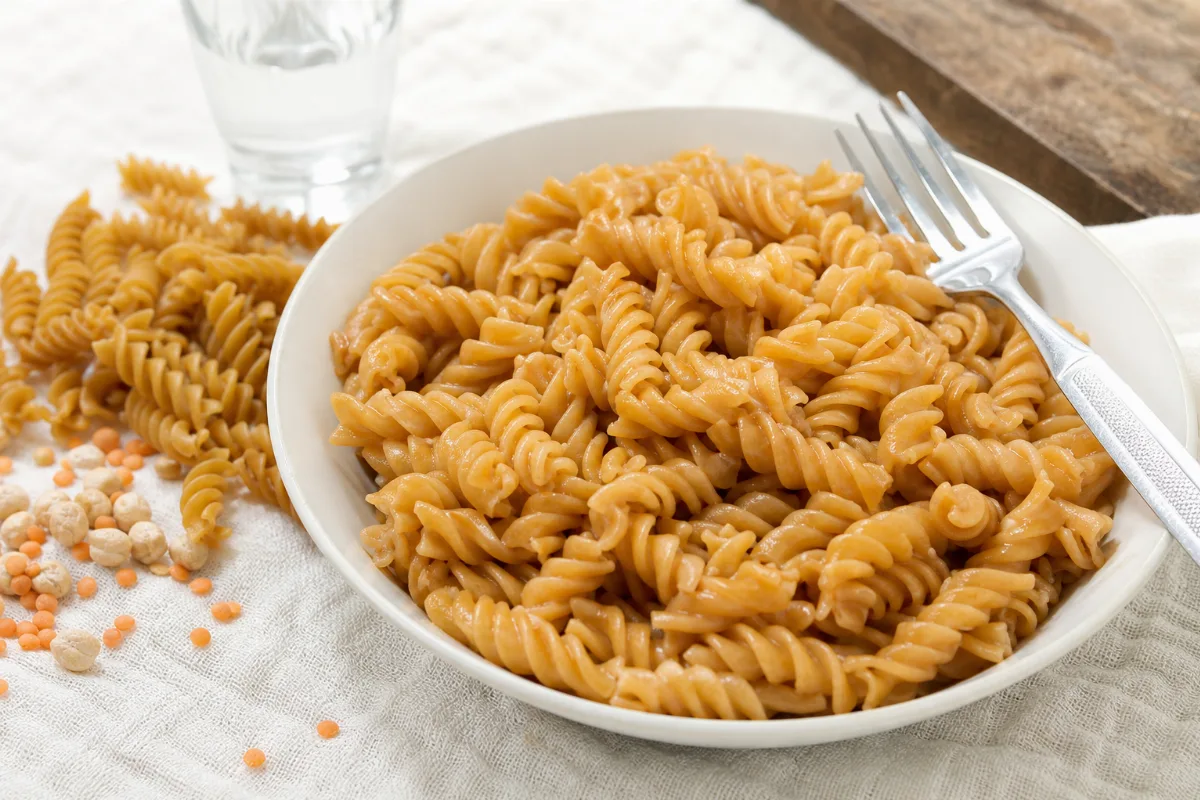
Bean and lentil pasta is dried pasta shaped from legume flour. Some products are 100% legume flour; others mix legume flour with wheat semolina. Brands differ, so the label is the guide.
The only composition we could read is a laboratory analysis of one 100% chickpea fusilli: per 100 g dry, 21.0 g protein, 11.5 g fibre, 53.5 g available carbohydrate and 1.9 g fat. For a 56 g (2 oz) dry portion that works out to about 11.8 g protein and 6.4 g fibre (our arithmetic, not an official portion). No calorie, vitamin, mineral or sodium figures were found.
What the research shows
One small study of 12 healthy adults gave a glycemic index of 39 for freshly cooked chickpea pasta, and 33 after the pasta was chilled for 24 hours and reheated. Resistant starch doubled, from 1.83 to 3.65 g per 100 g. This is one product, measured for two hours.
A 2025 meta-analysis of chickpea meals and a 2026 review of pulse meals found lower after-meal glucose than comparison foods, but certainty is low or very low and these were not pasta. In 19 adults with diabetes or metabolic syndrome, whole pulses lowered blood sugar more than pea or lentil flour.
Whole pulses at about one serving a day lowered LDL cholesterol a little in a 2014 meta-analysis. We found no trial of legume pasta on cholesterol, hunger or weight.
Pasta versus whole beans, and what is on the label
Most legume research uses whole cooked pulses. In one trial, whole pulses lowered blood sugar more than the same pulse as flour, so results for whole beans cannot be assumed for pasta.
We did not research salt, added starches, gums or oils in legume pasta, nor advice for pregnancy, breastfeeding or young children. This page gives no amounts to eat. Ask a doctor, pharmacist or dietitian what is right for you, especially if you have a food allergy, celiac disease, diabetes or take medicine for blood sugar.
At a glance
Traditional uses history, not proof
- Modern packaged food, eaten like ordinary pasta
- No source we read documents traditional medicine uses
Studied for research
- After-meal blood sugar, very low certainty (one chickpea pasta, 12 healthy adults)
- Cooling and reheating the pasta, very low certainty
- Pea and lentil flour versus whole pulses in diabetes, very low certainty
- LDL cholesterol, insufficient for pasta (whole pulses only)
- Hunger and fullness, insufficient for pasta (pulse meals only)
Main compounds
- Protein, 21.0 g per 100 g dry (one chickpea pasta)
- Dietary fibre, 11.5 g per 100 g dry
- Available carbohydrate, 53.5 g per 100 g dry
- Resistant starch, 1.83 g per 100 g cooked, 3.65 g after chilling and reheating
Common forms
- 100% legume flour pasta (the form measured)
- Blends of legume flour with wheat semolina
- Freshly cooked pasta
- Cooked, chilled for 24 hours and reheated
Research links: Chickpea pasta, cooling and glycemic response (Metabolites, 2024) · Chickpea and after-meal blood glucose, meta-analysis (Nutr J, 2025) · FDA: gluten-free labeling Q&A · NIDDK: Eating, diet and nutrition for gas · Research Library · Genes & Biomarkers Library
What it is and its history
- Accepted scientific name
- Not a single plant: pasta made from legume flours, most often chickpea (Cicer arietinum), lentil (Lens culinaris, accepted by GBIF as Vicia lens), black bean (Phaseolus vulgaris) and pea (Pisum sativum)
- Naming authority
- Names taken from the existing site summary; botanical names were not re-checked against GBIF today.
- Common names
- Bean pasta (English); Chickpea pasta (English); Lentil pasta (English); Legume pasta or pulse pasta (English); Pasta de garbanzo y lentejas (Spanish)
- Family or group
- A processed food, not one plant. The flours come from members of the legume family.
- Classification
- Plantae > Tracheophyta > Magnoliopsida > Fabales > Fabaceae (legume family) > Cicer, Lens, Phaseolus, Pisum > Cicer arietinum, Lens culinaris, Phaseolus vulgaris, Pisum sativum
- What it looks like
- Fruit: Dry pasta made by shaping legume flour, sometimes with wheat semolina, tapioca or other starch, into shapes such as fusilli. Cooked pasta absorbs water.
- Harvest and processing
- Pasta is made from milled legume flour. The review by Sissons describes pasta where durum semolina is partly replaced by legumes and other ingredients. The pasta in the main study was fusilli made of 100% chickpea flour without additives.
- Look-alikes and adulterants
- Name: Whole wheat and ordinary wheat pasta; Note: A different food; no head-to-head trial with legume pasta was read.; Name: Whole pulses and pulse flours; Note: Most legume research uses whole cooked pulses, not pasta.
- Sustainability and conservation
- Not assessed.
Photographs
Traditional use and history history, not clinical proof
| Tradition or era | Documented use | Source |
|---|---|---|
| Modern packaged food | Sold as a higher-protein, higher-fibre alternative to wheat pasta. No source we read documents its history. | NOT verified (no source read) |
Traditional use shows how it was used. It does not show that it works or is safe today.
What is inside, and how it may work
What it contains and how those compounds act in cells and animals. Laboratory and animal mechanisms are not proven effects in people.
Main compounds
| Compound | Family | Where it is concentrated | Activity studied | Level of evidence |
|---|---|---|---|---|
| Protein | protein | Legume flour 21.0 g per 100 g dry (one 100% chickpea pasta) | Provides protein in the diet; also the source of legume allergy. 2 | Composition data |
| Dietary fibre | carbohydrate | Legume flour 11.5 g per 100 g dry (same product) | Adds bulk; undigested carbohydrate is fermented by gut bacteria, which is a cause of gas. 2 14 | Composition data |
| Resistant starch | carbohydrate | Cooked pasta 1.83 g per 100 g freshly cooked; 3.65 g after chilling 24 h and reheating | Not fully digested in the small intestine. 2 | Composition data |
| Galacto-oligosaccharides (GOS) | carbohydrate (FODMAP) | Legume flour Not measured in legume pasta | Monash names GOS as a FODMAP found in legumes/pulses; fermented by gut bacteria. 13 | Authoritative guidance |
Mechanisms, receptors and pathways
| Target or pathway | Gene or receptor | What was found | Level |
|---|---|---|---|
| Starch digestion speed and resistant starch | The chickpea pasta authors suggest that resistant starch and the structure of legume flour explain a lower glucose response, and that cooling and reheating raises resistant starch. They did not test the mechanism. 2 | Human data |
Absorption, metabolism and elimination
- Absorption
- Not researched.
- Distribution
- Not found.
- Metabolism
- Not found.
- Elimination
- Not found.
- Bioavailability
- Not established.
Isolated compounds versus whole extracts
Almost all research is on whole cooked pulses or chickpea foods. Only one small study tested a legume pasta (chickpea). Pea and lentil flour was less effective than whole pulses at lowering blood sugar in people with type 2 diabetes or metabolic syndrome, so results for whole beans cannot be assumed for pasta.
Nutritional composition
The only composition we read is a laboratory analysis of one dry 100% chickpea fusilli sold in Poland (Bojarczuk 2024): per 100 g dry, 21.0 g protein, 11.5 g dietary fibre, 53.5 g available carbohydrate, 1.9 g fat, 2.6 g ash and 9.5 g water. For an illustrative 56 g (2 oz) dry portion (our arithmetic; not an official portion) that is about 11.8 g protein, 6.4 g fibre, 30.0 g available carbohydrate and 1.1 g fat. No energy, vitamin, mineral or sodium values were found and none are given. Lentil, black bean and blended pastas will differ, and cooked pasta weighs more because it absorbs water. There is no USDA entry for this food. The paper cites another study (Saget 2020, which we did not read) for cooked chickpea pasta having 1.5 times the protein and 3.2 times the fibre of cooked durum wheat pasta; this is not verified here.
3 very low certainty2 not enough evidence
What was looked at
The 5 benefits and uses checked for Bean and Lentil Pasta, each with how strong the evidence is. Tap one to open it.
- After-meal blood sugar (chickpea pasta and pulse foods)Very low certainty
- Cooling and reheating cooked chickpea pasta (resistant starch)Very low certainty
- Pea and lentil flours versus whole pulses, in type 2 diabetes and metabolic syndromeVery low certainty
- LDL cholesterol (whole pulses; not tested for pasta)Not enough evidence
- Hunger and fullness (pulse meals; not tested for pasta)Not enough evidence
Lab markers tracked in the studies
After-meal blood glucose and glycemic indexResistant starch in cooked chickpea pasta
What is Bean and Lentil Pasta good for?
The studied uses and how strong the human evidence is for each. Nearly all of it is about chickpea or pulse foods, not pasta.
Benefits, one by one
Each card is a research question, not a promise. Tap a goal to filter. Open a card to see the studies, doses and limits.
After-meal blood sugar (chickpea pasta and pulse foods)
Very low certaintyOne small study of 12 healthy adults gave a glycemic index of 39 for one 100% chickpea pasta, which is low. Reviews of chickpea and other pulse meals find lower after-meal glucose than comparison foods, but the certainty is low or very low and none of it tests lentil, bean or blended pasta.
3 studiesCooked pasta made from chickpea flour (one product) and chickpea or p…
Studies, doses and limits
What the trials found
In the pasta study, 12 healthy adults ate a portion of one 100% chickpea pasta containing 50 g of available carbohydrate. Its glycemic index was 39 when freshly cooked (glucose solution = reference). A 2025 meta-analysis of 28 acute chickpea studies found a lower after-meal glucose area under the curve than carbohydrate-matched controls, but no clear change in peak glucose or insulin, and rated certainty very low to low. A 2026 review of 40 single-meal studies of pulses found lower glucose in 28 and lower insulin in 16 of 24 than starchy comparison foods such as wheat products or white rice.
Results
Low after-meal glucose response in healthy adults for one chickpea pasta; lower glucose after chickpea and other pulse meals in reviews, with low or very low certainty.
Effect sizes as reported
Chickpea pasta GI 39 (freshly cooked). Chickpea meta-analysis: glucose iAUC MD -47.89 (95% CI -64.20 to -31.58); peak glucose and insulin not significantly changed. Pulse review: lower glucose in 28 of 40 studies.
Why this rating
Only one small study tested a legume pasta (12 healthy people, one chickpea product, no external funding). The chickpea meta-analysis is rated very low to low certainty by its authors, and its authors work for PepsiCo and Biofortis. The pulse review counts studies and gives no pooled numbers. No study of lentil, black bean or blended pasta was found.
Form and dose studied
Cooked pasta made from chickpea flour (one product) and chickpea or pulse foods eaten as a single meal. Not a supplement.
Who was studied
Healthy adults in the pasta study; adults in general in the reviews.
Limits
Single meals measured for about two hours. This shows how blood sugar rises after one meal, not long-term blood sugar control, HbA1c or disease. Pasta results come from one chickpea product and may not apply to other legume pastas.
Why researchers looked
Legumes have slowly digested starch, fibre and protein, so researchers asked whether pasta made from legume flour keeps that effect.
Proposed mechanism Preliminary mechanism
Not tested in these sources. The chickpea pasta paper cites resistant starch and slowly digested starch as likely reasons; that is the authors' idea.
A proposed mechanism does not show that the effect happens in people.
None specific. See the Safety tab for allergy, gluten cross-contact and gas. People with diabetes who take glucose-lowering medicine should ask their care team before changing meals.
Cooling and reheating cooked chickpea pasta (resistant starch)
Very low certaintyIn the same small study, cooked chickpea pasta that was chilled for 24 hours and then reheated had about double the resistant starch and a lower glycemic index (33 against 39). This is one product in 12 healthy people.
1 studiesCooked, chilled 24 hours at 4 C and reheated chickpea pasta compared …
Studies, doses and limits
What the trials found
Resistant starch measured in the cooked pasta rose from 1.83 to 3.65 g per 100 g after 24 hours at 4 C and reheating. Glycemic index fell from 39 to 33 (p = 0.0022) and the glucose area under the curve was 1327.9 against 1556.1 mg/dL/min. Sensory acceptability was similar.
Results
Lower glycemic index after cooling and reheating, in one small study.
Effect sizes as reported
RS 1.83 vs 3.65 g/100 g; GI 39 vs 33 (p = 0.0022).
Why this rating
12 healthy adults, one 100% chickpea product, measured for two hours after one meal. No replication was found.
Form and dose studied
Cooked, chilled 24 hours at 4 C and reheated chickpea pasta compared with freshly cooked.
Who was studied
Healthy adults aged 18 to 65.
Limits
Not tested in people with diabetes or with lentil or bean pasta. Food kept cold and reheated needs normal food-safety care (not researched here).
Why researchers looked
Cooling cooked starch can turn some of it into resistant starch, which is not fully digested in the small intestine.
Proposed mechanism Preliminary mechanism
The authors link the lower glucose response to the higher resistant starch. This was not proven in the study.
A proposed mechanism does not show that the effect happens in people.
None specific.
Pea and lentil flours versus whole pulses, in type 2 diabetes and metabolic syndrome
Very low certaintyIn 19 adults with type 2 diabetes or metabolic syndrome, meals of pea or lentil flour raised blood sugar less than a glucose drink, but whole pulses gave a lower rise than the same amount of flour. This shows that milled pulse is not the same as the whole bean.
1 studiesCooked whole pea or lentil, and pea or lentil flour, compared with a …
Studies, doses and limits
What the trials found
11 adults with type 2 diabetes and 8 with metabolic syndrome ate four test meals, each giving 50 g available carbohydrate as 1/2 cup whole pea or lentil or the dry equivalent as flour, and a glucose drink as control. All four pulse meals gave a smaller glucose rise than the control. Whole pulses gave a lower response than flours in the early period for people with type 2 diabetes and over the whole test for those with metabolic syndrome.
Results
Flour meals lowered glucose against a glucose drink but did less well than whole pulses.
Effect sizes as reported
Smaller iAUC than control for all four pulse meals; whole pulse lower than flour (see paper for p-values).
Why this rating
Small crossover trial, single meals, flour and whole pulse rather than pasta. The abstract gives no confidence intervals. The authors declare no conflicts.
Form and dose studied
Cooked whole pea or lentil, and pea or lentil flour, compared with a glucose drink.
Who was studied
Adults with type 2 diabetes or metabolic syndrome.
Limits
Not pasta. The abstract does not describe how the flour was prepared. It cannot show that pasta helps people with diabetes.
Why researchers looked
Pasta is made from milled flour, so researchers asked whether milling changes the blood sugar effect compared with whole pulses.
Proposed mechanism Unknown
Not given in the abstract. Milling changes how quickly starch is digested; this is general background, not a result of the study.
A proposed mechanism does not show that the effect happens in people.
People who take glucose-lowering medicine should ask their care team before changing meals.
LDL cholesterol (whole pulses; not tested for pasta)
Not enough evidenceTrials of diets built around whole beans, chickpeas, lentils and peas, at about one serving a day, lowered LDL cholesterol a little. We found no trial of legume pasta on cholesterol, so this does not show a pasta effect.
1 studiesWhole cooked pulses as part of the diet.
Studies, doses and limits
What the trials found
A 2014 meta-analysis of 26 randomised trials (1,037 people, at least 3 weeks) found that diets emphasising pulses at a median 130 g per day lowered LDL cholesterol by 0.17 mmol/L (95% CI -0.25 to -0.09) versus matched diets without pulses. Apolipoprotein B and non-HDL cholesterol did not change.
Results
A small LDL fall with whole pulses; nothing for pasta.
Effect sizes as reported
LDL MD -0.17 mmol/L (95% CI -0.25 to -0.09).
Why this rating
The trials used whole pulses, not pasta or flour, so for legume pasta the certainty is insufficient. The review is from 2014 and the authors ask for longer, better trials.
Form and dose studied
Whole cooked pulses as part of the diet.
Who was studied
Adults in 26 trials.
Limits
Not about pasta. Apolipoprotein B and non-HDL cholesterol showed no effect.
Why researchers looked
Pulses are rich in fibre and protein and are often suggested in heart-healthy diets.
Proposed mechanism Unknown
Not examined in the abstract.
A proposed mechanism does not show that the effect happens in people.
None specific.
Hunger and fullness (pulse meals; not tested for pasta)
Not enough evidenceIn a review of single-meal studies, 3 of 5 found less hunger after pulse meals. Fullness findings were mixed. No study of legume pasta on hunger was found.
1 studiesPulse meals compared with starchy controls.
Studies, doses and limits
What the trials found
The 2026 review of 40 acute studies reports that 3 of 5 studies found significantly less hunger after pulse meals and the other 2 found a non-significant drop. Only 1 of 6 studies found a significantly greater rise in satiety and 3 of 6 in fullness.
Results
Some signal for less hunger after pulse meals, mixed for fullness.
Effect sizes as reported
Hunger: 3/5 significant; satiety 1/6; fullness 3/6.
Why this rating
Vote-counting of small single-meal studies on pulses as a group; nothing on pasta, and nothing on weight.
Form and dose studied
Pulse meals compared with starchy controls.
Who was studied
Adults in short studies.
Limits
Single meals only. Does not show weight loss.
Why researchers looked
Fibre and protein can slow digestion, so researchers asked whether pulse meals keep people fuller.
Proposed mechanism Unknown
Not examined in the abstract.
A proposed mechanism does not show that the effect happens in people.
None specific.
Connections to the rest of health
How Bean and Lentil Pasta connects to the rest of our health knowledge graph. Every link says what kind of connection it is. A safety link (for example to the liver) is a warning, not a benefit. A study that merely mentions a topic never creates a benefit link.
Explore every connection: goals, body systems, organs, symptoms, genes
A. Wellness goals
| Connected to | Kind of connection | Evidence status | Context | Studies |
|---|---|---|---|---|
| Blood Sugar Balance | Very low certainty | After-meal blood sugar (chickpea pasta and pulse foods): One small study of 12 healthy adults gave a glycemic index of 39 for one 100% chickpea pasta, which is low. Reviews of chickpea and other pulse meals find lower after-meal glucose than comparison foods, but the certainty is low or very low and none of it tests lentil, bean or blended pasta. Cooling and reheating cooked chickpea pasta (resistant starch): In the same small study, cooked chickpea pasta that was chilled for 24 hours and then reheated had about double the resistant starch and a lower glycemic index (33 against 39). This is one product in 12 healthy people. | 2 4 6 10 | |
| Cholesterol Balance | Not enough evidence | LDL cholesterol (whole pulses; not tested for pasta): Trials of diets built around whole beans, chickpeas, lentils and peas, at about one serving a day, lowered LDL cholesterol a little. We found no trial of legume pasta on cholesterol, so this does not show a pasta effect. | 3 | |
| Weight Management | Not enough evidence | Hunger and fullness (pulse meals; not tested for pasta): In a review of single-meal studies, 3 of 5 found less hunger after pulse meals. Fullness findings were mixed. No study of legume pasta on hunger was found. | 6 |
B. Body systems
| Connected to | Kind of connection | Evidence status | Context | Studies |
|---|---|---|---|---|
| Endocrine System | Biological association | Very low certainty | Studied for: After-meal blood sugar (chickpea pasta and pulse foods) Studied for: Pea and lentil flours versus whole pulses, in type 2 diabetes and metabolic syndrome | 2 4 6 10 |
| Digestive System | Biological association | Very low certainty | Studied for: Cooling and reheating cooked chickpea pasta (resistant starch) Studied for: Hunger and fullness (pulse meals; not tested for pasta) | 2 6 |
| Cardiovascular System | Biological association | Not enough evidence | Studied for: LDL cholesterol (whole pulses; not tested for pasta) | 3 |
E. Health conditions
| Connected to | Kind of connection | Evidence status | Context | Studies |
|---|---|---|---|---|
| Food allergy | Adverse effect or risk | Documented risk | Lentil, chickpea and pea allergies often occur together; lupine and peanut cross-react. Legume allergies (lentil, chickpea, pea, lupine) often occur together. Preparation or compound: Legume proteins in the pasta |
9 5 1 |
| Celiac disease | Documented risk | Choose a gluten-free labelled pasta; stray grains were found in 2 of 25 bags of lentils. Some pastas are wheat blends and legumes can pick up stray grains; choose a gluten-free label. Preparation or compound: Wheat blends and cross-contact |
8 12 | |
| Irritable bowel syndrome | Documented risk | Monash lists most legumes as high in FODMAPs; no test of legume pasta found. Preparation or compound: Legume carbohydrates (GOS) |
13 15 |
I. Biomarkers
| Connected to | Kind of connection | Evidence status | Context | Studies |
|---|---|---|---|---|
| After-meal blood glucose and glycemic index | Biological association | Very low certainty | Measured in trials: lower response (for chickpea pasta and pulse meals). A lab change is not the same as a health benefit. | 2 4 |
| Resistant starch in cooked chickpea pasta | Biological association | Very low certainty | Measured in trials: increased by cooling and reheating. A lab change is not the same as a health benefit. | 2 |
L. Active compounds
| Connected to | Kind of connection | Evidence status | Context | Studies |
|---|---|---|---|---|
| Protein | Biological association | Composition data | Provides protein in the diet; also the source of legume allergy. Preparation or compound: Legume flour |
2 |
| Dietary fibre | Biological association | Composition data | Adds bulk; undigested carbohydrate is fermented by gut bacteria, which is a cause of gas. Preparation or compound: Legume flour |
2 14 |
| Resistant starch | Biological association | Composition data | Not fully digested in the small intestine. Preparation or compound: Cooked pasta |
2 |
| Galacto-oligosaccharides (GOS) | Biological association | Authoritative guidance | Monash names GOS as a FODMAP found in legumes/pulses; fermented by gut bacteria. Preparation or compound: Legume flour |
13 |
Each connection is stored with the ingredient, the connected record, the kind of connection, the evidence status, the supporting studies, the preparation or compound involved, and a review date (last reviewed October 26, 2026).
Evidence at a glance: what the research found for 5 outcomes
Each outcome below is one thing researchers measured. Certainty is how far the evidence can be trusted, not how well it works. The full studies are on the next tab.
The evidence
The research centre for Bean and Lentil Pasta. Every record here was checked against PubMed or the publisher's page; we never list a study we have not verified.
Evidence by outcome
Bars show how many studies we found for each outcome, not how well it works. People are added up across trials only (reviews are not added, to avoid double counting).
How we rate evidence
High certainty
Several well-run trials or reviews agree; further research is unlikely to change the picture much.
Moderate certainty
Good trials point the same way, but some doubt remains.
Low certainty
Small, short or inconsistent trials. The finding could change with better research.
Very low certainty
Very little or very weak human data. Treat as a possibility only.
Mixed findings
Trials or reviews disagree with each other.
Not enough evidence
Not enough human research to say either way.
Evidence against
Good research found no benefit, or found harm.
We take the reviewers' own risk-of-bias and GRADE statements where they exist, and otherwise judge from study size, design, consistency, directness and whether a product matches what is sold. Many publications do not make evidence high. Method note: We started from our existing summary of this food, then re-read the PubMed abstracts of the studies cited, the full text of the chickpea pasta paper, and the FDA, NIDDK and Monash pages. Items we could not verify are flagged in the research gaps. Only abstracts were read for most studies.
Study library: every study we checked 15
| Study | Design | People | Product, dose, length | Result |
|---|---|---|---|---|
| Abu Risha 2024 Legume Allergens Pea, Chickpea, Lentil, Lupine and Beyond. Curr Allergy Asthma Rep · PMID 38990406 · DOI |
Narrative review |
People with allergy to legumes other than peanut and soy | n/a |
Beans, pea, lentils, chickpea, lupine and others can cause mild to severe allergic reactions, with severe reactions described particularly for peas and lupine. Most reactions come from cross-reactive IgE, for example between peanut and lupine, which matters for people with peanut allergy who do not know of it. The authors note that most studies are case reports. Review, no pooled numbers (n/a) Methods, limits and fundingOutcomes: Allergens of pea, lentil, chickpea, lupine and other legumes Limitations: Mostly case reports and a review of them; no rates in the abstract. Funding and conflicts: The authors declare no conflict of interest. Read: abstract |
| Bojarczuk 2024 The Effect of Cooking and Cooling Chickpea Pasta on Resistant Starch Content, Glycemic Response, and Glycemic Index in Healthy Adults. Metabolites · PMID 39590821 · DOI |
Randomised crossover (small) |
12 12 healthy adults aged 18 to 65 in Poland (8 women, 4 men) |
Commercial fusilli-shaped pasta made of 100% chickpea flour (one brand), cooked in unsalted water for 15 minutes Chickpea flour pasta A portion giving 50 g of available carbohydrate (93.5 g dry pasta) Single test meals, glucose measured for 120 minutes · vs Glucose solution as the reference food; freshly cooked vs cooked, chilled 24 hours at 4 C and reheated |
Cooling and reheating raised resistant starch in the cooked pasta from 1.83 to 3.65 g per 100 g. Glycemic index was 39 for freshly cooked pasta and 33 for cooled and reheated pasta. The authors also report a laboratory analysis of the dry pasta: 21.0 g protein, 11.5 g dietary fibre, 53.5 g carbohydrate, 1.9 g fat and 2.6 g ash per 100 g. GI 33 (cooled, reheated) vs 39 (freshly cooked), p = 0.0022; glucose iAUC 1327.9 vs 1556.1 mg/dL/min, p = 0.0022 (not given in the abstract) Methods, limits and fundingOutcomes: Resistant starch, blood glucose response (incremental area under the curve) and glycemic index Limitations: Only 12 healthy, young people and one product. Glycemic index is measured over two hours after one meal and says nothing about long-term health. Not tested in people with diabetes. The composition figures are for one chickpea pasta and other products differ. Funding and conflicts: No external funding; authors declare no conflicts (full text read 2026-10-26 via Europe PMC). Read: full-text |
| Ha 2014 Effect of dietary pulse intake on established therapeutic lipid targets for cardiovascular risk reduction: a systematic review and meta-analysis of randomized controlled trials. CMAJ · PMID 24710915 · DOI |
Systematic review and meta analysis of RCTs |
1037 26 randomised trials of at least 3 weeks |
Diets emphasising pulses (beans, chickpeas, lentils, peas) Whole pulses Median 130 g per day (about 1 serving) At least 3 weeks · vs Isocaloric diets without pulses |
Pulse diets lowered LDL cholesterol a little. No effect was seen on apolipoprotein B or non-HDL cholesterol. LDL mean difference -0.17 mmol/L (-0.25 to -0.09 mmol/L) Methods, limits and fundingOutcomes: LDL cholesterol, apolipoprotein B, non-HDL cholesterol Limitations: Whole pulses, not pasta. Published in 2014. The authors call for longer, higher quality trials. Funding and conflicts: Not stated in the abstract. Registration: ClinicalTrials.gov NCT01594567 Read: abstract |
| Mah 2025 Chickpea attenuates postprandial blood glucose responses: a systematic review and meta-analysis. Nutr J · PMID 40660242 · DOI |
Systematic review and meta analysis |
28 studies (40 comparisons) Adults in acute, controlled trials comparing chickpea foods with carbohydrate-matched controls |
Chickpeas in various forms eaten in a single meal Chickpea foods (not specifically pasta) Varied Acute (single meal) trials · vs Carbohydrate-matched control foods |
Chickpea meals lowered the after-meal glucose area under the curve. No clear effect on peak glucose or on insulin. The authors rate the certainty as very low to low because trials differed a lot. Glucose iAUC mean difference -47.89 (p < 0.0001); glucose peak -0.23 (not significant); insulin iAUC 50.06 (not significant) (Glucose iAUC -64.20 to -31.58; peak -1.48 to 1.02; insulin iAUC -3771.14 to 3871.26) Methods, limits and fundingOutcomes: After-meal glucose and insulin responses Limitations: Chickpea foods in general, not pasta. Single meals only. Very low certainty (GRADE) for glucose because of differences between trials. Funding and conflicts: Authors work for Biofortis and PepsiCo (declared). Reviews with industry authors need extra care. Registration: PROSPERO CRD42022365074 Read: abstract |
| Martinez San Ireneo 2008 In vitro and in vivo cross-reactivity studies of legume allergy in a Mediterranean population. Int Arch Allergy Immunol · PMID 18594152 · DOI |
Clinical and laboratory study |
54 54 Spanish children with clinical legume allergy |
Lentil, chickpea, pea, white bean and peanut extracts; oral food challenges to legumes Legume extracts and foods |
37 of 54 children (69%) were allergic to 2 or more legumes (median 3). The commonest pairs were lentil and chickpea (57%) and lentil and pea (54%). More than 80% inhibition among lentil, chickpea and pea extracts in laboratory tests. 69% allergic to 2 or more legumes (n/a) Methods, limits and fundingOutcomes: Cross-reactivity between legumes Limitations: Children in one Spanish clinic, so it may not match other countries. Funding and conflicts: Not stated in the abstract. Read: abstract |
| Schiemann 2026 Acute Effects of Non-Oil-Seed Pulses on Parameters of Cardiometabolic Health: A Systematic Review of Human Intervention Studies. Nutr Rev · PMID 41317035 · DOI |
Systematic review |
40 human intervention studies Adults in acute (single meal) studies of non-oil-seed pulses and pulse products |
Pulses (beans, chickpeas, lentils, peas) and pulse products eaten in a single meal Pulses and pulse products Varied Acute (single meal) studies · vs Mainly wheat-flour products or white rice |
28 of 40 studies found lower glucose and 16 of 24 found lower insulin than the starchy comparison foods. 3 of 5 studies found less hunger. Only 1 of 6 found a significantly bigger rise in satiety and 3 of 6 in fullness. Blood fats and vessel function were studied in few trials and mostly showed no effect. 28/40 lower glucose; 16/24 lower insulin; 3/5 less hunger (n/a (counts of studies)) Methods, limits and fundingOutcomes: After-meal glucose, insulin, lipids, hunger and fullness Limitations: Vote-counting of acute studies; no pooled numbers in the abstract. Pulses and pulse products as a group, not specifically pasta. Funding and conflicts: Conflict of interest statement: none declared. Registration: PROSPERO CRD42023471539 Read: abstract |
| Sissons 2022 Development of Novel Pasta Products with Evidence Based Impacts on Health-A Review. Foods · PMID 35010249 · DOI |
Narrative review |
Reviews pasta where durum wheat semolina is partly replaced by other ingredients, including legumes | n/a |
The abstract says semolina is substituted "in part" with ingredients including legumes, and that health impacts are not always measured but inferred. It gives no pooled figures. No numbers in the abstract (n/a) Methods, limits and fundingOutcomes: Technological properties, laboratory starch digestion and clinical or animal data on functional pasta Limitations: Only the abstract was read, so no legume pasta result is taken from it. It is used here only to show that blends of wheat and legume flour exist and that health effects are often inferred. Funding and conflicts: Author declares no conflict of interest. Read: abstract |
| Thompson 2022 Lentils and Gluten Cross Contact. Front Nutr · PMID 35571920 · DOI |
Laboratory spot check |
25 25 bags of dry lentils (24 brands) bought in 2021 |
Dry lentils, hand sorted Whole dry lentils |
2 of 25 bags held stray gluten-containing grains (one bag one wheat grain; another one wheat and one barley grain). The authors calculate that a 454 g bag with one intact grain would not meet the US gluten-free limit of 20 ppm. They advise sorting and rinsing lentils. 2 of 25 bags (n/a) Methods, limits and fundingOutcomes: Presence of wheat or barley grains Limitations: Whole lentils, not pasta. Small spot check. Funding and conflicts: The first author owns Gluten Free Watchdog, LLC (declared). Read: abstract |
| Verma 2013 A comprehensive review of legume allergy. Clin Rev Allergy Immunol · PMID 22555630 · DOI |
Narrative review |
People with legume allergy | n/a |
IgE-binding proteins are found in most legumes. Reactions range from mild skin symptoms to life-threatening anaphylaxis. Listed in decreasing order of allergenicity: peanut, soybean, lentil, chickpea, pea, mung bean and red gram. Legumes can cross-react with each other. Review, no pooled numbers in the abstract (n/a) Methods, limits and fundingOutcomes: Legume allergens, reactions and cross-reactivity Limitations: Narrative review from 2013. Funding and conflicts: Not stated in the abstract. Read: abstract |
| Winham 2025 Pea and Lentil Flours Increase Postprandial Glycemic Response in Adults with Type 2 Diabetes and Metabolic Syndrome. Foods · PMID 40509460 · DOI |
Randomised crossover (small) |
19 11 adults with type 2 diabetes and 8 adults with metabolic syndrome |
Pea or lentil, as 1/2 cup whole cooked pulse or the dry-weight equivalent as flour, each giving 50 g available carbohydrate Whole pulse or flour 50 g available carbohydrate Single test meals, blood sampled for 3 hours · vs Glucola beverage (control); whole pulse vs flour |
All four pulse meals gave a smaller rise in glucose than the control drink. Whole pulses gave a lower response than the flours, in the early period for people with type 2 diabetes and over the whole test for those with metabolic syndrome. All four pulse meals lowered iAUC vs control (0-120 min in T2DM; 0-180 min in MetS); whole pulses lower than flours (not given in the abstract) Methods, limits and fundingOutcomes: Blood glucose over time (incremental area under the curve) Limitations: Small trial, single meals, flour and whole pulse (not pasta). The title says flours raised the response compared with whole pulses. Funding and conflicts: Authors declare no conflicts; the funders had no role in design, analysis or publication. Read: abstract |
| s-fda-food-allergies FDA: Food allergies · Source |
Regulator page n/a |
Methods, limits and fundingRead: full-text | ||
| s-fda-gluten-free FDA: Questions and Answers on the Gluten-Free Food Labeling Final Rule · Source |
Regulator page n/a |
Methods, limits and fundingRead: full-text | ||
| s-monash-fodmap Monash University: About FODMAPs and IBS · Source |
University page n/a |
Methods, limits and fundingRead: full-text | ||
| s-niddk-gas NIDDK: Eating, Diet, & Nutrition for Gas in the Digestive Tract · Source |
Regulator page n/a |
Methods, limits and fundingRead: full-text | ||
| s-niddk-ibs NIDDK: Eating, Diet, & Nutrition for Irritable Bowel Syndrome · Source |
Regulator page n/a |
Methods, limits and fundingRead: full-text |
What we do not know yet
- Only one legume pasta (a 100% chickpea fusilli) has been studied in people, in 12 healthy adults.
- No study of lentil, black bean or blended pasta on blood sugar was found.
- No trial of legume pasta on cholesterol, hunger, weight or HbA1c was found.
- Nutrition for other legume pastas, added ingredients, FODMAP content, pregnancy, breastfeeding and children were not researched.
- The Abu Risha 2024 page and the Thompson 2022 page could not be opened on the journal site (bot check); their PubMed abstracts were used.
How new research is added
New studies are found by a saved PubMed search and placed in a review queue before the page changes.
Lab markers
What changed in blood or saliva tests during trials. A changed number is not the same as feeling or being healthier, and we give no "normal ranges".
Other 2
After-meal blood glucose and glycemic index
Lower response (for chickpea pasta and pulse meals) in trials
How high and for how long blood glucose rises after a test meal compared with a reference food (glycemic index).
Very low certaintyResults and what it means
Why it was measured
It is a quick lab measure of how fast the starch in a food is absorbed.
Statistical vs. clinical meaning
A small, early signal for one product. It does not show a health benefit.
Safety implication
None specific.
| Study | Result | People | Product |
|---|---|---|---|
| 2 | Glycemic index 39 for freshly cooked 100% chickpea pasta (glucose = reference). | 12 healthy adults | One portion of cooked chickpea pasta with 50 g available carbohydrate |
| 4 | Glucose iAUC lower by 47.89 versus carbohydrate-matched controls (95% CI -64.20 to -31.58); peak glucose and insulin not significantly different. | 28 studies, adults | Chickpea foods in a single meal (not specifically pasta) |
Resistant starch in cooked chickpea pasta
Increased by cooling and reheating in trials
The part of the starch that is not digested in the small intestine, measured in the food in the laboratory.
Very low certaintyResults and what it means
Why it was measured
Resistant starch reaches the large intestine, where gut bacteria ferment it.
Statistical vs. clinical meaning
A food measurement for one product; it does not show a body effect on its own.
Safety implication
None specific.
| Study | Result | People | Product |
|---|---|---|---|
| 2 | 1.83 g per 100 g (freshly cooked) vs 3.65 g per 100 g (cooked, chilled 24 hours, reheated). | One commercial 100% chickpea pasta | Cooling at 4 C for 24 hours and reheating |
Safety
What studies and official sources say about side effects, medicines and who should check first. Each point shows what kind of evidence it comes from.
Main points to know 3
- Legume allergy: lentil, chickpea and pea often go together. Legumes are related and their allergy proteins cross-react. In a clinic of 54 Spanish children with legume allergy, 69% were allergic to two or more legumes, most often lentil with chickpea or lentil with pea. A 2024 review says reactions can be severe, particularly for peas and lupine, and that peanut and lupine cross-react, which matters for people with peanut allergy. Check the ingredient list for the legumes you must avoid. Trouble breathing or swelling of the face, lips or throat is an emergency. Observational 5 9 1
- Legume pasta is not automatically gluten-free. Chickpea or lentil flour is naturally free of gluten, but some pastas blend legume flour with wheat semolina, and legumes can pick up stray wheat or barley in the field or factory. In a spot check, 2 of 25 bags of dry lentils held a wheat or barley grain. The FDA allows a "gluten-free" claim on food only below 20 parts per million. If you have celiac disease, choose a pasta that is labelled gluten-free and read the ingredients. This was checked for whole lentils, not for pasta. Authoritative guidance 8 12 7
- Gas and bloating are common with legumes. NIDDK lists legumes (beans, peas, lentils) among foods whose carbohydrates are not fully digested and make gas when gut bacteria ferment them. Monash University lists "most legumes/pulses" in its high-FODMAP group. We found no FODMAP testing of legume pasta. NIDDK suggests adding fibre slowly, by 2 to 3 g a day, to help the body get used to it. Authoritative guidance 14 15 13
Side effects 3
| Effect | How often | Severity and recovery | Evidence |
|---|---|---|---|
| Allergic reaction to the legume (chickpea, lentil, pea, lupine, soy or peanut cross-reaction) No frequency for legume pasta was found. Which legumes are in the pasta varies by product. | Not established | mild to life-threatening Mild reactions settle; anaphylaxis needs emergency treatment | Observational 9 5 1 |
| Gas, bloating and stomach discomfort Reported for legumes in general. No source tested how often legume pasta causes it. | Not established | mild Usually passes | Authoritative guidance 14 15 13 |
| Gluten exposure in people with celiac disease if the pasta is a wheat blend or has cross-contact Only whole lentils were tested, not pasta. | Not established | varies Not assessed | Laboratory 8 12 |
Liver
No liver injury linked to eating legume pasta was found in the sources read. Liver safety was not specifically researched for this food.
How often. No frequency found.
This is a safety connection. It is not evidence that Bean and Lentil Pasta supports liver health.
Medicines and supplements 1
| With | Why it matters | Importance | Evidence | What to do |
|---|---|---|---|---|
| Prescription and over-the-counter medicines none-found | No source read describes a medicine interaction with eating legume pasta. This is not proof of none. Legume pasta can change the amount and kind of carbohydrate in a meal, so people on glucose-lowering medicine or insulin may see different blood sugar readings and should tell their care team before changing meals. | None found Not enough evidence | A pharmacist or doctor can check your own medicines. |
Who should check first 3
| Situation | Advice | Evidence |
|---|---|---|
| Known or suspected allergy to lentil, chickpea, pea, lupine, soy or peanut | Avoid pasta containing that legume until an allergist has advised you. Peanut-allergic people sometimes react to lupine or other legumes. For trouble breathing or swelling of the face or throat, call emergency services. | Observational 1 5 |
| Celiac disease or gluten sensitivity | Choose pasta labelled gluten-free (FDA: below 20 ppm). Wheat blends are not safe. | Authoritative guidance 12 8 |
| Irritable bowel syndrome or easily upset digestion | Legume foods may bring on gas. NIDDK says a short low-FODMAP trial is for a doctor or dietitian to guide. | Authoritative guidance 15 13 |
Overdose, product quality and regulators
Summary. Legume pasta is an ordinary dried, cooked food. No toxicity concern for the finished pasta was found in the sources read. Raw-bean lectin poisoning, mould toxins, heavy metals and pesticide residues were not researched for this product.
Animal. Not researched.
Human doses studied. Single portions in the pasta study (93.5 g dry) were eaten once by 12 healthy adults without reported problems in the abstract.
High dose or long term signals. Not researched.
Overdose response. Not found.
Genotoxicity. Not researched.
The documented concern is gluten cross-contact. Label details such as added salt, starch, gums, oils or wheat vary by product and were not surveyed.
Gluten cross-contact in dry lentils, spot check 2021. 2 of 25 bags (24 brands) held a wheat or barley grain after hand sorting. The authors calculate that one grain in a 454 g bag exceeds the 20 ppm gluten-free limit. Whole lentils, not pasta. 8
Wheat-legume blends. A review of functional pasta describes durum semolina partly replaced by legumes and other ingredients, so some products are blends. The abstract does not say how common blends are. 7
Allergens other than the legume. The FDA names nine major allergens (milk, eggs, fish, shellfish, tree nuts, peanuts, wheat, soybeans, sesame). Chickpea, lentil and pea are not on that list, so read the ingredients rather than only the Contains line. 11
| Body | Action | Date |
|---|---|---|
| FDA (US Food and Drug Administration) (United States) | Defines "gluten-free" for voluntary food labelling; foods bearing the claim must meet the rule, which sets a limit of less than 20 ppm gluten. source | Page read 2026-10-26; final rule issued August 5, 2013 |
| FDA (US Food and Drug Administration) (United States) | Nine major food allergens: milk, eggs, fish, crustacean shellfish, tree nuts, peanuts, wheat, soybeans and sesame. Chickpea, lentil and pea are not among them. source | Page read 2026-10-26 |
| NIDDK (US National Institute of Diabetes and Digestive and Kidney Diseases) (United States) | Names legumes among foods that can cause gas; advises adding fibre slowly (2 to 3 g a day) and discussing a low-FODMAP diet with a doctor. source | Gas page last reviewed June 2021; IBS page last reviewed November 2017 |
When to get medical help
- Trouble breathing, wheeze, swelling of the lips, face or throat, widespread hives, repeated vomiting or collapse after eating legume pasta (possible anaphylaxis): call emergency services
- Severe or lasting stomach pain, vomiting or diarrhoea after eating: seek medical advice
Stop using the product and contact a clinician or emergency service. In the US, Poison Control is 1-800-222-1222.
General information only, not medical advice. Ask a clinician or pharmacist before use, especially with medicines, in pregnancy or with a health condition. See the Natural Remedy Safety guide.
Frequently asked questions
What is bean and lentil pasta?
Is legume pasta higher in protein and fibre than wheat pasta?
One laboratory analysis of dry 100% chickpea pasta found 21.0 g protein and 11.5 g fibre per 100 g. The authors cite another study that found more protein and fibre than durum wheat pasta, which we could not verify. We read no side-by-side figures for your product, so compare labels.
Does it raise blood sugar less than wheat pasta?
Is legume pasta good for people with diabetes?
Does cooling and reheating the pasta change it?
In one small study, chickpea pasta chilled for 24 hours and reheated had resistant starch of 3.65 g per 100 g compared with 1.83 g when freshly cooked, and a glycemic index of 33 against 39. It was 12 healthy people and one product.
Does it lower cholesterol?
Trials of whole pulses at about one serving a day found a small drop in LDL cholesterol. We found no trial of legume pasta, so this does not show a pasta effect.
Will it make me feel fuller or help with weight?
In a review of single-meal studies of pulses, 3 of 5 found less hunger and results for fullness were mixed. No study of legume pasta on hunger or weight was found.
Why does legume pasta cause gas or bloating?
Is legume pasta gluten-free?
Can I be allergic to it?
Is bean pasta the same as eating beans or lentils?
Is it safe in pregnancy or for children?
We did not find advice specific to legume pasta for pregnancy, breastfeeding or young children, and did not research it. Ask a doctor, midwife or dietitian, especially if there is a family history of food allergy.
Explore by health goal
Editorial transparency
- Written by
- AlternativeMed editorial team. Research compiled with AI assistance, then checked against the sources listed.
- Medical review
- None. This page has not been reviewed by a physician or pharmacist.
- First published
- 2026-10-26
- Last substantive update
- 2026-10-26
- How we research
- We started from our existing summary of this food, then re-read the PubMed abstracts of the studies cited, the full text of the chickpea pasta paper, and the FDA, NIDDK and Monash pages. Items we could not verify are flagged in the research gaps. Only abstracts were read for most studies.
- How we rate evidence
- See "How we rate evidence" in the Evidence tab.
- Independence
- No product is promoted on this page. No affiliate links are shown.
Sources 15
Each source was opened and checked. Where we read only the abstract, it says so. The small numbers in the text point here.
- Abu Risha M, et al.. Legume Allergens Pea, Chickpea, Lentil, Lupine and Beyond.. Curr Allergy Asthma Rep. 2024. PMID 38990406. DOI 10.1007/s11882-024-01165-7. (abstract)
- Bojarczuk A, et al.. The Effect of Cooking and Cooling Chickpea Pasta on Resistant Starch Content, Glycemic Response, and Glycemic Index in Healthy Adults.. Metabolites. 2024. PMID 39590821. DOI 10.3390/metabo14110585. (full-text)
- Ha V, et al.. Effect of dietary pulse intake on established therapeutic lipid targets for cardiovascular risk reduction: a systematic review and meta-analysis of randomized controlled trials.. CMAJ. 2014. PMID 24710915. DOI 10.1503/cmaj.131727. (abstract)
- Mah E, et al.. Chickpea attenuates postprandial blood glucose responses: a systematic review and meta-analysis.. Nutr J. 2025. PMID 40660242. DOI 10.1186/s12937-025-01176-8. (abstract)
- Martinez San Ireneo M, et al.. In vitro and in vivo cross-reactivity studies of legume allergy in a Mediterranean population.. Int Arch Allergy Immunol. 2008. PMID 18594152. DOI 10.1159/000142045. (abstract)
- Schiemann TB, et al.. Acute Effects of Non-Oil-Seed Pulses on Parameters of Cardiometabolic Health: A Systematic Review of Human Intervention Studies.. Nutr Rev. 2026. PMID 41317035. DOI 10.1093/nutrit/nuaf190. (abstract)
- Sissons M. Development of Novel Pasta Products with Evidence Based Impacts on Health-A Review.. Foods. 2022. PMID 35010249. DOI 10.3390/foods11010123. (abstract)
- Thompson T, et al.. Lentils and Gluten Cross Contact.. Front Nutr. 2022. PMID 35571920. DOI 10.3389/fnut.2022.867954. (abstract)
- Verma AK, et al.. A comprehensive review of legume allergy.. Clin Rev Allergy Immunol. 2013. PMID 22555630. DOI 10.1007/s12016-012-8310-6. (abstract)
- Winham DM, et al.. Pea and Lentil Flours Increase Postprandial Glycemic Response in Adults with Type 2 Diabetes and Metabolic Syndrome.. Foods. 2025. PMID 40509460. DOI 10.3390/foods14111933. (abstract)
- . FDA: Food allergies. . . (full-text)
- . FDA: Questions and Answers on the Gluten-Free Food Labeling Final Rule. . . (full-text)
- . Monash University: About FODMAPs and IBS. . . (full-text)
- . NIDDK: Eating, Diet, & Nutrition for Gas in the Digestive Tract. . . (full-text)
- . NIDDK: Eating, Diet, & Nutrition for Irritable Bowel Syndrome. . . (full-text)
Where to buy
Check the label first. Whatever you buy, look for these:
- A recent packed-on date: very old dried beans cook unevenly
- Organic or not, and the country of origin
- Whether you want dried or canned
- Soak and cook thoroughly; some raw beans are unsafe
Talk to a pharmacist or doctor before you start any supplement, especially if you take medicines. See the Safety tab for interactions.
Support our free guides: as an Amazon Associate we earn from qualifying purchases. Full disclosure.


