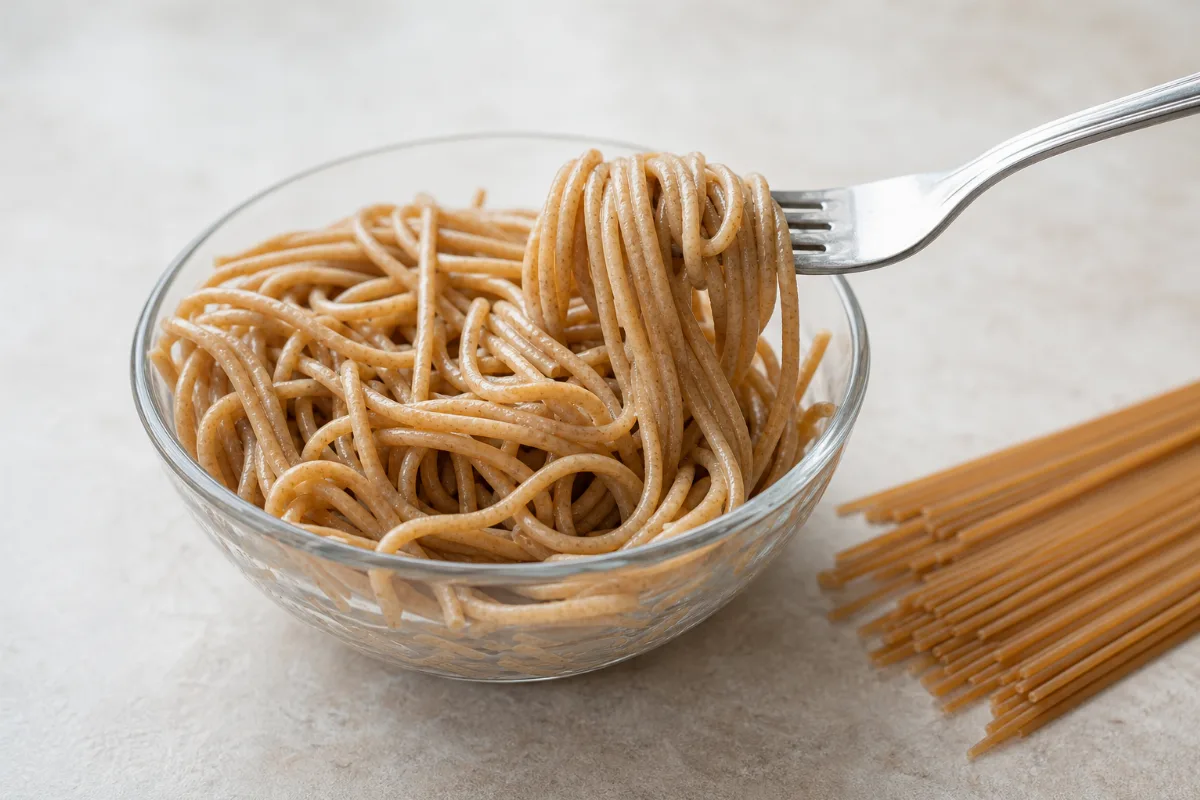
Whole Grains · Whole grain product
Whole-Wheat Pasta
Triticum durum (pasta wheat) · also called Wholemeal pasta, whole grain pasta, whole-wheat spaghetti, pasta integral (Spanish)
Whole-wheat pasta is pasta made from the whole wheat kernel, so it keeps the bran and germ and has more fibre than white pasta (3.9 g per 100 g cooked by USDA data). Small meal trials found its blood sugar effect was similar to refined pasta, and results on fullness were mixed. The big heart and diabetes findings come from studies of whole grains in general, not pasta alone. The main caution is that it contains gluten: it is not safe for celiac disease, and wheat is a common allergen.
General information, not medical advice. Last substantive update · Not medically reviewed. A named clinician has not signed off on this page. How this page is made
About Whole-Wheat Pasta
Whole-wheat pasta is pasta made from whole-grain wheat flour, so it keeps the bran and germ. It has more fibre and minerals than white pasta. It is a healthy food, not a proven remedy: the heart and diabetes findings come from studies of whole grains in general, and the pasta-specific trials are small one-meal studies. Pasta contains gluten and wheat is a common allergen.
What it is
Whole-wheat pasta is dough of wheat and water, shaped and dried, made with whole-grain flour instead of white flour. The NHS says pasta is made from durum wheat and that wholewheat or wholegrain pasta has more fibre than ordinary pasta. GBIF lists Triticum durum as an accepted wheat species in the grass family Poaceae.
USDA data for cooked whole-wheat pasta, per 100 g: 149 kcal, 5.99 g protein, 30.1 g carbohydrate, 3.9 g fibre, 54 mg magnesium, 1.32 mg manganese and 36.3 micrograms selenium. The USDA household portion is 1 cup of cooked spaghetti (117 g): about 174 kcal and 4.6 g fibre. Dry pasta is more concentrated: 352 kcal and 9.2 g fibre per 100 g, and 1 cup of dry spaghetti (91 g) is about 320 kcal. Do not mix the cooked and dry numbers.
What the research shows
Pasta-specific trials are small. In a one-meal trial in 16 young adults, wholegrain and refined pasta gave similar blood sugar responses, while pasta meals gave lower responses than the bread meals. Two other tiny crossover trials (8 and 14 people) looked at fullness: one found less hunger after a wholemeal pasta, and another found no extra fullness against refined pasta. None found that people ate less later.
A review of 32 trial comparisons found low-GI diets that included pasta lowered body weight by about 0.6 kg compared with higher-GI diets. No trial tested pasta alone, and the authors report ties to food companies including a pasta maker.
The broader findings are about whole grains of all kinds. Pooled trials found LDL cholesterol 0.09 mmol/L lower, and cohort studies link more whole grain to less coronary heart disease (RR 0.81 per 90 g a day) and less type 2 diabetes (RR 0.68 per 3 servings a day). Cohort studies cannot prove cause, and a 2026 perspective notes that whole grain eaters tend to have healthier lifestyles and that studies define whole grain differently.
Pasta versus bread, flour, refined pasta and other pasta types
The USDA values are for whole-wheat pasta as food. The pasta trials used one-meal servings, and one of them used an experimental wholemeal pasta, not a typical shop product. The cholesterol trials and cohort studies used whole-grain foods from many grains. Whole wheat bread, bean and lentil pasta and gluten-free pasta are different products with their own pages. We found no extract or supplement of whole-wheat pasta and make no claim about one.
Portions and labels
The USDA household portions are 1 cup of cooked spaghetti (117 g) and 1 cup of dry spaghetti (91 g); other pasta shapes weigh differently per cup. These are information, not a prescription. The NHS says wholegrain varieties are the better choice among starchy foods and gives wholemeal spaghetti with lentil and tomato sauce as an example of a meal with around 11 g of fibre. Check the ingredient list for whole wheat or whole grain, since studies and packs define whole grain differently. This page gives no amounts to eat. Ask a doctor, pharmacist or dietitian what is right for you, especially if you have celiac disease, a wheat allergy, kidney disease or take medicine for blood sugar.
At a glance
Traditional uses history, not proof
- Boiled and eaten as a main dish, with sauces, in soups and in cold salads
- A wholegrain swap for white pasta, as the NHS suggests when choosing starchy foods
- Long use as food is not proof that it treats any condition
Studied for research
- Blood sugar after a meal, mixed certainty (small single-meal trials)
- Feeling full, mixed certainty (three tiny trials disagree)
- Body weight, low certainty (pasta inside low-GI diets, not pasta alone)
- Fibre, minerals and B vitamins, high certainty for the nutrient content
- LDL cholesterol, low certainty (pooled whole-grain trials, oat strongest)
- Heart disease and early death, low certainty (observational, whole grains of all kinds)
- Type 2 diabetes risk, low certainty (observational)
- Mineral availability, very low certainty (a lab model)
- Gut symptoms from wheat fructans, low certainty
Main compounds
- Dietary fibre
- Starch
- Gluten
- Fructans (FODMAPs)
- Manganese and selenium
- Thiamin and niacin
Common forms
- Dry whole-wheat pasta, boiled until cooked, as food
- Cooked whole-wheat pasta in sauces, soups and salads
- Fresh whole-wheat pasta (needs the fridge, per the NHS)
- Bean, lentil or gluten-free pasta (different products, not covered)
Research links: 2010 trial: wholegrain vs refined bread and pasta · 2018 review: pasta in low-GI diets and body weight · NIDDK: celiac disease and diet · Research Library · Genes & Biomarkers Library
What it is and its history
- Accepted scientific name
- Triticum durum
- Naming authority
- GBIF accepted name, exact match (the wheat NHS says pasta dough is made from)
- Common names
- Whole-wheat pasta (English); Wholemeal pasta (English); Whole grain pasta (English); Whole-wheat spaghetti (English); Pasta integral (Spanish)
- Family or group
- Poaceae (the grass family), per GBIF.
- Classification
- Plantae > Not verified > Not verified > Poales > Poaceae > Triticum > Triticum durum
- Native range
- Not verified from a source read.
- Habitat
- Not verified from a source read.
- What it looks like
- Roots: Not verified.; Stems: Not verified.; Leaves: Not verified.; Flowers: Not verified.; Fruit: Pasta is made from wheat kernels (grain). Whole-wheat pasta keeps the bran and germ; the NHS says whole-grain varieties are higher in fibre.
- Cultivation
- Not verified from a source read.
- Harvest and processing
- Pasta is dough of wheat and water, shaped and dried (NHS). Whole-wheat pasta is made from whole-grain flour instead of white flour (Vignola 2018 compared the two in a lab). Shape, drying and cooking were not described in the sources read.
- Look-alikes and adulterants
- Name: Refined (white) pasta; Note: Made without the bran and germ, so it has less fibre and fewer minerals.; Name: Whole wheat bread; Note: A different wheat food with its own page; the single-meal trial compared pasta with bread.; Name: Bean and lentil pasta; Note: Made from legumes instead of wheat and has its own page; not covered by the values here.
- Sustainability and conservation
- Not assessed.
Photographs
What is inside, and how it may work
What it contains and how those compounds act in cells and animals. Laboratory and animal mechanisms are not proven effects in people.
Main compounds
| Compound | Family | Where it is concentrated | Activity studied | Level of evidence |
|---|---|---|---|---|
| Dietary fibre | carbohydrate | Bran USDA: 3.9 g per 100 g cooked; 9.2 g per 100 g dry | Adds bulk; makes wholegrain foods slower to digest (NHS). 21 22 18 | Authoritative guidance |
| Starch | carbohydrate | Starchy middle of the kernel USDA: 25.5 g per 100 g cooked; 56.8 g per 100 g dry | The main carbohydrate; after-meal glucose response was lower for pasta than for bread meals in a small trial and a review. 21 22 9 7 | Human data |
| Gluten (gliadins and glutenins) | protein | Starchy middle Not measured in the sources read; USDA lists 5.99 g total protein per 100 g cooked | Triggers celiac disease in people with the condition (NIDDK, NHS). 20 16 21 | Authoritative guidance |
| Fructans (fructooligosaccharides) and other FODMAPs | carbohydrate (FODMAP) | Kernel Not given as gram amounts in the abstract; fructooligosaccharides were the main FODMAP group, and cooking cut them by 30.9% to 84% | Fermentable sugars that can trigger or worsen irritable bowel symptoms in some people (Torbica 2025). 11 10 | Laboratory |
| Manganese and selenium | minerals | Bran and germ USDA per 100 g cooked: manganese 1.32 mg; selenium 36.3 micrograms | Nutrient content only. Selenium in wheat depends on the soil it grew in. 21 | Authoritative guidance |
| Thiamin and niacin (B vitamins) | vitamins | Bran and germ USDA per 100 g cooked: thiamin 0.156 mg; niacin 3.13 mg | Nutrient content only (NHS also names iron and B vitamins). 21 18 | Authoritative guidance |
Mechanisms, receptors and pathways
| Target or pathway | Gene or receptor | What was found | Level |
|---|---|---|---|
| Appetite hormones (PYY, ghrelin) | Not specified | In 14 healthy adults, hunger was lower and PYY higher after an experimental wholemeal pasta than after refined pasta; ghrelin at 60 minutes was lower. Appetite ratings correlated with PYY. A single meal; not shown for shop whole-wheat pasta. 5 | Human data |
| After-meal energy use (thermogenesis) | Not specified | In 8 people, meal-induced thermogenesis was lower after whole-grain pasta than after refined pasta with legumes (58 kJ versus 248 kJ). A pilot result. 4 | Human data |
| Gluten and the immune system in celiac disease | Not specified in the sources read | In celiac disease the immune system mistakes substances inside gluten as a threat and attacks the small intestine (NHS). 16 | Human data |
| Wheat fructans and gut fermentation | Not specified | Fructans and amylase-trypsin inhibitors are suspected triggers of non-coeliac wheat sensitivity; the mechanism is not established. 10 | Narrative review |
| Mineral release after digestion | Not applicable | In a test-tube digestion model, copper, iron, magnesium and zinc were more dialyzable from white pasta than from whole-grain pasta. 12 | Laboratory |
Absorption, metabolism and elimination
- Absorption
- Not found for pasta in people. A lab digestion model found some minerals less dialyzable from whole-grain pasta than from white pasta.
- Distribution
- Not found.
- Metabolism
- Not found.
- Elimination
- Not found.
- Bioavailability
- Not established for pasta nutrients in the sources read.
Isolated compounds versus whole extracts
The USDA values are for cooked and dry whole-wheat pasta as food. The after-meal trials used pasta meals of 100 to 117 g, one of them an experimental pasta. The cholesterol trials and cohort studies used whole-grain foods from many grains, and pasta is not named in their abstracts. The weight review is about low-GI diets that include pasta. We found no extract or supplement of whole-wheat pasta and make no claim about one.
Nutritional composition
Nutrition from USDA FoodData Central (SR Legacy; both records last updated 4/1/2019; values read 2026-10-26 from the public data feed). COOKED whole-wheat pasta (FDC 168910), per 100 g: 149 kcal, 5.99 g protein, 1.71 g fat (0.243 g saturated), 30.1 g carbohydrate (25.5 g starch, 0.75 g sugars), 3.9 g fibre, 61.8 g water, 13 mg calcium, 1.72 mg iron, 54 mg magnesium, 127 mg phosphorus, 96 mg potassium, 4 mg sodium, 1.34 mg zinc, 0.225 mg copper, 1.32 mg manganese, 36.3 micrograms selenium, 0.156 mg thiamin, 0.099 mg riboflavin, 3.13 mg niacin, 21 micrograms folate and 0.6 micrograms vitamin K. USDA's household portion is 1 cup of spaghetti, not packed, 117 g (other cups: elbows 117 g, penne 97 g, farfalle 107 g, rotini 107 g, shells 105 g, lasagne 116 g), which is about 174 kcal, 7.0 g protein, 35.2 g carbohydrate and 4.6 g fibre (per-100-g values multiplied by 1.17). DRY whole-wheat pasta (FDC 169738), per 100 g: 352 kcal, 13.9 g protein, 2.93 g fat, 73.4 g carbohydrate, 9.2 g fibre, 8.21 g water, 29 mg calcium, 3.62 mg iron, 128 mg magnesium, 343 mg phosphorus, 434 mg potassium, 6 mg sodium, 2.97 mg zinc, 2.98 mg manganese, 77.6 micrograms selenium, 0.407 mg thiamin and 8.69 mg niacin. 1 cup of dry spaghetti is 91 g (about 320 kcal and 8.4 g fibre). Cooked and dry values must not be mixed: pasta takes up water when boiled. Sauces, cheese and oil are not included. Values vary with brand, wheat and cooking time.
2 high certainty2 mixed findings5 low certainty1 very low certainty
What was looked at
The 10 benefits and uses checked for Whole-Wheat Pasta, each with how strong the evidence is. Tap one to open it.
- Blood sugar after a mealMixed findings
- Feeling full after eatingMixed findings
- Body weight (pasta in low-GI diets)Low certainty
- Fibre contentHigh certainty
- Minerals and B vitamins (nutrient content)High certainty
- Cholesterol (LDL), whole-grain dietsLow certainty
- Heart disease and early death (observational)Low certainty
- Type 2 diabetes risk (observational)Low certainty
- Mineral availability from whole-grain pasta (lab study)Very low certainty
- Gut symptoms: fructans and wheat sensitivityLow certainty
Lab markers tracked in the studies
Blood glucose after a mealHunger and fullness ratingsBody weightLDL cholesterolHDL cholesterol
What is Whole-Wheat Pasta good for?
The main studied uses and how strong the human evidence is for each. Most results are for whole grains in general or for single meals, not for whole-wheat pasta over time.
Benefits, one by one
Each card is a research question, not a promise. Tap a goal to filter. Open a card to see the studies, doses and limits.
Blood sugar after a meal
Mixed findingsIn a single-meal trial in 16 young adults, wholegrain and refined pasta gave similar blood sugar responses over 3 hours. Pasta meals in general gave lower responses than the bread meals. A review also found pasta meals lower than bread or potato meals. Nobody has shown that this changes long-term health.
4 studiesWholegrain and refined pasta meals eaten once, in a lab (trial detail…
Studies, doses and limits
What the trials found
Kristensen 2010: a randomised crossover trial in 16 healthy young adults tested iso-calorie meals (50 g carbohydrate) of refined bread, wholegrain bread, refined pasta and wholegrain pasta. The 180-minute glucose responses were similar for wholegrain and refined products, but the pasta meals gave significantly lower responses. Only refined pasta had a lower glycaemic index than refined bread. Costabile 2018 (14 healthy adults, an experimental wholemeal pasta) found no difference in glucose response against refined pasta. Cioffi 2016 (8 people, pilot) found plasma glucose differed between pasta meals and was lower for the refined pasta meal, and the authors said no meal change improved the after-meal profile. Huang 2017 pooled studies and found pasta meals gave lower after-meal glucose than bread or potato meals.
Results
Whole-wheat pasta was not better than refined pasta for after-meal blood sugar in the small trials read. Pasta in general gave lower responses than bread or potato.
Effect sizes as reported
Kristensen 2010: similar 180-minute glucose for wholegrain and refined; pasta meals lower. Huang 2017: pasta lower than bread or potato (numbers not in the abstract).
Why this rating
Mixed: the trials are small single-meal studies in healthy people (8 to 16 people), and wholegrain was not better than refined pasta for glucose. The pasta-versus-bread finding is consistent across the review and the trial but is a short-term marker.
Form and dose studied
Wholegrain and refined pasta meals eaten once, in a lab (trial details, not advice).
Who was studied
Healthy young adults, mostly in Italy and Denmark.
Limits
Small, single meals. Healthy volunteers, not people with diabetes. No long-term blood sugar outcome such as HbA1c.
Why researchers looked
Pasta is a starchy food, so people with diabetes or who watch blood sugar ask how whole-wheat pasta compares with bread and refined pasta.
Traditional use
Whole-wheat pasta is boiled and eaten as a main dish, with sauces, in soups or in salads. Long use as food is not proof that it treats any condition.
Proposed mechanism Unknown
Not tested in these studies. The reviewers call pasta a low glycaemic index food but the abstract does not explain why.
A proposed mechanism does not show that the effect happens in people.
People who take diabetes medicines should follow their care team's plan (see Safety).
Feeling full after eating
Mixed findingsSmall meal trials in healthy adults gave mixed results. One found a wholemeal pasta lowered hunger and raised a fullness hormone. Another found whole-grain pasta did not raise fullness more than refined pasta. Later food intake did not change in the trials that measured it.
4 studiesSingle meals of whole-grain or wholemeal pasta (the Costabile pasta w…
Studies, doses and limits
What the trials found
Costabile 2018: a randomised crossover trial in 14 healthy adults compared an experimental wholemeal pasta (117 g; 11 g fibre) with refined pasta (100 g; 3 g fibre). After the wholemeal pasta the desire to eat was 16% lower (p = 0.04), hunger was 23% lower (p = 0.004), satiety was 13% higher (p = 0.08, not significant) and PYY was higher (area under the curve +44%, p = 0.001). Self-reported energy intake afterwards did not change. Kristensen 2010 (16 young adults): wholegrain bread, but not wholegrain pasta, raised satiety and reduced hunger against the refined version, and later energy intake did not differ. Cioffi 2016 (8 people, pilot): fullness increased (p = 0.001) and hunger decreased (p = 0.038); meal-induced thermogenesis was lower after whole-grain pasta than after refined pasta with legumes (58 kJ versus 248 kJ). The NHS says wholegrain foods are digested more slowly and can help us feel full for longer.
Results
Results go both ways. Two small trials found less hunger after whole-grain pasta; one found no extra fullness against refined pasta. None found that people ate less later.
Effect sizes as reported
Costabile 2018: desire to eat -16%, hunger -23%, PYY +44% (area under the curve). Cioffi 2016: thermogenesis 58 kJ versus 248 kJ.
Why this rating
Mixed: three tiny crossover trials (8 to 16 people, one meal each) disagree with each other. The NHS statement is general advice about wholegrain foods, not a trial.
Form and dose studied
Single meals of whole-grain or wholemeal pasta (the Costabile pasta was an experimental product; trial details, not advice).
Who was studied
Healthy adults in Italy and Denmark.
Limits
Very small, one-meal studies. Subjective ratings. Costabile's pasta had 11 g of fibre per test meal, more than USDA lists for shop whole-wheat pasta. No long-term weight outcome.
Why researchers looked
Whole-wheat pasta has more fibre than refined pasta, and fibre is thought to slow digestion, so researchers test whether it keeps people full for longer.
Traditional use
Whole-wheat pasta is boiled and eaten as a main dish, with sauces, in soups or in salads. Long use as food is not proof that it treats any condition.
Proposed mechanism Human clinical
In one trial, hunger fell as PYY (a gut hormone linked to fullness) rose and ghrelin (a hunger hormone) fell. This was a one-meal measurement in 14 people.
A proposed mechanism does not show that the effect happens in people.
None specific.
Body weight (pasta in low-GI diets)
Low certaintyA review of 32 trial comparisons found that diets built around low glycaemic index foods that included pasta lowered body weight by about 0.6 kg compared with higher-GI diets. No trial tested pasta alone, and whole-wheat pasta was not separated out. Its authors report ties to food companies including a pasta maker.
2 studiesPasta eaten as part of low-GI diets in trials (type of pasta not stat…
Studies, doses and limits
What the trials found
Chiavaroli 2018 searched trials of at least 3 weeks in adults. It found no trial comparisons of pasta alone and 32 trial comparisons (2448 participants) of pasta within low-GI dietary patterns. Body weight was lower by 0.63 kg (95% CI -0.84 to -0.42) and BMI by 0.26 kg/m2 (-0.36 to -0.16) than on higher-GI patterns. Other measures such as body fat did not change. The reviewers graded the evidence moderate for body weight and BMI and low for waist circumference and body fat. Huang 2017 found evidence lacking on pasta and cardio-metabolic disease risk.
Results
Pasta inside a low-GI diet did not raise body weight and slightly lowered it. This does not show pasta itself or whole-wheat pasta causes weight loss.
Effect sizes as reported
Body weight MD -0.63 kg (95% CI -0.84 to -0.42); BMI MD -0.26 kg/m2 (-0.36 to -0.16).
Why this rating
The review graded its own body weight result moderate, but it concerns low-GI diets that contain pasta, not whole-wheat pasta, so we rate whole-wheat pasta itself low. Several authors report research support from companies including Barilla.
Form and dose studied
Pasta eaten as part of low-GI diets in trials (type of pasta not stated in the abstract).
Who was studied
Adults in trials of at least 3 weeks.
Limits
Cannot separate pasta from the rest of the low-GI diet. Whole-wheat versus refined pasta not reported in the abstract. Industry ties.
Why researchers looked
Pasta is often blamed for weight gain, so researchers pooled trials to see whether it harms or helps body weight.
Traditional use
Whole-wheat pasta is boiled and eaten as a main dish, with sauces, in soups or in salads. Long use as food is not proof that it treats any condition.
Proposed mechanism Unknown
Not established. The review is about the overall low-GI diet pattern.
A proposed mechanism does not show that the effect happens in people.
None specific.
Fibre content
High certaintyUSDA lists 3.9 g of fibre per 100 g of cooked whole-wheat pasta and 9.2 g per 100 g dry. A 117 g cup of cooked spaghetti has about 4.6 g. No trial of whole-wheat pasta and bowel regularity was found.
3 studiesCooked or dry whole-wheat pasta as food.
Studies, doses and limits
What the trials found
USDA FoodData Central gives total dietary fibre of 3.9 g per 100 g for cooked whole-wheat pasta (FDC 168910) and 9.2 g per 100 g for dry whole-wheat pasta (FDC 169738). The NHS lists wholewheat pasta among good sources of fibre and says a lunch of wholemeal spaghetti with lentil and tomato sauce gives around 11 g. The NHS defines high-fibre foods as 6 g or more per 100 g. No trial in the sources read tested whole-wheat pasta for bowel function.
Results
A good fibre source by food data. Whether it improves bowel regularity was not tested for this food.
Effect sizes as reported
USDA: 3.9 g per 100 g cooked; 9.2 g per 100 g dry; 4.6 g in a 117 g cup of cooked spaghetti.
Why this rating
High for the nutrient content itself (a national food database). This is a composition fact, not a trial. Insufficient for any bowel effect of pasta.
Form and dose studied
Cooked or dry whole-wheat pasta as food.
Limits
Fibre values depend on brand, wheat and cooking. USDA data were last updated in 2019.
Why researchers looked
Whole-wheat pasta keeps the bran and germ, so people choose it for more fibre.
Traditional use
Whole-wheat pasta is boiled and eaten as a main dish, with sauces, in soups or in salads. Long use as food is not proof that it treats any condition.
Proposed mechanism Authoritative guidance
Fibre adds bulk and moves through the gut undigested (NHS); not tested for this food.
A proposed mechanism does not show that the effect happens in people.
Adding fibre too fast can cause gas, bloating and cramps (see Safety).
Minerals and B vitamins (nutrient content)
High certaintyCooked whole-wheat pasta is rich in manganese, selenium and copper and provides thiamin, niacin, magnesium and zinc, by USDA data. This is nutrient content, not a trial.
3 studiesCooked or dry whole-wheat pasta as food.
Studies, doses and limits
What the trials found
Per 100 g cooked (USDA FDC 168910): 1.32 mg manganese, 36.3 micrograms selenium, 0.225 mg copper, 54 mg magnesium, 127 mg phosphorus, 1.34 mg zinc, 1.72 mg iron, 0.156 mg thiamin and 3.13 mg niacin. Per 100 g dry (FDC 169738): 2.98 mg manganese, 77.6 micrograms selenium, 128 mg magnesium, 0.407 mg thiamin and 8.69 mg niacin. The NHS says pasta contains iron and B vitamins.
Results
A source of several minerals and B vitamins. Whether the body absorbs them is a separate question (see the minerals card on the Benefits tab).
Effect sizes as reported
USDA per 100 g cooked: manganese 1.32 mg; selenium 36.3 micrograms; thiamin 0.156 mg; niacin 3.13 mg.
Why this rating
High for the nutrient content (a national food database). It is not a trial of health effects.
Form and dose studied
Cooked or dry whole-wheat pasta as food.
Limits
Values vary with brand, wheat and cooking. Selenium in wheat depends on the soil.
Why researchers looked
The bran and germ carry minerals and B vitamins that refined flour loses.
Traditional use
Whole-wheat pasta is boiled and eaten as a main dish, with sauces, in soups or in salads. Long use as food is not proof that it treats any condition.
Proposed mechanism Authoritative guidance
Not applicable (food composition).
A proposed mechanism does not show that the effect happens in people.
None specific.
Cholesterol (LDL), whole-grain diets
Low certaintyPooled trials of whole-grain diets found a small fall in LDL ("bad") cholesterol of about 0.09 mmol/L compared with non-whole-grain diets. HDL did not change. Oat was the strongest grain. Whole-wheat pasta was not tested on its own.
1 studiesWhole-grain foods in general (not whole-wheat pasta alone).
Studies, doses and limits
What the trials found
Hollænder 2015 pooled 24 randomised studies in apparently healthy adults that compared whole-grain foods with non-whole-grain controls. LDL cholesterol was 0.09 mmol/L lower (95% CI -0.15 to -0.03) and total cholesterol 0.12 mmol/L lower (-0.19 to -0.05). HDL did not change and triglycerides tended to fall (-0.04 mmol/L, P = 0.10, not significant). Whole-grain oat lowered total cholesterol the most.
Results
Whole-grain diets slightly lowered LDL cholesterol in short trials. Oat drove part of the result; pasta was not shown separately.
Effect sizes as reported
LDL -0.09 mmol/L; total cholesterol -0.12 mmol/L; HDL no change; triglycerides -0.04 mmol/L (not significant).
Why this rating
Randomised pooled trials, but they mix many whole-grain foods and oat looked strongest, so we rate whole-wheat pasta itself low. LDL is a marker, not a count of heart attacks.
Form and dose studied
Whole-grain foods in general (not whole-wheat pasta alone).
Who was studied
Apparently healthy adults.
Limits
Mixed whole-grain foods. Small average change. Marker, not heart attacks or strokes.
Why researchers looked
Whole grains are rich in fibre, so researchers test whether swapping refined grain for whole grain changes blood fats.
Traditional use
Whole-wheat pasta is boiled and eaten as a main dish, with sauces, in soups or in salads. Long use as food is not proof that it treats any condition.
Proposed mechanism Unknown
Not established in the abstract read.
A proposed mechanism does not show that the effect happens in people.
None specific.
Heart disease and early death (observational)
Low certaintyIn large cohort studies, people who ate more whole grain had less coronary heart disease, less cardiovascular disease, fewer cancer deaths and a lower risk of death from any cause. The link for stroke was not clear. This shows association, not proof, and the studies cover whole grains of all kinds, not pasta alone.
2 studiesWhole-grain foods in cohort questionnaires.
Studies, doses and limits
What the trials found
Aune 2016 pooled 45 prospective studies. Per 90 g a day more whole grain the relative risk was 0.81 (95% CI 0.75-0.87) for coronary heart disease, 0.78 (0.73-0.85) for cardiovascular disease, 0.88 (0.75-1.03) for stroke, 0.85 (0.80-0.91) for cancer death and 0.83 (0.77-0.90) for death from any cause. There was little sign of a link for refined grains or white rice. Jia 2026 notes that studies define whole grain foods very differently (only 3 foods were common to 7 of 12 large cohorts) and that whole grain eaters tend to smoke less, exercise more and be better educated.
Results
People who eat more whole grain tend to have less heart disease and live longer, but this does not show whole grain is the cause.
Effect sizes as reported
Per 90 g/day: CHD RR 0.81; CVD 0.78; stroke 0.88 (not significant); cancer death 0.85; death from any cause 0.83.
Why this rating
Observational studies are low certainty. They cover whole grains of all kinds and pasta is not named in the abstract. Lifestyle differences between whole-grain eaters could explain part of the link.
Form and dose studied
Whole-grain foods in cohort questionnaires.
Who was studied
Adults followed for years in many countries.
Limits
Cannot prove cause. Definitions of whole grain vary. Not specific to pasta.
Why researchers looked
Health bodies suggest whole grains, so researchers follow people over years to see whether those who eat them stay healthier.
Traditional use
Whole-wheat pasta is boiled and eaten as a main dish, with sauces, in soups or in salads. Long use as food is not proof that it treats any condition.
Proposed mechanism Unknown
Not tested. Fibre and other kernel parts are possible reasons, but cohort studies cannot show why.
A proposed mechanism does not show that the effect happens in people.
None specific.
Type 2 diabetes risk (observational)
Low certaintyMore whole grain, but not more refined grain, went with a lower risk of developing type 2 diabetes in cohort studies. This is association, not proof, and the studies are not about pasta alone.
2 studiesWhole-grain foods in cohort questionnaires.
Studies, doses and limits
What the trials found
Aune 2013 pooled 16 cohort studies. Per 3 servings a day the relative risk of type 2 diabetes was 0.68 (95% CI 0.58-0.81, I2 = 82%) for whole grains and 0.95 (0.88-1.04) for refined grains. Whole grain bread, whole grain cereals, wheat bran and brown rice showed inverse links, but those results rested on few studies. Pasta is not named in the abstract.
Results
People who ate more whole grains had less type 2 diabetes. Refined grains showed no such link.
Effect sizes as reported
Per 3 servings a day: whole grains RR 0.68; refined grains RR 0.95 (not significant).
Why this rating
Observational and very variable between studies (I2 = 82%). Whole grains as a group, not whole-wheat pasta.
Form and dose studied
Whole-grain foods in cohort questionnaires.
Who was studied
Adults followed for years.
Limits
Cannot prove cause. Not specific to pasta.
Why researchers looked
Because whole grains have fibre and are digested more slowly, researchers ask whether eating them lowers diabetes risk.
Traditional use
Whole-wheat pasta is boiled and eaten as a main dish, with sauces, in soups or in salads. Long use as food is not proof that it treats any condition.
Proposed mechanism Unknown
Not tested.
A proposed mechanism does not show that the effect happens in people.
None specific.
Mineral availability from whole-grain pasta (lab study)
Very low certaintyIn a test-tube digestion model, whole-grain pasta had more minerals than white pasta, but a smaller share of copper, iron, magnesium and zinc dissolved after digestion. This was a lab model, not a study in people.
1 studiesPasta made in the lab from white or whole-grain flour.
Studies, doses and limits
What the trials found
Vignola 2018 made pasta from white flour and from whole-grain flour (two wheat genotypes, two mills) and ran a simulated digestion. Whole-grain pasta contained significantly more minerals than white pasta. The dialyzability of copper, iron, magnesium and zinc was higher in white pasta than in whole-grain pasta.
Results
More minerals go in with whole-grain pasta, but a smaller share may be available to the body. No human trial was read.
Effect sizes as reported
Not given as numbers in the abstract.
Why this rating
A laboratory model with lab-made pasta from two wheat varieties. No study in people was read.
Form and dose studied
Pasta made in the lab from white or whole-grain flour.
Limits
Test-tube result only. Not a shop product.
Why researchers looked
Whole grains hold more minerals, so scientists ask how much of them the body can actually take up.
Traditional use
Whole-wheat pasta is boiled and eaten as a main dish, with sauces, in soups or in salads. Long use as food is not proof that it treats any condition.
Proposed mechanism Laboratory research
Lab digestion model; the abstract does not say what blocked the minerals.
A proposed mechanism does not show that the effect happens in people.
None specific.
Gut symptoms: fructans and wheat sensitivity
Low certaintyMany people feel unwell after wheat, but when tested in blinded challenges this is confirmed in only a minority. Wheat fructans are one suspected trigger. A 2025 lab analysis found almost all pasta samples were high in fermentable sugars (FODMAPs), though cooking reduced them. This is a caution more than a benefit.
2 studiesWheat foods including pasta.
Studies, doses and limits
What the trials found
Maimaris 2025 (narrative review): self-reported wheat sensitivity is often above 10% of people, but double-blind challenges confirm it in typically under 30% of those tested. Fructans and amylase-trypsin inhibitors are suspected triggers, and a low-FODMAP diet has been useful as an add-on. Torbica 2025 measured FODMAPs in shop pasta: fructooligosaccharides were the main group, almost all pasta samples were classed as high-FODMAP, and cooking reduced them by 30.9% to 84%. No trial of whole-wheat pasta and gut symptoms was found.
Results
Wheat sensitivity without celiac disease is real for some people but over-reported. Pasta is a high-FODMAP food by lab measurement. Whether that causes symptoms in a given person is not shown by these sources.
Effect sizes as reported
Maimaris: self-reported over 10%, confirmed in typically under 30%. Torbica: cooking cut fructooligosaccharides by 30.9% to 84%.
Why this rating
A narrative review plus a laboratory analysis. Neither is a trial of pasta and symptoms in people.
Form and dose studied
Wheat foods including pasta.
Who was studied
People with self-reported wheat or gluten sensitivity.
Limits
No pasta symptom trial. Narrative review. Lab analysis gives no gram amounts in the abstract.
Why researchers looked
People with irritable bowel symptoms often ask whether wheat foods such as pasta are the cause.
Traditional use
Whole-wheat pasta is boiled and eaten as a main dish, with sauces, in soups or in salads. Long use as food is not proof that it treats any condition.
Proposed mechanism Narrative review
Fructans and other wheat parts are fermentable in the gut and are suspected triggers (review); not shown for pasta in people.
A proposed mechanism does not show that the effect happens in people.
Celiac disease needs testing first (see Safety).
Connections to the rest of health
How Whole-Wheat Pasta connects to the rest of our health knowledge graph. Every link says what kind of connection it is. A safety link (for example to the liver) is a warning, not a benefit. A study that merely mentions a topic never creates a benefit link.
Explore every connection: goals, body systems, organs, symptoms, genes
A. Wellness goals
| Connected to | Kind of connection | Evidence status | Context | Studies |
|---|---|---|---|---|
| Blood Sugar Balance | Mixed findings | Blood sugar after a meal: In a single-meal trial in 16 young adults, wholegrain and refined pasta gave similar blood sugar responses over 3 hours. Pasta meals in general gave lower responses than the bread meals. A review also found pasta meals lower than bread or potato meals. Nobody has shown that this changes long-term health. | 9 5 4 7 | |
| Weight Management | Mixed findings | Feeling full after eating: Small meal trials in healthy adults gave mixed results. One found a wholemeal pasta lowered hunger and raised a fullness hormone. Another found whole-grain pasta did not raise fullness more than refined pasta. Later food intake did not change in the trials that measured it. Body weight (pasta in low-GI diets): A review of 32 trial comparisons found that diets built around low glycaemic index foods that included pasta lowered body weight by about 0.6 kg compared with higher-GI diets. No trial tested pasta alone, and whole-wheat pasta was not separated out. Its authors report ties to food companies including a pasta maker. | 5 9 4 18 3 7 | |
| Digestive Support | Demonstrated clinical effect | High certainty | Fibre content: USDA lists 3.9 g of fibre per 100 g of cooked whole-wheat pasta and 9.2 g per 100 g dry. A 117 g cup of cooked spaghetti has about 4.6 g. No trial of whole-wheat pasta and bowel regularity was found. | 21 22 17 |
| Balanced Nutrition | Demonstrated clinical effect | High certainty | Minerals and B vitamins (nutrient content): Cooked whole-wheat pasta is rich in manganese, selenium and copper and provides thiamin, niacin, magnesium and zinc, by USDA data. This is nutrient content, not a trial. | 21 22 18 |
| Cholesterol Balance | Low certainty | Cholesterol (LDL), whole-grain diets: Pooled trials of whole-grain diets found a small fall in LDL ("bad") cholesterol of about 0.09 mmol/L compared with non-whole-grain diets. HDL did not change. Oat was the strongest grain. Whole-wheat pasta was not tested on its own. | 6 | |
| Heart Health | Low certainty | Cholesterol (LDL), whole-grain diets: Pooled trials of whole-grain diets found a small fall in LDL ("bad") cholesterol of about 0.09 mmol/L compared with non-whole-grain diets. HDL did not change. Oat was the strongest grain. Whole-wheat pasta was not tested on its own. | 6 | |
| Heart Health | Low certainty | Heart disease and early death (observational): In large cohort studies, people who ate more whole grain had less coronary heart disease, less cardiovascular disease, fewer cancer deaths and a lower risk of death from any cause. The link for stroke was not clear. This shows association, not proof, and the studies cover whole grains of all kinds, not pasta alone. | 2 8 | |
| Healthy Aging | Low certainty | Heart disease and early death (observational): In large cohort studies, people who ate more whole grain had less coronary heart disease, less cardiovascular disease, fewer cancer deaths and a lower risk of death from any cause. The link for stroke was not clear. This shows association, not proof, and the studies cover whole grains of all kinds, not pasta alone. | 2 8 | |
| Blood Sugar Balance | Low certainty | Type 2 diabetes risk (observational): More whole grain, but not more refined grain, went with a lower risk of developing type 2 diabetes in cohort studies. This is association, not proof, and the studies are not about pasta alone. | 1 8 | |
| Balanced Nutrition | Very low certainty | Mineral availability from whole-grain pasta (lab study): In a test-tube digestion model, whole-grain pasta had more minerals than white pasta, but a smaller share of copper, iron, magnesium and zinc dissolved after digestion. This was a lab model, not a study in people. | 12 | |
| Digestive Support | Low certainty | Gut symptoms: fructans and wheat sensitivity: Many people feel unwell after wheat, but when tested in blinded challenges this is confirmed in only a minority. Wheat fructans are one suspected trigger. A 2025 lab analysis found almost all pasta samples were high in fermentable sugars (FODMAPs), though cooking reduced them. This is a caution more than a benefit. | 10 11 |
B. Body systems
| Connected to | Kind of connection | Evidence status | Context | Studies |
|---|---|---|---|---|
| Endocrine System | Biological association | Mixed findings | Studied for: Blood sugar after a meal Studied for: Type 2 diabetes risk (observational) | 9 5 4 7 1 8 |
| Metabolism Weight | Biological association | Mixed findings | Studied for: Blood sugar after a meal Studied for: Feeling full after eating | 9 5 4 7 18 3 1 8 |
| Digestive System | Biological association | Mixed findings | Studied for: Feeling full after eating Studied for: Fibre content | 5 9 4 18 21 22 17 12 10 11 |
| Blood | Biological association | High certainty | Studied for: Minerals and B vitamins (nutrient content) Studied for: Mineral availability from whole-grain pasta (lab study) | 21 22 18 12 |
| Musculoskeletal System | Biological association | High certainty | Studied for: Minerals and B vitamins (nutrient content) | 21 22 18 |
| Cardiovascular System | Biological association | Low certainty | Studied for: Cholesterol (LDL), whole-grain diets Studied for: Heart disease and early death (observational) | 6 2 8 |
| Immune System | Biological association | Low certainty | Studied for: Heart disease and early death (observational) | 2 8 |
E. Health conditions
| Connected to | Kind of connection | Evidence status | Context | Studies |
|---|---|---|---|---|
| Celiac disease | Contraindication | Documented risk | Gluten in wheat pasta triggers celiac disease; a gluten-free diet is the treatment. Preparation or compound: Gluten in wheat pasta |
20 16 |
| Wheat hypersensitivity | Adverse effect or risk | Documented risk | Wheat is a major food allergen; anaphylaxis is a medical emergency. Wheat is a major food allergen; call emergency services for trouble breathing or swelling. Preparation or compound: Wheat proteins in pasta |
15 |
| Gluten sensitivity | Adverse effect or risk | Preliminary or mixed | Self-reported often, confirmed in typically under 30% by blinded challenge; fructans are suspected triggers. Preparation or compound: Wheat fructans and other wheat parts |
10 11 |
| Irritable bowel syndrome | Preliminary or mixed | Almost all pasta samples tested were high in FODMAPs; cooking reduced them. Symptoms were not tested in people. Preparation or compound: FODMAPs in pasta |
11 10 |
I. Biomarkers
| Connected to | Kind of connection | Evidence status | Context | Studies |
|---|---|---|---|---|
| Blood glucose after a meal | Biological association | Mixed findings | Measured in trials: mixed. A lab change is not the same as a health benefit. | 9 7 5 4 |
| Hunger and fullness ratings | Biological association | Mixed findings | Measured in trials: mixed. A lab change is not the same as a health benefit. | 5 9 4 |
| Body weight | Biological association | Low certainty | Measured in trials: lowered. A lab change is not the same as a health benefit. | 3 |
| LDL cholesterol | Biological association | Low certainty | Measured in trials: lowered. A lab change is not the same as a health benefit. | 6 |
| HDL cholesterol | Biological association | Low certainty | Measured in trials: no change. A lab change is not the same as a health benefit. | 6 |
K. Biological pathways
| Connected to | Kind of connection | Evidence status | Context | Studies |
|---|---|---|---|---|
| Fibre | Preliminary mechanism | Authoritative guidance | Whole-wheat pasta is a fibre food by USDA data (3.9 g per 100 g cooked). | 21 17 |
| Gluten | Preliminary mechanism | Authoritative guidance | Gluten in wheat pasta triggers celiac disease. | 20 16 |
| Fructans (FODMAP) | Preliminary mechanism | Laboratory | Pasta samples were high in fermentable sugars, mainly fructans, in a lab analysis. | 11 |
| PYY (fullness hormone) | Preliminary mechanism | Human | Higher after an experimental wholemeal pasta than after refined pasta in 14 healthy adults. | 5 |
L. Active compounds
| Connected to | Kind of connection | Evidence status | Context | Studies |
|---|---|---|---|---|
| Dietary fibre | Biological association | Authoritative guidance | Adds bulk; makes wholegrain foods slower to digest (NHS). Preparation or compound: Bran |
21 22 18 |
| Starch | Biological association | Human | The main carbohydrate; after-meal glucose response was lower for pasta than for bread meals in a small trial and a review. Preparation or compound: Starchy middle of the kernel |
21 22 9 7 |
| Gluten (gliadins and glutenins) | Biological association | Authoritative guidance | Triggers celiac disease in people with the condition (NIDDK, NHS). Preparation or compound: Starchy middle |
20 16 21 |
| Fructans (fructooligosaccharides) and other FODMAPs | Biological association | Laboratory | Fermentable sugars that can trigger or worsen irritable bowel symptoms in some people (Torbica 2025). Preparation or compound: Kernel |
11 10 |
| Manganese and selenium | Biological association | Authoritative guidance | Nutrient content only. Selenium in wheat depends on the soil it grew in. Preparation or compound: Bran and germ |
21 |
| Thiamin and niacin (B vitamins) | Biological association | Authoritative guidance | Nutrient content only (NHS also names iron and B vitamins). Preparation or compound: Bran and germ |
21 18 |
Each connection is stored with the ingredient, the connected record, the kind of connection, the evidence status, the supporting studies, the preparation or compound involved, and a review date (last reviewed October 26, 2026).
The evidence
The research centre for Whole-Wheat Pasta. Every record here was checked against PubMed or the publisher's page; we never list a study we have not verified.
Evidence by outcome
Bars show how many studies we found for each outcome, not how well it works. People are added up across trials only (reviews are not added, to avoid double counting).
How we rate evidence
High certainty
Several well-run trials or reviews agree; further research is unlikely to change the picture much.
Moderate certainty
Good trials point the same way, but some doubt remains.
Low certainty
Small, short or inconsistent trials. The finding could change with better research.
Very low certainty
Very little or very weak human data. Treat as a possibility only.
Mixed findings
Trials or reviews disagree with each other.
Not enough evidence
Not enough human research to say either way.
Evidence against
Good research found no benefit, or found harm.
We take the reviewers' own risk-of-bias and GRADE statements where they exist, and otherwise judge from study size, design, consistency, directness and whether a product matches what is sold. Many publications do not make evidence high. Method note: We started from our existing whole-wheat pasta summary, re-checked nutrition against USDA FoodData Central data, read the health agency pages (NIDDK, NHS, MedlinePlus) and re-read PubMed abstracts for trials and reviews. Only abstracts were read for studies. Items we could not verify are flagged in the research gaps.
Study library: every study we checked 22
| Study | Design | People | Product, dose, length | Result |
|---|---|---|---|---|
| Aune 2013 Whole grain and refined grain consumption and the risk of type 2 diabetes: a systematic review and dose-response meta-analysis of cohort studies. European Journal of Epidemiology · PMID 24158434 · DOI |
Systematic review meta analysis |
16 cohort studies | Whole grain and refined grain intake (whole grain bread, cereals, wheat bran and brown rice showed inverse links; pasta is not named in the abstract) Whole grain foods Results per 3 servings a day; an observed association, not a trial dose Follow-up varied by study · vs Lower versus higher intake |
Whole grain intake, but not refined grain intake, was linked to lower type 2 diabetes risk. Per 3 servings a day: whole grains RR 0.68; refined grains RR 0.95 (not significant) (Whole grains 0.58-0.81 (I2 = 82%); refined grains 0.88-1.04) Methods, limits and fundingOutcomes: Incident type 2 diabetes Limitations: Observational and highly variable between studies (I2 = 82% for whole grains). Not specific to pasta. Funding and conflicts: Funding and competing interests are not stated in the abstract (the record lists non-US government support). Read: abstract |
| Aune 2016 Whole grain consumption and risk of cardiovascular disease, cancer, and all cause and cause specific mortality: systematic review and dose-response meta-analysis of prospective studies. BMJ · PMID 27301975 · DOI |
Systematic review meta analysis |
45 prospective (cohort) studies, 64 publications | Whole grain intake (bread, breakfast cereals, added bran and others; pasta is not named in the abstract) Whole grain foods Results per 90 g a day more whole grain; an observed association, not a trial dose Follow-up varied by study · vs Lower versus higher whole grain intake |
Higher whole grain intake was linked to lower risk of coronary heart disease, cardiovascular disease, death from cancer and death from any cause. The range for stroke included no effect. There was little sign of a link for refined grains or white rice. Per 90 g/day: coronary heart disease RR 0.81; cardiovascular disease 0.78; stroke 0.88; cancer death 0.85; death from any cause 0.83 (CHD 0.75-0.87; CVD 0.73-0.85; stroke 0.75-1.03; cancer death 0.80-0.91; all-cause death 0.77-0.90) Methods, limits and fundingOutcomes: Coronary heart disease, stroke, cardiovascular disease, cancer and all-cause mortality Limitations: Observational: cannot show cause. Whole grains of all kinds; pasta is not named in the abstract. People who eat more whole grain may differ in other habits. Funding and conflicts: No funding for the submitted work and no conflicts declared by the authors. Read: abstract |
| Chiavaroli 2018 Effect of pasta in the context of low-glycaemic index dietary patterns on body weight and markers of adiposity: a systematic review and meta-analysis of randomised controlled trials in adults. BMJ Open · PMID 29615407 · DOI |
Systematic review meta analysis |
2448 32 trial comparisons in adults (2448 participants) |
Pasta eaten as part of low-glycaemic-index diets, compared with higher-GI diets Pasta (the abstract does not say whole-wheat versus refined) Trial detail varied; not advice Trials of at least 3 weeks · vs Higher-GI dietary patterns |
No trial compared pasta alone with another food. In the 32 comparisons of pasta within low-GI diets, body weight and BMI were slightly lower than on higher-GI diets. Other measures of body fat did not change. GRADE certainty was moderate for body weight, BMI, waist-to-hip ratio and sagittal abdominal diameter and low for waist circumference and body fat. Body weight MD -0.63 kg; BMI MD -0.26 kg/m2 (Weight -0.84 to -0.42 kg; BMI -0.36 to -0.16 kg/m2) Methods, limits and fundingOutcomes: Body weight, BMI, body fat, waist circumference, waist-to-hip ratio, sagittal abdominal diameter Limitations: The result is for low-GI diets that contain pasta, not for pasta itself. Whole-wheat pasta was not separated out in the abstract. Funding and conflicts: Industry links: authors report research support or fees from companies including Barilla (a pasta maker) and other food groups. Registration: NCT02961088 Read: abstract |
| Cioffi 2016 Whole-grain pasta reduces appetite and meal-induced thermogenesis acutely: a pilot study. Applied Physiology, Nutrition, and Metabolism · PMID 26863235 · DOI |
Controlled trial |
8 8 healthy participants |
Four equal-energy lunches: refined pasta, whole-grain pasta, refined pasta with lemon juice, and refined pasta with legumes Whole-grain pasta lunch (with tomato sauce), single meal One lunch per test day (trial detail, not advice) Blood and appetite ratings hourly for 240 minutes; energy expenditure for 3 hours · vs Refined pasta meals |
Fullness rose (p = 0.001) and hunger fell (p = 0.038) across the meals. The whole-grain pasta meal produced less after-meal energy use than two of the other meals. Meal-induced thermogenesis was lower after whole-grain pasta than after refined pasta with legumes (58 kJ versus 248 kJ, p < 0.05). Plasma glucose differed between meals (p = 0.001) and was lower for the refined pasta meal. The authors concluded none of the changes improved the after-meal metabolic profile. Fullness p = 0.001; hunger p = 0.038; thermogenesis 58 +/- 81 kJ versus 248 +/- 188 kJ (p < 0.05) (Not given in the abstract) Methods, limits and fundingOutcomes: Fullness, hunger, energy expenditure, blood glucose, lipids, hormones Limitations: Pilot study of 8 people. The abstract does not make clear which of the four meals produced the fullness and hunger change. Funding and conflicts: Funding is not stated in the abstract (the record lists non-US government support). Read: abstract |
| Costabile 2018 Subjective satiety and plasma PYY concentration after wholemeal pasta. Appetite · PMID 29427691 · DOI |
Controlled trial |
14 14 healthy adults (7 men, 7 women), mean age 30 |
An experimental wholemeal pasta (117 g) versus refined wheat pasta (100 g), matched for energy and macronutrients except fibre (11 g versus 3 g) Experimental wholemeal wheat pasta, as a single meal 117 g wholemeal pasta versus 100 g refined pasta (trial detail, not advice) Two test days one week apart; blood and appetite ratings for 4 hours; reported food intake for 8 hours · vs Refined wheat pasta |
After the wholemeal pasta the desire to eat and hunger were lower (-16% and -23%) and satiety was higher (+13%, p = 0.08, not significant). Glucose, triglyceride and GLP-1 responses were not different. Insulin at 30 minutes and ghrelin at 60 minutes were lower and PYY was higher (area under the curve +44%). Reported energy intake afterwards did not change. Desire to eat -16% (p = 0.04); hunger -23% (p = 0.004); PYY area under the curve +44% (p = 0.001); satiety +13% (p = 0.08) (Not given in the abstract) Methods, limits and fundingOutcomes: Appetite ratings, glucose, insulin, lipids, gut hormones, reported energy intake Limitations: Small crossover trial with healthy adults. The pasta was an experimental wholemeal product, not a typical shop product. One meal each. Funding and conflicts: Funding is not stated in the abstract (the record lists non-US government support). Read: abstract |
| Hollænder 2015 Whole-grain and blood lipid changes in apparently healthy adults: a systematic review and meta-analysis of randomized controlled studies. American Journal of Clinical Nutrition · PMID 26269373 · DOI |
Systematic review meta analysis |
24 randomised studies in apparently healthy adults | Whole-grain foods (oat strongest) versus non-whole-grain controls Whole-grain foods, mixed Dose varied (meta-regression found no link between whole-grain dose and the result) Study length varied; longer studies showed larger changes in total and LDL cholesterol · vs Non-whole-grain control diets |
Whole-grain foods lowered LDL and total cholesterol compared with controls. HDL did not change and triglycerides tended to fall without reaching significance. Whole-grain oat had the greatest effect on total cholesterol. LDL -0.09 mmol/L; total cholesterol -0.12 mmol/L; HDL no change; triglycerides -0.04 mmol/L (P = 0.10) (LDL -0.15 to -0.03; total cholesterol -0.19 to -0.05; triglycerides -0.08 to 0.01) Methods, limits and fundingOutcomes: Total, LDL and HDL cholesterol and triglycerides Limitations: Mixed whole-grain foods, not whole-wheat pasta alone. Oat looked strongest. Small average change in a blood marker, not in heart attacks or strokes. Funding and conflicts: Funding and competing interests are not stated in the abstract (the record lists non-US government support). Read: abstract |
| Huang 2017 A systematic review on the relations between pasta consumption and cardio-metabolic risk factors. Nutrition, Metabolism and Cardiovascular Diseases · PMID 28954707 · DOI |
Systematic review meta analysis |
Prospective cohort studies and randomised dietary trials on pasta and cardio-metabolic risk | Pasta meals versus bread or potato meals (after-meal glucose); pasta within low-GI diets Pasta Mixed · vs Bread or potato |
Pasta meals gave significantly lower after-meal glucose responses than bread or potato meals. Evidence was lacking on how eating pasta affects cardio-metabolic disease risk, and the authors call for long-term randomised trials and cohort analyses. Lower after-meal glucose than bread or potato (pooled as a standardised mean difference; the numbers are not in the abstract) (Not given in the abstract) Methods, limits and fundingOutcomes: After-meal blood glucose; cardio-metabolic risk factors Limitations: The abstract gives no numbers and does not separate whole-wheat from refined pasta. After-meal glucose is a short-term marker. Funding and conflicts: Funding and competing interests are not stated in the abstract. Read: abstract |
| Jia 2026 Whole Grains Perspective: Porridge or Popcorn. The Journal of Nutrition · PMID 42061716 · DOI |
Narrative review |
12 major prospective cohorts (over 100,000 participants); 10 measured whole grain intake | How whole grain foods are defined in cohort studies Whole grain foods |
Only 3 whole grain foods (popcorn, oatmeal, brown rice) were common to 7 of the cohorts, and 17 of 54 whole grain foods were listed in a single cohort only. Whole grain eaters tend to smoke less, exercise more and be better educated, so some benefit may reflect lifestyle. Processing matters: intact barley gave a lower after-meal glucose response than milled barley flour used in bread. 17 of 54 whole grain foods appeared in only one cohort (Not applicable) Methods, limits and fundingOutcomes: Definitions of whole grain, lifestyle differences and processing Limitations: A perspective article, not a trial. It does not discuss pasta in the abstract. Funding and conflicts: One author's spouse was previously a director of a clinical research company; the other authors report none. Read: abstract |
| Kristensen 2010 Wholegrain vs. refined wheat bread and pasta. Effect on postprandial glycemia, appetite, and subsequent ad libitum energy intake in young healthy adults. Appetite · PMID 19837118 · DOI |
Controlled trial |
16 16 healthy young adults |
Test meals of refined wheat bread, wholegrain wheat bread, refined wheat pasta and wholegrain wheat pasta (50 g carbohydrate, 2 MJ each) Wholegrain wheat pasta as a single meal One test meal each (50 g carbohydrate); a trial detail, not advice Single meals, each followed for 180 minutes, then an ad libitum lunch · vs Refined wheat pasta and bread |
The 180-minute glucose responses were similar for wholemeal and refined products, but the pasta meals gave significantly lower glucose responses. Only refined pasta had a lower glycaemic index than refined bread. Wholegrain bread, but not wholegrain pasta, raised satiety and reduced hunger compared with refined bread. Energy eaten at the later lunch did not differ. Glucose responses similar for wholegrain and refined; pasta meals lower than the bread meals' responses; no difference in later energy intake (Not given in the abstract) Methods, limits and fundingOutcomes: Blood glucose and appetite ratings for 180 minutes, then energy eaten at a lunch Limitations: Single meal only, 16 young healthy adults. No long-term outcome. Funding and conflicts: Funding is not stated in the abstract (the record lists non-US government support). Read: abstract |
| Maimaris 2025 Non-Coeliac Wheat Sensitivity: Symptoms in Search of a Mechanism, or a Distinct Well-Defined Clinical Entity? A Narrative Review. International Journal of Molecular Sciences · PMID 41303655 · DOI |
Narrative review |
Narrative review (no study count in the abstract) | Wheat and gluten ingestion in people without celiac disease or wheat allergy Wheat |
Self-reported wheat sensitivity is common (often over 10%), but double-blind challenges confirm it in only a minority (typically under 30%). Fructans and amylase-trypsin inhibitors are possible triggers. Management is mainly avoiding wheat and gluten, and a low-FODMAP diet has also helped as an add-on. Self-reported over 10%; confirmed in typically under 30% (Not applicable) Methods, limits and fundingOutcomes: Self-reported rates, confirmed diagnoses, triggers and management of non-coeliac wheat sensitivity Limitations: Narrative review. No validated diagnostic tests or biomarkers exist, and the authors say so. Funding and conflicts: The authors declare no conflicts of interest. Read: abstract |
| Torbica 2025 FODMAP Profile of Wholegrain Pasta. Foods · PMID 40002111 · DOI |
Laboratory analysis food-analysis |
Commercially available pasta samples, with a focus on wholegrain products | Lab measurement of FODMAP sugars in dry and cooked pasta Pasta (wholegrain and others) Cooking effects measured · vs Different pasta types, shapes and cooking times |
Fructooligosaccharides (fructans) were the main FODMAP group, and kestose the main one in all samples. Almost all pasta samples were classified as high-FODMAP foods. Cooking cut the fructooligosaccharide content by between 30.9% and 84%, depending on wheat type, cooking time, water amount and pasta shape. Fructooligosaccharide content fell 30.9% to 84% after cooking; almost all samples classed as high-FODMAP (Not applicable) Methods, limits and fundingOutcomes: Amounts of FODMAP compounds (fermentable sugars) in dry and cooked pasta Limitations: A laboratory measurement of products, not a study of symptoms in people. The abstract does not give gram amounts. Funding and conflicts: The authors declare no conflicts of interest. Read: abstract |
| Vignola 2018 In vitro dialyzability of essential minerals from white and whole grain pasta. Food Chemistry · PMID 29884363 · DOI |
Laboratory research in-vitro |
Laboratory digestion model using pasta made from two wheat genotypes | White flour pasta versus whole-grain flour pasta (two mills) Pasta · vs White flour pasta |
Whole-grain pasta contained more minerals than white-flour pasta because bran and germ are mineral-rich. The share of copper, iron, magnesium and zinc that was dialyzable was higher in the white pasta than in the whole-grain pasta. Whole-grain pasta higher in minerals; dialyzability of Cu, Fe, Mg and Zn higher in white pasta (Not applicable) Methods, limits and fundingOutcomes: Mineral content and the share of minerals that dissolve after simulated digestion (dialyzability) Limitations: A test-tube model, not people. Pasta was made in a lab from two named wheat genotypes, not bought from a shop. Funding and conflicts: Funding and competing interests are not stated in the abstract. Read: abstract |
| s-gbif-triticum-durum GBIF species match: Triticum durum · Source |
Taxonomy database n/a |
Methods, limits and fundingRead: full-text | ||
| s-medlineplus-fiber MedlinePlus: Dietary Fiber · Source |
Health agency n/a |
Methods, limits and fundingRead: full-text | ||
| s-medlineplus-foodallergy MedlinePlus: Food Allergy · Source |
Health agency n/a |
Methods, limits and fundingRead: full-text | ||
| s-nhs-coeliac NHS: Coeliac disease · Source |
Health agency n/a |
Methods, limits and fundingRead: full-text | ||
| s-nhs-fibre NHS: How to get more fibre into your diet · Source |
Health agency n/a |
Methods, limits and fundingRead: full-text | ||
| s-nhs-starchy NHS: Starchy foods and carbohydrates · Source |
Health agency n/a |
Methods, limits and fundingRead: full-text | ||
| s-niddk-ckd NIDDK: Healthy Eating for Adults with Chronic Kidney Disease · Source |
Health agency n/a |
Methods, limits and fundingRead: full-text | ||
| s-niddk-diet NIDDK: Eating, Diet, & Nutrition for Celiac Disease · Source |
Health agency n/a |
Methods, limits and fundingRead: full-text | ||
| s-usda-fdc-168910 USDA FoodData Central: Pasta, whole-wheat, cooked (SR Legacy, FDC 168910) · Source |
Reference database n/a |
Methods, limits and fundingRead: full-text | ||
| s-usda-fdc-169738 USDA FoodData Central: Pasta, whole-wheat, dry (SR Legacy, FDC 169738) · Source |
Reference database n/a |
Methods, limits and fundingRead: full-text |
What we do not know yet
- No long-term trial of whole-wheat pasta was found for blood sugar control, body weight, cholesterol or bowel regularity; the pasta trials are single meals in 8 to 16 healthy people.
- The cholesterol and cohort results are for whole grains of all kinds, and the abstracts read do not name pasta.
- The glycaemic index value of whole-wheat pasta, the amount of fructans per serving, plant compounds and phytate were not read.
- How common wheat allergy is, pregnancy advice, choking advice for young children, heavy metals, pesticide residues and the safe storage of cooked pasta were not researched or not named in the sources read.
How new research is added
New studies are found by a saved PubMed search and placed in a review queue before the page changes.
Lab markers
What changed in blood or saliva tests during trials. A changed number is not the same as feeling or being healthier, and we give no "normal ranges".
Metabolic 3
Body weight
Lowered in trials
Total weight of the body.
Low certaintyResults and what it means
Why it was measured
A simple measure used in diet trials.
Statistical vs. clinical meaning
A small average change from low-GI diet patterns, not from pasta alone.
Safety implication
None specific.
| Study | Result | People | Product |
|---|---|---|---|
| 3 | Mean difference -0.63 kg (95% CI -0.84 to -0.42) on low-GI diets that included pasta versus higher-GI diets; BMI -0.26 kg/m2 | 32 trial comparisons, 2448 adults | Pasta within low-GI diets, trials of 3 weeks or more |
LDL cholesterol
Lowered in trials
The 'bad' cholesterol carried in the blood. Higher levels are linked to more heart disease.
Low certaintyResults and what it means
Why it was measured
It is the usual blood marker used in diet trials for heart risk.
Statistical vs. clinical meaning
A small average fall in short trials of mixed whole-grain foods.
Safety implication
None specific.
| Study | Result | People | Product |
|---|---|---|---|
| 6 | LDL weighted difference -0.09 mmol/L (95% CI -0.15 to -0.03) | 24 randomised studies in apparently healthy adults | Whole-grain foods versus non-whole-grain controls |
HDL cholesterol
No change in trials
The 'good' cholesterol carried in the blood.
Low certaintyResults and what it means
Why it was measured
Reported alongside LDL in lipid trials.
Statistical vs. clinical meaning
No change seen.
Safety implication
None specific.
| Study | Result | People | Product |
|---|---|---|---|
| 6 | No effect of whole-grain foods on HDL cholesterol | 24 randomised studies in apparently healthy adults | Whole-grain foods versus non-whole-grain controls |
Other 2
Blood glucose after a meal
Mixed results in trials
How high blood sugar rises in the hours after eating.
Mixed findingsResults and what it means
Why it was measured
It is a short-term marker used to compare carbohydrate foods.
Statistical vs. clinical meaning
Short-term marker only; wholegrain was not better than refined pasta.
Safety implication
People with diabetes should follow their care team's plan.
| Study | Result | People | Product |
|---|---|---|---|
| 9 | Similar 180-minute glucose responses for wholegrain and refined pasta; pasta meals lower than the bread meals | 16 healthy young adults | Single iso-calorie test meals (50 g carbohydrate) |
| 7 | Pasta meals gave significantly lower after-meal glucose responses than bread or potato meals (pooled) | Studies comparing pasta with bread or potato | Pasta meals versus bread or potato meals |
Hunger and fullness ratings
Mixed results in trials
How hungry or full people say they feel, scored on scales after a meal.
Mixed findingsResults and what it means
Why it was measured
Appetite ratings are used to test whether a food could help people eat less.
Statistical vs. clinical meaning
Self-rated, one meal; later food intake did not change.
Safety implication
None specific.
| Study | Result | People | Product |
|---|---|---|---|
| 5 | Desire to eat -16% (p = 0.04) and hunger -23% (p = 0.004) after wholemeal versus refined pasta; PYY area under the curve +44% | 14 healthy adults | 117 g experimental wholemeal pasta versus 100 g refined pasta, one meal each |
| 9 | Wholegrain pasta did not raise satiety or lower hunger against refined pasta (wholegrain bread did) | 16 healthy young adults | Single iso-calorie meals |
Safety
What studies and official sources say about side effects, medicines and who should check first. Each point shows what kind of evidence it comes from.
Main points to know 4
- Pasta contains gluten: not safe for celiac disease. Whole-wheat pasta is made from wheat, which contains gluten. NIDDK lists wheat and its types, including durum, emmer, semolina and spelt, as gluten sources and names pastas among the foods that contain it. In celiac disease the immune system attacks the small intestine when gluten is eaten, and a gluten-free diet is the treatment. The NHS says at least 1 in 100 people in the UK have celiac disease and that pasta contains gluten. Do not stop eating gluten before you are tested: NIDDK warns the results may then be inaccurate. A whole-wheat label does not make pasta safer for celiac disease. Authoritative guidance 20 16
- Wheat is a common food allergen. MedlinePlus lists wheat among the foods that cause most food allergies. Symptoms usually start within minutes to two hours and can include hives, swelling of the face, tongue or lips, vomiting, wheezing and trouble breathing. In rare cases a food allergy causes anaphylaxis, a medical emergency: call 911 or your local emergency number. The only way to prevent a reaction is to avoid the food. Authoritative guidance 15
- Wheat sensitivity and fermentable sugars (FODMAPs). Some people without celiac disease or wheat allergy feel unwell after wheat. A 2025 review says this is reported by more than 10% of people but confirmed in typically under 30% by blinded challenge, and that wheat fructans and other wheat parts are suspected triggers. A 2025 lab analysis found almost all wheat pasta samples were high in FODMAPs (mainly fructans), and that cooking reduced them by 30.9% to 84%. See a doctor before cutting out wheat, because celiac disease needs testing first. Narrative review 10 11 20
- More fibre too fast can cause gas and cramps. MedlinePlus says increasing dietary fibre too quickly can lead to gas, bloating and cramps. Whole-wheat pasta has more fibre than refined pasta (3.9 g per 100 g cooked by USDA). Authoritative guidance 14 21
Side effects 3
| Effect | How often | Severity and recovery | Evidence |
|---|---|---|---|
| Celiac disease reaction in people with celiac disease (diarrhoea, stomach pain, bloating, tiredness and gut damage over time) A gluten-free diet controls symptoms; there is no cure (NHS). | The NHS says at least 1 in 100 people in the UK have celiac disease; milder cases may be missed. | can be serious Complications mainly affect people who keep eating gluten or are undiagnosed (NHS). | Authoritative guidance 16 20 |
| Wheat allergy reaction (hives, swelling, vomiting, wheezing; in rare cases anaphylaxis) Avoiding the food is the only way to prevent a reaction; epinephrine treats anaphylaxis. | How common wheat allergy is was not found in the sources read. | can be life-threatening Symptoms usually start within minutes to two hours after eating. | Authoritative guidance 15 |
| Gas, bloating or cramps from fibre or from fermentable sugars in wheat Whether pasta itself causes symptoms in a given person was not tested in the sources read. | Not quantified in the sources read. | mild Reported as a result of raising fibre quickly (MedlinePlus). | Authoritative guidance 14 11 10 |
Liver
No liver injury from eating whole-wheat pasta was found in the sources read. A liver-safety source such as LiverTox covers medicines and supplements and was not searched for this food.
How often. No frequency was found.
Monitoring. No agency monitoring advice was found.
This is a safety connection. It is not evidence that Whole-Wheat Pasta supports liver health.
Medicines and supplements 3
| With | Why it matters | Importance | Evidence | What to do |
|---|---|---|---|---|
| Medicines for diabetes prescription | Pasta is a starchy food with about 30 g of carbohydrate per 100 g cooked (USDA). No source read describes whole-wheat pasta changing how diabetes medicines work. | No interaction was documented in the sources read. This is a general caution, not a documented interaction. | None found Not enough evidence 21 9 | People with diabetes should follow their care team's plan and ask about big changes in carbohydrate foods. |
| Warfarin (blood thinner) prescription | Vitamin K affects clotting. Cooked whole-wheat pasta has 0.6 micrograms of vitamin K per 100 g (USDA), a low amount. | No source read names whole-wheat pasta as a concern for warfarin. A steady diet matters with warfarin. | None found Not enough evidence 21 | Ask your warfarin clinic about any big change in diet. Do not change medicine on your own. |
| Potassium or phosphorus limits (kidney disease treatment) diet-treatment | Cooked whole-wheat pasta has 127 mg phosphorus and 96 mg potassium per 100 g (USDA). NIDDK says damaged kidneys cannot clear these well. | Relevant only for people told to limit them. NIDDK gives no pasta-specific advice. | Authoritative guidance Not enough evidence 21 19 | Ask your kidney team or dietitian how pasta fits your limits. |
Who should check first 4
| Situation | Advice | Evidence |
|---|---|---|
| Celiac disease | Avoid wheat pasta. Ask your doctor or dietitian about a gluten-free diet. Do not stop gluten before testing if you think you may have celiac disease. | Authoritative guidance 20 16 |
| Wheat allergy | Avoid wheat until an allergist has advised you. For trouble breathing or swelling of the face or throat, call emergency services. | Authoritative guidance 15 |
| Kidney disease on a potassium or phosphorus limit | Whole-wheat pasta has 127 mg of phosphorus and 96 mg of potassium per 100 g cooked by USDA. Ask your kidney team or dietitian how it fits your limits. | Reference database 21 19 |
| Pregnancy, breastfeeding and young children | No official statement specific to whole-wheat pasta was found in the sources read, and no warning either. Ask your doctor, midwife or child's clinician about diet questions. | None found 18 |
Overdose, product quality and regulators
Summary. No toxicity from properly cooked pasta as ordinary food was found in the sources read. The risks named on this tab are allergy, celiac disease and gut symptoms, not poisoning.
Animal. Not reviewed.
Overdose response. Not found.
Genotoxicity. Not researched.
Heavy metals, pesticide residues and mould toxins in pasta were not researched for this page. The only storage guidance read is from the NHS.
Storing pasta. NHS: dried pasta can be stored in a cupboard and typically has a long shelf life; fresh pasta needs refrigeration and has a shorter life. Check best before and use by dates. 18
Cooked leftovers. The NHS rice-and-grains advice (cool within 1 hour, refrigerate, do not leave overnight) names rice, couscous and bulgur. It does not name pasta, so it is not stated here as pasta advice. 18
Whole-grain wording on packs. A 2026 perspective says whole grain foods are defined very differently between studies, so the front-of-pack wording may not match what a study counted. Read the ingredient list for whole wheat or whole grain. 8
| Body | Action | Date |
|---|---|---|
| NIDDK (US National Institutes of Health) (United States) | Celiac disease diet page: wheat, its types (durum, emmer, semolina, spelt), barley and rye contain gluten, found in pastas; a gluten-free diet is lifelong; test before starting one. source | 2020-10 |
| NHS (UK) (United Kingdom) | Coeliac disease overview: gluten is in wheat, barley and rye including pasta; no cure; a gluten-free diet controls symptoms. source | 2023-03-31 |
| NHS (UK) (United Kingdom) | Starchy foods page: wholewheat pasta has more fibre than ordinary pasta; wholegrain foods are digested more slowly; storage notes for dried and fresh pasta. source | 2023-03-15 |
| MedlinePlus (US National Library of Medicine) (United States) | Food allergy: wheat is among the foods that cause most food allergies; anaphylaxis is an emergency (call 911). source | Not shown |
| NIDDK (US National Institutes of Health) (United States) | Healthy eating with chronic kidney disease: damaged kidneys cannot clear phosphorus and potassium well; work with a dietitian on potassium. source | 2025-01 |
When to get medical help
- Trouble breathing, swelling of the lips, face or throat, widespread hives, repeated vomiting or collapse after eating pasta (possible anaphylaxis): call emergency services
- Ongoing diarrhoea, stomach pain, bloating or unexplained tiredness or weight loss while eating wheat (possible celiac disease): see a doctor, and do not stop gluten before testing
Stop using the product and contact a clinician or emergency service. In the US, Poison Control is 1-800-222-1222.
General information only, not medical advice. Ask a clinician or pharmacist before use, especially with medicines, in pregnancy or with a health condition. See the Natural Remedy Safety guide.
Frequently asked questions
Is whole-wheat pasta gluten-free?
Is whole-wheat pasta safe if I have celiac disease?
Is whole-wheat pasta better than regular pasta for blood sugar?
Does whole-wheat pasta keep you full for longer?
How much fibre is in whole-wheat pasta?
Does whole-wheat pasta lower cholesterol?
Pooled trials of whole-grain diets found a small fall in LDL cholesterol (about 0.09 mmol/L), with oat strongest. Whole-wheat pasta was not tested on its own.
Will whole-wheat pasta help me lose weight?
Not shown. Low-GI diets that included pasta lowered body weight by about 0.6 kg in a review of 32 trial comparisons, but no trial tested pasta alone, and the authors report ties to food companies including a pasta maker.
Does eating whole grains prevent heart disease or diabetes?
Why does whole-wheat pasta give me gas?
Can you be allergic to wheat pasta?
Yes. MedlinePlus lists wheat among the foods that cause most food allergies. For trouble breathing or swelling of the face or throat, call emergency services.
Is whole-wheat pasta bad for IBS or wheat sensitivity?
Not proven. A 2025 review says wheat sensitivity is often self-reported but confirmed in typically under 30% by blinded challenge, and a low-FODMAP diet has helped as an add-on. Pasta was high in FODMAPs in a lab analysis. See a doctor before cutting out wheat, because celiac disease needs testing first.
Is whole-wheat pasta safe with kidney disease or warfarin?
Explore by health goal
Blood Sugar BalanceWeight ManagementDigestive SupportBalanced NutritionHeart HealthCholesterol BalanceHealthy Aging
Editorial transparency
- Written by
- AlternativeMed editorial team. Research compiled with AI assistance, then checked against the sources listed.
- Medical review
- None. This page has not been reviewed by a physician or pharmacist.
- First published
- 2026-10-26
- Last substantive update
- 2026-10-26
- How we research
- We started from our existing whole-wheat pasta summary, re-checked nutrition against USDA FoodData Central data, read the health agency pages (NIDDK, NHS, MedlinePlus) and re-read PubMed abstracts for trials and reviews. Only abstracts were read for studies. Items we could not verify are flagged in the research gaps.
- How we rate evidence
- See "How we rate evidence" in the Evidence tab.
- Independence
- No product is promoted on this page. No affiliate links are shown.
Sources 22
Each source was opened and checked. Where we read only the abstract, it says so. The small numbers in the text point here.
- Aune D, Norat T, Romundstad P, Vatten LJ.. Whole grain and refined grain consumption and the risk of type 2 diabetes: a systematic review and dose-response meta-analysis of cohort studies.. European Journal of Epidemiology. 2013. PMID 24158434. DOI 10.1007/s10654-013-9852-5. (abstract)
- Aune D, Keum N, Giovannucci E, Fadnes LT, et al.. Whole grain consumption and risk of cardiovascular disease, cancer, and all cause and cause specific mortality: systematic review and dose-response meta-analysis of prospective studies.. BMJ. 2016. PMID 27301975. DOI 10.1136/bmj.i2716. (abstract)
- Chiavaroli L, Kendall CWC, Braunstein CR, Blanco Mejia S, et al.. Effect of pasta in the context of low-glycaemic index dietary patterns on body weight and markers of adiposity: a systematic review and meta-analysis of randomised controlled trials in adults.. BMJ Open. 2018. PMID 29615407. DOI 10.1136/bmjopen-2017-019438. (abstract)
- Cioffi I, Santarpia L, Vaccaro A, Iacone R, et al.. Whole-grain pasta reduces appetite and meal-induced thermogenesis acutely: a pilot study.. Applied Physiology, Nutrition, and Metabolism. 2016. PMID 26863235. DOI 10.1139/apnm-2015-0446. (abstract)
- Costabile G, Griffo E, Cipriano P, Vetrani C, et al.. Subjective satiety and plasma PYY concentration after wholemeal pasta.. Appetite. 2018. PMID 29427691. DOI 10.1016/j.appet.2018.02.004. (abstract)
- Hollænder PL, Ross AB, Kristensen M.. Whole-grain and blood lipid changes in apparently healthy adults: a systematic review and meta-analysis of randomized controlled studies.. American Journal of Clinical Nutrition. 2015. PMID 26269373. DOI 10.3945/ajcn.115.109165. (abstract)
- Huang M, Li J, Ha MA, Riccardi G, et al.. A systematic review on the relations between pasta consumption and cardio-metabolic risk factors.. Nutrition, Metabolism and Cardiovascular Diseases. 2017. PMID 28954707. DOI 10.1016/j.numecd.2017.07.005. (abstract)
- Jia Y, Miller V, Jenkins DJ.. Whole Grains Perspective: Porridge or Popcorn.. The Journal of Nutrition. 2026. PMID 42061716. DOI 10.1016/j.tjnut.2026.101560. (abstract)
- Kristensen M, Jensen MG, Riboldi G, Petronio M, et al.. Wholegrain vs. refined wheat bread and pasta. Effect on postprandial glycemia, appetite, and subsequent ad libitum energy intake in young healthy adults.. Appetite. 2010. PMID 19837118. DOI 10.1016/j.appet.2009.10.003. (abstract)
- Maimaris S, Scarcella C, Memoli GA, Crisciotti C, et al.. Non-Coeliac Wheat Sensitivity: Symptoms in Search of a Mechanism, or a Distinct Well-Defined Clinical Entity? A Narrative Review.. International Journal of Molecular Sciences. 2025. PMID 41303655. DOI 10.3390/ijms262211174. (abstract)
- Torbica AM, Miljić M, Radosavljević M.. FODMAP Profile of Wholegrain Pasta.. Foods. 2025. PMID 40002111. DOI 10.3390/foods14040667. (abstract)
- Vignola MB, Bustos MC, Pérez GT.. In vitro dialyzability of essential minerals from white and whole grain pasta.. Food Chemistry. 2018. PMID 29884363. DOI 10.1016/j.foodchem.2018.05.012. (abstract)
- . GBIF species match: Triticum durum. . . (full-text)
- . MedlinePlus: Dietary Fiber. . . (full-text)
- . MedlinePlus: Food Allergy. . . (full-text)
- . NHS: Coeliac disease. . . (full-text)
- . NHS: How to get more fibre into your diet. . . (full-text)
- . NHS: Starchy foods and carbohydrates. . . (full-text)
- . NIDDK: Healthy Eating for Adults with Chronic Kidney Disease. . . (full-text)
- . NIDDK: Eating, Diet, & Nutrition for Celiac Disease. . . (full-text)
- . USDA FoodData Central: Pasta, whole-wheat, cooked (SR Legacy, FDC 168910). . . (full-text)
- . USDA FoodData Central: Pasta, whole-wheat, dry (SR Legacy, FDC 169738). . . (full-text)
Where to buy
Check the label first. Whatever you buy, look for these:
- Whole grain listed first, with no added sugar
- Gluten-free labeling if you need it, since cross-contact is common
- A best-by date and airtight storage
- Allergen statements
Talk to a pharmacist or doctor before you start any supplement, especially if you take medicines. See the Safety tab for interactions.
Support our free guides: as an Amazon Associate we earn from qualifying purchases. Full disclosure.


