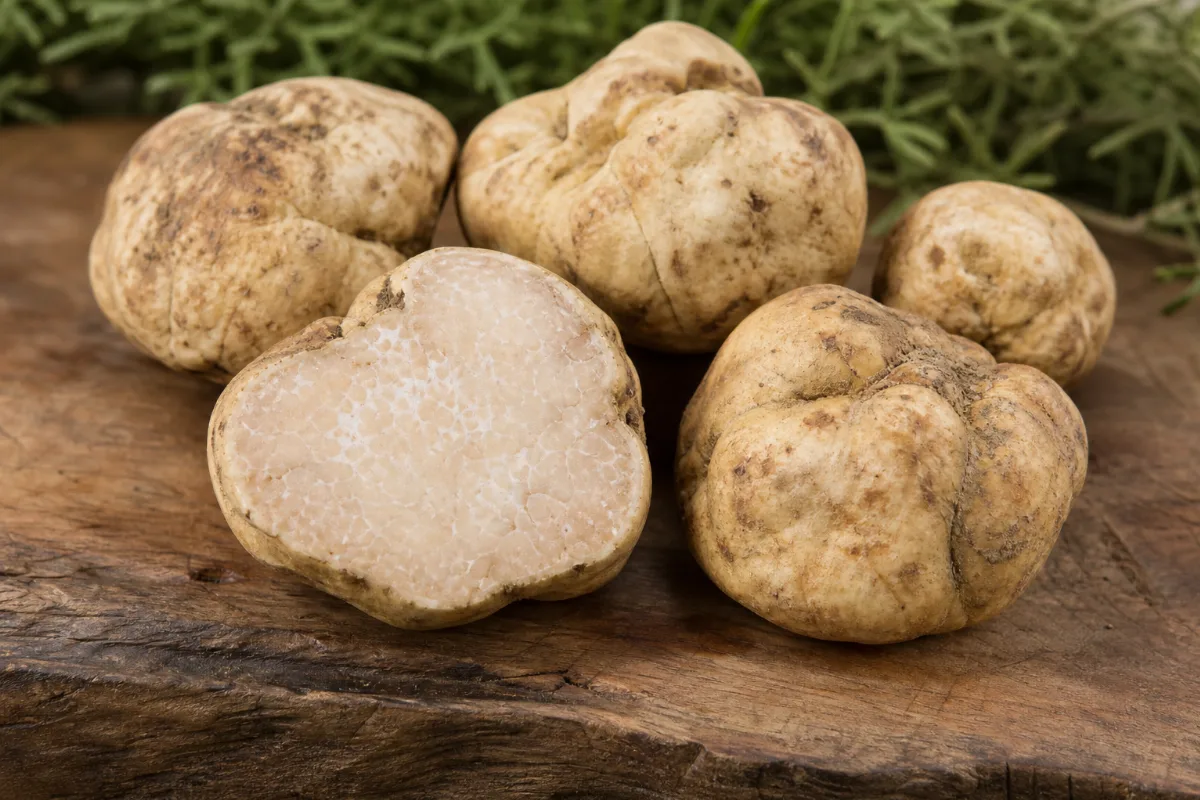
Mushrooms · Culinary fungus
Desert Truffle
Terfezia boudieri, Terfezia claveryi, Terfezia arenaria (and the related Tirmania nivea) · also called Kamma, terfez, terfas, truffles of the desert
Desert truffles are underground fungi eaten as a seasonal food in North Africa and the Middle East. They have also been used in old traditional medicine, especially for the eyes. No human trial has tested any health use; the research is lab and animal work. Do not put truffle preparations in the eye, and only eat truffles that have been correctly identified.
General information, not medical advice. Last substantive update · Not medically reviewed. A named clinician has not signed off on this page. How this page is made
About Desert Truffle
Desert truffles are underground fungi eaten as a seasonal food in North Africa and the Middle East. They are also known from old texts as an eye remedy, but no human trial exists for any health use. Lab work shows antibacterial and antioxidant activity in extracts, and animal studies are small. Safety points: do not put truffle in the eyes, avoid unidentified wild fungi, and remember metals depend on the soil.
What it is
Desert truffles are fungi of the family Pezizaceae that fruit underground in arid regions. Terfezia boudieri, Terfezia claveryi and Terfezia arenaria are the species named most often; Tirmania nivea is a related one. They grow in partnership with rock-rose plants, and in Algeria truffle hunters watch for Helianthemum lippii to find them.
They are not Tuber truffles. The Terfezia genus is still being sorted out, and a 2019 study found at least 17 lineages.
Traditional and current uses
In a survey of 60 truffle hunters in the Algerian Sahara, truffles were used for food and for traditional medicine, mainly against eye infections (22%), weakness (19%) and male fertility (19%). Most hunters ate them with couscous and meat or in porridge. A 2026 review says medieval Arabic medicine described truffle extracts for the eyes, citing a second-hand source.
Traditional use is not proof that it works or is safe.
What the research shows
No human trial of desert truffle was found. Composition studies show a food that is mostly carbohydrate with some protein, fibre and potassium; values vary by species, place and how the truffle is dried or preserved.
In test tubes, water extracts of Terfezia claveryi and Tirmania nivea slowed Pseudomonas aeruginosa and Staphylococcus aureus, which the authors link to eye infections. Terfezia leonis did nothing. Extracts also showed antioxidant activity, lowered inflammation markers in mouse cells and slowed cancer cell lines. In mice and rats, extracts eased oxidative markers, tissue damage after a paracetamol overdose and drug-induced memory loss. These are lab and animal findings only.
Fresh, dried and extract are different
Almost all the health-style findings come from laboratory extracts made with water, methanol or other solvents, which are not the same as a cooked truffle. In a Tunisian study, oven drying and freeze-drying kept protein and antioxidant activity best, while chips processing lost proteins, minerals and vitamins.
Legal and regulatory status
The 2023 Portuguese paper says Terfezia arenaria is not listed as an edible truffle authorised for trade in the European Union. We did not read the EU list. No statement from the FDA, EFSA, EMA or WHO on desert truffles was read. Rules differ by country and change.
At a glance
Traditional uses history, not proof
- Eaten fresh or preserved as a seasonal food in North Africa and the Middle East, often with couscous and meat or in porridge (Algerian survey).
- Used in Saharan folk medicine against eye infections (22% of 60 truffle hunters), weakness (19%) and for male fertility (19%).
- A 2026 review says medieval texts such as Ibn Sina's Canon of Medicine describe truffle extracts for eye conditions (second-hand citation; not checked at the source).
- Used as a meat substitute in some rural diets (Foods 2023 paper, citing other sources).
Studied for research
- Food composition: mostly carbohydrate with protein and fibre, low
- Traditional eye use, insufficient (no trial)
- Antibacterial activity in culture dishes, insufficient
- Antioxidant activity in chemical tests and mice, insufficient
- Inflammation markers in mouse cells, insufficient
- Cancer cell lines in dishes, insufficient
- Liver and kidney tissue in rats, insufficient
- Memory in mice, insufficient
Main compounds
- Phenolics such as gallic acid and myricetin
- Eight-carbon aroma compounds (1-octen-3-ol)
- Protein, carbohydrate, fibre, potassium
Common forms
- Fresh truffle, cooked
- Sun-dried, oven-dried or freeze-dried truffle
- Frozen, marinated or oil-preserved truffle
- Laboratory extracts (research only)
Research links: PubMed: Terfezia arenaria composition (Foods 2023) · PubMed: mushrooms in ophthalmology review (2026) · PubMed: Algerian truffle survey (2015) · PubMed: Pseudomonas lab study (2005) · PubMed: metals in Iraqi spring foods (2026) · Research Library · Genes & Biomarkers Library
What it is and its history
- Accepted scientific name
- Terfezia boudieri Chatin; Terfezia claveryi Chatin; Terfezia arenaria (Moris) Trappe (also Tirmania nivea (Desf.) Trappe)
- Naming authority
- Chatin; (Moris) Trappe; (Desf.) Trappe (GBIF)
- Common names
- Desert truffle (English); Terfez / terfas / kamma (Arabic (transliterated))
- Family or group
- Pezizaceae (a fungus family; underground cup fungi), not a plant and not a Tuber truffle
- Classification
- Fungi > Ascomycota > Pezizomycetes > Pezizales > Pezizaceae > Terfezia > Terfezia boudieri / T. claveryi / T. arenaria
- Native range
- Arid and semi-arid areas of the Mediterranean basin, North Africa and the Middle East (Foods 2023; Fungal Biology 2019).
- Habitat
- Grows underground in a partnership with roots of rock-rose plants; in Algeria 90% of 60 truffle hunters rely on the plant Helianthemum lippii to find them; harvest mostly from mid-February to March after autumn and winter rains (Bradai 2015).
- What it looks like
- Fruiting body: Underground (hypogeous) fruiting body. Not described further in the sources read.
- Cultivation
- Mycorrhizal; not cultivated like button mushrooms. Cultivation work was not read for this page.
- Harvest and processing
- Preserved by sun drying, oven drying, freezing, freeze-drying, chips, marinating or in olive oil in one Tunisian study; method changes nutrient content.
- Look-alikes and adulterants
- Name: Other fungi mistaken for desert truffles; Note: The Portuguese authors warn that wrong species identification can cause poisoning. Specific look-alikes were not named in the sources read.; Name: Other desert truffle genera; Note: Tirmania and Picoa species are also called desert truffles; the Algerian survey ranked Tirmania nivea as the least appreciated of three species.
- Sustainability and conservation
- The Foods 2023 paper says incorrect or excessive harvesting can destroy fungal structures and make future production unfeasible.
Traditional use and history history, not clinical proof
| Tradition or era | Documented use | Source |
|---|---|---|
| Medieval Arabic medicine | A 2026 review says Ibn Sina's Canon of Medicine (about 1000 AD) is described as using truffle extracts for eye conditions. The review cites a secondary source; we did not read the original text. | p42807675 |
| Middle East, North Africa and sub-Saharan Africa | Desert truffles have been applied traditionally as eye remedies and eaten as food (2026 ophthalmology review). | p42807675 |
| Algerian Sahara (2015 survey) | Truffles are used for food, income, and in traditional medicine for eye infections (22%), weakness (19%) and male fertility (19%) among 60 truffle hunters; knowledge passed between generations. | p25554641 |
| Rural diets | Foods 2023 says poor rural populations in North Africa and Arab countries have used these truffles as a meat substitute for centuries (the paper cites other sources). | p37835181 |
Traditional use shows how it was used. It does not show that it works or is safe today.
What is inside, and how it may work
What it contains and how those compounds act in cells and animals. Laboratory and animal mechanisms are not proven effects in people.
Main compounds
| Compound | Family | Where it is concentrated | Activity studied | Level of evidence |
|---|---|---|---|---|
| Phenolic acids and flavonoids (gallic acid, myricetin) | polyphenols | Fruiting body Gallic acid 33.25% and myricetin 52.91% of the HPLC phenolic peaks in two Tunisian truffles; not an amount per serving. | Radical scavenging in chemical tests; docking predictions only for memory enzyme. 9 16 | Laboratory research |
| 1-Octen-3-ol and other eight-carbon aroma compounds | volatile compounds | Fruiting body 1-Octen-3-ol was 64% of the volatile profile in Terfezia arenaria. | Give the aroma; no health activity claimed. 6 | Lab analysis |
| Protein, carbohydrate and fibre (macronutrients) | nutrients | Fruiting body Terfezia arenaria per 100 g dry weight: protein 14 g, carbohydrate 67 g, fibre 10 g, lipids 2.2 g, ash 7.3 g. | Nutrition 6 1 | Lab analysis |
Mechanisms, receptors and pathways
| Target or pathway | Gene or receptor | What was found | Level |
|---|---|---|---|
| Inflammation signalling in macrophages | iNOS, COX-2, TNF-alpha, miR-21/146a/155 | Extracts lowered these markers in a mouse cell line, not through Nrf2. Cell work only. 5 | Laboratory research |
| Cancer cell death pathway | p53, Bax/Bcl-2, cyclin D1, c-Myc | Water extract changed these proteins in colon cancer cell lines. Cell work only; not evidence of an effect in people. 15 | Laboratory research |
| Acetylcholinesterase (computer prediction) | AChE | Docking predicted gallic acid and myricetin might bind; mice improved in a maze test. 16 | In silico |
Absorption, metabolism and elimination
- Absorption
- Not found in the sources read.
- Distribution
- Not found in the sources read.
- Metabolism
- Not found in the sources read.
- Elimination
- Not found in the sources read.
- Bioavailability
- Not established.
Isolated compounds versus whole extracts
Lab studies used water, methanol, hexane or ethyl acetate extracts and ground truffle. These differ from eating a cooked truffle, and results from one form cannot be assumed for another.
Nutritional composition
Desert truffles are mainly a food. Dry-weight analyses show mostly carbohydrate with protein, fibre and potassium; fresh ones are about three-quarters water. Values vary by species, place and preservation method.
1 low certainty8 not enough evidence
What was looked at
The 9 benefits and uses checked for Desert Truffle, each with how strong the evidence is. Tap one to open it.
- Food and nutritionLow certainty
- Traditional eye remedy (not proven)Not enough evidence
- Antibacterial activity in the labNot enough evidence
- Antioxidant activity (lab and mouse)Not enough evidence
- Inflammation markers (cell lab)Not enough evidence
- Cancer cell and immune cell tests (lab)Not enough evidence
- Liver and kidney protection (rat)Not enough evidence
- Memory in miceNot enough evidence
- Traditional uses for fertility and weaknessNot enough evidence
Lab markers tracked in the studies
Growth of Pseudomonas aeruginosa in cultureDPPH radical scavengingProtein and fibre contentCancer cell viability (MTT test)Nitric oxide, iNOS and TNF-alpha in macrophagesMorris water maze time (mice)
What is Desert Truffle good for?
The uses people ask about and how strong the evidence is for each. No human trial of desert truffle was found, so none of these is proven.
Benefits, one by one
Each card is a research question, not a promise. Tap a goal to filter. Open a card to see the studies, doses and limits.
Food and nutrition
Low certaintyDesert truffles are a seasonal food in North Africa and the Middle East. Lab analyses find mostly carbohydrate, with protein, fibre and potassium. This describes what the food contains, not a proven health benefit.
3 studiesFresh truffles, and dried, frozen, freeze-dried, marinated or oil-pre…
Studies, doses and limits
What the trials found
No human study tested health effects of eating desert truffles. Analyses of Terfezia arenaria (Portugal) found about 77% moisture when fresh; per 100 g dry weight, 14 g protein, 67 g carbohydrate and 10 g fibre, with potassium, phosphorus, sulphur, magnesium and calcium the main minerals. Terfezia and Picoa truffles from eastern Turkey gave, per 100 g fresh weight, 63-94 kcal, 2.19-4.69 g protein and 2.54-11.23 g fibre. In Tunisia, how the truffles were dried, frozen or preserved changed protein, minerals and antioxidant tests more than species did.
Results
Terfezia arenaria, per 100 g dry weight: protein 14 g, carbohydrate 67 g, fibre 10 g; energy 387 kcal.
Effect sizes as reported
Composition varies with species, place and method
Why this rating
Several analyses broadly agree on a mostly carbohydrate food with some protein and fibre, but numbers differ widely between species, sites and drying methods, and none measured health outcomes.
Form and dose studied
Fresh truffles, and dried, frozen, freeze-dried, marinated or oil-preserved ones in one Tunisian study.
Limits
Dry-weight and fresh-weight figures are not directly comparable. Nutrient content does not show a health effect.
Why researchers looked
Desert truffles are eaten fresh or preserved and are often used in place of meat in rural kitchens, so researchers measure what they contain.
Traditional use
Eaten in North Africa and the Middle East; in an Algerian survey truffle hunters ate them mostly with couscous and meat or in porridge (Bradai 2015).
Proposed mechanism Lab analysis
Not applicable: this is composition, not a mechanism.
A proposed mechanism does not show that the effect happens in people.
Eat only truffles identified by a trusted source. See the Safety tab for wrong-species, metals and eye-use cautions.
Traditional eye remedy (not proven)
Not enough evidenceOld texts and local practice use desert truffle for eye problems. No human trial has tested this. Putting a home-made truffle preparation in the eye can cause serious infection.
4 studiesNot tested in eyes.
Studies, doses and limits
What the trials found
No human or animal eye trial of desert truffle was found. A 2026 narrative review of medicinal mushrooms in eye care says most mushrooms rest on preclinical studies and traditional use, and strongly discourages unsterilised mushroom preparations as eye drops because of sight-threatening infection risk.
Results
No outcome data in people.
Why this rating
Only traditional use and test-tube bacteria results exist. The authors of the lab papers suggest eye infections as a use, but they did not test it.
Form and dose studied
Not tested in eyes.
Who was studied
Rural Algerian truffle hunters (survey); no patients studied
Limits
Traditional use is not evidence of safety or effect. Eye infections can threaten sight and need a doctor.
Why researchers looked
Desert truffle is one of the best-known traditional eye remedies in Arabic and Saharan practice, so researchers looked for lab support.
Traditional use
A 2026 review says Ibn Sina's Canon of Medicine (about 1000 AD) is described as using truffle extracts for eye conditions, and that Terfezia claveryi, T. boudieri and Tirmania nivea have been applied in the Middle East and sub-Saharan Africa. In an Algerian survey of 60 truffle hunters, eye infections were the top medicinal use (22%).
Proposed mechanism Laboratory research
Water extracts stopped growth of eye-infection bacteria in culture dishes (see antibacterial lab findings); no eye tissue or human test was found.
A proposed mechanism does not show that the effect happens in people.
Do not put truffle preparations in the eye. See a doctor for any red, painful or sticky eye.
Antibacterial activity in the lab
Not enough evidenceWater extracts of some desert truffles slowed the growth of bacteria in culture dishes. This was not tested on infections in animals or people.
3 studiesAqueous (water) extracts and ground truffle; not food portions.
Studies, doses and limits
What the trials found
Lab only. A 5% aqueous Terfezia claveryi extract lowered Pseudomonas aeruginosa growth by 40.9% in culture (Jordan); Algerian extracts of Terfezia claveryi (4% in the medium) and Tirmania nivea (11%) lowered Staphylococcus aureus growth by 86.48% and 99.09%, and P. aeruginosa by 71.11% and 100%. Terfezia leonis had no effect. Ground Terfezia boudieri and Tirmania nivea were active against seven bacterial strains in a Tunisian study.
Results
Growth inhibition in culture, 40.9% to 100% depending on extract, species and bacterium.
Effect sizes as reported
Reduced bacterial growth in dishes
Why this rating
Test-tube results with different species and extract strengths; no animal or human infection was treated, so it cannot be said they would work in a body.
Form and dose studied
Aqueous (water) extracts and ground truffle; not food portions.
Who was studied
Bacteria in culture
Limits
Dish results often fail in animals and people. Percentages refer to extract added to the growth medium.
Why researchers looked
The eye-remedy tradition led researchers to test extracts against bacteria that cause eye infections.
Traditional use
Linked to the traditional eye use above.
Proposed mechanism Laboratory research
A protein-like fraction of Terfezia claveryi extract was active in one lab study; the exact compounds are not established.
A proposed mechanism does not show that the effect happens in people.
Not a replacement for medical treatment of any infection.
Antioxidant activity (lab and mouse)
Not enough evidenceTruffle extracts mop up free radicals in chemical tests, and an extract eased oxidative markers in infected mice. This does not show an antioxidant benefit from eating truffles.
3 studiesWater and methanol-water extracts, dried truffle; laboratory preparat…
Studies, doses and limits
What the trials found
Lab only. A Terfezia boudieri extract scavenged the DPPH radical (IC50 0.18 mg/mL) and chelated iron (IC50 0.22 mg/mL). In mice infected with fish roundworm larvae, a methanol-water Terfezia claveryi extract restored antioxidant enzymes and lowered oxidative markers in the spleen, but did not reduce the parasite burden. Oven-dried or freeze-dried truffles kept the most antioxidant activity in a Tunisian study.
Results
DPPH IC50 0.18 mg/mL; chelating IC50 0.22 mg/mL; lower oxidative markers in mouse spleen.
Effect sizes as reported
Antioxidant activity in tests and in mice
Why this rating
Chemical tests and one mouse study, using laboratory extracts. No human study measured oxidative stress after eating desert truffles.
Form and dose studied
Water and methanol-water extracts, dried truffle; laboratory preparations.
Who was studied
Test tube; infected mice
Limits
A compound that works in a dish may not reach tissues. Antioxidant tests are not health outcomes.
Why researchers looked
Phenolic compounds in truffles are known antioxidants in chemistry tests, so these tests are common first steps.
Proposed mechanism Laboratory research
Phenolic acids and flavonoids (gallic acid, myricetin) in extracts scavenge radicals in chemical assays; the authors link the mouse result to these compounds.
A proposed mechanism does not show that the effect happens in people.
None specific to this finding.
Inflammation markers (cell lab)
Not enough evidenceExtracts lowered inflammation signals in mouse immune cells grown in a dish. Nobody has tested this in people.
1 studiesExtracts of two Terfezia species.
Studies, doses and limits
What the trials found
Lab only. Terfezia boudieri and Terfezia claveryi extracts lowered inflammation markers in stimulated RAW 264.7 mouse macrophages; T. claveryi did not lower IL-6 and COX-2 protein. UPLC-MS annotated 87 compounds.
Results
Lower inflammatory markers in cultured cells
Effect sizes as reported
Lower marker levels in cells
Why this rating
Cell line work from one lab; no animal or human result.
Form and dose studied
Extracts of two Terfezia species.
Who was studied
Mouse cell line
Limits
Cells in a dish do not show what happens in a person.
Why researchers looked
Desert truffles are said to be used traditionally for inflammatory disorders, so researchers tested immune cells.
Traditional use
The paper says desert truffles have been used as traditional treatments for inflammatory disorders.
Proposed mechanism Laboratory research
Lowered nitric oxide, iNOS, TNF-alpha and other markers, and three microRNAs, in a mouse macrophage line; not through the Nrf2 pathway.
A proposed mechanism does not show that the effect happens in people.
None specific.
Cancer cell and immune cell tests (lab)
Not enough evidenceExtracts slowed the growth of cancer cell lines and changed immune-cell signals in lab dishes. Desert truffle is not a cancer treatment, and no trial exists.
2 studiesHexane, ethyl acetate, aqueous-methanol and water extracts.
Studies, doses and limits
What the trials found
Lab only. Terfezia boudieri extracts lowered the growth of five cancer cell lines (n-hexane extract most potent) and a water extract cut colony formation and wound healing in two colon cancer cell lines. Some extracts raised IFN-gamma and IL-2 and lowered IL-4 in mouse spleen cells. No animal or human test was found.
Results
Dose-dependent lower cell growth in the dish
Effect sizes as reported
Lower cancer cell growth and altered immune signals in cells
Why this rating
Cell-line results only; many substances kill cells in a dish.
Form and dose studied
Hexane, ethyl acetate, aqueous-methanol and water extracts.
Who was studied
Human cancer cell lines; mouse spleen cells
Limits
Do not read as cancer treatment. Cell tests are the earliest stage of research.
Why researchers looked
Researchers screen food extracts for effects on cancer cells.
Proposed mechanism Laboratory research
Raised p53 and the Bax/Bcl-2 ratio and lowered cyclin D1 and c-Myc in colon cancer cells; changed cytokines in mouse spleen cells.
A proposed mechanism does not show that the effect happens in people.
People with cancer should ask their care team before using any supplement or extract.
Liver and kidney protection (rat)
Not enough evidenceIn rats given a paracetamol overdose, a truffle extract protected liver and kidney tissue under the microscope, but blood tests did not change. It tells us nothing about people.
1 studiesAqueous extract of Terfezia boudieri.
Studies, doses and limits
What the trials found
Animal only. Terfezia boudieri aqueous extract given before or with paracetamol kept liver and kidney tissue closer to normal; blood liver and kidney tests showed no significant variation between groups.
Results
Tissue findings only
Effect sizes as reported
Less tissue damage in rats
Why this rating
One rat study with mixed measures.
Form and dose studied
Aqueous extract of Terfezia boudieri.
Who was studied
Rats
Limits
Not a reason to take truffle extracts with paracetamol or for liver care. People with liver problems should ask a doctor.
Why researchers looked
Researchers tested an extract against a standard chemical injury model.
Proposed mechanism Animal research
Linked by the authors to antioxidant compounds in the extract.
A proposed mechanism does not show that the effect happens in people.
Paracetamol overdose is a medical emergency.
Memory in mice
Not enough evidenceIn mice made forgetful with a drug, truffle extracts improved performance in a maze. No human study exists.
1 studiesExtracts of Terfezia boudieri and Tirmania nivea.
Studies, doses and limits
What the trials found
Animal and computer only. Oral extracts of Terfezia boudieri and Tirmania nivea improved maze performance and lowered oxidative damage in scopolamine-treated mice.
Results
Better maze performance in mice
Effect sizes as reported
Better memory test in mice
Why this rating
One mouse study plus computer modelling.
Form and dose studied
Extracts of Terfezia boudieri and Tirmania nivea.
Who was studied
Mice
Limits
Mouse memory tests do not translate reliably to people.
Why researchers looked
Phenolic compounds were predicted by computer to bind an enzyme involved in memory.
Proposed mechanism In silico
Computer docking predicted gallic acid and myricetin bind acetylcholinesterase; the authors link the mouse result to cholinergic and antioxidant effects.
A proposed mechanism does not show that the effect happens in people.
None specific.
Traditional uses for fertility and weakness
Not enough evidenceSome Saharan truffle hunters say desert truffle supports male fertility and eases weakness. We found no study that tested either.
1 studiesNot applicable.
Studies, doses and limits
What the trials found
No study of fertility or weakness was found. The evidence is an interview survey of what people say.
Results
No outcome data.
Why this rating
Only a survey of beliefs exists.
Who was studied
60 truffle hunters
Limits
Survey answers are not evidence that a food works.
Why researchers looked
These uses were reported by local people in a survey.
Traditional use
In the Algerian survey, 19% of 60 truffle hunters named weakness and 19% named male fertility as medicinal uses.
Proposed mechanism None
No mechanism studied.
A proposed mechanism does not show that the effect happens in people.
None specific.
Connections to the rest of health
How Desert Truffle connects to the rest of our health knowledge graph. Every link says what kind of connection it is. A safety link (for example to the liver) is a warning, not a benefit. A study that merely mentions a topic never creates a benefit link.
Explore every connection: goals, body systems, organs, symptoms, genes
C. Body parts and organs
| Connected to | Kind of connection | Evidence status | Context | Studies |
|---|---|---|---|---|
| Eyes | Traditional use | Not enough evidence | Traditional eye remedy; no human trial; home preparations risk infection. Preparation or compound: Aqueous extracts (lab) |
4 14 |
| Gut | Adverse effect or risk | Not enough evidence | Wrong species can cause poisoning. Preparation or compound: Wrong species |
6 |
F. Functional actions
| Connected to | Kind of connection | Evidence status | Context | Studies |
|---|---|---|---|---|
| Antioxidant | Not enough evidence | Chemical tests and one mouse study only. Preparation or compound: Extracts |
9 3 |
I. Biomarkers
| Connected to | Kind of connection | Evidence status | Context | Studies |
|---|---|---|---|---|
| Growth of Pseudomonas aeruginosa in culture | Biological association | Not enough evidence | Measured in trials: lowered (in cells). A lab change is not the same as a health benefit. | 10 8 |
| DPPH radical scavenging | Biological association | Not enough evidence | Measured in trials: measured. A lab change is not the same as a health benefit. | 9 |
| Protein and fibre content | Biological association | Low certainty | Measured in trials: measured. A lab change is not the same as a health benefit. | 6 1 |
| Cancer cell viability (MTT test) | Biological association | Not enough evidence | Measured in trials: lowered (in cells). A lab change is not the same as a health benefit. | 2 15 |
| Nitric oxide, iNOS and TNF-alpha in macrophages | Biological association | Not enough evidence | Measured in trials: lowered (in cells). A lab change is not the same as a health benefit. | 5 |
| Morris water maze time (mice) | Biological association | Not enough evidence | Measured in trials: improved (in mice). A lab change is not the same as a health benefit. | 16 |
J. Genes, receptors and enzymes
| Connected to | Kind of connection | Evidence status | Context | Studies |
|---|---|---|---|---|
| Acetylcholinesterase (AChE) | Preliminary mechanism | In silico | Predicted by computer docking to bind two truffle phenolics; mouse study. | 16 |
K. Biological pathways
| Connected to | Kind of connection | Evidence status | Context | Studies |
|---|---|---|---|---|
| Intrinsic (mitochondrial) apoptosis | Preliminary mechanism | In vitro | Changed in colon cancer cell lines by a water extract. | 15 |
L. Active compounds
| Connected to | Kind of connection | Evidence status | Context | Studies |
|---|---|---|---|---|
| Phenolic acids and flavonoids (gallic acid, myricetin) | Biological association | In vitro | Radical scavenging in chemical tests; docking predictions only for memory enzyme. Preparation or compound: Fruiting body |
9 16 |
| 1-Octen-3-ol and other eight-carbon aroma compounds | Biological association | Lab analysis | Give the aroma; no health activity claimed. Preparation or compound: Fruiting body |
6 |
| Protein, carbohydrate and fibre (macronutrients) | Biological association | Lab analysis | Nutrition Preparation or compound: Fruiting body |
6 1 |
Each connection is stored with the ingredient, the connected record, the kind of connection, the evidence status, the supporting studies, the preparation or compound involved, and a review date (last reviewed October 25, 2026).
Evidence at a glance: what the research found for 9 outcomes
Each outcome below is one thing researchers measured. Certainty is how far the evidence can be trusted, not how well it works. The full studies are on the next tab.
The evidence
The research centre for Desert Truffle. Every record here was checked against PubMed or the publisher's page; we never list a study we have not verified.
Evidence by outcome
Bars show how many studies we found for each outcome, not how well it works. People are added up across trials only (reviews are not added, to avoid double counting).
How we rate evidence
High certainty
Several well-run trials or reviews agree; further research is unlikely to change the picture much.
Moderate certainty
Good trials point the same way, but some doubt remains.
Low certainty
Small, short or inconsistent trials. The finding could change with better research.
Very low certainty
Very little or very weak human data. Treat as a possibility only.
Mixed findings
Trials or reviews disagree with each other.
Not enough evidence
Not enough human research to say either way.
Evidence against
Good research found no benefit, or found harm.
We take the reviewers' own risk-of-bias and GRADE statements where they exist, and otherwise judge from study size, design, consistency, directness and whether a product matches what is sold. Many publications do not make evidence high. Method note: We searched PubMed for Terfezia, Tirmania and desert truffle and read records and abstracts for 17 sources (one narrative review, one survey, one taxonomy study, four composition or metals analyses, six lab or cell studies and three animal studies), read the Foods 2023 and 2026 ophthalmology papers in PMC full text for the passages cited, and checked species names in GBIF. We did not read any regulator or poison-centre pages. Only abstracts were read for most papers, so numbers come from abstracts. Certainty ratings are the compiler's own reading.
Study library: every study we checked 17
| Study | Design | People | Product, dose, length | Result |
|---|---|---|---|---|
| Akyüz 2018 Nutritive Value of Desert Truffles Species of Genera Terfezia and Picoa (Ascomycetes) from Arid and Semiarid Regions of Eastern Turkey. International Journal of Medicinal Mushrooms · PMID 30806233 · DOI |
Lab analysis fungus |
Terfezia and Picoa truffles from eastern Turkey | Terfezia and Picoa species Fruiting body Not shown here See study · vs See study |
Per 100 g fresh (wet) weight: 63-94 kcal, 76.93-83.81 g moisture, 2.19-4.69 g protein, 2.14-9.48 g carbohydrate, 2.54-11.23 g fibre and 0.96-3.40 g fat. The elements found were at nutritious levels and below toxic levels, the authors say. Composition of Terfezia and Picoa species (mixed) Methods, limits and fundingOutcomes: Energy, moisture, protein, carbohydrate, fibre, fat, vitamins, amino acids and elements Limitations: Composition only; the abstract mixes two genera. Funding and conflicts: Funding not stated in the abstract Read: abstract |
| Al Obaydi 2020 Terfezia boudieri: A Desert Truffle With Anticancer and Immunomodulatory Activities. Frontiers in Nutrition · PMID 32322585 · DOI |
Laboratory research cells |
Cancer cell lines (T47D, MCF-7, MDA-MB231, HCT-116, Hela) and mouse spleen cells | Solvent extracts of Terfezia boudieri (hexane, ethyl acetate, aqueous/methanol, aqueous) Fruiting body Not shown here See study · vs See study |
Extracts reduced the growth of cancer cell lines in a dose-dependent way (n-hexane extract most potent). Some extracts raised IFN-gamma and IL-2 and lowered IL-4 in stimulated mouse spleen cells and stimulated immune cells in the dish. Cell growth lowered and immune-cell measures changed in the dish Methods, limits and fundingOutcomes: Cell growth (MTT), apoptosis, VEGF, cytokines, immune-cell activity Limitations: Cell and mouse-cell tests only; no animal or human outcome; the authors say active compounds are not identified. Funding and conflicts: Funding not stated in the abstract Read: abstract |
| Alotaibi 2026 Ameliorative effects of desert truffle Terfezia claveryi extract on Hysterothylacium thalassini-induced oxidative damage in C57BL/6 mice. Frontiers in Cellular and Infection Microbiology · PMID 41859466 · DOI |
Animal research mouse |
Male C57BL/6 mice infected with fish roundworm larvae | Methanol-water extract of Terfezia claveryi, given by mouth Fruiting body Not shown here See study · vs See study |
The extract restored antioxidant enzyme activities, lowered oxidative stress markers and improved spleen tissue in infected mice, and lowered iNOS. It did not target the parasite burden directly. Lower oxidative stress markers in mouse spleen Methods, limits and fundingOutcomes: Antioxidant enzymes and oxidative markers in the spleen; spleen tissue; iNOS Limitations: Mice only; a laboratory extract, not food; single-lab study. Funding and conflicts: Funding not stated in the abstract Read: abstract |
| Bradai 2015 Ethnomycological survey of traditional usage and indigenous knowledge on desert truffles among the native Sahara Desert people of Algeria. Journal of Ethnopharmacology · PMID 25554641 · DOI |
Observational human (survey) |
60 60 truffle hunters in Ouargla and Ghardaia, northern Algerian Sahara |
Terfezia claveryi, Terfezia arenaria and Tirmania nivea (traditional use) Fruiting body Not shown here See study · vs See study |
Truffles were used for food and in traditional medicine, mainly against eye infections (22%), weakness (19%) and to promote male fertility (19%). Terfezia claveryi was the most appreciated and most expensive species. 90% rely on the presence of the symbiotic plant Helianthemum lippii to find truffles; most eat them with couscous and meat or in porridge. Reported traditional uses, not tested effects Methods, limits and fundingOutcomes: Knowledge, harvest and uses reported in interviews Limitations: Interview survey of 60 people; says what people believe, not what works. Funding and conflicts: Funding not stated in the abstract Read: abstract |
| Dawood 2023 Terfezia boudieri and Terfezia claveryi inhibit the LPS/IFN-γ-mediated inflammation in RAW 264.7 macrophages through an Nrf2-independent mechanism. Scientific Reports · PMID 37344506 · DOI |
Laboratory research cells |
Mouse macrophage cell line (RAW 264.7) stimulated with LPS/IFN-gamma | Extracts of Terfezia boudieri and Terfezia claveryi Fruiting body Not shown here See study · vs See study |
T. boudieri extract lowered nitric oxide and several inflammatory markers; T. claveryi did similarly except IL-6 and COX-2 protein. Both lowered miR-21, miR-146a and miR-155. UPLC-MS annotated 87 secondary metabolites. Inflammation markers lowered in cultured cells Methods, limits and fundingOutcomes: Nitric oxide, iNOS, COX-2, TNF-alpha and IL-6; microRNAs Limitations: Cells in a dish only. Funding and conflicts: Non-US government research support per the record Read: abstract |
| Ferreira 2023 Using Science and Technology to Unveil The Hidden Delicacy Terfezia arenaria, a Desert Truffle. Foods · PMID 37835181 · DOI |
Lab analysis fungus |
Terfezia arenaria samples from four sites (Portugal) | Terfezia arenaria, fresh then dried for analysis Fruiting body (whole truffle) Not shown here See study · vs See study |
Abstract: carbohydrates 67%, protein 14% and fibre 10%, Nutri-Score A; aroma dominated by eight-carbon compounds (1-octen-3-ol 64%); not listed as an edible truffle authorised for trade in the EU. Full text (read): moisture 77% of fresh weight; values are per 100 g dry weight; arsenic 10 micrograms and barium 32 micrograms per 100 g dry weight, which the authors call residual for 100 g of truffle against reference intakes; wrong species identification can cause poisoning. Composition data only; no health outcome measured Methods, limits and fundingOutcomes: Nutrient, mineral and aroma composition; comparison with other mushrooms and meat; trace elements Limitations: Composition of one species from one region; values vary with species, site and soil. Reference-intake comparison is the authors' own. Funding and conflicts: Funding not stated in the abstract Read: abstract and full text (PMC) |
| Ghanney 2026 Impact of seven conservation methods on the nutritional value, phytochemical composition, and chemical antioxidant capacity of Terfezia boudieri and Tirmania nivea from Southeastern Tunisia. Frontiers in Pharmacology · PMID 42890240 · DOI |
Lab analysis fungus |
Terfezia boudieri and Tirmania nivea collected in southeastern Tunisia | Seven preservation methods: sun drying, oven drying, deep freezing, freeze-drying, chips, marination, olive-oil preservation Fruiting body Not shown here See study · vs See study |
Preservation method was the main source of variation (up to 99.06% of protein, 94.88% of antioxidant activity). Oven drying and freeze-drying best kept protein (about 27-28%) and radical-scavenging activity (87-89%); chips processing reduced proteins, minerals, vitamins and bioactive compounds. Preservation method matters more than species for measured nutrients Methods, limits and fundingOutcomes: Protein, minerals, vitamins, phenolics and chemical antioxidant tests after each method Limitations: Chemical tests only; no human outcome. Units for some vitamins given in ppm. Funding and conflicts: Funding not stated in the abstract Read: abstract |
| Gouzi 2011 In vitro antibacterial activities of aqueous extracts from Algerian desert truffles (Terfezia and Tirmania, Ascomycetes) against Pseudomonas aeruginosa and Staphylococcus aureus. International Journal of Medicinal Mushrooms · PMID 22181843 · DOI |
Laboratory research bacteria in culture |
Pseudomonas aeruginosa and Staphylococcus aureus in culture (Algeria) | Aqueous extracts of Terfezia claveryi, Terfezia leonis and Tirmania nivea Fruiting body Not shown here See study · vs See study |
T. claveryi (4% extract in the growth medium) lowered S. aureus growth by 86.48% and Tirmania nivea (11%) by 99.09%; P. aeruginosa growth fell by 71.11% and 100% respectively. Terfezia leonis showed no antibacterial activity. The authors suggest use for eye infections; that was not tested. Growth of two bacteria reduced in culture; one species inactive Methods, limits and fundingOutcomes: Bacterial growth inhibition Limitations: Test tube only. Different species behaved differently. Funding and conflicts: Funding not stated in the abstract Read: abstract |
| Hammami 2023 HPLC analysis, mycochemical contents and biological activities of two edible hypogeous ascomycetes: Tirmania nivea and Terfezia boudieri. Heliyon · PMID 36938390 · DOI |
Lab study fungus |
Two Tunisian desert truffles; test-tube assays | Aqueous extract and ground material of Terfezia boudieri and Tirmania nivea Fruiting body Not shown here See study · vs See study |
Terfezia boudieri extract and ground material scavenged the DPPH radical (IC50 0.18 mg/mL) and chelated iron (IC50 0.22 mg/mL) in chemical tests. The ground material showed the best antibacterial activity against seven bacterial strains. HPLC found gallic acid (33.25%) and myricetin (52.91%) as the predominant phenolic compounds in the two truffles. Antioxidant and antibacterial activity in the test tube Methods, limits and fundingOutcomes: Antioxidant tests (DPPH, iron chelating, iron reduction), phenolic contents, antibacterial tests on seven bacterial strains, HPLC Limitations: Test-tube work only; activity in a dish does not show an effect in people. Funding and conflicts: Funding not stated in the abstract Read: abstract |
| Janakat 2005 Evaluation of antibacterial activity of aqueous and methanolic extracts of the truffle Terfezia claveryi against Pseudomonas aeruginosa. Saudi Medical Journal · PMID 15983681 |
Laboratory research bacteria in culture |
Pseudomonas aeruginosa in culture (Jordan) | Aqueous and methanolic extracts of Terfezia claveryi Fruiting body Not shown here See study · vs See study |
A 5% aqueous extract inhibited P. aeruginosa growth by 40.9%; the methanolic extract was ineffective. The activity was in a protein fraction. The authors say the fraction may be used for eye infections caused by P. aeruginosa; that is their suggestion, not a tested result. Growth of one bacterium reduced in culture Methods, limits and fundingOutcomes: Bacterial growth inhibition; partial purification of the active fraction Limitations: Test tube only; no eye tissue, animal or human testing in the abstract. Funding and conflicts: Funding not stated in the abstract (research support noted in record) Read: abstract |
| Louro 2019 What is in a name? Terfezia classification revisited. Fungal Biology · PMID 30928035 · DOI |
Taxonomy study fungus |
Public ITS DNA data on Terfezia | Terfezia species (genetic study) Not shown here See study · vs See study |
Found at least 17 distinct lineages within Terfezia and said the genus classification is far from resolved; proposed an identification key that stresses morphology and ecology. At least 17 lineages Methods, limits and fundingOutcomes: Number of lineages in the genus; identification key Limitations: Taxonomy changes over time; this does not say which lineage a market truffle belongs to. Funding and conflicts: Funding not stated in the abstract (research support noted in record) Read: abstract |
| Muhammad Abdulla 2026 Metals in spring plants in the Kurdistan region of Iraq and health risks. Food Additives & Contaminants: Part B · PMID 42246479 · DOI |
Lab analysis fungus |
Three wild spring foods from Sulaymaniyah, Iraq: Gundelia tournefortii, Tragopogon porrifolius and Terfezia boudieri | Terfezia boudieri (one of three foods analysed) Fruiting body Not shown here See study · vs See study |
In Terfezia boudieri, mean metals (mg/kg) were arsenic 0.02, cadmium below detection, chromium 0.09, copper 12.9, iron 189, mercury below detection, manganese 7.95, nickel 0.10, lead 0.05, selenium 3.66 and zinc 33.9. The author reports no non-carcinogenic risk for adults, but children faced notable carcinogenic risks from arsenic, chromium and nickel in the investigated samples as a group (the three foods were not separated in the abstract). Metal levels in one truffle sample set; risk estimate covers all three foods Methods, limits and fundingOutcomes: Metals by ICP-OES; calculated health risks for adults and children Limitations: Single area and a small sample set; the child risk figure is for the three foods together, so it cannot be put on the truffle alone. Funding and conflicts: Funding not stated in the abstract Read: abstract |
| Nouiri 2021 Protective and Curative Effects of Aqueous Extract of Terfezia Boudieri (Edible Desert Truffle Specie) against Paracetamol Acute Toxicity in the Rat. Nutrition and Cancer · PMID 32192374 · DOI |
Animal research rat |
Rats given paracetamol to injure liver and kidney | Aqueous extract of Terfezia boudieri (species confirmed by DNA sequencing) Fruiting body Not shown here See study · vs See study |
Blood liver and kidney tests did not differ significantly between groups. Tissue examination showed less liver and kidney damage with the extract given before or with paracetamol. Tissue changes only; blood tests unchanged Methods, limits and fundingOutcomes: Liver and kidney blood tests and tissue Limitations: Rats; blood tests showed no significant variation, so the tissue findings are the only sign of protection. Funding and conflicts: Funding not stated in the abstract (research support noted in record) Read: abstract |
| Rák 2026 The therapeutic potential of medicinal mushrooms in ophthalmology: from ethnomycology to evidence-based applications. Frontiers in Pharmacology · PMID 42807675 · DOI |
Narrative review review |
Narrative review of mushrooms in eye disease (2001-2026 literature) | Medicinal mushrooms and their compounds, including desert truffles in the safety section Various Not shown here See study · vs See study |
Abstract: most medicinal mushrooms are supported mainly by preclinical studies and traditional use (Level 5); the translational gap between traditional use and clinical validation is large. Full text (safety section): Ibn Sina's Canon of Medicine (about 1000 AD) is said to describe truffle extracts for eye conditions; Terfezia claveryi, T. boudieri and Tirmania nivea have been applied traditionally in the Middle East and sub-Saharan Africa; the use of unsterilised mushroom preparations as eye drops should be strongly discouraged because of sight-threatening infection risk; allergic reactions may occur with natural products. No human trial of desert truffles in eye disease is described in the sections read Methods, limits and fundingOutcomes: Level of evidence by eye disease; safety, toxicity and controversies Limitations: Narrative review, not systematic. We read the abstract and the safety section only, and did not find a graded rating for desert truffles in the passages read. Funding and conflicts: Funding not stated in the abstract Read: abstract and full text (PMC, safety section) |
| Sawaya 2023 Proapoptotic and Antiproliferative Effects of the Desert Truffle Terfezia boudieri on Colon Cancer Cell Lines. Evidence-Based Complementary and Alternative Medicine · PMID 37064948 · DOI |
Laboratory research cells |
Human colon cancer cell lines HCT-116 and Caco-2 | Water and ethanol extracts of Terfezia boudieri Fruiting body Not shown here See study · vs See study |
The water extract was more potent; it cut colony formation and wound healing in a dose-dependent way, raised p53 and the Bax/Bcl-2 ratio and lowered cyclin D1 and c-Myc. Cancer cell growth lowered in the dish Methods, limits and fundingOutcomes: Cell viability, colony formation, wound healing, p53, Bax/Bcl-2, cyclin D1, c-Myc Limitations: Cell lines only; no animal or human data. Funding and conflicts: Funding not stated in the abstract Read: abstract |
| Smach 2025 In Silico and In Vivo Biological Evaluation of Extracts from Tunisian Desert Truffles (Tirmania nivea and Terfezia boudieri) on Scopolamine-Induced Memory Impairment in Mice. Journal of Medicinal Food · PMID 40335447 · DOI |
Animal research mouse |
Male mice given scopolamine to impair memory | Extracts of Terfezia boudieri and Tirmania nivea, by mouth for 21 days Fruiting body Not shown here See study · vs See study |
Both extracts improved memory in the water-maze task and lowered oxidative damage in the mice compared with scopolamine alone. Computer docking predicted gallic acid and myricetin might bind acetylcholinesterase. Better maze performance in mice Methods, limits and fundingOutcomes: Morris water maze, acetylcholinesterase, oxidative stress, docking of gallic acid and myricetin Limitations: Mice and computer modelling only. Funding and conflicts: Funding not stated in the abstract Read: abstract |
| n/a 2026 GBIF Backbone Taxonomy API name matches for Terfezia boudieri, T. claveryi, T. arenaria and Tirmania nivea n/a · Source |
Database record n/a |
n/a | n/a Not shown here See study · vs See study |
Checked 2026-10-25: Terfezia boudieri Chatin (key 2595446), Terfezia claveryi Chatin (3494941), Terfezia arenaria (Moris) Trappe (2595441) and Tirmania nivea (Desf.) Trappe (3493083) are all ACCEPTED in GBIF, family Pezizaceae. Methods, limits and fundingOutcomes: Accepted names and family Limitations: A database record; names can change. Funding and conflicts: Public database Read: api |
What we do not know yet
- No human trial of any desert truffle was found.
- The traditional eye use has not been tested in eyes, animals or people.
- No human safety, allergy, interaction, pregnancy or children data were found.
- Most lab work uses extracts, and species differ in results.
- No regulator statement was read.
How new research is added
New studies are found by a saved PubMed search and placed in a review queue. A person reads each one before it changes any evidence rating or safety wording. New publications never change ratings automatically.
Lab markers
What changed in blood or saliva tests during trials. A changed number is not the same as feeling or being healthier, and we give no "normal ranges".
Other 6
Growth of Pseudomonas aeruginosa in culture
Lowered (in cells) in trials
How fast a bacterium grows in a dish with or without the extract. It is a lab measure, not a patient outcome.
Not enough evidenceResults and what it means
Why it was measured
Used to see whether a traditional eye remedy has any antibacterial activity.
Statistical vs. clinical meaning
Lab finding only; species differ and no eye or animal test followed.
Safety implication
None; not a treatment.
| Study | Result | People | Product |
|---|---|---|---|
| 10 | Growth inhibited by 40.9% with 5% aqueous extract; methanolic extract ineffective. | Bacteria in culture | Terfezia claveryi extracts |
| 8 | Growth fell by 71.11% (Terfezia claveryi) and 100% (Tirmania nivea); T. leonis had no effect. | Bacteria in culture | Aqueous extracts of three Algerian desert truffles |
DPPH radical scavenging
Measured in trials
A chemical test that shows how well a sample neutralises a test free radical.
Not enough evidenceResults and what it means
Why it was measured
A quick screen for antioxidant chemistry.
Statistical vs. clinical meaning
A chemistry test result, not shown in a body.
Safety implication
None.
| Study | Result | People | Product |
|---|---|---|---|
| 9 | IC50 0.18 mg/mL for Terfezia boudieri aqueous extract and ground material (the highest of the two truffles for this test). | Chemical assay | Terfezia boudieri extract |
Protein and fibre content
Measured in trials
How much protein and fibre a food contains by weight.
Low certaintyResults and what it means
Why it was measured
Describes the food.
Statistical vs. clinical meaning
Values depend on species, place and moisture.
Safety implication
None.
Cancer cell viability (MTT test)
Lowered (in cells) in trials
How many cells in a dish survive after treatment.
Not enough evidenceResults and what it means
Why it was measured
Used to screen extracts for anti-cancer activity.
Statistical vs. clinical meaning
Cell-line result only.
Safety implication
None.
| Study | Result | People | Product |
|---|---|---|---|
| 2 | Extracts lowered growth of five cancer cell lines in a dose-dependent way. | Human cancer cell lines | Terfezia boudieri extracts |
| 15 | Water extract cut colony formation and wound healing and raised p53 and Bax/Bcl-2 in HCT-116 and Caco-2 cells. | Colon cancer cell lines | Terfezia boudieri water extract |
Nitric oxide, iNOS and TNF-alpha in macrophages
Lowered (in cells) in trials
Signals released by immune cells in dishes when inflamed.
Not enough evidenceResults and what it means
Why it was measured
Used to screen for anti-inflammatory activity.
Statistical vs. clinical meaning
Lab finding only.
Safety implication
None.
| Study | Result | People | Product |
|---|---|---|---|
| 5 | Terfezia boudieri extract lowered nitric oxide, iNOS, COX-2, TNF-alpha and IL-6; T. claveryi did similarly except IL-6 and COX-2 protein. | Mouse macrophage cell line | Terfezia extracts |
Morris water maze time (mice)
Improved (in mice) in trials
Time a mouse takes to find a hidden platform; a common memory test in mice.
Not enough evidenceResults and what it means
Why it was measured
Used to test memory-protecting substances in animals.
Statistical vs. clinical meaning
One mouse study.
Safety implication
None.
| Study | Result | People | Product |
|---|---|---|---|
| 16 | Extracts shortened the time to find the platform compared with scopolamine alone. | Scopolamine-treated mice | Terfezia boudieri and Tirmania nivea extracts |
Safety
What studies and official sources say about side effects, medicines and who should check first. Each point shows what kind of evidence it comes from.
Main points to know 4
- Do not put truffle preparations in the eye. Desert truffle is a traditional eye remedy, but no human trial supports it. A 2026 review strongly discourages unsterilised mushroom preparations as eye drops because of the risk of sight-threatening infection. Home-made drops, soaks or pastes can carry bacteria and fungi into the eye. See a doctor for any red, painful or sticky eye. Narrative review 14
- Wrong species can poison. The Portuguese authors warn that picking the wrong species can cause poisoning. Terfezia names are also unsettled: a 2019 genetic study found at least 17 lineages in the genus. Only eat truffles identified by a trusted local source or seller. Narrative review 6 11
- Metals depend on the soil. A Portuguese Terfezia arenaria sample had small amounts of arsenic and barium, which the authors judged residual for 100 g of truffle. An Iraqi study found low arsenic, lead and nickel in Terfezia boudieri but a child cancer-risk estimate for the three wild spring foods it tested together. Metal content is not guaranteed to be low everywhere. Lab analysis 6 12
- No human safety studies were found. We found no clinical trial, case report of poisoning or allergy, or interaction study for desert truffles. Absence of reports is not proof of safety. Eaten as a food they have a long history in North Africa and the Middle East, but extracts and concentrated products have not been tested in people. Gap 4
Side effects 3
| Effect | How often | Severity and recovery | Evidence |
|---|---|---|---|
| Eye infection from home-made eye preparations The review discourages use because of risk; no case count was read. | Not established | serious Not described | Narrative review 14 |
| Allergic reactions The review says allergic reactions may occur with natural products, including medicinal mushrooms. None specific to desert truffle was found. | Not established | unknown Not described | Narrative review 14 |
| Poisoning from a wrong species The Portuguese authors warn incorrect identification can cause poisoning; no case series for desert truffles was read. | Not established | unknown Not described | Narrative review 6 |
Liver
No liver injury report linked to desert truffle was found in PubMed (search 2026-10-25). One rat study found a truffle extract eased liver tissue damage from a paracetamol overdose, but blood liver tests did not differ and rats are not people. 13
How often. No human data.
Monitoring. No monitoring advice found. People with liver disease can ask a doctor before using concentrated extracts.
This is a safety connection. It is not evidence that Desert Truffle supports liver health.
Medicines and supplements 4
| With | Why it matters | Importance | Evidence | What to do |
|---|---|---|---|---|
| Any prescription medicine prescription | No interaction study or report was found for desert truffle as food or extract. | Gap Not enough evidence | If you take medicines and plan to use concentrated extracts (not usual food), ask a pharmacist. | |
| Eye medicines and contact lenses other | Contamination risk from non-sterile preparations. | A 2026 review strongly discourages unsterilised mushroom preparations as eye drops. | Narrative review Low certainty 14 | Do not use truffle preparations in the eye, with or without other eye medicines. |
| Antibiotics and infection treatment other | Extracts slowed bacteria in dishes only. | Lab activity does not mean an extract can replace treatment. No animal or human infection study was found. | Laboratory research Not enough evidence 10 8 | Do not use truffle extract instead of prescribed treatment for an infection. |
| Paracetamol (acetaminophen) over-the-counter | One rat study gave extract with a paracetamol overdose. | The rat study tested protection from an overdose; it is not a safety test of the mixture in people. | Animal research Not enough evidence 13 | Do not take extract as protection against paracetamol overdose; an overdose needs emergency care. |
Who should check first 5
| Situation | Advice | Evidence |
|---|---|---|
| Pregnancy and breastfeeding | No study was found. Truffles are eaten as a seasonal food in some regions, but concentrated extracts have not been tested. Ask a doctor or midwife. | Gap |
| Children | No study of desert truffles in children was found. In the Iraqi metals study, children had higher estimated risk than adults for the three wild foods tested; that figure does not separate the truffle. | Lab analysis 12 |
| Anyone who cannot be sure of the species | Do not eat wild truffles you cannot identify. | Narrative review 6 |
| Eye problems | Do not apply truffle preparations to the eye; see an eye doctor. | Narrative review 14 |
| Known mushroom or fungal allergy | Allergic reactions may occur with natural products; ask a doctor before trying a new fungus. | Narrative review 14 |
Overdose, product quality and regulators
Summary. No poisoning from correctly identified desert truffle was found in the sources read. The warnings are about wrong species, metals from soil and unsterile eye use.
Animal. Rat and mouse studies used extracts and reported benefits; none was designed as a toxicity study in the abstracts read.
Human doses studied. No human dose studies exist. This page gives no amounts.
High dose or long term signals. Not studied.
Overdose response. No description found. Seek urgent medical help after eating an unidentified wild fungus.
Genotoxicity. Not read.
Toxic or hazardous parts. Fungus: the fruiting body (the truffle) is eaten. No toxic part is described for the species covered.
Wild desert truffles take up what is in the soil, and their quality changes with how they are dried or preserved.
Arsenic and barium (Terfezia arenaria). 10 micrograms arsenic and 32 micrograms barium per 100 g dry weight in the samples; the authors call the contribution residual for 100 g of truffle against reference intakes. 6
Metals in Terfezia boudieri (Iraq). Mean arsenic 0.02, lead 0.05, nickel 0.10, chromium 0.09 mg/kg; cadmium and mercury below detection. The study's child cancer-risk finding covers three foods together. 12
Elements in Turkish Terfezia and Picoa. The authors say the elements found were at nutritious levels and below toxic levels. 1
Preservation changes quality. Chips processing reduced proteins, minerals and vitamins in a Tunisian study; oven drying and freeze-drying kept the most. 7
Which species is sold. At least 17 lineages exist in Terfezia and classification is unresolved, so a market name may not match the species. 11
| Body | Action | Date |
|---|
When to get medical help
- Vomiting, severe stomach pain or diarrhoea after eating a wild fungus (get urgent help and keep a sample).
- Red, painful, swollen or sticky eye, blurred sight or sensitivity to light after anything was put in the eye.
- Swelling of the face or throat, wheezing or a spreading rash after eating (allergic reaction).
If someone may be poisoned or in a crisis, contact a clinician or emergency service straight away. In the US, Poison Control is 1-800-222-1222.
General information only, not medical advice. Ask a clinician or pharmacist before use, especially with medicines, in pregnancy or with a health condition. See the Natural Remedy Safety guide.
Frequently asked questions
What is desert truffle?
Desert truffles are underground fungi that grow in dry regions of North Africa and the Middle East, such as Terfezia boudieri, Terfezia claveryi and Terfezia arenaria (Tirmania nivea is a related one). They are a seasonal food and are not the same as the Tuber truffles of French and Italian cooking.
Is desert truffle the same as a gourmet truffle?
Is there proof that desert truffle helps eyes?
Is it safe to put desert truffle in the eyes?
No. The 2026 review strongly discourages this because of the risk of sight-threatening infection. See a doctor for any red, painful or sticky eye.
What does it contain?
In Terfezia arenaria, about 77% of fresh weight is water. Per 100 g dry weight there was 14 g protein, 67 g carbohydrate and 10 g fibre, with potassium the most abundant mineral group named. Phenolic compounds such as gallic acid are also present. Numbers differ by species, place and how the truffles are preserved.
Does desert truffle fight infections or cancer?
What does the research on antioxidants show?
Are there safety problems?
Can wild desert truffles be poisonous?
Do desert truffles contain heavy metals?
Is desert truffle safe in pregnancy or for children?
No study was found for pregnancy, breastfeeding or children. Truffles are eaten as food in some regions, but concentrated extracts are untested. Ask a doctor or midwife.
Does it boost fertility or strength?
Some Saharan truffle hunters say so, and in a survey of 60 of them 19% named male fertility and 19% named weakness. No study tested either.
Does the way it is preserved matter?
For nutrients, yes. In a Tunisian study oven drying and freeze-drying kept protein and antioxidant activity best, and chips processing lost proteins, minerals and vitamins.
Explore by health goal
Editorial transparency
- Written by
- AlternativeMed editorial team. Research compiled with AI assistance, then checked against PubMed records.
- Medical review
- None. This page has not been reviewed by a physician or pharmacist.
- First published
- 2026-10-25
- Last substantive update
- 2026-10-25
- How we research
- We searched PubMed for Terfezia, Tirmania and desert truffle and read records and abstracts for 17 sources (one narrative review, one survey, one taxonomy study, four composition or metals analyses, six lab or cell studies and three animal studies), read the Foods 2023 and 2026 ophthalmology papers in PMC full text for the passages cited, and checked species names in GBIF. We did not read any regulator or poison-centre pages. Only abstracts were read for most papers, so numbers come from abstracts. Certainty ratings are the compiler's own reading.
- How we rate evidence
- See "How we rate evidence" in the Evidence tab.
- Independence
- No product is promoted on this page. No affiliate links are shown. This page is information, not a recommendation to use desert truffle.
Sources 17
Each source was opened and checked. Where we read only the abstract, it says so. The small numbers in the text point here.
- Akyüz M, Kirbag S. Nutritive Value of Desert Truffles Species of Genera Terfezia and Picoa (Ascomycetes) from Arid and Semiarid Regions of Eastern Turkey.. International Journal of Medicinal Mushrooms. 2018. PMID 30806233. DOI 10.1615/IntJMedMushrooms.2018028796. (abstract)
- Al Obaydi MF, Hamed WM, Al Kury LT, et al. Terfezia boudieri: A Desert Truffle With Anticancer and Immunomodulatory Activities.. Frontiers in Nutrition. 2020. PMID 32322585. DOI 10.3389/fnut.2020.00038. (abstract)
- Alotaibi M, Al Quraishy S, Almohawis N, et al. Ameliorative effects of desert truffle Terfezia claveryi extract on Hysterothylacium thalassini-induced oxidative damage in C57BL/6 mice.. Frontiers in Cellular and Infection Microbiology. 2026. PMID 41859466. DOI 10.3389/fcimb.2026.1774323. (abstract)
- Bradai L, Neffar S, Amrani K, et al. Ethnomycological survey of traditional usage and indigenous knowledge on desert truffles among the native Sahara Desert people of Algeria.. Journal of Ethnopharmacology. 2015. PMID 25554641. DOI 10.1016/j.jep.2014.12.031. (abstract)
- Dawood AS, Sedeek MS, Farag MA, et al. Terfezia boudieri and Terfezia claveryi inhibit the LPS/IFN-γ-mediated inflammation in RAW 264.7 macrophages through an Nrf2-independent mechanism.. Scientific Reports. 2023. PMID 37344506. DOI 10.1038/s41598-023-35612-8. (abstract)
- Ferreira I, Dias T, Mouazen AM, et al. Using Science and Technology to Unveil The Hidden Delicacy Terfezia arenaria, a Desert Truffle.. Foods. 2023. PMID 37835181. DOI 10.3390/foods12193527. (abstract and full text (PMC))
- Ghanney N, Ben Yahia L, Hlel H, et al. Impact of seven conservation methods on the nutritional value, phytochemical composition, and chemical antioxidant capacity of Terfezia boudieri and Tirmania nivea from Southeastern Tunisia.. Frontiers in Pharmacology. 2026. PMID 42890240. DOI 10.3389/fphar.2026.1816928. (abstract)
- Gouzi H, Belyagoubi L, Abdelali KN, et al. In vitro antibacterial activities of aqueous extracts from Algerian desert truffles (Terfezia and Tirmania, Ascomycetes) against Pseudomonas aeruginosa and Staphylococcus aureus.. International Journal of Medicinal Mushrooms. 2011. PMID 22181843. DOI 10.1615/intjmedmushr.v13.i6.70. (abstract)
- Hammami R, Alsaloom AN, Aouadhi C, et al. HPLC analysis, mycochemical contents and biological activities of two edible hypogeous ascomycetes: Tirmania nivea and Terfezia boudieri.. Heliyon. 2023. PMID 36938390. DOI 10.1016/j.heliyon.2023.e14331. (abstract)
- Janakat SM, Al-Fakhiri SM, Sallal AK. Evaluation of antibacterial activity of aqueous and methanolic extracts of the truffle Terfezia claveryi against Pseudomonas aeruginosa.. Saudi Medical Journal. 2005. PMID 15983681. (abstract)
- Louro R, Santos-Silva C, Nobre T. What is in a name? Terfezia classification revisited.. Fungal Biology. 2019. PMID 30928035. DOI 10.1016/j.funbio.2019.01.003. (abstract)
- Muhammad Abdulla S. Metals in spring plants in the Kurdistan region of Iraq and health risks.. Food Additives & Contaminants: Part B. 2026. PMID 42246479. DOI 10.1080/19393210.2026.2681901. (abstract)
- Nouiri E, Ben Ali R, Ghali R, et al. Protective and Curative Effects of Aqueous Extract of Terfezia Boudieri (Edible Desert Truffle Specie) against Paracetamol Acute Toxicity in the Rat.. Nutrition and Cancer. 2021. PMID 32192374. DOI 10.1080/01635581.2020.1742359. (abstract)
- Rák T, Jin Y, Chen M, et al. The therapeutic potential of medicinal mushrooms in ophthalmology: from ethnomycology to evidence-based applications.. Frontiers in Pharmacology. 2026. PMID 42807675. DOI 10.3389/fphar.2026.1887133. (abstract and full text (PMC, safety section))
- Sawaya K, Abou Najem S, Khawaja G, et al. Proapoptotic and Antiproliferative Effects of the Desert Truffle Terfezia boudieri on Colon Cancer Cell Lines.. Evidence-Based Complementary and Alternative Medicine. 2023. PMID 37064948. DOI 10.1155/2023/1693332. (abstract)
- Smach MA, Hammami R, Zarrouk A, et al. In Silico and In Vivo Biological Evaluation of Extracts from Tunisian Desert Truffles (Tirmania nivea and Terfezia boudieri) on Scopolamine-Induced Memory Impairment in Mice.. Journal of Medicinal Food. 2025. PMID 40335447. DOI 10.1089/jmf.2023.0178. (abstract)
- n/a. GBIF Backbone Taxonomy API name matches for Terfezia boudieri, T. claveryi, T. arenaria and Tirmania nivea. n/a. 2026. (api)
Where to buy
Check the label first. Whatever you buy, look for these:
- Fruiting body versus mycelium on grain: the label should say which
- The extract type and the beta-glucan amount, if stated
- A third-party testing mark
- Interactions: ask a pharmacist if you take medicines or blood thinners
Talk to a pharmacist or doctor before you start any supplement, especially if you take medicines. See the Safety tab for interactions.
Support our free guides: as an Amazon Associate we earn from qualifying purchases. Full disclosure.


