Mushrooms · Culinary fungus
Summer truffle
Tuber aestivum · also called Burgundy truffle, black summer truffle
Summer truffle is an underground fungus shaved or grated over food for a mild truffle smell. It costs less than black or white truffle because its smell is weaker. No human study shows a health benefit; the research is on aroma and test-tube work. The main caution is germs: one lab study found Listeria on 1 in 10 fresh samples, so keep it cold and ask a doctor about raw truffle in pregnancy.
General information, not medical advice. Last substantive update · Not medically reviewed. A named clinician has not signed off on this page. How this page is made
About Summer truffle
Summer truffle (Tuber aestivum), also called Burgundy truffle, is an underground fungus eaten in tiny amounts for a mild truffle smell. Chemistry describes its aroma, but no human trial shows a health benefit; everything else is test-tube or cell-dish work. A lab study found Listeria on 1 in 10 fresh samples, truffles spoil fast, and truffle oil may be flavoured rather than made from truffle.
What it is
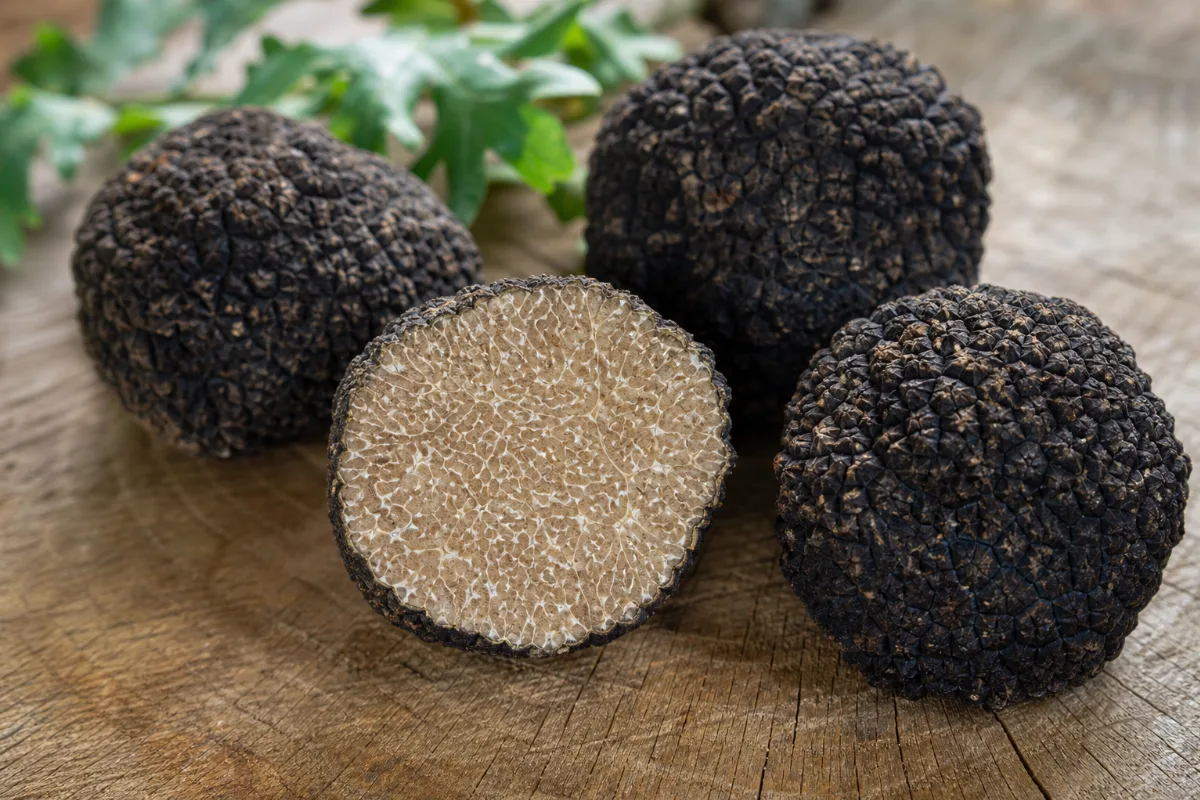
Summer truffle is the underground fruiting body of the fungus Tuber aestivum. It grows in partnership with tree roots, mostly in Europe, and is harvested from May to winter. It has a black outside and light-brown flesh with white veins. It is a fungus, not a plant.
It is milder than black or white truffle and cheaper. See the page on culinary truffles for the whole group.
Summer or Burgundy truffle?
Many sources use Burgundy truffle (Tuber uncinatum) as another name for summer truffle. GBIF lists it as a synonym, but also holds a record marked doubtful. A 2004 DNA study says they are one species with two forms. A 2019 paper says the question is still discussed. Where a study used the Burgundy name, this page says so.
Not the same as magic truffles
'Magic truffles' are sclerotia of Psilocybe fungi, sold for the psychoactive substance psilocybin. They are unrelated to culinary truffles.
Why it smells the way it does
In one analysis, dimethyl sulfide made up about 10% of the aroma signal of a summer truffle, against 54% in white truffle. The authors call summer truffle the 'poor relative' with much weaker taste and smell. A review names 1-octen-3-ol as the main odorant, so sources do not fully agree. For Burgundy truffle, buttery, honey-like and vanilla-like compounds ranked highest in lab smell tests.
Quality: spoilage, insects, oil and mix-ups
Packed summer truffles kept about 21 days at 4 degrees C in one test, and moulds can spoil them even in the fridge. Fly larvae live inside fresh truffles. In 18 Italian truffle-flavoured oils, 12 of 63 compounds were foreign, and a 2015 Salmonella outbreak was linked by a case-control study to truffle oil-containing food, with the source not confirmed. Lab methods can tell truffle species apart to catch fraud. Check the label and seller.
As a food, and what the lab work shows
By dry weight, summer truffle is mostly carbohydrate, then protein, with little fat. Test-tube and cell work reports antioxidant activity and, in one test, cell toxicity for cancer lines, but a 2025 review says human trials remain absent. A 2004 Italian abstract found no pathological heavy-metal level in summer truffles from one region.
At a glance
Traditional uses history, not proof
- Valued as a gourmet food for aroma; the papers read call it a milder, cheaper 'poor relative' of black and white truffle.
- Older medicinal traditions were not read, so none is claimed here.
Studied for research
- Aroma chemistry, low (lab)
- Nutrients as a food, insufficient
- Antioxidant activity, insufficient (test tube and cells)
- Inflammation messengers, insufficient (mixed in cells)
- Cancer cells in dishes, insufficient
Main compounds
- Sulfur and small alcohol and ketone aroma compounds
- Phenolics such as p-hydroxybenzoic acid, baicalein and kaempferol
- Ergosterol and a mannose-glucose polysaccharide
Common forms
- Fresh truffle, shaved or grated
- Cooked in dishes, sauces and butters
- Truffle oil or paste (often flavoured)
- Laboratory extracts (research only)
Research links: Stobbe 2013 review: Burgundy truffle cultivation · Paolocci 2004: one species or two? · Rivera 2010: Listeria and germs on summer truffles · Beara 2014: phenolics and activity of summer and white truffle · Epping 2022: marker substances in truffle aroma · Lee 2020 review: truffles in nutrition and medicine · Research Library · Genes & Biomarkers Library
What it is and its history
- Accepted scientific name
- Tuber aestivum (Wulfen) Spreng.
- Naming authority
- (Wulfen) Spreng. (GBIF); many papers and labels write Vittad.
- Synonyms
- Tuber uncinatum Chatin (Burgundy truffle): GBIF lists it as a synonym, but the same database also holds 'Tuber aestivum Vittad.' marked doubtful, and papers disagree whether the two are one species.; Tuber aestivum var. uncinatum, Tuber gallicum, Tuber bohemicum, Tuber culinare (GBIF synonyms)
- Common names
- Summer truffle (English); Burgundy truffle (English); Black summer truffle (English)
- Family or group
- Tuberaceae (a fungus family, not a plant)
- Classification
- Fungi > Ascomycota > Pezizomycetes > Pezizales > Tuberaceae > Tuber > Tuber aestivum
- Native range
- A 2019 genetics paper says Tuber aestivum has a natural distribution throughout Europe, with Turkey as a diversity hotspot.
- Habitat
- Grows with tree roots in a partnership (ectomycorrhiza). In Hungarian plantations it preferred soil around pH 7.6, with most mycorrhization on hornbeam; a cultivation review names mostly oaks and hazel as host trees.
- What it looks like
- Fruiting body: Underground fruiting body with a black outside and light-brown flesh with white veins (Epping 2022). It is harvested from May through to winter.
- Cultivation
- Cultivated in tree plantations by artificial mycorrhization of young trees. Unwanted fungi (Suillus, Scleroderma) increased as plantations aged in Hungary.
- Harvest and processing
- Truffle dogs are used to find them (Epping 2022). Fresh truffle keeps about 3 weeks cold in one storage test.
- Look-alikes and adulterants
- Name: Black Perigord truffle (Tuber melanosporum); Note: A different, stronger-smelling and dearer species; lab tests tell them apart.; Name: White spring truffle (Tuber borchii); Note: A different species whose volatile fingerprint can be separated from summer truffle's.; Name: Psilocybe 'magic truffles'; Note: A different fungus and product; see /mushrooms/psilocybin-truffles.
- Sustainability and conservation
- A 2022 study found harvests in Central Europe fall as summers get hotter and drier: a median 22% less truffle mass per 1 degree C of extra summer heat.
Traditional use and history history, not clinical proof
| Tradition or era | Documented use | Source |
|---|---|---|
| Modern gourmet cooking | Described as widespread but milder in taste and smell than black Perigord or white truffle, and as cheaper (a 'poor relative' among truffles). | p36014409 |
| Modern cultivation | A 2013 review says Burgundy truffle is cultivated across Europe on trees such as oak and hazel and is socioeconomically important. | p23666478 |
| Older history and traditional medicine | Not read, so none is stated. | p41300498 |
Traditional use shows how it was used. It does not show that it works or is safe today.
What is inside, and how it may work
What it contains and how those compounds act in cells and animals. Laboratory and animal mechanisms are not proven effects in people.
Main compounds
| Compound | Family | Where it is concentrated | Activity studied | Level of evidence |
|---|---|---|---|---|
| Dimethyl sulfide | sulfur volatile | Fruiting body About 10% of the aroma signal in one summer truffle sample | Sulfur odour; a main aroma component in black and white truffle. 4 | Laboratory research |
| 2-Butanone and 2-butanol | small ketone and alcohol volatiles | Fruiting body | Said by Epping 2022, citing earlier work, to dominate the aroma of T. aestivum. 4 | Laboratory research |
| 2,3-Butanedione, phenylacetic acid, vanillin, 1-pyrroline | aroma odorants of Burgundy truffle | Fruiting body Odour activity values 1130 (2,3-butanedione) and 1530 (1-pyrroline) | Buttery, honey-like, vanilla-like and amine-like notes in Burgundy truffle (T. uncinatum). 19 | Laboratory research |
| Phenolics (p-hydroxybenzoic acid, baicalein, kaempferol) | phenolic acids and flavonoids | Fruiting body 12 to 18 mg gallic acid equivalents per g dry weight (quoted in the 2020 review) | Moderate antioxidant activity in test tubes. 3 10 | Laboratory research |
| Ergosterol and ergosteryl ester | fungal sterol | Fruiting body Ergosterol 1.86 mg/g dry matter (quoted in the 2020 review) | Precursor of vitamin D2 after UV light; antioxidant in the lab. 10 2 21 | Laboratory research |
| Polysaccharide (TAP) | mannose and glucose polysaccharide | Fruiting body Mannose to glucose molar ratio 14.76 to 12.31 | Protected pig gut cells from peroxide damage in a dish. 6 | Laboratory research |
Mechanisms, receptors and pathways
| Target or pathway | Gene or receptor | What was found | Level |
|---|---|---|---|
| Cellular antioxidant enzymes | Superoxide dismutase, catalase | Summer truffle polysaccharide raised their levels and total antioxidant capacity in pig gut cells under peroxide stress. 6 | Laboratory research |
| IL-6 secretion | IL-6 | Pressurised-extraction fractions reduced IL-6 secretion by 50% in Caco-2 cells (species split unclear). 26 | Laboratory research |
| COX-1 and 12-LOX products | COX-1, 12-LOX | Not reduced by T. aestivum extract (white truffle extract did reduce them). 3 | Laboratory research |
Absorption, metabolism and elimination
- Absorption
- Not found in the sources read.
- Distribution
- Not found.
- Metabolism
- Not found.
- Elimination
- Not found.
- Bioavailability
- Not established.
Isolated compounds versus whole extracts
Summer truffle is a fresh food eaten in small amounts. Almost all the health-type findings come from solvent extracts or purified polysaccharides, which are not the same thing.
Nutritional composition
Dry-weight ranges in the 2025 review table for T. aestivum: carbohydrates 60 to 79%, protein 14 to 24%, fat 1 to 5%; main fatty acids oleic (40 to 50%), linoleic (20 to 30%) and palmitic (10 to 15%); potassium, phosphorus, iron, calcium, magnesium, zinc and copper listed. A 2024 study made kombucha-style drinks from summer and black truffle; this is food science, not a health product.
1 low certainty5 not enough evidence
What was looked at
The 6 benefits and uses checked for Summer truffle, each with how strong the evidence is. Tap one to open it.
What is Summer truffle good for?
What summer truffle is used for and how strong the evidence is for each. None is proven to help health. Read this together with the Safety tab.
Benefits, one by one
Each card is a research question, not a promise. Tap a goal to filter. Open a card to see the studies, doses and limits.
Aroma and flavour (the real use)
Low certaintySummer truffle is eaten shaved or grated for a mild truffle smell. Lab work has listed the compounds behind it, but the studies differ on which ones matter most. It is described as a 'poor relative' of black and white truffle because its taste and smell are much weaker.
5 studiesEaten fresh, shaved or grated, or cooked in dishes.
Studies, doses and limits
What the trials found
This is food chemistry, not a health effect. Chemical analysis of purchased samples and smell tests of Burgundy truffle (T. uncinatum) show the main odorants. A 2022 Greek study mapped the volatile compounds of 19 truffles and could separate summer truffle from the white spring truffle (T. borchii).
Results
Burgundy truffle: 25 odour-active regions; 1-pyrroline odour activity value 1530 and 2,3-butanedione 1130. Summer truffle sample: dimethyl sulfide about 10% of the signal.
Effect sizes as reported
Aroma is chemically described; no health effect
Why this rating
Only a few small lab studies, each on a handful of samples. The Burgundy truffle results rely on a name whose link to summer truffle is debated, and one source says 2-butanone and 2-butanol dominate while a review names 1-octen-3-ol.
Form and dose studied
Eaten fresh, shaved or grated, or cooked in dishes.
Who was studied
Tuber aestivum (summer truffle); Tuber uncinatum (Burgundy truffle, doubtful synonym)
Limits
Lab chemistry only. A smell is not a health benefit. Aroma varies with place, season and ripeness.
Why researchers looked
Aroma is why truffles are eaten and sold, so chemists study which compounds make the smell.
Traditional use
Eaten as a gourmet food. The papers read describe it as a delicacy, not a remedy.
Proposed mechanism Laboratory research
In one summer truffle sample, dimethyl sulfide made up about 10% of the aroma signal, against 54% in white truffle. For the Burgundy truffle (a name GBIF lists as a synonym), 2,3-butanedione, phenylacetic acid and vanillin ranked highest, and mixing the odorants recreated the aroma.
A proposed mechanism does not show that the effect happens in people.
No safety problem was found in the sources read, but there is no safety study. See the Safety tab for Listeria, allergy and flavoured products.
Antioxidant activity (test tube and cells)
Not enough evidenceExtracts of summer truffle showed moderate antioxidant activity in test tubes and protected cells in dishes from damage. Nobody has tested whether eating the truffle does the same in the body.
5 studiesNot applicable; these were laboratory extracts, not food as eaten.
Studies, doses and limits
What the trials found
No human study. Cell and test-tube work only. Methanol and water extracts showed moderate antioxidant activity in several assays; in pig gut cells the summer truffle polysaccharide worked better than the one from black Perigord truffle; fractions also protected human Caco-2 gut cells.
Results
Phenolics 12 to 18 mg gallic acid equivalents per g dry weight (quoted from the 2020 review); polysaccharide effect seen at 20 micrograms per ml in cells.
Effect sizes as reported
Moderate activity in test tubes only
Why this rating
All evidence is from extracts in test tubes and cell lines. No animal or human result.
Who was studied
Methanol and water extracts; purified polysaccharide; pig and human gut cell lines
Limits
Concentrated extracts are not the same as a few grams of truffle on a plate. Test-tube antioxidant tests do not show health benefit.
Why researchers looked
Truffles contain phenolics, sterols and polysaccharides, so labs check whether extracts act as antioxidants.
Traditional use
Not a traditional use in the sources read.
Proposed mechanism Laboratory research
Phenolics such as p-hydroxybenzoic acid, baicalein and kaempferol were found. A purified polysaccharide protected pig gut cells from hydrogen peroxide and raised their own antioxidant enzymes.
A proposed mechanism does not show that the effect happens in people.
No safety problem was found in the sources read, but there is no safety study. See the Safety tab for Listeria, allergy and flavoured products.
Inflammation messengers (cells)
Not enough evidenceLab results are mixed. Summer truffle extract did not block the inflammation enzymes that white truffle extract blocked, but a concentrated fraction lowered one inflammation messenger (IL-6) in human gut cells.
2 studiesNot applicable.
Studies, doses and limits
What the trials found
No human study. One test showed no effect for summer truffle (white truffle was active), and a second showed an effect on one messenger in cells.
Results
IL-6 reduced by 50% in vitro in the best fraction (species-by-species split not given in the abstract).
Effect sizes as reported
Mixed in test tubes, none in people
Why this rating
Two small lab findings pointing different ways, and no animal or human data.
Who was studied
Methanol and water extracts; pressurised-extraction fractions; Caco-2 cells
Limits
Cells in dishes with concentrated extracts. The abstract does not separate summer truffle from the desert truffle tested alongside it.
Why researchers looked
Researchers look for anti-inflammatory activity because it is claimed for many fungi.
Traditional use
Not a traditional use in the sources read.
Proposed mechanism Laboratory research
COX-1 and 12-LOX products were not reduced by T. aestivum extract. A pressurised-water or ethanol fraction reduced secretion of IL-6 by 50% in Caco-2 cells.
A proposed mechanism does not show that the effect happens in people.
No safety problem was found in the sources read, but there is no safety study. See the Safety tab for Listeria, allergy and flavoured products.
As a food: nutrients
Not enough evidenceBy dry weight, summer truffle is mostly carbohydrate, then protein, with little fat. Truffles are eaten in very small amounts, so a serving adds little of any nutrient.
3 studiesFresh truffle contains much water, so fresh-weight values are far low…
Studies, doses and limits
What the trials found
Composition only; no study measured what eating summer truffle does to nutrition or health. A 2004 Italian analysis of T. aestivum from Molise reported adequate macronutrients and trace elements.
Results
T. aestivum carbohydrate 60 to 79%, protein 14 to 24%, fat 1 to 5% of dry weight; oleic acid 40 to 50% of fat, linoleic 20 to 30%, palmitic 10 to 15% (2025 review table). A 2025 review also says T. aestivum and T. magnatum are reported as particularly rich in niacin and riboflavin.
Effect sizes as reported
Composition described, no health effect shown
Why this rating
Composition is measured, but the figures come from review tables and one old abstract, and there is no evidence that eating truffle changes any health measure.
Form and dose studied
Fresh truffle contains much water, so fresh-weight values are far lower than dry-weight ones.
Who was studied
Tuber aestivum
Limits
Review-table ranges, not new measurements; values vary by place and study.
Why researchers looked
Reviews list truffle composition to describe them as foods.
Traditional use
Described as a delicacy in the reviews read.
Proposed mechanism None
No mechanism claimed; composition only.
A proposed mechanism does not show that the effect happens in people.
No safety problem was found in the sources read, but there is no safety study. See the Safety tab for Listeria, allergy and flavoured products.
Sterols (ergosterol)
Not enough evidenceSummer truffle contains ergosterol, the sterol that becomes vitamin D2 under UV light. No study shows an effect of eating it.
3 studiesNot applicable.
Studies, doses and limits
What the trials found
Composition only. One paper quoted in a review gave ergosterol 1.86 mg/g dry matter for T. aestivum, and the 2025 review says T. aestivum has more ergosteryl ester than black Perigord truffle or Chinese truffle. A sterol pattern also helps tell T. aestivum from other Tuber species.
Results
Ergosterol 1.86 mg/g dry matter (Villares, quoted in the 2020 review, original not opened).
Effect sizes as reported
Composition described, no health effect shown
Why this rating
Composition only, quoted through reviews; no vitamin D result and no human study.
Who was studied
Tuber aestivum
Limits
Original ergosterol paper not opened. Vitamin D2 needs UV light, and no vitamin D measurement was found for truffles.
Why researchers looked
Fungal sterols are studied for antioxidant and anti-inflammatory activity in the lab.
Traditional use
Not a traditional use in the sources read.
Proposed mechanism Laboratory research
Ergosterol is a fungal building block of cell membranes and a precursor of vitamin D2 after UV exposure.
A proposed mechanism does not show that the effect happens in people.
No safety problem was found in the sources read, but there is no safety study. See the Safety tab for Listeria, allergy and flavoured products.
Cancer cells in dishes (not a treatment)
Not enough evidenceSome summer truffle extracts were toxic to cancer cells in dishes, while another study found no such effect for it. This says nothing about treating cancer.
3 studiesNot applicable.
Studies, doses and limits
What the trials found
No animal or human study. In one 2021 screen of ten truffle species, the abstract named Terfezia and T. gennadii extracts as slowing cancer cell growth and did not list T. aestivum.
Results
Cell lines only; no numbers for T. aestivum are quoted.
Effect sizes as reported
Cell toxicity in dishes; not shown in a second screen
Why this rating
Two lab studies that do not fully agree, and no animal or human work.
Who was studied
Methanol and water extracts; cell lines
Limits
Cells in dishes with strong extracts. Killing cells in a dish is not a cancer treatment, and healthy cells may be hurt as well.
Why researchers looked
Many fungi are screened on cancer cell lines.
Traditional use
Not a traditional use in the sources read.
Proposed mechanism Laboratory research
Methanol extracts were cytotoxic to HeLa, MCF7 and HT-29 cells; water extracts were notably active against MCF7 breast cells.
A proposed mechanism does not show that the effect happens in people.
No safety problem was found in the sources read, but there is no safety study. See the Safety tab for Listeria, allergy and flavoured products.
Connections to the rest of health
How Summer truffle connects to the rest of our health knowledge graph. Every link says what kind of connection it is. A safety link (for example to the liver) is a warning, not a benefit. A study that merely mentions a topic never creates a benefit link.
Explore every connection: goals, body systems, organs, symptoms, genes
E. Health conditions
| Connected to | Kind of connection | Evidence status | Context | Studies |
|---|---|---|---|---|
| Mushroom allergy | Adverse effect or risk | Very low certainty | Rare anaphylaxis to edible mushrooms is reported; no truffle case found. Preparation or compound: Edible fungi (truffle-specific data lacking) |
1 27 |
| Listeria infection | Very low certainty | Listeria monocytogenes was found in 10% of summer truffle samples in one lab study; no illness reported. Preparation or compound: Fresh Tuber aestivum fruiting body |
17 |
J. Genes, receptors and enzymes
| Connected to | Kind of connection | Evidence status | Context | Studies |
|---|---|---|---|---|
| SOD and catalase | Preliminary mechanism | In vitro | Raised in pig gut cells by summer truffle polysaccharide. | 6 |
K. Biological pathways
| Connected to | Kind of connection | Evidence status | Context | Studies |
|---|---|---|---|---|
| IL-6 | Preliminary mechanism | In vitro | Secretion reduced in Caco-2 cells by pressurised-extraction fractions. | 26 |
L. Active compounds
| Connected to | Kind of connection | Evidence status | Context | Studies |
|---|---|---|---|---|
| Dimethyl sulfide | Biological association | In vitro | Sulfur odour; a main aroma component in black and white truffle. Preparation or compound: Fruiting body |
4 |
| 2-Butanone and 2-butanol | Biological association | In vitro | Said by Epping 2022, citing earlier work, to dominate the aroma of T. aestivum. Preparation or compound: Fruiting body |
4 |
| 2,3-Butanedione, phenylacetic acid, vanillin, 1-pyrroline | Biological association | In vitro | Buttery, honey-like, vanilla-like and amine-like notes in Burgundy truffle (T. uncinatum). Preparation or compound: Fruiting body |
19 |
| Phenolics (p-hydroxybenzoic acid, baicalein, kaempferol) | Biological association | In vitro | Moderate antioxidant activity in test tubes. Preparation or compound: Fruiting body |
3 10 |
| Ergosterol and ergosteryl ester | Biological association | In vitro | Precursor of vitamin D2 after UV light; antioxidant in the lab. Preparation or compound: Fruiting body |
10 2 21 |
| Polysaccharide (TAP) | Biological association | In vitro | Protected pig gut cells from peroxide damage in a dish. Preparation or compound: Fruiting body |
6 |
Each connection is stored with the ingredient, the connected record, the kind of connection, the evidence status, the supporting studies, the preparation or compound involved, and a review date (last reviewed October 25, 2026).
Evidence at a glance: what the research found for 6 outcomes
Each outcome below is one thing researchers measured. Certainty is how far the evidence can be trusted, not how well it works. The full studies are on the next tab.
The evidence
The research centre for Summer truffle. Every record here was checked against PubMed or the publisher's page; we never list a study we have not verified.
Evidence by outcome
Bars show how many studies we found for each outcome, not how well it works. People are added up across trials only (reviews are not added, to avoid double counting).
How we rate evidence
High certainty
Several well-run trials or reviews agree; further research is unlikely to change the picture much.
Moderate certainty
Good trials point the same way, but some doubt remains.
Low certainty
Small, short or inconsistent trials. The finding could change with better research.
Very low certainty
Very little or very weak human data. Treat as a possibility only.
Mixed findings
Trials or reviews disagree with each other.
Not enough evidence
Not enough human research to say either way.
Evidence against
Good research found no benefit, or found harm.
We take the reviewers' own risk-of-bias and GRADE statements where they exist, and otherwise judge from study size, design, consistency, directness and whether a product matches what is sold. Many publications do not make evidence high. Method note: We read PubMed records and abstracts for 26 papers (laboratory and field studies, reviews, one case report and one outbreak report), read the full text of three of them, and checked the species names in GBIF. EMA, FDA, EFSA, LiverTox and LactMed were not read. Numbers from papers come from abstracts or review text. Certainty ratings are the compiler's own reading.
Study library: every study we checked 27
| Study | Design | People | Product, dose, length | Result |
|---|---|---|---|---|
| Ali 2024 Agaricus bisporus mushroom anaphylaxis: A case report and review of the literature. Journal of Allergy and Clinical Immunology: Global · PMID 39282616 · DOI |
Case report |
1 A 77-year-old woman with anaphylaxis after a button-mushroom omelette, plus 27 other cases from the literature |
Agaricus bisporus (button, portobello) and other edible mushrooms fruiting body Not shown here |
Reactions were positive to several boiled edible mushrooms. The review found 27 other cases (average age 28.8). Cross-sensitisation between edible mushrooms was clear but followed no consistent pattern. Mushroom allergens named in some cases included alpha-mannosidase, alpha-trehalose, mannitol and a ribosomal protein. Mushroom anaphylaxis is uncommon but reported Methods, limits and fundingOutcomes: Anaphylaxis after eating mushrooms Limitations: About button mushrooms, not truffles. No truffle case was found. Whether truffles cross-react is not known. Funding and conflicts: No funding; authors report no conflict. Read: abstract |
| Baldelli 2025 Bioactive Compounds and Antioxidant Potential of Truffles: A Comprehensive Review. Antioxidants (Basel) · PMID 41300498 · DOI |
Narrative review fungus |
Review of truffle composition and bioactivity | Truffle fruiting bodies and extracts fruiting body Not shown here |
Full text read (Europe PMC). Dry weight: carbohydrates 37 to 80%, protein 11 to 35%, fat 2 to 7%, fibre 4 to 13%. Its Table 1 gives T. aestivum carbohydrates 60 to 79%, protein 14 to 24%, fat 1 to 5%, and T. melanosporum carbohydrates 74 to 75%, protein 12 to 18%, fat 2 to 4%. Potassium, phosphorus and calcium are about 80 to 90% of the minerals. More than 200 volatile compounds across species, only about 30 to 60 aroma-active in one species. Says most studies are test-tube or preclinical, and 'clinical trials in humans remain absent'. No human trial found by the authors Methods, limits and fundingOutcomes: Composition, aroma, antioxidant and anti-tumour work, storage Limitations: Narrative review; table values are ranges across studies, not measurements made by the authors. Freezing and canning lowered antioxidant capacity of processed truffles in the work it cites. Funding and conflicts: Authors declare no conflicts of interest. Read: full text |
| Beara 2014 Phenolic profile, antioxidant, anti-inflammatory and cytotoxic activities of black (Tuber aestivum Vittad.) and white (Tuber magnatum Pico) truffles. Food Chemistry · PMID 25038699 · DOI |
Laboratory study in vitro |
Methanol and water extracts of T. aestivum and T. magnatum fruiting bodies, tested in test tubes and cell lines | Methanol and water extracts of fruiting bodies fruiting body Not shown here |
14 of 45 phenolics checked were confirmed (main ones p-hydroxybenzoic acid, baicalein and kaempferol in T. aestivum; epicatechin and catechin in T. magnatum). Moderate antioxidant activity in both species. Only T. magnatum inhibited COX-1 and 12-LOX products, not T. aestivum. Methanol extracts were toxic to some tumour cell lines (HeLa, MCF7, HT-29); water extracts were notably active against MCF7 breast cells. Moderate antioxidant activity in test tubes; no anti-inflammatory activity for T. aestivum in this test; cell toxicity in dishes Methods, limits and fundingOutcomes: Phenolic profile, antioxidant assays, COX-1 and 12-LOX products, cytotoxicity in HeLa, MCF7 and HT-29 cells Limitations: Laboratory study: dishes and test tubes, no animals or people. Extracts are not the same as eating truffle. Funding and conflicts: Research support from non-US government sources per the record. Read: abstract |
| Epping 2022 Marker Substances in the Aroma of Truffles. Molecules · PMID 36014409 · DOI |
Laboratory study fungus |
Four truffle species from online sellers (T. magnatum, T. melanosporum, T. aestivum, T. indicum) analysed by gas chromatography; 19 truffle dogs tested with marker substances | Truffle aroma sampled in the headspace fruiting body Not shown here |
Full text read (Europe PMC). In the one T. aestivum sample dimethyl sulfide made up about 10% of the aroma signal, against 54% in white truffle and 45% in black Perigord truffle. The paper describes summer truffle as the 'poor relative' among truffles, with much lower intensity of taste and smell, citing earlier work, and says its aroma is presumably dominated by 2-butanone and 2-butanol. The authors say the dog results were less clear than the chemistry. Describes the aroma chemistry of one summer truffle sample Methods, limits and fundingOutcomes: Aroma markers in four truffle species; dog response to marker substances Limitations: One purchased sample per species, so it cannot show the range of summer truffles. The table of values could not be matched to species columns with certainty, so butanone figures are not quoted. The paper also says the highest signal intensities came from black Perigord and summer truffle, which does not fit the 'weak aroma' remark; this tension is not resolved. Funding and conflicts: No funding statement in the abstract. Read: full text |
| GBIF 2026 GBIF Backbone Taxonomy API: Tuber aestivum and Tuber uncinatum GBIF · Source |
Taxonomy record n/a |
Name records | n/a Not shown here |
Checked 2026-10-25. Tuber aestivum (Wulfen) Spreng. (key 7364443) is ACCEPTED, family Tuberaceae, order Pezizales, phylum Ascomycota. Tuber uncinatum Chatin is listed as a SYNONYM, as are Tuber gallicum, Tuber bohemicum, Tuber culinare and others, and 'Tuber aestivum var. uncinatum'. GBIF also holds a record 'Tuber aestivum Vittad.' (key 5258469) marked DOUBTFUL, to which T. uncinatum also points. The name Vittad. is the one printed on many labels and papers. Names confirmed Methods, limits and fundingOutcomes: Accepted name, synonyms, family Limitations: Database record. Whether Burgundy truffle is a separate species is debated in the papers read. Funding and conflicts: Independent database Read: full text |
| Guan 2022 Comparison of structural and antioxidant activity of polysaccharide extracted from truffles. J Food Sci · PMID 35674229 · DOI |
Laboratory study in vitro |
Pig intestinal cell line (IPEC-J2) exposed to hydrogen peroxide; polysaccharides from T. aestivum (TAP) and T. melanosporum (TMP) | Purified polysaccharide fractions made by hot water extraction fruiting body Not shown here |
TAP and TMP protected the cells from oxidative damage, and TAP did so more strongly. TAP raised the cells' own antioxidant enzymes (superoxide dismutase and catalase) and total antioxidant capacity and cleared reactive oxygen species and malondialdehyde at 20 micrograms per ml. TAP was mostly mannose and glucose. Cell protection in a dish; stronger for summer truffle polysaccharide than for black Perigord Methods, limits and fundingOutcomes: Structure and antioxidant effect in cells Limitations: Laboratory study in pig cells. Purified polysaccharide is not the same as eating truffle. No animals or people. Funding and conflicts: No funding statement in the abstract. Read: abstract |
| Habtemariam 2024 Analysis of Mycorrhization Trends and Undesired Fungi Species in Three- and Six-Year-Old Tuber aestivum Plantations in Hungary. J Fungi (Basel) · PMID 39452648 · DOI |
Observational field study fungus |
T. aestivum plantations of three and six years in eight Hungarian settlements, six host plants | Root sampling with DNA analysis Not shown here |
T. aestivum reached over 30% mycorrhization, highest on hornbeam (Carpinus betulus). It preferred soil pH around 7.6. Unwanted fungi (Suillus 42.9%, Scleroderma 31.4%) did better in slightly acid soil and rose as the plantations aged. Soil pH and tree choice matter for growing summer truffle Methods, limits and fundingOutcomes: Mycorrhization by T. aestivum and unwanted fungi Limitations: Farming study; no food or health outcome. Funding and conflicts: No funding statement in the abstract. Read: abstract |
| Kalogiouri 2022 Headspace Solid-Phase Microextraction Followed by Gas Chromatography-Mass Spectrometry as a Powerful Analytical Tool for the Discrimination of Truffle Species According to Their Volatiles. Front Nutr · PMID 35558753 · DOI |
Laboratory study fungus |
19 19 truffle samples from Greece (Tuber aestivum and Tuber borchii) |
Truffle volatiles by headspace gas chromatography fruiting body Not shown here |
First volatile map of Greek T. aestivum and T. borchii. Statistical models told the two species apart and picked out characteristic volatile markers for each. Volatile fingerprint separates summer truffle from white spring truffle Methods, limits and fundingOutcomes: Volatile profile and species discrimination Limitations: Method paper. The abstract does not name the markers, and it does not say anything about health. Funding and conflicts: No funding statement in the abstract. Read: abstract |
| Kuramoto-Crawford 2017 Investigation of Salmonella Enteritidis Outbreak Associated with Truffle Oil - District of Columbia, 2015. MMWR Morb Mortal Wkly Rep · PMID 28301453 · DOI |
Outbreak investigation |
159 159 patrons in 11 states and DC who became ill with gut symptoms after eating at one restaurant chain location, July to September 2015 |
Truffle oil-containing food items Not shown here · vs Case-control comparison |
A case-control study suggested truffle oil-containing food items as a possible source of Salmonella Enteritidis infection. Inspections noted several violations, but the environmental, laboratory and traceback investigations did not confirm the source of contamination. Possible link to truffle oil; source not confirmed Methods, limits and fundingOutcomes: Source of Salmonella Enteritidis infection Limitations: Truffle oil, not fresh truffle, and the species of truffle used is not stated in the abstract. Contamination source was not confirmed. Funding and conflicts: No funding statement in the abstract. Read: abstract |
| Lee 2020 Potentials of truffles in nutritional and medicinal applications: a review. Fungal Biology and Biotechnology · PMID 32566240 · DOI |
Narrative review fungus |
Review of laboratory, animal and compositional work on truffles (Tuber and desert truffles) | Truffle fruiting bodies and extracts fruiting body Not shown here |
Reviews phenolics, terpenoids, polysaccharides, anandamide, fatty acids and ergosterols and lab antitumour, antioxidant, antibacterial, anti-inflammatory and liver-protection findings. Full text read (Europe PMC): says more than 200 volatile compounds have been found; says truffle-flavoured oils contain more than 60 volatiles, 2,4-dithiapentane the most common; says truffles are highly perishable; its conclusion mentions 'no known side effects'. No human trial summarised; lab and animal findings only Methods, limits and fundingOutcomes: Composition, aroma, lab and animal bioactivity, preservation Limitations: Narrative review, not systematic. Mixes Tuber and desert truffles (Terfezia, Tirmania), which are different fungi. 'No known side effects' is the authors' statement, not a safety study. Used here for general facts and for storage at 4 degrees C for T. aestivum. Funding and conflicts: Authors declare no conflict of interest; one author affiliation is a company laboratory (Plamica Labs). Read: full text |
| Marino 2024 Identification of Dipteran species inhabiting Tuber aestivum (the summer truffle) ascomata. Environ Monit Assess · PMID 39578252 · DOI |
Laboratory study fungus |
23 23 T. aestivum fruiting bodies from two provinces of northern and central Italy; 52 fly larvae and adults identified by DNA |
Insects found inside truffles fruiting body Not shown here |
Four fly species were identified (Cheilosia soror, Phaonia cf. trimaculata, Drosophila subobscura, Suillia gigantea), and three further taxa stayed unclassified. Several species shared the same truffle. Fly larvae and adults are common in fresh summer truffles Methods, limits and fundingOutcomes: Which fly species live in the truffles Limitations: Biodiversity paper, not a food-safety study; no health outcome was studied. Funding and conflicts: No funding statement in the abstract. Read: abstract |
| Pacioni 2014 Composition of commercial truffle flavored oils with GC-MS analysis and discrimination with an electronic nose. Food Chemistry · PMID 24176309 · DOI |
Laboratory study n/a |
18 18 olive oil samples flavoured with white or black truffle, bought in Italy |
Commercial truffle-flavoured olive oils Not shown here |
63 volatile compounds detected: 32 attributed to olive oil, 19 to truffles, and 12 foreign compounds of dubious origin (synthesis and/or breakdown). The authors say the finding confirms the established malpractice of using bis(methylthio)methane in black-truffle flavourings. 19 of 63 volatiles attributed to truffle; 12 foreign Methods, limits and fundingOutcomes: Volatile compounds by GC-MS; electronic nose Limitations: Only 18 Italian samples; not a survey of all oils on sale. Bis(methylthio)methane (also called 2,4-dithiapentane) also occurs naturally in white truffle, so its presence alone does not prove a synthetic source. Funding and conflicts: Research support from non-US government sources per the record. Read: abstract |
| Paolocci 2004 Tuber aestivum and Tuber uncinatum: two morphotypes or two species? FEMS Microbiol Lett · PMID 15158269 · DOI |
Laboratory study fungus |
Large collection of T. aestivum and T. uncinatum samples from Italy and other European countries; gene analysis | DNA analysis (ITS, beta-tubulin, EF 1-alpha) fruiting body Not shown here |
The authors say they found compelling evidence that T. uncinatum and T. aestivum are the same species: neither form has a specific DNA fingerprint, and they can share identical alleles. They suggest that ecology, not genetics, explains differences in spore shape, taste and smell. Supports one species with two forms (a 2004 view) Methods, limits and fundingOutcomes: Are T. aestivum and T. uncinatum one species? Limitations: A 2004 study. A 2019 paper says whether the two are one species is still discussed. Funding and conflicts: Research support from non-US government sources per the record. Read: abstract |
| Pellegrini 2013 Magic truffles or Philosopher's stones: a legal way to sell psilocybin? Drug Testing and Analysis · PMID 22887928 · DOI |
Laboratory study fungus |
Psilocybe sclerotia sold as 'magic truffles' | Psilocybe sclerotia sclerotium Not shown here |
'Magic truffles' are the sclerotia (hardened resting masses) of Psilocybe fungi and are a source of the psychoactive substance psilocybin. This is a different thing from the culinary truffles of the genus Tuber. Psilocybin found in the sclerotia tested Methods, limits and fundingOutcomes: Psilocybin content Limitations: Used here only to tell the two apart. No amounts are given on this page. Funding and conflicts: No funding statement in the abstract. Read: abstract |
| Riccioni 2004 [Identification of macronutrients and some oligoelements in "molisano" Tuber aestivum truffles]. Clin Ter · PMID 15700629 |
Laboratory study fungus |
Tuber aestivum truffles from the Molise region of Italy | Chemical analysis of truffles fruiting body Not shown here |
The abstract reports adequate levels of macronutrients (proteins, carbohydrates, lipids, water) and of trace elements, and says a pathological concentration of heavy metals was not found. No heavy-metal problem found in Molise summer truffles Methods, limits and fundingOutcomes: Macronutrients and trace elements including lead, cadmium, chromium, manganese, zinc, nickel and copper Limitations: Old (2004) Italian abstract only; no figures in the abstract, sample size not stated, one region. Newer metal data for T. aestivum were not found in open sources. Funding and conflicts: Research support from non-US government sources per the record. Read: abstract |
| Riccioni 2019 Ribosomal DNA polymorphisms reveal genetic structure and a phylogeographic pattern in the Burgundy truffle Tuber aestivum Vittad. Mycologia · PMID 30676256 · DOI |
Laboratory study fungus |
189 189 T. aestivum samples (45 from Turkey, 144 from the rest of Europe), ITS gene profiles |
DNA analysis fruiting body Not shown here |
63 haplotypes were found, 32 only in Turkey. Three genetic groups appeared (north-eastern Europe, southern Europe, Turkey), and cryptic species might exist among the Turkish samples. The abstract says most molecular studies have asked whether T. aestivum and T. uncinatum are the same species. Shows the one-species question has been a main theme of the field Methods, limits and fundingOutcomes: Genetic diversity and geography Limitations: Genetics paper; not about food or health. Funding and conflicts: Research support from non-US government sources per the record. Read: abstract |
| Rivera 2010 Diversity of culturable microorganisms and occurrence of Listeria monocytogenes and Salmonella spp. in Tuber aestivum and Tuber melanosporum ascocarps. Food Microbiol · PMID 20141948 · DOI |
Laboratory study fungus |
Tuber aestivum and Tuber melanosporum ascocarps (fruiting bodies) tested for microbes | Microbiology of whole truffles and their parts fruiting body Not shown here |
Most microbes (about 9.0 log cfu/g) sat in the outer skin (peridium); the inside (gleba) of healthy truffles was practically free of microbes. Pseudomonas averaged 8.3 and 8.4 log cfu/g on T. aestivum and T. melanosporum. Enterobacteriaceae were high in T. aestivum (6.3 log cfu/g). Moulds and yeasts never exceeded 5.0 log cfu/g. Listeria monocytogenes was found in 10% of the T. aestivum samples; Salmonella was not detected. Listeria found in 1 in 10 summer truffle samples; Salmonella not detected Methods, limits and fundingOutcomes: Bacteria, yeast and mould counts; Listeria monocytogenes and Salmonella Limitations: Number of samples not given in the abstract. Does not say whether anyone became ill, and says nothing about cooking or washing. Funding and conflicts: Research support from non-US government sources per the record. Read: abstract |
| Rivera 2011 Effects of electron-beam irradiation on the shelf life, microbial populations and sensory characteristics of summer truffles (Tuber aestivum) packaged under modified atmospheres. Food Microbiol · PMID 21056786 · DOI |
Laboratory study fungus |
Fresh summer truffles (Tuber aestivum) packed in modified atmosphere and stored at 4 degrees C for 42 days | Electron-beam irradiation at 1.5 or 2.5 kGy versus untreated fruiting body Not shown here |
Untreated truffles kept 21 days; 2.5 kGy extended this to 42 days. Irradiation cut Pseudomonas by 4.3 to 5.5 logs and Enterobacteriaceae by 5.4 logs or to below detection. Lactic acid bacteria and yeasts became dominant, up to 7.1 log cfu/g. Visible yeast growth appeared at day 28 on truffles given the lower dose. Shelf life of fresh summer truffle about 3 weeks cold and packed, in this test Methods, limits and fundingOutcomes: Microbe counts, sensory quality and shelf life Limitations: Industry-style storage test. Irradiation is not something a home cook can do; it is shown here only to show how perishable the truffle is. Funding and conflicts: Research support from non-US government sources per the record. Read: abstract |
| Schmidberger 2017 Characterization of the Key Aroma Compounds in White Alba Truffle (Tuber magnatum pico) and Burgundy Truffle (Tuber uncinatum) by Means of the Sensomics Approach. Journal of Agricultural and Food Chemistry · PMID 28965409 · DOI |
Laboratory study fungus |
White Alba truffle (T. magnatum) and Burgundy truffle (T. uncinatum) fruiting bodies | Aroma extracts of fruiting bodies fruiting body Not shown here |
20 odour-active regions in white truffle and 25 in Burgundy truffle (T. uncinatum). In Burgundy truffle the highest-ranking odorants were 2,3-butanedione (buttery), phenylacetic acid (honey-like) and vanillin (vanilla-like); the odour activity values were 1530 for 1-pyrroline and 1130 for 2,3-butanedione. Mixing the odorants back together mimicked the overall aroma of both fungi. 1-pyrroline (amine-like, called sperm-like by the authors) was a key odorant in both. Aroma recreated from identified compounds Methods, limits and fundingOutcomes: Odour-active compounds and their strength Limitations: Chemistry of smell only; says nothing about health. The Burgundy truffle (T. uncinatum) is a name GBIF lists as a synonym of summer truffle, but the naming is debated, so results are labelled Burgundy truffle. Funding and conflicts: No funding statement in the abstract. Read: abstract |
| Segelke 2020 Food Authentication: Species and Origin Determination of Truffles (Tuber spp.) by Inductively Coupled Plasma Mass Spectrometry and Chemometrics. Journal of Agricultural and Food Chemistry · PMID 32520544 · DOI |
Laboratory study fungus |
59 59 truffle samples of five commercially relevant species |
Fruiting bodies fruiting body Not shown here |
Prices differ widely between species and the authors say it is hard to tell white from white and black from black by sight, so food fraud is likely. Their method told the white truffle T. magnatum from all the others, and black truffles with 90.4% accuracy. Cheaper T. indicum passed off as T. melanosporum could be ruled out by the method. 90.4% overall accuracy for black truffles Methods, limits and fundingOutcomes: Element profiles to tell species and origin apart Limitations: A test method paper. It does not say how common fraud is. Funding and conflicts: Not stated in the abstract. Read: abstract |
| Sommer 2020 Differentiation of European and Chinese Truffle (Tuber sp.) Species by Means of Sterol Fingerprints. Journal of Agricultural and Food Chemistry · PMID 33138362 · DOI |
Laboratory study fungus |
Five Tuber species including T. magnatum, T. melanosporum, T. aestivum, T. albidum and T. indicum | Fruiting bodies fruiting body Not shown here |
Sterol patterns told the five species apart whatever the country of origin, using 27 sterols and eight marker compounds, to help prevent food fraud with 'valueless' Tuber species. Species told apart by sterol fingerprint Methods, limits and fundingOutcomes: Sterol patterns Limitations: A method paper; does not measure how much fraud exists. Funding and conflicts: Not stated in the abstract. Read: abstract |
| Sorrentino 2013 Lactobacillus plantarum 29 inhibits Penicillium spp. involved in the spoilage of black truffles (Tuber aestivum). J Food Sci · PMID 23815748 · DOI |
Laboratory study fungus |
Penicillium moulds isolated from refrigerated black truffles (Tuber aestivum) and a protective bacterial culture | Lactobacillus plantarum 29 culture fruiting body Not shown here |
Penicillium moulds are involved in spoilage of truffles kept in the fridge. Lactobacillus plantarum 29 held back their growth in the lab and on truffles, without changing the sensory features during cold storage. Spoilage moulds grow even at fridge temperature Methods, limits and fundingOutcomes: Mould growth and sensory quality during cold storage Limitations: Food-technology study of a protective culture, not a consumer tip. Funding and conflicts: Research support from non-US government sources per the record. Read: abstract |
| Steidinger 2022 The fall of the summer truffle: Recurring hot, dry summers result in declining fruitbody production of Tuber aestivum in Central Europe. Glob Chang Biol · PMID 36200354 · DOI |
Observational field study fungus |
20 Citizen-collected fruiting records from 20 sites in south-west Germany and Switzerland, up to 8 years |
Summer weather and truffle harvest fruiting body Not shown here |
Truffle mass fell by a median 22% for every 1 degree C of summer warmer than the 30-year mean. At the most productive sites a 3 degree C anomaly stopped fruiting altogether. The authors expect more summer droughts to reduce fruiting. Harvests drop in hot dry summers Methods, limits and fundingOutcomes: Annual summer truffle yield Limitations: Observational. About Central Europe only. Funding and conflicts: No funding statement in the abstract. Read: abstract |
| Stobbe 2013 Potential and limitations of Burgundy truffle cultivation. Appl Microbiol Biotechnol · PMID 23666478 · DOI |
Narrative review fungus |
Review of Burgundy truffle cultivation in Europe | Cultivation methods fruiting body Not shown here |
Describes Burgundy truffles as Tuber aestivum syn. Tuber uncinatum. Cultivation is achieved by artificial mycorrhization and outplanting of mostly oaks and hazel on suitable terrain. Cultivation is possible but depends on site and trees Methods, limits and fundingOutcomes: Ecology and cultivation of T. aestivum Limitations: Abstract only. Uses the synonym as the authors' working convention. Funding and conflicts: Research support from non-US government sources per the record. Read: abstract |
| Tejedor-Calvo 2021 Chemical composition and evaluation of antioxidant, antimicrobial and antiproliferative activities of Tuber and Terfezia truffles. Food Res Int · PMID 33648293 · DOI |
Laboratory study in vitro |
Ten truffle species of Tuber and Terfezia, extracts tested on microbes and cell lines | Truffle extracts fruiting body Not shown here |
Carbohydrates were the main macronutrient, then protein. T. magnatum had the highest phenolics (290 mg gallic acid equivalents per 100 g). Only five extracts, including T. aestivum, slightly slowed bacterial growth. The abstract names Terfezia and T. gennadii extracts as the ones that slowed growth of cancer cell lines; it does not list T. aestivum among them. One desert truffle (T. arenaria) showed possible toxicity to pig liver cells. Summer truffle: slight antibacterial effect in dishes; no cell-growth effect named Methods, limits and fundingOutcomes: Composition, antioxidant, antimicrobial and cell-growth effects Limitations: Laboratory study; the abstract does not give T. aestivum numbers. Funding and conflicts: Research support from non-US government sources per the record. Read: abstract |
| Tejedor-Calvo 2022 Application of Pressurized Liquid Extractions to Obtain Bioactive Compounds from Tuber aestivum and Terfezia claveryi. Foods · PMID 35159450 · DOI |
Laboratory study in vitro |
Extracts from T. aestivum and Terfezia claveryi tested on human Caco-2 gut cells | Water or ethanol extracts made by pressurised liquid extraction fruiting body Not shown here |
Hot water at high temperature gave polysaccharide-rich fractions (up to 68% of the content); ethanol gave sterol-rich fractions (up to 12.5%). The best fractions protected Caco-2 cells from free radicals and reduced secretion of the inflammation messenger IL-6 by 50% in vitro. The abstract's last sentence about inhibitory activity (T. aestivum IC50 9.44 mg/mL) is unclear and is not interpreted here. Cell-dish antioxidant and IL-6 findings for extracts of summer truffle and a desert truffle Methods, limits and fundingOutcomes: Extraction yield, composition, antioxidant and cytokine effects Limitations: Cells in dishes, concentrated extracts. The abstract does not say which fungus gave which IL-6 result. No people. Funding and conflicts: No funding statement in the abstract. Read: abstract |
| Xing 2022 Recent Advances in the Allergic Cross-Reactivity between Fungi and Foods. Journal of Immunology Research · PMID 36249419 · DOI |
Narrative review |
Review of allergy to fungi and fungus-related foods | Edible mushrooms, mycoprotein, foods fermented by fungi Not shown here |
Edible mushrooms and fungus-related foods can cause fungus food allergy syndrome through cross-reaction with airborne fungi. Symptoms range from oral allergy syndrome to severe anaphylaxis. Cross-reactions reported Methods, limits and fundingOutcomes: Fungus food allergy Limitations: Review; not truffle-specific. Funding and conflicts: Authors declare no conflict of interest. Read: abstract |
What we do not know yet
- No human trial of eating summer truffle was found.
- No truffle allergy, pregnancy or children data.
- Listeria finding rests on one lab study; the sample number was not seen.
- Heavy metals rest on a 2004 abstract; radioactive caesium was not found.
- Regulator statements on truffles were not read.
- Whether Burgundy truffle is a separate species is unsettled.
How new research is added
New studies are found by a saved PubMed search and placed in a review queue. A person reads each one before it changes any evidence rating or safety wording. New publications never change ratings automatically.
Lab markers
What changed in blood or saliva tests during trials. A changed number is not the same as feeling or being healthier, and we give no "normal ranges".
Safety
What studies and official sources say about side effects, medicines and who should check first. Each point shows what kind of evidence it comes from.
Main points to know 7
- Listeria was found on summer truffles. A laboratory study of fresh Tuber aestivum and black Perigord truffle found Listeria monocytogenes in 10% of the summer truffle samples. Salmonella was not detected. Most microbes sat on the outer skin; the inside of healthy truffles was practically free of them. The paper does not say whether anyone became ill, or what washing or cooking does. Pregnant people, older adults and people with weak immunity should ask a doctor or midwife before eating raw truffle. Laboratory study 17
- Fresh truffle spoils fast. Untreated, packed summer truffles kept about 21 days at 4 degrees C in a storage test, and moulds such as Penicillium can still spoil truffles in the fridge. Lactic acid bacteria and yeasts grew to high numbers during storage. A review calls truffles highly perishable. Buy from a seller you trust, keep truffle cold and use it promptly. Laboratory study 18 22 10
- Truffle oil and sauces: flavoured, and one outbreak. In 18 Italian truffle-flavoured olive oils, 19 of 63 volatile compounds came from truffle and 12 were foreign; the authors say this confirms the malpractice of using bis(methylthio)methane in black-truffle flavourings. In 2015 a Salmonella outbreak affected 159 restaurant patrons in the United States; a case-control study suggested truffle oil-containing food as a possible source, but the contamination source was not confirmed. The report does not name the truffle species. Outbreak investigation 12 10 9
- Mushroom allergy exists; no truffle case was found. No allergy report for truffles was found. Anaphylaxis to edible mushrooms is uncommon but reported: one review found 27 other cases, with cross-reaction between edible mushrooms but no clear pattern. People allergic to moulds can react to fungus foods. Stop eating and seek urgent medical help for swelling, wheeze, faintness or widespread hives. Case report 1 27
- Fly larvae live in fresh truffles. DNA analysis of 23 summer truffles from Italy found fly larvae and adults of at least four species inside them. The paper is about biodiversity, not food safety, and no health effect was studied. Buy truffles that have been cleaned and checked, and ask the seller. Laboratory study 11
- These are not 'magic truffles'. Summer truffle (genus Tuber) is an underground fruiting body eaten as food. 'Magic truffles' are Psilocybe sclerotia sold for psilocybin, a different fungus. Nothing on this page applies to them. Taxonomy record 14 5
- No safety trial exists. The reviews read describe composition and lab work only. One review says 'no known side effects', which is not a safety study. Summer truffle is a food eaten in small amounts; nothing here is a reason to take it as a supplement. Narrative review 10 2
Side effects 2
| Effect | How often | Severity and recovery | Evidence |
|---|---|---|---|
| Allergic reaction to fungi (rare) Evidence is from other edible mushrooms. | No truffle-specific cases found; edible-mushroom anaphylaxis is uncommon but reported | mild to severe Not described | Case report 1 27 |
| Food-borne illness from germs on the truffle or in truffle oil The outbreak source was not confirmed and the oil's truffle species is unknown. No illness was reported in the lab study. | Listeria in 10% of summer truffle samples in one lab study; one Salmonella outbreak possibly linked to truffle oil | mild to severe Not described | Laboratory study 17 9 |
Liver
No liver injury from Tuber truffles was reported in the sources read, and PubMed searches for truffle with liver injury or poisoning found only desert-truffle rat studies and unrelated papers. LiverTox was not read. A 2021 screen of ten truffle species noted possible toxicity to pig liver cells for one desert truffle (Terfezia arenaria), not for summer truffle. 25 2
This is a safety connection. It is not evidence that Summer truffle supports liver health.
Medicines and supplements 3
| With | Why it matters | Importance | Evidence | What to do |
|---|---|---|---|---|
| Prescription medicines in general prescription | No interaction with any medicine was found in the sources read. | No report found Not enough evidence 10 2 | Eating truffle as a flavouring is not known to interact with medicines. Ask a doctor or pharmacist about any truffle extract or supplement, which has no safety data. | |
| Blood thinners and immune-suppressing medicines prescription | Concern exists for some medicinal mushrooms; none described for summer truffle | No report found for truffle. A lack of reports is not proof of safety. | No report found Not enough evidence 2 | Mention it to your doctor or pharmacist if you plan a concentrated truffle product. |
| Alcohol and other foods food | No interaction was found in the sources read. | No report found Not enough evidence 2 | None needed. |
Who should check first 3
| Situation | Advice | Evidence |
|---|---|---|
| Known mushroom or mould allergy | Ask an allergy doctor before eating truffles, because cross-reaction between fungi is reported and truffle-specific data are missing. | Narrative review 27 1 |
| Pregnancy, breastfeeding and young children | No truffle-specific safety data were found for these groups. Because Listeria was found on summer truffles in one study, ask a doctor or midwife before eating raw truffle, and avoid extracts or supplements. | Laboratory study 17 2 |
| Weakened immune system or older age | Ask a doctor before eating raw fresh truffle, because of the Listeria finding. | Laboratory study 17 |
Overdose, product quality and regulators
Summary. No poisoning from Tuber truffles was described in the sources read.
Animal. Not reviewed in depth. Reviews of desert truffles mention rat studies only for protection, not harm.
Human doses studied. No human feeding study found. This page gives no amounts.
High dose or long term signals. Not studied.
Overdose response. Not described. Seek medical help for any severe reaction after eating.
Genotoxicity. Not read.
Toxic or hazardous parts. Fungus fruiting body only. Toxic look-alike fungi were not examined in the sources read. Never eat a wild fungus unless an expert has identified it.
Summer truffle is wild-harvested or farmed. The quality problems found in the papers are germs on the skin, spoilage, insects, flavoured oils and species mix-ups.
Germs. Pseudomonas averaged 8.3 log cfu/g and Enterobacteriaceae 6.3 log cfu/g on whole T. aestivum, mostly in the outer skin. Listeria monocytogenes was found in 10% of samples; Salmonella was not detected. 17
Heavy metals. A 2004 Italian abstract on T. aestivum from Molise says a pathological concentration of heavy metals (lead, cadmium and others) was not found. It gives no numbers and covers one region. Other metal data and radioactive caesium for T. aestivum were not found in open sources. 15
Wrong species. Lab methods (element profiles and sterol patterns) can tell Tuber species apart, including T. aestivum, to catch food fraud. How often fraud happens was not found. 20 21
Flavoured products. Truffle oils are often flavoured with added aroma compounds rather than truffle. 12 10
Spoilage and insects. Moulds and yeasts spoil stored truffles, and fly larvae live in fresh ones. 18 22 11
When to get medical help
- Swelling of lips, tongue or throat, wheezing, faintness or widespread hives soon after eating: call emergency services.
- Fever, severe diarrhoea, vomiting or stiff neck in the days after eating raw truffle or truffle oil dishes: seek medical care and tell them what you ate. This matters most in pregnancy.
- Vomiting, severe belly pain or confusion after eating any wild fungus: seek urgent medical care and keep a sample if possible.
- Itchy mouth or tummy upset that returns each time you eat truffle or other mushrooms: see a doctor.
If someone may be poisoned or in a crisis, contact a clinician or emergency service straight away. In the US, Poison Control is 1-800-222-1222.
General information only, not medical advice. Ask a clinician or pharmacist before use, especially with medicines, in pregnancy or with a health condition. See the Natural Remedy Safety guide.
Frequently asked questions
What is summer truffle?
How is it different from black and white truffle?
Is Burgundy truffle the same as summer truffle?
Are truffles the same as magic truffles?
No. Magic truffles are Psilocybe sclerotia sold for psilocybin. Summer truffle is a food fungus.
Is there a germ risk with fresh summer truffle?
Is truffle oil made from real truffle?
Can you be allergic to truffles?
Does summer truffle have health benefits?
Is summer truffle nutritious?
Is summer truffle safe in pregnancy or for children?
Does it interact with medicines?
Are there insects or heavy metals in summer truffle?
Why does the price and supply change from year to year?
Harvests in Central Europe fell by a median 22% for every 1 degree C of hotter summer, so hot dry summers cut supply.
Explore by health goal
Editorial transparency
- Written by
- AlternativeMed editorial team. Research compiled with AI assistance, then checked against PubMed records.
- Medical review
- None. This page has not been reviewed by a physician or pharmacist.
- First published
- 2026-10-25
- Last substantive update
- 2026-10-25
- How we research
- We read PubMed records and abstracts for 26 papers (laboratory and field studies, reviews, one case report and one outbreak report), read the full text of three of them, and checked the species names in GBIF. EMA, FDA, EFSA, LiverTox and LactMed were not read. Numbers from papers come from abstracts or review text. Certainty ratings are the compiler's own reading.
- How we rate evidence
- See "How we rate evidence" in the Evidence tab.
- Independence
- No product is promoted on this page. No affiliate links are shown. This page is information, not a recommendation to eat or buy truffles.
Sources 27
Each source was opened and checked. Where we read only the abstract, it says so. The small numbers in the text point here.
- Ali SB, Smith W. Agaricus bisporus mushroom anaphylaxis: A case report and review of the literature.. Journal of Allergy and Clinical Immunology: Global. 2024. PMID 39282616. DOI 10.1016/j.jacig.2024.100324. (abstract)
- Baldelli S, Aiello G, De Bruno A, et al. Bioactive Compounds and Antioxidant Potential of Truffles: A Comprehensive Review.. Antioxidants (Basel). 2025. PMID 41300498. DOI 10.3390/antiox14111341. (full text)
- Beara IN, Lesjak MM, Cetojevic-Simin DD, et al. Phenolic profile, antioxidant, anti-inflammatory and cytotoxic activities of black (Tuber aestivum Vittad.) and white (Tuber magnatum Pico) truffles.. Food Chemistry. 2014. PMID 25038699. DOI 10.1016/j.foodchem.2014.05.116. (abstract)
- Epping R, Bliesener L, Weiss T, et al. Marker Substances in the Aroma of Truffles.. Molecules. 2022. PMID 36014409. DOI 10.3390/molecules27165169. (full text)
- GBIF. GBIF Backbone Taxonomy API: Tuber aestivum and Tuber uncinatum. GBIF. 2026. (full text)
- Guan T, Wei X, Xu P, et al. Comparison of structural and antioxidant activity of polysaccharide extracted from truffles.. J Food Sci. 2022. PMID 35674229. DOI 10.1111/1750-3841.16207. (abstract)
- Habtemariam AA, Cseh P, Péter B, et al. Analysis of Mycorrhization Trends and Undesired Fungi Species in Three- and Six-Year-Old Tuber aestivum Plantations in Hungary.. J Fungi (Basel). 2024. PMID 39452648. DOI 10.3390/jof10100696. (abstract)
- Kalogiouri NP, Manousi N, Paraskevopoulou A, et al. Headspace Solid-Phase Microextraction Followed by Gas Chromatography-Mass Spectrometry as a Powerful Analytical Tool for the Discrimination of Truffle Species According to Their Volatiles.. Front Nutr. 2022. PMID 35558753. DOI 10.3389/fnut.2022.856250. (abstract)
- Kuramoto-Crawford SJ, McGee S, Li K, et al. Investigation of Salmonella Enteritidis Outbreak Associated with Truffle Oil - District of Columbia, 2015.. MMWR Morb Mortal Wkly Rep. 2017. PMID 28301453. DOI 10.15585/mmwr.mm6610a4. (abstract)
- Lee H, Nam K, Zahra Z, et al. Potentials of truffles in nutritional and medicinal applications: a review.. Fungal Biology and Biotechnology. 2020. PMID 32566240. DOI 10.1186/s40694-020-00097-x. (full text)
- Marino A, Leonardi M, Berrilli E, et al. Identification of Dipteran species inhabiting Tuber aestivum (the summer truffle) ascomata.. Environ Monit Assess. 2024. PMID 39578252. DOI 10.1007/s10661-024-13401-8. (abstract)
- Pacioni G, Cerretani L, Procida G, et al. Composition of commercial truffle flavored oils with GC-MS analysis and discrimination with an electronic nose.. Food Chemistry. 2014. PMID 24176309. DOI 10.1016/j.foodchem.2013.09.016. (abstract)
- Paolocci F, Rubini A, Riccioni C, et al. Tuber aestivum and Tuber uncinatum: two morphotypes or two species?. FEMS Microbiol Lett. 2004. PMID 15158269. DOI 10.1016/j.femsle.2004.04.029. (abstract)
- Pellegrini M, Rotolo MC, Marchei E, et al. Magic truffles or Philosopher's stones: a legal way to sell psilocybin?. Drug Testing and Analysis. 2013. PMID 22887928. DOI 10.1002/dta.1400. (abstract)
- Riccioni G, Menna V, Di Ilio C, et al. [Identification of macronutrients and some oligoelements in "molisano" Tuber aestivum truffles].. Clin Ter. 2004. PMID 15700629. (abstract)
- Riccioni C, Rubini A, Türkoğlu A, et al. Ribosomal DNA polymorphisms reveal genetic structure and a phylogeographic pattern in the Burgundy truffle Tuber aestivum Vittad.. Mycologia. 2019. PMID 30676256. DOI 10.1080/00275514.2018.1543508. (abstract)
- Rivera CS, Blanco D, Oria R, et al. Diversity of culturable microorganisms and occurrence of Listeria monocytogenes and Salmonella spp. in Tuber aestivum and Tuber melanosporum ascocarps.. Food Microbiol. 2010. PMID 20141948. DOI 10.1016/j.fm.2009.11.001. (abstract)
- Rivera CS, Blanco D, Marco P, et al. Effects of electron-beam irradiation on the shelf life, microbial populations and sensory characteristics of summer truffles (Tuber aestivum) packaged under modified atmospheres.. Food Microbiol. 2011. PMID 21056786. DOI 10.1016/j.fm.2010.09.008. (abstract)
- Schmidberger PC, Schieberle P. Characterization of the Key Aroma Compounds in White Alba Truffle (Tuber magnatum pico) and Burgundy Truffle (Tuber uncinatum) by Means of the Sensomics Approach.. Journal of Agricultural and Food Chemistry. 2017. PMID 28965409. DOI 10.1021/acs.jafc.7b04073. (abstract)
- Segelke T, von Wuthenau K, Neitzke G, et al. Food Authentication: Species and Origin Determination of Truffles (Tuber spp.) by Inductively Coupled Plasma Mass Spectrometry and Chemometrics.. Journal of Agricultural and Food Chemistry. 2020. PMID 32520544. DOI 10.1021/acs.jafc.0c02334. (abstract)
- Sommer K, Krauss S, Vetter W. Differentiation of European and Chinese Truffle (Tuber sp.) Species by Means of Sterol Fingerprints.. Journal of Agricultural and Food Chemistry. 2020. PMID 33138362. DOI 10.1021/acs.jafc.0c06011. (abstract)
- Sorrentino E, Reale A, Tremonte P, et al. Lactobacillus plantarum 29 inhibits Penicillium spp. involved in the spoilage of black truffles (Tuber aestivum).. J Food Sci. 2013. PMID 23815748. DOI 10.1111/1750-3841.12171. (abstract)
- Steidinger BS, Büntgen U, Stobbe U, et al. The fall of the summer truffle: Recurring hot, dry summers result in declining fruitbody production of Tuber aestivum in Central Europe.. Glob Chang Biol. 2022. PMID 36200354. DOI 10.1111/gcb.16424. (abstract)
- Stobbe U, Egli S, Tegel W, et al. Potential and limitations of Burgundy truffle cultivation.. Appl Microbiol Biotechnol. 2013. PMID 23666478. DOI 10.1007/s00253-013-4956-0. (abstract)
- Tejedor-Calvo E, Amara K, Reis FS, et al. Chemical composition and evaluation of antioxidant, antimicrobial and antiproliferative activities of Tuber and Terfezia truffles.. Food Res Int. 2021. PMID 33648293. DOI 10.1016/j.foodres.2020.110071. (abstract)
- Tejedor-Calvo E, García-Barreda S, Sánchez S, et al. Application of Pressurized Liquid Extractions to Obtain Bioactive Compounds from Tuber aestivum and Terfezia claveryi.. Foods. 2022. PMID 35159450. DOI 10.3390/foods11030298. (abstract)
- Xing H, Wang J, Sun Y, et al. Recent Advances in the Allergic Cross-Reactivity between Fungi and Foods.. Journal of Immunology Research. 2022. PMID 36249419. DOI 10.1155/2022/7583400. (abstract)
Where to buy
Check the label first. Whatever you buy, look for these:
- Fruiting body versus mycelium on grain: the label should say which
- The extract type and the beta-glucan amount, if stated
- A third-party testing mark
- Interactions: ask a pharmacist if you take medicines or blood thinners
Talk to a pharmacist or doctor before you start any supplement, especially if you take medicines. See the Safety tab for interactions.
Support our free guides: as an Amazon Associate we earn from qualifying purchases. Full disclosure.


