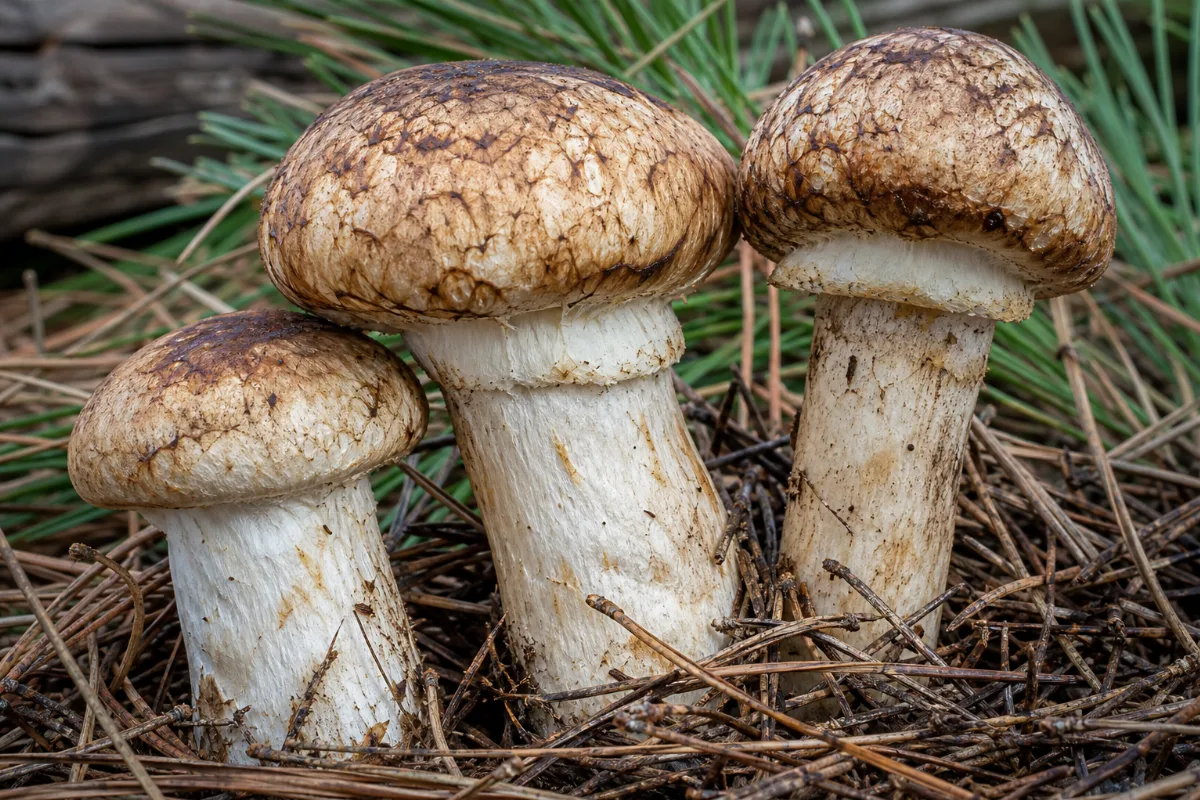
Mushrooms · Wild culinary mushroom
Matsutake
Tricholoma matsutake, Tricholoma murrillianum (Pacific matsutake) and related Tricholoma · also called Pine mushroom, Pacific matsutake
Matsutake is a prized wild mushroom that grows with living pine roots and is a favourite food in Japan. It is a food, not a tested supplement, and no trial has tested eating it for health. The main caution is the wrong mushroom: people in the Pacific Northwest developed kidney failure after eating wild mushrooms they believed were matsutake.
General information, not medical advice. Last substantive update · Not medically reviewed. A named clinician has not signed off on this page. How this page is made
About Matsutake
Matsutake is a wild mushroom that grows with pine roots and is prized as a food in Japan. It has not been farmed. Health research is limited to cell dishes, mice and one small skin-serum trial, so no benefit is proven. The real cautions are mix-ups with poisonous wild mushrooms, rare allergy, and metals or preservatives in some samples from China.
What it is
Matsutake (Tricholoma matsutake) is a fungus, not a plant. It lives in partnership with living pine roots, which is why it is hard to grow. In Japan the main host tree is the Japanese red pine. The word matsutake covers a group of related species: GBIF lists Tricholoma murrillianum (the Pacific matsutake) and Tricholoma magnivelare as separate accepted species, and older North American reports use the second name.
A label that says matsutake does not always say which species is inside. We checked names in GBIF only.
Food and traditional use
Matsutake is described as an important wild edible mushroom in Japan and as a rare, popular mushroom in China for its flavour. The sources we read treat it as a food rather than a traditional medicine. We found no official nutrient table. Eating it is not the same as taking a supplement.
What the research shows
We found no trial in which people ate matsutake or took it as a supplement. A 2023 review says its effects are linked mainly to immune regulation and antioxidant balance in laboratory work, and that most anticancer studies only measured inhibition of cancer cell lines. A purified polysaccharide activated mouse immune cells in a dish, another slowed one tumour type in mice, and mouse exercise and spinal cord injury studies reported better scores. None of this shows a benefit in people.
The only human trial found tested a face serum made from a purified polysaccharide extract. Of 40 women with melasma who were randomised, 36 finished 16 weeks. Dark-patch area fell by 8.4% with placebo, 44.3% with the 0.5% extract serum and 39.9% with the 1% extract serum, and 56.0% with a standard ingredient, alpha-arbutin. Five authors work for the extract maker, the groups were very small, and it has not been repeated.
Metals and preservatives
Wild matsutake takes up minerals from soil. In 54 matsutake from high-metal areas of Yunnan, stem iron and cap copper often exceeded the authors' risk index, while manganese and zinc did not; cadmium, lead, arsenic and mercury were not measured. In matsutake and other mushrooms sold online in China from 2015 to 2017, the combined metal hazard index for matsutake was above 1 for adults and children, though the cancer risk from inorganic arsenic was low.
A third paper says traders may add excess preservative (potassium sorbate) during transport and quotes China's limits. These are signals from Chinese datasets and do not describe every origin.
Why it cannot be farmed and what is happening to pine forests
A 2022 review says matsutake fruiting bodies have not yet been produced under controlled conditions, even though the root partnership with pine seedlings can be set up in the lab. Because of this, matsutake is still harvested from forests, and the review says such mushrooms must be conserved in natural forests through controlled harvests or forest management.
Japan's domestic production totalled 12,000 metric tons in 1941 and has fallen to a few dozen tons in recent years (figures quoted in a 2025 paper from Japan's agriculture ministry). The authors name the end of wood-fuel gathering from pine forests in the 1950s and pine wilt disease as pressures. In a 41-year plot study in Nagano, the harvest stayed stable in a pine forest that was managed (other trees cut, pines thinned, litter removed) but fell in an unmanaged one. This is one site and one species, and we did not find a Red List status.
Legal and regulatory status
We did not read any statement about matsutake from the FDA, EMA, NCCIH, LiverTox, LactMed or WHO, so none is claimed. China's food standard for potassium sorbate (0.5 g per kg) and lead (1 mg per kg) in mushrooms is quoted in one paper, and France, Spain and Italy have condemned the yellow knight as poisonous (second-hand statements).
At a glance
Traditional uses history, not proof
- Eaten as an important wild food in Japan, where the harvest comes mostly from Japanese red pine forests (Furukawa 2025).
- Described as popular in China for its flavour and economic value (Liang 2025).
- The sources we read describe it as a food, not as a traditional medicine.
Studied for research
- Immune activity of purified sugar chains, cell dish only, insufficient
- Anticancer findings, cell lines and mice only, insufficient
- Antioxidant effects, reviewed laboratory work, insufficient
- Exercise tolerance and fatigue, mice only, insufficient
- Facial skin pigmentation as a skin serum, one small industry-linked trial, very low
- Spinal cord injury, mice only, insufficient
Main compounds
- Polysaccharides (glucan-rich sugar chains), the most studied part
- Proteins, fatty acids, minerals, volatile and phenolic compounds (listed in a 2023 review)
- Iron, copper and other minerals that wild fruiting bodies take up from soil
Common forms
- Fresh wild fruiting body (the traditional food; it has not been farmed)
- Dried slices or powder in food products
- Lab-made polysaccharide extracts, used in research and in one skin serum trial
- Cultured mycelium made by fermentation (a different product from the mushroom)
Research links: Kidney failure after matsutake mix-up (case series abstract) · Renal failure from mushrooms mistaken for matsutake (abstract) · Yellow knight survey and volunteer study (open access) · Matsutake anaphylaxis case report (abstract) · Review of matsutake research (abstract) · Why matsutake cannot be farmed (open access review) · 41-year pine forest study in Japan (open access) · Research Library · Genes & Biomarkers Library
What it is and its history
- Accepted scientific name
- Tricholoma matsutake
- Naming authority
- (S.Ito & S.Imai) Singer (GBIF)
- Synonyms
- Armillaria matsutake S.Ito & S.Imai; Armillaria matsutake var. formosana Sawada; Tricholoma nauseosum (A.Blytt) Kytov. and Agaricus nauseosus Blytt (listed as synonyms in GBIF)
- Common names
- Matsutake (Japanese); Pine mushroom (English); Pacific matsutake (the name given to Tricholoma murrillianum on the US West Coast) (English)
- Family or group
- Tricholomataceae (a fungus family), not a plant
- Classification
- Fungi > Basidiomycota > Agaricomycetes > Agaricales > Tricholomataceae > Tricholoma > Tricholoma matsutake
- Native range
- Japan and China are named in the studies we read (Japanese red pine forests in Japan; Yunnan in China). A full range was not checked.
- Habitat
- An ectomycorrhizal fungus: it lives in partnership with living tree roots. In Japan the main host is Pinus densiflora (Japanese red pine), in forests that are mostly secondary or artificial (Furukawa 2025).
- What it looks like
- Fruiting body: Not described, on purpose: this page does not help identify wild mushrooms.
- Cultivation
- Fruiting bodies have not yet been produced under controlled conditions, even though root partnerships with pine seedlings have been established in the lab (Yamada 2022). A private company in Japan has reported fruiting of the related T. bakamatsutake without a host plant on nutrient medium. Cultivation of T. murrillianum and T. magnivelare is described as poorly studied.
- Harvest and processing
- Wild harvest. Studies also describe dried slices and powders used in food products and hot-water polysaccharide extracts made in the lab.
- Look-alikes and adulterants
- Name: Amanita smithiana (suspected); Note: Two case series from the Pacific Northwest report kidney failure in people who ate mushrooms they believed were matsutake. The mushroom involved was suspected to be Amanita smithiana. A text description cannot make wild picking safe, so none is given.; Name: Tricholoma equestre (yellow knight), a relative; Note: Same genus, different mushroom. It has been linked to rhabdomyolysis, but the link is disputed. It is mentioned as a safety lesson, not as a matsutake look-alike.
- Sustainability and conservation
- Japan's domestic production totalled 12,000 metric tons in 1941 and has fallen to a few dozen tons in recent years (Furukawa 2025, quoting Japan's agriculture ministry). The authors name the 1950s end of wood-fuel gathering from pine forests and pine wilt disease as pressures. In a 41-year plot study the harvest stayed stable in a managed pine forest but fell in an unmanaged one, which the authors take as showing why long-term forest management matters. No Red List status was read.
Traditional use and history history, not clinical proof
| Tradition or era | Documented use | Source |
|---|---|---|
| Japan, food use | Tricholoma matsutake is described as an important wild edible mushroom in Japan and as popular in China for its flavour and economic value. The sources we read describe it as a food, not a traditional medicine. | p40453777 |
| Japan, 1941 to today | Domestic production totalled 12,000 metric tons in 1941 and has been declining over the past 80 years to a few dozen tons. | p40453777 |
Traditional use shows how it was used. It does not show that it works or is safe today.
What is inside, and how it may work
What it contains and how those compounds act in cells and animals. Laboratory and animal mechanisms are not proven effects in people.
Main compounds
| Compound | Family | Where it is concentrated | Activity studied | Level of evidence |
|---|---|---|---|---|
| Polysaccharides (glucan-rich sugar chains) | polysaccharide | Fruiting body A hot-water crude extract yield of 8.67% was reported earlier for dried slices (as quoted in the 2025 paper); one purified fraction, TMP-2a, was 27,749 Da and mainly glucose. | Activated mouse macrophage cells in a dish. 13 | Laboratory research |
| General composition (reviewed) | mixed | Fruiting body A 2023 review lists proteins and amino acids, fatty acids, nucleic acids, polysaccharides, minerals, volatile components, phenolic compounds and steroids. | Reported effects are attributed mainly to immune regulation and redox balance. 23 | Review |
| Ergothioneine | amino-acid derivative | Fruiting body Below the limit of quantitation in one dried commercial sample (3 measurements). | A mushroom antioxidant that matsutake did not measurably supply in this sample. 7 | Lab analysis |
| Iron, manganese, zinc and copper | minerals | Stem (iron); cap (manganese, zinc, copper) In 54 Yunnan samples: iron 0.24 to 18.8 g per kg, manganese 21.1 to 487, zinc 38.7 to 329 and copper 24.9 to 217 mg per kg. | Taken up from soil; origin matters. 19 | Lab analysis |
Mechanisms, receptors and pathways
| Target or pathway | Gene or receptor | What was found | Level |
|---|---|---|---|
| NF-kappa-B, TNF-alpha, IL-6 (immune signalling) | NF-kappa-B pathway | A 2023 review names NF-kappa-B and its cytokines as the key pathways in laboratory work, with MAPK, PI3K-Akt and JAK-STAT also involved. 23 | Laboratory research |
| Macrophage activation | RAW264.7 mouse cells | A purified polysaccharide increased proliferation, phagocytosis, nitric oxide and cytokines in mouse cells. 13 | Laboratory research |
| Melanin production | JNK pathway | A polysaccharide extract lowered melanin in mouse melanoma cells by switching off JNK; a small trial used it as a skin serum. 22 | Laboratory research |
| Energy and antioxidant pathway in mice | AMPK / PGC-1 alpha | In the mouse exercise study, the effects were linked to AMPK activation and higher antioxidant enzymes. 12 | Animal research |
Absorption, metabolism and elimination
- Absorption
- Not found in the sources read.
- Distribution
- Not found in the sources read.
- Metabolism
- Not found in the sources read.
- Elimination
- Not found in the sources read.
- Bioavailability
- Not established.
Isolated compounds versus whole extracts
Almost all research on health effects uses purified polysaccharide fractions or extracts made in the lab, or cultured mycelium. The food is the whole wild fruiting body, cooked. Results from a purified fraction or a face serum cannot be applied to eating the mushroom.
Nutritional composition
We found no official nutrient table for matsutake. One lab analysis found no measurable ergothioneine in a dried commercial sample.
1 very low certainty5 not enough evidence
What is Matsutake good for?
The uses people ask about and how strong the evidence is for each. Nothing here is proven in people. Read this together with the Safety tab.
Benefits, one by one
Each card is a research question, not a promise. Tap a goal to filter. Open a card to see the studies, doses and limits.
Immune activity (cell and animal work)
Not enough evidencePurified sugar chains (polysaccharides) from matsutake made mouse immune cells in a dish more active. No trial in people has tested whether eating matsutake changes immunity.
3 studiesPurified hot-water polysaccharide fractions from dried slices or frui…
Studies, doses and limits
What the trials found
None found. We found no human trial of matsutake as a food or supplement for immune outcomes.
Results
Cell-dish immune activation by a purified polysaccharide (TMP-2a, 27,749 Da); tumour-growth and macrophage effects of a second polysaccharide (TMP-B) in mice.
Effect sizes as reported
Not applicable to people
Why this rating
Only cells in a dish and mice, using purified fractions. Nothing was tested in people.
Form and dose studied
Purified hot-water polysaccharide fractions from dried slices or fruiting bodies, not the cooked mushroom.
Who was studied
None (mouse cells and mice)
Limits
A purified fraction is not the same as the mushroom you eat. Higher cell activity in a dish does not mean fewer infections.
Why researchers looked
Research papers on matsutake focus on its polysaccharides and on immune regulation, mostly in cells and mice.
Traditional use
Matsutake is a prized food in Japan. The sources we read describe it as food, not as a traditional medicine.
Proposed mechanism Laboratory research
In a dish, a purified polysaccharide raised nitric oxide and cytokine release (TNF-alpha, IL-6, IL-1 beta) by mouse macrophage cells. A 2023 review says the key pathways are NF-kappa-B and its cytokines. This is a laboratory finding, not proof of a health effect.
A proposed mechanism does not show that the effect happens in people.
Matsutake is a food, not a tested supplement. The real safety points are mix-ups with poisonous wild mushrooms, rare allergy, and metals in some wild samples. See the Safety tab.
Anticancer findings (cell lines and mice)
Not enough evidenceA matsutake polysaccharide slowed the growth of one tumour type in mice and caused cell death in a mouse cell line in a dish. A 2023 review says most anticancer studies only measured dose and inhibition rate in cancer cell lines. This is not a cancer treatment and no person has been tested.
2 studiesPurified polysaccharide fractions and extracts.
Studies, doses and limits
What the trials found
None found.
Results
TMP-B inhibited S180 tumour growth in mice and promoted cell death in L929 cells in a dish (no numbers in the abstract).
Effect sizes as reported
Not applicable to people
Why this rating
Cell-line and mouse work only; the abstract gives no figures; no human data.
Form and dose studied
Purified polysaccharide fractions and extracts.
Who was studied
None (cell lines and mice)
Limits
Many extracts kill cells in a dish. This is a starting point for research, not evidence of benefit in people.
Why researchers looked
Cell-line screens often test mushroom extracts for effects on cancer cells.
Traditional use
No traditional anticancer use is described in the sources we read.
Proposed mechanism Laboratory research
The 2023 review links the findings to NF-kappa-B, MAPK and PI3K-Akt signalling, which are also involved in cancer regulation. The authors say the molecular mechanisms of the anticancer effects still need study.
A proposed mechanism does not show that the effect happens in people.
Matsutake is a food, not a tested supplement. The real safety points are mix-ups with poisonous wild mushrooms, rare allergy, and metals in some wild samples. See the Safety tab.
Antioxidant effects (reviewed laboratory work)
Not enough evidenceA 2023 review says matsutake's effects come mainly from immune regulation and restoring redox (antioxidant) balance in laboratory work. Mouse exercise studies also measured antioxidant enzymes. No human antioxidant outcome was found.
2 studiesVarious extracts in the reviewed studies.
Studies, doses and limits
What the trials found
None found.
Results
Review statement from laboratory work; mouse antioxidant enzyme changes are described under fatigue.
Effect sizes as reported
Not applicable to people
Why this rating
Review of laboratory and animal work; abstract read only; no human outcome.
Form and dose studied
Various extracts in the reviewed studies.
Who was studied
None (laboratory and animals)
Limits
Antioxidant lab tests do not show a benefit from eating the mushroom. One lab comparison also found no measurable ergothioneine, a well-known mushroom antioxidant, in one dried commercial sample.
Why researchers looked
Mushrooms are often screened for antioxidant activity.
Traditional use
Not described in the sources we read.
Proposed mechanism Animal research
The review links matsutake's effects to restoring the balance of the redox system. In mouse studies, antioxidant enzymes rose and malondialdehyde fell.
A proposed mechanism does not show that the effect happens in people.
Matsutake is a food, not a tested supplement. The real safety points are mix-ups with poisonous wild mushrooms, rare allergy, and metals in some wild samples. See the Safety tab.
Exercise tolerance and fatigue (mice only)
Not enough evidenceMice given matsutake fruiting body, cultured mycelium or matsutake cookies swam longer and had better energy and antioxidant markers. No people have been tested for fatigue.
2 studiesFruiting body, liquid-cultured mycelium and fortified cookies given t…
Studies, doses and limits
What the trials found
None found.
Results
Mice: longer swimming time; higher muscle and liver glycogen; lower lactic acid and urea nitrogen; higher antioxidant enzymes (abstracts give no numbers).
Effect sizes as reported
Not applicable to people
Why this rating
Mouse studies only, with no figures in the abstracts and no human fatigue trial.
Form and dose studied
Fruiting body, liquid-cultured mycelium and fortified cookies given to mice by stomach tube.
Who was studied
Mice
Limits
Mouse swimming time does not show that people feel less tired. Amounts used in mice (in grams per kilogram) do not translate to eating the mushroom.
Why researchers looked
Mouse swimming tests are a common way to screen foods for anti-fatigue effects.
Traditional use
Not described in the sources we read.
Proposed mechanism Animal research
The 2015 mouse paper links the effect to the AMPK pathway and antioxidant enzymes. This is an animal finding.
A proposed mechanism does not show that the effect happens in people.
Matsutake is a food, not a tested supplement. The real safety points are mix-ups with poisonous wild mushrooms, rare allergy, and metals in some wild samples. See the Safety tab.
Facial skin pigmentation (melasma), applied to the skin
Very low certaintyOne small, company-linked trial of a face serum containing a matsutake polysaccharide extract reported smaller dark patches over 16 weeks than a carrier-only serum in 36 Chinese women. This is a skin product made from an extract, not the food, and has not been repeated.
1 studiesA purified polysaccharide extract in a face serum, used with daily su…
Studies, doses and limits
What the trials found
A randomised, double-blind, placebo-controlled trial in women aged 30 to 50 with melasma: 40 were randomised and 36 completed 16 weeks. Dark-patch area fell by 8.4% with the carrier-only serum, 56.0% with 1% alpha-arbutin (a standard skin-lightening ingredient), 44.3% with the 0.5% extract serum and 39.9% with the 1% extract serum. Melanin index fell 13.5% with the 1% extract serum and changed little with placebo. No serious adverse events were reported.
Results
Spot area -44.3% (0.5% extract) and -39.9% (1% extract) vs -8.4% placebo; melanin index -13.5% (1% extract)
Effect sizes as reported
Moderate reduction versus placebo in a very small trial
Why this rating
One small trial (8 to 10 people per group), a different route (skin, not eating), authors employed by the extract maker, and no repeat trial.
Form and dose studied
A purified polysaccharide extract in a face serum, used with daily sunscreen.
Who was studied
Chinese women aged 30 to 50 with melasma
Limits
Industry-linked, single, small trial. The result applies to this serum only and says nothing about eating matsutake.
Why researchers looked
Cell work suggested the polysaccharide reduces melanin (skin pigment) production.
Traditional use
Not described in the sources we read.
Proposed mechanism Laboratory research
In mouse melanoma cells in a dish, the extract lowered melanin and melanin-making proteins by switching off the JNK pathway. This is a laboratory finding.
A proposed mechanism does not show that the effect happens in people.
No serious adverse events were reported in this trial. See the Safety tab for food-related points.
Spinal cord injury recovery (mice only)
Not enough evidenceIn injured mice a matsutake polysaccharide improved movement scores and nerve regrowth and lowered inflammatory signals. It has not been tested in people and is not a treatment.
1 studiesPurified polysaccharide (TMP) given to mice.
Studies, doses and limits
What the trials found
None found.
Results
Injured mice (36 total in three groups): higher Basso Mouse Scale scores and nerve regeneration, lower inflammatory signals versus injury alone (no figures in the abstract).
Effect sizes as reported
Not applicable to people
Why this rating
One mouse and cell study; no human data.
Form and dose studied
Purified polysaccharide (TMP) given to mice.
Who was studied
Mice and nerve-like cells
Limits
A purified fraction in injured mice says nothing about eating matsutake or about people.
Why researchers looked
Researchers tested the polysaccharide's anti-inflammatory effects on nerve cells.
Traditional use
Not described in the sources we read.
Proposed mechanism Animal research
In nerve-like cells and injured mice, the polysaccharide lowered NF-kappa-B, TNF-alpha and IL-6 signals. This is a laboratory and animal finding.
A proposed mechanism does not show that the effect happens in people.
Matsutake is a food, not a tested supplement. The real safety points are mix-ups with poisonous wild mushrooms, rare allergy, and metals in some wild samples. See the Safety tab.
Connections to the rest of health
How Matsutake connects to the rest of our health knowledge graph. Every link says what kind of connection it is. A safety link (for example to the liver) is a warning, not a benefit. A study that merely mentions a topic never creates a benefit link.
Explore every connection: goals, body systems, organs, symptoms, genes
A. Wellness goals
| Connected to | Kind of connection | Evidence status | Context | Studies |
|---|---|---|---|---|
| Immune Support | Preliminary mechanism | Not enough evidence | Immune activity (cell and animal work): Purified sugar chains (polysaccharides) from matsutake made mouse immune cells in a dish more active. No trial in people has tested whether eating matsutake changes immunity. | 13 8 23 |
| Reduce Fatigue | Preliminary mechanism | Not enough evidence | Exercise tolerance and fatigue (mice only): Mice given matsutake fruiting body, cultured mycelium or matsutake cookies swam longer and had better energy and antioxidant markers. No people have been tested for fatigue. | 12 15 |
| Healthy Skin | Potential benefit | Very low certainty | Facial skin pigmentation (melasma), applied to the skin: One small, company-linked trial of a face serum containing a matsutake polysaccharide extract reported smaller dark patches over 16 weeks than a carrier-only serum in 36 Chinese women. This is a skin product made from an extract, not the food, and has not been repeated. | 22 |
B. Body systems
| Connected to | Kind of connection | Evidence status | Context | Studies |
|---|---|---|---|---|
| Immune system | Adverse effect or risk | Low certainty | One anaphylaxis case report. Preparation or compound: Matsutake as food |
18 |
| Immune System | Biological association | Not enough evidence | Studied for: Immune activity (cell and animal work) Studied for: Anticancer findings (cell lines and mice) | 13 8 23 7 |
| Nervous System | Biological association | Not enough evidence | Studied for: Exercise tolerance and fatigue (mice only) Studied for: Spinal cord injury recovery (mice only) | 12 15 14 |
| Integumentary System | Biological association | Very low certainty | Studied for: Facial skin pigmentation (melasma), applied to the skin | 22 |
C. Body parts and organs
| Connected to | Kind of connection | Evidence status | Context | Studies |
|---|---|---|---|---|
| Kidneys | Adverse effect or risk | Low certainty | Kidney failure after mushrooms mistaken for matsutake; two case series. Preparation or compound: Look-alike wild mushroom (suspected Amanita smithiana), not matsutake |
20 11 |
| Muscles | Adverse effect or risk | Low certainty | Rhabdomyolysis cases linked to a relative; cause disputed. Preparation or compound: Tricholoma equestre (yellow knight), not matsutake |
1 3 10 |
G. Root causes and contributing factors
| Connected to | Kind of connection | Evidence status | Context | Studies |
|---|---|---|---|---|
| Heavy metal exposure | Low certainty | Metal indices above 1 in some Chinese samples. Preparation or compound: Wild matsutake from metal-rich soils |
19 2 |
I. Biomarkers
| Connected to | Kind of connection | Evidence status | Context | Studies |
|---|---|---|---|---|
| Nitric oxide and cytokines released by mouse macrophage cells (in a dish) | Biological association | Not enough evidence | Measured in trials: raised. A lab change is not the same as a health benefit. | 13 |
| Tumour growth in mice (S180 tumour) | Biological association | Not enough evidence | Measured in trials: lowered. A lab change is not the same as a health benefit. | 8 |
| Area of dark facial patches (melasma spots) | Biological association | Very low certainty | Measured in trials: lowered. A lab change is not the same as a health benefit. | 22 |
| Melanin index of the patches | Biological association | Very low certainty | Measured in trials: lowered. A lab change is not the same as a health benefit. | 22 |
K. Biological pathways
L. Active compounds
| Connected to | Kind of connection | Evidence status | Context | Studies |
|---|---|---|---|---|
| Polysaccharides (glucan-rich sugar chains) | Biological association | In vitro | Activated mouse macrophage cells in a dish. Preparation or compound: Fruiting body |
13 |
| General composition (reviewed) | Biological association | Review | Reported effects are attributed mainly to immune regulation and redox balance. Preparation or compound: Fruiting body |
23 |
| Ergothioneine | Biological association | Lab analysis | A mushroom antioxidant that matsutake did not measurably supply in this sample. Preparation or compound: Fruiting body |
7 |
| Iron, manganese, zinc and copper | Biological association | Lab analysis | Taken up from soil; origin matters. Preparation or compound: Stem (iron); cap (manganese, zinc, copper) |
19 |
Each connection is stored with the ingredient, the connected record, the kind of connection, the evidence status, the supporting studies, the preparation or compound involved, and a review date (last reviewed October 25, 2026).
Evidence at a glance: what changed in 4 lab markers
Tap a number to show only those markers. Counts are markers, not people.
The evidence
The research centre for Matsutake. Every record here was checked against PubMed or the publisher's page; we never list a study we have not verified.
Evidence by outcome
Bars show how many studies we found for each outcome, not how well it works. People are added up across trials only (reviews are not added, to avoid double counting).
How we rate evidence
High certainty
Several well-run trials or reviews agree; further research is unlikely to change the picture much.
Moderate certainty
Good trials point the same way, but some doubt remains.
Low certainty
Small, short or inconsistent trials. The finding could change with better research.
Very low certainty
Very little or very weak human data. Treat as a possibility only.
Mixed findings
Trials or reviews disagree with each other.
Not enough evidence
Not enough human research to say either way.
Evidence against
Good research found no benefit, or found harm.
We take the reviewers' own risk-of-bias and GRADE statements where they exist, and otherwise judge from study size, design, consistency, directness and whether a product matches what is sold. Many publications do not make evidence high. Method note: We checked PubMed records with esummary and read abstracts for the papers listed, read the open-access full text for the skin trial, the yellow knight survey, the farming review, the Japanese forest study and the metals and preservative papers, and checked species names in GBIF. One of the case reports is quoted second-hand (the 2001 yellow knight report has no abstract and was not opened). Index Fungorum, EMA, FDA, LiverTox, LactMed, WHO and Red List sources were not read. Certainty ratings are the compiler's own reading.
Study library: every study we checked 23
| Study | Design | People | Product, dose, length | Result |
|---|---|---|---|---|
| Bedry 2001 Wild-mushroom intoxication as a cause of rhabdomyolysis. New England Journal of Medicine · PMID 11556299 · DOI |
Case series |
12 People in France with rhabdomyolysis after eating wild mushrooms (as described in Klimaszyk 2018) |
Wild mushrooms identified as Tricholoma equestre (yellow knight) - NOT matsutake fruiting body Not shown here n/a · vs n/a |
Per Klimaszyk and Rzymski 2018 (which we read in full): the paper reported twelve poisoning cases, three fatal, believed linked to this mushroom, with fatigue, nausea, muscle weakness and muscle pain, raised liver enzymes and creatine kinase, and a mouse feeding experiment with raised creatine kinase. Rhabdomyolysis cases linked to yellow knight, not matsutake Methods, limits and fundingOutcomes: Cases of muscle breakdown Limitations: PubMed has no abstract for this paper and we did not open the article, so the figures come second-hand from Klimaszyk 2018. Later reviewers say identification of the mushroom in cases was not firmly proven. Funding and conflicts: Funding not stated Read: title and record only; figures second-hand |
| Chen 2024 Levels and Health Risk Assessment of Inorganic Arsenic, Methylmercury, and Heavy Metals in Edible Mushrooms Collected from Online Supermarket in China. Biological Trace Element Research · PMID 37526876 · DOI |
Lab analysis mushroom sample |
Seven mushroom types sold online in China in 2015 to 2017, including Tricholoma matsutake | Dried or commercial edible mushrooms including T. matsutake fruiting body Not shown here n/a · vs n/a |
Cr, Cd and Pb pollution were common in the samples. The hazard index (a combined risk score) for Agaricus blazei, Tricholoma matsutake and Boletus edulis was greater than 1 for adults and children, which the authors read as a significant health hazard for consumers. Cancer risk from inorganic arsenic was lowest for T. matsutake and showed no potential carcinogenic risk. Combined metal hazard index above 1 for matsutake in these samples Methods, limits and fundingOutcomes: Chromium, arsenic, cadmium, mercury, methylmercury and lead; health-risk indices Limitations: Samples from 2015 to 2017 from one country's online shops, so origin and eating frequency are unknown. A hazard index above 1 flags a possible concern; it is not proof of harm. Funding and conflicts: Funding not stated in the abstract Read: abstract |
| Chodorowski 2002 Acute poisoning with Tricholoma equestre. Przeglad Lekarski · PMID 12184017 |
Case report |
2 A mother and her son |
Wild Tricholoma equestre (yellow knight) eaten over nine consecutive meals fruiting body 100 to 300 g per meal as reported n/a · vs n/a |
About 48 hours after the last meal both developed fatigue, muscle weakness and muscle pain. Peak creatine kinase was 18,150 U/L in the mother and 48,136 U/L in the son. All problems cleared within 23 days of hospital care. The authors say this supports Bedry's finding. Two rhabdomyolysis cases after repeated yellow knight meals Methods, limits and fundingOutcomes: Muscle and liver enzymes, symptoms Limitations: Two cases. How the mushroom was identified is not stated in the abstract. About yellow knight, not matsutake. Funding and conflicts: Funding not stated in the abstract Read: abstract |
| Diaz 2021 Nephrotoxic Mushroom Poisoning: Global Epidemiology, Clinical Manifestations, and Management. Wilderness and Environmental Medicine · PMID 34629291 · DOI |
Narrative review review |
Review of kidney-toxic mushroom poisonings worldwide | Mushrooms including Cortinarius, Amanita smithiana and Tricholoma equestre fruiting body Not shown here n/a · vs n/a |
The review lists newly identified kidney-toxic mushrooms, including Amanita proxima and Tricholoma equestre in Europe and Amanita smithiana in the United States and Canada. It says kidney-toxic mushrooms can cause acute kidney failure and that dialysis is often needed. Names Amanita smithiana and Tricholoma equestre among kidney-toxic or muscle-toxic species Methods, limits and fundingOutcomes: Epidemiology and management Limitations: Narrative review, abstract only. It classifies T. equestre as a poisoning cause although other reviewers dispute this. Funding and conflicts: Funding not stated in the abstract Read: abstract |
| Furukawa 2025 Long-term effects of forest management on the dynamics of Tricholoma matsutake harvest over 41 years in a Pinus densiflora forest in Nagano Prefecture, Japan. Mycoscience · PMID 40453777 · DOI |
Long term field study fungus |
Two plots in a Japanese red pine forest in Nagano, 1980 to 2021 | Forest management (non-pine trees cut, pines thinned, litter layer removed) versus no management forest plot Not shown here n/a · vs n/a |
The annual matsutake harvest stayed stable in the managed plot but fell in the unmanaged plot, and the number of shiro rose in the managed plot while staying low in the control. The text says Japan's domestic production was 12,000 metric tons in 1941 and has fallen to a few dozen tons in recent years, and names the 1950s change away from wood fuel (leaving thick humus in pine forests) and pine wilt disease as pressures. Managed pine forest kept its harvest; unmanaged forest lost it Methods, limits and fundingOutcomes: Number of matsutake fruiting bodies each year and number of underground colonies (shiro) Limitations: Two plots at one site; the result may not apply elsewhere or to other matsutake species. Funding and conflicts: Not stated in the text read Read: abstract and introduction |
| GBIF Secretariat 2026 GBIF Backbone Taxonomy: Tricholoma matsutake, T. murrillianum, T. magnivelare, T. equestre and T. bakamatsutake (records checked 2026-10-25) GBIF Backbone Taxonomy API · Source |
Database record fungus |
Fungal species names | Name records n/a Not shown here n/a · vs n/a |
Tricholoma matsutake (S.Ito & S.Imai) Singer, key 5241820, ACCEPTED, family Tricholomataceae, order Agaricales; synonyms include Armillaria matsutake S.Ito & S.Imai. Tricholoma murrillianum Singer (key 5241743) and Tricholoma magnivelare (Peck) Redhead (key 5241741) are each listed as ACCEPTED separate species. Tricholoma equestre (L.) P.Kumm. is key 3324883. Names verified Methods, limits and fundingOutcomes: Accepted names and families Limitations: Index Fungorum was not checked. GBIF does not say how the American species relate to the Asian one. Funding and conflicts: n/a Read: database record |
| Guthrie 2026 Interspecies distribution and processing stability of ergothioneine and histidine in commercially available mushrooms. microPublication Biology · Source · DOI |
Lab analysis mushroom sample |
3 Commercial mushroom samples (dried matsutake: 3 measurements) |
Dried commercial Tricholoma matsutake sample fruiting body, dried Not shown here n/a · vs n/a |
In the table, dried matsutake had histidine of 0.035 mg per g (plus or minus 0.002) and ergothioneine below the limit of quantitation. The paper says matsutake held ergothioneine comparable or below that of white button mushroom. Ergothioneine not measurable in the dried matsutake sample Methods, limits and fundingOutcomes: Ergothioneine and histidine by LC-MS/MS Limitations: One commercial dried sample, three measurements. Shows nothing about fresh wild matsutake or about health. Funding and conflicts: Supported by the University of the Fraser Valley research office Read: full text |
| Hou 2017 Structure elucidation and antitumor activity of a new polysaccharide from Maerkang Tricholoma matsutake. International Journal of Biological Sciences · PMID 28808425 · DOI |
Animal and in vitro mouse and cell line |
Mice with S180 tumour cells; L929 cells and macrophages in a dish | TMP-B, a polysaccharide of 12,078 Da purified from T. matsutake fruiting bodies Not shown here n/a · vs n/a |
TMP-B inhibited the growth of S180 tumours in mice, promoted cell death (apoptosis) in L929 cells in the dish, and promoted macrophage multiplication and cytokine release. Anti-tumour and immune findings in mice and cells Methods, limits and fundingOutcomes: Tumour growth in mice; cell death in L929 cells; macrophage proliferation and cytokines Limitations: Mouse and cell work only. The abstract gives no numbers. Nothing here shows an effect on cancer in people. Funding and conflicts: Funding not stated in the abstract Read: abstract |
| Jin 2023 Simultaneous Quantitative Determination of Low-Concentration Preservatives and Heavy Metals in Tricholoma Matsutakes Based on SERS and FLU Spectroscopy. Foods · PMID 38231731 · DOI |
Lab method laboratory |
Laboratory samples of T. matsutake spiked with potassium sorbate and lead | T. matsutake samples prepared with potassium sorbate (0 to 2 g per kg) and lead (0 to 2 mg per kg) fruiting body Not shown here n/a · vs n/a |
The paper develops a rapid test for potassium sorbate (a preservative) and lead. Its introduction says matsutake roots and mycelium can take up lead, cadmium and mercury from soil and that traders may add excess preservative during transport. It states the Chinese standards as no more than 0.5 g per kg of potassium sorbate and 1 mg per kg of lead in mushrooms. A test method; no survey of how common contamination is Methods, limits and fundingOutcomes: Accuracy of a spectroscopy test Limitations: This is a method paper using prepared samples. It does not report how often real market matsutake break the limits. Funding and conflicts: National Natural Science Foundation of China grants Read: full text |
| Klimaszyk 2018 The Yellow Knight Fights Back: Toxicological, Epidemiological, and Survey Studies Defend Edibility of Tricholoma equestre. Toxins · PMID 30428584 · DOI |
Survey and small trial |
1555 1,545 Polish mushroom foragers surveyed; Polish poisoning database; 10 volunteers |
Fried, molecularly identified Tricholoma equestre (yellow knight) fruiting body Single 300 g meal (study meal; not advice) Blood tests for 7 days · vs n/a |
More than half of the foragers had eaten it and a quarter had eaten it on consecutive days. Adverse effects were reported by 0.78% (7 people), all mild stomach upset except one person who went to a toxicology unit; no rhabdomyolysis was reported. Volunteers had no blood-test changes over 7 days. The authors argue earlier cases may reflect misidentification, as a Swiss report found 37% of mushroom harvests contained inedible species and 12% poisonous ones. No muscle toxicity seen in this survey and small trial; authors defend edibility Methods, limits and fundingOutcomes: Adverse events in foragers; poisoning records; blood tests in volunteers Limitations: Self-reported survey; only 10 volunteers eating one meal; does not test repeated heavy eating that the French and Polish cases described. About yellow knight, not matsutake. Written by authors who argue for edibility. Funding and conflicts: Funding not stated in the abstract Read: full text |
| Leathem 1997 Renal failure caused by mushroom poisoning. Journal of Toxicology. Clinical Toxicology · PMID 9022655 · DOI |
Case series |
4 Four people in the Pacific Northwest and southwestern British Columbia |
Toxic wild mushrooms mistaken for the edible pine mushroom or matsutake (Tricholoma magnivelare), probably Amanita smithiana fruiting body Not shown here n/a · vs n/a |
Stomach symptoms began 5 to 8 hours after eating and lasted several days. Three of four were in kidney failure when they reached the emergency department 5 to 6 days later; the fourth, an elderly diabetic, had kidney problems the next day. All had hemodialysis and supportive care and regained kidney function. In one case, material from the stem ends fitted Amanita smithiana. The authors note that field guides warn against mistaking A. smithiana for pine mushrooms. Four cases of kidney failure after a matsutake mix-up Methods, limits and fundingOutcomes: Symptoms, kidney function, outcome Limitations: Four cases; species identity was probable in one case from the stem ends, and suggested in the rest. Dated 1997. Funding and conflicts: Funding not stated in the abstract Read: abstract |
| Li 2015 Antifatigue Activity of Liquid Cultured Tricholoma matsutake Mycelium Partially via Regulation of Antioxidant Pathway in Mouse. BioMed Research International · PMID 26697489 · DOI |
Animal research mouse |
Mice (swimming, rotating-rod and running tests) | Fruit body (ABM) and liquid-cultured mycelium (TM) of T. matsutake fruiting body and cultured mycelium Not shown here 2 weeks · vs n/a |
Two weeks of treatment improved exercise performance in the three tests. Treated mice had higher ATP, antioxidant enzymes and glycogen and lower malondialdehyde and reactive oxygen species at 60 minutes after swimming. The authors link this to the AMPK pathway. Better exercise performance in mice Methods, limits and fundingOutcomes: Exercise performance; ATP, glycogen and antioxidant markers in muscle, liver and serum Limitations: Mice only. The abstract gives no numbers. Mouse swimming time does not translate to fatigue in people. Funding and conflicts: Funding not stated in the abstract Read: abstract |
| Liang 2025 A Novel Polysaccharide Purified from Tricholoma matsutake: Structural Characterization and In Vitro Immunological Activity. Foods · PMID 40232050 · DOI |
Laboratory research cell line |
Mouse macrophage cell line (RAW264.7) in a dish | TMP-2a, a polysaccharide purified from dried T. matsutake slices dried slices bought in Yimen County, Yunnan (per the full text) Not shown here n/a · vs n/a |
The purified polysaccharide (molecular weight 27,749 Da) increased the multiplication and engulfing activity of the mouse cells and raised their release of nitric oxide, TNF-alpha, IL-6 and IL-1 beta. The authors suggest this may be due to its glucan structure. Cell-dish immune activation Methods, limits and fundingOutcomes: Sugar structure; proliferation, phagocytosis, nitric oxide and cytokine release by macrophage cells Limitations: Cells in a dish only. No animal or human result. A purified fraction is not the same as eating the mushroom. Funding and conflicts: Funded by Yunnan provincial science grants; no industry funding named in the text read Read: full text |
| Liu 2020 Spinal cord injury can be relieved by the polysaccharides of Tricholoma matsutake by promoting axon regeneration and reducing neuroinflammation. Neuroreport · PMID 32833882 · DOI |
Animal and in vitro mouse and cell line |
36 PC12 nerve-like cells in a dish; 36 male C57 mice (sham, injury, injury plus extract) |
T. matsutake polysaccharides (TMP) given to mice with spinal cord injury polysaccharides Not shown here n/a · vs n/a |
In cells, TMP promoted neurite growth and lowered TNF-alpha, IL-6 and NF-kappa-B signalling. In injured mice, movement scores and nerve regeneration rose and inflammatory signals fell compared with injury alone. Better recovery scores in injured mice Methods, limits and fundingOutcomes: Nerve-cell growth and inflammatory signals; mouse movement score (Basso Mouse Scale) Limitations: Mouse and cell work only. Not a treatment for any human injury. Funding and conflicts: Funding not stated in the abstract Read: abstract |
| Ma 2020 Antifatigue effect of functional cookies fortified with mushroom powder (Tricholoma Matsutake) in mice. Journal of Food Science · PMID 33159467 · DOI |
Animal research mouse |
70 Male ICR mice, 7 groups of 10 |
Cookies fortified with T. matsutake powder, given by gavage to mice mushroom powder Not shown here 30 days · vs Saline and ordinary cookies |
Compared with ordinary cookies, the matsutake cookies lengthened swimming time, raised muscle and liver glycogen, lowered lactic acid and serum urea nitrogen, raised superoxide dismutase and glutathione peroxidase activity and lowered malondialdehyde. Longer swimming time in mice Methods, limits and fundingOutcomes: Weight-loaded swimming time, glycogen, lactic acid, urea nitrogen, antioxidant enzymes Limitations: Mice only, given by stomach tube at amounts that mean little for human eating. No human fatigue trial was found. Funding and conflicts: Funding not stated in the abstract Read: abstract |
| Nieminen 2020 Toxic Potential of Traditionally Consumed Mushroom Species-A Controversial Continuum with Many Unanswered Questions. Toxins · PMID 33023182 · DOI |
Narrative review review |
Review of poisonings from traditionally eaten wild mushrooms | Mushrooms including the Tricholoma equestre group fruiting body Not shown here n/a · vs n/a |
The review says the Tricholoma equestre group was reported to cause muscle toxicity, that causative agents are often unknown and toxicity studies contradict each other, and that identification problems and storage contamination complicate conclusions. There is no consensus about the safety of these species. Controversy remains Methods, limits and fundingOutcomes: Toxicity reports Limitations: Narrative review; abstract read only. Funding and conflicts: Funding not stated in the abstract Read: abstract |
| Rzymski 2018 Is the Yellow Knight Mushroom Edible or Not? A Systematic Review and Critical Viewpoints on the Toxicity of Tricholoma equestre. Comprehensive Reviews in Food Science and Food Safety · PMID 33350153 · DOI |
Systematic review review |
All available information on T. equestre | Tricholoma equestre (yellow knight) fruiting body Not shown here n/a · vs n/a |
The review says there is no scientific consensus on safety. Some countries treat the mushroom as poisonous after rhabdomyolysis reports and mouse studies, while others still collect it. The authors conclude it cannot be considered toxic and is no greater threat than other edible mushrooms, but ask for better case reporting that identifies the mushroom with molecular methods. No consensus; authors lean towards edible Methods, limits and fundingOutcomes: Safety and toxicity Limitations: These authors also wrote the 2018 survey; their conclusion is disputed by the case reports. About yellow knight, not matsutake. Funding and conflicts: Funding not stated in the abstract Read: abstract |
| Toda 2010 A case of anaphylactic reaction following matsutake mushroom ingestion: demonstration of histamine release reaction of basophils. Allergology International · PMID 20864796 · DOI |
Case report |
1 A woman with bronchial asthma |
Matsutake mushroom eaten as food fruiting body Not shown here n/a · vs n/a |
She had two episodes of anaphylaxis after eating matsutake. The prick-to-prick test and the basophil histamine release test were positive for the mushroom in her but not in control subjects. The authors say matsutake is not a common food allergen and that such reactions are rare and, so far, observed only in Japan (as of 2010). Rare anaphylaxis in one sensitised person Methods, limits and fundingOutcomes: Allergy testing (prick-to-prick test, basophil histamine release) Limitations: One case, 2010. The statement that it has only been seen in Japan reflects what was known then. Funding and conflicts: Supported by a non-US government grant (per PubMed record) Read: abstract |
| Wang 2024 Metals Transfer in Mushroom Tricholoma matsutake from Regional High Geochemical Background Areas: Environmental Factors, Bioaccumulation, Distribution and Human Health Risks. Journal of Fungi · PMID 39330368 · DOI |
Lab analysis mushroom sample |
54 54 paired matsutake and soil samples from Yunnan, China (areas with naturally high soil metals) |
Wild T. matsutake fruiting bodies (caps and stems) caps and stems Not shown here n/a · vs n/a |
Iron in the mushrooms ranged from 0.24 to 18.8 g per kg, manganese from 21.1 to 487 mg per kg, zinc 38.7 to 329 and copper 24.9 to 217 mg per kg. The health risk index was highest for stem iron (1.28 to 26.9) and then cap copper (1.01 to 2.33), while 98 to 100% of manganese and zinc results were risk-free. The authors say iron, an essential mineral, may exert toxic effects through eating matsutake from high geochemical background areas. Iron and copper above the authors' risk index in many samples Methods, limits and fundingOutcomes: Iron, manganese, zinc and copper in mushrooms and soil; health-risk index Limitations: Areas with naturally high soil metals; cadmium, lead, arsenic and mercury were not measured. The authors' risk model assumes a dry-weight serving; whether the reported concentrations are fresh or dry weight was not confirmed by us. Funding and conflicts: Yunnan and national Chinese science grants; no industry funding Read: full text |
| Warden 1998 Acute renal failure associated with suspected Amanita smithiana mushroom ingestions: a case series. Academic Emergency Medicine · PMID 9715243 · DOI |
Case series |
4 Four people in the Pacific Northwest in acute kidney failure |
Wild mushrooms suspected to be Amanita smithiana, eaten in the belief that they were matsutake (Tricholoma magnivelare) fruiting body Not shown here n/a · vs n/a |
All four believed they were eating matsutake. Stomach symptoms began 20 minutes to 12 hours after eating, and kidney failure was present 4 to 6 days later. All needed hemodialysis for at least several weeks and eventually returned to baseline kidney function. Four cases of kidney failure after a matsutake mix-up Methods, limits and fundingOutcomes: Time to symptoms and kidney failure; outcome Limitations: Four cases; the mushroom was 'suspected' to be A. smithiana, not proven in every case. Dated 1998. Funding and conflicts: Funding not stated in the abstract Read: abstract |
| Yamada 2022 Cultivation studies of edible ectomycorrhizal mushrooms: successful establishment of ectomycorrhizal associations in vitro and efficient production of fruiting bodies. Mycoscience · PMID 37089523 · DOI |
Narrative review review |
Review of cultivation work on chanterelles and matsutake | Tricholoma matsutake and related species grown with pine seedlings mycelium with host roots Not shown here n/a · vs n/a |
The review says T. matsutake fruiting bodies have not yet been produced under controlled conditions despite successful establishment of root partnerships (ectomycorrhizal seedlings). A root-associated structure of about 1 litre takes two years to grow with pine hosts. It says cultivation of other matsutake species including T. murrillianum and T. magnivelare remains poorly studied, and that such mushrooms must be conserved in natural forests by controlled harvests or forest management. Matsutake still cannot be farmed Methods, limits and fundingOutcomes: Whether fruiting bodies can be produced under controlled conditions Limitations: A review by one author; open access full text read. Funding and conflicts: Not stated in the text read Read: full text |
| Yang 2024 Tricholoma matsutake polysaccharides suppress excessive melanogenesis via JNK-mediated pathway: Investigation in 8-methoxypsoralen induced B16-F10 melanoma cells and clinical study. Heliyon · PMID 38644864 · DOI |
Controlled trial human and cell line |
36 Chinese women aged 30 to 50 with melasma (facial pigmentation); 40 randomised, 36 completed (placebo 10, 0.5% extract 10, 1% extract 8, 1% alpha-arbutin 8) |
Face serum containing a purified polysaccharide extract of T. matsutake (PETM), used with a daily sunscreen polysaccharide extract (applied to the skin, not eaten) Serums of 0.5% and 1% extract (study product; not advice) 16 weeks, morning and evening · vs Carrier-only serum; 1% alpha-arbutin serum |
After 16 weeks the spot area fell by 8.4% with placebo, 56.0% with 1% alpha-arbutin, 44.3% with 0.5% extract and 39.9% with 1% extract (values relative to baseline, read from the text). Melanin index fell by 13.5% with 1% extract and changed little with placebo. No serious adverse events were reported. In cells in the dish the extract reduced melanin by switching off the JNK pathway. Skin-lightening effect of a topical extract versus placebo in a small trial Methods, limits and fundingOutcomes: Hyperpigmented spot area, melanin index and ITA (skin colour angle); safety Limitations: Very small groups (8 to 10 per arm). This was a skin product made from an extract, not the food mushroom. Authors are employed by the extract maker, so this trial is industry-linked. Single trial, not repeated. Funding and conflicts: Industry-linked: five authors are employed by Yunnan Baiyao Group Co., Ltd., whose health-products arm supplied the crude extract; also Yunnan provincial science funding Read: full text |
| Zhou 2023 Insights into health promoting effects and myochemical profiles of pine mushroom Tricholoma matsutake. Critical Reviews in Food Science and Nutrition · PMID 34985354 · DOI |
Narrative review review |
Review of 20 years of laboratory, animal and compound-profile research on T. matsutake | Tricholoma matsutake (various extracts in the studies reviewed) fruiting body (as reviewed) Not shown here n/a · vs n/a |
The review says the mushroom's effects work mainly through immune regulation and redox (antioxidant) balance, via pathways such as NF-kappa-B, TNF-alpha and IL-6. It says most anticancer studies only measured dose and inhibition rate in cancer cell lines and that the mechanisms still need study. Describes laboratory and animal findings; no human outcome in the abstract Methods, limits and fundingOutcomes: Chemical make-up and reported health effects Limitations: Abstract only was read. It does not say how many studies were reviewed or how good they were. Cell-line work cannot show an effect in people. Funding and conflicts: Funding not stated in the abstract Read: abstract |
What we do not know yet
- No human trial of eating matsutake for any outcome.
- No source on pregnancy, breastfeeding, children, liver disease or medicine interactions.
- No nutrient table, and metals outside China were not found.
- No Red List or national conservation status was read.
- The yellow knight question is unsettled, and the 2001 report was not opened directly.
How new research is added
New studies are found by a saved PubMed search and placed in a review queue. A person reads each one before it changes any evidence rating or safety wording. New publications never change ratings automatically.
Lab markers
What changed in blood or saliva tests during trials. A changed number is not the same as feeling or being healthier, and we give no "normal ranges".
Other 4
Nitric oxide and cytokines released by mouse macrophage cells (in a dish)
Raised in trials
Chemical signals (nitric oxide, TNF-alpha, IL-6, IL-1 beta) that immune cells release when they are activated. Here they were measured in a mouse cell line, not in people.
Not enough evidenceResults and what it means
Why it was measured
Used in the lab to see whether a substance activates immune cells.
Statistical vs. clinical meaning
Shows activity in cells in a dish only.
Safety implication
Not relevant to people eating the mushroom.
| Study | Result | People | Product |
|---|---|---|---|
| 13 | The purified polysaccharide TMP-2a raised proliferation, engulfing activity, nitric oxide and cytokine release by RAW264.7 mouse macrophage cells. | Mouse cell line | Purified polysaccharide from dried T. matsutake slices |
Tumour growth in mice (S180 tumour)
Lowered in trials
How fast a transplanted mouse tumour grows when mice are treated.
Not enough evidenceResults and what it means
Why it was measured
A standard early screening test for anti-tumour substances.
Statistical vs. clinical meaning
Mouse result only.
Safety implication
Not relevant to people eating the mushroom.
| Study | Result | People | Product |
|---|---|---|---|
| 8 | TMP-B inhibited the growth of S180 tumours in mice; no figures in the abstract. | Mice | Polysaccharide TMP-B from fruiting bodies |
Area of dark facial patches (melasma spots)
Lowered in trials
The size of hyperpigmented patches on the face, measured from standard photographs (VISIA-CR imaging).
Very low certaintyResults and what it means
Why it was measured
A direct visual measure of how much pigmentation there is.
Statistical vs. clinical meaning
Larger fall than placebo in a very small, industry-linked trial; the figures come from the text.
Safety implication
No serious adverse events were reported.
| Study | Result | People | Product |
|---|---|---|---|
| 22 | Change from baseline after 16 weeks: -8.4% placebo, -56.0% 1% alpha-arbutin, -44.3% 0.5% extract, -39.9% 1% extract. | 36 women with melasma who completed the trial | Face serum with matsutake polysaccharide extract, twice daily, plus sunscreen |
Melanin index of the patches
Lowered in trials
A skin-reading that estimates how much melanin (skin pigment) is in the patch.
Very low certaintyResults and what it means
Why it was measured
Gives a second measure of how dark the patches are.
Statistical vs. clinical meaning
Small trial; no confidence intervals in the text read.
Safety implication
No serious adverse events were reported.
| Study | Result | People | Product |
|---|---|---|---|
| 22 | -11.7% (1% alpha-arbutin), -4.9% (0.5% extract), -13.5% (1% extract); placebo changed little. | 36 women with melasma | Face serum with matsutake polysaccharide extract |
Safety
What studies and official sources say about side effects, medicines and who should check first. Each point shows what kind of evidence it comes from.
Main points to know 5
- Wild mushrooms mistaken for matsutake have caused kidney failure. Two case series from the Pacific Northwest and southwestern British Columbia each describe four people who ate wild mushrooms they believed were matsutake (Tricholoma magnivelare). We could not check whether the two reports overlap. The mushrooms were suspected to be Amanita smithiana, which can damage the kidneys. Stomach symptoms started within hours, and kidney failure showed up 4 to 6 days later. All needed dialysis and, in these reports, regained kidney function. Never eat a wild mushroom unless an expert who can examine it in person has identified it. Case report 20 11 4
- A close relative, the yellow knight, has been linked to muscle breakdown (disputed). Tricholoma equestre (yellow knight) is in the same genus as matsutake but is a different mushroom. A 2001 report described twelve cases of rhabdomyolysis (serious muscle breakdown), three fatal, after wild mushrooms believed to be yellow knight. A 2002 report described a mother and son whose creatine kinase reached 18,150 and 48,136 U/L after nine meals in a row. France, Spain and Italy have condemned it as poisonous. Other authors dispute this: a survey of 1,545 Polish foragers found no rhabdomyolysis and 10 volunteers eating one meal had no blood-test changes, and a 2018 systematic review says it cannot be considered toxic. The 2020 review says there is no consensus. We found no case of rhabdomyolysis from matsutake. The lesson is that a mushroom being in the same genus does not make it safe, and that mix-ups in wild harvests are common. Mixed 1 3 10 17 16
- Rare allergy, including anaphylaxis. One case report describes a woman with asthma who had two episodes of anaphylaxis after eating matsutake, confirmed by skin and basophil tests. The authors call matsutake an uncommon food allergen and say such reactions were, as of 2010, observed only in Japan. How often it happens is unknown. Case report 18
- Wild matsutake can carry metals, and some traded matsutake may carry preservatives. In 54 matsutake from high-metal soils in Yunnan, China, iron and cap copper often passed the authors' health-risk index. In market samples sold online in China (2015 to 2017), the combined metal hazard index for matsutake was above 1 for adults and children. A third paper says traders may add excess preservative (potassium sorbate) during transport and quotes China's limits. These are signals from a few Chinese datasets and depend on where the mushrooms grew. Lab analysis 19 2 9
- No safety data for pregnancy, breastfeeding, children or medicines. We found no source on matsutake in pregnancy, breastfeeding, young children, liver disease or medicine interactions. This is a food that people eat, not a tested supplement. Absence of data is not proof of safety. Ask a doctor or pharmacist if you are pregnant, breastfeeding, have kidney or liver disease, or take medicines. Insufficient 23
Side effects 3
| Effect | How often | Severity and recovery | Evidence |
|---|---|---|---|
| Anaphylaxis (allergy) Seen in a woman with asthma who tested positive to matsutake. | One case report; rate unknown | severe Not described in the abstract | Case report 18 |
| Acute kidney failure after eating a look-alike by mistake Caused by the wrong mushroom, not by matsutake itself. | Four people in each of two case series (overlap not checked); rate unknown | severe All regained kidney function after dialysis in these reports | Case report 20 11 |
| Rhabdomyolysis (muscle breakdown) from the yellow knight Concerns Tricholoma equestre, a relative of matsutake. No matsutake case was found. | Twelve cases in the 2001 report; cause disputed | severe Two cases recovered within 23 days; three deaths in the 2001 report | Mixed 1 3 10 |
Liver
We found no report of liver injury from matsutake. In the two yellow knight patients reported in 2002, liver enzymes rose along with creatine kinase (peak AST 802 and 2002 U/L, ALT 446 and 454 U/L) and all values returned to normal within 23 days; that report is about yellow knight, not matsutake. We did not read LiverTox. 3
How often. No matsutake liver data.
Monitoring. Not applicable. If you have liver disease, ask your doctor before relying on any wild mushroom.
- p12184017.
This is a safety connection. It is not evidence that Matsutake supports liver health.
Medicines and supplements 2
| With | Why it matters | Importance | Evidence | What to do |
|---|---|---|---|---|
| Prescription medicines, herbs and supplements prescription | No interaction studies for matsutake were found. | Unknown. Matsutake is eaten as a food and has not been studied as a supplement in people. | Insufficient Not enough evidence 23 | If you take medicines, ask your pharmacist whether any change in what you eat matters. |
| Other wild mushrooms eaten by mistake (kidney-toxic or muscle-toxic species) food-mixup | Not an interaction. A different, poisonous mushroom was eaten instead. | Kidney failure after 4 to 6 days in two case series; see key safety points. | Case report Low certainty 20 11 | Do not eat a wild mushroom unless an expert has identified it in person. |
Who should check first 3
| Situation | Advice | Evidence |
|---|---|---|
| Anyone who has had an allergic reaction to matsutake or other mushrooms | Avoid matsutake and ask an allergy doctor. Anaphylaxis needs emergency care. | Case report 18 |
| Any wild mushroom you cannot have identified by an expert in person | Do not eat it. Photos, apps and written descriptions are not safe ways to check. | Case report 20 11 10 |
| Pregnancy, breastfeeding and young children | No safety data were found. Ask a doctor or pharmacist. | Insufficient 23 |
Overdose, product quality and regulators
Summary. Matsutake itself has not been reported as poisonous in the sources we read, apart from one allergy case. The documented poisonings concern look-alike or related mushrooms.
Animal. Not reviewed. The animal studies we read tested benefits, not toxicity.
Human doses studied. No human trial of eating matsutake was found. This page gives no amounts.
High dose or long term signals. The metal analyses suggest that eating matsutake from metal-rich soils for long periods could add to metal intake, but this is a risk calculation, not a reported illness.
Overdose response. No overdose description was found. Seek medical help for the urgent signs below.
Genotoxicity. Not found in the sources read.
Toxic or hazardous parts. Fungus; the fruiting body is eaten. The look-alike danger comes from other species, not from a part of matsutake.
Wild matsutake takes up minerals from soil, and origin matters. Traded mushrooms may also carry preservatives.
Metals in wild fruiting bodies. In 54 matsutake from high-metal areas of Yunnan, iron ranged from 0.24 to 18.8 g per kg, and stem iron (risk index 1.28 to 26.9) and cap copper (1.01 to 2.33) were above 1 on the authors' index. Cadmium, lead, arsenic and mercury were not measured in that study. 19
Metals in market samples. In seven kinds of mushroom sold online in China from 2015 to 2017, chromium, cadmium and lead pollution were common. The hazard index for T. matsutake, A. blazei and B. edulis was above 1 for adults and children, while the cancer risk from inorganic arsenic was lowest for matsutake. 2
Preservatives. A Chinese paper says traders may add excess potassium sorbate to keep matsutake fresh during transport. It quotes China's limits of 0.5 g per kg for potassium sorbate and 1 mg per kg for lead in mushrooms and builds a rapid test; it does not say how often limits are exceeded. 9
Mixed wild harvests. A Swiss figure quoted by Klimaszyk 2018 found that 37% of yellow knight harvests contained inedible species and 12% poisonous ones. It concerns yellow knight, but it shows how wild harvests get mixed. 10
| Body | Action | Date |
|---|
When to get medical help
- After eating any wild mushroom: repeated vomiting or diarrhoea, very little urine, severe tiredness, or swelling. Kidney failure in the case series appeared 4 to 6 days after the meal, so do not wait for the stomach upset to settle. Get medical help and keep any leftover mushroom.
- Muscle pain or weakness with dark urine after repeated mushroom meals: get medical help now.
- Hives, swelling of the lips or throat, wheezing, faintness or trouble breathing after eating matsutake: call emergency services.
- Poison control or an emergency doctor should be contacted for any wild mushroom you are unsure about.
If someone may be poisoned or in a crisis, contact a clinician or emergency service straight away. In the US, Poison Control is 1-800-222-1222.
General information only, not medical advice. Ask a clinician or pharmacist before use, especially with medicines, in pregnancy or with a health condition. See the Natural Remedy Safety guide.
Frequently asked questions
What is matsutake?
Has matsutake been proven to improve health?
Can other wild mushrooms be mistaken for matsutake?
Yes, and it has caused harm. Two case series from the Pacific Northwest and southwestern British Columbia describe people who ate mushrooms they believed were matsutake and developed kidney failure 4 to 6 days later. The mushrooms were suspected to be Amanita smithiana. Never eat a wild mushroom that an expert has not identified in person.
What is the yellow knight and is it linked to matsutake?
The yellow knight (Tricholoma equestre) is a different mushroom in the same genus. A 2001 report linked it to twelve cases of serious muscle breakdown (rhabdomyolysis), three fatal. Later authors dispute this, citing misidentification, and some countries still eat it while France, Spain and Italy condemned it. We found no matsutake case. It shows that a relative of a safe mushroom is not automatically safe.
Can matsutake cause an allergy?
Rarely. A woman with asthma had two episodes of anaphylaxis after eating it, confirmed by allergy tests. How often this happens is not known. Anaphylaxis needs emergency care.
Does matsutake contain heavy metals?
Wild mushrooms take up minerals from soil. In samples from high-metal areas of Yunnan, iron and copper were above the authors' risk index, and in market samples sold online in China the combined metal hazard index for matsutake was above 1. Cadmium, lead and mercury values for matsutake outside China were not found. Origin matters.
Can matsutake be farmed?
Not yet. A 2022 review says matsutake fruiting bodies have not been produced under controlled conditions, although the root partnership with pine seedlings can be set up in the lab. It is still harvested from forests.
Is the wild matsutake harvest declining?
In Japan, yes. Domestic production was 12,000 metric tons in 1941 and has fallen to a few dozen tons in recent years, according to a 2025 paper quoting Japan's agriculture ministry. We did not find a Red List status.
How do pine forests matter for matsutake?
Matsutake lives with living pine roots. In a 41-year study in a Nagano pine forest, the harvest stayed stable where the forest was managed but fell where it was not. The authors name the end of wood-fuel gathering in the 1950s and pine wilt disease as pressures. This is one site, so it does not prove the same everywhere.
Is matsutake safe in pregnancy, breastfeeding or for children?
We found no source that studies this, so we cannot say. Ask a doctor or pharmacist.
Does matsutake interact with medicines?
We found no interaction studies. Ask your pharmacist if you take medicines and are changing what you eat.
Does a matsutake skin serum lighten dark patches?
One small trial of a serum made from a matsutake polysaccharide extract reported smaller dark patches than placebo in 36 women with melasma over 16 weeks, with no serious adverse events. Five authors work for the extract maker and it has not been repeated. It says nothing about eating the mushroom.
Explore by health goal
Editorial transparency
- Written by
- AlternativeMed editorial team. Research compiled with AI assistance, then checked against PubMed records.
- Medical review
- None. This page has not been reviewed by a physician or pharmacist.
- First published
- 2026-10-25
- Last substantive update
- 2026-10-25
- How we research
- We checked PubMed records with esummary and read abstracts for the papers listed, read the open-access full text for the skin trial, the yellow knight survey, the farming review, the Japanese forest study and the metals and preservative papers, and checked species names in GBIF. One of the case reports is quoted second-hand (the 2001 yellow knight report has no abstract and was not opened). Index Fungorum, EMA, FDA, LiverTox, LactMed, WHO and Red List sources were not read. Certainty ratings are the compiler's own reading.
- How we rate evidence
- See "How we rate evidence" in the Evidence tab.
- Independence
- No product is promoted on this page. No affiliate links are shown. This page is information, not a recommendation to eat or forage matsutake.
Sources 23
Each source was opened and checked. Where we read only the abstract, it says so. The small numbers in the text point here.
- Bedry R, Baudrimont I, Deffieux G, et al. Wild-mushroom intoxication as a cause of rhabdomyolysis.. New England Journal of Medicine. 2001. PMID 11556299. DOI 10.1056/NEJMoa010581. (title and record only; figures second-hand)
- Chen S, Guo Q, Zhou T, et al. Levels and Health Risk Assessment of Inorganic Arsenic, Methylmercury, and Heavy Metals in Edible Mushrooms Collected from Online Supermarket in China.. Biological Trace Element Research. 2024. PMID 37526876. DOI 10.1007/s12011-023-03779-w. (abstract)
- Chodorowski Z, Waldman W, Sein Anand J. Acute poisoning with Tricholoma equestre.. Przeglad Lekarski. 2002. PMID 12184017. (abstract)
- Diaz JH. Nephrotoxic Mushroom Poisoning: Global Epidemiology, Clinical Manifestations, and Management.. Wilderness and Environmental Medicine. 2021. PMID 34629291. DOI 10.1016/j.wem.2021.09.002. (abstract)
- Furukawa H, Tokuoka K, Mizuno A, et al. Long-term effects of forest management on the dynamics of Tricholoma matsutake harvest over 41 years in a Pinus densiflora forest in Nagano Prefecture, Japan.. Mycoscience. 2025. PMID 40453777. DOI 10.47371/mycosci.2024.09.003. (abstract and introduction)
- GBIF Secretariat. GBIF Backbone Taxonomy: Tricholoma matsutake, T. murrillianum, T. magnivelare, T. equestre and T. bakamatsutake (records checked 2026-10-25). GBIF Backbone Taxonomy API. 2026. (database record)
- Guthrie C, Hasic S, Gordon H. Interspecies distribution and processing stability of ergothioneine and histidine in commercially available mushrooms.. microPublication Biology. 2026. DOI 10.17912/micropub.biology.002257. (full text)
- Hou Y, Ding X, Hou W. Structure elucidation and antitumor activity of a new polysaccharide from Maerkang Tricholoma matsutake.. International Journal of Biological Sciences. 2017. PMID 28808425. DOI 10.7150/ijbs.18953. (abstract)
- Jin Y, Li C, Huang Z, et al. Simultaneous Quantitative Determination of Low-Concentration Preservatives and Heavy Metals in Tricholoma Matsutakes Based on SERS and FLU Spectroscopy.. Foods. 2023. PMID 38231731. DOI 10.3390/foods12234267. (full text)
- Klimaszyk P, Rzymski P. The Yellow Knight Fights Back: Toxicological, Epidemiological, and Survey Studies Defend Edibility of Tricholoma equestre.. Toxins. 2018. PMID 30428584. DOI 10.3390/toxins10110468. (full text)
- Leathem AM, Purssell RA, Chan VR, Kroeger PD. Renal failure caused by mushroom poisoning.. Journal of Toxicology. Clinical Toxicology. 1997. PMID 9022655. DOI 10.3109/15563659709001168. (abstract)
- Li Q, Wang Y, Cai G, et al. Antifatigue Activity of Liquid Cultured Tricholoma matsutake Mycelium Partially via Regulation of Antioxidant Pathway in Mouse.. BioMed Research International. 2015. PMID 26697489. DOI 10.1155/2015/562345. (abstract)
- Liang S, Guo Q, Li J, et al. A Novel Polysaccharide Purified from Tricholoma matsutake: Structural Characterization and In Vitro Immunological Activity.. Foods. 2025. PMID 40232050. DOI 10.3390/foods14061031. (full text)
- Liu J, Yang F, Cheng M, et al. Spinal cord injury can be relieved by the polysaccharides of Tricholoma matsutake by promoting axon regeneration and reducing neuroinflammation.. Neuroreport. 2020. PMID 32833882. DOI 10.1097/WNR.0000000000001514. (abstract)
- Ma N, Tao H, Du H, et al. Antifatigue effect of functional cookies fortified with mushroom powder (Tricholoma Matsutake) in mice.. Journal of Food Science. 2020. PMID 33159467. DOI 10.1111/1750-3841.15510. (abstract)
- Nieminen P, Mustonen AM. Toxic Potential of Traditionally Consumed Mushroom Species-A Controversial Continuum with Many Unanswered Questions.. Toxins. 2020. PMID 33023182. DOI 10.3390/toxins12100639. (abstract)
- Rzymski P, Klimaszyk P. Is the Yellow Knight Mushroom Edible or Not? A Systematic Review and Critical Viewpoints on the Toxicity of Tricholoma equestre.. Comprehensive Reviews in Food Science and Food Safety. 2018. PMID 33350153. DOI 10.1111/1541-4337.12374. (abstract)
- Toda T, Yamaguchi M, Nakase Y, et al. A case of anaphylactic reaction following matsutake mushroom ingestion: demonstration of histamine release reaction of basophils.. Allergology International. 2010. PMID 20864796. DOI 10.2332/allergolint.10-CR-0205. (abstract)
- Wang C, Bi J, Zhang Y, et al. Metals Transfer in Mushroom Tricholoma matsutake from Regional High Geochemical Background Areas: Environmental Factors, Bioaccumulation, Distribution and Human Health Risks.. Journal of Fungi. 2024. PMID 39330368. DOI 10.3390/jof10090608. (full text)
- Warden CR, Benjamin DR. Acute renal failure associated with suspected Amanita smithiana mushroom ingestions: a case series.. Academic Emergency Medicine. 1998. PMID 9715243. DOI 10.1111/j.1553-2712.1998.tb02508.x. (abstract)
- Yamada A. Cultivation studies of edible ectomycorrhizal mushrooms: successful establishment of ectomycorrhizal associations in vitro and efficient production of fruiting bodies.. Mycoscience. 2022. PMID 37089523. DOI 10.47371/mycosci.2022.08.004. (full text)
- Yang Y, Lv Z, An Q, et al. Tricholoma matsutake polysaccharides suppress excessive melanogenesis via JNK-mediated pathway: Investigation in 8-methoxypsoralen induced B16-F10 melanoma cells and clinical study.. Heliyon. 2024. PMID 38644864. DOI 10.1016/j.heliyon.2024.e29363. (full text)
- Zhou Y, El-Seedi HR, Xu B. Insights into health promoting effects and myochemical profiles of pine mushroom Tricholoma matsutake.. Critical Reviews in Food Science and Nutrition. 2023. PMID 34985354. DOI 10.1080/10408398.2021.2023857. (abstract)