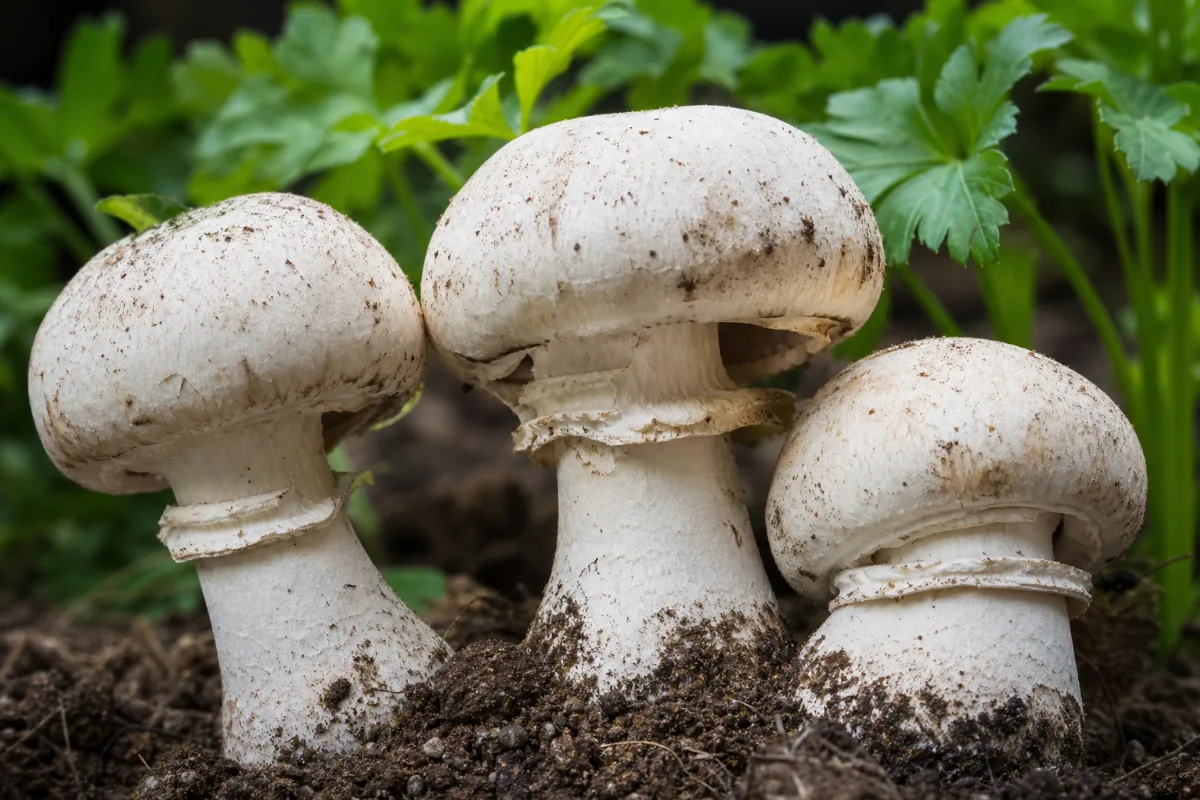
Mushrooms · Wild culinary mushroom
Pavement mushroom
Agaricus bitorquis · also called Banded agaric, Dafei mushroom (names from our earlier summary, not from a source read for this page)
Pavement mushroom is a wild mushroom that grows at the edges of pavements, roads and gardens, and is a relative of the supermarket button mushroom. Hobby guides call it edible, but it is not a supplement and no human study shows a health benefit. The main danger is mistaking a deadly or toxic look-alike for it, and cooking does not make those safe. Because it grows in towns, specimens can also hold cadmium and lead.
General information, not medical advice. Last substantive update · Not medically reviewed. A named clinician has not signed off on this page. How this page is made
About Pavement mushroom
Pavement mushroom (Agaricus bitorquis) is a wild relative of the button mushroom that grows in built-up places. It is not sold as a supplement and no human study shows a health benefit. The safety points matter far more: deadly and toxic look-alikes, cadmium and lead from urban ground, and agaritine in cultivated Agaricus.
Growing in towns: metals and roadside ground
The name comes from where it grows: pavement edges, roadsides and gardens, and sometimes up through asphalt. Wild mushrooms reflect their ground. In a 2026 study of 22 wild pavement mushrooms from parks in Leicester and Leicestershire, UK, cadmium and lead were measurable in every specimen, and caps held more than stems. In the authors' screening scenario, cadmium alone came to about half of the EFSA weekly tolerable intake, the highest of the single edible species they compared.
This is an exposure estimate, not a report of illness, and it rests on city parks in one English county. The study found no reliable link between soil tests and the mushrooms' metals, so you cannot judge a spot from the soil alone. One UK forager says he avoids roadside mushrooms because of traffic pollution. We read no study of other roadside pollutants.
What it is
Agaricus bitorquis is a fungus in the family Agaricaceae, and GBIF lists the name as accepted. It is a relative of Agaricus bisporus, the cultivated button, cremini and portobello mushroom, and of the field mushroom. A 2002 paper measured agaritine in cultivated Agaricus bitorquis and found much less after cooking than raw, with the amount depending on the method. For nutrition and the agaritine question, see the button mushroom page.
A 2023 genome paper reports many natural compounds, but gives no amounts and tests no health effect.
What the research shows
No study in people was found. The laboratory work includes solvent extracts that scored well in antioxidant tests, purified polysaccharides that protected cultured cells in low oxygen, a mycelium polysaccharide that activated mouse immune cells, and a purified protein that blocked an HIV enzyme. Much of this used a Chaidam strain, often grown as mycelium in a fermenter rather than picked. In a screen of 15 fungi the mushroom was among the least active against cancer cells. These are test-tube results and do not show that eating the mushroom does anything.
Legal and regulatory status
We did not read any food-safety or medicine regulator statement on pavement mushroom, so none is stated here. The EFSA cadmium figure above is quoted from the study, not from EFSA. It is a wild food, not an approved medicine or a supplement.
At a glance
Traditional uses history, not proof
- A UK forager blog (2012) calls it edible and good, but does not like eating mushrooms from busy roadsides.
- A volunteer-run wildlife guide says it is often reported to be edible but is best left alone.
- Studies from China describe a Chaidam strain from the Qinghai-Tibet plateau as a valued edible fungus.
Studied for research
- Eating it as a food: no health benefit shown, insufficient
- Antioxidant scores of a lab extract, laboratory only, insufficient
- Low-oxygen protection of cultured cells by polysaccharides, cell studies only, insufficient
- Immune-cell activation, a purified lectin and cancer-cell screens, laboratory only, insufficient
Main compounds
- Polysaccharides (lab studies, mostly mycelium or fractions)
- A purified lectin (lab)
- Agaritine, measured in cultivated Agaricus bitorquis
- Cadmium and lead taken up from soil (contaminants)
Common forms
- Fresh or cooked wild mushroom
- Cultivated mushroom (studied for agaritine)
- Laboratory extracts and fermenter-grown mycelium (research only; no product found)
Research links: Metals in wild mushrooms from urban green spaces, UK (abstract) · Agaritine in cultivated Agaricus bitorquis (abstract) · Death cap liver failure (review abstract) · Mushroom poisonings in South Sardinia (abstract) · Three Agaricus species compared in the lab (abstract) · Research Library · Genes & Biomarkers Library
What it is and its history
- Accepted scientific name
- Agaricus bitorquis
- Naming authority
- (Quél.) Sacc. (GBIF)
- Synonyms
- Psalliota bitorquis Quél.; Agaricus rodmanii Peck; Agaricus campestris var. edulis Vittad.; Psalliota rodmanii (Peck) Kauffman; Psalliota edulis (Vittad.) Jul. Schäff. & F.H. Møller
- Common names
- Pavement mushroom (English); Banded agaric (English (from our earlier internal summary; no source opened)); Dafei mushroom (Chinese (from our earlier internal summary; no source opened))
- Family or group
- Agaricaceae (a fungus family), not a plant
- Classification
- Fungi > Basidiomycota > Agaricomycetes > Agaricales > Agaricaceae > Agaricus > Agaricus bitorquis
- Native range
- First Nature says it is uncommon to rare in most of Britain and Ireland, and also occurs in mainland Europe and parts of North America. Not otherwise checked.
- Habitat
- Hobby guides say it grows at pavement and roadside edges and in gardens, sometimes pushing up through asphalt.
- What it looks like
- Fruiting body: Deliberately not described: this page gives no identification help.
- Cultivation
- A 2002 paper studied cultivated Agaricus bitorquis sold in supermarkets alongside Agaricus hortensis (a name for the button mushroom group). A 2023 genome paper calls the species an emerging wild mushroom with potential for cultivation.
- Harvest and processing
- Not checked.
- Look-alikes and adulterants
- Name: Death cap and white destroying angels (Amanita); Note: Deadly. A 2024 review says the death cap can easily be confused with the horse mushroom, and a 2022 review says a lethal destroying angel can be confused with immature Agaricus. Amatoxins survive cooking and drying.; Name: Yellow-staining Agaricus (Agaricus xanthodermus and relatives); Note: Toxic. Cause stomach and bowel illness. Phenol is the likely cause.
- Sustainability and conservation
- Not checked.
Traditional use and history history, not clinical proof
| Tradition or era | Documented use | Source |
|---|---|---|
| Naming, 1880s | First Nature says Lucien Quélet named it Psalliota bitorquis in 1883 (published 1884) and Pier Andrea Saccardo moved it to Agaricus in 1887. The Latin 'bitorquis' means 'with two collars', according to the same guide. | s-first-nature |
| Modern foraging (UK) | A UK forager blog from 2012 calls it edible and good, but he does not like eating mushrooms from busy roadsides. First Nature says it is often reported edible but is best left alone. | s-mushroom-diary |
| China, research | Studies from China describe a Chaidam strain from the Qinghai-Tibet plateau as a valued edible fungus; the papers read give no traditional-use record. | p33901556 |
Traditional use shows how it was used. It does not show that it works or is safe today.
What is inside, and how it may work
What it contains and how those compounds act in cells and animals. Laboratory and animal mechanisms are not proven effects in people.
Main compounds
| Compound | Family | Where it is concentrated | Activity studied | Level of evidence |
|---|---|---|---|---|
| Polysaccharides (glucose, galactose, mannose, arabinose) | polysaccharide | Fruiting body fractions; mycelium Fractions of 5,690 to 38,340 Da in one paper; no content per gram stated in the abstract. | Low-oxygen protection of cells and immune-cell activation in dishes; no human effect shown. 8 11 13 | Laboratory research |
| Lectin (ABL, 27.6 kDa) | protein | Dried fruiting body Not stated | Blocked HIV-1 reverse transcriptase and mouse leukaemia cell growth in test tubes. 16 | Laboratory research |
| Fatty acids (linoleic and palmitic) | fatty acid | Fruiting body oil Linoleic 61.82 to 67.29% and palmitic 12.67 to 14.71% of fatty acids across three Agaricus species. | None tested. 19 | Other |
| Blazeispirols, lanostane-type compounds, ergosterol, brefeldin A | sterol and triterpenoid-type compounds | Fruiting body Putative identification by mass spectrometry; no amounts given. | None tested in this paper. 17 | Other |
| Agaritine and related glutamyl phenylhydrazines | hydrazine compound | Cap skin and gills most, stem least (cultivated) About 700 mg per kg freshly harvested (early flush) and 165 to 457 mg per kg in supermarket samples (cultivated). | Marker compound; cooking lowers it by different amounts. Health meaning is discussed on the button mushroom page. 15 17 | Other |
| Cadmium and lead (contaminants, not natural constituents) | heavy metal | Cap more than stem Median cadmium 2.968 and lead 2.082 mg per kg dry weight in 22 UK specimens; site-dependent. | Toxic metals taken up from soil. 12 | Food survey |
Mechanisms, receptors and pathways
| Target or pathway | Gene or receptor | What was found | Level |
|---|---|---|---|
| Low-oxygen cell survival and HIF-1 alpha signalling | HIF-1 alpha (in vitro) | Polysaccharide fractions reduced cell death under low oxygen, and short-chain fatty acids from fermented polysaccharide damped a hypoxia pathway in cells (authors' suggestions). 8 13 | Laboratory research |
| Macrophage activation | TLR4, MyD88, NF-kB (mouse cells) | A mycelial polysaccharide raised these markers in mouse immune cells in a dish. 11 | Laboratory research |
| Enzyme activity | Butyrylcholinesterase; HIV-1 reverse transcriptase | Extracts and a purified lectin blocked these enzymes in test tubes. 19 16 | Laboratory research |
| Toxicity of the yellow-staining look-alike | not applicable | Phenol in A. xanthodermus is high enough to account for its toxicity (abstract). 5 3 | Laboratory research |
Absorption, metabolism and elimination
- Absorption
- Not found.
- Distribution
- Not found.
- Metabolism
- Not found.
- Elimination
- Not found.
- Bioavailability
- Not established.
Isolated compounds versus whole extracts
The lab findings use purified polysaccharides, a purified lectin or solvent extracts, and several use fermenter-grown mycelium from one Chaidam strain. None of them is the picked mushroom as food. No supplement was found.
Nutritional composition
No official nutrient table was found, so no nutrition value is stated. The only compositional figures read are fatty acid shares and a report of higher iron than the button mushroom, both from one lab study.
8 not enough evidence
What was looked at
The 8 benefits and uses checked for Pavement mushroom, each with how strong the evidence is. Tap one to open it.
- As a foodNot enough evidence
- Antioxidant activity (laboratory only)Not enough evidence
- Nerve-enzyme blocking (laboratory only)Not enough evidence
- Low-oxygen tolerance (laboratory and cell studies)Not enough evidence
- Immune-cell activation (laboratory only)Not enough evidence
- A purified lectin: enzyme and leukaemia-cell tests (laboratory only)Not enough evidence
- Cancer-cell killing screen (laboratory only; little activity)Not enough evidence
- Antibacterial activity in a dish (laboratory only)Not enough evidence
Lab markers tracked in the studies
Antioxidant assay scores of a laboratory extractSurvival of lung-artery muscle cells in low oxygenHIV-1 reverse transcriptase activity (enzyme test)L1210 leukaemia cell growth (cell test)
What is Pavement mushroom good for?
The uses people ask about and how strong the evidence is for each. None is proven in people. Read this together with the Safety tab.
Benefits, one by one
Each card is a research question, not a promise. Tap a goal to filter. Open a card to see the studies, doses and limits.
As a food
Not enough evidenceA wild mushroom that grows by paths, roads and gardens and is described as edible by hobby guides. We found no official nutrient table and no human study of health effects, so no nutrition or health claim is made. One forager rates it good to eat but dislikes eating mushrooms from roadsides; another guide says it is best left alone.
2 studiesFresh or cooked mushroom. Cooking lowers agaritine in cultivated Agar…
Studies, doses and limits
What the trials found
No study in people was found that tests eating pavement mushroom for any health outcome. The sources on its food role are two hobbyist guides.
Effect sizes as reported
No health effect shown
Why this rating
There are no human studies of health outcomes, and no verified nutrient values were found.
Form and dose studied
Fresh or cooked mushroom. Cooking lowers agaritine in cultivated Agaricus (see Safety).
Limits
Only descriptive hobby sources. Calling a mushroom edible is not a safety guarantee and applies only to a correctly identified one.
Why researchers looked
It is eaten for taste, not as a remedy.
Traditional use
A UK forager blog calls it edible and good, with three qualms (muddy, often insect-eaten, grows by roadsides). A volunteer-run wildlife guide says it is often reported edible but best left alone.
Proposed mechanism Other
Not applicable; this is a food.
A proposed mechanism does not show that the effect happens in people.
The biggest risk with wild mushrooms is mistaking a deadly or toxic look-alike for an edible one. See the Safety tab first.
Antioxidant activity (laboratory only)
Not enough evidenceIn a laboratory comparison of three Agaricus species, a solvent extract of this mushroom scored highest in three antioxidant tests. Test-tube scores say nothing about what happens when you eat it.
1 studiesEthyl acetate and hexane solvent extracts made for research. No suppl…
Studies, doses and limits
What the trials found
No human or animal study. In a 2011 laboratory study the ethyl acetate extract of Agaricus bitorquis showed the highest activity in three antioxidant assays among Agaricus bitorquis, Agaricus essettei and the button mushroom Agaricus bisporus.
Results
Highest of three species in three assays (beta-carotene-linoleic acid, DPPH, ABTS)
Effect sizes as reported
Higher scores in a test tube; no effect shown in people
Why this rating
Laboratory extract only; no animal or human study.
Form and dose studied
Ethyl acetate and hexane solvent extracts made for research. No supplement was found.
Limits
Solvent extracts are not like food. The abstract gives no numbers we could use. A conclusion that extracts might be useful in foods is the authors' suggestion.
Why researchers looked
Researchers measure antioxidant scores of extracts as an early screen.
Proposed mechanism Laboratory research
Extract chemistry reacting with test chemicals in a dish (authors; no mechanism proven).
A proposed mechanism does not show that the effect happens in people.
The biggest risk with wild mushrooms is mistaking a deadly or toxic look-alike for an edible one. See the Safety tab first.
Nerve-enzyme blocking (laboratory only)
Not enough evidenceTwo solvent extracts blocked an enzyme that breaks down a brain messenger, to a degree the authors call close to a reference drug. This was a test-tube result. It does not show any effect on memory.
1 studiesResearch extracts only
Studies, doses and limits
What the trials found
No human or animal study. In the 2011 laboratory study the ethyl acetate and hexane extracts of Agaricus bitorquis showed meaningful butyrylcholinesterase blocking, close to galantamine according to the authors.
Results
Close to galantamine in the lab (authors' wording; figures not used)
Effect sizes as reported
Enzyme blocking in a test tube
Why this rating
Lab test only.
Form and dose studied
Research extracts only
Limits
No animal or human data; nothing shows eating the mushroom changes memory or dementia risk.
Why researchers looked
Enzyme blocking is an early screen for brain-related research.
Proposed mechanism Laboratory research
Extract reduced butyrylcholinesterase activity in a test (authors).
A proposed mechanism does not show that the effect happens in people.
The biggest risk with wild mushrooms is mistaking a deadly or toxic look-alike for an edible one. See the Safety tab first.
Low-oxygen tolerance (laboratory and cell studies)
Not enough evidencePolysaccharides (long sugar chains) from a Chaidam-region strain of this mushroom protected cultured lung-artery muscle cells from dying in low oxygen. A review cites an older mouse study with similar results. No study in people was found.
3 studiesPurified polysaccharide fractions or mycelial products from one Chaid…
Studies, doses and limits
What the trials found
No human study. Cell studies (2019, 2026) used purified polysaccharides. A 2026 review quotes a 2018 mouse paper (not opened here) reporting longer survival of mice in low oxygen after these polysaccharides.
Results
Reduced cell death in a dish; second-hand mouse survival report
Effect sizes as reported
Cell-culture and in vitro results only
Why this rating
Cell and fermentation models, and one second-hand animal report. Nothing in people.
Form and dose studied
Purified polysaccharide fractions or mycelial products from one Chaidam strain; not the picked mushroom.
Limits
Purified fractions at high concentrations in a dish. A mycelium product may differ from the fruiting body. Nothing shows eating the mushroom helps with altitude or any lung or heart condition.
Why researchers looked
The strain comes from the high Qinghai-Tibet plateau, so researchers looked at low-oxygen effects.
Proposed mechanism Laboratory research
Reduced cell death in low oxygen; changes in enzyme and signalling markers; in a gut-fermentation model, short-chain fatty acids damped a hypoxia pathway (authors' suggestions, lab work).
A proposed mechanism does not show that the effect happens in people.
The biggest risk with wild mushrooms is mistaking a deadly or toxic look-alike for an edible one. See the Safety tab first.
Immune-cell activation (laboratory only)
Not enough evidenceA polysaccharide from the mycelium of a Chaidam strain switched on mouse immune cells in a dish. This is a cell test and does not show better immunity in people.
1 studiesPurified mycelial polysaccharide (research)
Studies, doses and limits
What the trials found
No animal or human study. In the 2021 cell study the mycelial polysaccharide raised cell viability, phagocytosis, nitric oxide, reactive oxygen species and TNF-alpha.
Results
Higher activation markers in a cell line
Effect sizes as reported
Cell-line result only
Why this rating
One mouse cell line; mycelium product.
Form and dose studied
Purified mycelial polysaccharide (research)
Limits
Activating immune cells in a dish is not a health benefit and could in principle be unwanted. The product was grown in a fermenter, not picked.
Why researchers looked
Mushroom sugar chains are often screened for immune activity.
Proposed mechanism Laboratory research
Raised TLR4, MyD88, TRAF-6 and NF-kB in mouse macrophage cells (authors).
A proposed mechanism does not show that the effect happens in people.
The biggest risk with wild mushrooms is mistaking a deadly or toxic look-alike for an edible one. See the Safety tab first.
A purified lectin: enzyme and leukaemia-cell tests (laboratory only)
Not enough evidenceA purified protein from dried fruiting bodies blocked an HIV enzyme and slowed mouse leukaemia cells in test tubes. It is one protein, not the mushroom, and nothing here is a treatment.
1 studiesPurified protein (research)
Studies, doses and limits
What the trials found
No animal or human study. The 2019 paper reports IC50 values of 4.69 micromolar (HIV-1 reverse transcriptase) and 4.97 micromolar (L1210 leukaemia cells).
Results
IC50 4.69 and 4.97 micromolar in the lab
Effect sizes as reported
Test-tube activity of one purified protein
Why this rating
Laboratory only; one purified protein.
Form and dose studied
Purified protein (research)
Limits
Purified lectin is not eaten. Many lectins are also active on healthy cells; this paper does not address that. No treatment claim follows.
Why researchers looked
Lectins are screened for antiviral and anticancer lab activity.
Proposed mechanism Laboratory research
Inhibited HIV-1 reverse transcriptase and the growth of L1210 cells (authors).
A proposed mechanism does not show that the effect happens in people.
The biggest risk with wild mushrooms is mistaking a deadly or toxic look-alike for an edible one. See the Safety tab first.
Cancer-cell killing screen (laboratory only; little activity)
Not enough evidenceIn a screen of 15 Australian fungi on cancer and normal cell lines, pavement mushroom was among the least active. Nothing here suggests an anticancer effect.
1 studiesEthanol and water extracts (research)
Studies, doses and limits
What the trials found
No animal or human study. The abstract lists Agaricus bitorquis among the least cytotoxic species in the screen.
Results
Among the least cytotoxic of 15 fungi
Effect sizes as reported
Little cell-killing activity in the dish
Why this rating
Abstract only; laboratory extracts; the result is a null screen, not a benefit.
Form and dose studied
Ethanol and water extracts (research)
Limits
Only the abstract was read, and the specimen was Australian. A weak screen result does not show anything about eating the mushroom.
Why researchers looked
Cell-line screens are an early look for anticancer chemistry.
Proposed mechanism Laboratory research
Not applicable (little activity).
A proposed mechanism does not show that the effect happens in people.
The biggest risk with wild mushrooms is mistaking a deadly or toxic look-alike for an edible one. See the Safety tab first.
Antibacterial activity in a dish (laboratory only)
Not enough evidenceSolvent extracts of this mushroom worked against some Gram-positive bacteria in a dish. This does not show it treats or prevents any infection.
1 studiesSolvent extracts (research)
Studies, doses and limits
What the trials found
No animal or human study. In the 2011 study extracts of the three Agaricus species were effective against Micrococcus luteus, Micrococcus flavus, Bacillus subtilis and Bacillus cereus; the abstract does not give figures for Agaricus bitorquis alone.
Results
Activity against four Gram-positive bacteria in a dish (all three species)
Effect sizes as reported
Test-tube result
Why this rating
Laboratory only; species-specific figures not given in the abstract.
Form and dose studied
Solvent extracts (research)
Limits
Nothing shows the mushroom helps against infections.
Why researchers looked
Extracts are screened against bacteria.
Proposed mechanism Laboratory research
Not studied beyond the screen.
A proposed mechanism does not show that the effect happens in people.
The biggest risk with wild mushrooms is mistaking a deadly or toxic look-alike for an edible one. See the Safety tab first.
Connections to the rest of health
How Pavement mushroom connects to the rest of our health knowledge graph. Every link says what kind of connection it is. A safety link (for example to the liver) is a warning, not a benefit. A study that merely mentions a topic never creates a benefit link.
Explore every connection: goals, body systems, organs, symptoms, genes
B. Body systems
| Connected to | Kind of connection | Evidence status | Context | Studies |
|---|---|---|---|---|
| Digestive system | Adverse effect or risk | Moderate certainty | Stomach and bowel illness. Preparation or compound: Yellow-staining Agaricus look-alikes |
10 5 |
C. Body parts and organs
G. Root causes and contributing factors
| Connected to | Kind of connection | Evidence status | Context | Studies |
|---|---|---|---|---|
| Heavy metal exposure | Low certainty | Cadmium and lead found in UK urban park specimens. Preparation or compound: Wild urban pavement mushroom caps and stems |
12 |
I. Biomarkers
| Connected to | Kind of connection | Evidence status | Context | Studies |
|---|---|---|---|---|
| Antioxidant assay scores of a laboratory extract | Biological association | Not enough evidence | Measured in trials: raised. A lab change is not the same as a health benefit. | 19 |
| Survival of lung-artery muscle cells in low oxygen | Biological association | Not enough evidence | Measured in trials: raised. A lab change is not the same as a health benefit. | 8 |
| HIV-1 reverse transcriptase activity (enzyme test) | Biological association | Not enough evidence | Measured in trials: lowered. A lab change is not the same as a health benefit. | 16 |
| L1210 leukaemia cell growth (cell test) | Biological association | Not enough evidence | Measured in trials: lowered. A lab change is not the same as a health benefit. | 16 |
L. Active compounds
| Connected to | Kind of connection | Evidence status | Context | Studies |
|---|---|---|---|---|
| Polysaccharides (glucose, galactose, mannose, arabinose) | Biological association | In vitro | Low-oxygen protection of cells and immune-cell activation in dishes; no human effect shown. Preparation or compound: Fruiting body fractions; mycelium |
8 11 13 |
| Lectin (ABL, 27.6 kDa) | Biological association | In vitro | Blocked HIV-1 reverse transcriptase and mouse leukaemia cell growth in test tubes. Preparation or compound: Dried fruiting body |
16 |
| Fatty acids (linoleic and palmitic) | Biological association | Other | None tested. Preparation or compound: Fruiting body oil |
19 |
| Blazeispirols, lanostane-type compounds, ergosterol, brefeldin A | Biological association | Other | None tested in this paper. Preparation or compound: Fruiting body |
17 |
| Agaritine and related glutamyl phenylhydrazines | Biological association | Other | Marker compound; cooking lowers it by different amounts. Health meaning is discussed on the button mushroom page. Preparation or compound: Cap skin and gills most, stem least (cultivated) |
15 17 |
| Cadmium and lead (contaminants, not natural constituents) | Biological association | Food survey | Toxic metals taken up from soil. Preparation or compound: Cap more than stem |
12 |
Each connection is stored with the ingredient, the connected record, the kind of connection, the evidence status, the supporting studies, the preparation or compound involved, and a review date (last reviewed October 25, 2026).
Evidence at a glance: what changed in 4 lab markers
Tap a number to show only those markers. Counts are markers, not people.
The evidence
The research centre for Pavement mushroom. Every record here was checked against PubMed or the publisher's page; we never list a study we have not verified.
Evidence by outcome
Bars show how many studies we found for each outcome, not how well it works. People are added up across trials only (reviews are not added, to avoid double counting).
How we rate evidence
High certainty
Several well-run trials or reviews agree; further research is unlikely to change the picture much.
Moderate certainty
Good trials point the same way, but some doubt remains.
Low certainty
Small, short or inconsistent trials. The finding could change with better research.
Very low certainty
Very little or very weak human data. Treat as a possibility only.
Mixed findings
Trials or reviews disagree with each other.
Not enough evidence
Not enough human research to say either way.
Evidence against
Good research found no benefit, or found harm.
We take the reviewers' own risk-of-bias and GRADE statements where they exist, and otherwise judge from study size, design, consistency, directness and whether a product matches what is sold. Many publications do not make evidence high. Method note: We read PubMed records and abstracts for 16 papers (one metals survey, one cultivated-mushroom chemistry study, one genome paper, six laboratory studies of extracts, polysaccharides or a lectin, four reviews, two chemistry studies of a toxic yellow-staining relative, and a poisoning case series), read the full text of the metals study and several reviews from Europe PMC, and checked the species name in GBIF. Two hobby guides were used for habitat and opinion only. Index Fungorum and regulator pages were not read. Certainty ratings are the compiler's own reading.
Study library: every study we checked 19
| Study | Design | People | Product, dose, length | Result |
|---|---|---|---|---|
| Alvarado 2022 Amanita Section Phalloideae Species in the Mediterranean Basin: Destroying Angels Reviewed. Biology (Basel) · PMID 35625498 · DOI |
Other n/a |
Taxonomy and poisoning review of white deadly Amanita species | n/a |
The abstract says amatoxin-containing mushrooms cause most of the deadly poisonings from macrofungi in Europe. In the species notes of the full text a lethal species is described as easily confused with immature specimens of Agaricus. Review; no new data about Agaricus Methods, limits and fundingOutcomes: Species, amatoxins Limitations: Which species entry the Agaricus remark belongs to was not clear from the text read, so it is stated for white deadly Amanita in general. Funding and conflicts: Authors declare no conflict of interest. Read: abstract and full text |
| Beattie 2011 Ethanolic and aqueous extracts derived from Australian fungi inhibit cancer cell growth in vitro. Mycologia · PMID 21262985 · DOI |
Other n/a |
Extracts of 15 Australian macrofungi tested on cancer and normal cell lines (laboratory) | n/a fruiting body extracts (ethanol, cold and hot water) |
The abstract lists Agaricus bitorquis among the least cytotoxic of the species tested. No notable cell-killing activity in this screen Methods, limits and fundingOutcomes: Cell-killing (cytotoxic) activity Limitations: Abstract only; extracts from Australian collections, laboratory cell lines. Funding and conflicts: Research support from non-US government sources listed in PubMed. Read: abstract |
| Boxshall 2021 A field-based investigation of simple phenol variation in Australian Agaricus xanthodermus. Mycologia · PMID 34494944 · DOI |
Other n/a |
Wild Agaricus xanthodermus collected in Australia | n/a fruiting body |
The abstract says A. xanthodermus and other yellow-staining species cause poisonings that need treatment, with stomach and bowel irritation of varying severity. Phenol was higher in the cap than the stem, in mature than young mushrooms, and in mushrooms on woody mulch than on lawns. The authors suggest toxicity varies partly for these reasons, and that human sensitivity may also play a role (not tested). Toxin level, and so severity, varies Methods, limits and fundingOutcomes: Phenol, hydroquinone, catechol Limitations: Australian study of one species. Funding and conflicts: Research support from non-US government sources; no industry link. Read: abstract |
| First Nature (volunteer-run wildlife site) 2022 First Nature: Agaricus bitorquis (Quél.) Sacc. - Pavement Mushroom (web guide) first-nature.com · Source |
Web guide n/a |
n/a | n/a |
Says the name Pavement Mushroom comes from its habit of appearing at the edges of pavements and sometimes erupting through asphalt; that it is uncommon to rare in most of Britain and Ireland and also occurs in mainland Europe and parts of North America; that Quélet named it Psalliota bitorquis in 1883 (published 1884) and Saccardo moved it to Agaricus in 1887; and gives synonyms. Its culinary note says the often worm-ridden fungi are "often reported to be edible" but are best left alone. Methods, limits and fundingOutcomes: Names, synonyms, distribution, culinary note Limitations: A hobbyist guide, not peer-reviewed. Its identification text is deliberately not used. Funding and conflicts: None stated Read: full text |
| Gill 1984 Constituents of Agaricus xanthodermus Genevier: the first naturally endogenous azo compound and toxic phenolic metabolites. Zeitschrift fuer Naturforschung C · PMID 6543409 · DOI |
Other n/a |
Fresh Agaricus xanthodermus | n/a fruiting body |
The abstract says phenol is present in the fruit bodies in a concentration high enough to account for the toxicity of A. xanthodermus. Chemistry of a toxic look-alike species Methods, limits and fundingOutcomes: Chemical constituents Limitations: Old laboratory paper; abstract only. Funding and conflicts: Not stated Read: abstract |
| Gouvinhas 2024 The most dreadful mushroom toxins: a review of their toxicological mechanisms, chemical structural characteristics, and treatment. EXCLI Journal · PMID 39165585 · DOI |
Narrative review n/a |
Review of dangerous mushroom toxins | n/a |
The full text says the death cap (Amanita phalloides) can easily be confused with the edible horse mushroom (Agaricus arvensis) and with Tricholoma equestre, citing an earlier paper. The abstract says foraging for wild mushrooms can lead to serious disease and even death if deadly mushrooms are eaten by accident, and that mushroom poisoning is hard to diagnose because symptoms resemble other disorders. Review; no new data Methods, limits and fundingOutcomes: Toxins, mechanisms, treatment Limitations: Narrative review. The confusion statement is cited from an earlier paper not opened here. It names the horse mushroom, not the pavement mushroom. Funding and conflicts: Authors declare no conflict of interest. Read: abstract and full text |
| J C Harris 2012 The Mushroom Diary: Sidewalk Snack - The Pavement Mushroom (forager blog, 2012) mushroomdiary.co.uk · Source |
Web guide n/a |
n/a | n/a |
A UK forager says it grows mainly in roadside situations and gardens, can push up through asphalt, and is edible and good to eat. He lists his own three qualms: it is muddy and needs thorough cleaning, it is often eaten by insects, and it lives by roadsides where he does not want pollution in his food. Methods, limits and fundingOutcomes: Habitat, forager opinion Limitations: A single hobbyist blog. Its identification features are deliberately not used. Funding and conflicts: None stated Read: full text |
| Jiao 2019 Polysaccharides from the Edible Mushroom Agaricus bitorquis (Quél.) Sacc. Chaidam Show Anti-hypoxia Activities in Pulmonary Artery Smooth Muscle Cells. International Journal of Molecular Sciences · PMID 30717240 · DOI |
Other n/a |
Wild fruiting-body polysaccharide fractions FA, FB and FC; rat pulmonary artery smooth muscle cells in a dish (laboratory) | n/a fruiting body polysaccharide fractions |
Three water-soluble polysaccharide fractions (5,690 to 38,340 Da; mostly glucose and galactose) reduced cell death of lung-artery muscle cells kept in low oxygen. One fraction (FC) at 200 micrograms per mL had a clear effect. The authors link it to enzyme and signalling changes in the cells. Cell-culture result only Methods, limits and fundingOutcomes: Cell death under low oxygen Limitations: Cells in a dish, one strain (Chaidam), purified fractions. No animal or human data in this paper. Funding and conflicts: Not stated in the abstract. Read: abstract |
| Kayes 2024 Amanita phalloides-Associated Liver Failure: Molecular Mechanisms and Management. International Journal of Molecular Sciences · PMID 39684738 · DOI |
Narrative review n/a |
Review of death cap poisoning | n/a |
The abstract says poisoning starts with delayed stomach and bowel symptoms that mimic gastroenteritis, then severe liver damage and liver failure, and that liver transplantation is needed in some people. The full text says there is a symptom-free lag of 6 to 18 hours, that amatoxins withstand cooking and drying, that the death cap is commonly mistaken for edible mushrooms, and that mortality is 10 to 20%. Review; no new data Methods, limits and fundingOutcomes: Toxicity course, treatment Limitations: Narrative review of small series. Funding and conflicts: Authors declare no conflicts of interest. Read: abstract and full text |
| La Rosa 2024 Epidemiology and clinical aspect of mushroom poisonings in South Sardinia: A 10-year retrospective analysis (2011-2021). Food Science and Nutrition · PMID 38268883 · DOI |
Case series |
164 164 mushroom poisoning cases in South Sardinia, 2011 to 2021 |
n/a |
Of 162 cases with the species identified, 81 were due to toxic species. Omphalotus olearius (22%) and Agaricus xanthodermus (18%) were the most frequent toxic species. The authors stress that most poisonings are preventable and that public awareness is needed. Yellow-staining Agaricus was one of the two commonest toxic causes in this region Methods, limits and fundingOutcomes: Species involved, timing Limitations: One Italian region; cannot give a rate for the general public. Abstract read (full text was read for the field mushroom page). Funding and conflicts: Authors declare no conflict of interest. Read: abstract |
| Lin 2021 Immunomodulatory effect of intracellular polysaccharide from mycelia of Agaricus bitorquis (QuéL.) Sacc. Chaidam by TLR4-mediated MyD88 dependent signaling pathway. International Journal of Biological Macromolecules · PMID 33901556 · DOI |
Other n/a |
RAW264.7 mouse macrophage cell line (laboratory) | n/a mycelial intracellular polysaccharide (ABSP), not fruiting body |
A polysaccharide from the mycelium of a Chaidam strain raised cell viability, phagocytosis, nitric oxide, reactive oxygen species and TNF-alpha in mouse immune cells, and raised TLR4, MyD88, TRAF-6 and NF-kB. The authors conclude it acts through the TLR4-MyD88 pathway. Immune-cell activation in a dish Methods, limits and fundingOutcomes: Immune-cell activity markers Limitations: Mouse cell line; mycelium product, not the mushroom you would pick. Activation in a dish does not show a benefit in people. Funding and conflicts: Not stated in the abstract. Read: abstract |
| Peña-Fernández 2026 Censored-Data-Aware Screening of Hazardous Metal(loid)s in Wild Mushrooms from Urban and Peri-Urban Green Spaces: Multielement Fingerprints and Adult Exposure Assessment. Journal of Xenobiotics · PMID 42646055 · DOI |
Other n/a |
22 121 wild mushroom fruiting-body units from parks in Leicester and Leicestershire, UK; 22 were Agaricus bitorquis with paired cap and stem samples |
n/a cap and stem, wild-picked |
In the 22 Agaricus bitorquis fruiting bodies the observed median cadmium was 2.968 mg per kg dry weight (range 2.127 to 4.846) and lead 2.082 mg per kg. Caps held more than stems: cadmium 3.878 vs 2.068, lead 2.462 vs 1.580 mg per kg. Arsenic was not detected. In the authors' scenario of 300 g fresh weight a week (with a 10% dry-matter assumption) cadmium came to 50.88% of the EFSA tolerable weekly intake of 2.5 micrograms per kg body weight for this species (72.52% on a high-end estimate), the highest of the individual edible species in the study; the lead margin of exposure was 3.92. Links between park soil and mushroom metals were not significant after correction for multiple tests. Cadmium and lead were measurable in every sample of this urban species; cadmium was the main screening concern Methods, limits and fundingOutcomes: Cadmium, lead and other metals (dry weight); screening-level exposure scenarios Limitations: Screening estimate, not a measure of harm. Parks in one English city. Moisture was assumed, not measured. Metal forms (speciation) and how much the body absorbs were not tested. Funding and conflicts: Funded by a Spanish soil-remediation project; the authors declare no conflicts of interest. Read: abstract and full text |
| Qiu 2026 Hypoxic adaptation mechanism of polysaccharide from Agaricus bitorquis (Quél.) Sacc.Chaidam on gut microbiota in Tibetan Plateau population based on in vitro model. International Journal of Biological Macromolecules · PMID 41418957 · DOI |
Other n/a |
In vitro gut-flora fermentation model and cell hypoxia models (laboratory) | n/a polysaccharides (ABIPs) from a Chaidam strain |
Bowel bacteria cultures from a high-altitude (plateau) group made more short-chain fatty acids from the polysaccharide than cultures from a lowland (plain) group, and the products damped a hypoxia-signalling pathway (HIF-1 alpha) in cells. The authors suggest this may help cells tolerate low oxygen. Laboratory model only Methods, limits and fundingOutcomes: Fermentation products, short-chain fatty acids, hypoxia signalling Limitations: In vitro fermentation and cells; no person took the mushroom. The authors' mechanism is a suggestion. Funding and conflicts: Not stated in the abstract. Read: abstract |
| Samarasiri 2026 Urban mushroom farming for future foods: safety considerations and nutritional benefits. Sustainable Microbiology · PMID 42576864 · DOI |
Narrative review n/a |
Review of urban mushroom farming | n/a |
The abstract lists biological hazards, mycotoxins, heavy-metal accumulation and allergenicity as safety considerations for urban mushroom production. In its introduction the full text cites a 2018 paper (not opened here) reporting that water-soluble polysaccharides of Agaricus bitorquis lengthened survival of mice in low oxygen. Review; the mouse finding is second-hand Methods, limits and fundingOutcomes: Safety considerations of urban-grown mushrooms; background on pavement mushroom research Limitations: Narrative review. The mouse finding is quoted from another paper that was not opened. About farming, not wild pavement mushrooms. Funding and conflicts: Authors declare no conflicts; one author is on the journal's editorial board (full text). Read: abstract and full text |
| Schulzová 2002 Influence of storage and household processing on the agaritine content of the cultivated Agaricus mushroom. Food Additives and Contaminants · PMID 12396396 · DOI |
Other n/a |
28 Cultivated Agaricus bitorquis and Agaricus hortensis (supermarket and freshly harvested samples) |
n/a fruiting body |
Freshly harvested early-flush Agaricus bitorquis held about 700 mg per kg agaritine. Twenty-eight supermarket samples held 165 to 457 mg per kg (average 272). The most was in the cap skin and gills, the least in the stem. There was no significant difference between the two species. Refrigerating, freezing or drying cut it by about 20 to 75%. Boiling for 5 minutes moved about half into the cooking water and broke down 20 to 25%; boiling for 2 hours left about 10%. Dry baking cut it by about 25%, frying by 35 to 70%, microwaving to one third. The authors say raw mushrooms give much more exposure than cooked ones, and that it is not known what agaritine breaks down into during cooking. Chemistry of a cultivated relative; cooking lowers agaritine by different amounts Methods, limits and fundingOutcomes: Agaritine content; effect of storage and cooking Limitations: Cultivated mushrooms, not wild pavement mushrooms. Measured the chemical only; no health outcome. Funding and conflicts: Research support from non-US government sources listed in PubMed; no industry link stated. Read: abstract |
| Zhang 2019 An Inulin-Specific Lectin with Anti-HIV-1 Reverse Transcriptase, Antiproliferative, and Mitogenic Activities from the Edible Mushroom Agaricus bitorquis. BioMed Research International · PMID 31016184 · DOI |
Other n/a |
Purified lectin from dried fruiting bodies; enzyme and mouse leukaemia cell tests (laboratory) | n/a dried fruiting body, purified lectin (ABL) |
A purified 27.6 kDa lectin inhibited HIV-1 reverse transcriptase (IC50 4.69 micromolar) and the growth of L1210 leukaemia cells (IC50 4.97 micromolar) in the laboratory, and stimulated mouse spleen-cell growth. Purified protein active in test tubes Methods, limits and fundingOutcomes: Enzyme inhibition, cell growth Limitations: A single purified protein, not the whole mushroom. Not tested in animals or people. No treatment claim follows. Funding and conflicts: Not stated in the abstract. Read: abstract |
| Zhao 2023 The First Whole Genome Sequencing of Agaricus bitorquis and Its Metabolite Profiling. Journal of Fungi (Basel) · PMID 37108939 · DOI |
Other n/a |
Strain BH01 from Bosten Lake, Xinjiang, China; fruiting bodies compared with Agaricus bisporus | n/a fruiting body |
The authors sequenced and annotated the genome of one strain and compared it with the button mushroom (Agaricus bisporus). A metabolite network (mass spectrometry, matched to earlier literature) listed compounds such as blazeispirols, lanostane-type compounds, ergosterol, brefeldin A and agaritine-related glutamyl phenylhydrazines in both species. Amounts were not given. Chemistry and genome description; no health outcome Methods, limits and fundingOutcomes: Genome, mitochondrial genome and metabolite network Limitations: Compound names are putative matches. No amounts, no health testing. One strain. Funding and conflicts: Not stated in the abstract. Read: abstract and full text |
| n/a 2026 GBIF Backbone Taxonomy record: Agaricus bitorquis (Quél.) Sacc. (usage key 5243374), checked by API 2026-10-25 n/a · Source |
Database record n/a |
n/a | n/a |
ACCEPTED, exact match, confidence 100: Agaricus bitorquis (Quél.) Sacc., family Agaricaceae, genus Agaricus, order Agaricales, Basidiomycota. Methods, limits and fundingOutcomes: Accepted name, family Limitations: Identity record only; Index Fungorum was not read directly. Funding and conflicts: Independent public information source Read: full text |
| Öztürk 2011 In vitro antioxidant, anticholinesterase and antimicrobial activity studies on three Agaricus species with fatty acid compositions and iron contents: a comparative study on the three most edible mushrooms. Food and Chemical Toxicology · PMID 21419821 · DOI |
Other n/a |
Extracts of Agaricus essettei, Agaricus bitorquis and Agaricus bisporus (laboratory) | n/a fruiting body extracts |
Linoleic acid (61.82 to 67.29%) and palmitic acid (12.67 to 14.71%) were the main fatty acids across the three species. The ethyl acetate extract of Agaricus bitorquis scored highest in three antioxidant tests. The ethyl acetate and hexane extracts of Agaricus bitorquis blocked the enzyme butyrylcholinesterase to a degree the authors call close to galantamine. Extracts worked against some Gram-positive bacteria in a dish. The authors report higher iron in Agaricus bitorquis and Agaricus essettei than in the button mushroom. Test-tube activity of solvent extracts; no animal or human outcome Methods, limits and fundingOutcomes: Fatty acids, antioxidant, enzyme-blocking and antibacterial tests Limitations: Laboratory extracts made with solvents, not food. Test-tube scores do not show an effect in people. Authors' conclusion about use in foods or additives is a suggestion, not a finding. Funding and conflicts: Research support from a non-US government source listed in PubMed. Read: abstract |
What we do not know yet
- No human study of any health effect of pavement mushroom was found.
- Agaritine was measured in cultivated Agaricus bitorquis only; nutrient content of the wild mushroom is not measured in any source read.
- No pesticide, hydrocarbon, microbe or radioactivity test was read; metal figures come from one study of one English county.
- No official food-safety statement was read; Index Fungorum was not read.
- Statements on look-alikes are quoted from earlier papers we did not open.
How new research is added
New studies are found by a saved PubMed search and placed in a review queue. A person reads each one before it changes any evidence rating or safety wording. New publications never change ratings automatically.
Lab markers
What changed in blood or saliva tests during trials. A changed number is not the same as feeling or being healthier, and we give no "normal ranges".
Other 4
Antioxidant assay scores of a laboratory extract
Raised in trials
Test-tube scores (such as DPPH and ABTS) for how strongly an extract reacts with test chemicals. These are lab measures, not blood tests in a person.
Not enough evidenceResults and what it means
Why it was measured
A laboratory screen.
Statistical vs. clinical meaning
Higher than the button mushroom extract in the lab.
Safety implication
None for people; no human data.
| Study | Result | People | Product |
|---|---|---|---|
| 19 | The ethyl acetate extract of Agaricus bitorquis showed the highest activity of the three species in the beta-carotene-linoleic acid, DPPH and ABTS assays. | Laboratory extract; no people | Ethyl acetate extract |
Survival of lung-artery muscle cells in low oxygen
Raised in trials
How many cultured rat lung-artery muscle cells stay alive when oxygen is low.
Not enough evidenceResults and what it means
Why it was measured
A laboratory screen.
Statistical vs. clinical meaning
Significant in the dish; not tested in animals in this paper.
Safety implication
None for people; no human data.
| Study | Result | People | Product |
|---|---|---|---|
| 8 | Three polysaccharide fractions significantly inhibited cell death under low oxygen; fraction FC at 200 micrograms per mL had a clear effect. | Cell line (no people) | Purified fruiting-body polysaccharides |
HIV-1 reverse transcriptase activity (enzyme test)
Lowered in trials
How much a purified protein slows a viral enzyme in a test tube.
Not enough evidenceL1210 leukaemia cell growth (cell test)
Lowered in trials
How many mouse leukaemia cells grow in a dish after a protein is added.
Not enough evidenceSafety
What studies and official sources say about side effects, medicines and who should check first. Each point shows what kind of evidence it comes from.
Main points to know 5
- Danger first: deadly look-alikes. Some deadly mushrooms look like edible white-gilled or pale mushrooms. A 2024 review says the death cap can easily be confused with the horse mushroom, a close Agaricus relative, and a 2022 review says a lethal destroying angel can easily be confused with immature Agaricus. Their poisons (amatoxins) are not destroyed by cooking or drying. Symptoms come after a quiet gap of 6 to 18 hours and can end in liver failure; the review we read gives a death rate of 10 to 20%. This page gives no way to tell mushrooms apart. Never eat a wild mushroom unless an expert has identified it in person. Narrative review 6 1 9
- Toxic yellow-staining relatives cause stomach and bowel illness. Agaricus xanthodermus and other yellow-staining relatives are toxic and cause stomach and bowel illness of varying severity. In South Sardinia, over 10 years, Agaricus xanthodermus was one of the two commonest toxic species in hospital and inspectorate records (18% of cases caused by toxic species). Phenol in the mushroom is high enough to account for the toxicity, and the level varies with age, part and where it grew. Case series 10 5 3
- It grows in towns and by roads, and wild specimens held cadmium and lead. Pavement mushroom takes its name from growing at pavement edges and even pushing up through asphalt. In a 2026 study of 22 wild specimens from parks in Leicester and Leicestershire, UK, the median cadmium was 2.968 mg per kg dry weight and the median lead 2.082 mg per kg, with more in caps than stems. In the authors' screening scenario of 300 g fresh weight a week, the cadmium alone came to about half (50.88%) of the EFSA tolerable weekly intake, the highest of the single edible species in that study. This is an exposure estimate, not a report of illness. Levels depend on the spot, and nothing in the study shows a particular roadside is safe or unsafe. Food survey 12 7 4
- Cooking lowers agaritine, a compound found in cultivated Agaricus. Cultivated Agaricus bitorquis held about 700 mg per kg agaritine when freshly harvested from early flushes, and 165 to 457 mg per kg in supermarket samples. Boiling, frying, baking and microwaving lowered it by different amounts, so raw mushrooms give much more exposure than cooked ones. The authors say it is not known what agaritine becomes during cooking. No human harm was reported in that study. We found no measured agaritine value for wild pavement mushroom. The button mushroom page discusses agaritine further. Food survey 15
- No data for pregnancy, breastfeeding or allergy; children are at risk from wild mushrooms in general. No source we read tests pavement mushroom in pregnancy or breastfeeding or reports an allergy to it. A 2026 review of urban mushroom farming lists allergenicity among general safety considerations for mushrooms. Children are at special risk from wild mushrooms they find outdoors. Insufficient 14
Side effects 3
| Effect | How often | Severity and recovery | Evidence |
|---|---|---|---|
| Vomiting, diarrhoea and cramps after a yellow-staining look-alike This is a look-alike effect, not an effect of pavement mushroom. | Reported in poisoned patients; severity varies | moderate Not given in the abstracts read | Case series 10 3 |
| Delayed vomiting and diarrhoea, then liver failure, after a white deadly Amanita Symptoms begin after a quiet gap of 6 to 18 hours and can look like a simple stomach bug. | Not applicable to pavement mushroom; look-alike risk. Death rate 10 to 20% in the review | high Some recover; some need a liver transplant | Narrative review 9 6 |
| Cadmium and lead intake No illness from metals in pavement mushroom eaters has been reported in the sources read. | Estimated, not observed | unknown Not applicable | Food survey 12 |
Liver
No liver injury from pavement mushroom itself was found. Liver failure is the main danger of a look-alike, the death cap and related white Amanita species, whose amatoxins block a key liver enzyme (RNA polymerase II) and are not destroyed by cooking. 9 6
Monitoring. Anyone who ate a wild mushroom and has vomiting or diarrhoea, especially starting 6 or more hours after the meal, needs urgent medical care even if the symptoms ease. Keep any leftover mushroom or remains for the hospital.
This is a safety connection. It is not evidence that Pavement mushroom supports liver health.
Medicines and supplements 1
| With | Why it matters | Importance | Evidence | What to do |
|---|---|---|---|---|
| Medicines in general prescription | No source we read describes an interaction between eating pavement mushroom and any medicine. That is absence of evidence, not proof of safety. | Gap Not enough evidence | Ask a pharmacist if unsure. |
Who should check first 4
| Situation | Advice | Evidence |
|---|---|---|
| Any doubt about the identity of a wild mushroom | Do not eat it. Look-alikes can be deadly and cooking does not make them safe. | Narrative review 6 1 9 |
| Children | Keep children away from wild mushrooms; wild mushrooms are a poisoning risk for them. | Case series 10 |
| Pregnancy and breastfeeding | No data. Ask a clinician rather than assume it is safe. | Insufficient |
| Mushrooms from roadsides, car parks or built-up land, or eaten often | These can hold cadmium and lead. The study measured parks in one English city; results do not transfer to other places, and other roadside pollutants were not tested in the sources we read. | Food survey 12 7 |
Overdose, product quality and regulators
Summary. Pavement mushroom itself has no described poisoning in the sources we read. The documented dangers are look-alikes, metals taken up from urban soil, and agaritine, which is found in cultivated Agaricus and lowered by cooking.
Animal. Not reviewed.
High dose or long term signals. Cadmium from frequent wild meals was calculated in a screening scenario, not observed.
Genotoxicity. Not read for this species.
Toxic or hazardous parts. Fungus: the fruiting body is the part eaten. Caps held more cadmium and lead than stems in the UK study.
Wild mushrooms reflect their ground. One UK study measured metals in this species. No pesticide, hydrocarbon, de-icing salt, microbe or radioactivity test was read.
Cadmium and lead, urban parks in England. Median cadmium 2.968 mg per kg dry weight (range 2.127 to 4.846) and lead 2.082 mg per kg in 22 fruiting bodies; arsenic not detected. 12
Cap versus stem. Median cadmium 3.878 (cap) vs 2.068 (stem) and lead 2.462 vs 1.580 mg per kg dry weight. 12
Screening scenario. At 300 g fresh weight a week, the authors calculate cadmium at 50.88% of the EFSA tolerable weekly intake (72.52% on a high-end estimate) and a lead margin of exposure of 3.92. This is the authors' scenario, not advice, and moisture was assumed. 12
Soil link. Park-level soil to mushroom associations were not significant after correction, so soil tests alone did not predict the mushroom's metals. 12
Roadside pollution (opinion). A UK forager says he avoids eating roadside mushrooms because of pollution from traffic. This is a blog opinion, not a measurement. 7
| Body | Action | Date |
|---|
When to get medical help
- You or someone else ate a wild mushroom and has vomiting, diarrhoea or belly pain: call your local poison centre or emergency services now, even if the person seems better later. Keep any leftover mushroom or remains for the hospital.
- Stomach symptoms that start 6 or more hours after a wild mushroom meal, ease for a day, then yellow skin or eyes, dark urine or confusion: this is an emergency.
- A child may have swallowed a wild mushroom: call poison control or emergency services at once.
- Swelling of the face or throat or trouble breathing after eating a mushroom: call emergency services.
If someone may be poisoned or in a crisis, contact a clinician or emergency service straight away. In the US, Poison Control is 1-800-222-1222.
General information only, not medical advice. Ask a clinician or pharmacist before use, especially with medicines, in pregnancy or with a health condition. See the Natural Remedy Safety guide.
Frequently asked questions
What is the pavement mushroom?
Can it be mistaken for a deadly mushroom?
What happens if you eat a death cap or destroying angel by mistake?
What are yellow-staining mushrooms?
Is it safe to eat mushrooms that grow by roads and pavements?
Does it contain heavy metals?
It can. In 22 UK specimens the median cadmium was 2.968 mg per kg dry weight and lead 2.082, with more in the caps than the stems. The authors' screening scenario put cadmium at about half the EFSA weekly tolerable intake, the highest of the single edible species studied. That is an estimate, not a report of illness.
Does cooking make wild mushrooms safe?
What is agaritine?
Agaritine is a natural compound measured in cultivated Agaricus, including cultivated Agaricus bitorquis. Raw mushrooms gave much more exposure than cooked ones, and the authors say it is not known what it turns into when cooked. We found no measurement in wild pavement mushrooms. The button mushroom page covers it further.
Is the pavement mushroom healthy or good for you?
Does it have anticancer, antiviral or antioxidant properties?
Only in the laboratory. Extracts scored well in antioxidant tests, and a purified protein blocked an HIV enzyme and slowed mouse leukaemia cells in test tubes. In a cell screen of 15 fungi the mushroom itself was among the least active against cancer cells. None of this shows an effect in people, and none is a treatment.
Is it safe in pregnancy, for children or with medicines?
No data were found for pregnancy, breastfeeding or medicine interactions. Children are at risk from wild mushrooms in general. Ask a doctor or pharmacist.
Explore by health goal
Editorial transparency
- Written by
- AlternativeMed editorial team. Research compiled with AI assistance, then checked against PubMed records.
- Medical review
- None. This page has not been reviewed by a physician or pharmacist.
- First published
- 2026-10-25
- Last substantive update
- 2026-10-25
- How we research
- We read PubMed records and abstracts for 16 papers (one metals survey, one cultivated-mushroom chemistry study, one genome paper, six laboratory studies of extracts, polysaccharides or a lectin, four reviews, two chemistry studies of a toxic yellow-staining relative, and a poisoning case series), read the full text of the metals study and several reviews from Europe PMC, and checked the species name in GBIF. Two hobby guides were used for habitat and opinion only. Index Fungorum and regulator pages were not read. Certainty ratings are the compiler's own reading.
- How we rate evidence
- See "How we rate evidence" in the Evidence tab.
- Independence
- No product is promoted on this page. No affiliate links are shown. This page is information, not a recommendation to eat wild mushrooms.
Sources 19
Each source was opened and checked. Where we read only the abstract, it says so. The small numbers in the text point here.
- Alvarado P, Gasch-Illescas A, Morel S, Dagher-Kharrat MB, Moreno G, et al. Amanita Section Phalloideae Species in the Mediterranean Basin: Destroying Angels Reviewed.. Biology (Basel). 2022. PMID 35625498. DOI 10.3390/biology11050770. (abstract and full text)
- Beattie KD, Ulrich R, Grice ID, Uddin SJ, Blake TB, et al. Ethanolic and aqueous extracts derived from Australian fungi inhibit cancer cell growth in vitro.. Mycologia. 2011. PMID 21262985. DOI 10.3852/10-121. (abstract)
- Boxshall AG, Birch JL, Lebel T, Symonds MRE, Callahan DL. A field-based investigation of simple phenol variation in Australian Agaricus xanthodermus.. Mycologia. 2021. PMID 34494944. DOI 10.1080/00275514.2021.1936851. (abstract)
- First Nature (volunteer-run wildlife site). First Nature: Agaricus bitorquis (Quél.) Sacc. - Pavement Mushroom (web guide). first-nature.com. 2022. (full text)
- Gill M, Strauch RJ. Constituents of Agaricus xanthodermus Genevier: the first naturally endogenous azo compound and toxic phenolic metabolites.. Zeitschrift fuer Naturforschung C. 1984. PMID 6543409. DOI 10.1515/znc-1984-11-1203. (abstract)
- Gouvinhas I, Silva J, Alves MJ, Garcia J. The most dreadful mushroom toxins: a review of their toxicological mechanisms, chemical structural characteristics, and treatment.. EXCLI Journal. 2024. PMID 39165585. DOI 10.17179/excli2024-7257. (abstract and full text)
- J C Harris. The Mushroom Diary: Sidewalk Snack - The Pavement Mushroom (forager blog, 2012). mushroomdiary.co.uk. 2012. (full text)
- Jiao Y, Kuang H, Wu J, Chen Q. Polysaccharides from the Edible Mushroom Agaricus bitorquis (Quél.) Sacc. Chaidam Show Anti-hypoxia Activities in Pulmonary Artery Smooth Muscle Cells.. International Journal of Molecular Sciences. 2019. PMID 30717240. DOI 10.3390/ijms20030637. (abstract)
- Kayes T, Ho V. Amanita phalloides-Associated Liver Failure: Molecular Mechanisms and Management.. International Journal of Molecular Sciences. 2024. PMID 39684738. DOI 10.3390/ijms252313028. (abstract and full text)
- La Rosa L, Corrias S, Pintor I, Cosentino S. Epidemiology and clinical aspect of mushroom poisonings in South Sardinia: A 10-year retrospective analysis (2011-2021).. Food Science and Nutrition. 2024. PMID 38268883. DOI 10.1002/fsn3.3793. (abstract)
- Lin X, Li W, Yuen H, Yuen M, Peng Q. Immunomodulatory effect of intracellular polysaccharide from mycelia of Agaricus bitorquis (QuéL.) Sacc. Chaidam by TLR4-mediated MyD88 dependent signaling pathway.. International Journal of Biological Macromolecules. 2021. PMID 33901556. DOI 10.1016/j.ijbiomac.2021.04.120. (abstract)
- Peña-Fernández A, Lobo MC, Peña Fernández MÁ, Torrado Durán G, Evans MD, et al. Censored-Data-Aware Screening of Hazardous Metal(loid)s in Wild Mushrooms from Urban and Peri-Urban Green Spaces: Multielement Fingerprints and Adult Exposure Assessment.. Journal of Xenobiotics. 2026. PMID 42646055. DOI 10.3390/jox16040141. (abstract and full text)
- Qiu S, Hu S, Jiao Y. Hypoxic adaptation mechanism of polysaccharide from Agaricus bitorquis (Quél.) Sacc.Chaidam on gut microbiota in Tibetan Plateau population based on in vitro model.. International Journal of Biological Macromolecules. 2026. PMID 41418957. DOI 10.1016/j.ijbiomac.2025.149765. (abstract)
- Samarasiri M, Chen WN. Urban mushroom farming for future foods: safety considerations and nutritional benefits.. Sustainable Microbiology. 2026. PMID 42576864. DOI 10.1093/sumbio/qvag009. (abstract and full text)
- Schulzová V, Hajslová J, Peroutka R, Gry J, Andersson HC. Influence of storage and household processing on the agaritine content of the cultivated Agaricus mushroom.. Food Additives and Contaminants. 2002. PMID 12396396. DOI 10.1080/02652030210156340. (abstract)
- Zhang GQ, Chen QJ, Hua J, Liu ZL, Sun Y, et al. An Inulin-Specific Lectin with Anti-HIV-1 Reverse Transcriptase, Antiproliferative, and Mitogenic Activities from the Edible Mushroom Agaricus bitorquis.. BioMed Research International. 2019. PMID 31016184. DOI 10.1155/2019/1341370. (abstract)
- Zhao C, Feng XL, Wang ZX, Qi J. The First Whole Genome Sequencing of Agaricus bitorquis and Its Metabolite Profiling.. Journal of Fungi (Basel). 2023. PMID 37108939. DOI 10.3390/jof9040485. (abstract and full text)
- n/a. GBIF Backbone Taxonomy record: Agaricus bitorquis (Quél.) Sacc. (usage key 5243374), checked by API 2026-10-25. n/a. 2026. (full text)
- Öztürk M, Duru ME, Kivrak S, Mercan-Doğan N, Türkoglu A, et al. In vitro antioxidant, anticholinesterase and antimicrobial activity studies on three Agaricus species with fatty acid compositions and iron contents: a comparative study on the three most edible mushrooms.. Food and Chemical Toxicology. 2011. PMID 21419821. DOI 10.1016/j.fct.2011.03.019. (abstract)


