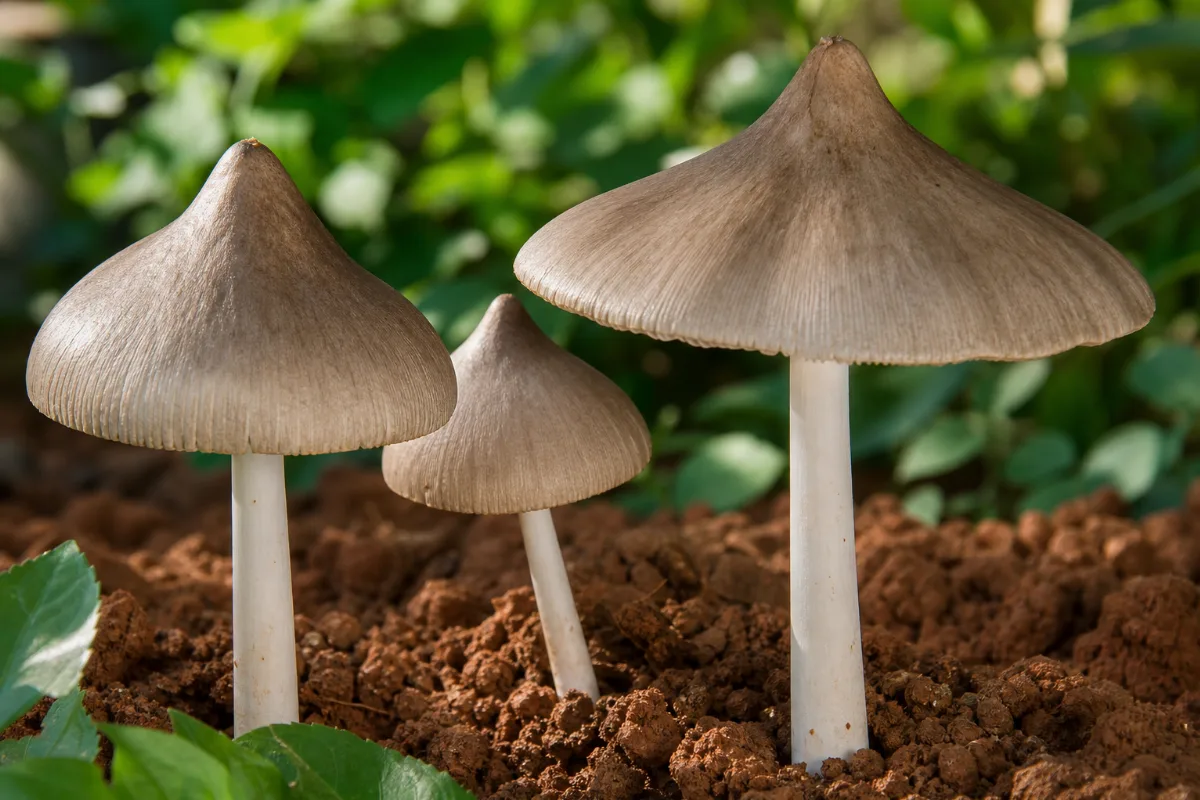
Mushrooms · Culinary and medicinal fungus
Termite Mushroom
Termitomyces titanicus (also T. heimii, T. clypeatus and other Termitomyces) · also called Giant termite mushroom, termite-nest mushroom
Termite mushrooms are wild mushrooms that grow up from termite nests and are a seasonal food in Africa and Asia. The giant termite mushroom is called the world's largest edible mushroom. There is no good human research on health benefits: one tiny trial of a different species, plus lab and animal studies. The main cautions are correct identification, metals that vary by species and soil, and no safety data for extracts or pregnancy.
General information, not medical advice. Last substantive update · Not medically reviewed. A named clinician has not signed off on this page. How this page is made
About Termite Mushroom
Termite mushrooms (Termitomyces) are wild mushrooms that rise from the fungus gardens of termite nests. They are a seasonal food in Africa and Asia, and the giant termite mushroom (T. titanicus) is called the world's largest edible mushroom. Research on health effects is lab, mouse and rat work plus one tiny trial of a different species. The cautions are correct identification, metals that vary by species and soil, and missing safety data for extracts.
What it is
Termitomyces is a genus of mushrooms in the family Lyophyllaceae. It grows only in partnership with fungus-farming termites. The termites feed it on their nest "combs" and the mushroom feeds them. The review says this partnership is at least 31 million years old.
Fruiting bodies appear mostly in the rainy season. The review says artificial cultivation techniques are not yet available.
Which species are meant
This page is about Termitomyces titanicus (giant termite mushroom, found in Africa), and also covers T. heimii and T. clypeatus, which are eaten in Asia. GBIF lists all three as separate accepted species.
Many studies use other species such as T. robustus, T. schimperi, T. albuminosus and T. striatus. We name the species in every result.
As a food
The review table gives T. titanicus about 27 percent protein and 58 percent carbohydrate by dry weight, from one earlier paper we did not open. Other species show 14 to 43 percent protein and some are high in fibre and potassium.
In a survey of four indigenous communities in India, Termitomyces heimii was among the wild mushrooms with significant protein, and Termitomyces was high in iron and fibre. A Nigerian survey says mushrooms are mostly sun-dried and eaten in soups with fufu or gari.
What the research shows
There is one human trial: 26 people, six weeks, a snack bar made with Termitomyces fuliginosus. Some brain-wave and working-memory scores were higher than placebo. It is a different species and a very small trial.
The rest is lab work. Compounds called termitomycamides from T. titanicus protected cultured cells from stress. Extracts of other species lowered blood sugar in mice by injection, and purified fractions lowered fats in mice. None of this shows an effect from eating the mushroom.
Traditional use
Communities in Africa and Asia eat termite mushrooms and, in places, use them as a tonic or home remedy. A Nigerian survey and a review table list fever, measles, constipation, anaemia, skin problems, high blood pressure and diabetes. These uses are credited as the sources state them and have not been tested in trials.
At a glance
Traditional uses history, not proof
- A review says T. titanicus is eaten frequently in West Africa and Zambia (Paloi 2023).
- A Nigerian survey lists it among the most important edible and dual-use food and medicine mushrooms (Ndifon 2023).
- Reported home uses include fever, measles, constipation, anaemia, skin problems, high blood pressure and diabetes. They are untested.
Studied for research
- As a food (protein, fibre, minerals), insufficient
- Brain-wave and memory scores (a different species in a snack bar), very low
- Antioxidant and cell-protecting compounds (lab), insufficient
- Blood sugar, blood fats, liver, weight (mice and lab), insufficient
- Immune, anticancer and germ-fighting (dish tests), insufficient
Main compounds
- Termitomycamides (fatty acid amides, from T. titanicus)
- Beta-glucans and other polysaccharides
- Phenolic compounds
Common forms
- Fresh or cooked fruiting body (the food)
- Dried fruiting body sold in local markets
- Laboratory extracts (research only)
Research links: Review: Termite mushrooms (Termitomyces), nutrients and bioactive compounds (PubMed) · Termitomycamides from Termitomyces titanicus (PubMed) · Research Library · Genes & Biomarkers Library
What it is and its history
- Accepted scientific name
- Termitomyces titanicus
- Naming authority
- Pegler & Piearce (GBIF, species key 3347409)
- Synonyms
- No synonyms listed in GBIF for T. titanicus; Termitomyces heimii Natarajan (GBIF key 2530635) and Termitomyces clypeatus R.Heim (GBIF key 2530598) are separate accepted species also eaten as termite mushrooms
- Common names
- Termite mushroom (English); Giant termite mushroom (English); Termite-nest mushroom (English); Hed Khone (Thai name for Termitomyces) (Thai (romanised)); Jizong, Yizong (Chinese names for Termitomyces) (Chinese (romanised))
- Family or group
- Lyophyllaceae (a fungus family), not a plant
- Classification
- Fungi > Basidiomycota > Agaricomycetes > Agaricales > Lyophyllaceae > Termitomyces > Termitomyces titanicus
- Native range
- Described from Zambia (2023 review table: type country Zambia). Reported in Zambia, Tanzania, Cameroon, Burundi and South Africa; the review also says it grows abundantly in West Africa.
- Habitat
- The fruiting bodies rise from the fungus gardens ("combs") inside the nests of fungus-farming termites (subfamily Macrotermitinae), mostly in the rainy season. The review says the partnership with termites is at least 31 million years old.
- What it looks like
- Fruiting body: Called the world's largest edible mushroom in the 2023 review. No size or shape details were read.
- Cultivation
- The 2023 review says artificial cultivation techniques for Termitomyces were not yet available. A 2026 paper reports artificially cultivated fruiting bodies of a different species (T. upsilocystidiatus). Nothing read describes commercial cultivation of T. titanicus.
- Harvest and processing
- Picked wild in the rainy season. A Nigerian survey says mushrooms are mostly sun-dried, or washed and then sun-dried, and eaten in soups with fufu or gari, with meat or with vegetables.
- Look-alikes and adulterants
- Name: Look-alike fungi; Note: No source read describes look-alikes of Termitomyces. Wild mushrooms cannot be safely identified from a description, photo or app.
- Sustainability and conservation
- Not covered by any source read.
Traditional use and history history, not clinical proof
| Tradition or era | Documented use | Source |
|---|---|---|
| West Africa and Zambia: food | The 2023 review says T. titanicus grows abundantly in West Africa and Zambia and is frequently eaten there. A 2023 Nigerian survey lists it among the most important edible mushrooms and among the dual-use edible and medicinal mushrooms; women and children are the main collectors. | p36675933 |
| Asia: annual monsoon food | The review says ethnic and native people in India, China, Laos, Nepal, Thailand and Malaysia routinely eat Termitomyces in the annual monsoon, often sold at roadside stalls and city markets. This is the genus, not T. titanicus. | p36675933 |
| Africa and Asia: home remedies | Review table: uses named include fever, measles, constipation, gastritis, anaemia, high blood pressure, wound healing and skin problems, depending on species and country. A Nigerian survey adds skin problems, high blood pressure, blood tonic, fever and measles, and diabetes. These are reported uses and are not tested. | p36675933 |
Traditional use shows how it was used. It does not show that it works or is safe today.
What is inside, and how it may work
What it contains and how those compounds act in cells and animals. Laboratory and animal mechanisms are not proven effects in people.
Main compounds
| Compound | Family | Where it is concentrated | Activity studied | Level of evidence |
|---|---|---|---|---|
| Termitomycamides A to E (fatty acid amides) | fatty acid amide (cerebroside-type) | Fruiting body of T. titanicus Not given in the abstract | Two of the five protected cultured cells from endoplasmic reticulum stress-dependent death. 2 12 | Laboratory research |
| Polysaccharides (mainly beta-glucans, some heteropolysaccharides) | polysaccharide | Fruiting body and mycelium of various Termitomyces species Differ in molecular weight, sugars and links between species | Reviews list antioxidant, immune, blood-fat-lowering, liver-protective and anti-diabetic activity in cells and animals. 8 22 23 19 | Animal research |
| Phenolic compounds (for example gallic and caffeic acid) | phenolic | Fruiting body of several species Not quoted | Free-radical scavenging in test-tube assays. 12 | Laboratory research |
| Ergostanes and betulinic acid (from T. microcarpus) | sterol and triterpenoid | Fruiting body of T. microcarpus Not quoted | Cancer cell-line activity in the dish (review). Not from T. titanicus. 12 | Laboratory research |
Mechanisms, receptors and pathways
| Target or pathway | Gene or receptor | What was found | Level |
|---|---|---|---|
| Endoplasmic reticulum stress | Not specified in the abstract | Termitomycamides 2 and 5 from T. titanicus protected cultured cells from stress-dependent death. 2 | Laboratory research |
| Digestive enzyme alpha-amylase | Alpha-amylase | Methanol extracts of four Termitomyces species blocked the enzyme in the lab (up to 61.4 percent). 13 | Laboratory research |
| AMPK energy pathway | AMPK, ACC, FASN | A polysaccharide from T. intermedius lowered fat-making enzymes in fat cells, an effect removed by blocking AMPK. A T. albuminosus fraction raised p-AMPK in mice. 19 22 | Animal research |
| Brain enzymes AChE and MAO | AChE, MAO | The authors of the snack-bar trial suggest suppression of these enzymes, from tests of the product. This is not shown in people. 9 | Laboratory research |
| Liver inflammation and fibrosis signals | TGF-beta1/Smad3, NF-kB, HO-1/Nrf2 | A mycelium polysaccharide lowered these signals in mice with chemically induced liver injury. 23 | Animal research |
Absorption, metabolism and elimination
- Absorption
- Not found in the sources read.
- Distribution
- Not found in the sources read.
- Metabolism
- Not found in the sources read.
- Elimination
- Not found in the sources read.
- Bioavailability
- Not established.
Isolated compounds versus whole extracts
Most health findings are from purified polysaccharides, mycelium fractions, solvent extracts or a mushroom-and-kaolin recipe. They are not the cooked mushroom that people eat. Results from one Termitomyces species do not transfer to another.
Nutritional composition
It is a food first. Reported dry-weight protein is high in several species (about 27 percent in T. titanicus, with other species roughly 14 to 43 percent in the review table) and several have fibre. These values come from single analyses quoted in a review, not a food database.
1 very low certainty8 not enough evidence
What was looked at
The 9 benefits and uses checked for Termite Mushroom, each with how strong the evidence is. Tap one to open it.
- Termite mushroom as a food (protein, fibre and minerals)Not enough evidence
- Brain-wave and memory scores (a snack bar made with a different termite mushroom)Very low certainty
- Antioxidant and cell-protecting compounds (lab work)Not enough evidence
- Blood sugar (lab enzyme test and mice)Not enough evidence
- Blood fats and liver injury (mouse studies of T. albuminosus fractions)Not enough evidence
- Body weight and inflammation (a purified compound in mice)Not enough evidence
- Immune and anticancer findings (cells and rats)Not enough evidence
- Germ-fighting activity in the dishNot enough evidence
- Traditional uses (no trials)Not enough evidence
Lab markers tracked in the studies
Brain-wave amplitudes (event-related potentials N100 and P300)Numeric working-memory accuracyBlood glucose (diabetic mice)
What is Termite Mushroom good for?
The uses people ask about and how strong the evidence is for each. None is proven in people. Read this together with the Safety tab.
Benefits, one by one
Each card is a research question, not a promise. Tap a goal to filter. Open a card to see the studies, doses and limits.
Termite mushroom as a food (protein, fibre and minerals)
Not enough evidenceTermite mushrooms are a wild seasonal food in Africa and Asia. Measured by dry weight, the species analysed hold a good share of protein and fibre, and some hold a lot of potassium and iron. That describes what the food contains. No trial shows that eating it changes anyone's health.
2 studiesFresh or cooked fruiting body is the food. It is also sold dried in s…
Studies, doses and limits
Results
Review table, percent of dry weight: T. titanicus carbohydrate 58.08, protein 27.22, fat 7.90, ash 6.80 (fibre not reported). T. clypeatus protein 26.34 and fibre 35.15. T. heimii protein 23.75 and fibre 6.02. T. eurrhizus protein 29.4 and potassium 2360 mg per 100 g dry weight.
Effect sizes as reported
Nutrient values only; no health effect measured
Why this rating
The values are single analyses quoted by a review, measured by different methods, and the T. titanicus figures come from one earlier paper that we did not open. They show composition, not benefit.
Form and dose studied
Fresh or cooked fruiting body is the food. It is also sold dried in some markets. This page gives no amounts.
Limits
Composition varies by species, soil, season and how the sample was dried. Dry-weight values are not what a cooked portion contains.
Why researchers looked
It is eaten as a staple wild food where it grows, so most papers ask what is in it.
Traditional use
A review calls T. titanicus the world's largest edible mushroom, eaten in West Africa and Zambia; a Nigerian survey lists it among the most important edible and dual-use mushrooms (Paloi 2023; Ndifon 2023).
Proposed mechanism Other
Not a mechanism claim. These are laboratory measurements of the food.
A proposed mechanism does not show that the effect happens in people.
Wild-picked termite mushrooms can carry metals such as thallium and arsenic, depending on the species and soil. See the Safety tab.
Brain-wave and memory scores (a snack bar made with a different termite mushroom)
Very low certaintyOne very small trial gave middle-aged adults a protein snack bar made with the cone mushroom Termitomyces fuliginosus for six weeks. Some brain-wave and working-memory scores were higher than with a placebo bar. It is a different species from the giant termite mushroom, and one small trial cannot show a lasting benefit.
1 studiesA formulated protein snack bar. Not the wild fruiting body, and not T…
Studies, doses and limits
What the trials found
26 middle-aged adults were randomised to a placebo bar or one of two strengths of a bar made with Termitomyces fuliginosus for 6 weeks. In the lower-strength group, N100 and P300 brain-wave amplitudes at one scalp site were higher than with placebo (p = 0.015). In the higher-strength group, P300 amplitude and the percent accuracy of a numeric working-memory test were higher than with placebo (p = 0.048 and p = 0.044).
Results
ERP amplitudes (N100, P300) and numeric working-memory accuracy higher than placebo in the mushroom-bar groups; p between 0.015 and 0.048
Effect sizes as reported
Small score differences in a three-group trial of 26 people
Why this rating
Only 26 people split into three groups, six weeks, p-values close to 0.05, a multi-ingredient snack bar, a different species, and no repeat trial.
Form and dose studied
A formulated protein snack bar. Not the wild fruiting body, and not T. titanicus.
Who was studied
Middle-aged adults in Thailand, one trial
Limits
The bar cannot be separated from its other ingredients. Brain-wave amplitudes are lab measures, not everyday memory. No follow-up after the six weeks.
Why researchers looked
Termite mushrooms are being explored as ingredients for functional foods, and lab tests suggested enzyme-blocking and antioxidant activity.
Proposed mechanism Laboratory research
The authors suggest blocking of two enzymes (AChE and MAO) and antioxidant activity, based on lab tests of the product. This is not shown in people.
A proposed mechanism does not show that the effect happens in people.
The abstract does not report side effects. This does not show the bar is free of them.
Antioxidant and cell-protecting compounds (lab work)
Not enough evidenceIn the lab, extracts of several termite mushrooms mop up free radicals in test-tube assays. Five fatty-acid compounds called termitomycamides, found in the giant termite mushroom, protected cultured cells from one kind of stress. These are cell-dish findings. They do not show a health effect in people.
2 studiesLaboratory extracts and isolated compounds, not a supplement we know …
Studies, doses and limits
Results
Two of five compounds from T. titanicus protected cultured cells in the dish; a review summarises antioxidant assays for several species
Effect sizes as reported
No effect sizes given in the abstract
Why this rating
Cell-dish findings with isolated compounds. No animal or human test of the whole mushroom.
Form and dose studied
Laboratory extracts and isolated compounds, not a supplement we know of.
Who was studied
Cultured cells
Limits
The test-tube antioxidant activity of a food does not show that eating it protects the body.
Why researchers looked
Antioxidant tests are cheap and common for mushrooms, and the compounds from T. titanicus are its best-known named chemicals.
Proposed mechanism Laboratory research
Two of the five termitomycamides (compounds 2 and 5) protected cells from death caused by stress in the endoplasmic reticulum, a protein-folding part of the cell. A review adds that termitomycamides are called cerebrosides and are discussed in connection with Alzheimer's disease; this is a suggestion from lab chemistry only.
A proposed mechanism does not show that the effect happens in people.
Not applicable.
Blood sugar (lab enzyme test and mice)
Not enough evidenceExtracts of four Termitomyces species from Nepal slowed a digestive enzyme in the lab and, given as injections, lowered blood sugar in diabetic mice. This is early lab and mouse work on other species. It says nothing about eating termite mushroom.
2 studiesMethanol laboratory extracts. Not a food or supplement form.
Studies, doses and limits
Results
Alpha-amylase inhibition up to 61.4 percent for the best extract; the higher injected dose lowered blood glucose more than the lower dose in diabetic mice over 15 days
Effect sizes as reported
Not given in the abstract beyond the figures above
Why this rating
Lab and mouse work only, injected rather than eaten, on species other than T. titanicus.
Form and dose studied
Methanol laboratory extracts. Not a food or supplement form.
Who was studied
Alloxan-induced diabetic mice
Limits
Injected extracts. No human trial.
Why researchers looked
People in parts of Nigeria and Asia use mushrooms for diabetes, and diabetes was among the uses people named in a Nigerian survey.
Traditional use
In a Nigerian survey 13.1 percent of respondents used mushrooms for diabetes (Ndifon 2023).
Proposed mechanism Laboratory research
Methanol extracts blocked the enzyme alpha-amylase, which breaks down starch, in a lab test.
A proposed mechanism does not show that the effect happens in people.
Anyone who takes medicines for diabetes should ask a doctor or pharmacist before relying on any mushroom product.
Blood fats and liver injury (mouse studies of T. albuminosus fractions)
Not enough evidencePurified sugar-chain fractions from a different species, Termitomyces albuminosus, lowered blood and liver fats in mice fed a high-fat diet, and eased chemical liver injury in mice. These were purified fractions given to mice. No human trial exists.
3 studiesLaboratory-purified polysaccharide fractions from culture fluid and m…
Studies, doses and limits
Results
Lower serum and liver fats in hyperlipidaemic mice (ADES1); lower liver enzymes and fibrosis markers in mice with carbon tetrachloride liver injury (MPT-W)
Effect sizes as reported
No numbers quoted here
Why this rating
Purified fractions in mice only, from a different species.
Form and dose studied
Laboratory-purified polysaccharide fractions from culture fluid and mycelium. Not the whole mushroom.
Who was studied
Mice
Limits
Animal results often do not carry over to people. The fractions are not what a person eats.
Why researchers looked
Mushroom polysaccharides (sugar chains such as beta-glucans) are a common lab target for fat and liver research.
Traditional use
A review lists blood-fat-lowering and liver-protective effects of Termitomyces polysaccharides among its lab findings (Liu 2022).
Proposed mechanism Animal research
In mice the fractions raised antioxidant enzymes and, in one study, switched on the AMPK energy-sensing pathway, and in the other lowered TGF-beta1/Smad3 and NF-kB inflammation signals. These are mouse findings.
A proposed mechanism does not show that the effect happens in people.
Anyone with liver disease should ask their doctor before using any mushroom supplement.
Body weight and inflammation (a purified compound in mice)
Not enough evidenceA purified sugar compound from Termitomyces intermedius lowered body weight, fat and inflammation markers in mice fed a high-fat diet. It is a lab compound from another species, tested only in mice and cells.
1 studiesPurified polysaccharide (TIP-1-1). Not a food.
Studies, doses and limits
Results
Lower body weight, fat mass and inflammatory markers in high-fat-diet mice; abstract says effects were comparable to GLP-1
Effect sizes as reported
Not quoted
Why this rating
One mouse and cell study of a purified compound from a different species.
Form and dose studied
Purified polysaccharide (TIP-1-1). Not a food.
Who was studied
Mice and cultured cells
Limits
No human data. Not the mushroom as eaten.
Why researchers looked
Researchers look for mushroom compounds that act on fat-cell energy pathways.
Proposed mechanism Laboratory research
The compound switched on AMPK and lowered fat-making enzymes (ACC, FASN) in fat cells; removing AMPK with siRNA cancelled the effect (cell work).
A proposed mechanism does not show that the effect happens in people.
Not applicable.
Immune and anticancer findings (cells and rats)
Not enough evidenceA review reports that polysaccharides from T. robustus activated immune cells in the dish and that extracts of T. clypeatus and T. microcarpus were toxic to cancer cell lines. It cites a rat study in which T. heimii polysaccharides reduced chemically induced colon changes. None of it was done in people, and most is not on T. titanicus. It is not a cancer treatment.
2 studiesLaboratory extracts and purified fractions.
Studies, doses and limits
Results
Cell-line and rat findings summarised in reviews; no numbers quoted here
Effect sizes as reported
Not available
Why this rating
Reviews of cell and animal studies of other species; the review itself says Termitomyces has not been fully investigated for cancer.
Form and dose studied
Laboratory extracts and purified fractions.
Who was studied
Cell lines and rats
Limits
Cell toxicity in a dish is not a treatment. No human trial.
Why researchers looked
Mushroom sugar chains are widely studied for immune effects.
Traditional use
A pox, fever and measles use is reported in India and Nepal (review table).
Proposed mechanism Laboratory research
Immune-cell activation and cancer-cell toxicity in dishes; the review notes that mushroom polysaccharides generally do not kill tumour cells directly but may change immune responses.
A proposed mechanism does not show that the effect happens in people.
People having cancer treatment should tell their team about any mushroom product.
Germ-fighting activity in the dish
Not enough evidenceWater and solvent extracts of several termite mushrooms stopped bacteria and yeast growing in dish tests, according to a review that gives no potency figures. Some Termitomyces extracts also slowed a parasite (Leishmania) in cells. This is lab work.
1 studiesLaboratory extracts.
Studies, doses and limits
Results
Inhibition of several bacteria in disc tests; no potency numbers in the review
Effect sizes as reported
Not available
Why this rating
Dish tests summarised in a review.
Form and dose studied
Laboratory extracts.
Who was studied
Bacteria, yeast and parasite cultures
Limits
Dish activity rarely predicts treatment. No human or animal data in our sources.
Why researchers looked
Wild mushrooms used for infections are screened for germ-fighting chemistry.
Traditional use
Traditional uses for infections, wounds and fever are listed in a review table (Paloi 2023).
Proposed mechanism Laboratory research
Not described in the sources we read.
A proposed mechanism does not show that the effect happens in people.
Do not use a mushroom in place of medical care for an infection or wound.
Traditional uses (no trials)
Not enough evidenceCommunities in Africa and Asia use termite mushrooms as food and, in some places, as a tonic or home remedy, for example for fever, measles, constipation, anaemia, skin problems and high blood pressure. These uses are reported by people and have not been tested in trials.
2 studiesMostly sun-dried and cooked in soups and stews; some medicinal uses n…
Studies, doses and limits
Results
Survey percentages of reported use only
Why this rating
Traditional use is not evidence of benefit. No trial of any of these uses.
Form and dose studied
Mostly sun-dried and cooked in soups and stews; some medicinal uses name syrups or tonics.
Who was studied
Survey respondents in Nigeria; communities named in a review
Limits
Self-reported. Use for a condition is not proof that it works.
Why researchers looked
Surveys document food and medicine uses of wild mushrooms.
Traditional use
In a Nigerian survey, mushrooms were used for skin problems (21.5 percent), high blood pressure (12.3 percent), as a blood tonic (9.2 percent), for fever and measles (13.8 percent) and for diabetes (13.1 percent). The review table lists uses by species and country, for example T. robustus for anaemia and high blood pressure in Nigeria and T. heimii for fever, cold and fungal infections in India. A rat study cited by the review reports higher blood counts after T. titanicus; we did not open that paper.
Proposed mechanism Other
None established.
A proposed mechanism does not show that the effect happens in people.
Do not use a mushroom in place of medical care for these conditions.
Connections to the rest of health
How Termite Mushroom connects to the rest of our health knowledge graph. Every link says what kind of connection it is. A safety link (for example to the liver) is a warning, not a benefit. A study that merely mentions a topic never creates a benefit link.
Explore every connection: goals, body systems, organs, symptoms, genes
A. Wellness goals
| Connected to | Kind of connection | Evidence status | Context | Studies |
|---|---|---|---|---|
| Memory Support | Very low certainty | Brain-wave and memory scores (a snack bar made with a different termite mushroom): One very small trial gave middle-aged adults a protein snack bar made with the cone mushroom Termitomyces fuliginosus for six weeks. Some brain-wave and working-memory scores were higher than with a placebo bar. It is a different species from the giant termite mushroom, and one small trial cannot show a lasting benefit. | 9 | |
| Blood Sugar Balance | Not enough evidence | Blood sugar (lab enzyme test and mice): Extracts of four Termitomyces species from Nepal slowed a digestive enzyme in the lab and, given as injections, lowered blood sugar in diabetic mice. This is early lab and mouse work on other species. It says nothing about eating termite mushroom. | 13 11 | |
| Liver Support | Not enough evidence | Blood fats and liver injury (mouse studies of T. albuminosus fractions): Purified sugar-chain fractions from a different species, Termitomyces albuminosus, lowered blood and liver fats in mice fed a high-fat diet, and eased chemical liver injury in mice. These were purified fractions given to mice. No human trial exists. | 22 23 8 | |
| Cholesterol Balance | Not enough evidence | Blood fats and liver injury (mouse studies of T. albuminosus fractions): Purified sugar-chain fractions from a different species, Termitomyces albuminosus, lowered blood and liver fats in mice fed a high-fat diet, and eased chemical liver injury in mice. These were purified fractions given to mice. No human trial exists. | 22 23 8 | |
| Weight Management | Not enough evidence | Body weight and inflammation (a purified compound in mice): A purified sugar compound from Termitomyces intermedius lowered body weight, fat and inflammation markers in mice fed a high-fat diet. It is a lab compound from another species, tested only in mice and cells. | 19 | |
| Immune Support | Not enough evidence | Immune and anticancer findings (cells and rats): A review reports that polysaccharides from T. robustus activated immune cells in the dish and that extracts of T. clypeatus and T. microcarpus were toxic to cancer cell lines. It cites a rat study in which T. heimii polysaccharides reduced chemically induced colon changes. None of it was done in people, and most is not on T. titanicus. It is not a cancer treatment. Germ-fighting activity in the dish: Water and solvent extracts of several termite mushrooms stopped bacteria and yeast growing in dish tests, according to a review that gives no potency figures. Some Termitomyces extracts also slowed a parasite (Leishmania) in cells. This is lab work. | 12 8 |
B. Body systems
| Connected to | Kind of connection | Evidence status | Context | Studies |
|---|---|---|---|---|
| Digestive System | Biological association | Not enough evidence | Studied for: Termite mushroom as a food (protein, fibre and minerals) | 12 16 |
| Brain Focus | Biological association | Very low certainty | Studied for: Brain-wave and memory scores (a snack bar made with a different termite mushroom) Studied for: Antioxidant and cell-protecting compounds (lab work) | 9 2 12 |
| Blood Sugar Support | Biological association | Not enough evidence | Studied for: Blood sugar (lab enzyme test and mice) | 13 11 |
| Liver Detox | Biological association | Not enough evidence | Studied for: Blood fats and liver injury (mouse studies of T. albuminosus fractions) | 22 23 8 |
| Metabolism Weight | Biological association | Not enough evidence | Studied for: Body weight and inflammation (a purified compound in mice) | 19 |
| Immune Support | Biological association | Not enough evidence | Studied for: Immune and anticancer findings (cells and rats) Studied for: Germ-fighting activity in the dish | 12 8 |
G. Root causes and contributing factors
| Connected to | Kind of connection | Evidence status | Context | Studies |
|---|---|---|---|---|
| Heavy metal exposure | Low certainty | Thallium and arsenic levels differ by species and soil; reviews warn of accumulation. Preparation or compound: Wild-collected fruiting bodies of Termitomyces species |
4 21 12 |
I. Biomarkers
| Connected to | Kind of connection | Evidence status | Context | Studies |
|---|---|---|---|---|
| Brain-wave amplitudes (event-related potentials N100 and P300) | Biological association | Very low certainty | Measured in trials: raised. A lab change is not the same as a health benefit. | 9 |
| Numeric working-memory accuracy | Biological association | Very low certainty | Measured in trials: raised. A lab change is not the same as a health benefit. | 9 |
| Blood glucose (diabetic mice) | Biological association | Not enough evidence | Measured in trials: lowered. A lab change is not the same as a health benefit. | 13 |
K. Biological pathways
| Connected to | Kind of connection | Evidence status | Context | Studies |
|---|---|---|---|---|
| Endoplasmic reticulum stress response | Preliminary mechanism | In vitro | Two T. titanicus compounds protected cultured cells. | 2 |
| AMPK signalling | Preliminary mechanism | Animal | Switched on by Termitomyces polysaccharides in fat cells and mouse tissue. | 19 22 |
L. Active compounds
| Connected to | Kind of connection | Evidence status | Context | Studies |
|---|---|---|---|---|
| Termitomycamides A to E (fatty acid amides) | Biological association | In vitro | Two of the five protected cultured cells from endoplasmic reticulum stress-dependent death. Preparation or compound: Fruiting body of T. titanicus |
2 12 |
| Polysaccharides (mainly beta-glucans, some heteropolysaccharides) | Biological association | Animal | Reviews list antioxidant, immune, blood-fat-lowering, liver-protective and anti-diabetic activity in cells and animals. Preparation or compound: Fruiting body and mycelium of various Termitomyces species |
8 22 23 19 |
| Phenolic compounds (for example gallic and caffeic acid) | Biological association | In vitro | Free-radical scavenging in test-tube assays. Preparation or compound: Fruiting body of several species |
12 |
| Ergostanes and betulinic acid (from T. microcarpus) | Biological association | In vitro | Cancer cell-line activity in the dish (review). Not from T. titanicus. Preparation or compound: Fruiting body of T. microcarpus |
12 |
Each connection is stored with the ingredient, the connected record, the kind of connection, the evidence status, the supporting studies, the preparation or compound involved, and a review date (last reviewed October 25, 2026).
Evidence at a glance: what changed in 3 lab markers
Tap a number to show only those markers. Counts are markers, not people.
The evidence
The research centre for Termite Mushroom. Every record here was checked against PubMed or the publisher's page; we never list a study we have not verified.
Evidence by outcome
Bars show how many studies we found for each outcome, not how well it works. People are added up across trials only (reviews are not added, to avoid double counting).
How we rate evidence
High certainty
Several well-run trials or reviews agree; further research is unlikely to change the picture much.
Moderate certainty
Good trials point the same way, but some doubt remains.
Low certainty
Small, short or inconsistent trials. The finding could change with better research.
Very low certainty
Very little or very weak human data. Treat as a possibility only.
Mixed findings
Trials or reviews disagree with each other.
Not enough evidence
Not enough human research to say either way.
Evidence against
Good research found no benefit, or found harm.
We take the reviewers' own risk-of-bias and GRADE statements where they exist, and otherwise judge from study size, design, consistency, directness and whether a product matches what is sold. Many publications do not make evidence high. Method note: We read PubMed records and abstracts for 20 papers (one randomised trial, two reviews, two food-use surveys, eleven animal or lab studies, and four metal or radioactivity analyses), read the 2023 review in open-access full text, and checked three species names in GBIF. Regulators were not read. Numbers come from abstracts unless stated. Certainty ratings are the compiler's own reading. Traditional uses are credited as the sources state them and have not been reviewed by people from those communities.
Study library: every study we checked 23
| Study | Design | People | Product, dose, length | Result |
|---|---|---|---|---|
| Adewusi 1993 Studies on some edible wild mushrooms from Nigeria: 1. Nutritional, teratogenic and toxic considerations Plant Foods Hum Nutr · PMID 8474999 · DOI |
Animal feeding study animal |
Weanling rats | Diets of dried wild Nigerian mushrooms including Termitomyces robustus and Termitomyces striatus dried mushroom Not shown here up to several days · vs Casein control diet |
Rats fed T. robustus did not grow. Rats fed T. striatus dried at 60 degrees C for 48 hours lost weight fast and all died by the fourth day. When the T. striatus was dried at 90 degrees C for about 8 hours, the rats gained weight marginally and all survived. Storing it at 60 degrees C for 5 to 8 weeks also seemed to remove the poisonous component. Deadly effect in rats from one preparation of T. striatus; heating and storage changed it Methods, limits and fundingOutcomes: Growth and signs of toxicity Limitations: A 1993 rat study as the only food, not a mixed human diet. Different Termitomyces species. The poison was not identified. No human poisoning report was found by us. Funding and conflicts: Not stated in the abstract Read: abstract |
| Choi 2010 Termitomycamides A to E, fatty acid amides isolated from the mushroom Termitomyces titanicus, suppress endoplasmic reticulum stress Org Lett · PMID 20936815 · DOI |
Lab study fungus |
Chemistry study of the fruiting body of the giant edible mushroom Termitomyces titanicus; cultured cells | Five fatty acid amides (termitomycamides A to E) isolated from T. titanicus fruiting body Not shown here |
Five fatty acid amides were isolated. Compounds 2 and 5 protected cells from death caused by endoplasmic reticulum stress. Cell-dish protection by two compounds Methods, limits and fundingOutcomes: Structures of the compounds; protection of cultured cells from stress-induced death Limitations: Cells only. No animal or human data. Isolated compounds, not the mushroom as eaten. Funding and conflicts: Not stated in the abstract Read: abstract |
| Falandysz 2020 Artificial ((137)Cs) and natural ((40)K) radioactivity and total potassium in medicinal fungi from Yunnan in China Isotopes Environ Health Stud · PMID 32192356 · DOI |
Food contaminant analysis fungus |
31 31 species of medicinal fungi from Yunnan, China |
Radiocaesium (137Cs) and potassium-40 in medicinal fungi fruiting body Not shown here |
Caesium-137 activity was low in the 31 species studied (the highest was 54 Bq per kg dry mass). The abstract does not say whether any Termitomyces species was included. Low radiocaesium in the species studied Methods, limits and fundingOutcomes: Radioactivity in mushrooms Limitations: Cited by the Paloi 2023 review for the statement on radioisotopes in Termitomyces; this abstract does not name the genus, so the link is not confirmed. Funding and conflicts: Not stated in the abstract Read: abstract |
| Falandysz 2026 Dietary exposure to thallium from various species of Asian wild edible mushrooms Food Res Int · PMID 42215137 · DOI |
Food contaminant analysis fungus |
8 Eight wild Asian edible mushroom species, raw and stir-fried |
Thallium in wild mushrooms including Termitomyces eurrhizus fruiting body, raw and stir-fried Not shown here |
Wet-weight thallium ranged from 2.5 micrograms per kg to 20.0 micrograms per kg, the highest in Termitomyces eurrhizus. For a 100 g fried portion, T. eurrhizus had a hazard quotient of 3.3 (above 1 means a possible risk) and exceeded the authors' upper intake level 1.6 times. At 300 g portions every species had a quotient above 1. The authors say thallium could be a toxicant where wild mushrooms are a large part of the diet. High thallium in one Termitomyces species Methods, limits and fundingOutcomes: Thallium content and dietary risk estimate Limitations: A different Termitomyces species (T. eurrhizus). Composite samples from certain areas of Asia. Says nothing about T. titanicus or T. heimii. Funding and conflicts: Authors declare no competing interests. Read: abstract |
| GBIF Secretariat 2026 GBIF Backbone Taxonomy: Termitomyces titanicus Pegler & Piearce (species key 3347409) GBIF API · Source |
Taxonomy record fungus |
Name record | n/a Not shown here |
Termitomyces titanicus is an accepted species name in the family Lyophyllaceae, order Agaricales (queried 2026-10-25). Phylum Basidiomycota, class Agaricomycetes; published in Kew Bulletin 35(3): 479 (1980); no synonyms listed. Accepted name Methods, limits and fundingOutcomes: Accepted name and family Limitations: A database record; it does not say which name any product or study used. Funding and conflicts: n/a Read: database record |
| GBIF Secretariat 2026 GBIF Backbone Taxonomy: Termitomyces heimii Natarajan (species key 2530635) GBIF API · Source |
Taxonomy record fungus |
Name record | n/a Not shown here |
Termitomyces heimii is an accepted species name in the family Lyophyllaceae, order Agaricales (queried 2026-10-25). GBIF lists two synonyms (Sinotermitomyces cavus M.Zang and Termitomyces longiradicatus Sathe & J.T.Daniel). Accepted name Methods, limits and fundingOutcomes: Accepted name and family Limitations: A database record; it does not say which name any product or study used. Funding and conflicts: n/a Read: database record |
| GBIF Secretariat 2026 GBIF Backbone Taxonomy: Termitomyces clypeatus R.Heim (species key 2530598) GBIF API · Source |
Taxonomy record fungus |
Name record | n/a Not shown here |
Termitomyces clypeatus is an accepted species name in the family Lyophyllaceae, order Agaricales (queried 2026-10-25). GBIF lists one synonym (Sinotermitomyces taiwanensis M.Zang & C.M.Chen). Accepted name Methods, limits and fundingOutcomes: Accepted name and family Limitations: A database record; it does not say which name any product or study used. Funding and conflicts: n/a Read: database record |
| Liu 2022 Isolation, Structural Properties, and Bioactivities of Polysaccharides from Mushrooms Termitomyces: A Review J Agric Food Chem · PMID 34936332 · DOI |
Narrative review review |
Review of polysaccharides from Termitomyces mushrooms | Polysaccharides (mainly beta-glucans) from Termitomyces fruiting body and mycelium Not shown here |
The review sums up antioxidant, ulcer-healing, pain-relieving, immune-modulating, blood-fat-lowering, liver-protective and anti-diabetic effects of Termitomyces polysaccharides. It says further studies are needed to link structure to effect. Narrative summary Methods, limits and fundingOutcomes: Extraction, structure and biological activities of Termitomyces polysaccharides Limitations: Covers cell and animal work; it does not report human trials. Many species are mixed together. Funding and conflicts: Not stated in the abstract Read: abstract |
| Muchimapura 2024 Effects of a Functional Cone Mushroom (Termitomyces fuliginosus) Protein Snack Bar on Cognitive Function in Middle Age: A Randomized Double-Blind Placebo-Controlled Trial Nutrients · PMID 39519449 · DOI |
Randomised trial |
26 Middle-aged men and women, Thailand |
Cone mushroom (Termitomyces fuliginosus) protein snack bar, two strengths formulated snack product (mushroom part not stated in the abstract) Not shown here 6 weeks · vs Placebo snack bar |
26 people were split into placebo and two mushroom-bar groups. Event-related potential amplitudes (N100 and P300 at one scalp site) were higher in the 1 g group than placebo (p = 0.015), and in the 2 g group P300 amplitude and percent accuracy of numeric working memory were higher than placebo (p = 0.048 and p = 0.044). The authors suggest AChE and MAO suppression and antioxidant activity as possible mechanisms (from lab tests). Small differences in brain-wave and memory scores Methods, limits and fundingOutcomes: Brain-wave (event-related potential) amplitudes and working-memory accuracy Limitations: Very small trial split into three groups. A snack bar with several ingredients, so the mushroom cannot be separated out. T. fuliginosus, not T. titanicus. Only 6 weeks and no long-term outcomes. Authors report no conflict of interest. Funding and conflicts: Authors declare no conflicts of interest. Read: abstract |
| N'guessan 2021 Toxicity, mutagenicity and trace metal constituent of Termitomyces schimperi (Pat.) R. Heim (Lyophyllaceae) and kaolin, a recipe used traditionally in cancer management in Cote d'Ivoire J Ethnopharmacol · PMID 33930492 · DOI |
Animal toxicity study animal |
Sprague Dawley rats; Salmonella test; element analysis | Aqueous extract of Termitomyces schimperi combined with kaolin (a clay) mushroom plus kaolin extract Not shown here single dose; 90 days · vs Distilled water |
No deaths after a single very large dose and no change in most measures over 90 days. At single doses of 1000 and 3000 mg/kg, alanine transaminase (a liver enzyme) was significantly higher than control (p < 0.0001) and red-cell measures changed. The extract caused frameshift mutations in the Salmonella test, with and without metabolic activation. Element analysis found aluminium (toxic) and silver, rubidium, titanium and zirconium (potentially toxic); cadmium and uranium were absent. Mixed: no overall toxicity in rats, but a mutagenic signal in bacteria and a liver-enzyme rise at single high doses Methods, limits and fundingOutcomes: Acute and 90-day toxicity, mutagenicity, trace elements Limitations: Rats and bacteria, not people. The product is a mushroom-and-kaolin recipe, so the mushroom alone is not tested. Authors call for more mutagenicity and chronic toxicity work. Funding and conflicts: Not stated in the abstract Read: abstract |
| Ndifon 2023 Mushroom-Related Ethnomycological, Ethnomedical, and Socio-Economic Practices in Nigeria Int J Med Mushrooms · PMID 37560888 · DOI |
Survey |
People surveyed in three of Nigeria's six regions | Questionnaire on mushroom use Not shown here |
Termitomyces titanicus is listed among the most important edible mushrooms and among the dual-use edible and medicinal mushrooms. Women and children are the main collectors. Mushrooms are mostly sun-dried and eaten in soups, with fufu or gari. Mushrooms were used for skin problems, high blood pressure, as a blood tonic, for fever and measles, and for diabetes. Respondents said they could tell toxic mushrooms apart. Descriptive survey; no health effect measured Methods, limits and fundingOutcomes: Which mushrooms are eaten and used as medicine, who collects them, how they are kept and cooked Limitations: Self-reported use, not tested. The claim that people can tell toxic mushrooms apart is the respondents' own statement. Funding and conflicts: Not stated in the abstract Read: abstract |
| Paloi 2023 Termite Mushrooms (Termitomyces), a Potential Source of Nutrients and Bioactive Compounds Exhibiting Human Health Benefits: A Review J Fungi (Basel) · PMID 36675933 · DOI |
Narrative review review |
Review of the genus Termitomyces: names, distribution, food use, traditional use, nutrition and lab research | Termitomyces species (mostly fruiting bodies and lab extracts) fruiting body and extracts Not shown here |
All Termitomyces species are described as edible and as growing with fungus-farming termites. Artificial cultivation techniques are said not to be available yet. T. titanicus is called the world's largest edible mushroom. Lab, animal and cell work is summarised for antioxidant, immune, anticancer, blood-fat and germ-fighting effects. The review says Termitomyces can contain alpha-emitting radioisotopes and accumulate arsenic, and that T. schimperi with kaolin showed mutagenic potential. Narrative summary; no pooled effect Methods, limits and fundingOutcomes: Taxonomy, edibility, ethno-medicinal use, composition, bioactive compounds, lab findings Limitations: Narrative review, not a systematic one. Most of the health findings are lab or animal work on species other than T. titanicus. The table of composition for T. titanicus (carbohydrate 58.08, protein 27.22, fat 7.90, ash 6.80 percent of dry weight; fibre not reported) is quoted from one earlier paper we did not open. Funding and conflicts: Authors declare no conflict of interest. Read: abstract and open-access full text (Europe PMC) |
| Parajuli 2026 Antidiabetic potential of four species of Termitomyces mushrooms from Nepal Nat Prod Res · PMID 39590558 · DOI |
Animal study animal |
Alloxan-induced diabetic mice and an enzyme test | Methanolic extracts of four Termitomyces species from Nepal (including T. striatus forma ochraceus) fruiting body extract Not shown here 15 days · vs Diabetic control mice |
All extracts inhibited the digestive enzyme alpha-amylase in the lab, the best at 61.4 percent. In diabetic mice given injections (intraperitoneal) the higher dose lowered blood glucose more than the lower dose. Lab enzyme inhibition and lower glucose in mice Methods, limits and fundingOutcomes: Alpha-amylase inhibition, blood glucose Limitations: Mice given injections, which is not how mushrooms are eaten. Species other than T. titanicus. No human data. Funding and conflicts: Not stated in the abstract Read: abstract |
| Park 2021 Genotoxicity Evaluation of Termite Mushroom, Termitomyces albuminosus (Agaricomycetes), Powder Int J Med Mushrooms · PMID 34591401 · DOI |
Lab study animal |
Bacterial tests, cultured cells and mice | Termitomyces albuminosus powder mushroom powder Not shown here · vs Controls |
The powder did not increase mutant bacterial colonies, chromosome changes in cells or micronuclei in mice (tested at 5000 micrograms per plate and 2000 mg/kg body weight). The authors say it is not mutagenic or clastogenic. No genotoxic signal in these tests Methods, limits and fundingOutcomes: Mutation and chromosome damage tests Limitations: Lab and mouse tests of a different species; the paper notes that people use T. albuminosus as a supplement. Does not tell us about T. titanicus or long-term human use. Funding and conflicts: Not stated in the abstract Read: abstract |
| Rasalanavho 2019 Elemental distribution including toxic elements in edible and inedible wild growing mushrooms from South Africa Environ Sci Pollut Res Int · PMID 30684184 · DOI |
Food contaminant analysis fungus |
Wild mushrooms from South Africa, including four Termitomyces species | Metals in edible and inedible wild mushrooms including T. microcarpus, T. reticulatus, T. clypeatus and T. umkowaan fruiting body Not shown here |
The edible species studied were rich in selenium and contained low concentrations of toxic metals, which the authors judge suitable for human consumption. They found metal uptake depended on soil, not on whether a mushroom is edible or inedible. Low toxic metals in the edible species studied Methods, limits and fundingOutcomes: Macro-elements and trace elements including toxic ones Limitations: Specimens from certain sites only. Metal content depends on the soil where each mushroom grew. Funding and conflicts: Not stated in the abstract Read: abstract |
| Singh 2025 Wild Edible Mushrooms of Jharkhand: Nutrient-Dense Seasonal Foods to Improve Dietary Diversity among Indigenous Communities Curr Res Nutr Food Sci · PMID 40265175 · DOI |
Survey |
Four indigenous communities in Jharkhand, India | Wild edible mushrooms eaten by the communities, including Termitomyces heimii fruiting body Not shown here |
Over 70 wild mushrooms were named and 35 were regularly eaten in the monsoon. Termitomyces heimii was among those with significant protein, and Termitomyces and Astraeus were high in iron and total dietary fibre. Households ate wild mushrooms once or twice a week (30 to 60 percent). Descriptive food survey Methods, limits and fundingOutcomes: Which mushrooms are eaten, how often, and what they contain Limitations: Small survey of a few communities; nutrient values are from the authors' lab analysis of a few samples. Not a trial. Funding and conflicts: Authors declare no conflict of interest. Read: abstract |
| Teiko 2025 In vivo assessment of chronic, genotoxic, and reproductive toxicity of a combination of Termitomyces schimperi (Pat.) R. Heim (Lyophillacea) and kaolin J Ethnopharmacol · PMID 40204250 · DOI |
Animal toxicity study animal |
Sprague Dawley rats; mice (micronucleus test) | Termitomyces schimperi combined with kaolin mushroom plus kaolin Not shown here 180 days · vs Distilled water |
At 200 and 500 mg/kg daily for 180 days there were no significant adverse effects on weight, organs, blood tests or tissue, no rise in micronuclei, and no change in sperm measures. The authors say mild cytotoxic effects and possible reproductive toxicity at 1000 mg/kg need further study. No toxicity signal at two doses in rats; possible signal at a higher dose Methods, limits and fundingOutcomes: Chronic toxicity, genotoxicity, sperm measures Limitations: Animal study of a mushroom-and-kaolin recipe. The follow-up to the earlier study that found a mutagenic signal in bacteria. Funding and conflicts: Not stated in the abstract Read: abstract |
| Ugbogu 2019 Safety Evaluation of an Aqueous Extract of Termitomyces robustus (Agaricomycetes) in Wistar Rats Int J Med Mushrooms · PMID 30806225 · DOI |
Animal toxicity study animal |
Wistar rats | Aqueous extract of Termitomyces robustus Not shown here single dose; 14 days · vs Control |
No deaths or signs of toxicity at single doses up to 10 g/kg, so the LD50 was above 10 g/kg. In the 14-day study there were significant differences from control in some blood measures (including alanine aminotransferase, eosinophils, platelets, urea, creatinine and electrolytes), with no change in liver or kidney tissue. The authors concluded it was non-toxic at the doses tested. No lethal toxicity in rats; some blood-test differences Methods, limits and fundingOutcomes: Acute and 14-day toxicity Limitations: Rat study, 14 days, a different species of Termitomyces. Not a human safety study. Funding and conflicts: Not stated in the abstract Read: abstract |
| Wu 2025 A galactoglucomannan from Termitomyces intermedius: Structural characterization, anti-obesity and anti-inflammatory activities Pharmacol Res · PMID 40414582 · DOI |
Animal study animal |
Mice fed a high-fat diet; cultured fat cells and immune cells | Galactoglucomannan (TIP-1-1) from Termitomyces intermedius purified polysaccharide Not shown here · vs Control mice |
The purified polysaccharide lowered body weight and fat mass, improved glucose and blood fats, and lowered inflammatory markers in mice and cells. The abstract says effects were comparable to GLP-1. Weight and inflammation markers lower in mice Methods, limits and fundingOutcomes: Body weight, fat mass, blood sugar and fats, inflammation markers Limitations: Mouse and cell study of a purified compound from a different species. Not a food, no human data. Funding and conflicts: Authors declare no competing interests. Read: abstract |
| Yang 2026 Targeted Metabolomics Resolves Amino Acid and Lipid Specialization Between Pileus and Stipe in Artificially Cultivated Termitomyces upsilocystidiatus Life (Basel) · PMID 42195367 · DOI |
Lab study fungus |
Artificially cultivated Termitomyces upsilocystidiatus fruiting bodies | Termitomyces upsilocystidiatus cap and stem Not shown here |
The study reports artificially cultivated T. upsilocystidiatus fruiting bodies and measured differences in cap and stem chemistry. Chemistry difference between cap and stem Methods, limits and fundingOutcomes: Amino acid and lipid profiles of cap and stem Limitations: A different species. Shows some Termitomyces have been cultivated artificially in research; says nothing about T. titanicus or commercial farming. Funding and conflicts: Authors declare no conflicts of interest. Read: abstract |
| Zhang 2015 Arsenic in Edible and Medicinal Mushrooms from Southwest China Int J Med Mushrooms · PMID 26349517 · DOI |
Food contaminant analysis fungus |
48 48 wild edible and medicinal mushroom species, southwest China |
Total arsenic in mushrooms including Termitomyces eurrhizus fruiting body Not shown here |
Arsenic was highest in Scleroderma citrinum (1.70 mg per kg dry weight) and lowest in Termitomyces eurrhizus (0.17 mg per kg dry weight). Lowest arsenic of 48 species, in T. eurrhizus Methods, limits and fundingOutcomes: Total arsenic content Limitations: One species of Termitomyces from one region. Total arsenic, not the more toxic forms. Contrasts with the general review statement that Termitomyces can accumulate arsenic. Funding and conflicts: Not stated in the abstract Read: abstract |
| Zhao 2019 Antioxidant and Hypolipidemic Activities of Acid-Depolymerised Exopolysaccharides by Termitomyces albuminosus Oxid Med Cell Longev · PMID 31583046 · DOI |
Animal study animal |
Mice fed a high-fat diet | Acid-treated exopolysaccharide fraction (ADES1) from Termitomyces albuminosus culture culture fluid polysaccharide Not shown here · vs Control mice |
The fraction lowered fats in serum and liver, lowered some liver enzymes and raised antioxidant enzymes in mice with high blood fats. The authors say it might be considered for hyperlipidaemia and liver protection. Lower fats in mice Methods, limits and fundingOutcomes: Blood and liver fats, antioxidant enzymes Limitations: Mouse study of a purified fraction, not the mushroom as eaten. No human data. Funding and conflicts: Authors declare no conflicts of interest. Read: abstract |
| Zhao 2019 Mycelium Polysaccharides from Termitomyces albuminosus Attenuate CCl(4)-Induced Chronic Liver Injury Via Inhibiting TGFβ1/Smad3 and NF-κB Signal Pathways Int J Mol Sci · PMID 31575049 · DOI |
Animal study animal |
Mice with chemically induced chronic liver injury (carbon tetrachloride) | Mycelium polysaccharide fraction (MPT-W) from Termitomyces albuminosus mycelium Not shown here · vs Control mice |
The fraction lowered liver enzymes and markers of fibrosis and inflammation and raised antioxidant enzymes in mice with chemical liver injury. Less liver injury in mice Methods, limits and fundingOutcomes: Liver injury markers, antioxidant and inflammation pathways Limitations: Mouse study of a purified mycelium fraction. No human data. Funding and conflicts: Authors declare no conflicts of interest. Read: abstract |
What we do not know yet
- No trial of the giant termite mushroom (or any plain Termitomyces food) for any health outcome.
- The one human trial is 26 people, 6 weeks, and a snack bar with a different species.
- No look-alike, allergy, interaction, pregnancy, breastfeeding or child data.
- No regulator statement (EFSA, EMA, FDA, NCCIH, LiverTox, LactMed) was read.
- T. titanicus composition figures come from one paper we did not open.
How new research is added
New studies are found by a saved PubMed search and placed in a review queue. A person reads each one before it changes any evidence rating or safety wording. New publications never change ratings automatically.
Lab markers
What changed in blood or saliva tests during trials. A changed number is not the same as feeling or being healthier, and we give no "normal ranges".
Other 3
Brain-wave amplitudes (event-related potentials N100 and P300)
Raised in trials
Electrical brain responses to a signal, measured with scalp electrodes. Larger amplitudes are sometimes read as more attention to the signal, but they are research measures, not a diagnosis.
Very low certaintyResults and what it means
Why it was measured
Used in research as a way of testing attention and memory processing.
Statistical vs. clinical meaning
Statistically significant in one very small trial; not shown to matter in daily life.
Safety implication
None reported in the abstract.
| Study | Result | People | Product |
|---|---|---|---|
| 9 | N100 and P300 amplitudes at one scalp site were higher in the 1 g group than placebo (p = 0.015); P300 amplitude higher in the 2 g group (p = 0.048) | 26 middle-aged adults | Termitomyces fuliginosus protein snack bar versus placebo bar, 6 weeks |
Numeric working-memory accuracy
Raised in trials
The percent of correct answers on a test that asks a person to hold numbers in mind.
Very low certaintyResults and what it means
Why it was measured
A simple test of short-term memory.
Statistical vs. clinical meaning
Statistically significant in one very small trial; p-value close to 0.05.
Safety implication
None reported in the abstract.
| Study | Result | People | Product |
|---|---|---|---|
| 9 | Percent accuracy of numeric working memory higher in the 2 g group than placebo (p = 0.044) | 26 middle-aged adults | Termitomyces fuliginosus protein snack bar versus placebo bar, 6 weeks |
Blood glucose (diabetic mice)
Lowered in trials
The amount of sugar in the blood of the mice, measured over 15 days.
Not enough evidenceResults and what it means
Why it was measured
The standard outcome in diabetes models.
Statistical vs. clinical meaning
Mouse result only.
Safety implication
Not applicable.
| Study | Result | People | Product |
|---|---|---|---|
| 13 | The 500 mg/kg injected dose lowered blood glucose significantly more than the 250 mg/kg dose over 15 days | Alloxan-induced diabetic mice | Methanolic Termitomyces extracts by injection |
Safety
What studies and official sources say about side effects, medicines and who should check first. Each point shows what kind of evidence it comes from.
Main points to know 5
- Wild mushrooms must be identified by an expert, and termite mushrooms cannot be farmed commercially. Termite mushrooms grow wild from termite nests and are picked in the rainy season. A review says artificial cultivation techniques are not yet available. We found no source on poisonous look-alikes for this genus, and that is a gap, not a reassurance. A description, a photo or an app is not enough to tell a wild mushroom safe. Only eat wild mushrooms that a local expert has identified. General safety principle 12 11
- Preparation mattered in one rat study of a related species. In a 1993 rat study, a diet of Termitomyces striatus dried at 60 degrees C killed all the rats by the fourth day, while the same mushroom dried at 90 degrees C did not. The poison was not identified, and no human poisoning report was found by us. Reviews describe termite mushrooms as normally eaten cooked, usually boiled or fried. Animal study 1 12
- Metals and radioactivity depend on species and soil. In an Asian study, Termitomyces eurrhizus had the highest thallium of eight wild mushrooms and a high hazard quotient at a 100 g fried portion. In another study of 48 mushrooms the same species had the lowest arsenic. A review says Termitomyces can contain radioactive isotopes and accumulate arsenic. A South African study of four Termitomyces species found low levels of toxic metals. Results differ by species and site, so no safe figure can be given for T. titanicus. Food contaminant analysis 4 21 15 12
- Safety of extracts and supplements is known only from animals. Rat studies of T. robustus, T. albuminosus and a T. schimperi-with-kaolin recipe found no lethal toxicity, but one test of the kaolin recipe showed a mutagenic signal in bacteria. We found no human safety study of any Termitomyces extract or supplement. Animal study 18 14 10 17
- No data for pregnancy, breastfeeding or young children. We found no source on eating termite mushrooms, or taking extracts, in pregnancy, while breastfeeding or in children. That is missing information, not proof of safety. Lack of evidence
Side effects 4
| Effect | How often | Severity and recovery | Evidence |
|---|---|---|---|
| Raised liver enzyme (alanine transaminase) in rats after single high doses of a T. schimperi and kaolin extract The same extract showed no significant change after 90 and 180 days at lower daily doses. It is a mushroom-and-clay recipe, not the plain mushroom. | Seen as a group difference in rats; not a human rate | unknown Not stated | Animal study 10 |
| Differences in some blood tests in rats (liver enzyme, platelets, urea, creatinine, electrolytes) after 14 days of a T. robustus extract No tissue damage was seen in the liver or kidneys. | Group differences in rats; no human rate | unknown Not stated | Animal study 18 |
| Weight loss and death in rats fed one preparation of T. striatus A heated or stored preparation of the same mushroom was not fatal. It was a rat study of a different species and it may not apply to people. | All rats on that diet died by day four | severe Not applicable | Animal study 1 |
| Allergy Allergy to any food mushroom is possible. Absence of a report is not proof of safety. | No Termitomyces-specific allergy report found | unknown Not stated | Lack of evidence |
Liver
We found no published human case of liver injury linked to termite mushrooms. LiverTox was not checked. In rats, a single high dose of a mushroom-and-kaolin extract raised the liver enzyme ALT, and a T. robustus extract changed some blood tests without liver tissue damage. 10 18
How often. No human rate is known.
Monitoring. No agency advice was read. Anyone with liver disease should ask their doctor before using a mushroom supplement.
This is a safety connection. It is not evidence that Termite Mushroom supports liver health.
Medicines and supplements 3
| With | Why it matters | Importance | Evidence | What to do |
|---|---|---|---|---|
| Diabetes medicines prescription | Extracts of Termitomyces species blocked a starch-digesting enzyme in the lab and lowered blood sugar in diabetic mice when injected. No interaction study in people was found. | Theoretical for extracts; unknown for the mushroom as food. | Pharmacological theory Very low certainty 13 | Ask a doctor or pharmacist before using a mushroom extract if you take diabetes medicines. |
| Medicines that suppress the immune system prescription | Polysaccharides from T. robustus activated immune cells in the dish, per a review. No human interaction study was found. | Theoretical. | Pharmacological theory Very low certainty 12 | Tell your transplant or immune clinic about any mushroom extract before using it. |
| Any medicine (general) prescription | No source we read tested termite mushroom or its extracts with any medicine in people. | Unknown. | Lack of evidence Not enough evidence | Absence of data is not proof of safety. Ask a pharmacist if you take regular medicines and plan to use an extract or supplement. |
Who should check first 6
| Situation | Advice | Evidence |
|---|---|---|
| Picking or eating wild mushrooms you have not had identified by an expert | Do not eat them. Identify wild mushrooms only with a local expert; a description or an app is not enough. | General safety principle 12 |
| A past allergy to mushrooms or moulds | Ask a doctor first. No Termitomyces allergy report was found, but cross-reaction is possible. | Lack of evidence |
| Pregnancy and breastfeeding | No data were found. Ask a doctor or midwife before using extracts or supplements. Food use in a normal diet is not addressed by any source we read. | Lack of evidence |
| Young children | No data were found. A review recommends a Termitomyces food for underweight children in Ethiopia as traditional use, which is not evidence of safety. | Traditional use 12 |
| Eating large portions of wild mushrooms often, in places where soil metals are unknown | Metal intake can add up. The thallium study judged risk from large portions to be notable for one Termitomyces species. | Food contaminant analysis 4 |
| Taking diabetes medicines, or having liver disease or a weak immune system, and wanting to use extracts | Ask a doctor or pharmacist first. | Pharmacological theory 13 10 |
Overdose, product quality and regulators
Summary. Termite mushrooms are eaten as food, mostly cooked. Rat studies of extracts and powders found no lethal toxicity, but one rat feeding study of a related species killed all animals on one preparation, and a mushroom-and-kaolin recipe was mutagenic in a bacterial test.
Animal. T. robustus aqueous extract: LD50 above 10 g/kg in rats, some blood differences at 14 days. T. schimperi with kaolin: LD50 above 5000 mg/kg, no toxicity at 90 and 180 days at the doses tested, but a mutagenic signal in bacteria and ALT rise at single high doses. T. striatus fed alone as dried mushroom: all rats died on the 60 degrees C preparation.
Human doses studied. The one human trial used a snack bar for 6 weeks. This page gives no amounts and none are advised.
High dose or long term signals. Long-term human safety is unknown. The 180-day rat study (T. schimperi with kaolin) found possible reproductive effects only at 1000 mg/kg, which the authors say needs further study.
Overdose response. Not described in the sources we read.
Genotoxicity. Mixed. T. albuminosus powder was not mutagenic or clastogenic in three standard tests. T. schimperi with kaolin caused frameshift mutations in Salmonella but no rise in micronuclei in mice.
Toxic or hazardous parts. Fungus: the fruiting body is eaten. The fungus comb inside termite nests was not covered by any safety source we read. Cleanly identified, cooked fruiting body is the traditional food; no source described a poisonous look-alike for this genus.
Wild mushrooms take up metals and radioactive elements from the soil. How much depends on species and site, so a single value is not typical.
Thallium. Thallium was highest in Termitomyces eurrhizus among eight Asian mushrooms (20.0 micrograms per kg wet weight). The authors calculated that a 100 g fried portion gave a hazard quotient of 3.3 and exceeded their upper intake level 1.6 times, and that every species passed a quotient of 1 at 300 g portions. This is a different species from T. titanicus. 4
Arsenic. A review says Termitomyces can accumulate arsenic. A study of 48 wild mushrooms in southwest China found the lowest arsenic (0.17 mg per kg dry weight) in Termitomyces eurrhizus. The two statements differ, which fits species and soil differences. 12 21
Other toxic metals. A South African study of edible wild mushrooms including T. microcarpus, T. reticulatus, T. clypeatus and T. umkowaan reported low concentrations of toxic metals and said metal uptake depended on soil, not on edibility. 15
Radioactive isotopes. The 2023 review says some studies found alpha-emitting radioisotopes and caesium-137 in Termitomyces. We did not open those originals. A related study of 31 Yunnan medicinal fungi found low caesium-137, but its abstract does not name Termitomyces. 12 3
Mushroom-and-kaolin recipes. Analysis of the T. schimperi and kaolin recipe found aluminium (toxic) and silver, rubidium, titanium and zirconium (potentially toxic), though cadmium and uranium were not found. 10
Names and species on labels. Different Termitomyces species are sold under shared local names. A product name does not tell you the species. Wild material has not been tested for pesticides or fakes in the sources we read. 12
| Body | Action | Date |
|---|
When to get medical help
- After eating any wild mushroom: severe vomiting, diarrhoea, belly pain, confusion or fits mean call your local emergency number or poison centre now. Keep a sample or photo of what was eaten.
- Symptoms that start many hours or days after a wild mushroom meal, such as dark urine, yellow skin or eyes, or very little urine, need urgent medical care even if you felt well at first.
- Hives, swelling of the lips or face, wheeze or trouble breathing after eating a mushroom: get emergency help.
If someone may be poisoned or in a crisis, contact a clinician or emergency service straight away. In the US, Poison Control is 1-800-222-1222.
General information only, not medical advice. Ask a clinician or pharmacist before use, especially with medicines, in pregnancy or with a health condition. See the Natural Remedy Safety guide.
Frequently asked questions
What is a termite mushroom?
A wild mushroom of the genus Termitomyces. It grows up from the fungus gardens inside the nests of fungus-farming termites, mostly in the rainy season. Termitomyces titanicus, found in Africa, is called the world's largest edible mushroom. Termitomyces heimii and T. clypeatus are eaten in Asia.
Is termite mushroom safe to eat?
It is a traditional cooked food in parts of Africa and Asia. No source we read describes poisonings from it, but we also found no look-alike or safety study for the genus. Wild mushrooms must be identified by a local expert. Metals such as thallium and arsenic vary by species and soil. Traditional food use is not proof of safety for everyone.
Can I farm termite mushrooms?
Not in the usual way. A review says artificial cultivation techniques for Termitomyces were not yet available, because the fungus depends on the termite nest. A 2026 paper reports artificially cultivated fruiting bodies of a different species in research. We found no commercial cultivation of the giant termite mushroom.
Does termite mushroom have any health benefits?
Does it improve memory?
There is a hint but not proof. A 26-person trial of a snack bar made with Termitomyces fuliginosus found higher brain-wave and working-memory scores than placebo after 6 weeks. It is a different species, a multi-ingredient bar and a very small trial. No trial tested the giant termite mushroom.
Does it help with diabetes, cholesterol or the liver?
Not shown in people. Lab extracts blocked a starch-digesting enzyme and lowered blood sugar in diabetic mice by injection, and purified fractions of a different species lowered fats in mice. Anyone with these conditions should follow their doctor's advice and ask before using a mushroom extract.
Does termite mushroom fight cancer?
No. Extracts of some Termitomyces species were toxic to cancer cell lines in dishes, and one rat study is cited by a review. The review itself says Termitomyces has not been fully investigated for cancer. This is not a cancer treatment, and people having treatment should tell their care team about any mushroom product.
Does it contain heavy metals or radioactivity?
It can. A review says Termitomyces can accumulate arsenic and may contain radioactive isotopes. One study found high thallium in Termitomyces eurrhizus, while another found the lowest arsenic of 48 mushrooms in the same species. A South African study of four species found low toxic metals. It depends on species and soil.
Why did a rat study find one dried termite mushroom deadly?
A 1993 study fed rats only dried Termitomyces striatus. The rats on a mushroom dried at 60 degrees C for 48 hours all died by day four, but rats on mushroom dried at 90 degrees C survived. The poison was not identified and no human case was found by us. Traditional cooking is usually boiling or frying.
Is it safe in pregnancy, breastfeeding or for children?
We found no data. Food use is traditional in some places, including for children, but no source we read tested safety. Ask a doctor or midwife about supplements or extracts.
Does it interact with medicines?
Explore by health goal
Immune SupportMemory SupportBlood Sugar BalanceLiver SupportCholesterol BalanceWeight Management
Editorial transparency
- Written by
- AlternativeMed editorial team. Research compiled with AI assistance, then checked against PubMed records.
- Medical review
- None. This page has not been reviewed by a physician or pharmacist.
- First published
- 2026-10-25
- Last substantive update
- 2026-10-25
- How we research
- We read PubMed records and abstracts for 20 papers (one randomised trial, two reviews, two food-use surveys, eleven animal or lab studies, and four metal or radioactivity analyses), read the 2023 review in open-access full text, and checked three species names in GBIF. Regulators were not read. Numbers come from abstracts unless stated. Certainty ratings are the compiler's own reading. Traditional uses are credited as the sources state them and have not been reviewed by people from those communities.
- How we rate evidence
- See "How we rate evidence" in the Evidence tab.
- Independence
- No product is promoted on this page. No affiliate links are shown. This page is information, not a recommendation to eat or use any wild mushroom.
Sources 23
Each source was opened and checked. Where we read only the abstract, it says so. The small numbers in the text point here.
- Adewusi SR, Alofe FV, Odeyemi O, et al. Studies on some edible wild mushrooms from Nigeria: 1. Nutritional, teratogenic and toxic considerations. Plant Foods Hum Nutr. 1993. PMID 8474999. DOI 10.1007/BF01087916. (abstract)
- Choi JH, Maeda K, Nagai K, et al. Termitomycamides A to E, fatty acid amides isolated from the mushroom Termitomyces titanicus, suppress endoplasmic reticulum stress. Org Lett. 2010. PMID 20936815. DOI 10.1021/ol102186p. (abstract)
- Falandysz J, Zhang J, Saniewski M, et al. Artificial ((137)Cs) and natural ((40)K) radioactivity and total potassium in medicinal fungi from Yunnan in China. Isotopes Environ Health Stud. 2020. PMID 32192356. DOI 10.1080/10256016.2020.1741574. (abstract)
- Falandysz J, Wang Y, Hanć A, et al. Dietary exposure to thallium from various species of Asian wild edible mushrooms. Food Res Int. 2026. PMID 42215137. DOI 10.1016/j.foodres.2026.119478. (abstract)
- GBIF Secretariat. GBIF Backbone Taxonomy: Termitomyces titanicus Pegler & Piearce (species key 3347409). GBIF API. 2026. (database record)
- GBIF Secretariat. GBIF Backbone Taxonomy: Termitomyces heimii Natarajan (species key 2530635). GBIF API. 2026. (database record)
- GBIF Secretariat. GBIF Backbone Taxonomy: Termitomyces clypeatus R.Heim (species key 2530598). GBIF API. 2026. (database record)
- Liu J, Wang Y, Wu J, et al. Isolation, Structural Properties, and Bioactivities of Polysaccharides from Mushrooms Termitomyces: A Review. J Agric Food Chem. 2022. PMID 34936332. DOI 10.1021/acs.jafc.1c06443. (abstract)
- Muchimapura S, Thukham-Mee W, Tong-Un T, et al. Effects of a Functional Cone Mushroom (Termitomyces fuliginosus) Protein Snack Bar on Cognitive Function in Middle Age: A Randomized Double-Blind Placebo-Controlled Trial. Nutrients. 2024. PMID 39519449. DOI 10.3390/nu16213616. (abstract)
- N'guessan BB, Amponsah SK, Iheagwara IB, et al. Toxicity, mutagenicity and trace metal constituent of Termitomyces schimperi (Pat.) R. Heim (Lyophyllaceae) and kaolin, a recipe used traditionally in cancer management in Cote d'Ivoire. J Ethnopharmacol. 2021. PMID 33930492. DOI 10.1016/j.jep.2021.114147. (abstract)
- Ndifon EM, Emeka CPO, Inyang P. Mushroom-Related Ethnomycological, Ethnomedical, and Socio-Economic Practices in Nigeria. Int J Med Mushrooms. 2023. PMID 37560888. DOI 10.1615/IntJMedMushrooms.2023049043. (abstract)
- Paloi S, Kumla J, Paloi BP, et al. Termite Mushrooms (Termitomyces), a Potential Source of Nutrients and Bioactive Compounds Exhibiting Human Health Benefits: A Review. J Fungi (Basel). 2023. PMID 36675933. DOI 10.3390/jof9010112. (abstract and open-access full text (Europe PMC))
- Parajuli A, Aryal HP, Paudel MR, et al. Antidiabetic potential of four species of Termitomyces mushrooms from Nepal. Nat Prod Res. 2026. PMID 39590558. DOI 10.1080/14786419.2024.2431985. (abstract)
- Park JS, Kim YS, Kwon E, et al. Genotoxicity Evaluation of Termite Mushroom, Termitomyces albuminosus (Agaricomycetes), Powder. Int J Med Mushrooms. 2021. PMID 34591401. DOI 10.1615/IntJMedMushrooms.2021039780. (abstract)
- Rasalanavho M, Moodley R, Jonnalagadda SB. Elemental distribution including toxic elements in edible and inedible wild growing mushrooms from South Africa. Environ Sci Pollut Res Int. 2019. PMID 30684184. DOI 10.1007/s11356-019-04223-0. (abstract)
- Singh A, Singh G, Kapoor R, et al. Wild Edible Mushrooms of Jharkhand: Nutrient-Dense Seasonal Foods to Improve Dietary Diversity among Indigenous Communities. Curr Res Nutr Food Sci. 2025. PMID 40265175. DOI 10.12944/CRNFSJ.13.1.4. (abstract)
- Teiko DA, N'guessan BB, Adinortey MB, et al. In vivo assessment of chronic, genotoxic, and reproductive toxicity of a combination of Termitomyces schimperi (Pat.) R. Heim (Lyophillacea) and kaolin. J Ethnopharmacol. 2025. PMID 40204250. DOI 10.1016/j.jep.2025.119739. (abstract)
- Ugbogu EA, Akubugwo EI, Ude VC, et al. Safety Evaluation of an Aqueous Extract of Termitomyces robustus (Agaricomycetes) in Wistar Rats. Int J Med Mushrooms. 2019. PMID 30806225. DOI 10.1615/IntJMedMushrooms.2018029737. (abstract)
- Wu M, Chen K, Zheng X, et al. A galactoglucomannan from Termitomyces intermedius: Structural characterization, anti-obesity and anti-inflammatory activities. Pharmacol Res. 2025. PMID 40414582. DOI 10.1016/j.phrs.2025.107768. (abstract)
- Yang X, Tian Q, Huang Z, et al. Targeted Metabolomics Resolves Amino Acid and Lipid Specialization Between Pileus and Stipe in Artificially Cultivated Termitomyces upsilocystidiatus. Life (Basel). 2026. PMID 42195367. DOI 10.3390/life16050812. (abstract)
- Zhang J, Liu HG, Li SJ, et al. Arsenic in Edible and Medicinal Mushrooms from Southwest China. Int J Med Mushrooms. 2015. PMID 26349517. DOI 10.1615/intjmedmushrooms.v17.i6.100. (abstract)
- Zhao H, Wang X, Liu X, et al. Antioxidant and Hypolipidemic Activities of Acid-Depolymerised Exopolysaccharides by Termitomyces albuminosus. Oxid Med Cell Longev. 2019. PMID 31583046. DOI 10.1155/2019/8915272. (abstract)
- Zhao H, Li H, Feng Y, et al. Mycelium Polysaccharides from Termitomyces albuminosus Attenuate CCl(4)-Induced Chronic Liver Injury Via Inhibiting TGFβ1/Smad3 and NF-κB Signal Pathways. Int J Mol Sci. 2019. PMID 31575049. DOI 10.3390/ijms20194872. (abstract)
Where to buy
Check the label first. Whatever you buy, look for these:
- Fruiting body versus mycelium on grain: the label should say which
- The extract type and the beta-glucan amount, if stated
- A third-party testing mark
- Interactions: ask a pharmacist if you take medicines or blood thinners
Talk to a pharmacist or doctor before you start any supplement, especially if you take medicines. See the Safety tab for interactions.
Support our free guides: as an Amazon Associate we earn from qualifying purchases. Full disclosure.


