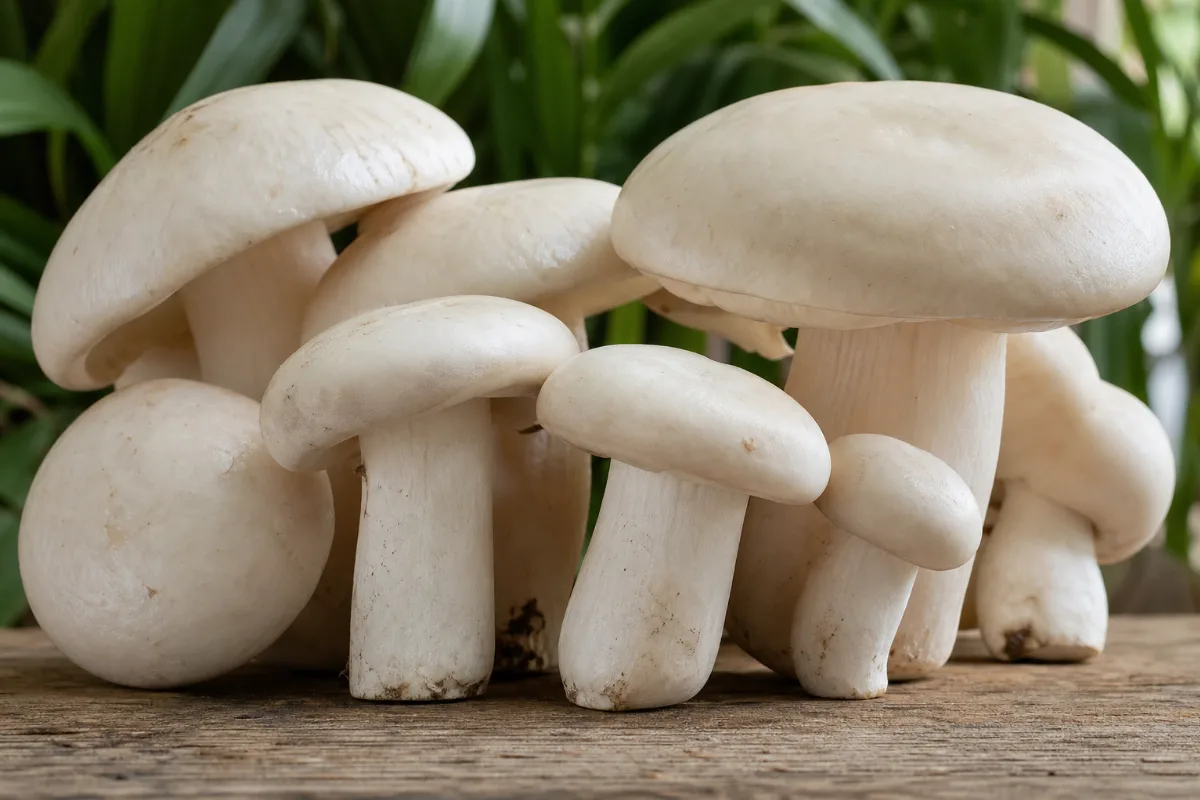
Mushrooms · Culinary mushroom
Milky mushroom
Calocybe indica · also called Milky white mushroom, tropical milky white mushroom, dhuth chatta (West Bengal)
Milky mushroom is a firm white mushroom farmed in warm parts of India and cooked in curries, stir-fries and soups. Studies have measured its nutrients. Its health claims come from test tubes, cells and animals, and we found no controlled trial in people. The main caution: never eat a wild mushroom unless an expert has identified it in person. Ask a doctor or pharmacist first if you take blood thinners or immune-suppressing medicine and want to use extracts.
General information, not medical advice. Last substantive update · Not medically reviewed. A named clinician has not signed off on this page. How this page is made
About Milky mushroom
Milky mushroom (Calocybe indica) is a white, firm tropical mushroom farmed in India and cooked as a vegetable. Its nutrient content has been measured, but health claims come only from extracts in test tubes, cells and animals, and we found no controlled trial in people. The main cautions are not eating wild mushrooms, a toxin-like enzyme reported in the fruiting body whose behaviour in cooking is not stated, and a lack of safety data for extracts and powders.
What it is
Calocybe indica is a fungus in the family Lyophyllaceae, sold as milky mushroom or milky white mushroom. It has a white cap, a bulbous stalk and no ring, and it stays white without bruising. It is farmed on paddy straw in warm, humid conditions, mainly in India.
GBIF lists Calocybe indica as the accepted name. A 2026 paper in Pakistan used DNA to propose moving it to Macrocybe indica, so the name may change.
Traditional and current uses
People in West Bengal have collected the wild mushroom ('dhuth chatta') for decades and sold it in local markets. A first cultivated variety, APK2, was released by Tamil Nadu Agricultural University in 1998. A 2022 review says it is now the third most commercially grown mushroom in India, after button and oyster, and that it is cooked in soups, stir-fries and curries.
A review says indigenous people use it for diabetes, but gives no source we could check. We did not find a verified traditional medical use.
What the research shows
Nutrient numbers are the solid part. Fresh milky mushroom is about 87% water and low in fat. Dried, it holds about 20 to 23 g of protein per 100 g in one study, though values vary with strain and growing material.
Health findings are laboratory work. A water extract blocked a starch-digesting enzyme and lowered the after-meal glucose peak in mice. A crude polysaccharide raised antioxidant enzymes in aged mice, stimulated immune cells in a dish, and lengthened clotting time in a test tube. An extract lowered induced prostate enlargement in rats. None of this has been tested in people.
The only human item is a 2016 volunteer report seen second-hand through a review. It had no control group or numbers there, so we rate it as insufficient evidence.
Food, powder and extracts are different
Nearly all the health studies use crude hot-water, ethanol or methanol extracts, or purified fractions. These are research materials, not standard products, and results with them cannot be applied to the cooked mushroom. Dried powder appears in food-science studies. Fresh mushrooms keep up to 7 days at room temperature, per a 2015 review.
Legal and regulatory status
We read no regulator statement about milky mushroom. The US National Cancer Institute says the FDA has not approved medicinal mushrooms to treat cancer or any other medical condition, and that supplement contents can vary from lot to lot. That is a general statement, not about this species. Other regulators were not searched.
At a glance
Traditional uses history, not proof
- Collected wild in West Bengal for several decades and sold in local markets, as 'dhuth chatta' (2015 review).
- Eaten cooked in soups, stir-fries and curries (2022 review).
- A review says indigenous people use it for diabetes, but gives no source we could check, so we treat that as unverified.
Studied for research
- As a food (protein, fibre, minerals): composition measured, health effect untested, insufficient
- Blood sugar in mice and test tubes, very low
- Antioxidant activity in test tubes and aged mice, very low
- Immune cells in cell culture, very low
- One uncontrolled volunteer report on cholesterol, sugar and pressure, insufficient
- Prostate enlargement in rats, very low
- Liver protection in mice (second-hand), very low
- Cancer cells in a dish, insufficient
- Vitamin D2 after UV light, insufficient
Main compounds
- Protein, fibre and minerals as a food
- Polysaccharides (sugar chains), the most studied extract
- Indicitin, a toxin-like enzyme isolated in a 2025 lab paper
- Ergosterol, which turns into vitamin D2 under UV light
- Phenolic compounds and flavour volatiles
Common forms
- Fresh fruiting body, cooked (the usual food)
- Dried mushroom
- Dried powder added to foods in food-science studies
- Laboratory water, ethanol and methanol extracts (research only, not a standard product)
Research links: Nutrient analysis of cultivated mushrooms in Bangladesh, 2008 (full text) · Review of the species, 2022 (full text) · Mini-review of cultivation and composition, 2015 (full text) · Antidiabetic tests in test tubes and mice, 2017 (abstract) · Indicitin toxin-like enzyme, 2025 (abstract) · National Cancer Institute: medicinal mushrooms · Research Library · Genes & Biomarkers Library
What it is and its history
- Accepted scientific name
- Calocybe indica
- Naming authority
- Purkay. & A.Chandra (GBIF)
- Synonyms
- Macrocybe indica (comb. nov. proposed in a 2026 paper; not found as a record in GBIF on 2026-10-25)
- Common names
- Milky mushroom (English); Milky white mushroom (English); Tropical milky white mushroom (English); Dhuth chatta (Bengali (West Bengal))
- Family or group
- Lyophyllaceae (a fungus family), not a plant. The 2022 review places it in Tricholomataceae, an older placement; GBIF says Lyophyllaceae.
- Classification
- Fungi > Basidiomycota > Agaricomycetes > Agaricales > Lyophyllaceae > Calocybe > Calocybe indica
- Native range
- Tropical and subtropical India: the 2015 review describes wild occurrence in agricultural fields and along roadsides, especially in the plains of Tamil Nadu and in Rajasthan, and says West Bengal people have collected it for decades. The 2022 review says it grows in tropical climates of Africa, China, Malaysia, Singapore, Indonesia and India.
- Habitat
- The 2015 review calls it a mainly grassland species that lives on dead organic matter and sometimes forms root partnerships with coconut, palmyra, tamarind and other trees. It fruits between May and August after rain in India.
- What it looks like
- Fruiting body: The 2022 review describes a white cap, 10 to 14 cm across, umbrella-shaped to convex, flattening with age, with pale gills, a bulbous stalk, no ring or volva and a distinctive farinaceous (meal-like) smell. It stays white and does not bruise or discolour. This page does not give identification advice.
- Cultivation
- Farmed on paddy straw (the usual substrate) and other cellulose materials in warm (30 to 38 C) humid conditions. The 2015 review gives a crop cycle of 7 to 8 weeks and says fresh mushrooms keep up to 7 days at room temperature. India's variety APK2 was released by Tamil Nadu Agricultural University in 1998. The 2022 review says it is the third most commercially grown mushroom in India after button and oyster.
- Harvest and processing
- Eaten fresh and cooked; the 2022 review lists soups, stir-fries, curries and pizza toppings. Dried and powdered forms appear in food-science studies.
- Look-alikes and adulterants
- Name: No source read; Note: We read no source that names look-alikes for milky mushroom. Wild white mushrooms include deadly species, so do not forage.
- Sustainability and conservation
- Not checked.
Traditional use and history history, not clinical proof
| Tradition or era | Documented use | Source |
|---|---|---|
| West Bengal, India (wild collection) | People in West Bengal have collected the wild mushroom ('Dhuth chatta') for several decades and sold it in local markets. | p26539033 |
| Tamil Nadu, India (cultivation) | A first cultivated variety (APK2) was released by Tamil Nadu Agricultural University in 1998, after which commercial production grew in India. | p26539033 |
| Traditional medicine | The 2022 review says it is used as an antidiabetic by indigenous people but gives no source we could check. NOT verified. No traditional medical use was verified. | p35740041 |
Traditional use shows how it was used. It does not show that it works or is safe today.
What is inside, and how it may work
What it contains and how those compounds act in cells and animals. Laboratory and animal mechanisms are not proven effects in people.
Main compounds
| Compound | Family | Where it is concentrated | Activity studied | Level of evidence |
|---|---|---|---|---|
| Polysaccharides (sugar chains) and glucans | polysaccharide | Fruiting body A crude hot-water polysaccharide (APK2) was a mix of xylose, mannose, fucose, rhamnose, arabinose, galactose and glucose (Nataraj 2022). A water-soluble branched glucan was structurally described (Mandal 2012). | Free-radical scavenging, clot-time delay and cell-growth slowing in test tubes; immune-cell stimulation in cell culture; antioxidant markers in mice. 7 6 2 4 | Laboratory research |
| Indicitin | protein (ribonuclease, thaumatin-like) | Fruiting body About 28 kDa; amount in the mushroom not stated in the abstract. | Cuts the sarcin-ricin loop of ribosomes and blocks protein synthesis in vitro; killed Raji cells but not HeLa, NB100 or Caco-2 cells. 5 | Laboratory research |
| Ergosterol and vitamin D2 | sterol | Fruiting body Vitamin D2 rises with UV exposure (Rathore 2020); untreated levels not read. | Food-science finding; no human outcome. 9 | Food science |
| Phenolic compounds | phenolics | Fruiting body The 2022 review lists catechin, syringic acid, p-coumaric acid and caffeic acid. | Antioxidant assays in test tubes (review). 12 | Laboratory research |
| Flavour volatiles (for example 1-octen-3-ol) | volatile alcohols | Fruiting body The 2015 review says 1-octen-3-ol made up 58.3% and n-octanol 17.9% of the volatile fraction in fresh mushrooms, falling after drying. | Flavour compounds; no health claim. 14 | Food chemistry |
Mechanisms, receptors and pathways
| Target or pathway | Gene or receptor | What was found | Level |
|---|---|---|---|
| Toll-like receptor 4, MyD88 and NF-kB in macrophage cells | TLR4, MyD88, NF-kB | A crude polysaccharide appeared to bind TLR4 and switch on the MyD88/NF-kB pathway in RAW 264.7 macrophage cells. 2 | Laboratory research |
| Starch digestion | alpha-amylase | Water extract blocked alpha-amylase in a test tube (IC50 18.07 +/- 0.75 mg/mL) and lowered the after-meal glucose peak in mice. 13 | In vitro and animal |
| Ribosome protein-making | 28S rRNA sarcin-ricin loop | Indicitin cuts the sarcin-ricin loop and blocks protein synthesis in vitro. 5 | Laboratory research |
| Blood clotting tests | APTT and thrombin time | A crude polysaccharide lengthened APTT and TT, not PT, in plasma tests. 7 | Laboratory research |
| Oxidative stress enzymes | SOD, CAT, GPx, GSH, MDA | A crude polysaccharide raised SOD, CAT, GPx and GSH and lowered MDA in aged mice. 4 | Animal research |
Absorption, metabolism and elimination
- Absorption
- Not found in the sources read.
- Distribution
- Not found in the sources read.
- Metabolism
- Not found in the sources read.
- Elimination
- Not found in the sources read.
- Bioavailability
- Not established.
Isolated compounds versus whole extracts
Almost all health-related findings come from crude hot-water, ethanol or methanol extracts and purified fractions in cells or animals. The food is the cooked whole mushroom. Findings from extracts cannot be applied to the food.
Nutritional composition
Fresh milky mushroom is about 87% water, with per 100 g fresh about 2.6 to 2.9 g protein, 0.6 to 0.7 g fat, 1.5 to 1.8 g fibre and 6.3 to 7.3 g carbohydrate in one Bangladeshi study. Dried, the same measures are about eight times higher. Values vary between papers, strains and growing materials. No USDA FoodData Central entry was found in an earlier project search (summary-only).
5 very low certainty5 not enough evidence
What was looked at
The 10 benefits and uses checked for Milky mushroom, each with how strong the evidence is. Tap one to open it.
- As a food (nutrition)Not enough evidence
- Blood sugar (animal and test-tube work)Very low certainty
- Antioxidant activity (laboratory)Very low certainty
- Immune cells (cell-culture work)Very low certainty
- Cholesterol, sugar and blood pressure (one uncontrolled report)Not enough evidence
- Prostate enlargement in ratsVery low certainty
- Liver protection in mice (second-hand)Very low certainty
- Cancer cells in a dishNot enough evidence
- Vitamin D2 after UV light (food science)Not enough evidence
- Antimicrobial and anti-inflammatory claimsNot enough evidence
Lab markers tracked in the studies
Water, protein and fibre per 100 g (fresh)Alpha-amylase block in a test tubeAfter-meal blood glucose in miceAntioxidant enzymes and MDA in aged miceProstate weight and PSA in ratsClotting time in a test tube (APTT, TT)Vitamin D2 in the mushroom after UV light
What is Milky mushroom good for?
The uses people ask about and how strong the evidence is for each. No human trial was found for any of them, so none is proven. Read this together with the Safety tab.
Benefits, one by one
Each card is a research question, not a promise. Tap a goal to filter. Open a card to see the studies, doses and limits.
As a food (nutrition)
Not enough evidenceFresh milky mushroom is about 87% water. In one Bangladeshi study, 100 g fresh held 2.6 to 2.9 g protein and 1.5 to 1.8 g fibre. Dried, it is much more concentrated. What eating it does for health has not been tested.
3 studiesFresh fruiting body (food), dried fruiting body, dried powder in food…
Studies, doses and limits
What the trials found
No study in people tested a health effect of eating it.
Results
Alam 2008, fresh, per 100 g: moisture 87.4%, protein 2.6 to 2.9 g, fat 0.6 to 0.7 g, fibre 1.5 to 1.8 g, carbohydrate 6.3 to 7.3 g. Dried, per 100 g: protein 20 to 23 g, fibre 11 to 15 g, carbohydrate 46 to 51 g.
Effect sizes as reported
Composition measured; no health outcome
Why this rating
These are laboratory measurements from one centre. The papers say composition changes with strain, growing material, harvest stage and mushroom part, and review tables mix units.
Form and dose studied
Fresh fruiting body (food), dried fruiting body, dried powder in food-science studies.
Who was studied
Not a human trial.
Limits
Dry-weight numbers are about eight times fresh-weight numbers because of water; do not compare them directly.
Why researchers looked
It is a cheap, farmed tropical mushroom, so researchers measure what a serving contains.
Traditional use
Eaten in India as a cooked food. The 2022 review lists soups, stir-fries and curries.
Proposed mechanism Not applicable
No mechanism is claimed for the nutrient numbers; they are food-chemistry measurements.
A proposed mechanism does not show that the effect happens in people.
The measured arsenic in dried samples is on the Safety tab. Nothing here is a treatment claim.
Blood sugar (animal and test-tube work)
Very low certaintyA water extract blocked a starch-digesting enzyme in test tubes and lowered the after-meal blood-sugar peak in mice. A review also quotes a rat study. There is no trial in people, so it is not a way to manage diabetes.
3 studiesAqueous extracts (research material, not a product).
Studies, doses and limits
What the trials found
No controlled trial in people was found.
Results
Singh 2017: alpha-amylase IC50 18.07 +/- 0.75 mg/mL; glucose uptake by yeast cells 77.53 +/- 0.97% at 35 mg/mL; after-meal glucose peaks lower in mice (P < 0.05), similar to acarbose at 180 minutes at the higher dose.
Effect sizes as reported
Lower after-meal glucose peak in mice
Why this rating
Test-tube and mouse work with a water extract, plus a rat result seen only in a 2015 review. No human data.
Form and dose studied
Aqueous extracts (research material, not a product).
Who was studied
Mice; rats; test tubes.
Limits
Yeast cells and mice do not predict human glucose control. The rat paper itself was not opened.
Why researchers looked
Mushrooms are often screened for blood-sugar effects, and Indian sources describe it as a possible aid.
Traditional use
The 2022 review says it is used as an antidiabetic by indigenous people, but gives no source we could check.
Proposed mechanism Laboratory research
In the lab the extract blocked alpha-amylase, took up glucose into yeast cells and weakly bound glucose (Singh 2017).
A proposed mechanism does not show that the effect happens in people.
Anyone who takes diabetes medicine should not rely on a mushroom for blood sugar; see the interaction note on the Safety tab.
Antioxidant activity (laboratory)
Very low certaintyExtracts and a crude sugar-chain (polysaccharide) mix scavenged free radicals in test tubes, and the polysaccharide raised antioxidant enzymes in aged mice. This does not show eating the mushroom protects the body.
3 studiesCrude polysaccharide extracts and water extracts (research material).
Studies, doses and limits
What the trials found
No controlled trial in people was found.
Results
Govindan 2016: in D-galactose-aged mice, SOD, CAT, GPx and GSH went up and MDA down in brain and serum, dose-dependently. Selvi 2006: a water extract inhibited lipid peroxidation in test-tube models, more in red-cell membranes than liver tissue.
Effect sizes as reported
Changes in antioxidant markers in mouse tissue and test tubes
Why this rating
Test-tube and mouse results only; markers are not health outcomes.
Form and dose studied
Crude polysaccharide extracts and water extracts (research material).
Who was studied
Mice; goat liver tissue; red-cell membranes in a dish.
Limits
Antioxidant assays in a tube often do not carry over to people.
Why researchers looked
Mushrooms contain phenolic compounds and polysaccharides that react in antioxidant tests.
Proposed mechanism Animal research
Free-radical scavenging in tubes; raised SOD, CAT, GPx and GSH and lowered MDA in mouse brain and serum (Govindan 2016).
A proposed mechanism does not show that the effect happens in people.
None specific.
Immune cells (cell-culture work)
Very low certaintyA glucan from the fruiting body stimulated spleen and thymus cells in a dish, and a crude polysaccharide switched on immune signals in macrophage cells. Nothing was tested in people.
2 studiesHot-water glucan and crude polysaccharide (research material).
Studies, doses and limits
What the trials found
No controlled trial in people was found.
Results
Mandal 2012: a hot-water glucan stimulated splenocytes and thymocytes. Ghosh 2021: raised phagocytosis and immune messenger production in macrophage cells.
Effect sizes as reported
Immune-cell activation in a dish
Why this rating
Cell-culture only. Raised inflammatory signals in cells do not show fewer infections or better immunity.
Form and dose studied
Hot-water glucan and crude polysaccharide (research material).
Who was studied
Cell lines and animal cells.
Limits
No study tested infections, vaccine response or any immune outcome in people.
Why researchers looked
Mushroom sugar chains (beta-glucans) are widely studied as immune-active compounds.
Proposed mechanism Laboratory research
The polysaccharide appeared to bind toll-like receptor 4 and activate the MyD88 and NF-kB pathway in RAW 264.7 macrophage cells (Ghosh 2021).
A proposed mechanism does not show that the effect happens in people.
People with transplants, autoimmune disease or immune-suppressing medicine should ask their care team before using mushroom extracts (see Safety).
Cholesterol, sugar and blood pressure (one uncontrolled report)
Not enough evidenceA 2016 food-science report, as quoted by a 2022 review, says a few volunteers who ate mushroom powder in meals for 3 months had sugar, pressure or cholesterol come down to normal. We could not open it. No control group or numbers are given in the review.
1 studiesMushroom powder added to meals (not a standard product).
Studies, doses and limits
What the trials found
A 2016 report quoted second-hand by Shashikant 2022: volunteers with high sugar, high cholesterol or high blood pressure showed declines to normal at 3 months. Original (Anju and Ukkuru 2016) not opened.
Results
Described only as a marked decline to normal levels; no figures
Why this rating
Second-hand, uncontrolled, tiny, with no numbers; changes could come from diet, medicine or chance. The review also mentions a lower cholesterol result in healthy people with the same limits.
Form and dose studied
Mushroom powder added to meals (not a standard product).
Who was studied
A few volunteers chosen for high sugar, cholesterol or pressure; people on medication were excluded per the review.
Limits
No control group, no sample size, no blinding stated; original unseen.
Why researchers looked
Mushroom powder was put into everyday Indian breakfast dishes for volunteers.
Traditional use
The dishes named in the review include dosa, chapati, curd and chutney.
Proposed mechanism Not applicable
No mechanism is given in the part we read.
A proposed mechanism does not show that the effect happens in people.
Anyone with these conditions should keep to their doctor's plan.
Prostate enlargement in rats
Very low certaintyIn rats given testosterone to enlarge the prostate, a milky mushroom extract reduced prostate weight and PSA, like the drug finasteride. This is a rat model only.
1 studiesExtract at three doses (research material).
Studies, doses and limits
What the trials found
No controlled trial in people was found.
Results
Onoja 2023 (60 rats, 28 days): the extract and finasteride reduced prostate weight, prostatic index, serum PSA, serum testosterone and epithelial thickness versus the untreated model group.
Effect sizes as reported
Lower induced prostate size in rats
Why this rating
One rat study; the condition was drug-induced; the abstract gives no numbers.
Form and dose studied
Extract at three doses (research material).
Who was studied
Adult male Sprague Dawley rats.
Limits
A rat model does not show a benefit for men with urinary symptoms; men with these symptoms need a medical check.
Why researchers looked
Mushroom extracts are screened in animal models of prostate enlargement.
Proposed mechanism Not applicable
The abstract does not give a mechanism.
A proposed mechanism does not show that the effect happens in people.
None specific.
Liver protection in mice (second-hand)
Very low certaintyA review says an ethanol extract protected mice from liver damage caused by carbon tetrachloride. We did not open the original, and there is no human data. It is not a way to protect the liver.
1 studiesEthanol extract (research material).
Studies, doses and limits
What the trials found
No controlled trial in people was found.
Results
Shashikant 2022 says Chatterjee 2011 found that an ethanol extract protected mice from carbon-tetrachloride liver injury.
Effect sizes as reported
Less chemical liver injury in mice, per a review
Why this rating
Seen only through a review; one chemical model in mice.
Form and dose studied
Ethanol extract (research material).
Who was studied
Mice.
Limits
Original paper not opened.
Why researchers looked
Mushroom extracts are tested against chemicals that injure the liver in animals.
Proposed mechanism Animal research
The review says the extract restored the liver's antioxidant status in the mice.
A proposed mechanism does not show that the effect happens in people.
None specific.
Cancer cells in a dish
Not enough evidenceA crude polysaccharide slowed the growth of five human cancer cell lines in test tubes, and a purified protein killed one human blood-cell line but not three others. Mushrooms are not a cancer treatment.
2 studiesCrude polysaccharide; purified protein (research material).
Studies, doses and limits
What the trials found
No controlled trial in people was found.
Results
Nataraj 2022: IC50 143.6 to 168.3 micrograms/mL on HeLa, PC3, HT29, HepG2 and Jurkat. Landi 2025: indicitin killed Raji cells but not HeLa, NB100 or Caco-2.
Effect sizes as reported
Slower growth of cultured cells
Why this rating
Cell-culture only; results with crude extracts and with a purified toxin protein are different things.
Form and dose studied
Crude polysaccharide; purified protein (research material).
Who was studied
Human cancer cell lines.
Limits
No animal or human cancer study of milky mushroom was read. No dose in a dish carries over to the body.
Why researchers looked
Mushroom extracts are often screened against cancer cell lines.
Proposed mechanism Laboratory research
Crude polysaccharide: slowed cell growth (IC50 143.6 to 168.3 micrograms/mL). Indicitin: cuts a ribosome loop and blocks protein synthesis (Landi 2025).
A proposed mechanism does not show that the effect happens in people.
Anyone with cancer should ask their care team before using any mushroom product.
Vitamin D2 after UV light (food science)
Not enough evidenceMushrooms contain ergosterol, which turns into vitamin D2 under UV light. A lab study exposed milky mushrooms to sunlight or UVB lamps and found more vitamin D2 as exposure time grew. It does not show eating them raises vitamin D in people.
1 studiesUV-treated fruiting bodies (lab).
Studies, doses and limits
What the trials found
No controlled trial in people was found.
Results
Rathore 2020 reports the highest vitamin D2 after 60 minutes of exposure (78.33 micrograms/g in sunlight, 140.58 under UVB lamps, as printed; units look very high).
Effect sizes as reported
Higher vitamin D2 in lab-treated mushrooms
Why this rating
Treatment of mushrooms in a lab; no blood vitamin D was measured in anyone.
Form and dose studied
UV-treated fruiting bodies (lab).
Who was studied
Mushrooms, not people.
Limits
Normal farmed milky mushrooms are not known to be UV-treated.
Why researchers looked
Food scientists look for ways to raise vitamin D in plant-based foods.
Proposed mechanism Laboratory research
UV converts ergosterol in the mushroom into vitamin D2.
A proposed mechanism does not show that the effect happens in people.
None specific.
Antimicrobial and anti-inflammatory claims
Not enough evidenceReviews list antibacterial and anti-inflammatory activity of methanol and ethanol extracts in test tubes. We found no human study, and these extracts are not foods.
2 studiesMethanol and ethanol extracts (research material).
Studies, doses and limits
What the trials found
No controlled trial in people was found.
Results
Shashikant 2022 describes methanol-extract activity against E. coli and S. aureus and inhibition of protein denaturation in test tubes.
Effect sizes as reported
Test-tube activity of solvent extracts
Why this rating
Described by a review without numbers we could use; solvent extracts are not eaten.
Form and dose studied
Methanol and ethanol extracts (research material).
Who was studied
Test tubes.
Limits
No dose, no infection study.
Why researchers looked
Reviews of the species include antimicrobial and protein-denaturation tests.
Proposed mechanism Laboratory research
Phenolics and some small compounds are credited in the review; not tested in people.
A proposed mechanism does not show that the effect happens in people.
Not a substitute for antibiotics or medical care.
Connections to the rest of health
How Milky mushroom connects to the rest of our health knowledge graph. Every link says what kind of connection it is. A safety link (for example to the liver) is a warning, not a benefit. A study that merely mentions a topic never creates a benefit link.
Explore every connection: goals, body systems, organs, symptoms, genes
A. Wellness goals
| Connected to | Kind of connection | Evidence status | Context | Studies |
|---|---|---|---|---|
| Blood Sugar Balance | Preliminary mechanism | Very low certainty | Blood sugar (animal and test-tube work): A water extract blocked a starch-digesting enzyme in test tubes and lowered the after-meal blood-sugar peak in mice. A review also quotes a rat study. There is no trial in people, so it is not a way to manage diabetes. | 13 14 12 |
| Cellular Protection | Preliminary mechanism | Very low certainty | Antioxidant activity (laboratory): Extracts and a crude sugar-chain (polysaccharide) mix scavenged free radicals in test tubes, and the polysaccharide raised antioxidant enzymes in aged mice. This does not show eating the mushroom protects the body. | 4 11 7 |
| Immune Support | Preliminary mechanism | Very low certainty | Immune cells (cell-culture work): A glucan from the fruiting body stimulated spleen and thymus cells in a dish, and a crude polysaccharide switched on immune signals in macrophage cells. Nothing was tested in people. | 6 2 |
| Cholesterol Balance | Not enough evidence | Cholesterol, sugar and blood pressure (one uncontrolled report): A 2016 food-science report, as quoted by a 2022 review, says a few volunteers who ate mushroom powder in meals for 3 months had sugar, pressure or cholesterol come down to normal. We could not open it. No control group or numbers are given in the review. | 12 | |
| Blood Sugar Balance | Not enough evidence | Cholesterol, sugar and blood pressure (one uncontrolled report): A 2016 food-science report, as quoted by a 2022 review, says a few volunteers who ate mushroom powder in meals for 3 months had sugar, pressure or cholesterol come down to normal. We could not open it. No control group or numbers are given in the review. | 12 | |
| Blood Pressure Support | Not enough evidence | Cholesterol, sugar and blood pressure (one uncontrolled report): A 2016 food-science report, as quoted by a 2022 review, says a few volunteers who ate mushroom powder in meals for 3 months had sugar, pressure or cholesterol come down to normal. We could not open it. No control group or numbers are given in the review. | 12 | |
| Mens Vitality | Preliminary mechanism | Very low certainty | Prostate enlargement in rats: In rats given testosterone to enlarge the prostate, a milky mushroom extract reduced prostate weight and PSA, like the drug finasteride. This is a rat model only. | 8 |
| Liver Support | Preliminary mechanism | Very low certainty | Liver protection in mice (second-hand): A review says an ethanol extract protected mice from liver damage caused by carbon tetrachloride. We did not open the original, and there is no human data. It is not a way to protect the liver. | 12 |
| Bone Health | Not enough evidence | Vitamin D2 after UV light (food science): Mushrooms contain ergosterol, which turns into vitamin D2 under UV light. A lab study exposed milky mushrooms to sunlight or UVB lamps and found more vitamin D2 as exposure time grew. It does not show eating them raises vitamin D in people. | 9 |
B. Body systems
| Connected to | Kind of connection | Evidence status | Context | Studies |
|---|---|---|---|---|
| Immune system | Very low certainty | Immune-cell stimulation in cell culture; theoretical caution for people on immune-suppressing medicine. Preparation or compound: Crude polysaccharide and glucan (lab extracts) |
2 6 | |
| Blood and clotting | Not enough evidence | Lengthened clotting times in a test tube; not tested in people. Preparation or compound: Crude polysaccharide (lab extract) |
7 | |
| Digestive System | Biological association | Not enough evidence | Studied for: As a food (nutrition) | 1 12 14 |
| Endocrine System | Biological association | Very low certainty | Studied for: Blood sugar (animal and test-tube work) | 13 14 12 |
| Whole Body | Biological association | Very low certainty | Studied for: Antioxidant activity (laboratory) | 4 11 7 |
| Immune System | Biological association | Very low certainty | Studied for: Immune cells (cell-culture work) Studied for: Cancer cells in a dish | 6 2 7 5 12 3 |
| Cardiovascular System | Biological association | Not enough evidence | Studied for: Cholesterol, sugar and blood pressure (one uncontrolled report) | 12 |
| Urinary System | Biological association | Very low certainty | Studied for: Prostate enlargement in rats | 8 |
| Hepatic System | Biological association | Very low certainty | Studied for: Liver protection in mice (second-hand) | 12 |
| Musculoskeletal System | Biological association | Not enough evidence | Studied for: Vitamin D2 after UV light (food science) | 9 |
I. Biomarkers
| Connected to | Kind of connection | Evidence status | Context | Studies |
|---|---|---|---|---|
| Water, protein and fibre per 100 g (fresh) | Biological association | Not enough evidence | Measured in trials: measured. A lab change is not the same as a health benefit. | 1 |
| Alpha-amylase block in a test tube | Biological association | Very low certainty | Measured in trials: lowered. A lab change is not the same as a health benefit. | 13 |
| After-meal blood glucose in mice | Biological association | Very low certainty | Measured in trials: lowered. A lab change is not the same as a health benefit. | 13 |
| Antioxidant enzymes and MDA in aged mice | Biological association | Very low certainty | Measured in trials: raised enzymes, lowered MDA. A lab change is not the same as a health benefit. | 4 |
| Prostate weight and PSA in rats | Biological association | Very low certainty | Measured in trials: lowered. A lab change is not the same as a health benefit. | 8 |
| Clotting time in a test tube (APTT, TT) | Biological association | Not enough evidence | Measured in trials: lengthened (APTT, TT); no change in PT. A lab change is not the same as a health benefit. | 7 |
| Vitamin D2 in the mushroom after UV light | Biological association | Not enough evidence | Measured in trials: raised. A lab change is not the same as a health benefit. | 9 |
J. Genes, receptors and enzymes
L. Active compounds
| Connected to | Kind of connection | Evidence status | Context | Studies |
|---|---|---|---|---|
| Polysaccharides (sugar chains) and glucans | Biological association | In vitro | Free-radical scavenging, clot-time delay and cell-growth slowing in test tubes; immune-cell stimulation in cell culture; antioxidant markers in mice. Preparation or compound: Fruiting body |
7 6 2 4 |
| Indicitin | Biological association | In vitro | Cuts the sarcin-ricin loop of ribosomes and blocks protein synthesis in vitro; killed Raji cells but not HeLa, NB100 or Caco-2 cells. Preparation or compound: Fruiting body |
5 |
| Ergosterol and vitamin D2 | Biological association | Food science | Food-science finding; no human outcome. Preparation or compound: Fruiting body |
9 |
| Phenolic compounds | Biological association | In vitro | Antioxidant assays in test tubes (review). Preparation or compound: Fruiting body |
12 |
| Flavour volatiles (for example 1-octen-3-ol) | Biological association | Food chemistry | Flavour compounds; no health claim. Preparation or compound: Fruiting body |
14 |
Each connection is stored with the ingredient, the connected record, the kind of connection, the evidence status, the supporting studies, the preparation or compound involved, and a review date (last reviewed October 25, 2026).
Evidence at a glance: what changed in 4 lab markers
Tap a number to show only those markers. Counts are markers, not people.
The evidence
The research centre for Milky mushroom. Every record here was checked against PubMed or the publisher's page; we never list a study we have not verified.
Evidence by outcome
Bars show how many studies we found for each outcome, not how well it works. People are added up across trials only (reviews are not added, to avoid double counting).
How we rate evidence
High certainty
Several well-run trials or reviews agree; further research is unlikely to change the picture much.
Moderate certainty
Good trials point the same way, but some doubt remains.
Low certainty
Small, short or inconsistent trials. The finding could change with better research.
Very low certainty
Very little or very weak human data. Treat as a possibility only.
Mixed findings
Trials or reviews disagree with each other.
Not enough evidence
Not enough human research to say either way.
Evidence against
Good research found no benefit, or found harm.
We take the reviewers' own risk-of-bias and GRADE statements where they exist, and otherwise judge from study size, design, consistency, directness and whether a product matches what is sold. Many publications do not make evidence high. Method note: We read PubMed records and abstracts for 15 papers (one case report, one taxonomy paper, three narrative reviews, one food-composition paper, one food-science paper, and eight lab, cell, mouse and rat studies), read two of the reviews and the food-composition paper in full text, read the National Cancer Institute mushroom page, and checked the species name in the GBIF taxonomy database. EMA, EFSA, LiverTox, LactMed, WHO and Index Fungorum were not read. For papers, numbers come from abstracts or the full text read. Certainty ratings are the compiler's own reading.
Study library: every study we checked 17
| Study | Design | People | Product, dose, length | Result |
|---|---|---|---|---|
| Alam 2008 Nutritional Analysis of Cultivated Mushrooms in Bangladesh - Pleurotus ostreatus, Pleurotus sajor-caju, Pleurotus florida and Calocybe indica Mycobiology · PMID 23997631 · DOI |
Food composition study fungus |
Four mushrooms grown in a government mushroom centre in Bangladesh; milky mushroom measured in 5 repeat tests (3 for minerals) | Calocybe indica fruiting bodies, fresh and dried fruiting body (cap, gills and stalk measured separately) Not shown here · vs Three oyster mushroom species |
Milky mushroom, fresh: moisture 87.4%; per 100 g protein 2.6 to 2.9 g, fat 0.6 to 0.7 g, fibre 1.5 to 1.8 g, carbohydrate 6.3 to 7.3 g, ash 1.2 to 1.4 g. Dried, per 100 g: protein 20 to 23 g, fat 4.6 to 5.3 g, fibre 11 to 15 g, carbohydrate 46 to 51 g, ash 12.5 to 13.5 g. Dried minerals per 100 g: calcium 20.7 mg, iron 56.2 mg, magnesium 12.8 mg, manganese 1.65 mg, zinc 12.9 mg, selenium 13.2 micrograms, arsenic 54 micrograms. Cap and gills held more protein and fat than the stalk; the stalk held more fibre. Composition measured; no health outcome tested Methods, limits and fundingOutcomes: Water, protein, fat, fibre, carbohydrate, ash and some minerals Limitations: Food chemistry on mushrooms from one centre; the paper says composition depends on strain, growing material, harvest stage and the part analysed. The arsenic form is not stated and no safe-intake comparison is made. The magnesium figure looks low next to other reports and is shown as printed. Funding and conflicts: Funding not stated in the abstract or text read Read: full text |
| Ghosh 2021 Crude polysaccharide from the milky mushroom, Calocybe indica, modulates innate immunity of macrophage cells by triggering MyD88-dependent TLR4/NF-kB pathway. Journal of Pharmacy and Pharmacology · PMID 33791803 · DOI |
In vitro study cells |
RAW 264.7 macrophage cells | Crude polysaccharide from Calocybe indica (glucose, mannose, galactose) fruiting body Not shown here · vs Untreated cells |
The polysaccharide raised phagocytic activity and immune messenger production in macrophage cells, raised pro-inflammatory cytokine expression and switched on the NF-kB pathway; further tests suggested it binds toll-like receptor 4. Immune-cell activation in a dish Methods, limits and fundingOutcomes: Phagocytosis, immune messengers, NF-kB signalling, antioxidant tests Limitations: Cell-line work only. Raising inflammatory signals in cells does not show better protection against illness in people, and the authors speak of treating immune-deficiency disorders without testing it. Funding and conflicts: Funding not stated in the abstract Read: abstract |
| Ghosh 2022 Milky mushroom: A healthy nutritious diet. Food Research International · PMID 35650998 · DOI |
Narrative review fungus |
Review of milky mushrooms (Calocybe indica and Macrocybe species) | Milky mushrooms (Calocybe indica, Macrocybe gigantea, M. crassa, M. lobayensis) fruiting body Not shown here |
The abstract says the mushrooms are among the easiest and cheapest to grow in the tropics, that several bioactive compounds have been purified but few studied, and that the study of active components and structure-activity is an important requirement. Abstract only; no numbers used Methods, limits and fundingOutcomes: Nutritive value and biological activities Limitations: Abstract only was read; the review mixes several species. Funding and conflicts: Funding not stated in the abstract Read: abstract |
| Govindan 2016 Antioxidant and anti-aging activities of polysaccharides from Calocybe indica var. APK2. Experimental and Toxicologic Pathology · PMID 27174669 · DOI |
Lab animal study mouse and in vitro |
Test-tube assays and mice aged with D-galactose | Crude polysaccharides extracted from Calocybe indica var. APK2 fruiting bodies fruiting body Not shown here 6 weeks (mice) · vs Untreated aged mice |
The extract scavenged free radicals in test tubes. In D-galactose-aged mice it raised SOD, CAT, GPx and GSH and lowered MDA in brain and serum in a dose-dependent manner. Changes in antioxidant markers in mouse tissue Methods, limits and fundingOutcomes: Radical-scavenging assays; antioxidant enzymes (SOD, CAT, GPx), glutathione (GSH) and malondialdehyde (MDA) in mouse brain and serum Limitations: Mouse and test-tube work with a crude polysaccharide extract; marker changes do not show a health benefit in people. Funding and conflicts: Funding not stated in the abstract Read: abstract |
| Landi 2025 Effects of indicitin, a novel ribosome-targeting enzyme from milky mushrooms, on four human cell lines and the gut microbiota. Food and Function · PMID 41221662 · DOI |
In vitro study human cell lines |
Four human cell lines (Raji, HeLa, NB100, Caco-2) and gut microbes in a dish | Indicitin, a purified protein from Calocybe indica fruiting bodies fruiting body Not shown here · vs Untreated cells |
The authors describe indicitin as a new toxin: an enzyme of about 28 kDa that cuts a ribosome loop and blocked protein synthesis in a test tube. It killed Raji cells (a human B-cell line) in a dose- and time-dependent way, but did not change the viability of HeLa, NB100 or Caco-2 cells, and it did not affect growth of gut microbes in the lab. They conclude it has low toxicity towards several cell types. Selective cell toxicity in a dish (IC50 1.05 x 10^-6 M (protein-synthesis block)) Methods, limits and fundingOutcomes: Protein-synthesis block, cell viability, effect on gut microbe growth Limitations: Purified protein in cell culture. The abstract does not say whether cooking or digestion removes it or how much is in a meal. Funding and conflicts: Funding not stated in the abstract Read: abstract |
| Mandal 2012 Chemical analysis of an immunostimulating (1->4)-, (1->6)-branched glucan from an edible mushroom, Calocybe indica. Carbohydrate Research · PMID 22119439 · DOI |
Chemistry lab study cells |
Chemical analysis; spleen and thymus cells | Hot-water-extracted glucan from Calocybe indica fruit bodies fruiting body Not shown here |
The structure of a water-soluble glucan from the hot aqueous extract was worked out, and the glucan stimulated splenocytes and thymocytes. Immune-cell stimulation in a dish Methods, limits and fundingOutcomes: Chemical structure; stimulation of splenocytes and thymocytes Limitations: Abstract is mainly chemistry; no numbers given; cells (splenocytes and thymocytes; the abstract does not say which animal) not people. Funding and conflicts: Funding not stated in the abstract Read: abstract |
| Nataraj 2022 Antioxidant, Anti-Tumour, and Anticoagulant Activities of Polysaccharide from Calocybe indica (APK2). Antioxidants (Basel) · PMID 36139769 · DOI |
In vitro study in vitro |
Test-tube assays and five human cancer cell lines (HeLa, PC3, HT29, HepG2, Jurkat) | Crude hot-water polysaccharide from Calocybe indica (APK2), precipitated with ethanol fruiting body Not shown here |
The polysaccharide is a mix of sugars (xylose, mannose, fucose, rhamnose, arabinose, galactose, glucose). It scavenged radicals in a concentration-dependent way. In a test-tube clotting assay it lengthened activated partial thromboplastin time (APTT) and thrombin time (TT) but not prothrombin time (PT). It slowed growth of five cancer cell lines, with IC50 values of 143.6 to 168.3 micrograms/mL. Antioxidant, clot-delaying and cell-slowing effects in a dish (IC50 143.6 to 168.3 micrograms/mL) Methods, limits and fundingOutcomes: Antioxidant tests, clotting-time tests, cancer cell growth Limitations: All test-tube and cell work with a crude extract. A clot-delaying effect in a tube has not been tested in people. The abstract does not compare with normal (non-cancer) cells. Funding and conflicts: Funding not stated in the abstract Read: abstract |
| Onoja 2023 Inhibitory effects of Calocybe indica macrofungi on experimental benign prostatic hyperplasia in rats. Iranian Journal of Basic Medical Sciences · PMID 36594056 · DOI |
Lab animal study rat |
60 60 adult Sprague Dawley rats in six groups |
Calocybe indica extract at three graded doses Not shown here 28 days · vs Testosterone-only (untreated model) group; finasteride group |
In rats given testosterone to enlarge the prostate, the extract and finasteride reduced prostate weight, prostatic index, serum PSA, serum testosterone and prostate epithelial thickness, and increased the width of the gland channel (lumen). Smaller induced prostate enlargement in rats Methods, limits and fundingOutcomes: Prostate weight, prostatic index, prostate-specific antigen (PSA), testosterone, prostate tissue under the microscope Limitations: Rat model of prostate enlargement; a different animal and a drug-induced condition. The authors suggest it as a candidate for people or dogs, which is not shown. Abstract gives no numbers. Funding and conflicts: Authors declare no conflicts of interest Read: abstract |
| Rathore 2020 Vitamin D(2) fortification of Calocybe indica mushroom by natural and artificial UVB radiations and their potential effects on nutraceutical properties. 3 Biotech · PMID 31988835 · DOI |
Food science study fungus |
Fruit bodies of milky mushroom exposed to sunlight or UVB lamps | Calocybe indica fruit bodies after UV exposure fruiting body Not shown here Up to 90 minutes of exposure · vs Unexposed mushrooms |
Ergosterol was converted to vitamin D2 in proportion to exposure time. The abstract gives the highest vitamin D2 at 60 minutes as 78.33 micrograms/g in sunlight and 140.58 micrograms/g under UVB lamps, and says UV exposure also changed beta-glucan, phenol and flavonoid contents and antioxidant tests. Higher vitamin D2 in UV-exposed mushrooms Methods, limits and fundingOutcomes: Vitamin D2, beta-glucan, phenols, antioxidant tests, amino acids Limitations: Lab treatment of mushrooms; these units are unusually high and are shown as printed; no study tests whether eating them raises vitamin D in people. Funding and conflicts: Authors declare no conflicts of interest Read: abstract |
| Razzaq 2026 Phylogenetic Reidentification of Calocybe indica to Macrocybe indica and New Records of Calocybe erminea in Pakistan. Microscopy Research and Technique · PMID 40801098 · DOI |
Taxonomy study fungus |
Fungus collections in Pakistan | DNA (rDNA ITS) and microscopy of collections Not shown here |
Phylogenetic analysis led the authors to reidentify Calocybe indica as Macrocybe indica (comb. nov.). Name change proposed Methods, limits and fundingOutcomes: Species identification Limitations: One regional survey proposing a new combination; GBIF still lists Calocybe indica as the accepted name when checked on 2026-10-25. Funding and conflicts: Funding not stated in the abstract Read: abstract |
| Selvi 2006 Inhibition of in vitro lipid peroxidation (lpo) evoked by calocybe indica (milky mushroom). Ancient Science of Life · PMID 22557223 |
Lab study in vitro |
Goat liver homogenate and red-blood-cell membranes in a dish | Aqueous (water) extract of Calocybe indica fruiting body Not shown here · vs Untreated preparations |
The water extract inhibited lipid peroxidation to a good extent, more in the red-blood-cell membrane model than in the liver model (abstract gives no figures; a 2015 review quotes 71.3% and 59%). Less fat damage in a test-tube model Methods, limits and fundingOutcomes: Lipid peroxidation (fat damage by free radicals) in test-tube models Limitations: Small old test-tube study; abstract has no numbers; it does not show an effect in the body. Funding and conflicts: Funding not stated in the abstract Read: abstract |
| Shashikant 2022 The Current Status, Bioactivity, Food, and Pharmaceutical Approaches of Calocybe indica: A Review. Antioxidants (Basel) · PMID 35740041 · DOI |
Narrative review fungus |
Literature review of the species | Calocybe indica (fruiting body, powders and lab extracts) fruiting body Not shown here |
Describes milky mushroom as the third most commercially grown mushroom in India after button and oyster; lists nutrients, phenolic compounds and many lab and animal activities; quotes one uncontrolled volunteer report (Anju and Ukkuru 2016) of lower sugar, pressure and cholesterol after 3 months of mushroom powder in meals; says a toxicology screening found no phallotoxin and that rats fed a water extract showed no toxic effect. Overview of lab, animal and food-science work; no human trial of its own Methods, limits and fundingOutcomes: Origin, cultivation, nutrition, food uses, lab and animal bioactivity Limitations: Narrative review that quotes other papers; mixes units; several statements (anti-cancer, hyperacidity, constipation, "safe") are repeated from original papers we did not open. The authors name their sources but do not grade them. Funding and conflicts: Review states no external funding; authors declare no conflict of interest Read: full text |
| Singh 2017 In Vitro and In Vivo Antidiabetic Evaluation of Selected Culinary-Medicinal Mushrooms (Agaricomycetes). International Journal of Medicinal Mushrooms · PMID 28322143 · DOI |
Lab animal study mouse and in vitro |
Test-tube assays and mice given starch | Calocybe indica aqueous (water) extract, compared with Pleurotus ostreatus and Volvariella volvacea extracts Not shown here Single oral starch test in mice · vs Acarbose (a diabetes medicine) in mice |
All three extracts blocked alpha-amylase in a dose-dependent way; milky mushroom extract was the strongest (IC50 18.07 +/- 0.75 mg/mL) and gave the highest glucose uptake by yeast cells (77.53 +/- 0.97% at 35 mg/mL). Glucose adsorption was weak. In mice challenged with starch, the milky mushroom extract significantly lowered the after-meal blood glucose peak (P < 0.05) and, at the higher of two doses, brought glucose to normal levels at 180 minutes, like acarbose. Lower after-meal glucose peak in mice; test-tube enzyme block (IC50 18.07 +/- 0.75 mg/mL) Methods, limits and fundingOutcomes: Starch-digesting enzyme (alpha-amylase) block, glucose uptake by yeast cells, glucose adsorption, blood glucose after starch in mice Limitations: Mouse and test-tube work with a water extract; glucose in yeast cells is not human glucose handling. The authors conclude it could be developed as a drug after more study, which this page does not endorse. Funding and conflicts: Funding not stated in the abstract Read: abstract |
| Subbiah 2015 A Comprehensive Review of Tropical Milky White Mushroom (Calocybe indica P&C). Mycobiology · PMID 26539033 · DOI |
Narrative review fungus |
Literature mini-review of the species | Calocybe indica (variety APK2) fruiting body fruiting body Not shown here |
Says the wild mushroom is called "Dhuth chatta" in West Bengal, was collected and sold in local markets for decades, and that variety APK2 was released by Tamil Nadu Agricultural University in 1998. Says it grows at 30 to 38 C and can be stored up to 7 days at room temperature. Quotes a 45-day rat study in which cold and hot water extracts brought insulin and glycosylated haemoglobin to normal in streptozotocin-diabetic rats. Cultivation and composition overview; medicinal part is two short lab and animal items Methods, limits and fundingOutcomes: Growth, cultivation, composition, flavour compounds, medicinal findings Limitations: Narrative review; the rat result is second-hand (original not opened); the review says mushrooms can contain toxic metals such as cadmium and lead but gives no figure for this species. Funding and conflicts: Funding not stated in the text read Read: full text |
| Trierveiler-Pereira 2025 Adverse Health Effects Associated with the Consumption of Macrocybe titans (Agaricomycetes) from Brazil: A Case Report. International Journal of Medicinal Mushrooms · PMID 40094343 · DOI |
Case report |
People at one dinner in Sorocaba, Brazil, January 2022 | Wild Macrocybe titans (giant mushroom), a different species, picked on a lawn fruiting body Not shown here Single meal |
Some of the people who ate it had headache, nausea, abdominal pain, diarrhoea and vomiting 3 to 8 hours later. None were hospitalised, and the authors believe a combination of factors caused the symptoms. Stomach upset after a meal of a different, wild species Methods, limits and fundingOutcomes: Symptoms after eating Limitations: Different species (Macrocybe titans, not milky mushroom), wild-picked, one event, cause unclear. Shown only because a 2026 paper proposes moving milky mushroom into the genus Macrocybe. Funding and conflicts: Funding not stated in the abstract Read: abstract |
| n/a 2026 National Cancer Institute (NCI): Medicinal Mushrooms (PDQ), Health Professional Version (page read 2026-10-25) n/a · Source |
Authoritative guidance n/a |
n/a | n/a Not shown here |
Page text read on 2026-10-25. It says the FDA has not approved the use of medicinal mushrooms as a treatment for cancer or any other medical condition, and that dietary supplement ingredients may vary considerably from lot to lot with no guarantee that label ingredients are present in the stated amounts. It is about medicinal mushrooms in general and does not discuss milky mushroom. Methods, limits and fundingOutcomes: Regulatory and quality statement on medicinal mushrooms in general Limitations: General statement, not about this species. Funding and conflicts: Independent public information source Read: full text |
| n/a 2026 GBIF Backbone Taxonomy: Calocybe indica Purkay. & A.Chandra (species key 3347420) n/a · Source |
Taxon record n/a |
n/a | n/a Not shown here |
Lists Calocybe indica Purkay. & A.Chandra as ACCEPTED, family Lyophyllaceae, order Agaricales, class Agaricomycetes, phylum Basidiomycota. A search for Macrocybe indica returned no record on 2026-10-25. Methods, limits and fundingOutcomes: Taxon record for naming Limitations: A database record; it can lag behind new papers. Funding and conflicts: Open database Read: api record |
What we do not know yet
- No controlled trial of milky mushroom as a food or an extract in people.
- No allergy, pregnancy, breastfeeding or child safety data for this species.
- The toxicology and liver results are known only through reviews; the original papers were not opened.
- Whether cooking removes the toxin-like enzyme indicitin is not stated in the abstract.
- Health findings come from crude extracts, not from the cooked mushroom.
- The species name may change from Calocybe to Macrocybe.
How new research is added
New studies are found by a saved PubMed search and placed in a review queue. A person reads each one before it changes any evidence rating or safety wording. New publications never change ratings automatically.
Lab markers
What changed in blood or saliva tests during trials. A changed number is not the same as feeling or being healthier, and we give no "normal ranges".
Other 7
Water, protein and fibre per 100 g (fresh)
Measured in trials
The share of a food that is water, protein and fibre.
Not enough evidenceResults and what it means
Why it was measured
To describe what the food contains.
Statistical vs. clinical meaning
A measurement of the food, not a health effect.
Safety implication
None.
| Study | Result | People | Product |
|---|---|---|---|
| 1 | Moisture 87.4%; protein 2.6 to 2.9 g and fibre 1.5 to 1.8 g per 100 g fresh. | Milky mushroom grown at a Bangladeshi centre (5 repeat tests) | Fresh fruiting body analysis |
Alpha-amylase block in a test tube
Lowered in trials
How strongly an extract slows the enzyme that breaks starch into sugar.
Very low certaintyResults and what it means
Why it was measured
Used to screen foods for blood-sugar effects.
Statistical vs. clinical meaning
Lab number; it does not show lower blood sugar in people.
Safety implication
None.
| Study | Result | People | Product |
|---|---|---|---|
| 13 | Milky mushroom water extract: IC50 18.07 +/- 0.75 mg/mL, the strongest of three mushrooms tested. | Test-tube enzyme assay | Aqueous extract |
After-meal blood glucose in mice
Lowered in trials
The rise in blood glucose after a starch meal.
Very low certaintyResults and what it means
Why it was measured
Animal test of whether an extract blunts the post-meal rise.
Statistical vs. clinical meaning
Statistically significant in mice only.
Safety implication
None.
| Study | Result | People | Product |
|---|---|---|---|
| 13 | The extract significantly lowered the post-starch glucose peak (P < 0.05) in mice. | Mice given starch | Aqueous extract versus acarbose |
Antioxidant enzymes and MDA in aged mice
Raised enzymes, lowered MDA in trials
Enzymes (SOD, CAT, GPx), glutathione and a fat-damage marker (MDA) measured in brain and serum.
Very low certaintyResults and what it means
Why it was measured
Standard markers of oxidative stress in animal work.
Statistical vs. clinical meaning
Mouse markers only.
Safety implication
None.
| Study | Result | People | Product |
|---|---|---|---|
| 4 | SOD, CAT, GPx and GSH rose and MDA fell in brain and serum, dose-dependently. | D-galactose-aged mice | Crude polysaccharide for 6 weeks |
Prostate weight and PSA in rats
Lowered in trials
How heavy the prostate is and the blood level of prostate-specific antigen.
Very low certaintyResults and what it means
Clotting time in a test tube (APTT, TT)
Lengthened (APTT, TT); no change in PT in trials
How long plasma takes to clot in laboratory tests.
Not enough evidenceResults and what it means
Why it was measured
Used to look for anticoagulant activity.
Statistical vs. clinical meaning
A lab signal only; effect in people not tested.
Safety implication
A possible concern for people on blood thinners is discussed on the Safety tab.
| Study | Result | People | Product |
|---|---|---|---|
| 7 | The crude polysaccharide prolonged APTT and TT but not PT in vitro. | Test-tube clotting assay | Crude polysaccharide |
Vitamin D2 in the mushroom after UV light
Raised in trials
The amount of vitamin D2 formed in the mushroom itself.
Not enough evidenceResults and what it means
Why it was measured
Used to judge UV fortification.
Statistical vs. clinical meaning
A measure of the mushroom, not of a person.
Safety implication
None.
| Study | Result | People | Product |
|---|---|---|---|
| 9 | Highest at 60 minutes of exposure: 78.33 micrograms/g (sunlight) and 140.58 micrograms/g (UVB lamps), as printed. | Milky mushroom fruit bodies | UV exposure up to 90 minutes |
Safety
What studies and official sources say about side effects, medicines and who should check first. Each point shows what kind of evidence it comes from.
Main points to know 4
- Wild white mushrooms can be deadly: buy farmed milky mushroom, do not forage. Milky mushroom grows wild in fields and along roadsides in parts of India (2015 review), and is sold farmed. We found no source that names its look-alikes, and this page gives no way to recognise it. Do not eat any wild mushroom unless an expert has identified it in person. Photos, apps and written descriptions are not safe enough. If you feel ill after any mushroom meal, see the urgent signs below. General precaution 14
- No poisoning from farmed milky mushroom was found, but human safety data are thin. We found no case report of poisoning, liver injury or allergy from eating cooked, farmed milky mushroom, and no safety trial in people. A 2022 review says a toxicology screening found no phallotoxin and that rats fed a water extract showed no toxic effect; we did not open those original papers. Absence of reports is not proof of safety. Narrative review 12
- A toxin-like enzyme (indicitin) has been found in the fruiting body. A 2025 lab paper isolated indicitin, which the authors call a new toxin: an enzyme that blocks protein-making in a test tube. It killed one human blood-cell line in culture but not three other cell lines, and did not affect growth of gut microbes in the lab. The abstract does not say whether cooking or digestion removes it, or how much is in a meal. It is a reason to eat the mushroom cooked, as it is normally eaten, and to avoid concentrated extracts. Laboratory research 5
- Mushroom extracts and supplements are not checked like medicines. The US National Cancer Institute says the FDA has not approved medicinal mushrooms to treat cancer or any other medical condition, and that supplement ingredients may vary from lot to lot. We did not find a milky mushroom supplement whose contents we could check. Authoritative guidance 16
Side effects 2
| Effect | How often | Severity and recovery | Evidence |
|---|---|---|---|
| Stomach upset (nausea, vomiting, diarrhoea, belly pain) No case was found for milky mushroom itself. The only report found is for a different species, the wild giant mushroom (Macrocybe titans), in Brazil, where the authors believed several factors caused the symptoms. A 2026 paper proposes moving milky mushroom into the genus Macrocybe, which is why it is mentioned. | Not established | mild to moderate In the one related-species report below, symptoms started 3 to 8 hours later and no one was hospitalised. | Case report 15 10 |
| Allergy to mushrooms No allergy report or study for milky mushroom was found. Anyone who has reacted to mushrooms before should be careful with any new mushroom. | Not established | unknown Not described | None found |
Liver
No case of liver injury from milky mushroom was found. A review says an ethanol extract protected mice from a chemical liver injury, which is not evidence of protection in people. Wild mushrooms that cause liver failure exist, which is another reason not to forage. 12
How often. No data.
Monitoring. No monitoring advice was read for this species. LiverTox was not searched.
This is a safety connection. It is not evidence that Milky mushroom supports liver health.
Medicines and supplements 3
| With | Why it matters | Importance | Evidence | What to do |
|---|---|---|---|---|
| Blood thinners (warfarin-type, anticoagulant and antiplatelet medicines) prescription | A crude polysaccharide from milky mushroom lengthened APTT and thrombin time, but not PT, in a test-tube clotting assay. | Not tested in people. No source reports an interaction. It is a theoretical concern mainly for concentrated extracts, not for ordinary cooked servings. | Laboratory research Not enough evidence 7 | If you take a blood thinner, tell your prescriber or pharmacist before using any mushroom extract or powder. |
| Diabetes medicines prescription | Water extracts blocked starch-digesting enzyme and lowered the after-meal glucose peak in mice. | Not tested in people. No source reports an interaction. Theoretical for concentrated extracts. | Animal research Not enough evidence 13 | If you use insulin or other diabetes medicine, do not change your plan because of a mushroom, and ask your care team before using extracts. |
| Immune-suppressing medicines (after a transplant, or for autoimmune disease) prescription | Polysaccharides stimulated macrophage and spleen and thymus cells in the lab. | Not tested in people. Theoretical for extracts; no source reports an interaction. | Laboratory research Not enough evidence 2 6 | Ask your care team before using mushroom extracts or powders. See also the page on mushrooms, autoimmune conditions and transplants. |
Who should check first 3
| Situation | Advice | Evidence |
|---|---|---|
| Any wild-picked mushroom | Do not eat wild mushrooms unless an expert has identified them in person. | General precaution |
| Past reaction to mushrooms | Be careful with any new mushroom and ask a doctor if you have had a reaction. | General precaution |
| Taking blood thinners, diabetes medicine or immune-suppressing medicine, or after a transplant | Eating cooked mushroom as a normal food is not known to be a problem, but ask a doctor or pharmacist before using extracts or powders. | Theoretical 7 13 2 |
Overdose, product quality and regulators
Summary. No poisoning from cultivated milky mushroom was found. The only toxicity statements are second-hand (rats fed water extract had no toxic effect) and a lab description of a toxin-like enzyme.
Animal. A 2022 review quotes a toxicology screening that found no phallotoxin and a rat feeding study with no toxic effect from a water extract. Originals not opened.
Human doses studied. No dose is given or advised here.
Genotoxicity. Not read.
Toxic or hazardous parts. Fungus: the fruiting body is the food. Indicitin was isolated from the fruiting body; its level in a cooked meal is not known.
Mushrooms take up minerals and metals from the material they grow on, so farm quality matters. We read one measurement and two review statements; no tolerable-intake comparison exists in our sources.
Arsenic in dried samples. One Bangladeshi study measured about 54 micrograms of arsenic per 100 g of dried milky mushroom (the form of arsenic is not stated). It did not compare this with a safe limit, so we cannot say if it matters for ordinary servings. 1
Cadmium and lead. The 2015 review says mushrooms are good sources of minerals and sometimes of toxic heavy metals such as cadmium and lead compared with vegetables, and the 2022 review says the species takes nutrients and minerals from the material it grows on. No figure for milky mushroom was read. 14 12
Storage. The 2015 review says fresh mushrooms can be stored up to 7 days at room temperature. Spoiled mushrooms should not be eaten. 14
Label amounts in supplements. NCI says supplement ingredients may vary considerably from lot to lot and there is no guarantee that label ingredients are present in the stated amounts. 16
| Body | Action | Date |
|---|---|---|
| US National Cancer Institute (PDQ, medicinal mushrooms) (United States) | States that the FDA has not approved the use of medicinal mushrooms as a treatment for cancer or any other medical condition, and that supplement ingredients may vary considerably from lot to lot. It is about medicinal mushrooms in general, not milky mushroom. source |
When to get medical help
- Severe or repeated vomiting or diarrhoea after any mushroom meal, especially if it starts many hours later or seems to get better and then worse
- Yellow skin or eyes, dark urine, severe belly pain after eating a wild mushroom
- Hives, swelling of lips or throat, wheeze or trouble breathing after eating: call emergency services
- Keep a sample of any wild mushroom eaten and call a poison centre or emergency services at once
If someone may be poisoned or in a crisis, contact a clinician or emergency service straight away. In the US, Poison Control is 1-800-222-1222.
General information only, not medical advice. Ask a clinician or pharmacist before use, especially with medicines, in pregnancy or with a health condition. See the Natural Remedy Safety guide.
Frequently asked questions
What is milky mushroom?
Is milky mushroom the same as button mushroom or oyster mushroom?
Why is it sometimes called Macrocybe indica?
What nutrients does it contain?
In one Bangladeshi study, 100 g of fresh milky mushroom held about 87% water, 2.6 to 2.9 g of protein, 1.5 to 1.8 g of fibre and little fat. Numbers vary between strains and growing materials.
Does milky mushroom help with diabetes?
Does milky mushroom lower cholesterol or blood pressure?
Not proven. A 2016 report of a few volunteers is quoted second-hand by a review, with no control group or numbers, and we could not open it. We rate it as insufficient evidence.
Is milky mushroom safe to eat?
What is the toxin-like enzyme indicitin?
A 2025 lab paper isolated it from the fruiting body and calls it a new toxin: an enzyme that blocks protein-making in a test tube. It killed one human blood-cell line but not three others, and it did not harm gut microbes in the lab. The abstract does not say if cooking removes it, so eat it cooked and avoid concentrated extracts.
Can I pick milky mushroom in the wild?
Do not. It grows wild in India, but we found no source naming its look-alikes, and wild white mushrooms include deadly species. Never eat a wild mushroom unless an expert has identified it in person. Photos, apps and descriptions are not safe enough.
Does it interact with medicines?
No interaction has been reported. In test tubes a polysaccharide lengthened clotting times, and in mice an extract lowered the glucose peak, so people on blood thinners, diabetes medicine or immune-suppressing medicine should ask a doctor or pharmacist before using extracts or powders. This is a theoretical caution, not a known problem.
Is a milky mushroom supplement a good idea?
We found no milky mushroom supplement whose contents we could check, and no human trial of one. The National Cancer Institute says supplement contents of medicinal mushrooms can vary from lot to lot. Ask a doctor or pharmacist before using one.
What are the signs I should get urgent help after eating a mushroom?
Severe or repeated vomiting or diarrhoea, especially if it starts many hours after eating or seems to improve and then return, yellow skin or eyes, dark urine, or hives, swelling or trouble breathing. Call emergency services or a poison centre and keep a sample of any wild mushroom eaten.
Explore by health goal
Blood Sugar BalanceCellular ProtectionImmune SupportCholesterol BalanceBlood Pressure SupportMens VitalityLiver SupportBone Health
Editorial transparency
- Written by
- AlternativeMed editorial team. Research compiled with AI assistance, then checked against PubMed records.
- Medical review
- None. This page has not been reviewed by a physician or pharmacist.
- First published
- 2026-10-25
- Last substantive update
- 2026-10-25
- How we research
- We read PubMed records and abstracts for 15 papers (one case report, one taxonomy paper, three narrative reviews, one food-composition paper, one food-science paper, and eight lab, cell, mouse and rat studies), read two of the reviews and the food-composition paper in full text, read the National Cancer Institute mushroom page, and checked the species name in the GBIF taxonomy database. EMA, EFSA, LiverTox, LactMed, WHO and Index Fungorum were not read. For papers, numbers come from abstracts or the full text read. Certainty ratings are the compiler's own reading.
- How we rate evidence
- See "How we rate evidence" in the Evidence tab.
- Independence
- No product is promoted on this page. No affiliate links are shown. This page is information, not a recommendation to eat or use any mushroom.
Sources 17
Each source was opened and checked. Where we read only the abstract, it says so. The small numbers in the text point here.
- Alam N, Amin R, Khan A, et al. Nutritional Analysis of Cultivated Mushrooms in Bangladesh - Pleurotus ostreatus, Pleurotus sajor-caju, Pleurotus florida and Calocybe indica. Mycobiology. 2008. PMID 23997631. DOI 10.4489/MYCO.2008.36.4.228. (full text)
- Ghosh S, Khatua S, Dasgupta A, et al. Crude polysaccharide from the milky mushroom, Calocybe indica, modulates innate immunity of macrophage cells by triggering MyD88-dependent TLR4/NF-kB pathway.. Journal of Pharmacy and Pharmacology. 2021. PMID 33791803. DOI 10.1093/jpp/rgaa020. (abstract)
- Ghosh S, Acharya K. Milky mushroom: A healthy nutritious diet.. Food Research International. 2022. PMID 35650998. DOI 10.1016/j.foodres.2022.111113. (abstract)
- Govindan S, Johnson EE, Christopher J, et al. Antioxidant and anti-aging activities of polysaccharides from Calocybe indica var. APK2.. Experimental and Toxicologic Pathology. 2016. PMID 27174669. DOI 10.1016/j.etp.2016.04.001. (abstract)
- Landi N, Bortolotti M, Ragucci S, et al. Effects of indicitin, a novel ribosome-targeting enzyme from milky mushrooms, on four human cell lines and the gut microbiota.. Food and Function. 2025. PMID 41221662. DOI 10.1039/d5fo03851k. (abstract)
- Mandal EK, Maity K, Maity S, et al. Chemical analysis of an immunostimulating (1->4)-, (1->6)-branched glucan from an edible mushroom, Calocybe indica.. Carbohydrate Research. 2012. PMID 22119439. DOI 10.1016/j.carres.2011.10.040. (abstract)
- Nataraj A, Govindan S, Ramani P, et al. Antioxidant, Anti-Tumour, and Anticoagulant Activities of Polysaccharide from Calocybe indica (APK2).. Antioxidants (Basel). 2022. PMID 36139769. DOI 10.3390/antiox11091694. (abstract)
- Onoja RI, Ihedioha JI, Shoyinka SV, et al. Inhibitory effects of Calocybe indica macrofungi on experimental benign prostatic hyperplasia in rats.. Iranian Journal of Basic Medical Sciences. 2023. PMID 36594056. DOI 10.22038/IJBMS.2022.64972.14309. (abstract)
- Rathore H, Prasad S, Sehwag S, et al. Vitamin D(2) fortification of Calocybe indica mushroom by natural and artificial UVB radiations and their potential effects on nutraceutical properties.. 3 Biotech. 2020. PMID 31988835. DOI 10.1007/s13205-019-2024-x. (abstract)
- Razzaq F, Haqnawaz M, Shahid R, et al. Phylogenetic Reidentification of Calocybe indica to Macrocybe indica and New Records of Calocybe erminea in Pakistan.. Microscopy Research and Technique. 2026. PMID 40801098. DOI 10.1002/jemt.70055. (abstract)
- Selvi S, Umadevi P, Suja S, et al. Inhibition of in vitro lipid peroxidation (lpo) evoked by calocybe indica (milky mushroom).. Ancient Science of Life. 2006. PMID 22557223. (abstract)
- Shashikant M, Bains A, Chawla P, et al. The Current Status, Bioactivity, Food, and Pharmaceutical Approaches of Calocybe indica: A Review.. Antioxidants (Basel). 2022. PMID 35740041. DOI 10.3390/antiox11061145. (full text)
- Singh V, Bedi GK, Shri R. In Vitro and In Vivo Antidiabetic Evaluation of Selected Culinary-Medicinal Mushrooms (Agaricomycetes).. International Journal of Medicinal Mushrooms. 2017. PMID 28322143. DOI 10.1615/IntJMedMushrooms.v19.i1.20. (abstract)
- Subbiah KA, Balan V. A Comprehensive Review of Tropical Milky White Mushroom (Calocybe indica P&C).. Mycobiology. 2015. PMID 26539033. DOI 10.5941/MYCO.2015.43.3.184. (full text)
- Trierveiler-Pereira L, Prado-Elias A, Baltazar JM. Adverse Health Effects Associated with the Consumption of Macrocybe titans (Agaricomycetes) from Brazil: A Case Report.. International Journal of Medicinal Mushrooms. 2025. PMID 40094343. DOI 10.1615/IntJMedMushrooms.2025058005. (abstract)
- n/a. National Cancer Institute (NCI): Medicinal Mushrooms (PDQ), Health Professional Version (page read 2026-10-25). n/a. 2026. (full text)
- n/a. GBIF Backbone Taxonomy: Calocybe indica Purkay. & A.Chandra (species key 3347420). n/a. 2026. (api record)
Where to buy
Check the label first. Whatever you buy, look for these:
- Fruiting body versus mycelium on grain: the label should say which
- The extract type and the beta-glucan amount, if stated
- A third-party testing mark
- Interactions: ask a pharmacist if you take medicines or blood thinners
Talk to a pharmacist or doctor before you start any supplement, especially if you take medicines. See the Safety tab for interactions.
Support our free guides: as an Amazon Associate we earn from qualifying purchases. Full disclosure.


