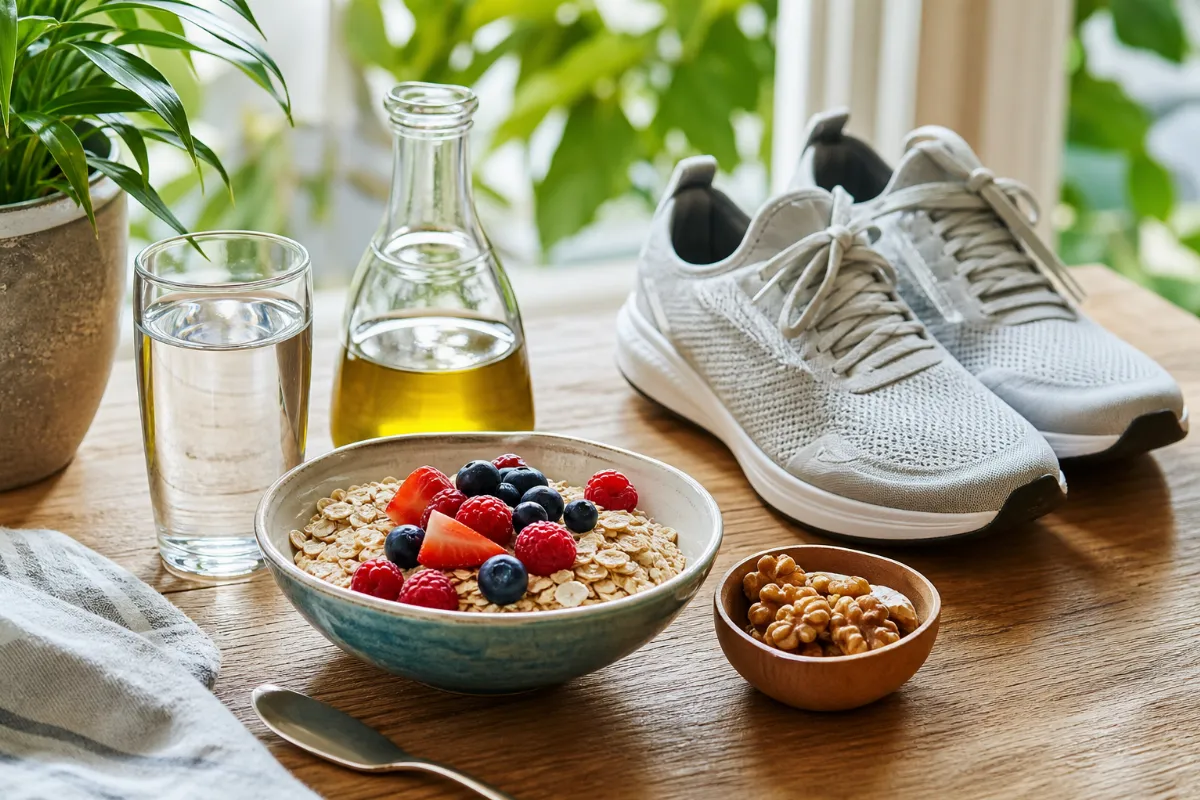
Support Your Heart & Circulation
Build Heart-Healthy Habits
Heart health is built from ordinary habits repeated over years: how much you move, what is on your plate, whether you smoke or drink, how you sleep, and whether you know your numbers. This page is the big picture and where to start; blood pressure, cholesterol, triglycerides, fitness, circulation, sitting and heart-healthy eating each have their own pages.
General information, not medical advice. Last updated October 31, 2026. Written by the AlternativeMed editorial team. Not medically reviewed.
Start here
- Get moving most days: aim for at least 150 minutes a week of activity that raises your heart rate (brisk walking counts), and if you have been inactive, start with small amounts, because the biggest gain comes from going from none to some.
- Shift your plate towards vegetables, fruit, wholegrains, beans, nuts, fish and olive or rapeseed oil, with less saturated fat, salt and processed food.
- Find out your numbers: ask for a blood pressure and cholesterol check (in the UK, adults aged 40 to 74 can be invited for a free NHS Health Check about every five years), and if you smoke, ask for stop-smoking support.
Be careful with
- Do not stop, reduce or swap any prescribed heart, blood pressure, cholesterol or blood-thinning medicine because you are eating better or feel well. Talk to your doctor, nurse or pharmacist first.
- Supplements sold for the heart (fish oil, garlic, CoQ10, red yeast rice, hawthorn and others) have weaker evidence than habits, and several interact with medicines or act like a prescription drug. Ask a pharmacist before taking any, especially if you use blood thinners, blood pressure or cholesterol medicines.
- If you have heart disease, kidney disease, diabetes, are pregnant, or have been inactive for a long time, speak to a clinician before starting vigorous exercise or making large changes to how you eat.
Get help when
- Call emergency services now (999 in the UK, where the NHS gives this number) for tight or squeezing chest pain, pain spreading to the arm, neck or jaw, severe breathlessness, pale, blue or grey skin, or if someone has collapsed. The NHS says not to drive yourself to hospital.
- Call emergency services straight away for signs of a stroke: a drooping face, weakness or numbness in one arm, slurred or confused speech, sudden vision problems or a sudden severe headache, even if the signs pass.
- Fainting, a racing or irregular heartbeat with dizziness, or new breathlessness on mild effort: get urgent medical advice.
- A swollen, painful or red leg, especially one leg only: seek same-day medical care, as this can be a blood clot.
- A very high blood pressure reading at home, particularly with headache, chest pain, vision changes or confusion: get urgent medical advice rather than waiting for a routine appointment.
- Risk factors that are already known (high blood pressure, high cholesterol, diabetes, smoking, family history of early heart disease): book a routine appointment to discuss your overall risk.
About Build Heart-Healthy Habits
What this goal means
This goal is about the whole lifestyle picture that protects the heart and blood vessels, and about choosing where to start. The NHS describes cardiovascular disease as a group of conditions that affect the heart and blood vessels, including coronary heart disease, peripheral arterial disease, aortic disease and stroke.
The American Heart Association summarises the picture as eight areas it calls Life's Essential 8: diet, physical activity, nicotine exposure, sleep, weight, cholesterol, blood sugar and blood pressure. Habits shape the first four or five directly and the rest indirectly. We did not manage to read the AHA page itself (the site refused the request), so the specific targets are not quoted here.
1,2What it can feel like
Often it feels like nothing. Some forms of cardiovascular disease have no symptoms, and for some people the first sign is angina (chest pain), a heart attack or a stroke, according to the NHS. High blood pressure and high cholesterol are usually found by tests, not felt.
That is why this goal is about prevention and checks rather than waiting for symptoms.
1,3What raises risk
The NHS lists smoking, drinking too much alcohol, being overweight and not being active as lifestyle risk factors. Other risks include being over 50, being male, having a South Asian, Black African or African Caribbean background, a family history of cardiovascular disease, and having diabetes, high blood pressure or high cholesterol.
Age, sex, ethnicity and family history cannot be changed. Smoking, cholesterol and blood pressure can, and they carry a large share of the risk score in the NHS Health Check.
1,3Conditions that connect to it
High blood pressure, high cholesterol, type 2 diabetes and metabolic syndrome, sleep apnea and long-term kidney disease are closely linked to heart and circulation problems. Several of these have no early symptoms and are found by testing; see the linked pages.
1Realistic expectations
Habits lower risk over years rather than days, and they do not guarantee that heart disease will never happen. In a meta-analysis of 36 studies, moving from inactive to the recommended 150 minutes of moderate activity a week was associated with a 17% lower risk of cardiovascular disease and a 23% lower risk of dying from it. The authors concluded that the greatest gain came from moving from inactivity to small amounts of activity.
Some single measures change more quickly. The NHS says the risk of a heart attack is halved one year after stopping smoking compared with a smoker's.
4,5Who this applies to
Adults of any age who want to protect their heart, including people with risk factors and people who already have heart disease (who should follow their own care plan first). Children and teenagers need age-appropriate activity; the CDC advises 1 hour of activity a day for them. Pregnant people and older adults have extra considerations; see the life-stage notes.
2,6Related conditions and symptoms
Prediabetes, type 2 diabetes and metabolic syndrome → Obesity and weight-related health → Sleep apnea → Perimenopause and menopause →
A manageable starting plan
An educational starting point, not a personal prescription. Adjust it to your own situation and any advice from your clinician.
Your first actions
- Book a blood pressure and cholesterol check if you have not had one recently, and write down the results.
- Add 10 minutes of brisk walking most days and build up towards 150 minutes a week.
- Change one meal this week: add a vegetable portion, swap butter for olive or rapeseed oil, or have oily fish once.
- If you smoke, contact a stop-smoking service.
Optional additions
- Add two short strength sessions a week.
- Keep drinking within the low-risk guidance with several drink-free days.
- Break up long sitting with a short walk.
- Review sleep and get loud snoring checked.
What to track
- Blood pressure and cholesterol results with dates.
- Weekly activity minutes.
- Portions of fruit and vegetables and oily-fish meals.
- Alcohol units and smoke-free days.
- Any new supplement or medicine.
When to reassess
Review after about three months: have your numbers been rechecked, are activity and eating habits holding, and do you need more support? Ask your clinician how often to recheck.
When to seek professional support
- A GP, nurse or pharmacist for checks and your own targets.
- Stop-smoking services and a dietitian or exercise professional.
- Family and friends to walk and cook with.
What helps
Ordered by how well the research supports each step. Evidence strength is shown on every card; precautions sit next to the advice.
Start here
Regular physical activity
High certaintyAddresses: Lower risk of heart disease and stroke
Why it may help: The NHS adult guidelines are at least 150 minutes of moderate activity or 75 minutes of vigorous activity a week, plus strength work on at least 2 days. In a meta-analysis of 36 studies (more than 3.4 million people), reaching 150 minutes of moderate activity a week was associated with lower risk of cardiovascular disease and of death from it, and the biggest gain was from moving from inactive to a little activity. The NHS says even once or twice a week can reduce the risk of heart disease or stroke.
How to apply it: Start with 10 minutes of brisk walking and build up. A useful test is that at moderate intensity you can talk but not sing. Spread activity across 4 to 5 days or every day.
Who it may suit: Most adults; people who have been inactive gain most from starting small.
Precautions: Check with a GP first if you have not exercised for some time or have a medical condition or heart symptoms. Stop and seek help for chest pain or unusual breathlessness.
6,4,2Improve Your Cardiovascular Fitness → Sit Less & Move More →
Do not smoke, and get support to stop
High certaintyAddresses: Lower risk of heart attack and better circulation
Why it may help: The NHS says circulation improves within weeks of stopping and that the risk of a heart attack halves after one year compared with a smoker's. The CDC says quitting lowers risk and that a doctor can help. The NHS also notes that smoking can raise cholesterol.
How to apply it: Set a quit date and ask for help: the NHS offers a free personal quit plan, an app and local stop-smoking services. The 28-day mark is a milestone the NHS says makes quitting for good much more likely.
Who it may suit: Anyone who smokes.
Precautions: Ask a pharmacist or doctor about stop-smoking aids, especially in pregnancy or with a heart condition. We did not read evidence on vaping for the heart in this round, so it is not rated here.
5,1,2,7A heart-friendly eating pattern
Moderate certaintyAddresses: Lower blood pressure and a possible lower risk of stroke
Why it may help: The NHS advises at least 5 portions of fruit and vegetables a day, wholegrains and pulses, at least 2 portions of fish a week (one of them oily), and mostly unsaturated oils. The CDC adds more fresh produce, fewer processed foods, less saturated and trans fat, more fibre, and less salt and sugar. A Cochrane review of Mediterranean-style diets found a drop in blood pressure (about 3/2 mmHg) in primary prevention trials, and moderate-certainty evidence of fewer strokes in the PREDIMED trial after its re-analysis.
How to apply it: Build meals around vegetables, beans, wholegrains, fish, nuts, seeds and olive or rapeseed oil. Swap butter, cream, pastries and fatty processed meat for these. Change one meal at a time.
Who it may suit: Most adults.
Precautions: The Cochrane review found little or no effect on heart deaths or total deaths in primary prevention trials and only low-certainty evidence for several outcomes; it is a pattern, not a cure. Ask a dietitian for tailored advice if you have kidney disease, diabetes or take blood thinners (vitamin K).
8,2,7,9Know your numbers: blood pressure, cholesterol, blood sugar
High certaintyAddresses: Finds hidden problems early so they can be treated
Why it may help: The CDC advises checking blood pressure at least yearly if you have never had high blood pressure or other risk factors, and testing cholesterol at least every 4 to 6 years (more often with high cholesterol or a family history). In the UK, the NHS Health Check invites eligible adults aged 40 to 74 about every five years and gives a 10-year cardiovascular risk score.
How to apply it: Book a check, write down your results and ask what they mean for you. Repeat them at the interval your clinician suggests.
Who it may suit: All adults; sooner if there is a family history or other risk factor.
Precautions: Test schedules differ by country and personal risk. Your clinician sets your own targets.
2,3,1Support Healthy Blood Pressure → Improve Your Cholesterol Levels →
Additional options
Keep alcohol low
Moderate certaintyAddresses: Helps blood pressure and weight
Why it may help: The NHS advises not drinking more than 14 units a week on a regular basis, spreading it over 3 or more days and having several drink-free days. The CDC says drinking less may help lower or prevent high blood pressure.
How to apply it: Count units, use smaller glasses, and plan drink-free days.
Who it may suit: Adults who drink.
Precautions: The guideline is a ceiling for lower risk, not a health recommendation to start drinking. Pregnant people should follow their clinician's advice. Heavy drinking raises cardiovascular risk.
10,2,1Aim for a healthy weight
Moderate certaintyAddresses: Less strain on the heart and blood vessels
Why it may help: The CDC says maintaining a healthy weight lowers the strain on the heart and blood vessels, and the NHS lists being overweight as a risk factor. Gradual change is more realistic than fast loss.
How to apply it: Focus on activity and eating pattern first; see the weight pages for safe approaches.
Who it may suit: Adults with excess weight; not a goal for everyone, and not for people with eating-disorder history without clinician support.
Precautions: Avoid crash diets and any approach that involves restricting, bingeing or purging. Pregnant people, children and older adults need clinician guidance.
2,1Maintain a Healthy Weight → Obesity and weight-related health →
Protect your sleep
Low certaintyAddresses: Possible lower heart risk, with a U-shaped link
Why it may help: A meta-analysis of 15 prospective studies (474,684 people) found that short sleep was associated with a higher risk of developing or dying from coronary heart disease and stroke, and long sleep was associated with higher risk of coronary heart disease, stroke and total cardiovascular disease. These are associations, so they do not prove sleep length causes the difference.
How to apply it: Keep a regular sleep schedule, get loud snoring or pauses in breathing checked (sleep apnea), and see the sleep pages.
Who it may suit: Adults with short or disrupted sleep.
Precautions: Observational data; do not force very long sleep. Very long sleep may be a marker of illness.
11Stress and relaxation practices
Low certaintyAddresses: May help blood pressure modestly
Why it may help: NCCIH says relaxation techniques produced modest, short-term blood pressure reductions in studies, but many were of poor quality, and yoga programs that included breathing and relaxation had larger effects in a 2019 meta-analysis, with low-quality evidence overall. They are a support, not a substitute for treatment.
How to apply it: Choose a practice you enjoy: slow breathing, yoga, tai chi or walking outdoors.
Who it may suit: Adults who find stress affects their sleep, eating or blood pressure.
Precautions: People with high blood pressure may need to modify or avoid some yoga poses. Learn from a qualified instructor.
12Breathing exercises for stress → Movement, yoga and tai chi →
Still being studied
Omega-3 supplements (fish oil)
Low certaintyAddresses: Uncertain heart benefit
Why it may help: A Cochrane review of 86 trials (162,796 people) found high-certainty evidence of little or no effect on all-cause mortality or cardiovascular events from increasing long-chain omega-3, and low-certainty evidence of a slight reduction in coronary heart disease events and deaths. NCCIH says eating fish is the better-supported route and that there is some evidence people with heart disease or high triglycerides may benefit from supplements.
How to apply it: Prefer fish in meals (the NHS suggests one portion of oily fish a week as part of two portions of fish). Discuss supplements with a clinician.
Who it may suit: People who do not eat fish and have asked a clinician.
Precautions: Omega-3 supplements may extend bleeding time; people on blood thinners or anti-inflammatory pain medicines, those with fish or shellfish allergy, and pregnant or breastfeeding people should ask first. Fish liver oils contain vitamins A and D, which can be harmful in excess.
13,14,8Garlic
Low certaintyAddresses: Small or uncertain effect on blood pressure
Why it may help: NCCIH reports some evidence that garlic may lower blood pressure, but studies were small or low quality, and a 2012 Cochrane review found the effect fell within normal blood pressure measurement variability.
How to apply it: Garlic as a food is part of a normal healthy diet; supplements are not a proven heart treatment.
Who it may suit: Not a replacement for treatment.
Precautions: Garlic may increase bleeding risk with blood thinners and can interfere with an HIV medicine (saquinavir). Tell your surgeon and pharmacist about garlic supplements.
12Other herbs and supplements (hawthorn, CoQ10, green tea extract, niacin, magnesium and potassium)
Not enough evidenceAddresses: Evidence not assessed or weak
Why it may help: We did not find reviews of hawthorn, CoQ10, magnesium or potassium for heart outcomes in the sources read for this page, so we have not rated them. NCCIH notes that green tea extract lowered blood pressure only in short-term studies and that more large, long trials are needed.
How to apply it: Use the ingredient pages to read what each is and what is known, and check with a pharmacist before use.
Who it may suit: Anyone considering them.
Precautions: Potassium supplements and potassium-based salt substitutes can be unsafe with kidney disease and some blood pressure medicines; high-dose niacin and green tea extract can affect the liver. Ask a clinician first.
12Hawthorn → Coenzyme Q10 → Magnesium → Potassium → Niacin (vitamin B3) → Green tea →
Food & nutrition
A plate that is kind to the heart
The NHS advises at least 5 portions of fruit and vegetables a day (a portion is 80g), higher-fibre starchy foods, wholegrains and pulses, and mostly unsaturated oils in small amounts. It also suggests at least 2 portions of fish a week, one of them oily, and limiting red meat to 3 portions a week with less processed meat.
Detailed eating advice for heart health is on the Eat for Heart Health page.
- Vegetables, fruit, beans and lentils
- Oats, brown rice, wholegrain bread and wholewheat pasta
- Oily fish, nuts and seeds
- Olive or rapeseed oil instead of butter or lard
Salt
The NHS says adults should have no more than 6g of salt a day (about one level teaspoon), including salt already in food. It suggests reading labels and choosing low-salt versions of foods and sauces.
The NHS page we read does not discuss salt substitutes. Some substitutes contain potassium, which can be unsafe with kidney disease or some medicines; ask a pharmacist or doctor first.
15,16Foods to explore on this site
These pages describe individual foods that often appear in heart-healthy eating. They are food guides, not treatments.
- Oats
- Walnuts
- Flaxseed
- Oily fish
- Beets
Remedies & supplements
Traditional use, laboratory findings and human trials are kept apart. "Natural" does not mean safe.
Omega-3 fish oil
Low certaintyStudied form and route: Capsule or liquid supplement
Intended outcome: Possible small effect on heart events; lowers triglycerides
Human evidence: A Cochrane review of 86 trials found high-certainty evidence of little or no effect on all-cause mortality or cardiovascular events, and low-certainty evidence of a slight reduction in coronary heart disease events. NCCIH cites a 2020 review of 23 studies where EPA and DHA reduced triglycerides by about 15%.
Traditional use: Fish-rich diets are traditional in many coastal cultures; we did not read a specific traditional-use source.
Laboratory findings: Not assessed here.
Limits: Benefit appears small and varies by study; effects on stroke were little or none.
Interactions and precautions: May extend bleeding time. Ask a clinician first if you take blood thinners or anti-inflammatory pain medicine, have fish or shellfish allergy, are pregnant or breastfeeding, or are giving a child any. Fish liver oils contain vitamins A and D.
13,14Garlic
Low certaintyStudied form and route: Food, or supplement
Intended outcome: Possible small blood pressure effect
Human evidence: NCCIH reports some evidence of lower blood pressure, but studies are small or low quality, and a 2012 Cochrane review found the effect within normal measurement variation.
Traditional use: Garlic has a long history of use as a food and folk remedy; we did not read a specific source on this for the page.
Laboratory findings: Not assessed here.
Limits: Not shown to replace treatment.
Interactions and precautions: May increase bleeding risk with anticoagulants and can interfere with saquinavir. Tell your surgeon or pharmacist.
12Red yeast rice
Mixed findingsStudied form and route: Supplement
Intended outcome: Can lower cholesterol if it contains monacolin K
Human evidence: NCCIH says products with substantial monacolin K may lower cholesterol, but many products contain little or none.
Traditional use: Used in traditional Chinese cooking and medicine; we did not read a specific source.
Laboratory findings: Not assessed here.
Limits: Content cannot be known from the label. Not legally sold in the US as a supplement if high in monacolin K.
Interactions and precautions: Same side effects and interactions as lovastatin (muscle, liver and kidney problems); possible citrinin contamination; not recommended in pregnancy or breastfeeding. Do not combine with a statin.
17Hawthorn, CoQ10, magnesium, potassium and niacin
Not enough evidenceStudied form and route: Herb and supplements
Intended outcome: Heart claims not assessed
Human evidence: We did not find reviews of these for heart outcomes in the sources read for this page.
Traditional use: Hawthorn has traditional use for the heart in several systems; we did not read a specific source.
Laboratory findings: Not assessed here.
Limits: Rated insufficient on this page, because we have not assessed them.
Interactions and precautions: Potassium and potassium-based salt substitutes: ask a doctor first if you have kidney disease or take certain blood pressure medicines. High-dose niacin can affect the liver. Check with a pharmacist before use.
12Hawthorn → Coenzyme Q10 → Magnesium → Potassium → Niacin (vitamin B3) →
Therapies & care
Established care comes first for heart and circulation problems. Medicines for blood pressure, cholesterol, heart rhythm and clotting are prescribed by a clinician; this page does not recommend any medicine or dose, and you should not stop, reduce or replace one on your own.
Health check with a doctor, nurse or pharmacist
High certaintyAssessment A clinician measures blood pressure, takes a cholesterol test, asks about family history, smoking, alcohol and activity, and can give a 10-year cardiovascular risk score. In the UK this is the NHS Health Check for adults aged 40 to 74 without existing heart disease, diabetes or stroke.
Who it may suit: Adults, especially over 40 or with risk factors.
Precautions: People who already have a diagnosis get regular reviews from their care team instead.
3,2Stop-smoking services
High certaintyBehaviour support The NHS offers a free personal quit plan, an app and local stop-smoking services. The NHS says quitting halves heart attack risk after one year compared with a smoker's.
Who it may suit: Anyone who smokes.
Precautions: Ask a pharmacist or doctor about quitting aids in pregnancy or with a heart condition.
5Cholesterol-lowering medicine (statins), decided by a doctor
High certaintyMedical care The NHS says statins lower high cholesterol and that you may be offered them if you have cardiovascular disease, or are at higher risk and lifestyle changes have not helped or are unlikely to. They are usually taken long term.
Who it may suit: People for whom a doctor judges it appropriate.
Precautions: Talk to a doctor or pharmacist before stopping. Grapefruit and some medicines and St John's wort can interact. Not for people who are pregnant or trying to become pregnant.
18Dietitian or exercise professional
Not enough evidenceLifestyle support A registered dietitian or qualified exercise professional can tailor eating and activity plans to your health conditions and medicines.
Who it may suit: People with several conditions or who want a guided plan.
Precautions: Choose qualified professionals and avoid programs promising rapid results.
8,6What to avoid
Habits, products and claims that can get in the way. Never stop a prescribed medicine without talking to the professional who prescribed it.
Risks that apply to most people
Smoking and other tobacco
High certaintyWhy: The NHS lists smoking as a lifestyle risk factor for cardiovascular disease, and says smoking can raise cholesterol and raises the risk of heart attack and stroke.
Who it applies to: Smokers.
Try instead: Ask for stop-smoking support.
1,7,5Drinking more than the low-risk limit
Moderate certaintyWhy: The NHS advises not drinking more than 14 units a week on a regular basis and the CDC says drinking less may help lower or prevent high blood pressure.
Who it applies to: Regular drinkers.
Try instead: Spread any drinking over several days and keep drink-free days.
10,2Waiting for symptoms before checking
High certaintyWhy: The NHS says some forms of cardiovascular disease have no symptoms, and the first sign can be a heart attack or stroke.
Who it applies to: Adults, especially over 40 or with family history.
Try instead: Book a blood pressure and cholesterol check.
1,3Staying inactive
High certaintyWhy: The NHS lists not being active as a risk factor, and activity guidelines advise breaking up long periods of sitting.
Who it applies to: Desk workers and drivers.
Try instead: Move a little every day and build up.
1,6,19Personal triggers to check
Habits that raise risk: a diet high in saturated fat, salt and processed food
Moderate certaintyWhy: The NHS advises cutting back on saturated fat (for example in pies, butter, cream, cakes and biscuits) and the NHS says eating too much salt can raise blood pressure. The CDC advises limiting saturated and trans fats and cutting back on salt and sugar.
Who it applies to: Most people eating a processed-food-heavy diet.
Try instead: Swap in oily fish, olive or rapeseed oil, wholegrains, nuts, seeds, fruit and vegetables, and check labels for salt.
7,8,2,16High caffeine intake in people with high blood pressure
Low certaintyWhy: The NHS lists coffee, tea and cola as high-caffeine drinks to limit if you have high blood pressure.
Who it applies to: People with high blood pressure.
Try instead: Cut down gradually and check with your clinician.
16Over-the-counter products with hidden salt
Low certaintyWhy: The NHS notes that some dissolvable tablets, such as painkillers or vitamins, can be high in salt and advises speaking to a GP before changing medicines.
Who it applies to: People using regular dissolvable tablets.
Try instead: Ask a pharmacist for alternatives; do not stop prescribed medicine yourself.
15Products that need caution
Red yeast rice products
Evidence againstWhy: NCCIH says products with substantial monacolin K can lower cholesterol, but monacolin K is chemically identical to lovastatin, so it can cause the same side effects and interactions as a statin. Content varies widely, some products contain citrinin (a kidney toxin), and it is not recommended in pregnancy or breastfeeding.
Who it applies to: Anyone considering it, and anyone already taking a cholesterol medicine.
Try instead: Discuss cholesterol treatment with a doctor; do not combine it with a statin.
17Taking supplements in place of heart medicines
Evidence againstWhy: Supplements have not been shown to replace prescribed treatment. The CDC and NHS both say to talk to a doctor, nurse or pharmacist before stopping any medicine.
Who it applies to: People on heart, blood pressure, cholesterol or blood-thinning treatment.
Try instead: Keep taking prescribed medicines and ask a pharmacist before adding any supplement.
2,18Garlic or fish oil supplements around surgery or with blood thinners
Low certaintyWhy: NCCIH warns that garlic may increase bleeding risk with anticoagulants and omega-3 supplements may extend bleeding time.
Who it applies to: People on blood thinners or anti-inflammatory pain medicines, or before surgery.
Try instead: Tell your surgeon, dentist and pharmacist about supplements.
12,14Unsupported claims
"Unclog your arteries" or "cure heart disease" claims
Evidence againstWhy: We did not find a trial or health-agency source showing that a food, herb or supplement unblocks arteries or cures heart disease; health agencies describe prevention and treatment through lifestyle, checks and prescribed care.
Who it applies to: Anyone seeing such claims online.
Try instead: Look for claims that cite human trials and that fit with advice from the NHS, CDC or similar agencies.
1,2"One superfood protects the heart"
Low certaintyWhy: The Mediterranean-diet Cochrane review looked at whole eating patterns, and found mixed effects across outcomes. No single food was shown to do the job.
Who it applies to: People looking for a quick fix.
Try instead: Focus on the overall pattern and on habits you can keep.
9Common mistakes
Making everything change at once
Moderate certaintyWhy: The NHS suggests the starting point of small, regular activity, and the meta-analysis found the largest gain came from small amounts of activity for the inactive.
Who it applies to: Anyone starting out.
Try instead: Pick one or two habits for the first month.
6,4Stopping medicine when numbers look good
High certaintyWhy: Both the CDC and the NHS say to talk to a clinician before stopping medicines; statins are usually taken long term.
Who it applies to: People who have improved their numbers.
Try instead: Ask your doctor before any change.
2,18Ignoring warning signs because they pass
High certaintyWhy: The NHS says to call emergency services for stroke signs even if they have stopped.
Who it applies to: Anyone with brief weakness, speech or vision changes.
Try instead: Treat passing symptoms as urgent.
20,21Evidence & safety
What the research shows
Health agencies agree that heart disease is largely preventable through not smoking, regular activity, a heart-friendly eating pattern, limited alcohol, a healthy weight and regular checks. The best-quantified evidence is for physical activity (a meta-analysis of 36 studies) and smoking cessation. Evidence for the Mediterranean-style diet is moderate for blood pressure and stroke but weaker for heart deaths. Supplements are weaker: omega-3 trials show little or no effect on most heart outcomes, and other products have not been shown to replace habits or medicines.
Limits of the evidence
- Much lifestyle evidence is observational (sleep, sitting, diet), so it shows associations rather than cause.
- The PREDIMED trial was retracted and re-analysed after concerns about randomisation at two sites, so results are read with that in mind.
- The Cochrane Mediterranean-diet review found little or no effect on heart deaths in primary prevention and low-certainty evidence for many outcomes.
- We did not manage to read the American Heart Association page on Life's Essential 8 (the site refused the request).
- We did not find reviews for hawthorn, CoQ10, magnesium, potassium or niacin for heart outcomes among the sources read, so these are not rated.
Precautions and interactions
- Do not stop or change prescribed heart, blood pressure, cholesterol or blood-thinning medicine without your doctor.
- Supplements may interact with medicines: garlic and omega-3 with blood thinners, red yeast rice with statins; check with a pharmacist.
- Potassium supplements and potassium-based salt substitutes should be discussed with a clinician if you have kidney disease or take certain blood pressure medicines.
Life-stage considerations
- Pregnancy and breastfeeding: high blood pressure in pregnancy needs clinician care; statins are not for people who are pregnant or trying to conceive, and red yeast rice is not recommended. Ask before using any supplement.
- Children and teenagers: the CDC advises 1 hour of physical activity a day; supplements for the heart are not suitable for children without medical advice.
- Older adults: more likely to take several medicines, so supplement interactions matter more; choose activity that suits current fitness.
- People with kidney disease, diabetes or existing heart disease: follow your care team's plan first.
Warning signs
- Chest pain or pressure, pain spreading to the arm, neck or jaw: emergency.
- Face drooping, arm weakness, slurred speech: emergency.
- Sudden severe breathlessness, fainting or collapse: emergency.
- One swollen, painful or red leg: same-day care.
- Very high home blood pressure readings, especially with symptoms: urgent advice.
Claim checks
Fish oil capsules protect your heart
Mostly not supported
13,14A Mediterranean-style diet prevents heart attacks and strokes
Partly supported
9Garlic supplements lower blood pressure
Unproven
12Red yeast rice is a safe natural alternative to statins
Not supported
17Any supplement can unclog your arteries
Not supported
1,2Only intense exercise helps the heart
Not supported
4,6Questions people ask
Where should I start if I want a healthier heart?
The NHS and CDC both point to regular activity, a balanced eating pattern, not smoking, limited alcohol and regular checks. If you do only one thing this week, get your blood pressure checked and add a short daily walk.
How much exercise do I need?
The NHS adult guideline is at least 150 minutes of moderate activity a week (or 75 minutes of vigorous), with strength work on at least 2 days. A meta-analysis found that moving from inactivity to small amounts of activity gave the greatest gain.
Do I need supplements for my heart?
Evidence for supplements is weaker than for habits. A Cochrane review found omega-3 supplements made little or no difference to most heart outcomes. Ask a pharmacist before any supplement, particularly if you take blood thinners or cholesterol medicine.
Is red yeast rice a natural statin?
NCCIH says red yeast rice with monacolin K is chemically identical to lovastatin, so it carries the same side effects and interactions, and content varies widely. Do not combine it with a statin and avoid it in pregnancy.
How often should I have my blood pressure and cholesterol checked?
The CDC says at least yearly for blood pressure if you have never had high blood pressure or other risk factors, and cholesterol at least every 4 to 6 years. Your clinician may advise differently. In the UK, adults aged 40 to 74 can be invited for an NHS Health Check about every five years.
Can I stop my heart medicine once I feel better?
No. The CDC and NHS both say to talk to a doctor, nurse or pharmacist before stopping any medicine. Statins, for example, are usually taken long term.
Does sleep matter for the heart?
Observational data link both very short and very long sleep with higher heart and stroke risk, though that does not prove cause. Regular sleep and getting snoring or breathing pauses checked are sensible steps.
How soon after quitting smoking does my heart benefit?
The NHS says circulation improves within weeks and that heart attack risk halves after one year compared with a smoker's.
What are the emergency signs?
Tight or squeezing chest pain, pain spreading to the arm, neck or jaw, severe breathlessness, pale or grey skin, or collapse call for emergency services (999 in the UK). Stroke signs are a drooping face, weak arm and slurred speech. The NHS says not to drive yourself to hospital.
Is it too late to start if I am older?
We did not find a source setting an age cutoff. The NHS activity guidelines come with advice to choose activity that suits your fitness and to speak to a GP if you have a medical condition.
References
- NHS. Cardiovascular disease (last reviewed 12 January 2026). Read 2026-10-31. source
- CDC. Preventing heart disease (updated 28 January 2026). Read 2026-10-31. source
- NHS. NHS Health Check (page last reviewed 14 August 2023). Read 2026-10-31. source
- Wahid A, et al. Quantifying the Association Between Physical Activity and Cardiovascular Disease and Diabetes: A Systematic Review and Meta-Analysis. J Am Heart Assoc 2016. PMID 27628572. doi:10.1161/JAHA.115.002495. source
- NHS. Better Health: Quit smoking. Read 2026-10-31 (no review date shown). source
- NHS. Physical activity guidelines for adults aged 19 to 64 (last reviewed 22 May 2024). Read 2026-10-31. source
- NHS. How to lower your cholesterol (last reviewed 13 March 2026). Read 2026-10-31. source
- NHS. Eight tips for healthy eating / A balanced diet (last reviewed 30 June 2026). Read 2026-10-31. source
- Rees K, et al. Mediterranean-style diet for the primary and secondary prevention of cardiovascular disease. Cochrane Database Syst Rev 2019. PMID 30864165. doi:10.1002/14651858.CD009825.pub3. source
- NHS. Calculating alcohol units (last reviewed 27 August 2024). Read 2026-10-31. source
- Cappuccio FP, et al. Sleep duration predicts cardiovascular outcomes: a systematic review and meta-analysis of prospective studies. Eur Heart J 2011. PMID 21300732. doi:10.1093/eurheartj/ehr007. source
- NCCIH. Complementary Health Approaches for Hypertension: What the Science Says (May 2021). Read 2026-10-31. source
- Abdelhamid AS, et al. Omega-3 fatty acids for the primary and secondary prevention of cardiovascular disease. Cochrane Database Syst Rev 2020. PMID 32114706. doi:10.1002/14651858.CD003177.pub5. source
- NCCIH. Omega-3 Supplements: What You Need To Know (updated November 2024). Read 2026-10-31. source
- NHS. Salt: the facts (last reviewed 17 April 2023). Read 2026-10-31. source
- NHS. High blood pressure: prevention (last reviewed 19 July 2024). Read 2026-10-31. source
- NCCIH. Red Yeast Rice (updated November 2022). Read 2026-10-31. source
- NHS. Statins (last reviewed 5 May 2026). Read 2026-10-31. source
- Ekelund U, et al. Dose-response associations between accelerometry measured physical activity and sedentary time and all cause mortality. BMJ 2019. PMID 31434697. doi:10.1136/bmj.l4570. source
- NHS. Stroke symptoms (last reviewed 12 September 2024). Read 2026-10-31. source
- NHS. Heart attack (last reviewed 31 March 2026). Read 2026-10-31. source
Related on AlternativeMed
Related goals
Support Healthy Blood Pressure → Improve Your Cholesterol Levels → Manage High Triglycerides → Improve Your Cardiovascular Fitness → Support Healthy Circulation → Sit Less & Move More → Eat for Heart Health → Improve Your Metabolic Health → Build a Healthy Sleep Schedule → Get Support to Stop Smoking or Vaping →
Ingredients, foods and supplements
Fish oil → Garlic → Hawthorn → Coenzyme Q10 → Magnesium → Potassium → Oats → Walnuts → Oily fish →
Research, safety and claim-check resources
Support Your Heart & Circulation → How interactions work → Breathing exercises for stress → Movement, yoga and tai chi →