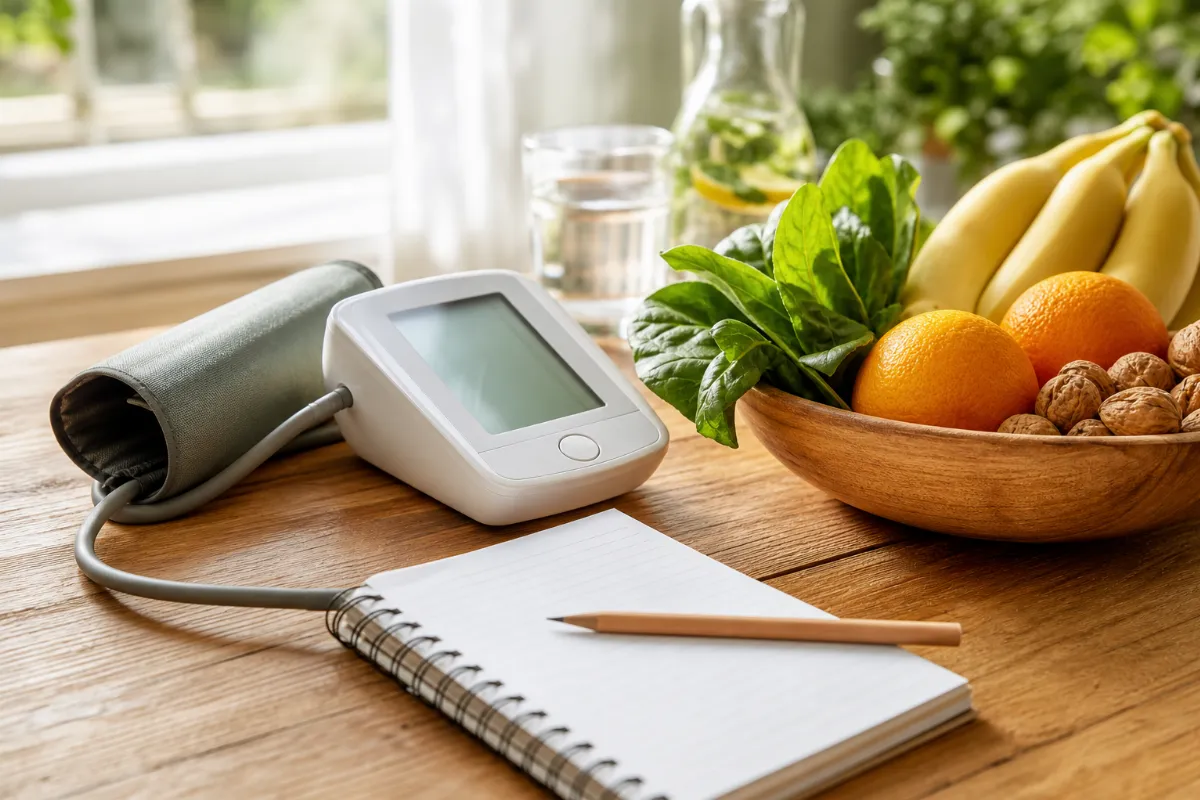
Support Your Heart & Circulation
Support Healthy Blood Pressure
Blood pressure usually gives no warning signs, so supporting it means knowing your numbers and making a few well-studied changes to salt, potassium-rich foods, movement, weight and alcohol. This page is about everyday blood pressure habits and how to measure at home; cholesterol, triglycerides, fitness, circulation and the wider heart picture each have their own pages.
General information, not medical advice. Last updated October 31, 2026. Written by the AlternativeMed editorial team. Not medically reviewed.
Start here
- Get your blood pressure measured properly, and then check it at home on a validated monitor if your clinician suggests it, using the same quiet routine each time.
- Move towards a DASH-style plate (vegetables, fruit, whole grains, beans, nuts, fish, low-fat dairy) and cut back on salty packaged and restaurant food.
- Add regular brisk movement, limit alcohol, and change one habit at a time so the change lasts.
Be careful with
- Do not stop, skip or change a prescribed blood pressure medicine because your readings look good or because you started a supplement or herb. Talk to your prescriber first.
- Some herbs and supplements (for example licorice root, bitter orange, ephedra and ginseng, as named by NCCIH) may raise blood pressure, and others can interact with medicines. Ask a pharmacist or doctor before taking any.
- Potassium-rich salt substitutes and potassium supplements are not right for everyone: people with kidney disease, and some people on certain medicines, can build up too much potassium. Check with a clinician first.
- Pregnancy needs its own care: high blood pressure in pregnancy can become an emergency. Follow your maternity team's advice and do not self-treat with herbs.
Get help when
- A reading above 180/120 mm Hg, which the NHLBI calls dangerously high. Contact your clinician straight away. With chest pain, trouble breathing, weakness, speech trouble or a sudden vision change, call your local emergency number now (the NHLBI names 9-1-1 and the NHS names 999).
- Sudden severe headache, chest pain or pressure, severe pain in the abdomen or back, numbness or weakness, face drooping, slurred speech or a sudden change in vision. These are emergency signs of a heart attack or stroke in the NHLBI and NHS guidance.
- Readings that stay at or above 130/80 mm Hg on home checks (NHLBI) or at or above 135/85 mm Hg at home (the level the NHS uses), or readings you do not understand. Book a visit so a clinician can confirm the numbers and discuss next steps.
- Pregnancy with high readings, a worsening headache, swelling, belly pain or trouble breathing: seek medical care right away (NHLBI). Also see a clinician if you are over 40 and have not had a check for some time.
About Support Healthy Blood Pressure
What this goal means
Blood pressure is the force of blood on the walls of your arteries. It is written as two numbers, such as 120/80 mm Hg: the top (systolic) number is the pressure when the heart pumps and the bottom (diastolic) number is the pressure between beats. The NHLBI describes a healthy reading as under 120/80 and calls readings of 130/80 or higher, if they are consistent, high blood pressure.
Supporting healthy blood pressure means keeping your numbers in a range that protects your heart, brain and kidneys, by checking them accurately and by using habits that have been shown to move them. The NHLBI lists a heart-healthy eating pattern, regular activity, a healthy weight, no smoking, stress management and good sleep as the foundations.
This page covers blood pressure habits and home measurement. Cholesterol, triglycerides, cardiovascular fitness, circulation, sitting less and wider heart-healthy eating are separate goals and are linked below rather than repeated here.
1,2What it can feel like
Usually it feels like nothing. The NHLBI says symptoms from high blood pressure do not usually occur until it has caused serious health problems, and the NHS says it often has no symptoms so people may not realise they have it. Rarely, headaches, blurred vision or chest pain can occur, and these need to be checked rather than assumed to be blood pressure.
This is why numbers matter more than feelings. A reading taken properly, repeated on separate occasions, is the only way to know.
1,3What can push blood pressure up
The NHLBI lists age, family history, genes and salt sensitivity as risk factors you cannot change, and eating foods high in salt and low in potassium, too much alcohol or caffeine, too little activity, poor sleep, high stress and stimulant drugs as habits that can be changed. The NHS also lists being overweight and smoking.
Some medicines can make blood pressure harder to control. The NHLBI names antidepressants, decongestants, hormonal birth control pills and non-steroidal anti-inflammatory pain relievers (NSAIDs). Do not stop a prescribed medicine on your own: raise it with the prescriber.
4,3Conditions that can be behind it
The NHLBI lists chronic kidney disease, metabolic syndrome, overweight and obesity, sleep apnea, thyroid problems and some tumors among the conditions that can raise blood pressure. If readings are high despite good habits, or start suddenly or at a young age, a clinician can look for these. The wider conditions are described on their own pages.
4Realistic expectations
Most single habits lower blood pressure by a few mm Hg, but they add up. In the trials summarised below, a DASH-style diet with less sodium lowered systolic pressure by about 7 mm Hg in people without high blood pressure and about 11.5 mm Hg in people with it, compared with a typical American diet with high sodium. Weight loss of about 5 kg lowered systolic pressure by about 4 mm Hg on average. Individual results vary.
Changes take weeks to show. The NHLBI suggests making one change at a time and adding another when you are comfortable. Lifestyle change helps most when kept up, and many people also need medicines, which work best together with healthy habits.
5,6,2Who this applies to
Everyone age 3 or older should have their blood pressure checked at least once a year, according to the NHLBI. This goal suits adults with normal or elevated readings who want to stay in range, people told they have high blood pressure who are working with a clinician, and people with risk factors such as family history.
The NHLBI notes high blood pressure is more common in Black adults, who tend to get it earlier in life, and that some people, including Black people, older adults and people with chronic kidney disease, diabetes or metabolic syndrome, are more sensitive to salt. Pregnancy, children, older adults and people on medicines need extra care, covered in the Evidence & Safety tab.
7,4,8Related conditions and symptoms
Hypertension (health topic) → Sleep apnea → Obesity and weight-related health → Prediabetes, type 2 diabetes and metabolic syndrome →
A manageable starting plan
An educational starting point, not a personal prescription. Adjust it to your own situation and any advice from your clinician.
Your first actions
- Week 1: get an accurate baseline. Have your blood pressure checked, then take home readings on the same schedule, using the NHLBI preparation steps, and write them down.
- Weeks 1 to 4: cut back on salty packaged and restaurant food by reading labels and cooking more at home, and add one potassium-rich vegetable or fruit to each meal.
- Weeks 2 to 6: build up to regular brisk movement, aiming for the 150 minutes a week the NHLBI cites, starting with 10-minute walks.
- Ongoing: keep alcohol low and, if you are above a healthy weight, aim for a gradual 3% to 5% loss.
Optional additions
- Try a DASH-style or Mediterranean-style week of meals using the NHLBI worksheets.
- Add two or three short strength sessions a week, or a yoga, tai chi or meditation class.
- Break up sitting with 3-minute walks every half hour at work.
- Ask your clinician whether a potassium-enriched salt substitute suits you.
What to track
- Home blood pressure readings (date, time, both numbers, pulse) over 1 to 2 weeks before each appointment.
- Habits: days with 30 minutes of movement, label-reading wins, alcohol-free days.
- Weight (if relevant) once a week, and any symptoms or side effects.
When to reassess
Give habit changes several weeks to show in your readings and review your log with a clinician after about a month. If home readings stay at or above 130/80 (NHLBI) or 135/85 (the level the NHS uses at home), or you are unsure what the numbers mean, book a visit; do not wait for symptoms. Reassess earlier if readings are very high.
When to seek professional support
- See a clinician for diagnosis, repeat readings and a plan; ask a pharmacist about medicines, supplements and salt substitutes.
- Ask about dietitian or lifestyle programs, quit-smoking support and alcohol support if you need them.
- Share your plan with family or friends who can support the habits, as the NHLBI suggests.
What helps
Ordered by how well the research supports each step. Evidence strength is shown on every card; precautions sit next to the advice.
Start here
A DASH-style eating pattern
High certaintyAddresses: Lower systolic and diastolic blood pressure within weeks
Why it may help: In the original DASH trial, 459 adults were fed either a typical American diet, a fruit-and-vegetable diet or a combination diet rich in fruits, vegetables and low-fat dairy and lower in saturated and total fat, for eight weeks with sodium and weight held steady. The combination diet lowered blood pressure by 5.5/3.0 mm Hg more than the control diet, and by 11.4/5.5 mm Hg among the 133 people who had high blood pressure. The later DASH-Sodium trial (412 people) found the DASH diet lowered blood pressure at every sodium level.
How to apply it: Build meals around vegetables, fruit, whole grains, beans, nuts and seeds, fish, poultry and low-fat or fat-free dairy. Limit fatty meats, full-fat dairy, tropical oils such as coconut and palm, sugary drinks and sweets. The NHLBI gives daily and weekly serving targets for a 2,000-calorie plan.
Who it may suit: Adults with or without high blood pressure; the NHLBI says it requires no special foods.
Precautions: People with kidney disease may need to limit potassium and should check with a clinician before raising potassium-rich foods. People with diabetes or on blood pressure medicines should tell their clinician if they change their diet a lot.
9,5,10Eating less salt (sodium)
High certaintyAddresses: Lower blood pressure, with a bigger drop in people who already have high blood pressure
Why it may help: A Cochrane review of 195 references found that cutting sodium intake (from roughly 203 to 65 mmol a day) lowered systolic pressure by about 5.7 mm Hg in white adults with high blood pressure and about 1.1 mm Hg in those with normal blood pressure, with high-quality evidence. A dose-response meta-analysis of 85 trials found an approximately linear fall in blood pressure as sodium fell, steeper in people with higher blood pressure. In DASH-Sodium, each step down in sodium lowered pressure further.
How to apply it: The NHLBI says adults and children over 14 should eat less than 2,300 mg of sodium a day, and that 1,500 mg lowers blood pressure further. The NHS says adults should have no more than 6 g of salt a day (about one level teaspoon). Roughly three quarters of the salt people eat comes from packaged and everyday foods such as bread, cereals, meat products and ready meals, so read labels and cook from scratch where you can.
Who it may suit: Almost everyone; especially people with high blood pressure, older adults and people who are salt-sensitive.
Precautions: Do not go to extreme restriction on your own if you take diuretics or other blood pressure medicines, have heart failure or kidney disease, or have been told to keep salt intake at a set level; ask your clinician for your target. Sodium reduction raised some hormones and blood fats slightly in the Cochrane review.
11,12,5,13,14Regular brisk movement
High certaintyAddresses: Lower resting blood pressure, especially in people with high blood pressure
Why it may help: A meta-analysis of 93 trials (5,223 people) found that endurance training lowered systolic and diastolic pressure by about 3.5 and 2.5 mm Hg, with much larger falls (about 8.3/5.2 mm Hg) in people with hypertension. Dynamic resistance training also lowered pressure, most in people with prehypertension.
How to apply it: The NHLBI, citing US guidelines, advises at least 150 to 300 minutes a week of moderate aerobic activity (for example brisk walking, cycling or swimming), or 75 to 150 minutes of vigorous activity. Even a small amount helps: the NHLBI says walking 10 minutes a day may help, and some activity is better than none.
Who it may suit: Most adults; older adults and people with high blood pressure benefit most in the trials.
Precautions: Talk to a clinician before starting a new exercise plan if you have high readings, heart disease, symptoms such as chest pain or breathlessness, or other conditions. Stop and get help for chest pain, severe breathlessness or fainting.
15,16,2Improve Your Cardiovascular Fitness → Sit Less & Move More →
A modest loss of body weight (if you are above a healthy weight)
High certaintyAddresses: Lower blood pressure, roughly 1 mm Hg per kilogram lost
Why it may help: A meta-analysis of 25 randomized trials (4,874 people) found an average loss of 5.1 kg lowered systolic pressure by 4.44 mm Hg and diastolic by 3.57 mm Hg, or about 1 mm Hg per kilogram. The NHLBI says even a 3% to 5% weight loss can improve blood pressure and that 5% to 10% over about 6 months is a common health goal.
How to apply it: Use gradual changes to food and activity; fad diets are not needed. See the weight and metabolic pages for approaches that are sustainable and non-shaming.
Who it may suit: Adults living with overweight or obesity and high or elevated blood pressure.
Precautions: Not for children, pregnancy or people with a history of disordered eating without clinical guidance. Unexplained weight loss needs a medical check.
6,17Keeping alcohol low
Moderate certaintyAddresses: Lower blood pressure, mainly in people who drink more than two drinks a day
Why it may help: A systematic review of 36 trials (2,865 people) found that cutting alcohol did not significantly change blood pressure in people drinking two or fewer drinks a day, but lowered it more the more people drank; in people drinking six or more a day, cutting intake by about half lowered systolic pressure by about 5.5 mm Hg and diastolic by about 4 mm Hg. The NHLBI says to avoid or limit alcohol.
How to apply it: The NHS advises not drinking more than 14 units a week on a regular basis, spreading it over 3 or more days, and having several drink-free days. Ask your clinician what is right for you.
Who it may suit: People who drink regularly, especially more than two drinks a day.
Precautions: If you drink heavily every day, do not stop suddenly without medical advice, because withdrawal can be dangerous. Avoid alcohol in pregnancy.
18,2,19Checking your blood pressure properly at home
Moderate certaintyAddresses: More accurate readings, better follow-up, and in some trials lower blood pressure when paired with support
Why it may help: An individual patient data meta-analysis (data from 25 trials; the main 12-month analysis covered 7,138 people from 15 studies) found home self-monitoring lowered clinic systolic pressure by 3.2 mm Hg at 12 months, but only when combined with support such as education, lifestyle counselling or medicine adjustments by a clinician; monitoring alone made no significant difference. Home readings can also uncover white-coat hypertension (high only in the clinic) or masked hypertension (normal in the clinic but high elsewhere), which the NHLBI describes.
How to apply it: Use a validated upper-arm monitor with the right cuff size. The NHLBI's preparation steps: no exercise, coffee or smoking for 30 minutes before; use the toilet first; sit and relax for at least 5 minutes with your feet flat on the floor; do not talk; rest your bare arm on a table at heart level. Take readings at the same times each day, record them, and show them to your clinician. The NHS says home readings of 135/85 or higher suggest high blood pressure, and clinic readings of 140/90 or higher.
Who it may suit: Anyone told to check at home, people with borderline or inconsistent readings, and people on treatment.
Precautions: Home readings do not replace a clinician's diagnosis. Do not change medicines because of a single reading. A reading above 180/120 needs prompt medical attention.
20,7,3Additional options
More potassium-rich foods
Moderate certaintyAddresses: Lower blood pressure in people with high blood pressure, and a lower stroke risk in cohort studies
Why it may help: A meta-analysis of 22 randomized trials (1,606 people) found that higher potassium intake lowered systolic pressure by about 3.5 mm Hg and diastolic by about 2.0 mm Hg, an effect seen in people with hypertension but not in those without. In cohort studies higher intake was linked to a 24% lower risk of stroke. MedlinePlus says a diet rich in potassium helps offset some of the harmful effects of sodium on blood pressure.
How to apply it: Eat more vegetables (leafy greens, carrots, potatoes), fruit (citrus, grapes, berries), beans and low-fat dairy, which the NHLBI and MedlinePlus list as potassium sources.
Who it may suit: Most adults with healthy kidneys.
Precautions: Aburto and colleagues concluded it is potentially beneficial for most people without impaired kidney handling of potassium. If you have chronic kidney disease, kidneys may not remove extra potassium, and some medicines can raise potassium, so ask a clinician before increasing potassium-rich foods or using supplements.
21,22,13A potassium-enriched salt substitute (where suitable)
Moderate certaintyAddresses: Lower blood pressure and, in one large trial, fewer strokes and deaths
Why it may help: In the SSaSS trial, 20,995 villagers in China with a history of stroke or age 60 or over with high blood pressure used a salt substitute (75% sodium chloride, 25% potassium chloride) or regular salt for about 4.7 years. Stroke was 14% lower (rate ratio 0.86), major cardiovascular events 13% lower and death 12% lower, and serious adverse events attributed to high potassium were not significantly more common. A meta-analysis of 21 trials found salt substitutes lowered systolic pressure by about 4.6 mm Hg.
How to apply it: Replace some or all table and cooking salt with a potassium-enriched blend only after checking with a clinician. Packaged foods still contain a lot of sodium, so label reading matters.
Who it may suit: Adults with high blood pressure and normal kidney function, as studied.
Precautions: The trial was in older adults in rural China, so results may not apply everywhere. Not for people with chronic kidney disease or others told to limit potassium, or on medicines that can raise potassium. Ask a pharmacist or doctor first.
23,24,22Strength (resistance) training
Moderate certaintyAddresses: Small drops in blood pressure, plus other benefits
Why it may help: In the same meta-analysis of exercise trials, dynamic resistance training lowered systolic pressure by about 1.8 mm Hg and diastolic by about 3.2 mm Hg, with the largest falls (about 4.0/3.8 mm Hg) in people with prehypertension. The effects are smaller than for endurance exercise.
How to apply it: Use light to moderate loads, controlled breathing, and a gradual build-up, ideally with a coach or physiotherapist when starting. Combine with aerobic activity rather than replacing it.
Who it may suit: Adults wanting a balanced routine, especially older adults.
Precautions: Avoid straining and breath-holding. If readings are very high or you have heart disease, get clearance first.
15A Mediterranean-style eating pattern
Low certaintyAddresses: A small average fall in blood pressure over a year or more
Why it may help: A meta-analysis of six trials (over 7,000 people) comparing a Mediterranean diet with a low-fat diet for at least a year found systolic pressure about 1.4 mm Hg lower and diastolic about 0.7 mm Hg lower, though the authors found insufficient convincing evidence because of few studies and high heterogeneity. The NHLBI also lists the Mediterranean eating pattern as a heart-healthy choice for blood pressure.
How to apply it: Eat plenty of vegetables, fruit, beans, nuts and whole grains, use olive oil as the main fat, and eat fish. The DASH pattern has stronger trial evidence for blood pressure.
Who it may suit: Adults who prefer a Mediterranean-style way of eating.
Precautions: Watch sodium in olives, cheese, cured fish and other salty traditional foods.
25,1Enough good-quality sleep
Low certaintyAddresses: Supports blood pressure control as part of a heart-healthy routine
Why it may help: The NHLBI lists poor sleep as a lifestyle risk factor for high blood pressure and recommends 7 to 9 hours for adults, with regular sleep and wake times, a calming bedtime routine and a cool, dark bedroom. We did not read a large trial of sleep extension on blood pressure in establishing this page, so the benefit for readings is less certain than for diet and exercise. Sleep apnea can raise blood pressure and is a reason to get checked.
How to apply it: Aim for steady sleep times and see a clinician if you snore loudly, gasp at night or are very sleepy in the day.
Who it may suit: Adults who sleep poorly or irregularly.
Precautions: Do not use sleep products or herbs without checking for interactions with medicines.
2,4Managing everyday stress
Low certaintyAddresses: Small possible effects on blood pressure, plus better coping
Why it may help: The NHLBI lists high-stress situations as a risk factor and says learning to manage stress, with relaxation techniques, talking to a counselor and finding a support group, can help. NCCIH says some mind-body approaches may have small beneficial effects on blood pressure (see the studied options below).
How to apply it: Choose a stress-reducing habit you will keep up: walking, breathing exercises, time outdoors, talking with someone, or a class.
Who it may suit: Anyone under ongoing stress.
Precautions: Stress management supports medical care and does not replace it.
2,26Breaking up long sitting with short walks
Low certaintyAddresses: Lower blood pressure during the day in a laboratory study
Why it may help: In a crossover study of 67 sedentary older adults with overweight or obesity, a 30-minute morning walk lowered average 8-hour systolic pressure by 3.4 mm Hg versus sitting all day, and adding 3 minutes of light walking every 30 minutes lowered it by 5.1 mm Hg. The effect was larger in women. The NHLBI also says reducing sitting time can help reach a blood pressure goal.
How to apply it: Stand up and walk for a few minutes every half hour or so when working at a desk.
Who it may suit: Desk workers and older adults.
Precautions: This was a single-day study, so long-term effects are unknown.
27,2Still being studied
Isometric exercise such as handgrip training
Low certaintyAddresses: Possible drop in blood pressure from short, simple holds
Why it may help: A meta-analysis of 11 randomized trials (302 people) found isometric training lowered systolic pressure by about 5.2 mm Hg and diastolic by about 3.9 mm Hg, with larger effects in trials of 8 weeks or more. The larger exercise meta-analysis also found a large systolic effect from a small number of isometric studies.
How to apply it: Studied programs used repeated sustained holds, for example gripping a handle, several times a week; ask a clinician or physiotherapist for a safe protocol.
Who it may suit: Adults who cannot do much aerobic exercise, with a clinician's guidance.
Precautions: Few and small trials. Holding a hard grip raises pressure temporarily, so get medical advice first if you have very high readings, heart disease or eye problems.
28,15Yoga, with breathing and relaxation
Low certaintyAddresses: Small to moderate drops in blood pressure
Why it may help: A meta-analysis of 49 controlled trials (3,517 people) found yoga lowered systolic pressure by about 5 mm Hg and diastolic by about 3.9 mm Hg on average, with bigger effects when sessions included breathing techniques and meditation or mental relaxation. Trial quality varied. NCCIH says yoga may have small beneficial effects on blood pressure.
How to apply it: Join a class with a qualified teacher and mention your blood pressure. NCCIH says people with high blood pressure may need to modify or avoid some yoga poses.
Who it may suit: Adults who enjoy gentle mind-body exercise.
Precautions: Avoid head-down or strained poses if advised. Stop if you feel dizzy or have chest pain.
29,26Tai chi
Low certaintyAddresses: Possible modest drops in blood pressure
Why it may help: A systematic review of 26 studies (nine randomized trials) found 22 reported reduced blood pressure with tai chi (reductions of 3 to 32 mm Hg systolic and 2 to 18 mm Hg diastolic), but studies varied too much to combine and no adverse effects were reported. NCCIH lists tai chi and qigong as possibly having small beneficial effects.
How to apply it: Learn from a qualified teacher and practise regularly.
Who it may suit: Older adults and people who prefer low-impact exercise.
Precautions: Many studies were small or not randomized, so the size of the effect is uncertain.
30,26Meditation, including Transcendental Meditation
Low certaintyAddresses: Possible small drops in blood pressure
Why it may help: A meta-analysis of 12 trials (996 people) found Transcendental Meditation lowered systolic pressure by about 4.3 mm Hg and diastolic by about 2.3 mm Hg compared with controls, though the authors noted possible bias from missing information about study design and blood pressure measurement. NCCIH says meditation may have small beneficial effects.
How to apply it: Choose a structured, teacher-led course or a guided practice and keep it daily.
Who it may suit: Adults willing to practise regularly.
Precautions: A small number of people find meditation upsetting; stop and talk to a professional if it brings up distress.
31,26Device-guided slow breathing
Mixed findingsAddresses: Uncertain; an effect disappeared when manufacturer-linked trials were set aside
Why it may help: A meta-analysis of eight trials (494 people) of one breathing device found systolic pressure fell 3.7 mm Hg and diastolic 2.5 mm Hg, but five of the eight trials were sponsored by or involved the manufacturer and, without them, no overall effect remained. Trials lasted up to 9 weeks.
How to apply it: Slow, relaxed breathing is a free relaxation skill; a purchased device is not shown to add benefit in independent trials.
Who it may suit: Adults interested in relaxation techniques.
Precautions: Do not buy a device expecting to replace medicines. Longer, independent trials are needed.
32Food & nutrition
Building a DASH-style plate
The NHLBI describes the DASH eating plan as flexible, balanced and needing no special foods. It recommends vegetables, fruit and whole grains; fat-free or low-fat dairy, fish, poultry, beans, nuts and vegetable oils; and limiting fatty meats, full-fat dairy, tropical oils (coconut, palm kernel, palm), sugar-sweetened drinks and sweets.
For a 2,000-calorie day, the NHLBI table gives about 6 to 8 servings of grains, 4 to 5 of vegetables, 4 to 5 of fruit, 2 to 3 of low-fat dairy, 6 or fewer of meat, poultry and fish, 2 to 3 of fats and oils, and 4 to 5 servings a week of nuts, seeds, dry beans and peas, and 5 or fewer sweets a week. Needs vary with calorie level, so use the NHLBI worksheets.
10,13,9Salt and sodium in everyday food
The NHLBI limits for adults and children over 14 are under 2,300 mg of sodium a day, and the DASH agency table notes 1,500 mg lowers pressure even further. The NHS limit is 6 g of salt a day for adults. The largest sources are packaged breads, cereals, meat products, ready meals, takeaways and restaurant food.
Practical steps the agencies list: read labels, choose low- or reduced-sodium or no-salt-added products, pick fresh or frozen over pre-seasoned and brined foods, cook at home more often, flavour with herbs, spices, garlic, chili or lemon, and eat salty foods such as cured meats, cheese, olives and pickles less often.
13,14,10Potassium-rich foods
Potassium helps offset some of sodium's effects on blood pressure (MedlinePlus). Food sources it names include leafy greens such as spinach and collards, vine fruits such as grapes and blackberries, root vegetables such as carrots and potatoes, and citrus fruits. The NHLBI also lists bananas, oranges, prunes, beans, lentils and dairy in its heart-healthy lists.
Aim to get potassium from food rather than pills. If you have chronic kidney disease or take medicines that can raise potassium, ask a clinician before increasing high-potassium foods or using potassium salt substitutes.
22,13,21Fats, sugar and fibre
The NHLBI says saturated fat should make up less than 10% of daily calories, suggests olive and canola oil instead of butter, lard, coconut and palm oils, and recommends limiting added sugars, which come mostly from sweetened drinks, snacks and sweets in the US. Fish high in omega-3 fats such as salmon, tuna and trout, nuts, seeds and legumes are listed as protein choices. Cholesterol and triglyceride detail is on the linked pages.
13Drinks that can matter for blood pressure
Alcohol: keep within low-risk limits (see What Helps). Caffeine: a dose of 200 to 300 mg raised blood pressure for hours in hypertensive people in trials, though regular coffee did not raise it over two weeks. Tea, hibiscus tea and beetroot juice have small studies, covered under Remedies & Supplements. Sugary drinks are limited under DASH.
18,33,13Remedies & supplements
Traditional use, laboratory findings and human trials are kept apart. "Natural" does not mean safe.
Hibiscus tea (roselle, Hibiscus sabdariffa)
Low certaintyStudied form and route: Brewed tea or standardised extracts
Intended outcome: Small possible fall in systolic pressure
Human evidence: A 6-week randomized double-blind trial of 65 adults with prehypertension or mild hypertension found 3 servings a day of hibiscus tea lowered systolic pressure by 7.2 mm Hg versus 1.3 mm Hg with placebo drink, while the diastolic change did not differ from placebo. A meta-analysis of five trials (390 people) found systolic lower by about 7.6 mm Hg and diastolic by about 3.5 mm Hg. NCCIH lists roselle among products that may reduce blood pressure but says evidence is limited.
Traditional use: Used as a tart tea in many cultures for 'high blood' and as a cooling drink.
Limits: Few small trials, short duration, heterogeneity, and unclear product strength. The meta-analysis authors called for better-designed trials.
Interactions and precautions: Ask a pharmacist or doctor whether it could add to the effect of your medicines. The trials we read did not address pregnancy or breastfeeding, so avoid medicinal amounts unless a clinician agrees.
34,35,26Garlic
Low certaintyStudied form and route: Aged garlic extract, powders or whole garlic in food
Intended outcome: Small fall in blood pressure, larger in people with hypertension
Human evidence: A meta-analysis of 20 trials (970 people) found garlic lowered systolic pressure by about 5.1 mm Hg and diastolic by about 2.5 mm Hg compared with placebo, and by about 8.7 and 6.1 mm Hg in trials of people with hypertension. NCCIH lists garlic among products that may help but says effects are small and evidence limited.
Traditional use: Garlic has long been used as a food and folk medicine for circulation and heart health.
Limits: Trials used different garlic preparations and were often small, and the review pools other people's trials rather than being a single large trial.
Interactions and precautions: Another page on this site advises telling your doctor about garlic supplements if you take blood thinners or have surgery coming up. Garlic can cause breath odor and stomach upset.
36,26Beetroot juice (dietary nitrate)
Low certaintyStudied form and route: Beetroot juice or nitrate-rich vegetables
Intended outcome: Small fall in systolic pressure in people with hypertension
Human evidence: A meta-analysis of 11 trials (349 people with clinic blood pressure of 140/90 or higher) found beetroot juice lowered clinic systolic pressure by about 5.3 mm Hg versus placebo, water or nothing, with no significant effect on diastolic or 24-hour readings. Certainty of evidence was rated low and heterogeneity was moderate to high.
Traditional use: Beets and leafy greens are traditional vegetables and part of many heart-healthy diets.
Laboratory findings: Dietary nitrate is converted in the body to nitric oxide, which relaxes blood vessels.
Limits: Short trials, mixed methods and low certainty. Juice may add sugar and calories.
Interactions and precautions: We did not find safety data in the sources read. Juice adds sugar and calories; ask a clinician if you take blood pressure medicines or have kidney problems.
37Magnesium supplements
Moderate certaintyStudied form and route: Oral supplements
Intended outcome: Small fall in blood pressure
Human evidence: A meta-analysis of 34 randomized double-blind placebo-controlled trials (2,028 people) found magnesium lowered systolic pressure by about 2.0 mm Hg and diastolic by about 1.8 mm Hg after a median of 3 months.
Limits: The effect is small and trials varied; the authors said residual heterogeneity may exist.
Interactions and precautions: Can cause diarrhea and stomach upset. People with kidney disease should ask a doctor first. Check with a pharmacist if you take medicines, because magnesium can interact with some.
38Omega-3 (EPA and DHA) from fish or fish oil
Moderate certaintyStudied form and route: Oily fish; fish oil capsules
Intended outcome: Small fall in blood pressure
Human evidence: A meta-analysis of 70 randomized trials found EPA plus DHA lowered systolic pressure by about 1.5 mm Hg and diastolic by about 1.0 mm Hg overall, with larger falls (about 4.5/3.1 mm Hg) in untreated hypertensive people. NCCIH lists fish oil among products that may help but says effects are small.
Traditional use: Fish has long been part of heart-healthy eating; the NHLBI lists salmon, tuna and trout.
Limits: Effects are small and trials used different amounts. Other pages on this site note that higher-dose omega-3 capsules were linked to more atrial fibrillation.
Interactions and precautions: Higher-dose capsules may affect heart rhythm, as noted on the fish oil page. Ask a clinician before using capsules, especially if you have heart rhythm problems or take blood thinners.
39,26,13Cocoa and dark chocolate (flavanol-rich)
Low certaintyStudied form and route: Cocoa powder or flavanol-rich chocolate
Intended outcome: Small fall in blood pressure, mostly in hypertensive people
Human evidence: A Cochrane review of 35 trials (1,804 mainly healthy people, 2 to 18 weeks) found flavanol-rich cocoa lowered systolic pressure by about 1.8 mm Hg and diastolic by about 1.8 mm Hg; the systolic fall was about 4 mm Hg in people with hypertension and not significant in people with normal pressure.
Limits: Short trials and small effects. Chocolate adds sugar, fat and calories, which can offset benefits.
Interactions and precautions: Contains caffeine and may not suit people with sleep trouble or reflux. Weigh calories if you are managing weight.
40,26Green tea
Low certaintyStudied form and route: Brewed tea or extract
Intended outcome: Very small fall in blood pressure
Human evidence: A meta-analysis of 13 randomized trials found green tea lowered systolic pressure by about 2.1 mm Hg and diastolic by about 1.7 mm Hg, with bigger changes in studies using extract and in people with a baseline systolic pressure of 130 or higher. NCCIH lists green or black tea among products that may help.
Limits: Small effect, varied products.
Interactions and precautions: Contains caffeine, which can raise blood pressure for a few hours (see Avoid). Concentrated extracts are less well studied than tea as a drink; ask a pharmacist before using them.
41,26Flaxseed
Low certaintyStudied form and route: Whole or ground seed, oil
Intended outcome: Very small fall in blood pressure
Human evidence: A meta-analysis of 11 studies (14 trials) found flaxseed lowered systolic pressure by about 1.8 mm Hg and diastolic by about 1.6 mm Hg, with a larger effect on diastolic pressure for whole seed and for 12 weeks or more.
Limits: Small effect; trials varied in form and length.
Interactions and precautions: Increase fibre gradually with plenty of water. Ask a pharmacist if you take medicines or supplements.
42,26Probiotics
Low certaintyStudied form and route: Fermented foods or capsules
Intended outcome: Small possible fall in blood pressure
Human evidence: A meta-analysis of nine randomized trials found probiotics lowered systolic pressure by about 3.6 mm Hg and diastolic by about 2.4 mm Hg, with more benefit with multiple species, 8 or more weeks and higher daily counts. NCCIH lists probiotics among products that may help.
Limits: Few trials with varying strains.
Interactions and precautions: People with weakened immunity or serious illness should ask a clinician before using probiotic capsules.
43,26Coenzyme Q10
Mixed findingsStudied form and route: Oral supplement
Intended outcome: Unclear; independent review found no clinically significant effect
Human evidence: A Cochrane review pooling two randomized trials (50 people) found no significant change in systolic (-3.7 mm Hg) or diastolic (-2.0 mm Hg) pressure and concluded there was moderate-quality evidence that coenzyme Q10 does not have a clinically significant effect. An earlier meta-analysis that included open-label studies reported larger falls, but those designs are less reliable.
Limits: Very few small trials. Results differ between reviews.
Interactions and precautions: Can interact with some medicines; ask a pharmacist. Not a reason to change prescribed treatment.
44,45Hawthorn
Very low certaintyStudied form and route: Leaf and flower extracts, tea
Intended outcome: Possible small to moderate fall in systolic pressure; very uncertain
Human evidence: A 2025 meta-analysis of six placebo-controlled trials (428 people, 10 weeks to 6 months) reported a systolic fall of about 6.7 mm Hg, but a diastolic change that was not statistically significant, with wide uncertainty and different products and amounts.
Traditional use: Used in European and Chinese traditional medicine for the heart and circulation.
Limits: Few trials, large heterogeneity and wide confidence intervals; the authors called for larger trials.
Interactions and precautions: Do not combine with heart or blood pressure medicines without asking a pharmacist or doctor. The trials we read did not address pregnancy or breastfeeding, so avoid unless a clinician agrees.
46Therapies & care
Established professional care for high blood pressure starts with confirming the diagnosis and checking for causes and related risks. The NHLBI describes a heart-healthy lifestyle first, and says medicines may be added when lifestyle changes alone do not control blood pressure; many people need two or more. This page does not recommend specific medicines or doses, and you should not stop or change a prescribed medicine on your own.
Clinician or nurse blood pressure assessment (clinic, home and 24-hour checks)
High certaintyMedical assessment A clinician measures blood pressure at two or more visits, may ask you to take readings at home or wear a 24-hour monitor, and looks at your risk factors, medicines and possible causes. The NHLBI describes screening, medical history and tests to find other conditions or organ effects.
Who it may suit: Anyone with a high reading, risk factors, or who has not been checked in the past year.
Precautions: Treat home readings as information to share, not a diagnosis.
7,3Structured support (education, lifestyle counselling, follow-up)
Moderate certaintySupported self-care In the individual patient data review of home monitoring, blood pressure fell meaningfully only when monitoring was combined with support such as education, lifestyle counselling or systematic medicine adjustment. The NHLBI also suggests reminders, apps and support from family and community.
Who it may suit: People who want to lower their readings and keep the change going.
Precautions: Ask your clinic what programs are available.
20,47Medicines prescribed by a clinician
High certaintyMedical treatment The NHLBI says when lifestyle changes alone do not control blood pressure, a provider may prescribe medicines from several groups, often two or more, chosen to suit other conditions such as heart or kidney disease. The NHS says medicine is usually prescribed if blood pressure is very high, if you are at higher risk of heart attack or stroke, or if it stays high after lifestyle changes.
Who it may suit: People whose clinician has decided medicine is needed.
Precautions: Do not stop or alter them yourself; report side effects to your prescriber, who may change the type or amount. Some medicines are unsafe in pregnancy, so tell your clinician if you are pregnant or planning to be.
2,3,8Yoga, tai chi and meditation classes
Low certaintyMind-body practice NCCIH says meditation, tai chi, qigong and yoga may have small beneficial effects on blood pressure and are generally safe for healthy people when taught by a qualified instructor. The American Heart Association, as cited by NCCIH, suggested biofeedback and Transcendental Meditation could help as an addition to medication.
Who it may suit: People who like group or guided practice.
Precautions: People with high blood pressure may need to modify some yoga poses. Treat as an addition to, not a replacement for, medical care.
26,29,30,31What to avoid
Habits, products and claims that can get in the way. Never stop a prescribed medicine without talking to the professional who prescribed it.
Risks that apply to most people
High-salt eating
High certaintyWhy: Eating a lot of salt is a recognised cause of high blood pressure. The NHS says it can cause high blood pressure, and trials show that cutting sodium lowers it, most in people with hypertension.
Who it applies to: Almost everyone, especially people with high readings, older adults and people who are salt-sensitive.
Try instead: Check labels, cook from scratch, flavour with herbs, spices, garlic, chili or lemon, and eat salty foods such as cured meats, cheese, olives and pickles less often.
14,11,4Heavy or regular drinking
Moderate certaintyWhy: Trials found that cutting down alcohol lowered blood pressure in people who drank more than two drinks a day. The NHS lists drinking too much alcohol as a risk factor.
Who it applies to: People who drink most days, especially more than two drinks a day.
Try instead: Keep within local low-risk guidance (the NHS says no more than 14 units a week), spread drinks over several days, and have drink-free days.
18,19,3Smoking and other tobacco use
Moderate certaintyWhy: The NHS lists smoking as something that raises the chance of high blood pressure, and the NHLBI includes quitting in its heart-healthy lifestyle advice for high blood pressure. We did not find in the sources read a trial that measures blood pressure change after quitting.
Who it applies to: All smokers, and people around them.
Try instead: Ask a clinician or quit service for support. The NHLBI gives a US quitline number for free help.
3,2Long unbroken sitting and inactivity
Moderate certaintyWhy: The NHLBI says reducing the amount of time you sit each day can help you reach your blood pressure goal, and not getting enough physical activity is a listed risk factor.
Who it applies to: Desk workers, drivers, older adults.
Try instead: Stand up and move for a few minutes each half hour and add regular brisk activity.
2,4,27Waiting for symptoms before checking
High certaintyWhy: High blood pressure usually has no symptoms. The NHLBI says about 1 in 3 US adults with high blood pressure are unaware of it, and advises a check at least once a year.
Who it applies to: All adults, particularly over 40 or with risk factors.
Try instead: Book a check at a clinic, pharmacy or workplace; the NHS says many pharmacies offer free checks for people aged 40 or over.
1,3Personal triggers to check
Caffeine just before a reading, and large doses of caffeine
Moderate certaintyWhy: A meta-analysis found 200 to 300 mg of caffeine raised systolic pressure by about 8.1 mm Hg and diastolic by 5.7 mm Hg for at least 3 hours in people with hypertension. Over about 2 weeks, regular coffee did not raise blood pressure compared with caffeine-free diets, and cohort studies found no link between habitual coffee and cardiovascular disease in hypertensive people. The NHLBI advises no coffee for 30 minutes before a reading.
Who it applies to: People with hypertension, and anyone measuring at home.
Try instead: Avoid coffee, tea, energy drinks and cola for 30 minutes before measuring, and limit very high caffeine intakes.
33,7,3Stimulant drugs
Moderate certaintyWhy: The NHLBI lists cocaine, methamphetamine, 'bath salts' and other stimulants as substances that can raise blood pressure.
Who it applies to: Anyone using these substances.
Try instead: Seek confidential support; stimulant use with high blood pressure can be dangerous.
4Medicines that can raise blood pressure, used without checking
Moderate certaintyWhy: The NHLBI says antidepressants, decongestants, hormonal birth control pills and non-steroidal anti-inflammatory pain relievers can raise blood pressure.
Who it applies to: People who use these regularly, especially with existing high blood pressure.
Try instead: Do not stop any prescribed medicine on your own. Tell your clinician or pharmacist about all medicines and over-the-counter products so they can review them.
4Ongoing high stress and short sleep
Low certaintyWhy: The NHLBI lists high-stress situations and not enough good-quality sleep among lifestyle factors that raise the risk of high blood pressure.
Who it applies to: People with heavy workloads, shift work, caring roles or poor sleep.
Try instead: Add a stress-relief habit and regular sleep times; see the stress and sleep pages for approaches.
4Products that need caution
Licorice root and licorice-containing products
Low certaintyWhy: NCCIH names licorice root among herbal supplements that may raise blood pressure. We did not read a licorice trial in preparing this page and rely on the NCCIH statement.
Who it applies to: People with high blood pressure, heart or kidney conditions, and anyone eating or taking licorice often.
Try instead: Check labels on supplements, teas and sweets and ask a pharmacist before using licorice.
26Bitter orange, ephedra and ginseng supplements
Low certaintyWhy: NCCIH says these herbs may raise blood pressure and that some supplements may interact harmfully with medicines, including blood pressure medicines.
Who it applies to: Anyone with high blood pressure who is considering energy, weight-loss or stimulant supplements.
Try instead: Avoid unless a clinician who knows your history agrees, and list every supplement at appointments.
26High-sodium packaged, restaurant and takeaway food
High certaintyWhy: The NHS says around three quarters of the salt we eat comes from packaged and everyday foods such as bread, breakfast cereals, meat products and ready meals, and from takeaways and restaurants. It also notes some dissolvable tablets (painkillers, vitamins, prescribed medicines) can be high in salt.
Who it applies to: Frequent eaters of processed or restaurant food.
Try instead: Choose lower-salt versions, check front-of-pack labels and speak to your doctor before changing any medicine.
14,13Salt substitutes without checking kidneys and medicines
Moderate certaintyWhy: Potassium-based substitutes lowered blood pressure in trials, but MedlinePlus notes that with chronic kidney disease the kidneys may not remove extra potassium, and some medicines can raise potassium levels.
Who it applies to: People with kidney disease, and anyone on medicines that can affect potassium.
Try instead: Ask a clinician or pharmacist before switching.
22,23An unvalidated or wrong-size home cuff
Moderate certaintyWhy: The NHLBI says a cuff that is too small or too big gives different readings and advises an approved home device.
Who it applies to: Anyone checking at home.
Try instead: Use a validated upper-arm device and ask a pharmacist or clinician to check the cuff size.
7Unsupported claims
'This herb or supplement works as well as blood pressure medicine'
High certaintyWhy: NCCIH says the evidence that foods and supplements lower blood pressure is limited, the effects are small, and no dietary supplement has been shown to have effects comparable to those of drugs for hypertension.
Who it applies to: Product labels, social media and some wellness sites.
Try instead: Treat supplements as a possible extra at most and keep to the plan your clinician prescribed.
26'Detox, cleanse or special food will unclog your arteries'
Evidence againstWhy: None of the sources read describe any food, drink, herb or supplement that removes artery build-up or 'cleans' arteries, and NCCIH says no supplement matches the effect of medicines. Claims like this should be treated as unsupported.
Who it applies to: Online adverts and supplement marketing.
Try instead: Focus on eating pattern, activity, weight, alcohol, sleep, not smoking and checked readings, which have trial and guideline support.
26,2'No symptoms means my blood pressure is fine'
High certaintyWhy: The NHS and NHLBI both say high blood pressure usually has no symptoms and can quietly damage the heart, brain, kidneys and eyes.
Who it applies to: Everyone.
Try instead: Check numbers, not feelings.
3,1'Pink, sea or gourmet salt is a healthy low-sodium alternative'
Not enough evidenceWhy: The health agencies read set limits for salt or sodium overall. We did not find in these sources any statement that a particular type of salt is safer for blood pressure.
Who it applies to: Marketing of specialty salts.
Try instead: Cut the amount of salt and salty foods, whatever the type.
14,13Common mistakes
Stopping or lowering prescribed medicine because readings improve
High certaintyWhy: The NHLBI says to keep up your treatment plan, including lifestyle changes, and that many people need two or more medicines. NCCIH says not to replace prescribed treatment with unproven products.
Who it applies to: Anyone taking blood pressure medicine.
Try instead: Bring home readings to your prescriber; any change should be a joint decision.
47,2,26Deciding from one reading
High certaintyWhy: The NHLBI says diagnosis takes two or more readings at separate appointments, and readings can be off if you are nervous, if the cuff size is wrong, or if the clinic reading differs from your usual level (white-coat or masked hypertension).
Who it applies to: Anyone with a single high or normal reading.
Try instead: Repeat readings over days under the same conditions and share the log with a clinician.
7,3Measuring in a rush or in the wrong position
Moderate certaintyWhy: The NHLBI lists steps for accurate readings: avoid exercise, coffee or smoking for 30 minutes, rest 5 minutes with feet flat, arm supported at heart level, no talking.
Who it applies to: Anyone checking at home.
Try instead: Make it a calm routine at fixed times.
7Changing everything at once
Low certaintyWhy: The NHLBI suggests one change at a time, adding another when comfortable, because lasting change is what controls blood pressure.
Who it applies to: People starting a new plan.
Try instead: Pick one or two habits, such as label reading and a daily walk, and build from there.
2Cutting the salt shaker but not the salty food
Moderate certaintyWhy: The NHS says most salt comes from packaged and everyday foods, not the salt added at the table.
Who it applies to: People who season lightly but eat bread, sauces and processed meat daily.
Try instead: Look at the sodium or salt content on labels and compare brands.
14Taking potassium or other supplements on your own
Moderate certaintyWhy: Potassium from food was studied in trials; MedlinePlus notes people with kidney disease may not clear extra potassium, and NCCIH warns of interactions with medicines.
Who it applies to: People with kidney disease or on medicines.
Try instead: Prefer potassium from food and ask a clinician before any supplement.
22,26Evidence & safety
What the research shows
Health agencies and trials agree that a DASH-style diet, less sodium, more potassium from food, regular activity, a healthy weight and low alcohol lower blood pressure, with the strongest evidence for DASH, sodium and exercise. Home monitoring works best when linked to support. Mind-body practices and a range of foods, herbs and supplements show small effects at best in studies of variable quality, and NCCIH says no supplement has been shown to match prescribed medicines.
Limits of the evidence
- Many diet and supplement trials are short, small or open-label, and effects of single foods or herbs are typically 1 to 8 mm Hg.
- Several meta-analyses combine very different products, doses and populations, and some have industry-linked authors or trials.
- Salt and potassium trials were often done in controlled-diet or specific populations (for example SSaSS was in rural China), so results may differ elsewhere. Debate continues about the best sodium target and about hormone and blood-fat changes seen with sodium cuts.
- Blood pressure changes in trials do not always translate to fewer heart attacks or strokes; only a few of the interventions here (such as salt substitution in SSaSS) measured those outcomes.
- We did not review trials of the full range of medicines or devices, and we did not find trials for several popular remedies; absence of evidence is not proof of safety.
Precautions and interactions
- Do not stop or change prescribed medicines without medical advice, and do not use supplements as a substitute.
- Tell your clinician about every supplement, herb and over-the-counter medicine; licorice, bitter orange, ephedra and ginseng may raise blood pressure (NCCIH).
- Potassium-based salt substitutes and potassium supplements need clinical advice if you have kidney disease or take medicines that raise potassium.
- Some over-the-counter medicines (decongestants, anti-inflammatory pain relievers) can raise blood pressure (NHLBI); ask a pharmacist.
- Garlic, fish oil and similar supplements can affect bleeding and interact with blood thinners; tell your surgeon or dentist before procedures.
Life-stage considerations
- Pregnancy: high blood pressure occurs in about 1 in 12 to 17 pregnancies in the US (NHLBI) and can lead to preeclampsia, preterm birth and low birth weight. A sudden reading above 160/110 is a medical emergency. Some blood pressure medicines are not recommended in pregnancy and some are safe; talk to your provider. Avoid herbs and supplements unless your maternity team agrees.
- Children and teenagers: the NHLBI recommends checks from age 3 and compares readings under age 13 with those of children of the same age, sex and height; the NHS gives lower salt limits for children. Do not give supplements or herbs without paediatric advice.
- Older adults: blood pressure tends to rise with age and sensitivity to salt increases (NHLBI). Raise dizziness or falls with a clinician, especially after medicine changes, and check supplement and medicine interactions.
- Chronic kidney disease, diabetes and metabolic syndrome: greater salt sensitivity (NHLBI) and potassium limits may apply; individual targets come from your clinician.
- Ethnicity: high blood pressure is more common and starts earlier in Black adults, and some medicines work differently (NHLBI), which is another reason for regular checks and an individual plan.
Warning signs
- A reading above 180/120 mm Hg: contact a clinician immediately, and call emergency services if you have symptoms.
- Chest pain, pressure, squeezing or fullness, shortness of breath, pain spreading to the arm, neck, jaw, stomach or back, nausea, sweating or fainting.
- Face drooping, arm weakness, slurred speech, sudden confusion, numbness, or a sudden change in vision (the NHLBI's F.A.S.T. signs of stroke).
- Sudden severe headache or severe pain in the abdomen, chest or back.
- In or after pregnancy: a worsening headache, swelling, overwhelming tiredness, dizziness, trouble breathing, belly pain or nausea.
- Leg swelling with pain or redness, or new swelling together with breathlessness: generally treated as needing same-day medical care (a general safety point; the sources above do not cover it for blood pressure).
Claim checks
Salt substitutes are safe for everyone
Moderate certaintyA large trial found a potassium-enriched salt substitute lowered strokes and deaths in older Chinese adults with high blood pressure without a significant rise in serious potassium-related events. MedlinePlus warns that people with chronic kidney disease may not clear extra potassium and some medicines raise potassium, so check first.
23,22A supplement or herb can replace blood pressure medicine
High certaintyNCCIH says the evidence for foods and supplements is limited, effects are small, and none has been shown to be comparable to drugs. It advises not replacing prescribed treatment with unproven products.
26Cleanses, detoxes or special foods unclog arteries
Evidence againstWe did not find in the sources read any trial or agency statement supporting this, and NCCIH says no supplement matches medicines. Rated against.
26,2Cutting salt as low as possible is always best
Mixed findingsTrials show blood pressure falls approximately in line with sodium reduction. A Cochrane review also found small rises in some hormones and blood fats with sodium reduction, and debate exists about very low intakes. Follow agency limits and your clinician's advice, especially with heart failure, kidney disease or diuretics.
12,11,13Coffee always raises blood pressure long term
Moderate certaintyA meta-analysis found caffeine raises blood pressure for at least 3 hours after a dose in hypertensive people, but longer-term coffee drinking was not linked to higher blood pressure or cardiovascular disease in the studies reviewed.
33Beetroot juice is a proven treatment for high blood pressure
Low certaintyA 2024 meta-analysis found a clinic systolic fall of about 5 mm Hg but rated certainty low and found no effect on 24-hour pressure.
37Garlic works as well as medicine
Low certaintyMeta-analyses found falls of about 5 to 9 mm Hg, but NCCIH says the effects are small and evidence limited, and none matches medicines.
36,26Questions people ask
What counts as high blood pressure?
The NHLBI calls readings consistently at 130/80 mm Hg or higher high blood pressure, with 120 to 129 over under 80 called elevated and 140/90 or higher stage 2. The NHS usually calls 140/90 or higher in a clinic, or 135/85 or higher at home, high. Agencies differ slightly, so ask your clinician which targets apply to you.
How do I measure blood pressure at home?
Use a validated upper-arm monitor with the right cuff. The NHLBI advises no exercise, coffee or smoking for 30 minutes before, going to the toilet first, sitting quietly for at least 5 minutes with feet flat, not talking, and resting your bare arm at heart level on a table. Record the readings and share them.
How much does cutting salt help?
In a Cochrane review, lowering sodium reduced systolic pressure by about 5.7 mm Hg in white adults with high blood pressure and about 1.1 mm Hg in those with normal pressure. The NHS limit is 6 g of salt a day for adults; the NHLBI limit is under 2,300 mg of sodium, with 1,500 mg lowering pressure further.
What is the DASH diet?
DASH stands for Dietary Approaches to Stop Hypertension. It is a flexible pattern rich in vegetables, fruit, whole grains, beans, nuts, fish and low-fat dairy, and low in saturated fat, sweets and sodium. In trials it lowered blood pressure, especially in people with hypertension.
Can potassium-rich foods lower blood pressure?
A meta-analysis found higher potassium intake lowered blood pressure in people with hypertension but not in those without. Eat potassium from food, and check with a clinician before using potassium supplements or salt substitutes, particularly with kidney disease.
Does exercise help, and how much?
Yes. Endurance exercise lowered systolic pressure by about 3.5 mm Hg overall and about 8 mm Hg in people with hypertension in a large meta-analysis. The NHLBI cites 150 to 300 minutes a week of moderate activity, and says even 10 minutes of walking a day may help.
Do herbs and supplements lower blood pressure?
Some, such as hibiscus, garlic and beetroot juice, showed small falls in studies, but NCCIH says evidence is limited, effects small and none matches medicines. Some herbs, such as licorice root, may raise blood pressure. Always check with a pharmacist or doctor.
Can I stop my blood pressure medicine if my numbers improve?
Not on your own. The NHLBI says to keep up your treatment plan and lifestyle changes, and that your provider may change the amount or type if needed. Share home readings and decide changes together.
Does coffee raise my blood pressure?
Caffeine can raise blood pressure for a few hours, so avoid it for 30 minutes before a reading. In studies, regular coffee over two weeks did not raise blood pressure in hypertensive people, but large amounts of caffeine and energy drinks may not suit everyone.
What readings are an emergency?
The NHLBI says readings above 180/120 mm Hg need immediate medical attention. Call emergency services (the NHLBI names 9-1-1 and the NHS names 999) with chest pain, trouble breathing, weakness, speech trouble or a sudden vision change.
Is high blood pressure in pregnancy different?
Yes. The NHLBI says it may harm organs and raise the risk of preterm birth and low birth weight, and that preeclampsia is a serious form. Your provider will measure blood pressure at each visit. A reading above 160/110 is an emergency.
How often should I get checked?
The NHLBI says everyone age 3 or older should have blood pressure checked at least once a year, and the NHS suggests a check if you are 40 or over and have not had one in more than 5 years. Check more often if you have high readings or risk factors.
References
- NHLBI. High Blood Pressure: What Is High Blood Pressure? (last updated April 25, 2024). Read 2026-10-31. source
- NHLBI. High Blood Pressure: Treatment (last updated April 30, 2024). Read 2026-10-31. source
- NHS. High blood pressure (hypertension) (page last reviewed 19 July 2024). Read 2026-10-31. source
- NHLBI. High Blood Pressure: Causes and Risk Factors (last updated April 30, 2024). Read 2026-10-31. source
- Sacks FM, et al. Effects on blood pressure of reduced dietary sodium and the Dietary Approaches to Stop Hypertension (DASH) diet. N Engl J Med. 2001;344(1):3-10. source
- Neter JE, et al. Influence of weight reduction on blood pressure: a meta-analysis of randomized controlled trials. Hypertension. 2003;42(5):878-84. source
- NHLBI. High Blood Pressure: Diagnosis (last updated June 26, 2025). Read 2026-10-31. source
- NHLBI. High Blood Pressure: Pregnancy and High Blood Pressure (last updated April 30, 2024). Read 2026-10-31. source
- Appel LJ, et al. A clinical trial of the effects of dietary patterns on blood pressure. N Engl J Med. 1997;336(16):1117-24. source
- NHLBI. DASH Eating Plan (last updated February 25, 2026). Read 2026-10-31. source
- Graudal NA, et al. Effects of low sodium diet versus high sodium diet on blood pressure, renin, aldosterone, catecholamines, cholesterol, and triglyceride. Cochrane Database Syst Rev. 2020;12:CD004022. source
- Filippini T, et al. Blood Pressure Effects of Sodium Reduction: Dose-Response Meta-Analysis of Experimental Studies. Circulation. 2021;143(16):1542-1567. source
- NHLBI. Heart-Healthy Living: Choose Heart-Healthy Foods. Read 2026-10-31. source
- NHS. Salt in your diet (page last reviewed 17 April 2023). Read 2026-10-31. source
- Cornelissen VA, Smart NA. Exercise training for blood pressure: a systematic review and meta-analysis. J Am Heart Assoc. 2013;2(1):e004473. source
- NHLBI. Heart-Healthy Living: Get Regular Physical Activity. Read 2026-10-31. source
- NHLBI. Heart-Healthy Living: Aim for a Healthy Weight (last updated December 11, 2025). Read 2026-10-31. source
- Roerecke M, et al. The effect of a reduction in alcohol consumption on blood pressure: a systematic review and meta-analysis. Lancet Public Health. 2017;2(2):e108-e120. source
- NHS. Calculating alcohol units. Read 2026-10-31. source
- Tucker KL, et al. Self-monitoring of blood pressure in hypertension: A systematic review and individual patient data meta-analysis. PLoS Med. 2017;14(9):e1002389. source
- Aburto NJ, et al. Effect of increased potassium intake on cardiovascular risk factors and disease: systematic review and meta-analyses. BMJ. 2013;346:f1378. source
- MedlinePlus. Potassium. Read 2026-10-31. source
- Neal B, et al. Effect of Salt Substitution on Cardiovascular Events and Death. N Engl J Med. 2021;385(12):1067-1077. source
- Yin X, et al. Effects of salt substitutes on clinical outcomes: a systematic review and meta-analysis. Heart. 2022;108(20):1608-1615. source
- Nissensohn M, et al. The Effect of the Mediterranean Diet on Hypertension: A Systematic Review and Meta-Analysis. J Nutr Educ Behav. 2016;48(1):42-53. source
- NCCIH. Hypertension (High Blood Pressure) (last updated July 2018). Read 2026-10-31. source
- Wheeler MJ, et al. Effect of Morning Exercise With or Without Breaks in Prolonged Sitting on Blood Pressure in Older Overweight/Obese Adults. Hypertension. 2019;73(4):859-867. source
- Inder JD, et al. Isometric exercise training for blood pressure management: a systematic review and meta-analysis to optimize benefit. Hypertens Res. 2016;39(2):88-94. source
- Wu Y, et al. Yoga as Antihypertensive Lifestyle Therapy: A Systematic Review and Meta-analysis. Mayo Clin Proc. 2019;94(3):432-446. source
- Yeh GY, et al. The effect of tai chi exercise on blood pressure: a systematic review. Prev Cardiol. 2008;11(2):82-9. source
- Bai Z, et al. Investigating the effect of transcendental meditation on blood pressure: a systematic review and meta-analysis. J Hum Hypertens. 2015;29(11):653-62. source
- Mahtani KR, et al. Device-guided breathing exercises in the control of human blood pressure: systematic review and meta-analysis. J Hypertens. 2012;30(5):852-60. source
- Mesas AE, et al. The effect of coffee on blood pressure and cardiovascular disease in hypertensive individuals: a systematic review and meta-analysis. Am J Clin Nutr. 2011;94(4):1113-26. source
- McKay DL, et al. Hibiscus sabdariffa L. tea (tisane) lowers blood pressure in prehypertensive and mildly hypertensive adults. J Nutr. 2010;140(2):298-303. source
- Serban C, et al. Effect of sour tea (Hibiscus sabdariffa L.) on arterial hypertension: a systematic review and meta-analysis of randomized controlled trials. J Hypertens. 2015;33(6):1119-27. source
- Ried K. Garlic Lowers Blood Pressure in Hypertensive Individuals, Regulates Serum Cholesterol, and Stimulates Immunity: An Updated Meta-analysis and Review. J Nutr. 2016;146(2):389S-396S. source
- Gronroos R, et al. Effects of beetroot juice on blood pressure in hypertension according to European Society of Hypertension Guidelines: A systematic review and meta-analysis. Nutr Metab Cardiovasc Dis. 2024;34(10):2240-2256. source
- Zhang X, et al. Effects of Magnesium Supplementation on Blood Pressure: A Meta-Analysis of Randomized Double-Blind Placebo-Controlled Trials. Hypertension. 2016;68(2):324-33. source
- Miller PE, et al. Long-chain omega-3 fatty acids eicosapentaenoic acid and docosahexaenoic acid and blood pressure: a meta-analysis of randomized controlled trials. Am J Hypertens. 2014;27(7):885-96. source
- Ried K, et al. Effect of cocoa on blood pressure. Cochrane Database Syst Rev. 2017;4:CD008893. source
- Khalesi S, et al. Green tea catechins and blood pressure: a systematic review and meta-analysis of randomised controlled trials. Eur J Nutr. 2014;53(6):1299-311. source
- Khalesi S, et al. Flaxseed consumption may reduce blood pressure: a systematic review and meta-analysis of controlled trials. J Nutr. 2015;145(4):758-65. source
- Khalesi S, et al. Effect of probiotics on blood pressure: a systematic review and meta-analysis of randomized, controlled trials. Hypertension. 2014;64(4):897-903. source
- Ho MJ, et al. Blood pressure lowering efficacy of coenzyme Q10 for primary hypertension. Cochrane Database Syst Rev. 2016;3:CD007435. source
- Rosenfeldt FL, et al. Coenzyme Q10 in the treatment of hypertension: a meta-analysis of the clinical trials. J Hum Hypertens. 2007;21(4):297-306. source
- Szikora Z, et al. Hawthorn (Crataegus spp.) Clinically Significantly Reduces Blood Pressure in Hypertension: A Meta-Analysis of Randomized Placebo-Controlled Clinical Trials. Pharmaceuticals (Basel). 2025;18(7):1027. source
- NHLBI. High Blood Pressure: Living With High Blood Pressure (last updated April 30, 2024). Read 2026-10-31. source
Related on AlternativeMed
Related goals
Build Heart-Healthy Habits → Improve Your Cholesterol Levels → Manage High Triglycerides → Improve Your Cardiovascular Fitness → Support Healthy Circulation → Sit Less & Move More → Eat for Heart Health → Improve Your Metabolic Health → Lose Weight Sustainably →
Ingredients, foods and supplements
Potassium → Magnesium → Garlic → Hibiscus → Hawthorn → Fish oil → Beets → Licorice root (may raise blood pressure) → Salt substitutes (potassium chloride) →
Research, safety and claim-check resources
Support Your Heart & Circulation → Eating patterns compared → Caffeine and energy drinks → How to relieve stress → Yoga → Tai chi → Meditation → Natural remedy safety →