Support Your Heart & Circulation
Improve Your Cholesterol Levels
High cholesterol usually causes no symptoms, yet food, movement, weight, smoking and alcohol all shift the numbers, and the changes with the best evidence are mostly everyday ones. This page is about blood cholesterol itself (LDL, HDL and the lipid panel); triglycerides, blood pressure, fitness and the wider heart picture have their own pages.
General information, not medical advice. Last updated October 31, 2026. Written by the AlternativeMed editorial team. Not medically reviewed.
Start here
- Ask for a cholesterol blood test (a lipid panel) if you have not had one recently, and ask your clinician what your numbers and your overall heart risk mean for you.
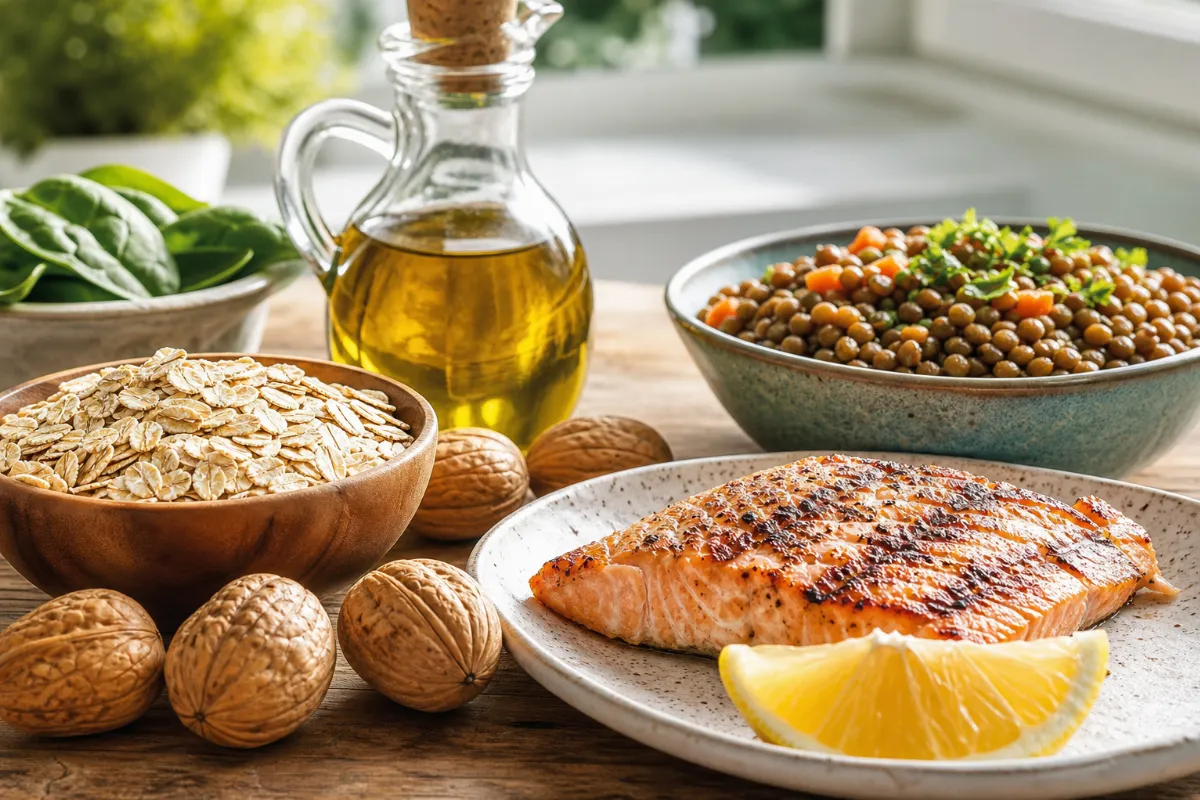
- Swap saturated fat for unsaturated fat (for example olive or rapeseed oil, nuts, oily fish in place of butter, fatty meat and pastries) and add soluble-fibre foods such as oats, barley, beans and lentils.
- Build up to at least 150 minutes of moderate activity a week, and if you smoke, ask for help to stop; both are listed by the NHS as ways to improve cholesterol.
Be careful with
- If you were prescribed a cholesterol medicine, do not stop it, skip doses or change the amount because your numbers improved or because you started a supplement. NHLBI says stopping a statin on your own can lead to a serious problem.
- Red yeast rice can act like a statin medicine, varies widely from product to product, and may contain a kidney-damaging contaminant (citrinin). It is not recommended in pregnancy or breastfeeding, and should not be combined with a prescribed cholesterol medicine without clinician advice.
- Grapefruit, some supplements and some foods can interact with cholesterol medicines; tell your clinician or pharmacist everything you take, and do not use any product that claims to 'unclog' or 'flush' arteries.
Get help when
- Emergency care now for symptoms of a heart attack or stroke, such as chest pain or pressure, breathlessness, fainting, one-sided weakness, face droop, trouble speaking, or a sudden severe headache. NHLBI says to call 9-1-1 immediately in the US; use your local emergency number elsewhere.
- A cholesterol test has never been done and you are an adult with a family history of early heart disease, diabetes, kidney disease or other risk factors, or you are a man over 45 or a woman over 55 (MedlinePlus suggests tests every 1 to 2 years from those ages).
- Yellowish fatty bumps on the skin (especially elbows, knees, hands, ankles or buttocks) or grey-white rings around the cornea, which NHLBI links to very high, often inherited, cholesterol (familial hypercholesterolemia); heart attack or stroke in close relatives at a young age is another reason to ask for a check.
- Muscle pain, weakness, dark urine or unusual tiredness after starting any cholesterol medicine or red yeast rice product: contact your clinician, who may check a blood test.
- Children and teenagers: MedlinePlus says a first test is advised between ages 9 and 11, and earlier if there is a family history of high cholesterol, heart attack or stroke.
About Improve Your Cholesterol Levels
What this goal means
Cholesterol is a waxy, fat-like substance found in every cell of the body. The body makes all it needs, and cholesterol also comes from animal foods such as egg yolks, meat and cheese. It travels in the blood on carriers called lipoproteins: LDL (low-density, often called 'bad') can build up as plaque in artery walls, while HDL (high-density, often called 'good') helps carry cholesterol back to the liver.
Improving your cholesterol usually means lowering LDL and non-HDL cholesterol and, where possible, supporting a healthy HDL. NHLBI gives a general goal of non-HDL cholesterol below 130 mg/dL with HDL of at least 40 mg/dL for men and 50 mg/dL for women, and advises checking with your provider about the levels that are best for you.
1,2,3What it can feel like
Mostly nothing. NHLBI and the NHS both say high cholesterol usually has no symptoms and is found only by a blood test. Only at very high levels, mainly in inherited forms, can fatty skin bumps (xanthomas) or grey-white rings around the cornea appear.
4,5What can push cholesterol up
MedlinePlus lists eating a lot of saturated fat (red meat, full-fat dairy, many baked, deep-fried and processed foods), little physical activity, smoking, stress and heavy alcohol use as common lifestyle causes. Age, family history, overweight, diabetes, kidney disease, HIV and lupus can raise levels, as can some medicines (for example steroids, some cancer medicines, transplant medicines and certain acne medicines).
The NHS adds that you are more likely to have high cholesterol if you are over 50, a man, past the menopause, or of South Asian or sub-Saharan African origin. It can also run in families.
1,5Conditions to be aware of
Familial hypercholesterolemia is an inherited condition that causes very high LDL cholesterol and can cause heart attacks at an early age; it needs medical care, not just diet. High cholesterol often travels with overweight, type 2 diabetes and metabolic syndrome, and untreated high cholesterol can lead to plaque in the arteries, angina, heart attack, stroke and peripheral artery disease.
4,6,1Realistic expectations
Food and lifestyle changes work gradually and add up. Pooled trials found, for example, that at least 3 g a day of oat beta-glucan lowered LDL by about 0.25 mmol/L, and that sterol-enriched foods lowered LDL by roughly 6 to 12%. A single change rarely does everything, so NHLBI recommends combining several (eating pattern, activity, weight, no smoking, less alcohol).
If lifestyle changes alone do not lower your cholesterol enough, or your overall risk is high, clinicians may recommend medicine alongside the lifestyle changes; NHLBI says to keep up the lifestyle changes if you take medicine.
7,8,9Who this applies to
Adults who have been told their cholesterol is high or borderline, or who want to lower the risk before it becomes a problem. Young people, pregnant people, older adults and anyone with heart disease, diabetes or kidney disease should follow a clinician's plan. This page does not diagnose; triglycerides, blood pressure, fitness and wider heart habits are covered in the linked goals.
1,9Related conditions and symptoms
Prediabetes, type 2 diabetes and metabolic syndrome → Overweight and obesity →
A manageable starting plan
An educational starting point, not a personal prescription. Adjust it to your own situation and any advice from your clinician.
Your first actions
- Get a lipid panel and ask your clinician what your results and overall heart risk mean.
- Swap saturated fat for unsaturated fat and add oats, barley, beans or lentils to most days.
- Build toward 150 minutes of moderate activity a week, and stop smoking if you smoke.
Optional additions
- Add a small handful of nuts most days in place of a processed snack.
- Try plant sterol or stanol foods if your clinician agrees they suit you.
- Aim for a gradual 3 to 5% weight loss if you carry extra weight.
What to track
- Your lipid panel results (LDL, HDL, non-HDL, triglycerides) at the dates your clinician advises.
- Weekly minutes of activity and number of days you ate oats, beans or lentils.
- Any side effects from medicines or supplements, and a list of every product you take.
When to reassess
Habit changes take weeks to show on a blood test, so ask your clinician when to recheck (NHLBI notes that after starting a medicine, a lipid panel may be done 1 to 3 months later and then every 3 to 12 months). If your numbers are not where your clinician wants them, discuss whether medicine, a specialist referral or testing for familial hypercholesterolemia is needed.
When to seek professional support
- Your GP or primary care clinician for testing, risk assessment and medicines.
- A registered dietitian for a personalised heart-healthy eating plan.
- Stop-smoking services and alcohol support if relevant.
- A pharmacist to check supplements, grapefruit and herbs against your medicines.
What helps
Ordered by how well the research supports each step. Evidence strength is shown on every card; precautions sit next to the advice.
Start here
Swap saturated fat for unsaturated fat
High certaintyAddresses: Lowers LDL cholesterol and, in trials, cardiovascular events
Why it may help: The NHS advises cutting down on saturated fat (fatty meat, pies, sausages, butter, lard, ghee, cream, cheese, cakes, coconut and palm oil) and eating more oily fish, olive and rapeseed oil, nuts and seeds. An American Heart Association advisory concluded strongly that replacing saturated fat with unsaturated fat, especially polyunsaturated fat, lowers cardiovascular disease, and that replacing it with refined carbohydrates and sugars does not. A Cochrane review of 15 long-term trials (about 59,000 people) found that reducing saturated fat cut combined cardiovascular events by 21% (moderate-certainty evidence).
How to apply it: Check food labels for saturated fat. Cook with olive or rapeseed oil rather than butter or lard, choose oily fish and nuts in place of processed meat and pastries, and avoid simply replacing fat with sugary or refined foods.
Who it may suit: Most adults with raised cholesterol or wanting to prevent it.
Precautions: People with kidney disease, diabetes or on cholesterol medicines should keep to their clinician's plan. Fish and nuts are allergens for some people.
10,11,12,13Add soluble-fibre foods (oats, barley, beans, lentils, psyllium)
High certaintyAddresses: Lowers LDL and total cholesterol modestly
Why it may help: A meta-analysis of 67 trials found soluble fibre (2 to 10 g a day from oats, psyllium or pectin) lowered total and LDL cholesterol by small amounts per gram, with similar effects across fibre types and no effect on HDL or triglycerides. A meta-analysis of 28 trials of at least 3 g a day of oat beta-glucan found LDL fell by about 0.25 mmol/L. A review of reviews graded foods high in soluble fibre (oats, barley, psyllium) as having high-certainty evidence of at least moderate LDL reductions.
How to apply it: Build up gradually: oats or barley for breakfast or in soups, beans, lentils or chickpeas several times a week, and fruit and vegetables. Increase fibre slowly and drink fluids to limit gas and bloating.
Who it may suit: Adults wanting a food-first way to lower LDL.
Precautions: More fibre can cause gas, bloating or loose stools at first. People with swallowing problems or bowel obstruction should not use fibre thickeners such as psyllium without medical advice. Coeliac disease needs gluten-free oats.
14,7,13Regular aerobic activity
Moderate certaintyAddresses: Modest rise in HDL; supports LDL, triglycerides and weight
Why it may help: The NHS advises at least 150 minutes of moderate or 75 minutes of vigorous activity a week. NHLBI says studies show physical activity can lower LDL and triglycerides and raise HDL. A meta-analysis of 25 trials found aerobic training raised HDL by about 2.5 mg/dL on average, with a minimum of about 120 minutes a week or 900 kcal of exercise needed, and bigger gains in people with higher starting total cholesterol or lower BMI.
How to apply it: Start with brisk walking, swimming or cycling that gets your heart rate up, and build gradually toward 150 minutes a week; longer sessions mattered most in the HDL analysis.
Who it may suit: Most adults, at a level suited to their health.
Precautions: Ask a clinician before starting if you have heart disease, chest symptoms, diabetes or are unfit or older. Stop and seek help for chest pain, severe breathlessness or faintness.
10,9,15Improve Your Cardiovascular Fitness → Sit Less & Move More →
Stop smoking
Moderate certaintyAddresses: Raises HDL and lowers LDL compared with continuing to smoke
Why it may help: MedlinePlus says smoking lowers HDL cholesterol (especially in women) and raises LDL; the NHS says smoking can raise cholesterol and makes heart attacks, strokes and cancer more likely. We did not read a trial that measured how much cholesterol changes after quitting, so the size of the benefit is not stated here.
How to apply it: Ask your GP, pharmacist or local stop-smoking service for support; combining support with a quit date works better than willpower alone.
Who it may suit: Anyone who smokes or vapes with nicotine.
Precautions: Weight gain after quitting is common; keep up activity and balanced eating. Talk to a clinician about stop-smoking options.
10,1Additional options
Nuts as a regular snack
Moderate certaintyAddresses: Lowers LDL and total cholesterol
Why it may help: A pooled analysis of 25 trials (583 people not on lipid-lowering medicine) found about 67 g of nuts a day lowered total cholesterol by about 5% and LDL by about 7%, with similar effects across types of nuts and bigger effects in people with higher LDL. NHLBI's eating plans also encourage a variety of nuts.
How to apply it: Use a small handful in place of crisps, pastries or processed snacks; unsalted, unsweetened nuts are the type studied.
Who it may suit: Adults without nut allergy.
Precautions: Nuts are energy-dense, so swap rather than add. Avoid with nut allergy; whole nuts are a choking risk for young children.
16,9Plant sterol and stanol foods
High certaintyAddresses: Lowers LDL by about 6 to 12% at studied intakes
Why it may help: A meta-analysis of 124 trials found plant sterols or stanols at 0.6 to 3.3 g a day lowered LDL cholesterol by 6 to 12% on average, rising to about 12% at around 3 g a day. A review of reviews graded foods with added plant sterols or stanols as high-certainty for at least moderate LDL reductions. These are usually fortified spreads, yoghurt drinks or supplements, so you cannot easily get this amount from ordinary foods.
How to apply it: Studied as sterol- or stanol-enriched foods eaten with meals as part of a heart-healthy diet. Label directions vary; follow the product label and ask your clinician if it suits you.
Who it may suit: Adults with raised LDL who want an extra food-based step.
Precautions: We did not read a source on use in pregnancy, breastfeeding or children, so ask a clinician before using them in those groups. The meta-analysis was partly funded by industry authors. Effects on heart attacks and strokes were not shown in the trials read.
8,13Lose a modest amount of weight if you carry extra
Moderate certaintyAddresses: Raises HDL, lowers LDL with 3 to 5% weight loss
Why it may help: NHLBI reports that adults with overweight or obesity can lower LDL and raise HDL by losing only 3% to 5% of body weight. A meta-analysis of 70 studies found weight loss by dieting was linked to falls in total, LDL and VLDL cholesterol and triglycerides, with HDL rising once weight had stabilised.
How to apply it: Aim for gradual, sustainable change rather than crash diets; see the weight pages for the full approach.
Who it may suit: Adults with overweight or obesity.
Precautions: Rapid weight loss, restrictive diets and eating-disorder history need professional support. Not appropriate for people who are underweight, pregnant or breastfeeding without clinician guidance.
9,17Good sleep and stress management
Low certaintyAddresses: May support healthier LDL and HDL
Why it may help: NHLBI says chronic stress can sometimes increase LDL and decrease HDL, and that 7 to 9 hours of sleep lowers the risk of high LDL and total cholesterol. These are agency summaries; we did not read the underlying trials, so the size of the effect is not stated.
How to apply it: Keep regular sleep and wake times and build in daily stress-relief routines you will actually use.
Who it may suit: Anyone with high stress or short sleep.
Precautions: Persistent insomnia, low mood or anxiety need a clinician's care.
9Still being studied
Green tea (as a drink or extract)
Low certaintyAddresses: Small average drop in LDL and total cholesterol
Why it may help: A meta-analysis of 31 trials (3,321 people) found green tea lowered total cholesterol by about 4.7 mg/dL and LDL by about 4.6 mg/dL, with no effect on HDL. The effect is small and a green-tea extract is not the same as the tea drink.
How to apply it: Studied as brewed tea or as green tea preparations in daily use over weeks to months.
Who it may suit: Adults who already enjoy green tea.
Precautions: Green tea contains caffeine; concentrated extracts have been linked to liver problems in some reports, so avoid high-dose extracts and ask a clinician if you have liver disease or take medicines. Not for use in pregnancy at high amounts without advice.
18,13Pulses, avocado and almonds
Moderate certaintyAddresses: Small to moderate LDL reductions
Why it may help: A review of reviews found moderate-certainty evidence that avocados and pulses cause small to moderate LDL reductions, and that almonds and soy protein cause small reductions. These are modest effects, best used as part of a wider heart-healthy pattern.
How to apply it: Swap meat or refined carbohydrates for beans, lentils, chickpeas, avocado or almonds in everyday meals.
Who it may suit: Adults wanting simple food swaps.
Precautions: Beans may cause gas at first. Avocado and almonds are energy-dense. Allergies apply.
13Berberine
Low certaintyAddresses: May lower LDL and total cholesterol in short trials
Why it may help: A 2025 meta-analysis of placebo-controlled trials in people with metabolic syndrome found berberine lowered LDL by about 0.5 mmol/L and triglycerides by about 0.37 mmol/L, with no clear effect on HDL. The trials were short, the analysis was about metabolic syndrome rather than cholesterol alone, and the authors called for better-designed trials.
How to apply it: Studied as an oral supplement, usually for 12 weeks or less.
Who it may suit: Not a first step; discuss with a clinician.
Precautions: Berberine can interact with medicines (including diabetes and cholesterol medicines) and should be avoided in pregnancy and breastfeeding; do not combine with prescribed medicines without a pharmacist's advice.
19Food & nutrition
A heart-healthy eating pattern
NHLBI's Therapeutic Lifestyle Changes and DASH eating plans, which are used to lower LDL, limit saturated fats from fatty meat, dairy and desserts, favour whole grains, fruit and vegetables over refined carbohydrates and sweets, include a variety of nuts, and use little or no salt. The NHS suggests eating more oily fish such as mackerel and salmon, olive and rapeseed oil, wholegrain bread and pasta, brown rice, nuts, seeds, fruit and vegetables.
The AHA says the shift from saturated to unsaturated fats should happen within an overall healthful pattern such as DASH or the Mediterranean diet.
9,10,11Foods with the best LDL evidence
A review of reviews graded these foods as having high-certainty evidence of at least moderate (0.20 to 0.40 mmol/L) LDL reductions: foods high in unsaturated and low in saturated and trans fats (such as rapeseed oil), foods with added plant sterols or stanols, and soluble-fibre foods such as oats, barley and psyllium.
Oats and barley
High certaintyAddresses: Soluble beta-glucan fibre
Why it may help: Oat beta-glucan of at least 3 g a day lowered LDL by about 0.25 mmol/L in 28 trials.
How to apply it: Porridge, oat bran, barley in soups and stews.
Who it may suit: Adults without coeliac disease (oats may need to be gluten-free).
Precautions: Increase gradually to limit gas and bloating.
7,13Unsaturated oils in place of butter
High certaintyAddresses: Replaces saturated fat
Why it may help: The NHS recommends olive and rapeseed oil in place of butter, lard and ghee.
How to apply it: Cook and dress with olive or rapeseed oil in moderate amounts.
Who it may suit: Most adults.
Precautions: Oils are energy-dense; use measured amounts.
10,11Oily fish
Moderate certaintyAddresses: Unsaturated fat in place of meat
Why it may help: The NHS lists mackerel and salmon among foods to eat more of.
How to apply it: Include as a main meal in place of fatty or processed meat.
Who it may suit: Adults who eat fish.
Precautions: Fish allergy; pregnancy and breastfeeding have fish advice for mercury and species.
10Nuts, pulses and other foods with smaller effects
Nuts lowered LDL by about 7% in a pooled analysis at about 67 g a day. A review of reviews found avocados and pulses had moderate-certainty evidence of small to moderate LDL reductions, hazelnuts, walnuts, wholegrain foods and green tea small to moderate reductions, and soy protein, tomatoes, flaxseeds and almonds small reductions. Evidence for turmeric was rated moderate in that review, but it is based on limited trials and we have not covered dosing.
Beans, lentils and chickpeas
Moderate certaintyAddresses: Soluble fibre and protein
Why it may help: Pulses were linked to small to moderate LDL reductions.
How to apply it: Use in soups, salads and stews several times a week.
Who it may suit: Most adults.
Precautions: Gas at first; increase slowly.
13Drinks and alcohol
Unfiltered coffee raised LDL in a review of reviews, green tea lowered it slightly, and the NHS advises keeping alcohol within 14 units a week with drink-free days.
Fruit juices, sweetened drinks and added sugar add energy without fibre; sugar caused a small LDL increase in the review of reviews.
13,18,10Remedies & supplements
Traditional use, laboratory findings and human trials are kept apart. "Natural" does not mean safe.
Psyllium husk fibre
High certaintyStudied form and route: Soluble fibre supplement taken with fluid
Intended outcome: Lower LDL, non-HDL cholesterol and apoB
Human evidence: A meta-analysis of 28 randomized trials (1,924 people) found a median of about 10.2 g psyllium a day lowered LDL by 0.33 mmol/L, non-HDL by 0.39 mmol/L and apoB by 0.05 g/L; certainty was moderate to high.
Limits: Effects are modest and need daily use. Not a replacement for prescribed medicine.
Interactions and precautions: Take with plenty of fluid; can cause gas, bloating or cramps; it can slow absorption of some medicines, so take medicines at a different time and ask a pharmacist. Do not use with swallowing problems or bowel obstruction.
Dose, only as reported in studies: Median about 10.2 g psyllium a day in the pooled trials (as studied).
20,14Plant sterol and stanol products
High certaintyStudied form and route: Fortified spreads, drinks, or supplements taken with meals
Intended outcome: Lower LDL
Human evidence: A meta-analysis of 124 trials found 0.6 to 3.3 g a day lowered LDL by 6 to 12%.
Limits: Long-term effect on heart attacks and strokes was not shown in the trials read.
Interactions and precautions: Ask a clinician about use in pregnancy, breastfeeding and children, which we did not find sources on.
Dose, only as reported in studies: 0.6 to 3.3 g a day lowered LDL by 6 to 12% in trials; benefit rose up to about 3 g a day.
8,13Red yeast rice
Moderate certaintyStudied form and route: Fermented rice product or supplement
Intended outcome: Lower LDL cholesterol
Human evidence: A systematic review of 20 randomized trials found red yeast rice with known monacolin K content lowered LDL by 1.02 mmol/L compared with placebo and had a similar effect to a statin medicine, but safety assessment was low quality. NCCIH notes the benefit depends on how much monacolin K a product contains.
Traditional use: Red yeast rice is part of traditional Chinese food and medicine.
Limits: Product strength varies by more than 60-fold, labels rarely state monacolin K, and the FDA treats products with added or enhanced lovastatin as unapproved drugs.
Interactions and precautions: Can cause the same side effects and interactions as statin medicines (muscle, kidney and liver damage, digestive upset). Some products contain the kidney-damaging contaminant citrinin. Not recommended in pregnancy or breastfeeding. Do not combine with a prescribed cholesterol medicine without clinician advice.
21,22Bergamot extract
Low certaintyStudied form and route: Citrus extract supplement
Intended outcome: Possible LDL lowering
Human evidence: A network meta-analysis of 131 trials ranked bergamot and red yeast rice as the most effective nutraceuticals for LDL and total cholesterol, but the authors say the bergamot evidence came from relatively small study groups.
Limits: Evidence base is small and needs larger trials.
Interactions and precautions: May interact with medicines; ask a pharmacist, especially if you take cholesterol medicines.
23Garlic
Low certaintyStudied form and route: Garlic powder, aged extract or oil capsules
Intended outcome: Small reduction in total and LDL cholesterol
Human evidence: A review that included an earlier meta-analysis of 39 randomized trials (2,300 adults) suggested garlic reduced total and LDL cholesterol by about 10% if taken for more than 2 months by people with slightly elevated levels. A network meta-analysis found garlic among nutraceuticals that outperformed placebo for LDL.
Traditional use: Garlic has long been used as a food and traditional remedy.
Limits: Trials vary in preparation and quality, and long-term heart outcomes are not shown.
Interactions and precautions: Garlic can increase bleeding risk with blood thinners and before surgery; ask a pharmacist. May cause digestive upset or body odor.
24,23Berberine
Low certaintyStudied form and route: Supplement from berberine-containing plants
Intended outcome: Possible reduction in LDL and total cholesterol
Human evidence: A 2025 meta-analysis of placebo-controlled trials in people with metabolic syndrome found lower LDL (about 0.5 mmol/L) and triglycerides, no clear effect on HDL, and no significant safety difference from placebo, though the authors called for better trials.
Limits: Short trials, mostly in metabolic syndrome.
Interactions and precautions: May interact with medicines and is not advised in pregnancy or breastfeeding; discuss with a pharmacist.
19,23Coenzyme Q10
Low certaintyStudied form and route: Oral supplement
Intended outcome: Small improvements in cholesterol numbers
Human evidence: A meta-analysis of 50 randomized trials (2,794 people) found CoQ10 lowered total cholesterol by about 5.5 mg/dL and raised HDL by about 0.8 mg/dL; the authors also reported lower LDL and triglycerides. There was high heterogeneity between trials.
Limits: Small average effects and large differences between trials.
Interactions and precautions: Can interact with some medicines, including blood thinners; ask a pharmacist.
25Green tea extract
Low certaintyStudied form and route: Concentrated capsules or tablets
Intended outcome: Small reduction in LDL and total cholesterol
Human evidence: A meta-analysis of 31 trials found green tea lowered total cholesterol by about 4.7 mg/dL and LDL by about 4.6 mg/dL with no effect on HDL.
Limits: Small effect; tea and extract are different products.
Interactions and precautions: Concentrated extracts have been linked to liver problems in some reports and contain caffeine; avoid high doses and ask a clinician.
18Niacin (vitamin B3)
Moderate certaintyStudied form and route: Prescription or supplement-strength niacin
Intended outcome: Raises HDL, lowers LDL
Human evidence: In HPS2-THRIVE (25,673 adults with vascular disease), extended-release niacin with laropiprant lowered LDL by about 10 mg/dL and raised HDL by about 6 mg/dL but did not reduce major vascular events and increased serious adverse events.
Limits: The trial studied a prescription combination in people already on statin-based therapy.
Interactions and precautions: High-dose niacin has serious side effects and should only be used under medical supervision.
26Therapies & care
Established care for high cholesterol starts with a blood test and an assessment of your overall risk of heart disease and stroke. NHLBI says your provider may recommend heart-healthy lifestyle changes and, where needed, medicines; the choice depends on your cholesterol levels, risk, other conditions and preferences. This page describes care in general terms and does not recommend specific medicines or doses.
Lipid panel and risk assessment
High certaintyMedical assessment A lipid panel (sometimes fasting for 8 to 12 hours) measures total, LDL and HDL cholesterol and triglycerides, and may include non-HDL cholesterol. Providers may use a risk calculator that combines your cholesterol, age, sex, blood pressure, smoking and other factors to estimate your 10-year or lifetime risk of heart attack and stroke.
Who it may suit: Adults, and children at recommended ages or with family history.
Precautions: Ask your provider whether to fast and how often to repeat the test.
3,6,1Heart-healthy lifestyle programmes
High certaintyLifestyle care NHLBI describes Therapeutic Lifestyle Changes (TLC) and DASH eating plans, regular activity, weight management, stopping smoking, limiting alcohol, managing stress and sleep as the first steps. If medicine is also prescribed, these changes continue.
Who it may suit: Most adults with raised cholesterol.
Precautions: Check with your clinician before starting new exercise if you have heart disease or other conditions.
9Prescribed cholesterol medicines
High certaintyMedical treatment NHLBI says statins are the most common medicine and that other classes exist for people who cannot take statins or need more lowering; in people with familial hypercholesterolemia, further treatments, including lipoprotein apheresis in some cases, may be used. Whether you need a medicine is a decision for you and your clinician.
Who it may suit: People whose risk or LDL level a clinician judges high enough.
Precautions: Do not stop or change prescribed medicine on your own. Ask about grapefruit, supplements and pregnancy planning (NHLBI says statins should be stopped about 3 months before pregnancy and not used while breastfeeding, only on a clinician's advice).
9,6Stop-smoking and alcohol support
Moderate certaintySupportive care The NHS lists GP and NHS stop-smoking services and alcohol support as ways to help with these changes.
Who it may suit: People who smoke or drink above recommended limits.
Precautions: Ask a clinician about options.
10What to avoid
Habits, products and claims that can get in the way. Never stop a prescribed medicine without talking to the professional who prescribed it.
Risks that apply to most people
Smoking
High certaintyWhy: MedlinePlus says smoking lowers HDL and raises LDL cholesterol, and the NHS says it makes heart attacks, strokes and cancer more likely.
Who it applies to: Anyone who smokes.
Try instead: Ask for stop-smoking support from a GP, pharmacist or local service.
1,10Regular heavy drinking
Moderate certaintyWhy: MedlinePlus says drinking too much alcohol can raise total cholesterol. The NHS advises not regularly drinking more than 14 units a week, spreading it over 3 or more days, and having several drink-free days.
Who it applies to: Anyone who drinks regularly; people on cholesterol medicines should also ask about alcohol.
Try instead: Cut down, keep drink-free days, and ask for help if you are finding it hard.
1,10Long periods of sitting with little activity
Moderate certaintyWhy: MedlinePlus lists lots of sitting and little exercise as a lifestyle cause of lower HDL cholesterol.
Who it applies to: Desk workers and anyone mostly inactive.
Try instead: Break up sitting and build toward 150 minutes of moderate activity a week.
1,10Personal triggers to check
Eating a lot of saturated fat
High certaintyWhy: MedlinePlus and the NHS name saturated fat (fatty meat, pies, sausages, butter, lard, cream, cheese, cakes, biscuits, and coconut or palm oil) as raising LDL cholesterol. A Cochrane review of long-term trials found reducing it lowered cardiovascular events.
Who it applies to: Most people with raised LDL.
Try instead: Choose unsaturated fats such as olive or rapeseed oil, nuts and oily fish instead.
1,10,12Replacing fat with refined carbohydrates and sugar
Moderate certaintyWhy: The AHA advisory found replacing saturated fat with mostly refined carbohydrates and sugars was not linked to fewer cardiovascular events, and a review of reviews found sugar caused a small LDL increase.
Who it applies to: People cutting fat without changing what replaces it.
Try instead: Replace saturated fat with unsaturated fats, whole grains, fruit, vegetables and pulses.
11,13Large amounts of unfiltered coffee
Moderate certaintyWhy: A review of reviews found unfiltered coffee (such as boiled or French-press) caused a moderate to large increase in LDL cholesterol, while we did not find a source stating the same for filtered coffee.
Who it applies to: Heavy drinkers of boiled or plunger coffee.
Try instead: If your LDL is high, choose filtered coffee and moderate amounts.
13Products that need caution
Red yeast rice products used without medical advice
Moderate certaintyWhy: NCCIH says some products contain large amounts of the statin-like compound monacolin K and others almost none, with a more than 60-fold range in one review of 28 brands, and monacolin K is not on labels. Products with significant amounts can cause the same side effects and interactions as statin medicines (muscle, kidney and liver damage), some contain the kidney-toxic contaminant citrinin, and the European Food Safety Authority could not identify a safe intake.
Who it applies to: Anyone considering it, especially those already taking a cholesterol medicine, people with liver or kidney disease, and anyone pregnant or breastfeeding.
Try instead: Ask your clinician about proven options first; do not combine with a prescribed cholesterol medicine without advice.
22,21Niacin (vitamin B3) supplements to raise HDL
High certaintyWhy: The HPS2-THRIVE trial of 25,673 adults with vascular disease on statin-based therapy found extended-release niacin with laropiprant raised HDL by about 6 mg/dL and lowered LDL by about 10 mg/dL but did not reduce major vascular events and increased serious side effects (diabetes control problems, gastrointestinal, musculoskeletal, skin, infection and bleeding events). The trial used a prescription product, so results may not apply to supplements.
Who it applies to: People wanting to raise HDL with supplements.
Try instead: Focus on activity, weight, not smoking and diet, and discuss any niacin use with a clinician.
26Policosanol supplements
Moderate certaintyWhy: A network meta-analysis of 131 trials found policosanols had no effect on lipids, unlike other nutraceuticals.
Who it applies to: People buying 'cholesterol support' blends.
Try instead: Do not rely on them; consider fibre and sterol foods instead.
23Grapefruit and unchecked supplements alongside cholesterol medicines
Moderate certaintyWhy: NHLBI says grapefruit (fresh or as juice) affects how the liver breaks down some statins, and that some medicines, supplements or foods can interact with statins and cause serious side effects or make them less effective.
Who it applies to: Anyone taking a cholesterol medicine.
Try instead: Ask your clinician or pharmacist which foods and supplements to avoid.
6Unsupported claims
'Unclog arteries', 'flush out cholesterol' or 'reverse plaque' with a supplement or detox
Evidence againstWhy: None of the agency sources we read describe a food, herb or supplement that removes plaque. NHLBI describes plaque as building up over time and treated with lifestyle changes and, where needed, medicines.
Who it applies to: Product labels and social media.
Try instead: Treat such claims with caution and discuss any real concern about heart risk with a clinician.
2,9'Raise your HDL and you are protected'
Moderate certaintyWhy: In HPS2-THRIVE, niacin raised HDL by about 6 mg/dL yet did not reduce major vascular events. Raising HDL by itself has not been shown to protect the heart in that trial.
Who it applies to: Marketing of 'good cholesterol boosters'.
Try instead: Focus on lowering LDL and non-HDL cholesterol and on overall heart risk.
26,3'Natural' red yeast rice is safer than a medicine
High certaintyWhy: NCCIH says products with real monacolin K can have the same side effects and interactions as statin medicines, quality varies widely, and some contain a kidney toxin. A systematic review found it lowered LDL but could not confirm safety.
Who it applies to: Supplement marketing.
Try instead: Treat it as a drug-like product and discuss with a clinician.
22,21'Fish oil lowers cholesterol and protects the heart'
Moderate certaintyWhy: A Cochrane review of 86 trials (about 162,800 people) found increasing long-chain omega-3 fats made little or no difference to all-cause mortality or cardiovascular events (high-certainty evidence) and a small reduction in cardiovascular mortality (moderate-certainty). Omega-3 mostly acts on triglycerides, covered on its own page.
Who it applies to: Fish-oil advertising.
Try instead: Eat oily fish as part of your diet and see the triglycerides page for details.
27Common mistakes
Not getting tested because you feel fine
High certaintyWhy: NHLBI and the NHS say high cholesterol usually has no symptoms and is found only by blood test; MedlinePlus suggests testing every 5 years for younger adults and more often with age.
Who it applies to: Anyone who has never been tested.
Try instead: Book a lipid panel and ask about your overall heart risk.
4,5,1Stopping a prescribed medicine when numbers improve
High certaintyWhy: NHLBI says not to change or skip a dose unless your provider tells you to, and that stopping a statin on your own can lead to serious problems; lifestyle changes should continue alongside medicine.
Who it applies to: Anyone prescribed a cholesterol medicine.
Try instead: Keep follow-up appointments and talk to your provider about any concerns or side effects.
6,9Relying on one food or supplement
Moderate certaintyWhy: A review of reviews found most foods change LDL only a little, and NHLBI recommends combining eating pattern, activity, weight, smoking and alcohol changes.
Who it applies to: People hoping for a single fix.
Try instead: Combine several changes and recheck your numbers.
13,9Evidence & safety
What the research shows
The strongest evidence is for replacing saturated fat with unsaturated fat, eating more soluble fibre (oats, barley, psyllium), plant sterol and stanol foods, and the lifestyle basics of activity, weight, not smoking and limited alcohol. Effects on LDL are usually modest (about 0.2 to 0.4 mmol/L per change), so the changes work best combined. Red yeast rice can lower LDL as much as a statin medicine in trials, but it is an unregulated drug-like product with variable strength and safety concerns. For most other supplements the effects are small or based on short trials, and niacin raised HDL without reducing cardiovascular events.
Limits of the evidence
- Most trials measure cholesterol numbers, not heart attacks or strokes, and many are short.
- Meta-analyses of herbs and supplements mix different products, doses and study quality, and several have high heterogeneity.
- Some of the sterol and fibre analyses were authored by or supported by industry researchers.
- We did not find or read trials on cholesterol change after stopping smoking; agency pages state the link without numbers.
Precautions and interactions
- Do not stop, skip or change prescribed cholesterol medicine without your provider's advice.
- Red yeast rice, niacin, berberine, garlic, CoQ10 and green tea extract can interact with medicines or cause side effects; check with a pharmacist.
- Grapefruit can interfere with some cholesterol medicines.
- Fibre supplements can slow absorption of other medicines.
Life-stage considerations
- Pregnancy and breastfeeding: red yeast rice is not recommended; NHLBI says statins should be stopped about 3 months before becoming pregnant and not used while breastfeeding, on a clinician's advice. We did not read sources on sterol-enriched foods in pregnancy.
- Children and teenagers: MedlinePlus says a first cholesterol test is advised at ages 9 to 11, and sooner if there is a family history; care should be led by a paediatric clinician.
- Older adults: MedlinePlus says people over 65 should be tested every year; take extra care with supplements and medicine interactions.
- Menopause: MedlinePlus says women's risk of high cholesterol goes up after menopause.
Warning signs
- Chest pain or pressure, breathlessness, fainting, one-sided weakness, face droop, speech trouble or a sudden severe headache need emergency care.
- Muscle pain, weakness or dark urine on medicine or red yeast rice.
- Fatty skin bumps or grey-white rings around the cornea, especially with a family history of early heart disease.
- Leg pain with swelling, redness or warmth needs same-day assessment.
Claim checks
Red yeast rice is a safe natural alternative to statins
Moderate certaintyIt can lower LDL by about as much in trials, but NCCIH describes variable strength, possible statin-like side effects and a kidney toxin contaminant, and the European Food Safety Authority could not set a safe intake.
21,22Oats lower cholesterol
High certaintyAt least 3 g of oat beta-glucan a day lowered LDL by about 0.25 mmol/L in 28 trials; the effect is real but modest.
7Eating less cholesterol-containing food is the main fix
Moderate certaintyMedlinePlus says the body makes the cholesterol it needs and names saturated fat, inactivity, smoking and alcohol as common lifestyle causes; reducing saturated fat has the best long-term trial evidence.
1,12A supplement can raise your good HDL and protect you
Moderate certaintyRaising HDL with niacin did not reduce major vascular events in a large trial.
26Garlic or CoQ10 will fix high cholesterol
Low certaintyMeta-analyses show small effects (garlic about 10% in people with slightly raised levels; CoQ10 about 5 mg/dL total cholesterol) with variable trial quality; neither replaces lifestyle changes or prescribed care.
24,25Fish oil capsules protect the heart
Moderate certaintyA large Cochrane review found little or no effect on all-cause mortality or cardiovascular events from long-chain omega-3.
27A detox or supplement can unclog arteries
Evidence againstNo source we read supports this.
2,9Questions people ask
What is a good cholesterol level?
Targets depend on your overall risk. NHLBI gives a general aim of non-HDL cholesterol below 130 mg/dL with HDL of at least 40 mg/dL for men and 50 mg/dL for women, and says to check with your provider on the levels that are best for you.
Does high cholesterol cause symptoms?
Usually not. NHLBI and the NHS say high cholesterol is usually found by a blood test. Very high, often inherited, cholesterol can cause fatty skin bumps or grey-white rings around the cornea.
What is the difference between LDL and HDL?
LDL (low-density) cholesterol is often called bad because high levels lead to plaque build-up in the arteries. HDL (high-density) helps carry cholesterol back to the liver for removal.
Which foods lower cholesterol the most?
A review of reviews found high-certainty evidence for foods high in unsaturated and low in saturated fat, foods with added plant sterols or stanols, and soluble-fibre foods such as oats, barley and psyllium. Effects are moderate rather than dramatic.
Do eggs and shellfish matter?
MedlinePlus lists egg yolks, meat and cheese as dietary sources of cholesterol but names saturated fat as a main dietary driver. We did not find a source in this review that quantifies egg effects, so talk to your clinician about your own diet.
Can exercise raise HDL?
Modestly. A meta-analysis of 25 trials found aerobic training raised HDL by about 2.5 mg/dL on average, with a minimum of about 120 minutes a week needed.
Is red yeast rice safe to use?
NCCIH says products vary widely in strength, can cause statin-like side effects and interactions, and some contain a kidney-damaging contaminant. It is not recommended in pregnancy or breastfeeding. Discuss it with a clinician first.
Can I stop my cholesterol medicine if my numbers improve?
NHLBI says not to change or skip a dose unless your provider tells you to, and that stopping a statin on your own can cause serious problems. Keep your lifestyle changes going alongside medicine and ask your provider about any concerns.
When should children be tested?
MedlinePlus says a first test between ages 9 and 11, repeated every 5 years, and from age 2 in some children with a family history of high cholesterol, heart attack or stroke.
Does menopause affect cholesterol?
MedlinePlus says a woman's risk of high cholesterol goes up after menopause.
How soon will my cholesterol improve?
Changes take weeks. Ask your clinician when to recheck; NHLBI says that after starting medicine a lipid panel may be done 1 to 3 months later, then every 3 to 12 months.
Where do triglycerides, blood pressure and fitness fit in?
They each have their own page. See Manage High Triglycerides, Support Healthy Blood Pressure and Improve Your Cardiovascular Fitness for those topics.
References
- MedlinePlus. Cholesterol. Read 2026-10-31. source
- NHLBI. Blood Cholesterol: What is blood cholesterol? Last updated April 17, 2024. Read 2026-10-31. source
- NHLBI. Blood Cholesterol: Diagnosis. Read 2026-10-31. source
- NHLBI. Blood Cholesterol: Symptoms. Last updated April 18, 2024. Read 2026-10-31. source
- NHS. High cholesterol. Page last reviewed 13 March 2026. Read 2026-10-31. source
- NHLBI. Blood Cholesterol: Living with high cholesterol. Last updated April 19, 2024. Read 2026-10-31. source
- Whitehead A, Beck EJ, Tosh S, Wolever TM. Cholesterol-lowering effects of oat beta-glucan: a meta-analysis of randomized controlled trials. Am J Clin Nutr. 2014. source
- Ras RT, Geleijnse JM, Trautwein EA. LDL-cholesterol-lowering effect of plant sterols and stanols across different dose ranges: a meta-analysis of randomised controlled studies. Br J Nutr. 2014. source
- NHLBI. Blood Cholesterol: Treatment. Last updated April 19, 2024. Read 2026-10-31. source
- NHS. High cholesterol: how to lower your cholesterol. Page last reviewed 13 March 2026. Read 2026-10-31. source
- Sacks FM, et al. Dietary fats and cardiovascular disease: a presidential advisory from the American Heart Association. Circulation. 2017. source
- Hooper L, et al. Reduction in saturated fat intake for cardiovascular disease. Cochrane Database Syst Rev. 2020 (May 2020 version; a later update exists). source
- Schoeneck M, Iggman D. The effects of foods on LDL cholesterol levels: a systematic review of the accumulated evidence from systematic reviews and meta-analyses of randomized controlled trials. Nutr Metab Cardiovasc Dis. 2021. source
- Brown L, Rosner B, Willett WW, Sacks FM. Cholesterol-lowering effects of dietary fiber: a meta-analysis. Am J Clin Nutr. 1999. source
- Kodama S, et al. Effect of aerobic exercise training on serum levels of high-density lipoprotein cholesterol: a meta-analysis. Arch Intern Med. 2007. source
- Sabate J, Oda K, Ros E. Nut consumption and blood lipid levels: a pooled analysis of 25 intervention trials. Arch Intern Med. 2010. source
- Dattilo AM, Kris-Etherton PM. Effects of weight reduction on blood lipids and lipoproteins: a meta-analysis. Am J Clin Nutr. 1992. source
- Xu R, et al. Effect of green tea consumption on blood lipids: a systematic review and meta-analysis of randomized controlled trials. Nutr J. 2020. source
- Liu D, et al. Efficacy and safety of berberine on the components of metabolic syndrome: a systematic review and meta-analysis of randomized placebo-controlled trials. Front Pharmacol. 2025. source
- Jovanovski E, et al. Effect of psyllium (Plantago ovata) fiber on LDL cholesterol and alternative lipid targets, non-HDL cholesterol and apolipoprotein B: a systematic review and meta-analysis of randomized controlled trials. Am J Clin Nutr. 2018. source
- Gerards MC, et al. Traditional Chinese lipid-lowering agent red yeast rice results in significant LDL reduction but safety is uncertain: a systematic review and meta-analysis. Atherosclerosis. 2015. source
- NCCIH. Red Yeast Rice. Read 2026-10-31. source
- Osadnik T, et al. A network meta-analysis on the comparative effect of nutraceuticals on lipid profile in adults. Pharmacol Res. 2022. source
- Ried K. Garlic lowers blood pressure in hypertensive individuals, regulates serum cholesterol, and stimulates immunity: an updated meta-analysis and review. J Nutr. 2016. source
- Liu Z, et al. Effects of coenzyme Q10 supplementation on lipid profiles in adults: a meta-analysis of randomized controlled trials. J Clin Endocrinol Metab. 2022. source
- HPS2-THRIVE Collaborative Group. Effects of extended-release niacin with laropiprant in high-risk patients. N Engl J Med. 2014. source
- Abdelhamid AS, et al. Omega-3 fatty acids for the primary and secondary prevention of cardiovascular disease. Cochrane Database Syst Rev. 2020. source
Related on AlternativeMed
Related goals
Build Heart-Healthy Habits → Support Healthy Blood Pressure → Manage High Triglycerides → Improve Your Cardiovascular Fitness → Support Healthy Circulation → Sit Less & Move More → Eat for Heart Health → Lose Weight Sustainably →
Ingredients, foods and supplements
Oats → Barley → Psyllium → Walnuts → Olive oil → Garlic → Berberine → Coenzyme Q10 → Niacin (vitamin B3) → Fish oil →
Research, safety and claim-check resources
Medication interactions → Fiber, fluids and meal patterns → Eating patterns compared →