Functional Foods · Drink
Matcha and Green Tea as Drinks
Camellia sinensis (L.) Kuntze · also called Green tea, powdered green tea, matcha
Matcha and green tea are drinks made from the leaf of the tea plant. Matcha is the whole leaf ground to a powder. Large studies link tea drinking with fewer deaths, but these cannot prove cause, and trials on blood pressure, cholesterol and weight are mixed or small. The main cautions are caffeine, pregnancy, some medicines, and liver injury from concentrated extract capsules, which is a different product from the drink.
General information, not medical advice. Last substantive update · Not medically reviewed. A named clinician has not signed off on this page. How this page is made
About Matcha and Green Tea as Drinks
Matcha and green tea are drinks made from the leaf of Camellia sinensis. Brewed green tea is a steeped leaf; matcha is the whole leaf in powder form. Both contain caffeine. The drink is not a proven remedy, and green tea extract capsules are a different product with liver cautions.
What it is
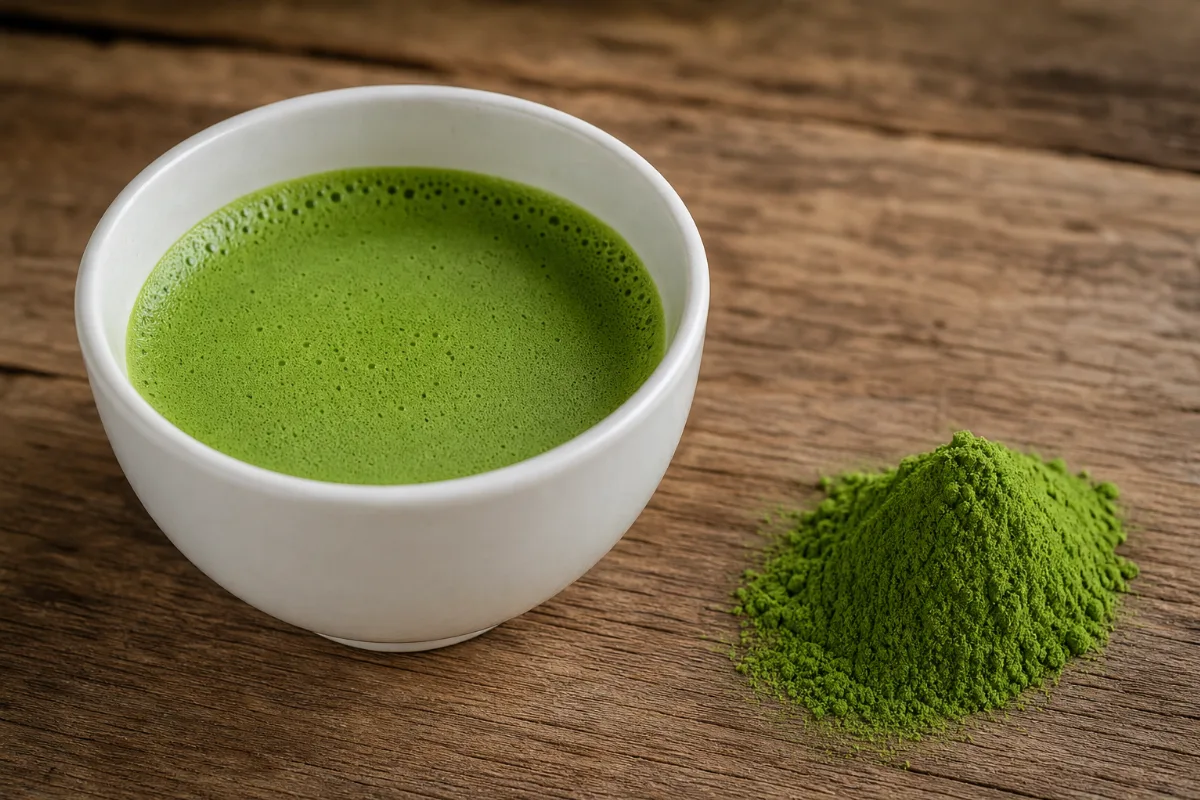
Green, black and oolong teas all come from Camellia sinensis, but are prepared differently. For green tea, NCCIH says the leaves are steamed, pan fried and dried but not fermented. Matcha is a powdered green tea from plants shaded as they grow, which raises theanine, caffeine, chlorophyll and catechins.
USDA lists brewed green tea (per 100 g) at 1 kcal, 0.22 g protein, no fat, no carbohydrate, no sugar, 12 mg caffeine, 8 mg potassium and 0.184 mg manganese. One cup (245 g) is about 2 kcal and about 29 mg of caffeine by our arithmetic. FDA lists a higher figure, 37 mg in a 12-fluid-ounce cup. No USDA item for matcha powder was found, so matcha nutrition is not given.
The drink is not the extract
NCCIH says no safety concerns have been reported for green tea consumed as a beverage by adults, but that liver injury, although uncommon, has been reported with green tea products, mainly extracts in tablets or capsules. The liver cases in the sources are mainly capsules. Results for the drink do not carry over to an extract, and the reverse is also true.
What the research shows
In 38 cohorts, the most tea drinkers had fewer deaths from any cause (0.90) and from heart and blood vessel disease (0.86). Cancer deaths showed no clear difference. In Japan, 5 or more cups of green tea a day went with HR 0.90 (men) and 0.82 (women). These are links; tea drinkers differ in other ways.
Trials are mixed. A 2020 pooled analysis of 14 trials found no significant change in blood pressure or cholesterol with green or black tea. Five trials in people with raised blood pressure found a fall of 4.81 mmHg (systolic). A 2011 analysis of drinks and extracts found LDL 2.19 mg/dL lower. A Cochrane review found no meaningful weight loss. Fourteen trials in type 2 diabetes found no blood sugar effect.
For matcha itself, there are small trials: one in 39 adults with a matcha chosen for its ingredient ratio found lower anxiety, and one of 61 older adults found a higher memory score in women only. Fluoride is high in matcha by lab measure; no harm has been shown.
At a glance
Traditional uses history, not proof
- Drunk as a daily beverage for a very long time in China and Japan
- Matcha is used in Japanese tea ceremony
- Long use as a drink is not proof that it treats any condition
Studied for research
- Tea drinking and deaths, heart disease: low certainty (observational)
- Blood pressure: mixed
- Cholesterol: low certainty
- Body weight: low certainty, small at most
- Blood sugar in type 2 diabetes: low certainty, no clear effect
- Stress and focus (matcha): low certainty
- Memory: very-low certainty
- Cancer: insufficient evidence
Main compounds
- Catechins, mainly EGCG
- Caffeine
- L-theanine
- Chlorophyll (more in matcha)
- Fluoride
Common forms
- Brewed green tea (USDA nutrition read)
- Matcha powder whisked into a drink (no USDA figures read)
- Green tea extract capsules are a different product and are covered only for safety
Research links: 2024 pooled study: tea and deaths (38 cohorts) · 2012 Cochrane review: green tea and weight · NCCIH: green tea usefulness and safety · Research Library · Genes & Biomarkers Library
What it is and its history
- Accepted scientific name
- Camellia sinensis (L.) Kuntze
- Naming authority
- (L.) Kuntze; GBIF accepted name
- Common names
- Green tea (English); Matcha (Japanese loanword in English); Powdered green tea (English)
- Family or group
- Theaceae (tea family), per GBIF
- Classification
- Plantae > Tracheophyta > Magnoliopsida > Ericales > Theaceae > Camellia > Camellia sinensis
- Native range
- Not verified from a source read here, beyond NCCIH saying the tea plant was first cultivated in China thousands of years ago.
- Habitat
- Not verified from a source read.
- What it looks like
- Roots: Not verified.; Stems: Not verified.; Leaves: The leaf is the part used for tea.; Flowers: Not verified.
- Cultivation
- Matcha comes from tea plants shaded while they grow, which raises theanine, caffeine, chlorophyll and catechins (matcha review abstract).
- Harvest and processing
- NCCIH says green tea leaves are steamed, pan fried and dried but not fermented; black tea is fermented and oolong partly fermented. Matcha is the leaf ground to a fine powder and drunk with the leaf.
- Look-alikes and adulterants
- Name: Black tea, oolong tea; Note: Same plant, different processing; see their own pages.; Name: Herbal teas; Note: Made from other plants such as chamomile or peppermint and have their own pages.; Name: Green tea extract capsules; Note: Concentrated catechins; a different product with liver cautions.
- Sustainability and conservation
- Not assessed.
Photographs
Traditional use and history history, not clinical proof
| Tradition or era | Documented use | Source |
|---|---|---|
| s-nccih-green-tea |
Traditional use shows how it was used. It does not show that it works or is safe today.
What is inside, and how it may work
What it contains and how those compounds act in cells and animals. Laboratory and animal mechanisms are not proven effects in people.
Main compounds
| Compound | Family | Where it is concentrated | Activity studied | Level of evidence |
|---|---|---|---|---|
| Catechins, mainly EGCG PubChem 65064 | polyphenol (catechin) | Leaf EFSA estimates mean EGCG intake from infusions of 90 to 300 mg a day in EU adults. A matcha review calls matcha the best condensed source of the main catechins. | The main compound studied for health and the one linked to liver cautions at high supplement intakes. 28 5 14 | Human data |
| Caffeine PubChem 2519 | methylxanthine | Leaf USDA: 12 mg per 100 g brewed green tea. FDA: 37 mg per 12 fluid ounces. No matcha figure read. | Stimulant; works against theanine in the mouse stress experiments. 27 30 22 20 | Human data |
| L-theanine PubChem 439378 | amino acid | Leaf (more in shaded leaf) Higher in matcha than other tea per the matcha papers; no figure read. | Thought to be calming; mouse and a small human trial are the evidence. 29 20 14 | Animal research |
| Chlorophyll | pigment | Leaf (more in shaded leaf) Not read. | Raised by shading, per the matcha review. No health finding read. 14 | Lab |
| Fluoride | mineral | Leaf Matcha infusions 3.36 to 4.03 mg/L; powder 118.39 to 121.65 mg/kg. | Hard-tissue role at low levels; accumulates with long exposure per the authors. 10 | Lab |
Mechanisms, receptors and pathways
| Target or pathway | Gene or receptor | What was found | Level |
|---|---|---|---|
| Theanine to caffeine ratio and stress | Not specified in the sources read | In mice, the stress-reducing effect of matcha needed a molar ratio of caffeine and EGCG to theanine and arginine of less than two. 20 | Animal research |
| Catechins and body weight | Not specified in the sources read | NCCIH says the catechins and caffeine may have a modest effect on body weight; this was not tested as a mechanism here. 25 | Human data |
| Polyphenols and iron absorption | Not specified | Polyphenol-rich drinks cut iron absorption from a test meal in a 1999 trial. 8 | Human data |
Absorption, metabolism and elimination
- Absorption
- Not found for the drink in the sources read.
- Distribution
- Not found.
- Metabolism
- Not found.
- Elimination
- Not found.
- Bioavailability
- Not established in the sources read.
Isolated compounds versus whole extracts
The deaths and heart disease links are for brewed tea. The cholesterol and weight results mix drinks with extracts. The liver cautions apply mainly to concentrated extracts and capsules, not the drink. Matcha is the whole leaf in a drink, which makes it different from a steeped tea.
Nutritional composition
Source: USDA FoodData Central, SR Legacy item "Beverages, tea, green, brewed, regular" (FDC ID 171917), read 2026-10-26 from USDA data files. Per 100 g: 1 kcal, protein 0.22 g, no fat, no carbohydrate, no sugar, caffeine 12 mg, potassium 8 mg, magnesium 1 mg, sodium 1 mg, manganese 0.184 mg, iron 0.02 mg. One cup is 245 g, which works out to about 2 kcal, about 29 mg of caffeine and about 0.45 mg of manganese (our arithmetic from the per-100 g values). FDA lists a higher figure, 37 mg per 12 fluid ounces; sources differ because tea varies. No USDA SR Legacy item for matcha powder was found, so matcha nutrition is not given. Sweetened bottled and cafe tea drinks are different foods; check the label.
1 mixed findings5 low certainty1 very low certainty1 not enough evidence
What was looked at
The 8 benefits and uses checked for Matcha and Green Tea as Drinks, each with how strong the evidence is. Tap one to open it.
- Living longer and heart disease (tea drinking, observational)Low certainty
- Blood pressure (green tea and tea drinks)Mixed findings
- Cholesterol (green tea drinks and extracts)Low certainty
- Body weight (green tea preparations)Low certainty
- Blood sugar in type 2 diabetes (green tea intake)Low certainty
- Stress, attention and focus (matcha)Low certainty
- Memory and thinking in older adults (matcha trial; green tea observational)Very low certainty
- Cancer (population studies)Not enough evidence
Lab markers tracked in the studies
LDL cholesterolSystolic blood pressure (top number)Diastolic blood pressure (bottom number)Body weightFasting blood glucose and HbA1cMontreal Cognitive Assessment (MoCA) score
What is Matcha and Green Tea as Drinks good for?
The main studied uses and how strong the human evidence is for each. Many results are for green tea in general or for extracts, not for matcha.
Benefits, one by one
Each card is a research question, not a promise. Tap a goal to filter. Open a card to see the studies, doses and limits.
Living longer and heart disease (tea drinking, observational)
Low certaintyIn large groups followed over time, people who drank more tea had fewer deaths from any cause and from heart and blood vessel disease. For cancer deaths the range included no difference. These are links, not proof that tea caused the difference.
3 studiesBrewed tea, mostly green or black. Matcha was not separately studied.
Studies, doses and limits
What the trials found
A 2024 pooled analysis of 38 cohort data sets (1,956,549 people) found highest versus lowest tea intake went with fewer deaths from any cause (0.90) and from heart and blood vessel disease (0.86). For cancer deaths the range crossed 1 (0.90, 0.78 to 1.03). The biggest all-cause drop was at about 2 cups a day, with no more benefit beyond that. In eight Japanese cohorts (313,381 people), green tea at 5 cups or more a day went with 0.90 (men) and 0.82 (women) all-cause death risk compared with under 1 cup.
Results
A modest link with fewer deaths, in people who report drinking tea. Healthy habits of tea drinkers may play a part.
Effect sizes as reported
All tea: all-cause 0.90 (0.86 to 0.95); heart and blood vessel 0.86 (0.79 to 0.94); cancer 0.90 (0.78 to 1.03). Green tea, Japan, 5 or more cups a day: all-cause HR 0.90 men, 0.82 women.
Why this rating
Low because all the data are observational and tea drinking was self-reported. Tea types were not separated in the all-tea analysis, and the green tea cohorts are Japanese only.
Form and dose studied
Brewed tea, mostly green or black. Matcha was not separately studied.
Who was studied
Adults in cohort studies, mainly in Asia and the West (all tea) and Japan (green tea).
Limits
Cannot show cause. Self-reported intake. Other lifestyle differences between tea drinkers and others.
Why researchers looked
Tea is one of the most drunk drinks in the world, so researchers compare drinkers and non-drinkers.
Traditional use
Green tea has been drunk in China and Japan for a very long time. Long use is not proof that it treats anything.
Proposed mechanism Other
Not shown. Authors often point to tea polyphenols, but the studies read are observational and do not test a mechanism.
A proposed mechanism does not show that the effect happens in people.
See the Safety tab for caffeine, pregnancy and medicine cautions.
Blood pressure (green tea and tea drinks)
Mixed findingsResults are mixed. One pooled analysis of 14 trials of green or black tea found no significant change. Another of five trials in people with raised blood pressure found a fall. A newer analysis, mostly of supplements, found a very small fall.
5 studiesBrewed green or black tea; green tea extracts and capsules in some an…
Studies, doses and limits
What the trials found
In 14 trials (798 people, 4 to 24 weeks), green or black tea did not significantly change blood pressure, but the authors say the trials were too small. In 5 trials of tea as a drink in 408 people with raised blood pressure, systolic fell by 4.81 mmHg and diastolic by 1.98 mmHg; leaving out the most uneven trials gave smaller falls. A Cochrane review of 7 green tea trials (3 months or more) found systolic -3.18 and diastolic -3.42 mmHg, but results changed when trials were left out and forms were mixed. A 2025 analysis of 36 trials of green tea "supplementation" found about -1 mmHg.
Results
Possibly a small fall, strongest in people who start with higher blood pressure. Not reliable enough to count on.
Effect sizes as reported
Raised-pressure trials: systolic -4.81 mmHg (-8.40 to -1.58); diastolic -1.98 (-3.77 to -0.20). Cochrane green tea: systolic -3.18 (-5.25 to -1.11); diastolic -3.42 (-4.54 to -2.30). 36 trials: systolic -1.08; diastolic -1.09.
Why this rating
Mixed because different analyses disagree, trials are small and short, and drinks and extracts are pooled in several of them. The authors of the null analysis rate their evidence low to moderate by GRADE.
Form and dose studied
Brewed green or black tea; green tea extracts and capsules in some analyses. Matcha was not tested for blood pressure.
Who was studied
Healthy adults, adults at risk, and adults with raised blood pressure.
Limits
Short trials, small samples, heavy differences between trials, mixed forms.
Why researchers looked
High blood pressure is a main risk factor for heart disease, and tea polyphenols are thought to help blood vessels.
Traditional use
Not a traditional use. Long use as a drink is not proof of an effect.
Proposed mechanism Other
Not shown. The authors of the 2025 analysis mention blood vessel function and inflammation as ideas, not findings.
A proposed mechanism does not show that the effect happens in people.
If you take blood pressure medicine, NCCIH says high-dose green tea lowered blood levels of nadolol. See the Safety tab.
Cholesterol (green tea drinks and extracts)
Low certaintyA small fall in total and LDL cholesterol in pooled trials of green tea drinks and extracts, but a later pooled analysis of tea drinks found no significant change. NCCIH notes most trials used extracts, not the drink.
4 studiesDrinks and extracts mixed. Matcha was not tested.
Studies, doses and limits
What the trials found
A 2011 pooled analysis of 14 trials (1,136 people) of green tea drinks or extracts found total cholesterol 7.20 mg/dL lower and LDL 2.19 mg/dL lower, with no change in HDL. The 2020 analysis of 14 trials of green or black tea found no significant effect on total, LDL or HDL cholesterol or triglycerides. The Cochrane review found falls for green tea of about 0.6 mmol/L, but the result was not stable. NCCIH says most trials tested extracts rather than the drink.
Results
If there is an effect of the drink it is small. The evidence mostly comes from extracts.
Effect sizes as reported
2011: total -7.20 mg/dL (-8.19 to -6.21); LDL -2.19 mg/dL (-3.16 to -1.21). Cochrane green tea: total -0.62 mmol/L; LDL -0.64 mmol/L.
Why this rating
Low because the pooled results disagree, most trials used extracts or mixed forms, and the benefits were not stable in sensitivity checks.
Form and dose studied
Drinks and extracts mixed. Matcha was not tested.
Who was studied
Adults, healthy and at risk.
Limits
Mixed forms; short trials; older pooled analyses; later null result.
Why researchers looked
High LDL cholesterol is a heart risk, and green tea catechins were proposed to lower it.
Traditional use
Not a traditional use.
Proposed mechanism Other
Not shown in the sources read.
A proposed mechanism does not show that the effect happens in people.
Extracts carry liver cautions that the drink does not; see the Safety tab. NCCIH says green tea extract can lower blood levels of atorvastatin.
Body weight (green tea preparations)
Low certaintyA Cochrane review found no meaningful weight loss from green tea preparations. NCCIH says a modest effect is possible and did not separate drink from extract.
2 studiesGreen tea preparations of different kinds. Matcha was not tested.
Studies, doses and limits
What the trials found
In trials outside Japan (six trials, 532 people), the weight difference was -0.04 kg (95% CI -0.5 to 0.4). The eight Japanese trials (1,030 people) ranged from -0.2 kg to -3.5 kg and could not be pooled. The authors concluded any weight loss was small and unlikely to matter. This 2012 review covered green tea preparations of several kinds.
Results
No clear weight loss from the studies of 12 weeks or more outside Japan.
Effect sizes as reported
Outside Japan: weight -0.04 kg (-0.5 to 0.4); BMI -0.2 (-0.5 to 0.1); waist -0.2 cm (-1.4 to 0.9). All not significant.
Why this rating
Low because trials were short, preparations differed, and the Japanese trials could not be pooled. The pooled non-Japan result was null.
Form and dose studied
Green tea preparations of different kinds. Matcha was not tested.
Who was studied
Overweight and obese adults.
Limits
Older review (2012), mixed forms, short trials.
Why researchers looked
Catechins and caffeine in green tea are thought to raise energy use.
Traditional use
Not a traditional use.
Proposed mechanism Authoritative guidance
NCCIH says catechins and caffeine may have a modest effect on body weight. The mechanism was not shown in the sources read.
A proposed mechanism does not show that the effect happens in people.
Weight-loss products with green tea extract carry the liver cautions on the Safety tab.
Blood sugar in type 2 diabetes (green tea intake)
Low certaintyA pooled analysis of 14 trials in people with type 2 diabetes found no significant effect of green tea on blood sugar measures.
1 studiesNot stated in the abstract.
Studies, doses and limits
What the trials found
Fourteen trials of "supplementary" green tea intake found no significant change in fasting glucose, fasting insulin, HbA1c or insulin resistance (HOMA-IR). The abstract does not describe the forms used.
Results
No clear effect.
Effect sizes as reported
No significant effect on any of the four measures.
Why this rating
Low: a null result, with the forms of green tea not described in the abstract.
Who was studied
Adults with type 2 diabetes.
Limits
Forms not described; no figures in the abstract.
Why researchers looked
Catechins have been proposed to affect blood sugar.
Traditional use
Not a traditional use.
Proposed mechanism Other
Not shown in the sources read.
A proposed mechanism does not show that the effect happens in people.
If you take diabetes medicine, ask your pharmacist about tea.
Stress, attention and focus (matcha)
Low certaintyA few small trials of matcha found lower anxiety, or better attention and work output on tests under mild stress, compared with a look-alike matcha or caffeine alone. The trials are small, short and the abstracts give few numbers.
2 studiesMatcha powder as a drink. The chosen matcha is not a typical product.
Studies, doses and limits
What the trials found
In 39 adults, a matcha chosen for its ingredient ratios gave lower anxiety than a placebo matcha. In a trial that compared matcha with caffeine alone under mild lab stress, caffeine improved attention after a single dose; matcha with continued intake improved work output more than caffeine. The abstract gives no numbers or group sizes.
Results
A possible small calming or focus effect for a specially chosen matcha. Not shown for matcha in general.
Effect sizes as reported
Anxiety significantly lower than placebo (size not given in the abstract). No numbers for the caffeine comparison.
Why this rating
Low because the trials are small, short, partly in mice, and the abstracts lack numbers. The best-known trial used a matcha chosen for its ingredient ratio.
Form and dose studied
Matcha powder as a drink. The chosen matcha is not a typical product.
Who was studied
Healthy adults.
Limits
Few participants; mild laboratory stress; funding not stated in the abstracts.
Why researchers looked
Matcha has a lot of theanine as well as caffeine, and theanine is thought to be calming.
Traditional use
Matcha has long been drunk in Japan, including in tea ceremony. Long use is not proof that it treats anything.
Proposed mechanism Animal research
In mice, the stress effect needed a low ratio of caffeine and EGCG to theanine and arginine. This is an animal finding.
A proposed mechanism does not show that the effect happens in people.
Matcha has caffeine; see the Safety tab.
Memory and thinking in older adults (matcha trial; green tea observational)
Very low certaintyOne small trial of matcha powder in older adults found a higher memory test score in women only. A review of observational studies found mixed results on green tea and dementia.
2 studiesMatcha powder in the trial; brewed green tea in the observational stu…
Studies, doses and limits
What the trials found
In a 12-week trial of 61 older adults, matcha powder (3 g a day) versus placebo gave a higher MoCA score in women in a sex-split analysis; the abstract reports no overall effect. In a review of 3 cohort and 5 cross-sectional studies, four supported a benefit, two partly, and two found no link.
Results
Not enough to say matcha or green tea protects memory.
Effect sizes as reported
No numbers in the abstracts.
Why this rating
Very low because the trial is small and the finding came from a sex-split analysis, and the review is observational with mixed results.
Form and dose studied
Matcha powder in the trial; brewed green tea in the observational studies.
Who was studied
Older adults in Japan.
Limits
Small, single-country trial; observational review; no cause shown.
Why researchers looked
Green tea compounds were proposed to protect the brain, and observational studies hinted at a link.
Traditional use
Not a traditional use.
Proposed mechanism Other
Not shown in the sources read.
A proposed mechanism does not show that the effect happens in people.
Matcha contains vitamin K; see the warfarin note on the Safety tab.
Cancer (population studies)
Not enough evidenceNCCIH calls the overall results of cancer studies on green tea inconsistent. The 2024 pooled analysis of tea and cancer deaths included no difference.
3 studiesBrewed tea in population studies.
Studies, doses and limits
What the trials found
NCCIH says many studies looked at green tea and cancer risk, with inconsistent results. In the 2024 pooled analysis, cancer deaths were 0.90 (0.78 to 1.03) for highest versus lowest tea intake, a range that includes no difference. In eight Japanese cohorts, moderate green tea went with fewer cancer deaths in women only.
Results
No clear effect either way.
Effect sizes as reported
Cancer deaths, all tea: 0.90 (0.78 to 1.03).
Why this rating
Insufficient because NCCIH calls the results inconsistent and the pooled range includes no difference.
Form and dose studied
Brewed tea in population studies.
Who was studied
Adults in cohorts.
Limits
Observational; many cancer types lumped.
Why researchers looked
Catechins have shown activity in the lab, which led to many population studies.
Traditional use
Not a traditional use.
Proposed mechanism Other
Not assessed here.
A proposed mechanism does not show that the effect happens in people.
None specific for the drink.
Connections to the rest of health
How Matcha and Green Tea as Drinks connects to the rest of our health knowledge graph. Every link says what kind of connection it is. A safety link (for example to the liver) is a warning, not a benefit. A study that merely mentions a topic never creates a benefit link.
Explore every connection: goals, body systems, organs, symptoms, genes
A. Wellness goals
| Connected to | Kind of connection | Evidence status | Context | Studies |
|---|---|---|---|---|
| Heart Health | Low certainty | Living longer and heart disease (tea drinking, observational): In large groups followed over time, people who drank more tea had fewer deaths from any cause and from heart and blood vessel disease. For cancer deaths the range included no difference. These are links, not proof that tea caused the difference. | 13 1 25 | |
| Healthy Aging | Low certainty | Living longer and heart disease (tea drinking, observational): In large groups followed over time, people who drank more tea had fewer deaths from any cause and from heart and blood vessel disease. For cancer deaths the range included no difference. These are links, not proof that tea caused the difference. | 13 1 25 | |
| Blood Pressure Support | Mixed findings | Blood pressure (green tea and tea drinks): Results are mixed. One pooled analysis of 14 trials of green or black tea found no significant change. Another of five trials in people with raised blood pressure found a fall. A newer analysis, mostly of supplements, found a very small fall. | 9 15 6 17 25 | |
| Heart Health | Mixed findings | Blood pressure (green tea and tea drinks): Results are mixed. One pooled analysis of 14 trials of green or black tea found no significant change. Another of five trials in people with raised blood pressure found a fall. A newer analysis, mostly of supplements, found a very small fall. Cholesterol (green tea drinks and extracts): A small fall in total and LDL cholesterol in pooled trials of green tea drinks and extracts, but a later pooled analysis of tea drinks found no significant change. NCCIH notes most trials used extracts, not the drink. | 9 15 6 17 25 21 | |
| Cholesterol Balance | Low certainty | Cholesterol (green tea drinks and extracts): A small fall in total and LDL cholesterol in pooled trials of green tea drinks and extracts, but a later pooled analysis of tea drinks found no significant change. NCCIH notes most trials used extracts, not the drink. | 21 9 6 25 | |
| Weight Management | Low certainty | Body weight (green tea preparations): A Cochrane review found no meaningful weight loss from green tea preparations. NCCIH says a modest effect is possible and did not separate drink from extract. | 11 25 | |
| Metabolic Health | Low certainty | Body weight (green tea preparations): A Cochrane review found no meaningful weight loss from green tea preparations. NCCIH says a modest effect is possible and did not separate drink from extract. | 11 25 | |
| Blood Sugar Balance | Low certainty | Blood sugar in type 2 diabetes (green tea intake): A pooled analysis of 14 trials in people with type 2 diabetes found no significant effect of green tea on blood sugar measures. | 3 | |
| Metabolic Health | Low certainty | Blood sugar in type 2 diabetes (green tea intake): A pooled analysis of 14 trials in people with type 2 diabetes found no significant effect of green tea on blood sugar measures. | 3 | |
| Stress Reduction | Low certainty | Stress, attention and focus (matcha): A few small trials of matcha found lower anxiety, or better attention and work output on tests under mild stress, compared with a look-alike matcha or caffeine alone. The trials are small, short and the abstracts give few numbers. | 20 4 | |
| Better Focus | Low certainty | Stress, attention and focus (matcha): A few small trials of matcha found lower anxiety, or better attention and work output on tests under mild stress, compared with a look-alike matcha or caffeine alone. The trials are small, short and the abstracts give few numbers. | 20 4 | |
| Memory Support | Very low certainty | Memory and thinking in older adults (matcha trial; green tea observational): One small trial of matcha powder in older adults found a higher memory test score in women only. A review of observational studies found mixed results on green tea and dementia. | 18 12 | |
| Brain Health | Very low certainty | Memory and thinking in older adults (matcha trial; green tea observational): One small trial of matcha powder in older adults found a higher memory test score in women only. A review of observational studies found mixed results on green tea and dementia. | 18 12 | |
| Preventive Wellness | Not enough evidence | Cancer (population studies): NCCIH calls the overall results of cancer studies on green tea inconsistent. The 2024 pooled analysis of tea and cancer deaths included no difference. | 25 13 1 |
B. Body systems
| Connected to | Kind of connection | Evidence status | Context | Studies |
|---|---|---|---|---|
| Cardiovascular System | Biological association | Low certainty | Studied for: Living longer and heart disease (tea drinking, observational) Studied for: Blood pressure (green tea and tea drinks) | 13 1 25 9 15 6 17 21 |
| Metabolism Weight | Biological association | Low certainty | Studied for: Body weight (green tea preparations) | 11 25 |
| Endocrine System | Biological association | Low certainty | Studied for: Blood sugar in type 2 diabetes (green tea intake) | 3 |
| Nervous System | Biological association | Low certainty | Studied for: Stress, attention and focus (matcha) Studied for: Memory and thinking in older adults (matcha trial; green tea observational) | 20 4 18 12 |
| Stress Mood | Biological association | Low certainty | Studied for: Stress, attention and focus (matcha) | 20 4 |
| Immune System | Biological association | Not enough evidence | Studied for: Cancer (population studies) | 25 13 1 |
C. Body parts and organs
| Connected to | Kind of connection | Evidence status | Context | Studies |
|---|---|---|---|---|
| Liver | Adverse effect or risk | Uncommon reports, mainly extracts | NCCIH and EFSA report liver injury with green tea products, mainly concentrated extracts. Liver injury has been reported with green tea products, mainly concentrated extract capsules; the drink is not the main concern. Preparation or compound: Green tea extracts and capsules (not the drink) |
25 5 |
E. Health conditions
| Connected to | Kind of connection | Evidence status | Context | Studies |
|---|---|---|---|---|
| High blood pressure | Mixed findings | Small falls in some trials, none in others; not a treatment. Preparation or compound: Green or black tea as a drink |
15 9 |
I. Biomarkers
| Connected to | Kind of connection | Evidence status | Context | Studies |
|---|---|---|---|---|
| LDL cholesterol | Biological association | Low certainty | Measured in trials: lowered a little in some analyses, no significant change in another. A lab change is not the same as a health benefit. | 21 9 |
| Systolic blood pressure (top number) | Biological association | Mixed findings | Measured in trials: lowered a little in some analyses, no significant change in another. A lab change is not the same as a health benefit. | 15 9 17 |
| Diastolic blood pressure (bottom number) | Biological association | Mixed findings | Measured in trials: lowered a little in some analyses, no significant change in another. A lab change is not the same as a health benefit. | 15 9 |
| Body weight | Biological association | Low certainty | Measured in trials: no significant change outside Japan. A lab change is not the same as a health benefit. | 11 |
| Fasting blood glucose and HbA1c | Biological association | Low certainty | Measured in trials: no significant change. A lab change is not the same as a health benefit. | 3 |
| Montreal Cognitive Assessment (MoCA) score | Biological association | Very low certainty | Measured in trials: higher in women in the matcha group in a sex-split analysis. A lab change is not the same as a health benefit. | 18 |
K. Biological pathways
L. Active compounds
| Connected to | Kind of connection | Evidence status | Context | Studies |
|---|---|---|---|---|
| Catechins, mainly EGCG | Biological association | Human | The main compound studied for health and the one linked to liver cautions at high supplement intakes. Preparation or compound: Leaf |
28 5 14 |
| Caffeine | Biological association | Human | Stimulant; works against theanine in the mouse stress experiments. Preparation or compound: Leaf |
27 30 22 20 |
| L-theanine | Biological association | Animal | Thought to be calming; mouse and a small human trial are the evidence. Preparation or compound: Leaf (more in shaded leaf) |
29 20 14 |
| Chlorophyll | Biological association | Lab | Raised by shading, per the matcha review. No health finding read. Preparation or compound: Leaf (more in shaded leaf) |
14 |
| Fluoride | Biological association | Lab | Hard-tissue role at low levels; accumulates with long exposure per the authors. Preparation or compound: Leaf |
10 |
Each connection is stored with the ingredient, the connected record, the kind of connection, the evidence status, the supporting studies, the preparation or compound involved, and a review date (last reviewed October 26, 2026).
Evidence at a glance: what the research found for 8 outcomes
Each outcome below is one thing researchers measured. Certainty is how far the evidence can be trusted, not how well it works. The full studies are on the next tab.
The evidence
The research centre for Matcha and Green Tea as Drinks. Every record here was checked against PubMed or the publisher's page; we never list a study we have not verified.
Evidence by outcome
Bars show how many studies we found for each outcome, not how well it works. People are added up across trials only (reviews are not added, to avoid double counting).
How we rate evidence
High certainty
Several well-run trials or reviews agree; further research is unlikely to change the picture much.
Moderate certainty
Good trials point the same way, but some doubt remains.
Low certainty
Small, short or inconsistent trials. The finding could change with better research.
Very low certainty
Very little or very weak human data. Treat as a possibility only.
Mixed findings
Trials or reviews disagree with each other.
Not enough evidence
Not enough human research to say either way.
Evidence against
Good research found no benefit, or found harm.
We take the reviewers' own risk-of-bias and GRADE statements where they exist, and otherwise judge from study size, design, consistency, directness and whether a product matches what is sold. Many publications do not make evidence high. Method note: We started from our older page on this drink, re-read every PubMed abstract (summary and abstract) and the NCCIH, FDA, NHS and IARC pages, and took nutrition from USDA FoodData Central. Only abstracts were read for studies. Items we could not verify are flagged in the research gaps.
Study library: every study we checked 30
| Study | Design | People | Product, dose, length | Result |
|---|---|---|---|---|
| Abe 2019 Green tea consumption and mortality in Japanese men and women: a pooled analysis of eight population-based cohort studies in Japan. Eur J Epidemiol · PMID 31392470 · DOI |
Cohort pooled |
313381 Adults in eight Japanese population-based cohorts, mean follow-up 17.3 years, 52,943 deaths |
Green tea drinking from self-report at the start of each study Brewed green tea as drunk Mean 17.3 years of follow-up · vs Fewer than 1 cup a day |
The highest green tea group went with fewer deaths from any cause, heart disease and stroke. Among women moderate drinking also went with fewer cancer deaths. Highest group (5 or more cups a day) versus under 1 cup: all-cause HR 0.90 in men and 0.82 in women; heart disease HR 0.82 men, 0.75 women; stroke-type (cerebrovascular) HR 0.76 men, 0.78 women. (All-cause 0.87 to 0.94 men, 0.74 to 0.90 women; heart disease 0.75 to 0.90 men, 0.68 to 0.84 women) Methods, limits and fundingOutcomes: Deaths from any cause and from specific causes Limitations: Observational, in Japan only. Tea drinking was reported once at the start. Other habits of tea drinkers may explain part of the link. Funding and conflicts: Funding is not stated in the abstract. Read: abstract |
| Abiri 2023 Tea's anti-obesity properties, cardiometabolic health-promoting potentials, bioactive compounds, and adverse effects: A review focusing on white and green teas. Food Sci Nutr · PMID 37823174 · DOI |
Narrative review n/a |
Review of white and green tea research | Not applicable Green and white tea drinks and extracts |
The review mentions possible toxic effects and suggests reducing tea during the last trimester of pregnancy. Gut effects are described as new evidence. No numbers in the abstract. (Not applicable) Methods, limits and fundingOutcomes: Health effects, adverse effects, pregnancy Limitations: A narrative review. The abstract does not say which studies lie behind the pregnancy suggestion. Funding and conflicts: Funding is not stated in the abstract. Read: abstract |
| Asbaghi 2021 Effect of green tea on glycemic control in patients with type 2 diabetes mellitus: A systematic review and meta-analysis. Diabetes Metab Syndr · PMID 33285391 · DOI |
Systematic review meta analysis |
14 randomised trials in adults with type 2 diabetes | Supplementary green tea intake (forms not described in the abstract) · vs Control |
No significant effect on any of the blood sugar measures. No significant effect on fasting glucose, fasting insulin, HbA1c or HOMA-IR. (Not stated in the abstract) Methods, limits and fundingOutcomes: Fasting blood glucose, fasting insulin, HbA1c, insulin resistance (HOMA-IR) Limitations: Forms of green tea were not described in the abstract; the word "supplementary" suggests extracts or capsules were included. Funding and conflicts: Funding is not stated in the abstract. Read: abstract |
| Baba 2021 Effects of Daily Matcha and Caffeine Intake on Mild Acute Psychological Stress-Related Cognitive Function in Middle-Aged and Older Adults: A Randomized Placebo-Controlled Study. Nutrients · PMID 34067795 · DOI |
Randomized trial |
Adults under mild induced stress (Japan) | Matcha versus caffeine alone Powdered green tea (matcha) Single dose and continued intake compared · vs Caffeine |
Caffeine alone improved attention. The quicker reaction after one matcha dose was likely caused by its caffeine. After continued intake, the matcha group did more work on the test than the caffeine group did. Narrative result only in the abstract: matcha with caffeine improved attention and work performance more than caffeine alone. (Not stated in the abstract) Methods, limits and fundingOutcomes: Attention and work output on stress tests Limitations: The abstract gives no numbers or group sizes. Mild laboratory stress, not daily life. Registered as UMIN000036578. Funding and conflicts: Funding is not stated in the abstract. Registration: UMIN000036578 Read: abstract |
| EFSA Panel on Food Additives and Nutrient Sources added to Food (ANS) 2018 Scientific opinion on the safety of green tea catechins. EFSA J · PMID 32625874 · DOI |
Regulatory opinion n/a |
EU adult population | Green tea catechins from infusions, reconstituted drinks and food supplements |
Traditional green tea infusions at usual European intakes are considered safe. Rare liver injury has been reported after infusions, most likely an unusual personal reaction. In trials, supplements giving 800 mg EGCG a day or more raised liver enzymes. Mean EGCG intake from infusions 90 to 300 mg a day; high drinkers up to 866 mg a day; supplements 5 to 1,000 mg a day. (Not applicable) Methods, limits and fundingOutcomes: Safety of green tea catechins, liver effects Limitations: Read through the PubMed abstract (the EFSA site was not opened). Covers catechins from all green tea products, not matcha specifically. Funding and conflicts: An EFSA scientific panel opinion. Read: abstract |
| Hartley 2013 Green and black tea for the primary prevention of cardiovascular disease. Cochrane Database Syst Rev · PMID 23780706 · DOI |
Cochrane systematic review |
821 11 randomised trials of 3 months or longer in healthy adults or adults at high risk of heart and blood vessel disease; 7 trials tested green tea |
Green tea (and, in separate analyses, black tea), as drinks or extracts Tea drinks and tea extracts (forms differed between trials) Differed between trials 3 months or longer · vs No treatment, placebo or minimal treatment |
No trial reported heart and blood vessel events. Green tea lowered total and LDL cholesterol and blood pressure, but few trials fed each result and the results were not stable when trials were left out. The reviewers advise caution. Green tea: total cholesterol -0.62 mmol/L, LDL -0.64 mmol/L, systolic -3.18 mmHg, diastolic -3.42 mmHg. (Total cholesterol -0.77 to -0.46; LDL -0.77 to -0.52; systolic -5.25 to -1.11; diastolic -4.54 to -2.30) Methods, limits and fundingOutcomes: Heart events, cholesterol, blood pressure Limitations: Few trials per result, risk of bias, results not stable on sensitivity checks. Drinks and extracts were mixed. Published 2013. Funding and conflicts: Funding is not stated in the abstract. Read: abstract |
| Hu 2018 The safety of green tea and green tea extract consumption in adults - Results of a systematic review. Regul Toxicol Pharmacol · PMID 29580974 · DOI |
Systematic review |
Toxicology studies and 159 human intervention studies | Green tea as brewed tea, in beverages, in food, and as concentrated preparations Differed between studies Differed between studies |
Liver side effects came from concentrated, catechin-rich preparations taken in large single doses. They were not seen with brewed tea, extracts in drinks, or tea in food. No pooled number. Authors derived safe intake levels for EGCG by form. (Not applicable) Methods, limits and fundingOutcomes: Liver adverse events with green tea products Limitations: A review by authors in the food and toxicology field. The abstract does not state funding. Case reports of liver injury after drinking infusions exist (see the EFSA opinion). Funding and conflicts: Funding is not stated in the abstract. Read: abstract |
| Hurrell 1999 Inhibition of non-haem iron absorption in man by polyphenolic-containing beverages. Br J Nutr · PMID 10999016 |
Clinical trial |
Adult volunteers | Polyphenol-containing drinks (black tea, peppermint, camomile, vervain, lime flower, pennyroyal, cocoa, coffee) with a bread meal Beverages; green tea was not tested By total polyphenols per serving Single meals · vs Water |
All the tested drinks reduced iron absorption from the meal, more with more polyphenols. Black tea cut it by 79 to 94 percent. Green tea was not in this study. Black tea 79 to 94 percent lower iron absorption; peppermint tea 84 percent; cocoa 71 percent. (Not stated in the abstract) Methods, limits and fundingOutcomes: Iron absorption from a meal Limitations: Green tea itself was not tested, so this is an indirect link. Single-meal study from 1999. Funding and conflicts: Funding is not stated in the abstract. Read: abstract |
| Igho-Osagie 2020 Short-Term Tea Consumption Is Not Associated with a Reduction in Blood Lipids or Pressure: A Systematic Review and Meta-Analysis of Randomized Controlled Trials. J Nutr · PMID 33188386 · DOI |
Systematic review meta analysis |
798 14 randomised trials in healthy adults and at-risk adults (obesity, prediabetes, borderline high cholesterol, metabolic syndrome) |
Green tea or black tea drinks Brewed tea or tea in other drink or product forms (not separated in the abstract) 4 to 24 weeks (mean 7.4 weeks) · vs Placebo or control |
No significant effect of tea on any of these measures. The authors say many trials were too small to detect a change. No significant effect on systolic or diastolic blood pressure, total, LDL or HDL cholesterol or triglycerides. (Not stated in the abstract) Methods, limits and fundingOutcomes: Blood pressure, total, LDL and HDL cholesterol, triglycerides Limitations: Short trials. Low to moderate strength of evidence by GRADE because of small sample sizes and low power. Green and black tea were analysed together. Funding and conflicts: Funding is not stated in the abstract. Registration: PROSPERO CRD42020134513 Read: abstract |
| Jakubczyk 2022 Fluoride Content of Matcha Tea Depending on Leaf Harvest Time and Brewing Conditions. Nutrients · PMID 35745280 · DOI |
Food analysis n/a |
Matcha powder of different harvest times and infusions made at 25, 70, 80 and 90 degrees C | Matcha infusions, tested in the laboratory Matcha powder |
Matcha infusions held 3.36 to 4.03 mg/L of fluoride, and the dry powder 118 to 122 mg/kg. The authors call this a high fluoride content. Infusions 3.36 to 4.03 mg/L; powder 118.39 to 121.65 mg/kg. (Not applicable) Methods, limits and fundingOutcomes: Fluoride content Limitations: A laboratory measurement. It does not show any harm to people, and the abstract sets no limit. Funding and conflicts: Funding is not stated in the abstract. Read: abstract |
| Jurgens 2012 Green tea for weight loss and weight maintenance in overweight or obese adults. Cochrane Database Syst Rev · PMID 23235664 · DOI |
Cochrane systematic review |
1562 14 randomised trials of 12 weeks or longer in overweight or obese adults (six outside Japan, 532 people; eight in Japan, 1,030 people) |
Green tea preparations (drinks, extracts and others) Green tea preparations Differed between trials 12 to 13 weeks · vs Control |
Outside Japan, no difference in weight loss. In Japan the results ranged from about no effect to a few kilograms but the trials were too different to pool. The authors judged any weight loss small and unlikely to matter. Outside Japan: weight -0.04 kg; BMI -0.2 kg/m2; waist -0.2 cm, none significant. (Weight -0.5 to 0.4 kg; BMI -0.5 to 0.1; waist -1.4 to 0.9) Methods, limits and fundingOutcomes: Body weight, BMI, waist size Limitations: Short trials, preparations differed, and the Japanese trials could not be pooled. Published 2012. Two people in the green tea groups were hospitalised in trials that said it was not linked to the intervention. Funding and conflicts: Funding is not stated in the abstract. Read: abstract |
| Kakutani 2019 Green Tea Intake and Risks for Dementia, Alzheimer's Disease, Mild Cognitive Impairment, and Cognitive Impairment: A Systematic Review. Nutrients · PMID 31137655 · DOI |
Systematic review |
3 cohort studies and 5 cross-sectional studies on green tea and dementia or thinking problems | Green tea intake from questionnaires Brewed green tea as drunk Varied · vs Lower intake |
Four of the eight studies supported a benefit, two partly, and two found no link. The authors say better cohort studies are needed. No pooled number in the abstract. (Not applicable) Methods, limits and fundingOutcomes: Dementia, Alzheimer disease, mild cognitive impairment, cognitive impairment Limitations: Mostly cross-sectional or small observational studies. They cannot show cause. Funding and conflicts: Funding is not stated in the abstract. Read: abstract |
| Kim 2024 Tea consumption and risk of all-cause, cardiovascular disease, and cancer mortality: a meta-analysis of thirty-eight prospective cohort data sets. Epidemiol Health · PMID 38938012 · DOI |
Systematic review meta analysis |
1956549 38 prospective cohort data sets (27 papers), adults |
Tea drinking, all types together, from questionnaires Brewed tea as drunk Follow-up varied by cohort · vs Lowest tea intake |
Highest versus lowest tea intake went with fewer deaths from any cause and from heart and blood vessel disease. For cancer deaths the range included no difference. The biggest all-cause drop was at about 2 cups a day. All-cause 0.90; heart and blood vessel disease 0.86; cancer 0.90 (pooled effect sizes). At 2.0 cups a day, all-cause 0.91. (All-cause 0.86 to 0.95; heart and blood vessel disease 0.79 to 0.94; cancer 0.78 to 1.03) Methods, limits and fundingOutcomes: Deaths from any cause, heart and blood vessel disease, and cancer Limitations: Observational, so it cannot show cause. Tea types were not separated in the abstract. Authors call for better prospective studies. Funding and conflicts: Funding is not stated in the abstract. Read: abstract |
| Kochman 2020 Health Benefits and Chemical Composition of Matcha Green Tea: A Review. Molecules · PMID 33375458 · DOI |
Narrative review n/a |
Review of matcha research | Not applicable Matcha powder |
Describes matcha as a powdered green tea from shaded plants, rich in theanine, caffeine, chlorophyll and catechins, and as the best condensed source of the main catechins. It says regular matcha "may" help physical and mental health, which is a hope, not a finding. No numbers in the abstract. (Not applicable) Methods, limits and fundingOutcomes: Matcha composition and reported health effects Limitations: A review of composition and early studies. The composition claim is not proof of health benefit. Funding and conflicts: Funding is not stated in the abstract. Read: abstract |
| Mahdavi-Roshan 2020 The effects of regular consumption of green or black tea beverage on blood pressure in those with elevated blood pressure or hypertension: A systematic review and meta-analysis. Complement Ther Med · PMID 32507441 · DOI |
Systematic review meta analysis |
408 5 randomised trials in people with raised blood pressure or high blood pressure |
Regular green or black tea as a drink Tea beverage Trial length varied; longer than 3 months gave bigger falls · vs Control |
Regular tea went with lower blood pressure. When the most uneven trial was left out, the falls were smaller. The green tea trials showed bigger falls than black tea. No side effects were reported in the trials. Systolic -4.81 mmHg (weighted mean difference); diastolic -1.98 mmHg. Without the most heterogeneous trials, about -3.53 and -0.99 mmHg. (Systolic -8.40 to -1.58; diastolic -3.77 to -0.20) Methods, limits and fundingOutcomes: Systolic and diastolic blood pressure Limitations: Only five trials, nine measurements. The authors found the trials differed a lot. Green and black tea were mixed in the headline result. Funding and conflicts: Funding is not stated in the abstract. Read: abstract |
| Pillukat 2014 Concentrated green tea extract induces severe acute hepatitis in a 63-year-old woman--a case report with pharmaceutical analysis. J Ethnopharmacol · PMID 24862489 · DOI |
Case report |
1 A 63-year-old woman |
Green tea capsules (very high EGCG, 93.2% EGCG on analysis) Capsule extract Very high, per the case report |
Severe hepatitis judged probably linked to the capsules. She recovered after stopping them and after treatment with albumin dialysis. No contaminants were found in the capsules. RUCAM causality: probable. (Not applicable) Methods, limits and fundingOutcomes: Severe liver inflammation (hepatitis) Limitations: One case. It involved concentrated capsules, not a drink. Funding and conflicts: Funding is not stated in the abstract. Read: abstract |
| Rezaei 2025 Effect of green tea supplementation on blood pressure in adults: a GRADE-assessed systematic review and dose-response meta-analysis of randomised controlled trials. Blood Press · PMID 40497293 · DOI |
Systematic review meta analysis |
36 randomised trials in adults | Green tea "supplementation" compared with control or placebo; the forms are not described in the abstract and a subgroup by milligrams a day suggests capsules or extracts were included Subgroups of 8 weeks or less and longer · vs Control or placebo |
A very small average fall in blood pressure, with large differences between trials. The authors call green tea a complementary approach only. Systolic -1.08 mmHg; diastolic -1.09 mmHg (weighted mean differences, random effects). (Systolic -1.98 to -0.18; diastolic -1.67 to -0.50) Methods, limits and fundingOutcomes: Systolic and diastolic blood pressure Limitations: High heterogeneity (I2 85% and 74%). Not clear which results are for tea drinks and which for extracts. Funding and conflicts: Funding is not stated in the abstract. Read: abstract |
| Sakurai 2020 Effects of Matcha Green Tea Powder on Cognitive Functions of Community-Dwelling Elderly Individuals. Nutrients · PMID 33256220 · DOI |
Randomized trial |
61 61 community-dwelling older adults in Japan |
Matcha powder in a drink Powdered green tea (matcha) 3 g of powder a day was the trial amount 12 weeks · vs Placebo powder |
In an analysis split by sex, women in the matcha group had a higher MoCA score. The abstract reports no overall effect in the whole group. Higher MoCA in women who drank matcha (size not given in the abstract). Vitamin K from the rest of the diet was linked to MoCA change. (Not stated in the abstract) Methods, limits and fundingOutcomes: Thinking and memory tests, including the MoCA score Limitations: Small trial. The finding came from a sex-split analysis, which raises the chance of a chance result. Needs repeating. Funding and conflicts: Funding is not stated in the abstract. Read: abstract |
| Taylor 1999 Probable antagonism of warfarin by green tea. Ann Pharmacother · PMID 10332534 · DOI |
Case report |
1 A 44-year-old man taking warfarin after a mechanical heart valve |
Green tea drink, one-half to one gallon a day Brewed tea One-half to one gallon a day (the case) About one week before the low INR |
His INR fell from 3.79 to 1.37, then to 1.14. After he stopped the green tea it rose to 2.55. The authors suggest the vitamin K in green tea was the cause. INR 3.79 down to 1.37, then back up to 2.55 after stopping green tea. (Not applicable) Methods, limits and fundingOutcomes: INR (blood clotting test) while on warfarin Limitations: One case with a very large amount of tea. Not proof of cause. Does not show what usual amounts do. Funding and conflicts: Funding is not stated in the abstract. Read: abstract |
| Unno 2018 Stress-Reducing Function of Matcha Green Tea in Animal Experiments and Clinical Trials. Nutrients · PMID 30308973 · DOI |
Randomized trial plus animal human and mouse |
39 39 participants in the human trial; mice in the animal work |
Matcha chosen for its mix of ingredients (test matcha) versus a placebo matcha Powdered green tea (matcha) · vs Placebo matcha |
Anxiety was lower in the test-matcha group than in the placebo group. In mice, the stress effect needed a low ratio of caffeine and EGCG to theanine and arginine. Not every matcha has that mix. Anxiety significantly lower in the test-matcha group (size not given in the abstract). Mouse effect needed a molar ratio under two. (Not stated in the abstract) Methods, limits and fundingOutcomes: Anxiety (human); stress-related adrenal enlargement (mice) Limitations: Small trial. Not every matcha has the tested ratio, so it does not show that matcha in general reduces anxiety. Part of the paper is in mice. Funding and conflicts: Funding is not stated in the abstract. Read: abstract |
| Zheng 2011 Green tea intake lowers fasting serum total and LDL cholesterol in adults: a meta-analysis of 14 randomized controlled trials. Am J Clin Nutr · PMID 21715508 · DOI |
Meta-analysis |
1136 14 randomised trials in adults |
Green tea drinks or green tea extracts Tea beverages and extracts Differed between trials Differed between trials · vs Control |
Green tea drinks or extracts lowered total and LDL cholesterol a little and did not change HDL cholesterol. Total cholesterol -7.20 mg/dL; LDL -2.19 mg/dL; HDL no significant change. (Total -8.19 to -6.21; LDL -3.16 to -1.21) Methods, limits and fundingOutcomes: Total, LDL and HDL cholesterol Limitations: Drinks and extracts were pooled, so it does not tell you about the drink alone. Published 2011; later pooled work (2020) found no significant lipid effect. Funding and conflicts: Funding is not stated in the abstract. Read: abstract |
| s-fda-caffeine FDA: Spilling the Beans: How Much Caffeine Is Too Much? (content current as of 08/28/2024) · Source |
Health agency n/a |
Methods, limits and fundingRead: full-text | ||
| s-gbif-camellia-sinensis GBIF Backbone: Camellia sinensis (L.) Kuntze (usageKey 3189635) · Source |
Reference database n/a |
Methods, limits and fundingRead: full-text | ||
| s-iarc-hot-drinks IARC (WHO): Press release 244: coffee, mate and very hot beverages (15 June 2016) · Source |
Health agency n/a |
Methods, limits and fundingRead: full-text | ||
| s-nccih-green-tea NCCIH (NIH): Green Tea: Usefulness and Safety (last updated February 2025) · Source |
Health agency n/a |
Methods, limits and fundingRead: full-text | ||
| s-nhs-pregnancy-foods NHS (UK): Foods to avoid in pregnancy (page last reviewed 15 June 2026) · Source |
Health agency n/a |
Methods, limits and fundingRead: full-text | ||
| s-pubchem-caffeine PubChem: Caffeine (CID 2519), C8H10N4O2 · Source |
Reference database n/a |
Methods, limits and fundingRead: full-text | ||
| s-pubchem-egcg PubChem: Epigallocatechin Gallate (CID 65064), C22H18O11 · Source |
Reference database n/a |
Methods, limits and fundingRead: full-text | ||
| s-pubchem-theanine PubChem: L-Theanine (CID 439378), C7H14N2O3 · Source |
Reference database n/a |
Methods, limits and fundingRead: full-text | ||
| s-usda-fdc-171917 USDA FoodData Central (SR Legacy): Beverages, tea, green, brewed, regular (FDC ID 171917) · Source |
Reference database n/a |
Methods, limits and fundingRead: full-text |
What we do not know yet
- No trial of matcha for blood pressure, cholesterol, weight or blood sugar was found.
- No head-to-head health trial of matcha against brewed green tea was found.
- Matcha caffeine, heavy metals, lead and pesticides were not found in the sources read.
- Children, teens and kidney disease advice for tea was not researched.
- The matcha trials are small and their abstracts give few numbers.
How new research is added
New studies are found by a saved PubMed search and placed in a review queue before the page changes.
Lab markers
What changed in blood or saliva tests during trials. A changed number is not the same as feeling or being healthier, and we give no "normal ranges".
Metabolic 2
LDL cholesterol
Lowered a little in some analyses, no significant change in another in trials
The 'bad' cholesterol carried in the blood. Higher levels go with higher heart risk.
Low certaintyResults and what it means
Why it was measured
It is the usual blood marker used to test diet effects on heart risk.
Statistical vs. clinical meaning
A small average change at best, and not consistent between analyses.
Safety implication
Extract capsules carry a liver caution; see Safety.
Body weight
No significant change outside Japan in trials
Weight in kilograms.
Low certaintyResults and what it means
Why it was measured
The main outcome in weight-loss trials.
Statistical vs. clinical meaning
No meaningful weight loss in the pooled trials outside Japan.
Safety implication
Extract products carry a liver caution; see Safety.
| Study | Result | People | Product |
|---|---|---|---|
| 11 | Weight -0.04 kg (95% CI -0.5 to 0.4), not significant | 6 trials outside Japan, 532 people | Green tea preparations, 12 to 13 weeks |
Other 4
Systolic blood pressure (top number)
Lowered a little in some analyses, no significant change in another in trials
The pressure in the arteries when the heart beats.
Mixed findingsResults and what it means
Why it was measured
Blood pressure is a standard heart risk marker in tea trials.
Statistical vs. clinical meaning
A fall of a few mmHg at most, strongest where blood pressure starts higher.
Safety implication
None specific for the drink.
| Study | Result | People | Product |
|---|---|---|---|
| 15 | Systolic -4.81 mmHg (95% CI -8.40 to -1.58) | 5 trials, 408 people with raised or high blood pressure | Green or black tea as a drink |
| 9 | No significant effect | 14 trials, 798 adults | Green or black tea, 4 to 24 weeks |
| 17 | Systolic -1.08 mmHg (95% CI -1.98 to -0.18) | 36 trials in adults | Green tea supplementation (forms not described) |
Diastolic blood pressure (bottom number)
Lowered a little in some analyses, no significant change in another in trials
The pressure in the arteries between heartbeats.
Mixed findingsResults and what it means
Why it was measured
Reported alongside systolic pressure in tea trials.
Statistical vs. clinical meaning
Very small falls, if any.
Safety implication
None specific.
Fasting blood glucose and HbA1c
No significant change in trials
Blood sugar after fasting, and the average over about three months.
Low certaintyResults and what it means
Why it was measured
Standard measures of blood sugar control in diabetes.
Statistical vs. clinical meaning
No clear effect.
Safety implication
None specific.
| Study | Result | People | Product |
|---|---|---|---|
| 3 | No significant effect on fasting glucose, insulin, HbA1c or HOMA-IR | 14 trials in adults with type 2 diabetes | Supplementary green tea (forms not described) |
Montreal Cognitive Assessment (MoCA) score
Higher in women in the matcha group in a sex-split analysis in trials
A short memory and thinking test used to screen for mild cognitive impairment.
Very low certaintyResults and what it means
Why it was measured
The main thinking-test score in the matcha trial.
Statistical vs. clinical meaning
Small trial and a sex-split finding that needs repeating.
Safety implication
None specific.
| Study | Result | People | Product |
|---|---|---|---|
| 18 | Higher MoCA in women in the matcha group (size not given in the abstract) | 61 older adults, Japan | Matcha powder, 3 g a day, 12 weeks, versus placebo powder |
Safety
What studies and official sources say about side effects, medicines and who should check first. Each point shows what kind of evidence it comes from.
Main points to know 4
- The drink and the capsules are not the same thing for the liver. NCCIH says no safety concerns have been reported for green tea as a drink in adults, but liver injury, although uncommon, has been reported in some people using green tea products, mainly extracts in tablets or capsules. EFSA found traditional infusions at usual European intakes safe overall, yet noted rare liver injury after infusions, most likely an unusual personal reaction. A 159-study review found liver effects only from concentrated, catechin-rich preparations in large single doses. Authoritative guidance 25 5 7
- It contains caffeine. FDA lists green tea at 37 mg of caffeine in a 12-fluid-ounce drink. USDA lists brewed green tea at 12 mg per 100 g. Matcha is described as rich in caffeine in a trial paper, but no caffeine figure for matcha powder was found in the sources read. People who are pregnant, trying to become pregnant or breastfeeding are advised to ask a health care provider about limiting caffeine. Authoritative guidance 22 30 20
- Medicine questions. A case report describes a man on warfarin whose INR fell sharply after drinking very large amounts of green tea. NCCIH reports that high-dose green tea lowered blood levels of nadolol, and that green tea extract lowered atorvastatin levels. Ask your prescriber or pharmacist. Case report 19 25
- Pregnancy and breastfeeding. NCCIH says caffeine should not exceed moderate levels in pregnancy and that high caffeine can make a breastfed baby fussy and sleep poorly, though babies usually have no problems when the mother has low to moderate caffeine. NHS sets 200 mg of caffeine a day in pregnancy and counts a cup of black or green tea at 75 mg. One 2023 review suggests reducing tea in the last trimester. Ask your midwife or doctor. Authoritative guidance 25 26 2
Side effects 3
| Effect | How often | Severity and recovery | Evidence |
|---|---|---|---|
| Caffeine effects such as restlessness or poor sleep in people sensitive to caffeine FDA says sensitivity to caffeine varies a lot between people, and conditions and some medicines can raise sensitivity. | Not given in the sources read. | Usually mild Not described in the sources read. | Authoritative guidance 22 |
| Liver injury from green tea products, mainly concentrated extracts in tablets or capsules NCCIH says people with a certain immune gene variant seem especially susceptible, and puts it at 5 to 15 percent of Americans. The case report was of concentrated capsules, not a drink. | NCCIH calls it uncommon; no figure given. | Can be severe (one case needed albumin dialysis, then recovered) The case recovered after stopping the capsules and treatment. | Case report 25 16 5 |
| Lower iron absorption from a meal when polyphenol-rich drinks are drunk with it The study tested black tea, herbal teas, cocoa and coffee, not green tea. Green tea is also rich in polyphenols, so this is an indirect link. | Not applicable. | Not graded Applies to the meal; not studied beyond single meals in the paper read. | Controlled trial 8 |
Liver
NCCIH says liver injury has been reported in some people who used green tea products, primarily extracts in tablet or capsule form. The drink itself is not the problem product in these reports. EFSA noted rare cases after infusions, most probably an unusual personal reaction, and found that supplements giving 800 mg EGCG a day or more raised liver enzymes in trials. One published case report describes severe hepatitis with very high-EGCG capsules. 25 5 16 7
How often. NCCIH calls it uncommon; EFSA says rare. No numerical rate was found.
Monitoring. No agency advice on liver tests for drinking the tea was found.
- .
This is a safety connection. It is not evidence that Matcha and Green Tea as Drinks supports liver health.
Medicines and supplements 5
| With | Why it matters | Importance | Evidence | What to do |
|---|---|---|---|---|
| Warfarin prescription | Green tea can be a source of vitamin K, which works against warfarin. Matcha is whole leaf and a trial paper lists vitamin K in matcha. | A 1999 case report: INR fell from 3.79 to 1.37 after one-half to one gallon of green tea a day, and rose to 2.55 once he stopped. | Case report Very low certainty 19 18 | If you take warfarin, tell your clinic before changing how much green tea or matcha you drink. |
| Nadolol (a beta-blocker) prescription | Not described in the source. | NCCIH says green tea at high doses reduced blood levels of nadolol and so its effect. | Authoritative guidance Low certainty 25 | Ask your prescriber or pharmacist. |
| Atorvastatin (a cholesterol medicine) prescription | Not described in the source. | NCCIH says green tea extract can lower atorvastatin blood levels. This is for extract, not the drink. | Authoritative guidance Low certainty 25 | Ask your prescriber or pharmacist before using green tea extract. |
| Raloxifene (an osteoporosis medicine) prescription | Not described in the source. | NCCIH reports that an NCCIH-funded study showed an interaction between green tea and raloxifene. | Authoritative guidance Low certainty 25 | Ask your prescriber or pharmacist. |
| Iron supplements and iron in food nutrient | Polyphenols in drinks bind iron in the gut. | Black tea and herbal teas cut iron absorption from a meal in a 1999 trial. Green tea was not tested. | Controlled trial Low certainty 8 | If you are low in iron, ask your clinician about tea timing with meals. |
Who should check first 2
| Situation | Advice | Evidence |
|---|---|---|
| Liver disease, or any past liver reaction to a green tea product | Avoid green tea extract and capsules. Ask your clinician about the drink. No agency advice on the drink was found. | Authoritative guidance 25 |
| Pregnancy, trying to become pregnant, or breastfeeding | Ask your health care provider about caffeine. NCCIH says caffeine should not exceed moderate levels in pregnancy; NHS gives a daily caffeine limit and counts a cup of black or green tea at about 75 mg. | Authoritative guidance 25 26 22 |
Overdose, product quality and regulators
Summary. No toxicity from green tea as a drink was found in the sources read. Toxicology work points to the liver and to concentrated catechin-rich preparations in large single doses.
Animal. A review of laboratory studies named the liver as the target organ, tied to bolus dosing and fasting. Animal results are not a guide to drinking tea.
High dose or long term signals. Supplements giving 800 mg EGCG a day or more raised liver enzymes in trials, per EFSA. A very large daily amount of tea was linked to a warfarin problem in one case.
Overdose response. Not found.
Genotoxicity. Not researched.
Fluoride in matcha was measured in the lab. Heavy metals (lead, cadmium) in matcha and pesticide residues were not found in the sources read.
Fluoride. Matcha infusions held 3.36 to 4.03 mg/L of fluoride and the dry powder 118 to 122 mg/kg; the authors call this high. No harm to people was shown and no limit is given in the abstract. 10
Very hot drinks. IARC classed drinks above 65 degrees C as probably carcinogenic to humans for oesophageal cancer. It is the temperature, not the tea. 24
| Body | Action | Date |
|---|---|---|
| US NCCIH (NIH) (United States) | Green Tea: Usefulness and Safety. No safety concerns reported for the drink in adults; liver injury uncommon, mainly with extracts in tablets or capsules; interactions with nadolol, atorvastatin and raloxifene; caffeine moderate in pregnancy. source | 2025-02 |
| US FDA (United States) | How Much Caffeine Is Too Much? Green tea 37 mg in 12 fluid ounces; 400 mg a day cited for most adults as an amount not generally associated with negative effects. source | 2024-08-28 |
| EFSA (European Union) | Safety of green tea catechins. Traditional infusions generally considered safe at usual intakes; rare liver injury after infusions; 800 mg EGCG a day or more as a supplement raised liver enzymes. source | 2018 |
| NHS (United Kingdom) | Foods to avoid in pregnancy: no more than 200 mg of caffeine a day; a cup of black or green tea about 75 mg. source | 2026-06-15 |
| IARC (WHO) (International) | Very hot beverages (above 65 degrees C) probably cause oesophageal cancer (Group 2A). source | 2016-06-15 |
When to get medical help
- Yellow skin or eyes, dark urine, pale stools, severe tiredness, nausea, or pain in the upper right belly after using green tea products: stop the product and contact a clinician promptly.
- Fast or uneven heartbeat, chest pain or severe shaking after caffeine: seek urgent care.
- If you take warfarin and notice unusual bruising or bleeding, contact your clinic.
Stop using the product and contact a clinician or emergency service. In the US, Poison Control is 1-800-222-1222.
General information only, not medical advice. Ask a clinician or pharmacist before use, especially with medicines, in pregnancy or with a health condition. See the Natural Remedy Safety guide.
Frequently asked questions
What is matcha, and how is it different from green tea?
Is matcha healthier than brewed green tea?
Not shown. A review calls matcha the best condensed source of catechins, which is a statement about what is in it, not proof of benefit. No trial comparing matcha with brewed green tea for a health outcome was found.
Does green tea or matcha lower blood pressure?
Does green tea lower cholesterol?
Does green tea help with weight loss?
Does green tea help with type 2 diabetes?
A pooled analysis of 14 trials found no significant effect on fasting glucose, insulin, HbA1c or insulin resistance. The abstract does not say which forms of green tea were used.
Does matcha help with stress or focus?
Do tea drinkers live longer?
Can green tea harm the liver?
Does matcha or green tea contain caffeine?
Is green tea safe in pregnancy and while breastfeeding?
Explore by health goal
Heart HealthMetabolic HealthHealthy AgingBlood Pressure SupportCholesterol BalanceWeight ManagementBlood Sugar BalanceStress ReductionBetter FocusMemory SupportBrain HealthPreventive Wellness
Editorial transparency
- Written by
- AlternativeMed editorial team. Research compiled with AI assistance, then checked against the sources listed.
- Medical review
- None. This page has not been reviewed by a physician or pharmacist.
- First published
- 2026-10-26
- Last substantive update
- 2026-10-26
- How we research
- We started from our older page on this drink, re-read every PubMed abstract (summary and abstract) and the NCCIH, FDA, NHS and IARC pages, and took nutrition from USDA FoodData Central. Only abstracts were read for studies. Items we could not verify are flagged in the research gaps.
- How we rate evidence
- See "How we rate evidence" in the Evidence tab.
- Independence
- No product is promoted on this page. No affiliate links are shown. Funding is not stated in most of the abstracts read.
Sources 30
Each source was opened and checked. Where we read only the abstract, it says so. The small numbers in the text point here.
- Abe SK, Saito E, Sawada N, et al.. Green tea consumption and mortality in Japanese men and women: a pooled analysis of eight population-based cohort studies in Japan.. Eur J Epidemiol. 2019. PMID 31392470. DOI 10.1007/s10654-019-00545-y. (abstract)
- Abiri B, Amini S, Hejazi M, et al.. Tea's anti-obesity properties, cardiometabolic health-promoting potentials, bioactive compounds, and adverse effects: A review focusing on white and green teas.. Food Sci Nutr. 2023. PMID 37823174. DOI 10.1002/fsn3.3595. (abstract)
- Asbaghi O, Fouladvand F, Gonzalez MJ, et al.. Effect of green tea on glycemic control in patients with type 2 diabetes mellitus: A systematic review and meta-analysis.. Diabetes Metab Syndr. 2021. PMID 33285391. DOI 10.1016/j.dsx.2020.11.004. (abstract)
- Baba Y, Inagaki S, Nakagawa S, et al.. Effects of Daily Matcha and Caffeine Intake on Mild Acute Psychological Stress-Related Cognitive Function in Middle-Aged and Older Adults: A Randomized Placebo-Controlled Study.. Nutrients. 2021. PMID 34067795. DOI 10.3390/nu13051700. (abstract)
- EFSA Panel on Food Additives and Nutrient Sources added to Food (ANS), Younes M, Aggett P, et al.. Scientific opinion on the safety of green tea catechins.. EFSA J. 2018. PMID 32625874. DOI 10.2903/j.efsa.2018.5239. (abstract)
- Hartley L, Flowers N, Holmes J, et al.. Green and black tea for the primary prevention of cardiovascular disease.. Cochrane Database Syst Rev. 2013. PMID 23780706. DOI 10.1002/14651858.CD009934.pub2. (abstract)
- Hu J, Webster D, Cao J, et al.. The safety of green tea and green tea extract consumption in adults - Results of a systematic review.. Regul Toxicol Pharmacol. 2018. PMID 29580974. DOI 10.1016/j.yrtph.2018.03.019. (abstract)
- Hurrell RF, Reddy M, Cook JD. Inhibition of non-haem iron absorption in man by polyphenolic-containing beverages.. Br J Nutr. 1999. PMID 10999016. (abstract)
- Igho-Osagie E, Cara K, Wang D, et al.. Short-Term Tea Consumption Is Not Associated with a Reduction in Blood Lipids or Pressure: A Systematic Review and Meta-Analysis of Randomized Controlled Trials.. J Nutr. 2020. PMID 33188386. DOI 10.1093/jn/nxaa295. (abstract)
- Jakubczyk K, Ligenza A, Gutowska I, et al.. Fluoride Content of Matcha Tea Depending on Leaf Harvest Time and Brewing Conditions.. Nutrients. 2022. PMID 35745280. DOI 10.3390/nu14122550. (abstract)
- Jurgens TM, Whelan AM, Killian L, et al.. Green tea for weight loss and weight maintenance in overweight or obese adults.. Cochrane Database Syst Rev. 2012. PMID 23235664. DOI 10.1002/14651858.CD008650.pub2. (abstract)
- Kakutani S, Watanabe H, Murayama N. Green Tea Intake and Risks for Dementia, Alzheimer's Disease, Mild Cognitive Impairment, and Cognitive Impairment: A Systematic Review.. Nutrients. 2019. PMID 31137655. DOI 10.3390/nu11051165. (abstract)
- Kim Y, Je Y. Tea consumption and risk of all-cause, cardiovascular disease, and cancer mortality: a meta-analysis of thirty-eight prospective cohort data sets.. Epidemiol Health. 2024. PMID 38938012. DOI 10.4178/epih.e2024056. (abstract)
- Kochman J, Jakubczyk K, Antoniewicz J, et al.. Health Benefits and Chemical Composition of Matcha Green Tea: A Review.. Molecules. 2020. PMID 33375458. DOI 10.3390/molecules26010085. (abstract)
- Mahdavi-Roshan M, Salari A, Ghorbani Z, et al.. The effects of regular consumption of green or black tea beverage on blood pressure in those with elevated blood pressure or hypertension: A systematic review and meta-analysis.. Complement Ther Med. 2020. PMID 32507441. DOI 10.1016/j.ctim.2020.102430. (abstract)
- Pillukat MH, Bester C, Hensel A, et al.. Concentrated green tea extract induces severe acute hepatitis in a 63-year-old woman--a case report with pharmaceutical analysis.. J Ethnopharmacol. 2014. PMID 24862489. DOI 10.1016/j.jep.2014.05.015. (abstract)
- Rezaei M, Akhavan N, Fathi F, et al.. Effect of green tea supplementation on blood pressure in adults: a GRADE-assessed systematic review and dose-response meta-analysis of randomised controlled trials.. Blood Press. 2025. PMID 40497293. DOI 10.1080/08037051.2025.2517122. (abstract)
- Sakurai K, Shen C, Ezaki Y, et al.. Effects of Matcha Green Tea Powder on Cognitive Functions of Community-Dwelling Elderly Individuals.. Nutrients. 2020. PMID 33256220. DOI 10.3390/nu12123639. (abstract)
- Taylor JR, Wilt VM. Probable antagonism of warfarin by green tea.. Ann Pharmacother. 1999. PMID 10332534. DOI 10.1345/aph.18238. (abstract)
- Unno K, Furushima D, Hamamoto S, et al.. Stress-Reducing Function of Matcha Green Tea in Animal Experiments and Clinical Trials.. Nutrients. 2018. PMID 30308973. DOI 10.3390/nu10101468. (abstract)
- Zheng XX, Xu YL, Li SH, et al.. Green tea intake lowers fasting serum total and LDL cholesterol in adults: a meta-analysis of 14 randomized controlled trials.. Am J Clin Nutr. 2011. PMID 21715508. DOI 10.3945/ajcn.110.010926. (abstract)
- . FDA: Spilling the Beans: How Much Caffeine Is Too Much? (content current as of 08/28/2024). . . (full-text)
- . GBIF Backbone: Camellia sinensis (L.) Kuntze (usageKey 3189635). . . (full-text)
- . IARC (WHO): Press release 244: coffee, mate and very hot beverages (15 June 2016). . . (full-text)
- . NCCIH (NIH): Green Tea: Usefulness and Safety (last updated February 2025). . . (full-text)
- . NHS (UK): Foods to avoid in pregnancy (page last reviewed 15 June 2026). . . (full-text)
- . PubChem: Caffeine (CID 2519), C8H10N4O2. . . (full-text)
- . PubChem: Epigallocatechin Gallate (CID 65064), C22H18O11. . . (full-text)
- . PubChem: L-Theanine (CID 439378), C7H14N2O3. . . (full-text)
- . USDA FoodData Central (SR Legacy): Beverages, tea, green, brewed, regular (FDC ID 171917). . . (full-text)


