Immune Wellness
Colds, Flu and Respiratory Infections: Prevention and Recovery
Getting ready for cold and flu season means knowing the difference between a cold and flu, using the few steps with real evidence behind them, and not relying on products that have not been shown to work. This page also lists the warning signs that need medical care.
General information, not medical advice. Last updated October 31, 2026. Written by the AlternativeMed editorial team. Not medically reviewed.
Start here
- Wash hands with soap and water, bin used tissues and do not share cups or towels.
- Ask a clinician or pharmacist about the seasonal flu vaccine before the season starts.
- Read the warning signs on this page now so you can recognise them if you or someone you care for is ill.
Be careful with
- Antibiotics do not work on colds or flu, which are viral.
- Check cold and flu remedy labels: many contain paracetamol, so combining products can lead to taking too much.
- Do not give aspirin to children under 16 or honey to babies under 12 months.
- Supplements and herbs are not risk-free; ask a pharmacist, especially if you have a weakened immune system or an autoimmune condition.
Get help when
- Chest pain, severe difficulty breathing or coughing up blood: use your local emergency number.
- A high temperature for more than 3 days, symptoms that get worse or improve and then return, or no improvement after 10 days (cold) or 7 days (flu).
- Flu symptoms if you are 65 or over, pregnant, have a long-term condition or a weakened immune system.
- Any baby with a fever or any child with fast or troubled breathing, bluish lips or dehydration.
About Colds, Flu and Respiratory Infections: Prevention and Recovery
What this goal means
This goal is about getting ready before cold and flu season: knowing what you are dealing with, which habits and steps have evidence behind them, which popular products do not, and when to get care. Day-by-day recovery once you are ill is covered on the recovery goal page.
Colds and flu are both viral infections of the breathing passages. MedlinePlus says more than 200 viruses can cause a cold, rhinoviruses most often; flu is caused by influenza viruses. Both spread through coughs and sneezes and contaminated surfaces.
1,2,3Cold or flu? The main differences
The NHS says a cold develops gradually over 2 to 3 days, mainly affects the nose and throat, and you can usually carry on as normal; you should begin to feel better in about 1 to 2 weeks. Flu comes on within a few hours, affects more than the nose and throat, and can leave you exhausted and too unwell for normal activities. It often gets better on its own but can make some people seriously ill.
Cold symptoms include a blocked or runny nose, sneezing, sore throat, hoarse voice, cough and feeling tired. Flu symptoms include a sudden high temperature, aching body, tiredness, dry cough, sore throat and headache. CDC adds that fever and body aches are common with flu and rare or slight with a cold. A test or clinician is needed to know for sure.
2,3,4What it can feel like
A cold often starts with a scratchy throat and runny nose and feels like an annoyance. Flu can feel like being hit by a truck, with body aches and heavy tiredness. Either can disrupt sleep, work and daily life for days.
2,3Contributing factors
The NHS says germs from coughs and sneezes can live on hands and surfaces for 24 hours, and you are infectious until all cold symptoms have gone, sometimes a few days before they start. Flu is highly contagious and most likely to be passed on in the first 5 days. In one study, less sleep before virus exposure was linked with more colds. Close contact, shared spaces and low adherence to hygiene habits all play a part.
2,3,5Relevant conditions
COVID-19 and allergies can look like a cold or flu: see the allergies-versus-colds guide. MedlinePlus says colds can lead to bronchitis or pneumonia in people with weakened immunity, asthma or other lung problems. If infections keep coming back, see the page on repeated illness. People with immune conditions should read the immune safety page.
1,6Realistic expectations
No habit or product guarantees you will not get sick. The aim is to lower your chances, avoid passing infections on, and know when to get help. Hand hygiene probably gives a modest reduction in respiratory illness, and the flu vaccine probably lowers flu but not colds. Most supplements for prevention or faster recovery have mixed or weak evidence.
7,8,2Who it applies to
Everyone, but higher-risk groups need more care. The NHS lists people aged 65 or over, pregnant people, people with long-term conditions and people with a weakened immune system as needing urgent advice when flu symptoms start. Babies and young children need extra care with medicines, honey and steam.
3,2Related conditions and symptoms
Allergies vs colds → Immunodeficiency and autoimmune conditions → Immune safety and when to get help →
A manageable starting plan
An educational starting point, not a personal prescription. Adjust it to your own situation and any advice from your clinician.
Your first actions
- Before the season: check whether you are eligible for the flu vaccine and ask your clinician or pharmacist how and when to get it.
- Make hand washing with soap, binning tissues and not sharing cups or towels the household habit.
- Protect your sleep and keep up regular activity.
- Read the 'When to get help' list so you know the warning signs.
Optional additions
- Try a meditation course or regular exercise (low-certainty evidence).
- If you want to try zinc, probiotics or other products, ask a pharmacist first.
- Stock tissues, a thermometer, soap and drinks you like for sick days.
What to track
- How many colds you get, how long they last and anything that seems to help.
- Any new supplement and how you feel on it.
- Whether symptoms are improving by day 7 (flu) or day 10 (cold).
When to reassess
If you keep getting infections, they last longer than expected or you worry about your immunity, see the page on repeated illness and ask a clinician.
When to seek professional support
- Ask a clinician or pharmacist about the flu vaccine and cold-season medicines.
- Get same-day care for the warning signs listed on this page.
- Keep taking prescribed medicines unless your prescriber says otherwise.
What helps
Ordered by how well the research supports each step. Evidence strength is shown on every card; precautions sit next to the advice.
Start here
Wash your hands with soap and water, and bin used tissues
Moderate certaintyAddresses: Probably fewer coughs, colds and other acute respiratory illnesses
Why it may help: A 2023 Cochrane review found hand hygiene probably gives a 14% relative reduction in acute respiratory illness (moderate certainty), though little or no difference for laboratory-confirmed influenza (low certainty). The NHS says colds spread through coughs and sneezes and the germs can live on hands and surfaces for 24 hours; it lists washing hands with warm water and soap, using and binning tissues, not sharing towels or cups, and not touching your eyes or nose.
How to apply it: Wash after coughing or sneezing, before eating and after being out in shared spaces. Keep tissues where you sit and work so binning them is easy.
Who it may suit: Everyone, and especially households with children, school and care settings.
Precautions: Most trials had a high risk of bias and low adherence, and harms were rarely measured. Frequent washing can dry skin; moisturise afterwards.
7,2Talk to a clinician or pharmacist about the seasonal flu vaccine before flu season
Moderate certaintyAddresses: Probably fewer cases of flu, though not colds
Why it may help: A Cochrane review of healthy adults found inactivated flu vaccine probably reduces influenza from 2.3% to 0.9% (moderate certainty) and influenza-like illness from 21.5% to 18.1%. Effects on hospital stays were small and uncertain, and vaccines caused a small increase in fever. The NHS says the flu vaccine does not prevent colds, and that it is offered each autumn or early winter to some higher-risk adults and children.
How to apply it: Ask your clinician or pharmacist whether you or your children are eligible, and when and where it is offered. Eligibility rules differ by country.
Who it may suit: Anyone who wants to lower their flu risk; especially people in the groups the NHS lists as higher risk (aged 65 or over, pregnant, long-term condition, weakened immune system).
Precautions: Benefit was smaller in pregnant women and newborns in the trials reviewed; trials ran from 1969 to 2009 and 29% were industry funded. Vaccine questions belong with your own clinician. This page does not replace that advice.
8,2,3Protect your usual sleep in the weeks before and during cold season
Low certaintyAddresses: Linked to fewer colds in one virus-exposure study
Why it may help: In a study of 153 healthy adults who were then exposed to a cold virus, people averaging under 7 hours of sleep were 2.94 times more likely to develop a cold than those sleeping 8 hours or more, and people with sleep efficiency under 92% were 5.50 times more likely than those at 98% or more. The researchers did not change anyone's sleep, so this shows a link, not that extra sleep prevents colds.
How to apply it: Keep a regular bedtime and wake time through autumn and winter and treat sleep as part of your cold-season plan.
Who it may suit: Most adults.
Precautions: Self-reported sleep, a small group and wide intervals. A single study.
5Additional options
Stay home when you are unwell and wash up after coughing or sneezing
Moderate certaintyAddresses: Helps stop colds and flu passing to others
Why it may help: The NHS advises staying home if you have a high temperature or do not feel well enough for normal activities. It says you are infectious until all cold symptoms have gone (and sometimes a few days before they start), and that with flu you are most likely to pass it on in the first 5 days.
How to apply it: Plan ahead for how you would cover work, school or caring duties if you needed a few days at home.
Who it may suit: Everyone, and especially people who live or work near older adults, babies or people with weakened immunity.
Precautions: This is health-agency guidance rather than a trial result.
2,3Mindfulness meditation or regular exercise
Low certaintyAddresses: Fewer days and lower severity of respiratory illness in one trial
Why it may help: In a trial of 154 adults (mean age near 59) followed through a cold season, illness days were 257 in the meditation group, 241 in the exercise group and 453 in the control group. Global illness severity was significantly lower with meditation than with no training (P = .004); the exercise result trended lower. Missed work days were 16 (meditation), 32 (exercise) and 67 (control).
How to apply it: The trial used 8-week training in mindfulness meditation or an 8-week exercise program; many people now find similar guided courses online or locally.
Who it may suit: Adults who want a habit that also helps stress and sleep.
Precautions: One trial, mostly white women, people knew their group and symptoms were self-reported. Check with a clinician before starting new exercise if you have a heart or lung condition.
9Plain-water gargling
Low certaintyAddresses: Possibly fewer winter upper respiratory infections
Why it may help: In a randomized trial of 387 people, water gargling lowered the first-infection rate (rate ratio 0.64), while povidone-iodine gargling did not clearly differ from usual care. The result only just excluded no effect.
How to apply it: In the trial people gargled with water at least three times a day and were followed for 60 days; the NHS separately lists salt-water gargling for a sore throat, but not for children.
Who it may suit: Healthy adults who like the habit.
Precautions: One trial from 2002-03 with self-recorded symptoms. Not suitable for children.
10,2Know your warning signs and pharmacy basics before you are ill
Moderate certaintyAddresses: Quicker, safer decisions when you are unwell
Why it may help: The NHS and CDC both list signs that need medical care (see 'When to get help'). The NHS also warns that many cold and flu remedies contain paracetamol, so taking them with paracetamol or ibuprofen tablets can mean taking too much. Reading these facts while well makes it easier to act calmly later.
How to apply it: Check what is already in your medicine cupboard, discard anything past its date, and save your pharmacy and clinic details somewhere easy to find.
Who it may suit: Everyone, and especially people who care for others or live alone.
Precautions: Ask a pharmacist before combining any products, and before use in children or pregnancy.
2,3,4Still being studied
Salt-water nose rinses
Low certaintyAddresses: May ease cold symptoms a little
Why it may help: A Cochrane review of saline nasal irrigation for upper respiratory infections (749 people) found most results showed no difference. One larger trial in children found a small drop in nasal secretion and obstruction scores, but the authors say the change may have little clinical importance. Minor nasal irritation was the only side effect.
How to apply it: If you try it, use clean, boiled-and-cooled or distilled water and follow the device instructions.
Who it may suit: Adults and older children who want a drug-free option.
Precautions: Small, low-quality trials without placebo. Stop if it irritates.
11Heated, humidified air (steam)
Low certaintyAddresses: Unclear
Why it may help: A Cochrane review found it unclear whether heated, humidified air helps colds: one analysis method suggested relief (OR 0.30), another found no significant difference. No harms were shown. This was a specific device, not a bowl of hot water.
How to apply it: The NHS lists steam from a hot shower for a blocked nose. It advises against steam from a bowl of hot water for children because of the scald risk.
Who it may suit: Adults.
Precautions: Never use a bowl of hot water with children.
12,2Probiotics
Low certaintyAddresses: May lower the number of people who catch upper respiratory infections
Why it may help: A 2022 Cochrane review of probiotics for preventing acute upper respiratory infections (6,950 people) found fewer people had at least one infection (RR 0.76, low certainty) and three or more (RR 0.59, moderate). Episodes were about 1.2 days shorter (low certainty). Fewer people used antibiotics (RR 0.58, moderate certainty). Adverse events were minor and mostly gut-related.
How to apply it: Strains and doses varied between trials, so we cannot say which product to choose.
Who it may suit: Adults and children who want to try a food-style approach, after checking with a clinician.
Precautions: Results may not apply to other products. People with weakened immunity or serious illness should ask a clinician first.
13Vitamin D
Mixed findingsAddresses: Mixed
Why it may help: A 2017 individual-participant meta-analysis (11,321 people) found an overall odds ratio of 0.88 for acute respiratory infection, strongest in people whose vitamin D level was very low (OR 0.30 with daily or weekly dosing). A larger 2025 analysis (61,589 people) found an overall odds ratio of 0.94, which the authors call not statistically significant, and found no effect modification by baseline level, age or dose. Serious adverse events did not differ.
How to apply it: A blood test through a clinician is the way to find out whether you are low.
Who it may suit: People at risk of low vitamin D, after talking with a clinician.
Precautions: The 2025 analysis suggested possible publication bias. High doses can cause harm over time; ask a clinician.
14,15Food & nutrition
Eating and drinking before and during cold season
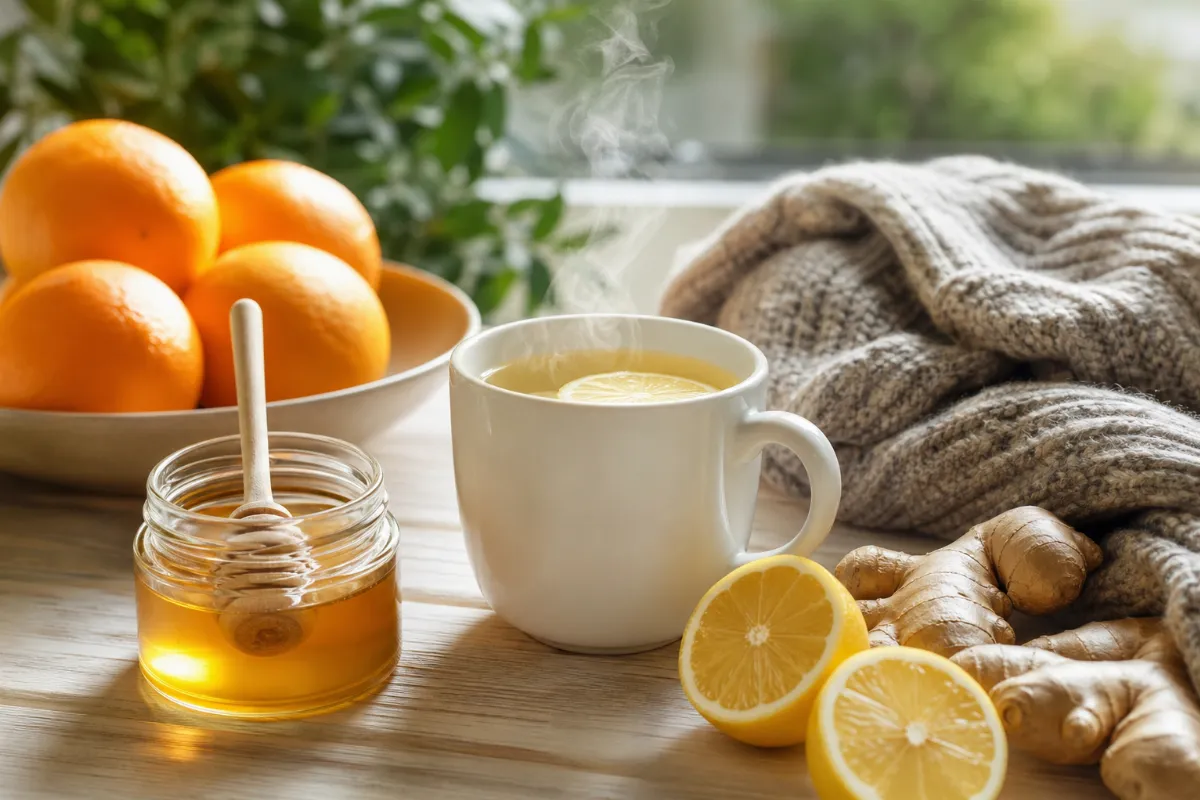
The NHS advises rest, plenty of fluids and healthy food when you have a cold or flu. It lists a warm lemon and honey drink as a home option for a cold. These are comfort measures, not proven ways to avoid infection.
We did not find a trial showing that chicken soup, hot drinks or any specific food prevents colds, so none is claimed here. Our full guide to nutrients for immune function is on the nutrition goal page.
2,3Foods that have been studied
Honey is the one food with a systematic review for cold-type illness.
Honey
Low certaintyAddresses: May ease cough and combined symptoms compared with usual care
Why it may help: A 2021 review of 14 studies found honey improved combined symptom score (mean difference -3.96), cough frequency (SMD -0.36) and cough severity (SMD -0.44) compared with usual care. Against placebo in two studies the difference for combined symptoms was not clear (SMD -0.63, interval -1.44 to 0.18).
How to apply it: Stir a spoonful into a warm drink; the NHS lists a warm lemon and honey drink.
Who it may suit: Adults and children over 12 months.
Precautions: Do not give honey to babies under 12 months (NHS). Moderate risk of bias, mostly compared with usual care rather than placebo. Honey is a sugar, which matters for people managing blood sugar.
16,2Garlic
Not enough evidenceAddresses: Not enough evidence
Why it may help: Only one small trial qualified for the Cochrane review (146 people): 24 colds in the garlic group against 65 in placebo, but time to recovery was similar (4.63 versus 5.63 days). The authors say claims rest largely on poor-quality evidence. Side effects included rash and odour.
How to apply it: Eating garlic in meals is a matter of taste; supplements are not supported by this evidence.
Who it may suit: Adults who enjoy it.
Precautions: Garlic supplements may interact with some medicines; we did not find interaction data in the sources read. Ask a pharmacist.
17Remedies & supplements
Traditional use, laboratory findings and human trials are kept apart. "Natural" does not mean safe.
Zinc
Mixed findingsStudied form and route: Lozenges, syrups and other forms (products and amounts varied widely in trials)
Intended outcome: May shorten a cold already under way; little or no effect on preventing colds
Human evidence: A 2024 Cochrane review (8,526 people) found that for prevention there may be little or no reduction in colds (RR 0.93, low certainty). When used for treatment, zinc may shorten colds by about 2.4 days (mean difference -2.37, low certainty, very high heterogeneity), with more non-serious side effects such as bad taste or stomach upset.
Limits: Most studies were at unclear or high risk of bias, products and amounts differed, and later commentary has criticised the review. We did not find a single recommended dose in the sources read, so none is given.
Interactions and precautions: Side effects were more common than with placebo. Ask a pharmacist about interactions and about use in children, pregnancy and breastfeeding; we did not find safety data for these groups.
18Vitamin C
Mixed findingsStudied form and route: Supplement taken regularly or after symptoms start
Intended outcome: Little effect on catching colds for most people; colds slightly shorter
Human evidence: A Cochrane review (11,306 people) found no reduction in colds in the general community (RR 0.97). Regular use shortened colds by 8% in adults and 14% in children. In marathon runners, skiers and soldiers on subarctic exercises, colds were roughly halved (RR 0.48). Started after symptoms began, there was no consistent effect.
Limits: The review searched to 2012 and trial designs were mixed. The authors suggest routine use is not justified for most people.
Interactions and precautions: Ask a clinician or pharmacist about supplements if you take regular medicines or have a long-term condition.
19,2Vitamin D
Mixed findingsStudied form and route: Supplement
Intended outcome: Possibly fewer respiratory infections in people who are very deficient; overall effect not clear
Human evidence: See the vitamin D entry under 'studied' helps: 2017 pooled analysis OR 0.88; 2025 update OR 0.94, not statistically significant.
Limits: Publication bias was possible in the 2025 analysis.
Interactions and precautions: Too much vitamin D can cause harm; have levels checked by a clinician before starting a high amount.
14,15Echinacea
Not enough evidenceStudied form and route: Many different plant products
Intended outcome: Not shown to help treat colds; a weak preventive benefit is possible
Human evidence: A Cochrane review of 24 trials (4,631 people) found none of 12 prevention comparisons significant on its own; a post hoc pooling suggested a 10% to 20% relative reduction. Of 7 treatment trials measuring duration, only one showed benefit. Adverse effects did not differ significantly.
Traditional use: Echinacea has a long history of traditional use for colds; this is not evidence that it works.
Limits: Products differed widely, so the main analysis was not pooled, and the effect is of questionable clinical relevance.
Interactions and precautions: Immune-modulating herbs may not be appropriate if you have an autoimmune condition, take immunosuppressing treatment or have a transplant; we did not find interaction data, so ask your clinician first.
20,2Black elderberry
Low certaintyStudied form and route: Syrups and capsules
Intended outcome: Possible easing of upper respiratory symptoms
Human evidence: A 2019 meta-analysis of randomized trials (about 180 people in total) reported a large effect on upper respiratory symptoms, but the abstract gives no numbers.
Limits: Very few participants; the authors write that large-scale studies are lacking.
Interactions and precautions: We did not find pregnancy, children or interaction data in the sources read. People with autoimmune conditions or on immune-suppressing treatment should ask a clinician first.
21Garlic supplements
Not enough evidenceStudied form and route: Capsules
Intended outcome: Not enough evidence
Human evidence: One small trial (146 people) in the Cochrane review: 24 colds with garlic versus 65 with placebo over 12 weeks; recovery time was similar.
Limits: Only one trial; self-reported colds.
Interactions and precautions: Rash and odour were reported. Ask a pharmacist about medicines, especially blood thinners.
17Probiotics
Low certaintyStudied form and route: Capsules and milk-based products
Intended outcome: May lower the number of upper respiratory infections
Human evidence: RR 0.76 for at least one infection (low certainty), RR 0.59 for three or more (moderate), episodes about 1.2 days shorter (low) in a 2022 Cochrane review.
Limits: Strains and doses varied.
Interactions and precautions: Mostly gut-related minor side effects. People with weakened immunity should ask a clinician first.
13Pelargonium sidoides extract
Very low certaintyStudied form and route: Liquid or tablet extract
Intended outcome: Possibly easing acute bronchitis symptoms
Human evidence: A Cochrane review found the liquid preparation (not tablets) effective for most outcomes in acute bronchitis, with low-quality evidence; one sinusitis and one common-cold trial were positive but very low quality.
Limits: Publication bias was suspected and trials were investigator-initiated.
Interactions and precautions: Adverse events were more common with the extract than placebo, none serious.
22Andrographis
Low certaintyStudied form and route: Plant extract
Intended outcome: Possible symptom relief in acute respiratory infections
Human evidence: A meta-analysis (7,175 people) found improved cough (SMD -0.39) and sore throat (SMD -1.13) compared with placebo, and shorter time to resolution against usual care. Minor adverse events were mainly gastrointestinal.
Limits: The authors rate trial quality as overall poor, with varied products.
Interactions and precautions: We did not find interaction or pregnancy data in the sources read.
23Therapies & care
Established care for colds and flu is rest, fluids and symptom relief, with a clinician or pharmacist for advice on pain and fever relief. Antibiotics do not treat these viral infections. Clinicians can also check for COVID-19, bacterial complications and other causes. This page does not recommend medicines or doses, and you should never stop a prescribed medicine on your own.
Seasonal flu vaccination
Moderate certaintyPreventive care Inactivated vaccine probably reduces influenza in healthy adults from 2.3% to 0.9%; the NHS says it does not prevent colds. The NHS says it is offered each autumn or early winter to some higher-risk adults and children.
Who it may suit: Discuss with your clinician or pharmacist.
Precautions: Vaccine questions belong with a clinician who knows your health, allergies and medicines.
8,2Pharmacist advice
Moderate certaintyPrimary care The NHS advises asking a pharmacist about pain and fever relief and about which cold and flu remedies are suitable, especially for babies, children and pregnant women.
Who it may suit: Anyone unsure what is safe with their other medicines.
Precautions: Tell the pharmacist about every medicine and supplement you take.
2,3Seeing a GP or clinician
Moderate certaintyMedical care The NHS says to see a GP for a high temperature for more than 3 days, worsening symptoms, shortness of breath or chest pain, no improvement after 10 days, a cough lasting more than 3 weeks, or a long-term condition or weakened immune system.
Who it may suit: Anyone with those signs.
Precautions: For flu, urgent advice is advised sooner for higher-risk groups (see 'When to get help').
2,3What to avoid
Habits, products and claims that can get in the way. Never stop a prescribed medicine without talking to the professional who prescribed it.
Risks that apply to most people
Asking for antibiotics for a cold or flu
High certaintyWhy: The NHS and MedlinePlus say antibiotics do not work on viral infections such as colds and flu. A 2025 Cochrane review of 11 trials found no benefit of antibiotics for the common cold (RR 0.83 for symptoms persisting, interval 0.60 to 1.14) and more side effects (RR 1.8; 2.62 in adults).
Who it applies to: Anyone with cold or flu symptoms.
Try instead: Use rest, fluids and symptom relief, and see a clinician if you are worried or have warning signs. A clinician decides whether a bacterial infection is present.
2,3,1,24Doubling up on cold and flu remedies
Moderate certaintyWhy: The NHS warns that cold and flu remedies often contain paracetamol, so combining them with paracetamol or ibuprofen tablets can mean taking more than you should. MedlinePlus gives the same warning about combination products.
Who it applies to: Anyone using more than one product at a time.
Try instead: Read every label and ask a pharmacist before combining products.
2,1Aspirin for children and teenagers
Moderate certaintyWhy: The NHS says not to give aspirin to anyone under 16. MedlinePlus says children and teens should not take aspirin during colds.
Who it applies to: Parents and carers.
Try instead: Ask a pharmacist or clinician what is suitable for your child's age.
2,3,1Personal triggers to check
Sharing towels, cups and cutlery when someone at home is ill
Moderate certaintyWhy: The NHS lists not sharing towels or cups among its ways to limit the spread of colds.
Who it applies to: Households and shared workplaces.
Try instead: Give the person their own cup and towel and wash hands after contact.
2Touching your eyes, nose or mouth with unwashed hands
Moderate certaintyWhy: The NHS lists not touching your eyes or nose as one of its ways of limiting cold germs, which can live on hands and surfaces for 24 hours.
Who it applies to: Everyone.
Try instead: Wash or sanitise your hands first, and keep tissues handy.
2Going out, to work or school with a high temperature
Moderate certaintyWhy: The NHS advises staying home with a high temperature or if you do not feel well enough for normal activities, and says you are infectious until your symptoms have gone.
Who it applies to: People who feel pressure to carry on.
Try instead: Plan cover in advance so you can rest and avoid passing it on.
2,3Products that need caution
Assuming a supplement will 'boost' you through cold season
Mixed findingsWhy: The NHS says there is little evidence that vitamin C, echinacea or garlic prevent colds or help you get better more quickly. Reviews are mixed or low certainty for zinc, vitamin D, probiotics and elderberry (see the Remedies tab). Natural does not mean risk-free: zinc can cause non-serious side effects, garlic supplements rash and odour, and Pelargonium extract more adverse events than placebo.
Who it applies to: Anyone shopping for 'immune' products.
Try instead: Put habits first. If you still want to try a product, ask a pharmacist, especially if you take medicines, are pregnant or breastfeeding, or have a weakened immune system or autoimmune condition. We did not find interaction data for these products, which is not proof they are safe.
2,18,17,22Unsupported claims
'The flu shot prevents colds' or 'the flu shot gives you the flu'
Moderate certaintyWhy: The NHS says the flu vaccine does not prevent colds, only flu. In the Cochrane trials, inactivated vaccines caused a small increase in fever (1.5% to 2.3%), which is not the same as flu. We did not find a trial result showing the shot causes flu.
Who it applies to: Anyone weighing the flu vaccine.
Try instead: Ask a clinician or pharmacist what the vaccine does and does not do for you.
2,8'Vitamin C stops colds'
Mixed findingsWhy: A Cochrane review found regular vitamin C did not reduce colds in the general community (pooled RR 0.97). Colds were somewhat shorter in regular users (8% in adults, 14% in children), and colds fell in people doing heavy short-term exercise such as marathon running (RR 0.48 in 598 people). Started after symptoms began, there was no consistent effect.
Who it applies to: People buying high-dose vitamin C.
Try instead: Eat a varied diet; see the nutrition goal page for details.
19Common mistakes
Waiting too long to get help
Moderate certaintyWhy: The NHS and CDC list clear signs that need care: breathing difficulty, chest pain, symptoms that improve and then return or worsen, no improvement after 10 days (cold) or 7 days (flu), and symptoms in higher-risk people.
Who it applies to: People who tend to tough it out.
Try instead: Read the 'When to get help' list now so you recognise the signs.
2,3,4Treating a long-lasting 'cold' that is really allergy
Moderate certaintyWhy: Hay fever can last weeks or months, unlike a cold, and only a test or clinician can tell flu, COVID-19 and a cold apart.
Who it applies to: People who get repeated 'colds' in spring or autumn.
Try instead: See the allergies-versus-colds guide and ask a clinician if symptoms are not clearing.
6,2Relying on masks alone
Moderate certaintyWhy: In the 2023 Cochrane review, wearing medical masks in the community probably made little or no difference to influenza-like illness or confirmed infection (moderate certainty), although adherence was low in many trials. The review was not about care settings or about people who are ill and protecting others.
Who it applies to: Anyone planning prevention.
Try instead: Combine hand hygiene, staying home when unwell and, if eligible, talking to a clinician about the flu vaccine.
7Evidence & safety
What the research shows
Hand hygiene probably lowers acute respiratory illness by about 14% (Cochrane 2023, moderate certainty), while community mask wearing probably made little or no difference. The flu vaccine probably lowers flu but not colds. Antibiotics do not help colds. For supplements, regular vitamin C did not reduce colds in the community (RR 0.97), zinc started during a cold may shorten it by about 2 days (low certainty), vitamin D was protective in 2017 pooled data but not statistically significant in a 2025 update, probiotics may lower infections (low certainty), and echinacea and garlic have insufficient evidence.
Limits of the evidence
- Most supplement trials were small, varied in product and dose, and were at risk of bias.
- Hand-hygiene and mask trials had low adherence and mostly high risk of bias.
- Sleep, meditation and gargling findings come from single studies.
- No head-to-head trial of supplements against standard home care was read.
- No pregnancy, children or interaction data were read for the supplements and herbs.
- NHS, CDC and MedlinePlus pages were read through a fetch tool that summarises pages, so wording is second-hand.
Precautions and interactions
- Tell your doctor or pharmacist about every supplement or herb you use, especially if you take regular medicines, blood thinners or immune-suppressing treatment.
- Check labels so you do not double up on paracetamol-containing products.
- Do not give aspirin to children under 16; do not give honey to babies under 12 months.
- Never stop a prescribed medicine because of a cold.
Life-stage considerations
- Babies and children: the NHS advises against salt-water gargling in children, honey under 12 months, steam from a bowl of hot water and decongestants under 6. See a clinician for any child with a high fever, breathing trouble or feeding problems.
- Pregnancy and breastfeeding: some cough and cold medicines are not suitable; the NHS lists flu among conditions needing urgent advice in pregnancy. We found no safety data for the supplements and herbs here.
- Older adults (65 or over), long-term conditions or weakened immune system: the NHS advises urgent advice if flu symptoms start.
Warning signs
- Chest pain, severe difficulty breathing (gasping or unable to speak) or coughing up blood: use your local emergency number. Do not drive yourself (NHS).
- CDC adult emergency signs: difficulty breathing, persistent pain or pressure in the chest or abdomen, persistent dizziness or confusion, not urinating, severe weakness, seizures, or fever or cough that improves and then returns or worsens.
- CDC child emergency signs: fast or troubled breathing, bluish lips or face, ribs pulling in, dehydration, not alert or interacting, fever above 104 F not controlled by medicine, or any fever in a baby under 12 weeks.
- Cold: high temperature for more than 3 days, worsening symptoms, no improvement after 10 days or cough over 3 weeks: see a GP (NHS).
- Flu: aged 65 or over, pregnant, long-term condition, weakened immune system, very unwell, short of breath or no improvement after 7 days: urgent advice (NHS).
Claim checks
Antibiotics help colds and flu
against
2,1,24Vitamin C prevents colds
mixed
19Zinc cures a cold
low
18Echinacea treats colds
insufficient
20Garlic prevents colds
insufficient
17The flu shot prevents colds
against
2,8Face masks in the community prevent flu-like illness
low
7Hand washing reduces respiratory illness
moderate
7Questions people ask
What is the difference between a cold and the flu?
The NHS says a cold builds gradually, mainly affects the nose and throat, and you can usually carry on as normal. Flu comes on within hours, affects more than the nose and throat, and can leave you too unwell for normal activities. Only a test or clinician can say for sure, and COVID-19 and allergies can look similar.
How can I get ready for cold and flu season?
Talk to a clinician or pharmacist about the flu vaccine, build hand washing and tissue habits, protect your sleep, know the warning signs and check your medicine cupboard. These are the steps with the best evidence behind them.
How long does a cold last?
The NHS says you should begin to feel better in about 1 to 2 weeks, and MedlinePlus says some symptoms can last 10 to 14 days. See a clinician if there is no improvement after 10 days.
Do antibiotics work for colds or flu?
No. Antibiotics only work on bacterial infections, and colds and flu are caused by viruses. A Cochrane review found no benefit for the common cold and more side effects in adults.
Does the flu vaccine prevent colds?
No. The NHS says the flu vaccine does not prevent colds. A Cochrane review found inactivated flu vaccine probably reduces influenza in healthy adults from 2.3% to 0.9%.
Does vitamin C prevent colds?
Not for most people. A Cochrane review found regular vitamin C did not reduce colds in the general community, though colds were about 8% shorter in adults who took it regularly.
Does zinc shorten a cold?
A 2024 Cochrane review found zinc started during a cold may shorten it by about 2 days (low-certainty evidence), with more non-serious side effects, and may not prevent colds. Products and amounts varied widely.
Do echinacea, elderberry or garlic work?
Evidence is thin. Cochrane found echinacea not shown to treat colds and only one qualifying garlic trial. A small 2019 meta-analysis of elderberry reported symptom relief, but the abstract gives no numbers.
Does honey help a cough from a cold?
A 2021 review of 14 studies found honey eased cough and symptoms better than usual care, but there are few placebo-controlled trials. The NHS says not to give honey to babies under 12 months.
Do face masks stop colds?
In a 2023 Cochrane review, wearing medical masks in the community probably made little or no difference to influenza-like illness or confirmed infection, while hand hygiene probably reduced acute respiratory illness by 14%.
Is it a cold, flu or allergies?
Flu comes on quickly and feels more severe; a cold is gradual and milder. Hay fever can last weeks or months, unlike a cold. See the allergies-versus-colds guide.
When should I see a doctor?
The NHS says see a GP for a high temperature over 3 days, worsening symptoms, shortness of breath or chest pain, no improvement after 10 days (cold) or 7 days (flu), a cough over 3 weeks, or a long-term condition or weakened immunity. For chest pain, severe breathing difficulty or coughing up blood, use your local emergency number.
References
- MedlinePlus. Common Cold (last updated 16 November 2022). Read 2026-10-31. source
- NHS. Common cold (last reviewed 22 March 2024). Read 2026-10-31. source
- NHS. Flu (last reviewed 3 February 2026). Read 2026-10-31. source
- CDC. Flu symptoms and complications (dated 26 August 2024). Read 2026-10-31. source
- Cohen S, et al. Sleep habits and susceptibility to the common cold. Arch Intern Med. 2009. PMID 19139325. Abstract read 2026-10-31. source
- NHS. Hay fever. Read 2026-10-22. source
- Jefferson T, et al. Physical interventions to interrupt or reduce the spread of respiratory viruses. Cochrane Database Syst Rev. 2023. PMID 36715243. Abstract read 2026-10-31. source
- Demicheli V, et al. Vaccines for preventing influenza in healthy adults. Cochrane Database Syst Rev. 2018. PMID 29388196. Abstract read 2026-10-31. source
- Barrett B, et al. Meditation or exercise for preventing acute respiratory infection: a randomized controlled trial. Ann Fam Med. 2012. PMID 22778122. Abstract read 2026-10-31. source
- Satomura K, et al. Prevention of upper respiratory tract infections by gargling: a randomized trial. Am J Prev Med. 2005. PMID 16242593. Abstract read 2026-10-31. source
- King D, et al. Saline nasal irrigation for acute upper respiratory tract infections. Cochrane Database Syst Rev. 2015. PMID 25892369. Abstract read 2026-10-31. source
- Singh M, et al. Heated, humidified air for the common cold. Cochrane Database Syst Rev. 2017. PMID 28849871. Abstract read 2026-10-31. source
- Zhao Y, et al. Probiotics for preventing acute upper respiratory tract infections. Cochrane Database Syst Rev. 2022. PMID 36001877. Abstract read 2026-10-31. source
- Martineau AR, et al. Vitamin D supplementation to prevent acute respiratory tract infections: systematic review and meta-analysis of individual participant data. BMJ. 2017. PMID 28202713. Abstract read 2026-10-31. source
- Jolliffe DA, et al. Vitamin D supplementation to prevent acute respiratory infections: systematic review and meta-analysis of stratified aggregate data. Lancet Diabetes Endocrinol. 2025. PMID 39993397. Abstract read 2026-10-31. source
- Abuelgasim H, et al. Effectiveness of honey for symptomatic relief in upper respiratory tract infections: a systematic review and meta-analysis. BMJ Evid Based Med. 2021. PMID 32817011. Abstract read 2026-10-31. source
- Lissiman E, et al. Garlic for the common cold. Cochrane Database Syst Rev. 2014. PMID 25386977. Abstract read 2026-10-31. source
- Nault D, et al. Zinc for prevention and treatment of the common cold. Cochrane Database Syst Rev. 2024. PMID 38719213. Abstract read 2026-10-31. source
- Hemila H, Chalker E. Vitamin C for preventing and treating the common cold. Cochrane Database Syst Rev. 2013. PMID 23440782. Abstract read 2026-10-31. source
- Karsch-Volk M, et al. Echinacea for preventing and treating the common cold. Cochrane Database Syst Rev. 2014. PMID 24554461. Abstract read 2026-10-31. source
- Hawkins J, et al. Black elderberry (Sambucus nigra) supplementation effectively treats upper respiratory symptoms: a meta-analysis of randomized, controlled clinical trials. Complement Ther Med. 2019. PMID 30670267. Abstract read 2026-10-31. source
- Timmer A, et al. Pelargonium sidoides extract for treating acute respiratory tract infections. Cochrane Database Syst Rev. 2013. PMID 24146345. Abstract read 2026-10-31. source
- Hu XY, et al. Andrographis paniculata (Chuan Xin Lian) for symptomatic relief of acute respiratory tract infections in adults and children: a systematic review and meta-analysis. PLoS One. 2017. PMID 28783743. Abstract read 2026-10-31. source
- Kenealy T, Arroll B. Antibiotics for the common cold and acute purulent rhinitis. Cochrane Database Syst Rev. 2025. PMID 41277585. Abstract read 2026-10-31. source
Related on AlternativeMed
Related goals
Support Normal Immune Function → Build Everyday Immune-Supportive Habits → Meet Your Nutritional Needs for Immune Health → Reduce Your Risk of Common Infections → Understand Why You Keep Getting Sick → Support Recovery From Common Illness → Return to Your Routine After Illness →
Ingredients, foods and supplements
Zinc → Vitamin C → Vitamin D → Echinacea → Elderberry → Garlic → Andrographis → Echinacea, elderberry, garlic and mushrooms →
Research, safety and claim-check resources
Cough and sore throat remedies → Immune research and evidence → How the immune system works → Probiotics and prebiotics → Meditation →