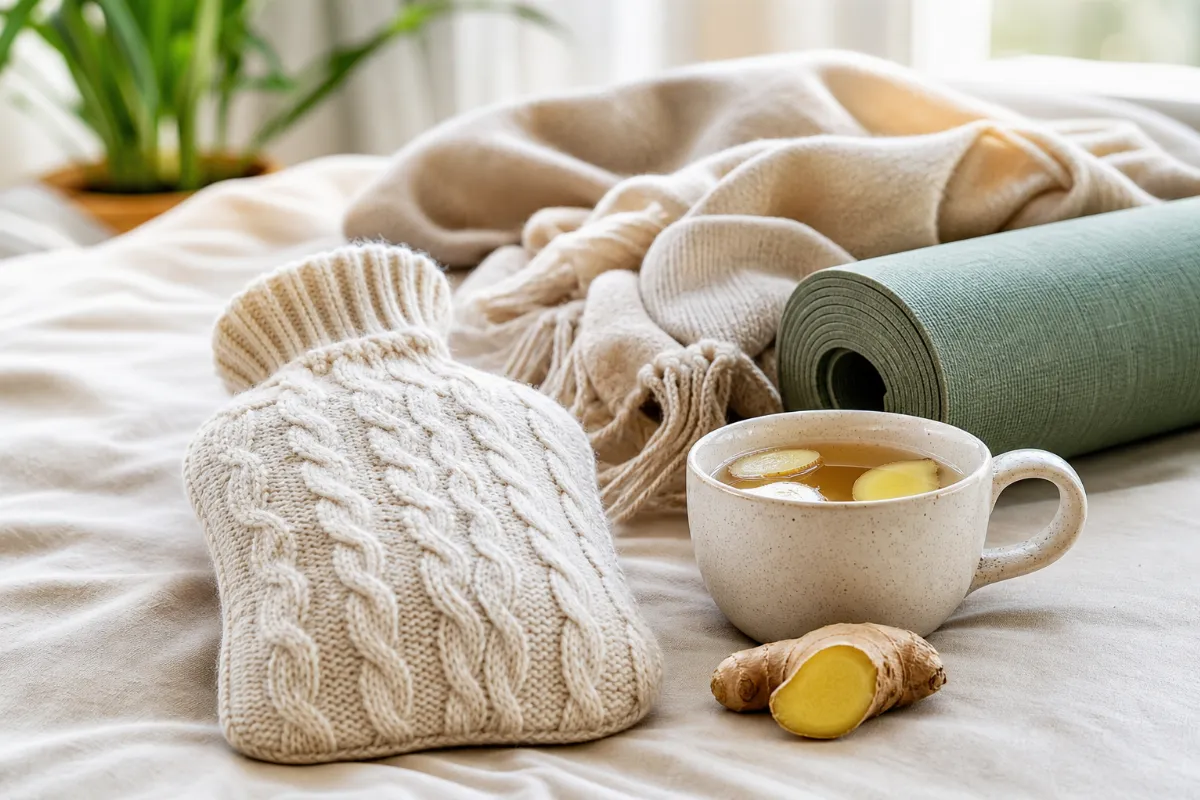
Women's Wellness
Period Pain and Menstrual Cycle Health
Period pain is common, and for many people it can be eased with heat, movement, rest and, when needed, pain relievers and care from a clinician. This page is about easing cramps and discomfort around a period; the normal cycle, premenstrual symptoms and heavy or irregular bleeding have their own pages.
General information, not medical advice. Last updated November 1, 2026. Written by the AlternativeMed editorial team. Not medically reviewed.
Start here
- Try heat first: a warm bath or shower, or a heat pad or hot-water bottle wrapped in a tea towel on your lower belly.
- Keep gently moving: walking, swimming, cycling or yoga. A Cochrane review found low-quality evidence that regular exercise may reduce period pain.
- Keep a short note for two or three cycles of when the pain starts, how bad it is and what helps, then take it to a clinician if pain is getting worse or stopping you doing your usual activities.
Be careful with
- Over-the-counter pain relievers (the anti-inflammatory kind) are not suitable for everyone. Check the label and ask a pharmacist if you have asthma, a stomach or bleeding condition, liver or kidney problems, or take other medicines.
- Herbs and supplements can interact with medicines, and most have not been studied in pregnancy. Do not use them if you could be pregnant without asking a clinician.
- Period pain that is new, getting worse over time, or comes with pain during sex, bleeding between periods or bowel or bladder changes may have a treatable cause. Do not assume it is just a bad period.
Get help when
- Pelvic pain or period pain that is severe or worse than usual and painkillers have not helped: the NHS says to ask for an urgent appointment or call NHS 111 (UK).
- Severe, worsening pain, fainting or feeling dizzy, pain at the tip of the shoulder, difficulty breathing, heavy vaginal bleeding or sudden confusion: the NHS says to call 999 or go to A&E (UK). Elsewhere, use your local emergency number.
- Pain that is stopping you doing your usual daily activities, periods that are becoming more painful, heavier or irregular, or bleeding between periods.
- Pain during sex or when peeing or pooing, a swollen tummy, loss of appetite or weight loss you cannot explain.
- Pelvic pain when you are pregnant or may be pregnant.
About Period Pain and Menstrual Cycle Health
What this goal means
Period pain, also called menstrual cramps or dysmenorrhea, happens when the womb tightens during a period. The NHS says it is often a normal part of the menstrual cycle. It usually lasts up to 3 days and can spread from the tummy to the back and thighs.
ACOG describes primary dysmenorrhea as cramping caused by natural chemicals called prostaglandins made in the lining of the uterus. Levels are highest on the first day of a period, which is why pain usually eases after the first few days.
1,2What it can feel like
The NHS lists painful cramps in the tummy that spread to the back and thighs, and a sharp pain or dull ache, at the start of or just before a period. ACOG adds that for some women severe pain comes with diarrhea, nausea, vomiting, headache and dizziness.
1,2What can contribute
Primary dysmenorrhea has no separate underlying disorder. Secondary dysmenorrhea is caused by a condition of the reproductive organs: the NHS and ACOG list endometriosis, adenomyosis, fibroids and pelvic inflammatory disease. An intrauterine device (IUD) can also cause period pain, especially in the first 3 to 6 months after it is put in.
The NHS says that cutting down on alcohol and not smoking may help ease period pain. Its pelvic pain page adds that pelvic pain in general can also come from constipation or irritable bowel syndrome, urinary tract infections or sexually transmitted infections, and says not to self-diagnose.
1,2,3Conditions that can be behind it
ACOG says pain from a reproductive condition tends to get worse over time, often lasts longer than normal cramps, and may begin days before a period or continue after it ends. Some other conditions, such as Crohn's disease and urinary disorders, can flare around a period. If a condition is found, treating it is part of easing the pain.
2,1Realistic expectations
Primary period pain often becomes less painful as people get older and may improve after giving birth, according to ACOG. Many people find a mix of heat, movement and a pain reliever is enough; others need a clinician's help.
Evidence for non-drug options is mostly low quality. Exercise and heat have the most support among self-care steps; acupuncture and herbs have limited or inconsistent results.
2,4,5Who this applies to
Anyone who has periods. A systematic review of 55 studies in young women aged 12 to 25 found that the share of young women with period pain ranged from 42% to 94% across studies, and affected school and daily activities. This page is about everyday period discomfort; the normal cycle, PMS and heavy bleeding are covered in the linked goals.
6Related conditions and symptoms
Endometriosis and fibroids → Pelvic floor and pelvic pain → PCOS → Women's health: when to get help →
A manageable starting plan
An educational starting point, not a personal prescription. Adjust it to your own situation and any advice from your clinician.
Your first actions
- Start with heat on your lower belly and gentle movement on the first days of your period.
- If you use an over-the-counter anti-inflammatory pain reliever and it is suitable for you, take it at the first sign of pain and follow the label.
- Keep a short note of your pain for two or three cycles: when it starts, how long it lasts and what helps.
Optional additions
- Build a regular exercise routine through the month, such as walking, swimming, cycling or yoga.
- Try relaxation, meditation or gentle yoga for coping with pain.
- Ask a clinician about a TENS machine or hormonal birth control if self-care is not enough.
- Cut down on alcohol and, if you smoke, ask for help to stop.
What to track
- Day the pain starts, how long it lasts and how strong it is on a 0 to 10 scale.
- What you tried and whether it helped.
- Other symptoms such as pain during sex, bleeding between periods, or bowel or bladder changes.
When to reassess
Give heat and exercise a few cycles. If pain is stopping you doing usual activities, is getting worse, or is not helped by self-care and a suitable pain reliever, see a GP or gynecologist.
When to seek professional support
- Book an appointment if your periods become more painful, heavier or irregular, or you bleed between periods.
- Ask about tests and about causes such as endometriosis, adenomyosis or fibroids if pain is severe.
- Use the NHS 111 or urgent route listed above, or local emergency services, for severe or sudden pain.
What helps
Ordered by how well the research supports each step. Evidence strength is shown on every card; precautions sit next to the advice.
Start here
Heat on the lower belly
Low certaintyAddresses: Soothes cramping pain
Why it may help: The NHS lists a warm bath or shower and a heat pad or hot-water bottle on the tummy as first steps. A 2025 meta-analysis of 57 randomized trials (5,359 females) found heat therapy likely reduces pain compared with no treatment and may give pain relief comparable to anti-inflammatory pain relievers, with fewer side effects.
How to apply it: Wrap a hot-water bottle or heat pad in a tea towel and rest it on your lower tummy or back, or take a warm bath or shower.
Who it may suit: Most people with period cramps.
Precautions: Wrap the heat source so it does not burn your skin, and stop if it feels too hot. Trial quality varied, so the evidence is not strong.
1,5Gentle regular exercise
Low certaintyAddresses: May reduce pain intensity
Why it may help: A Cochrane review of 12 trials (854 women) found exercise may have a large effect on reducing menstrual pain compared with no exercise (low-quality evidence). Studies used stretching, core strengthening, yoga, Zumba or aerobic training for about 45 to 60 minutes, three times a week or more. The NHS suggests gentle exercise such as yoga, swimming, walking or cycling.
How to apply it: Build a regular routine through the month, not only during the period. Choose something you enjoy.
Who it may suit: People who are well enough to exercise and want a non-drug option.
Precautions: The review could not tell us about side effects. Stop and get advice if exercise causes pain that is unusual for you.
4,1,2Over-the-counter anti-inflammatory pain relievers, used early
Moderate certaintyAddresses: Reduces cramps for many people
Why it may help: A Cochrane review of 80 trials (5,820 women) found anti-inflammatory pain relievers (NSAIDs) were more effective than placebo for period pain, and more effective than paracetamol (low-quality evidence), but caused more side effects. ACOG says they work best if taken at the first sign of a period or pain and are usually needed for only 1 or 2 days.
How to apply it: Follow the pack label or a pharmacist's advice. Take at the first sign of pain, not once it has built up.
Who it may suit: People without a reason to avoid this class of medicine.
Precautions: ACOG says people with bleeding disorders, asthma, aspirin allergy, liver damage, stomach disorders or ulcers should not take NSAIDs. The Cochrane review found more stomach and nervous-system side effects than placebo. Ask a pharmacist if you take other medicines. This page gives no doses.
7,2,1Massage of the tummy and back
Not enough evidenceAddresses: Comfort and relaxation
Why it may help: The NHS lists massaging the tummy and back as a self-care step. We did not find a trial summary on massage alone for this page, so this is practical advice from the NHS rather than a proven treatment.
How to apply it: Use gentle circular pressure on the lower belly or lower back, with or without a warm pack.
Who it may suit: People who find touch soothing.
Precautions: Stop if it hurts. Avoid pressing on a painful or swollen belly and see a clinician if that is new.
1Rest and enough sleep
Low certaintyAddresses: Helps you cope with discomfort
Why it may help: ACOG says getting enough sleep before and during your period is important and that being well rested can help you cope with discomfort.
How to apply it: Keep regular sleep times around your period and plan a lighter schedule on your worst day if you can.
Who it may suit: Anyone with period pain.
Precautions: If pain keeps you awake most cycles, that is a reason to talk to a clinician.
2Additional options
Relaxation, meditation and yoga
Low certaintyAddresses: Help with coping with pain
Why it may help: ACOG says meditating or practicing yoga can help you cope with pain, and that some physical therapy teaches mental techniques such as relaxation exercises and biofeedback.
How to apply it: Try a short guided relaxation or gentle yoga session. Learn biofeedback with a trained therapist.
Who it may suit: People who want a skill-based approach next to other measures.
Precautions: Choose a qualified teacher if you have a pelvic or back condition.
2,4Cutting down on alcohol and not smoking
Not enough evidenceAddresses: May ease period pain
Why it may help: The NHS says cutting down on alcohol and not smoking may also help ease period pain. We did not find a trial on this for the page.
How to apply it: If you smoke or drink alcohol, ask a pharmacist or clinician about support to cut down.
Who it may suit: People who smoke or drink alcohol regularly.
Precautions: Do not stop alcohol suddenly if you drink heavily; get medical advice first.
1Still being studied
Acupressure and acupuncture
Not enough evidenceAddresses: Possible pain relief; unproven
Why it may help: ACOG says acupuncture, acupressure and nerve stimulation therapies may be useful. A Cochrane review of 42 trials (4,640 women) found insufficient evidence to show whether acupuncture or acupressure work for period pain. Results were inconsistent against sham treatment, and the only study at low risk of bias found no difference.
How to apply it: If you try it, see a licensed practitioner and tell them about any bleeding disorder or blood thinner.
Who it may suit: People who want to try a non-drug option and accept the uncertainty.
Precautions: Quality of the evidence is low. Tell your practitioner if you could be pregnant.
8,2A TENS machine
Low certaintyAddresses: May reduce pain
Why it may help: The NHS says a GP may suggest a TENS machine, a small device that uses mild electrical impulses. A 2024 Cochrane review of 20 trials (585 women) found high-frequency and low-frequency TENS may reduce pain compared with placebo or no treatment (low-certainty evidence); few trials reported side effects.
How to apply it: Ask a clinician or physiotherapist how to use a machine safely.
Who it may suit: People with moderate-to-severe pain who want a drug-free option.
Precautions: Ask a clinician or physiotherapist before using a TENS machine, especially if you are pregnant or have an implanted device, and follow the device instructions.
9,1Food & nutrition
Food and drink around your period
No food has been shown to cure period pain. The NHS says cutting down on alcohol may help ease period pain, and it lists warm drinks only under general self-care rather than as a treatment. This page gives no meal plan or calorie advice.
If your period causes nausea, diarrhea or vomiting, which ACOG says can come with severe pain, keep sipping fluids and eat small, plain meals. Seek advice if you cannot keep fluids down.
1,2Foods and herbs that have been studied
The Cochrane supplement review (27 trials) included foods and herbs used as teas or powders. All the evidence was low or very low quality. Summaries are below; none is a proven treatment.
Ginger
Low certaintyAddresses: Possibly lower pain scores
Why it may help: A meta-analysis of four placebo-controlled trials found ginger reduced pain scores in primary dysmenorrhea, and the authors described the evidence as suggestive. The Cochrane review found very limited evidence of effectiveness from three trials (266 women).
How to apply it: Trials used ginger powder in the first 3 to 4 days of the period. Fresh ginger tea is not the same as the studied powder.
Who it may suit: People who like ginger and have no reason to avoid it.
Precautions: Check with a clinician if you take blood thinners, have a bleeding disorder, or are pregnant.
10,11Fenugreek
Very low certaintyAddresses: Limited evidence of lower pain scores
Why it may help: The Cochrane review found very limited evidence of effectiveness for fenugreek from one trial of 101 women.
How to apply it: Studied as a supplement. Seeds are used in cooking, but no dose can be recommended from this evidence.
Who it may suit: People who already use it in food.
Precautions: Do not use supplements if you could be pregnant without asking a clinician.
11Fennel, chamomile and dill
Very low certaintyAddresses: Inconsistent results
Why it may help: In the Cochrane review there was no consistent evidence for fennel or dill, and very limited evidence that chamomile was better than an anti-inflammatory pain reliever, from one trial of 160 women.
How to apply it: Used as herbal teas or extracts in trials; strengths varied.
Who it may suit: People who enjoy these as teas.
Precautions: Allergy to related plants is possible, for example with chamomile. Ask a clinician if you are pregnant.
11Remedies & supplements
Traditional use, laboratory findings and human trials are kept apart. "Natural" does not mean safe.
Ginger (powder or capsules)
Low certaintyStudied form and route: Powder or capsules taken in the first days of the period
Intended outcome: Lower pain scores
Human evidence: A meta-analysis of four placebo-controlled trials found ginger reduced pain scores in primary dysmenorrhea; the Cochrane review found very limited evidence from three trials (266 women).
Limits: Few, small trials, mostly from Iran and other middle-income countries; the Cochrane review rated the evidence low or very low.
Interactions and precautions: Possible interactions with blood-thinning medicines; check with a pharmacist. Do not use if you could be pregnant without asking a clinician.
Dose, only as reported in studies: Trials in the meta-analysis used 750 to 2,000 mg of ginger powder during the first 3 to 4 days of the cycle.
10,11Vitamin B1 (thiamine)
Very low certaintyStudied form and route: Oral supplement
Intended outcome: Lower pain scores
Human evidence: The Cochrane review found very limited evidence from one trial of 120 women. ACOG says vitamin B1 or magnesium supplements may be helpful but not enough research has been done to recommend them.
Limits: One small trial; no firm conclusion.
Interactions and precautions: Ask a pharmacist before combining with other supplements.
11,2Magnesium
Not enough evidenceStudied form and route: Oral supplement
Intended outcome: Possible pain relief
Human evidence: ACOG says magnesium supplements may be helpful but there is not enough research to recommend them for period pain.
Limits: We did not find a trial summary on magnesium for this page.
Interactions and precautions: Magnesium can interact with some medicines and cause loose stools; people with kidney disease should ask a clinician first.
2Vitamin E
Evidence againstStudied form and route: Oral supplement
Intended outcome: Lower pain scores
Human evidence: The Cochrane review found no evidence of effectiveness for vitamin E in two trials (135 women).
Limits: Small trials.
Interactions and precautions: High intakes can affect bleeding; ask a pharmacist if you take blood thinners.
11Zinc, valerian and fish oil
Very low certaintyStudied form and route: Oral supplements
Intended outcome: Lower pain scores
Human evidence: The Cochrane review found very limited evidence for zinc sulphate (one trial) and valerian (one trial of 100 women). Results for fish oil were inconsistent in one trial.
Limits: Single small trials; no firm conclusion.
Interactions and precautions: Valerian can cause drowsiness. Ask a clinician before use if you take other medicines.
11Therapies & care
Established professional care for painful periods starts with a conversation with a GP or gynecologist. They can suggest stronger pain relievers, a TENS machine or hormonal birth control, and look for a cause such as endometriosis, adenomyosis or fibroids. This page does not recommend medicines or doses, and you should not stop a prescribed medicine on your own.
Anti-inflammatory pain relievers (prescription strength)
Moderate certaintyMedical treatment The NHS says a GP may recommend anti-inflammatory medicines if pain is severe. ACOG says medications are usually the first step. A Cochrane review found this class effective but with more side effects.
Who it may suit: People whose pain is not controlled by self-care.
Precautions: Not for everyone; see the cautions listed above.
1,2,7Hormonal birth control
Low certaintyMedical treatment The NHS and ACOG say contraception such as the pill, implant, injection or a hormonal IUD can thin the womb lining, make periods lighter and ease pain. A Cochrane review found limited evidence for the combined pill.
Who it may suit: People who also want contraception or whose pain is not controlled by other measures.
Precautions: A clinician decides on suitability, including for people with clotting risk, migraines or who smoke. This page does not recommend products or doses.
1,2TENS machine
Low certaintyDevice Described by the NHS as a small device that uses mild electrical impulses to reduce pain. A 2024 Cochrane review found low-certainty evidence that TENS may reduce pain.
Who it may suit: People with moderate-to-severe pain.
Precautions: See the cautions listed above.
9,1Physical therapy and biofeedback
Low certaintyTherapy ACOG says physical therapy that eases trigger points may help with pain, and that some physical therapy teaches mental techniques such as relaxation and biofeedback.
Who it may suit: People with ongoing pain who want to learn coping skills.
Precautions: See a qualified therapist.
2Tests and treating a cause
Moderate certaintyAssessment The NHS says tests such as an ultrasound scan may be needed to find the cause of period pain. ACOG says surgery may be considered if other treatments do not relieve pain, depending on the cause.
Who it may suit: People whose pain is not relieved by treatment, or whose symptoms suggest a condition.
Precautions: Decisions about surgery are made with a specialist.
1,2What to avoid
Habits, products and claims that can get in the way. Never stop a prescribed medicine without talking to the professional who prescribed it.
Risks that apply to most people
Ignoring pain that is getting worse over time
Moderate certaintyWhy: ACOG says pain from a reproductive condition tends to get worse over time and often lasts longer than normal cramps. The NHS lists more painful, heavier or irregular periods as a reason to see a GP.
Who it applies to: Anyone whose period pain is changing.
Try instead: Note when pain starts and how long it lasts, and book an appointment.
2,1Endometriosis and fibroids → Abnormal bleeding, persistent pain and when to get help →
Taking anti-inflammatory pain relievers when they are not suitable
Moderate certaintyWhy: ACOG says people with bleeding disorders, asthma, aspirin allergy, liver damage, stomach disorders or ulcers should not take NSAIDs. A Cochrane review found they cause more side effects than placebo.
Who it applies to: People with those conditions, and anyone taking other medicines.
Try instead: Ask a pharmacist or clinician which options suit you; use heat and gentle movement alongside.
2,7Using herbs or supplements if you could be pregnant
Low certaintyWhy: The supplement review did not look at pregnancy and most trials did not report side effects.
Who it applies to: Anyone who could be pregnant, or who is breastfeeding.
Try instead: Ask a clinician before using any herb or supplement.
11Personal triggers to check
Alcohol and smoking
Not enough evidenceWhy: The NHS says cutting down on alcohol and not smoking may help ease period pain.
Who it applies to: People who drink or smoke.
Try instead: Cut down on both and see if pain changes over a few cycles.
1A newly fitted intrauterine device (IUD)
Moderate certaintyWhy: The NHS says an IUD can cause period pain, particularly in the first 3 to 6 months after it is put in.
Who it applies to: People who have just had an IUD fitted.
Try instead: Tell the clinic who fitted it if pain is severe or does not settle after 3 to 6 months.
1Products that need caution
Herbal and supplement products sold for cramps
Low certaintyWhy: A Cochrane review found all the evidence was low or very low quality, with small trials, and safety was not well reported.
Who it applies to: People buying herbal pills, teas or vitamins for cramps.
Try instead: Treat them as optional extras, not a replacement for heat, movement or medical care; check interactions with a pharmacist.
11Unsupported claims
"Vitamin E fixes period cramps"
Evidence againstWhy: The Cochrane supplement review found no evidence of effectiveness for vitamin E in two trials (135 women).
Who it applies to: Product labels and social media.
Try instead: Look at heat, movement and discussing options with a clinician.
11"Natural remedies are proven to treat period pain"
Evidence againstWhy: The same review concluded there is no high-quality evidence to support any dietary supplement for dysmenorrhoea and that evidence of safety is lacking, although some low-quality evidence suggested benefit for a few.
Who it applies to: Marketing for herbal and supplement products.
Try instead: Ask what the evidence is, and who the trials included.
11Common mistakes
Waiting until pain peaks before treating it
Low certaintyWhy: ACOG says anti-inflammatory pain relievers work best if taken at the first sign of a period or pain.
Who it applies to: People using this class of pain reliever.
Try instead: Plan ahead if your pain is predictable, and follow the label.
2Assuming severe period pain is normal
Moderate certaintyWhy: The NHS says to see a GP if pain stops you doing your usual daily activities; a condition may be behind the pain and treating it helps.
Who it applies to: Anyone whose pain disrupts school, work or home life.
Try instead: Book an appointment and bring a symptom note.
1,2Evidence & safety
What the research shows
Period pain is often a normal part of the cycle. Heat, gentle exercise and a suitable over-the-counter anti-inflammatory pain reliever are the best-supported first steps. Cochrane reviews found low-quality evidence that exercise may reduce pain, low-certainty evidence for TENS, and insufficient evidence for acupuncture and acupressure. No dietary supplement has high-quality evidence, and ginger has only suggestive support. Pain that is severe, worsening or accompanied by other symptoms needs a clinician, since a treatable condition may be the cause.
Limits of the evidence
- Most exercise and supplement trials were small, and the Cochrane reviews rated them low or very low quality.
- The supplement review included mostly students in their late teens or early twenties, and most trials were in Iran and other middle-income countries, so results may not apply to everyone.
- The heat therapy review pooled many trials with varying methods and high variation between studies.
- Most trials looked at primary dysmenorrhea; very few studied secondary dysmenorrhea.
- Few trials reported side effects.
Precautions and interactions
- Check herbs and supplements with a pharmacist if you take any medicine, especially blood thinners.
- Anti-inflammatory pain relievers are not suitable for everyone; see the cautions above.
- Never stop a prescribed medicine, including hormonal birth control, without speaking to your prescriber.
Life-stage considerations
- Teenagers and young women: period pain is very common in this group and can affect school; a clinician can help and parents or carers can support. Seek advice if pain is severe.
- Pregnancy and breastfeeding: most herbs and supplements have not been studied; avoid them unless a clinician agrees. Pelvic pain in someone who may be pregnant needs prompt advice.
- Older women and people near menopause: new or changing period pain, or bleeding between periods, needs a clinician.
Warning signs
- Pelvic or period pain that is severe or worse than usual and not helped by painkillers: ask for an urgent appointment (NHS says call 111 in the UK).
- Severe, worsening pain, fainting, shoulder-tip pain, difficulty breathing, heavy bleeding or sudden confusion: emergency care (999 in the UK, or your local emergency number).
- Pain stopping usual activities, periods becoming more painful, heavier or irregular, or bleeding between periods.
- Pain during sex or when peeing or pooing, a swollen tummy, loss of appetite or weight loss you cannot explain.
- Fever, unusual discharge or pain when peeing with pelvic pain (NHS lists these as reasons to get help from NHS 111).
Claim checks
Exercise reduces period pain
Low certaintyA Cochrane review found exercise may have a large effect on menstrual pain compared with no exercise, but the evidence was low quality.
4Herbs and vitamins cure period cramps
Evidence againstA Cochrane review found no high-quality evidence for any dietary supplement. Vitamin E showed no benefit and ginger showed only suggestive benefit.
11,10Acupuncture works for period pain
Not enough evidenceA Cochrane review found insufficient evidence; results compared with sham treatment were inconsistent and inconclusive.
8Heat works as well as a pain reliever
Low certaintyA 2025 meta-analysis found heat may give comparable relief to anti-inflammatory pain relievers with fewer side effects, but trial quality varied.
5Questions people ask
Is period pain normal?
Mild to moderate cramps are common and often part of the cycle, but the NHS says to see a GP if pain stops you doing usual daily activities. ACOG says more than half of women who menstruate have some pain for 1 to 2 days each month.
How long does period pain last?
The NHS says it usually lasts up to 3 days. ACOG says pain tends to lessen after the first few days as prostaglandin levels fall.
Does heat help period pain?
The NHS lists a warm bath or a heat pad as a first step, and a 2025 meta-analysis of 57 trials found heat therapy likely reduces pain compared with no treatment.
Does exercise help period pain?
A Cochrane review found low-quality evidence that regular exercise may reduce period pain, with studies using about 45 to 60 minutes three times a week or more.
Do natural remedies work for cramps?
A Cochrane review of 27 trials found all evidence was low or very low quality, no benefit for vitamin E, and only very limited evidence for a few herbs such as ginger and fenugreek.
Can an IUD cause cramps?
Yes. The NHS says an IUD can cause period pain, especially in the first 3 to 6 months after it is put in.
Is acupuncture worth trying?
A Cochrane review found insufficient evidence to say whether acupuncture or acupressure work for period pain, although ACOG says they may be useful.
What is a TENS machine?
The NHS describes it as a small device that uses mild electrical impulses to reduce pain. A 2024 Cochrane review found low-certainty evidence that it may reduce pain.
When should I see a doctor about period pain?
See a GP if periods become more painful, heavier or irregular, if pain stops you doing your usual activities, if you have pain during sex or when peeing or pooing, or if you bleed between periods. Severe pain that painkillers do not help needs urgent advice.
Can period pain be a sign of something else?
Sometimes. The NHS and ACOG list endometriosis, adenomyosis, fibroids and pelvic inflammatory disease as possible causes. Only a clinician can diagnose them.
References
- NHS. Period pain (page last reviewed 18 March 2026). Read 2026-11-01. source
- ACOG. Dysmenorrhea: Painful Periods. Read 2026-11-01. source
- NHS. Pelvic pain. Read 2026-11-01. source
- Armour M, et al. Exercise for dysmenorrhoea. Cochrane Database Syst Rev. 2019. PMID 31538328. source
- Yuan D, et al. Heat therapy for primary dysmenorrhea: a systematic review and meta-analysis. Front Med (Lausanne). 2025. PMID 41657584. source
- Pouraliroudbaneh S, et al. Heavy menstrual bleeding and dysmenorrhea in adolescents: A systematic review of self-management strategies, quality of life, and unmet needs. Int J Gynaecol Obstet. 2024. PMID 38654586. source
- Marjoribanks J, et al. Nonsteroidal anti-inflammatory drugs for dysmenorrhoea. Cochrane Database Syst Rev. 2015. PMID 26224322. source
- Smith CA, et al. Acupuncture for dysmenorrhoea. Cochrane Database Syst Rev. 2016. PMID 27087494. source
- Han S, et al. Transcutaneous electrical nerve stimulation (TENS) for pain control in women with primary dysmenorrhoea. Cochrane Database Syst Rev. 2024. PMID 39037764. source
- Daily JW, et al. Efficacy of Ginger for Alleviating the Symptoms of Primary Dysmenorrhea: A Systematic Review and Meta-analysis of Randomized Clinical Trials. Pain Med. 2015. PMID 26177393. source
- Pattanittum P, et al. Dietary supplements for dysmenorrhoea. Cochrane Database Syst Rev. 2016. PMID 27000311. source
Related on AlternativeMed
Related goals
Understand Your Menstrual Cycle → Manage Premenstrual Symptoms → Navigate Heavy or Irregular Periods → Recognize When Hormonal Symptoms Need Evaluation → Ease Everyday Muscle Tension → Manage Everyday Physical Discomfort →
Ingredients, foods and supplements
Ginger → Fenugreek → Fennel → Chamomile → Magnesium → Vitamin E →
Research, safety and claim-check resources
Women's Wellness: A Starting Guide by Life Stage → Nutrition for Women → Women's Wellness Research and Evidence → Yoga → Acupuncture → Acupressure → Medicine interactions → Pregnancy and breastfeeding safety →