Fruits · Fruit
Passion Fruit
Passiflora edulis · also called Purple passion fruit, yellow passion fruit, granadilla, maracuya (Spanish)
Passion fruit is a tropical fruit eaten for its juicy, seedy pulp. It is rich in fibre and has a moderate amount of vitamin C. The human studies tested peel extract, peel flour or seed compounds, not the pulp, and the evidence is low or very low. The main cautions are allergy, especially in people with latex allergy, and natural cyanide-releasing compounds in the skin.
General information, not medical advice. Last substantive update · Not medically reviewed. A named clinician has not signed off on this page. How this page is made
About Passion Fruit
Passion fruit is a tropical fruit with a lot of fibre and some vitamin C. It is a nutritious food, not a proven remedy: the health studies used peel extract, peel flour or seed compounds, and most results are low certainty.
What it is
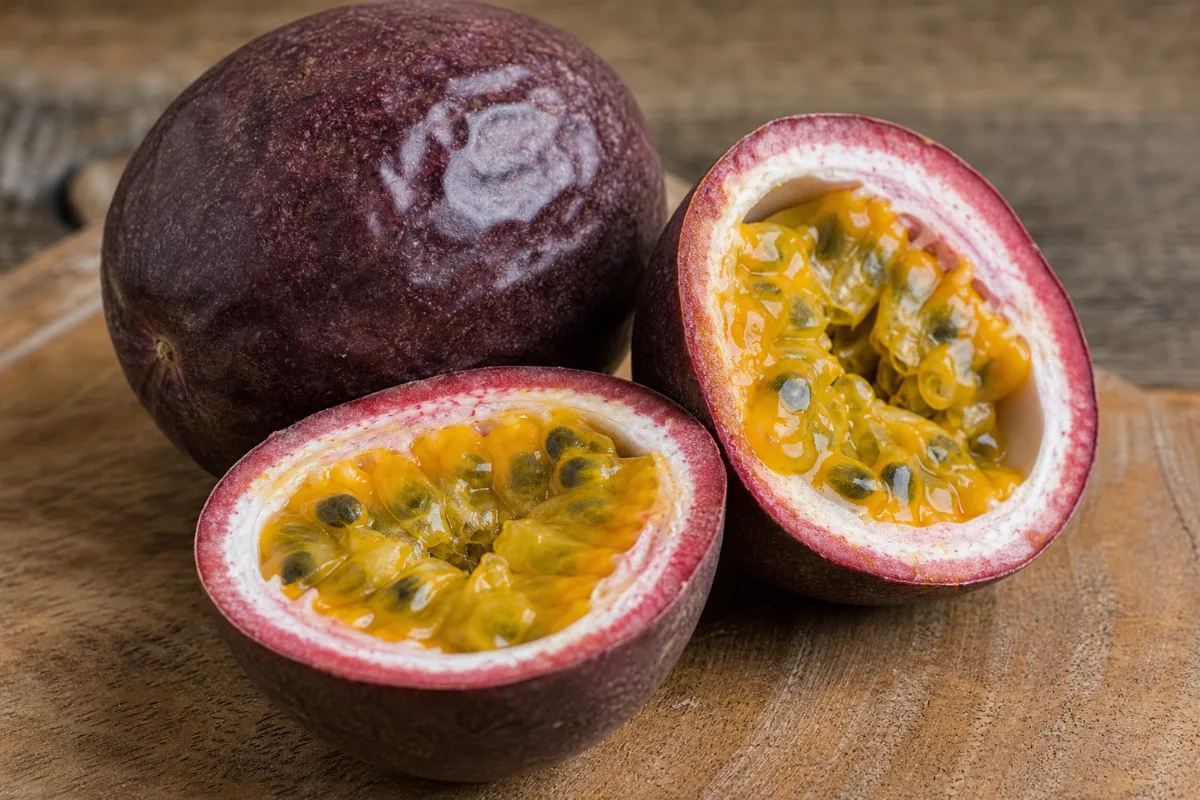
Passion fruit is the fruit of Passiflora edulis, a climbing vine in the passion-flower family. People eat the juicy pulp and seeds inside the tough skin. The purple and yellow forms are two forms of one species.
USDA data for raw purple passion fruit pulp with seeds: 97 kcal per 100 g, 10.4 g of fibre, 11.2 g of sugars, 30 mg of vitamin C and 348 mg of potassium. One typical fruit has an edible part of only about 18 g, which works out to roughly 17 kcal, 1.9 g of fibre and 5 mg of vitamin C. A full cup of pulp (236 g) has about 24.5 g of fibre. Figures vary with variety and ripeness.
What the research shows
The firmest fact is about vitamin C: too little causes scurvy, and vitamin C foods prevent it. That is a nutrient fact, not a passion fruit trial.
The best-known human results are for a purple passion fruit peel extract in knee osteoarthritis and, in a single small trial, asthma. A 2025 review rated the osteoarthritis evidence low. Yellow passion fruit peel flour was tested in type 2 diabetes in two small studies.
Seed piceatannol was tested for insulin sensitivity and skin, in trials involving the company that makes it. A cholesterol result came from a combination drink, and another from a different species. No study tested eating the pulp for a disease outcome.
The fruit versus peel, flour and seed extracts
The osteoarthritis and asthma trials used peel extract pills. The diabetes studies used peel or albedo flour. The skin and metabolic trials used seed piceatannol. A result for one of these does not apply to the pulp you eat, and eating the pulp does not give an extract's effect.
Amounts
This page gives no amounts to eat or take. Ask a doctor or pharmacist what is right for you, especially if you take medicine.
At a glance
Traditional uses history, not proof
- Eaten fresh, with the seeds, and used in drinks and desserts
- The plant is traditionally used in various cultures for calming and antidiabetic effects (2026 review); long use is not proof it works
Studied for research
- Preventing scurvy through vitamin C, high certainty for the nutrient, no passion fruit trial
- Knee osteoarthritis pain, low certainty (peel extract pills)
- Blood sugar in type 2 diabetes, low certainty (peel or albedo flour)
- Asthma symptoms, very low certainty (peel extract, one trial)
- Cholesterol, skin and metabolic markers, very low to low certainty (other species, combinations and seed compounds)
Main compounds
- Vitamin C (ascorbic acid)
- Dietary fibre
- Beta-carotene
- Piceatannol (seeds)
- Flavonoids and anthocyanins (peel)
- Cyanogenic glycosides (peel, juice, fibre)
Common forms
- Fresh pulp with seeds as food
- Juice and pulp drinks (often sweetened)
- Peel extract pills (used in osteoarthritis and asthma trials; not the fruit)
- Peel or albedo flour (used in diabetes studies; not the fruit)
- Seed extract or piceatannol capsules and drinks (used in metabolic and skin trials)
Research links: NHS: Scurvy · Network meta-analysis of supplements in osteoarthritis (2025) · Systematic review of Passiflora edulis in animal diabetes studies (2026) · Research Library · Genes & Biomarkers Library
What it is and its history
- Accepted scientific name
- Passiflora edulis
- Naming authority
- Sims (GBIF accepted; usageKey 2874190)
- Common names
- Passion fruit (English); Purple passion fruit (English); Yellow passion fruit (English); Granadilla (English); Maracuya (Spanish)
- Family or group
- Passifloraceae (the passion-flower family).
- Classification
- Plantae > Tracheophyta > Magnoliopsida > Malpighiales > Passifloraceae > Passiflora > Passiflora edulis
- Native range
- Not verified from a source read. A 2020 review says it is widely distributed in tropical and subtropical areas.
- Habitat
- Not verified from a source read.
- What it looks like
- Roots: Not verified.; Stems: Not verified.; Leaves: Not verified.; Flowers: Not verified.; Fruit: The fruit is the food: edible pulp with seeds inside a tough skin. USDA lists one fruit without refuse as 18 g.
- Cultivation
- Not verified from a source read. A 2021 plant study sampled purple and yellow fruit from an orchard in Fujian, China.
- Harvest and processing
- Eaten as fresh pulp with seeds, juice and pulp drinks. Studies used peel extract, peel or albedo flour, seed extract or piceatannol, which are not the same as the pulp.
- Look-alikes and adulterants
- Name: Passionflower herb (Passiflora incarnata); Note: A different species used as an herb, mainly as tea or extract. Results for that herb do not apply to the fruit.; Name: Passiflora tenuifila and Passiflora setacea; Note: Other passion fruit species. One 2025 trial used Passiflora tenuifila powder; its results should not be assumed for Passiflora edulis.; Name: Purple versus yellow passion fruit; Note: Passiflora edulis f. edulis (purple) and Passiflora edulis f. flavicarpa (yellow) are two forms of one species. Peel flavonoids were higher in purple fruit (lab study).
- Sustainability and conservation
- Not assessed.
Photographs
Traditional use and history history, not clinical proof
| Tradition or era | Documented use | Source |
|---|---|---|
| Traditional use of the plant | A 2026 systematic review says Passiflora edulis is traditionally used in various cultures for its calming and antidiabetic effects. It does not name which part or culture. | p42900770 |
| Culinary use | Eaten as fresh pulp with seeds and in drinks and desserts (general knowledge; no historical source was read). | Not verified |
Traditional use shows how it was used. It does not show that it works or is safe today.
What is inside, and how it may work
What it contains and how those compounds act in cells and animals. Laboratory and animal mechanisms are not proven effects in people.
Main compounds
| Compound | Family | Where it is concentrated | Activity studied | Level of evidence |
|---|---|---|---|---|
| Ascorbic acid (vitamin C) PubChem 54670067 | vitamin | Pulp USDA: 30 mg per 100 g raw purple passion fruit (about 5 mg in one fruit of 18 g) | Essential nutrient; prevents scurvy (NHS). 28 31 27 | Human data |
| Dietary fibre | fibre | Pulp with seeds USDA: 10.4 g per 100 g; about 24.5 g in 1 cup (236 g) | Composition only; no passion fruit trial of fibre effects was found. 31 | Composition only |
| Beta-carotene | carotenoid | Pulp USDA: 743 micrograms per 100 g (vitamin A as RAE: 64 micrograms) | Can be turned into vitamin A by the body. No outcome trial found. 31 | Composition only |
| Piceatannol PubChem 667639 | stilbene (polyphenol) | Seeds | Studied as seed-derived capsules and drinks for insulin sensitivity and skin; also in lab work. 29 12 13 16 14 | Human trials of supplements, mixed |
| Flavonoids, anthocyanins and procyanidins | polyphenols | Peel (higher in purple than yellow fruit) | Peel extract pills were tested in osteoarthritis and asthma trials; peel content rises with ripeness in a lab study. 17 8 19 10 | Human trials of an extract |
| Cyanogenic glycosides (for example prunasin) PubChem 119033 | plant defence compounds | Peel, juice and by-product fibre (earlier lab reports) Not given: amounts from the 1996 and 2009 reports were not re-checked | Can release cyanide; effect of eating pulp not tested. 30 22 32 4 | Lab (earlier reports not re checked) |
Mechanisms, receptors and pathways
| Target or pathway | Gene or receptor | What was found | Level |
|---|---|---|---|
| Vitamin C and scurvy | Not specified | Too little vitamin C over a long time causes scurvy; vitamin C foods prevent and treat mild cases (NHS). 26 27 | Human data |
| Starch- and sugar-digesting enzymes | alpha-amylase, alpha-glucosidase | In test tubes, piceatannol from the seeds inhibited both enzymes. Test-tube result only. 14 | Laboratory research |
| Allergy: cross-reactive plant proteins | Class I chitinases (probable) | Proteins of about 30 to 45 kd in passion fruit and other foods were recognised by blood serum from people with latex-fruit allergy. 6 | Human serum (lab) |
| Th2 allergic inflammation | IgE, interleukins 4 and 5 | Peel in the diet lowered immunoglobulin E and interleukins 4 and 5 in asthmatic mice. 9 | Animal research |
| Gene activity in blood | ABCA1; PPAR-alpha and NF-kappa B (authors' suggestion) | Passiflora tenuifila powder changed 374 genes in 16 overweight adults. This is a different species and a hypothesis-generating result. 7 | Human data |
Absorption, metabolism and elimination
- Absorption
- Not studied for passion fruit pulp.
- Distribution
- Not found.
- Metabolism
- Not found.
- Elimination
- Not found.
- Bioavailability
- Not established. Cooking and storage lower vitamin C in many foods generally, but no passion fruit figure was read.
Isolated compounds versus whole extracts
The human trials used peel extract pills, peel or albedo flour, seed piceatannol, a combination jelly drink, or powder of a different species. None tested the pulp people eat. A result for one form does not carry over to another, and eating the pulp does not give an extract's effect.
Nutritional composition
Nutrition from USDA FoodData Central (purple passion fruit, raw, FDC 169108, SR Legacy April 2018 release; values read from a saved copy of that record on 2026-10-25). Per 100 g of pulp with seeds: 97 kcal, 10.4 g fibre, 11.2 g total sugars, 23.4 g carbohydrate, 2.2 g protein, 0.7 g fat, about 73 g water, 30 mg vitamin C (33% of the FDA Daily Value), 348 mg potassium, 1.6 mg iron, 29 mg magnesium, 12 mg calcium, 68 mg phosphorus, 14 micrograms folate (DFE), 0.13 mg riboflavin, 64 micrograms vitamin A (RAE), 743 micrograms beta-carotene and 0.7 micrograms vitamin K. One typical fruit (18 g of edible pulp with seeds; worked out from USDA): about 17 kcal, 1.9 g fibre, 2.0 g sugars, 5.4 mg vitamin C, 63 mg potassium and 0.3 mg iron. One cup of pulp with seeds (236 g): about 229 kcal, 24.5 g fibre, 26.4 g sugars and 71 mg vitamin C. Figures vary with variety, ripeness and storage. Passion fruit is a fibre-rich fruit with a moderate vitamin C content; sweetened passion fruit drinks and desserts add sugar.
1 high certainty3 low certainty3 very low certainty2 not enough evidence
What was looked at
The 9 benefits and uses checked for Passion Fruit, each with how strong the evidence is. Tap one to open it.
- Preventing scurvy (severe vitamin C shortage)High certainty
- Knee osteoarthritis pain (purple passion fruit peel extract, not the fruit)Low certainty
- Blood sugar in type 2 diabetes (peel or albedo flour, not the pulp)Low certainty
- Asthma symptoms (purple passion fruit peel extract, not the fruit)Very low certainty
- Cholesterol and blood-vessel inflammation markers (a related species and a combination drink)Very low certainty
- Insulin sensitivity and blood pressure (piceatannol from the seeds, not the fruit)Very low certainty
- Skin moisture and wrinkles (seed extract or piceatannol, not the fruit)Low certainty
- Bowel regularity and digestion (fibre in the pulp)Not enough evidence
- Antioxidant, anti-tumour and other lab findingsNot enough evidence
Lab markers tracked in the studies
WOMAC pain and function scoresFasting blood glucoseHbA1c (average blood sugar over about 3 months)Asthma symptoms and forced vital capacityLDL cholesterol and triglyceridesIL-6, sICAM-1 and nitriteInsulin, HOMA-IR, blood pressure and heart rateSkin hydration (stratum corneum moisture)
What is Passion Fruit good for?
The main studied uses and how strong the human evidence is for each. Most results come from peel extract, peel flour or seed compounds, not from eating the pulp.
Benefits, one by one
Each card is a research question, not a promise. Tap a goal to filter. Open a card to see the studies, doses and limits.
Preventing scurvy (severe vitamin C shortage)
High certaintyScurvy comes from too little vitamin C over a long time, and the NHS says it is mainly prevented and treated with vitamin C from fruit and vegetables. Purple passion fruit pulp has 30 mg of vitamin C per 100 g (USDA), a moderate amount. One fruit holds only about 5 mg because the edible part is small. No trial tested passion fruit for scurvy.
3 studiesRaw pulp with seeds as food. Cooking and storage can lower vitamin C …
Studies, doses and limits
What the trials found
The NHS says scurvy is caused by not having enough vitamin C in the diet over a long time, that vitamin C is mainly found in fruit and vegetables, and that mild cases are often treated by adding vitamin C foods. The NHS vitamin C page says adults aged 19 to 64 need 40 mg a day and lists citrus fruit, peppers, strawberries and others as good sources; passion fruit is not named. USDA lists 30 mg per 100 g of raw purple passion fruit pulp with seeds.
Results
The link between vitamin C foods and scurvy is well accepted. No trial of passion fruit specifically was found.
Effect sizes as reported
USDA: 30 mg vitamin C per 100 g (about 33% of the FDA Daily Value); about 5 mg in one fruit of 18 g edible portion (worked out from USDA).
Why this rating
High for the general point that a diet with enough vitamin C prevents scurvy (health agency statements). There is no passion fruit trial, and a varied diet already prevents scurvy.
Form and dose studied
Raw pulp with seeds as food. Cooking and storage can lower vitamin C in fruit generally.
Who was studied
People with very limited diets: no fresh fruit or vegetables for a while, some smokers, people with eating problems, and people with a poor diet while pregnant or breastfeeding (NHS).
Limits
Not a trial of passion fruit. Scurvy is rare with an ordinary diet. This is not a treatment for anyone with suspected scurvy.
Why researchers looked
Passion fruit is eaten as a vitamin C food, so people ask whether it helps prevent vitamin C shortage.
Traditional use
Passion fruit is eaten fresh and in drinks and desserts. Long use is not proof that it treats any condition.
Proposed mechanism Authoritative guidance
Vitamin C (ascorbic acid) is a nutrient the body cannot store, and a long shortage causes scurvy (NHS). Passion fruit supplies some.
A proposed mechanism does not show that the effect happens in people.
Tiredness, easy bruising, swollen bleeding gums or joint pain in someone with a poor diet need a doctor, not food alone (NHS).
Knee osteoarthritis pain (purple passion fruit peel extract, not the fruit)
Low certaintyA peel extract supplement ranked first among 21 supplements for osteoarthritis pain and function in a 2025 review of trials. The review rated the evidence low. A small 2010 trial of 33 people found less pain and stiffness after 2 months. These are peel pills, not the pulp you eat.
2 studiesPurple passion fruit peel extract pills (150 mg daily in the trial). …
Studies, doses and limits
What the trials found
A 2025 systematic review and network meta-analysis of 23 randomised trials (2,455 people, 21 supplements) ranked passion fruit peel extract first for WOMAC pain (mean difference -9.2, 95% CI -16.0 to -2.3) and function (mean difference -41.0, 95% CI -66.0 to -16.0). The authors graded the evidence low. A randomised, placebo-controlled trial of 33 people with knee osteoarthritis took peel-extract pills (150 mg daily) or placebo for 2 months: at 60 days the extract group reported 18.6% less pain, 18% less stiffness and 19.6% better physical function, while placebo scores rose.
Results
Both studies point the same way, but the evidence is thin and rated low certainty.
Effect sizes as reported
Network meta-analysis: pain MD -9.2 (-16.0 to -2.3); function MD -41.0 (-66.0 to -16.0). Trial: pain -18.6%, stiffness -18%, function -19.6% at 60 days.
Why this rating
The review authors rated the evidence low (GRADE). The abstract does not say how many trials tested the peel extract, and the one trial read has 33 people and no funding statement in its abstract.
Form and dose studied
Purple passion fruit peel extract pills (150 mg daily in the trial). Not the pulp.
Who was studied
Adults with knee osteoarthritis.
Limits
Supplement, not the fruit. Small trial, short, self-reported pain. Authors of the trial have published other peel-extract trials; funding was not stated in the abstract.
Why researchers looked
The peel is rich in flavonoids, and a peel extract has been sold as a joint supplement.
Traditional use
No traditional use of the peel for joints was found in the sources read.
Proposed mechanism Hypothesis
The authors of the 2010 trial suggest antioxidant and anti-inflammatory properties of the flavonoids. This is their suggestion, not shown in that trial.
A proposed mechanism does not show that the effect happens in people.
Peel extracts are not covered by safe-intake data we read. Ask a pharmacist before combining with medicines.
Blood sugar in type 2 diabetes (peel or albedo flour, not the pulp)
Low certaintyTwo small human studies used flour made from the yellow passion fruit peel. In both, blood sugar markers moved in a helpful direction, but one study had no placebo group and the flour is not the fruit. Animal studies mostly found lower blood sugar, which does not prove the same in people.
3 studiesFlour from the yellow passion fruit peel or albedo. Not the pulp, not…
Studies, doses and limits
What the trials found
A randomised placebo-controlled trial of 89 adults with type 2 diabetes gave capsules of yellow passion fruit albedo (white inner peel) flour, turmeric with piperine, or placebo for 120 days. Fasting glucose fell 5.9% with the albedo flour versus a 9% rise with placebo (p<0.05), and HbA1c fell 0.8% in both intervention groups versus placebo. A 2012 study of 43 people with type 2 diabetes who took 30 g a day of yellow passion fruit peel flour for 2 months reported significant changes in fasting glucose and HbA1c and a fall in HOMA-IR (P=0.005); the abstract describes values before and after and no placebo. A 2026 systematic review of 22 animal studies found 18 reported lower blood sugar, mostly with the peel.
Results
Small human studies of peel flour suggest lower blood sugar markers. The pulp was not tested.
Effect sizes as reported
Trial (n=89): fasting glucose -5.9% vs +9% placebo; HbA1c -0.8% vs placebo. Before-and-after study (n=43): HOMA-IR down (P=0.005). Animals: 18 of 22 studies positive.
Why this rating
Two small studies of peel flour in people, one without a placebo group in its abstract. Funding not stated. Animal results are labelled and do not raise the rating.
Form and dose studied
Flour from the yellow passion fruit peel or albedo. Not the pulp, not the juice.
Who was studied
Adults with type 2 diabetes (already treated).
Limits
Flour, not fruit. Short trials, small numbers. The 89-person trial was mainly about cost-effectiveness against turmeric, which did better on triglycerides and HOMA-IR.
Why researchers looked
The peel is rich in fibre (pectin) and plant compounds, and animal studies of it lowered blood sugar.
Traditional use
The 2026 animal review says the plant is traditionally used in various cultures for calming and antidiabetic effects.
Proposed mechanism Preliminary mechanism
Animal-study authors propose slower intestinal glucose absorption, more insulin release and antioxidant effects. These are proposals from animal work.
A proposed mechanism does not show that the effect happens in people.
Anyone with diabetes should not replace medicine with a food or flour. Ask the care team.
Asthma symptoms (purple passion fruit peel extract, not the fruit)
Very low certaintyOne 4-week trial found fewer asthma symptoms with a peel-extract pill than with placebo. Lung function by one measure did not improve. No repeat trial was found. In mice, a diet with peel lowered some allergy markers.
2 studiesPurple passion fruit peel extract pills (150 mg a day in the trial). …
Studies, doses and limits
What the trials found
A 4-week randomised, double-blind, placebo-controlled trial of adults with asthma gave 150 mg a day of purple passion fruit peel extract or placebo. Wheeze, cough and shortness of breath fell significantly in the extract group (P<.05) and not with placebo. Forced vital capacity rose (P<.05); forced expiratory volume in 1 second did not improve significantly. No adverse effects were reported. The abstract does not give the number of people. In a 2026 mouse model, peel at 3.0% of the diet cut immunoglobulin E by 15.9% and interleukins 4 and 5 by about 29%.
Results
One short human trial of an extract showed symptom relief; lung function results were mixed. Mouse results are not evidence for people.
Effect sizes as reported
Human trial: symptoms down (P<.05); FVC up (P<.05); FEV1 not significant. Mice: IgE -15.9%, IL-4 -29.8%, IL-5 -29.1%.
Why this rating
A single small short trial, symptoms self-reported, sample size and funding not shown in the abstract, no replication found.
Form and dose studied
Purple passion fruit peel extract pills (150 mg a day in the trial). Not the fruit.
Who was studied
Adults with asthma.
Limits
Extract, not food. Do not stop asthma medicines on the strength of this.
Why researchers looked
The peel extract is a flavonoid mixture that was tested for allergy-type airway inflammation.
Traditional use
No traditional use for asthma was found in the sources read.
Proposed mechanism Animal research
In mice, peel in the diet raised antioxidant enzymes and lowered immunoglobulin E and interleukins 4 and 5. This is mouse work only.
A proposed mechanism does not show that the effect happens in people.
People with asthma should keep using prescribed treatment. Call emergency services for severe breathing trouble.
Cholesterol and blood-vessel inflammation markers (a related species and a combination drink)
Very low certaintyTwo small human trials hint at helpful changes, but neither tested the pulp of Passiflora edulis alone. One used a powder of a different species, Passiflora tenuifila. The other used a jelly drink that combined passion fruit juice with roselle extract.
2 studiesPassiflora tenuifila fruit powder (2 weeks); roselle plus passion fru…
Studies, doses and limits
What the trials found
A randomised crossover trial in 16 overweight adults compared 2 weeks of Passiflora tenuifila powder with a fibre-matched control: aspartate aminotransferase, interleukin-6 and sICAM-1 fell and nitrite rose; 374 genes changed. An 8-week randomised placebo-controlled trial in 43 adults with dyslipidemia gave a jelly drink with roselle calyx extract and passion fruit juice with pulp concentrate: LDL cholesterol fell from 128.43 to 107.63 mg/dL and triglycerides from 132.33 to 109.79 mg/dL compared with baseline; total cholesterol, glucose and several inflammation markers did not differ significantly between groups.
Results
Small changes in some markers. Neither study isolates the effect of passion fruit (Passiflora edulis) pulp.
Effect sizes as reported
Jelly drink: LDL-C -20.8 mg/dL and triglycerides -22.5 mg/dL from baseline. Powder: AST, IL-6, sICAM-1 down; nitrite up.
Why this rating
Two small trials, one of a different species and one of a combination product. The drink's effect is against baseline and cannot be credited to passion fruit.
Form and dose studied
Passiflora tenuifila fruit powder (2 weeks); roselle plus passion fruit juice jelly drink (8 weeks).
Who was studied
Overweight adults; adults with dyslipidemia.
Limits
Different species; combination product; small and short.
Why researchers looked
Passion fruit is rich in fibre and plant compounds, and researchers asked whether it changes cholesterol and inflammation.
Traditional use
No traditional use for cholesterol was found in the sources read.
Proposed mechanism Human mechanistic
The Passiflora tenuifila authors suggest changes in genes for cholesterol and inflammation (ABCA1, PPAR-alpha, NF-kappa B). This is gene-activity data in 16 people, not proof of a mechanism.
A proposed mechanism does not show that the effect happens in people.
None reported in the abstracts read.
Insulin sensitivity and blood pressure (piceatannol from the seeds, not the fruit)
Very low certaintyPiceatannol is a plant compound found in passion fruit seeds. In an 8-week trial of capsules, it lowered insulin, insulin resistance, blood pressure and heart rate only in overweight men. It did nothing measurable in the other groups. The trial was supported by a company that sells the extract.
1 studiesPiceatannol capsules (20 mg a day in the trial), from passion fruit s…
Studies, doses and limits
What the trials found
A randomised, placebo-controlled trial in 39 people (overweight and non-overweight men and women) gave 20 mg a day of piceatannol or placebo for 8 weeks in random order. In overweight men (10 people) it lowered serum insulin, HOMA-IR, blood pressure and heart rate. Non-overweight men and women of both weights had no benefit, and body weight, endothelial function, lipids, inflammation, oxidative stress and mood did not change.
Results
A benefit in one small subgroup and none elsewhere.
Effect sizes as reported
Overweight men: insulin, HOMA-IR, blood pressure and heart rate lower. Other groups: no change.
Why this rating
Subgroup of about 10 men; other groups had no effect; manufacturer-linked trial.
Form and dose studied
Piceatannol capsules (20 mg a day in the trial), from passion fruit seeds. An isolated compound, not the fruit.
Who was studied
Healthy adults (overweight and not).
Limits
Small; industry-linked (Morinaga staff among authors; the company supplied capsules).
Why researchers looked
Piceatannol helped metabolic health in animals, and a human trial was needed.
Proposed mechanism Human measurement
Piceatannol is thought to act on enzymes such as Sirt1 and AMPK. The human trial measured these in blood cells and found no change.
A proposed mechanism does not show that the effect happens in people.
The abstract does not report side effects.
Skin moisture and wrinkles (seed extract or piceatannol, not the fruit)
Low certaintyTwo trials in Japanese women found that a passion fruit seed extract, or the piceatannol in it, improved skin moisture. The newer trial also found fewer wrinkles. Both involved the manufacturer's staff. These are supplements, not eating the fruit.
2 studiesPassion fruit seed extract rich in piceatannol (5 mg piceatannol); dr…
Studies, doses and limits
What the trials found
In 2018, 32 women with dry skin took a seed extract with 5 mg piceatannol or placebo for 8 weeks: skin moisture rose at 4 and 8 weeks compared with the start; in women with low starting moisture it was higher than placebo; fewer reports of perspiration and fatigue than placebo. In 2026, 86 women (82 analysed) took a drink with 10 mg piceatannol or placebo for 8 weeks: facial skin hydration and wrinkle grade were significantly better than placebo.
Results
Both trials found better skin moisture; the 2026 trial also found fewer wrinkles.
Effect sizes as reported
Not given as numbers in the abstracts; both reported statistically significant improvements.
Why this rating
Two small 8-week trials in healthy women, both with company staff as authors, results not independently replicated.
Form and dose studied
Passion fruit seed extract rich in piceatannol (5 mg piceatannol); drink with 10 mg piceatannol.
Who was studied
Healthy Japanese women aged 30 to 59.
Limits
Supplements, not food; industry-linked; only Japanese women; 8 weeks.
Why researchers looked
Piceatannol was reported to affect collagen, pigment and antioxidant defences in skin.
Proposed mechanism Hypothesis
The authors of the 2018 trial cite reports that piceatannol promotes collagen production, inhibits melanin synthesis and acts as an antioxidant. These are reported from other work, not shown in the trials.
A proposed mechanism does not show that the effect happens in people.
The abstracts do not report side effects.
Bowel regularity and digestion (fibre in the pulp)
Not enough evidencePassion fruit pulp with seeds is high in fibre by USDA values. No trial testing the pulp for bowel regularity or digestion was found.
1 studiesRaw pulp with seeds.
Studies, doses and limits
What the trials found
USDA lists 10.4 g of fibre per 100 g of raw pulp with seeds, about 37% of the FDA Daily Value. No human study of passion fruit pulp and bowel function was found in our PubMed searches.
Results
Nutrient content only; no outcome trial.
Effect sizes as reported
USDA: 10.4 g fibre per 100 g; about 1.9 g in one 18 g fruit; about 24.5 g in a cup (236 g) of pulp with seeds.
Why this rating
Composition data only. No study of the pulp on digestion.
Form and dose studied
Raw pulp with seeds.
Who was studied
Not studied.
Limits
No trial.
Why researchers looked
Fibre is known to matter for digestion, and the pulp is a rich source.
Proposed mechanism Established nutrition
Fibre in food adds bulk. This is general nutrition; no passion fruit study was read.
A proposed mechanism does not show that the effect happens in people.
Sudden large increases in any fibre can cause gas and bloating; no passion fruit source was read.
Antioxidant, anti-tumour and other lab findings
Not enough evidenceReviews list more than 110 plant compounds, mostly flavonoids and triterpenoids, and report many activities in extracts, juice and isolated compounds. These are lab and animal findings and not evidence of a benefit in people.
3 studiesExtracts, juice, isolated compounds and peel analysis.
Studies, doses and limits
What the trials found
A 2020 mini-review reports antioxidant, anti-hypertensive, anti-tumour, antidiabetic and cholesterol-lowering activities for extracts, juice and isolated compounds; the abstract does not separate lab, animal and human work. A 2021 plant study found flavonoids, anthocyanins and procyanidins higher in purple than yellow passion fruit peel. A 2026 lab study found piceatannol inhibited alpha-amylase and alpha-glucosidase and lowered glucose in zebrafish embryos.
Results
No human outcome is shown by these studies.
Why this rating
Reviews and lab work only; no human outcome trial of the fruit.
Form and dose studied
Extracts, juice, isolated compounds and peel analysis.
Limits
Lab and animal work does not predict effects in people.
Why researchers looked
Plant compounds in passion fruit are tested in the lab for activities such as antioxidant effects.
Traditional use
A 2026 review says the plant is traditionally used in various cultures for calming and antidiabetic effects.
Proposed mechanism Laboratory research
Lab studies show antioxidant activity and inhibition of starch- and sugar-digesting enzymes by seed piceatannol, and more flavonoids in purple than yellow peel.
A proposed mechanism does not show that the effect happens in people.
Piceatannol was more toxic than the seed extract to zebrafish embryos in the 2026 lab study; this is not a human safety result.
Connections to the rest of health
How Passion Fruit connects to the rest of our health knowledge graph. Every link says what kind of connection it is. A safety link (for example to the liver) is a warning, not a benefit. A study that merely mentions a topic never creates a benefit link.
Explore every connection: goals, body systems, organs, symptoms, genes
B. Body systems
| Connected to | Kind of connection | Evidence status | Context | Studies |
|---|---|---|---|---|
| Immune System | Biological association | High certainty | Studied for: Preventing scurvy (severe vitamin C shortage) Studied for: Asthma symptoms (purple passion fruit peel extract, not the fruit) | 26 27 31 19 9 |
| Integumentary System | Biological association | High certainty | Studied for: Preventing scurvy (severe vitamin C shortage) Studied for: Skin moisture and wrinkles (seed extract or piceatannol, not the fruit) | 26 27 31 13 16 |
| Musculoskeletal System | Biological association | Low certainty | Studied for: Knee osteoarthritis pain (purple passion fruit peel extract, not the fruit) | 3 8 |
| Blood Sugar Support | Biological association | Low certainty | Studied for: Blood sugar in type 2 diabetes (peel or albedo flour, not the pulp) | 18 21 20 |
| Endocrine System | Biological association | Low certainty | Studied for: Blood sugar in type 2 diabetes (peel or albedo flour, not the pulp) | 18 21 20 |
| Respiratory System | Biological association | Very low certainty | Studied for: Asthma symptoms (purple passion fruit peel extract, not the fruit) | 19 9 |
| Cardiovascular System | Biological association | Very low certainty | Studied for: Cholesterol and blood-vessel inflammation markers (a related species and a combination drink) Studied for: Insulin sensitivity and blood pressure (piceatannol from the seeds, not the fruit) | 7 11 12 |
| Metabolic Health | Biological association | Very low certainty | Studied for: Insulin sensitivity and blood pressure (piceatannol from the seeds, not the fruit) | 12 |
| Digestive System | Biological association | Not enough evidence | Studied for: Bowel regularity and digestion (fibre in the pulp) | 31 |
| Cellular | Biological association | Not enough evidence | Studied for: Antioxidant, anti-tumour and other lab findings | 10 17 14 |
E. Health conditions
| Connected to | Kind of connection | Evidence status | Context | Studies |
|---|---|---|---|---|
| Food allergy | Adverse effect or risk | Documented risk | Case reports and lab studies link passion fruit allergy with latex allergy. Preparation or compound: Passion fruit pulp (latex cross-reactivity) |
2 5 1 6 |
| Scurvy | Biological association | Deficiency link | Passion fruit is a vitamin C food; scurvy comes from too little vitamin C. Preparation or compound: Pulp as a vitamin C food |
26 31 |
| Osteoarthritis | Low certainty | Peel extract ranked first for pain and function in a 2025 review; the evidence was low certainty. Preparation or compound: Purple passion fruit peel extract (not the fruit) |
3 8 |
I. Biomarkers
| Connected to | Kind of connection | Evidence status | Context | Studies |
|---|---|---|---|---|
| WOMAC pain and function scores | Biological association | Low certainty | Measured in trials: lowered. A lab change is not the same as a health benefit. | 3 8 |
| Fasting blood glucose | Biological association | Low certainty | Measured in trials: lowered. A lab change is not the same as a health benefit. | 18 21 |
| HbA1c (average blood sugar over about 3 months) | Biological association | Low certainty | Measured in trials: lowered. A lab change is not the same as a health benefit. | 18 21 |
| Asthma symptoms and forced vital capacity | Biological association | Very low certainty | Measured in trials: improved symptoms and FVC; no clear FEV1 change. A lab change is not the same as a health benefit. | 19 |
| LDL cholesterol and triglycerides | Biological association | Very low certainty | Measured in trials: lowered versus baseline. A lab change is not the same as a health benefit. | 11 |
| IL-6, sICAM-1 and nitrite | Biological association | Very low certainty | Measured in trials: IL-6 and sICAM-1 lowered; nitrite raised. A lab change is not the same as a health benefit. | 7 |
| Insulin, HOMA-IR, blood pressure and heart rate | Biological association | Very low certainty | Measured in trials: lowered in overweight men only. A lab change is not the same as a health benefit. | 12 |
| Skin hydration (stratum corneum moisture) | Biological association | Low certainty | Measured in trials: raised. A lab change is not the same as a health benefit. | 13 16 |
K. Biological pathways
| Connected to | Kind of connection | Evidence status | Context | Studies |
|---|---|---|---|---|
| Vitamin C | Preliminary mechanism | Human | Passion fruit is a vitamin C food; scurvy results from too little vitamin C. | 31 26 |
| Dietary fibre | Preliminary mechanism | Composition only | The pulp with seeds is high in fibre by USDA values; no trial of the pulp was found. | 31 |
| Piceatannol | Preliminary mechanism | Human | Seed compound tested in human supplement trials; the Sirt1 and AMPK markers in blood cells did not change in the 2017 trial. | 12 29 |
L. Active compounds
| Connected to | Kind of connection | Evidence status | Context | Studies |
|---|---|---|---|---|
| Cyanogenic glycosides | Lab only | Cyanide-releasing compounds were reported in lab analyses; effect of eating pulp not tested. Preparation or compound: Peel, juice and fibre |
22 4 | |
| Ascorbic acid (vitamin C) | Biological association | Human | Essential nutrient; prevents scurvy (NHS). Preparation or compound: Pulp |
28 31 27 |
| Dietary fibre | Biological association | Composition only | Composition only; no passion fruit trial of fibre effects was found. Preparation or compound: Pulp with seeds |
31 |
| Beta-carotene | Biological association | Composition only | Can be turned into vitamin A by the body. No outcome trial found. Preparation or compound: Pulp |
31 |
| Piceatannol | Biological association | Human trials of supplements, mixed | Studied as seed-derived capsules and drinks for insulin sensitivity and skin; also in lab work. Preparation or compound: Seeds |
29 12 13 16 14 |
| Flavonoids, anthocyanins and procyanidins | Biological association | Human trials of an extract | Peel extract pills were tested in osteoarthritis and asthma trials; peel content rises with ripeness in a lab study. Preparation or compound: Peel (higher in purple than yellow fruit) |
17 8 19 10 |
| Cyanogenic glycosides (for example prunasin) | Biological association | Lab (earlier reports not re checked) | Can release cyanide; effect of eating pulp not tested. Preparation or compound: Peel, juice and by-product fibre (earlier lab reports) |
30 22 32 4 |
Each connection is stored with the ingredient, the connected record, the kind of connection, the evidence status, the supporting studies, the preparation or compound involved, and a review date (last reviewed October 25, 2026).
The evidence
The research centre for Passion Fruit. Every record here was checked against PubMed or the publisher's page; we never list a study we have not verified.
Evidence by outcome
Bars show how many studies we found for each outcome, not how well it works. People are added up across trials only (reviews are not added, to avoid double counting).
How we rate evidence
High certainty
Several well-run trials or reviews agree; further research is unlikely to change the picture much.
Moderate certainty
Good trials point the same way, but some doubt remains.
Low certainty
Small, short or inconsistent trials. The finding could change with better research.
Very low certainty
Very little or very weak human data. Treat as a possibility only.
Mixed findings
Trials or reviews disagree with each other.
Not enough evidence
Not enough human research to say either way.
Evidence against
Good research found no benefit, or found harm.
We take the reviewers' own risk-of-bias and GRADE statements where they exist, and otherwise judge from study size, design, consistency, directness and whether a product matches what is sold. Many publications do not make evidence high. Method note: We started from our existing passion fruit summary, re-checked each study on PubMed, read the NHS and FDA pages, and read nutrition values from a saved copy of the USDA record. Only abstracts were read for studies; some records have a title only. Items we could not verify are flagged.
Study library: every study we checked 32
| Study | Design | People | Product, dose, length | Result |
|---|---|---|---|---|
| Brehler 1997 "Latex-fruit syndrome": frequency of cross-reacting IgE antibodies. Allergy · PMID 9188921 · DOI |
Laboratory and questionnaire study in patients |
136 136 patients with clinically relevant immediate-type latex allergy |
Blood tests against a panel of fruits Fruit extracts |
Fruit-specific IgE was found in 69.1% of samples. Cross-reacting IgE to latex and fruit allergens was shown by RAST-inhibition for a list of fruits that included passion fruit. 42.5% of patients reported symptoms after eating these fruits, but IgE was detected in only 32.1% of those with symptoms, so blood tests predicted fruit allergy poorly. IgE in 69.1%; symptoms in 42.5% (Not applicable) Methods, limits and fundingOutcomes: Fruit-specific IgE and history of fruit intolerance Limitations: Passion fruit is one of 12 fruits listed; the abstract gives no passion fruit-only figures. 1997 study. Funding and conflicts: Not stated in the abstract. Read: abstract |
| Cabanillas 2009 Clinically relevant cross-reactivity between latex and passion fruit. Ann Allergy Asthma Immunol · PMID 19927549 · DOI |
Case report / letter |
Not given: PubMed record has a title only | Passion fruit Fruit |
Title only: the report describes clinically relevant cross-reactivity between latex and passion fruit. No abstract is available, so no details are read. Not available (Not available) Methods, limits and fundingOutcomes: Allergy Limitations: Title and citation read only; abstract not available. How common this is cannot be said. Funding and conflicts: Not stated. Read: title-only |
| Chen 2025 Effects of dietary supplements on patients with osteoarthritis: A systematic review and network meta-analysis. J Integr Med · PMID 40425393 · DOI |
Systematic review and network meta analysis of RCTs |
2455 23 randomised trials of 21 dietary supplements in people with osteoarthritis |
Passion fruit peel extract (one of 21 supplements; not the fruit) Peel extract Not given in the abstract Varied · vs Placebo |
Passion fruit peel extract ranked first on WOMAC pain (SUCRA 91%, mean difference -9.2, 95% CI -16.0 to -2.3) and WOMAC function (SUCRA 99%, mean difference -41.0, 95% CI -66.0 to -16.0). The authors rated the quality of evidence low by GRADE. Pain MD -9.2; function MD -41.0 (Pain -16.0 to -2.3; function -66.0 to -16.0) Methods, limits and fundingOutcomes: WOMAC pain and function scores Limitations: Supplement, not the fruit. The abstract does not say how many trials tested the peel extract. GRADE: low. Authors call for larger, better designed trials. Funding and conflicts: Not stated in the abstract. Read: abstract |
| Cressey 2013 Cyanogenic glycosides in plant-based foods available in New Zealand. Food Addit Contam Part A · PMID 23984870 · DOI |
Laboratory food survey plant foods (lab) |
100 100 retail foods sampled in New Zealand |
Retail foods including passion fruit Various |
100 retail foods, among them cassava, bamboo shoots, almonds, pome and stone fruit products, linseed, lima beans and miscellaneous items including passion fruit, were analysed. Concentrations were consistent with or lower than those in the literature. Linseed was highest (91 to 178 mg per kg). The abstract gives no passion fruit figure. Linseed 91-178 mg/kg (highest) (Not applicable) Methods, limits and fundingOutcomes: Total hydrocyanic acid Limitations: The abstract names passion fruit among foods sampled but gives no value for it. Funding and conflicts: Not stated in the abstract. Read: abstract |
| Diaz-Palacios 2024 Allergy to Moth Plant (Araujia sericifera) and Passion Fruit. J Investig Allergol Clin Immunol · PMID 37261940 · DOI |
Case report / letter |
Not given: PubMed record has a title only | Moth plant and passion fruit Fruit |
Title only: the report concerns allergy to the moth plant (Araujia sericifera) and passion fruit. No abstract is available, so no details are read. Not available (Not available) Methods, limits and fundingOutcomes: Allergy Limitations: Title and citation read only; abstract not available. How common this is cannot be said. Funding and conflicts: Not stated. Read: title-only |
| Diaz-Perales 1999 Cross-reactions in the latex-fruit syndrome: A relevant role of chitinases but not of complex asparagine-linked glycans. J Allergy Clin Immunol · PMID 10482846 · DOI |
Laboratory immunoblot study with patient sera human serum (lab) |
Extracts from 20 plant foods and latex tested with sera from people with latex-fruit allergy | Food extracts including passion fruit Fruit extract |
Proteins of about 30 to 45 kd (probably class I chitinases) in passion fruit and other foods were recognised by sera from people with latex-fruit allergy, and avocado chitinase or latex extract blocked the binding. The authors conclude chitinases are relevant cross-reactive components. Not applicable (Not applicable) Methods, limits and fundingOutcomes: IgE binding to plant proteins Limitations: Laboratory test with blood serum, not a food challenge. Funding and conflicts: Not stated in the abstract. Read: abstract |
| Duarte 2025 Brazilian passion fruit modulates vascular inflammation and gene networks of cholesterol metabolism in overweight individuals. Food Funct · PMID 41216756 · DOI |
Randomised crossover trial |
16 16 overweight adults |
Passiflora tenuifila fruit powder (a DIFFERENT passion fruit species, not Passiflora edulis) Fruit powder Not given in the abstract 2 weeks, with a one-month washout · vs Fibre-matched control |
The powder reduced aspartate aminotransferase, interleukin-6 and sICAM-1 and raised nitrite. Gene activity changed in 374 genes, including ABCA1. The authors say the findings suggest possible benefits and support further study. AST, IL-6, sICAM-1 down; nitrite up (Not given in the abstract) Methods, limits and fundingOutcomes: Insulin resistance, endothelial function, inflammation, gene activity Limitations: Different species (Passiflora tenuifila), powder, only 16 people, 2 weeks. The abstract does not say whether other markers such as HOMA-IR changed. An erratum to the paper was published in January 2026. Funding and conflicts: Not stated in the abstract. Read: abstract |
| Farid 2010 Oral intake of purple passion fruit peel extract reduces pain and stiffness and improves physical function in adult patients with knee osteoarthritis. Nutr Res · PMID 20934601 · DOI |
Controlled trial |
33 Adults with knee osteoarthritis |
Purple passion fruit peel extract (flavonoid-rich supplement) Peel extract 150 mg daily (trial detail, not advice) 2 months · vs Placebo pills |
At 60 days the peel-extract group reported reductions of 18.6% (pain), 18% (stiffness), 19.6% (physical function) and 19.2% (composite score). Placebo group scores rose in every category. Pain -18.6%; stiffness -18%; function -19.6%; total -19.2% (Not given in the abstract) Methods, limits and fundingOutcomes: WOMAC pain, stiffness, physical function and total score Limitations: 33 people, 2 months, self-reported scores. Funding not stated in the abstract. Authors include researchers who have published other peel-extract trials. Funding and conflicts: Not stated in the abstract. Read: abstract |
| Fonseca 2026 Dietary intervention with purple passion fruit peel in asthma: insights into Th2-mediated responses in an ovalbumin-induced murine model. Food Res Int · PMID 42270229 · DOI |
Animal study (mice) mouse |
Female BALB/c mice with ovalbumin-induced asthma | Purple passion fruit peel added to the diet Peel 0.3% or 3.0% of the diet Not given in the abstract · vs Asthma control and healthy control mice, plus a dexamethasone group |
At 3.0% peel, antioxidant enzymes rose, immunoglobulin E fell 15.9%, and lung interleukin-4 and interleukin-5 fell 29.8% and 29.1%, with less inflammatory cell infiltration. Lipid peroxidation and interleukin-13 were not changed. No change in feeding, body weight or liver toxicity markers. IgE -15.9%; IL-4 -29.8%; IL-5 -29.1% (Not given) Methods, limits and fundingOutcomes: Immunoglobulin E, interleukins, antioxidant enzymes, lung tissue Limitations: Mice only. Peel, not pulp. Funding and conflicts: Authors declare no competing interests. Read: abstract |
| He 2020 Passiflora edulis: An Insight Into Current Researches on Phytochemistry and Pharmacology. Front Pharmacol · PMID 32508631 · DOI |
Narrative mini review mixed (plant, lab, animal) |
Review of research on leaves, stems, fruits and peels of Passiflora edulis | Passiflora edulis extracts, juice and isolated compounds Leaves, stems, fruit, peel Varied |
More than 110 compounds have been found, mostly flavonoids and triterpenoids. Extracts, juice and isolated compounds showed antioxidant, anti-hypertensive, anti-tumour, antidiabetic and cholesterol-lowering activities. The authors state that daily consumption of passion fruit at common doses is non-toxic and safe. Not applicable (Not applicable) Methods, limits and fundingOutcomes: Phytochemistry, biological activities, toxicity Limitations: Abstract only; the review does not say which activities are from people, animals or the lab. The safety statement is the authors' summary; the abstract gives no figures. Funding and conflicts: Not stated in the abstract. Read: abstract |
| Khongrum 2022 Antidyslipidemic, Antioxidant, and Anti-inflammatory Effects of Jelly Drink Containing Polyphenol-Rich Roselle Calyces Extract and Passion Fruit Juice with Pulp in Adults with Dyslipidemia: A Randomized, Double-Blind, Placebo-Controlled Trial. Oxid Med Cell Longev · PMID 36187334 · DOI |
Controlled trial |
43 43 adults with dyslipidemia |
A jelly drink combining roselle calyx extract with passion fruit juice and pulp concentrate (a COMBINATION product) Juice with pulp concentrate plus roselle extract Not given in the abstract 8 weeks · vs Placebo jelly drink |
After 8 weeks LDL-C was 107.63 versus 128.43 mg/dL at baseline and triglycerides 109.79 versus 132.33 mg/dL at baseline. There were no significant treatment differences for glucose, total cholesterol, MCP-1, interleukin-6 or interleukin-10. LDL-C -20.8 mg/dL and triglycerides -22.5 mg/dL from baseline (Not given in the abstract) Methods, limits and fundingOutcomes: LDL cholesterol, triglycerides, oxidative stress and inflammation markers Limitations: Combination of roselle and passion fruit, so the effect cannot be credited to passion fruit. Comparisons given are against baseline. Funding and conflicts: Authors declare no conflict of interest. Read: abstract |
| Kitada 2017 The Effect of Piceatannol from Passion Fruit (Passiflora edulis) Seeds on Metabolic Health in Humans. Nutrients · PMID 29057795 · DOI |
Rct (placebo controlled, random order) |
39 39 adults: 19 overweight and 20 non-overweight, men and women |
Piceatannol from passion fruit seeds (capsules; an isolated compound) Seed extract 20 mg a day of piceatannol (trial detail, not advice) 8 weeks · vs Placebo capsules |
In overweight men, piceatannol reduced serum insulin, HOMA-IR, blood pressure and heart rate. No benefit was seen in non-overweight men or in women, and no change in body weight, endothelial function, lipids, inflammation or oxidative stress. Benefit only in overweight men (10 people) (Not given in the abstract) Methods, limits and fundingOutcomes: Insulin sensitivity (primary); blood pressure, heart rate, lipids, inflammation and others Limitations: Subgroup finding in about 10 men. An isolated compound, not the fruit. Funding and conflicts: Two authors are employed by Morinaga and Company Limited, which supplied the capsules and placebo and supported their salaries; the company had no further role in data collection, analysis or the decision to publish (declared). Read: abstract |
| Maruki-Uchida 2018 Effect of Passion Fruit Seed Extract Rich in Piceatannol on the Skin of Women: A Randomized, Placebo-Controlled, Double-Blind Trial. J Nutr Sci Vitaminol (Tokyo) · PMID 29491276 · DOI |
Controlled trial |
32 32 healthy Japanese women aged 35 to 54 with dry skin |
Passion fruit seed extract rich in piceatannol (supplement) Seed extract 5 mg piceatannol (trial detail, not advice) 8 weeks · vs Placebo (dextrin) |
Skin moisture rose significantly at 4 and 8 weeks compared with before the trial. Transepidermal water loss fell over time without a significant difference. In women with low starting moisture, the extract group had more moisture than placebo. Questionnaires showed less 'perspiration' and 'fatigue' than placebo. Moisture up from baseline at 4 and 8 weeks (Not given in the abstract) Methods, limits and fundingOutcomes: Skin hydration, transepidermal water loss, questionnaires Limitations: Small trial in Japanese women with dry skin. Main skin result is against baseline; the placebo comparison was clear only in the low-moisture subgroup. Funding and conflicts: Authors are affiliated with Morinaga and Company Limited (affiliation listed); funding statement not given in the abstract. Read: abstract |
| Mendonca ELSS 2026 Evaluation of Passiflora edulis Seed Extract and Piceatannol in Attenuating Hyperglycemia and Oxidative Stress Using Human and Nonhuman Antidiabetic Enzymes, Human Neutrophil Oxidative Burst, and Embryonic Zebrafish Hyperglycemia Model. ACS Omega · PMID 42824679 · DOI |
Laboratory study (enzymes, cells, zebrafish embryos) lab (enzymes, human cells, zebrafish) |
Test-tube enzyme assays, human neutrophils and zebrafish embryos | Passiflora edulis seed ethanol extract and piceatannol Seed Lab concentrations |
Piceatannol was more potent than the whole seed extract as an antioxidant and inhibited alpha-amylase and alpha-glucosidase. Both lowered glucose and oxidant activity in a zebrafish embryo model. Piceatannol was more toxic to zebrafish embryos than the seed extract (LC50 6.2 versus 39.3 micrograms per mL). Not applicable (Not applicable) Methods, limits and fundingOutcomes: Antioxidant activity, enzyme inhibition, glucose in zebrafish Limitations: Lab and fish embryo work only; no human data. Funding and conflicts: Not stated in the abstract. Read: abstract |
| Ratnatilaka 2003 Poisoning with "hondala" leaves due to misidentification as "passion fruit" leaves. Ceylon Med J · PMID 12795016 · DOI |
Case report |
Not given: PubMed record has a title only | Leaves of 'hondala' mistaken for passion fruit leaves Leaves |
Title only: poisoning happened when 'hondala' leaves were mistaken for passion fruit leaves. No abstract is available, so the plant involved, the people affected and the outcome are not known from our reading. Not available (Not available) Methods, limits and fundingOutcomes: Poisoning Limitations: Title and citation read only. The poisoning was attributed to another plant (hondala), not to passion fruit. Funding and conflicts: Not stated. Read: title-only |
| Seto 2026 Oral supplementation with piceatannol improves skin hydration and reduces wrinkle severity: a randomized, double-blind, placebo-controlled trial. Front Nutr · PMID 42131241 · DOI |
Controlled trial |
86 Healthy Japanese women aged 30 to 59 (86 enrolled, 82 analysed) |
A drink with piceatannol from passion fruit seeds (isolated compound) Seed-derived piceatannol 10 mg a day of piceatannol (trial detail, not advice) 8 weeks · vs Matching placebo drink |
Facial skin hydration increased significantly compared with placebo, and wrinkle grades improved significantly compared with placebo. Registered as UMIN000056580. Hydration and wrinkle grade better than placebo (Not given in the abstract) Methods, limits and fundingOutcomes: Stratum corneum hydration and wrinkle grade Limitations: Healthy Japanese women only; 8 weeks. An isolated compound, not the fruit. Funding and conflicts: Most authors were employed by Morinaga and Company Limited (declared). Read: abstract |
| Shi 2021 Flavonoids Accumulation in Fruit Peel and Expression Profiling of Related Genes in Purple (Passiflora edulis f. edulis) and Yellow (Passiflora edulis f. flavicarpa) Passion Fruits. Plants (Basel) · PMID 34834602 · DOI |
Laboratory analysis of fruit plant |
Fruit of purple and yellow passion fruit at five growth stages, Fujian, China | Fruit peel Peel Five developmental stages |
Total flavonoids, anthocyanins and procyanidins increased in the peel as the fruit matured, and were more abundant in the peel of purple passion fruit than yellow. Not applicable (Not applicable) Methods, limits and fundingOutcomes: Flavonoid, anthocyanin and procyanidin content Limitations: Plant science study; no health outcome. Funding and conflicts: Authors declare no conflict of interest. Read: abstract |
| Sousa 2021 Cost-Effectiveness of Passion Fruit Albedo versus Turmeric in the Glycemic and Lipaemic Control of People with Type 2 Diabetes: Randomized Clinical Trial. J Am Coll Nutr · PMID 33141635 · DOI |
Controlled trial |
89 Adults with type 2 diabetes |
Yellow passion fruit albedo flour in capsules (not the fresh fruit) White inner peel (albedo) flour 500 mg capsules three times a day (trial detail, not advice) 120 days · vs Placebo (carboxymethyl cellulose); a turmeric-with-piperine arm |
Fasting glucose fell 5.9% in the albedo-flour group versus a 9% rise with placebo (p<0.05). HbA1c fell 0.8% in both intervention groups versus the placebo group (p<0.05). Triglycerides did not fall with the flour (+1.8%). The authors concluded turmeric was more cost-effective. Fasting glucose -5.9% vs +9% placebo; HbA1c -0.8% (p<0.05) Methods, limits and fundingOutcomes: Fasting glucose, HbA1c, HOMA-IR, triglycerides Limitations: Capsules of flour from the white part of the peel, not the pulp. Cost-effectiveness was the main question. Funding not stated in the abstract. Funding and conflicts: Not stated in the abstract. Read: abstract |
| Watson 2008 Oral administration of the purple passion fruit peel extract reduces wheeze and cough and improves shortness of breath in adults with asthma. Nutr Res · PMID 19083404 · DOI |
Controlled trial |
Adults with asthma | Purple passion fruit peel extract (flavonoid mixture) Peel extract 150 mg daily (trial detail, not advice) 4 weeks · vs Placebo pills |
Wheeze, cough and shortness of breath were reduced significantly in the extract group (P<.05) and not in the placebo group. Forced vital capacity rose (P<.05); forced expiratory volume in 1 second did not improve significantly. The authors report no adverse effects. Symptoms down; FVC up; FEV1 no significant change (P<.05) Methods, limits and fundingOutcomes: Asthma symptoms and spirometry Limitations: Sample size not given in the abstract. 4 weeks. Symptom scores are self-reported. Funding not stated in the abstract. Funding and conflicts: Not stated in the abstract. Read: abstract |
| de Farias 2026 A Systematic Review of Antidiabetic Mechanisms of Passiflora edulis: Beyond Glycemic Control. Chem Biodivers · PMID 42900770 · DOI |
Systematic review of animal studies animal |
22 22 in vivo (animal) studies of Passiflora edulis |
Passiflora edulis fruit (16 studies) and other parts; peel most often Fruit parts, mostly peel Not standardised Varied · vs Control animals |
18 of 22 animal studies reported lower blood sugar, alone or alongside insulin. The fruit was used in 16 studies and the peel was the most frequent and effective part (11 studies). The authors note a lack of dose and extraction standardisation and incomplete chemical description. 18 of 22 positive (Not applicable) Methods, limits and fundingOutcomes: Blood sugar, lipids, antioxidant markers Limitations: Animal studies only, no human data in this review. Methods varied; results cannot be assumed to carry over to people. Funding and conflicts: Authors declare no conflicts of interest. Read: abstract |
| de Queiroz MdoS 2012 Effect of the yellow passion fruit peel flour (Passiflora edulis f. flavicarpa deg.) in insulin sensitivity in type 2 diabetes mellitus patients. Nutr J · PMID 23088514 · DOI |
Controlled clinical trial (before and after in the supplemented group) |
43 43 people with type 2 diabetes (28 women, 15 men) |
Yellow passion fruit peel flour (not the fresh fruit) Peel flour 30 g a day (trial detail, not advice) 2 months · vs Before versus after supplementation; no placebo described in the abstract |
Significant differences in fasting blood glucose (P=0.000) and HbA1c (P=0.032) after supplementation, and a fall in HOMA-IR (P=0.005). Insulin did not change in women. HOMA-beta rose (P=0.000). The authors conclude it decreased insulin resistance. The abstract does not state the direction for glucose and HbA1c. HOMA-IR down (P=0.005) (Not given) Methods, limits and fundingOutcomes: Fasting glucose, fasting insulin, HOMA-IR, HbA1c Limitations: Abstract describes before-and-after values in the supplemented group and no placebo group. Flour, not fresh fruit. Funding not stated in the abstract. Funding and conflicts: Not stated in the abstract. Read: abstract |
| s-chassagne-1996 Chassagne D et al. Identification and quantification of passion fruit cyanogenic glycosides. J Agric Food Chem 1996;44(12):3817-3820 · Source |
Laboratory analysis of fruit plant |
Methods, limits and fundingRead: summary-only | ||
| s-fda-grapefruit FDA: Grapefruit Juice and Some Drugs Don't Mix · Source |
Regulator n/a |
Methods, limits and fundingRead: full-text | ||
| s-fda-produce FDA: Selecting and Serving Produce Safely · Source |
Regulator n/a |
Methods, limits and fundingRead: full-text | ||
| s-gbif-passiflora-edulis GBIF species match: Passiflora edulis Sims · Source |
Reference database plant |
Methods, limits and fundingRead: full-data | ||
| s-nhs-scurvy NHS: Scurvy · Source |
Health agency n/a |
Methods, limits and fundingRead: full-text | ||
| s-nhs-vitc NHS: Vitamin C · Source |
Health agency n/a |
Methods, limits and fundingRead: full-text | ||
| s-pubchem-ascorbic-acid PubChem: L-Ascorbic acid (CID 54670067) · Source |
Reference database n/a |
Methods, limits and fundingRead: full-data | ||
| s-pubchem-piceatannol PubChem: Piceatannol (CID 667639) · Source |
Reference database n/a |
Methods, limits and fundingRead: full-data | ||
| s-pubchem-prunasin PubChem: Prunasin (CID 119033) · Source |
Reference database n/a |
Methods, limits and fundingRead: full-data | ||
| s-usda-fdc-169108 USDA FoodData Central: Passion-fruit, (granadilla), purple, raw (FDC 169108) · Source |
Food composition database n/a |
Methods, limits and fundingRead: saved-copy | ||
| s-vernaza-2009 Vernaza G et al. Effect of some extrusion variables on residual quantity of cyanogenic compounds in an organic breakfast cereal containing passion fruit fiber. Cereal Chem 2009;86(3):302-306 · Source |
Laboratory food processing study plant |
Methods, limits and fundingRead: summary-only |
What we do not know yet
- No trial has tested eating passion fruit pulp for any health outcome.
- The osteoarthritis, asthma and diabetes results come from peel extract or flour in small, short trials.
- Seed piceatannol trials involved the company that makes the product and tested an isolated compound.
- Allergy and cyanogenic compound reports could only be read as titles or were not re-checked, so frequency and amounts are not given.
- Pregnancy, breastfeeding, children, fibre side effects, potassium and contaminants were not researched for passion fruit.
How new research is added
New studies are found by a saved PubMed search and placed in a review queue before the page changes.
Lab markers
What changed in blood or saliva tests during trials. A changed number is not the same as feeling or being healthier, and we give no "normal ranges".
Metabolic 1
HbA1c (average blood sugar over about 3 months)
Lowered in trials
A blood test that reflects average blood sugar over the past two to three months.
Low certaintyResults and what it means
Why it was measured
It is used to track long-term blood sugar control in diabetes.
Statistical vs. clinical meaning
Small, short studies of flour. They do not show lasting control or fewer complications.
Safety implication
None reported in the abstracts.
| Study | Result | People | Product |
|---|---|---|---|
| 18 | -0.8% in both intervention groups (albedo flour and turmeric) versus the placebo group (p<0.05) | 89 adults with type 2 diabetes | Albedo flour capsules, 120 days |
| 21 | Significant change after supplementation (P=0.032), direction not stated in the abstract | 43 adults with type 2 diabetes | Peel flour, 2 months |
Other 7
WOMAC pain and function scores
Lowered in trials
A questionnaire score for knee pain, stiffness and daily function in osteoarthritis.
Low certaintyResults and what it means
Why it was measured
It shows how much knee pain limits a person's day.
Statistical vs. clinical meaning
Self-reported scores. The change looks helpful but the evidence is low certainty and from an extract.
Safety implication
None reported in the abstracts read.
| Study | Result | People | Product |
|---|---|---|---|
| 3 | Peel extract ranked first: pain MD -9.2 (95% CI -16.0 to -2.3); function MD -41.0 (-66.0 to -16.0); GRADE low | 23 trials, 2,455 people with osteoarthritis | Passion fruit peel extract (supplement) |
| 8 | At 60 days pain -18.6%, stiffness -18%, function -19.6%, total -19.2%; placebo scores rose | 33 adults with knee osteoarthritis | Purple passion fruit peel extract pills, 150 mg a day |
Fasting blood glucose
Lowered in trials
Blood sugar measured after not eating overnight.
Low certaintyResults and what it means
Why it was measured
A main marker of how well blood sugar is controlled.
Statistical vs. clinical meaning
A lab marker, not an outcome such as complications. Flour, not fruit.
Safety implication
People on diabetes medicines should not change treatment because of a food.
| Study | Result | People | Product |
|---|---|---|---|
| 18 | -5.9% with albedo flour versus +9% with placebo (p<0.05) | 89 adults with type 2 diabetes | Yellow passion fruit albedo flour capsules, 120 days |
| 21 | Significant difference after supplementation (P=0.000); the abstract does not state the direction | 43 adults with type 2 diabetes | 30 g a day yellow passion fruit peel flour, 2 months, no placebo described |
Asthma symptoms and forced vital capacity
Improved symptoms and FVC; no clear FEV1 change in trials
Self-reported wheeze, cough and shortness of breath, and the largest breath a person can blow out.
Very low certaintyResults and what it means
Why it was measured
They show how well asthma is controlled day to day.
Statistical vs. clinical meaning
One short trial; symptoms are self-reported.
Safety implication
No adverse effects reported by the authors.
| Study | Result | People | Product |
|---|---|---|---|
| 19 | Wheeze, cough and shortness of breath reduced (P<.05); FVC increased (P<.05); FEV1 not significantly improved | Adults with asthma (number not in the abstract) | Purple passion fruit peel extract 150 mg a day, 4 weeks |
LDL cholesterol and triglycerides
Lowered versus baseline in trials
Blood fats linked to heart and blood vessel health.
Very low certaintyResults and what it means
Why it was measured
High LDL cholesterol and triglycerides are heart risk markers.
Statistical vs. clinical meaning
A combination product, compared with baseline; it does not show passion fruit lowered cholesterol.
Safety implication
None reported in the abstract.
| Study | Result | People | Product |
|---|---|---|---|
| 11 | LDL-C 107.63 vs 128.43 mg/dL at baseline; triglycerides 109.79 vs 132.33 mg/dL at baseline after 8 weeks; total cholesterol did not differ between groups | 43 adults with dyslipidemia | Roselle plus passion fruit juice jelly drink (combination) |
IL-6, sICAM-1 and nitrite
IL-6 and sICAM-1 lowered; nitrite raised in trials
Blood markers of inflammation and blood-vessel lining function.
Very low certaintyResults and what it means
Why it was measured
They hint at inflammation and vessel health.
Statistical vs. clinical meaning
Small crossover trial of another species; markers only.
Safety implication
None reported in the abstract.
| Study | Result | People | Product |
|---|---|---|---|
| 7 | Aspartate aminotransferase, IL-6 and sICAM-1 reduced; nitrite increased | 16 overweight adults, crossover | Passiflora tenuifila powder (different species), 2 weeks |
Insulin, HOMA-IR, blood pressure and heart rate
Lowered in overweight men only in trials
Markers of insulin resistance, blood pressure and pulse.
Very low certaintyResults and what it means
Why it was measured
They reflect metabolic and heart health.
Statistical vs. clinical meaning
A subgroup finding in a company-linked trial.
Safety implication
Not reported in the abstract.
| Study | Result | People | Product |
|---|---|---|---|
| 12 | Lower insulin, HOMA-IR, blood pressure and heart rate in overweight men; no benefit in non-overweight men or in women | 39 adults; about 10 overweight men | Piceatannol from passion fruit seeds, 20 mg a day for 8 weeks |
Skin hydration (stratum corneum moisture)
Raised in trials
How much water the top layer of skin holds, measured with a skin probe.
Low certaintyResults and what it means
Why it was measured
Dry skin is a common cosmetic concern.
Statistical vs. clinical meaning
Cosmetic markers over 8 weeks; supplements, not food.
Safety implication
Not reported in the abstracts.
| Study | Result | People | Product |
|---|---|---|---|
| 13 | Moisture increased at 4 and 8 weeks versus baseline; higher than placebo in women with low starting moisture | 32 Japanese women with dry skin | Seed extract with 5 mg piceatannol, 8 weeks |
| 16 | Facial hydration significantly higher than placebo; wrinkle grades also better | 86 enrolled, 82 analysed, Japanese women | Drink with 10 mg piceatannol, 8 weeks |
Safety
What studies and official sources say about side effects, medicines and who should check first. Each point shows what kind of evidence it comes from.
Main points to know 4
- Allergy, including a link with latex allergy. Case reports describe passion fruit allergy and cross-reactivity between latex and passion fruit. Lab studies found proteins in passion fruit that blood from people with latex-fruit allergy reacted to. In a 1997 study of 136 latex-allergic patients, many reported symptoms after eating fruits on a list that included passion fruit, but blood tests predicted fruit allergy poorly. No source read says how common passion fruit allergy is. Trouble breathing or swelling of the face or throat needs emergency help. Case report 2 5 1 6
- Natural cyanide-releasing compounds in the peel, juice and fibre. Passion fruit contains cyanogenic glycosides, which can release cyanide. Earlier lab reports (not re-checked here) found the most in the peel and some in juice and in fibre made from the by-product. A 2013 New Zealand survey of 100 retail plant foods included passion fruit, but its abstract gives no passion fruit figure. A 2020 review says daily eating of passion fruit at common amounts is non-toxic and safe. No source read gives a safe amount, so none is given here. Do not eat the tough skin. Laboratory and review 22 32 4 10
- Unripe fruit, skin and leaf products are not the usual food. The tough skin, unripe fruit and leaves are not the part people normally eat. A 2003 report is titled as poisoning with 'hondala' leaves that were mistaken for passion fruit leaves; we read only the title, so we do not know the plant, the outcome or whether passion fruit itself was involved. No source read gives a safe amount of leaf, skin or unripe fruit. Case report (title only) 15
- Peel, seed and fibre extracts are not the same as the fruit. Most human trials used peel extract, peel or albedo flour or seed piceatannol. These products are not covered by safe-intake data we read. One asthma trial reported no adverse effects; the other abstracts say nothing about side effects. Ask a pharmacist before combining extracts with medicines. Randomised trials (limited safety reporting) 19 8 12
Side effects 3
| Effect | How often | Severity and recovery | Evidence |
|---|---|---|---|
| Allergic reactions to passion fruit, including in people with latex allergy Only the titles of the two case reports could be read. Frequency not found. | Not established | not stated in the records read Not stated | Case report 2 5 |
| Cyanide-releasing compounds in peel, juice and fibre (lab measurement, not a reported illness) The earlier lab reports were not re-checked; a 2020 review says common daily amounts are non-toxic. | Not established | unknown for normal eating of pulp Not applicable | Laboratory 22 10 |
| Any side effects of peel extract or flour supplements One asthma trial reports no adverse effects; other abstracts do not report safety. | Not established | not reported Not stated | Randomised trials 19 |
Liver
No liver injury from eating passion fruit was found in the sources read. LiverTox was not checked. In mice, a passion fruit peel diet did not affect liver toxicity markers; in a small human crossover trial of a related species, aspartate aminotransferase fell. 9 7
How often. No frequency was found.
Monitoring. No agency monitoring advice was found.
This is a safety connection. It is not evidence that Passion Fruit supports liver health.
Medicines and supplements 2
| With | Why it matters | Importance | Evidence | What to do |
|---|---|---|---|---|
| Medicines affected by grapefruit juice prescription | Grapefruit and a few related fruits change how some medicines are handled in the body. The FDA page names grapefruit, Seville oranges, pomelos and tangelos. It does not name passion fruit. | The absence of passion fruit from that page is not proof of safety. No passion fruit interaction study was found. | Authoritative guidance Low certainty 23 | If your medicine label warns about grapefruit, ask a pharmacist about other fruits and juices. |
| Prescription medicines (peel, seed or flour supplements) supplement | Not studied. | No interaction study of passion fruit extracts or flours with medicines was found. | None found Not enough evidence 18 12 | Ask a pharmacist before combining extracts, flours or piceatannol products with medicines, especially diabetes and blood pressure medicines, because peel flour and seed piceatannol were tested on blood sugar and blood pressure. |
Who should check first 5
| Situation | Advice | Evidence |
|---|---|---|
| Known latex allergy or a past reaction to passion fruit | Ask an allergist before eating it. Call emergency services for trouble breathing or swelling of the face or throat. | Case report 2 1 6 |
| Eating the skin, unripe fruit or leaves | Not the usual food. No safe amount was found. Do not eat the tough skin; do not make leaf preparations from a plant you cannot identify. | Laboratory and case report (title only) 22 15 |
| Pregnancy and breastfeeding | No source read gives passion fruit-specific advice. The NHS notes the body needs more vitamin C at these times and that a poor diet then raises scurvy risk. Ask your doctor or midwife. | Authoritative guidance 26 |
| Kidney disease, or told to limit potassium | USDA lists 348 mg of potassium per 100 g of pulp. No passion fruit-specific warning was found; ask a clinician if you are told to limit potassium. | Nutrient database 31 |
| Diabetes treated with medicine | Do not replace medicine with peel flour or extracts. Ask your care team. The fruit pulp has 11.2 g of sugars per 100 g (USDA). | Trial and nutrient database 18 31 |
Overdose, product quality and regulators
Summary. Eating the pulp at common amounts is described as non-toxic by a 2020 review. Cyanide-releasing compounds were measured in peel, juice and fibre in lab work that we could not re-check.
Animal. In a 2026 mouse study, peel at 0.3% and 3.0% of the diet did not affect feeding, body weight or liver toxicity markers. In a 2026 lab study, piceatannol was more toxic than the seed extract to zebrafish embryos (LC50 6.2 versus 39.3 micrograms per mL).
Human doses studied. Trials used peel extract pills for 4 weeks to 2 months, peel flour for 2 to 4 months, piceatannol capsules for 8 weeks and a juice jelly drink for 8 weeks. Safety was not the main aim.
Overdose response. Not found.
Genotoxicity. Not researched.
Toxic or hazardous parts. Skin, unripe fruit and leaves: cyanide-releasing compounds were reported in the peel; no safe amount found.
Pesticide residues, wax and heavy metals on passion fruit were not researched. Basic produce handling advice is from the FDA.
Food safety handling. The FDA says to wash hands for 20 seconds before and after preparing produce, to cut away damaged or bruised areas, to keep cut produce at 40 F (4 C) or below, and that soap, detergent or produce wash is not recommended. Passion fruit is not named on that page. 24
| Body | Action | Date |
|---|---|---|
| FDA (US Food and Drug Administration) (United States) | Grapefruit consumer update names grapefruit, Seville oranges, pomelos and tangelos; passion fruit is not named source | 2021-07-01 |
| FDA (US Food and Drug Administration) (United States) | Produce safety guidance: wash hands, cut away damaged areas, refrigerate cut produce source | 2024-03-05 |
| NHS (UK) (United Kingdom) | Vitamin C page: adults 19 to 64 need 40 mg a day; over 1,000 mg a day of supplements can cause stomach pain, diarrhoea and wind source | 2020-08-03 |
| NHS (UK) (United Kingdom) | Scurvy page: caused by too little vitamin C over a long time; risk groups and symptoms source |
When to get medical help
- Trouble breathing, swelling of the lips, face or throat, hives or fainting after eating passion fruit (call emergency services)
- Feeling seriously unwell after eating skin, unripe fruit or leaves (get medical help)
- Severe breathing trouble in someone with asthma (do not rely on a supplement)
- Bleeding gums, easy bruising, tiredness and joint pain in someone with a very limited diet (possible vitamin C shortage; NHS lists these symptoms)
Stop using the product and contact a clinician or emergency service. In the US, Poison Control is 1-800-222-1222.
General information only, not medical advice. Ask a clinician or pharmacist before use, especially with medicines, in pregnancy or with a health condition. See the Natural Remedy Safety guide.
Frequently asked questions
Is passion fruit good for you?
Does passion fruit help arthritis or knee pain?
Does passion fruit help with diabetes or blood sugar?
Does passion fruit help asthma?
Does passion fruit lower cholesterol?
Does passion fruit prevent scurvy?
Can I be allergic to passion fruit?
Is passion fruit poisonous or does it contain cyanide?
Is passion fruit the same as passionflower tea?
No. The herb passionflower is usually Passiflora incarnata, a different species. Results for the herb do not apply to the fruit, and the reverse.
Does passion fruit interact with medicines?
The FDA grapefruit page does not name passion fruit, but that is not proof of safety. No passion fruit interaction study was found. Ask a pharmacist.
Is passion fruit safe in pregnancy?
No source read gives passion fruit advice for pregnancy or breastfeeding. The NHS says the body needs more vitamin C at these times. Ask your doctor or midwife.
Is it high in sugar and fibre?
Per 100 g, USDA lists 11.2 g of sugars and 10.4 g of fibre. Sweetened passion fruit drinks and desserts add sugar.
Explore by health goal
Editorial transparency
- Written by
- AlternativeMed editorial team. Research compiled with AI assistance, then checked against the sources listed.
- Medical review
- None. This page has not been reviewed by a physician or pharmacist.
- First published
- 2026-10-25
- Last substantive update
- 2026-10-25
- How we research
- We started from our existing passion fruit summary, re-checked each study on PubMed, read the NHS and FDA pages, and read nutrition values from a saved copy of the USDA record. Only abstracts were read for studies; some records have a title only. Items we could not verify are flagged.
- How we rate evidence
- See "How we rate evidence" in the Evidence tab.
- Independence
- No product is promoted on this page. No affiliate links are shown.
Sources 32
Each source was opened and checked. Where we read only the abstract, it says so. The small numbers in the text point here.
- Brehler R, Theissen U, Mohr C, Luger T. "Latex-fruit syndrome": frequency of cross-reacting IgE antibodies.. Allergy. 1997. PMID 9188921. DOI 10.1111/j.1398-9995.1997.tb01019.x. (abstract)
- Cabanillas B, Rodriguez J, Blanca N, Jimenez MA, Crespo JF. Clinically relevant cross-reactivity between latex and passion fruit.. Ann Allergy Asthma Immunol. 2009. PMID 19927549. DOI 10.1016/S1081-1206(10)60370-5. (title-only)
- Chen CS, Wen L, Yang F, et al.. Effects of dietary supplements on patients with osteoarthritis: A systematic review and network meta-analysis.. J Integr Med. 2025. PMID 40425393. DOI 10.1016/j.joim.2025.04.008. (abstract)
- Cressey P, Saunders D, Goodman J. Cyanogenic glycosides in plant-based foods available in New Zealand.. Food Addit Contam Part A. 2013. PMID 23984870. DOI 10.1080/19440049.2013.825819. (abstract)
- Diaz-Palacios MA, Lopez-Salgueiro R, Catalan-Caceres N, et al.. Allergy to Moth Plant (Araujia sericifera) and Passion Fruit.. J Investig Allergol Clin Immunol. 2024. PMID 37261940. DOI 10.18176/jiaci.0916. (title-only)
- Diaz-Perales A, Collada C, Blanco C, et al.. Cross-reactions in the latex-fruit syndrome: A relevant role of chitinases but not of complex asparagine-linked glycans.. J Allergy Clin Immunol. 1999. PMID 10482846. DOI 10.1016/s0091-6749(99)70342-8. (abstract)
- Duarte IAE, Milenkovic D, Fraga LN, et al.. Brazilian passion fruit modulates vascular inflammation and gene networks of cholesterol metabolism in overweight individuals.. Food Funct. 2025. PMID 41216756. DOI 10.1039/d5fo01438g. (abstract)
- Farid R, Rezaieyazdi Z, Mirfeizi Z, et al.. Oral intake of purple passion fruit peel extract reduces pain and stiffness and improves physical function in adult patients with knee osteoarthritis.. Nutr Res. 2010. PMID 20934601. DOI 10.1016/j.nutres.2010.08.010. (abstract)
- Fonseca AMA, de Paula do Nascimento R, Bellinazzi L, et al.. Dietary intervention with purple passion fruit peel in asthma: insights into Th2-mediated responses in an ovalbumin-induced murine model.. Food Res Int. 2026. PMID 42270229. DOI 10.1016/j.foodres.2026.119503. (abstract)
- He X, Luan F, Yang Y, et al.. Passiflora edulis: An Insight Into Current Researches on Phytochemistry and Pharmacology.. Front Pharmacol. 2020. PMID 32508631. DOI 10.3389/fphar.2020.00617. (abstract)
- Khongrum J, Yingthongchai P, Boonyapranai K, et al.. Antidyslipidemic, Antioxidant, and Anti-inflammatory Effects of Jelly Drink Containing Polyphenol-Rich Roselle Calyces Extract and Passion Fruit Juice with Pulp in Adults with Dyslipidemia: A Randomized, Double-Blind, Placebo-Controlled Trial.. Oxid Med Cell Longev. 2022. PMID 36187334. DOI 10.1155/2022/4631983. (abstract)
- Kitada M, Ogura Y, Maruki-Uchida H, et al.. The Effect of Piceatannol from Passion Fruit (Passiflora edulis) Seeds on Metabolic Health in Humans.. Nutrients. 2017. PMID 29057795. DOI 10.3390/nu9101142. (abstract)
- Maruki-Uchida H, Morita M, Yonei Y, Sai M. Effect of Passion Fruit Seed Extract Rich in Piceatannol on the Skin of Women: A Randomized, Placebo-Controlled, Double-Blind Trial.. J Nutr Sci Vitaminol (Tokyo). 2018. PMID 29491276. DOI 10.3177/jnsv.64.75. (abstract)
- Mendonca ELSS, Ramalho A, Vaz BG, et al.. Evaluation of Passiflora edulis Seed Extract and Piceatannol in Attenuating Hyperglycemia and Oxidative Stress Using Human and Nonhuman Antidiabetic Enzymes, Human Neutrophil Oxidative Burst, and Embryonic Zebrafish Hyperglycemia Model.. ACS Omega. 2026. PMID 42824679. DOI 10.1021/acsomega.6c03845. (abstract)
- Ratnatilaka A, Yakandawala D, Ratnayake J, Sugathadasa S. Poisoning with "hondala" leaves due to misidentification as "passion fruit" leaves.. Ceylon Med J. 2003. PMID 12795016. DOI 10.4038/cmj.v48i1.3390. (title-only)
- Seto Y, Tsukiashi M, Yamaguchi T, et al.. Oral supplementation with piceatannol improves skin hydration and reduces wrinkle severity: a randomized, double-blind, placebo-controlled trial.. Front Nutr. 2026. PMID 42131241. DOI 10.3389/fnut.2026.1765478. (abstract)
- Shi M, Ali MM, He Y, et al.. Flavonoids Accumulation in Fruit Peel and Expression Profiling of Related Genes in Purple (Passiflora edulis f. edulis) and Yellow (Passiflora edulis f. flavicarpa) Passion Fruits.. Plants (Basel). 2021. PMID 34834602. DOI 10.3390/plants10112240. (abstract)
- Sousa DF, Araujo MFM, de Mello VD, et al.. Cost-Effectiveness of Passion Fruit Albedo versus Turmeric in the Glycemic and Lipaemic Control of People with Type 2 Diabetes: Randomized Clinical Trial.. J Am Coll Nutr. 2021. PMID 33141635. DOI 10.1080/07315724.2020.1823909. (abstract)
- Watson RR, Zibadi S, Rafatpanah H, et al.. Oral administration of the purple passion fruit peel extract reduces wheeze and cough and improves shortness of breath in adults with asthma.. Nutr Res. 2008. PMID 19083404. DOI 10.1016/j.nutres.2008.01.003. (abstract)
- de Farias LRT, Sarandy MM, Goncalves RV, et al.. A Systematic Review of Antidiabetic Mechanisms of Passiflora edulis: Beyond Glycemic Control.. Chem Biodivers. 2026. PMID 42900770. DOI 10.1002/cbdv.71700. (abstract)
- de Queiroz MdoS, Janebro DI, da Cunha MA, et al.. Effect of the yellow passion fruit peel flour (Passiflora edulis f. flavicarpa deg.) in insulin sensitivity in type 2 diabetes mellitus patients.. Nutr J. 2012. PMID 23088514. DOI 10.1186/1475-2891-11-89. (abstract)
- . Chassagne D et al. Identification and quantification of passion fruit cyanogenic glycosides. J Agric Food Chem 1996;44(12):3817-3820. . . (summary-only)
- . FDA: Grapefruit Juice and Some Drugs Don't Mix. . . (full-text)
- . FDA: Selecting and Serving Produce Safely. . . (full-text)
- . GBIF species match: Passiflora edulis Sims. . . (full-data)
- . NHS: Scurvy. . . (full-text)
- . NHS: Vitamin C. . . (full-text)
- . PubChem: L-Ascorbic acid (CID 54670067). . . (full-data)
- . PubChem: Piceatannol (CID 667639). . . (full-data)
- . PubChem: Prunasin (CID 119033). . . (full-data)
- . USDA FoodData Central: Passion-fruit, (granadilla), purple, raw (FDC 169108). . . (saved-copy)
- . Vernaza G et al. Effect of some extrusion variables on residual quantity of cyanogenic compounds in an organic breakfast cereal containing passion fruit fiber. Cereal Chem 2009;86(3):302-306. . . (summary-only)


