Herbal Teas & Extracts · Tea
Tangerine Peel (Chenpi) Tea
Citrus reticulata Blanco (aged peel) · also called Chenpi, chen pi, aged tangerine peel tea, mandarin peel tea
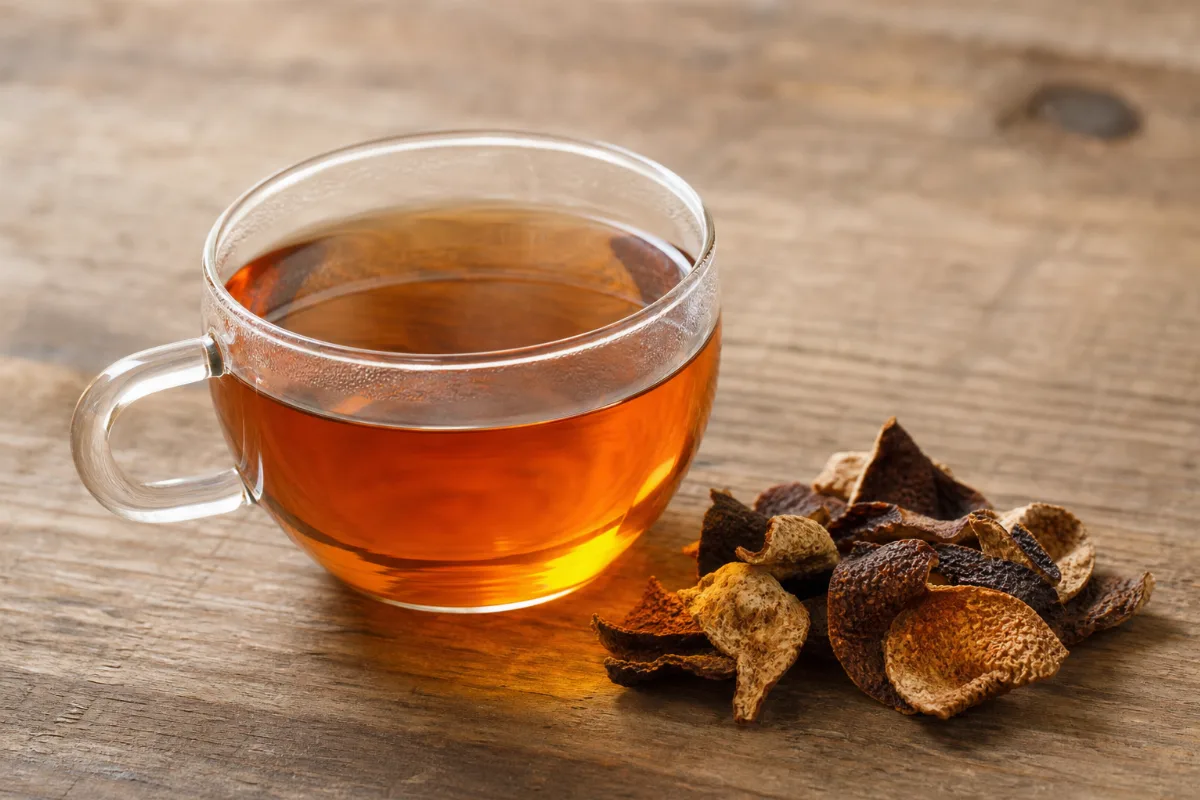
Chenpi tea is a hot drink made from tangerine or mandarin peel that has been dried and aged for years. In China the peel has long been used for an upset stomach, nausea, cough and phlegm. We found no trial of the tea itself; the human research is one small trial of a fermented peel drink and trials of the plant compound hesperidin. The main cautions are mold in old peel, medicines with a grapefruit warning and, in some blends, caffeine.
General information, not medical advice. Last substantive update · Not medically reviewed. A named clinician has not signed off on this page. How this page is made
About Tangerine Peel (Chenpi) Tea
Chenpi tea is a hot infusion of aged tangerine or mandarin peel. It is a traditional Chinese remedy for the stomach, nausea and cough, but we found no trial of the tea. The human research covers a fermented peel drink and a purified plant compound, not the tea. Aged peel can grow mold, and the FDA warns that some citrus fruits can change how medicines work. Ask a doctor or pharmacist if you take medicines, are pregnant or breastfeeding, or have a heart rhythm problem.
What chenpi tea is
Chenpi is the dried peel of tangerine or mandarin fruit (Citrus reticulata, family Rutaceae; name checked in GBIF), aged on purpose for years. Quality peel is thick, hard and leathery. The best-regarded comes from Xinhui in Guangdong, China, according to a 2026 review.
The tea is a water infusion of the peel. Some blends add Pu'er tea. Peel powder, capsules and a fermented peel drink are different products, and some research here used them instead of tea.
Why the peel is aged
In Chinese medicine, older peel is valued more. Lab studies show aging changes it: the fresh citrus aroma compounds such as limonene fall, and the review notes that sources disagree on how some flavonoids change. A 2025 lab study found that steaming the peel also changes its aroma.
Whether aged peel is more beneficial than fresh peel for people has not been tested in the sources we read.
Mold in aged peel
Because the peel is stored for years, warm and damp storage can let molds such as Aspergillus and Penicillium grow. Some molds make aflatoxins, which are toxic. The 2020 Chinese Pharmacopoeia sets limits for aflatoxins in the peel, as quoted by a 2026 review.
Throw away peel that smells musty or looks moldy. Buy from a seller who says the peel is tested and stored dry.
Medicines and this tea
The FDA says grapefruit juice can change how much of some medicines reaches the blood, and that Seville oranges, pomelos and tangelos might do the same. It does not name mandarins or tangerines, and we found no study of tangerine peel on this. The question is open.
If your medicine has a grapefruit warning, ask your pharmacist before you start chenpi tea.
Chenpi is not bitter orange
Bitter orange (Citrus aurantium) supplements have been linked to heart rhythm events, though most products had several ingredients and the cause is unclear (NCCIH). Chenpi comes from a different citrus. A 2026 review says synephrine, a mild stimulant, is a main alkaloid of chenpi too, but we found no figure for a cup of tea.
If you have a heart rhythm problem or take stimulant medicines, ask a doctor first.
At a glance
Traditional uses history, not proof
- In China the peel has been used for thousands of years for nausea, vomiting, indigestion, poor appetite, diarrhoea, cough and phlegm (reviews).
- Chinese medicine says it regulates qi, strengthens the spleen, dries dampness and dissolves phlegm. It was mostly used inside formulas because the peel is bitter.
Studied for research
- Indigestion and poor appetite (traditional use; one unread trial of aged peel, not tea), insufficient
- Nausea and vomiting (traditional use), insufficient
- Cough and phlegm (traditional use), insufficient
- Blood fats and body weight (fermented peel drink pilot, not tea), very-low
- Blood sugar and insulin resistance (purified hesperidin, not tea), mixed
- Liver protection (cell studies only), insufficient
- Obesity and gut bacteria (compound tea in mice), insufficient
- Antioxidant and anti-inflammatory effects (lab work), insufficient
Main compounds
- Hesperidin, the marker flavonoid
- Nobiletin and tangeretin (polymethoxyflavones)
- Limonene and other volatile oils, which fall with aging
- Synephrine, a mild stimulant alkaloid
Common forms
- Dried aged peel pieces steeped in hot water (the tea)
- Tea bags and blends, sometimes with Pu'er tea (which adds caffeine)
- Peel powder, capsules and a fermented peel drink (different from tea)
Research links: Review of aged tangerine peel: quality, storage and products (2026) · Systematic review of chenpi chemistry and pharmacology (2024) · Fermented tangerine-peel drink trial (abstract) · Hesperidin and insulin resistance meta-analysis (abstract) · FDA: grapefruit juice and some drugs · NCCIH: bitter orange safety · Research Library · Genes & Biomarkers Library
What it is and its history
- Accepted scientific name
- Citrus reticulata Blanco (material: aged peel, Citri Reticulatae Pericarpium)
- Naming authority
- Blanco
- Common names
- Chenpi (Chinese (pinyin)); Chen pi (Chinese (pinyin)); Aged tangerine peel (English); Tangerine peel tea (English); Mandarin peel tea (English); Citri Reticulatae Pericarpium (Latin (pharmacopoeia name))
- Family or group
- Rutaceae
- Classification
- Plantae > Rutaceae > Citrus > Citrus reticulata
- Native range
- Not read in the sources used.
- Habitat
- Not read.
- What it looks like
- Part used: The dried peel (pericarp) of ripe fruit. A 2026 review describes quality chenpi as thick, hard, crisp and leathery, often split into three connected petals about 2.7 to 3.3 mm thick.
- Cultivation
- The review says chenpi is produced mainly in Guangdong, Sichuan, Fujian and Zhejiang (2024 review), with Xinhui in Guangdong giving the best-regarded peel.
- Harvest and processing
- Peel is dried and then stored for years. A 2026 review says origin, storage time, aging time and harvest time change its chemistry, flavour and value. Some tea is steamed before aging; a 2025 lab study found steaming changes the aroma.
- Look-alikes and adulterants
- Name: Bitter orange (Citrus x aurantium, family Rutaceae, GBIF key 8077391); Note: A different citrus whose supplements carry heart-rhythm warnings from NCCIH. See the bitter orange page.; Name: Other citrus peels (orange, pomelo, mandarin varieties); Note: Sold as "dried citrus peel" and not the same as aged chenpi. Check the label for Citrus reticulata and the aging time.
- Sustainability and conservation
- Not assessed in the sources read.
Photographs
Traditional use and history history, not clinical proof
| Tradition or era | Documented use | Source |
|---|---|---|
| Traditional Chinese medicine (Qin and Han dynasties onward) | A 2026 review says chenpi is recorded in the Shennong Bencao Jing as early as the Qin and Han dynasties, and that it is used to regulate qi, strengthen the spleen, dry dampness and dissolve phlegm. Because the peel is bitter, it was mostly used inside formulas rather than as a food. | Cai 2026, citing Zhang 2024 |
| Modern China | Two reviews say chenpi has been used for thousands of years for nausea, vomiting, indigestion, poor appetite, diarrhoea, cough and phlegm, and is listed in the Chinese Pharmacopoeia. It is now also sold as a food and tea, often blended with Pu'er tea. | Yu 2018; Zhang 2024; Cai 2026 |
Traditional use shows how it was used. It does not show that it works or is safe today.
What is inside, and how it may work
What it contains and how those compounds act in cells and animals. Laboratory and animal mechanisms are not proven effects in people.
Main compounds
| Compound | Family | Where it is concentrated | Activity studied | Level of evidence |
|---|---|---|---|---|
| Hesperidin PubChem 10621 | flavanone glycoside (flavonoid) | Peel | The marker compound used for quality control of chenpi (2018 review). Studied on its own as a supplement; see the benefits tab for the blood sugar result. A review table lists it as decreasing with aging (one source). 14 2 7 | Laboratory research |
| Nobiletin and tangeretin (polymethoxyflavones) PubChem 72344 | flavone | Peel | Citrus-peel flavones with antioxidant, anti-inflammatory and anticancer activity in lab work. The 2026 review notes that sources disagree on whether their content changes with storage. 9 2 7 | Laboratory research |
| Narirutin PubChem 442431 | flavanone glycoside | Peel | Present in aged peel extracts and named among likely differentiating compounds in a rat study. 6 4 7 | Laboratory research |
| (+)-Limonene (d-limonene) PubChem 440917 | monoterpene | Peel (volatile oil) The review cites a fall from 454.7 g/L in the 3rd year of storage to 378.7 g/L in the 17th year (units as reported; a measure in the peel oil). | The main aroma compound of fresh peel. It declines with aging. 2 4 7 | Laboratory research |
| Synephrine PubChem 7172 | alkaloid | Peel | Named with N-methyltyramine as the main alkaloid of chenpi. The 2026 review says its structure is similar to adrenergic (adrenaline-like) substances. No figure for a cup of tea was found. 2 8 7 | Laboratory research |
Mechanisms, receptors and pathways
| Target or pathway | Gene or receptor | What was found | Level |
|---|---|---|---|
| Nrf2 antioxidant pathway in liver cells | Nrf2, HO-1, NQO1, UGT1A; epigenetic enzymes (HDACs, DNMTs) | In liver cell lines an ethanol extract of aged citrus peel raised the Nrf2 pathway and reduced acetaminophen damage. Cells only. 6 | Laboratory research |
| Gut bacteria and blood fat metabolism | Not specified | A compound chenpi tea changed gut bacteria and blood metabolites in mice; a fermented peel drink changed metabolite and gut-bacteria patterns in a small human pilot. Both show association, not cause. 12 10 | Animal research |
| Inflammation signalling in the stomach (rats) | TLR4/MyD88, MAPK | A 14-day rat study described by the 2026 review linked peel to better gastric emptying and changes in these pathways. Not read directly. 2 | Animal research |
Absorption, metabolism and elimination
- Absorption
- Not studied for chenpi tea.
- Distribution
- Not read.
- Metabolism
- A 2024 review calls for deeper pharmacokinetic study of the peel's components.
- Elimination
- Not read.
- Bioavailability
- Not studied for the tea.
Isolated compounds versus whole extracts
Most human data are for purified hesperidin or a fermented peel drink, not for a cup of aged peel tea. Aging and steaming change the chemistry and aroma of the peel, so one chenpi tea is not like another.
Nutritional composition
Chenpi tea is not a studied source of vitamins or minerals. Peel is rich in pectin and flavonoids according to the 2026 review, but the tea is a thin infusion and no nutrient content for it was found.
1 mixed findings1 very low certainty6 not enough evidence
What was looked at
The 8 benefits and uses checked for Tangerine Peel (Chenpi) Tea, each with how strong the evidence is. Tap one to open it.
- Indigestion, poor appetite and stomach discomfort (traditional use of aged tangerine peel)Not enough evidence
- Nausea and vomiting (traditional use)Not enough evidence
- Cough and phlegm (traditional use)Not enough evidence
- Blood fats and body weight (a fermented tangerine-peel drink, not tea)Very low certainty
- Blood sugar and insulin resistance (purified hesperidin, not tea)Mixed findings
- Liver protection (lab and cell studies only)Not enough evidence
- Obesity and gut bacteria (a compound chenpi tea, tested in mice)Not enough evidence
- Antioxidant, anti-inflammatory and anticancer effects (lab and animal work)Not enough evidence
What is Tangerine Peel (Chenpi) Tea good for?
The uses people ask about and how strong the evidence is for each. Read the certainty label first: for the tea itself there is no trial evidence, and several results come from other products.
Benefits, one by one
Each card is a research question, not a promise. Tap a goal to filter. Open a card to see the studies, doses and limits.
Indigestion, poor appetite and stomach discomfort (traditional use of aged tangerine peel)
Not enough evidenceChenpi has been used for centuries for digestive complaints. We found no trial of the tea. A review describes one older trial of aged peel for functional indigestion, which we could not read.
2 studiesNot shown on this page.
Studies, doses and limits
What the trials found
A 2026 review describes a 2011 randomized trial of 20-year-aged Xinhui peel in functional dyspepsia that reported a total effective rate of 90.32% for the peel alone and 94.12% when combined with other treatment. We could not find that trial on PubMed or read it, and the form of the peel used is not stated. No trial of chenpi tea was found.
Results
Traditional-use evidence plus one unread trial of aged peel (not tea). Statistics are only a "total effective rate".
Why this rating
Long traditional use and a second-hand report of one older trial; no tea trial and no placebo-controlled data we could read.
Form and dose studied
Not shown on this page.
Who was studied
Adults with indigestion in China (the 2011 trial, as described by the review).
Limits
The trial result comes second-hand from a review. "Total effective rate" is a loose outcome. Lab results do not show benefit in people.
Why researchers looked
Aged tangerine peel is one of the most common ingredients in traditional Chinese herbal formulas for the stomach, and the tea is a gentle way to take it.
Traditional use
Reviews say chenpi has been used for thousands of years in China to regulate qi, strengthen the spleen and ease indigestion, loss of appetite and diarrhoea.
Proposed mechanism Laboratory research
Lab and rat studies cited by reviews suggest effects on gut movement and inflammation. A 14-day rat study (described in a 2026 review, not read) linked benefits to inflammation pathways and gut bacteria. This does not show the same in people drinking tea.
A proposed mechanism does not show that the effect happens in people.
See the safety tab, especially mold in aged peel.
Nausea and vomiting (traditional use)
Not enough evidenceReviews list nausea and vomiting among the traditional uses of chenpi. We found no human trial of the tea for it.
2 studiesNot shown on this page.
Studies, doses and limits
What the trials found
No trial of chenpi tea or peel for nausea was found. The reviews state the use as tradition, not as a result from trials.
Results
Traditional use only.
Why this rating
Mentioned as a traditional use by two reviews; no trials identified.
Form and dose studied
Not shown on this page.
Who was studied
Not studied.
Limits
Traditional use is not proof of benefit.
Why researchers looked
Chenpi is a traditional remedy for nausea and a stomach that feels full or heavy.
Traditional use
A 2018 and a 2024 review both name nausea and vomiting among the traditional uses of chenpi in China.
Proposed mechanism Laboratory research
Not established. The reviews we read do not explain how chenpi might ease nausea.
A proposed mechanism does not show that the effect happens in people.
If nausea is severe or lasts more than a day or two, or you are pregnant, ask a doctor rather than relying on a tea.
Cough and phlegm (traditional use)
Not enough evidenceChenpi is traditionally used for cough with phlegm. We found no trial of the tea for it.
3 studiesNot shown on this page.
Studies, doses and limits
What the trials found
No clinical trial of chenpi tea or peel for cough was found in the sources we read.
Results
Traditional use only.
Why this rating
Tradition only; no trials identified.
Form and dose studied
Not shown on this page.
Who was studied
Not studied.
Limits
Traditional use is not proof of benefit. A cough that lasts more than a few weeks needs a doctor.
Why researchers looked
In Chinese medicine chenpi is said to dissolve phlegm, and the peel is a staple of cough formulas.
Traditional use
The 2018 and 2024 reviews list cough and expectoration among the traditional uses of chenpi, and the 2026 review says its effects include dissolving phlegm.
Proposed mechanism Laboratory research
A 2018 review lists effects on the respiratory system from pharmacology studies, but its abstract gives no detail, and none of this shows the same from drinking tea.
A proposed mechanism does not show that the effect happens in people.
A persistent cough, coughing blood or breathlessness needs medical care, not a tea.
Blood fats and body weight (a fermented tangerine-peel drink, not tea)
Very low certaintyOne small pilot trial of a fermented tangerine-peel drink found lower weight and triglycerides after 8 weeks. It was not a trial of peel tea.
1 studiesNot shown on this page.
Studies, doses and limits
What the trials found
A randomized, double-blind, parallel-controlled pilot trial in people with dyslipidemia gave a fermented tangerine-peel drink or a control for 8 weeks. 72 people were enrolled and 55 finished.
Results
The peel-drink group had lower body weight and triglycerides after the 8 weeks (p < 0.05). Liver, kidney, muscle-enzyme, blood and urine safety tests showed no adverse effects. Metabolite and gut-bacteria patterns changed.
Effect sizes as reported
The abstract gives p-values only, no group averages.
Why this rating
One small pilot, 17 people lost to follow-up, control not described in the abstract, one author employed by the drink's maker, and a fermented drink rather than tea.
Form and dose studied
Not shown on this page.
Who was studied
Adults with dyslipidemia in China.
Limits
Pilot trial. Not a trial of tea. The abstract does not say what the control group received.
Why researchers looked
Peel flavonoids are studied for fat metabolism, and a company makes a fermented peel drink.
Traditional use
Chenpi is not traditionally a weight-loss or cholesterol remedy in the sources we read.
Proposed mechanism Preliminary mechanism
The authors suggest changes in fat metabolism and gut bacteria, based on blood metabolite and stool tests in the same trial. This shows association, not cause.
A proposed mechanism does not show that the effect happens in people.
No adverse effects were seen in the trial safety tests. Ask a doctor before relying on any product for blood fats.
Blood sugar and insulin resistance (purified hesperidin, not tea)
Mixed findingsChenpi contains hesperidin. A 2026 review of 16 trials of purified hesperidin found small changes in one insulin-resistance score but concluded the evidence does not support it for blood sugar control.
1 studiesNot shown on this page.
Studies, doses and limits
What the trials found
A systematic review and meta-analysis of 16 randomized trials with 845 adults. It tested purified hesperidin supplements, not chenpi or tea.
Results
Hesperidin lowered HOMA-IR (a score of insulin resistance) and raised QUICKI (a score of insulin sensitivity), but had no significant effect on insulin, fasting blood glucose or HbA1c. A further analysis (trial sequential analysis) found no statistically significant improvement in HOMA-IR. The authors concluded the evidence does not support hesperidin for insulin resistance or blood sugar control.
Effect sizes as reported
HOMA-IR weighted mean difference -0.43 (95% CI -0.82 to -0.03); QUICKI +0.05 (95% CI 0.01 to 0.08).
Why this rating
Small changes in two scores, none in glucose or HbA1c, and not robust in the trial sequential analysis. Purified hesperidin, not tea.
Form and dose studied
Not shown on this page.
Who was studied
Adults, with subgroups of people with metabolic disorders and obesity.
Limits
Different product from the tea. The amount of hesperidin in a cup of chenpi tea is not known from the sources we read.
Why researchers looked
Hesperidin is the marker compound of chenpi and is studied on its own as a supplement.
Traditional use
Not a traditional use of chenpi in the sources we read.
Proposed mechanism Preliminary mechanism
Not established.
A proposed mechanism does not show that the effect happens in people.
People taking diabetes medicines should not change treatment because of a tea or supplement.
Liver protection (lab and cell studies only)
Not enough evidenceExtracts of aged citrus peel protected liver cells from acetaminophen damage in a lab study. No human data.
1 studiesNot shown on this page.
Studies, doses and limits
Results
The residue ethanol extract had more narirutin, nobiletin and tangeretin and worked better than the water or plain ethanol extracts in cells.
Why this rating
Cell experiments only, with ethanol extracts rather than tea.
Form and dose studied
Not shown on this page.
Limits
Cells in dishes do not show what a cup of tea does in a person. Do not use any peel product to treat liver problems or to offset acetaminophen overdose.
Why researchers looked
Peel flavonoids such as narirutin, nobiletin and tangeretin are tested in liver cell models.
Traditional use
Reviews list liver protection among the effects seen in pharmacology studies.
Proposed mechanism Laboratory research
In liver cell lines, an ethanol extract of the residue left after water extraction raised the Nrf2 defence pathway and reduced acetaminophen damage and lipid peroxidation. The mechanism was linked to changes in gene switches (epigenetic).
A proposed mechanism does not show that the effect happens in people.
Acetaminophen overdose is an emergency: call poison control or emergency services.
Obesity and gut bacteria (a compound chenpi tea, tested in mice)
Not enough evidenceA blend of chenpi, reishi mushroom and Pu'er tea reduced diet-induced obesity in mice. This is animal work on a blend.
1 studiesNot shown on this page.
Studies, doses and limits
Results
Mice given the blend had less diet-induced obesity, liver fat, abnormal blood fats and insulin resistance, and shifts in gut bacteria types.
Why this rating
Mouse study of a three-ingredient blend (chenpi, Ganoderma lucidum, Pu'er tea). The effect cannot be credited to chenpi alone.
Form and dose studied
Not shown on this page.
Limits
Mice, a blend, and no human data.
Why researchers looked
Chenpi blends with Pu'er tea are a popular drink, and researchers test them in animals on high-fat diets.
Traditional use
Not a traditional use in the sources we read.
Proposed mechanism Animal research
In mice, the blend changed gut bacteria and blood metabolites linked to amino acid and fat metabolism.
A proposed mechanism does not show that the effect happens in people.
Pu'er tea is made from tea-plant leaf, so such blends are not the same as plain peel tea.
Antioxidant, anti-inflammatory and anticancer effects (lab and animal work)
Not enough evidenceReviews list many effects of chenpi compounds in cells and animals. None of this has been shown in people drinking the tea.
2 studiesNot shown on this page.
Studies, doses and limits
Results
A 2024 systematic review lists anti-tumour, anti-inflammatory, immunomodulatory, hepatoprotective, cardiovascular, antioxidant, antibacterial and neuroprotective effects from pharmacology studies. A 2024 review of citrus-peel polymethoxyflavones lists antioxidant, anti-inflammatory, anticancer and anti-obesity activity and says they could be developed as dietary supplements in future.
Why this rating
Lab and animal work; the reviews' abstracts do not report human trials.
Form and dose studied
Not shown on this page.
Limits
Abstract-level reading only. Lab effects often fail to appear in people.
Why researchers looked
Chenpi is rich in flavonoids such as hesperidin, nobiletin and tangeretin that are active in the lab.
Traditional use
Not a traditional claim in the form given here.
Proposed mechanism Laboratory research
Reviews describe antioxidant and anti-inflammatory effects of peel flavonoids and polymethoxyflavones in lab models.
A proposed mechanism does not show that the effect happens in people.
Do not use a peel product in place of cancer or other medical treatment.
Connections to the rest of health
How Tangerine Peel (Chenpi) Tea connects to the rest of our health knowledge graph. Every link says what kind of connection it is. A safety link (for example to the liver) is a warning, not a benefit. A study that merely mentions a topic never creates a benefit link.
Explore every connection: goals, body systems, organs, symptoms, genes
A. Wellness goals
| Connected to | Kind of connection | Evidence status | Context | Studies |
|---|---|---|---|---|
| Digestive Support | Traditional use | Not enough evidence | Indigestion, poor appetite and stomach discomfort (traditional use of aged tangerine peel): Chenpi has been used for centuries for digestive complaints. We found no trial of the tea. A review describes one older trial of aged peel for functional indigestion, which we could not read. Nausea and vomiting (traditional use): Reviews list nausea and vomiting among the traditional uses of chenpi. We found no human trial of the tea for it. | 2 14 15 |
| Breathing Support | Traditional use | Not enough evidence | Cough and phlegm (traditional use): Chenpi is traditionally used for cough with phlegm. We found no trial of the tea for it. | 14 15 2 |
| Lung Support | Traditional use | Not enough evidence | Cough and phlegm (traditional use): Chenpi is traditionally used for cough with phlegm. We found no trial of the tea for it. | 14 15 2 |
| Cholesterol Balance | Very low certainty | Blood fats and body weight (a fermented tangerine-peel drink, not tea): One small pilot trial of a fermented tangerine-peel drink found lower weight and triglycerides after 8 weeks. It was not a trial of peel tea. | 10 | |
| Weight Management | Very low certainty | Blood fats and body weight (a fermented tangerine-peel drink, not tea): One small pilot trial of a fermented tangerine-peel drink found lower weight and triglycerides after 8 weeks. It was not a trial of peel tea. Obesity and gut bacteria (a compound chenpi tea, tested in mice): A blend of chenpi, reishi mushroom and Pu'er tea reduced diet-induced obesity in mice. This is animal work on a blend. | 10 12 | |
| Blood Sugar Balance | Mixed findings | Blood sugar and insulin resistance (purified hesperidin, not tea): Chenpi contains hesperidin. A 2026 review of 16 trials of purified hesperidin found small changes in one insulin-resistance score but concluded the evidence does not support it for blood sugar control. | 5 | |
| Metabolic Health | Mixed findings | Blood sugar and insulin resistance (purified hesperidin, not tea): Chenpi contains hesperidin. A 2026 review of 16 trials of purified hesperidin found small changes in one insulin-resistance score but concluded the evidence does not support it for blood sugar control. | 5 | |
| Liver Support | Not enough evidence | Liver protection (lab and cell studies only): Extracts of aged citrus peel protected liver cells from acetaminophen damage in a lab study. No human data. | 6 | |
| Gut Health | Not enough evidence | Obesity and gut bacteria (a compound chenpi tea, tested in mice): A blend of chenpi, reishi mushroom and Pu'er tea reduced diet-induced obesity in mice. This is animal work on a blend. | 12 | |
| Inflammation Balance | Not enough evidence | Antioxidant, anti-inflammatory and anticancer effects (lab and animal work): Reviews list many effects of chenpi compounds in cells and animals. None of this has been shown in people drinking the tea. | 15 9 | |
| Cellular Protection | Not enough evidence | Antioxidant, anti-inflammatory and anticancer effects (lab and animal work): Reviews list many effects of chenpi compounds in cells and animals. None of this has been shown in people drinking the tea. | 15 9 |
B. Body systems
| Connected to | Kind of connection | Evidence status | Context | Studies |
|---|---|---|---|---|
| Digestive System | Biological association | Not enough evidence | Studied for: Indigestion, poor appetite and stomach discomfort (traditional use of aged tangerine peel) Studied for: Nausea and vomiting (traditional use) | 2 14 15 12 |
| Respiratory System | Biological association | Not enough evidence | Studied for: Cough and phlegm (traditional use) | 14 15 2 |
| Cardiovascular System | Biological association | Very low certainty | Studied for: Blood fats and body weight (a fermented tangerine-peel drink, not tea) | 10 |
| Endocrine System | Biological association | Very low certainty | Studied for: Blood fats and body weight (a fermented tangerine-peel drink, not tea) Studied for: Blood sugar and insulin resistance (purified hesperidin, not tea) | 10 5 12 |
| Hepatic System | Biological association | Not enough evidence | Studied for: Liver protection (lab and cell studies only) | 6 |
| Immune System | Biological association | Not enough evidence | Studied for: Antioxidant, anti-inflammatory and anticancer effects (lab and animal work) | 15 9 |
D. Symptoms
| Connected to | Kind of connection | Evidence status | Context | Studies |
|---|---|---|---|---|
| Indigestion | Traditional use | Not enough evidence | Traditional use; one unread trial of aged peel, no trial of the tea. Preparation or compound: Aged tangerine peel |
2 14 |
K. Biological pathways
| Connected to | Kind of connection | Evidence status | Context | Studies |
|---|---|---|---|---|
| Nrf2 antioxidant response | Preliminary mechanism | In vitro | Activated by aged peel extract in liver cells. | 6 |
L. Active compounds
| Connected to | Kind of connection | Evidence status | Context | Studies |
|---|---|---|---|---|
| Hesperidin | Biological association | In vitro | The marker compound used for quality control of chenpi (2018 review). Studied on its own as a supplement; see the benefits tab for the blood sugar result. A review table lists it as decreasing with aging (one source). Preparation or compound: Peel |
14 2 7 |
| Nobiletin and tangeretin (polymethoxyflavones) | Biological association | In vitro | Citrus-peel flavones with antioxidant, anti-inflammatory and anticancer activity in lab work. The 2026 review notes that sources disagree on whether their content changes with storage. Preparation or compound: Peel |
9 2 7 |
| Narirutin | Biological association | In vitro | Present in aged peel extracts and named among likely differentiating compounds in a rat study. Preparation or compound: Peel |
6 4 7 |
| (+)-Limonene (d-limonene) | Biological association | In vitro | The main aroma compound of fresh peel. It declines with aging. Preparation or compound: Peel (volatile oil) |
2 4 7 |
| Synephrine | Biological association | In vitro | Named with N-methyltyramine as the main alkaloid of chenpi. The 2026 review says its structure is similar to adrenergic (adrenaline-like) substances. No figure for a cup of tea was found. Preparation or compound: Peel |
2 8 7 |
Each connection is stored with the ingredient, the connected record, the kind of connection, the evidence status, the supporting studies, the preparation or compound involved, and a review date (last reviewed October 25, 2026).
Evidence at a glance: what the research found for 8 outcomes
Each outcome below is one thing researchers measured. Certainty is how far the evidence can be trusted, not how well it works. The full studies are on the next tab.
The evidence
The research centre for Tangerine Peel (Chenpi) Tea. Every record here was checked against PubMed or the publisher's page; we never list a study we have not verified.
Evidence by outcome
Bars show how many studies we found for each outcome, not how well it works. People are added up across trials only (reviews are not added, to avoid double counting).
How we rate evidence
High certainty
Several well-run trials or reviews agree; further research is unlikely to change the picture much.
Moderate certainty
Good trials point the same way, but some doubt remains.
Low certainty
Small, short or inconsistent trials. The finding could change with better research.
Very low certainty
Very little or very weak human data. Treat as a possibility only.
Mixed findings
Trials or reviews disagree with each other.
Not enough evidence
Not enough human research to say either way.
Evidence against
Good research found no benefit, or found harm.
We take the reviewers' own risk-of-bias and GRADE statements where they exist, and otherwise judge from study size, design, consistency, directness and whether a product matches what is sold. Many publications do not make evidence high. Method note: We read the abstracts of 10 PubMed papers and the full text of a 2026 review (Europe PMC), read the FDA and NCCIH pages, and checked names in GBIF and compounds in PubChem.
Study library: every study we checked 15
| Study | Design | People | Product, dose, length | Result |
|---|---|---|---|---|
| Berteina-Raboin 2025 Flavonoids and Furanocoumarins Involved in Drug Interactions. Molecules · PMID 40333661 · DOI |
Narrative review n/a |
Review of fruit juices and drug interactions | Citrus, apple and berry juices; grapefruit flavonoids and furanocoumarins fruit juice Not shown on this page |
Says interactions with grapefruit are well documented and that grapefruit flavonoids and furanocoumarins act on cytochrome P450 enzymes and transporters, with sometimes dangerous changes in drug levels. The review also covers other citrus juices. Methods, limits and fundingOutcomes: Interactions with cytochrome P450, P-glycoprotein and OATP Limitations: Abstract only. About juices, not peel tea; the abstract does not mention tangerine peel. Funding and conflicts: The author declares no conflict. Read: abstract |
| Cai 2026 Biological dynamics and application prospects of Citri Reticulatae Pericarpium (CRP): a medicine and food perspective review Front Pharmacol · PMID 42038318 · DOI |
Narrative review review of human, animal and lab work |
Review of aged tangerine peel (chenpi) chemistry, storage, quality and products | Citrus reticulata aged peel (Citri Reticulatae Pericarpium) peel (pericarp) Not shown on this page |
Says chenpi is recorded in the Shennong Bencao Jing (Qin and Han dynasties) and is used to regulate qi, strengthen the spleen, dry dampness and dissolve phlegm. Names synephrine and N-methyltyramine as the main alkaloids. Says warm, damp storage lets Aspergillus, Penicillium and other molds grow, and these can make aflatoxins; quotes the 2020 Chinese Pharmacopoeia limit of 5 ug/kg for aflatoxin B1 and 10 ug/kg for the total of G2, G1 and B2. Describes chenpi tea as dried peel blended with Pu'er tea and steeped in boiling water. Mentions a 2011 trial of 20-year-aged Xinhui peel in functional dyspepsia (total effective rate 90.32% for the peel alone and 94.12% with other treatment) and a 14-day rat study. Methods, limits and fundingOutcomes: Chemistry changes with origin, storage and aging; microbes and safety of Aspergillus; products Limitations: A narrative review, not a systematic one. The trial it cites was not found on PubMed and was not read. Lab and rat findings dominate. Funding and conflicts: Public research grants (Guangdong); authors declare no commercial or financial conflict. Read: full text (Europe PMC) |
| GBIF Secretariat 2026 GBIF Backbone Taxonomy: Citrus reticulata Blanco (usageKey 3190172) and Citrus x aurantium L. (usageKey 8077391) Web page / database (queried by API 2026-10-25) · Source |
Database record n/a |
n/a | n/a Not shown on this page |
Citrus reticulata Blanco is an ACCEPTED species in the family Rutaceae. Citrus x aurantium L. (bitter orange) is a separate ACCEPTED name, also in Rutaceae. Methods, limits and fundingOutcomes: Accepted names Limitations: Name database only. It does not say which Citrus varieties are used as chenpi. Read: API record |
| Lan 2025 Metabolite profiling and 'dryness'-like effect analysis of 'Chenpi' plant tea (Citri Reticulatae Pericarpium peel) with and without steaming processing. Food Res Int · PMID 40058930 · DOI |
Lab and rat study rat and lab |
Chenpi plant tea samples (steamed and unsteamed), rats | Chenpi tea made from unsteamed (CRP) and steamed (SCRP) aged peel peel (aged) Not shown on this page · vs Unsteamed versus steamed peel |
Aged steamed peel had a stronger aroma, with beta-myrcene and d-limonene reduced or gone and new compounds such as valencene formed. In rats the steamed product had a weaker dryness-like effect than the unsteamed one. Docking work named narirutin, rutin, calceolarioside C, hesperidin, melitidin and limonin as likely differentiators. Methods, limits and fundingOutcomes: Aroma compounds and a 'dryness'-like effect (water intake, salivary gland index, blood flow properties, aquaporin gene expression) Limitations: Rat and computer-docking work on a traditional-medicine concept. Not a trial in people. Funding and conflicts: The authors declare no competing financial interests. Read: abstract |
| Li 2025 The effects of hesperidin supplementation on insulin resistance and sensitivity in adults: a systematic review and meta-analysis of randomized controlled trials. Front Nutr · PMID 41586243 · DOI |
Systematic review and meta analysis (PROSPERO CRD420251102342) |
845 845 adults in 16 randomized trials |
Purified hesperidin supplements (not chenpi or tea) isolated compound Not shown on this page varies by trial · vs Placebo or control in each trial |
HOMA-IR fell (WMD -0.43, 95% CI -0.82 to -0.03, p = 0.034) and QUICKI rose (WMD 0.05, 95% CI 0.01 to 0.08, p = 0.005). No significant effects on insulin, fasting glucose or HbA1c. Trial sequential analysis found no statistically significant improvement in HOMA-IR. The authors concluded the evidence does not support hesperidin for insulin resistance or glycaemic control. HOMA-IR WMD -0.43; QUICKI WMD 0.05 (HOMA-IR -0.82 to -0.03; QUICKI 0.01 to 0.08) Methods, limits and fundingOutcomes: HOMA-IR, QUICKI, insulin, fasting glucose, HbA1c Limitations: Purified compound, not a tea. Mixed results and small total numbers. Funding and conflicts: The authors declare no commercial or financial conflict. Registration: PROSPERO CRD420251102342 Read: abstract |
| Lin 2019 Aged Citrus Peel (Chenpi) Prevents Acetaminophen-Induced Hepatotoxicity by Epigenetically Regulating Nrf2 Pathway. Am J Chin Med · PMID 31795743 · DOI |
Cell study (in vitro) in vitro |
Human HepG2-C8 liver-cancer cells and mouse AML-12 liver cells | Aged citrus peel (chenpi) water, ethanol and residue-ethanol extracts peel (aged) Not shown on this page · vs Untreated cells |
The residue ethanol extract (CP-WREE) had more narirutin, nobiletin and tangeretin and enhanced the Nrf2 pathway more effectively than the water or ethanol extracts. In mouse liver cells it reduced acetaminophen damage and lipid peroxidation, and changed epigenetic markers. Methods, limits and fundingOutcomes: Nrf2 pathway activation, protection from acetaminophen damage, lipid peroxidation, gene-switch markers Limitations: Cells in dishes with ethanol extracts, not tea. No animal or human data in the abstract. Read: abstract |
| National Center for Biotechnology Information 2026 PubChem compound records: hesperidin (CID 10621), nobiletin (72344), tangeretin (68077), narirutin (442431), synephrine (7172), (+)-limonene (440917) Web database (queried by API 2026-10-25) · Source |
Database record n/a |
n/a | n/a Not shown on this page |
Identifiers and formulas confirmed: hesperidin C28H34O15, nobiletin C21H22O8, tangeretin C20H20O7, narirutin C27H32O14, synephrine C9H13NO2, (+)-limonene C10H16. Methods, limits and fundingOutcomes: Compound identity and formula Limitations: Identity only; says nothing about content in tea. Read: API record |
| National Center for Complementary and Integrative Health (NCCIH 2024 Bitter Orange: Usefulness and Safety NCCIH.nih.gov (last updated November 2024) · Source |
Regulator consumer guidance n/a |
General public | Bitter orange (Citrus aurantium) products fruit, peel, extract Not shown on this page |
Cases of abnormal heart rhythms, heart attacks and strokes have been reported in people who took bitter orange products, but most products had several ingredients, so the cause is unclear. Evidence on blood pressure and heart rate is inconclusive. Bitter orange may not be safe in pregnancy or breastfeeding. Bitter orange has not been clearly shown to help any health condition. Methods, limits and fundingOutcomes: Safety of bitter orange and p-synephrine Limitations: About bitter orange (Citrus aurantium), a different plant from tangerine. Not about chenpi tea. Read: full page text |
| Peng 2024 Polymethoxyflavones from citrus peel: advances in extraction methods, biological properties, and potential applications. Crit Rev Food Sci Nutr · PMID 36530054 · DOI |
Narrative review review |
Review of citrus-peel polymethoxyflavones (PMFs) | Citrus peel polymethoxyflavones peel Not shown on this page |
Says PMFs found almost only in citrus peel have antioxidant, anti-inflammatory, anti-cancer and anti-obesity activity and could be developed as dietary supplements in future. Covers extraction methods and uses in food and pharmacy. Methods, limits and fundingOutcomes: Extraction methods and biological activity Limitations: Abstract only. About extraction and potential, not a clinical review. Citrus peel in general, not chenpi tea specifically. Read: abstract |
| Tan 2025 Effects of Chenpi Jiaosu on serum metabolites and intestinal microflora in a dyslipidemia population: a randomized controlled pilot trial. Front Endocrinol (Lausanne) · PMID 40225325 · DOI |
Randomized, double blind, parallel controlled pilot trial |
72 People with dyslipidemia, Guangzhou, China; 72 enrolled, 55 completers |
Tangerine Peel Enzyme Drink (Chenpi Jiaosu), a fermented tangerine-peel drink peel (fermented) Not shown on this page 8 weeks · vs Control group (what it received is not stated in the abstract) |
The peel-drink group had significant reductions in body weight and triglycerides after the intervention (p < 0.05) with no adverse effects in the safety biomarkers. 93 differential metabolites were identified, and certain gut bacteria increased. Methods, limits and fundingOutcomes: Primary: body weight and serum triglycerides. Safety: liver and kidney function, creatine kinase, blood and urine. Also serum metabolites and gut bacteria Limitations: Pilot study. Small. 17 of 72 people did not finish. Control not described in the abstract. A fermented drink, not tea. The abstract gives p-values but no group averages. Funding and conflicts: One author is employed by Guangzhou Baiyunshan Guanghua Pharmaceutical Co. Ltd; the other authors declare no conflict. Funding not read. Read: abstract |
| US Food and Drug Administration 2021 FDA Consumer Update: Grapefruit Juice and Some Drugs Don't Mix FDA.gov consumer update (content current as of 2021-07-01) · Source |
Regulator consumer guidance n/a |
Adults taking prescription and OTC medicines | Grapefruit juice (and similar citrus fruits) fruit juice Not shown on this page |
Grapefruit juice can block enzymes and transporters in the gut, causing too much or too little drug in the body. Seville oranges, pomelos and tangelos might have the same effect. The FDA advises asking a doctor or pharmacist and reading the medication guide. Methods, limits and fundingOutcomes: Drug interactions with grapefruit Limitations: About grapefruit. It does not mention tangerine peel or chenpi. Read: full page text |
| Wang 2024 Compound chenpi tea consumption reduces obesity-related metabolic disorders by modulating gut microbiota and serum metabolites in mice. J Sci Food Agric · PMID 37638783 · DOI |
Animal study mouse |
Mice fed a high-fat diet | Compound chenpi tea (citri reticulatae pericarpium, Ganoderma lucidum and pu-erh tea) peel in a blend Not shown on this page · vs High-fat diet control |
The blend reduced diet-induced obesity, hepatic steatosis, dyslipidemia and insulin resistance, reversed changes in 28 metabolites and shifted gut bacteria (fewer Romboutsia, Gemella and others; more Oscillibacter, Blautia and Acetatifactor). Methods, limits and fundingOutcomes: Obesity, liver fat, blood fats, insulin resistance, gut bacteria, serum metabolites Limitations: Mice. A blend of three ingredients. No human data. Read: abstract |
| Yang 2025 Research Progress and Management Strategies for the Common Mycotoxin Contamination of Traditional Chinese Medicines. J Fungi (Basel) · PMID 40558923 · DOI |
Narrative review n/a |
Review of mycotoxin contamination of traditional Chinese medicines in general | Traditional Chinese medicine materials various Not shown on this page |
Says traditional Chinese medicines can be contaminated with molds and mycotoxins during growth, processing, storage and transport, which can affect quality and may threaten health. Covers detection, prevention and regulatory suggestions. Methods, limits and fundingOutcomes: Mycotoxin contamination, detection and prevention Limitations: Abstract only. General to traditional Chinese medicine; it does not mention tangerine peel. Funding and conflicts: The authors declare no conflict. Read: abstract |
| Yu 2018 Citri Reticulatae Pericarpium (Chenpi): Botany, ethnopharmacology, phytochemistry, and pharmacology of a frequently used traditional Chinese medicine. J Ethnopharmacol · PMID 29628291 · DOI |
Narrative review review of lab, animal and human work |
Review of the traditional medicine chenpi | Citri Reticulatae Pericarpium (aged tangerine peel) peel (pericarp) Not shown on this page |
Says chenpi has been used for thousands of years in China for nausea, vomiting, indigestion, poor appetite, diarrhoea, cough and phlegm. About 140 compounds have been identified; volatile oils and flavonoids are the main ones. Lists effects on the cardiovascular, digestive and respiratory systems, plus antitumour, antioxidant, anti-inflammatory, liver and nerve protection, from pharmacology studies. Says hesperidin is the marker compound and the aflatoxin content must not exceed the pharmacopoeia limit. Methods, limits and fundingOutcomes: Traditional uses, chemistry, pharmacology, quality control and toxicology Limitations: Abstract only was read. Narrative review; most pharmacology is lab or animal work. Authors say more research is needed. Read: abstract |
| Zhang 2024 Phytochemistry, pharmacological properties and pharmacokinetics of Citri Reticulatae Pericarpium: A systematic review. J Ethnopharmacol · PMID 38942157 · DOI |
Systematic review review of lab, animal and human work |
Review of chenpi chemistry and pharmacology | Citri Reticulatae Pericarpium (chenpi) peel (pericarp) Not shown on this page |
Says chenpi has been used for thousands of years for nausea, vomiting, cough and phlegm. Terpenes, flavonoids and alkaloids are the main components. Lists anti-tumour, anti-inflammatory, immunomodulatory, liver-protective, cardiovascular, antioxidant, antibacterial and neuroprotective effects from pharmacology studies. The authors say the link between structure and effect is not well understood and that pharmacokinetic studies and links to TCM syndromes need work. Methods, limits and fundingOutcomes: Phytochemistry, pharmacology and pharmacokinetics Limitations: Abstract only was read. The effects listed come mostly from lab and animal studies, which the abstract does not separate from human work. Funding and conflicts: No competing interests declared. Read: abstract |
What we do not know yet
- No trial of chenpi tea was found for any use, including digestion, nausea and cough.
- The one human trial of a peel product used a fermented drink, was small, and its abstract does not describe the control.
- No study says how much of any compound, synephrine or caffeine is in a cup of the tea.
- No study of chenpi tea with any medicine; the grapefruit-type question is open for tangerine peel.
- No survey of mold, pesticide or metal levels in chenpi sold as tea. Aflatoxin limits are quoted second-hand.
How new research is added
New studies are found by a saved PubMed search and are placed in a review queue. A person reads each one before it is added.
Lab markers
What changed in blood or saliva tests during trials. A changed number is not the same as feeling or being healthier, and we give no "normal ranges".
Safety
What studies and official sources say about side effects, medicines and who should check first. Each point shows what kind of evidence it comes from.
Main points to know 4
- Aged peel can grow mold. Throw away musty or moldy peel. Chenpi is stored for years on purpose. A 2026 review says warm, damp storage lets molds such as Aspergillus and Penicillium grow on tangerine peel, and some molds make aflatoxins, which are toxic. The 2020 Chinese Pharmacopoeia sets limits for aflatoxins in the peel (as quoted by that review), and a 2018 review also says aflatoxin must stay below the pharmacopoeia limit. If peel smells musty or shows fuzz or dark spots, do not drink it. Pick a seller who says the peel is tested and stored dry. Review 2 14 13
- Medicines that carry a grapefruit label: ask a pharmacist first. The US FDA says grapefruit juice can change how much of some medicines reaches the blood, and that Seville oranges, pomelos and tangelos might have the same effect. It does not name mandarins or tangerines. We found no study that tests tangerine peel for this, and none that rules it out. If your medicine has a grapefruit warning, ask your pharmacist about chenpi tea before you start. Regulatory 11 1
- This is not bitter orange (Citrus aurantium). Chenpi comes from tangerine and mandarin peel (Citrus reticulata). Bitter orange supplements are a different plant and product. The US NCCIH says abnormal heart rhythms, heart attacks and strokes have been reported in people taking bitter orange products, but most contained several ingredients, so it is unclear whether bitter orange or its compound p-synephrine was the cause. A 2026 review lists synephrine as a main alkaloid in chenpi too, but we found no figure for how much is in a cup of tea. If you have a heart rhythm problem or take stimulant medicines, ask a doctor first. Regulatory 8 2
- Some chenpi teas are blended with Pu'er tea. A 2026 review describes chenpi tea as dried peel blended with Pu'er tea. Pu'er is made from tea-plant leaf, which normally contains caffeine. We found no caffeine figure for plain peel or for these blends, so check the label if you avoid caffeine. Review 2
Side effects 2
| Effect | How often | Severity and recovery | Evidence |
|---|---|---|---|
| No adverse effects in safety blood and urine tests (fermented tangerine-peel drink, not tea) Liver and kidney function, creatine kinase, blood and urine were checked. A small pilot of an 8-week drink; it says little about long-term tea drinking. | 55 completers of 72; no adverse effects seen in the safety biomarkers | none seen n/a | Controlled trial 10 |
| Heart rhythm, heart attack and stroke reports (bitter orange supplements, a different plant) NCCIH says most products were multi-ingredient, so the cause is unclear. Not shown for chenpi tea. | Not known | serious Not stated | Case report 8 |
Liver
We found no LiverTox entry or case report of liver injury from chenpi tea. In the one human trial (a fermented tangerine-peel drink, not tea), liver and kidney function tests showed no adverse effects. A cell study found protective effects of aged peel extract against acetaminophen damage, but that is not human evidence. Other citrus products, such as bitter orange supplements, have separate concerns that do not apply here. 10 6 8
This is a safety connection. It is not evidence that Tangerine Peel (Chenpi) Tea supports liver health.
Medicines and supplements 2
| With | Why it matters | Importance | Evidence | What to do |
|---|---|---|---|---|
| Medicines that carry a grapefruit warning (for example some statins, as in the FDA example) prescription | Grapefruit blocks gut enzymes and transporters that move or break down some drugs, which can raise or lower drug levels (FDA; Berteina-Raboin 2025). Furanocoumarins and flavonoids are named as the compounds involved. | Not established for tangerine peel. The FDA names Seville oranges, pomelos and tangelos, not mandarins or tangerines. | Regulatory guidance Not enough evidence 11 1 | Ask a pharmacist before combining chenpi tea with a medicine that has a grapefruit warning. |
| Stimulant medicines and heart-rhythm or blood-pressure medicines prescription and OTC | Synephrine, an alkaloid in citrus peel, is a mild stimulant of the heart and blood vessels in the sources we read; the amount in a cup of chenpi tea is unknown. | Unknown for chenpi tea. NCCIH reports concern bitter orange supplements, not tea. | Theoretical Not enough evidence 8 2 | If you take medicines for heart rhythm or blood pressure, ask your doctor before drinking chenpi tea often. |
Who should check first 4
| Situation | Advice | Evidence |
|---|---|---|
| Peel that smells musty or shows mold | Do not drink it. | Review 2 14 |
| Taking a medicine with a grapefruit warning | Ask a pharmacist before use. | Regulatory guidance 11 |
| A known reaction to citrus fruit or peel | Avoid it. This is a general precaution; we found no source on allergy to chenpi tea. | Precaution |
| Heart rhythm problems, or stimulant sensitivity | Ask a doctor first. This is caution from bitter orange reports, not from a chenpi tea study. | Regulatory guidance 8 |
Overdose, product quality and regulators
Summary. We found no report of poisoning from chenpi tea. The documented concern is mold and aflatoxin in peel stored for years, and an unanswered question about medicine interactions.
Animal. Not covered by the sources we read, other than efficacy studies in mice and rats.
High dose or long term signals. No long-term study of chenpi tea was found. The one human trial lasted 8 weeks and used a fermented drink.
Overdose response. No overdose case is reported in the sources we read. For severe vomiting, fast or irregular heartbeat, or trouble breathing after any herbal drink, seek medical help.
Genotoxicity. Not found.
Toxic or hazardous parts. The dried peel of tangerine/mandarin fruit. We found no testing of chenpi for pesticide or metal residues.
Aged peel can grow molds that make aflatoxins. We found no survey of pesticide residues or heavy metals in chenpi tea.
Mold and aflatoxin in aged peel. A 2026 review says warm, damp storage lets Aspergillus, Penicillium and other molds grow on tangerine peel and that some make aflatoxins. It quotes the 2020 Chinese Pharmacopoeia limits (aflatoxin B1 5 ug/kg; G2+G1+B2 together 10 ug/kg). A 2025 review says traditional Chinese medicine materials in general can be contaminated with mycotoxins during growth, storage and transport. 2 13
Pesticides and heavy metals. No measurement for tangerine peel was found.
Blends. Chenpi tea may be blended with Pu'er tea or other herbs, so the ingredient list matters. 2
| Body | Action | Date |
|---|---|---|
| US Food and Drug Administration (consumer update) (United States) | Says grapefruit juice can change the effect of some medicines and that Seville oranges, pomelos and tangelos might do the same. Tangerines and mandarins are not named. source | 2021-07-01 |
| NCCIH (US National Institutes of Health), bitter orange page (United States) | Reports heart rhythm events, heart attacks and strokes in people taking bitter orange products (mostly multi-ingredient), and says bitter orange may not be safe in pregnancy or breastfeeding. This is a different plant from tangerine. source | 2024-11 |
When to get medical help
- Swelling of the lips, tongue or face, hives, or trouble breathing after drinking the tea: call emergency services (allergy).
- Chest pain, a racing or irregular heartbeat, fainting or severe dizziness after a peel product: seek emergency care.
- Vomiting, stomach cramps or illness after drinking tea made from peel that smelled musty or looked moldy: see a doctor and keep the peel.
- In the US, Poison Help is 1-800-222-1222. Elsewhere, call your local poison centre or emergency number.
Stop using the product and contact a clinician or emergency service. In the US, Poison Control is 1-800-222-1222.
General information only, not medical advice. Ask a clinician or pharmacist before use, especially with medicines, in pregnancy or with a health condition. See the Natural Remedy Safety guide.
Frequently asked questions
What is chenpi tea?
Does chenpi tea help digestion?
Is chenpi tea good for cough or phlegm?
Can chenpi tea help with weight loss or cholesterol?
Does chenpi tea lower blood sugar?
Not shown. In 16 trials of purified hesperidin, glucose and HbA1c did not change significantly, and the authors say the evidence does not support it. That was a supplement, not tea. Do not change diabetes treatment because of a tea.
What does "aged" mean for chenpi?
Can aged tangerine peel grow mold?
Is chenpi tea safe with my medicines?
Is chenpi the same as bitter orange?
Does chenpi tea have caffeine?
Plain peel is not a studied source of caffeine; we found no figure. Some chenpi teas are blended with Pu'er tea, which is made from tea-plant leaf and normally contains caffeine. Check the label.
Is chenpi tea safe in pregnancy, while breastfeeding or for children?
We found no source on chenpi tea for these groups. Ask your midwife, lactation consultant or doctor before using it regularly, and for children ask a doctor first.
Explore by health goal
Digestive SupportWeight ManagementBreathing SupportLung SupportCholesterol BalanceBlood Sugar BalanceMetabolic HealthLiver SupportGut HealthInflammation BalanceCellular Protection
Editorial transparency
- Written by
- AlternativeMed editorial team. Research compiled with AI assistance, then checked against PubMed records.
- Medical review
- None. This page has not been reviewed by a physician or pharmacist.
- First published
- 2026-10-25
- Last substantive update
- 2026-10-25
- How we research
- We read the abstracts of 10 PubMed papers and the full text of a 2026 review (Europe PMC), read the FDA and NCCIH pages, and checked names in GBIF and compounds in PubChem.
- How we rate evidence
- See "How we rate evidence" in the Evidence tab.
- Independence
- No product is promoted on this page. No affiliate links are shown.
Sources 15
Each source was opened and checked. Where we read only the abstract, it says so. The small numbers in the text point here.
- Berteina-Raboin S. Flavonoids and Furanocoumarins Involved in Drug Interactions.. Molecules. 2025. PMID 40333661. DOI 10.3390/molecules30081676. (abstract)
- Cai A, Diao N, Zhang X et al.. Biological dynamics and application prospects of Citri Reticulatae Pericarpium (CRP): a medicine and food perspective review. Front Pharmacol. 2026. PMID 42038318. DOI 10.3389/fphar.2026.1793560. (full text (Europe PMC))
- GBIF Secretariat. GBIF Backbone Taxonomy: Citrus reticulata Blanco (usageKey 3190172) and Citrus x aurantium L. (usageKey 8077391). Web page / database (queried by API 2026-10-25). 2026. (API record)
- Lan Z, Zhang X, Cai X et al.. Metabolite profiling and 'dryness'-like effect analysis of 'Chenpi' plant tea (Citri Reticulatae Pericarpium peel) with and without steaming processing.. Food Res Int. 2025. PMID 40058930. DOI 10.1016/j.foodres.2025.116089. (abstract)
- Li W, Liu Y, Zhu K et al.. The effects of hesperidin supplementation on insulin resistance and sensitivity in adults: a systematic review and meta-analysis of randomized controlled trials.. Front Nutr. 2025. PMID 41586243. DOI 10.3389/fnut.2025.1724786. (abstract)
- Lin ZH, Chan YF, Pan MH et al.. Aged Citrus Peel (Chenpi) Prevents Acetaminophen-Induced Hepatotoxicity by Epigenetically Regulating Nrf2 Pathway.. Am J Chin Med. 2019. PMID 31795743. DOI 10.1142/S0192415X19500939. (abstract)
- National Center for Biotechnology Information, PubChem. PubChem compound records: hesperidin (CID 10621), nobiletin (72344), tangeretin (68077), narirutin (442431), synephrine (7172), (+)-limonene (440917). Web database (queried by API 2026-10-25). 2026. (API record)
- National Center for Complementary and Integrative Health (NCCIH, NIH). Bitter Orange: Usefulness and Safety. NCCIH.nih.gov (last updated November 2024). 2024. (full page text)
- Peng Q, Zhang Y, Zhu M et al.. Polymethoxyflavones from citrus peel: advances in extraction methods, biological properties, and potential applications.. Crit Rev Food Sci Nutr. 2024. PMID 36530054. DOI 10.1080/10408398.2022.2156476. (abstract)
- Tan F, Zheng Y, Wang C et al.. Effects of Chenpi Jiaosu on serum metabolites and intestinal microflora in a dyslipidemia population: a randomized controlled pilot trial.. Front Endocrinol (Lausanne). 2025. PMID 40225325. DOI 10.3389/fendo.2025.1552117. (abstract)
- US Food and Drug Administration. FDA Consumer Update: Grapefruit Juice and Some Drugs Don't Mix. FDA.gov consumer update (content current as of 2021-07-01). 2021. (full page text)
- Wang J, Hao J, Miao D et al.. Compound chenpi tea consumption reduces obesity-related metabolic disorders by modulating gut microbiota and serum metabolites in mice.. J Sci Food Agric. 2024. PMID 37638783. DOI 10.1002/jsfa.12940. (abstract)
- Yang Z, Xue H, Han Y et al.. Research Progress and Management Strategies for the Common Mycotoxin Contamination of Traditional Chinese Medicines.. J Fungi (Basel). 2025. PMID 40558923. DOI 10.3390/jof11060411. (abstract)
- Yu X, Sun S, Guo Y et al.. Citri Reticulatae Pericarpium (Chenpi): Botany, ethnopharmacology, phytochemistry, and pharmacology of a frequently used traditional Chinese medicine.. J Ethnopharmacol. 2018. PMID 29628291. DOI 10.1016/j.jep.2018.03.031. (abstract)
- Zhang X, Jiang Y, Zeng J et al.. Phytochemistry, pharmacological properties and pharmacokinetics of Citri Reticulatae Pericarpium: A systematic review.. J Ethnopharmacol. 2024. PMID 38942157. DOI 10.1016/j.jep.2024.118503. (abstract)
Where to buy
Check the label first. Whatever you buy, look for these:
- The herb is the first or only ingredient
- Organic or lab-tested if that matters to you
- Loose leaf or tea bags, and how long they have been stored
- If you take medicines or are pregnant, ask a pharmacist about the herb first
Talk to a pharmacist or doctor before you start any supplement, especially if you take medicines. See the Safety tab for interactions.
Support our free guides: as an Amazon Associate we earn from qualifying purchases. Full disclosure.


