Herbs & Botanicals · Herbs · A traditional bark for cramps with almost no human research
Cramp bark
Viburnum opulus L.; bark · also called Cramp bark, guelder rose, European cranberry-bush
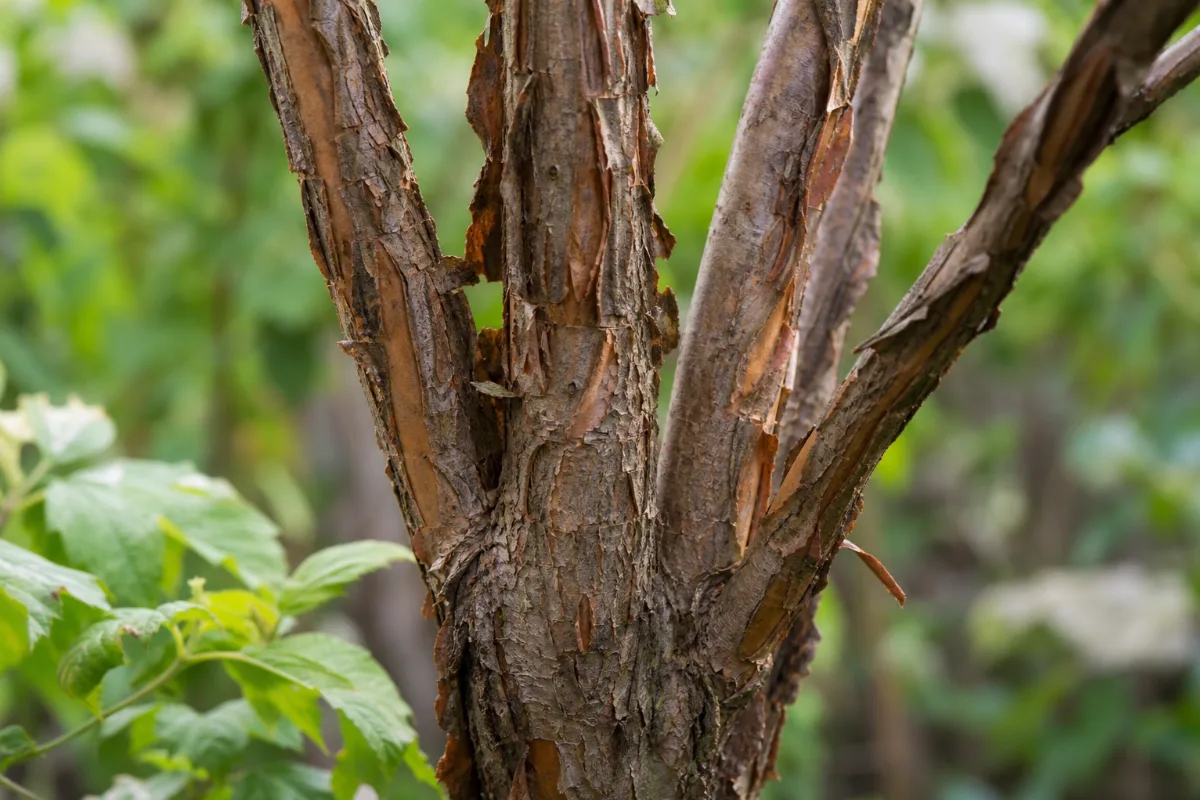
Cramp bark is the dried bark of the guelder rose shrub. It is traditionally used for period pain and muscle cramps. No human trial of the bark was found, and safety is not well known.
General information, not medical advice. Last substantive update · Not medically reviewed. A named clinician has not signed off on this page. How this page is made
About Cramp bark
Cramp bark is a traditional herb for cramps. No human trial of the bark has been found, so its benefits are unproven and its safety is not well known.
What it is
Cramp bark is the dried bark of Viburnum opulus, a shrub also called guelder rose. GBIF lists it in the family Viburnaceae.
It is not black haw (Viburnum prunifolium), a different plant that is sometimes sold under the same name. It is also not the red berries of the same shrub, which are a separate product with their own studies.
Traditional and current uses
Native American and 19th-century herbal practice used the bark for menstrual cramps, muscle cramps, bladder spasm and threatened miscarriage. An 1882 medical article describes its use for painful periods; we read only its record page.
Today it is sold as dried bark, powder, capsules and liquid extracts for cramps and spasms. RxList rates the evidence as insufficient for every use.
What is in it and how it works
Reference monographs name scopoletin and viopudial as relaxing compounds, but we only found the titles of the old papers. The bark is also rich in catechin and other plant phenolics.
In a 2022 lab study, a cramp bark extract switched on a potassium channel (KCNQ5) in frog egg cells. Black haw did not. This is a clue only. It was not tested in people.
At a glance
Traditional uses history, not proof
- Native American and 19th-century herbal practice: menstrual cramps, muscle cramps, bladder spasm and threatened miscarriage (university monograph).
- 1882 medical article on painful periods and uterine pain (text not read).
Studied for research
- Period pain and uterine cramps, insufficient (no human trial)
- Muscle cramps, insufficient (no human trial)
- Kidney stones, very low (human study of fruit extract only)
Main compounds
- Scopoletin and viopudial (named as relaxing compounds; old papers read as titles only)
- Catechin, chlorogenic and gallic acids and other phenolics
Common forms
- Dried bark, tea or decoction
- Powder or capsule
- Liquid extract or tincture
Research links: RxList cramp bark monograph · Cramp bark lab study on a muscle channel (FASEB J, 2022) · Research Library · Genes & Biomarkers Library
The plant and its history
- Accepted scientific name
- Viburnum opulus L. (GBIF accepted, key 2888605)
- Naming authority
- L.
- Common names
- Cramp bark (English); Guelder rose (English); European cranberry-bush (English)
- Botanical family
- Viburnaceae (GBIF); older sources say Caprifoliaceae
- Classification
- Plantae > Tracheophyta > Magnoliopsida > Dipsacales > Viburnaceae > Viburnum > Viburnum opulus
- Native range
- Europe, Russia and parts of North Africa and North Asia (Kajszczak 2020 review).
- Habitat
- Deciduous shrub of natural habitats (Kajszczak 2020).
- What the plant looks like
- Roots: Not verified.; Stems: Not verified.; Leaves: Not verified.; Flowers: Not verified.; Fruit: Berries (a separate product).
- Cultivation
- Also grown as a decorative shrub (review).
- Harvest and processing
- Bark strips are taken from young shoots in spring and summer, then dried (university monograph).
- Look-alikes and adulterants
- Name: Black haw (Viburnum prunifolium L.); Note: Separate accepted species, GBIF key 2888608. Sometimes sold as cramp bark. Catechin and epicatechin content is said to help tell the barks apart (secondary source).; Name: Mountain maple (Acer spicatum); Note: Historical adulterant of Viburnum bark (university monograph).
- Sustainability and conservation
- Not verified.
Traditional use and history history, not clinical proof
| Tradition or era | Documented use | Source |
|---|---|---|
| Native American and 19th-century Eclectic medicine | Menstrual cramps, threatened miscarriage, muscle cramps, bladder spasm (university monograph, secondary). | s-scu-monograph |
| 1882, American medicine | A physician's article on use for painful periods and uterine pain. Text not read. | p36023872 |
| Europe and Turkey (plant and fruit) | Cough, colds, ulcers and kidney problems (review). | p33167421 |
| EMA/HMPC | No monograph found, so no regulator-recognised traditional use. | s-regulators-none |
Traditional use shows how a plant was used. It does not show that a supplement works or is safe today.
What is inside, and how it may work
What the plant contains and how those compounds act in cells and animals. Laboratory and animal mechanisms are not proven effects in people.
Main compounds
| Compound | Family | Where it is concentrated | Activity studied | Level of evidence |
|---|---|---|---|---|
| Scopoletin PubChem 5280460 | coumarin | Named as an antispasmodic component of V. opulus and V. prunifolium (1967 title; university monograph). | Called the main antispasmodic constituent by a university monograph. Details of the 1967 paper not read. 6 16 | Animal research |
| Viopudial | not verified | V. opulus (1972 title) | Titled as a blood-pressure-lowering, smooth-muscle relaxing compound; paper not read. 10 16 | Animal research |
| (+)-Catechin PubChem 9064 | flavan-3-ol | Bark Over 1 g/100 g dry weight in bark | Main bark phenolic; antioxidant and enzyme-blocking in test tubes. 13 8 | Laboratory research |
| Chlorogenic acid PubChem 1794427 | phenolic acid | Bark and flower (highest in flower) | Antioxidant in tubes. 17 13 | Laboratory research |
| Gallic acid PubChem 370 | phenolic acid | Bark | Activated the KCNQ5 channel in a lab study. 17 9 | Laboratory research |
| Tannic acid PubChem 16129778 | tannin | Common to active barks tested | Activated KCNQ5 in the lab. 9 | Laboratory research |
| Salicin | phenolic glycoside | Not reported in any source we read for V. opulus bark | Salicin is a willow compound. The university monograph does not list it for cramp bark, so a salicin link is not verified. 16 | Not found |
Mechanisms, receptors and pathways
| Target or pathway | Gene or receptor | What was found | Level |
|---|---|---|---|
| KCNQ5 potassium channel | KCNQ5 | Cramp bark extract strongly activated it in frog egg cells; black haw did not; tannins such as gallic and tannic acid were active. 9 | Laboratory research |
| Smooth-muscle relaxation / blood pressure | Not determined | Scopoletin and viopudial were reported as antispasmodic; viopudial also as hypotensive in animals (titles only). 6 10 | Animal research |
| Starch-digesting enzymes | alpha-amylase, alpha-glucosidase | Bark phenolics blocked both enzymes in test tubes. 8 | Laboratory research |
Absorption, metabolism and elimination
- Absorption
- No study of absorption of cramp bark compounds in people was found.
- Distribution
- Not studied.
- Metabolism
- Not studied.
- Elimination
- Not known.
- Bioavailability
- Unknown.
Isolated compounds versus whole extracts
Scopoletin and viopudial were studied on their own decades ago; modern lab work uses whole bark extracts. Nobody has shown that either gives a benefit in people.
Nutritional composition
A nutrient table does not apply. In one analysis the bark was mostly fibre (about 58 g/100 g dry weight insoluble fibre) plus phenolics.
6 very low certainty2 not enough evidence
What was looked at
The 8 benefits and uses checked for Cramp bark, each with how strong the evidence is. Tap one to open it.
- Painful periods and uterine crampsNot enough evidence
- Muscle cramps and spasmsNot enough evidence
- Smooth-muscle relaxing effect (lab finding)Very low certainty
- Kidney and urinary stonesVery low certainty
- Blood sugar (lab study only)Very low certainty
- Antioxidant activityVery low certainty
- Stomach lining protection (rat study)Very low certainty
- Germs and Staphylococcus (lab study)Very low certainty
What is Cramp bark good for?
The main proposed uses and how strong the human evidence is for each. "Very low" means lab or one unclear study, and "insufficient" means no usable human evidence.
Benefits, one by one
Each card is a research question, not a promise. Tap a goal to filter. Open a card to see the studies, doses and limits.
Painful periods and uterine cramps
Not enough evidenceCramp bark has been used for generations for period pain and cramps in the womb. No human trial of the bark on its own was found, so we cannot say it works.
5 studiesDried bark as tea or decoction, powder, capsule and liquid extract ar…
Studies, doses and limits
What the trials found
No human trial of cramp bark (Viburnum opulus bark) for period pain was found. A review of women's-health botanicals says rigorous clinical trials of cramp bark and black haw for premenstrual symptoms have not been done. RxList rates the evidence as insufficient. Doctors' notes from 1882 exist, but we only read the record page, not the article.
Results
No human result exists.
Effect sizes as reported
None
Why this rating
There is no human trial. The only support is tradition, a historical article we did not read, and lab work.
Form and dose studied
Dried bark as tea or decoction, powder, capsule and liquid extract are sold. Products differ and nothing here compares them.
Who was studied
Women with painful periods: not tested.
Limits
Do not confuse with black haw (Viburnum prunifolium), a different plant also sold as cramp bark. The V. opulus fruit has been tested in rats for endometriosis, but that is a different part of the plant.
Why researchers looked
It is one of the best-known traditional herbs for menstrual cramps and is listed with black haw in a review of women's-health botanicals.
Traditional use
Used in 19th-century Eclectic practice and by Native American peoples for menstrual cramps and threatened miscarriage (university monograph). An 1882 medical article describes use for painful periods and uterine pain.
Proposed mechanism Laboratory research
In a lab test, a cramp bark extract switched on a potassium channel (KCNQ5) that helps smooth muscle relax. Compounds such as scopoletin and viopudial are named as relaxing ingredients. This is lab work only.
A proposed mechanism does not show that the effect happens in people.
Safety is covered in the safety section: not enough is known, and it should be avoided in pregnancy and breastfeeding.
Muscle cramps and spasms
Not enough evidenceCramp bark gets its name from its use for cramps. The sources we read say there is not enough evidence to rate it for muscle cramps or spasms, and no human trial was found.
6 studiesBark preparations; strength varies.
Studies, doses and limits
What the trials found
No human trial for muscle cramps was found. RxList and WebMD (Natural Medicines) both say the evidence is insufficient or not good.
Results
No human result exists.
Effect sizes as reported
None
Why this rating
No human trial; lab results do not predict benefit in people.
Form and dose studied
Bark preparations; strength varies.
Who was studied
Not tested.
Limits
Lab work does not show the bark relaxes skeletal muscle. KCNQ5 work concerned smooth muscle and blood vessels.
Why researchers looked
Its name and long use point to muscle relaxing effects.
Traditional use
Used for muscle cramps and bladder spasm in traditional herbal practice (university monograph).
Proposed mechanism Laboratory research
Scopoletin and viopudial were reported as antispasmodic (relaxing) compounds in mid-20th-century animal work; we read only the titles. In a 2022 lab study the bark extract activated KCNQ5, a channel linked to smooth muscle relaxation. All lab or animal work.
A proposed mechanism does not show that the effect happens in people.
Safety is covered in the safety section: not enough is known, and it should be avoided in pregnancy and breastfeeding.
Smooth-muscle relaxing effect (lab finding)
Very low certaintyIn a lab test, cramp bark extract switched on a potassium channel found in smooth muscle. This is a clue about how it might relax tissue, not proof that it does in people.
1 studies1% bark extract in a lab dish.
Studies, doses and limits
What the trials found
None in people. Cramp bark was not tested on artery tissue in the study; white willow, red willow and white oak were.
Results
Cramp bark extract (1%) strongly activated KCNQ5 in frog egg cells. Black haw bark did not activate it.
Effect sizes as reported
Not reported as a number in the abstract
Why this rating
One cell-level study; the bark was not tested on tissue; no human data.
Form and dose studied
1% bark extract in a lab dish.
Who was studied
Not applicable.
Limits
It says nothing about dose or effect in a body. It also suggests cramp bark and black haw may not act the same way.
Why researchers looked
Researchers tested old folk-medicine barks to see why they were used for cramps and blood vessel relaxation.
Traditional use
Barks are used as antispasmodics in several Native American traditions (study introduction).
Proposed mechanism Laboratory research
Tannins such as gallic acid and tannic acid activated the KCNQ5 channel in frog egg cells. Black haw bark did not.
A proposed mechanism does not show that the effect happens in people.
Not applicable.
Kidney and urinary stones
Very low certaintyThe one human study found used the fruit extract (gilaburu), not the bark. It compared a fruit extract with a prostate-type drug for small stones. We have no human data on the bark.
4 studiesFruit extract (gilaburu) in the study; no bark product was tested.
Studies, doses and limits
What the trials found
One 86-person study of gilaburu (V. opulus fruit) extract plus diclofenac as needed against tamsulosin plus diclofenac for small lower ureter stones: stone passage and time to passage did not differ; the fruit group needed extra pain medicine less often (37.2% vs 65.1%, P = .017) and had fewer emergency visits (11.6% vs 34.8%, P = .02). The abstract does not say patients were randomised. Nothing on cramp bark.
Results
Passage rate similar to tamsulosin; less extra pain medicine in the fruit group.
Effect sizes as reported
Proportions as reported in the abstract; no confidence interval given
Why this rating
Fruit extract, not bark; one small study without stated randomisation; for the bark the evidence is insufficient.
Form and dose studied
Fruit extract (gilaburu) in the study; no bark product was tested.
Who was studied
Adults with small lower ureter stones (fruit study).
Limits
Cannot be applied to the bark. See the safety section: whether the bark affects stones is not established.
Why researchers looked
Fruit of V. opulus is used in Turkish folk medicine for kidney stones; the bark is traditionally used for urinary pain and spasm.
Traditional use
The bark is listed as a kidney stimulant for urinary pain or spasms (RxList). WebMD notes stones among traditional uses but says there is no good evidence.
Proposed mechanism Animal research
Not established for the bark. Rat work on the fruit is reported in a review.
A proposed mechanism does not show that the effect happens in people.
Whether the bark is safe for people with kidney stones is not known.
Blood sugar (lab study only)
Very low certaintyIn test tubes, bark extract slowed the breakdown of starch. No animal or human study of the bark for blood sugar was found.
2 studiesPhenolic bark extract in vitro.
Studies, doses and limits
What the trials found
None in people.
Results
Bark extract reduced glucose released from starch (IC50 87.77 ug/mL) and blocked both enzymes in a test tube.
Effect sizes as reported
IC50 87.77 ug/mL (bark) versus 148.87 ug/mL (flower)
Why this rating
Test-tube study only; the authors call it preliminary.
Form and dose studied
Phenolic bark extract in vitro.
Who was studied
Not applicable.
Limits
Does not show any effect on blood sugar in a body.
Why researchers looked
Researchers look for plant extracts that slow sugar digestion.
Traditional use
WebMD lists diabetes among uses but says there is no good evidence.
Proposed mechanism Laboratory research
Bark phenolics, possibly procyanidins and catechin, blocked the digestive enzymes alpha-amylase and alpha-glucosidase in test tubes, less strongly than the drug acarbose.
A proposed mechanism does not show that the effect happens in people.
People who take diabetes medicines should ask a pharmacist before adding any herb.
Antioxidant activity
Very low certaintyThe bark is rich in plant chemicals that act as antioxidants in the lab. This does not show it helps health in people.
3 studiesBark extracts.
Studies, doses and limits
What the trials found
None in people.
Results
Bark had the highest antioxidant capacity of fruit, flower and bark and the most phenolics (3.98 g/100 g dry weight).
Effect sizes as reported
Reported in g/100 g dry weight
Why this rating
Test-tube chemistry.
Form and dose studied
Bark extracts.
Who was studied
Not applicable.
Limits
Antioxidant results in a tube are not a clinical benefit.
Why researchers looked
Bark contains catechin, phenolic acids and tannins.
Traditional use
Not documented as a traditional use.
Proposed mechanism Laboratory research
Compounds such as (+)-catechin and chlorogenic and gallic acids neutralise free radicals in tests.
A proposed mechanism does not show that the effect happens in people.
None.
Stomach lining protection (rat study)
Very low certaintyPlant chemicals from V. opulus protected the stomach lining of stressed rats. The plant part is not stated and no human work was found.
2 studiesProanthocyanidins from V. opulus.
Studies, doses and limits
What the trials found
None in people.
Results
Pretreated rats had less stomach and duodenal damage.
Effect sizes as reported
Not reported as numbers in the abstract
Why this rating
Rat study; plant part unclear.
Form and dose studied
Proanthocyanidins from V. opulus.
Who was studied
Rats.
Limits
Not tied to the bark.
Why researchers looked
The plant is traditionally used for ulcers and stomach problems (review).
Traditional use
Stomach complaints are among its traditional uses (review).
Proposed mechanism Animal research
Higher nitric oxide and antioxidant enzymes in rats.
A proposed mechanism does not show that the effect happens in people.
None.
Germs and Staphylococcus (lab study)
Very low certaintyExtracts of the fruit and bark blocked staph germ activity in test tubes without harming human skin cells. No animal or human study was found.
2 studiesFruit and bark extracts, acetone, ethanol and water.
Studies, doses and limits
What the trials found
None in people.
Results
Strong inhibition of sortase A and biofilm in vitro; not toxic to a human skin-cell line.
Effect sizes as reported
Not reported as numbers in the abstract
Why this rating
Test tube only; fruit and bark mixed.
Form and dose studied
Fruit and bark extracts, acetone, ethanol and water.
Who was studied
Not applicable.
Limits
Not shown to treat or prevent infection.
Why researchers looked
The plant is traditionally used for infections.
Traditional use
Used for infections in folk medicine (RxList lists infection among traditional uses).
Proposed mechanism Laboratory research
Extracts reduced a staph enzyme and biofilm in the lab.
A proposed mechanism does not show that the effect happens in people.
Do not treat an infection with this herb in place of care.
Connections to the rest of health
How Cramp bark connects to the rest of our health knowledge graph. Every link says what kind of connection it is. A safety link (for example to the liver) is a warning, not a benefit. A study that merely mentions a topic never creates a benefit link.
Explore every connection: goals, body systems, organs, symptoms, genes
A. Wellness goals
| Connected to | Kind of connection | Evidence status | Context | Studies |
|---|---|---|---|---|
| Womens Wellness | Traditional use | Not enough evidence | Painful periods and uterine cramps: Cramp bark has been used for generations for period pain and cramps in the womb. No human trial of the bark on its own was found, so we cannot say it works. | 3 14 15 16 9 |
| Muscle Recovery | Traditional use | Not enough evidence | Muscle cramps and spasms: Cramp bark gets its name from its use for cramps. The sources we read say there is not enough evidence to rate it for muscle cramps or spasms, and no human trial was found. | 15 18 16 10 6 9 |
| Calm Relaxation | Traditional use | Not enough evidence | Muscle cramps and spasms: Cramp bark gets its name from its use for cramps. The sources we read say there is not enough evidence to rate it for muscle cramps or spasms, and no human trial was found. | 15 18 16 10 6 9 |
| Calm Relaxation | Preliminary mechanism | Very low certainty | Smooth-muscle relaxing effect (lab finding): In a lab test, cramp bark extract switched on a potassium channel found in smooth muscle. This is a clue about how it might relax tissue, not proof that it does in people. | 9 |
| Blood Sugar Balance | Preliminary mechanism | Very low certainty | Blood sugar (lab study only): In test tubes, bark extract slowed the breakdown of starch. No animal or human study of the bark for blood sugar was found. | 8 18 |
| Inflammation Balance | Preliminary mechanism | Very low certainty | Antioxidant activity: The bark is rich in plant chemicals that act as antioxidants in the lab. This does not show it helps health in people. | 13 17 7 |
| Digestive Support | Preliminary mechanism | Very low certainty | Stomach lining protection (rat study): Plant chemicals from V. opulus protected the stomach lining of stressed rats. The plant part is not stated and no human work was found. | 20 7 |
| Immune Support | Preliminary mechanism | Very low certainty | Germs and Staphylococcus (lab study): Extracts of the fruit and bark blocked staph germ activity in test tubes without harming human skin cells. No animal or human study was found. | 19 15 |
B. Body systems
| Connected to | Kind of connection | Evidence status | Context | Studies |
|---|---|---|---|---|
| Reproductive system | Contraindication | Not enough evidence | Avoid in pregnancy and breastfeeding because safety is unknown. Avoid in pregnancy and breastfeeding because safety is unknown. A safety relationship, not a benefit. Preparation or compound: Cramp bark |
15 18 |
| Cardiovascular system | Drug or supplement interaction | Very low certainty | RxList says it might lower blood pressure and heart rate; ask before combining with such medicines. Preparation or compound: Cramp bark |
15 |
| Reproductive System | Biological association | Not enough evidence | Studied for: Painful periods and uterine cramps | 3 14 15 16 9 |
| Musculoskeletal System | Biological association | Not enough evidence | Studied for: Muscle cramps and spasms Studied for: Smooth-muscle relaxing effect (lab finding) | 15 18 16 10 6 9 |
| Cardiovascular System | Biological association | Very low certainty | Studied for: Smooth-muscle relaxing effect (lab finding) | 9 |
| Urinary System | Biological association | Very low certainty | Studied for: Kidney and urinary stones | 5 18 15 7 |
| Metabolism Weight | Biological association | Very low certainty | Studied for: Blood sugar (lab study only) Studied for: Antioxidant activity | 8 18 13 17 7 |
| Digestive System | Biological association | Very low certainty | Studied for: Stomach lining protection (rat study) | 20 7 |
| Immune System | Biological association | Very low certainty | Studied for: Germs and Staphylococcus (lab study) | 19 15 |
J. Genes, receptors and enzymes
| Connected to | Kind of connection | Evidence status | Context | Studies |
|---|---|---|---|---|
| KCNQ5 | Preliminary mechanism | In vitro | Potassium channel activated by cramp bark extract in the lab | 9 |
L. Active compounds
| Connected to | Kind of connection | Evidence status | Context | Studies |
|---|---|---|---|---|
| Scopoletin | Biological association | Animal | Called the main antispasmodic constituent by a university monograph. Details of the 1967 paper not read. Preparation or compound: Named as an antispasmodic component of V. opulus and V. prunifolium (1967 title; university monograph). |
6 16 |
| Viopudial | Biological association | Animal | Titled as a blood-pressure-lowering, smooth-muscle relaxing compound; paper not read. Preparation or compound: V. opulus (1972 title) |
10 16 |
| (+)-Catechin | Biological association | In vitro | Main bark phenolic; antioxidant and enzyme-blocking in test tubes. Preparation or compound: Bark |
13 8 |
| Chlorogenic acid | Biological association | In vitro | Antioxidant in tubes. Preparation or compound: Bark and flower (highest in flower) |
17 13 |
| Gallic acid | Biological association | In vitro | Activated the KCNQ5 channel in a lab study. Preparation or compound: Bark |
17 9 |
| Tannic acid | Biological association | In vitro | Activated KCNQ5 in the lab. Preparation or compound: Common to active barks tested |
9 |
| Salicin | Biological association | Not found | Salicin is a willow compound. The university monograph does not list it for cramp bark, so a salicin link is not verified. Preparation or compound: Not reported in any source we read for V. opulus bark |
16 |
Each connection is stored with the ingredient, the connected record, the kind of connection, the evidence status, the supporting studies, the preparation or compound involved, and a review date (last reviewed October 25, 2026).
The evidence
The research centre for Cramp bark. Every record here was checked against PubMed or the publisher's page; we never list a study we have not verified.
Evidence by outcome
Bars show how many studies we found for each outcome, not how well it works. People are added up across trials only (reviews are not added, to avoid double counting).
How we rate evidence
High certainty
Several well-run trials or reviews agree; further research is unlikely to change the picture much.
Moderate certainty
Good trials point the same way, but some doubt remains.
Low certainty
Small, short or inconsistent trials. The finding could change with better research.
Very low certainty
Very little or very weak human data. Treat as a possibility only.
Mixed findings
Trials or reviews disagree with each other.
Not enough evidence
Not enough human research to say either way.
Evidence against
Good research found no benefit, or found harm.
We take the reviewers' own risk-of-bias and GRADE statements where they exist, and otherwise judge from study size, design, consistency, directness and whether a product matches what is sold. Many publications do not make evidence high. Method note: We started from our existing cramp bark summary, then searched PubMed, read the abstracts of every cited paper, and read reference monographs where we could. Items we only saw as titles are labelled.
Study library: every study we checked 20
| Study | Design | People | Product, dose, length | Result |
|---|---|---|---|---|
| British Trust for Ornithology and plant-information websites 2026 Guelder rose berries: web sources on raw-fruit toxicity Web search results · Source |
Secondary source review |
Plant information pages | V. opulus berries fruit Not stated Not stated · vs None |
Search results agree the berries are only mildly toxic, with vomiting or diarrhoea if eaten raw or in large amounts. One garden site says they are edible cooked. One page says all parts are poisonous, and another says the bark is the toxic part. These are gardening and wildlife pages, not clinical toxicology. Methods, limits and fundingOutcomes: Whether raw berries are toxic Limitations: Secondary sources that disagree in places; we read search summaries, not the full pages. Read: summary-only |
| Dambra 2000 Hypersensitivity to Viburnum rhytidophyllum Allergy · PMID 10843438 · DOI |
Case report |
Not read (no abstract on PubMed) | Viburnum rhytidophyllum (a different species) not stated Not stated Not stated · vs None |
Only the title is available. It reports hypersensitivity to a different Viburnum species. We did not read it, so we cannot say what part of the plant caused it. It does not show allergy to cramp bark. Methods, limits and fundingOutcomes: Title only: allergic reaction to a Viburnum species Limitations: Different species; title only. Read: summary-only |
| Dietz 2016 Botanicals and Their Bioactive Phytochemicals for Women's Health Pharmacol Rev · PMID 27677719 · DOI |
Narrative review review |
Review of women's-health botanicals | Many botanicals including V. opulus and V. prunifolium (cramp bark and black haw) bark Not stated Not stated · vs None |
The review lists cramp bark and black haw among botanicals used for premenstrual syndrome and says rigorous clinical trials have not been done. It also says botanicals have not been rigorously tested for toxic effects or drug interactions. Methods, limits and fundingOutcomes: Overview of evidence for PMS and other uses Limitations: Broad review; the abstract does not discuss cramp bark in detail. Funding and conflicts: Not read in detail. Read: abstract |
| GBIF 2026 GBIF Backbone Taxonomy: Viburnum opulus L. (key 2888605) GBIF species match API · Source |
Database record review |
Taxonomy record | Viburnum opulus L. whole plant Not stated Not stated · vs None |
Accepted name Viburnum opulus L.; family Viburnaceae; order Dipsacales. Viburnum prunifolium L. (black haw) is a separate accepted species, key 2888608. NCBI Taxonomy has an entry (id 85293). Methods, limits and fundingOutcomes: Accepted name and family Limitations: Database record. Read: full-text |
| Gok 2021 Gilaburu extract (Viburnum opulus Linnaeus) is as effective as Tamsulosin in medical expulsive therapy of distal ureteral calculi Int J Clin Pract · PMID 34610178 · DOI |
Controlled clinical study |
86 86 adults with small stones in the lower ureter |
Gilaburu (V. opulus FRUIT) extract plus diclofenac as needed fruit Not stated Not stated · vs Tamsulosin 0.4 mg plus diclofenac as needed |
Stone passage rates and time to passage did not differ from tamsulosin. Extra pain medicine was needed by 37.2% versus 65.1% (P = .017) and emergency visits 11.6% versus 34.8% (P = .02) in the fruit extract group. The abstract says data were prospectively collected and does not say patients were randomised. Methods, limits and fundingOutcomes: Stone passage, time to passage, extra pain medicine, emergency visits Limitations: Fruit extract, not bark. Small, abstract does not mention randomisation or blinding. Cannot be applied to cramp bark. Funding and conflicts: Not stated in abstract. Read: abstract |
| Jarboe 1967 Scopoletin, an Antispasmodic Component of Viburnum opulus and prunifolium J Med Chem · PMID 22185161 · DOI |
Animal research animal |
Not read (no abstract on PubMed) | Scopoletin from V. opulus and V. prunifolium not stated Not stated Not stated · vs None |
Only the title is available to us. It names scopoletin as an antispasmodic component of both species. We did not read the methods or results. Methods, limits and fundingOutcomes: Title only: antispasmodic component Limitations: No abstract; details not verified. Title only. Read: summary-only |
| Kajszczak 2020 Viburnum opulus L.-A Review of Phytochemistry and Biological Effects Nutrients · PMID 33167421 · DOI |
Narrative review review |
Review of lab, animal and cell studies on all parts of the plant | Viburnum opulus, all parts (fruit, flower, bark, leaf) mixed Not stated Not stated · vs None |
The authors say the plant is traditionally used for cough, colds, rheumatic aches, ulcers, stomach and kidney problems. Antioxidant, antimicrobial and other effects are described in cell and animal studies. Use in urinary disease and endometriosis was shown in animals only. Methods, limits and fundingOutcomes: Overview of traditional uses, chemistry and biological effects Limitations: Narrative review, mostly lab and animal work, covers fruit as much as bark; not a test of cramp bark in people. Funding and conflicts: No conflict of interest declared. Read: abstract |
| Kajszczak 2022 In Vitro Inhibitory Effects of Viburnum opulus Bark and Flower Extracts on Digestion of Potato Starch and Carbohydrate Hydrolases Activity Molecules · PMID 35630596 · DOI |
Laboratory research in-vitro |
Test-tube digestion model | Phenolic extracts of V. opulus bark and flower bark and flower Not stated Not stated · vs None |
The bark extract reduced glucose released from starch (IC50 87.77 ug/mL) and blocked both enzymes more strongly than the flower extract, but less than the drug acarbose. The authors call it a preliminary study. Methods, limits and fundingOutcomes: Starch digestion and the enzymes alpha-amylase and alpha-glucosidase Limitations: Test tube only. No animal or human data. Not shown to lower blood sugar in anyone. Funding and conflicts: No conflict of interest declared. Read: abstract |
| Manville 2022 KCNQ5 activation by tannins mediates vasorelaxant effects of barks used in Native American botanical medicine FASEB J · PMID 35997997 · DOI |
In vitro animal in-vitro |
Frog egg cells carrying a human potassium channel, and rat arteries | 1% bark extracts including cramp bark and black haw bark Not stated Not stated · vs None |
Cramp bark extract strongly switched on the KCNQ5 channel. Cramp bark was not one of the barks tested on rat arteries (white willow, red willow and white oak were). Black haw bark did not activate the channel or relax arteries. Gallic acid and tannic acid were active compounds. Methods, limits and fundingOutcomes: KCNQ5 potassium channel activation; artery relaxation Limitations: Cells and rat tissue only; cramp bark was not tested on tissue, and nothing was tested in people. Funding and conflicts: No competing interests declared. Read: abstract |
| Nicholson 1972 Viopudial, a hypotensive and smooth muscle antispasmodic from Viburnum opulus Proc Soc Exp Biol Med · PMID 5037580 · DOI |
Animal research animal |
Not read (no abstract on PubMed) | Viopudial isolated from V. opulus not stated Not stated Not stated · vs None |
Only the title is available to us. It says viopudial is a blood-pressure-lowering, muscle-relaxing compound from V. opulus. We did not read the methods or results. Methods, limits and fundingOutcomes: Title only: lowers blood pressure and relaxes smooth muscle Limitations: No abstract; species and details not verified. Title only. Read: summary-only |
| Our search 2026 EMA/HMPC, NCCIH, LiverTox and LactMed: no cramp bark entry found Regulator and database search, 2026-10-25 · Source |
Search record review |
Search record | Cramp bark / Viburnum opulus bark Not stated Not stated · vs None |
EMA herbal pages for viburnum-opulus and viburnum-prunifolium returned 404; the NCCIH cramp-bark page returned 404; a search of NCBI Books for viburnum found no LiverTox or LactMed record; web searches found no EMA or NCCIH page. Drugs.com returned 403 and could not be read. Methods, limits and fundingOutcomes: Whether regulators or safety databases have an entry Limitations: Absence of a page we could find does not prove none exists. FDA, Commission E and WHO were not checked. Read: full-text |
| Ozan 2023 Safety assessment of European cranberrybush (Viburnum opulus L.) fruit juice: Acute and subacute oral toxicity Food Chem Toxicol · PMID 37783419 · DOI |
Animal research animal |
Rats (single dose) and mice (28 days) | V. opulus FRUIT juice extract fruit Not stated Not stated · vs None |
No deaths or toxic signs at the tested amounts, but at the highest 28-day amount in mice, platelet counts were high and tissue changes were seen in kidney, liver and fat. The no-effect level was 500 mg/kg/day. Methods, limits and fundingOutcomes: Deaths, clinical signs, blood counts and tissue changes Limitations: Animals; fruit juice, not bark. Authors call for longer toxicity studies. Funding and conflicts: No competing interests declared. Read: abstract |
| Polka 2019 Comparison of Chemical Composition and Antioxidant Capacity of Fruit, Flower and Bark of Viburnum opulus Plant Foods Hum Nutr · PMID 31321622 · DOI |
Lab analysis lab |
Plant material analysed in the laboratory | Viburnum opulus fruit, flower and bark extracts bark (compared with fruit and flower) Not stated Not stated · vs None |
The bark had the highest antioxidant capacity of the three parts and the most phenolic compounds (3.98 g/100 g dry weight) and fibre. (+)-Catechin was the main bark phenolic (over 1 g/100 g dry weight). Methods, limits and fundingOutcomes: Phenolics, fibre and antioxidant capacity by plant part Limitations: Test-tube chemistry only. Antioxidant results in a tube do not show a benefit in people. Funding and conflicts: No conflict of interest declared. Read: abstract |
| Purdy 1882 On the Use of Viburnum Opulus (L.) in Dysmenorrhoea and Uterine Pain South Med Rec · PMID 36023872 |
Historical opinion |
Not read (record page only) | Viburnum opulus (plant part not read) not read Not stated Not stated · vs None |
We did not read the text, so we cannot say what it found. It shows doctors were writing about the plant for painful periods in 1882. Methods, limits and fundingOutcomes: Historical doctor's account of use for painful periods Limitations: Record page only. A historical article is not a trial. Read: summary-only |
| RxList 2026 Cramp Bark (RxList, Natural Medicines content) RxList supplements monograph · Source |
Authoritative guidance review |
Reference monograph | Cramp bark (Viburnum opulus) bark Not stated Not stated · vs None |
Rates cramp bark as insufficient evidence for every listed use (cramps, muscle spasms, menstrual and pregnancy cramps, urinary pain). Says chemicals in it seem to decrease muscle spasms and might lower blood pressure and heart rate. Says there is not enough information to know if it is safe, that no dose can be set, and to avoid it in pregnancy and breastfeeding. Warns not to confuse it with black haw. It does not mention interactions, aspirin allergy, bleeding or kidney stones. Methods, limits and fundingOutcomes: Uses, effectiveness rating and safety Limitations: Secondary reference; undated; no reference list shown to us. Read: full-text |
| Southern Cross University Analytical Research Laboratory Viburnum opulus monograph (Southern Cross University medicinal plant garden) University herbal monograph · Source |
Authoritative guidance review |
Reference monograph | Viburnum opulus dried bark bark Not stated Not stated · vs None |
Lists scopoletin (a coumarin) and viopudial as thought to contribute to antispasmodic action, plus viburnin, catechin and epicatechin. Says information on constituents is limited. Traditional use includes menstrual cramps, threatened miscarriage, muscle cramps and bladder spasm. Advises caution with known allergy to other plants in the Caprifoliaceae family, and says safety in pregnancy and lactation is unavailable. Notes commercial Viburnum products were widely adulterated with mountain maple (Acer spicatum). It does not mention salicin. Methods, limits and fundingOutcomes: Constituents, traditional use, cautions Limitations: Secondary monograph, undated; relies on herbal textbooks. Read: full-text |
| Turek 2007 Free and chemically bonded phenolic acids in barks of Viburnum opulus L. and Sambucus nigra L. Acta Pol Pharm · PMID 18536165 |
Lab analysis lab |
Plant bark analysed in the laboratory | Viburnum opulus bark (and elder bark) bark Not stated Not stated · vs None |
Eleven phenolic acids were identified in V. opulus bark, including caffeic, ferulic, gallic and chlorogenic acids and ellagic acid. Methods, limits and fundingOutcomes: Identification of phenolic acids Limitations: Chemistry only; no health outcome. Read: abstract |
| WebMD 2026 Cramp bark / Viburnum opulus (WebMD, Natural Medicines content) WebMD vitamins and supplements · Source |
Authoritative guidance review |
Reference monograph | Viburnum opulus bark bark Not stated Not stated · vs None |
Says there is no good scientific evidence for muscle cramps, diabetes, high blood pressure or kidney stones. Says there is not enough reliable information on safety or side effects, advises avoiding it in pregnancy and breastfeeding, and says it currently has no information on interactions. Methods, limits and fundingOutcomes: Uses and safety Limitations: Secondary reference. Lists fruit-extract stone studies only as citations. Read: full-text |
| Wójcik-Bojek 2021 An In Vitro Study of the Effect of Viburnum opulus Extracts on Key Processes in the Development of Staphylococcal Infections Molecules · PMID 33801012 · DOI |
Laboratory research in-vitro |
Bacteria and human skin cell line in the laboratory | Acetone, ethanol and water extracts of V. opulus fruit and bark fruit and bark Not stated Not stated · vs None |
The extracts strongly reduced a staph enzyme (sortase A) and biofilm formation and were not toxic to a human skin-cell line. The authors say animal tests are needed before any use as a supplement. Methods, limits and fundingOutcomes: Staphylococcus aureus enzyme, protein and biofilm; toxicity to human cells Limitations: Test tube only; fruit and bark results are not separated in the abstract. Funding and conflicts: No conflict of interest declared. Read: abstract |
| Zayachkivska 2006 Influence of Viburnum opulus proanthocyanidins on stress-induced gastrointestinal mucosal damage J Physiol Pharmacol · PMID 17218766 |
Animal research animal |
Rats given stress that damages the stomach lining | Proanthocyanidins prepared from V. opulus not stated in abstract Not stated Not stated · vs None |
Pretreatment protected the stomach and duodenal lining in rats, with more nitric oxide and antioxidant enzyme activity. Methods, limits and fundingOutcomes: Stomach and duodenum lining damage Limitations: Rats only. The abstract does not say which plant part was used. Read: abstract |
What we do not know yet
- What the evidence supports: nothing about cramp bark is above very low certainty. No human trial exists for period pain or muscle cramps.
- What is uncertain: whether the bark is safe in pregnancy, with blood thinners or aspirin allergy, or with kidney stones; whether salicylates are present; what modern products contain.
- What we could not read: the 1882 article, the 1967 and 1972 constituent papers (titles only), Drugs.com and full Natural Medicines.
How new research is added
New studies are found by a saved PubMed search and placed in a review queue. A person reads each one before it changes any evidence rating.
Lab markers
What changed in blood or saliva tests during trials. A changed number is not the same as feeling or being healthier, and we give no "normal ranges".
Safety
What studies and official sources say about side effects, medicines and who should check first. Each point shows what kind of evidence it comes from.
Main points to know 4
- Not enough is known to call it safe. RxList and WebMD (both using Natural Medicines content) say there is not enough reliable information to know whether cramp bark is safe or what its side effects are. No harm has been proven, but that is not proof of safety. No human safety trial was found. Authoritative guidance 15 18
- Avoid in pregnancy and breastfeeding. Both references say not enough is known and advise avoiding it. The traditional use for threatened miscarriage does not make it safe. Authoritative guidance 15 18 16
- Check the plant: cramp bark is not black haw. Black haw (Viburnum prunifolium) is sometimes sold as cramp bark. A university monograph says commercial Viburnum products were widely adulterated with mountain maple bark in the past. Lab work found the two barks act differently on one muscle channel. Authoritative guidance 15 16 9
- Berries are a different product. Web sources say raw berries cause mild stomach upset (vomiting, diarrhoea) and are usually cooked. The rodent safety study was on fruit juice, not bark. Secondary source 1 12
Side effects 4
| Effect | How often | Severity and recovery | Evidence |
|---|---|---|---|
| No specific side effects listed in the sources read Absence of reports is not proof of safety. | Not established | unknown Not known | Authoritative guidance 15 18 |
| Stomach upset (nausea, vomiting, diarrhoea) after eating raw berries Berries, not bark. Web gardening and wildlife pages; not clinical toxicology; sources disagree on how toxic other parts are. | Not established | mild Not documented | Secondary source 1 |
| Tissue changes in kidney, liver and fat plus higher platelet counts at the highest animal amount Fruit juice extract in mice for 28 days at 2000 mg/kg/day; no effect level 500 mg/kg/day. Not bark and not people. | Not established | unknown Not studied | Animal research 12 |
| Allergic reaction A university monograph advises caution with known allergy to plants in the Caprifoliaceae family. A paper titled as hypersensitivity to a different Viburnum species (V. rhytidophyllum) exists; we read the title only. | Not established | unknown Not known | Authoritative guidance 16 2 |
Liver
No LiverTox record for cramp bark was found, and no case of liver injury linked to the bark was found. A rodent study of fruit juice found liver tissue changes at the highest 28-day amount, but that was fruit juice in mice. Liver safety of the bark is unknown. 11 12
How often. Not known.
Monitoring. No agency monitoring advice was found.
This is a safety connection. It is not evidence that Cramp bark supports liver health.
Medicines and supplements 6
| With | Why it matters | Importance | Evidence | What to do |
|---|---|---|---|---|
| Blood thinners (warfarin, other anticoagulants, antiplatelets) and bleeding disorders prescription | Theory only. No reference we read (RxList, WebMD, university monograph) states any bleeding effect, and the salicylate idea sometimes behind such warnings is not shown for cramp bark. | Not established. No case report or study found. | Pharmacological theory Very low certainty 18 15 | If you take a blood thinner or have a bleeding disorder, ask your prescriber or pharmacist before using it. |
| Aspirin, other NSAIDs and willow bark over-the-counter | Cramp bark is sometimes linked to salicin in popular writing, but the university monograph does not list salicin and no study we read measured it. An added effect is only a theory. | Unknown. | Pharmacological theory Very low certainty 16 18 | If you are sensitive to aspirin or take it daily, ask a pharmacist first. |
| Blood pressure and heart-rate medicines prescription | RxList says chemicals in cramp bark might lower blood pressure and heart rate; a 1972 paper title calls viopudial hypotensive in animals (title only). | Unknown; not tested with drugs. | Authoritative guidance Very low certainty 15 10 | If you take blood pressure or heart medicines, ask your prescriber or pharmacist before use. |
| Diabetes medicines prescription | Bark extract blocked starch-digesting enzymes in test tubes. | Not shown in any body. | Laboratory research Very low certainty 8 | Mention it to your pharmacist if you use blood-sugar medicines. |
| Black haw and other uterine or muscle-relaxing herbs herbal | Combining herbs with similar traditional uses has not been studied. | Unknown. | Pharmacological theory Very low certainty 3 9 | Avoid doubling up on similar herbs without advice, especially in pregnancy. |
| Any other medicine or supplement general | WebMD says it currently has no information on interactions. A review of women's-health botanicals says botanicals have not been rigorously tested for interactions. | Unknown. | Authoritative guidance Not enough evidence 18 3 | Tell your pharmacist or doctor about every herb you take. |
Who should check first 7
| Situation | Advice | Evidence |
|---|---|---|
| Pregnancy or trying to conceive | Avoid; not enough is known. | Authoritative guidance 15 18 16 |
| Breastfeeding | Avoid; not enough is known. No LactMed entry was found. | Authoritative guidance 15 18 11 |
| Aspirin or salicylate allergy | No reference we read states this for cramp bark, so it is not an established warning. Because of a possible but unproven salicylate link, ask a doctor or pharmacist first. | Pharmacological theory 15 18 16 |
| Allergy to related plants (Caprifoliaceae/Viburnaceae family, such as elder or honeysuckle) | A university monograph advises caution. Not tested in studies. | Authoritative guidance 16 |
| History of kidney stones | No reference we read states an oxalate or stone risk for the bark. The only human stone study used the fruit extract. Ask a doctor first if you form stones. | No evidence 15 18 5 |
| Bleeding disorder, planned surgery, or blood thinners | Theoretical caution only; no source we read states a bleeding risk. Ask your prescriber or pharmacist. | Pharmacological theory 18 15 |
| Children | No safety information found; avoid. | No evidence 15 11 |
Overdose, product quality and regulators
Summary. No toxicity study of the bark was found. RxList says there is not enough information to judge safety. The only toxicity study found was on V. opulus fruit juice in rodents.
Animal. Fruit juice extract: no deaths at a single 2000 mg/kg dose in rats (LD50 above 2000 mg/kg). In mice for 28 days, 2000 mg/kg/day gave higher platelets and kidney, liver and fat tissue changes; 500 mg/kg/day was the no-effect level.
Human doses studied. No human safety trial of the bark. A fruit extract was used in an 86-person stone study; its safety findings were not reported in the abstract.
High dose or long term signals. Long-term safety is unstudied. The fruit juice authors call for longer studies.
Overdose response. Not documented.
Genotoxicity. Not studied for the bark.
Toxic plant parts. Raw berries: mild stomach upset (vomiting, diarrhoea) according to gardening and wildlife web pages, which disagree with each other about other parts; cooked berries are eaten as jam according to one source. Bark toxicity is not documented.
Identity is the main quality worry. Black haw is sometimes sold as cramp bark, and in the past mountain maple bark was used to adulterate Viburnum products.
Substitution with black haw. RxList warns black haw is sometimes called cramp bark. The two barks differ in one lab test. 15 9
Adulteration with mountain maple (Acer spicatum). A university monograph says commercial Viburnum preparations were widely adulterated with it, affecting early 20th-century research. 16
Heavy metals, pesticides, identity testing of modern products. No testing of modern cramp bark products was found. 11
| Body | Action | Date |
|---|---|---|
| Natural Medicines (via RxList and WebMD) (United States) | Rated insufficient evidence for all uses; avoid in pregnancy and breastfeeding; safety unknown. source |
When to get medical help
- Swelling of the face, lips or throat, hives, or trouble breathing after taking it (possible allergy): get emergency help.
- Heavy or unusual bleeding, or severe pelvic pain, especially in pregnancy: get medical care at once.
- Severe pain in the side or back with blood in the urine or fever (possible stone or infection): see a doctor.
- Repeated vomiting or severe diarrhoea after eating raw berries.
Stop the supplement and contact a clinician or emergency service. In the US, Poison Control is 1-800-222-1222.
General information only, not medical advice. Ask a clinician or pharmacist before use, especially with medicines, in pregnancy or with a health condition. See the Natural Remedy Safety guide.
Frequently asked questions
What is cramp bark?
Does cramp bark work for period pain?
Is cramp bark the same as black haw?
Does cramp bark help muscle cramps?
Is cramp bark safe?
Can I take cramp bark in pregnancy or while breastfeeding?
Is it safe if I am allergic to aspirin?
Does it thin the blood or interact with blood thinners?
Is it safe if I get kidney stones?
Are the berries poisonous?
Web sources say raw berries are only mildly toxic and can cause vomiting or diarrhoea, and that they are usually cooked. These are not clinical sources.
Does it lower blood pressure?
Do regulators approve it?
We found no EMA/HMPC monograph, NCCIH page, LiverTox record or LactMed record. That is not proof none exists.
Explore by health goal
Calm RelaxationWomens WellnessMuscle RecoveryBlood Sugar BalanceInflammation BalanceDigestive SupportImmune Support
Editorial transparency
- Written by
- AlternativeMed editorial team. Research compiled with AI assistance, then checked against PubMed records.
- Medical review
- None. This page has not been reviewed by a physician or pharmacist.
- First published
- 2026-10-25
- Last substantive update
- 2026-10-25
- How we research
- We started from our existing cramp bark summary, then searched PubMed, read the abstracts of every cited paper, and read reference monographs where we could. Items we only saw as titles are labelled.
- How we rate evidence
- See "How we rate evidence" in the Evidence tab.
- Independence
- No product is promoted on this page. No affiliate links are shown. If one is added later it will be labelled and kept apart from the evidence.
Sources 20
Each source was opened and checked. Where we read only the abstract, it says so. The small numbers in the text point here.
- British Trust for Ornithology and plant-information websites. Guelder rose berries: web sources on raw-fruit toxicity. Web search results. 2026. (summary-only)
- Dambra P, Nettis E, Loria MP, et al.. Hypersensitivity to Viburnum rhytidophyllum. Allergy. 2000. PMID 10843438. DOI 10.1034/j.1398-9995.2000.00645.x. (summary-only)
- Dietz BM, Hajirahimkhan A, Dunlap TL, et al.. Botanicals and Their Bioactive Phytochemicals for Women's Health. Pharmacol Rev. 2016. PMID 27677719. DOI 10.1124/pr.115.010843. (abstract)
- GBIF. GBIF Backbone Taxonomy: Viburnum opulus L. (key 2888605). GBIF species match API. 2026. (full-text)
- Gok B, Tarik Atik Y, Uysal B, et al.. Gilaburu extract (Viburnum opulus Linnaeus) is as effective as Tamsulosin in medical expulsive therapy of distal ureteral calculi. Int J Clin Pract. 2021. PMID 34610178. DOI 10.1111/ijcp.14950. (abstract)
- Jarboe CH, Zirvi KA, Nicholson JA, Schmidt CM. Scopoletin, an Antispasmodic Component of Viburnum opulus and prunifolium. J Med Chem. 1967. PMID 22185161. DOI 10.1021/jm00315a045. (summary-only)
- Kajszczak D, Zakłos-Szyda M, Podsędek A. Viburnum opulus L.-A Review of Phytochemistry and Biological Effects. Nutrients. 2020. PMID 33167421. DOI 10.3390/nu12113398. (abstract)
- Kajszczak D, Kowalska-Baron A, Sosnowska D, et al.. In Vitro Inhibitory Effects of Viburnum opulus Bark and Flower Extracts on Digestion of Potato Starch and Carbohydrate Hydrolases Activity. Molecules. 2022. PMID 35630596. DOI 10.3390/molecules27103118. (abstract)
- Manville RW, Redford KE, van der Horst J, et al.. KCNQ5 activation by tannins mediates vasorelaxant effects of barks used in Native American botanical medicine. FASEB J. 2022. PMID 35997997. DOI 10.1096/fj.202200724R. (abstract)
- Nicholson JA, Darby TD, Jarboe CH. Viopudial, a hypotensive and smooth muscle antispasmodic from Viburnum opulus. Proc Soc Exp Biol Med. 1972. PMID 5037580. DOI 10.3181/00379727-140-36479. (summary-only)
- Our search. EMA/HMPC, NCCIH, LiverTox and LactMed: no cramp bark entry found. Regulator and database search, 2026-10-25. 2026. (full-text)
- Ozan G, Cumbul A, Sumer E, et al.. Safety assessment of European cranberrybush (Viburnum opulus L.) fruit juice: Acute and subacute oral toxicity. Food Chem Toxicol. 2023. PMID 37783419. DOI 10.1016/j.fct.2023.114082. (abstract)
- Polka D, Podsędek A, Koziołkiewicz M. Comparison of Chemical Composition and Antioxidant Capacity of Fruit, Flower and Bark of Viburnum opulus. Plant Foods Hum Nutr. 2019. PMID 31321622. DOI 10.1007/s11130-019-00759-1. (abstract)
- Purdy AME. On the Use of Viburnum Opulus (L.) in Dysmenorrhoea and Uterine Pain. South Med Rec. 1882. PMID 36023872. (summary-only)
- RxList. Cramp Bark (RxList, Natural Medicines content). RxList supplements monograph. 2026. (full-text)
- Southern Cross University Analytical Research Laboratory. Viburnum opulus monograph (Southern Cross University medicinal plant garden). University herbal monograph. . (full-text)
- Turek S, Cisowski W. Free and chemically bonded phenolic acids in barks of Viburnum opulus L. and Sambucus nigra L.. Acta Pol Pharm. 2007. PMID 18536165. (abstract)
- WebMD. Cramp bark / Viburnum opulus (WebMD, Natural Medicines content). WebMD vitamins and supplements. 2026. (full-text)
- Wójcik-Bojek U, Rywaniak J, Bernat P, et al.. An In Vitro Study of the Effect of Viburnum opulus Extracts on Key Processes in the Development of Staphylococcal Infections. Molecules. 2021. PMID 33801012. DOI 10.3390/molecules26061758. (abstract)
- Zayachkivska OS, Gzhegotsky MR, Terletska OI, et al.. Influence of Viburnum opulus proanthocyanidins on stress-induced gastrointestinal mucosal damage. J Physiol Pharmacol. 2006. PMID 17218766. (abstract)