Herbs & Botanicals · Traditional diarrhoea and blood-sugar leaf
Guava leaf
Psidium guajava · also called Guava leaves, guava leaf tea
Guava leaf comes from the guava tree, the same tree that gives the fruit. The leaves are made into a tea or a simmered drink and used in many countries for diarrhoea and, more recently, for blood sugar. A few small human trials suggest it may shorten short bouts of diarrhoea and soften the blood-sugar rise after a meal, but the research is limited and some of it comes from a tea maker. Do not use it instead of rehydration for diarrhoea or instead of diabetes treatment, and ask a doctor or pharmacist first if you take blood-sugar medicines or are treating a child.
General information, not medical advice. Last substantive update · Not medically reviewed. A named clinician has not signed off on this page. How this page is made
About Guava leaf
Guava leaf is a traditional remedy for diarrhoea that has also been tried for blood sugar. Human evidence is small and mostly short-term. It looks well tolerated in short trials, but it may add to the effect of diabetes medicines, and it is not a replacement for rehydration, especially in children.
Safety first
Diabetes medicines: guava leaf tea lowers the rise in blood sugar after a meal. The tea maker's review reports no low blood sugar when it was used with usual treatment, but those studies were small. If you take insulin or diabetes tablets, ask your doctor or pharmacist before using it, and do not change prescribed treatment. Tell your surgical team before planned surgery.
Diarrhoea: oral rehydration comes first. Babies, children, older people and pregnant women can dehydrate quickly. Bloody diarrhoea, high fever, severe pain, signs of dehydration or diarrhoea lasting more than a few days need a doctor. Safety in children is an open question in the 2024 review.
Tannins: guava leaf is rich in tannins. Ordinary tea, which is also rich in tannins, reduced iron absorption in volunteers. We found no iron or constipation study of guava leaf itself, so this is a reasoned caution.
Pregnancy and breastfeeding: no safety data. A leaf extract relaxed rat uterus tissue in the lab. Avoid medicinal amounts and ask your doctor or midwife.
Other points: one case report links guava tea to an allergic skin reaction (only the title was available). Liver and kidney tests stayed normal in the trials, and no human liver injury report was found. Test-tube tests suggest weak effects on drug-processing enzymes, but no human study has checked this. No regulator monograph was found. Ask a doctor or pharmacist about amounts and your medicines.
What it is
Psidium guajava is a tropical tree grown for its fruit. The leaf is used as a decoction or tea and as extracts. Compounds studied include quercetin and its sugar-linked forms, guaijaverin, avicularin, ellagic acid and tannins.
The fruit is a different story. A trial of ripe fruit in healthy students found different effects from the leaf tea studies, so the two should not be mixed up. See the guava fruit page for the fruit.
What the research shows
Diarrhoea: a 2024 systematic review found only three clinical trials among 23 articles; most were lab or animal studies. In the best-known trial, 109 adults took a leaf decoction or oral rehydration solution; recovery took about 72 hours versus 120 hours. It was open label and registered late. A second trial of a standardised capsule found less belly pain but no change in stools. A small 2000 trial in babies compared guava with another herbal decoction.
Blood sugar: small trials, mostly of one Japanese tea, reported a lower rise after a meal, milder than the drug voglibose, and small changes over 12 weeks with no control group. The review describing them is by the tea maker, and one author holds patents on the tea.
Other uses: one pilot found less knee pain; period pain and many other uses rest on lab studies only.
We found no EMA, NCCIH, LiverTox or LactMed entry for guava leaf (not verified where pages could not be opened).
History and tradition
A 2024 review found guava used for diarrhoea in 44 countries, most often as a leaf decoction. The leaf has also been a folk remedy for diabetes in East Asia, and a commercial guava leaf tea has been sold in Japan as a Food for Specified Health Uses (as described by its maker; not verified here).
At a glance
Traditional uses history, not proof
- Diarrhoea and dysentery (leaf decoction)
- Diabetes (folk remedy in East Asia)
- Period pain (some African communities)
Studied for research
- Short bouts of diarrhoea in adults: low
- Blood sugar after a meal: low
- Longer-term blood sugar and insulin: insufficient
- Cholesterol and triglycerides: insufficient
- Knee pain: very low (one pilot)
- Babies' rotavirus diarrhoea: very low
Main compounds
- Quercetin and its sugar forms (flavonoids)
- Guaijaverin
- Avicularin
- Ellagic acid
- Tannins (guavins)
Common forms
- Leaf decoction
- Leaf tea
- Standardised extract
- Capsule
Research links: PubMed: guava leaf decoction trial in acute diarrhoea (Birdi 2020) · PubMed: systematic review of guava extract in acute diarrhoea (2024) · PubMed: guava and diarrhoea, ethnobotany and safety review (2024) · PubMed: guava leaf extract and blood sugar (Deguchi 2010) · Research Library · Genes & Biomarkers Library
The plant and its history
- Accepted scientific name
- Psidium guajava
- Naming authority
- L.
- Common names
- Guava leaf (en); Guava leaves (en); Guava (en)
- Botanical family
- Myrtaceae (myrtle family)
- Classification
- Plantae > Myrtales > Myrtaceae > Psidium > Psidium guajava
- Native range
- A tropical tree widely grown in tropical and subtropical countries (Gutierrez 2008). Exact native range not stated in the sources read.
- Habitat
- Tropical and subtropical regions; not verified in detail.
- What the plant looks like
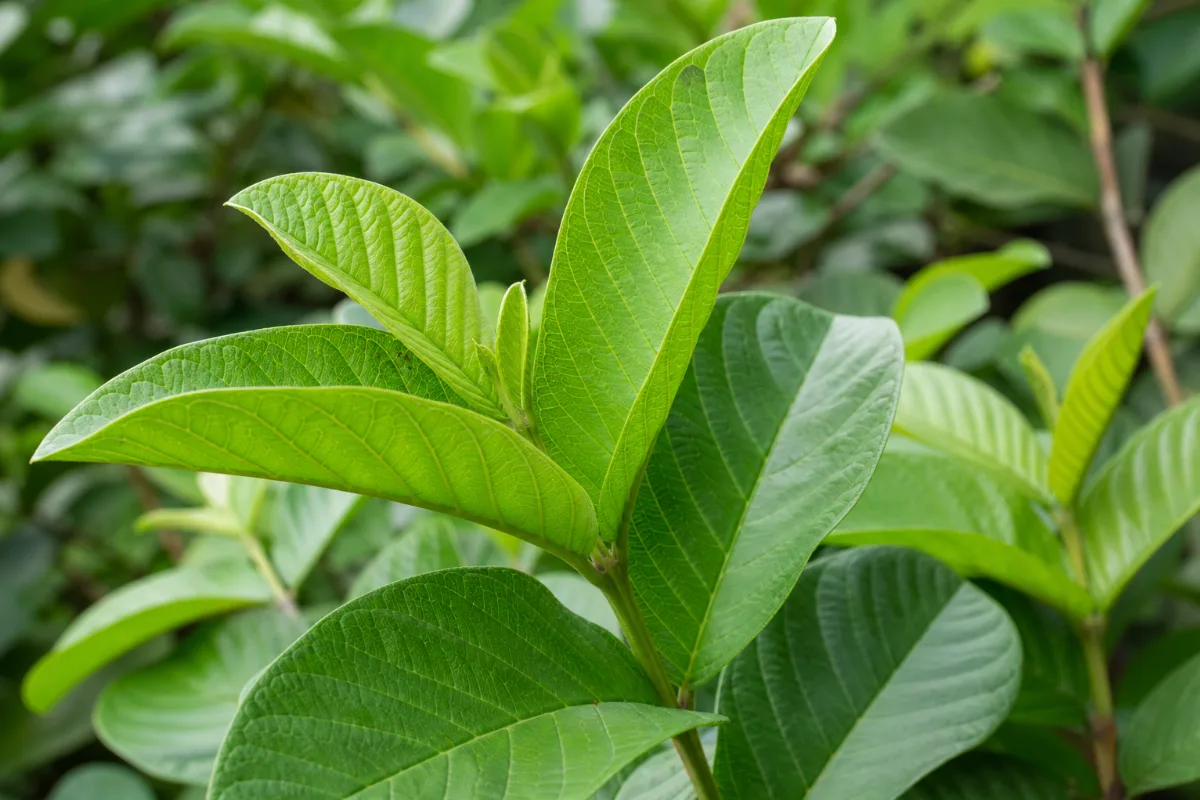
- Plant: A tropical tree. The leaf is the medicinal part discussed here; the fruit is eaten as food. Detailed leaf description not taken from the sources read.
- Cultivation
- Widely cultivated for fruit. Not verified for leaf production.
- Harvest and processing
- Leaves are used fresh or dried as a decoction or tea, as aqueous or alcohol extracts, or as standardised capsules (e.g. QG-5, standardised to quercetin).
- Look-alikes and adulterants
- Name: Guava fruit (Psidium guajava); Note: The same tree, a different plant part. A 6-week trial of ripe fruit in healthy students found different effects from leaf tea studies. Leaf results do not apply to the fruit and the reverse.; Name: Other Myrtaceae leaves (for example jamun, Syzygium cumini); Note: Studied for blood sugar too, but they are different plants; results do not transfer.; Name: Strawberry guava (Psidium cattleyanum); Note: A related species; not tested in the sources read. Check that a product names Psidium guajava.
- Sustainability and conservation
- Not assessed here.
Traditional use and history history, not clinical proof
| Tradition or era | Documented use | Source |
|---|---|---|
| Traditional medicine in 44 countries (per a 2024 review) | Guava, mostly the leaf as a decoction taken by mouth, is used for diarrhoea and dysentery. | p39246650 |
| East Asia and other regions | The leaf has been used as a folk remedy for diabetes. In Japan a commercial guava leaf tea was approved as a Food for Specified Health Uses (per the maker's review). | p20181067 |
| Rural African communities | Guava leaf used for period pain. | p19377271 |
Traditional use shows how a plant was used. It does not show that a supplement works or is safe today.
What is inside, and how it may work
What the plant contains and how those compounds act in cells and animals. Laboratory and animal mechanisms are not proven effects in people.
Main compounds
| Compound | Family | Where it is concentrated | Activity studied | Level of evidence |
|---|---|---|---|---|
| Quercetin PubChem 5280343 | flavonol (flavonoid) | leaf A leaf capsule was standardised to about 1 mg quercetin-equivalent per 500 mg (per the Liu review). | Suspected active antidiarrhoeal compound together with its sugar forms; blocks CYP enzymes more strongly than the whole leaf extract in the lab. 12 13 3 18 | Laboratory research |
| Guaijaverin PubChem 5481224 | flavonol glycoside | leaf | Isolated from guava leaf; listed among the antidiarrhoeal or antibacterial compounds in the 2024 review. 12 18 | Laboratory research |
| Avicularin PubChem 5490064 | flavonol glycoside | leaf | Listed among compounds present in guava in the 2024 review. 12 18 | Laboratory research |
| Ellagic acid PubChem 5281855 | polyphenol | leaf | Listed among compounds in the 2024 review. 12 18 | Laboratory research |
| Guavin B (an ellagitannin) PubChem 78172774 | tannin | leaf | Tannins from guava (guavins A to D) are named in the reference list of the tea-maker's review; their role in glucose or gut effects was not read. 3 18 | Laboratory research |
Mechanisms, receptors and pathways
| Target or pathway | Gene or receptor | What was found | Level |
|---|---|---|---|
| Carbohydrate-digesting enzymes (alpha-glucosidase, maltase, sucrase, amylase) | Alpha-glucosidase | Guava leaf extract blocked these enzymes in the test tube, as the drugs acarbose and voglibose do; this would slow sugar release in the gut. IC50 2.25 mg/mL for guava versus 6.41 mg/mL for acarbose in one assay. 3 8 | Laboratory research |
| Gut muscle activity and bacteria | Not specified | Leaf extracts reduced contractions of isolated guinea pig and rabbit intestine and were antibacterial against Shigella and cholera bacteria in the test tube. 12 6 | Laboratory research |
| Uterine smooth muscle | Not specified | Leaf extract relaxed isolated rat uterus and blocked oxytocin-induced contractions. 2 | Animal research |
| Drug-metabolising liver enzymes (CYP2C8, CYP2C9, CYP3A4) | CYP450 | Extract blocked these enzymes weakly compared with quercetin and grapefruit juice in vitro; no enzyme induction in rat liver after one month. Reported by the tea maker. 3 | Laboratory research |
Absorption, metabolism and elimination
- Absorption
- Not found for any guava leaf compound in people in the sources read.
- Distribution
- Not found.
- Metabolism
- Not found for guava leaf compounds in people.
- Elimination
- Not found.
- Bioavailability
- Not found. Quercetin is described as a main suspect compound but its fate after drinking guava leaf was not studied in the sources read.
Isolated compounds versus whole extracts
The diarrhoea and blood-sugar studies used whole-leaf preparations (a decoction, a commercial tea made from an aqueous extract, and a quercetin-standardised capsule). It is not known whether quercetin alone or its sugar forms can explain the effects; the 2024 review explicitly asks this. Isolated compounds should not be assumed to behave like the leaf.
Nutritional composition
Guava leaf tea is a drink, not a source of nutrients. The fruit is a food rich in fibre and vitamin C; its studies are a different topic and are covered on the guava fruit page.
3 low certainty2 very low certainty5 not enough evidence
What was looked at
The 10 benefits and uses checked for Guava leaf, each with how strong the evidence is. Tap one to open it.
- Short bouts of infectious diarrhoea in adults (leaf decoction)Low certainty
- Belly pain with diarrhoea (standardised leaf capsule)Low certainty
- Diarrhoea from rotavirus in babies and young childrenVery low certainty
- Blood sugar after a meal (leaf tea, single serving)Low certainty
- Longer-term blood sugar and insulin (HbA1c, fasting glucose, insulin)Not enough evidence
- Cholesterol and triglycerides (leaf tea)Not enough evidence
- Antibacterial and gut-calming effects in the lab (animal and test-tube only)Not enough evidence
- Knee pain (leaf extract, 12 weeks)Very low certainty
- Period pain (traditional use; rat-tissue work only)Not enough evidence
- Cough, allergy, pain, antioxidant and other lab findingsNot enough evidence
Lab markers tracked in the studies
Time to return to normal stoolsAbdominal pain during diarrhoeaBlood glucose 2 hours after a mealFasting glucose and HbA1cInsulin, C-peptide and HOMA-IRTotal cholesterol and triglyceridesKnee pain and stiffness scores (JKOM, visual analogue scale)
What is Guava leaf good for?
The main studied uses and how strong the human evidence is for each. 'Low' means a few small studies; 'insufficient' means too little evidence; lab-only items are marked as such.
Benefits, one by one
Each card is a research question, not a promise. Tap a goal to filter. Open a card to see the studies, doses and limits.
Short bouts of infectious diarrhoea in adults (leaf decoction)
Low certaintyIn one open-label trial in 109 adults, a guava leaf decoction ended acute diarrhoea in about 3 days versus about 5 days with oral rehydration solution alone. It is one small trial that was not blinded and was registered late, so it is a promising signal rather than proof.
3 studiesLeaf decoction in the Birdi trial (14 leaves was about 7.4 g per serv…
Studies, doses and limits
What the trials found
Birdi 2020: 109 adults with acute infectious diarrhoea, open label, decoctions of 6, 10 or 14 leaves versus oral rehydration solution; the 14-leaf decoction worked best (about 72 versus 120 hours to normal) with no adverse events reported and normal blood, liver and kidney tests. Garrido 2024 found only three clinical trials among 23 articles in its systematic review; Liu 2024 describes two adult trials.
Results
Faster recovery with the strongest leaf decoction in one open-label trial; the rest of the evidence is lab and animal work.
Effect sizes as reported
About 72 hours versus 120 hours to normal stools (Birdi 2020). No confidence interval in the abstract.
Why this rating
One small open-label randomised trial, registered after it began, with no placebo. A second adult trial (Lozoya) did not change stool frequency or consistency. Systematic reviews call the human evidence limited.
Form and dose studied
Leaf decoction in the Birdi trial (14 leaves was about 7.4 g per serving, three times a day for the trial period). Trial detail, not advice. Tea, capsules and extracts are not interchangeable with this decoction.
Who was studied
Adults aged 18 to 60 with uncomplicated acute diarrhoea of unknown cause.
Limits
Open label, no placebo, retrospective registration, adults only, uncomplicated cases only, short follow-up.
Why researchers looked
Guava leaf is used for diarrhoea and dysentery in 44 countries, and lab work shows antibacterial and gut-calming effects.
Traditional use
A leaf decoction is the most common traditional preparation for diarrhoea (Liu 2024). Traditional use is not proof of benefit.
Proposed mechanism Laboratory research
Lab and animal work reports antibacterial, anti-motility, anti-secretory and anti-inflammatory effects of guava leaf extracts. Quercetin and its sugar-linked forms are suspected active compounds, but the 2024 review says this is not settled. Whether this explains the human result is unknown.
A proposed mechanism does not show that the effect happens in people.
Diarrhoea can cause dangerous dehydration, especially in babies, children, older people and pregnant women. Oral rehydration comes first. Bloody diarrhoea, high fever, severe pain, or diarrhoea lasting more than a few days needs a doctor.
Belly pain with diarrhoea (standardised leaf capsule)
Low certaintyIn a placebo-controlled trial, a guava leaf capsule shortened the time adults had belly pain during acute diarrhoea, but did not change how many loose stools they had or how loose they were.
2 studiesA standardised capsule (500 mg, every 8 hours for 3 days in the trial…
Studies, doses and limits
What the trials found
Lozoya 2002: a standardised leaf capsule (QG-5) versus placebo for 3 days in adults with acute diarrhoea; the abstract reports a shorter duration of abdominal pain. The 2024 Liu review states stool frequency and consistency did not change.
Results
Mixed: less belly pain, no change in stools.
Effect sizes as reported
No numbers in the abstract.
Why this rating
One double-blind trial, small, with a single positive outcome and other outcomes unchanged; read from abstract plus a review.
Form and dose studied
A standardised capsule (500 mg, every 8 hours for 3 days in the trial). Trial detail, not advice.
Who was studied
Adults with acute diarrhoea in Mexico.
Limits
One trial; abstract only; funding not stated; pain was one of several outcomes.
Why researchers looked
Guava leaf has antispasmodic (muscle-relaxing) activity in the gut in lab tests.
Traditional use
Leaf preparations are used traditionally for stomach cramps with diarrhoea.
Proposed mechanism Laboratory research
Guava leaf extracts reduced contractions of isolated guinea pig and rabbit intestine in lab studies (reported in the 2024 review). The capsule was standardised to quercetin content.
A proposed mechanism does not show that the effect happens in people.
Pain with diarrhoea can also signal infection or another cause that needs a doctor.
Diarrhoea from rotavirus in babies and young children
Very low certaintyA 62-patient Chinese trial reported faster recovery with a guava preparation than with a herbal comparison decoction. The trial is old and small, the preparation is not described, and it did not test against oral rehydration or placebo. This is not enough to guide care for children.
2 studiesNot described in the abstract. No amounts given.
Studies, doses and limits
What the trials found
Wei 2000: 62 infants with rotavirus enteritis; recovery in 3 days was 87.1% with guava versus 58.1% with Gegen Qinlian decoction; diarrhoea stopped in 25.1 versus 38.7 hours.
Results
Positive against a herbal comparison in one small trial.
Effect sizes as reported
87.1% versus 58.1% recovered in 3 days; 25.1 versus 38.7 hours.
Why this rating
A single small trial from 2000 with an unclear preparation and an active herbal comparator, read only from its abstract.
Form and dose studied
Not described in the abstract. No amounts given.
Who was studied
Infants and young children with rotavirus diarrhoea (ages not stated in the abstract).
Limits
Old, small, abstract only, no placebo or rehydration-only arm, unclear methods.
Why researchers looked
Rotavirus is a leading cause of diarrhoea in young children, and guava leaf extract blocked rotavirus growth in test-tube studies (reported in the 2024 review).
Traditional use
Guava preparations are used for children's diarrhoea in some traditions; the 2024 review asks whether guava leaf is safe in children at all.
Proposed mechanism Laboratory research
An aqueous leaf extract inhibited two rotavirus strains in cell-culture tests (Liu 2024, citing Goncalves 2005). Cell-culture results do not show the same effect in a child.
A proposed mechanism does not show that the effect happens in people.
Do not treat a baby or child with diarrhoea at home with leaf teas instead of rehydration solution and medical advice. Dehydration can become dangerous quickly in small children.
Blood sugar after a meal (leaf tea, single serving)
Low certaintyIn small short trials, guava leaf tea lowered the blood sugar rise after a meal, but less than the diabetes drug voglibose. The main reviewer works for the company that makes the tea.
2 studiesGuava Leaf Tea made from an aqueous leaf extract (a Japanese commerci…
Studies, doses and limits
What the trials found
Deguchi 2010 (review) describes a crossover trial of 20 hospitalised people with type 2 diabetes: after a single serving the glucose 2 hours after a meal fell from about 160 to 143 mg/dL with Guava Leaf Tea and to 133 mg/dL with voglibose. The tea effect was milder (p<0.01). No hypoglycaemia was noted. The review is by authors from the tea maker and one holds patents on the tea.
Results
Short-term lowering of the after-meal rise in small trials, milder than a drug.
Effect sizes as reported
About 17 mg/dL lower 2-hour glucose with tea in the crossover trial (about 160 to 143 mg/dL), versus about 27 mg/dL with voglibose, as reported secondhand.
Why this rating
Small trials, mostly single-dose, described secondhand in a review by the product maker; no independent pooled analysis of guava leaf alone was found.
Form and dose studied
Guava Leaf Tea made from an aqueous leaf extract (a Japanese commercial tea). Other teas, capsules or homemade infusions may differ in strength. No amounts given.
Who was studied
People with type 2 diabetes in hospital; some trials in people with pre-diabetes.
Limits
Industry-linked review; trial details not read directly; short effect; only after-meal glucose.
Why researchers looked
Guava leaf has been a folk remedy for diabetes in East Asia, and lab tests show it blocks starch-digesting enzymes (alpha-glucosidase), as the drugs acarbose and voglibose do.
Traditional use
Folk remedy for diabetes in East Asia and other regions (Deguchi 2010).
Proposed mechanism Laboratory research
Guava leaf extract blocked alpha-glucosidase enzymes in the test tube (Deguchi 2010; Hsu 2024 found IC50 2.25 mg/mL for guava versus 6.41 mg/mL for acarbose in the same assay). This slows sugar release in the gut. Test-tube strength does not equal effect in people.
A proposed mechanism does not show that the effect happens in people.
If you take diabetes medicines, adding another blood-sugar-lowering product can matter. Talk to your doctor or pharmacist first and do not change prescribed treatment.
Longer-term blood sugar and insulin (HbA1c, fasting glucose, insulin)
Not enough evidenceA 12-week study in 15 men with pre-diabetes or mild type 2 diabetes showed small, mostly non-significant changes in fasting glucose, with HbA1c lower in some pre-diabetic men and lower insulin levels. It had no control group, so we cannot say the tea caused the changes.
2 studiesGuava Leaf Tea with meals in the study. No amounts given.
Studies, doses and limits
What the trials found
Deguchi 2010 reports a 12-week study of 15 men: fasting glucose 136 to 131 mg/dL (p=0.07); 5 of 7 pre-diabetic men had a lower HbA1c; insulin, C-peptide and HOMA-IR fell significantly. Other long-term trials are mentioned in the review but their details were not extracted here.
Results
Small changes; the main glucose result did not reach statistical significance.
Effect sizes as reported
Fasting glucose about 5 mg/dL lower (p=0.07). Insulin measures significantly lower.
Why this rating
Tiny, uncontrolled studies reported through a review by the product maker. We found no independent controlled long-term trial.
Form and dose studied
Guava Leaf Tea with meals in the study. No amounts given.
Who was studied
Men with pre-diabetes or mild type 2 diabetes (15 people).
Limits
No control group, very small, subgroup claims, industry-linked authors, short term.
Why researchers looked
If after-meal spikes are reduced, long-term control might improve.
Traditional use
Leaf tea is used in several countries as a daily drink for diabetes.
Proposed mechanism Animal research
Slowing carbohydrate digestion and, in mouse studies, effects on insulin resistance and liver sugar handling. Mouse results are not shown in people.
A proposed mechanism does not show that the effect happens in people.
Do not replace prescribed diabetes care. Lower insulin levels can also be a sign of changed treatment or diet.
Cholesterol and triglycerides (leaf tea)
Not enough evidenceIn the same small 12-week study, total cholesterol and triglycerides fell only in the few men whose levels were high at the start. That is too little to say the tea lowers blood fats.
1 studiesGuava Leaf Tea. No amounts given.
Studies, doses and limits
What the trials found
Deguchi 2010: after 12 weeks of Guava Leaf Tea, total cholesterol and triglycerides fell significantly in subgroups with high starting values (7 and 5 men).
Results
Subgroup changes only.
Effect sizes as reported
Not given in a form we could check.
Why this rating
Subgroups of 5 and 7 people, no control group, industry-linked review.
Form and dose studied
Guava Leaf Tea. No amounts given.
Who was studied
Men with high starting cholesterol or triglycerides (very small subgroups).
Limits
Subgroup findings can arise by chance and by regression to the mean.
Why researchers looked
Blood-sugar spikes and blood fats are linked, so reducing one might help the other.
Traditional use
Not a prominent traditional use in the sources read.
Proposed mechanism Pharmacological theory
Proposed to follow from lower after-meal sugar. Not tested directly.
A proposed mechanism does not show that the effect happens in people.
If you take cholesterol medicines, do not stop them. The review reports no hypoglycaemia or odd results when the tea was taken with such medicines.
Antibacterial and gut-calming effects in the lab (animal and test-tube only)
Not enough evidenceMany lab and animal studies report that guava leaf extracts kill or slow some bacteria that cause diarrhoea and calm gut muscles. These findings explain why people tried it, but they do not show it works in people.
3 studiesNot applicable.
Studies, doses and limits
Results
Lab and animal findings only.
Why this rating
Lab and animal studies only; clinical meaning not defined (Garrido 2024).
Who was studied
Cells, bacteria, rodents, isolated tissue.
Limits
Not human. Results depend on extract and concentration.
Why researchers looked
To find out why the leaf is used for diarrhoea.
Traditional use
Backs up traditional leaf use for diarrhoea and dysentery.
Proposed mechanism Laboratory research
A leaf decoction was antibacterial against Shigella flexneri (EC50 0.3 mg/mL) and Vibrio cholerae (0.8 mg/mL) in the test tube; extracts calmed isolated animal intestine; an aqueous leaf extract slowed two rotavirus strains in cell culture (Liu 2024). Many studies used concentrations far above what the body would see.
A proposed mechanism does not show that the effect happens in people.
A lab antibacterial effect does not make leaf tea a safe replacement for treatment of serious infection.
Knee pain (leaf extract, 12 weeks)
Very low certaintyA pilot double-blind trial in Japan found less knee pain and stiffness after 12 weeks of a guava leaf extract than with placebo. It is a single small pilot, and key details such as group sizes were not in the abstract.
1 studiesA guava leaf extract, 1 g a day in the trial. Trial detail, not advic…
Studies, doses and limits
What the trials found
Kakuo 2018: randomised, double-blind, placebo-controlled pilot; guava leaf extract or placebo daily for 12 weeks. At week 12 pain and stiffness (a JKOM subscore) and VAS knee pain were lower with guava.
Results
Positive in one pilot trial.
Effect sizes as reported
Not given in the abstract.
Why this rating
A single pilot trial read only from its abstract, with no numbers.
Form and dose studied
A guava leaf extract, 1 g a day in the trial. Trial detail, not advice.
Who was studied
Japanese adults with knee pain and no previous treatment.
Limits
Pilot; number of participants and funding not in the abstract; short follow-up; subjective pain outcome.
Why researchers looked
A rat study suggested guava leaf extract slowed osteoarthritis changes, so researchers tested it in people with knee pain.
Traditional use
Not a traditional use in the sources we read.
Proposed mechanism Animal research
Based on a rat osteoarthritis model cited by the trial authors. How it might work in people was not tested.
A proposed mechanism does not show that the effect happens in people.
Knee pain that is severe, sudden, with swelling or fever, or after injury needs a doctor.
Period pain (traditional use; rat-tissue work only)
Not enough evidenceIn some African communities guava leaf is used for period pain. In the lab, a leaf extract relaxed rat uterus muscle. No study in women was found.
1 studiesNot applicable.
Studies, doses and limits
Results
Lab only.
Why this rating
Rat tissue only.
Who was studied
Isolated rat uterine tissue.
Limits
Not human. The same relaxing effect on the uterus is a reason for caution in pregnancy.
Why researchers looked
To test the traditional claim that guava leaf eases cramping of the womb.
Traditional use
Used for primary dysmenorrhoea in some rural African communities (Chiwororo 2009).
Proposed mechanism Laboratory research
An aqueous leaf extract reduced spontaneous contractions of isolated rat uterus and blocked contractions caused by oxytocin and other triggers. It was tested in tissue, not in animals or women.
A proposed mechanism does not show that the effect happens in people.
Severe period pain, heavy bleeding or pain that is new needs a medical check. Avoid medicinal amounts in pregnancy.
Cough, allergy, pain, antioxidant and other lab findings
Not enough evidenceReviews list many lab and animal effects of guava leaf, such as antioxidant, anti-allergy, anti-cough and anti-inflammatory activity. None is backed by human trials in the sources we read.
3 studiesNot applicable.
Studies, doses and limits
Results
Lab and animal only.
Why this rating
No human studies read.
Who was studied
Cells and animals.
Limits
Reviews are mostly lab; claims of 'substitutes for drugs' (Kaur 2025) go beyond the evidence.
Why researchers looked
Guava is a widely used folk plant, so researchers screen it for many actions.
Traditional use
Used widely in folk medicine around the world (Gutierrez 2008).
Proposed mechanism Laboratory research
Various lab and animal models. A mouse study found no toxicity at the doses tested (Dibaba 2026), which says little about benefit.
A proposed mechanism does not show that the effect happens in people.
Do not replace treatment for asthma, allergy or infection with leaf tea.
Connections to the rest of health
How Guava leaf connects to the rest of our health knowledge graph. Every link says what kind of connection it is. A safety link (for example to the liver) is a warning, not a benefit. A study that merely mentions a topic never creates a benefit link.
Explore every connection: goals, body systems, organs, symptoms, genes
A. Wellness goals
| Connected to | Kind of connection | Evidence status | Context | Studies |
|---|---|---|---|---|
| Digestive Support | Potential benefit | Low certainty | Short bouts of infectious diarrhoea in adults (leaf decoction): In one open-label trial in 109 adults, a guava leaf decoction ended acute diarrhoea in about 3 days versus about 5 days with oral rehydration solution alone. It is one small trial that was not blinded and was registered late, so it is a promising signal rather than proof. Belly pain with diarrhoea (standardised leaf capsule): In a placebo-controlled trial, a guava leaf capsule shortened the time adults had belly pain during acute diarrhoea, but did not change how many loose stools they had or how loose they were. | 1 6 12 13 |
| Gut Health | Potential benefit | Low certainty | Short bouts of infectious diarrhoea in adults (leaf decoction): In one open-label trial in 109 adults, a guava leaf decoction ended acute diarrhoea in about 3 days versus about 5 days with oral rehydration solution alone. It is one small trial that was not blinded and was registered late, so it is a promising signal rather than proof. | 1 6 12 |
| Digestive Support | Very low certainty | Diarrhoea from rotavirus in babies and young children: A 62-patient Chinese trial reported faster recovery with a guava preparation than with a herbal comparison decoction. The trial is old and small, the preparation is not described, and it did not test against oral rehydration or placebo. This is not enough to guide care for children. | 15 12 | |
| Blood Sugar Balance | Potential benefit | Low certainty | Blood sugar after a meal (leaf tea, single serving): In small short trials, guava leaf tea lowered the blood sugar rise after a meal, but less than the diabetes drug voglibose. The main reviewer works for the company that makes the tea. | 3 8 |
| Metabolic Health | Potential benefit | Low certainty | Blood sugar after a meal (leaf tea, single serving): In small short trials, guava leaf tea lowered the blood sugar rise after a meal, but less than the diabetes drug voglibose. The main reviewer works for the company that makes the tea. | 3 8 |
| Blood Sugar Balance | Not enough evidence | Longer-term blood sugar and insulin (HbA1c, fasting glucose, insulin): A 12-week study in 15 men with pre-diabetes or mild type 2 diabetes showed small, mostly non-significant changes in fasting glucose, with HbA1c lower in some pre-diabetic men and lower insulin levels. It had no control group, so we cannot say the tea caused the changes. | 3 10 | |
| Cholesterol Balance | Not enough evidence | Cholesterol and triglycerides (leaf tea): In the same small 12-week study, total cholesterol and triglycerides fell only in the few men whose levels were high at the start. That is too little to say the tea lowers blood fats. | 3 | |
| Heart Health | Not enough evidence | Cholesterol and triglycerides (leaf tea): In the same small 12-week study, total cholesterol and triglycerides fell only in the few men whose levels were high at the start. That is too little to say the tea lowers blood fats. | 3 | |
| Digestive Support | Not enough evidence | Antibacterial and gut-calming effects in the lab (animal and test-tube only): Many lab and animal studies report that guava leaf extracts kill or slow some bacteria that cause diarrhoea and calm gut muscles. These findings explain why people tried it, but they do not show it works in people. | 6 12 7 | |
| Joint Support | Very low certainty | Knee pain (leaf extract, 12 weeks): A pilot double-blind trial in Japan found less knee pain and stiffness after 12 weeks of a guava leaf extract than with placebo. It is a single small pilot, and key details such as group sizes were not in the abstract. | 9 | |
| Mobility Support | Very low certainty | Knee pain (leaf extract, 12 weeks): A pilot double-blind trial in Japan found less knee pain and stiffness after 12 weeks of a guava leaf extract than with placebo. It is a single small pilot, and key details such as group sizes were not in the abstract. | 9 | |
| Womens Wellness | Not enough evidence | Period pain (traditional use; rat-tissue work only): In some African communities guava leaf is used for period pain. In the lab, a leaf extract relaxed rat uterus muscle. No study in women was found. | 2 | |
| Inflammation Balance | Not enough evidence | Cough, allergy, pain, antioxidant and other lab findings: Reviews list many lab and animal effects of guava leaf, such as antioxidant, anti-allergy, anti-cough and anti-inflammatory activity. None is backed by human trials in the sources we read. | 7 10 4 |
B. Body systems
| Connected to | Kind of connection | Evidence status | Context | Studies |
|---|---|---|---|---|
| Digestive system | Potential benefit | Low certainty | Acute diarrhoea and belly pain in small adult trials. Preparation or compound: Guava leaf decoction; standardised leaf capsule |
1 13 |
| Blood sugar | Potential benefit | Low certainty | Lower after-meal glucose in small, industry-linked trials; also a theoretical added effect with diabetes medicines. Preparation or compound: Guava leaf tea |
3 |
| Digestive System | Biological association | Low certainty | Studied for: Short bouts of infectious diarrhoea in adults (leaf decoction) Studied for: Belly pain with diarrhoea (standardised leaf capsule) | 1 6 12 13 15 7 |
| Immune System | Biological association | Very low certainty | Studied for: Diarrhoea from rotavirus in babies and young children Studied for: Cough, allergy, pain, antioxidant and other lab findings | 15 12 7 10 4 |
| Blood Sugar Support | Biological association | Low certainty | Studied for: Blood sugar after a meal (leaf tea, single serving) Studied for: Longer-term blood sugar and insulin (HbA1c, fasting glucose, insulin) | 3 8 10 |
| Endocrine System | Biological association | Low certainty | Studied for: Blood sugar after a meal (leaf tea, single serving) | 3 8 |
| Cardiovascular System | Biological association | Not enough evidence | Studied for: Cholesterol and triglycerides (leaf tea) | 3 |
| Musculoskeletal System | Biological association | Very low certainty | Studied for: Knee pain (leaf extract, 12 weeks) | 9 |
| Reproductive System | Biological association | Not enough evidence | Studied for: Period pain (traditional use; rat-tissue work only) | 2 |
C. Body parts and organs
| Connected to | Kind of connection | Evidence status | Context | Studies |
|---|---|---|---|---|
| Skin | Adverse effect or risk | Case report | Case report of allergic contact dermatitis (title only). Preparation or compound: Guava tea |
14 |
| Uterus | Not enough evidence | Relaxed rat uterine muscle in the lab. Preparation or compound: Leaf aqueous extract |
2 |
I. Biomarkers
| Connected to | Kind of connection | Evidence status | Context | Studies |
|---|---|---|---|---|
| Time to return to normal stools | Biological association | Low certainty | Measured in trials: shortened. A lab change is not the same as a health benefit. | 1 15 |
| Abdominal pain during diarrhoea | Biological association | Low certainty | Measured in trials: shortened. A lab change is not the same as a health benefit. | 13 12 |
| Blood glucose 2 hours after a meal | Biological association | Low certainty | Measured in trials: lowered. A lab change is not the same as a health benefit. | 3 |
| Fasting glucose and HbA1c | Biological association | Not enough evidence | Measured in trials: mixed. A lab change is not the same as a health benefit. | 3 |
| Insulin, C-peptide and HOMA-IR | Biological association | Not enough evidence | Measured in trials: lowered. A lab change is not the same as a health benefit. | 3 |
| Total cholesterol and triglycerides | Biological association | Not enough evidence | Measured in trials: lowered (subgroups only). A lab change is not the same as a health benefit. | 3 |
| Knee pain and stiffness scores (JKOM, visual analogue scale) | Biological association | Very low certainty | Measured in trials: lowered. A lab change is not the same as a health benefit. | 9 |
J. Genes, receptors and enzymes
| Connected to | Kind of connection | Evidence status | Context | Studies |
|---|---|---|---|---|
| Alpha-glucosidase (starch digestion) | Preliminary mechanism | In vitro | Blocked by guava leaf extract in the test tube; basis for the after-meal glucose trials. | 3 8 |
| CYP2C8, CYP2C9, CYP3A4 | Preliminary mechanism | In vitro | Weakly blocked in the test tube; human interaction not studied. | 3 |
L. Active compounds
| Connected to | Kind of connection | Evidence status | Context | Studies |
|---|---|---|---|---|
| Quercetin | Biological association | In vitro | Suspected active antidiarrhoeal compound together with its sugar forms; blocks CYP enzymes more strongly than the whole leaf extract in the lab. Preparation or compound: leaf |
12 13 3 18 |
| Guaijaverin | Biological association | In vitro | Isolated from guava leaf; listed among the antidiarrhoeal or antibacterial compounds in the 2024 review. Preparation or compound: leaf |
12 18 |
| Avicularin | Biological association | In vitro | Listed among compounds present in guava in the 2024 review. Preparation or compound: leaf |
12 18 |
| Ellagic acid | Biological association | In vitro | Listed among compounds in the 2024 review. Preparation or compound: leaf |
12 18 |
| Guavin B (an ellagitannin) | Biological association | In vitro | Tannins from guava (guavins A to D) are named in the reference list of the tea-maker's review; their role in glucose or gut effects was not read. Preparation or compound: leaf |
3 18 |
Each connection is stored with the ingredient, the connected record, the kind of connection, the evidence status, the supporting studies, the preparation or compound involved, and a review date (last reviewed October 25, 2026).
Evidence at a glance: what changed in 4 lab markers
Tap a number to show only those markers. Counts are markers, not people.
The evidence
The research centre for Guava leaf. Every record here was checked against PubMed or the publisher's page; we never list a study we have not verified.
Evidence by outcome
Bars show how many studies we found for each outcome, not how well it works. People are added up across trials only (reviews are not added, to avoid double counting).
How we rate evidence
High certainty
Several well-run trials or reviews agree; further research is unlikely to change the picture much.
Moderate certainty
Good trials point the same way, but some doubt remains.
Low certainty
Small, short or inconsistent trials. The finding could change with better research.
Very low certainty
Very little or very weak human data. Treat as a possibility only.
Mixed findings
Trials or reviews disagree with each other.
Not enough evidence
Not enough human research to say either way.
Evidence against
Good research found no benefit, or found harm.
We take the reviewers' own risk-of-bias and GRADE statements where they exist, and otherwise judge from study size, design, consistency, directness and whether a product matches what is sold. Many publications do not make evidence high. Method note: We started from our earlier guava leaf summary, read PubMed abstracts for every PubMed record cited (one case report had no abstract and is marked), read the full text of two reviews through Europe PMC, and checked names in GBIF and NCBI Taxonomy and compounds in PubChem. Regulator pages that could not be opened are marked not verified.
Study library: every study we checked 19
| Study | Design | People | Product, dose, length | Result |
|---|---|---|---|---|
| Birdi 2020 A randomized open label efficacy clinical trial of oral guava leaf decoction in patients with acute infectious diarrhoea. J Ayurveda Integr Med · PMID 32507357 · DOI |
Controlled trial |
109 Adults aged 18 to 60 with acute infectious diarrhoea (137 enrolled, 109 included; 57% women), India |
Guava leaf decoction (Indian Sardar variety), 6-leaf, 10-leaf and 14-leaf versions leaf Taken three times a day; the 14-leaf version was about 7.4 g of leaf. Trial amounts, not advice. 5 days · vs Oral rehydration solution alone |
The 14-leaf decoction worked best. People returned to normal in about 72 hours versus 120 hours with oral rehydration solution alone. Haemoglobin, liver and kidney tests stayed normal and no adverse events were reported. About 72 hours versus 120 hours to normal (the abstract gives no confidence interval). Methods, limits and fundingOutcomes: Stool frequency and stool consistency; blood haemoglobin, liver and kidney tests for safety Limitations: Open label (people knew what they took), registered after the trial began (retrospective registration), adults with uncomplicated diarrhoea of unknown cause only. The abstract does not give funding. The dose arms and control were compared on a modest number of people. Registration: CTRI/2016/07/007095 (retrospective) Read: abstract |
| Chiwororo 2009 Spasmolytic effect of Psidium guajava Linn. (Myrtaceae) leaf aqueous extract on rat isolated uterine horns. J Smooth Muscle Res · PMID 19377271 · DOI |
Animal research animal |
Isolated rat uterus tissue | Guava leaf aqueous extract (0.5 to 4.0 mg/mL in the tissue bath) leaf |
The extract reduced spontaneous contractions and blocked contractions caused by acetylcholine, oxytocin, bradykinin, carbachol and potassium in a dose-related way. Lab (rat tissue) only. Methods, limits and fundingOutcomes: Strength of uterine muscle contractions Limitations: Animal tissue in a dish; no human data. The authors link it to traditional use for period pain, which is not proof of effect in women. Read: abstract |
| Deguchi 2010 Anti-hyperglycemic and anti-hyperlipidemic effects of guava leaf extract. Nutr Metab (Lond) · PMID 20181067 · DOI |
Narrative review |
Review of lab work, animal models and several small clinical trials of Guava Leaf Tea (people with pre-diabetes and type 2 diabetes) | Aqueous guava leaf extract and Guava Leaf Tea (Bansoureicha, Yakult Honsha, Japan) leaf |
In a crossover trial in 20 hospitalised people with type 2 diabetes, a single serving of Guava Leaf Tea lowered the glucose 2 hours after a meal from about 160 mg/dL to 143 mg/dL, and the drug voglibose to 133 mg/dL; the tea effect was milder than the drug (p<0.01). No hypoglycaemia was seen when the tea was combined with usual treatment. In a 12-week study in 15 men with pre-diabetes or mild type 2 diabetes, fasting glucose fell from 136 to 131 mg/dL (p=0.07); 5 of 7 pre-diabetic men had lower HbA1c; insulin, C-peptide and HOMA-IR fell significantly; cholesterol and triglycerides fell only in small subgroups with high starting values. The review also reports no hypoglycaemia in people on diabetes medicines, no change in liver, kidney or iron tests, and no toxicity in rats. Single serving: about 160 to 143 mg/dL (tea) versus 133 mg/dL (voglibose). 12 weeks: fasting glucose 136 to 131 mg/dL, not significant (p=0.07). Methods, limits and fundingOutcomes: After-meal blood glucose, fasting glucose, HbA1c, insulin, lipids, safety, drug interaction tests Limitations: Narrative review by employees of the company that makes the tea; one author declares patents on Guava Leaf Tea. Trial details are secondhand through the review. Small trials, several uncontrolled. Interaction tests were in vitro or in rodents. Funding and conflicts: Authors from Yakult Central Institute; Y. Deguchi holds patents covering uses of Guava Leaf Tea (declared). Industry-linked. Read: full-text (via Europe PMC) |
| Dibaba 2026 Acute and sub-acute toxicological studies on the ethanol leaf extract of Psidium guajava in experimental mice. Pan Afr Med J · PMID 42283039 · DOI |
Animal research animal |
Mice | Guava leaf ethanol extract leaf Up to 2000 mg/kg once or up to 1000 mg/kg a day in mice 28 days (sub-acute) |
No deaths or signs of acute toxicity at 2000 mg/kg, and no treatment-related changes in blood, biochemistry or tissue at 1000 mg/kg a day for 28 days. Mouse safety study only. Methods, limits and fundingOutcomes: Deaths, blood tests, organ weight and tissue changes Limitations: Mice, ethanol extract. Does not tell us the human safe range. Read: abstract |
| Disler 1975 The effect of tea on iron absorption. Gut · PMID 1168162 · DOI |
Clinical trial |
Human volunteers | Ordinary tea (Camellia sinensis), not guava leaf (tea) |
Tea inhibited absorption of non-haem iron, which the authors ascribed to insoluble iron tannate complexes. Drinking tannin-containing drinks with meals may contribute to iron deficiency if the diet is mostly plant food. Methods, limits and fundingOutcomes: Absorption of non-haem iron from solutions and meals Limitations: This is about black tea, not guava leaf. We found no iron study of guava leaf tea; it is used here only as a related warning for tannin-rich drinks. Read: abstract |
| Garrido 2024 Antidiarrheal effect of Psidium guajava L. extract in acute diarrhea: a systematic review. J Sci Food Agric · PMID 38578668 · DOI |
Systematic review |
Reviewed 23 articles up to 2021 (20 preclinical, 3 clinical trials) | Guava (Psidium guajava) galenic preparations and phytopharmaceuticals mixed (mainly leaf) |
Of 23 articles, 20 (87%) were preclinical and only 3 (13%) were clinical trials. Most studies reported positive results and mechanistic evidence (antibacterial, anti-motility, anti-secretory, anti-inflammatory). The authors say more studies are needed to define the clinical importance and safety. No pooled effect; narrative systematic review. Methods, limits and fundingOutcomes: Antidiarrhoeal, antibacterial, antispasmodic effects; clinical efficacy, dose and safety Limitations: Mostly animal and lab studies. Only three human trials. No pooled analysis. Searches stopped at 2021. Only the abstract was read. Read: abstract |
| Gutierrez 2008 Psidium guajava: a review of its traditional uses, phytochemistry and pharmacology. J Ethnopharmacol · PMID 18353572 · DOI |
Narrative review mixed |
Narrative review, mostly lab and animal studies | Psidium guajava leaves, fruit and other parts mixed |
Guava is mainly known for antispasmodic and antimicrobial use in diarrhoea and dysentery and has been used widely as a glucose-lowering agent. Lab and animal studies report antioxidant, liver-protective, anti-allergy, antimicrobial, anti-cough, anti-inflammatory and pain-reducing activity. The authors suggest clinical uses for infant rotavirus diarrhoea, diarrhoea and diabetes. Methods, limits and fundingOutcomes: Traditional uses, chemistry and pharmacology Limitations: Abstract only. Mostly lab and animal evidence; the review was written in 2008 and predates later trials. Read: abstract |
| Hsu 2024 Functional assessments of Psidium guajava L. and Morus alba L. leaf extracts on postprandial glucose control. Food Sci Nutr · PMID 39055216 · DOI |
In vitro animal in-vitro |
Test-tube enzyme tests, liver cell line, normal and diabetic rats | Guava and mulberry leaf extracts, alone and mixed leaf · vs Glucobay (acarbose) as a reference |
In the test tube, guava leaf extract blocked the starch-digesting enzyme alpha-glucosidase (IC50 2.25 mg/mL) less strongly than mulberry (0.1 mg/mL) but more strongly than acarbose (6.41 mg/mL, in the same test). The mixture did not harm a mouse liver cell line. Lab and rat data only. Methods, limits and fundingOutcomes: Alpha-glucosidase inhibition, after-meal glucose in rats, cell toxicity Limitations: No human data. Test-tube strength does not predict an effect in people. Read: abstract |
| Kakuo 2018 Effects of Psidium guajava Linn. leaf extract in Japanese subjects with knee pain: a randomized, double-blind, placebo-controlled, parallel pilot study. Aging Clin Exp Res · PMID 29687303 · DOI |
Controlled trial |
Japanese adults with knee pain and no prior knee treatment (number of people not stated in the abstract) | Guava leaf extract (a standardised commercial extract; details not in the abstract) leaf 1 g a day. Trial amount, not advice. 12 weeks · vs Placebo |
At week 12 the guava group had lower pain and stiffness scores (a JKOM subcategory) and lower knee pain on the visual scale than placebo. Significant differences at week 12; numbers not given in the abstract. Methods, limits and fundingOutcomes: Japanese Knee Osteoarthritis Measure (JKOM) score and a visual analogue scale for knee pain Limitations: Pilot study; the number of participants, effect sizes, funding and who made the extract are not in the abstract. Short follow-up. Only the abstract was read. Read: abstract |
| Kaur 2025 A Comprehensive Review of the Effects of Psidium guajava and Syzygium cumini Leaves on Diabetes Mellitus. Prev Nutr Food Sci · PMID 40612758 · DOI |
Narrative review |
Narrative review of two leaves (guava and jamun) | Psidium guajava and Syzygium cumini leaves leaf |
The abstract says both leaves show glucose-lowering, antioxidant and anti-inflammatory properties linked to quercetin, rutin and gallic acid. It describes no human trial. Methods, limits and fundingOutcomes: Blood sugar, antioxidant and anti-inflammatory effects Limitations: Abstract only. Reviews lab and animal findings; calls the leaves "substitutes for synthetic drugs", which is a stronger claim than human data support. Read: abstract |
| Kumari 2016 Effect of Guava in Blood Glucose and Lipid Profile in Healthy Human Subjects: A Randomized Controlled Study. J Clin Diagn Res · PMID 27790420 · DOI |
Controlled trial |
45 Healthy medical students, India |
Ripe guava FRUIT (with or without peel), not leaf fruit 400 g of fruit a day. Trial amount, not advice. 6 weeks · vs No supplement (control group) |
Fruit with peel raised fasting glucose, cholesterol and triglycerides; fruit without peel lowered cholesterol, triglycerides and LDL, with no significant glucose change. Methods, limits and fundingOutcomes: Fasting glucose, cholesterol, triglycerides, BMI, blood pressure Limitations: This is about the fruit, not the leaf. Healthy students, small groups. Kept only to show that fruit results do not carry over to leaf tea. Read: abstract |
| Liu 2024 Ethnobotany, phytochemistry, and biological activities of Psidium guajava in the treatment of diarrhea: a review. Front Pharmacol · PMID 39246650 · DOI |
Systematic review |
189 studies (ethnobotany, lab, animal and clinical) up to October 2022 | Psidium guajava, mainly leaf decoctions leaf |
Guava is used for diarrhoea in 44 countries and the leaf is the most cited part, usually as a decoction. About 27 antidiarrhoeal or antibacterial compounds were identified, including flavonoids such as quercetin and its glycosides. The review also describes two clinical trials: Birdi 2020 (decoction) and Lozoya 2002 (standardised capsule). It says it is still unknown whether quercetin and its glycosides are the only active compounds, how the plant works, and whether guava leaves are safe in all groups including children, and at what amounts. No pooled effect; narrative review. Methods, limits and fundingOutcomes: Traditional use, lab and animal antidiarrhoeal activity, safety and clinical trials Limitations: Mostly lab and animal evidence. Full text read for the clinical, safety and toxicology parts; not every cited study was opened. Excludes journals with impact factor below 1.0. Read: full-text |
| Lozoya 2002 Intestinal anti-spasmodic effect of a phytodrug of Psidium guajava folia in the treatment of acute diarrheic disease. J Ethnopharmacol · PMID 12413703 · DOI |
Controlled trial |
100 Adults with acute diarrhoea, Mexico (the abstract says 50 patients were given the product; the 2024 Liu review says 100 patients, 50 per group, aged 20 to 96) |
QG-5, a guava leaf phytodrug standardised to quercetin content, in capsules leaf One 500 mg capsule every 8 hours. Trial amount, not advice. 3 days · vs Placebo capsules |
The guava product shortened the duration of abdominal pain (fewer pain episodes from day 2). The 2024 Liu review adds that stool consistency and frequency did not differ from placebo. Pain duration reduced; no change in stool frequency or consistency (per the Liu review). No numbers in the abstract. Methods, limits and fundingOutcomes: Abdominal pain episodes, stool consistency and frequency Limitations: Abstract only for the trial; the stool result comes from the 2024 review. Small trial. Funding is not stated in the abstract. Read: abstract |
| Obi 2001 Allergic contact dermatitis due to guava tea. Contact Dermatitis · PMID 11205393 · DOI |
Case report |
1 Case report (details not available; PubMed has no abstract) |
Guava tea leaf (presumed; not stated in the record) |
The title reports allergic contact dermatitis caused by guava tea. Methods, limits and fundingOutcomes: Skin allergy Limitations: PubMed record has no abstract, so only the title is known. We could not read the case. Cause and route (touching versus drinking) are not verified. Read: title-only |
| Wei 2000 Clinical study on treatment of infantile rotaviral enteritis with Psidium guajava L. Zhongguo Zhong Xi Yi Jie He Za Zhi · PMID 11938857 |
Controlled trial |
62 Babies and young children with rotavirus diarrhoea, China (62 patients) |
Psidium guajava preparation (the abstract does not describe the form) unspecified · vs Gegen Qinlian decoction (a Chinese herbal formula; not a placebo) |
Recovery within 3 days was 87.1% with guava versus 58.1% with the comparison decoction. Diarrhoea stopped in 25.1 hours versus 38.7 hours. Rotavirus antigen cleared in 87.1% versus 58.1%. 87.1% versus 58.1% recovered in 3 days (P<0.05); 25.1 versus 38.7 hours (P<0.01). Methods, limits and fundingOutcomes: Time to stop diarrhoea, blood sodium, stool sodium and glucose, rotavirus antigen clearance Limitations: Small, 25 years old, in a Chinese-language journal. The comparison was another herbal decoction, not oral rehydration alone or placebo. Preparation, plant part and ages are not in the abstract. Randomisation and blinding methods not stated. Only the abstract was read. Read: abstract |
| s-gbif GBIF species match: Psidium guajava L. · Source |
Database record reference |
Methods, limits and fundingRead: read (API, 2026-10-25) | ||
| s-ncbi-tax NCBI Taxonomy: Psidium guajava · Source |
Database record reference |
Methods, limits and fundingRead: read (E-utilities, 2026-10-25) | ||
| s-pubchem PubChem compound records (quercetin, guaijaverin, avicularin, ellagic acid, guavin B) · Source |
Database record reference |
Methods, limits and fundingRead: read (PUG REST, 2026-10-25) | ||
| s-regulators-notfound Regulator and reference checks for guava leaf (no entry found) · Source |
Database record reference |
Methods, limits and fundingRead: searched (2026-10-25) |
What we do not know yet
- No large placebo-controlled trial of guava leaf for diarrhoea in adults or children.
- No independent long-term trial for blood sugar.
- No human interaction, pregnancy, breastfeeding or child safety data.
- No product-quality analysis; decoction, tea and extract are not compared.
How new research is added
New studies are found by a saved PubMed search and placed in a review queue. A person reads each one before it changes any rating or safety wording.
Lab markers
What changed in blood or saliva tests during trials. A changed number is not the same as feeling or being healthier, and we give no "normal ranges".
Other 7
Time to return to normal stools
Shortened in trials
How many hours or days acute diarrhoea lasts before stools are normal.
Low certaintyResults and what it means
Why it was measured
The main outcome in the diarrhoea trials.
Statistical vs. clinical meaning
Faster recovery in two small trials, one open-label and one with an active herbal comparison.
Safety implication
Dehydration risk if rehydration is delayed.
| Study | Result | People | Product |
|---|---|---|---|
| 1 | About 72 hours with the 14-leaf decoction versus 120 hours with oral rehydration solution alone. | 109 adults with acute infectious diarrhoea | Guava leaf decoction (14 leaves), 5 days |
| 15 | Diarrhoea stopped in 25.1 versus 38.7 hours (P<0.01) against a herbal comparison decoction. | 62 infants with rotavirus diarrhoea | Guava preparation (form not described) |
Abdominal pain during diarrhoea
Shortened in trials
How long belly pain lasts during acute diarrhoea.
Low certaintyResults and what it means
Why it was measured
The outcome that improved in the standardised-capsule trial.
Statistical vs. clinical meaning
A single positive result in one small double-blind trial.
Safety implication
None identified from this measure.
| Study | Result | People | Product |
|---|---|---|---|
| 13 | Duration of abdominal pain was shorter with the guava capsule than with placebo; stool frequency and consistency did not change (per the Liu review). | Adults with acute diarrhoea (50 given the product) | Standardised guava leaf capsule (QG-5), 3 days |
Blood glucose 2 hours after a meal
Lowered in trials
The blood sugar level two hours after eating.
Low certaintyResults and what it means
Why it was measured
The measure used in the single-serving tea trials.
Statistical vs. clinical meaning
Short-term effect in a small trial described secondhand.
Safety implication
Low blood sugar was not reported with usual treatment, but studies are small.
| Study | Result | People | Product |
|---|---|---|---|
| 3 | About 160 mg/dL fell to 143 mg/dL with Guava Leaf Tea and 133 mg/dL with voglibose; the tea effect was milder (p<0.01). Reported secondhand in a review by the tea maker. | 20 hospitalised people with type 2 diabetes (crossover) | Single serving of Guava Leaf Tea |
Fasting glucose and HbA1c
Mixed results in trials
Fasting glucose is blood sugar after not eating; HbA1c reflects the average over about three months.
Not enough evidenceResults and what it means
Why it was measured
Measures of longer-term control.
Statistical vs. clinical meaning
Not significant for the main glucose result; subgroup HbA1c finding in 7 men.
Safety implication
Do not rely on this for diabetes control.
| Study | Result | People | Product |
|---|---|---|---|
| 3 | Fasting glucose 136 to 131 mg/dL after 12 weeks (p=0.07). HbA1c was lower in 5 of 7 pre-diabetic men. | 15 men with pre-diabetes or mild type 2 diabetes | Guava Leaf Tea with meals, 12 weeks |
Insulin, C-peptide and HOMA-IR
Lowered in trials
Insulin and C-peptide show how much insulin the body makes; HOMA-IR estimates insulin resistance.
Not enough evidenceResults and what it means
Total cholesterol and triglycerides
Lowered (subgroups only) in trials
Blood fats measured in a standard blood test.
Not enough evidenceResults and what it means
Why it was measured
Reported in the same 12-week study.
Statistical vs. clinical meaning
Subgroup finding with no control group.
Safety implication
None identified.
| Study | Result | People | Product |
|---|---|---|---|
| 3 | Total cholesterol and triglycerides fell in the 7 and 5 men with high starting levels. | Subgroups of 15 men | Guava Leaf Tea, 12 weeks |
Knee pain and stiffness scores (JKOM, visual analogue scale)
Lowered in trials
Questionnaires where people rate knee pain, stiffness and daily activity; lower means better.
Very low certaintyResults and what it means
Why it was measured
The outcomes in the knee pain pilot.
Statistical vs. clinical meaning
Significant in one pilot; size unknown.
Safety implication
None identified from this measure.
| Study | Result | People | Product |
|---|---|---|---|
| 9 | Pain and stiffness subscore and visual analogue scale pain were lower than placebo at week 12 (numbers not in the abstract). | Japanese adults with knee pain | Guava leaf extract daily for 12 weeks |
Safety
What studies and official sources say about side effects, medicines and who should check first. Each point shows what kind of evidence it comes from.
Main points to know 5
- Guava leaf looks well tolerated in the small trials, but human safety data are thin. The adult diarrhoea trial reported no adverse events and normal haemoglobin, liver and kidney tests. The tea-maker's review reports no abnormal liver, kidney or iron tests in its studies. The 2024 Liu review says it is still unknown whether guava leaves are safe in all groups, including children, and at what amounts. No regulator monograph was found. Clinical trial 1 3 12 19
- Blood sugar: possible added effect with diabetes medicines. Guava leaf tea lowers the rise in blood sugar after a meal in small trials. The tea-maker's review reports no low blood sugar when the tea was combined with usual diabetes treatment, but those trials were small and the review is industry-linked. A stronger combined effect cannot be ruled out. Talk to your doctor or pharmacist before using it if you take diabetes medicines, and do not change prescribed treatment on your own. Clinical trial 3
- Diarrhoea in babies and children, or with fever or blood, needs medical care. Acute diarrhoea is a leading cause of illness and death in children, mostly through dehydration. Guava leaf is not a replacement for oral rehydration solution, and its safety in children is unanswered. Bloody diarrhoea, high fever, severe pain, signs of dehydration, or diarrhoea lasting more than a few days should be seen by a doctor, because stopping the gut moving can be harmful in some infections. Authoritative guidance 6 12
- Tannins can reduce iron absorption and may be constipating. Guava leaf contains tannins (the leaf is a source of complex tannins such as the guavins, per the references in the tea-maker's review). Ordinary tea, which is also rich in tannins, reduced absorption of non-haem iron in volunteers. We found no iron study of guava leaf tea itself, and no report of constipation. This is a reasoned caution, not a documented problem for guava leaf. Pharmacological theory 5 3
- Pregnancy and breastfeeding: no safety data. No study of guava leaf in pregnant or breastfeeding women was found, and no LactMed entry. In the lab, a leaf extract relaxed rat uterine muscle and blocked oxytocin-induced contractions, which is a theoretical reason for caution. Avoid medicinal amounts and ask your doctor or midwife. Animal research 2 19
Side effects 4
| Effect | How often | Severity and recovery | Evidence |
|---|---|---|---|
| Allergic skin reaction (contact dermatitis) from guava tea Only the title of a 2001 case report was available (no abstract), so we do not know the details. | Not established | mild to moderate Not stated (only the title is available) | Case report 14 |
| No adverse events in the adult diarrhoea trial (109 adults, 5 days) Open-label trial; haemoglobin, liver and kidney tests normal. Short course only. | 0 reported | none reported Not applicable | Clinical trial 1 |
| No diarrhoea or low blood sugar with larger tea volumes in healthy people (reported secondhand) Reported in the tea maker's review. Not read in the original trial. | Not established | none reported Not applicable | Clinical trial 3 |
| Possible lower blood sugar when combined with diabetes medicines None observed in the reported trials; not excluded. | Not established | unknown Usually reversible with treatment, but low blood sugar can be dangerous | Pharmacological theory 3 |
Liver
No LiverTox entry for guava was found, and PubMed searches did not find a human case of liver injury from guava leaf. In the adult diarrhoea trial, liver tests stayed normal, and the tea-maker's review reports no abnormal liver tests in its tea trials. Mouse and rat studies found no liver changes at the doses tested. 1 3 4 19
How often. Unknown. Absence of reports is not proof of safety: guava leaf is used by relatively few people in the countries that publish case reports.
Monitoring. No agency monitoring advice was found. Tell a doctor about yellow eyes or skin, dark urine, or unusual tiredness.
This is a safety connection. It is not evidence that Guava leaf supports liver health.
Medicines and supplements 5
| With | Why it matters | Importance | Evidence | What to do |
|---|---|---|---|---|
| Diabetes medicines (insulin, sulfonylureas, metformin and others) prescription | Guava leaf may slow carbohydrate digestion and lower the after-meal glucose rise, so it could add to glucose-lowering drugs. | The tea-maker's review reports no low blood sugar in people taking diabetes medicines and in mice given the drugs with the extract, but studies are small and industry-linked. No independent interaction study was found. | Clinical trial Very low certainty 3 | If you take diabetes medicines, ask your doctor or pharmacist before using guava leaf, and watch for signs of low blood sugar (shaking, sweating, hunger, confusion). |
| Alpha-glucosidase inhibitor drugs (acarbose, voglibose) prescription | Both slow digestion of starch. Guava leaf extract blocked the same enzymes in the test tube. | In a hospital crossover trial the tea lowered after-meal glucose less than voglibose, with no low blood sugar reported when combined. In mice the combination did not cause low blood sugar. | Clinical trial Very low certainty 3 8 | Do not combine these drugs with leaf products without your doctor's agreement. |
| Drugs processed by liver enzymes (CYP2C8, CYP2C9, CYP3A4), for example warfarin or some blood pressure and cholesterol drugs prescription | Guava leaf contains quercetin-type compounds that can block these enzymes in the test tube. | In test-tube tests the leaf extract blocked these enzymes at least 10 times less strongly than quercetin or grapefruit juice, and a one-month rat study showed no enzyme induction. The authors (tea maker) conclude interactions are unlikely. No human interaction study was found. | Laboratory research Very low certainty 3 | People on narrow-margin medicines such as warfarin should ask a pharmacist before using concentrated extracts. |
| Iron supplements and iron-poor diets supplement | Tannins in tea bind non-haem iron and reduce its absorption (shown for ordinary tea). | Not tested for guava leaf. Matters most for people with iron deficiency or anaemia. | Pharmacological theory Very low certainty 5 | If you have iron deficiency, ask a doctor or pharmacist about timing tannin-rich drinks away from iron. |
| Other herbs and foods that lower blood sugar (for example bitter melon, gymnema, cinnamon, mulberry leaf) herb | Adding glucose-lowering effects. | No study combined guava leaf with another herb for this use. Theoretical. | Pharmacological theory Very low certainty 3 | Do not stack several blood-sugar herbs without medical advice, especially if you take diabetes medicines. |
Who should check first 9
| Situation | Advice | Evidence |
|---|---|---|
| Allergy to guava leaf or guava tea, or a past skin reaction to it | Do not use. A case report links guava tea to allergic contact dermatitis. | Case report 14 |
| Diabetes treated with insulin or tablets | Ask your doctor or pharmacist first. Do not change or stop prescribed treatment. Check your blood sugar as advised. | Clinical trial 3 |
| Planned surgery or anaesthesia | Tell your surgical team. Because guava leaf may lower blood sugar after meals, some teams ask people to stop herbal products that affect blood sugar before surgery. No guava-specific surgical guidance was found; this is a general precaution. | Pharmacological theory 3 |
| Babies, children and older or frail people with diarrhoea | Use oral rehydration solution and see a doctor. Safety of guava leaf in children is unanswered (Liu 2024). | Authoritative guidance 12 6 |
| Diarrhoea with blood, high fever, severe pain, signs of dehydration or lasting more than a few days | Needs medical care. A herbal remedy that slows the gut or acts as an astringent should not delay it. | Authoritative guidance 6 |
| Iron deficiency or anaemia | Tannin-rich drinks can reduce iron absorption (shown for tea). Ask a doctor or pharmacist. | Pharmacological theory 5 |
| Pregnancy and breastfeeding | Avoid medicinal amounts. No human safety data; a leaf extract relaxed rat uterus tissue in the lab. No LactMed entry was found. | Animal research 2 19 |
| Liver or kidney disease | Ask a doctor first. Trials report normal liver and kidney tests in healthy or mildly ill people, but people with disease were not studied. | Other 1 3 |
| Chronic constipation or bowel narrowing | Be cautious. Leaf products used to stop diarrhoea could in theory worsen constipation. No report was found. | Pharmacological theory 12 |
Overdose, product quality and regulators
Summary. Guava leaf has been used for a very long time as food-like tea and folk medicine. Rodent studies found no toxicity at high doses, but there are no formal human toxicity studies. Safe amounts have not been defined.
Animal. Rats given a guava leaf extract up to 6,000 mg/kg showed no deaths in an acute test (reported in the Liu review). A 2026 mouse study found no toxicity at 2,000 mg/kg once and no treatment-related changes at 1,000 mg/kg a day for 28 days. The tea-maker's review reports no toxicity in rats at 200 and 2,000 mg/kg a day for a month.
Human doses studied. Trials used a leaf decoction for 5 days, a standardised capsule for 3 days, and a commercial tea for up to 12 weeks. These are trial amounts, not advice.
Overdose response. No overdose cases were found. A review reports that a larger volume of tea did not cause diarrhoea or low blood sugar in healthy people (secondhand).
Genotoxicity. The tea maker's review reports no mutagenic activity of the extract in a bacterial test (Ames) and no chromosome damage in a mouse test. Independent confirmation was not found.
Toxic plant parts. The leaf is the studied part. A brine-shrimp test classed one bark extract as toxic and a root extract as more harmful than a leaf extract, so bark and root should not be assumed to share the leaf's safety (Liu 2024).
No analysis of guava leaf products for contaminants or adulteration was found. Content varies between a home decoction, a commercial tea and a standardised extract.
Different products are not interchangeable. The trials used a leaf decoction (Birdi), a quercetin-standardised capsule (Lozoya) and a commercial tea made from an aqueous extract (Deguchi). Results from one do not apply to another. 1 13 3
Leaves from sprayed or roadside trees. Plants can carry pesticide or heavy-metal residues. No test of guava leaf products was found, so this is a general precaution. 19
| Body | Action | Date |
|---|
When to get medical help
- A baby or child with diarrhoea who is drowsy, very thirsty, not passing urine, or has sunken eyes: seek medical care urgently.
- Bloody or black stools, high fever, severe or constant belly pain, or diarrhoea lasting more than a few days: see a doctor.
- Shakiness, sweating, fast heartbeat, confusion or fainting if you take diabetes medicines: treat low blood sugar as your care plan says and call your doctor.
- Itchy rash, swelling or blistering after handling guava leaf or drinking the tea: stop and see a doctor.
- Yellow eyes or skin, dark urine, or unusual tiredness: see a doctor.
Stop the supplement and contact a clinician or emergency service. In the US, Poison Control is 1-800-222-1222.
General information only, not medical advice. Ask a clinician or pharmacist before use, especially with medicines, in pregnancy or with a health condition. See the Natural Remedy Safety guide.
Frequently asked questions
What is guava leaf?
Does guava leaf stop diarrhoea?
Is it safe for children with diarrhoea?
Does guava leaf lower blood sugar?
Small trials of a Japanese guava leaf tea lowered the blood sugar rise after a meal, less than the drug voglibose. Long-term benefit has not been shown, and the main review is by the tea maker.
Can it cause low blood sugar with diabetes drugs?
No low blood sugar was reported in the tea maker's review of people on usual treatment, but studies were small. A stronger combined effect cannot be ruled out, so ask your doctor or pharmacist first.
Should I stop it before surgery?
Tell your surgical team. Because it may lower blood sugar, some teams ask people to pause herbs that affect blood sugar. We found no guava-specific surgical guidance; this is a general precaution.
Is it safe in pregnancy or breastfeeding?
Can the tannins cause constipation or affect iron?
Does it interact with other medicines?
Test-tube tests suggest only weak effects on liver enzymes that process many drugs, but no human interaction study exists. People on warfarin or other narrow-margin drugs should ask a pharmacist.
Can it harm the liver or kidneys?
Is guava leaf the same as guava fruit?
When should I see a doctor?
Explore by health goal
Digestive SupportBlood Sugar BalanceGut HealthMetabolic HealthCholesterol BalanceHeart HealthJoint SupportMobility SupportWomens WellnessInflammation Balance
Editorial transparency
- Written by
- AlternativeMed editorial team. Research compiled with AI assistance, then checked against PubMed records.
- Medical review
- None. This page has not been reviewed by a physician or pharmacist.
- First published
- 2026-10-25
- Last substantive update
- 2026-10-25
- How we research
- We started from our earlier guava leaf summary, read PubMed abstracts for every PubMed record cited (one case report had no abstract and is marked), read the full text of two reviews through Europe PMC, and checked names in GBIF and NCBI Taxonomy and compounds in PubChem. Regulator pages that could not be opened are marked not verified.
- How we rate evidence
- See "How we rate evidence" in the Evidence tab.
- Independence
- No product is promoted on this page. No affiliate links are shown.
Sources 19
Each source was opened and checked. Where we read only the abstract, it says so. The small numbers in the text point here.
- Birdi T, Krishnan GG, Kataria S, Gholkar M, Daswani P. A randomized open label efficacy clinical trial of oral guava leaf decoction in patients with acute infectious diarrhoea.. J Ayurveda Integr Med. 2020. PMID 32507357. DOI 10.1016/j.jaim.2020.04.001. (abstract)
- Chiwororo WD, Ojewole JA. Spasmolytic effect of Psidium guajava Linn. (Myrtaceae) leaf aqueous extract on rat isolated uterine horns.. J Smooth Muscle Res. 2009. PMID 19377271. DOI 10.1540/jsmr.45.31. (abstract)
- Deguchi Y, Miyazaki K. Anti-hyperglycemic and anti-hyperlipidemic effects of guava leaf extract.. Nutr Metab (Lond). 2010. PMID 20181067. DOI 10.1186/1743-7075-7-9. (full-text (via Europe PMC))
- Dibaba GT, Leminie AA, Tadesse WH, et al.. Acute and sub-acute toxicological studies on the ethanol leaf extract of Psidium guajava in experimental mice.. Pan Afr Med J. 2026. PMID 42283039. DOI 10.11604/pamj.2026.53.49.49406. (abstract)
- Disler PB, Lynch SR, Charlton RW, Torrance JD, Bothwell TH, Walker RB. The effect of tea on iron absorption.. Gut. 1975. PMID 1168162. DOI 10.1136/gut.16.3.193. (abstract)
- Garrido G, Garrido-Suarez BB, Martinez-Tapia N, et al.. Antidiarrheal effect of Psidium guajava L. extract in acute diarrhea: a systematic review.. J Sci Food Agric. 2024. PMID 38578668. DOI 10.1002/jsfa.13515. (abstract)
- Gutierrez RM, Mitchell S, Solis RV. Psidium guajava: a review of its traditional uses, phytochemistry and pharmacology.. J Ethnopharmacol. 2008. PMID 18353572. DOI 10.1016/j.jep.2008.01.025. (abstract)
- Hsu YP, Chen WY, Hsieh PC, Chu YL. Functional assessments of Psidium guajava L. and Morus alba L. leaf extracts on postprandial glucose control.. Food Sci Nutr. 2024. PMID 39055216. DOI 10.1002/fsn3.4175. (abstract)
- Kakuo S, Fushimi T, Kawasaki K, Nakamura J, Ota N. Effects of Psidium guajava Linn. leaf extract in Japanese subjects with knee pain: a randomized, double-blind, placebo-controlled, parallel pilot study.. Aging Clin Exp Res. 2018. PMID 29687303. DOI 10.1007/s40520-018-0953-6. (abstract)
- Kaur S, Chaudhary R. A Comprehensive Review of the Effects of Psidium guajava and Syzygium cumini Leaves on Diabetes Mellitus.. Prev Nutr Food Sci. 2025. PMID 40612758. DOI 10.3746/pnf.2025.30.3.209. (abstract)
- Kumari S, Rakavi R, Mangaraj M. Effect of Guava in Blood Glucose and Lipid Profile in Healthy Human Subjects: A Randomized Controlled Study.. J Clin Diagn Res. 2016. PMID 27790420. DOI 10.7860/JCDR/2016/21291.8425. (abstract)
- Liu C, Jullian V, Chassagne F. Ethnobotany, phytochemistry, and biological activities of Psidium guajava in the treatment of diarrhea: a review.. Front Pharmacol. 2024. PMID 39246650. DOI 10.3389/fphar.2024.1459066. (full-text)
- Lozoya X, Reyes-Morales H, Chavez-Soto MA, Martinez-Garcia MdC, Soto-Gonzalez Y, Doubova SV. Intestinal anti-spasmodic effect of a phytodrug of Psidium guajava folia in the treatment of acute diarrheic disease.. J Ethnopharmacol. 2002. PMID 12413703. DOI 10.1016/s0378-8741(02)00185-x. (abstract)
- Obi M, Miyazaki Y, Yokozeki H, Nishioka K. Allergic contact dermatitis due to guava tea.. Contact Dermatitis. 2001. PMID 11205393. DOI 10.1034/j.1600-0536.2001.44020917.x. (title-only)
- Wei L, Li Z, Chen B. Clinical study on treatment of infantile rotaviral enteritis with Psidium guajava L.. Zhongguo Zhong Xi Yi Jie He Za Zhi. 2000. PMID 11938857. (abstract)
- . GBIF species match: Psidium guajava L.. . . (read (API, 2026-10-25))
- . NCBI Taxonomy: Psidium guajava. . . (read (E-utilities, 2026-10-25))
- . PubChem compound records (quercetin, guaijaverin, avicularin, ellagic acid, guavin B). . . (read (PUG REST, 2026-10-25))
- . Regulator and reference checks for guava leaf (no entry found). . . (searched (2026-10-25))
Where to buy
Check the label first. Whatever you buy, look for these:
- The plant part and the extract type or ratio on the label
- A standardized amount of the active compounds, where relevant
- A third-party testing mark (USP, NSF or ConsumerLab)
- Interactions: ask a pharmacist if you take medicines, are pregnant or have a medical condition
Talk to a pharmacist or doctor before you start any supplement, especially if you take medicines. See the Safety tab for interactions.
Support our free guides: as an Amazon Associate we earn from qualifying purchases. Full disclosure.


