Jamun (Java plum seed) (Syzygium cumini): Uses, Evidence and Safety
Jamun (Java plum) seed, Syzygium cumini: traditional use for diabetes, what small trials found, and why people on diabetes medicines or pregnant should check first.
Content last updated . This page has not been medically reviewed.
Safety first. Natural products can cause side effects and interact with medicines. Read herb safety and interactions before you use anything on this page.
What is Jamun (Java plum seed) good for?
What the body uses it for, and how strong the evidence is. A normal job in the body is not proof that extra supplements add benefit; each card says which.
Fasting blood glucose in type 2 diabetes or prediabetes
Preliminary or mixedA 2026 meta-analysis of 13 trials (802 adults) found a modest fall in fasting glucose, about 14 mg/dL, with very high variation between trials.
Supplements: Possible small short-term effect; authors call it a promising but unproven add-on, not a replacement for care.
HbA1c and after-meal glucose
Preliminary or mixedThe same analysis found no statistically significant change in HbA1c or glucose after meals.
Supplements: No good evidence of benefit for HbA1c.
Blood fats and lab markers
Preliminary or mixedNo significant overall effects on lipids or laboratory safety markers were found.
Supplements: No good evidence of benefit.
Traditional use for diabetes
Not enough evidenceThe seed is traditionally used for diabetes. A long tradition is not evidence of benefit.
Supplements: Not established beyond the small trials above.
Connected topics
Open a group to see how each topic connects and how strong the evidence is.
Health goals (1)
- Blood Sugar BalancePreliminary or mixed
Small trials show a modest fall in fasting glucose but not in HbA1c; evidence is low certainty.
Body systems (1)
- Blood Sugar SupportPreliminary or mixed
Small trials show a modest fall in fasting glucose but not in HbA1c; evidence is low certainty.
Body parts (1)
- ThyroidDocumented risk
A seed isolate disturbed thyroid hormones in pregnant rats; human relevance unknown.
Functional actions (1)
- Blood Sugar RegulationPreliminary or mixed
Small trials show a modest fall in fasting glucose but not in HbA1c; evidence is low certainty.
Root causes (2)
- Medication Side EffectsDocumented risk
May add to the glucose-lowering of diabetes medicines (reasoned caution; no interaction study read). Ask a pharmacist.
- Blood Sugar ImbalancePreliminary or mixed
Used for raised blood sugar; evidence is limited and low certainty.
Biomarkers (1)
- Blood GlucosePreliminary or mixed
Fasting glucose fell by a modest amount in pooled trials, with very high variation.
Conditions & symptoms (1)
- HypoglycemiaDocumented risk
Reasoned caution: possible added glucose lowering with diabetes medicines; no interaction study read.
Documented risks and interactions (3)
- Possible extra blood-sugar lowering with diabetes medicines. Because jamun may lower glucose, it could add to the effect of insulin or diabetes tablets.
- Thyroid effects in pregnant rats. In pregnant rats a standardised seed isolate raised TSH and lowered thyroid hormones, with thyroid tissue changes; fetal body weight was unchanged.
- Long-term safety. The meta-analysis authors say current evidence does not support long-term safety.
Safety first: blood sugar medicines, pregnancy and thyroid
Jamun seed is promoted for diabetes, so the main practical concern is people who already take diabetes medicines. A 2026 meta-analysis found a modest drop in fasting blood glucose in trials, so adding jamun to glucose-lowering drugs could in principle push sugar too low. [1] We did not find a dedicated herb-drug interaction study in the sources we read, so this is a reasoned caution, not a documented interaction. Tell your doctor or pharmacist before using it, and never swap it for prescribed treatment. The same meta-analysis says long-term safety is not supported by current evidence. [1] In pregnant rats, a concentrated seed extract disturbed thyroid hormones; this is animal work only, but it is a reason to avoid seed products in pregnancy unless a clinician agrees. [2] See how herbs and medicines interact, supplements before surgery and pregnancy and breastfeeding safety.Overview
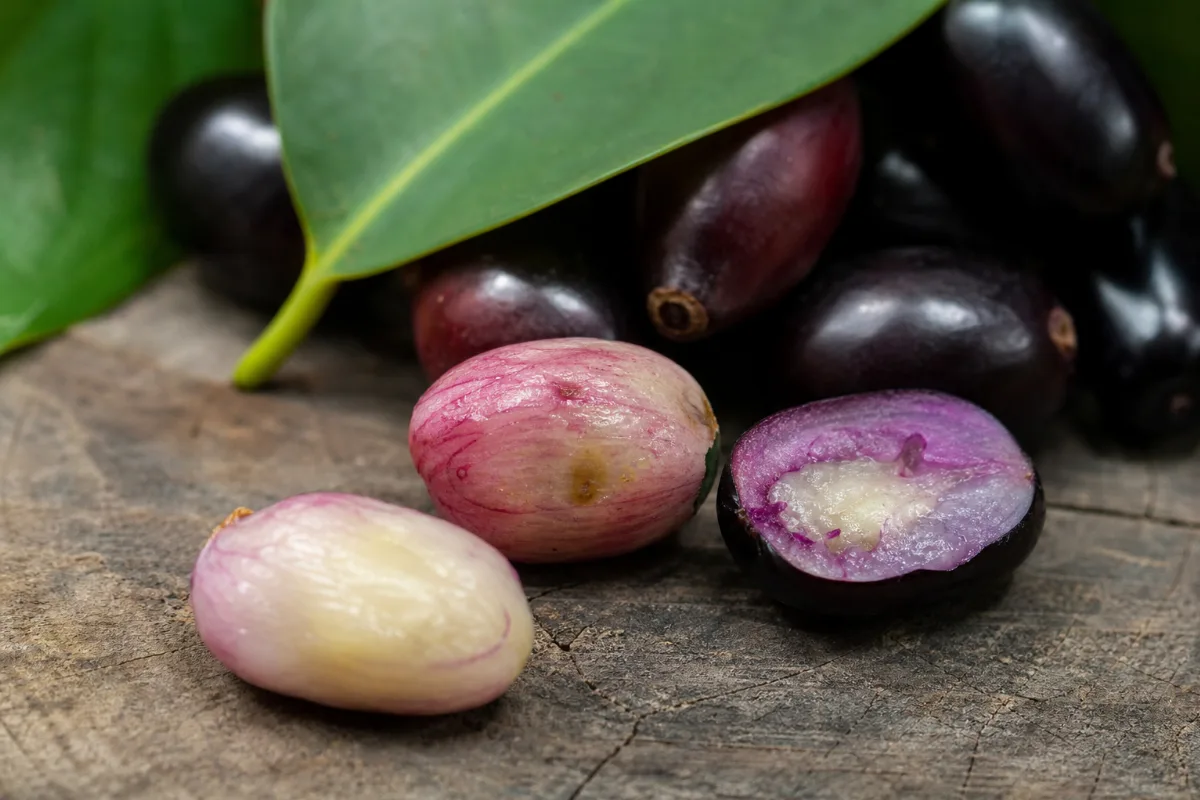
Jamun, also called Java plum or black plum, is Syzygium cumini (L.) Skeels, in the family Myrtaceae; GBIF lists this as the accepted name. [3] This page is about the dried seed (kernel) used in powders, capsules and extracts. The fruit, leaves and bark are also used in traditional medicine but are different products. Native range: not found in the sources we read.Traditional use (not proof of benefit)
The seed is traditionally used for diabetes in South Asian herbal practice, and this is the use most sold today. The recent reviews we read describe the plant as ethnobotanically prioritised for blood sugar. [4] A long tradition is not evidence that it works. See also guava leaf and neem, other plants used for blood sugar.What research shows
| Use | What the sources found | Strength of evidence | Form and population |
|---|---|---|---|
| Fasting blood glucose | A 2026 meta-analysis of 13 randomized trials (802 adults with type 2 diabetes or prediabetes) found a modest reduction of about 14 mg/dL, with very high variation between trials. [1] | Promising but limited | Jamun and related Myrtaceae products; plant parts not stated in the abstract |
| HbA1c (3-month average sugar) | The same analysis found no statistically significant change. [1] | No good evidence of benefit | Same trials |
| Sugar after meals | Not statistically significant. [1] | Insufficient evidence | Same trials |
| Blood fats and lab safety markers | No significant overall effect. [1] | No good evidence of benefit | Same trials |
| Safety over the long term | The authors say current evidence does not support long-term safety. [1] | Insufficient evidence | Same trials |
The authors rate the trials as short, with no low-risk-of-bias studies and low to very low certainty, and call jamun a "promising but unproven" add-on, not a replacement for standard care. [1] Many other studies are in animals or cells, which cannot show the same effect in people. [4] Evidence for any other use: Proper evidence not found in the sources we read.
Forms and why the form matters
Seed powder, capsules and concentrated seed extracts differ from fruit, juice or leaf products. The meta-analysis mixed several Myrtaceae products, so its result cannot be assumed for a specific seed powder. [1] The rat thyroid study used a standardised seed extract, which is more concentrated than food. [2] How much to take is a clinician's decision, not this page's.Safety in more detail
- Side effects: the meta-analysis abstract reports no specific adverse-event data. [1] Proper evidence not found in the sources we read.
- Medicines: possible additive blood-sugar lowering with insulin or tablets for diabetes (reasoned from the glucose effect; no interaction study read). [1]
- Pregnancy: in pregnant rats a seed isolate raised TSH and lowered thyroid hormones at the doses tested; fetal weight was unchanged. [2] No human pregnancy data found.
- Breastfeeding and children: not found in the sources we read.
- Thyroid: the rat work suggests blocking of iodide uptake in thyroid cells, about 3.4 times weaker in human cells in the lab. [2] Human relevance is unknown.
- Liver and kidney: not found in the sources we read. We did not read a LiverTox entry for jamun.
- Allergy and quality: not found in the sources we read.
- Surgery: no source read; because it may lower glucose, tell the surgical team.
Official statements
We did not find a NCCIH, MSK, EMA or WHO page on jamun (MSK returned not found). Not found in the sources we read.Related pages
Frequently asked questions
Does jamun seed lower blood sugar?
A 2026 meta-analysis of 13 trials found a small drop in fasting glucose but no clear change in HbA1c, and rated the evidence low to very low certainty. [1]
Can I take jamun with diabetes medicines?
Ask your doctor or pharmacist first. Because it may lower glucose, it could add to the effect of your medicines; we found no dedicated interaction study. [1]
Is jamun safe in pregnancy?
No human data were found. A rat study found thyroid disturbance with a seed extract. [2] Check with a midwife or doctor.
Is jamun the same as guava leaf?
No, they are different plants. Jamun is Syzygium cumini; see guava leaf.
Is jamun safe long term?
The authors of the 2026 meta-analysis say long-term safety is not supported by current evidence. [1]
References
- Efficacy and Safety of Syzygium cumini and Related Myrtaceae Interventions for Dysglycemia: A Systematic Review and Meta-Analysis of Randomized Controlled Trials. Foods, 2026. PMID 42450449 (abstract via Europe PMC). Read 2026-10-23.
- Maternal thyroid axis disruption from gestational exposure to a Syzygium cumini seed isolate in rats. Food and Chemical Toxicology, 2026. PMID 42361882 (abstract via Europe PMC). Read 2026-10-23.
- GBIF Secretariat. GBIF Backbone Taxonomy species match. Syzygium cumini (L.) Skeels, accepted, Myrtaceae. Read 2026-10-23.
- Multitarget Pharmacological Mechanisms and Safety Profiles of Six Ethnobotanically Prioritized Indonesian Medicinal Plants for Cardiometabolic Disorders: A Systematic Review. Drug Design, Development and Therapy, 2026. PMID 42746347 (listing only). Read 2026-10-23.